Yellow couches living rooms can often fail for reasons that have nothing to do with “choosing the wrong yellow. ” Yellow usually fails because it’s treated as a single loud object, sitting on a background that doesn’t support it.
The rooms that look calm and designer-done treat yellow as a behavior: it changes with light, it needs edge definition to look crisp, and it needs a supporting “story” at eye level so it reads intentional instead of random.
What follows is a deep read of yellow sofa living room ideas as visual systems—how the strongest interior designs control maturity, undertone stability, wall behavior, and focus—without relying on extra clutter.
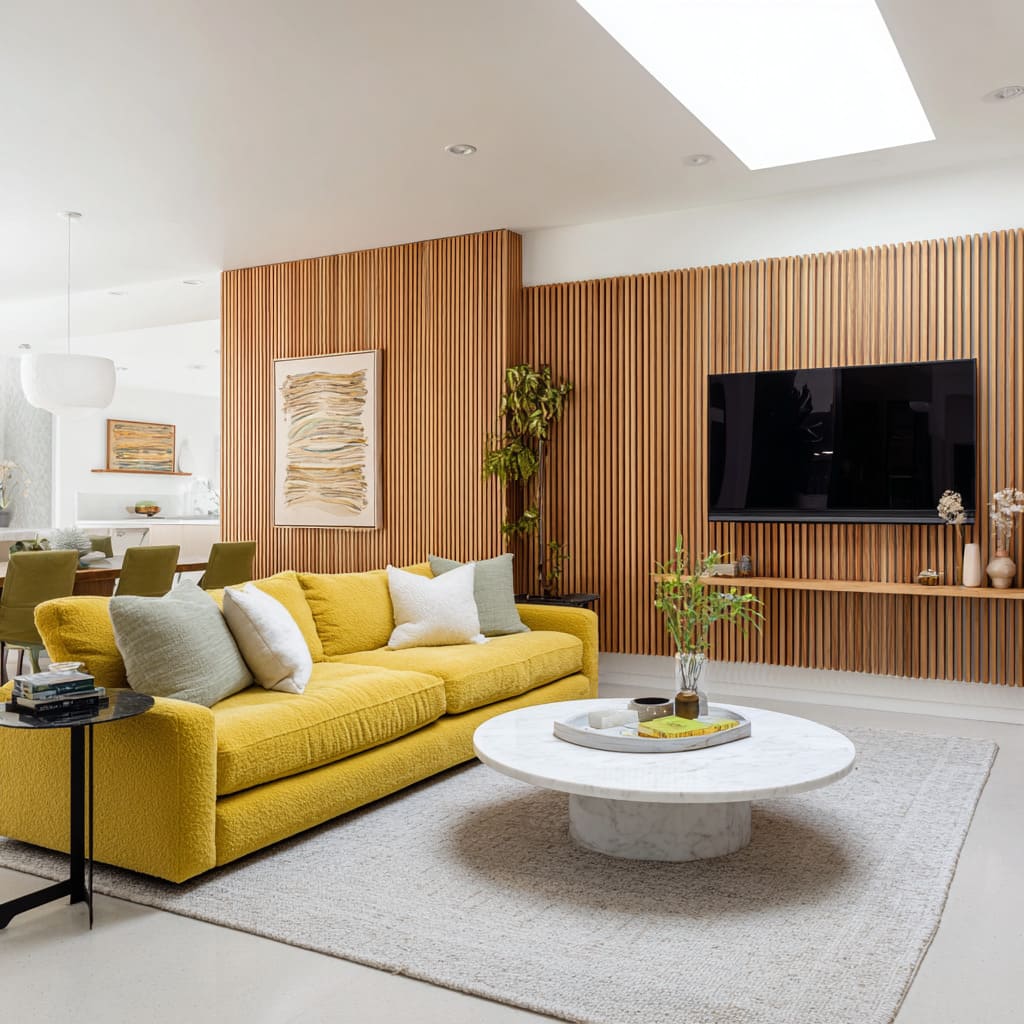
The “adult yellow” effect is rarely about making yellow darker
In successful yellow couch living room ideas, yellow reads grown-up when the design gives it three kinds of support:
A. Yellow is broken into smaller “units,” so it stops feeling cartoonish
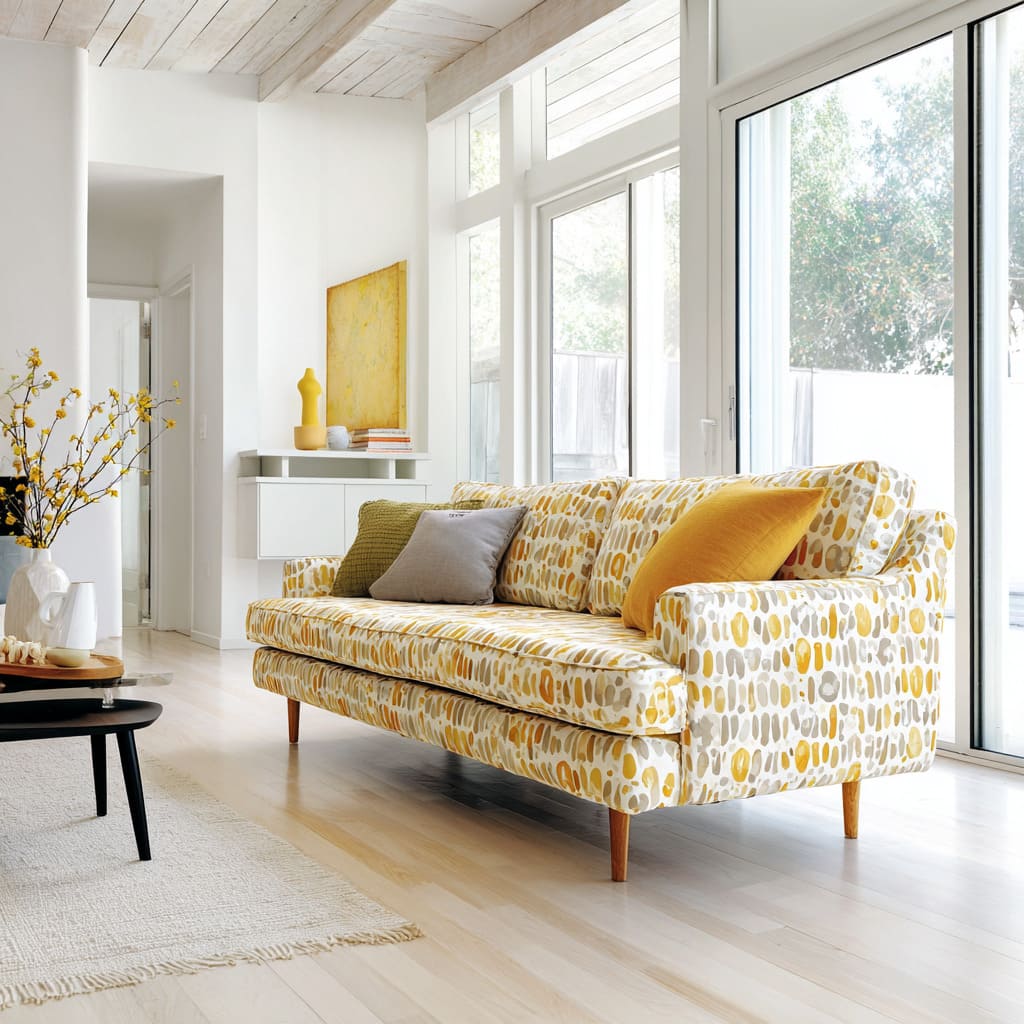
A patterned yellow sofa (white ground with mustard/ochre marks) behaves differently than a solid yellow slab. The eye reads clean + bright first, then registers “yellow” as a secondary note.
That subtle delay is a maturity cue: the sofa feels airy, not shouty, even if the room is very bright.
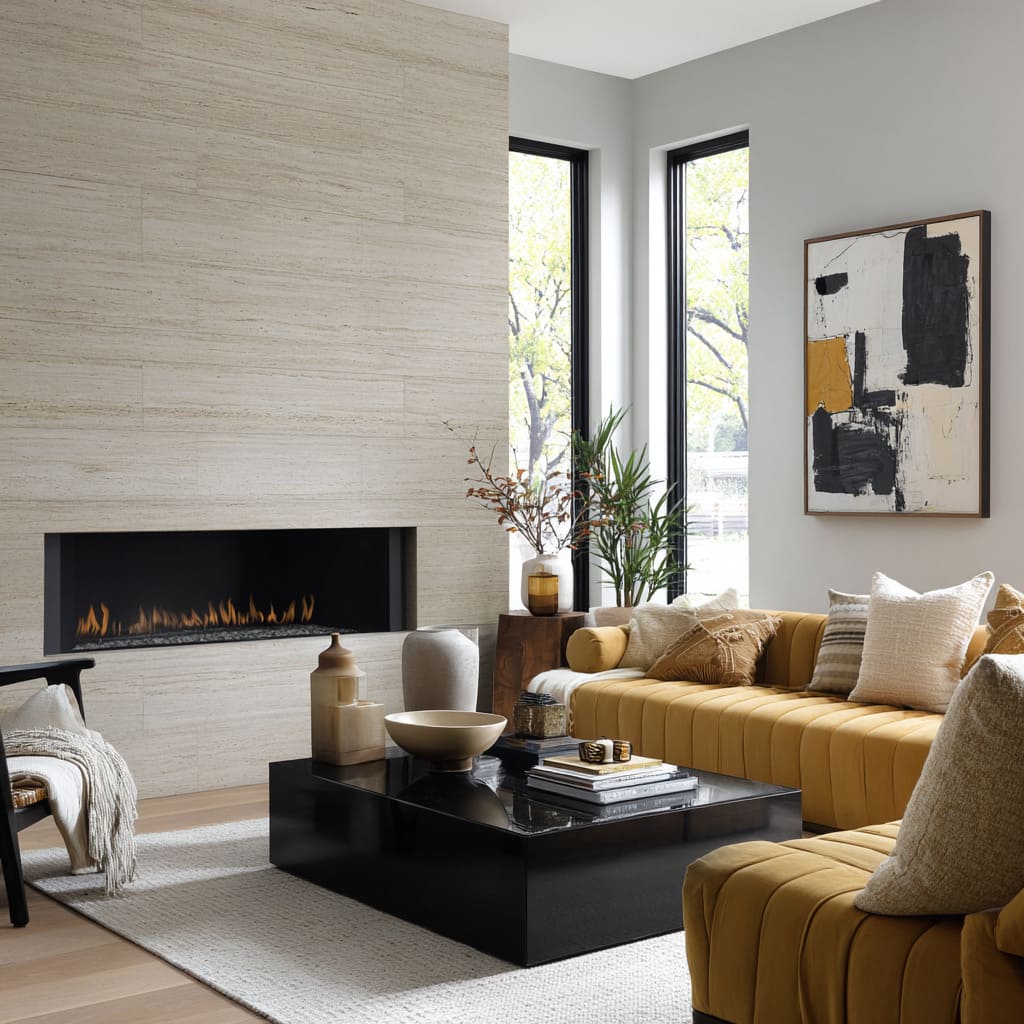
B. Yellow is paired with a discipline layer: dark outline + serious geometry
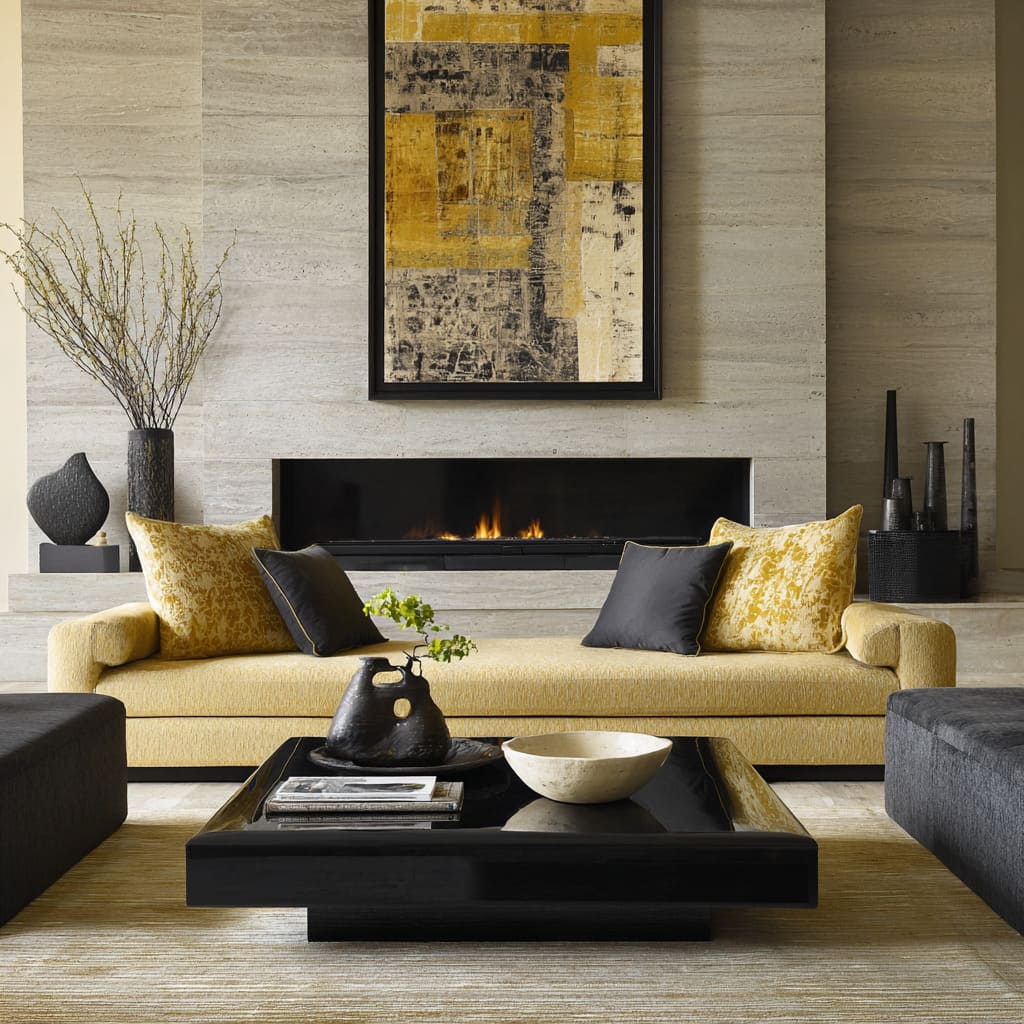
Mature yellow almost always has an “ink system” nearby—black legs, a dark TV rectangle, a charcoal hearth, black window frames, or a long dark console. These aren’t decoration; they’re edge sharpeners.
Yellow looks childish when it has no boundaries. It looks designed when something dark draws a line under it, beside it, or behind it.
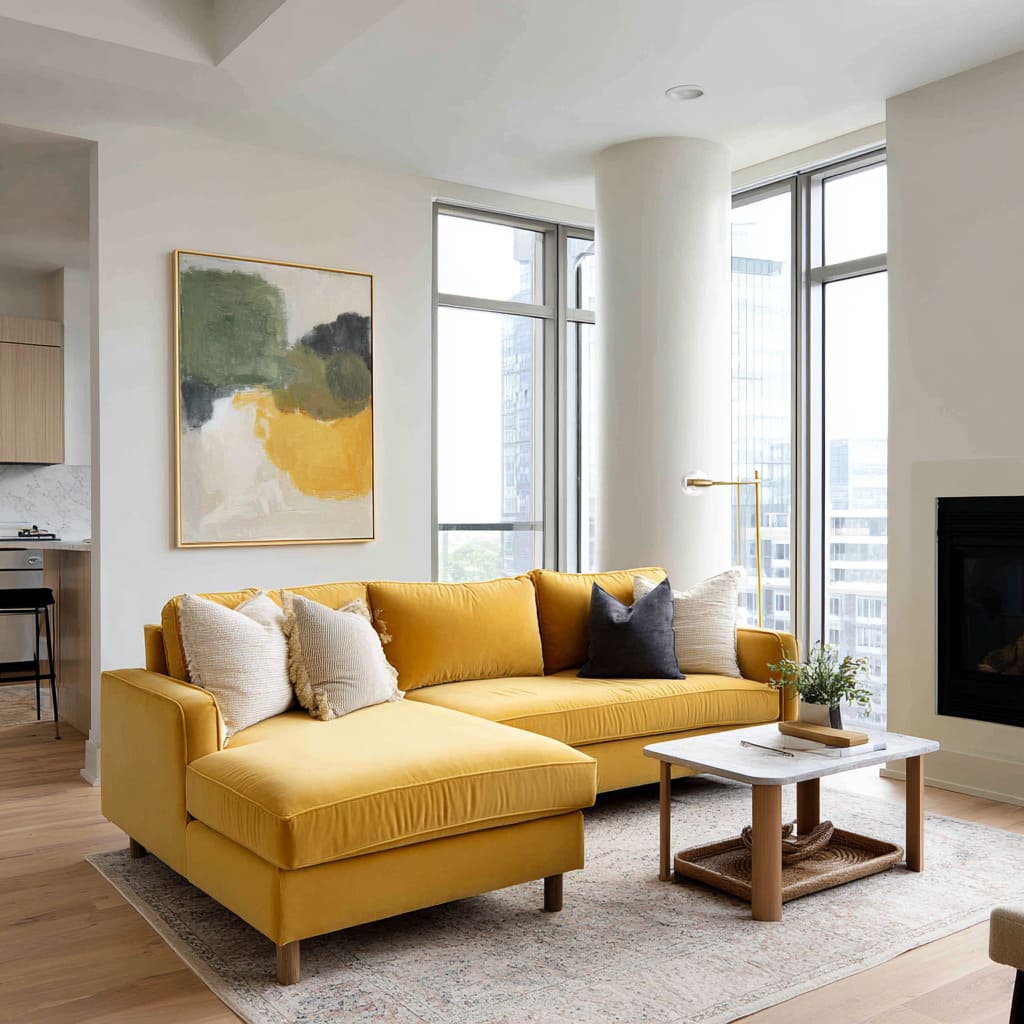
C. Yellow is given a partner that absorbs saturation
Olive, moss, sage, and muted gray-green popular options because they act like a saturation buffer. Next to a deeper earthy green, yellow reads like sunlight near foliage rather than “bright furniture color.
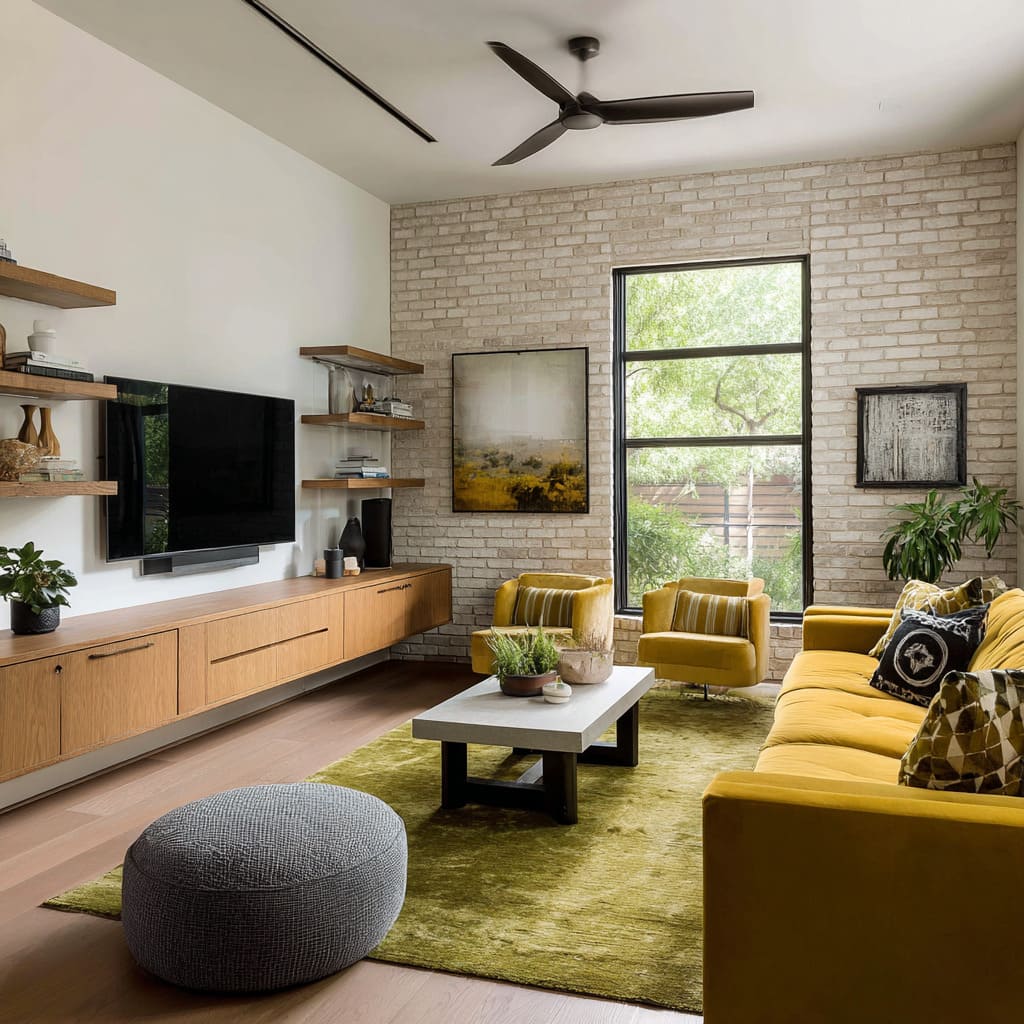
” This is why mustard sofa living room ideas often look calmer when an olive rug is present: the green quietly soaks up intensity and makes the yellow feel nature-based.
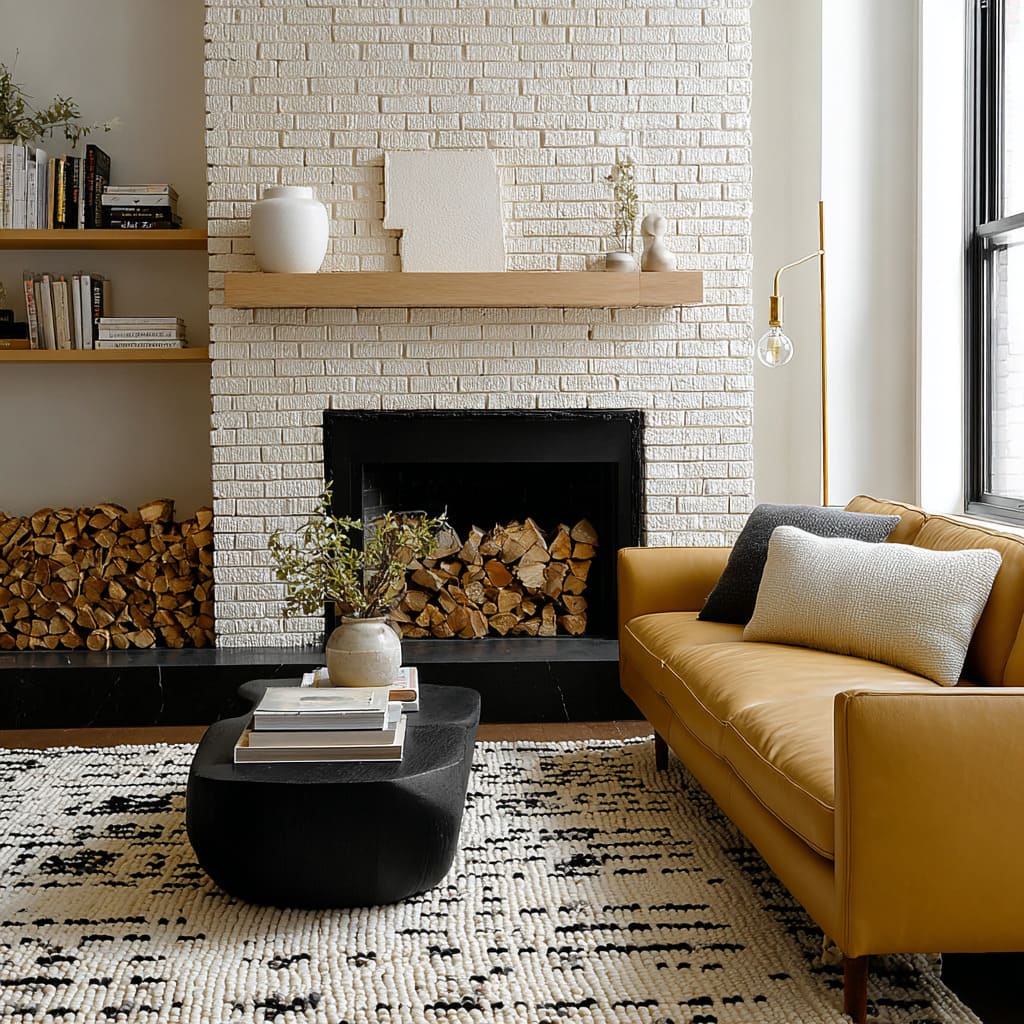
“Which yellow works in light?”
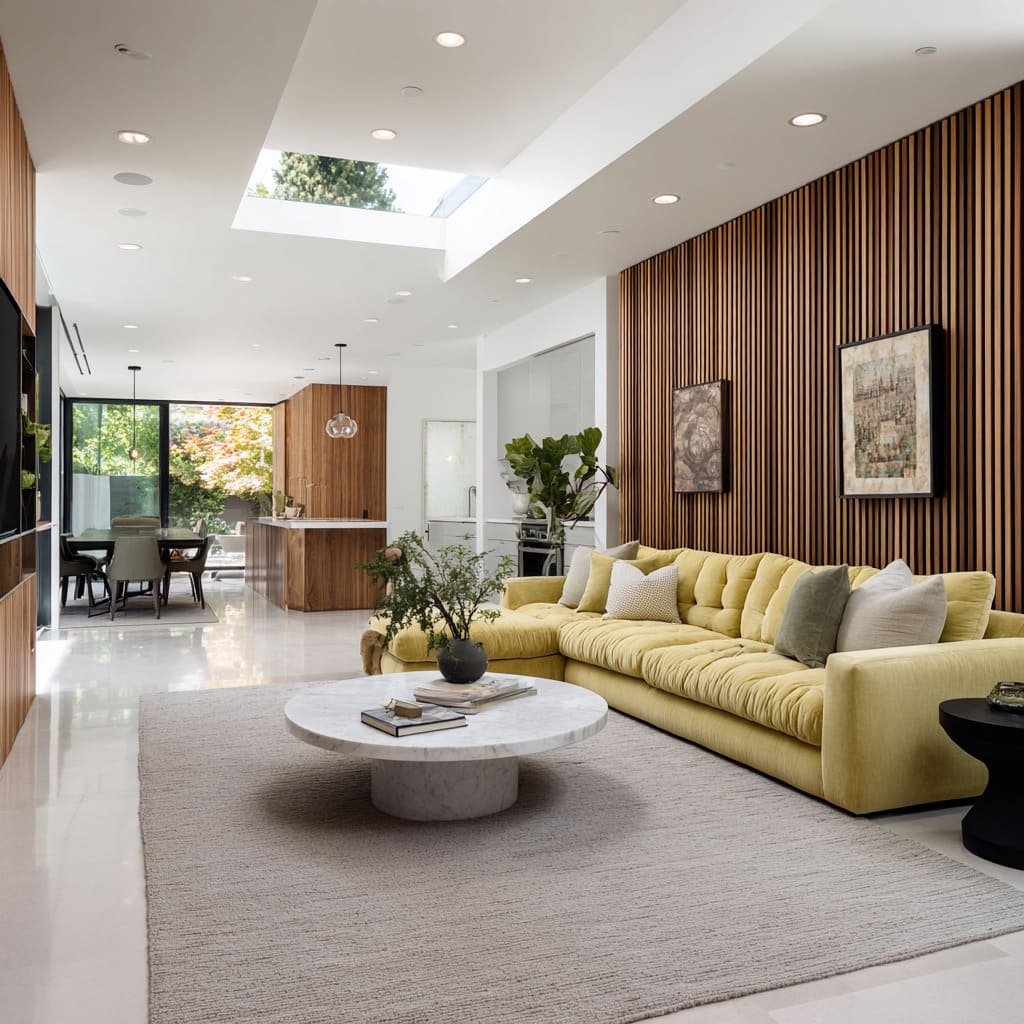
Yellow is one of the most light-sensitive upholstery colors. The most stable living room designs solve this with texture-based shading and warm references at eye level.
Daylight: the “washout vs sharpness” problem
Strong daylight can either bleach yellow or make it feel overly crisp. Designs that handle this well usually do two things:.
- They choose yellow surfaces that can hold shadow. Ribbed upholstery, channel tufting, and deep tufting create repeating shadow lines, so the sofa keeps depth in bright light. Smooth yellow can look thin; yellow with built-in shadow rhythm looks heavier and more serious.
- They place nearby neutrals that act like soft filters. Ivory pillows with fringe, warm off-white rugs, and matte stone-like wall surfaces act like “fog” around the yellow, preventing the color from feeling too hot.
Evening: the “dull/muddy” problem
Yellow can turn surprisingly flat after sunset if the room lacks a warm reference close to the seating zone. The strongest solutions don’t add more yellow objects—they add warm light on a neutral texture:
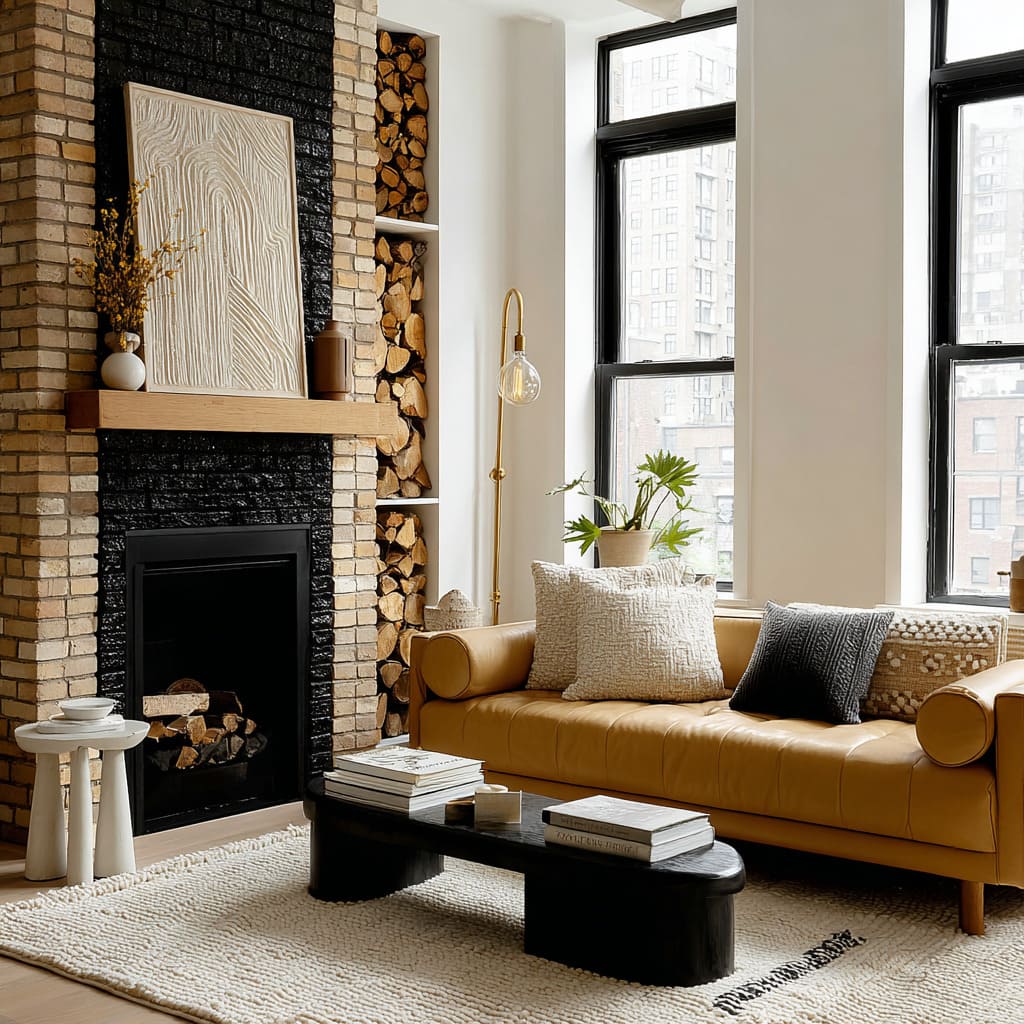
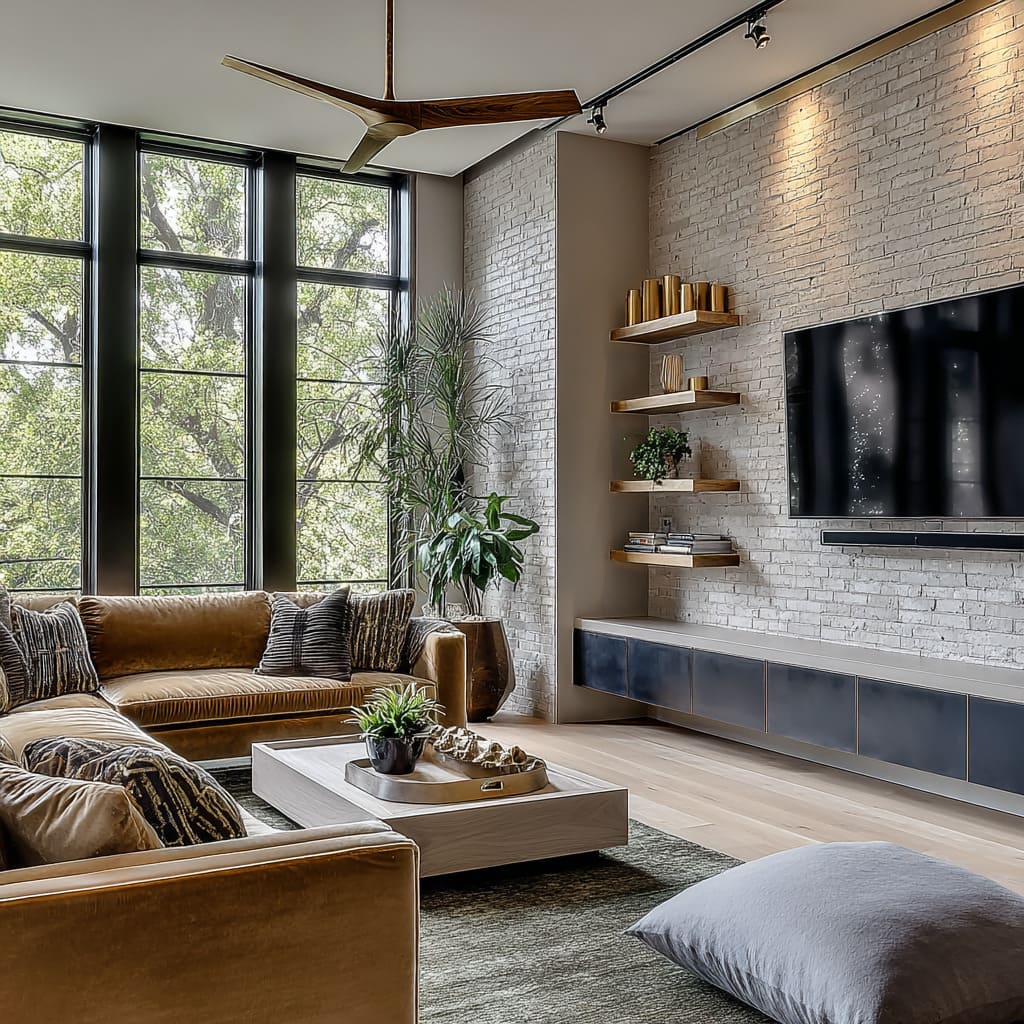
- Lit brick shelves or under-shelf glow washing a brick wall creates a creamy-gold background, keeping mustard leather from turning brownish.
- Brass lamps and warm metallics do a similar job: brass is “yellow translated into metal,” so it supports yellow’s temperature without looking matchy.
This is why some living room ideas with a yellow couch feel evening-friendly: they stabilize yellow with light temperature, not extra color.
Background walls that “behave well” with yellow
In yellow sofa living room ideas, wall choices succeed when they either soften contrast or create deliberate contrast—but avoid accidental temperature fights. For more color direction, read yellow living room ideas.
Warm whites, sandy off-whites, and greige walls: the stabilizers
Warm off-white and sand-plaster backgrounds share the sofa’s warmth, so yellow doesn’t look sour or harsh. The design feels unified because nothing is arguing about temperature.
Textured pale walls (white brick, pale brick, stone): the shortcut
Brick and stone textures are doing a non-obvious job: they add micro-shadow rhythm behind the sofa. Yellow looks calmer against texture because the wall isn’t a flat blank sheet.
Flat white walls can make yellow look like a sticker; textured walls make yellow look like part of a material palette.
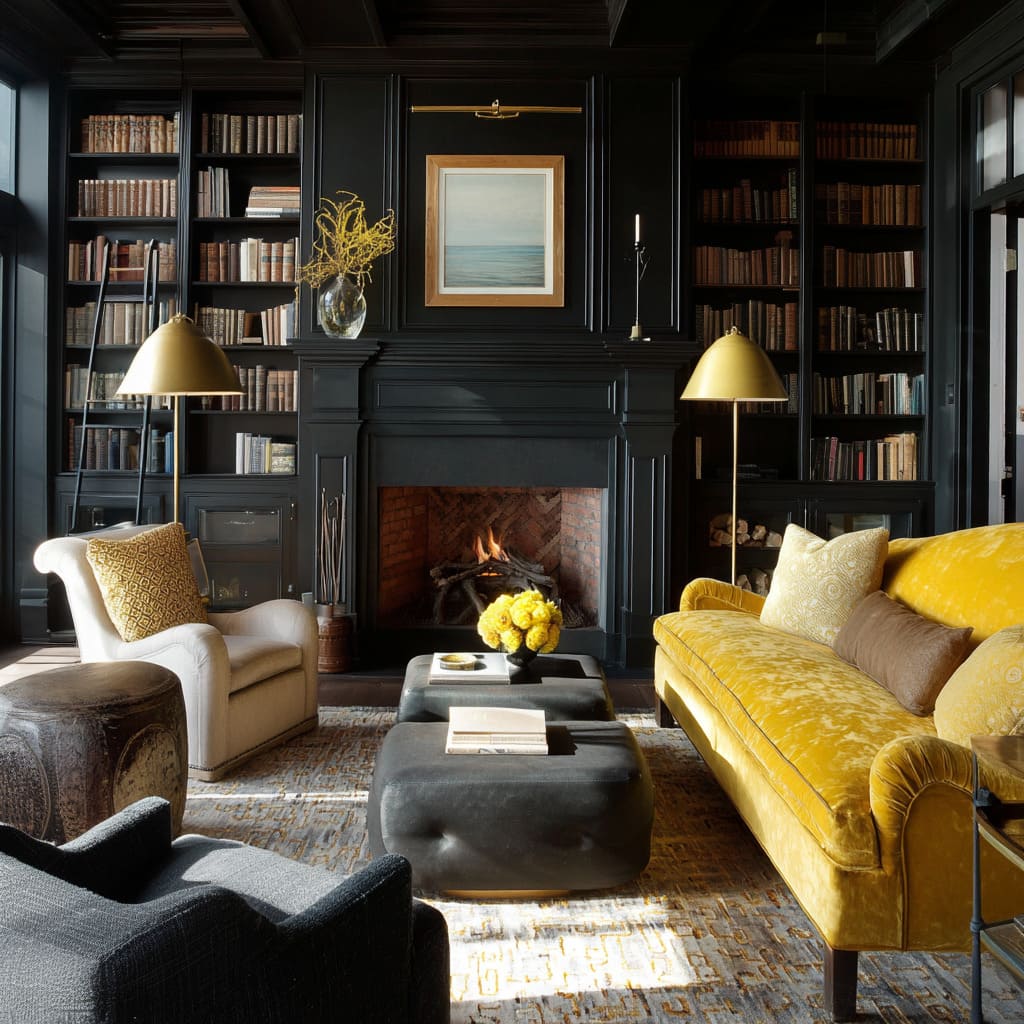
Dark walls (charcoal/black library walls): yellow becomes “glow”
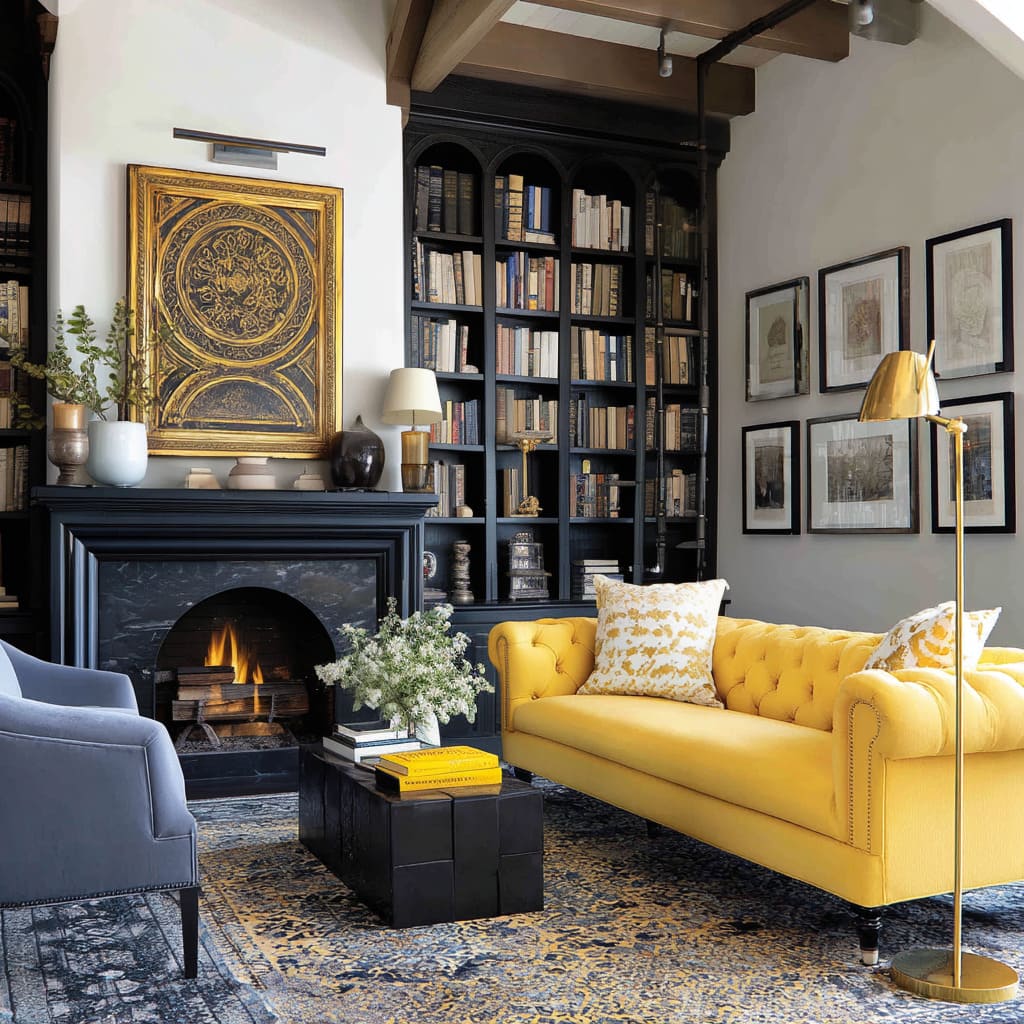
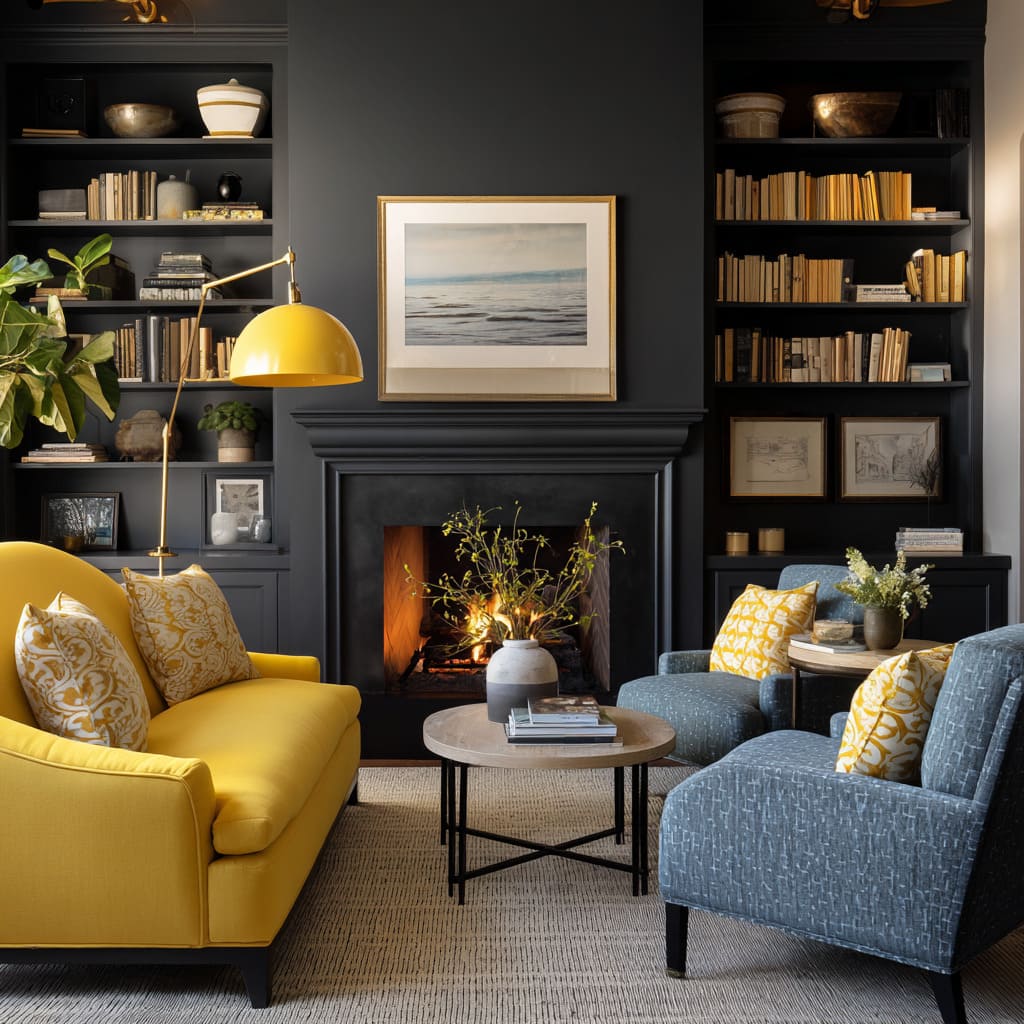
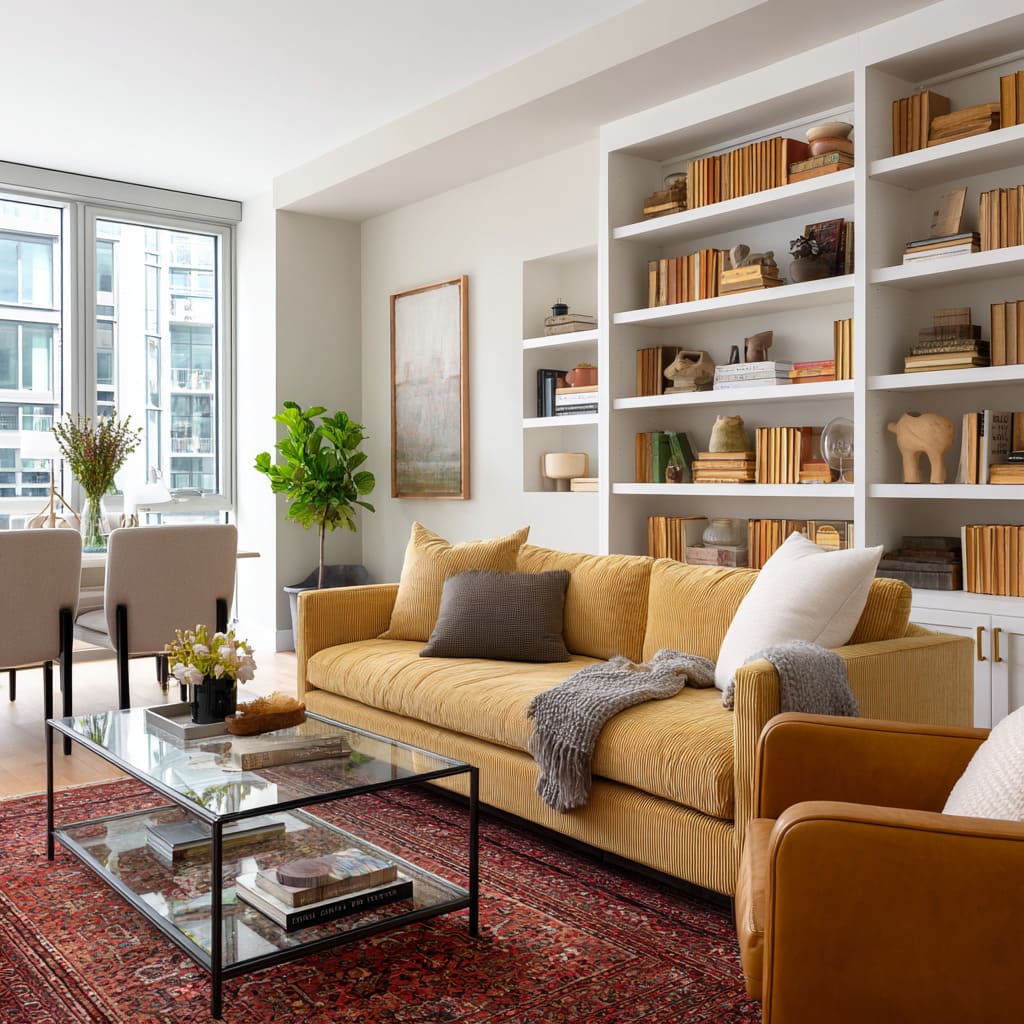
For example, a black library wall is one of the cleanest maturity moves: yellow stops reading as “bright color” and starts reading as light—almost candlelike. Books with tan, ochre, and aged-paper spines quietly echo yellow in a dusty, brown-warmed way, so the palette feels collected rather than themed.
So, yellow doesn’t dominate; it illuminates.
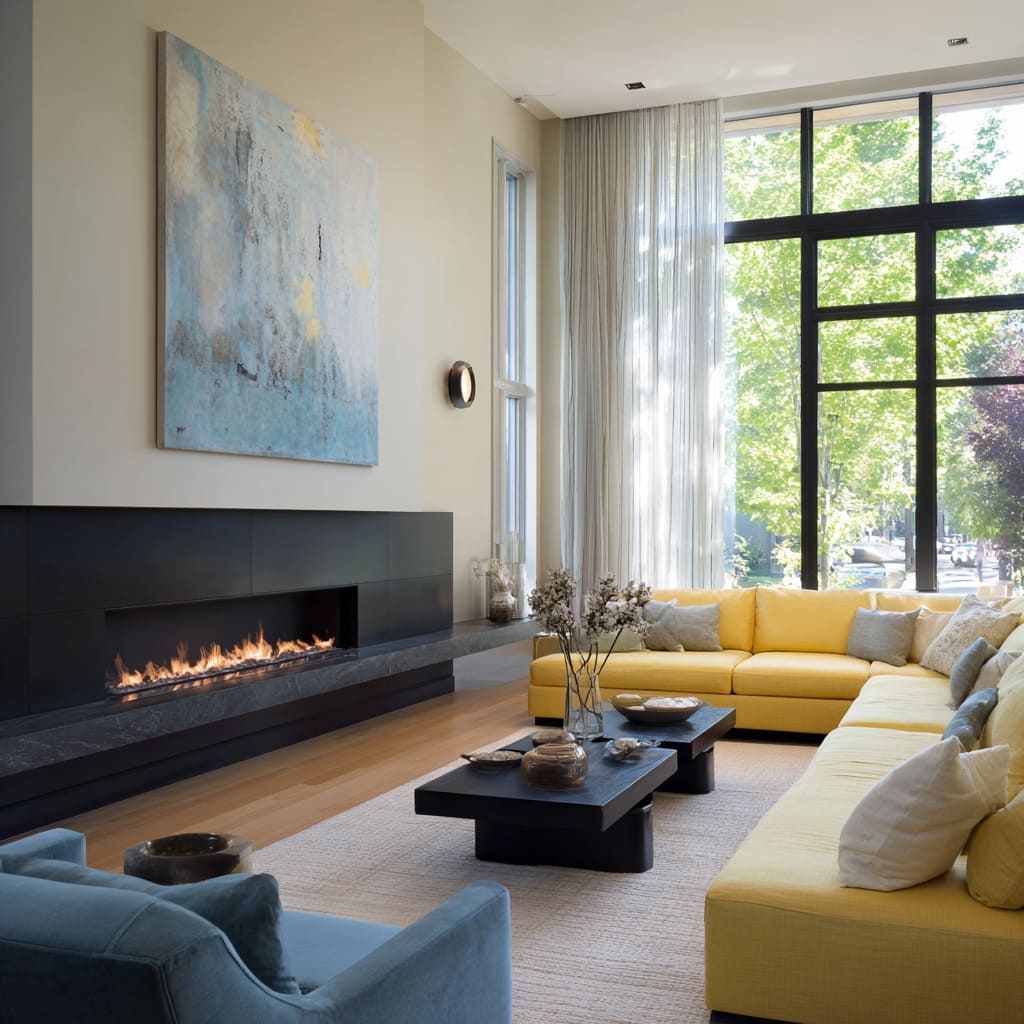
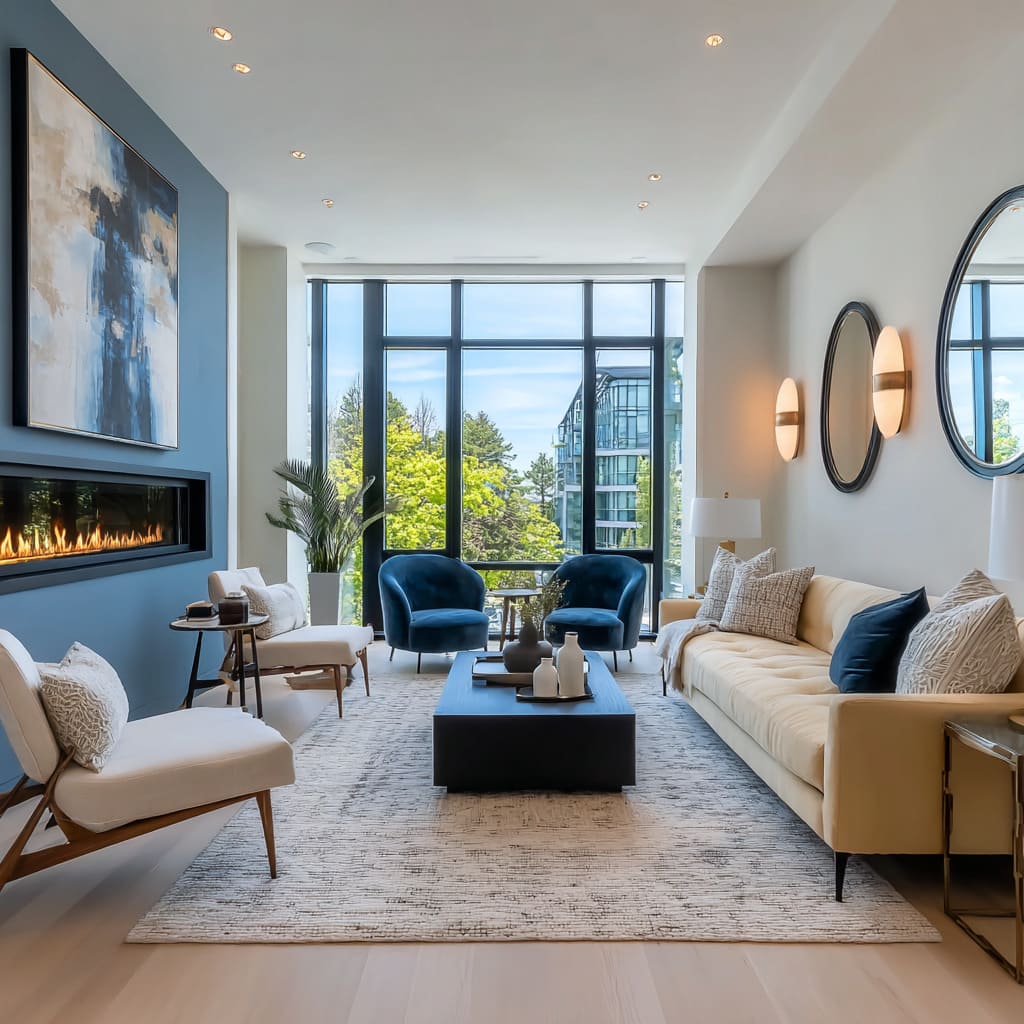
Blue-gray walls: yellow gets cooler context without turning harsh
Soft steel-blue or blue-gray walls create a cool field that makes yellow feel richer. The key is that the blue is muted; bright blue pushes yellow into a primary-color vibe, while dusty blue makes yellow feel tailored.
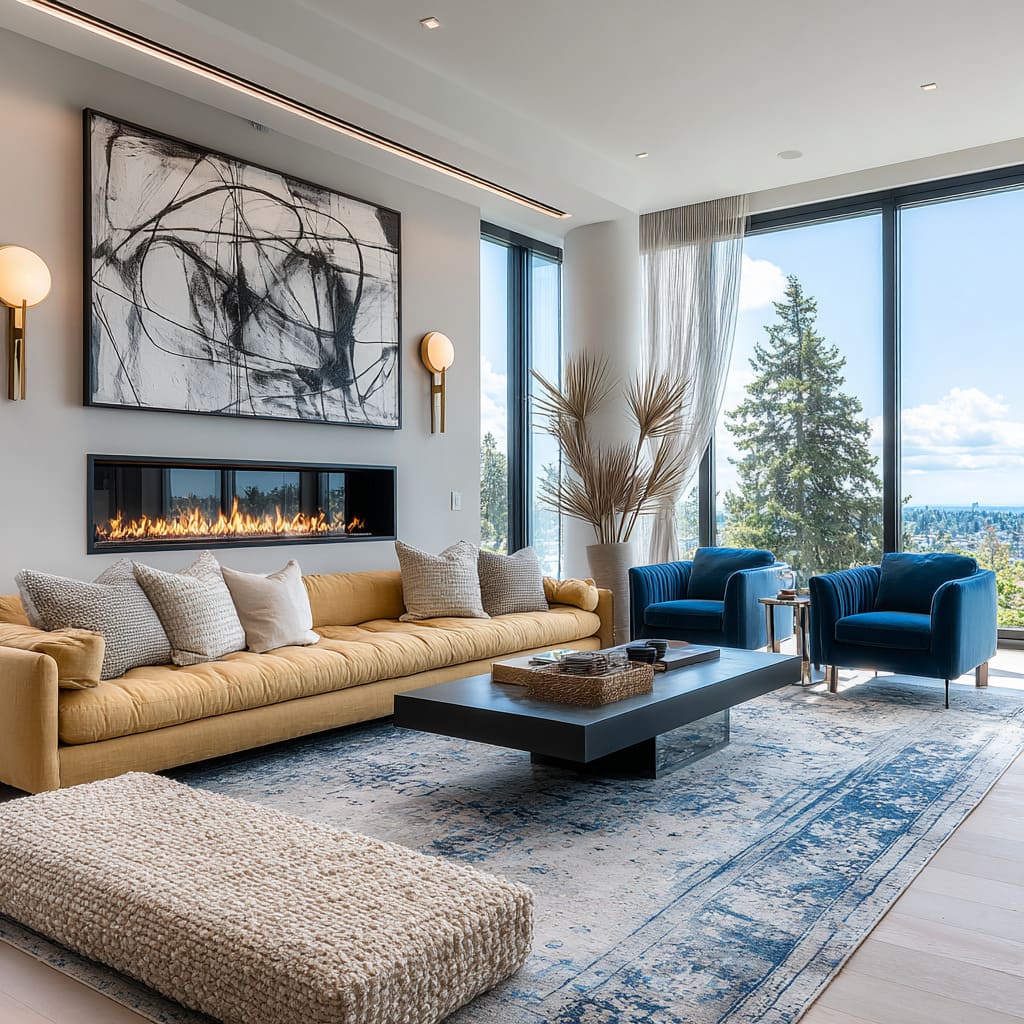
Stopping the sofa from screaming
People often describe the problem as “the sofa is too bold,” but the real issue is focus control. The best yellow couches living rooms build multiple landing points for the eye.
A. The “stop point” strategy
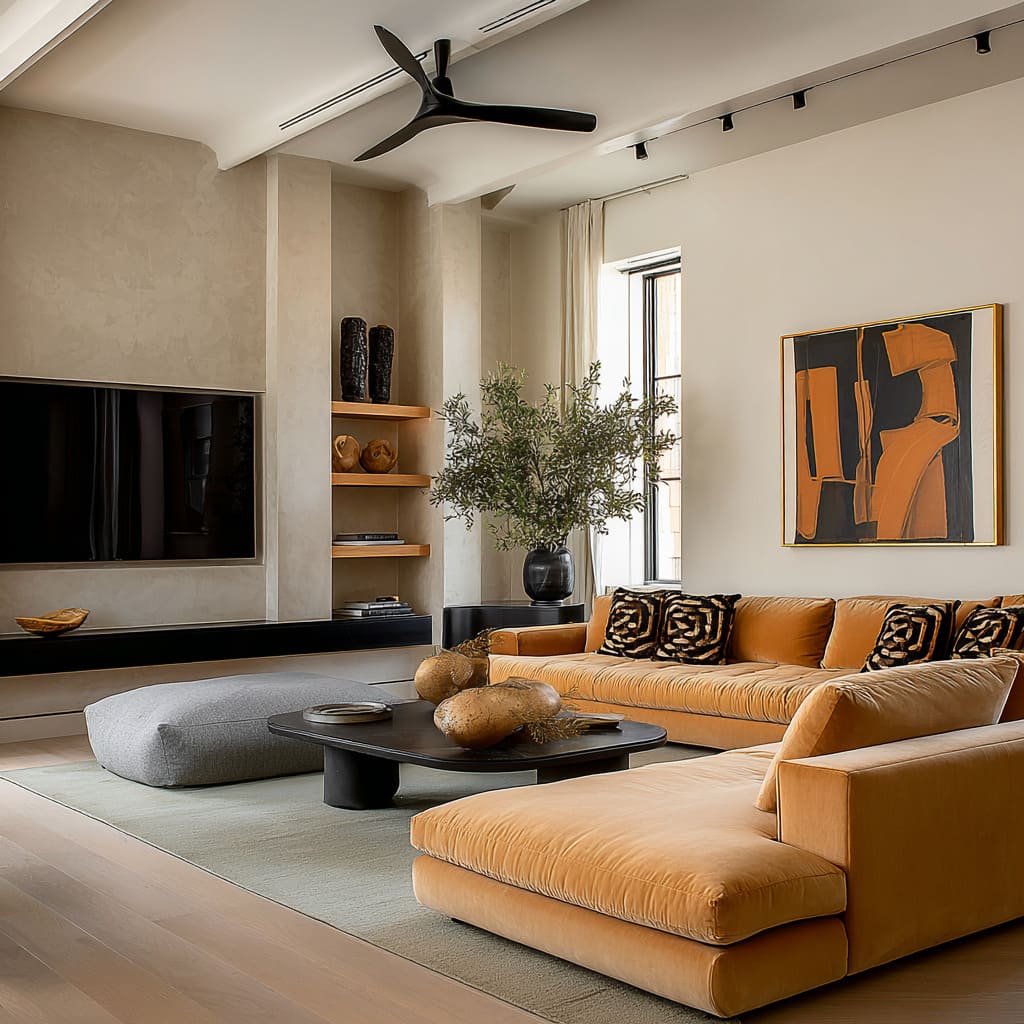
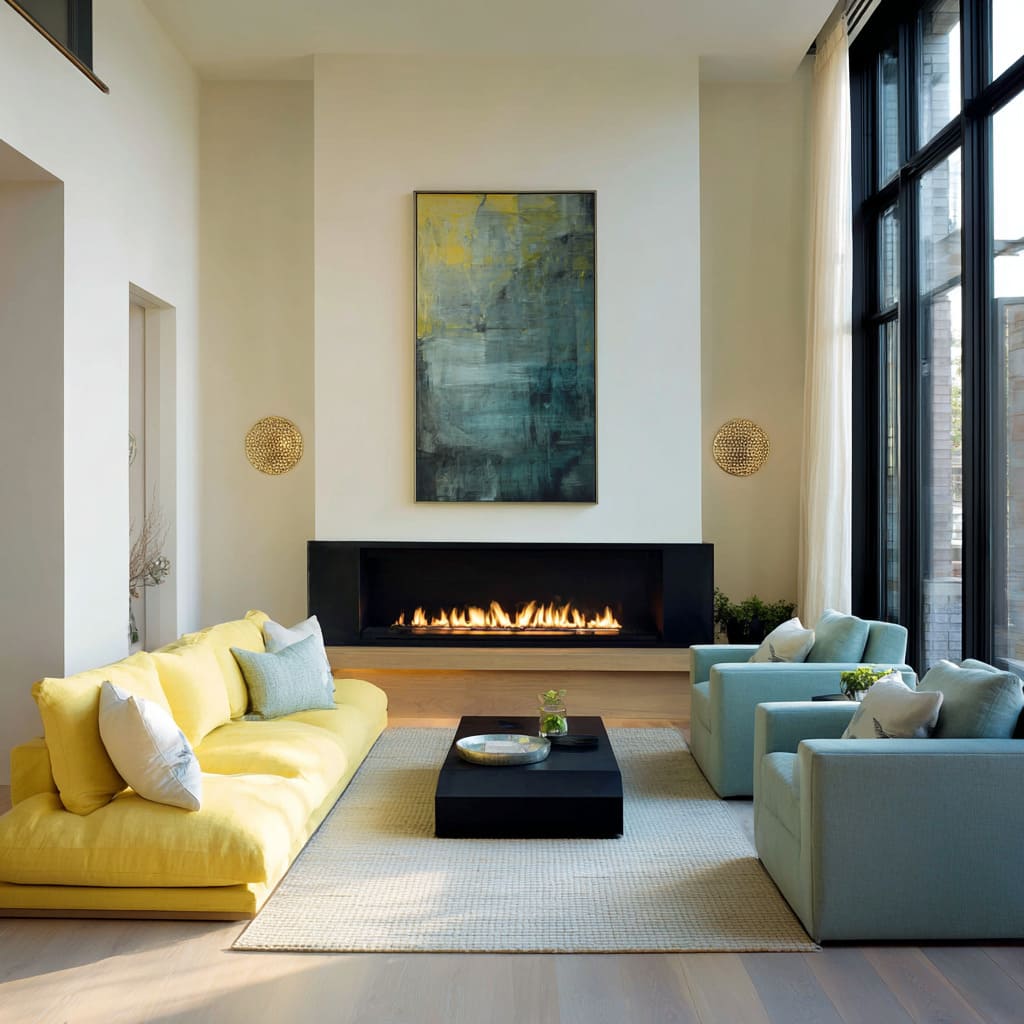
A large dark element (TV rectangle, black fireplace opening, charcoal slab) becomes a visual stop point that competes with the sofa in a calm way. Yellow then becomes one major note in a composed structure, not the only event.
B. The “underline” strategy
Black coffee tables, black bases under pale tabletops, or a long dark console function like an underline: they ground the seating zone so yellow doesn’t feel floaty. A sculptural black table with rounded corners is especially effective because it adds weight without adding harshness.
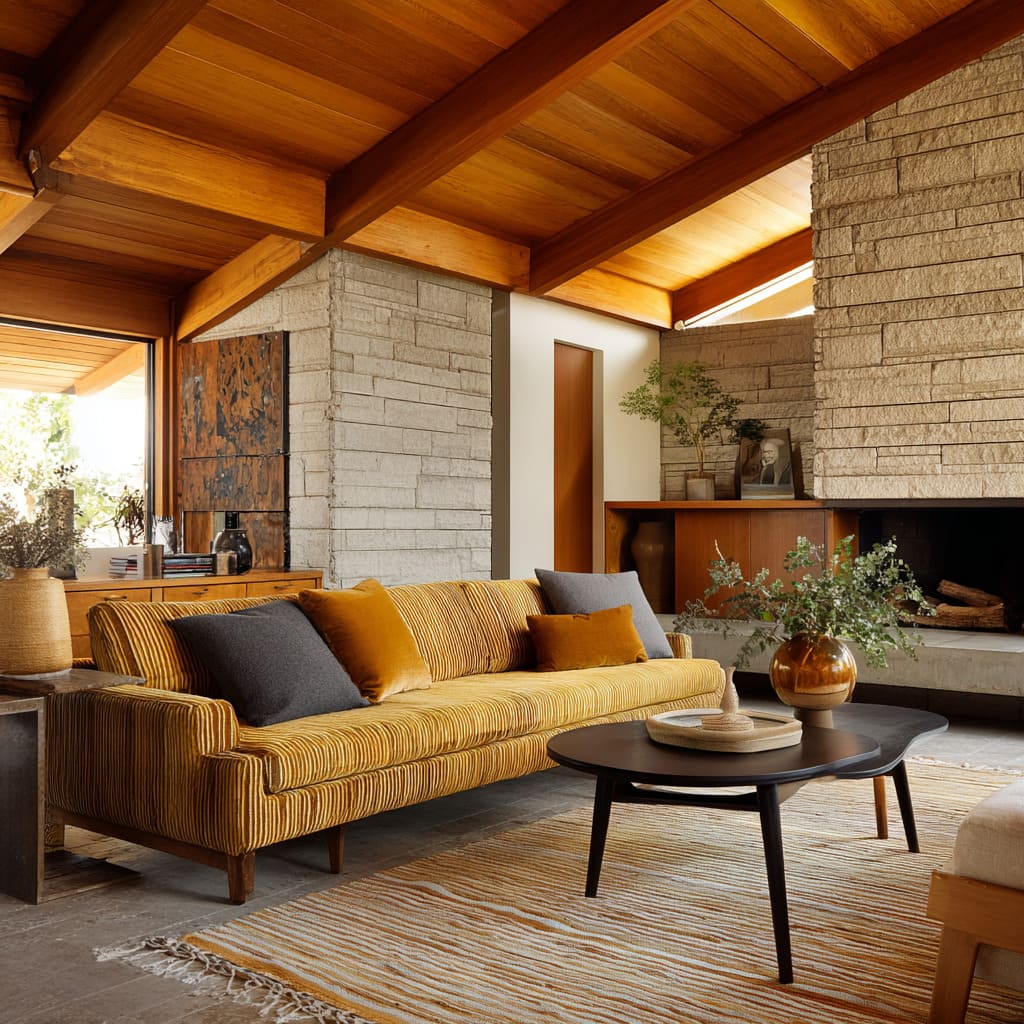
C. The “ladder of repeats” strategy (the most designer-looking move)
Instead of repeating yellow through lots of decor, strong designs place yellow at three heights:
- Seat height: the sofa itself, plus one controlled yellow pillow or a patterned yellow cushion
- Table height: a small warm note (a book, a ceramic, even lemons) contained in a tray/group
- Eye height: artwork with a restrained yellow field or an ochre/antique-gold presence
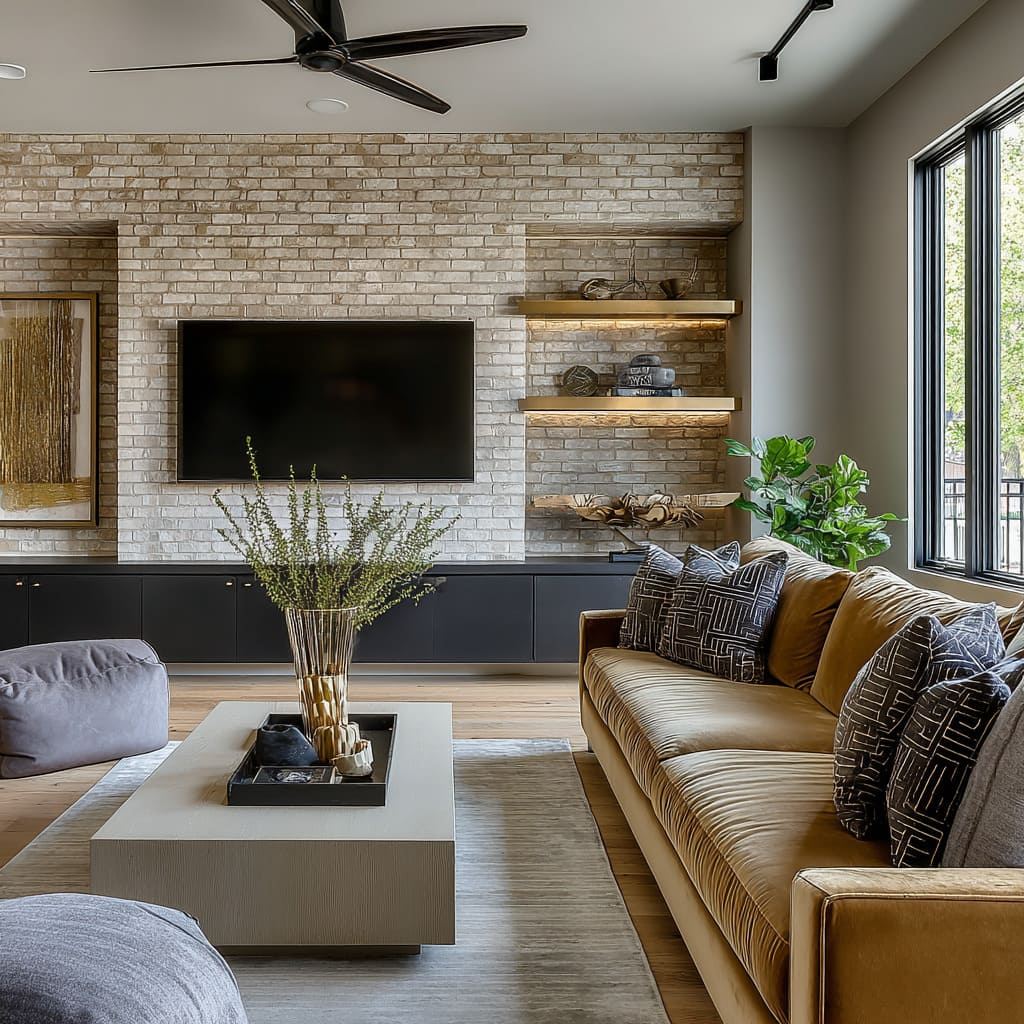
This turns the sofa from “random statement” into “one part of a planned system. ” It’s a core reason many mustard sofa living ideas feel intentional even when accessories stay minimal.
Color pairings that feel natural
The strongest pairings don’t “match yellow. ” They give yellow a role—outline, shadow partner, or earth partner.
Yellow + black: graphic clarity
Black makes yellow readable. It tightens edges, prevents sweetness, and gives the design a crisp structure.
The more matte the black, the calmer it reads.
Yellow + deep blue: light and shadow
Muted navy/sapphire chairs and blue-toned rugs make yellow feel like sunlight inside a cooler atmosphere. The effect reads classic and slightly formal because the contrast feels like nature: warm light against cool shade.
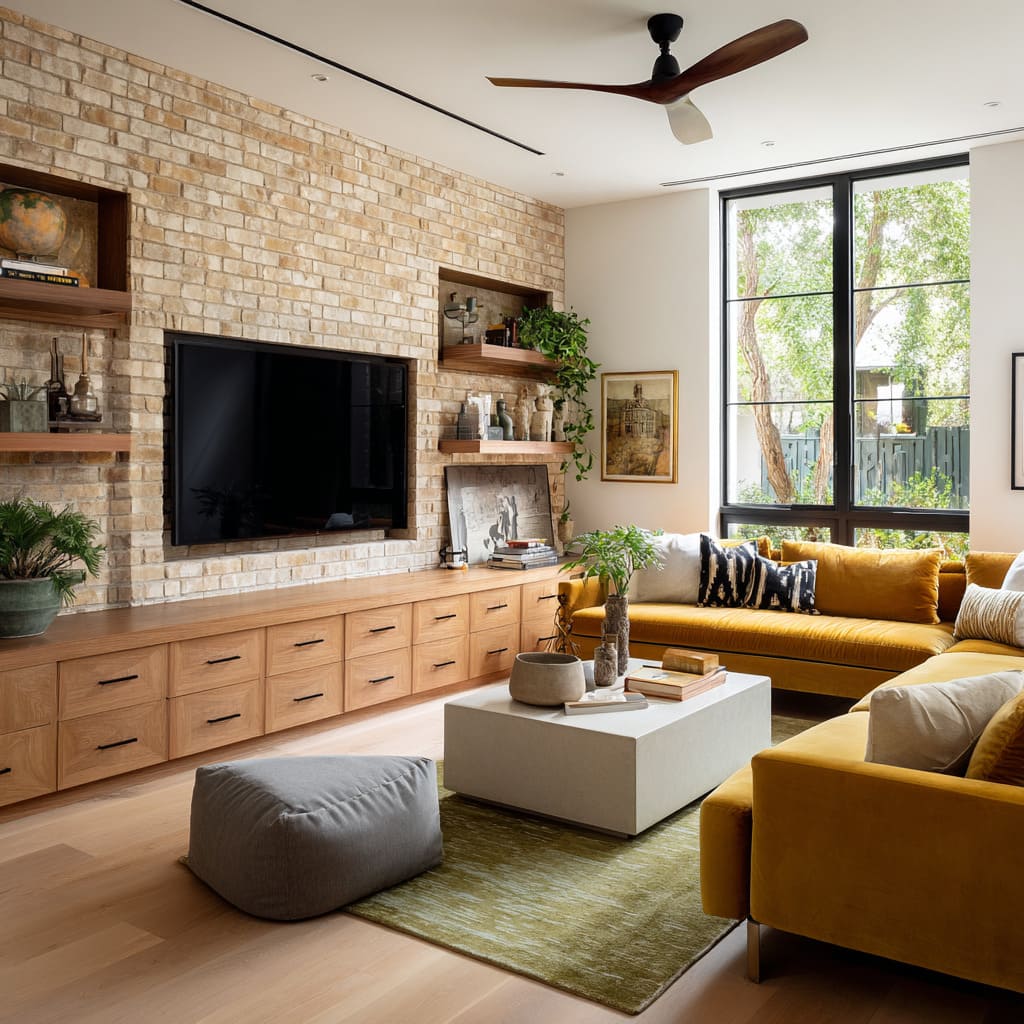
Yellow + olive/forest: botanical grounding
Olive rugs and green foliage calm yellow instantly because the pairing reads organic. Green here behaves like a “tone corrector” for yellow—less candy, more earth.
Yellow + terracotta/rust/red: warm depth without flags
A vintage red rug (deep red/rust, not bright red) can anchor yellow with dark warm values. Yellow looks more expensive near darker values—black or deep warm tones—because it gains visual weight.
Style identity: why yellow makes sense in some styles faster than others
A big part of “what style is this supposed to be? ” comes down to what supports yellow.
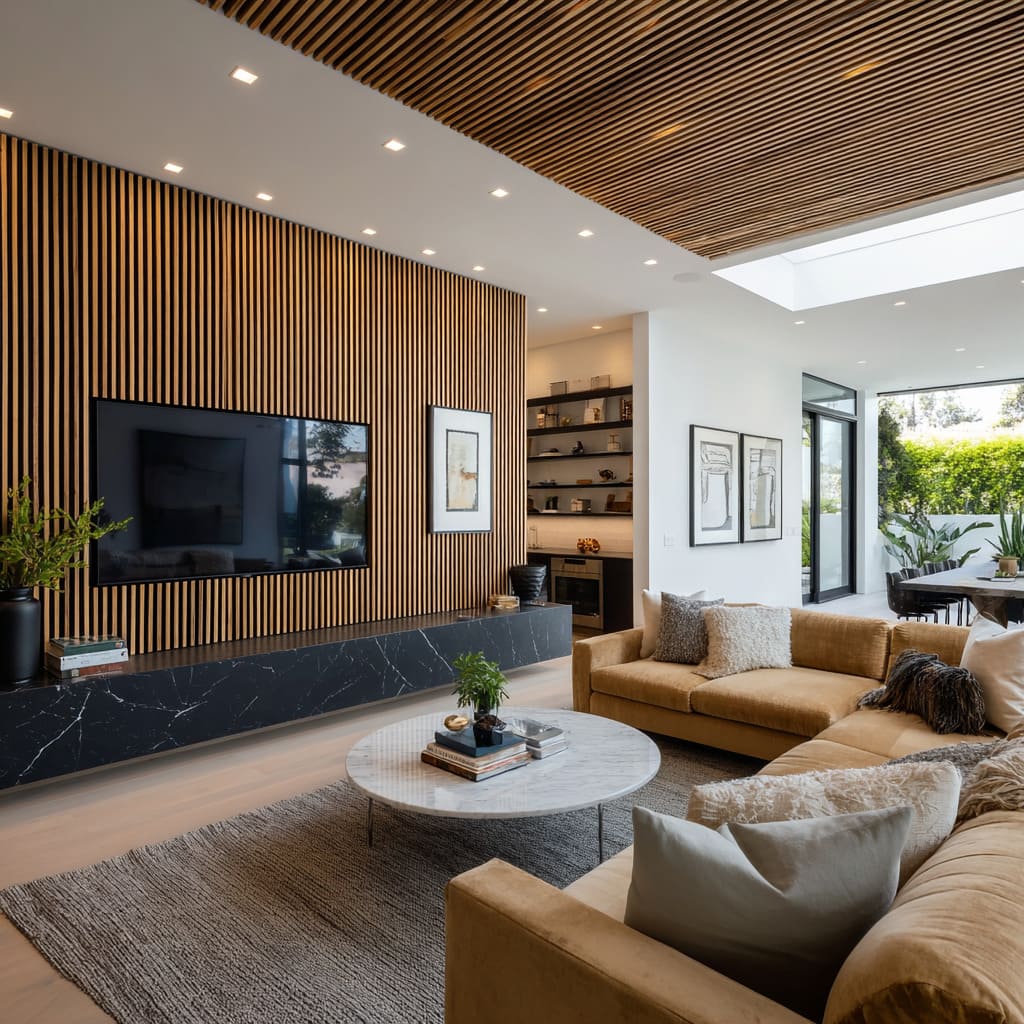
- Mid-century: yellow feels legitimate when walnut/wood ceilings, tapered legs, and charcoal accents create warmth + structure. Ribbed upholstery is especially convincing here because it reads material-forward.
- Modern: yellow works when the design is edited—few colors, strong shapes, calm tabletops, and black punctuation. A stone wall + black fireplace cut is a classic modern stabilizer.
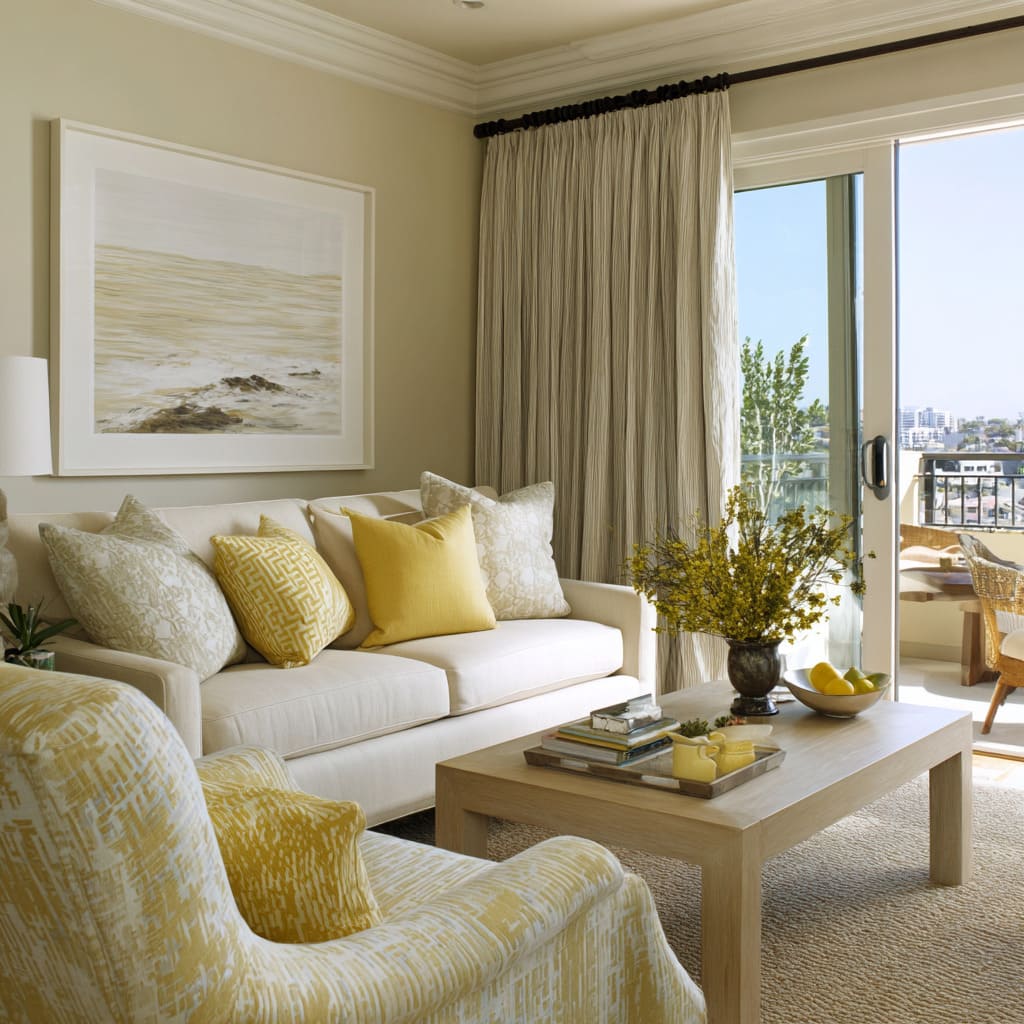
- Scandinavian / coastal-light: yellow is safer when it’s diluted—patterned into white, paired with oatmeal textiles, pale woods, and quiet natural-fiber rugs. Yellow becomes “sun-wash,” not “accent color.”
- Moody library / city-ready: black built-ins, brass warmth, and firelight turn yellow into glow. Even a brighter yellow avoids neon energy because the background is so grounded.
These identities matter because they decide whether yellow reads like architecture, sunlight, material warmth, or playful color.
Making yellow fabric read expensive
Yellow looks cheap when it reads flat, shiny, or unsupported. The designs that look high-end rely on material behaviors:.
- Velvet and plush fabrics: they create highlight/shadow shifts that make yellow feel deep and dimensional.
- Matte leather in camel-gold territory: it reads serious because it sits between yellow and tan; creasing adds natural shadow, which stops the color feeling plastic.
- Ribbing, channel tufting, and tufting: these are not decoration—they’re built-in shadow architecture that breaks up a large yellow plane.
- Quiet objects with weight: stone-like ceramics, matte black forms, and restrained tabletop groupings keep yellow from tipping into “cute.”
In other words, expensive-looking yellow often comes from shadow quality and edited contrast, not from more color.
The “safe formula” feeling: pillows, rug, curtains
Pillow systems that calm yellow
- Temperature ladder: warm repeat (mustard/ochre) + cool stopper (charcoal/blue-gray) + light buffer (ivory/cream).
- Value control: one darker pillow placed where the eye lands first prevents the sofa reading as one long cheerful stripe.
- Pattern as tailoring: graphic neutrals (maze motifs, geometry, black marks) add seriousness without adding extra bright colors.
Rug systems that keep yellow grounded
- Quiet ground rugs: pale warm neutrals with texture (not busy pattern) let yellow stay bold without visual noise.
- Anchor rugs: olive, charcoal-green-gray, or vintage wine/rust rugs give yellow a deeper base so it feels settled.
Curtain systems that keep yellow’s mood stable
- Creamy/oatmeal textiles act like a warm filter, keeping yellow creamy rather than sharp.
- Sheer layers diffuse daylight so yellow doesn’t spike in brightness.
Integrating yellow into existing gray/white/beige
Most homes already have neutrals; the yellow sofa then reveals what those neutrals were doing all along.
- Yellow with gray: gray can cool yellow too much unless the interior design has warm references at eye level (warm metals, warm art, warm wood). Otherwise the yellow may look slightly acidic by contrast.
- Yellow with beige: beige can turn muddy if everything is warm. The fix that can be seen in strong designs is a dark outline system (black/charcoal) and one cooler counter-note (sage, blue-gray, or stone).
- Yellow with white walls: white can make yellow feel isolated. Designs that solve this usually add a second warm material (wood, brick, warm paper/book tones) so yellow isn’t the only warmth presented.
Layout: where yellow sits so it doesn’t dominate the whole plan
Layout anxiety often shows up as “color worry,” but the controlling factor is how the yellow is contained.
- Open-plan layouts: yellow reads calmer when a rug claims the living zone as an island. A strong rug boundary (even a quiet one) keeps yellow from visually spilling into dining/kitchen areas.
- TV-facing layouts: a dark TV wall or long dark console naturally competes with the sofa, sharing focus and making yellow feel less loud.
- Window-facing setups: black window grids and outdoor greenery act like natural contrast partners. Yellow looks more believable beside foliage and dark frames than beside blank white expanses.
Long, low furniture lines also matter: long horizontals slow the eye down, making yellow feel more settled and less “pop. ”.
Sunny but restful: the emotional target
The calmest yellow sofa living room ideas share the same emotional engineering:
- Few competing colors (yellow is the warm heart; everything else supports)
- Broad quiet neutrals (stone, brick, warm off-white)
- Dark punctuation for edges (black/charcoal as outlines and stop points)
- Small natural notes (green as a filter; warm metals as temperature bridges)
- Restraint at the center (table styling stays low and contained so yellow carries the energy without chaos)
That’s the secret behind living room ideas with a yellow couch that feel adult: yellow isn’t treated as an accent to decorate around. It’s treated as a controlled light source, with edges, shadow rhythm, and supporting temperature steps that keep the design clear.