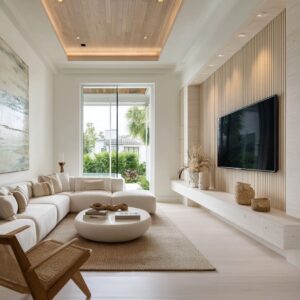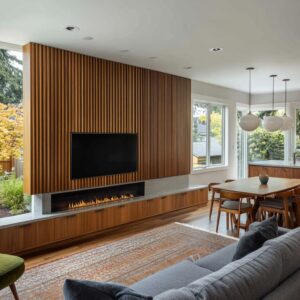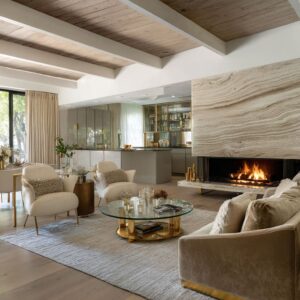
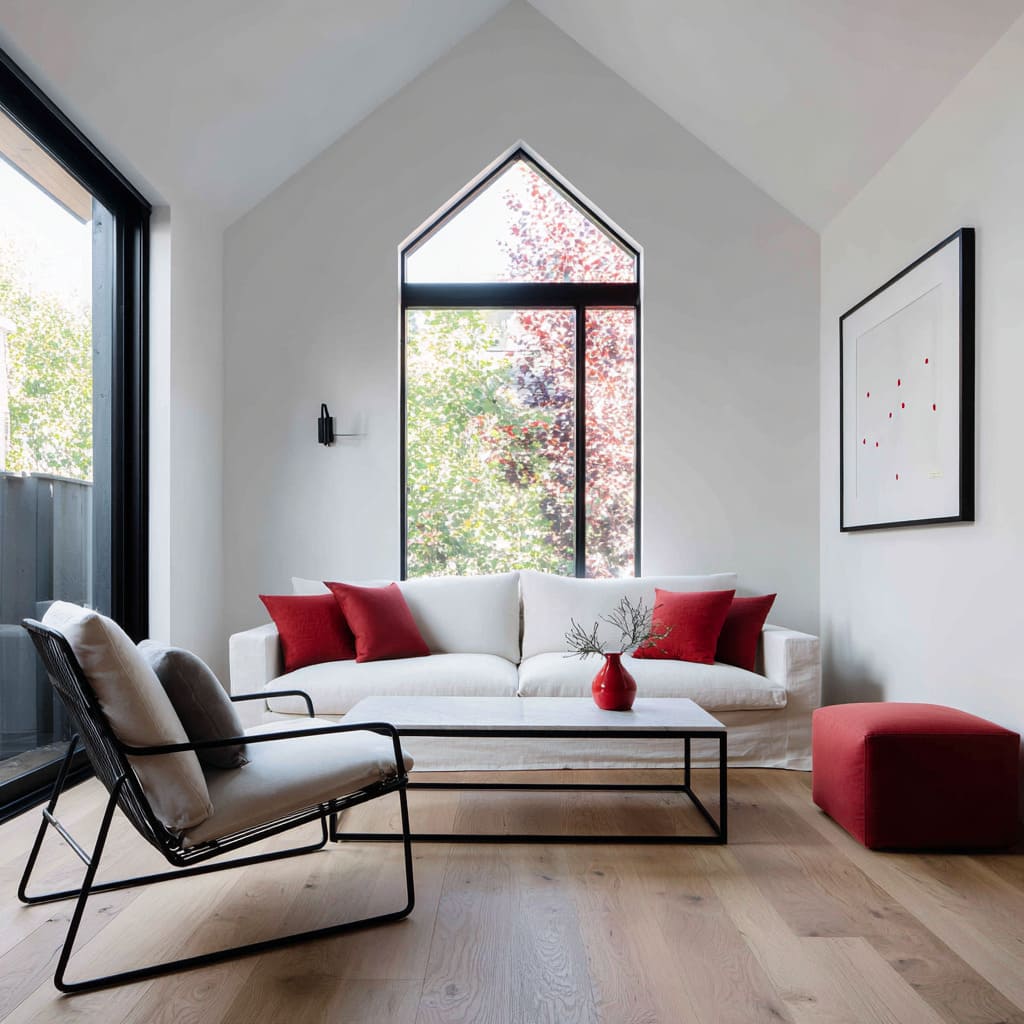
The combination of red, white, and black functions less like three separate hues and more like a coordinated system where each color changes character depending on texture, finish, and placement. In many red black white living room ideas, the background is never a stark white box; instead, the envelope tends to use softened, creamy tones, plaster-like finishes, or light wood floors that reduce sharp contrast.
This subtle warm foundation lets black behave as structure rather than heaviness, and it lets red emerge with more depth instead of appearing loud.
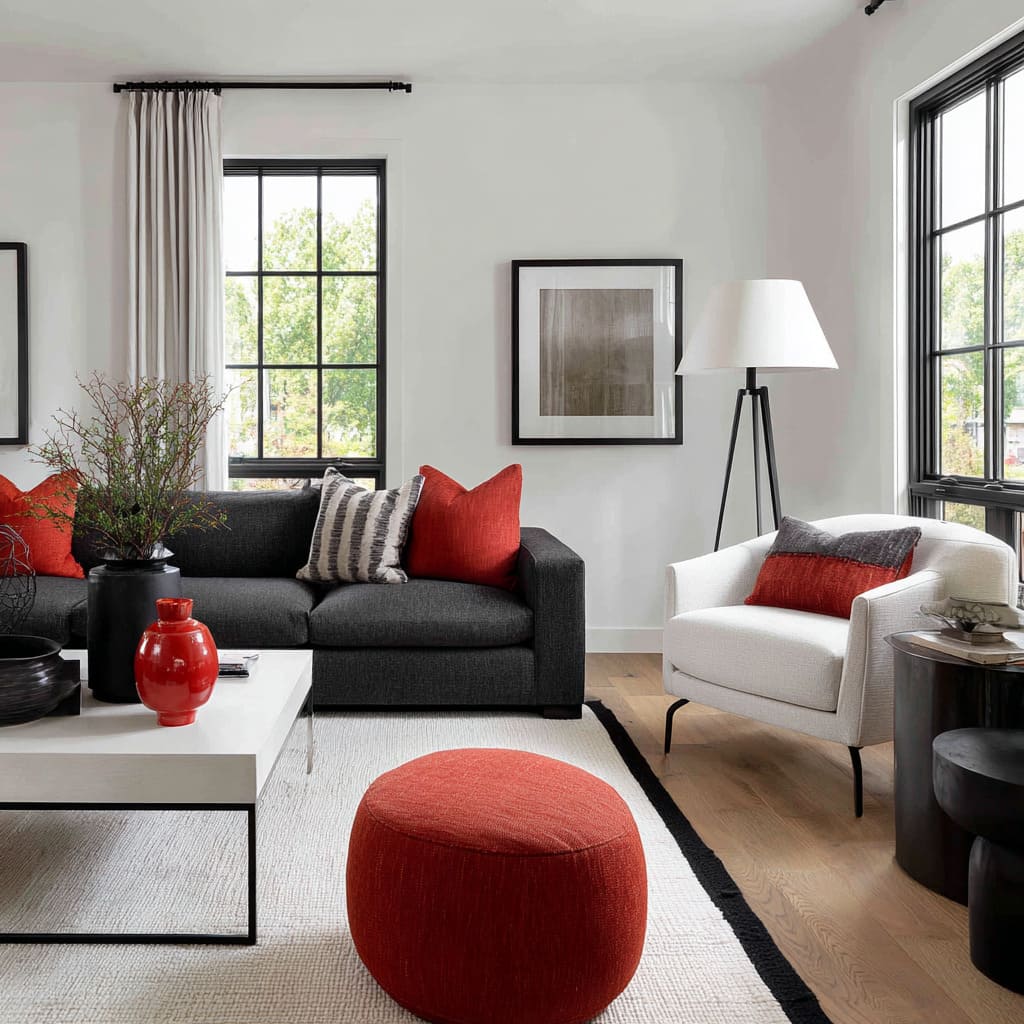
Black often carries two personalities at once—either as a strong mass, such as a charcoal sofa that absorbs light, or as a thin graphic outline through chairs, shelves, frames, and mullions. Red, meanwhile, becomes the color that shifts the emotional temperature of the room depending on whether it appears in glossy ceramics, soft cushions, ribbed textiles, or sculptural objects.
Together, the trio forms a palette where atmosphere is created through balance, spacing, and contrast rather than through saturation alone.
The Hidden Role of Supporting Neutrals and Why They Matter
Behind the visible colors, a network of neutrals provides the foundation that holds the palette together. Floors in pale honey wood, creamy limestone, ash-beige rugs, or stone-washed carpet tones prevent the room from feeling like a graphic poster.
These neutrals soften transitions between black and white and help red sit more comfortably in the scene. Many black white red living room ideas use this strategy to shift the palette from strict contrast into something more naturalistic.
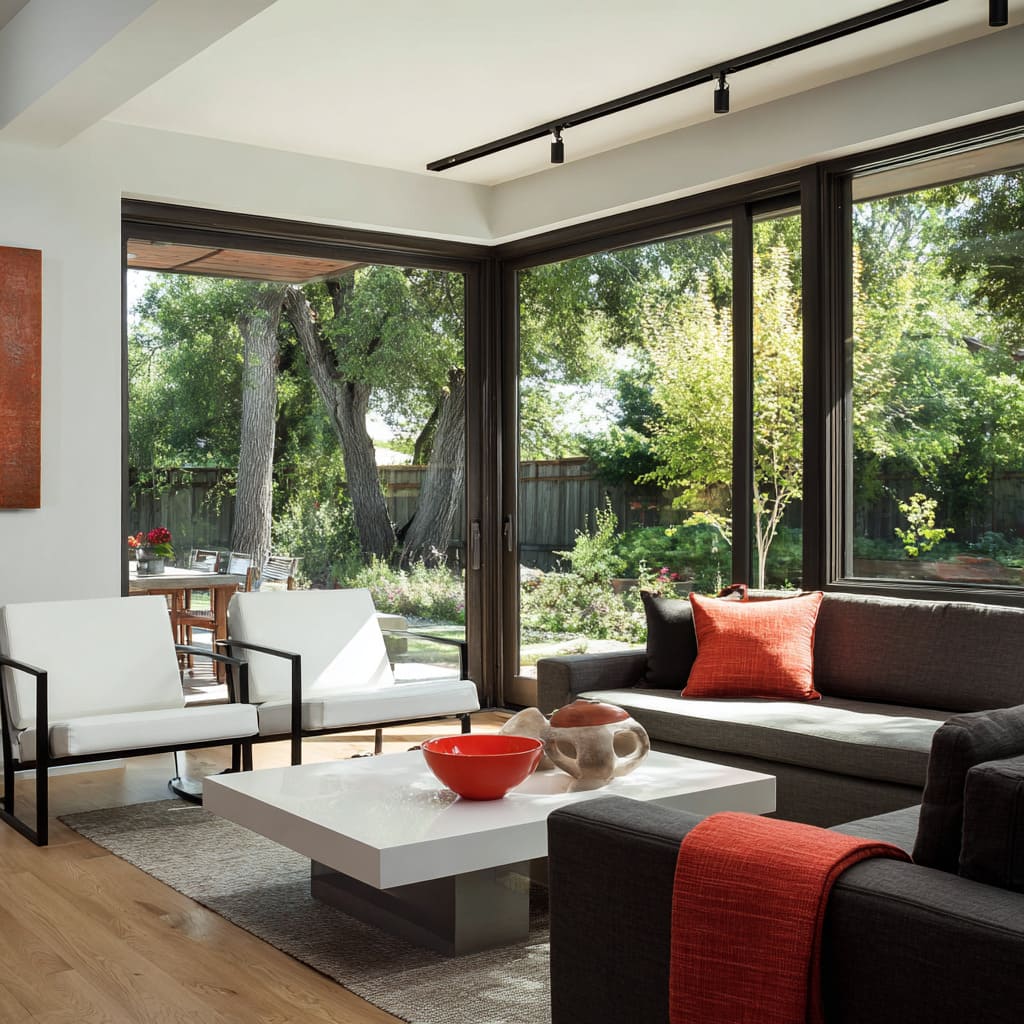
Because the supporting tones echo the earthy shades often seen outdoors—wood, bark, soil, foliage—they let red lean toward paprika, coral, terracotta, or rust without breaking harmony. This approach creates a feeling where red feels connected to natural surroundings rather than added as an isolated accent.
The look becomes deeper, calmer, and more timeless, even when sculptural red objects or bold red textiles are introduced into the space.
How Black Behaves as Line, Outline, Mass, and Structure
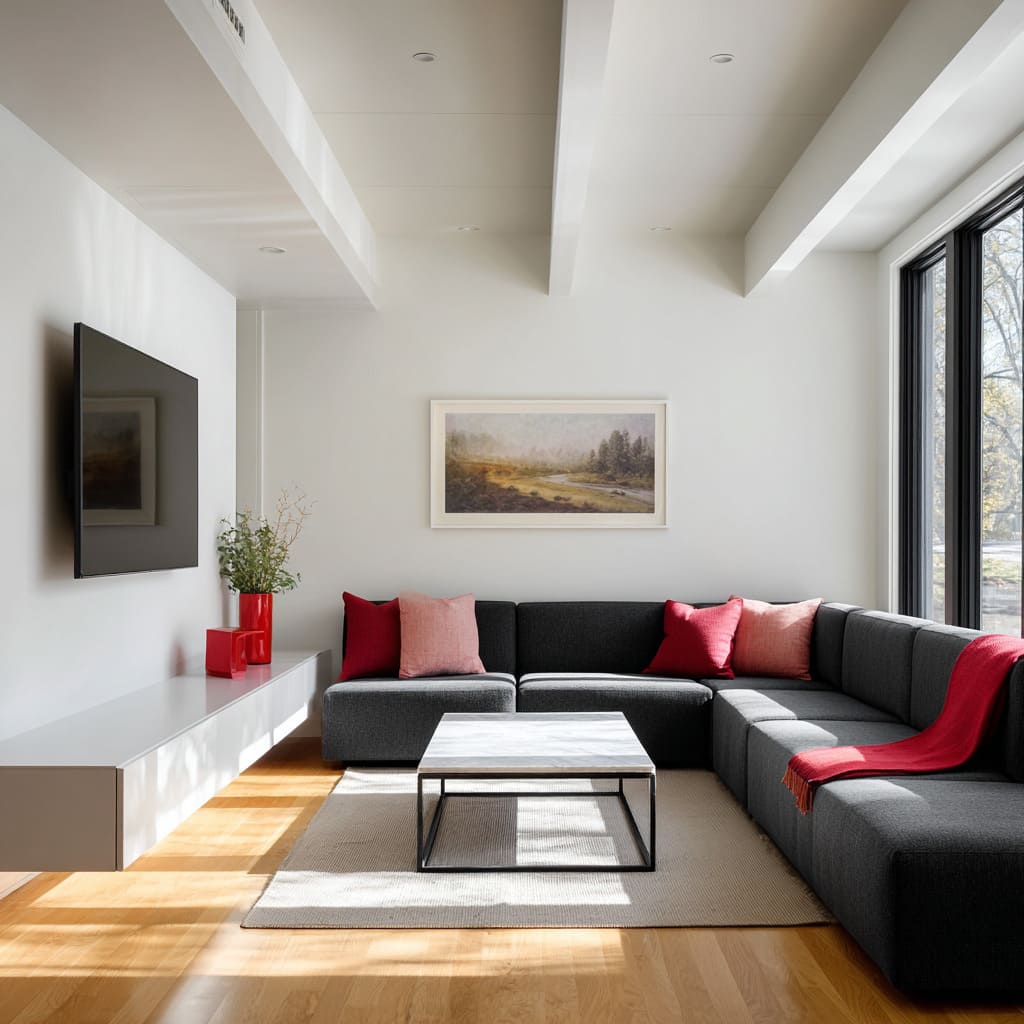
Black plays multiple roles inside the palette, and the effect changes dramatically depending on how much volume it receives. When used as mass—like a deep charcoal sectional or substantial media console—black sinks into the floor plane, offering a visual anchor that makes red accents feel more refined.
When black is only a trace—thin table bases, slim window frames, delicate shelf planks—it behaves like a drawing.
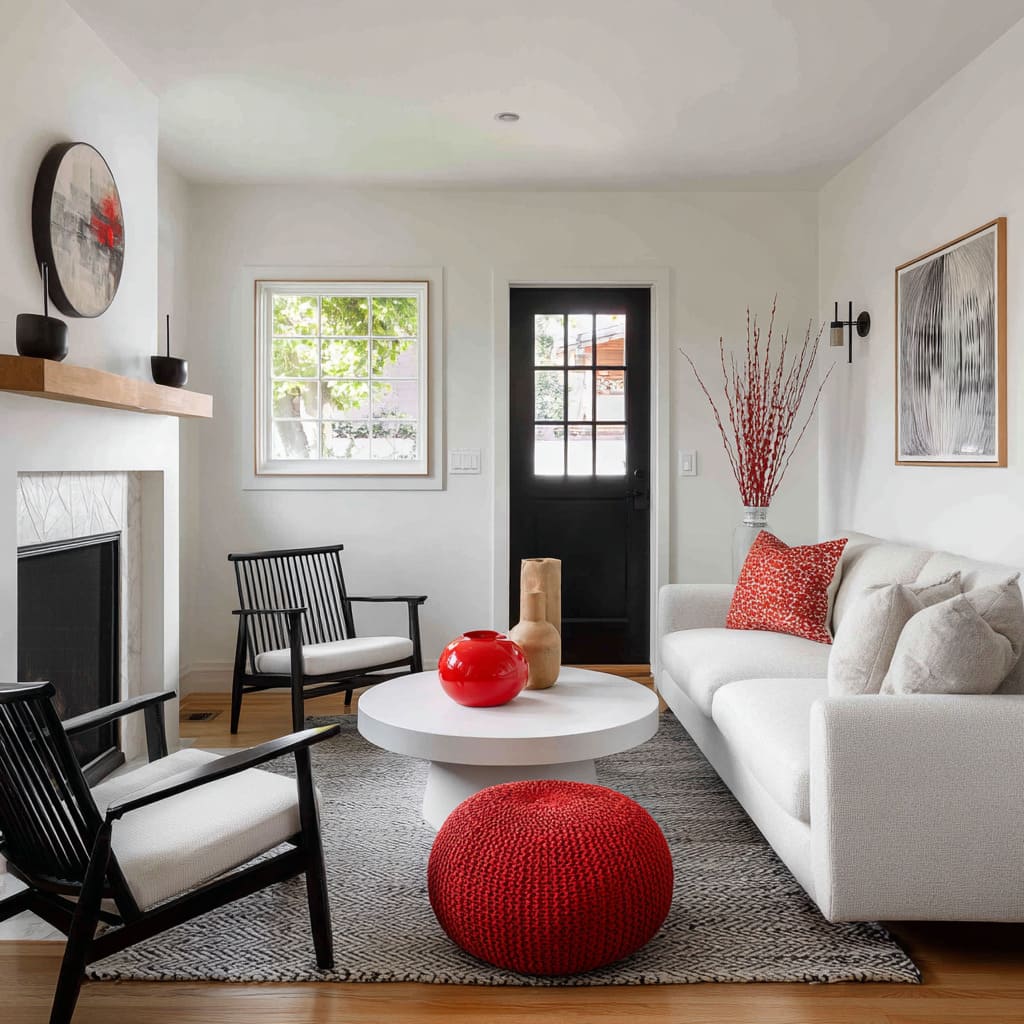
The design becomes lighter, air flows more freely, and the palette reads as clean and airy. In many living room decorating ideas with red black white, the best compositions come from repeating one type of black rather than mixing several modes at once.
A room dominated by slim black lines feels graphic and precise, while a room dominated by black mass feels grounded and stable. Both approaches change how red is perceived: the first makes it punchy and crisp, while the second makes it warmer and more sculptural.
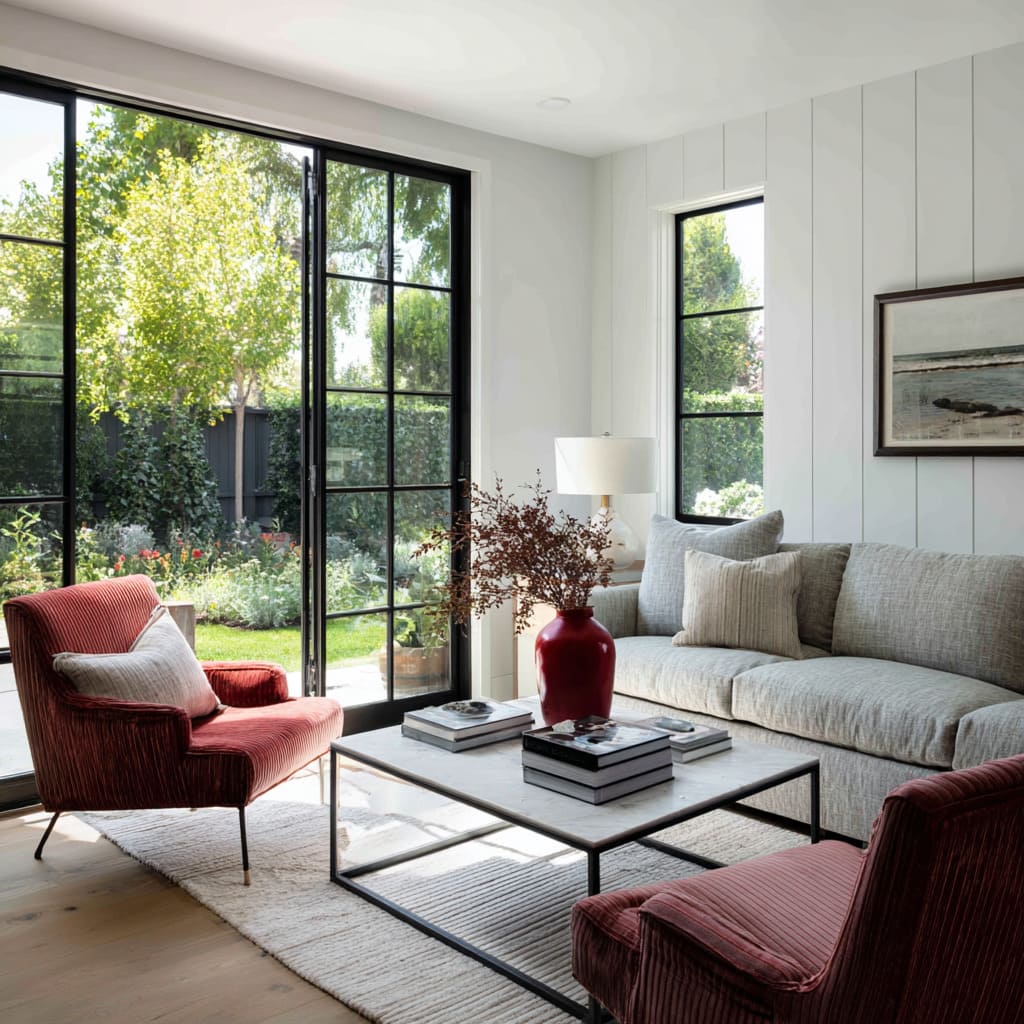
The Many Ways Red Can Behave: Sculpture, Textile, Path, and Echo
Red is the shape-shifter of this palette. Its personality changes every time the material or form changes.
In glossy bowls, lacquered spheres, or glass vases, red behaves like a polished sculptural object with strong reflections. In cushions, knitted poufs, ribbed armchairs, or woven throws, red becomes soft and tactile.
In tall branches or long runner carpets, it becomes a directional element guiding the eye through the architecture. And in artwork, it becomes a coded mark or a focused gesture that lifts the palette off the furniture and into the vertical plane.
Many red black and white living room decorating ideas show how red can be placed in controlled layers: one piece on the floor, another at coffee-table height, another on a shelf, and another on the wall. This tiered placement lets red breathe through the entire height of the room.
It rarely appears in one heavy cluster; instead, it moves across the space in measured intervals that feel rhythmic and intentional.
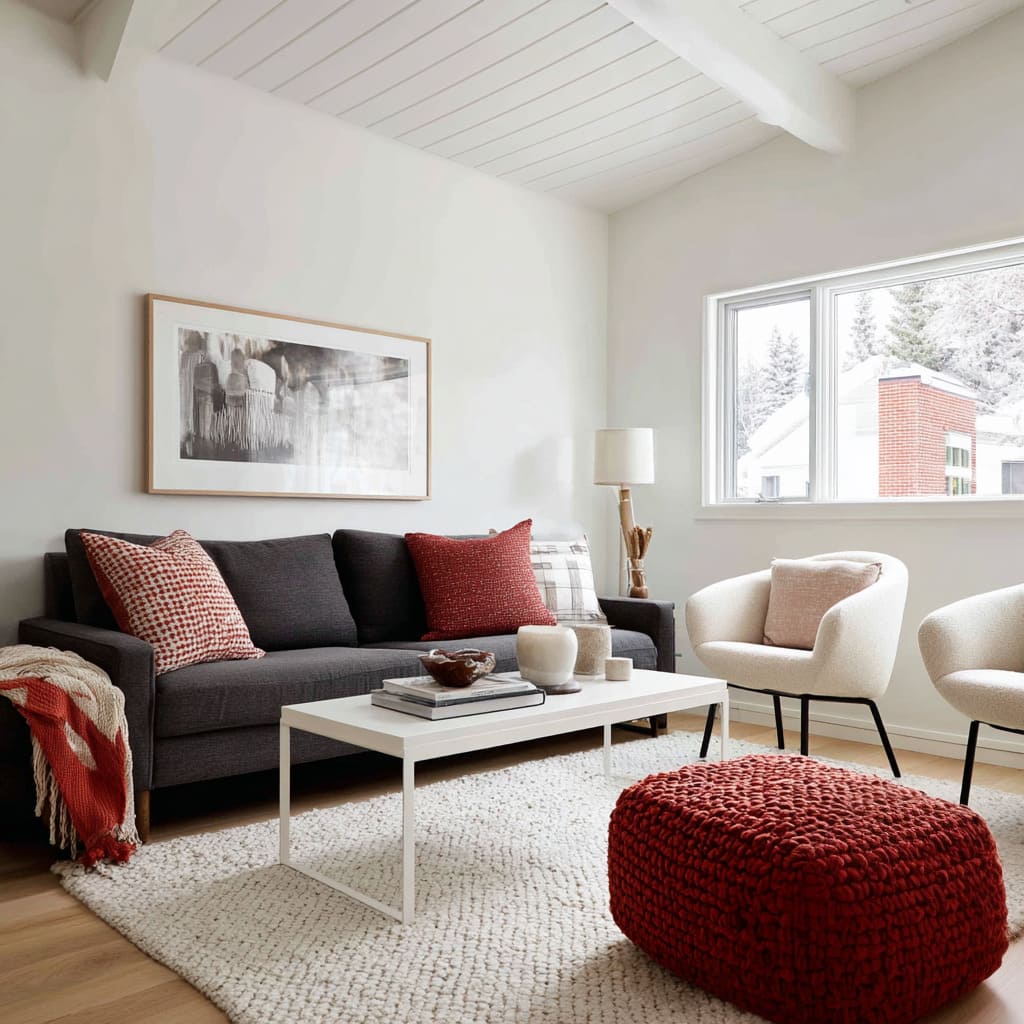
Types of Red Elements and How They Shift the Mood
Red in the living area often falls into a few repeating categories, each one changing the emotional tone of the space in a specific way. Thinking of red in these types makes it easier to see how the palette functions as a whole, even in very refined or minimal interiors:.
- Sculptural objects
Vases, bowls, spheres, artistic stools, and small figurines take red into a three-dimensional, almost gallery-like zone. Their forms are often simple but strong, which allows color and light reflection to carry most of the visual impact. They usually sit on quiet bases such as stone, pale wood, or matte white tables, so their silhouettes stay clear. - Soft textiles
Cushions, throws, poufs, and rugs interpret red through weave, pile, and knit. These items bring friendliness and warmth, especially when the fabrics have visible ribs or loops that catch the light. Because textiles are easy to layer, they often mix several nearby tones—brick, berry, coral—rather than a single pure red, which makes the scene feel deeper and less flat. - Seating silhouettes
Armchairs and lounge seats upholstered in red, especially ribbed or corduroy-type fabrics, turn color into a larger architectural presence inside the room. These pieces often carry rounded backs or softened corners, so the strong hue feels inviting instead of severe. Slim metal legs or light bases help them stay visually light. - Vertical accents and branches
Tall vases with red branches, berry stems, or foliage draw the eye upward and prevent color from staying only at seating height. These elements often repeat the same hue used on cushions or table objects but in a looser, more organic form, giving the palette height and a sense of movement. - Functional objects with color
Teapots, coffee makers, small appliances, trays, or storage boxes in red bring the palette into daily rituals. They tend to appear in nooks, alcoves, or compact kitchen corners next to the living space, linking the main seating area with worktop or console zones without turning them into decorative stages only.
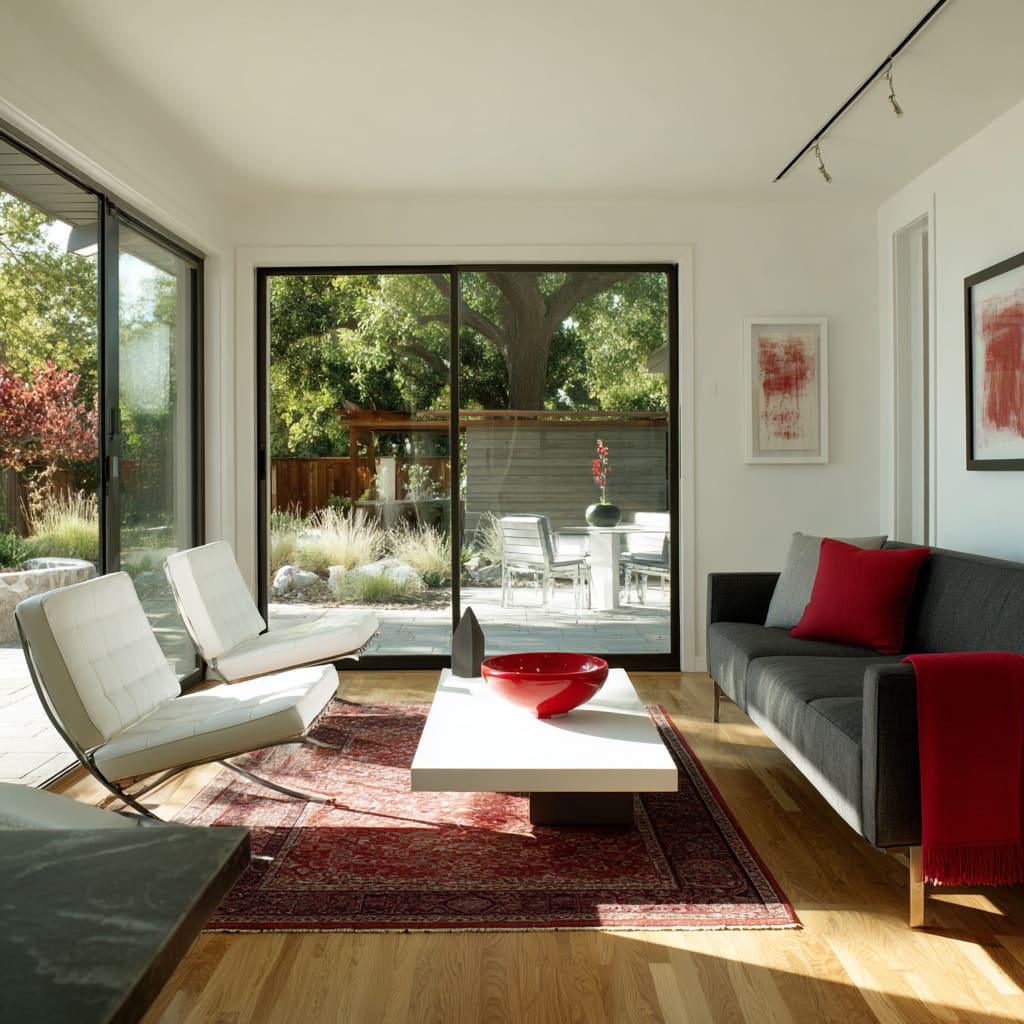
White as Texture, Air, and Volume Rather Than Plain Color
White in such designs is not a sterile backdrop but an active ingredient. It shows up as chalky plaster, soft upholstery, ribbed paneling, coffered ceilings, boucle chairs, slipcovered sofas, or matte stone tables.
The whiteness often feels sunlit rather than clinical, especially when placed beside warm floors or natural light. In many red white black living room ideas, white behaves like the air of the room: it fills in negative space, expands volume, and softens transitions.
Because the white surfaces are rarely glossy, they absorb daylight in a way that brings out the texture of cushions, knitted poufs, ribbed throws, or layered ceramics. This soft quality is one reason red looks so vibrant in white rooms—the matte backdrop keeps it grounded while still highlighting its presence.
White makes space feel generous, allowing red accents to be expressive without overwhelming the composition.
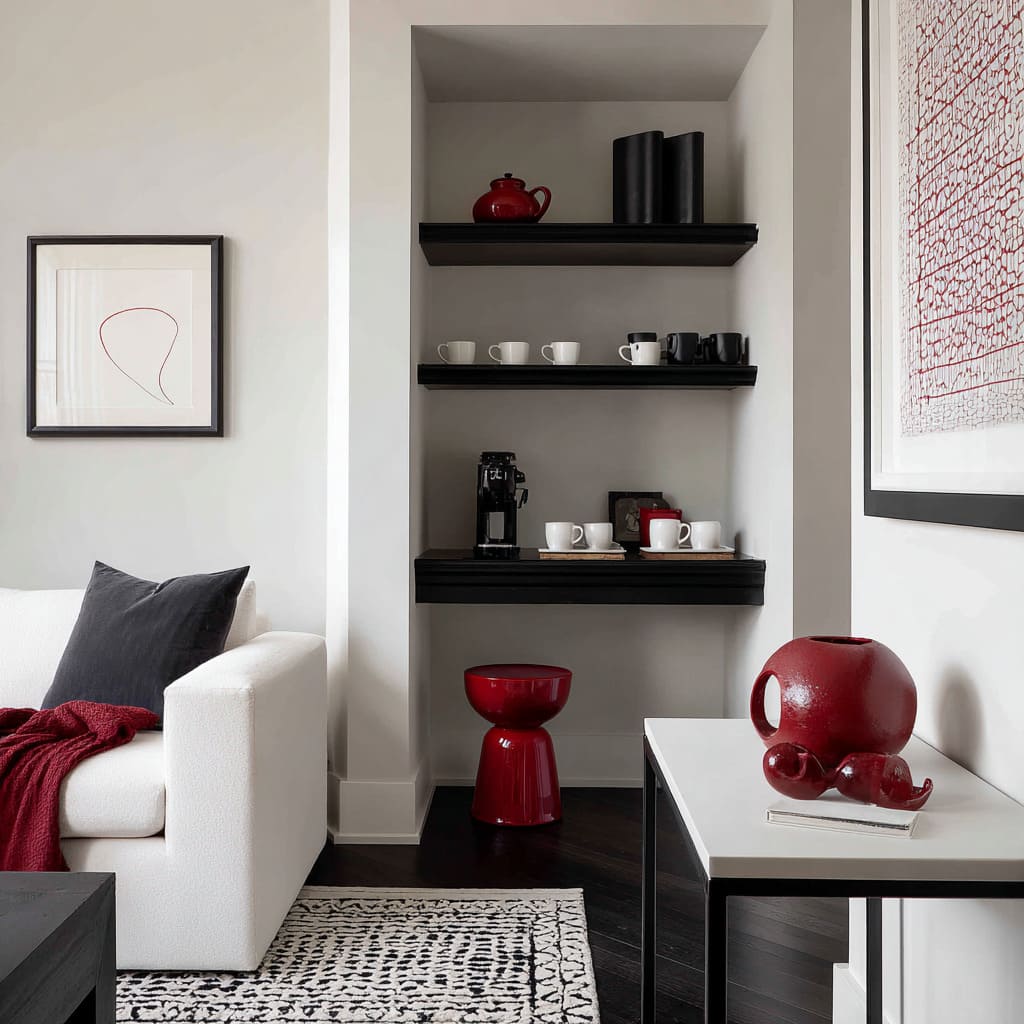
The Geometry Behind the Palette: Curves, Grids, Ribs, and Repetition
When shape becomes part of the palette, the room gains depth that color alone cannot create. Curves appear in rounded chairs, circular tables, spherical sculptures, bowed vases, and arched fireplace openings.
These curved forms soften the contrast between red and black and prevent the palette from feeling too angular. Grids appear in shelving layouts, wainscoting, French door panes, or coffered ceilings.
They create regularity and rhythm without introducing new colors. Ribbed textures—for example, corduroy armchairs, ribbed lamp bases, knit stools, or vertical paneling—add subtle movement to the scene as light slides over repeated ridges.
Many black white and red living room designs quietly rely on shape repetition: curves paired with curves, lines paired with lines, grids paired with grids. The eye senses this structure even before it notices specific objects, creating a room that feels consistent, steady, and visually comfortable.
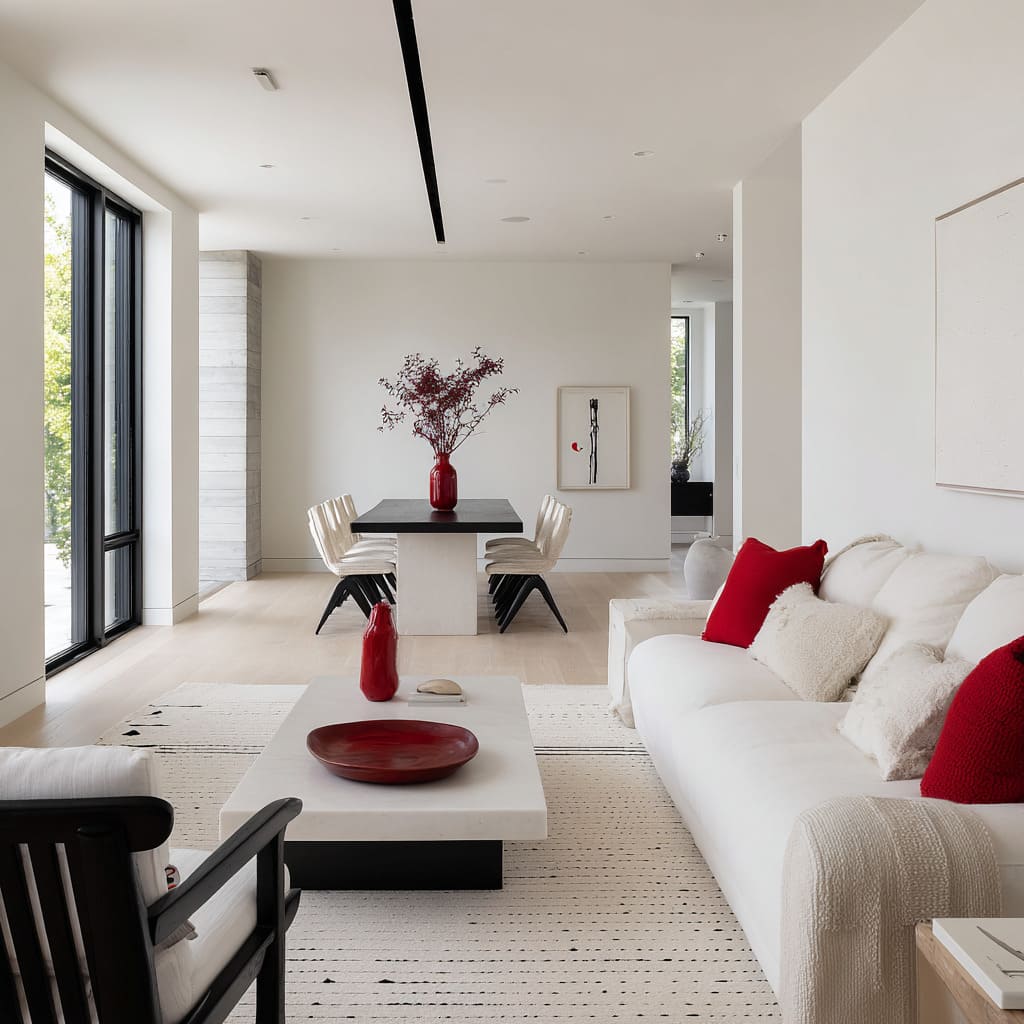
Shape Strategies That Support Color Balance
The way shapes are combined in such interior designs strongly affects how the red–white–black palette feels in the room. Several recurring strategies can be seen:
Rounded tables, poufs, and armchairs often carry red or warm neutrals, while straight lines in shelves, frames, beams, and consoles tend to be black or white. This pairing allows strong color to feel gentle, because it sits in soft silhouettes rather than sharp edges, while the linear elements quietly hold the room together.
Window panes, wall paneling, coffered ceilings, and built-in shelving organize the background into a subtle grid. Even when the palette uses intense color differences, the repeating square or rectangular pattern calms the eye and makes the space feel ordered.
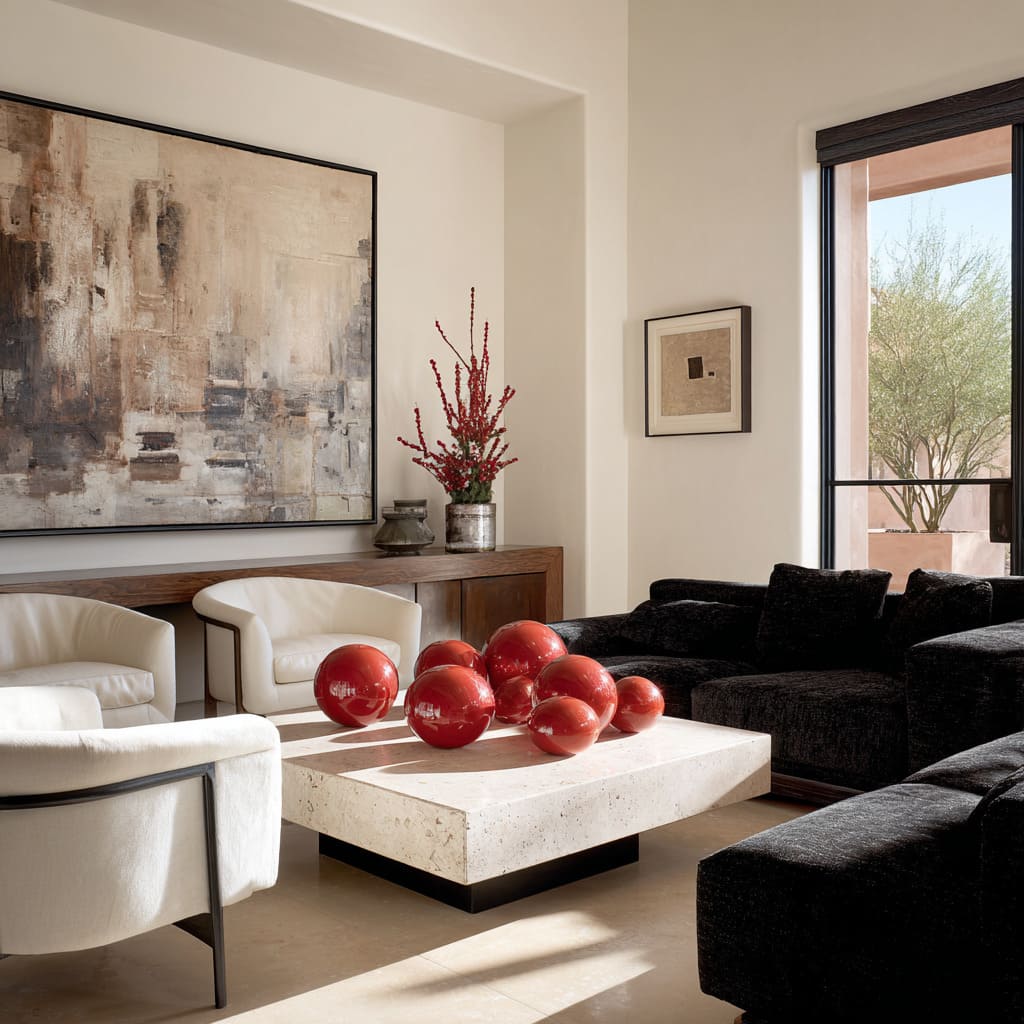
Corduroy fabrics, ribbed lamp bases, fluted ceramics, and striped rugs introduce many fine lines that echo architectural elements. These textures sit well with black frames and white boards because they repeat similar directions and densities of line, turning color blocks into part of a bigger rhythm.
A single round table, a group of red vessels, or a pair of curved chairs often appears at the center of the seating group. This gathering of rounded forms becomes the soft heart of the composition, balancing the straight edges of sofas, benches, and wall lines around it.
Many designs repeat similar shapes on both sides of a fireplace or central axis—shelves, chairs, or lamps—but introduce small shifts in height, object type, or color. This near-symmetry creates calm and balance, while the slight differences keep the living room from feeling rigid or overly staged.
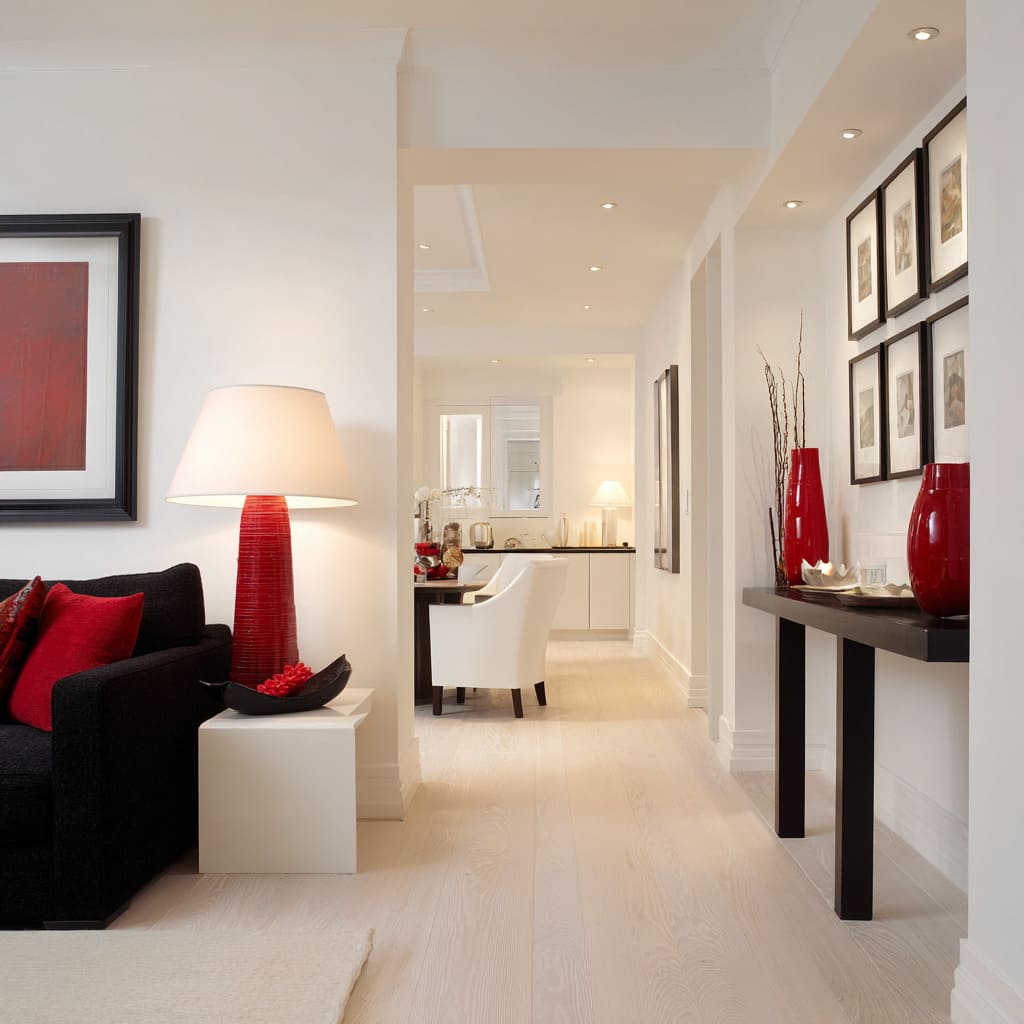
How Red Reacts to Windows, Light, and Outdoor Views
Red changes character depending on what exists outside the windows. When the exterior shows warm foliage, dry grasses, or sunlit earth, red often appears warmer—rust, paprika, berry, or deep coral.
When the outdoor greenery is cooler, the reds lean toward clear scarlet or crimson. Many interior concepts place red where sunlight can strike it directly: glossy bowls catching midday reflection, ribbed vases glowing under side-light, or red cushions scattering gentle warm tones across a charcoal sofa.
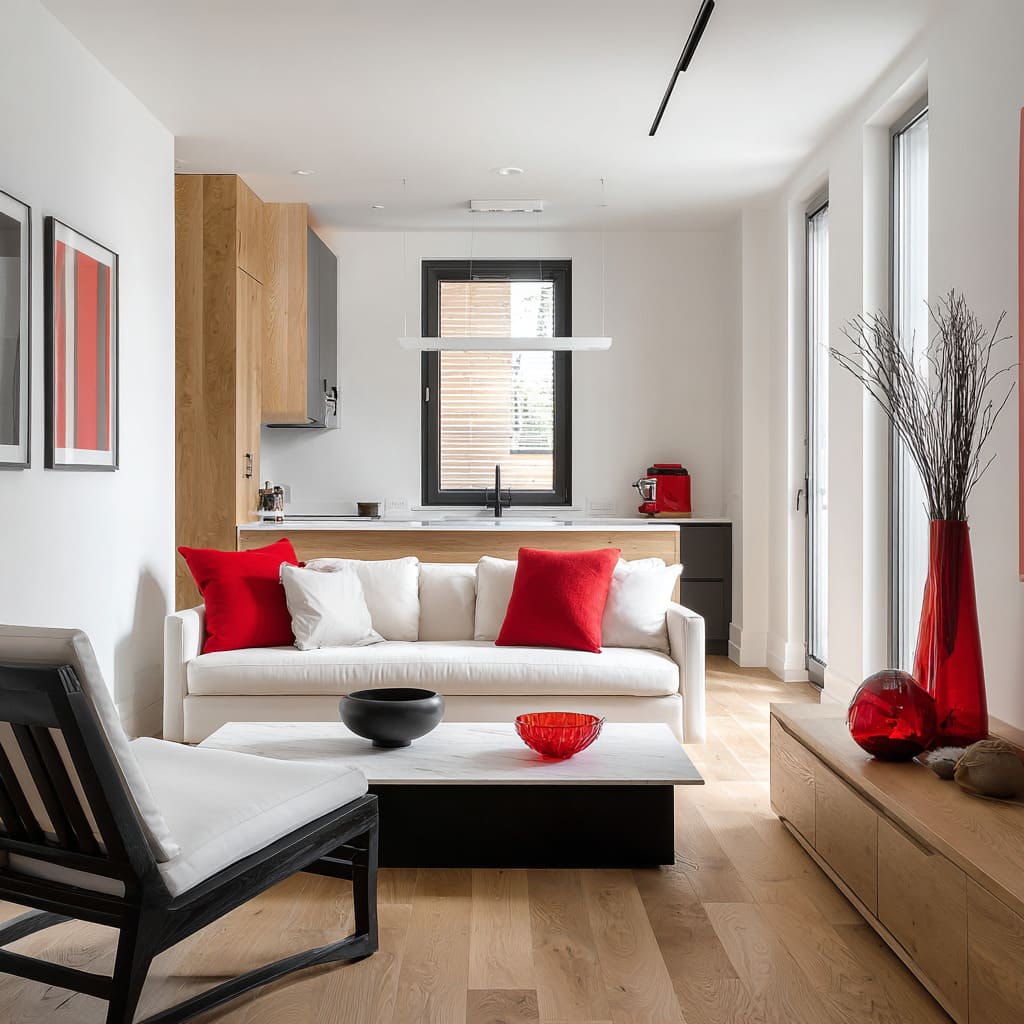
In red black white living room designs, the palette often draws from outdoor colors without mirroring them literally. Greenery outside creates a natural backdrop that makes interior red feel more pronounced, while warm wood outside connects subtly to indoor wood floors or natural-toned rugs.
Red becomes the indoor counterpart to nature’s color, a response rather than a contradiction.
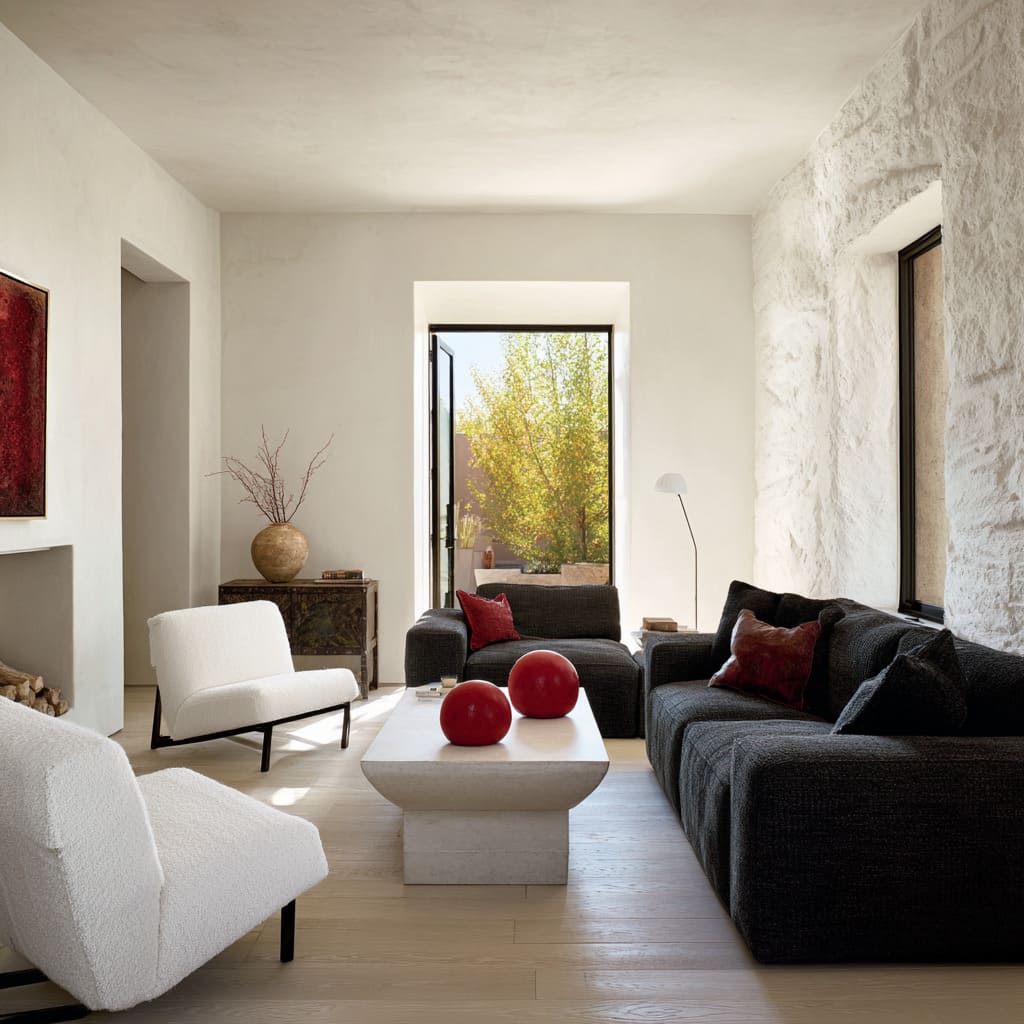
How Art Controls the Intensity of the Palette
Art rarely dominates the palette, but it fine-tunes it. Many rooms use neutral or monochrome artworks so that the red stays in three-dimensional decor rather than turning into wall color.
Others include a small red gesture—a single dot, stroke, or block—usually placed against a large neutral field. This tiny echo of red lifts the palette into the vertical space without overwhelming the walls.
In more structured red black and white living room designs, art becomes a formal anchor, aligning with shelves, beams, or fireplaces to create symmetry. In softer rooms, art becomes a gentle counterbalance: blurry landscapes, geometric forms, textured neutrals.
Art determines whether the palette feels sculptural, airy, grounded, or cozy, simply by choosing how much red the eye sees above eye level.
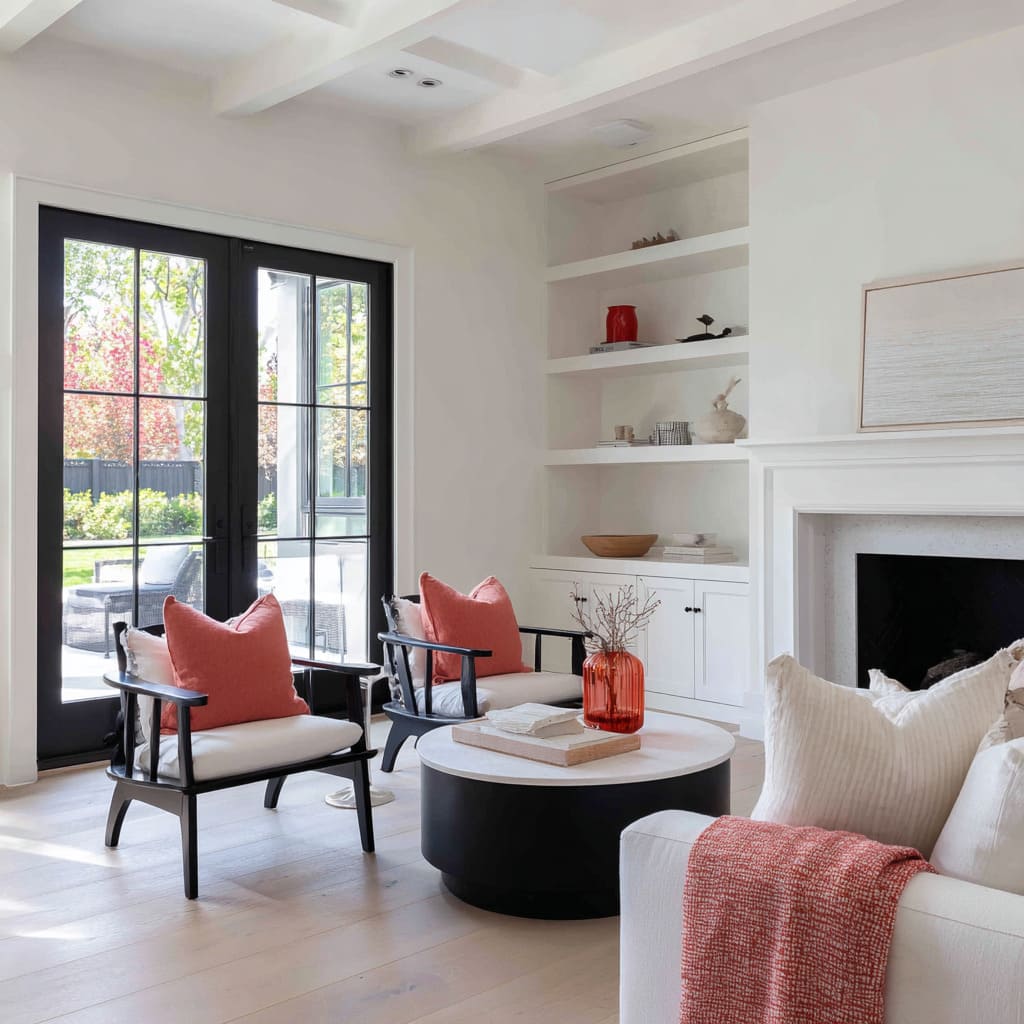
Mood Families Within the Same Color Palette
Even when limited to red, white, and black, the atmosphere of a room changes dramatically depending on texture, scale, and finish. Some interiors lean toward sun-washed simplicity, using soft woods, matte charcoals, and weathered stone to create calm backgrounds where red appears as sculptural punctuation.
Others explore a more graphic direction with slim black frames, crisp white furniture, and precise arrangements of red vases or cushions.
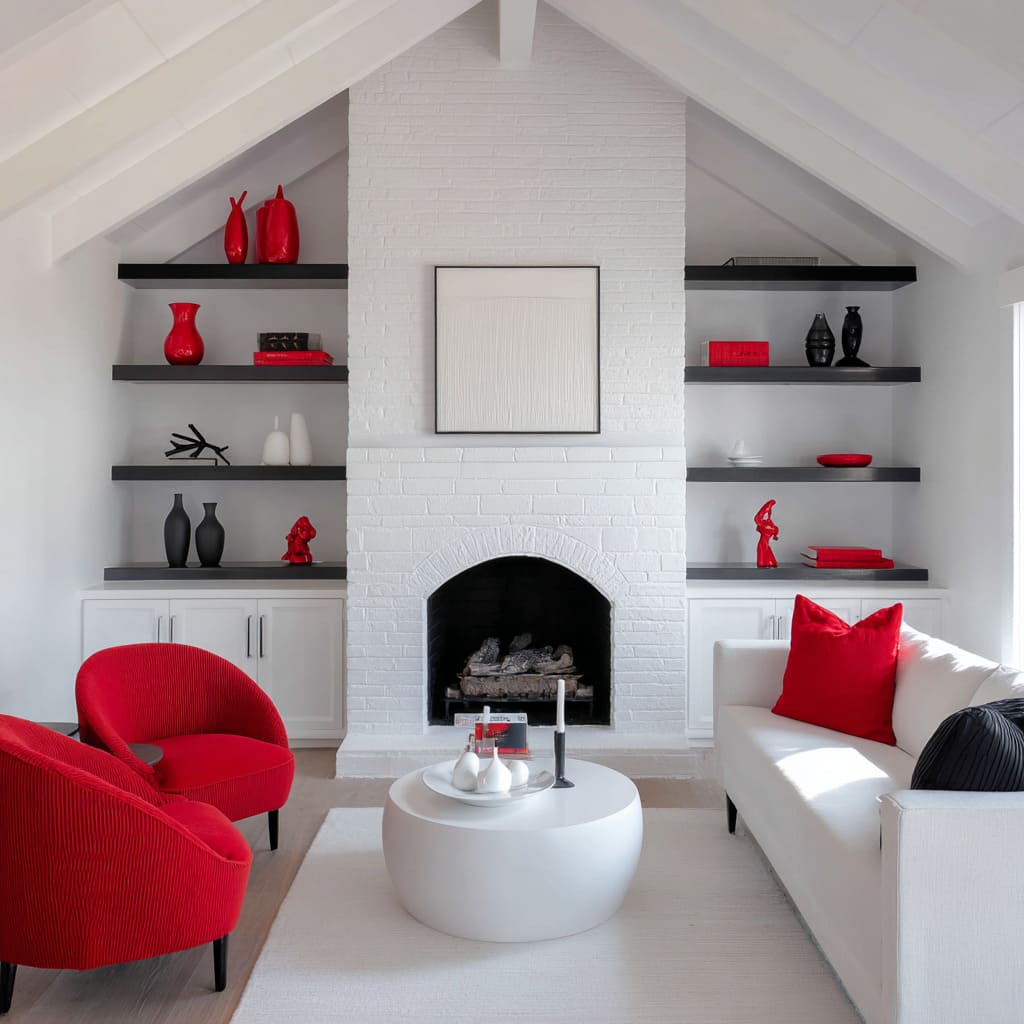
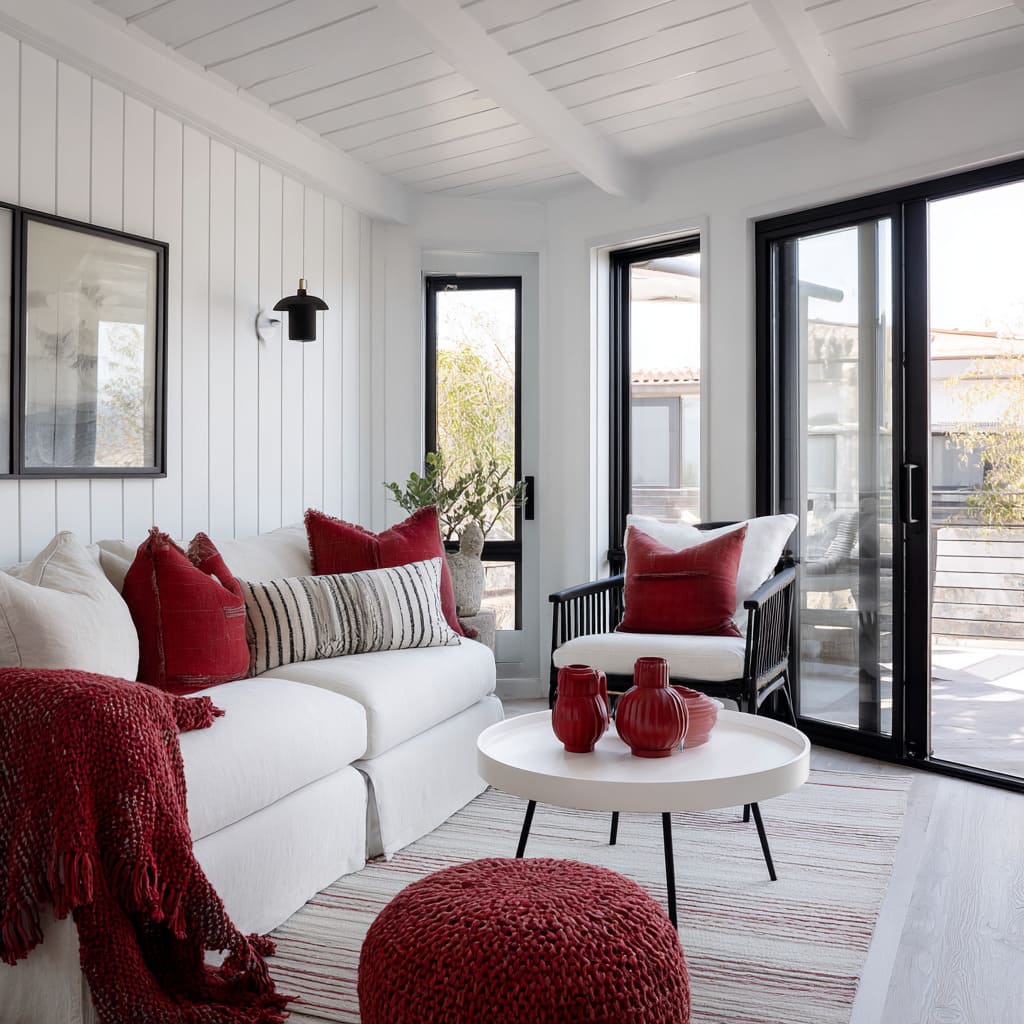
Some choose a coastal-leaning approach with slipcovers, ribbed boards, and knitted red poufs that feel breezy and relaxed. And others build a structured, gallery-like arrangement with symmetrical shelving, matte white walls, and sculptural red ceramics.
This variety shows how black red white living room ideas can shift between softness and structure simply by adjusting materiality and spatial rhythm.
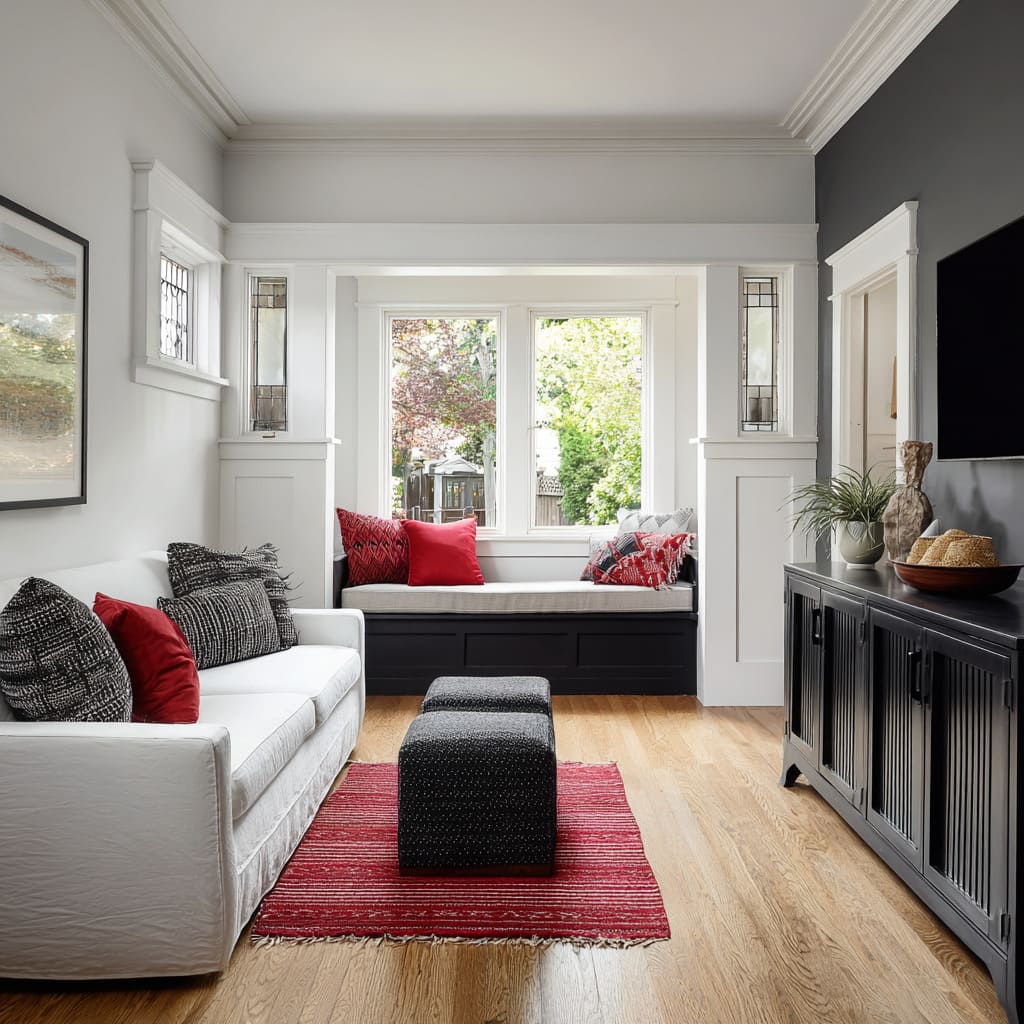
How Objects Are Spaced and Why Negative Space Is a Key Ingredient
Spacing is one of the most important factors in such interior designs. Red objects are rarely crowded; they sit with generous gaps around them, especially on pale tables or shelving.
A glossy bowl might appear alone on a stone slab, a ribbed vase might hold branches on a nearly empty console, or a bright red pouf might sit as a single accent on a large woven rug. Black shelving often leaves wide breathing room between objects, turning each piece into a quiet focal point.
White slipcovered furniture adds visual lightness that enlarges the gaps between colors. In many red black and white living room ideas, the restraint in spacing is what keeps the palette from feeling too intense.
Empty surfaces and open zones act as part of the color strategy—they allow each accent to carry more presence without overwhelming the composition.
How the Palette Behaves Across Open Layouts and Multi-Zone Spaces
When the living zone flows into a dining area, reading nook, or compact kitchen, red becomes the element that connects spaces without demanding uniformity. A red bowl in the living space might align visually with a tall branch arrangement in the dining area.
A red pillow on the sofa may echo a red ceramic accent on a sideboard across the room. The palette becomes a thread instead of a cluster.
This strategy appears across many red black and white living room ideas where color is distributed horizontally through long sightlines or vertically along built-in shelving and fireplace walls. The continuity is built through material, shape, and rhythm rather than mere matching.
In open rooms, red often becomes the guiding point, black the structure that defines zones, and white the volume that keeps everything bright and balanced.