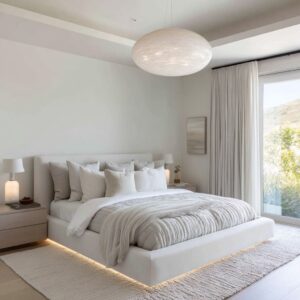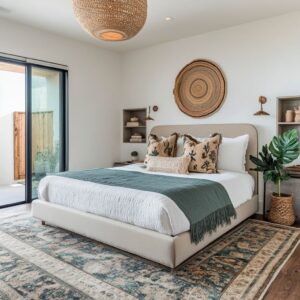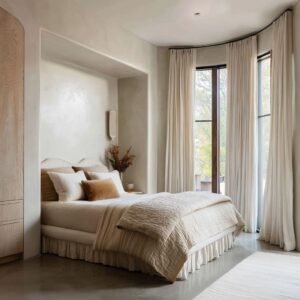
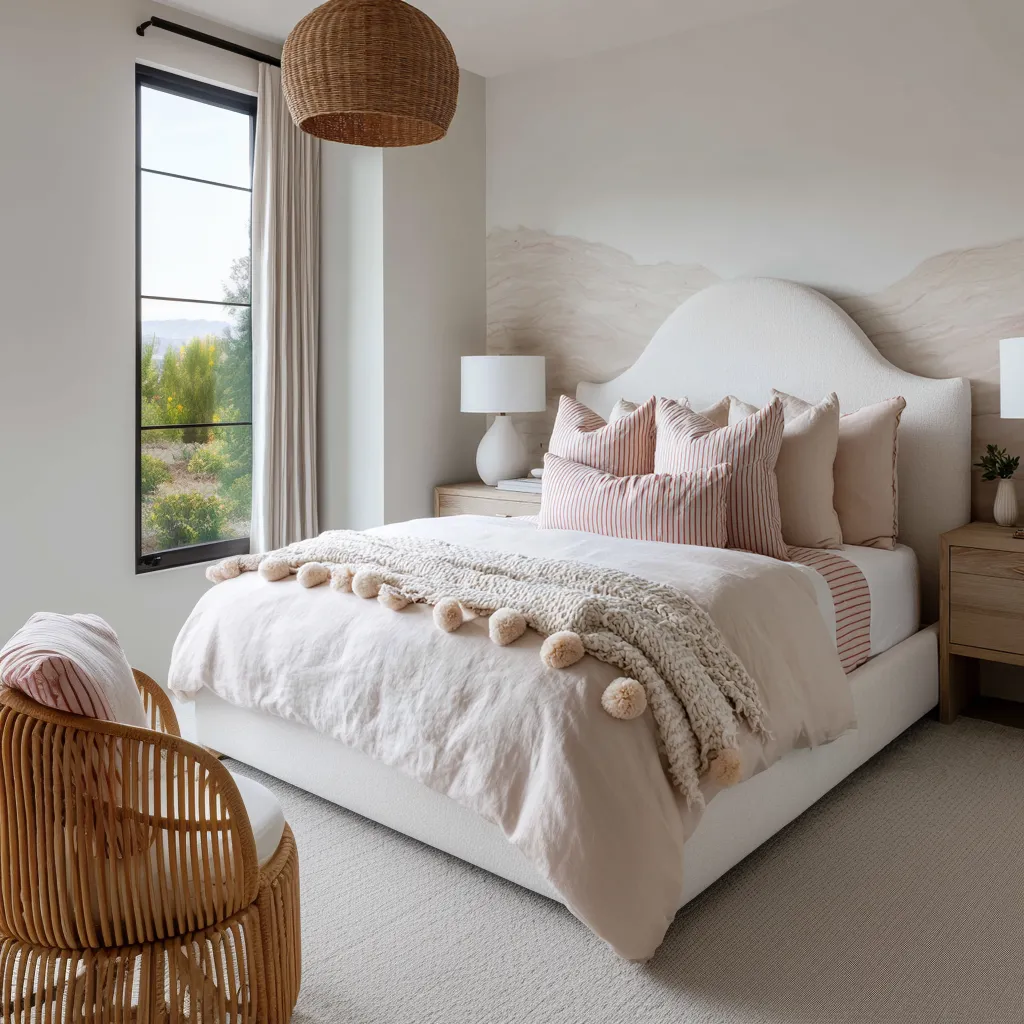
Romantic bedroom design often gets reduced to a narrow set of clichés: floral wallpaper, frilly bedding, carved furniture, and a room packed with decorative pieces. Modern romantic style bedroom ideas bring romance through atmosphere, shape, texture, balance, and a feeling of shelter.
That shift matters for anyone trying to bring a romantic mood into a typical bedroom. Most people are not starting with a grand suite, an antique house, or a room full of custom millwork.
They are working with a standard wall, one bed, maybe one window, and limited floor space. The good news is that romantic style does not depend on expensive decoration or a heavily themed look.
It depends on a set of design moves that can work in ordinary spaces: a centered composition, softened silhouettes, warm blush notes, natural textures, one grounding contrast, and enough layering to make the room feel human.
Centered bed wall for a calm look
If you want a typical bedroom to feel romantic, begin with the bed wall. That is where most of the emotional force sits.
The bed is usually centered and gives a stable frame, even in rooms that felt loose and collected. Symmetry made the room feel calm, while a few softer gestures kept it from becoming stiff.
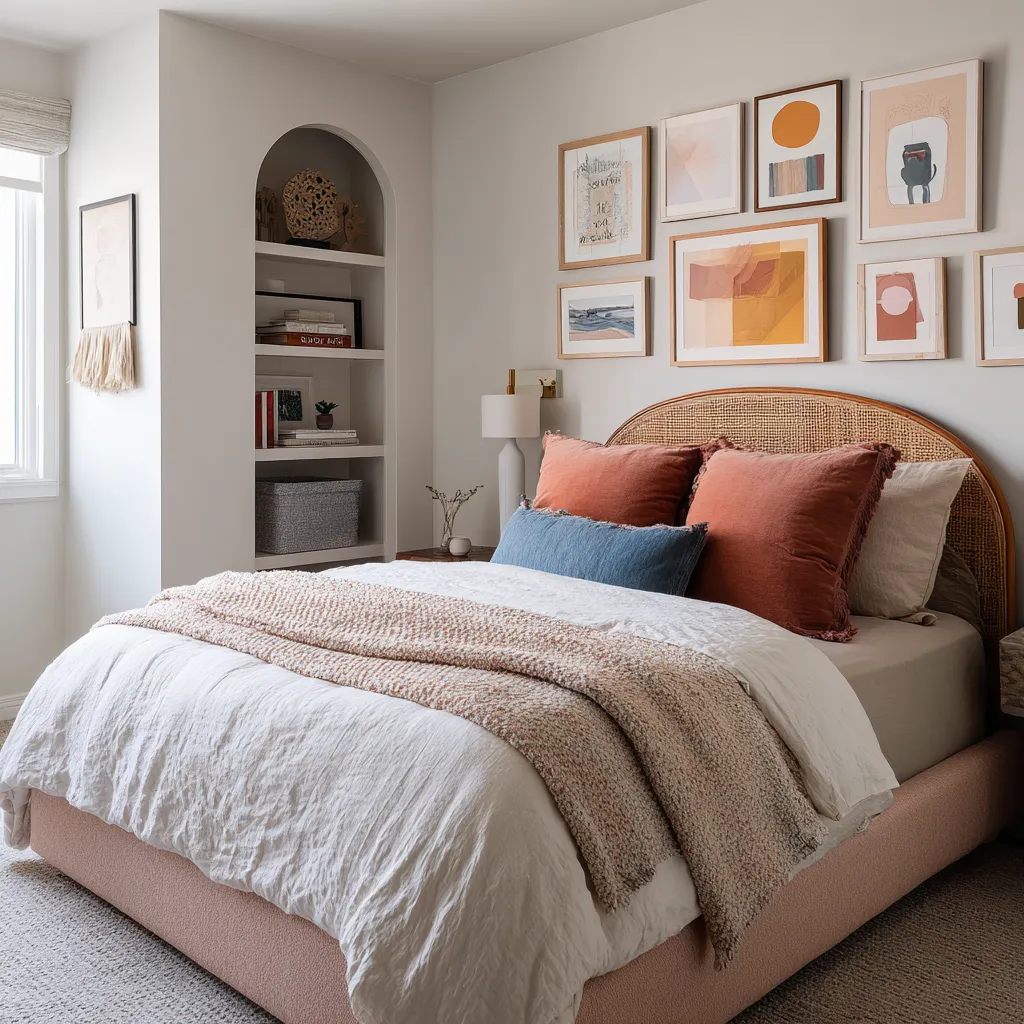
That means the most useful starting move is often simple: place the bed centrally if the room allows it, balance the sides visually, and then introduce one or two gentle interruptions. That interruption might be a casually draped throw, a slightly irregular art arrangement, one lamp that differs from the other, an off-center plant, or a darker cushion on one side.
The point is not perfect matching. The point is legibility with a little softness.
A romantic room tends to feel better when the eye understands it quickly. Too much scatter weakens the mood.
A centered bed wall gives the room a clear emotional anchor.
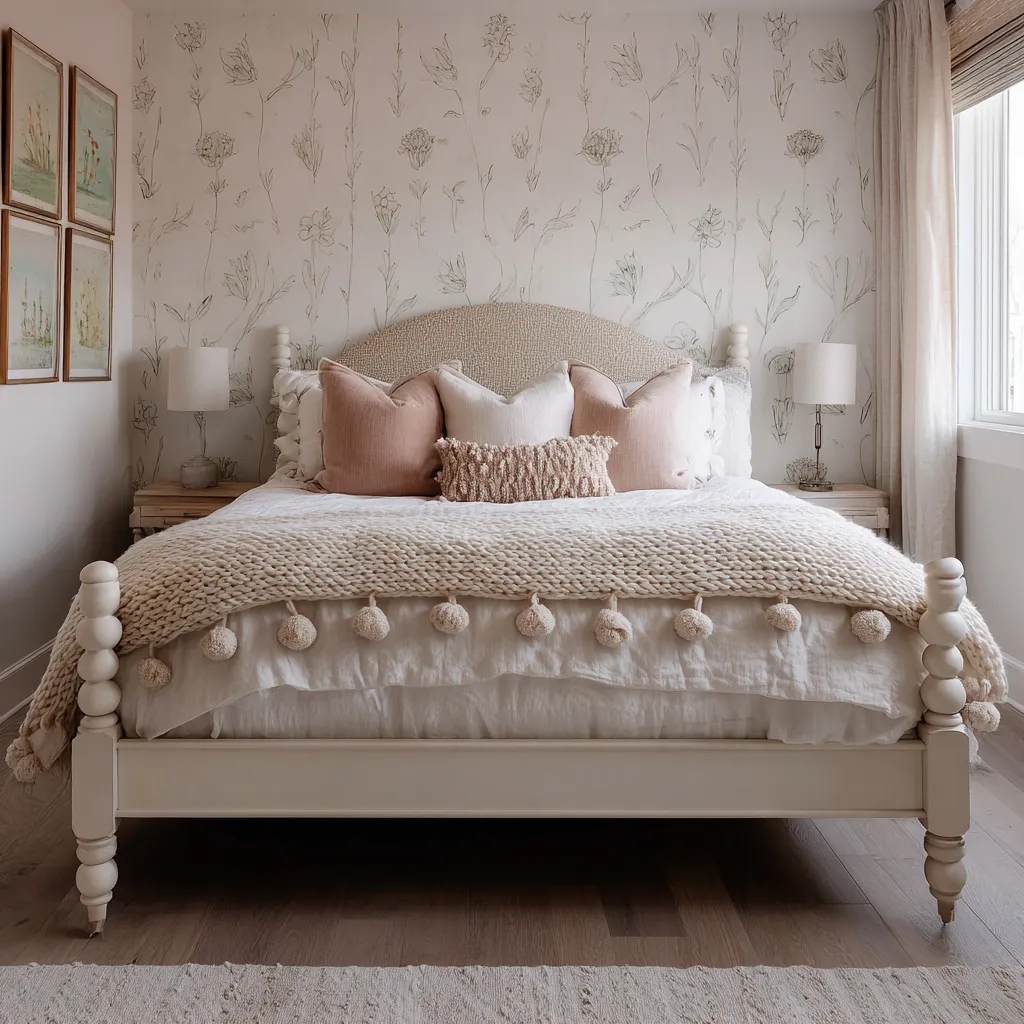
Romance now comes from softness of atmosphere
Romance feel is not only driven by florals, frills, or abundance. It come through five main mechanisms: enclosure, repeated soft edges, tactile layering, color balancing, and mild asymmetry inside a stable structure.
This is why many current romantic bedrooms feel fresher than older versions of the style. Instead of filling every surface with pretty detail, they choose one main move and support it well.
A room might have a scalloped headboard, a pale mural-like wall, a cane chair, and a blush knit throw, but it does not need five more decorative ideas piled on top. That change makes romantic design much easier to apply in a normal home.
You do not need to turn the bedroom into a stage set. You need to make it feel sheltered, soft, and steady.
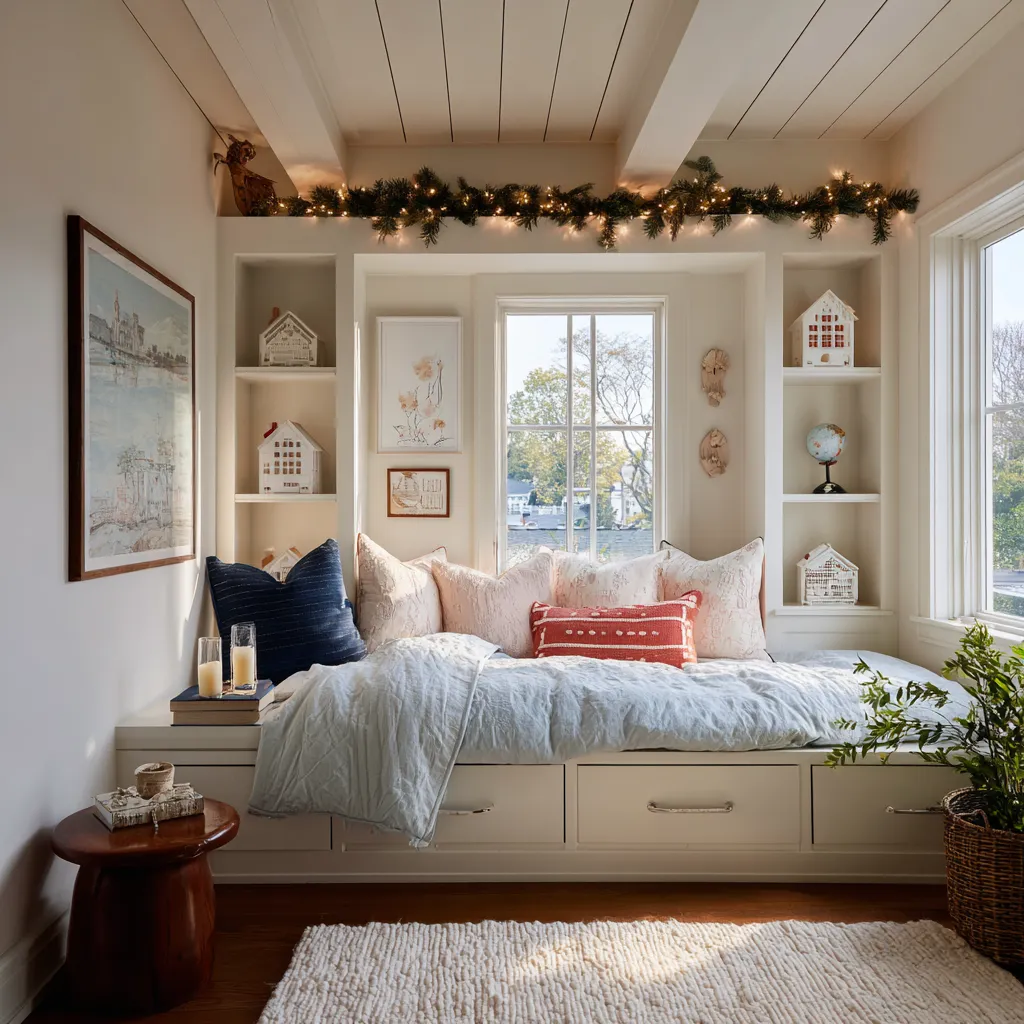
Use blush as warmth, not as the whole story
Blush is by far the most common warm note in romantic style bedroom ideas, but it should not work alone. Pink softness can easily become vague, flat, or overly sweet if it is not supported by something with more weight.
The romantic designs that felt more settled usually paired blush with one corrective element. Blue gives the room air and distance.
Green adds a leaf-toned natural note. Rust or coral adds life and pulse.
Wood and woven straw tones ground the palette. A black curtain rod, dark floor, or deeper beam could also act as a stabilizer.
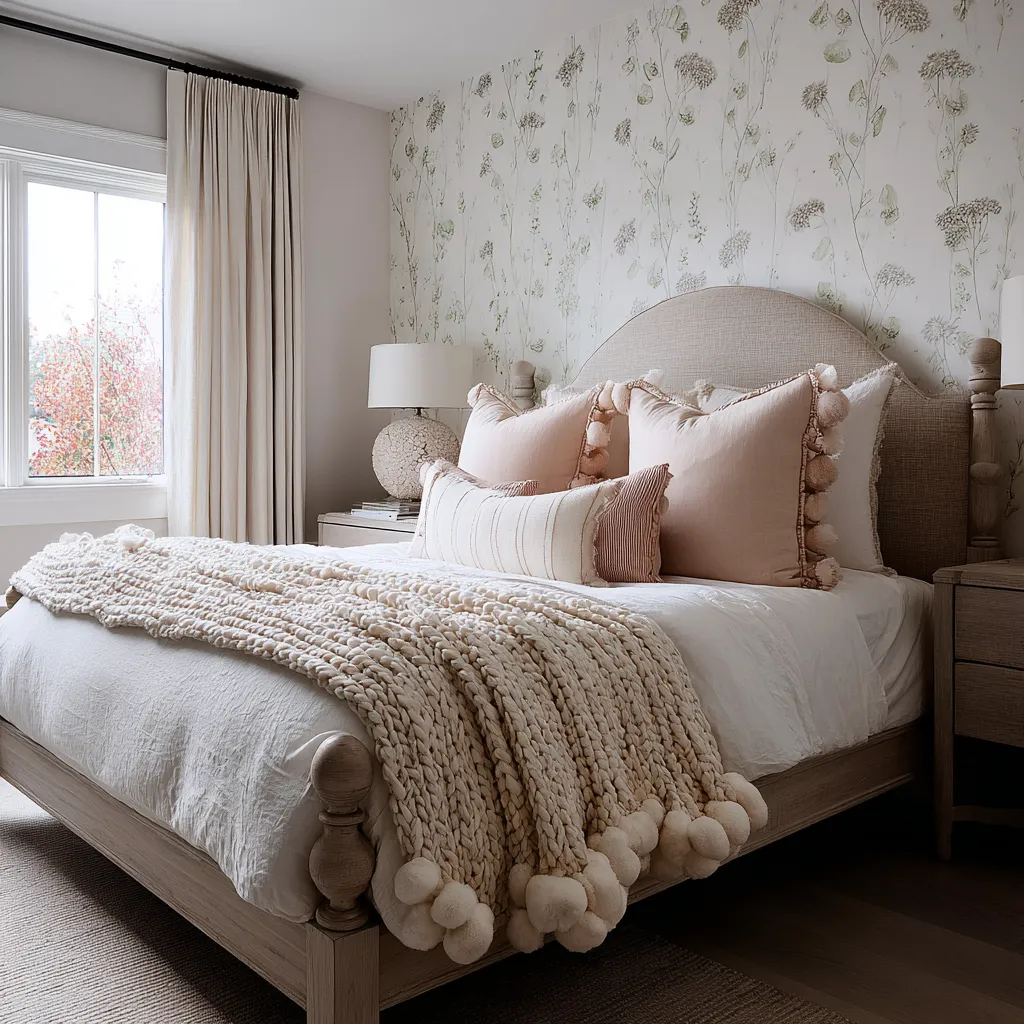
This leads to one of the romantic design rules: romance needs ballast. A pale romantic palette feels more complete when one element gives it gravity.
In practice, that can be very simple. If your bedding is creamy white and dusty blush, add one of the following: a blue landscape print, a rust lumbar pillow, a green velvet cushion, a cane headboard, a jute rug, a walnut bench, or black window hardware.
The room still feels soft, but it stops drifting.
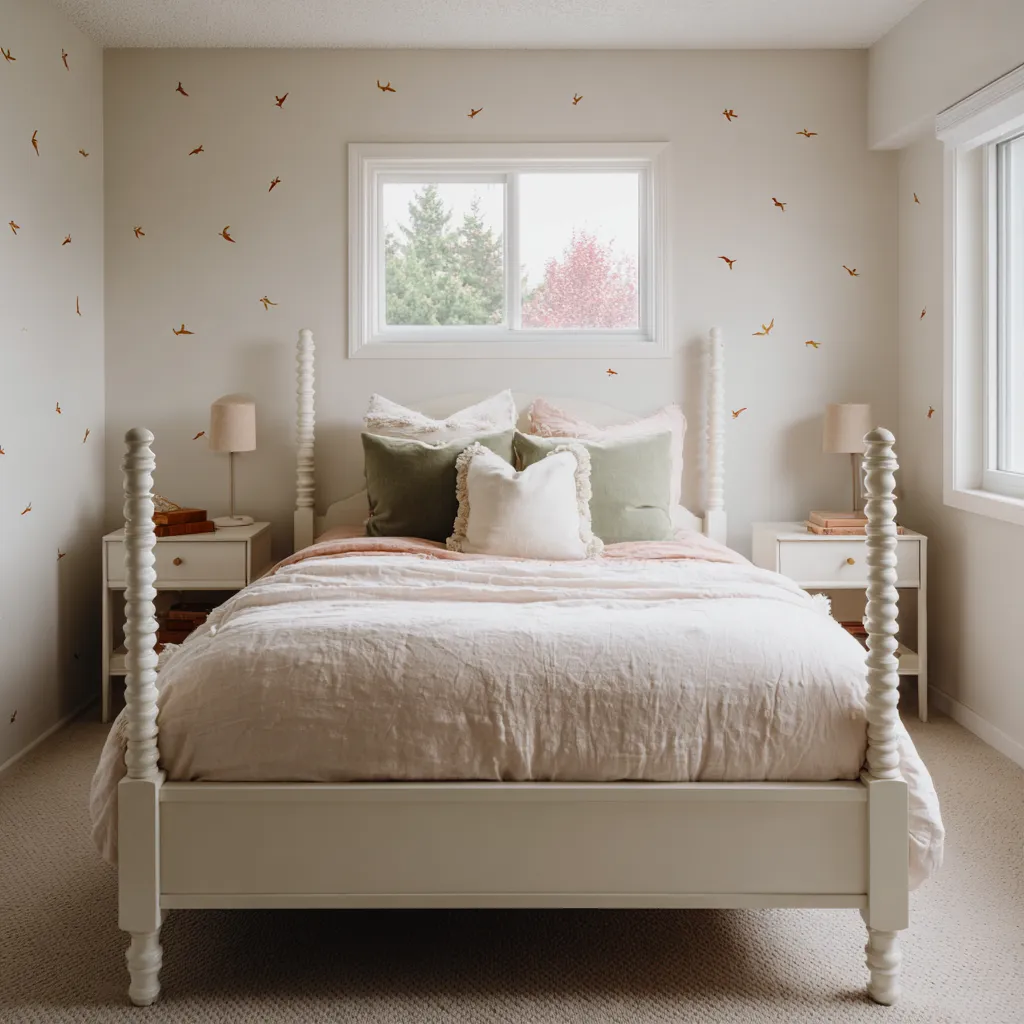
Let soft shapes do some of the emotional work
Curved, scalloped, arched, and cloud-like bed silhouettes are good options, and rounded forms can also be in other ways too: lamps, pendant lights, wall pieces, pom trims, wreaths, and circular woven art. This repeated use of soft edges matters because rounded shapes make a room feel gentler without needing literal romantic symbols.
A typical rectangular bedroom already has many hard lines: windows, doors, mattress edges, side tables, and wall planes. A curved headboard or rounded chair shifts that feeling right away.
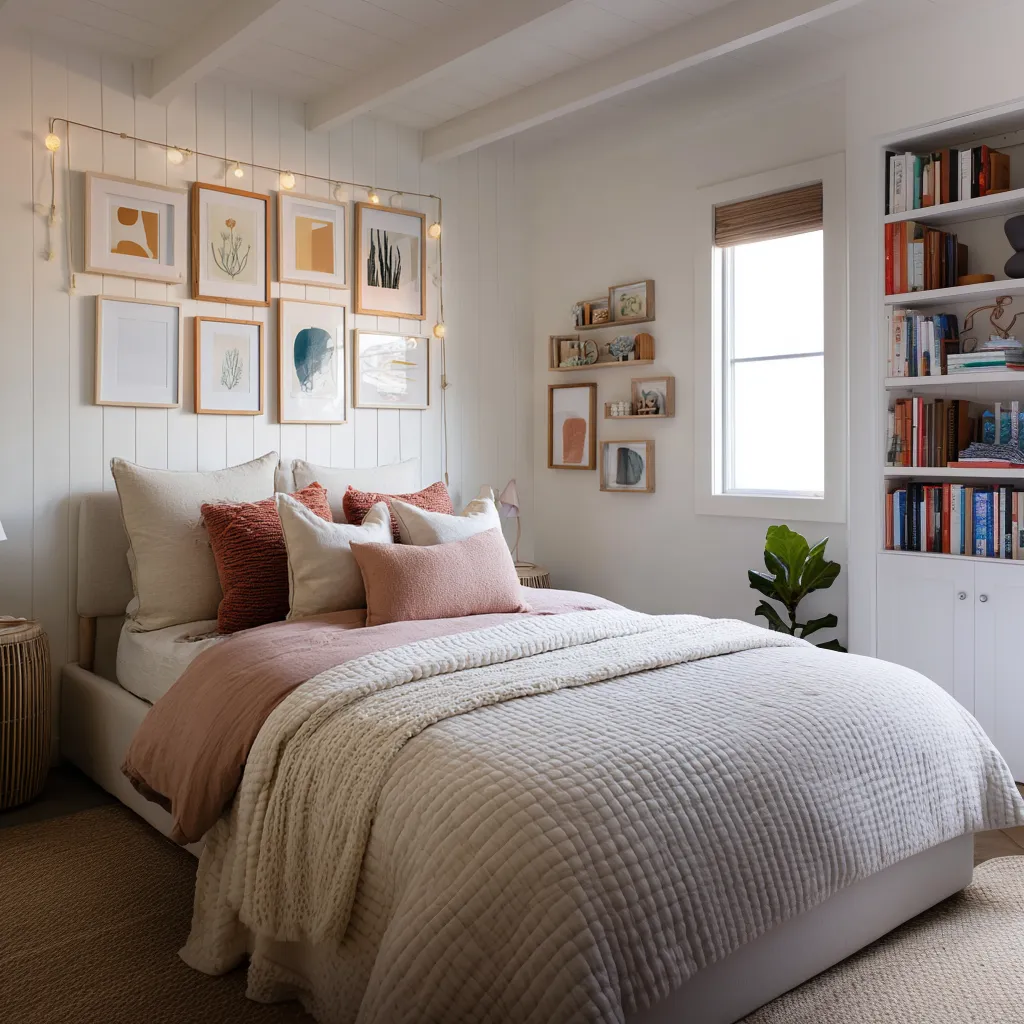
If you are working with a plain room, one softened shape can do a lot. An arched upholstered headboard, a scalloped bed, a rounded bench, or even a circular woven artwork above the bed can introduce the right mood without changing the whole space.
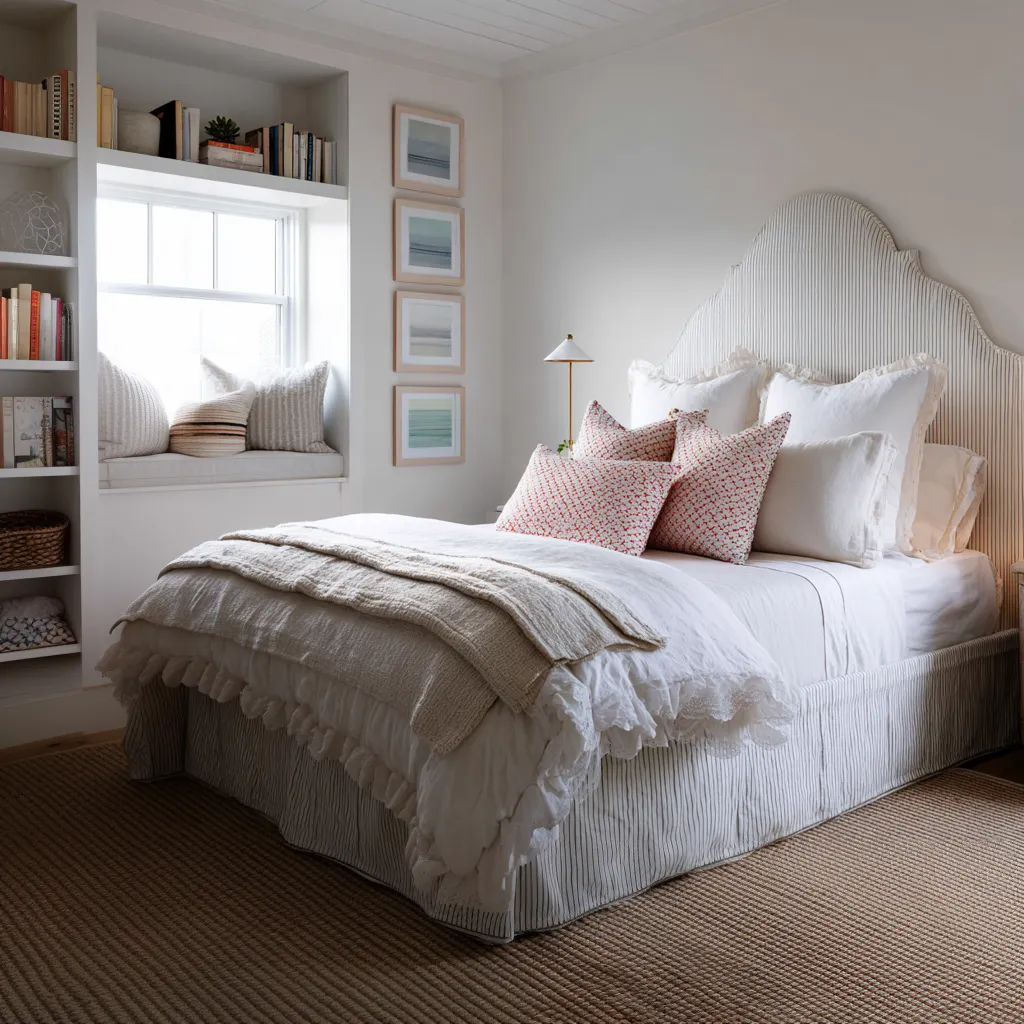
There is another useful detail here: stripe works well with curved upholstered beds. That pairing helps because curve gives tenderness while stripe gives discipline.
A striped scalloped or arched headboard feels romantic, but it still keeps its outline clear.
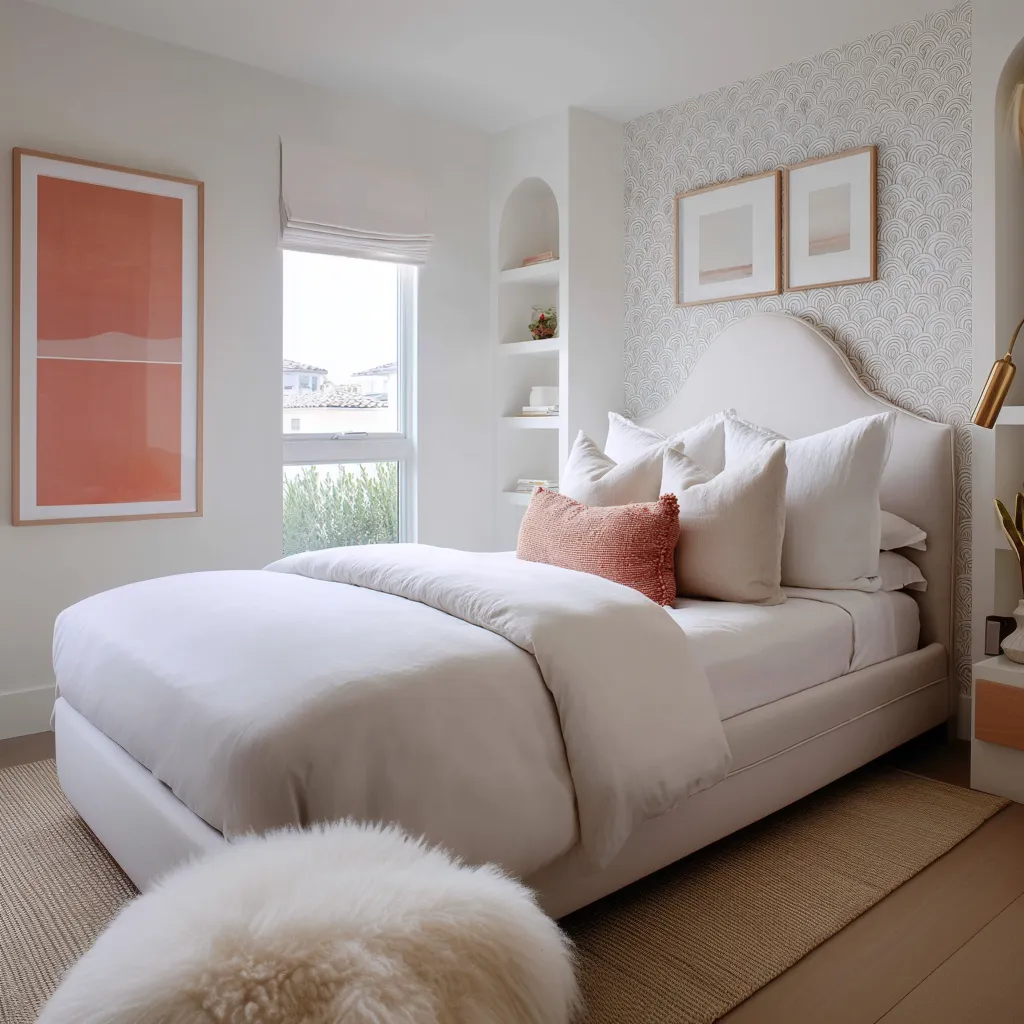
Choose one dominant pattern family and keep it in charge
One reason modern romantic designs feel soft instead of noisy is that they usually do not mix many major pattern types at once. They usually pick one lead pattern family, then support it with texture and quieter surfaces.
That could mean stripe as the lead with a tiny print pillow in front. It could mean botanical wallpaper behind the bed with plain bedding.
It could mean a mural-like wall with almost no pattern elsewhere. It could mean a gallery wall above a simple upholstered bed.
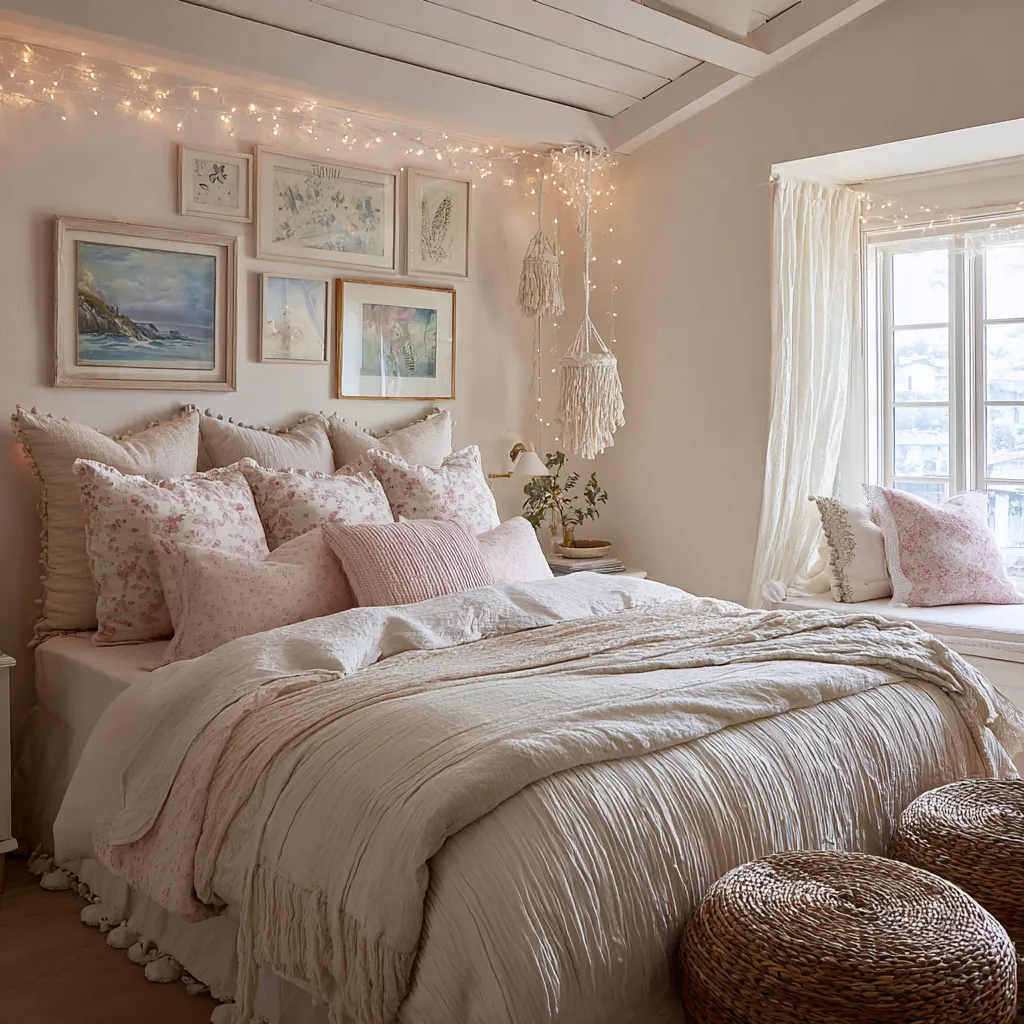
This is a very practical rule. If you want a romantic bedroom to feel calm, do not ask the wallpaper, the quilt, the rug, the drapes, and the pillows to all be the lead voice.
Let one carry the room. The others should support it.
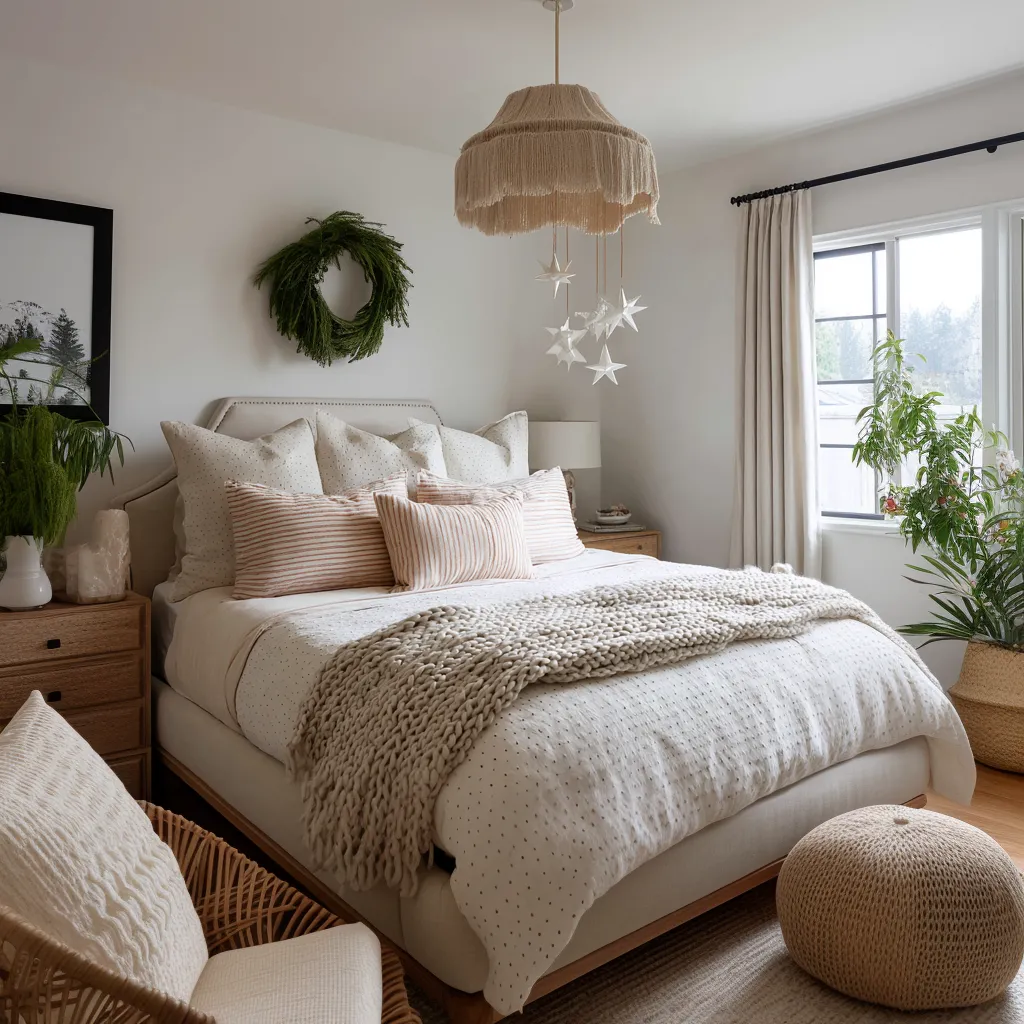
Texture can do much of the work that pattern often tries to do. A room with washed linen, boucle, wicker, ribbed ceramic, a chunky knit throw, and a woven pendant already has plenty of richness, even if the pattern count stays low.
Natural fiber is one of the most useful materials in a romantic room
This is another design pattern. Natural-fiber or woven texture works well alongside blush.
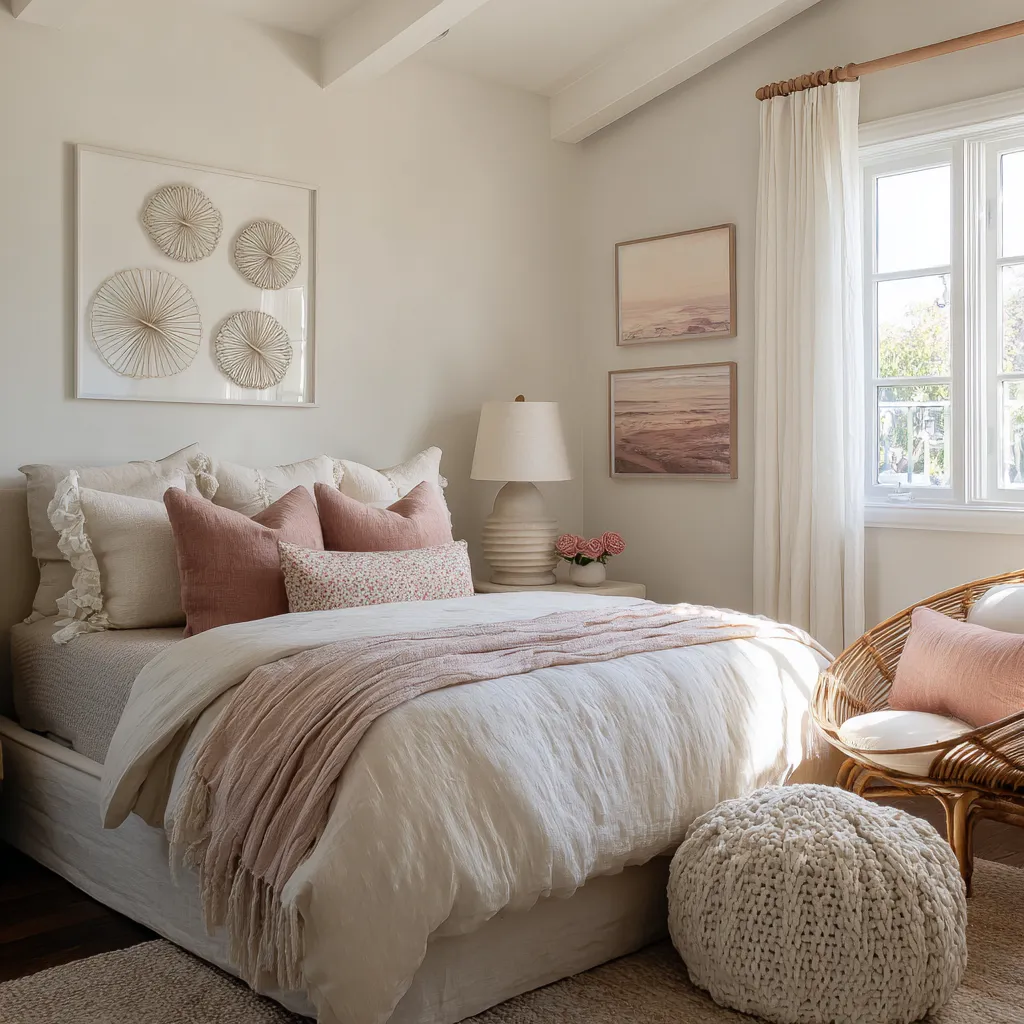
Cane, wicker, jute, woven pendants, natural-fiber wall art, baskets, and woven chairs are popular here because they do a very specific job: they warm pale palettes and make romance feel domestic instead of cosmetic.
That is especially useful in a typical bedroom, where soft colors can otherwise start to feel flat. A wicker chair near the window, a cane headboard, a jute-like rug, or a woven pendant immediately gives the room dry, earthy texture.
That dryness is important. It keeps the room from feeling too polished or too sugary.
If the room already has a lot of softness, natural fiber often gives it the missing note. It adds warmth, but a different kind of warmth than blush or ivory.
It is less cosmetic and more grounded.
Vertical layers
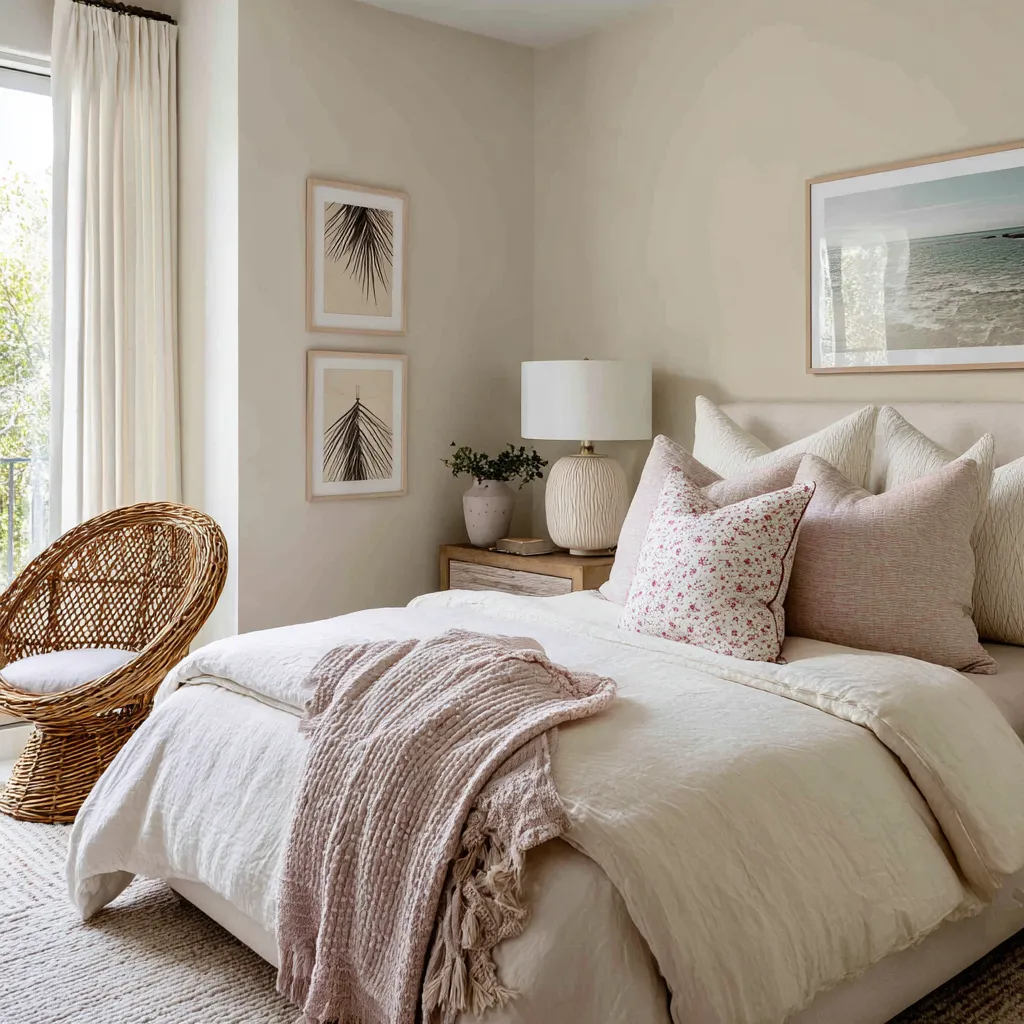
Another idea for romantic bedroom design is what could be called the vertical gradient of romance. Such bedroom designs are often read in three stacked emotional zones.
The upper zone carried air or atmosphere: pendants, lanterns, wreaths, high art, fairy lights, mural haze, beams, or soft wall pieces. The middle zone carried the emotional center: the headboard, pillows, wallpaper, bed art, or alcove frame.
The lower zone carried weight and touch: the throw at the foot of the bed, upholstered base, rug, bench, basket, chair, pouf, or darker floor. This is a very effective planning method for ordinary rooms.
Instead of thinking only about decor items, think about where the emotional weight of the room sits.
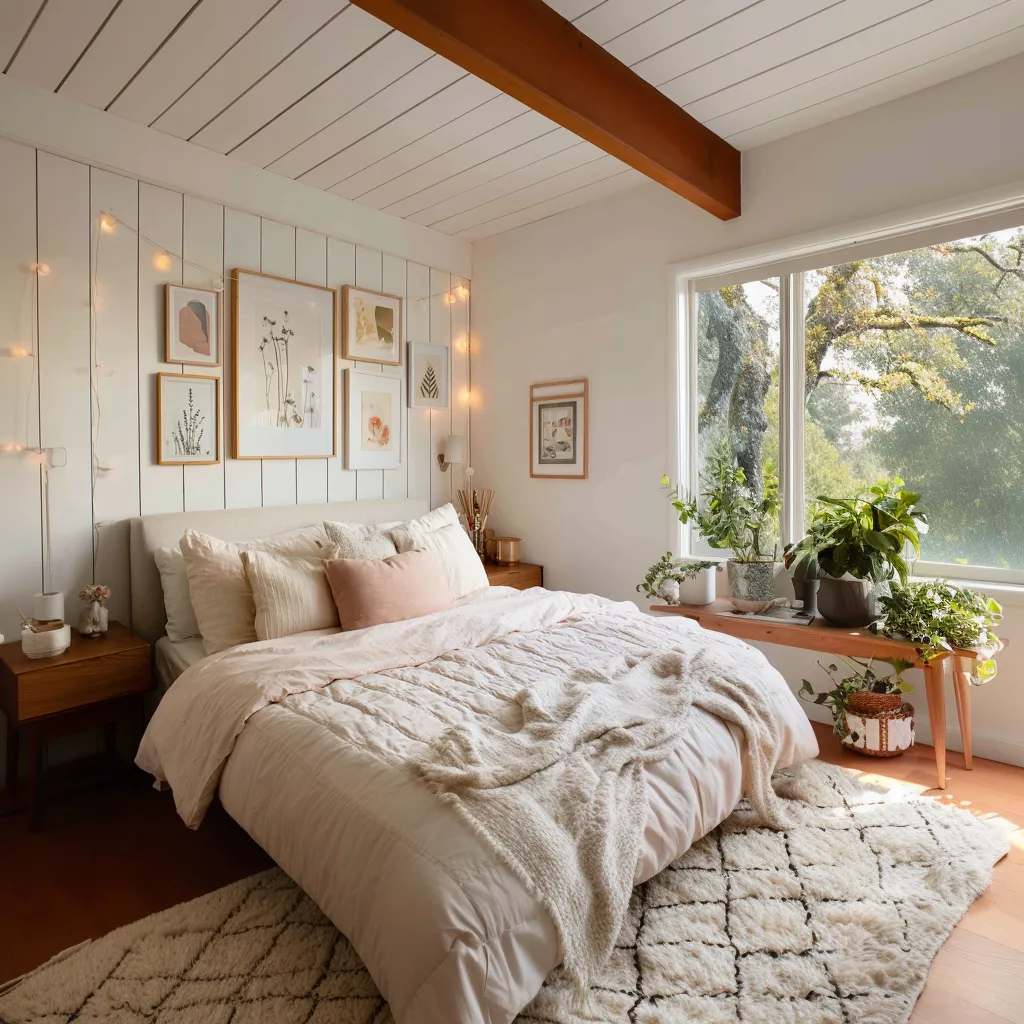
If your bedroom feels flat, the answer may not be more accessories. It may be that the upper half has no lift, or the lower half has no grounding texture.
A woven pendant overhead, a broad headboard at center, and a chunky throw with a rug below can completely change the mood without adding clutter.
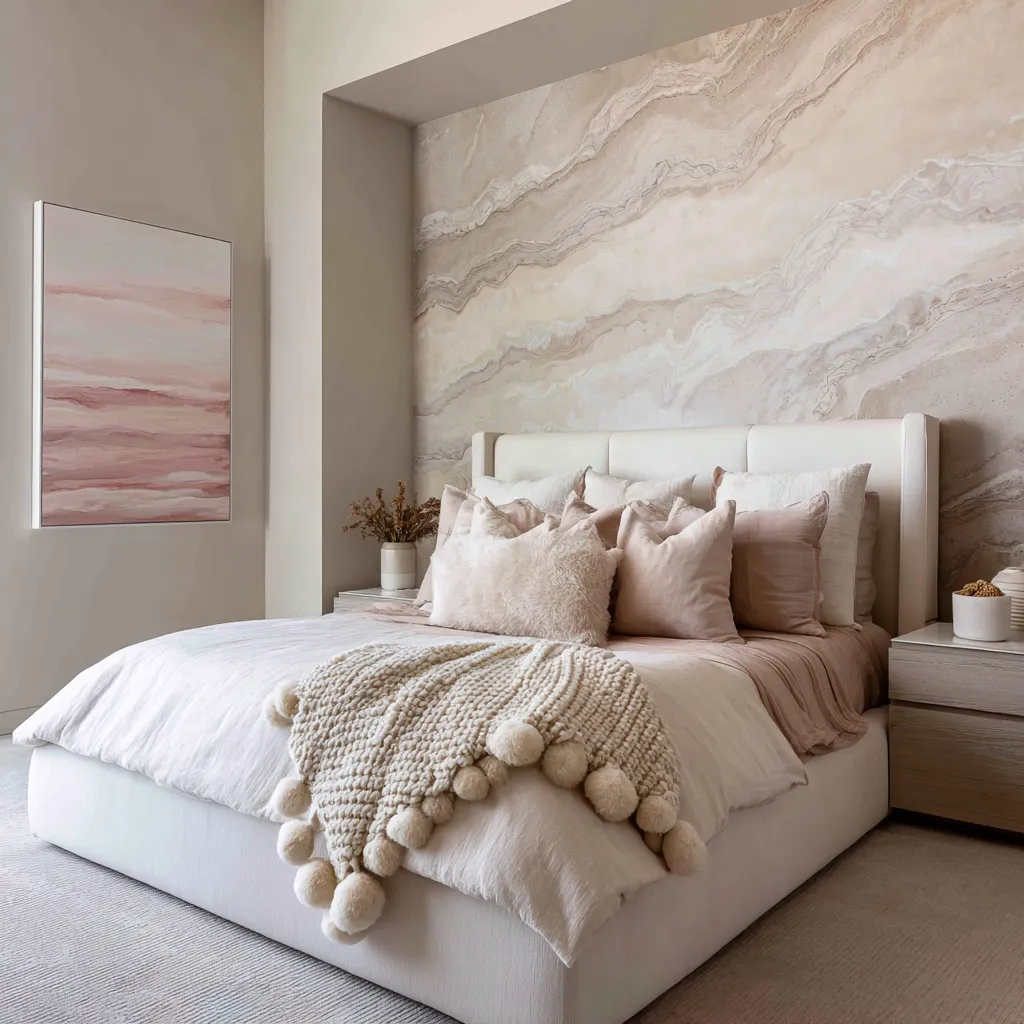
Architecture can create romance even in a simple room
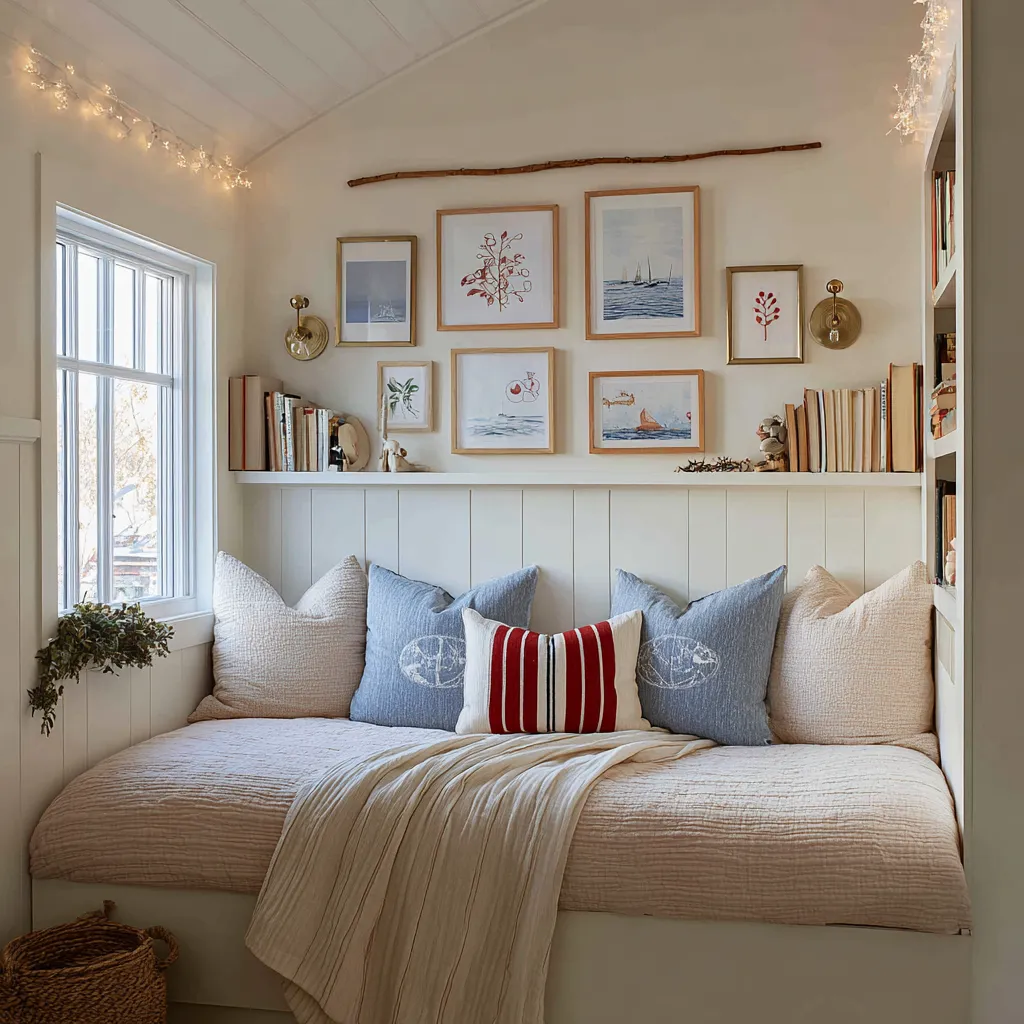
Romance style can be built through architecture instead of decoration. Alcoves, built-ins, niche-like framing, window seats, and recessed bed walls all create a feeling of enclosure.
They make the bed feel held by the room rather than simply placed against a wall.
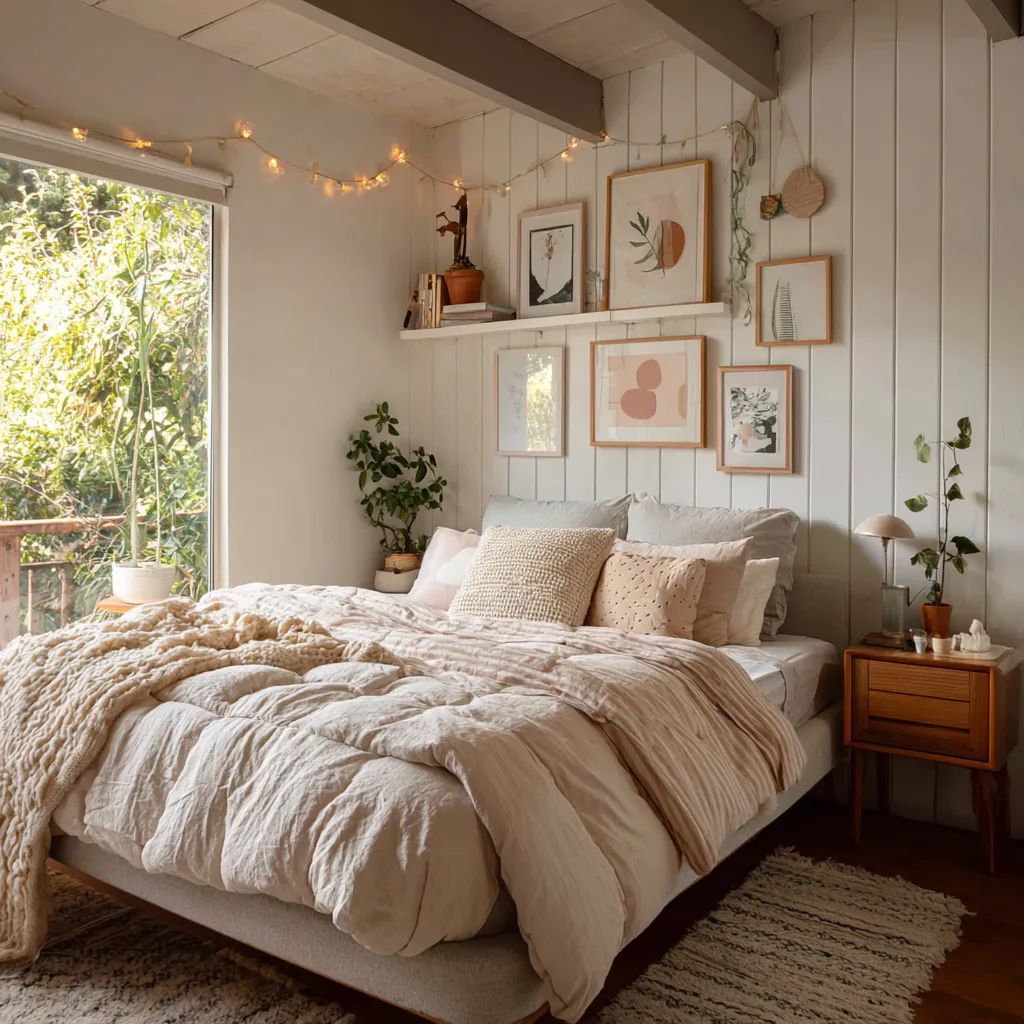
Not every bedroom has that built-in structure, but the principle can still be applied. A bed flanked by tall drapes, bookcases, or wall-mounted shelves can begin to feel framed.
A bench under a window can create a second resting zone. A paint treatment or wallpaper panel behind the bed can create a pseudo-alcove effect.
Even a centered artwork grouping over the headboard can help define the bed zone as its own place within the room. The key idea is simple: romance often gets stronger when the room feels like it was shaped around rest.
That is why window seats and daybeds feel so effective. They extend the bedroom from a place to sleep into a place to linger.
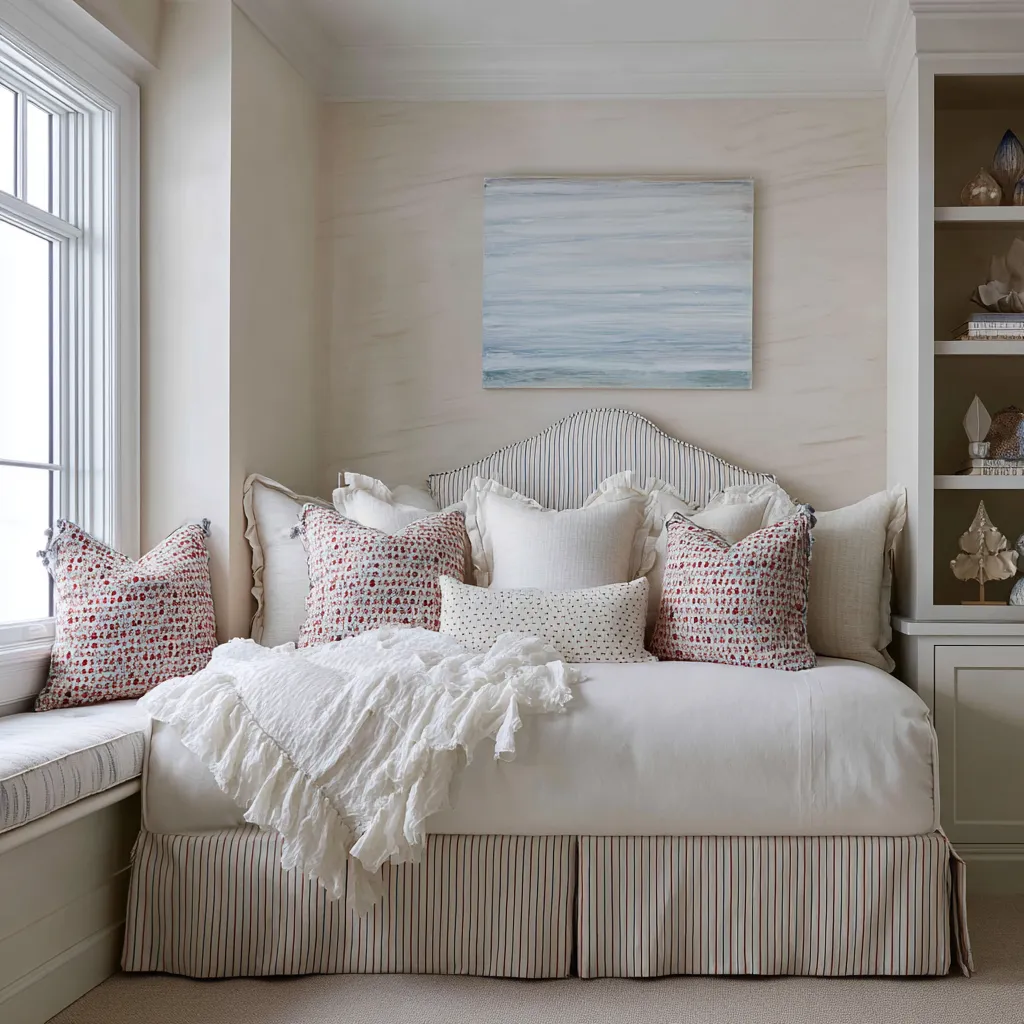
What kind of wall you want: atmospheric or collected
There are two main routes for the wall behind the bed.
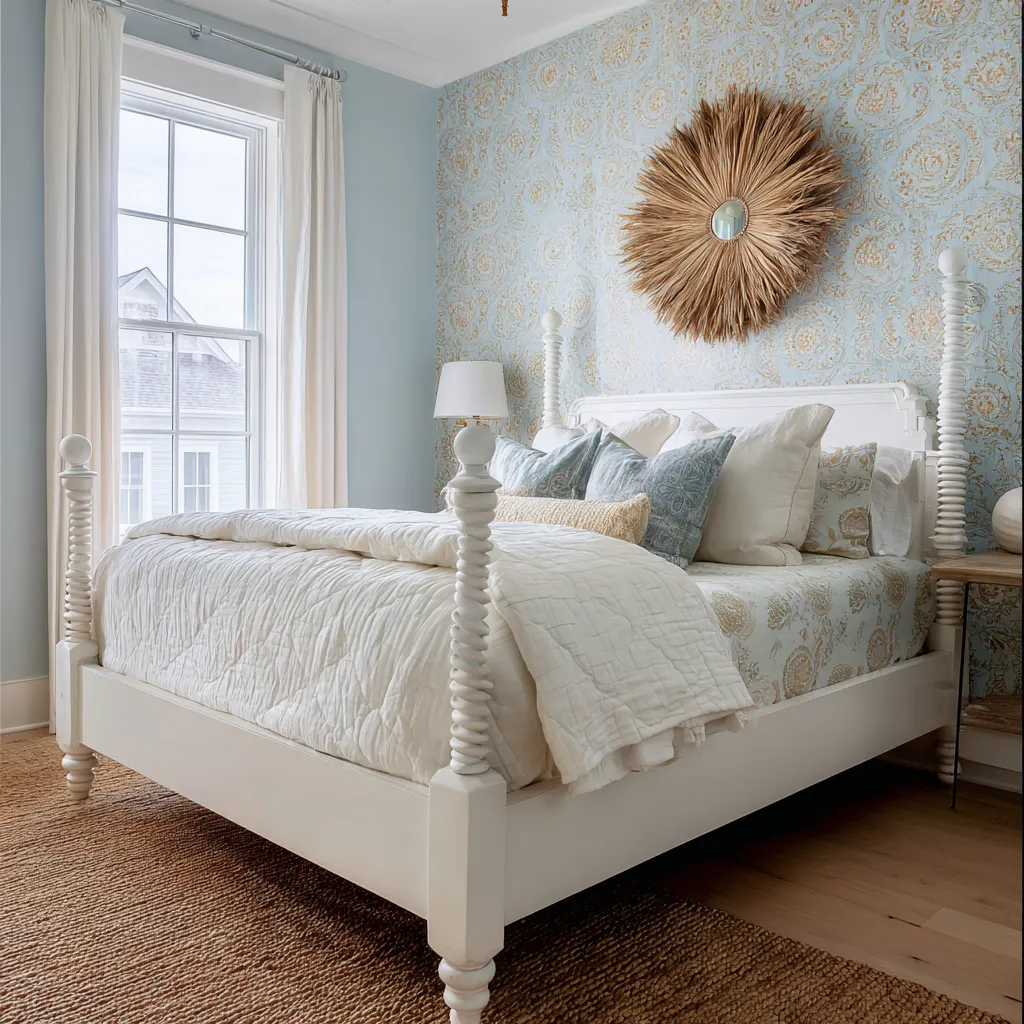
The first route is the atmospheric wall. Here, the wall itself becomes the emotional field.
Think of pale mural-like surfaces, mineral washes, blush cloud effects, or a soft stone-like backdrop. When the wall already has that much presence, the rest of the room needs to stay fairly sparse.
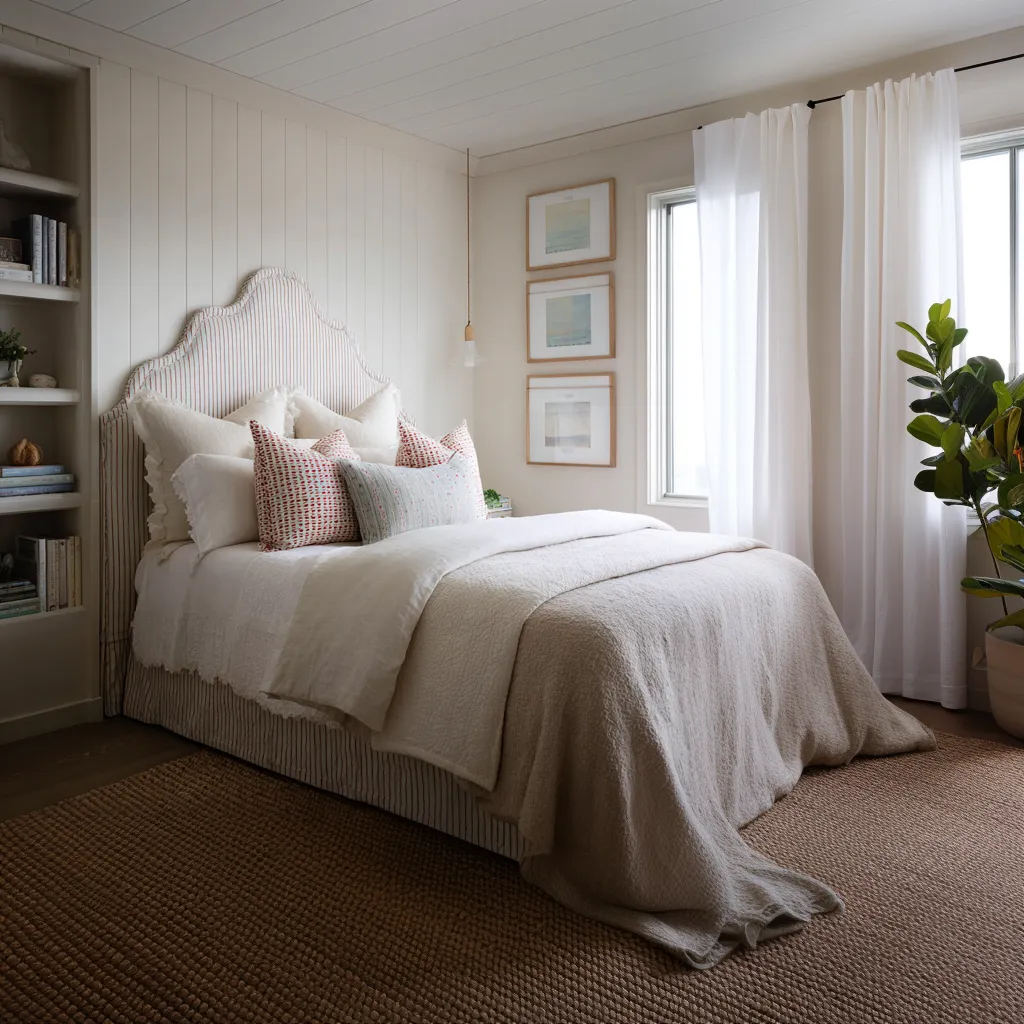
The second route is the collected wall. In such designs, the wall stays plain or paneled, then gains intimacy through framed art, shelves, books, plants, and perhaps fairy lights.
These interior designs feel more personal and layered, but they still work because the wall base stays simple.
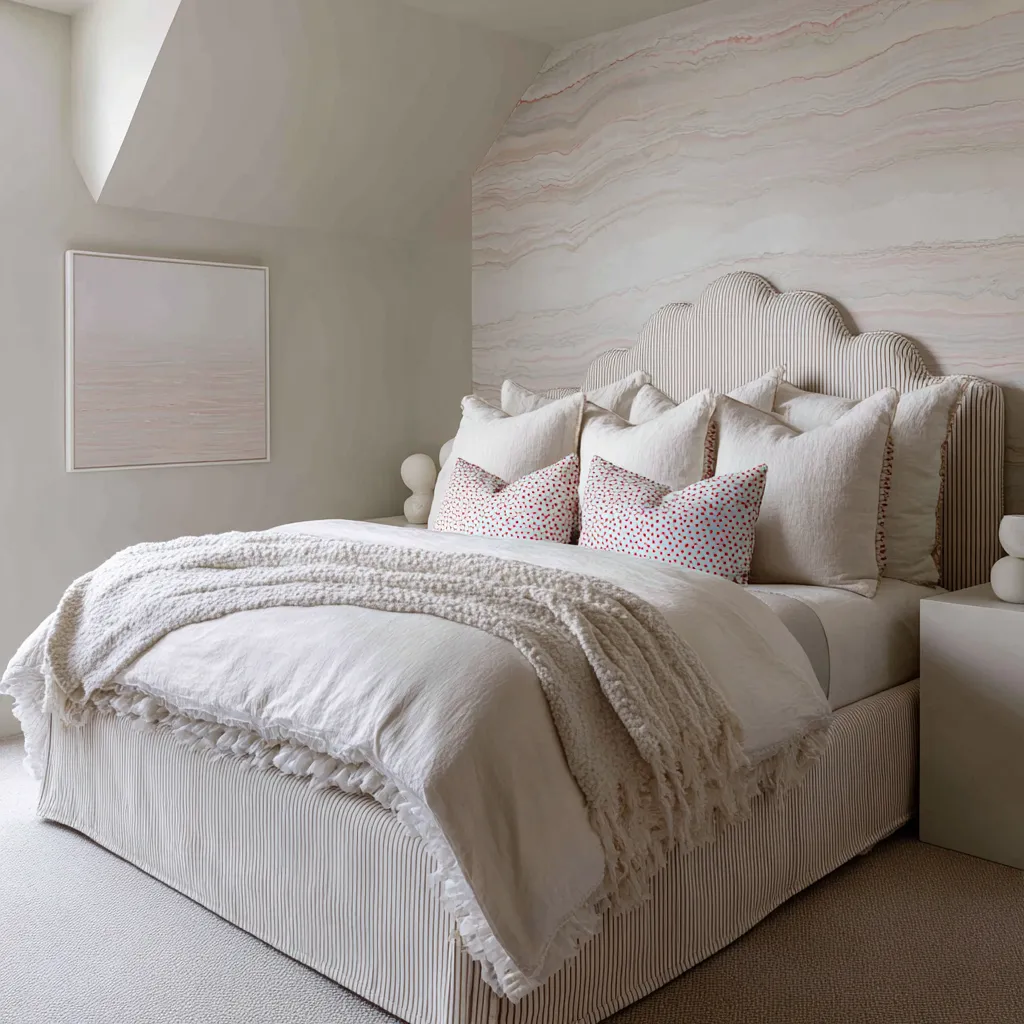
This is an important editing principle. If your wall treatment is already rich, reduce the accessory count.
If the wall is plain, you can build feeling through objects. Many bedroom designs fail because both routes are used at once.
A strong mural wall plus a crowded gallery plus lots of small decor often makes the room feel heavy. Choose one wall strategy and let it lead.
Using lighting as atmosphere
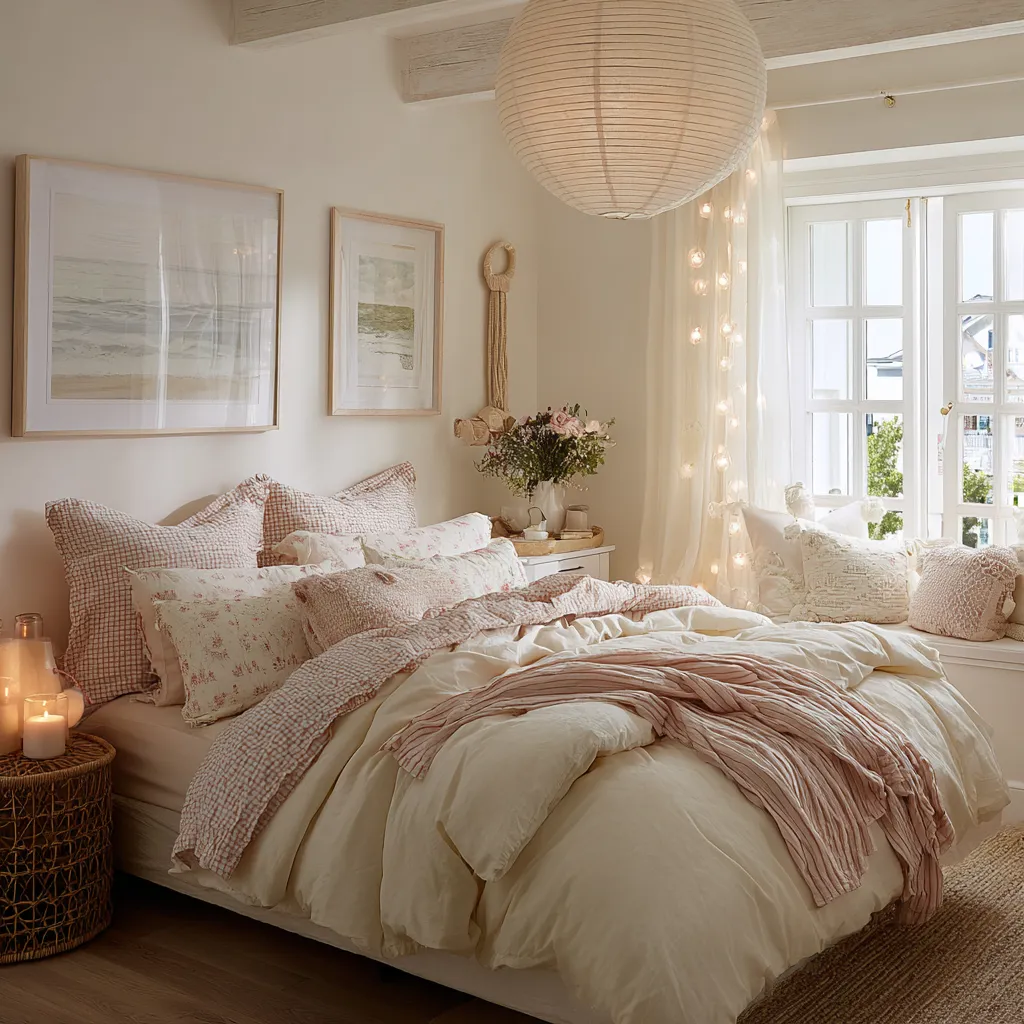
Small distributed warm glow is important for the cohesive design, especially in rooms with textile-heavy, collected, or seasonal romantic moods. Fairy lights, warm wall sconces, lantern-like pendants, and gentle bedside lighting all help shift the room away from a purely practical bedroom and into something more intimate.
The key idea is not brightness. It is softness and spread.
A single hard overhead light will rarely give a bedroom romantic depth. Warm bedside lamps, a pendant with a diffused shade, a wall sconce, or a subtle strand of lights placed with restraint can all create a layered evening mood.
This is especially helpful in a normal room that has plain walls and no major architectural features. Lighting can become the upper-zone atmosphere that the room is missing.
Adding signs that the room supports staying
Romance feels more durable when the room includes evidence of life. Books, a tray, a plant, a bench, a ledge, a chair, candles, shelves, a nook, or a window seat all make the room feel as if someone spends time there.
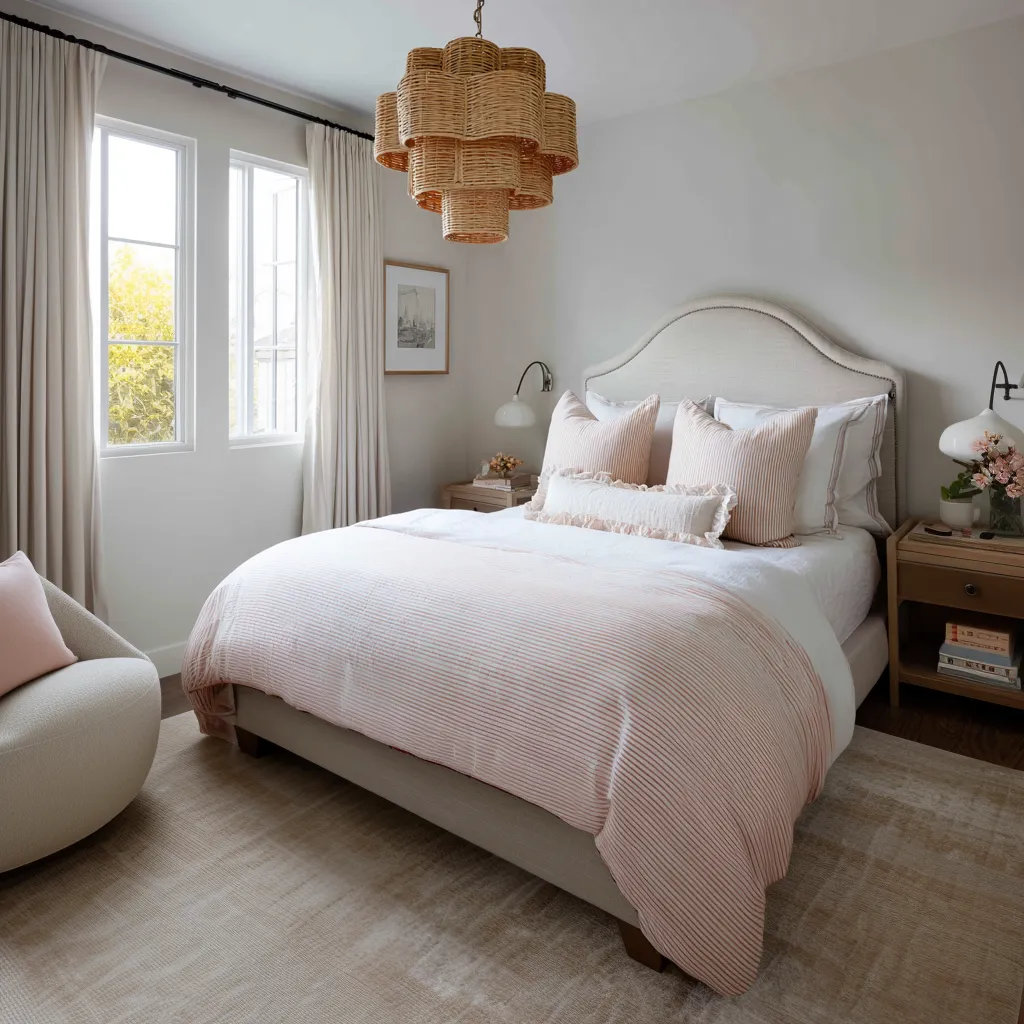
That matters because pure prettiness often feels thin. A room becomes more moving when it suggests reading, pausing, morning light, tea, evening quiet, or a slow weekend.
This can be very modest. A single upholstered chair near the window, two stacked books on the nightstand, a ceramic lamp, a branch in a vase, or a woven bench at the foot of the bed can give the room that extra layer of use.
Five romantic bedroom design directions
There are five broad romantic design approaches, and each can work in an ordinary home.
- The first is architectural nesting romance. This works through framed bed zones, drapes, shelves, or window-seat-like features that make the bed area feel tucked in.
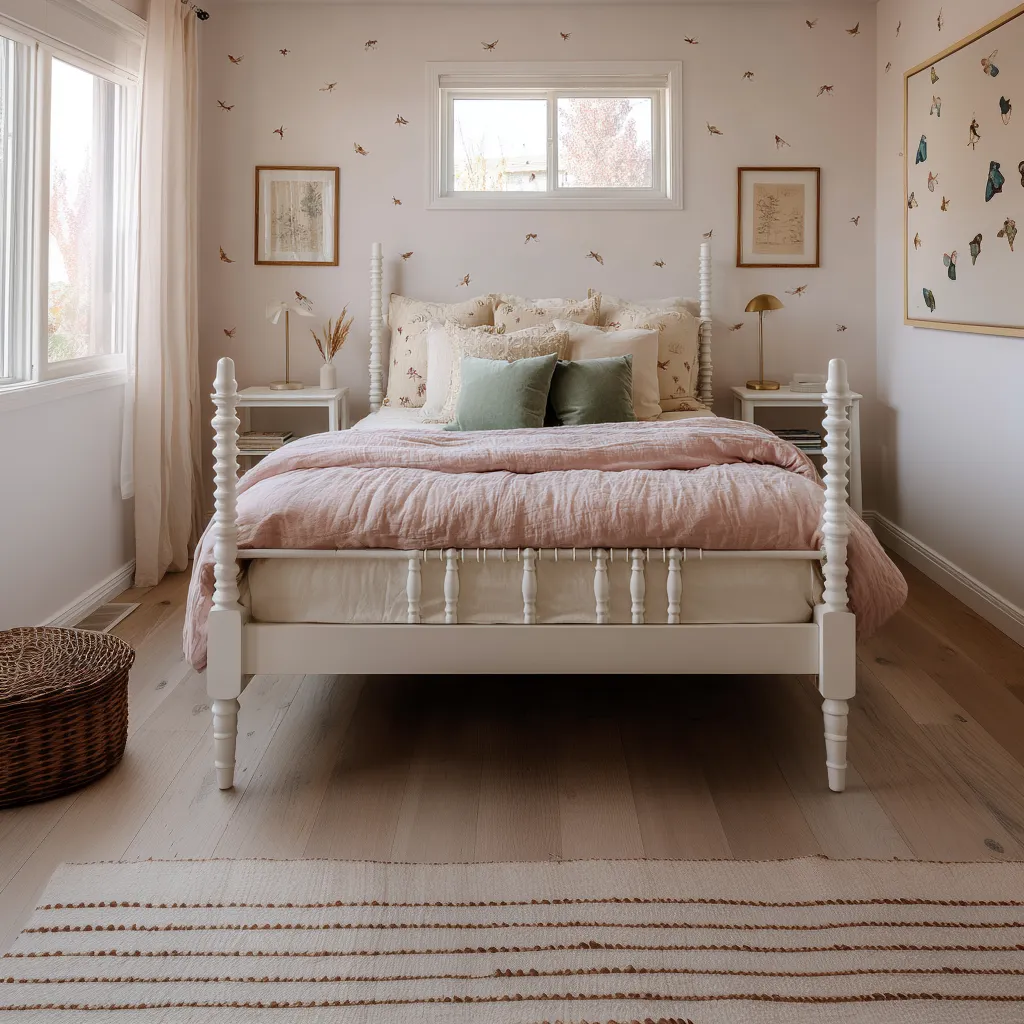
- The second is heritage botanical romance. This uses turned-post beds, pale botanical motifs, and blue or green correctives for a softer traditional look.
- The third is textile-and-glow romance. This depends on layered linens, chunky knits, warm lamps, and a room that feels especially good in evening light.
- The fourth is organic-modern romance. This uses pale shells, broad soft shapes, mural-like walls, woven accents, and a more edited look.
- The fifth is gallery-collected romance. This works through art, books, shelves, plants, paneling, and a room that feels built over time.
Choosing one of these paths helps keep the room coherent. It gives you a direction before you start picking pieces.
The larger takeaway
The most useful conclusion is that romantic bedroom design today works less as a decorative theme and more as a way of shaping feeling. The rooms that stayed with you were not simply pretty.
They felt sheltered, tactile, balanced, and lived in.
That is why the modern romantic bedroom can work so well in a typical home. It does not require a grand room or antique furniture.
It asks for something more precise: a soft center, a calm structure, one grounding note, and enough texture and atmosphere to make the room feel tender and steady. Done well, a romantic bedroom does not feel overloaded.
It feels held.