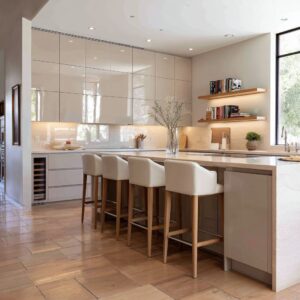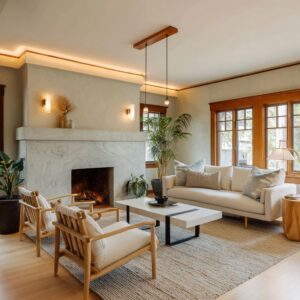
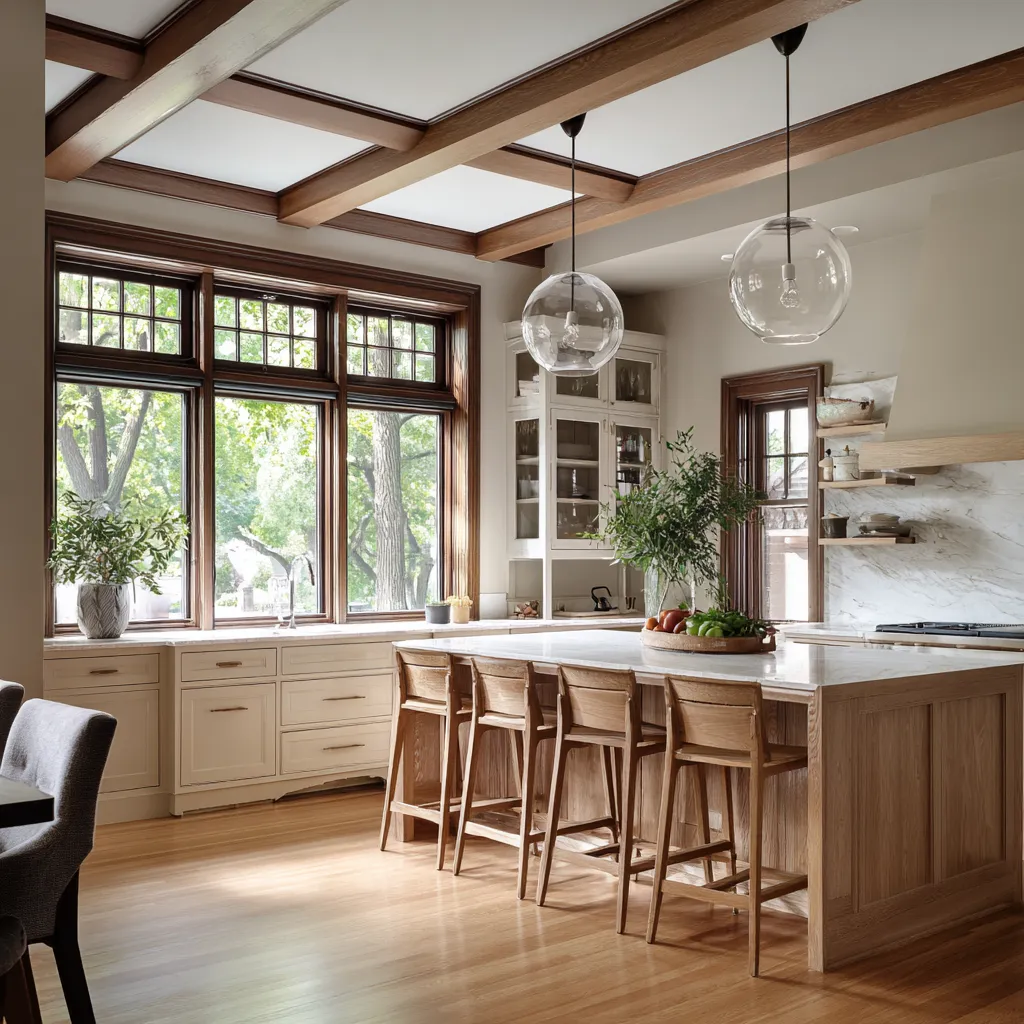
A fresh stylish Craftsman kitchen is not made by stripping away everything that gives the style its depth. It happens when the room keeps its built character in a few carefully chosen places, while the rest of the space becomes lighter, cleaner, and more visually edited.
The newer look does not begin with trendy lighting, a bold paint color, or a statement stool. It begins with reducing cabinet fuss, then deciding exactly where the room should keep its weight.
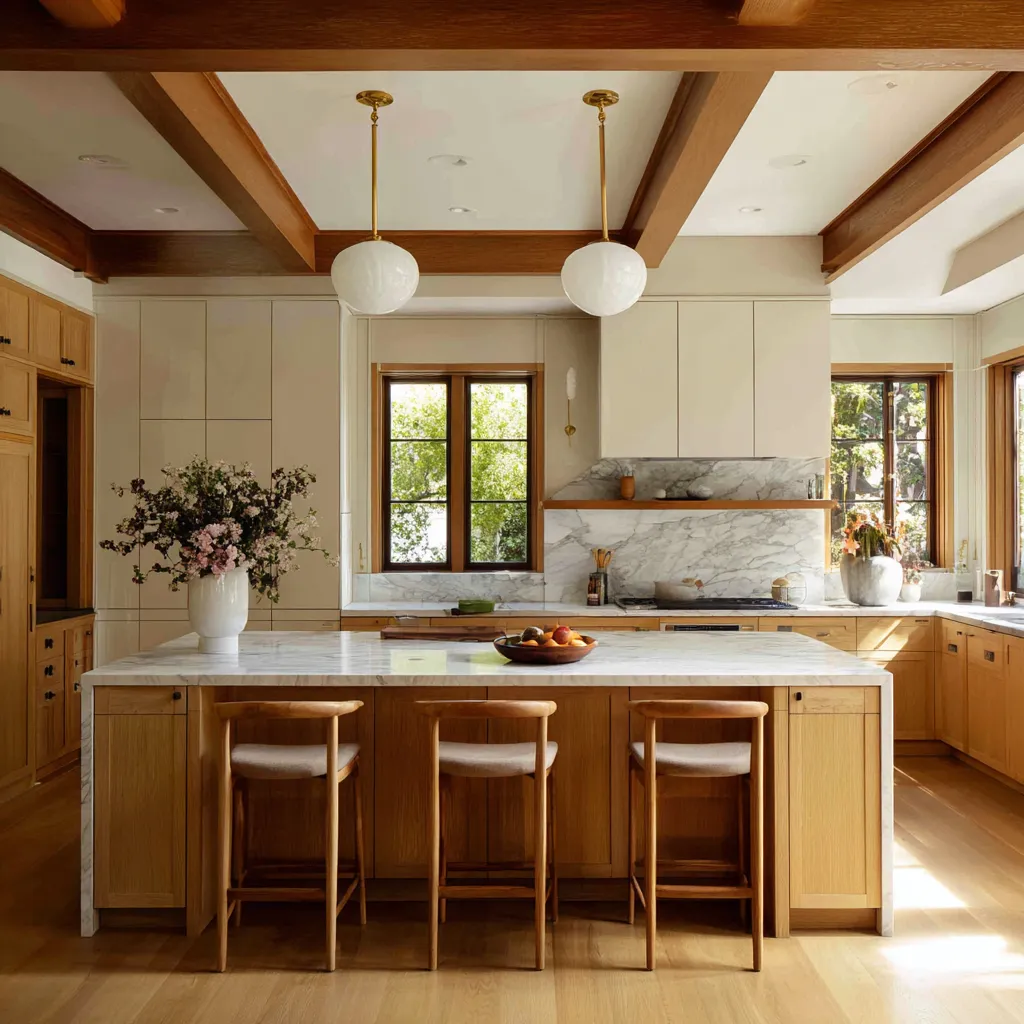
That shift changes the whole way Craftsman style should be approached. Instead of trying to make every surface feel handcrafted at the same intensity, the kitchen designs can let different parts of the room do different jobs.
Structure carries identity. Stone and light carry freshness.
Layout carries warmth and daily-life comfort.
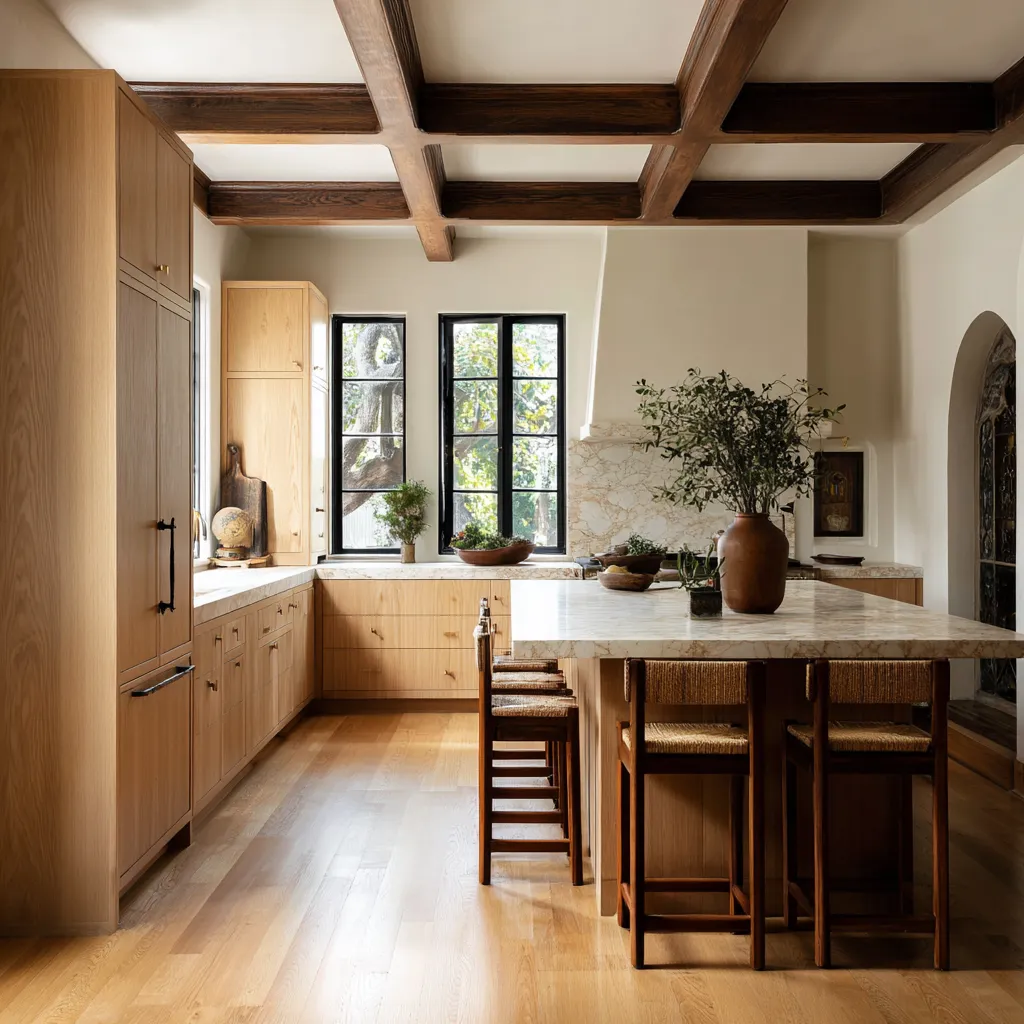
The base of a fresh Craftsman kitchen
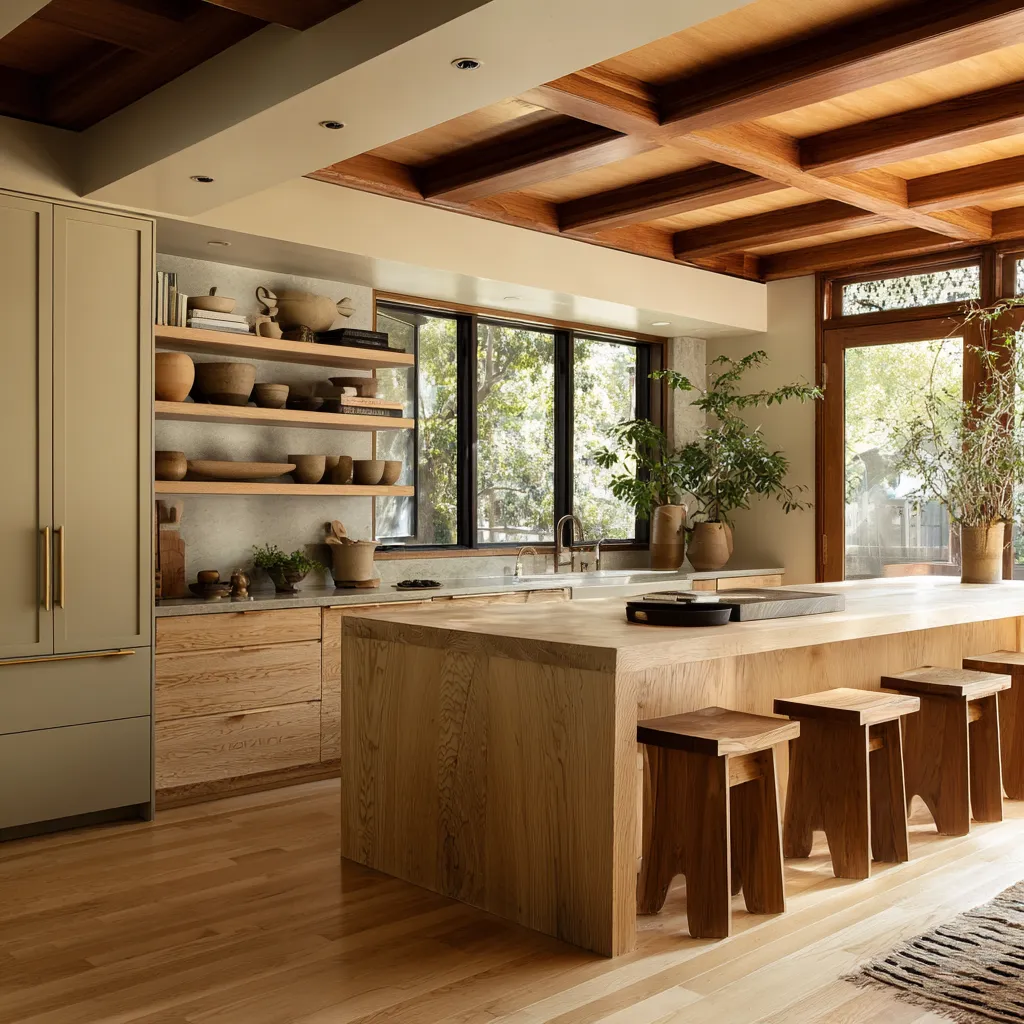
Many people assume a Craftsman kitchen must be defined mainly by dark wood. The style holds together less through darkness alone and more through visible framework, deep trim, solid mass, and a sense of built order.
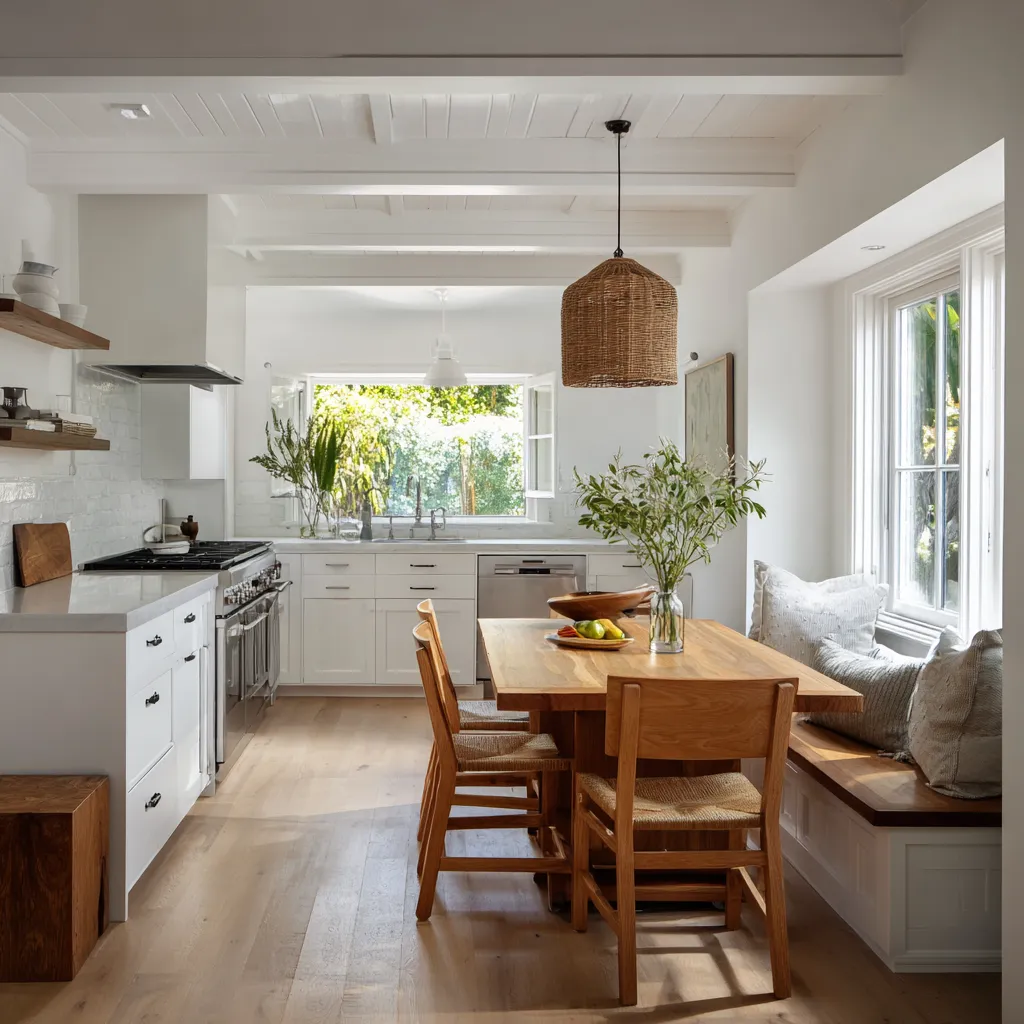
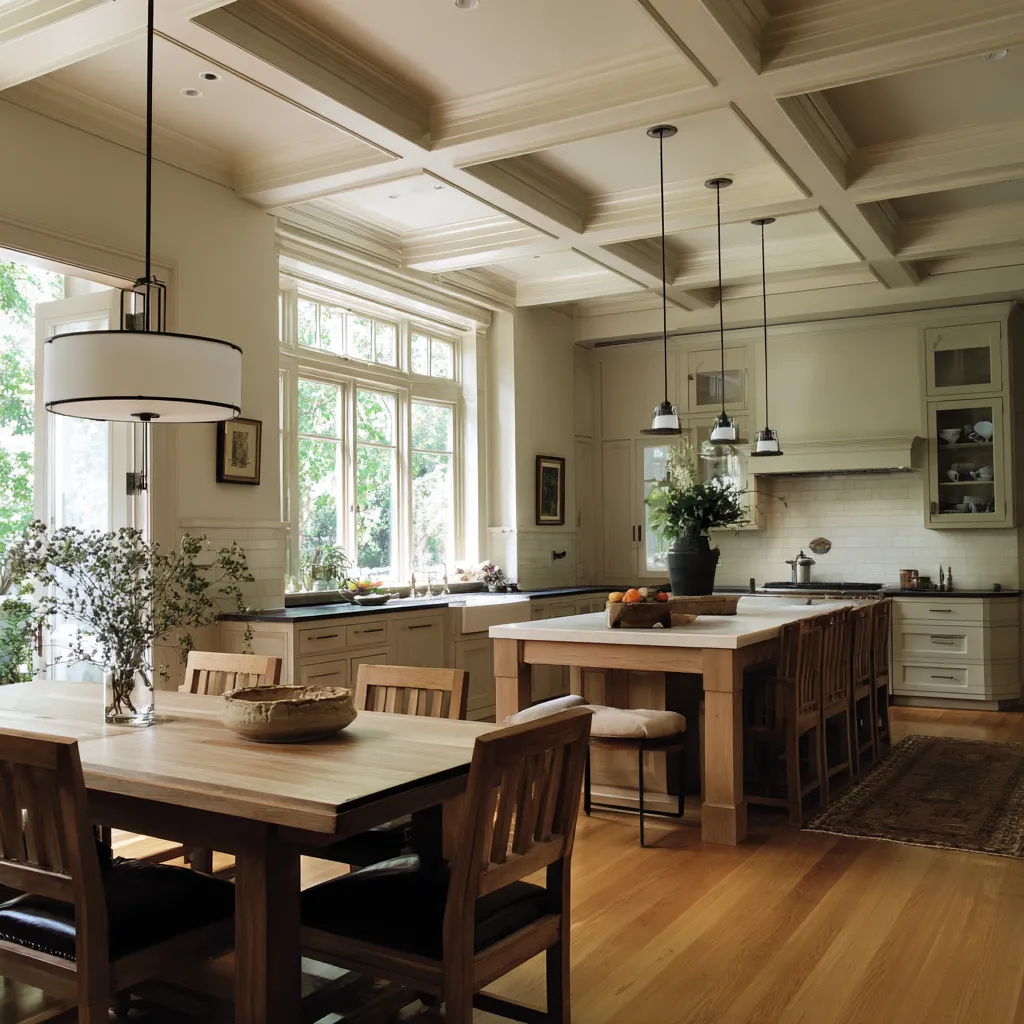
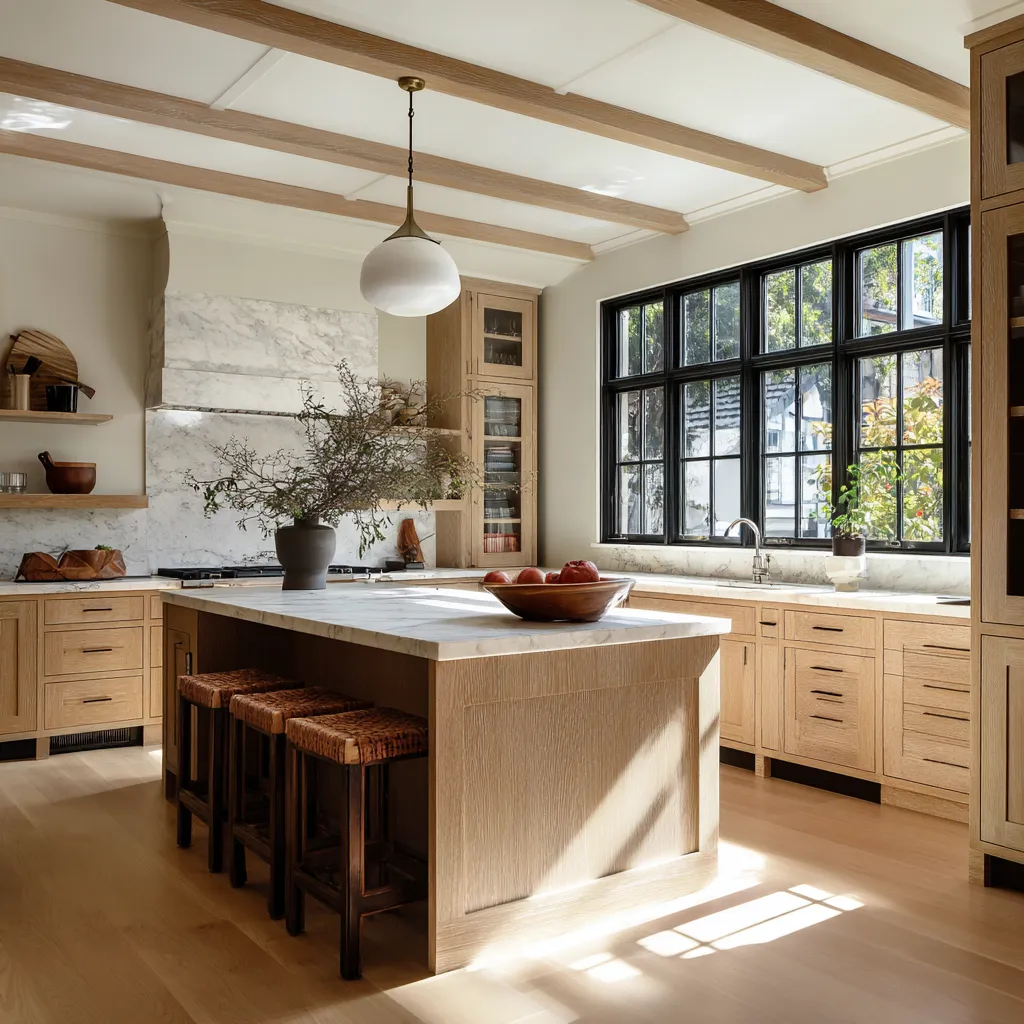
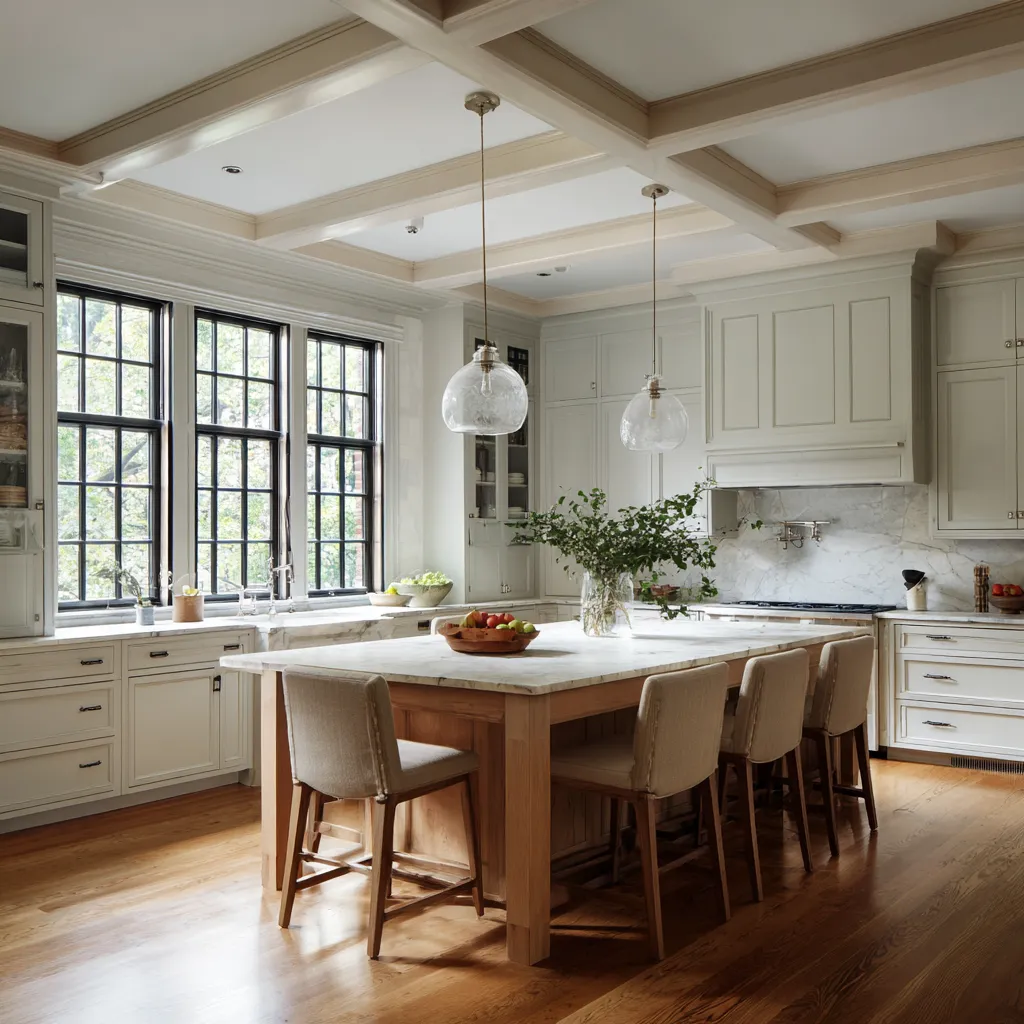
That is why pale versions of the style can still feel convincingly Craftsman. A kitchen can have lighter beams, painted coffers, or a brighter palette and still keep its identity if the room preserves a clear architectural rhythm.
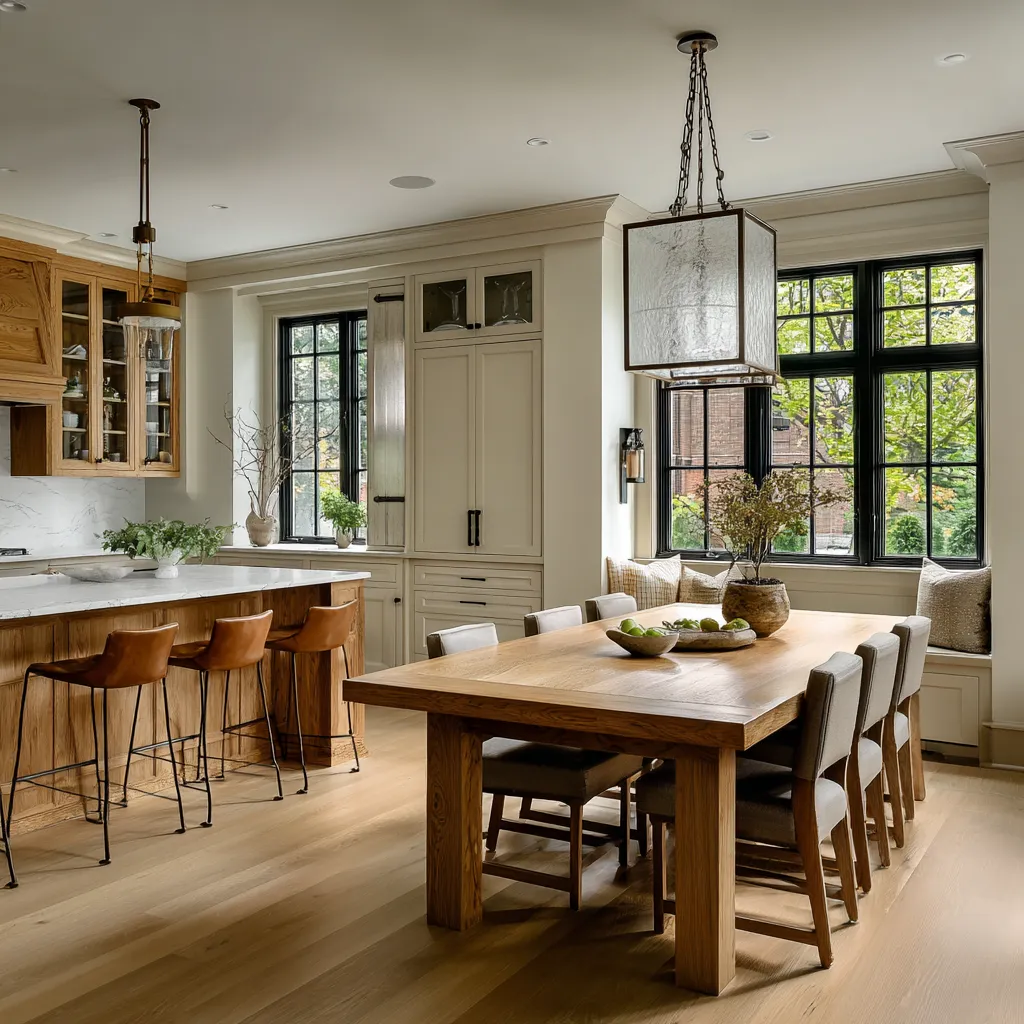
Ceiling framework, deep window trim, a thick island, built-in seating, and strong carpentry lines matter more than repeating dark stain on every plane.
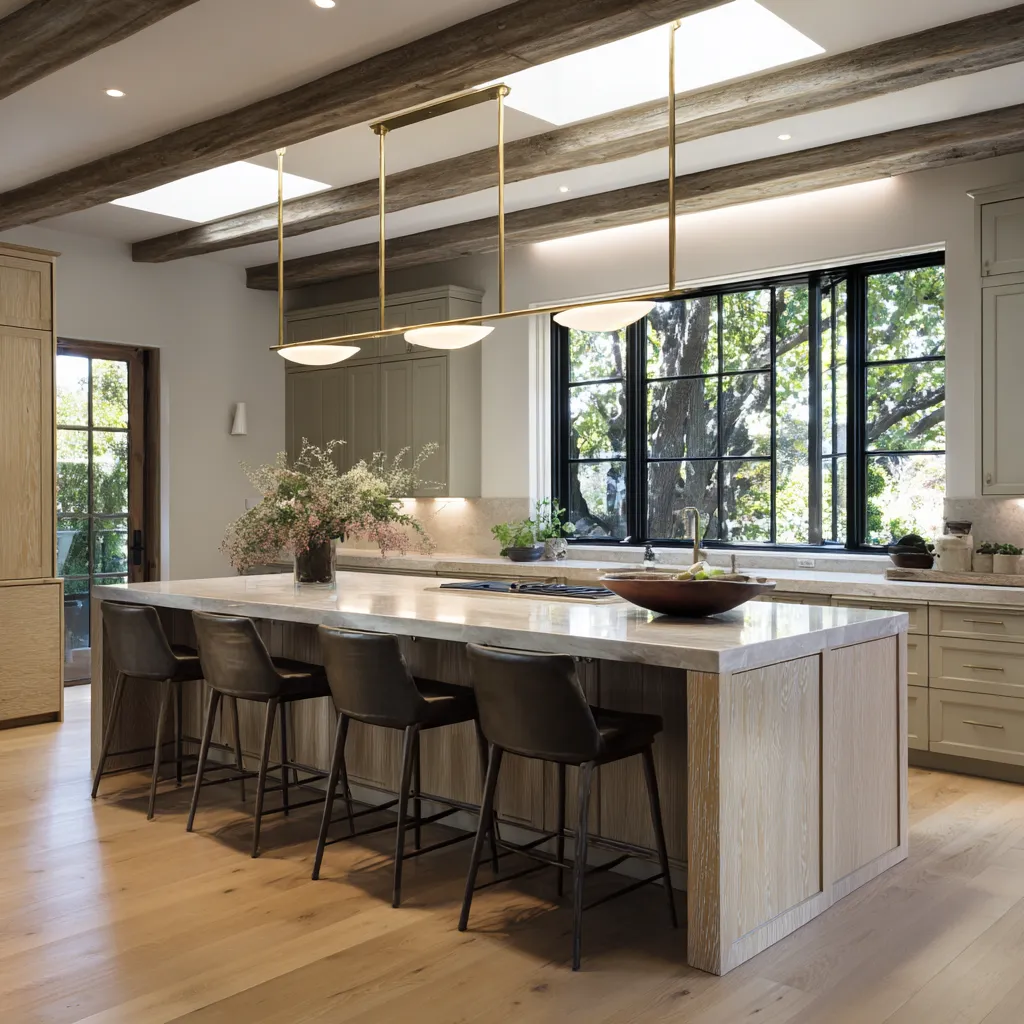
This is a useful shift for homeowners who love the rooted feeling of a Craftsman home but do not want a kitchen that feels overly shaded or visually dense. The answer is not to erase the structure.
The answer is to keep the structure legible while reducing how much weight it carries.
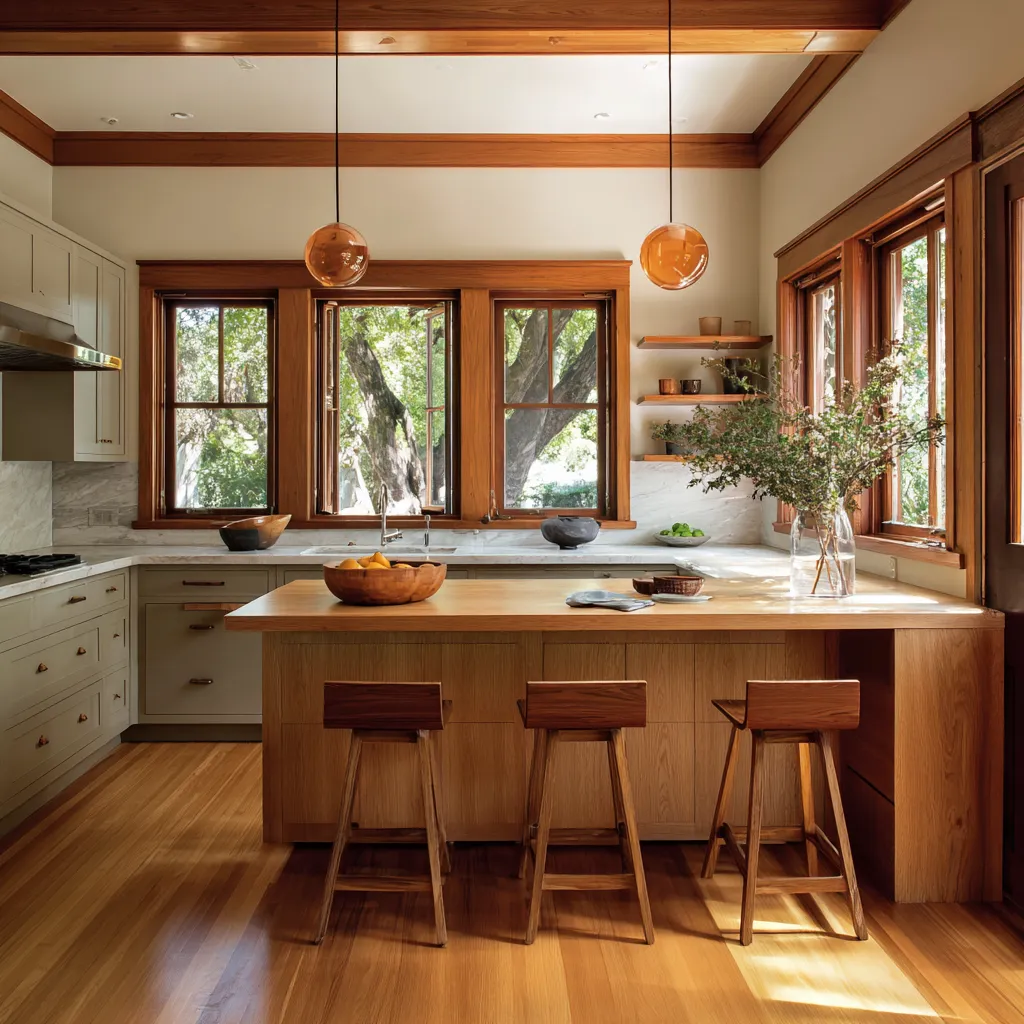
Simplify the cabinet field first
Fresh stylish Craftsman kitchen design ideas do not use busy cabinet fronts as their main source of character. They let wood grain, proportion, and solid mass do more of the work.
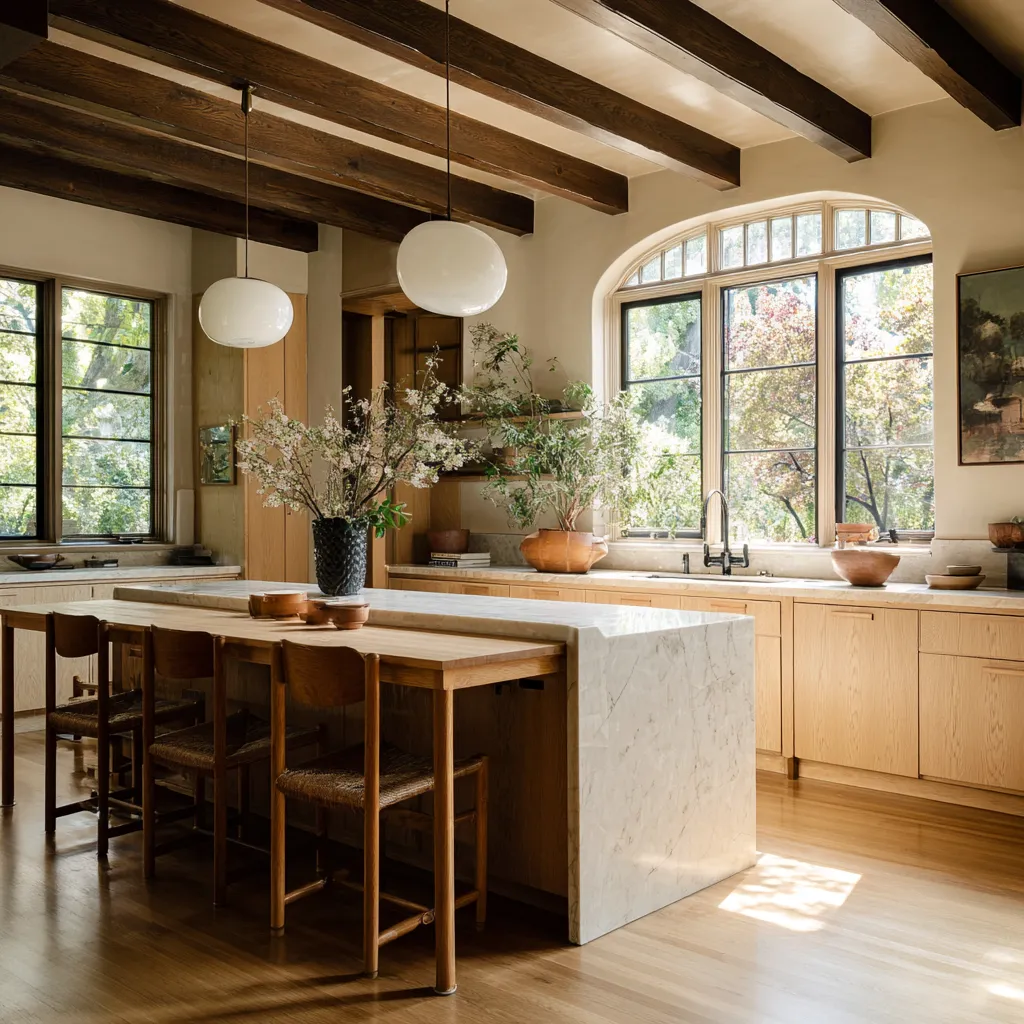
That can mean flat or lightly framed fronts, quieter shadow lines, fewer interruptions, and more continuous runs. The kitchen still feels well made, but it does not feel crowded by detailing.
This is especially important in a style that already has many other sources of richness: beams, trim, windows, stone, shelving, and natural material. A useful design principle emerges here: if the room already has strong architecture, the cabinetry should not fight for attention.
It should support the room’s larger composition.
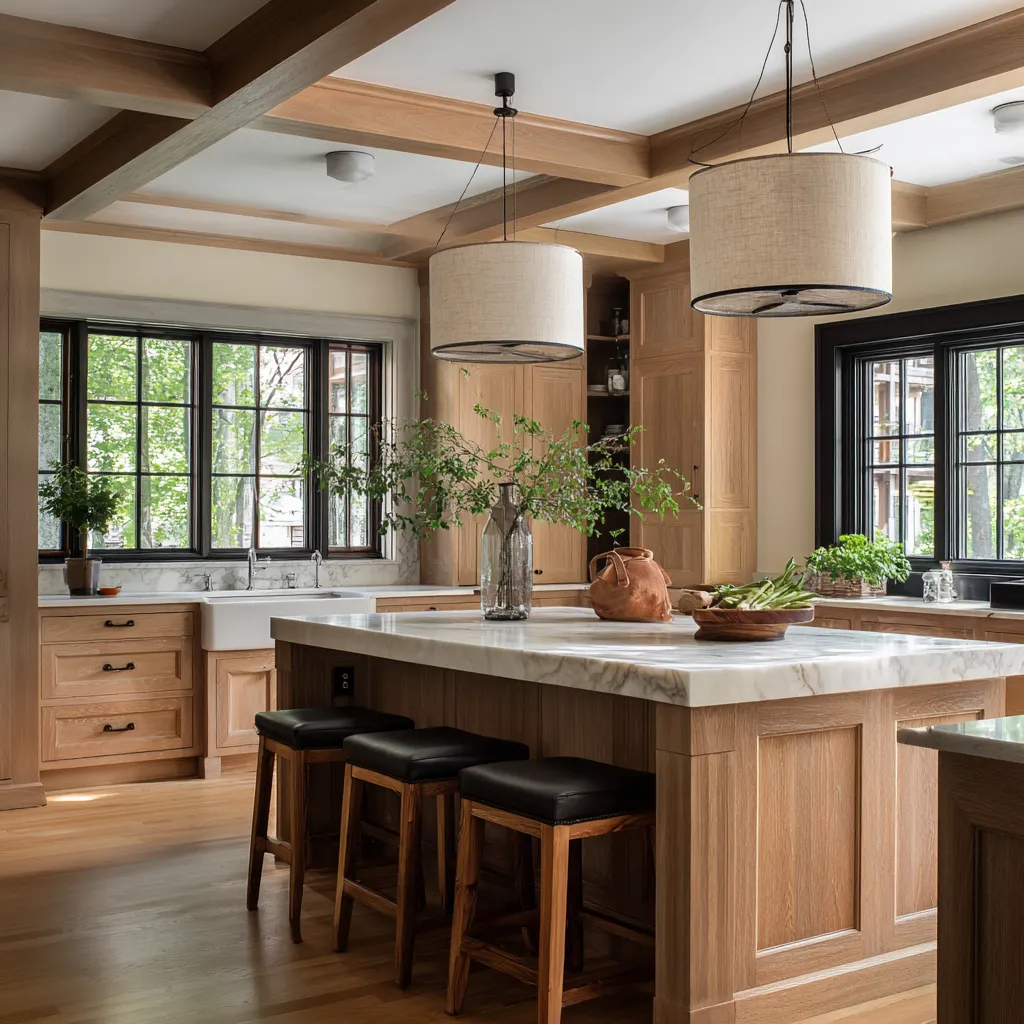
Keep the weight in one or two places
Modern kitchen designs work as a hybrid, it does not spread Craftsman signals evenly across the whole room. They concentrated the old-house weight into one or two zones, then edited everything around those zones.
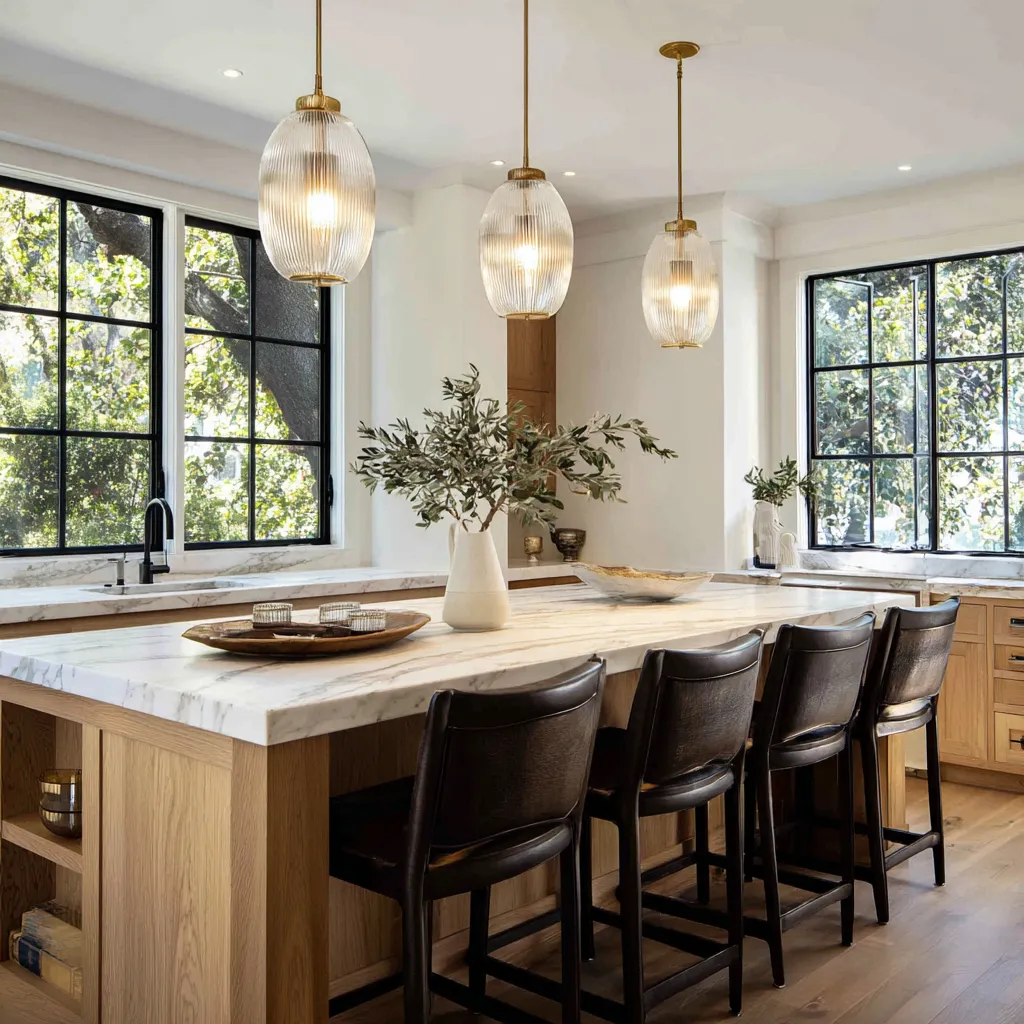
That weight often stays in places like:
- the ceiling framework
- deep window trim
- a stone sink wall
- a solid oak island
- a built-in bench or storage wall
This matters because many Craftsman kitchens start to feel dated not because the materials are wrong, but because every layer asks to carry the full style burden at once. Dark beams, dark cabinetry, heavy stools, strong stone, ornate lighting, and busy shelving can all be beautiful separately, but together they easily make the room feel visually overfull.
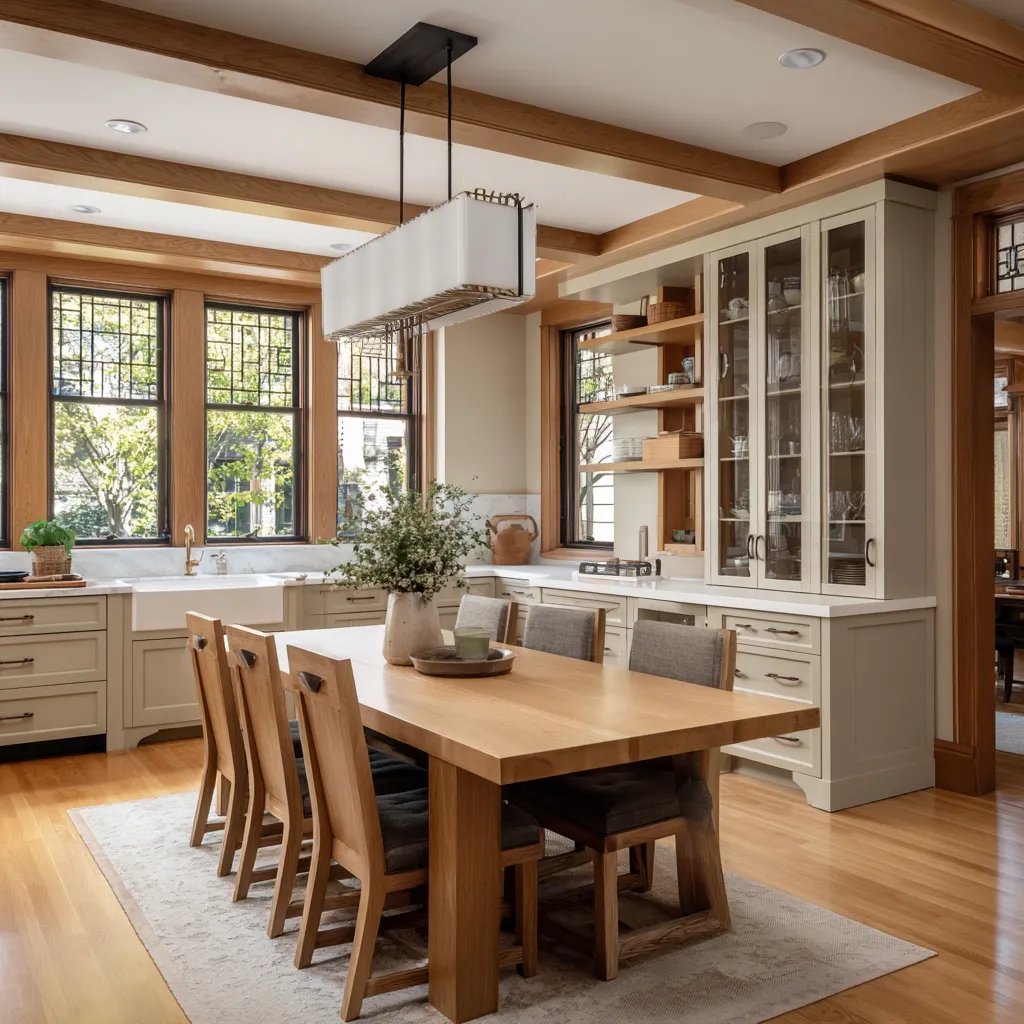
A fresher result comes from concentration. Let the ceiling carry the heritage.
Let the island carry the wood mass. Let the windows hold the trim depth.
Then give the counters, cabinet faces, and wall fields more breathing room.
Why monolithic stone changes the whole room
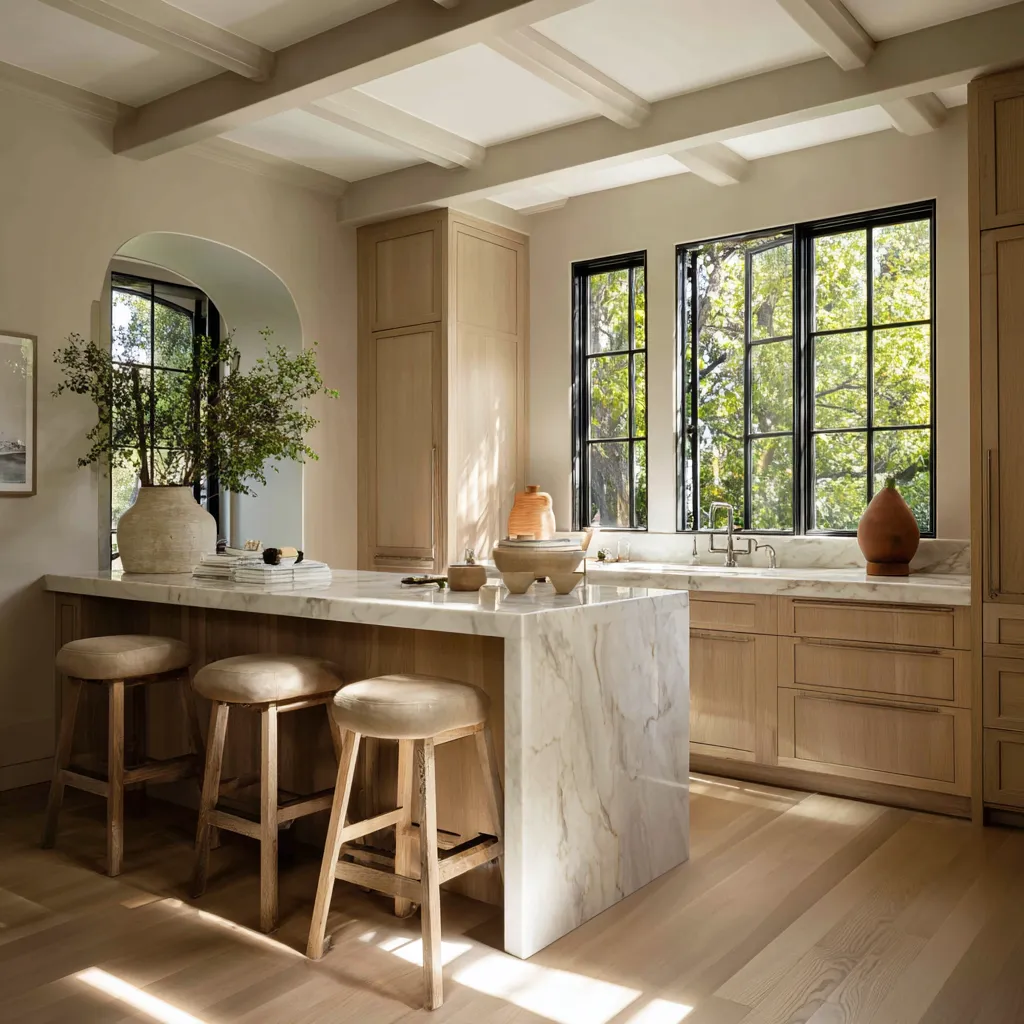
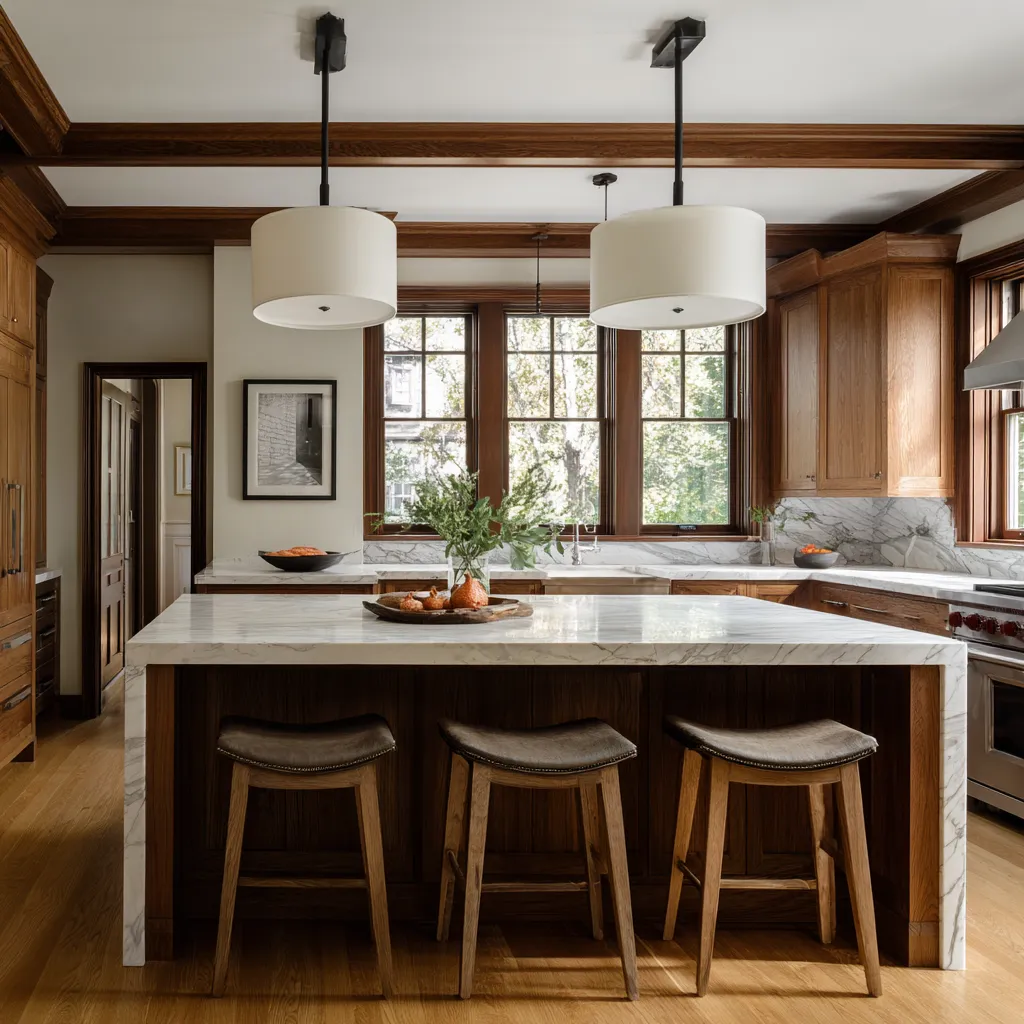
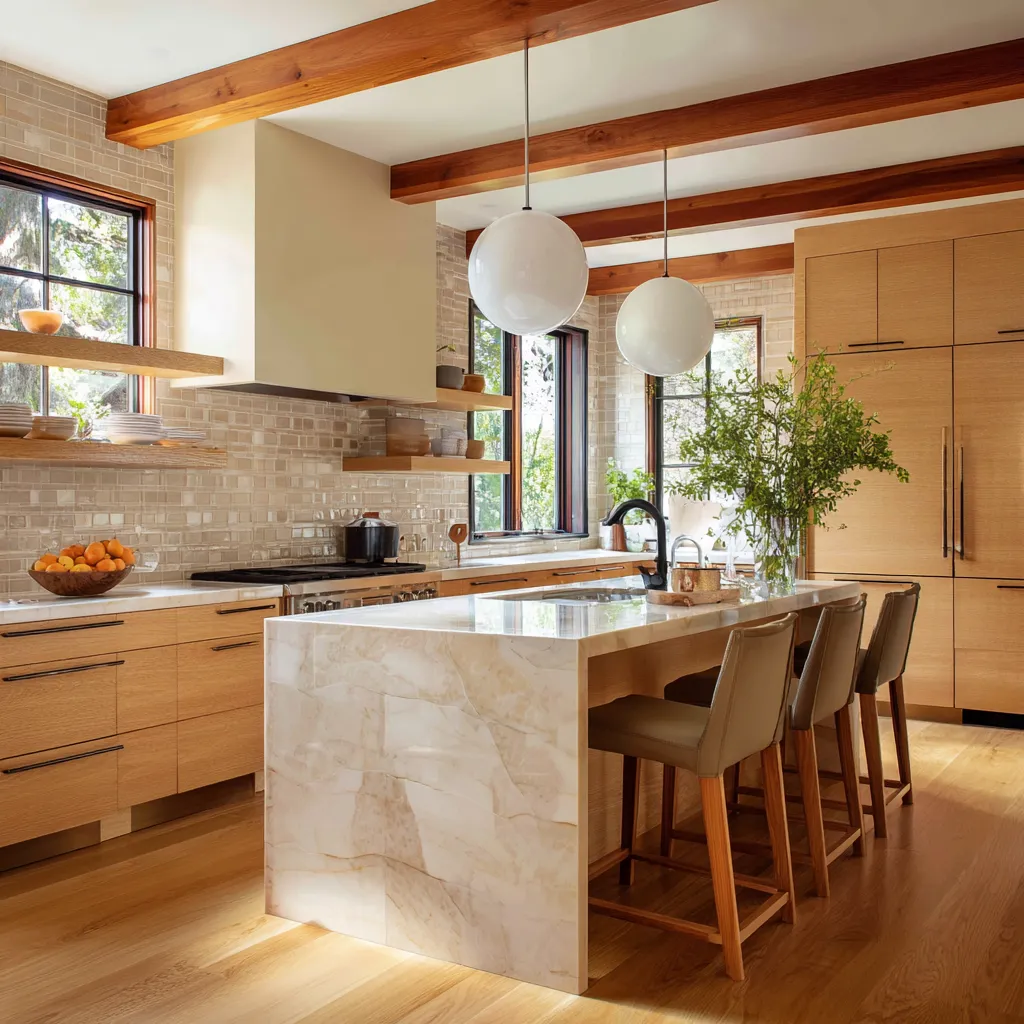
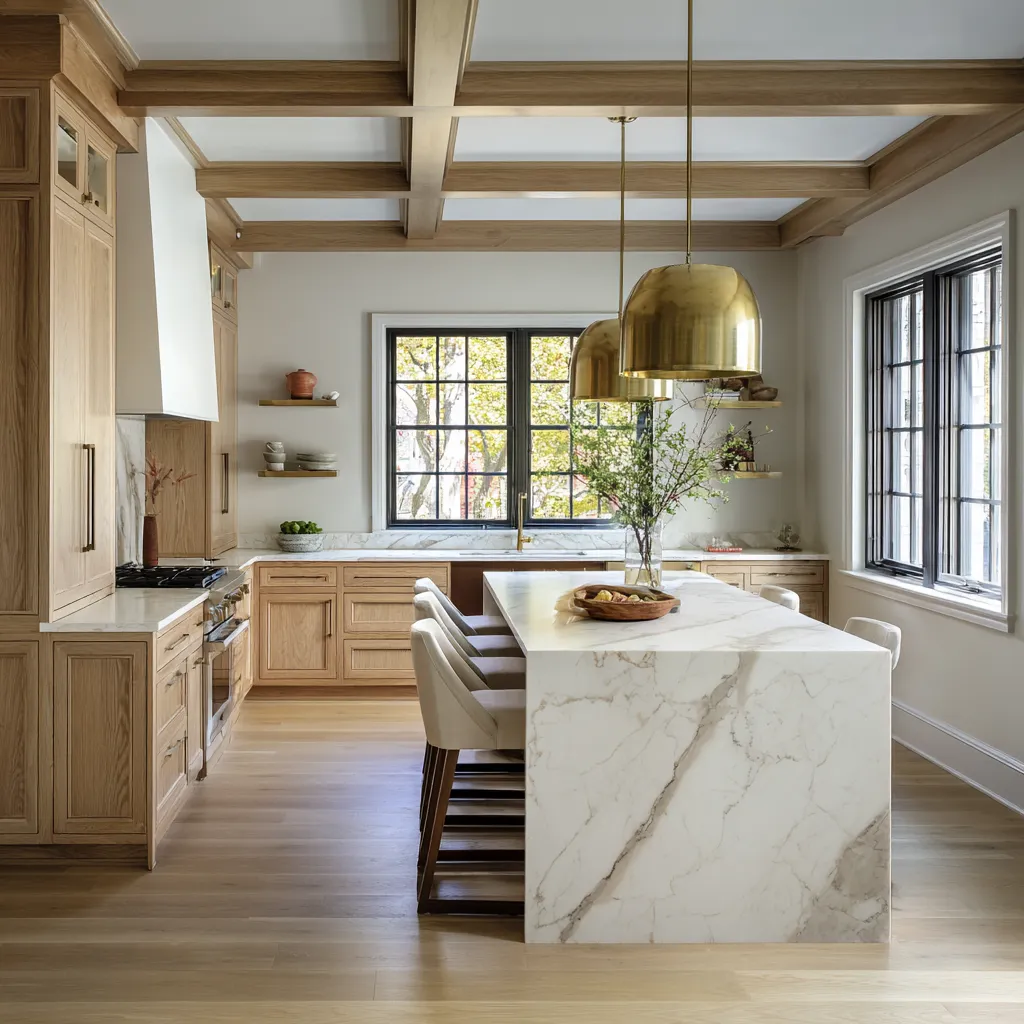
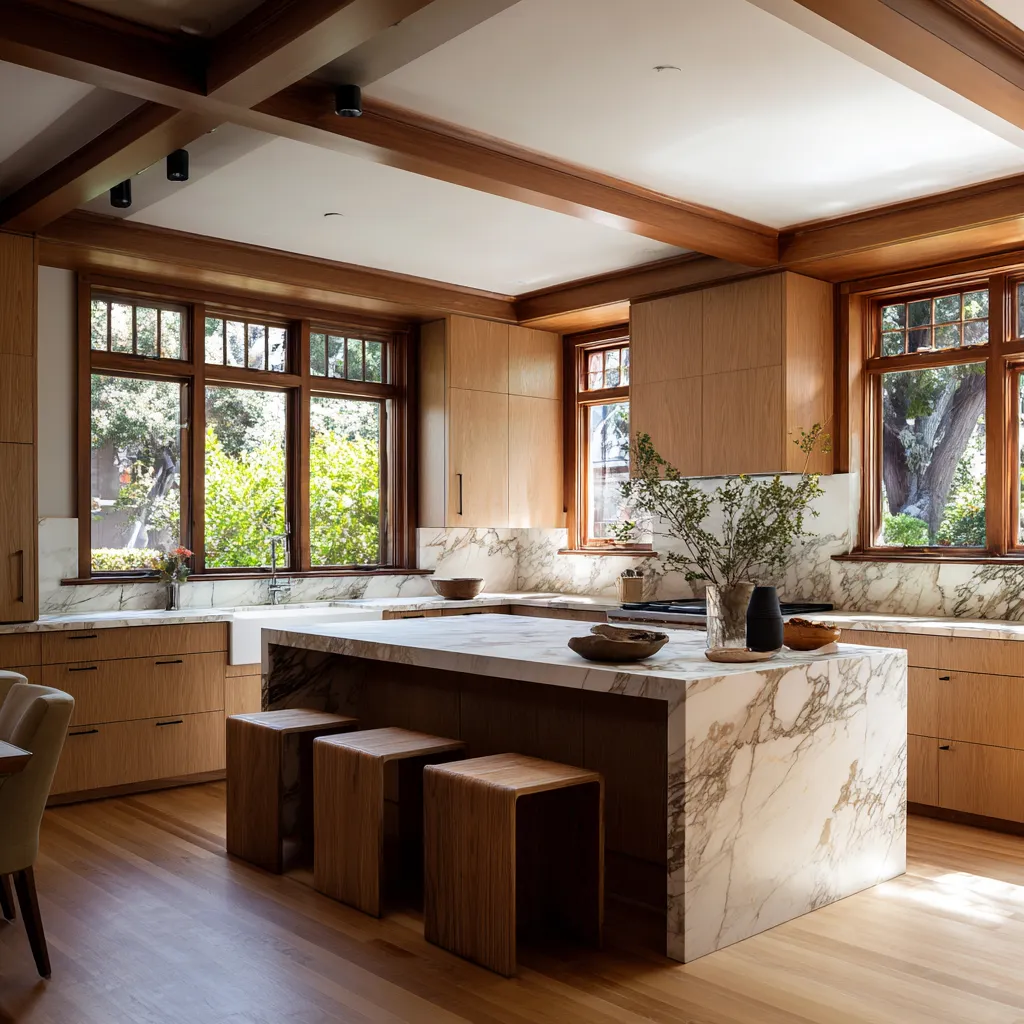
Large continuous stone surfaces, especially waterfall-like island forms and broad backsplash fields, have the strongest positive relationship with a more current look. That is a very useful finding because it means the newer feeling is not being driven first by metal finish, open shelves, or accessories.
It is being driven by continuity. When the island reads as a single sculptural volume, or when the backsplash becomes one broad surface instead of many smaller interruptions, the room shifts forward.
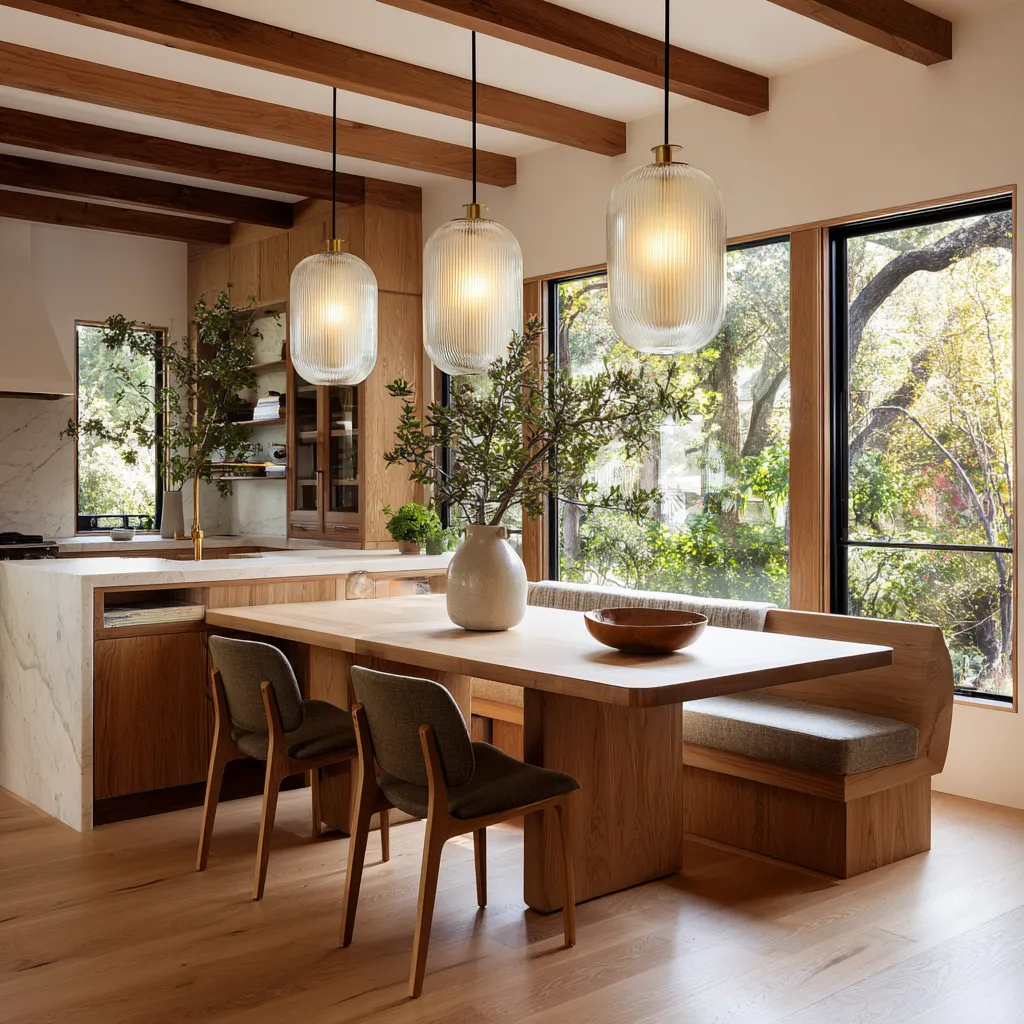
In practical terms, this means that if you want a Craftsman kitchen to feel fresher without losing its substance, stone is one of the most effective places to act. A large quiet stone field can lighten the composition, sharpen the silhouette of the island, and reduce the visual fragmentation that often makes traditional kitchens feel older.
This does not mean every Craftsman kitchen needs a dramatic waterfall island. It means large uninterrupted stone planes are one of the most reliable ways to introduce present-day crispness into a style built on carpentry and weight.
Black windows work as a bridge
Black-framed glazing often appears in Craftsman kitchen ideas, and the pattern behind it is especially interesting. Black windows are not the whole story on their own, but they can link warm wood, pale surfaces, continuous stone, and a more graphic current finish.
That makes them a bridge feature. They connect the room’s rooted side and its newer side without forcing the kitchen into one extreme or the other.
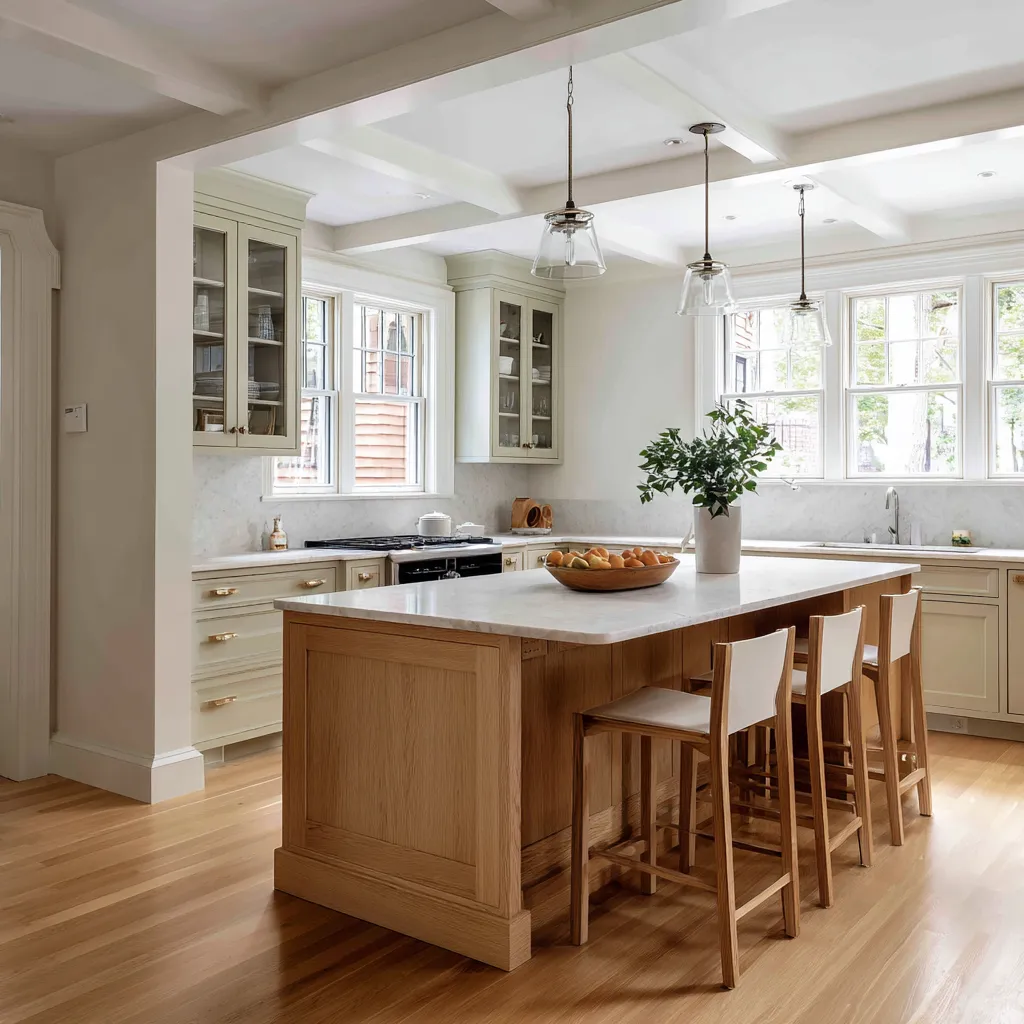
In a wood-rich Craftsman kitchen, black window framing gives needed definition. It trims the daylight, sharpens the view, and keeps the room from becoming too soft.
In a pale kitchen, it prevents the space from drifting into vagueness. In both cases, it adds structure without the heaviness of another dark cabinet wall or stone surround.
Rough stone adds authenticity
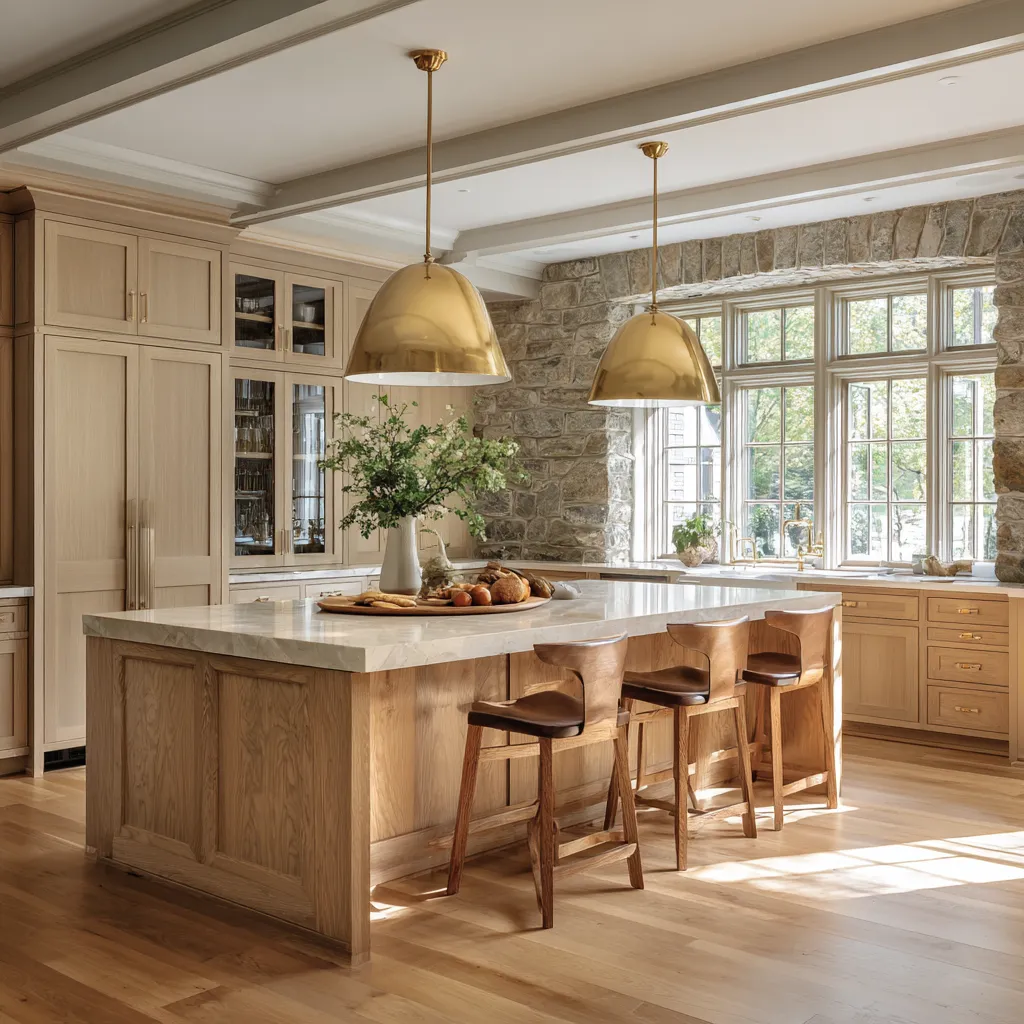
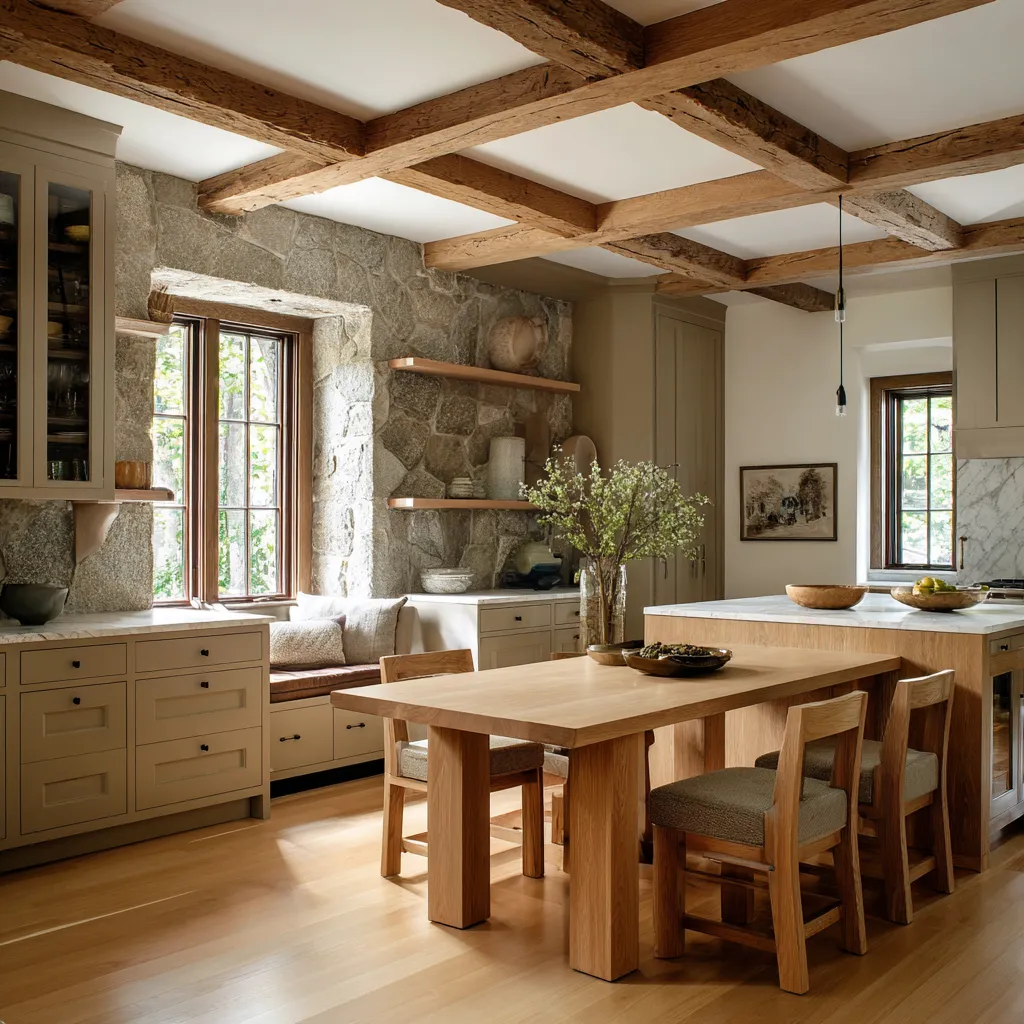
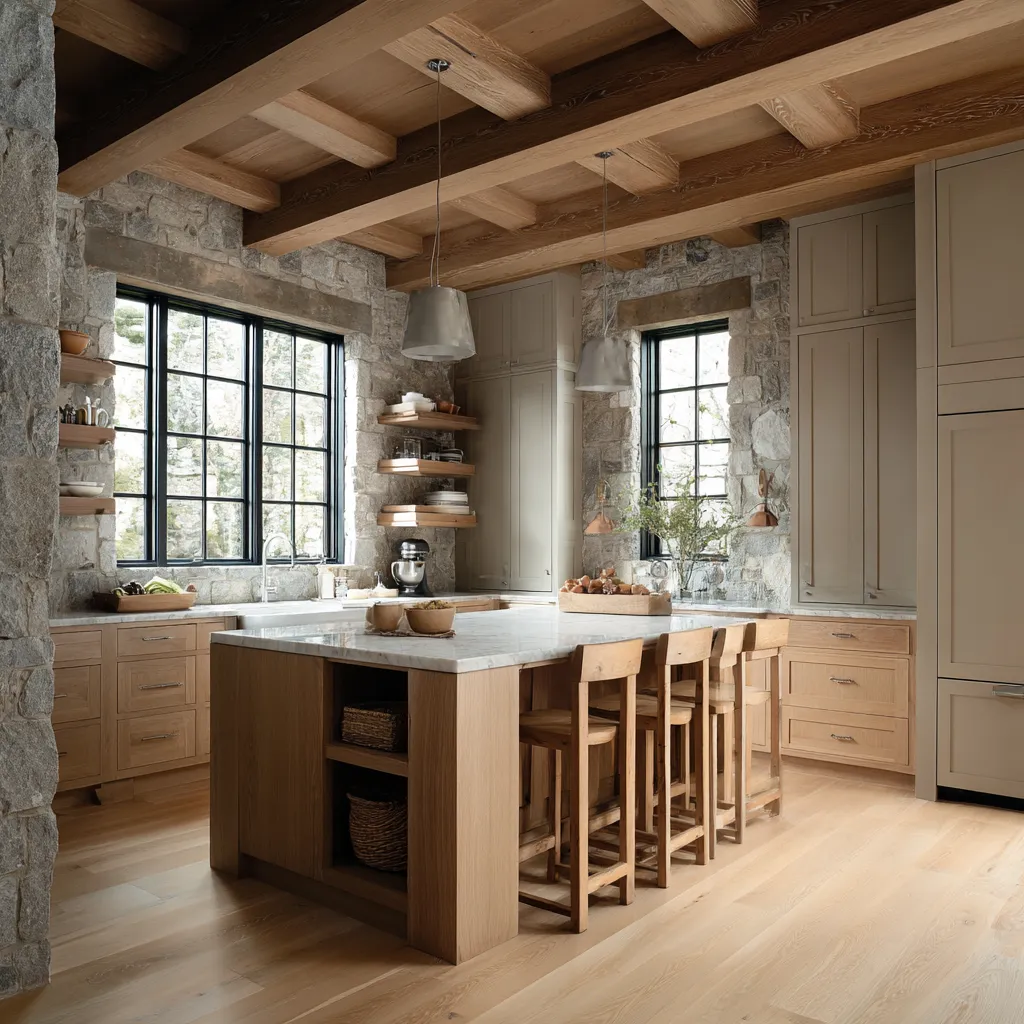
Rough stone strongly supports Craftsman identity, yet it tends to lower the current look. In the highest-modernity kitchen design concept with solid Craftsman retention, rough stone usually does not appear at all.
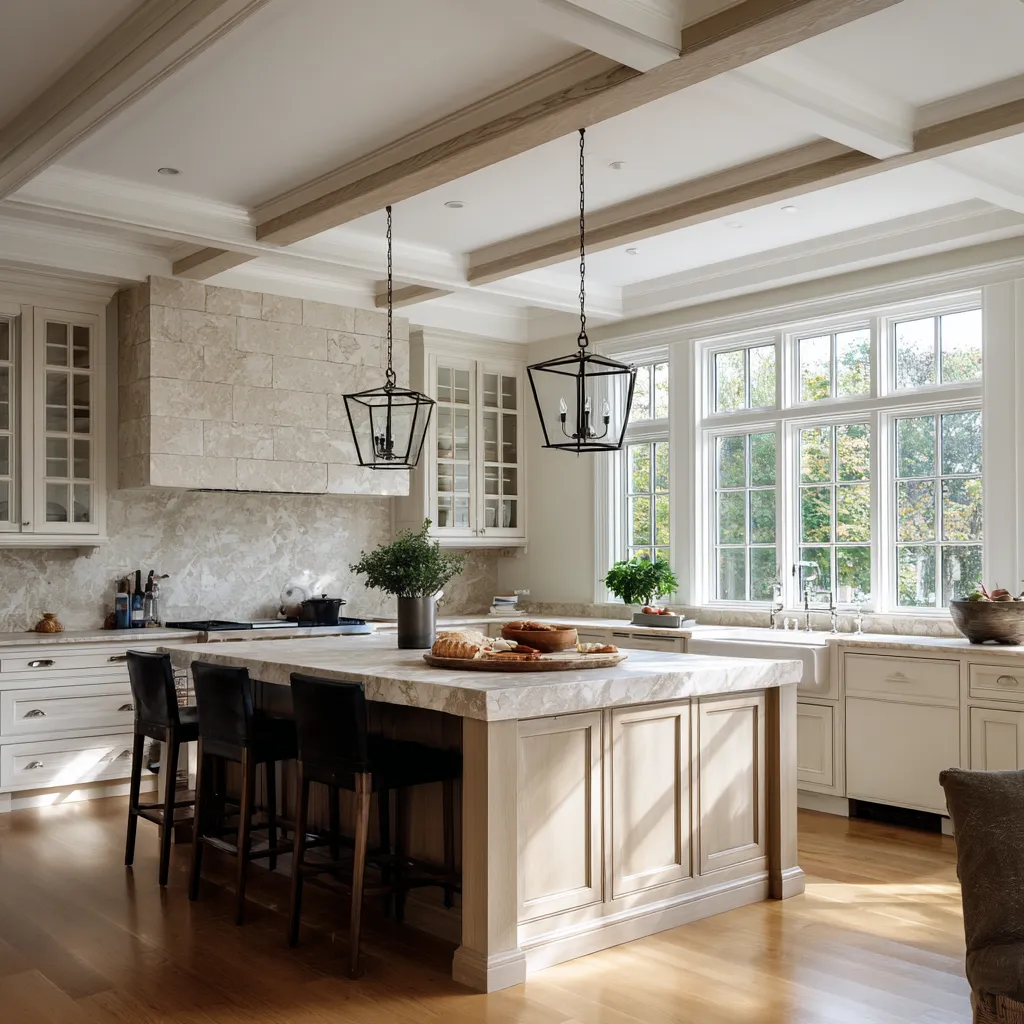
That does not make rough stone a mistake. It simply means it changes the direction of the room.
Rough stone strengthens age, tactility, and rooted character. It gives a kitchen memory and gravity.
But it can also limit how sleek or visually lifted the room feels. So the choice depends on what kind of Craftsman kitchen you want.
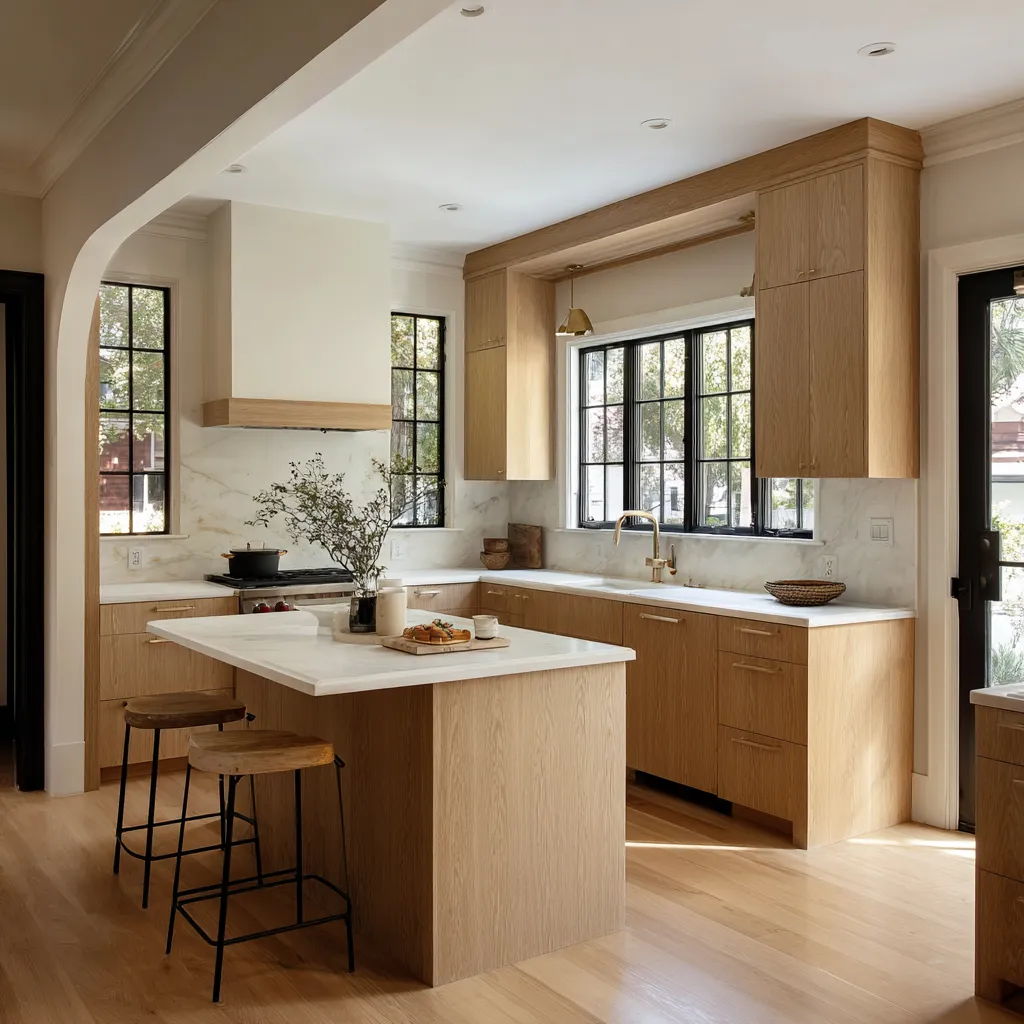
If the goal is a richer, more grounded, heritage-forward kitchen, rough stone can be very effective. If the goal is a sharper, brighter, more edited hybrid, then smoother stone and cleaner wall fields will usually carry the room further.
This is a useful distinction because many people treat stone as if it were one design category. Stone type changes not only texture but the whole stylistic direction of the kitchen.
Brightness comes from the envelope, not from decoration
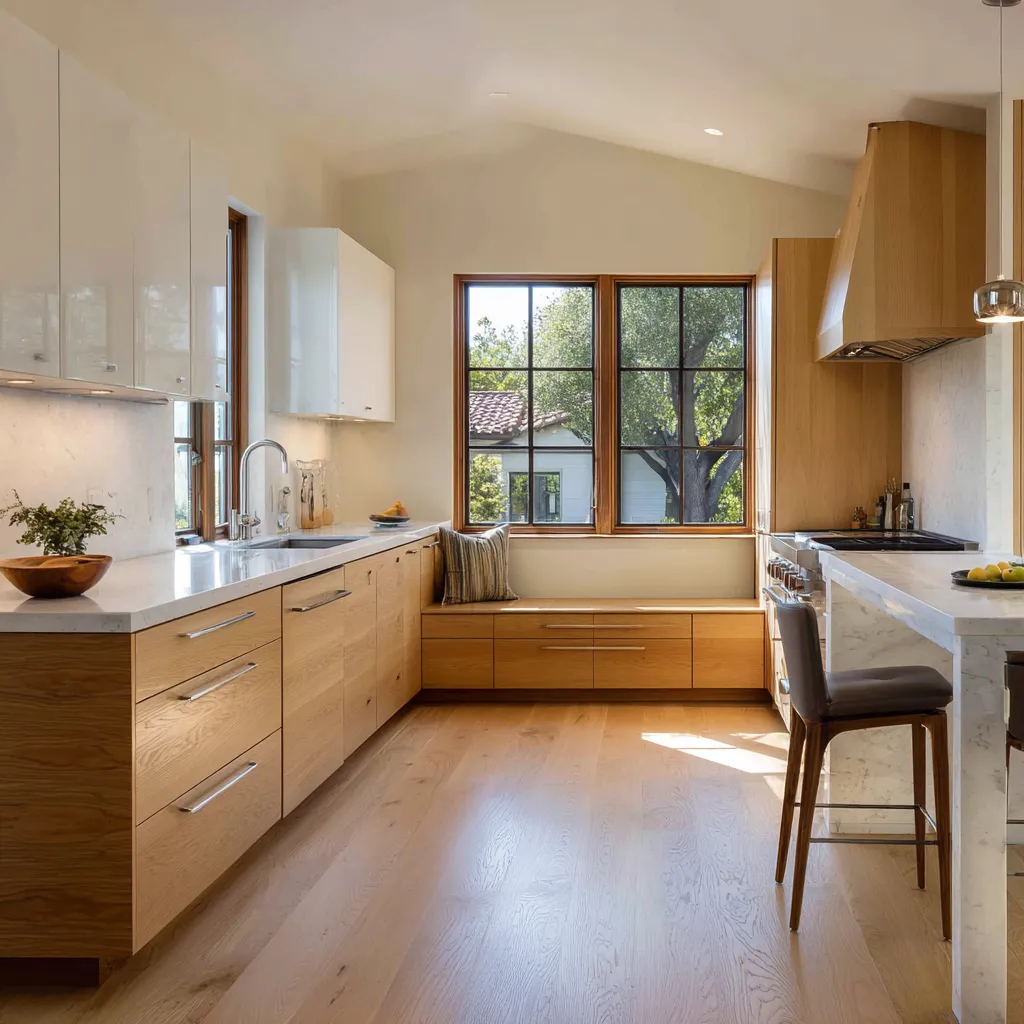
Brightness is tied mainly to pale palette and lighter structure. Decorative accents mattered far less.
In other words, a kitchen does not become bright because it has a few reflective pendants or pale bowls on the shelf. It becomes bright because the major surfaces support light.
That means:
- lighter wall and ceiling fields
- lighter structural treatment, or at least more porous structure
- pale floors or large bright counter planes
- fewer visual interruptions across the working surfaces
This is especially useful for Craftsman homes, because many homeowners want more light without losing the style’s sense of substance. Brightness and authenticity are not opposites, but they do need mediation.
A pale room can still feel rooted if the framework stays visible and the room keeps some mass in the island, trim, or built-ins. A bright kitchen without structure feels generic.
A dark kitchen without relief feels heavy. The sweet spot sits in between.
Open shelves are support
Open shelving does not really mean a newer look. Shelves do have a role, but it is smaller and more specific than many trend-driven ideas suggest.
Open shelves mainly helped by:
- reducing wall heaviness
- adding signs of daily use
- keeping a serious room from feeling too formal
They belonged more often to the heritage-balanced group than to the most sculptural current group. That suggests shelves help a kitchen feel lived in, but they do not by themselves create the fresh stylish update.
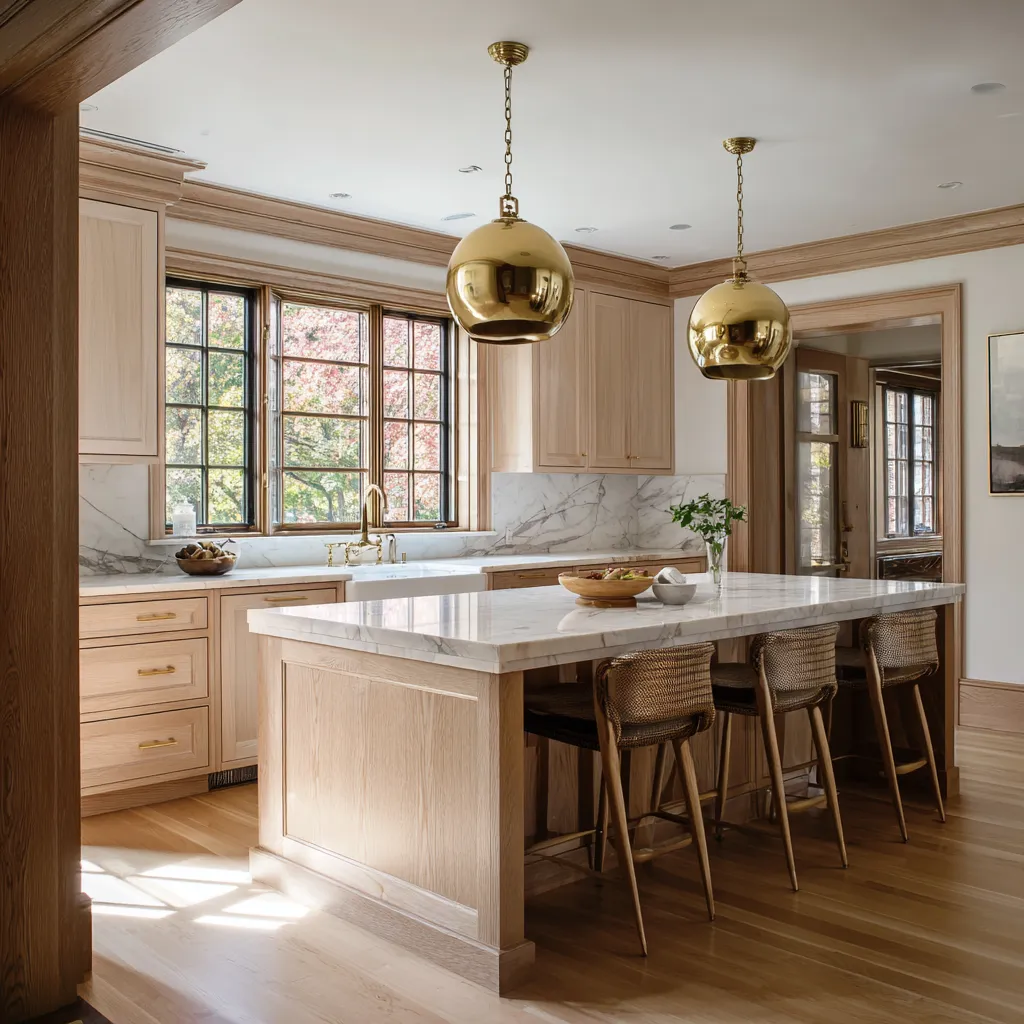
So if shelves are used, they work well when they stay sparse, material-driven, and tied to the room’s overall palette. Their job is to loosen the wall composition a little, not to become the room’s main event.
The social kitchen is made by layout
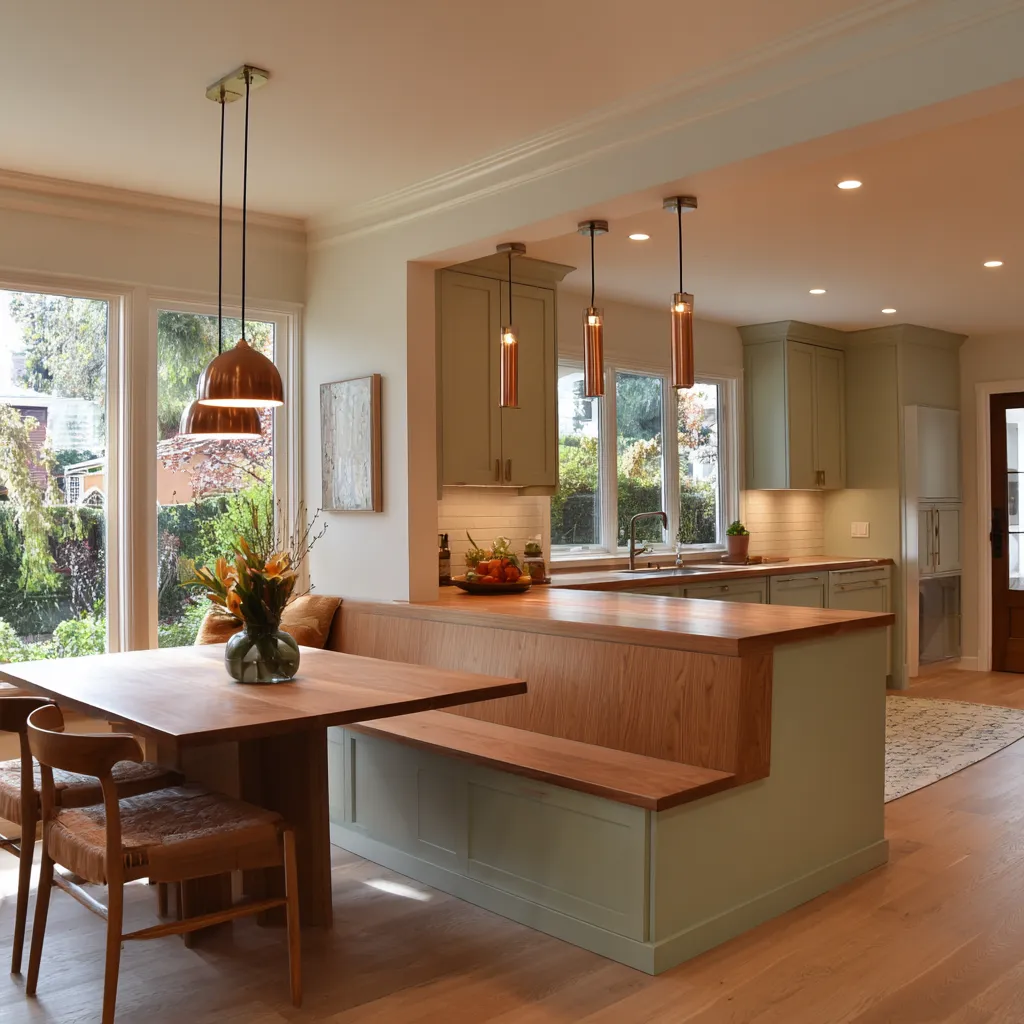
The family-centered feeling of kitchens comes mainly from layout decisions, not from finish decisions. Dining integration and built-in seating have the strongest relationship with social warmth.
That means a Craftsman kitchen feels more inhabited and welcoming not because of another brass pendant or another branch arrangement, but because it includes real places to remain. Bench logic, banquette logic, window-seat logic, attached table logic, and island-table hybrids all change how the room behaves.
This is an important distinction because there are at least two different ways for a Craftsman kitchen to feel modern.
One is sculptural modernity:
- monolithic stone
- black windows
- brighter field
- fewer household cues
The other is domestic modernity:
- built-in seating
- dining linkage
- softer seating
- layered household use
Both are current. They simply value different kinds of experience.
One is more image-forward. The other gives more room depth and staying time.
Three ways the style is moving now
Modern Craftsman kitchens do not form one single formula. They split into three main directions.
1) Luminous framework modernism
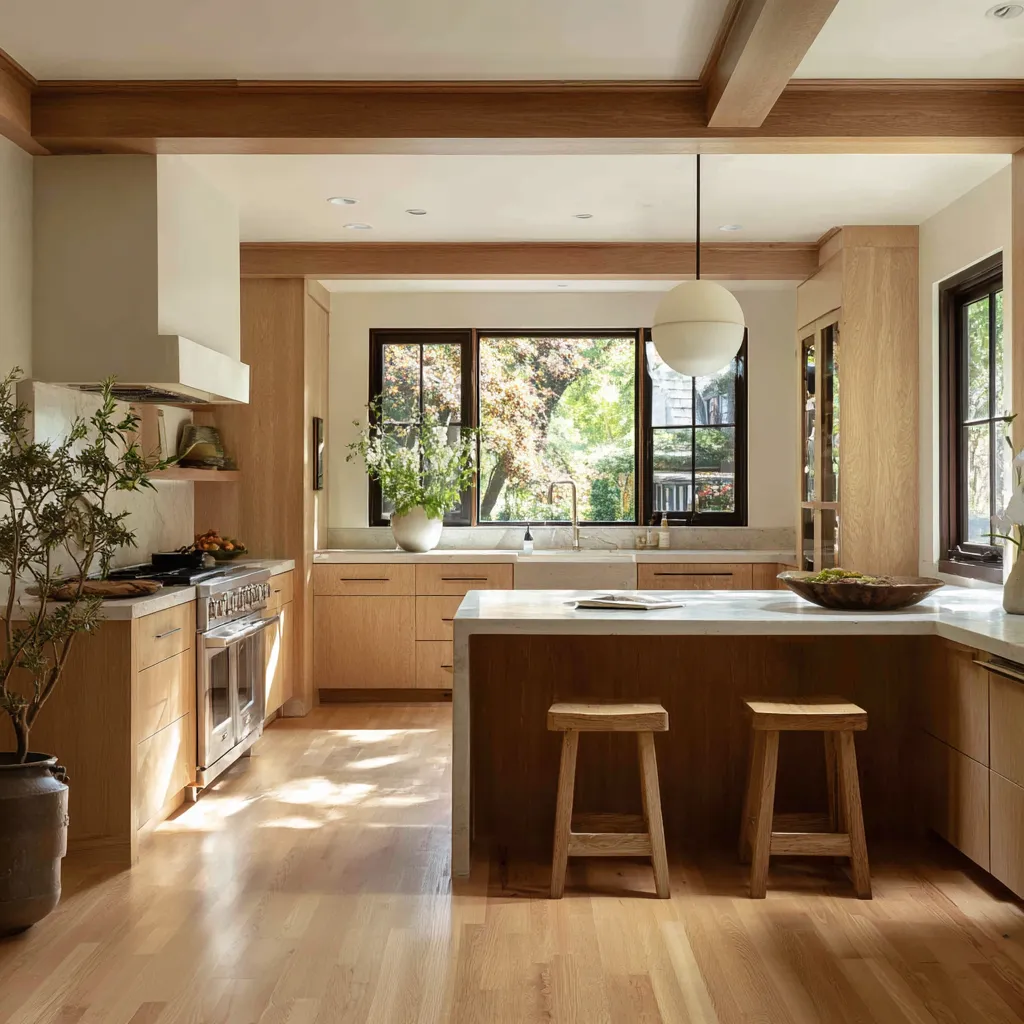
This group keeps the structural language of Craftsman kitchens but thins visual weight aggressively. Light or painted ceiling structure, pale envelope, and more continuous stone give these rooms their fresh tone.
They are bright, edited, and visually lifted. This direction works well for readers who love the style’s order but want a kitchen that feels cleaner and more open.
2) Heritage mass with an edited update
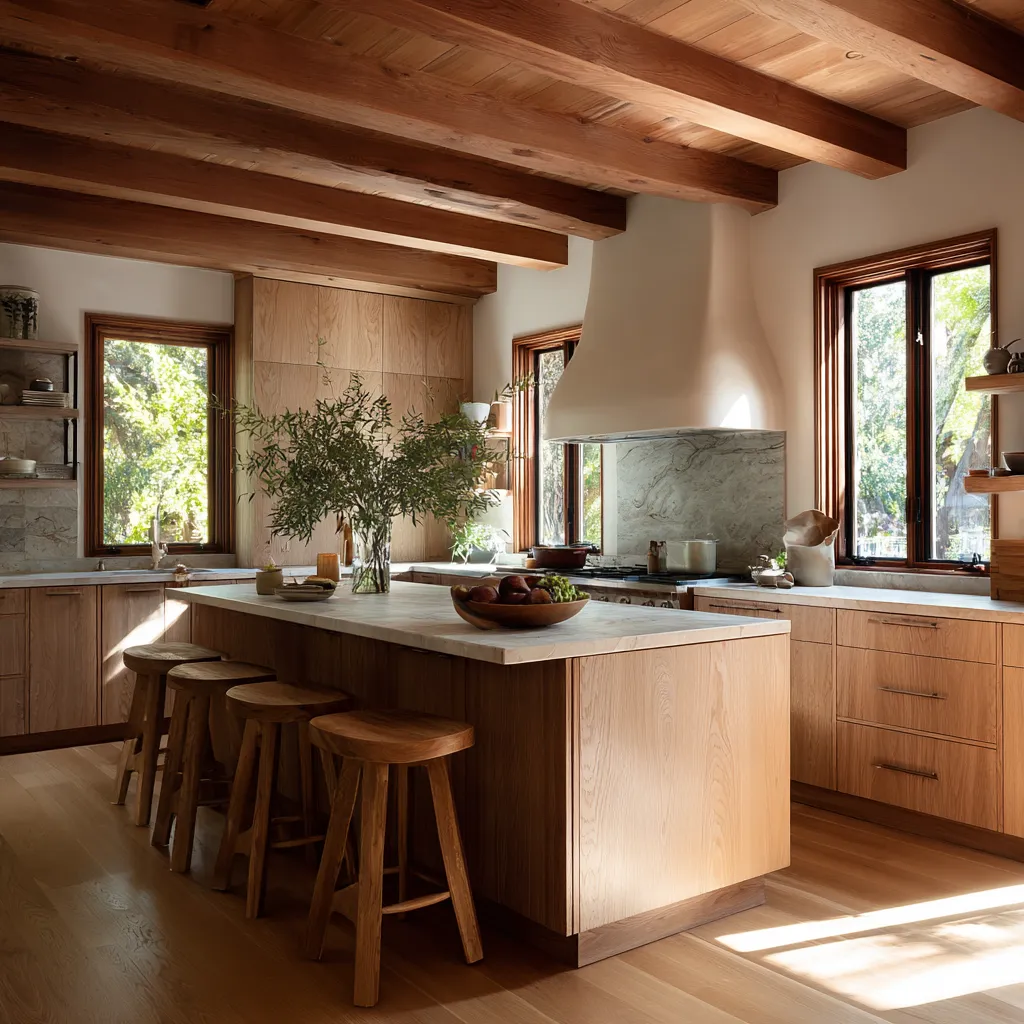
This is the core type. Such kitchen concepts keep more visible historical mass: darker beams, stronger wood presence, open shelves, and more tactile depth.
But they also edit enough surfaces to prevent drag. They often give the clearest answer to people who want strong house character with a present-day finish.
This direction works well for those who want the room to stay recognizably Craftsman and do not want it flattened into something anonymous.
3) Domestic social Craftsman
This group is shaped less by sculptural polish and more by household life. Dining integration, built-in seating, softer seating, and layered use dominate here.
These kitchens still keep Craftsman structure, but they place more value on staying time, family use, and daily comfort.
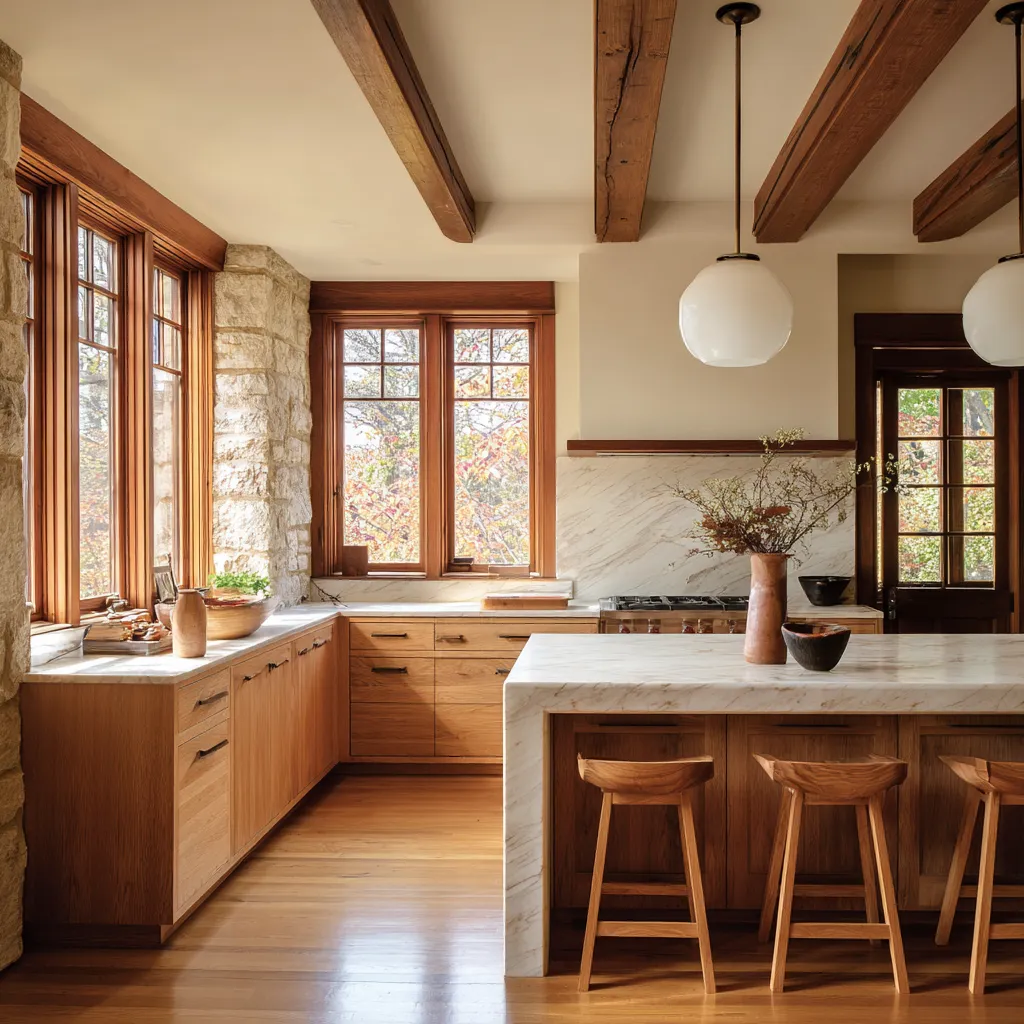
This direction works especially well for cases where the kitchen is meant to act as a household center rather than only a visual focal room.
How to design a fresh stylish Craftsman kitchen without losing its soul
To keep Craftsman identity, preserve at least two of these:
- visible ceiling framework
- deep window trim
- built-in seating or built-in storage
- a solid wood island mass
- tactile natural material with real visual weight
To make it feel current, add at least two of these:
- monolithic or waterfall-like stone logic
- black-framed glazing
- a pale field around the heavy elements
- visually lighter fixture language
- simplified cabinet fronts
To make it feel more family-centered, add one of these:
- island with a table edge
- banquette
- window seat
- integrated dining zone
This matters because the style is not defined by one finish or one product type. It is defined by distribution.
Keep the built permanence in selected zones. Let freshness enter through continuity, edited contrast, and a lighter envelope.
What to avoid if you want the look to stay fresh
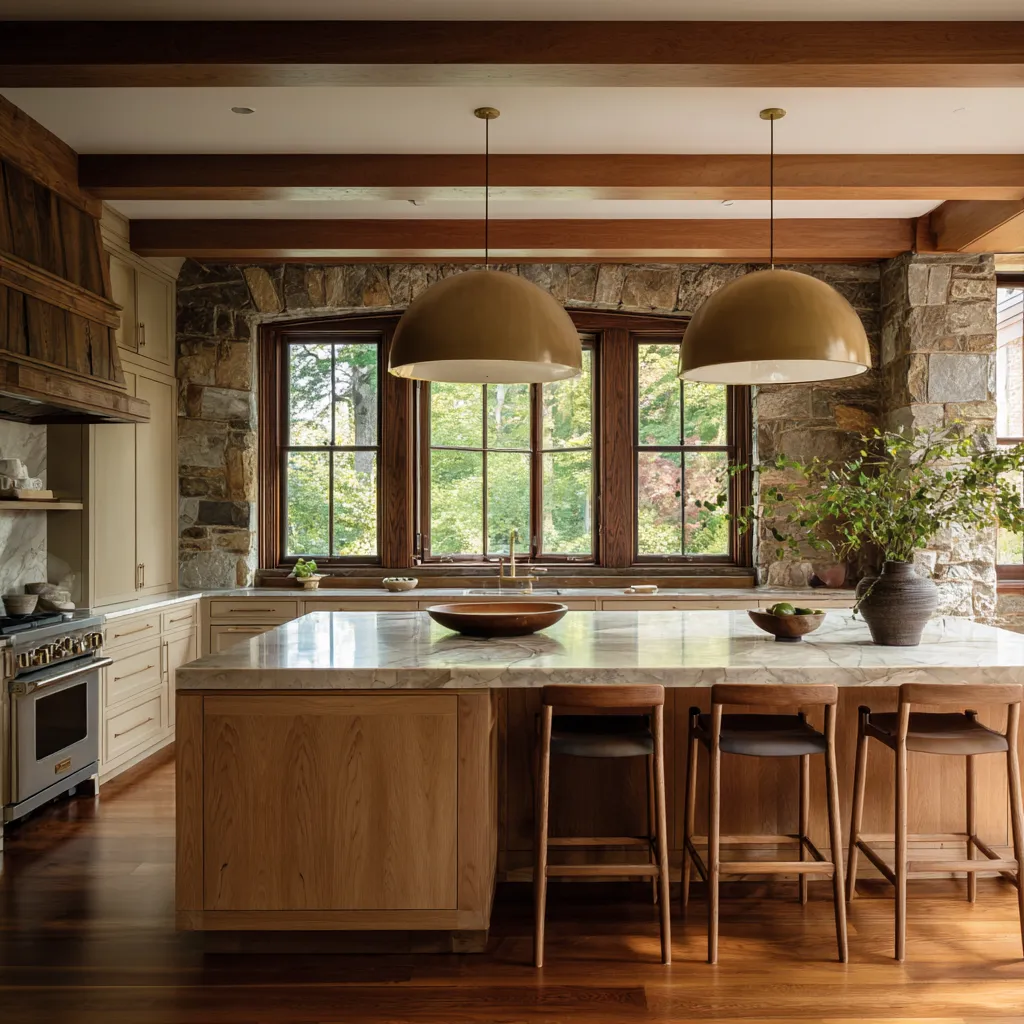
- First, avoid spreading heavy Craftsman cues across every surface. Too much dark wood, too much rugged stone, and too many strong details at once can make the kitchen feel visually overloaded.
- Second, be careful with rough stone if your goal is a sharper hybrid look. It supports authenticity, but it also pushes the room toward a more heritage-forward mood.
- Third, do not expect open shelves or decorative accents to modernize the room by themselves. They can help with domestic texture, but they are not the main lever.
- Fourth, do not chase brightness by removing all depth. The lighter kitchens that still felt convincing always kept visible framework, deep trim, or some kind of solid built mass.
Final thought
It does not need to modernize the Craftsman kitchen by taking away all of its weight. Modernize it by deciding exactly where that weight should remain.
That is why the fresh stylish kitchen ideas feel persuasive. They do not abandon the qualities people value in a Craftsman house.
They keep the framework, the material honesty, the sense of permanence, and the household depth. Then they shift the room forward through broad stone planes, simplified cabinetry, graphic glazing, lighter fields, and more selective use of visual mass.
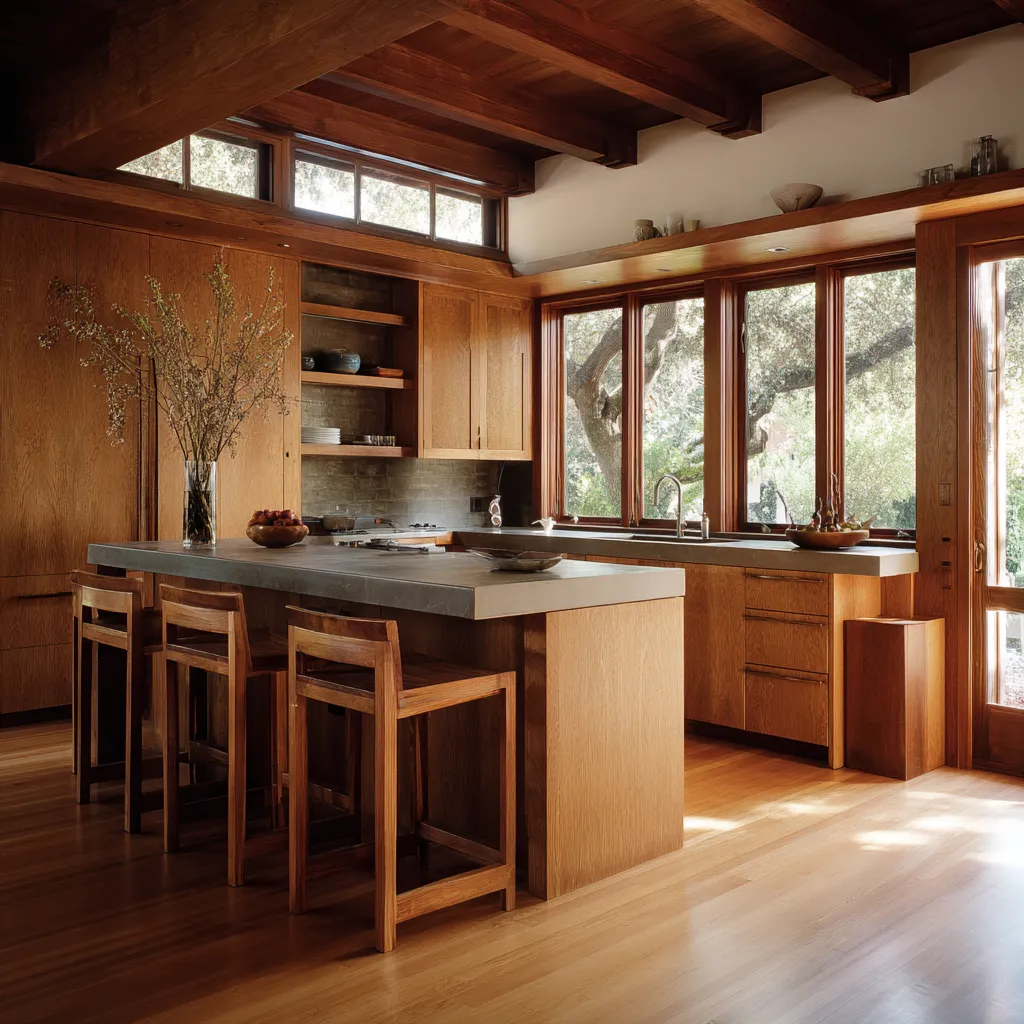
A good modern Craftsman kitchen design is not trying to become less itself. It is trying to become more precise.