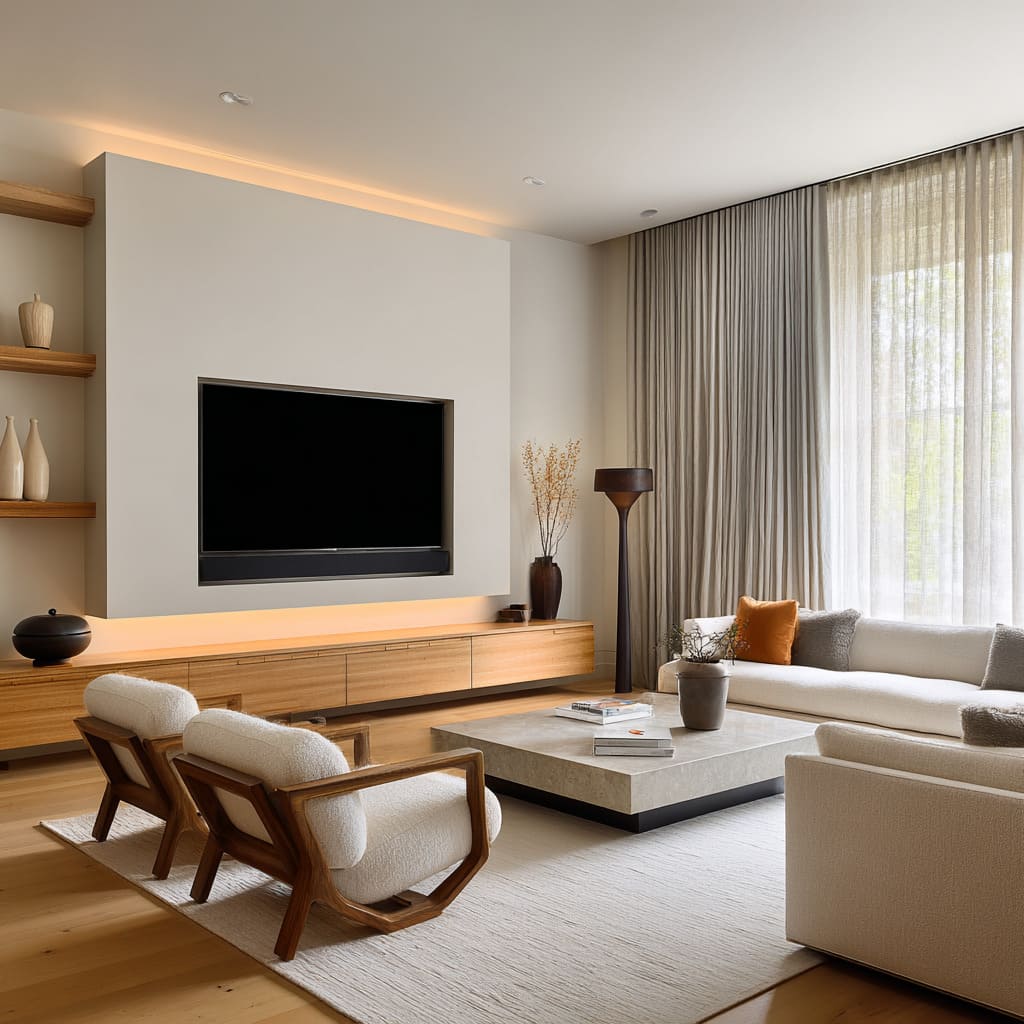
The TV wall is most successful when it is shaped as a gentle composition of horizontal elements instead of a cluster of unrelated parts. A long cabinet, a screen precisely aligned with its upper plane, and—if needed—a slim shelf or ledge above can act as one continuous band stretching across the room.
This approach allows a simple TV wall design to feel sophisticated without adding complexity. The cabinet often extends well beyond the width of the television, giving the overall composition a generous reach that stabilizes the entire room.
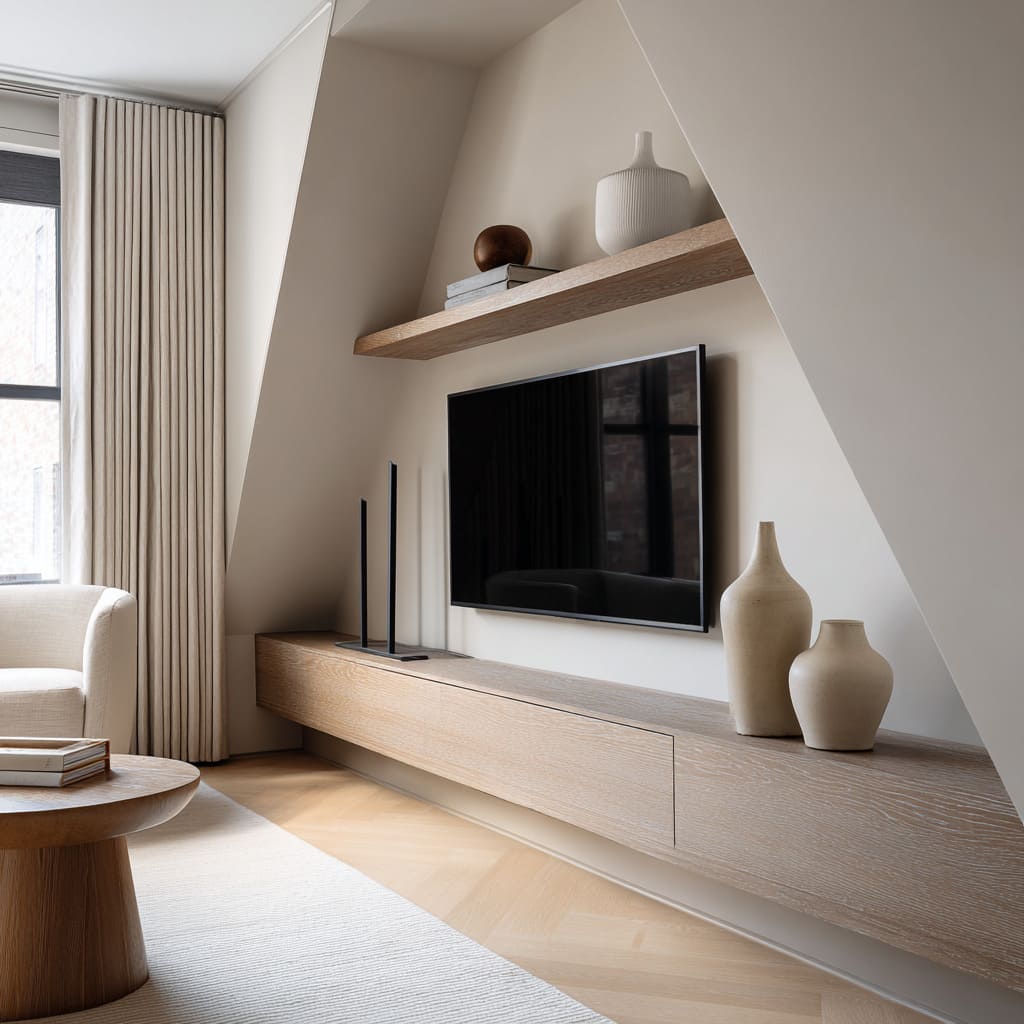
Even in spaces with angled ceilings or asymmetrical windows, a long, steady cabinet can serve as the visual anchor that calms irregular architecture.
The Power of Editing and Negative Space
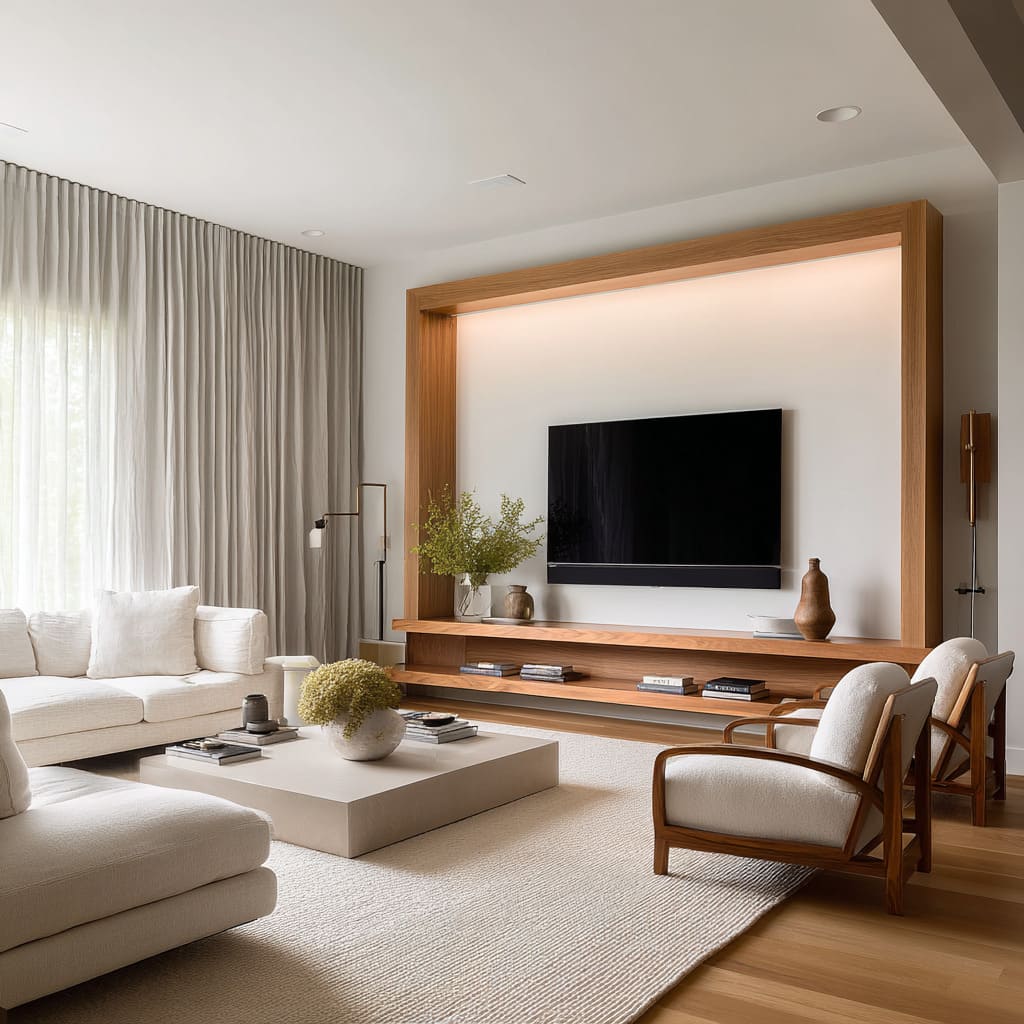
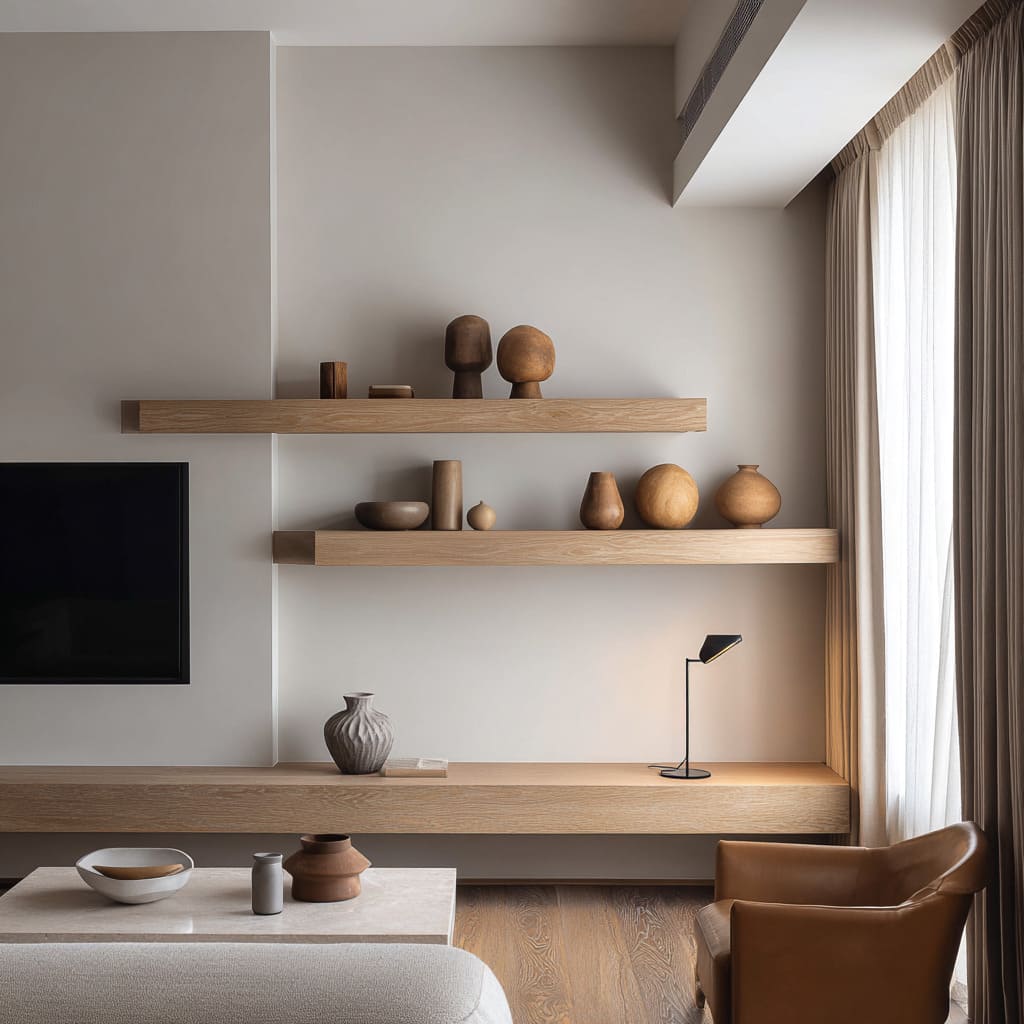
A strong strategy is the deliberate use of empty space. Shelves hold only a few chosen items.
Consoles are free of clutter. Gaps between objects are wide enough to allow each piece to speak quietly on its own.
This restraint is vital to a living room TV wall design simple, because it lets the wall breathe while giving chosen objects a strong presence.
Patterns of visual editing
- One tall piece paired with one low piece at the far edge of a console.
- A short stack of books used to echo the TV’s rectangular shape at a smaller scale.
- Objects placed in compact clusters rather than scattered across a surface.
By controlling empty space, the wall feels calm and composed rather than sparse or unfinished.
Texture as the Main Decorative Language
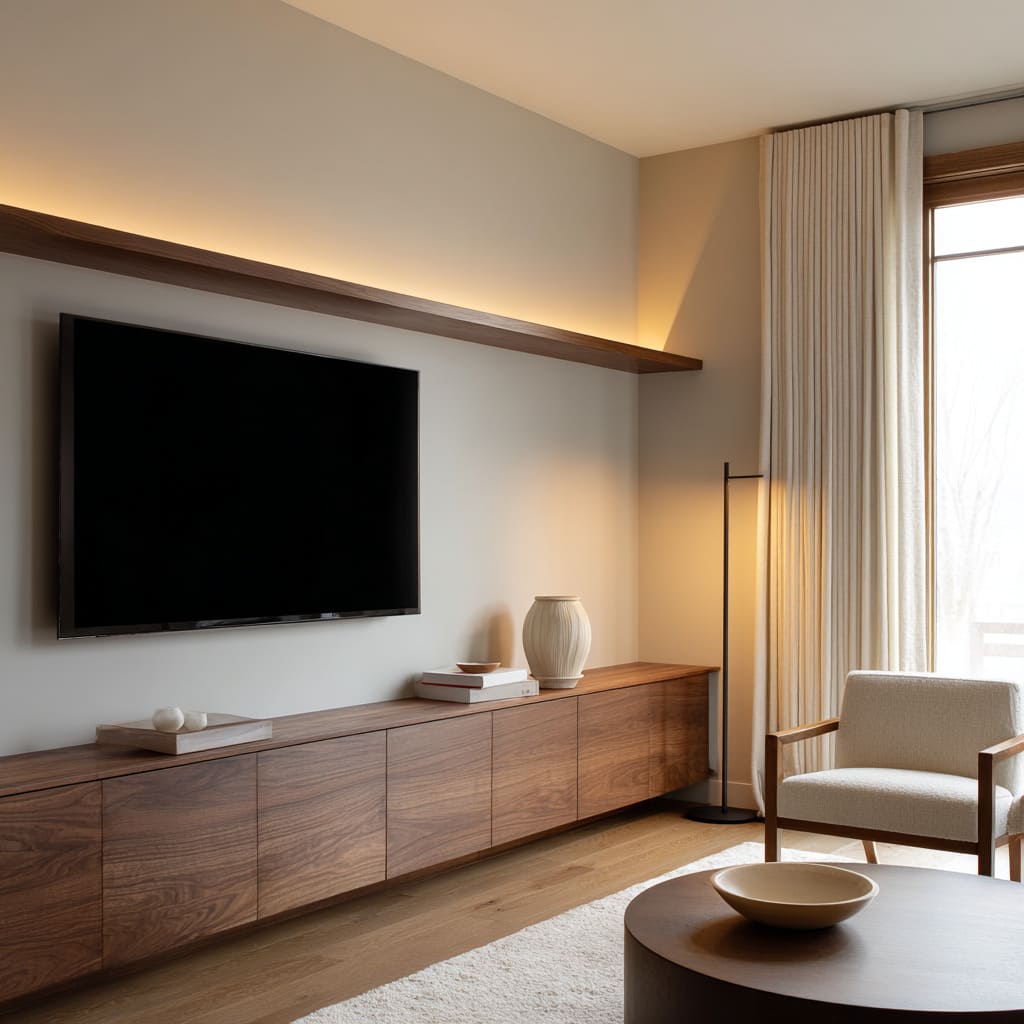
Instead of relying on patterns or high-contrast colors, many simple walls use texture to generate interest. Narrow vertical slats, ribbed backdrops, gently carved plaster, and fine grooving provide a soft rhythm of shadows that enrich the wall without overwhelming it.
This is often the defining move in a simple modern TV wall design, because it introduces depth while staying visually quiet.
Common textural approaches
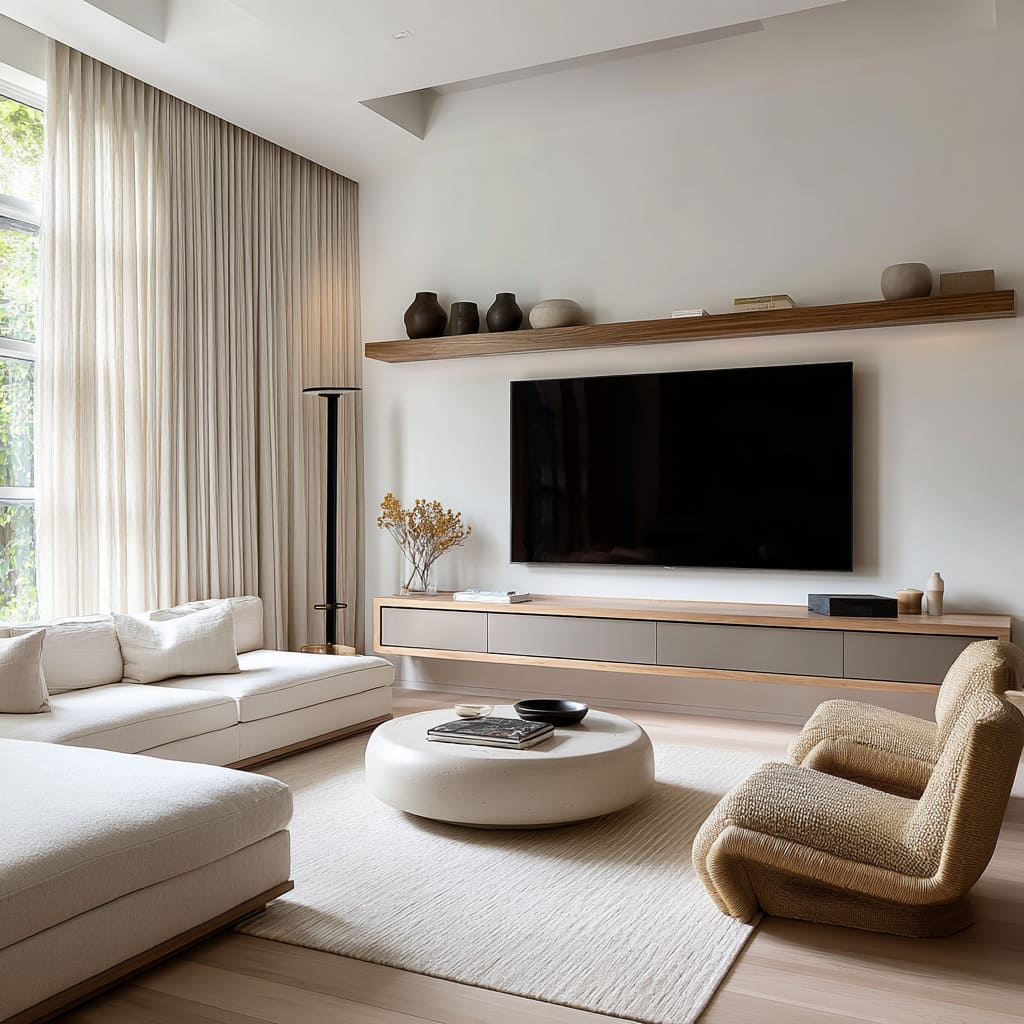
Slats
Slim slats create vertical movement and soften reflections on the screen.
Ribs or fluted panels
Fine ribs resemble the subtle folds of fabric, adding delicacy to tall surfaces.
Sculpted niches
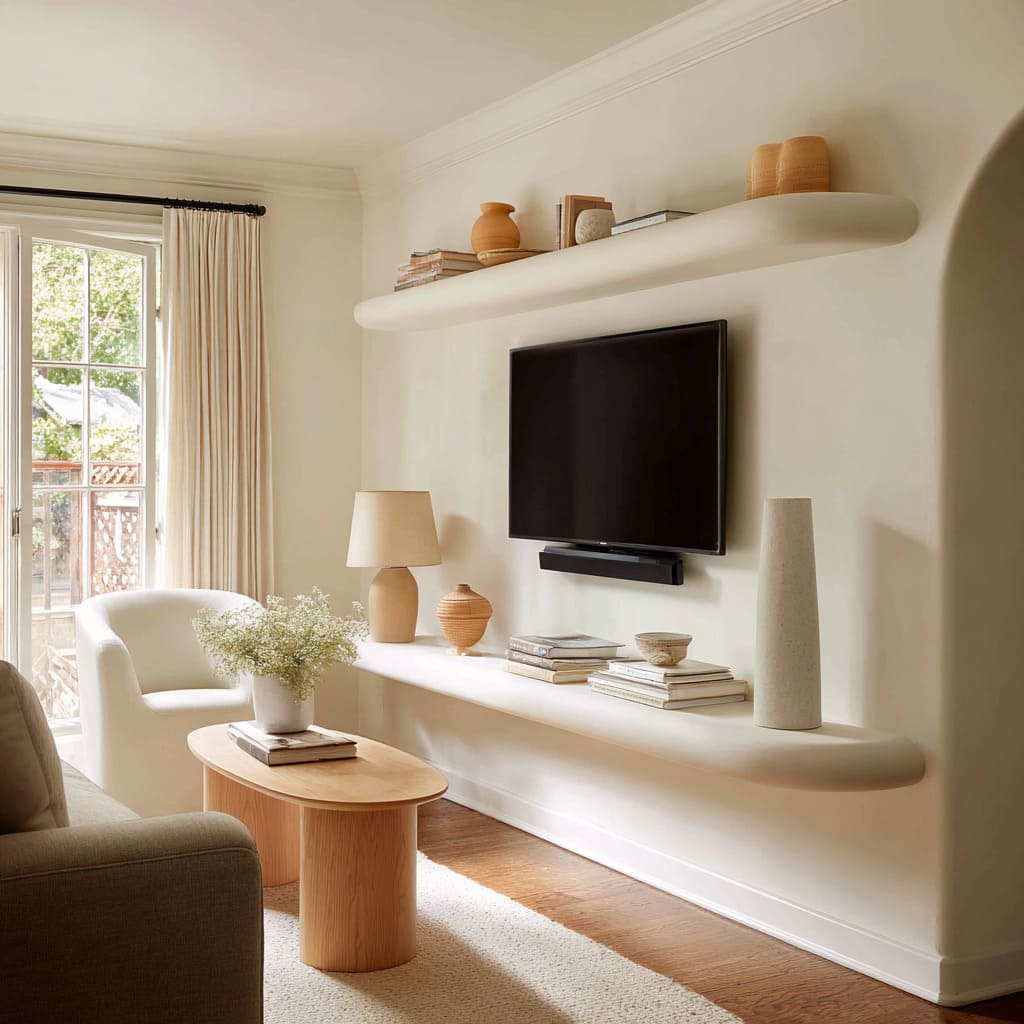
Curved corners and deep ledges integrate the television into a softly formed architectural pocket.
Texture becomes the “decoration,” allowing everything else—furniture, lighting, and objects—to remain gentle.
Light as a Drawing Tool
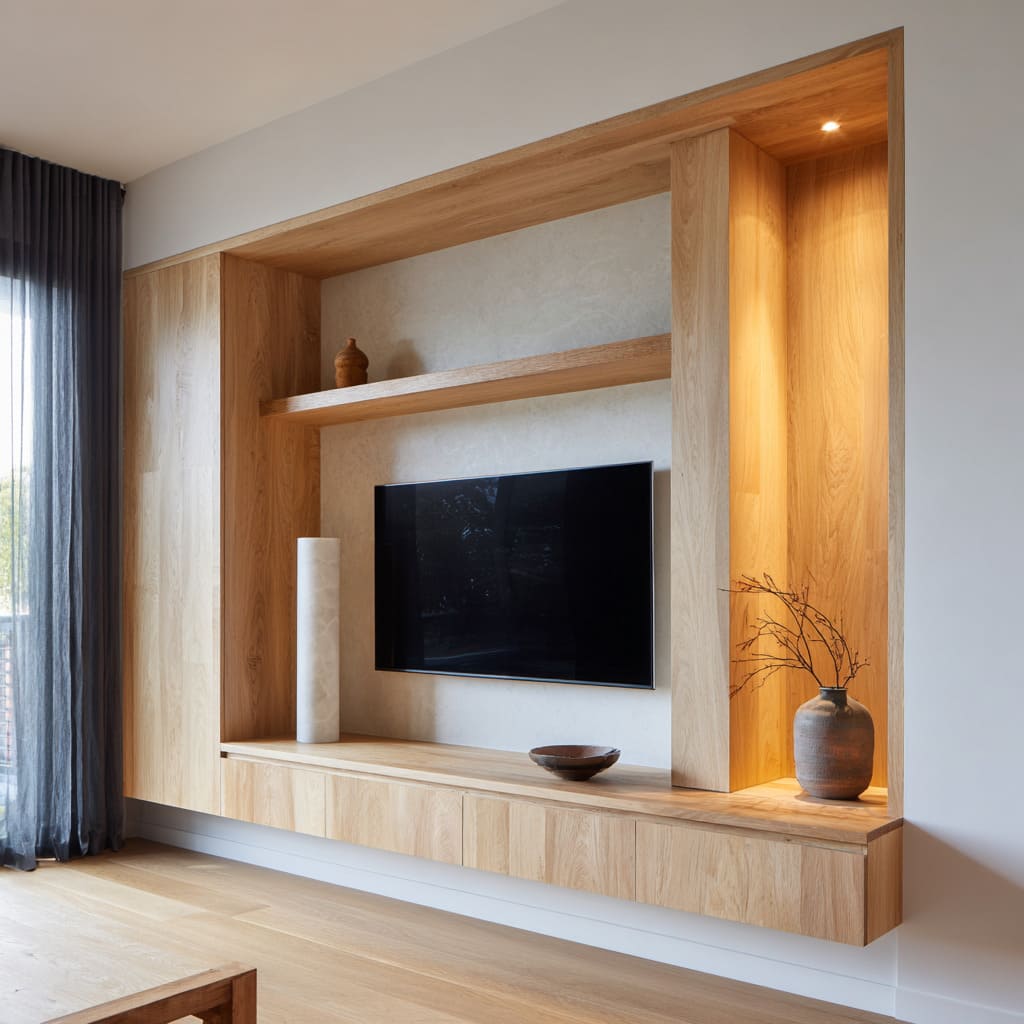
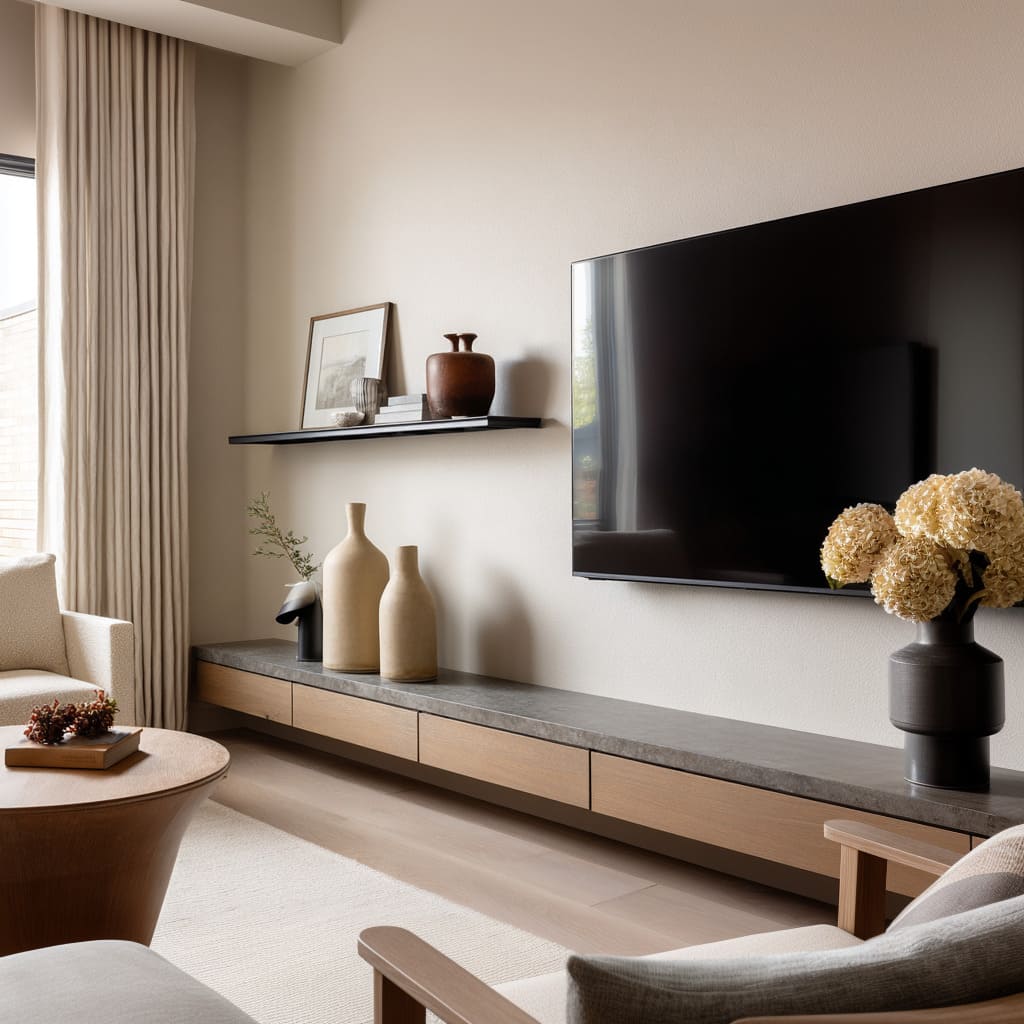
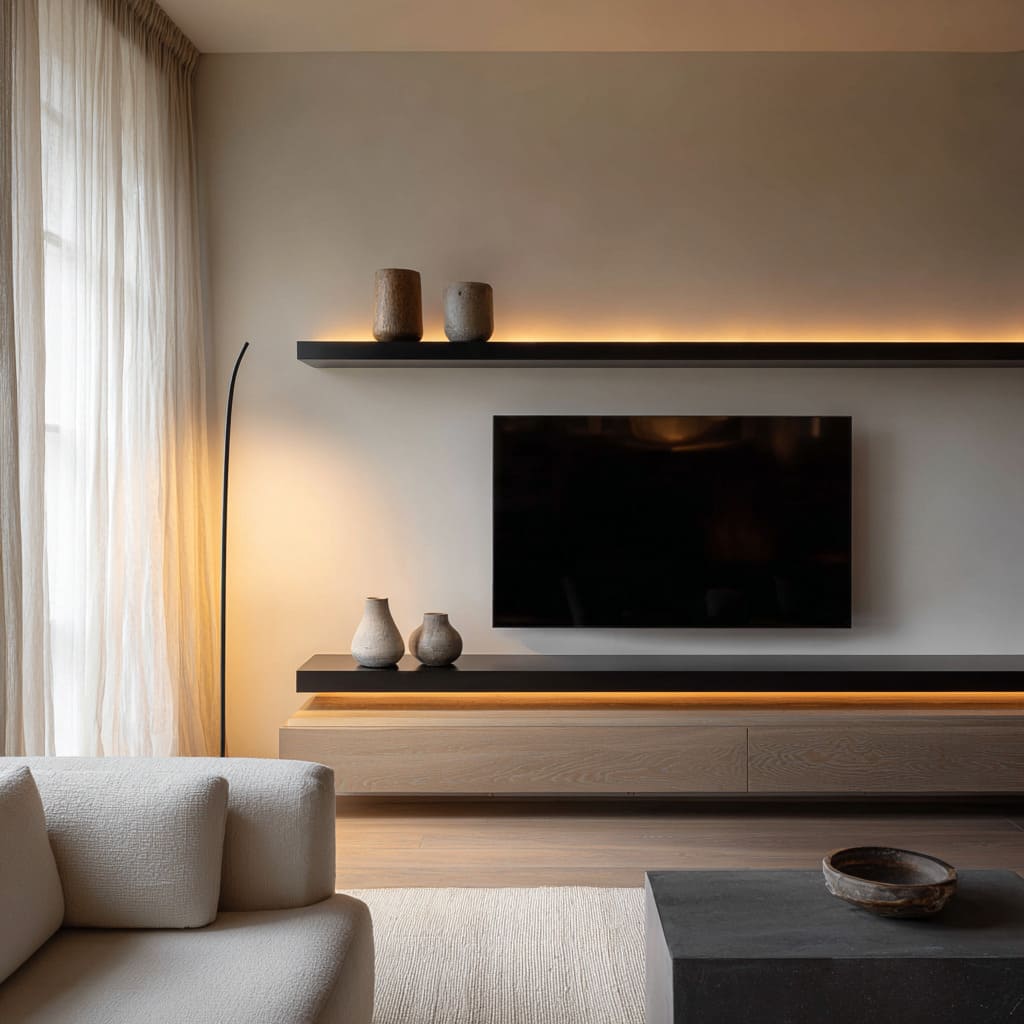
Light in wall designs often functions less like illumination and more like visual marking. Very thin hidden strips create soft glows under cabinets or behind shelves, shaping the wall through brightness gradients instead of hardware.
This is a core principle behind many simple media wall designs: subtle light becomes the quiet link connecting the screen to shelves, plaster surfaces, and console depth.
How light shapes the wall
- A gentle glow under a floating cabinet can make the lower zone feel weightless.
- A light wash above a shelf turns blank plaster into a soft background field.
- A small spot inside a niche can highlight a single object enough to balance the screen.
With this strategy, the wall retains character even when the TV is off, as the light continues to define edges and proportions.
Drapery as an Extension of the TV Composition
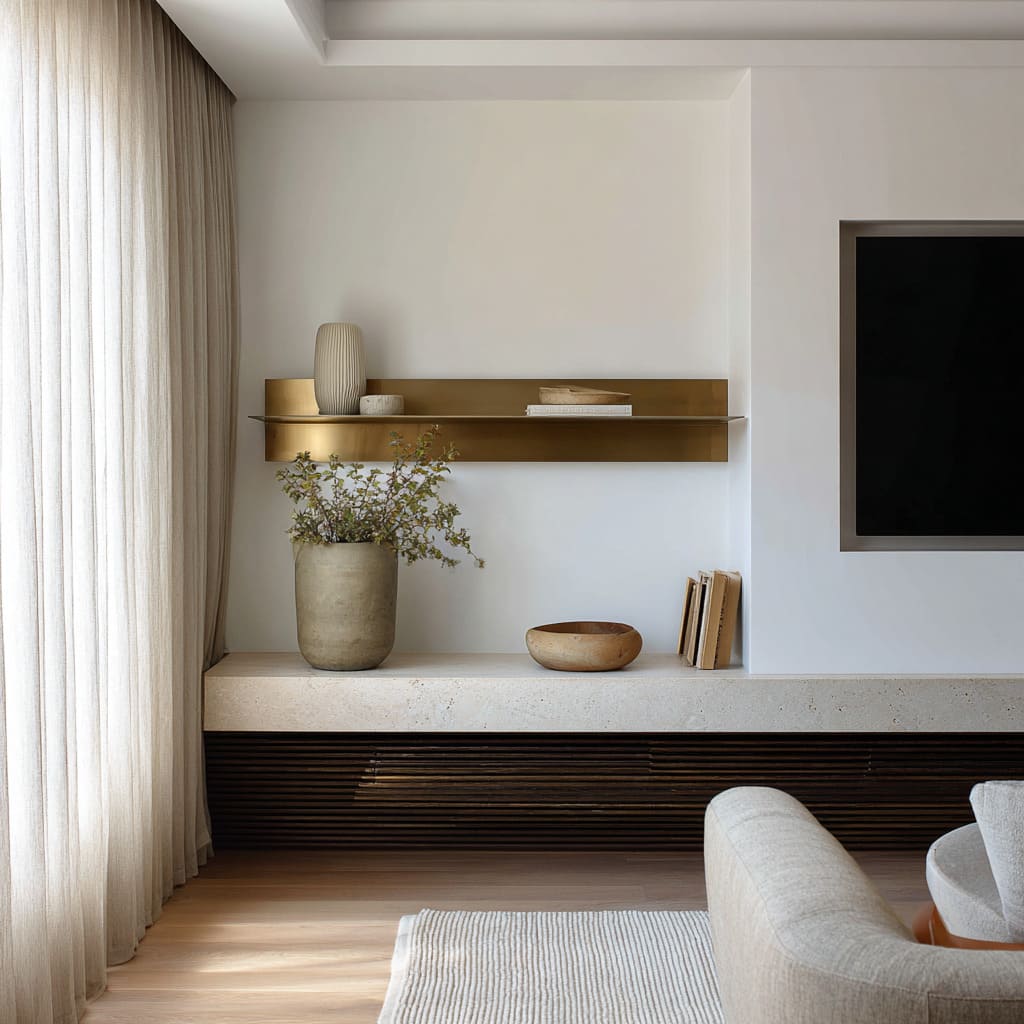
Drapery plays a larger role than simply covering windows. When used alongside a TV wall, floor-to-ceiling curtains often function as a soft vertical end panel to the composition.
Their pleats quietly repeat the rhythms found in slatted cabinets, ribbed wall panels, or tall vases.
Drapery’s visual roles
- Acting as a fabric “column” that softens the boundary between wall and window.
- Offering a vertical counterpoint to the long cabinet and shelf lines.
- Diffusing daylight so the screen area feels gently lit instead of harsh.
Because curtain colors often sit close to the wall’s tone, they merge into the overall structure, forming a unified and calm backdrop for the screen area.
Managing Asymmetry with Strong Anchors
Often, TV walls sit inside rooms that are not symmetrical: one side may hold a window, the other a column; the ceiling may slope; the wall may extend further to one side. A reliable strategy is to introduce one or two long, unwavering elements—usually the console and a shelf—that override the irregularities.
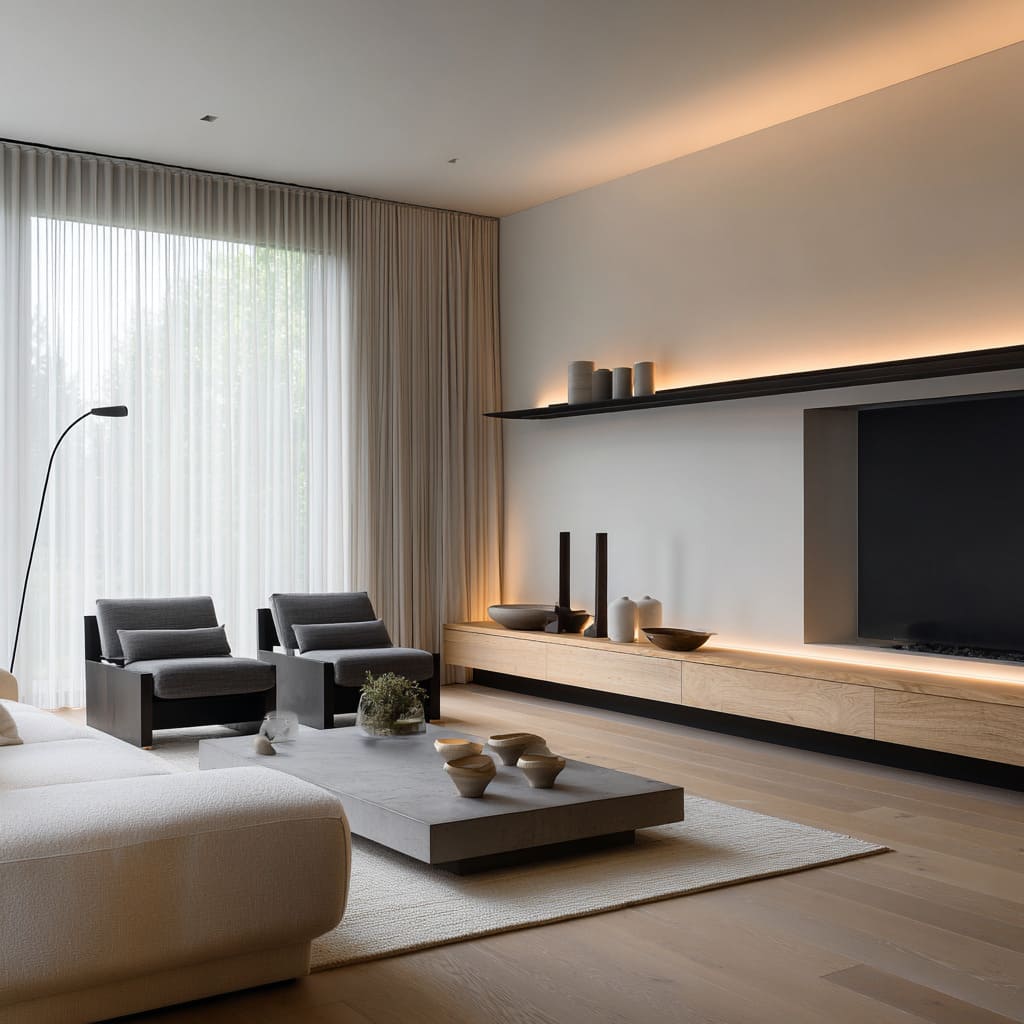
Approaches to asymmetrical spaces
- Off-center TV placement balanced by shelving or objects on the opposite side.
- A long console stretching beneath angled planes, creating one steady line the eye can follow.
- A vertical textured panel or side display to counterbalance a shifted screen.
The aim is not to hide irregularity, but to offer one strong reading so the eye remains relaxed.
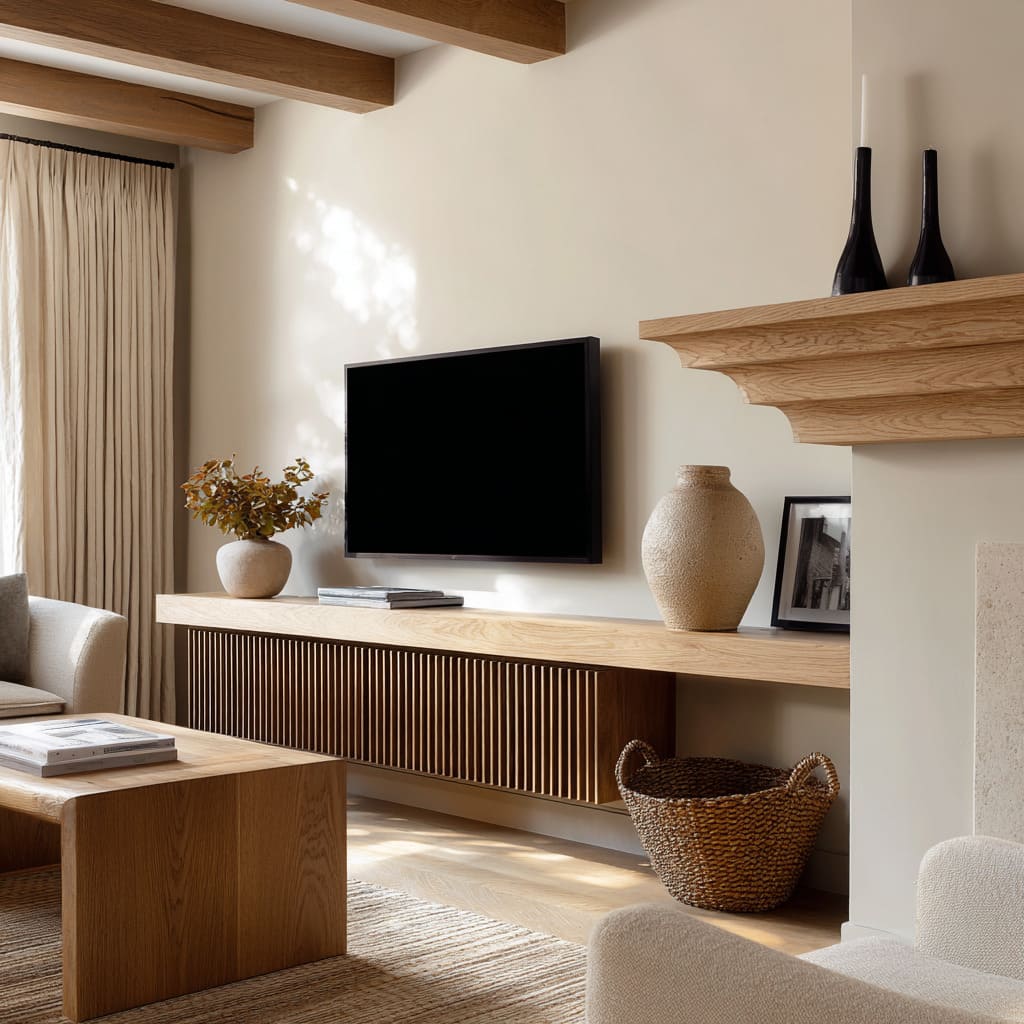
The Narrow Palette Strategy
Color is often handled through small steps rather than bold shifts. Warm whites, light timber, soft greige, pale stone, deeper walnut, and small charcoal notes form a ladder of tones that shift gradually from light to dark.
This subtle progression helps keep a TV wall simple design harmonious without feeling flat.
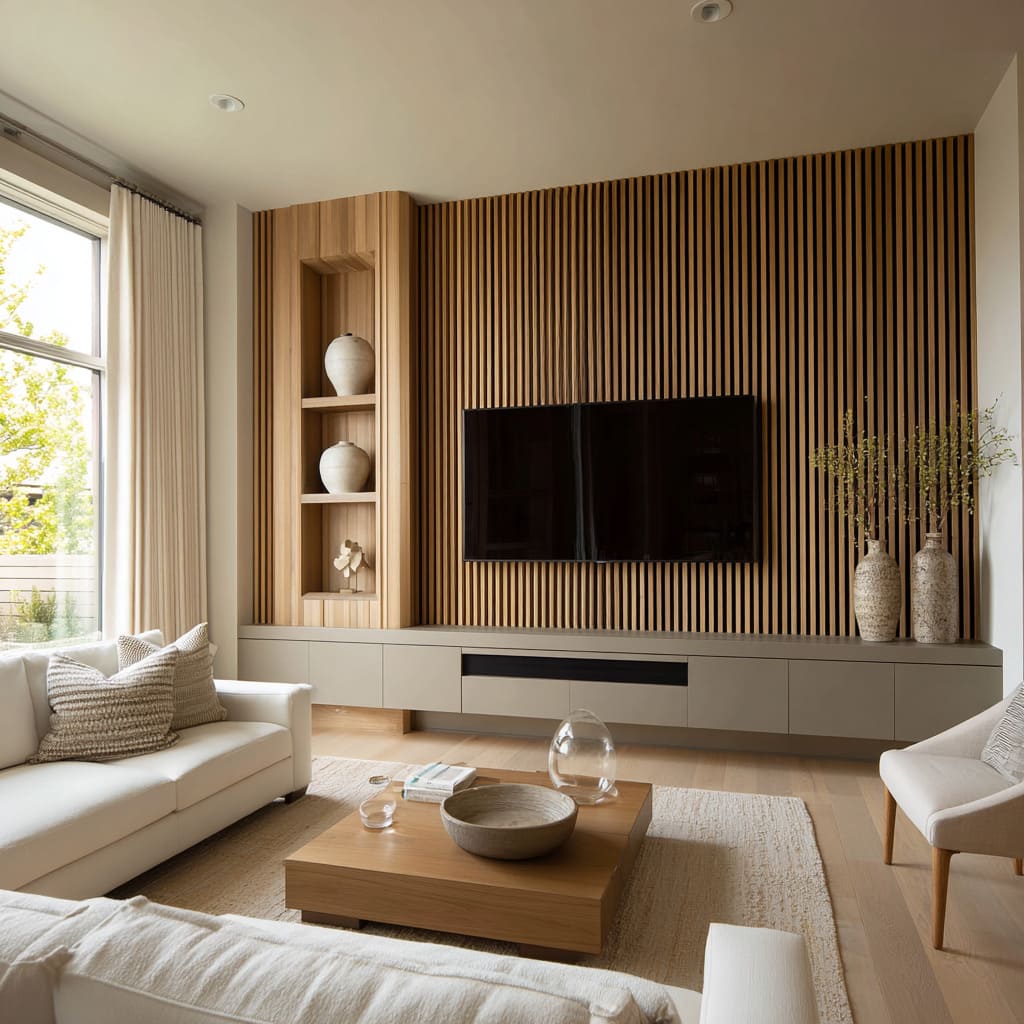
How tone layering works
- Light plaster flows into slightly deeper curtains, which flow into warmer cabinets, which flow into darker objects.
- Black appears only in items that already carry a structural function: screens, slim lamps, and small metal lines.
- Occasional warmer accents—such as natural branches or clay pieces—sit lightly within the palette.
This method creates richness in quiet ways, letting the eye travel easily from one material to another.
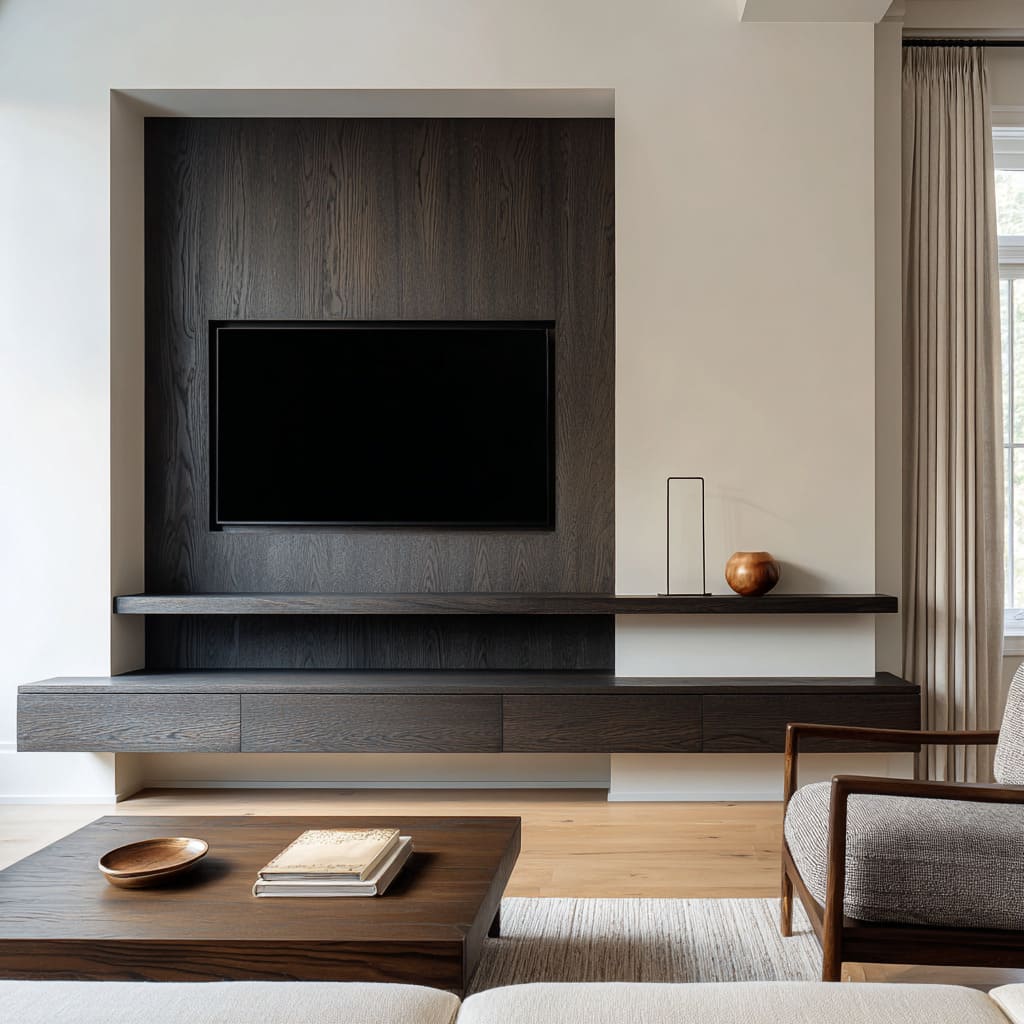
Objects as Visual Counterweights
Objects around the TV aren’t used as accessories but as sculptural partners to the screen. Their shapes, heights, and tones create the balance that makes a TV wall feel intentional.
Typical still-life structures
- Tall vase + low bowl to introduce both a vertical and a horizontal note.
- A round form near a rectangular one to diversify silhouettes.
- A vase or small branch offering gentle organic movement around the screen.
With this approach, the TV becomes one element in a longer still life instead of a lone dark rectangle dominating the area.
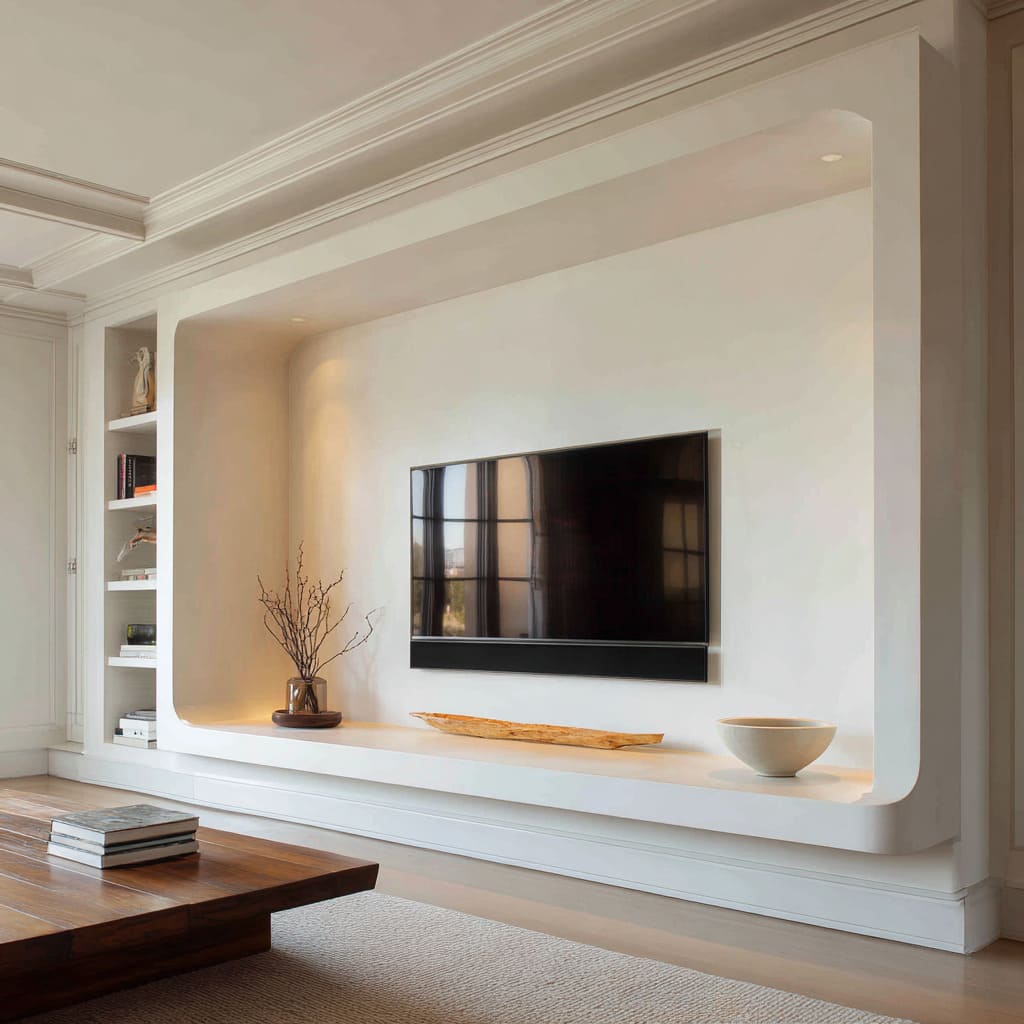
Furniture That Echoes the Wall’s Language
Seating and tables often pick up forms already present on the TV wall: curved chairs repeat the softness of sculpted niches; low, long sofas echo the horizontal cabinet; wooden frames on chairs or stools mirror the console finish. This echo avoids visual separation between wall and seating area.
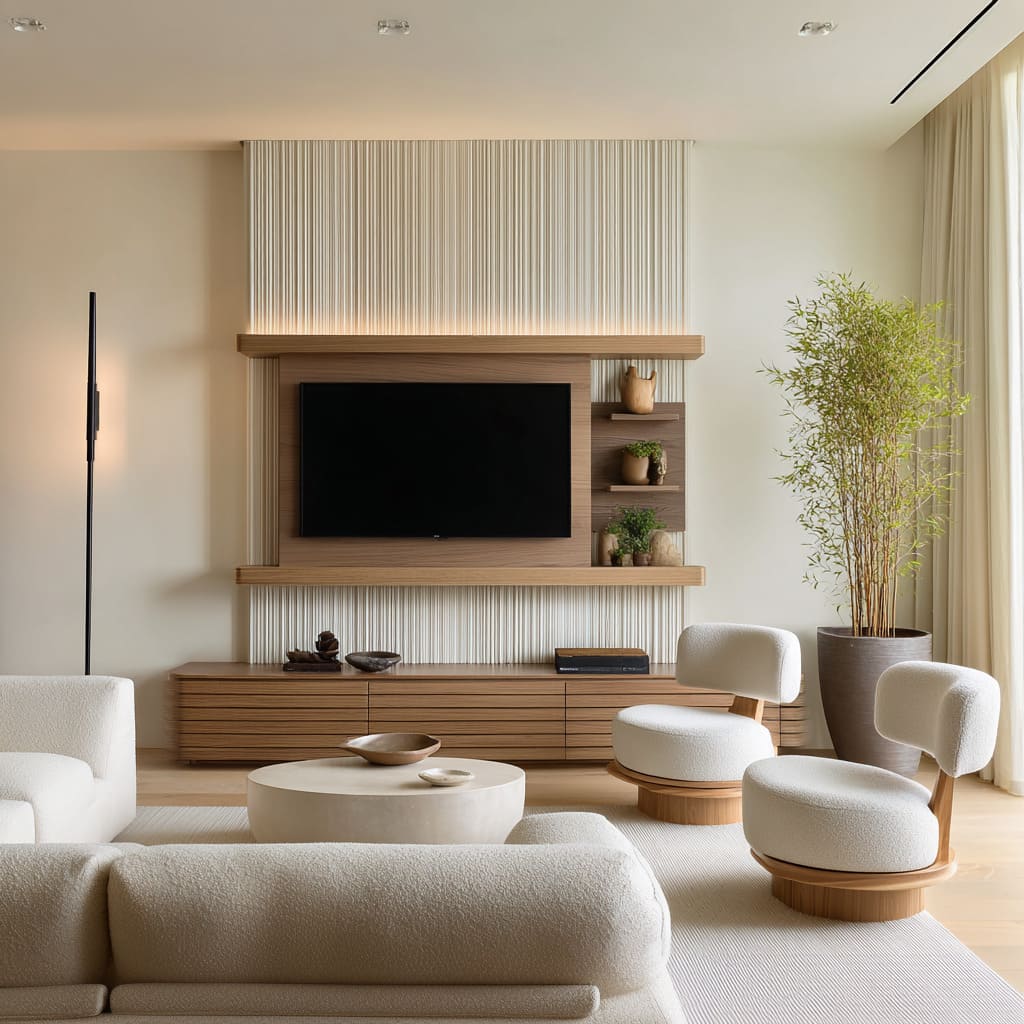
Echoing strategies
- Rounded seating shapes to soften the long horizontals of cabinets.
- Stone or plaster coffee tables that repeat the color or texture of wall ledges.
- Rugs aligned intentionally with cabinet edges to reinforce the composition.
This cohesion keeps the screen zone from feeling isolated; the wall and furniture read as one continuous interior language.
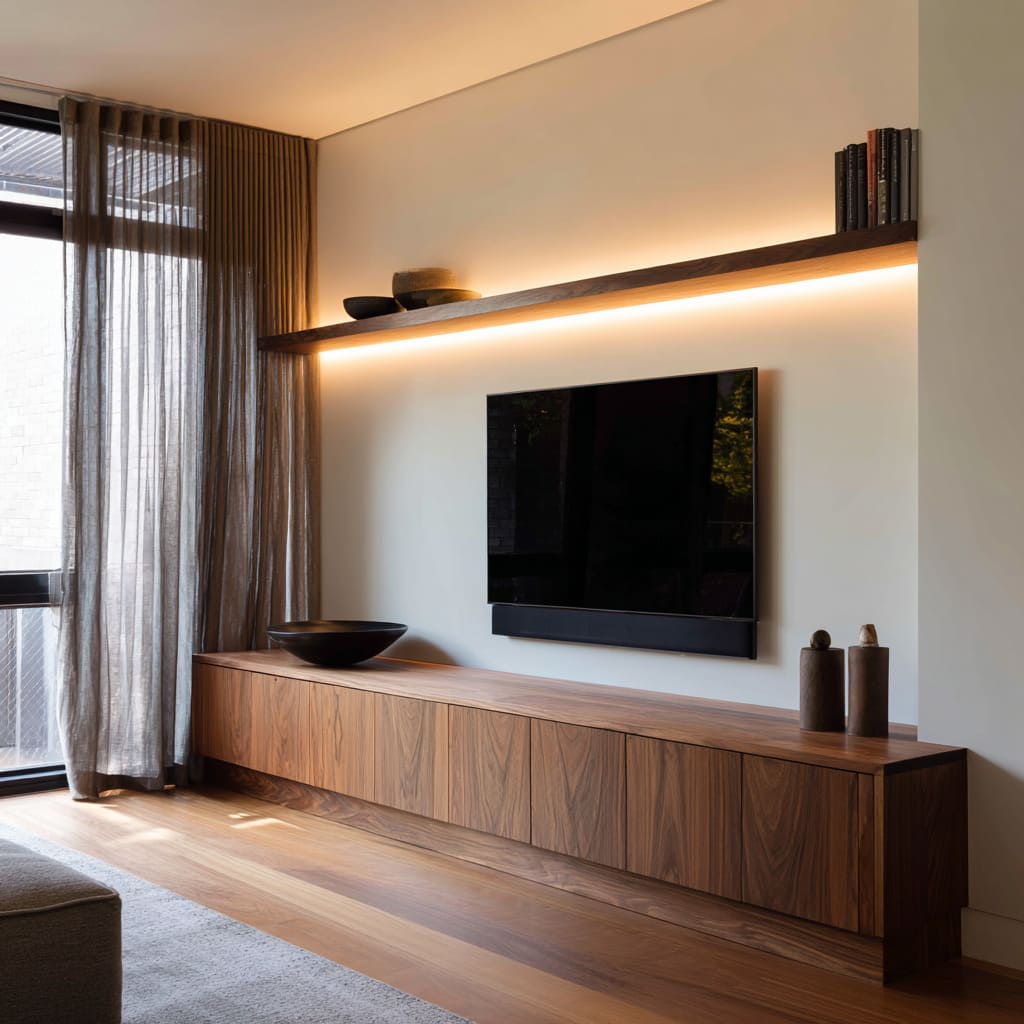
Recognizable Types of Simple Media Walls
Though each room has its own challenges, several broad types of TV wall compositions appear again and again in interiors. These types help show the range of possibilities within a calm aesthetic.
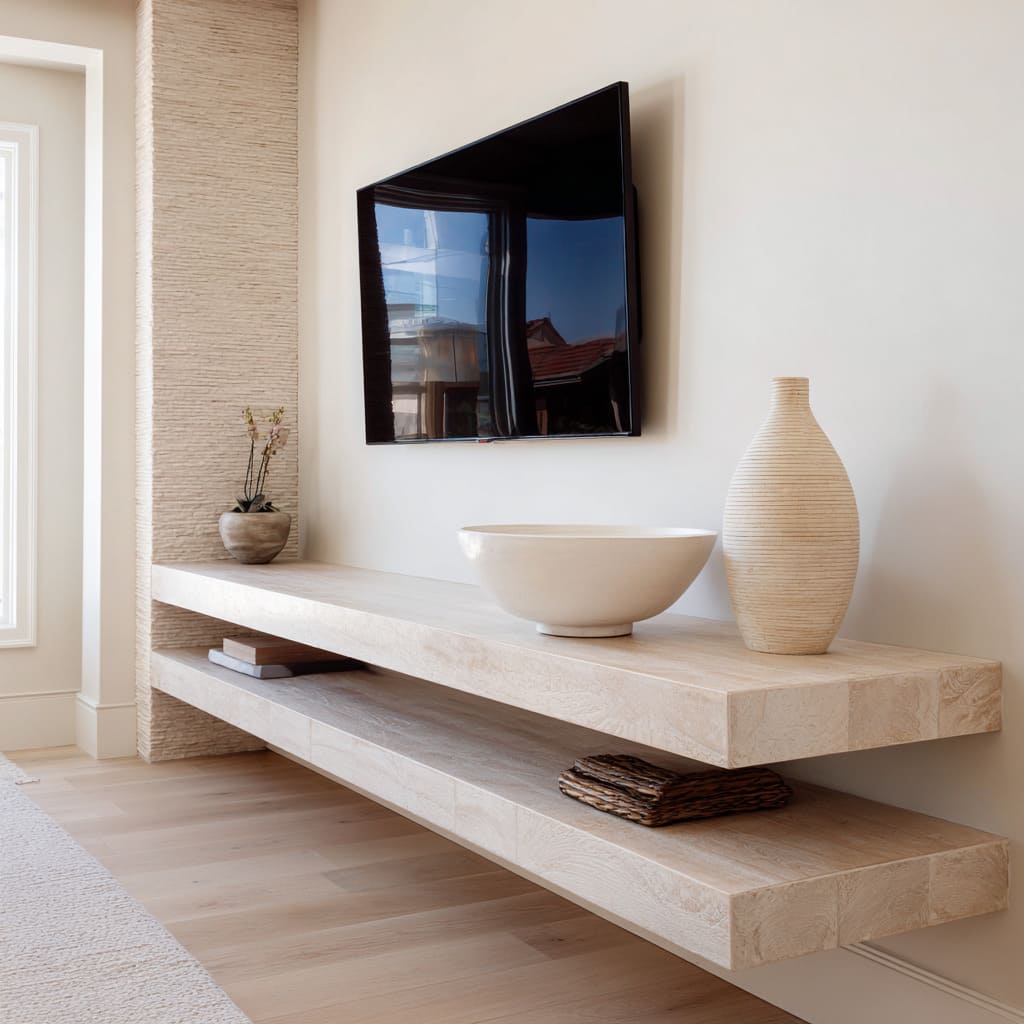
Common typologies
The long horizontal band
A floating cabinet, a centered screen, and a shelf or light line above form a clean, uninterrupted strip.
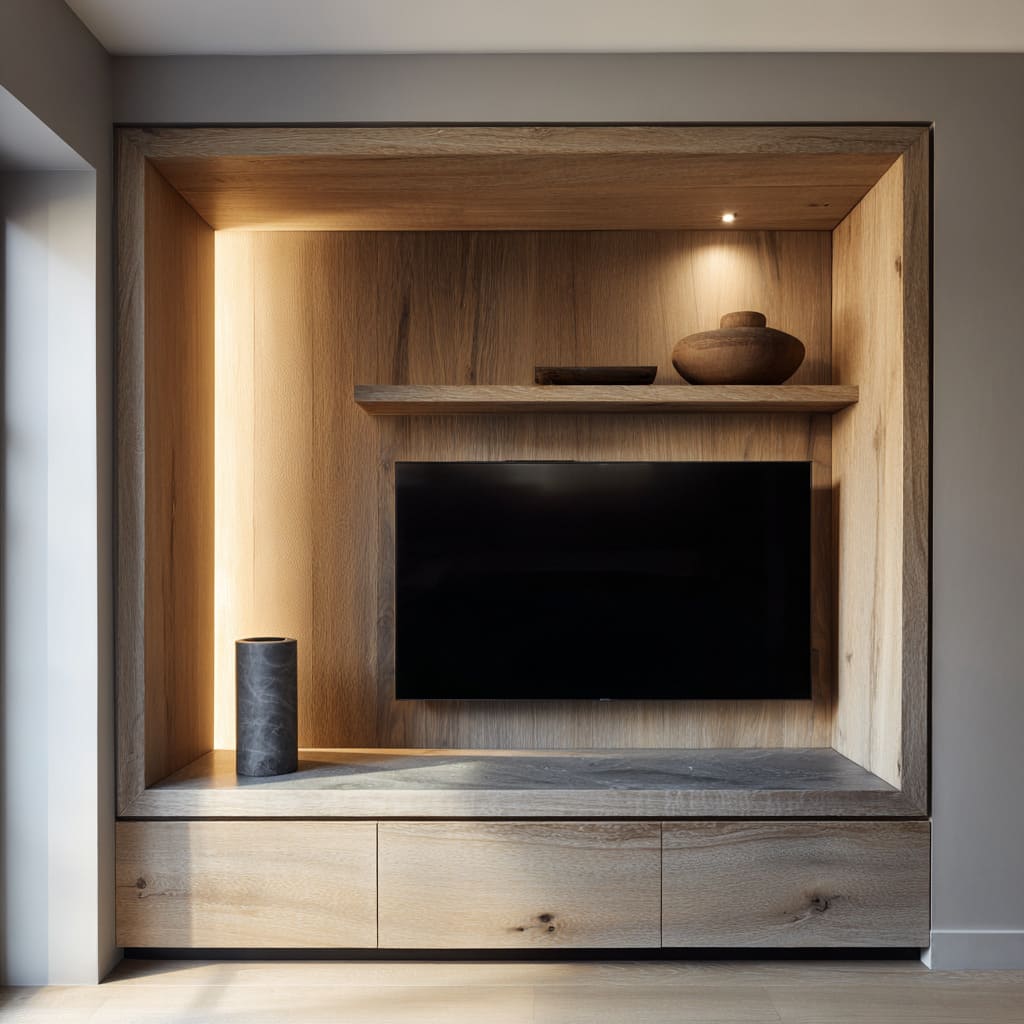
The deep frame
A timber or plaster surround encloses the screen in a quiet box-like space, sometimes with a soft glow.
The sculpted niche
A large carved recess with a deep ledge serves as the central element holding the TV.
The vertical-texture field
A full-height backdrop of slats or ribs provides soft pattern, with a floating console in front.
The side-display layout
The TV occupies one portion while the other half of the wall holds a curated shelving composition.
Each type can adapt to various room sizes and architectural conditions, all supporting a calm, clear reading.
Daylight and Evening Behavior
A well-considered TV wall design has two entirely different expressions: one in daylight and one during evening hours. During the day, texture dominates—slats cast shadows, plaster curves glow softly, and natural wood catches gentle highlights.
In the evening, the hidden glows, subtle shelf lights, and niche spots take over, letting the wall feel atmospheric even with the television off.
Why two modes matter
- Daylight brings out fine shadows from vertical patterns.
- Evening light washes create a warm, enveloping mood around the seating area.
- The screen becomes only one dark element within a larger luminous composition.
This dual behavior is central to creating a wall that remains visually active regardless of screen use.
The TV Wall as the Room’s Organizing Surface
Across all the strategies above, a single theme emerges: the TV wall becomes the organizing surface for the entire room. The screen is not treated as the star but as a component within a broader composition shaped by wood, plaster, stone, drapery, and light.
In many spaces, this is the foundation for a simple design for TV wall—one guiding idea, supported by restraint in color, careful handling of empty space, soft interplay of textures, and thoughtful placement of objects.
This approach works equally well in compact rooms, larger living areas, open layouts, and multipurpose spaces. Whether the wall is formed by a long cabinet, a single niche, a deep timber frame, or a textured backdrop, the intention remains the same: clarity, calm proportions, and the blending of the screen into a broader visual story rather than isolating it as a technical element.