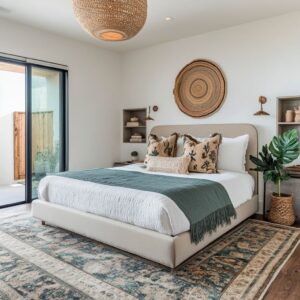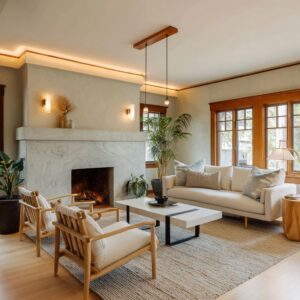
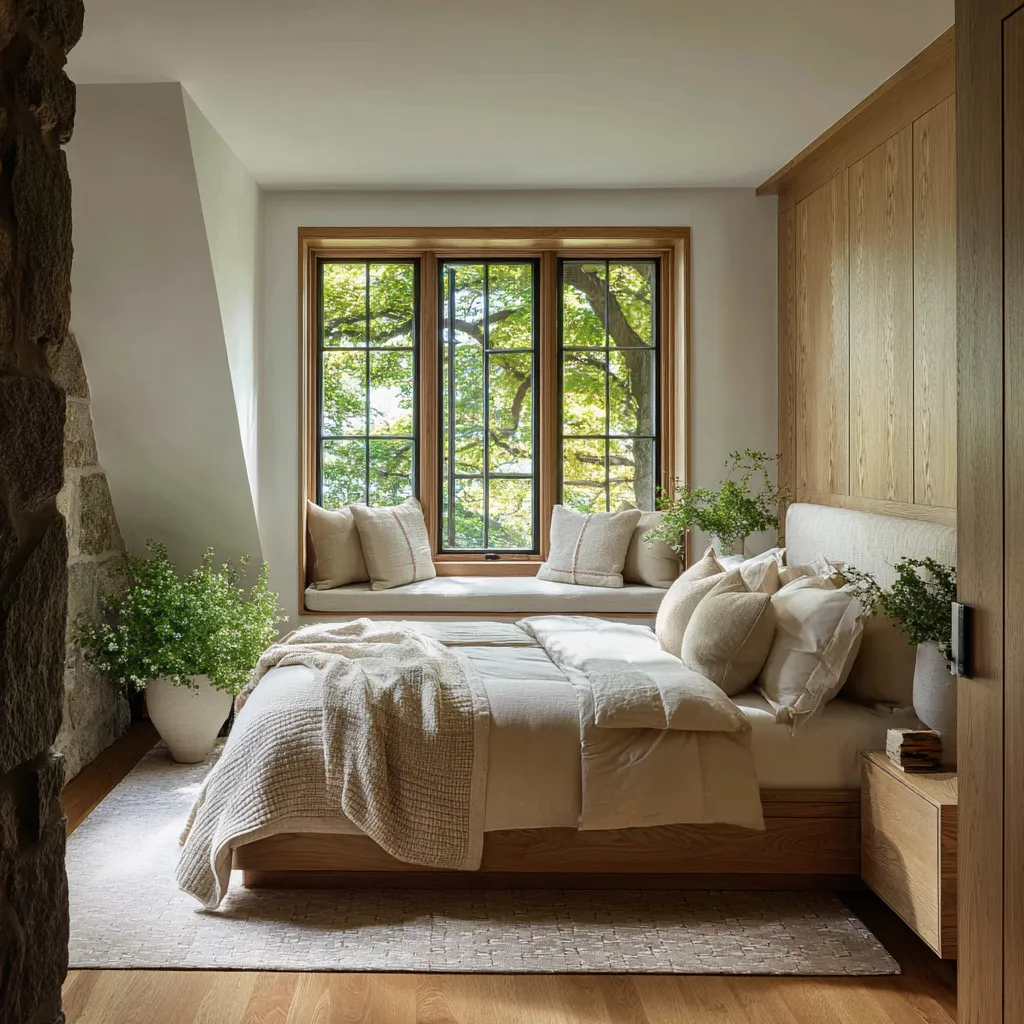
A Craftsman-influenced bedroom often starts with solid wood, deep trim, grouped windows, built-in details, and a sense that the room belongs to the house rather than floating inside it. The challenge begins when all of that character gathers too heavily in one place.
The room can start to feel dense, dark, or overly tied to the past.
To feel fresh, Craftsman bedroom designs do not need to erase the Craftsman backbone. But it needs to reorganize it.
Structure stays, but it moves to the right places. Softness stays, but it is concentrated where the body meets the room.
Light is not achieved by bleaching everything out. It should be built through window depth, edited surfaces, and better visual balance.
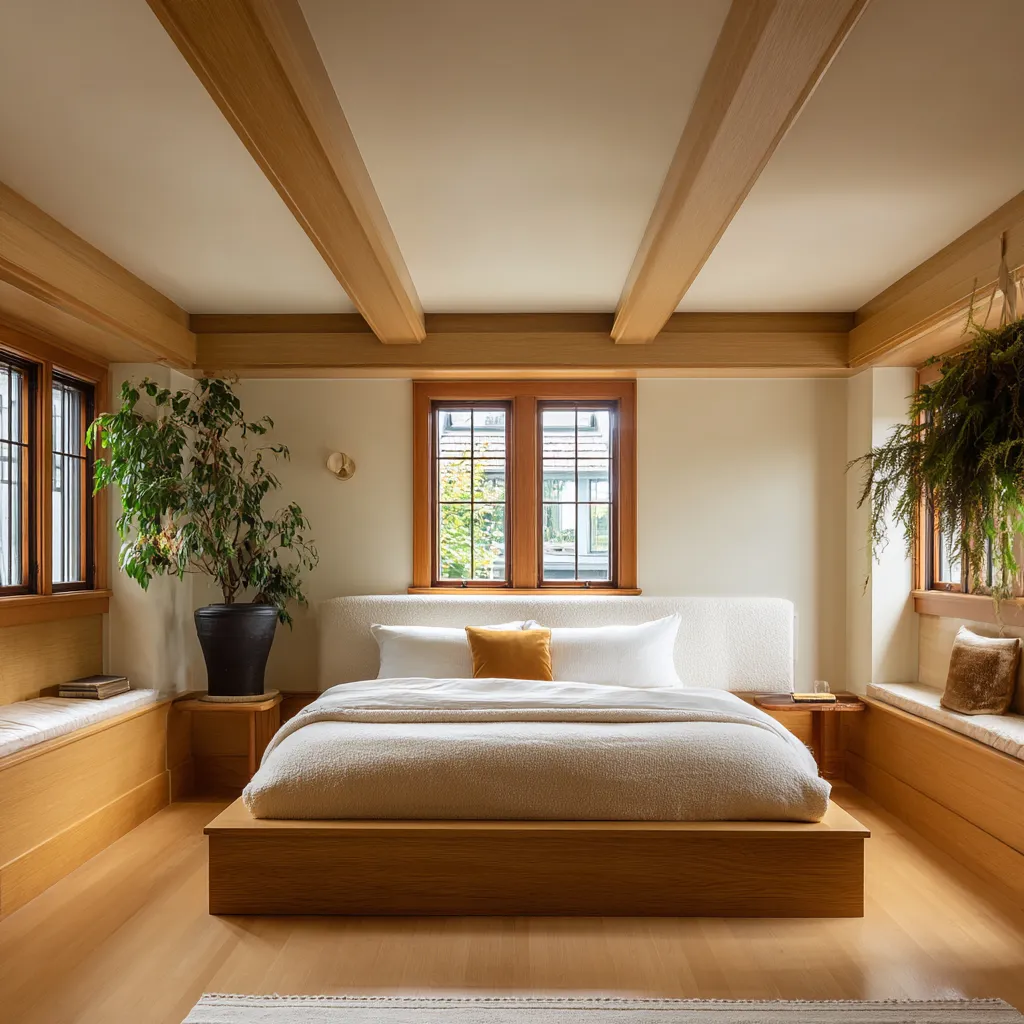
A softer, brighter, more modern Craftsman bedroom comes from perimeter weight and a gentle center. The shell carries the history.
The bed carries comfort. The window carries light and movement.
Small fixtures carry the present-day note.
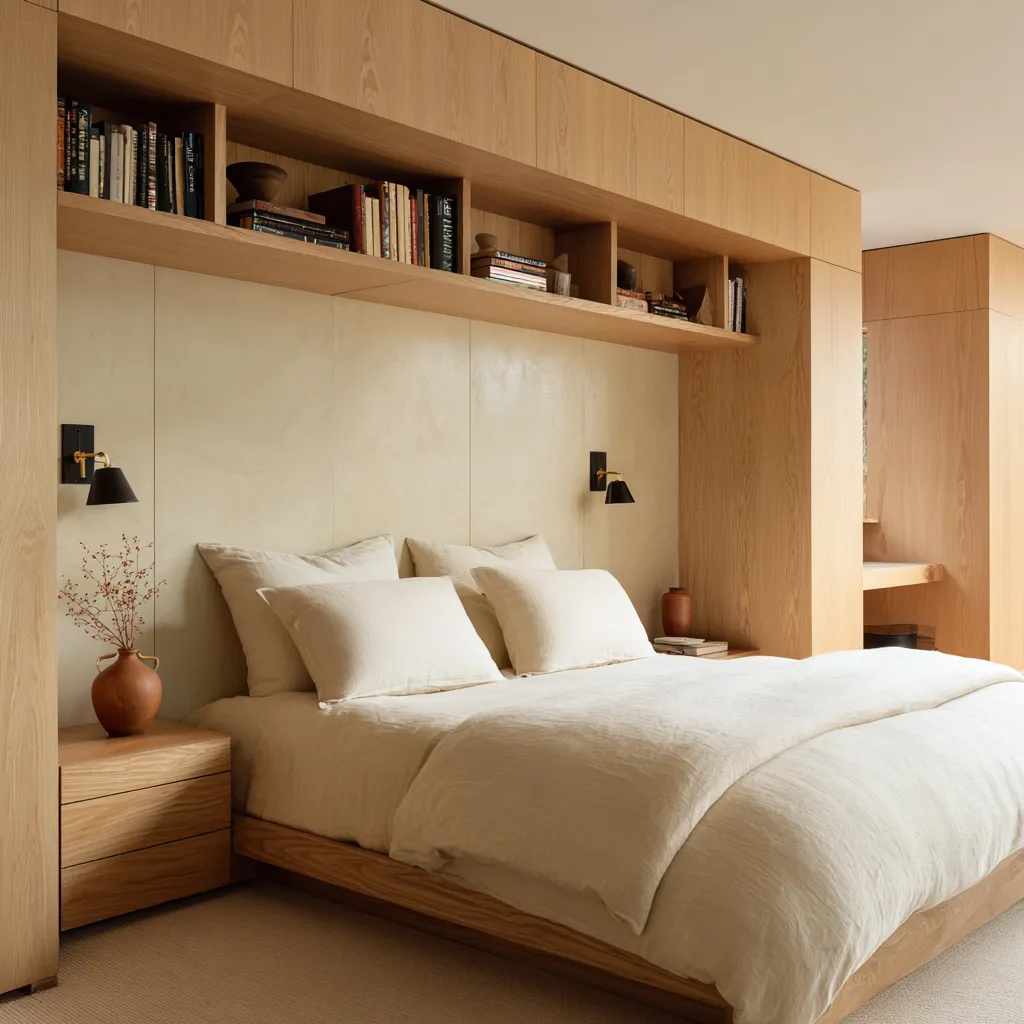
Keep the Craftsman character at the edges, not everywhere
One of the modern Craftsman style bedroom design ideas is that the room does not need to spread timber emphasis evenly across every wall, every piece of furniture, and every accessory. The strongest architectural identity should be placed in one or two zones:
- a paneled bed wall
- a window recess
- a bench built into the glazing
- a shelving flank
- ceiling beams or coffers
That concentration matters. Once wood appears as one major architectural move instead of a repeated background texture on every surface, the room stops feeling overloaded.
The eye can understand where the character lives.
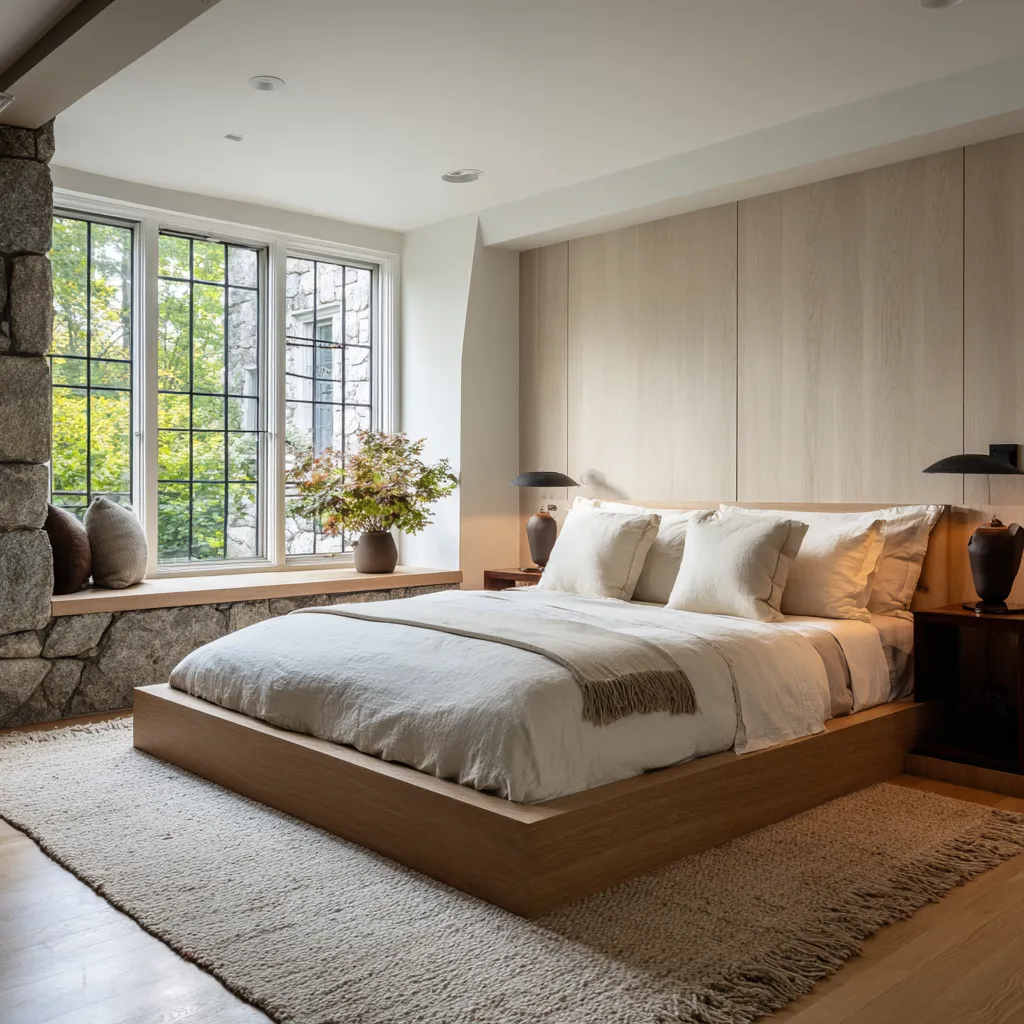
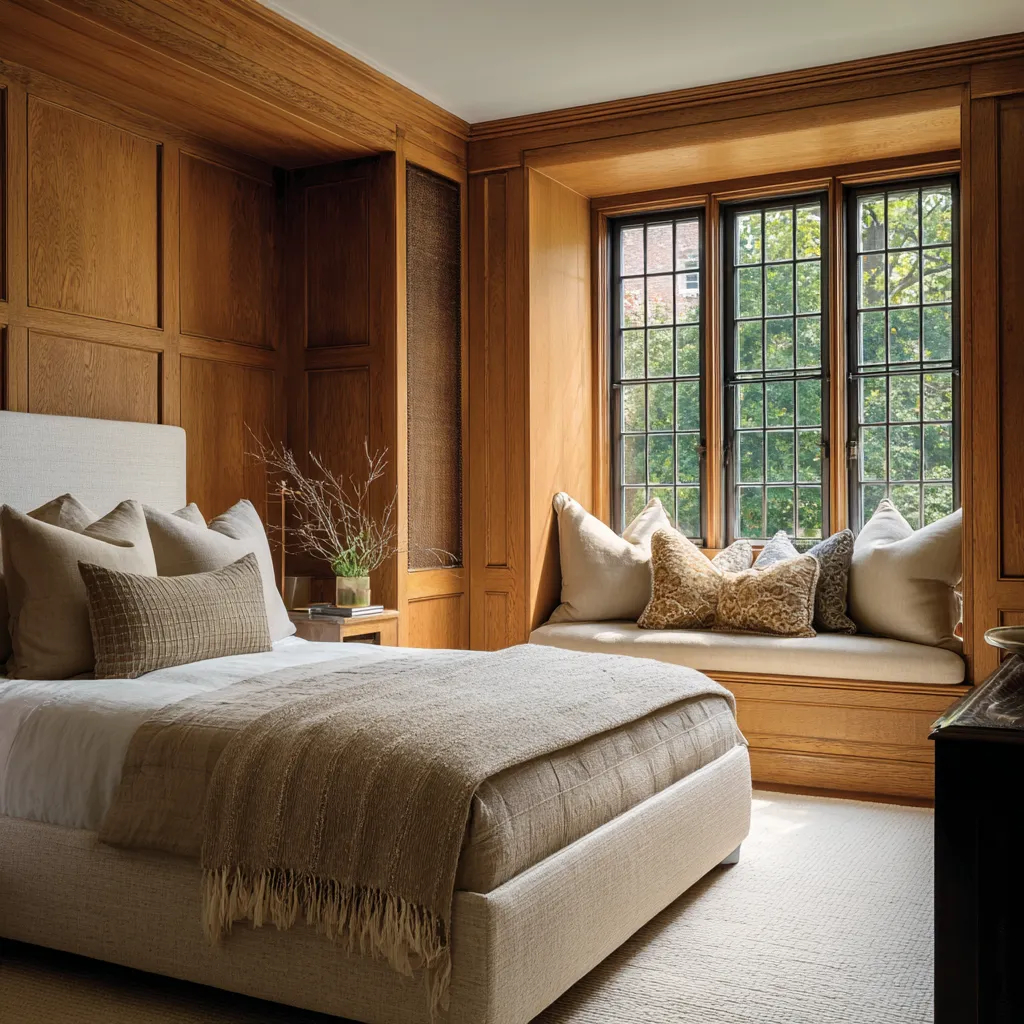
For that, a framed bed wall or a built-in window seat can be used rather than wrapping the entire room in equally insistent millwork. Craftsman influence remains visible, but it feels more edited and easier to live with.
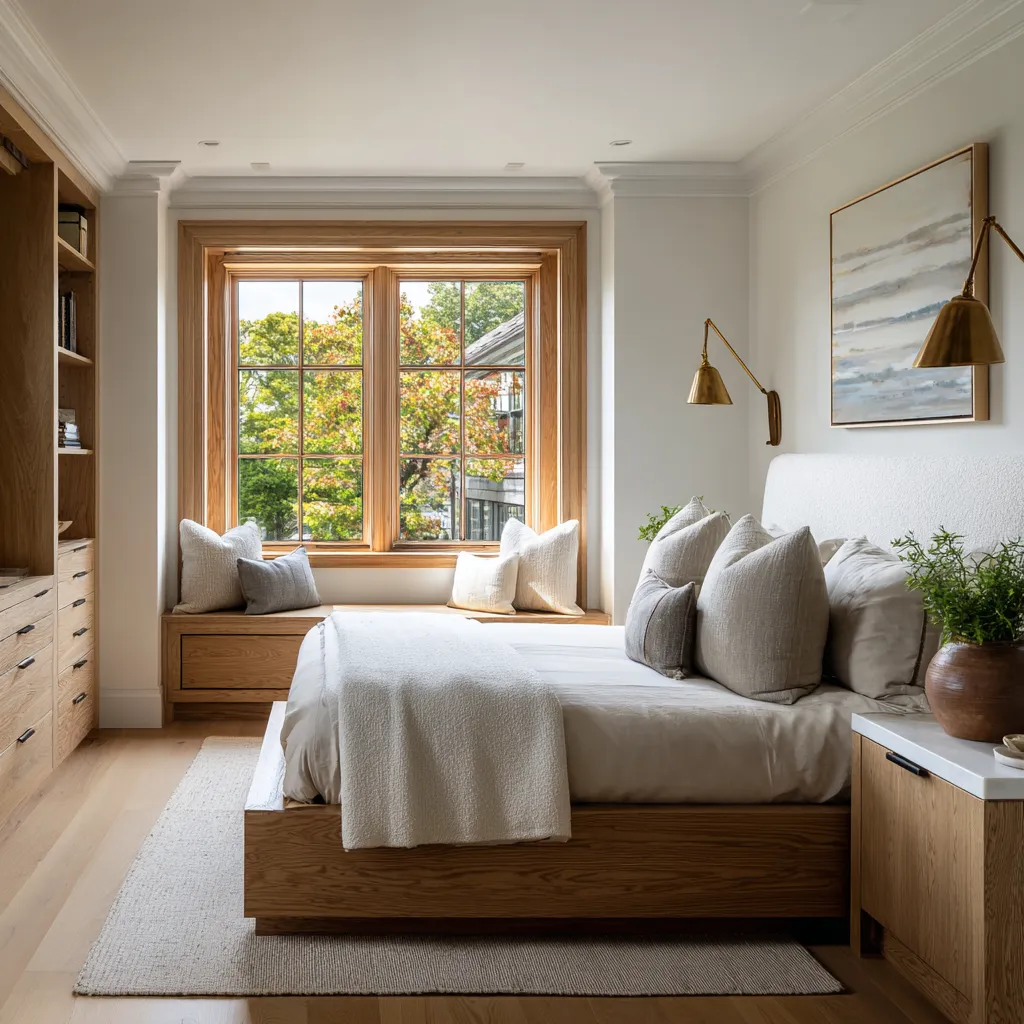
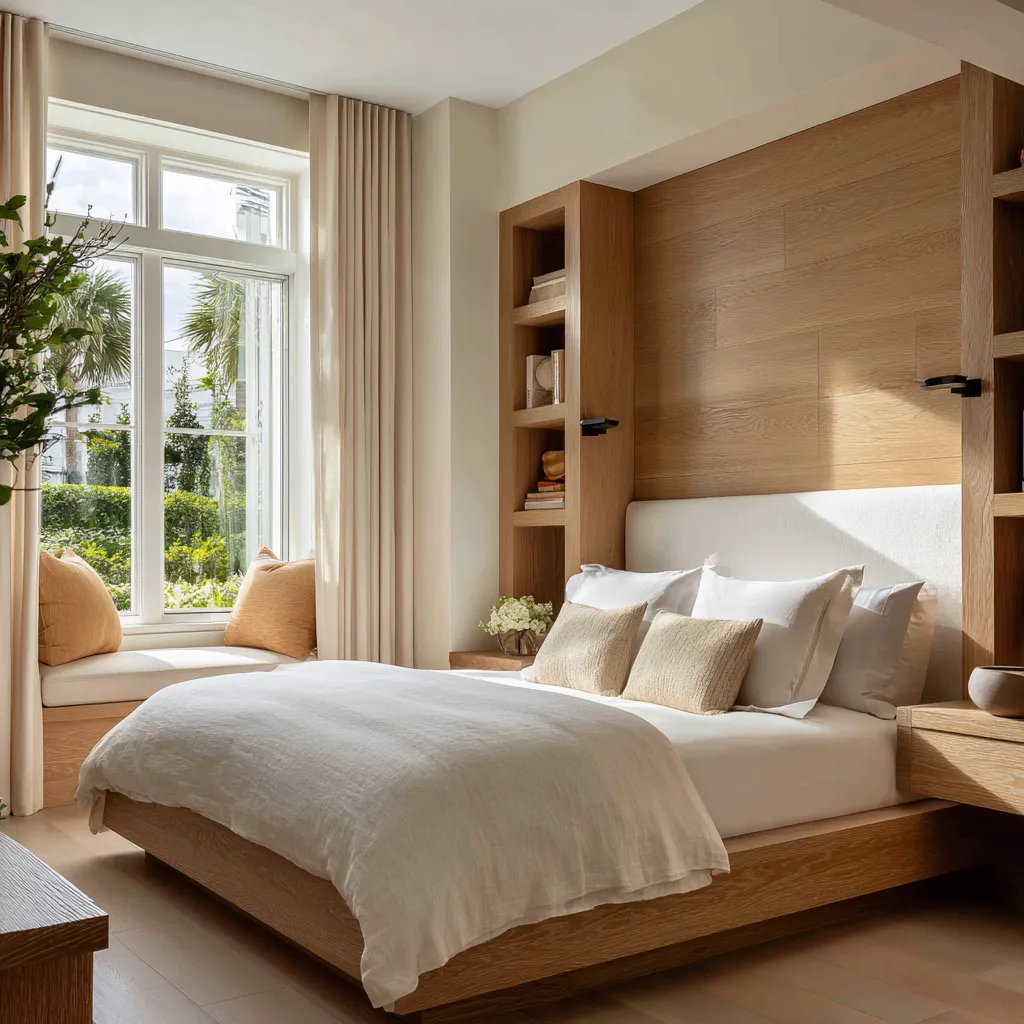
Let the bed soften the architecture
The bed should not try to compete with the architecture. It interrupts it.
Modern designs favor a low, broad, upholstered bed set against stronger wood, paneling, or built-ins. That combination works because it creates a clear contrast between structure and comfort.
If a paneled wood wall is paired with a tall wood headboard, the room can become too rigid. If that same wall is paired with a broad upholstered bed in cream, oatmeal, or soft greige, the room becomes easier, warmer, and more current.
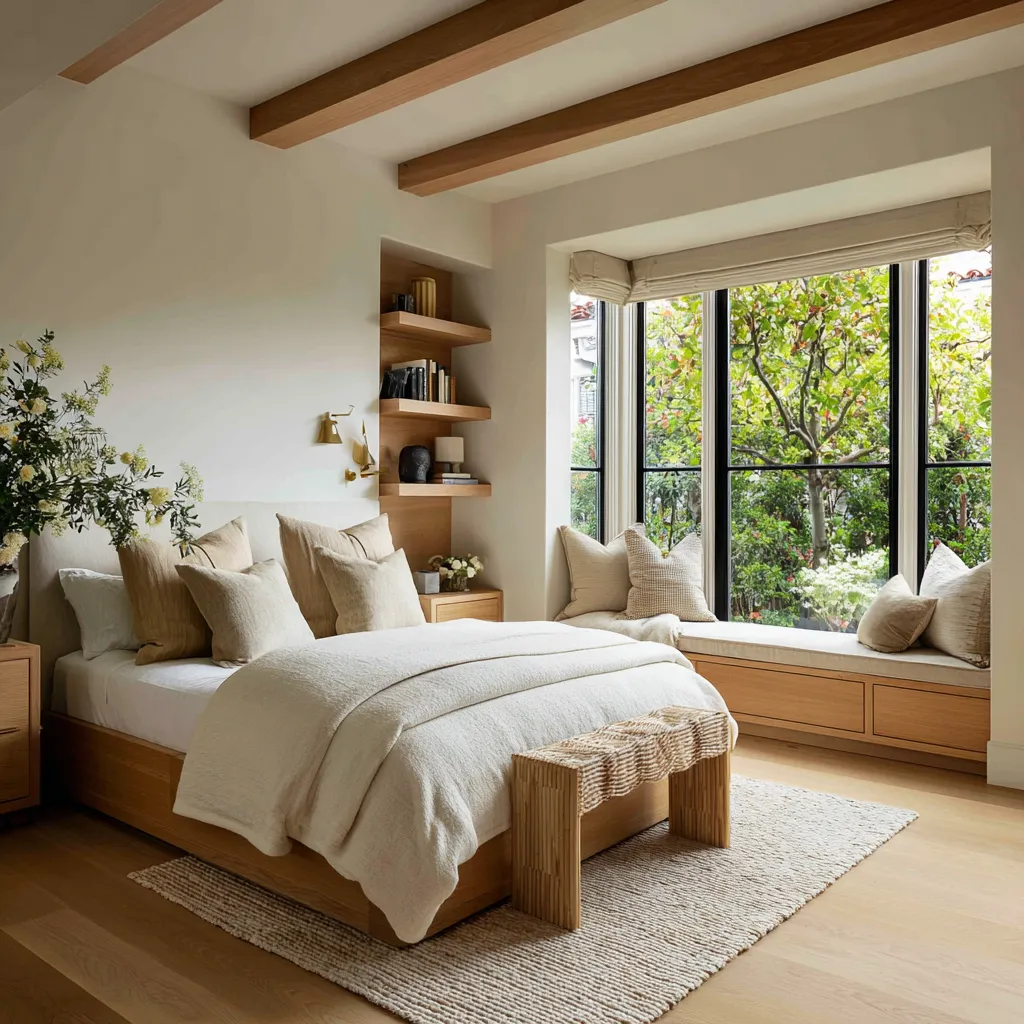
This is one of the design ideas for updating a Craftsman bedroom. Keeping the wood where it matters, place a padded, visually quiet bed in front of it.
The architecture stays firm. The sleeping zone becomes inviting.
Lower the bed if the room has strong framing
A low bed can work like a proportional tool. In rooms with grouped windows, visible beams, deep casing, or strong headboard walls, the bed cansit low.
That lower profile does several things at once. It protects the view of the window geometry.
It keeps beam ceilings from feeling too close. It gives the room more breathing space above the pillows.
It also lowers the visual center of gravity, which is especially important in rooms with visible structure overhead.
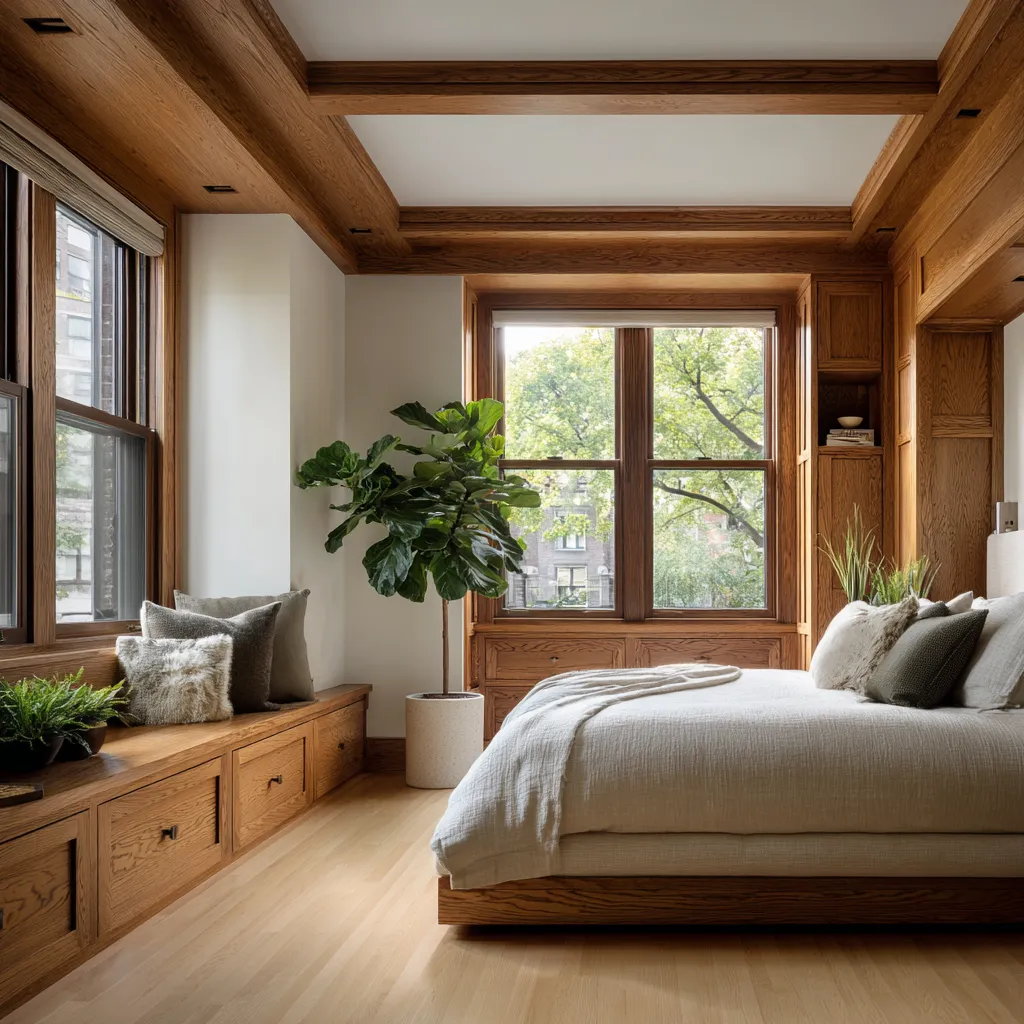
A Craftsman room with ceiling beams and a tall high-contrast bed can start to feel top-heavy very quickly. A lower bed solves that problem without asking the architecture to become weaker.
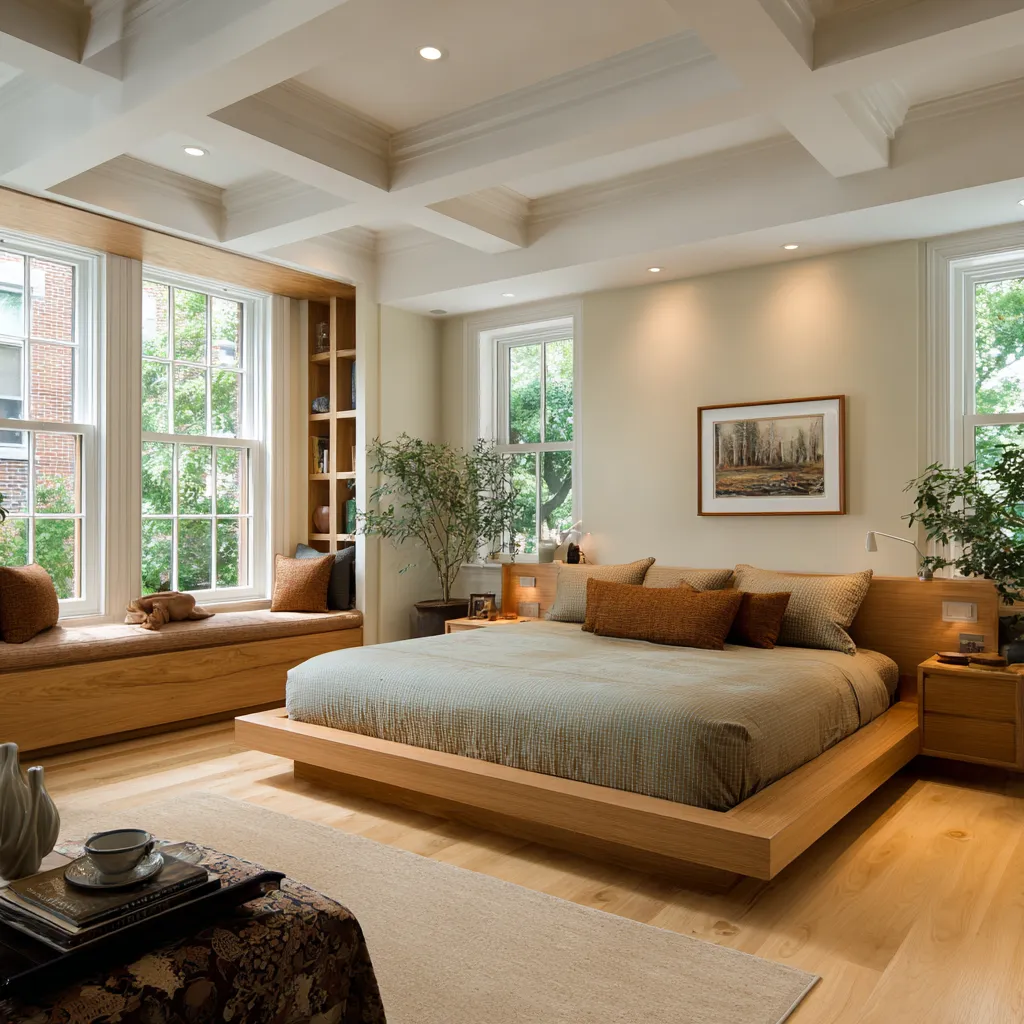
Bedding as one soft field, not a stack of decorative parts
Neutral or near-monochrome bedding is a good option. That does not mean the design will feel flat.
It means the bedding can be handled as a continuous soft mass rather than a pile of separate statements. Options:
- creamy duvet volume
- tonal pillows instead of many competing colors
- matte, dry-looking textiles
- limited pattern
- one or two stronger accent notes at most
This approach matters in a Craftsman-influenced bedroom design because the shell already contains so much line, frame, and surface character. Bedding works better when it brings fullness and visual rest rather than more detail.
The effect is almost architectural in its own way. The bed becomes one gentle, textile-shaped form placed inside a stronger frame.
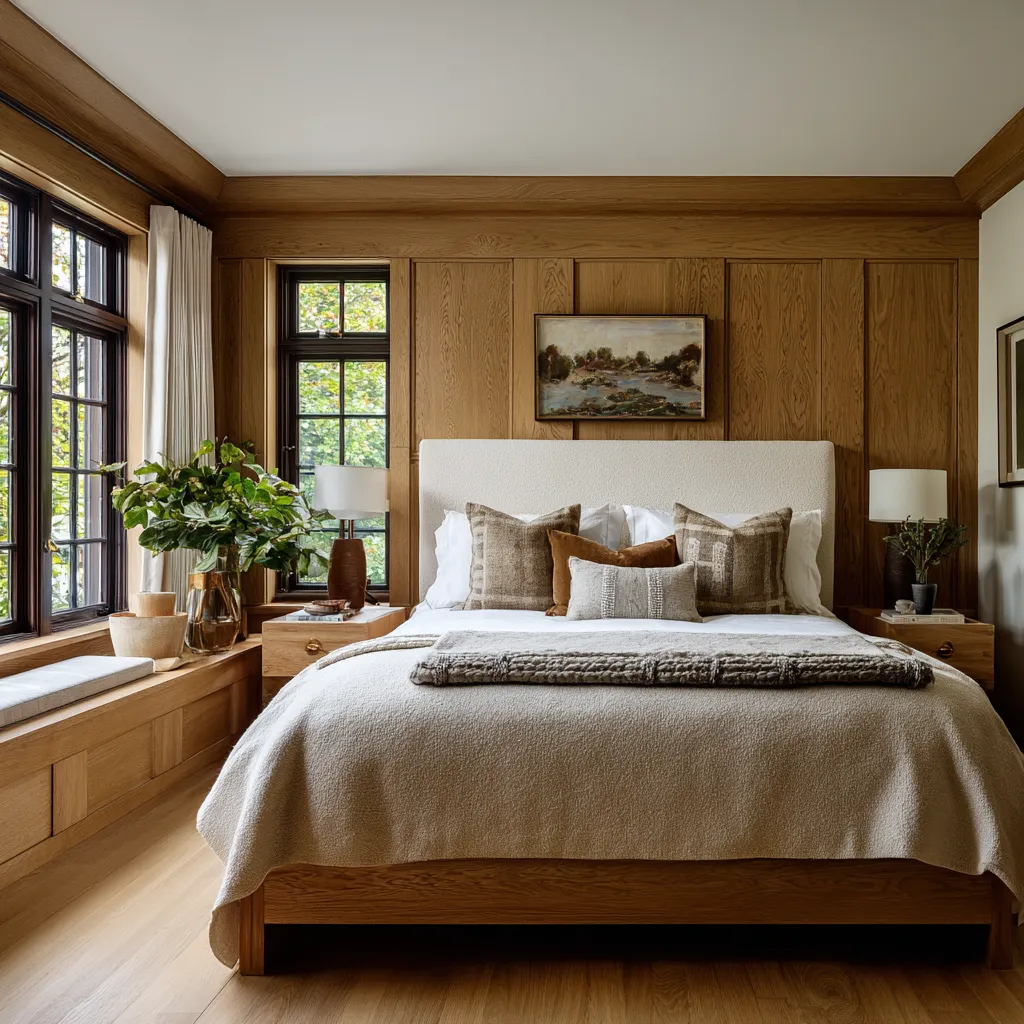
Built-in seating as the bridge between old-house character and comfort
A good window bench solves several problems at once. It turns the window into a usable edge rather than an empty opening.
It keeps the Craftsman built-in tradition alive without requiring heavy millwork on every wall. It adds another soft zone in the room without bringing in a separate chair.
It stretches the room horizontally, which helps offset vertical paneling and tall windows. It also makes daylight feel more domestic.
Light lands on cushion, pillow, wood ledge, and fabric instead of falling into an empty corner.
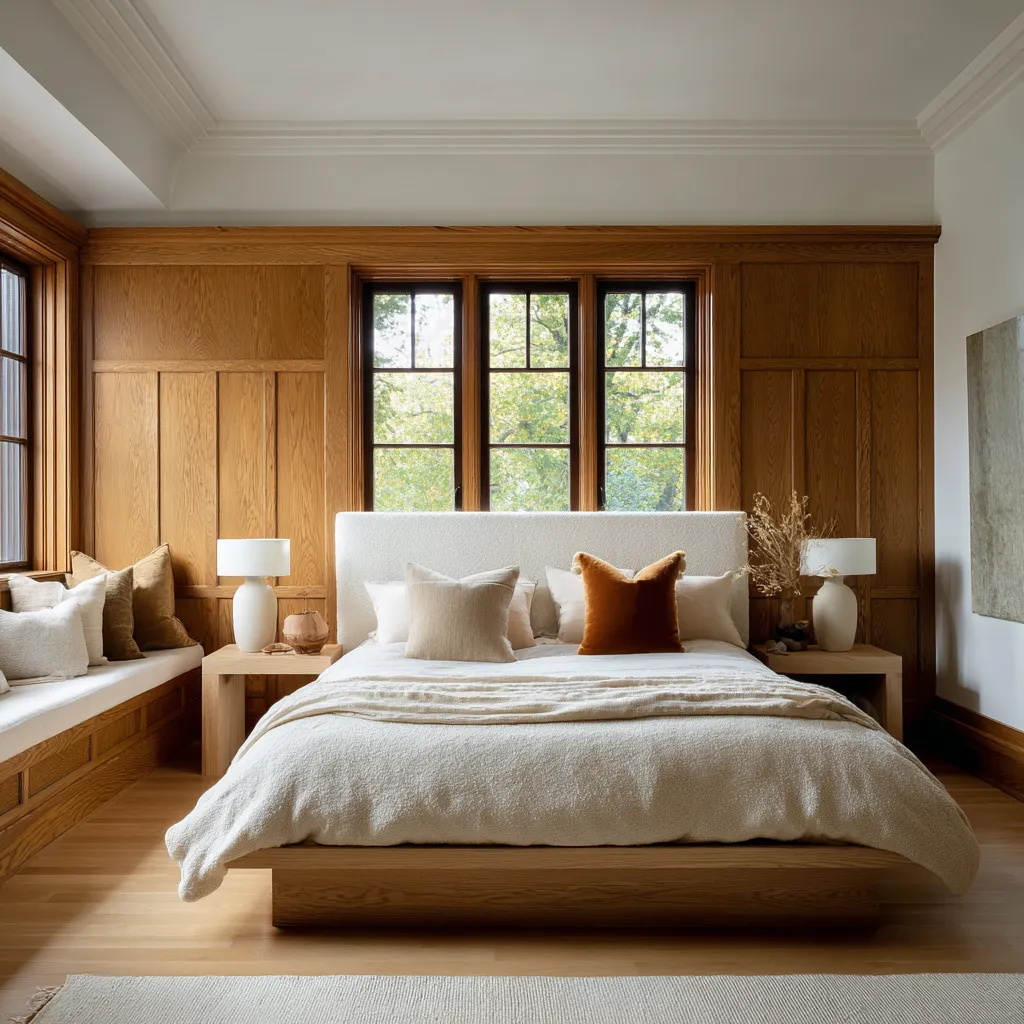
That is why the bench so often becomes the quiet hero in Craftsman designs. It connects architecture, comfort, function, and brightness in one move.
If there is one feature that most reliably helps a Craftsman-influenced bedroom feel current without feeling generic, it is built-in seating by the window.
Brightness is built through light strategy, not just pale paint
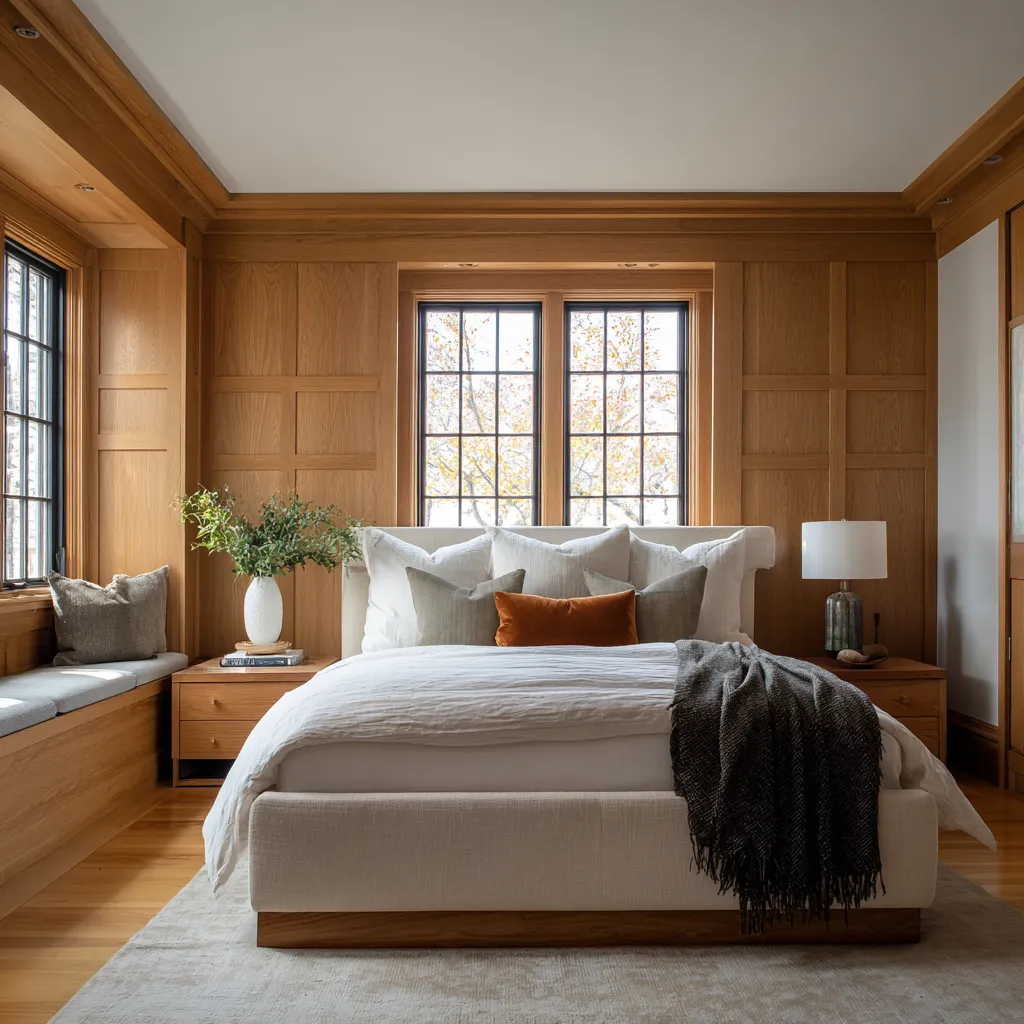
One of the most useful findings for modern Craftsman style designs is that brightness is not mainly a color story. It is a spatial one.
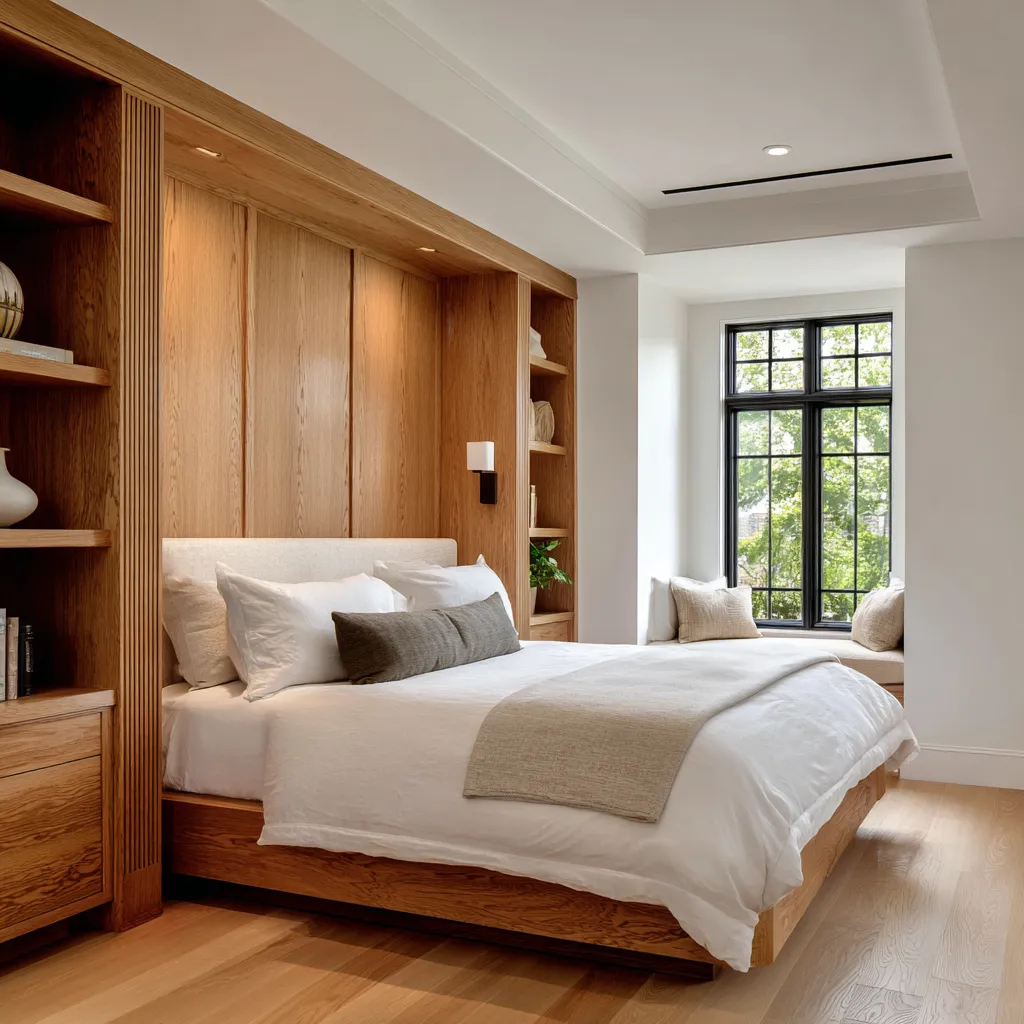
The rooms that felt bright usually shared these traits:
- large or well-framed glazing
- visible greenery and sky
- restrained accessory count
- concentrated wood rather than wood everywhere
- matte surfaces rather than glossy ones
- warm whites instead of stark white
This matters because many people try to lighten a Craftsman bedroom by removing contrast or painting everything pale. That can backfire.
The room may become brighter, but it may also lose its shape and house character.
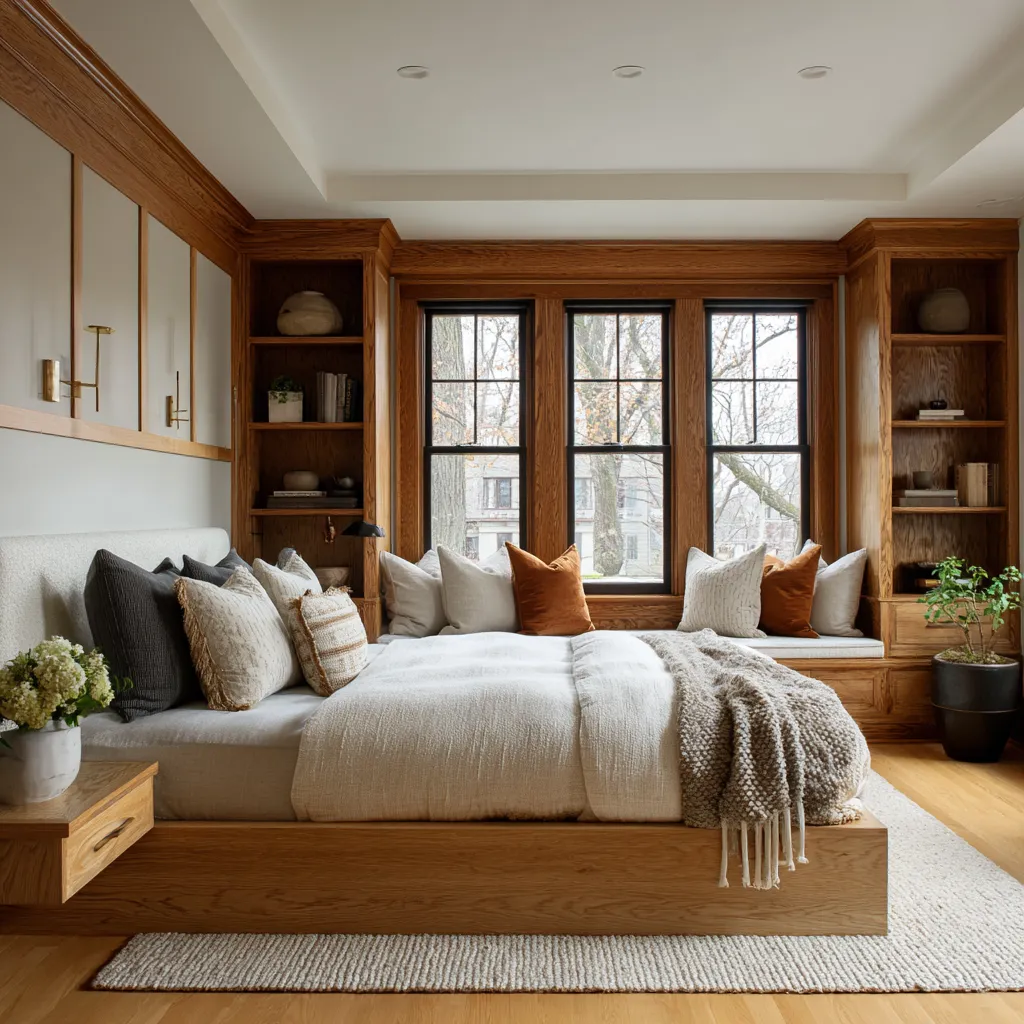
A better route is to let the window do more work. Deep reveals, grouped panes, window benches, and framed views bring light into the composition in a richer way than paint alone ever could.
Exterior greenery can practically act as a decorative layer. Once the foliage and sky become part of what the eye sees first, the interior can stay more edited and still feel complete.
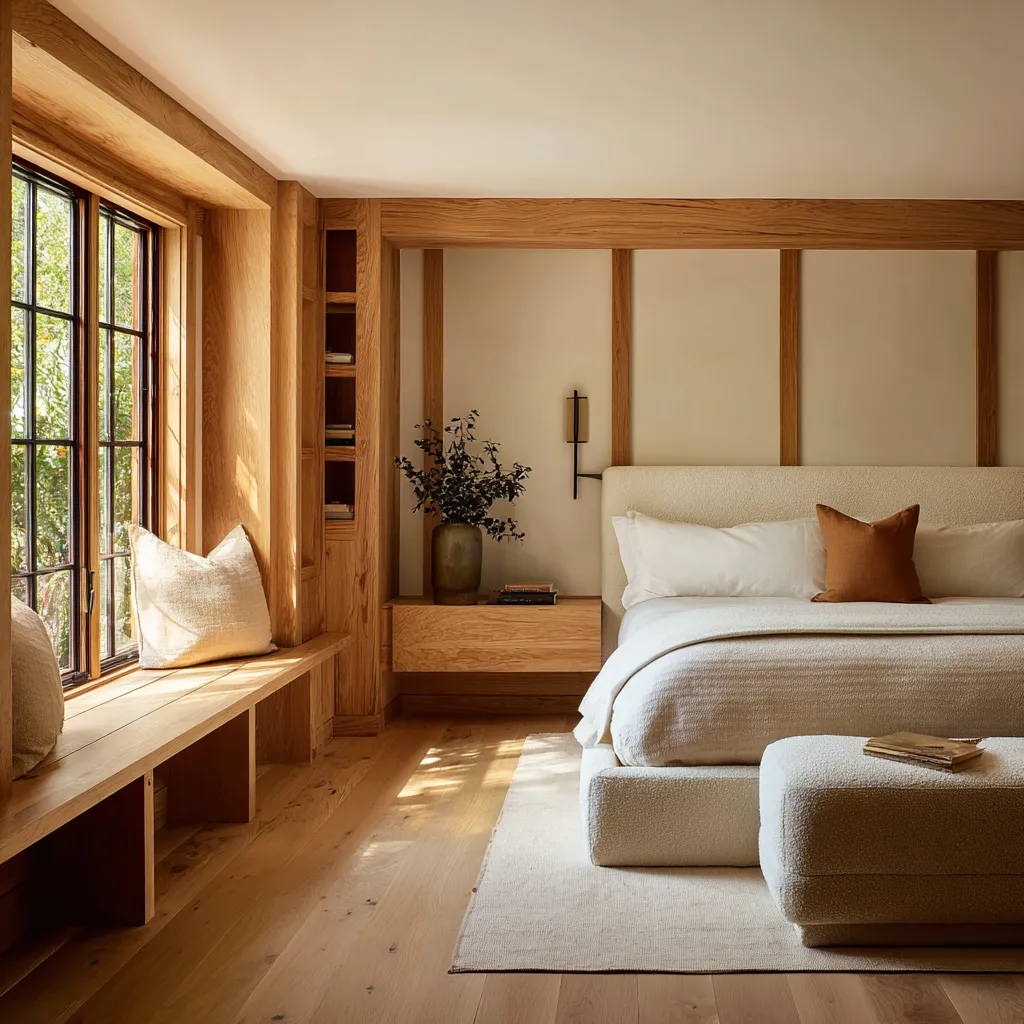
There are two good ways to make the room feel bright
Brightness can come from two different design routes.
1) Pale timber brightness
This route uses lighter oak or another pale wood finish, which can be combined with built-in shelving, benches, and warm neutral bedding. It keeps the Craftsman character visible but lifts the whole room into an airier register.
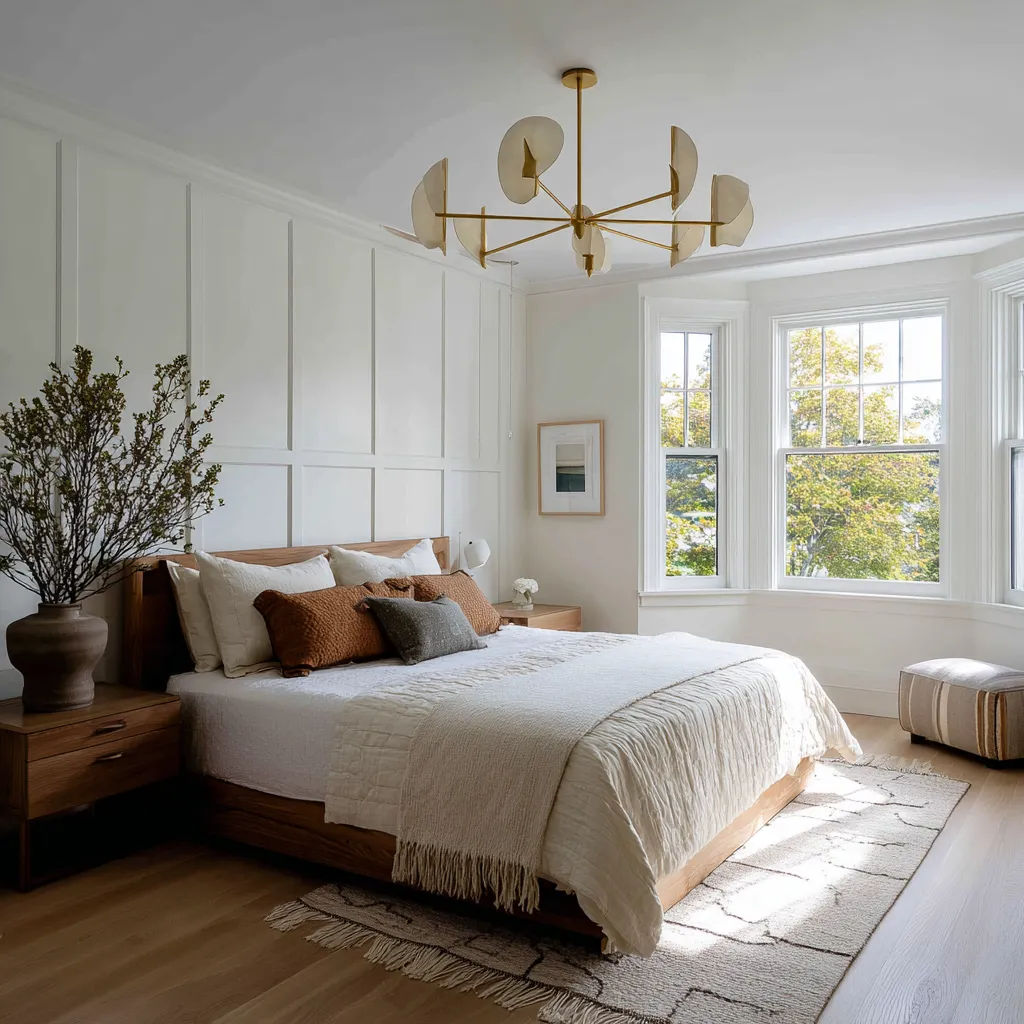
2) Dark wood with large-glass compensation
This route is especially useful because it corrects a common fear. Dark wood do not automatically make the rooms heavy or dated.
Darker casing or paneling can be paired with:
- large glazing
- pale bedding
- sparse objects
- a low bed
- more open wall or floor area
The lesson is not to avoid dark wood. The lesson is to avoid pairing dark wood with too many other heavy moves at the same time.
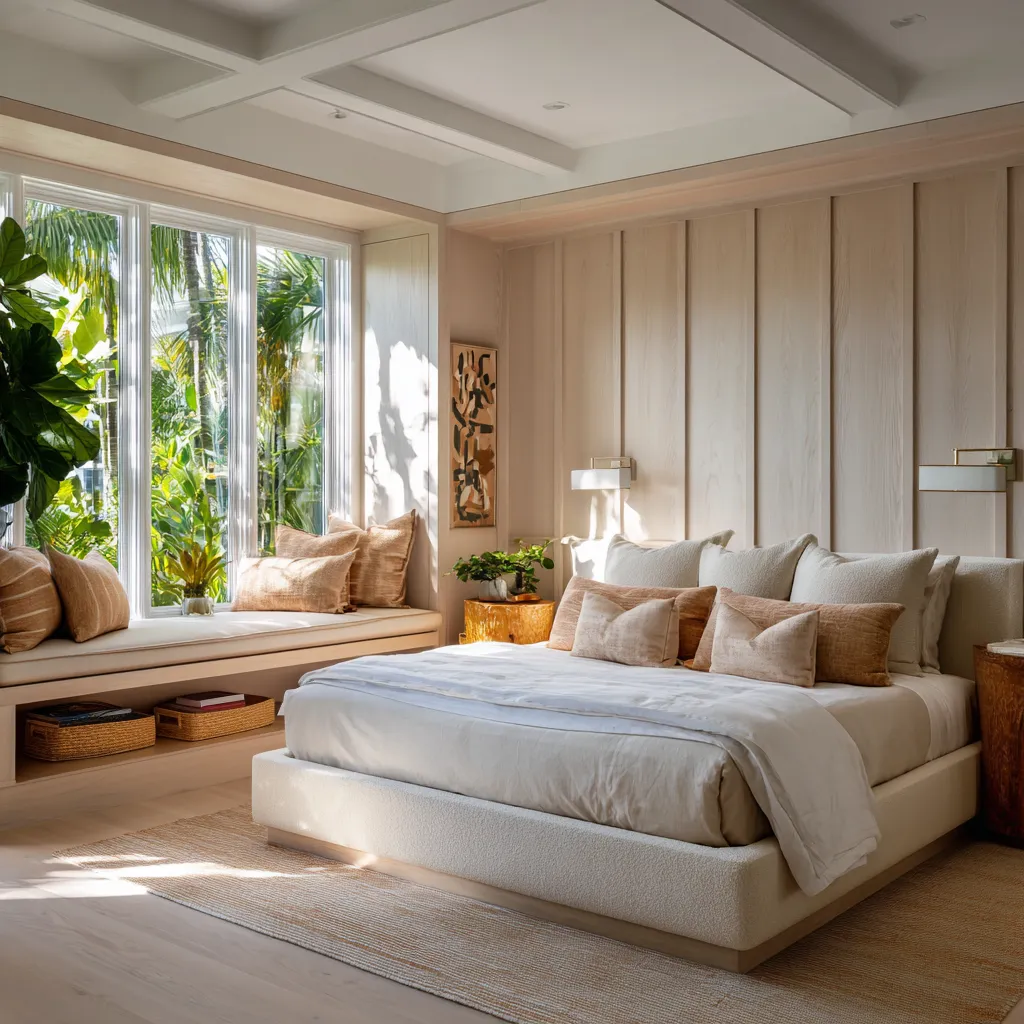
Use fewer, larger architectural gestures
A traditional Craftsman room can contain many small details: trim layers, muntin patterns, shelves, panels, furniture profiles, and hardware. That design language can be compressed into fewer, broader moves.
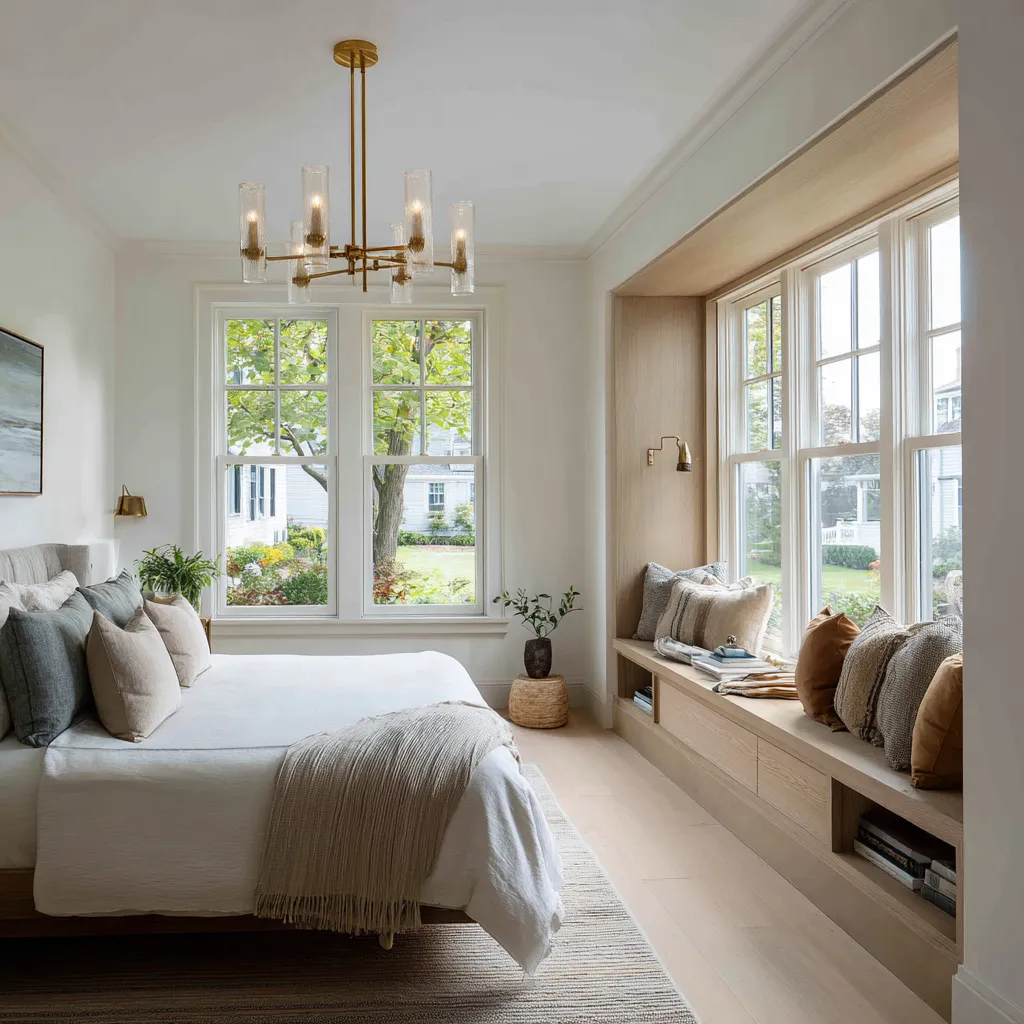
Instead of lots of little statements, the more current design ideas use:
- one major bed wall
- one broad band of wood
- one long bench
- one large built-in shelving system
- one visible beam rhythm
- one alcove around the bed
This shift is very important. It allows the room to keep its sense of craftsmanship while letting the eye rest on larger shapes.
That larger scale is one of the quietest reasons these bedrooms feel modern. The room is not stripped down.
It is clarified.
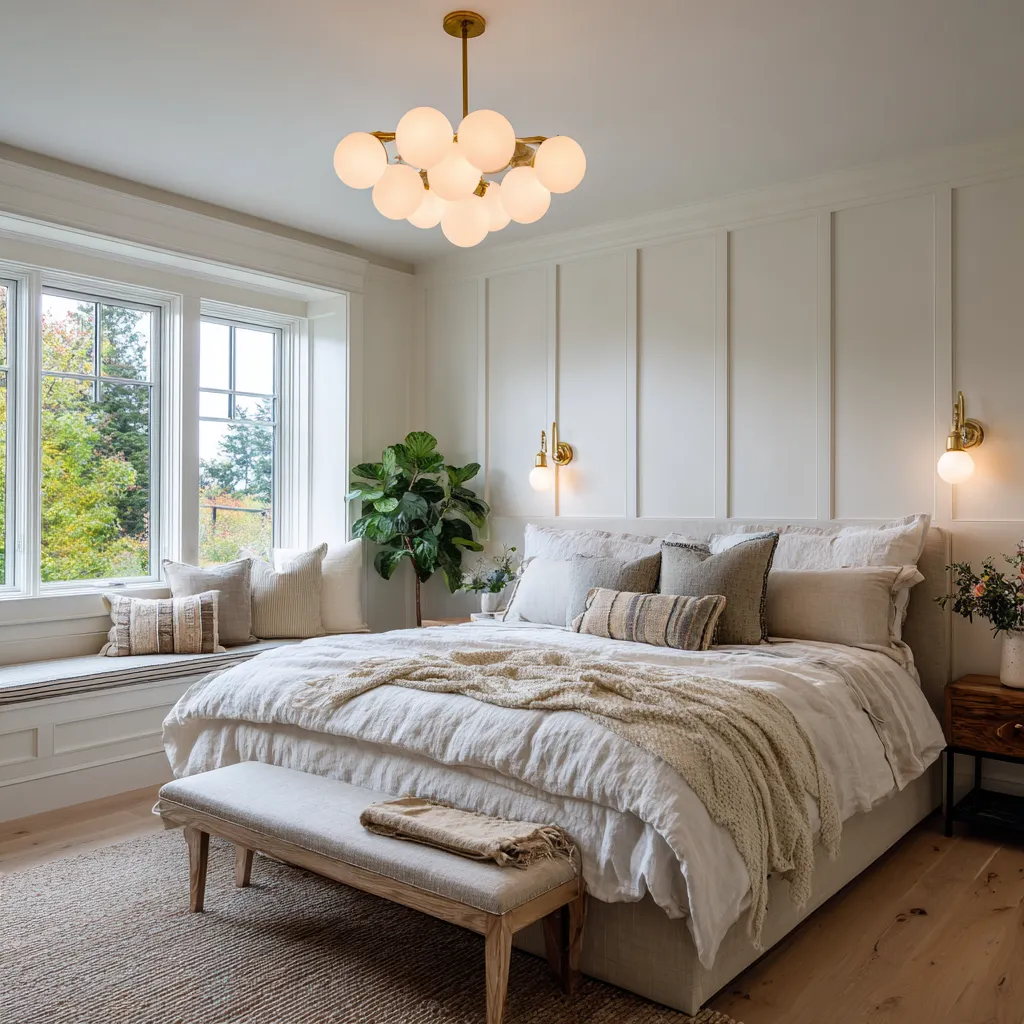
Let modern lighting carry the time shift
One of the easiest ways to update a Craftsman bedroom without weakening its identity is through lighting.
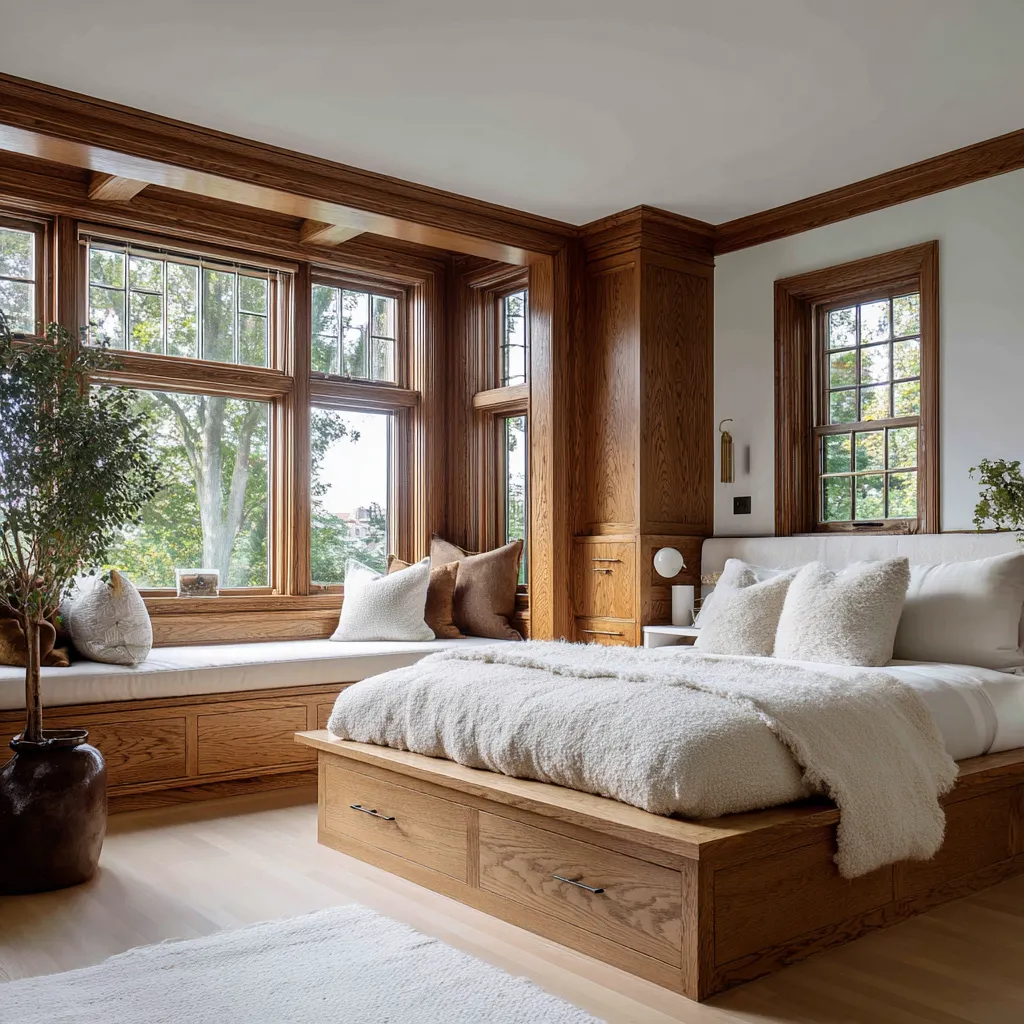
Lighting ideas:
- slender wall sconces
- compact reading arms
- globe-based fixtures
- restrained black or brass forms
These lights matter because they do not fight the woodwork, but they do signal a newer visual language. Traditional-style lighting can quickly pull a room back toward a more literal period mood.
Simpler present-day fixtures help the room feel current without asking the architecture to change its character.
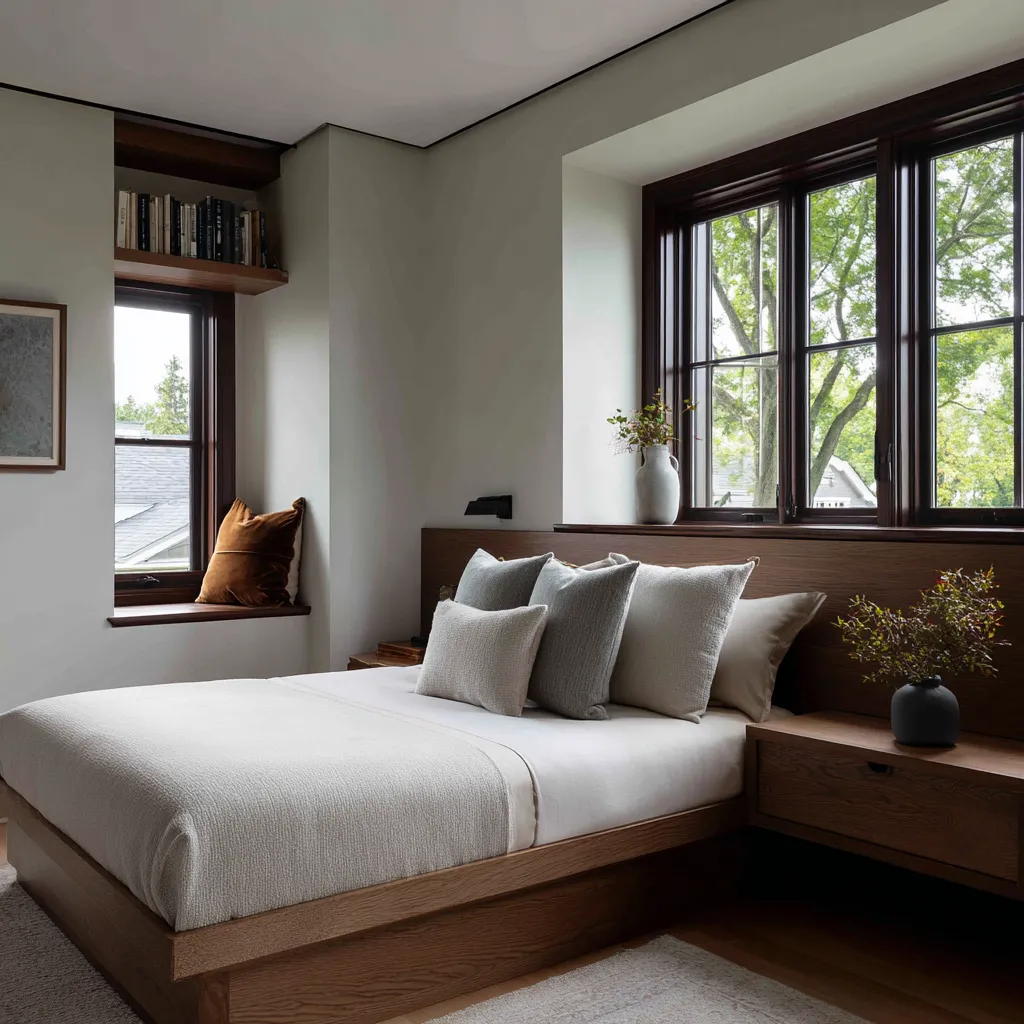
This works especially well beside paneled walls or built-in headboard zones. Once the wood is already doing the historical work, the lighting can be sharper, lighter, and more edited.
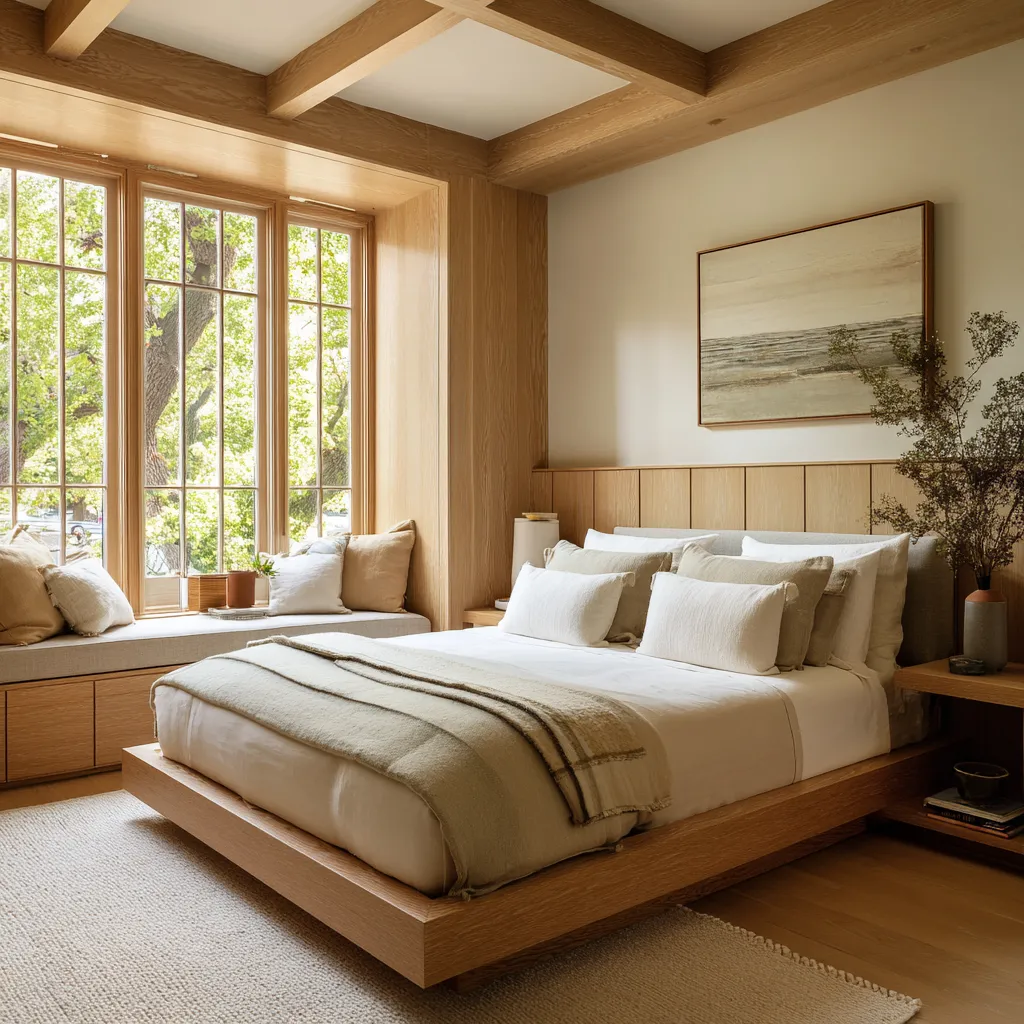
Keep the palette narrow and let warmth come in small doses
The Craftsman style bedrooms usually do not rely on many colors. Usuually they stay close to a controlled family:
- oak, walnut, or honey wood
- cream, ivory, oatmeal, or greige
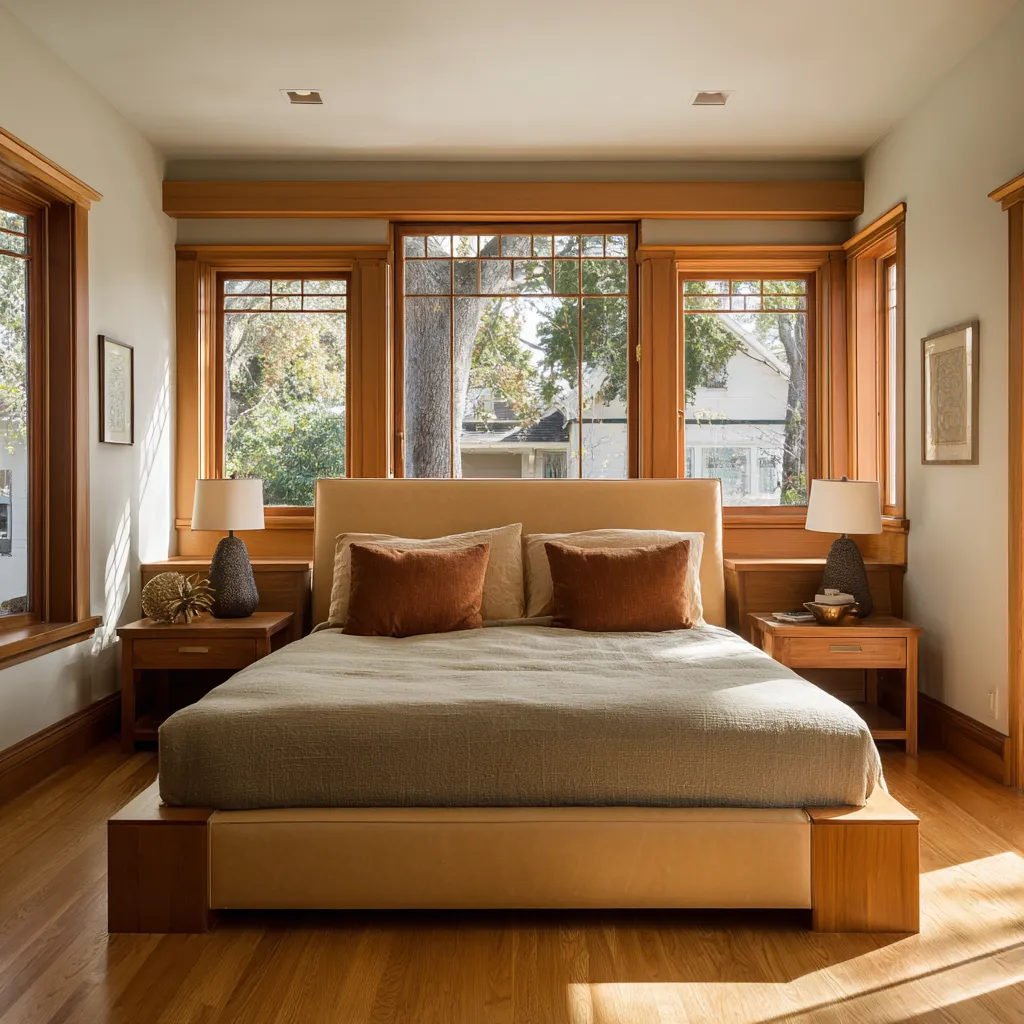
- muted olive, clay, rust, or cinnamon in small amounts
- black or brass as tiny edge notes
The accent can be a large painted wall or a bold textile mix. There can be a small earthy pulse, a single pillow or one warmer fabric note near the bed.
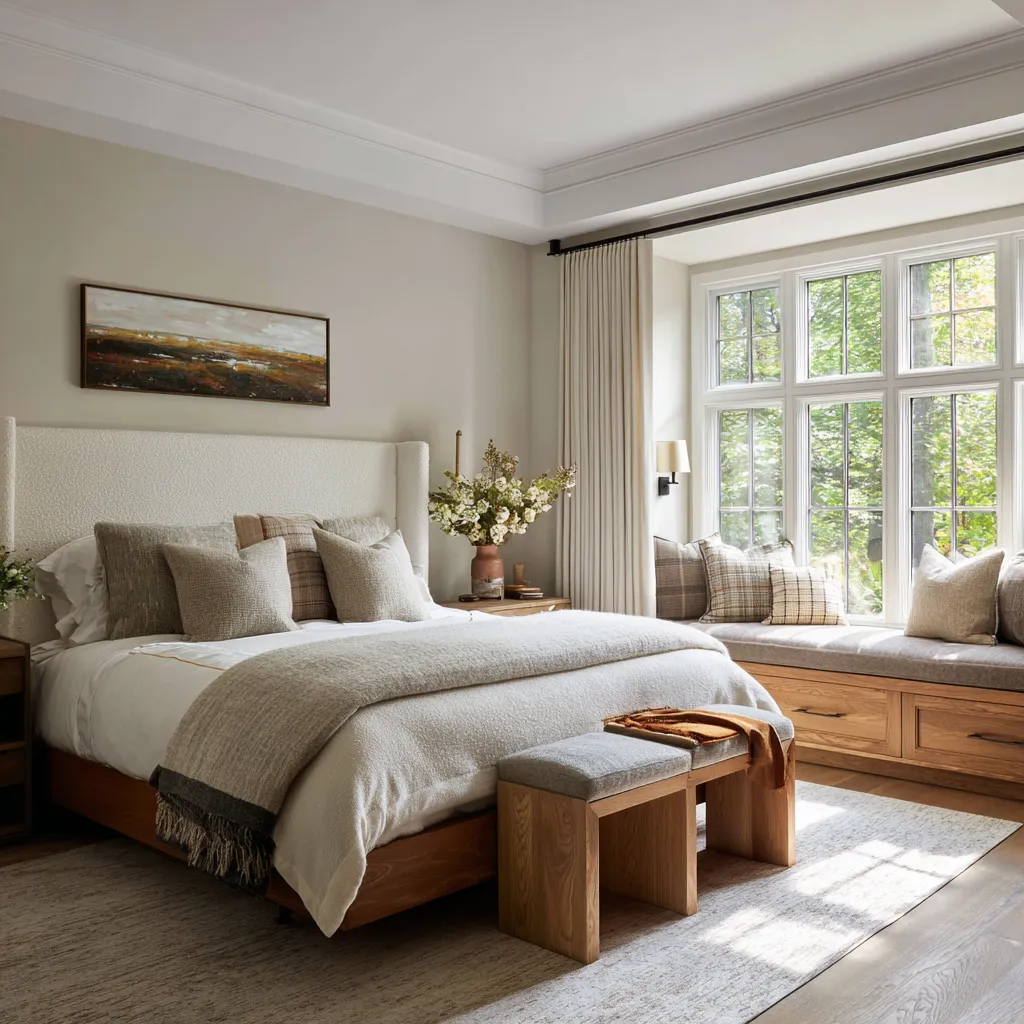
That move works because it warms pale bedding without thickening the room visually. It also echoes the wood without trying to match it exactly.
A rust or clay accent near the center of the bed often gives the whole room a warmer emotional tone while keeping the overall palette quiet. That is a very refined way to bring warmth into a Craftsman bedroom.
Instead of spreading color across the room, place it carefully where it matters most.
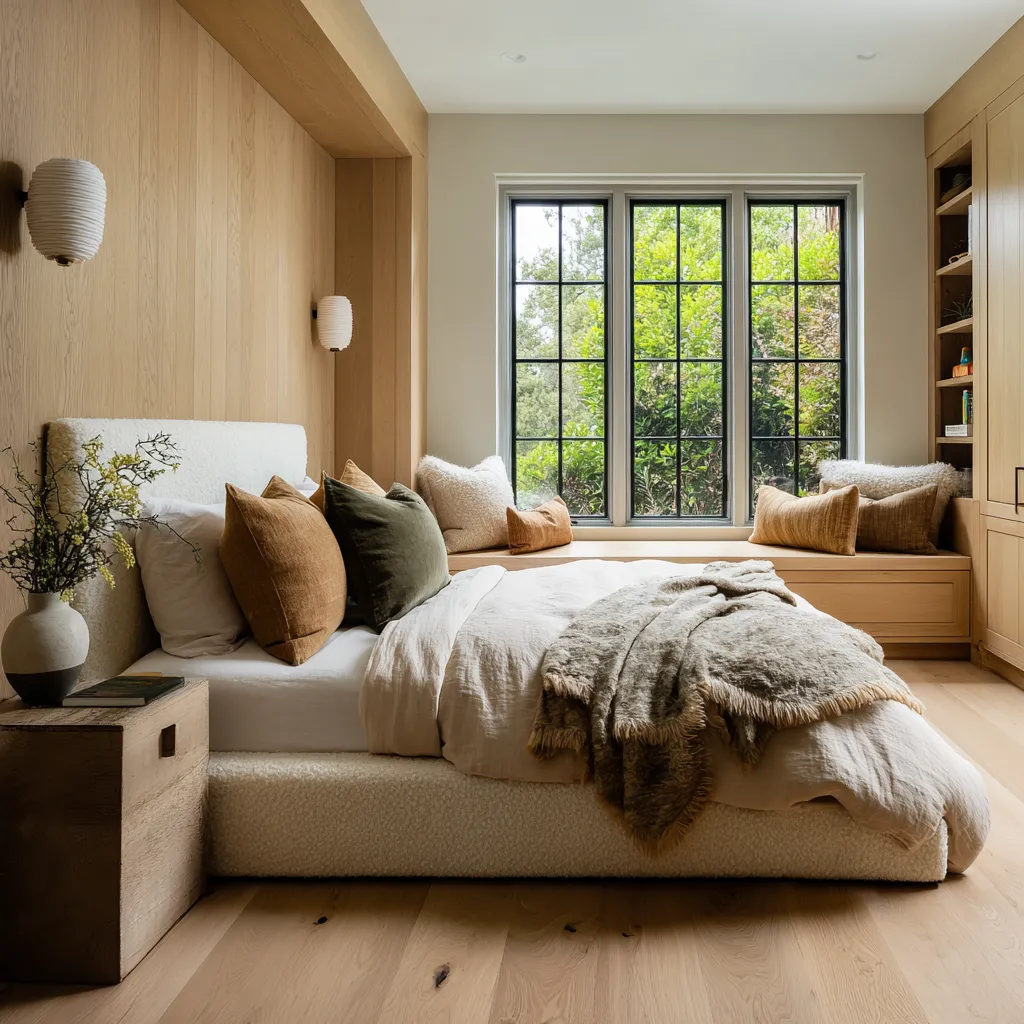
Active emptiness
The open floor area in front of the bed, the uncluttered bench, the spare shelving, and the lightly styled bedside surfaces are not signs of missing content. They are design choices.
They let beams, panel rhythm, glazing, and trim stay visible. They keep the room from becoming too packed with information.
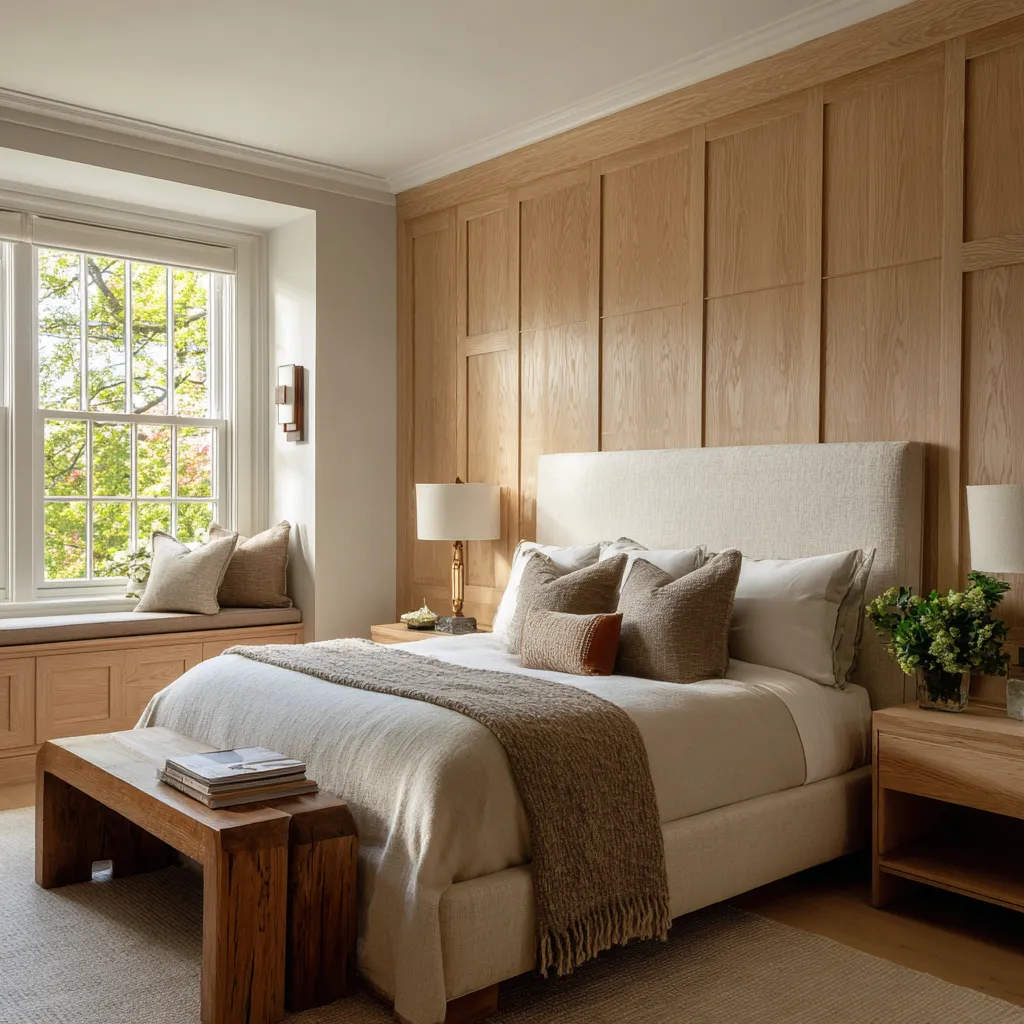
A modern Craftsman bedroom often depends on active emptiness. The open areas hold the room together.
They keep the architecture legible. They make the soft elements feel more generous.
Without that restraint, even beautiful millwork can start to feel crowded.
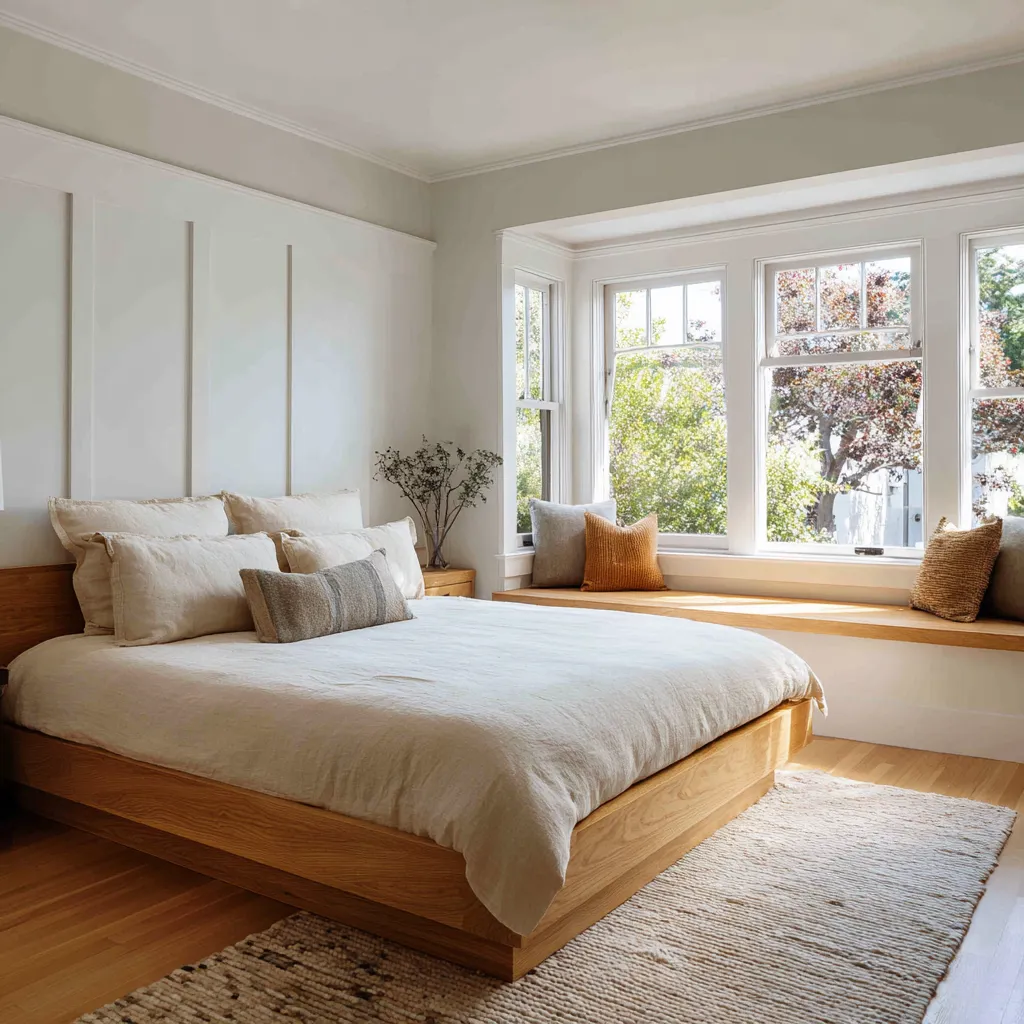
What usually weakens the look
Design moves that tend to break the balance:
- a tall ornate bed against a strong paneled wall
- bright stark white against warm wood with no tonal bridge
- lots of small decorative objects on every surface
- heavy patterned drapery blocking grouped windows
- too many separate wood furniture pieces near the bed
- strong cool accent colors unrelated to timber or landscape
- beam ceilings paired with a tall visually heavy bed
- no built-in or architectural anchor in a room trying to feel Craftsman
Most of these mistakes come from the same issue: too many parts trying to be the main event at once.
The practical formula
Craftsman memory in the shell + soft neutral center + inhabitable window edge + edited object field + one present-day lighting signal. .
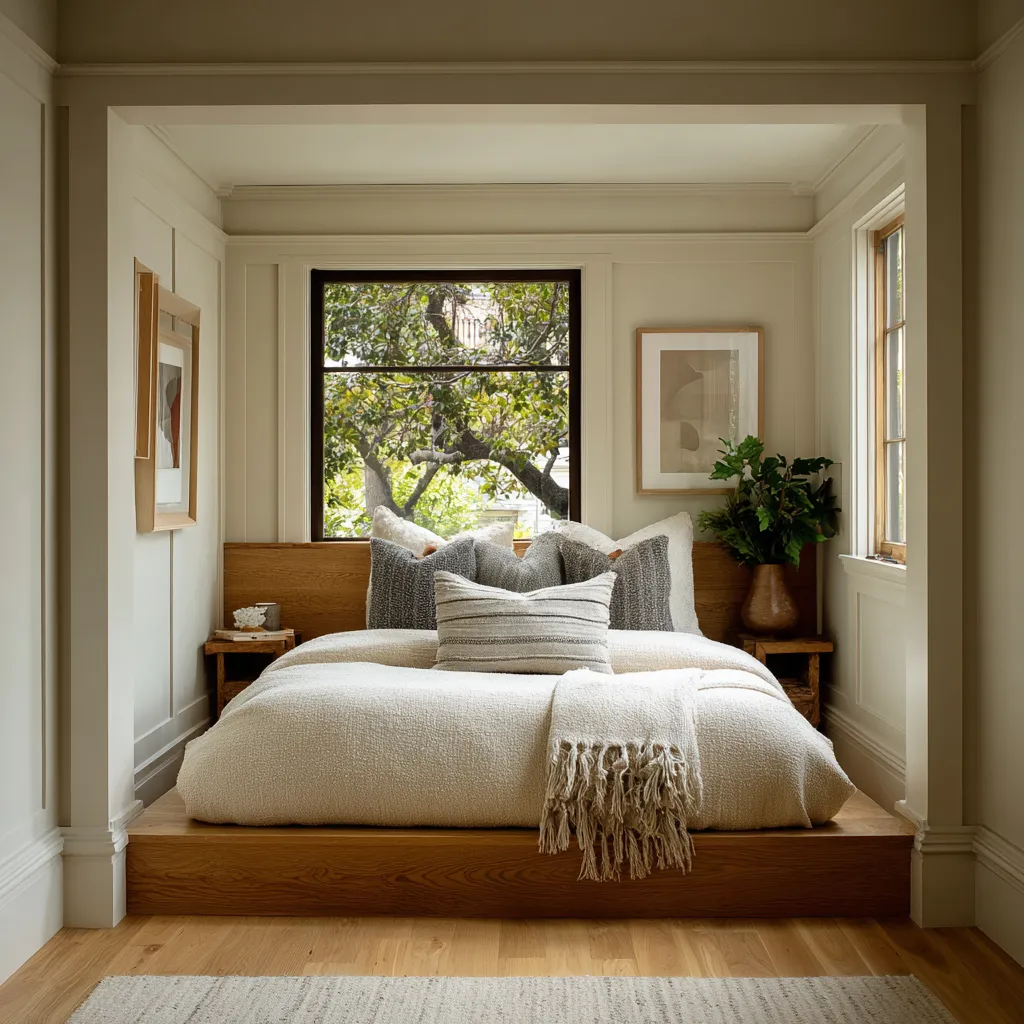
That formula can become lighter, darker, more paneled, more beam-led, or more painted. But the structure stays steady.
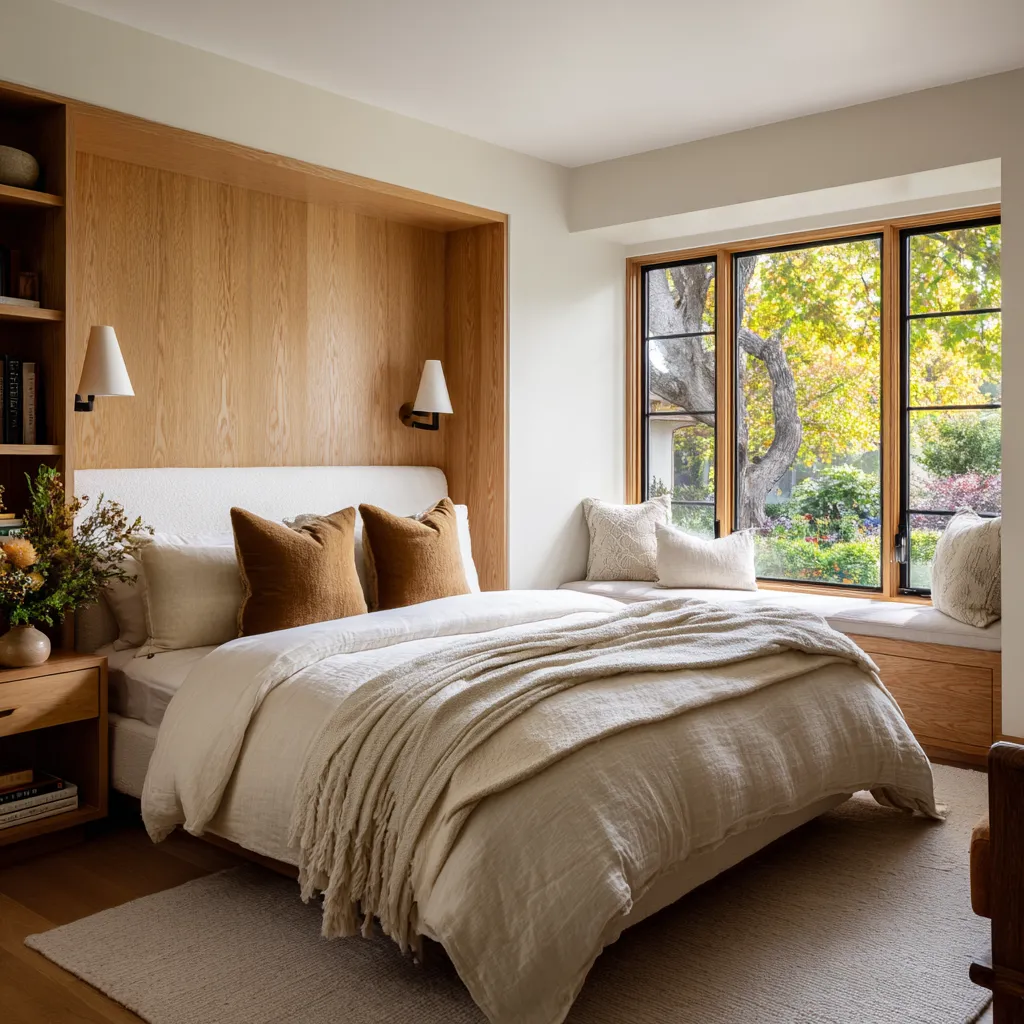
The room works because each layer has a job. The architecture carries memory and permanence.
The bed and textiles carry comfort. The window carries light and movement.
The fixtures carry the newer note.
How to apply the look without losing the Craftsman backbone
The review also makes it easier to decide what move fits your room best. If your bedroom already has heavy trim, beams, or darker wood, the answer is usually not to remove everything.
It is to soften what sits in front of it. If your room is pale and painted, the answer is usually not to keep it empty.
It is to bring back order through panel rhythm, deep casing, a built-in bench, or a warm wood bed.
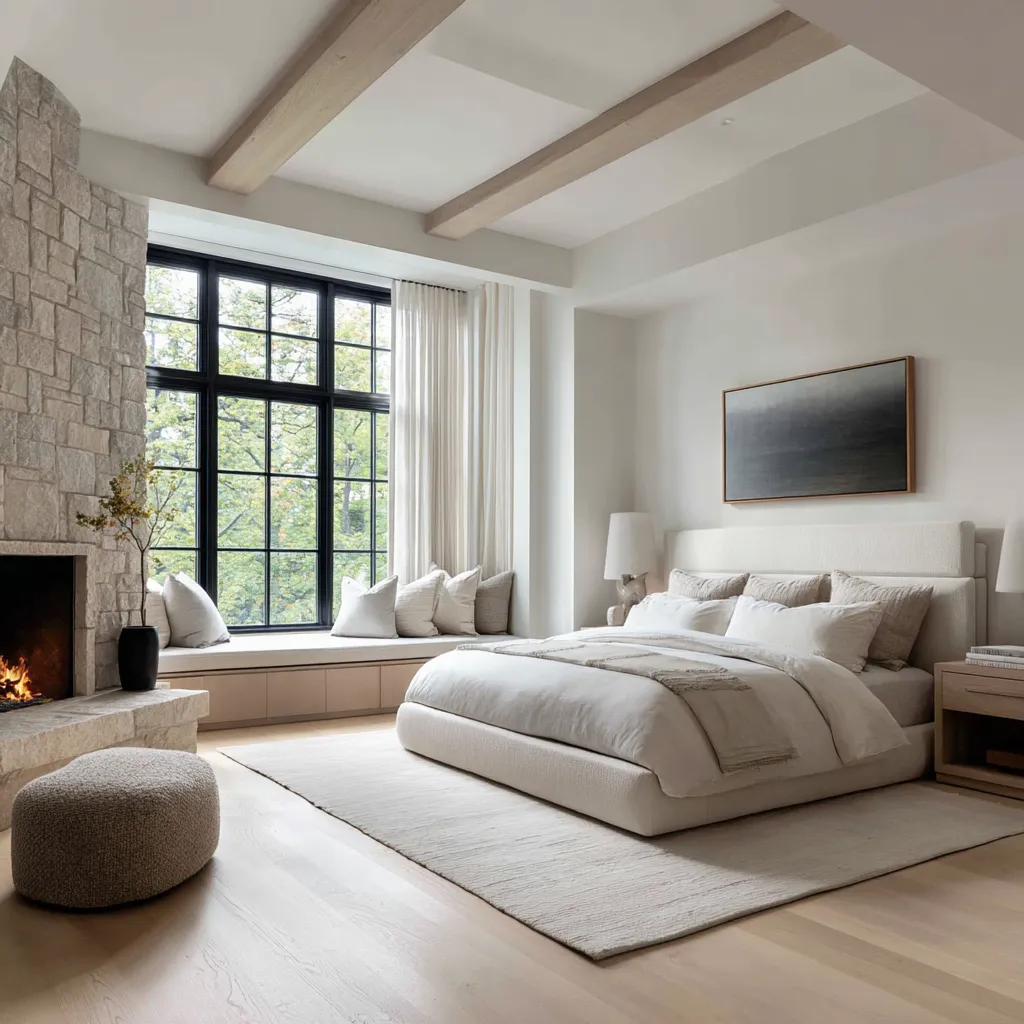
Practical Craftsman bedroom design ideas
| If your bedroom has this condition | Move that usually works best | Why it works | What to avoid |
|---|---|---|---|
| Dark stained trim or wood paneling | Keep the bed pale, low, and upholstered | It stops the room from feeling dense and lets the wood stay architectural | A tall wood headboard, busy bedding, or many dark wood furniture pieces |
| Strong ceiling beams or coffers | Use a low bed and a long bench or seat | It balances the overhead weight and lowers the visual center | A tall contrast-heavy bed that pushes up into the ceiling structure |
| A pale room that feels generic | Add panel rhythm, deep trim, or one built-in zone | It restores house character without darkening the whole room | Leaving all walls flat and relying only on decor for identity |
| A large window wall | Turn it into a bench, seat, or deep ledge | It makes daylight feel domestic and gives the room another soft zone | Covering the glazing with heavy patterned drapery |
| Too much wood in many places | Concentrate timber in one or two zones only | The room reads as clearer and more modern | Matching wood wall, wood bed, wood bench, and many separate wood pieces at once |
| A room that feels hard or boxy | Add tactile contrast through bedding, throws, rugs, and rounded ceramics | Softness comes from what the body touches, not from erasing structure | Trying to solve hardness with more decorative detail instead of better texture balance |
| A room that feels visually busy | Reduce object count and let the view do more work | Greenery and sky can carry variation better than many accessories | Filling shelves, tables, and sills with small styling items |
| A room that feels too cold after lightening it | Use warm whites, oatmeal, greige, and one clay or rust textile note | This keeps brightness while preserving warmth | Stark bright white against warm timber with no softer middle tone |
.
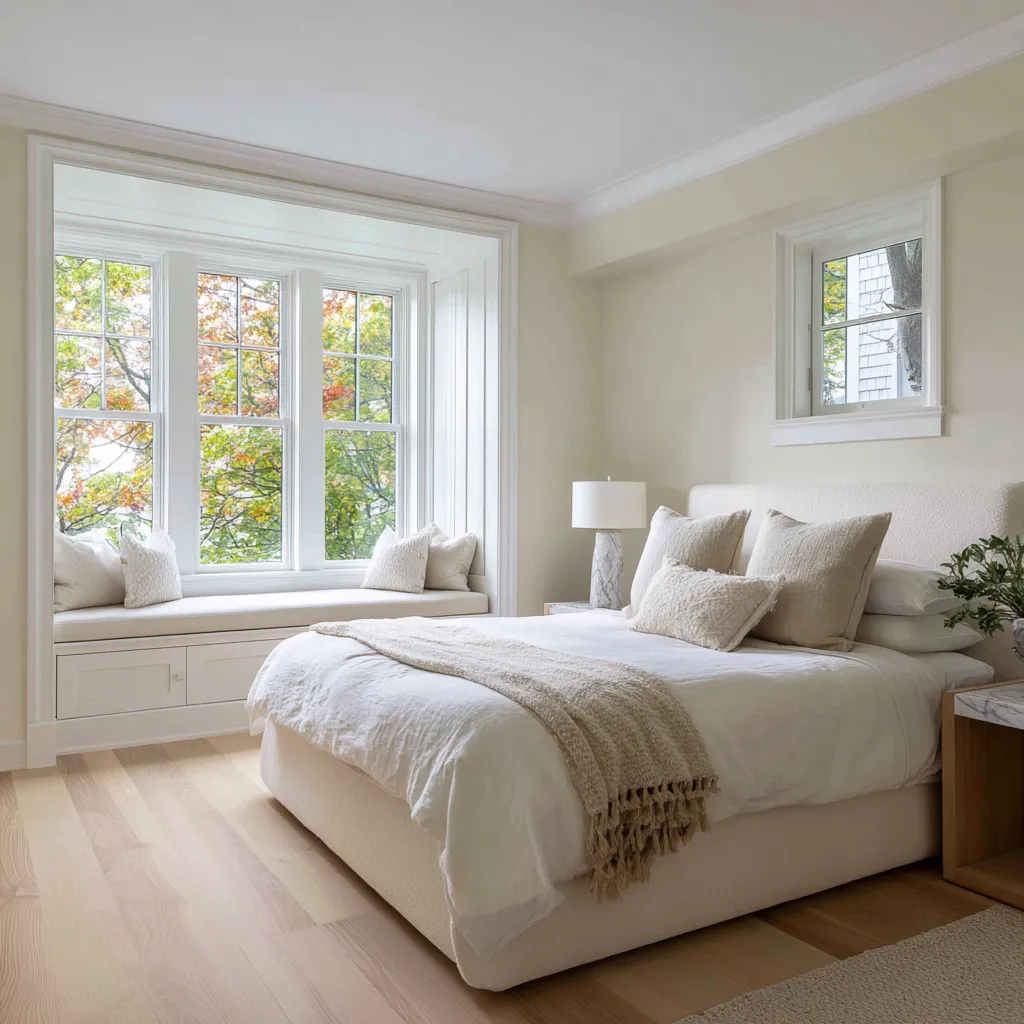
Final thoughts
A Craftsman-influenced bedroom does not need to give up its backbone to feel soft, bright, and modern. In fact, the strongest rooms do the opposite.
They keep the backbone visible, then reduce the competition around it.
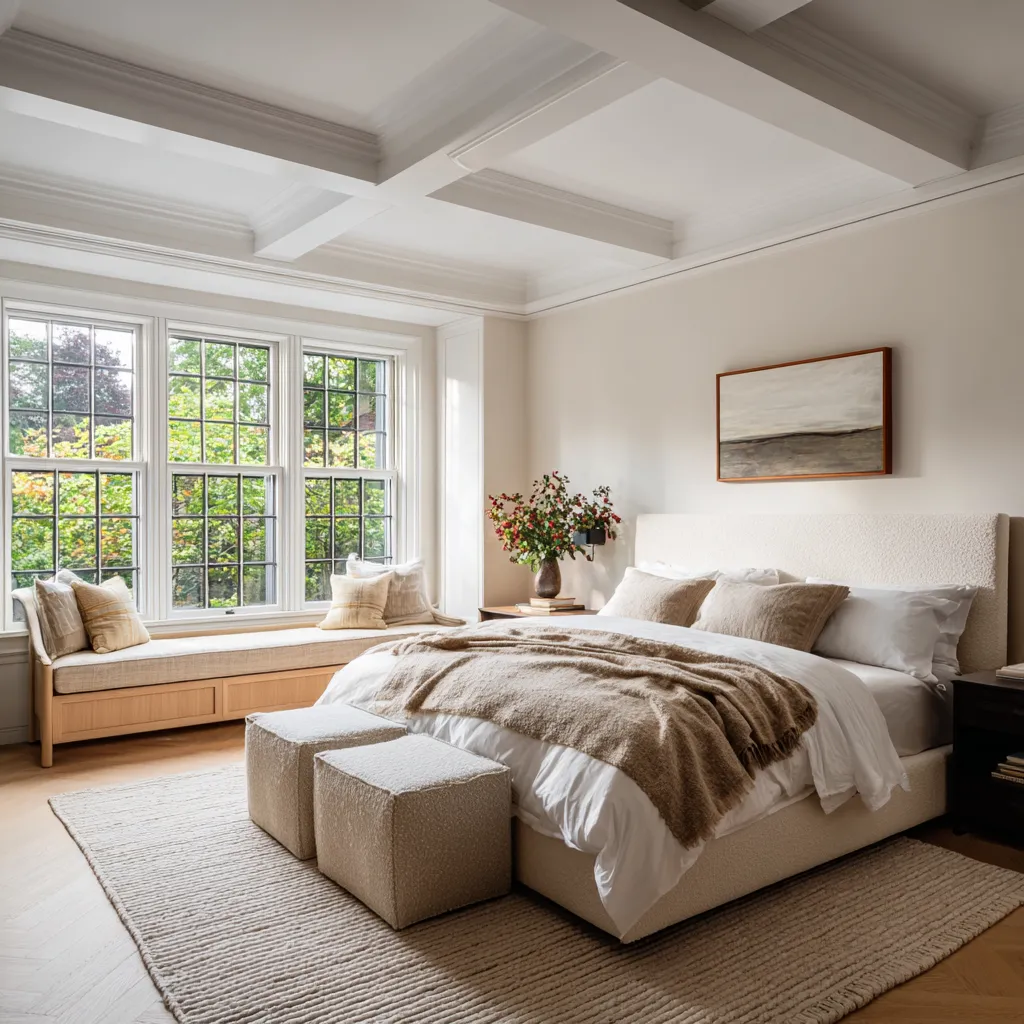
That is the deeper shift. The goal is not to flatten the room into a pale generic space.
The goal is to let wood, trim, benches, windows, and built-ins stay meaningful while the center of the room becomes gentler, lighter, and easier to live with.
The result is a bedroom that still feels tied to the house, but far less burdened by period heaviness. It keeps the memory, the craftsmanship, and the sense of place.
It simply arranges them with a lighter hand.