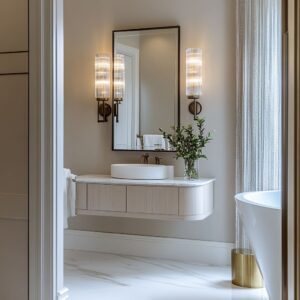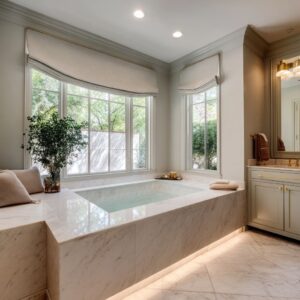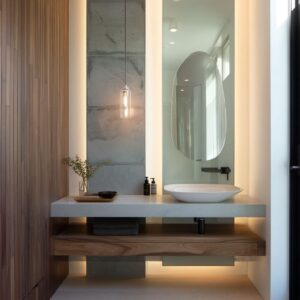
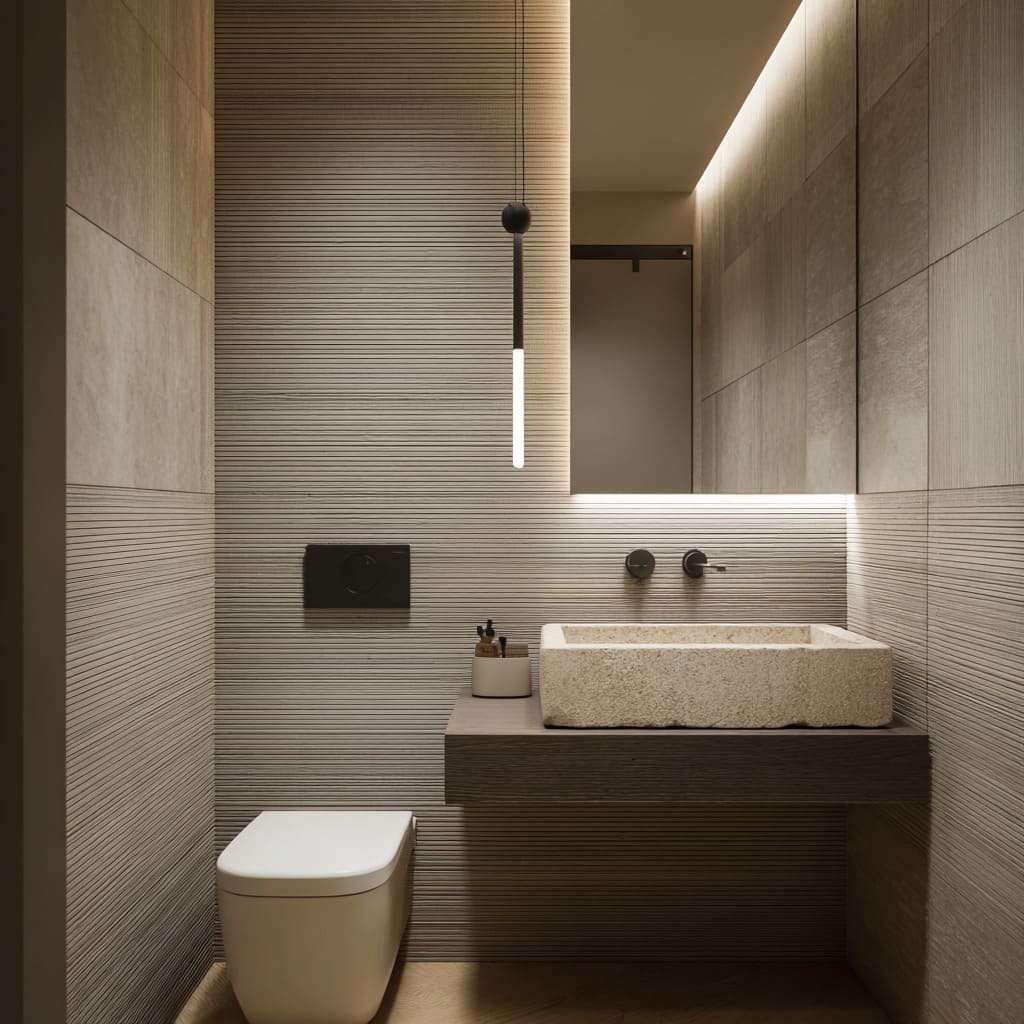
Modern layouts increasingly use wall finishes as uninterrupted planes that shape how a room feels rather than as simple wet-zone coverings. This shift can be seen in spa-like interiors where the walls behave almost like fabric stretched across the room’s frame.
Instead of patchy sections behind a vanity or inside a shower, a full height field becomes the main visual structure, letting fixtures act like placed objects rather than functional interruptions. These broad planes create a soft envelope, especially when ribbed, fluted, or stick-formatted surfaces ripple with micro-shadows.
In expansive layouts, the result reads like a single wrapped material volume; in compact rooms, continuity calms the eye and visually lengthens the walls. This approach naturally enriches the bathroom wall tiles design theme and anchors everything in a cohesive expression rather than a collection of isolated surfaces.
Surfaces That Behave Like Fabric: Texture as Mood
The rise of textile-like materials has transformed the way wall patterns influence atmosphere. Fine horizontal ribs, narrow flutes, and pale stick tiles catch grazing light in ways that resemble woven blinds or soft corduroy.
Instead of bold contrast, the texture itself becomes the quiet character of the room.
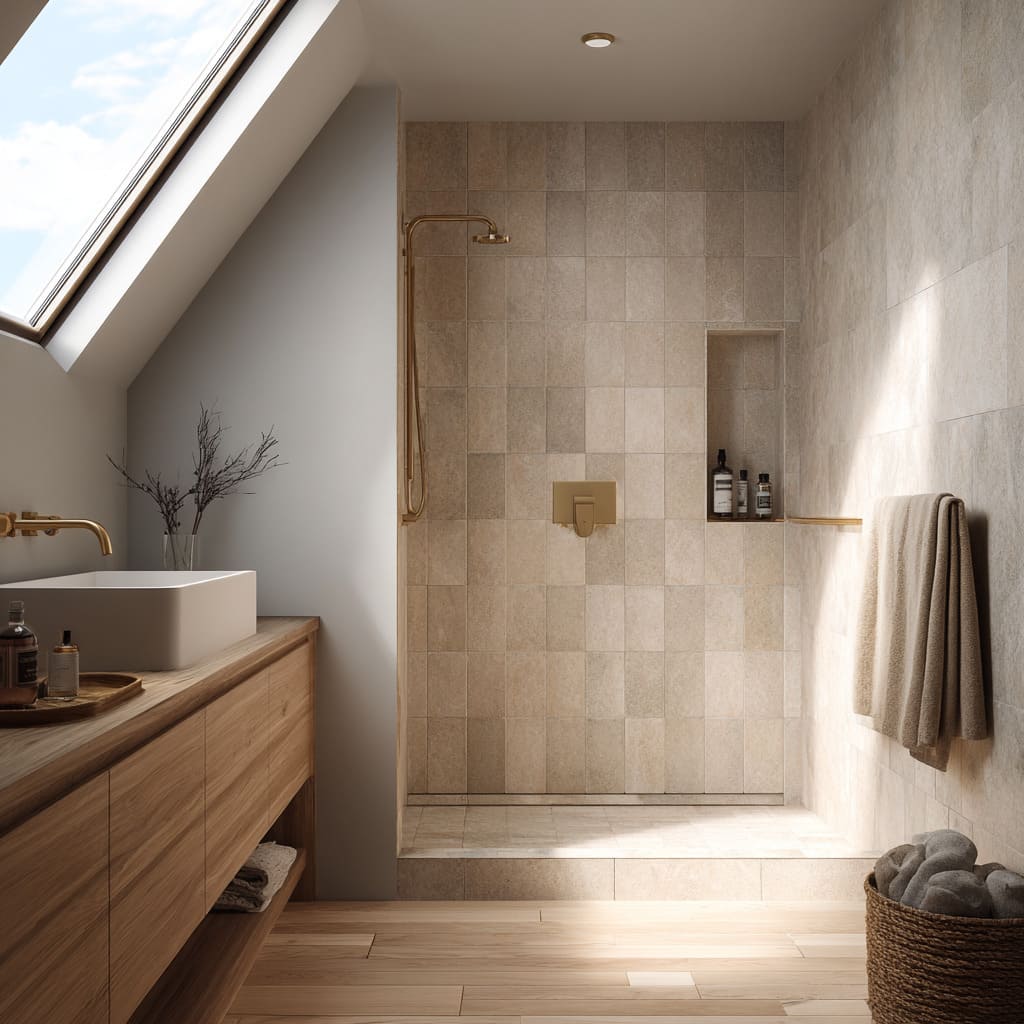
Why these textures work visually
- Micro-shadowing: The grooves brighten on the peaks and deepen in the valleys, giving subtle movement.
- Neutral tonality: Keeping the surface within one hue prevents the pattern from overwhelming the space.
- Layering effect: Fixtures placed on top read more sculpturally because the background remains rhythmically consistent.
Where they show their strength
- Behind long vanities where the eye spends time.
- Inside showers where tactile impressions matter.
- On accent walls where neutral shades benefit from extra depth.
These textural walls generate gentle visual motion, especially under warm or directional lighting. Daily light shifts make the wall feel alive even without strong color variation, creating a natural link to the quiet intensity seen in modern bathroom tiles design explorations.
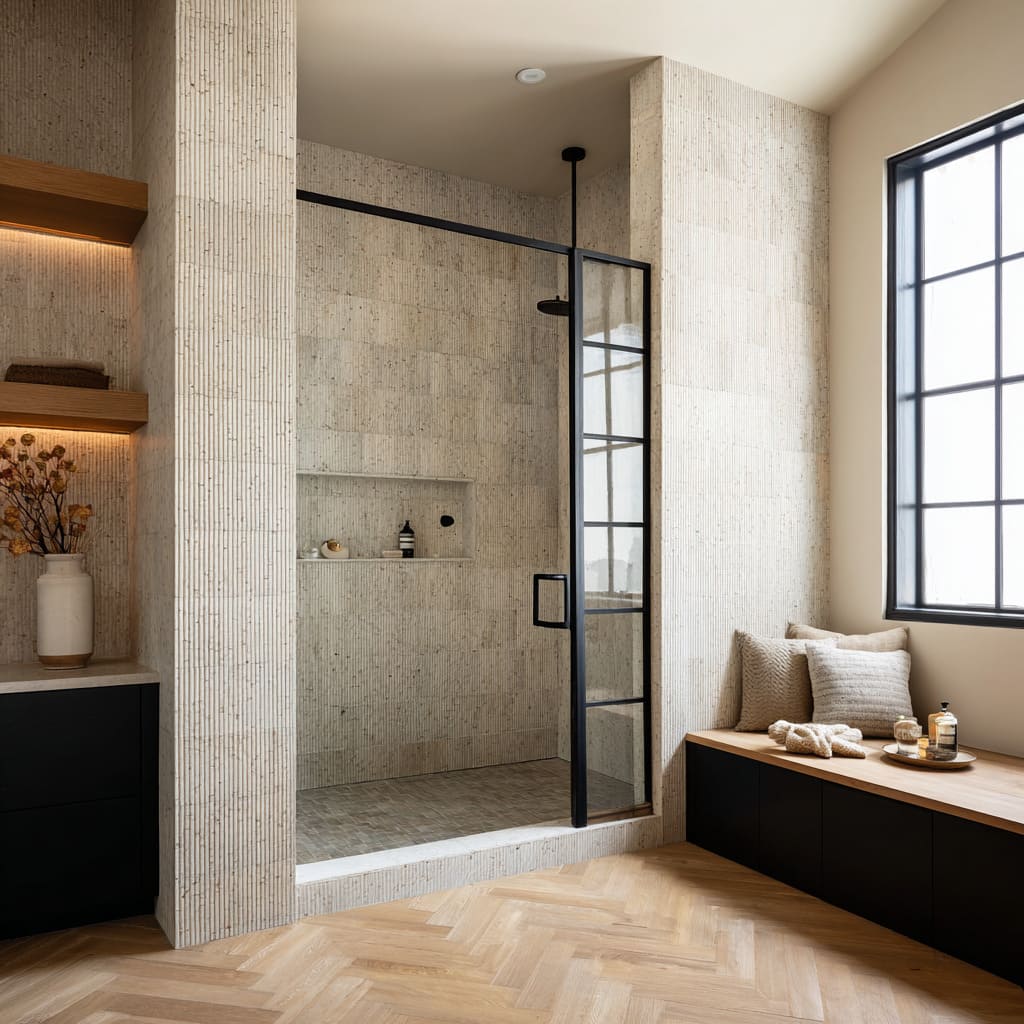
Direction and Rhythm: Horizontal, Vertical, Diagonal, and Curved
Direction sets the tone of a room more strongly than color. Patterns pulled across a wall guide attention, reshape proportions, and establish flow.
Horizontal Lines
Soft horizontal ribs often serve to visually lengthen a narrow layout. When used behind basins or toilets, they act like visual expansion bars, letting the room feel wider and more relaxed.
Vertical Lines
Flutes, tall mirrors, and slim wall recesses pull the eye upward. Rooms with limited ceilings become perceptually taller, and the lines convey a sense of quiet order suitable for serene spa-inspired moods.
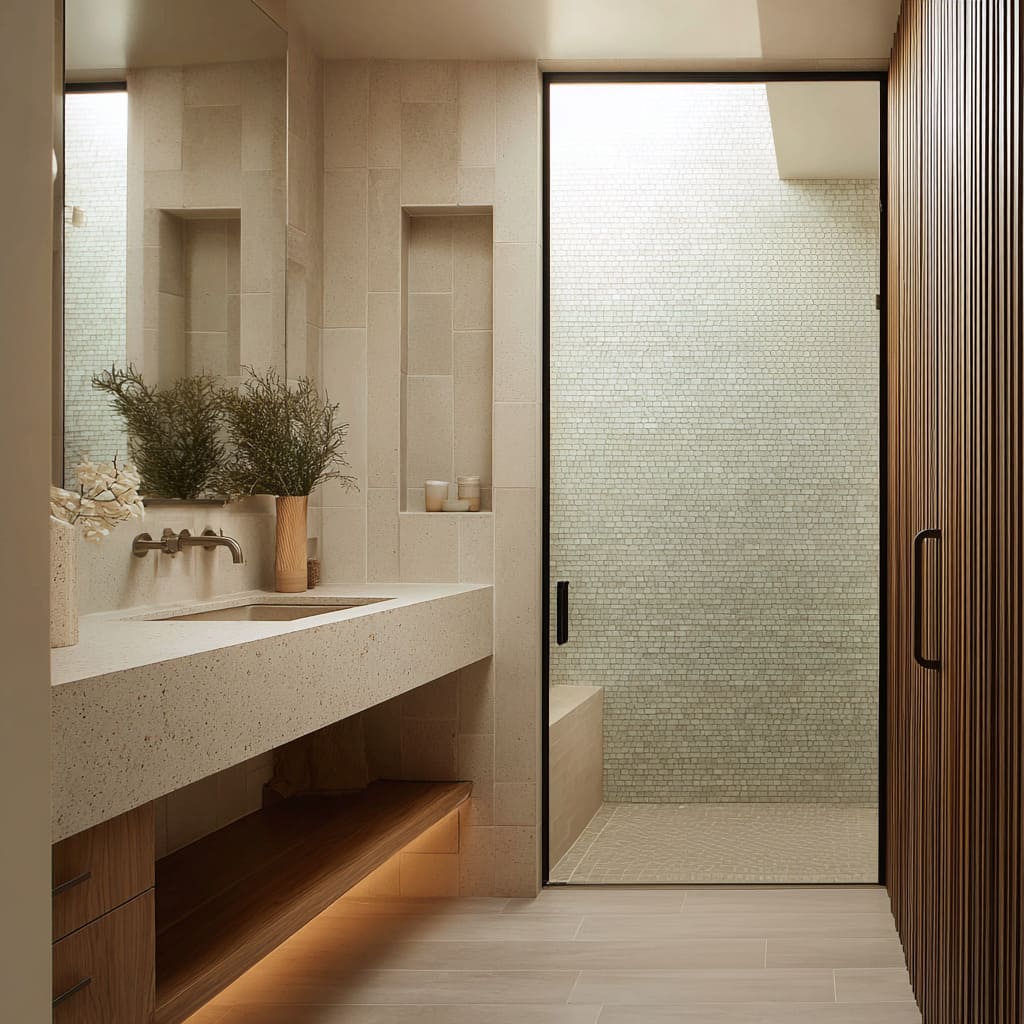
Diagonal or Zigzag Movement
Herringbone inserts or angled panel layouts direct attention toward the rainfall head or down toward the drain zone. Because these diagonal moves appear within one color family, they impress through movement rather than bold contrast.
Curved or Radiating Patterns
Fan-shaped tiles or scalloped shells introduce gentle patterning without bright hues. Their delicate arcs bring in soft geometry that complements straight slats or smooth stone planes.
These shapes form the expressive side of bathroom tile inspiration, giving focal areas a signature identity without using loud tones.
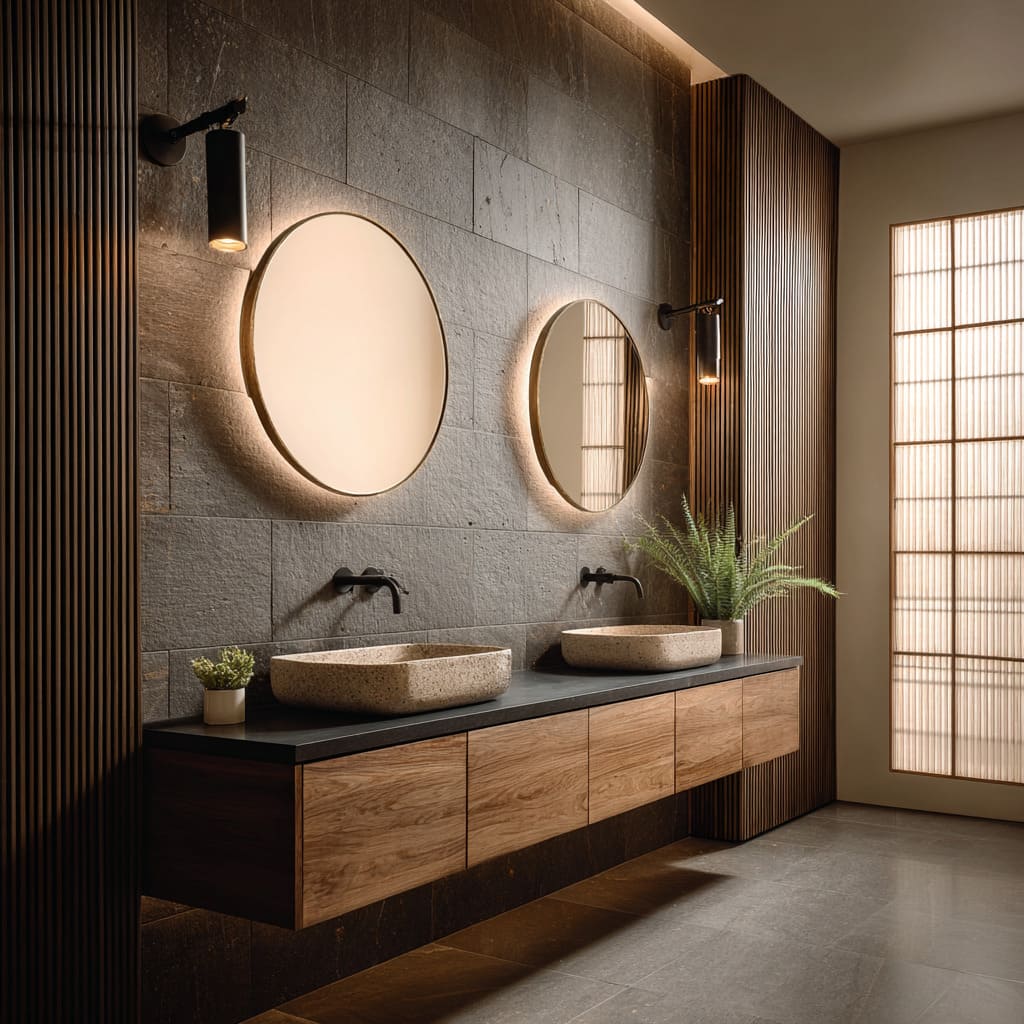
Scale Contrast and Sculptural Balance
Tile size plays a major role in the composition of a bathroom and frequently works in three distinct scales: extra-large slabs, mid-size rectangles, and micro mosaics.
Large Panels
Wide stone-look fronts, oversized porcelain, and tall slabs act as calm visual anchors. With minimal grout, they read like monolithic surfaces and carry a sense of stillness.
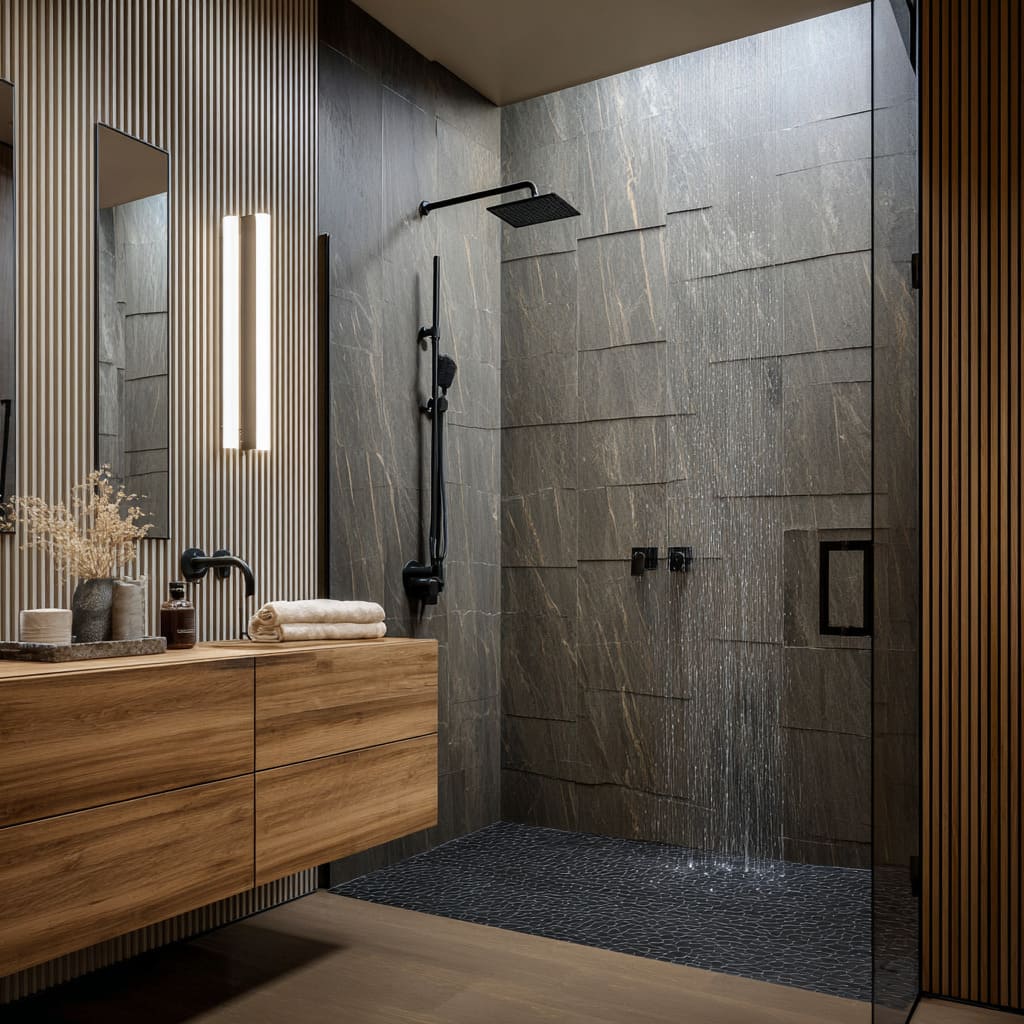
Mid-Sized Formats
Soft marble-effect rectangles arranged in stacked or running bonds form a gentle bridge between large fields and more intricate zones. Their slight tone variation adds realism without causing clutter.
Micro Textures
Tiny penny tiles, kit-kat sticks, charcoal mosaics, and small squares shimmer under focused lighting. These surfaces shine when used:.
- At the back of a shower
- Framing a niche
- As an end wall panel
- As a band that breaks up larger planes
This tri-scale combination gives depth without visual noise, especially important for rooms seeking unexpected layering in small bathroom tile ideas, where scale manipulation helps a compact room feel composed and multi-dimensional.
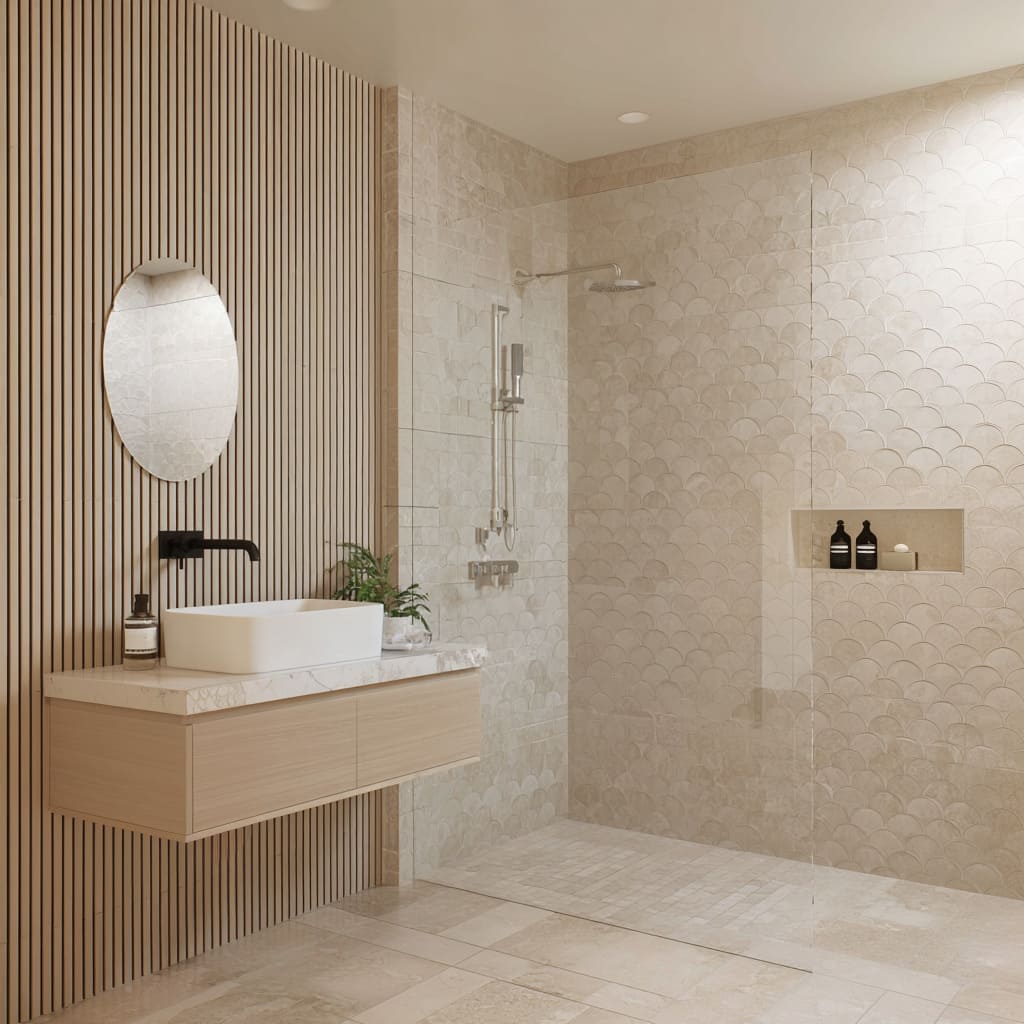
Light as a Shaping Tool
Lighting interacts with tile in ways more powerful than any pigment. Every concept in the modern repertoire uses light to carve shadows, skim surfaces, and animate textures.
Types of light that change tile behavior
- Grazing Strips: Hidden LEDs along mirrors or ledges skim ribs and flutes, creating soft gradients.
- Halo Mirrors: Circular backlit mirrors make matte slate or dark stone glow in controlled rings.
- Niche Beams: Pushed-forward LEDs turn interior alcoves into glowing silhouettes.
- Natural Light: Skylights and high windows sweep across mosaics or small squares, generating live gradients through the day.
The visual result
- Flat walls appear layered.
- Dark stone takes on a soft shimmer.
- Pale surfaces reveal concealed textures.
- Narrow rooms appear deeper due to moving brightness bands.
This approach forms some of the most expressive bathroom wall tile ideas, letting light handle the visual drama instead of relying on strong color contrasts.
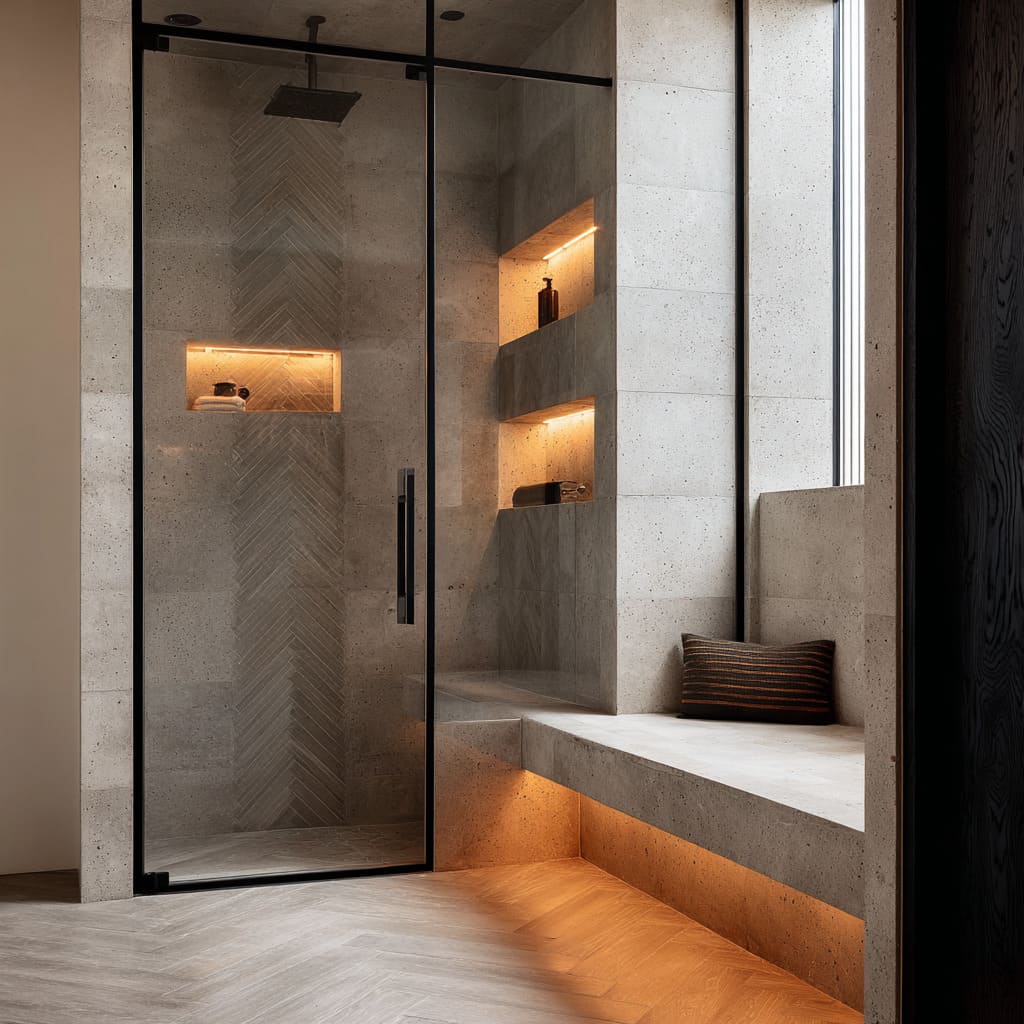
Material Pairings and Quiet Transitions
Tile ideas reach their full impact when paired strategically with wood, metal, and soft furnishings. The contrast is rarely about color; instead, it rests on the meeting points between textures.
Tile + Timber
Warm wood appears beside ribbed tile or large stone to soften the atmosphere. Floating vanities in oak or ash bring horizontal calm beneath vertically structured walls.
Timber benches that overlap tiled shower volumes hint at continuity between wet and dry zones.
Tile + Metal
Black metal frames, slim taps, and narrow pendant rods act like graphic punctuation marks. Brass tones bring warmth when placed against cream flutes or marble-effect rectangle tiles.
Metals are rarely dominant; they behave like fine strokes in a composition.
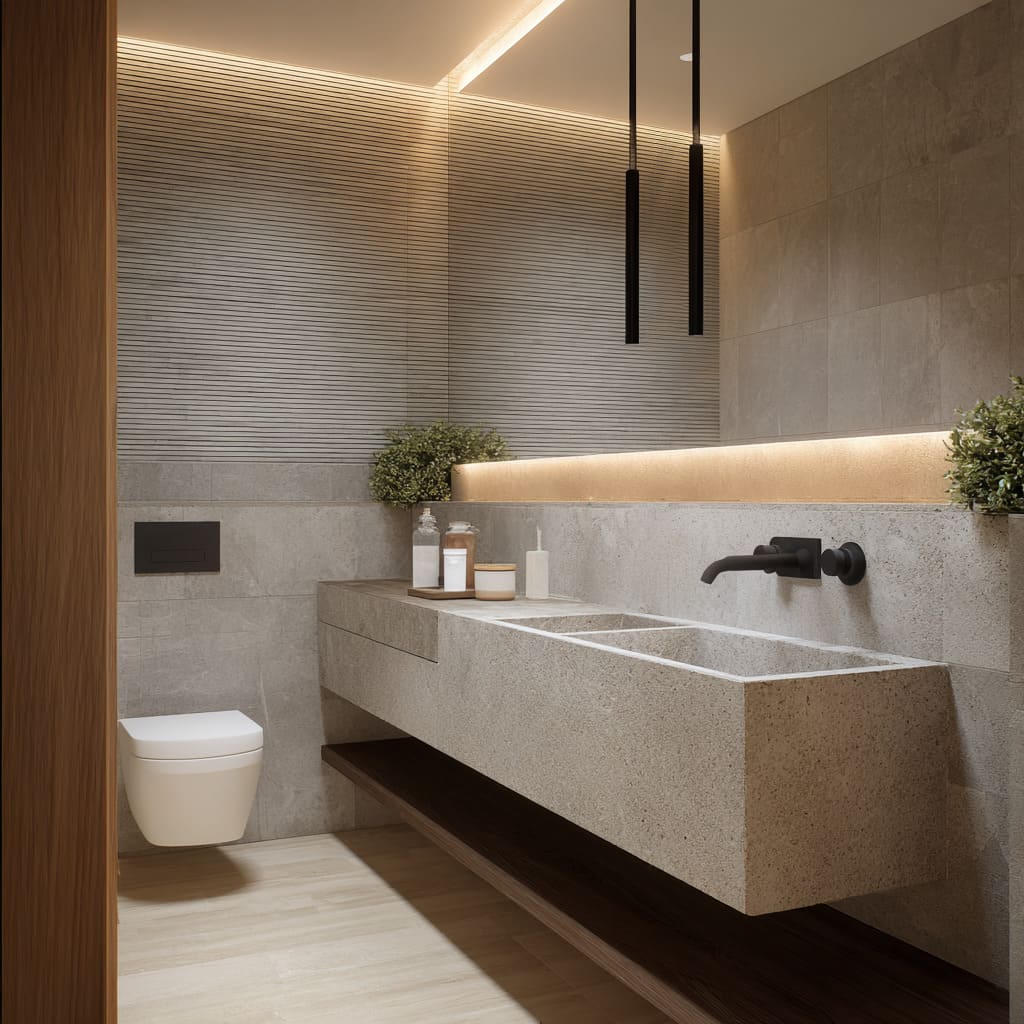
Tile + Stone
When stone is treated as anart-panel surface—veining arranged vertically or diagonally—the surrounding ribbed sections form a quiet frame. Stone is allowed to feel sculptural, not purely functional.
Tile + Soft Objects
Vases, leafy plants, and low cushions create moments of softness across hard surfaces. Their silhouettes break the strict geometry, giving the room gentle pauses.
These combinations reflect the more layered bathroom tile combinations seen in high-end interiors where tone harmony matters more than bold contrast.
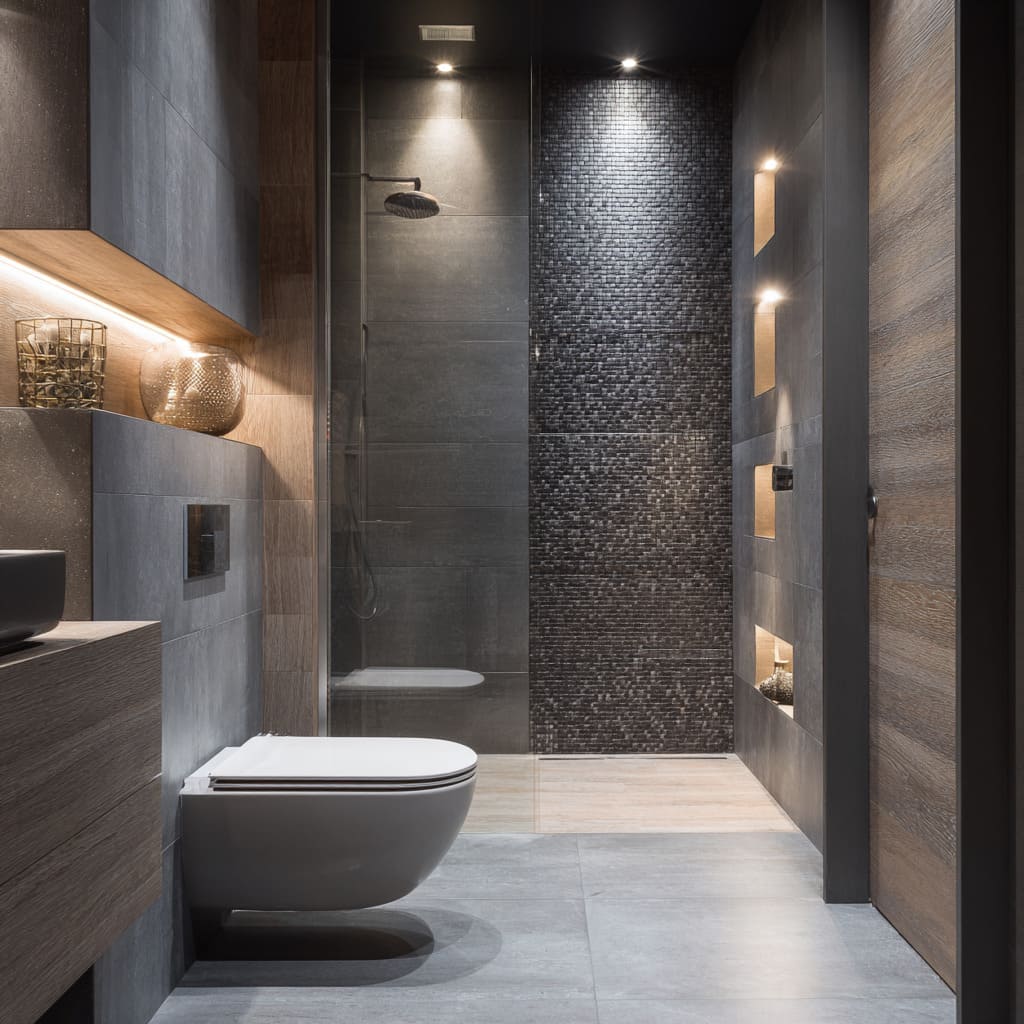
Feature Walls as Visual Anchors
A room often relies on one defining field that becomes the emotional and visual anchor. These feature surfaces rely on texture, linework, or scale instead of bright colors.
Types of contemporary feature walls
- Fan-patterned tile panels that create rhythmic shells.
- Drawn-line surfaces that mimic hand-sketched strokes across the wall.
- Deep stone slabs that behave like geological panels under warm light.
- Scalloped fields that wrap a shower enclosure in gentle arcs.
- Micro mosaic stripes that shimmer under downlights and lead the eye toward the back of the room.
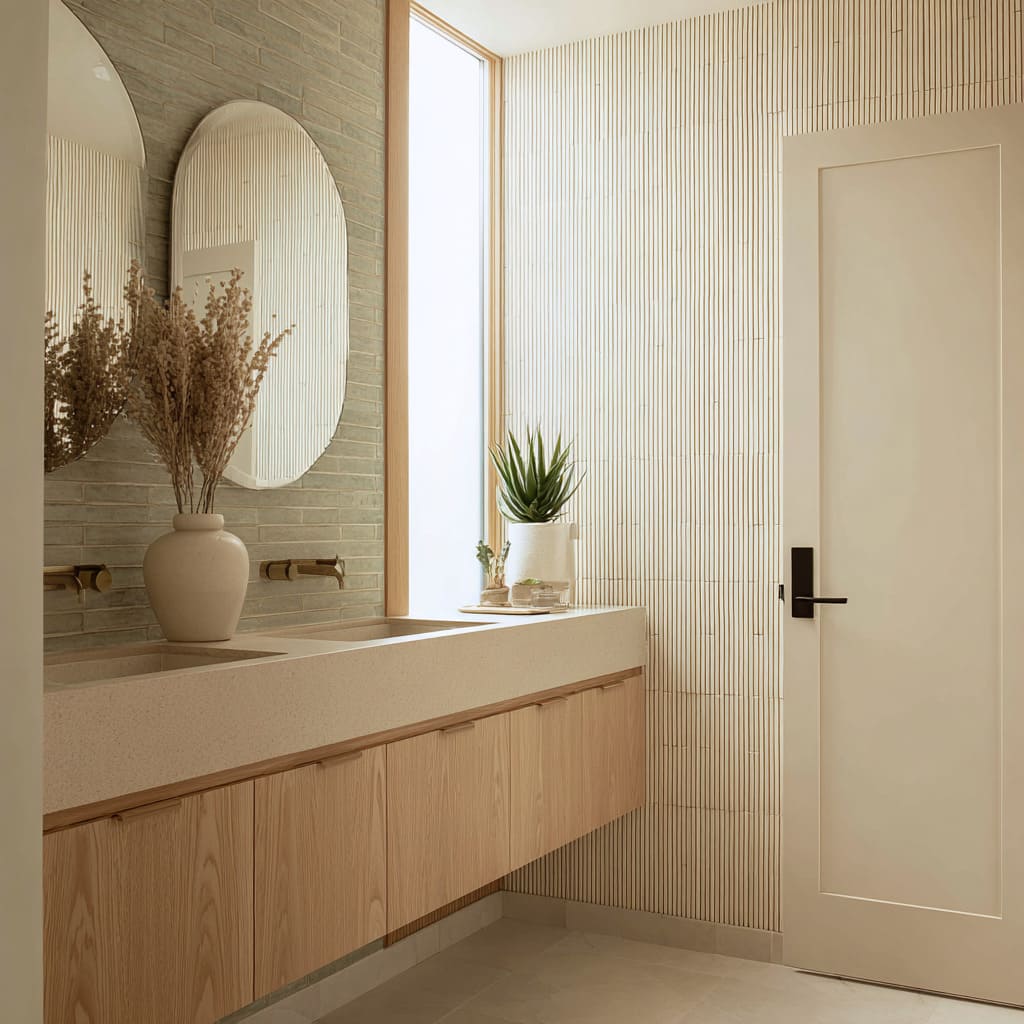
Supporting surfaces
Timber slats, smooth plaster, ribbed strips, and plain painted walls act as visual “quiet zones” surrounding these active surfaces. The strength of a feature wall often comes from what surrounds it: calm neighbors keep the patterned plane expressive without letting it overpower the room.
Such balanced compositions embody the spirit of elevated bathroom tiles ideas for small bathrooms, since placing one active surface in the right place allows compact rooms to feel purposeful and sophisticated.
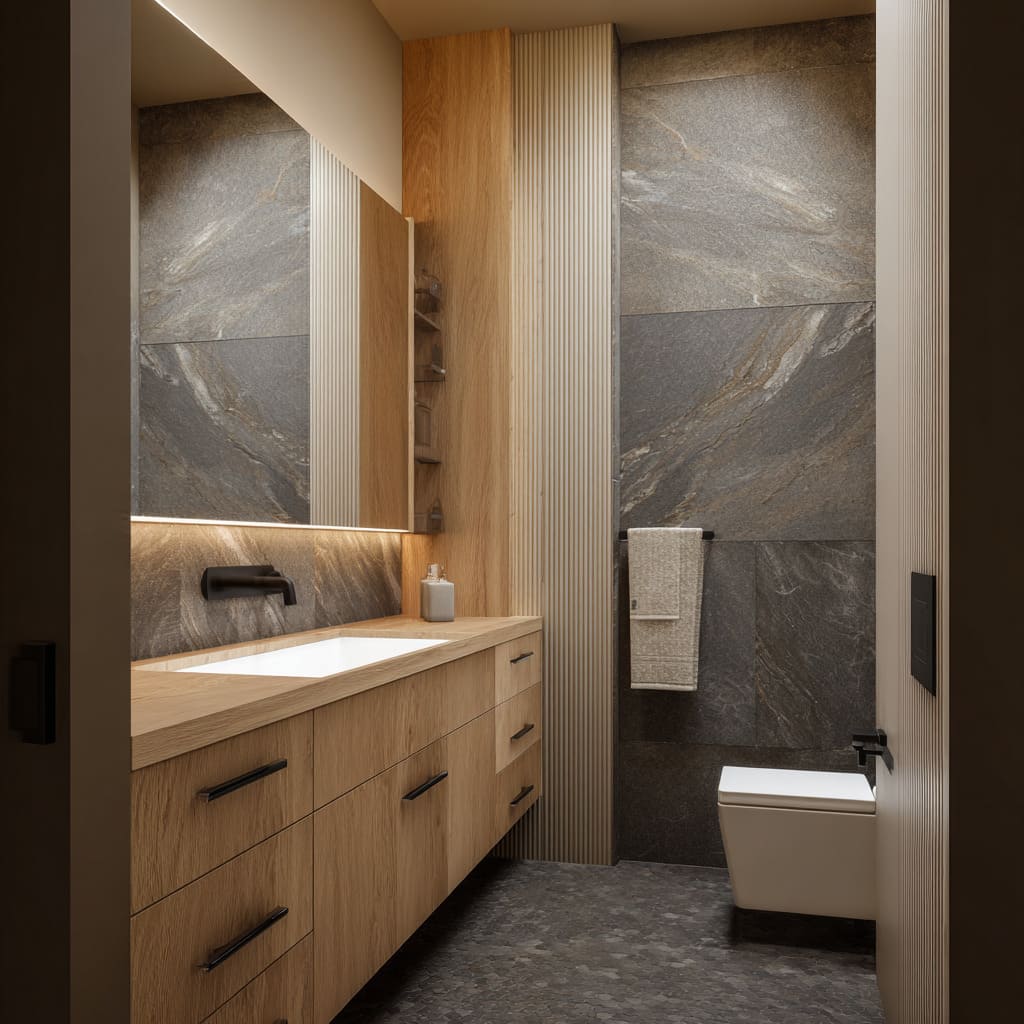
Volumes, Niches, and Carved Effects
Many contemporary layouts treat tile surfaces as though they were carved out of stone rather than assembled from pieces.
Carved aesthetics
- Niches lined in the same tile as their surroundings feel like depressions in a solid block.
- Benches that extend from shower to dry zone maintain a carved-from-stone sense of continuity.
- Tile returns on inset shelving remove the need for trim lines and preserve clean shapes.
- Stick-tiled volumes act like inserted stone “cabins” within a larger room.
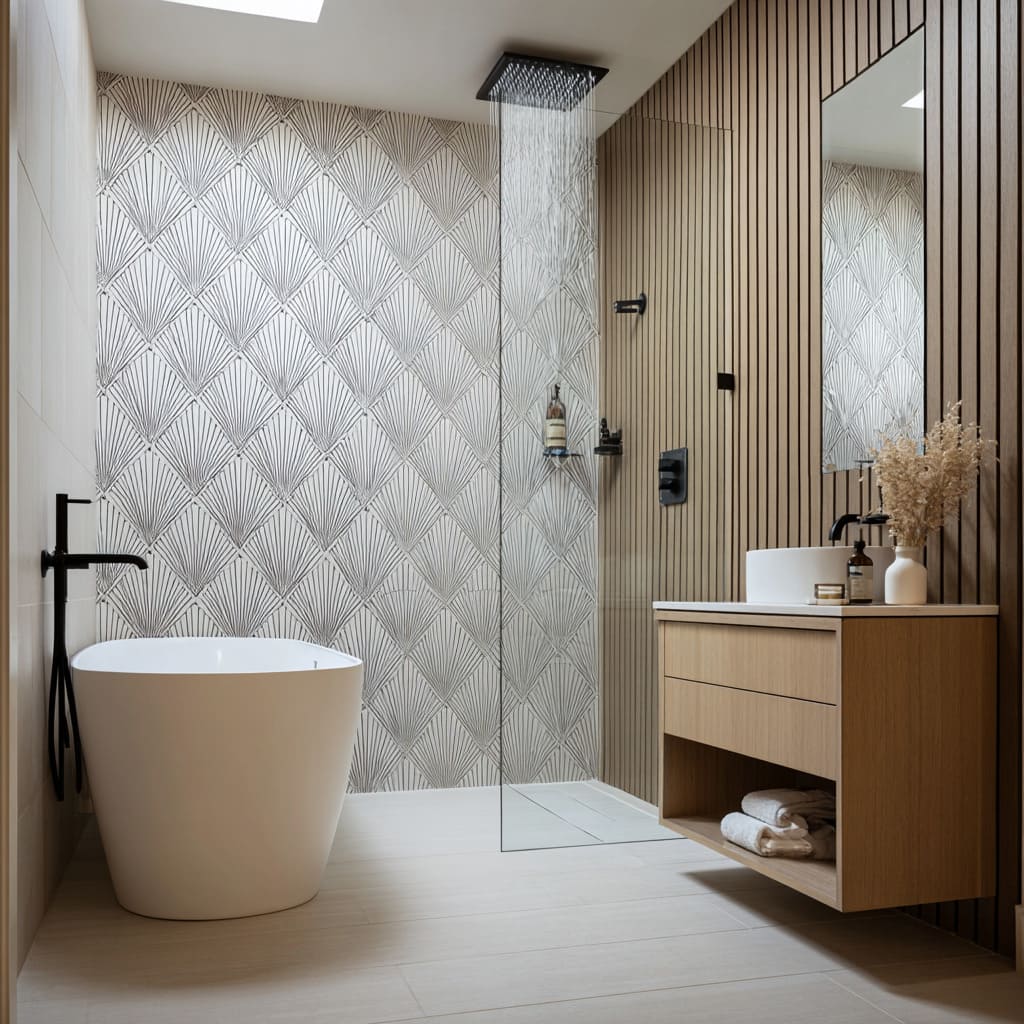
Why this matters visually
These carved gestures add architectural presence and a sense of intention. A simple bench becomes a sculptural element when its planes match the surrounding walls.
A tall recess becomes more than storage; it becomes part of the spatial rhythm. In these compositions, scale change—flat slabs vs.
small mosaics vs. fluted ribs—creates depth that aligns naturally with the expressive qualities seen in bathroom tile ideas for small bathrooms, where depth illusions are especially effective.
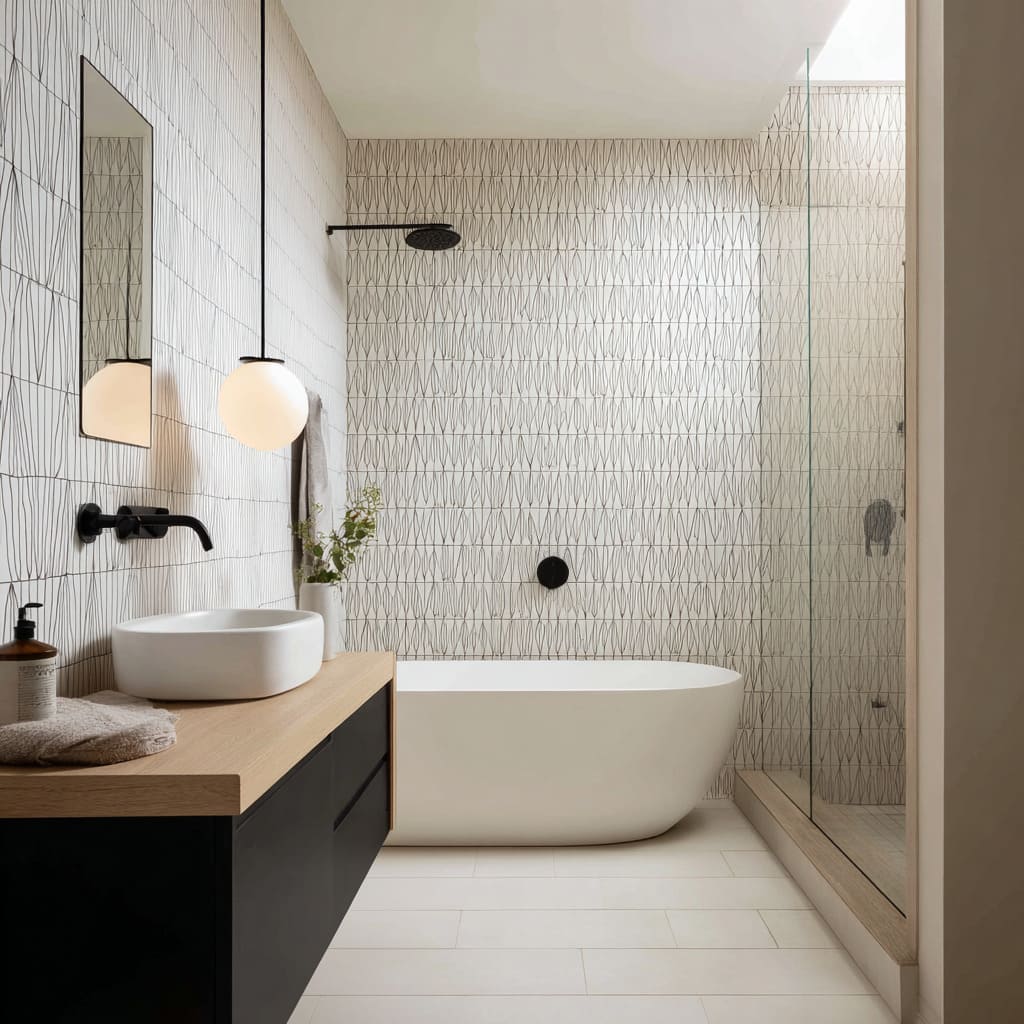
Soft Geometry, Quiet Palettes, and Emotional Tone
Even in expressive designs, the modern approach avoids loud hues in favor of subtle geometry and restrained tonality. This combination creates environments that feel emotionally steady yet rich in detail.
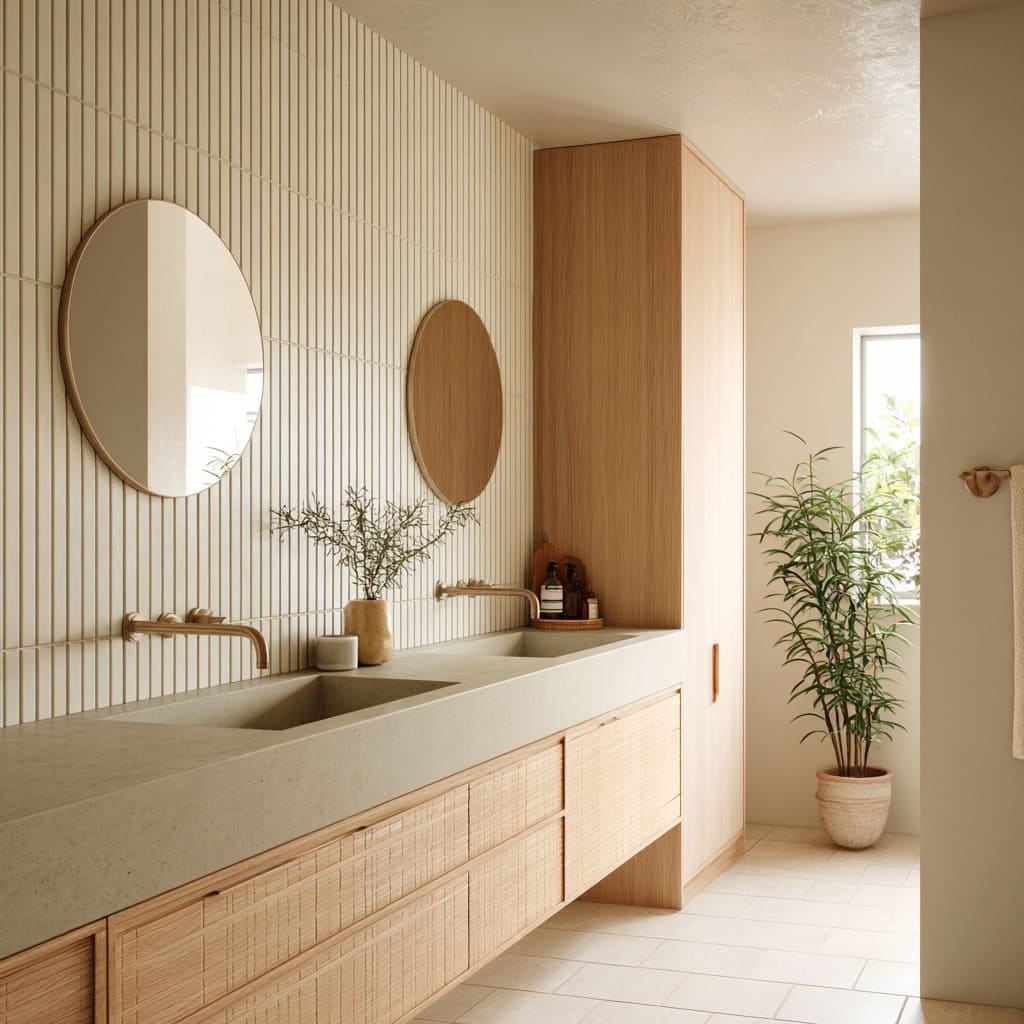
How geometry supports atmosphere
- Scallops feel playful yet calm.
- Fans introduce gentle art-deco echoes without overstating the theme.
- Vertical strokes in drawn-line tiles feel artistic without turning into ornament.
- Herringbone panels bring movement while staying monochrome.
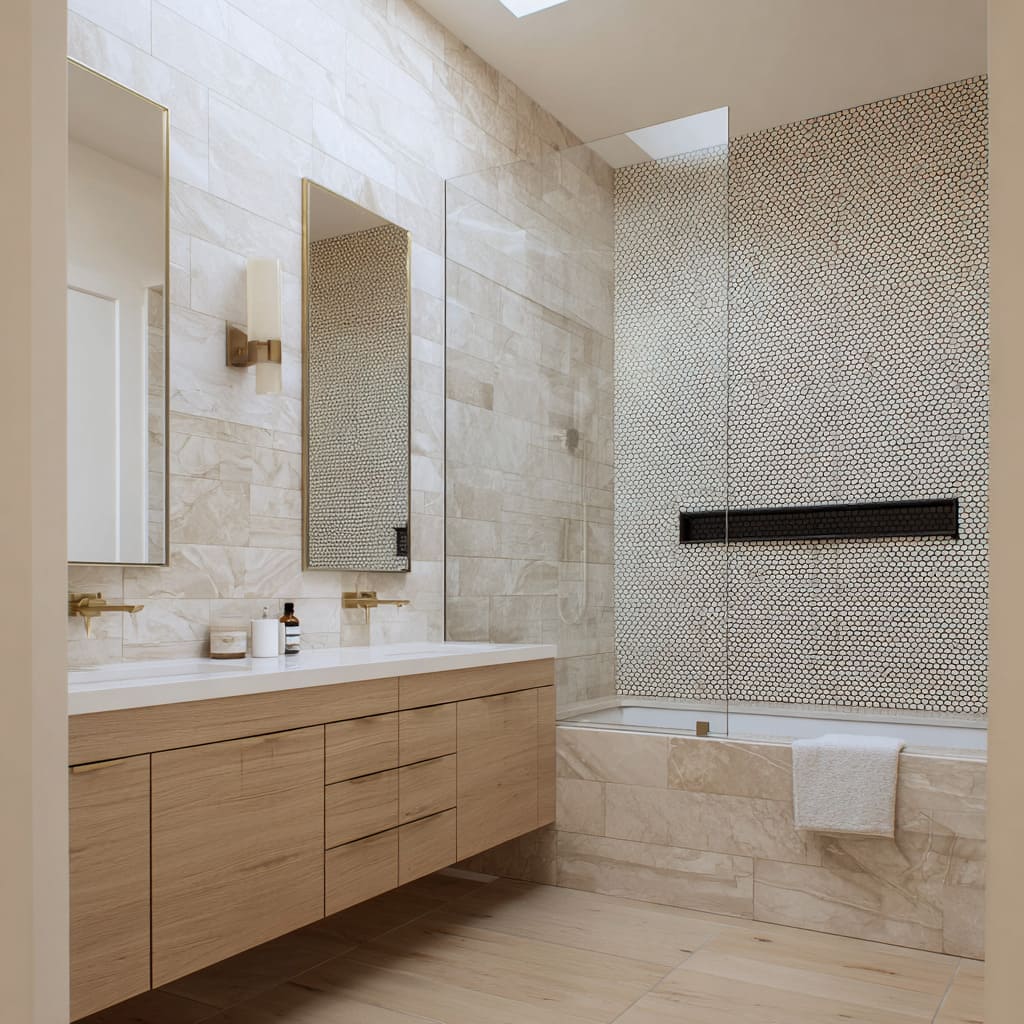
How tonality supports geometry
Because surfaces remain in muted creams, greys, taupes, or sage tones, even energetic patterns stay composed. Light reveals movement gradually, and the room feels inviting rather than intense.
These layered atmospheres show how thoughtful geometry, natural lighting, and material contrast together produce refined bathroom tile ideas that appeal across design styles, from soft-spa retreats to darker, moodier spaces that feel like boutique bathing chambers.
Conclusion
Across all these themes, contemporary bathroom designs rely on texture, pattern direction, scale contrast, and light to articulate space in subtle ways. Walls become surfaces that guide the eye, cradle the user, and anchor the room’s aesthetic tone.
Whether exploring ribbed panels, diagonal stone veining, scalloped shells, fan-pattern canvases, or compact mosaics, the focus remains consistently on atmosphere rather than ornament. These ideas form the foundation of evolved surfaces that define the essence of bathroom tile combinations and the richness of today’s most expressive bathroom wall tile ideas—a world where the materials act as quiet sculptors shaping every moment spent inside the room.