A strong drop zone does not begin with hooks, baskets, or a bench picked from a catalog. It begins with a clearer idea of what the entry has to do.
Many people think of a drop zone as a storage spot near the front door. That description is incomplete.
The drop zone can work as a threshold-management system: a compact part of the home that handles the unstable few minutes between being outside and being fully inside. That moment is where homes often lose order.
Shoes collect near the path. Bags land on the nearest chair.
Coats drift across several surfaces. Keys, mail, and daily extras spread because the house has not given them a clear first stop.
Drop zone design can solve that problem by turning arrival into a readable sequence. They catch fast clutter before it spreads, keep the entry usable as a path, create a place to sit and reset, reduce the visual impact of daily belongings, and make practical storage feel built into the home rather than patched in later.
That is why the most successful examples feel settled even when they are actively used. They are not simply fuller in storage.
They are clearer in structure.
What a drop zone is really doing
A good drop zone manages two competing needs at the same time. It must be immediate enough for rushed daily use, but composed enough that the front of the home still feels welcoming.
That balance is harder than it sounds. The first seconds after walking in are fast, repetitive, and often messy.
Most people are not opening tall cabinets, sorting carefully, and placing everything in deep storage the moment they enter. They need a system that works with quick actions.
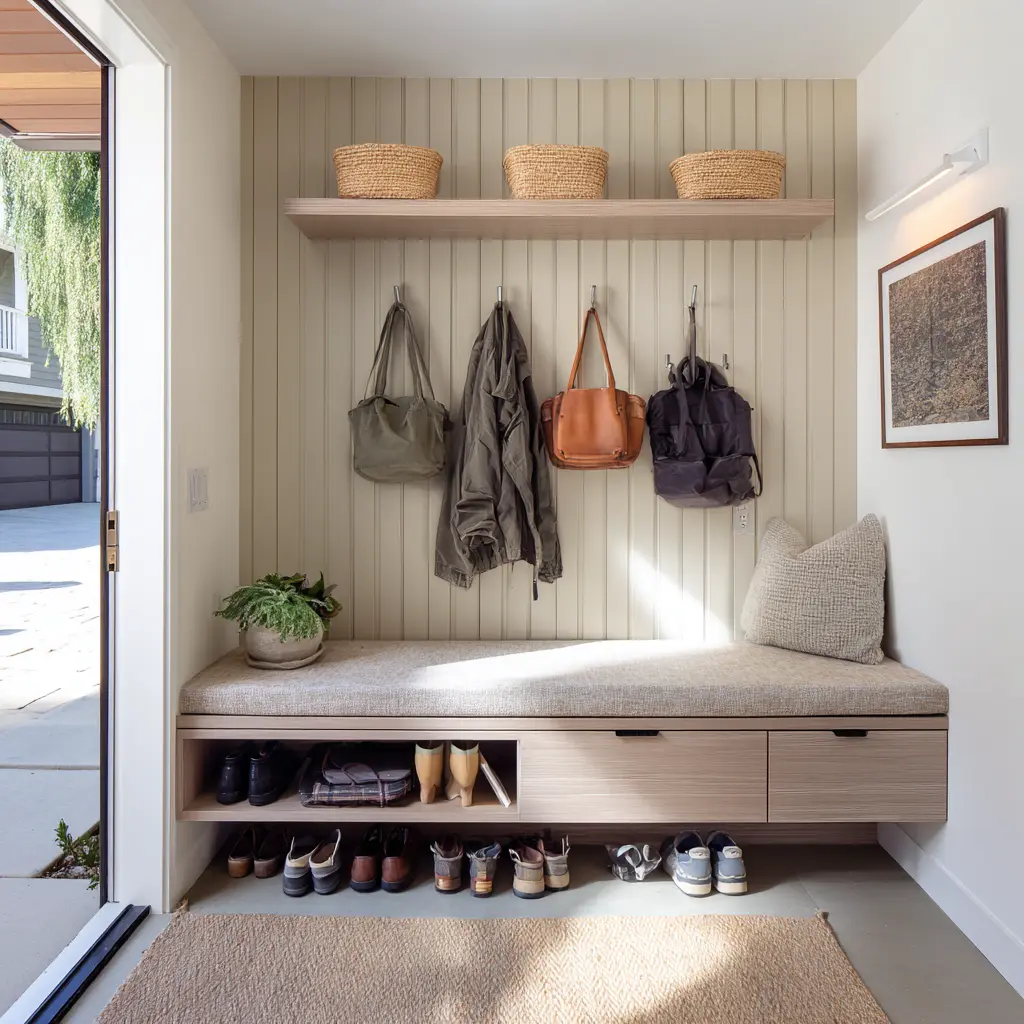
That is why good drop zone design ideas share a direct chain of use. There is an easy hanging point for outerwear and bags.
There is a bench or landing surface where the body can pause. There is a low-access place for shoes.
There is a second layer for items that need to stay nearby but do not need to remain fully on show. There is a reserve layer for overflow, seasonal pieces, or categories that would otherwise weaken the look of the entry.
In other words, the drop zone works best when it gives the household a short, natural script: hang, sit, remove, place, continue.
Why so many entry areas fail
Entry areas often become frustrating not because they lack storage, but because the storage is out of sync with how people move. A beautiful console table may look good in an empty hall, yet fail the moment real life arrives.
A few decorative hooks on a blank wall may seem sufficient, yet once several bags and coats appear, the wall starts to feel visually crowded. A bench without a shoe plan often becomes a temporary perch while footwear spills into the walkway.
A deep cabinet can hide clutter, but if it slows down daily use, the clutter never makes it inside. Visual disorder rises quickly when the first-contact actions are not gathered into one clear zone.
If the home asks the user to spread arrival across too many unrelated pieces, clutter does the same.
That is why drop zones should not scatter function. They group it.
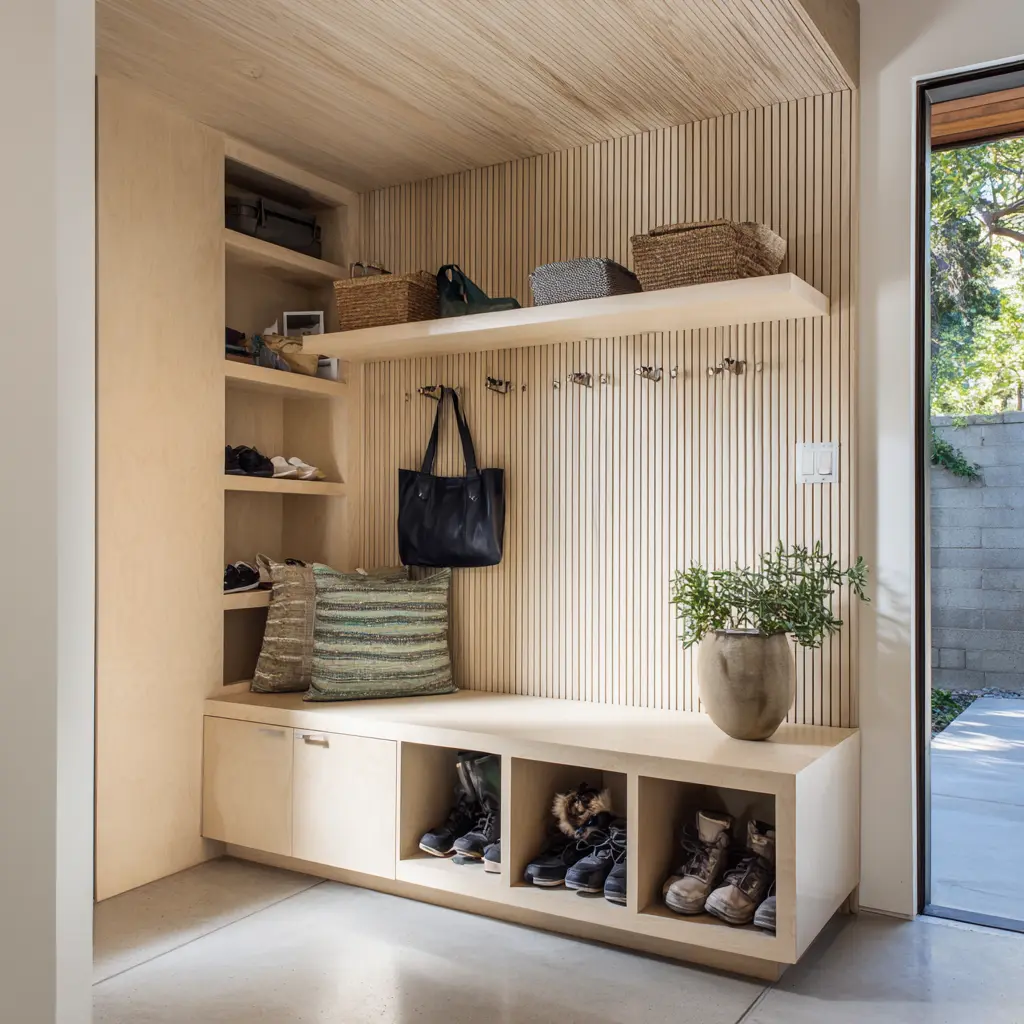
Even when the design is minimal, it still establishes one readable field where the most active actions happen. This may be a long built-in wall, a framed alcove, a stair pocket, or a compact vertical station, but the logic stays consistent.
The entry becomes easier to maintain because the user does not have to think through each object separately. The structure already does that work.
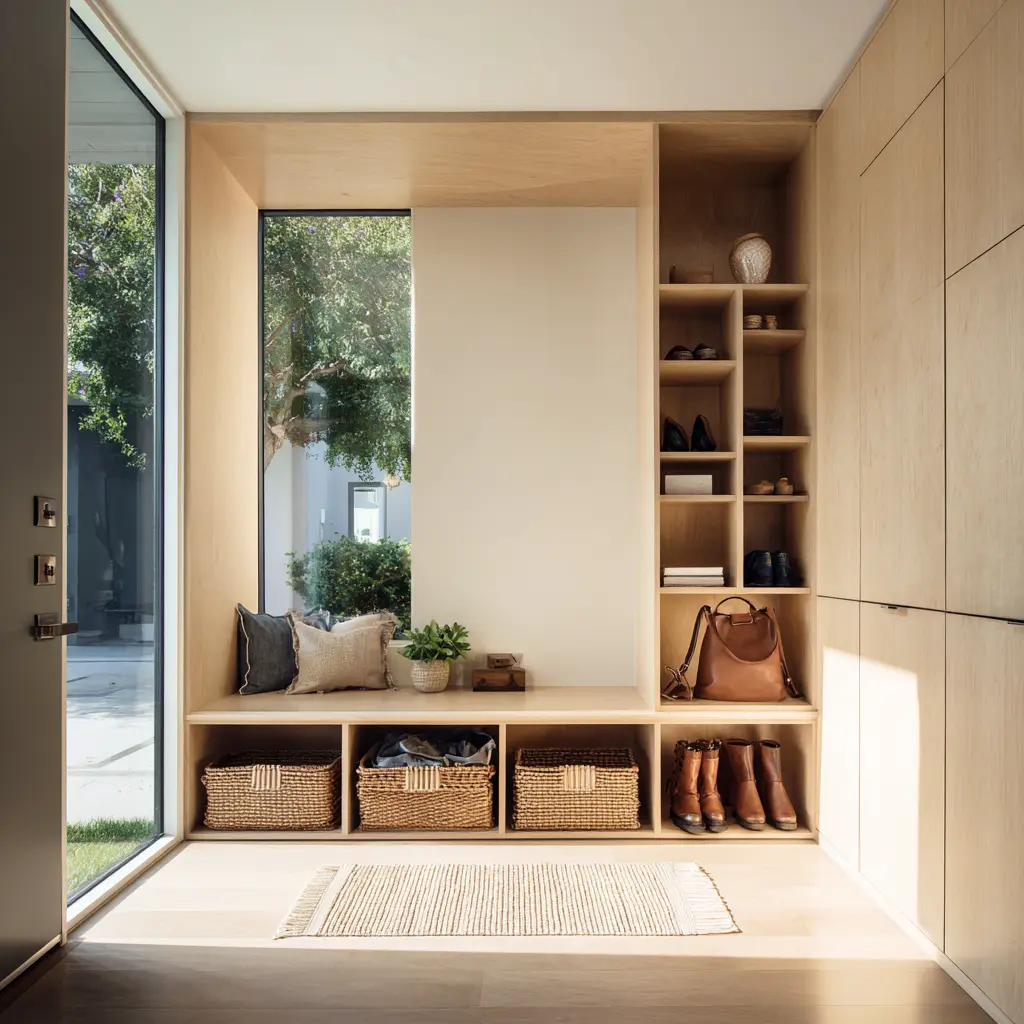
The bench is the anchor
One of the design patterns is the universal presence of a bench or seated surface. This matters far beyond comfort.
The bench gives the body somewhere to stop, which changes the whole tone of arrival. Without it, the entry can feel like a pass-through storage strip.
With it, the space becomes a pause point. That single move improves the practical use of the drop zone, but it also improves the interior composition.
The bench creates a strong horizontal base that visually steadies the wall. It gives the hook zone below a grounding line.
It creates a temporary sorting surface for bags, hats, or things that need to be handled before moving deeper into the house.
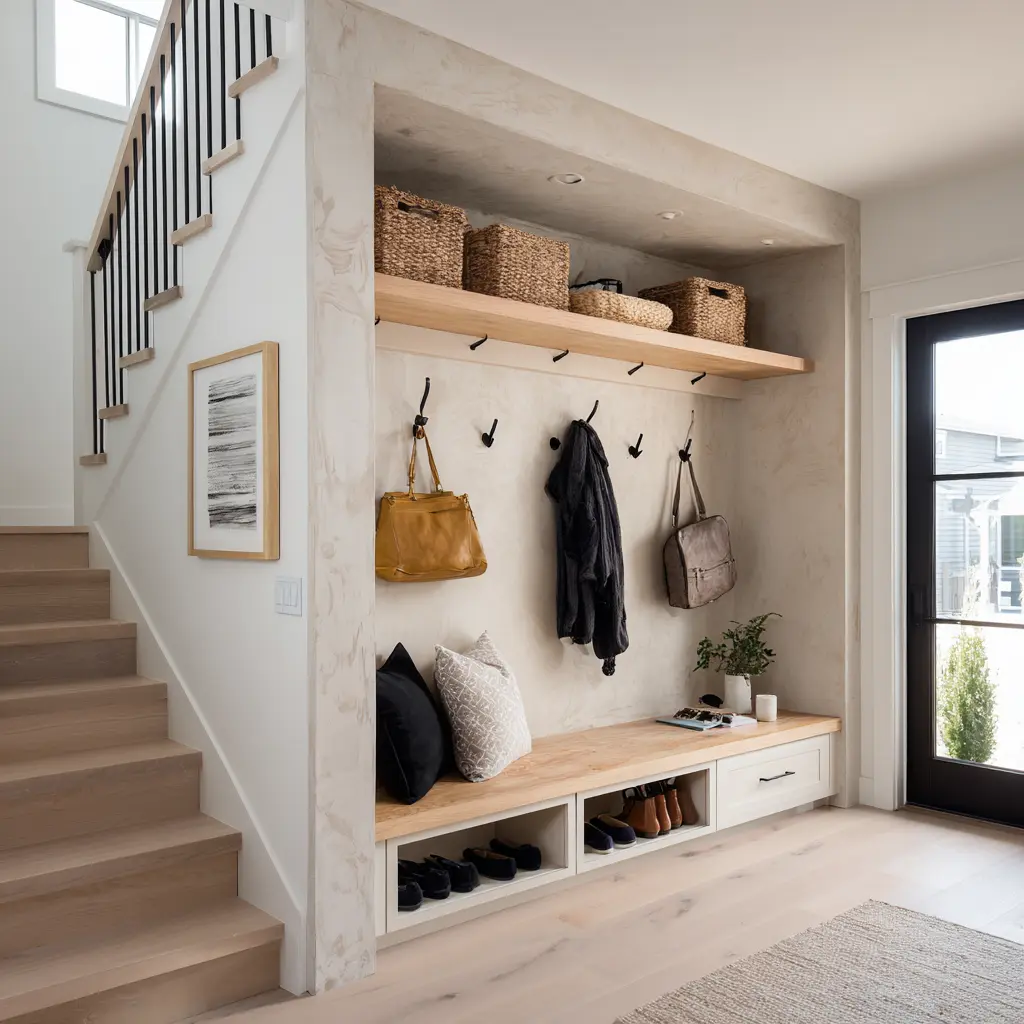
This is why the bench in a high-performing drop zone should not be treated as a leftover seat tucked under hooks. It acts more like a threshold platform.
It stabilizes the room, supports daily rituals, and helps the practical zone feel inhabited instead of purely mechanical. A bench also softens the emotional feel of storage.
The moment a cushion, a pillow, a warm wood top, or a slightly protected sitting corner is introduced, the entry begins to feel less like a checkpoint and more like part of the home.
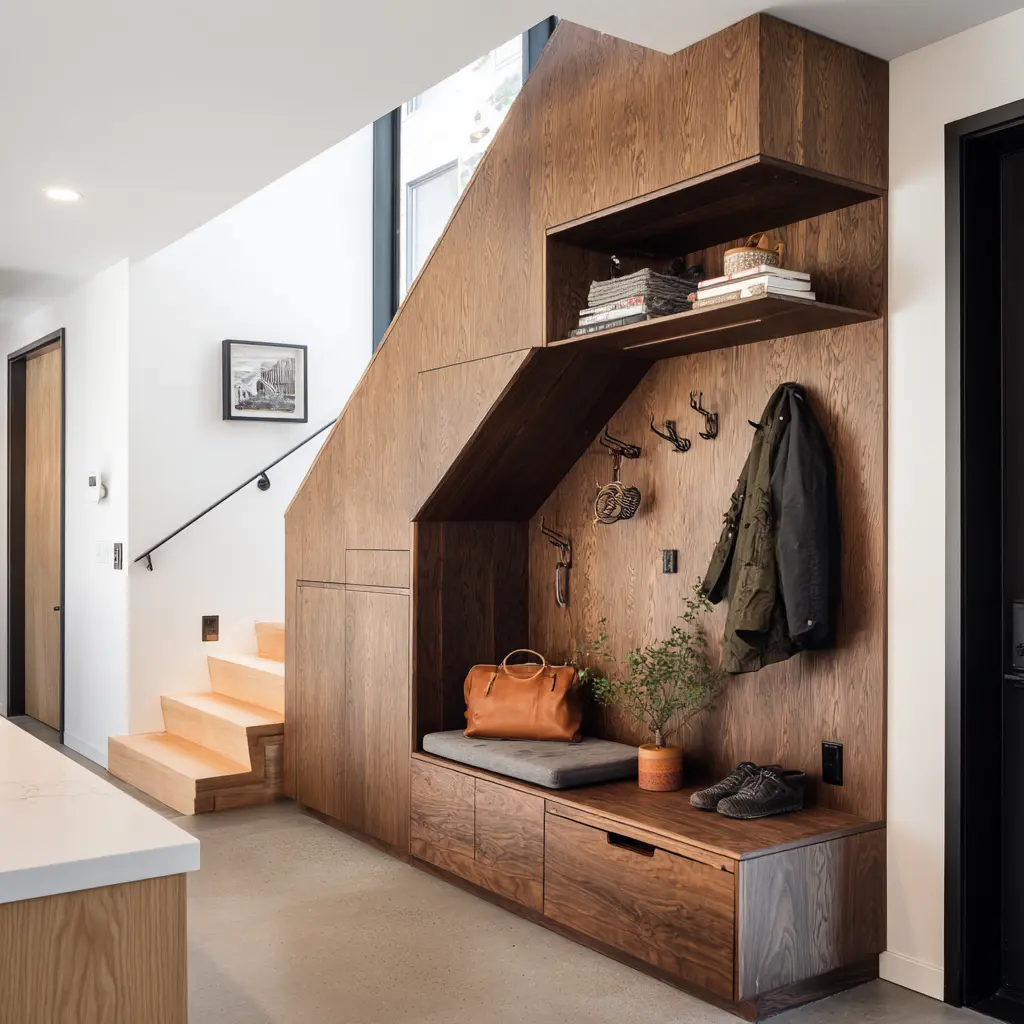
The hook zone needs boundaries
Hooks alone are not the point. What matters is how the hanging area is framed.
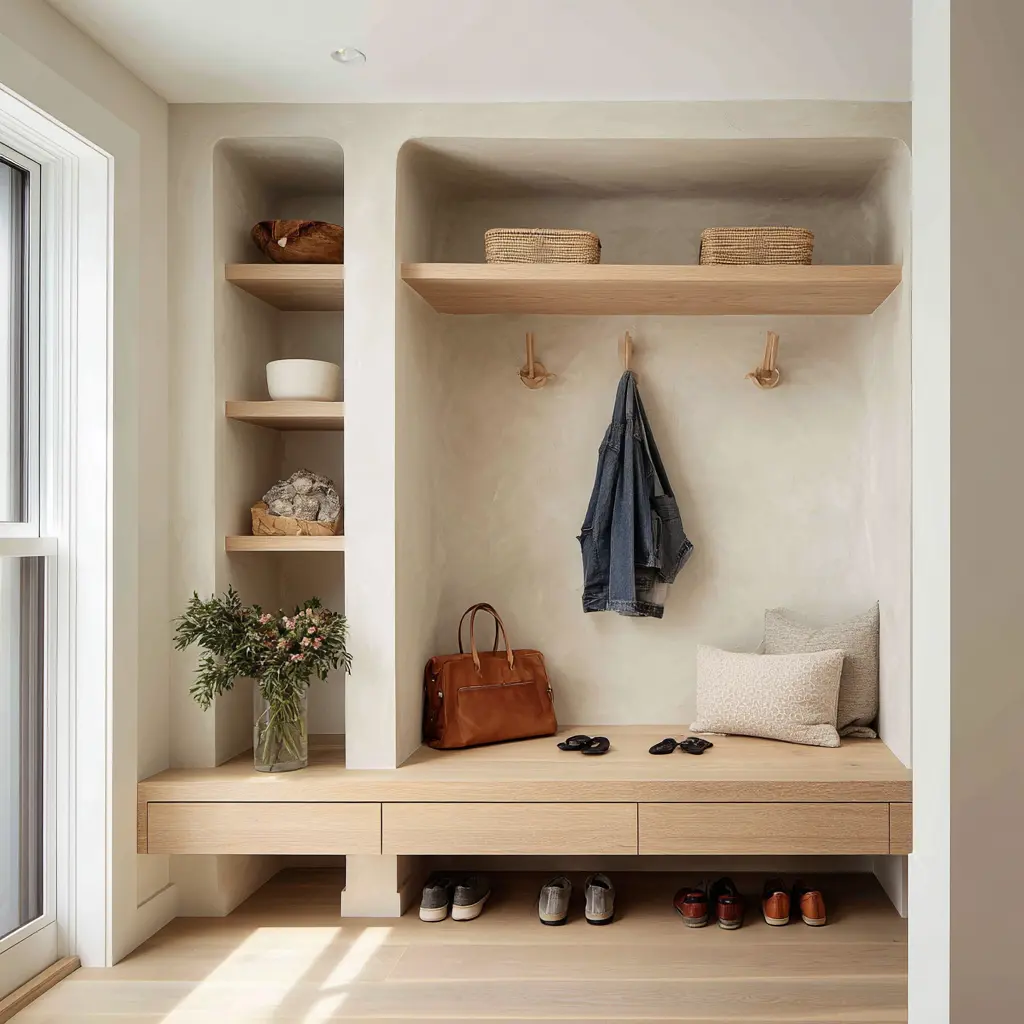
Hanging storage becomes visually messy when it floats on a large blank wall or spreads too far. The drop zone design can avoid that by treating the hook field as a bounded middle band.
A shelf above acts as a top edge. A bench below acts as a lower edge.
Side frames, alcove walls, ribbed back panels, or wood-lined recesses give the hooks a defined perimeter. Once that boundary is established, coats and bags feel contained rather than scattered.
This is one of the most useful design lessons. The problem is rarely that a home has hooks.
The problem is that the hanging zone has no visual discipline around it. A bounded hanging band also helps the entry stay composed in different states.
It still feels complete when nothing is hanging there, and it still holds together when the wall is actively in use.
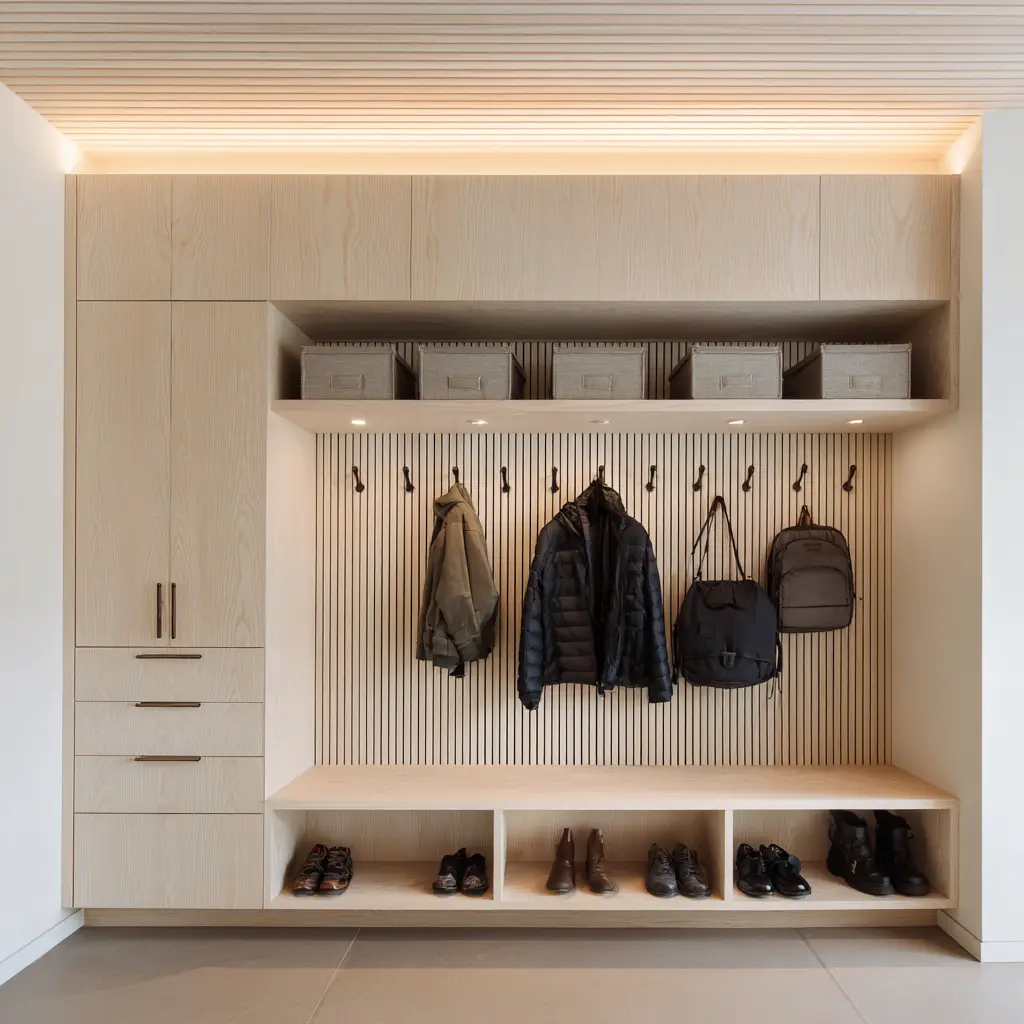
A drop zone works in layers
The drop zone should not rely on one storage type. They use a layered hierarchy of visibility.
The most immediate items stay within open reach: hooks, a bench surface, a visible shoe slot, or an easy-access cubby. Repetitive clutter is softened rather than fully exposed through baskets, bins, or repeated compartments.
The least attractive overflow disappears into drawers, tall cabinets, or upper reserve storage.
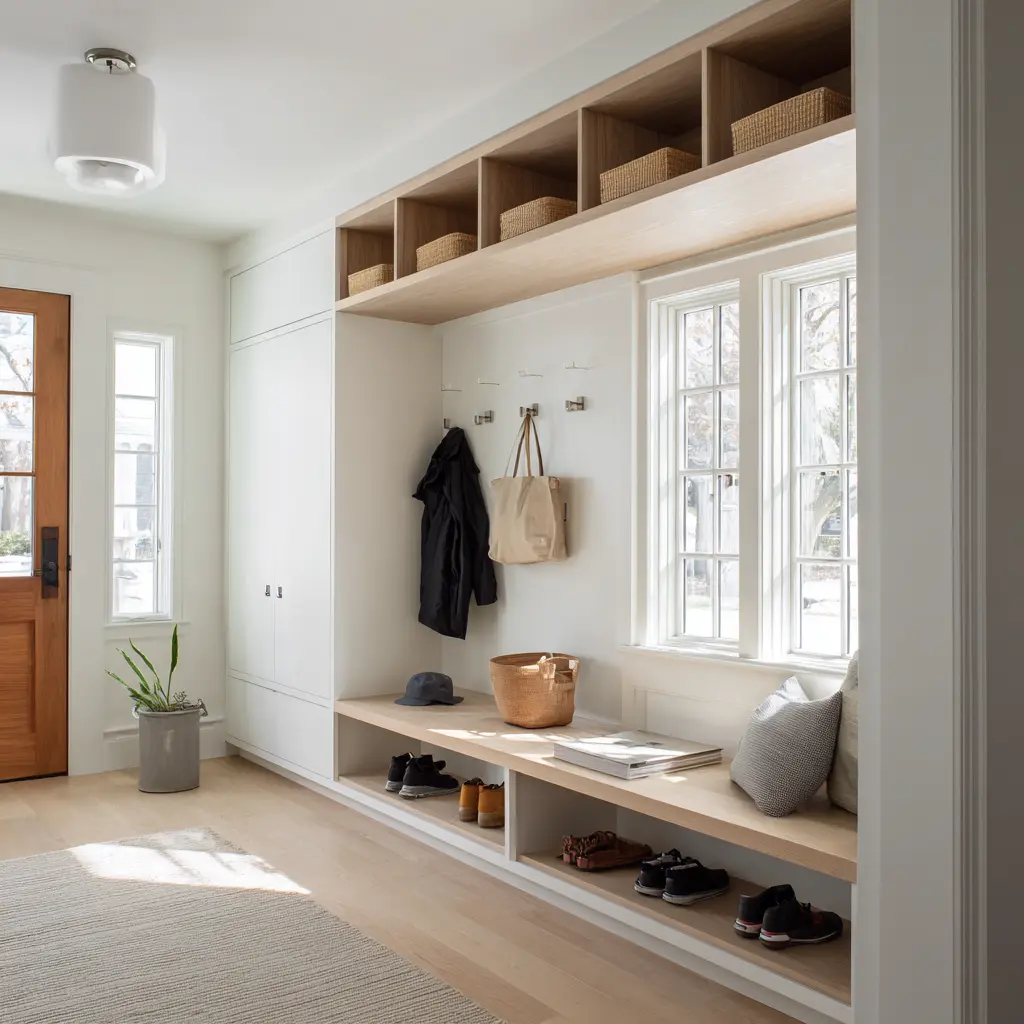
This is why the entry does not need to look empty to look orderly. It needs ranked exposure.
That idea also explains why upper shelves, cubbies, and overhead storage appear in many proper drop zone ideas. Their role is not only to add capacity.
They separate slower-turnover items from the daily rush. In practical terms, the drop zone is solving not only by object type, but by time.
What is needed right now stays close and visible. What may be needed later today can sit in softened open storage.
What is needed less often moves higher or behind a door. This time-based structure is one of the clearest ways interior design improves daily order without making the entry feel severe.
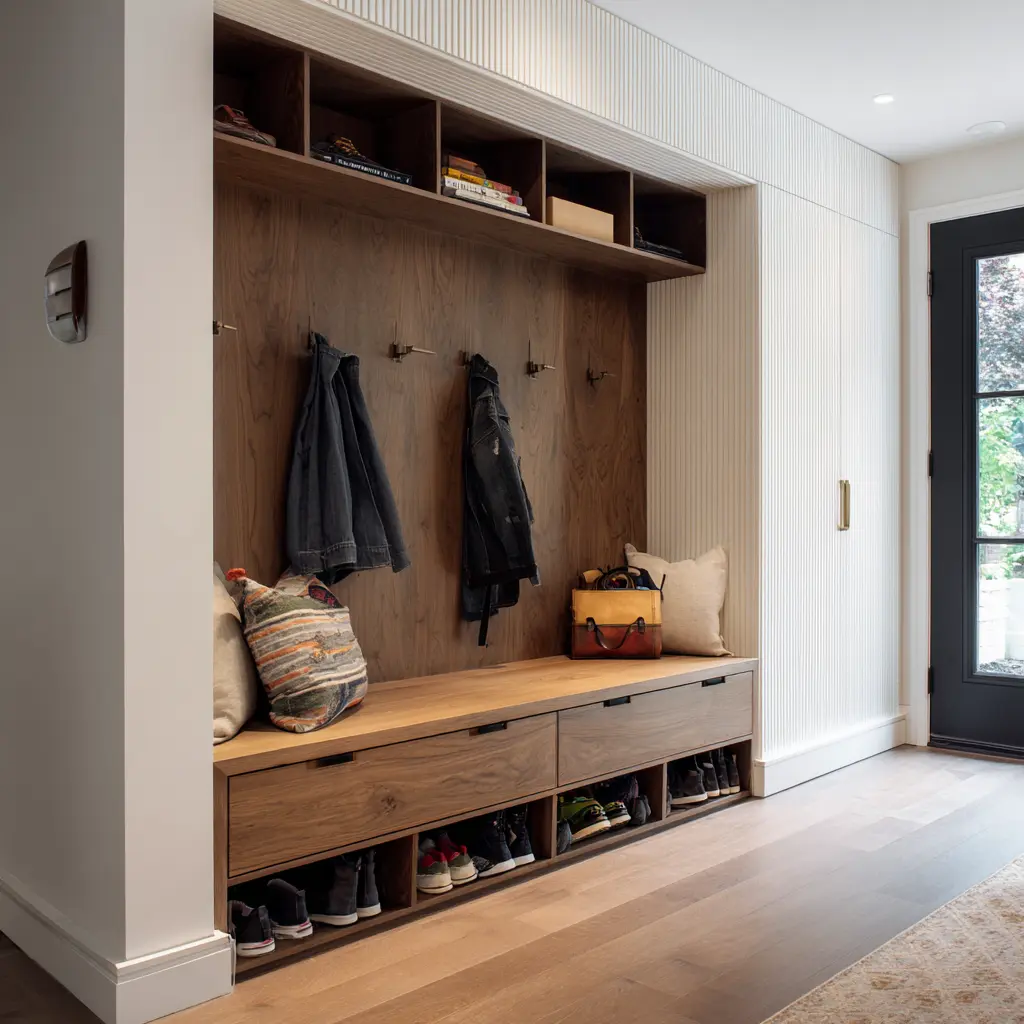
Texture helps the entry absorb daily use
One of the strongest design and decoration ideas is the use of ribbed panels, slatted wood, cloudy plaster, woven baskets, grooved back walls, and tactile storage fronts. These surfaces are not only decorative.
They perform an important visual function. A lightly textured background helps the drop zone carry daily objects without breaking down visually.
Bags, straps, shoes, and outerwear create contrast and irregular shapes. Against a completely flat, empty wall, those objects often feel abrupt.
Against a slatted panel, a softly mottled plaster surface, or a woven storage rhythm, they feel more absorbed into the composition.
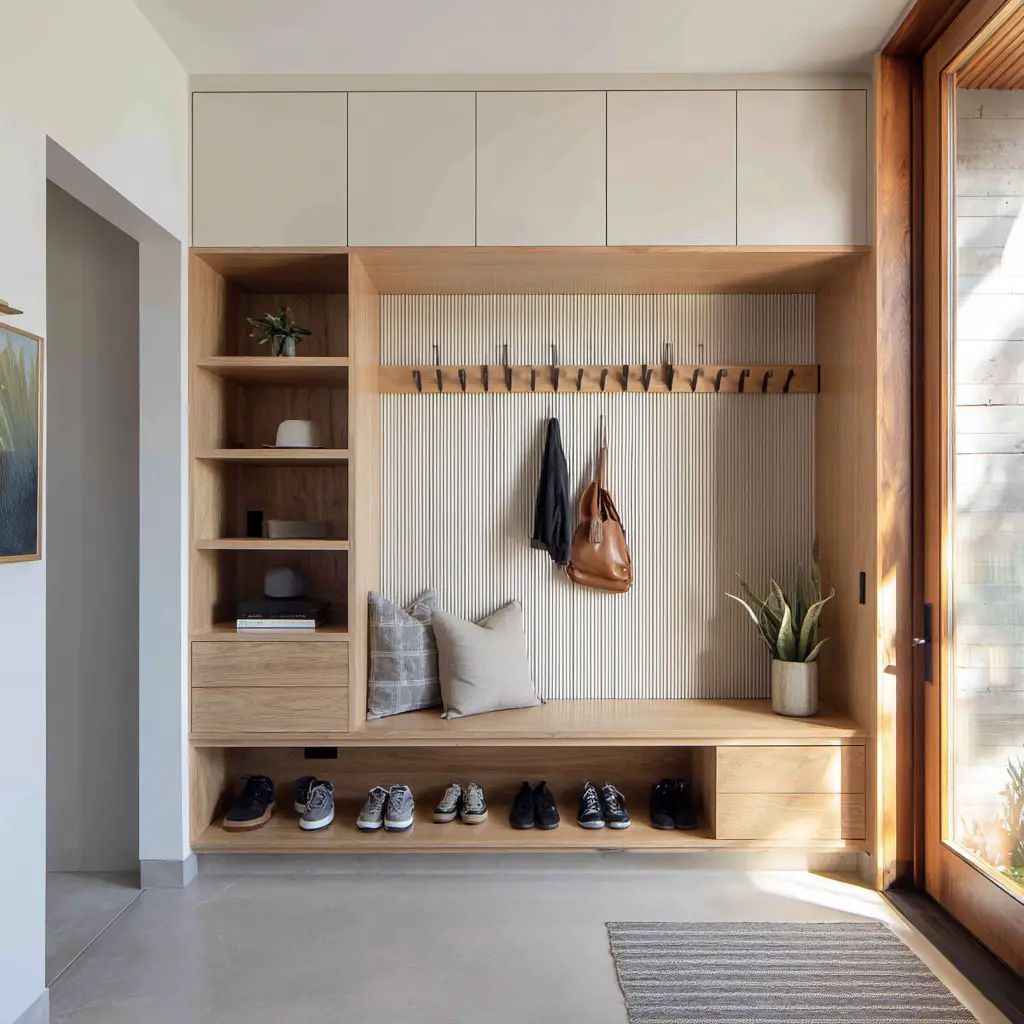
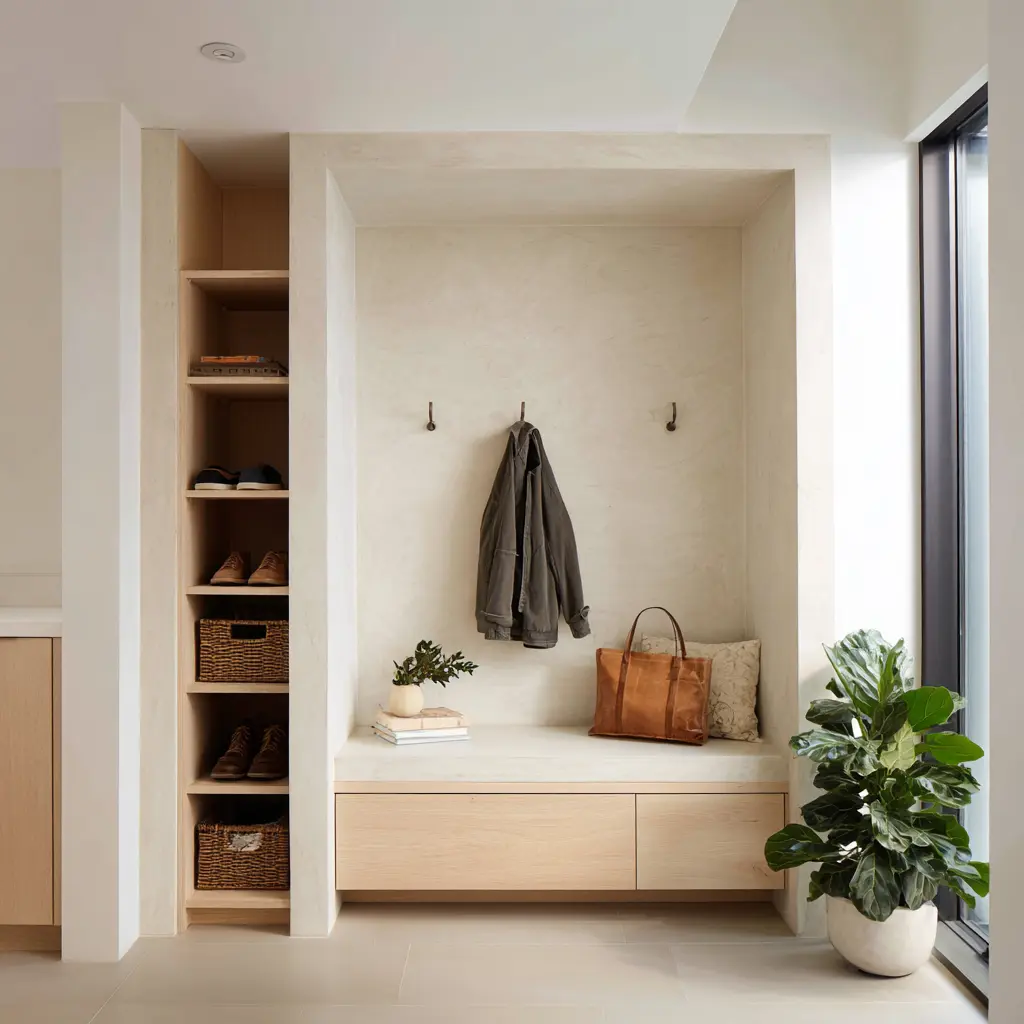
Texture also helps the entry look complete when it is lightly used. A textured niche does not depend on a full load of objects to feel finished.
It has enough surface life to hold the space on its own. This makes texture a practical tool for clutter control.
It softens visual shocks, reduces the emptiness of unused moments, and helps active zones stay pleasant whether the drop zone is full, partly used, or nearly empty.
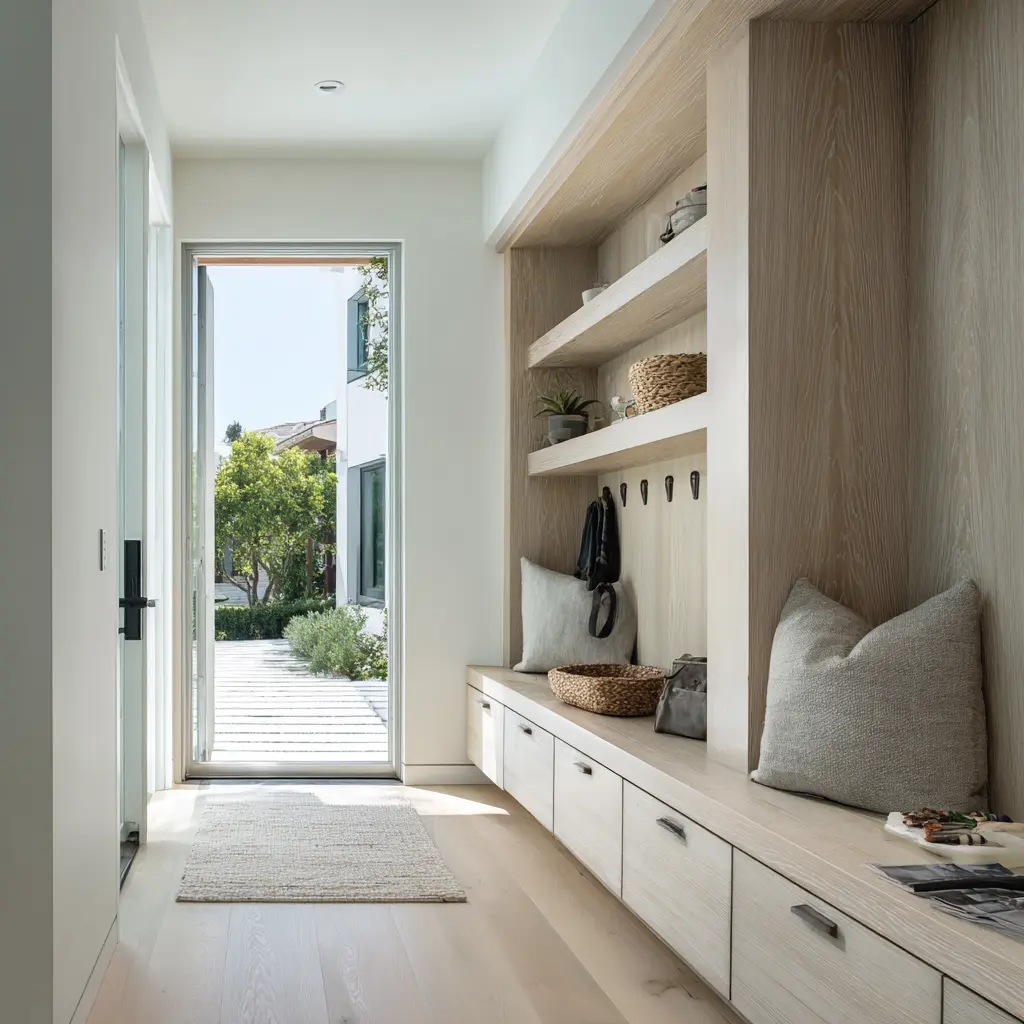
Why strong boundaries matter
A major difference between average drop zones and strong ones is boundary strength. The clearer the edge of the drop zone, the less the clutter feels like it is spreading into the rest of the house.
The most effective boundaries can appear in several forms: framed alcoves, recessed niches, full-height built-ins, under-stair pockets, wood-lined envelopes, and thick wall surrounds. Each of these creates the same core result.
The eye understands that this is where arrival happens. That matters behaviorally as well as visually.
A well-framed zone improves what could be called cognitive legibility. It becomes obvious where things belong.
People are far more likely to keep using a system that can be understood at a glance. This is one reason the drop zones feel natural in use.
They reduce decision-making. The architecture gives clear cues before anyone sets down a bag.
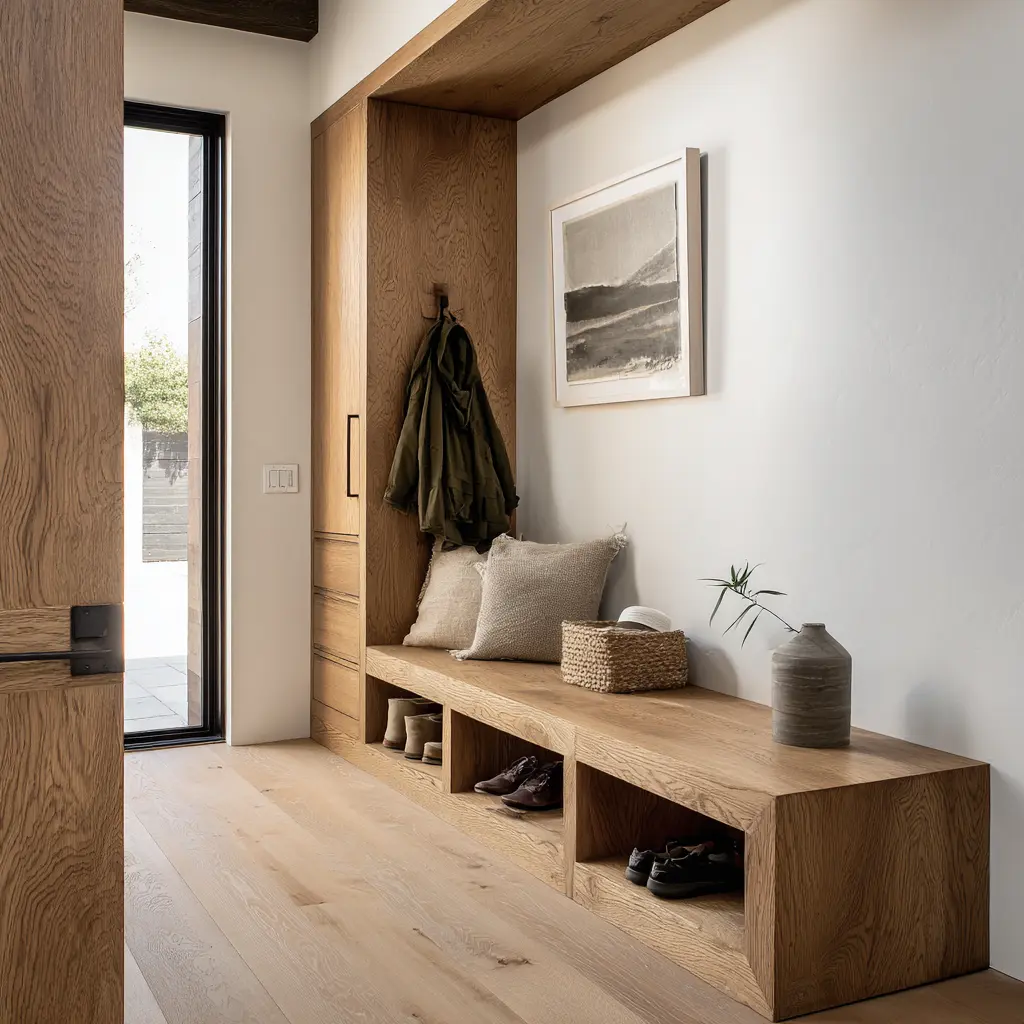
The main drop zone types and what they solve
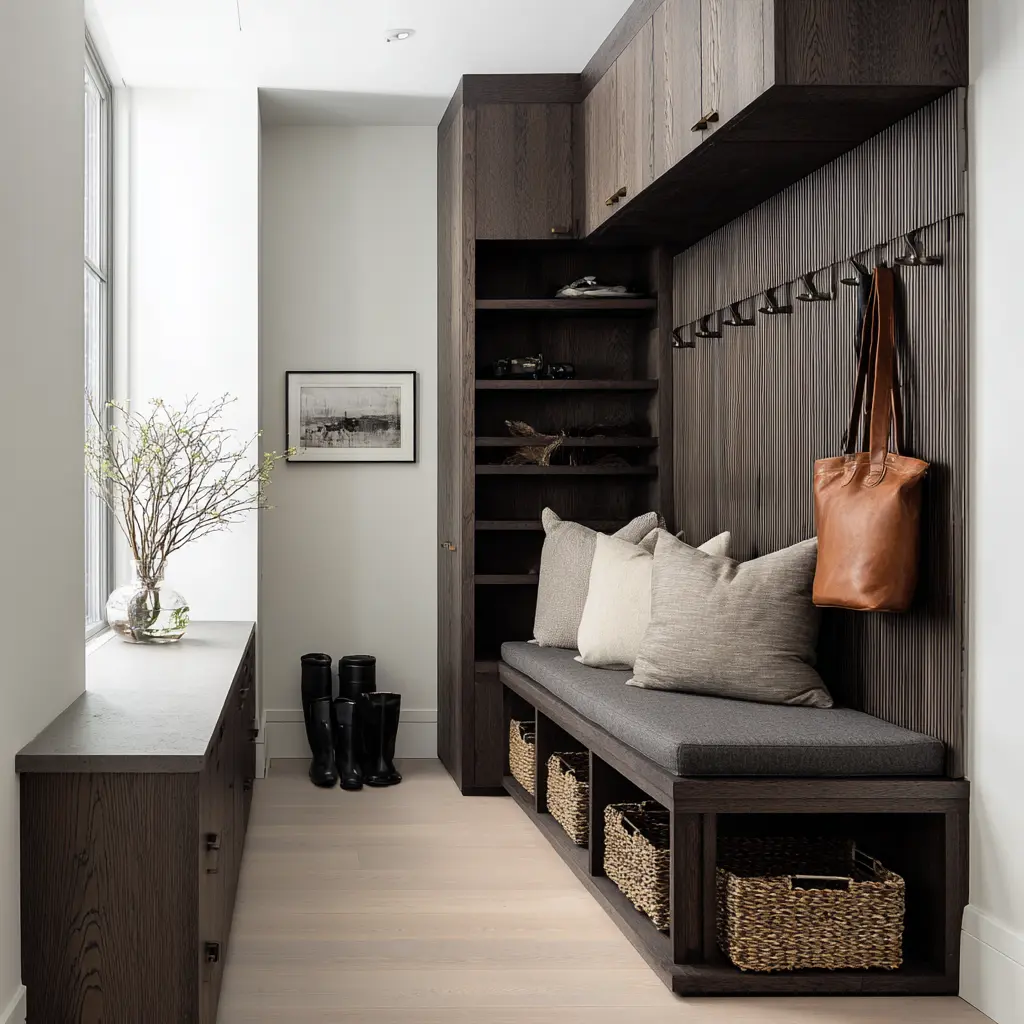
There are several families of drop zone design, and each one answers a different set of pressures. The linear landing strip stretches a long bench or storage run along one wall.
This format works well in narrow corridors, long entry walls, or open-plan homes where continuity matters. Its main strength is that it compresses function to one side and keeps the path open.
To feel complete, it usually needs a strong upper line, such as cubbies, a canopy cabinet, a floating shelf, or a tall end element.
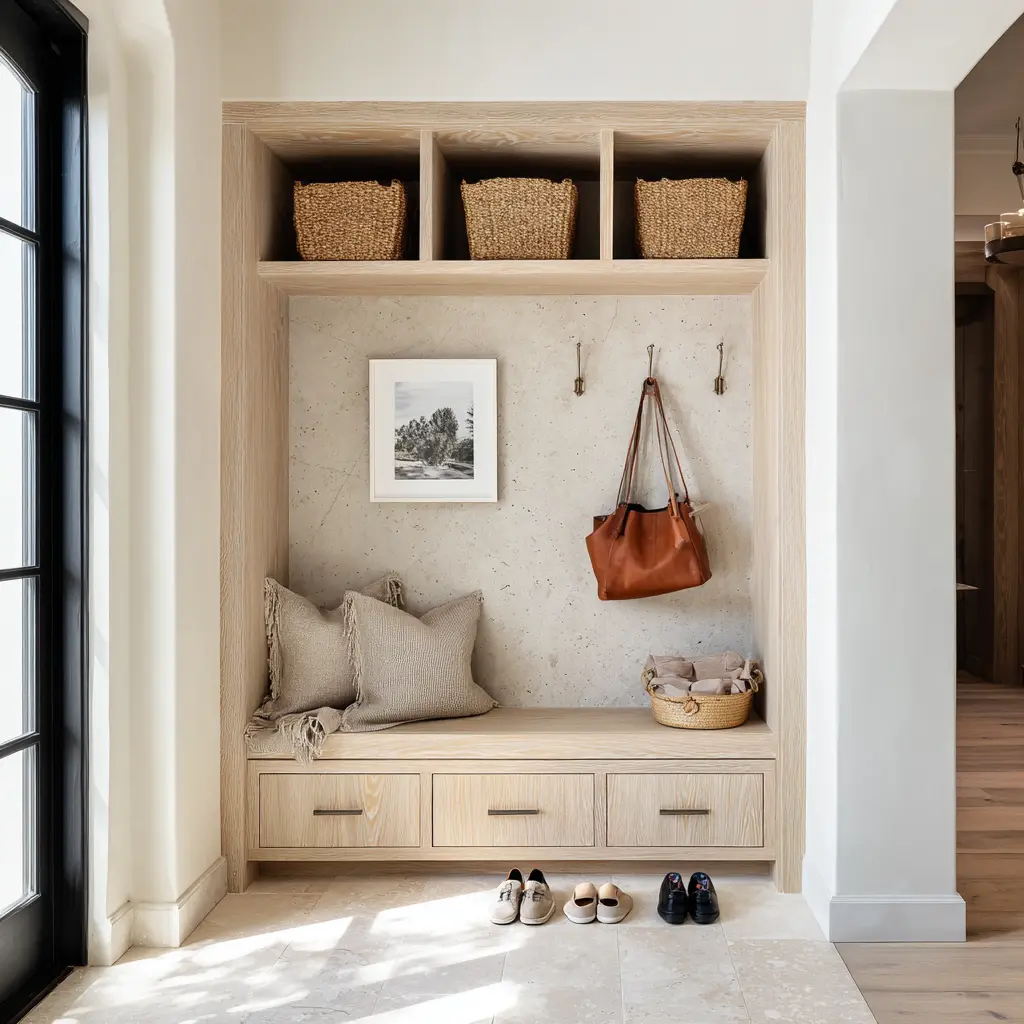
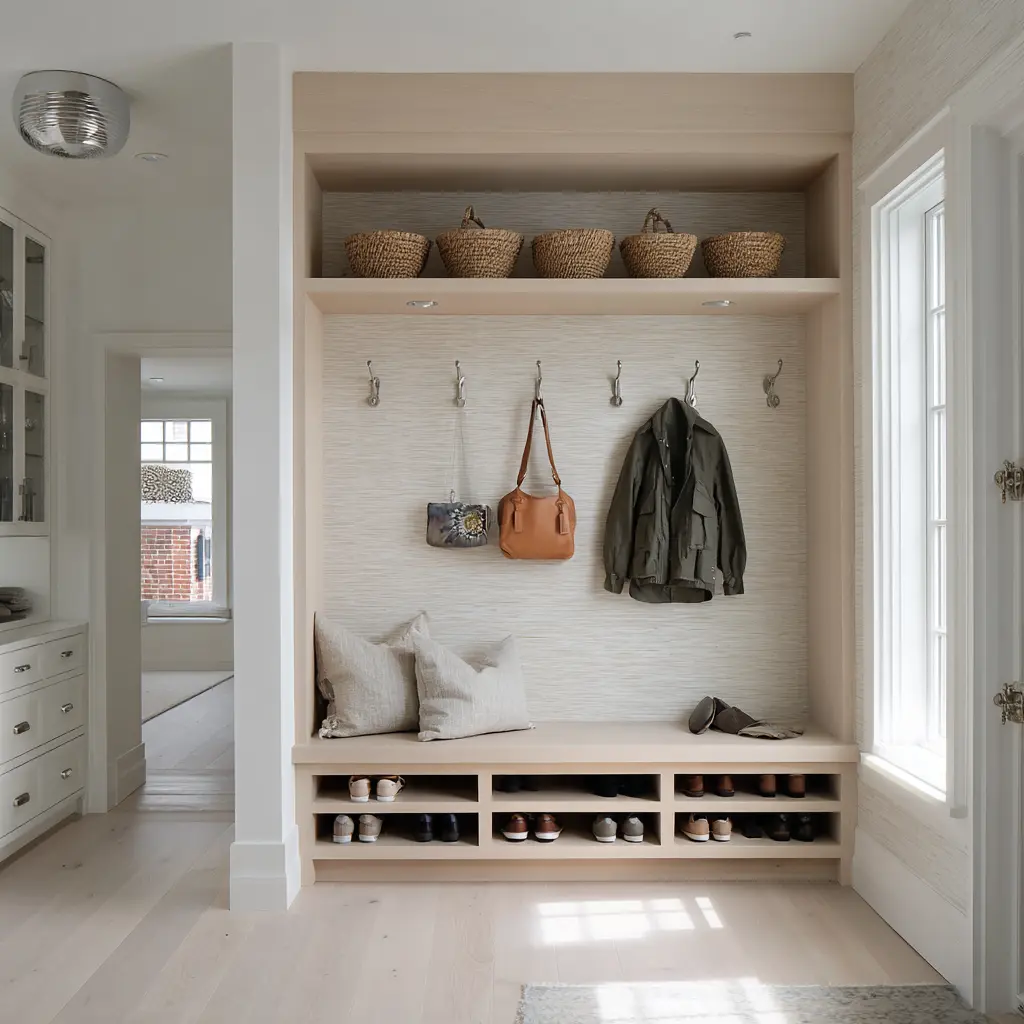
The framed alcove contains the whole routine inside a defined recess. This type is especially effective when the entry needs calm and clarity.
It reduces visual sprawl and gives the household a contained place to land. The challenge is avoiding a cramped feel, which is why the better versions keep hook counts restrained and leave enough open bench area.
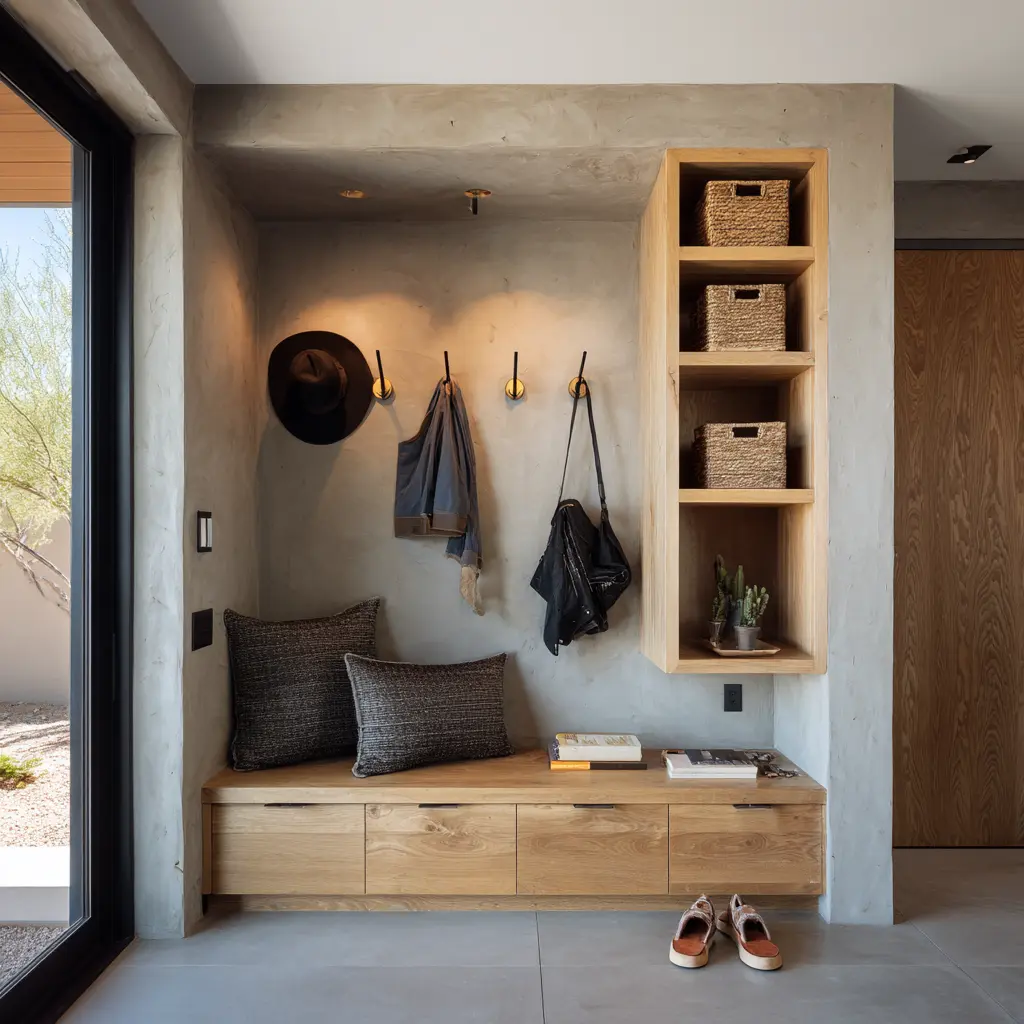
The split-bay layout divides the drop zone into two adjacent zones with different roles. One side carries more active storage, while the other side feels easier on the eye and more supportive of sitting or temporary pause.
This is a strong solution for households that want order without turning the whole entry into a visibly busy wall.
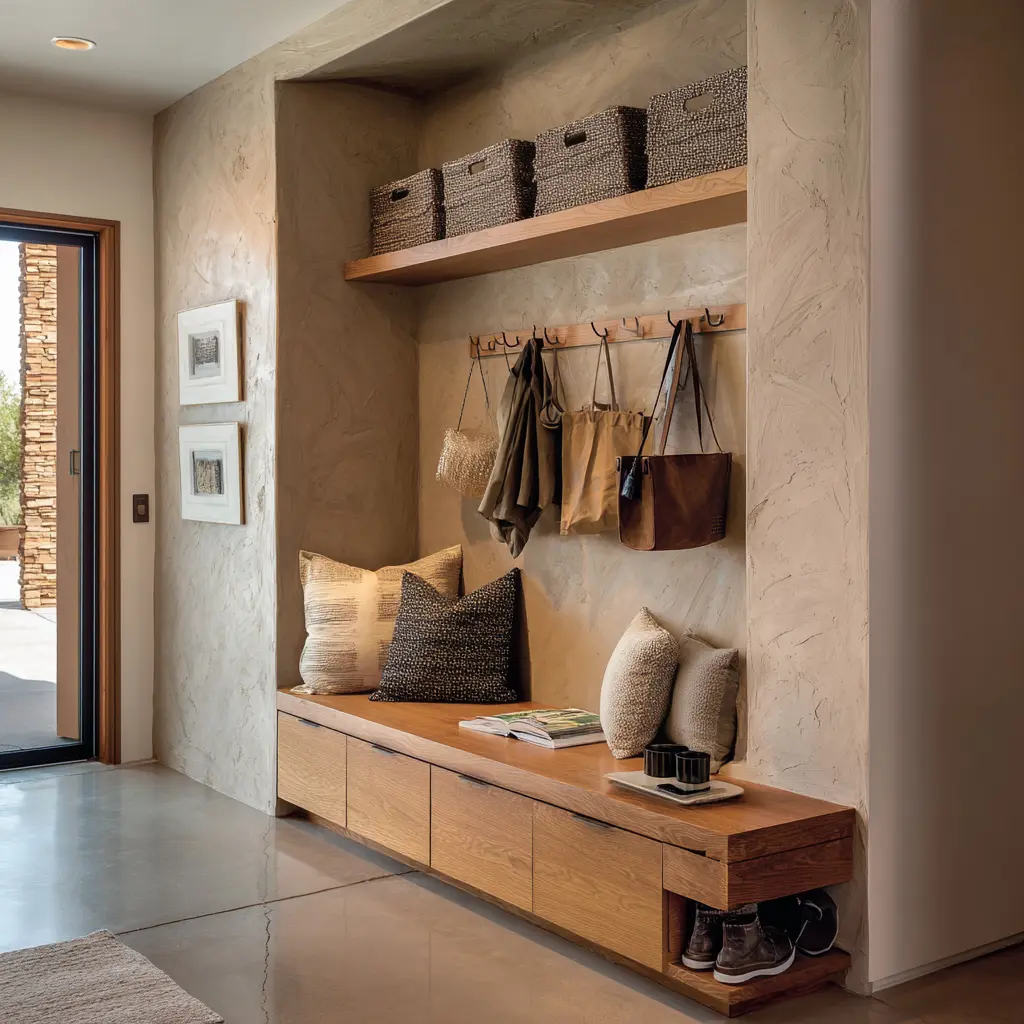
The dense family wall accepts that real households may have several bags, repeated shoe turnover, and a higher daily load. These designs work because they do not deny that reality.
Instead, they organize it into clear horizontal bands with textured back walls, repeated bins, and some concealed reserve. The goal is not to hide everything.
The goal is to keep the visible activity structured.
The stair-carved pocket uses the underside of the staircase as the main form. This is one of the smartest ways to turn awkward leftover space into something useful and character-rich.
The diagonal line gives natural shelter, but the bench is what restores visual order. Without that stable horizontal base, the stair shape can feel restless.
With it, the space feels protected and purposeful.
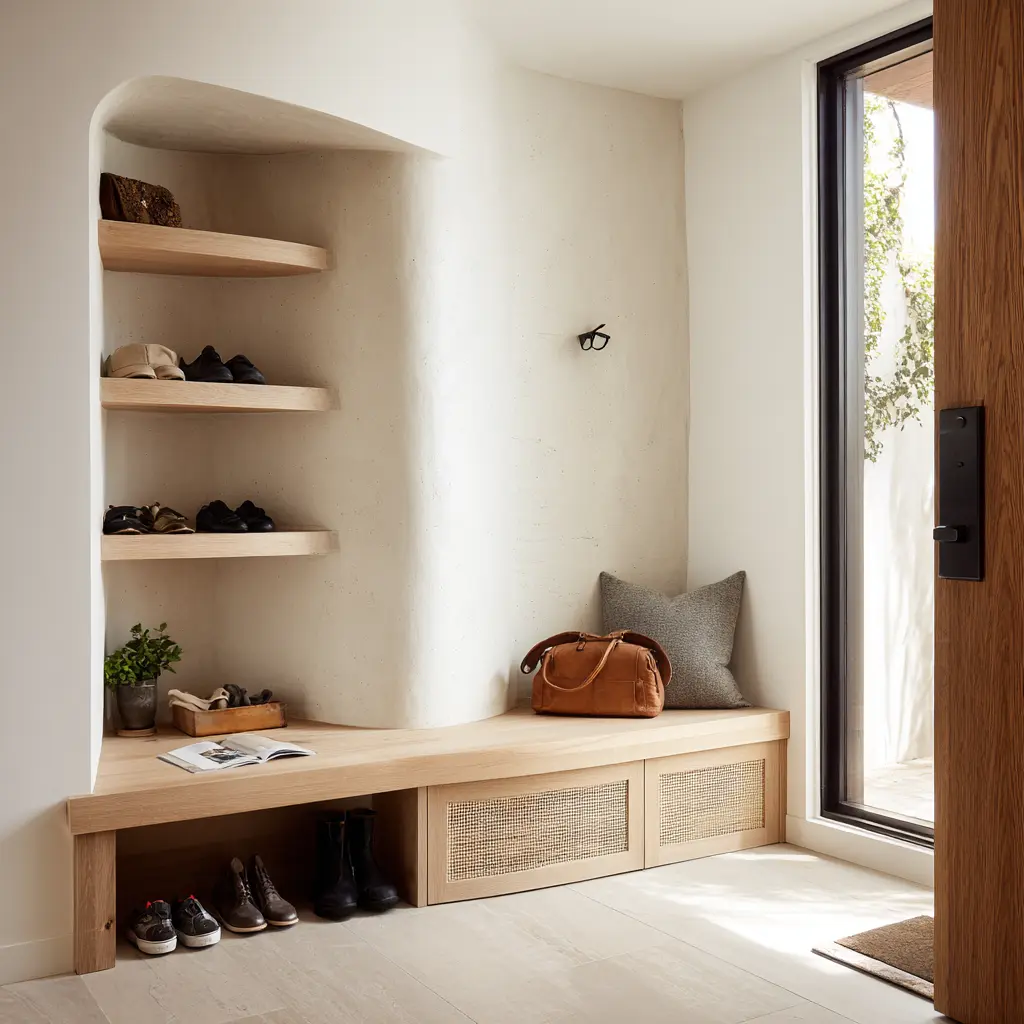
The wood-envelope or softly sculpted pocket solves a different issue: the tendency for entry storage to look added on. By making the surrounding surfaces continuous—through wood lining, curved wall shaping, or a unified material envelope—the drop zone gains the authority of built architecture.
It feels like it belongs to the house rather than being attached to it afterward.
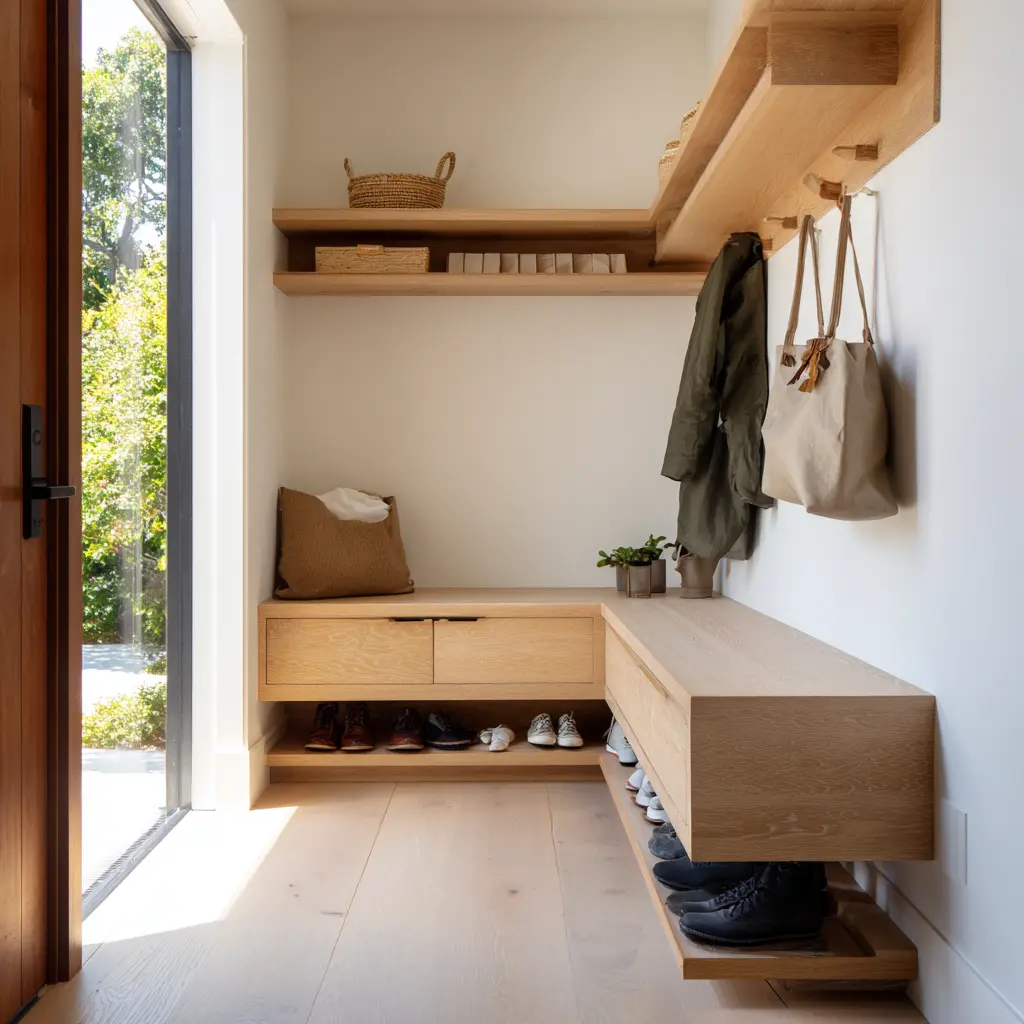
How drop zone design solves the biggest daily challenges
The first major challenge is fast-moving clutter. Strong drop zones answer this by consolidating first-contact actions into one readable band.
Instead of asking the user to spread arrival across a chair, a table, a random floor corner, and a closet, they provide one connected sequence where unloading happens quickly and cleanly.
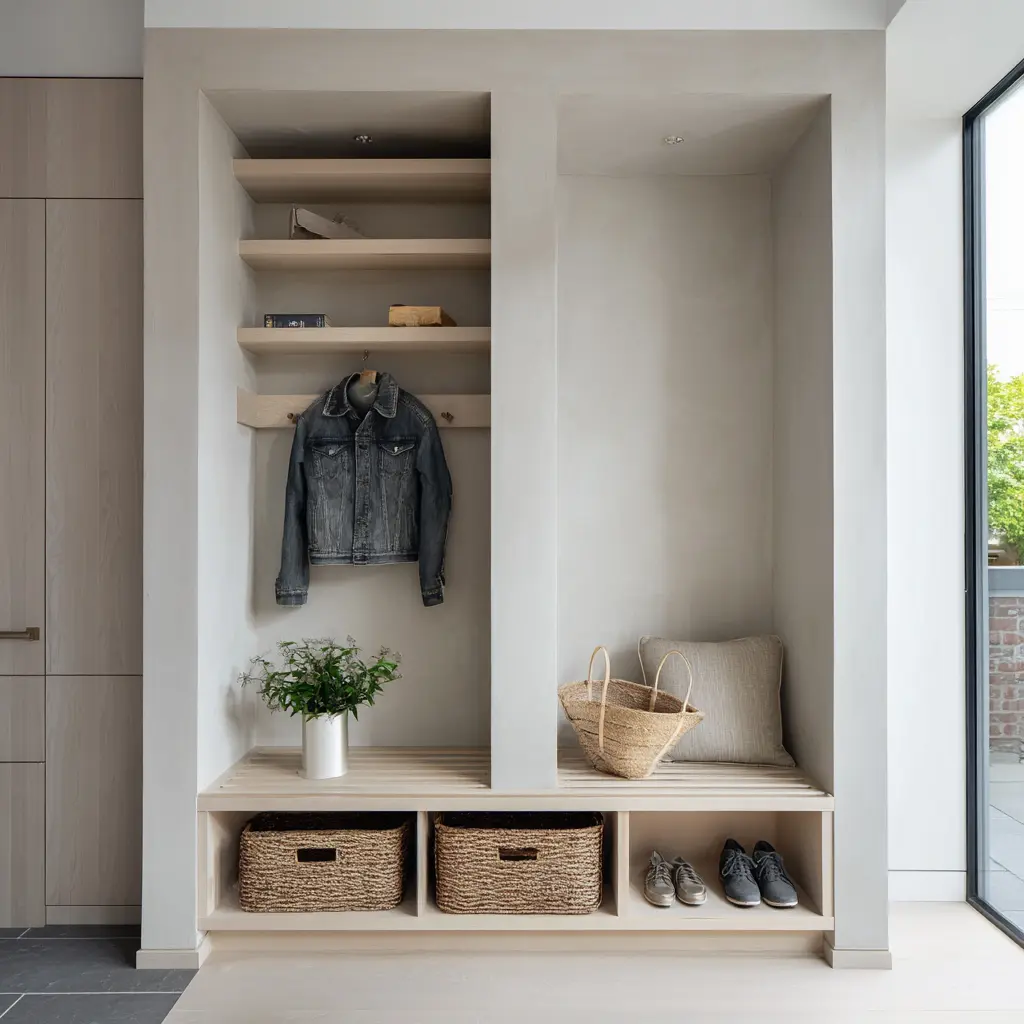
The second challenge is cramped circulation. In narrow halls or tight entries, the strongest designs push storage to one side, float part of the mass, or recess the whole system into the wall.
This keeps the center path visually and physically open. Even a well-equipped drop zone fails if it turns the front of the home into an obstacle course.
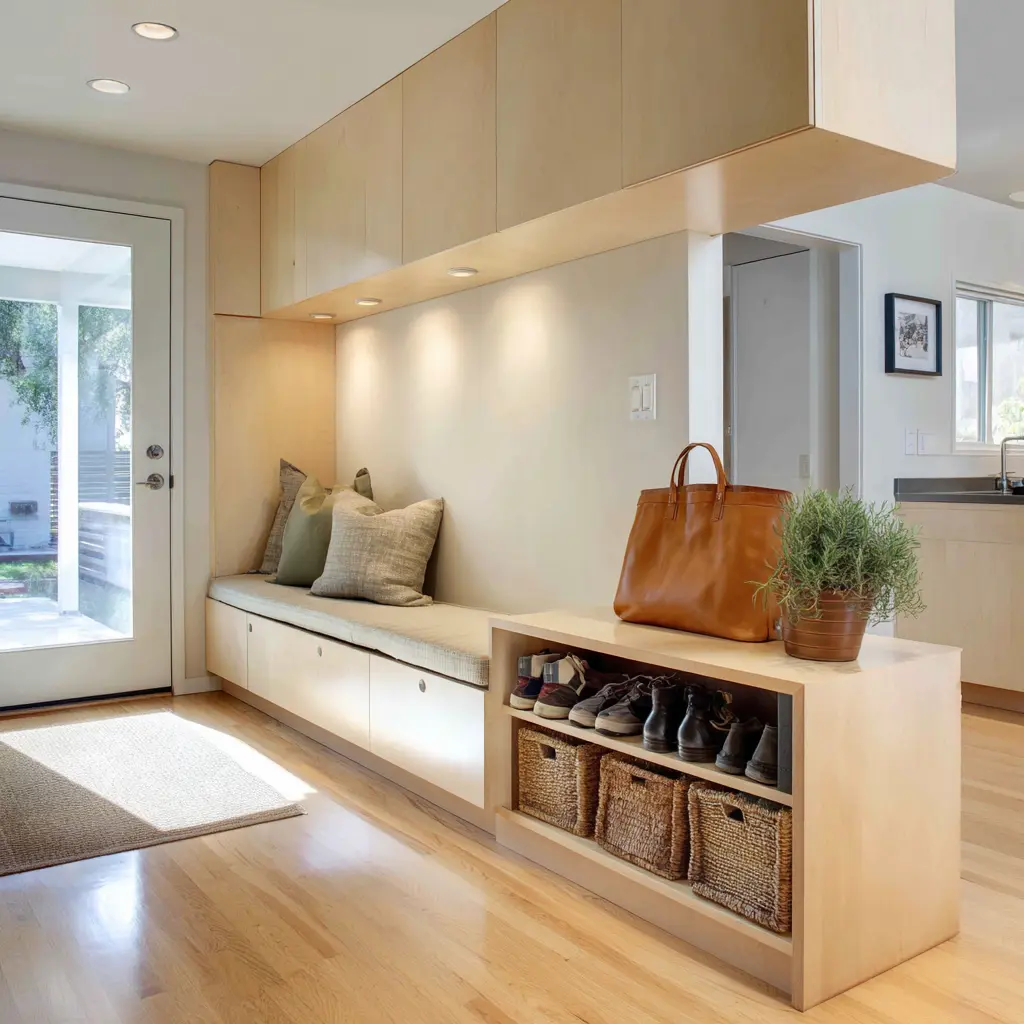
The third challenge is the visual mess created by hanging items. Better designs solve this not by removing hooks, but by controlling them.
A shelf above, a bench below, a slatted backdrop, and enough breathing room between hanging items all help the wall keep its shape.
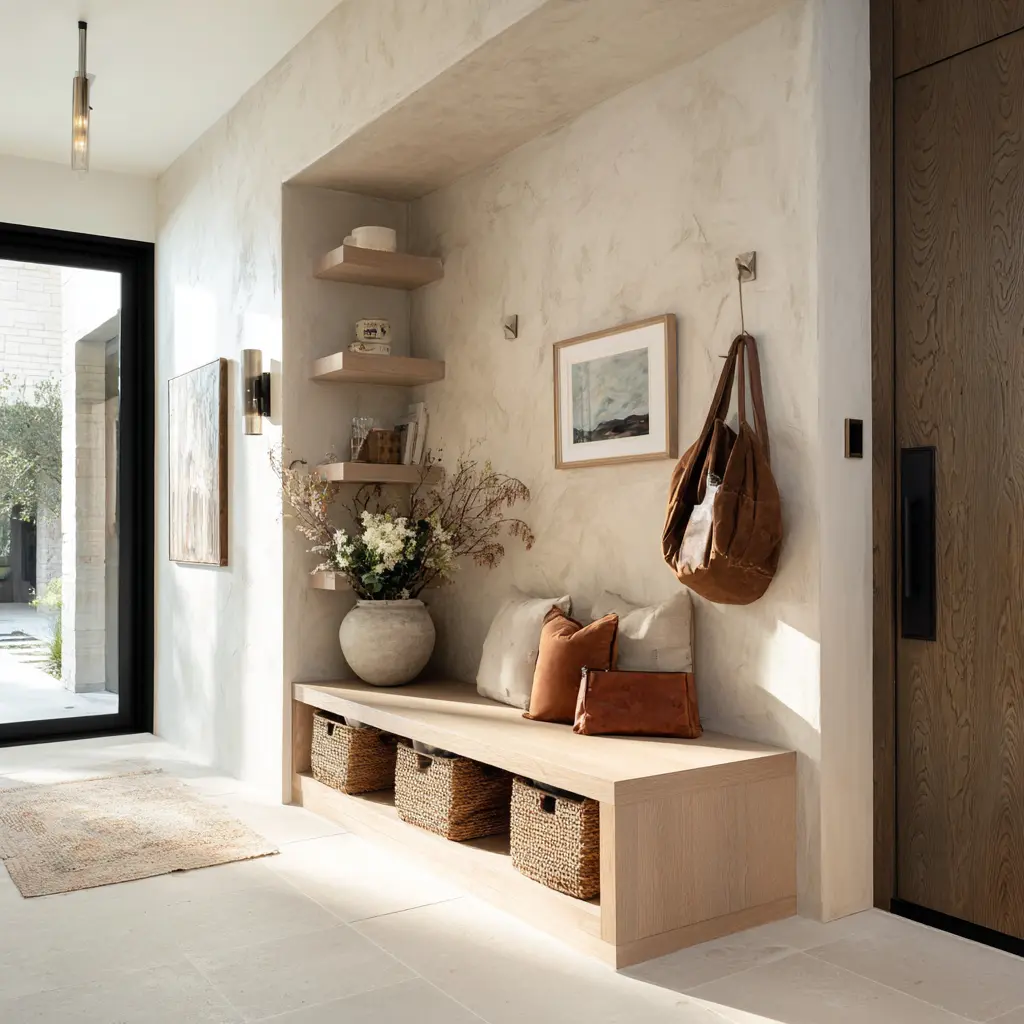
The fourth challenge is family traffic. Homes with several users need more than a beautifully edited niche with one coat and one bag.
The best family-ready examples in the dataset show that heavier use can still look controlled if it is grouped into strong layers, supported by repeated compartments, and balanced with hidden reserve storage.
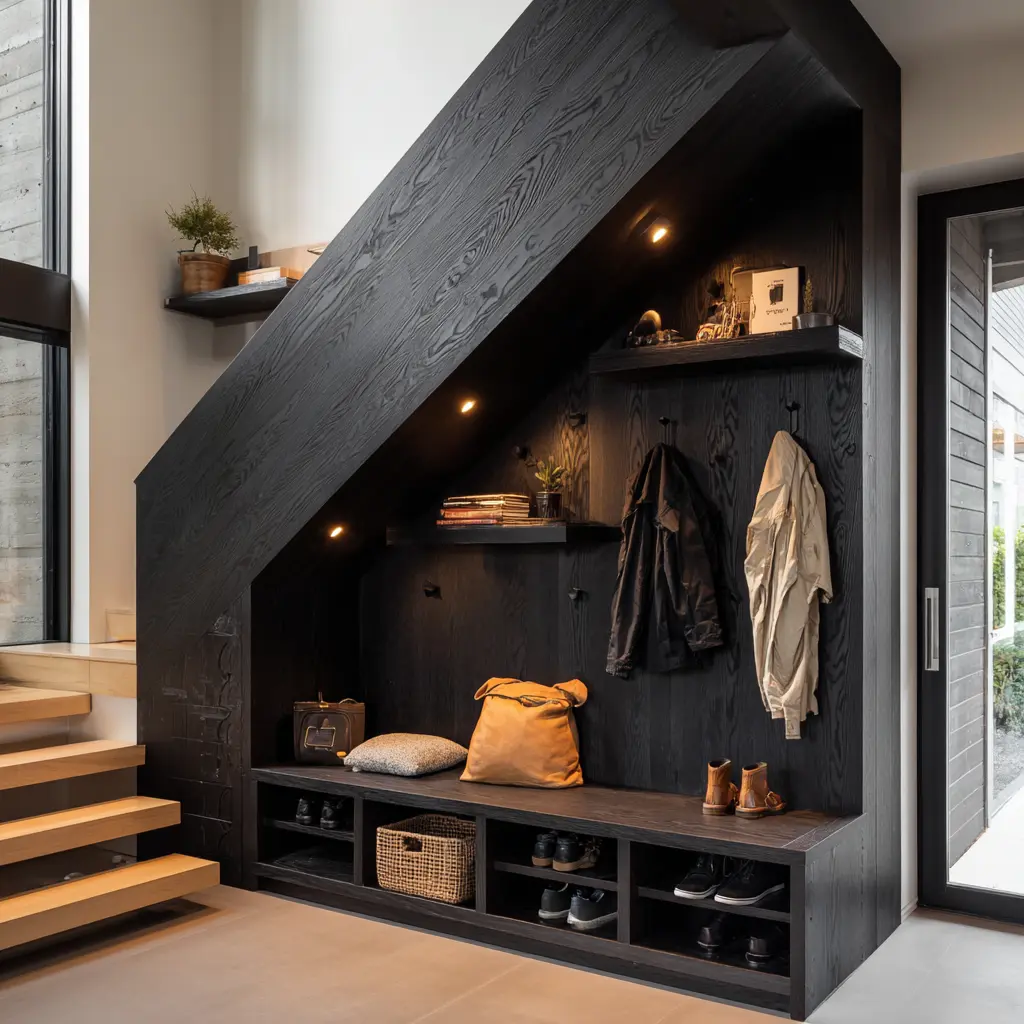
The fifth challenge is that entry storage can feel too service-oriented. Interiors solve this by adding a domestic layer that does not block function: cushions, plants, woven textures, restrained art, warmer materials, and a seating surface that feels comfortable enough to use.
These touches reduce the sense that the home is policing the user.
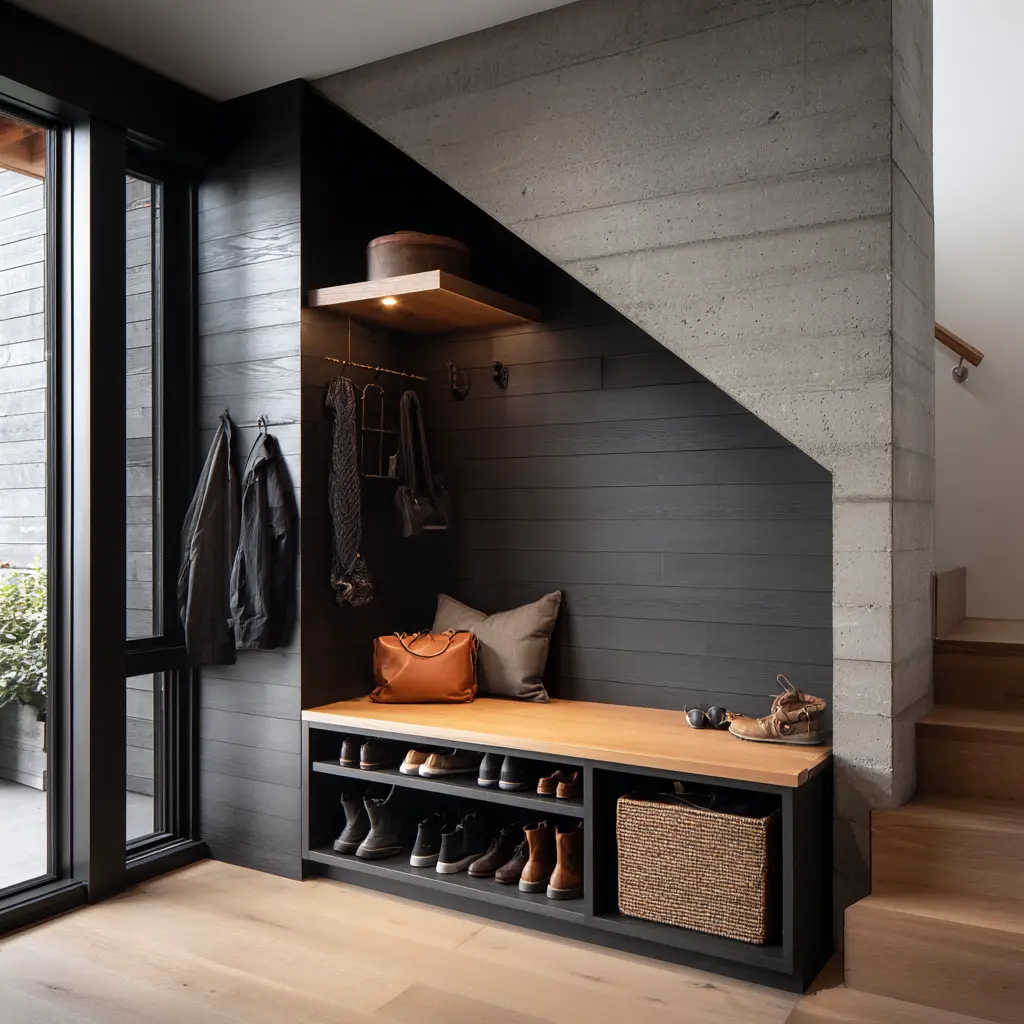
The sixth challenge is awkward geometry, especially around stairs. The designs can stop treating these shapes as a problem to hide.
They let the stair line define the drop zone, then stabilize it with a long bench, organized lower storage, and good local lighting.
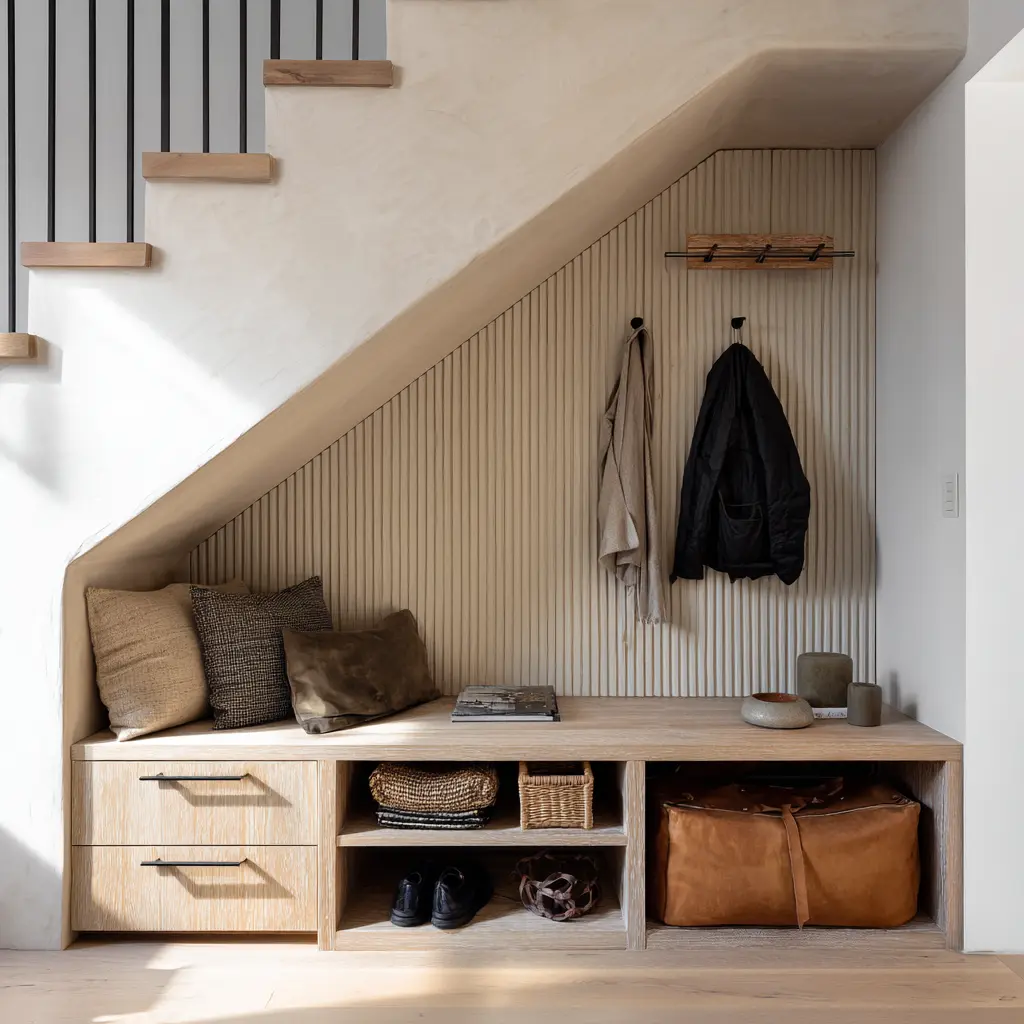
What makes a drop zone feel like part of the home
One deeper drop-zone design idea is that it can borrow authority from the architecture. Drop zones can be shaped by a recess, a stair volume, a corridor wall, a window run, or a built millwork frame.
They do not look like a few practical items gathered near the door. They feel planned into the structure of the house.
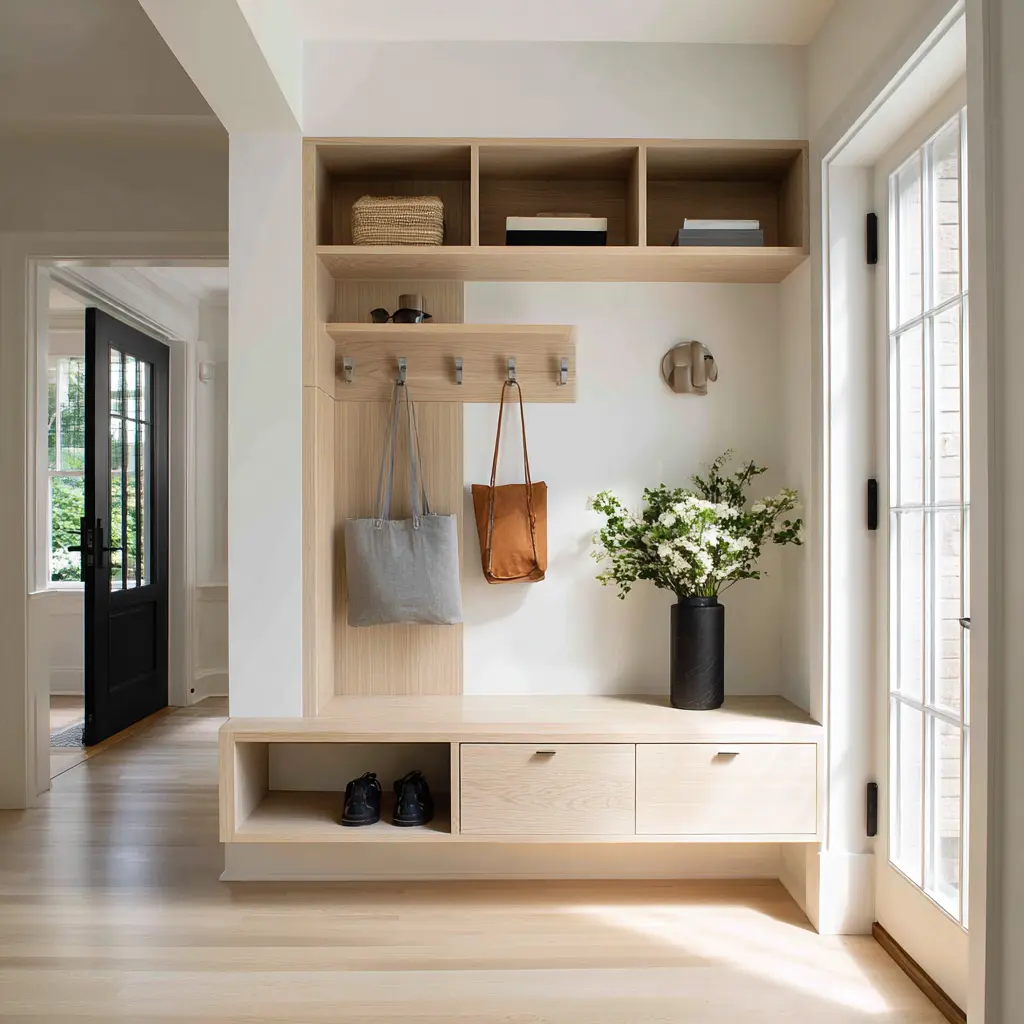
This is where material choice becomes important. Warm wood appears again and again because it helps practical storage feel domestic.
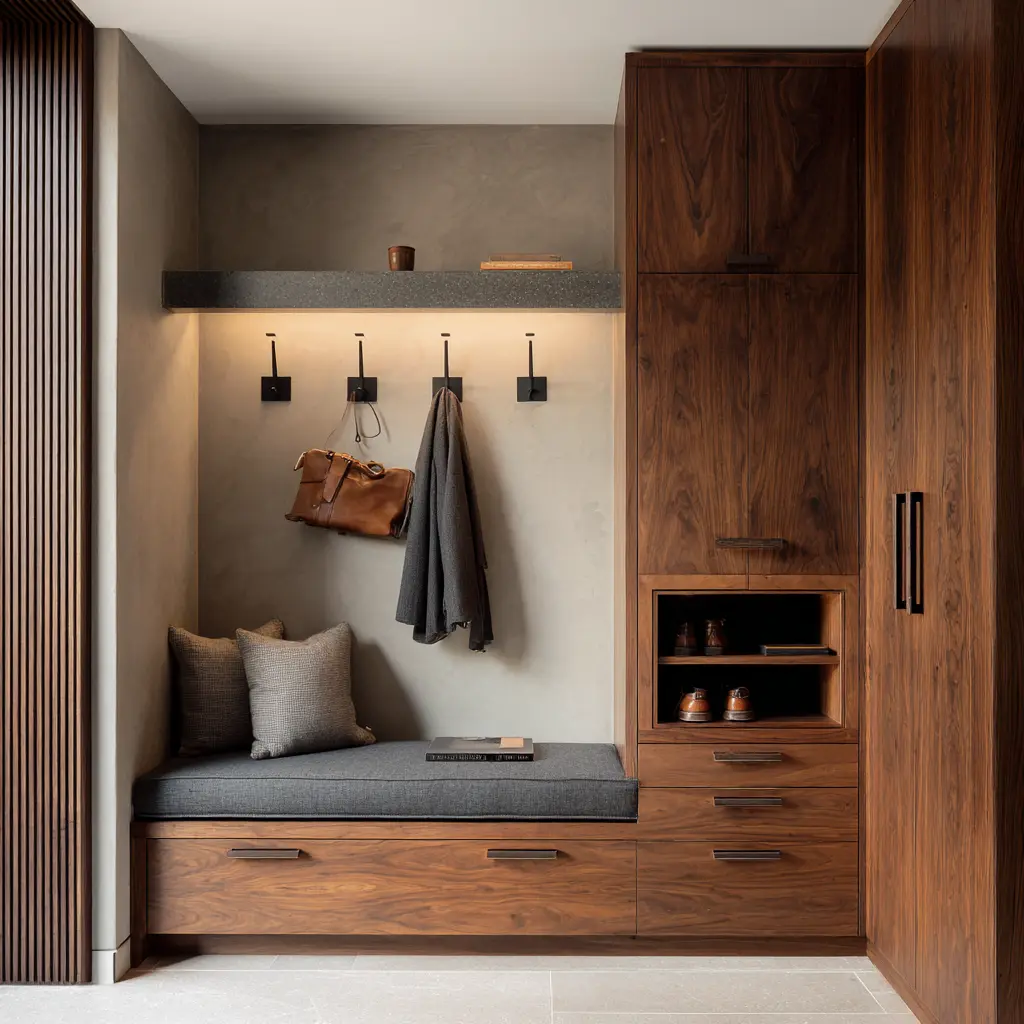
It softens built-in mass, connects the entry to the rest of the interior, and gives the drop zone enough warmth that function does not feel harsh. Darker wood can work too, but the darker examples only stay welcoming when they include relief through daylight, under-shelf lighting, lighter neighboring surfaces, or pale textile accents.
This balance of firmness and softness matters. People are more likely to keep using a drop zone that feels supportive rather than strict.
A home entry should bring order, but it should not feel like punishment for arriving.
The larger design conclusion
The final design idea is simple, but it changes how drop zones should be designed. A drop zone works well when it is treated as a micro-architecture of arrival.
That means it needs a clear boundary, an easy sequence of use, a stable sitting or landing plane, a balanced mix of visible and hidden storage, and a background strong enough to hold daily objects without visual collapse. Once those conditions are in place, the entry can stay usable, orderly, and welcoming even under daily pressure.
This is why some drop zones feel calm even with shoes, bags, and coats in plain sight, while others feel messy with fewer items. The difference is not the number of compartments alone.
It is the clarity of the structure around them.
A well-designed drop zone does not simply store clutter. It intercepts it, organizes it, and keeps it from taking over the first room of the home.
That is what makes it such a powerful part of interior design. It turns one of the messiest daily moments into something easier, smoother, and far better integrated with the life of the house.