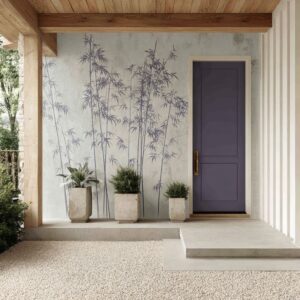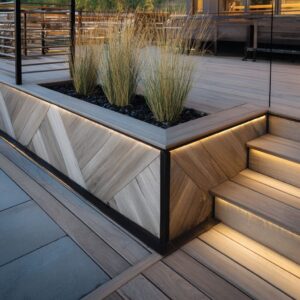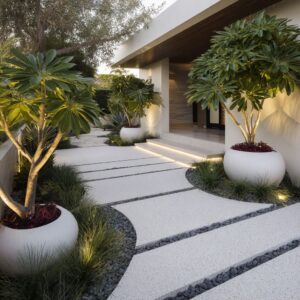
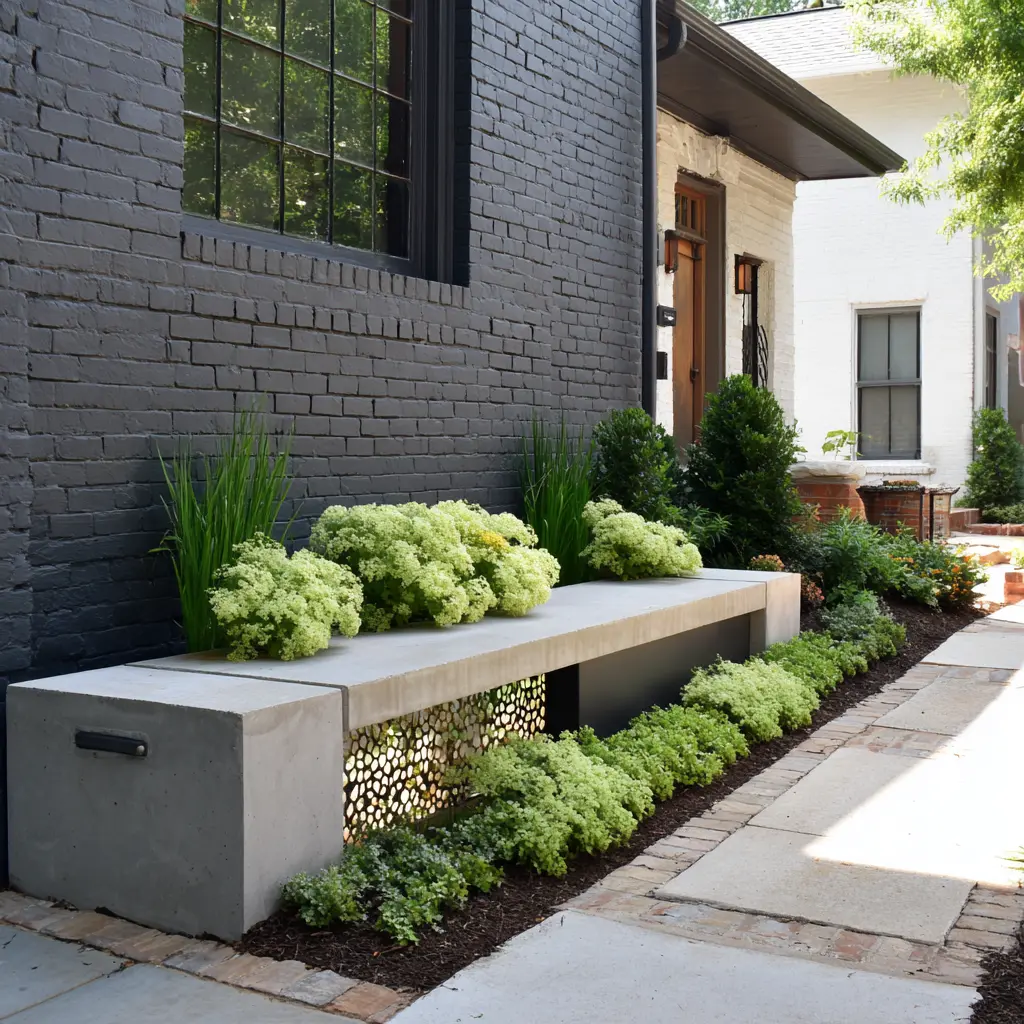
A modern flower bed is often described as a cleaner planting style, a simpler palette, or a bed with fewer flowers. That explanation misses the deeper design logic.
The modern look does not come mainly from the plants themselves. It comes from the way the flower bed shapes the edge between house, ground, and approach.
In many traditional yards, the flower bed sits against the facade and softens it. In the modern vision, the flower bed can do much more.
It helps direct movement toward the entry, gives the front exterior a foreground object with scale, introduces texture against flat wall planes, and creates a more composed transition from paving to planting to architecture. In other words, the modern flower bed is often less a loose garden strip and more a built edge with living softness.
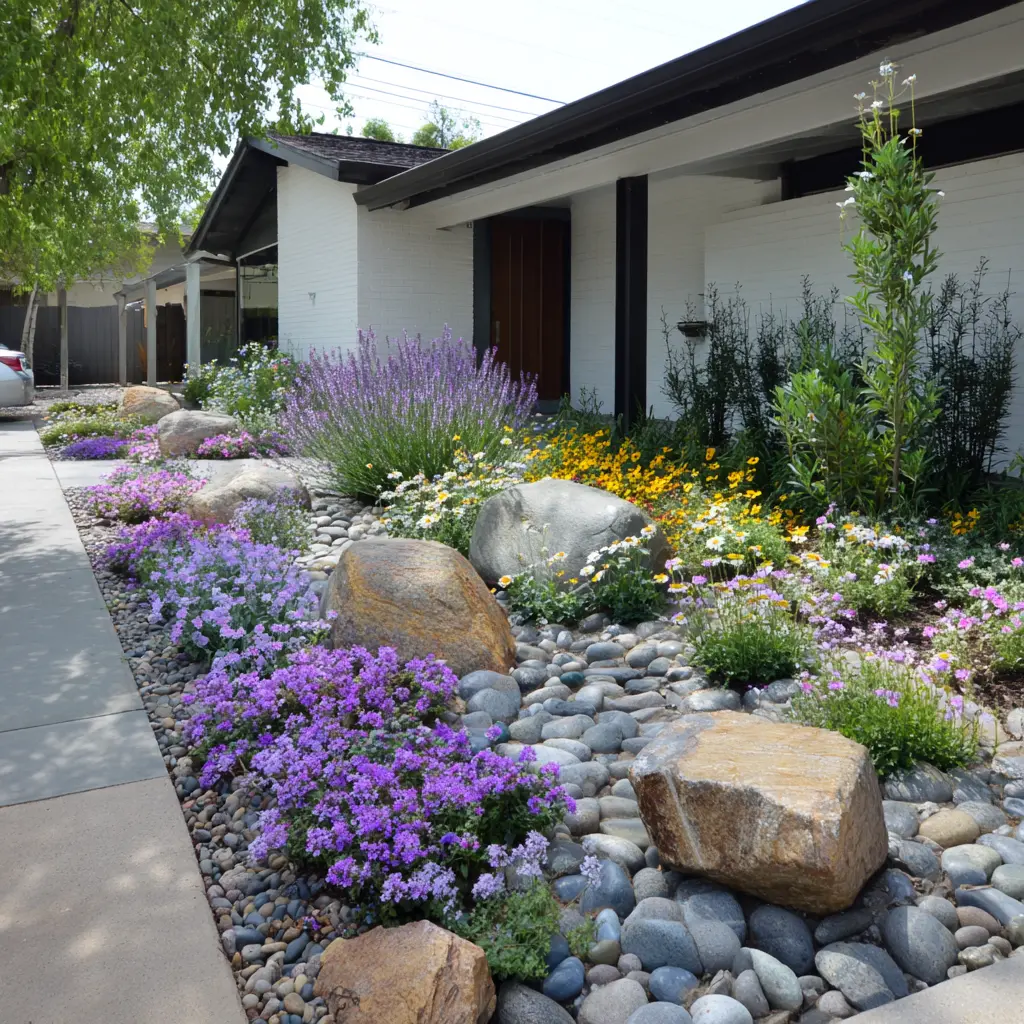
That change matters because it explains why some flower beds look current even when they use abundant flowers, while others look dated even with restrained planting. The modern effect is usually produced by framing, thickness, contrast, rhythm, and spatial control.
Planting then adjusts the mood. It can make the result lush, shaded, dry, sculptural, warm, or slightly dramatic, but the formal order usually comes first.
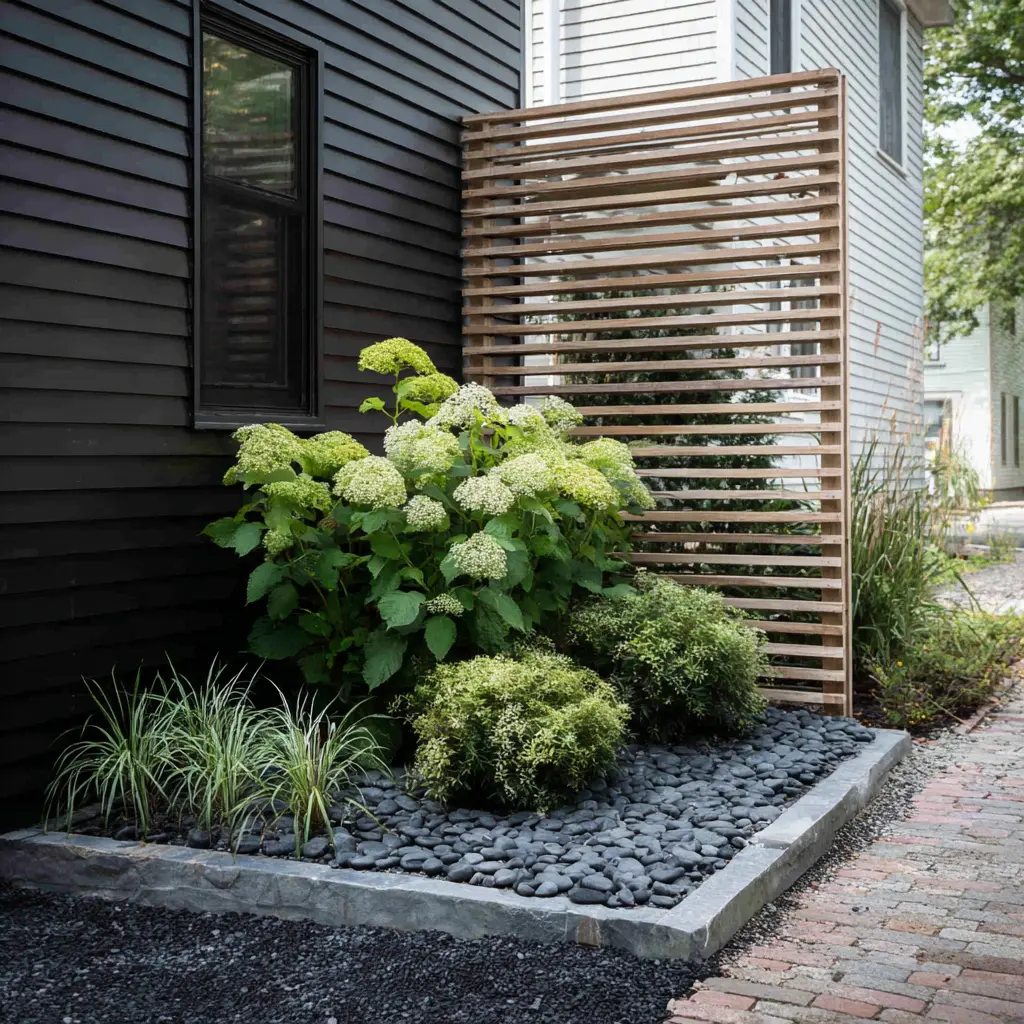
The modern flower bed starts with structure
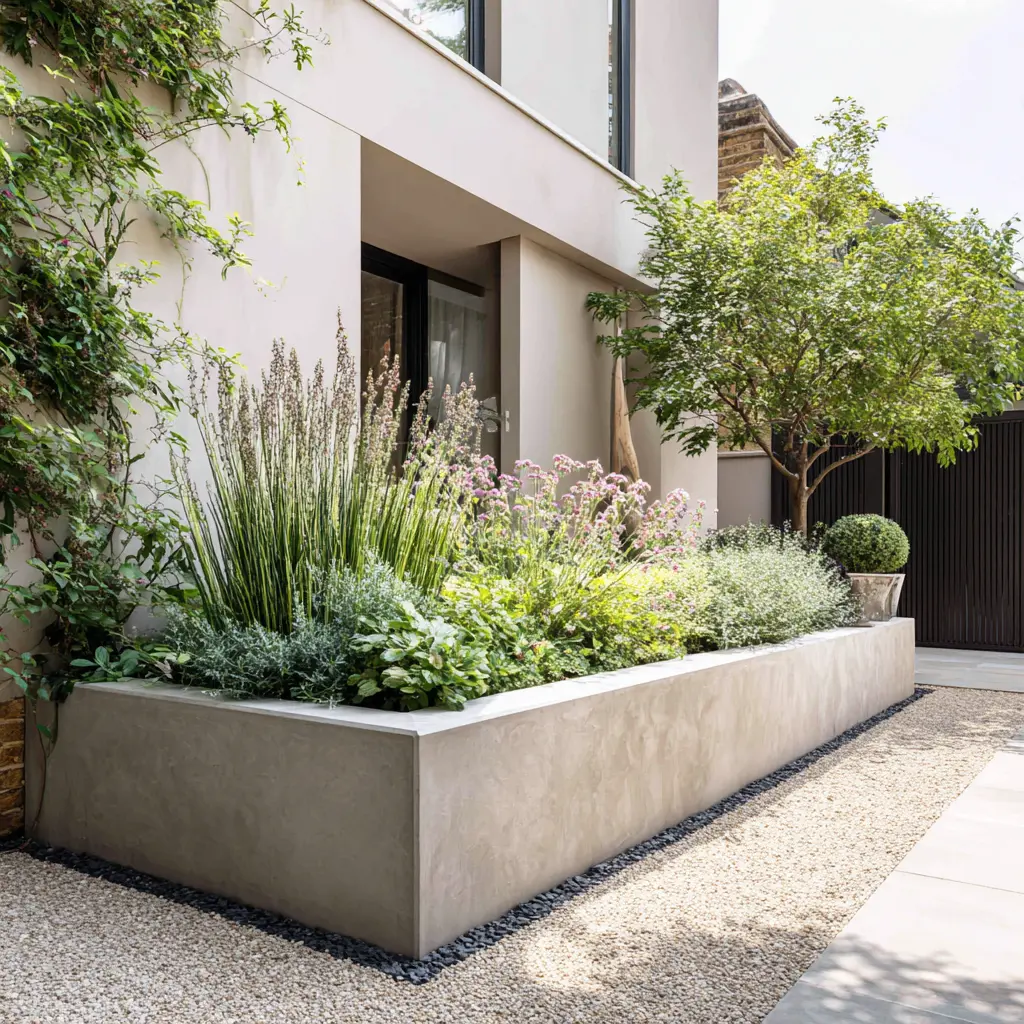
Modern flower beds rely on structure beneath the planting. This structure may take the form of a raised concrete-like block, a stone or steel frame, a long bench-planter, a vessel with visible thickness, a gravel field, or a sculptural island with a strong edge.
Even when the planting is loose, airy, or flower-rich, the bed still tends to sit inside a disciplined framework.
That is why the real divide is not sparse planting versus full planting. It is framed planting versus unframed planting.
A flower bed with generous blooms can still look very current if the edge is crisp, the base has substance, and the overall composition feels controlled. A bed with only a few plants can still feel ordinary if it lacks this formal backbone.
This is one of the useful shifts in thinking. Do not begin only by asking which flowers to use.
Begin by asking what kind of object, ground plane, or edge will give the planting order.
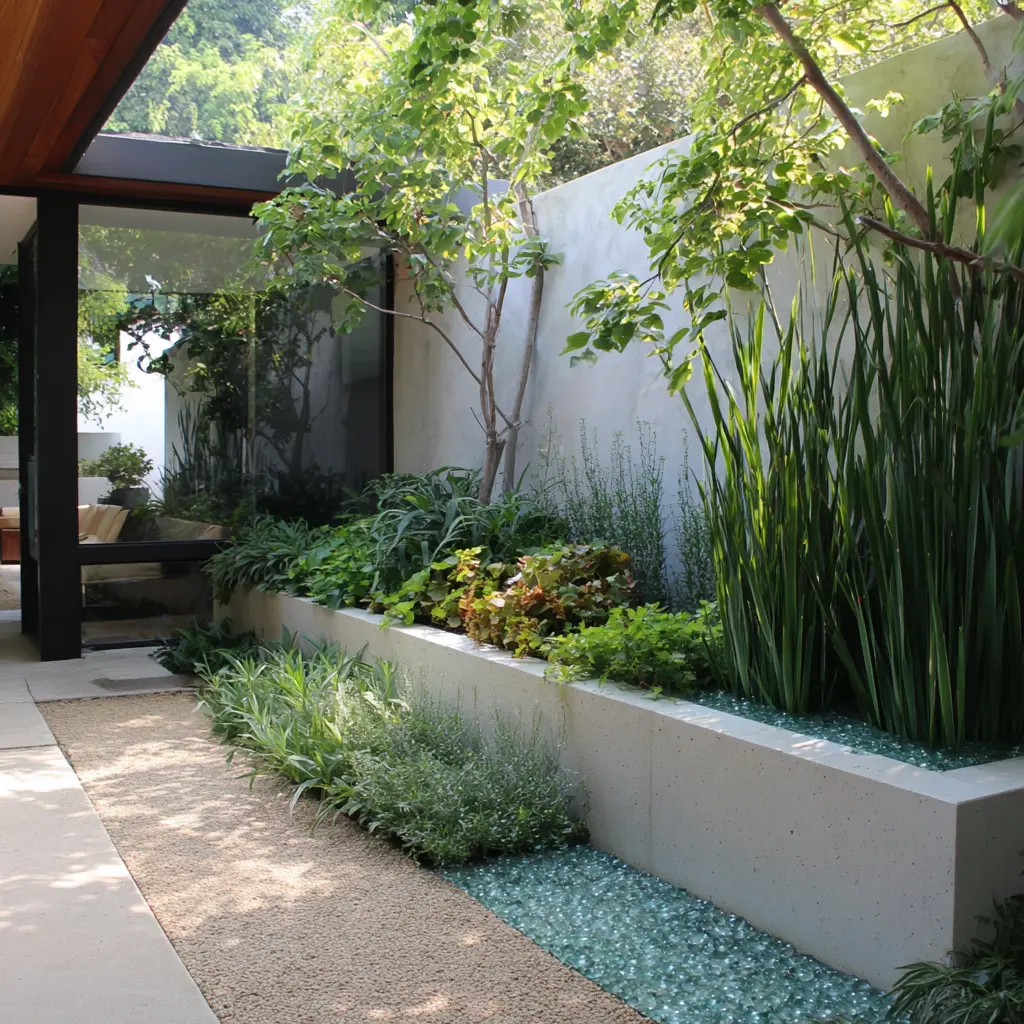
Think of the flower bed as part of the entry sequence
Another key pattern is that modern flower beds are closely tied to movement. They sit along a front walk, porch edge, driveway turn, side path, or entry court.
They help pace arrival. Some guide the eye in a straight line toward the front door.
Some slow the approach through a long low mass that holds the gaze for a moment. Some sit at a corner where paving changes direction, giving the front yard a focal point before a visitor even reaches the entrance.
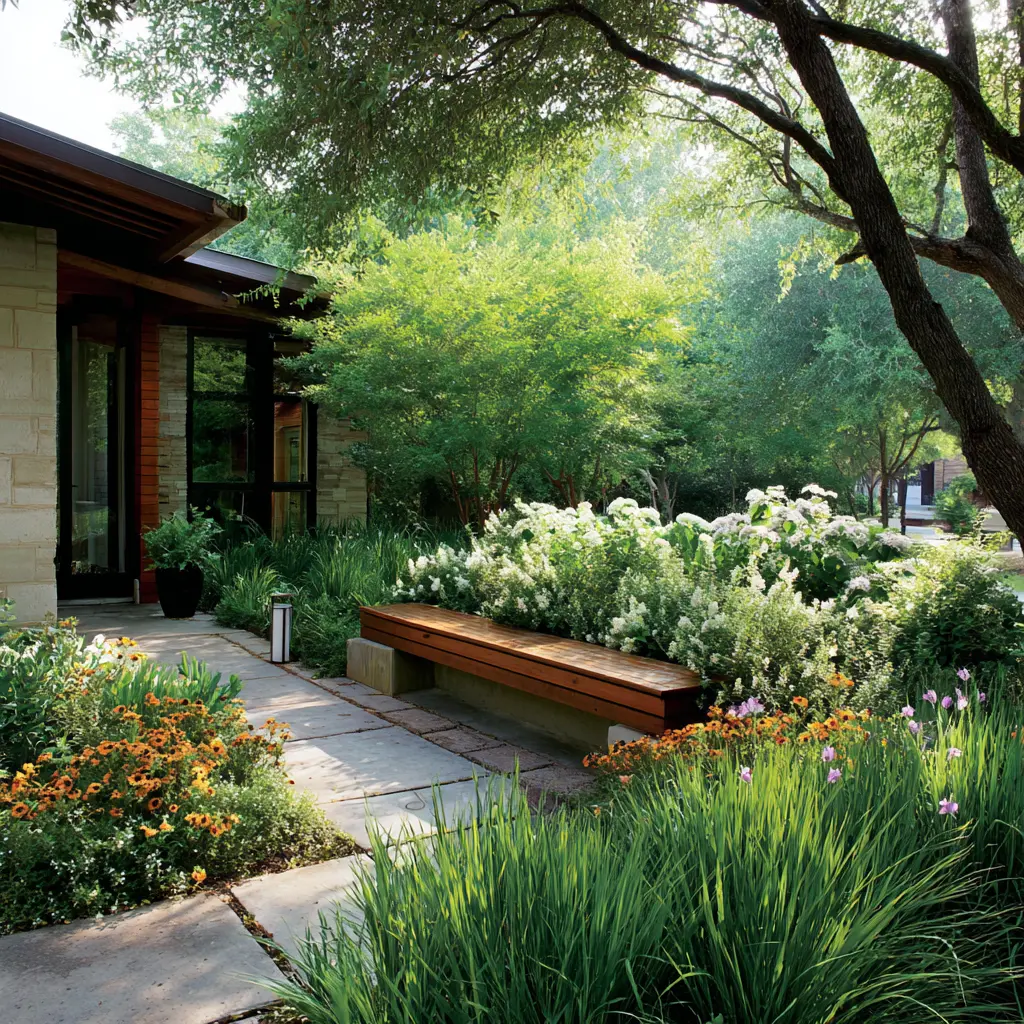
This is why many modern flower beds feel more composed than standard foundation planting. They are not simply filling leftover ground.
They are part of how the house is approached and experienced. A bed beside the entry should therefore be designed with the same care as the door, the paving, the wall light, or the front steps.
The planting is important, but so is the way the bed frames that sequence. A good modern flower bed often works almost like a threshold device.
It connects low ground to taller architecture, soft material to hard material, and outdoor movement to indoor atmosphere.
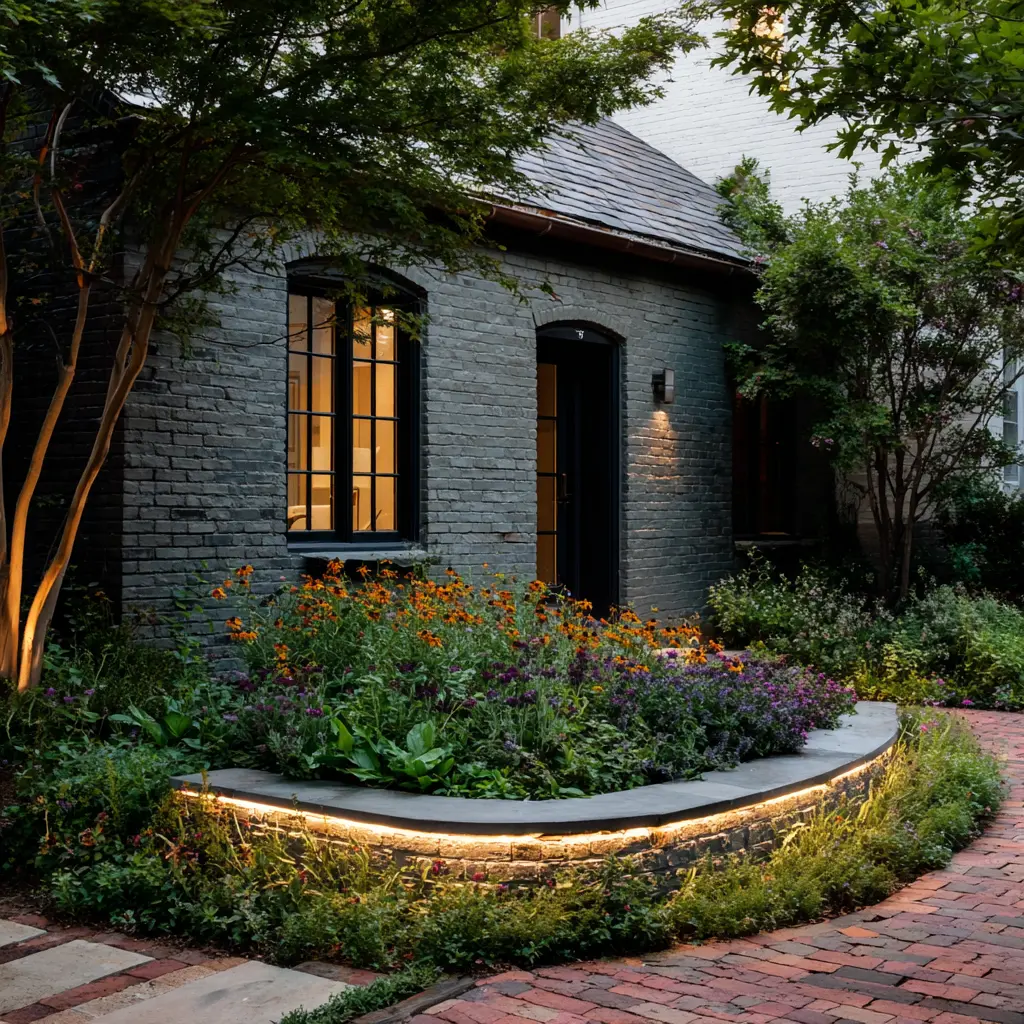
Hard and soft need each other
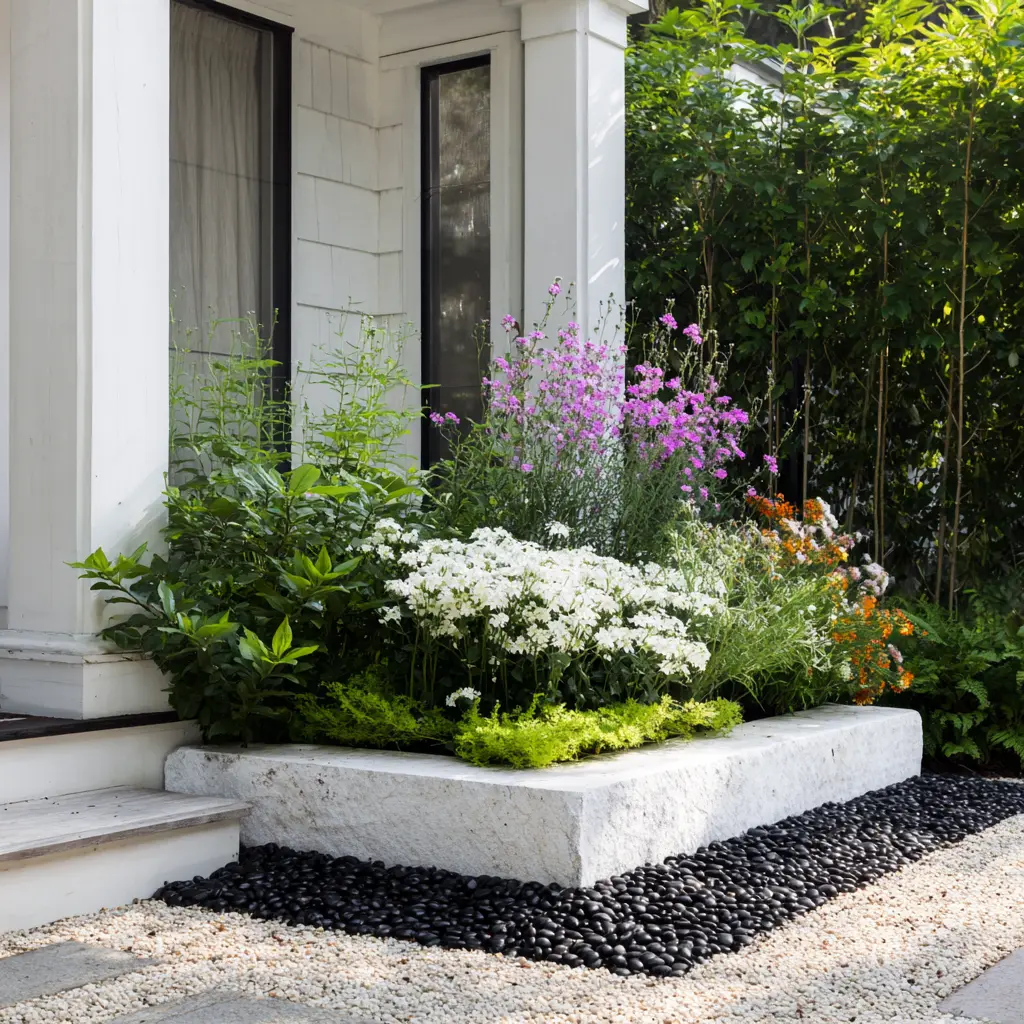
For modern look, it needs a balance between a hard structure and soft planting. Smooth stone edges, pale concrete blocks, black gravel, weathered steel, thick planters, and mineral ground planes create visual order.
Plants then break that order just enough to keep the result from feeling stiff.
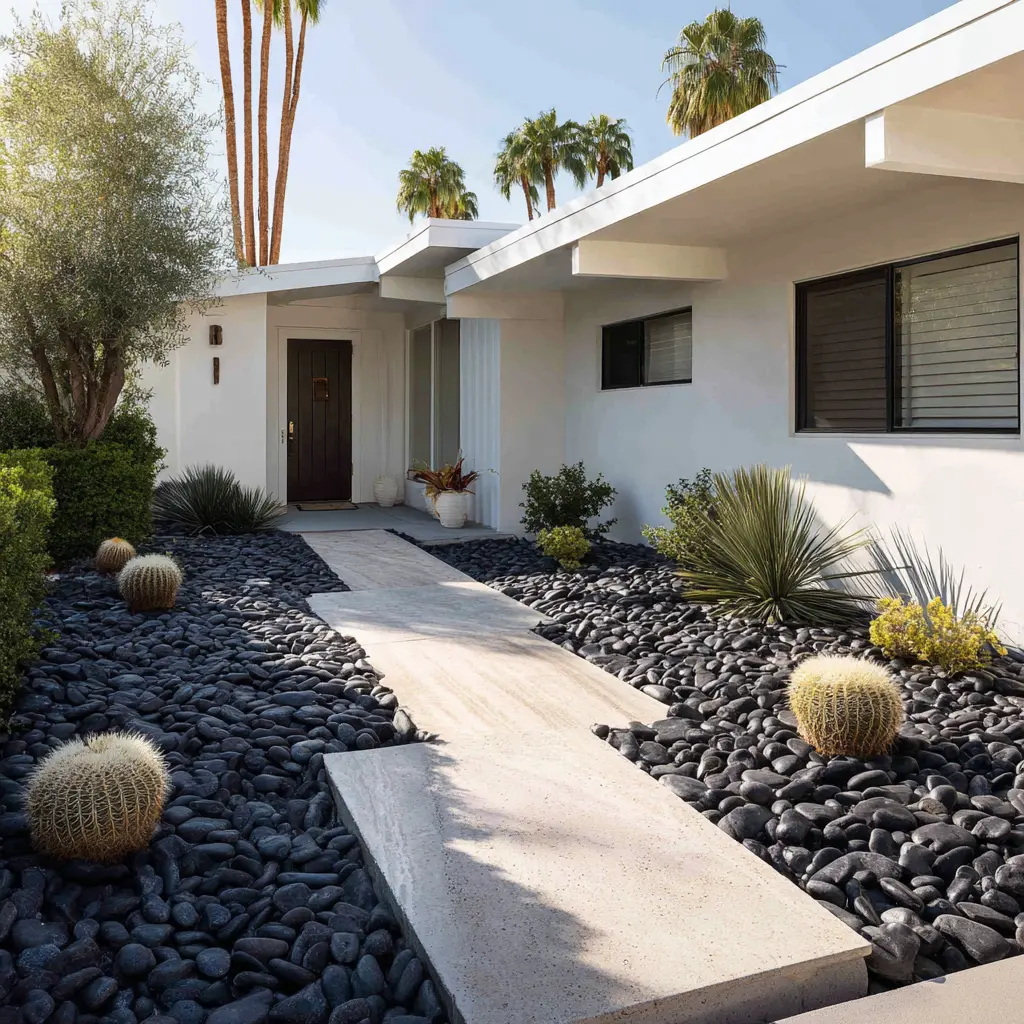
Current flower bed ideas do not try to make everything geometric, and they do not let everything go loose either. The edge stays clear.
The planting can then billow, mound, arch, or feather above it. A flower bed becomes richer when these two conditions sit together: one layer gives discipline, the other gives life.
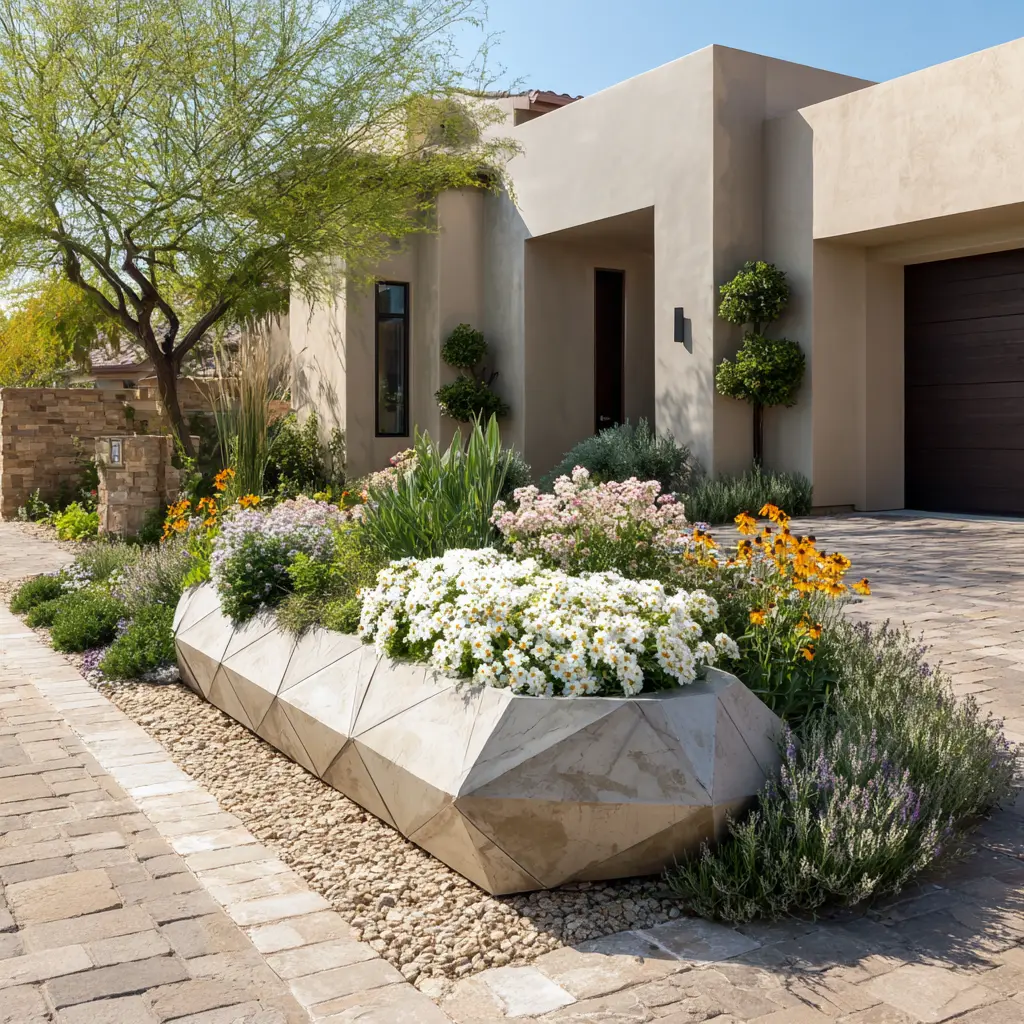
A strongly built planter or a gravel-framed bed can support fuller planting without losing the modern look. The structure holds the composition steady, so the plants can bring movement, shadow, and softness.
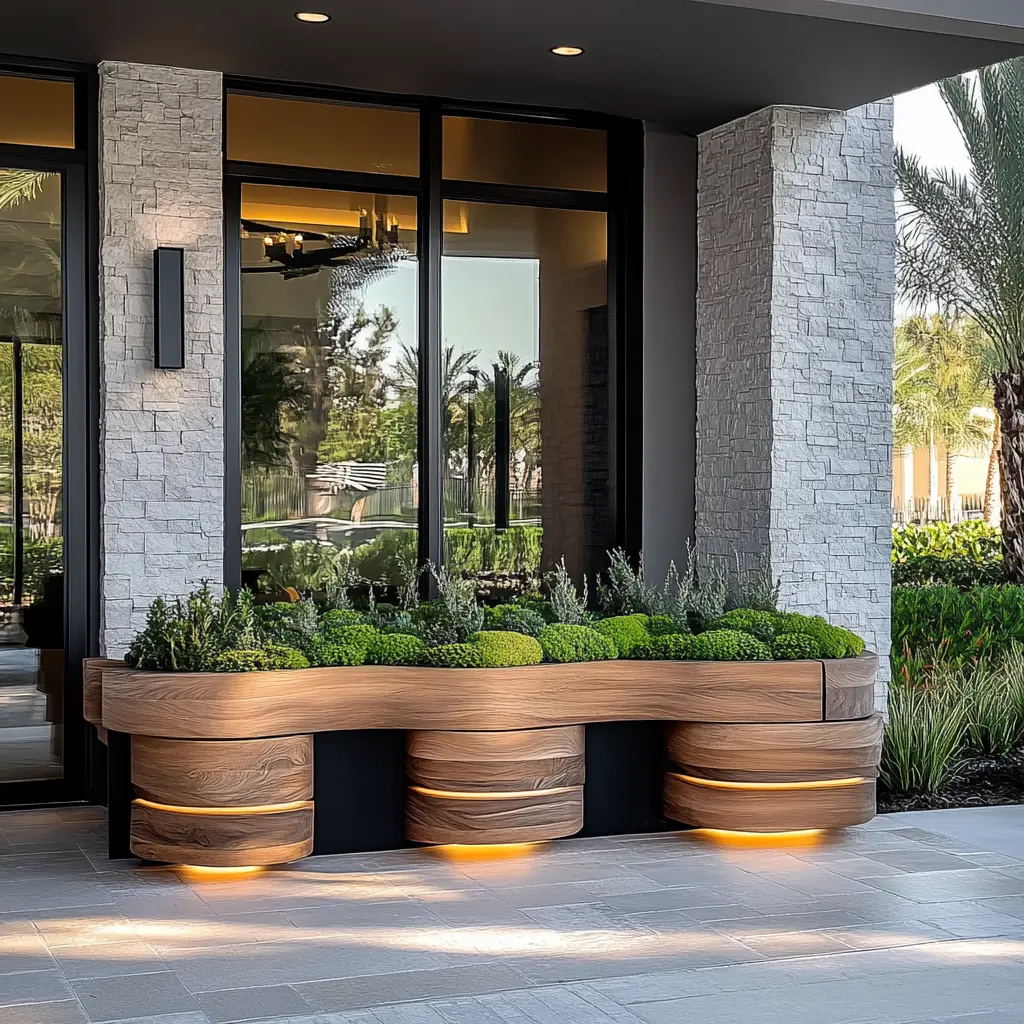
Contrast matters more than quantity
Modern flower bed depends on contrast. Hard surfaces need soft foliage.
Pale stone needs darker shadow or rock beneath it. A low bed often needs one taller accent.
Cool gray or black architecture often benefits from one warmer note, such as timber, rust-toned metal, or amber underlighting.
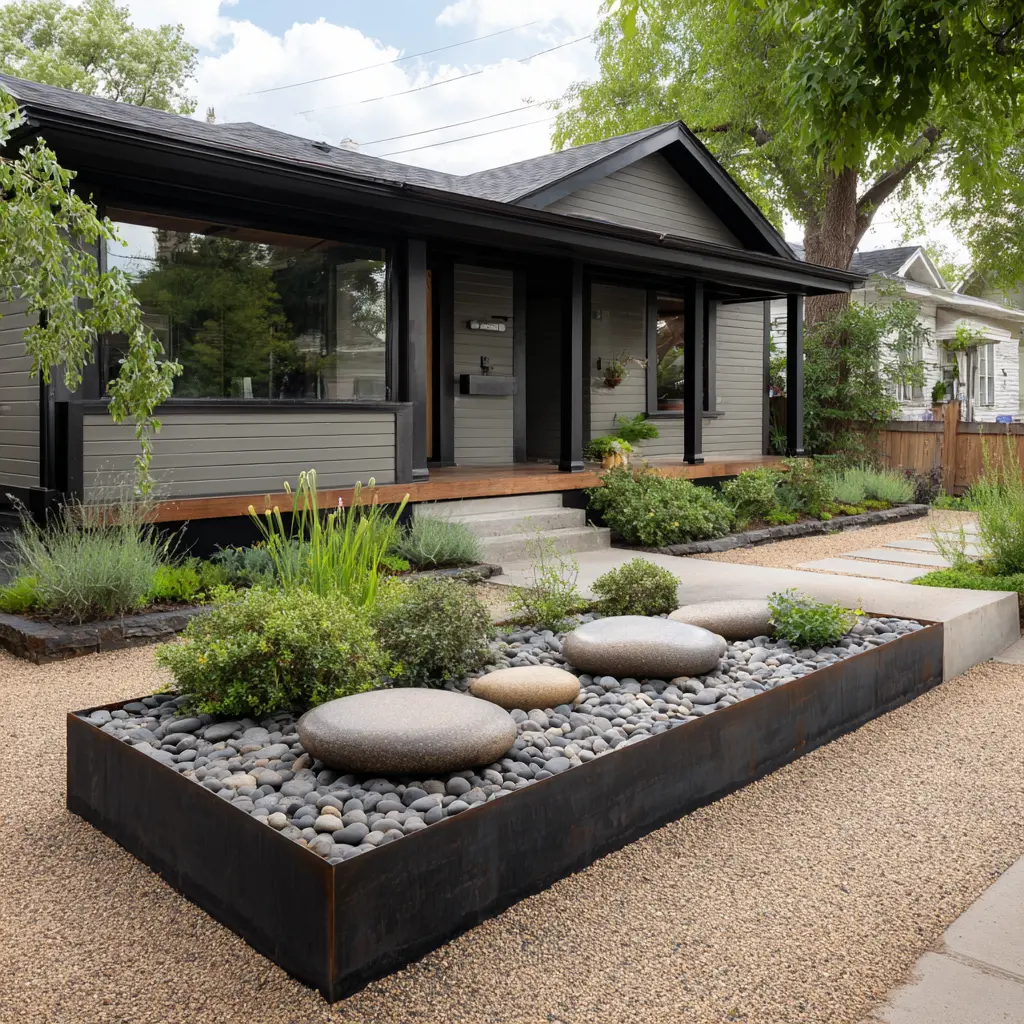
These contrasts are doing much of the visual work. Dark gravel sharpens the outline of foliage.
White or pale planters brighten flowers. Reflective glass behind a tactile bed makes the planting feel more grounded.
Rounded green mounds become clearer when they sit inside a crisp-edged container. A soft flowering drift becomes more convincing when a stone border or a metal frame keeps it from spreading visually into the paving.
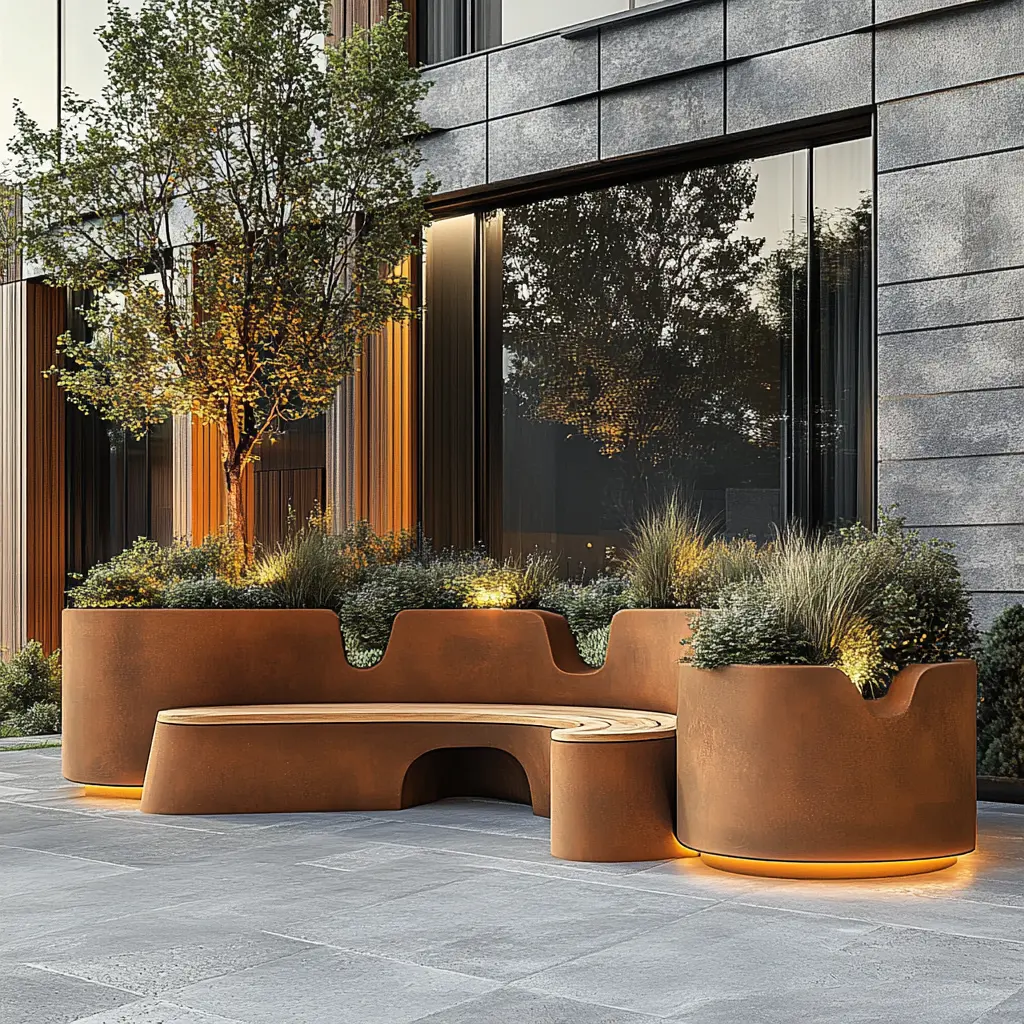
This is why small flower beds can still look memorable. They do not need many ingredients if the contrast is clear.
A compact composition with one dense stone cube, a pale gravel field, and one airy shrub can feel more current than a much larger bed filled with mixed planting but no visual hierarchy.
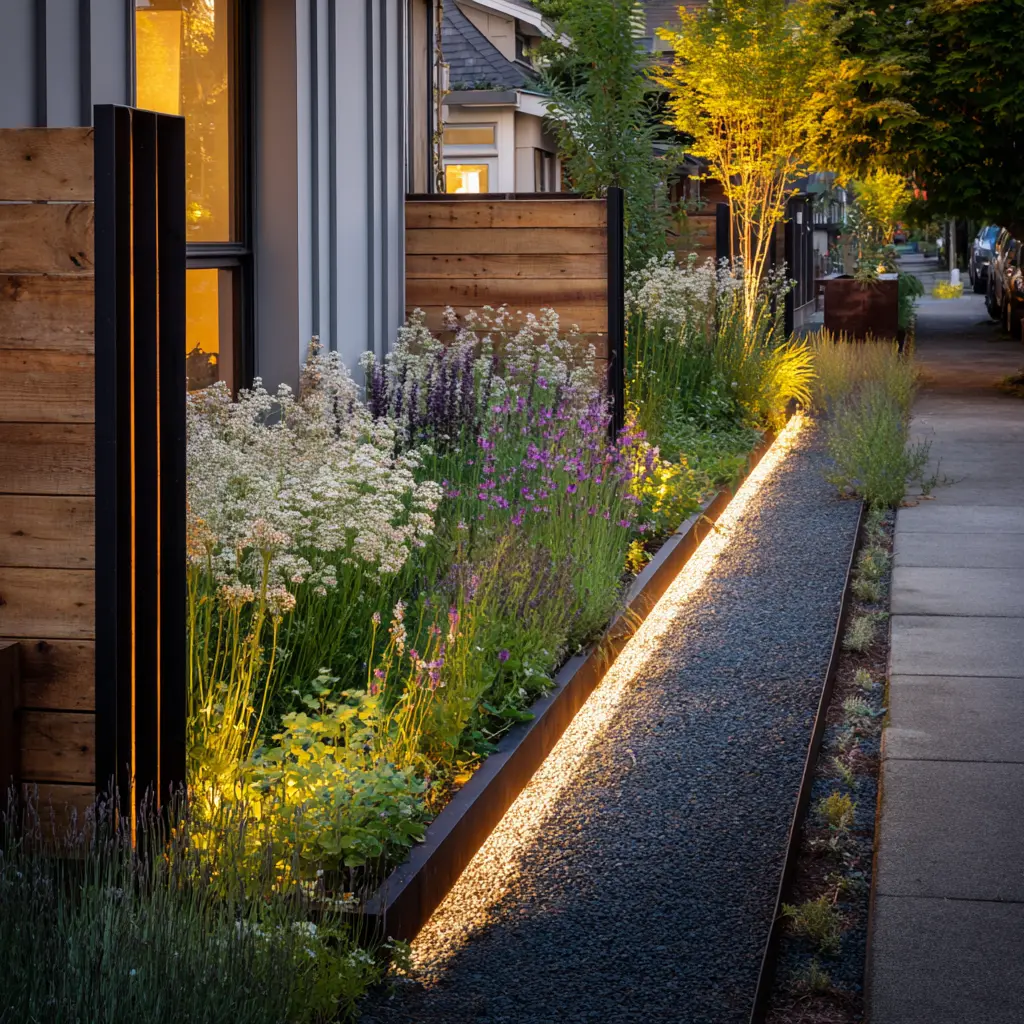
Low beds often need one vertical accent
That low profile keeps windows visible, preserves a broad sense of architecture, and allows the bed to act as a grounded base rather than a screen. Yet a low bed often needs one upright feature so it does not feel visually detached from the house.
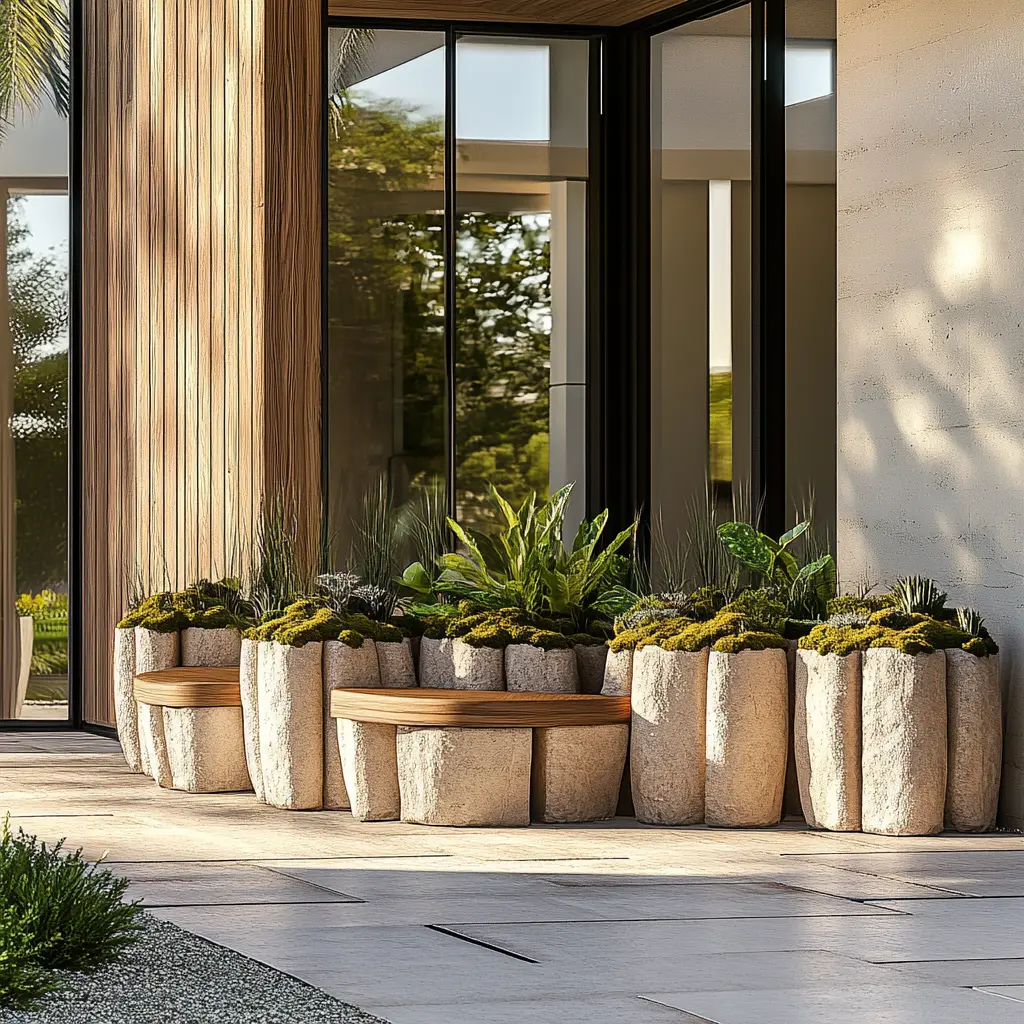
That vertical accent can take many forms: a small tree with an open canopy, upright reeds, clipped shrubs, a rust-toned slab, a sculptural light, or a desert plant with a sharper silhouette. Its role is not only botanical variety.
It helps bridge scale. It connects the low planted composition to the height of the facade, porch, or glazing.
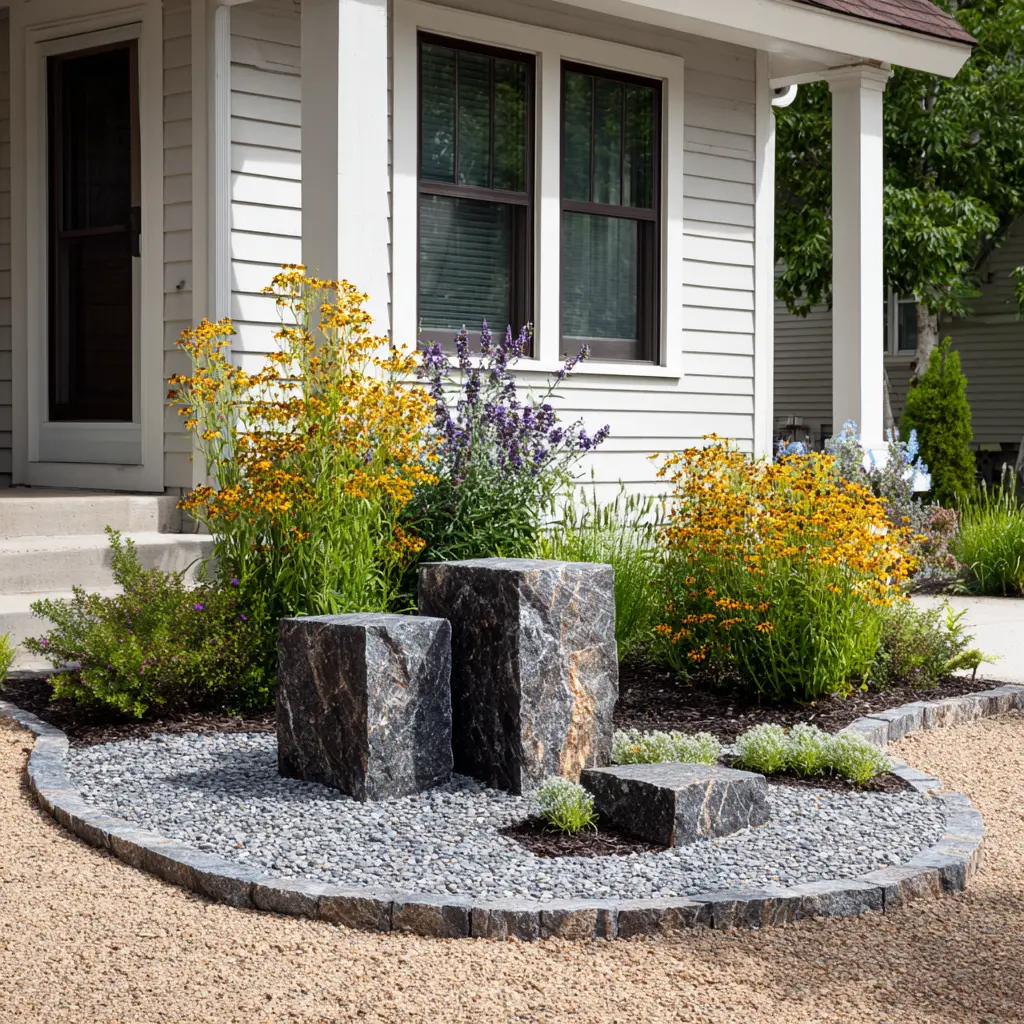
Without that upright note, a low bed can sometimes feel too horizontal, especially in front of a taller wall or wide modern house. With it, the composition gains a clearer relationship to the building.
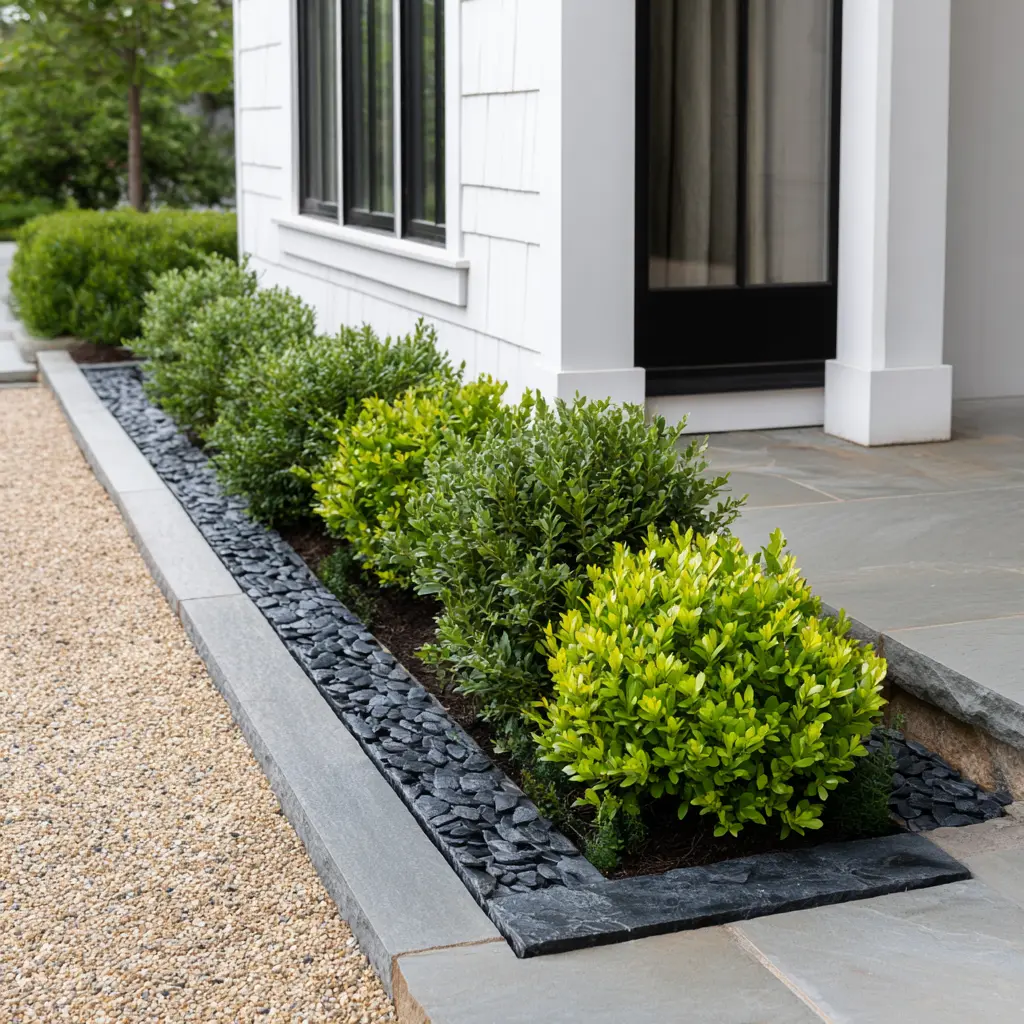
Gravel, pebbles, and mineral fields are not background
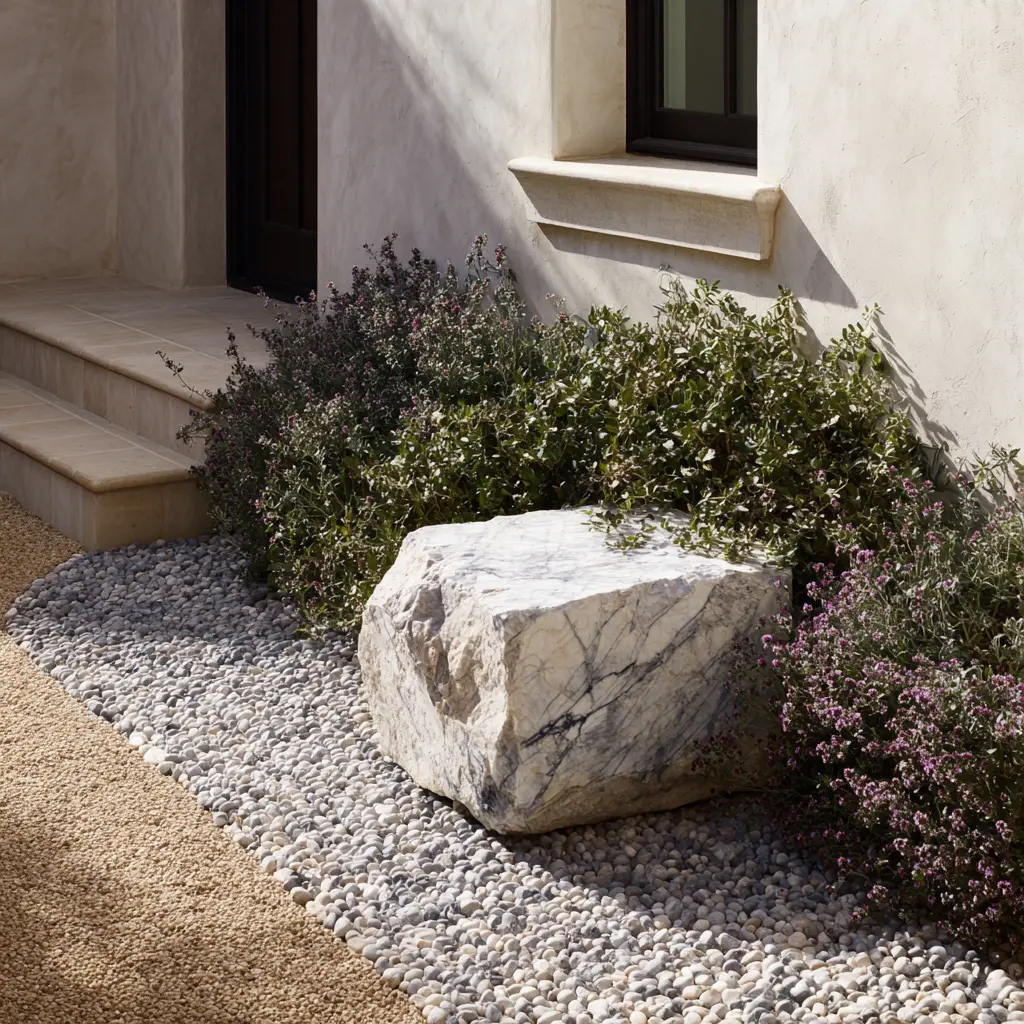
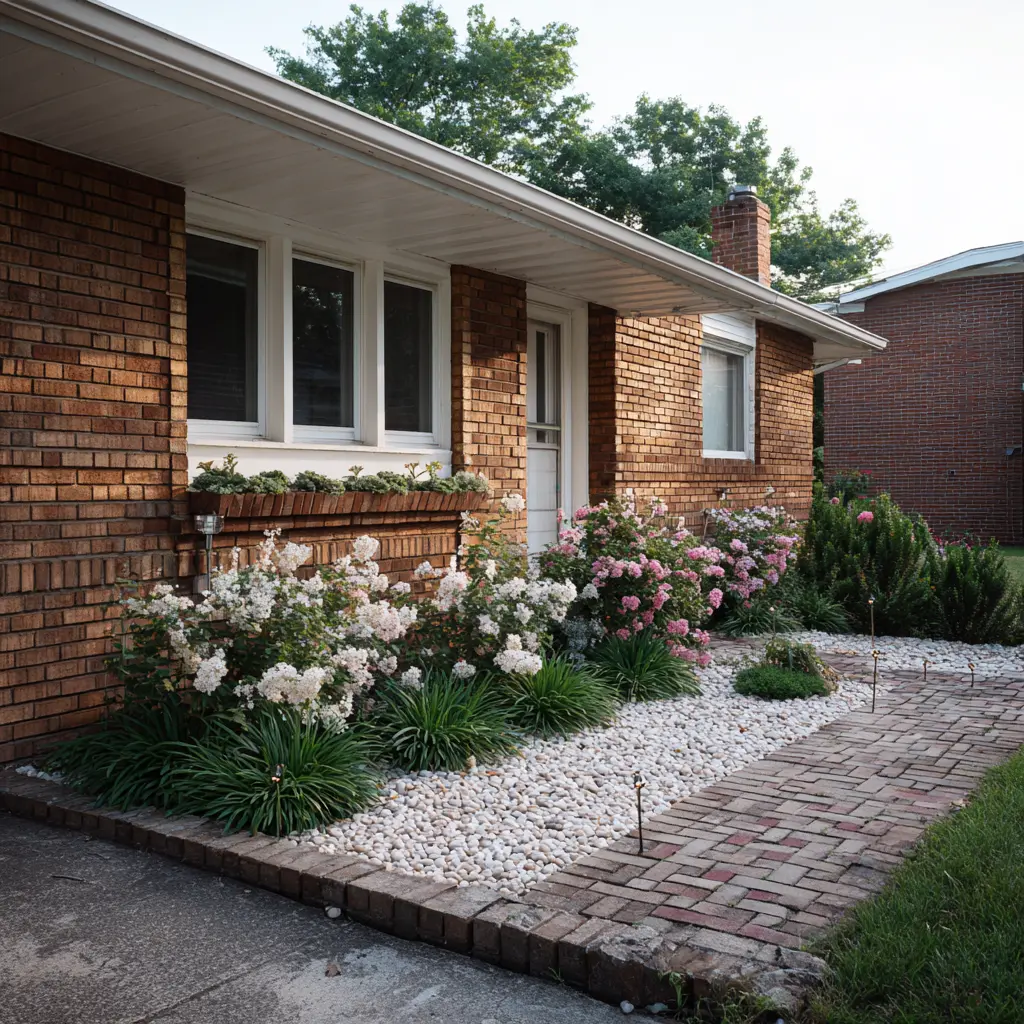
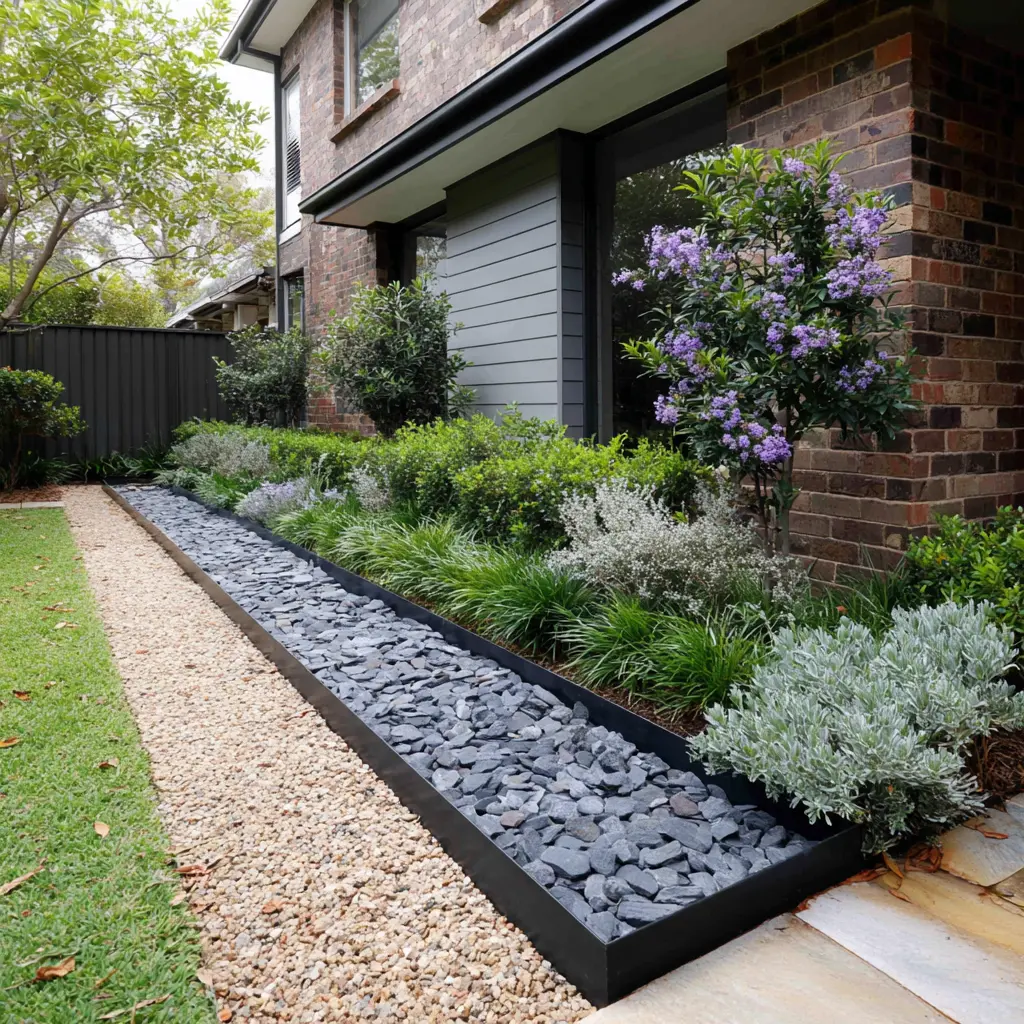
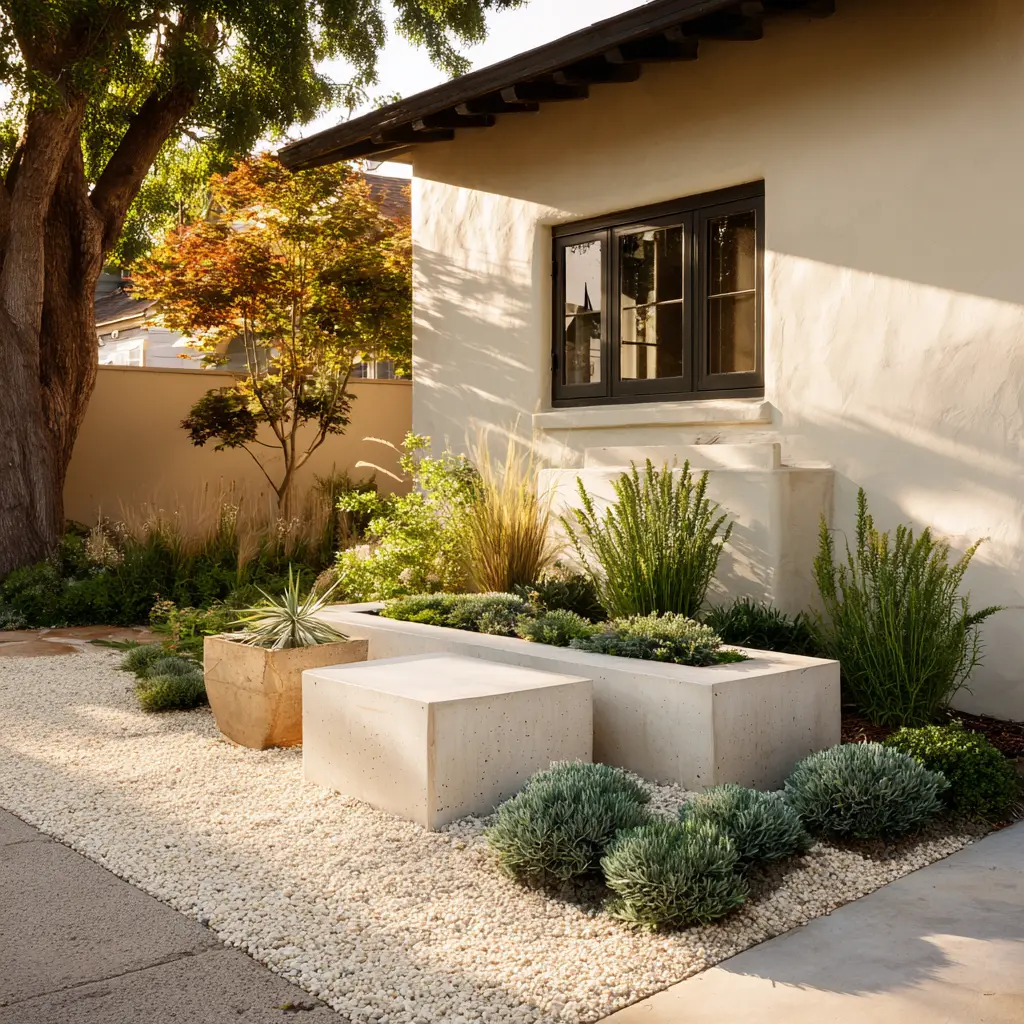
Gravel, black rock, river stones, pebbles, and even glass aggregate can appear not as filler but as active design material. These surfaces create negative space, separate plant masses, carry shadow clearly, and prevent the bed from feeling crowded.
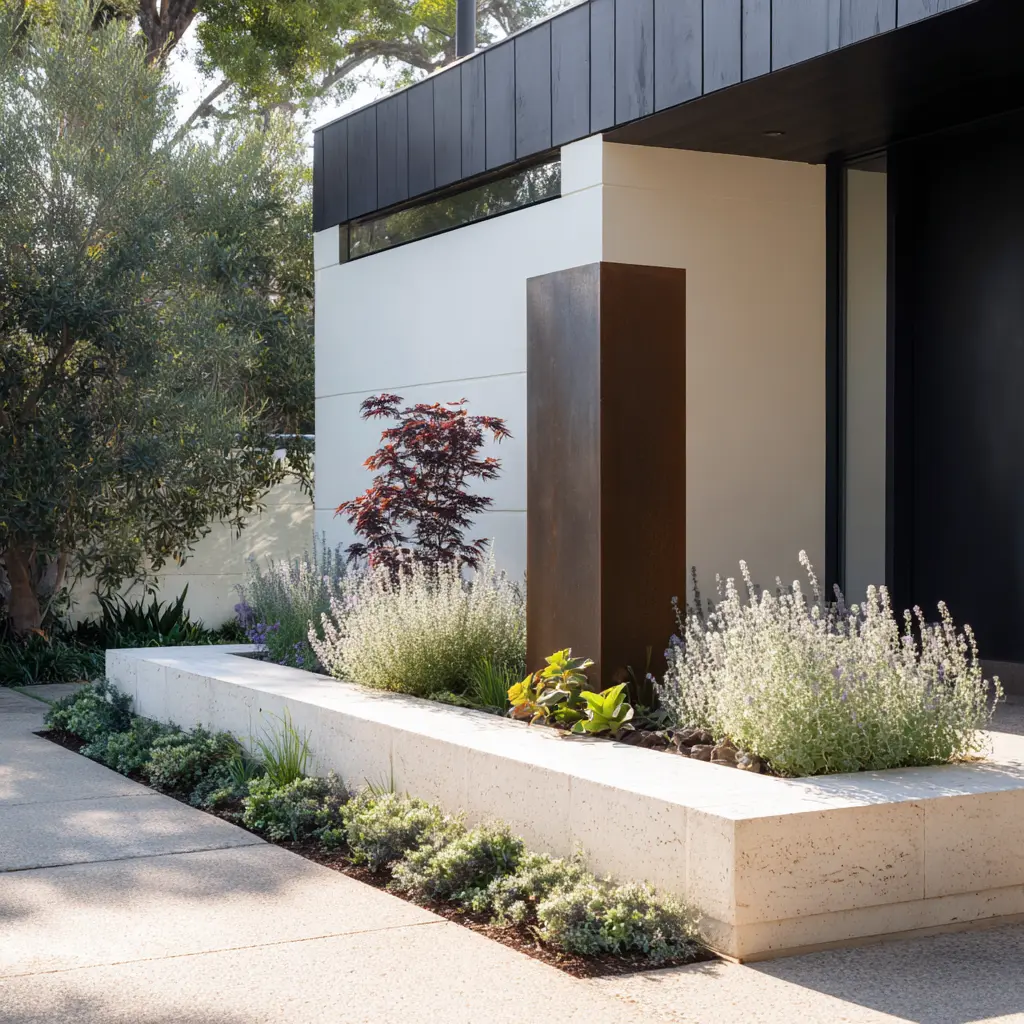
A mineral field helps each object look intentional. A boulder placed in gravel has more presence than the same boulder dropped into mixed planting.
A clipped shrub appears sharper when it rises from dark stone. A raised bed looks more sculptural when there is breathing room around it rather than mulch pressed hard against its sides.
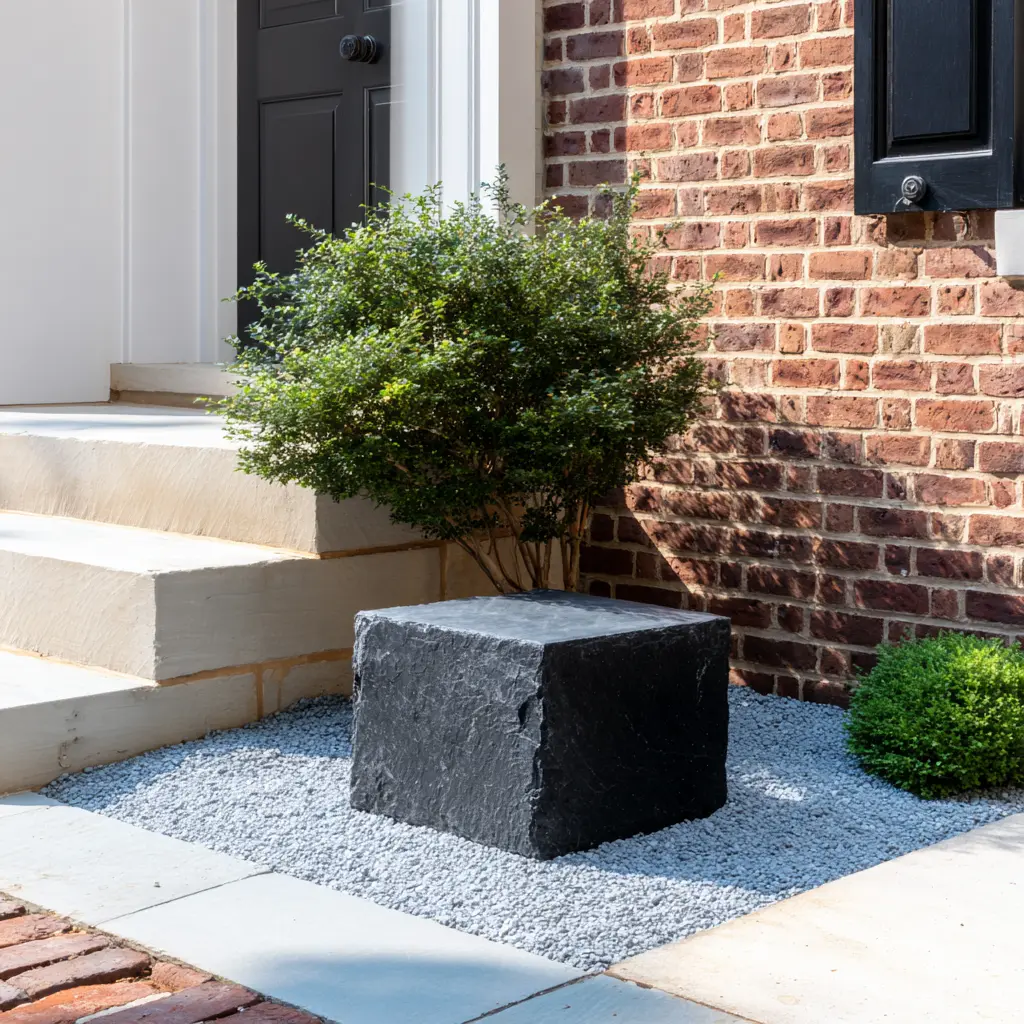
This approach is especially effective in narrow side yards, desert-modern homes, small entry courts, and island beds where too many plants can make the space feel overworked. Mineral ground gives the eye room to pause.
That pause is a large part of the modern look.
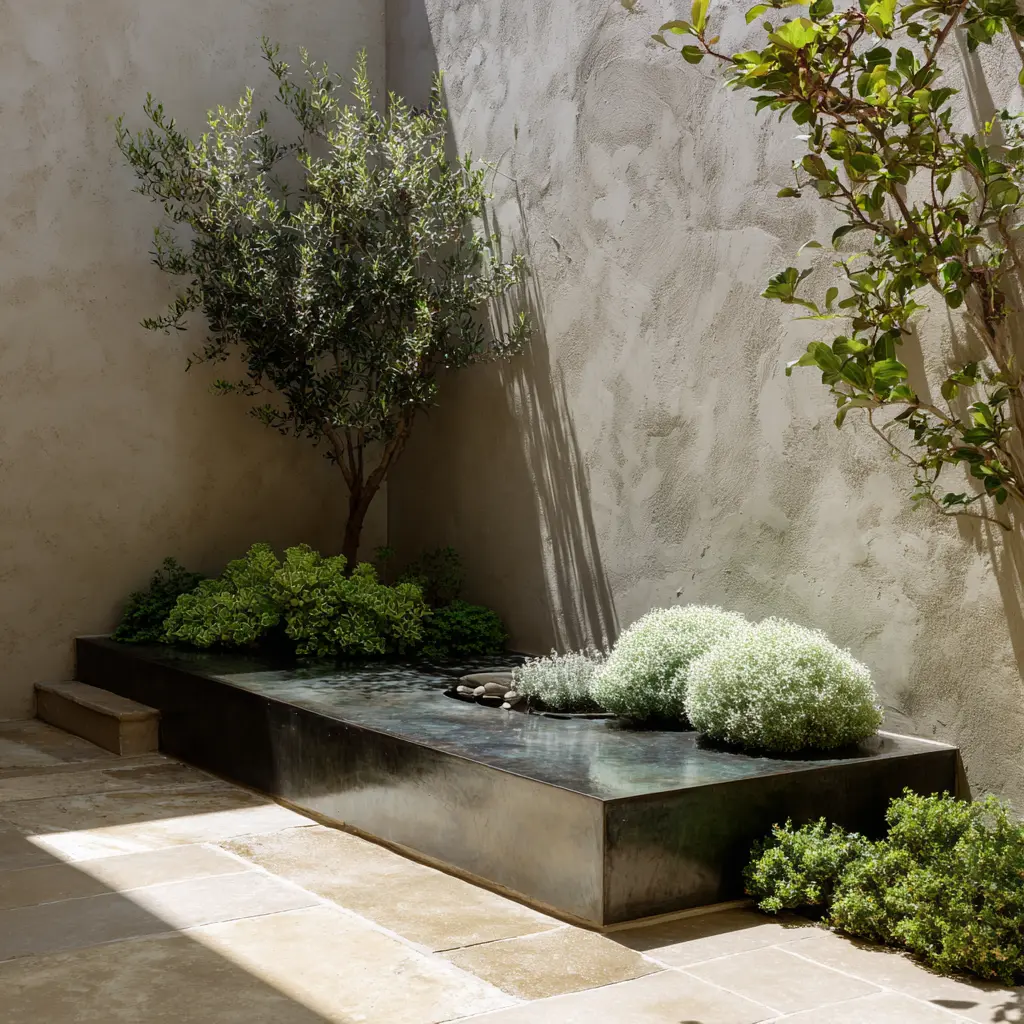
Lighting works best when it changes the mass
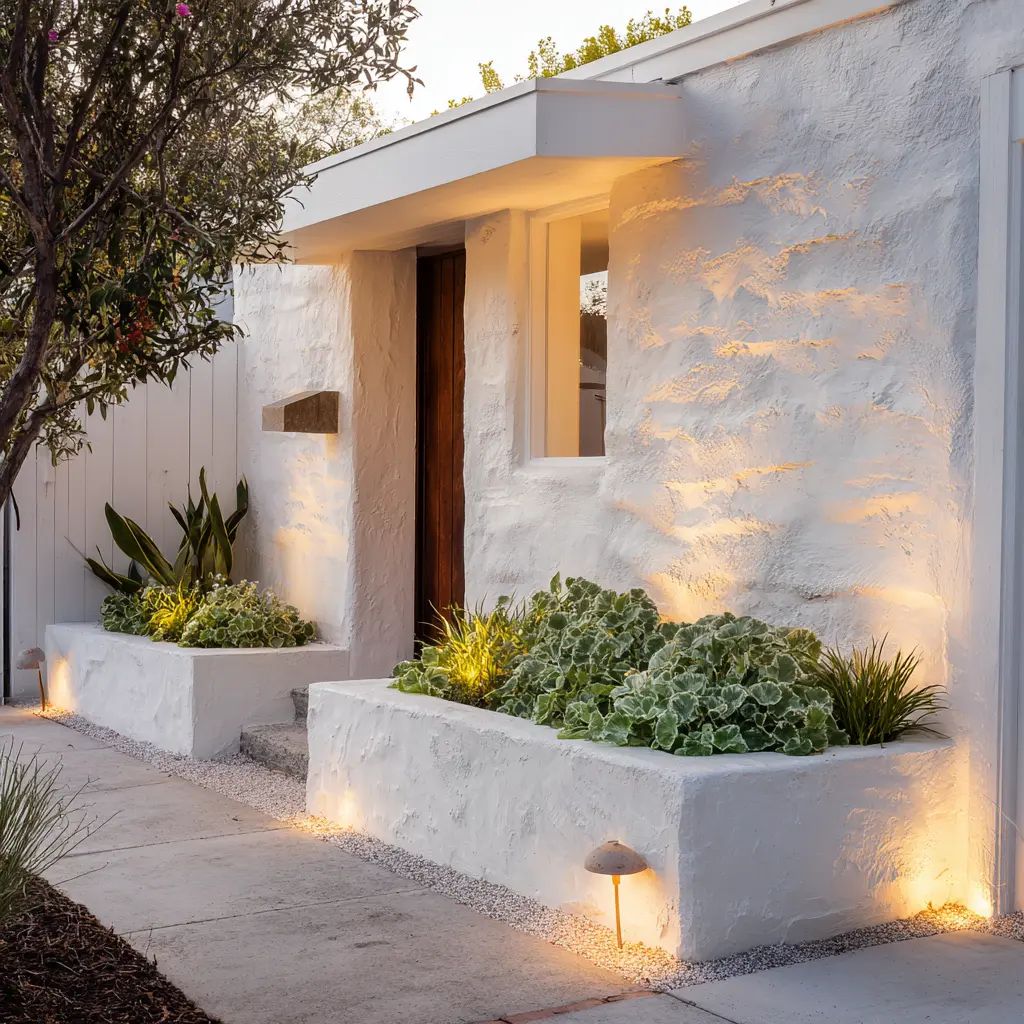
Landscape lighting is often treated as an add-on, but a more precise approach can be used. Hidden light feels especially convincing when it interacts with a built mass.
Underlighting beneath a planter edge, a glow under a curved base, or a perforated lit panel within a planter-bench can make a heavy object seem lighter and more spatial.
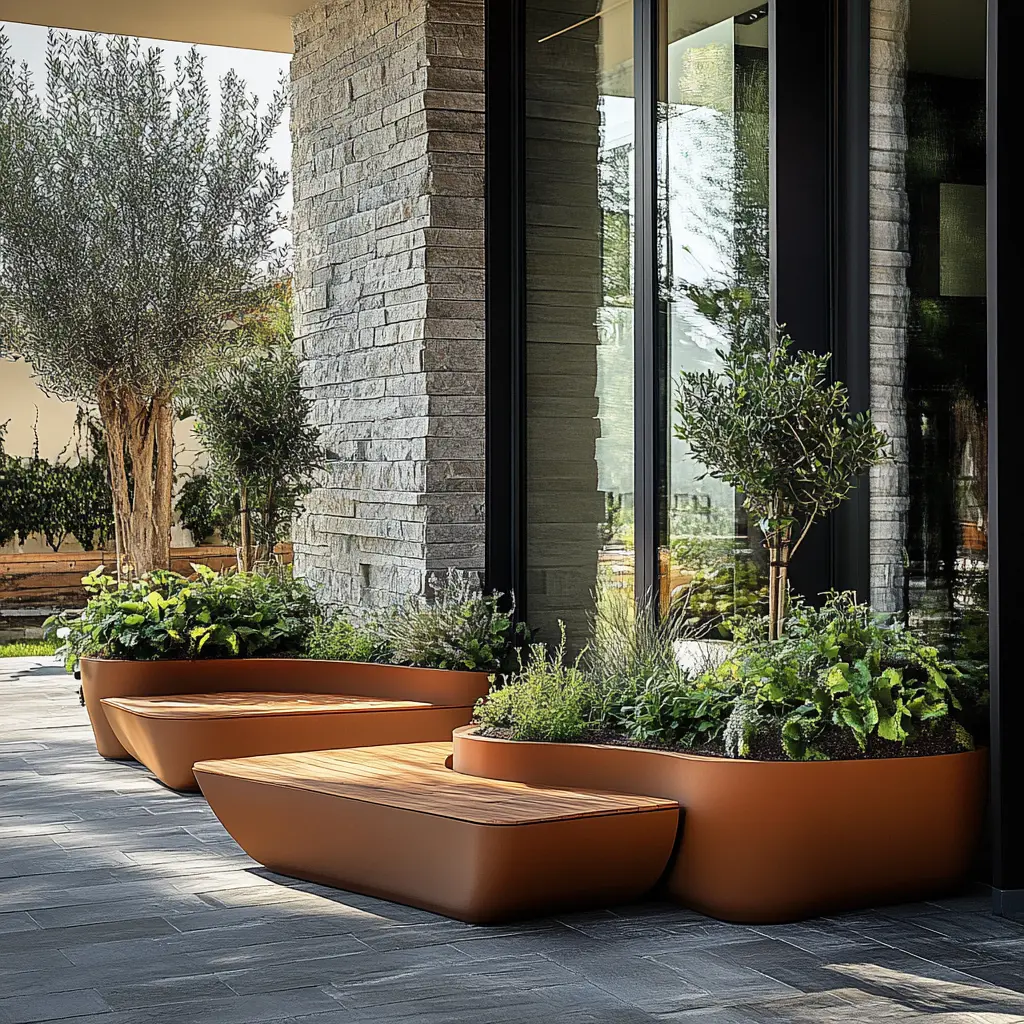
This is very different from simply placing small lights around the plants. In the more modern examples, light is not only illuminating leaves.
It is changing how the flower bed itself is perceived. A solid base seems to float.
A dark front entry feels connected to a warm interior. The house and the bed begin to share one evening atmosphere.
That kind of lighting works particularly well with thicker planter forms, bench-like edges, and sculptural raised beds. The glow should be controlled and integrated, not scattered.
Seating changes the meaning of the bed
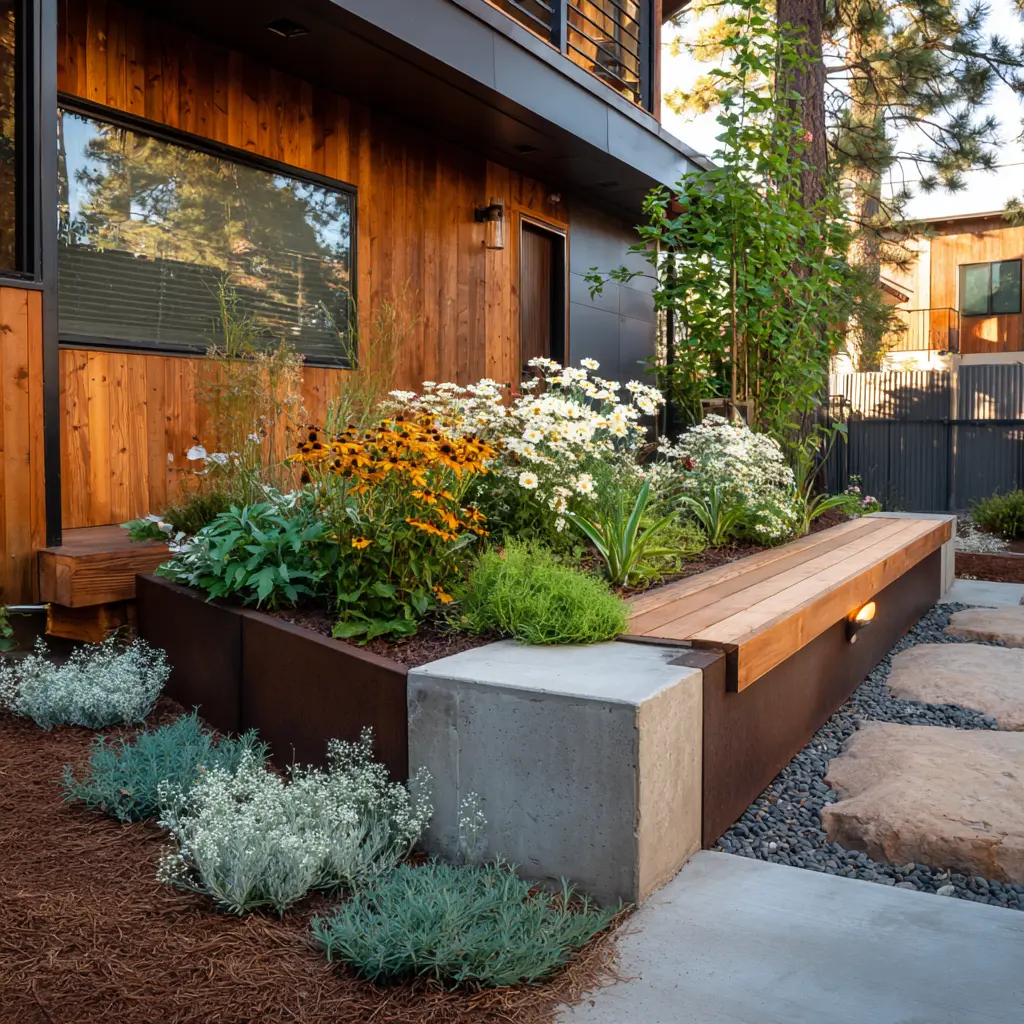
Some of the most interesting concepts combine the flower bed with seating. Once a bench top or seat bridge is introduced, the flower bed stops being a planted border only.
It becomes a place. It starts to shape behavior, not just appearance.
A timber seat inserted into a planter, a long edge that can be occupied for a few minutes, or a bench wrapped by low planting changes the emotional tone of the entry. The flower bed begins to slow arrival.
It adds pause. It gives the exterior a more lived quality.
This is especially useful in front entries that might otherwise feel polished but distant.
When seating is added, warmth becomes more important. A seat wants tactile comfort.
That is why wood, earthy vessel colors, and warmer light can be a good option. Once the body is involved, the flower bed needs to feel touchable as well as visually clear.
Curves are useful, but not always necessary
Curved flower beds bring a softer, fresher look. But curves are not the default modern move.
They are often used when the house itself is very strict, flat, dark-framed, or strongly rectilinear. In that situation, a curve can soften the frontage and reduce stiffness.
But many modern flower beds remain straight, linear, and very effective. The decision should come from the architecture.
If the house already has enough softness in material, texture, or planting, a rigid bed may work well. If the facade feels severe, a rounded planter, crescent bed, or softened-corner vessel may provide the right amount of relief.
So the modern look does not depend on curves alone. It depends on using curve only where the composition actually needs it.
Four practical directions for a modern flower bed
There are many flower bed ideas, but four directions stand out.
- The first is the architectural plinth bed. This is a low, thick bed that feels attached to the house itself. It works well beneath windows, near entry glazing, or against modern walls where the goal is a grounded base with restrained planting.
- The second is the bench-landscape hybrid. This approach is good for front porches, wide entries, and side courts where the flower bed can also support a short moment of sitting. It feels warmer and more domestic while still staying current.
- The third is the mineral-field composition. This direction suits dry climates, desert-modern houses, side strips, and sculptural front yards. Gravel, rock, and open ground do much of the compositional work, while plants are spaced as accents.
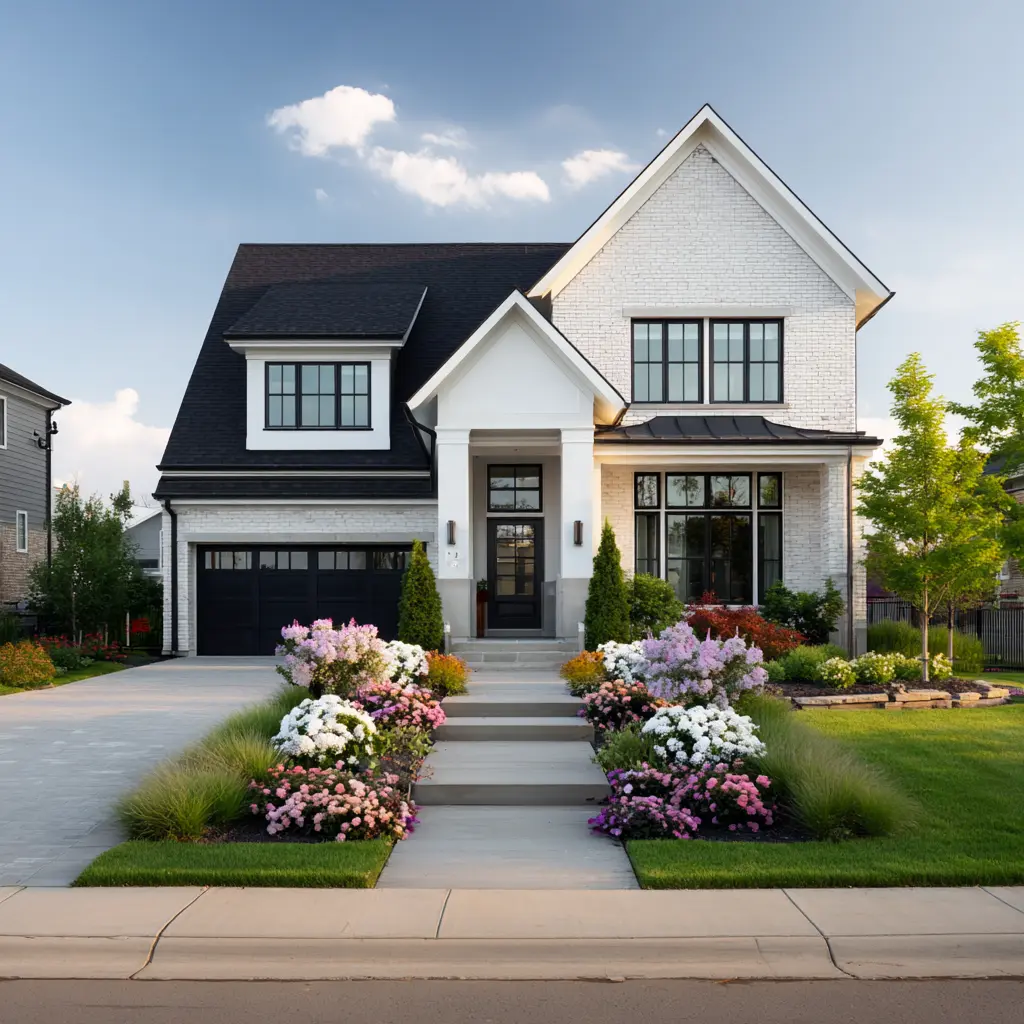
- The fourth is the floral modern bed. This is the right route for homeowners who still want flowers, softness, and seasonal color. The difference is that flowers are grouped into clear drifts and held by a strong frame, raised edge, or well-defined ground plane.
A better way to think about modern flower bed ideas
The larger lesson is simple but useful: a modern flower bed does not need to be empty, harsh, or plant-light. It needs order.
It needs a clear relationship to the house. It needs a readable edge, one or two strong contrasts, and enough control that softness feels intentional rather than accidental.
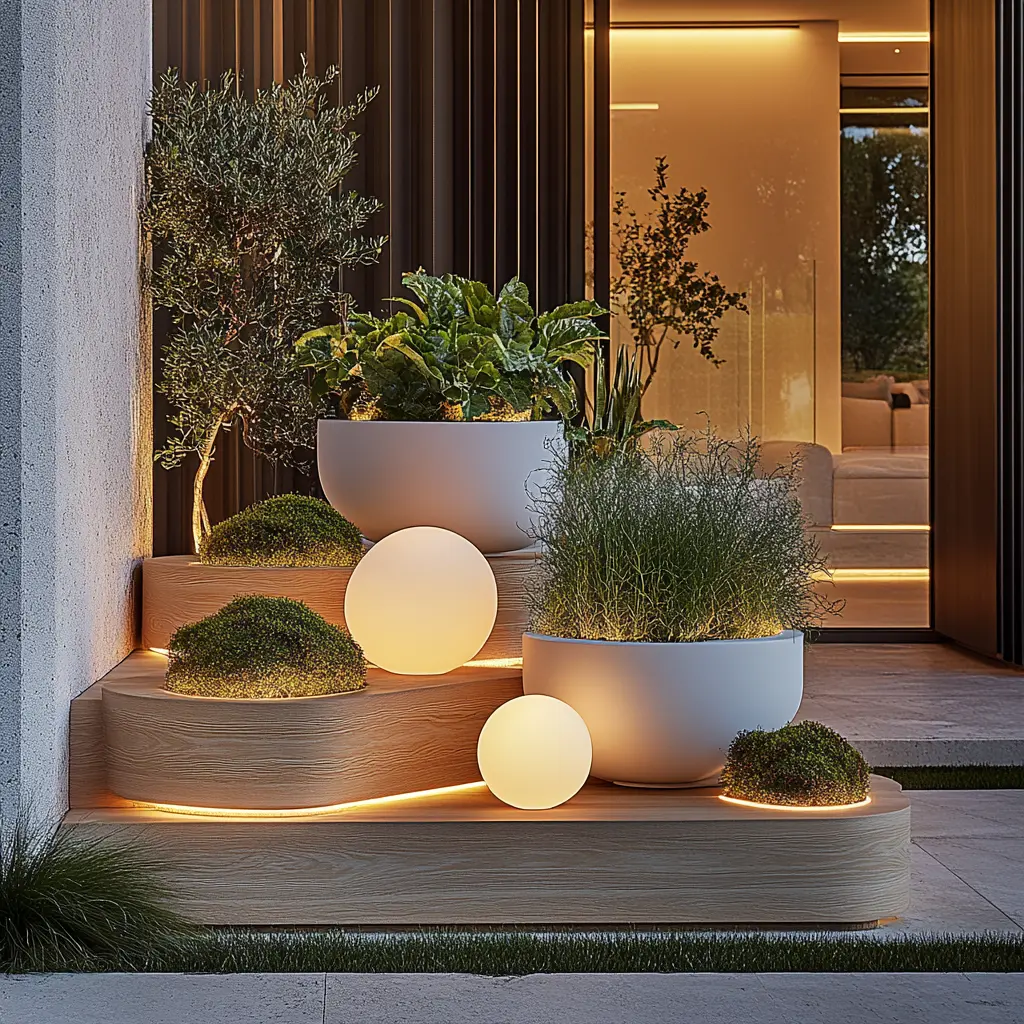
A flower bed starts to look current when it is treated as part of the architecture of arrival. That may mean a thick planter mass, a gravel field, a warm bench top, a lifted glowing base, one upright accent, or a carefully framed drift of flowers.
The plants still matter, but they are most convincing when the composition beneath them has already set the structure.
That is why the modern flower bed often feels so composed. It is not only decoration.
It is an edge, a threshold, and a foreground space that helps the house meet the garden in a more thoughtful way.
This article is intended for general design inspiration and informational purposes only. The ideas shared here focus on visual composition, style direction, and exterior decorating approaches for modern flower beds.
They are not a substitute for professional landscape, horticultural, drainage, irrigation, lighting, or structural advice. Before making changes to your yard, consult qualified local professionals when needed and confirm that all materials, plants, lighting, and construction details are suitable for your site.