Colonial kitchen style stays appealing because it offers something many newer looks struggle to hold onto for long: order, house character, and a sense that the room belongs to the architecture rather than floating inside it. But a stylish Colonial kitchen today does not succeed by copying old details piece by piece.
It works when the architectural bones stay intact and the visual weight is adjusted with care.
The kitchens that feel current keep the classic shell—trim, cabinet hierarchy, centered wall composition, window importance, and a hood that feels built into the room—then update that shell through lighter surfaces, cleaner lighting, edited counters, and a more social island life. That means the style stays grounded in tradition, but the atmosphere shifts closer to present-day living.
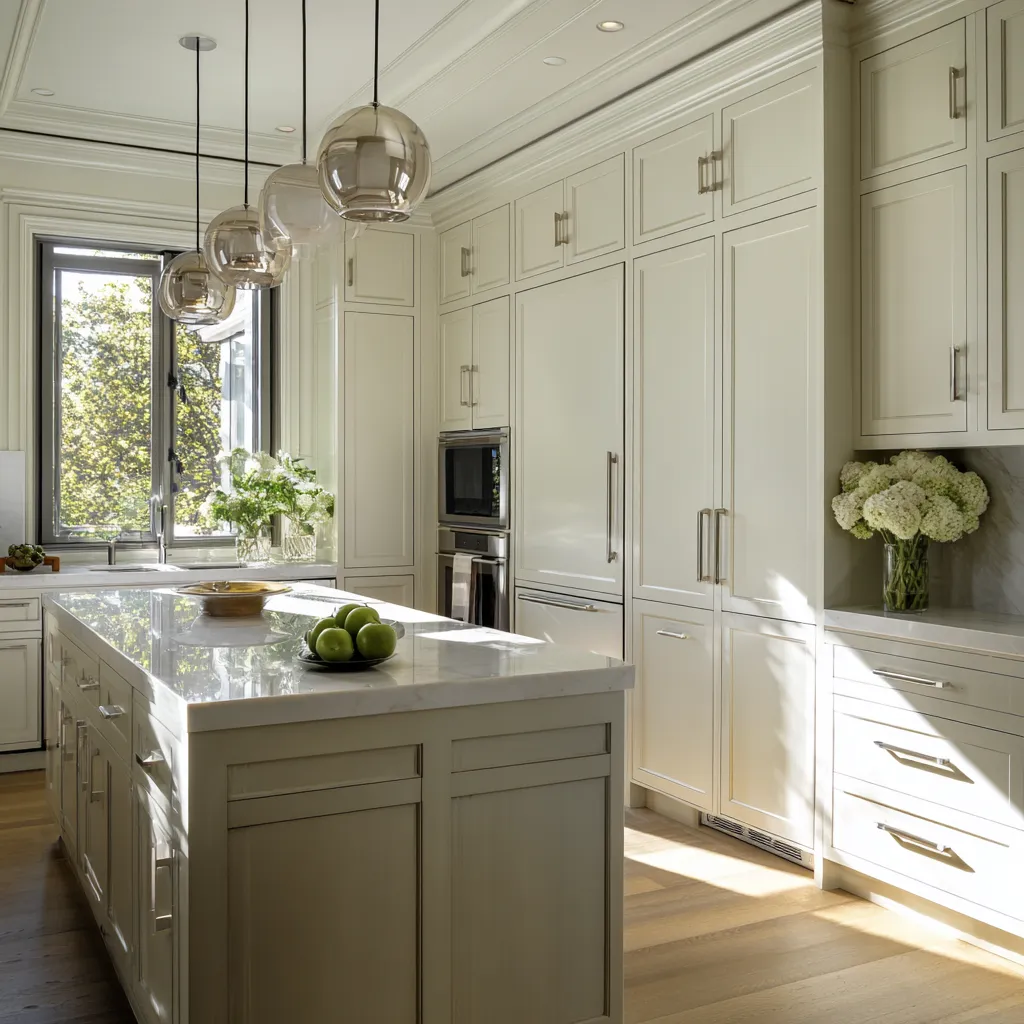
The stylish part begins with the shell
Modern Colonial identity is carried first by the room envelope. The kitchen design ideas that hold the style well do not rely on vintage props, nostalgic signs, or decorative clutter.
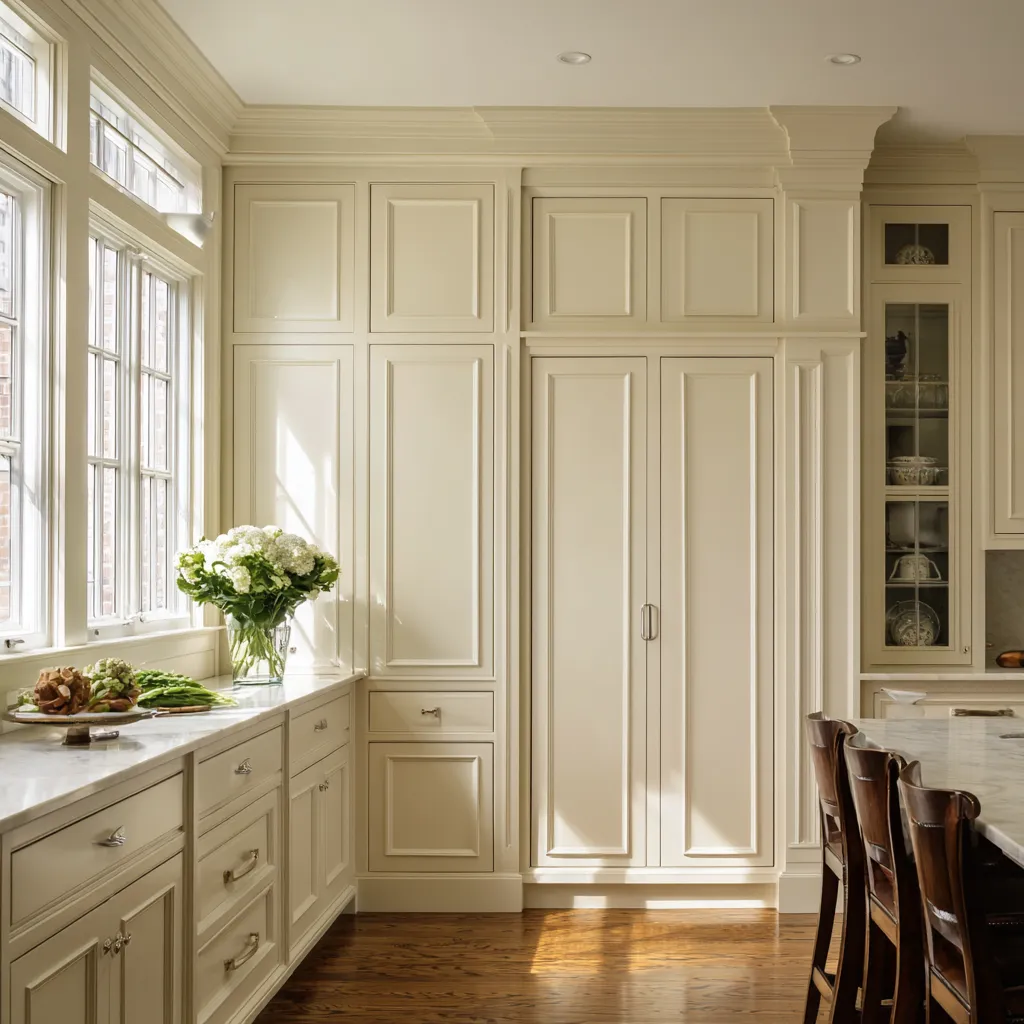
They are relying on architectural control. That control is in deep crown lines, framed cabinet fronts, strong casing around windows, wall compositions built around a center, and hood treatments that feel almost like mantel forms.
Even in the lighter and fresher kitchens, those features stay in place. The style does not become current by removing them.
It becomes current by letting them stand inside a cleaner, brighter setting.
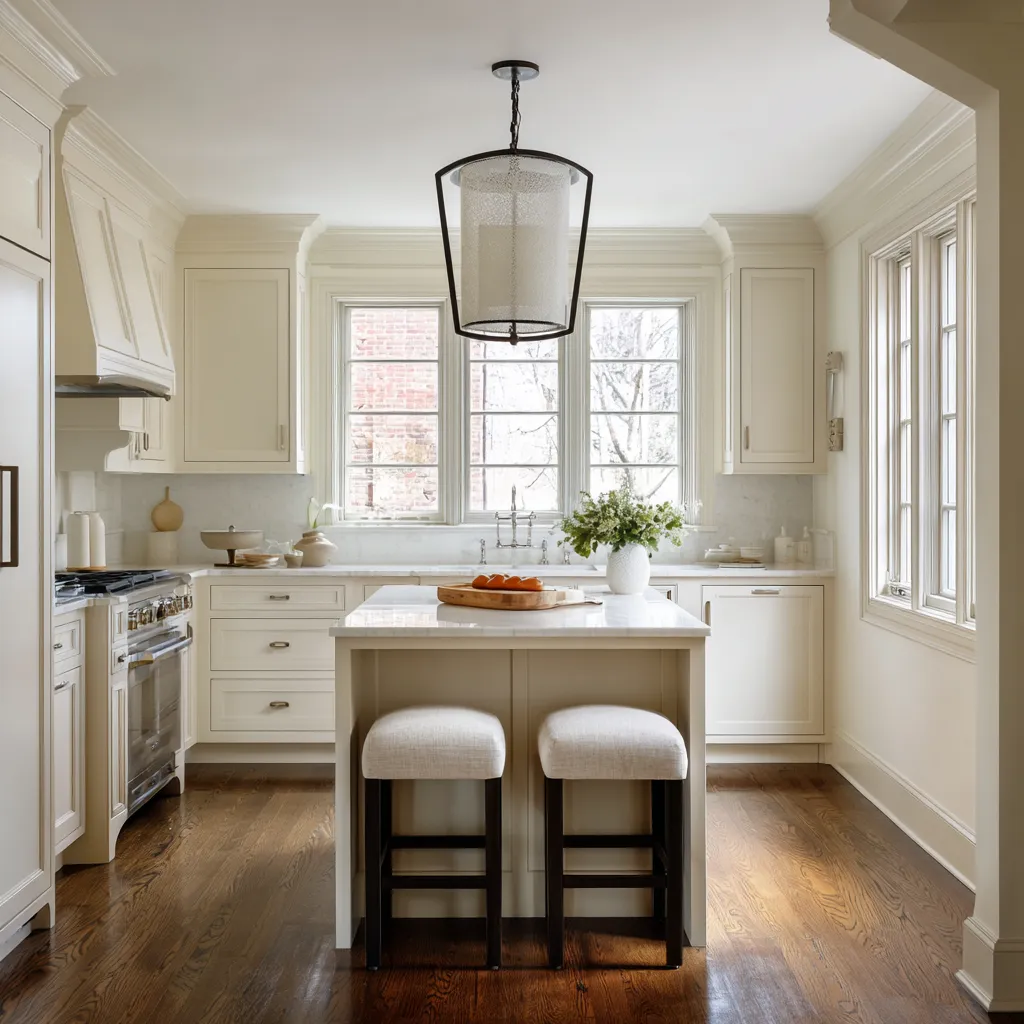
This matters because many people trying to refresh Colonial style start at the wrong end. They swap in a few traditional stools or a lantern, then wonder why the room still feels generic.
There is a different sequence. Start with cabinet architecture, trim depth, the importance of the windows, and the hierarchy of the walls.
After that, accessories only need to soften the room slightly. A few flowers, fruit, branches, or greenery are enough.
Their job is not to create the style. Their job is to keep the architecture from feeling too rigid.
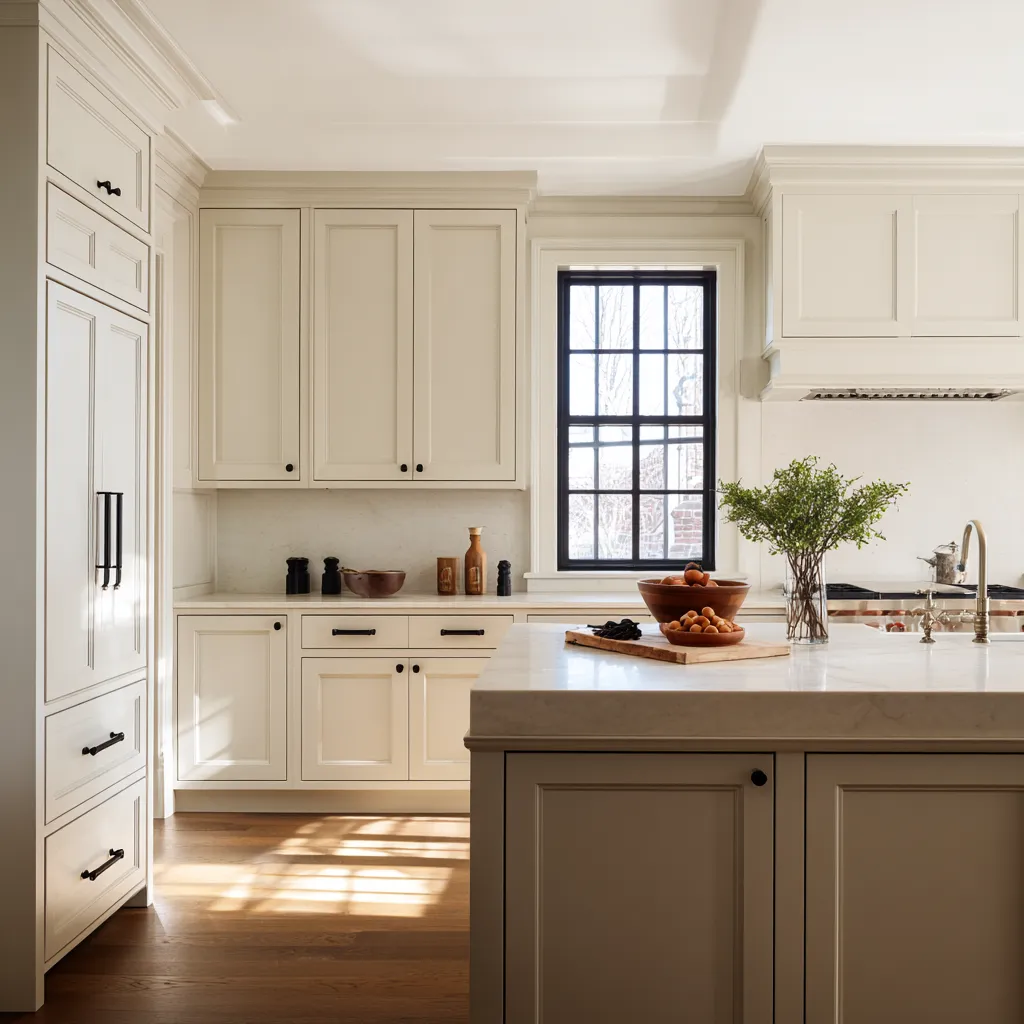
A stylish Colonial kitchen is pale, ordered, and edited
The most common visual profile for a stylish look is not dark, heavy, or highly formal. It is pale, structured, and restrained.
A light envelope works well. The design can also rely on a centered sink wall, a long island, and some degree of symmetry.
That combination is useful because it explains how modern Colonial kitchens can feel polished without feeling overly ceremonial. Pale cabinetry and light stone keep the room open.
Order in the cabinet layout keeps it tied to Colonial tradition. Limited object styling lets the trim and millwork stay visible.
In other words, the room looks refined because the surfaces are not fighting one another.
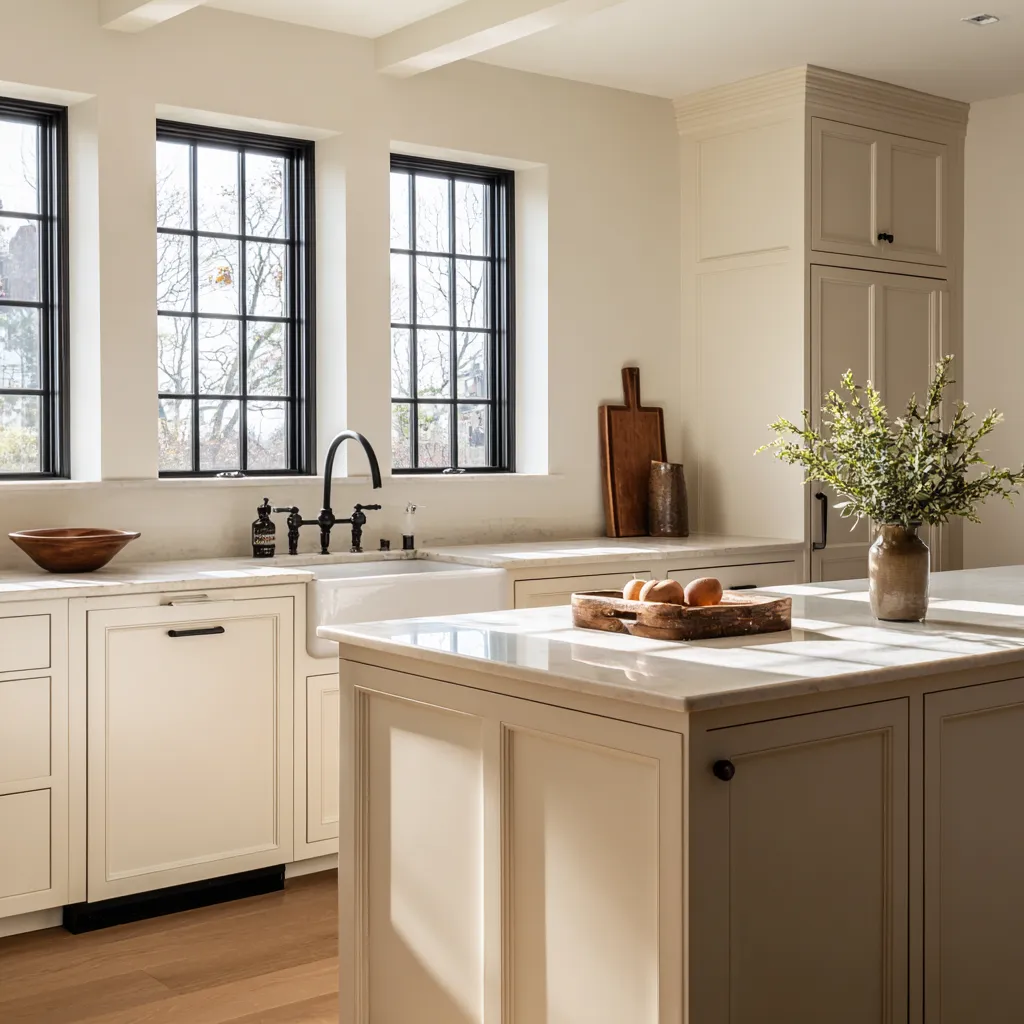
This is also why many Colonial kitchens feel fresher today than they did in older, darker versions of the style. The room still has proper framing, cabinet rhythm, and visual balance, but the palette has been tightened and the object count reduced.
That shift alone changes the mood from historically referential to fully livable.
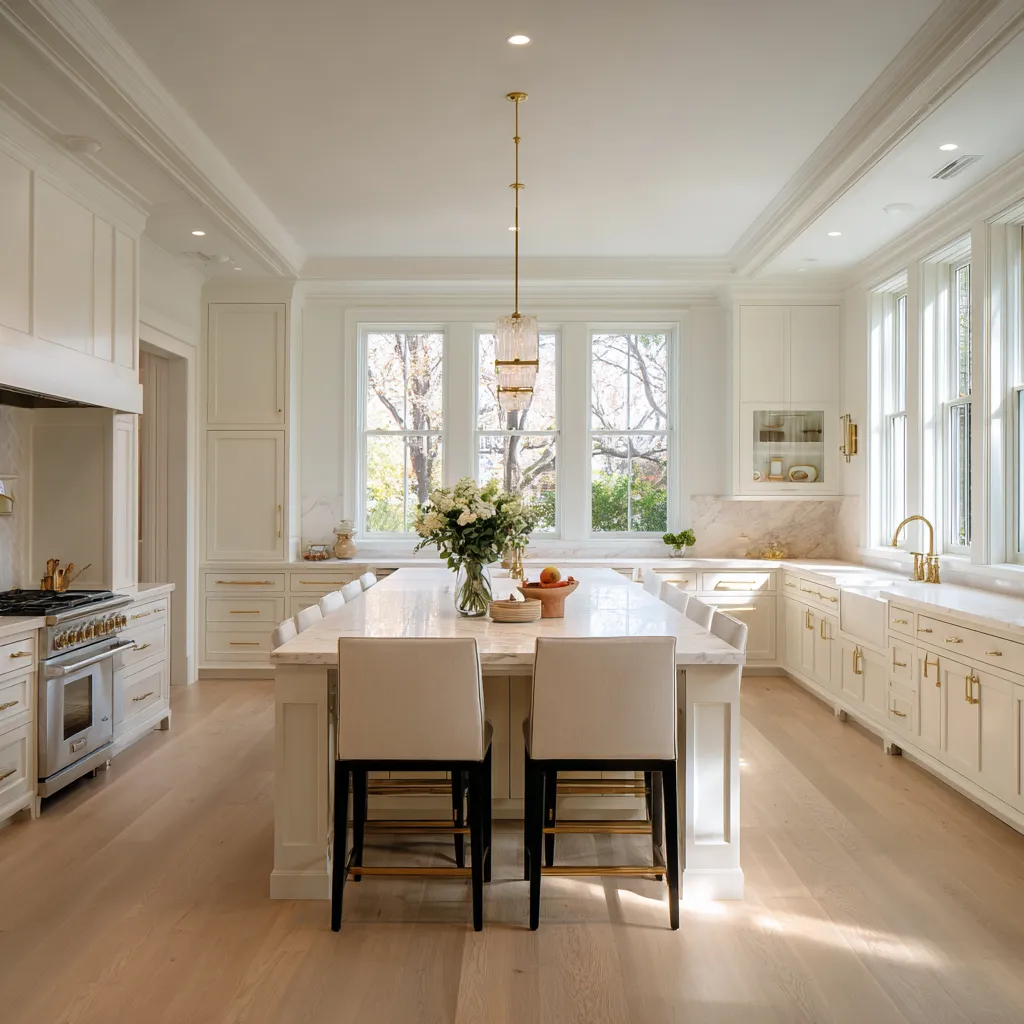
There are two ways to make Colonial style feel current
There is not one single route to a modern Colonial kitchen. There are two.
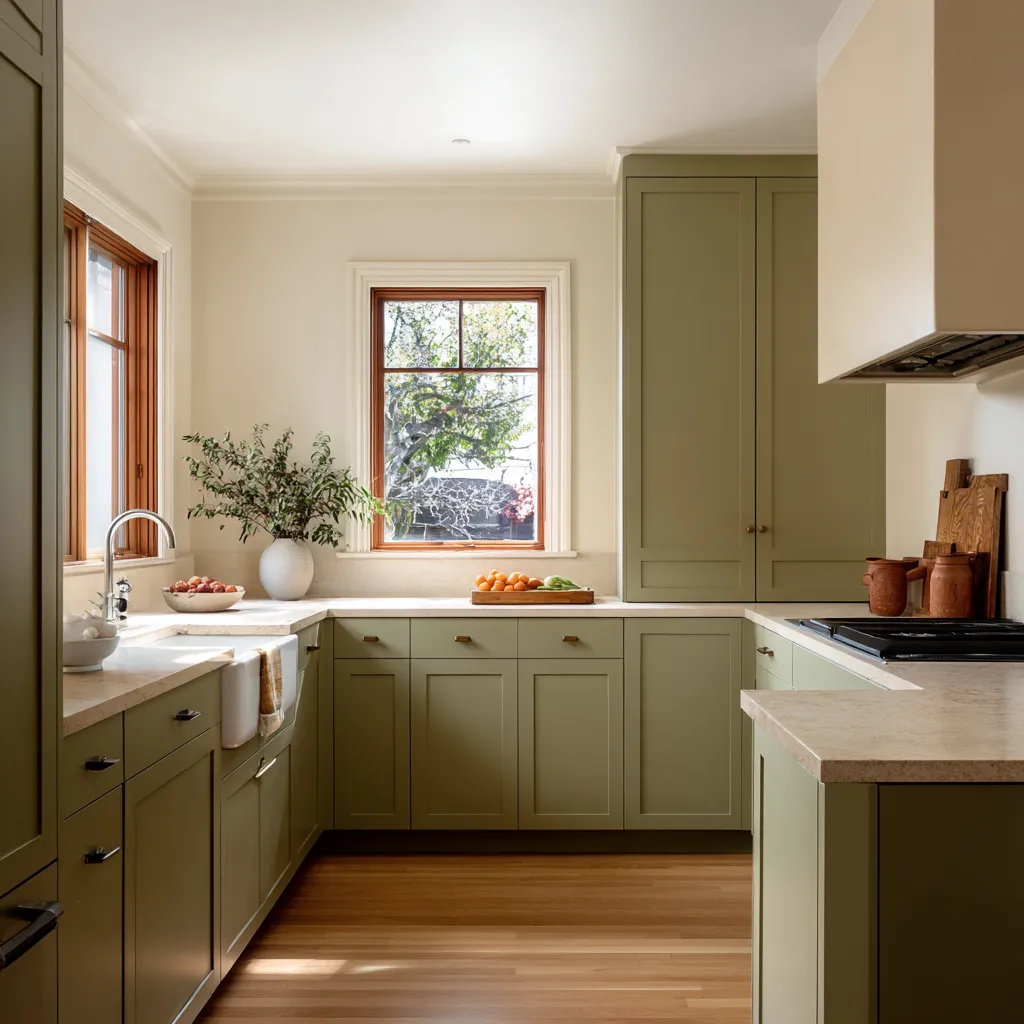
The first route is the soft-bright version. This one uses light floors, pale cabinetry, controlled counters, and less graphic contrast.
It often feels more open, brighter through the day, and a little softer in mood. It suits homeowners who want traditional structure without a stately or dressy atmosphere.
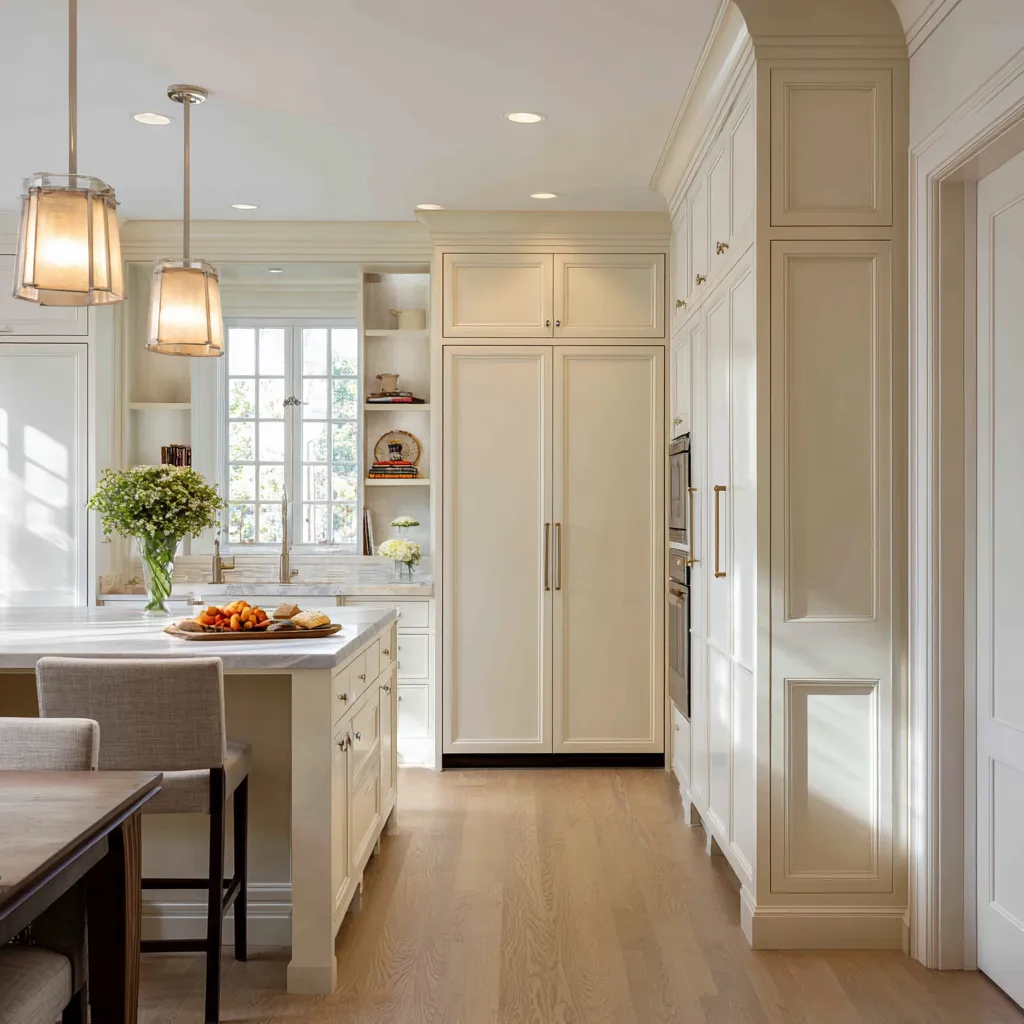
The second route is the sharper contrast version. This one keeps the pale shell but introduces black window lines, darker floors, darker stools, or stronger outline in the lighting and accents.
It usually feels more defined, more architectural, and slightly dressier. It still belongs to Colonial style because the cabinet hierarchy and room order stay intact, but the room has more edge.
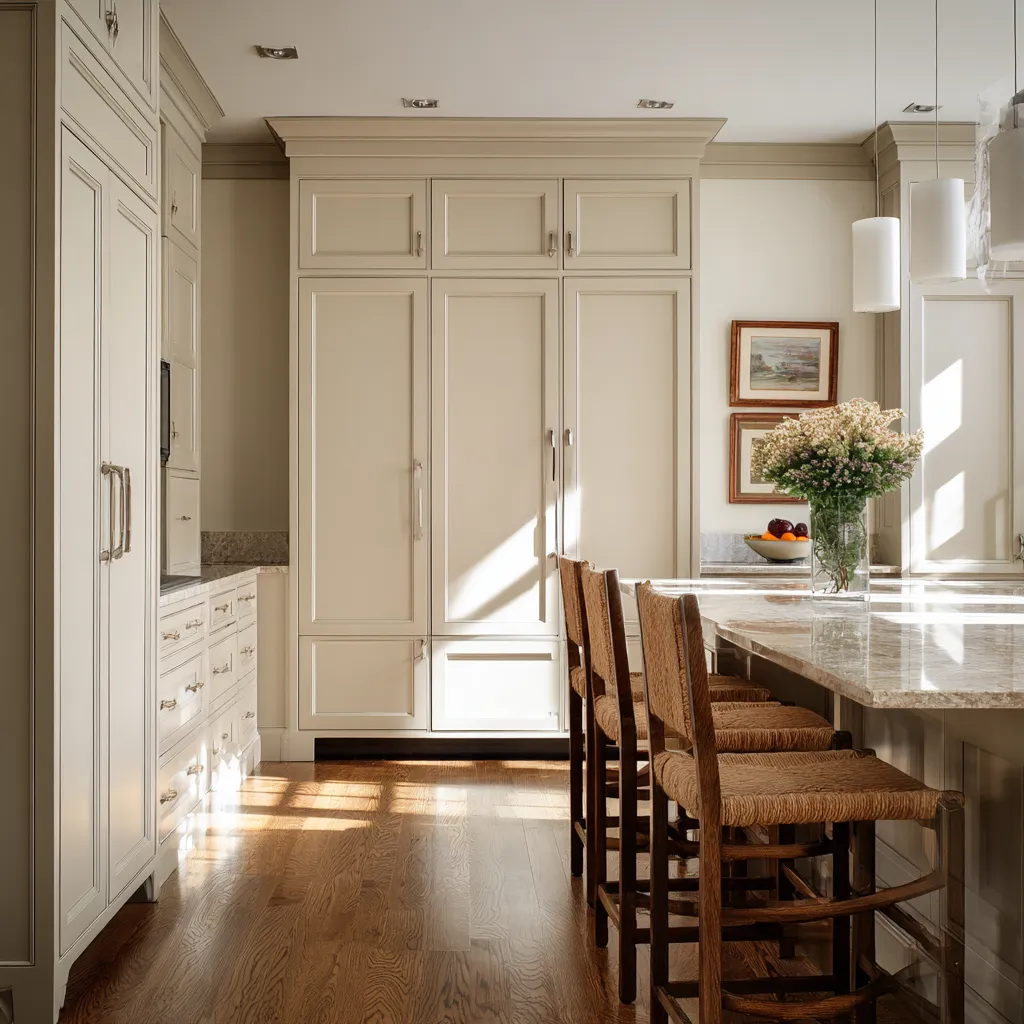
This split is important because it gives a way to choose direction early. A stylish Colonial kitchen design can move toward airiness or toward definition.
Both work. The mistake is trying to do both equally at once without a clear center of gravity.
A room with pale cabinetry, dark window grids, dark floor, strong brass, lanterns, and heavy glass fronts can start to feel over-composed unless each move is handled with discipline. A room with pale cabinetry, pale floor, barely-there hardware, and almost no trim presence can drift too far from Colonial character.
The successful designs pick a lane, then support it consistently.
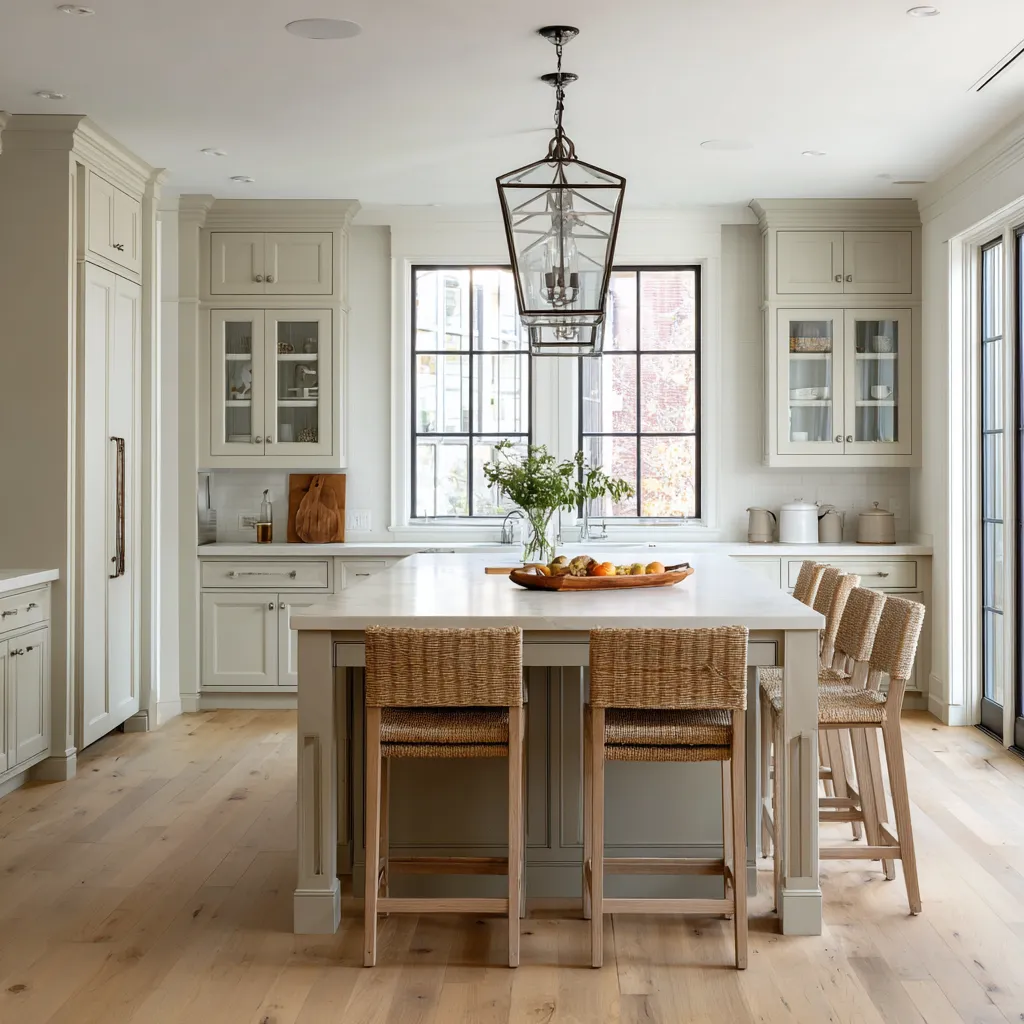
Sink-wall Colonial vs Island Colonial
Another major split inside this style is not old versus new. It is sink-centered Colonial versus island-centered Colonial.
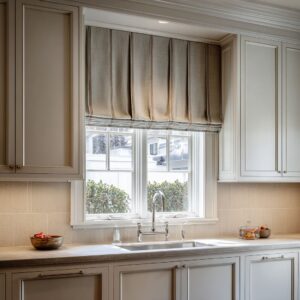
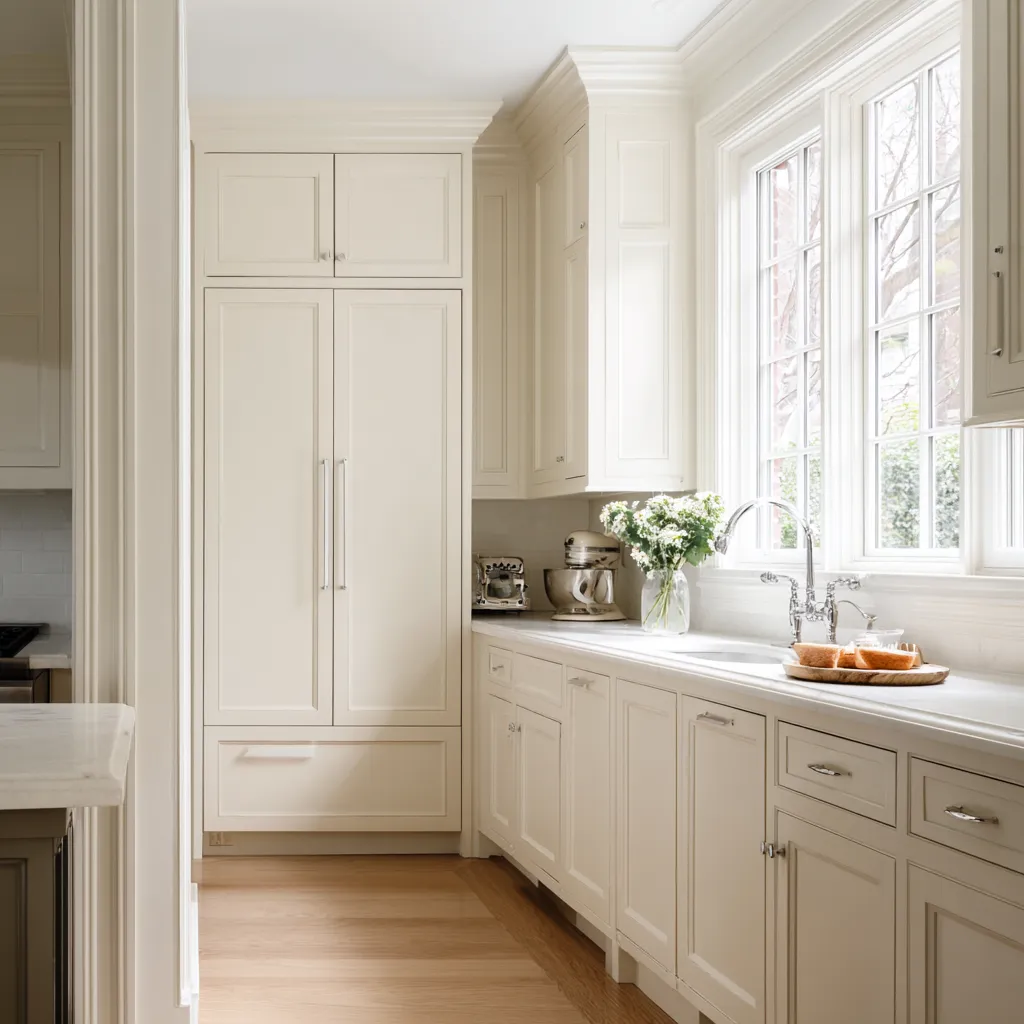
The sink-window version is more intimate, more room-based, and more rooted in household routine. These kitchens often make the sink wall the emotional center of the room.
A deeply framed window, a sink beneath it, restrained counters, and a more enclosed sense of room shape all help create that effect. This subtype suits people who want a kitchen that feels deeply tied to the house itself.
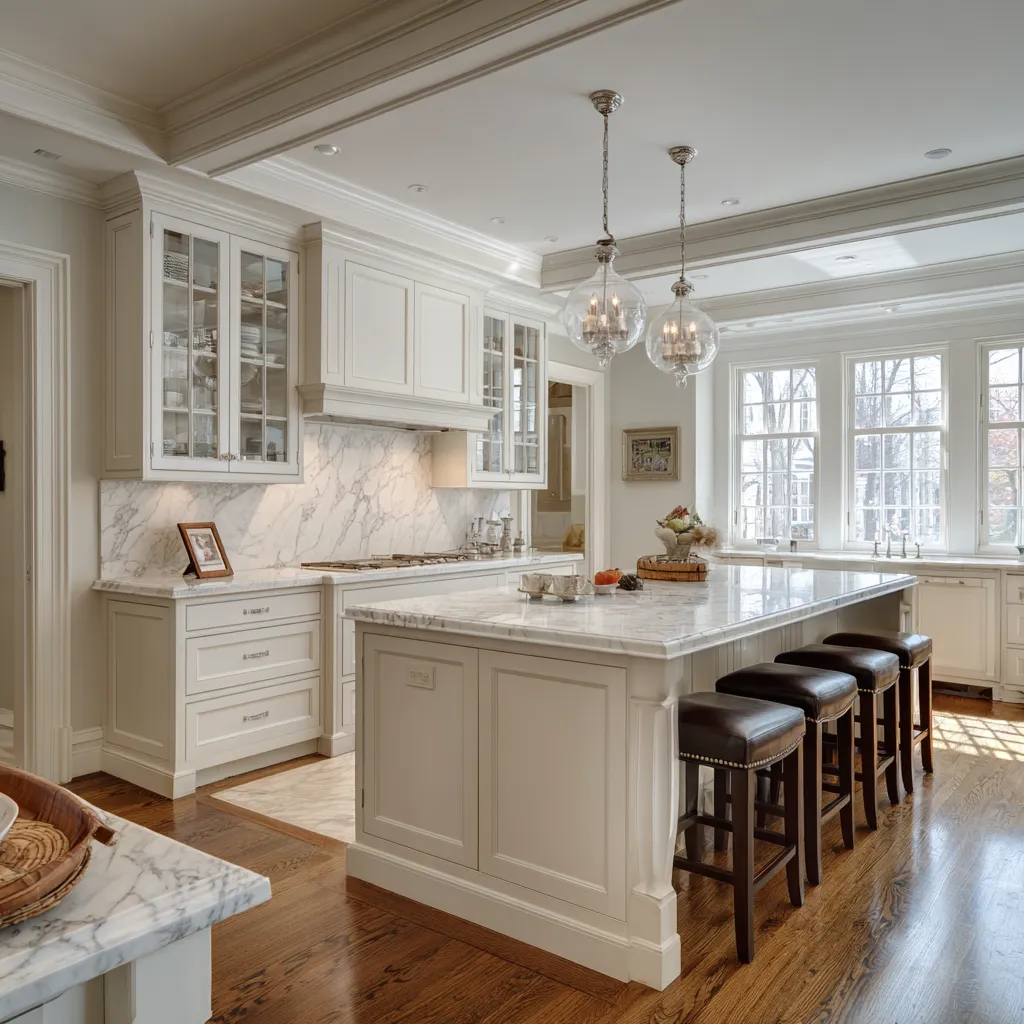
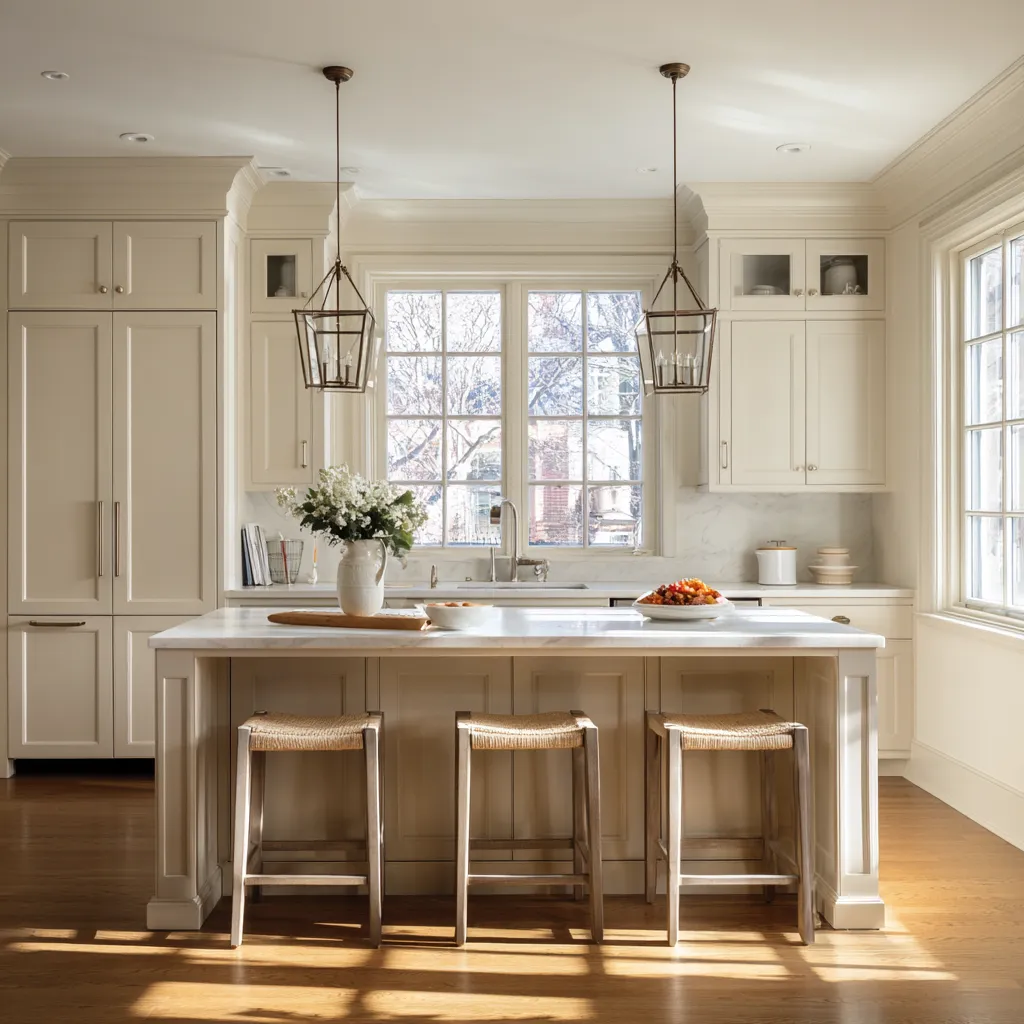
The island-centered version shifts the emotional core away from the wall and into the middle of the room. Here, the long island, stool selection, lighting above it, and the seating rhythm create the sense of life happening in the center.
This is where modern family use, entertaining, homework, serving, and casual gathering become more visible in the design. The kitchen still keeps Colonial trim and cabinet order, but the social focus changes.
Do you want the room’s dignity to sit at the sink wall, or do you want the room’s energy to gather around the island? Once that is decided, many other design choices become easier.
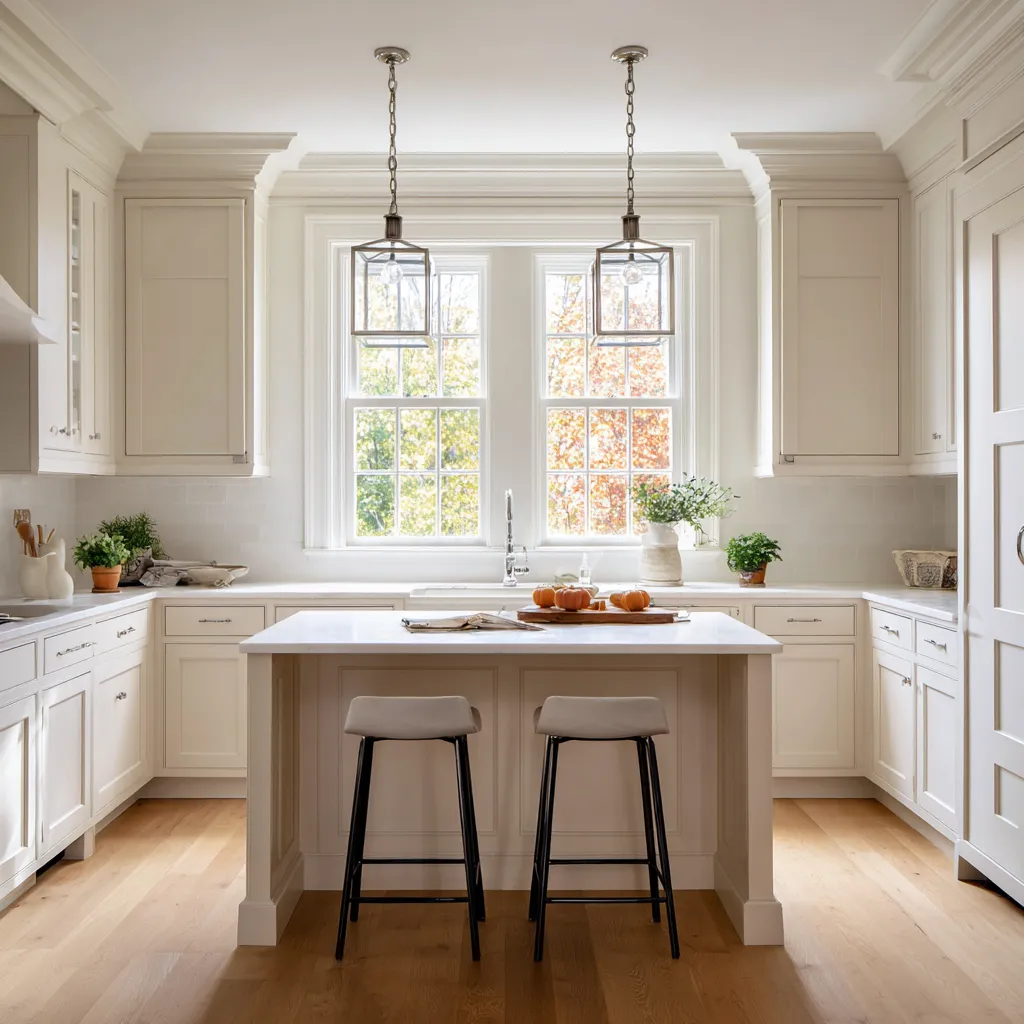
Light floors do more than brighten the room
Brightness is not created by pale paint alone. It is shaped strongly by the floor.
Light floors consistently pushes the kitchens toward a more open and current mood. They make the whole lower half of the room feel less weighted and let daylight travel further.
That shift is stronger than it may seem. A Colonial kitchen with deep trim and paneled cabinetry can still feel airy if the floor is light and the contrast remains controlled.
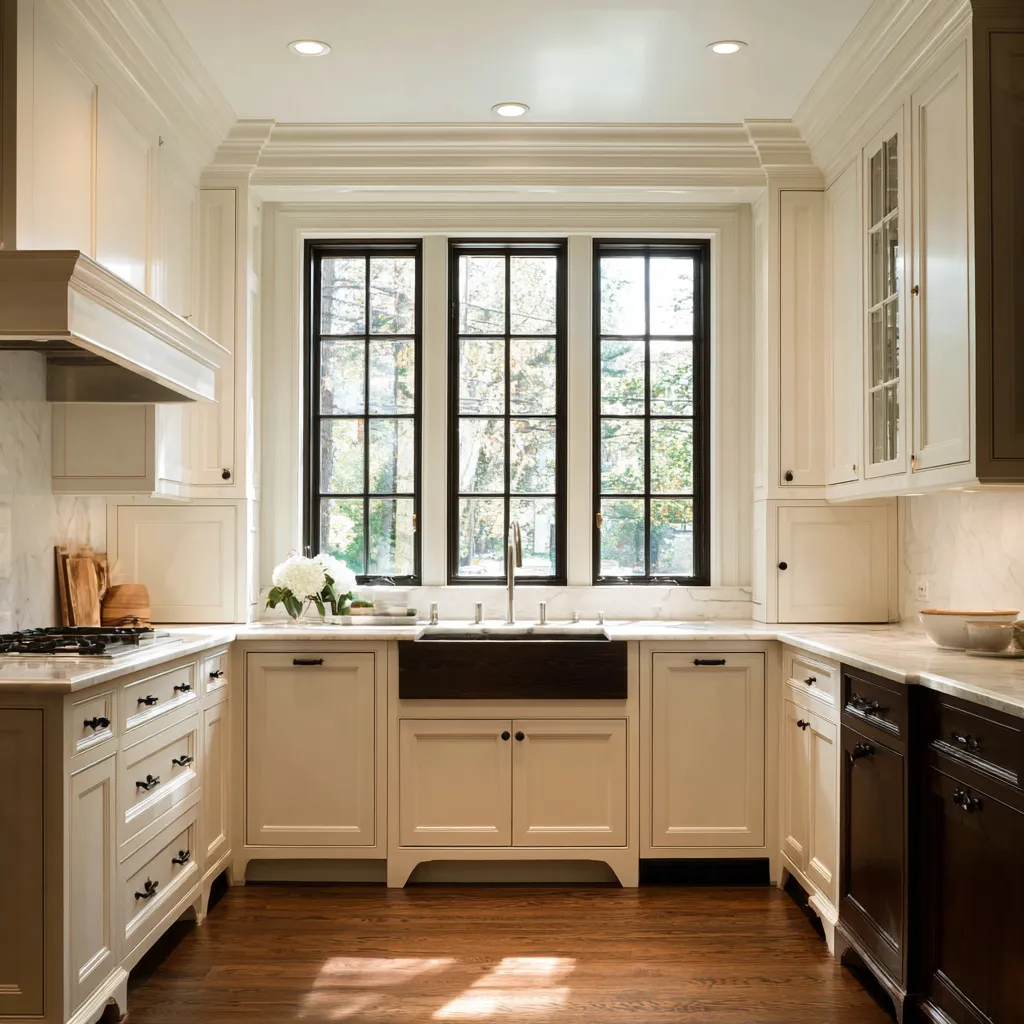
Dark floors do something different. They increased gravity, formality, and the sense of a rooted base.
They helped pale cabinetry feel richer and more dressed. They also support stronger contrast stories, especially if the designs have dark stools, black window grids, or glass-front cabinets.
This means the floor is not a background choice in Colonial design. It is one of the major levers that changes the emotional register of the room.
If your goal is an easy, fresh, sunlit kitchen, the design should lean toward lighter wood underfoot. If your goal is a more composed and formal space, darker wood has more impact than simply adding decorative trim.
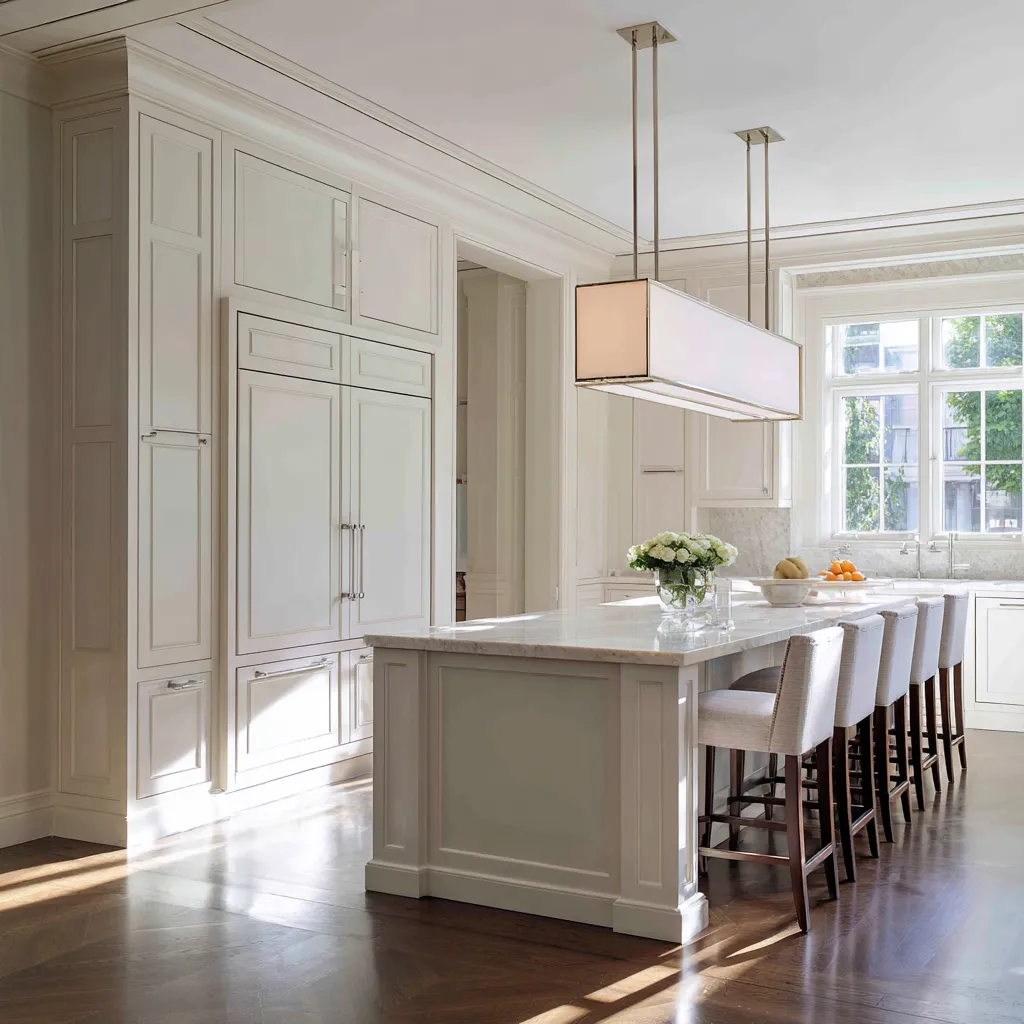
Black window framing sharpens the kitchen
Black or dark window framing is one of the clearest ways to make Colonial style feel more current. It adds precision.
It outlines the openings. It gives the interior design a firmer graphic structure without removing the classic divided-light language that suits Colonial houses.
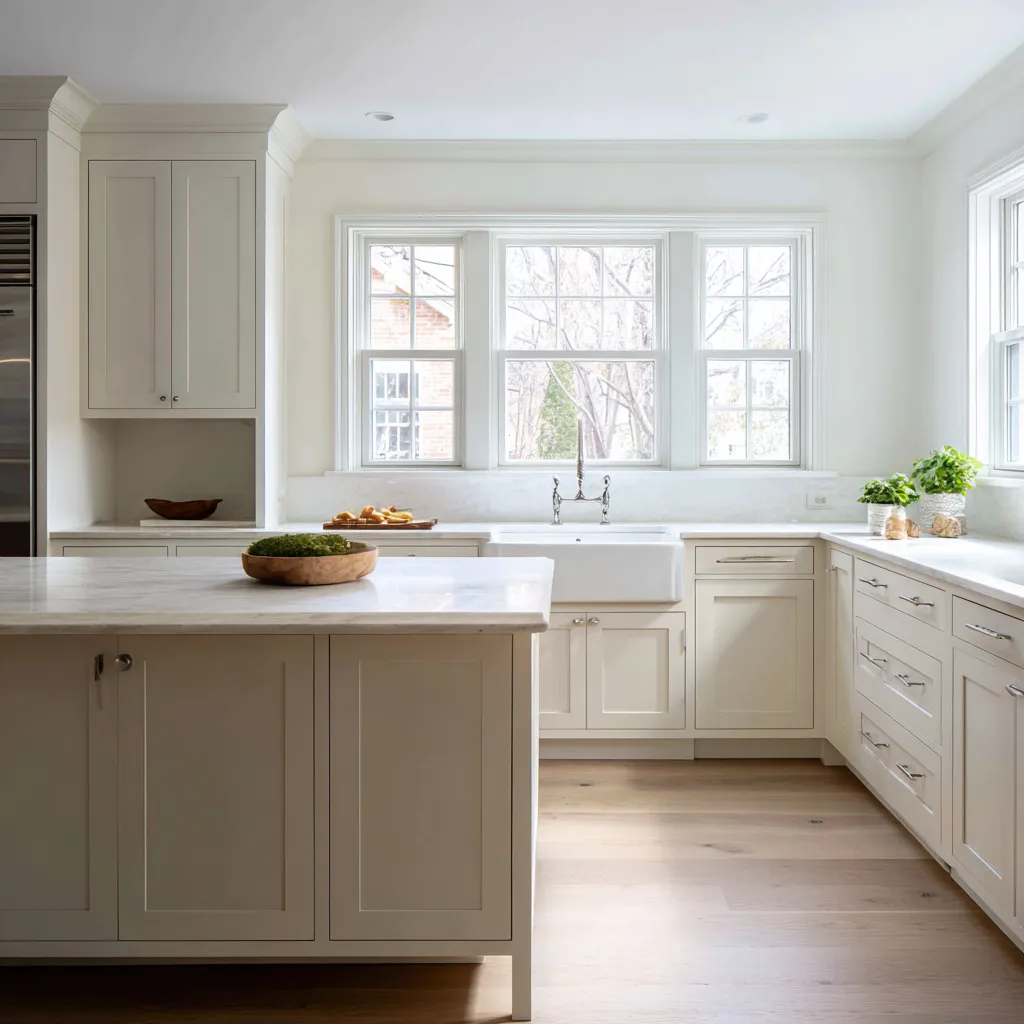
At the same time, there is a trade-off. Black framing usually lowers the brightness score.
That does not make it a bad choice. It means it should be used knowingly.
It is a sharpening tool, not a brightening tool. The practical lesson is simple.
If you want the room to feel crisp, a little dressier, and more defined, darker window lines can be very effective. If you want maximum softness and daytime openness, pale trim around the windows will usually support that better.
Both are valid. The key is deciding whether the room needs more outline or more visual air.
Stylish Colonial kitchens do not need radical openness
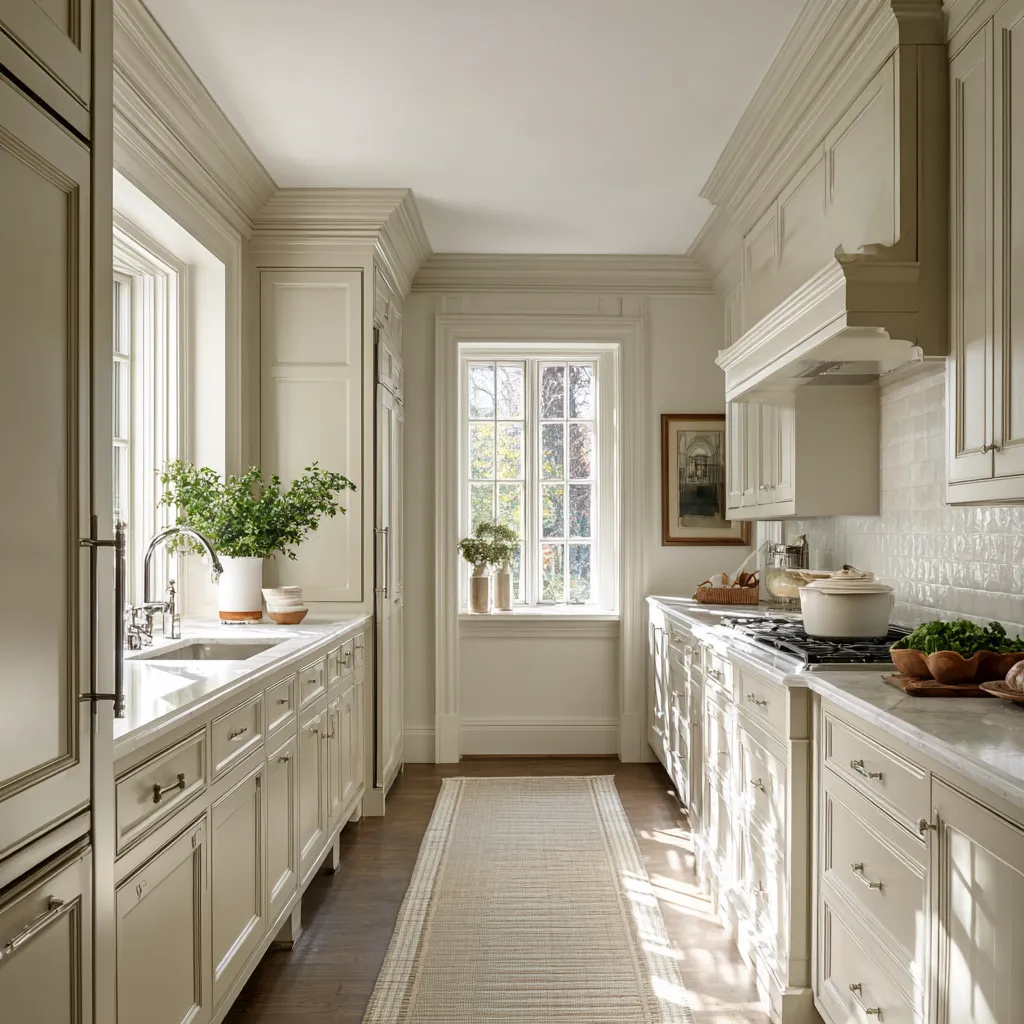
This matters because Colonial architecture has always depended on proportion, framed openings, and walls that feel meaningful. The modern update does not come from flattening the whole house into one flowing space.
It comes from keeping the room logic while reducing visual interruption and making the island more socially active. A Colonial kitchen can feel current without major structural drama.
A room can remain a room, and still feel stylish, bright, and useful for present-day life. This is especially true in narrower kitchens, galley plans, and more compact rooms.
The island is the main modern social engine
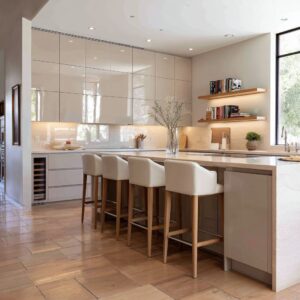
Social modern Colonial kitchens are built around the island. Social score is driven overwhelmingly by island length, seating capacity, and the island’s visual centrality.
Open planning matters less. What makes the room feel sociable is not removing the architecture.
It is recentering daily life around a substantial island that still belonged to the Colonial shell. Modern concepts often have long islands paired with well-considered stools and cleaner lighting above.
The room remains disciplined and architectural, but the center became active rather than purely formal.
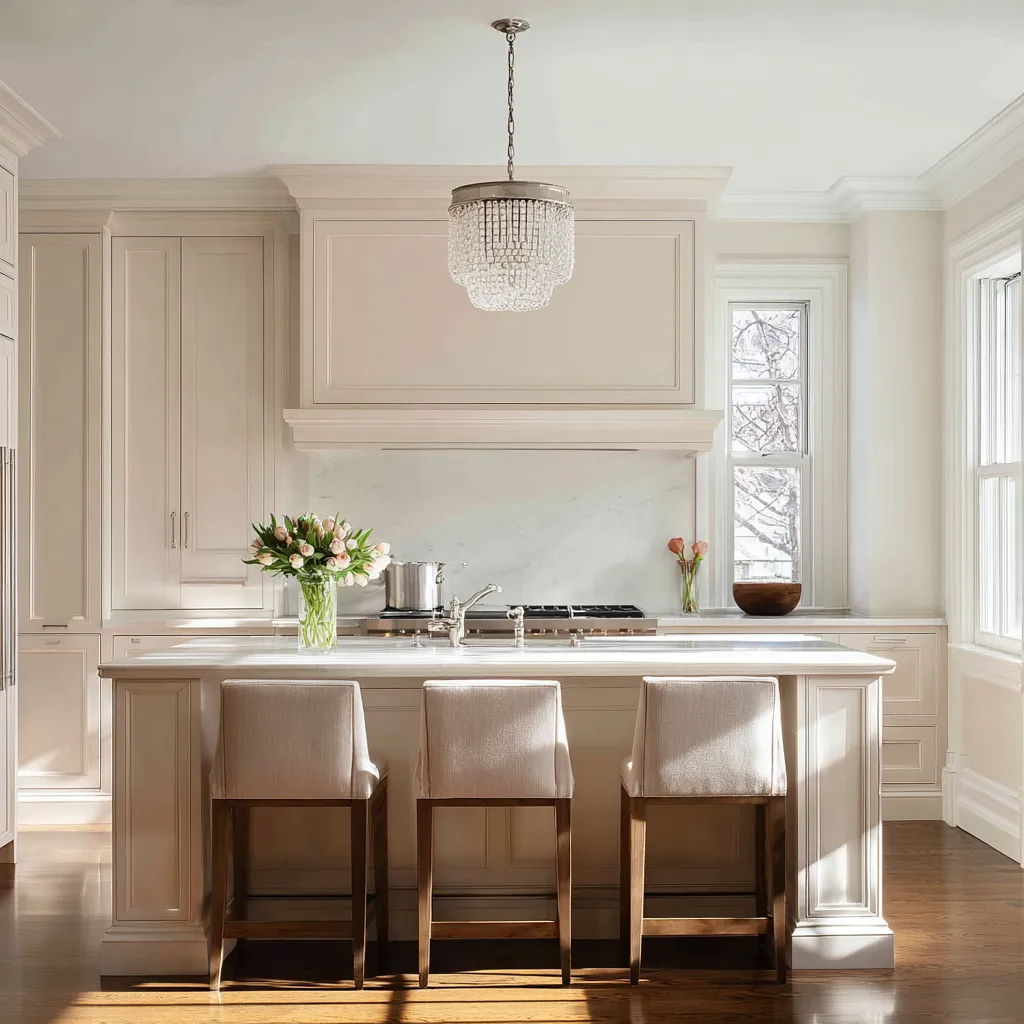
This is also where many Colonial kitchens gain their stylish look today. The island allows the room to hold both domestic order and present-day habits.
It can act as prep surface, breakfast zone, serving station, and conversation point without making the kitchen feel casual in a careless way. In a well-designed Colonial kitchen, the island is not an interruption to the room.
It is a new version of the room’s central household anchor.
Stools matter
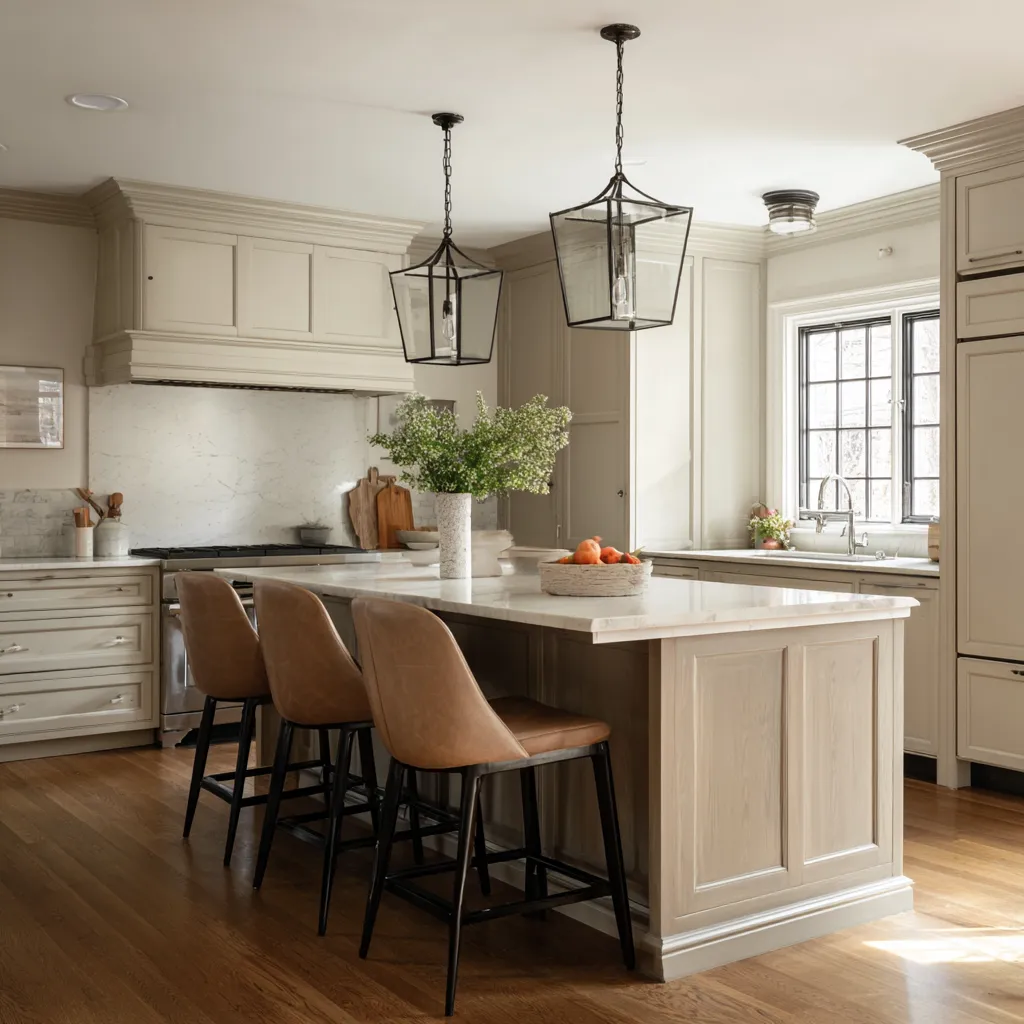
Upholstered stools give a polished look. They link broad stone surfaces, modern lighting, and a stronger social island presence.
In other words, they help bridge the formal shell and the contemporary use pattern. Dark stools can support a sharper contrast story.
They give pale islands more outline and help connect the seating to darker floors or darker window lines. Woven stools, by contrast, tend to soften the interior design and pull it toward a more relaxed, lighter domestic mood.
This makes stools one of the quiet decision points that can shift a Colonial kitchen significantly. Upholstered seating gives the island a more residential, settled quality.
Woven seating makes it feel more tactile and less dressy. Darker seating adds firmness and structure.
Lighter seating keeps the center easy and open. Since the island is such a major force in modern Colonial kitchens, the seating around it should be treated as part of the architecture story, not as an afterthought.
Lighting should update the room without breaking the cabinet logic
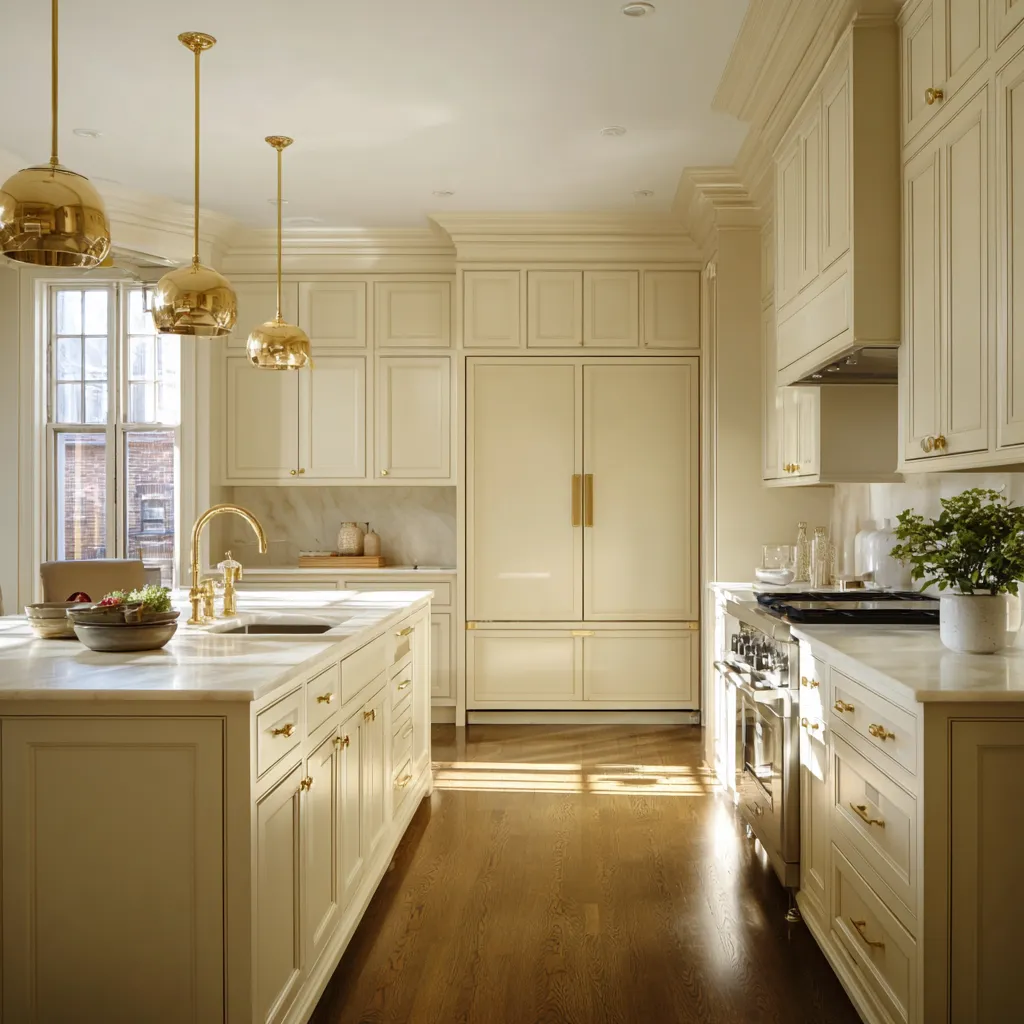
Kitchen designs with globe or more distinctly modern lighting bring modernity to the entire interior. Lanterns, while still fitting the style, pull the room closer to the more intimate or historically anchored looks.
That does not mean lanterns should be excluded. It means silhouette matters.
A kitchen with strong trim, classic cabinet framing, and a mantle-like hood can hold a more modern light quite comfortably. In fact, that contrast often helps the room feel current without harming the Colonial base.
This suggests a useful design move. If the cabinetry and trim already speak clearly in a Colonial voice, the lighting can be slightly cleaner, rounder, slimmer, or less literal.
It does not need to mimic historical fixtures exactly. The kitchen feels more updated if the light is simplified while the architecture stayed firm.
Formality comes from gravity and ceremony
Formality should not necessarily be led mainly by symmetry. It can be led more by material gravity and signs of domestic ceremony.
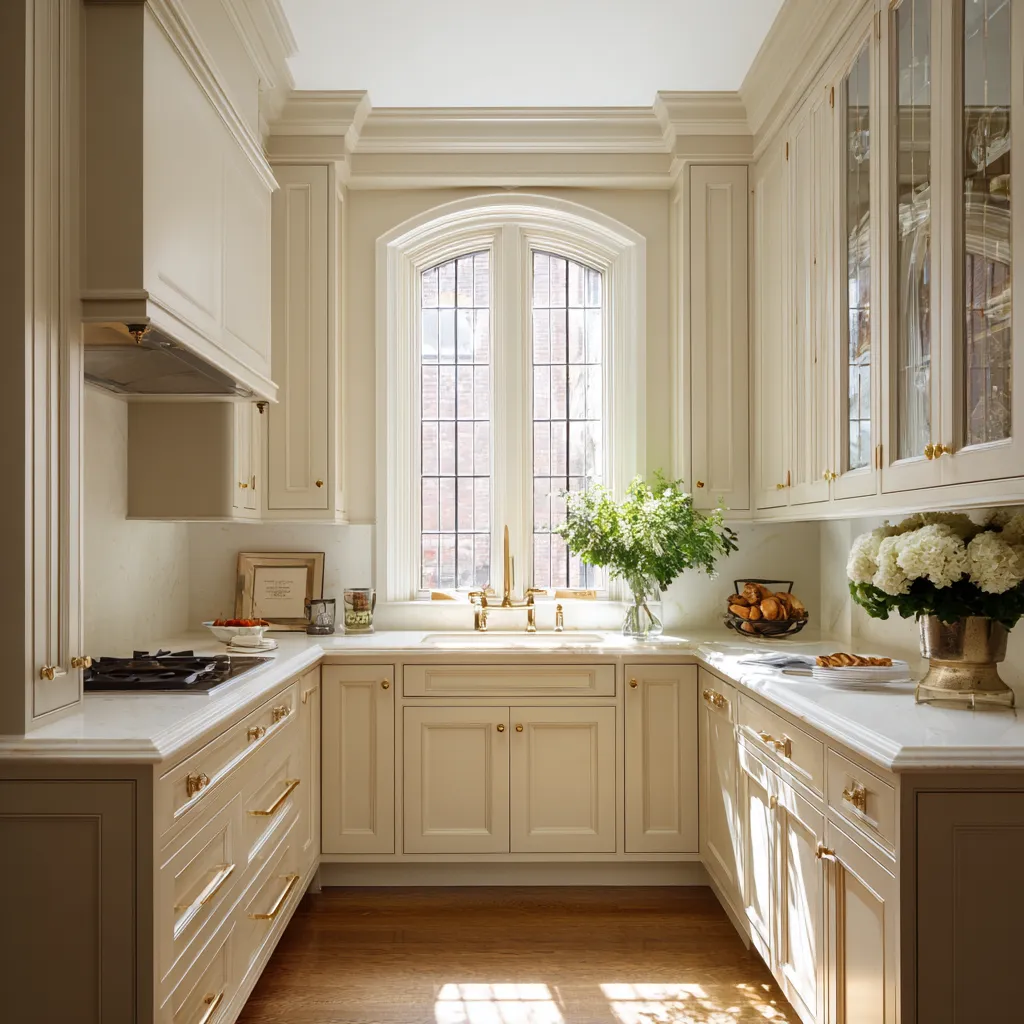
The kitchen designs with darker floors, glass-front cabinets, darker seating, and more enclosed architectural presence have more formality. Darker floors create a richer base.
Glass-front cabinetry introduces a sense of display and household presentation. Darker accents give the room a more dressed mood.
This is an important idea because often making a Colonial kitchen more formal means adding more trim or decorative detail. If you want a more stately room, focus on the lower register and the display logic.
A dark floor will do more for formality than another small molding line. A selective glass-front cabinet will create more ceremony than over-accessorized counters.
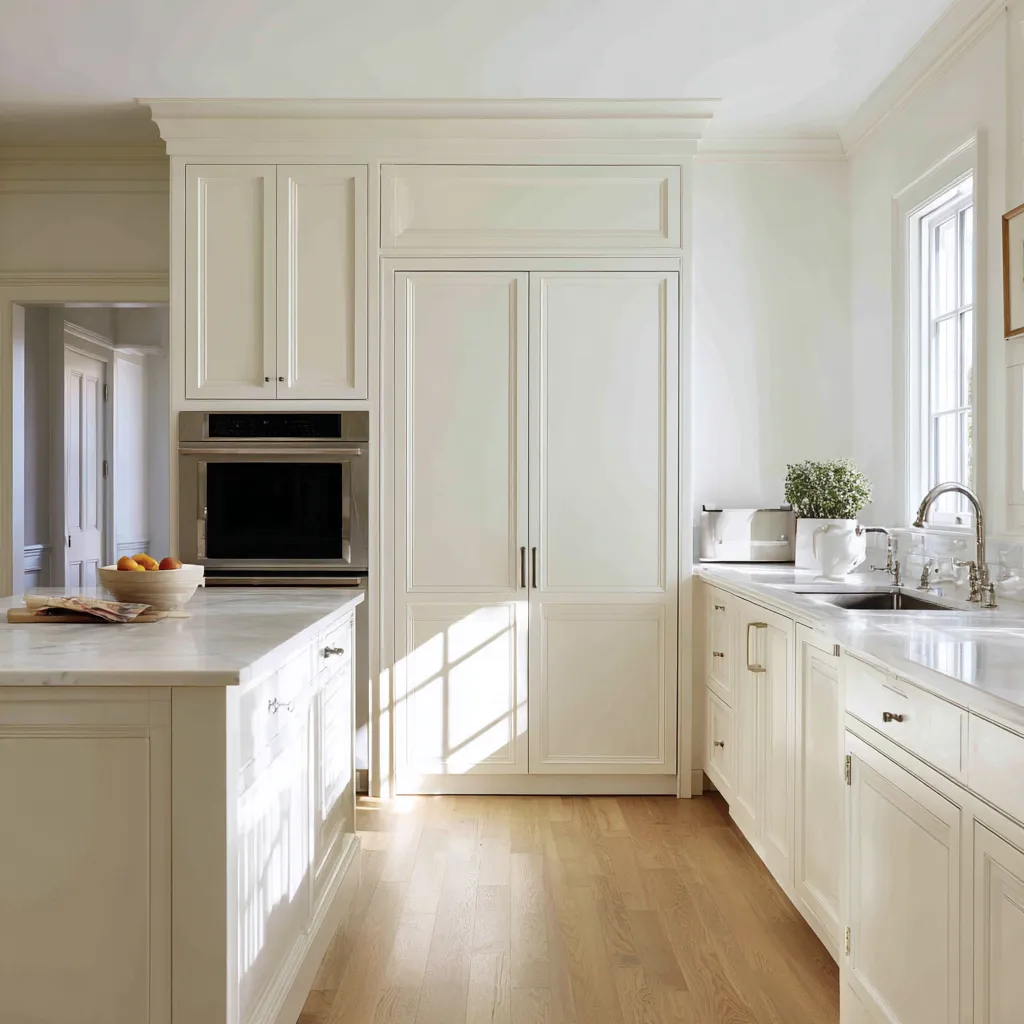
The hood should feel built into the room
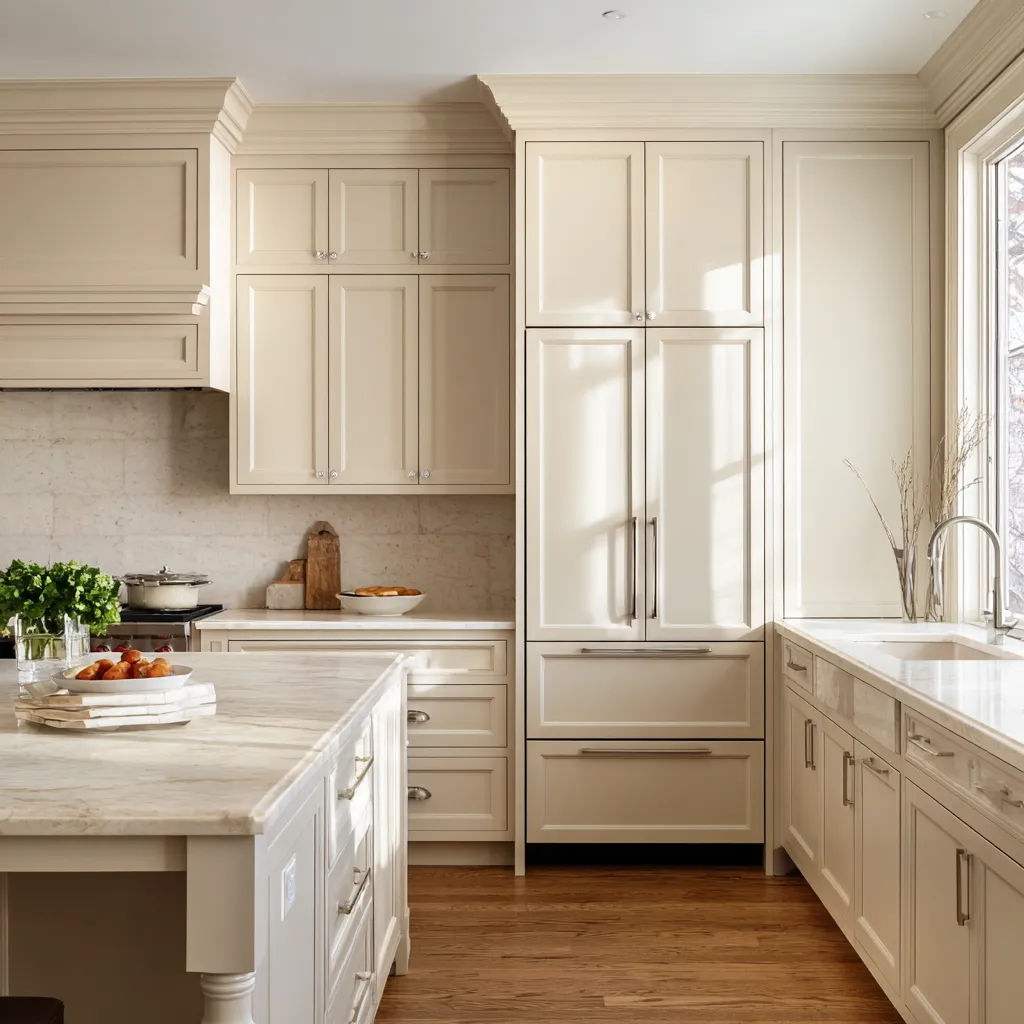
Mantle-like hood treatments remain one of the core signals of Colonial cabinet architecture. They matter because they turn the cooking wall into part of the room’s larger structure.
Instead of looking like an appliance surround, the hood feels closer to a built interior element. This hood logic is part of what keeps a Colonial kitchen from feeling like a generic painted kitchen with traditional hardware.
It gives the range wall status. It also supports the style’s connection to hearth-centered older interiors, even in a fresh and current setting.
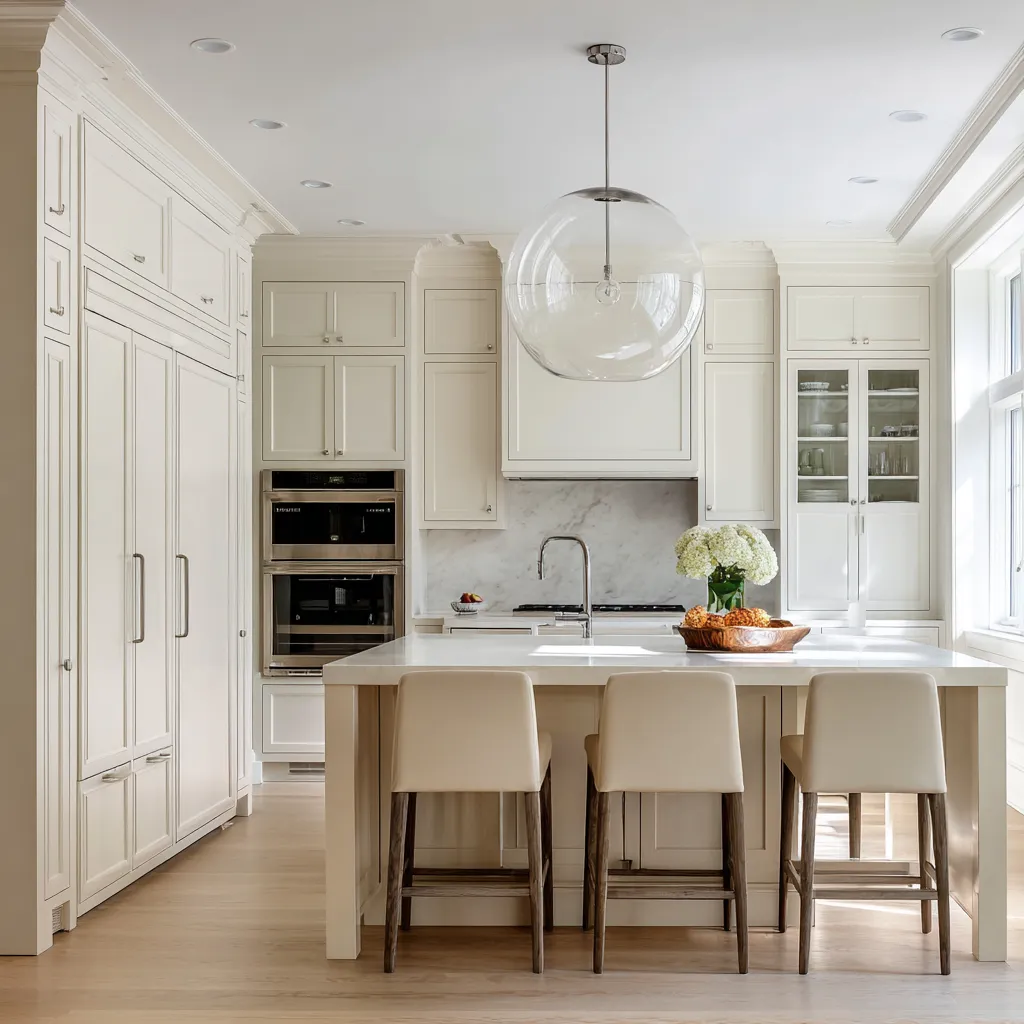
The key is proportion and restraint. A good Colonial hood should feel substantial enough to matter, but not overworked.
It should sit inside a coherent cabinet composition, not try to become a separate sculptural feature. In the more modern kitchen design ideas, the hood usually stays pale and integrated, letting its shape show through shadow and mass rather than through loud ornament.
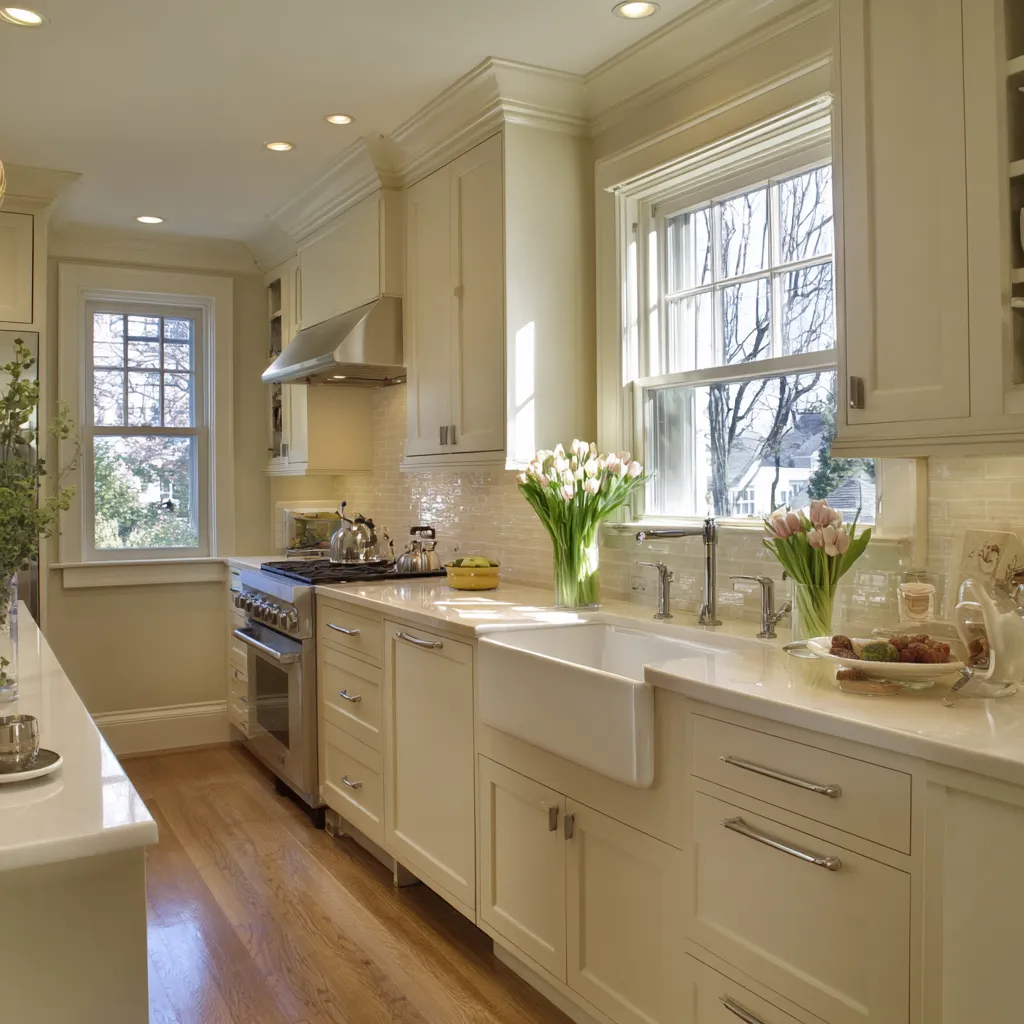
Glass-front cabinetry works as a ceremony signal
Glass-front cabinets are strongly associated with formality. That suggests they do more than add visual interest.
They bring a sense of presentation into the room. In a Colonial kitchen, that can be very effective because the style has long been tied to household grace, tableware, and the idea that the kitchen belongs to the larger domestic life of the home.
A little display makes the room feel settled and refined. Too much can weaken the clarity of the wall.
That is why selective use matters. One cabinet stack, a narrow display section, or a carefully placed glass-front run can add ceremony without making the room busy.
Used sparingly, it helps the kitchen feel architectural and residential at the same time.
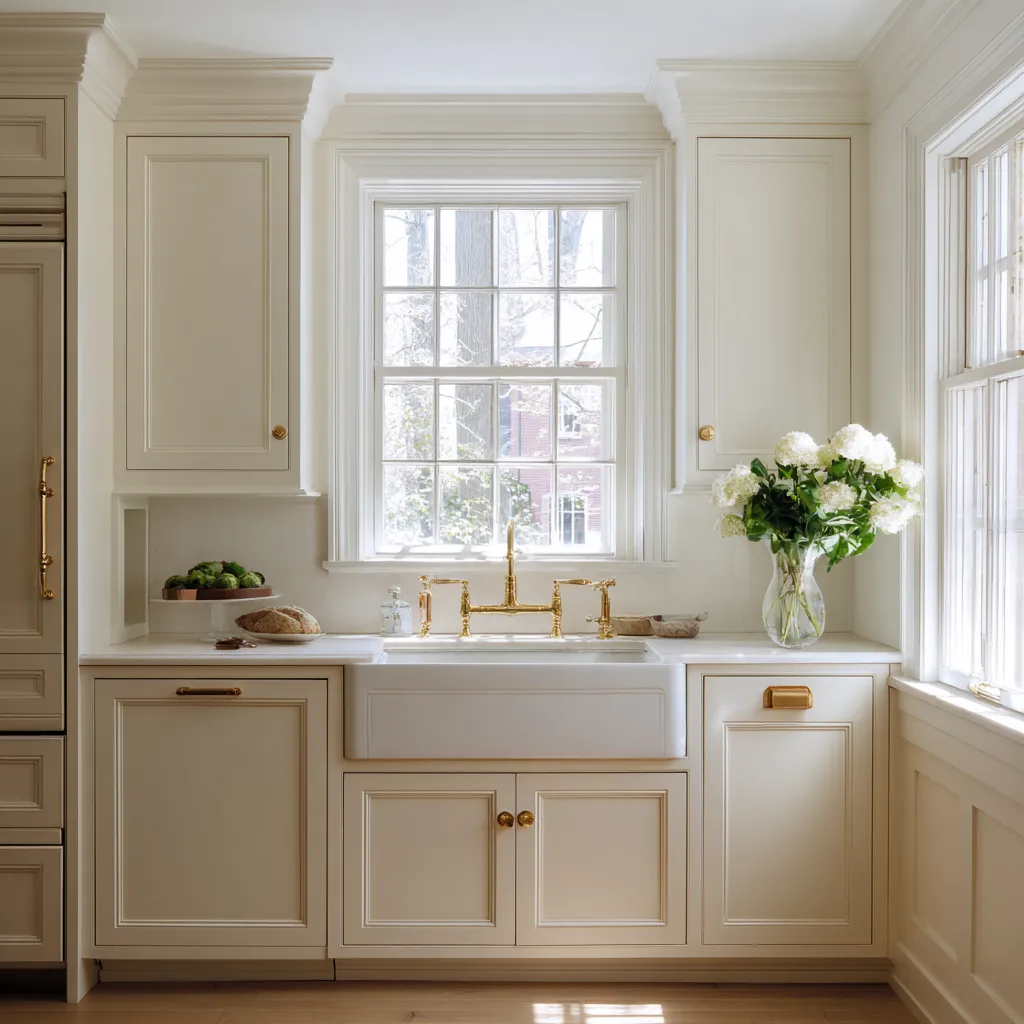
An apron-front sink works
Apron-front sinks fit beautifully in Colonial design, especially when the goal is a more intimate, sink-wall-focused kitchen. It feels practical, house-rooted, and tied to daily routine.
But if the kitchen is moving toward a more polished, island-led, hospitality-focused mood, other sink expressions may fit the overall direction more easily. That does not mean an apron sink cannot appear in a modern Colonial kitchen.
It means it carries a slightly different emotional message. It pulls the room toward household use and window-wall dignity rather than toward island theater and dressier hybrid styling.
What weakens the style
The first risk is flattening the cabinetry too much. If the doors, trim, and hood lose hierarchy, the kitchen may stay pale but stop feeling Colonial.
The second risk is losing window importance. Since the windows carry so much of the room’s structure and mood, they need real casing and compositional presence.
The third risk is clutter. Too many objects weaken a style that depends on order and clear wall architecture.
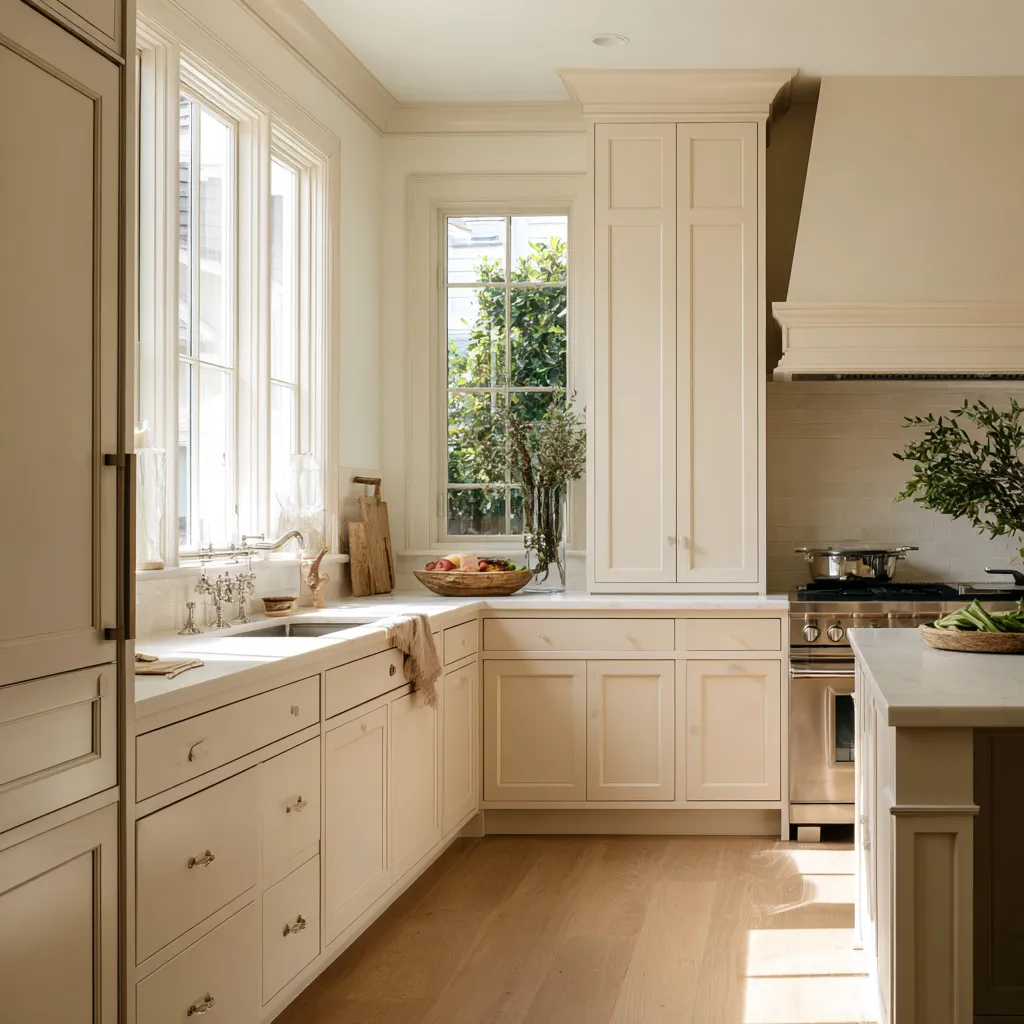
A fourth risk is adding modern elements that do not speak to the cabinet shell. The most effective modernizing moves—light floors, globe lighting, broader stone, darker window lines, upholstered stools—still should have a relationship to the room’s architecture.
Randomly trendy pieces without that relationship are more likely to make the room feel confused.
The lasting lesson
A stylish Colonial kitchen does not ask to choose between tradition and freshness. It asks to hold onto the architectural discipline of the style while adjusting how the room carries light, contrast, and social life.
Modern Colonial kitchen designs do not abandon cabinet structure, trim presence, or room order. They make those things easier to live with and easier to look at every day.
Some can do that through brighter floors and softer contrast. Others can do it through darker outlines, richer bases, and a more social island center.
Both paths worked because the Colonial logic stays intact.
That is what gives the style its lasting appeal. It can feel polished and current without losing the sense that the room belongs to the house, and that everyday kitchen life is being held inside architecture that has real shape, balance, and grace.