Colonial bedroom design is often reduced to a handful of familiar signals: paneled walls, tall windows, painted beds, darker wood, and traditional lamps. But a close look at modern Colonial bedroom designs shows that the style works in a more precise way than that.
The designs that feel complete are not the ones with the most historical detail, and they are not the ones stripped down to the point of feeling common. The sweet spot sits in the middle where architectural order, soft editing, and a small amount of historical memory work together.
In modern Colonial style bedroom design ideas, the shell usually carries the lineage first. The furniture and textiles then decide whether the room feels dated, current, or too anonymous.
Colonial style begins with the room itself
Modern Colonial bedrooms are not held together mainly by obvious historical references. Their base grammar comes from room-edge discipline, tall sash-window proportions, restrained palettes, daylight, painted millwork, and a large soft bed mass placed with intent.
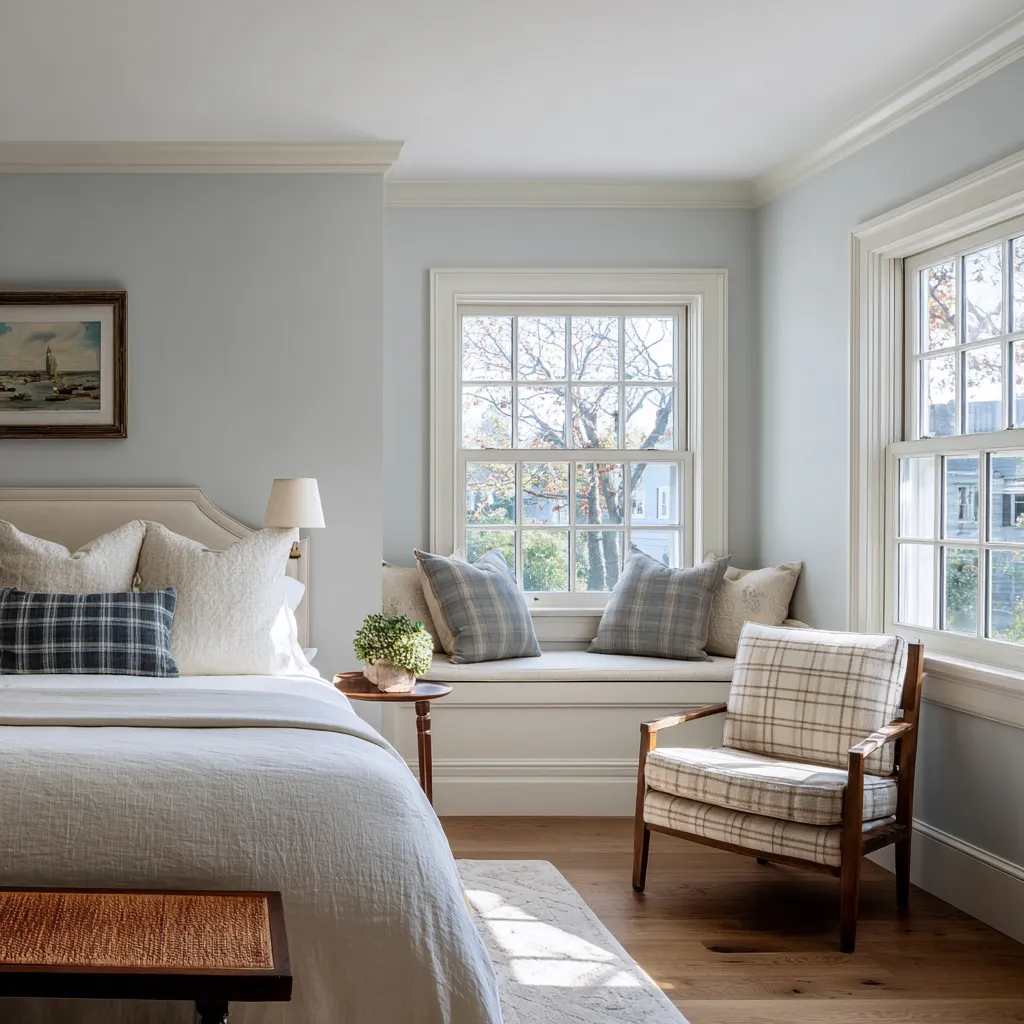
That changes the usual way many people think about the style. A Colonial bedroom does not need to start with a carved bed, floral drapery, or heavy reproduction furniture.
It can begin with a tall upright shell, strong window casing, crown presence, and a pale tonal field that lets the structure of the room stay visible.
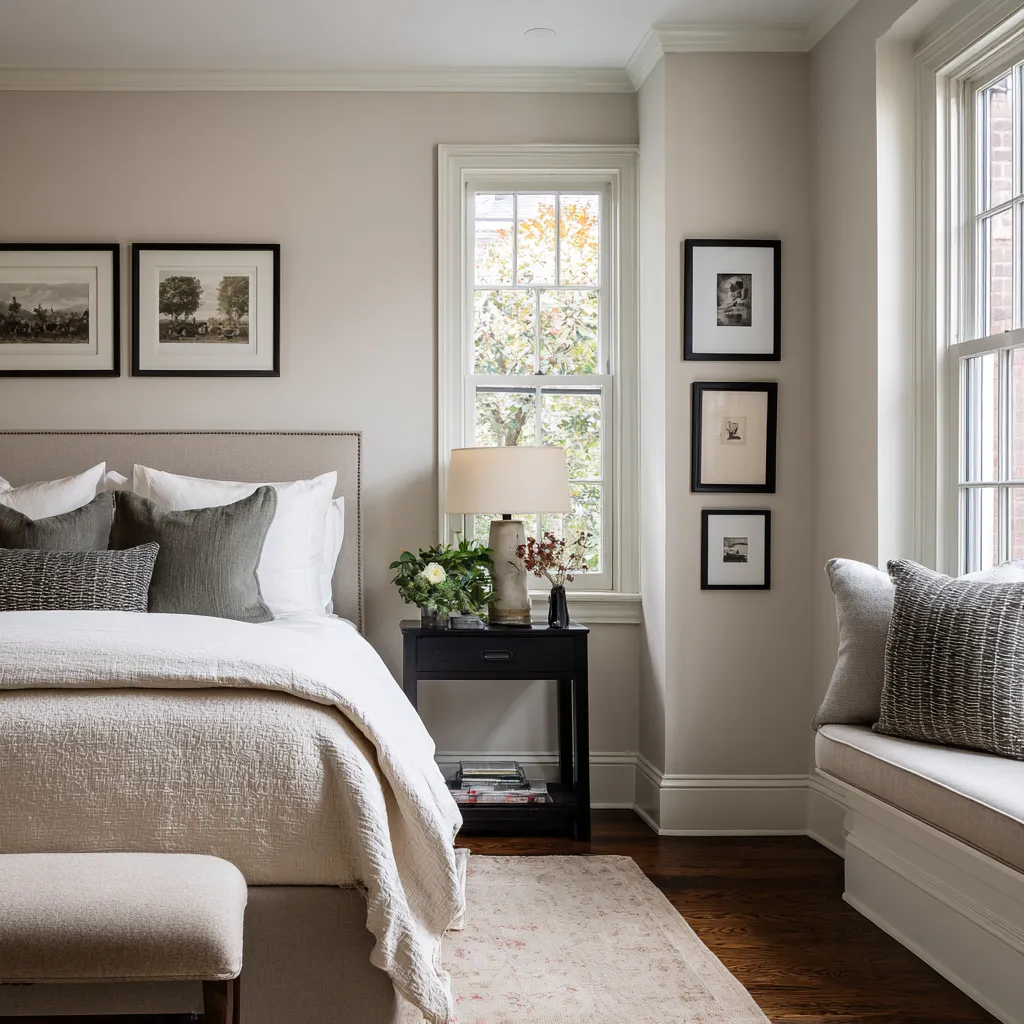
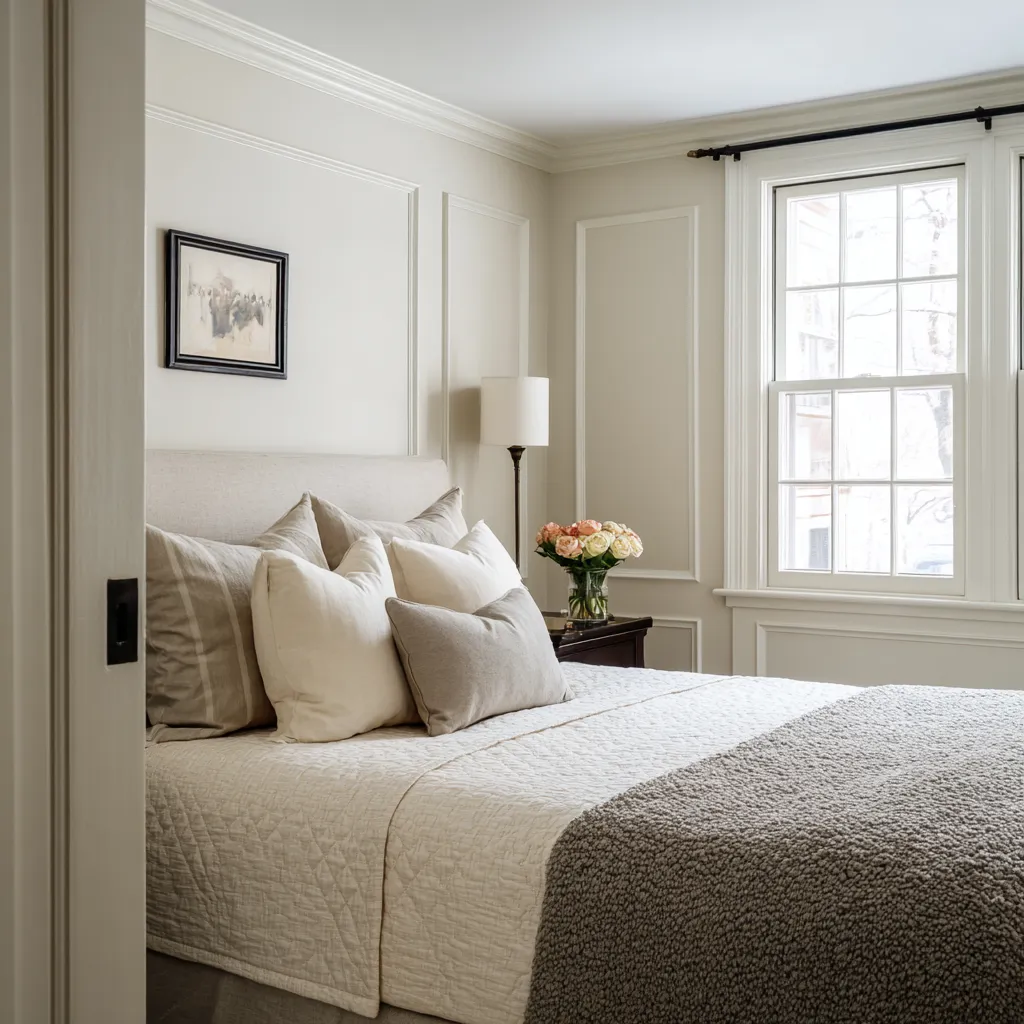
In the concepts that look well-designed, the walls and windows give the bedroom its authority. The bed then softens that framework through upholstery, layered neutrals, and broad textile mass.
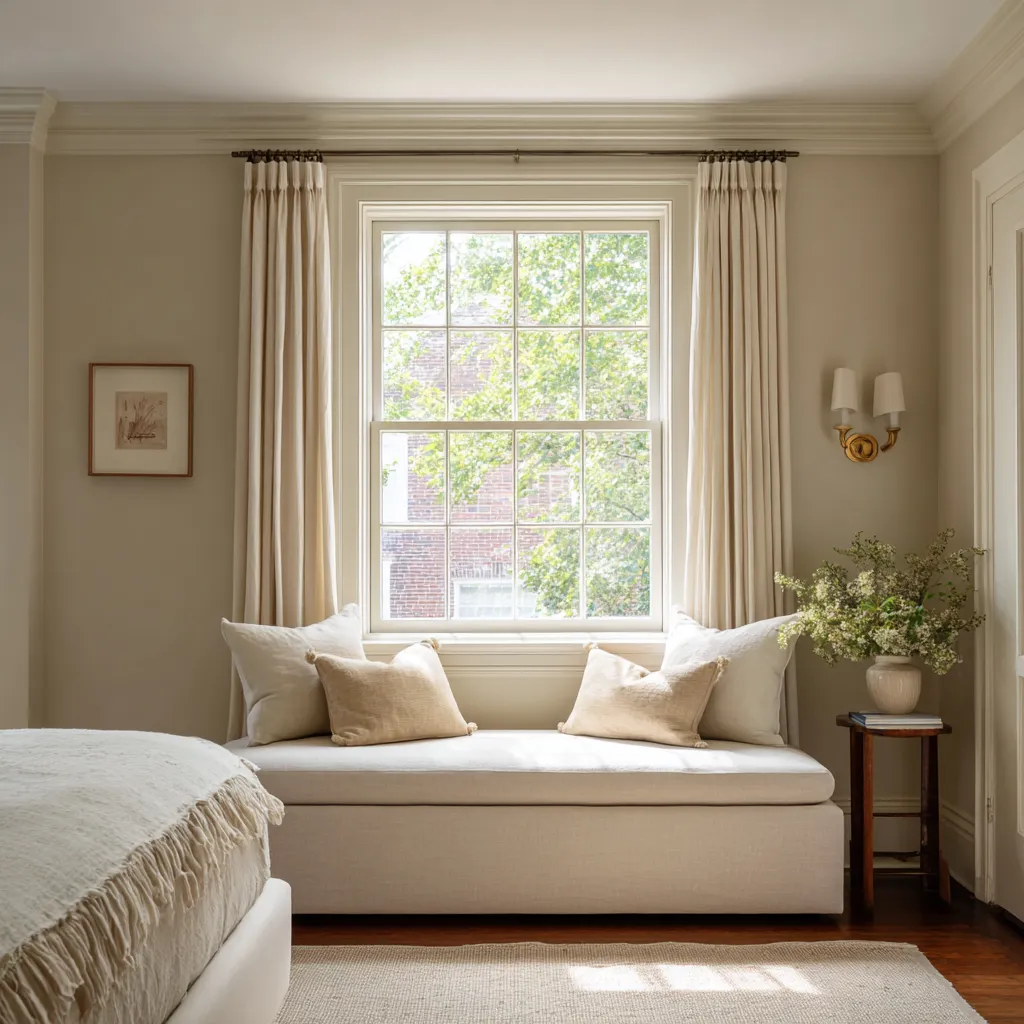
Then the design feels rooted even when the furniture is quite edited. Their identity does not depend on decorative display.
It depends on proportion, framing, and placement.
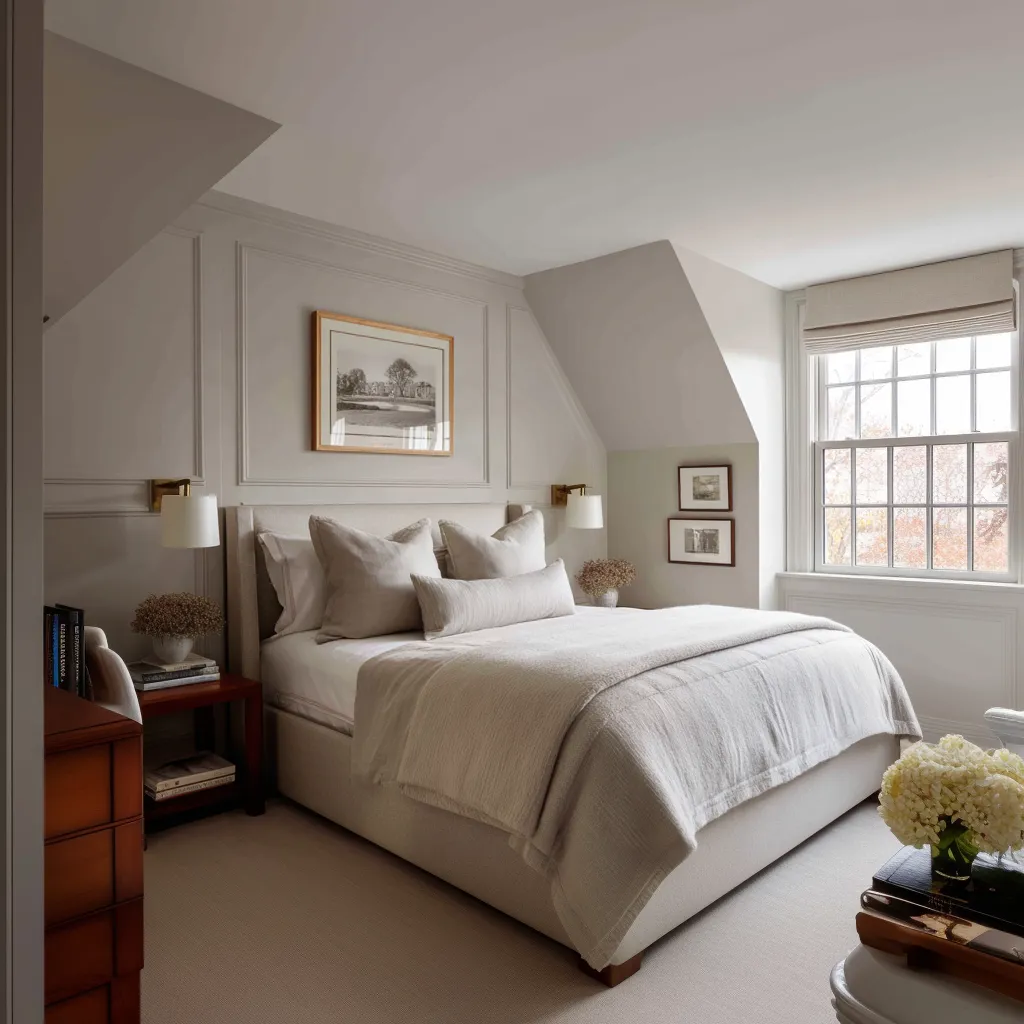
Composition matters before ornament
The quality of the Colonial-modern mix rises first through composition. Symmetry, bed centering, visual balance, circulation clarity, and casing weight all can have stronger links to overall blend quality than simply adding extra historical detail.
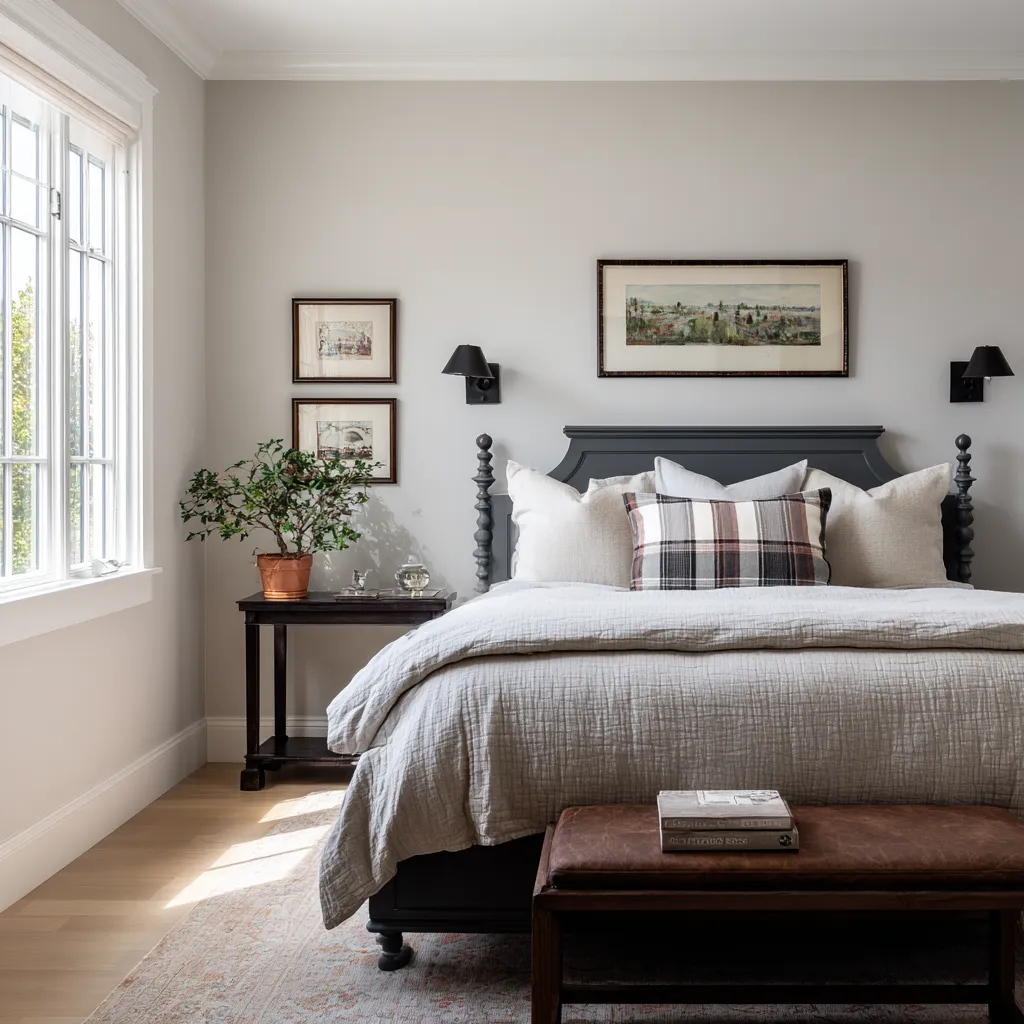
That is a valuable correction. Many people assume that making a Colonial bedroom feel complete means adding more signs of age or tradition.
The room usually improves when it becomes more ordered, more centered, and easier to read at a glance.
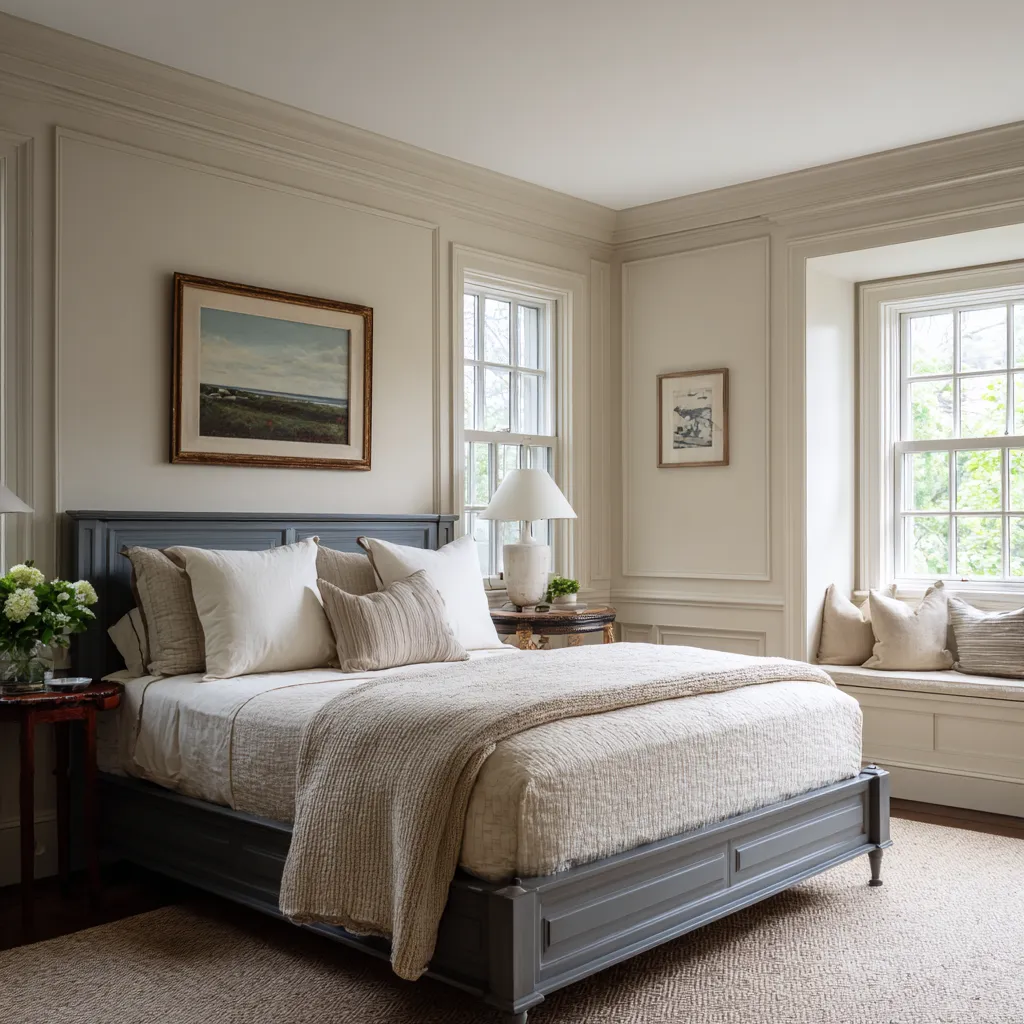
In practice, that means the following choices matter a great deal:
- placing the bed where it feels anchored by the room rather than randomly inserted
- making the left and right sides feel related in visual weight, even if they are not perfectly matched
- allowing window proportions and trim depth to frame the room clearly
- keeping circulation open enough that the layout feels settled rather than crowded
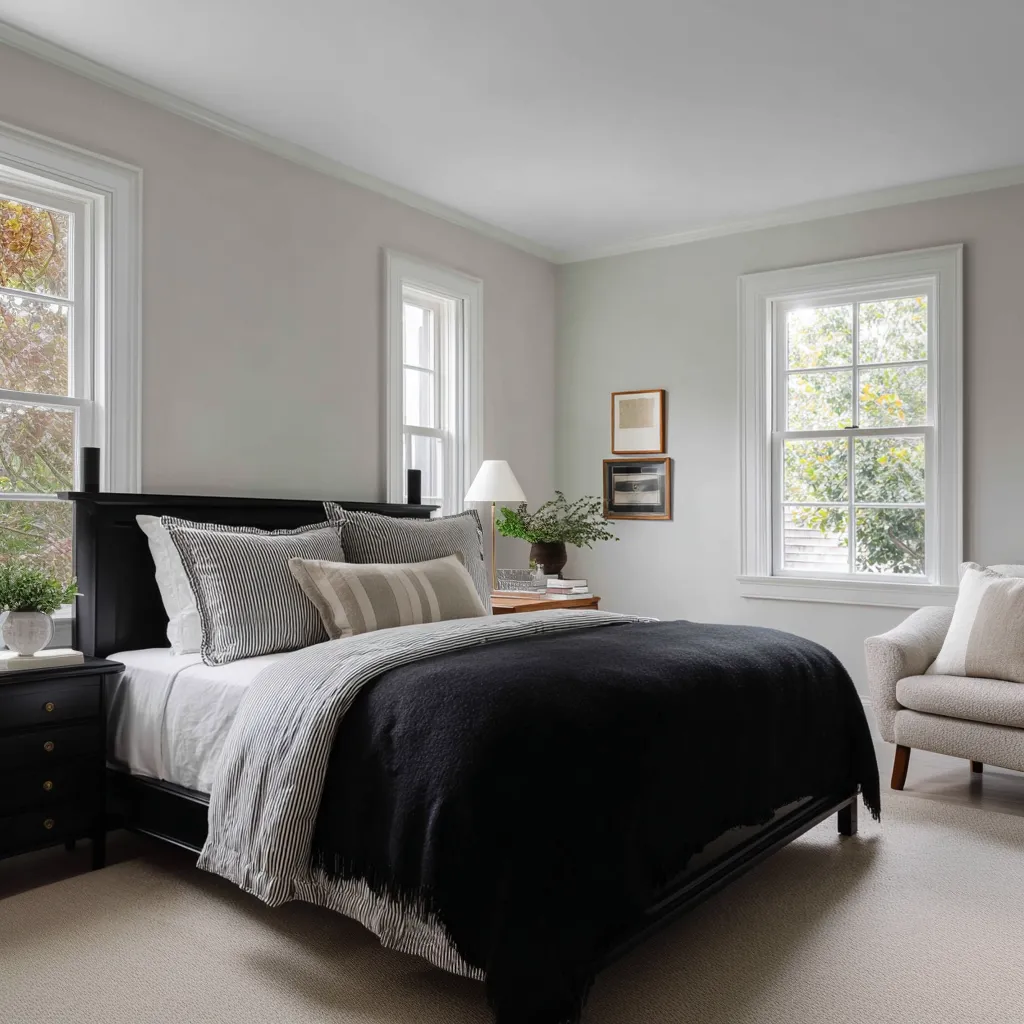
A bedroom design can be quite minimal and still fall short if it lacks that internal order. On the other hand, a room with only modest Colonial signals can feel very convincing if the composition is strong.
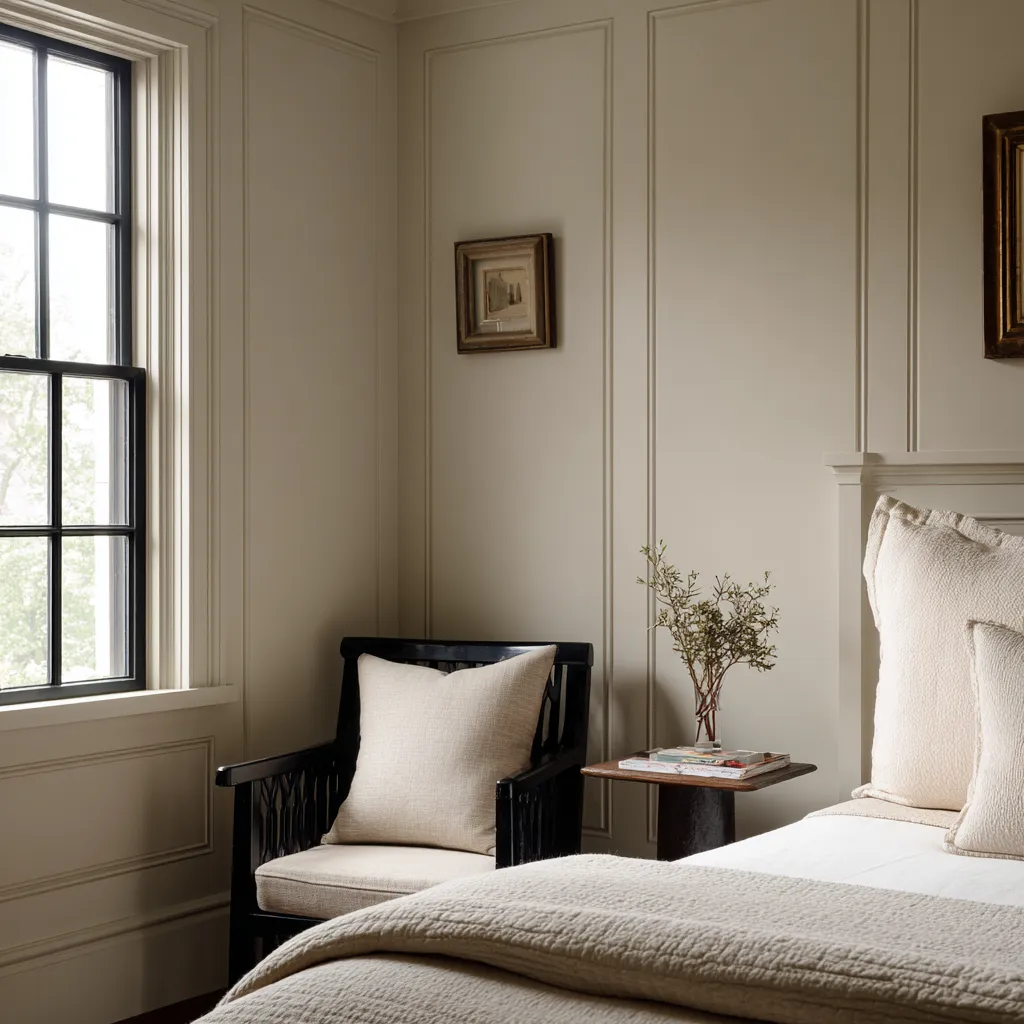
Why some Colonial bedrooms feel current and others feel staged
There are two main modernization routes.
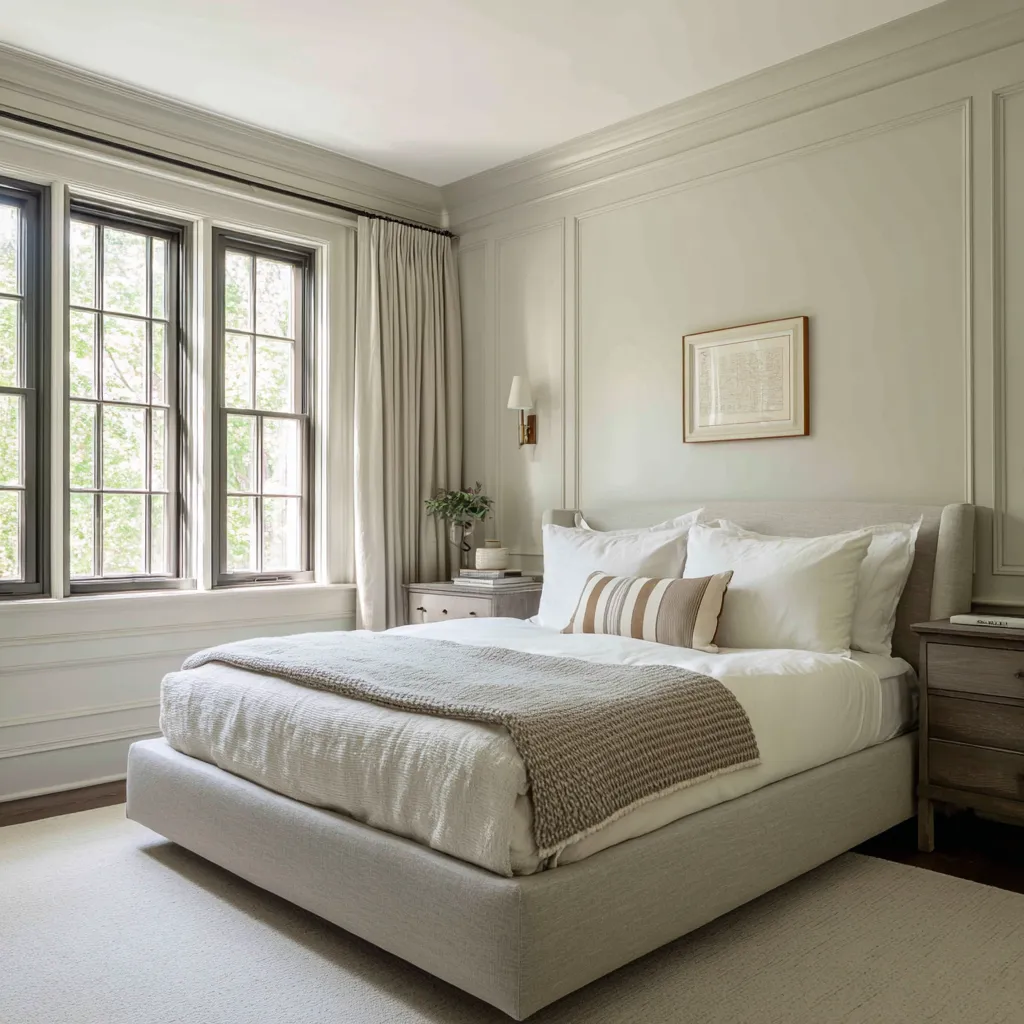
The first route moves toward reduction. These interior designs use simpler headboards, sharper silhouettes, current lighting, fewer decorative objects, and very narrow palette families.
They often rely on the shell to do almost all of the historical work.
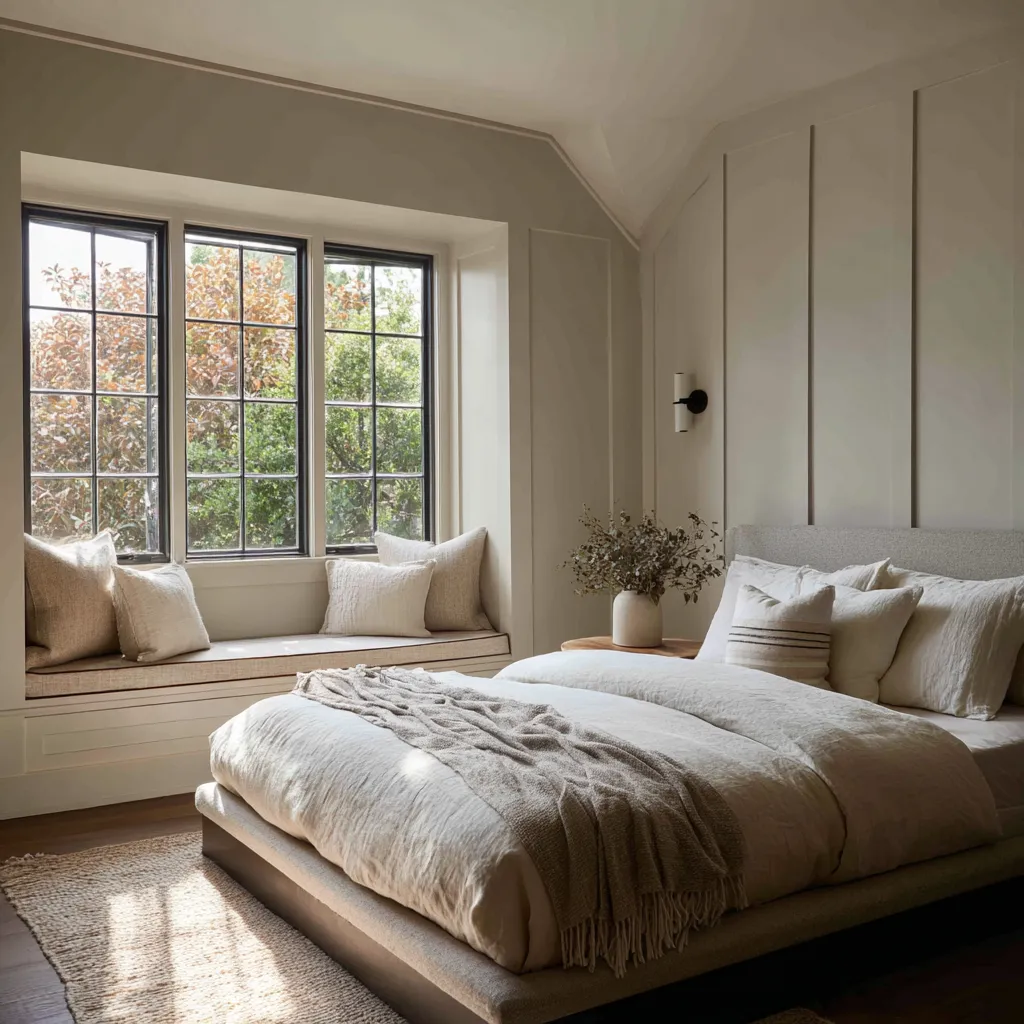
This approach can look crisp and fresh, but if it removes too much historical presence from the furnishing layer, the room can start to feel like a generic upscale neutral bedroom placed inside an older shell.
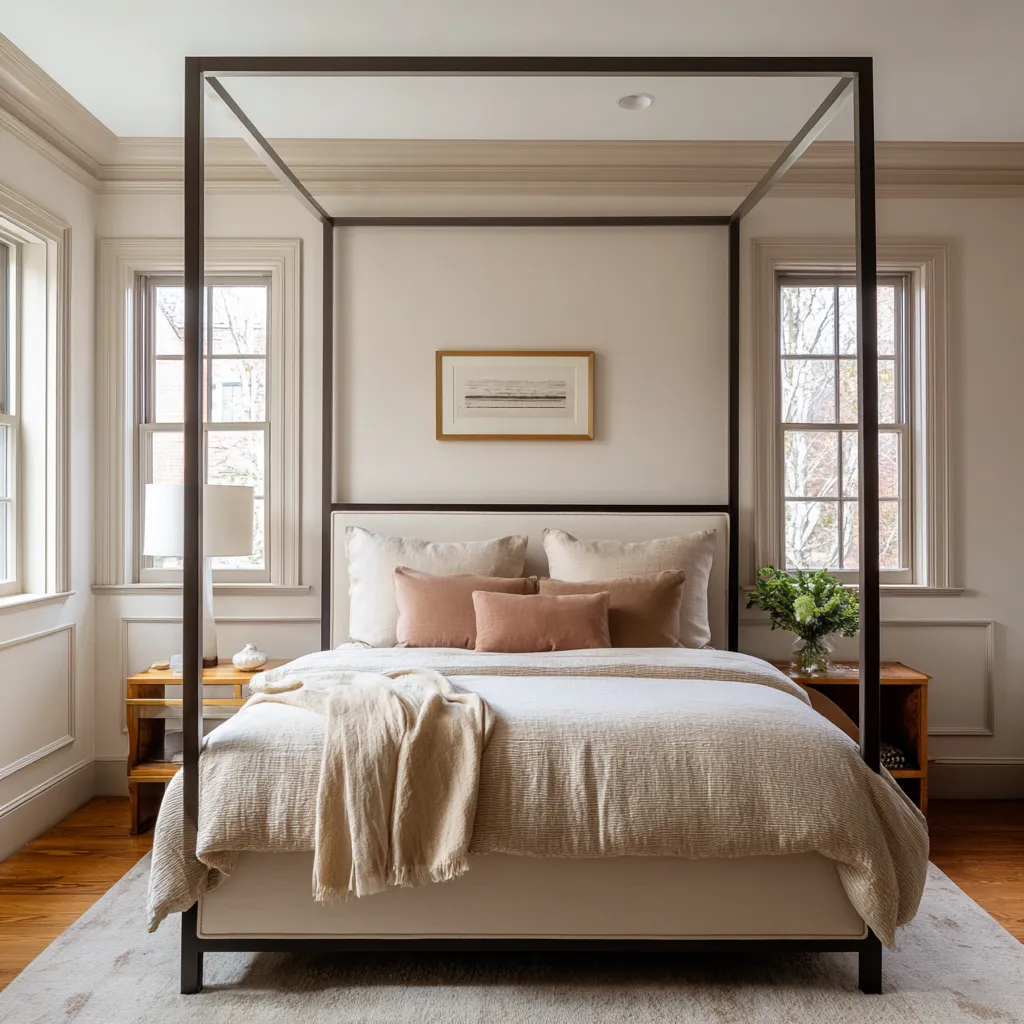
The second route keeps more historical weight in the furniture and accessories. These interior design concepts may use painted post beds, shaped headboards, benches, warmer wood, modest chandeliers, checked or plaid accents, or a traditional sconce.
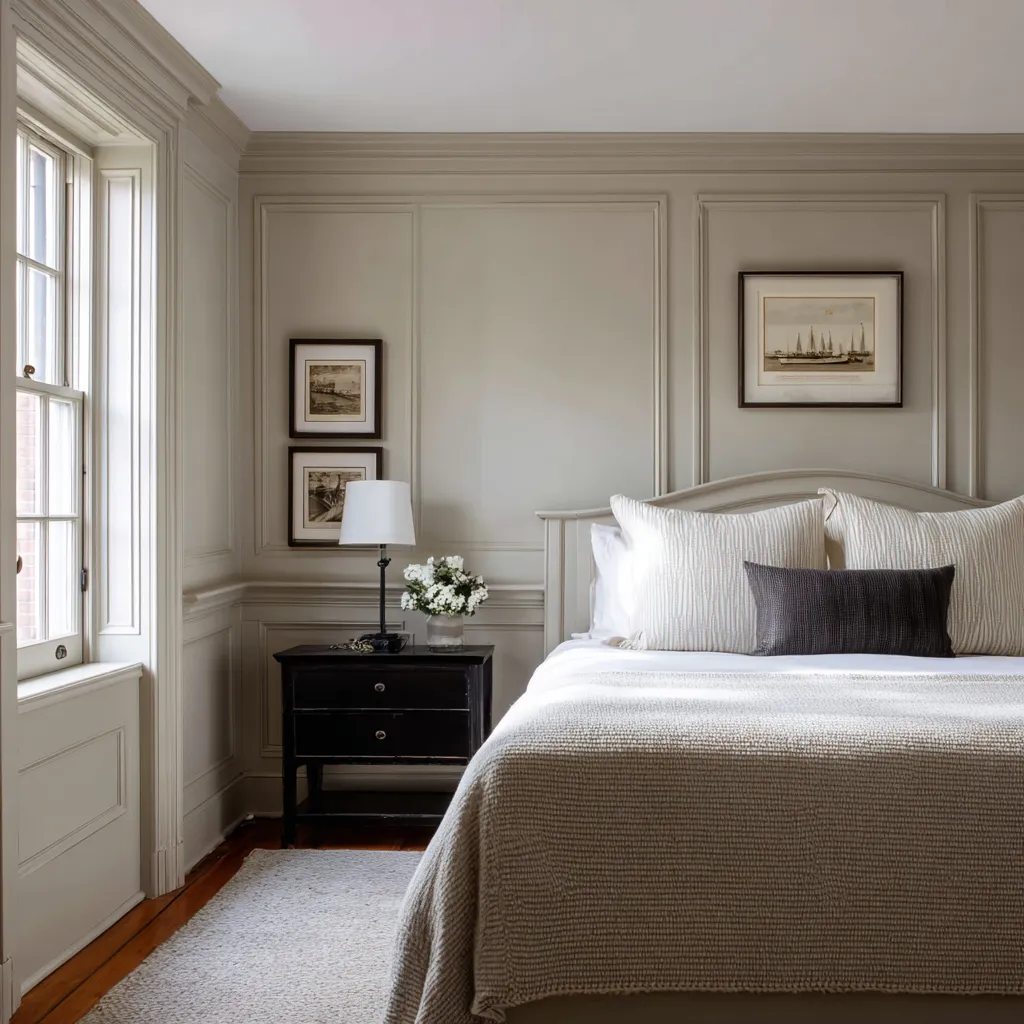
They still edit the room, but they allow one or two furnishing elements to hold a clearer link to Colonial house life.
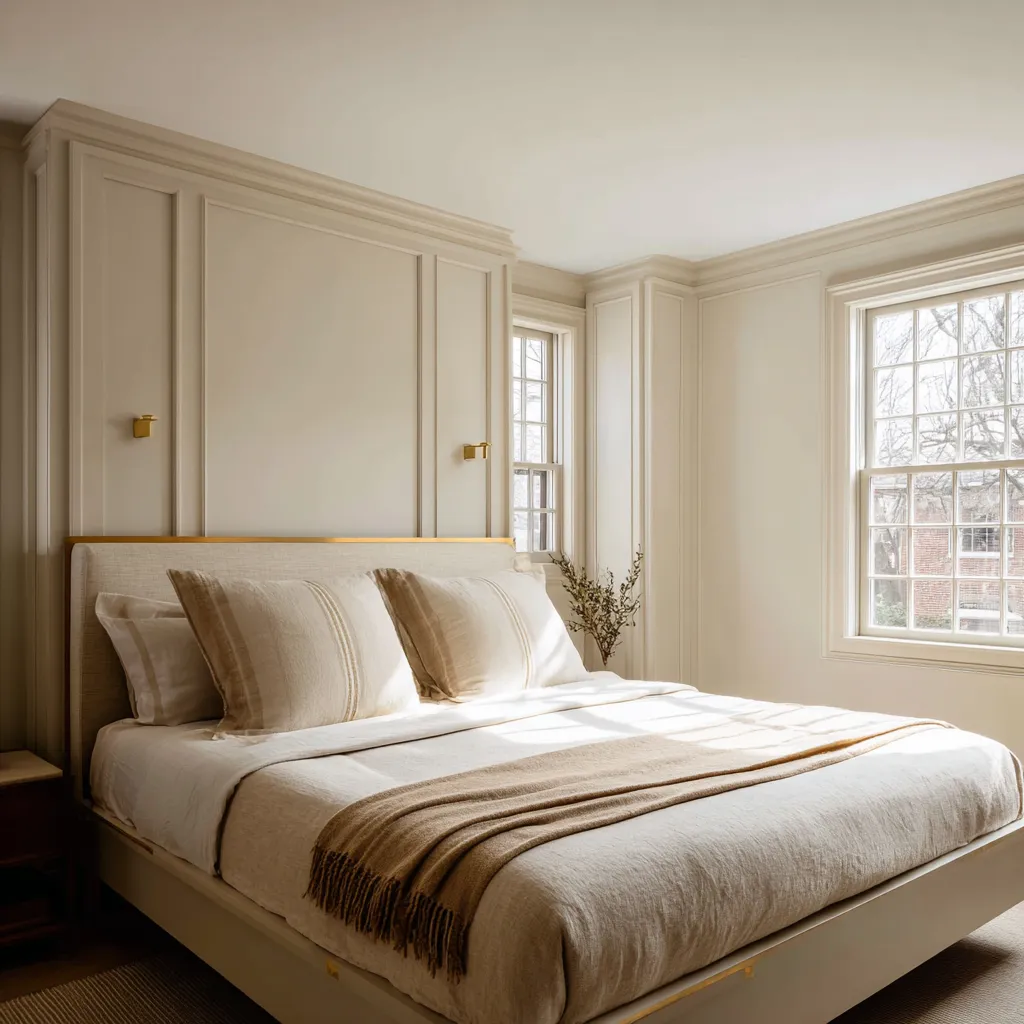
Neither route is wrong. But, as usual, the best design ideas are not sitting at either extreme.
They simplify the design enough to feel present-day while still keeping one or two historical carriers in the furnishing layer.
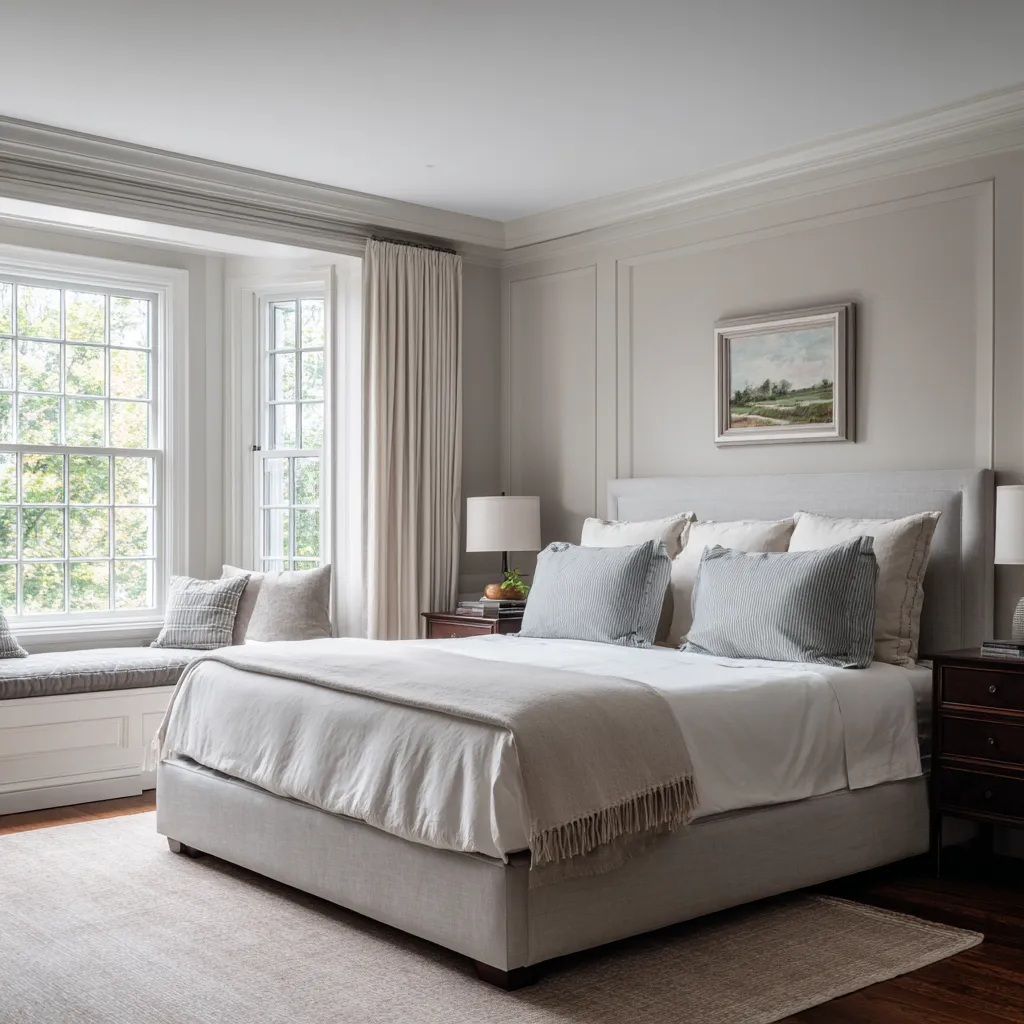
That balance matters because architecture alone is not always enough. The shell gives the room legitimacy, but furniture decides whether the space feels alive, house-rooted, and distinct.
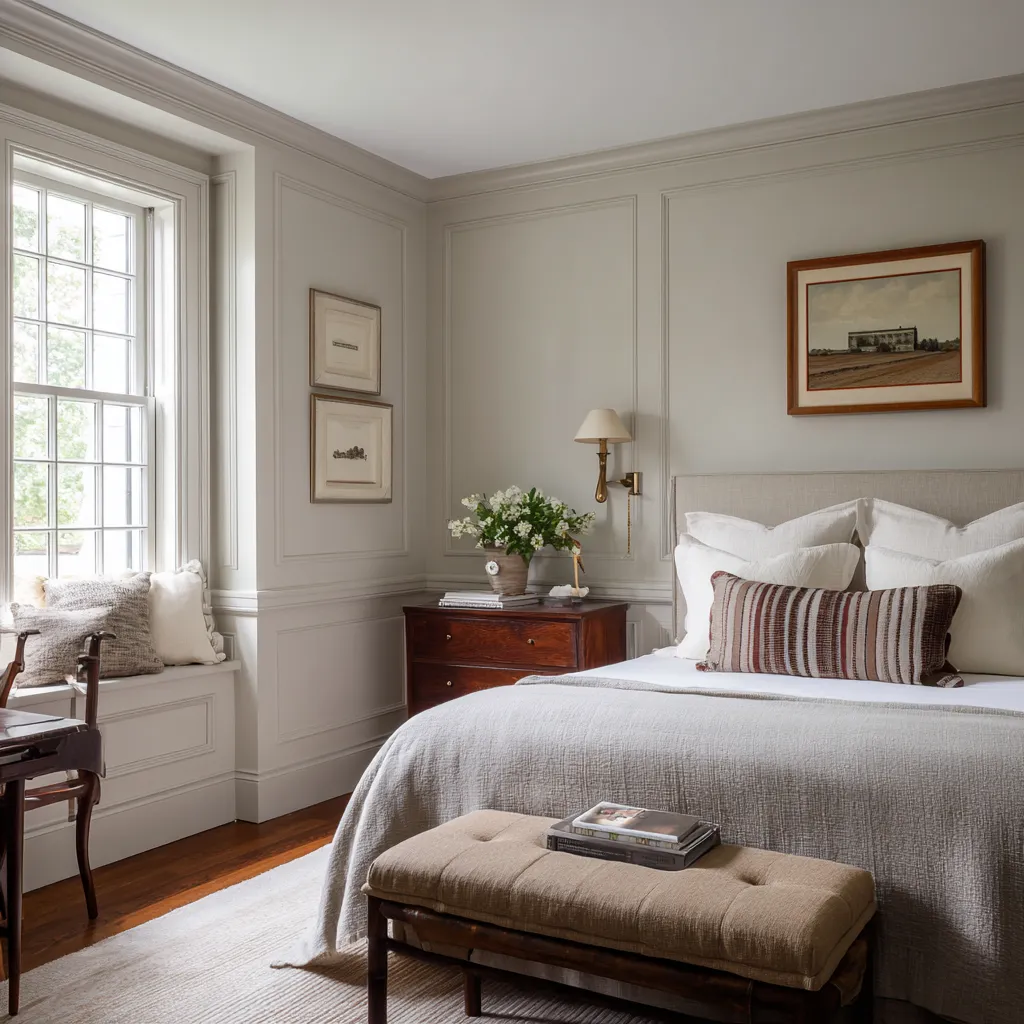
The role of the bed
The bed is one of the most important decision points in a bedroom. In Colonial style, it can either support the shell or compete with it.
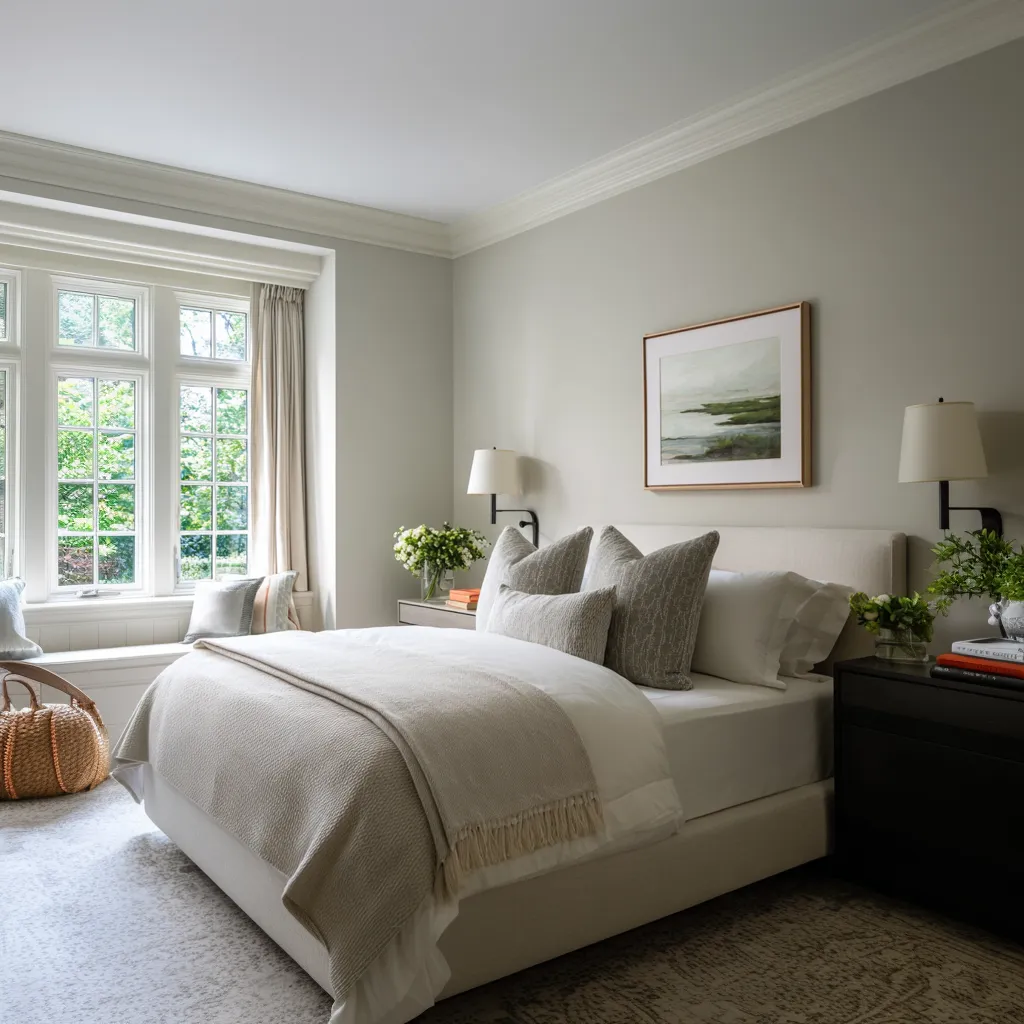
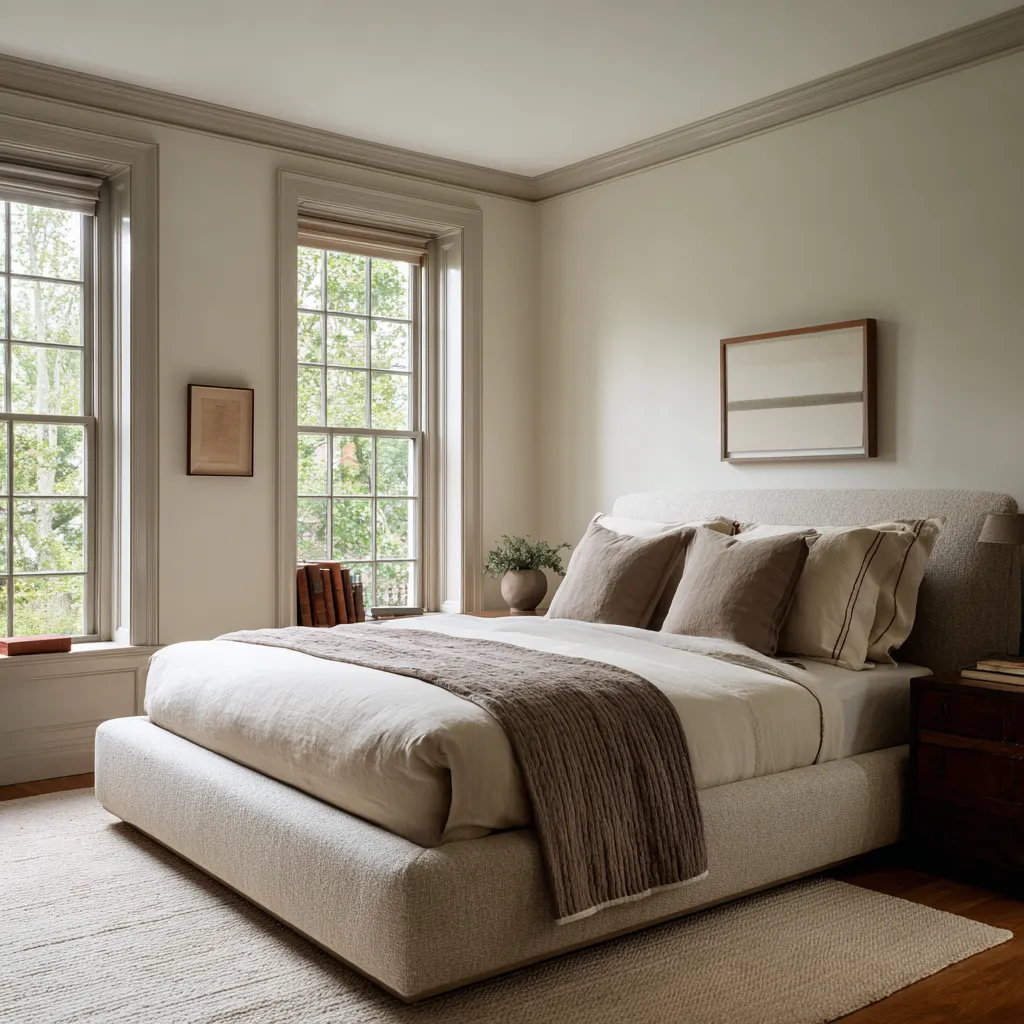
The bed can be broad, upholstered, and visually simple. That choice allowed sash windows, wall panels, crown lines, and casing depth to stay prominent.
The bed adds softness rather than historical noise. Large pillows, textured coverlets, and one restrained lumbar pillow often do more for the interior design than a complicated headboard would have done.
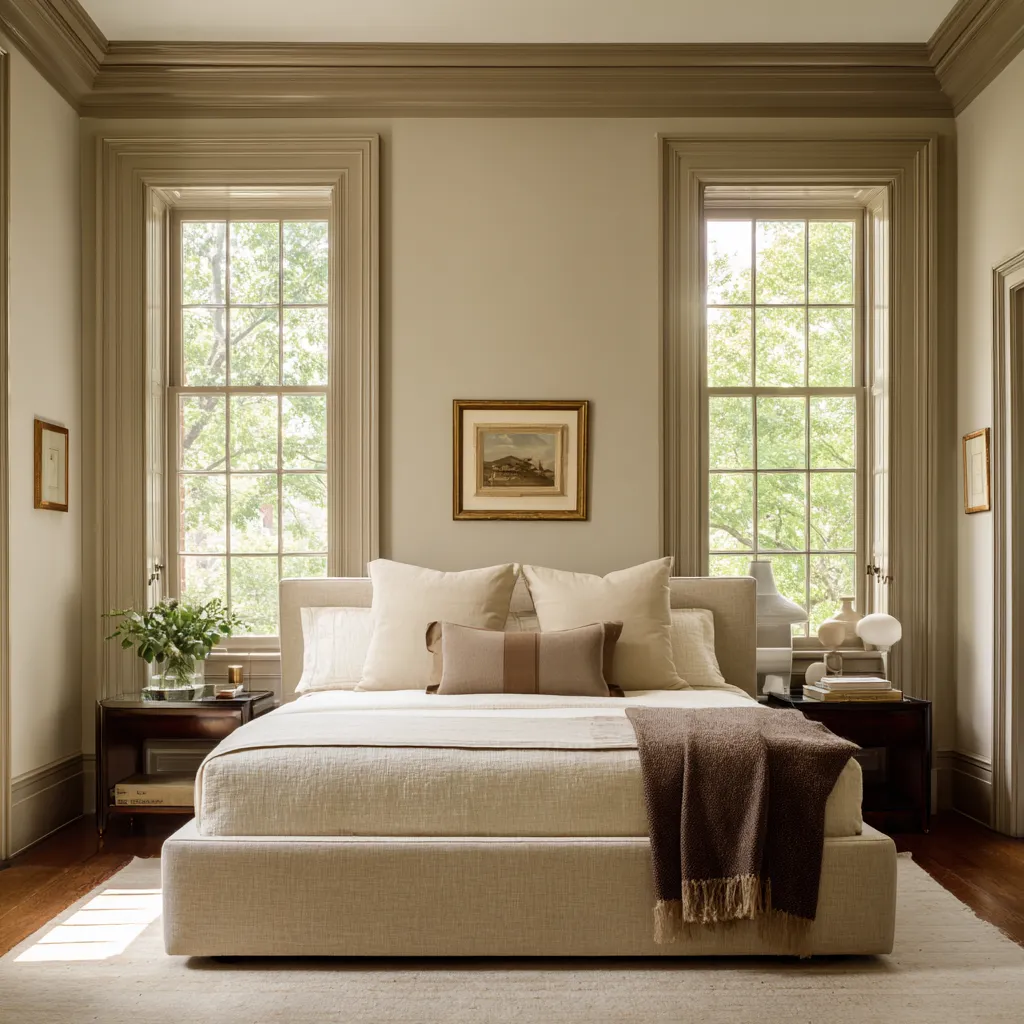
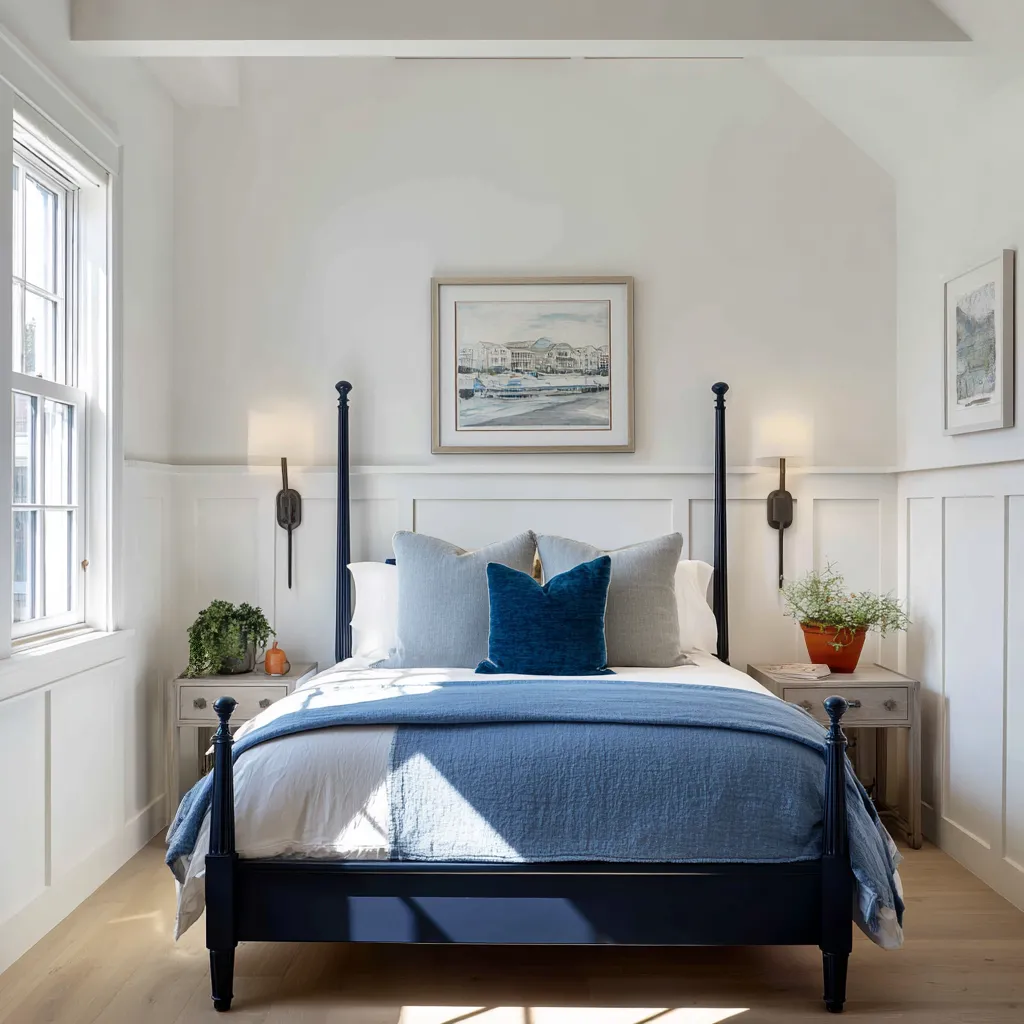
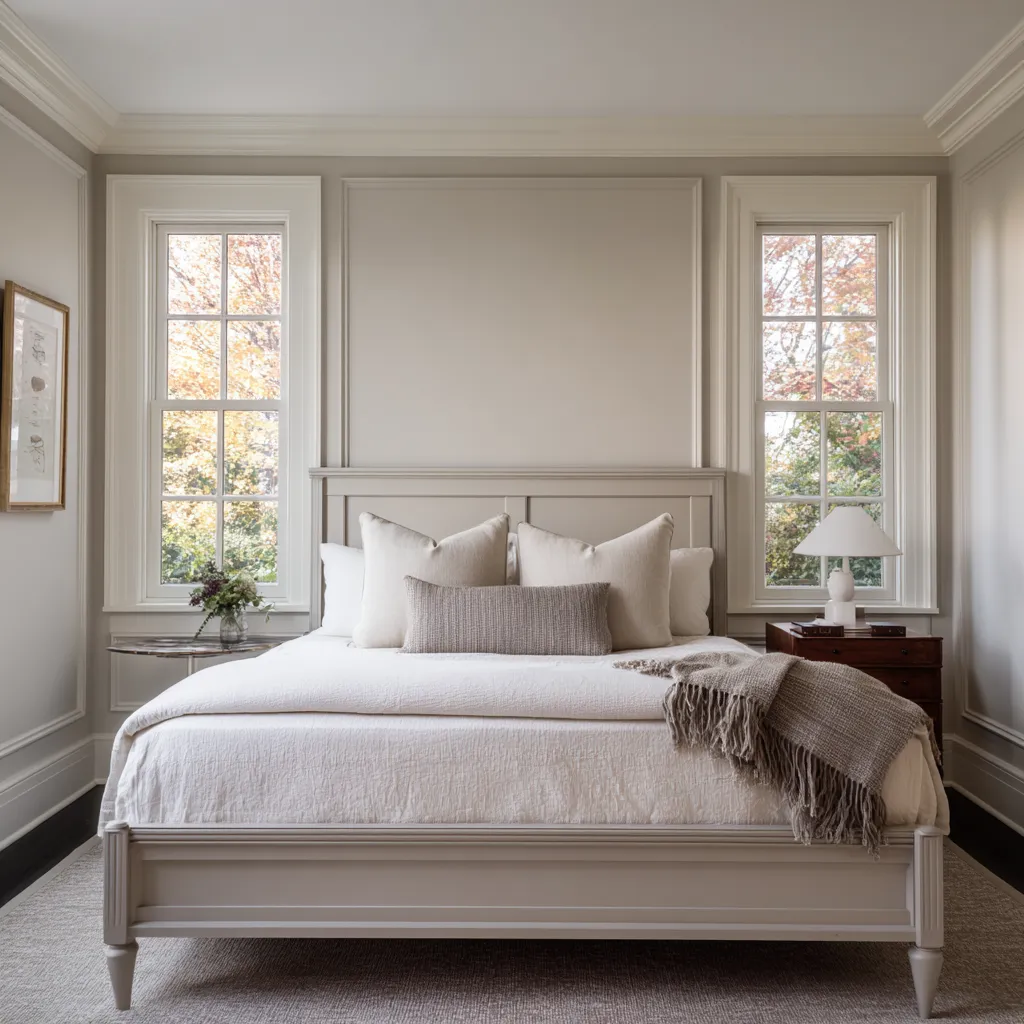
At the same time, some degree of furniture-led history can strengthen the room. A painted post bed, a softly shaped headboard, or a modest foot bench can keep the bedroom from turning too generic.
What matters is not using many traditional furniture gestures. It is using a small number of them with discipline.
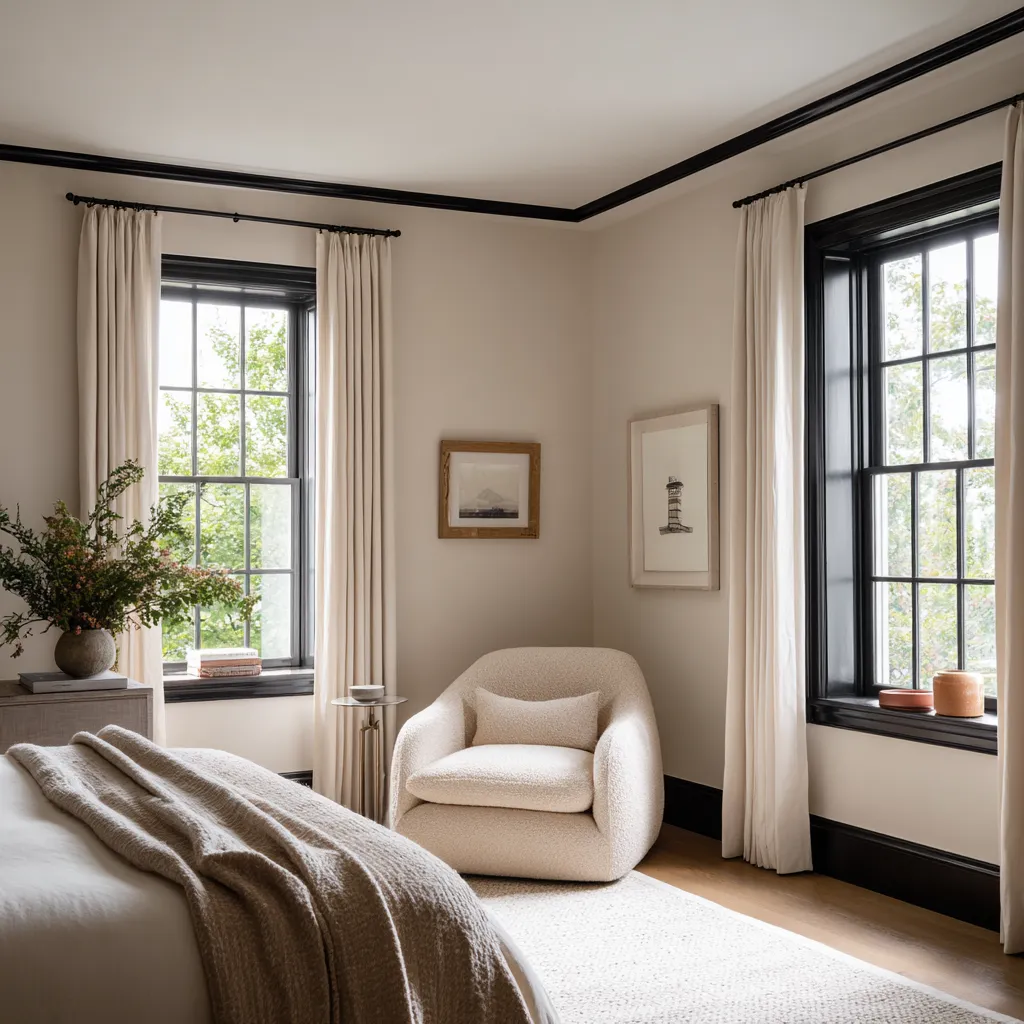
The bed should not be chosen in isolation. In an interior with very strong casing, tall windows, and good shell articulation, a quieter upholstered bed often works well.
In a plainer shell, the bed may need to contribute more of the Colonial signal.
Built-ins do far more than add convenience
Window seats, fitted cupboards, and recessed niches usually bring deeper layering, extra seating, and a stronger sense of domestic settlement.
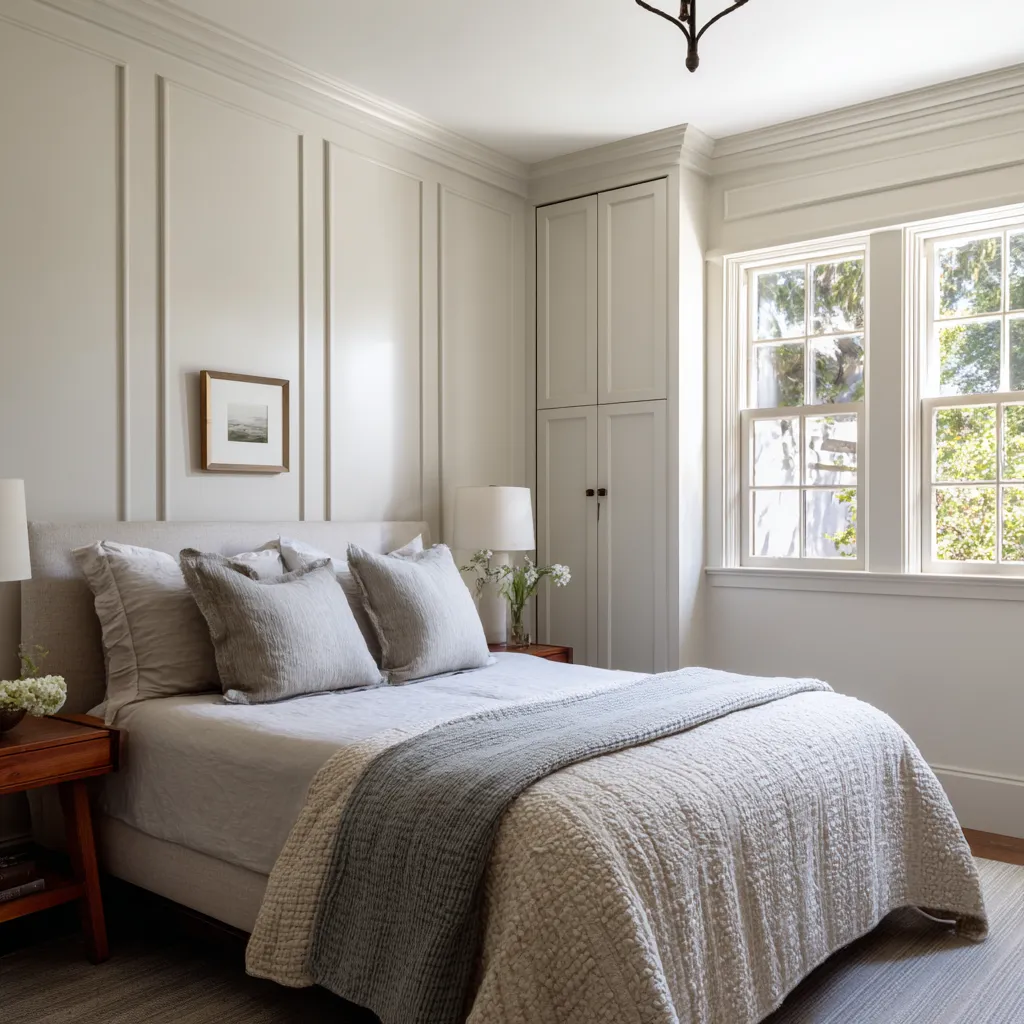
So a built-in seat is not just a practical bench. It can signal a broader shift in mood.
It makes the bedroom feel more rooted in the house. It gives the room another point of gravity beyond the bed.
It also helps explain why some bedrooms feel as though they belong to an old shell rather than simply occupying one.
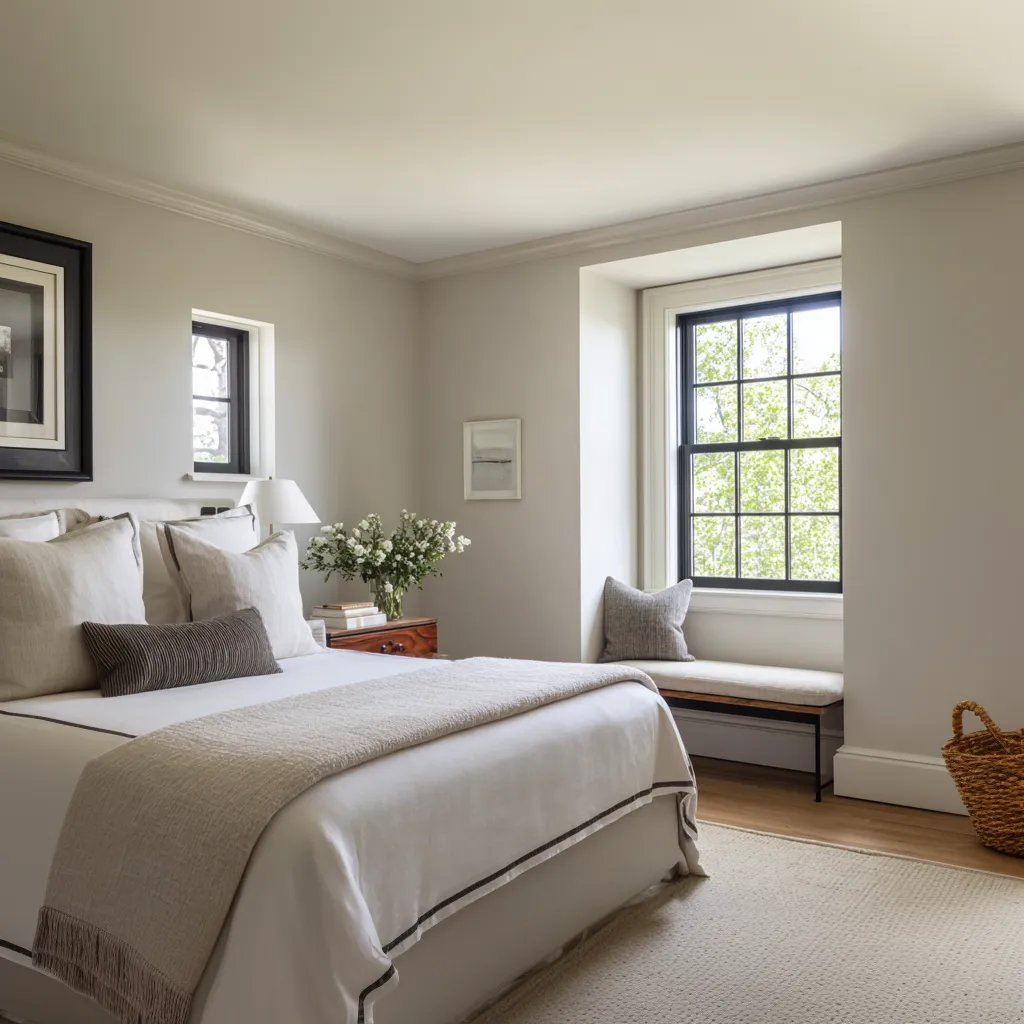
Still, built-ins need to support the overall composition. If a window bench becomes visually stronger than the main bed wall, the room can lose some of its focus.
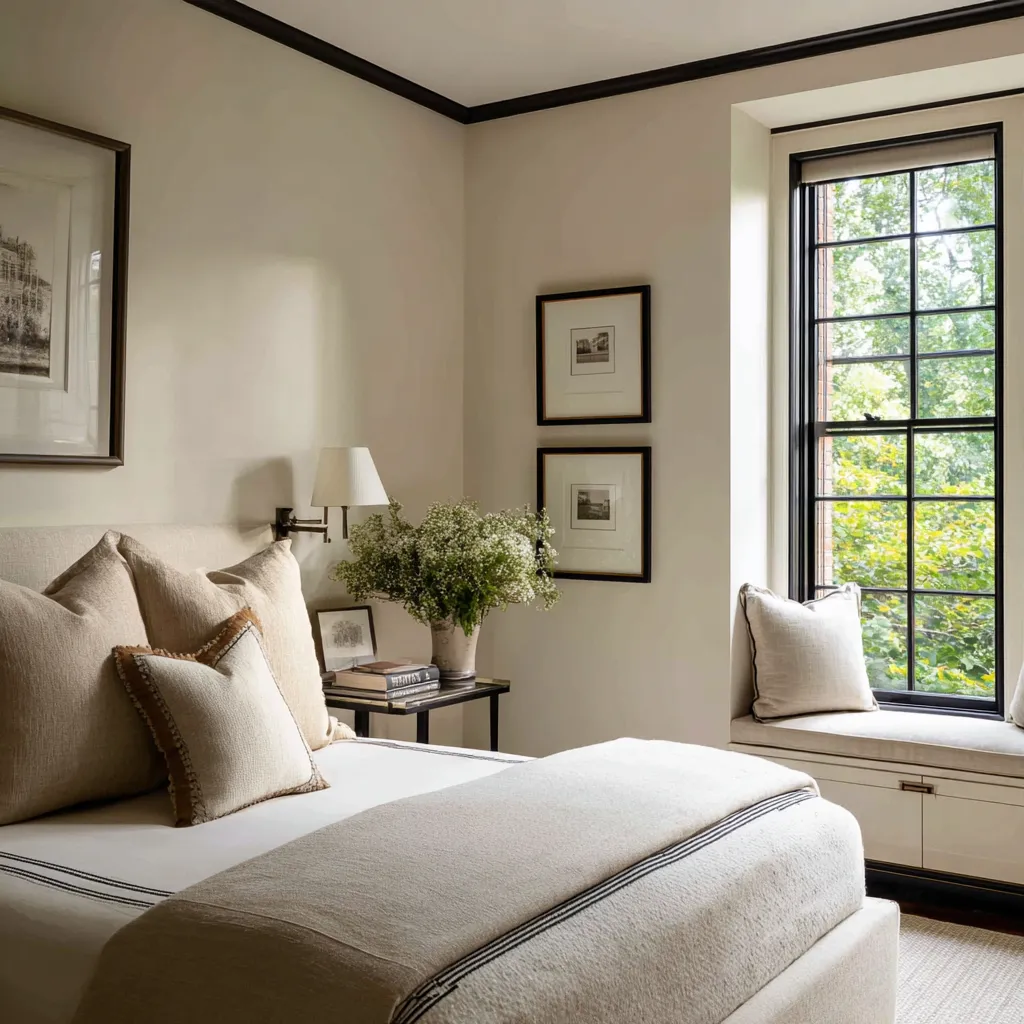
Why black trim can help—and when it hurts
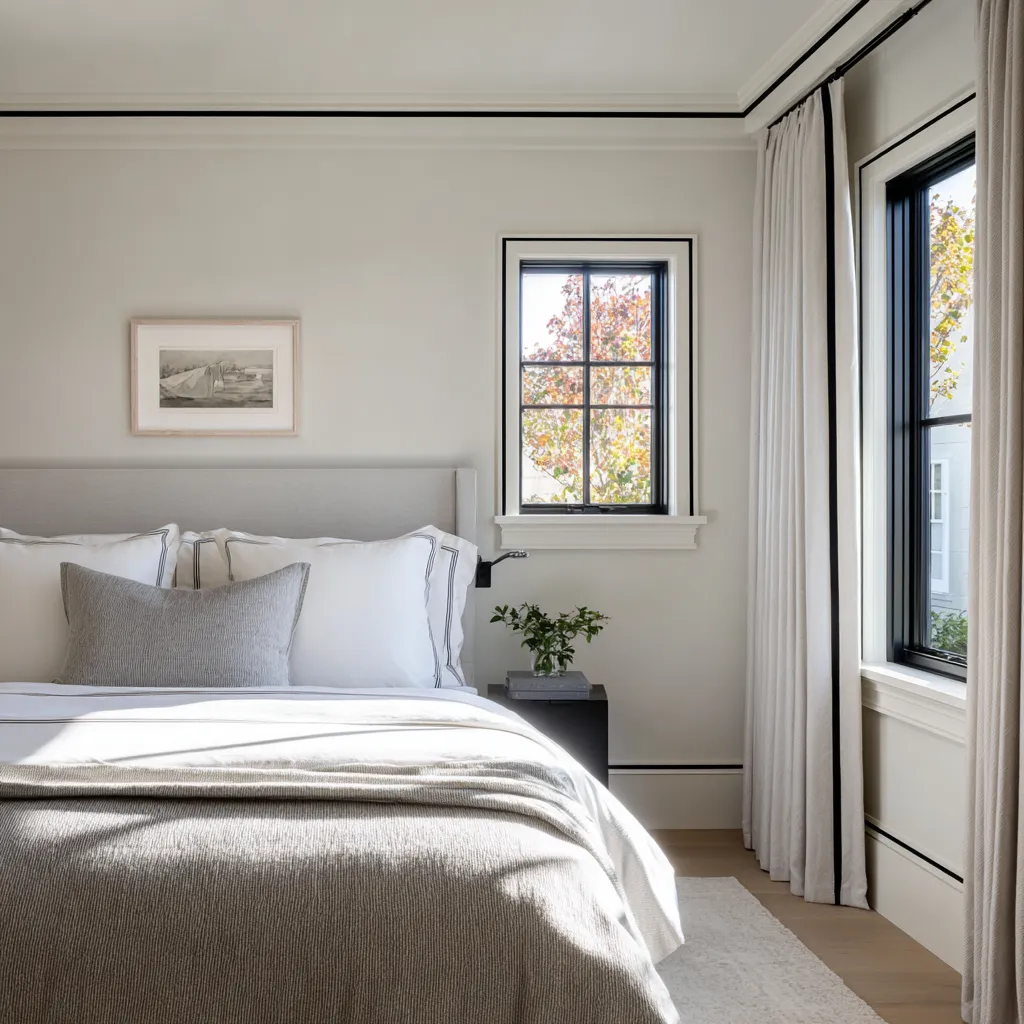
Black window frames, dark rods, black crown outlines, darker linear chandeliers, or thin dark edging on bedding sharpen the interior design and gave pale Colonial shells a firmer outline.
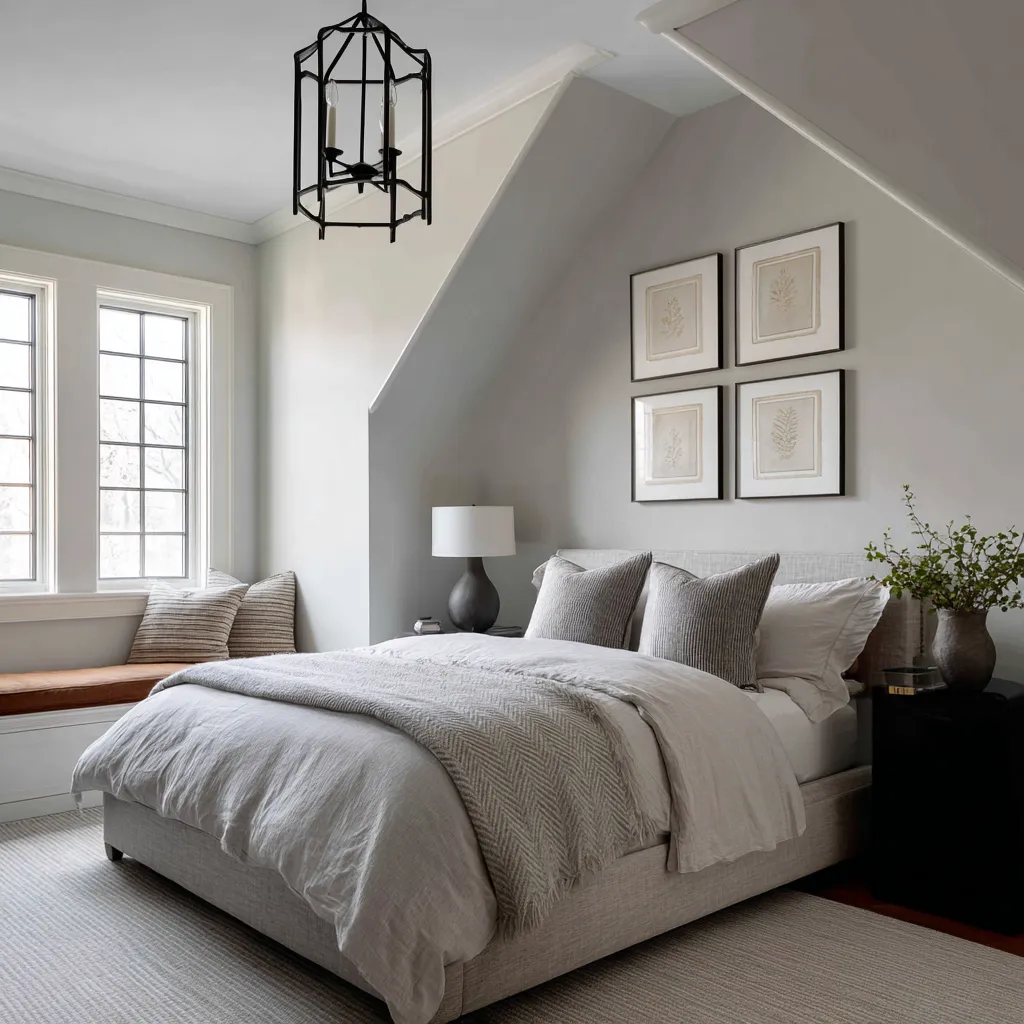
But contrast alone is not a guarantee of success. Black detailing works well when the room already has strong order.
In that situation, contrast acts like punctuation. It clarifies.
It tightens. It gives the shell a crisper frame.
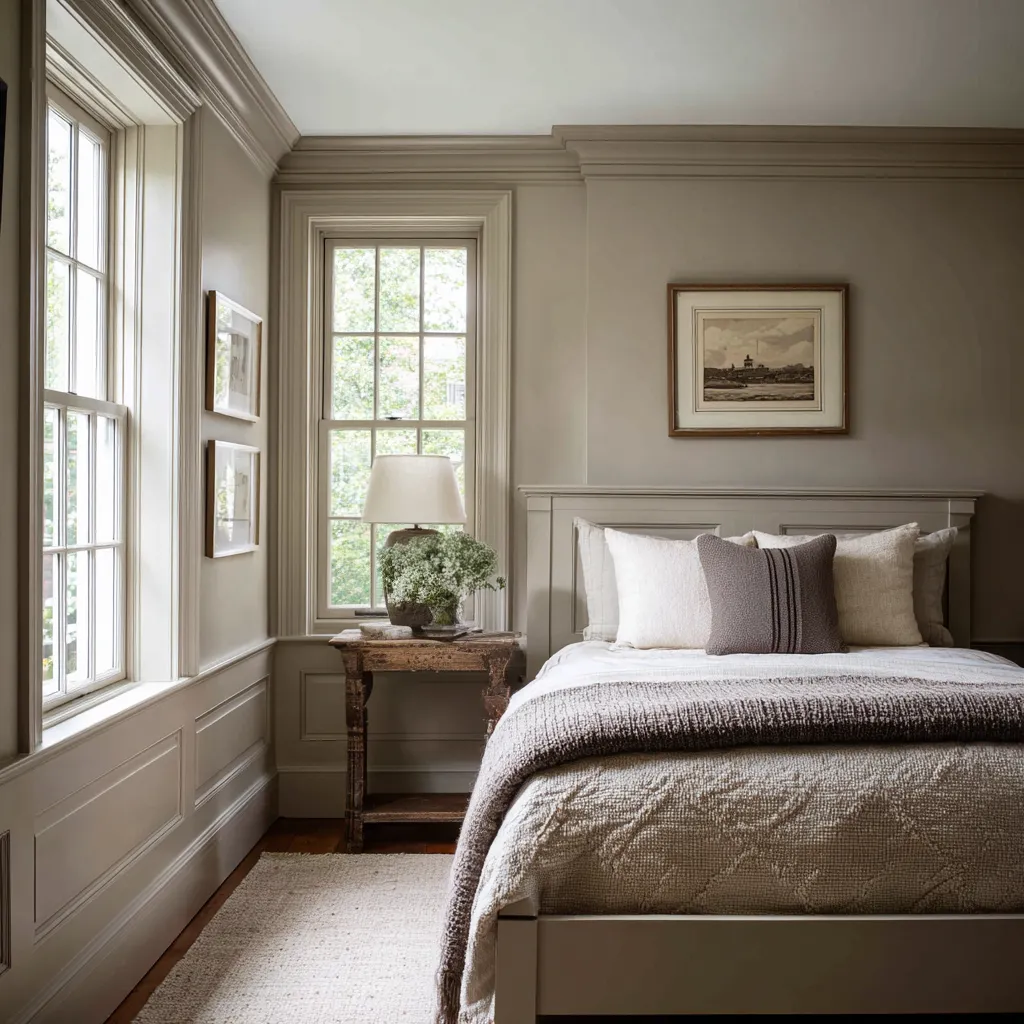
Where contrast becomes less helpful is when it tries to replace structure. A room with weak shell support and a darker bed or darker accents may feel graphic, but not especially resolved.
Contrast is most useful as a reinforcing move, not as a substitute for architecture or placement.
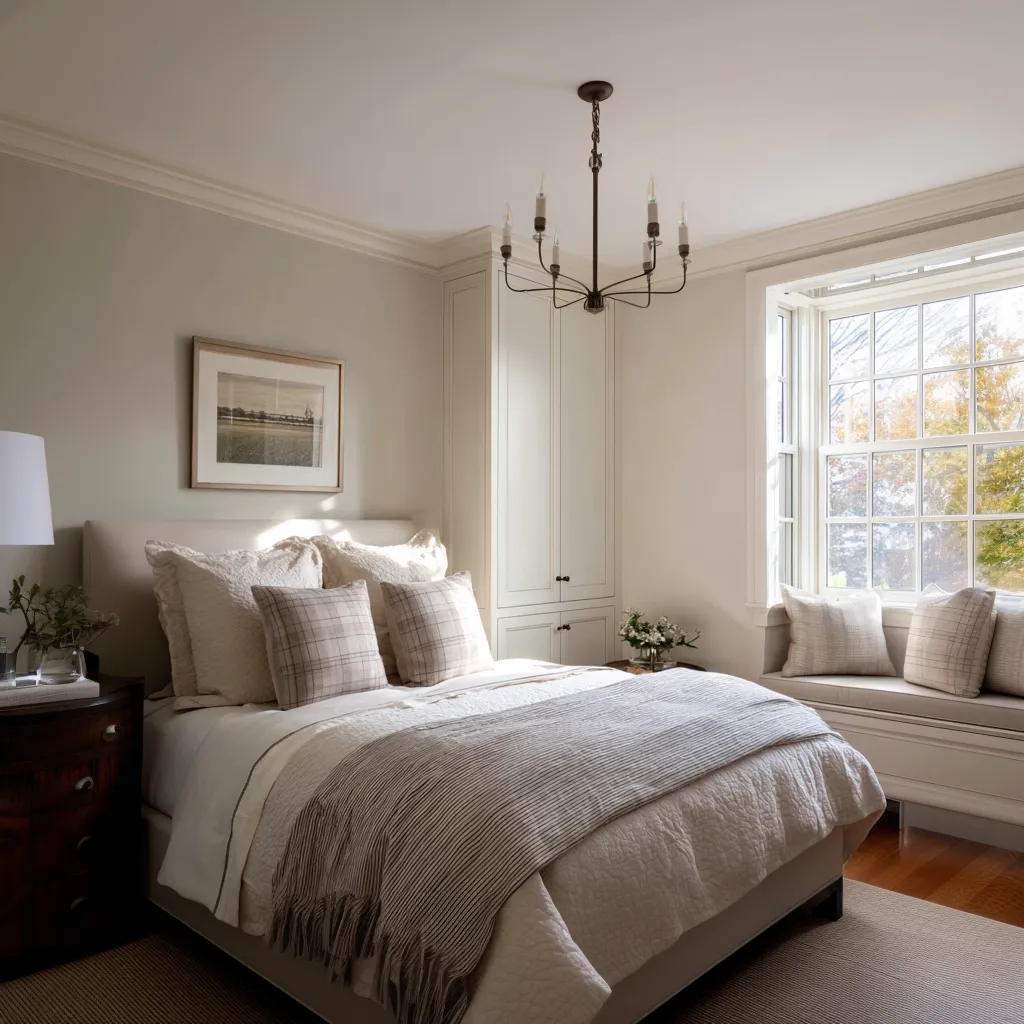
Beautiful Colonial bedrooms are not the richest ones
The best looking Colonial bedroom design ideas are not the ones with the fullest trim package, the most pattern, or the most obvious historical references. They are the designs with the cleanest relationship between three systems:
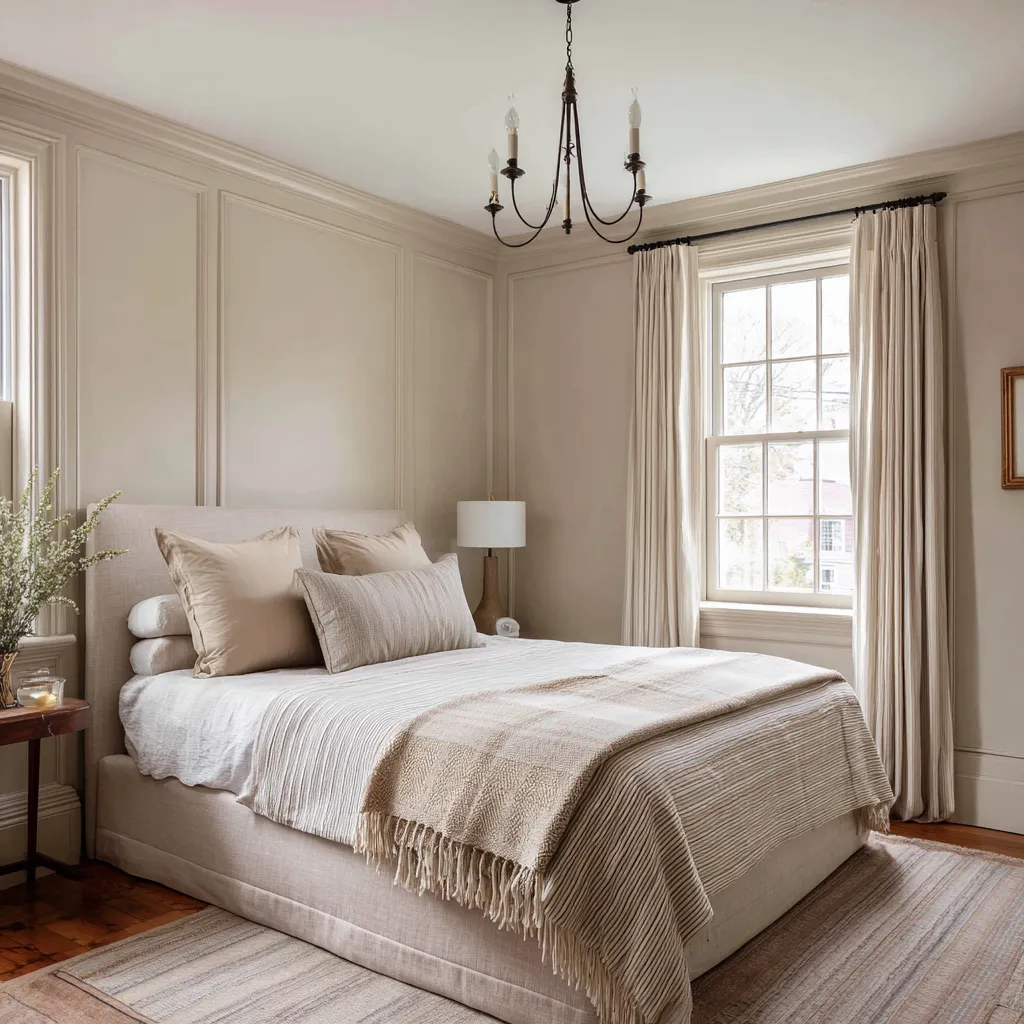
Historical legitimacy
This came from sash windows, casing weight, crown presence, painted millwork, and built-in depth where present.
Modern soft editing
This came from simpler bed forms, reduced palettes, low object count, edited lighting, and limited pattern.
Compositional control
This comes from centered or highly balanced bed placement, clear focal fields, readable circulation, and stable left-right distribution.
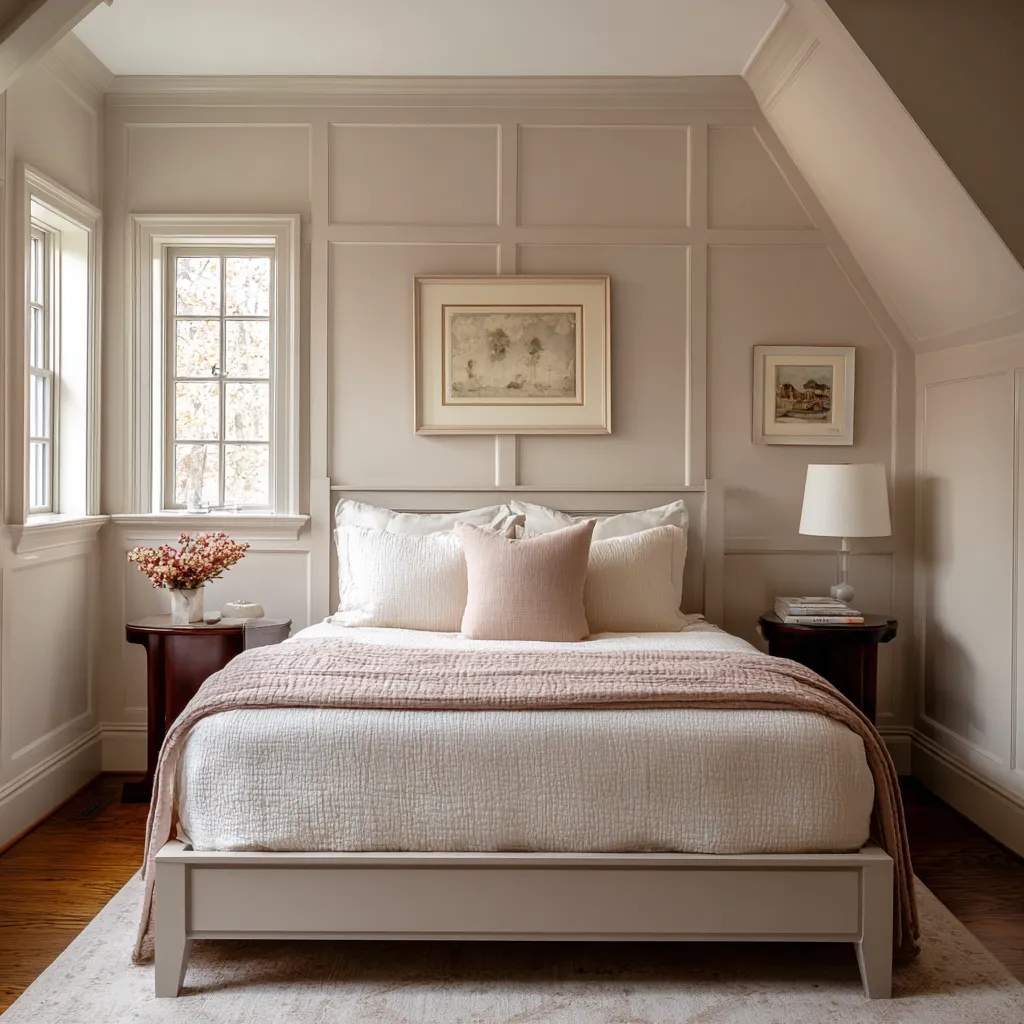
Interior design can hold all three at once. Remove too much historical presence and the room starts to lose its Colonial identity.
Add too much furnishing history and the room drifts closer to reproduction styling. Reduce composition and the room feels less settled, even if the materials are attractive.
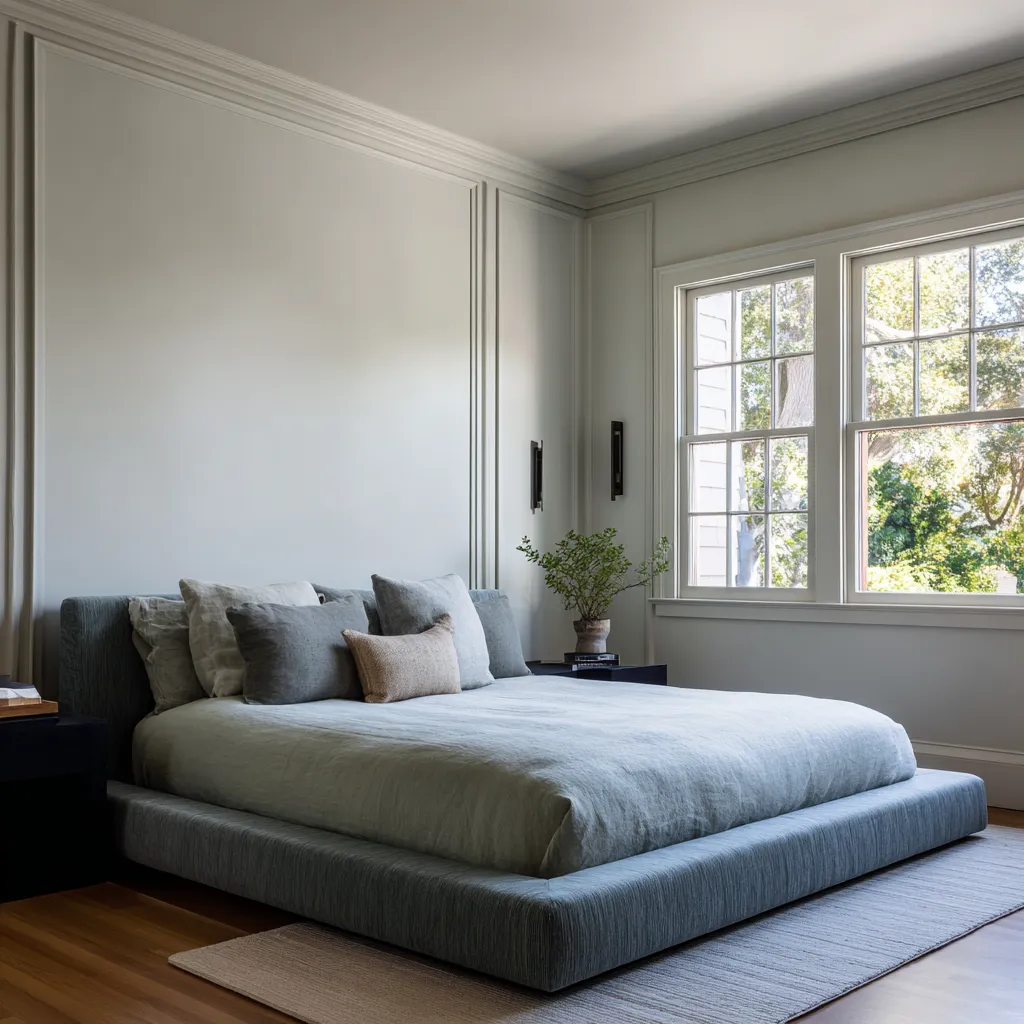
Main Design Ideas That Shape a Fresh Modern Colonial Bedroom
| Design idea | What it looks like in the room | What keeps it current | What to avoid |
|---|---|---|---|
| Center the bed with intention | The bed sits on the main wall or in the clearest visual zone, often between windows or inside a strong wall field | Use a simple upholstered or lightly shaped bed instead of a heavy carved one | Letting the bed drift off-center without another strong balancing move |
| Use sash windows as a style anchor | Tall window proportions, divided panes, deep casing, and a clear window rhythm | Keep drapery plain and tonal so the window shape stays visible | Hiding the window structure behind busy treatments or oversized patterned drapes |
| Let the shell carry the lineage | Crown molding, painted millwork, casing weight, paneling, or a built-in seat do the historical work | Keep the shell disciplined and edited rather than heavily layered everywhere | Trying to force Colonial character only through furniture or decor |
| Choose a large soft bed mass | A broad upholstered bed, padded headboard, thick bedding, and a quiet platform-like base | Use one calm silhouette with limited detailing | A busy bed frame competing with the trim, windows, and wall structure |
| Keep the palette tightly controlled | Cream, oat, greige, pale taupe, warm white, muted gray, dusty blue-gray, soft brown | Stay inside one close tonal family with one restrained deeper note | Too many accent colors that break the room into small unrelated zones |
| Use texture more than print | Layered coverlets, nubby throws, woven fibers, linen, boucle-like upholstery, soft rugs | Bring depth through surface variation rather than loud motifs | Large floral programs, busy prints, or too many patterned fabrics at once |
| Build formal order before decoration | Strong left-right balance, readable circulation, open floor area, and clear furniture placement | Keep furniture count restrained and give each piece a clear role | Adding extra decor before the room feels settled in plan |
| Add one historical furniture cue | A painted post bed, shaped headboard, bench, warmer wood chest, modest chandelier, or restrained traditional sconce | Limit that historical note to one or two pieces | Either removing all furniture memory or filling the room with multiple overt period pieces |
| Use built-ins to deepen house character | Window seats, fitted cupboards, recessed niches, or integrated storage | Keep the built-in useful and visually tied to the room axis | Letting side zones become more dominant than the bed wall |
| Treat the window seat as architecture, not filler | A cushioned bench in a deep window recess with minimal styling | Use a restrained cushion and one or two small pillows at most | Overdecorating the seat until it becomes a separate decorated scene |
| Use warm wood in a measured dose | Darker or mid-tone nightstands, a chest, wood chair arms, or a small side table | Keep wood pieces compact and supportive rather than dominant | Too much dark wood mass, which can make the room feel heavier and older than intended |
| Modernize the light fixture before the shell | A slim chandelier, pared-back sconces, or a lantern form with a cleaner profile | Keep the fixture light in line and open in shape | Very ornate fixtures that pull the room back toward full traditional styling |
| Use black accents as punctuation | Black window frames, black rods, slim dark sconces, dark picture frames, or narrow bedding edging | Keep the black notes lean and repeated in a few places only | Using black contrast as a substitute for good composition |
| Keep object count low | A lamp, one floral or branch arrangement, a few books, a restrained art grouping, one throw | Use fewer objects with stronger placement | Filling every surface, which weakens the room’s calm structure |
| Use wall paneling with restraint | Panel grids, lower wall treatment, or long vertical divisions that support room proportion | Let daylight and shadow define the molding instead of overdecorating the wall | Overloading every wall plane with trim until the room feels busy |
| Keep pattern concentrated, not spread everywhere | One plaid lumbar pillow, checked bench cushion, soft stripe, or muted floral accent | Use one pattern family in one or two places | Mixing multiple traditional patterns that pull attention in different directions |
| Let daylight do visual work | Pale walls, clear window geometry, calm textiles, and open wall fields that allow shadow to show | Use lighter wall values and restrained finishes | Darkening the room too much with heavy coverings or dense visual clutter |
| Make side zones supportive, not competitive | Nightstands, chair corners, benches, and window seats support the main bed composition | Keep secondary areas simple and connected to the main room logic | Creating a chair corner or bench zone that feels like a separate room |
| Use a shaped traditional bed only if the rest of the room is quiet | Painted curved headboard, post bed, or modest footboard paired with pale bedding and calm walls | Narrow the color range and reduce the decor around it | Pairing a formal bed with equally formal lighting, busy art, and rich pattern |
| Aim for the double-anchor balance | One anchor comes from modern editing, the second from a small furnishing-level Colonial cue | Keep both sides controlled and in proportion | Going too far in either direction: generic modern on one side, full reproduction on the other |
.
The larger lesson
Colonial bedroom design works well when it is treated as a framework of proportion, placement, and restraint rather than as a collection of old-style details.
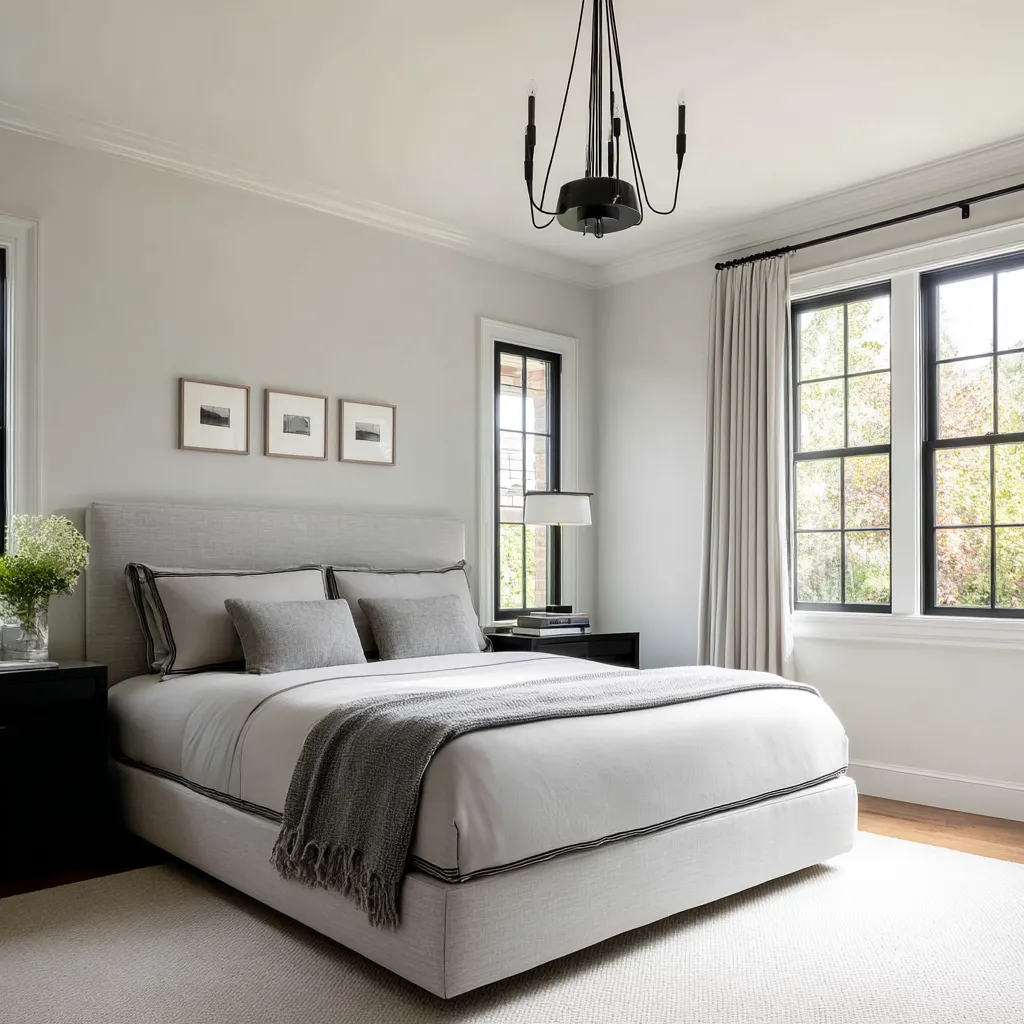
The room should keep enough of its house-specific backbone to feel rooted, but the furniture and textiles should lighten that framework rather than burden it.
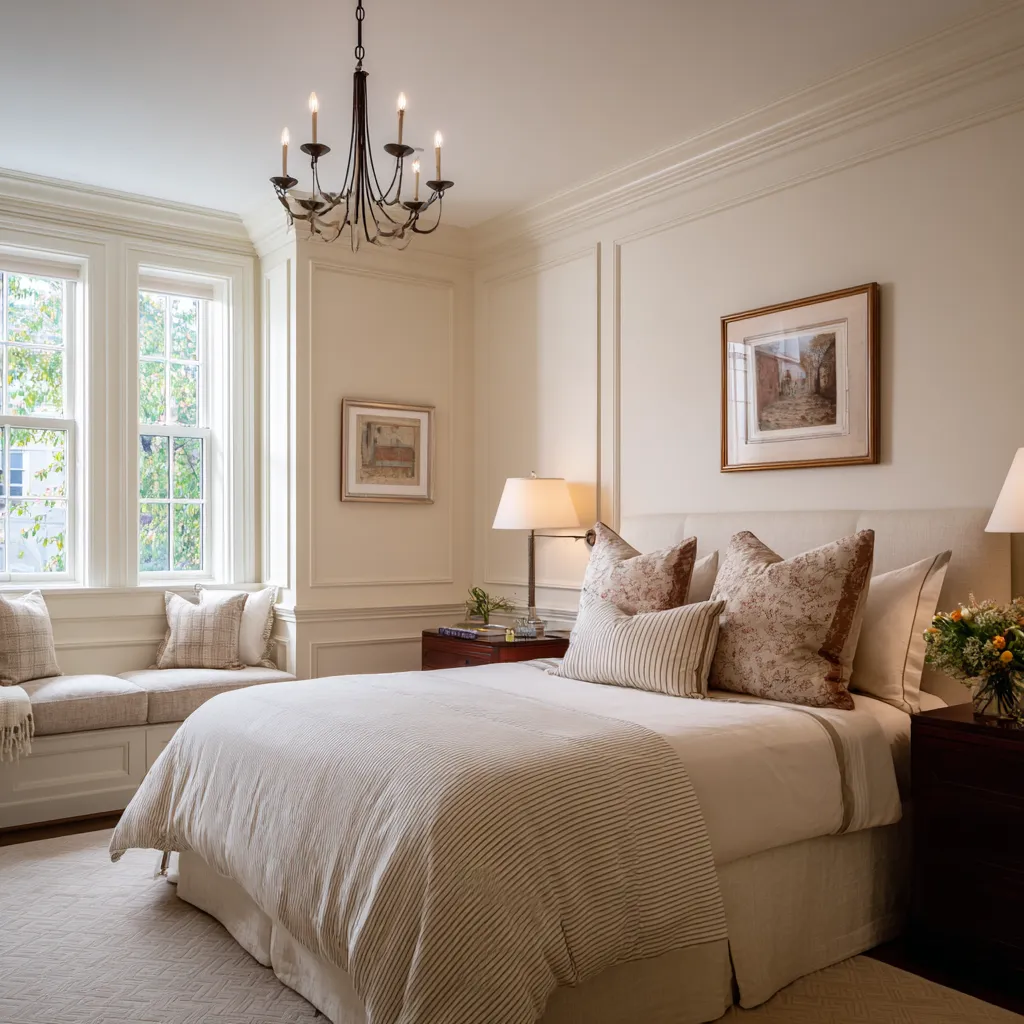
That balance creates bedrooms that feel warm, composed, and current without losing their lineage. And that, more than any single bed style or trim profile, is what gives modern Colonial bedroom design its lasting appeal.