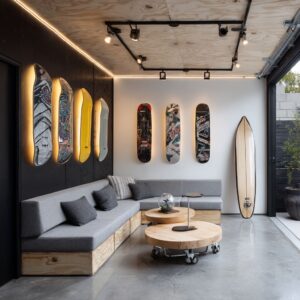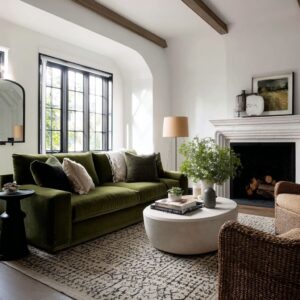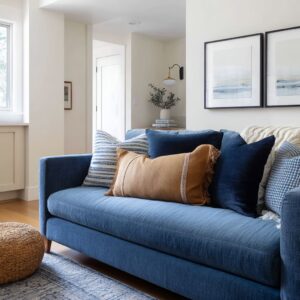
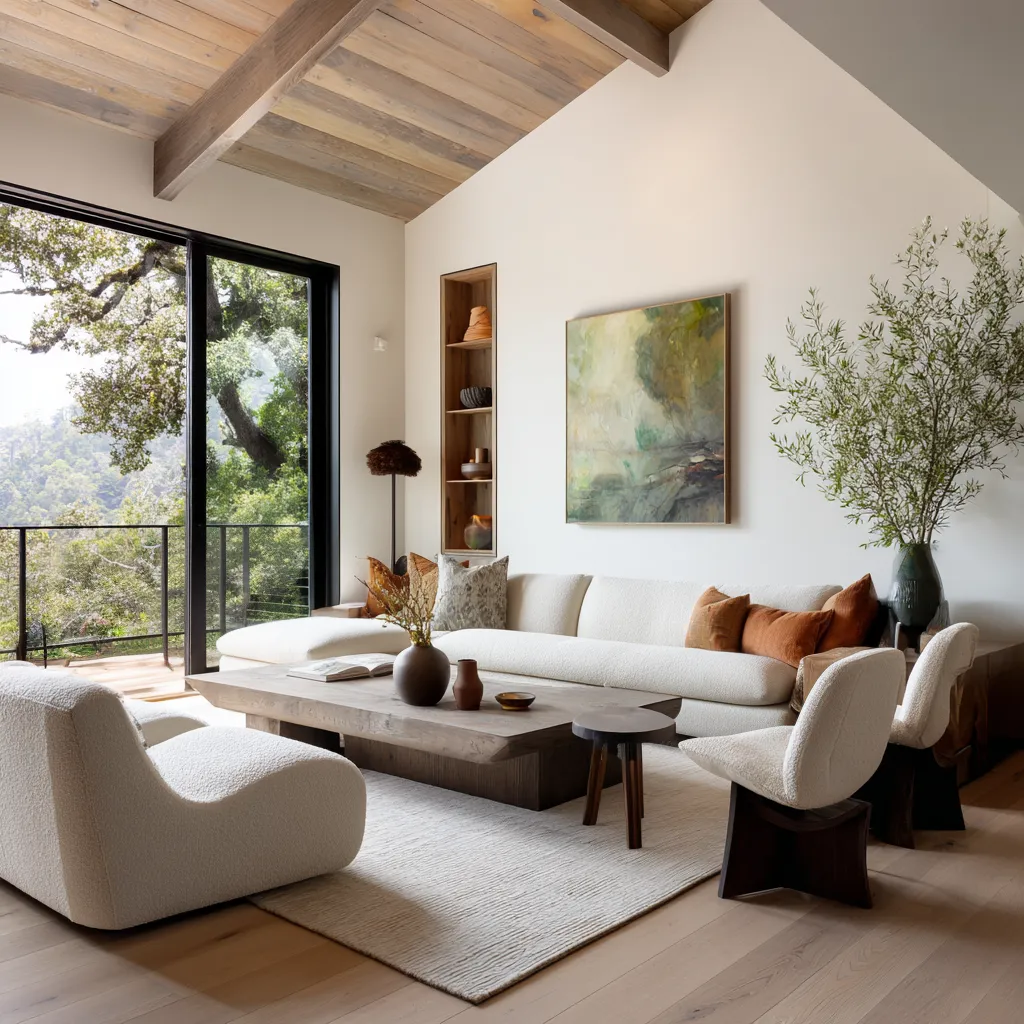
California living room design is often flattened into one broad image: pale walls, warm wood, a soft sofa, sunlight, and a large opening toward a patio or garden. That image hides the variety of the styles in the California design family.
These interiors do not sit on one straight line from rustic to modern, and they do not separate cleanly by color, furniture era, or price level. The deeper differences sit in how each family handles shelter and exposure, craft and geometry, editing and mixture.
A California living room usually begins with one of two instincts. The first is view-led living: glass, air, openness, low furniture, and a feeling that the room stretches outward.
The second is hearth-led living: thicker enclosure, stronger architectural bones, heavier material presence, and a room that gathers itself inward around fire, timber, stone, and domestic gravity. Once that first choice is made, everything else follows.
Curves mean something different in a California boho room than in a Napa living room. Leather works differently in a California eclectic room than in a bungalow.
An arch carries a separate role in Palm Springs than it does in California chic.
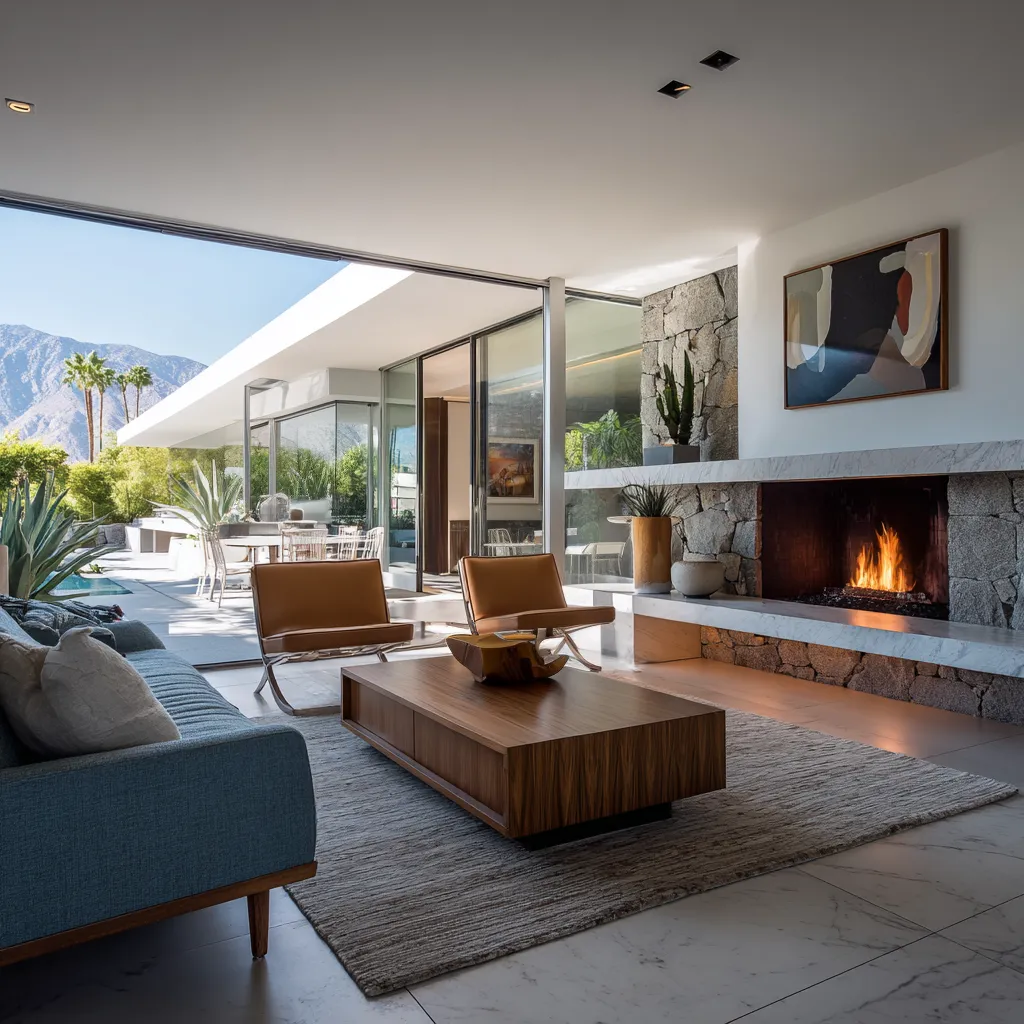
Seen this way, the seven main California families become much easier to separate:
- California boho,
- California bungalow,
- California casual,
- California chic,
- California eclectic,
- Napa,
- and Palm Springs inspired.
Some are close relatives. Some are quite distant.
California casual often works as the central grammar from which several other families can branch. Bungalow and Napa form one hearth-rooted branch.
Palm Springs stands apart as the desert-modern branch with the clearest rule set. Boho and chic sit near each other, though they move in opposite directions once texture, order, and edge control begin to shift.
Eclectic is the family built on deliberate collision rather than on purity.
The three deep tensions that organize the California field
The easy way to understand these families is to stop thinking in labels and start thinking in design tensions.
- The first is exposure versus shelter. Some rooms are built around panorama, glass, and lowered lounge seating that allows the exterior to stay visually dominant. Others are built around the hearth, the thickness of the wall, the presence of beams, and the feeling that the room is held firmly by its shell. California casual, California chic, Palm Springs inspired, and part of California boho lean toward exposure. California bungalow and Napa lean toward shelter. Eclectic can travel in either direction depending on the shell it borrows.
- The second is handmade softness versus mineral geometry. On one side are linen, basketry, pottery, weathered wood, plant asymmetry, and tactile irregularity. On the other are stone planes, plaster mass, black-framed openings, hard-edged glazing, desert planting, and low monolithic tables. Boho leans toward fibrous softness. Palm Springs leans toward mineral geometry. Napa often sits between them, borrowing mineral depth while still keeping timber warmth.
- The third is edited coherence versus curated collision. Some rooms are tightly compressed in palette, disciplined in object count, and composed with visible restraint. Others become richer by placing different furniture lineages, periods, finishes, and moods into controlled friction. California chic belongs on the edited side. Eclectic belongs on the collision side. Casual usually sits near the center, which is one reason it can mutate so easily into neighboring families.
These tensions matter because California style is built through trade-offs. A room rarely pushes every signal equally.
If the glazing becomes dominant, the hearth usually becomes quieter. If the room gains fibrous craft texture, it often loses ceremonial order.
If the palette becomes tightly compressed, the stylistic vocabulary usually narrows too. The identity of each family comes from what it chooses to emphasize and what it lets fall back.
Comparison table: how the California living room families differ
| Style family | Primary room logic | Architectural cues | Furniture profile | Main material driver | Main warmth source | Palette tendency | Relation to outdoors | Order level | What it is often confused with | What keeps it distinct | What can weaken the style |
|---|---|---|---|---|---|---|---|---|---|---|---|
| California casual | View-led, open, easy daily living | Broad openings, pale shell, light wood, simple built-ins, soft ceiling interest | Low, broad, comfortable seating with substantial tables | Warm wood + soft woven textiles | Air, pale timber, low-contrast texture, relaxed spread | Cream, sand, oat, pale wood, muted earth notes | Strong, but domestic rather than theatrical | Medium | Boho or chic | Balanced openness, moderate editing, comfort without much stylistic pressure | Too many craft objects can push it into boho; too much polishing can push it into chic |
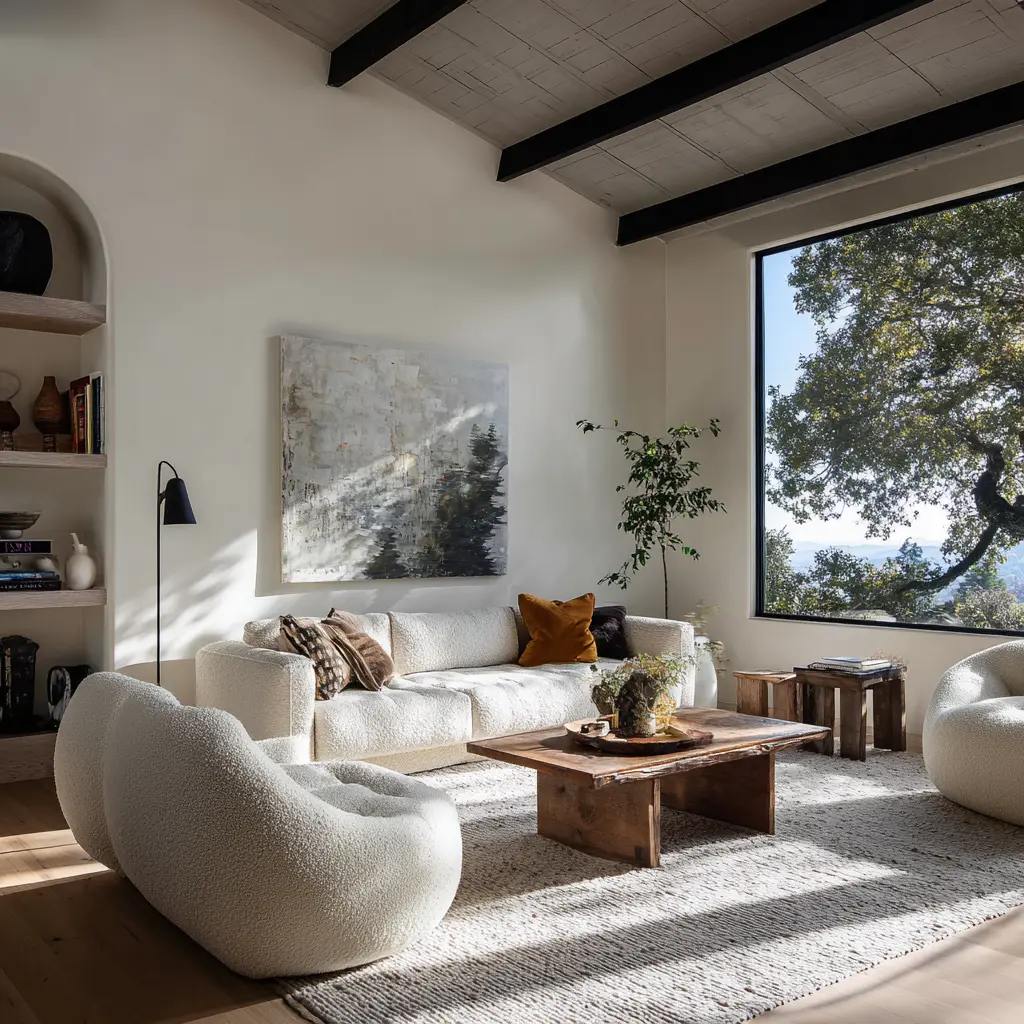
| California boho | Open and relaxed, but softened by craft and asymmetry | Arches, plaster softness, weathered wood, woven lighting, plant-rich corners | Low, soft, sometimes rounded, visibly tactile upholstery | Linen, basketry, pottery, rough wood, greenery | Fibrous texture, plant softness, handmade irregularity | Sand, clay, oat, muted rust, dusty green, sun-softened neutrals | Strong, often filtered through plants, terraces, or softened openings | Low to medium | Casual | Tactile looseness, collected craft layer, emotionally loose composition | Too much black contrast or hard geometry can strip out the boho mood |
| California chic | Open and composed, shaped by restraint | Clean arches, pale stone, filtered light, controlled wall planes, refined paneling | Low seating, but with more sculptural discipline and cleaner spacing | Compressed palette + refined wood or stone notes | Tonal control, soft curves, selective natural materials | Cream, ivory, pale oak, muted gray-green, soft stone tones | Strong, but polished and carefully framed | Medium-high | Casual | Editing, palette compression, cleaner curves, fewer objects doing more work | Too much craft texture can pull it toward boho; too many mixed eras can shift it toward eclectic |
| California eclectic | Open California shell with deliberate stylistic contrast | Black-framed openings, older architectural fragments, art-led walls, mixed furniture lineages | Low seating mixed with leather chairs, vintage notes, monolithic tables, mixed silhouettes | Patina + art + leather + faded textile layers | Historical contrast, leather, worn rugs, layered object histories | Cream, rust, charcoal, muted blue-green, black accents | Usually open, but less dependent on purity of the view | Medium | Boho or casual | Curated friction between eras, finishes, and furniture histories | If palette control is lost, the room can feel scattered rather than layered |
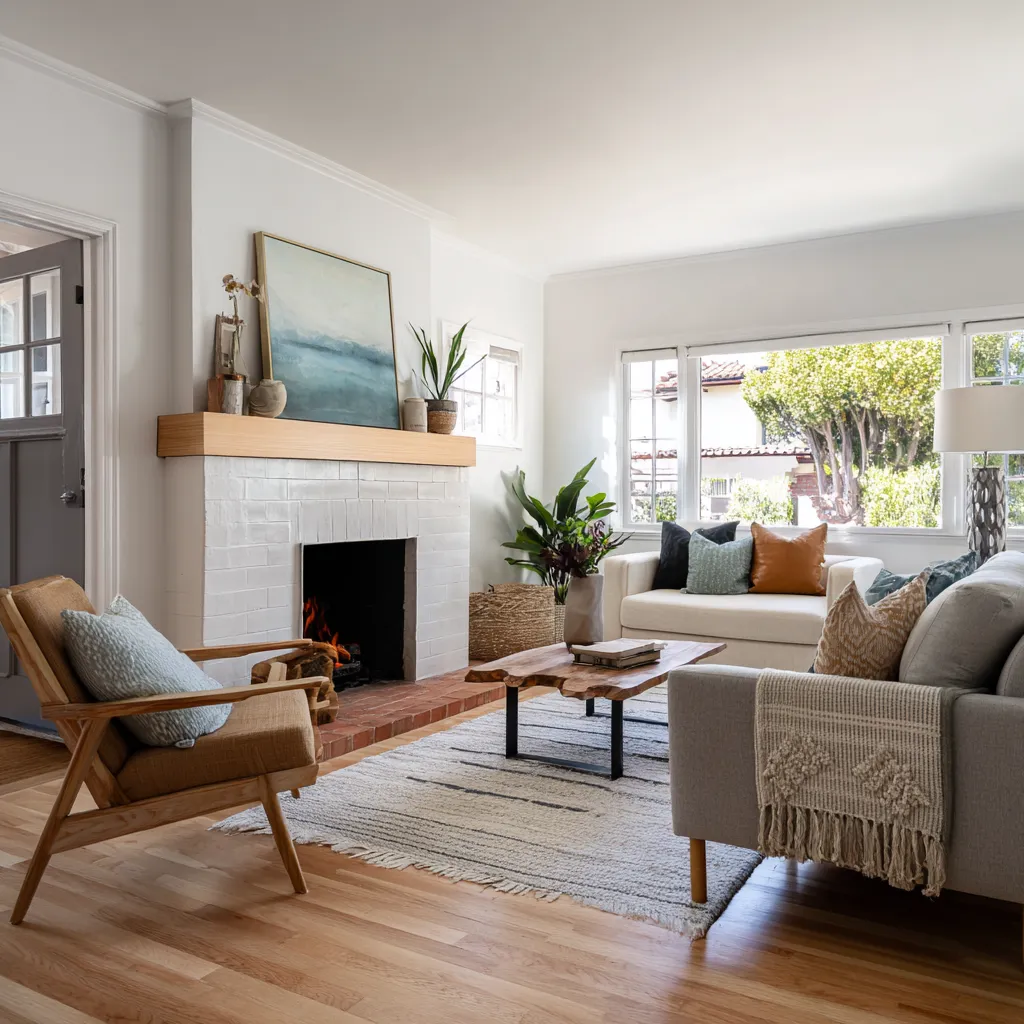
| California bungalow | Hearth-led, intimate, inward, domestic | Built-ins, grouped windows, trim, beams, coffered ceilings, modest but clear fireplace wall | Closer seating groups, human-scale room planning, sturdy tables, grounded chairs | Timber + hearth + built-in structure | Enclosure, woodwork, fire, domestic nearness | Warm neutrals, browns, cream, brick, muted earth notes | Present, but secondary to the room’s protected center | Medium-high | Napa | Intimate scale, built-in logic, fireplace as emotional center, room held by the shell | Oversized glazing and very low spread-out seating can weaken the bungalow character |
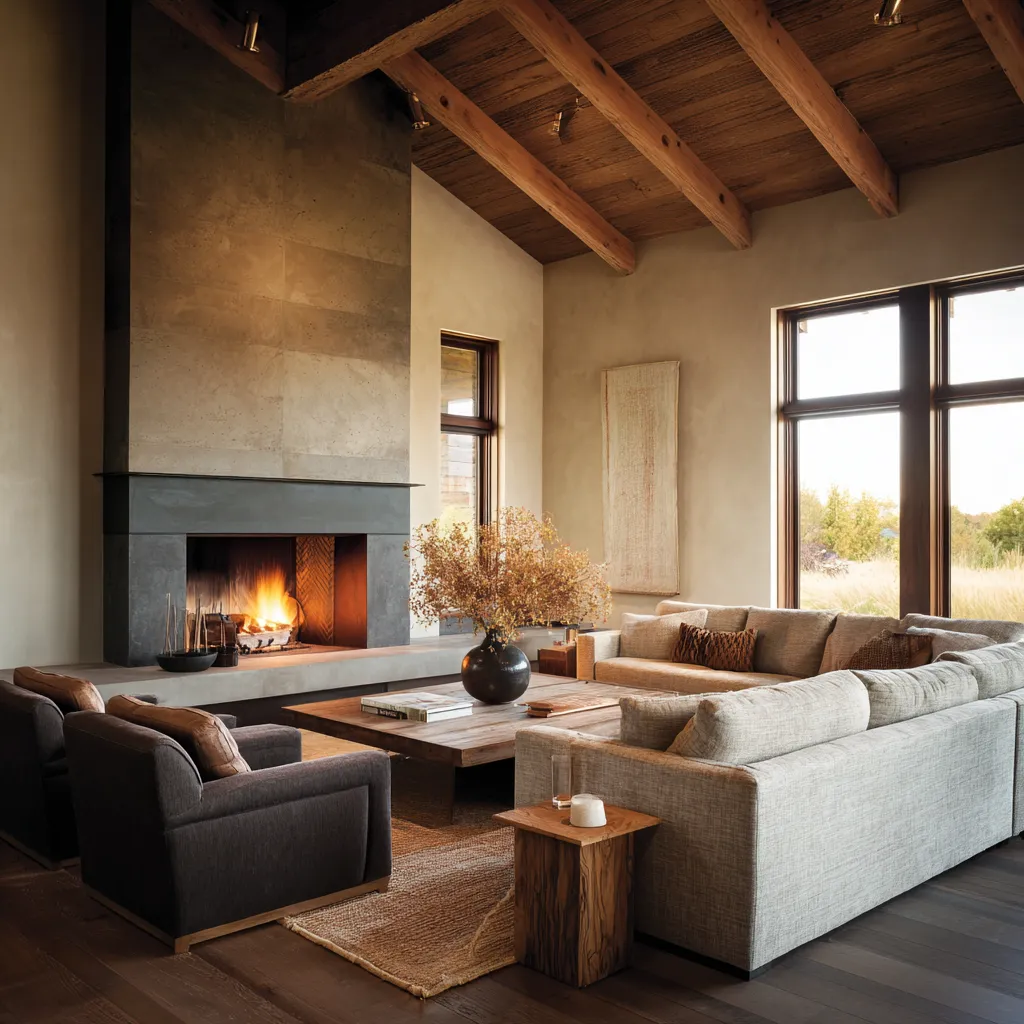
| Napa style | Hearth-led, rooted, larger-scale shelter with wine-country gravity | Timber ceilings, plaster or limestone-like mass, black-framed windows, substantial fireplaces, broad wall planes | Broad but restrained seating, often deeper and weightier than casual, with large central tables | Timber + mineral depth | Fire, compressed earthy range, wood and stone weight | Bark, ash, oat, clay, smoke, limestone, muted vineyard-country tones | Stronger than bungalow, but still secondary to the architectural shell | Medium-high | Bungalow or chic | Estate-like scale, timber/mineral balance, mature restraint, heavier material presence | Too much airy coastal lightness can pull it toward casual; too much decorative mixing can pull it toward eclectic |
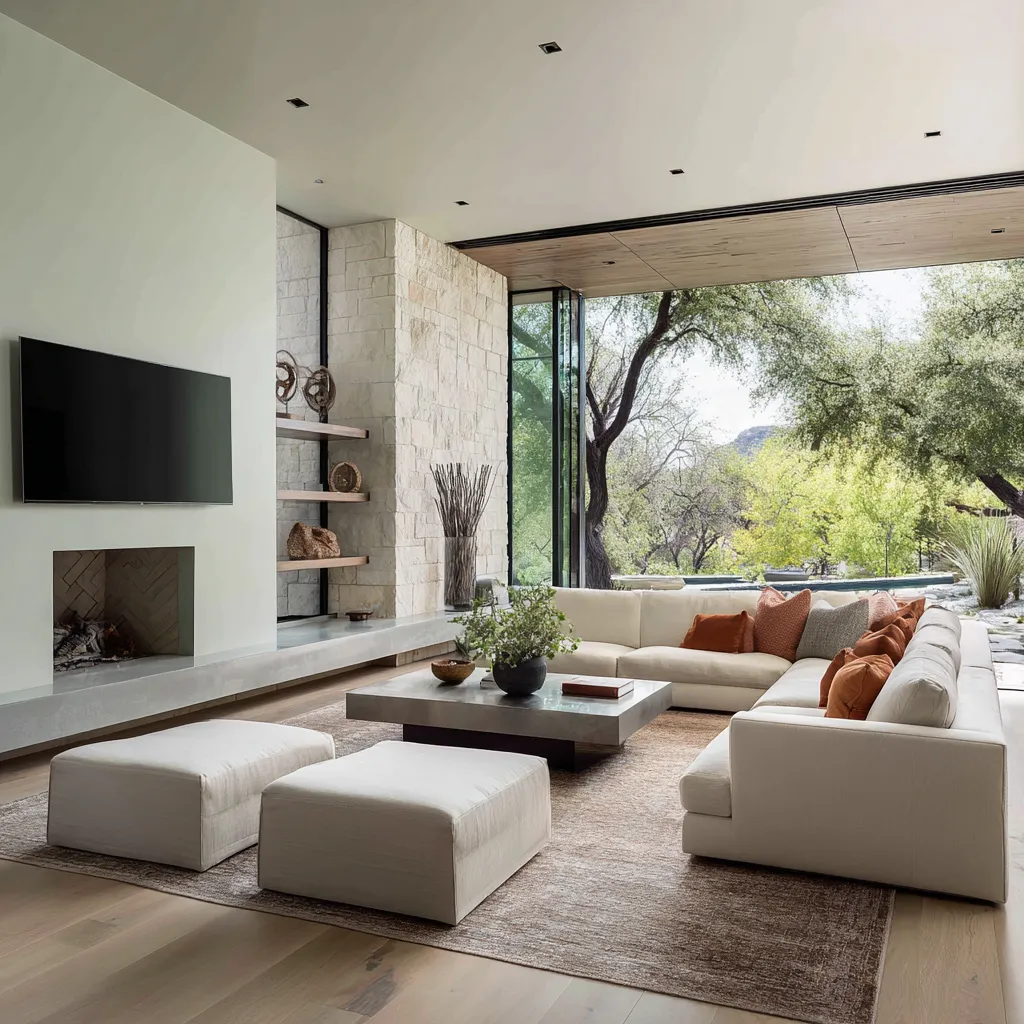
| Palm Springs inspired | View-led desert living shaped by sun, shade, hardscape, and horizontal calm | Black-framed glazing, concrete-like or stone planes, long fire features, low rooflines, desert planting | Very low, stretched seating, disciplined silhouettes, broad tables, occasional cognac leather | Mineral planes + hard-edged geometry | Sun-baked surfaces, rust/cognac accents, firelight against hard materials | Limestone, sand, pale stone, muted desert green, rust, black | Very strong; glass-to-hardscape exchange is central | Medium | Casual | Desert planting, black frames, long horizontal emphasis, mineral geometry | Too much fibrous craft, lush greenery, or layered cottage softness can erase the desert-modern identity |
.
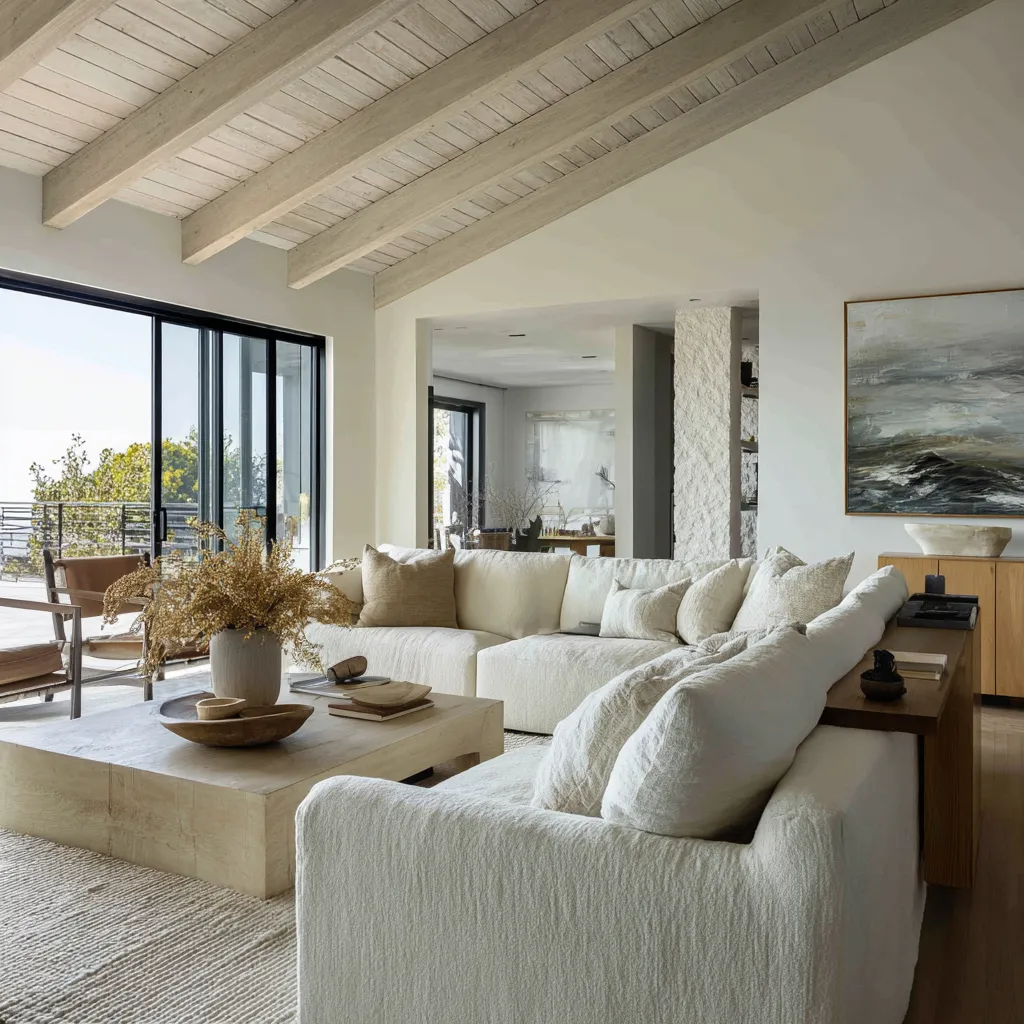
California casual: the central grammar
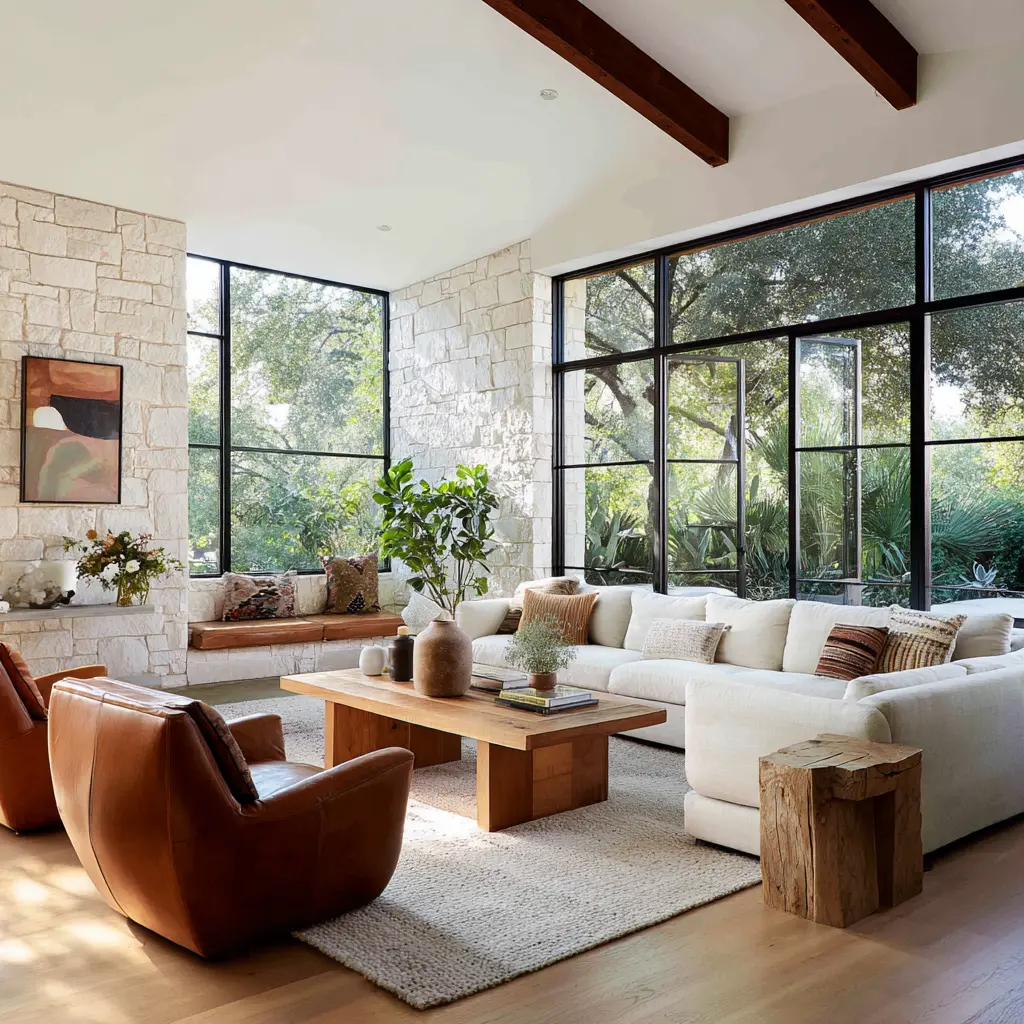
California casual is the family that helps make sense of the others. It often sits in the middle of the field because it carries the core West Coast habits without pushing them to an extreme.
It favors openness, low lounge massing, warm neutrals, natural wood, gentle inside–outside connection, and a relaxed plan that still feels composed. It wants comfort, but not visual slackness.
It wants light, but not the hard theatrical contrast of a desert-modern room. It wants warmth, but not the dense enclosure of a bungalow or Napa space.
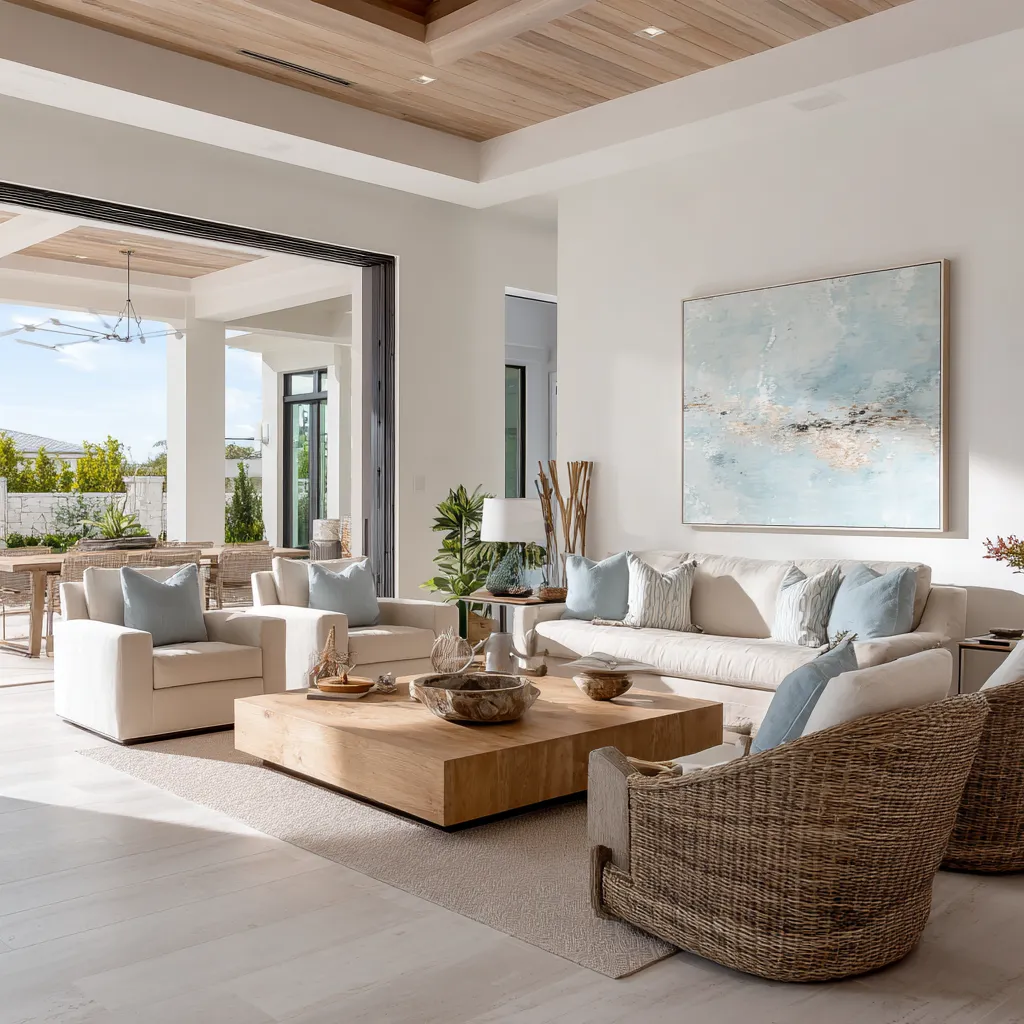
The furniture in California casual living room tends to spread horizontally. Sofas are broad, seat heights stay low, coffee tables are substantial rather than delicate, and the whole arrangement often feels built for slow daily use.
Indoor–outdoor continuity is important, yet it is rarely pushed into spectacle. The room might open toward a terrace, a yard, or a bank of greenery, but the atmosphere usually remains domestic rather than resort-like.
Wood appears in moderated doses: beams, a table, a built-in niche, a console behind a sofa. The palette often relies on pale upholstery, warm timber, soft whites, and just a few earthy notes.
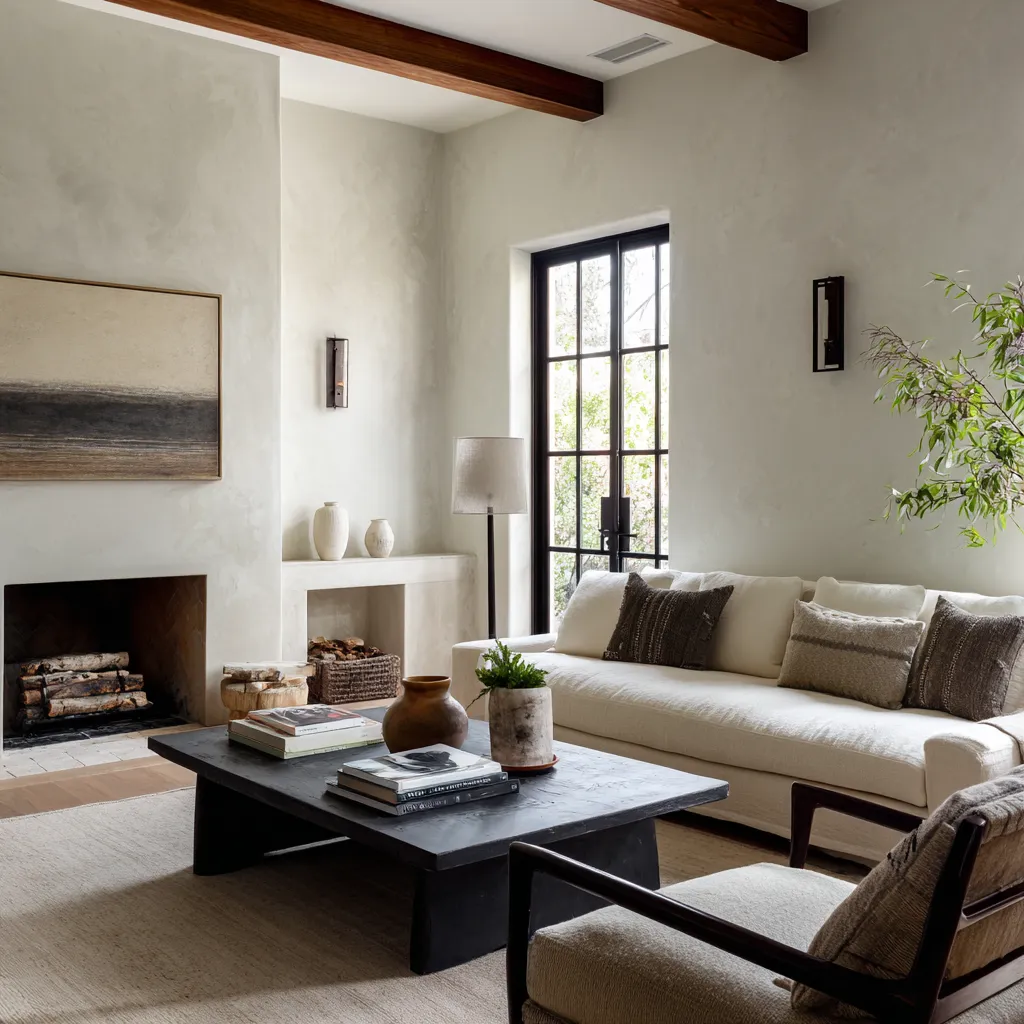
What keeps California casual from drifting into vagueness is its editing. It does not need many objects.
It depends on proportion, breathing room, and tactile surfaces that stay close in value. Texture is usually stronger than pattern.
The room becomes warm through air, pale wood, comfortable spread, and low-contrast material variation. In many homes, this is the base language from which another California family can later emerge.
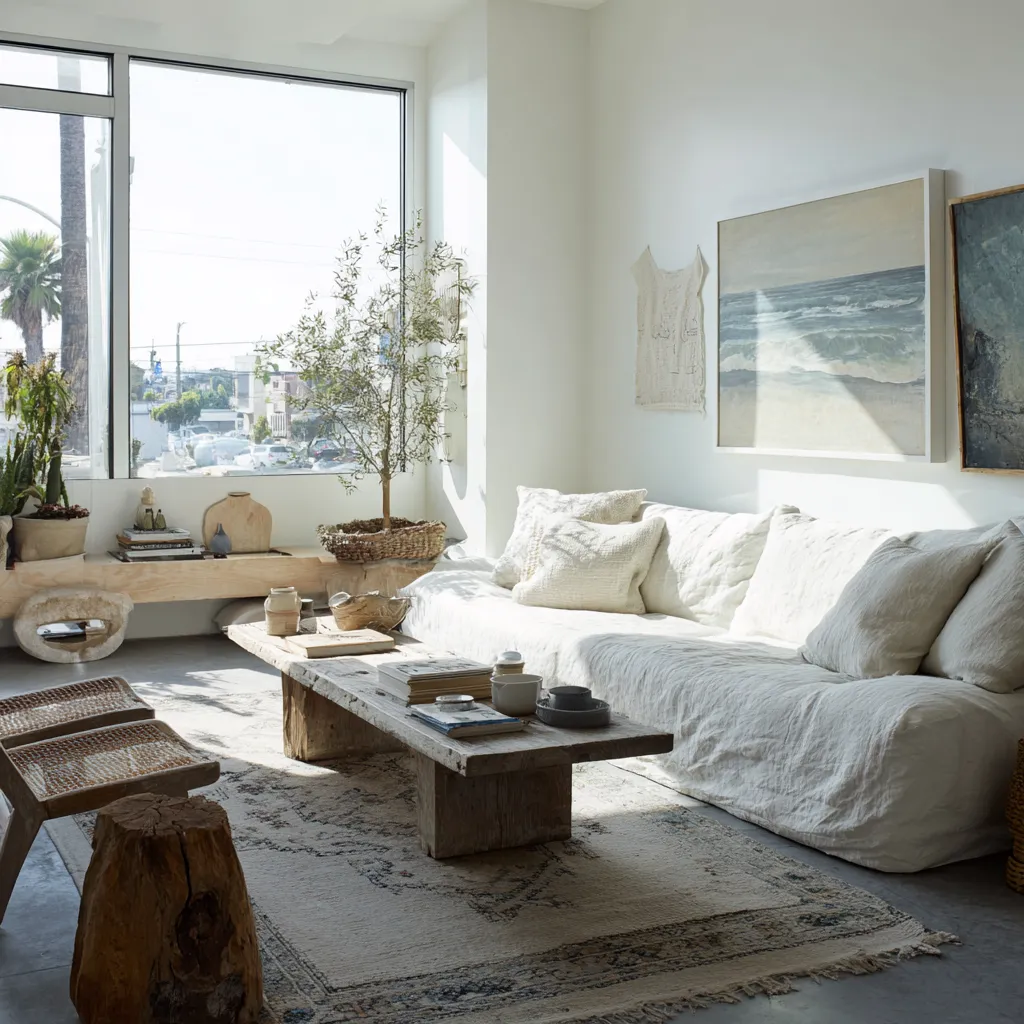
California boho: casual softened by craft, irregularity, and plant life
California boho is often mistaken for a looser or messier casual room, but the distinction is sharper than that. Boho keeps the openness, low seating, and pale envelope that casual often uses, yet it shifts the emotional center toward handmade texture, softer authorship, and tactile irregularity.
Linen looks looser. Wood feels more weathered or less refined.
Pottery, basketry, dry branches, and greenery take on greater importance. Curves often show up in arches, rounded chairs, soft-edged tables, or woven lighting.
The room feels less edited in a formal sense, even when the object count remains controlled.
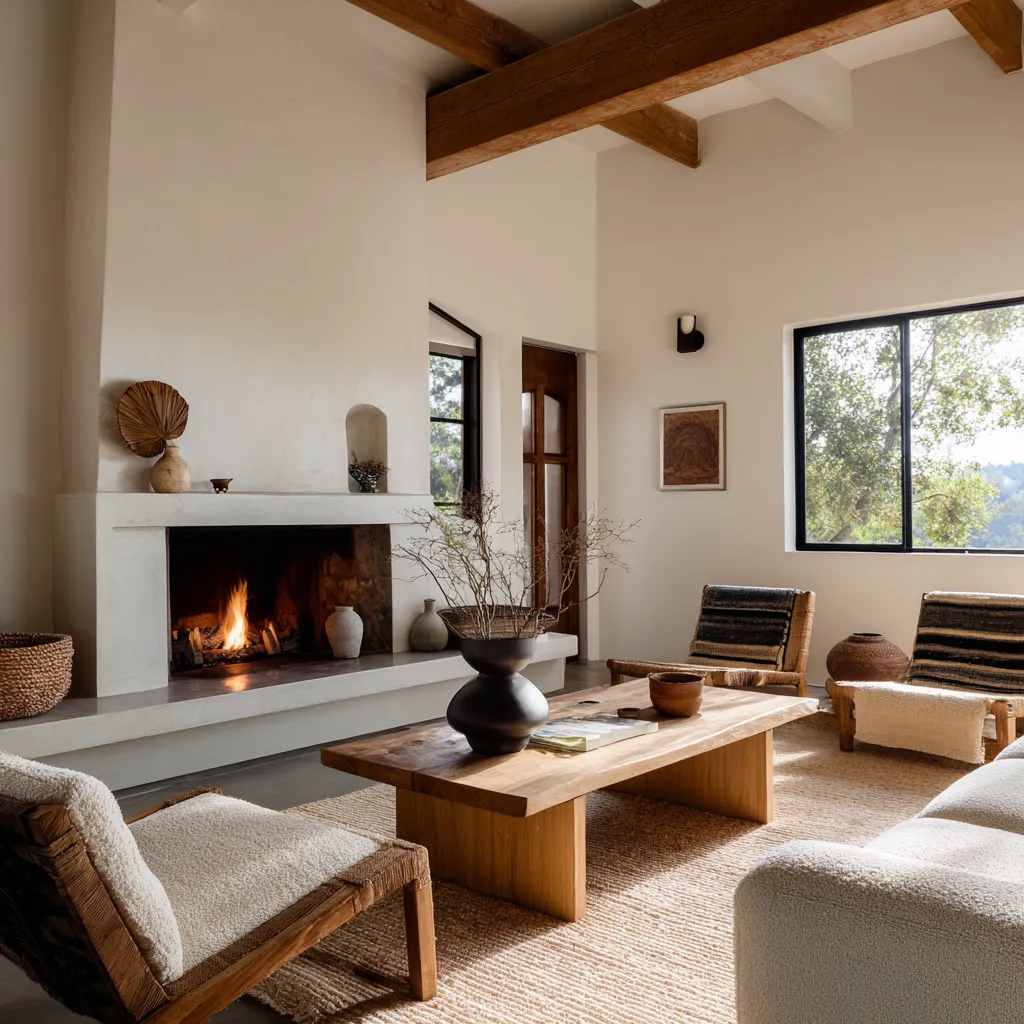
Its warmth comes from fibrous material, plant softness, and the slight asymmetry of collected things. A California boho living room can live in several shells.
It may lean coastal and pale, move toward Spanish-Mediterranean arches and plaster, or sit in a more contemporary envelope with black beams and stronger glazing. That elasticity is one reason the label covers such a wide span while still feeling coherent.
The constant thread is the mood of soft craft and lowered comfort.
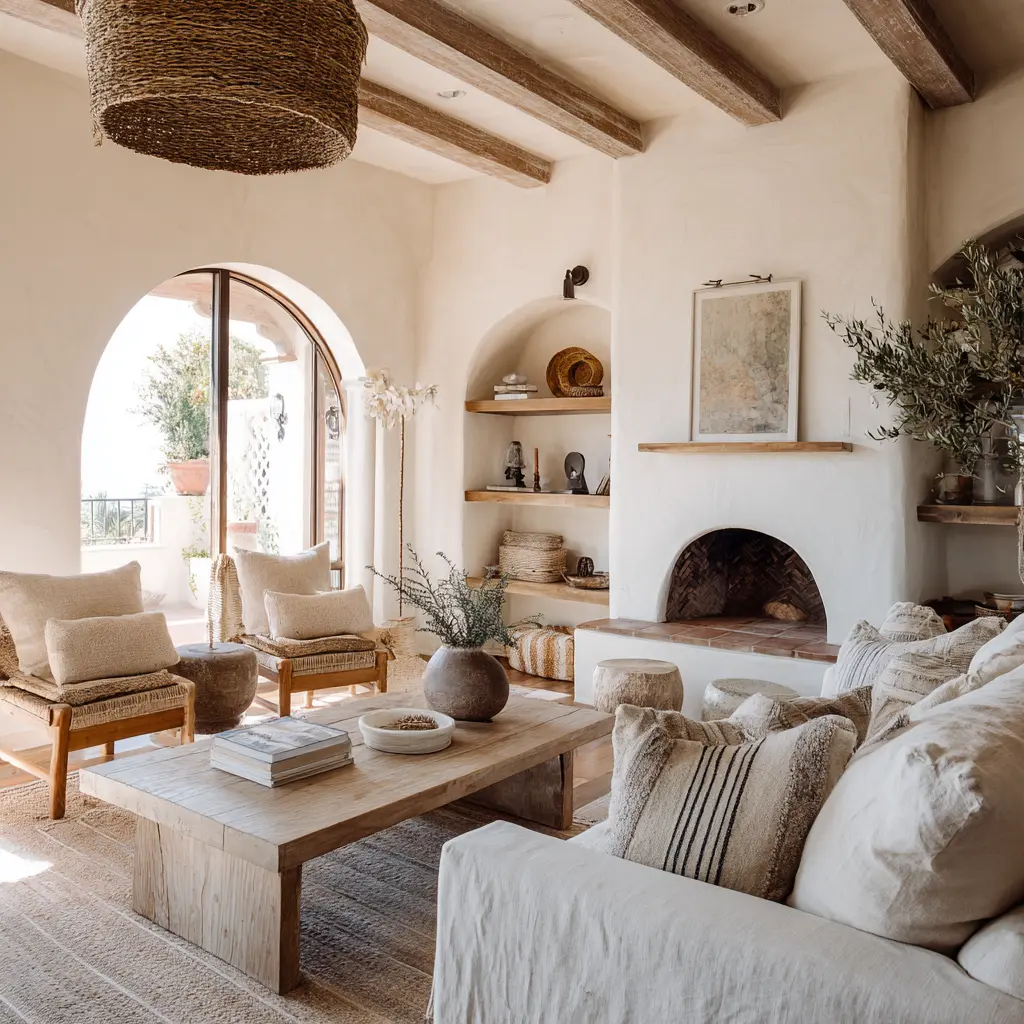
The boho version of California does not usually depend on many saturated colors. Often the palette remains muted, close to oat, sand, cream, clay, dusty green, and sun-softened brown.
What changes is not chroma but surface. The room becomes fuller through linen creases, nubby upholstery, woven fiber, rough plank wood, handmade vessels, and greenery that breaks the geometry of the shell.
If a casual room begins to pick up asymmetrical craft objects, more fibrous texture, more softened plants, and less formal order, it usually starts moving toward California boho living room design.
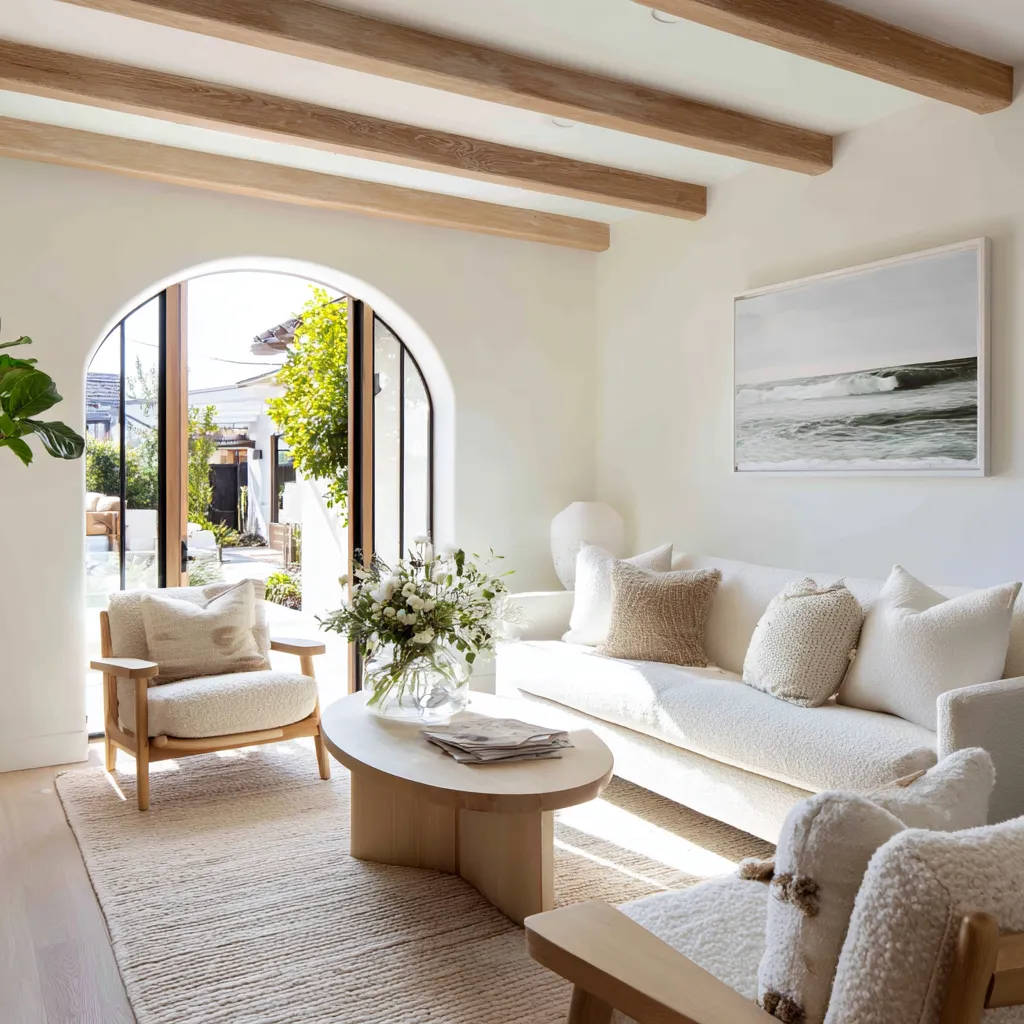
California chic: casual compressed, edited, and sharpened
California chic living room shares important DNA with California casual and even with boho. It often keeps the pale envelope, the low seating, and the warm natural base.
The difference lies in discipline. The palette becomes tighter.
The furniture shapes become more controlled. Curves, when present, are shaped with intent rather than with visible looseness.
Spacing becomes more deliberate. Accessories thin out.
Art becomes more singular and more decisive. The room feels polished without becoming stiff.
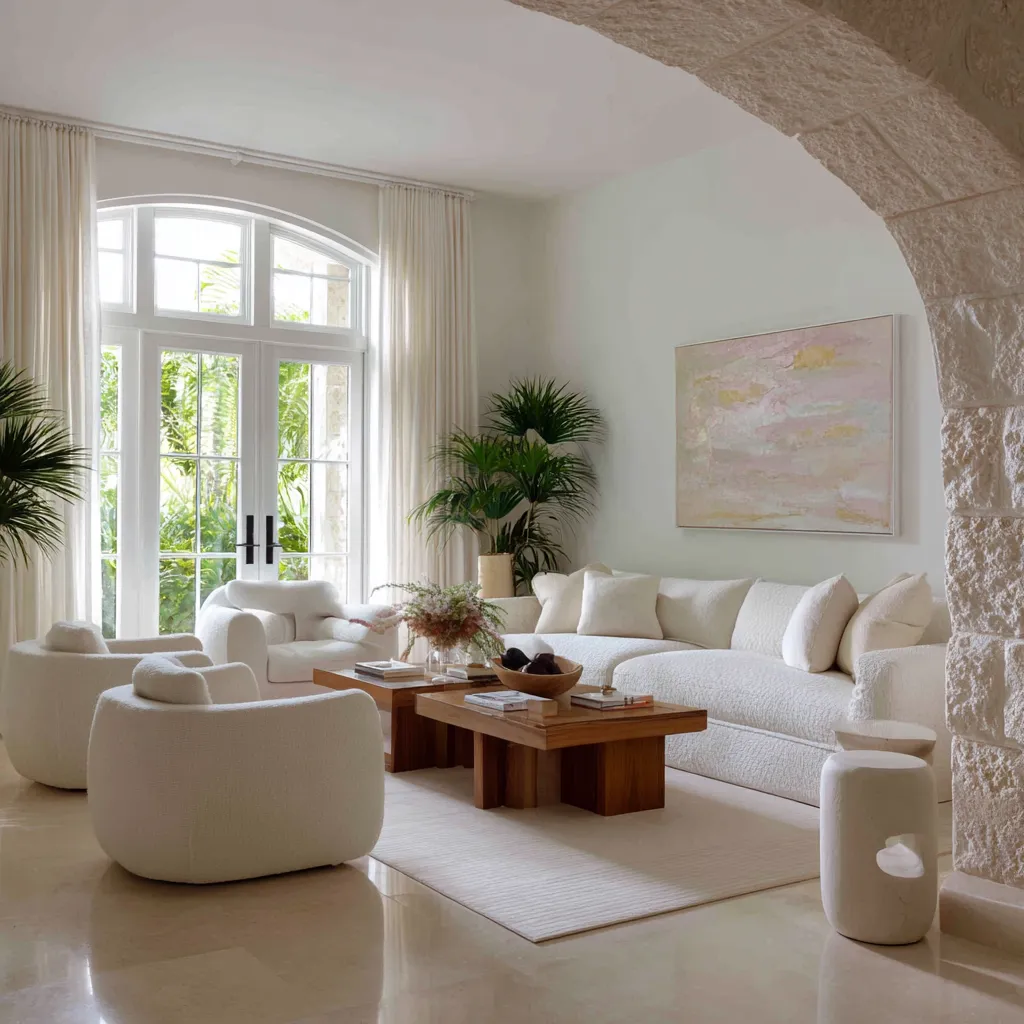
This family gains warmth in a very different way from boho. It does not lean on basketry, visible irregularity, or a dense craft layer.
Instead, it produces warmth through tonal compression, soft curves, a few carefully placed wood or leather notes, and a very clean relationship between architecture and furnishings. One large atmospheric artwork can do more than several smaller objects.
One rounded coffee table or a pair of sculptural lounge chairs can carry the room farther than a pile of mixed textiles. California chic also handles light differently.
The room still wants brightness, but it often prefers filtered light, longer drapery lines, pale stone floors, softly veined fireplace surfaces, and fewer rough textures interrupting the envelope. The California chic living room can feel coastal, urban, or slightly Mediterranean depending on the shell, though it always keeps a sense of order.
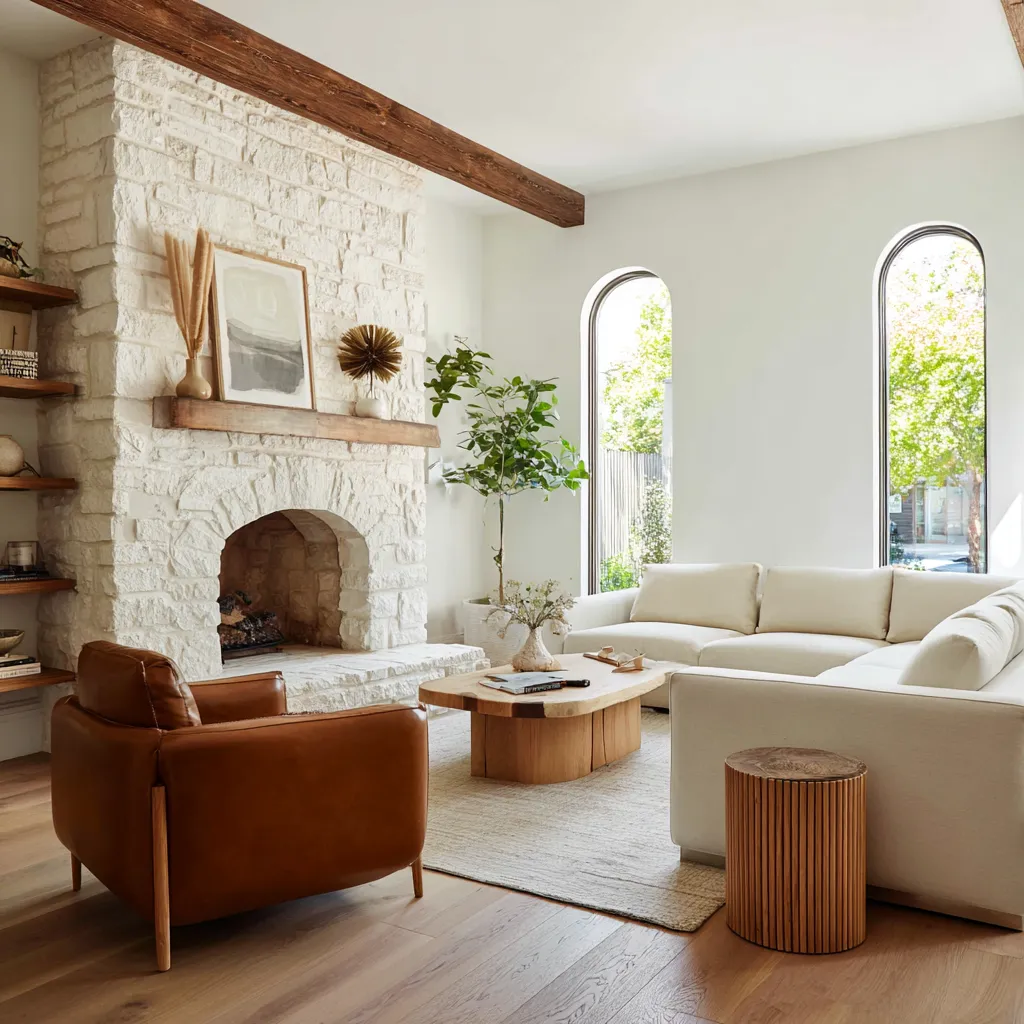
Boho and chic are near relatives because both can use openness, low seating, pale tones, and soft architecture. They split through what they do with that base.
Boho adds tactile looseness and craft. Chic adds restraint, palette compression, and cleaner edge control.
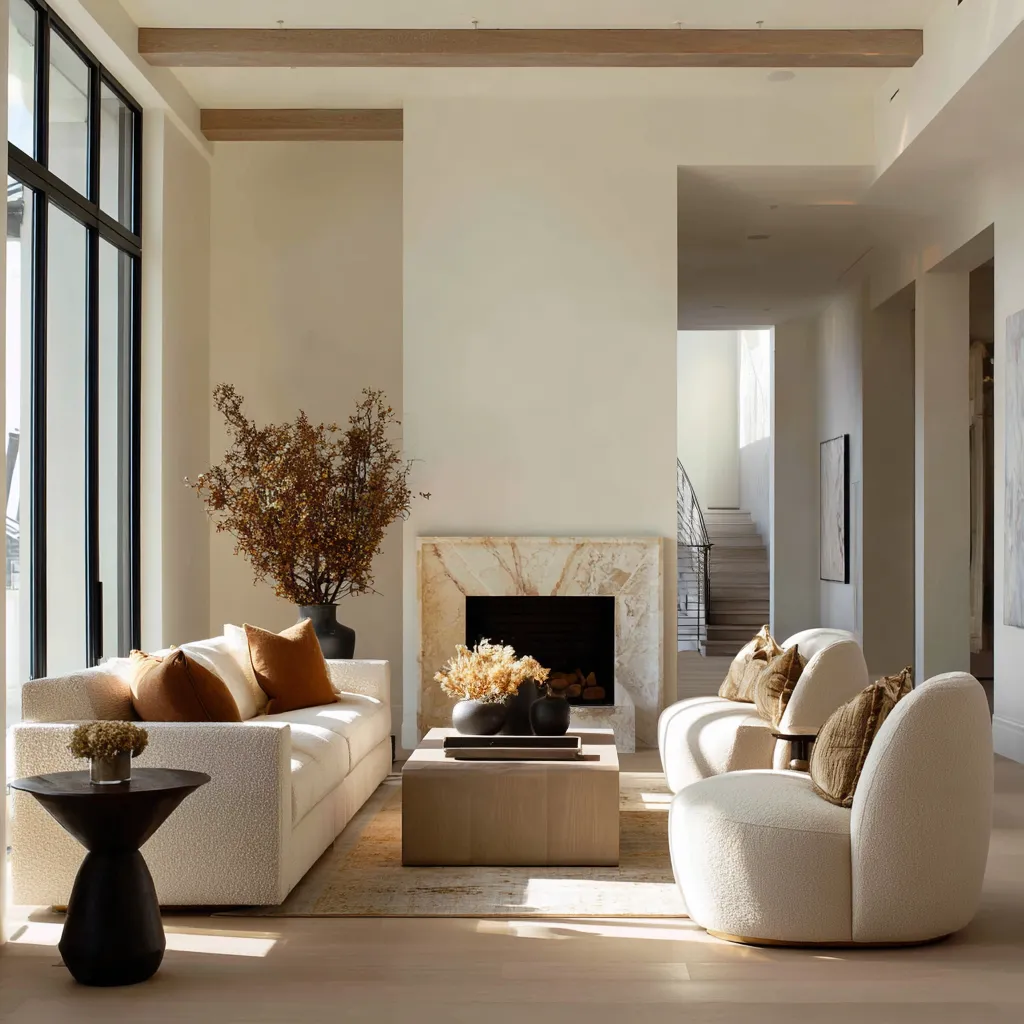
California bungalow: hearth, enclosure, and domestic backbone
California bungalow living room style belongs to a different branch. It does not begin with panorama.
It begins with domestic shelter. The fireplace matters here in a more serious way.
Built-ins matter. Timber and trim matter.
The room feels held by its envelope, even when it has been brightened or modernized. This family is less about spreading outward and more about gathering inward.
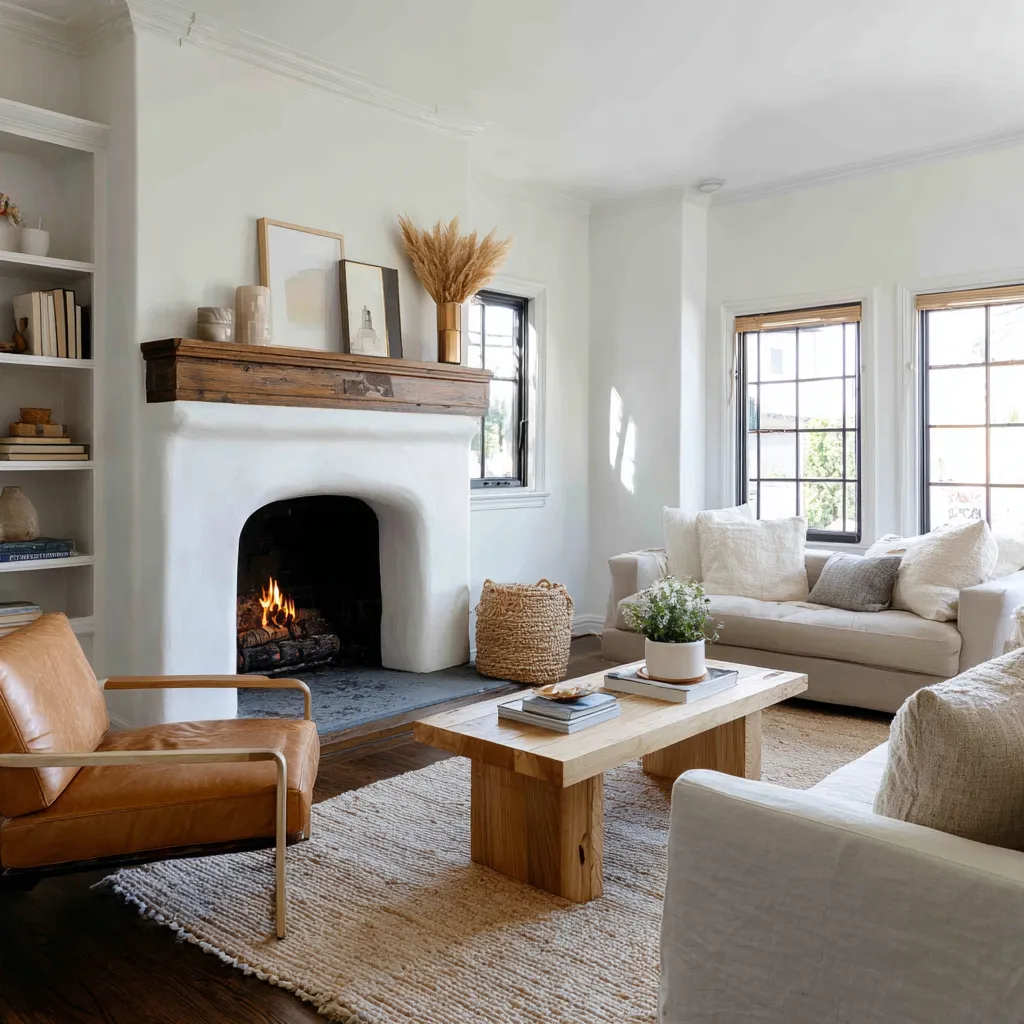
A bungalow living room usually keeps a moderate human scale. The seating stays close enough to the hearth to reinforce social intimacy.
Windows often feel framed and grouped rather than expansive and wall-like. The shell may carry coffered ceilings, beams, dark trim, shelving near the fireplace, paneling, brick, or a more articulated mantel.
Even in updated versions, the room often preserves a sense of protected domestic center. That is its real identity.
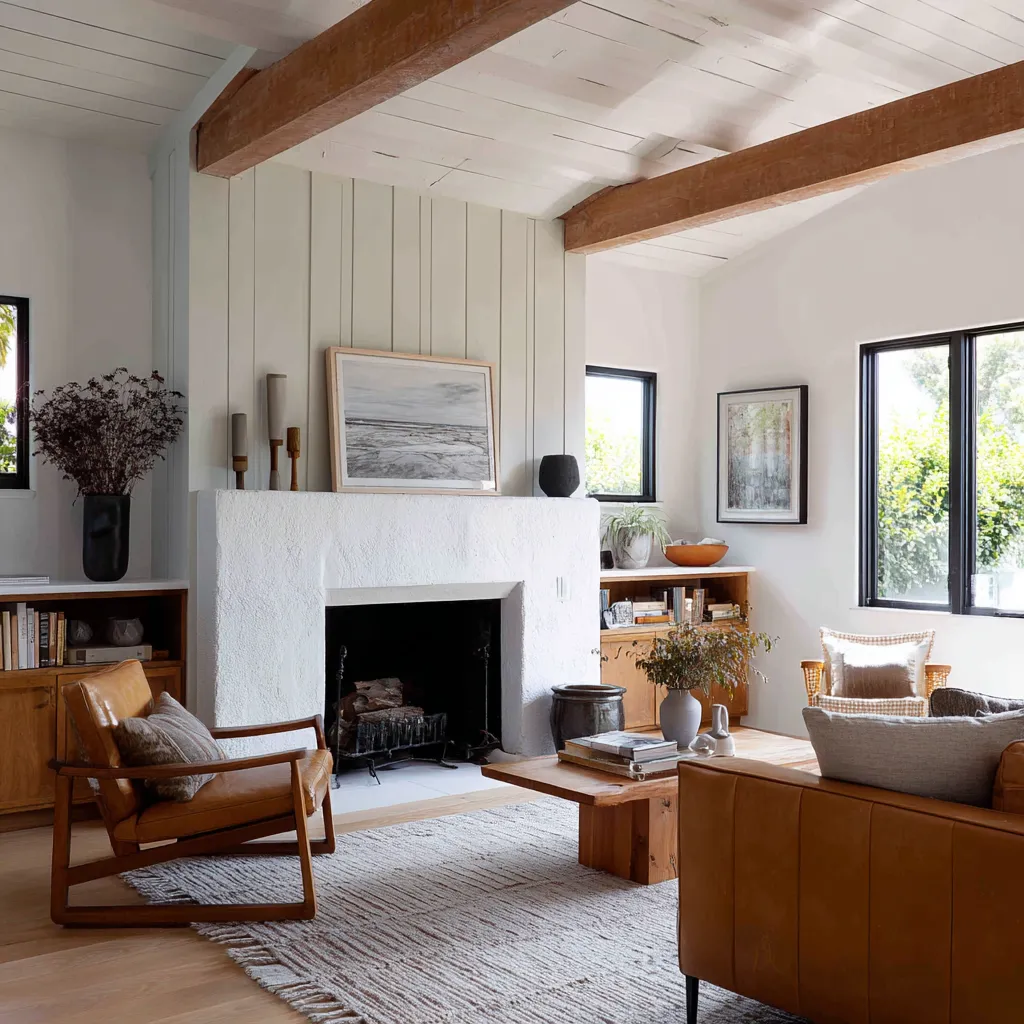
Its warmth comes from enclosure, wood, and the visible presence of the hearth. A California bungalow living room can lighten considerably and still stay true to itself, but if it loses the hearth-centered logic and the sense of built architectural gravity, it starts moving away from bungalow territory.
Leather often works well here because it pairs naturally with wood, floorboards, and firelight. Built-ins are useful not only for function but for holding the room inside the architecture rather than letting it become only a furniture arrangement.
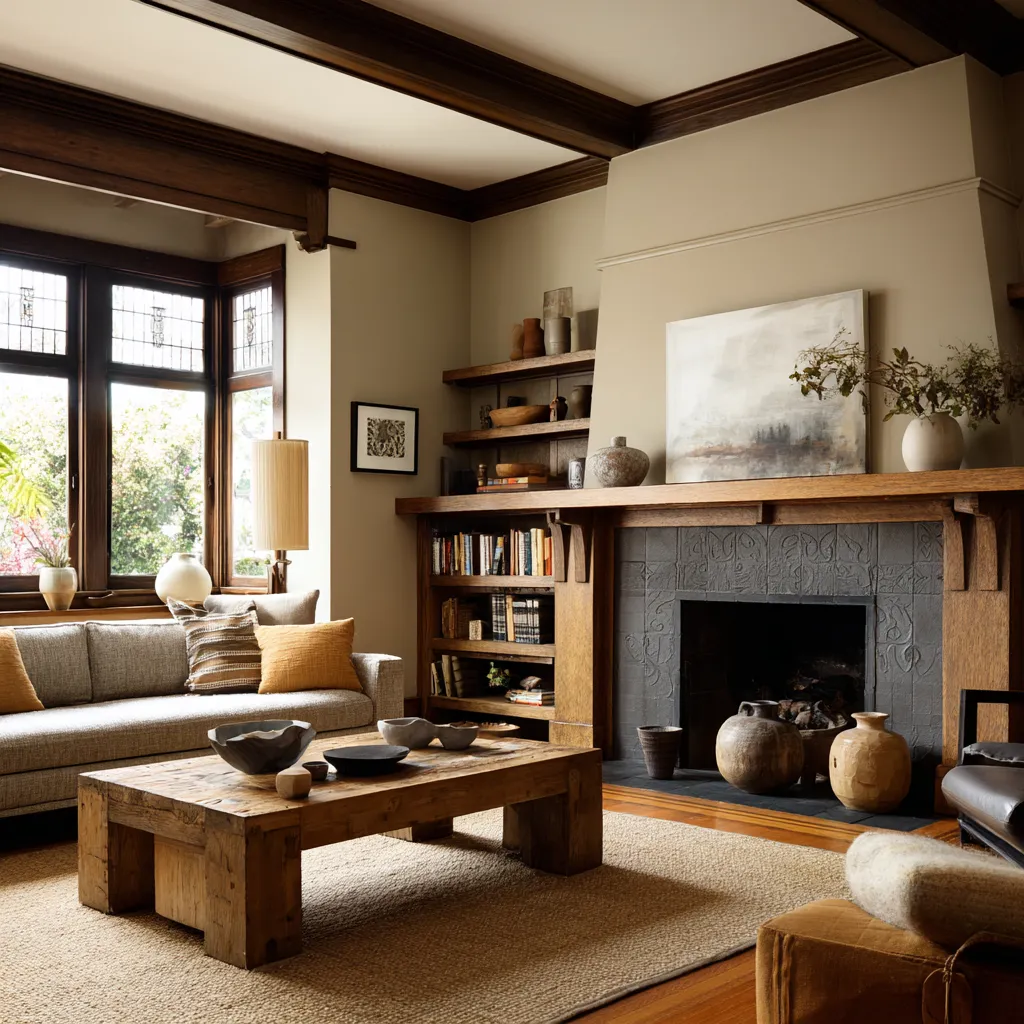
Bungalow and Napa share several traits: hearth centrality, timber, regional shell identity, and grounded domesticity. The difference is that bungalow usually stays nearer, smaller in spirit, and more intimate.
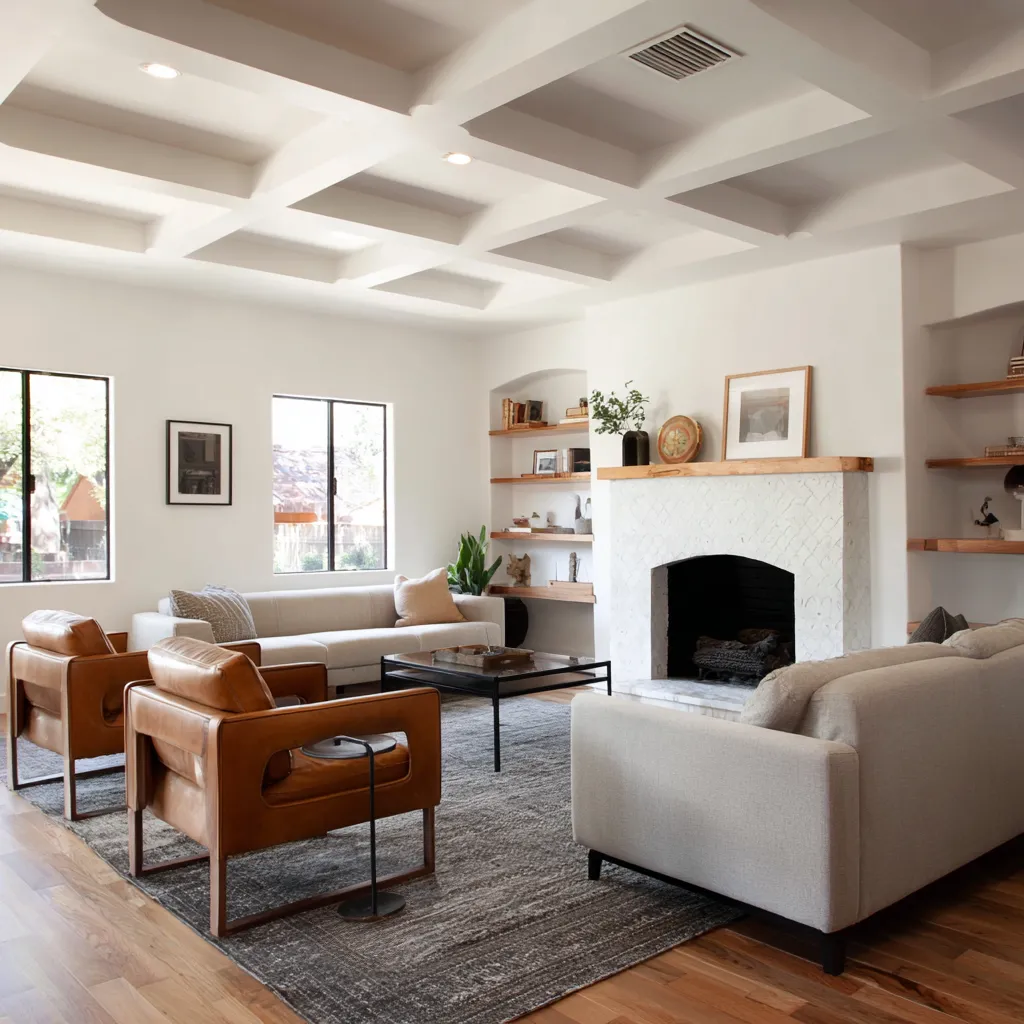
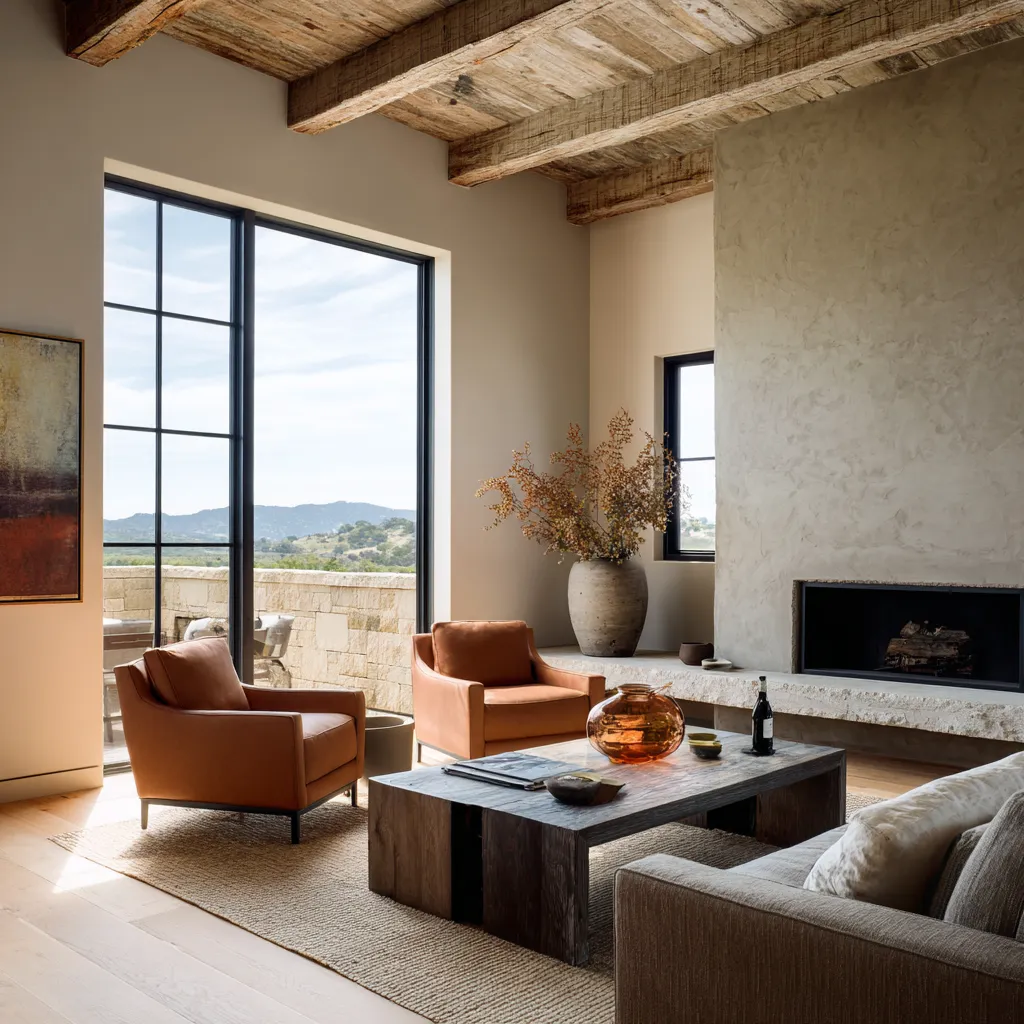
Napa style living room: wine-country gravity, timber, and mineral depth
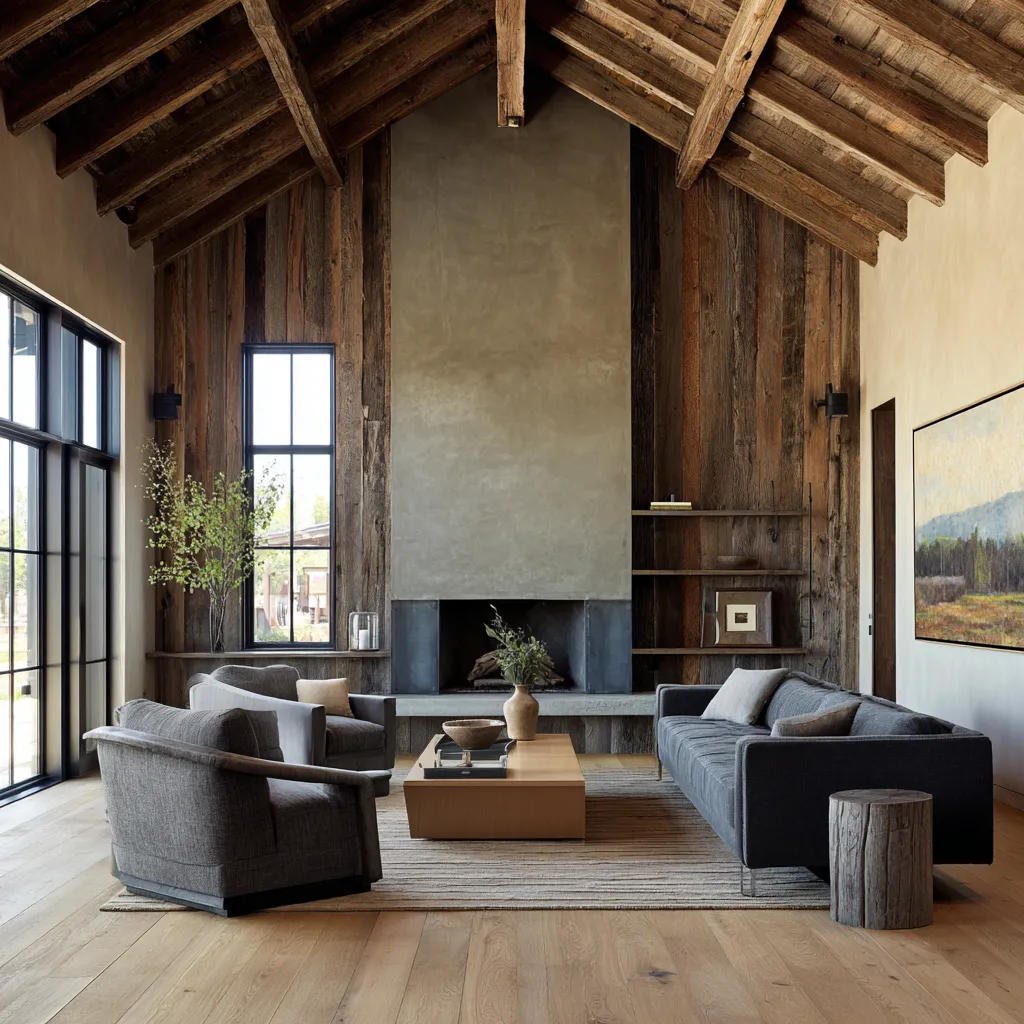
Napa sits near bungalow, but it scales the idea upward and gives it more estate-like material presence. If bungalow is intimate hearth-centered shelter, Napa is shelter with wider shoulders, deeper mass, and a stronger dialogue between timber and mineral surfaces.
The room often feels shaped by vineyard-country ideas of dryness, architectural substance, and mature restraint. It may still open toward a view, but the room’s identity comes from the shell first.
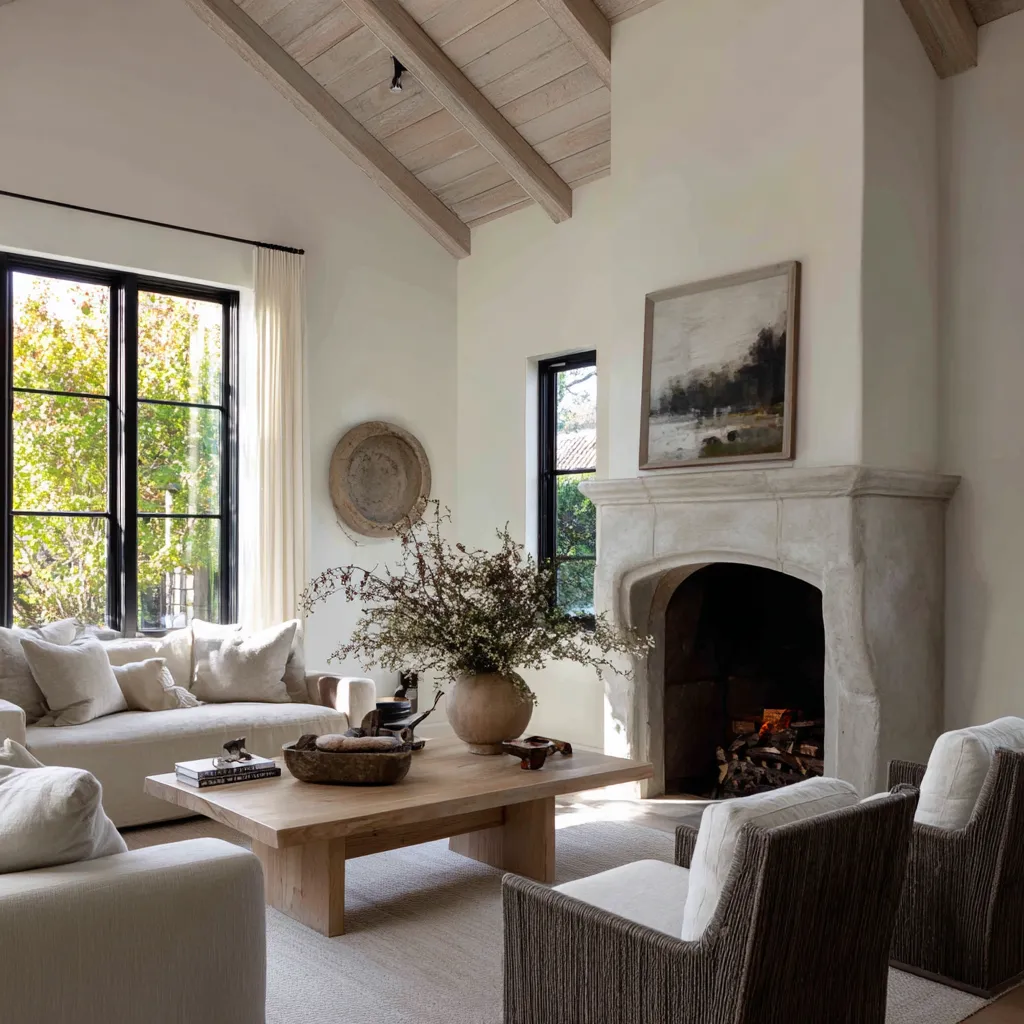
Timber matters greatly in Napa living room interiors. So do limestone-like or plaster-like surfaces, black-framed openings, substantial fireplaces, and broad central tables that suggest hospitality and slow gathering.
The warmth is compressed and earthy: bark, oat, ash, clay, smoke, old wood, muted stone, and firelight. Leather often appears in a way that reinforces this maturity, usually as a concentrated warm note rather than as a repeated motif everywhere.
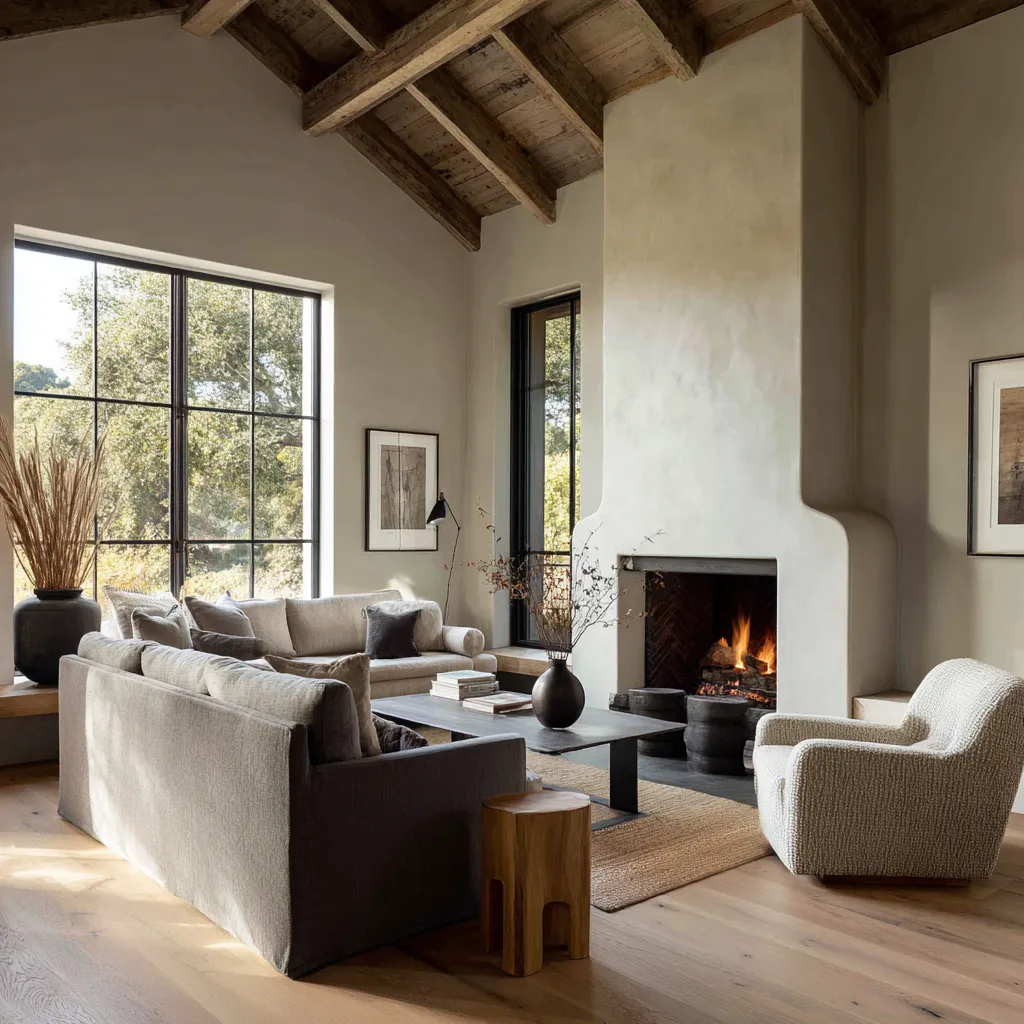
The Napa branch differs from bungalow through scale and atmosphere. A Napa room can feel larger, more open, and more architecturally severe while still keeping the hearth as a genuine center.
It tends to replace some of the bungalow’s intimate built-in domestic character with more estate-scale mass, longer sightlines, and heavier mineral presence. Fireplaces may become taller or more monumental, plaster chimneys may rise through the volume, and black-framed glazing can sit against rugged timber without feeling out of place.
If a bungalow room gains scale, stronger mineral depth, darker or larger timber expression, more compressed earthy tones, and a broader relationship to view, it begins to move toward Napa.
Palm Springs inspired living room: desert geometry, hardscape exchange, and low horizontal calm
Palm Springs inspired living rooms form the most tightly coded family in the group. This is the California branch with the clearest rules.
It is not defined by retro color or playful resort accessories, though popular culture often pushes it in that direction. Its deeper identity comes from climate geometry: desert planting, mineral planes, long horizontal emphasis, black-framed glazing, hardscape exchange, low furniture, and controlled warmth against hard surfaces.
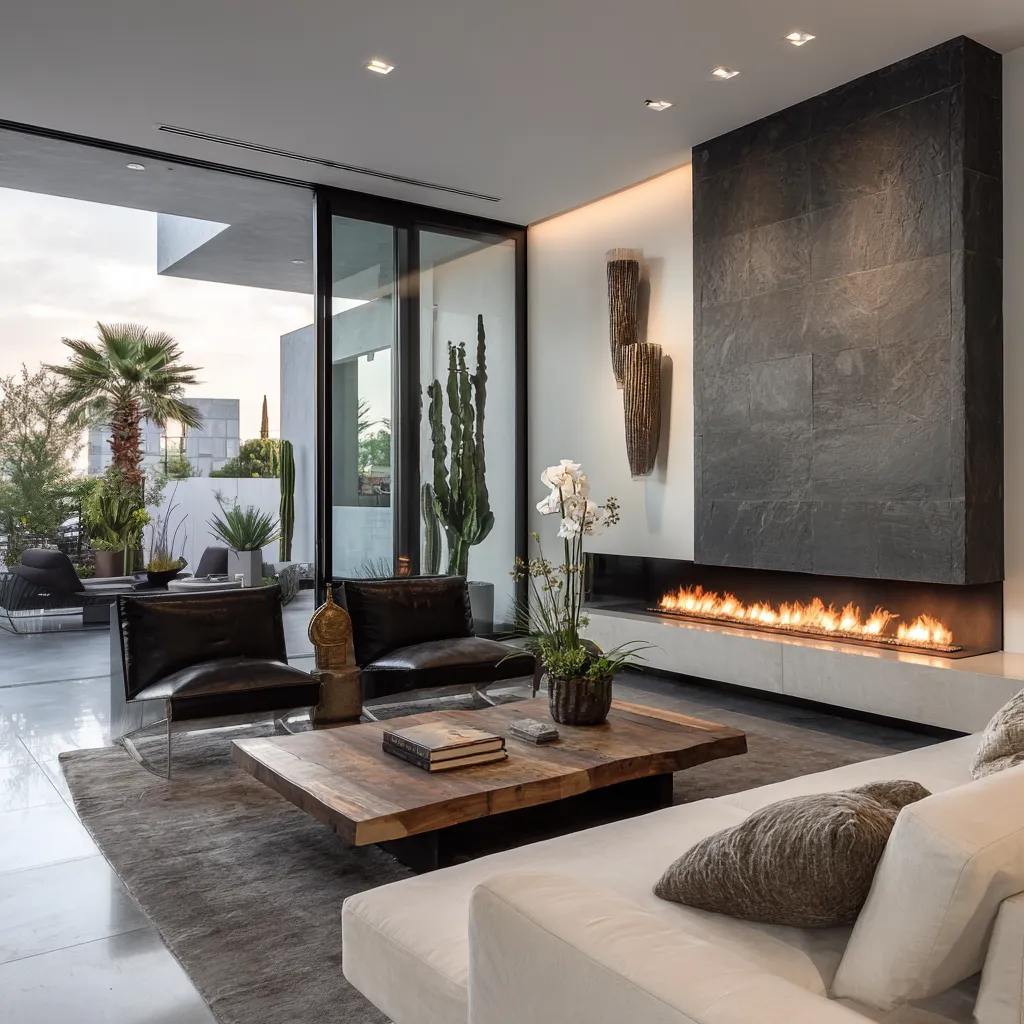
The room usually organizes itself around glass and dry landscape rather than around a traditional hearth composition, even when a fireplace is present. Fire features tend to become long, clean, architectural bands rather than carved domestic centers.
Stone, plaster, concrete-like planes, and dark slab surfaces matter more than fibrous craft. Desert planting works as sculpture rather than as soft greenery.
The furniture stays low and disciplined so that the view, the courtyard, and the hard-edged shell can stay visually dominant.
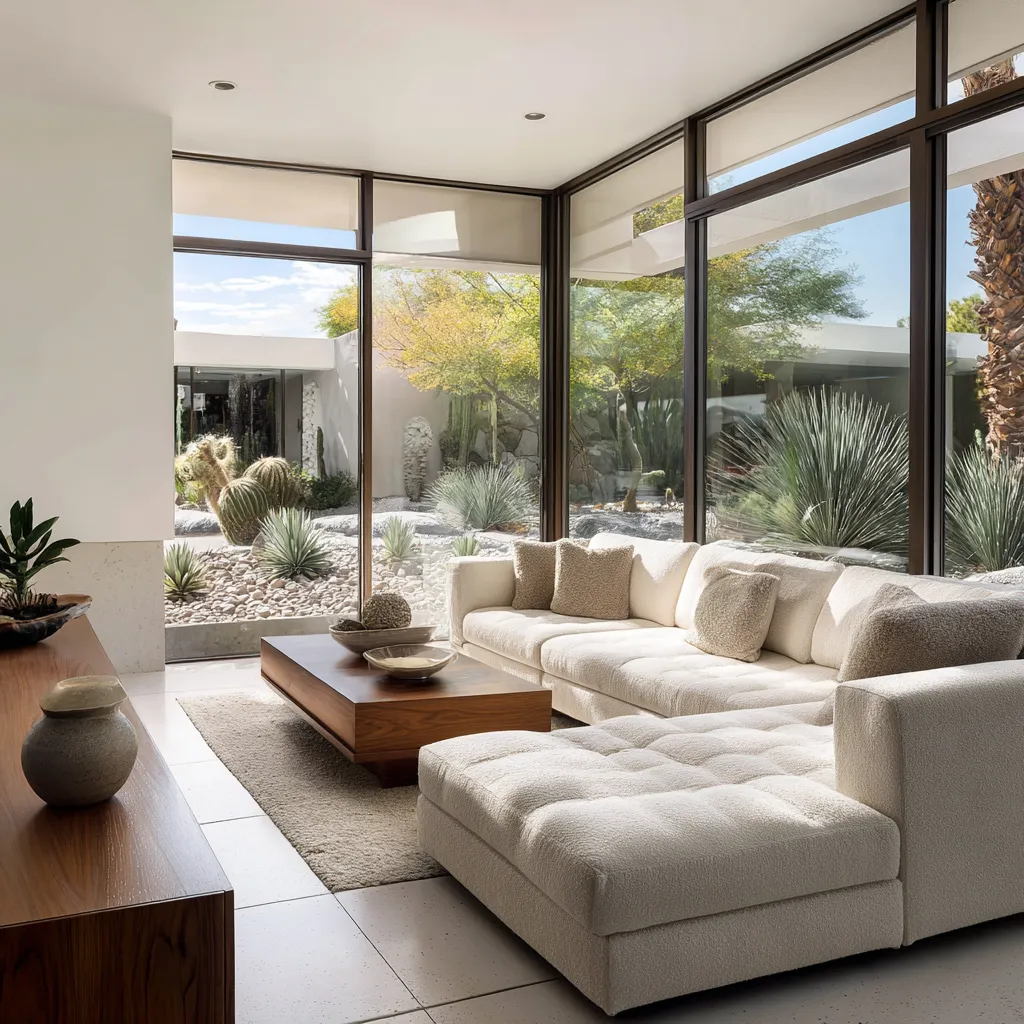
Its warmth is a separate species from the warmth of boho or bungalow. Palm Springs warmth comes from sun-baked mineral tones, cognac or rust accents, firelight, and the contrast between pale surfaces and black outlines.
The room can be pale or dark, but it usually depends on a hard-edged exchange between architecture and landscape. This is why Palm Springs cannot be reduced to bright color.
In fact, many of the Palm Springs living room design examples work with restrained palettes. The defining features are the desert signal, the black framing, the mineral mass, the low horizontal seating, and the feeling that the room belongs to sun, shade, and hardscape.
California eclectic living room: curated friction rather than stylistic blur
California eclectic is often misunderstood as the absence of rules. In practice, it has a very distinct logic.
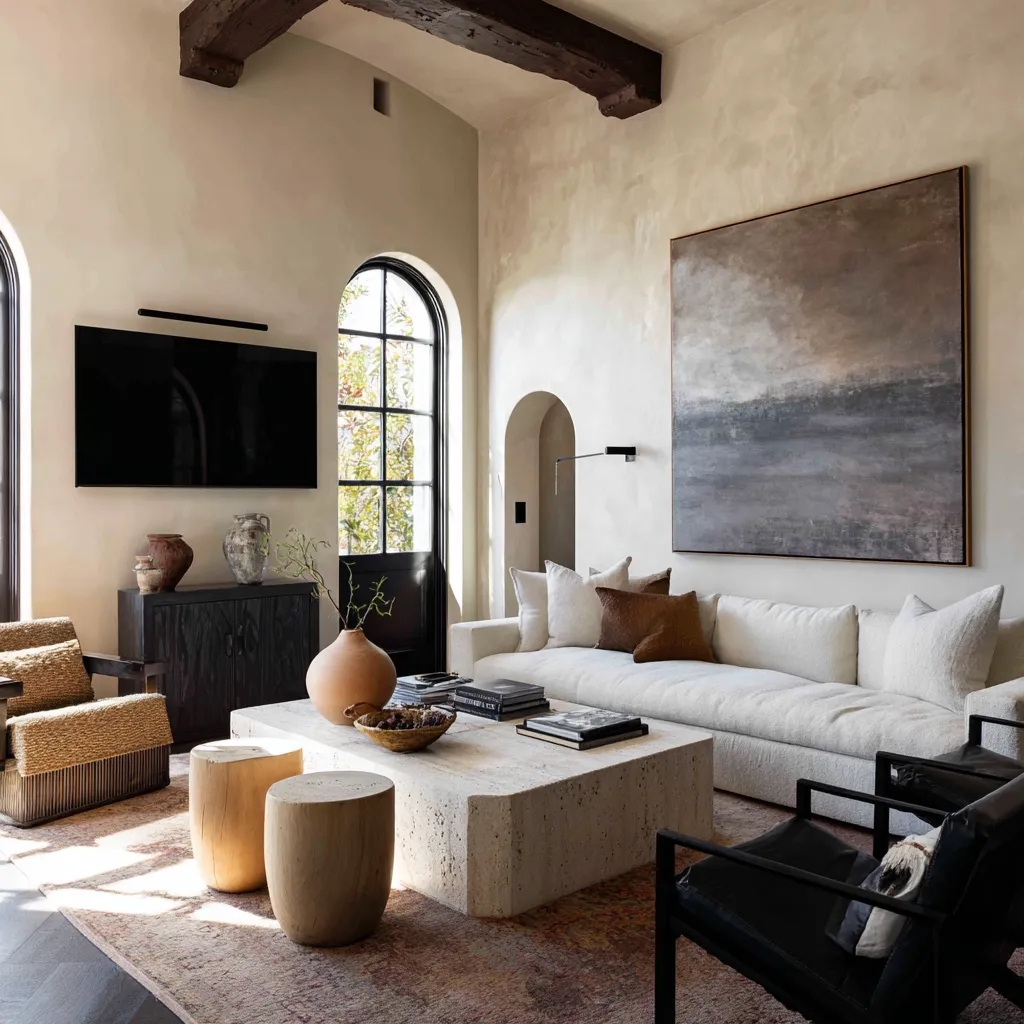
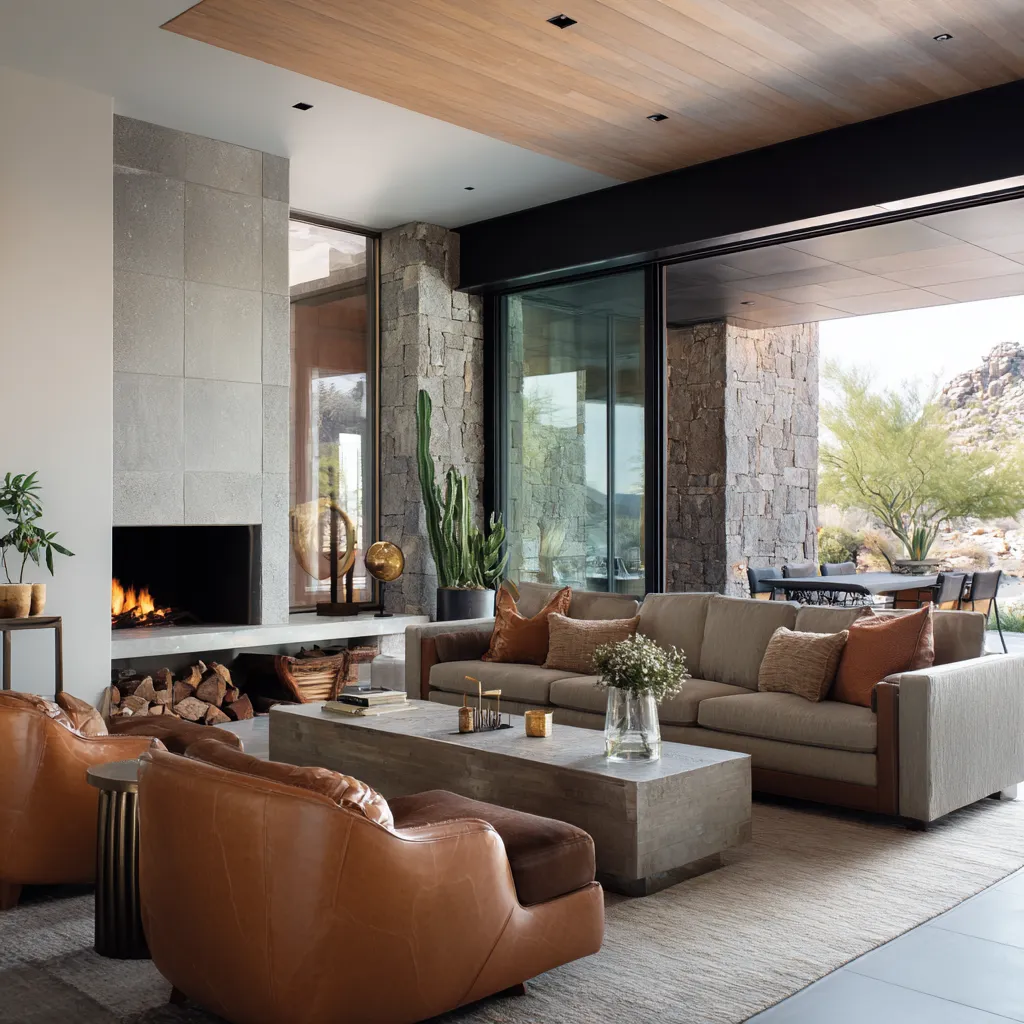
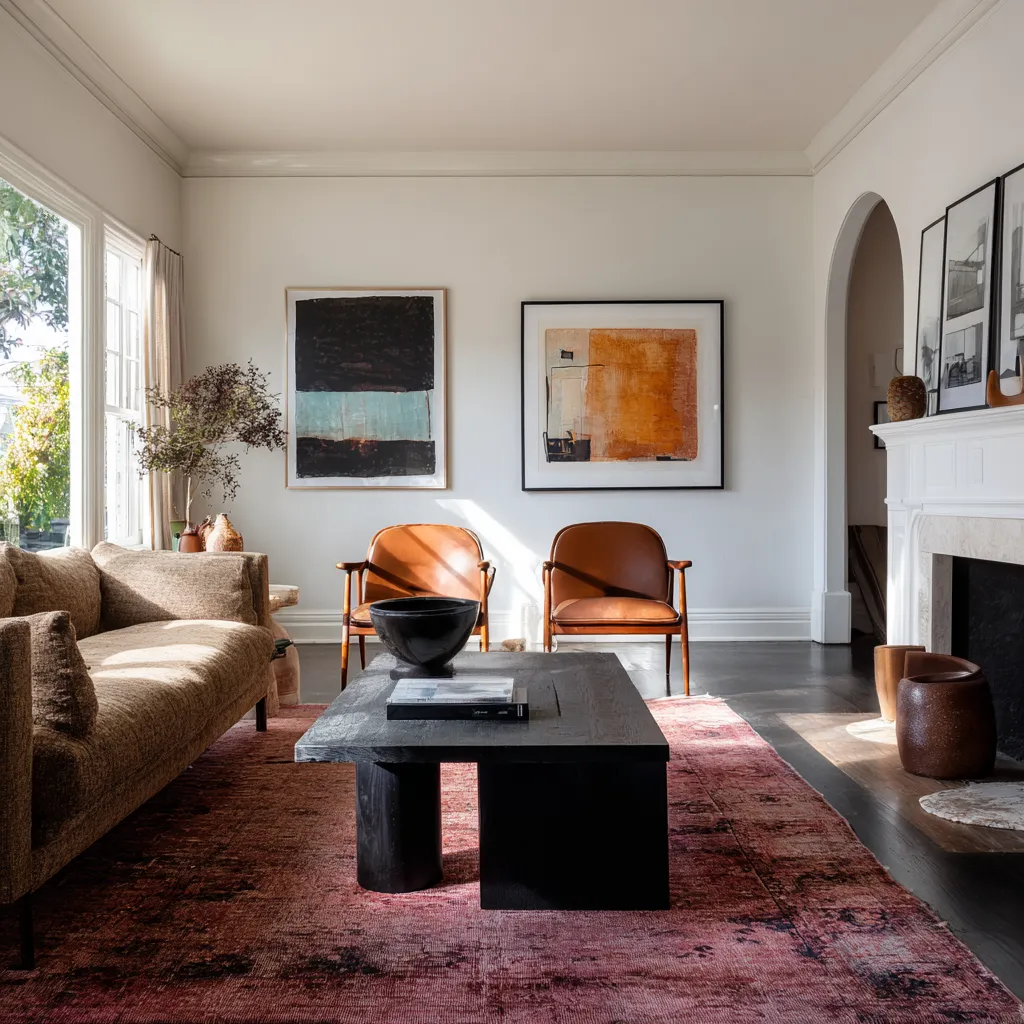
It takes California light, openness, and relaxed living habits, then introduces deliberate contrast between object lineages. Leather chairs may sit with a pale slipcovered or textured sofa.
A faded rug may ground a dark monolithic table. Large contemporary art may hang inside a shell with arches or molding.
Black structural frames may live beside weathered wood, sculptural pottery, or vintage notes. The room becomes rich through controlled disagreement.
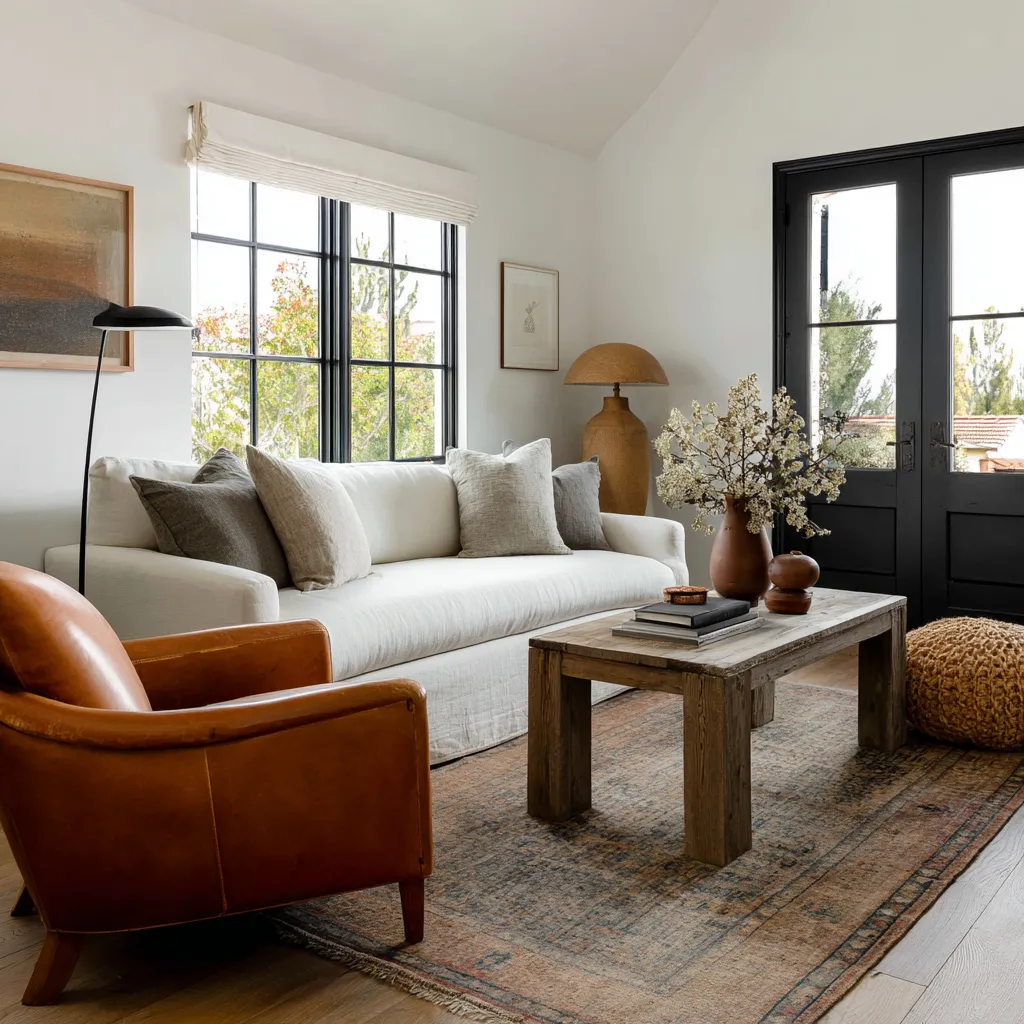
This is not the same as casual with extra objects. California eclectic usually depends on a few clear collisions: old and current, soft and graphic, rustic and sculptural, art-led and domestic.
Leather plays an important role because it often acts as the bridge between different eras and moods. Art matters more here than in many of the other families because art can unify a mixed room without forcing its furniture into sameness.
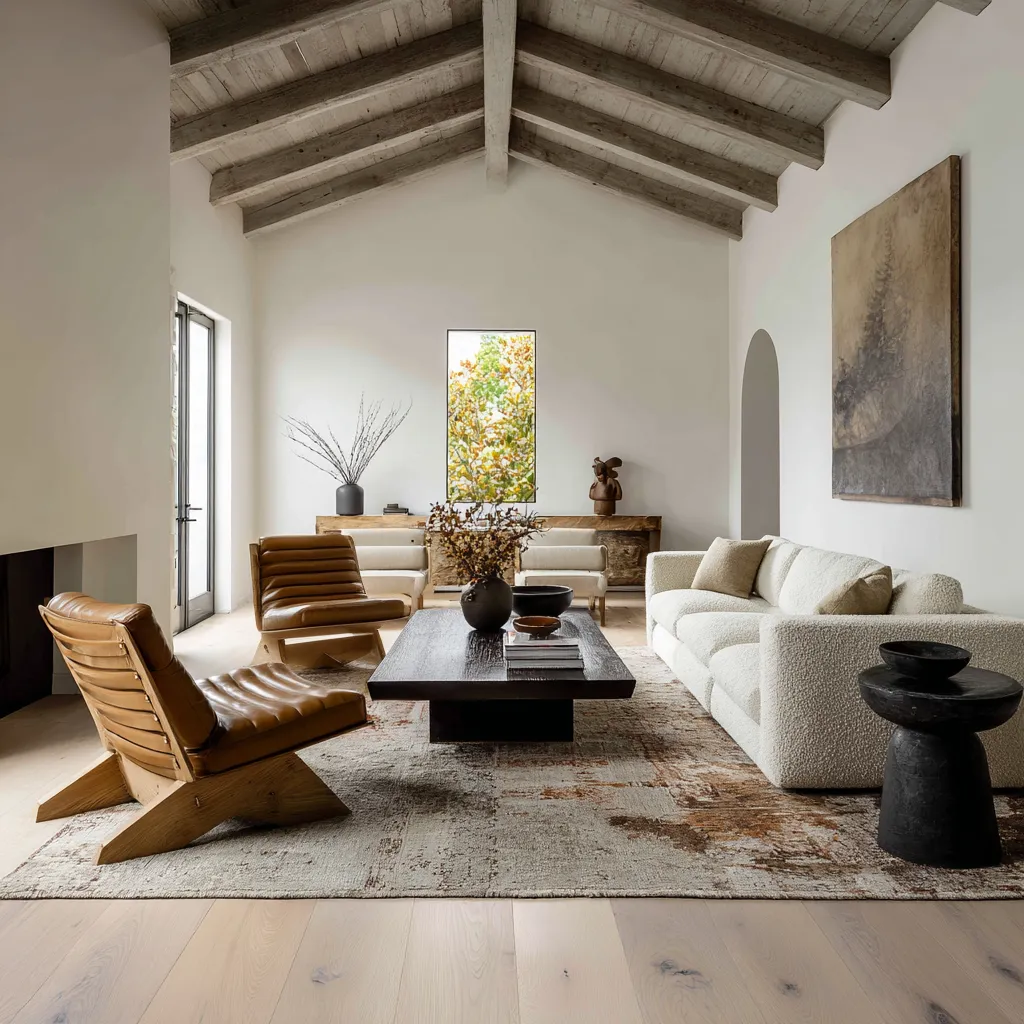
The palette usually remains disciplined enough to keep the collisions from breaking apart. Earth tones, charcoal, rust, cream, muted blue-green, and black structural edges often hold the room together.
The Palm Springs living room may feel collected, but it is not careless. It depends on selective tension.
This is why eclectic is not a midpoint between the other families. It is a separate organizational mode built on curated friction.
How the families group together
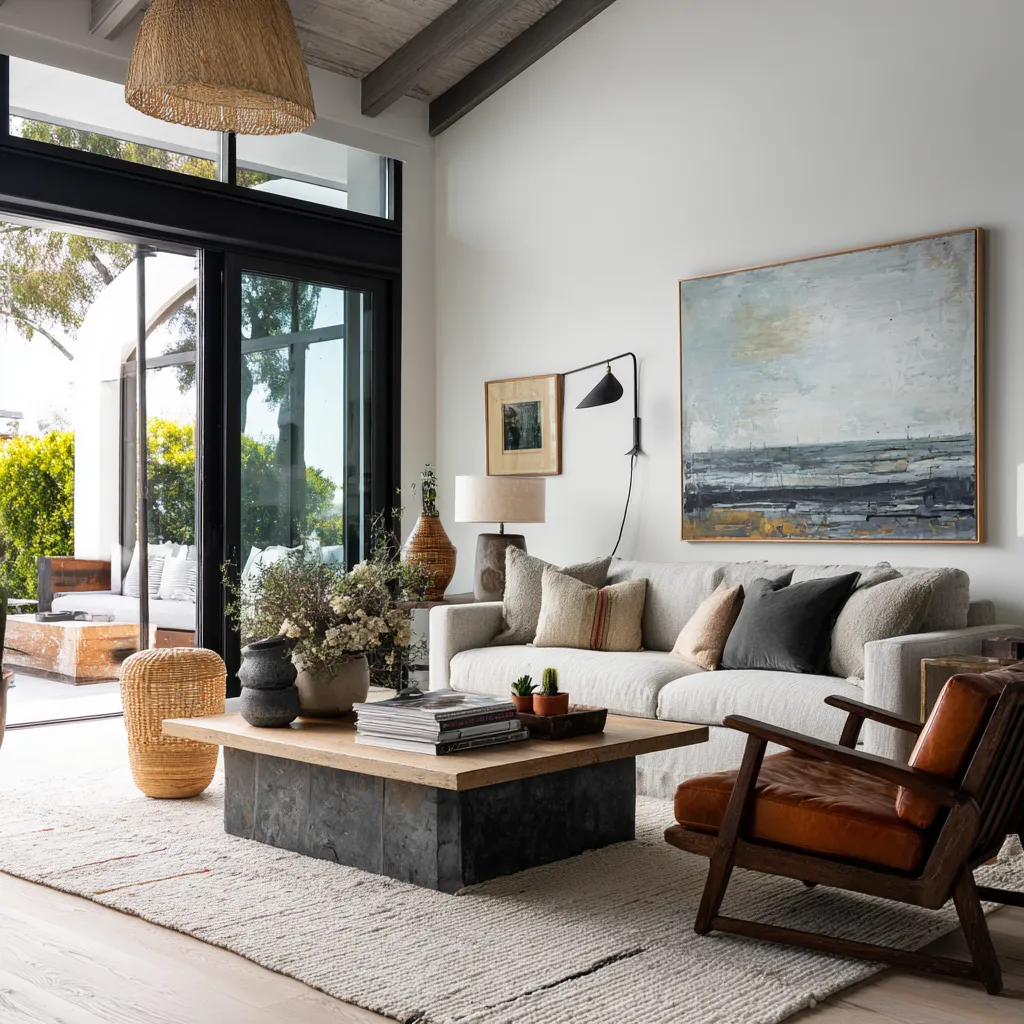
These seven families do not stand at equal distances from one another. A few of them are close relatives.
- California boho, California casual, and California chic form one large open-light family. All three like lowered seating, visual air, pale foundations, and a softer relationship to light. Casual usually sits nearest the center. Boho loosens it through handmade texture and irregularity. Chic sharpens it through editing and palette control.
- California bungalow and Napa form the hearth-rooted family. Both value timber, regional shell, and the room as a place of architectural protection. Bungalow stays nearer, more domestic, more built-in. Napa gains scale, mineral depth, and wine-country gravity.
- Palm Springs sits apart. It shares low lounge behavior and inside–outside flow with casual, yet the desert logic, black framing, and mineral planes make it a separate system rather than a casual variant.
- Eclectic moves through the field differently. It borrows from many of the others while still preserving its own logic of purposeful contrast.
Why warmth feels different in each family
One of the most useful ways to separate California living room families is to ask how they produce warmth. Many of them use warm neutrals, but they do not arrive there in the same way.
- Boho warmth comes from tactile softness, woven and fibrous materials, plant asymmetry, and weathered craft notes.
- Bungalow warmth comes from enclosure, wood trim, built-ins, and the fireplace as domestic center.
- Casual warmth comes from air, pale wood, comfortable spread, and soft low-contrast texture.
- Chic warmth comes from tonal discipline, controlled curves, and sparse, well-placed natural materials.
- Eclectic warmth comes from patina, leather, aged rugs, and the tension between historical and current pieces.
- Napa warmth comes from timber, mineral depth, compressed earthy tones, and fire.
- Palm Springs warmth comes from desert-colored leather or rust accents, sun-baked surfaces, firelight, and hard-edged shadow.
Once this difference is understood, many style mistakes become easier to avoid. A room can have the right palette and still feel wrong because it is producing warmth through the wrong mechanism.
The role of arches, black frames, and leather
Some design elements move through several California families, but their meaning changes with context. An arch in California boho softens the room and gives it regional warmth.
In bungalow, it can signal domestic historic character. In chic, it often works as a refined threshold or a gentle formal note.
In Napa, it can feel thicker and more masonry-like, reinforcing gravity. In Palm Springs, it tends to remain secondary because planar geometry and long horizontal lines matter more.
Black-framed glazing is another example. In casual, it adds crisp edge to an otherwise soft room.
In chic, it sharpens a pale palette and helps light feel more controlled. In Napa, it counterbalances rustic timber and mineral mass.
In Palm Springs, it becomes almost foundational, helping the room connect to desert hardscape and turning the outside into framed composition.
Leather also changes character by family. In eclectic, it helps create cross-era contrast.
In bungalow, it supports warmth and domestic permanence. In Napa, it adds mature vineyard-country richness.
In Palm Springs, it often becomes a sun-baked desert note that sharpens the mineral shell. In boho, it tends to appear less often or in a more muted role because the style relies more heavily on fibrous softness than on dense patina.
Practical ways to shift one family into another
Because California casual often acts as the central grammar, many design conversions begin there.
- To move casual toward boho, add handmade texture, softer plant life, irregular wood pieces, and asymmetrical craft objects. Reduce rigid order, very hard contrast, and overly clean center lines.
- To move casual toward chic, keep the openness and low seating, but tighten the palette, simplify the object field, introduce more sculptural curves, and give spacing greater discipline.
- To move casual toward Palm Springs, keep low horizontal furniture and strong indoor–outdoor connection, but replace fibrous craft with mineral planes, soften lush garden cues into desert silhouettes, use stronger black-framed geometry, and let architectural fire or hardscape carry more of the atmosphere.
- To move casual toward eclectic, preserve the California light and easy plan, then introduce one or two furniture lineages that do not come from the same source family: leather, a faded historical textile layer, larger art-led contrast, a monolithic table, or a vintage chair against a very current sofa.
- To move bungalow toward Napa, keep the hearth, timber, and rooted shell, then increase scale, mineral depth, view framing, and overall material gravity.
Choosing the right family for the living room
A living room rarely feels complete when the style family fights the architecture. The shell should help set the direction.
- A house with stronger trim, built-ins, grouped windows, and a compact hearth-centered room usually supports bungalow most naturally.
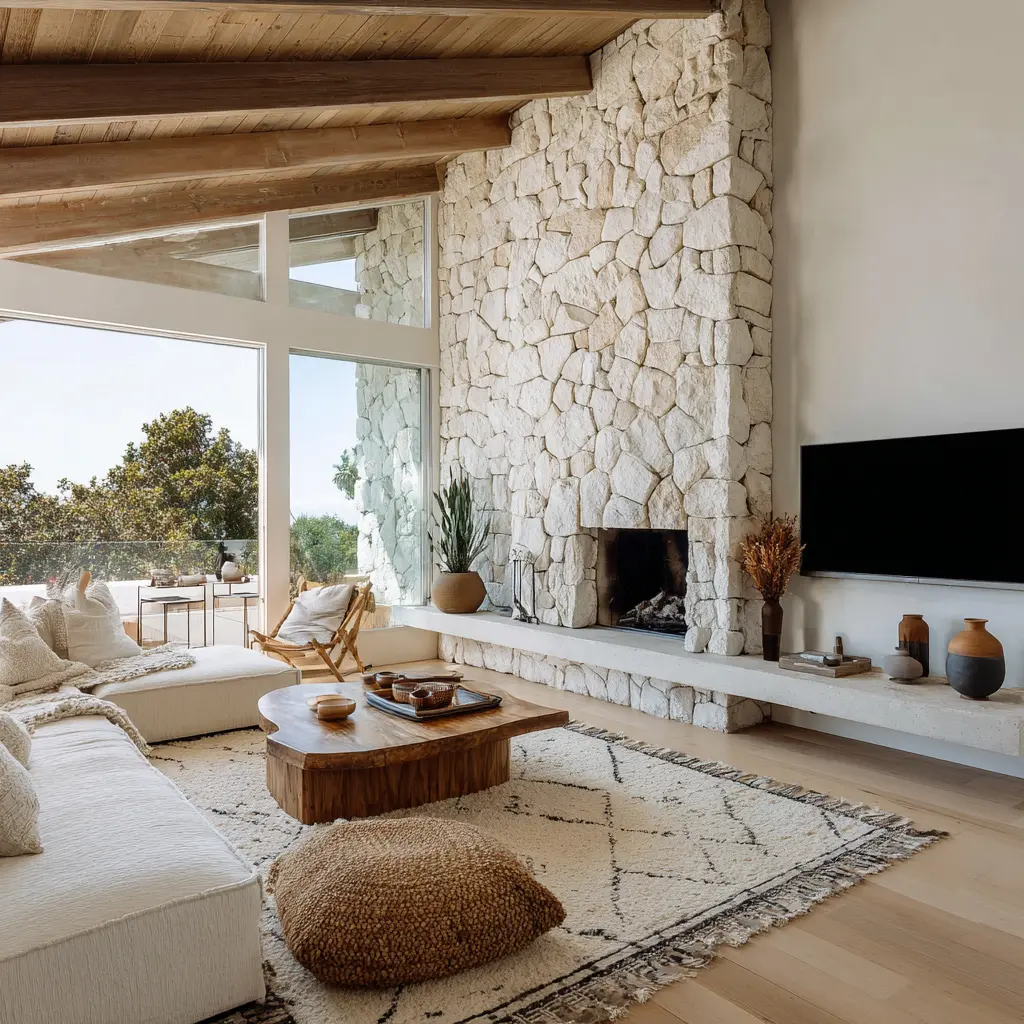
- A room with larger timber volume, plaster mass, black-framed glazing, and broader wine-country scale often suits Napa.
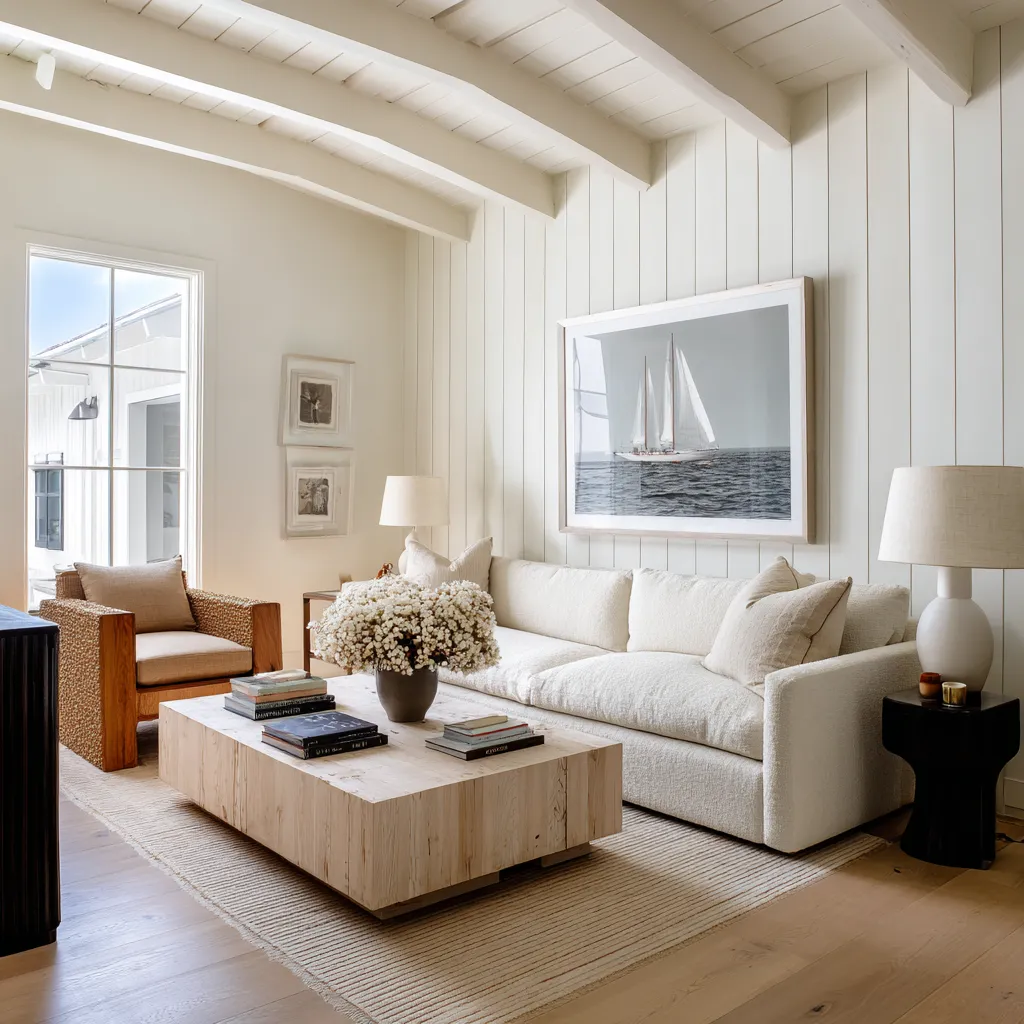
- A lighter open plan with a soft neutral shell and easy yard connection can move well into casual, boho, or chic depending on how much craft, editing, or order is introduced.
- A sharply glazed house with courtyard logic, dry landscape, and stronger horizontal lines is usually a natural setting for Palm Springs inspired interiors.
- A room with a pale envelope but enough confidence to hold art, leather, and mixed furniture histories may be ready for eclectic.
The key is not to chase the name first. It is to identify the room’s natural social logic.
Is it asking to open outward or gather inward? Does it want craft softness or mineral structure?
Does it want clarity or curated tension?
Conclusion
California style families for living rooms make much more sense once they are understood as a structured field rather than as a loose collection of labels. The differences do not begin with color or with a list of trendy objects.
They begin with how the room handles exposure and shelter, texture and geometry, order and mixture. California casual sits near the center and often provides the base grammar.
California boho and California chic branch from that grammar in opposite directions, one through handmade looseness, the other through editing and tonal control. California bungalow and Napa form the hearth-rooted branch, one intimate and domestic, the other broader and more materially weighty.
Palm Springs forms the desert-modern branch, defined by climate geometry, mineral planes, black frames, and low horizontal calm. California eclectic acts as the family of deliberate contrast, using mixed furniture genealogies, leather, art, and patina to create rooms with depth and personality.
Once those distinctions are clear, choosing the right California family becomes much less about copying a look and much more about building a room whose architecture, furniture, material character, and atmosphere all support the same idea.