A kitchen bay window can do far more than bring in daylight. It can become the part of the kitchen that gives the room its emotional center.
It can soften a wall of cabinetry, create a place to pause, hold a small dining scene, frame greenery, carry a coffee ritual, or add a sense of depth that flat kitchen walls often lack. The bay changes the kitchen not only by extending outward, but by changing how the room feels from inside.
What makes today’s kitchen bay window ideas so interesting is that they are not locked into one formula. The old idea was simple: put a small table in front of the windows and call it a breakfast nook.
The newer approach is wider and far more visually thoughtful. A bay can become a sculptural dining pocket, a service ledge, a sink setting, a coffee station, a daylit perch for reading and tea, a garden niche, or a built-in support zone beside a larger dining area.
The fresh part is not the window itself. It is the way the bay is being given a clear interior role.
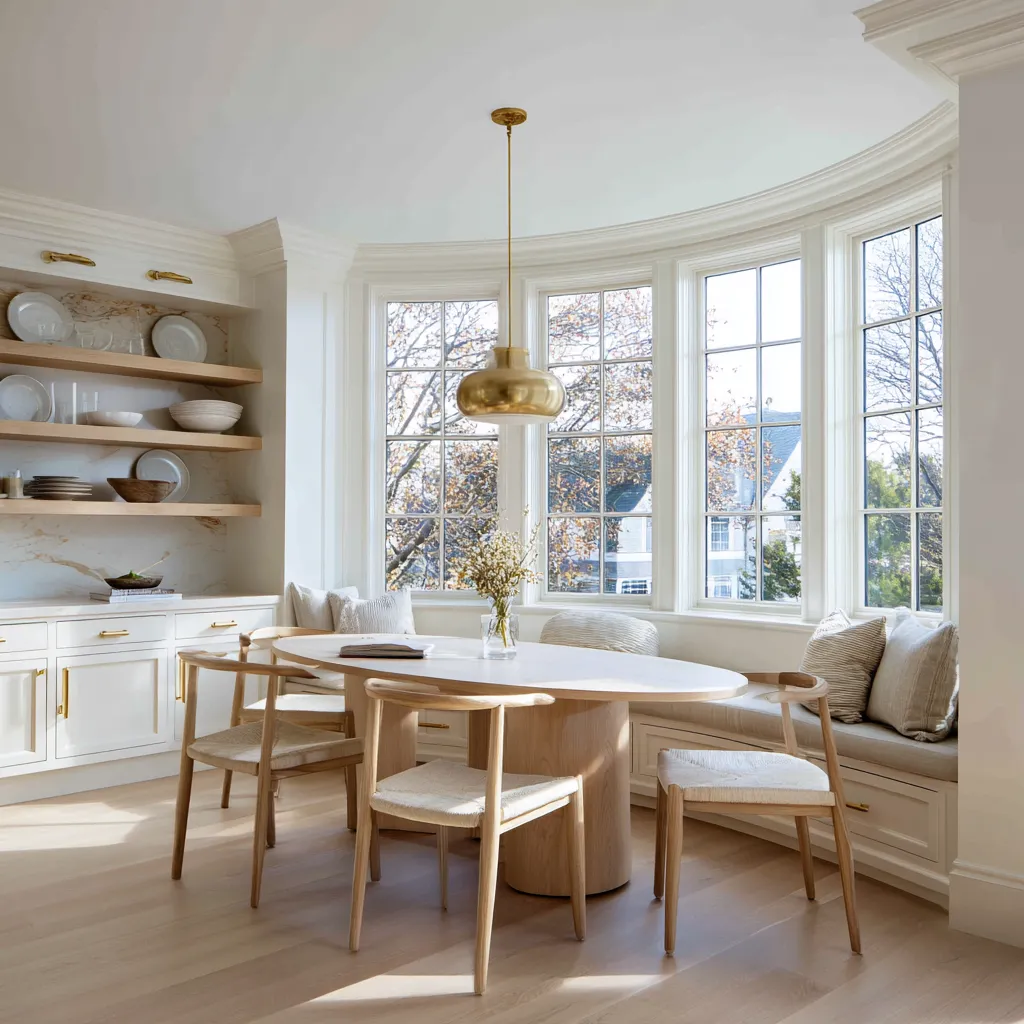
Modern kitchen bay ideas tend to feel composed from top to bottom. They do not seem like a nice window with some furniture pushed into it later.
They feel integrated. The ceiling shape, trim depth, ledge, seating, table form, cushions, lighting, and styling all seem to belong to one idea.
That is what makes a bay feel complete.
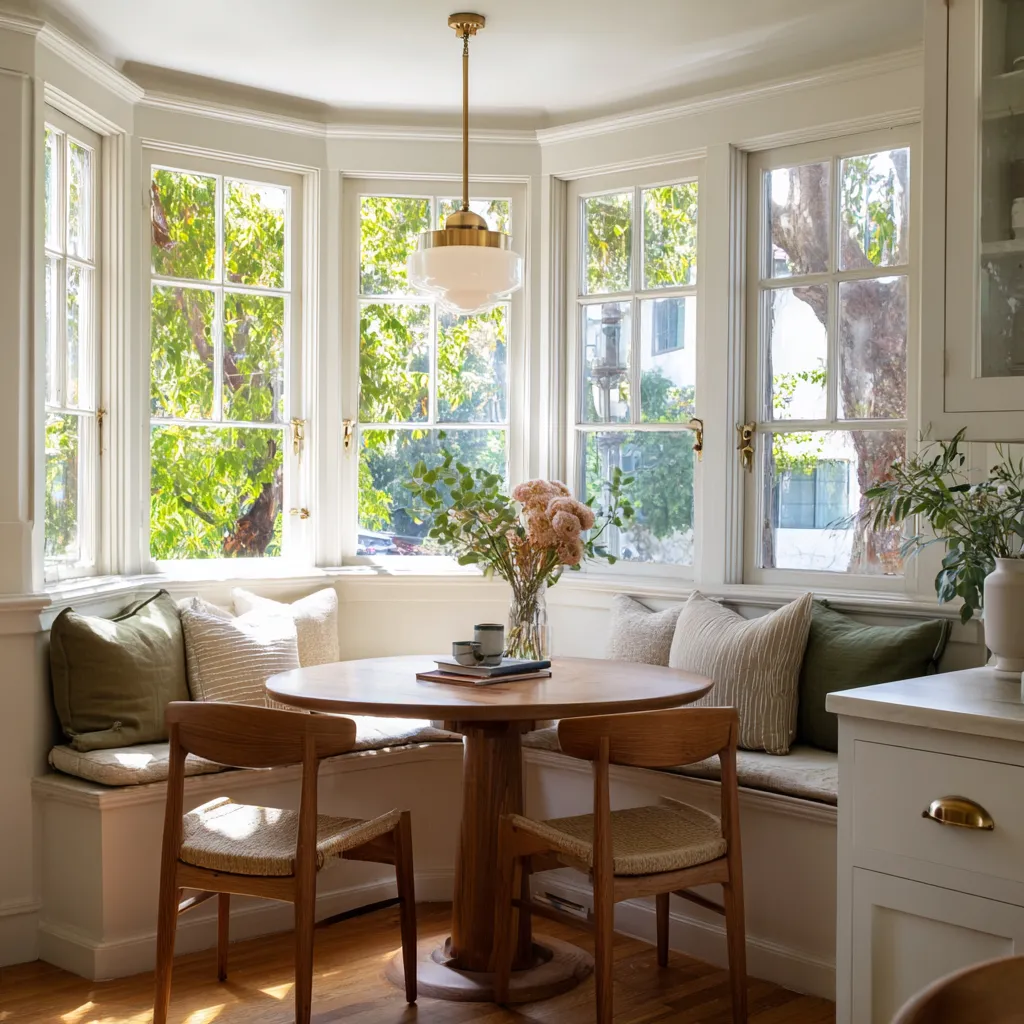
The bay like a small room inside the kitchen
One of the ideas behind modern kitchen bay design is that the bay should feel like its own place, even when it remains open to the kitchen. This does not require a separate room.
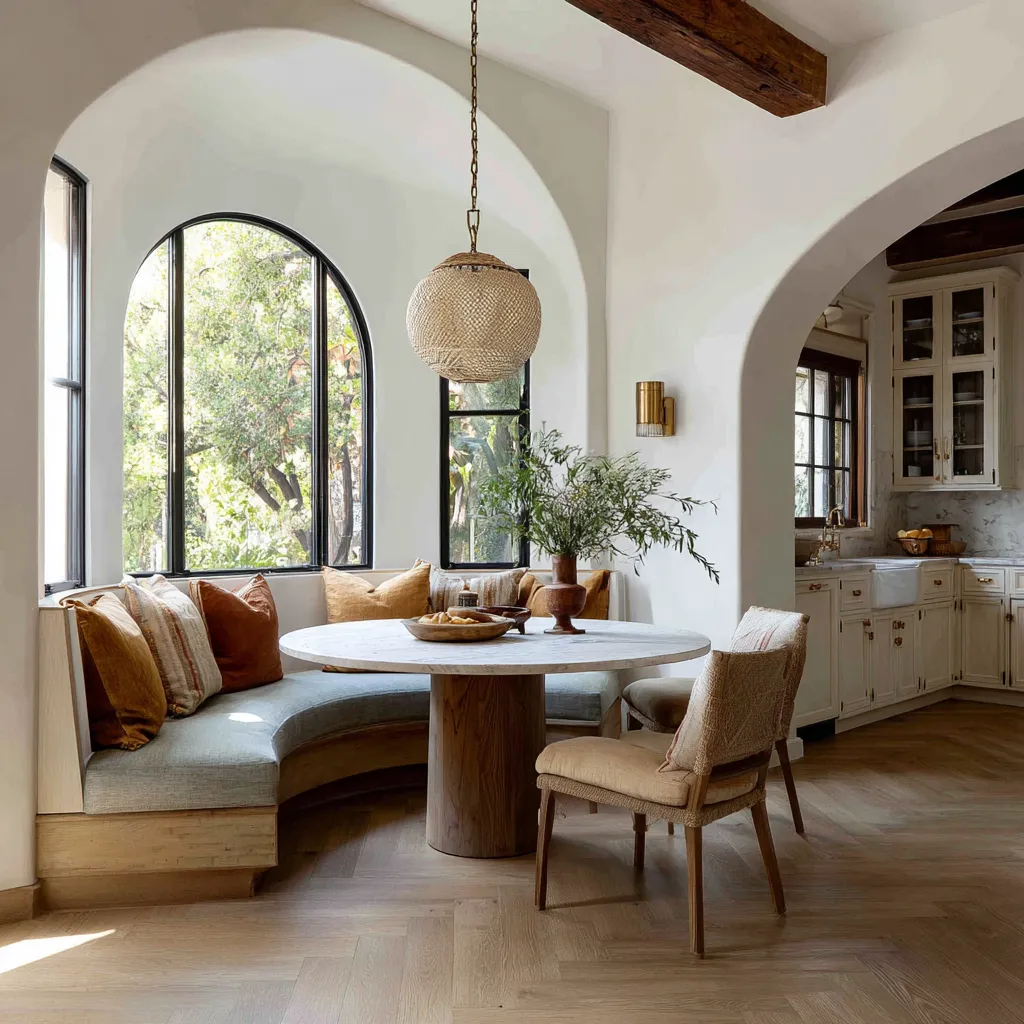
It can happen through a deep arch, a change in ceiling profile, heavy trim, a wrap of seating, a different material around the sill, or simply a stronger sense of enclosure.
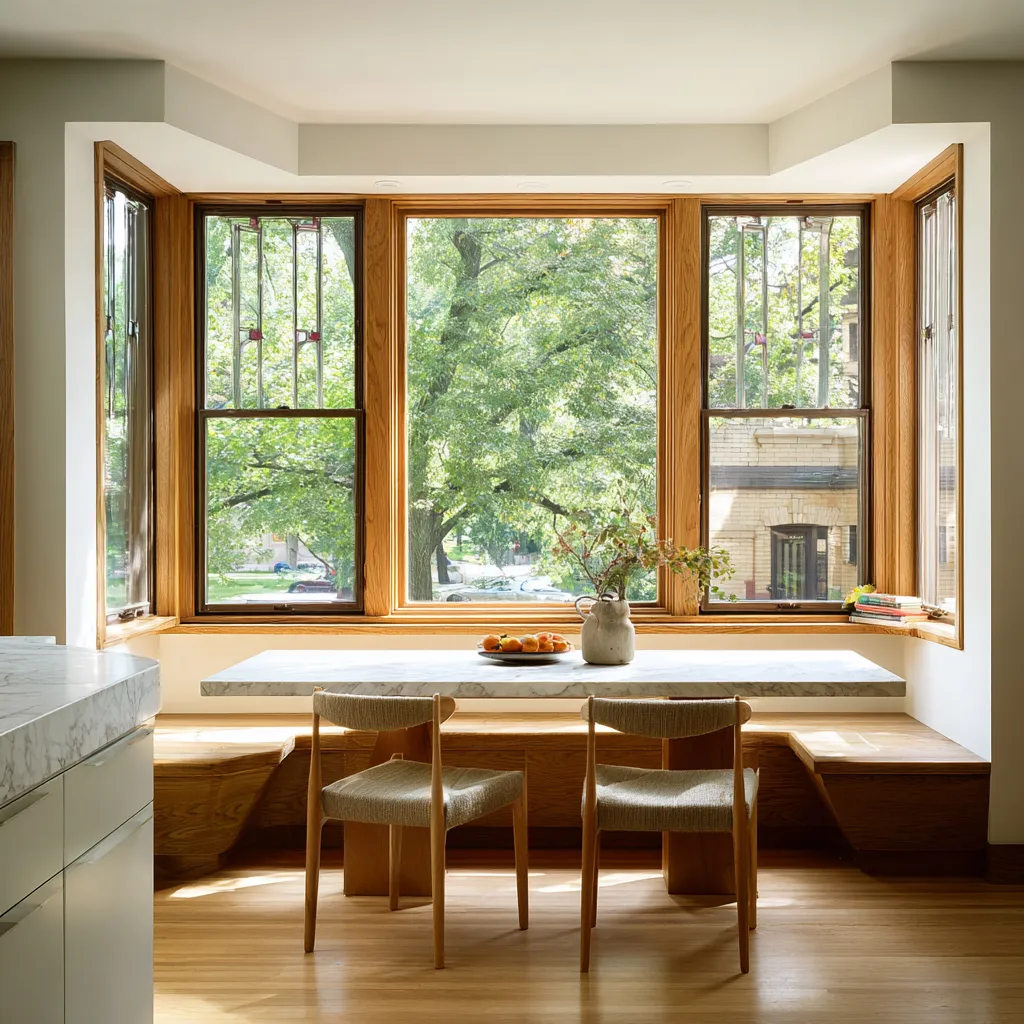
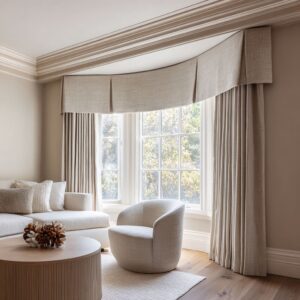
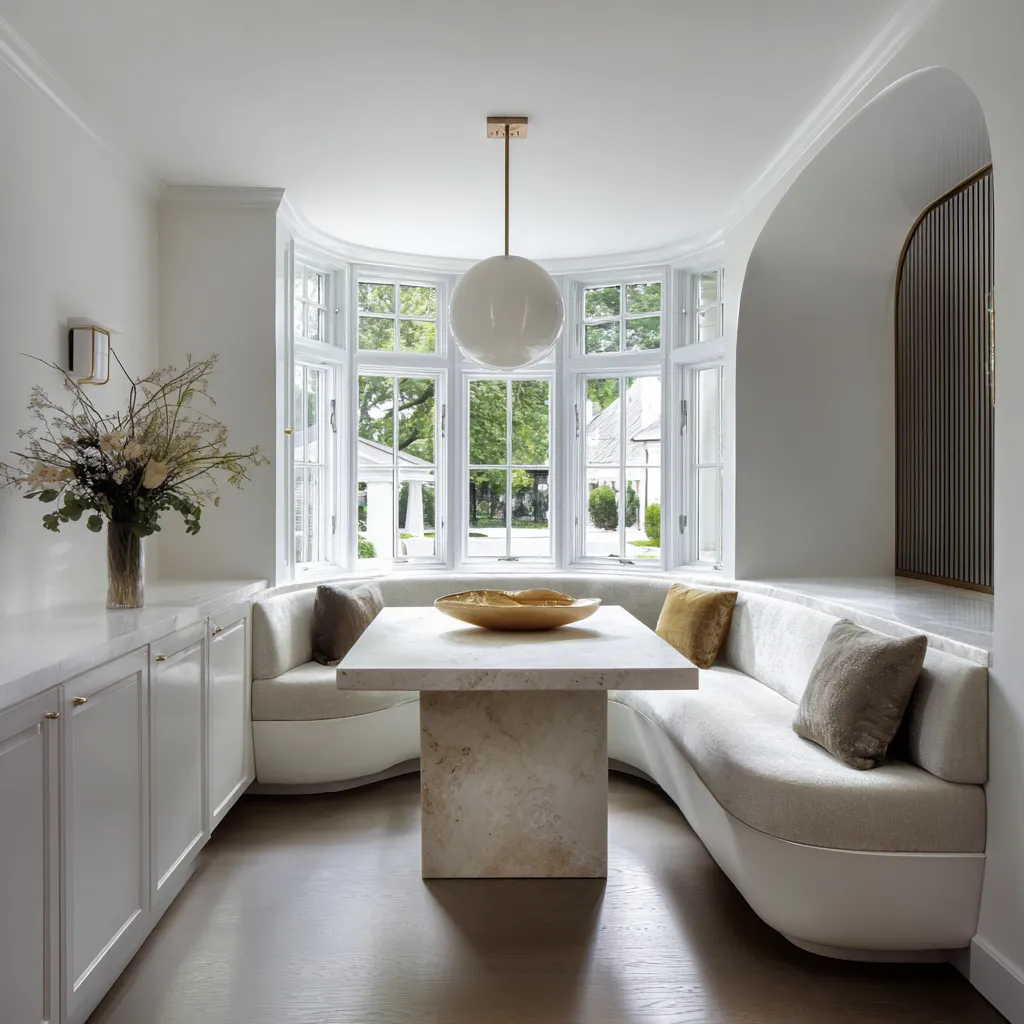
A faceted bay with layered trim and a stepped ceiling, for example, feels more settled than a bay where the walls and ceiling are treated as leftover background. The upper edge matters.
When the ceiling turns inward with purpose, the nook gains a vertical finish. It stops feeling like a projection in the wall and starts feeling like a destination.
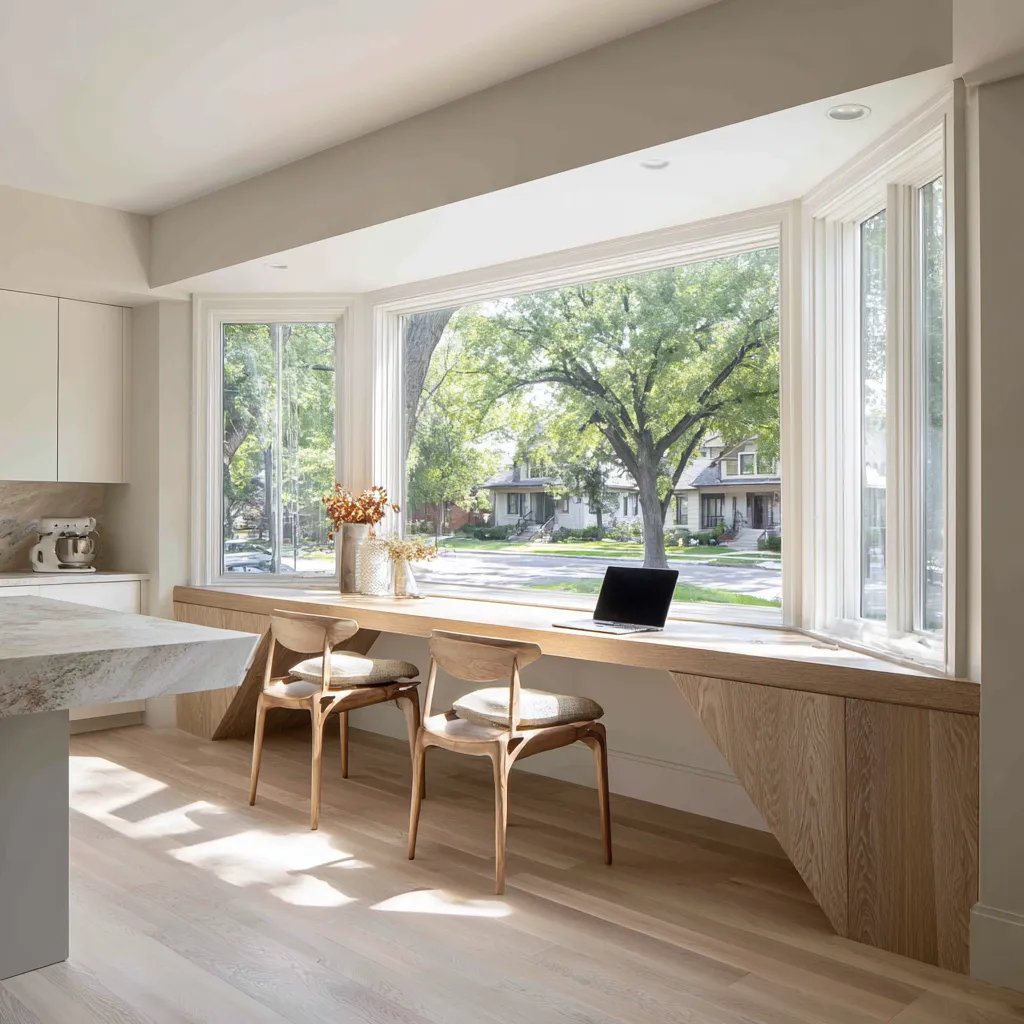
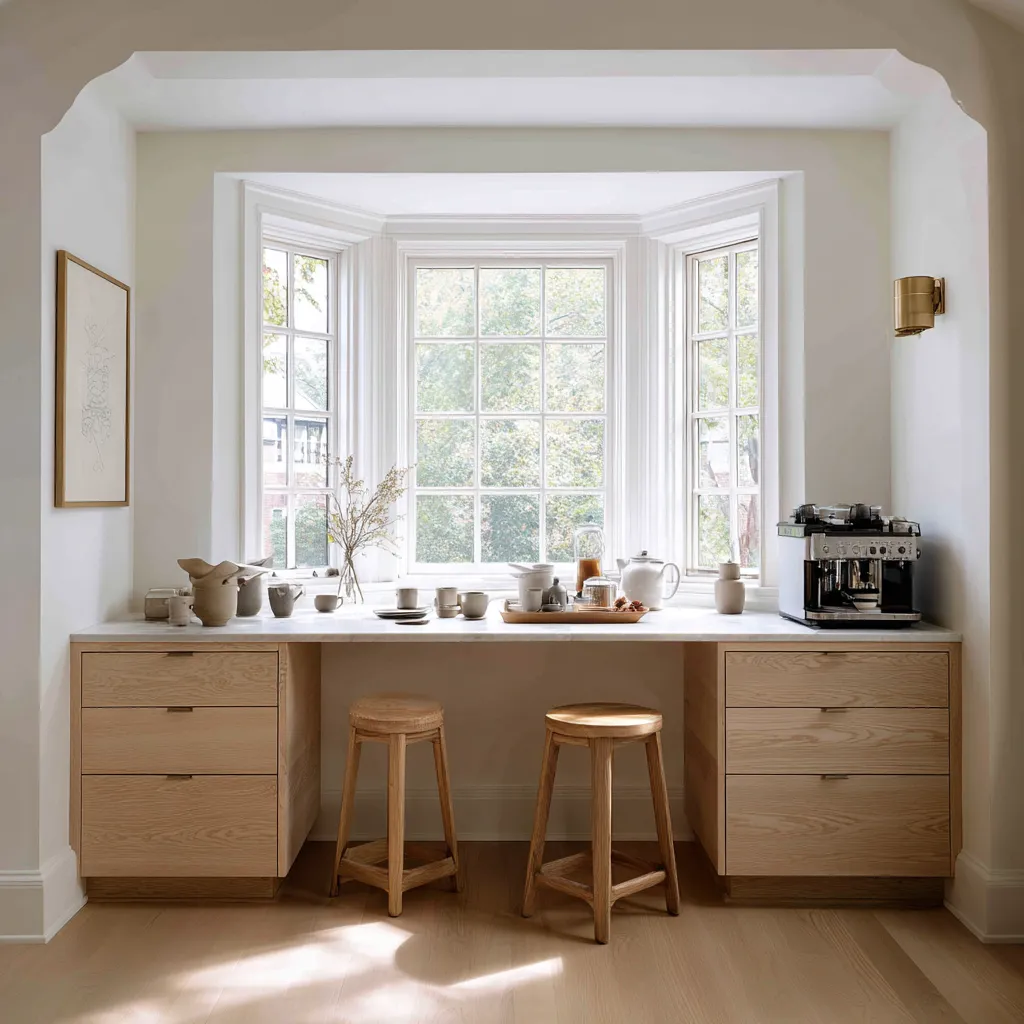
Arches do this in a different way. An arched opening can make the bay feel carved from thick walls, almost like a pocket room.
That kind of framing changes the mood immediately. Even a very simple table and bench start to feel sheltered and rich because the architecture is already doing part of the decorative work.
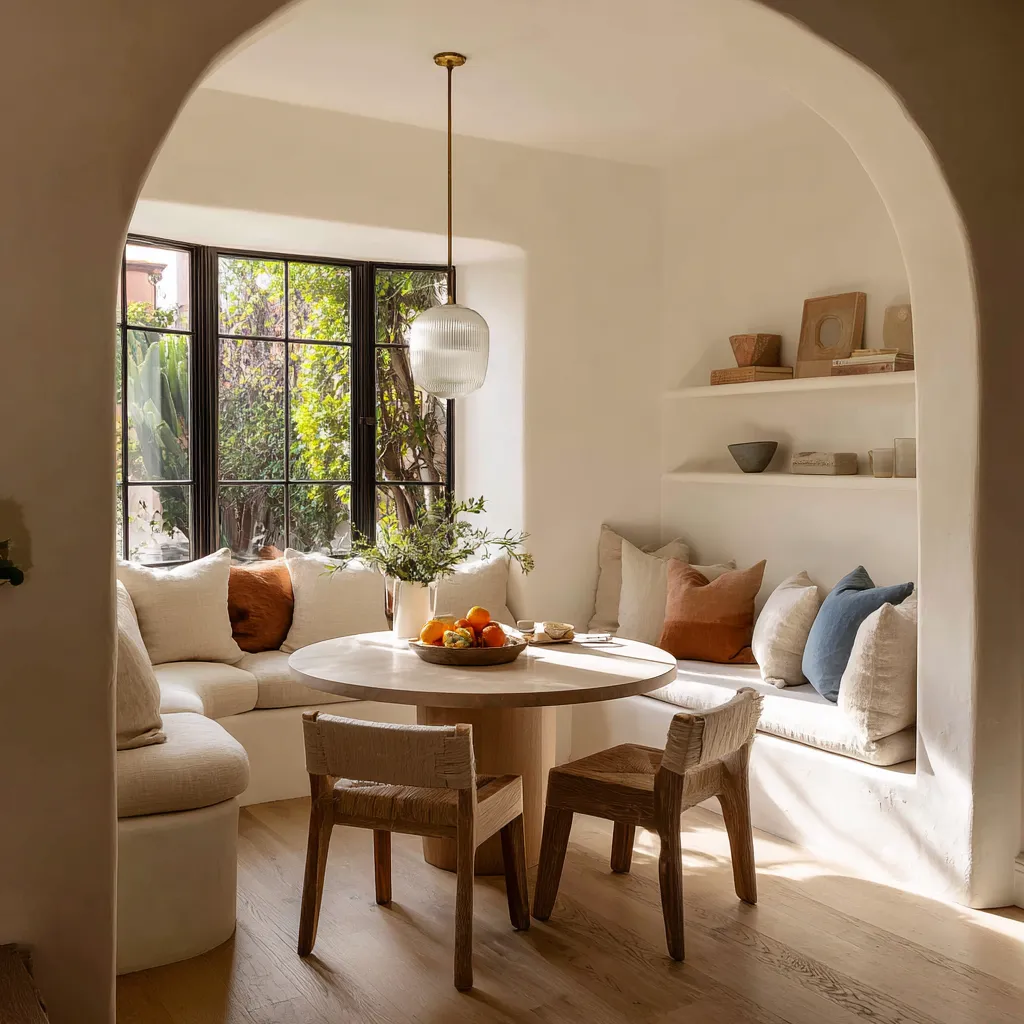
Recessed bays can be just as strong. When the window sits inside a thick wall opening, the bay becomes calmer and more inward.
The cushion, Roman shade, ledge, or built-in bench then feel held by the shell of the room rather than exposed at the edge of it.
Not always a breakfast nook
One of the biggest shifts in kitchen bay design is functional variety. Seating still matters, but many of the strongest bays now serve another role.
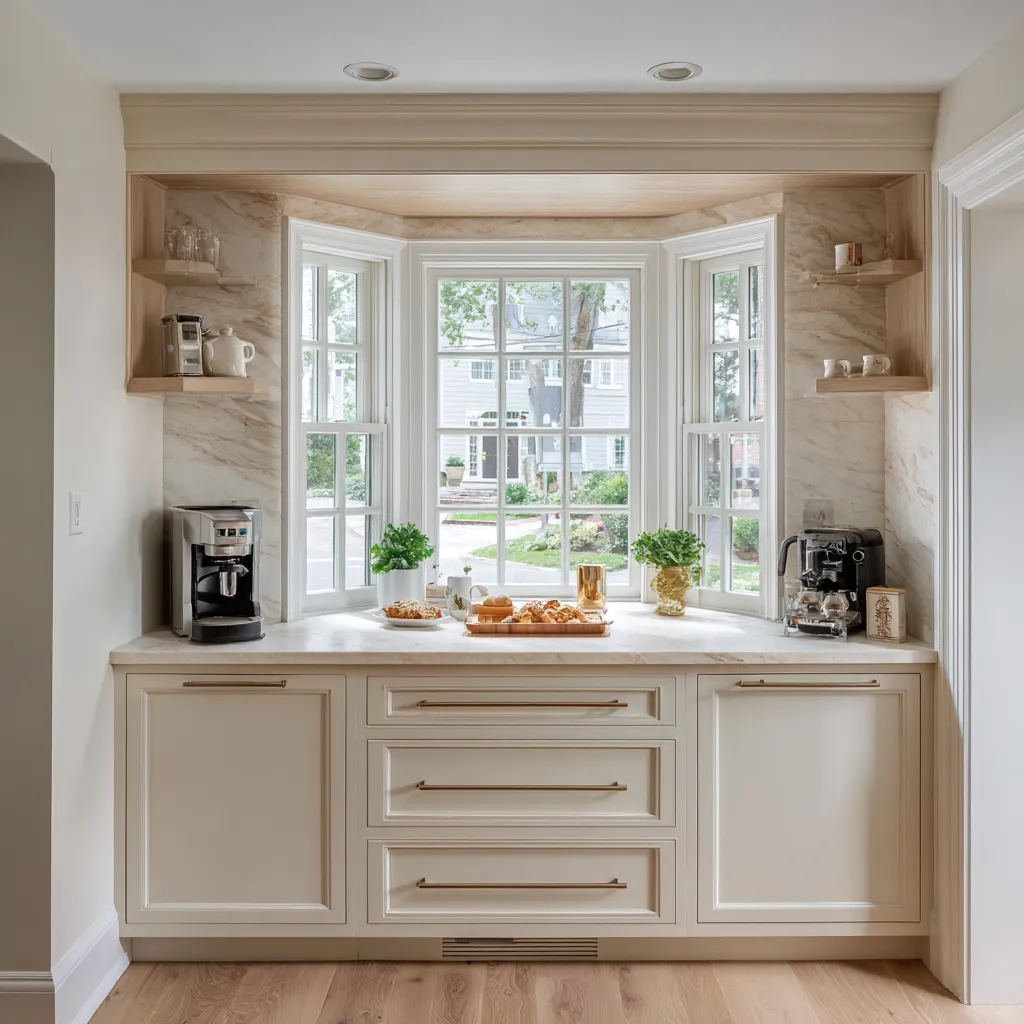
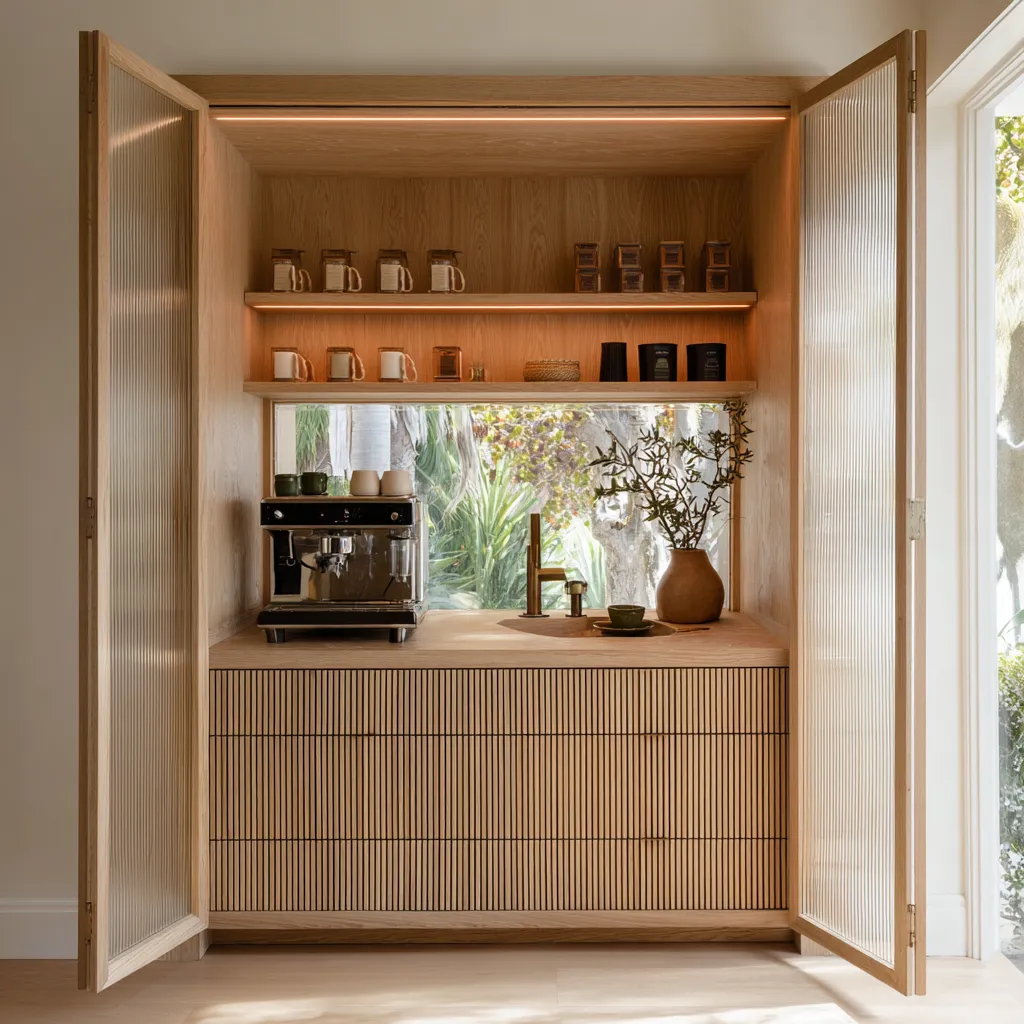
Some can become coffee and tea stations. This works especially well when the kitchen already has island seating or a dining area elsewhere.
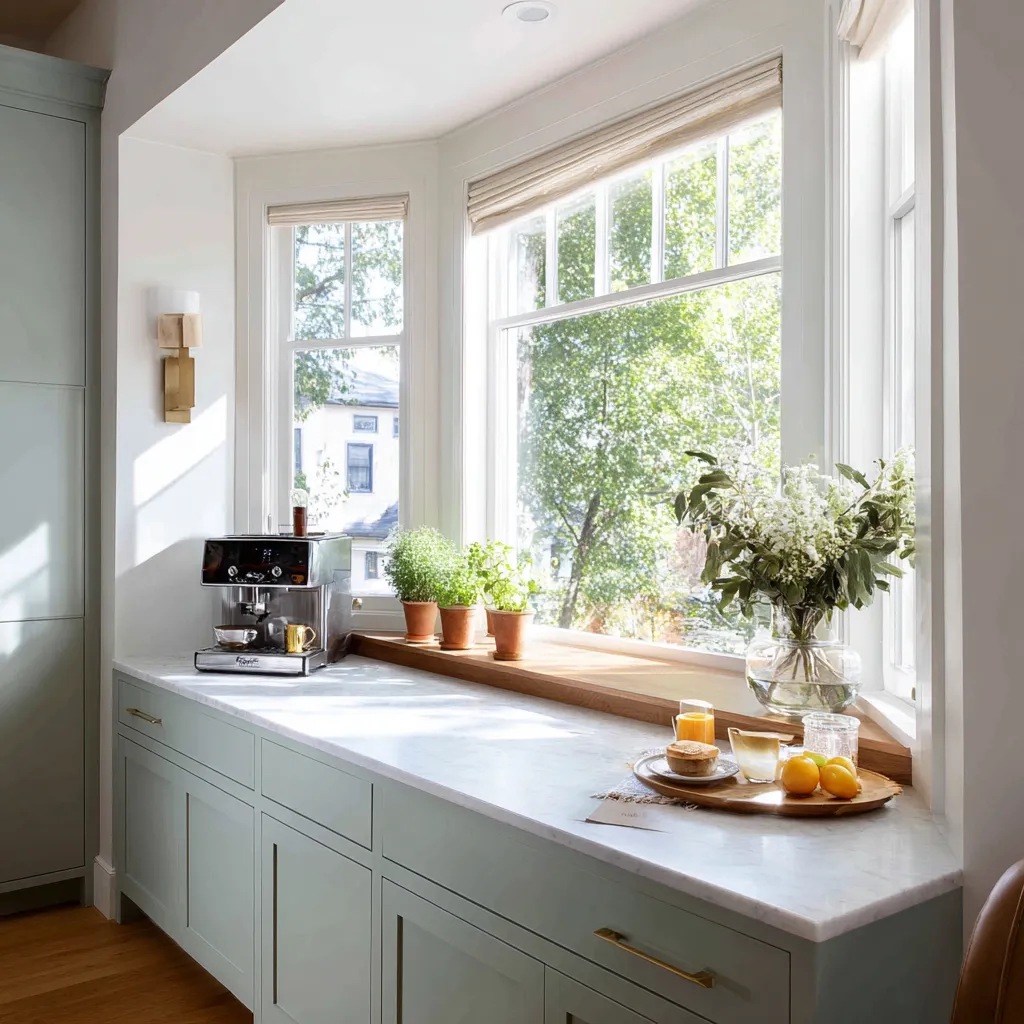
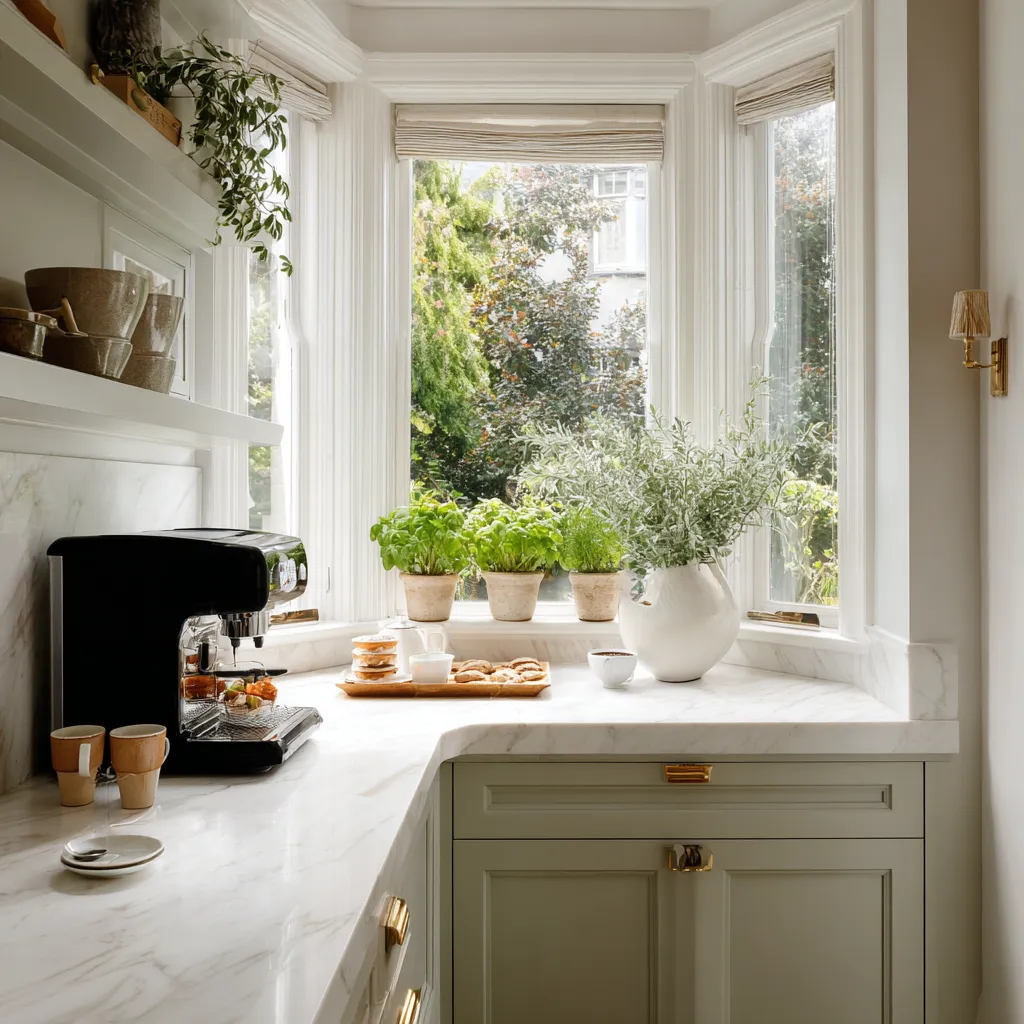
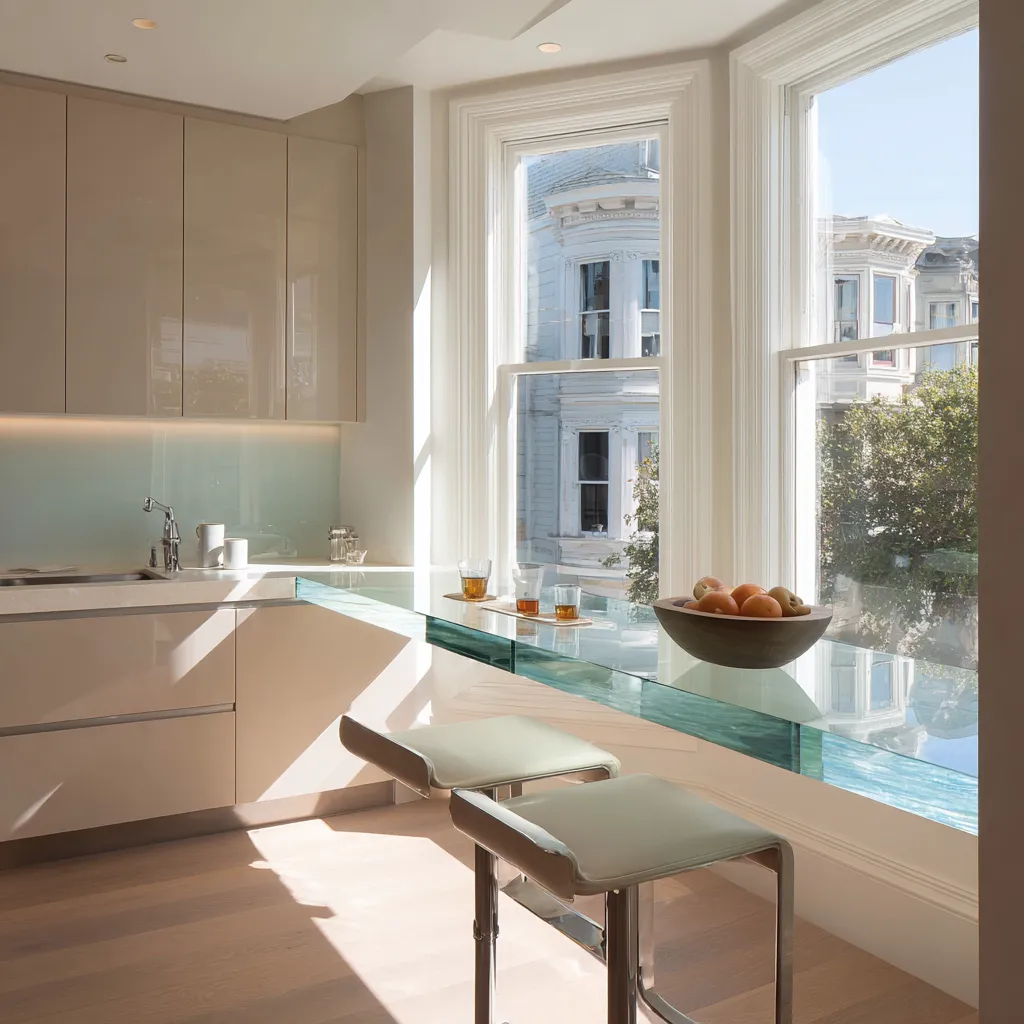
In that case, using the bay as a marble-topped beverage ledge or a built-in service counter makes far more visual sense than forcing in another table. The daylight helps the ritual feel pleasant, and the bay gains purpose without becoming crowded.
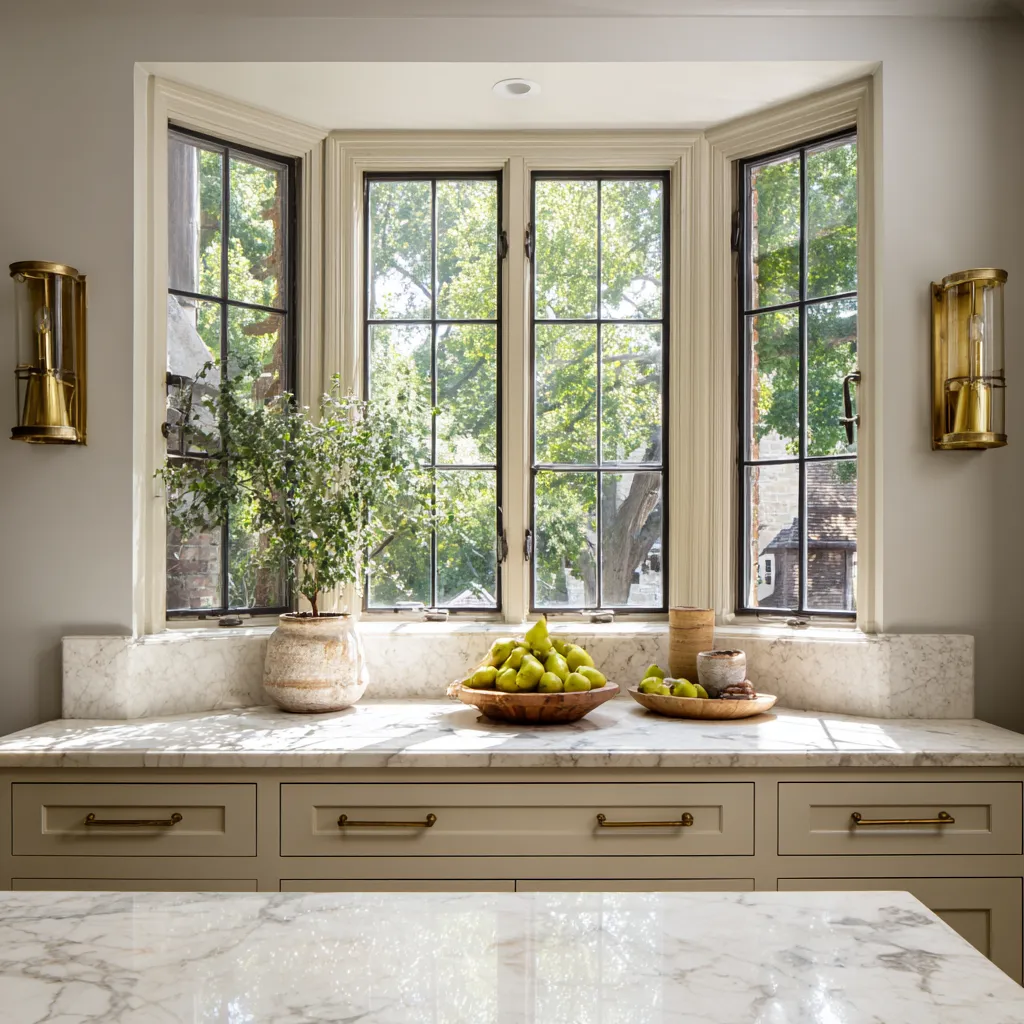
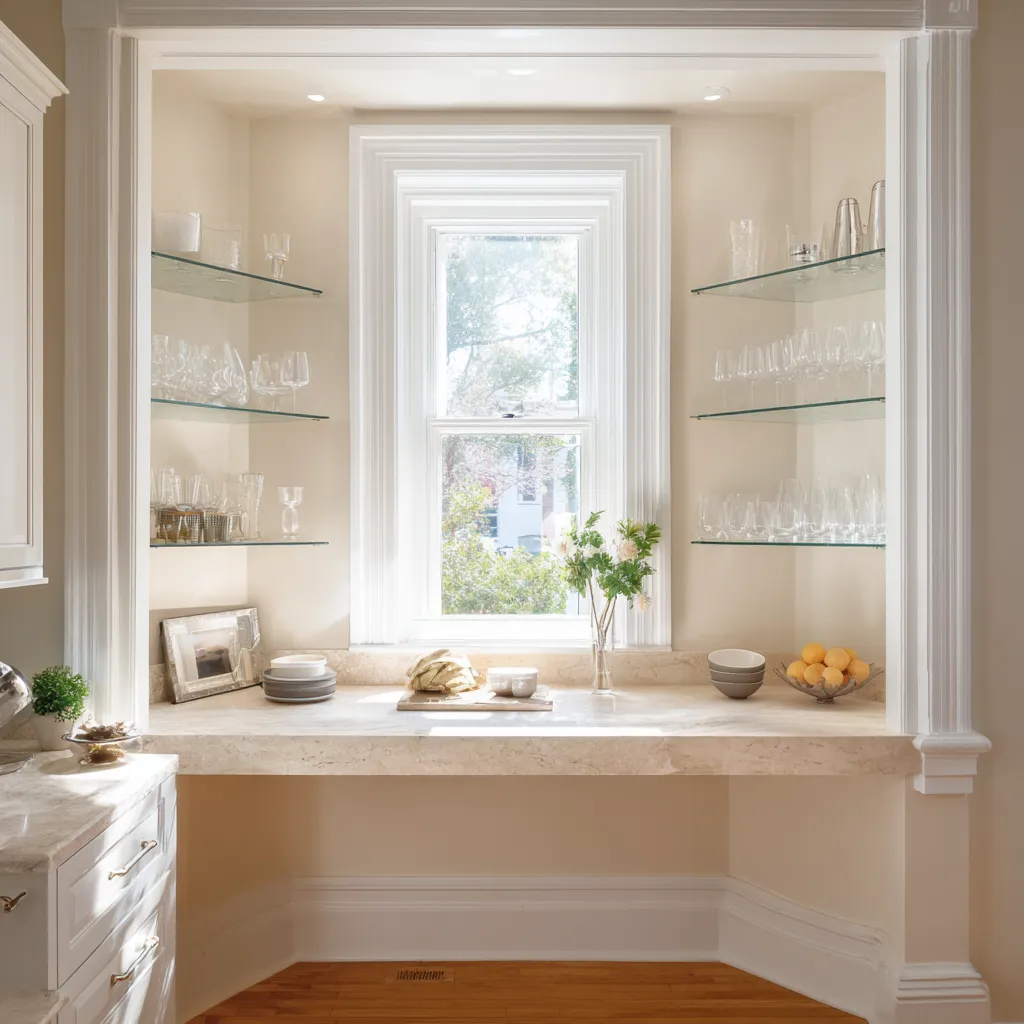
Other bays can become prep-and-display areas. A deep sill lined in stone, with fruit, vessels, herbs, or flowers, can give the kitchen a striking focal wall while still staying rooted in daily use.
This kind of bay feels active. It is not ornamental in an empty way.
It holds real kitchen life.
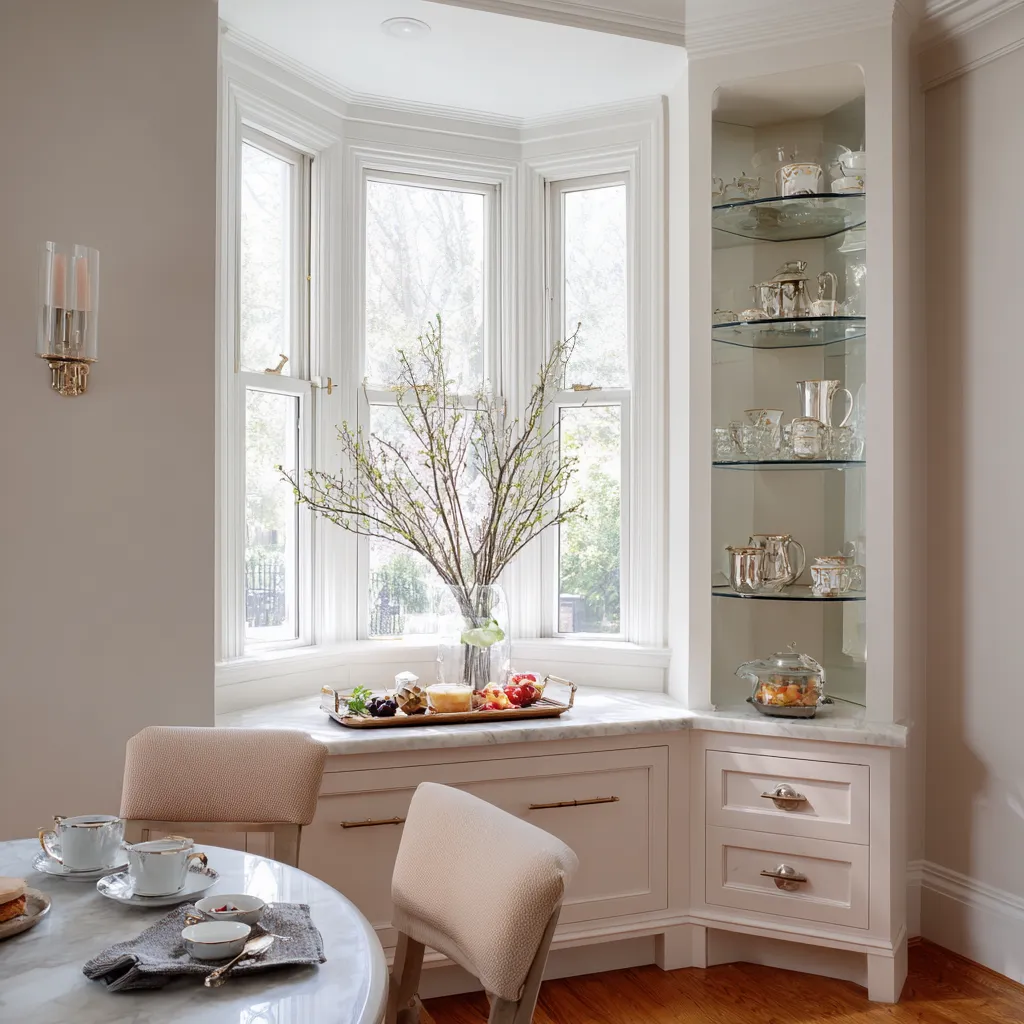
Some bays can act as dining-side support pieces. Instead of trying to seat people directly inside the window, the lower part of the bay can work like a built-in sideboard or china console beside a nearby table.
That is a beautiful move in a room that already has a strong dining setup. The bay becomes a place for serving dishes, flowers, tea trays, pastries, or candlelight rather than duplicating the table’s role.
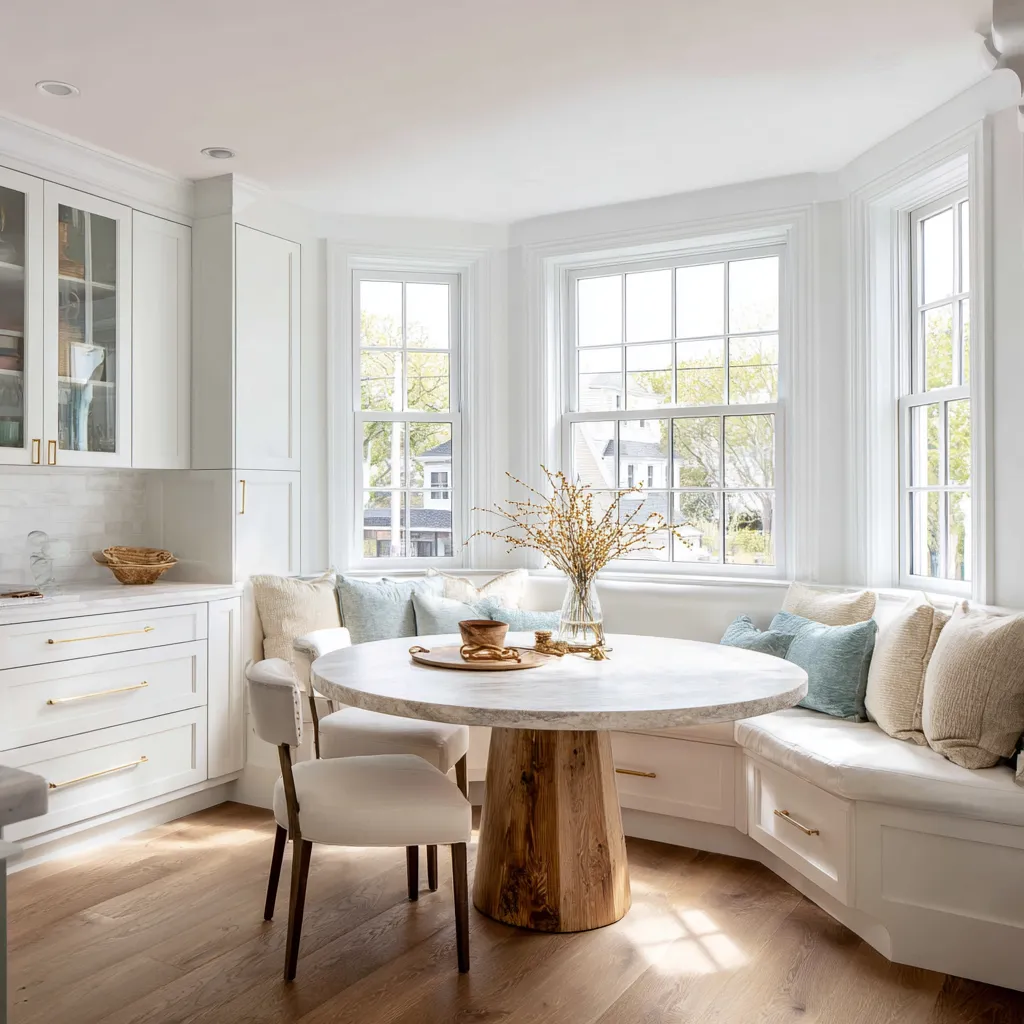
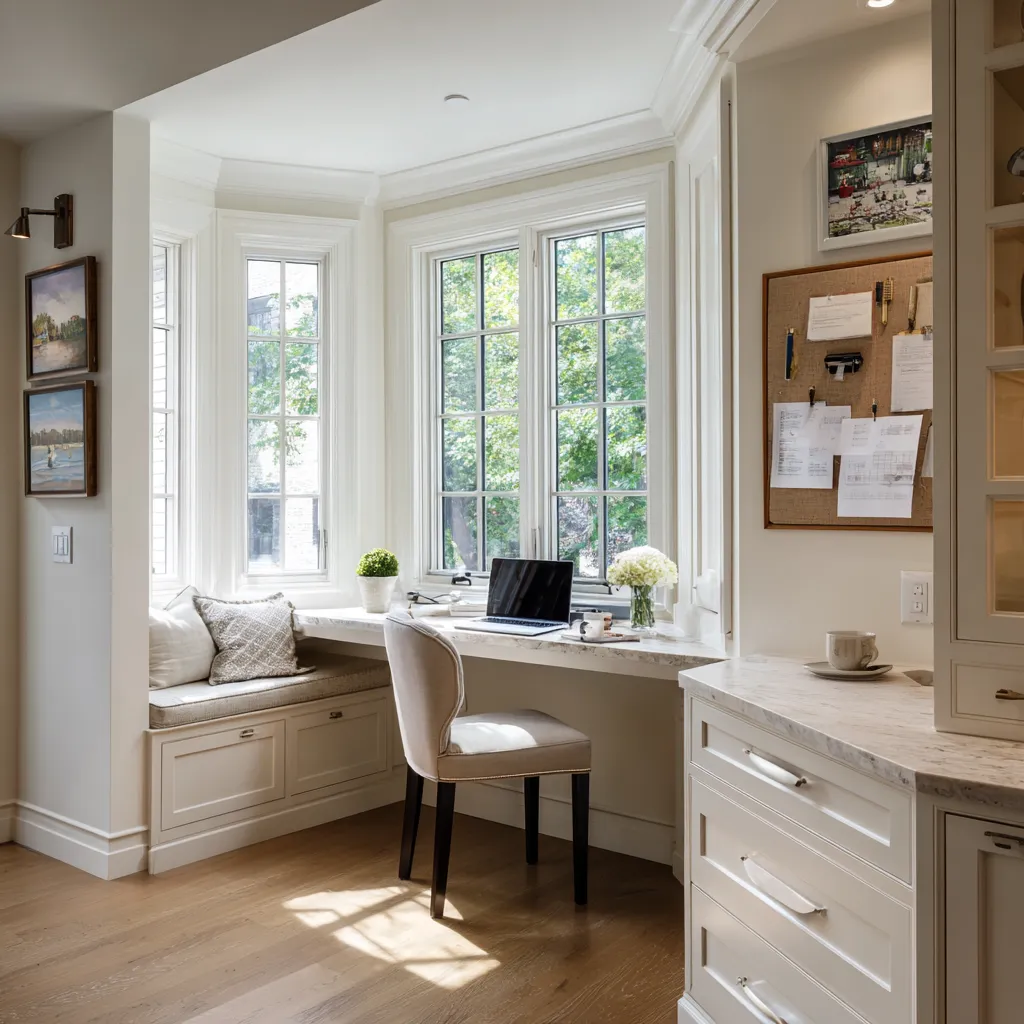
There can also be bays that become hybrid household stations: part bench, part ledge, part work corner, part family message center. Visually, this can still feel warm and domestic if the surfaces stay soft, the ledge remains slim, and the styling includes flowers, a mug, a lamp, and a few framed pieces rather than office-like clutter.
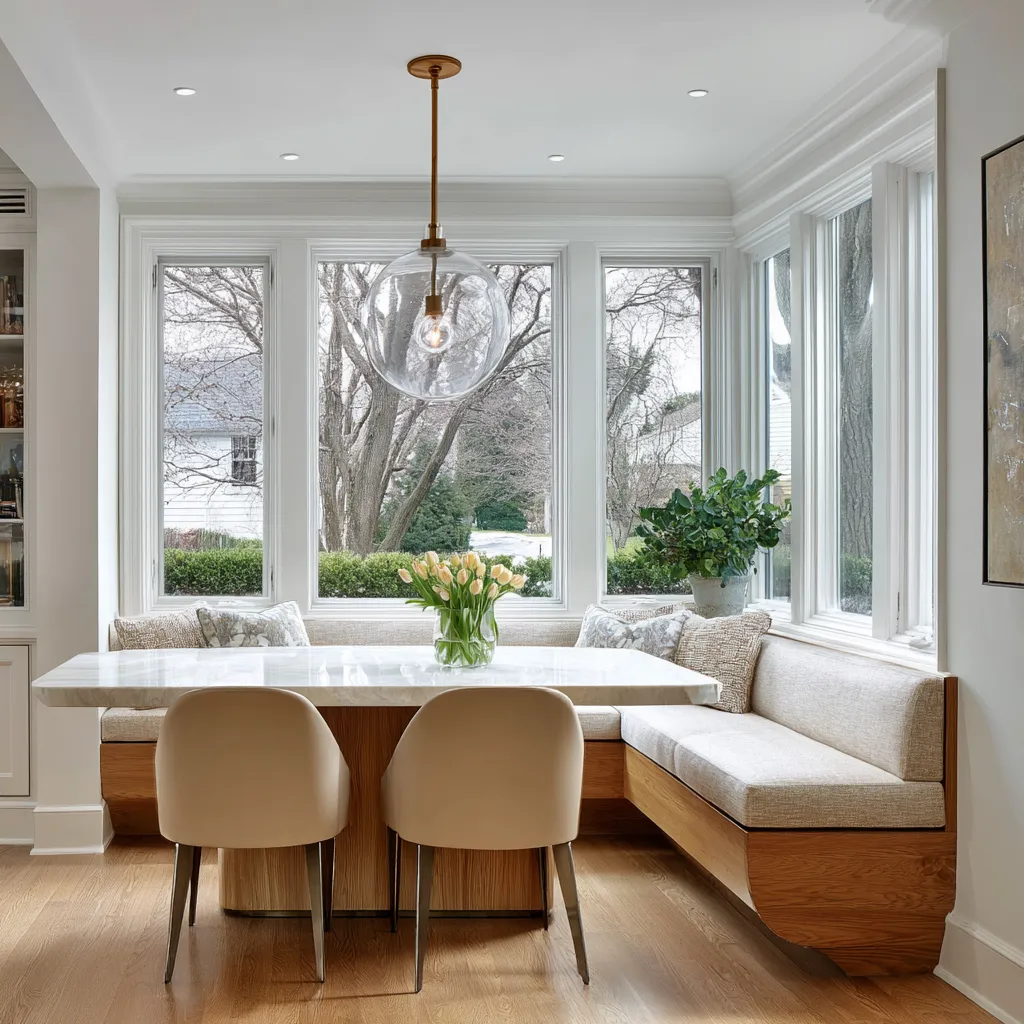
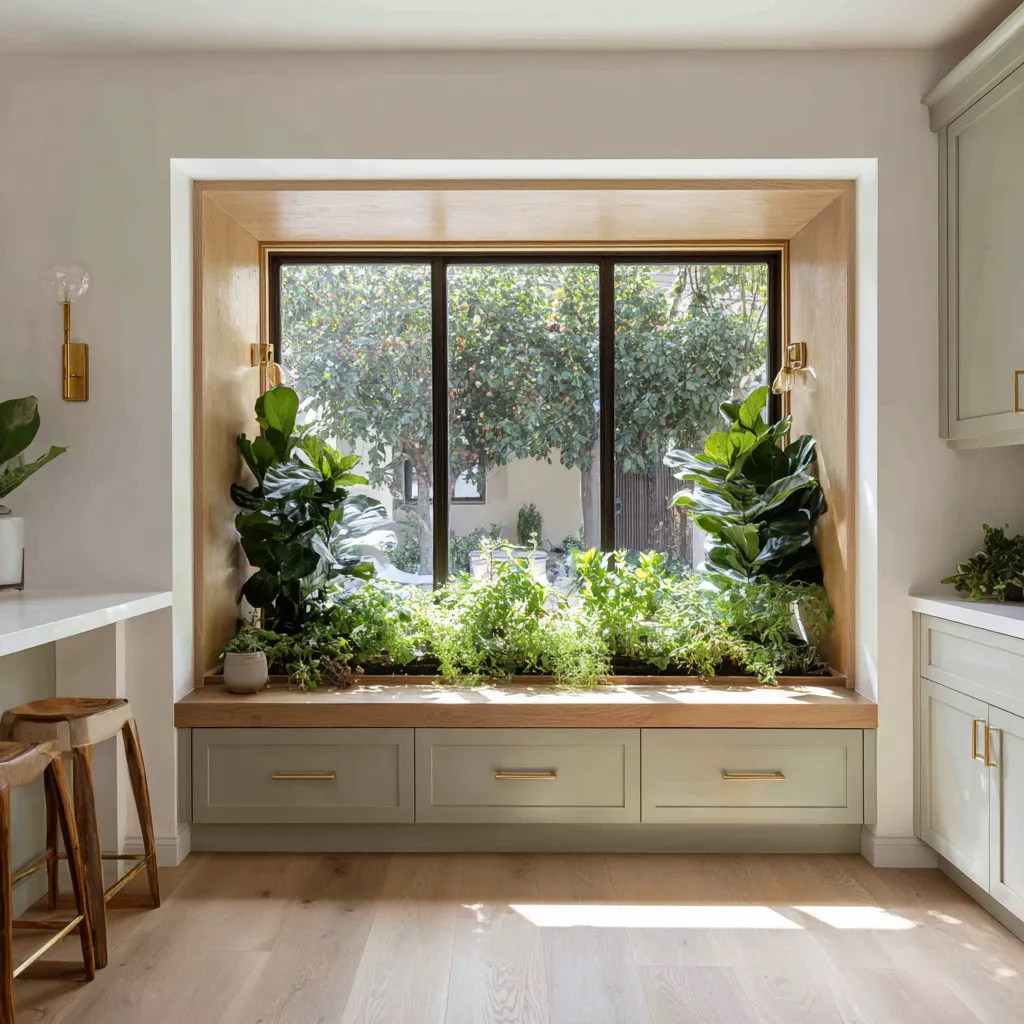
Then there is the planted bay. A deep timber-lined, for example, reveal with an herb bed or grouped indoor greenery gives the kitchen a living edge.
This kind of bay can feel unusually fresh because it turns the window wall into part indoor garden, part kitchen backdrop.
Seating shape changes everything
When a bay does become a seating zone, the most important question is not only whether there is a bench. It is how the bench responds to the window geometry.
A literal copy of every window angle often feels too stiff. A more refined approach is to soften the bay from within.
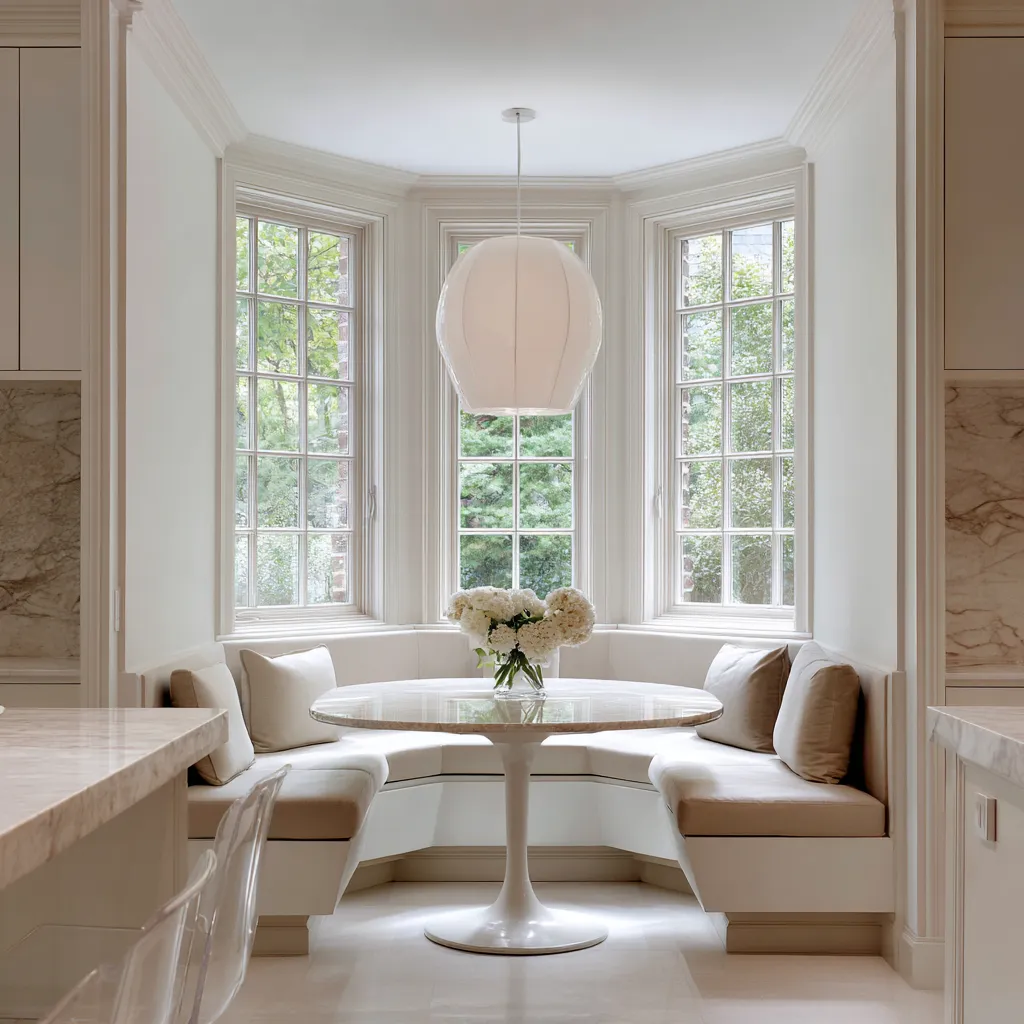
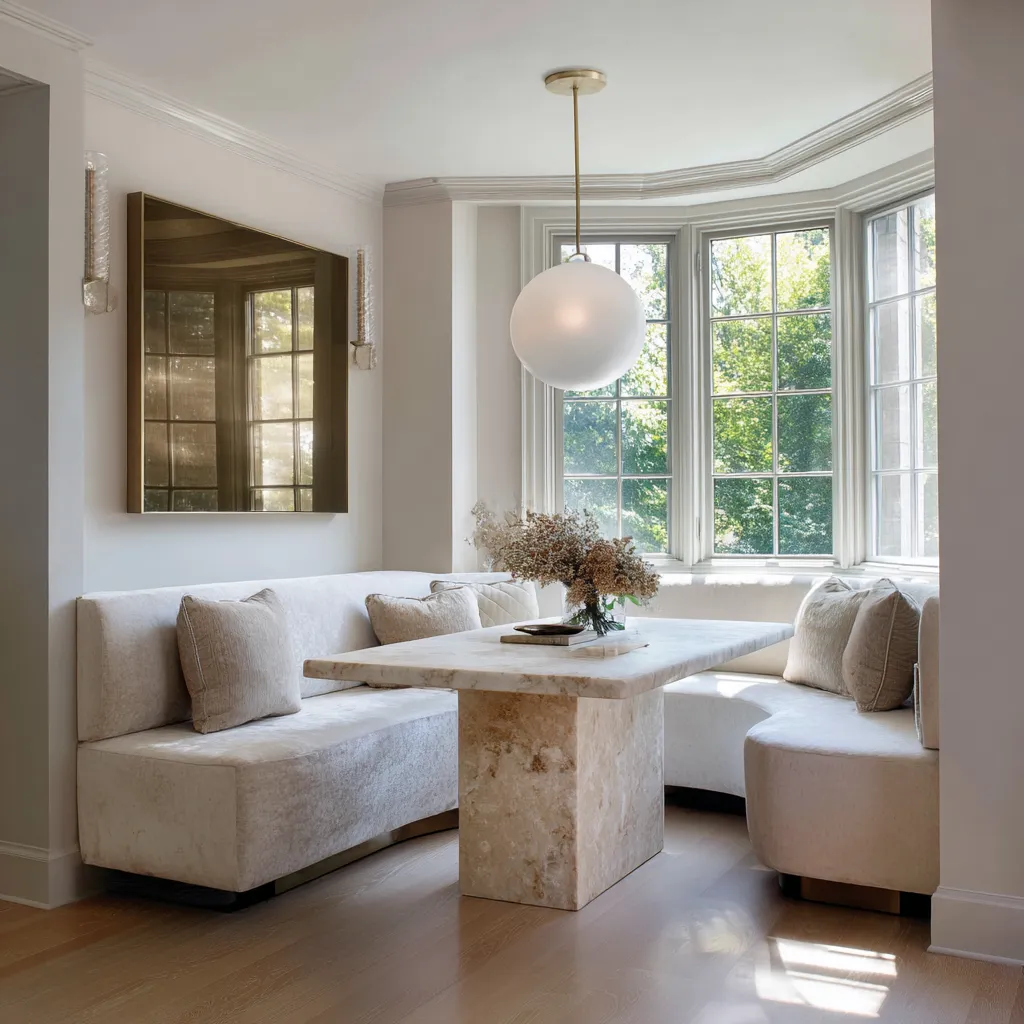
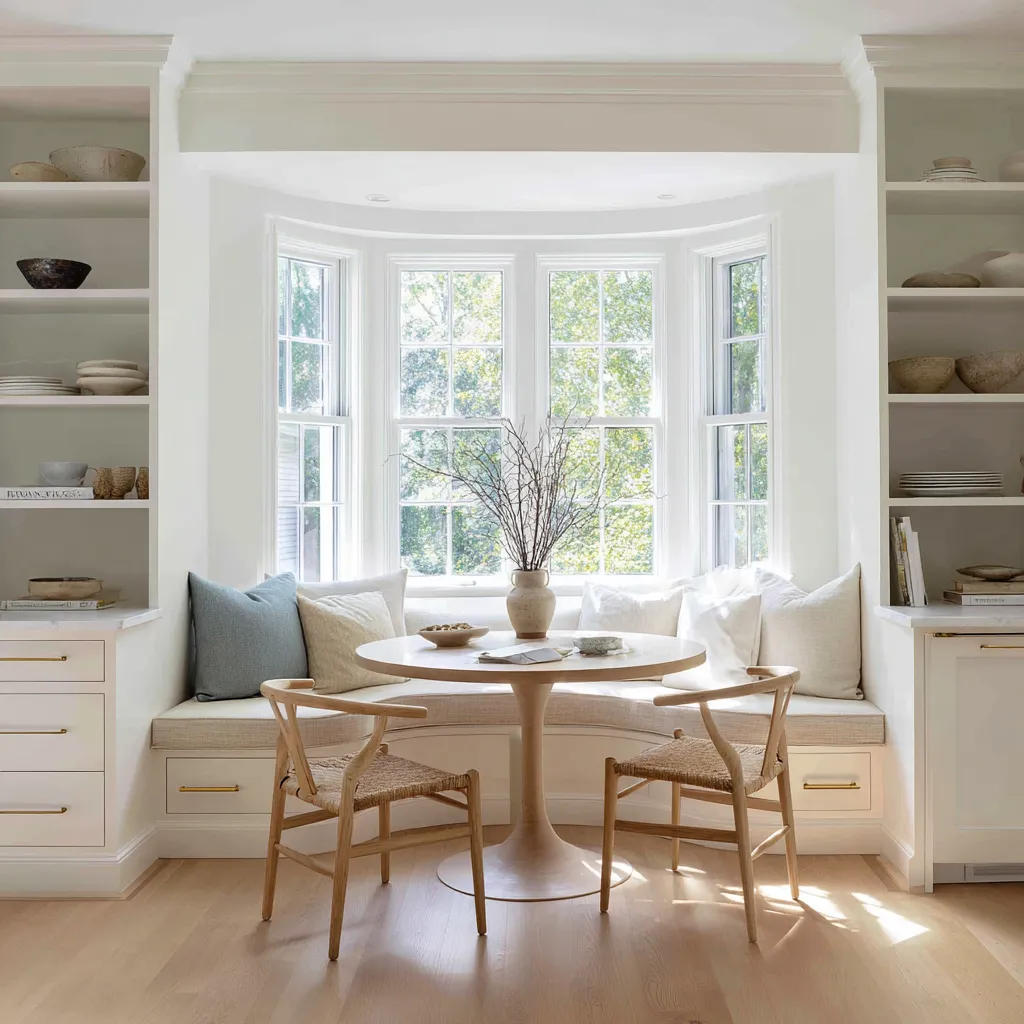
Continuous curves, half-moon banquettes, rounded inside corners, and low upholstered backs give the nook a more bodily, relaxed quality. The window can remain faceted and crisp while the seating introduces ease.
Wraparound banquettes create intimacy. They turn the bay into a pocket for slow breakfasts, long conversations, or evening tea.
They also make the kitchen feel socially deeper because the seating encourages people to settle in rather than perch for a moment and leave.
Side benches create a different effect. They keep the center more open and allow the view to remain dominant.
This works well in bays where the architecture itself is strong and the furniture should stay lighter. Two side benches with a slim table between them can feel more like an indoor porch than a booth.
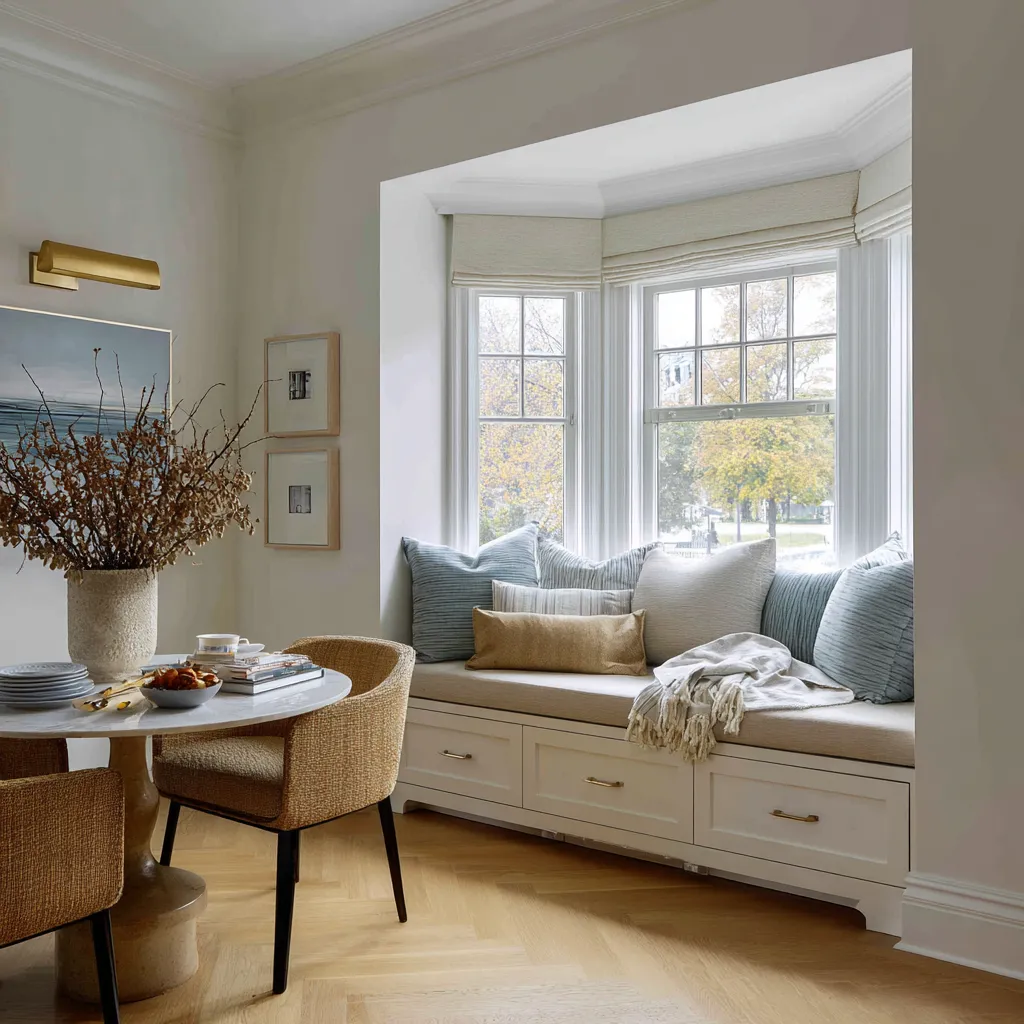
A deep cushioned bench with drawers below can also work beautifully when the bay is meant as a lounge extension rather than a dining nook. In that case, the bay adds softness to the kitchen by providing a place to read, wait, drink tea, or sit near someone cooking without being part of the main work area.
The benches are usually low enough to let the windows remain visually dominant. Once the seat back rises too high, the bay can start to feel boxed in.
When the back stays restrained, you still get the feeling of sitting inside the light.
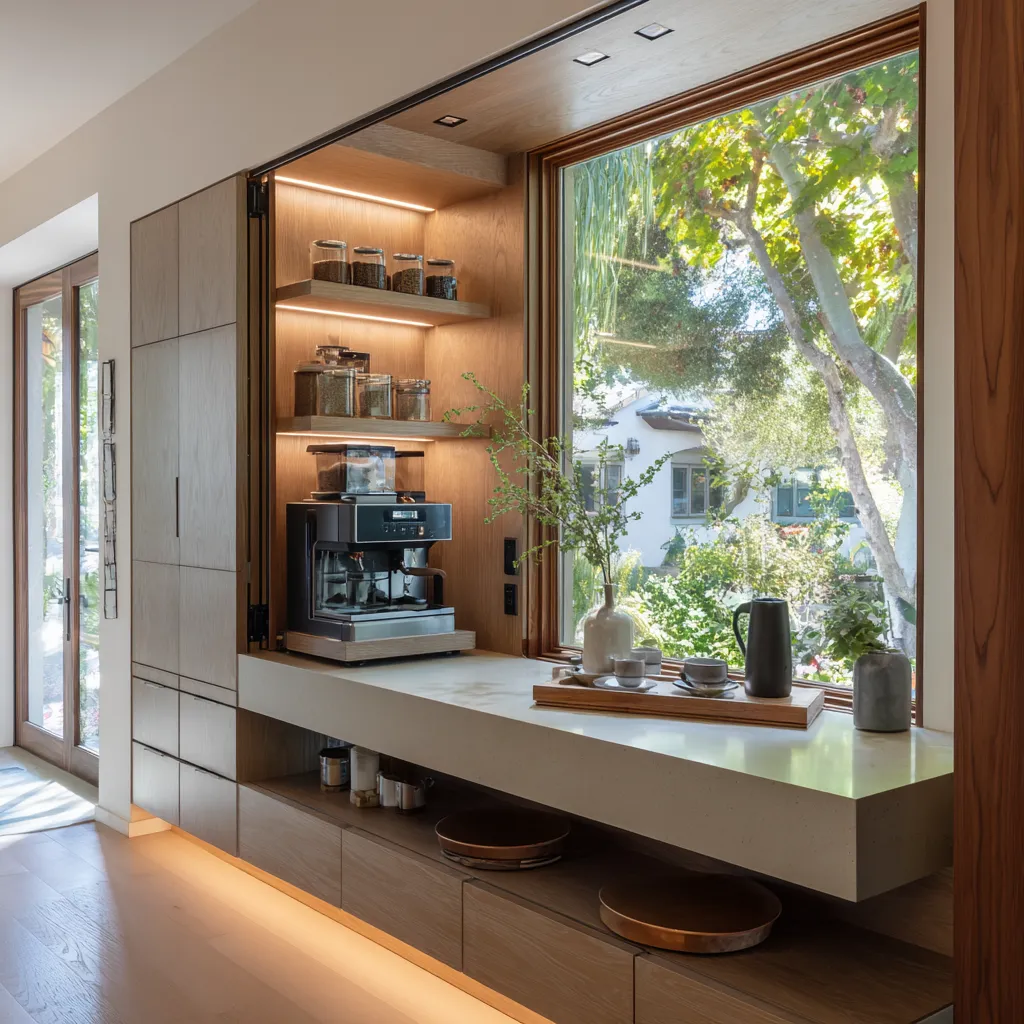
Table shape for changing the mood of the bay
Small choices in table form have a huge effect on how a bay feels.
Round tables soften narrow breakfast corners. They remove hard corners, ease movement, and sit naturally inside faceted bays.
They are especially good in compact spaces where the window geometry is already angular and the room needs a gentler center.
Oval tables are useful when the bay has more depth. They keep movement soft but give more length and visual reach than a small round top.
In a generous dining bay, an oval table often feels calmer than a rectangle and less under-scaled than a small circle.
Rectangular slab tables bring a newer, more furniture-driven mood. In bays with sculptural seating or strong architecture, a rectangular stone or pale slab top creates a central plane that feels stable and grounded.
It can make the nook feel less like a cottage breakfast corner and more like a real dining setting.
Pedestal bases matter almost as much as the top. A fluted pedestal adds shadow and detail in a pale room.
A thick timber pedestal adds age, texture, and weight. A stone monolith brings stillness and gravity.
A slim central stem keeps the middle visually open.
Dark, pale, and timber framing each create a different kind of bay
The frame language of the bay changes the entire interior mood.
The frame language of the bay changes the entire interior mood.
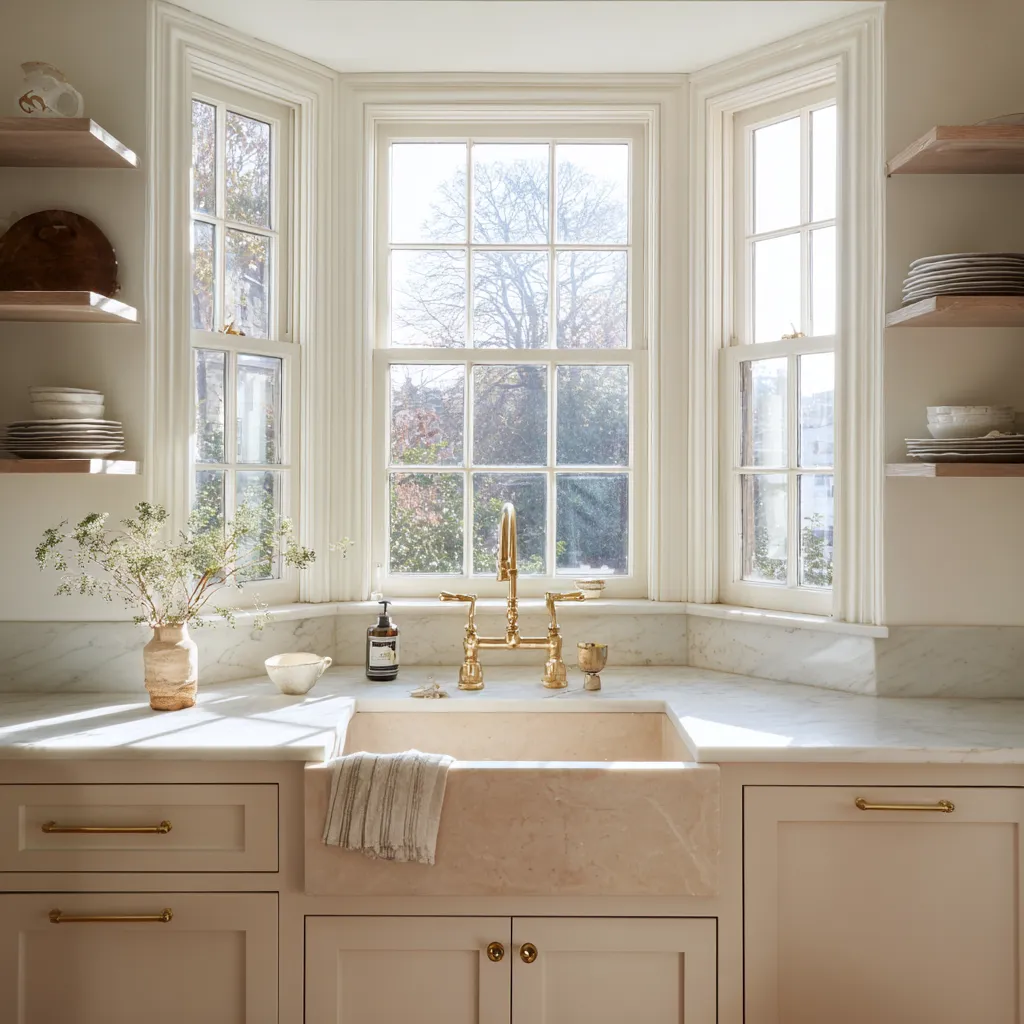
- Pale trim keeps the window soft and bright. It works well in kitchens built around warm whites, cream upholstery, pale oak, and sunlit surfaces. This approach allows the greenery outside to act like a gentle backdrop rather than a sharp graphic contrast.
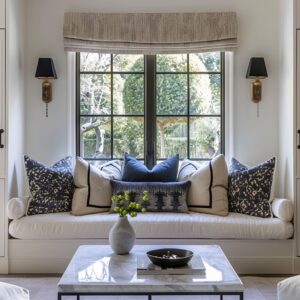
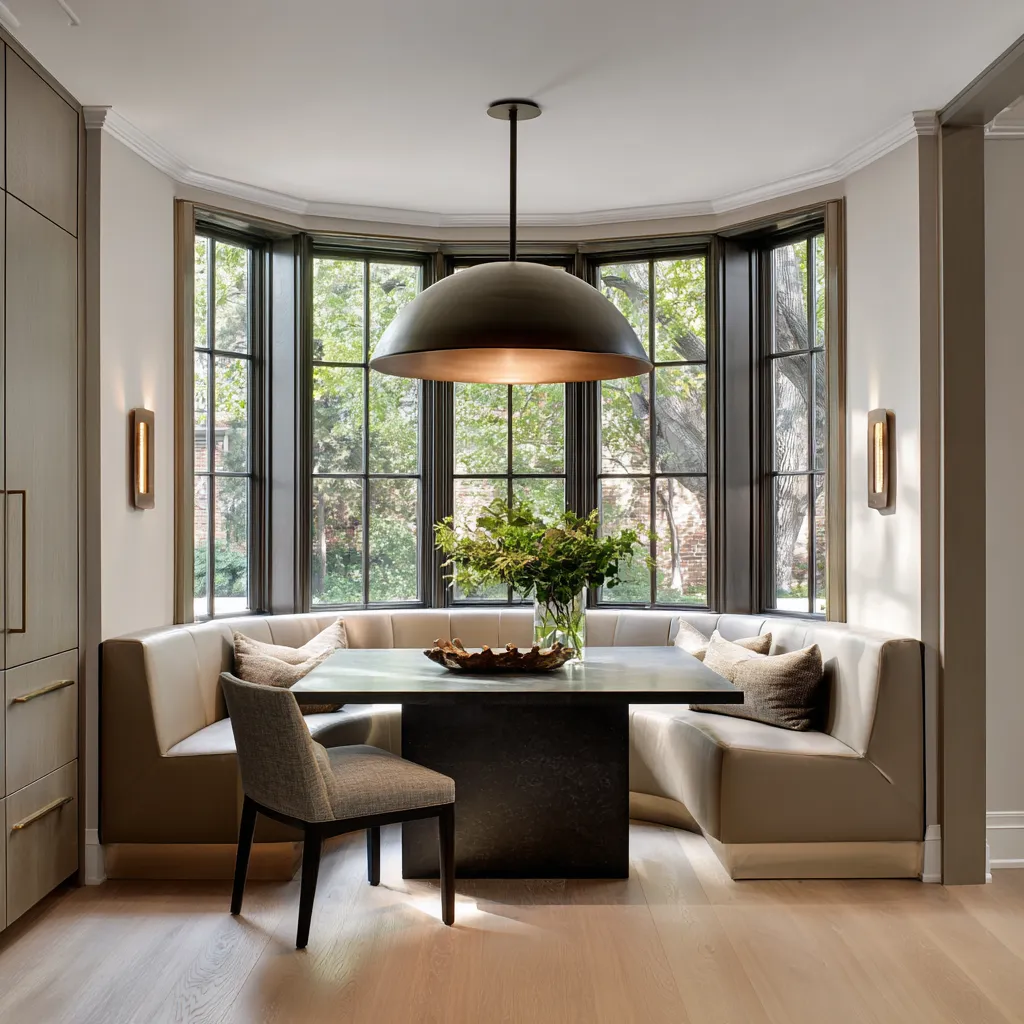
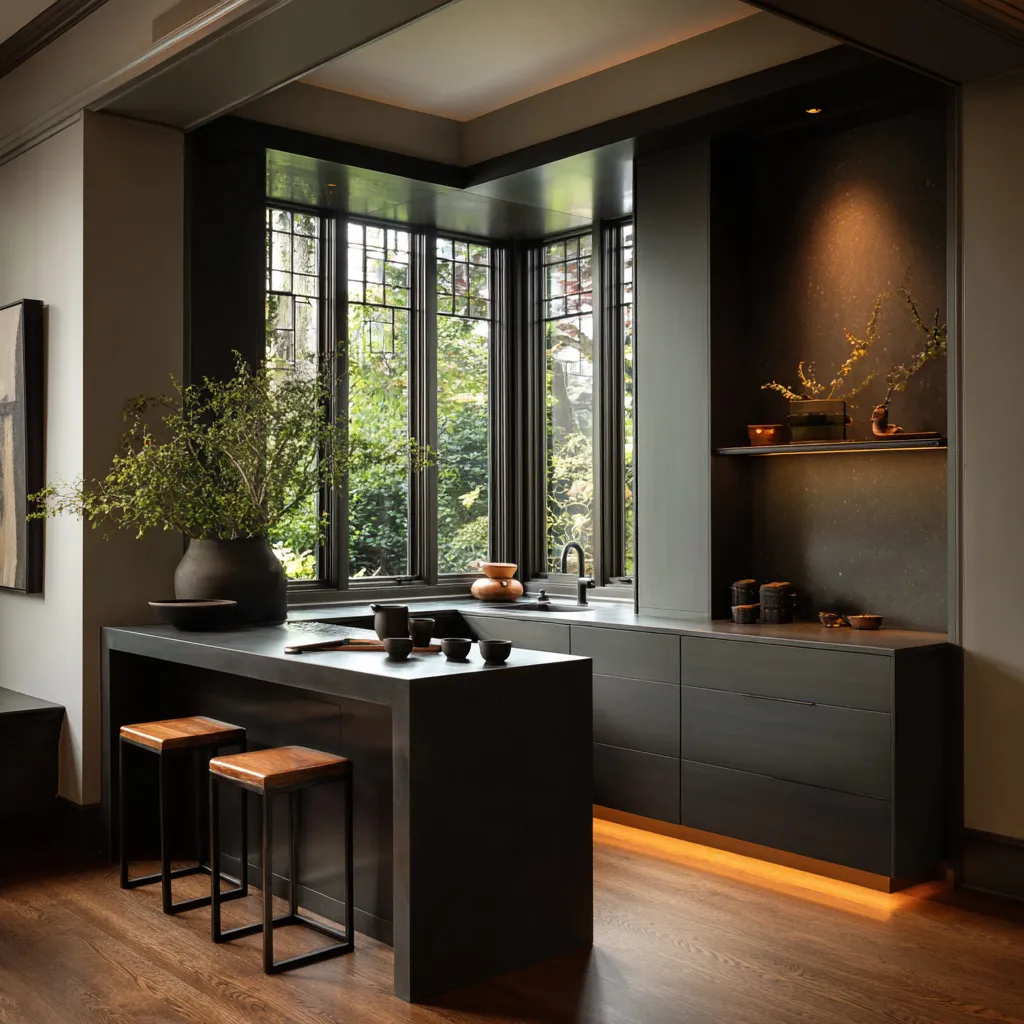
- Dark muntins and bronze-black trim make the bay firmer and more current. They sharpen the window shape, give the glazing a stronger edge, and add a slight sense of drama. This works especially well when the furniture also carries some weight, such as a dark table, a dome pendant, or slim warm sconces on the side walls.
- Timber framing changes the bay in another direction. Wood around the opening makes the view richer and the light warmer. It gives the bay a carved, substantial feeling. It also helps kitchen greenery, herbs, and flowers feel more at home because the material below them has some warmth and grain.
- Deep trim adds another layer. It makes the light feel shaped. The window no longer feels like a flat opening punched into the wall. It gains reveal, shadow, and a sense of thickness. That is useful in smaller bays, where depth can make the niche feel more important.
Controlled palette and interruptions
Modern kitchen bays design ideas usually stay within a close tonal range. Warm white, limestone, cream, pale wood, oatmeal, soft gray, and muted stone often sit near one another.
That kind of palette makes the bay feel open and calm, and it lets daylight do a great deal of the visual work. But a close-value palette cannot survive on color alone.
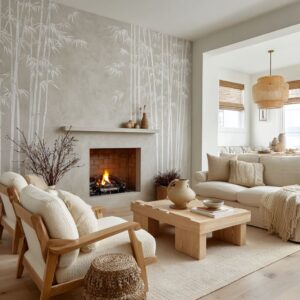
It needs relief through texture and shape. Fluting, woven chair seats, slubby upholstery, plaster-like walls, stone veining, matte painted wood, ribbed glass, and smooth pendants all help keep the room from feeling blank.
Small interruptions matter. A blue pillow in a cream banquette, olive cushions in a pale nook, rust textiles in a plaster bay, or a bronze-toned panel beside a bright window can change the whole composition.
These accents work because they are restrained. They do not take over the room.
They give the eye a pause. Warm metals can often be used in the same way.
Brass pulls, a bridge faucet, a pendant stem, a wall sconce, or a picture light can add warmth to pale stone and painted millwork without making the room feel decorated too heavily.
Decoration supports kitchen life
The prettiest bay is rarely the one with the most objects. It is usually the one where the styling feels believable.
Herbs are especially effective because they link the bay directly to food, scent, and daily use. Flowers work well because they use the vertical volume of the window and connect the interior to the landscape outside.
Fruit, bread boards, trays, pottery, cups, and simple vessels also suit bay windows because they belong naturally to kitchen life.
Open shelves around a bay can help a great deal, but only when they are selective. A few cups, bowls, matte ceramics, or glasses keep the bay tied to the kitchen.
Too much display makes the niche feel overfilled. Textiles are another important decorative layer.
Roman shades soften hard trim and broad glass. Cushions adjust the emotional tone of the nook.
A throw on a deep bench suggests actual use. Woven seats or a fiber pendant bring tactile variation to rooms with a lot of stone and painted wood.
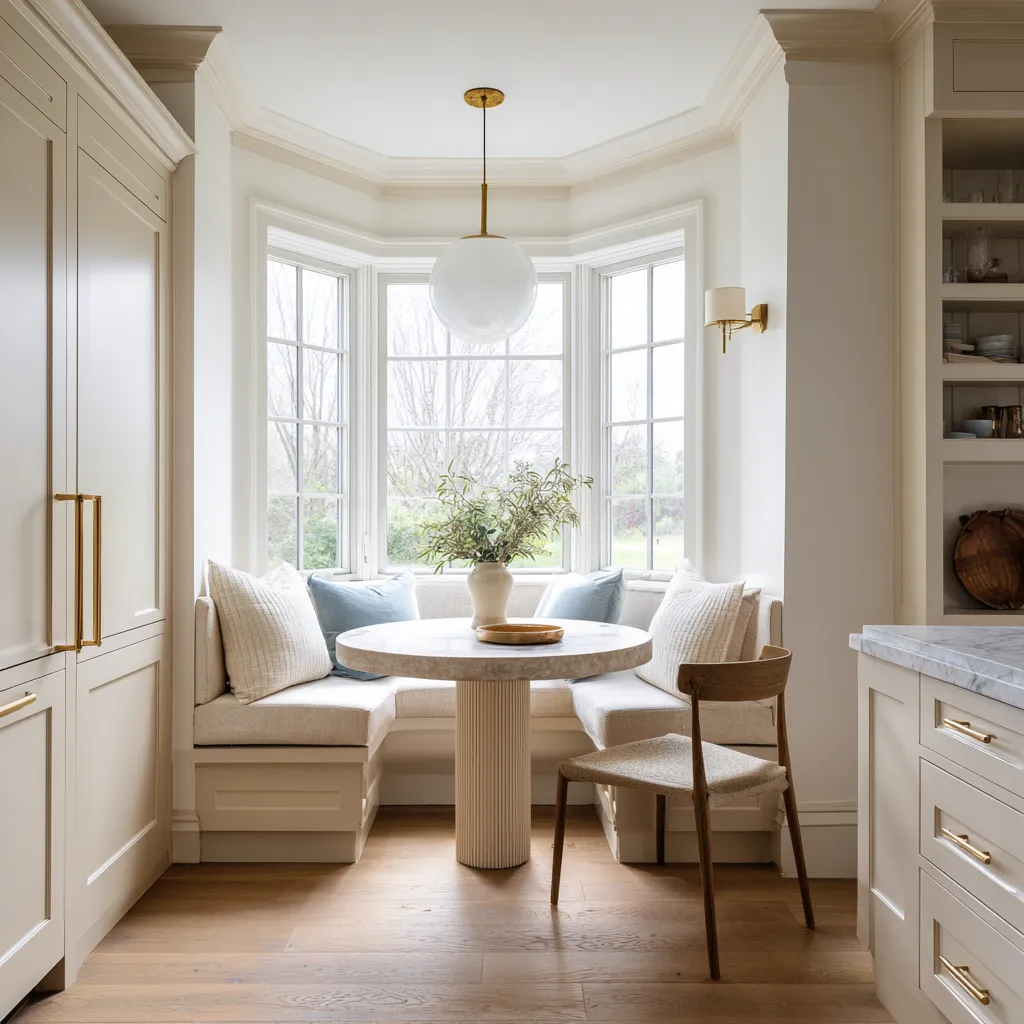
Lighting should also support the visual story of the bay. A globe pendant can complete a centered dining nook.
A clear pendant can hold the middle without blocking the view. Recessed shelf lights can give a beverage cabinet depth.
Slim sconces can reinforce the vertical rhythm of the windows. The point is not brightness alone.
It is atmosphere and emphasis.
Kitchen bay ideas give the whole room a softer center
A good bay window does something larger than provide a nice corner. It changes the balance of the kitchen.
A room with long cabinet runs, islands, and hard work surfaces often needs one area that feels slower, more grounded, and more human. The bay can do that.
Sometimes it does it through a curved banquette and a pale pedestal table. Sometimes through a dark-framed niche with a heavy central table.
Sometimes through a timber reveal full of herbs. Sometimes through a marble ledge lined with coffee cups and morning light.
Sometimes through a bench where someone can sit with tea while dinner is being made.
That is why kitchen bay window ideas remain so rich as a subject. The bay is not only a window condition.
It is a chance to give the kitchen another layer of life. It can be dining, lounging, serving, styling, garden, ritual, pause, or backdrop.
The key is to decide what emotional role the bay should play first, and then let the materials, shapes, seating, and decoration support that role with clarity. When that happens, the bay stops feeling like a feature at the edge of the room.
It becomes the part of the kitchen people remember.