Man cave wall ideas have shifted from chaotic memorabilia zones into structured visual statements that feel composed, layered, and calm. The feature wall are often treated as the backbone of a space—a visual score that defines rhythm, tone, and personality.
Instead of neon signs and cluttered shelves, the new man cave wall design uses texture, proportion, and light as creative tools. Every surface tells a story, every seam has purpose, and every object behaves like part of a set.
A single strong move anchors the whole story
In man cave feature wall ideas, one bold gesture carries the mood while quiet details play supporting roles.
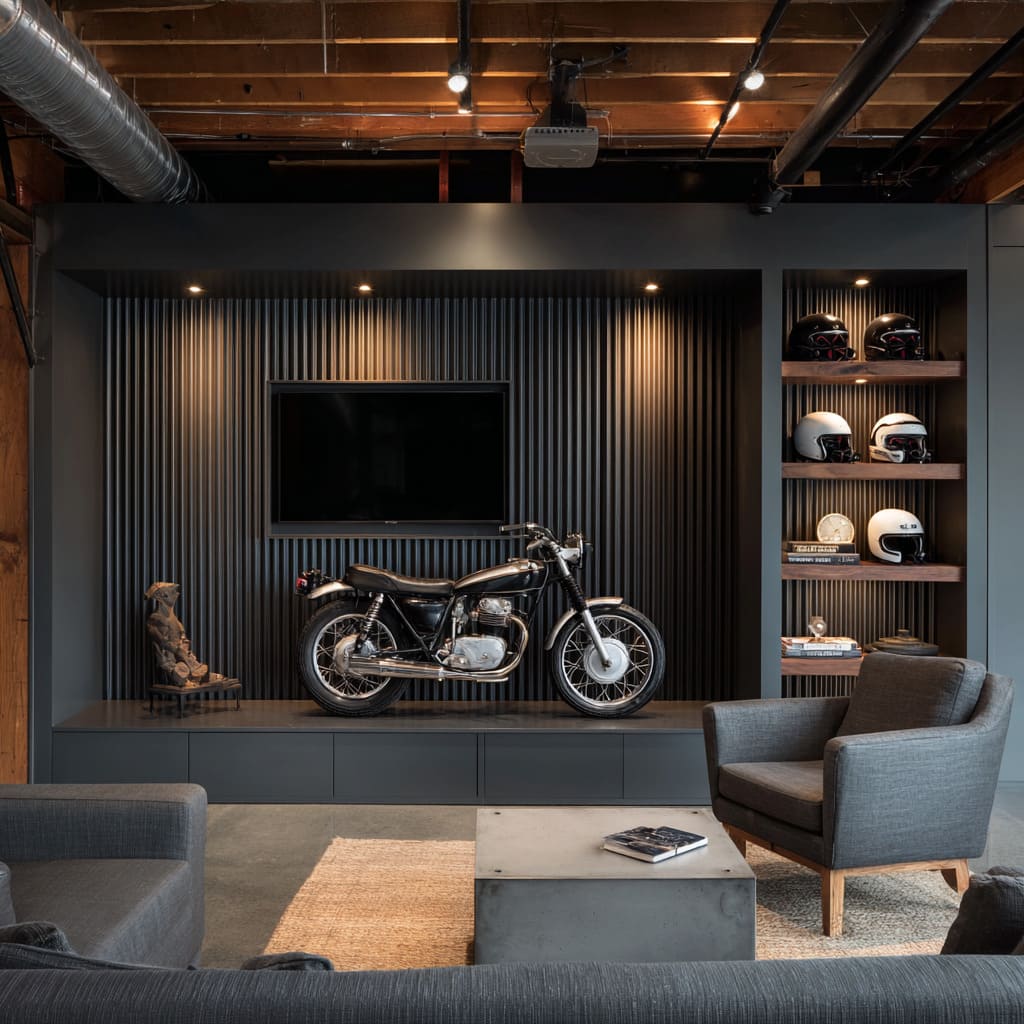
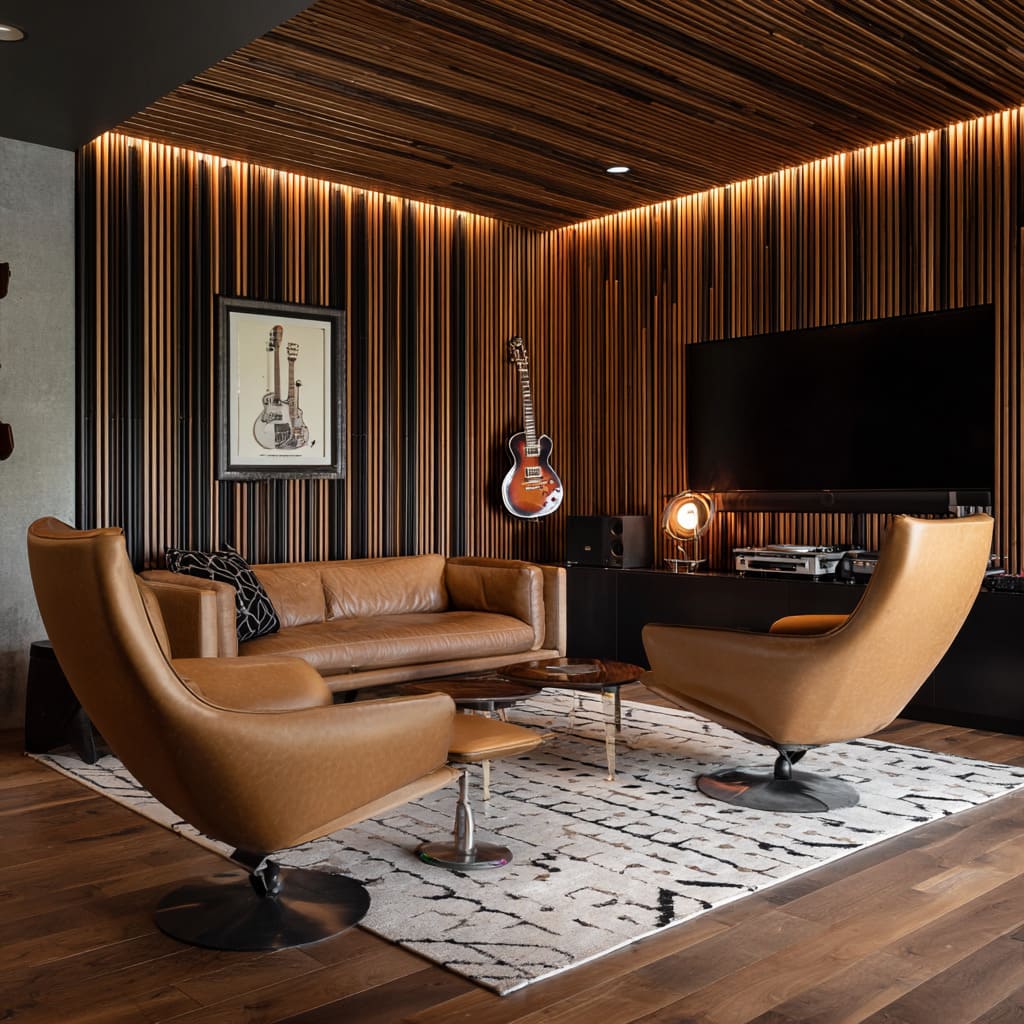
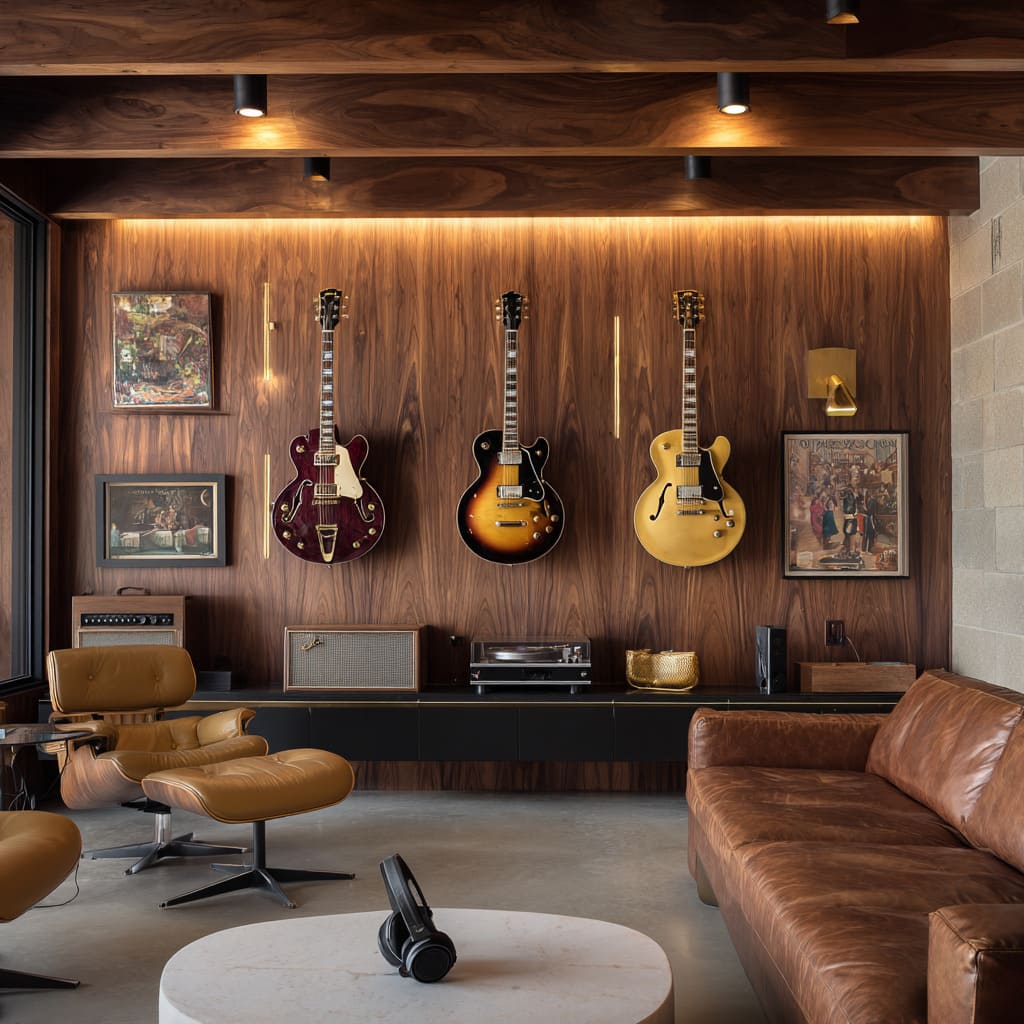
A guitar collection glows inside wedge-cut alcoves of walnut; a ribbed charcoal backdrop becomes the stage for a vintage motorcycle; or an aquarium replaces a TV to bring movement without noise. Around that central idea, smaller notes—thin reveals, offset shelves, tonal gradients of instruments—compose a secondary rhythm.
The secret is scale: one dominant gesture for distance, dozens of quiet adjustments for intimacy.
- One big statement: A slatted wood wrap, a recessed stone niche, or a patinated copper panel field
- Subtle counterparts: aligned beams, slim lighting seams, off-center instruments, or dark base bands
- Result: the wall reads complete from afar and rewarding up close
Texture and tone build character without noise
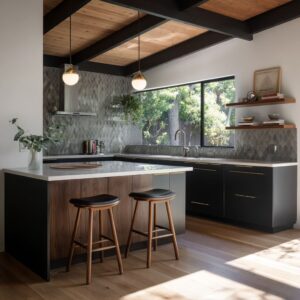
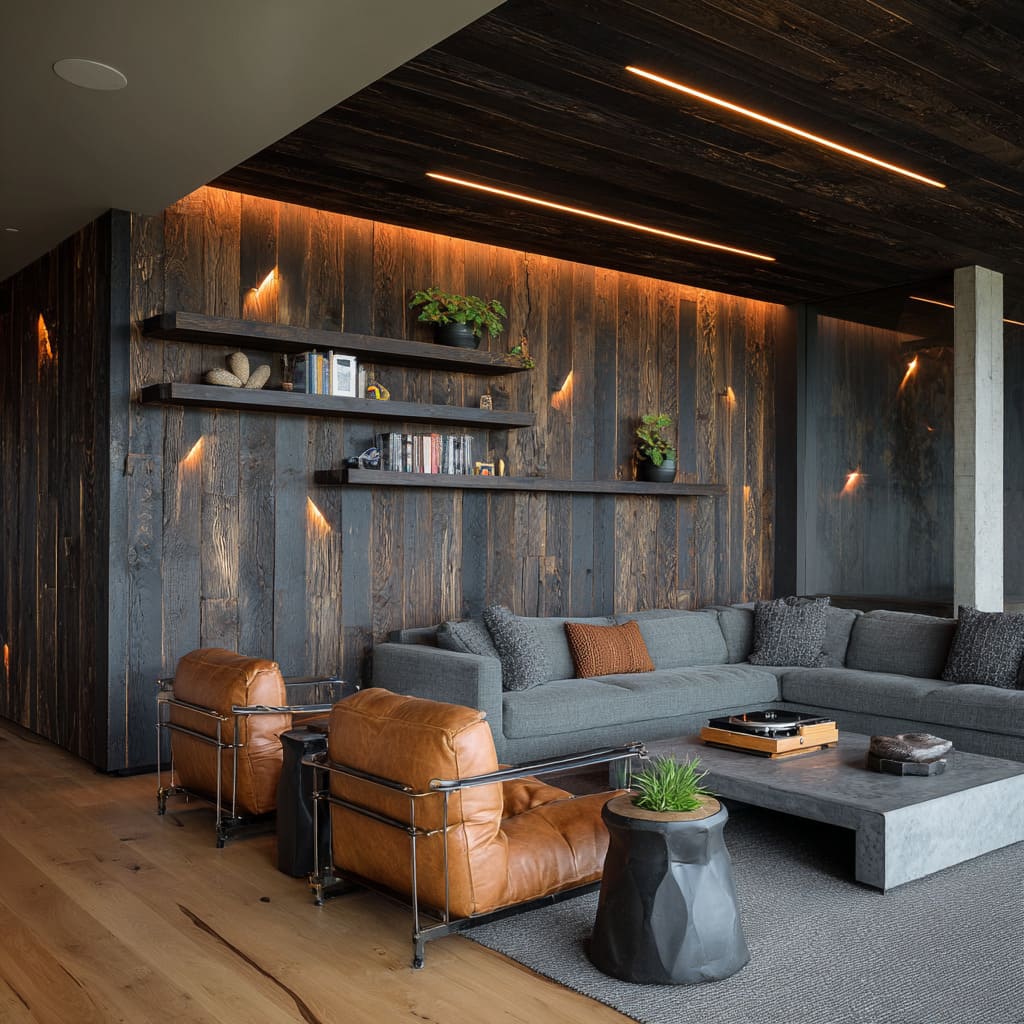
The most refined man cave wall decor ideas rely on the quiet richness of materials. Walnut with visible grain, limestone blocks with slight course variations, charred boards, copper plates, reeded wood—all of these introduce warmth and movement without needing strong color.
When color appears, it’s typically anchored in natural tone: caramel leather, slate gray, smoke plaster, or sand stone.
This material-driven palette also defines the new masculine mood. Where once heavy reds and dark browns dominated, now we see man cave accent wall ideas using muted greens, deep blues, or indigo niches washed in warm halos.
The goal is less about bold pigment and more about tone variation—surfaces that shift gently with light and shadow.
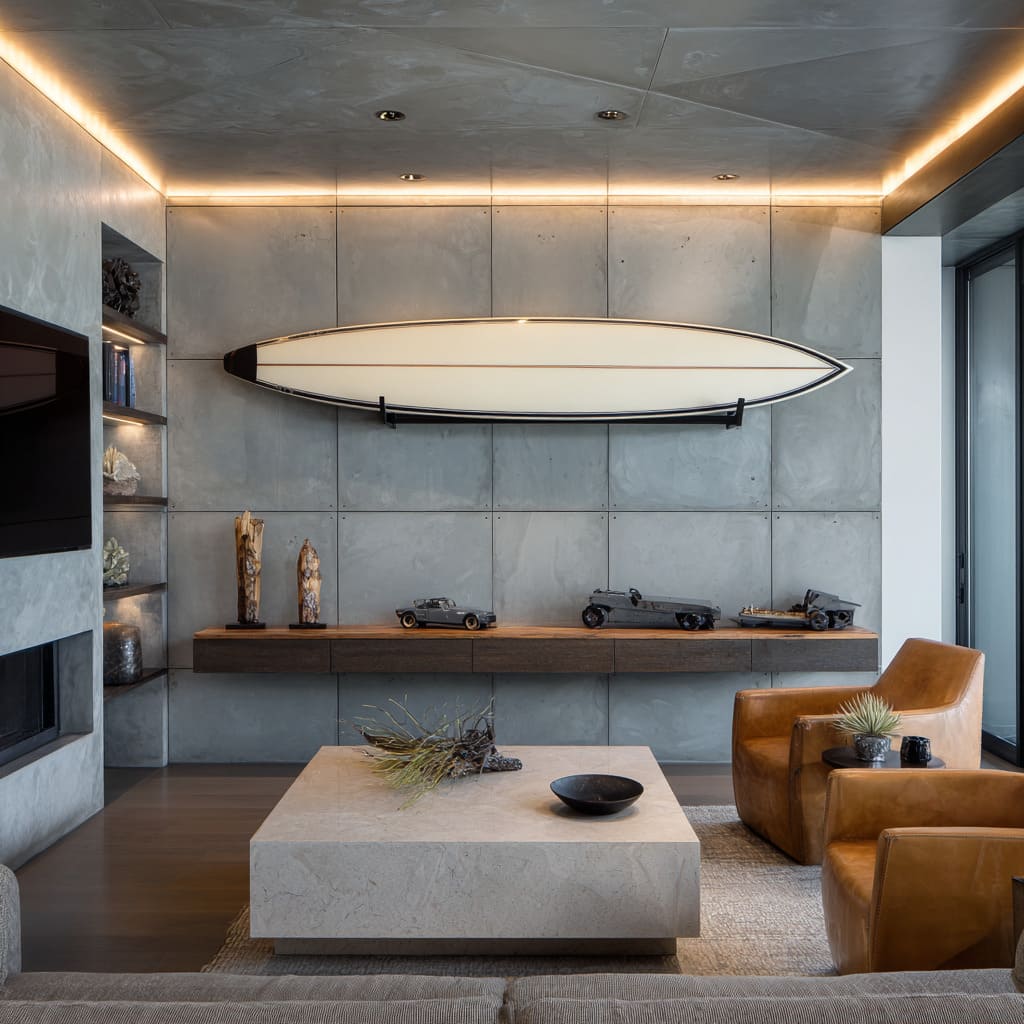
Integrating gear like sculpture
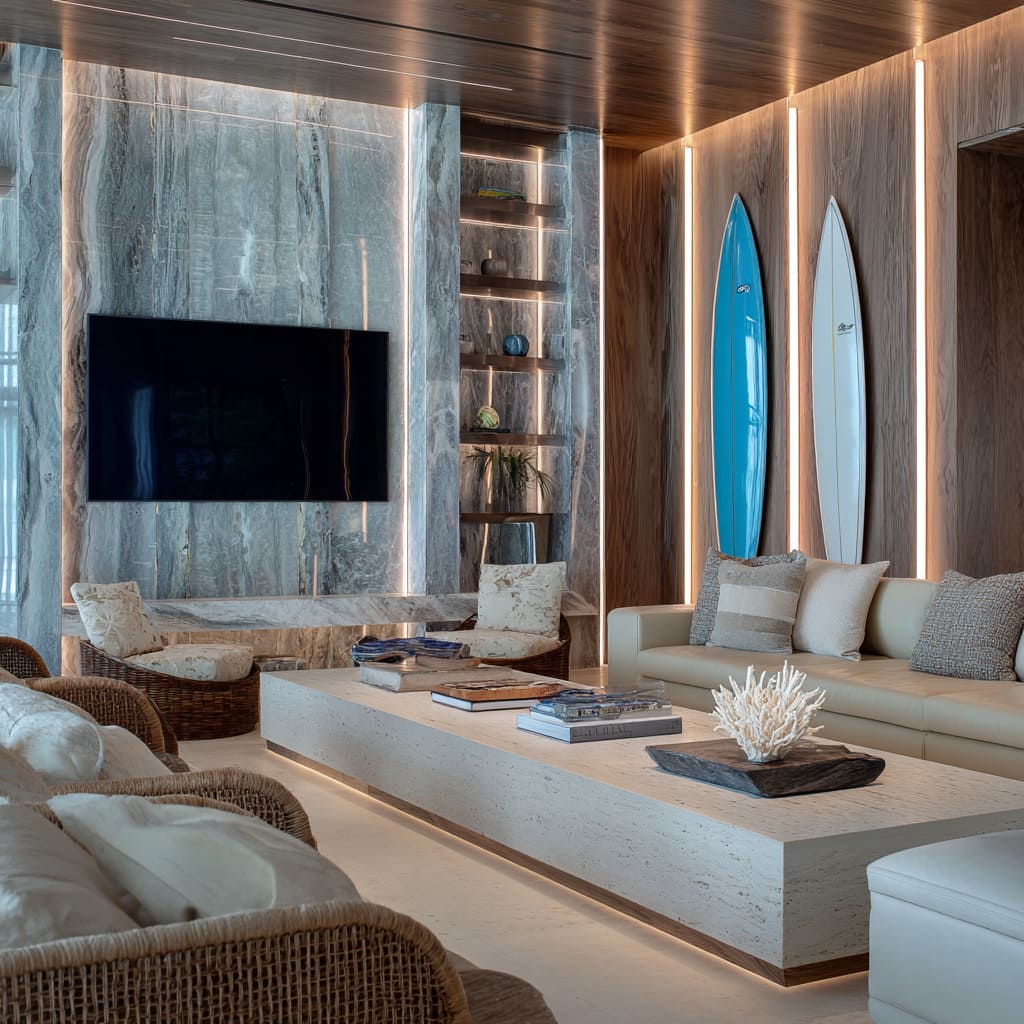
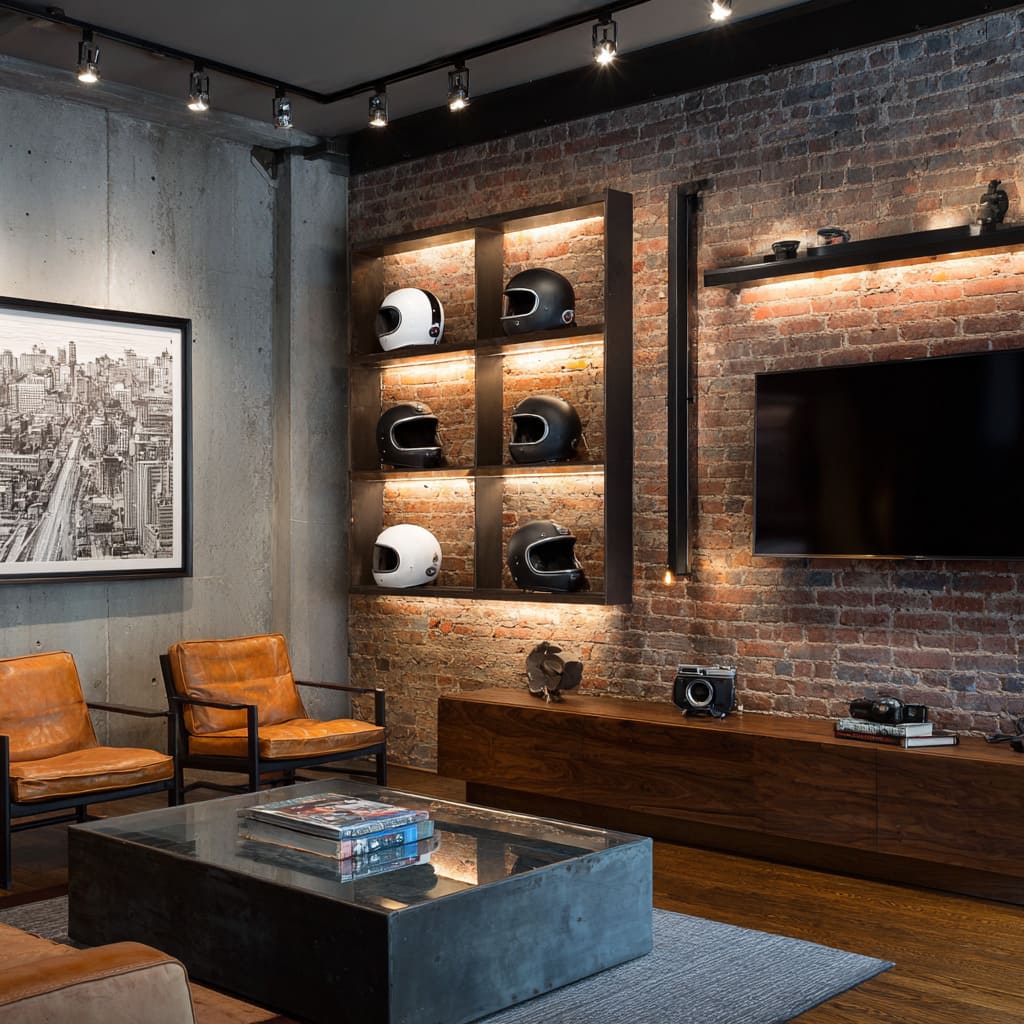
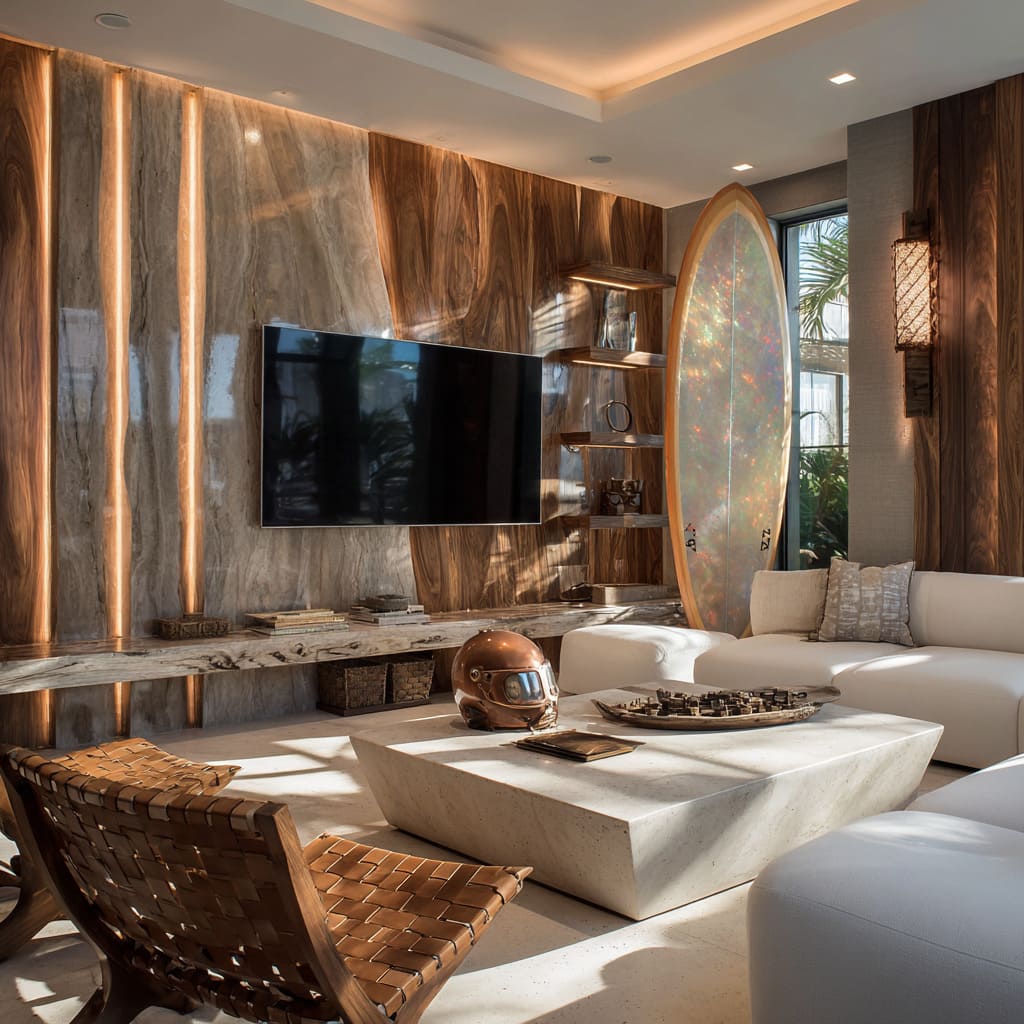
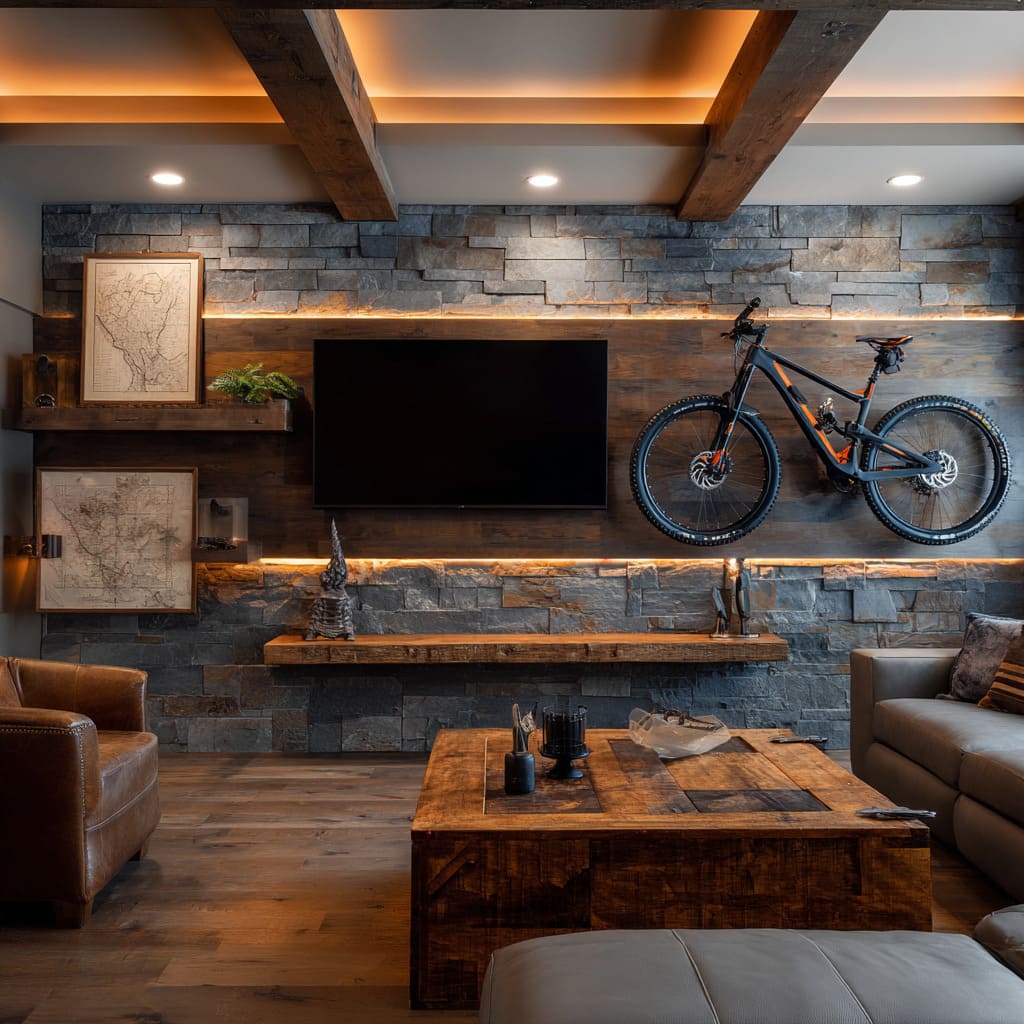
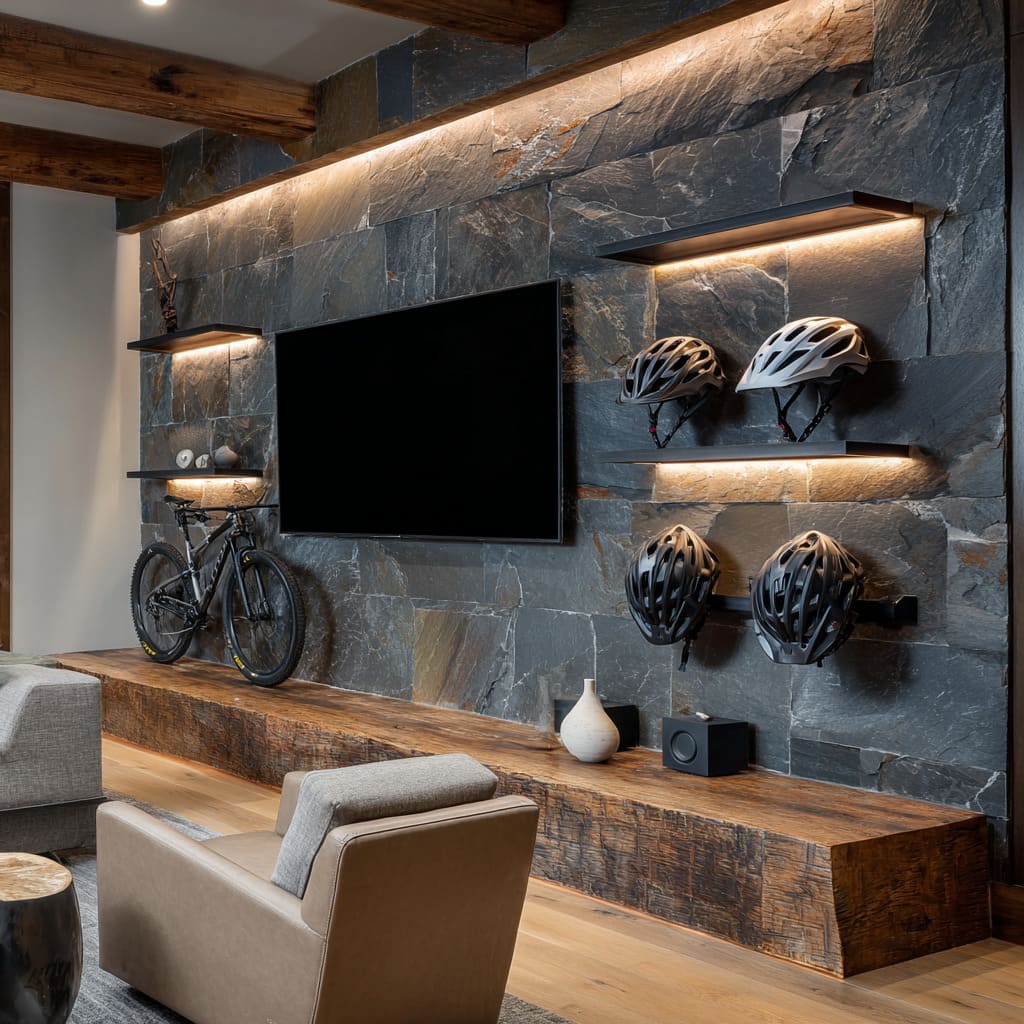
What sets advanced wall decor ideas for man cave apart is how gear becomes art. Guitars, bikes, helmets, or surfboards are not props but part of the visual rhythm.
Instruments may be arranged in tonal gradients; bikes hung near mountain prints; gloves tied low beside a mid-century chair. Each item earns a deliberate position in a curated field, often off-center to feel natural rather than showroom-precise.
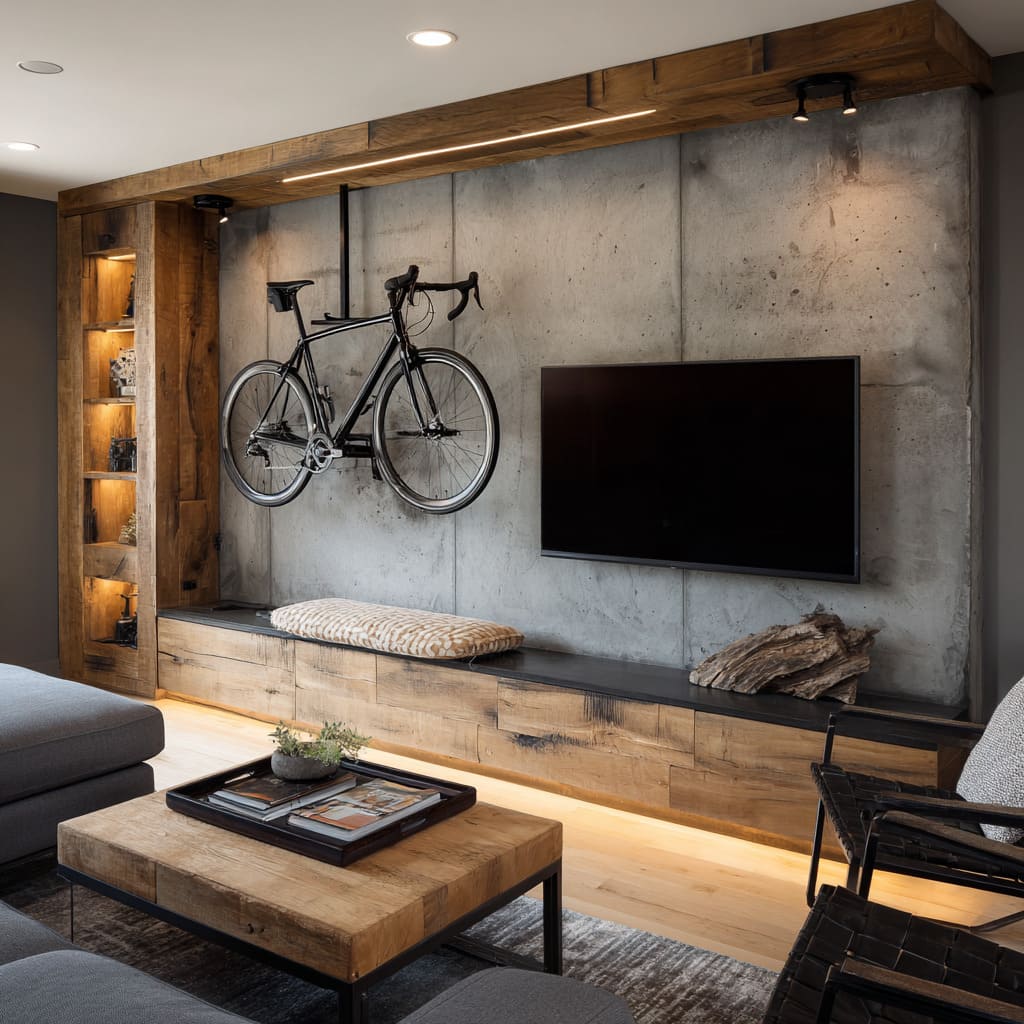
Common curatorial strategies include:.
- Pairing a hero object with supporting pieces in one visual family
- Mounting gear on warm wood bands instead of raw stone to create clean contrast
- Using vertical alignment for sports equipment—three sticks, two boards, or helmets stacked totem-style
- Letting one object lean casually to introduce a lived-in imperfection
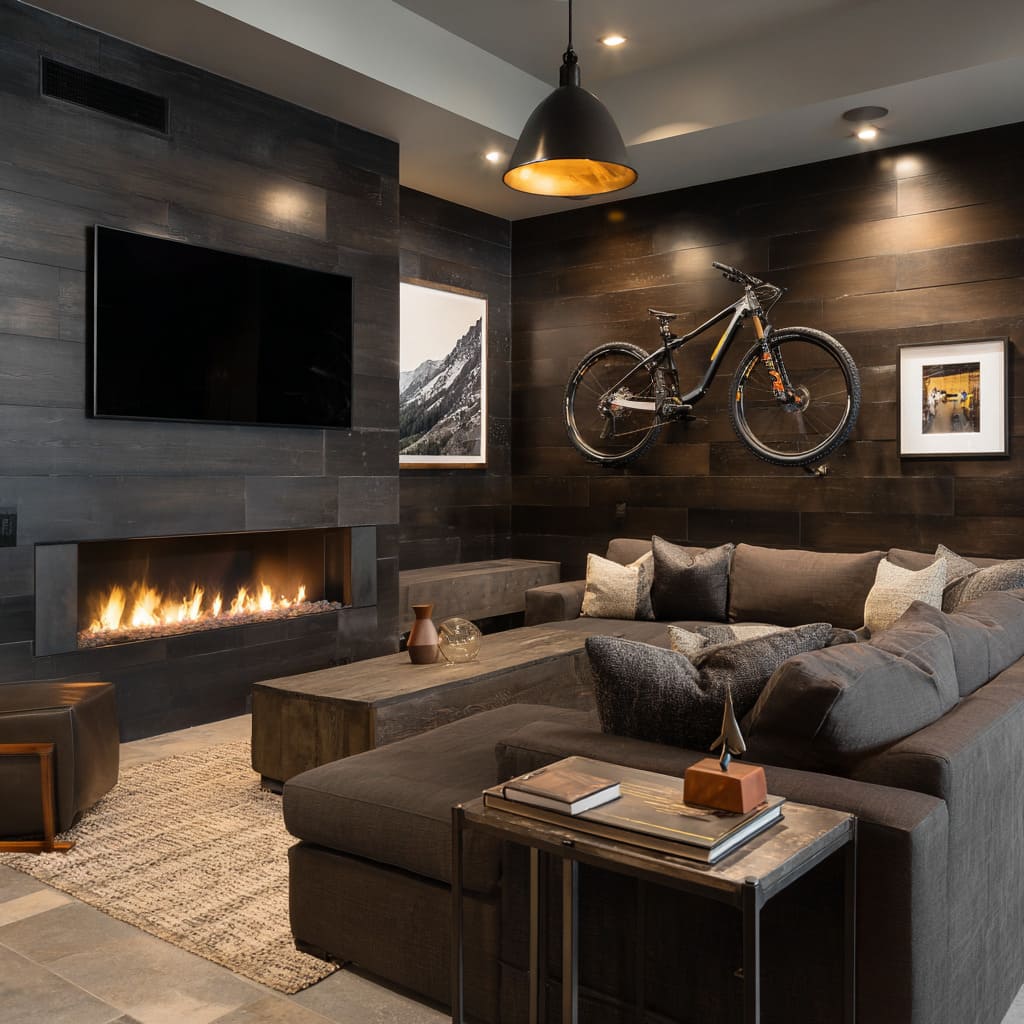
Through curation rather than clutter, these man cave wall ideas transform personal collections into cohesive design language.
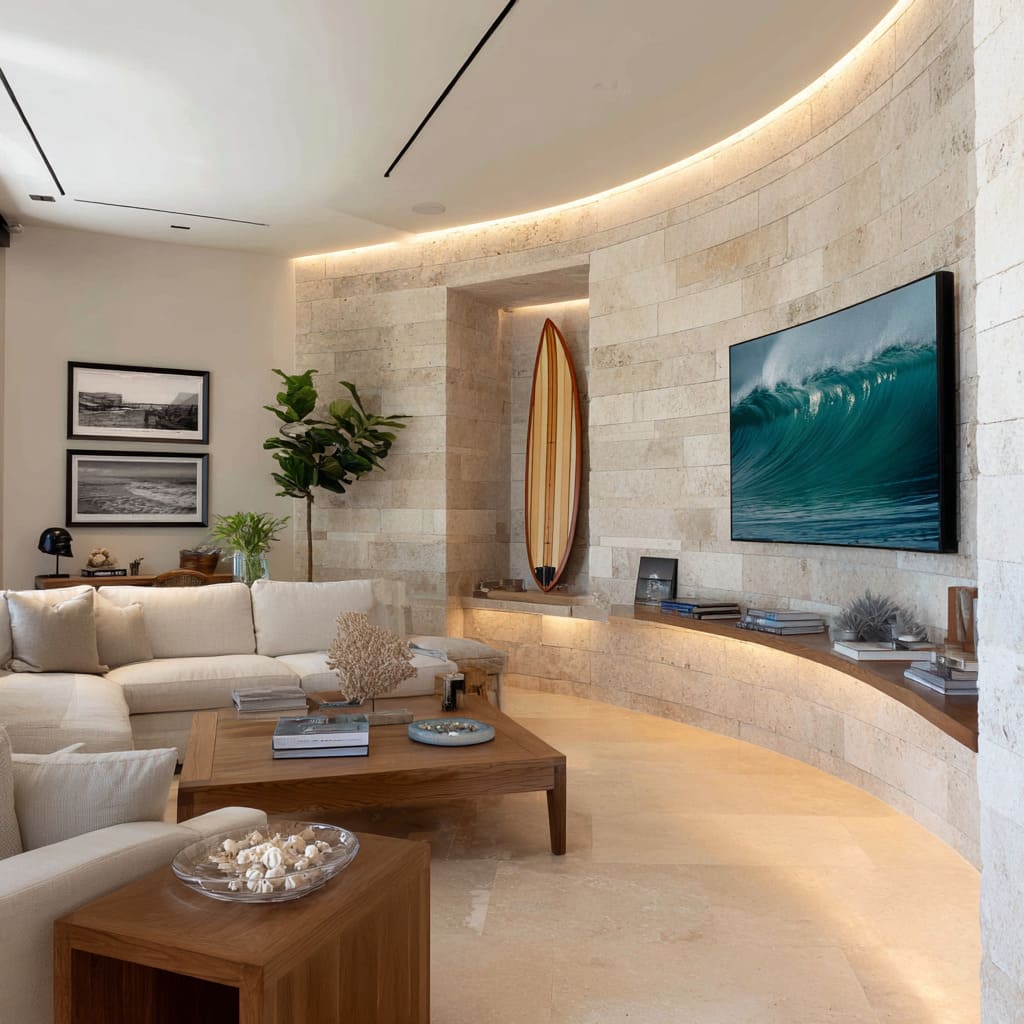
The black baseline and floating horizon
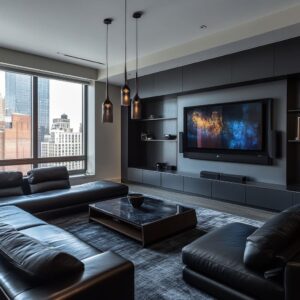
A quiet but powerful device appears again and again across high-end projects: a dark, floating console that swallows electronics and defines horizon. This “black baseline” aligns with sofa arms, window sills, or live-edge plinths, connecting furniture and wall into one line.
The result is balance—the TV recedes, the texture leads, and the wall feels grounded but light.
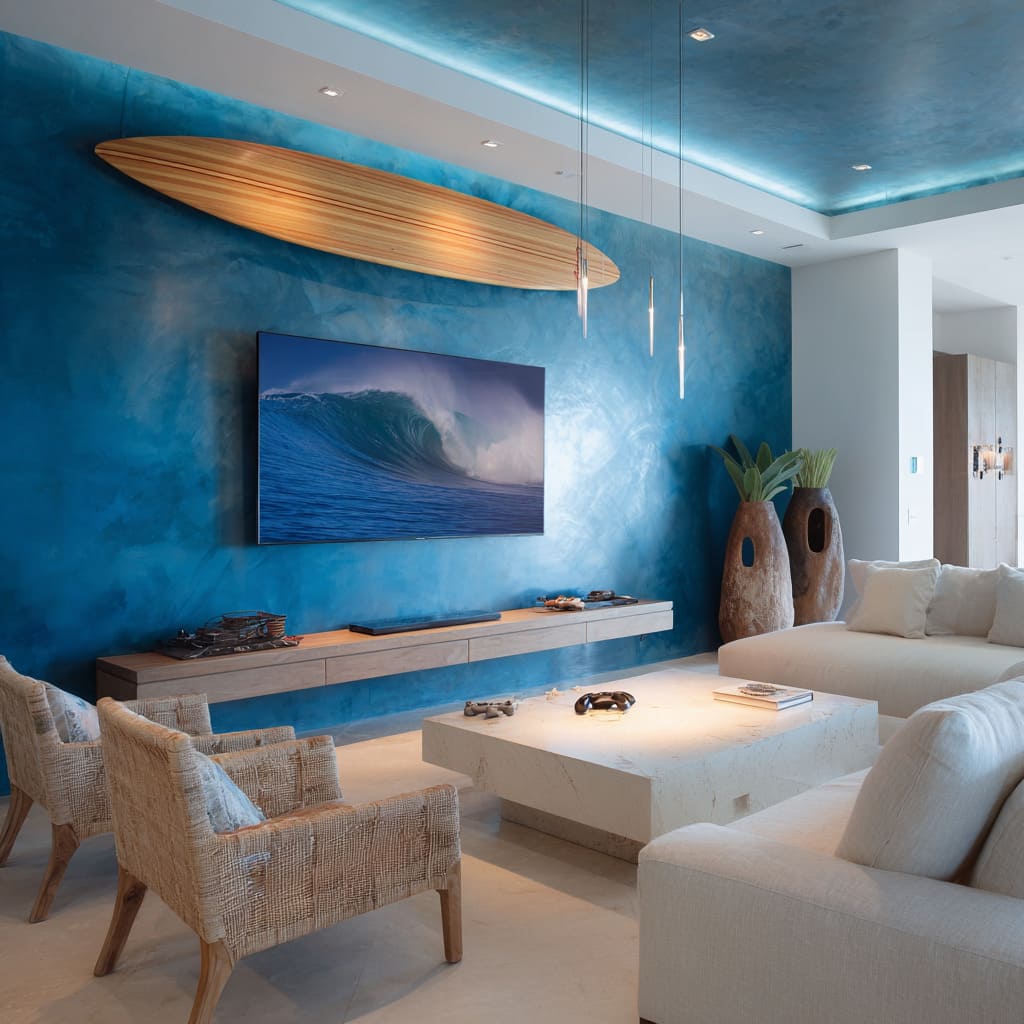
When this line is paired with a floating effect—shadow gap, toe-kick glow, or continuous shelf—it gives the entire composition lift. The room feels organized without visible hardware, and the viewer’s eye flows along a clear visual track from end to end.
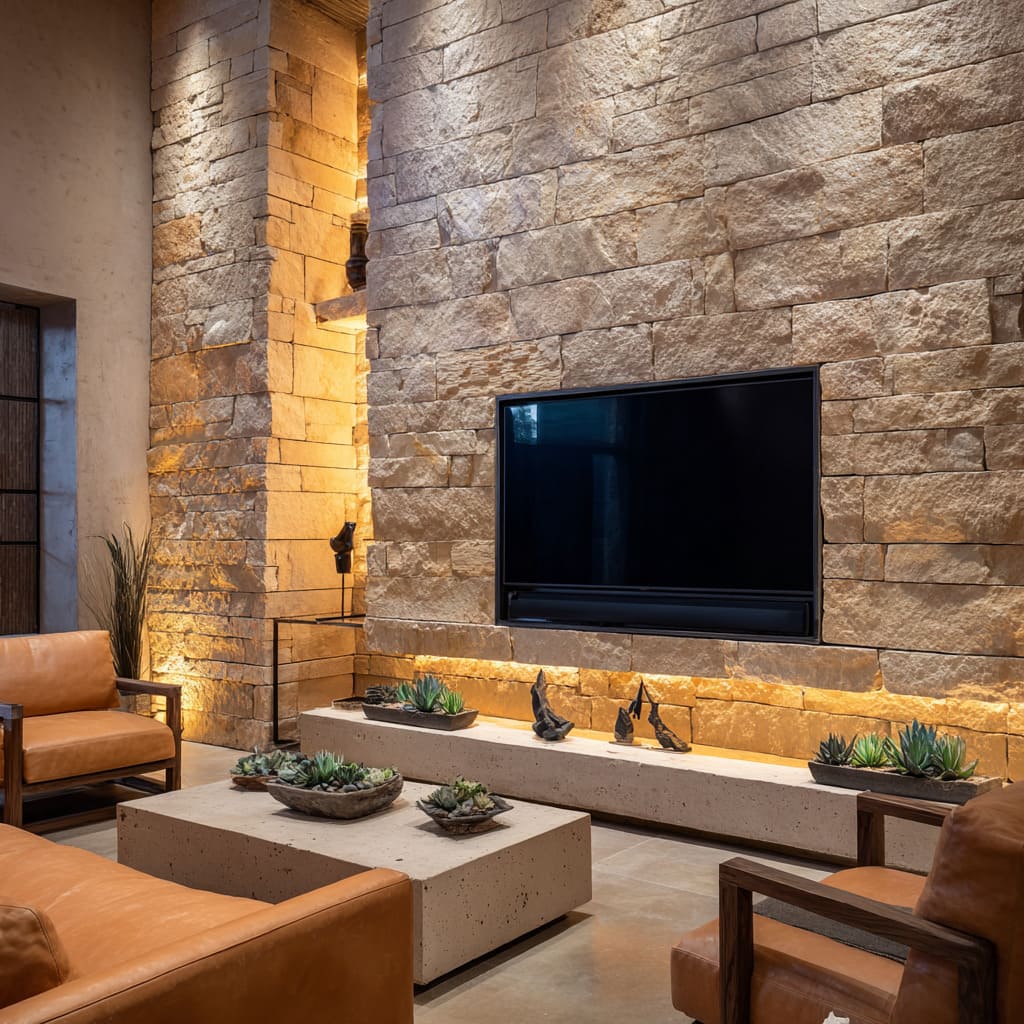
Rhythm and visual tempo
Much like music, good man cave wall design has rhythm. They achieve it by varying plank widths, alternating stone joints, or repeating patterns with one deliberate irregularity.
The goal is to create a controlled beat that keeps the eye moving. Too much repetition feels sterile; too much randomness feels chaotic.
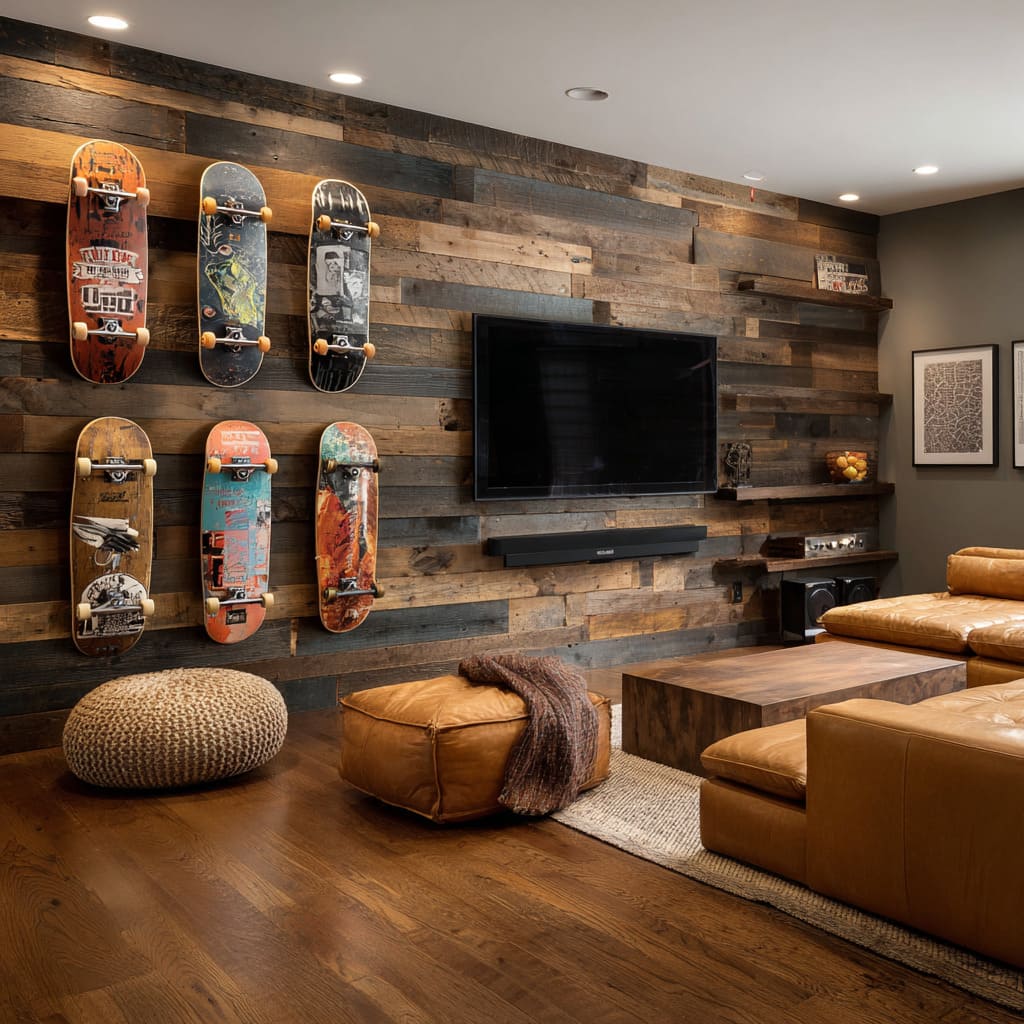
There are several rhythmic families visible in contemporary examples:.
- Barcode rhythm: alternating narrow and wide slats with subtle depth shifts
- Grid rhythm: knife-edge vertical reveals forming quiet panels
- Gradient rhythm: arranging objects or finishes by tone or saturation across the wall
- Ceiling echo: beams or light bars continuing the wall’s logic overhead to complete the composition
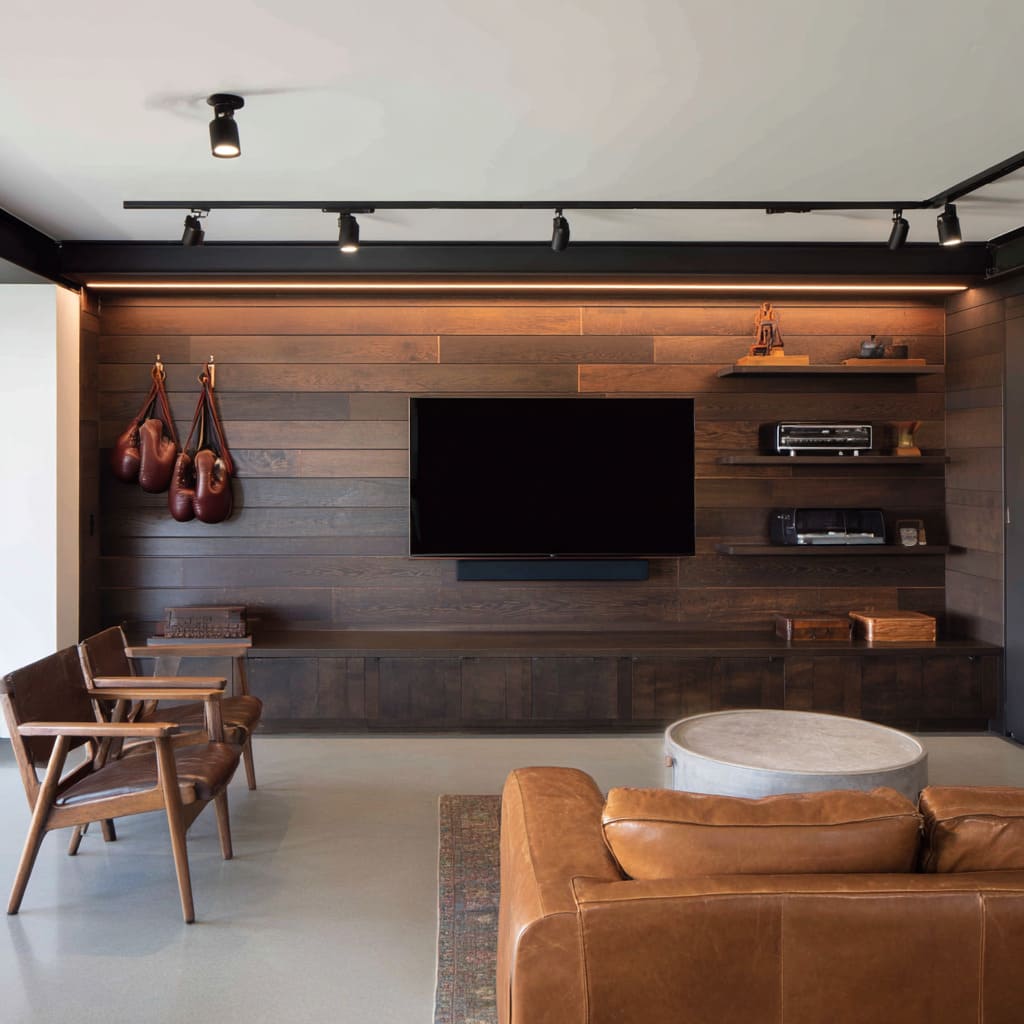
Each rhythm gives the wall a sense of movement and coherence, tying together structure, light, and furniture layout.
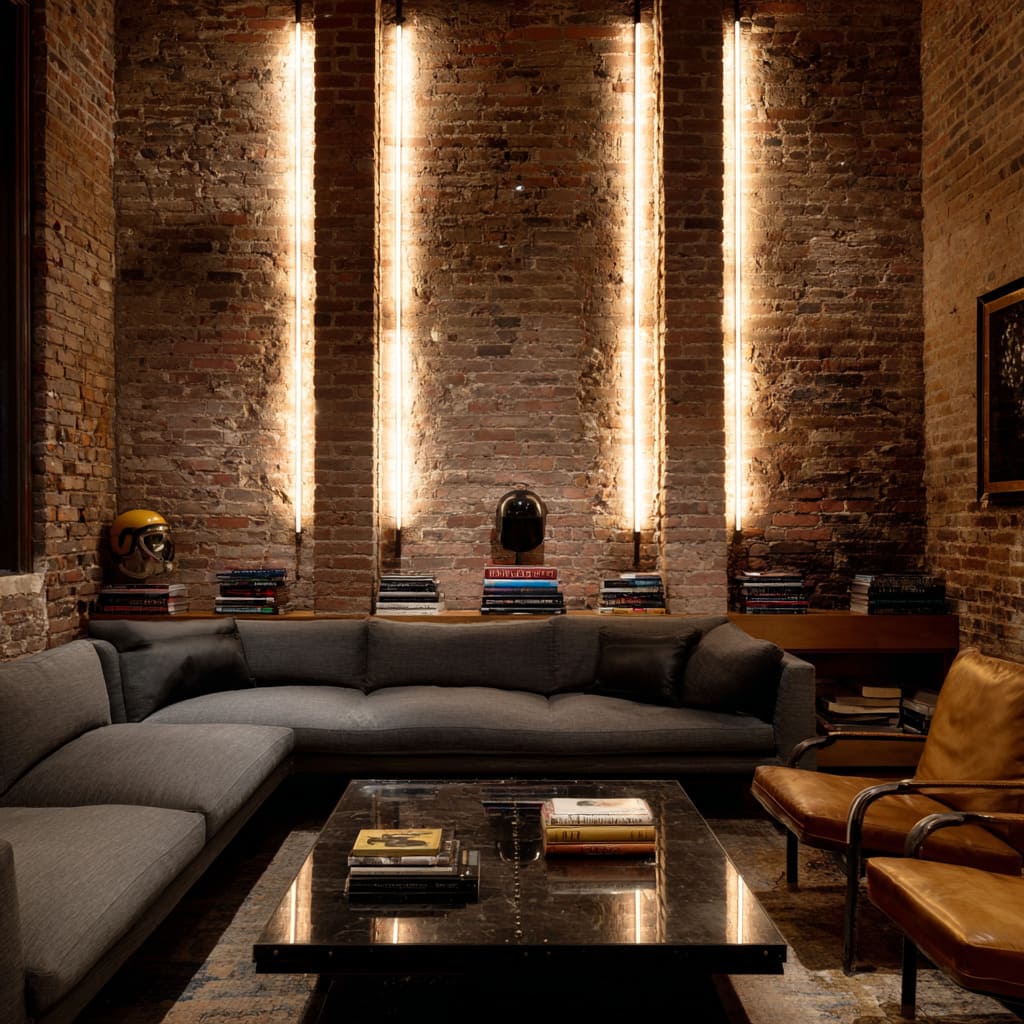
Light as a designer’s pencil
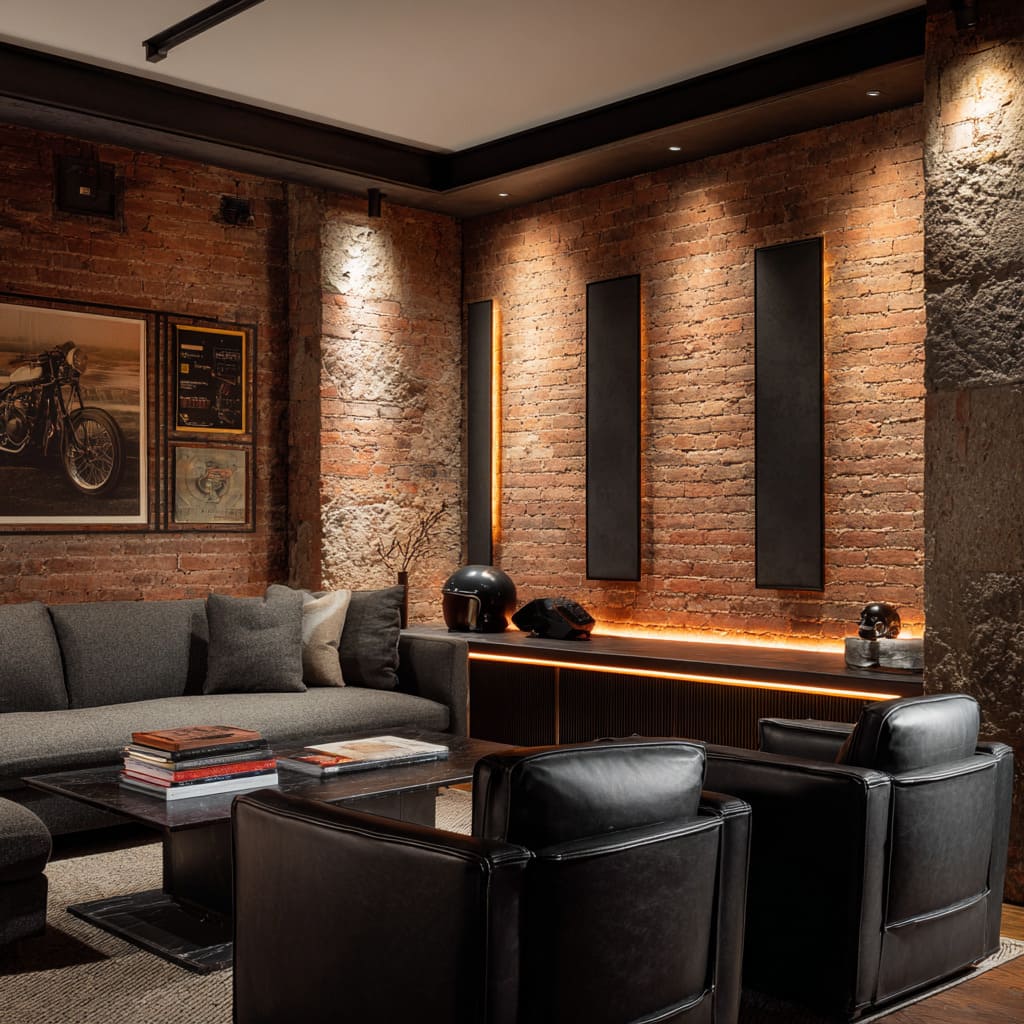
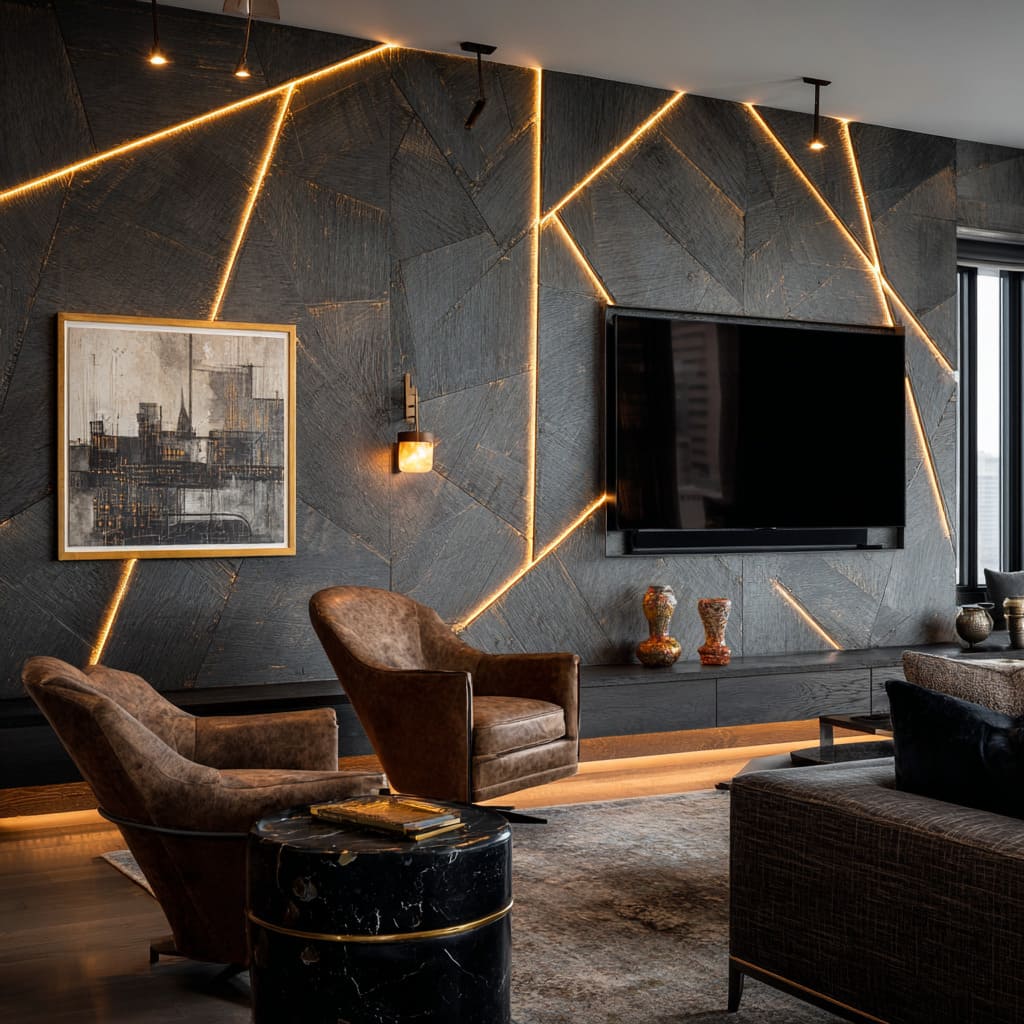
A defining trait of current cool man cave wall ideas is the way light acts as linework. Instead of single spots, linear grazes trace seams, outline edges, or wrap corners in soft halos.
Designers use this approach to sketch the wall rather than blast it—creating calm glow instead of glare. Light can cut diagonally across plaster like skate marks on ice, skim across rough stone to reveal texture, or hover behind objects to draw their silhouettes.
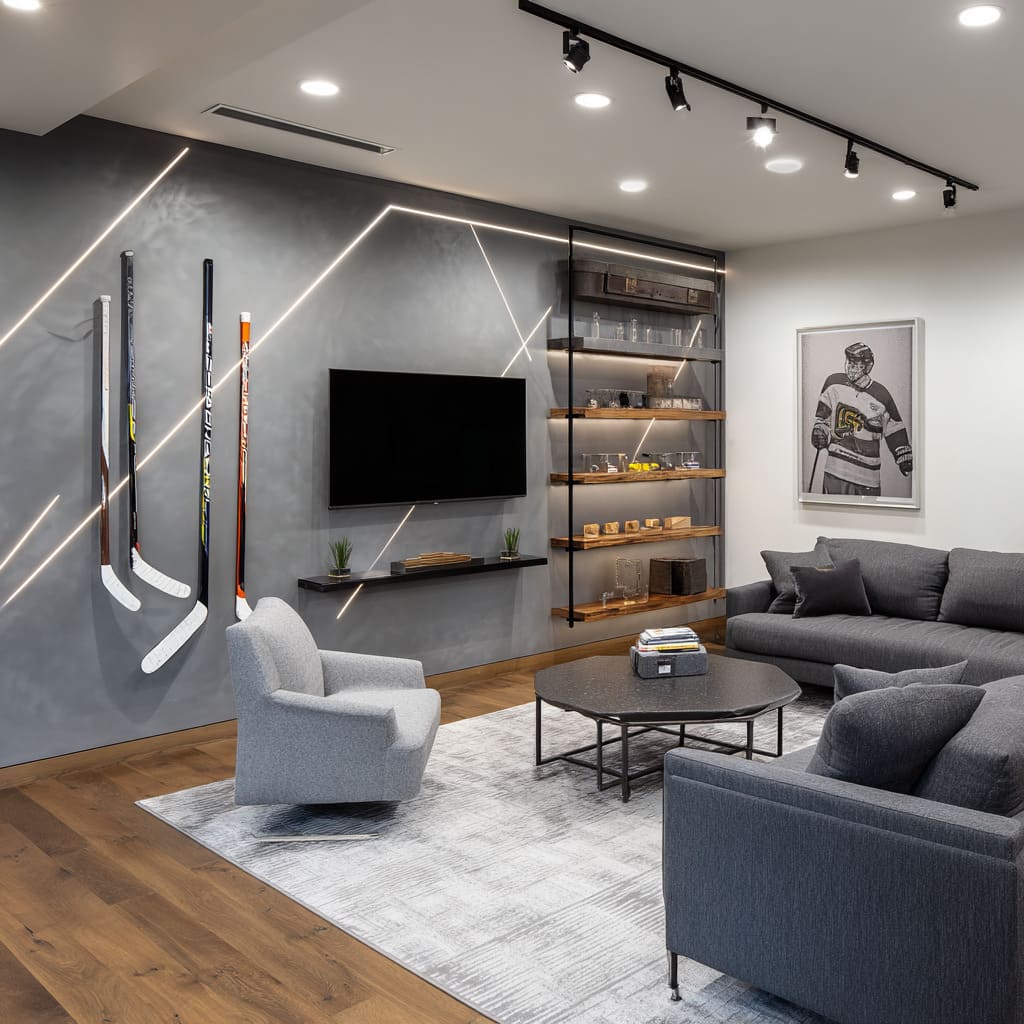
The techniques vary but follow similar logic:.
- Edge tracing – A cove light at the perimeter defines boundaries without fixtures showing
- Surface grazing – LEDs placed close to wood or stone bring out fine relief
- Graphic seams – Clean lines of light arranged in controlled composition, sometimes asymmetric, to suggest motion
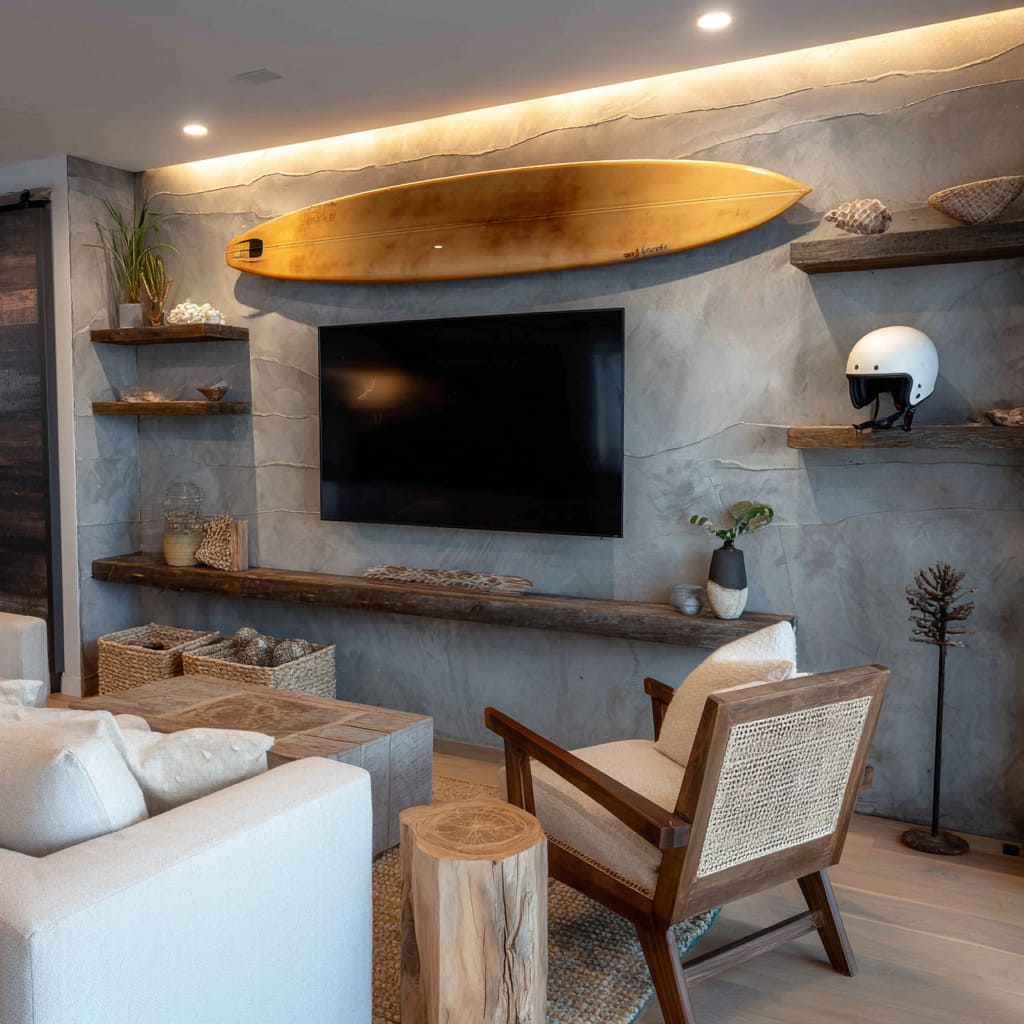
Light becomes the architecture of man cave wall decor ideas rather than a decoration itself.
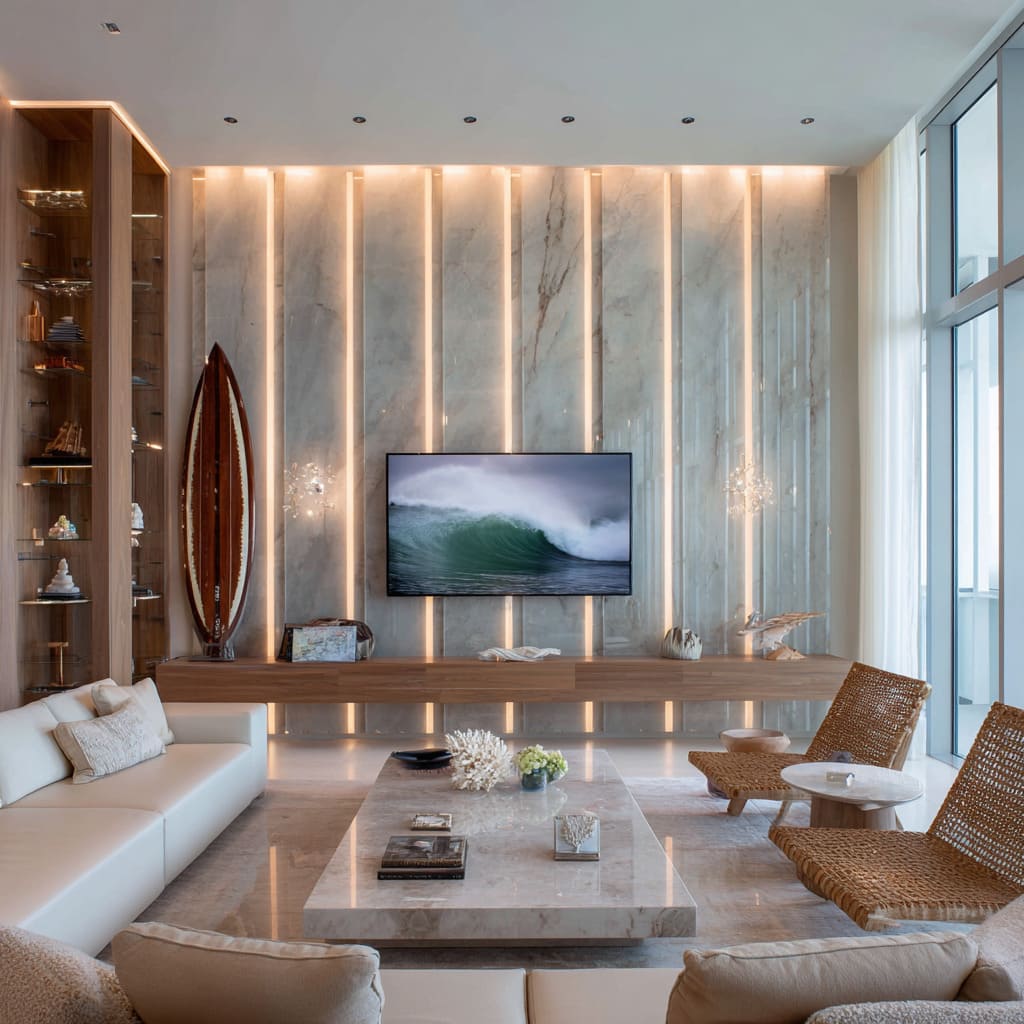
Corners and ceilings as part of the story
Unlike older layouts where the feature wall stopped at the corner, new man cave feature wall ideas often wrap surfaces around edges or pull them up onto the ceiling.
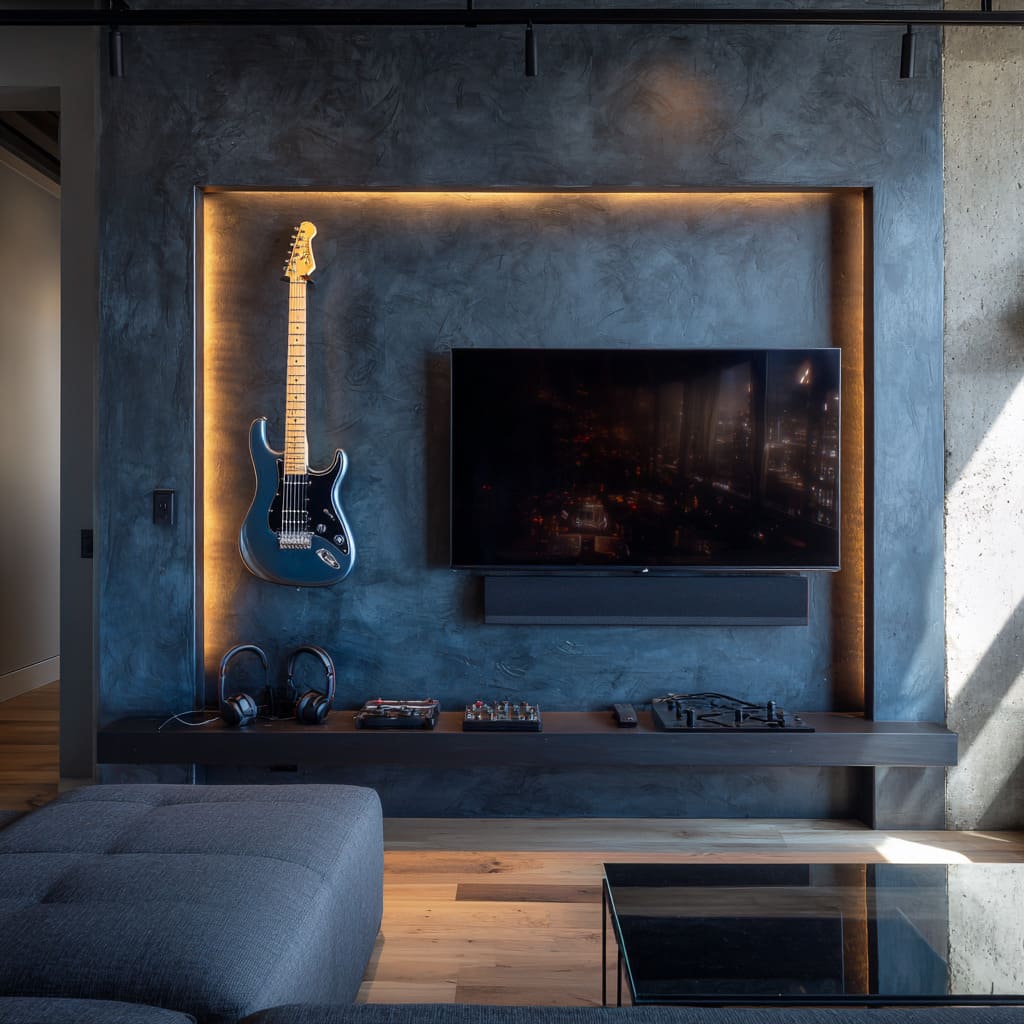
Slats may continue overhead to form a cocoon; stone may bend softly into a curved cove; concrete panels might return into a vertical display tower. These extensions dissolve the notion of a single wall and instead create immersive zones—what feels like a built-in bay or stage.
Curves, in particular, bring calm to angular rooms. A curved limestone wall or an arched timber soffit softens the geometry, balancing masculine textures with spatial grace.
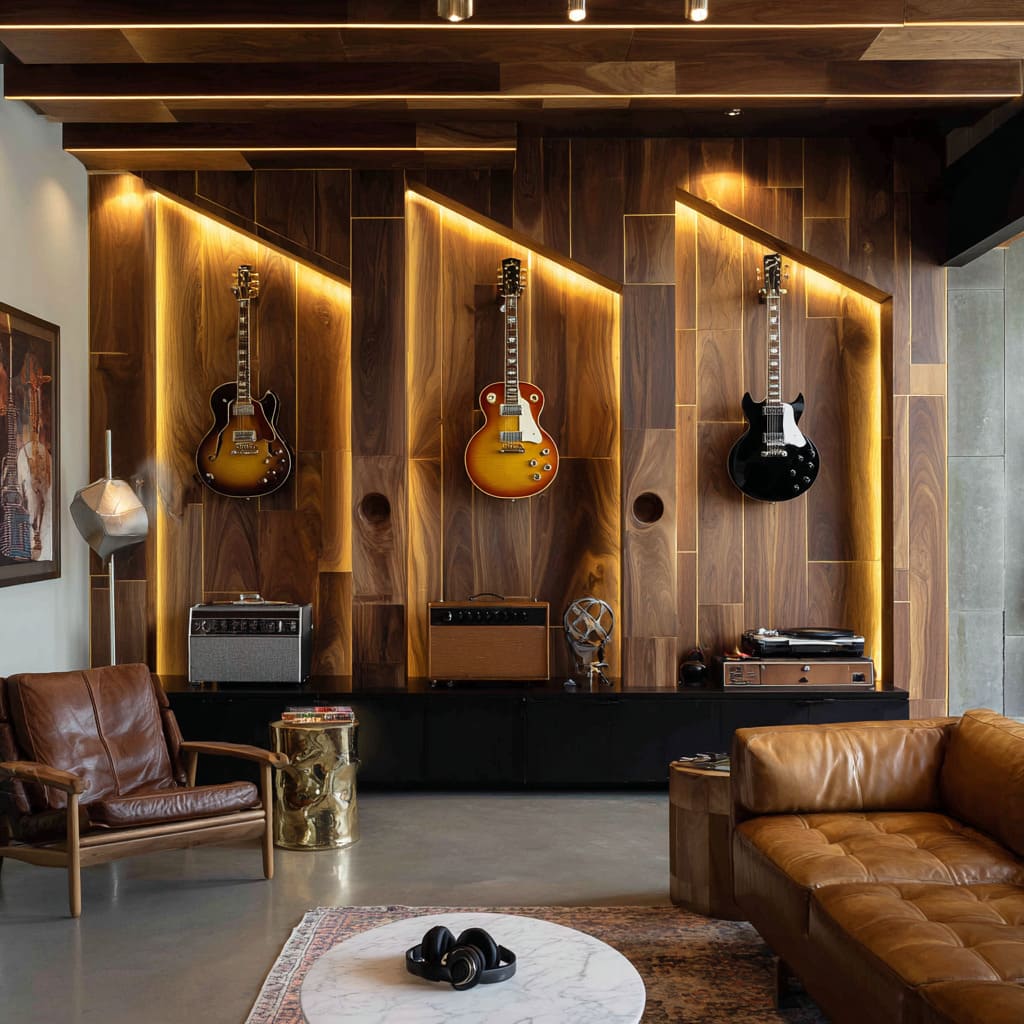
Natural and industrial temperaments
Modern man cave wall decor ideas fall loosely into two emotional camps—natural and industrial—each with its own vocabulary.
- Natural direction: slats, live-edge timber, pale stone, surfboards, woven textures, sandy tones. Light behaves like sunlight through clouds, warm and diffused.
- Industrial direction: concrete, brick, copper, charred wood, black steel. Light arrives as lines, troughs, and grazes—controlled and precise.
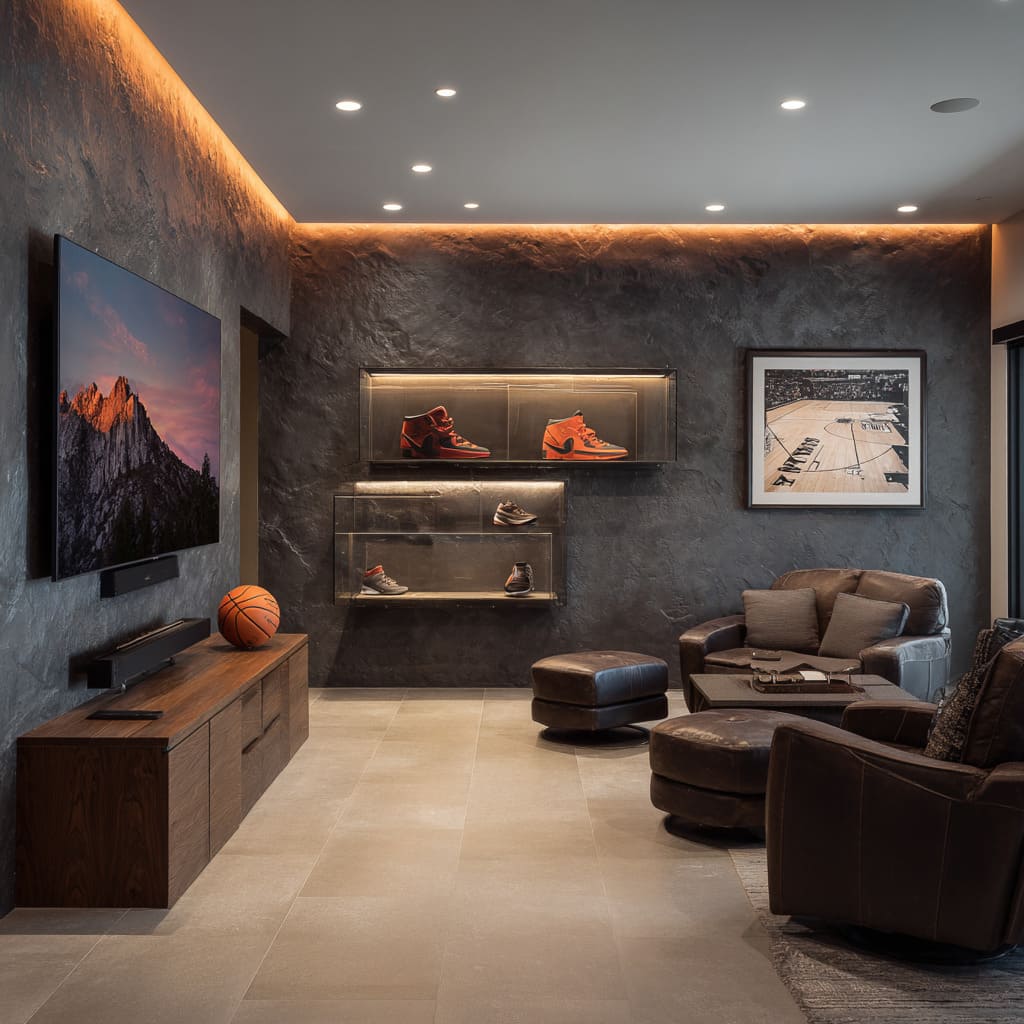
The most visually interesting rooms often mix both: a rough copper wall above a soft wool rug, a concrete frame holding a teak display, or stone with brass seams. The pairing of warmth and structure creates the balance that defines contemporary masculinity—quiet confidence rather than heavy energy.
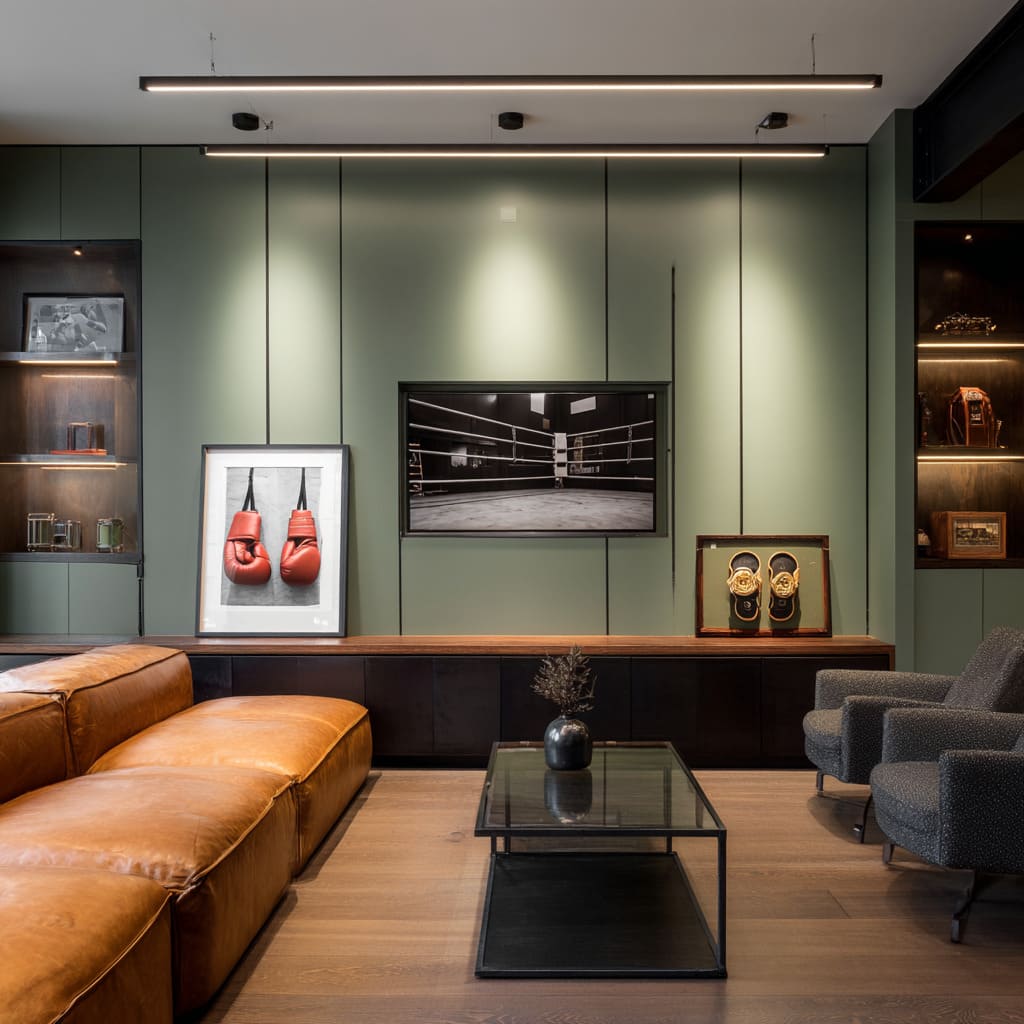
Furniture that continues the wall’s rhythm
Seating, tables, and rugs in these spaces are never separate episodes; they extend the wall’s story into the room. Sectional arms meet the console line, rugs repeat grid or plank patterns, and leather tones mirror wood undertones.
Materials keep talking to each other. Glass tables or pale stones often appear in front to preserve sightlines, letting reflections echo vertical light seams.
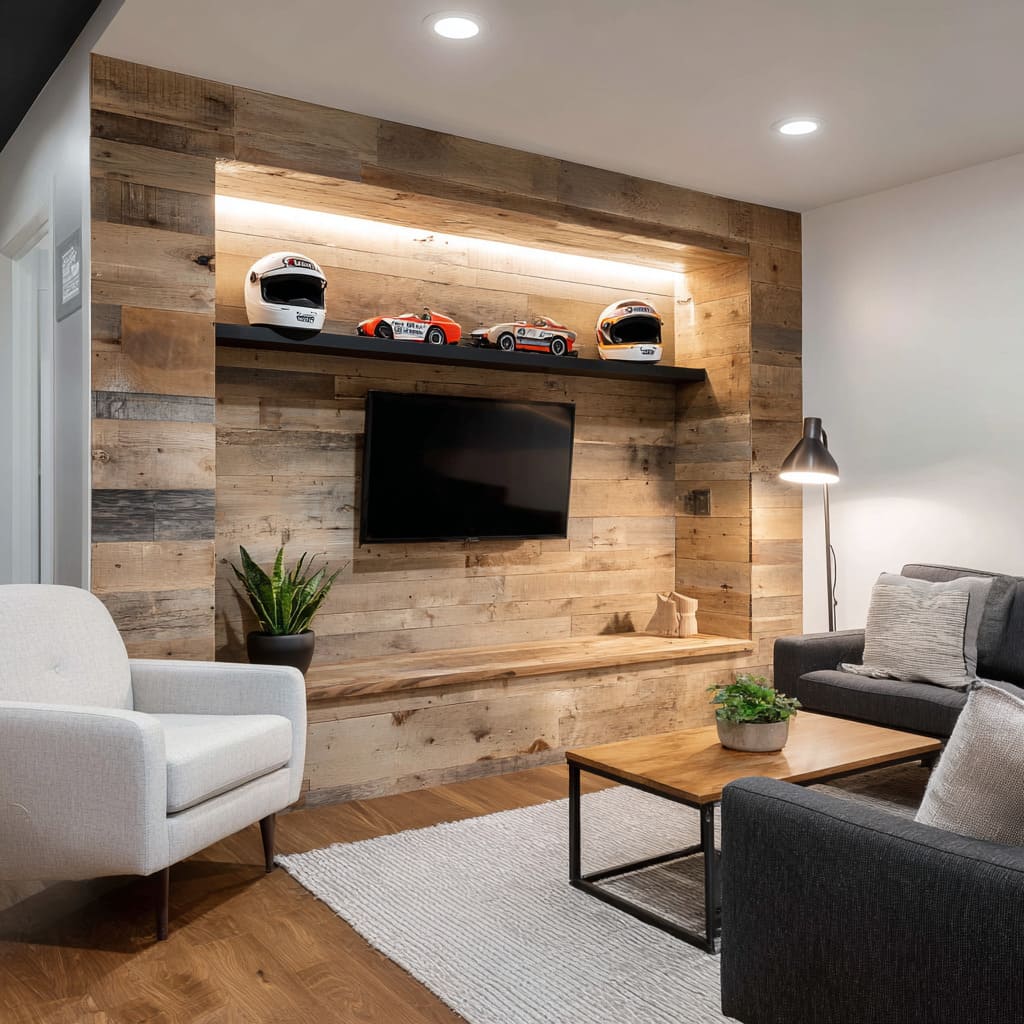
This connection between vertical and horizontal planes makes the room read as one continuous composition—an important hallmark in high-end man cave accent wall ideas.
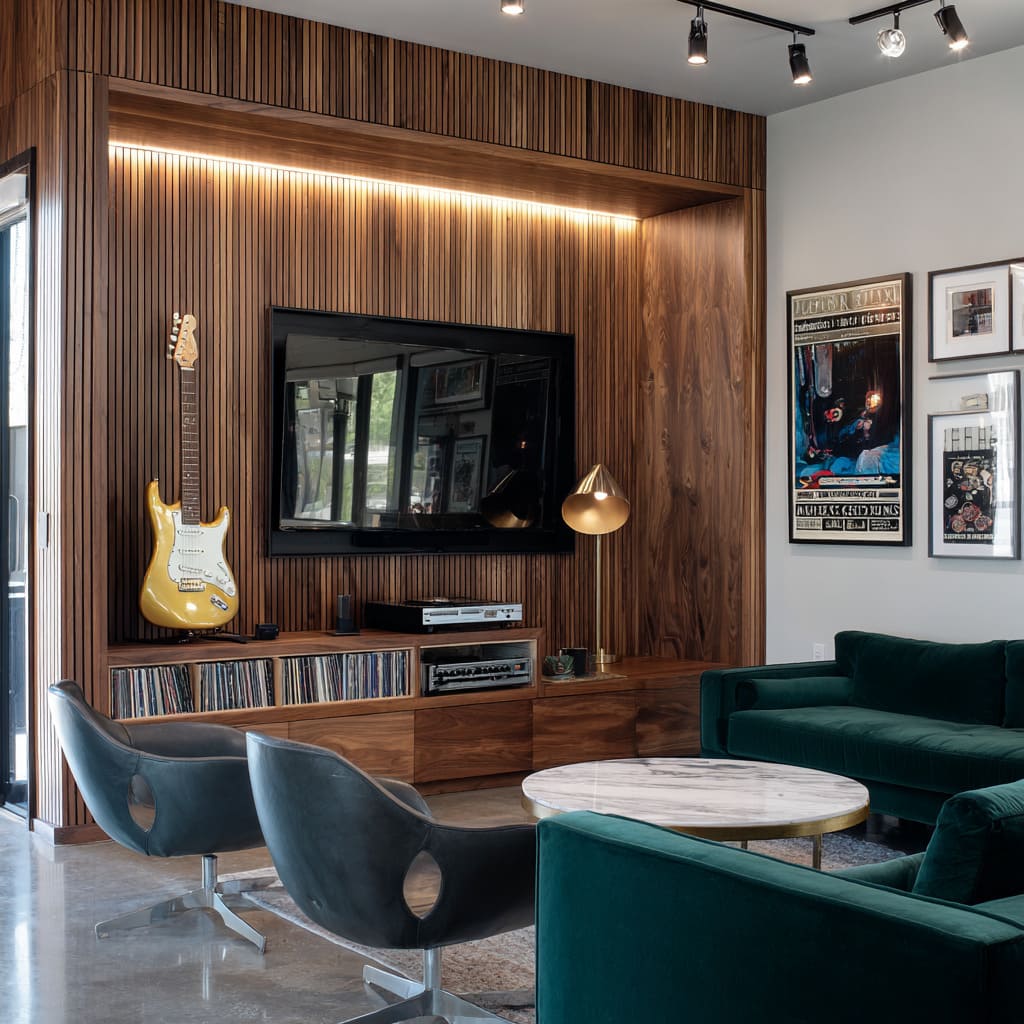
The balance between calm and character
What unites all these man cave wall decor ideas is a mature sense of restraint. Even when the wall holds guitars, helmets, or surfboards, the background remains disciplined.
Repetition, line control, and subtle light keep everything cohesive. The emotion comes from contrast: matte wood against gloss lacquer, cool stone beside warm leather, dark plinth under floating light.
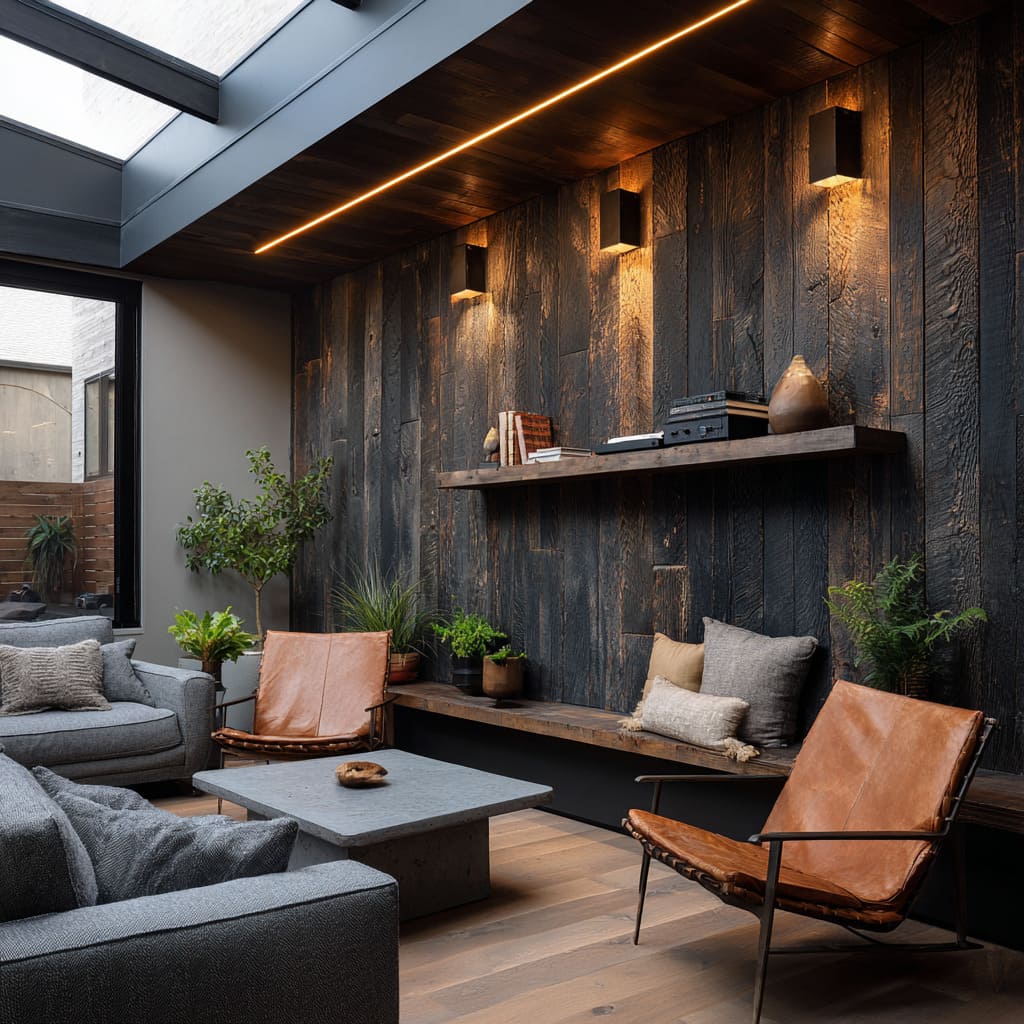
Instead of loud themes, today’s cool man cave wall ideas use quiet sophistication to show personality. The mood is composed but expressive—a lounge where texture replaces ornament and proportion replaces signage.
Patterns that define the modern look
To understand why these walls feel rich, it helps to recognize repeating design patterns found across many projects:.
- Material continuity: one species of wood or stone running through the whole area
- Hidden technology: soundbars and wiring absorbed by dark recesses
- Controlled asymmetry: objects slightly off-center or stacked irregularly for realism
- Soft geometry: light lines, curved edges, or tonal gradients replacing decorative borders
- Negative space: empty shelves and calm sections that let the texture breathe
Each rule reduces noise while increasing visual confidence—a fundamental reason these environments feel expensive even when materials are simple.
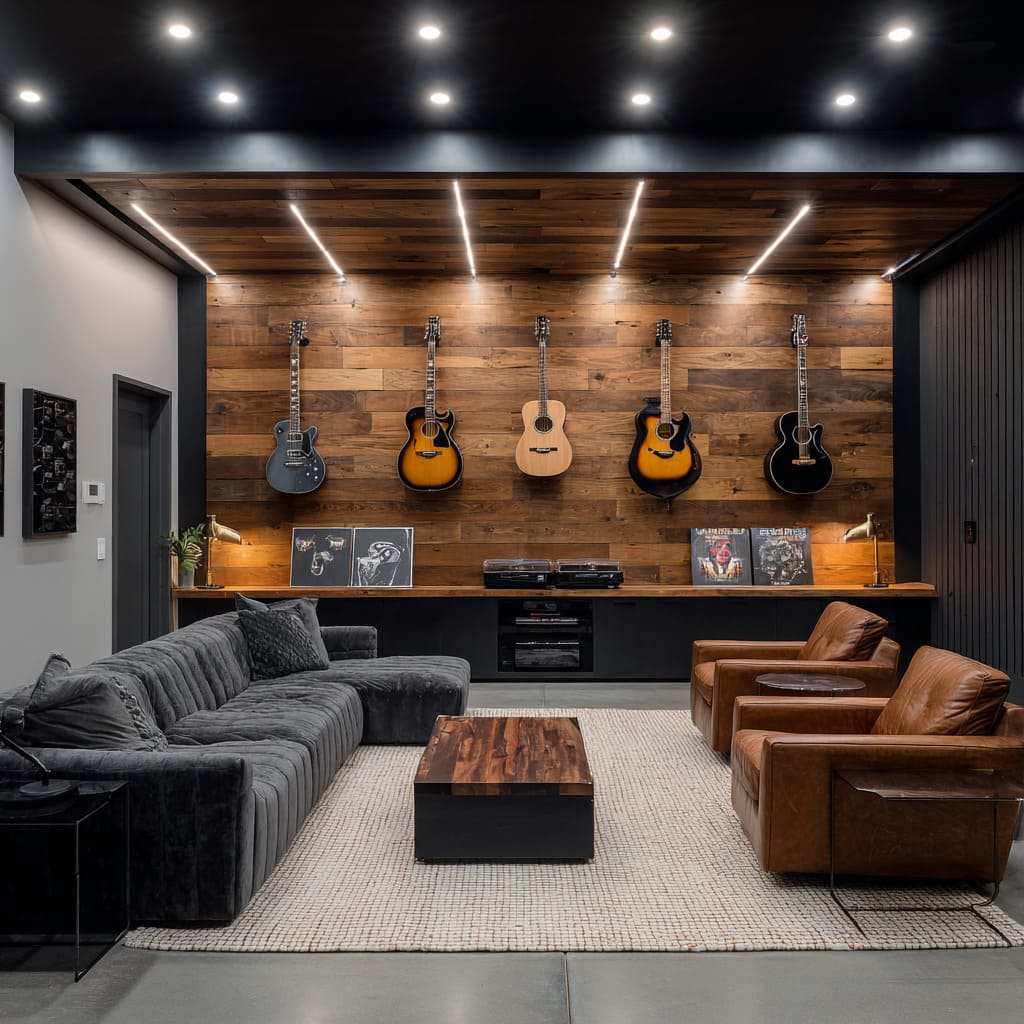
The emotional landscape of modern masculinity
In the end, these man cave feature wall ideas express a new tone of masculinity: not loud dominance, but measured presence. The blend of warm wood, precise light, and curated personal objects suggests control, not chaos; interest, not indulgence.
The feeling these walls project—whether in a city apartment or a country retreat—is composure.
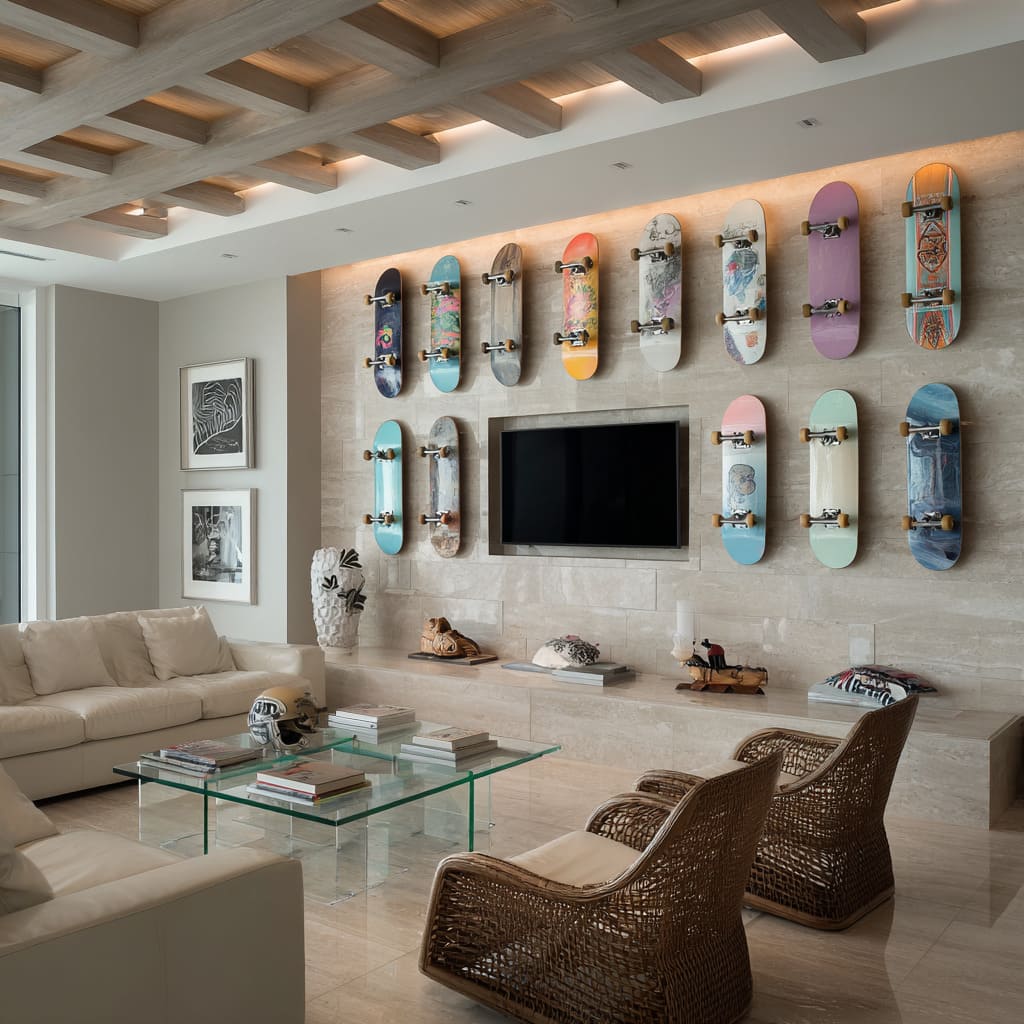
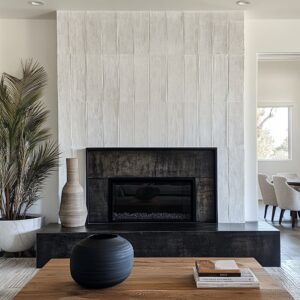
They embody a visual maturity where raw materials and personal artifacts coexist peacefully. The flame line of a fireplace, the shadow of a guitar neck, the glow under a timber console—all become notes in a quiet composition that rewards patience.
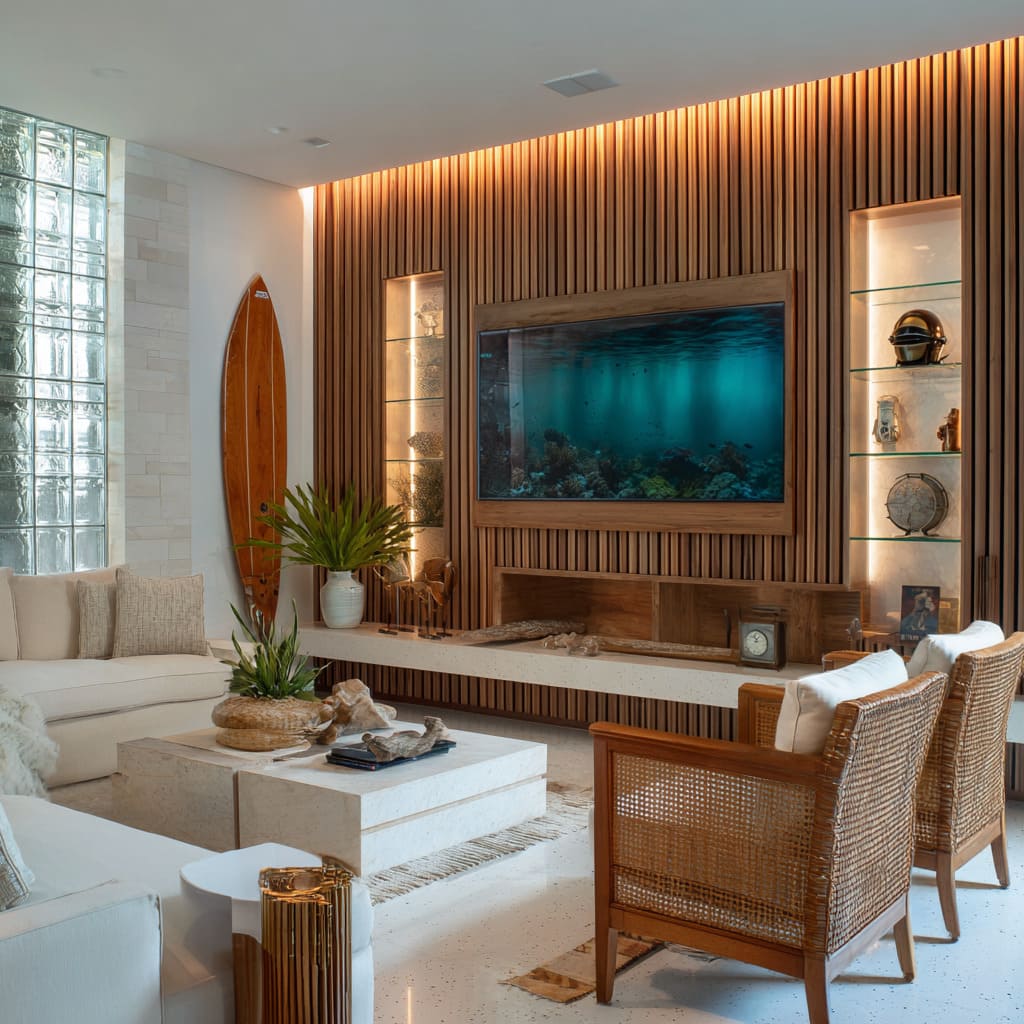
The continuing evolution of man cave wall design
As homes embrace multi-purpose spaces, the line between lounge, studio, and gallery keeps fading. The feature wall now acts as the identity card of the entire room.
It captures personality through curated rhythm and light rather than slogans or signs.
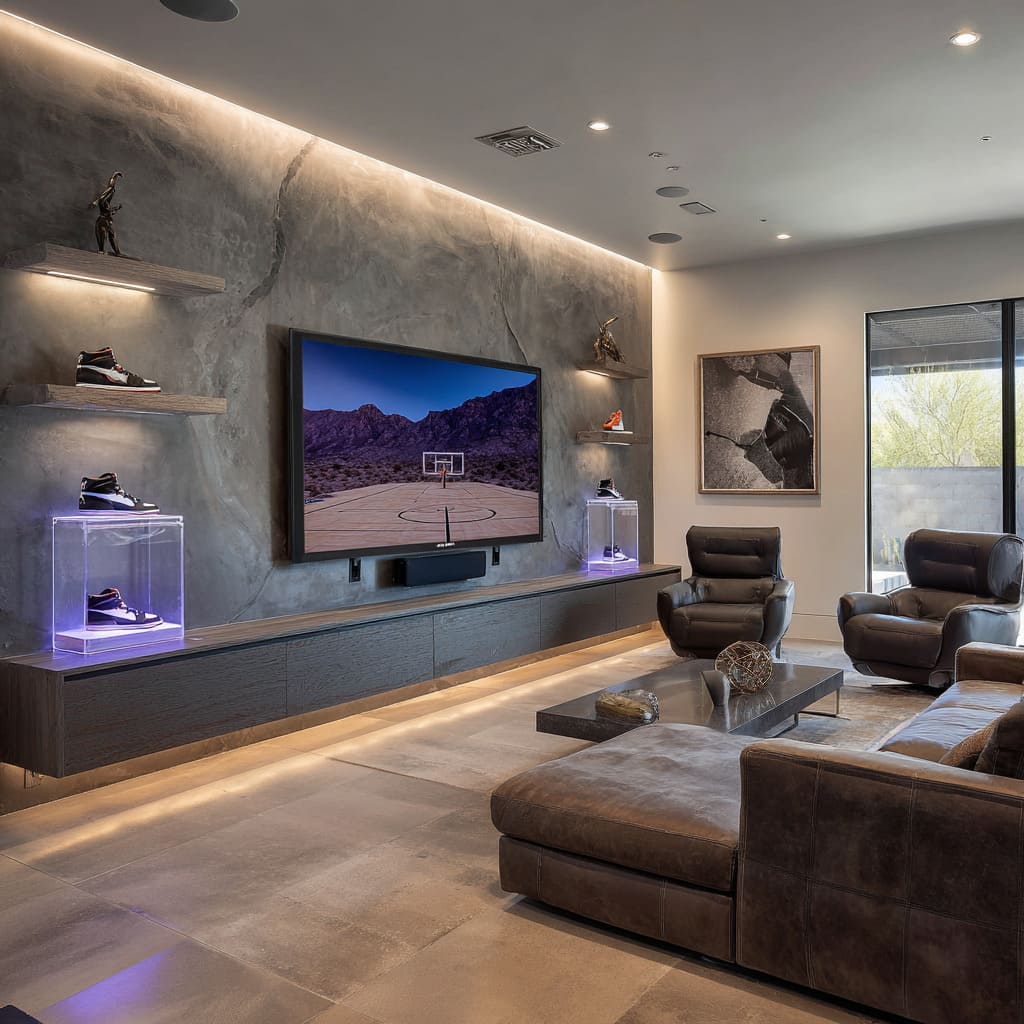
From reeded walnut niches to indigo plaster recesses, from surfboards glimmering in soft coves to copper murals aging beautifully, man cave wall design has become a refined language.
It’s no longer about hiding away—it’s about showing character through calm precision. And that, more than any gadget or display, defines the next chapter in man cave wall ideas across contemporary interiors.