Modern shabby chic living room ideas have changed in a very clear way. The style still loves softness, faded beauty, timeworn surfaces, and a sense of home that feels warm and lived in.
But the newer version does not depend on crowded shelves, layers of small vintage objects, or floral pattern everywhere. It has become more spacious in mood, more edited in composition, and more architectural in the way it builds atmosphere.
That shift matters because shabby chic can easily fall into two traps. One is turning too sweet, with too many decorative signals competing at once.
The other is being stripped down so far that it loses its tenderness and starts to feel like a pale generic room. The modern shabby chic living rooms should avoid both extremes.
They hold onto comfort, washed finishes, floral memory, and a softly aged look, yet they place those qualities inside a room with clearer structure and more visual breathing room.
At the center of the newer look are three things that rarely disappear: soft seating, a narrowed color palette, and restraint in styling. Those three ingredients do more to establish modern shabby chic than any single mirror, cabinet, or floral print.
Once they are in place, the room can lean in different directions. It can become more floral and antique-led, more architectural and rustic, or more family-centered with a large sectional and broad upholstered pieces.
The point is not to copy an older cottage formula piece by piece. The point is to keep the emotional heart of shabby chic while building it in a way that suits how people live now.
What makes shabby chic feel modern now
The older form of shabby chic often relied on visible decoration. There were painted cabinets, carved mirrors, floral upholstery, distressed frames, gathered skirts, and many small objects that helped the room feel collected over time.
The modern form still uses some of those elements, but it uses them more selectively. Instead of many decorative moments spread evenly around the room, it usually concentrates them in a few strong places.
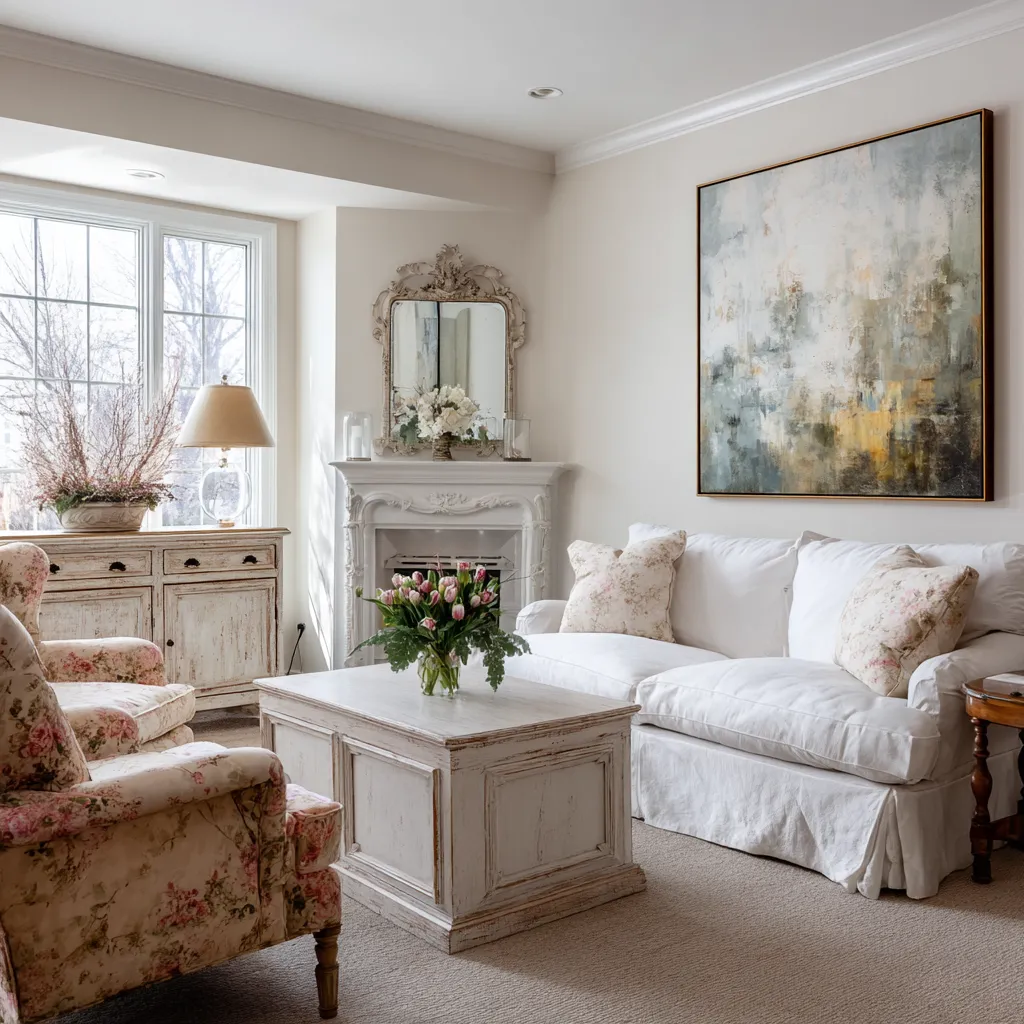
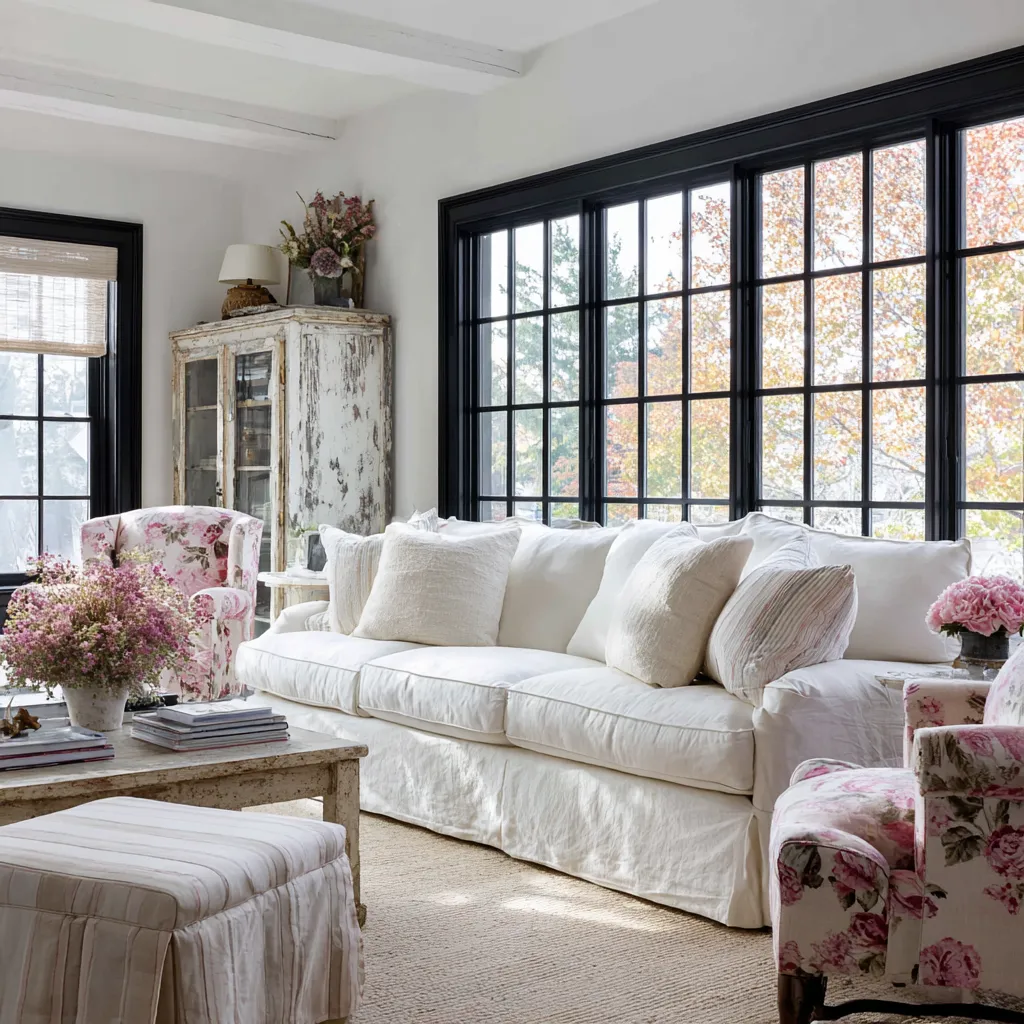
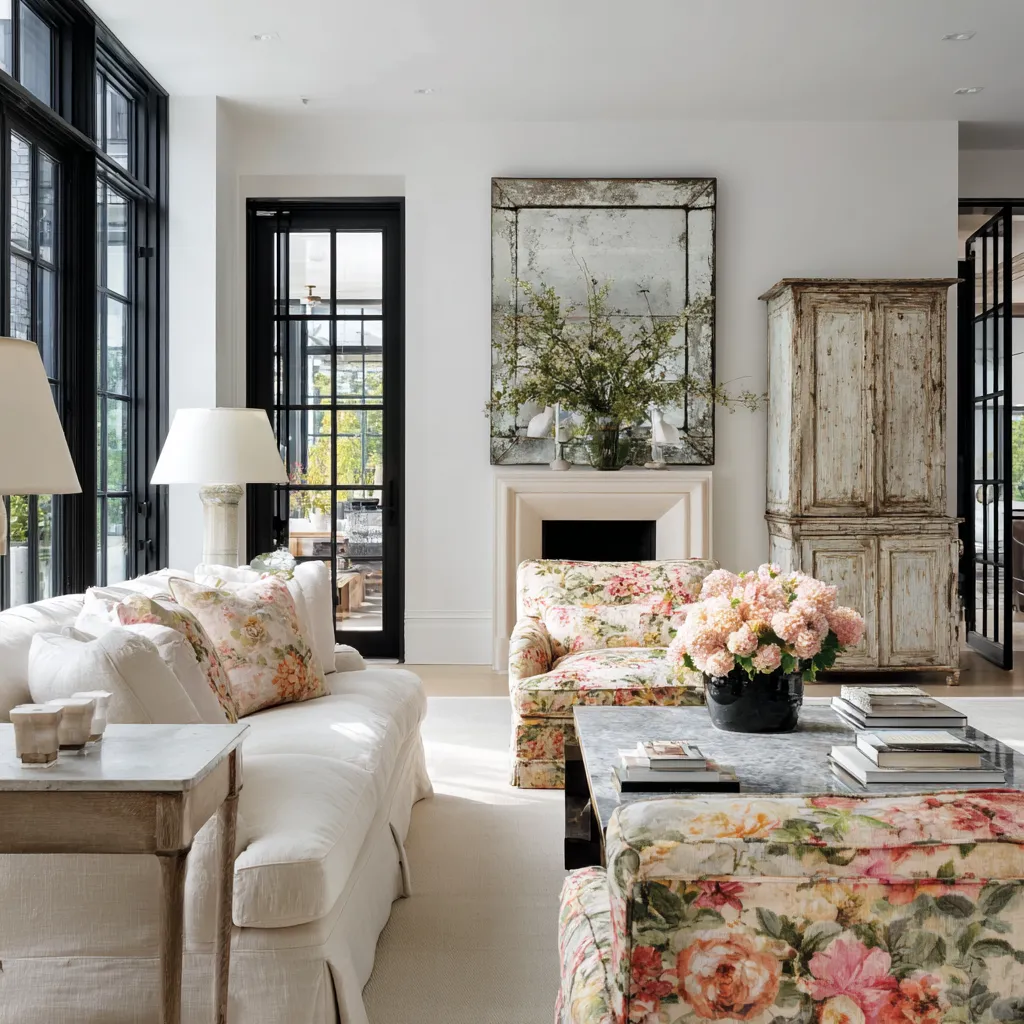
A living room might have one aged mirror, one distressed cabinet, one floral chair, and one generous bouquet, while the rest of the room stays broad, pale, and open. The sofa is often plain rather than patterned.
Walls are less crowded. The palette may stay within cream, oat, limestone, dusty beige, soft grey, faded blush, or muted sage.
The result feels lighter in mental weight, even when the room includes pieces with a lot of history in their finish. The interior design no longer depends on decorative density.
It depends on proportion, texture, surface softness, and careful placement.
The foundation: soft seating, tonal restraint, and editing
If you want a living room to feel modern shabby chic, begin with the foundation rather than with accessories. The sofa should feel generous, tactile, and comfortable first.
Slipcovered forms, skirted bases, softened corners, and fabric with a matte hand all help. The room should feel like it invites use, not like it is asking to be preserved.
Next comes tonal restraint. That does not mean the room must be colorless.
It means the colors should relate closely enough that the room feels washed together rather than sharply segmented. Cream, ivory, pale flax, warm white, soft mushroom, weathered wood, dusty blush, lavender-grey, faded blue-grey, and muted green all fit well, but they work well when they stay within a reduced family instead of competing in many directions.
Then comes editing. Modern shabby chic usually looks stronger when it resists the urge to fill every surface.
One floral arrangement can do the work of five smaller ones. One large artwork can do the work of several framed pieces.
One distressed cabinet can hold the whole room’s sense of age if the rest of the room is given enough openness around it. Empty wall space and visible floor area are not signs that something is missing.
They are part of the composition.
Three directions for a modern shabby chic living room
Modern shabby chic is wide enough now to support several distinct approaches.
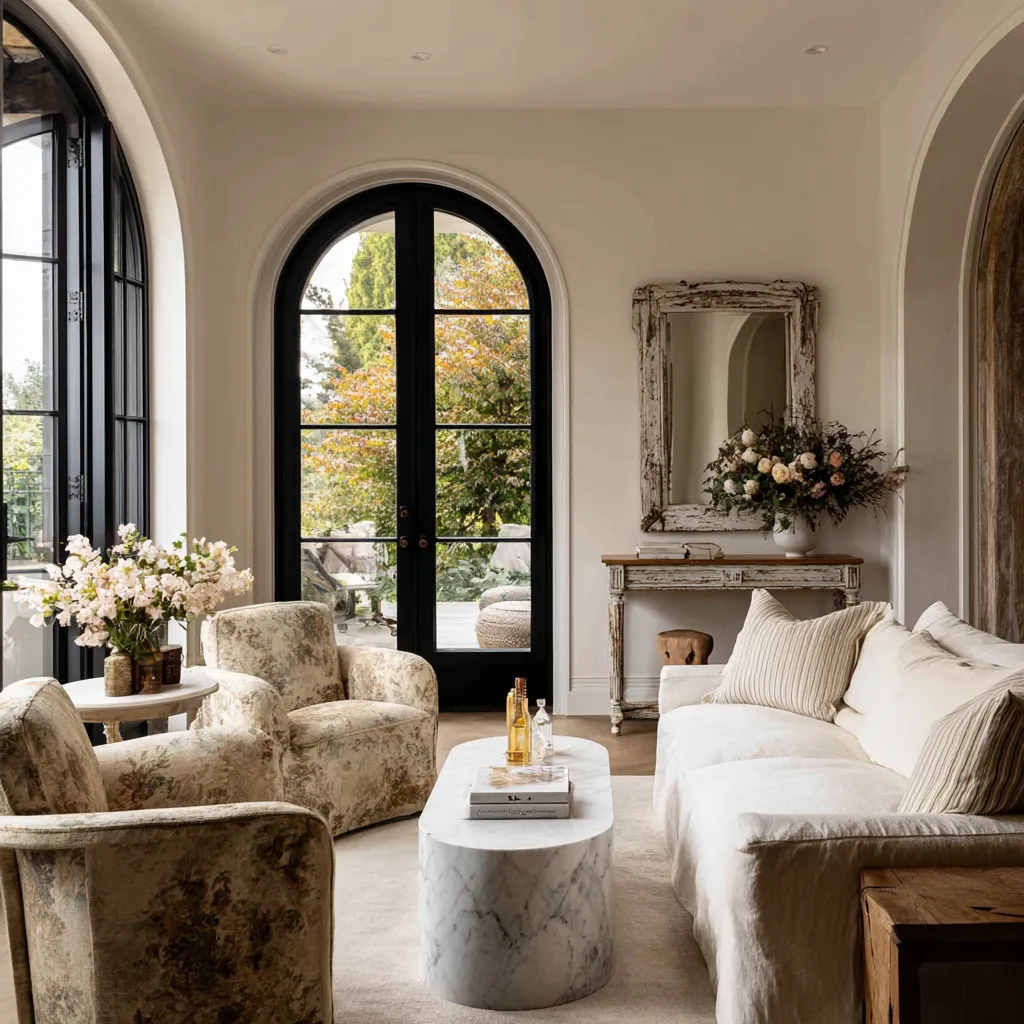
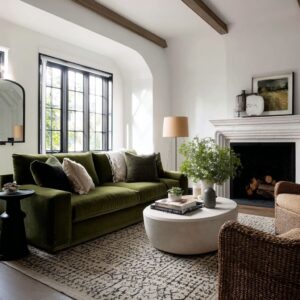
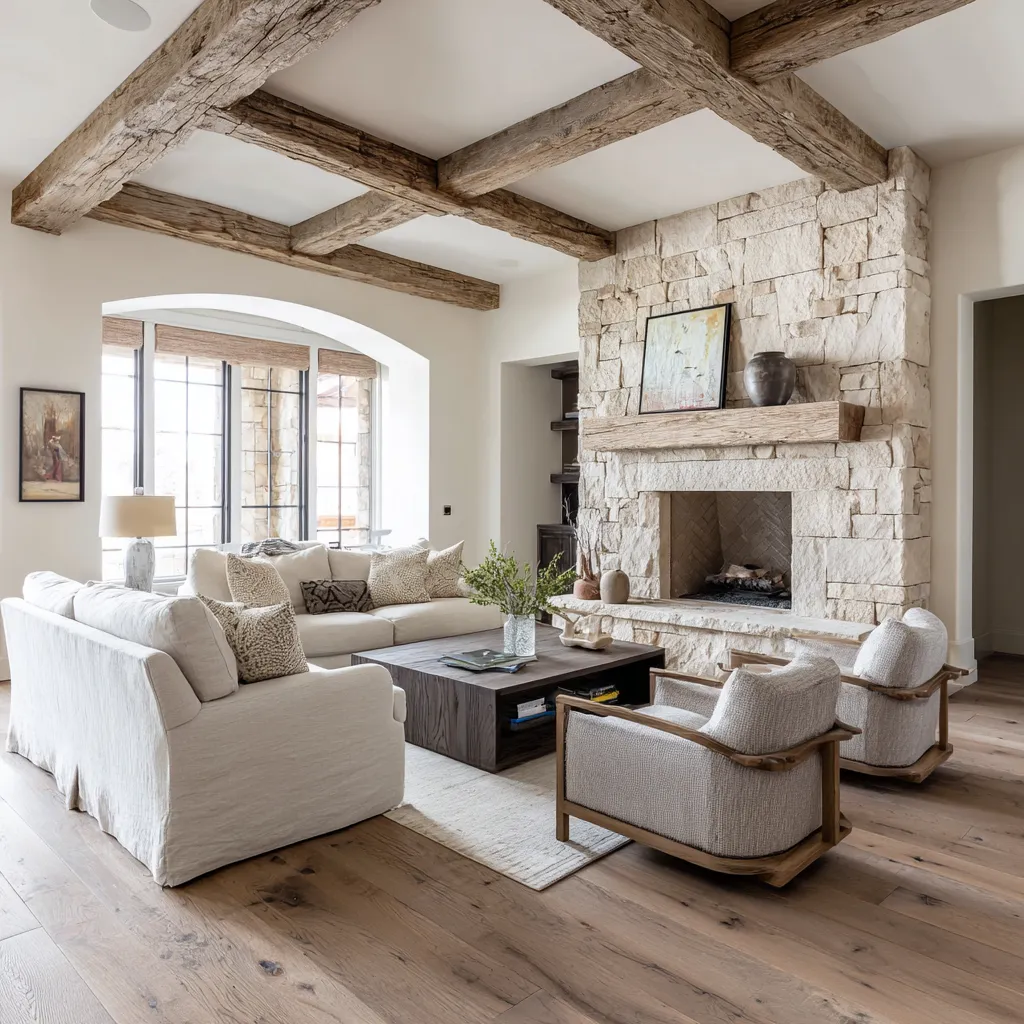
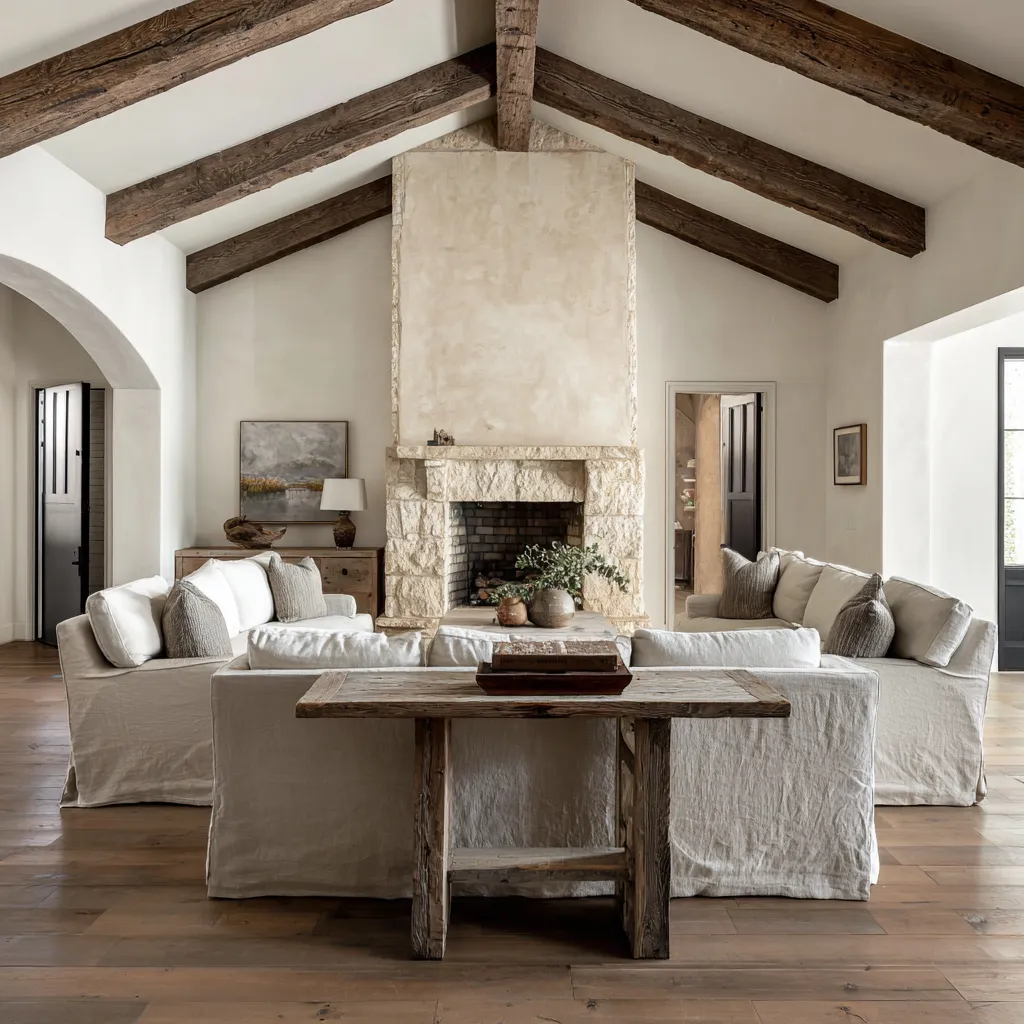
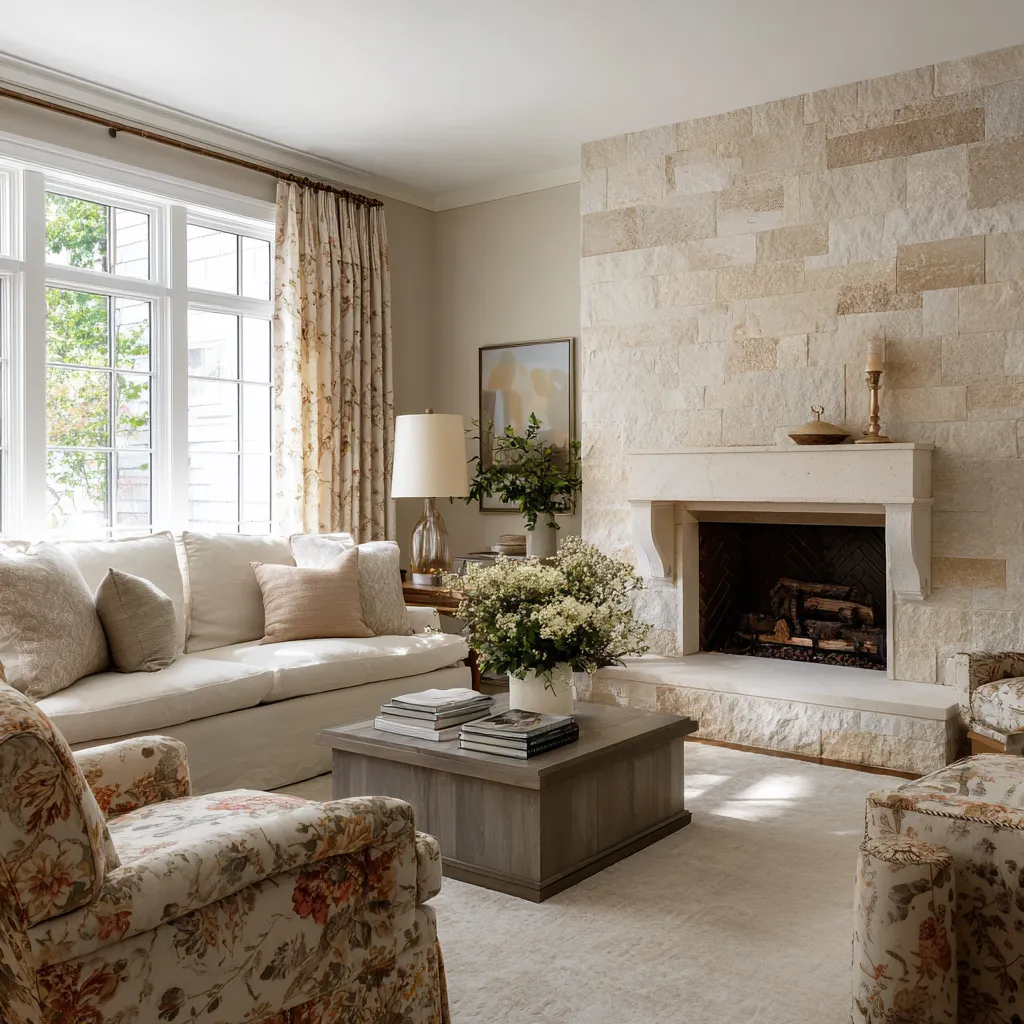
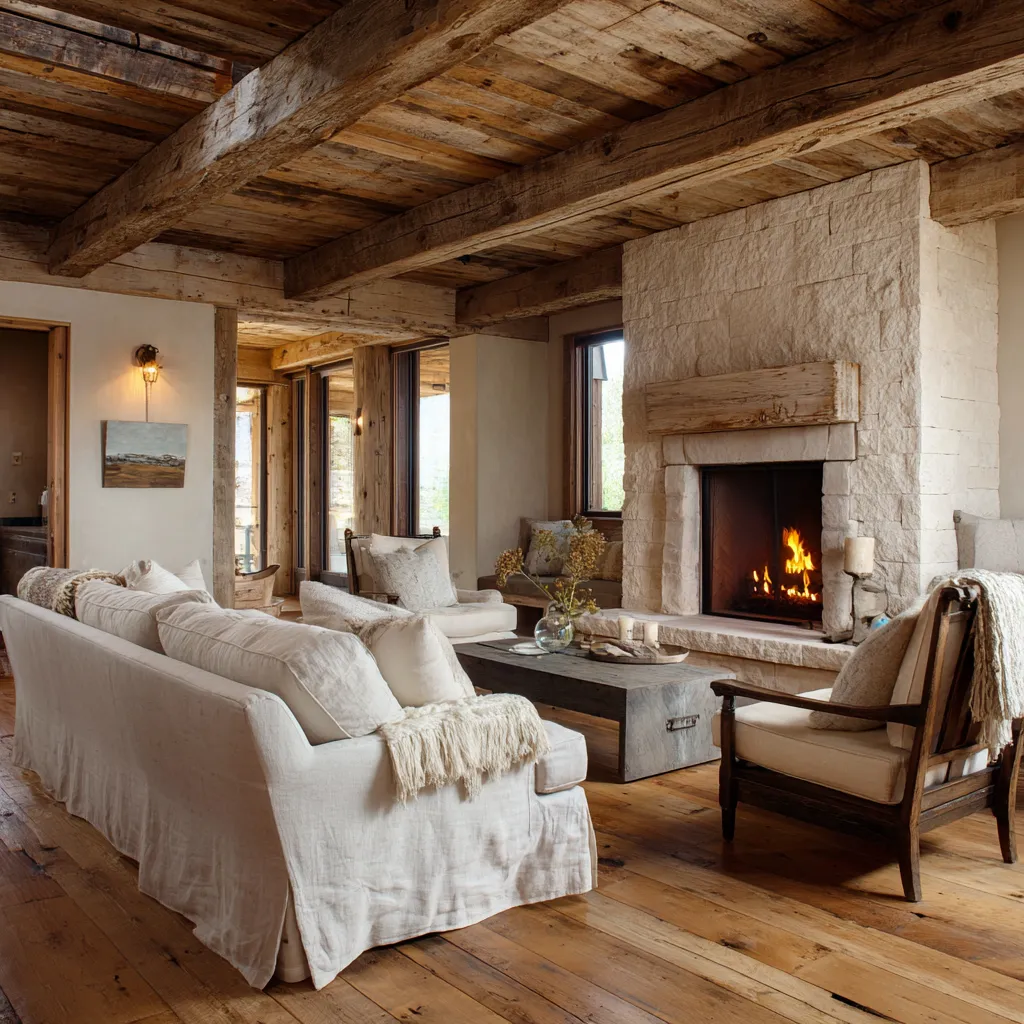
The first is the architectural-tonal version. This one relies on plaster walls, pale stone, ceiling beams, large chimney forms, weathered timber, and a very restrained palette.
It may have almost no floral pattern at all. The room feels softened by material rather than decorated by objects.
Pale upholstery, matte finishes, and aged wood keep it tied to shabby chic, while the architecture does much of the visual work. This direction works especially well in farmhouse, villa, and rustic-Mediterranean settings.
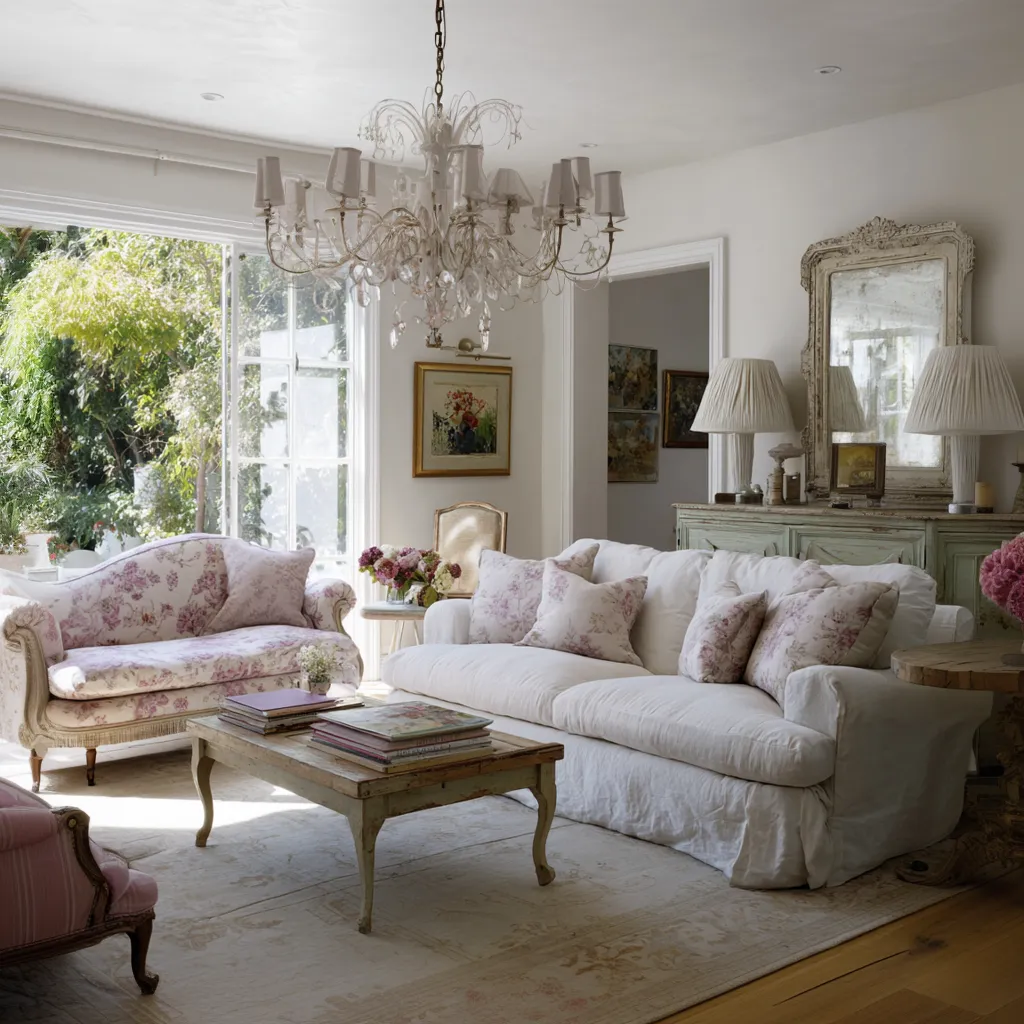
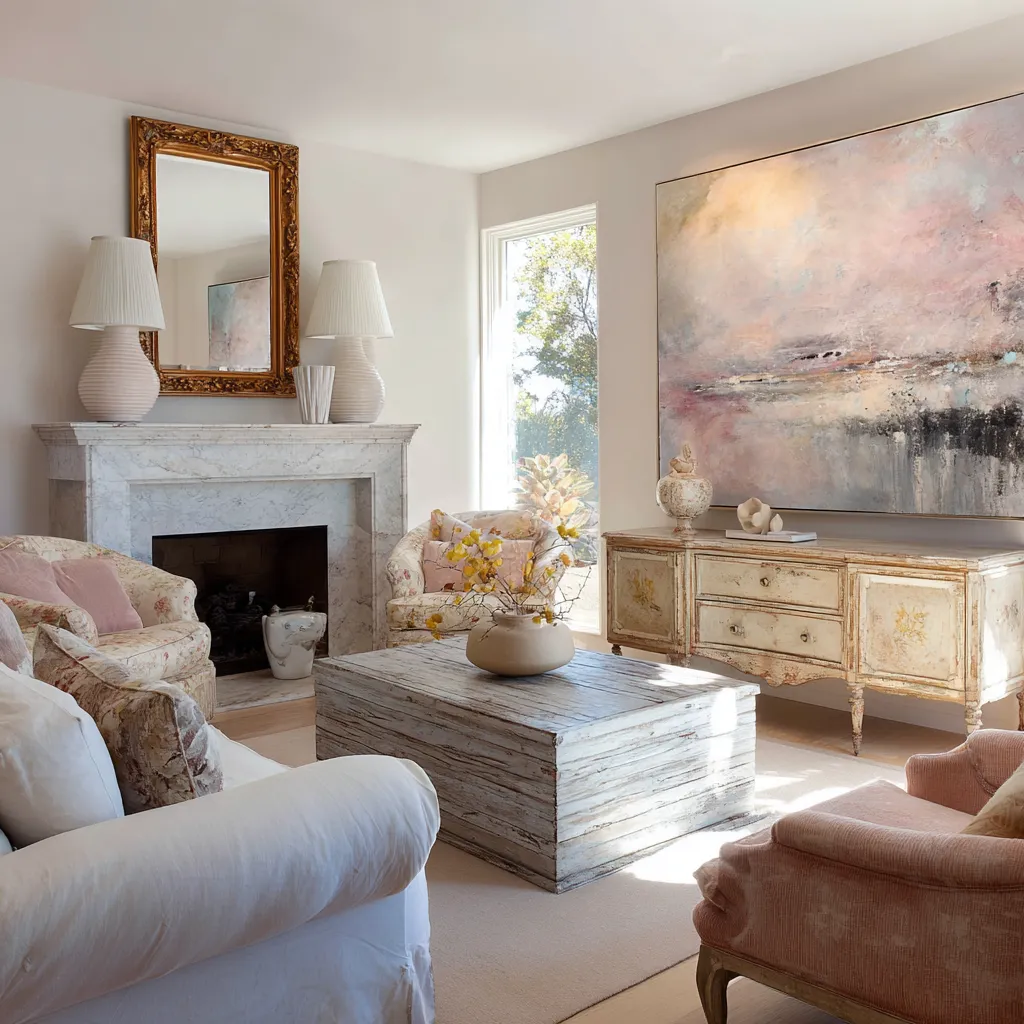
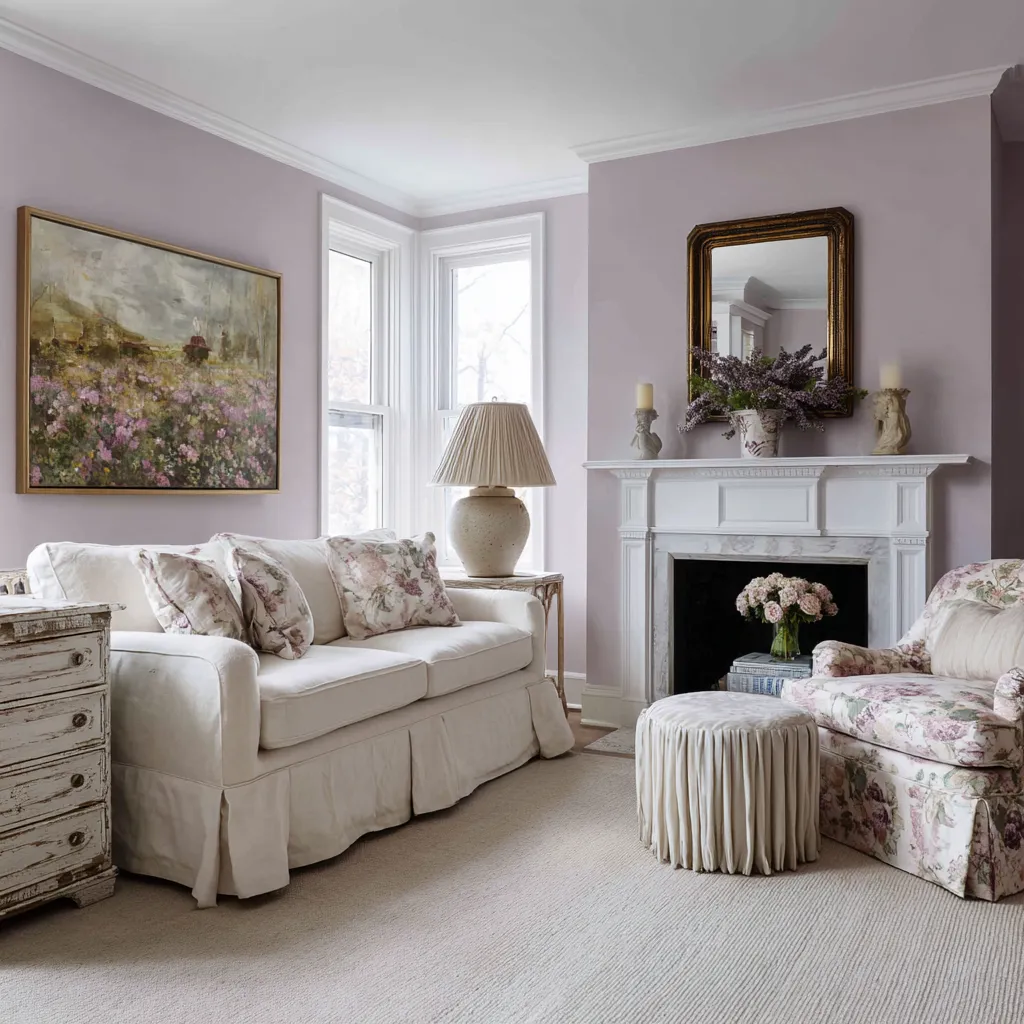
The second is the edited floral-antique version. This is probably the most familiar route, but in its newer form it is much cleaner than older shabby chic rooms.
It may include a carved mirror, a distressed cabinet, a floral chair, pale slipcovered seating, and perhaps one large abstract painting. The room keeps the romance and the inherited feel, but gives each piece more space so nothing feels crowded or theme-like.
This is a strong choice for readers who still want visible shabby chic character without making the room feel overly nostalgic.
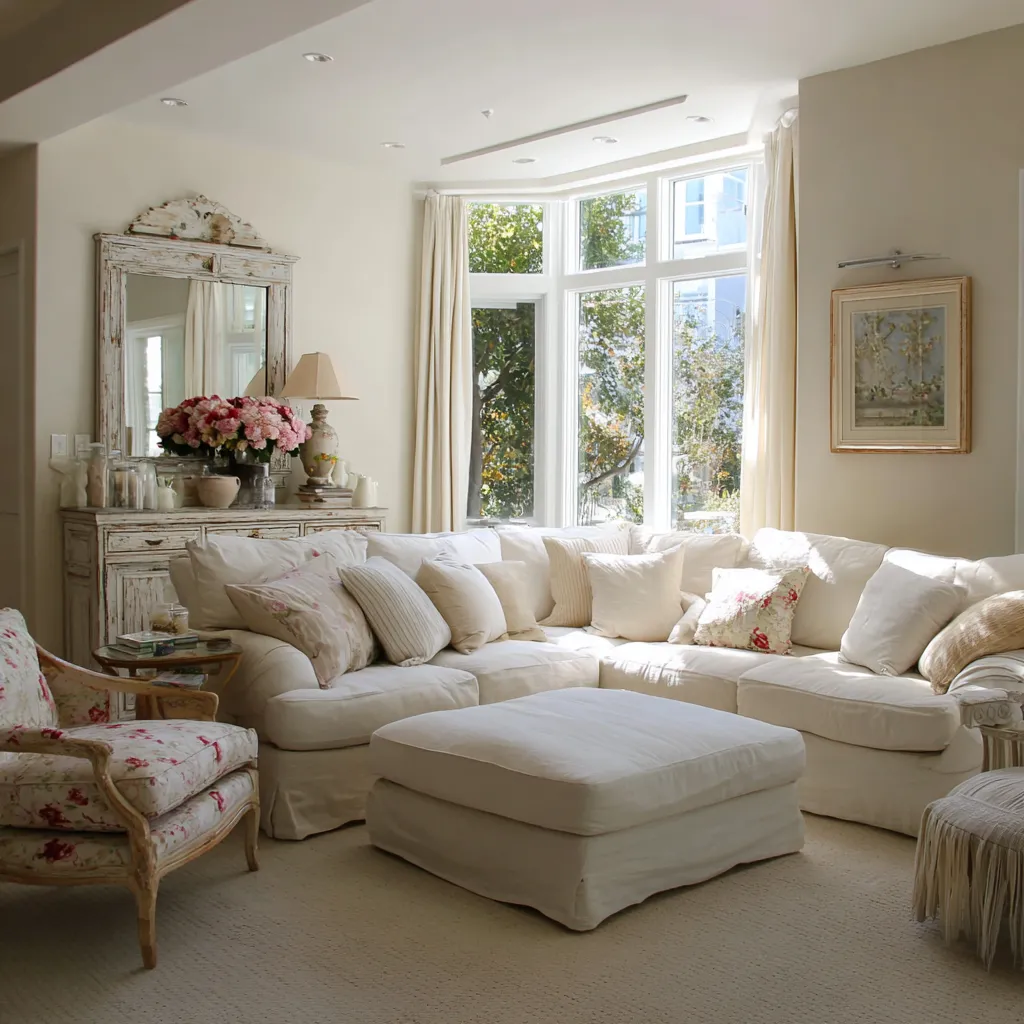
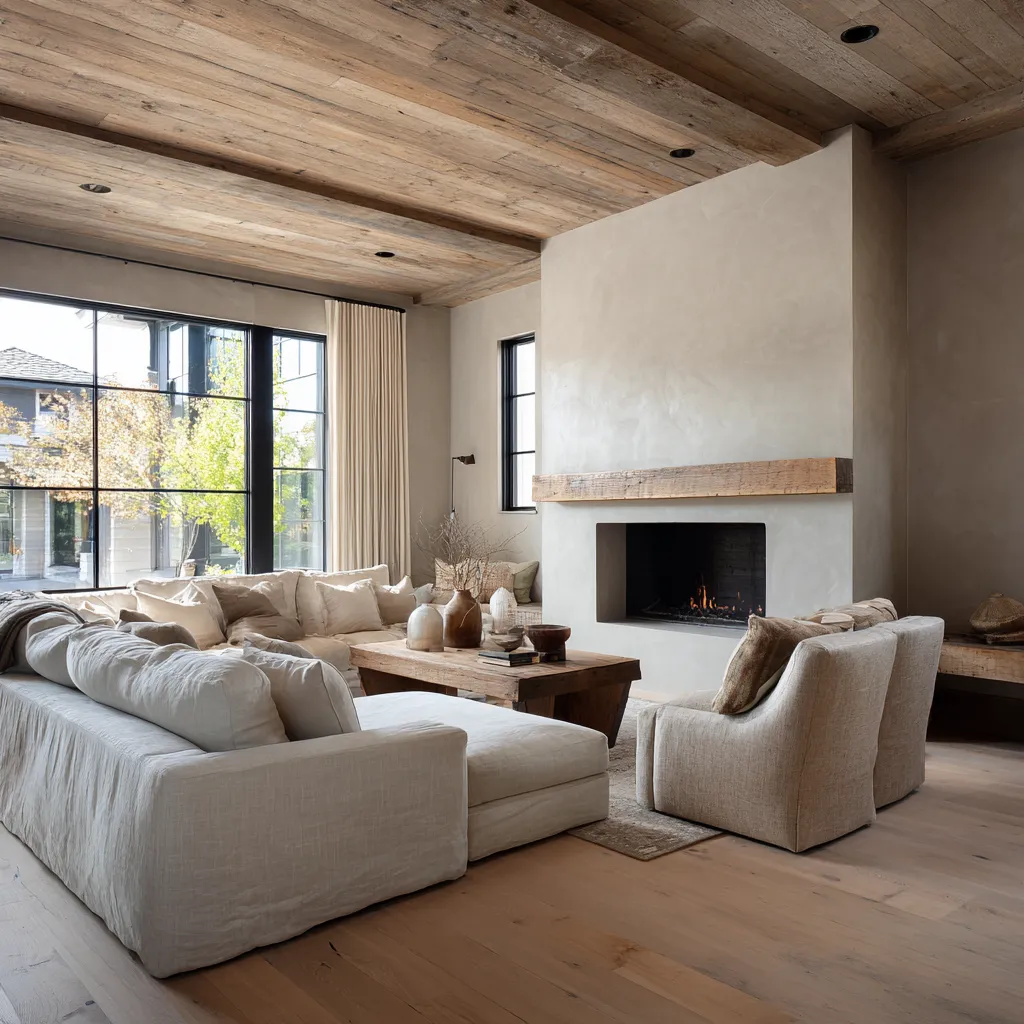
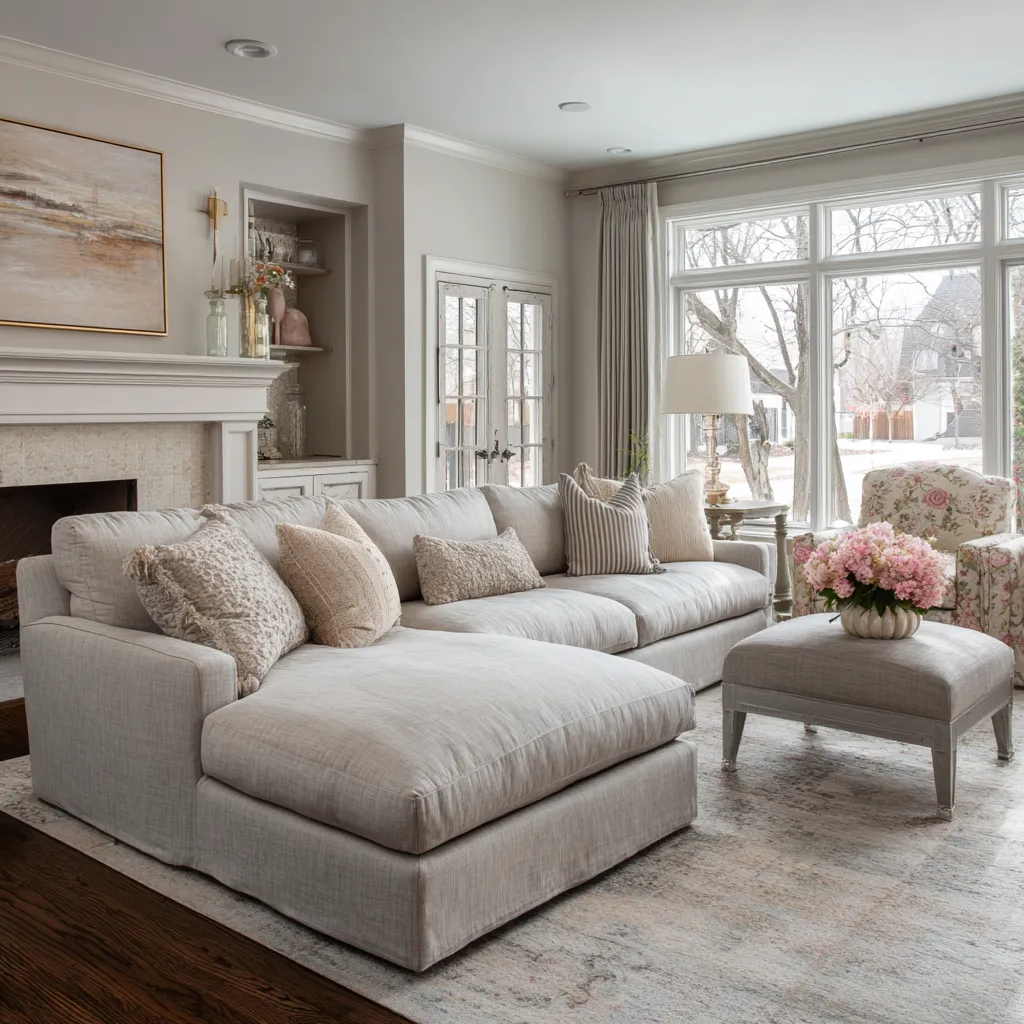
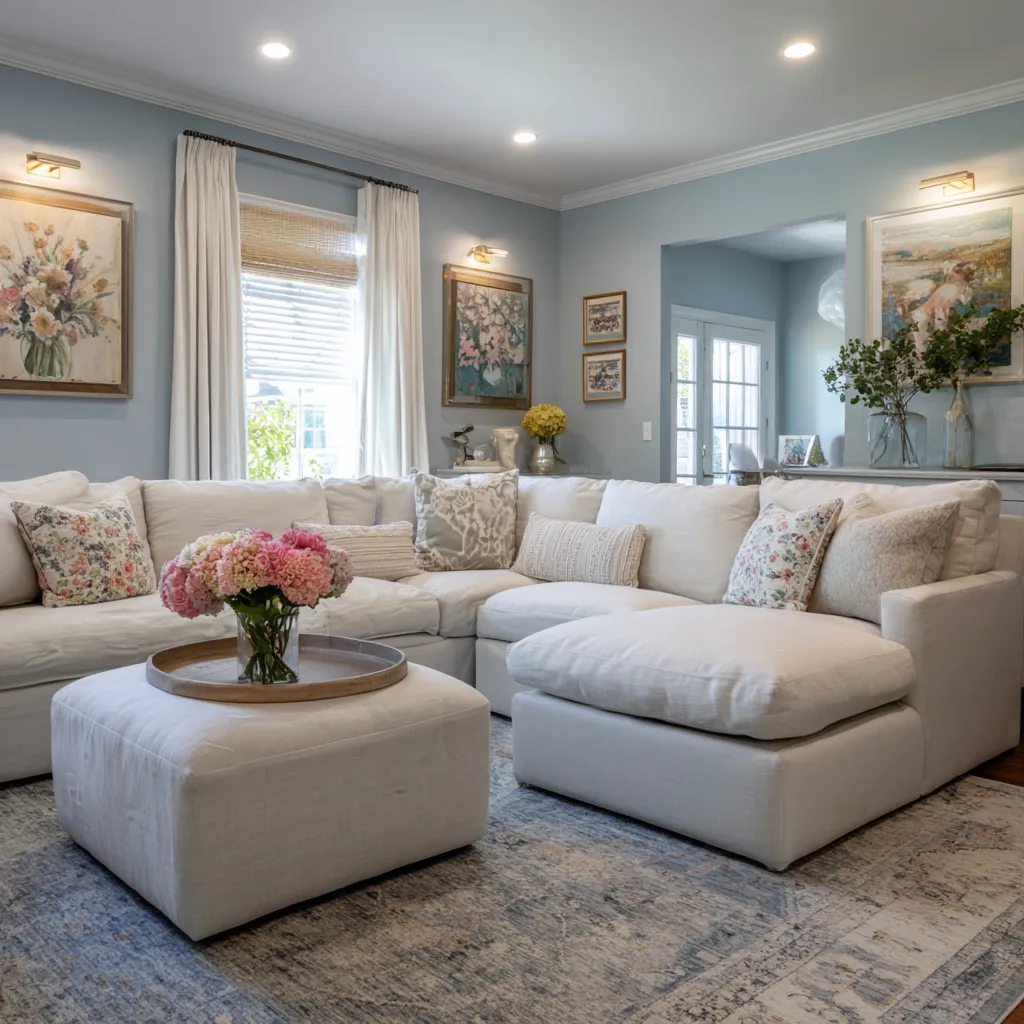
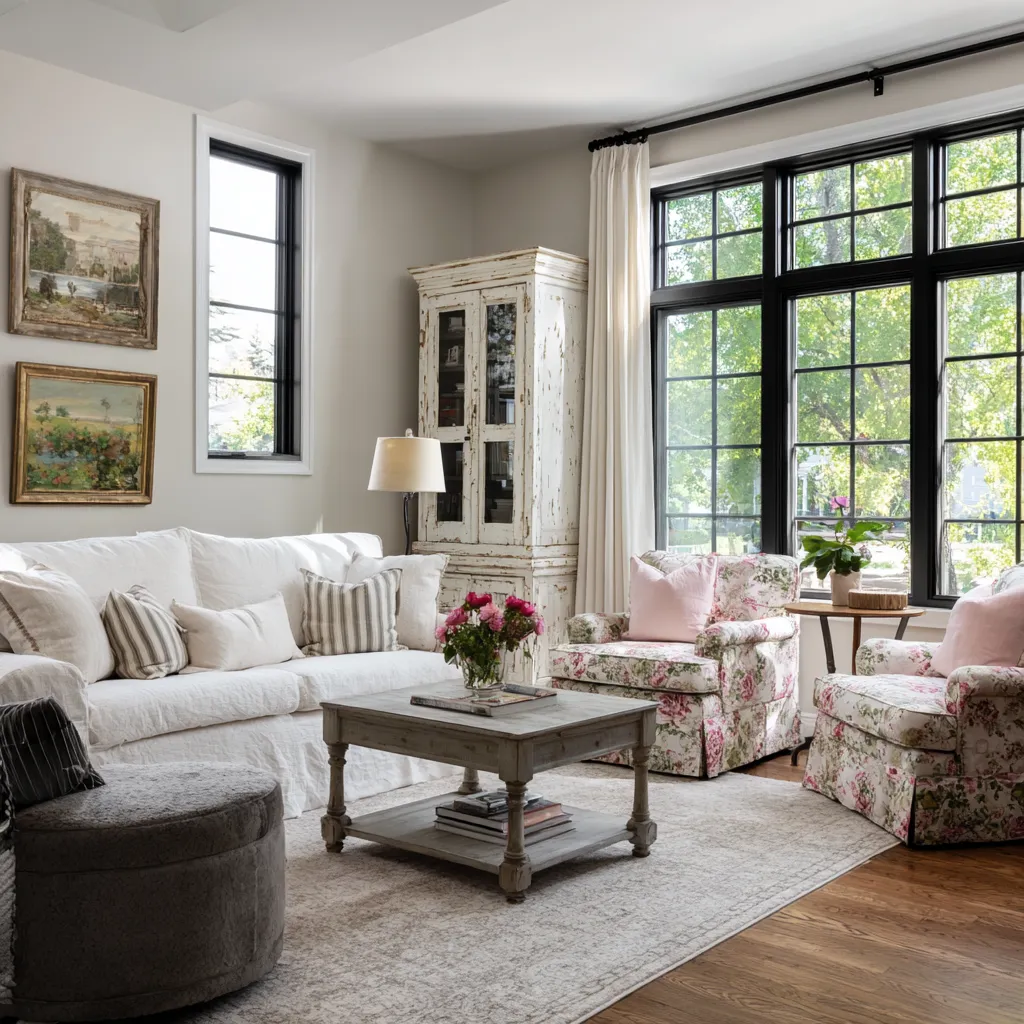
The third is the lounge-led family version. In this direction, the room is built around a large sectional, an oversized ottoman, or a curved upholstered arrangement.
The shabby chic side appears through faded tonality, soft fabric, one or two floral notes, fresh flowers, and a patinated anchor piece such as a cabinet, mirror, or side table. This version suits open-plan homes and everyday family use very well because it translates shabby chic comfort into larger, more current furniture formats.
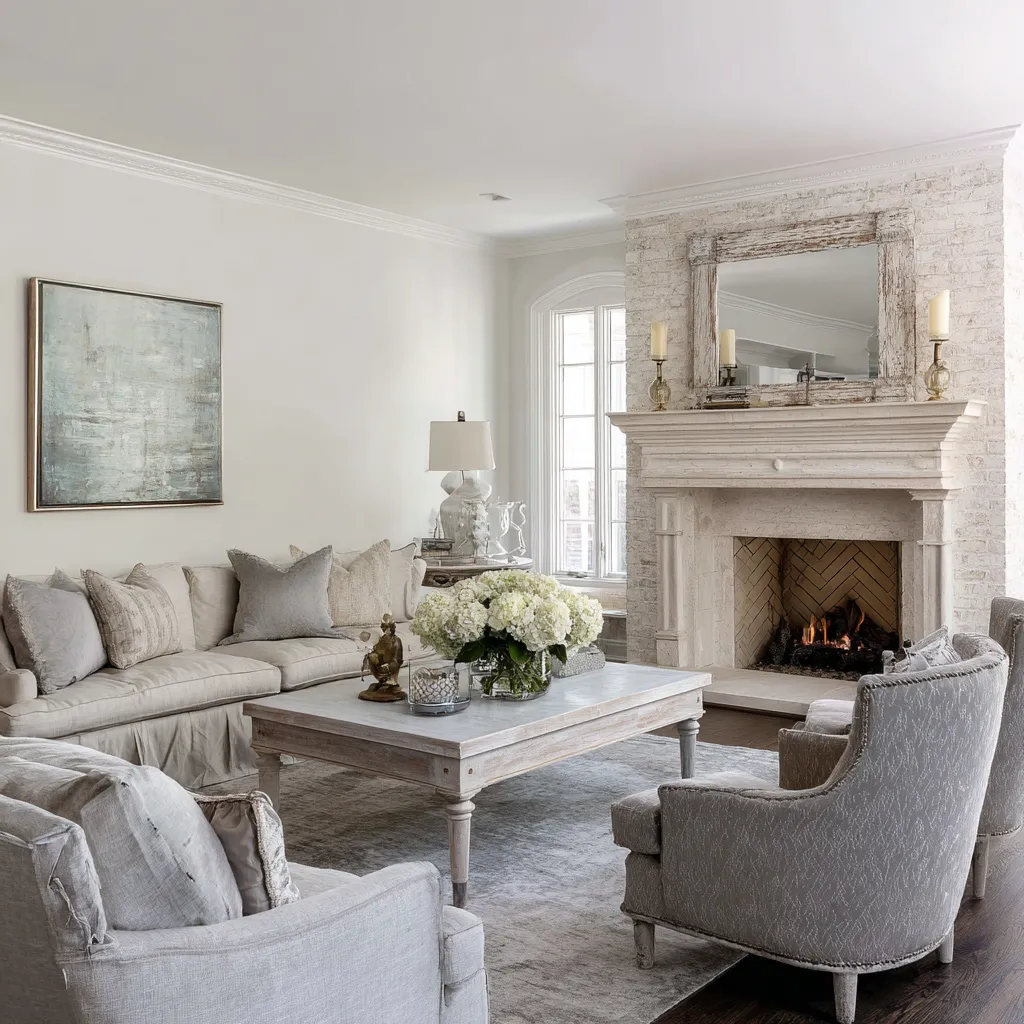
Two kinds of age that shape the room
One of the changes in modern shabby chic is the way age enters the space. In older designs, age was often decorative.
It showed up in carved mirrors, distressed painted furniture, floral fabrics, antique-style chandeliers, and smaller timeworn objects. That kind of age still has value, especially in floral-antique interiors.
But newer living room designs often use a second kind of age: structural age. This comes through thick plaster walls, weathered beams, rough stone, old-looking timber planks, large chimney breasts, arched openings, and matte surfaces that suggest hand finishing.
These elements bring depth and memory without requiring many decorative pieces.
That distinction is useful because it helps explain why some modern shabby chic living rooms feel almost monastic while still belonging to the style. They may have very little overtly antique furniture, yet the plaster, stone, linen, and softened wood give them the same sense of faded domestic warmth.
The room feels touched by time even if it is much more reduced in ornament.
How to use florals without making the room feel dated
Florals still belong in shabby chic, but their role has changed. In modern shabby chic living room ideas, floral pattern behaves more like an accent than a field.
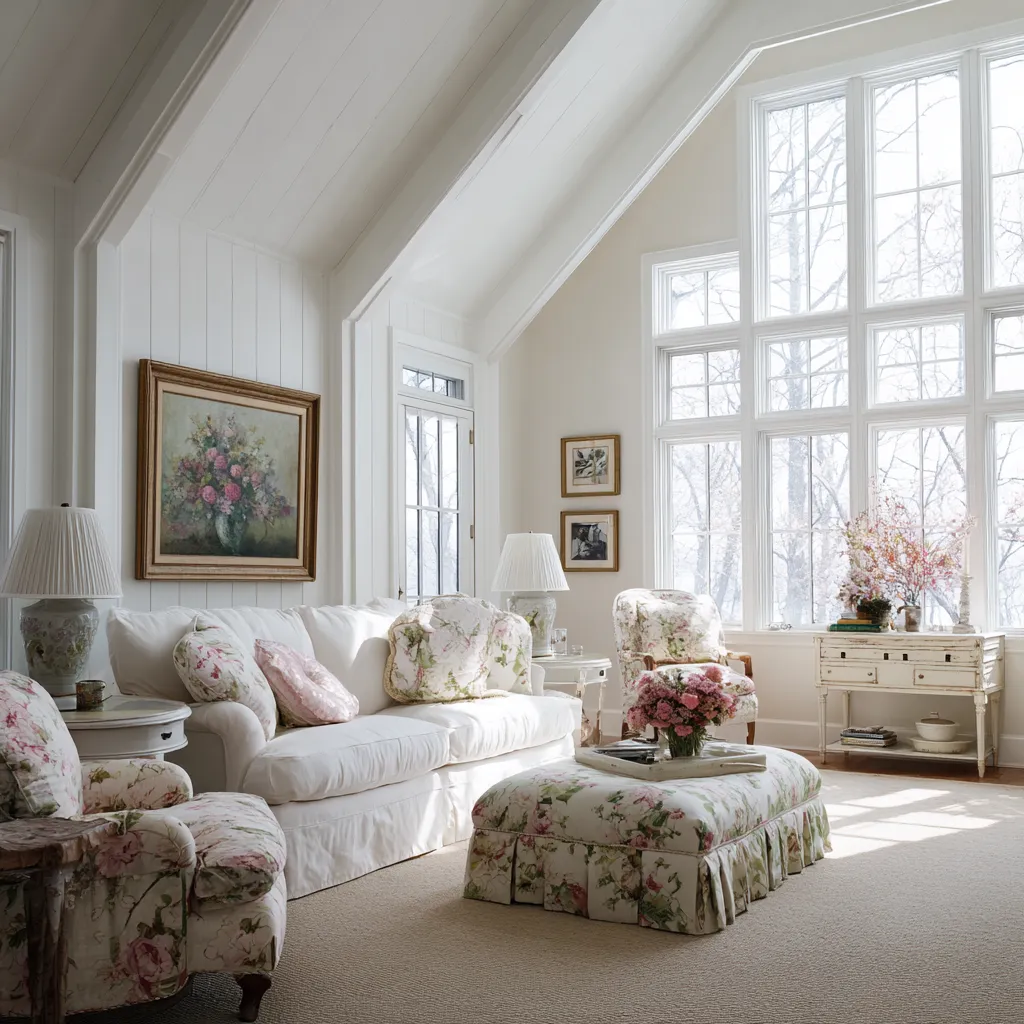
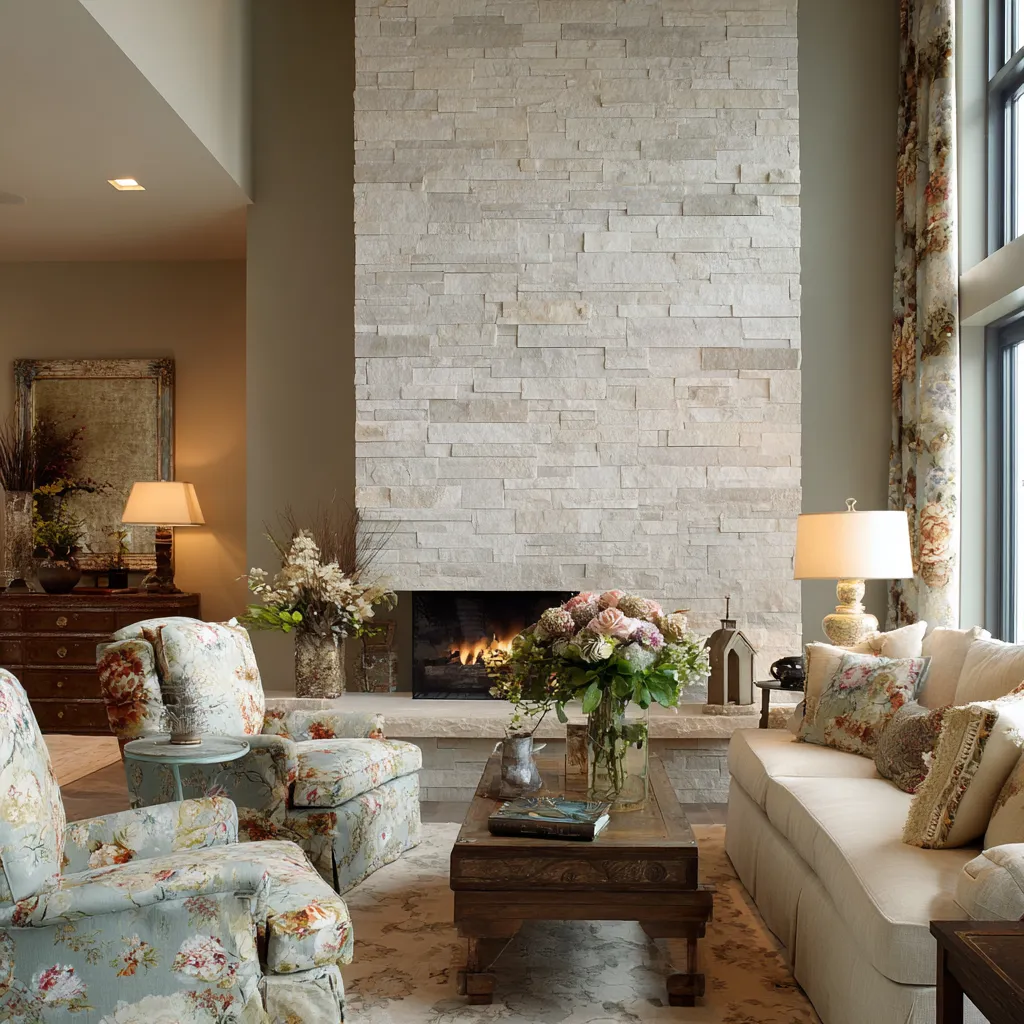
It may sit on one armchair, a few pillows, a pair of draperies, one ottoman, or a single bouquet zone. The main sofa often stays solid and pale.
That keeps the room from becoming visually sugary and allows the floral moments to hold more importance.
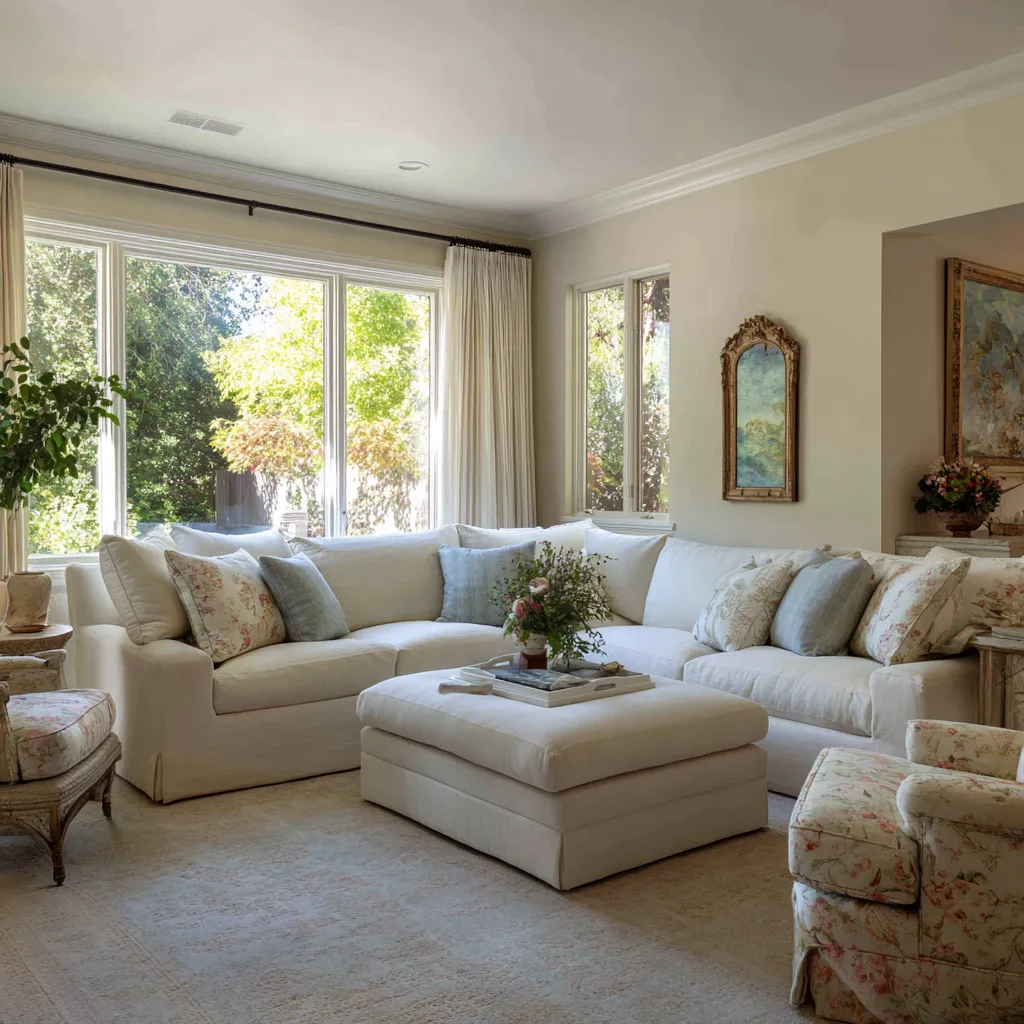
This approach also gives more freedom in palette. If florals are limited to one or two places, the rest of the room can stay more tonal and restful.
A cream sofa beside floral chairs, or plain drapery beside a floral ottoman, usually feels fresher than a room where every upholstered surface carries pattern.
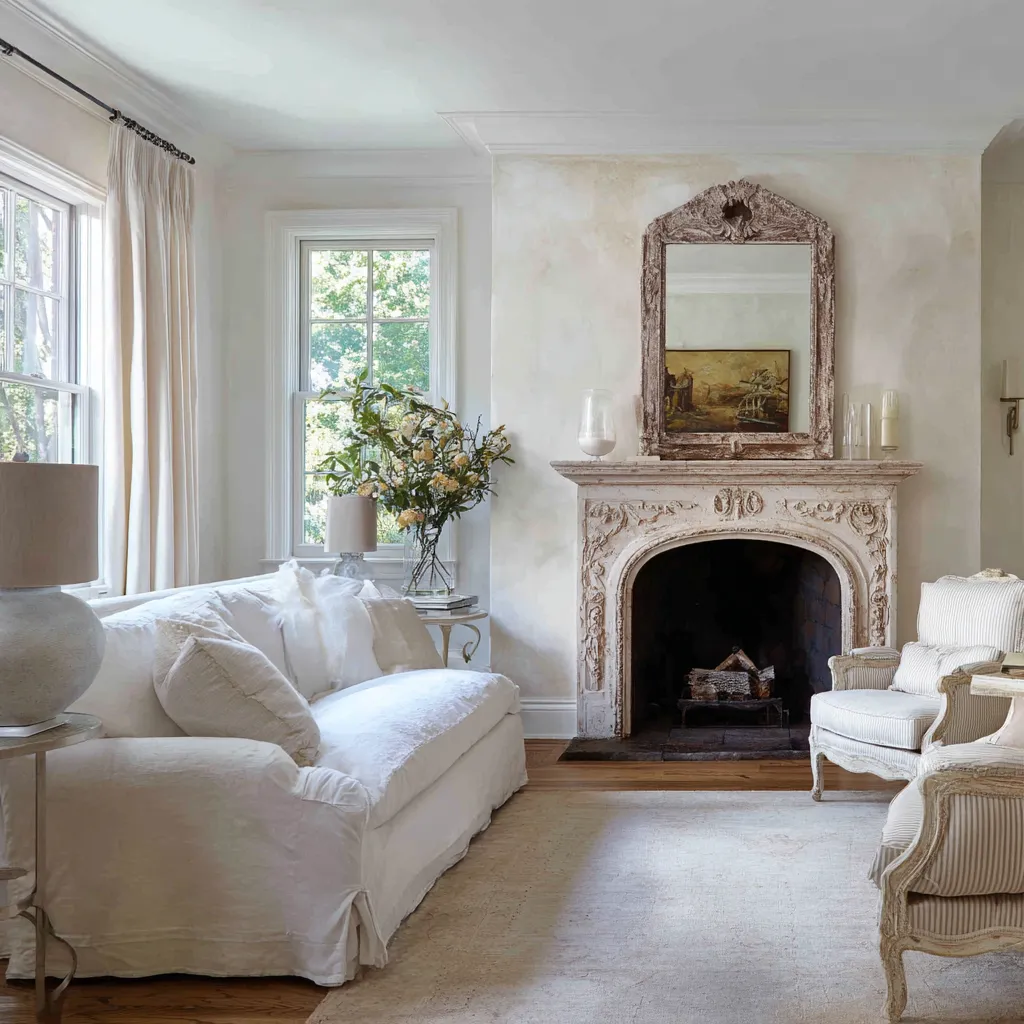
Muted florals also tend to work better than sharp, high-contrast prints. Dusty rose, faded sage, washed peach, pale blue-grey, muted lavender, and softened green sit well within shabby chic because they feel aged and settled rather than bright and newly printed.
The floral should feel absorbed into the room, not pasted on top of it.
Why contemporary art works so well in shabby chic rooms
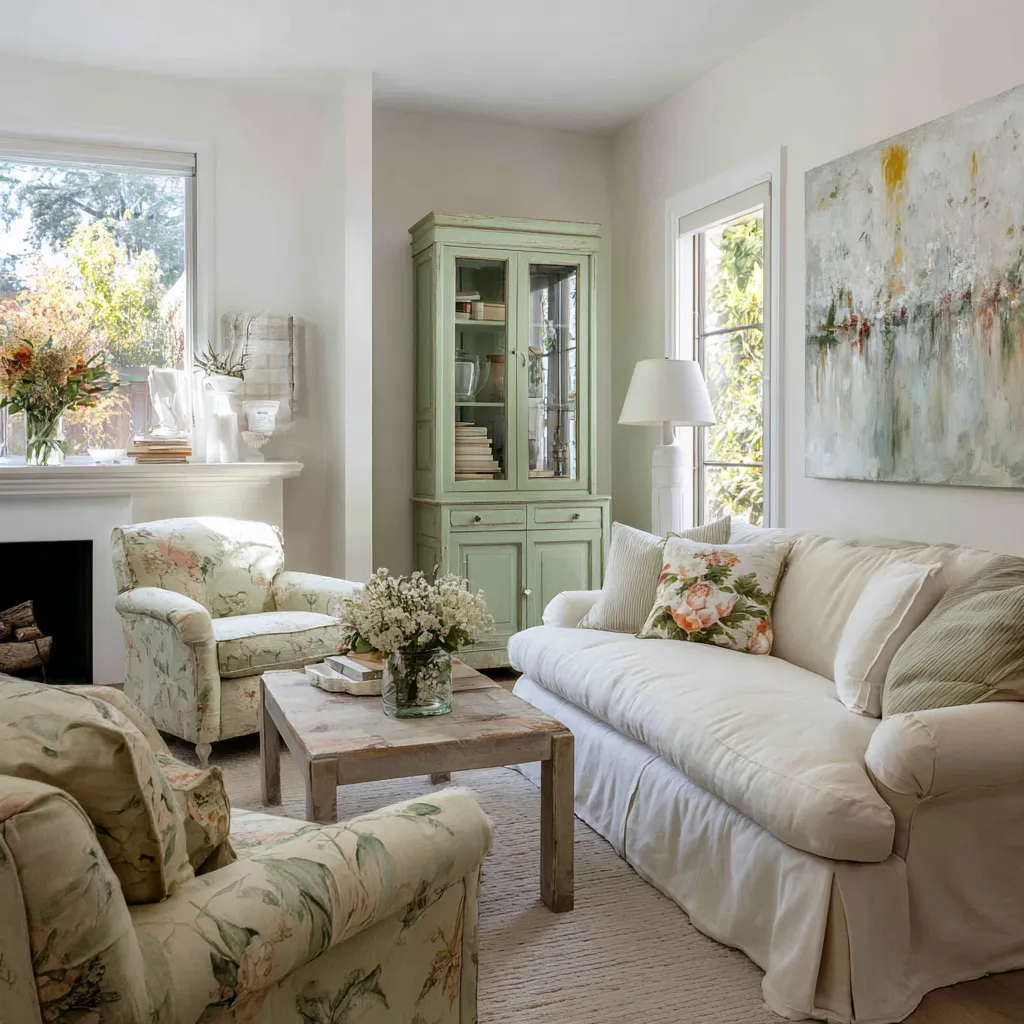
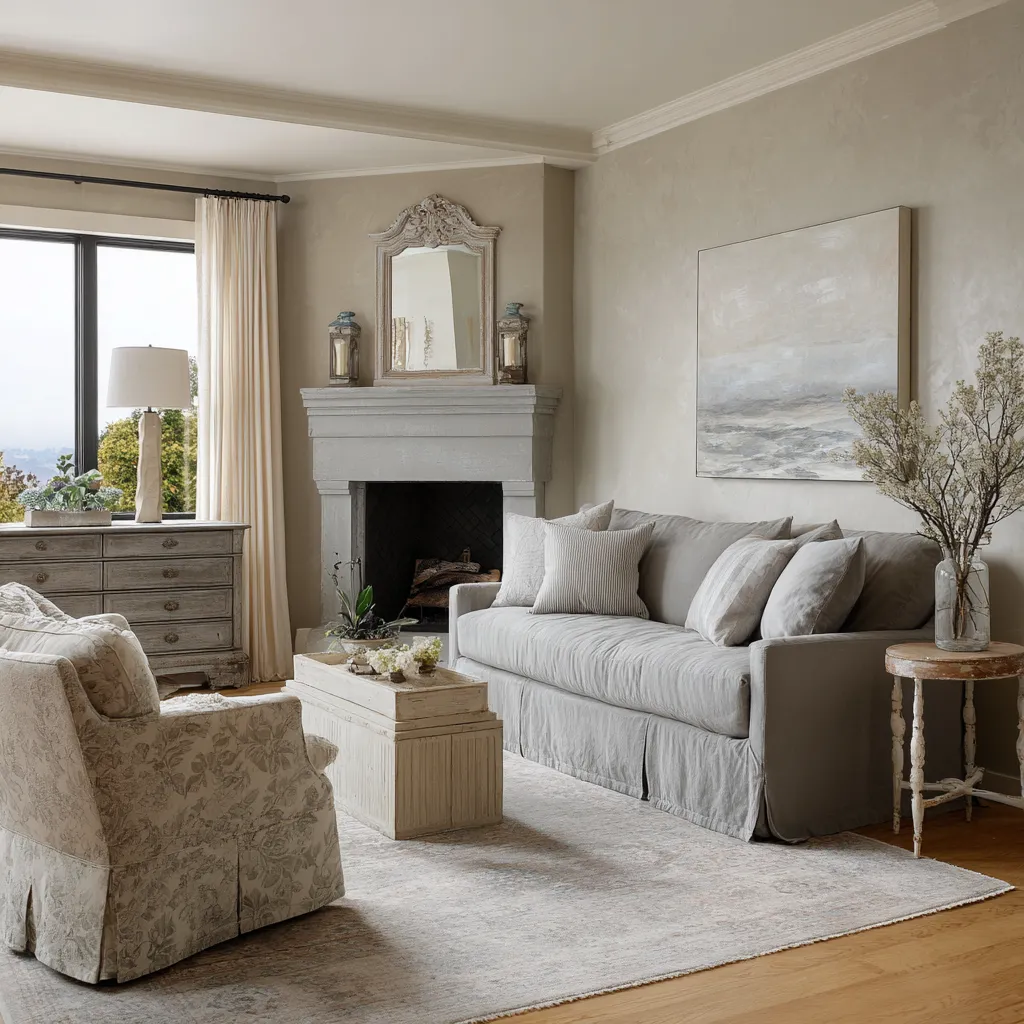
One of the useful updates in modern shabby chic living rooms is the addition of larger contemporary artwork. A broad abstract canvas does several things at once.
It gives the wall scale. It keeps antique references from becoming too literal.
It introduces present-day visual language without removing the room’s softness.
This is especially effective in rooms that already include distressed furniture, mirrors, or floral chairs. Without a modern counterweight, those pieces can push the room too far into reenactment.
A large abstract painting broadens the room’s time frame. It lets an aged sideboard or carved mantel sit in a more current setting.
The art does not need loud color. In many shabby chic interiors, a misty composition in pale blue-grey, blush, cream, mushroom, olive, smoke beige, or softened charcoal is enough.
The point is scale and visual freshness, not shock value.
Black-framed windows and dark contrast in shabby chic spaces
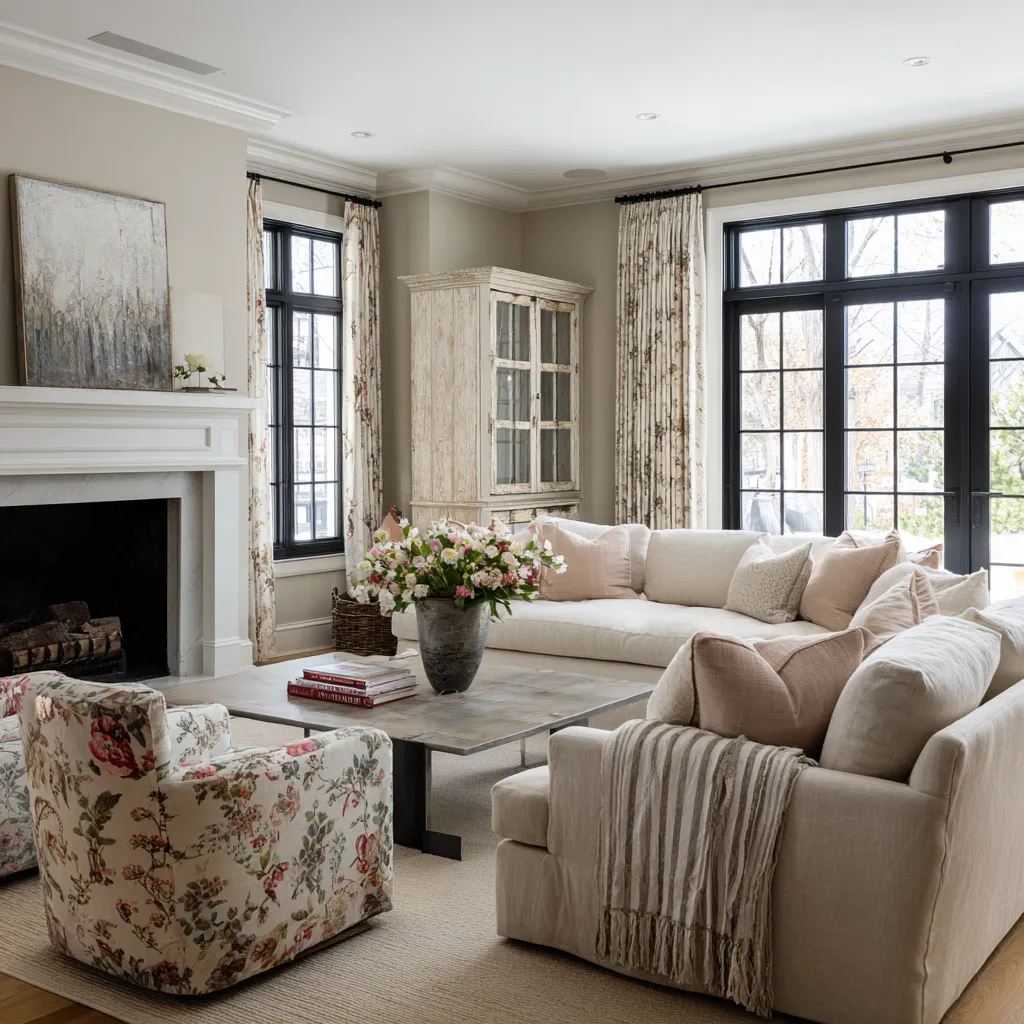
Dark window frames, metal doors, and sharper black accents are not essential to modern shabby chic, but they can be very effective when used thoughtfully. Their job is not to replace the softness of the style.
Their job is to outline it.
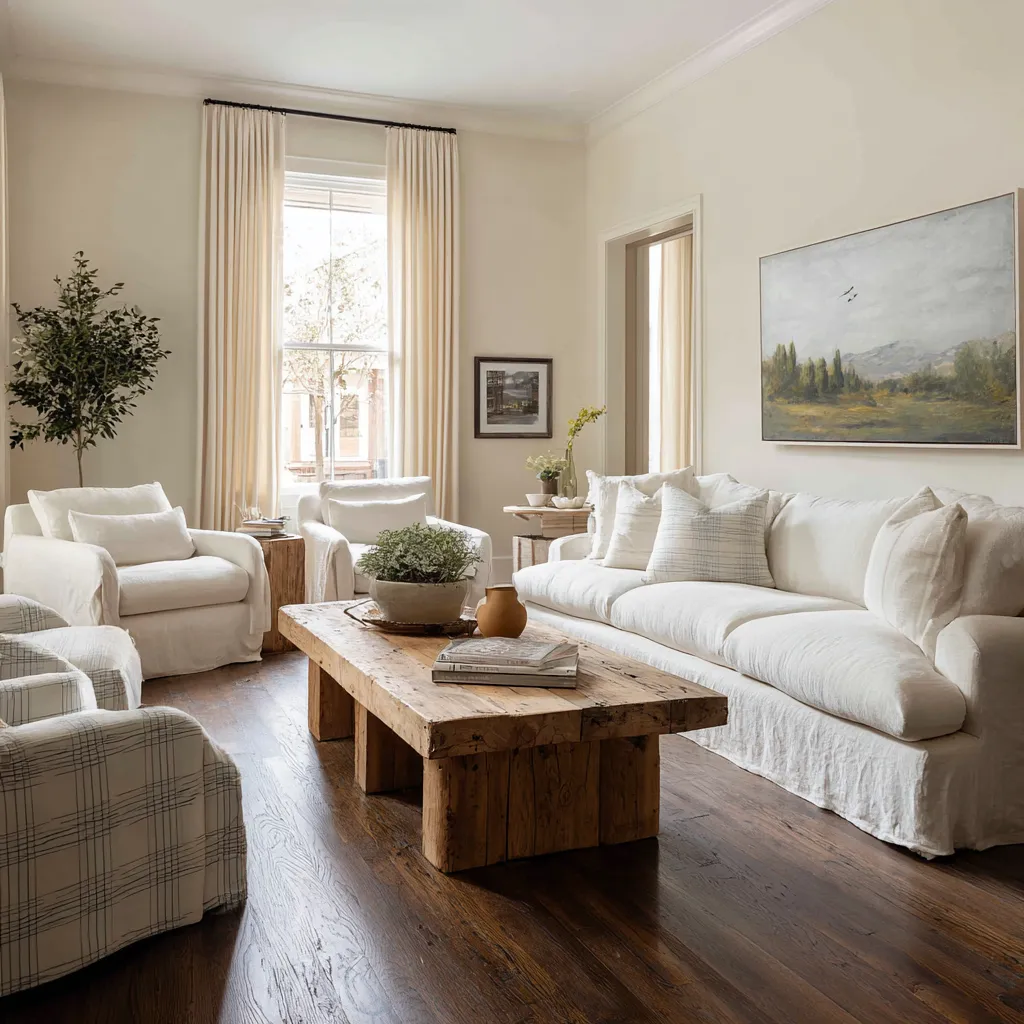
A black-framed window beside pale drapery and floral upholstery can make the room feel more current because it gives the softer materials a crisp edge. It stops cream fabrics, blush pillows, and faded florals from drifting into haze.
In rooms with a lot of romantic content, dark framing can act almost like punctuation.
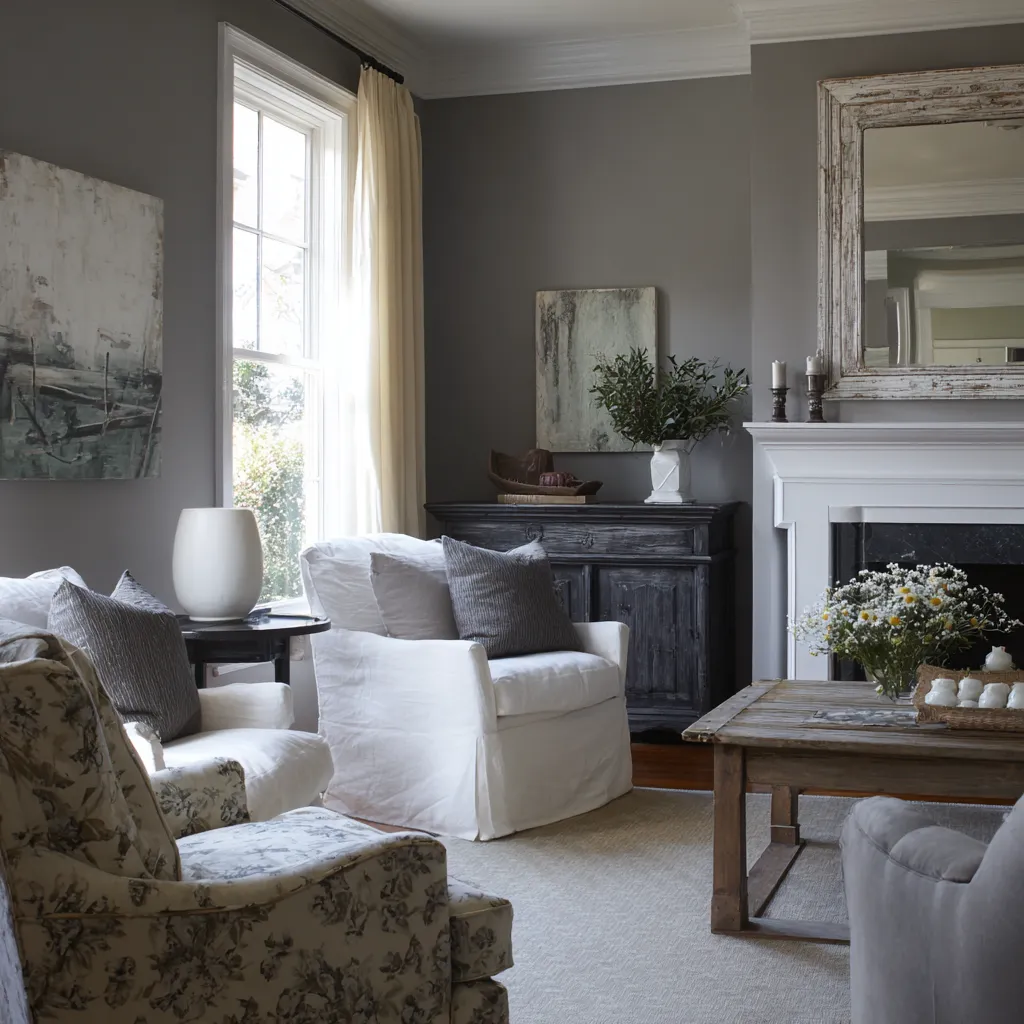
That said, once a room gains strong black contrast, it usually needs enough softness to keep the balance right. Full drapery, upholstered mass, flowers, slipcovered seating, and washed wood become even more important.
The sharper the shell, the more the room benefits from generous textile presence.
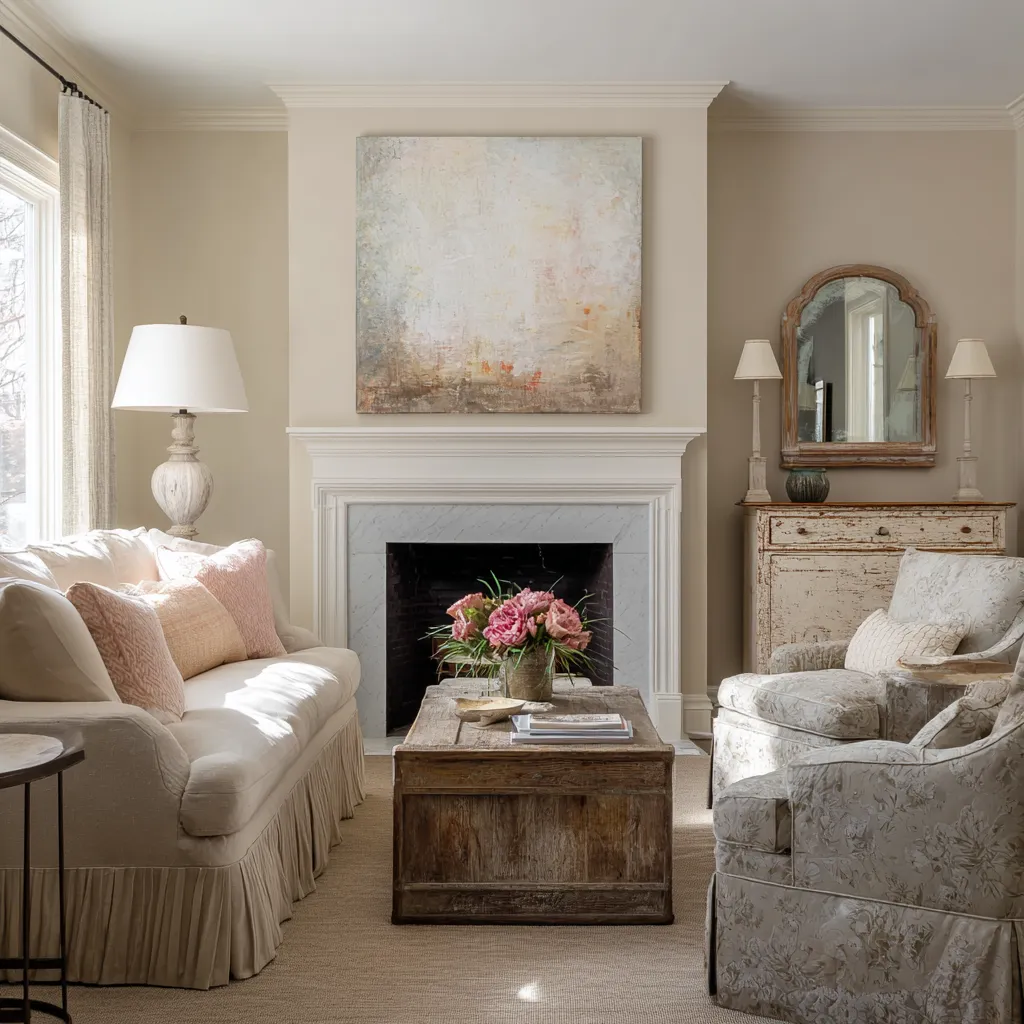
The role of the fireplace, ceiling, and overall shell
A modern shabby chic living room often feels richer when the shell does more work. A fireplace is no longer just a place to hang a mirror and arrange candles.
It may become a large plaster form, a pale stone mass, or the main architectural anchor of the room. High ceilings, arches, ceiling beams, and tall openings can also shift the style away from small decorative charm and toward something broader and more spatial.
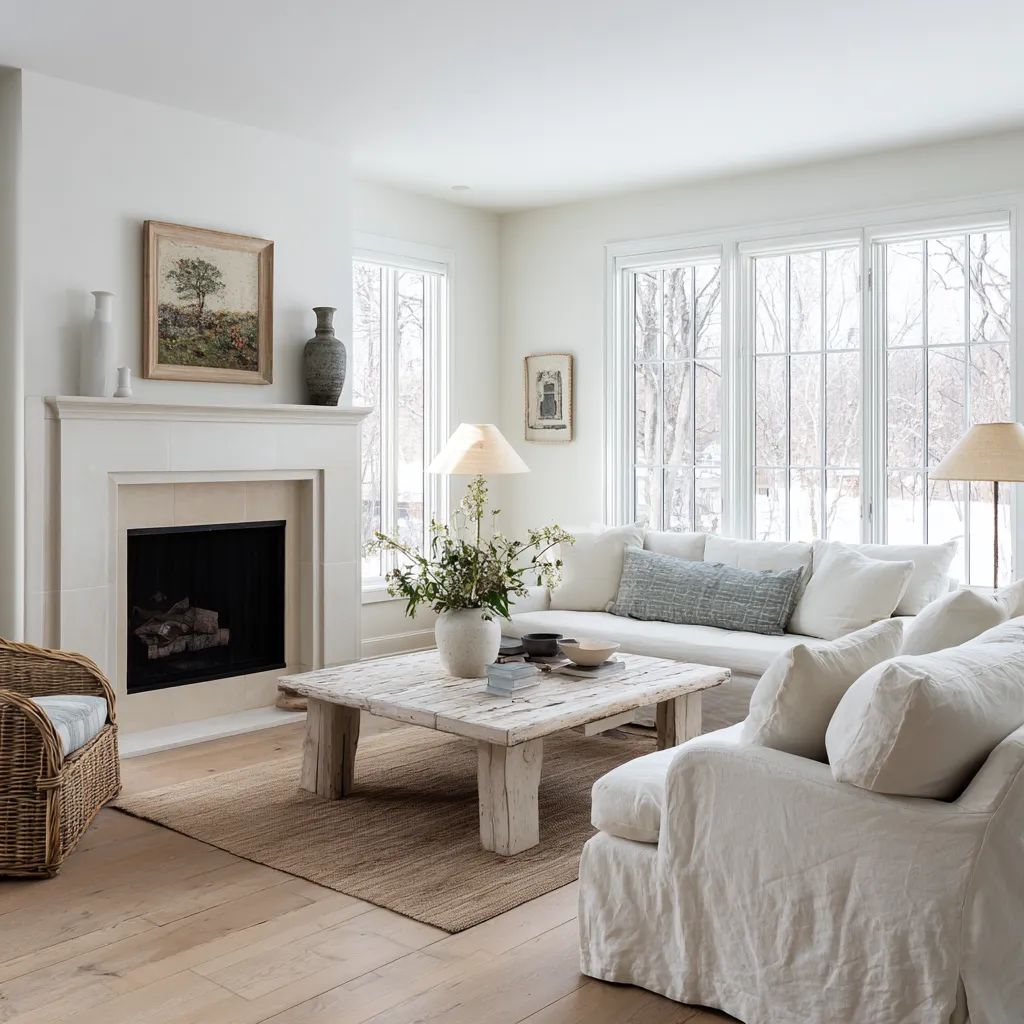
This does not make the room less shabby chic. In many cases it makes the room feel more current because the softness of the furnishings then plays against stronger structure.
A loose white sofa under heavy beams has more tension than the same sofa in a weak shell. A pale floral chair beside a thick stone fireplace feels richer than the same chair in a room with no architectural presence at all.
This is one reason the style can work well in larger homes. It is no longer limited to cottage proportion.
It can live inside vaulted spaces, farmhouse rooms, villa-like interiors, and homes with stronger glazing and bigger fireplaces, as long as the furnishings continue to bring tenderness.
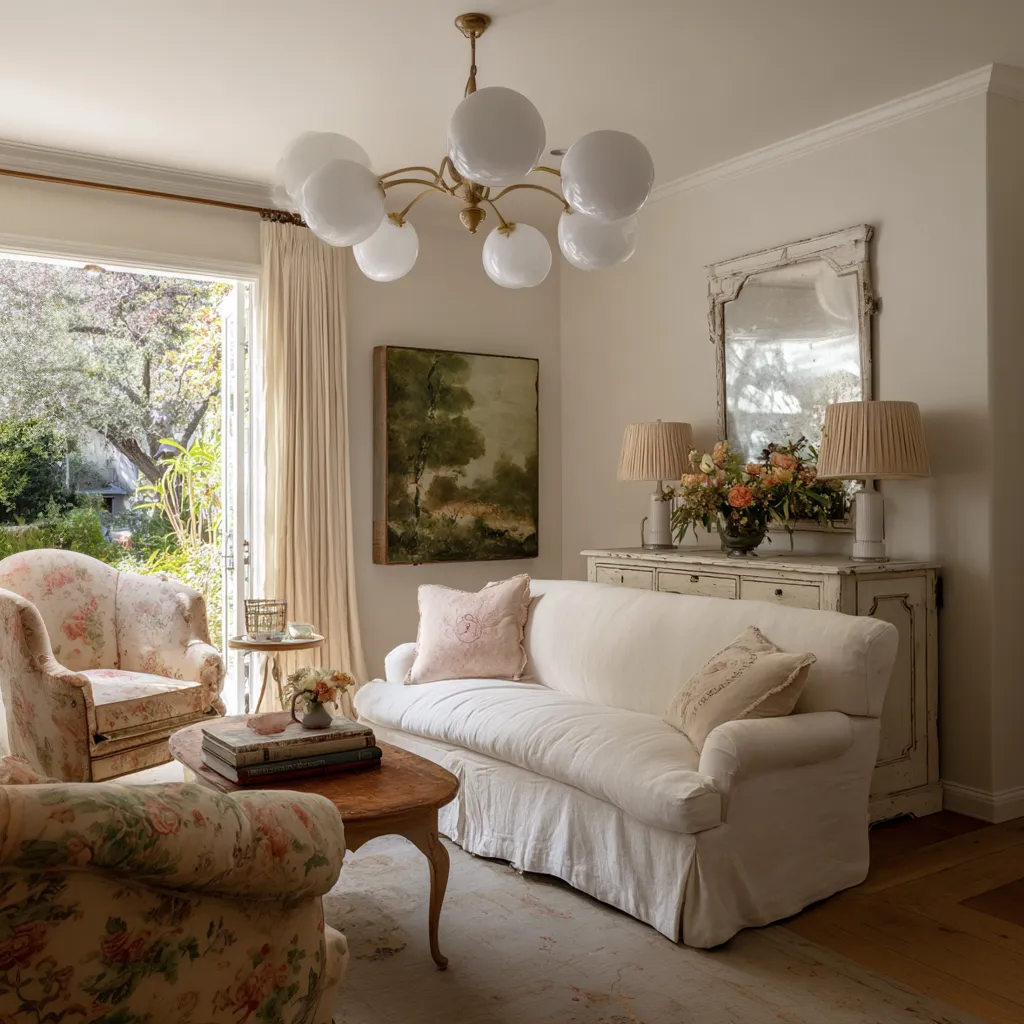
Furniture pieces that carry the style well
Slipcovered sofas remain central because they bring softness, ease, and a slightly lived-in quality. Skirted pieces still work, but they look strongest when the rest of the room is not equally decorated.
Distressed cabinets and painted sideboards remain powerful because they concentrate patina in one object. Floral accent chairs are still one of the clearest style signals, especially when the print is used selectively.
Oversized ottomans and sectionals bring the style into present-day family life. Weathered wood coffee tables add humility and texture, while simpler shapes keep them from feeling fussy.
Even more refined rooms benefit from one piece with strong tactile age. That might be a scrubbed wood table, a cabinet with rubbed edges, a worn mirror, or a time-softened mantel.
Without at least one anchor of age, the room can become merely pale rather than shabby chic.
Styling: less, larger, and better placed
The styling of a modern shabby chic living room usually succeeds by doing less. Instead of many tiny decorative gestures, think in larger, calmer placements.
One bouquet of garden flowers on a coffee table or console can establish the whole room’s romantic mood. One stack of books, one ceramic vessel, and one branch arrangement are often enough.
Mantels look stronger when they are not crowded. Sideboards gain more presence when they are allowed to breathe.
This does not mean the interior design should feel bare. It means that softness, finish, and furniture placement should carry more of the atmosphere than object count.
A room with pale drapery, washed wood, soft seating, a distressed cabinet, and one expressive floral arrangement often feels fuller than a room with shelves of small accessories.
Common mistakes that weaken the look
- The first mistake is over-distributing florals. When curtains, chairs, pillows, ottomans, and art all repeat the same floral mood at once, the room often becomes visually thick and older in feeling than intended.
- The second is relying on distressed furniture alone to carry the style. Patina is important, but without soft seating, tonal restraint, and enough open space, the room can feel heavy rather than airy.
- The third is making the palette too busy. Modern shabby chic does well with faded complexity, not hard contrast and too many competing accent colors.
- The fourth is stripping the design so far that nothing remains except white walls and neutral furniture. The style still needs memory, tenderness, and some sign of timeworn beauty. That may come through a mirror, a cabinet, floral fabric, beams, weathered wood, or fresh flowers, but it must appear somewhere.
A current way to think about modern shabby chic
Modern shabby chic living rooms should be built as acts of balance. They balance romance with restraint, age with openness, softness with structure, floral memory with broader surfaces, and everyday comfort with visual character.
They understand that the style does not need to be crowded to feel warm, and it does not need to become sharp and minimal to feel fresh.
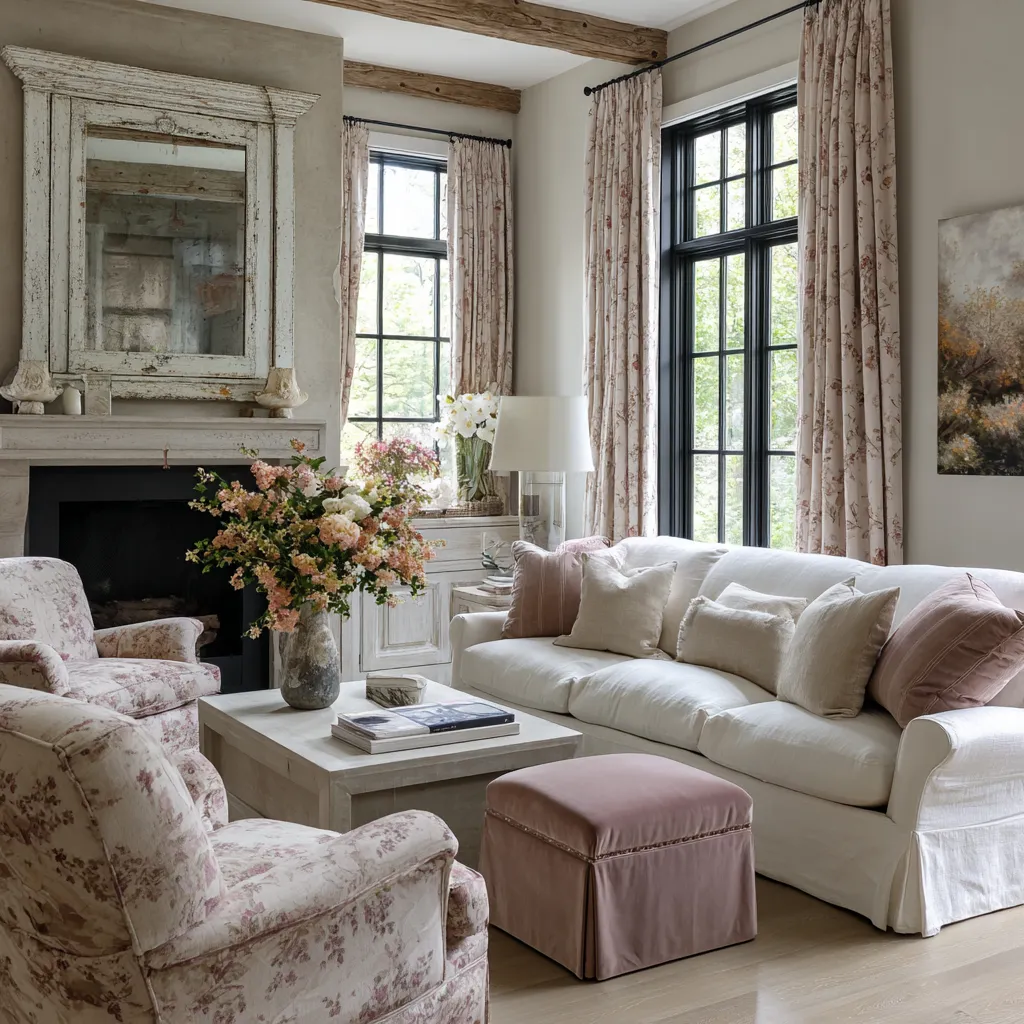
That is why modern shabby chic now works in many different settings. It can sit inside a pale family room with a sectional and one floral chair.
It can appear in a villa-like space with arches, beams, and a large stone fireplace. It can take on a French accent with a carved mirror and a painted sideboard.
It can even live beside black-framed windows and large abstract art. What holds all of these rooms together is not one decorating formula.
It is a shared atmosphere built from softened surfaces, edited composition, and the feeling that beauty has been gently worn rather than newly polished.
In the end, modern shabby chic living room design is at its strongest when it stops trying to prove the style and starts letting the room feel it. A pale sofa, a faded palette, a little patina, a floral note placed with care, a strong shell, and enough space for each element to matter can create a living room that feels romantic, current, and deeply livable at the same time.