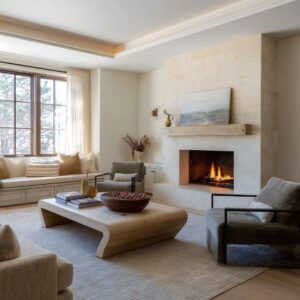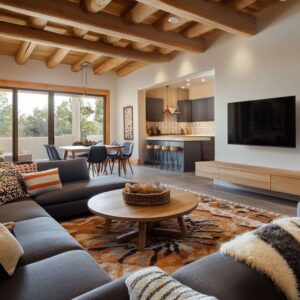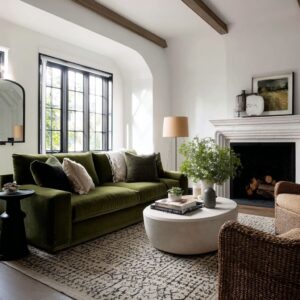
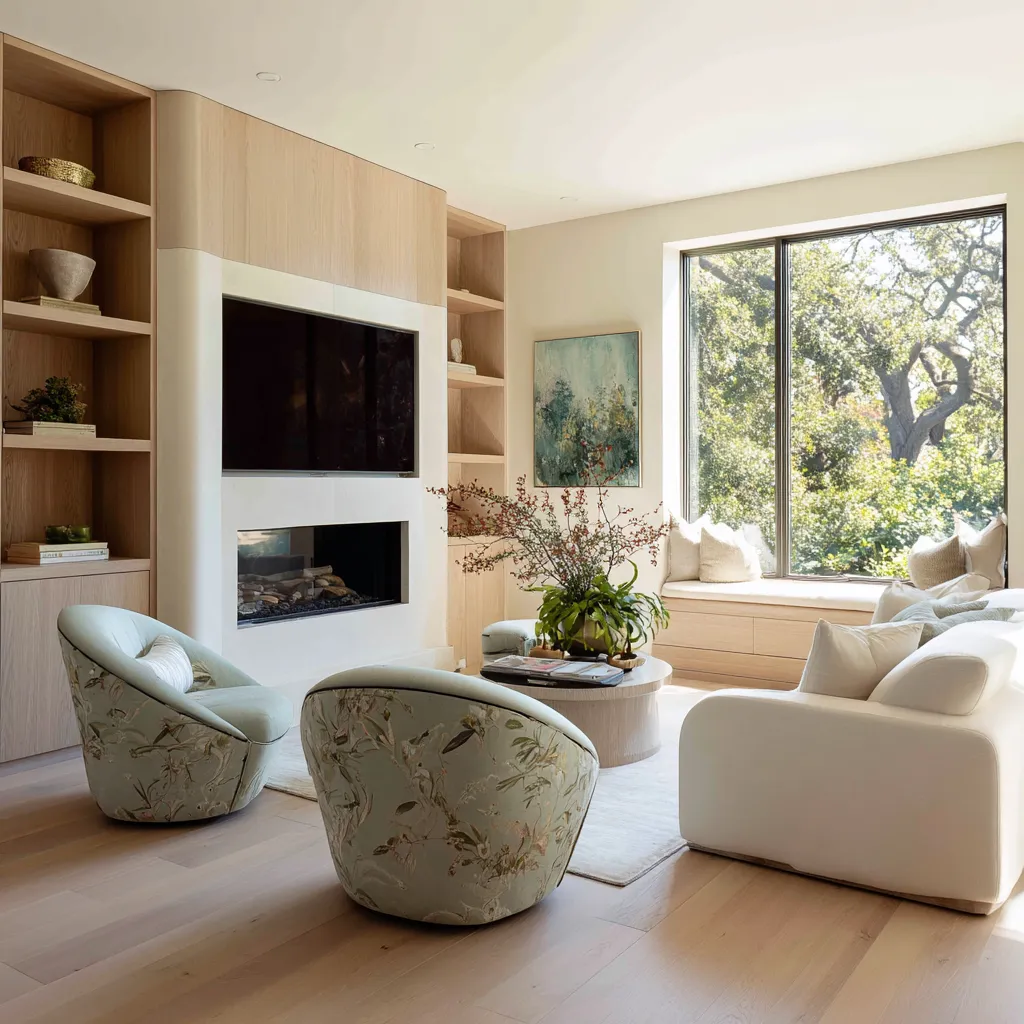
Modern grandmillennial living room design works because it refuses a false choice. It does not force an interior to pick between inherited domestic beauty and present-day clarity.
Instead, it gives each one a different job. That distinction matters.
A lot of design ideas fail with this style because they either lean too hard into nostalgia and become heavy, or they strip the room so far back that very little grandmillennial character remains. Grandmillennial living room ideas should sit in a more thoughtful middle ground.
They keep floral fabric, plaid, books, framed art, porcelain, drapery, mantels, and a sense of household ritual, but they stop those elements from spreading everywhere at once. The interior design still feels warm, familiar, and layered, yet it keeps enough open space and enough strong structure to stay current.
That is the appeal of modern grandmillennial living room designs. They do not erase memory.
They organize it.
What makes a grandmillennial living room feel modern now
Fresh versions of the style do not depend on replacing traditional ingredients with newer ones. They depend on relocating them.
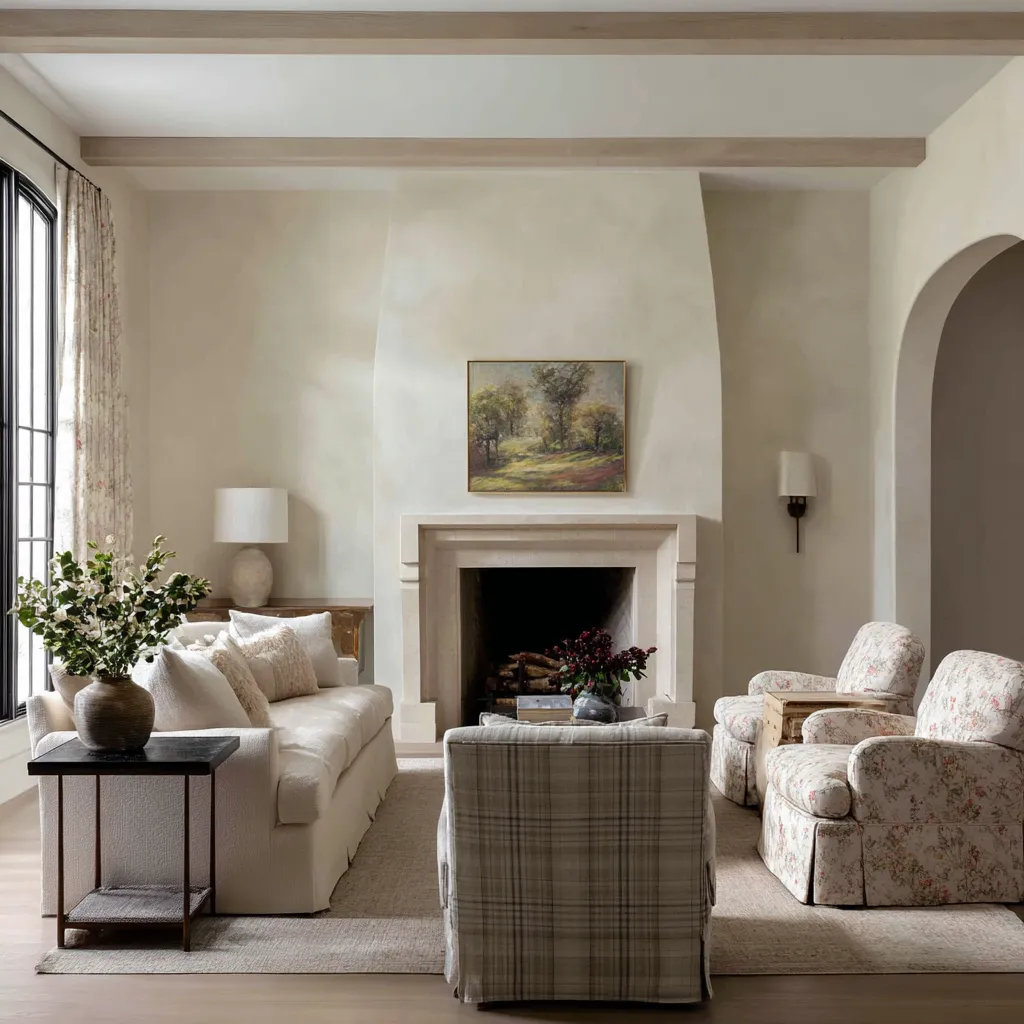
Instead of covering the entire room in expressive pattern, gathered window treatments, ornate objects, and visible decorative density, they concentrate those notes in selected places. A pair of floral chairs may carry the emotional warmth.
A faded rug may supply historical softness. A bookshelf may hold the literary side of the room.
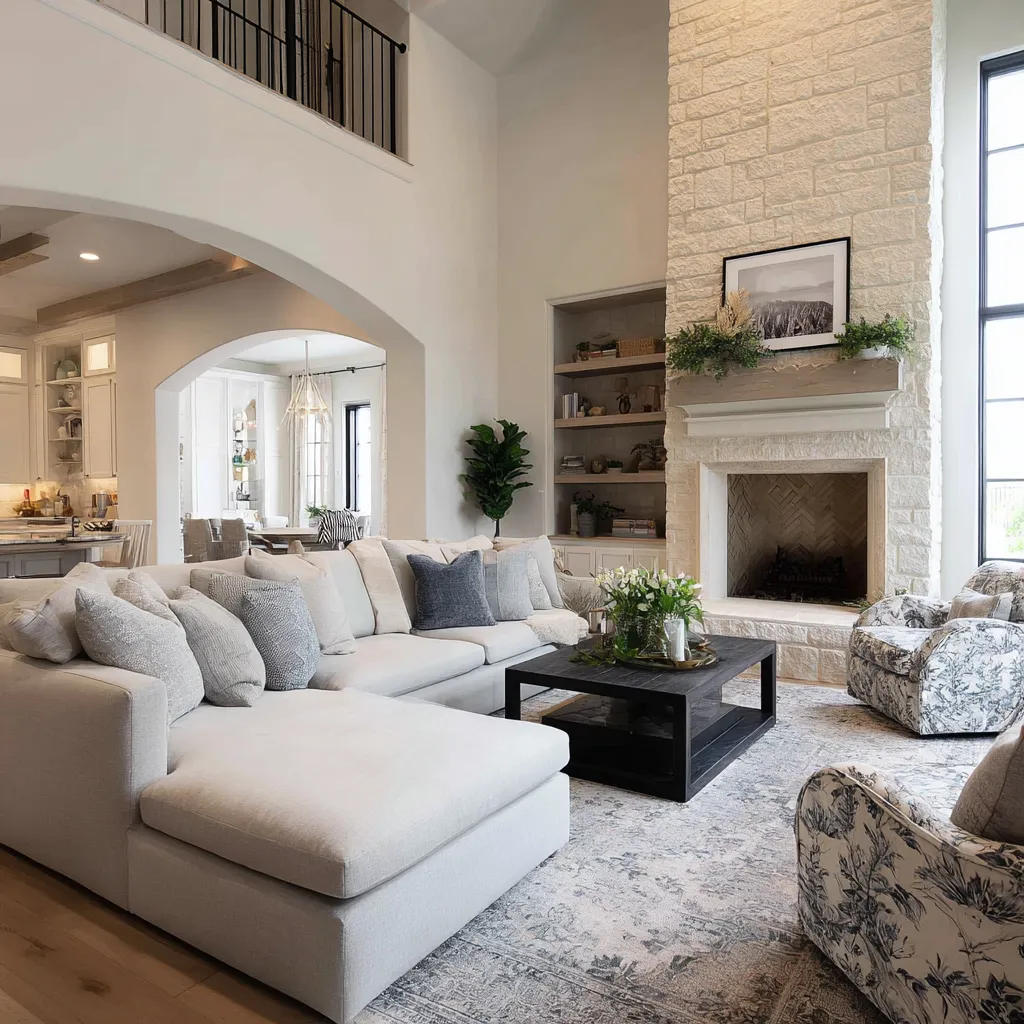
A branch arrangement, a stack of books, or a blue-and-white porcelain jar may suggest continuity and domestic life. Meanwhile, the larger masses remain simpler: a broad pale sofa, a monolithic fireplace wall, a pared-back coffee table, a tightly edited shelf composition.
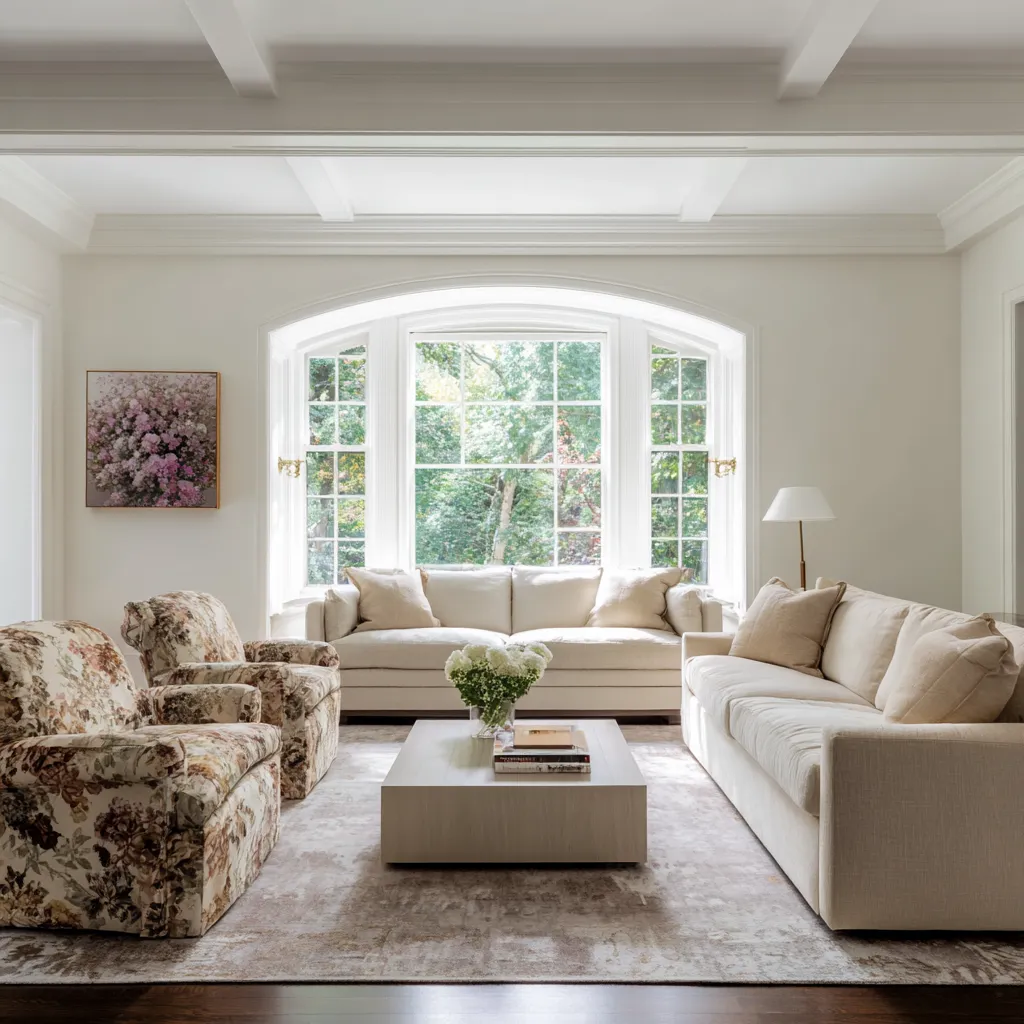
This is why the style can still hold onto its traditional and slightly maximalist roots without appearing dated. The interior design remains rich, but the richness is focused rather than continuous.
The shift is subtle, yet it changes everything. In older decorative designs, almost every surface contributed visual activity at the same level.
In newer grandmillennial living room design ideas, hierarchy matters far more. Some elements speak with strength.
Others hold the background. The eye gets rest, then interest, then rest again.
That rhythm is what gives the room freshness.
The role of a plain sofa
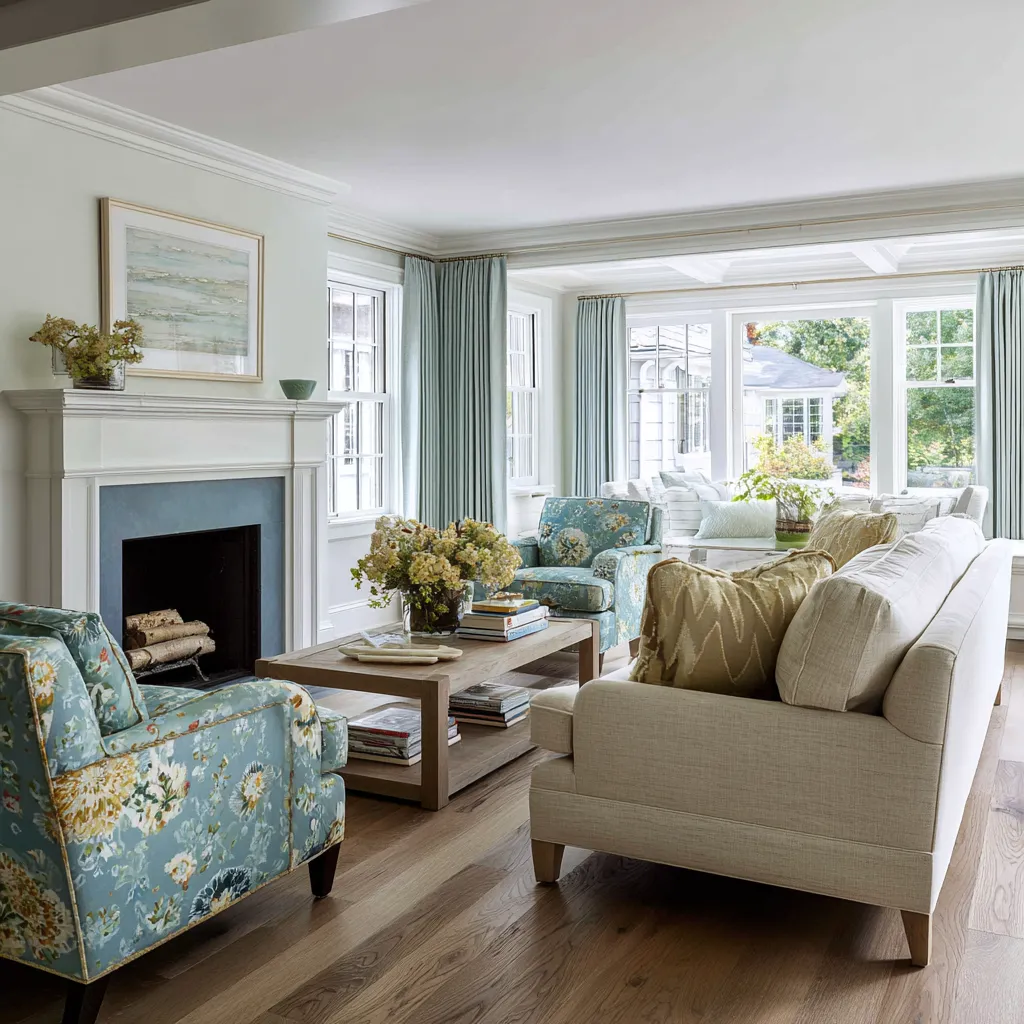
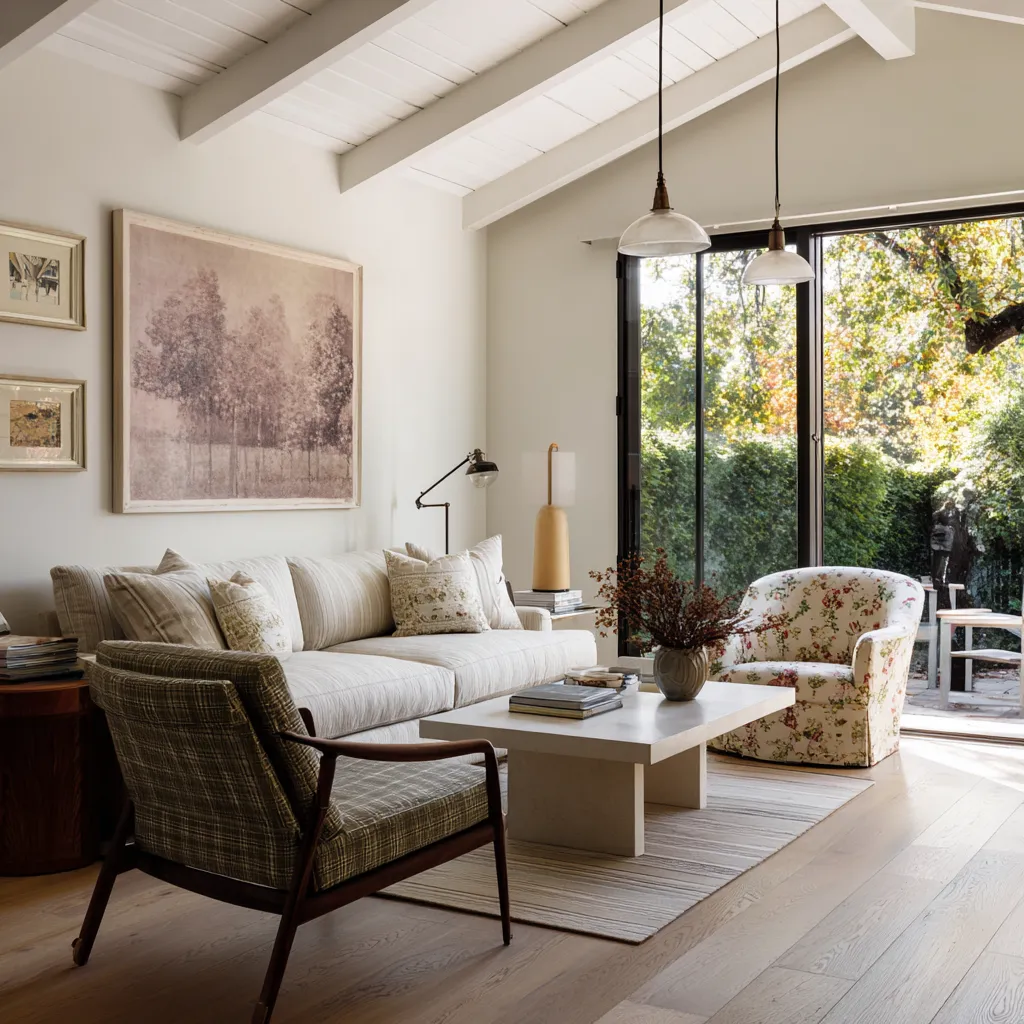
One of the design patterns in modern grandmillennial rooms is the use of a broad, simple main sofa paired with more expressive secondary seating. That single move solves several problems at once.
First, it makes the room easier to read. A large upholstered piece in a restrained fabric creates a visual field that steadies the composition.
Without that larger resting surface, floral chairs, patterned pillows, faded rugs, and layered accessories begin to pile up into one uninterrupted decorative layer.
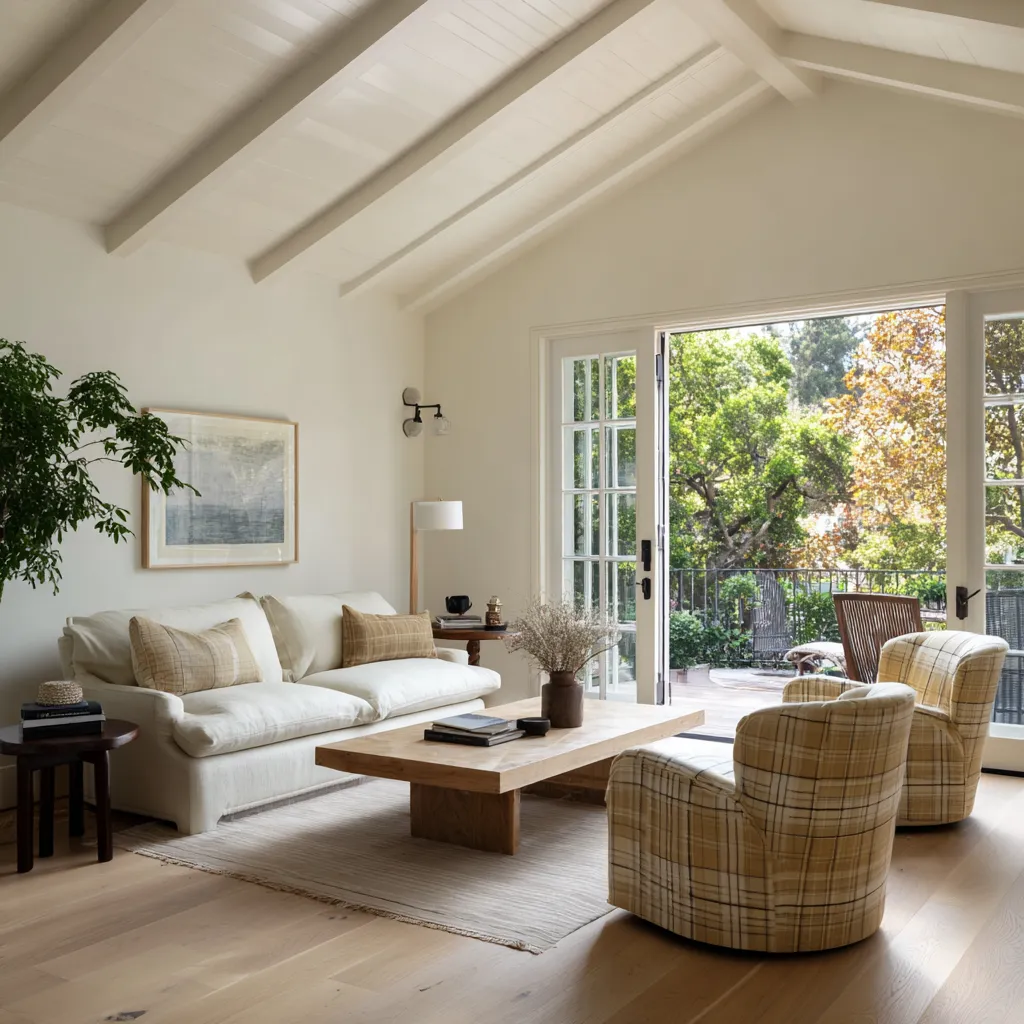
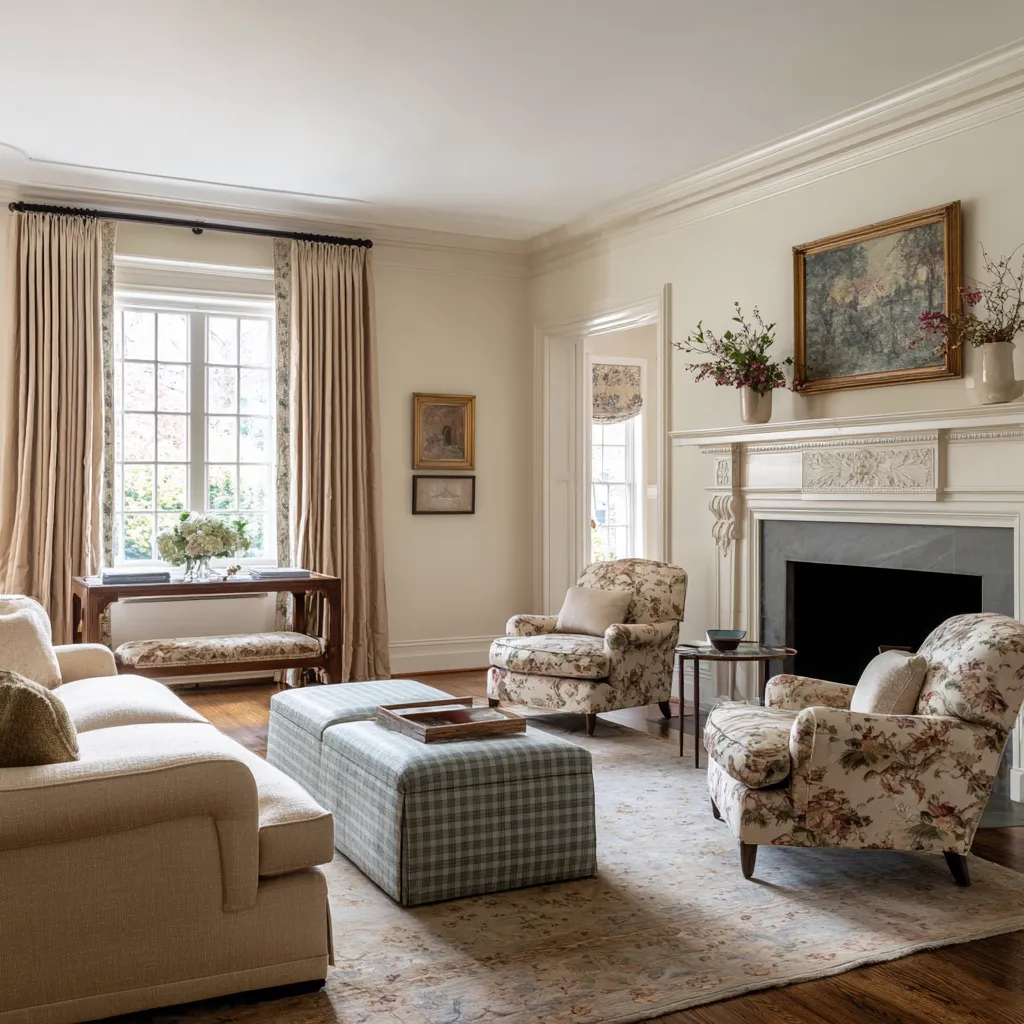
Second, it lets traditional textiles feel chosen rather than compulsory. Floral, plaid, stripe, gingham, and checks all belong naturally in this style, but they are usually stronger when they appear on armchairs, swivels, occasional chairs, pillows, or one ottoman instead of occupying the largest seating piece in the room.
The pattern becomes more legible because it has space around it.
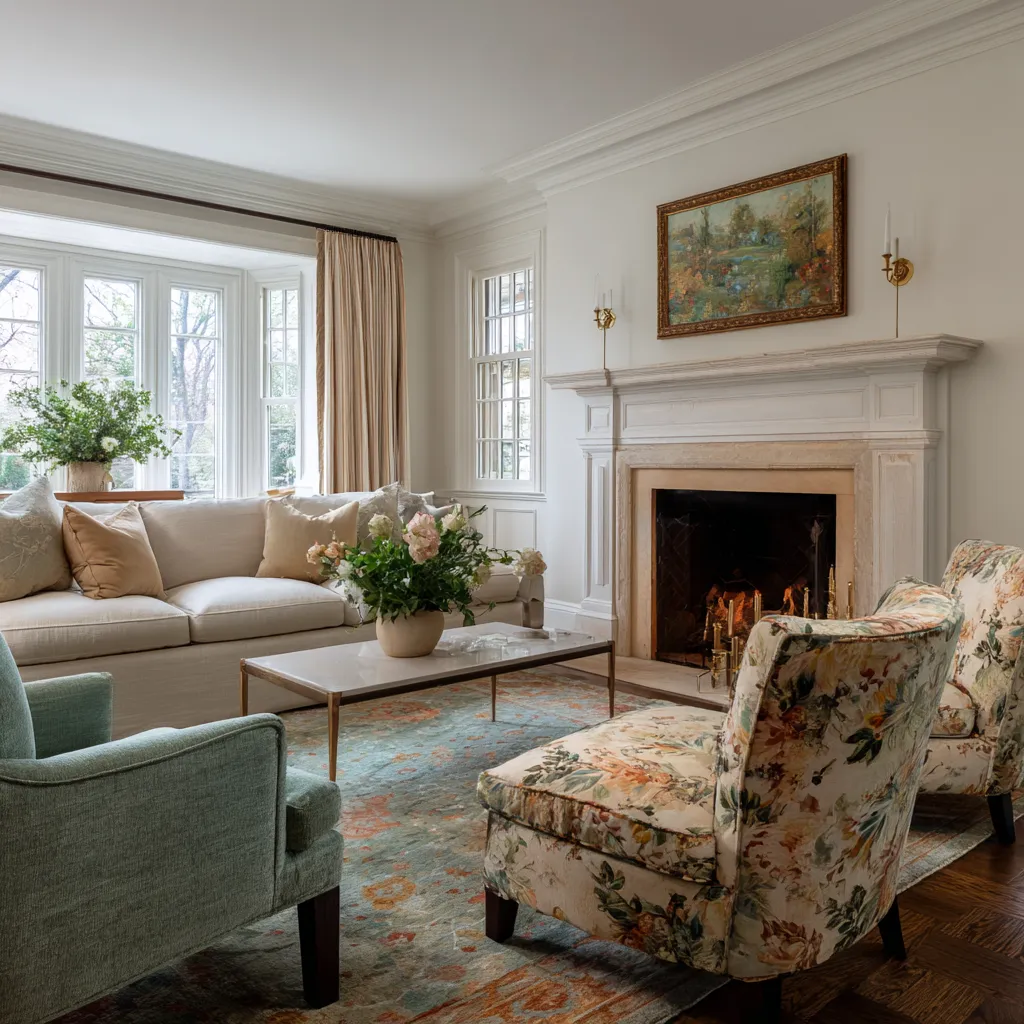
Third, this arrangement creates a very specific emotional effect. The room still offers softness, comfort, and textile memory, but it does not tip into overstatement.
The plain sofa keeps the room grounded in present-day living. The patterned secondary pieces bring the charm.
That balance is more important than any one motif. A design can feel deeply grandmillennial with florals, but it can also get there through plaid, stripe, or subtle checks.
The issue is not the exact print family. The issue is where the pattern lives and how much of the room it occupies.
Architecture carries the modern weight
Another reason this style works well right now is that architecture often does much of the modernizing work. A strong architectural shell gives the room seriousness.
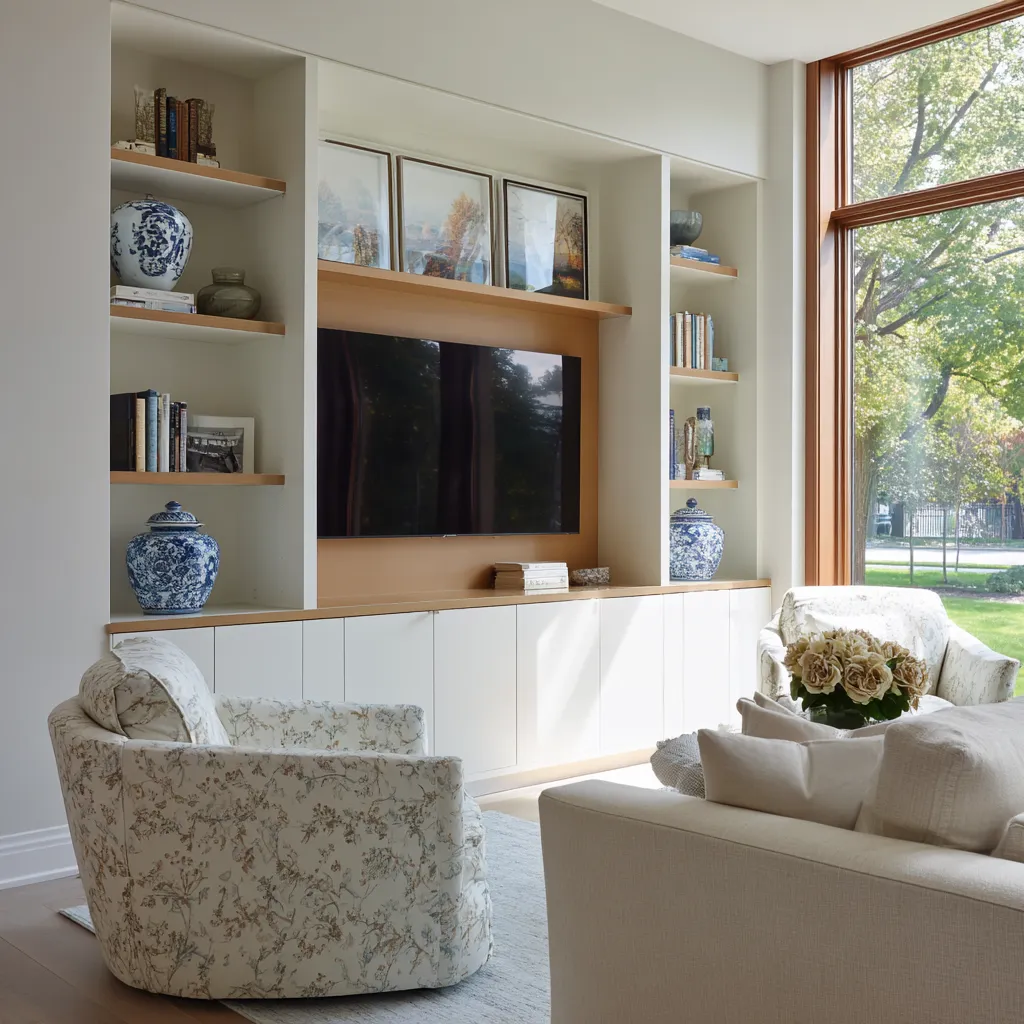
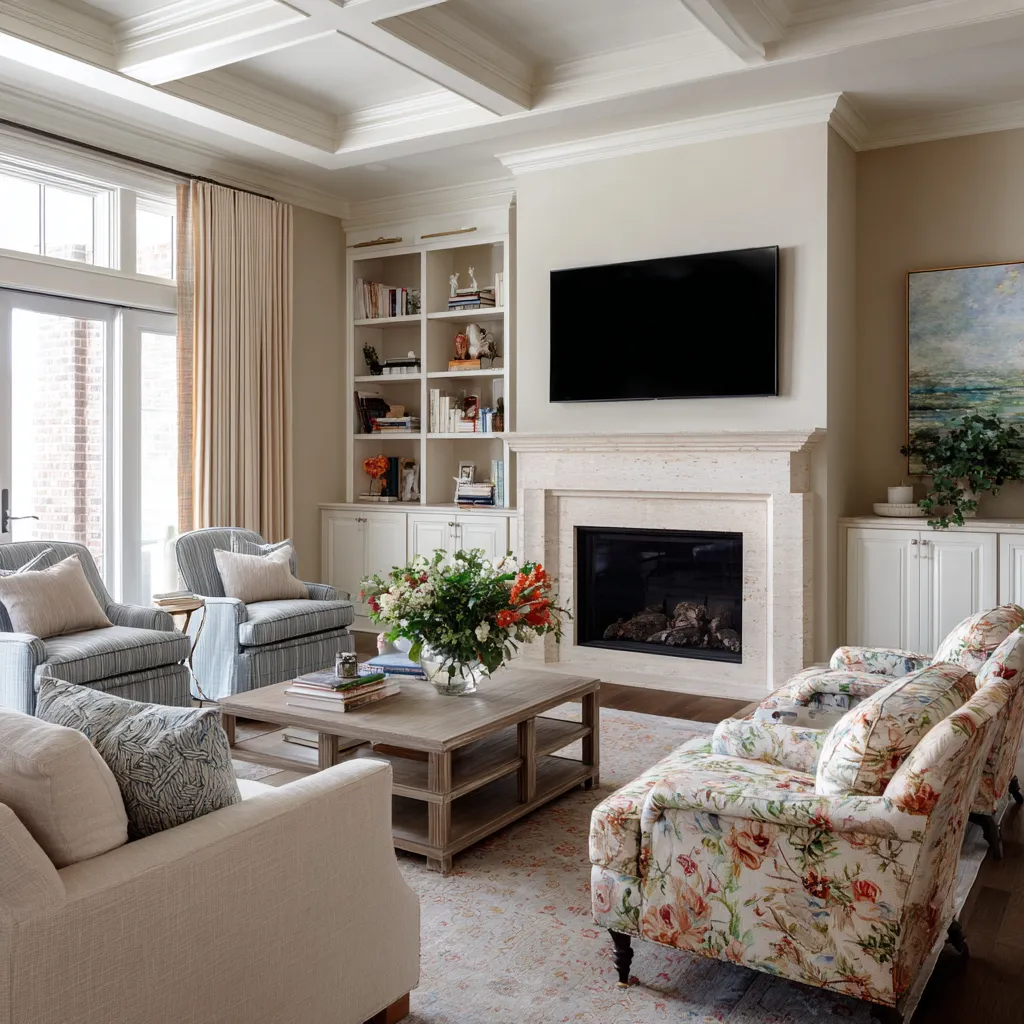
It can be a tall plaster chimney breast, paneled walls, coffered ceilings, broad arches, built-in shelving, black-framed glazing, a beam ceiling, or a highly structured media wall. These elements bring order and scale before any textile enters the conversation.
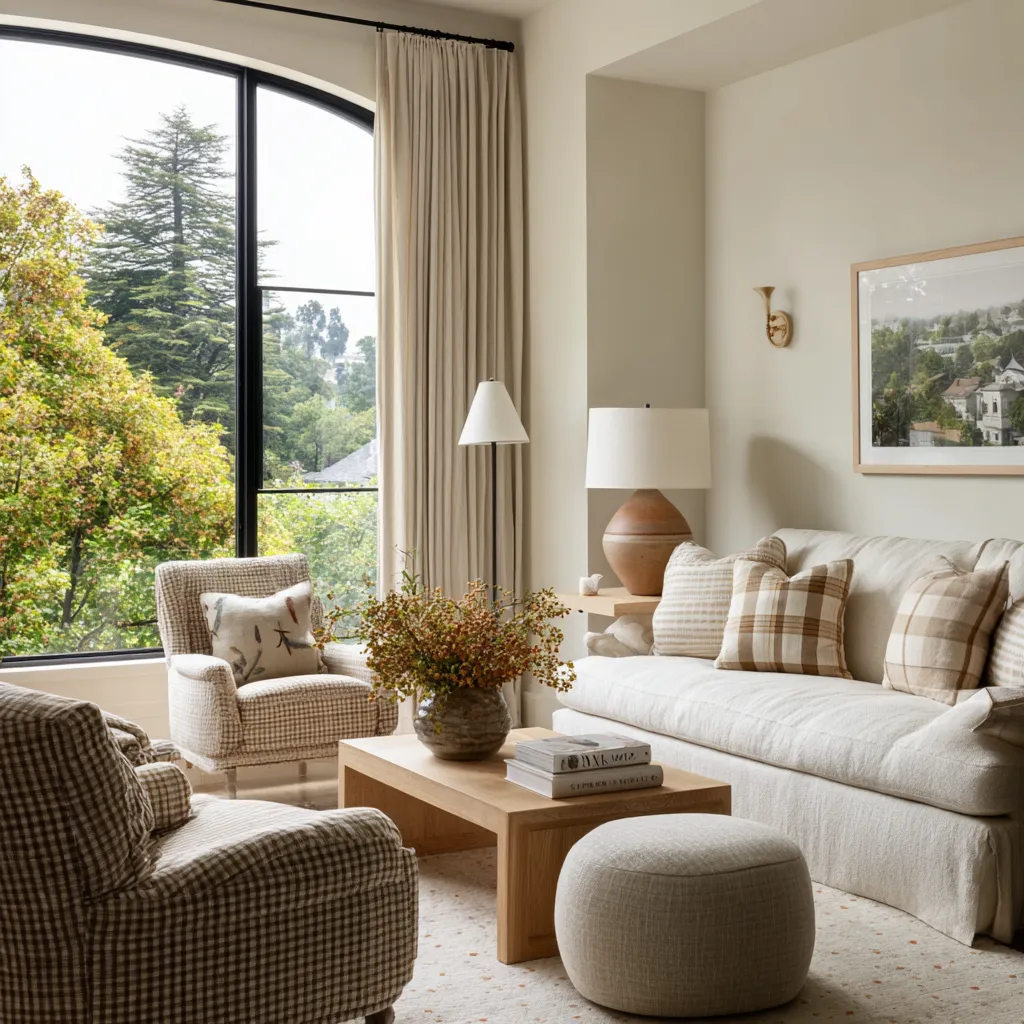
That order protects the interior design from sentimentality. Once the shell has a clear backbone, the softer and more nostalgic pieces have something firm to press against.
Floral upholstery looks sharper in a room with a monolithic fireplace wall. Books and framed art feel less fussy when they sit inside broad built-ins with visible empty zones.
Drapery feels more current when it hangs against a strong window shape or a pared-back wall plane. This is why modern grandmillennial designs can feel more architectural than older decorative living rooms.
The shell is not passive background. It is an active force holding the room together.
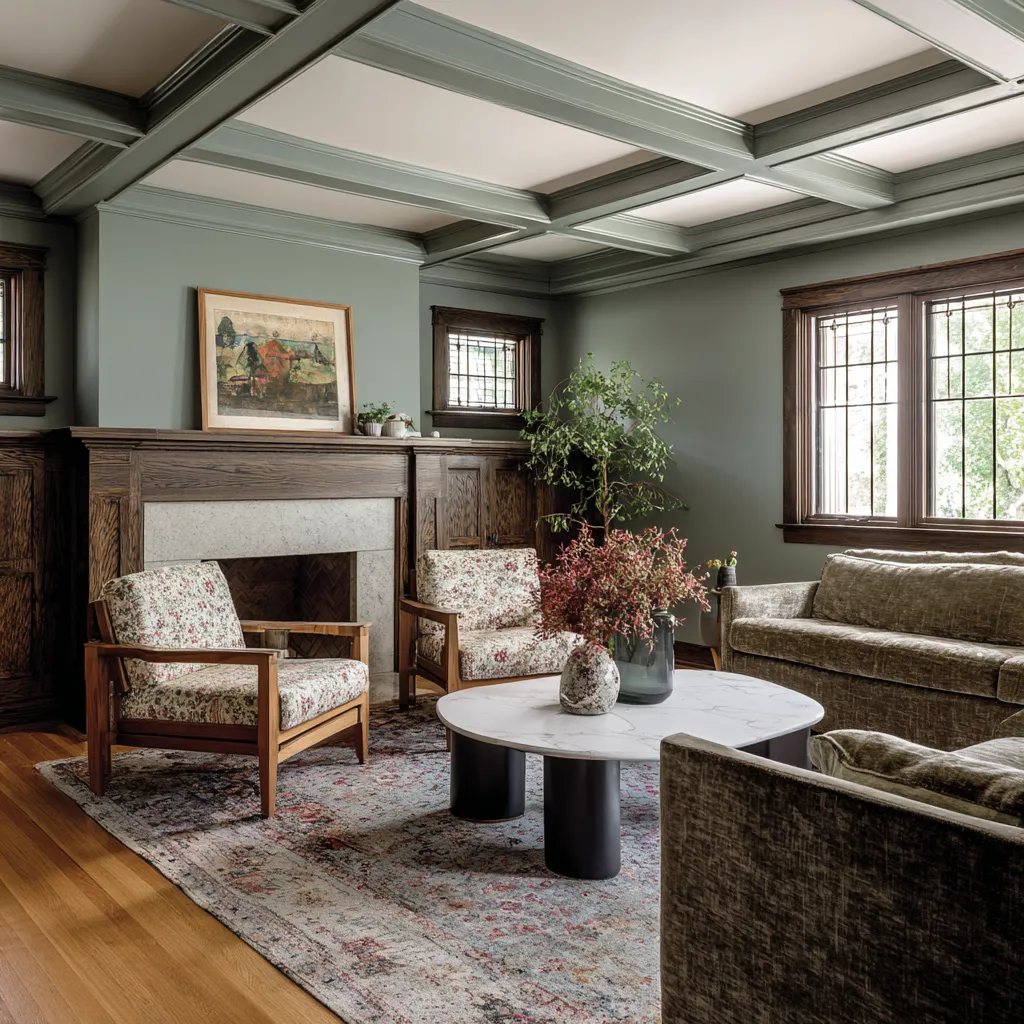
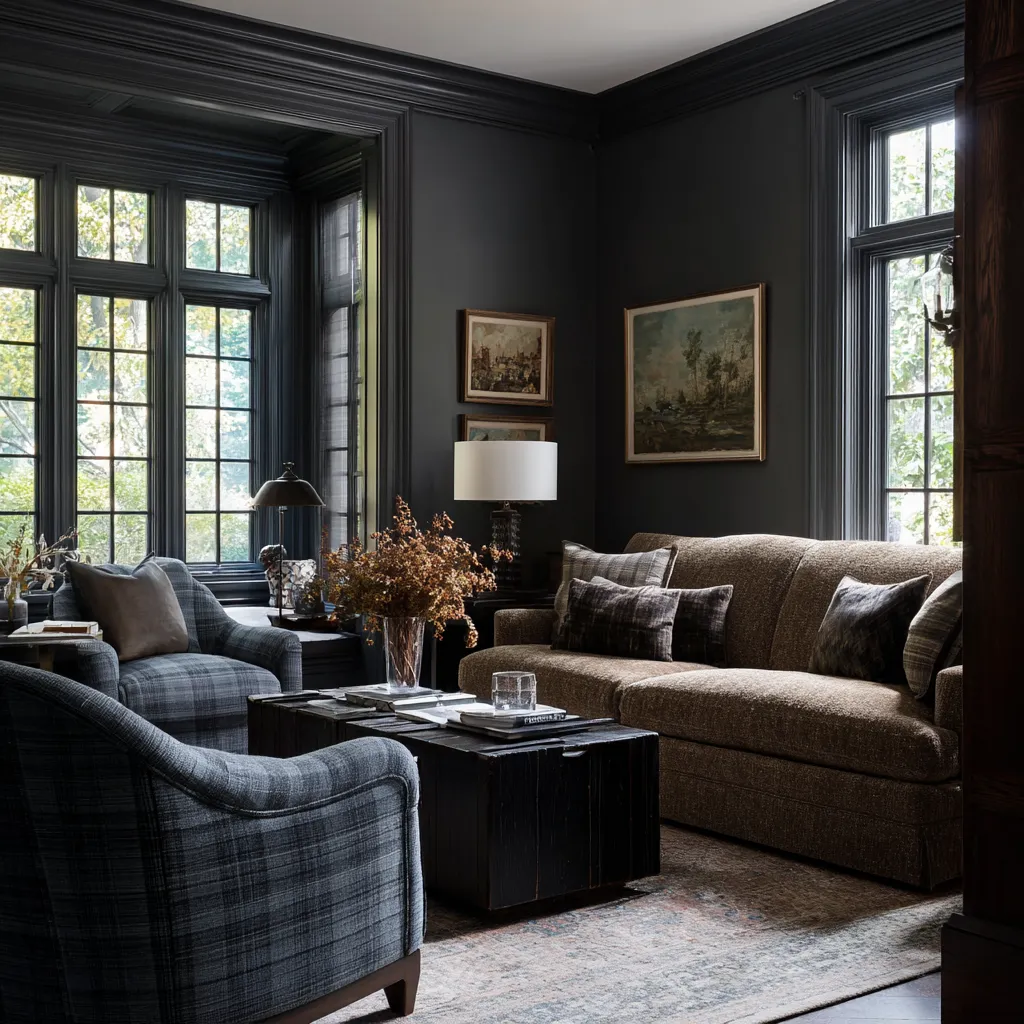
Such rooms can have one large formal gesture that keeps everything else in place. It might be a dark paneled envelope that merges wall and trim into one shadowed field.
It might be a pale fireplace wall rising like an abstract block through the center of the room. It might be a coffered ceiling that sets a grid over softer furniture below.
It might be a built-in media wall that absorbs technology into a composed framework. Whatever form it takes, this major gesture gives the room authority.
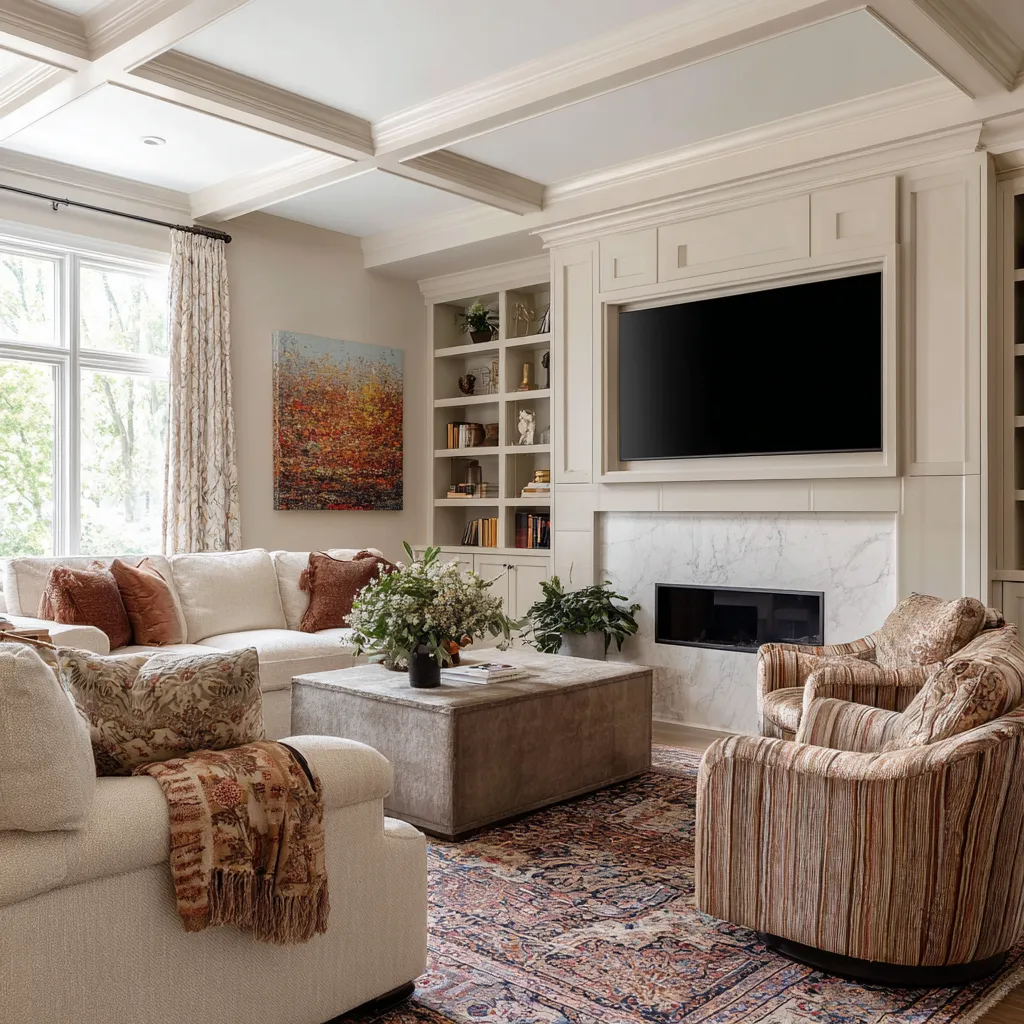
Modern grandmillennial color is usually compressed rather than loud
People often think grandmillennial style depends on a visibly decorative palette, but the newer versions are usually more compressed. Cream, oat, pale blue, washed botanical green, muted rust, soft taupe, chalky plaster, faded berry, warm brown, and old-ivory tones work because they keep the interior design layered without making it busy.
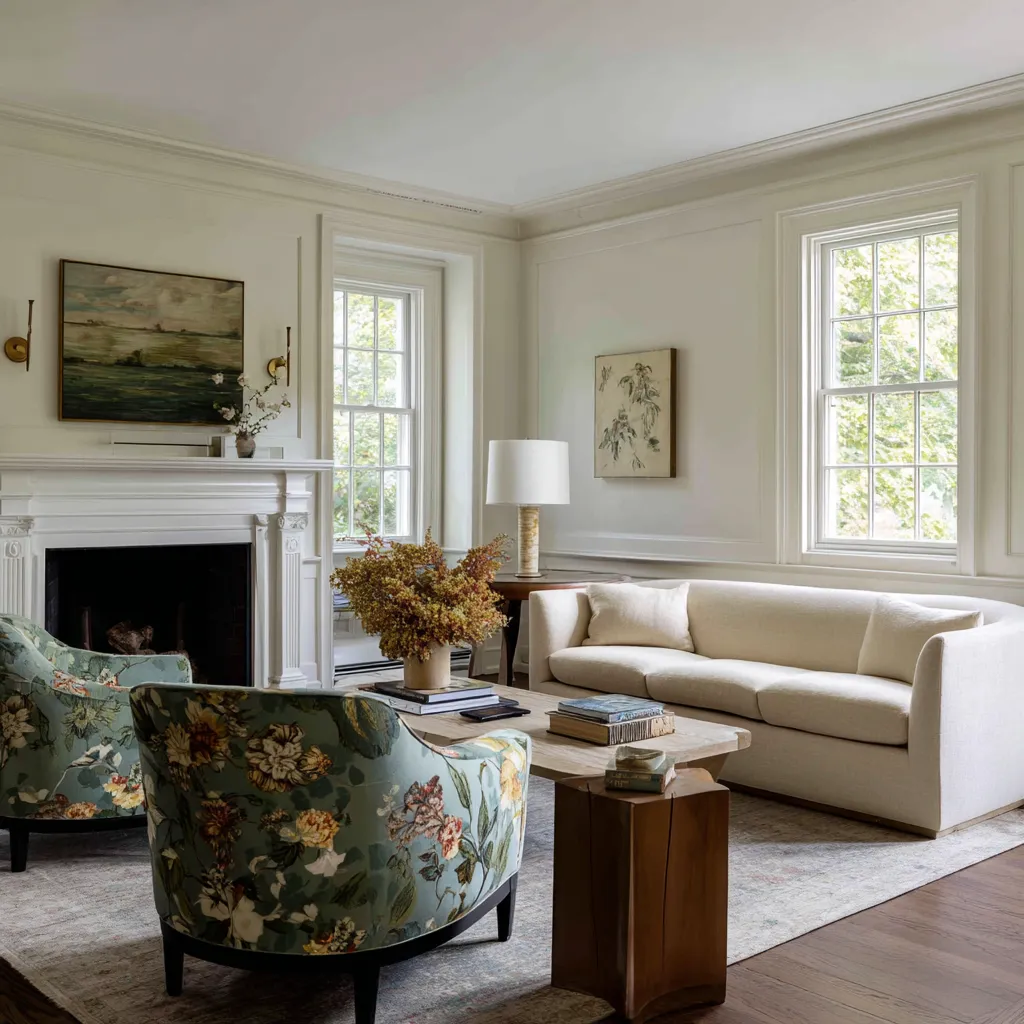
That close tonal spacing is one of the quiet engines of the style. It allows patterned fabric to function almost like texture instead of turning into graphic noise.
It keeps floral chairs from feeling sugary. It lets books, art, porcelain, and branches feel related even when they are not identical in color.
It also gives the interior design a mature atmosphere. Decorative content remains present, but it is softened.
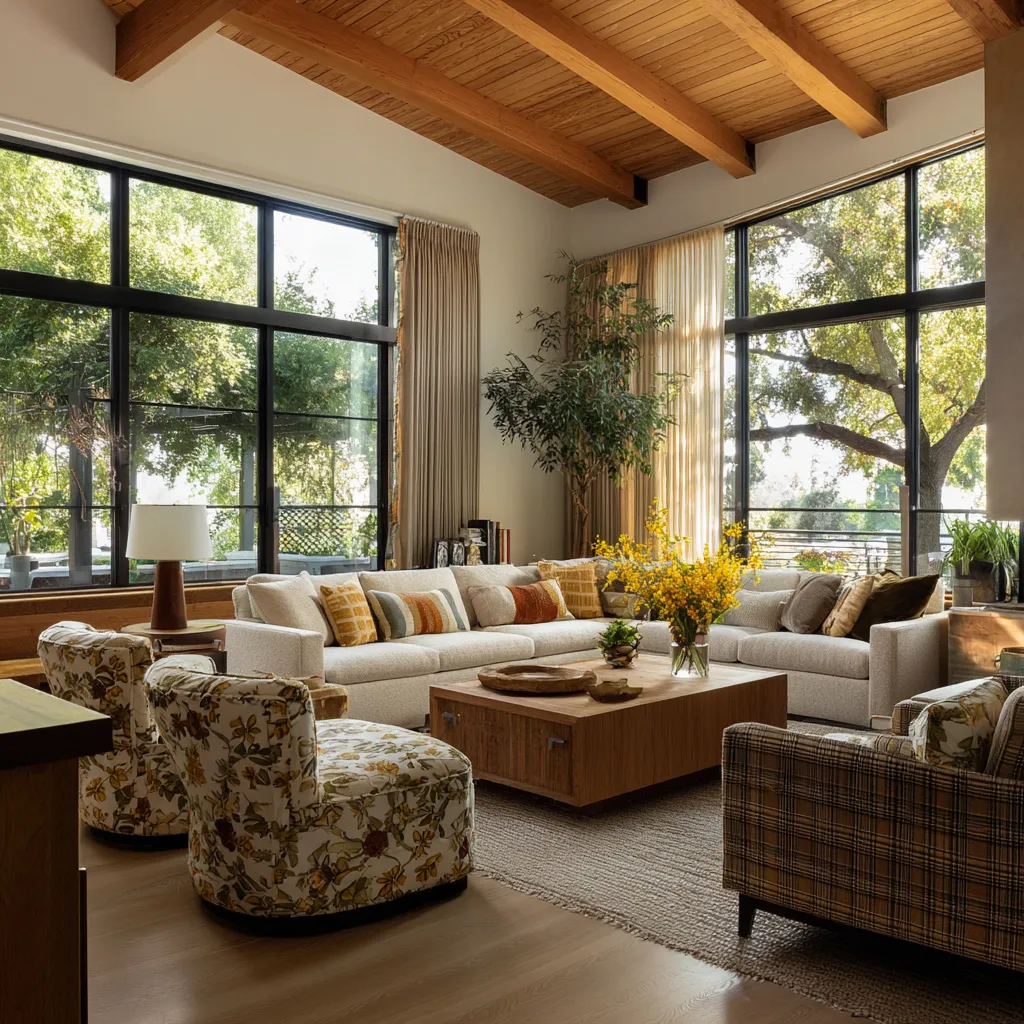
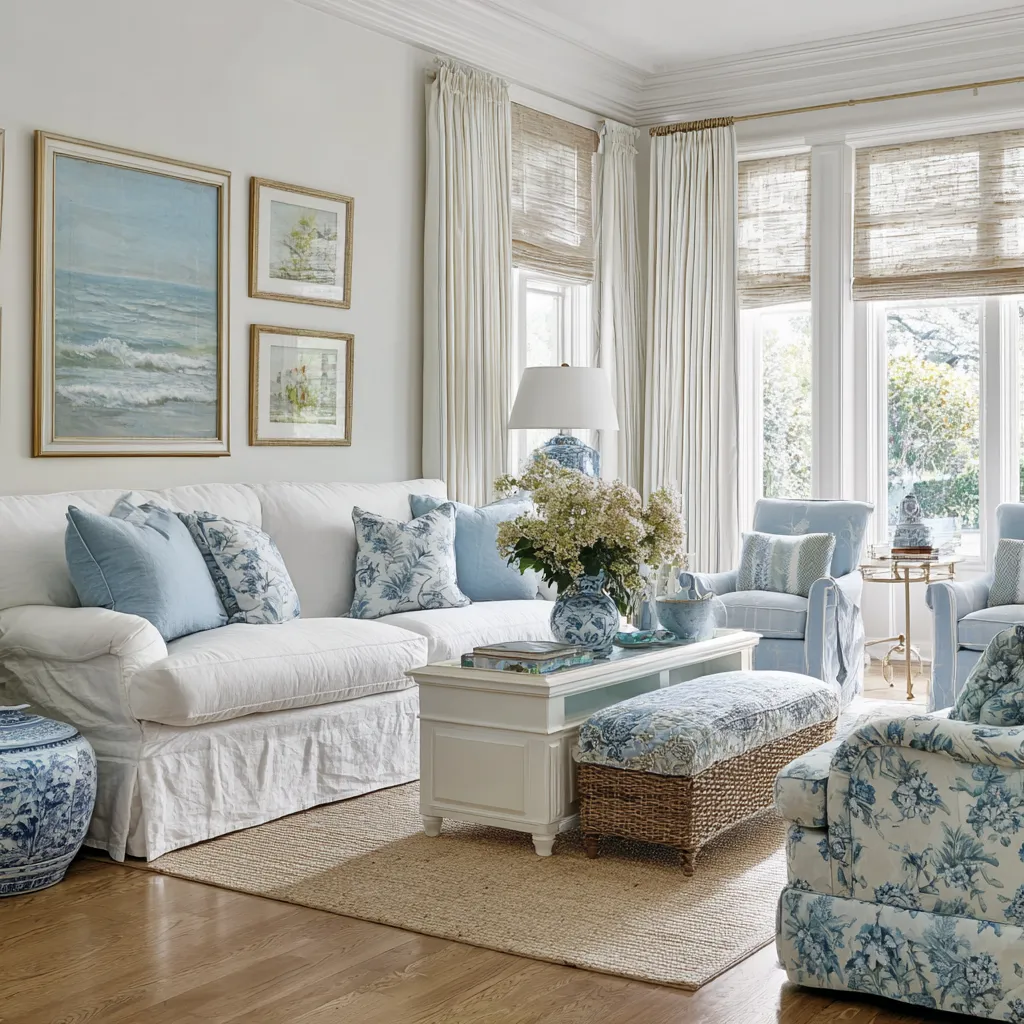
Blue-and-white grandmillennial living room designs are a good example of this. Blue-and-white decorative tradition can still feel convincing, but it tends to work better now when it is surrounded by pale cabinetry, light wall planes, natural-fiber grounding, and generous daylight.
The blue becomes a recurring accent rather than a full-room theme. That distinction keeps the room from slipping into a more literal coastal or cottage mood.
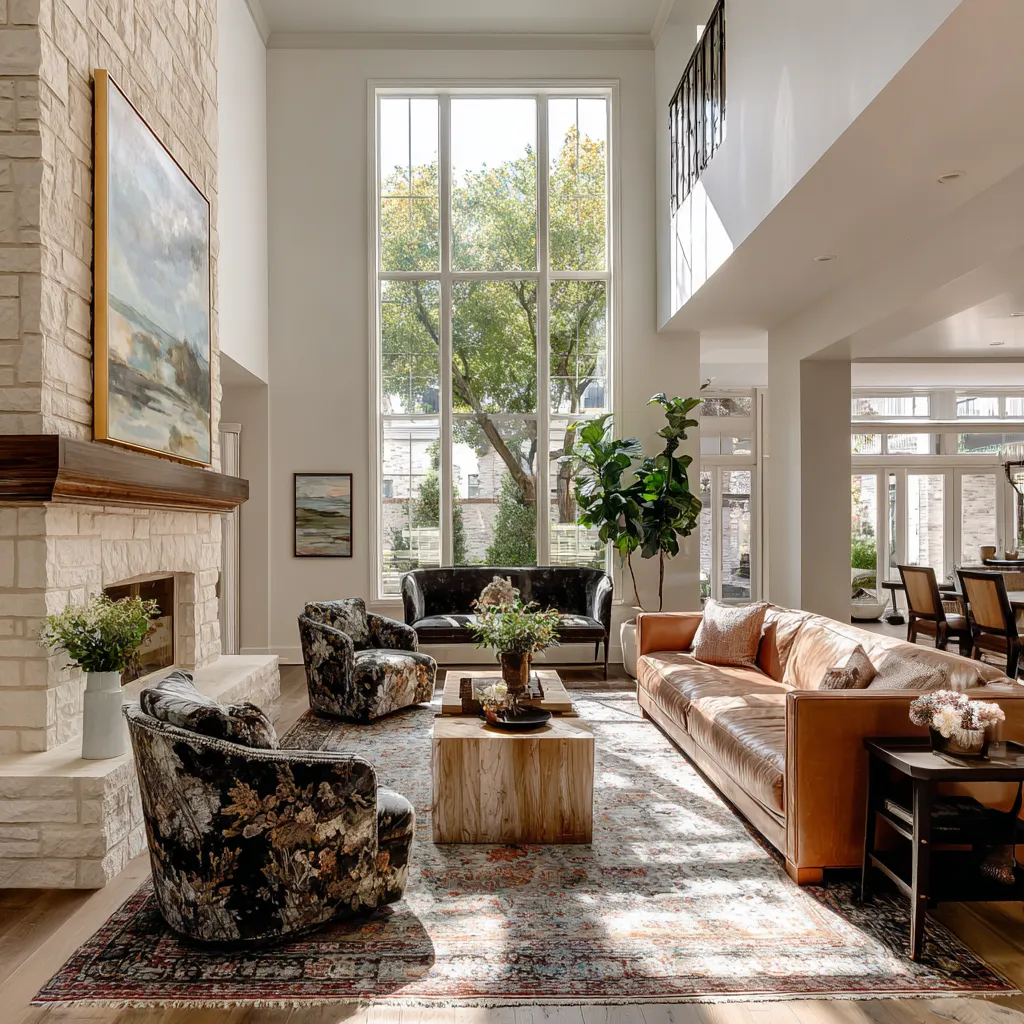
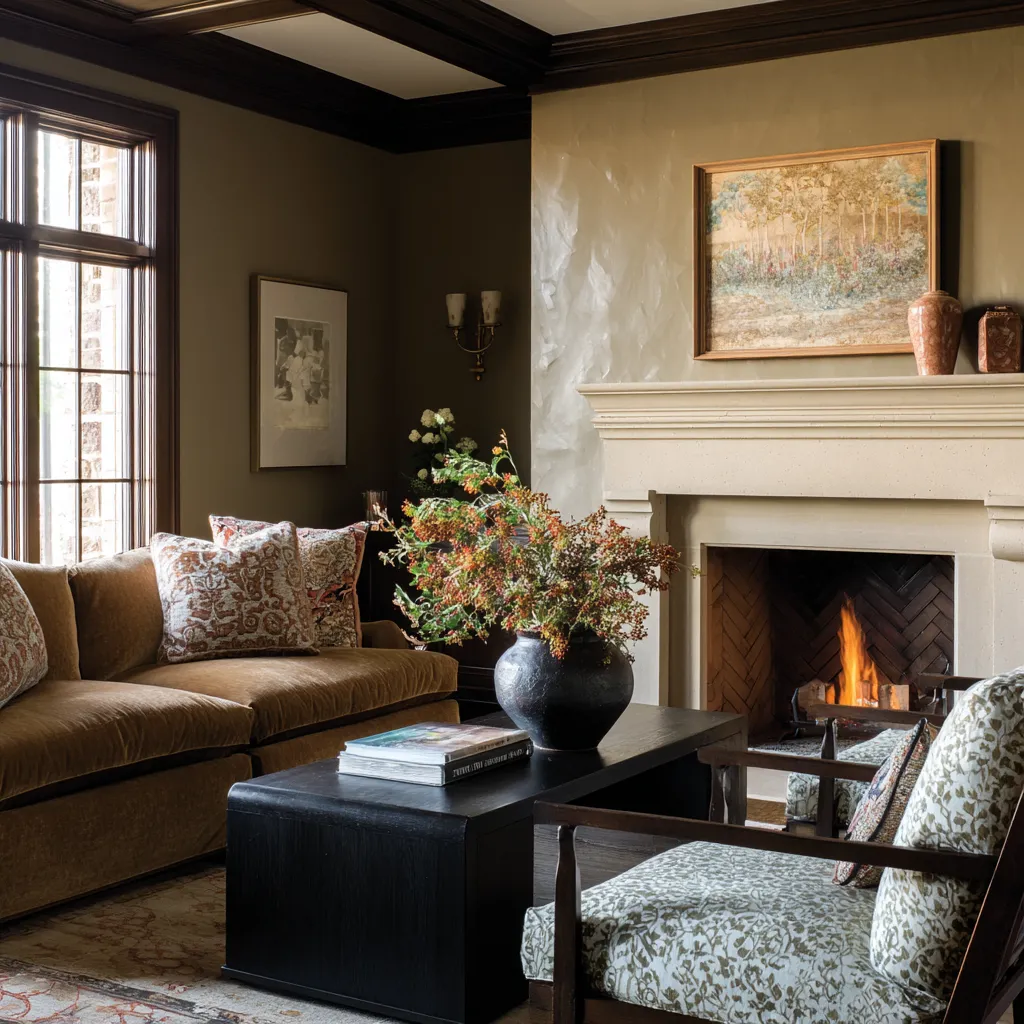
The same principle applies in moodier rooms. Dark grandmillennial interior ideas can be very effective, but they usually work well when the palette remains close and earthy rather than sharply contrasted.
Deep blue-green paneling, warm brown velvet, muted floral upholstery, dark wood, aged rugs, and low warm light create depth through tonal compression. The room gains richness, but not fragmentation.
The style still values maximalist pleasure, but in smaller zones
Modern grandmillennial style often grows out of a love for old houses, family rooms with character, books, floral fabric, dressing the windows, tabletop flowers, and rooms that feel lived in instead of sterile. None of that disappears.
It just becomes more concentrated. This is one of the useful ways to think about the style: it is often not full-room maximalism.
It is localized maximalism.
The chair fabric may be richly patterned. The bookshelf may feel literary and collected.
The mantel may carry historical depth. The coffee table may hold books, flowers, and a tray that suggests routine and hospitality.
The window treatment may still be dressed. But the room as a whole preserves larger, quieter fields so those denser pockets have somewhere to land.
That is why many of these interiors feel personal without becoming tiring. Decorative intensity appears in doses.
The room keeps its warmth because there are still signs of life, memory, and affection for domestic ritual. It keeps its freshness because those signs are rationed.
This shift also changes what remains from maximalism. What survives is not object count for its own sake.
What survives is narrative richness. Books suggest a household with habits.
Art suggests taste shaped over time. Porcelain, branches, and lamps suggest continuity.
A faded rug suggests age and softness. The design still feels layered, but the layers no longer compete at every point.
There are two strong paths: bright and airy or dark and cocooning
A modern grandmillennial living room ideas does not have to be pale and sunlit, though that is one strong direction. There are two highly convincing routes.
The first is the bright, airy version. These design ideas use pale shells, abundant daylight, washed palettes, faded rugs, low-contrast drapery, and one or two concentrated textile notes.
In this approach, traditional ingredients become lighter because they are surrounded by air. Floral chairs soften rather than dominate.
Blue-and-white ceramics feel fresh because the shelving is broad and pale. Pattern remains visible, but the room still breathes.
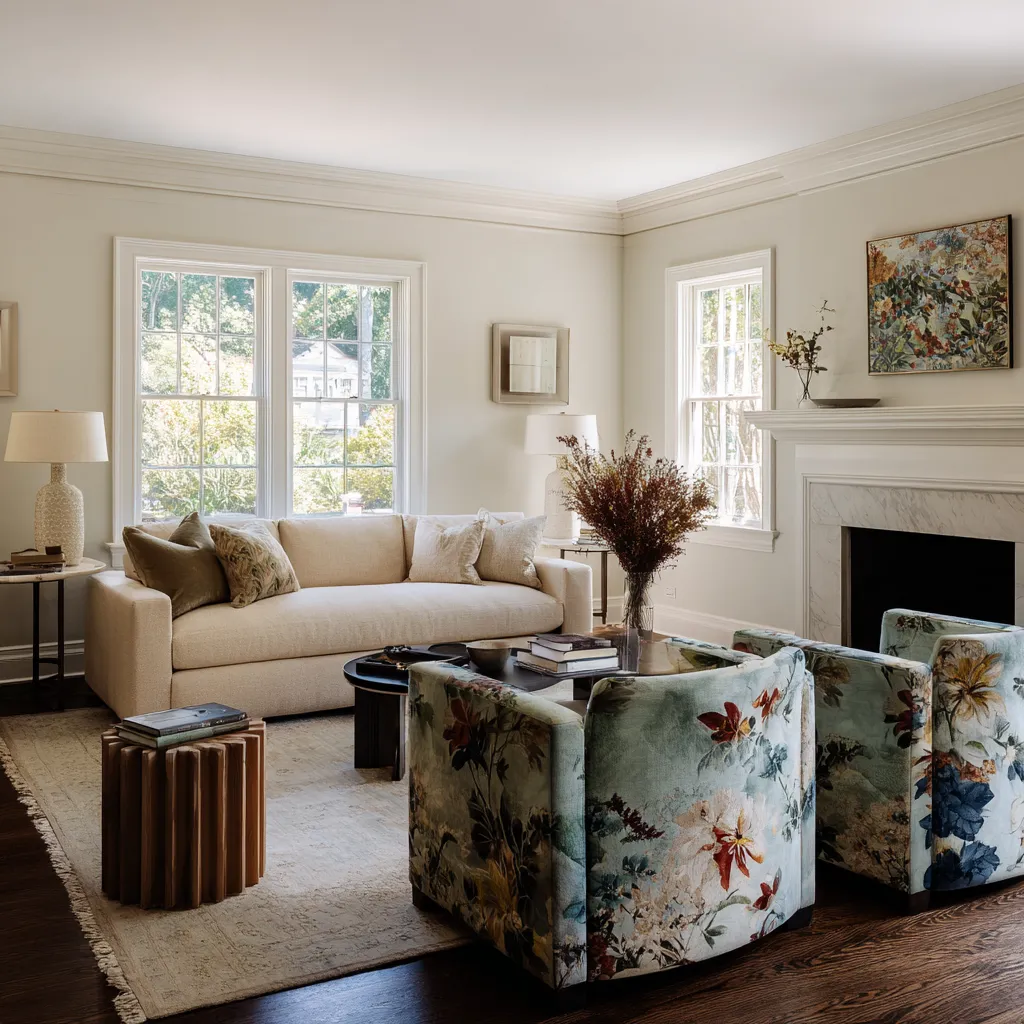
The second is the darker, compressed version. These designs use deep paneling, earthy plaster, nearly monochrome trim, rich upholstery, a heavy center table, and a hearth that becomes the luminous center of the room.
Here the style gains modern force through shadow and mass. Instead of bright dilution, the room depends on compression.
The detail becomes part of a larger dark field rather than standing apart as ornament. Books, moody florals, and velvet all feel stronger because the envelope around them is more serious.
These two approaches look very different, yet they rely on the same logic: strong hierarchy, concentrated pattern, one anchor with real weight, and restraint in what gets added.
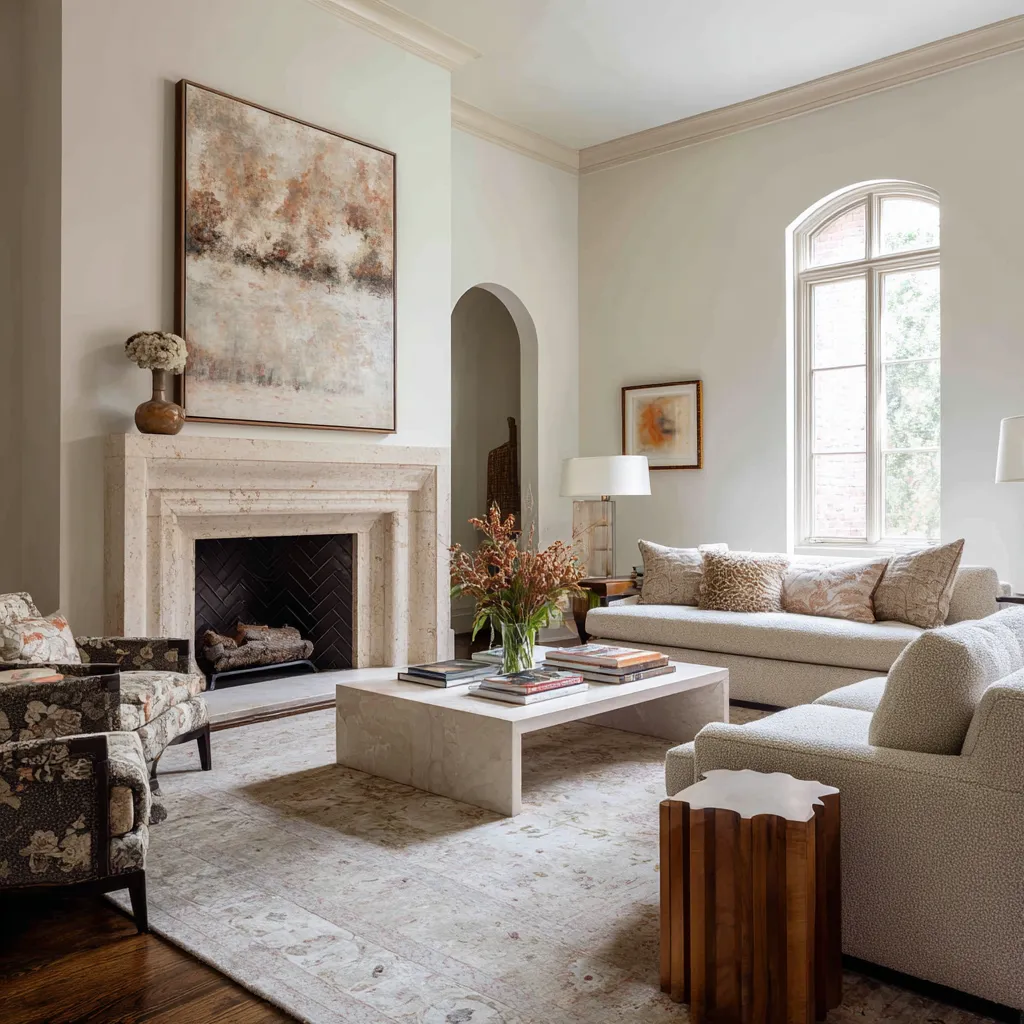
Grandmillennial warmth still depends on tactile materials
Part of the reason such interior designs remain appealing is that they rarely treat comfort as an afterthought. Even in the cleaner, more architectural versions, the spaces still make room for tactile pleasure.
Velvet, nubby upholstery, worn rugs, plaster, cane, leather, woven fibers, linen-like drapery, and textured wood all help keep the room from becoming flat.
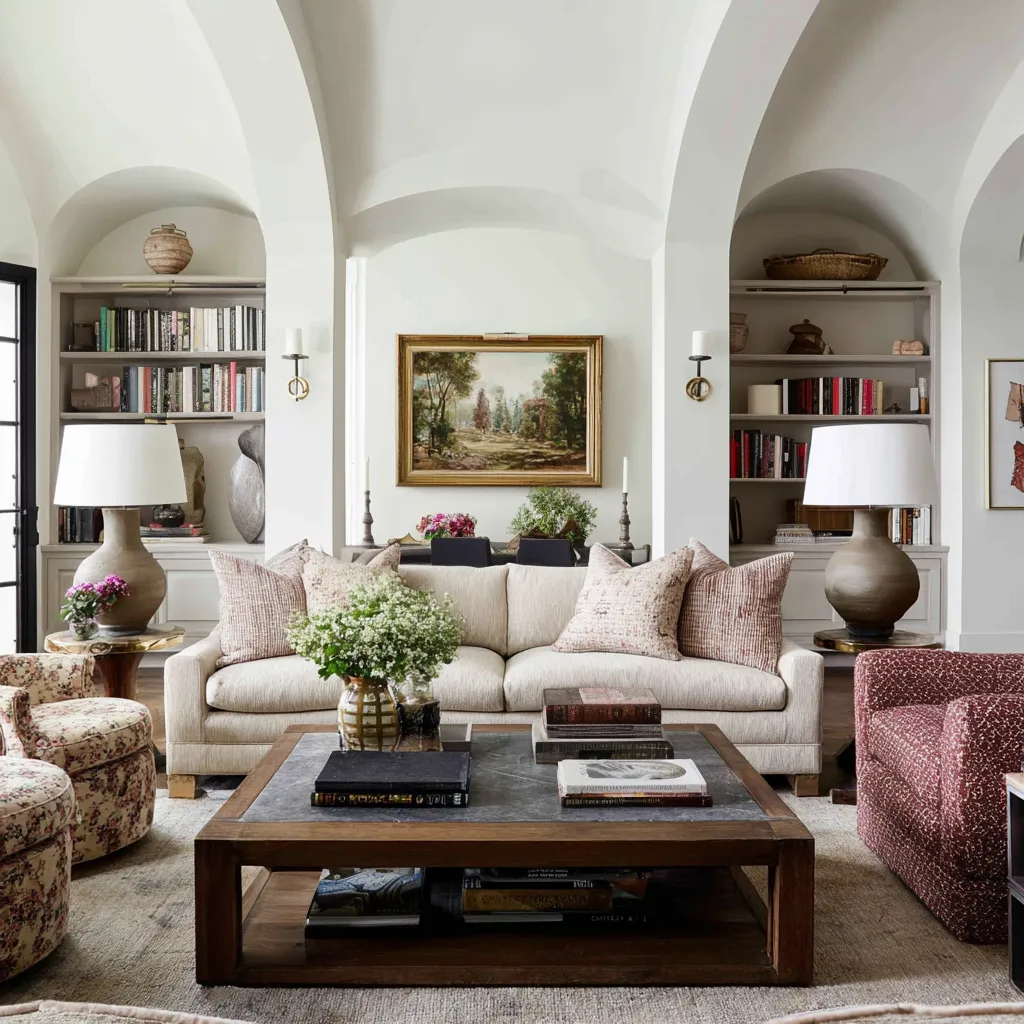
This matters because the style is rooted in domestic comfort. If a modern grandmillennial room keeps the visual grammar of tradition but loses tactile depth, it starts to feel generic.
The interior design needs some material thickness. It needs surfaces that suggest touch, use, and time.
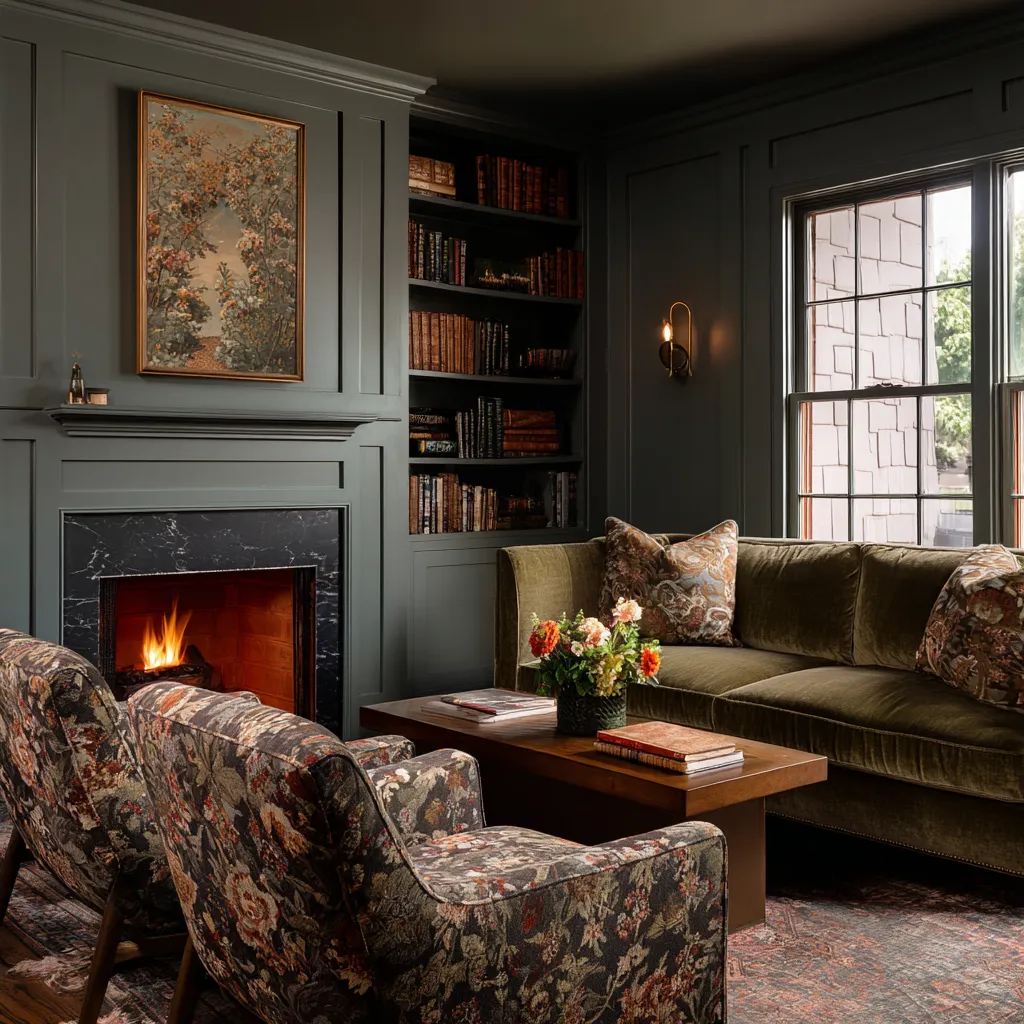
The fireplace still plays a large role here. Even in pared-back spaces, the hearth remains one of the emotional anchors in the design.
It gives the living area a center of gravity, and it reinforces the style’s long-standing connection to comfort and gathering. A very plain room can still feel distinctly grandmillennial if the fireplace has authority, the textiles have memory, and the room shows some evidence of real household life.
Open-plan living changes the style, but it does not weaken it
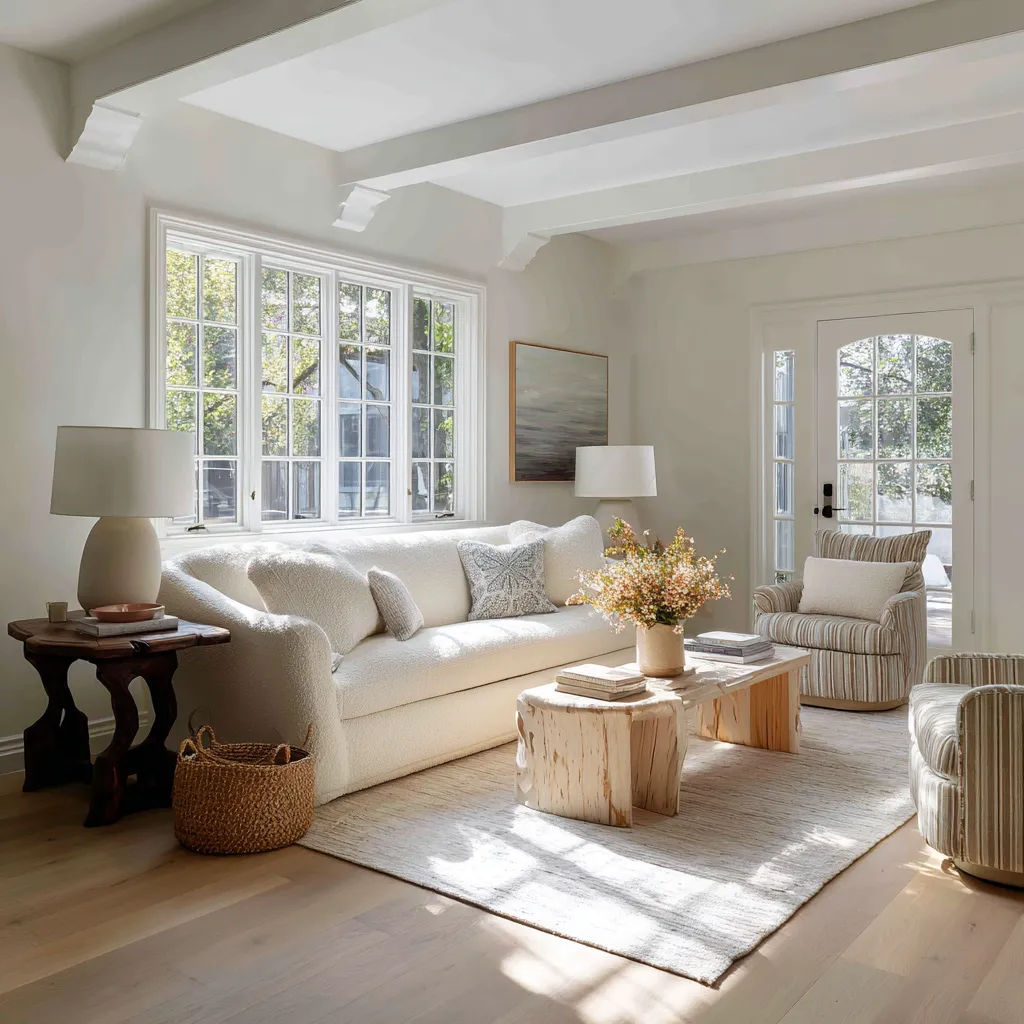
One reason grandmillennial design can look surprisingly current is that it has adapted well to open-plan houses and family-centered layouts. The style no longer needs a sealed formal sitting room to function.
It can live inside a larger plan connected to the kitchen, garden, terrace, or secondary seating zone.
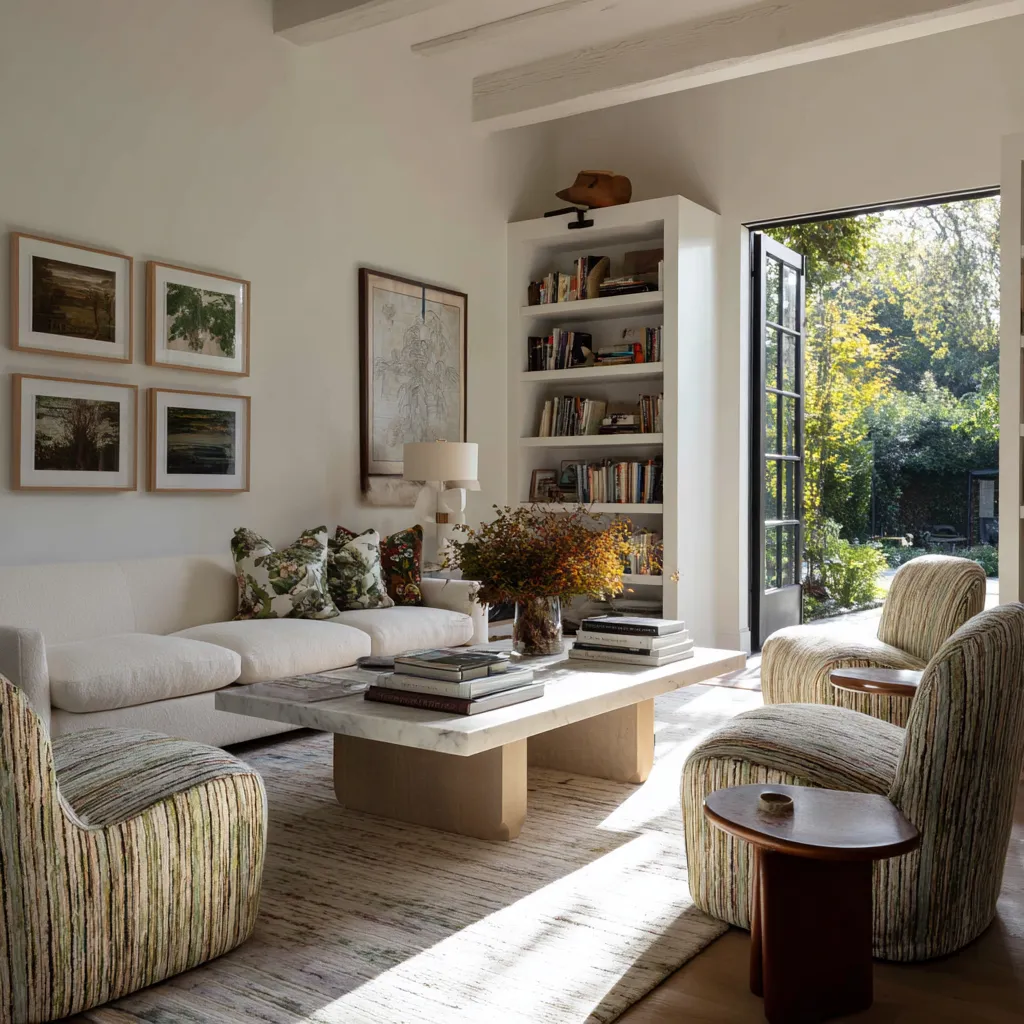
That shift changes how the design is composed. In an open shell, softer decorative notes often need to be more concentrated so the living area does not dissolve into the surrounding volume.
Compact patterned chairs, a faded rug, books, flowers, and one grounded table help establish the seating zone as its own interior island. The larger the shell, the more important those humanizing elements become.
Media integration also matters more now. A television weakens the style mostly when it appears as a random black interruption.
Once the screen is absorbed into a built-in wall, panel system, or structured fireplace composition, the room can keep its cultivated atmosphere. Grandmillennial living does not have to pretend screens do not exist.
It simply handles them with more discipline.
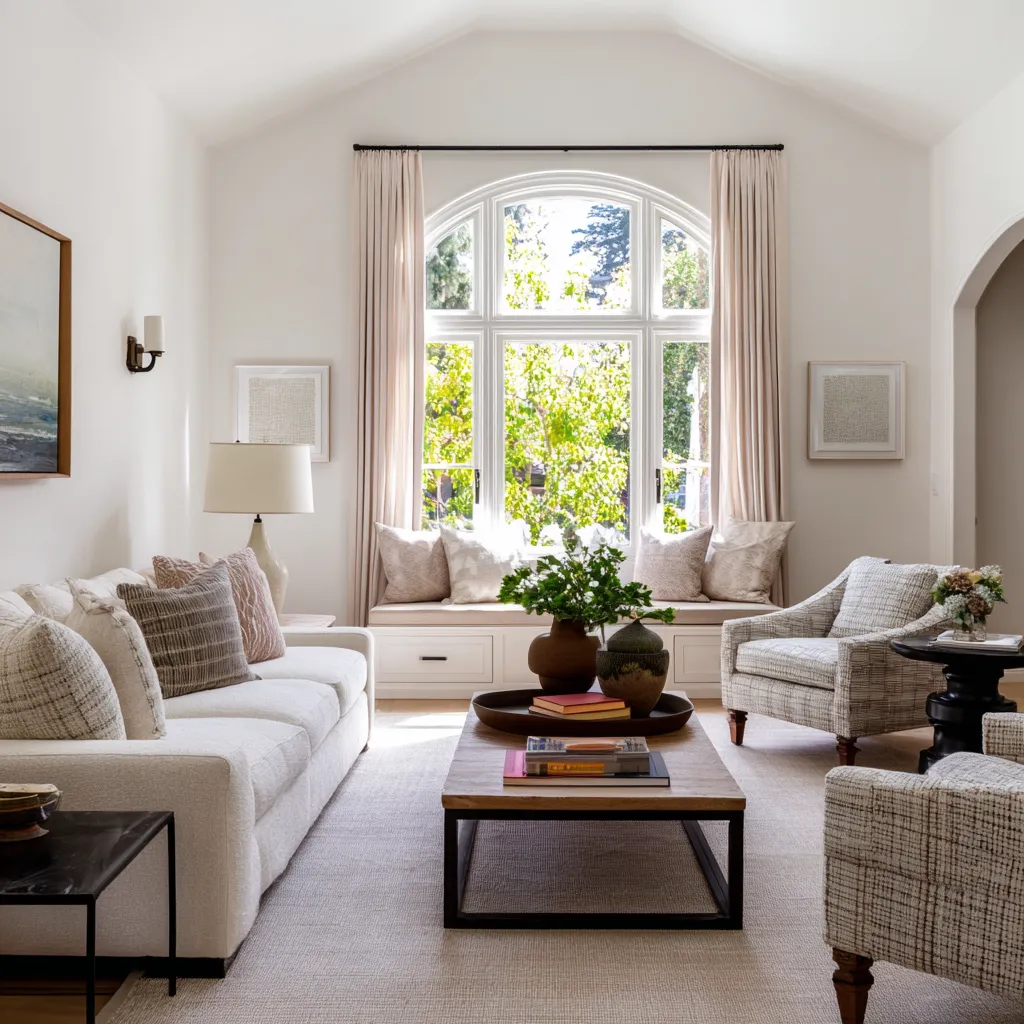
This is one of the convincing updates to the style: it accepts daily family life. Sectionals, swivel chairs, storage walls, and practical conversation groupings can all sit comfortably inside a room that still values floral fabric, books, art, and dressed windows.
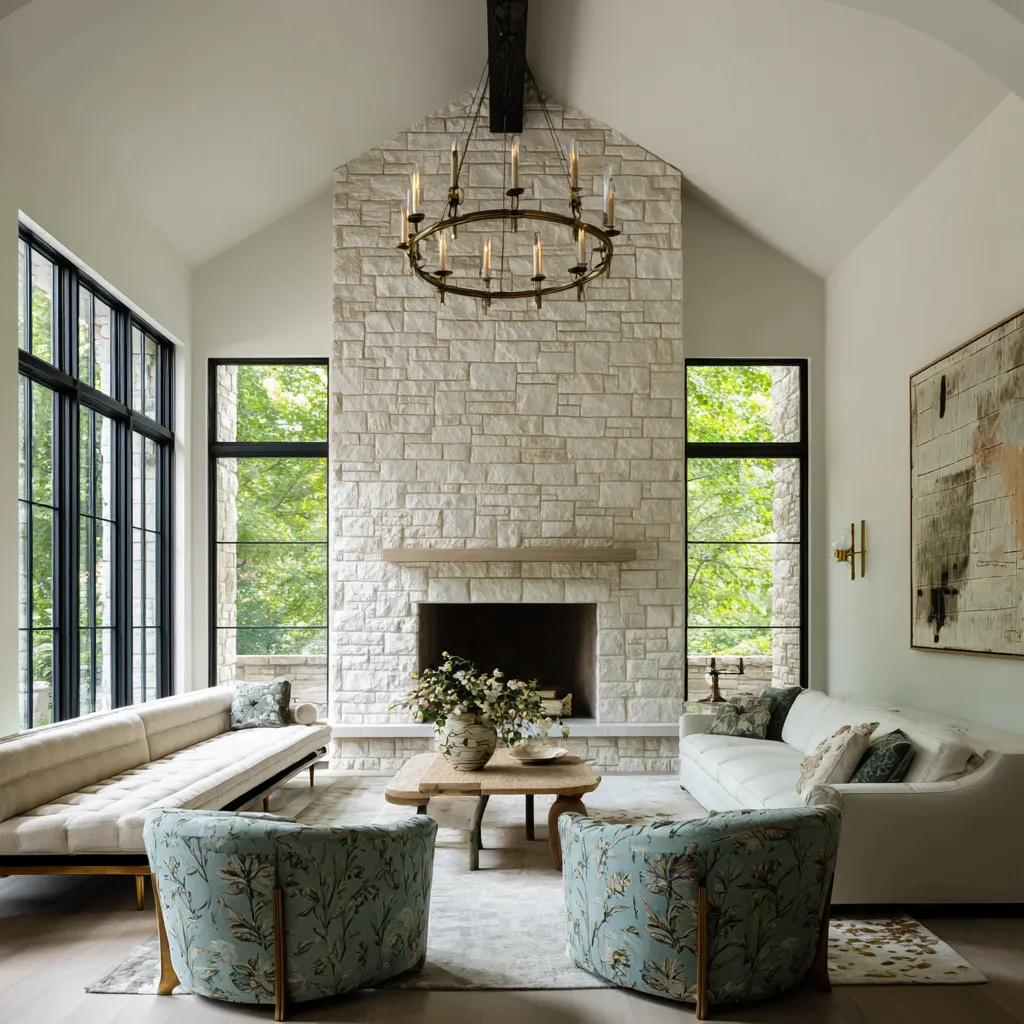
Window treatments still belong here
Some homeowners remove drapery in the name of modernity, but modern grandmillennial interior designs often gain a lot from keeping it. Full-length curtains, Roman shades, layered windows, and even a built-in bench beneath an arched window can deepen the room’s domestic atmosphere without making it old-fashioned.
The key is contrast and proportion. The stronger rooms usually keep the drapery within the palette family so it does not become its own separate event.
The fabric is often broad in form rather than fussy in detail. The room still gets softness at the perimeter, but not heaviness.
This is a good example of the larger principle behind the style. The goal is not to remove traditional habits of decorating.
The goal is to reduce the visual pressure around them.
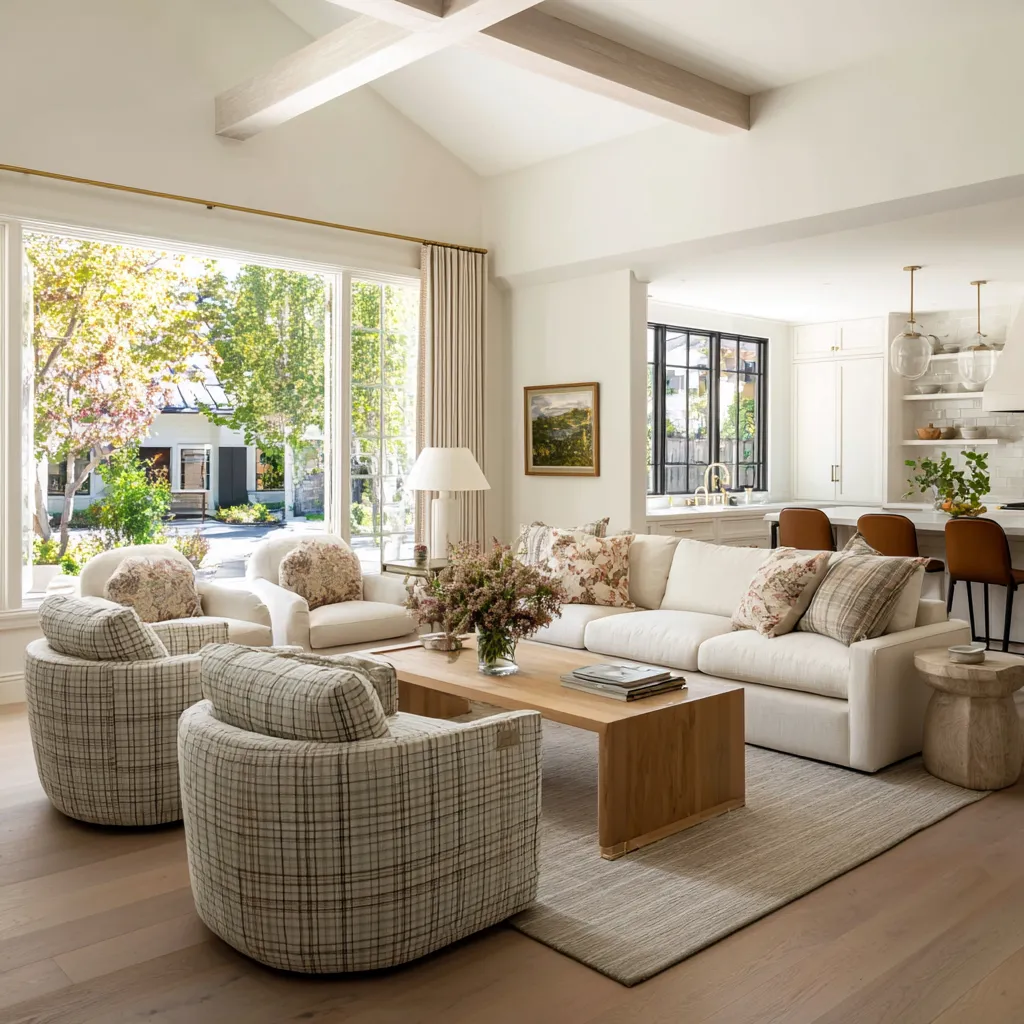
What often makes the interior design go wrong
Modern grandmillennial rooms usually lose their sharpness in predictable ways.
- The first is pattern spread without hierarchy. Once floral, plaid, stripe, gingham, and strong rug pattern appear with equal intensity across too many major surfaces, the room stops feeling edited.
- The second is equal expressiveness in every major piece. If the sofa, chairs, rug, drapery, art, and table styling all ask for attention at once, the room shifts toward older decorative fullness instead of a current layered look.
- The third is object density without architectural discipline. Books, porcelain, flowers, framed art, and collected accessories can be beautiful, but they need a shell strong enough to hold them. Without that structure, the designs starts to feel scattered.
This is why empty space matters. Empty wall areas, visible shelf gaps, quieter rugs, and plain sofa masses are not signs that something is missing.
They are pressure-release devices. They allow the richer parts of the room to keep their identity.
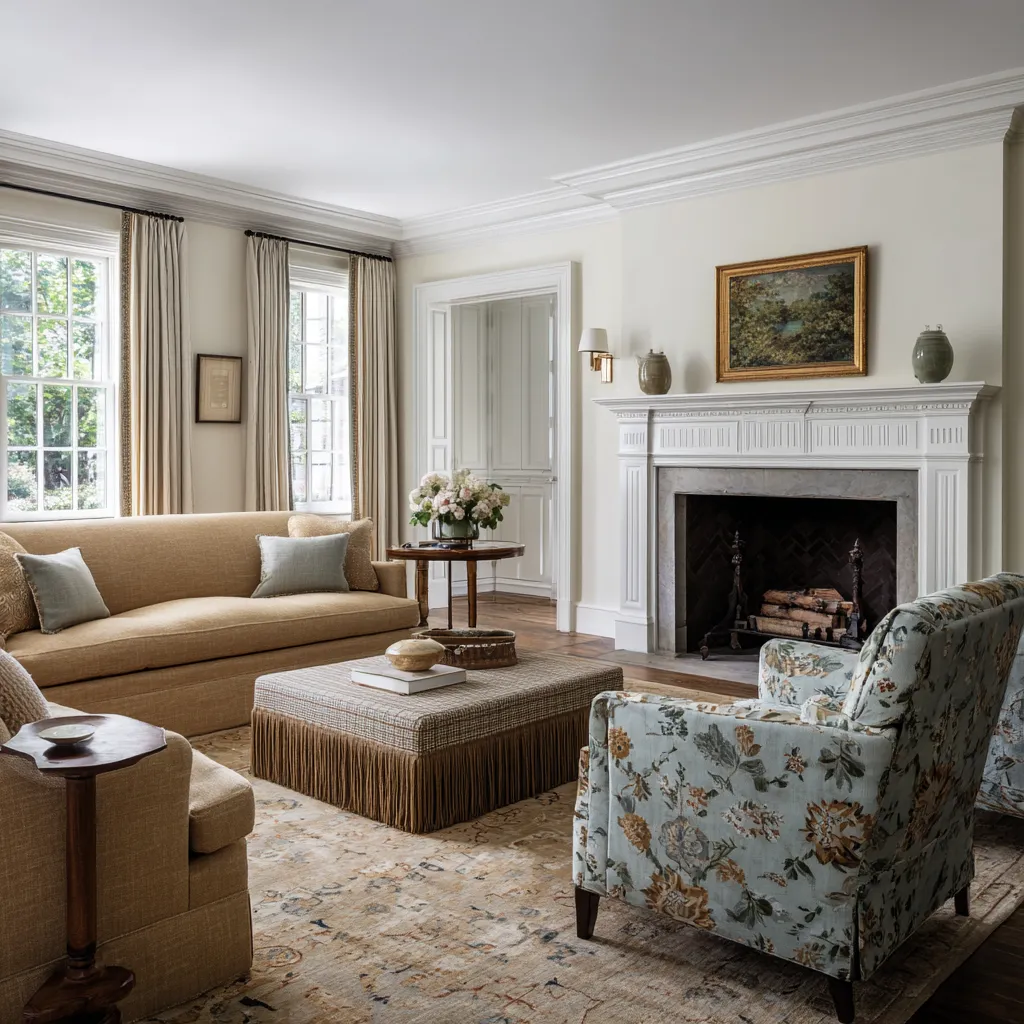
How to build the look in a way that still feels livable
A good modern grandmillennial living room design usually begins with one serious architectural move. That might be a plaster chimney wall, a paneled wall, a coffered ceiling, a dark envelope, a built-in media wall, or a strong arched opening.
From there, the room needs one broad upholstery field that remains simple, one concentrated traditional textile note, one grounding weight, a palette that stays in a narrow family, and a domestic display layer that is present but edited.
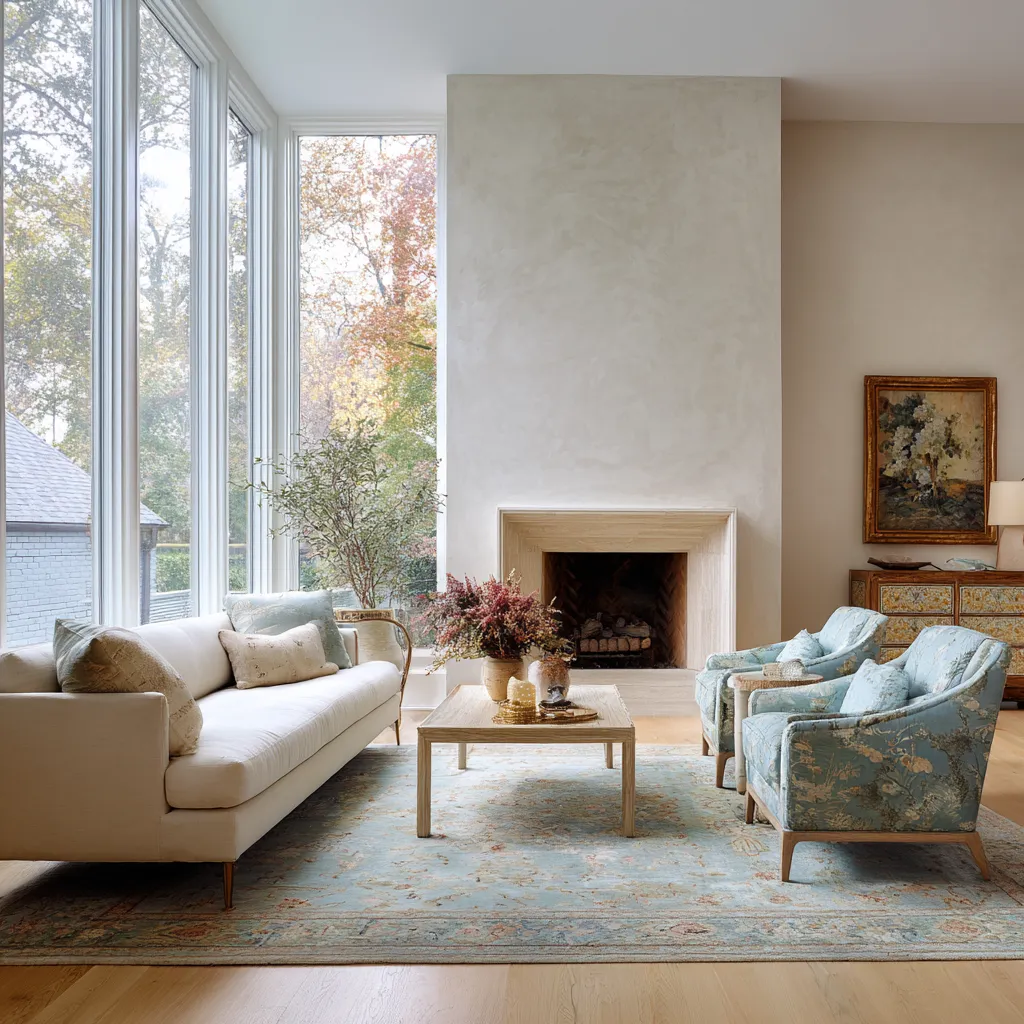
That can mean a pale sofa, floral or plaid chairs, a faded rug, a dark or substantial coffee table, a bookshelf with real breathing room, framed art, a branch arrangement, and curtains close in tone to the wall. It can also mean a deeper room with dark trim, a velvet sofa, moody botanical upholstery, a strong hearth, fewer objects, and one heavy center table.
The exact ingredients can shift. The structure behind them rarely does.
A room with memory, but not reenactment
The enduring strength of modern grandmillennial living room design lies in its ability to hold onto affection, softness, and decorative culture without getting trapped in reenactment. It does not ask the design to mimic another era.
It asks the interior to keep the parts of inherited domestic beauty that still matter: the textile warmth, the books, the art, the flowers, the rituals of sitting, talking, reading, and gathering.
What changes is the way that beauty is distributed. Present-day living asks for clearer spacing, stronger hierarchy, broader forms, better media handling, and more visual relief.
Once the style accepts that, it becomes far more flexible than many people expect. It can be pale or moody, formal or family-centered, coastal or library-like, open to the garden or gathered around a mantel.
At its strongest, the room does not feel caught between two worlds. It feels like a house with memory that still understands how people want to live now.