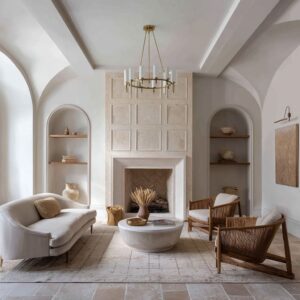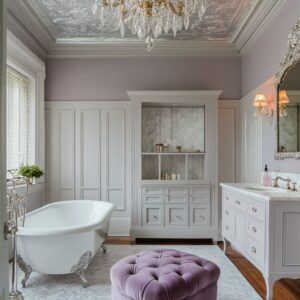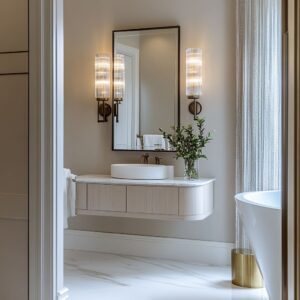
Modern Cape Cod living room design is often understood as a simple mix of white upholstery, pale blue pillows, and a few nautical references. That version exists, but it misses the deeper reason the style feels so grounded, livable, and lasting.
A well-made Cape Cod room is not held together by seaside decor. It is held together by a bright shell, a stabilizing center of mass, and a clear sense that the room belongs to a house with memory, shelter, and structure.
That is why modern Cape Cod interior ideas feel airy without turning flimsy, coastal without becoming themed, and current without losing their regional backbone. They do not push beach references to the foreground.
They let architecture, mass, and restrained material choices do the heavy work. Color, texture, and softness then support that framework rather than replace it.
What follows is a detailed look at how modern Cape Cod living rooms actually work, why some rooms stay true to the style while others drift away from it, and how to bring the look forward in a way that still feels rooted.
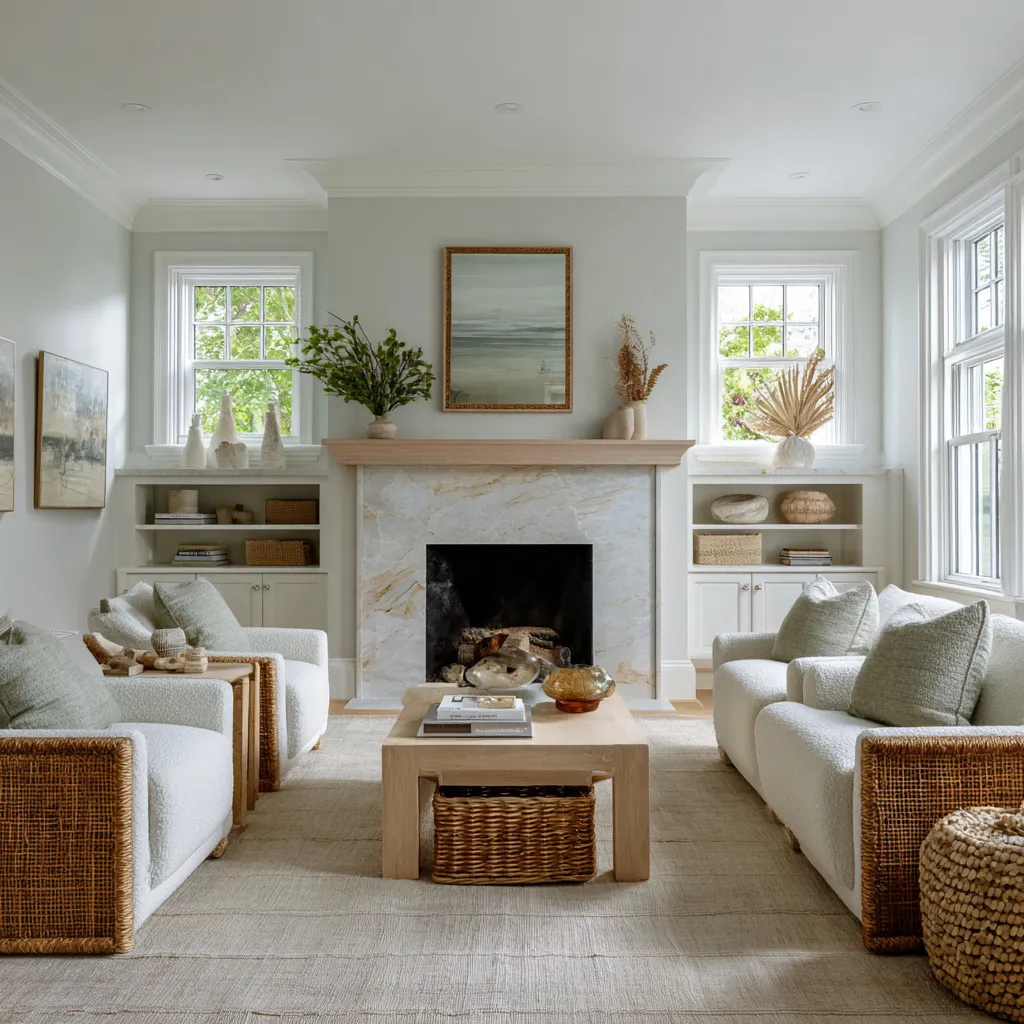
The backbone of modern Cape Cod
At its clearest, modern Cape Cod rests on three linked conditions.
- The first is brightness. The shell is usually pale, open to daylight, and visually breathable. Walls, trim, ceilings, and upholstery often stay within a close family of white, cream, sand, misty gray, pale blue-gray, or weather-softened mineral tones. This lightness is essential, but it is only the starting point.
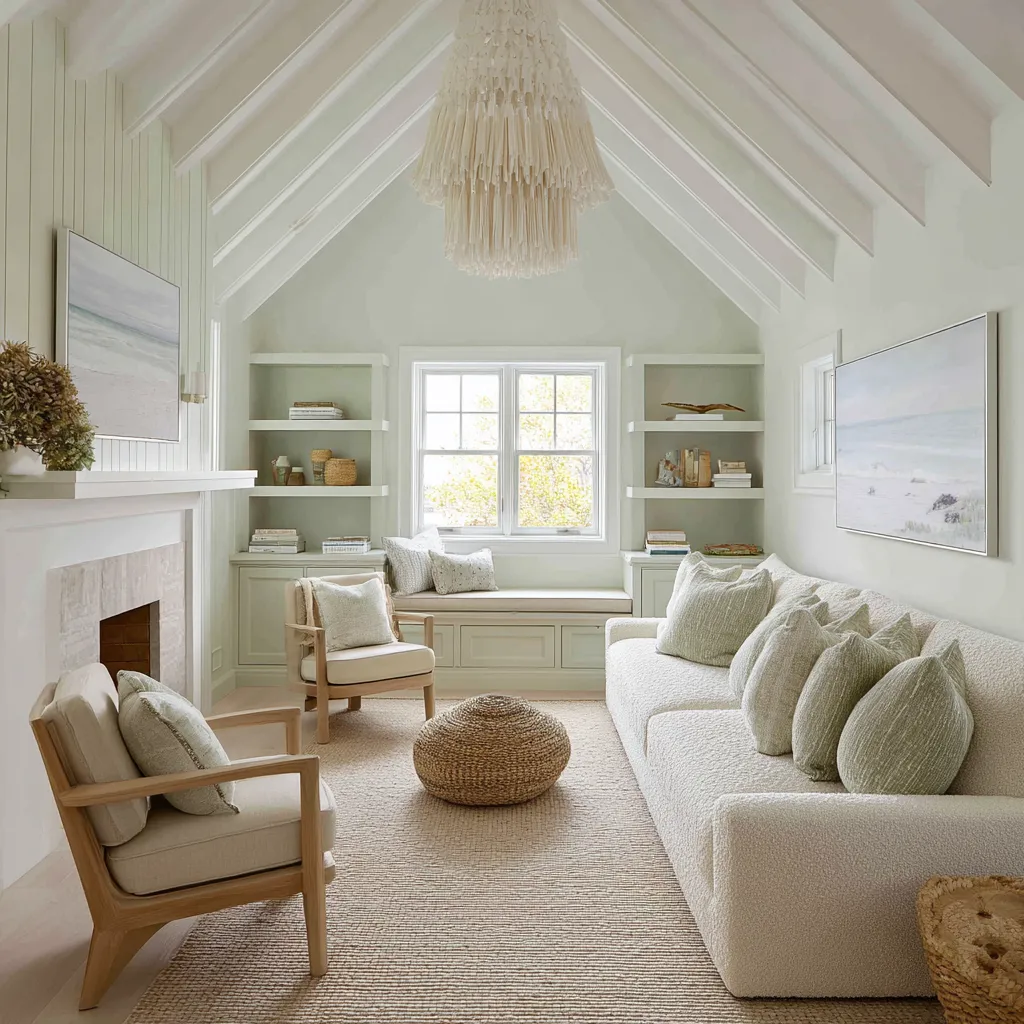
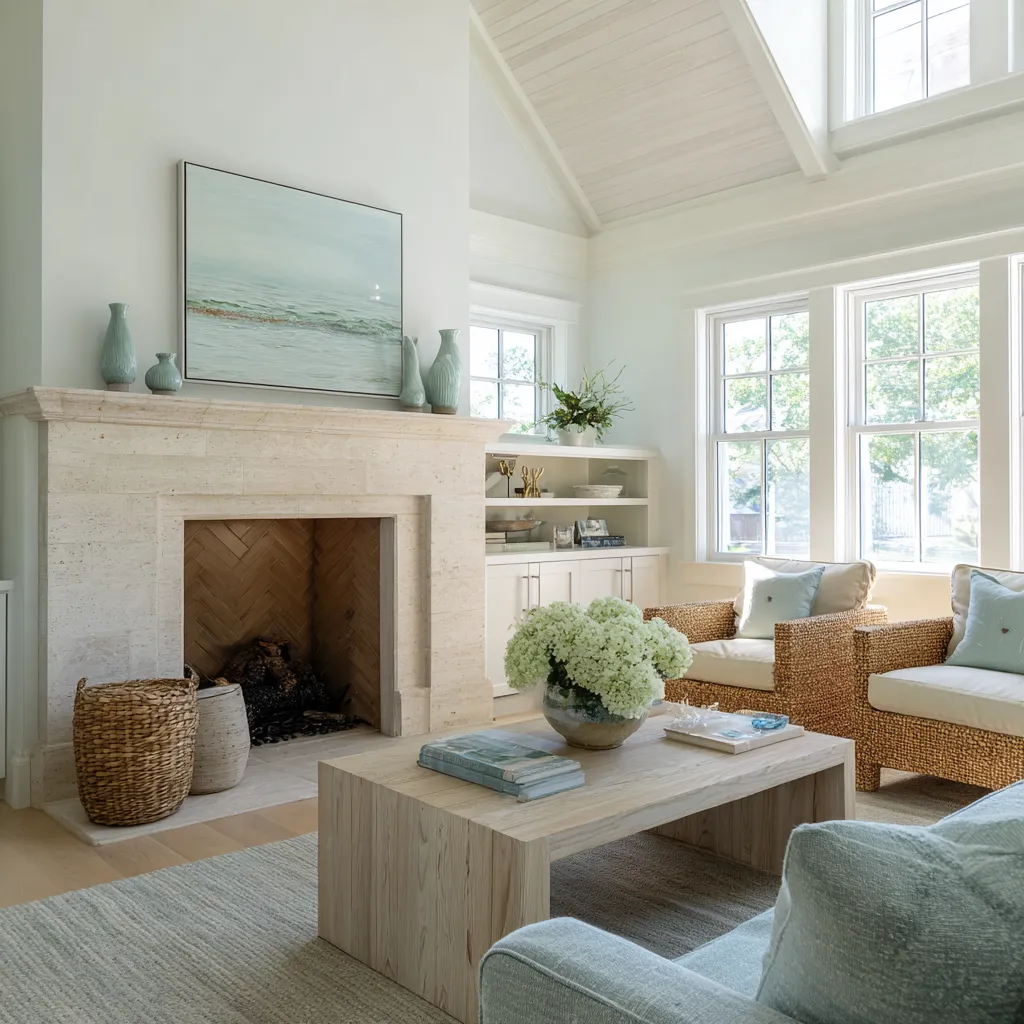
- The second is anchor mass. Cape Cod interiors rarely succeed as pure lightness. They need one element that holds the room down and gives it gravity. That anchor may be a stone fireplace wall, a broad hearth volume, a thick timber or mineral coffee table, a built-in window seat at the end of a room, or a ceiling with enough structure to make the volume feel contained. Without such an anchor, a pale coastal room easily turns thin, generic, or overly polished.
- The third is house-born structure. This may appear as divided-light windows, a traditional mantel profile, built-ins, millwork, a vaulted planked ceiling, shallow beams, coffers, paneled chimney walls, or a shaped opening that links one room to another. These are the elements that keep the room tied to an actual house rather than to a mood board. They are especially important in contemporary versions of the style, where furniture becomes softer and more sculptural. The architecture has to keep the room from floating away from its origin.
This three-part balance explains why Cape Cod living room ideas can stretch in different directions and still remain identifiable. Some are more formal, some more family-focused, some more open to view, some more cocooned for evening use.
Yet they continue to hold together because the bright shell, the anchor, and the house structure stay in place.
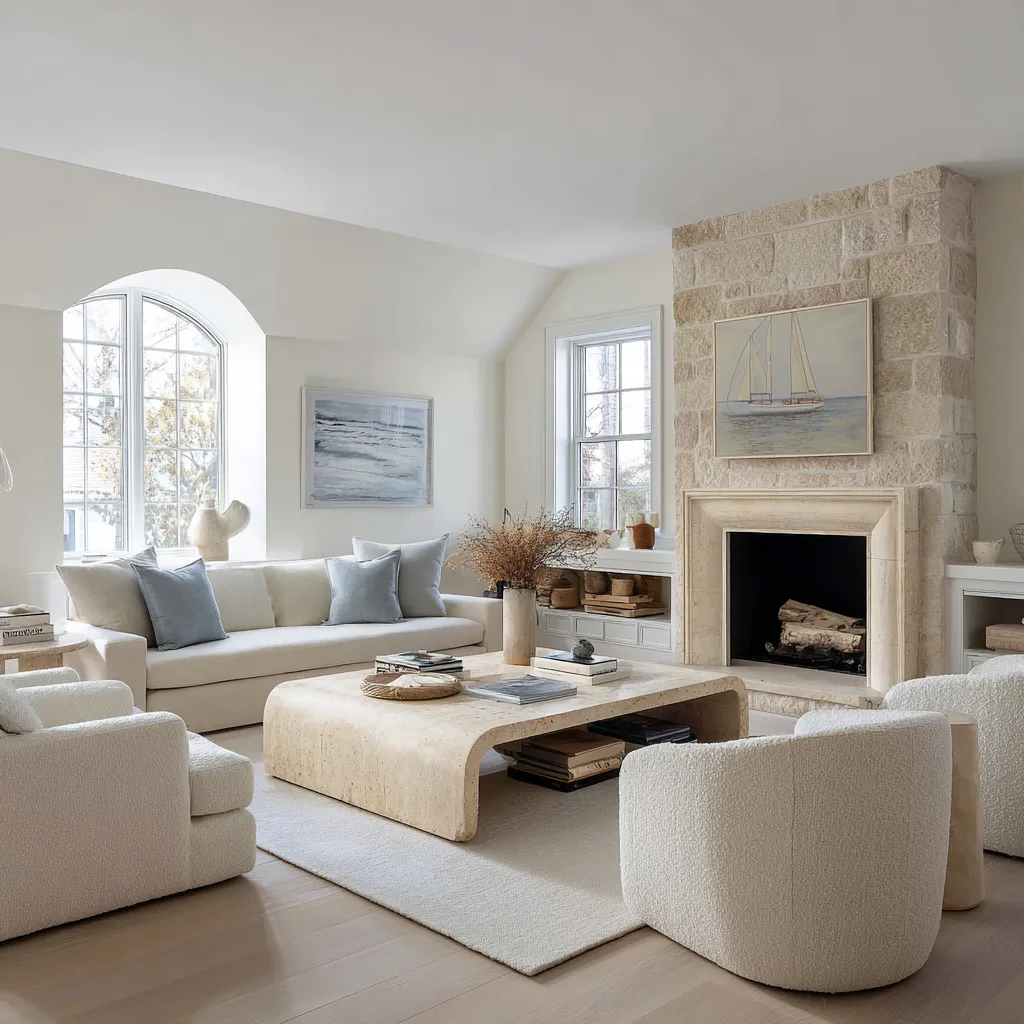
Why modern Cape Cod does not need obvious seaside signals
A common mistake is to think that Cape Cod becomes clearer when more coastal references are added. In practice, the opposite is often true.
Rooms with too many overt signals tend to flatten the style into a decorative category. Once rope details, repeated stripes, overt shell motifs, or blanket blue-and-white styling take over, the room can start to feel explained rather than embodied.
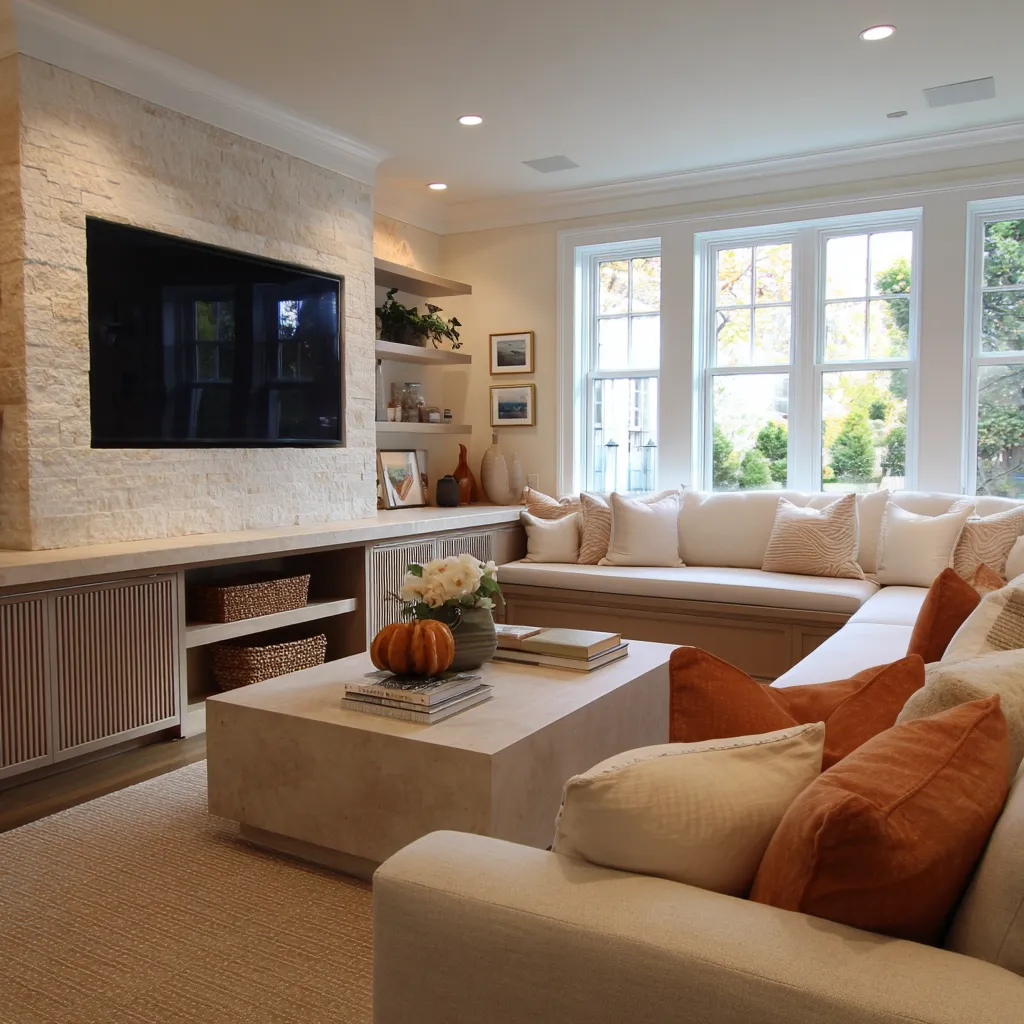
A better Cape Cod room usually compresses the coastal message. It may use a horizon painting, a muted blue pillow group, pale mineral masonry, a sea-glass note in ceramics, or a window seat that makes the perimeter feel weather-aware and inhabitable.
These are enough. The room does not need to announce the coast at every turn because the coastal feeling is already embedded in the light, the materials, and the way the architecture meets daily life.
This is one of the reasons modern Cape Cod often feels calmer and more mature than generic coastal design. It trusts atmosphere more than signage.
It lets shoreline memory sit inside the room rather than decorate its surface.
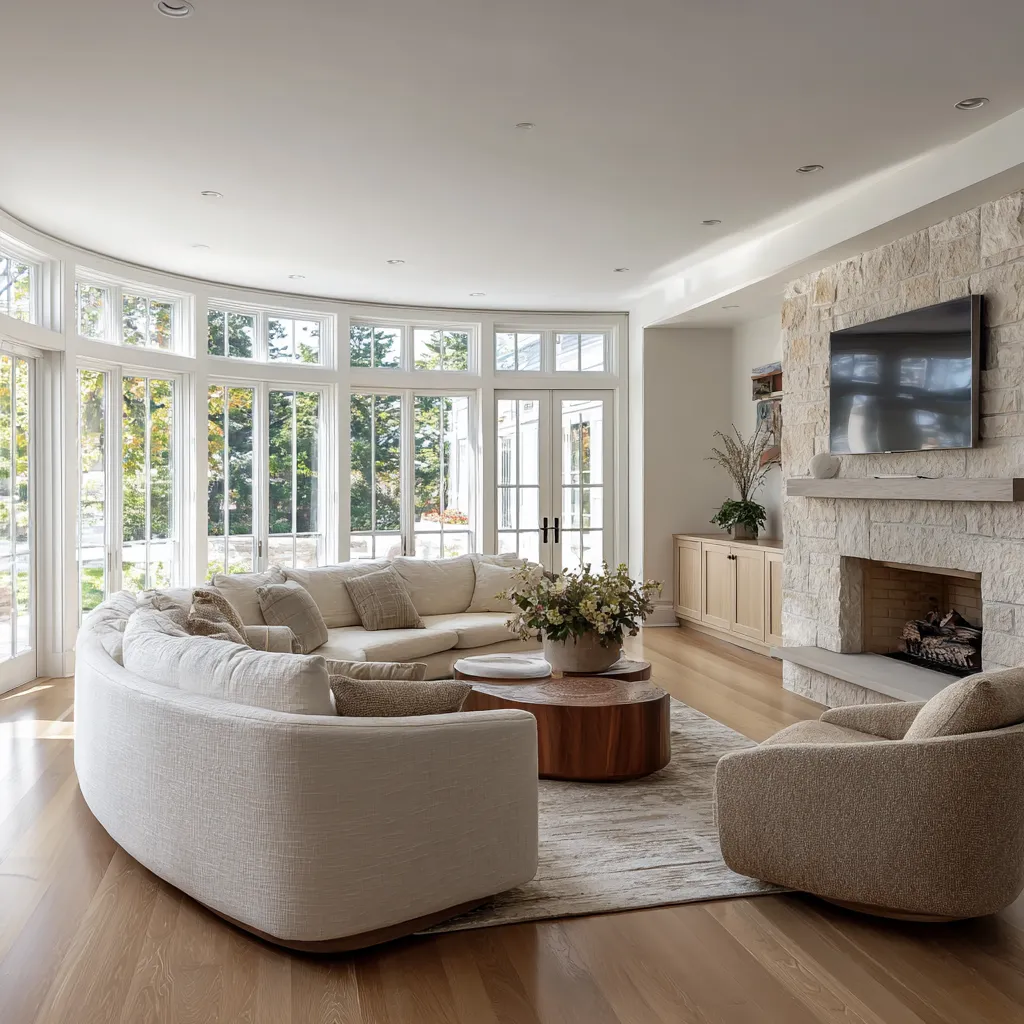
Why pale rooms still need weight
Cape Cod interiors are often very light in value, but they rarely work well when everything carries the same visual pressure. The style does not need darkness, though it can sometimes use it.
What it needs more reliably is weight.
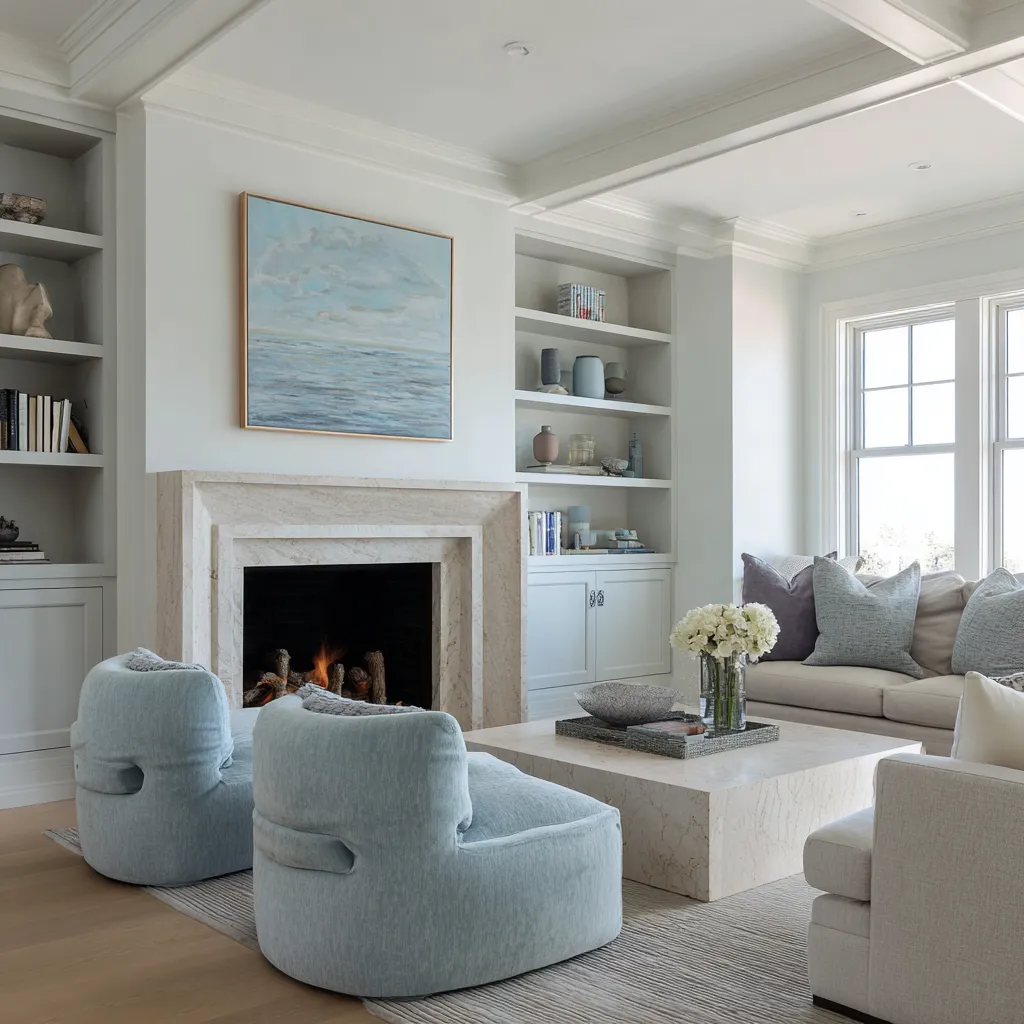
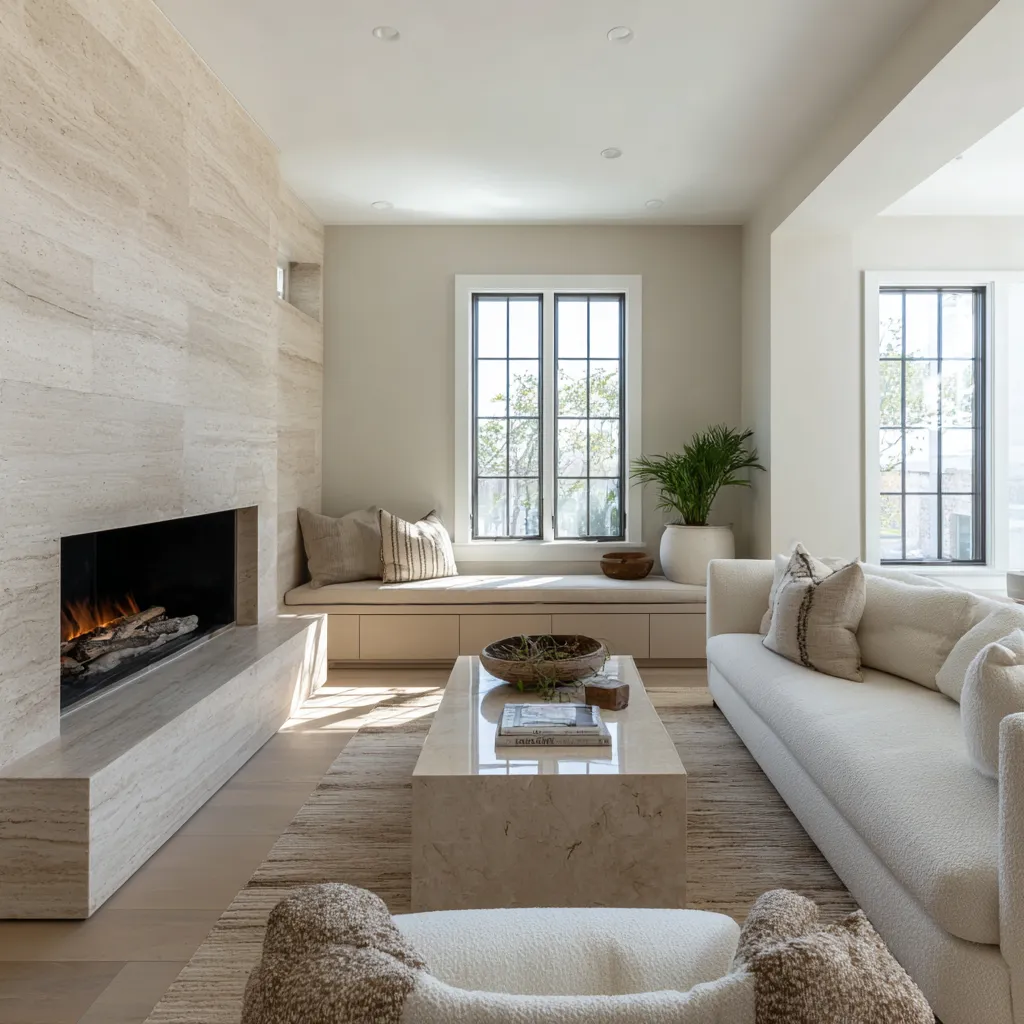
That weight might come from a pale stone chimney volume that rises to the ceiling, a substantial central coffee table with thickness, a bank of built-ins that holds the perimeter, or a coffered ceiling that gives the upper plane a sense of frame and rhythm. It may also come from a window seat at the end of a narrow room, since such a feature turns the far wall into a true destination and prevents the room from feeling like a pass-through.
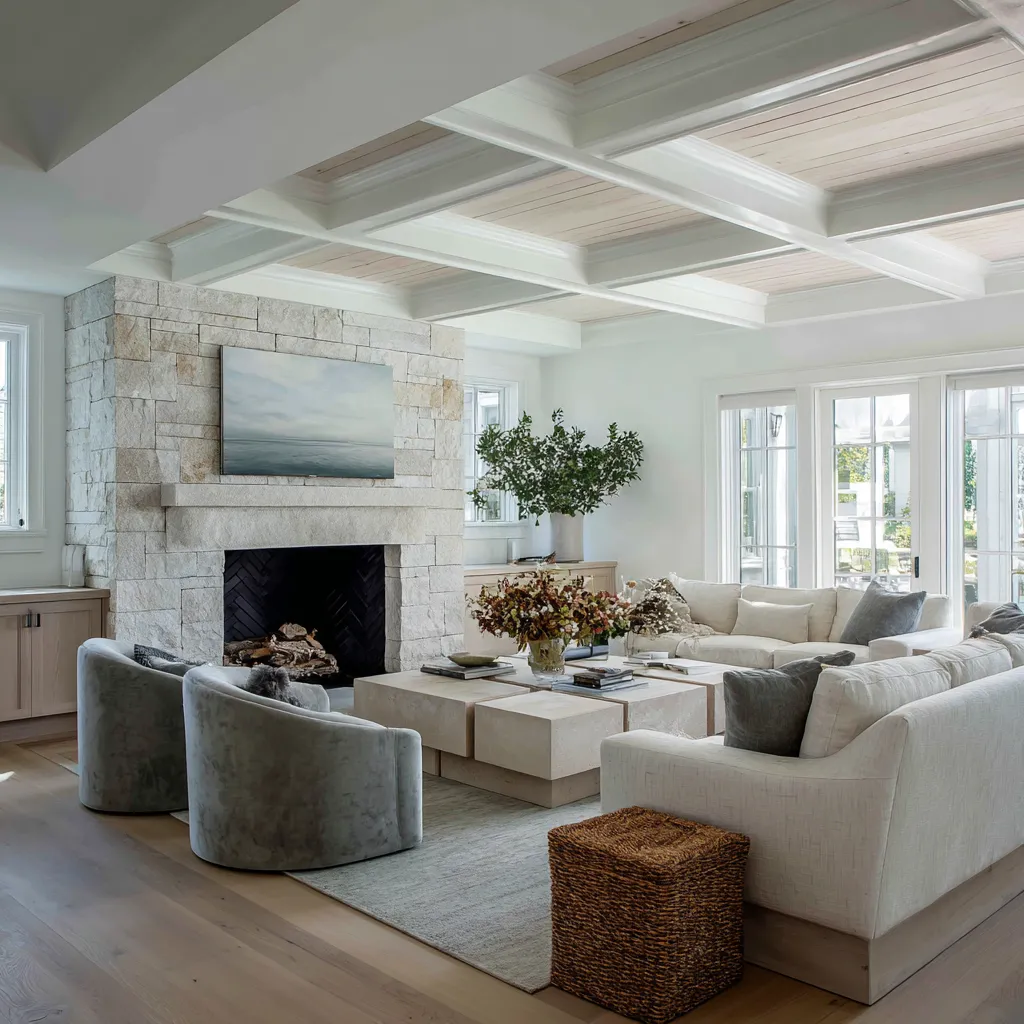
This is one of the most useful lessons in the style. A Cape room can stay light and still feel strong.
It does not need dramatic contrast to achieve that. It needs enough material mass and enough structural emphasis to give the eye something to land on.
That is why pale stone works so well in this design language. It gives substance without pushing the room into gloom.
The same is true of broad wood tables, quiet ceiling framing, and built-ins that absorb storage into the architecture.
What makes the style feel current
Modern Cape Cod is not made current by removing all tradition. It is made current by changing where tradition sits and where modernity sits.
The shell usually keeps some house-rooted cues: mantel logic, millwork, divided windows, ceiling framing, built-ins, or paneled wall sections. The furniture then carries the update.
Sofas become lower and broader. Chairs become rounder, deeper, and more sculptural.
Coffee tables simplify into block forms, waterfall shapes, grouped cubes, or thick round pieces. The room becomes less dependent on decorative furniture outlines and more dependent on clear massing.
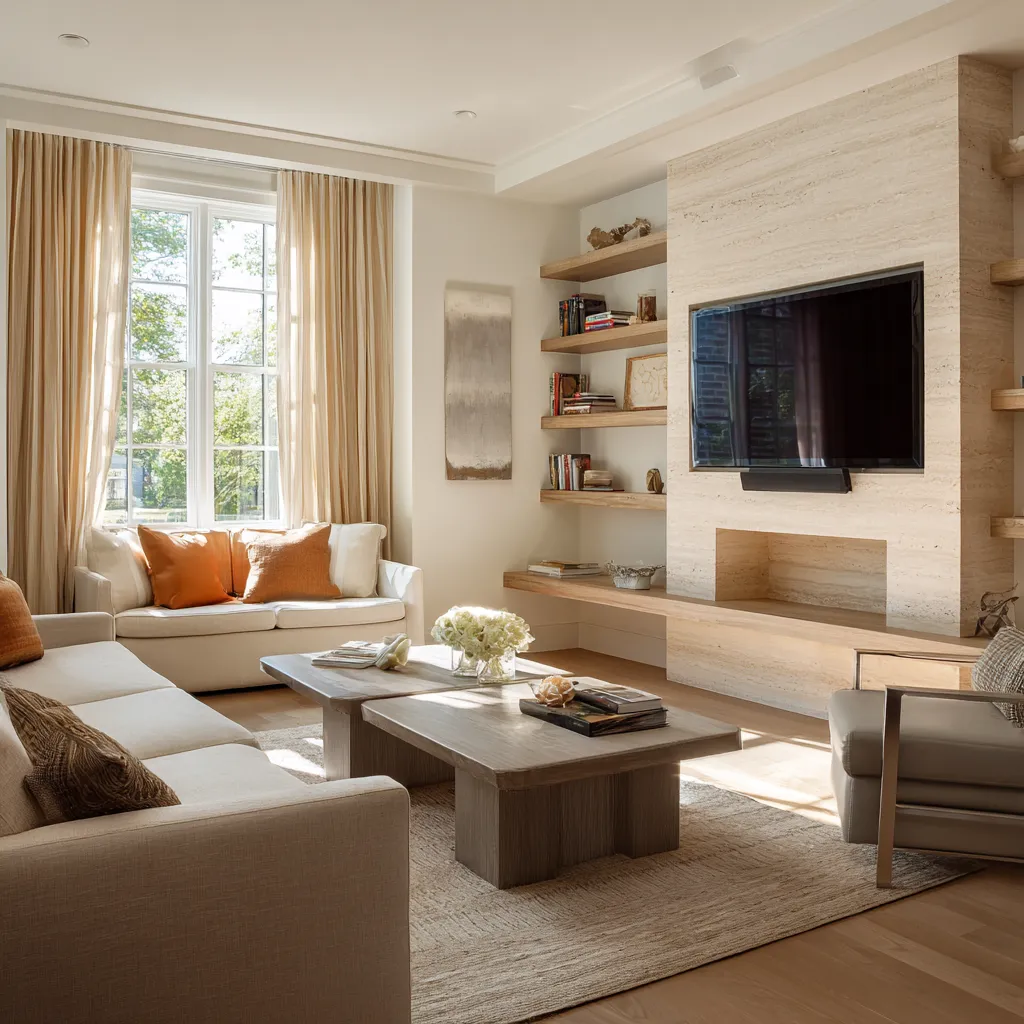
This shift matters a great deal. It allows the room to remain regionally grounded while still feeling present-day.
If the shell is modernized too aggressively and the furniture is also pushed into abstract softness, the room may still be attractive, but it can start to slide into general coastal contemporary. If the shell keeps its house-based framework and the furniture softens, the room tends to remain recognizably Cape Cod.
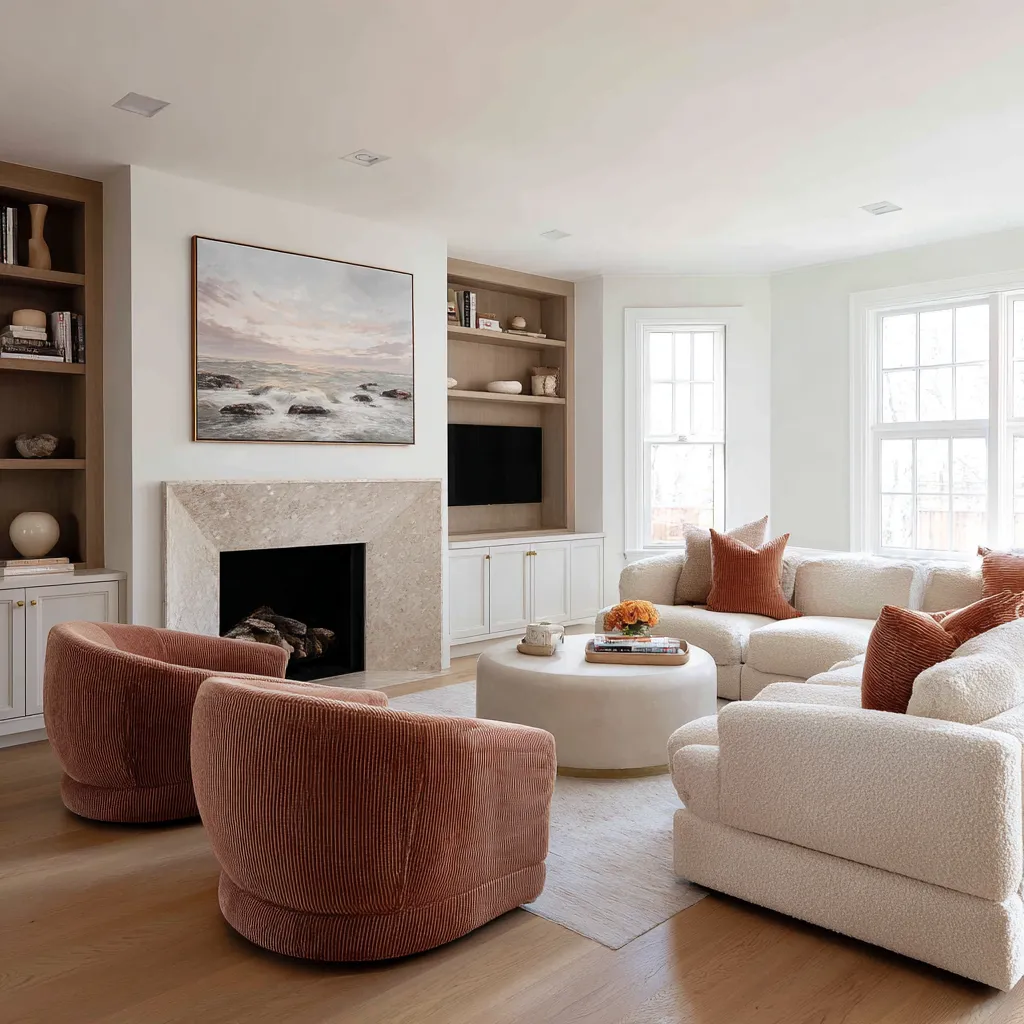
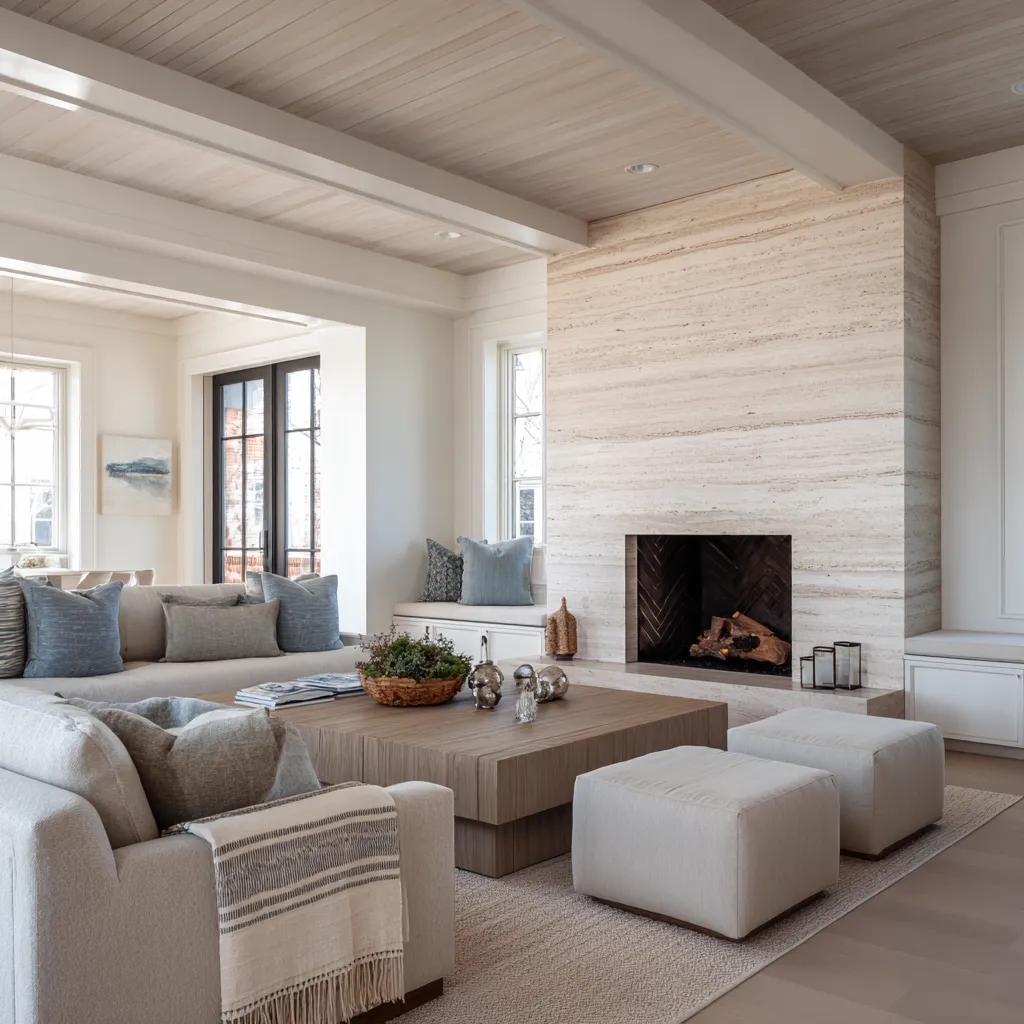
That is also why ceiling work matters so much in larger spaces. In a great room or rear family room, a coffered ceiling, planked vault, or visible framing pattern gives the architecture enough identity to support more current lounge-like furniture below.
Without that overhead structure, openness can become vagueness.
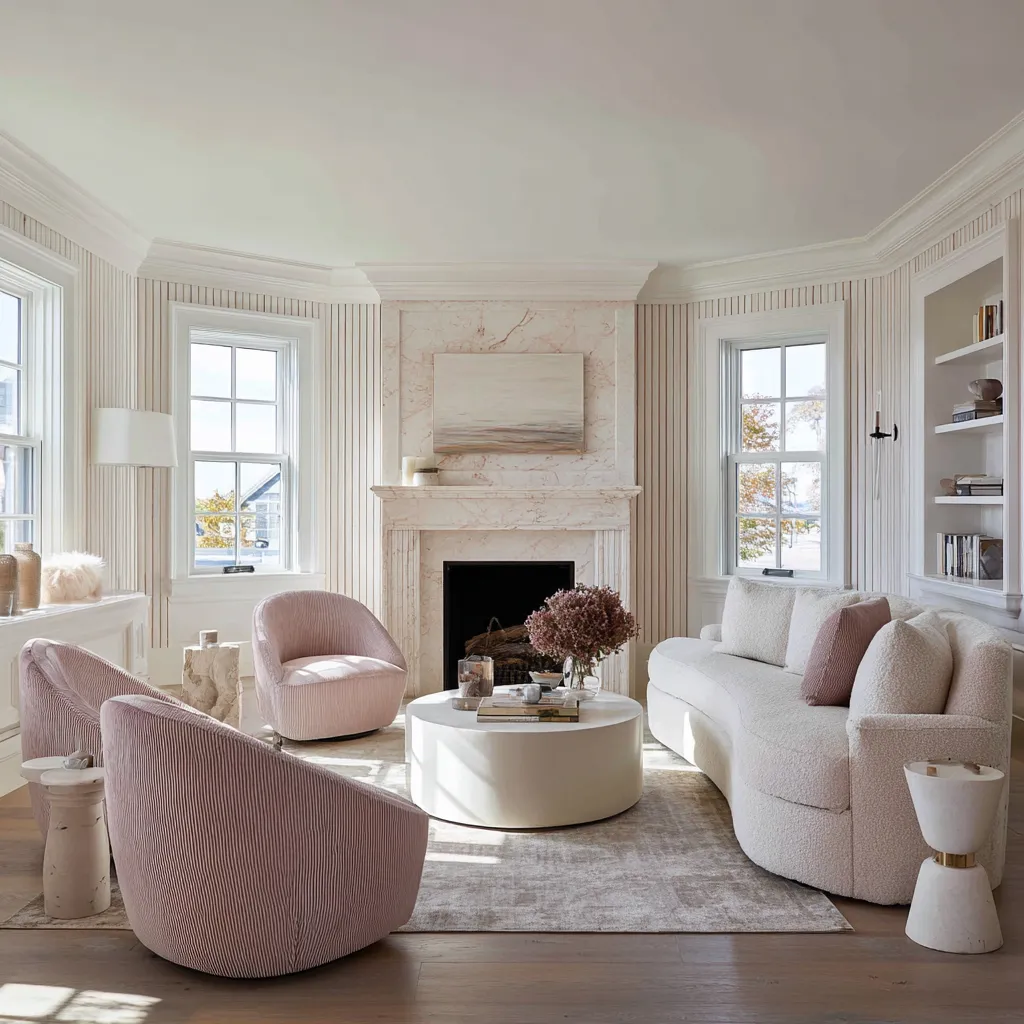
The quiet importance of built-ins
Built-ins are one of the carriers of Cape Cod character, yet they are often treated as secondary details. They do a great deal of the style work.
A built-in window seat turns daylight into occupancy. It makes the perimeter feel usable and settled.
It ties the room to weather, view, and daily routine. A shelving wall beside a fireplace gives the focal wall width and permanence.
Low storage under windows quiets awkward wall zones. Cabinetry around a television can keep media from flattening the room.
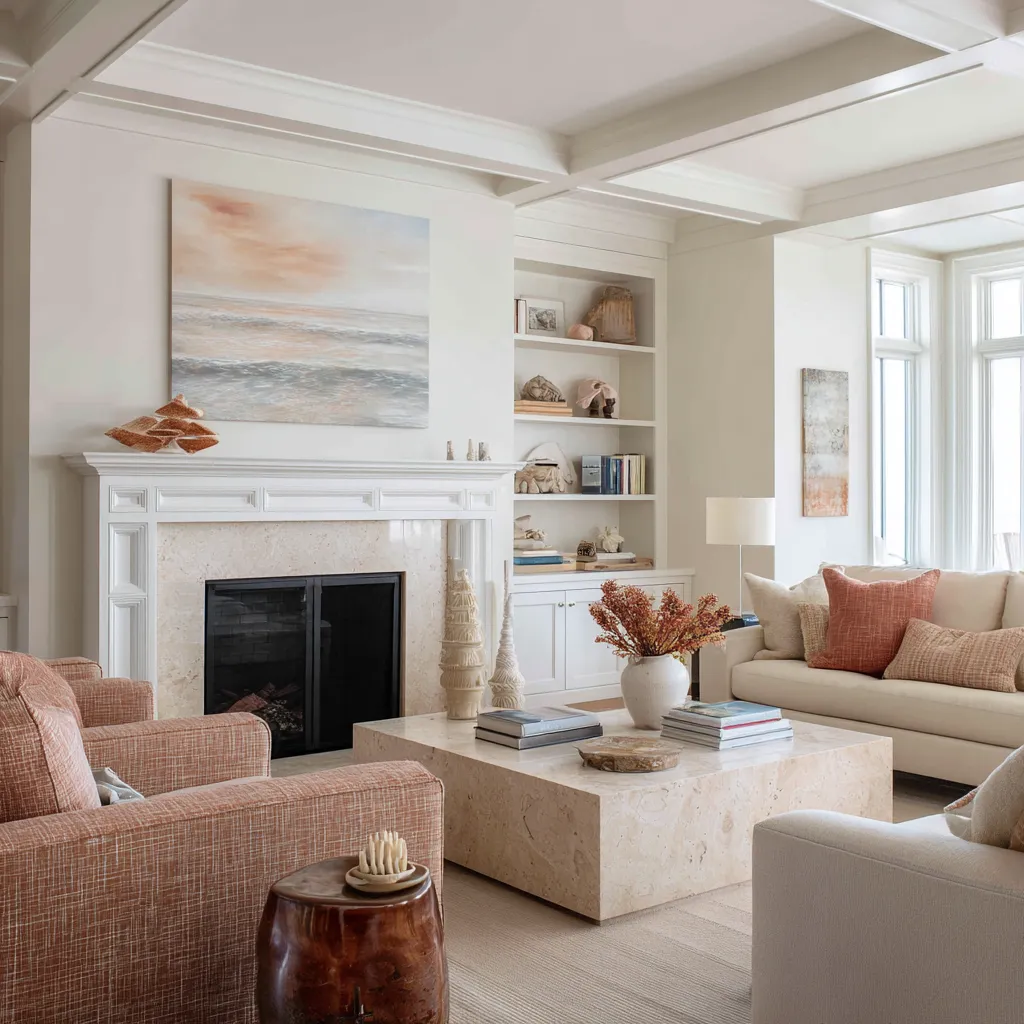
All of this matters because Cape Cod design tends to feel stylish when practical needs are absorbed into the house rather than added later as unrelated furniture. Built-ins help the room feel grown-in.
They also help reduce decorative clutter, because storage and display become part of the architectural field. In smaller layouts, this is powerful.
A window bench, shelf niche, or well-handled end wall often contributes more to Cape identity than another layer of accessories ever could.
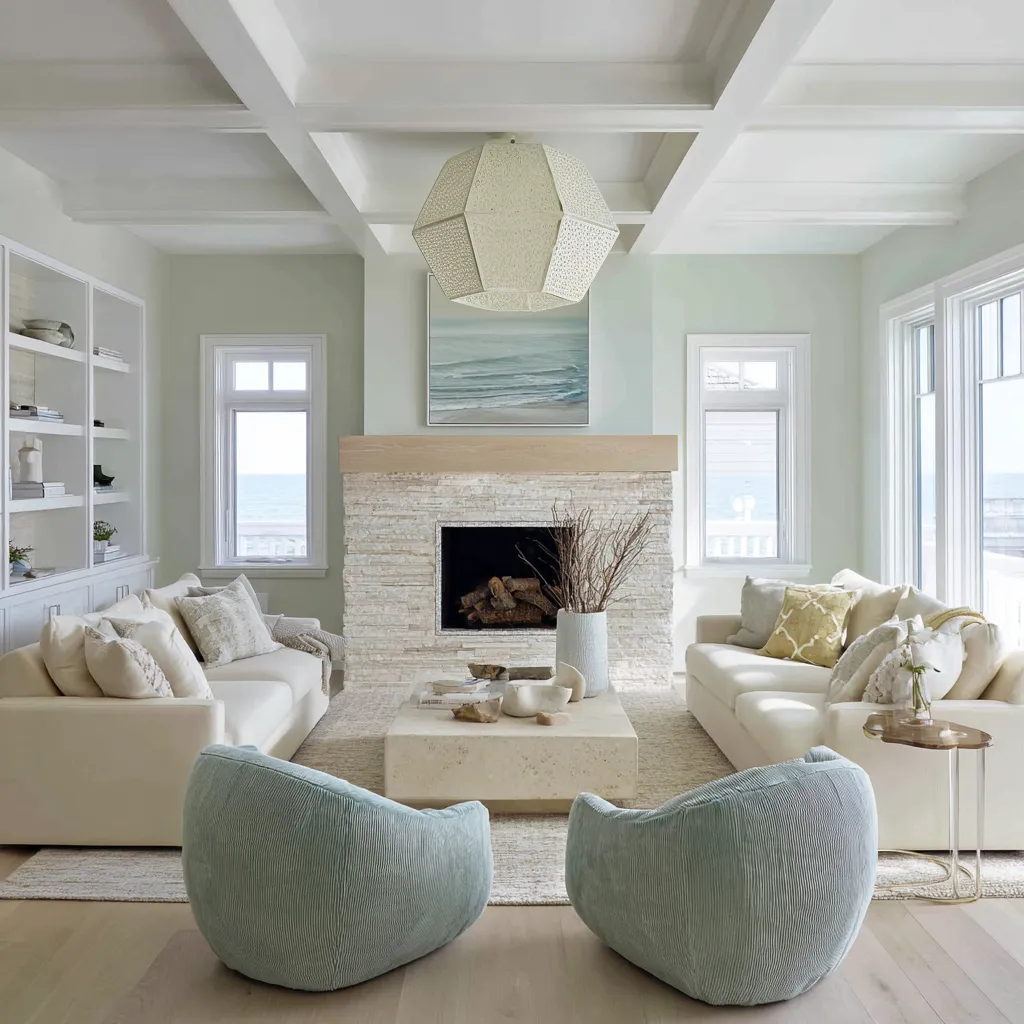
Color in modern Cape Cod: less spread, more concentration
Color in this style works when it is concentrated, not scattered. That means one pair of chairs in sea-glass blue, a bench cushion in misty sage, a painting that gathers pale water tones, a cluster of pillows in dusty coral, or a ceramic grouping that quietly repeats the room’s cool or warm direction.
This concentrated handling does several things at once. It keeps the room from becoming themed.
It gives the palette more depth, because color is not flattened across every surface. And it allows the shell to remain calm and architectural.
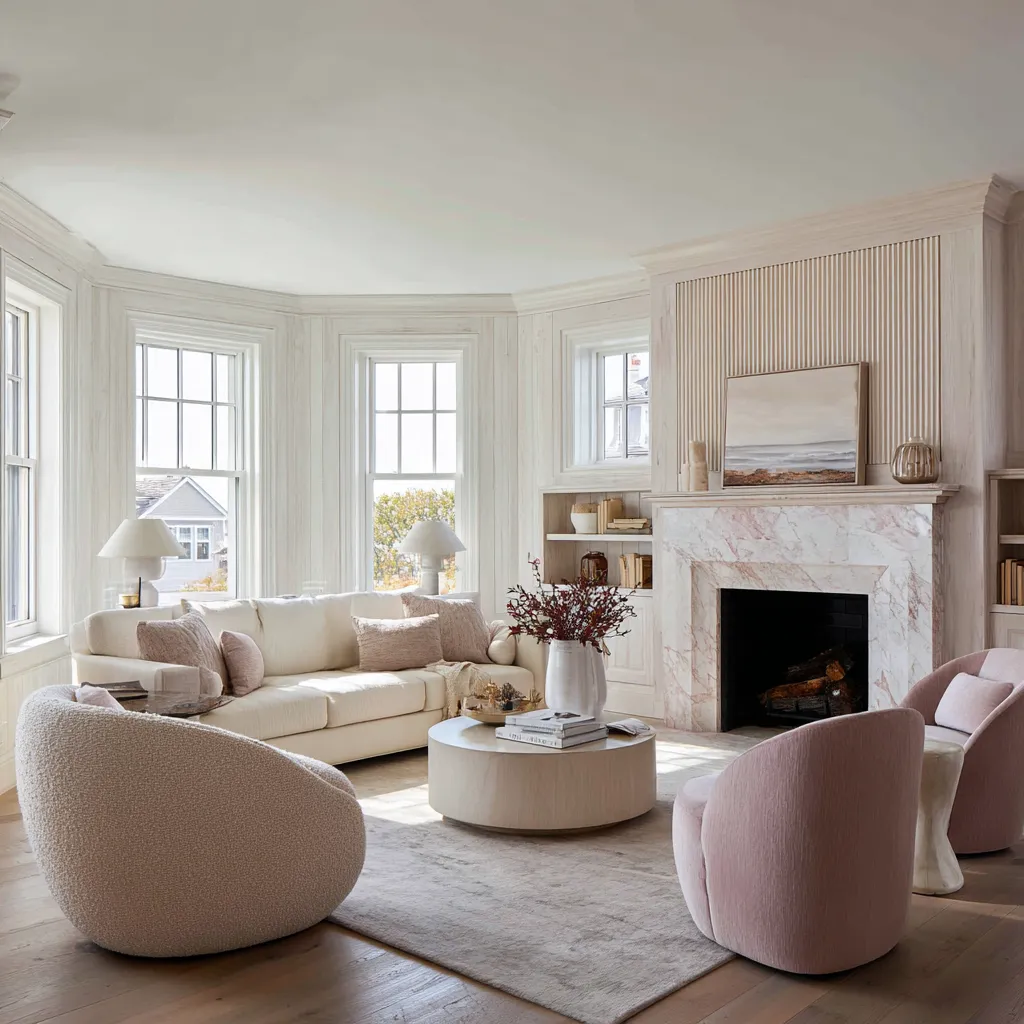
Cool coastal hues still have a clear place in modern Cape Cod. Pale blue, silver-blue, gray-blue, sage, water-washed green, and blue-lilac can all work beautifully when they stay muted and sit inside a bright mineral field.
These colors keep the room linked to sky, horizon, sea haze, painted clapboard memory, or sea glass rather than to strong decorative contrast.
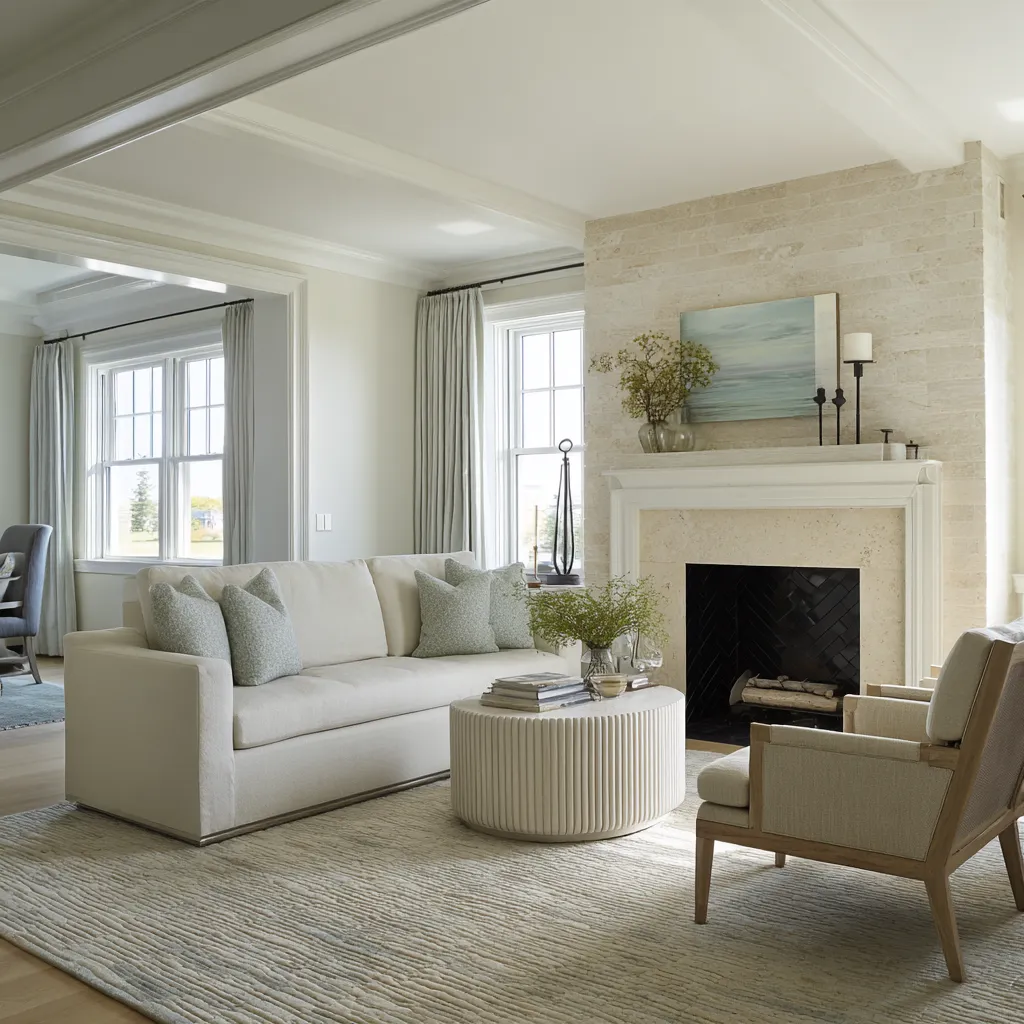
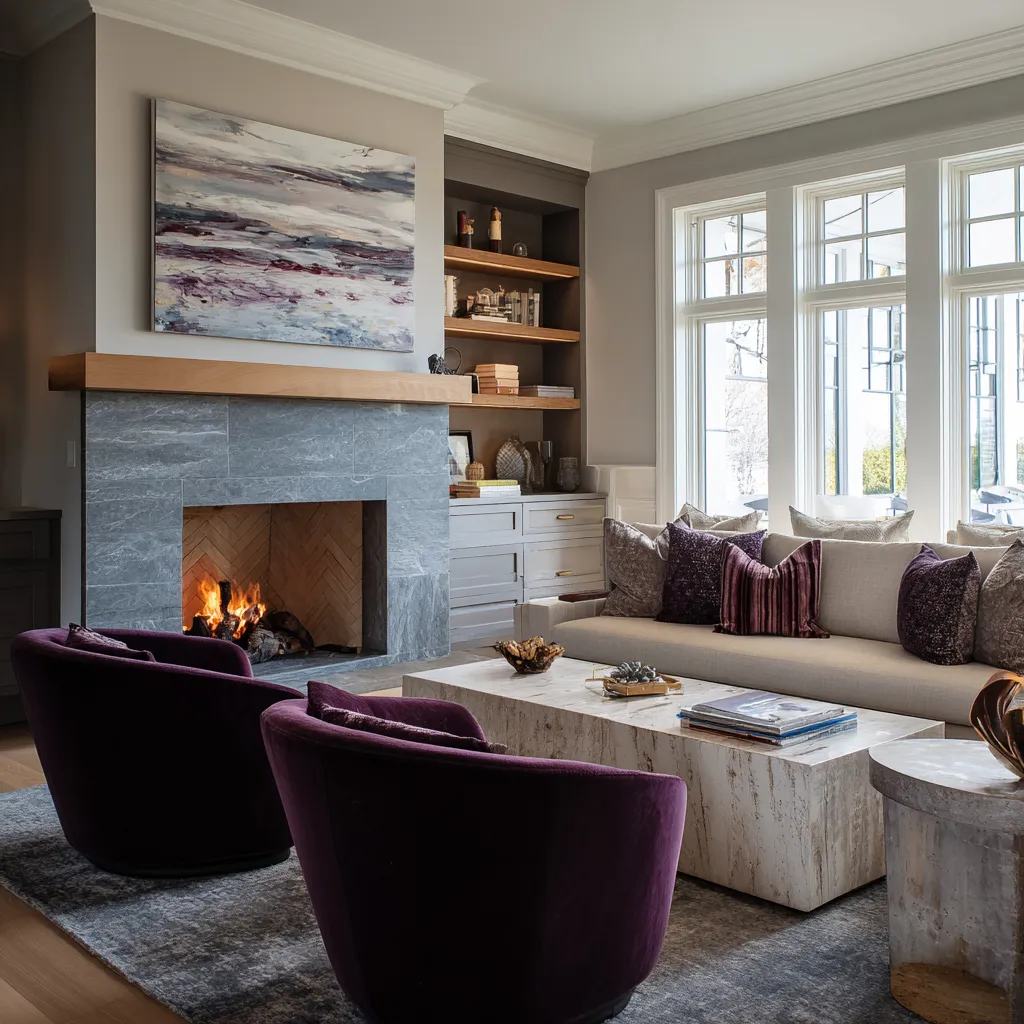
But one of the more interesting developments in current Cape Cod is the expanded role of warm accents. Rust, terracotta, coral, blush, and dusty mauve can work very well.
The key is that they are conditional. They need the support of a visible house skeleton.
If warm tones appear in a room that still has divided windows, built-ins, trim discipline, a hearth wall, or a recognizable mantel structure, they can add depth and a four-season quality. If those same warm tones appear without enough regional framework, the room can drift toward soft luxury lounge or generalized warm transitional design.
That is why warm accents feel most credible in family rooms and sitting rooms where the architecture remains legible. They can work as warmth moving through a coastal house, not as the room’s whole identity.
Softness: choose your lane
Modern Cape Cod often softens itself in one of two ways.
- The first route uses sculptural curves. Rounded lounge chairs, softened sofa edges, circular ottomans, drum tables, and curved sectionals can all help take the room out of trim-heavy stiffness. This route tends to feel more current and more edited.
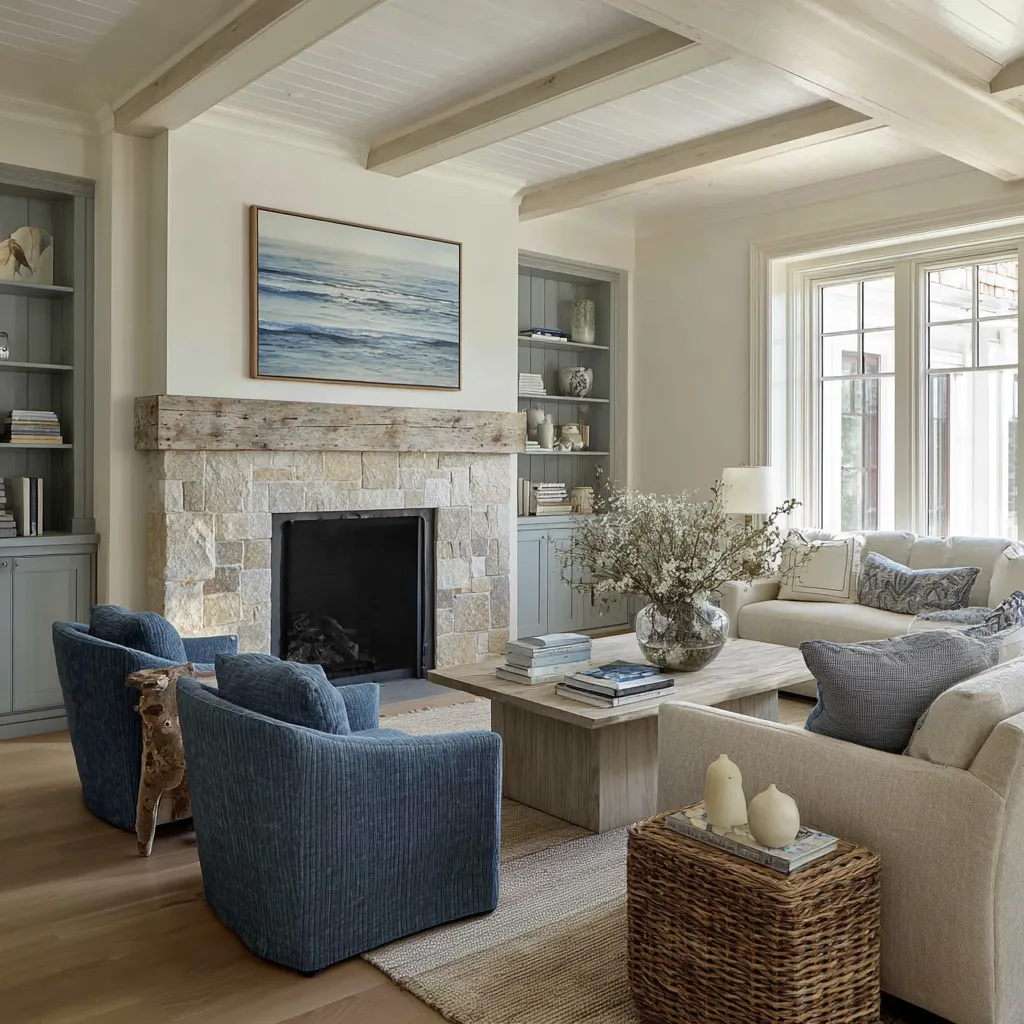
- The second route uses natural texture. Wicker or woven lounge chairs, natural-fiber rugs, baskets, weathered wood, and rougher small-scale surfaces soften the room through tactile variation rather than through shape. This route tends to feel more domestic and more house-worn.
What matters is that the room usually does not need to push hard in both directions. Too much curve plus too much weathered texture can blur the design’s center of gravity.
The better rooms tend to choose one dominant softening language and then let the other remain more limited.
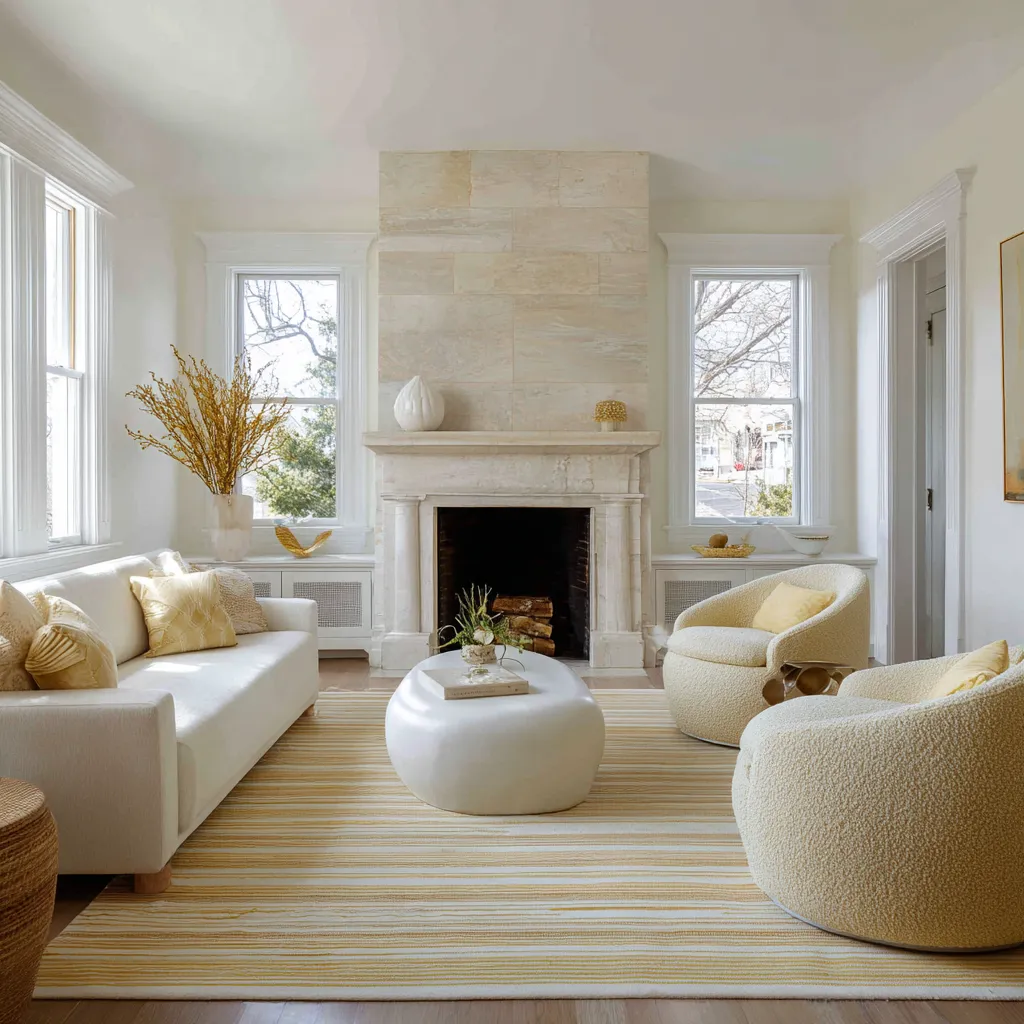
If the furniture is very rounded and sculptural, the room may need less wicker and less rough cottage texture. If the room leans into woven chairs, beams, baskets, and dry natural fibers, the furniture can stay more restrained in shape.
This kind of selectivity is one reason strong Cape Cod rooms feel clear. They do not try to express every version of softness at once.
Symmetry is useful, but not enough
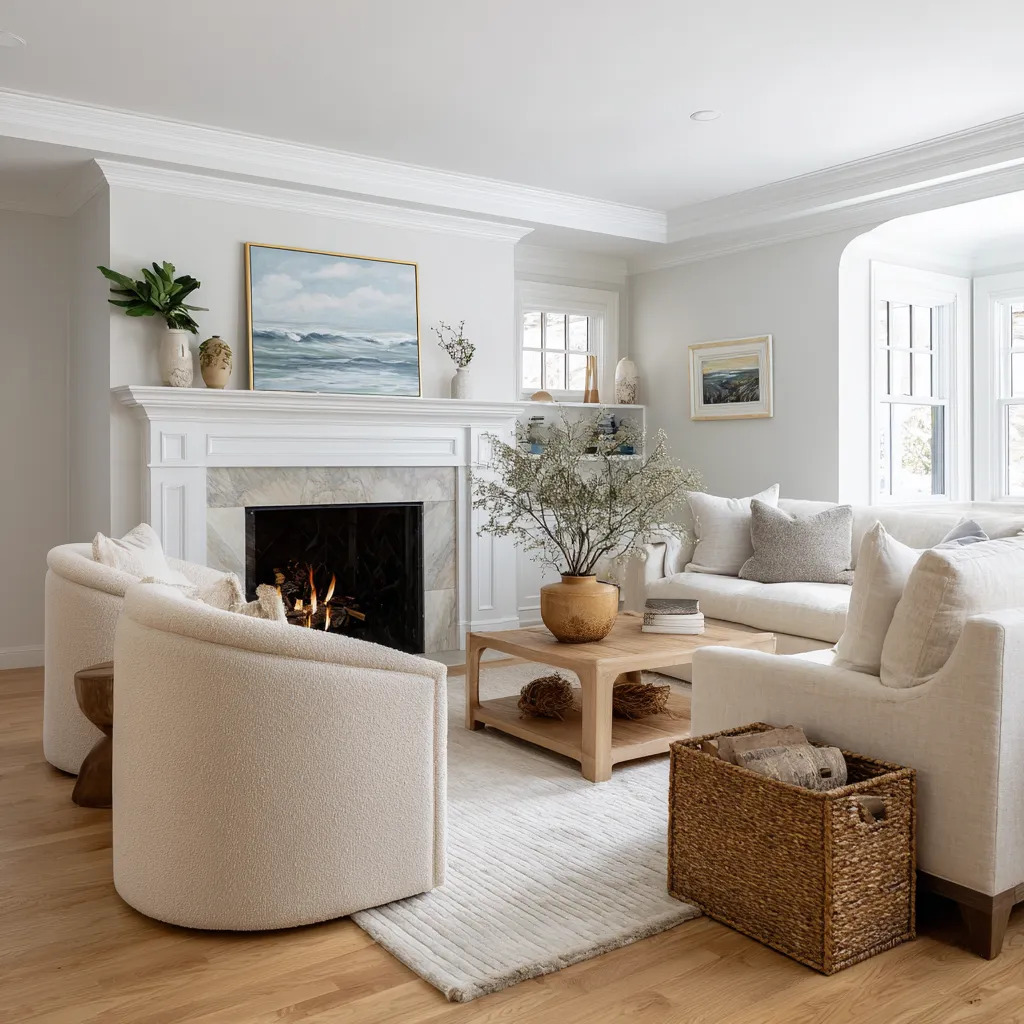
Cape Cod rooms often look settled when the fireplace is centered and the composition feels balanced. That planning logic absolutely belongs to the style.
But symmetry alone does not guarantee success. A centered fireplace with flanking windows and paired chairs can still feel generic if the room lacks enough house structure, enough ceiling presence, or enough regional material tone.
In other words, axial order needs support. It works when it travels with traditional cues such as built-ins, a proper mantel, divided openings, or a visibly shaped shell.
Otherwise the room may begin to feel like a staged formal living room that happens to use pale colors. This is why some of the Cape Cod parlors and sitting room ideas are symmetrical but not rigid.
They balance the axis with texture, a horizon painting, a natural-fiber note, or furniture softness that prevents ceremony from hardening into stiffness.
Great rooms, family rooms, and sitting rooms all follow different rules
Cape Cod is not one room type. It now operates across several room families, and each has its own logic.
The refined parlor or sitting room
This branch tends to keep stronger traditional cues: clearer fireplace centering, a more settled front-room structure, cleaner mantel logic, and lower drift risk. It often uses a quieter furniture palette and somewhat more formal composition.
These rooms protect Cape identity very well. They are ideal for homeowners who want clarity first and modernization second.
The open great room
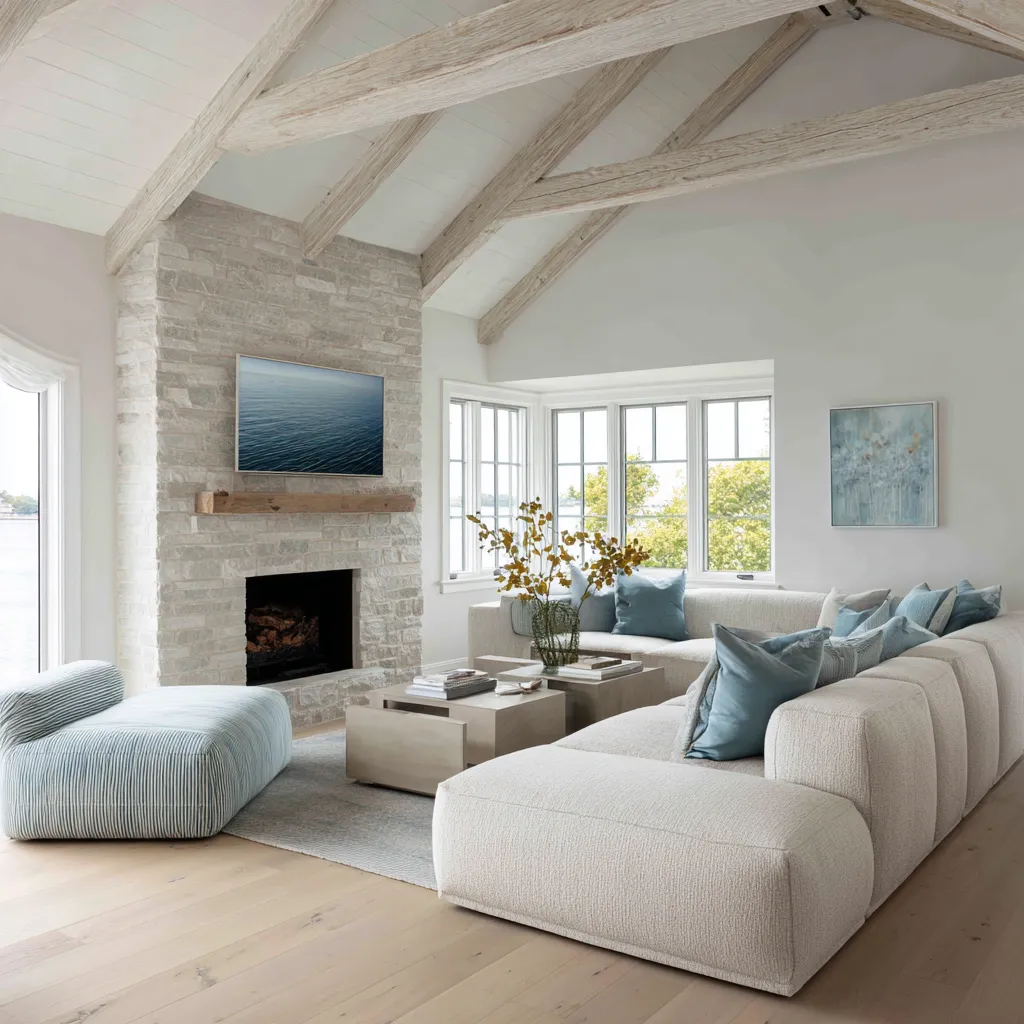
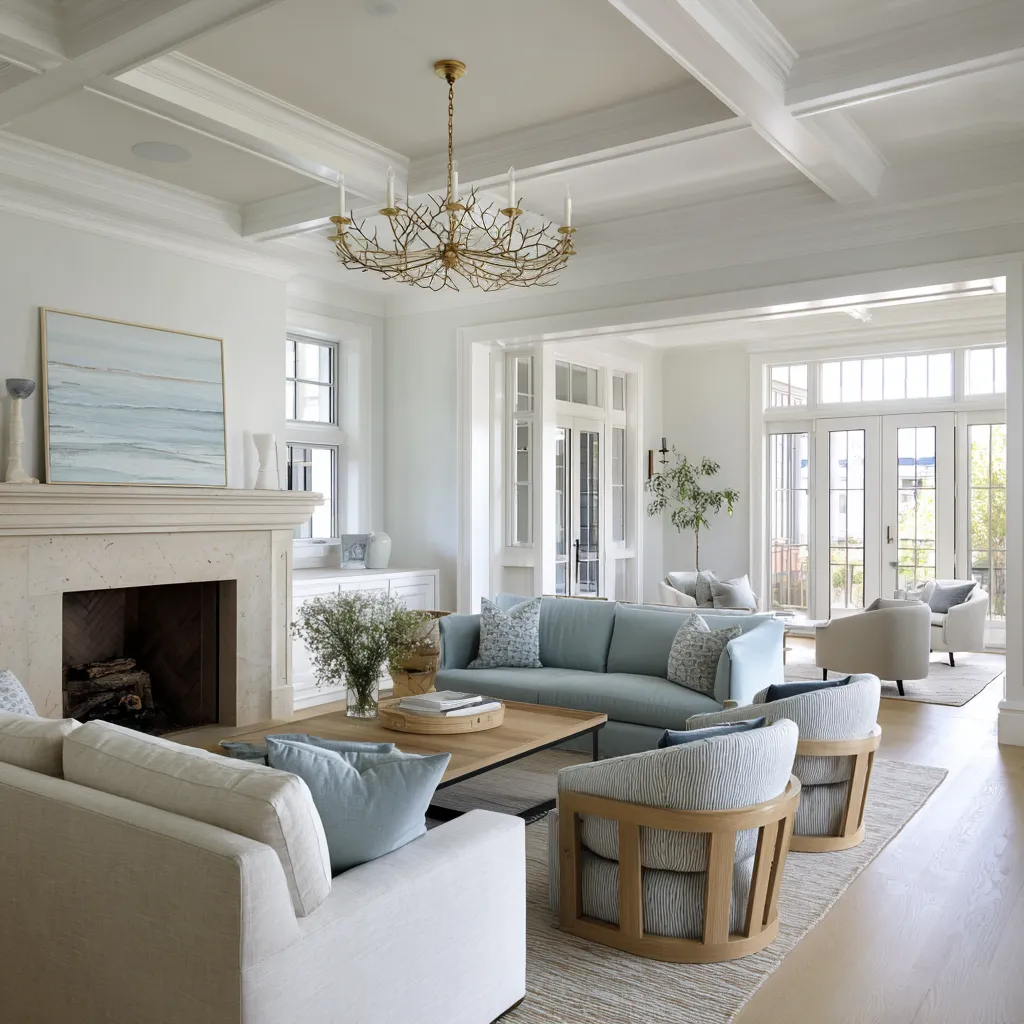
This branch depends heavily on ceiling articulation, broad hearth mass, pale mineral surfaces, and larger furniture groupings. It can be very current, even luxurious, but it stays Cape because the architecture remains disciplined.
In these rooms, the ceiling is doing far more than people often realize. It tells the large volume that it still belongs to a coastal house.
The updated family room
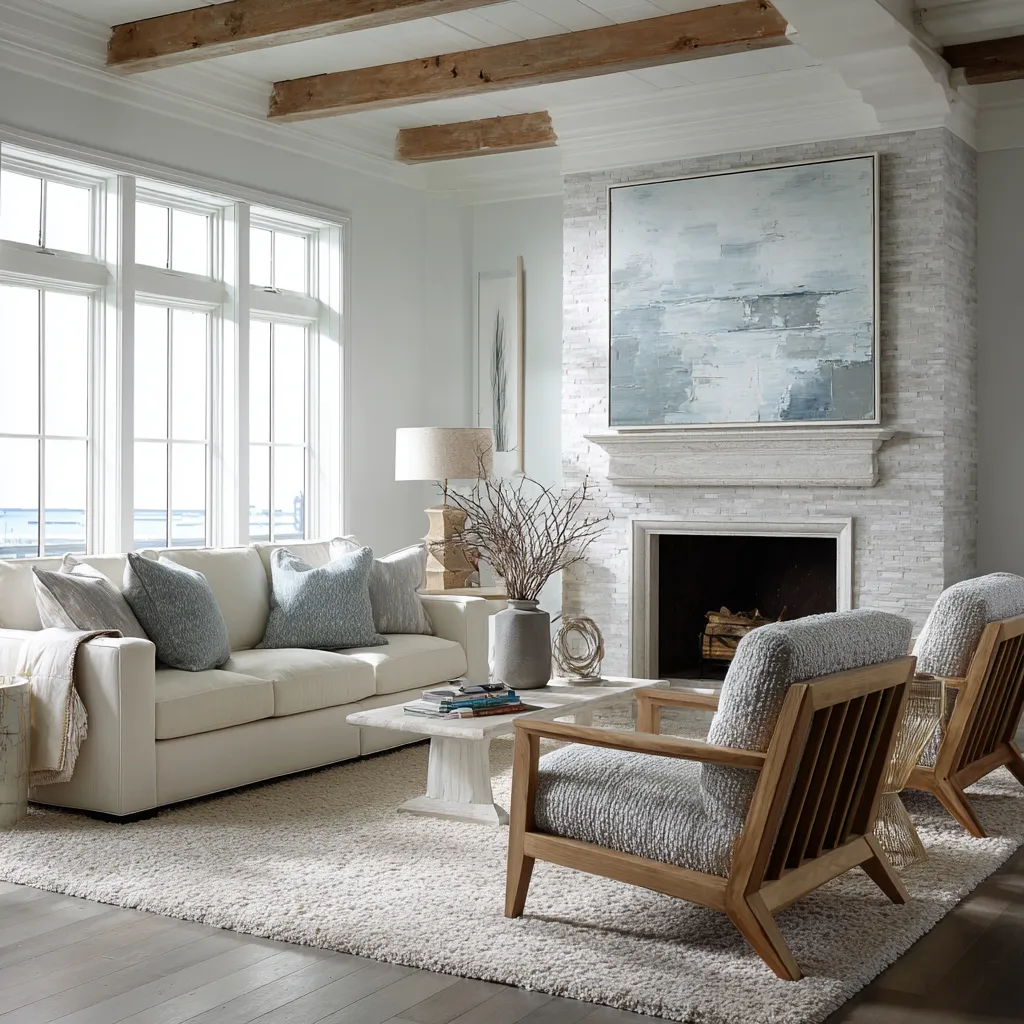
This branch accepts media, broader sectionals, lounge-oriented planning, and more relaxed daily use. It is often the most livable version of the style because it allows furniture to become deeper and more accommodating.
It is also the branch most likely to widen the palette into rust, coral, blush, or denser warm notes. But this is also where the room can drift if the shell loses its Cape anchors.
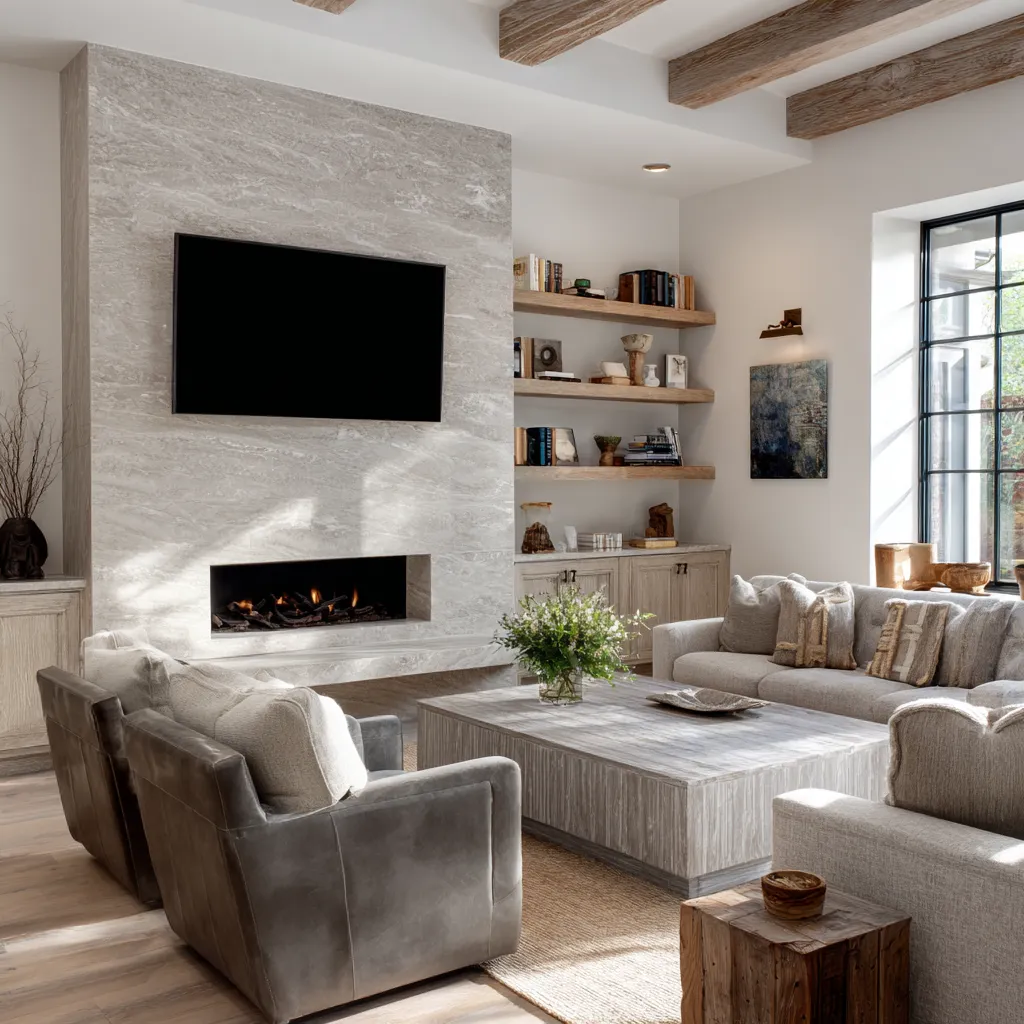
The television should belong to a hearth wall or millwork field. The room still needs a clear anchor and enough house structure to keep the family-friendly looseness from becoming anonymous.
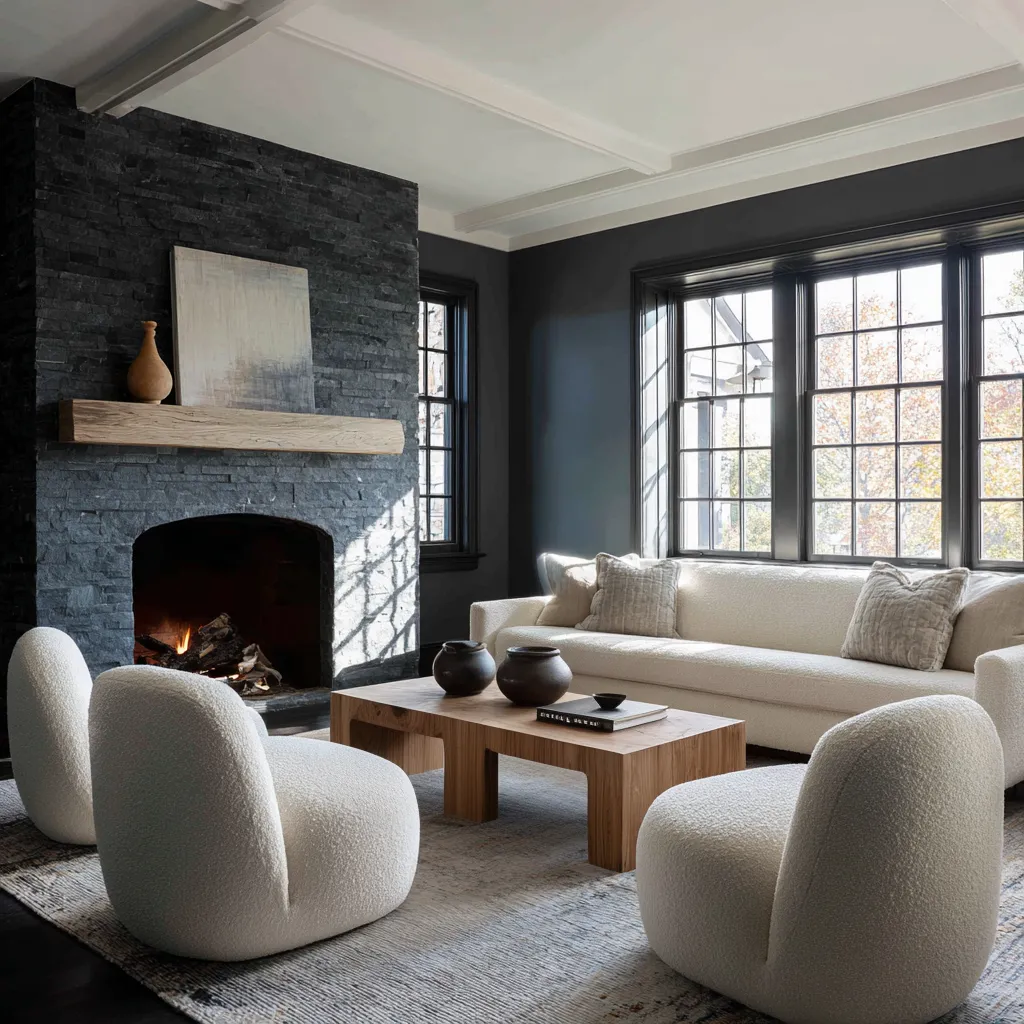
The darker cocoon room
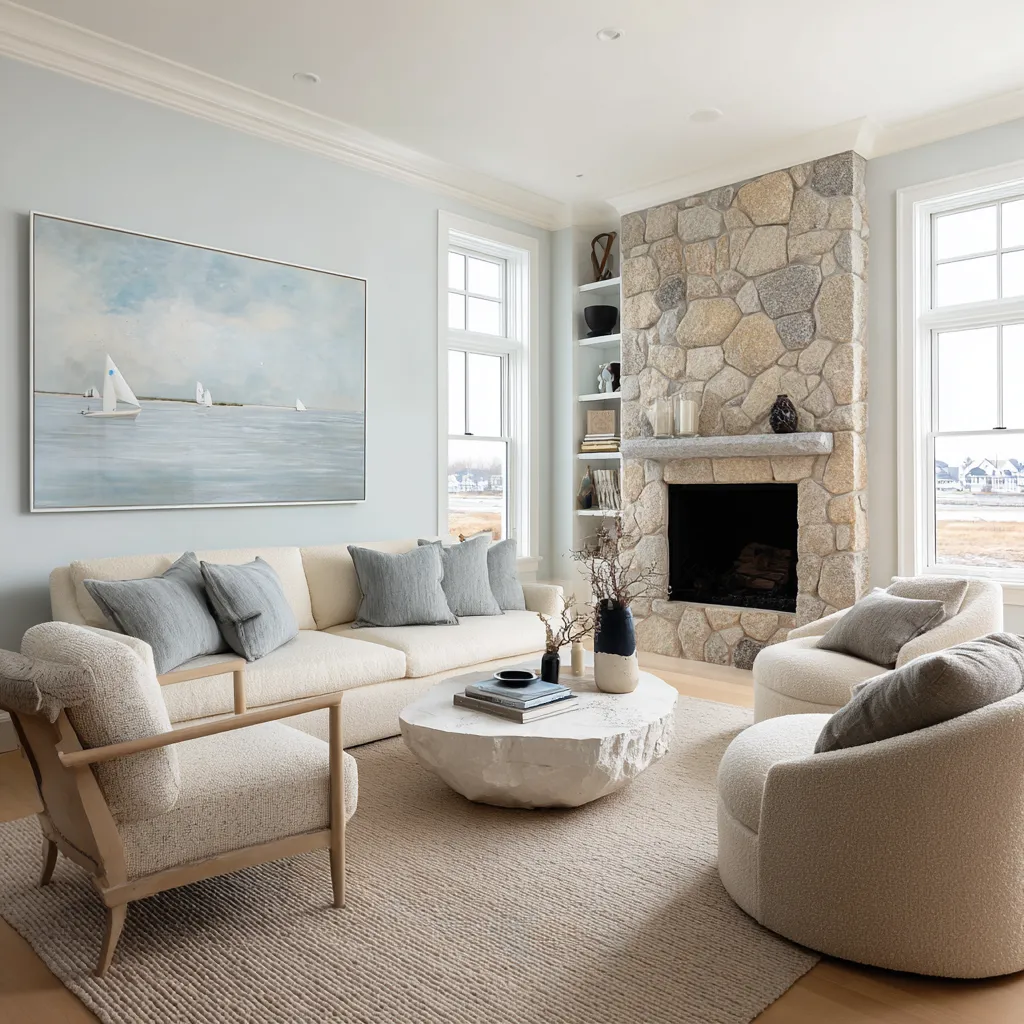
There is also a smaller branch of modern Cape Cod that moves into a moodier register. Here, darker walls or darker stone can create a deeper evening atmosphere and more seasonal breadth.
This approach can work, especially for colder-season rooms with strong hearth presence. But it is delicate.
Once darkness takes over and house framing weakens, the room can leave Cape territory quite fast. Darker Cape rooms need bright windows, visible trim or ceiling logic, and soft pale seating to remain believable.
Why television does not have to ruin Cape Cod
One of the more practical truths about current Cape Cod is that media is not the enemy. The problem is not the presence of a television.
The problem is allowing the screen to erase the room’s hearth identity. A Cape Cod media room design usually keeps the wall architecturally substantial.
The television belongs within a stone volume, a paneled chimney field, a built-in cabinetry composition, or a shelf-lined wall that still reads as a hearth-centered zone. When this happens, media actually becomes compatible with Cape clarity because the room still behaves like a room organized around shelter, gathering, and permanence.
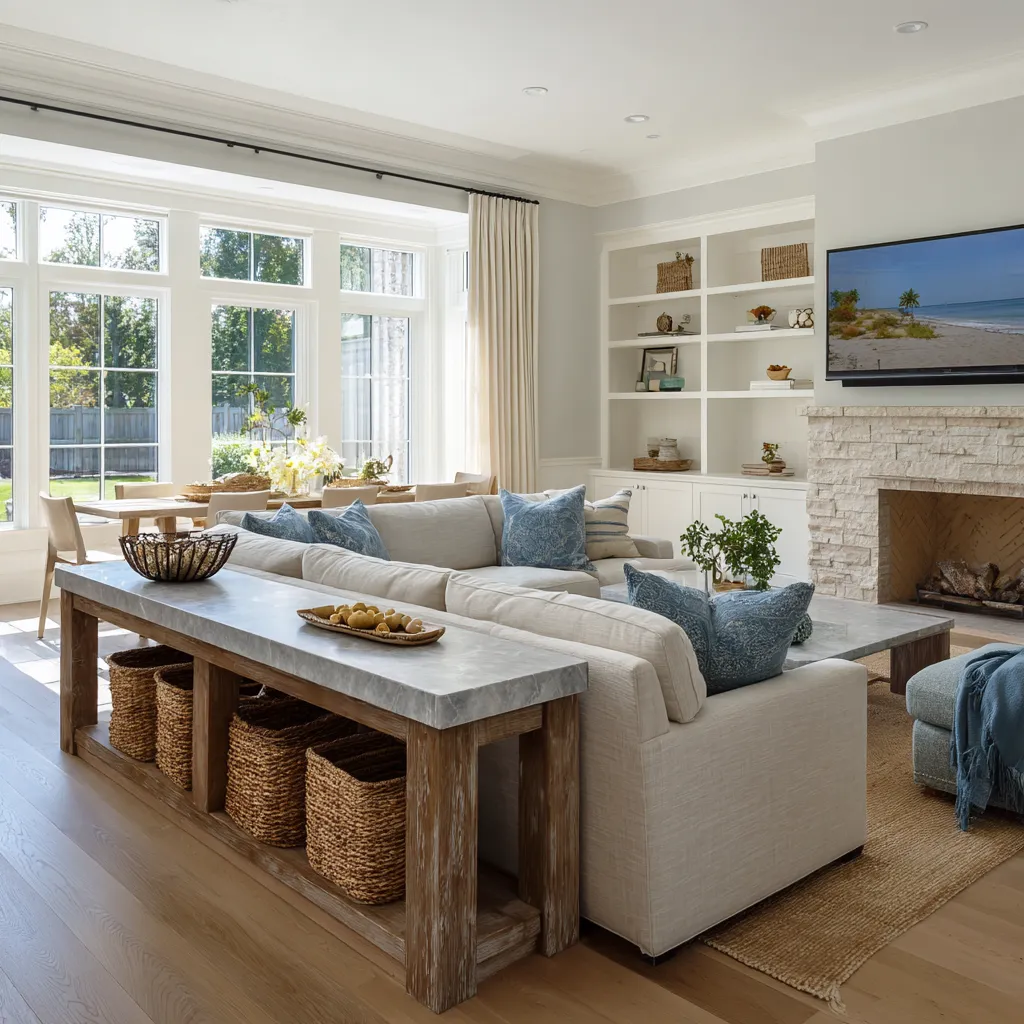
This is why the family-oriented Cape living room ideas feel so natural. They accept present-day life without surrendering the room’s center.
The screen is there, but the room still has mass, material presence, and domestic order.
What gives Cape Cod four-season depth
Many people think of Cape Cod interiors only in terms of high-summer light: pale blue, bright shell, fresh white upholstery, cool ocean notes. That is a part of the style, but it is not the full emotional range.
The ideas that feel richer across the calendar tend to have more hearth presence, a little warmth in the palette, stronger enclosure, or a better relationship to evening use. Warm accents such as rust, terracotta, and dusty coral can help here.
So can deeper stone, a slightly denser shell, or a stronger media-hearth wall that supports firelight and night-time gathering.
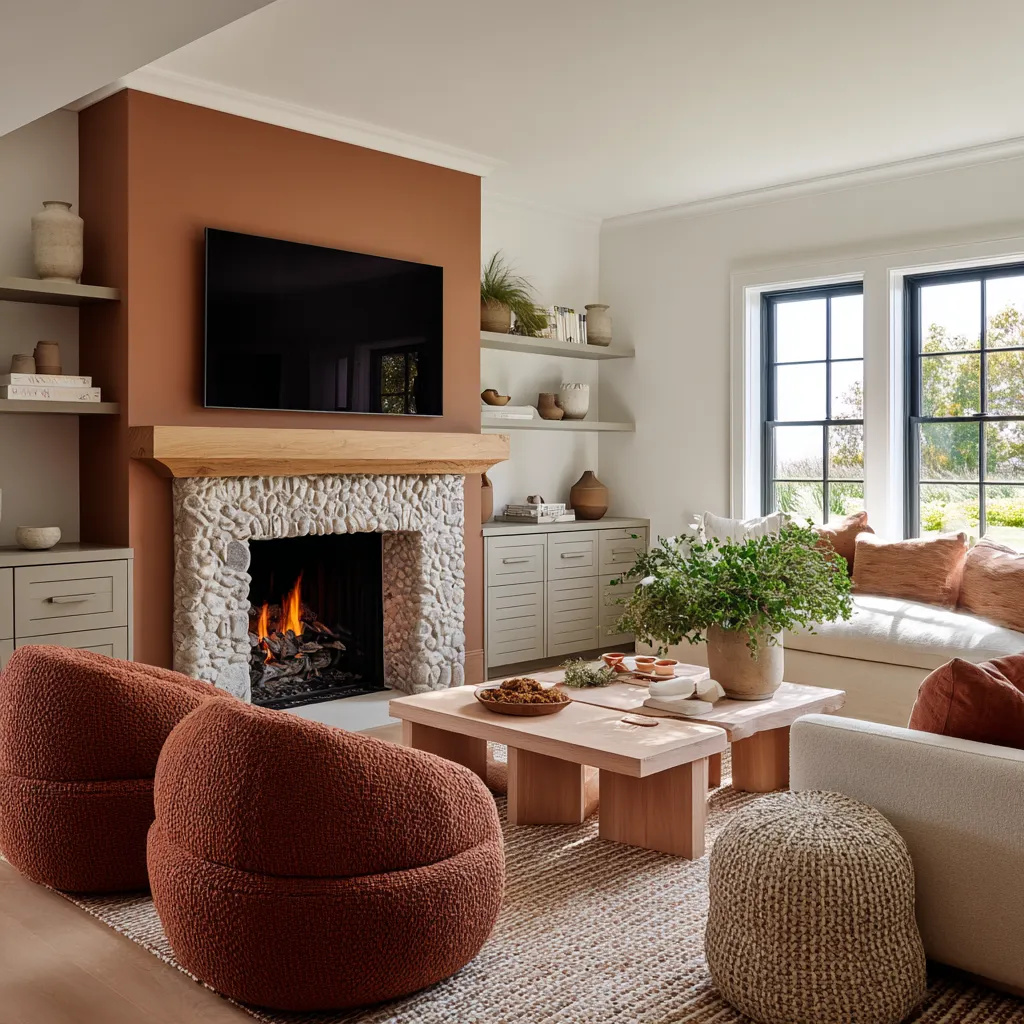
This does not mean every Cape Cod room should become darker. It means that a pale room should still have enough mass and enough thermal mood to hold an October afternoon or a winter evening.
A strong anchor, a warm wood table, a dry botanical arrangement, rust or wheat notes in small doses, or a substantial stone surround can all help extend the room beyond summer. A room that only works in bright midday conditions may still be attractive, but it will often feel less complete than one that can support both salt-air freshness and colder-season shelter.
Three common ways the style drifts
Modern Cape Cod is flexible, but it is not infinitely flexible. Several drift patterns appear again and again.
- The first is warm fashion color without enough house structure. Blush, coral, terracotta, or mauve can be very good here, but only if the room still has mantel logic, built-ins, divided openings, ceiling articulation, or some other visible house framework. Without those, the room starts to move toward soft luxury lounge.
- The second is symmetry without enough supporting architecture. A centered fireplace and paired seating are not enough on their own. If the ceiling is blank, the shell is generic, and the materials do not carry a regional note, the room may become formal without becoming specifically Cape.
- The third is too much soft sculptural furniture without a clear regional anchor. Curved sectionals and rounded chairs can modernize the style beautifully, but if there is no hearth gravity, no millwork, no meaningful built-in element, and no house-based structure, the room can become general contemporary coastal.
In all three cases, the fix is similar: restore the architectural skeleton. Strengthen the hearth.
Give the perimeter something to do. Let the room feel attached to a house rather than to a styling formula.
Closing perspective
The enduring appeal of modern Cape Cod lies in how calmly it handles opposites. It can be bright but grounded, fresh but not thin, current but still house-rooted, coastal but not overly literal, practical but still polished.
It can support a formal front room, a broad great room, a daily family room, or a quiet side sitting room. It can remain pale and airy, or move into a denser, more evening-oriented mood.
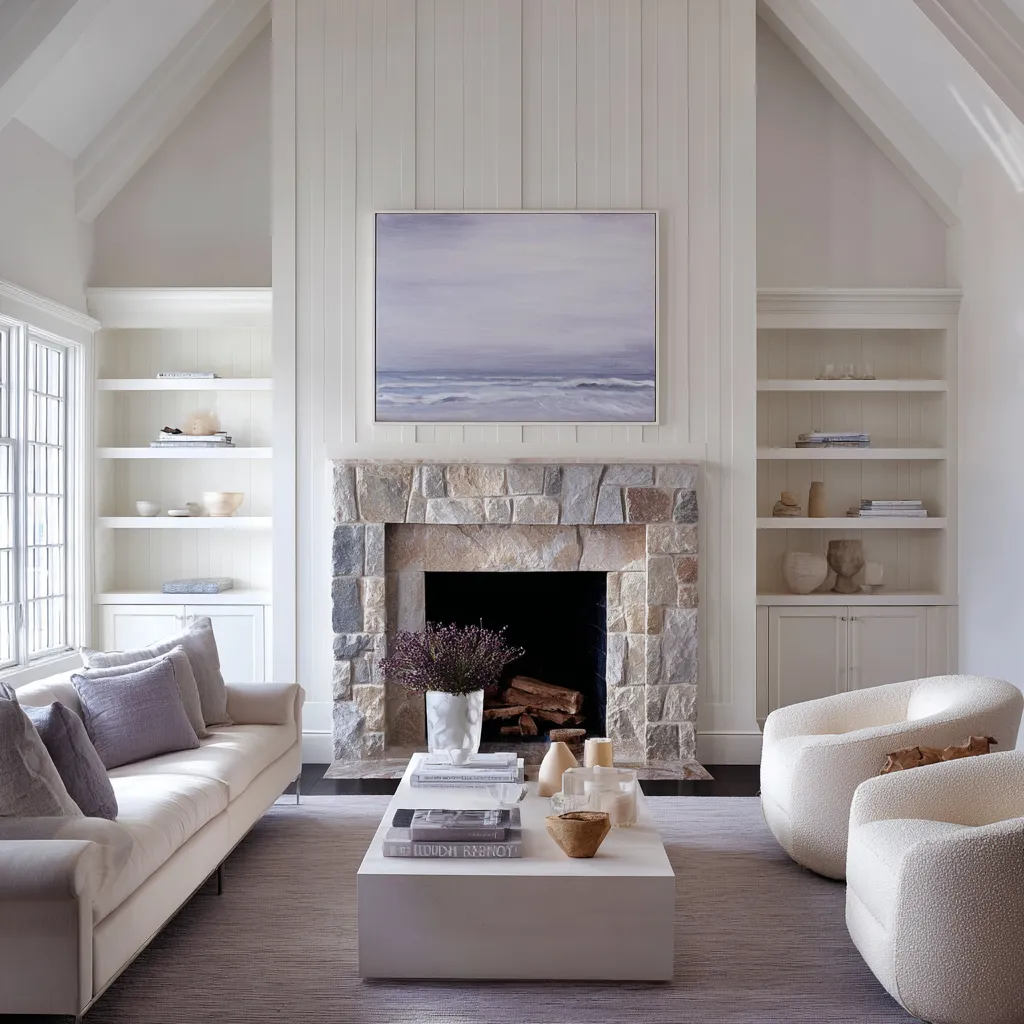
What keeps it together is not a fixed palette or a single furniture type. It is the relationship between light, mass, and structure.
Once those are in balance, the room gains freedom. Blue can recede.
Warm tones can enter. Softer furniture can widen.
Media can be absorbed. The style remains intact because the room still has a hearth, still has bones, and still feels shaped by house life.
That is the strength of modern Cape Cod living room design. It does not depend on decorative signals to make its point.
It depends on proportion, shelter, edited material weight, and a very controlled conversation between coast and home.