Current outdoor man cave ideas are redefining how personal retreat spaces look and feel. What was once a cluttered garage or dim corner has shifted toward a composed environment that feels architectural, expressive, and calm at the same time.
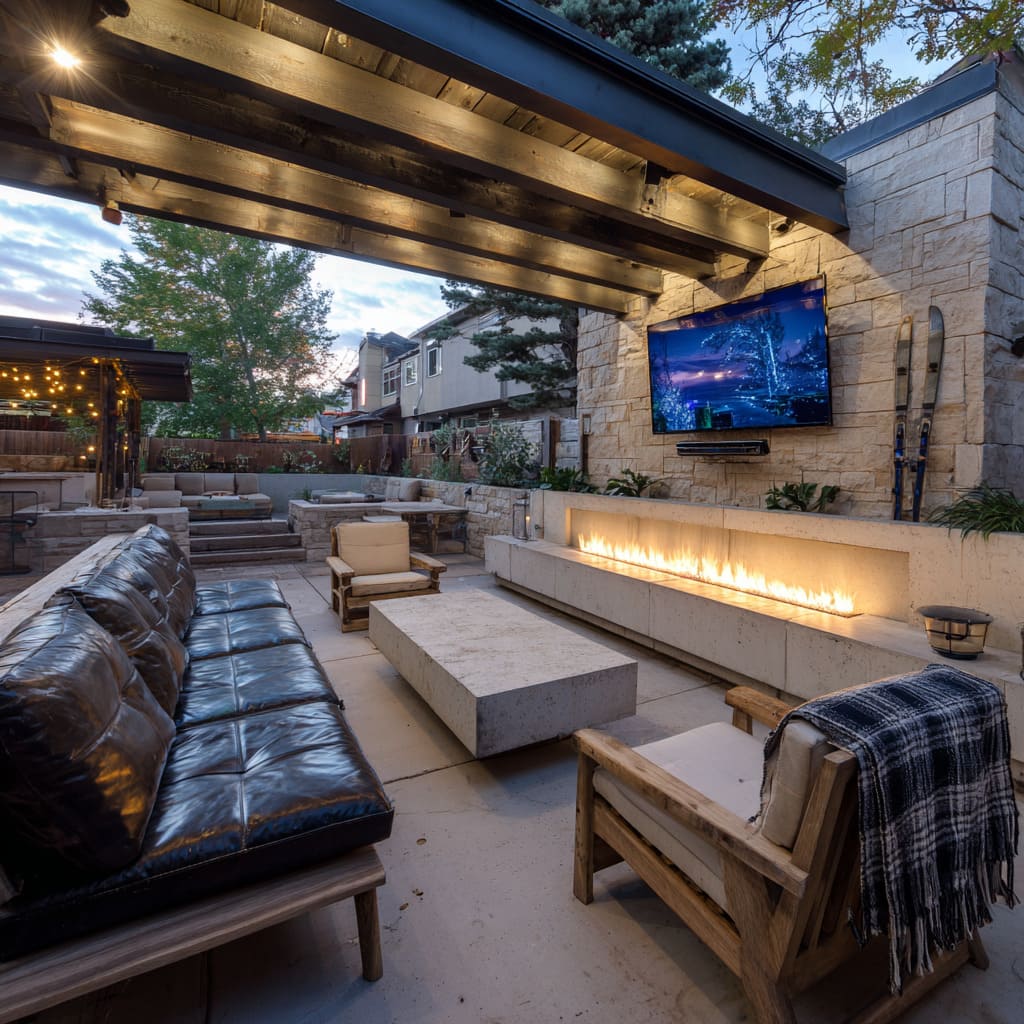
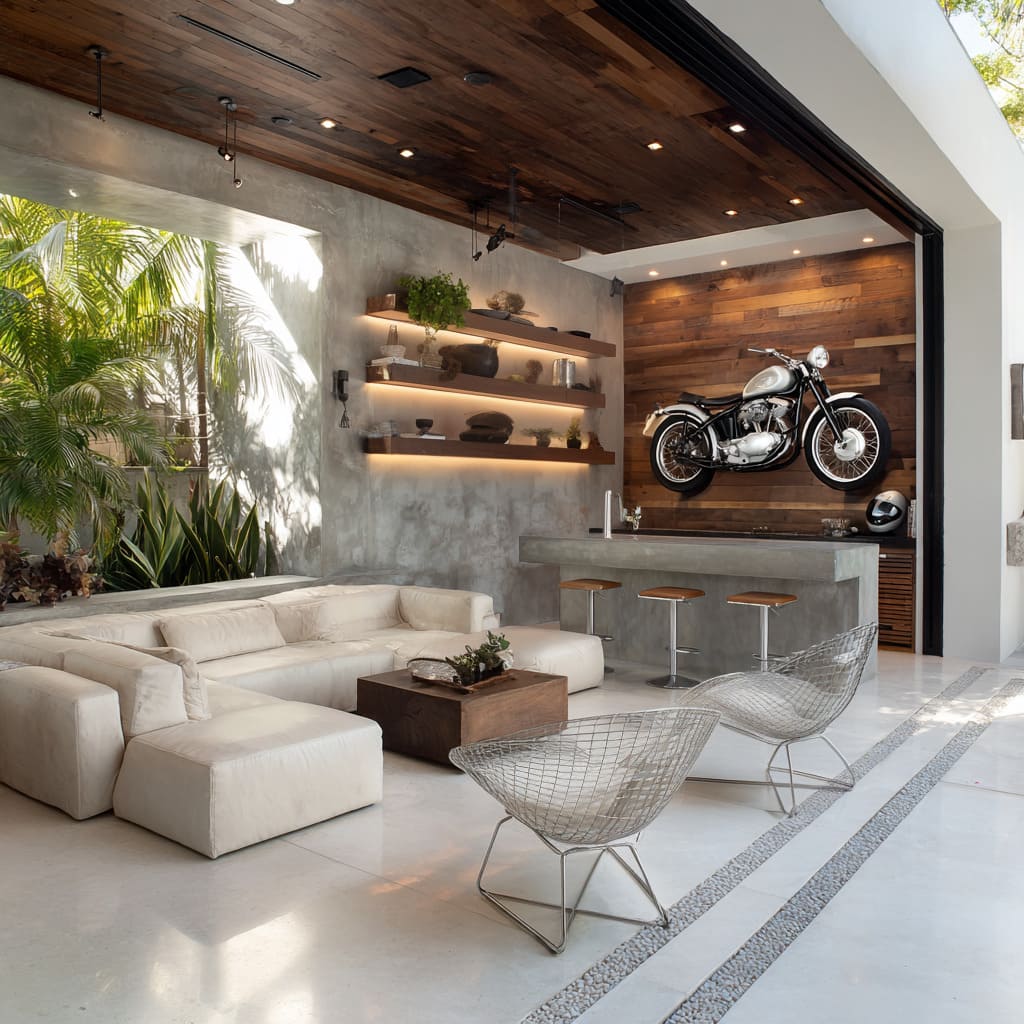
The modern backyard lounge merges furniture, lighting, and texture into one visual story, showing how good design can shape mood even without walls. Every choice—from the direction of the planks to the height of a fire ribbon—adds to the sense of structure and quiet power.
The Visual Order Behind Modern Outdoor Man Cave Ideas
The strongest backyard man cave ideas share a disciplined use of lines and proportions. Designs rely on long horizontals—wood planks, concrete benches, and bar counters—that visually stretch compact patios.
Hidden seams of warm light often trace these lines, turning boundaries into soft contours. The light sketching across beams or steps outlines the space rather than flooding it, so the entire zone feels drawn, not illuminated.
When surfaces such as ribbed concrete or vertical wood slats are grazed by these narrow light bands, texture takes over as the main decoration.
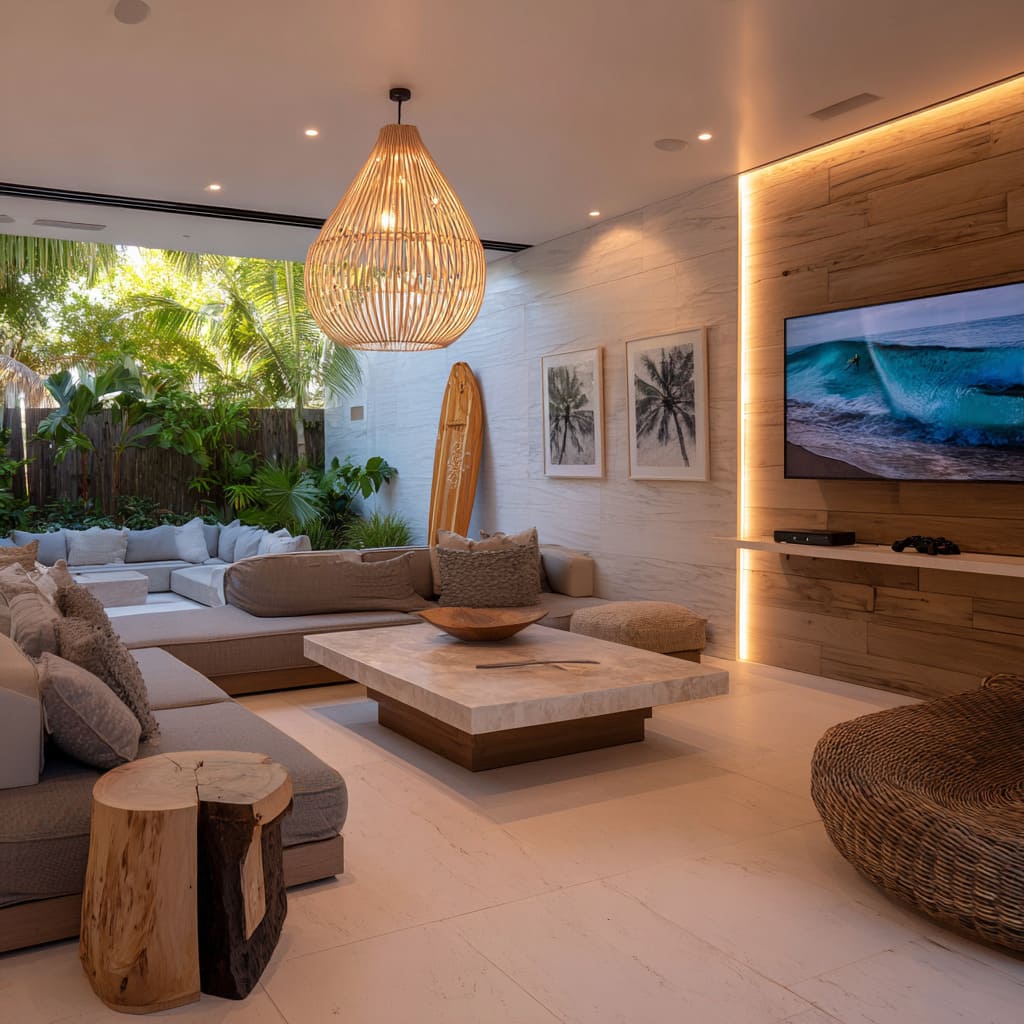
In many contemporary setups, the ceiling or pergola becomes the real design element. Some use matte charcoal panels with narrow LED slots that echo the joint patterns of the walls, while others let wood planks shift tones like piano keys.
The result is a canopy that seems to float rather than weigh down the area. Even a modest roof can appear expansive when the glow follows its geometry rather than sitting in the middle as a bright bulb.
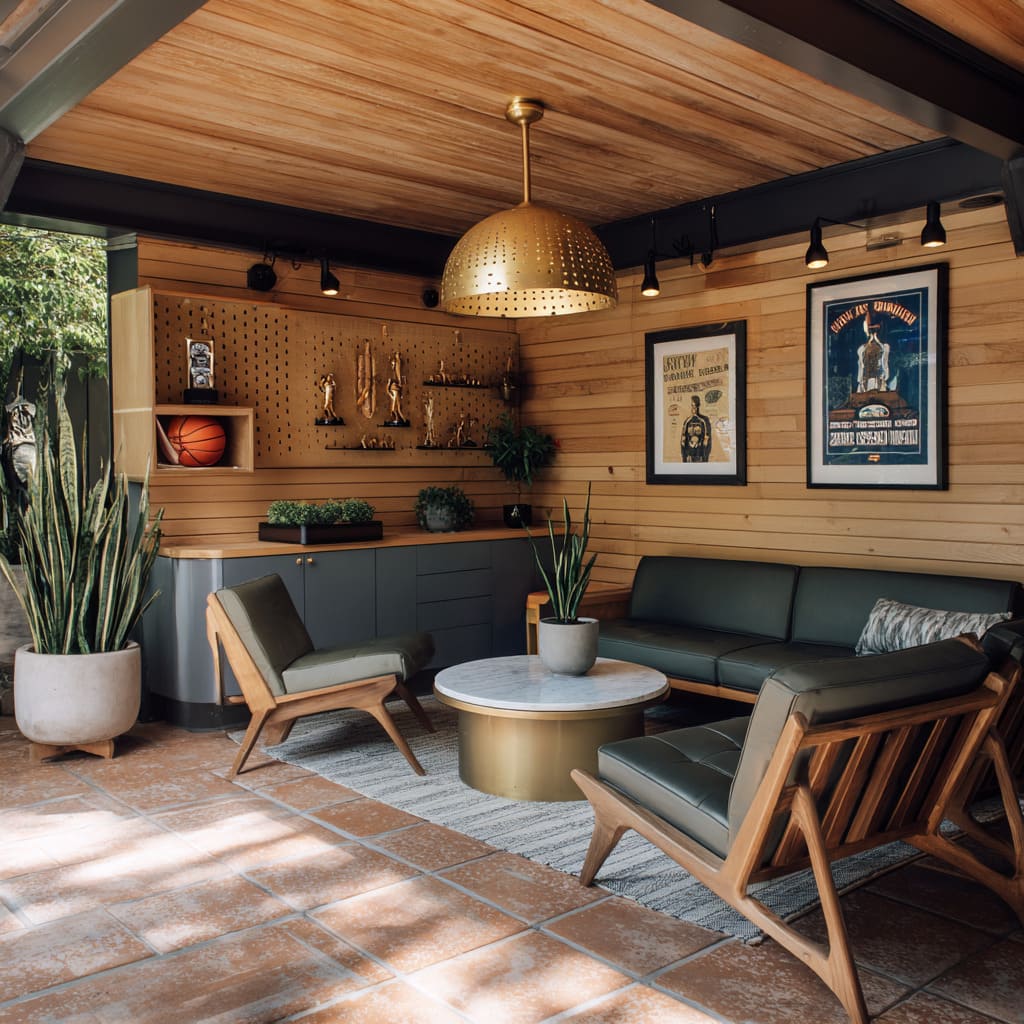
Balancing Mass and Air: The Sculptural Feel of Modern Lounges
A successful outdoor man cave depends on how heavy and light elements are distributed. A floating concrete bench with a soft underside glow looks sleek and surprisingly weightless.
In contrast, a chunky wood table or deep leather sofa can anchor the scene with grounded texture. The trick is to keep one end of the composition sturdy while letting the other breathe.
For instance, a group of wire or open-frame chairs can offset the solid bar block or sectional sofa. This kind of visual counterbalance makes a small patio feel dynamic without crowding it.
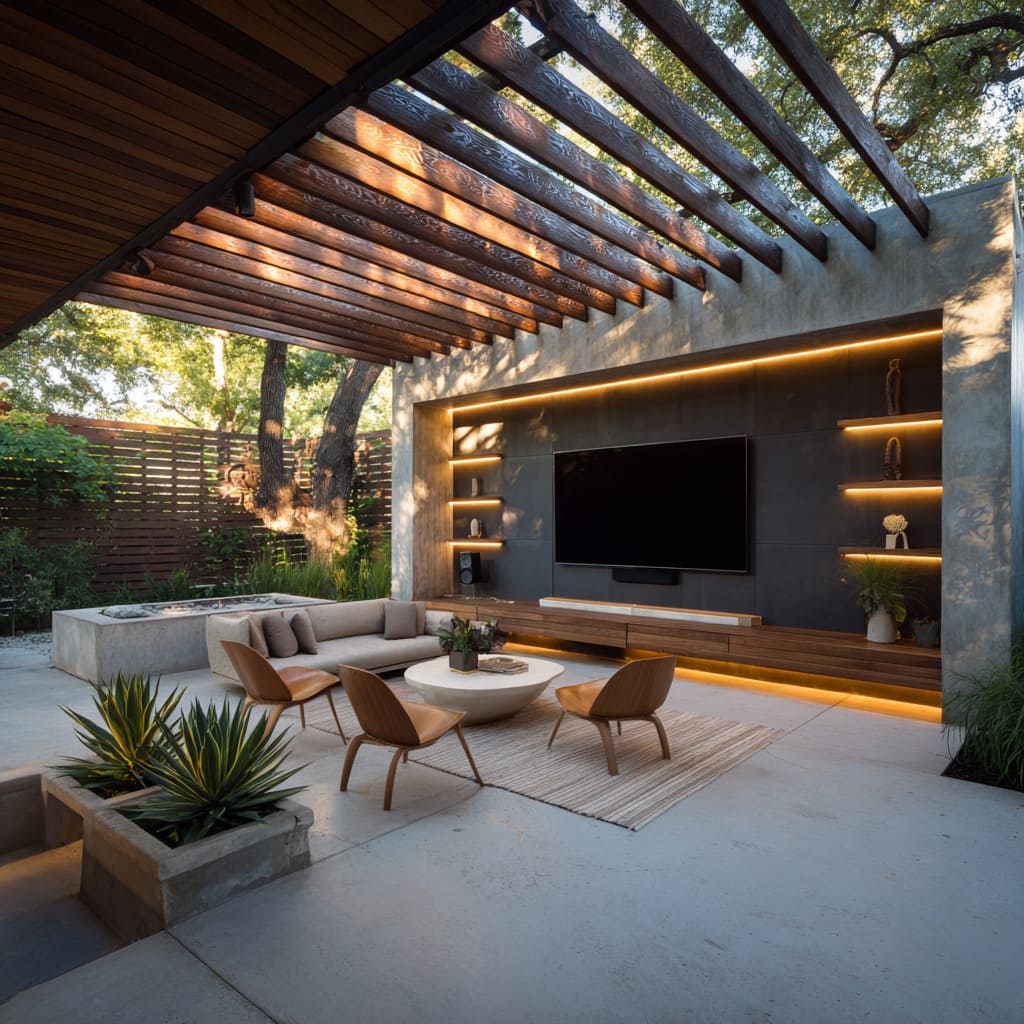
The same idea works with surface finishes. A single glossy leather piece—perhaps a club chair placed near the fire—creates a flicker of reflection that contrasts with the matte stone and wood around it.
Designers often use only one reflective accent so the eye moves naturally between glow and grain instead of being overloaded.
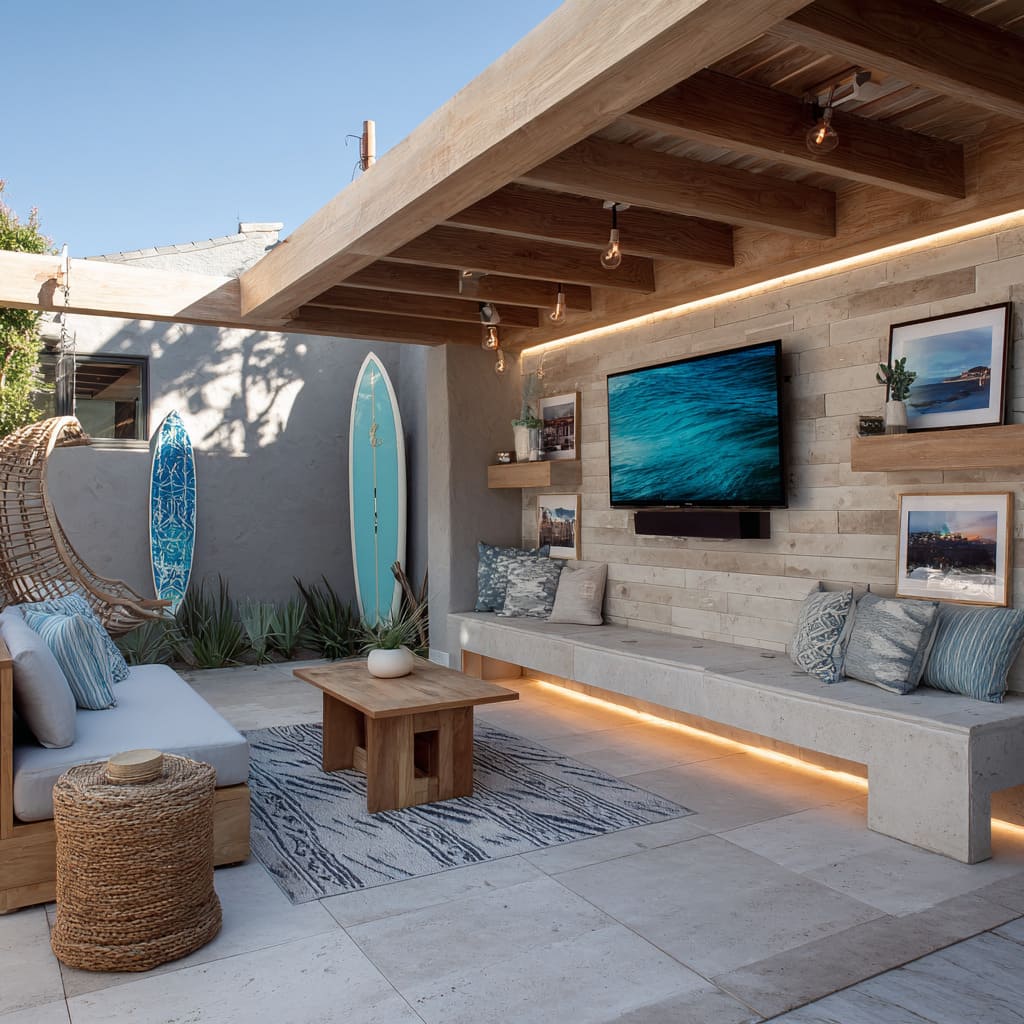
Materials That Define the Mood
Most outdoor mancave ideas rely on a narrow material palette handled with care. Reclaimed planks, brushed concrete, or dark steel panels create the foundation.
The walls act as texture fields, while the lighting and furniture bring depth. Plank cladding, when installed with staggered seams, stops the eye from climbing vertically and instead guides it horizontally toward the center focus—often a media screen or display wall.
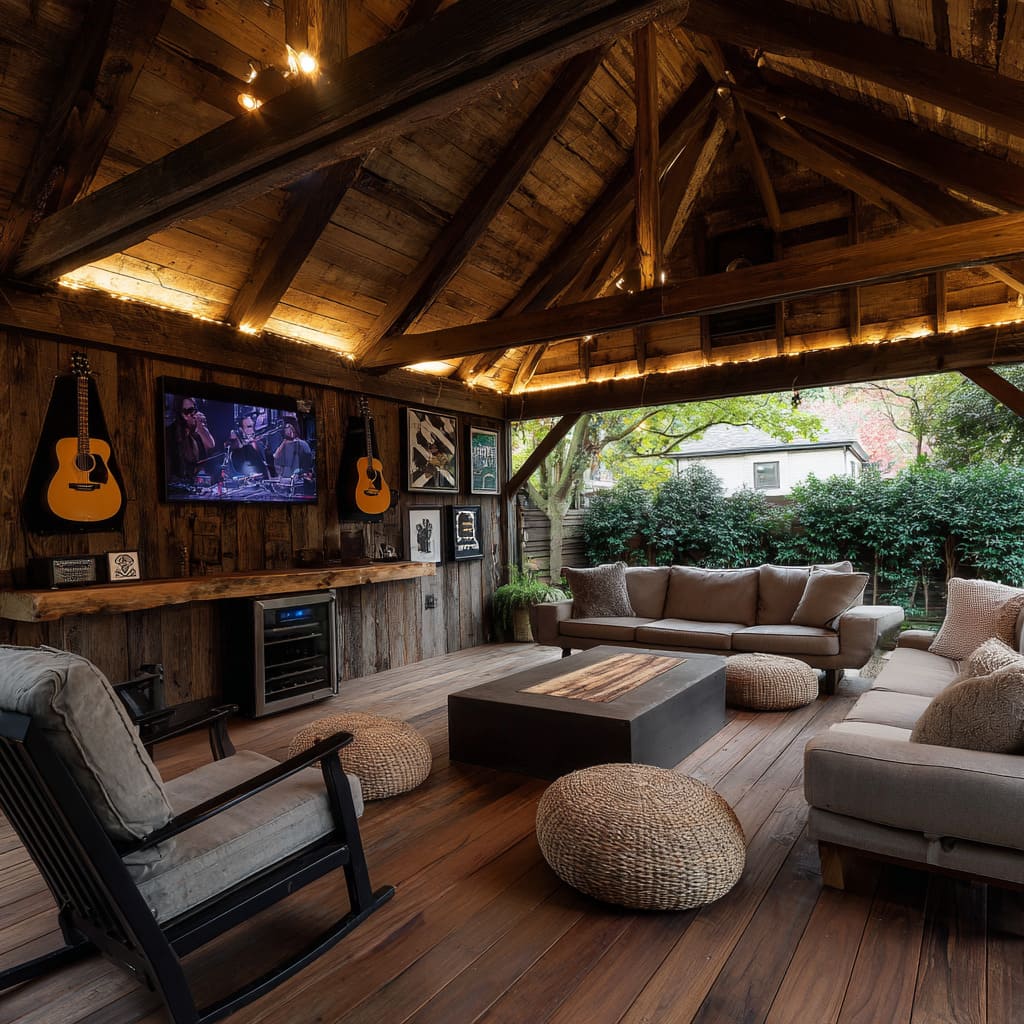
A subtle trick in many modern backyards is to let one material run through several functions: the same stone might wrap a bar face, a planter ledge, and a low hearth. This repetition builds visual rhythm.
When a single accent wood—walnut, teak, or ash—is echoed across a bench, stool tops, or a floating shelf, it adds harmony without color overload.
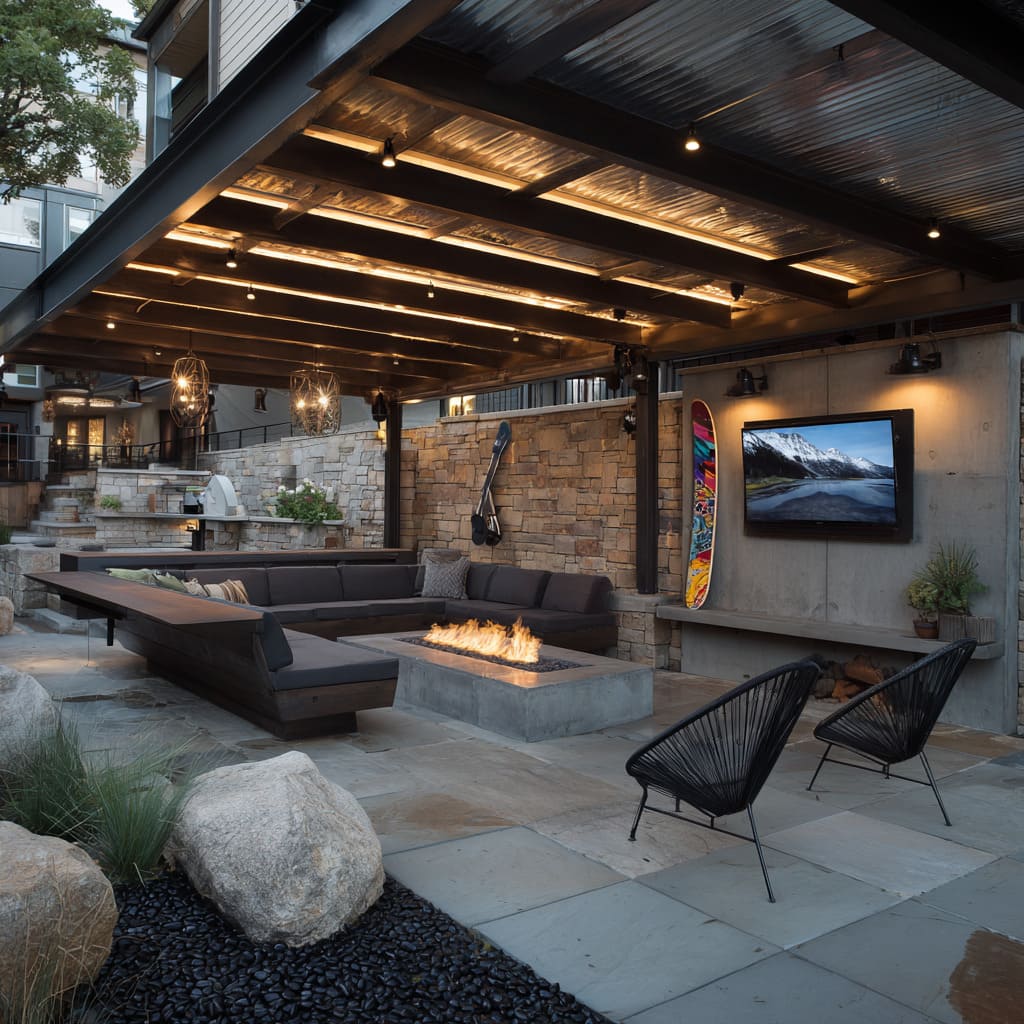
List of material relationships often seen in stylish outdoor setups:.
- Wood and concrete: warmth paired with stability
- Stone and metal: natural texture framed by precision
- Leather and matte plaster: tactile softness against calm surfaces
- Charred timber and pale textiles: dark outlines highlighting neutral comfort
Light as Architecture, Not Decoration
Lighting in these lounges acts as invisible architecture. Designers use glow lines instead of fixtures to mark boundaries.
A cove along a roof beam, a faint stripe under a bench, or a pencil-thin reveal behind a TV niche transforms heavy forms into floating ones. Evening scenes rely on these layered glows to add atmosphere without glare.
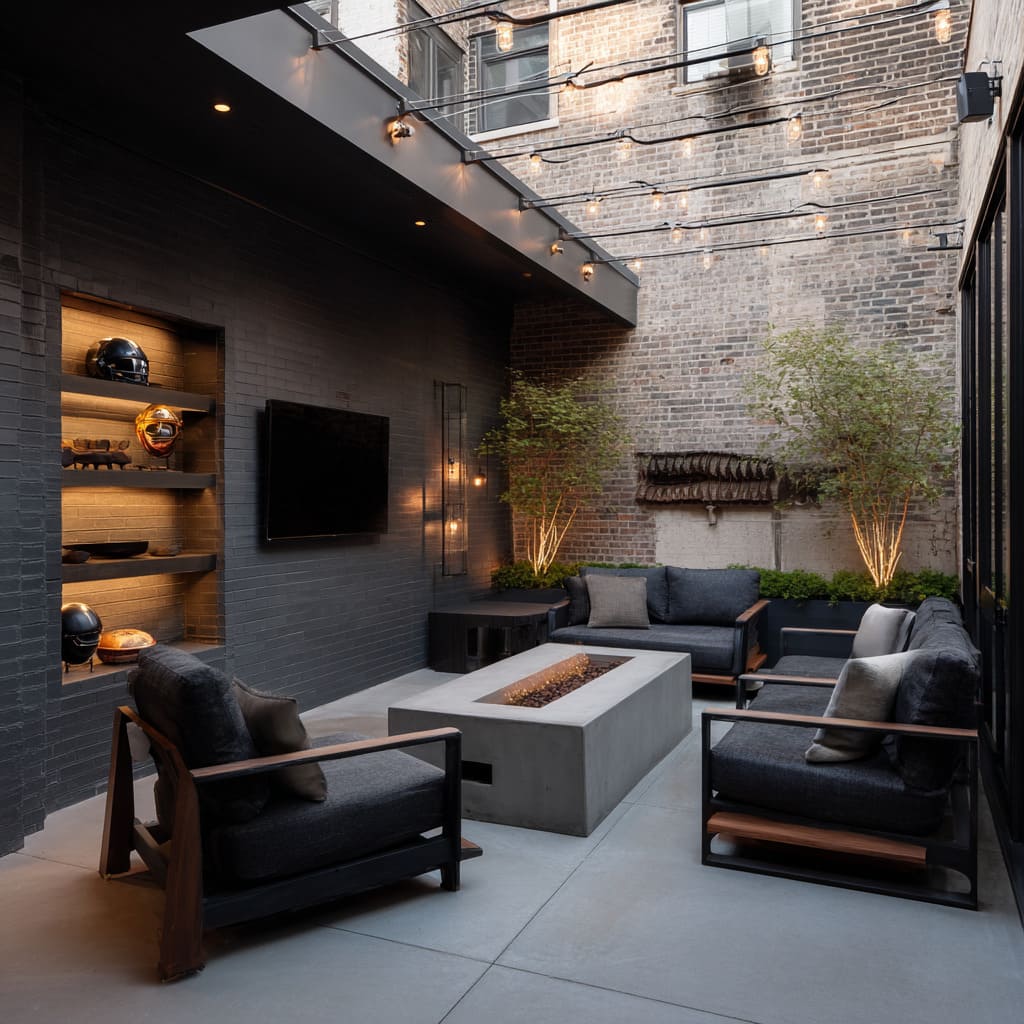
Downlights and step lights work as small punctuation marks rather than statements. Even string bulbs stretched low across a narrow courtyard can redefine the “ceiling,” making the space feel enclosed and cozy.
Some courtyards place backlit shelves into dark brick niches, turning ordinary objects—like a helmet, globe, or small bowl—into glowing silhouettes that read clearly from across the yard. The effect feels more like an outdoor gallery than a backyard.
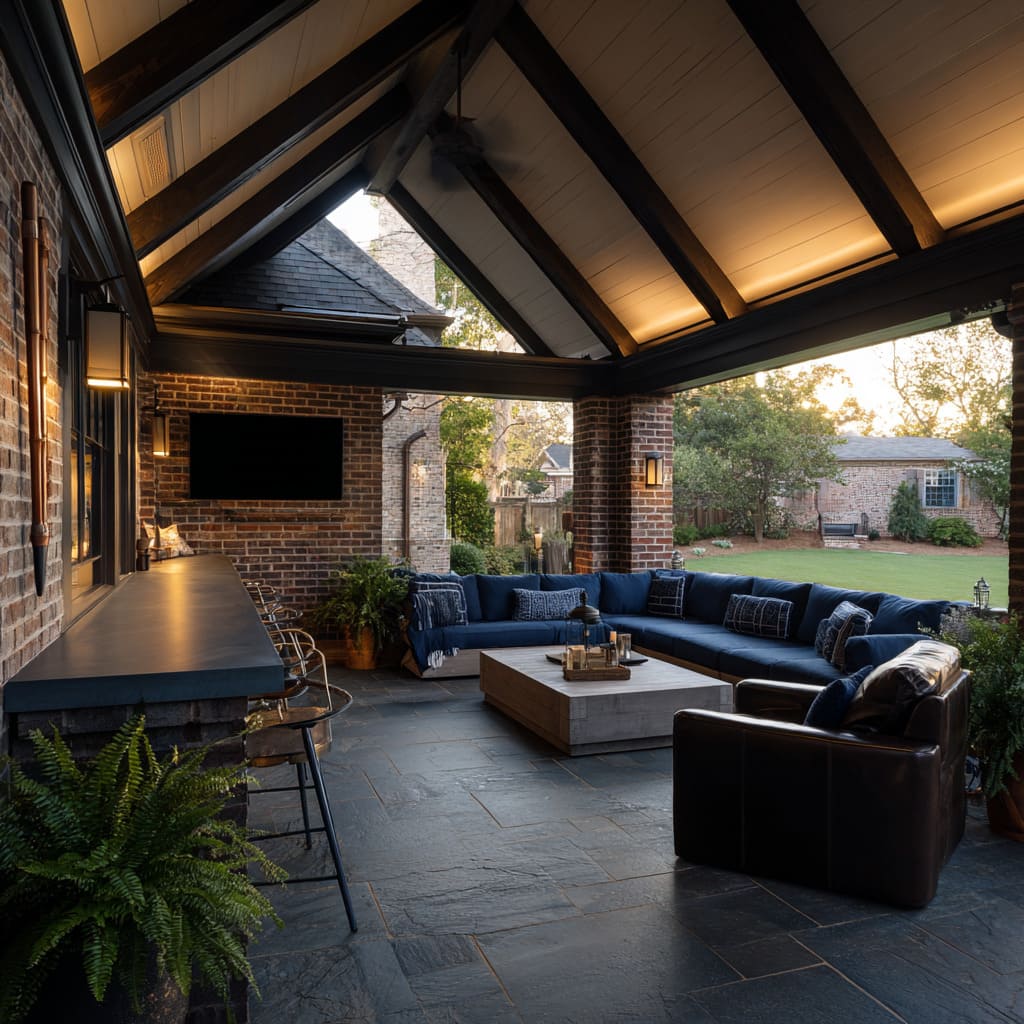
The Art of Organized Display
A key shift in backyard man cave ideas is how collections are presented. Sports gear, musical instruments, or memorabilia are treated as sculptural composition, not clutter.
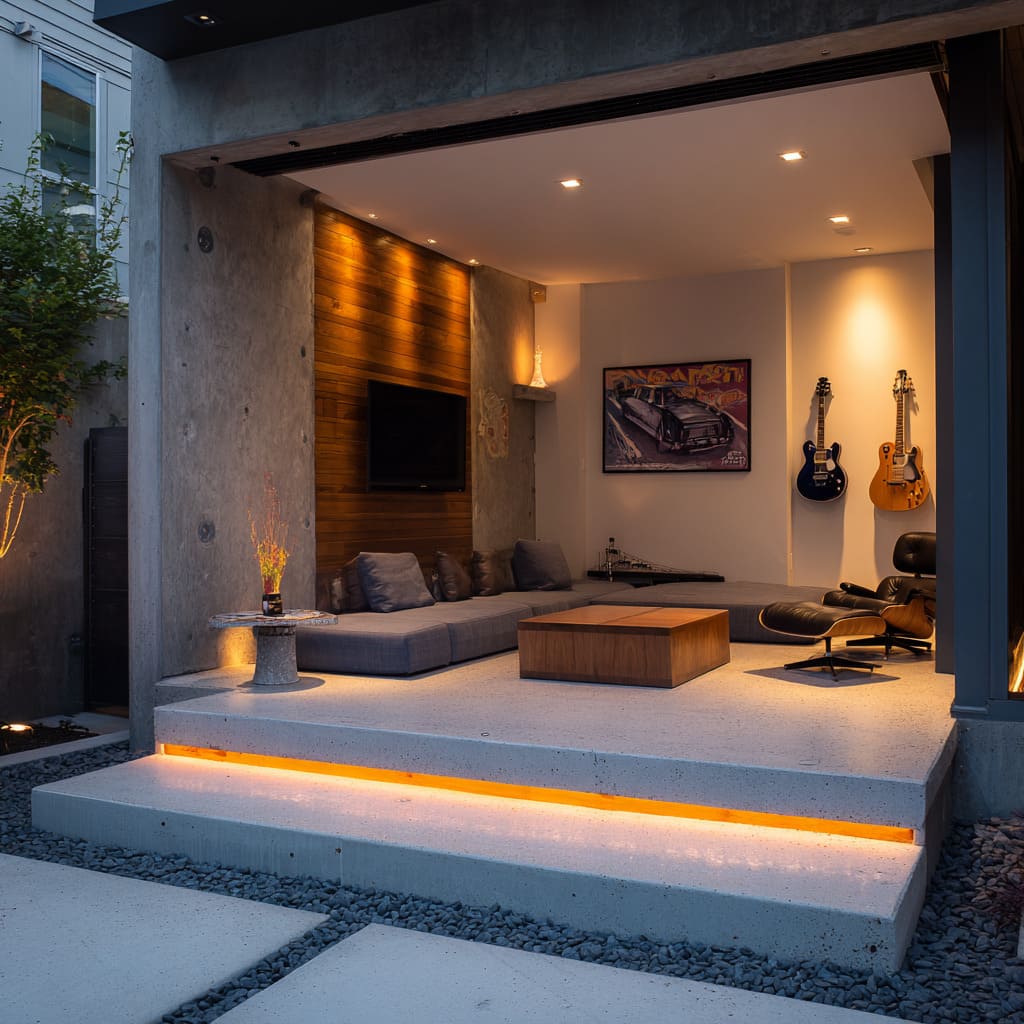
Items are mounted at consistent heights and with even spacing, turning the wall into an installation. Two guitars flanking a TV or a snowboard centered between artworks create visual balance.
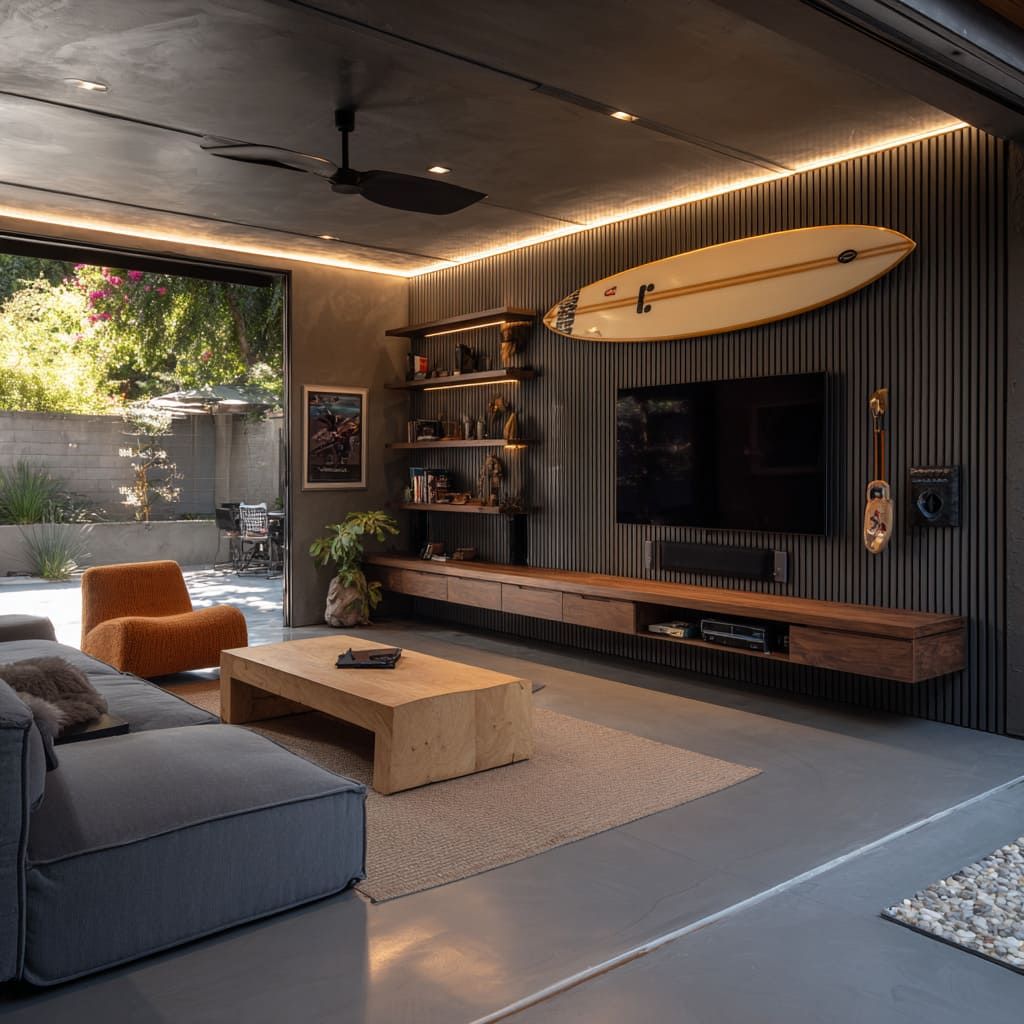
This approach keeps personality visible but disciplined. Instead of crowding shelves with small objects, designers use a few well-chosen pieces that echo each other’s forms.
A helmet series on black fluted panels, surfboards arranged as vertical markers, or medals displayed on pegboard grids—all become part of the architecture.
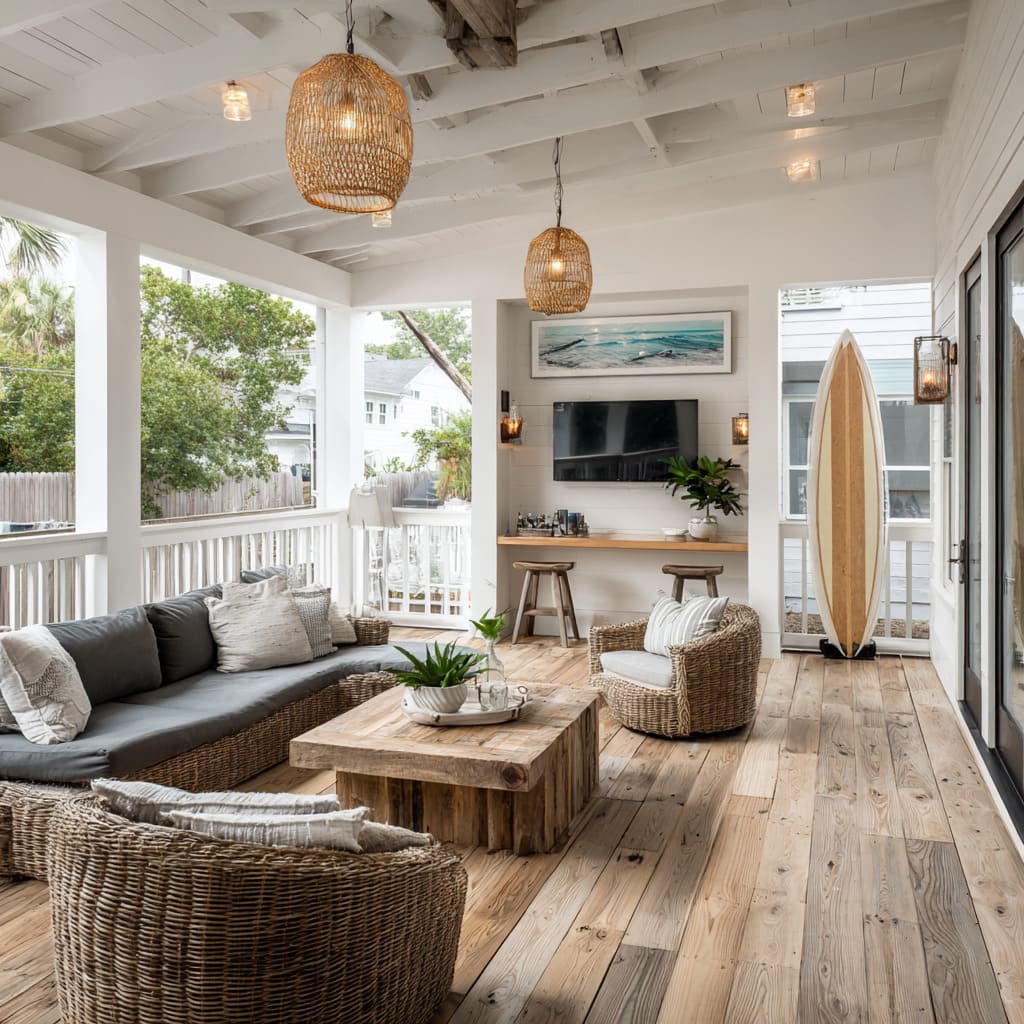
Organizing principles that give display walls a modern edge:.
- Keep objects at eye level with equal breathing space
- Use matching mounts or brackets for visual rhythm
- Treat the wall as a series, not a storage board
- Balance bright and matte finishes so highlights fall evenly across pieces
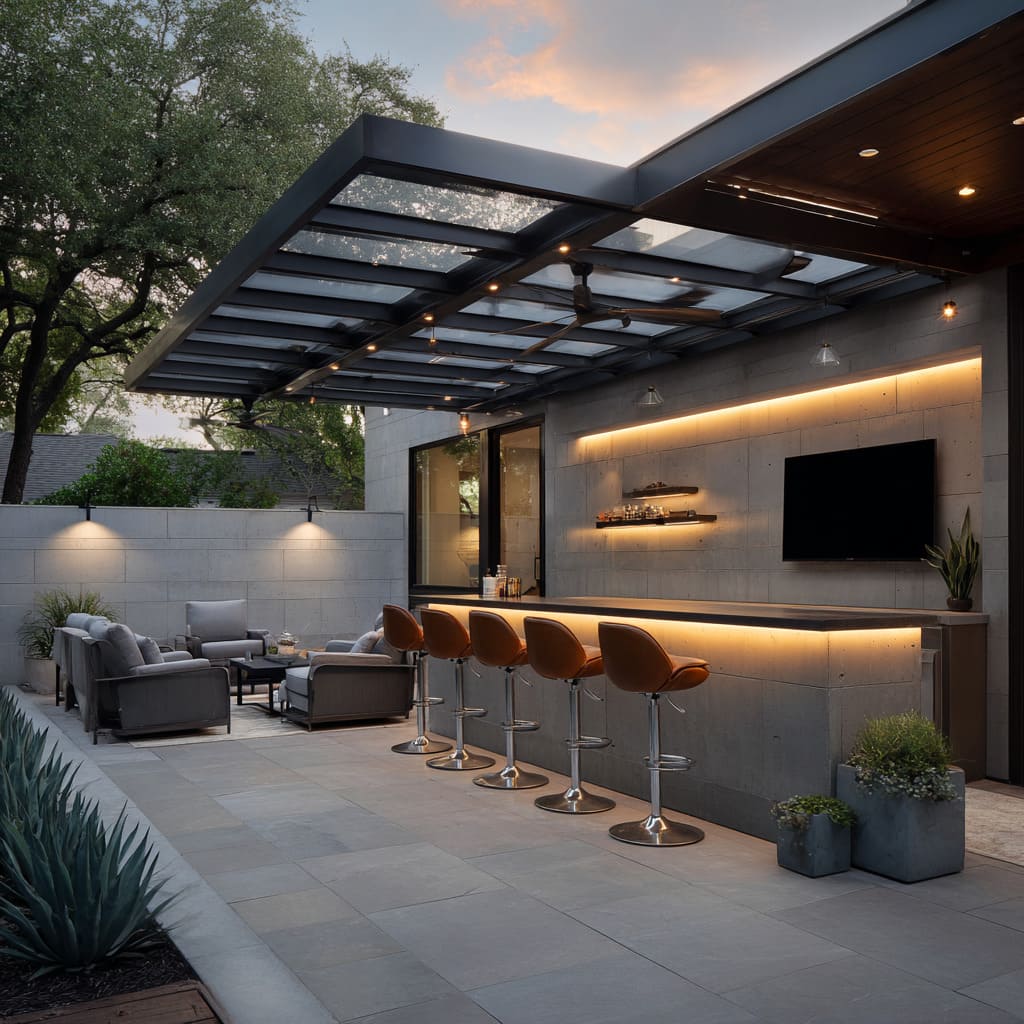
Seating Geometry and Visual Comfort
Outdoor man cave layouts often rely on proportional comfort. Coffee tables are aligned halfway between seat and arm height, keeping surfaces usable but relaxed.
Fires or low hearths sit at the same level as cushions so faces glow evenly across the circle. Multi-level seating—such as a primary sectional with raised steps or a bench behind—adds depth without crowding.
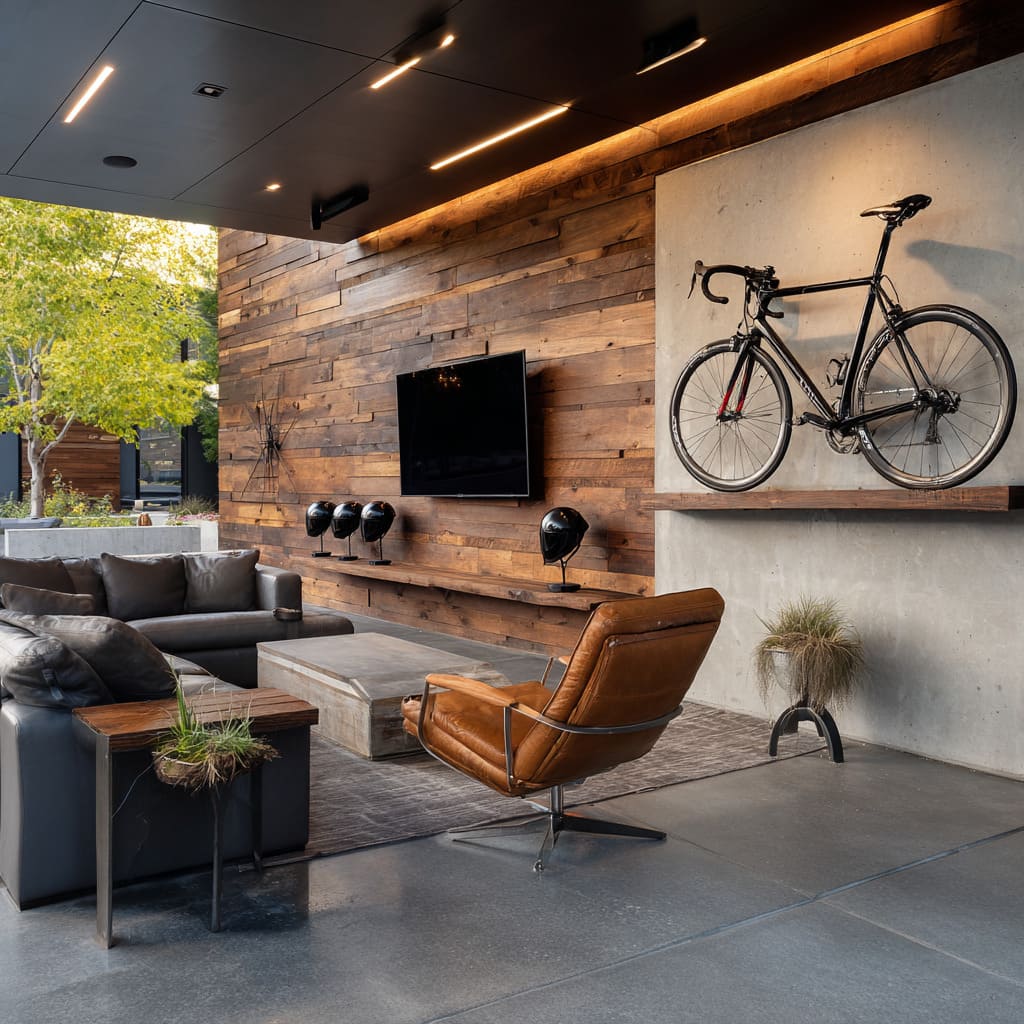
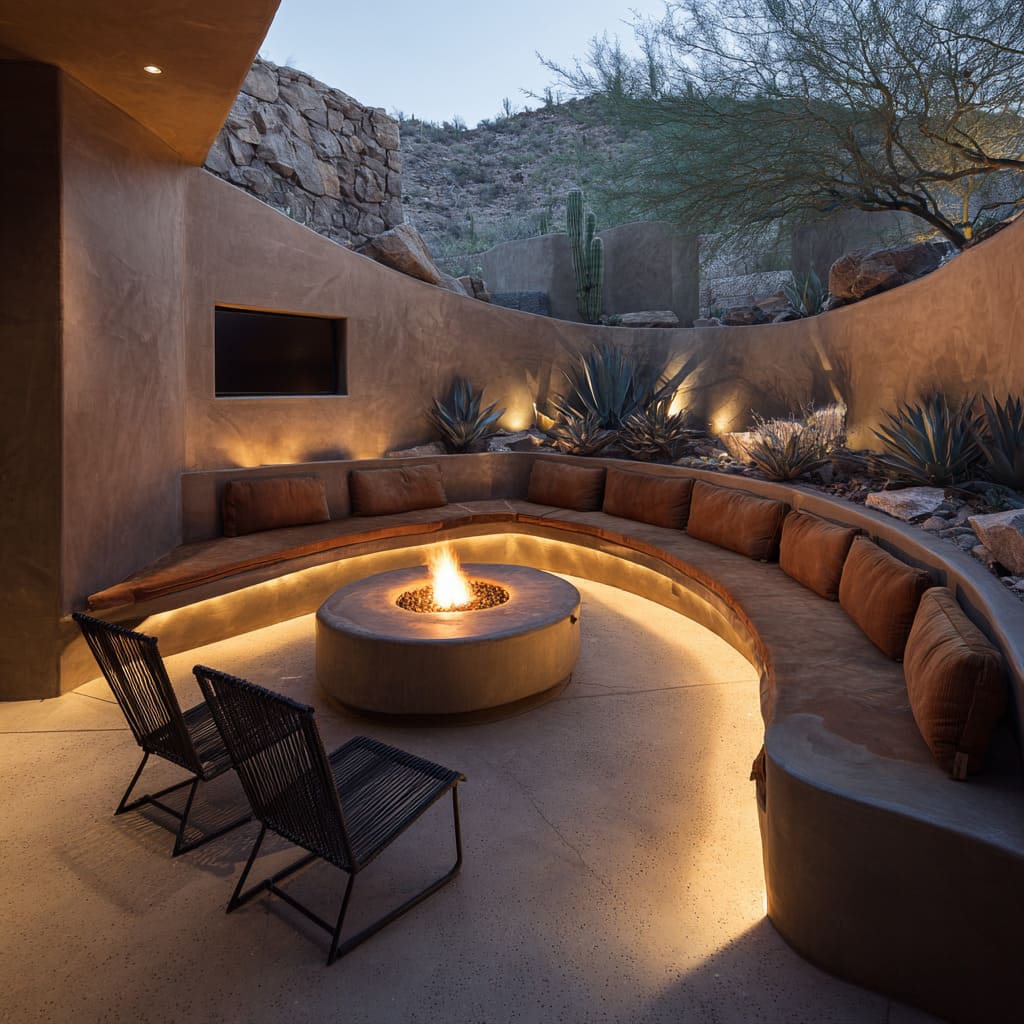
In more sculptural designs, curved forms take over: a crescent bench hugging a round fire table, or an L-shaped sofa facing a short floating shelf wall. These geometries support conversation flow and make every angle feel intentional.
The seating mix usually combines one deep, soft piece for lounging and a few lighter chairs for flexibility. The goal is visual ease rather than symmetry.
Color Control and Texture Discipline
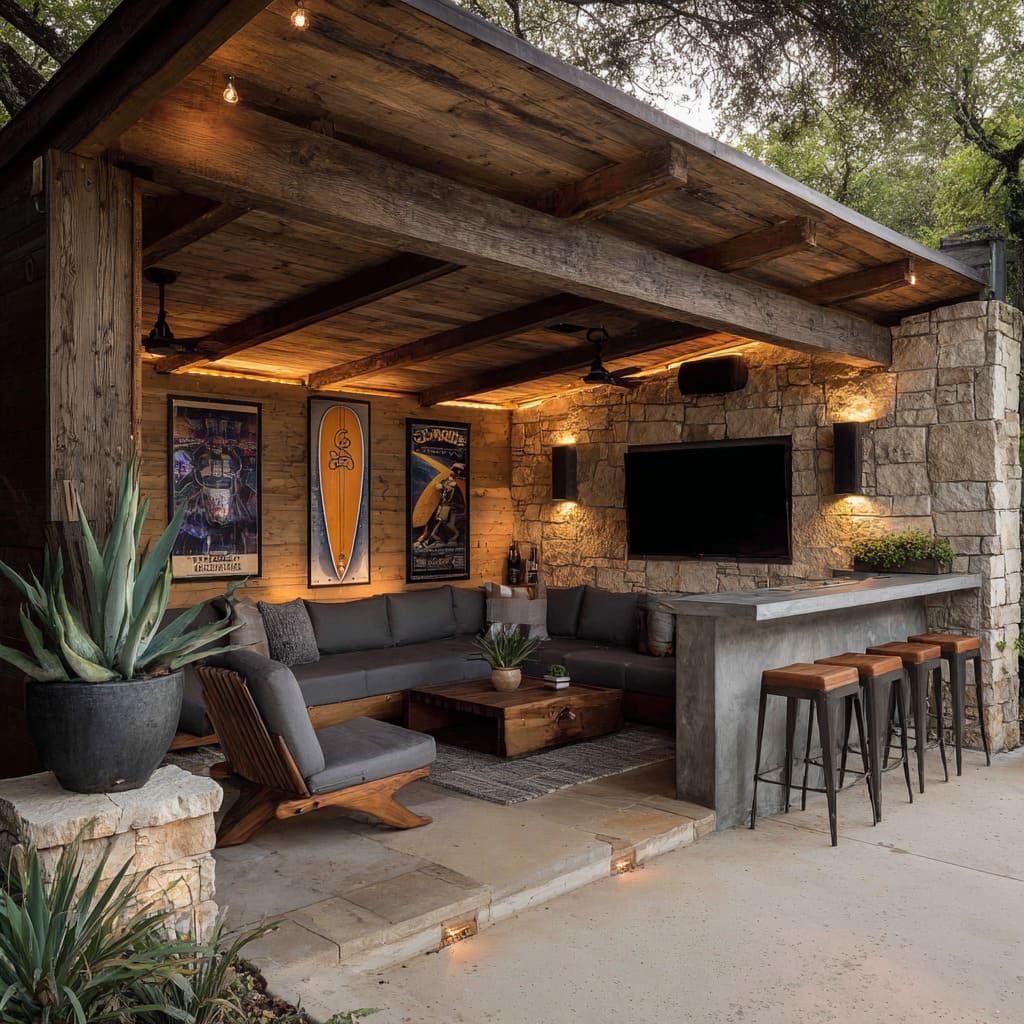
What makes outdoor man cave ideas look modern is color restraint. The dominant shades tend to be charcoal, sand, ash, and muted timber tones, with one rich accent repeated for continuity—caramel leather, navy upholstery, or rusted metal.
Bright colors appear only on personal items such as surfboards or posters, letting them serve as individual signatures.
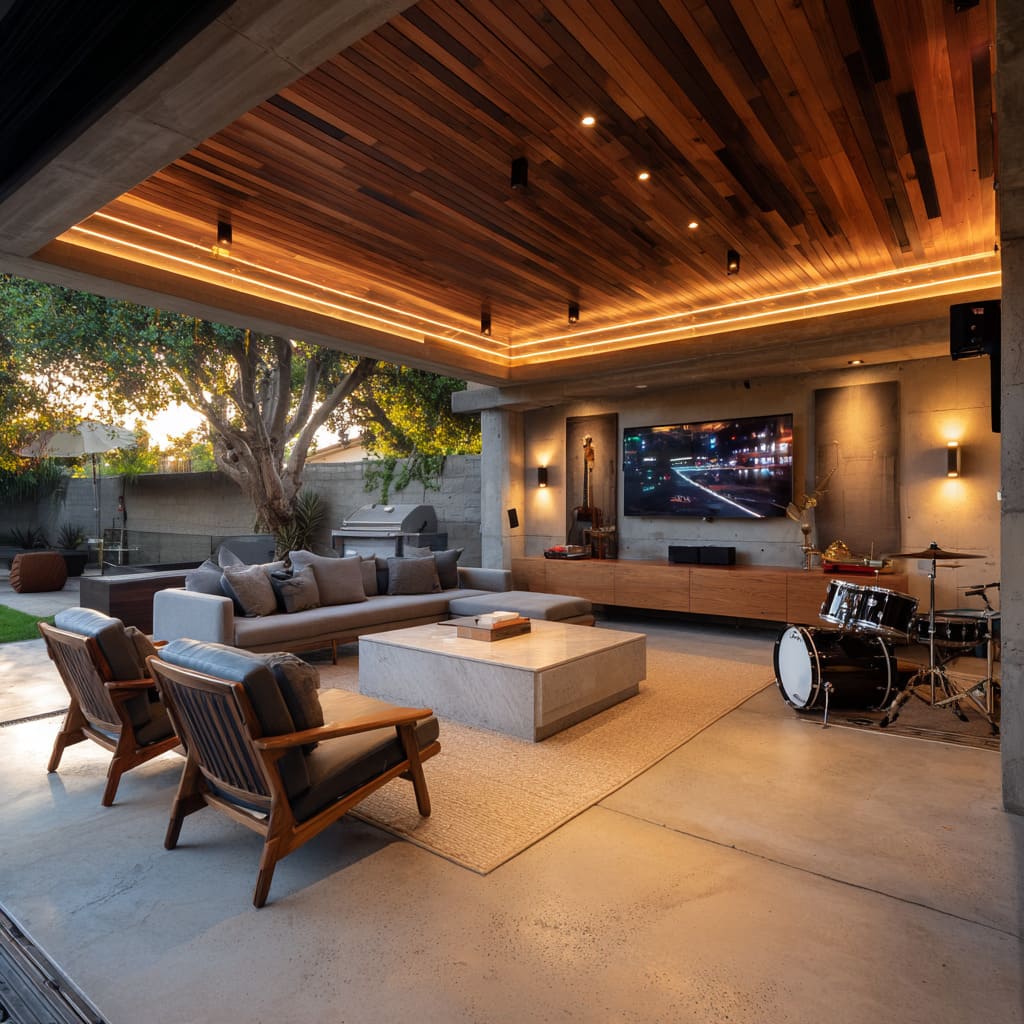
Texture, not hue, does most of the expressive work: nubby cushions against smooth concrete, ribbed rugs beside planed stone, or woven pendants breaking up flat ceilings. Even in warm climates, designs avoid too much shine; matte and raw finishes allow light to do the highlighting.
Plant Forms as Part of the Architecture
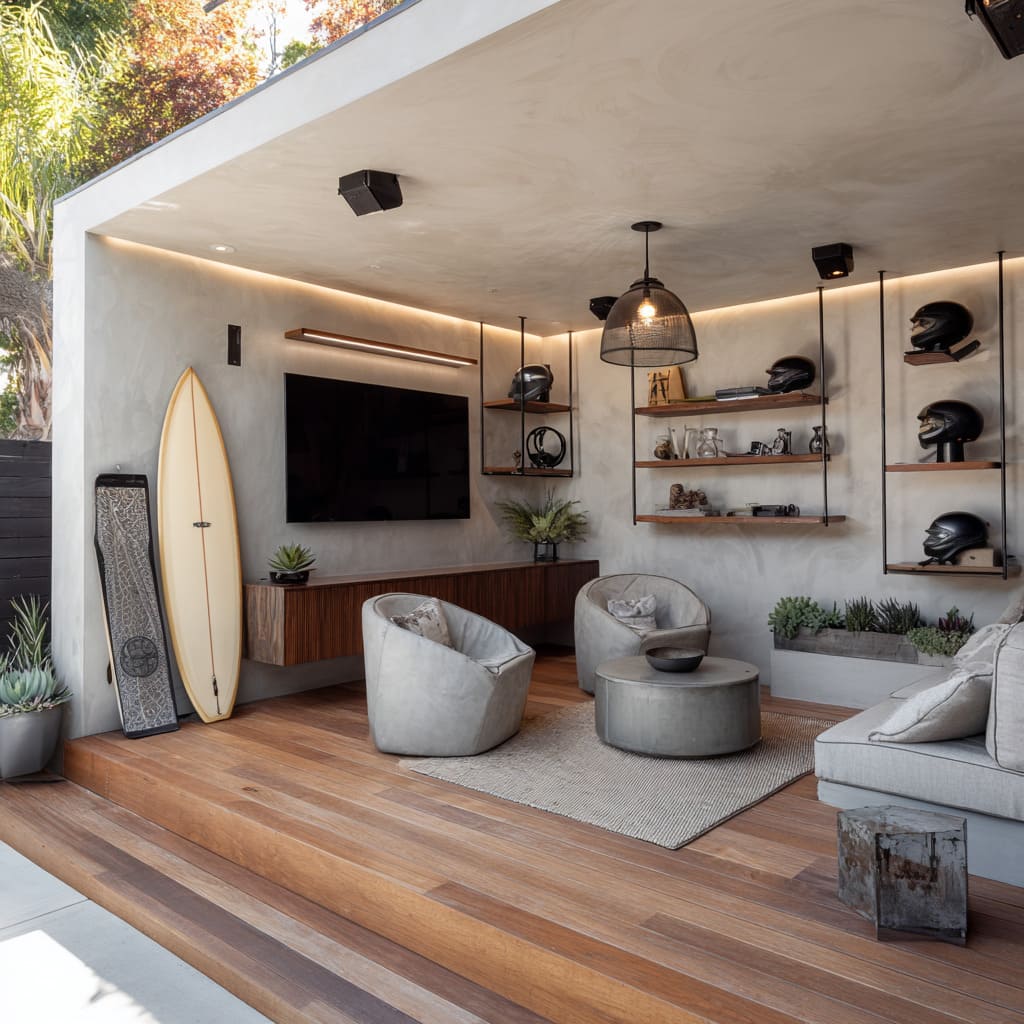
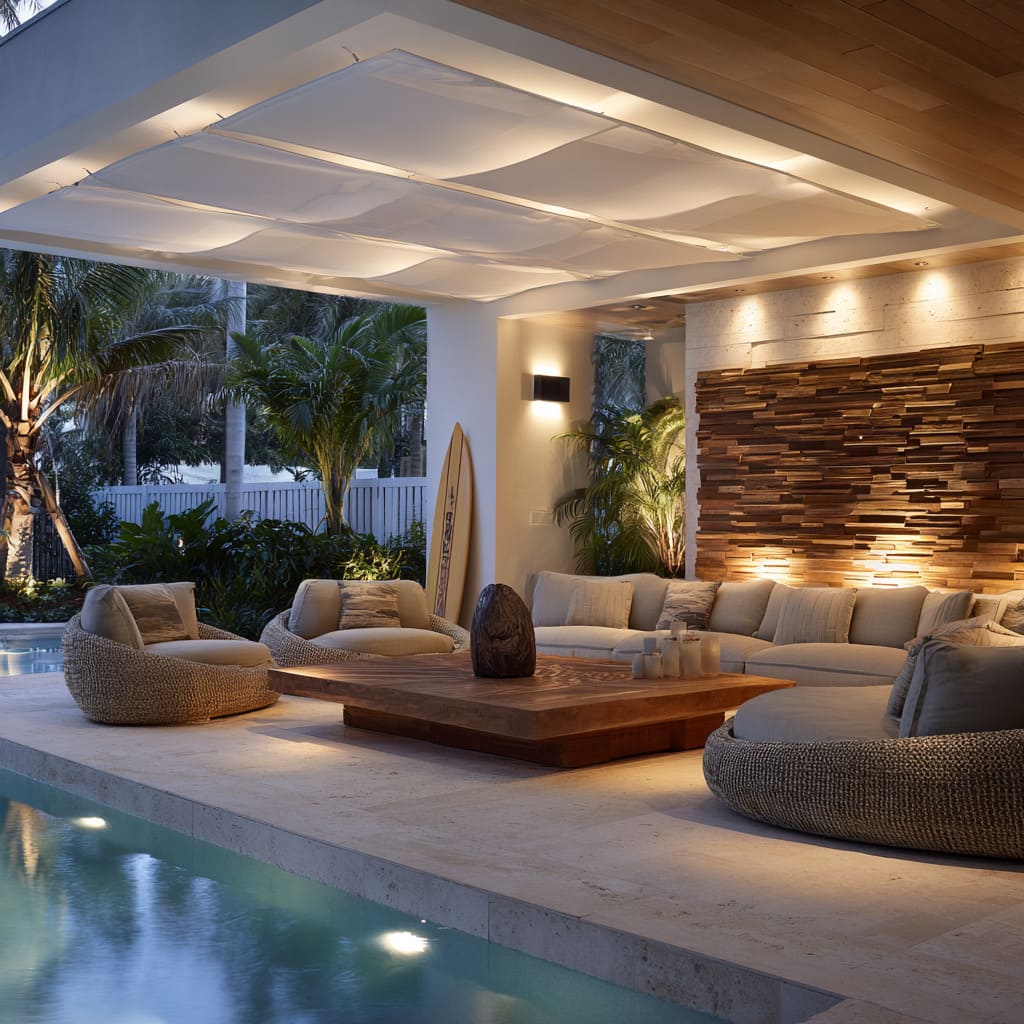
Planting strategy in outdoor mancave ideas is deliberate and sculptural. Designers prefer forms over florals: agaves, grasses, or small palms repeated for rhythm.
Low planters along seating keep sightlines open, while a single tall specimen can act as a natural focal point. Texture repetition is key—spiky leaves echo vertical slats, round succulents soften rectangular slabs.
Some backyards use planting as a living wall texture, with tree shadows projected onto concrete or wood. Others let dense greenery act as acoustic curtains, filtering sound from neighboring yards.
The planting doesn’t compete with furniture; it frames the scene like stage wings.
The Ground Plane and Its Hidden Precision
Though often overlooked, floors in outdoor lounges carry subtle structure. Rugs are stopped precisely at control joints or stone seams so the natural grid frames the sitting zone.
Large pavers with minimal grout lines create continuity from interior to patio. Pebble inlays double as drainage and as tactile edges that help define pathways when lights are low.
Each move strengthens the visual order. When furniture legs align with paver seams or rug edges catch just the front feet of seats, the whole composition feels stable even if casual in spirit.
Multi-Purpose Without Looking Utility-Driven
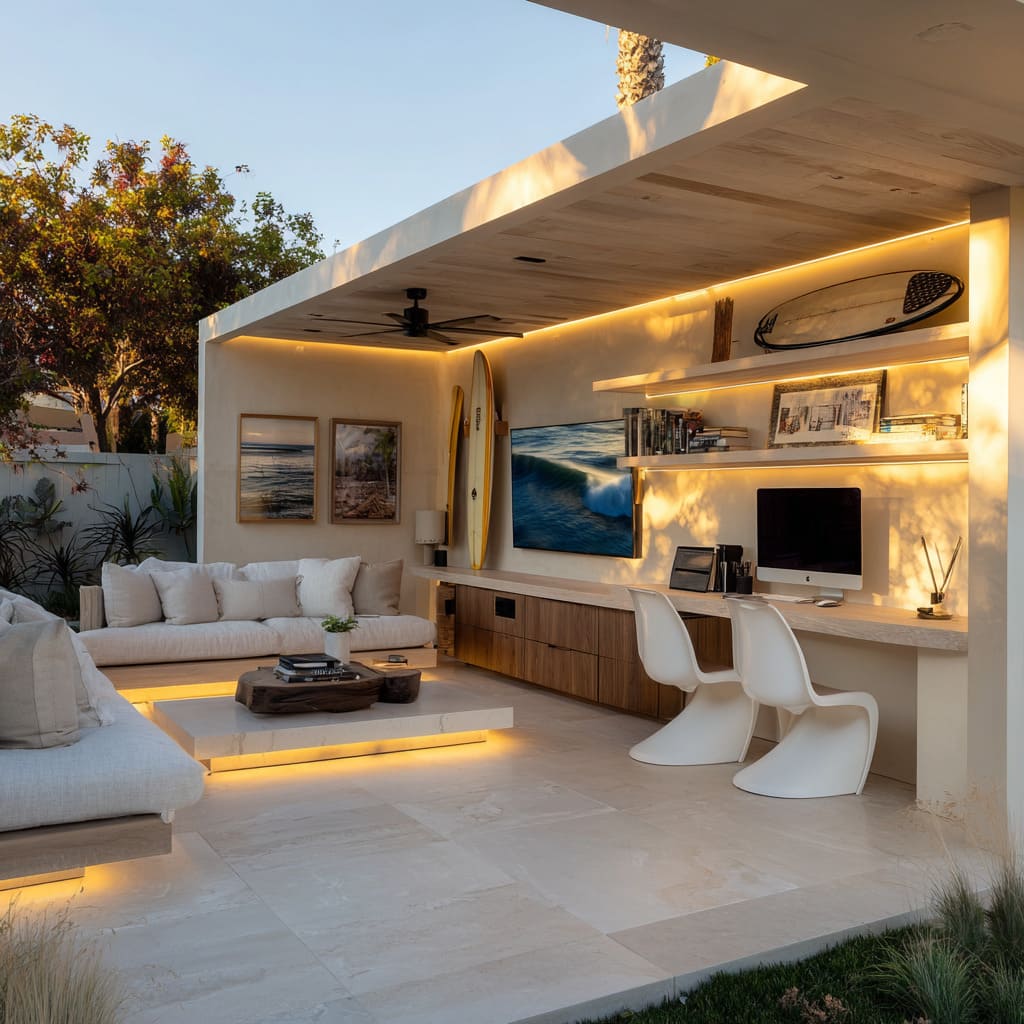
Many backyard man cave ideas hide practical uses behind design gestures. A media wall might extend into a slim desk for occasional laptop work; two sculptural chairs at that desk make the dual function feel intentional.
Step lighting doubles as circulation guidance, while floating shelves hold both décor and gear. Even a longboard leaned against a wall can mask an electrical panel or charging port.
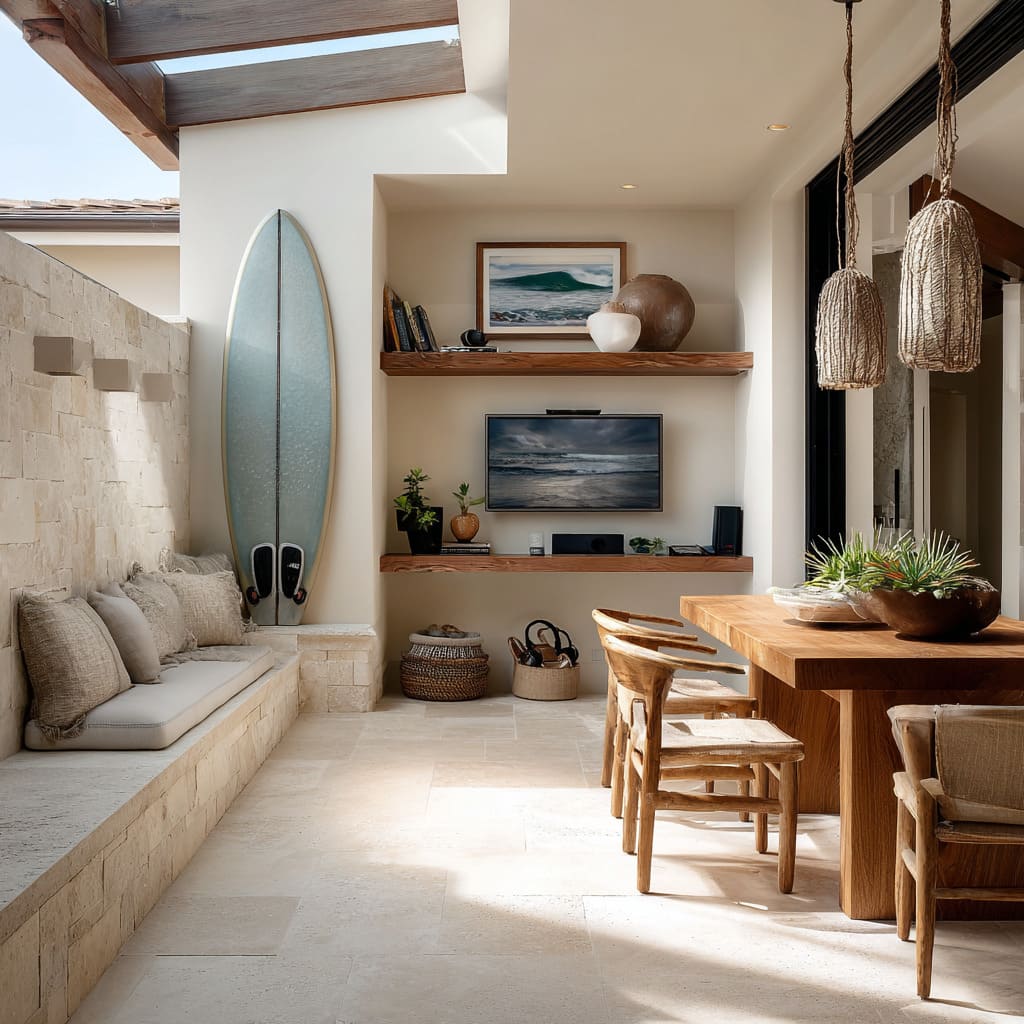
This merging of function and display keeps outdoor spaces photo-ready yet genuinely usable. Every item earns its visual presence, and nothing reads as leftover storage.
The Emotional Tone of Modern Outdoor Lounges
What unites all these outdoor mancave ideas is the atmosphere: calm, composed, and strong. The modern outdoor man cave isn’t themed or nostalgic—it’s about contrast and control.
Soft light on raw surfaces, single materials used with precision, and personal objects displayed with restraint all contribute to a feeling of grounded confidence.
Whether it’s a desert courtyard with curved plaster benches glowing like embers, a timber pavilion with guitars and posters balanced in rhythm, or a beach-inspired space with floating concrete seating, each setting shows how composition can make leisure look architectural. These spaces aren’t about gadgets or luxury for its own sake—they’re about visual harmony that quietly tells a story of personality and taste.