Stairs are no longer a quiet connector between floors; they quietly set mood, pace, and personality across an entire home. In recent interiors, stair riser ideas stretch far beyond simple paint or plain timber, instead bringing texture, light, and gentle pattern into a vertical rhythm that feels warm and composed.
When the surface beneath each tread carries tone, grain, or artwork, the whole flight becomes a feature that draws the eye slowly upward, step by step, in a way that feels graceful rather than showy. Often they treat these planes as visual beats — allowing soft wood grain, subtle micro-motifs, or tiny light lines to guide the climb, turning decorative stair risers into an artful, layered element in a space.
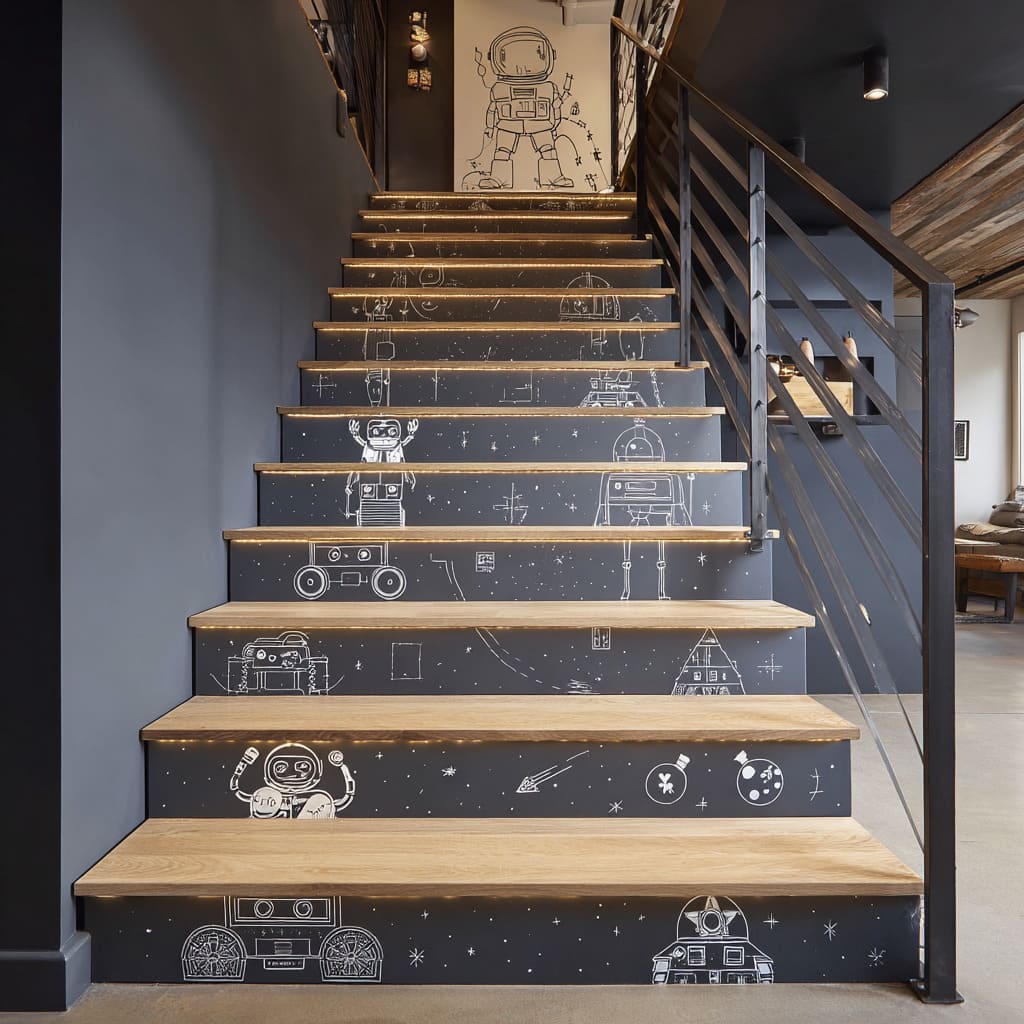
Texture and Wood Direction: How Timber Creates Quiet Movement
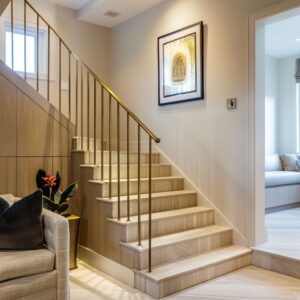
One of the most interesting directions in stair riser design ideas comes from timber. Not heavy, rustic planks, but refined cuts where grain direction and tone shifts become the main styling tool.
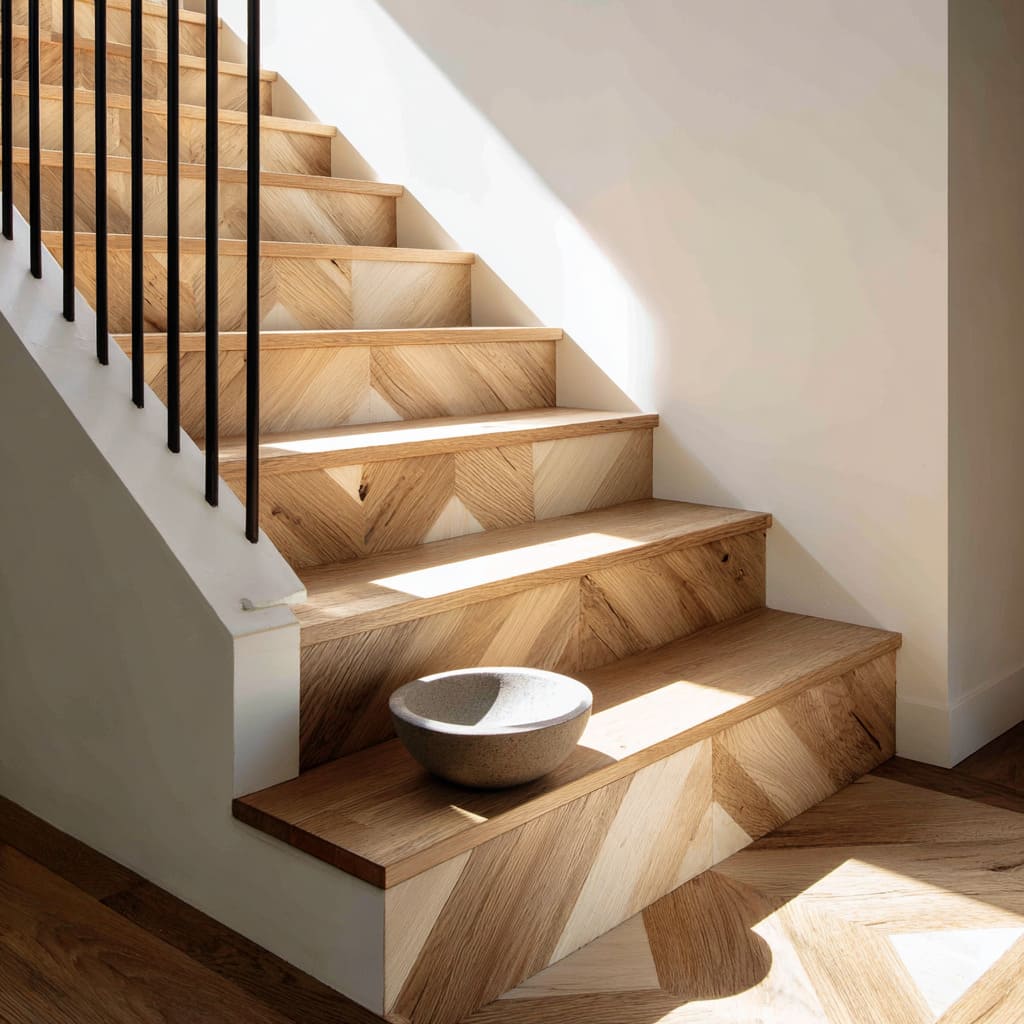
Oak used in alternating cuts, such as rift and quartered, forms a calm pattern of cathedrals and straight lines that repeat in tidy stripes across the risers.
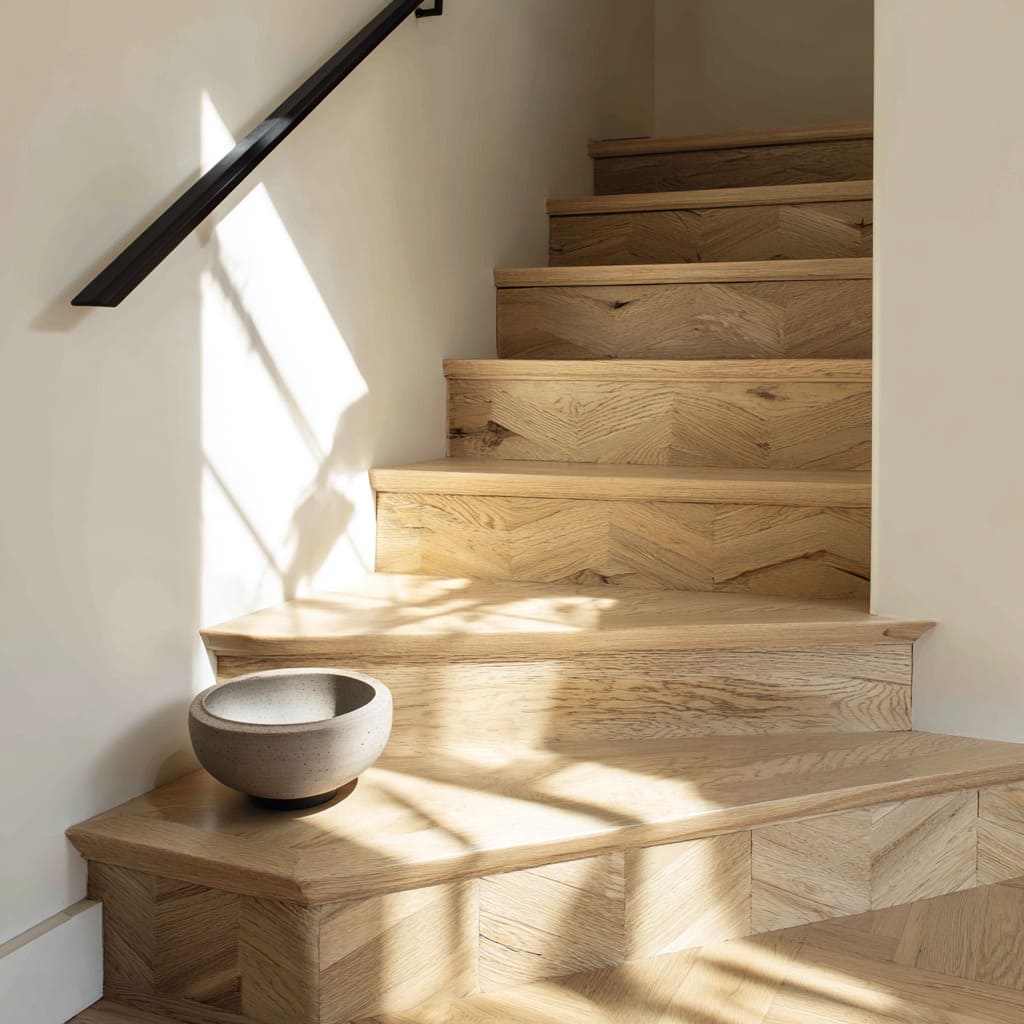
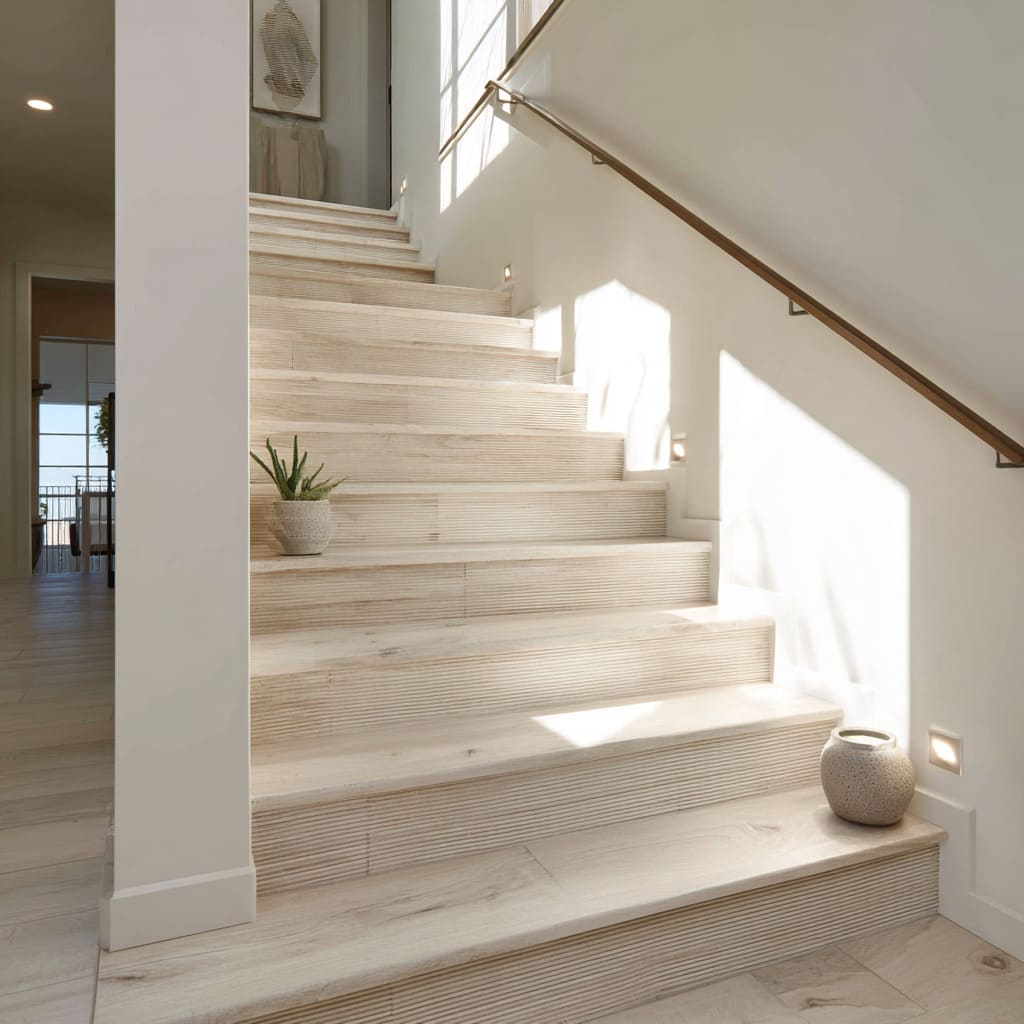
Chevron timber adds even more energy, where each V flows up the stair in soft geometric motion, and each tread edge provides a slim warm stripe that keeps the steps legible. Ribbed wood brings another mood — narrow grooves catch sunlight at different spots during the day, turning each riser into a surface that responds to daylight.
These approaches show how decorative stair risers can stay natural and calm while still bringing layered visual movement without bright color or loud prints.

List of wood effects often seen in modern stair riser decoration ideas:.
- Horizontal ribbing that plays with sun and shadow
- Chevron patterns for gentle directional energy
- Book-matched grain for subtle alignment and crafted depth
- Light-tone oak with slim nosings as soft separators
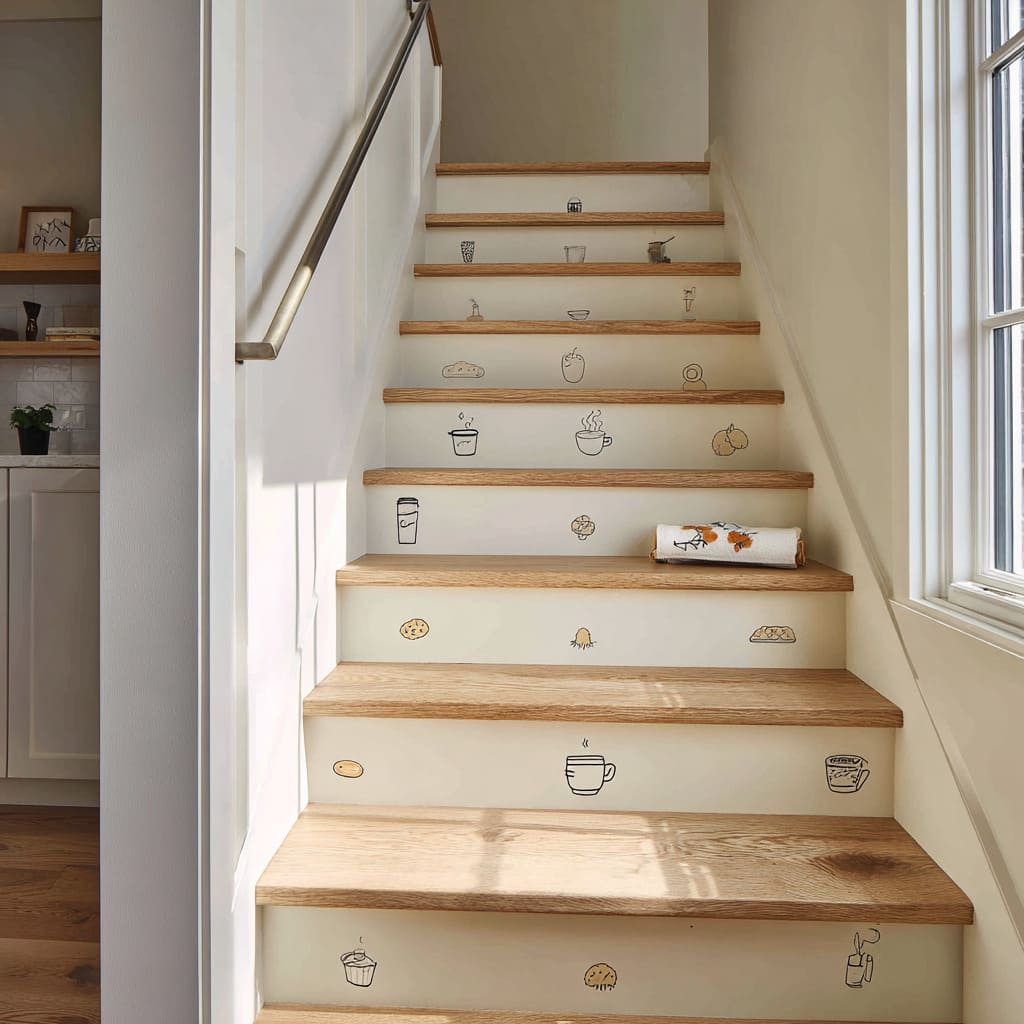
The secret behind these calming timber looks is consistency. Instead of mixing many species or applying heavy stains, a single wood tone becomes the hero, and purity of direction, light, and shadow adds interest.
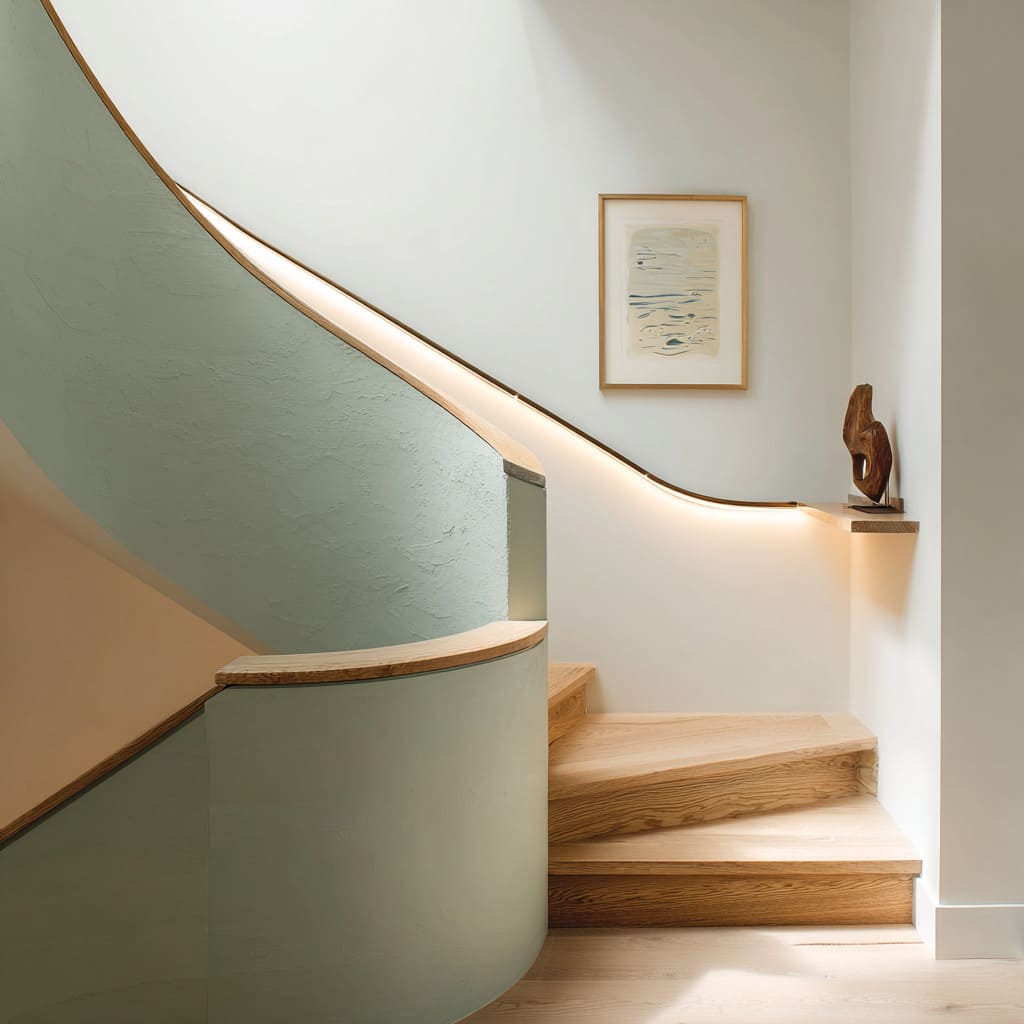
Single-Hue Color Fields That Shape the Stair as One Form
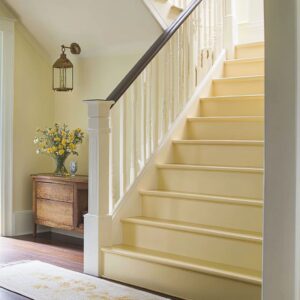
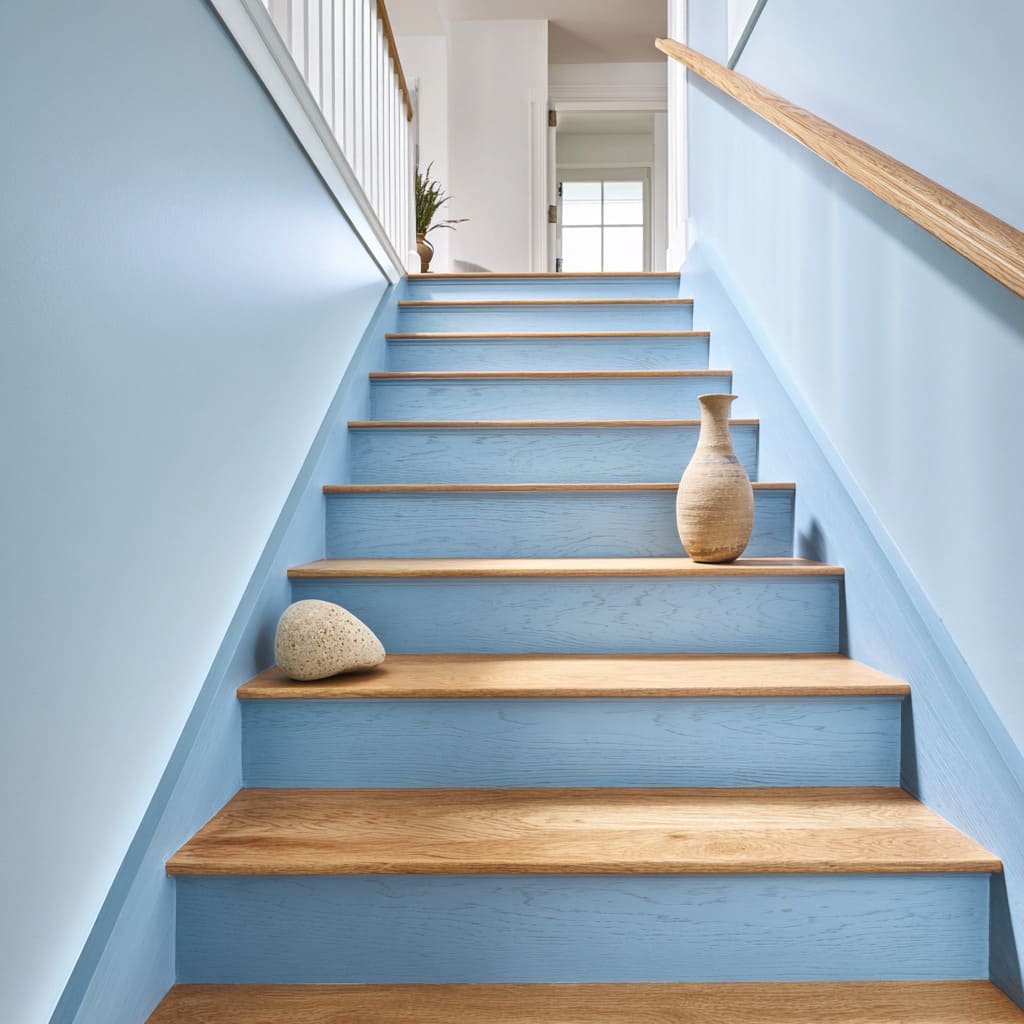
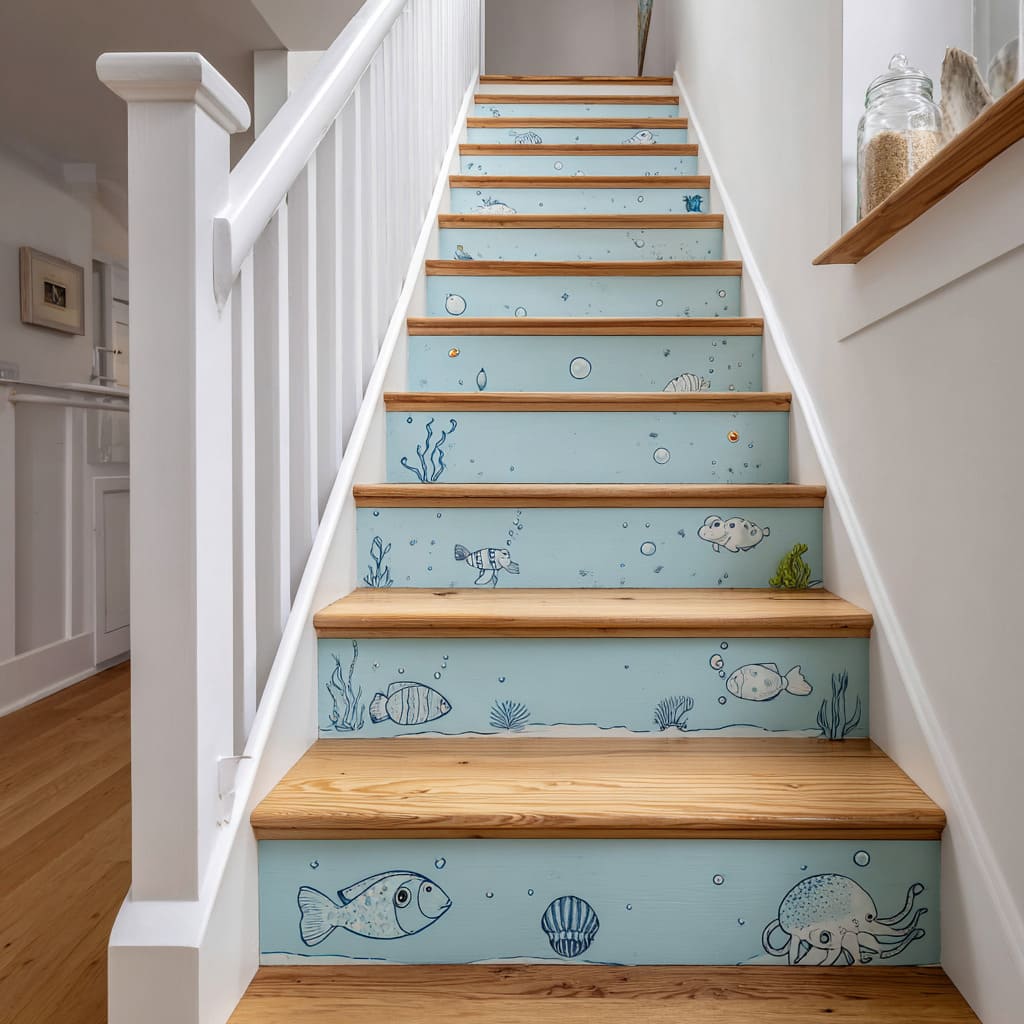
Another fresh approach in stair riser design uses solid color as a sculptural strategy. Calm blues, muted grays, clay neutrals, and warm creams cover every riser and sometimes wrap up the wall-side band as well.
This creates a continuous block of tone, giving the structure a grounded feel while leaving treads in natural oak so they perch like warm shelves.
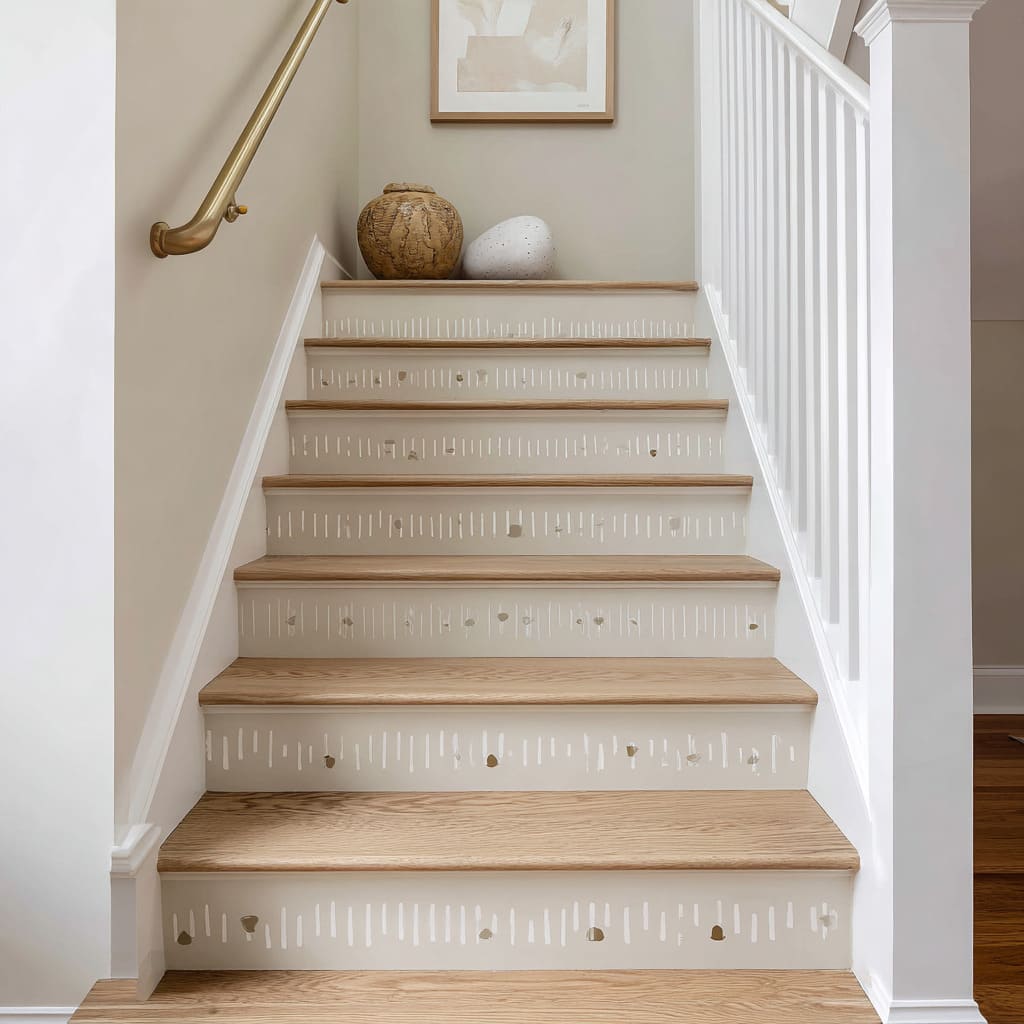
Because the hue repeats uninterrupted, the eye reads the stair body as one strong shape, especially when the wall trim and skirting match the riser tone. These color-rich stair riser ideas pair well with minimal styling: a single stone bowl on the landing, one soft ceramic at the base, or a light-wood handrail that floats above the tone field.
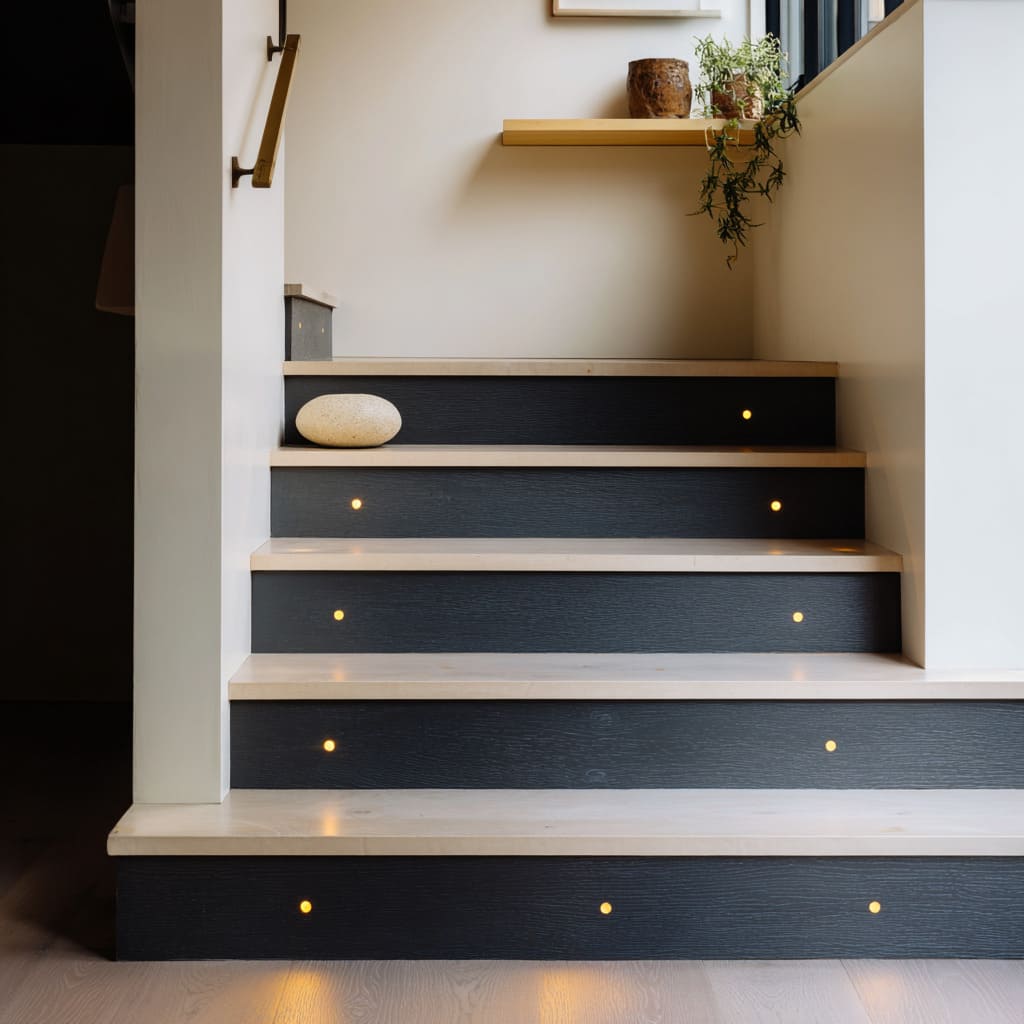
Examples of color-led approaches discussed in decorative stair risers trends:.
- Soft powder blue risers with similar wall-side band
- Smoke gray risers that merge into matching stringer
- Warm cream surfaces paired with slim metal rail
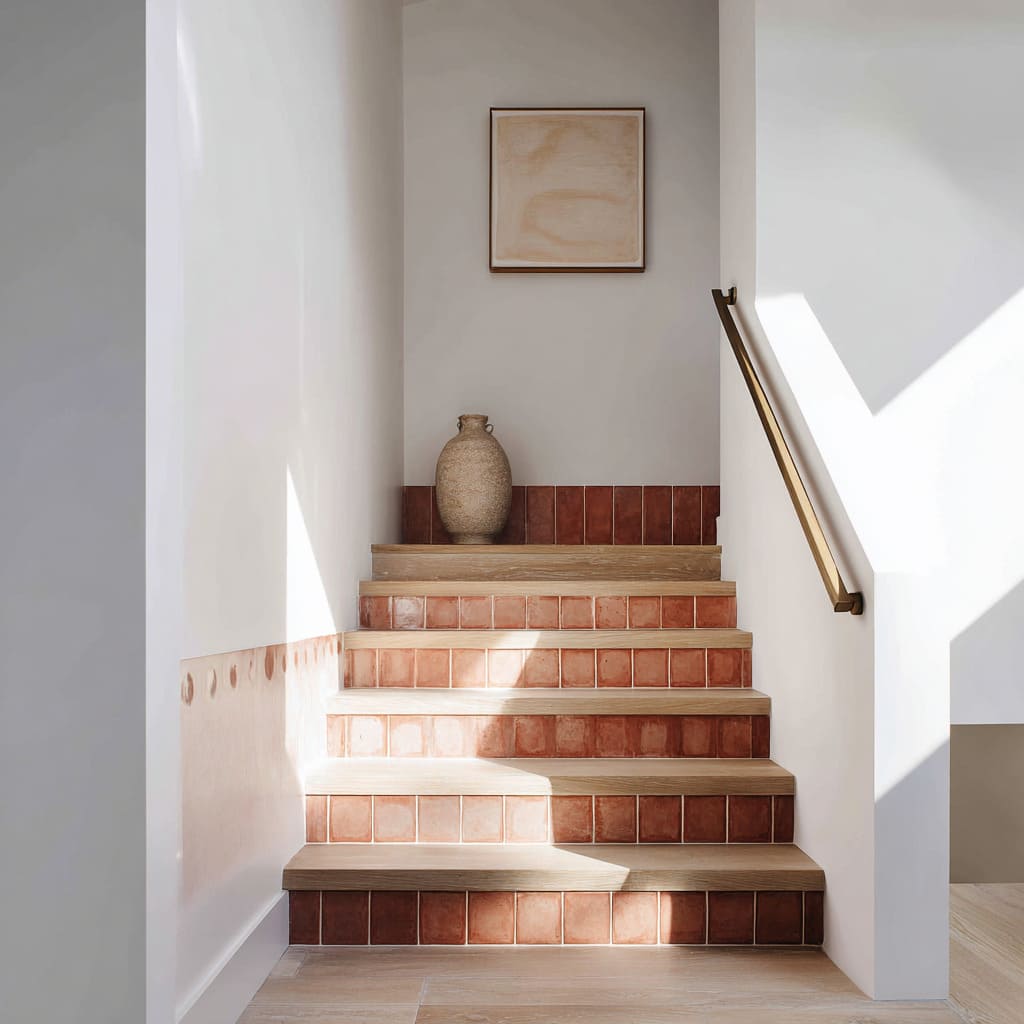
- Clay-tinged tones balanced by pale wood treads
The effect is calm, clean, and quietly contemporary — clear lines, soft contrasts, and a single field of color that feels like fabric wrapping around the stair.
Fine Line Graphics and Gentle Illustration as Riser Art
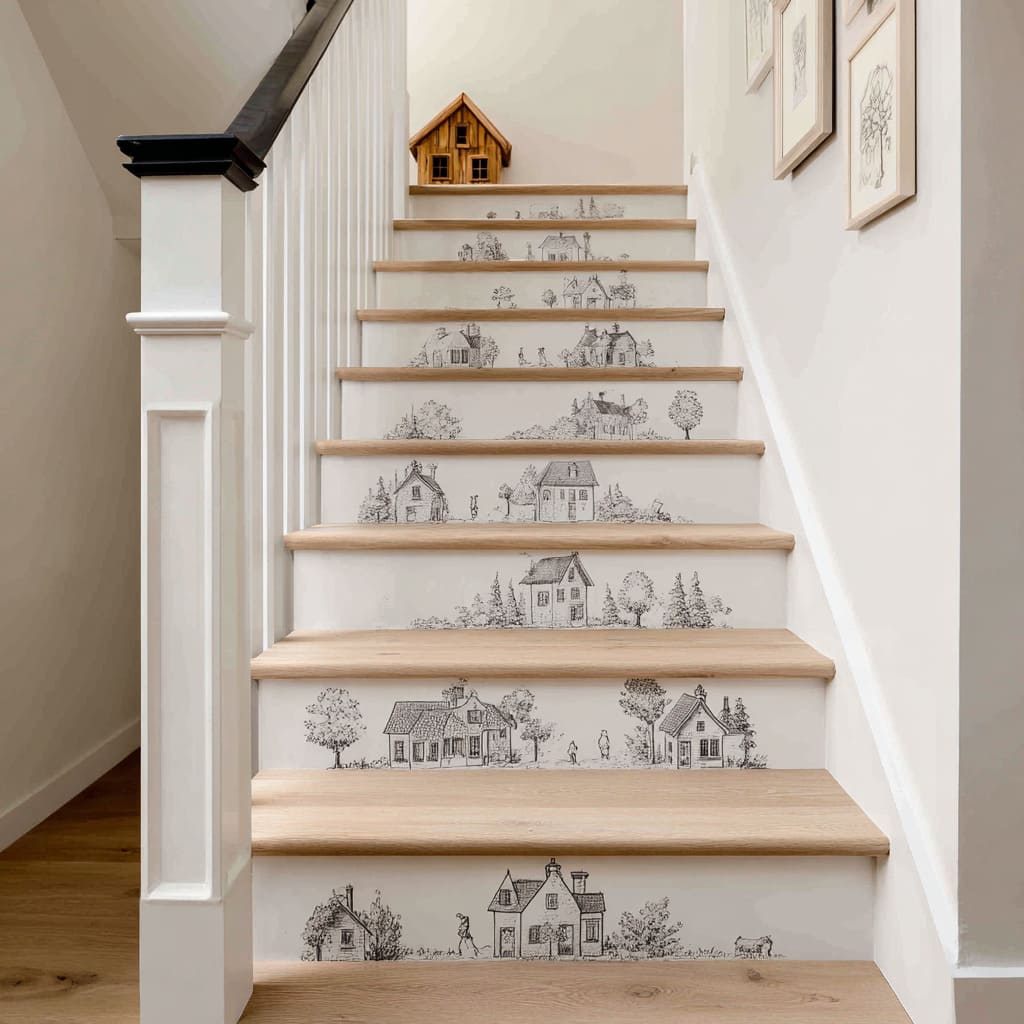
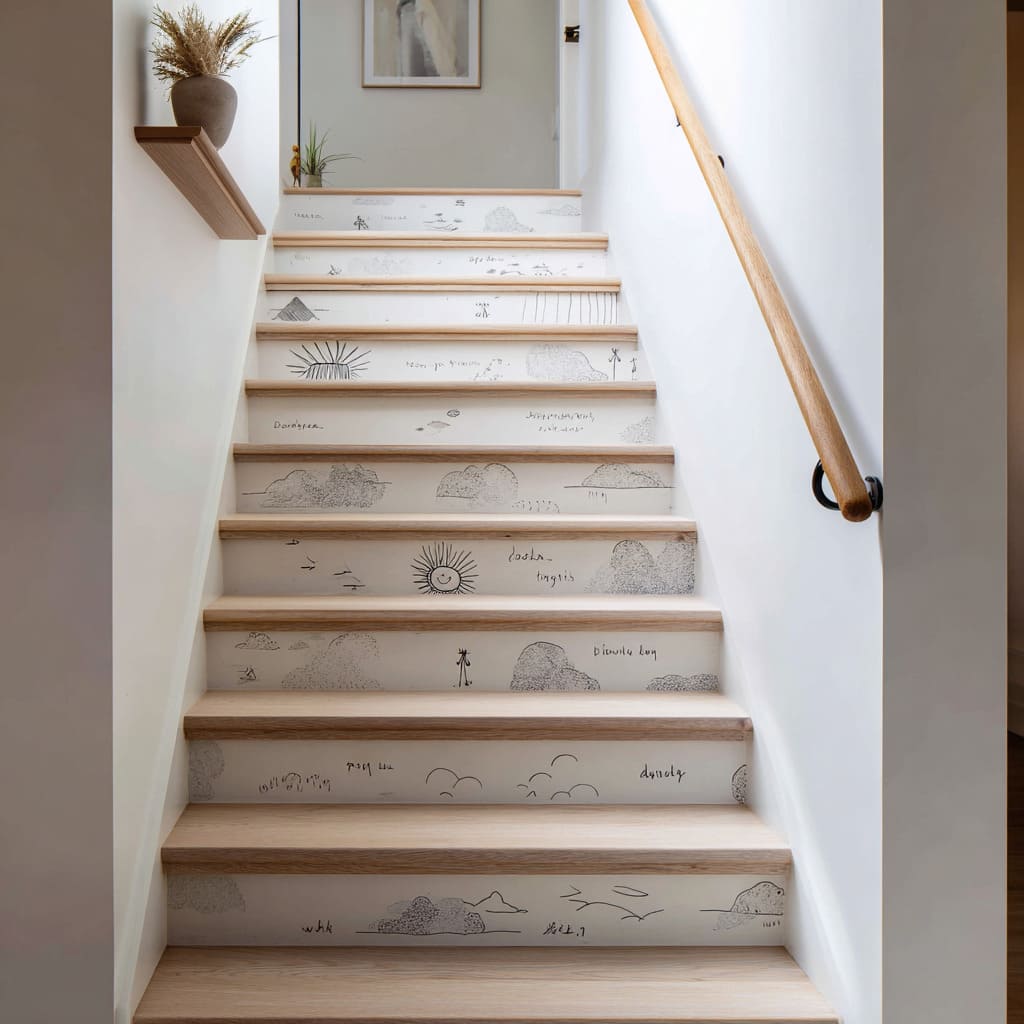
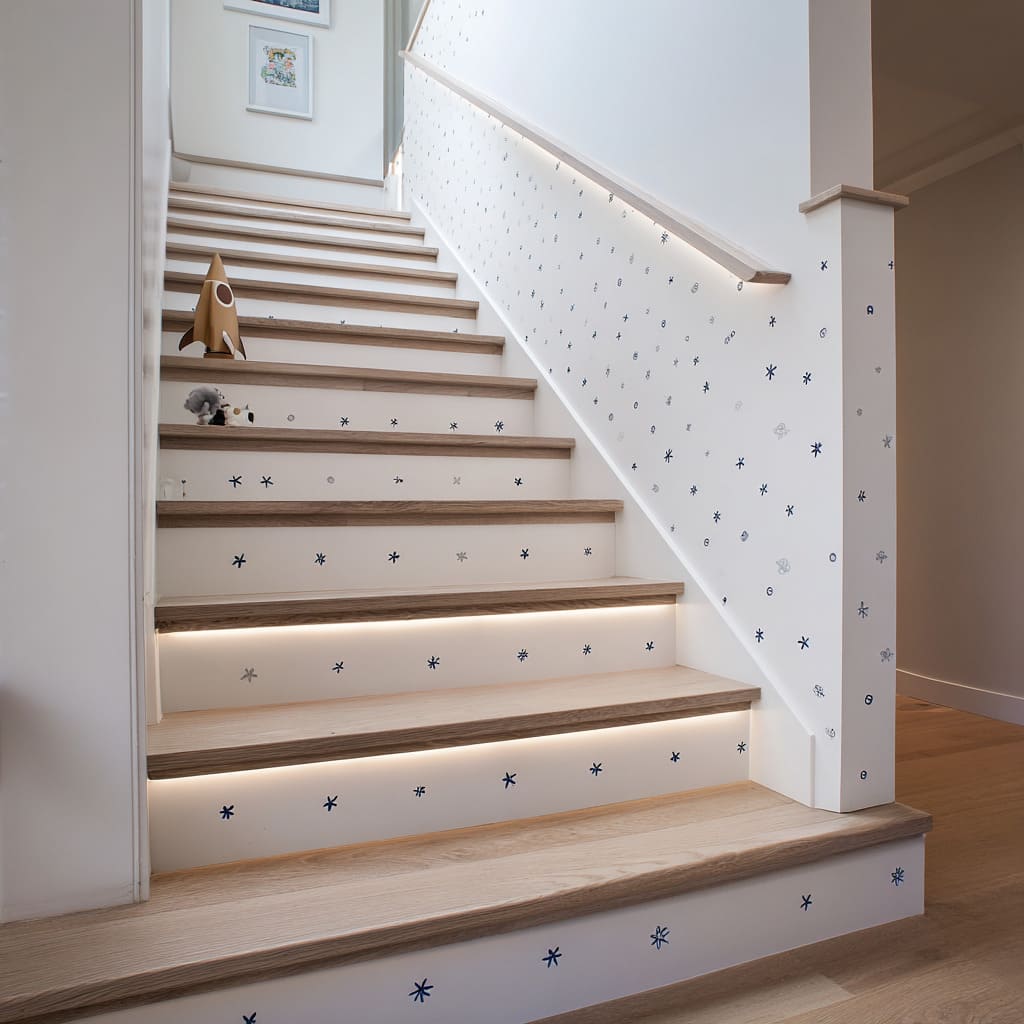
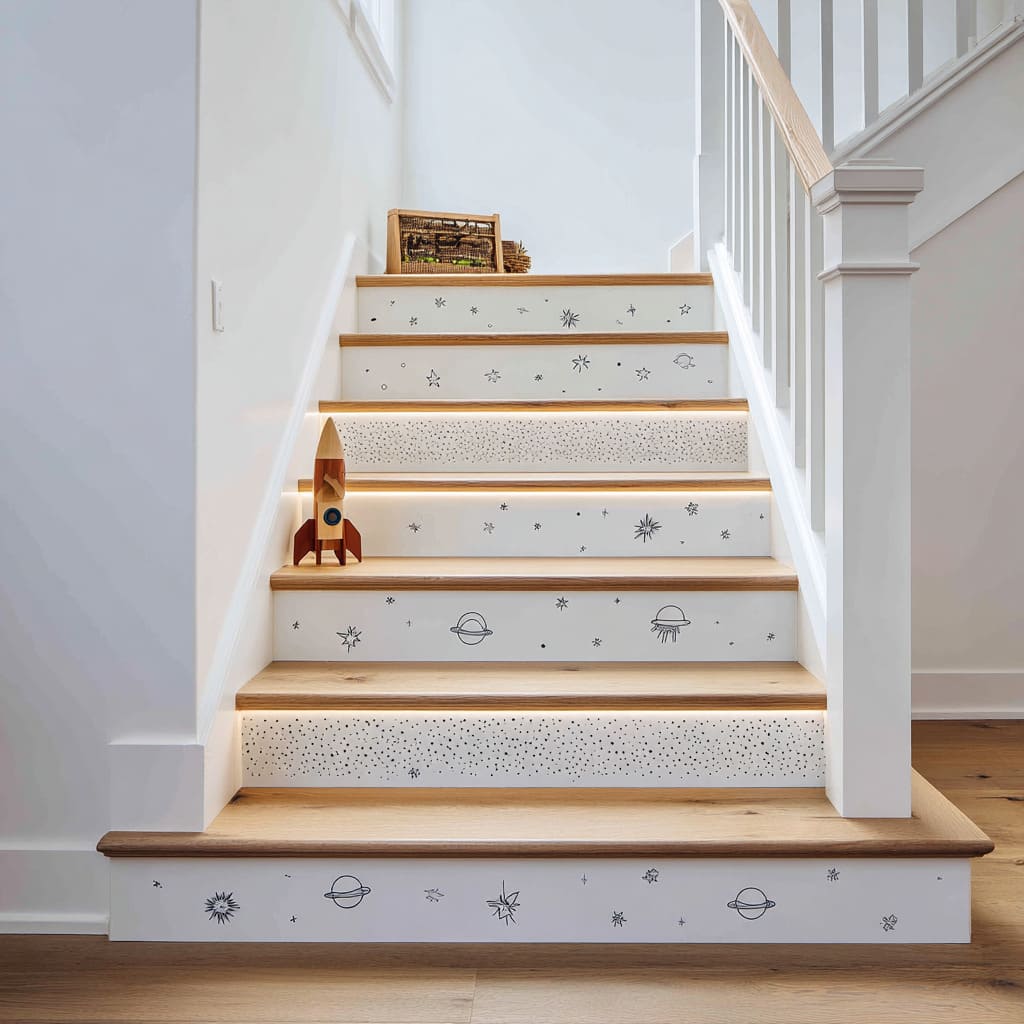
Stair riser decoration ideas have embraced illustration in a subtle, grown-home way. Instead of loud murals, delicate pencil-style drawings stretch across risers like a story told in tiny chapters.
Gentle suns, clouds, miniature café icons, seashells, line-drawn fish, and quiet contour sketches appear in small doses so the faces breathe.
These drawings often scale thoughtfully — main motifs sit on lower risers for clear viewing, while smaller marks climb toward the landing. Natural oak nosings keep the look tidy, and white stringers frame the art like gallery rails.
This approach brings personality without making the stair childish or overwhelming; rather, it adds grace, softness, and whimsy while still feeling curated.
This approach often follows a rhythm:.
- Pale background color
- Thin charcoal or muted-tone outlines
- Oak nosings creating gentle divisions
- Room accents that echo the theme in one or two small objects
The gain here is emotional warmth — a staircase that feels imaginative but calm, like little handwritten notes tucked into architecture.
Pattern With Control: Micro-Motifs and Mosaic Geometry
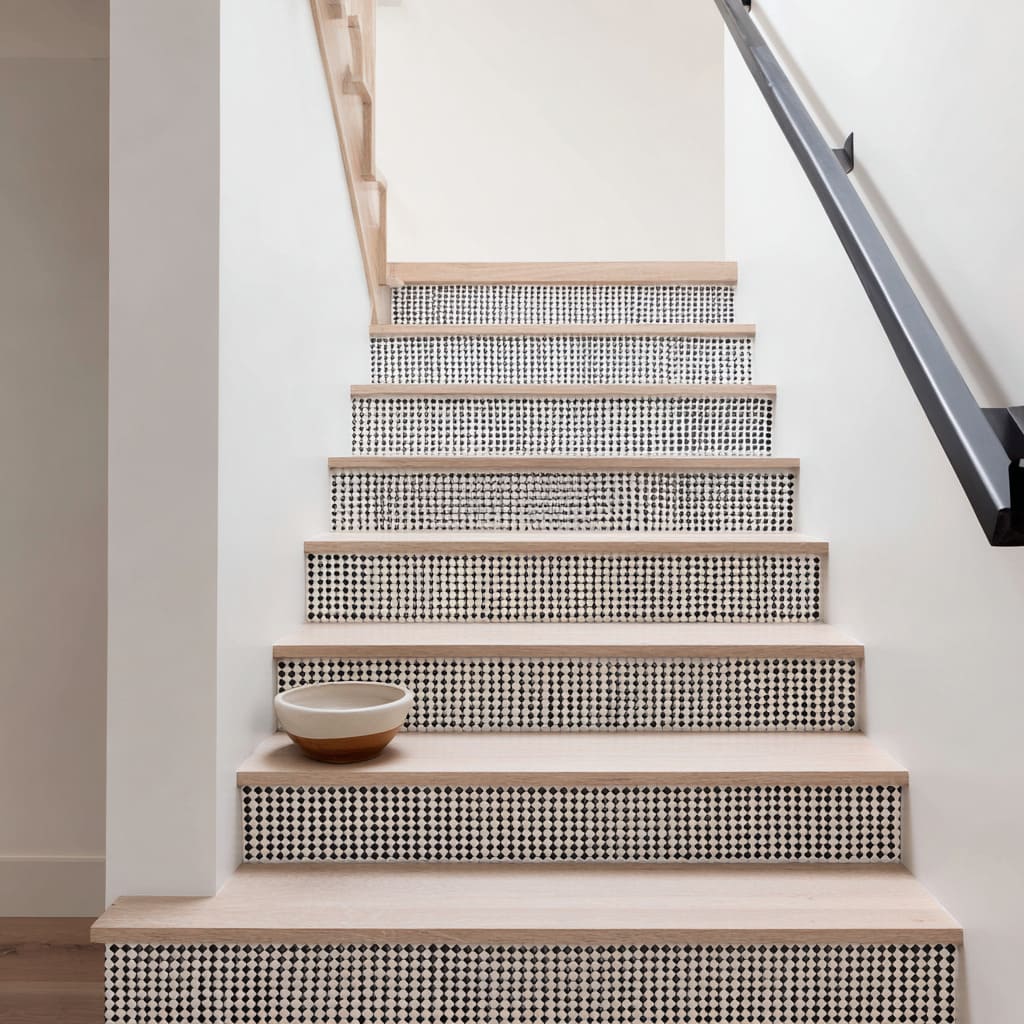
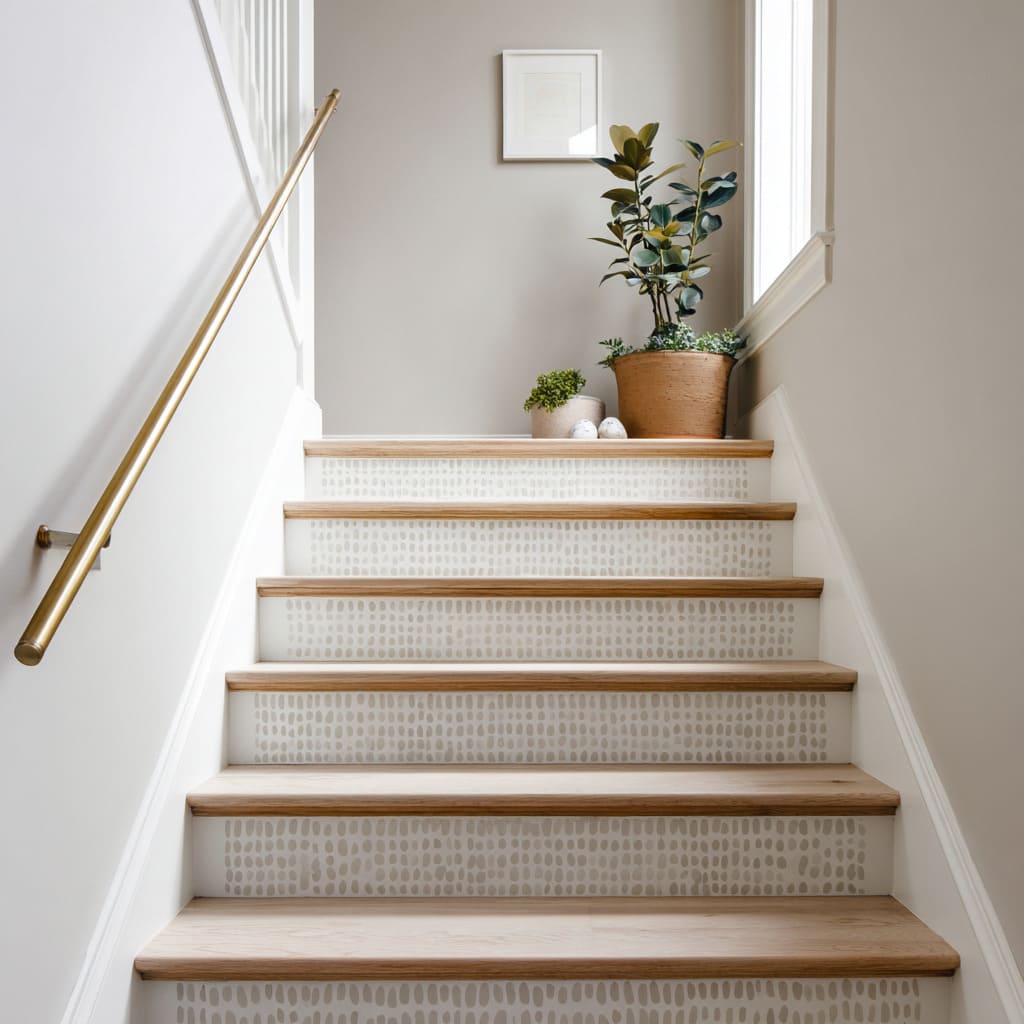
Where illustration adds charm, pattern adds order. Many modern stair riser ideas rely on micro-scales: tiny stamped ovals, petite marks arranged in lines, or penny tiles forming soft graphic surfaces.
The trick is scale and discipline — repeating one small motif with enough spacing to let the eye rest.
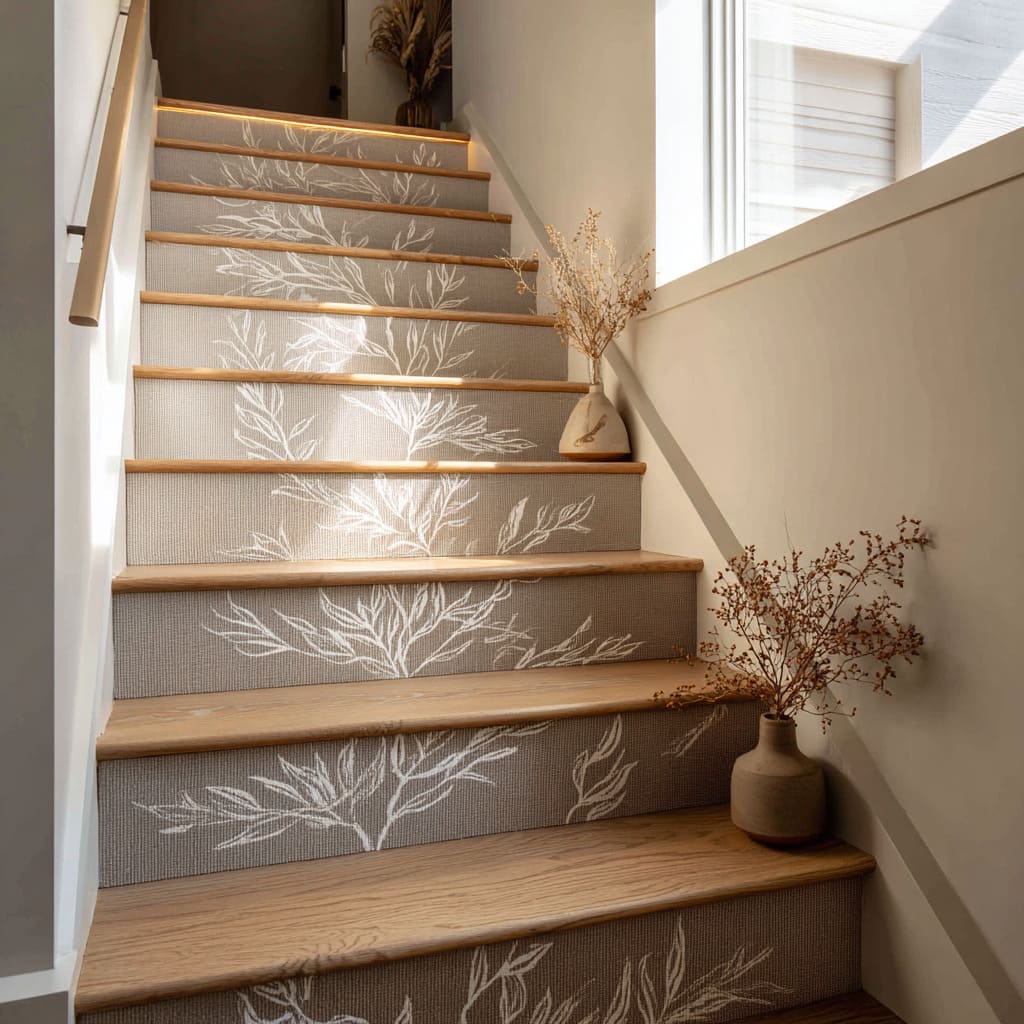
Penny tile risers feel crisp and tactile without shouting; tiny marks on cream backgrounds introduce human irregularity without mess; and woven-like prints of branch shapes climb the steps with airy elegance. In all cases, warm wood tread edges offer a quiet horizontal guide, so even complex surface detail feels structured.
Common pattern families seen in contemporary stair riser design:.
- Tiny hand-stamped shapes arranged in subtle rows
- Micro mosaic dots with honey-tone treads
- Soft textile prints that echo natural fibers
- Ink-style botanical lines climbing like stems
These decorative stair riser ideas behave like fabric panels on a vertical plane, adding rhythm and personality while staying light and neat.
Light as a Drawing Line Rather Than a Spotlight
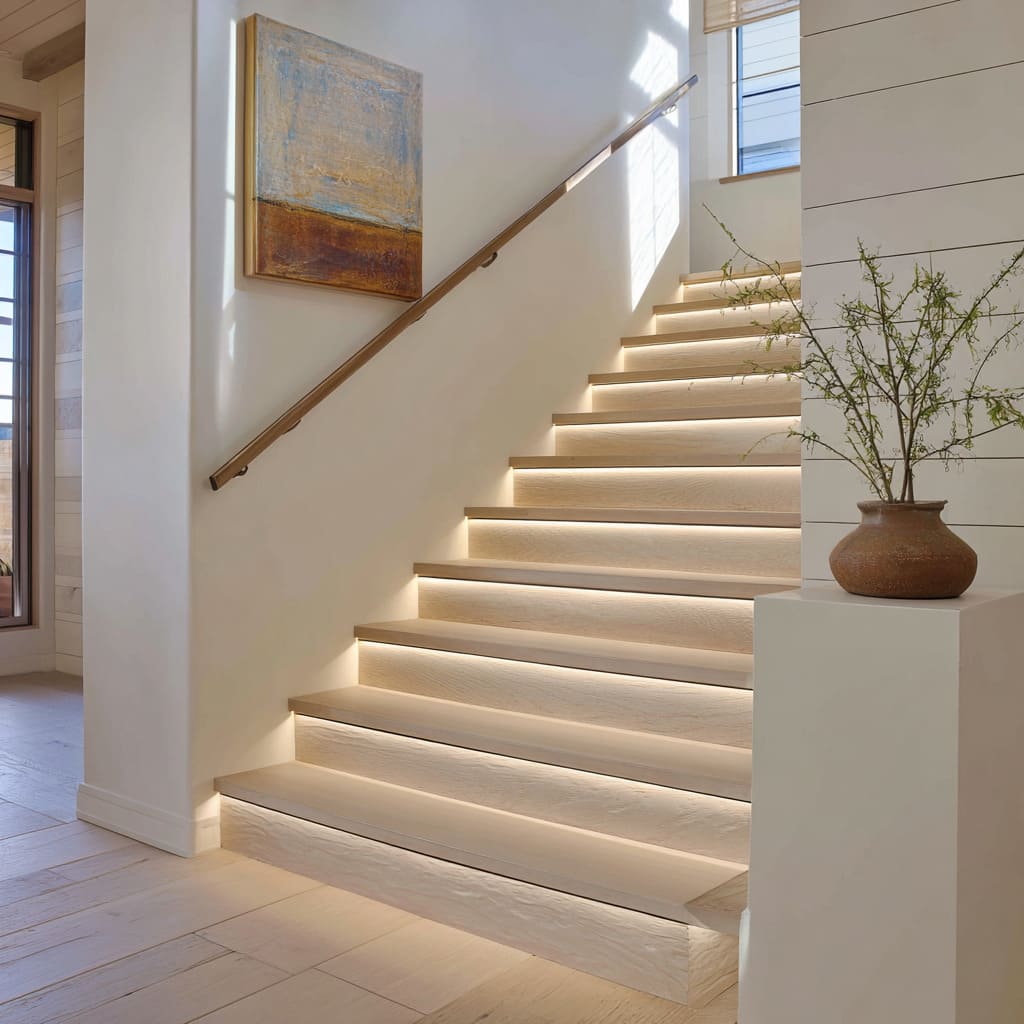
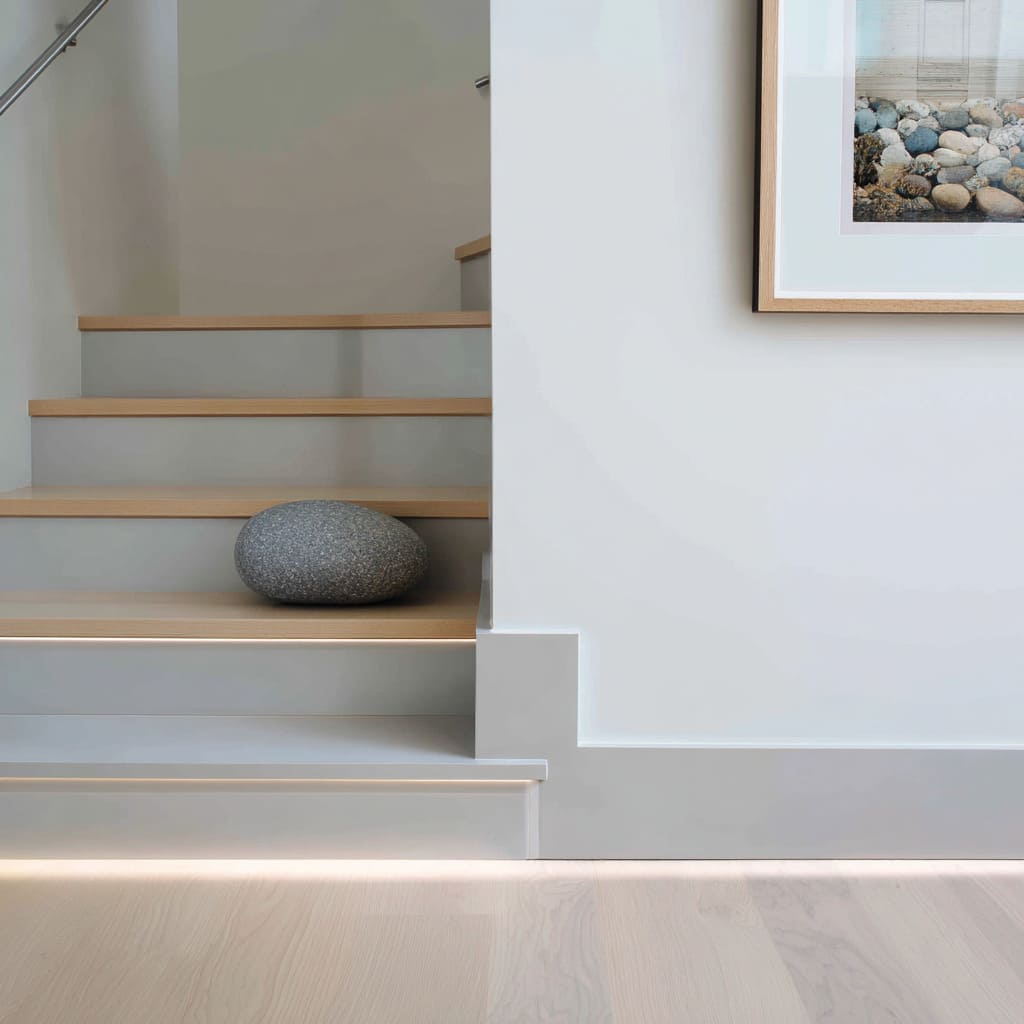
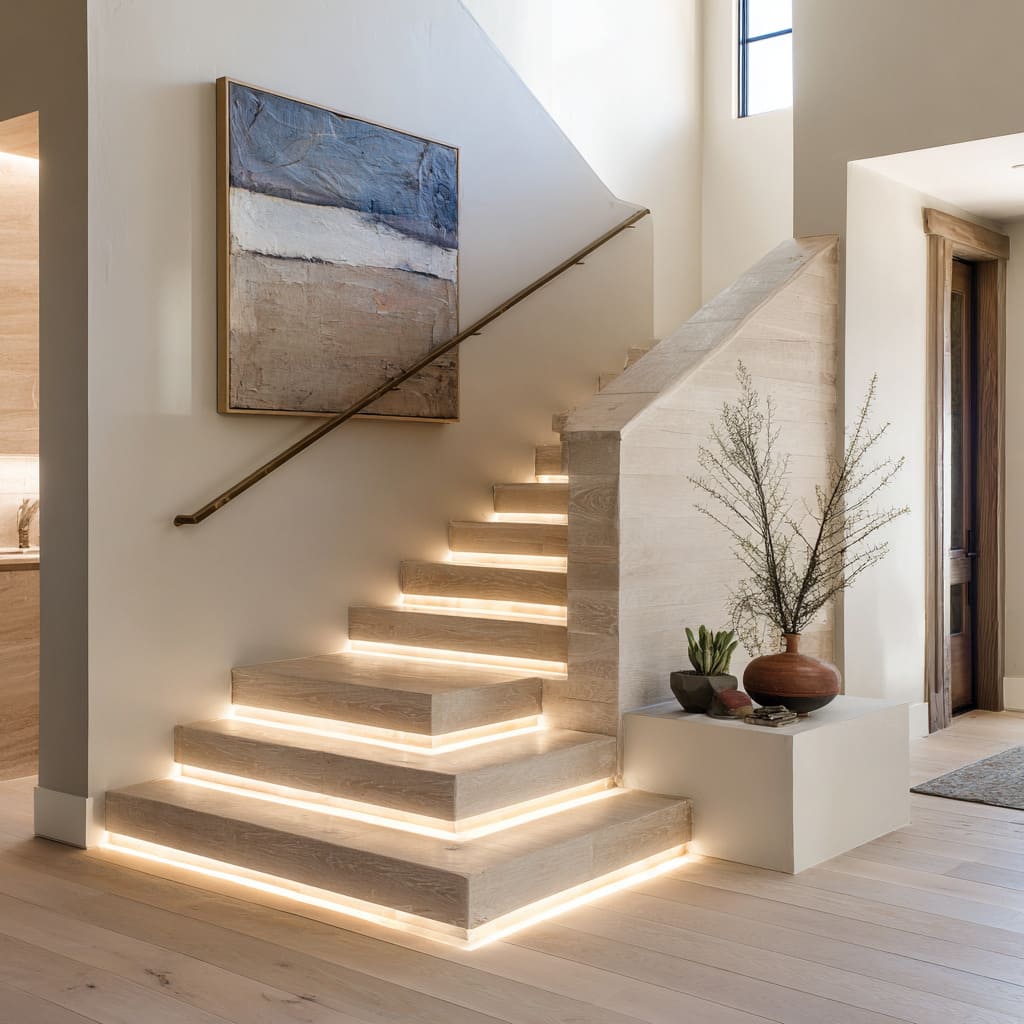
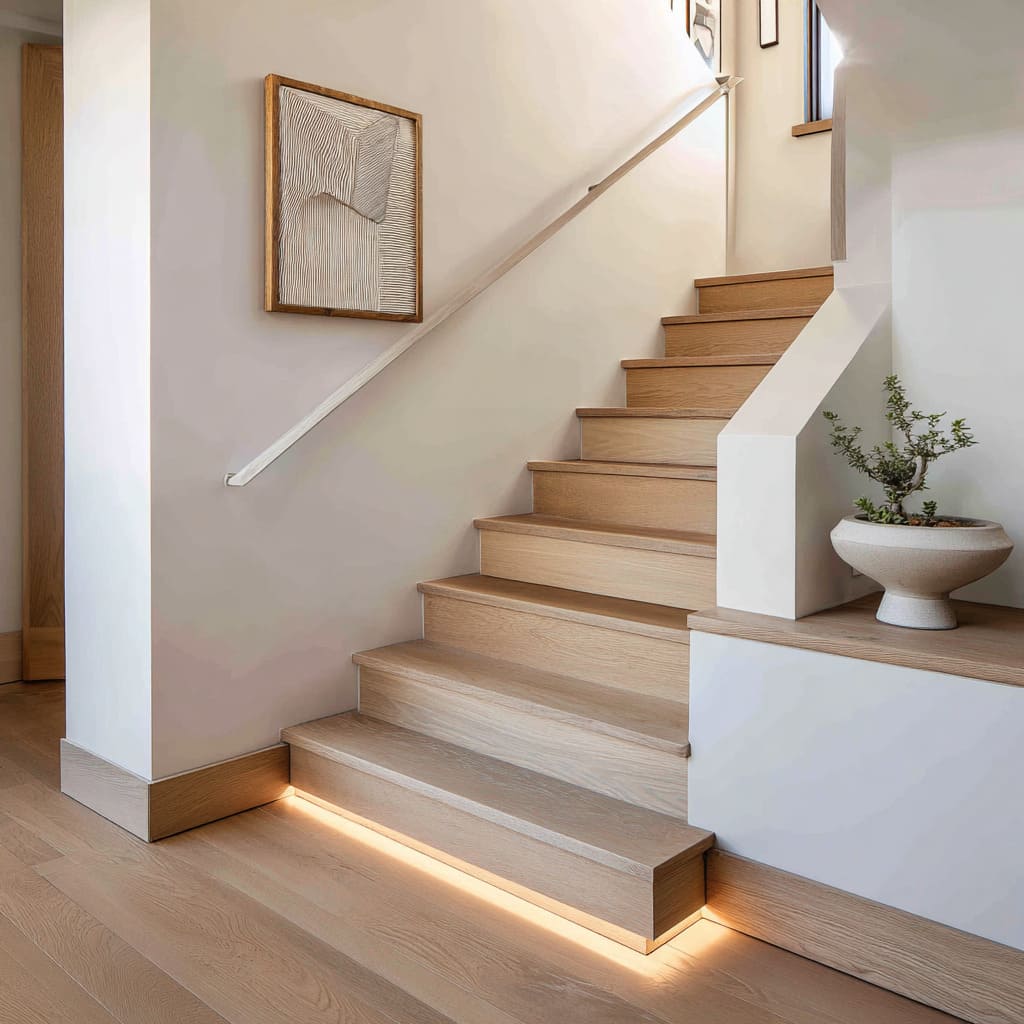
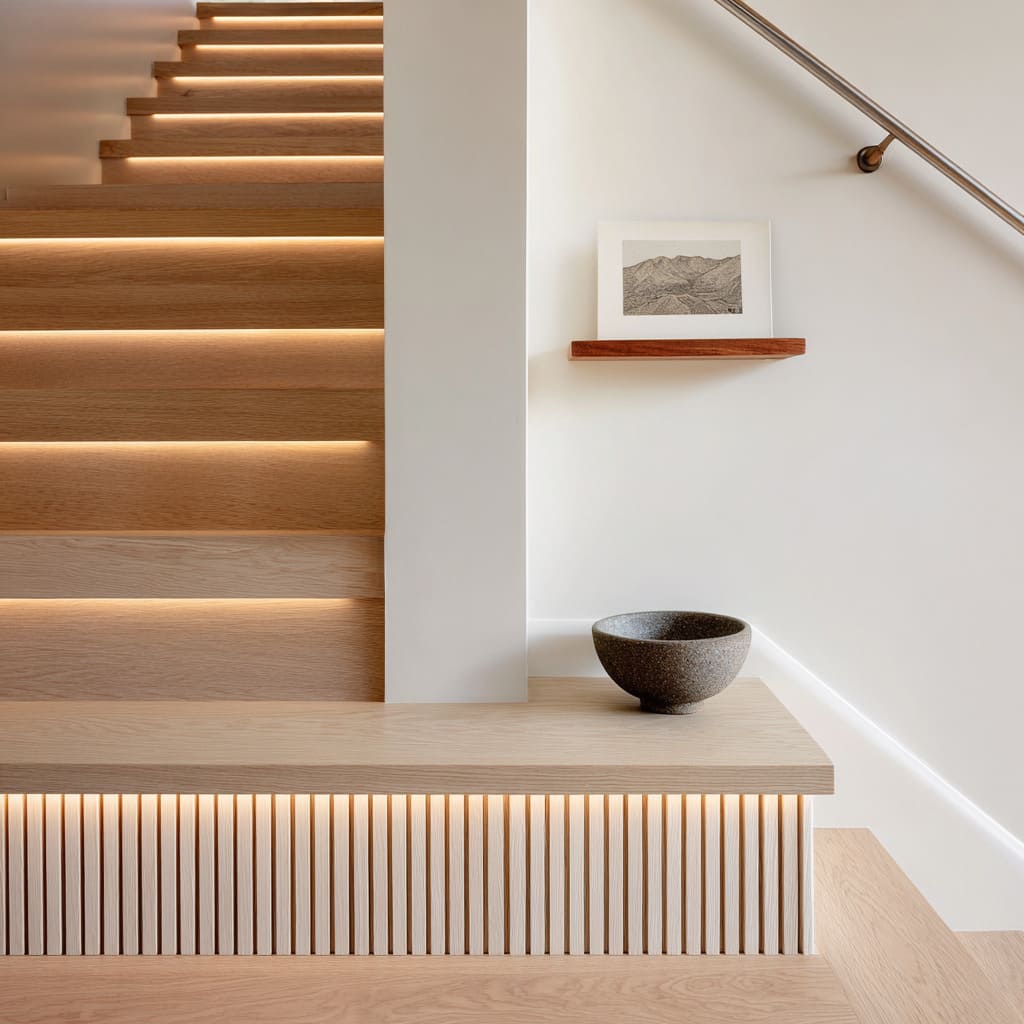
Light plays a gentle yet extremely effective role in many stair riser design ideas. Instead of bright beams or heavy strips, the most refined looks use slim under-tread light lines that act like drawn strokes.
These lines repeat up the stairs in soft rhythm and often echo elsewhere — along the base of a wall, under a bench edge, or beneath a slim handrail.
Light serves as a horizon that floats each tread slightly, giving form without glare. In evening settings, these glows turn stairs into calm sculptures, where wood gently hovers and each riser fades into shadow.
Lighting themes present in stylish stair riser ideas:.
- Thin light lines under treads for gentle elevation
- Alternating light placements instead of uniform repetition
- Warm temperature tones that soften wood grain
- Matching light used at the floor level to unify zones
This approach respects the architecture, leaning into quiet glow and soft linear accents.
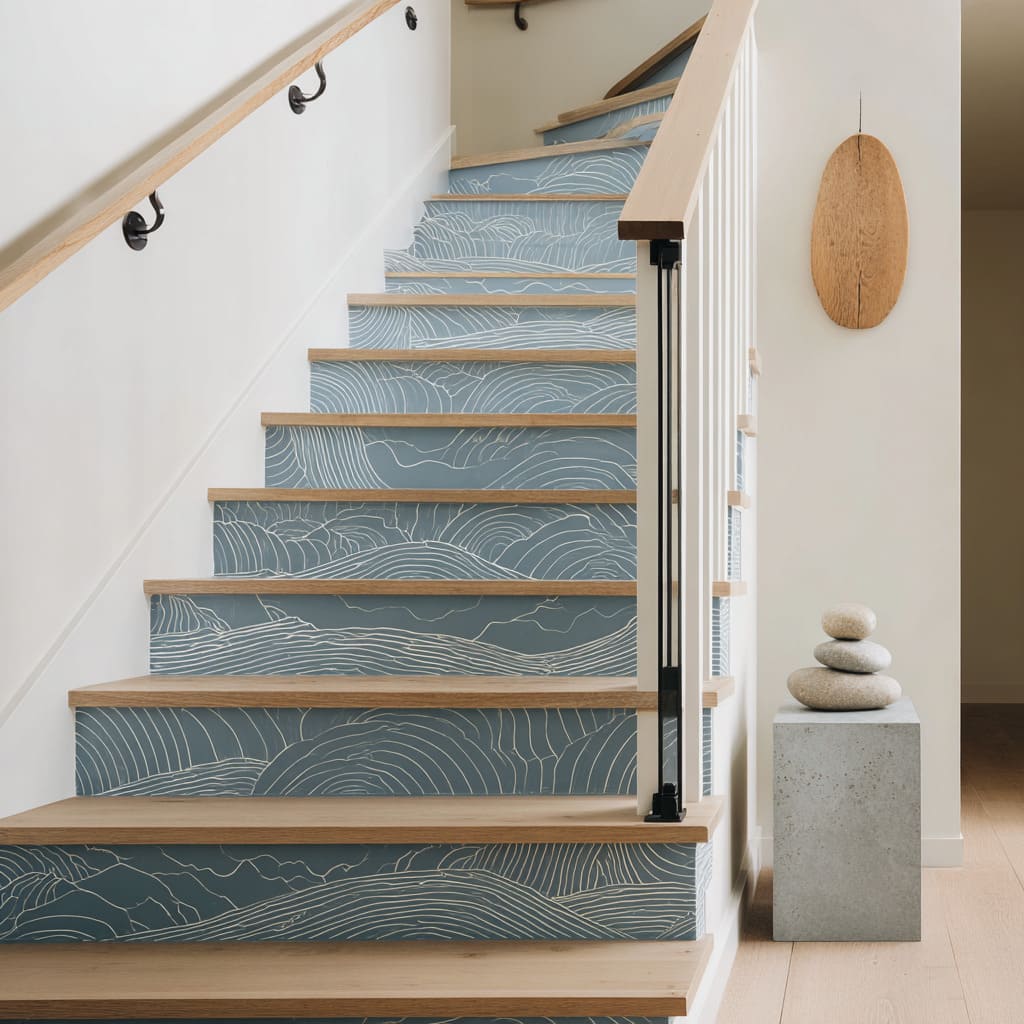
Color Pairing and Skirting Nuance
Skirting plays a key role in how stair risers connect with walls. Interiors use three main strategies and each one influences mood:.
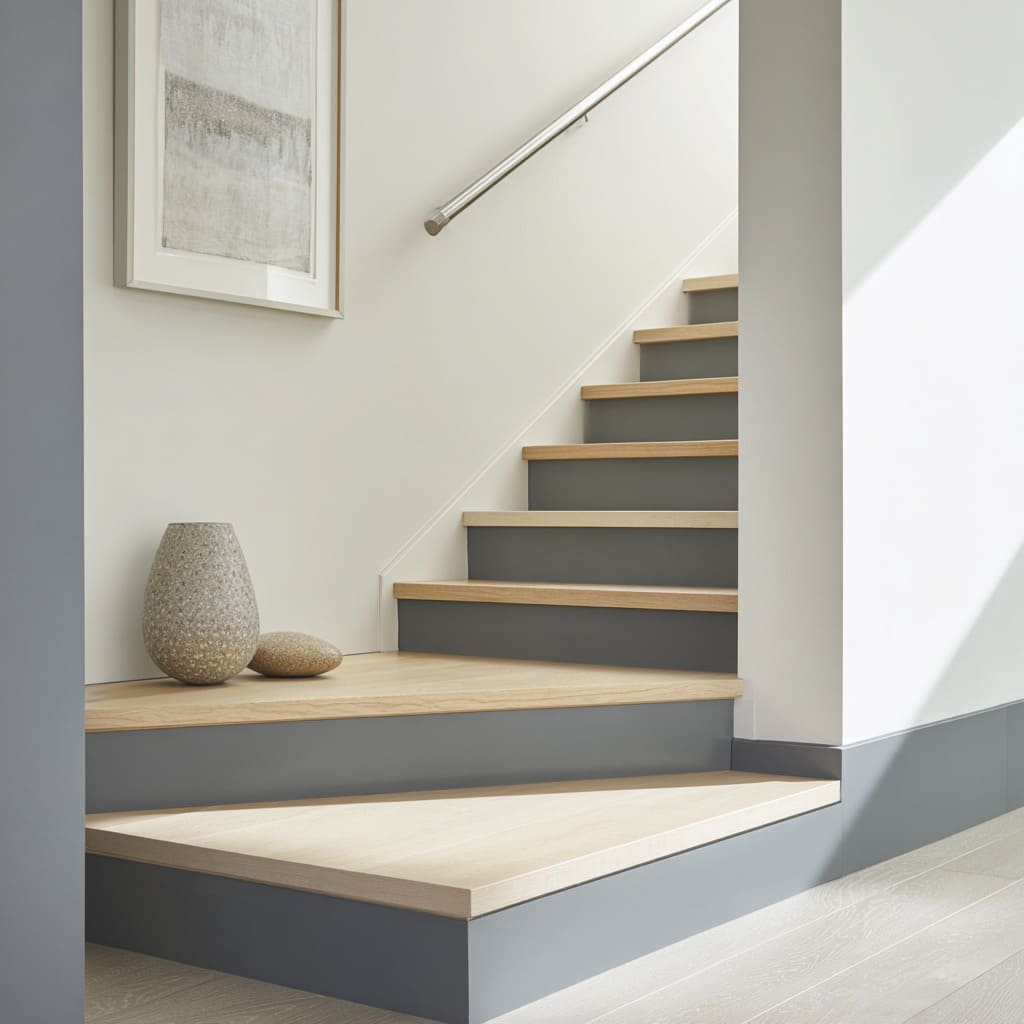
Tone Merge
Risers and skirting in the same shade blend into one visual band, strengthening the stair body and creating a sculptural block effect.
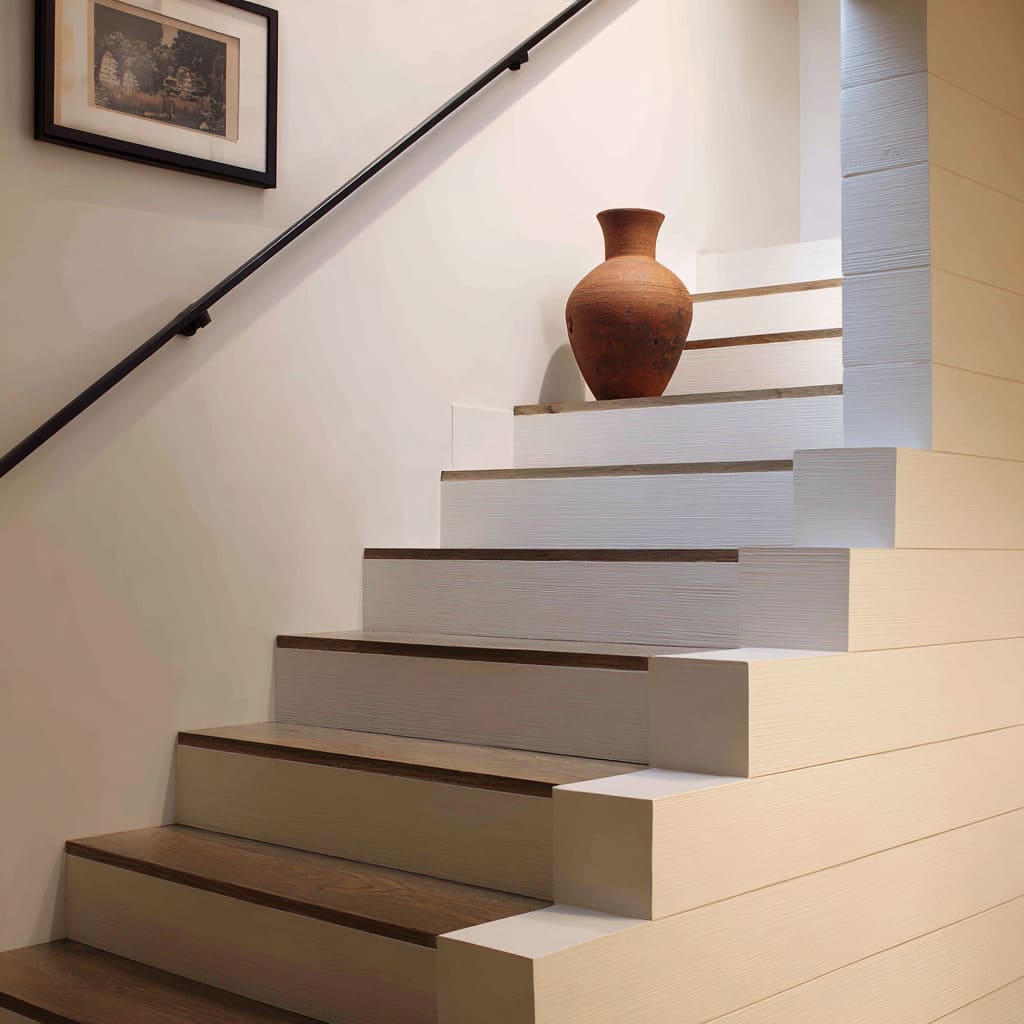
Quiet Frame
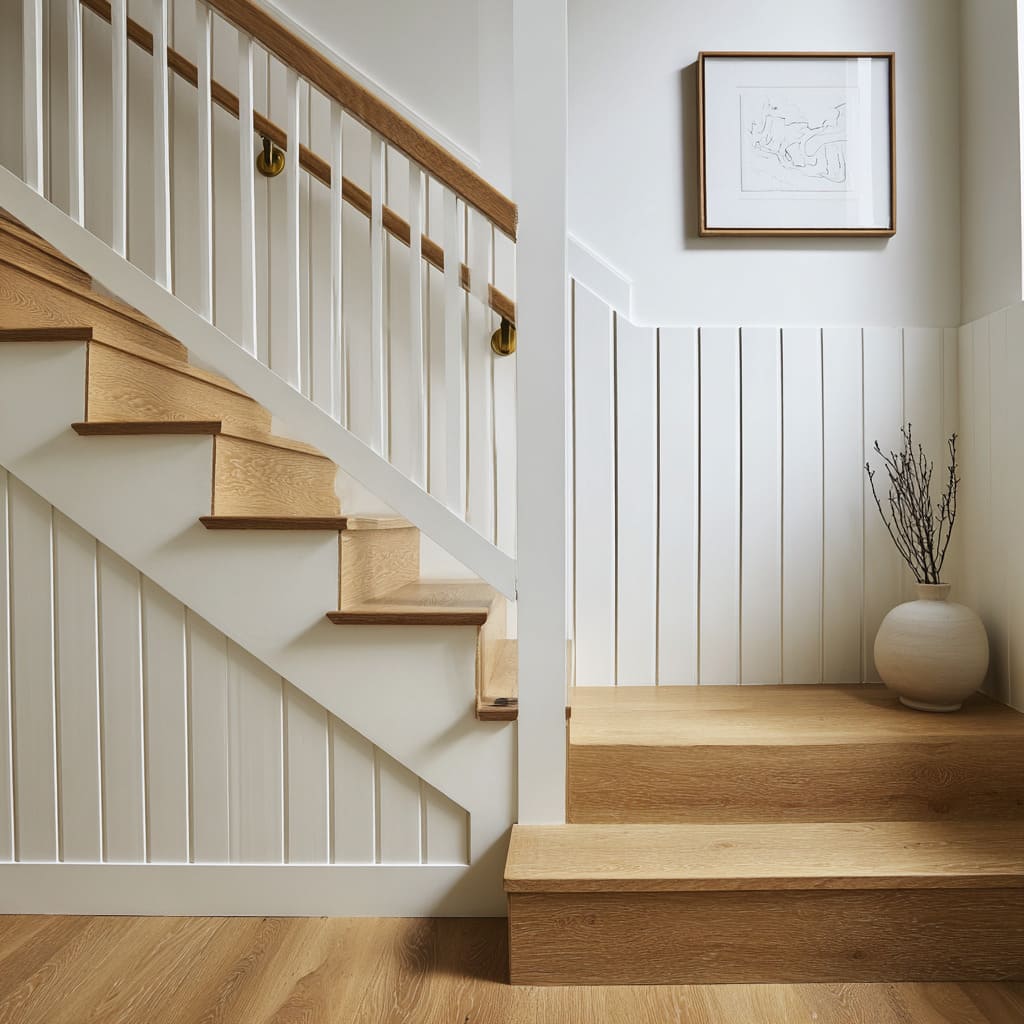
Bright white skirting frames timber or printed risers like an art panel, allowing details to remain clear and neat.
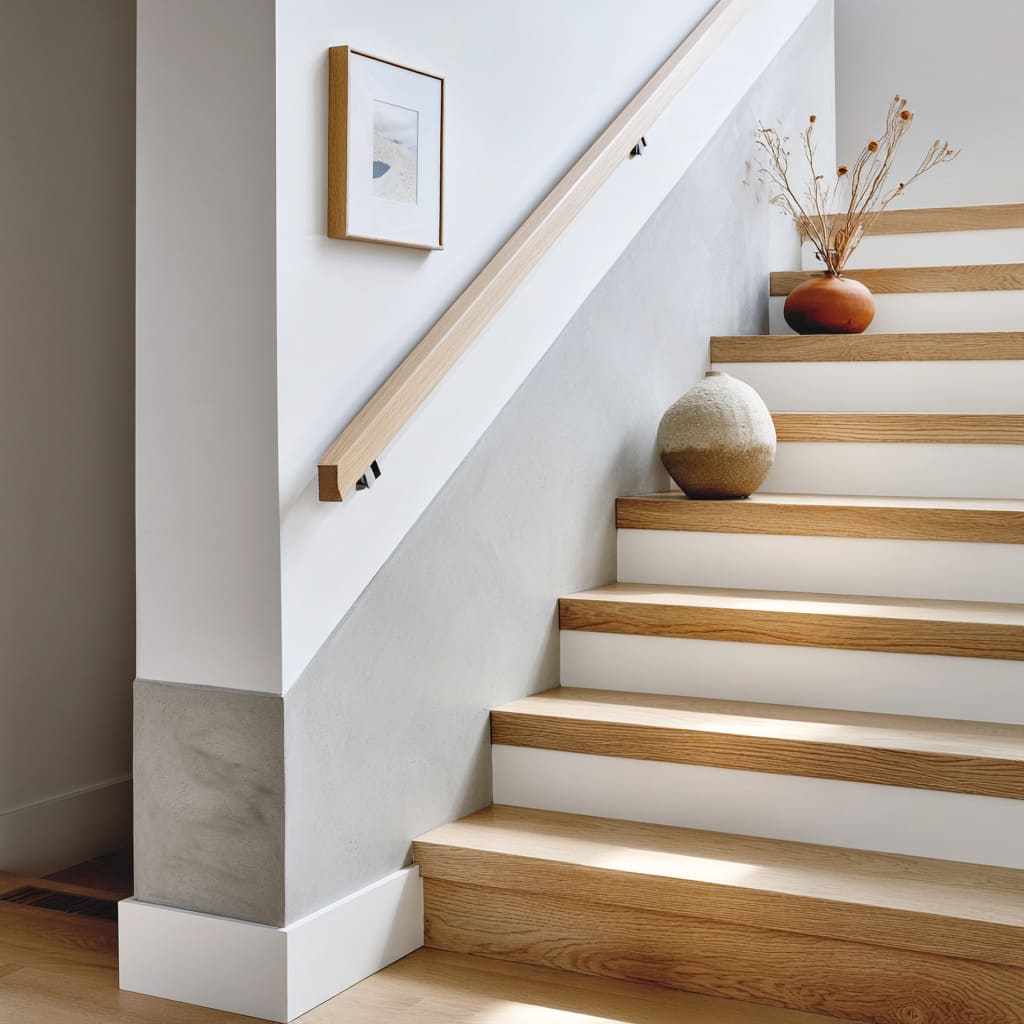
Material Carry-Up
Tile or plaster from risers continues up the landing or along the lower wall, forming a continuous belt that ties stair and room into one thoughtful idea.
These moves show how even the smallest transition line shapes presence. A well-chosen skirting tone allows stair riser decoration ideas to feel connected to the overall room language, not isolated.
Sensible Object Placement for Scale and Warmth
Stairs can feel static without small cues of life, but too many items look cluttered. The most stylish examples use one or two small accents: a single vase, a stone bowl, a bonsai, a folded café towel, a tiny toy rocket.
These introduce scale, personality, and a lived-in touch without stealing focus from the riser surface. They also echo textures already present — a stone reflecting tile texture, a potted plant echoing botanical prints, or a clay vessel repeating warm glaze tones.
Small styling elements often seen:.
- Minimal pottery
- One sculptural object at the landing
- Soft linens in calm shades
- Small natural pieces (shells, stones, leaves)
This keeps the eye engaged across multiple heights without distracting from the main riser look.
When Riser and Wall Become One Composition
A notable shift in stair riser ideas is how often risers interact with adjacent surfaces. Instead of treating stairs as isolated pieces, designs now link risers to wall planes, base boards, or built-in ledges.
Some walls tilt in the stair direction in soft microcement colors, some have tall V-groove paneling that acts like an extended skirting, and others hold a tiny gallery of line drawings that match riser artwork. This creates a sense of continuity — like the stair is part of a larger sculptural moment rather than an afterthought.
Layout tactics seen across advanced stair riser design:.
- Sloped wall color following stair angle
- Curved wall caps that meet the step line smoothly
- Built-in ledges blending into riser shapes
- Art placed exactly at the tone break of wall and riser
The result feels composed and architectural, where every visible plane participates in the look.
Final Thought: Stair Risers as Calm Storytellers
Across these stair riser ideas, the most striking quality is restraint paired with thoughtful detail. Rather than loud gestures, designers lean into tactility, tone layering, grain direction, tiny marks, and light lines that strengthen the rhythm of the climb.
Decorative stair risers today build softness and character by giving each step a small role in a larger composition. Whether through oak grain, chalk-style doodles, handmade tiles, or micro lights, stair riser design has become a subtle art form — balancing simplicity with focus so the staircase feels like a considered piece of the home’s visual poem, not just a link between floors.