Modern window swags act less like decorative trim and more like quiet architectural strokes that reshape the upper portion of a room. Instead of simply curving fabric across a rod, today’s they use sweeps, shallow arcs, sculpted bands, and cloud-like billows to redraw how a window reads inside a space.
These gestures alter the perceived height, width, and intimacy of interiors without requiring any structural work. The swag can operate as a soft crown, hovering just above the window and setting the emotional ceiling line for everything beneath it.
When placed close to the top of the wall, it visually stretches the height; when allowed to dip deeper, it gently lowers the scale and creates a cocooning effect. Because of that, interior design can now rely on simple planes, clean cabinetry, and large windows, the swag becomes the one expressive moment—a line of softness that offsets otherwise direct geometry.
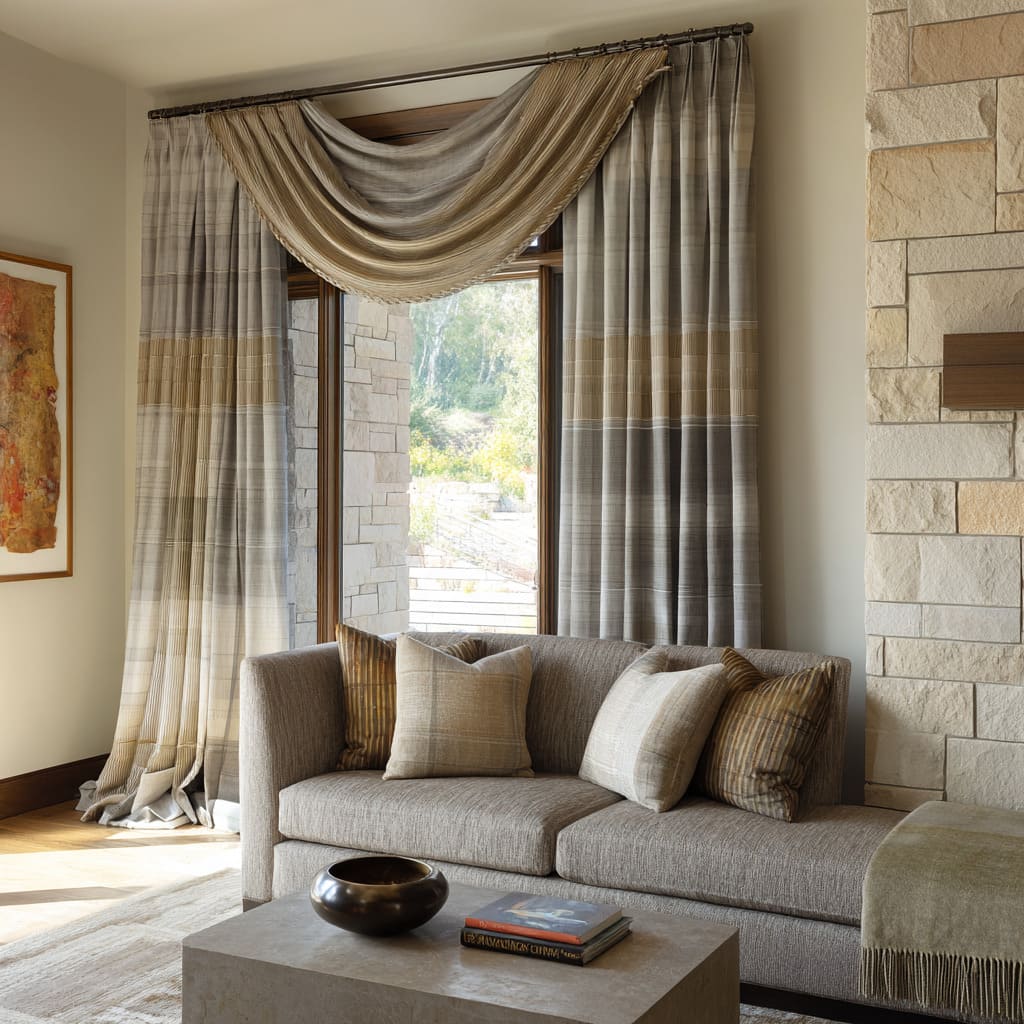
A swag can function like a soft proscenium, shaping the view as if it were a framed stage. This effect is especially striking where the fabric interacts with surrounding interior rhythms: vertical window mullions, stacked shelving, or stone block patterns.
The swag introduces a curved counter-gesture, turning static architecture into a kind of living composition. Within this larger sensibility, window swags ideas stretch far beyond traditional conventions; they become the lightest form of architectural editing—an adjustment made not with lumber or plaster, but with drape, texture, and silhouette.
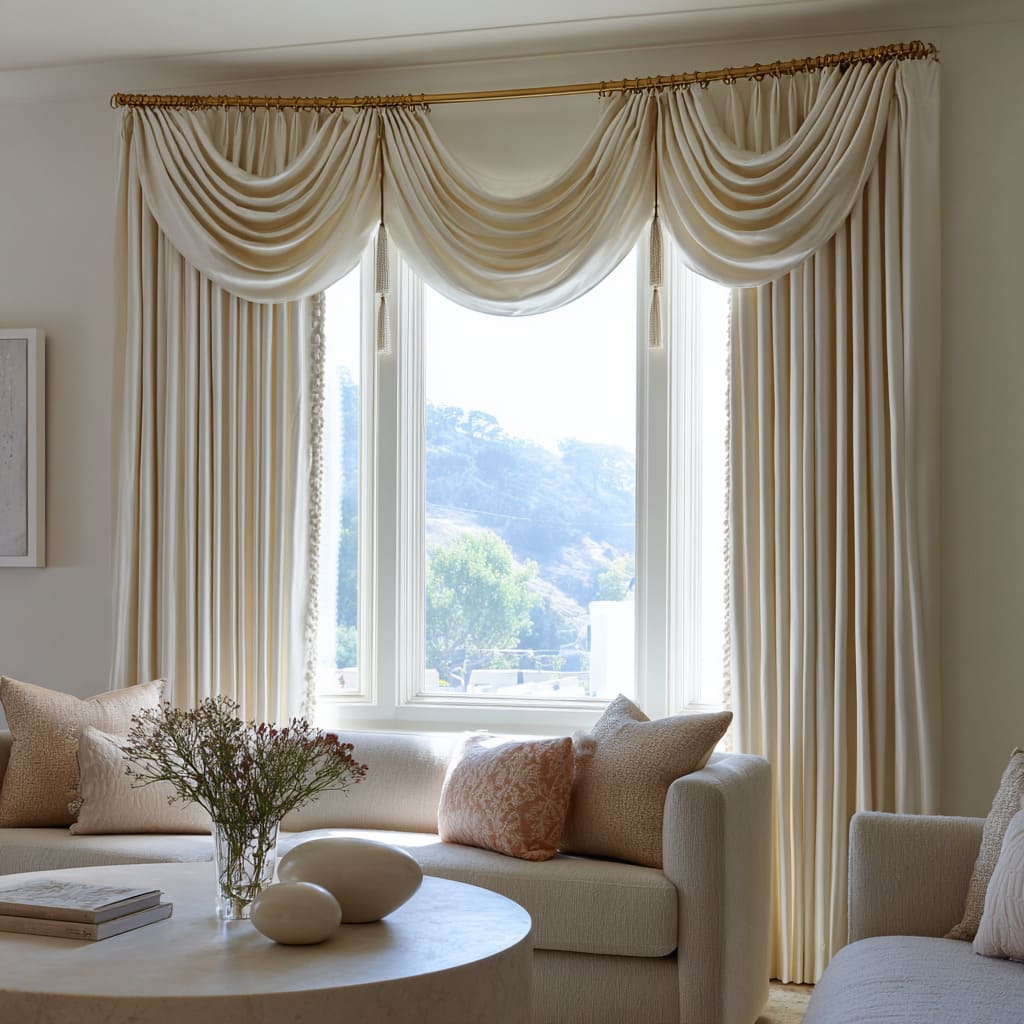
Curves, Grids, and Rhythmic Balance
A defining trait of modern swag styling is the interplay between curved fabric and the straight lines of the room. This dialogue is what gives the treatment its modernity.
Where earlier styles emphasized symmetry and ornament, contemporary interiors use the curvature of the swag to disrupt hard right angles and restore softness to the visual hierarchy.
Curves Shaping Straight Architecture
The eye reacts instantly to differences in line direction. Curved folds soften the stern marching of vertical mullions; crisp horizontal sill lines become gentler when viewed beneath a shallow arc.
The contrast between grids and arcs is essential. A swag placed above a rectilinear window brings in a sense of movement, making the room breathe instead of standing in rigid stillness.
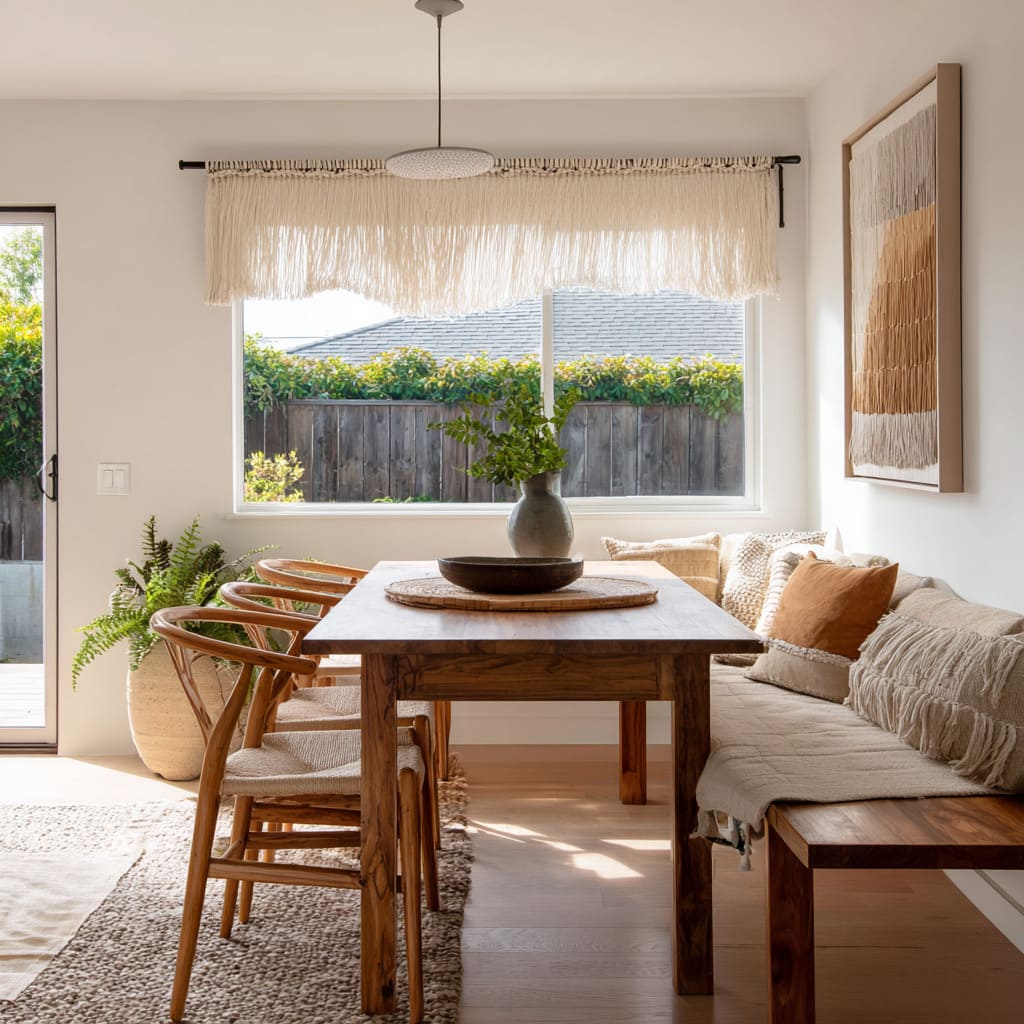
Symmetry and Deliberate Asymmetry
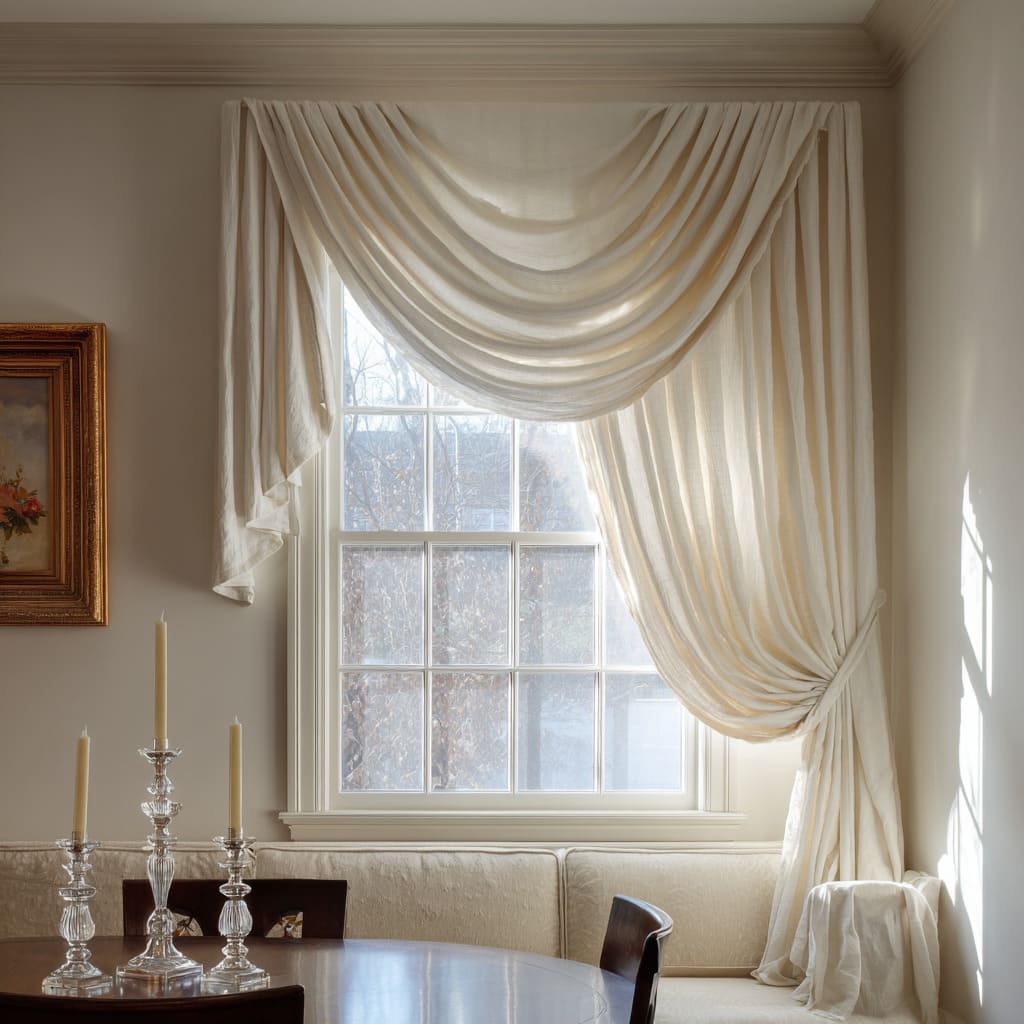
Slight asymmetry can be used to modernize the look—one side gathered tighter, one dip lower, one cascade more pronounced. Instead of a mirrored pair of fabric scoops, designers might create a single arc that leans subtly toward one direction.
This gives the treatment the feeling of a lived gesture rather than a formula. Asymmetry in this context reads as ease, not mistake.
Rhythm Through Repetition
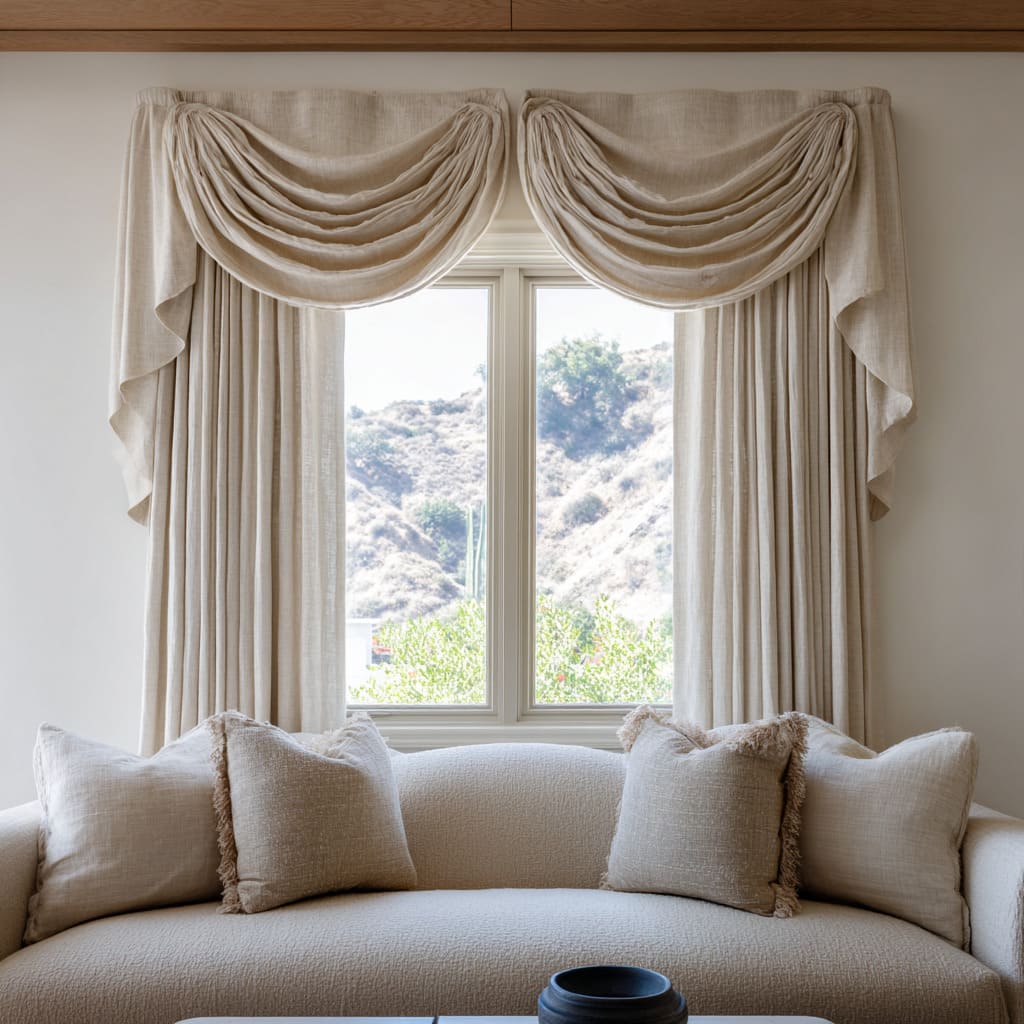
Interior swags share visual DNA with items around them. Rounded sofa backs echo the curvature overhead; ribbed pillows subtly mimic pleated side panels; rounded vases repeat the softness of draped textile.
This creates a rhythmic structure that helps the room feel cohesive. When a window dressing becomes a major contributor to the room’s geometry, it cannot stand alone; rhythm is the tool that binds it harmoniously to everything else.
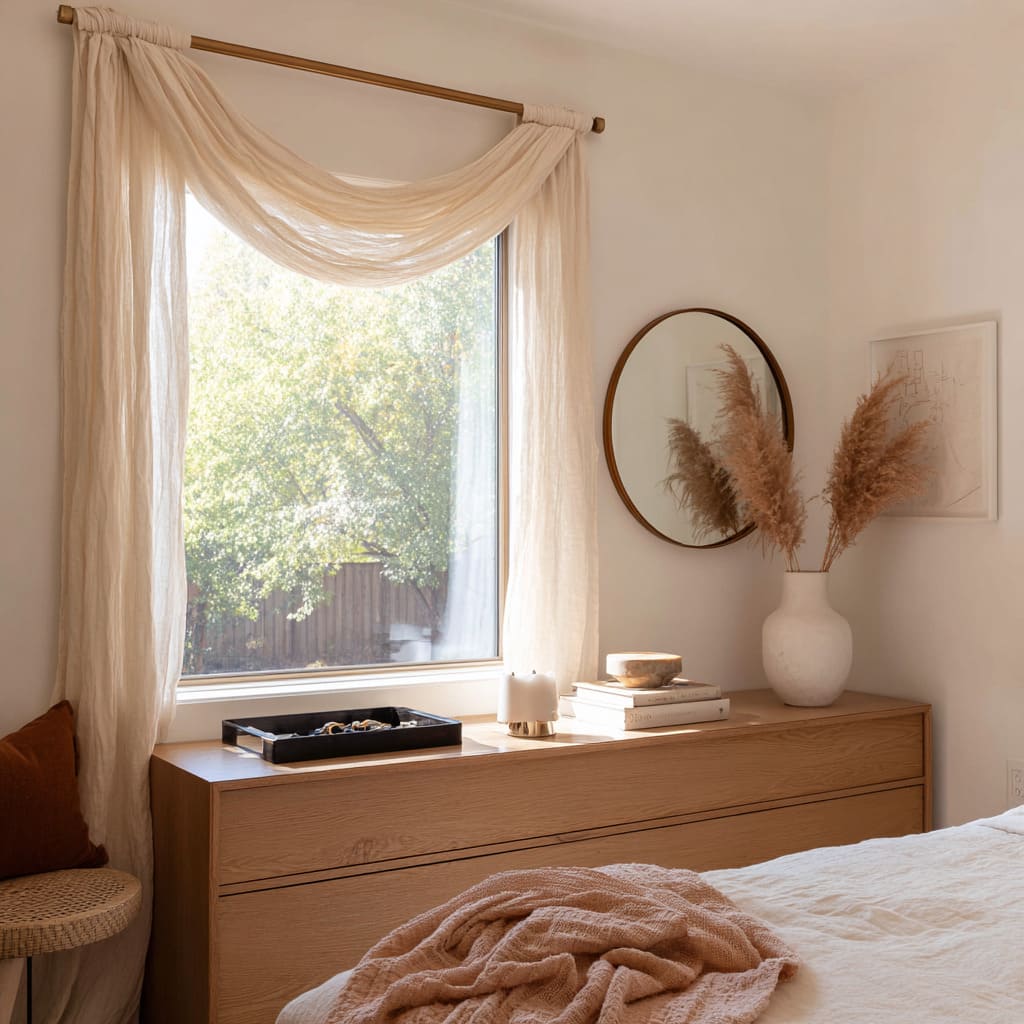
Textile Personality and how Fabric Controls Atmosphere
One of the least-noticed yet most influential aspects of swag design is simply this: the textile dictates the mood. The same shape draped in different fabrics produces entirely different atmospheres.
Some feel like soft mist; others feel like sculpted linen architecture.
Sheers That Behave Like Light
Sheer fabrics can create diffusion rather than coverage. Because they filter daylight, the folds glow at different intensities depending on how many layers overlap.
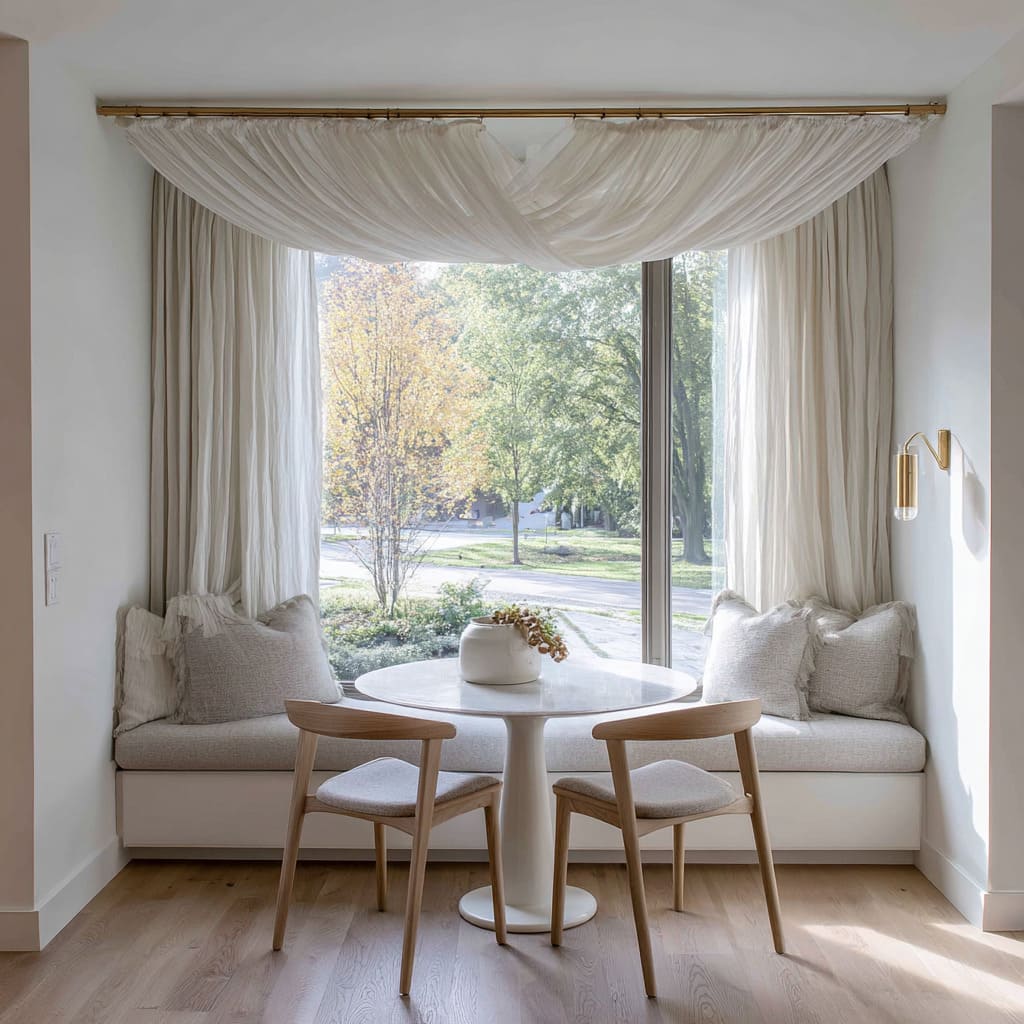
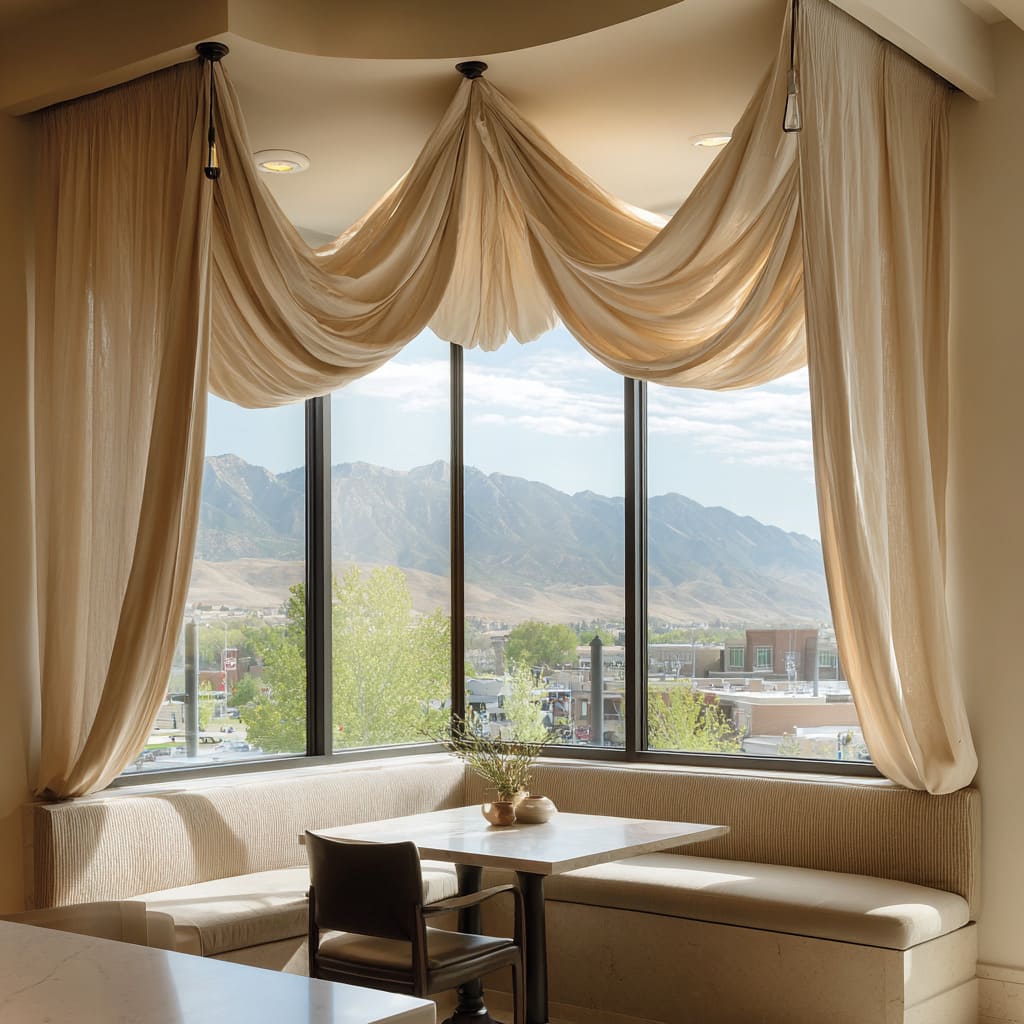
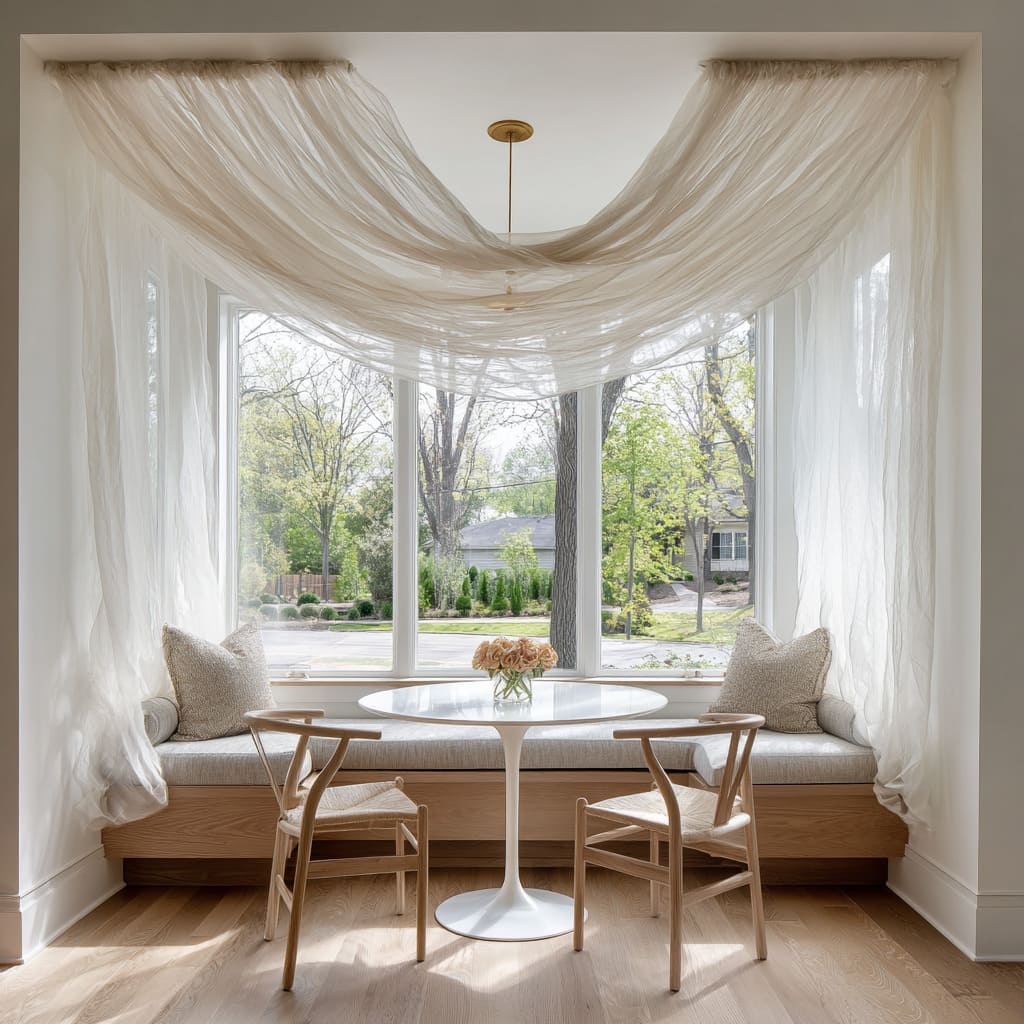
In spaces with nooks or bay seating, pulled-forward sheers transform that zone into a cloud-like retreat. This type of material is often used in curtain swag ideas meant to create airy softness rather than dramatic presence.
Dry Linen as Sculptural Material
Linen, especially in pale neutrals, turns folds into defined lines. Instead of fluffing outward, the fabric holds shape and reveals the distinction between crest and shadow.
This sculptural quality is ideal for interiors where the swag is meant to behave like a soft cornice—structured, refined, and part of the room’s compositional logic.
Matte Silks and Full-Body Drape
Treatments can use silky textiles with weight, which create deep, voluminous arcs. They do not shimmer but produce smooth, rounded transitions between folds.
In larger spaces with sweeping windows, such swags can behave like fabric architecture that complements expansive views.
Fringe and Textural Alternatives
Textural interpretations—especially fringe—offer a fascinating alternative: instead of one curve, hundreds of micro-curves hang in parallel. These pieces introduce movement and tactile richness, softening the hard edge of a window without covering it.
They look especially effective in relaxed, craft-forward interiors.
Pattern as a Visual Engine: Stripes, Plaids, Landscapes, and Fiber Lines
Patterned swags carry their own visual energy, often acting like artwork. When folded, stripes bend, grids distort, and color fields pool into deeper tones.
This interaction turns the swag into a dynamic surface rather than a passive one.
Directional Stripes
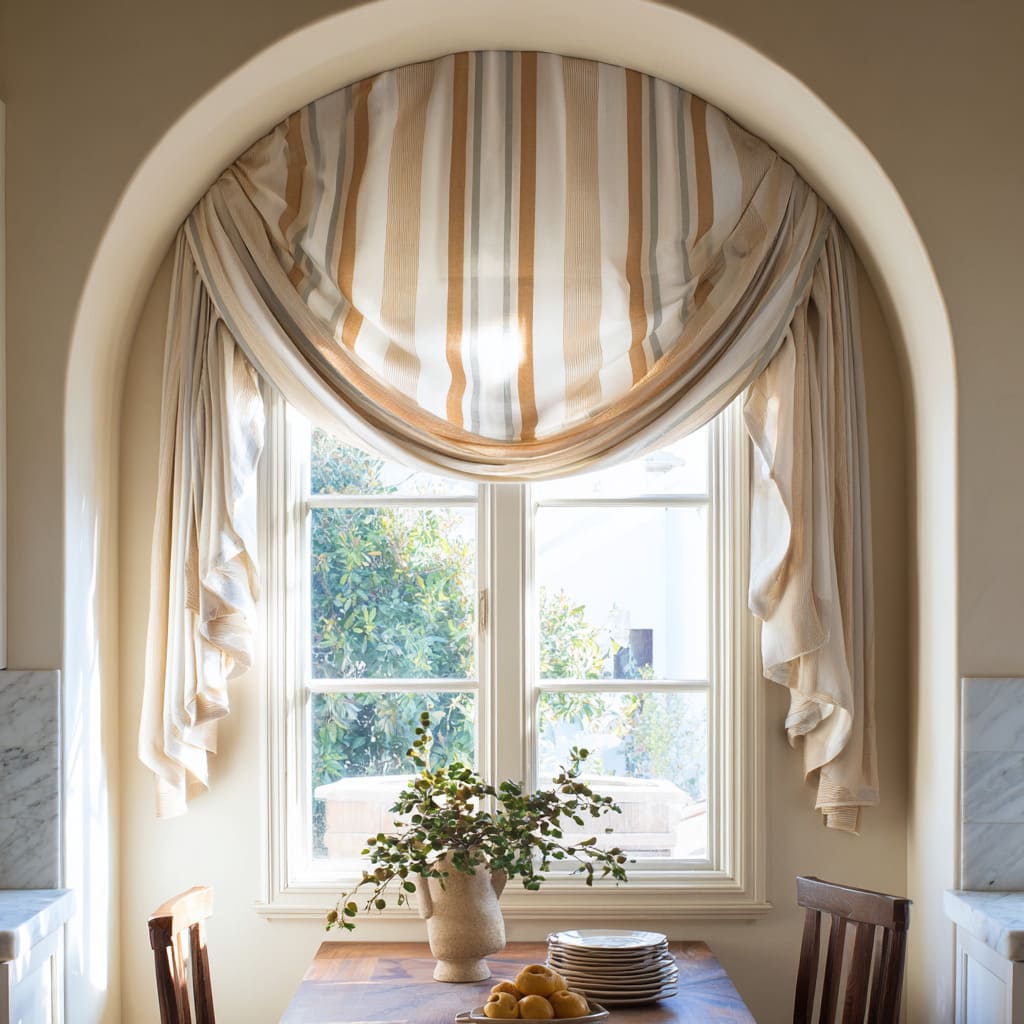
Stripes create some of the most compelling modern swag effects. They may run horizontally along the pelmet and then transition into vertical pleats on the panels, producing a directional contrast that enlivens the wall.
When the swag dips, the stripes arc with it, creating a sense of movement even in stillness.
Plaids and Grid Patterns
Plaids and tight grids introduce rhythm and structure but can also soften the window when pulled into curving folds. The pattern becomes layered and three-dimensional, interacting with surrounding stone, upholstery, or artwork in a near-sculptural way.
Painted or Printed Landscapes
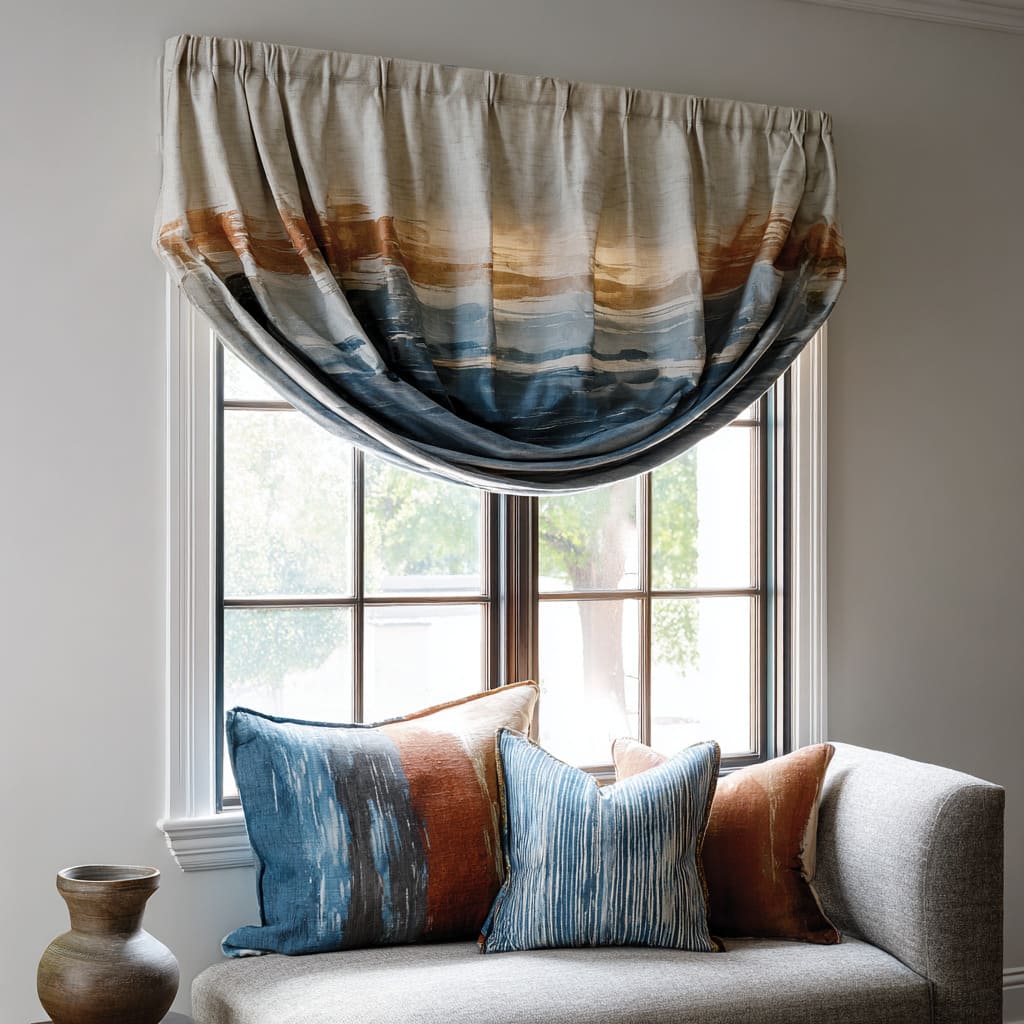
Some swags can almost behave as wall art. A textile depicting layered color bands becomes an abstract horizon when folded into a swag.
Flat areas read as sky, while the gathered bottom becomes a pool of deeper tones. This transforms the window into a narrative piece that bridges the view outside with a new visual story inside—ideal for interiors exploring more expressive swag curtain valance ideas.
Textural Fields as Pattern
Even in monochrome linens, weave structure becomes the pattern. Slubs catch light differently; tight ribs form miniature stripes; dense hems provide weight that alters the arc.
Pattern is not always graphic—sometimes it lives in the fiber itself.
Emotional Zones Created by Swag Forms
Swags are emotional architecture. Their shape influences not just how a window looks, but how the room feels and how people experience the space beneath them.
Several emotional “zones” recur across the analyzed concepts.
Romantic and Softly Traditional
Designs with powdery neutrals and soft folds foster a quiet sense of nostalgia. Such interiors rely on gentle arcs, disciplined pleating, and tones that merge with the wall.
They invoke subtle warmth without historical heaviness.
Dreamy and Cinematic
Cloud-like treatments—billowing sheers, voluminous fabrics, pulled-forward curves—reshape sunlight into soft light washes. Such designs feel like morning scenes in a film.
Artistic and Intellectual
Patterned swags, especially those interacting dynamically with folds, behave like artwork. They create visually dense focal points, making the window a gallery moment.
This applies beautifully to drapery swag ideas where color progression plays a central role.
Relaxed and Craft-Forward
Fringe, looser weaves, casual drapes that puddle on furniture—these impart a sense of ease and tactile richness. They integrate well in sitting areas or relaxed dining zones and blend seamlessly with handmade decor.
Serene and Minimal
Single shallow arcs, especially in cool-toned fabrics, quiet the upper portion of a room. These swags barely intrude but set a soft boundary that shifts the mood from stark to gentle.
Integrating Swags with Furniture, Objects, and Surroundings
Swags rarely stand alone. They interact intimately with seating, tables, artwork, and small decorative items.
These interactions are what make the treatments feel cohesive.
Curves Echoed in Furniture
Rounded sofas, tulip tables, arched chairs, and soft-edged coffee tables all repeat the curvature overhead. This creates a visual loop: the swag sets the arc; the furniture reaffirms it.
Vertical Alignments and Hidden Geometry
- The dip of the swag aligns with top edges of artwork.
- Accent bands on panels correspond with sofa-back heights.
- Cascading folds fall directly above side tables or lamp stems.
These alignments subtly organize the entire wall without viewers consciously noticing.
Color Echoes
Tiny color repetitions underscore the presence of the swag:.
- A warm stripe repeated in a vase and other decor.
- A neutral cushion mirroring a pleat.
- A rust tone echoed in a bowl or artwork.
- Greenery linking the outdoors with the textile.
Such echoes unify the larger visual field so the swag becomes part of a room-wide narrative.
Seating Zones as Anchored Micro-Rooms
Beneath many swags can be benches, banquettes, sofas, or daybed-like cushions. These establish pockets of intimacy.
The swag provides the overhead boundary; the seating provides the horizontal anchor. The result is a small interior within the larger room—a stage of soft light and comfort.
Families of Contemporary Swag Expressions
Modern interiors use swags in several identifiable stylistic families. These families help categorize the design logic behind each treatment and illustrate the range of swag window treatment ideas possible today.
Sculpted Linen Crowns
These emphasize discipline and calm:.
- Pale linens
- Shallow arcs
- Even pleats
- Minimal ornament
They suit designs where the swag becomes quiet architecture rather than decoration.
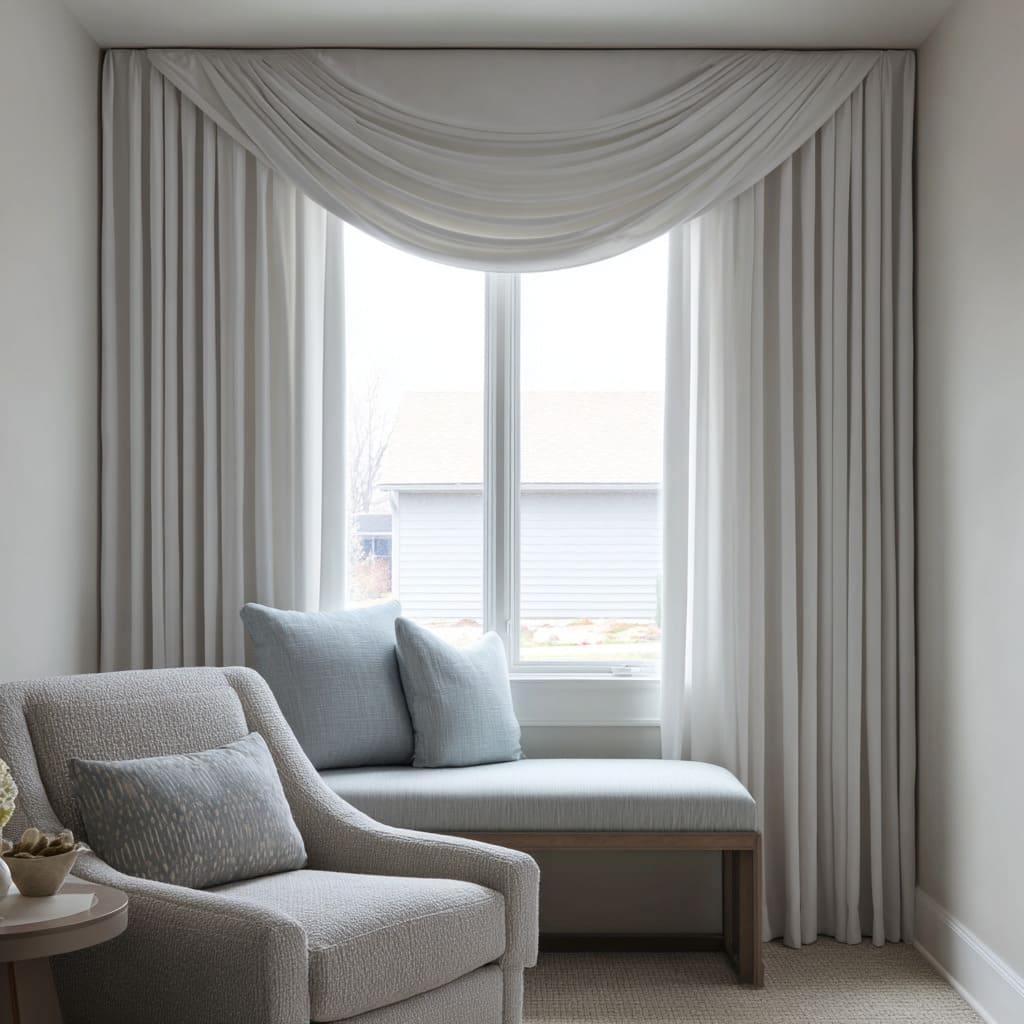
Cloud-Like Canopies
These transform nooks into soft havens:.
- Sheers layered generously
- Folds pulled forward
- Light filtering in variations
- Pendants interacting with the textile
They feel cinematic, gentle, and immersive.
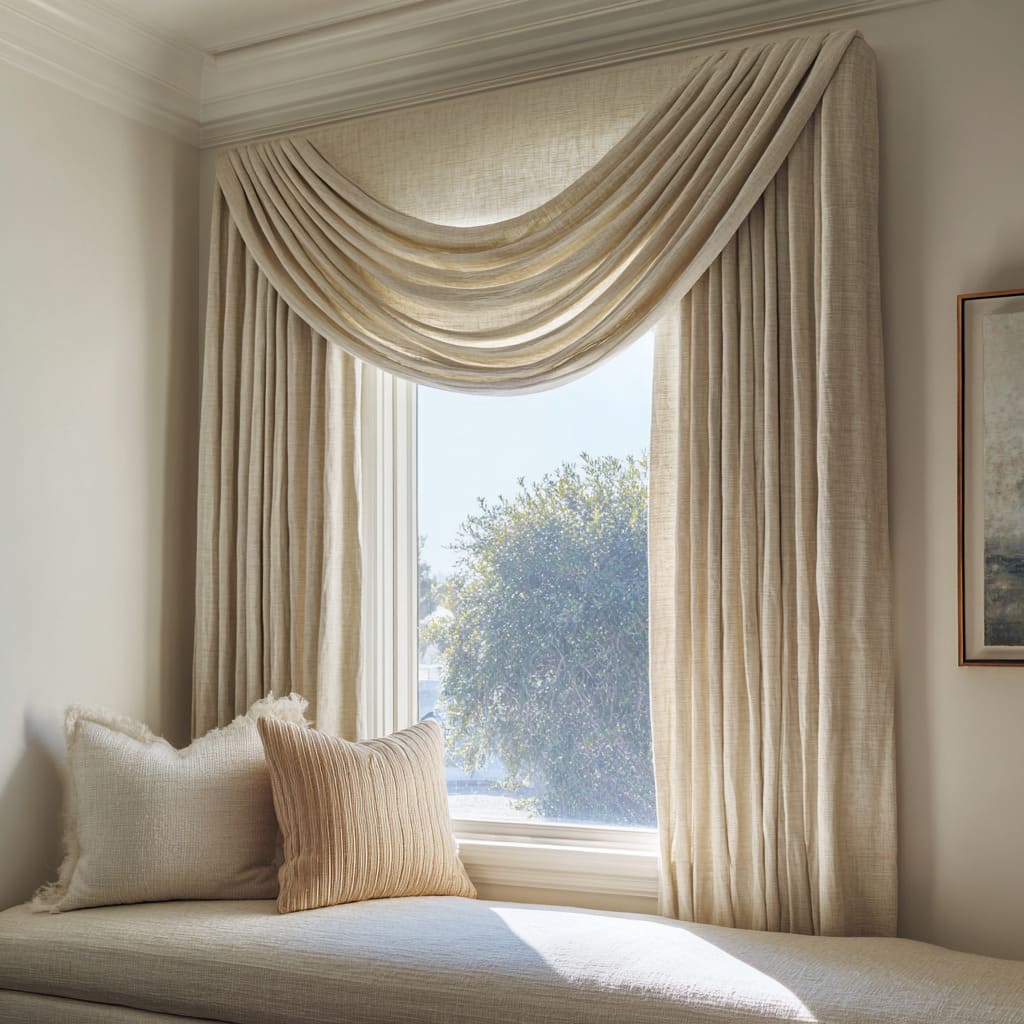
Scarf-Like Minimal Drifts
Reserved and effortless:.
- Single arc
- Loose ends
- Casual puddling
- Understated palettes
Perfect for the most understated swag curtain ideas for living rooms with soft silhouettes.
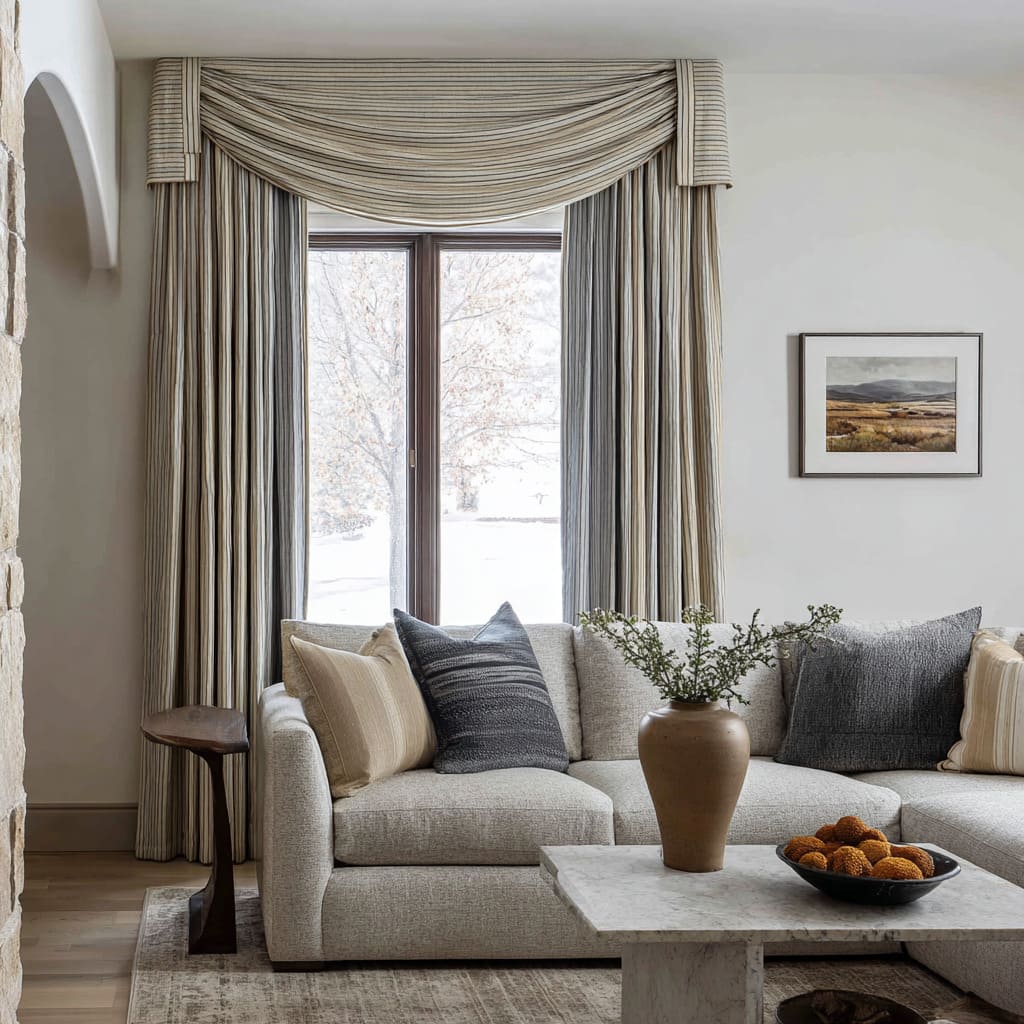
Pattern-Driven Swags
These behave like textile art:.
- Stripes bending with curvature
- Plaids forming grids
- Concealed under-panels adding glow
- Landscape prints shifting with folds
Ideal for interiors where fabric acts as a narrative.
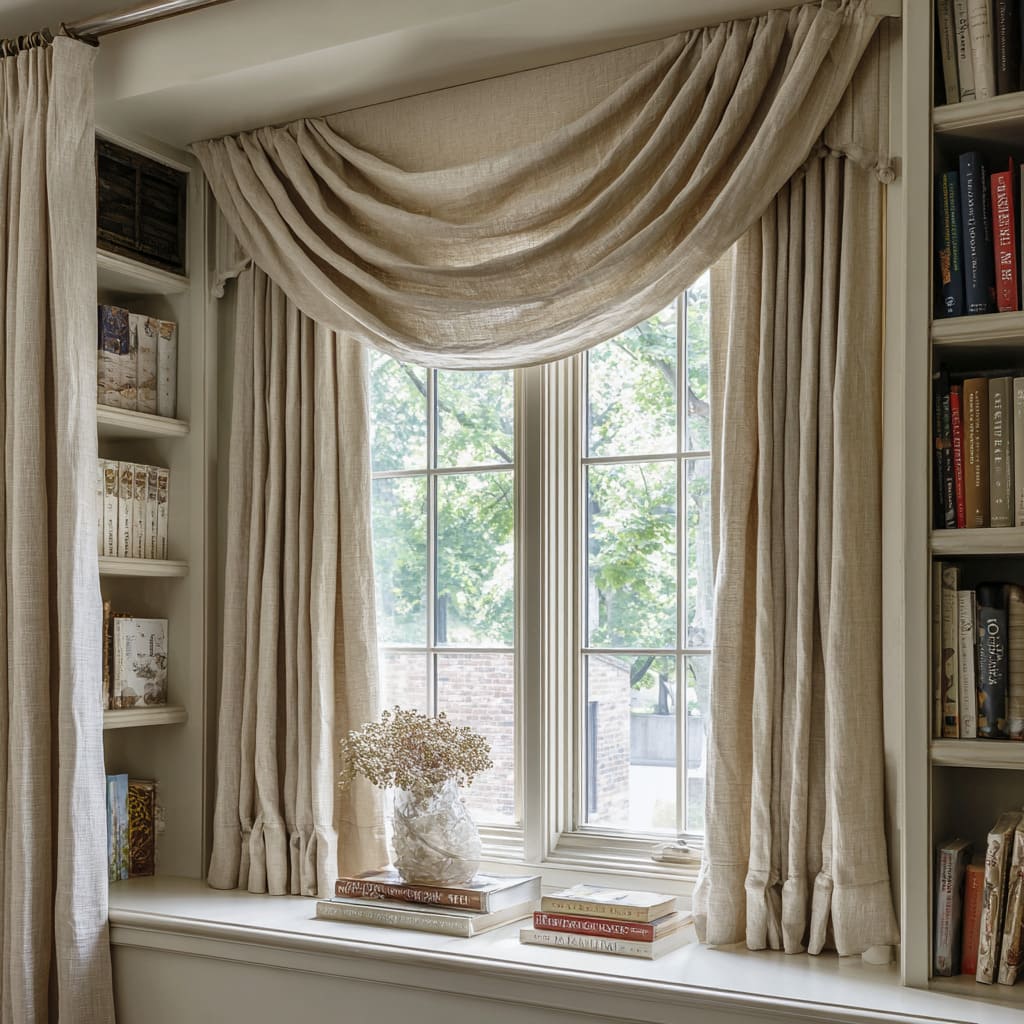
Textural Reinterpretations
Swags without obvious arcs:.
- Fringe valances
- Woven bands
- Fiber-heavy headers
These reinterpret tradition for craft-forward interiors.
Swags as Emotional Connectors
Bedrooms especially benefit from the atmospheric quality of swags. Because the goal in such designs is visual softness, shape and textile matter more than bold color or decorative accessories.
A swag’s curve can frame morning light in a gentle arc, while a longer cascade can soften the silhouette of a dresser or bench. Sheers lend a dreamlike whisper across the top of the window; linens offer grounded calm; printed panels add personality without overwhelming the room.
In private spaces, the swag’s curve behaves almost like an architectural sigh—one subtle sweep that shifts the emotional temperature. This sensibility lies at the heart of swag curtain ideas for bedrooms, where the upper window line guides the room’s entire softness.
The Many Faces of Modern Swag Style
Swags are flexible. They serve as artistic elements, architectural modifiers, mood shapers, and textural bridges.
They can lean traditional, boho, minimalist, or sculptural depending solely on textile, volume, and composition. Because of this adaptability, they remain a powerful tool for designers seeking a soft gesture that organizes the room without overwhelming it.
They may appear as:.
- A single arc behaving like a lowered ceiling line.
- A layered canopy turning a bay into a micro-room.
- A structured linen band reinforcing compositional rules.
- A textile artwork bending pattern into sculptural motion.
- A textural fringe softening a window edge in a tactile way.
This wide range of expression allows swags to support everything from serene monochrome spaces to richly layered artistic corners. Whether functioning as a subtle architectural element or a dramatic visual sweep, these forms illustrate why swag window treatment ideas continue to evolve in sophisticated interiors.
Conclusion
In the modern design landscape, swags are far from ornamental relics. They are instruments of proportion, mood, rhythm, and visual storytelling.
They soften straight lines, create emotional micro-spaces, shape daylight, and connect furniture with architecture. They can behave like quiet crowns, drifting scarves, sculptural arcs, or textile paintings.
Through them, designs gain nuance and a sense of deliberate composition. Their flexibility explains why designers continue to explore window valance swag ideas, sculpted linen crowns, airy cloud-like canopies, and expressive patterned swags as part of a broader spectrum of swag curtain ideas for living rooms, artistic swag curtain valance ideas, and atmospheric swag curtain ideas for bedrooms.
Within this ongoing evolution, swags remain one of the most poetic ways to soften architecture—proof that a single curve of fabric can transform the character of an entire room.
And when designers explore the broader world of curtain swag ideas, swag window treatment ideas, or even highly sculptural drapery swag ideas, these expressive arcs continue to expand the creative vocabulary of contemporary interiors, demonstrating that the top edge of a window is far more than a boundary—it is a canvas for shaping atmosphere itself.