Bedroom drapery has become one of the most expressive tools in bedroom interiors, setting the visual tone long before colors or furniture take shape. In many design approaches, curtains act almost like a soft extension of the architecture, expanding past the window line and shaping how height, width, and brightness are understood.
They can suggest a quiet recess in a corner, turn a simple opening into a calm glowing surface, or create a steady rhythm of folds that brings coherence to the surrounding decor. Whether expressed through airy sheers, structured heavyweight fabrics, layered combinations, or detailed finishes, drapery often becomes the organizing layer that influences headboards, rugs, benches, lighting, and smaller accessories.
The following sections explore design strategies and stylistic ideas that show how fabric can establish atmosphere and visual harmony in bedrooms, without touching on the technical side of installation.
Vertical Rhythm and Horizontal Anchors
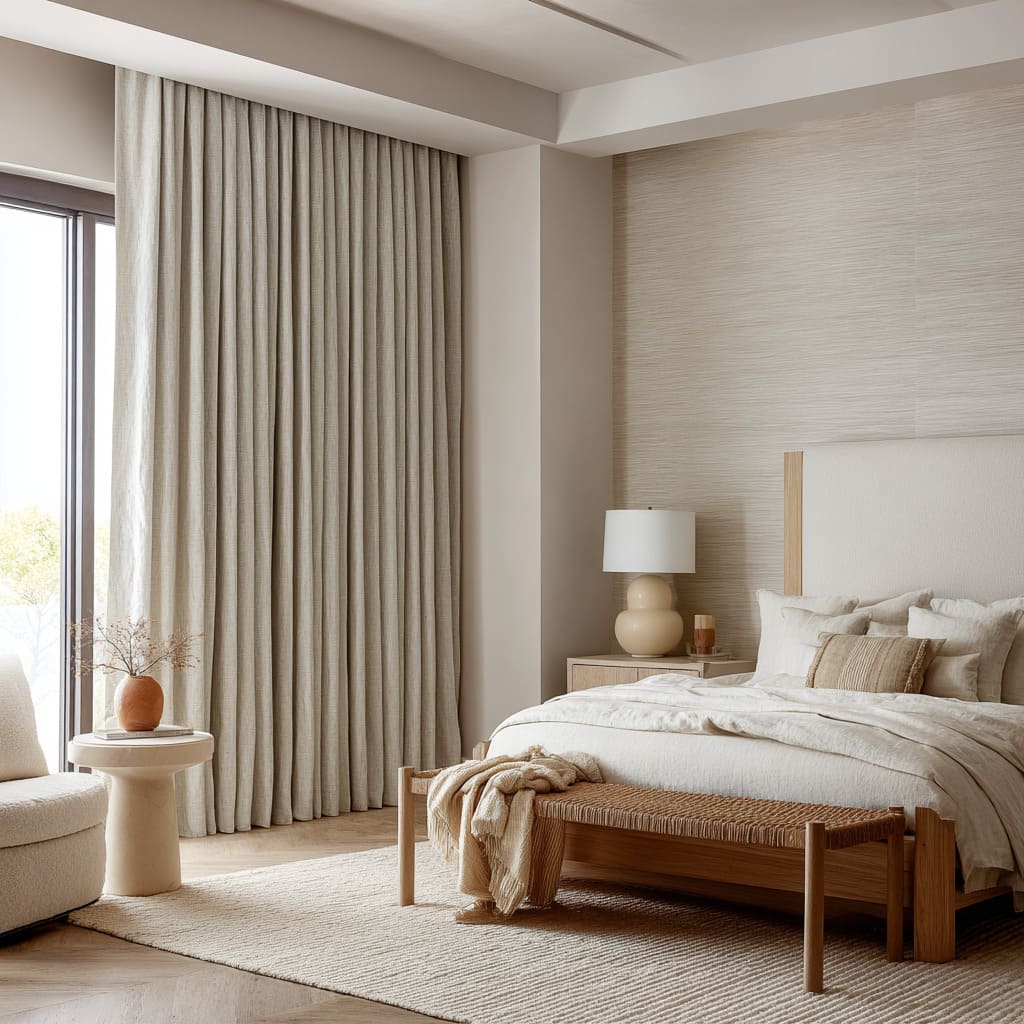
A common strategy in bedroom drapery work is to use vertical repetition to stabilize the room’s composition. Pleats, channels, and long folds bring order to the wall by forming continuous soft stripes from ceiling height to the floor.
These vertical elements balance the natural horizontals of beds, benches, rugs, and floor lines. When vertical spacing on the drapery mirrors the proportions of nearby upholstered elements, the entire wall begins to present itself as one controlled field of soft structure.
Designers often counterbalance this upward pull through selective horizontal anchors:.
- Benches or ottomans placed at the bed’s foot create a grounding bar.
- Throws, bands, or stripes on textiles help reintroduce horizontal rhythm.
- Darker or patterned sections at the base of curtains reinforce a stable visual line.
Together, these soft stripes and stabilizing horizontals prevent the space from feeling either stretched or compressed; the eye moves in a measured way because the drapery negotiates between upward movement and grounding lines.
Light as Fabric’s Partner: Controlling Mood Through Filtering
Many bedroom drapery concepts approach fabric as a filter that shapes the character of daylight. The weave, thickness, and color of a panel can shift light from harsh to gentle, crisp to muted, cool to warm.
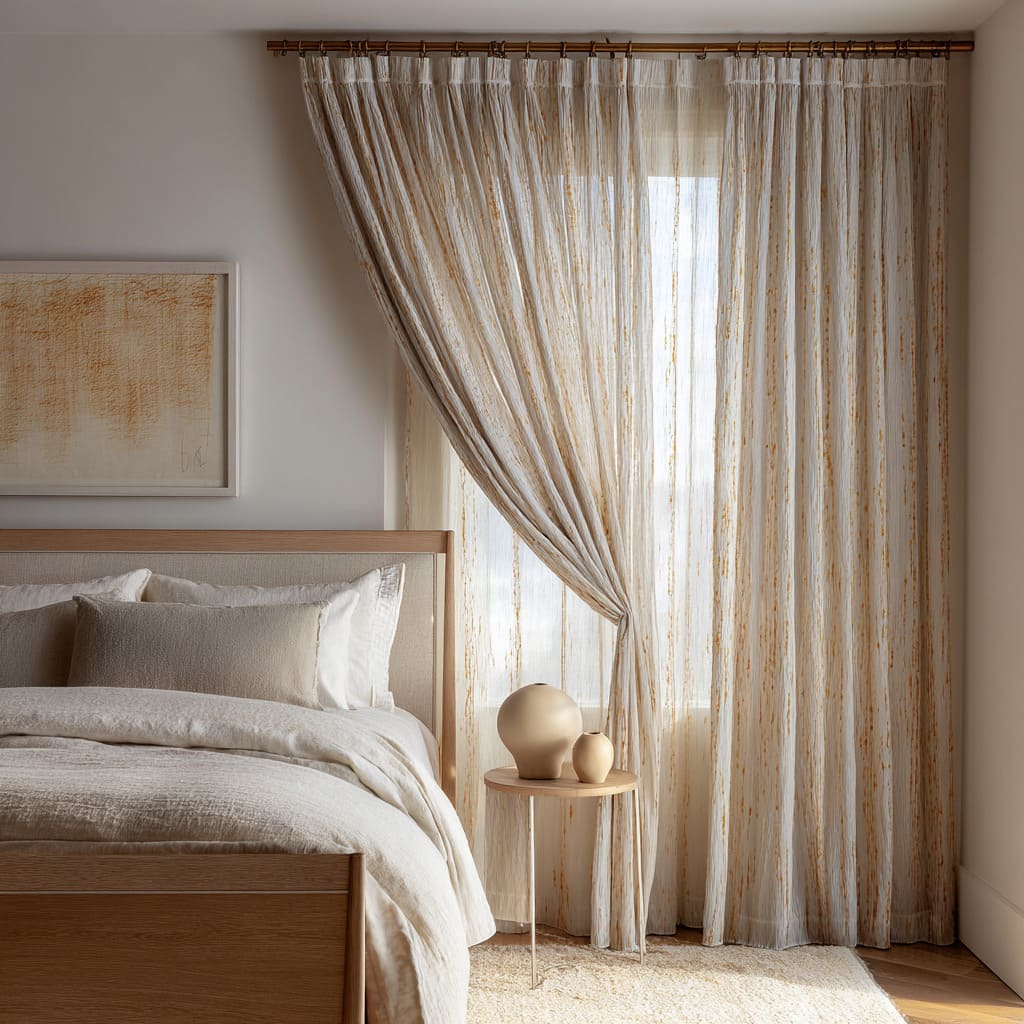
Light, semi-open weaves create soft atmospheric glow, while layered sheers form subtle variations in density that behave like quiet vertical shadow patterns.
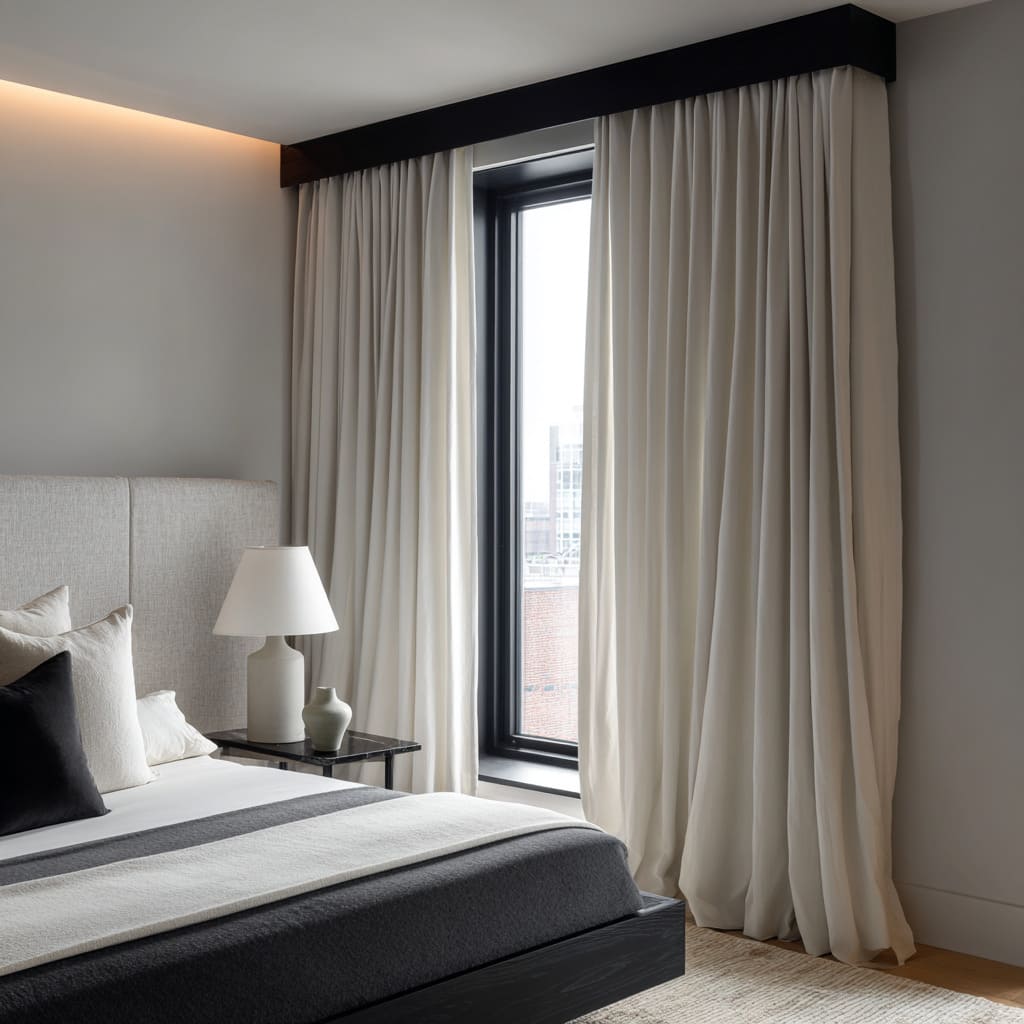
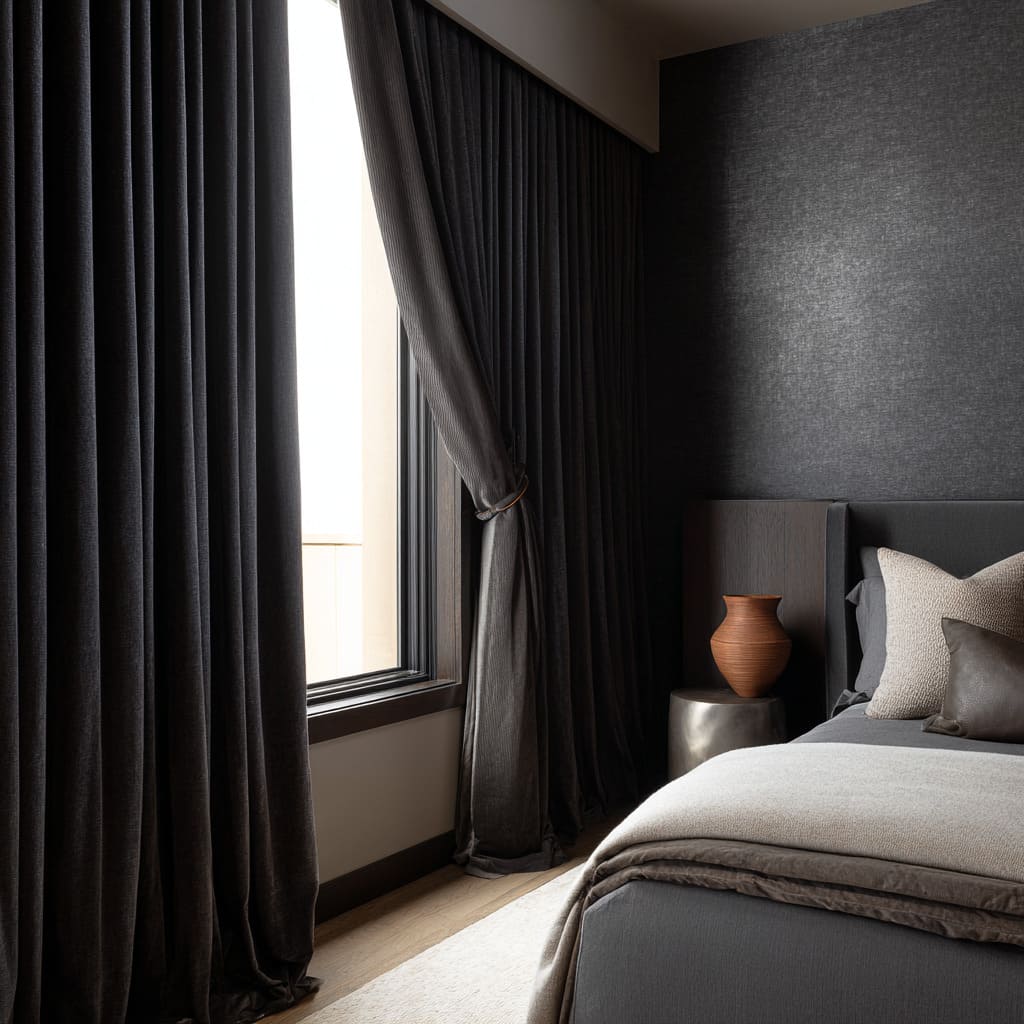
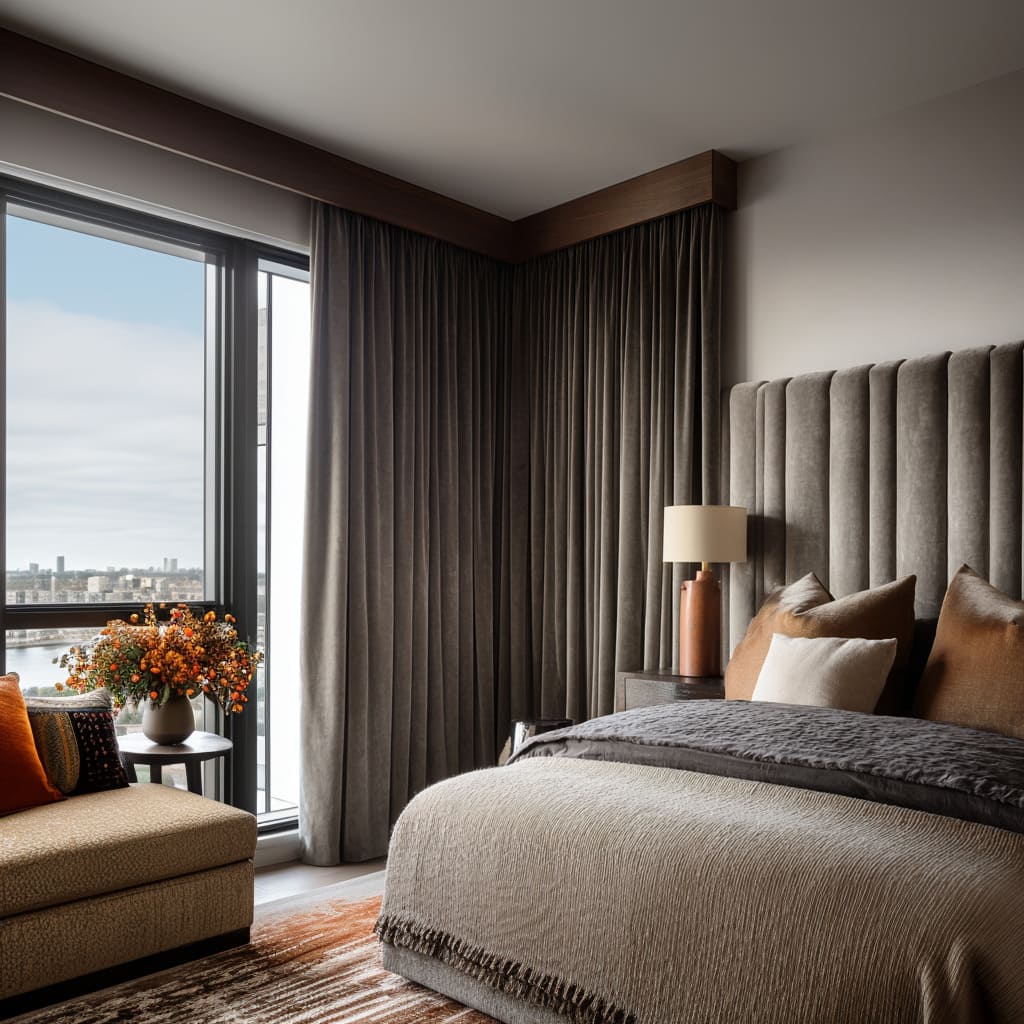
Heavier fabrics can create an entirely different mood by lowering reflectivity and minimizing glare, encouraging a sense of stillness. When deeper colors are used, they turn daylight into a faint pressure behind the cloth rather than a bright source, altering how the room feels without blocking light completely.
Layered concepts expand the designer’s toolkit:.
- Inner layers control softness and blur.
- Outer layers guide the eye, especially when tied or swept aside.
- Upper treatments such as cornices or recessed tracks influence how light grazes the ceiling and upper wall.
Every choice in weave, tone, and fullness shapes the quality of daylight the room receives and sets the emotional temperature of the space.
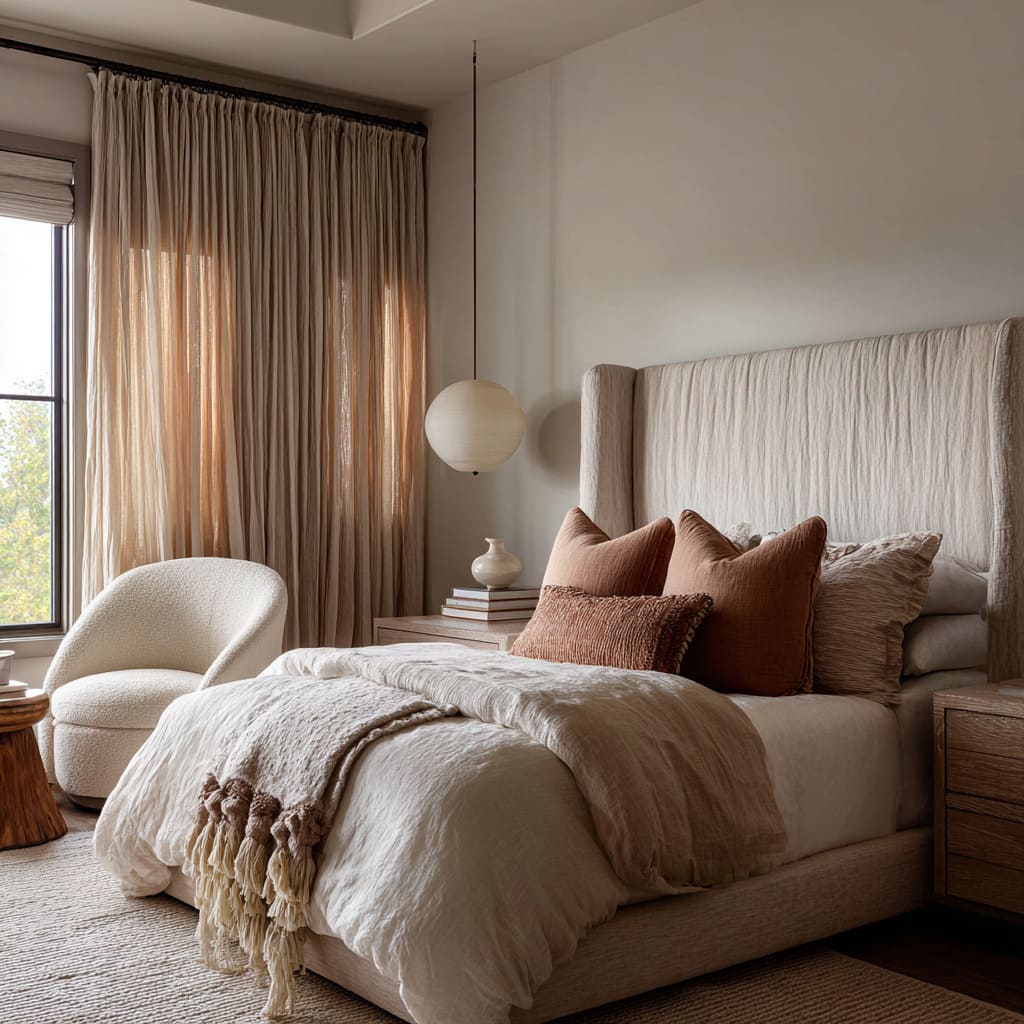
Color Mediators: Curtains as the Middle Tone in Bedroom Palettes
Drapery frequently serves as the palette’s connecting tone, bridging the lightest and darkest surfaces in a bedroom. A mid-tone curtain can settle between airy ceilings and deeper flooring, helping the design feel layered rather than divided.
When the wall and ceiling carry distinct tones, drapery can sit between them, moderating contrast so transitions appear smoother.
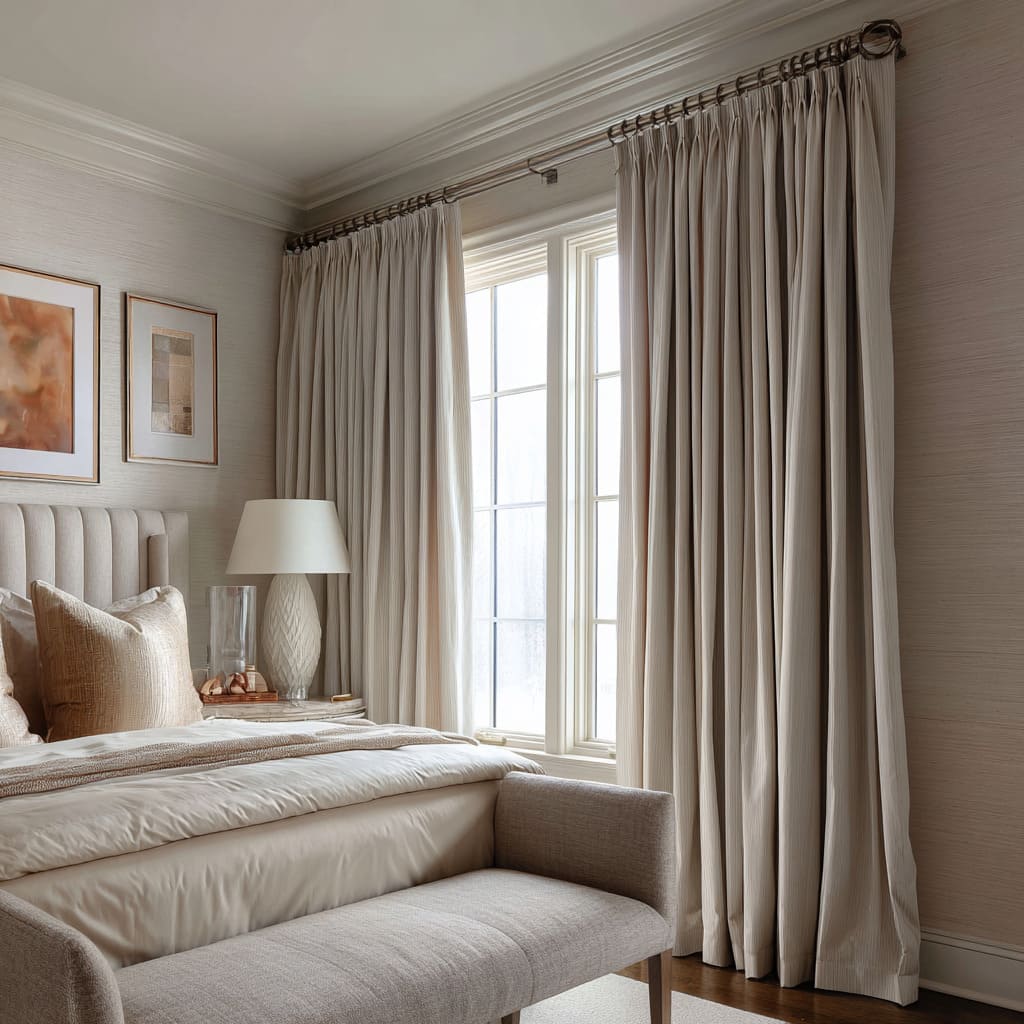
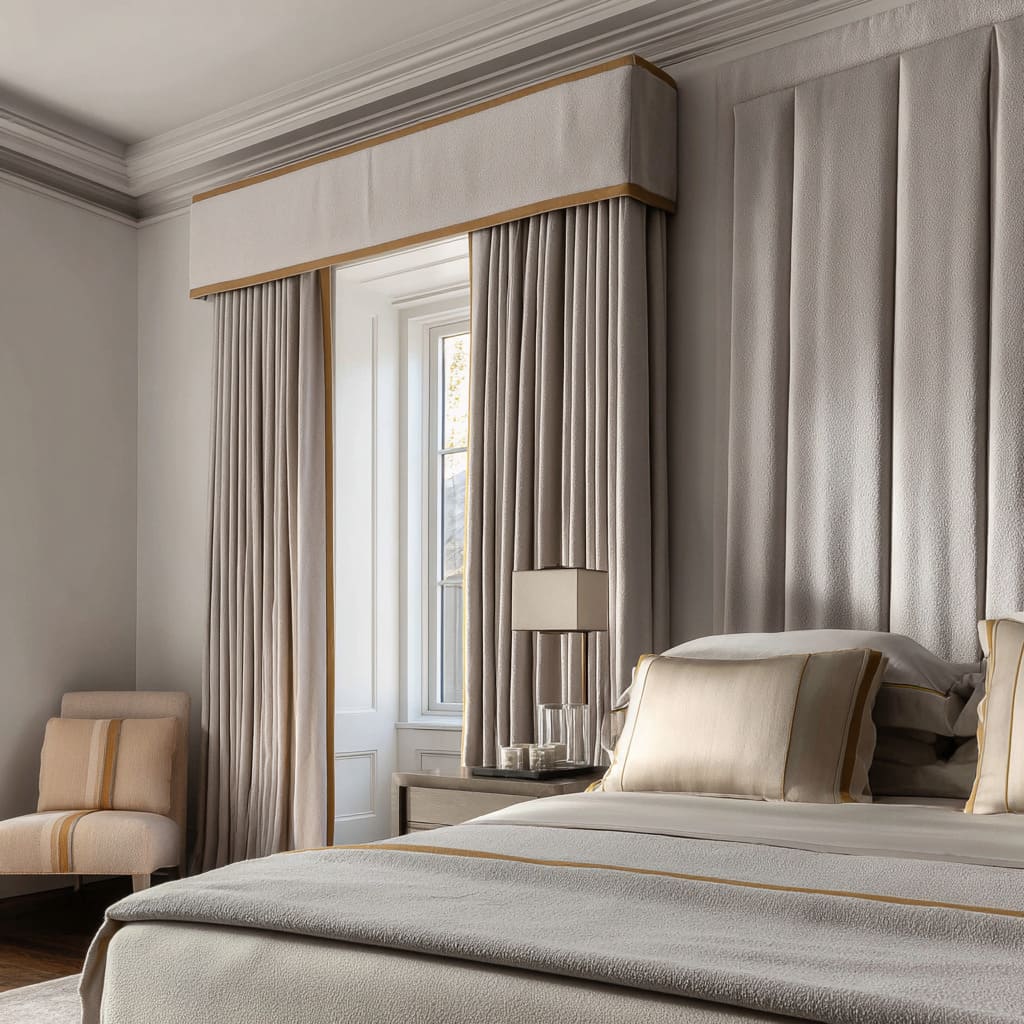
Small textile details reinforce this linkage. Slim edge bands can echo stripes on bedding or a trim detail on upholstery, creating intentional repetition.
Delicate piping or contrast edging can subtly outline the perimeter of the window while participating in the color story of seating or bed linens. Pattern placement is also used strategically.
A motif focused near the bottom third of the curtain keeps visual weight low, close to rugs and furniture, while maintaining clarity and calm near the ceiling. These decisions help the design maintain harmony even when multiple tones or textures are present.
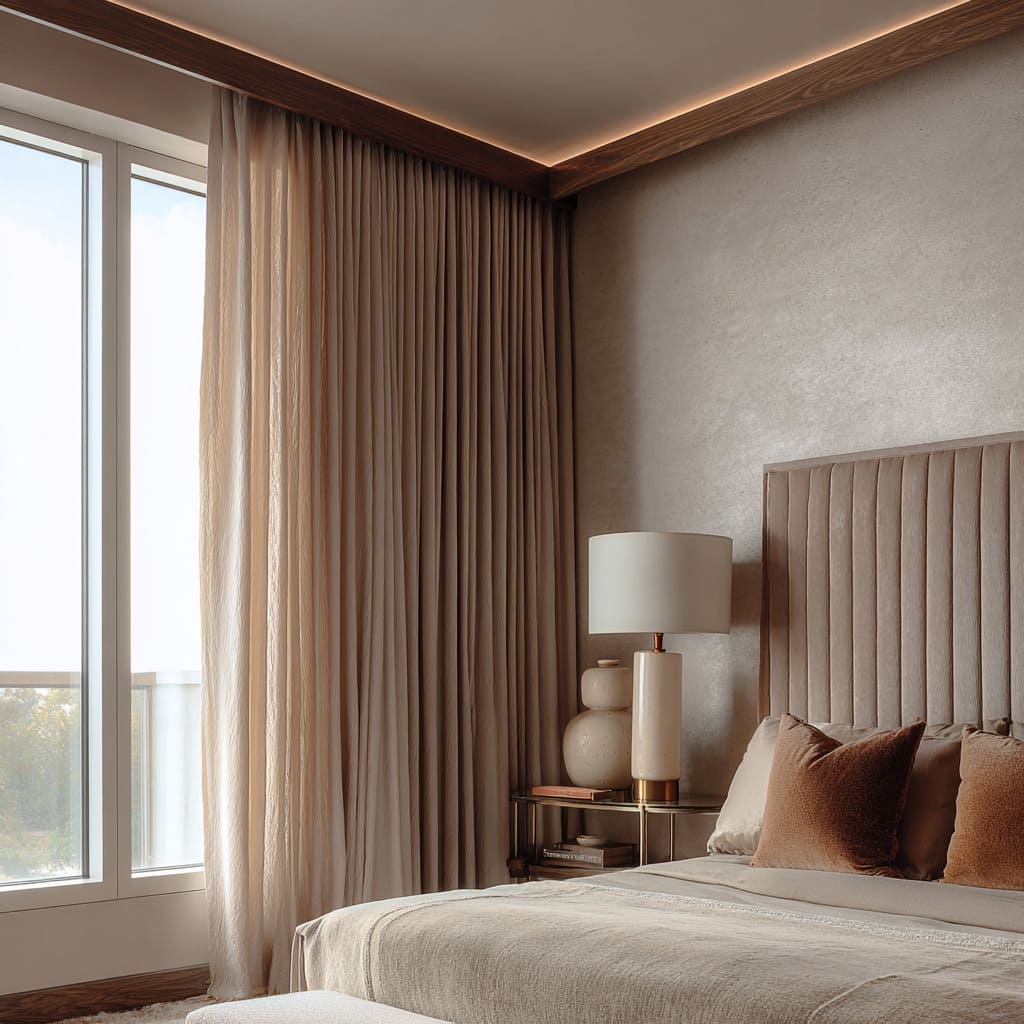
Drapery and Headboard as One Soft Envelope
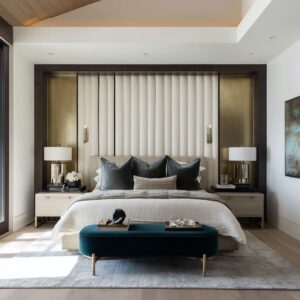
Many design approaches treat the bed wall as a continuous soft zone rather than separate objects placed near one another. Vertical headboard channels, padded panels, or ribbed upholstery often share a visual rhythm with pleated curtains, establishing a unified surface across the wall.
The drapery may adopt a tone slightly lighter or darker than the headboard, allowing the two to relate without blending completely.
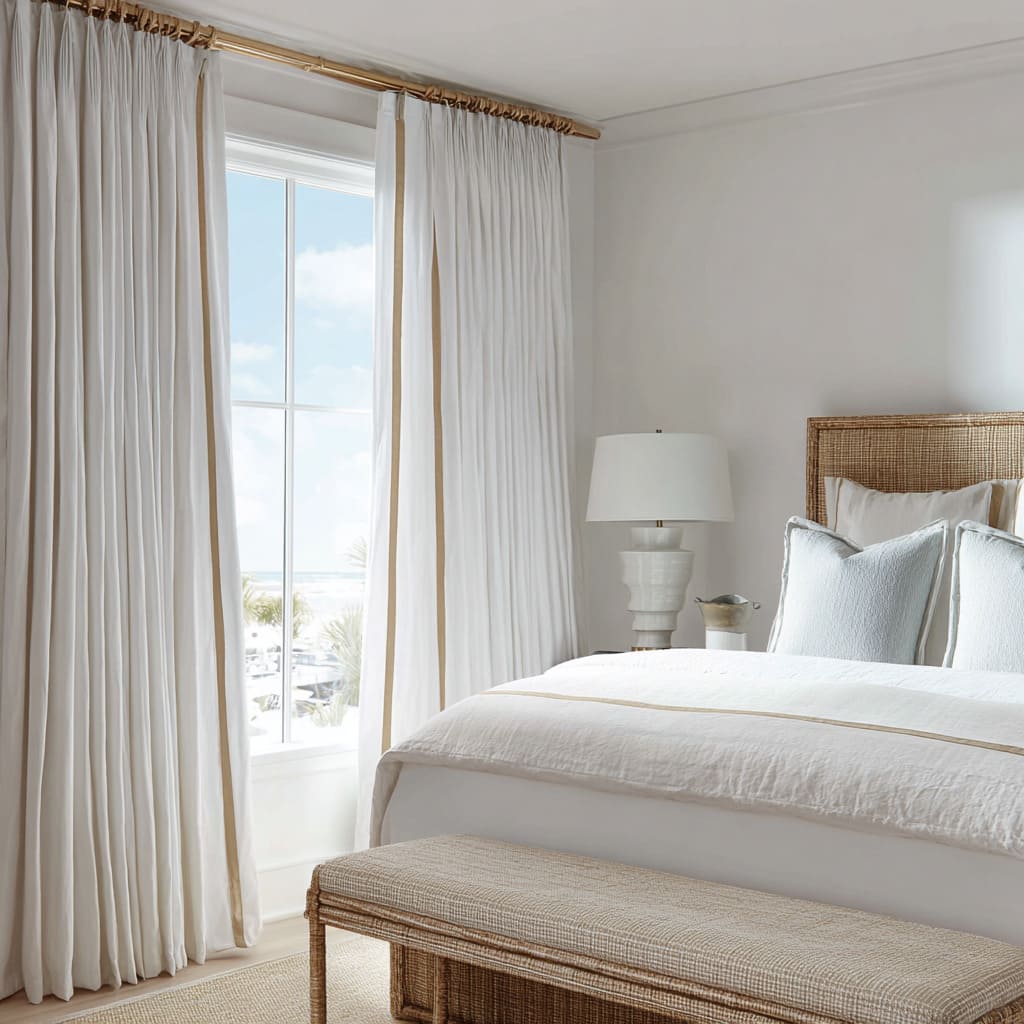
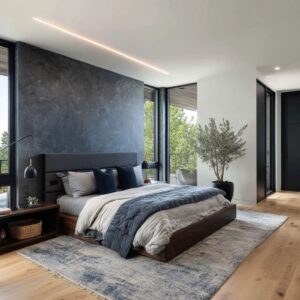
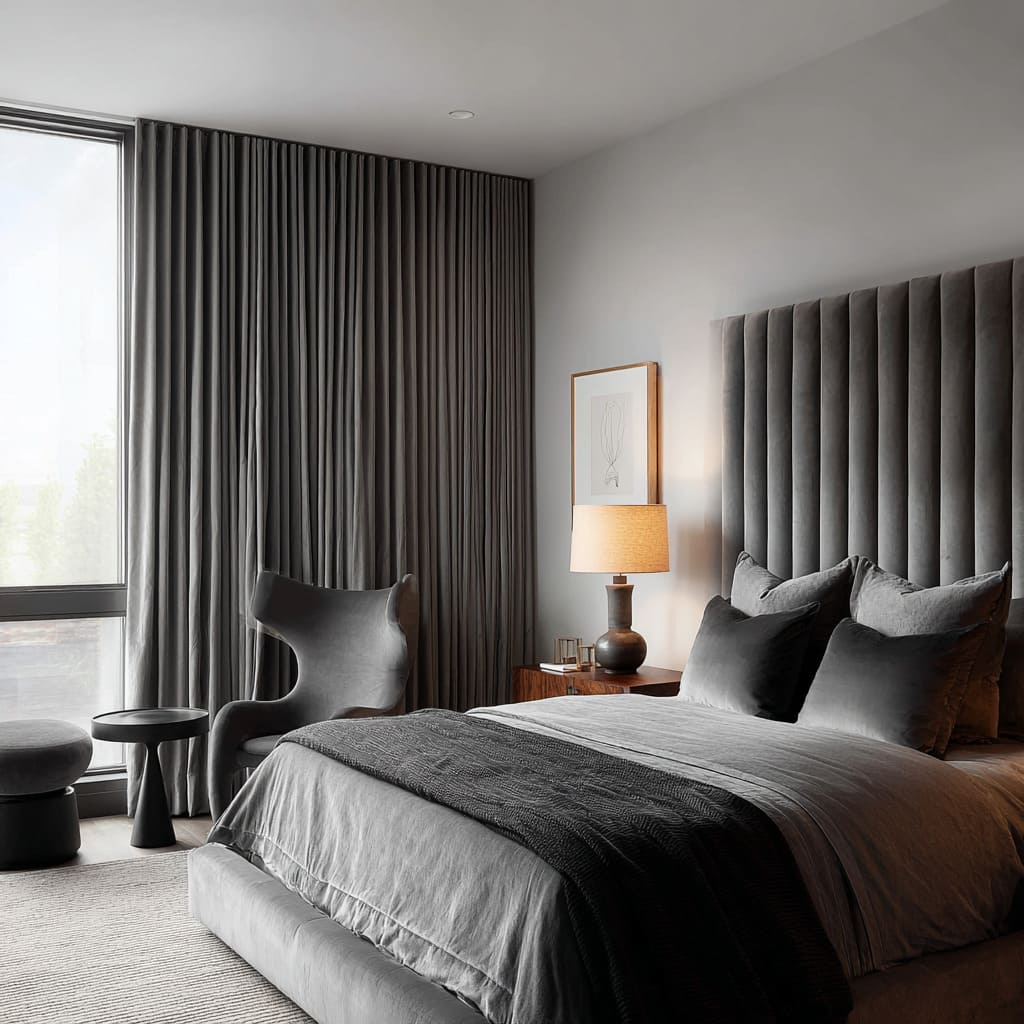
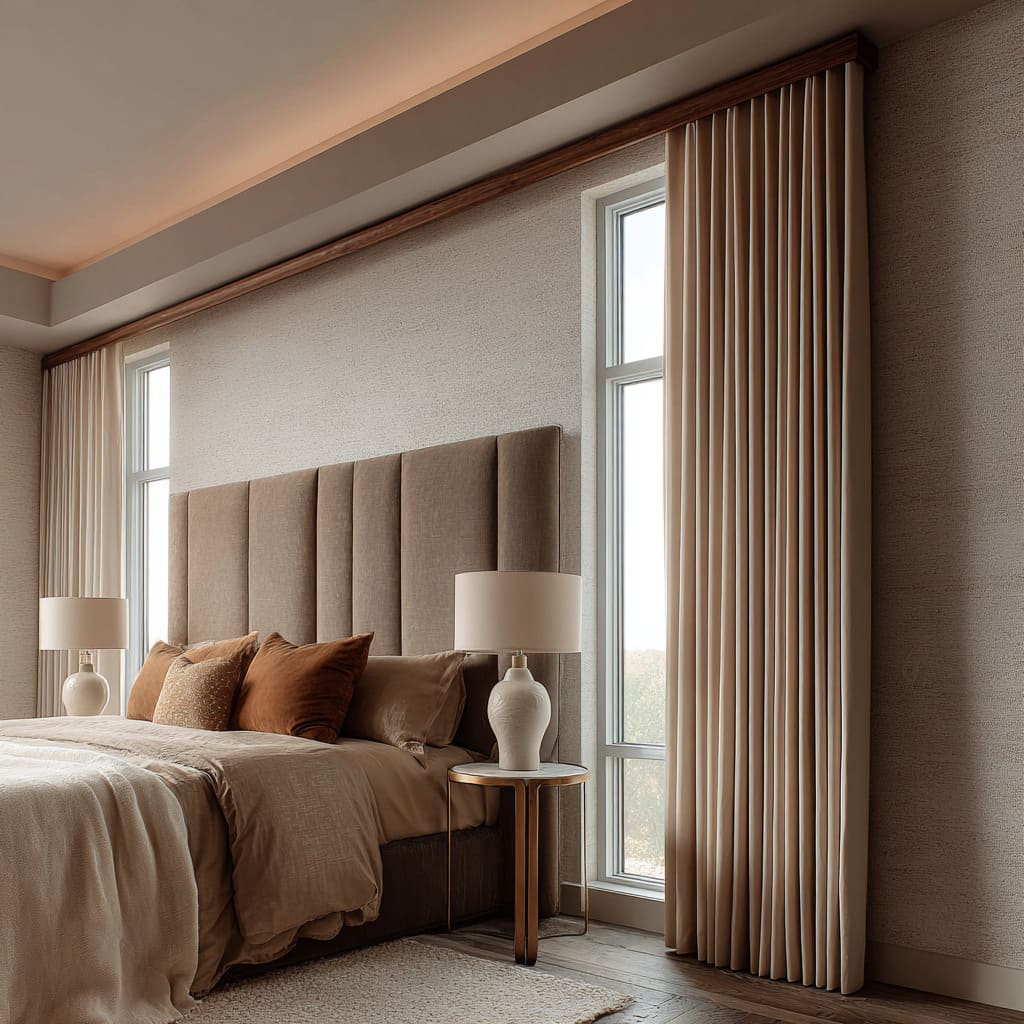
When windows flank the bed, designers often let the drapery, glazing, and headboard form an alternating sequence of vertical elements, creating a textile-based architecture that guides the eye. In light-toned settings, this can introduce a relaxed, glowing surface; in darker concepts, stronger tones on drapery and headboard can join to form a deep, cocoon-like environment.
This strategy turns the sleeping zone into a soft-lined alcove, even when the room itself has a simple rectangular layout.
The Top Edge: Rods, Recesses, Cornices, and Soft Frames
The design of the upper edge of the curtain profoundly shapes the room’s personality. Concealed tracks hidden within recesses allow fabric to fall directly from the ceiling, creating clean transitions suited to calm, contemporary schemes.
In contrast, visible rods—whether wooden, metal, slim, or substantial—bring character depending on their finish and proportion. Rod-and-ring combinations add an informal or classic note when paired with relaxed pleats or structured headings.
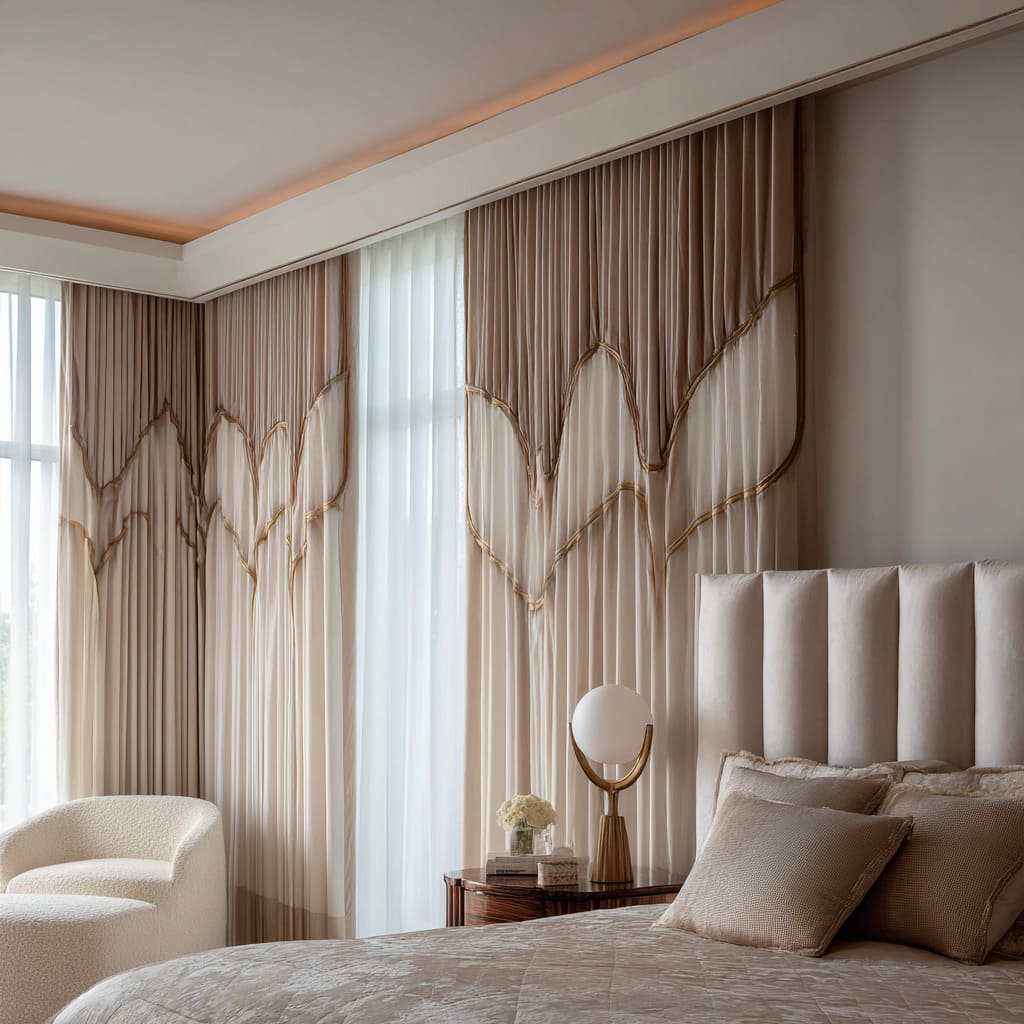
Cornices and timber bands offer another strategy by forming a stronger architectural frame. A fabric-wrapped cornice paired with subtle edging lines can turn the window into a textile-framed opening, while a timber band running across the wall can introduce a clear horizon from which the drapery descends.
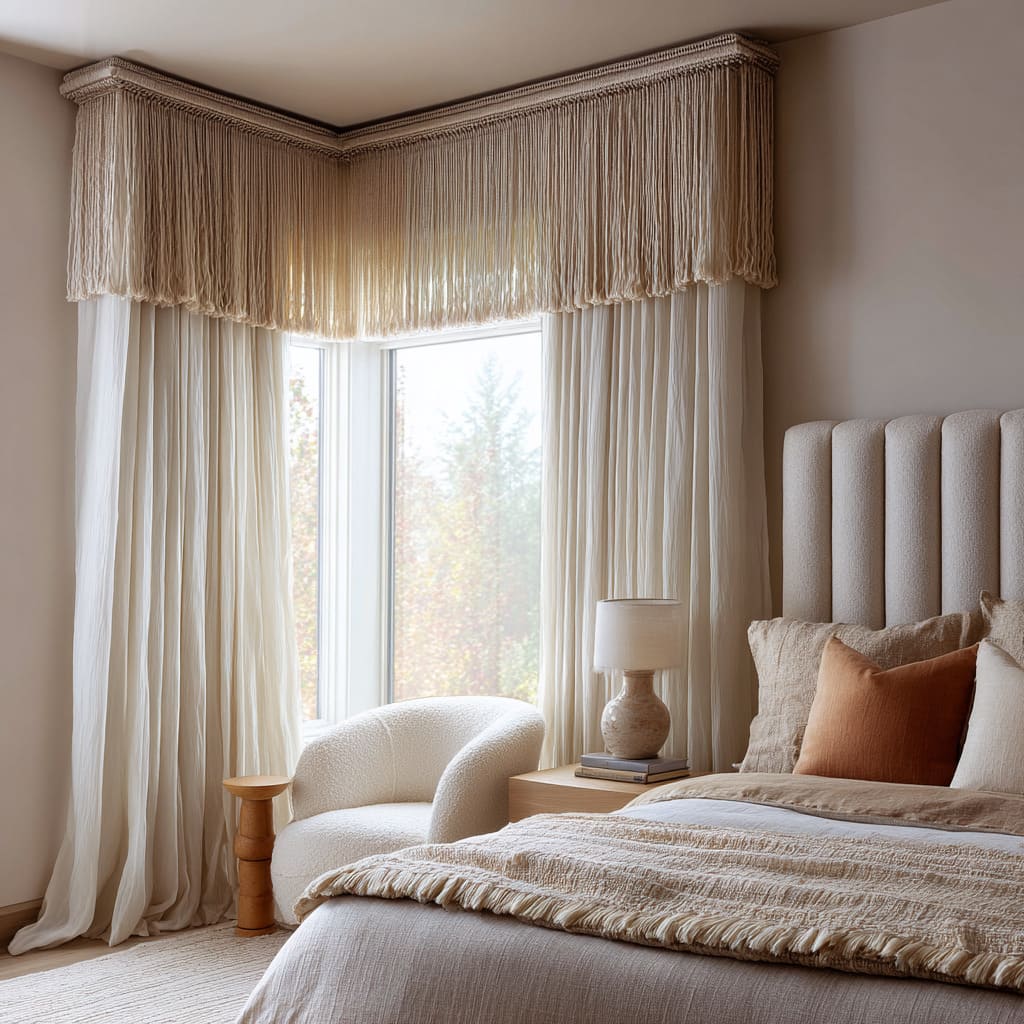
Fringe bands or tassel valances add tactile expression at the top, creating interplay between woven threads and the light behind the fabric.
Hems, Pooling, and How Drapery Meets the Floor
The lower edge of a curtain is often as expressive as the upper one. A hem that barely grazes the floor communicates structure and precision.
A slight break softens the look, while generous pooling introduces ease and softness. Designers use pooling to add relaxed character, especially when the fabric has visible texture or weight.
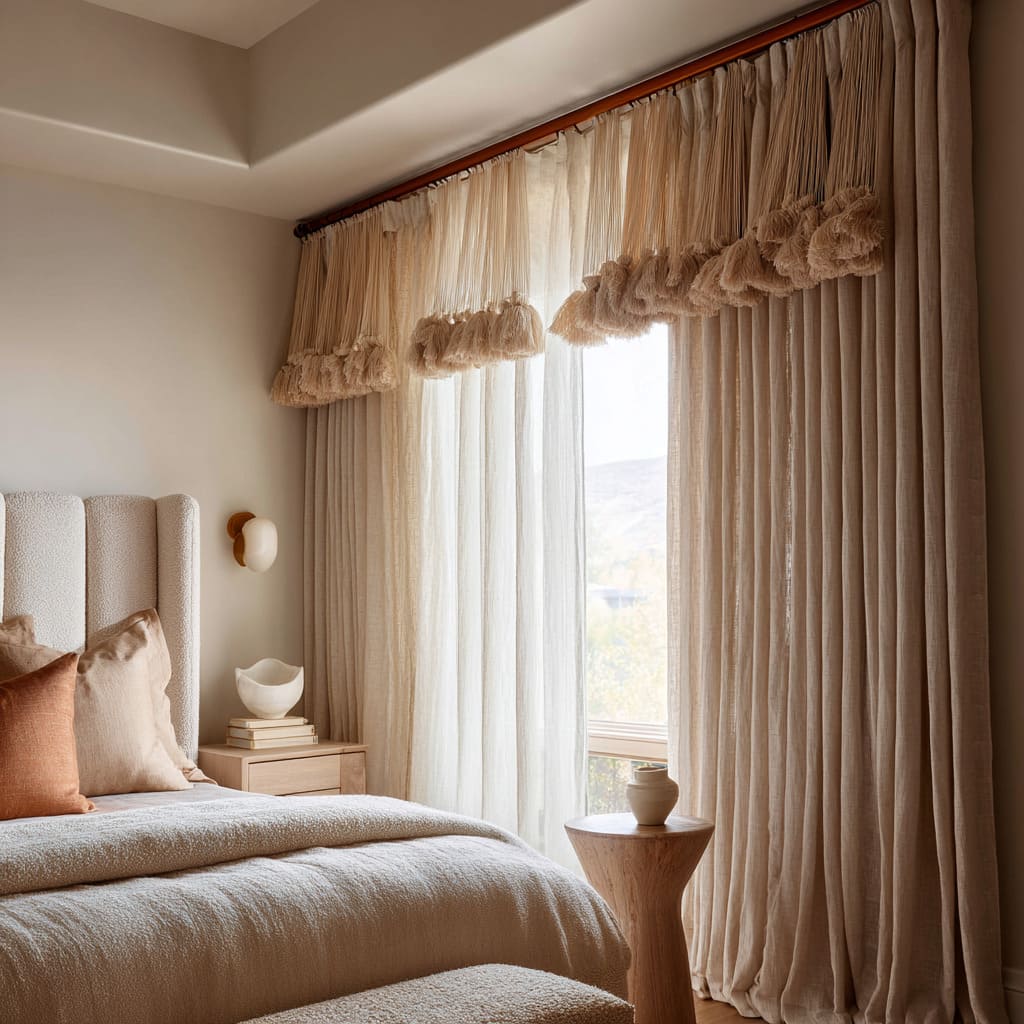
The surface beneath the curtain affects how the hem behaves. On a thick wool rug or looped weave, the drapery may appear to sink slightly, allowing vertical folds to dissolve into horizontal fibers.
On a smoother floor, the edge reads as sharper and more defined. These differences influence whether the overall effect feels crisp, relaxed, or somewhere in between.
Layered Drapery: Multiple Surfaces, Deeper Visual Fields
Layering curtains adds dimension and staged depth to a bedroom design. One frequent strategy uses three layers: a structured shade near the glass, a sheer mid-layer creating softness, and a heavier outer layer playing the stylistic role.
This arrangement lets designers control privacy, light diffusion, and texture independently.
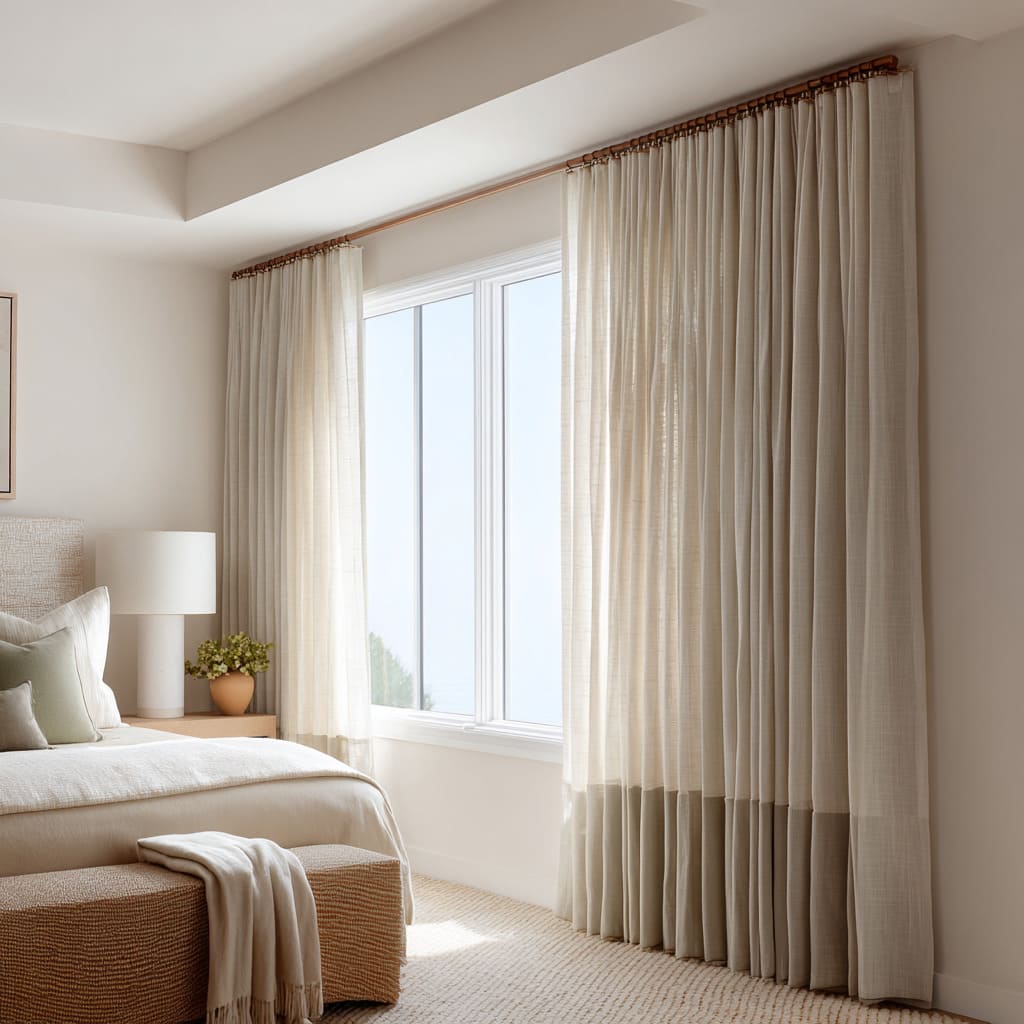
Decorative layering can also be expressive. Sheers can act as a neutral plane behind shaped overlays, scalloped textiles, or subtle metallic trims.
Long fringe placed in front of a simple curtain adds movement and introduces a secondary pattern created by light passing through threadlike strands. Each layer has its own job:.
- Base layer – flat structure and primary light moderation.
- Middle layer – diffusion and vertical softness.
- Outer layer – visual presence through color, finish, or detail.
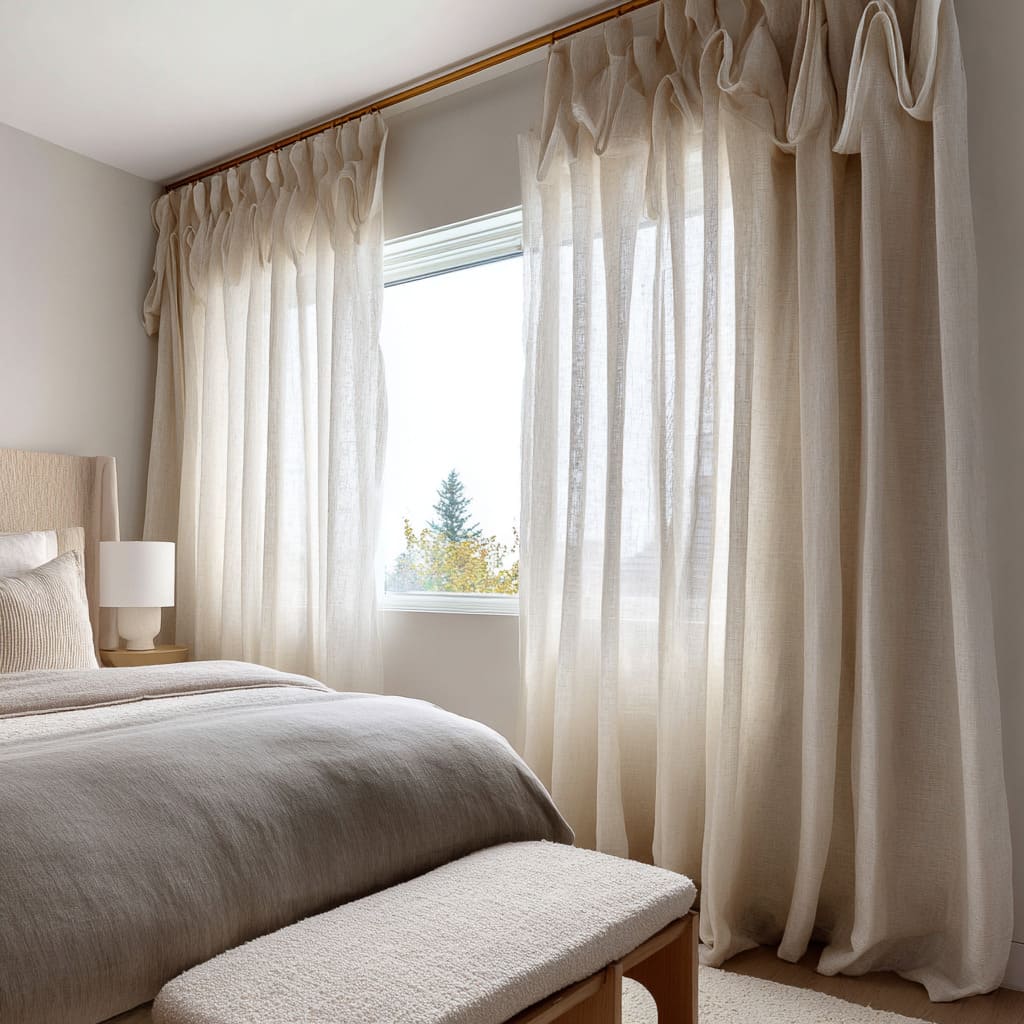
Because the eye perceives depth through overlapping surfaces, layered drapery often gives a richer result without needing bold colors or large patterns.
Pattern, Motifs, and Textile Storylines
Patterned drapery, when used thoughtfully, introduces a visual narrative into the design. Designers may focus motifs near the hem to create a grounded zone of activity, letting the upper portion remain calm.
Bands or narrow stripes along the edges create quiet visual framing and link to other linear elements in the room.
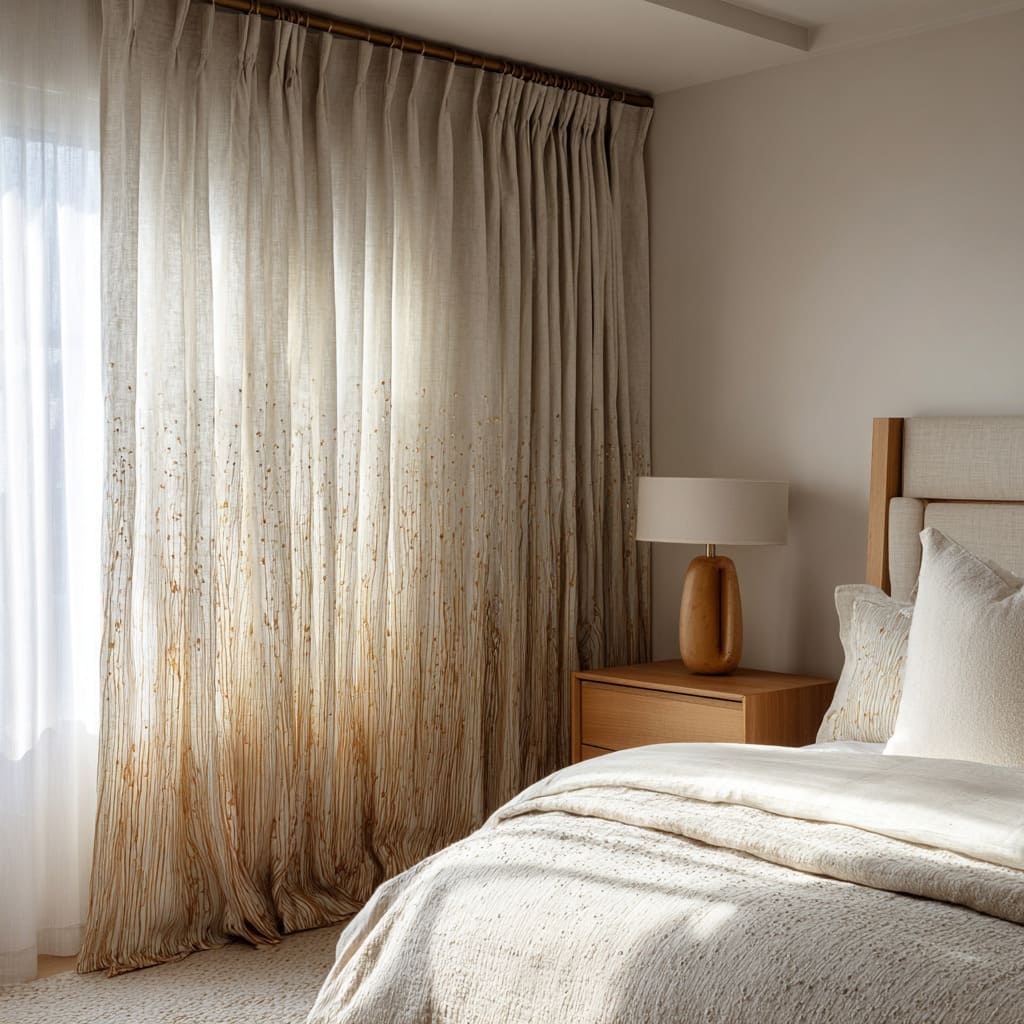
Subtle woven streaks or tonal variations can mimic the softness of painted strokes or natural textures, adding interest without disrupting the serenity of the space. More decorative approaches might include shaped overlays, scalloped lines, or ornamental edging that curve over sheers like soft graphic elements.
Fringe at the top or bottom can echo similar details in throws or pillows, forming a consistent textural language.
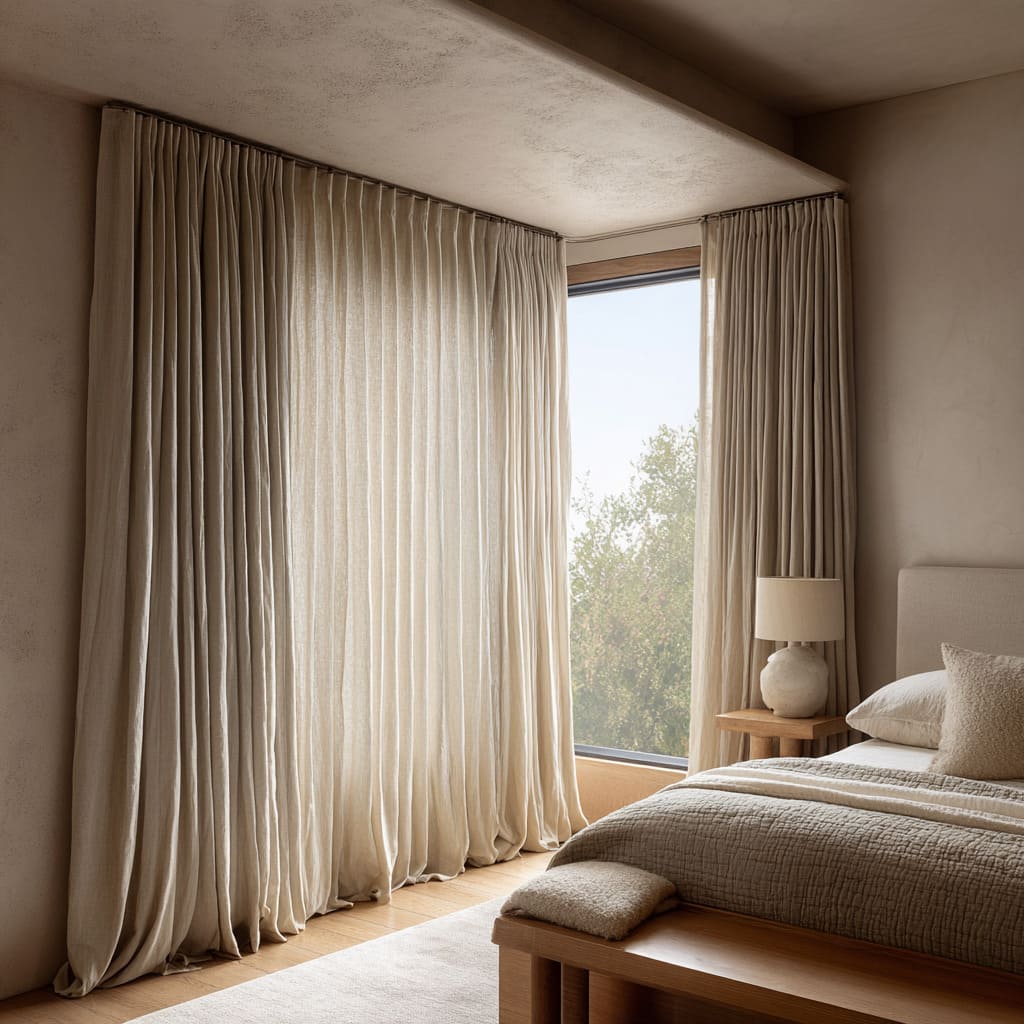
Mood Families: Strategies for Different Emotional Directions
Various drapery approaches naturally fall into recognizable mood categories. Light-toned sheers and soft mid-weight curtains often support calm, resort-like atmospheres where the design feels bright yet softened.
Mid-tone structured drapery with precise hems and subtle textural variation suits refined or boutique-inspired concepts that value order and clarity.
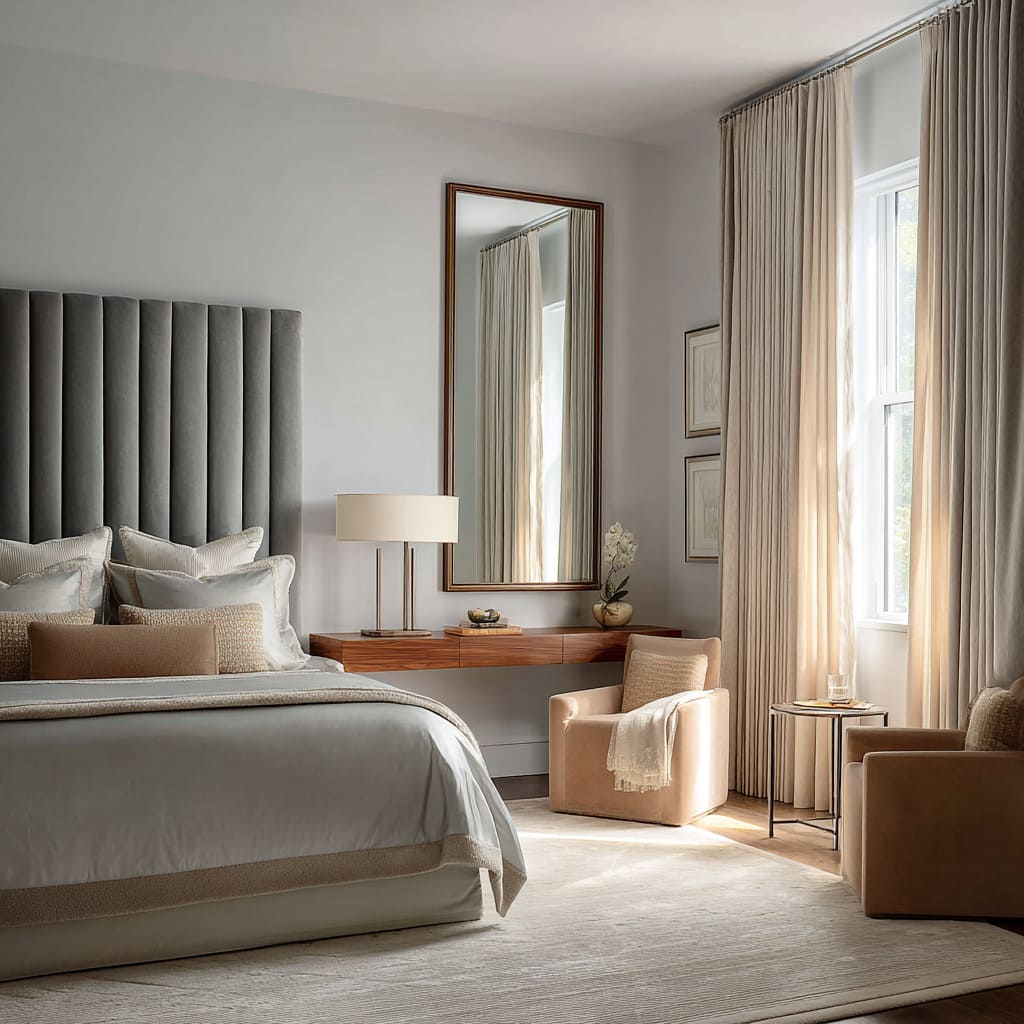
Deeper hues and heavier fabrics contribute to quiet, enclosed atmospheres where the window becomes a glowing outline rather than a strong visual focus. More organic, relaxed moods rely on crinkled cloth, loosely gathered panels, caramel-tinted sheers, tassels, fringe, or pooling, paired with natural textures in furniture and accessories.
These categories do not depend on geographic context but on how drapery handles light, depth, density, and repetition.
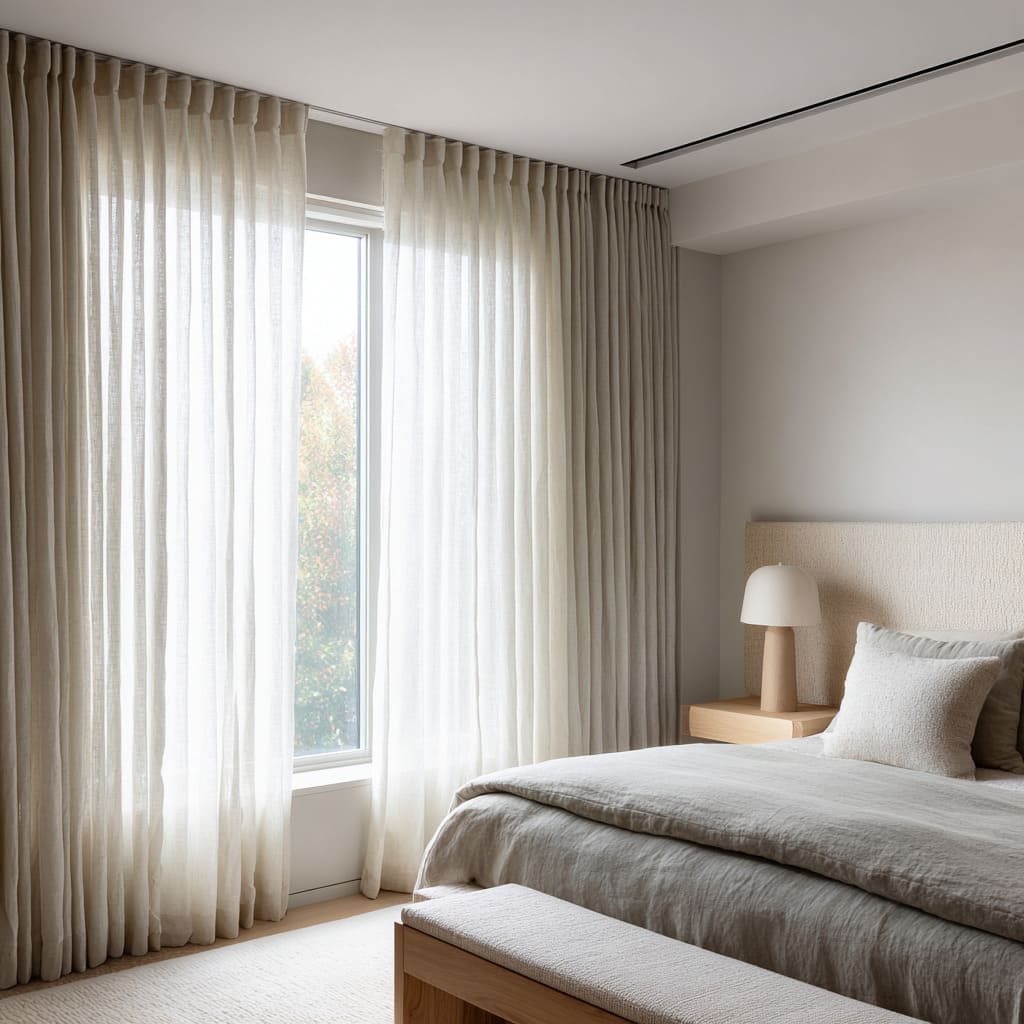
Composition and Direction: Guiding Visual Flow
Curtain placement plays a significant role in how the eye moves around a bedroom. A single tied panel can create a diagonal path from the upper window area toward a bedside surface or seating corner.
A parted pair of drapes can frame the outdoor view like a stage opening. A full-width curtain wall with uneven gathers introduces small visual shifts that lead the gaze from one portion of the room to another.
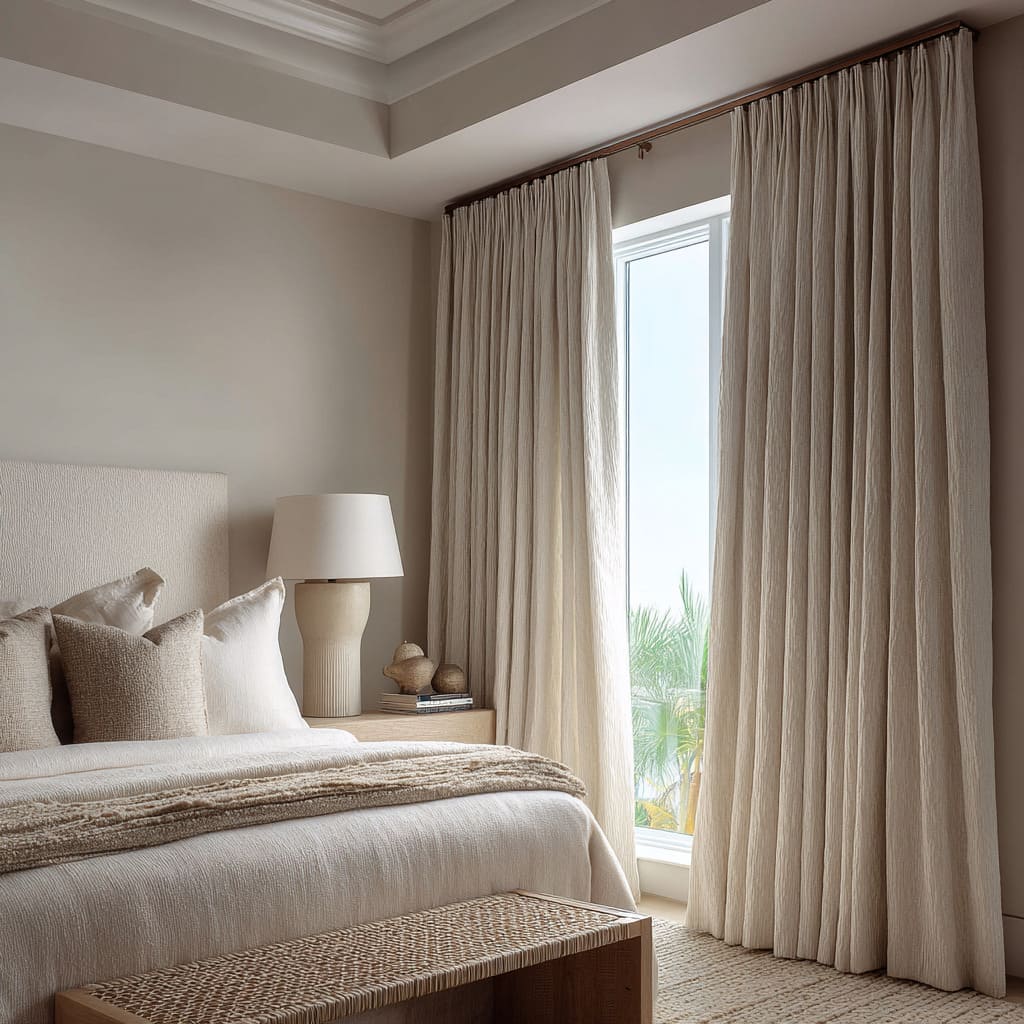
Mirrors can amplify these effects by repeating drapery patterns, making a single opening feel broader. Layered sheers create soft internal stripes that read as faint secondary patterns, encouraging the viewer to perceive the surface in stages.
These directional cues help determine what becomes a focal point and what remains in the background.
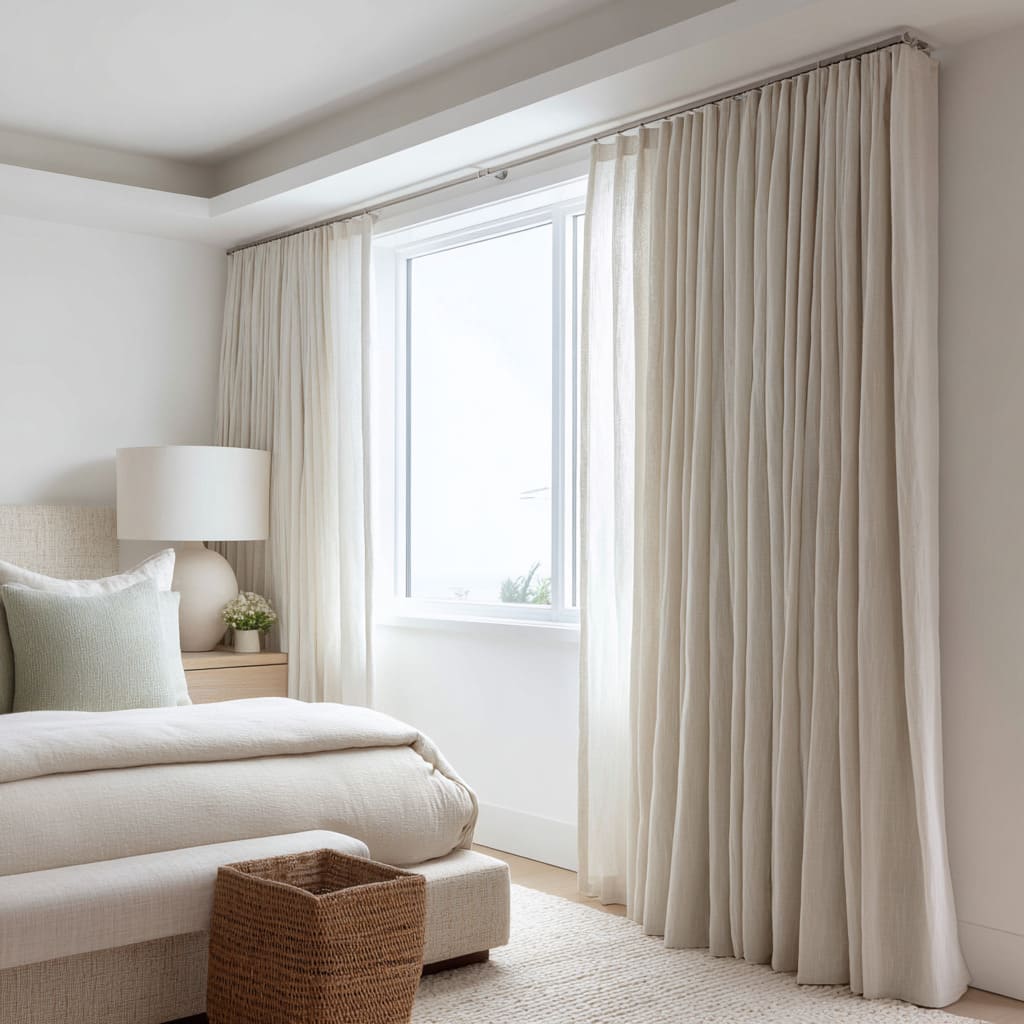
Drapery as Backdrop for Objects, Art, and Texture
Curtains frequently act as the backdrop that supports furniture, objects, and artwork. A smooth dark curtain can make light decor items appear clearer and more sculptural.
A warm-toned sheer behind a pendant lamp allows the lamp to stand out through contrast in both shape and glow. Neutral drapery behind textured pieces—woven benches, boucle chairs, ceramic lamps—provides a calm setting that amplifies their tactile qualities.
Decorative elements near the window often echo drapery details: fine fringe on pillows, stripe accents on bedding, or textured rugs that share color notes. This creates a layered visual dialogue between vertical textile surfaces and horizontal furnishings.
Through this, drapery ties together elements of the design into a cohesive composition rather than functioning as an isolated treatment.