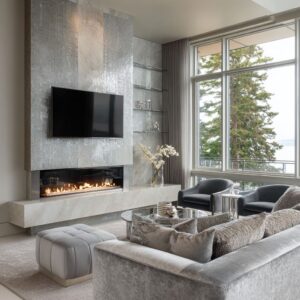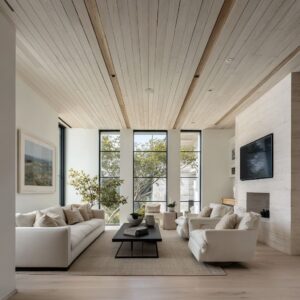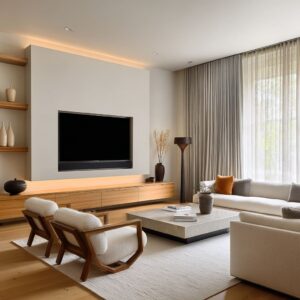
For a long time, living room color advice centered on the search for a standout shade. The wall color was expected to carry the room, announce a style, and give the space an obvious identity from the first glance.
That older approach still appears in some rooms, but the modern direction now is different. The most interesting living room color ideas are no longer built around one clear, named hue pushing itself forward.
They are built around a quieter system.
The newer approach treats color less like a headline and more like atmosphere. Instead of asking the wall to be the loudest feature in the room, it asks the wall to set the emotional climate of the space.
A good living room color does not need to shout to shape the room. It softens edges, changes how light lands, helps furniture settle into the architecture, and makes the whole space feel easier to live in for long periods.
That is the modern shift. The change is not simply that green is popular, or blush is back, or brown feels richer again.
The deeper change is that living room color is now being used in a more integrated way. The room is being built as one connected field rather than as a neutral shell interrupted by one decorative color move.
The wall color is now an environmental layer
One of the lessons from current living room palettes is that the wall is no longer expected to work alone. Color can act like a filter spread across the room rather than a feature added onto it.
A muted wall tone wraps the space, quiets the contrast, and lets the sofa, rug, wood, and art sit inside the same mood.
This is why softer full-room color and broad dominant wall planes feel so relevant now. The color is not there to create instant drama.
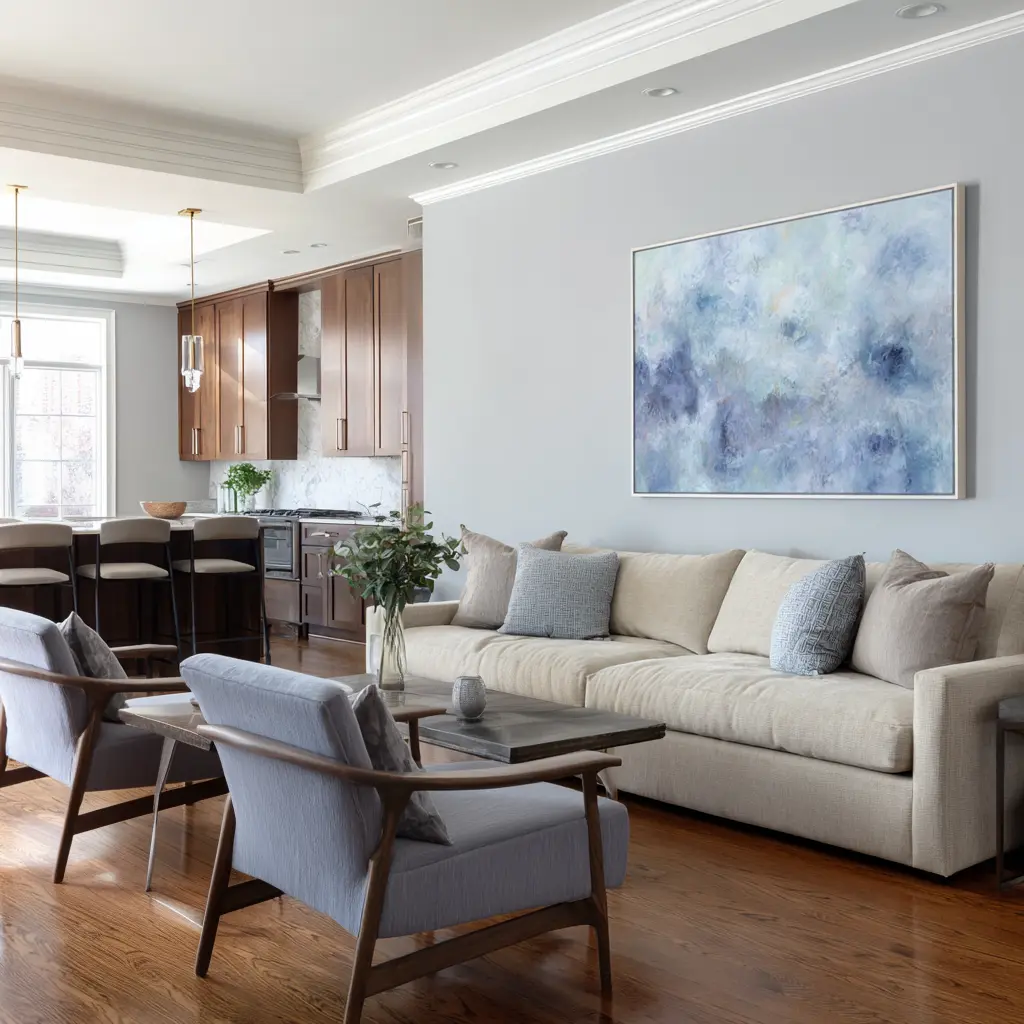
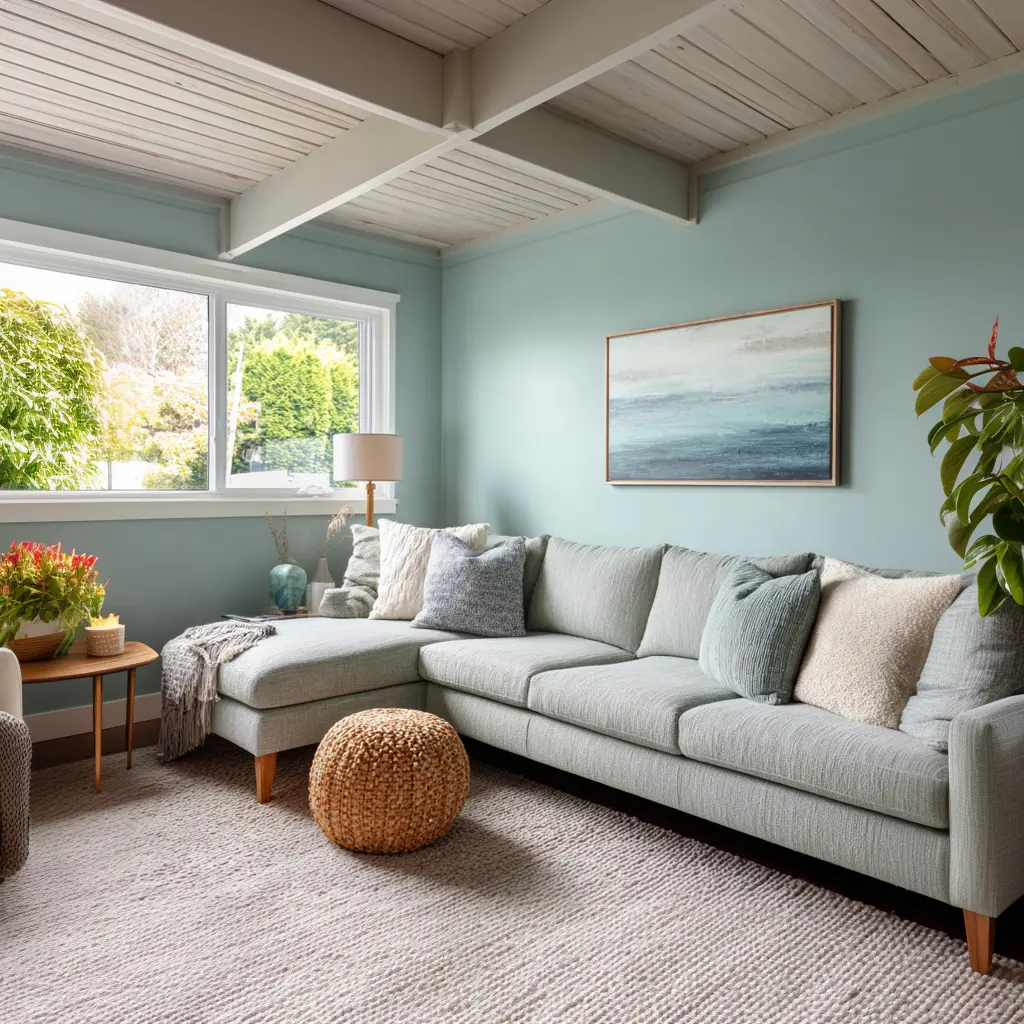
It is there to create a stable emotional setting. A blue-gray wall can make the room feel calm without turning cold.
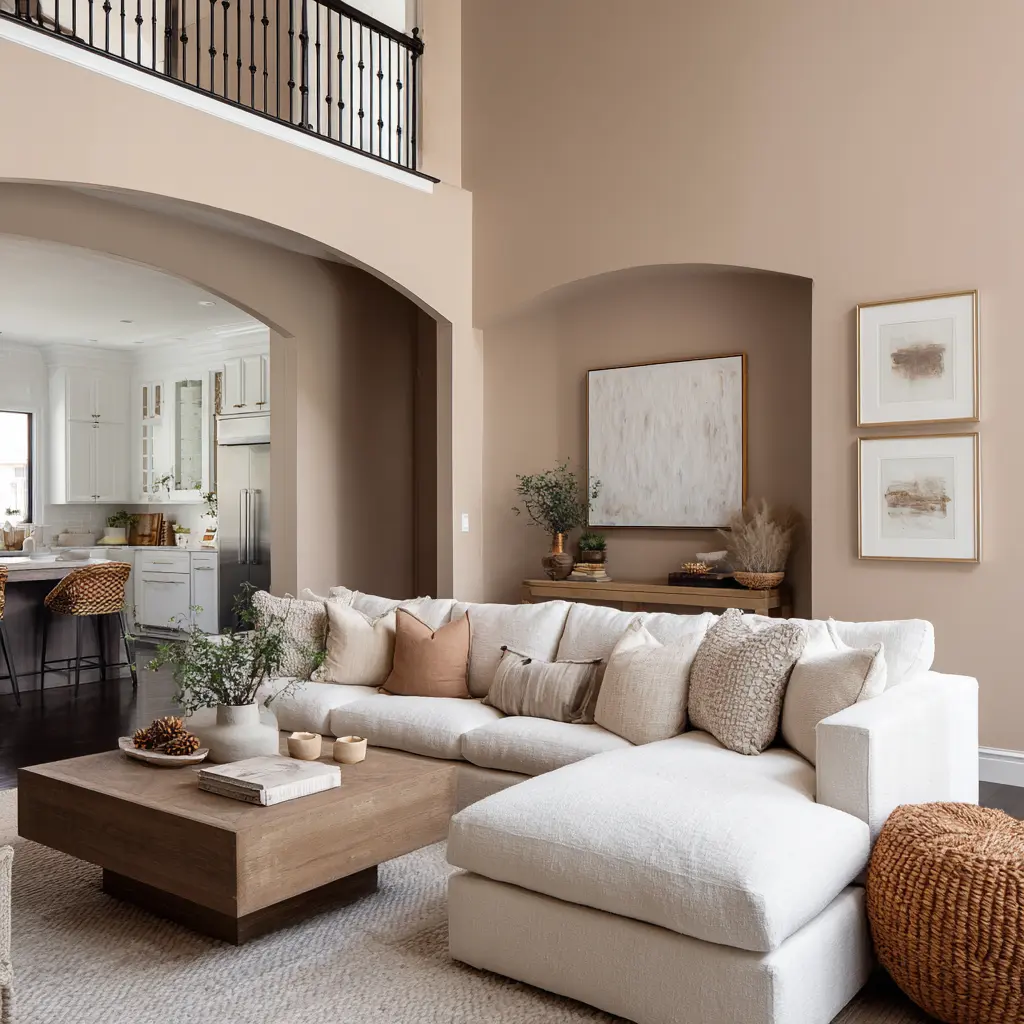
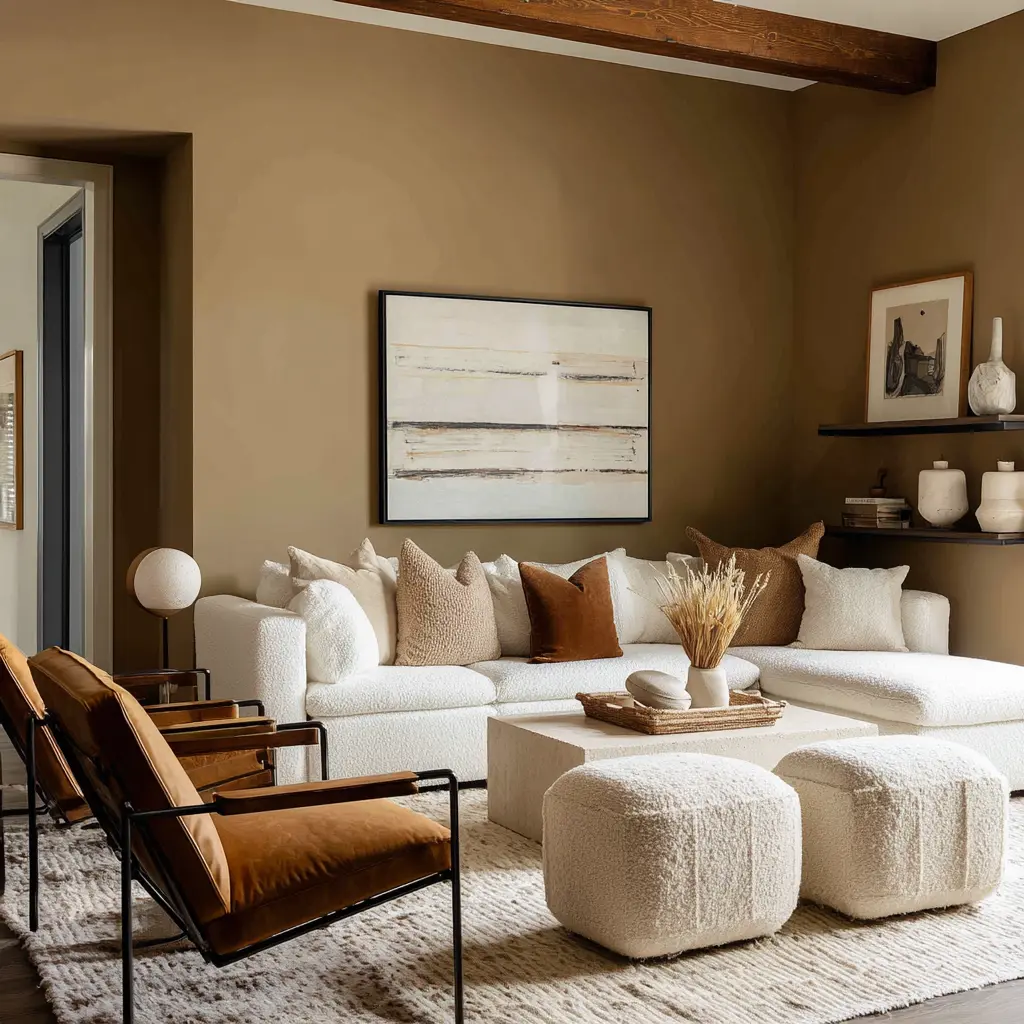
A khaki-olive wall can make the room feel grounded without looking heavy. A blush-beige wall can warm the room without making it feel overly pink.
The wall does not need to demand attention in order to change everything around it.
That is why many newer living room colors feel richer even though they are quieter. They are working on the room at a larger level.
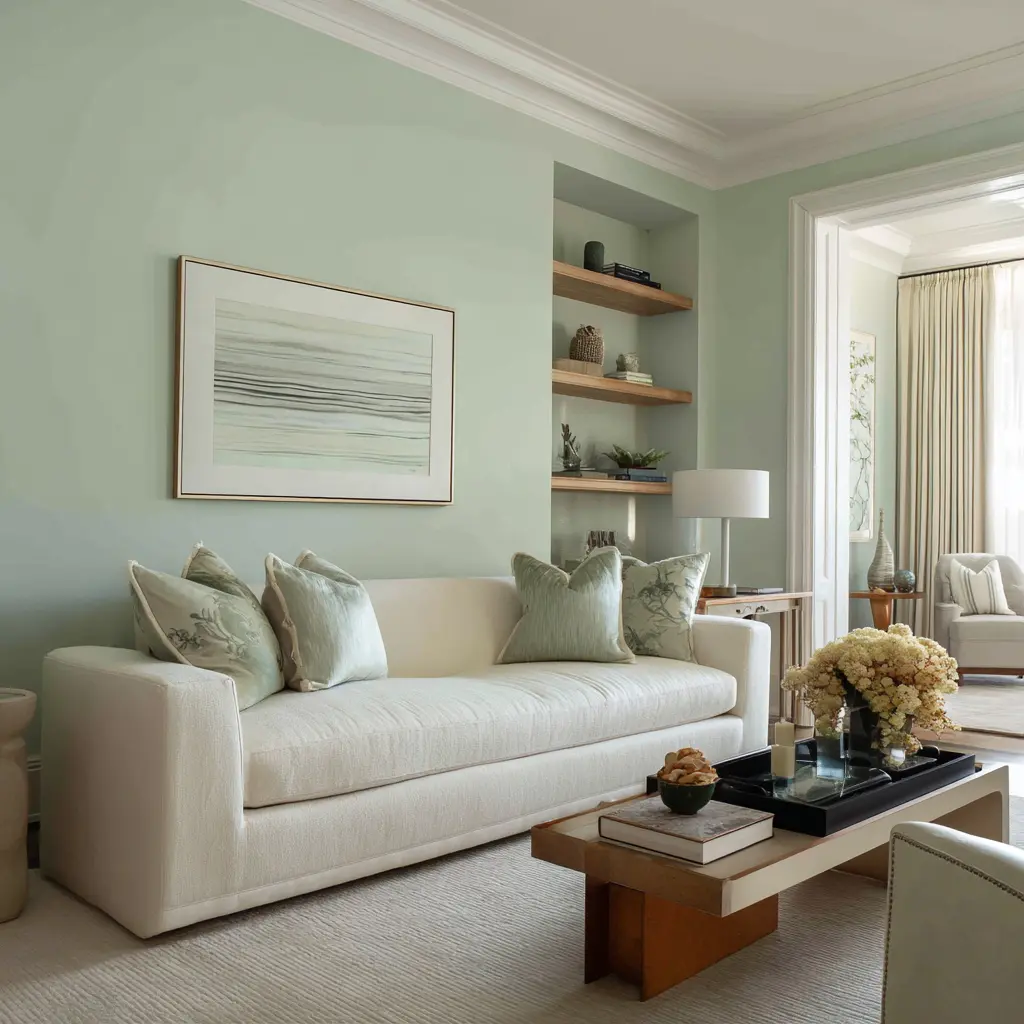
Modern shades now sit between categories
Another major reason modern living room palettes feel fresh is that the strongest shades rarely belong fully to one color family. The colors that are raising popularity are not clean textbook versions of green, blue, pink, or brown.
They sit in narrow middle zones where two or three families overlap. That overlap is where much of the newness comes from.
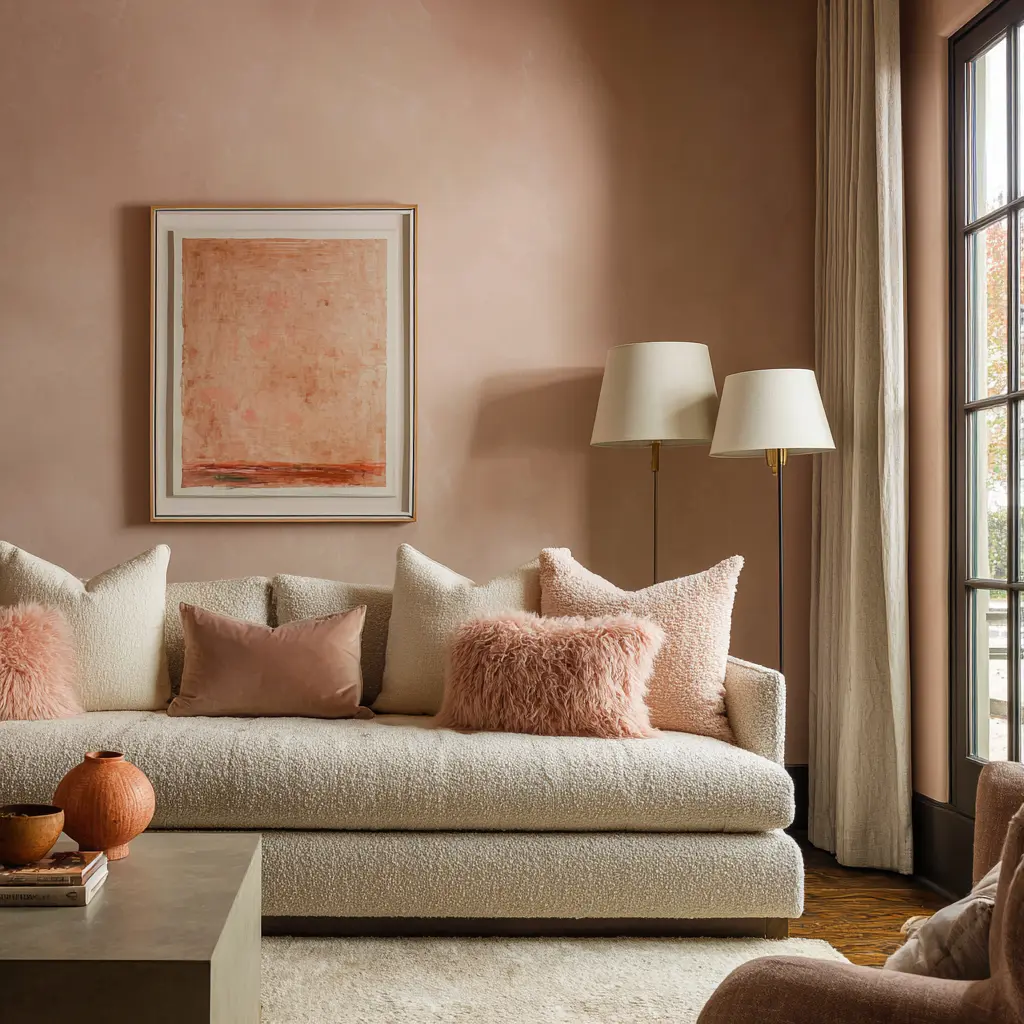
A wall may read as olive, but also khaki, and also taupe depending on the light. A blue may carry gray and a slight violet haze.
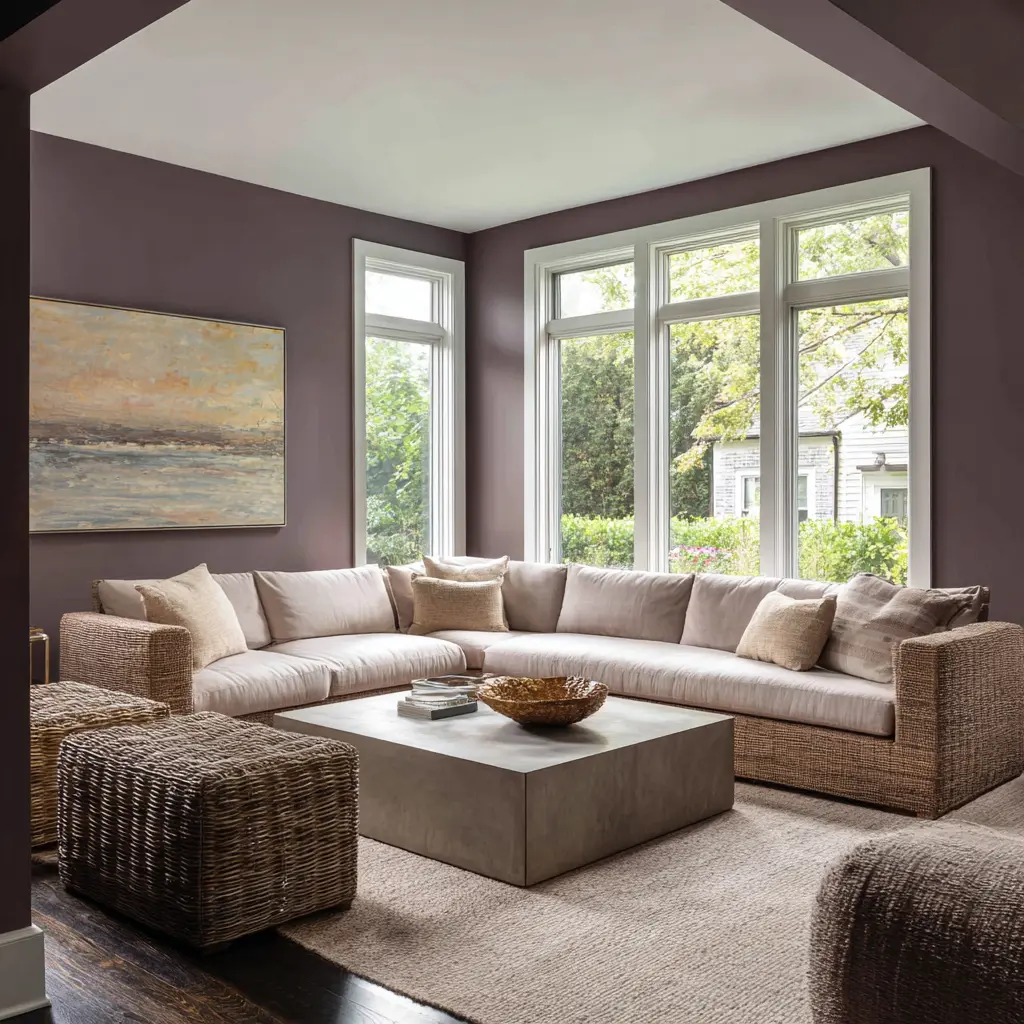
A pink may carry clay, beige, or apricot. A dark wall may feel plum, but also brown, and a little charcoal at the same time.
These are not accidental mixtures. They work because they stay visually active without becoming busy.
A pure hue often shows itself too quickly. It can become fixed in the eye almost at once.
A hybrid tone lasts longer because it keeps changing slightly as daylight moves, as white trim sharpens it, as wood nearby warms it, or as textured fabric softens it. That small instability gives the room depth.
The color keeps giving something back without turning loud. This is why latest living room color ideas often feel more thoughtful than trend-driven.
Their strength comes from nuance, not force.
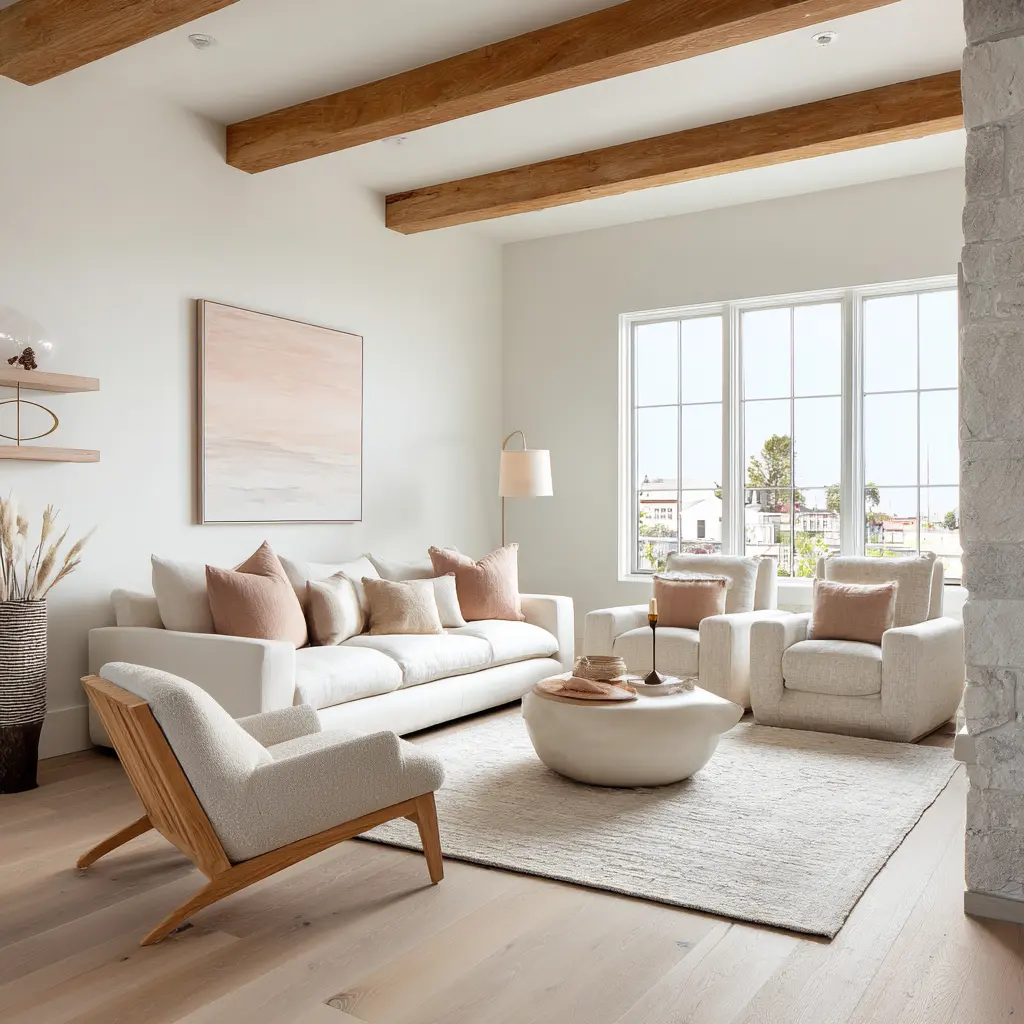
Strong color has not disappeared, but it has moved
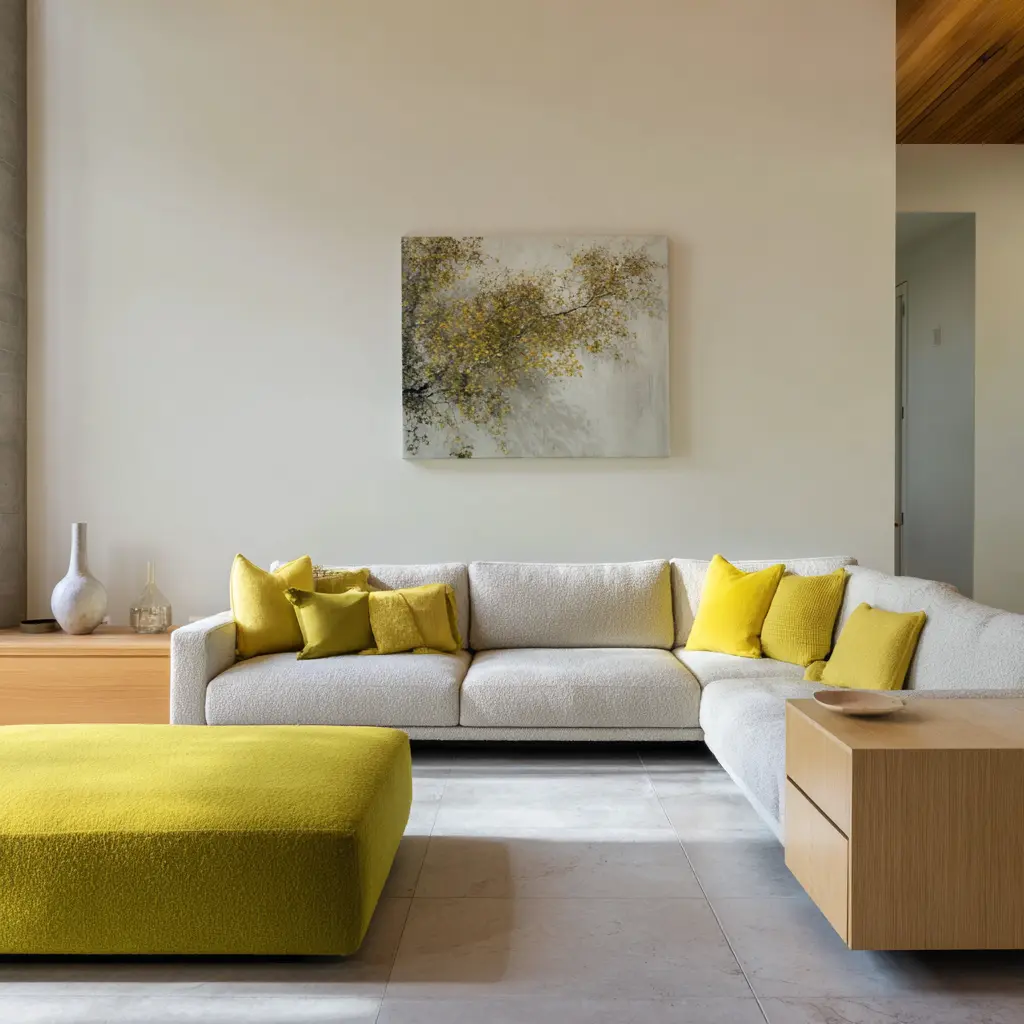
Living room designs still use stronger color, but it is usually no longer spread broadly across large surfaces. Saturation is concentrated into smaller, denser points.
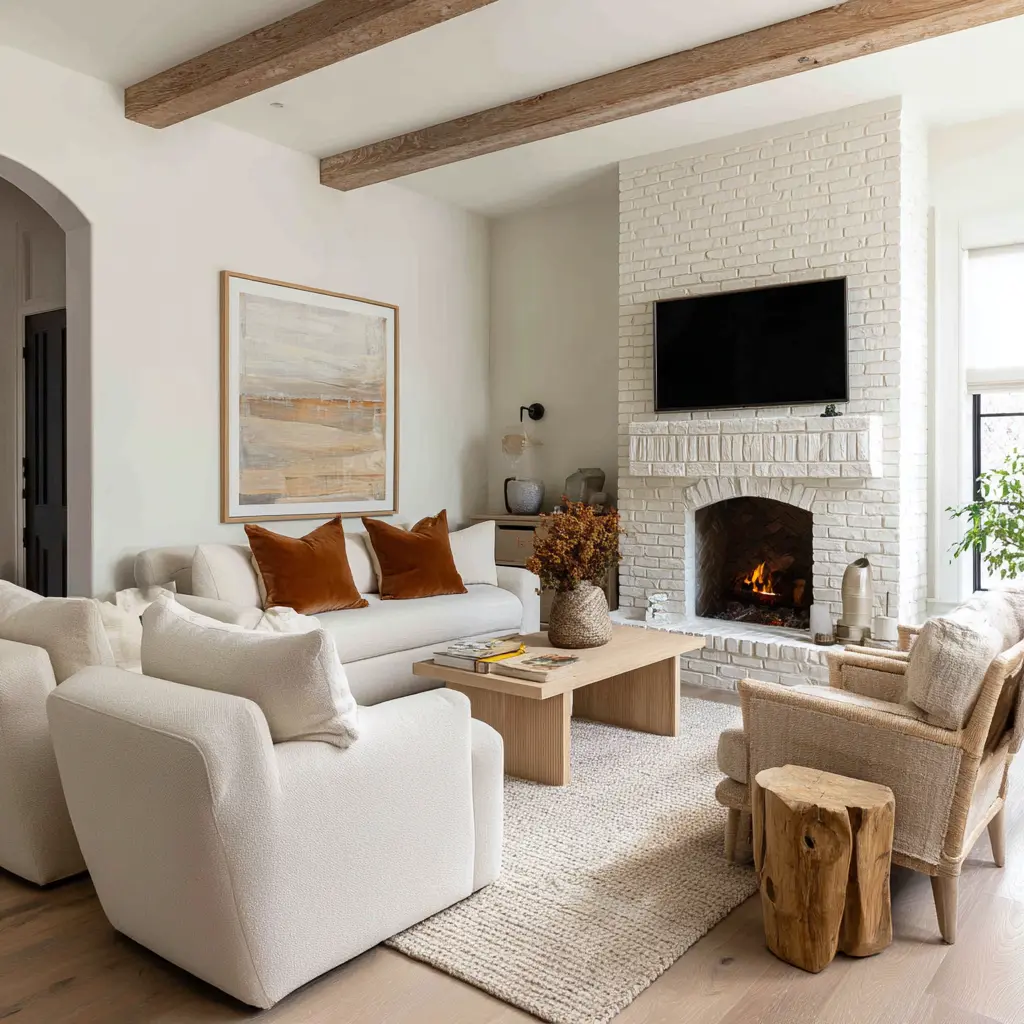
The room stays soft overall, then one or two places carry more intensity. That stronger note may appear in an ottoman, two pillows, one chair, a floral arrangement, a rust-toned vase, or a large art piece above the sofa.
These small color pockets give the eye somewhere to land. They create focus and rhythm without forcing the whole room into sharp contrast.
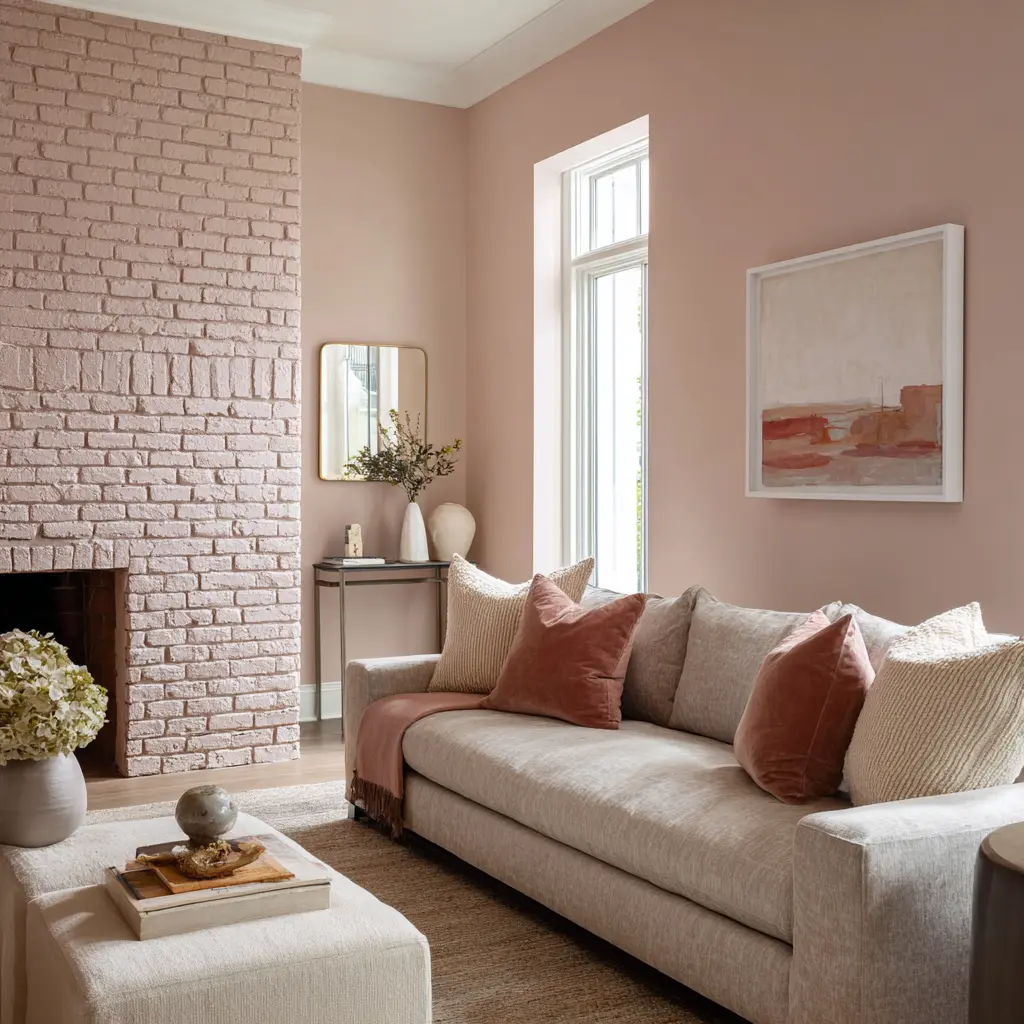
This is one reason many newer living rooms feel calmer than older accent-wall formulas. The room still has depth and energy, but the visual pressure is lower.
Instead of dividing the room into a loud part and a quiet part, the palette stays controlled and lets only a few compact areas carry more color weight. That change matters more than it may seem.
A room with one bright wall can feel restless. A muted room with one or two dense color points often feels fuller and softer at the same time.
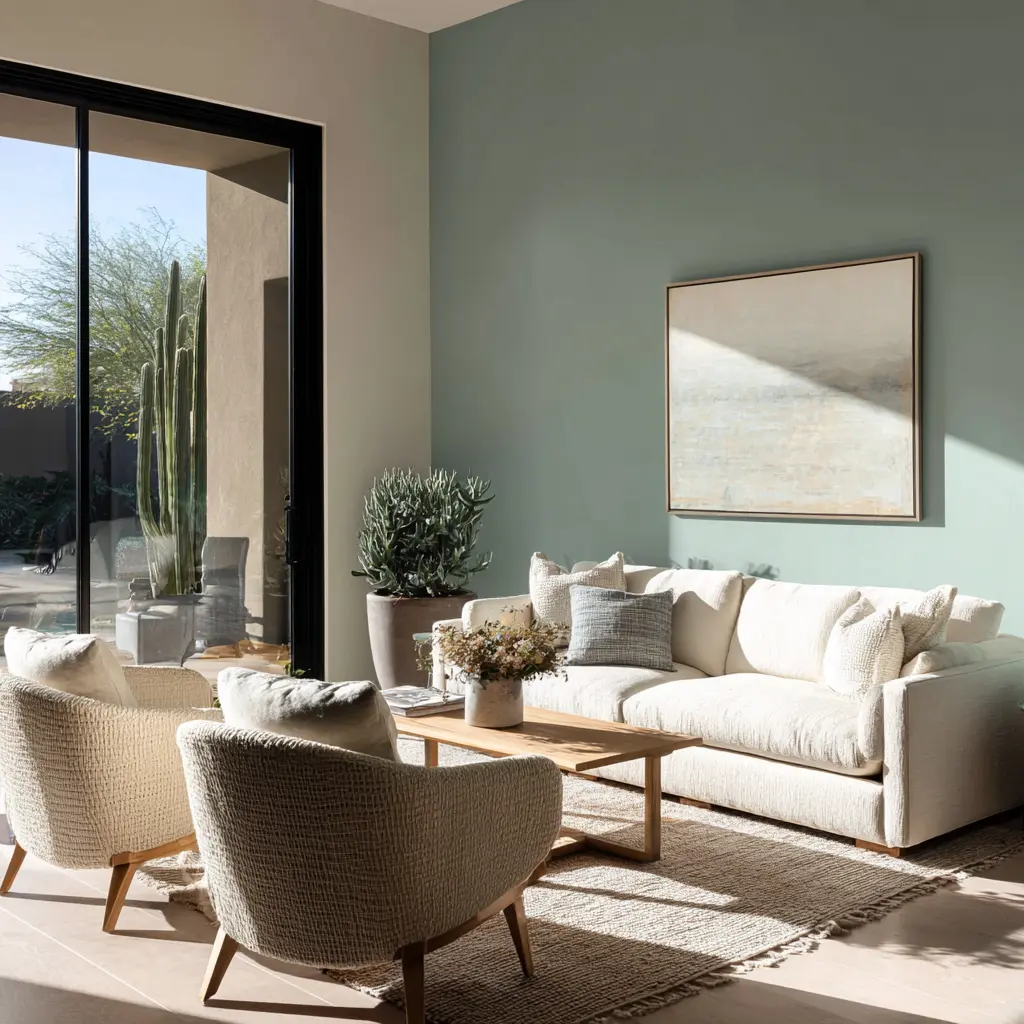
Cream upholstery is doing more work than most people realize
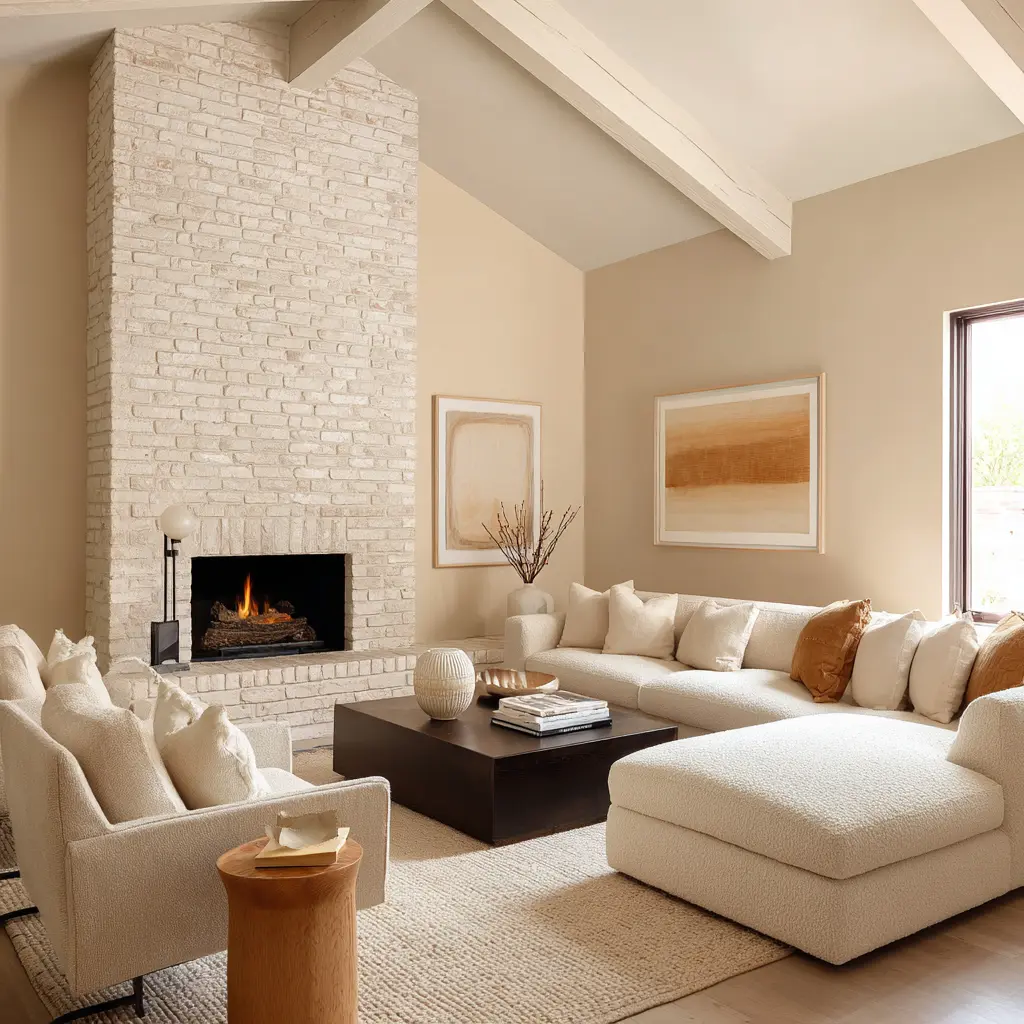
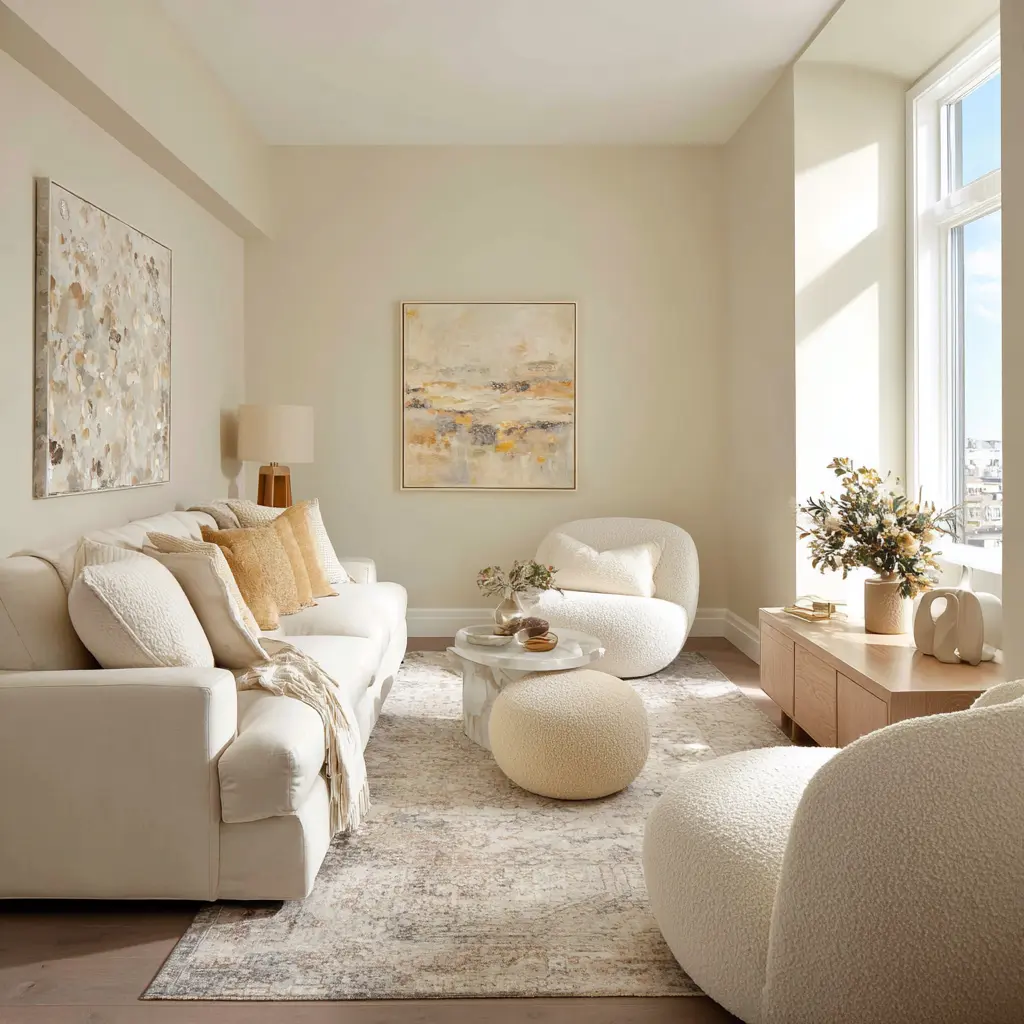
One of the practical ideas in living room color planning is the role of cream upholstery. A cream, ivory, warm beige, or soft off-white sofa now appears because it solves several color problems at once.
In a cool room, cream keeps the palette from drifting into chilliness. Blue-gray, celadon, pale sage, and softened aqua all feel more livable next to a warm cream sofa because the upholstery adds body and warmth without fighting the wall.
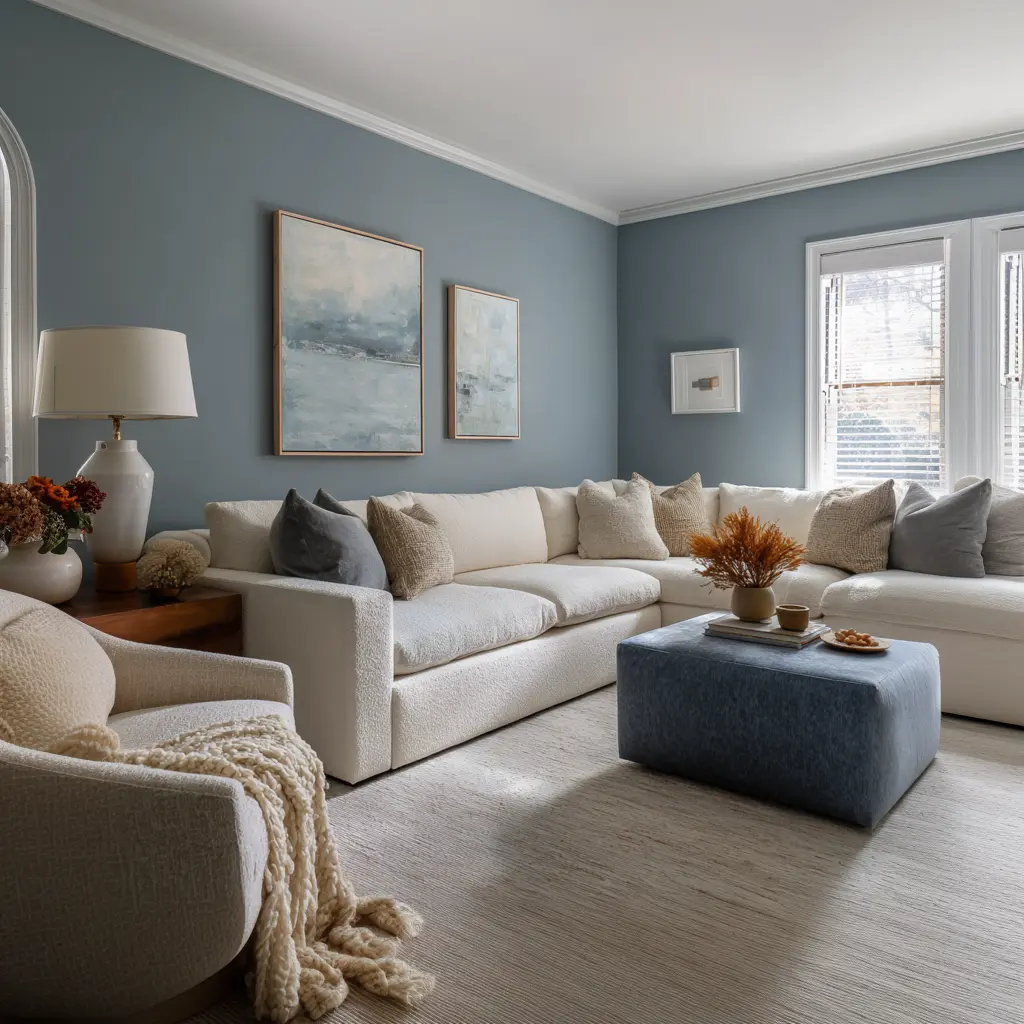
In a darker design, cream prevents the envelope from becoming severe. A plum-brown wall or brown-charcoal backdrop can feel intimate and rich, but it needs a pale soft mass in front of it to keep the room comfortable.
Cream upholstery provides that relief.
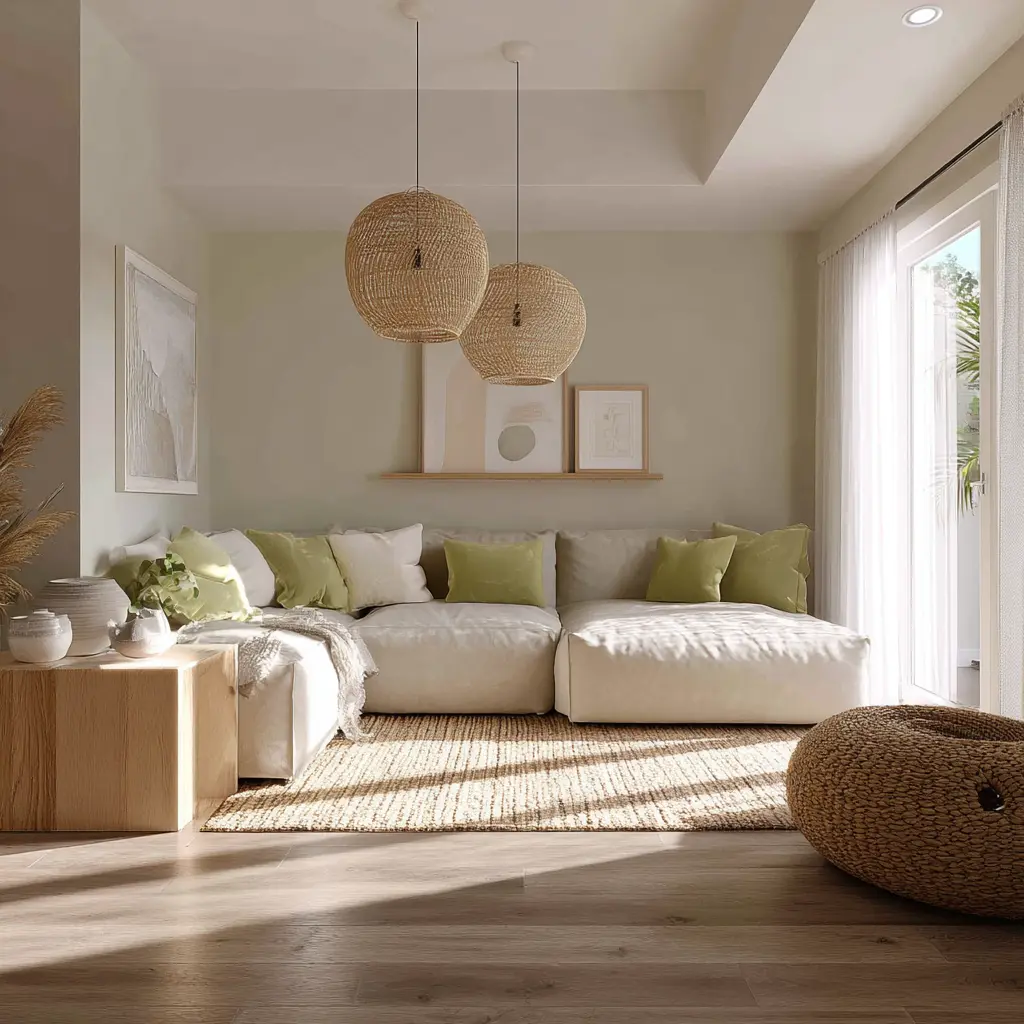
In a rosy or earthy design, cream also acts as a buffer. It lets clay-blush, blush-beige, or smoky coral walls feel warm and full without making the entire room too dense.
So the sofa is no longer just a neutral default. It is part of the color structure.
It stabilizes temperature, softens extremes, and helps the room hold together.
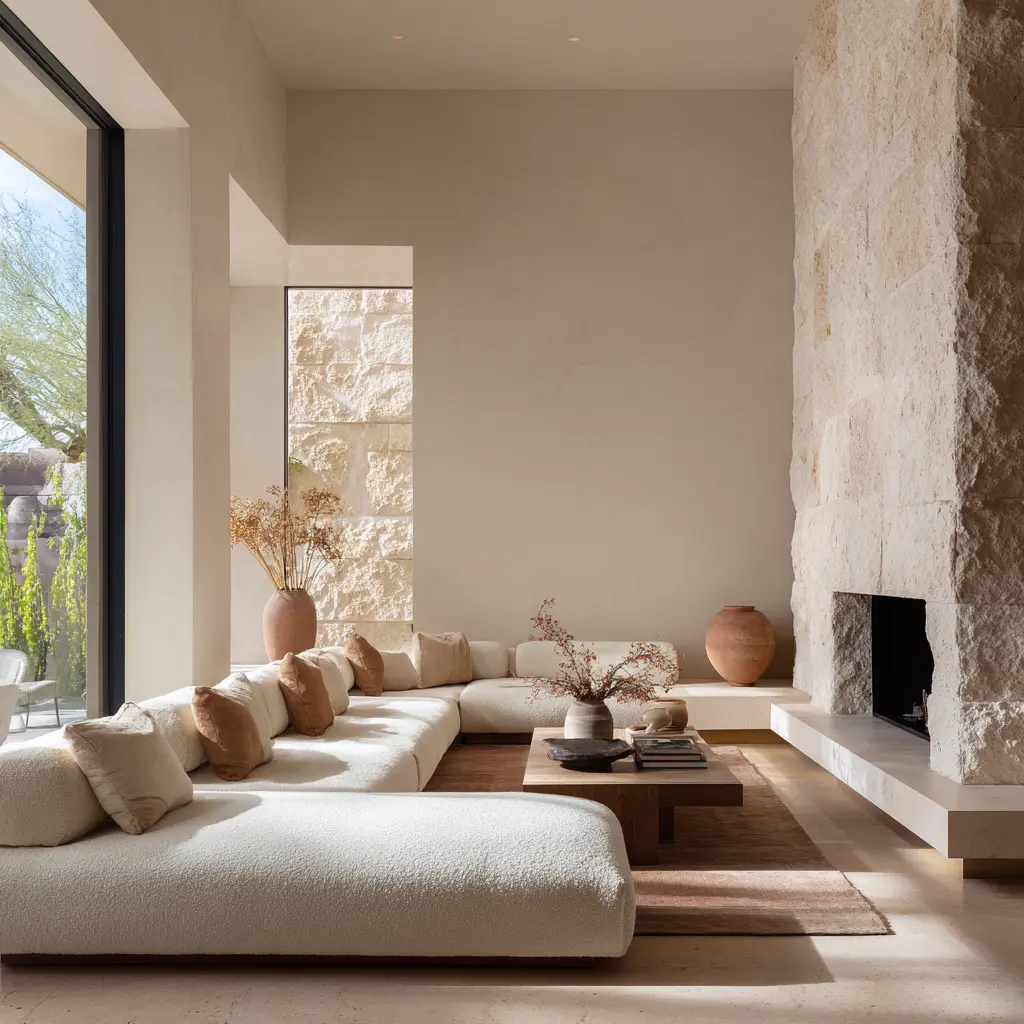
Texture is now carrying part of the depth
Many living rooms now use less chromatic contrast than earlier interiors, yet they still feel layered and complete. That works because texture is taking on part of the job that stronger color contrast used to do.
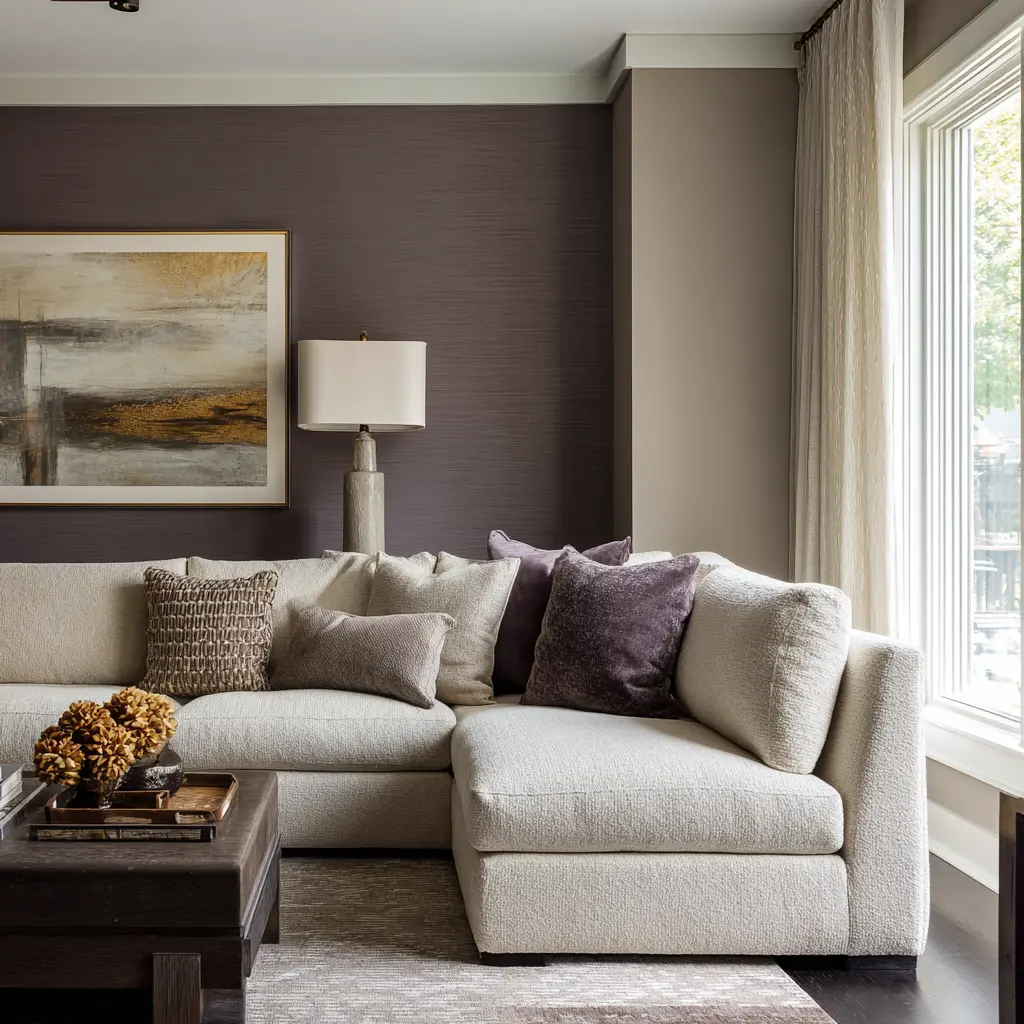
A boucle-like sofa, a plaster-like wall, painted brick, rough stone, woven rugs, ribbed pillows, pale oak, and dried botanical forms all create small edge changes the eye can keep reading. Even when the palette stays close in value, the design still feels active because the surfaces are not all responding to light in the same way.
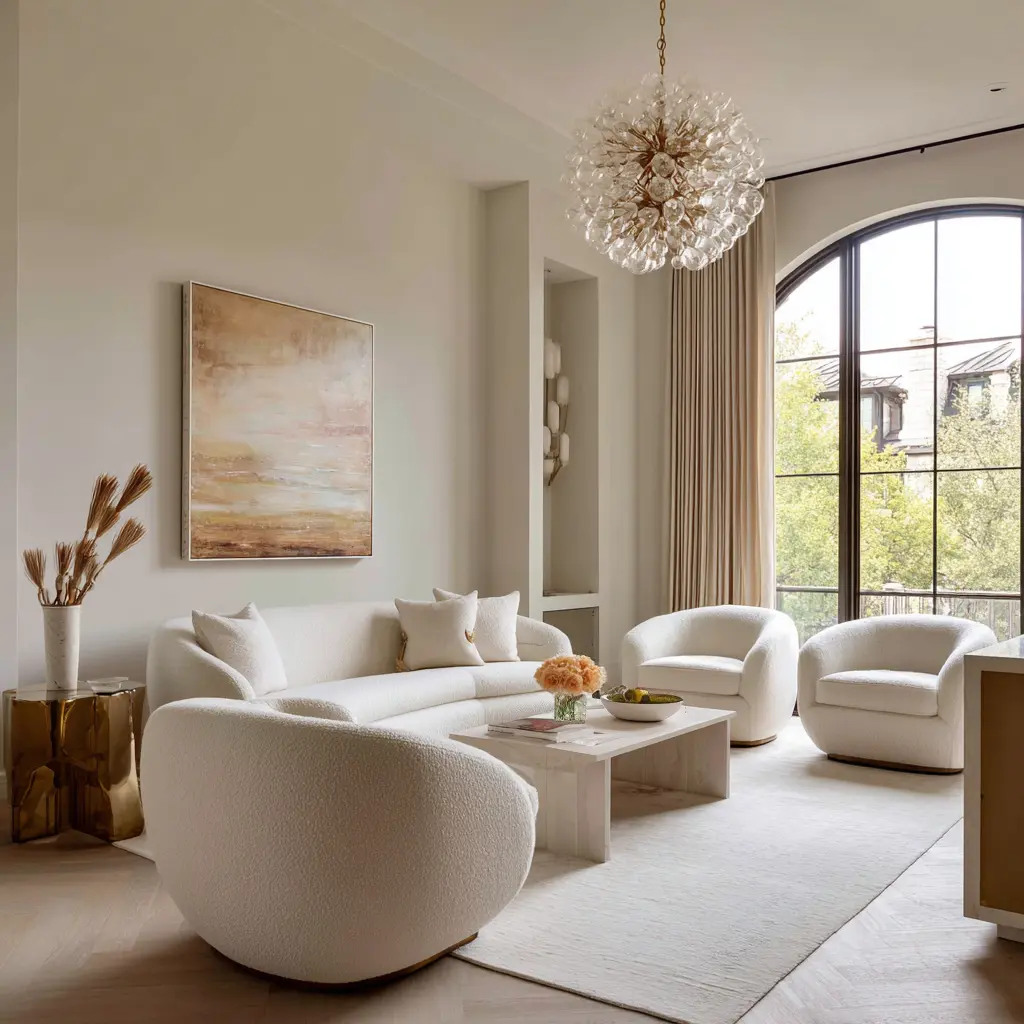
This changes how color should be chosen. A muted wall can look beautiful, but only if the room around it has enough tactile variety.
Without that, the room can go flat. With it, the room gains quiet depth.
The tones remain soft, but the space still feels full. The palette is restrained, but the materials keep it alive.
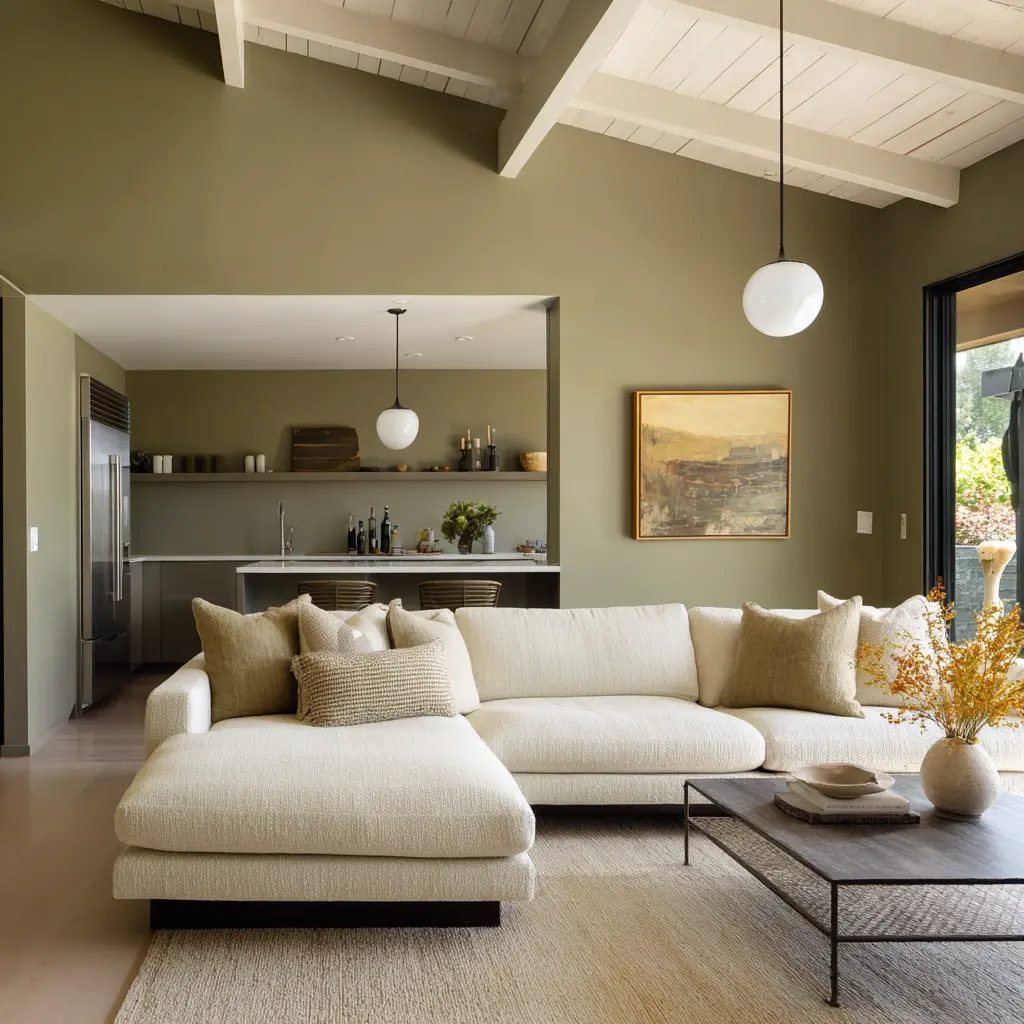
Warmth now spreads in thin layers
Another useful shift is how warmth is handled. In older beige-heavy living room designs, warmth often sat in one main place: the wall color, or a strong wood stain, or both.
The result could feel dense even when the room was bright.
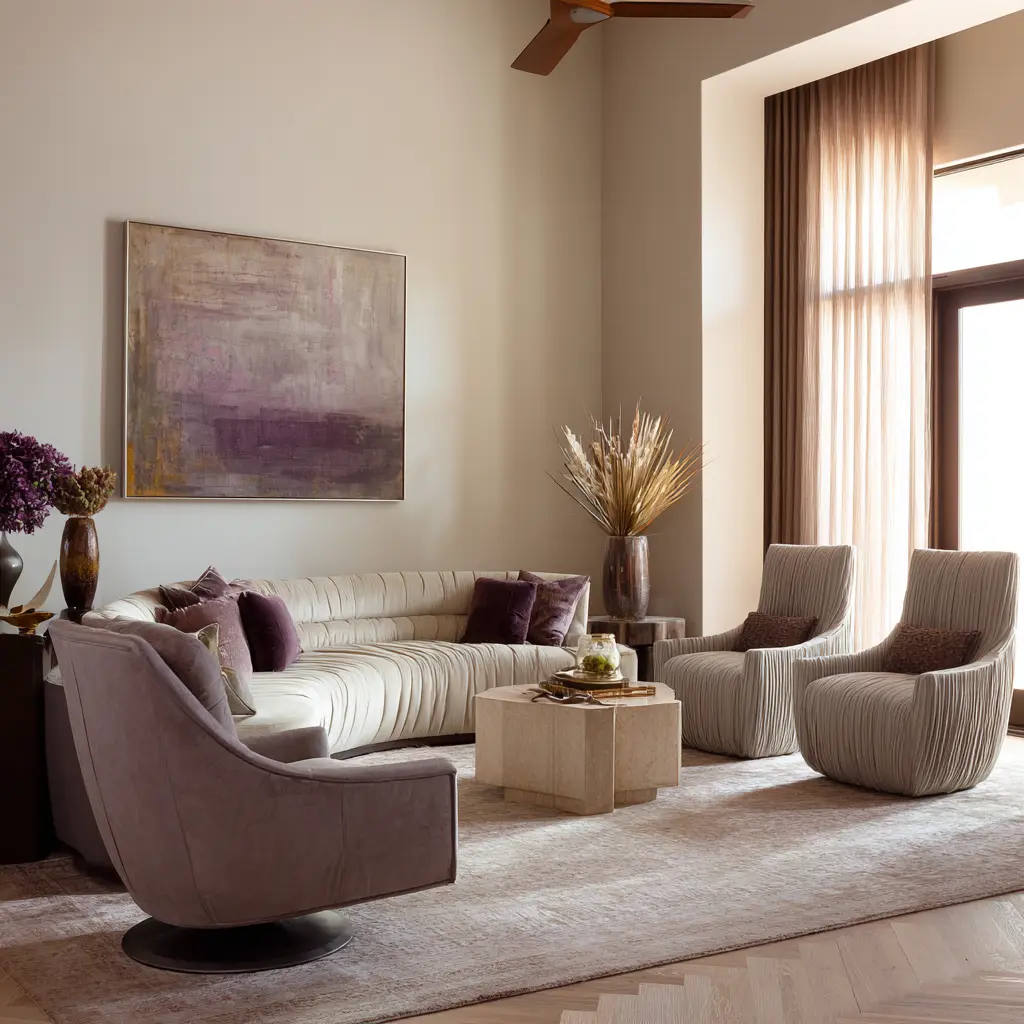
The newer model spreads warmth through several smaller layers. A room might have a faint warm undertone in the wall, a cream sofa, pale oak or honey-toned wood, then a few rust, cognac, straw, or amber notes placed in small areas.
None of these moves needs to dominate on its own. Together they make the room feel warm in a lighter way.
This creates a softer result. The room does not read as one broad warm block.
It reads as a room where warmth appears in multiple small touches. That makes the space feel more breathable.
Green and pink have both changed roles
Green is one of the clearest examples of how living room color has shifted. The greens that feel useful now are rarely bright, leafy, or botanical.
They tend to be olive-khaki, sage-gray, celadon, mineral green, dusty teal-sage, or a pale eucalyptus tint. These shades behave less like garden color and more like softened earth neutrals.
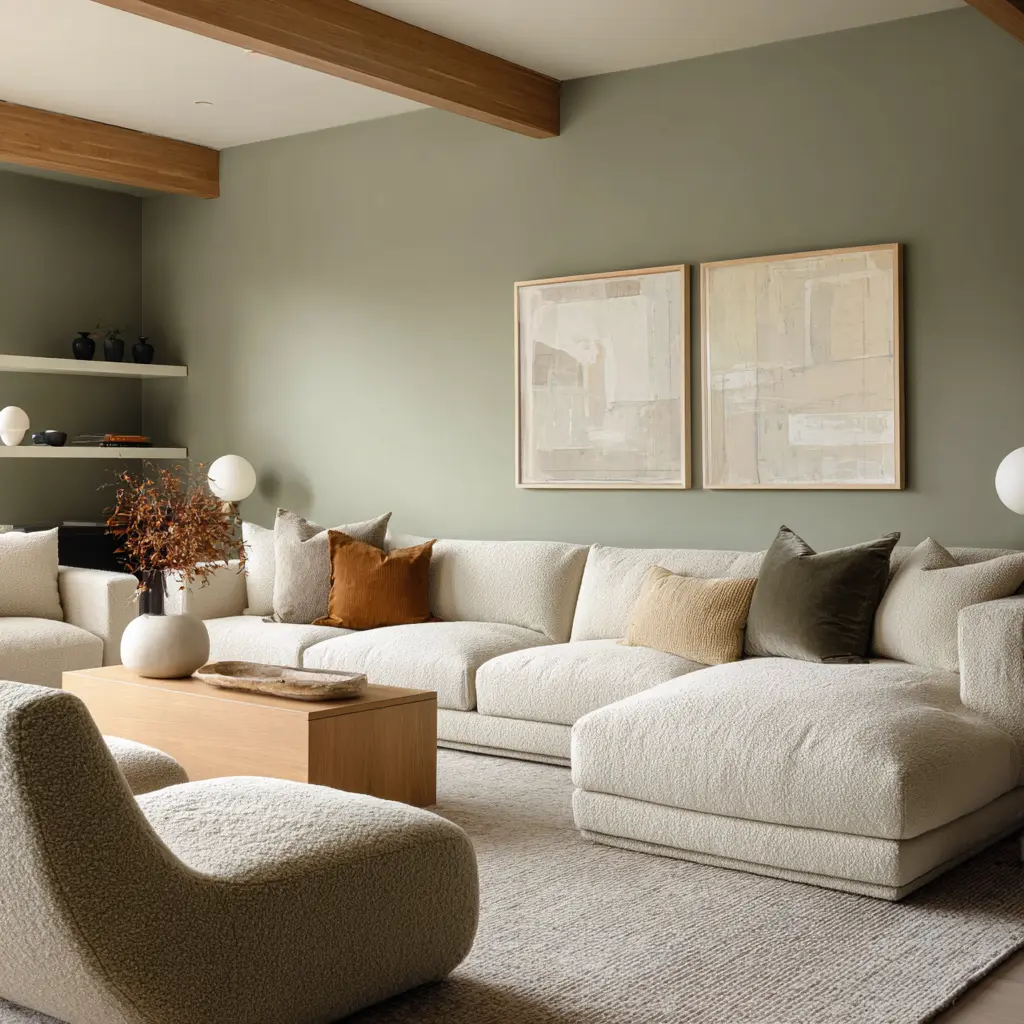
That is why green can now do work that beige once did. It can cover a room, stay calm, and still feel easy to live with.
It adds more character than plain neutral paint without becoming hard to pair with upholstery, wood, or stone.
Pink has undergone a similar change. The pinks that feel right in living rooms now are not candy pink or bright blush feature shades.
They are blush-beige, clay-blush, dusty rose, smoky coral, pink-beige brick, or apricot-rose with brown mixed in. These tones sit inside the earth spectrum, which makes them feel less decorative and more architectural.
That is the key reason pink-led living room designs can now feel grounded instead of overly sweet. The color has been softened enough to behave like warmth rather than novelty.
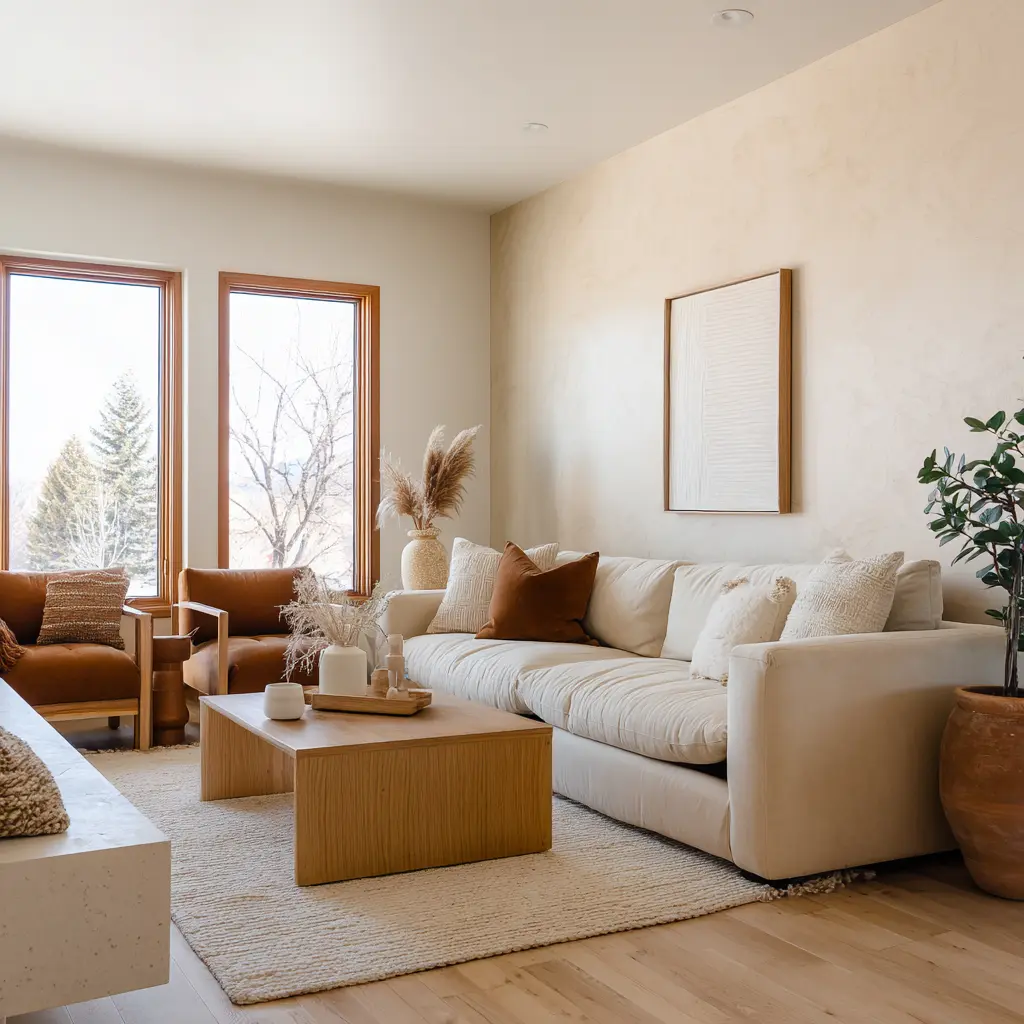
Dark living rooms work best when the dark carries warmth
Dark walls are still relevant, but the strongest current versions avoid hard darkness. The most usable deeper shades tend to include brown or plum in the mix.
That might mean plum-brown, caramel-brown, raisin-like brown-violet, or a softened plum-charcoal.
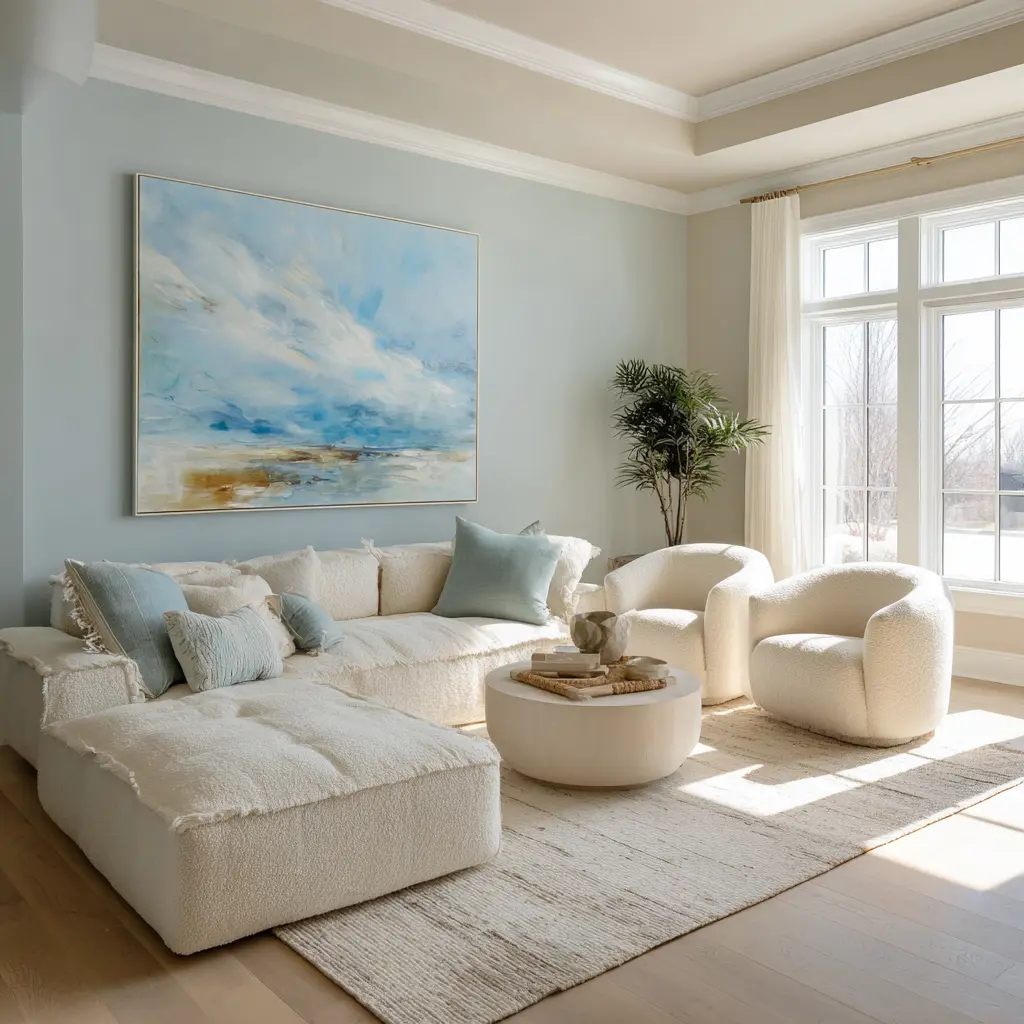
These darker hybrids feel more domestic because the warmth embedded in them takes the edge off. They still create depth and enclosure, but they do not create the emotional hardness that can come from flatter blackened tones or colder dark grays.
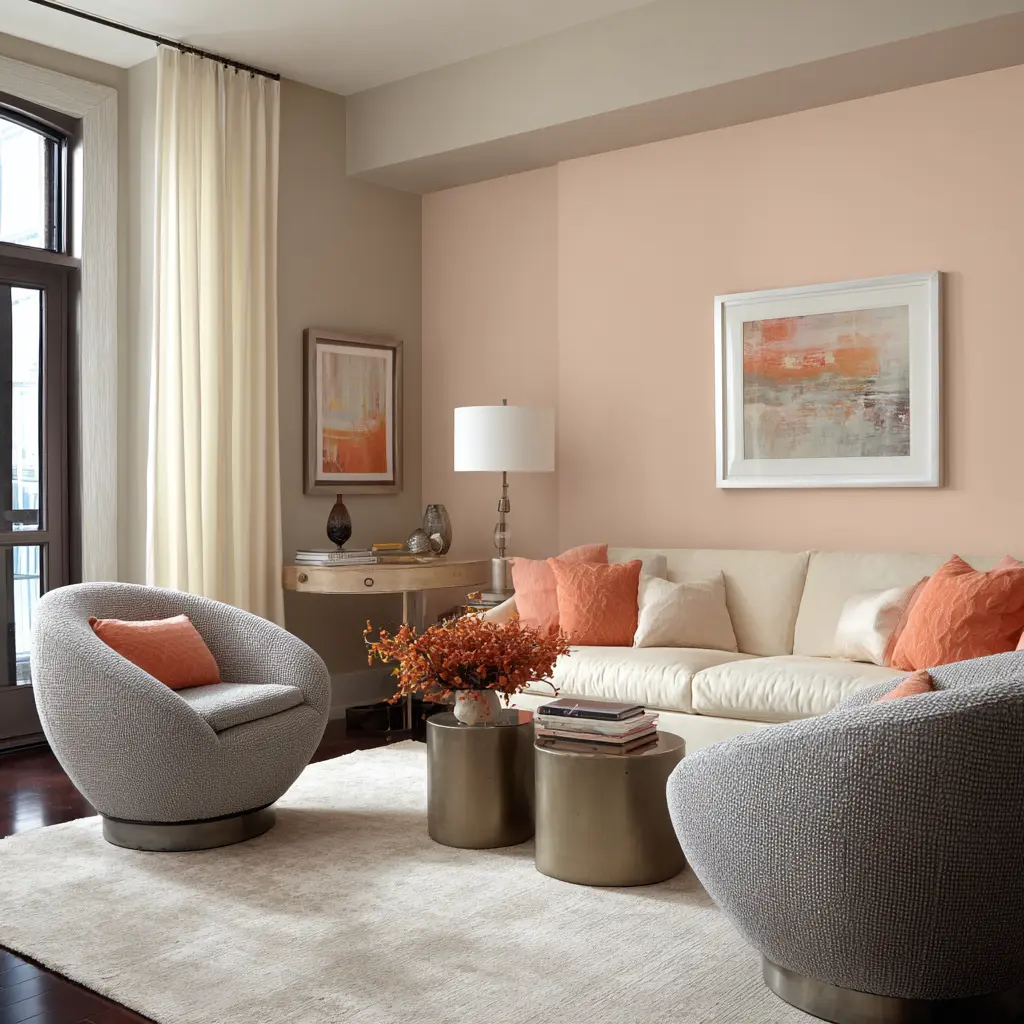
This makes a major difference in a living room, where the goal is often comfort as much as impact. A softened dark can feel cocooning.
A hard dark can feel severe. The warmth inside the color is what separates the two.
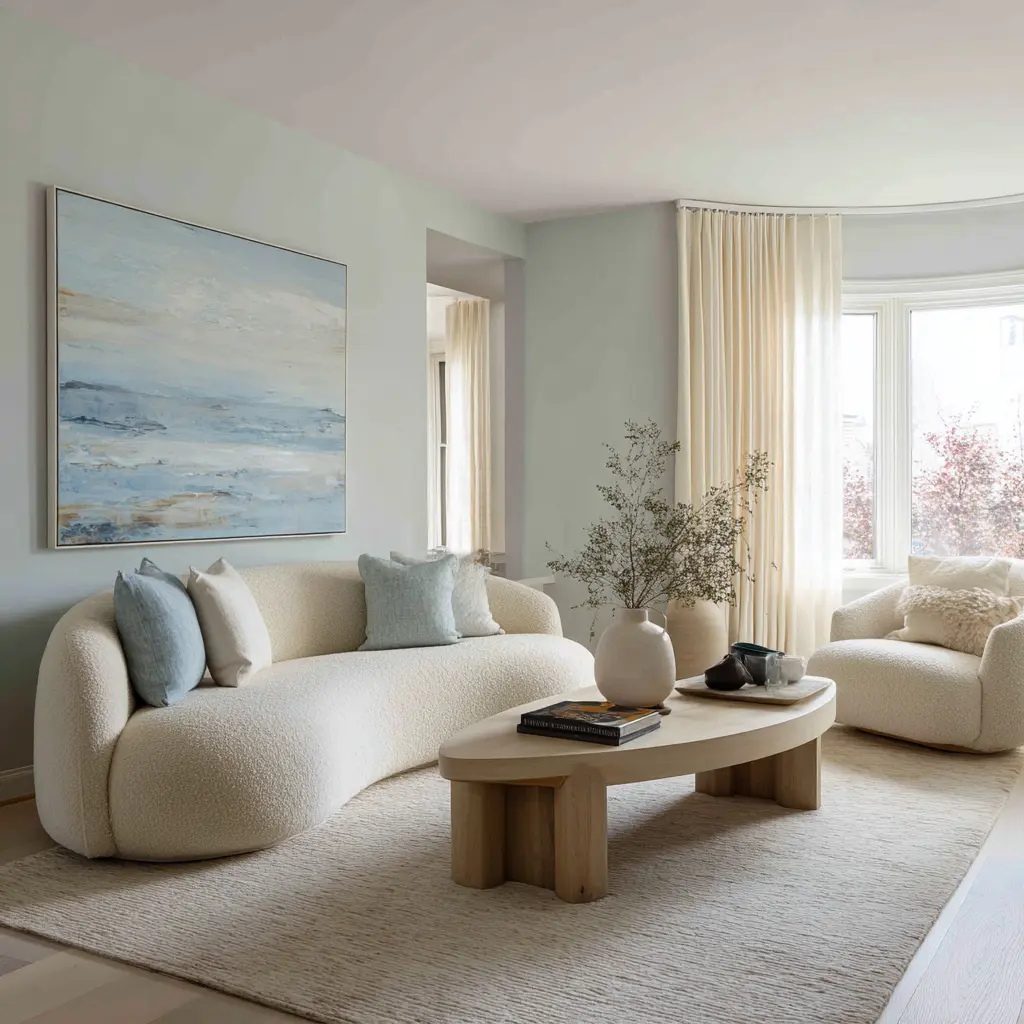
Open-plan homes have changed the way living room colors are chosen
In open-plans, the living room is no longer visually separate from the kitchen, dining area, or hall. That has made color selection more demanding.
The wall color now has to live beside cabinetry, stone, trim, metal, flooring, and other visible finishes all at once.
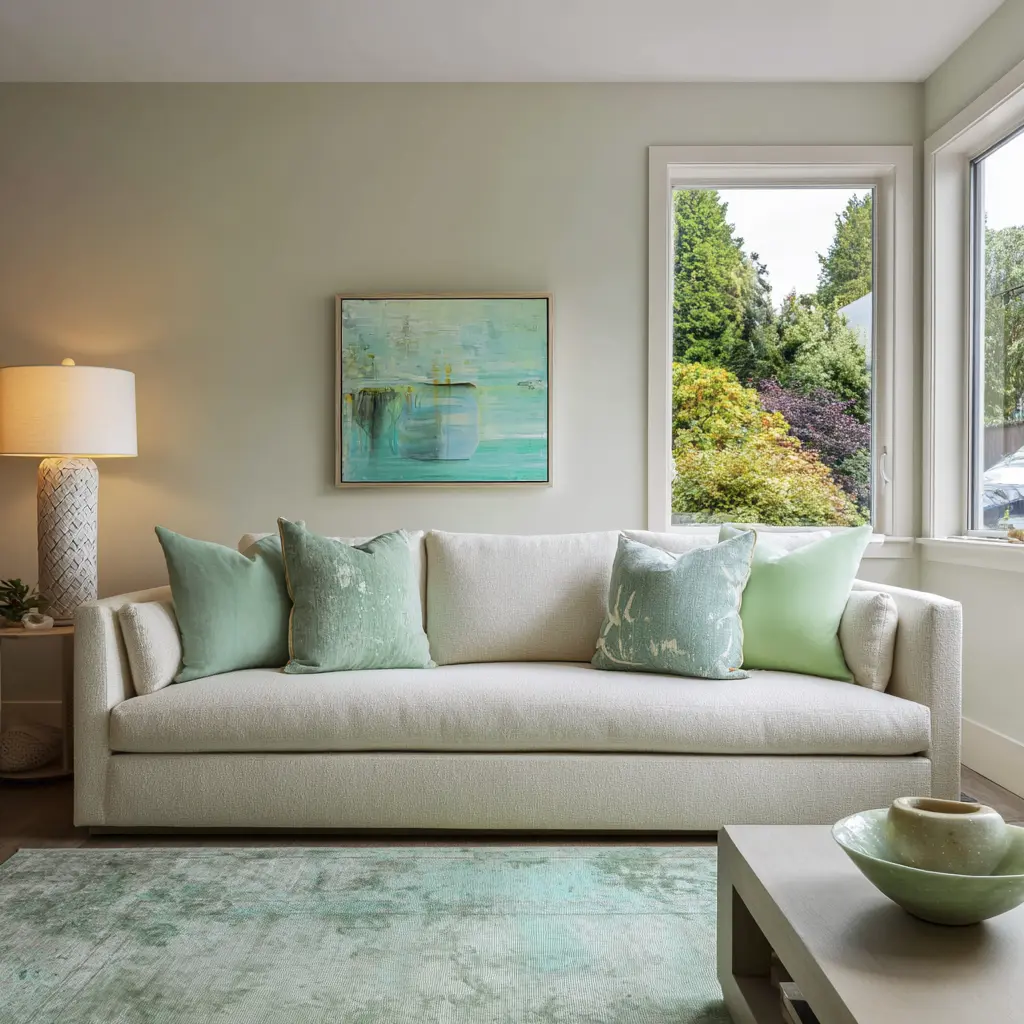
This is another reason hybrid tones are so useful. A khaki-olive, a hazy blue-gray, a blush-beige, or a sage-putty shade can sit near warm wood, white trim, matte black details, and pale stone more easily than a clearer pure hue can.
These colors mediate between zones.
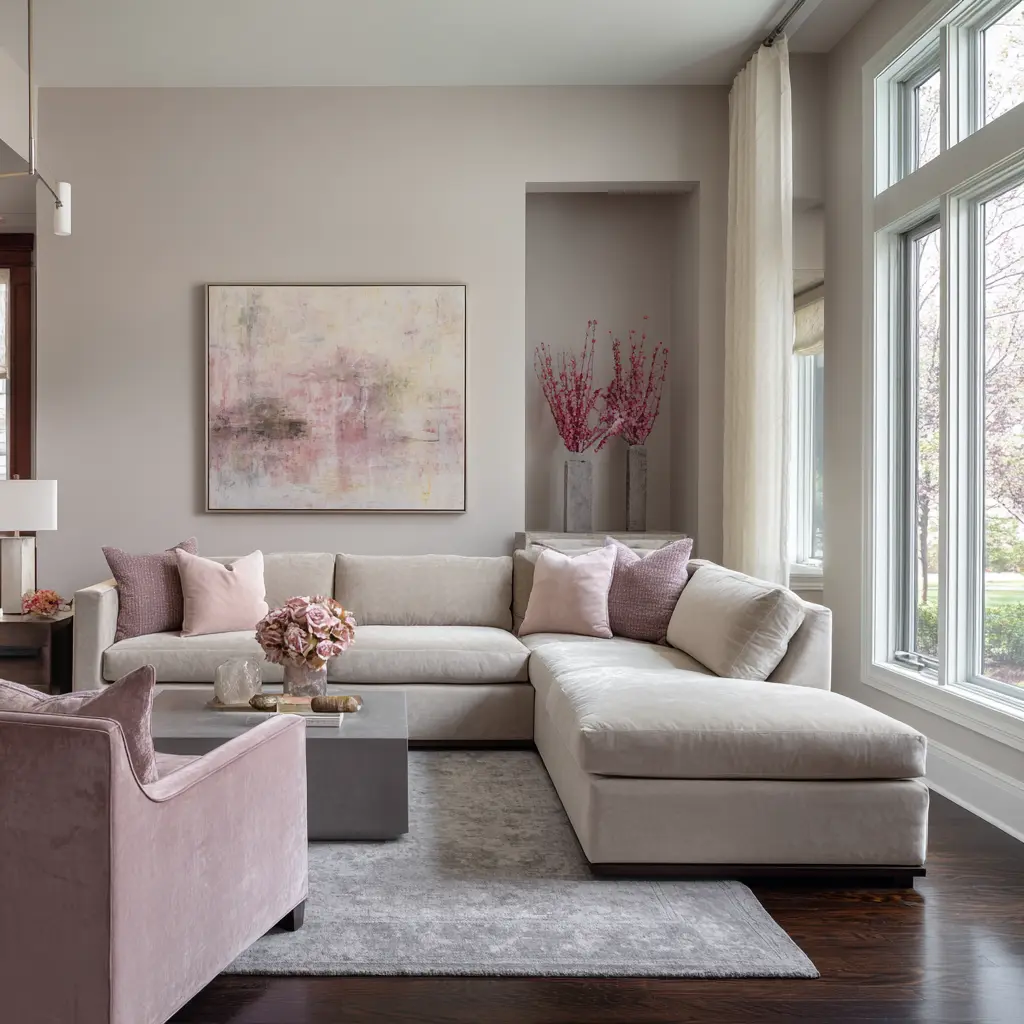
So in open-plan homes, the best living room wall color is often not the one with the strongest identity in isolation. It is the one that can hold its own while connecting to everything around it.
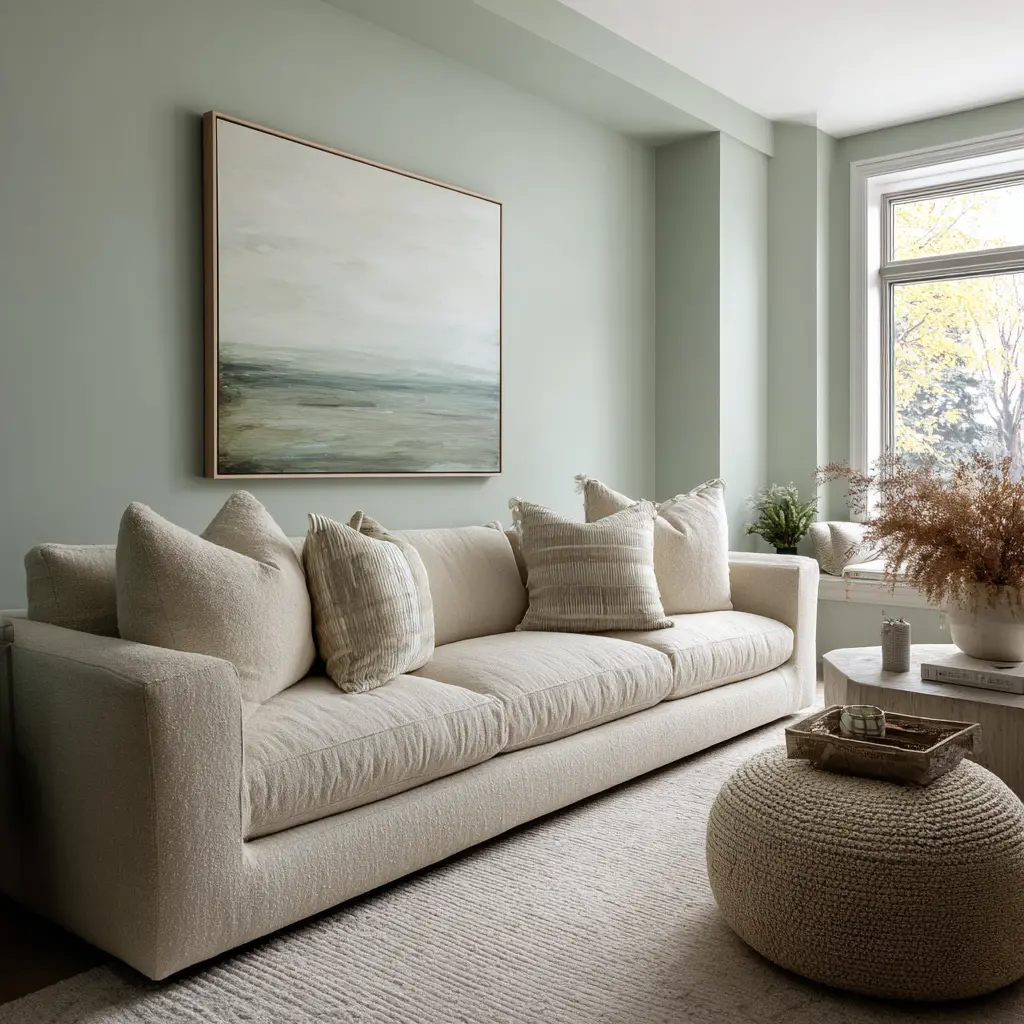
What makes living room color ideas feel different
The clearest difference between recent living room palettes and many earlier trend cycles is not simply the shade family. It is the way color is being made easier to inhabit.
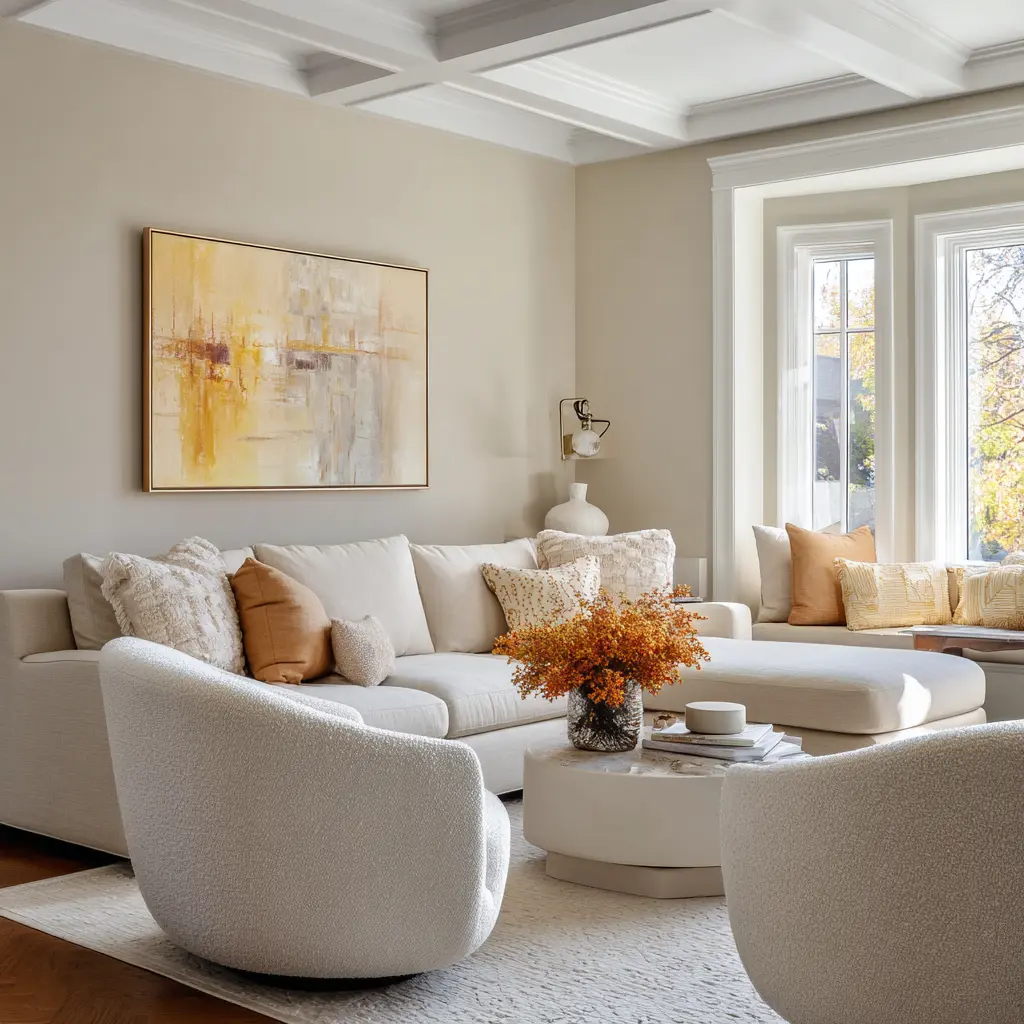
Current rooms tend to use: less pure hue, less sharp contrast, less decorative signaling, more hybrid tones, more undertone complexity, more full-room tinting, more texture-led depth, and more small concentrated color points rather than broad statements. That is why they now feel soft but not flat, warm but not heavy, and calm without looking bland.
The rule is no longer pick the boldest trending shade. A better rule is this: choose a color that can shift slightly under daylight, trim, wood, fabric, and shadow without losing its balance.
That is the kind of wall color that keeps working from morning to night and from one season to the next.
A living room color idea works better now when it does not fight the room. It settles into the room, changes the air of the space, and lets everything else become more convincing around it.