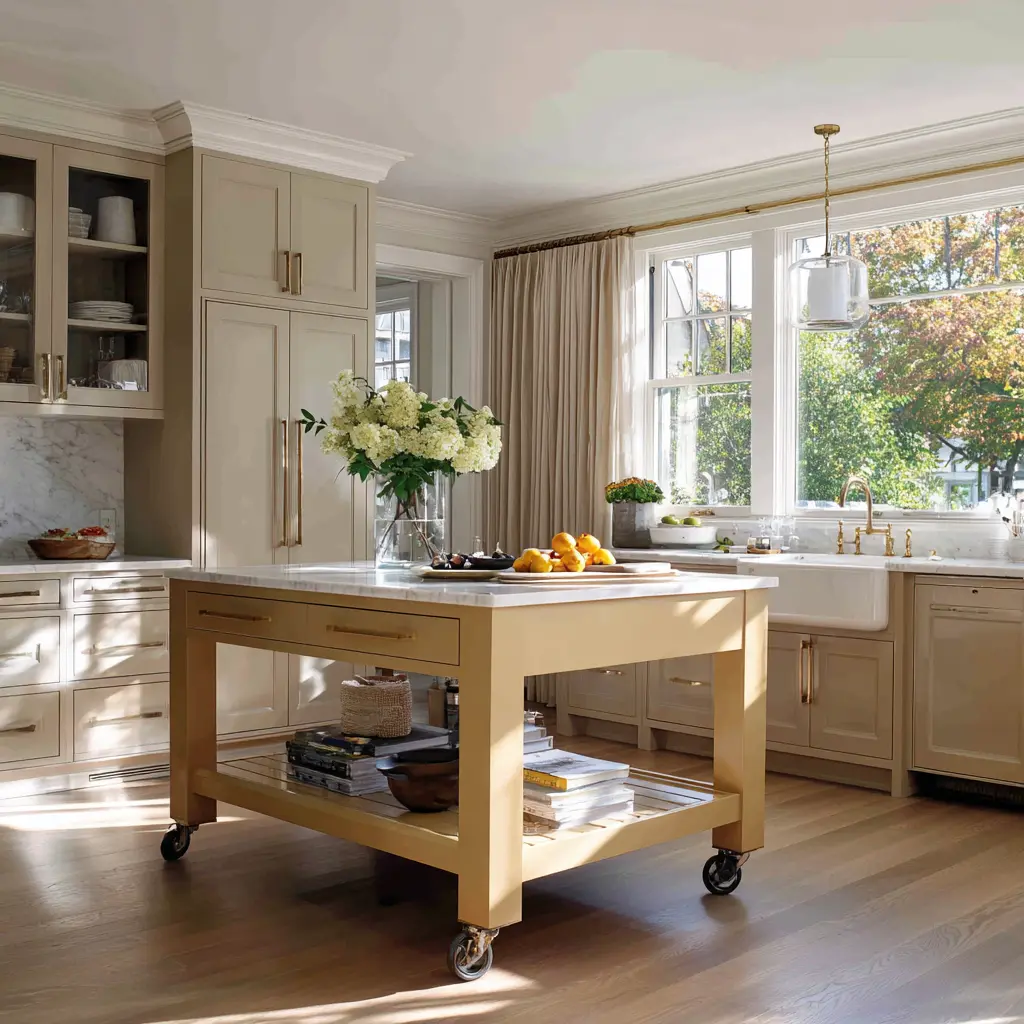
Movable kitchen islands are often considered as a practical fix for extra prep space or extra storage. But a movable island helps solve one of the layout questions: how to place visual weight in the center of the room without making the space feel too fixed, too dense, or too built-in.
Movable islands can shape how the kitchen feels. They help balance central mass, visual softness, domestic warmth, and the sense that the room still has room to shift with daily life.
A movable island brings presence to the center of the kitchen while still keeping the room more open in mood.
Why Movable Kitchen Island Design Matter Beyond Function
In many kitchens, the center of the room can quickly feel too committed if the island looks fully rooted to the floor. A movable piece changes that reaction.
Even before anyone touches it, the visible sign of movement tells the eye that the layout still has flexibility. That small visual cue matters more than many people expect.
In design terms, the island is not only adding a surface. It is lowering the emotional weight of placing a substantial object in the middle of the room.
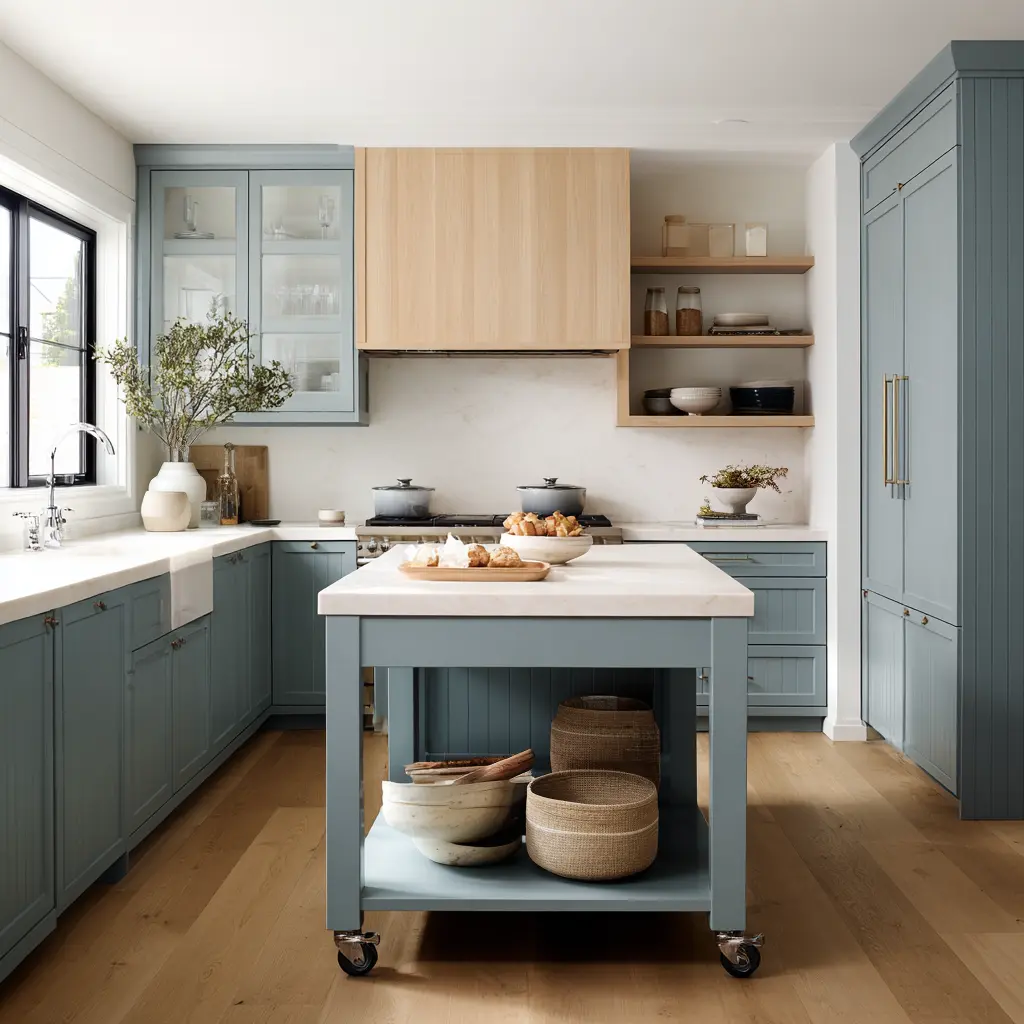
The Design Problem Movable Islands Solve
Movable kitchen island ideas show how to solve five linked concerns at once:
- central mass
- psychological permanence
- social flexibility
- visual softness
- domestic warmth
And it works in many different styles. The goal is not only to make the island mobile.
The goal is to make the center of the kitchen feel useful and settled without feeling locked.
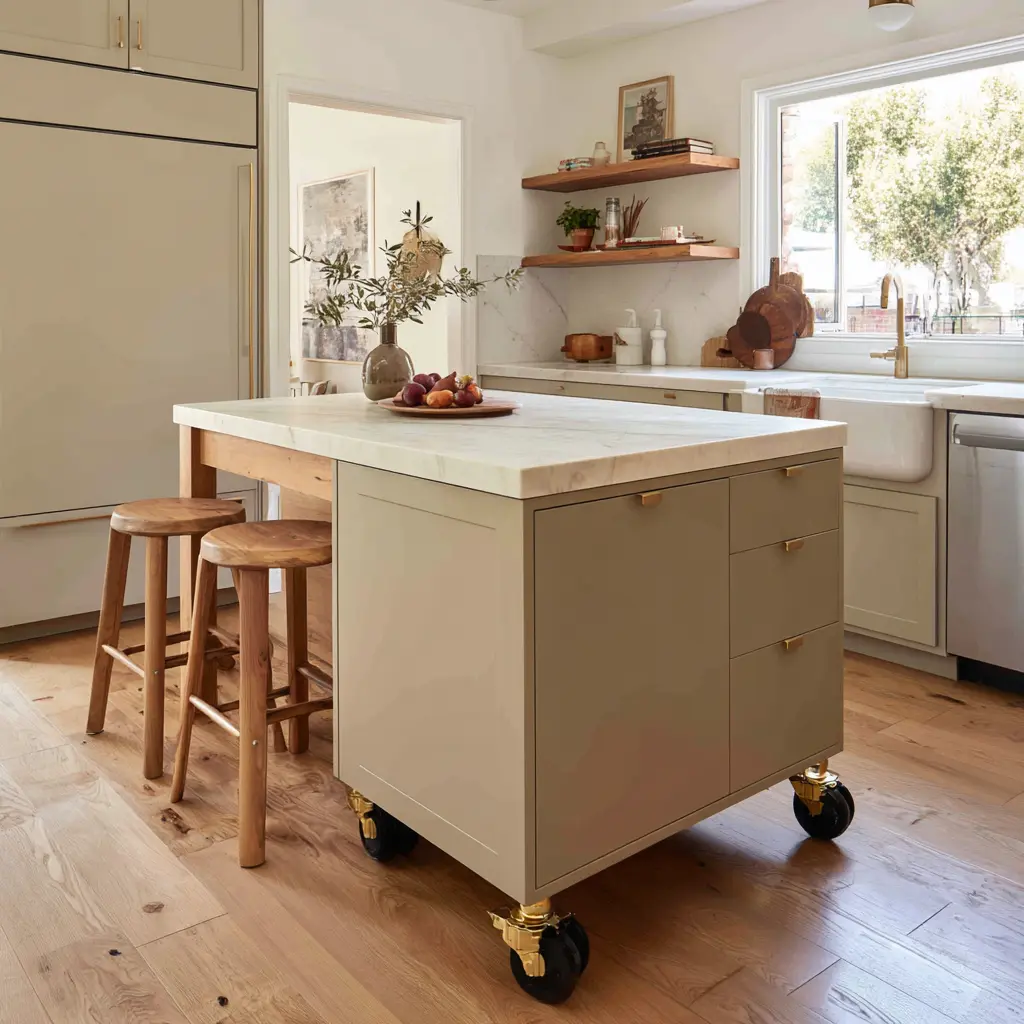
The Main Pattern: Substance Balanced by Relief
Movable islands work when they pair presence with some form of visual relief. A kitchen island can be large, storage-rich, and visually important, but it still needs something that reduces heaviness.
What Makes a Large Movable Island Feel Lighter
The most useful balancing devices include:
- open shelves
- legged frames
- pale finishes
- bright slab tops
- reflective surfaces
- rounded corners
- daylight across the main faces
- a small shadow gap beneath the base created by wheels
These features do not reduce usefulness. They reduce visual pressure.
That distinction is important. Many homeowners do not actually object to size.
They object to central density that feels blunt and hard to live with. A movable island can stay generous in scale as long as the design breaks that density in the right places.
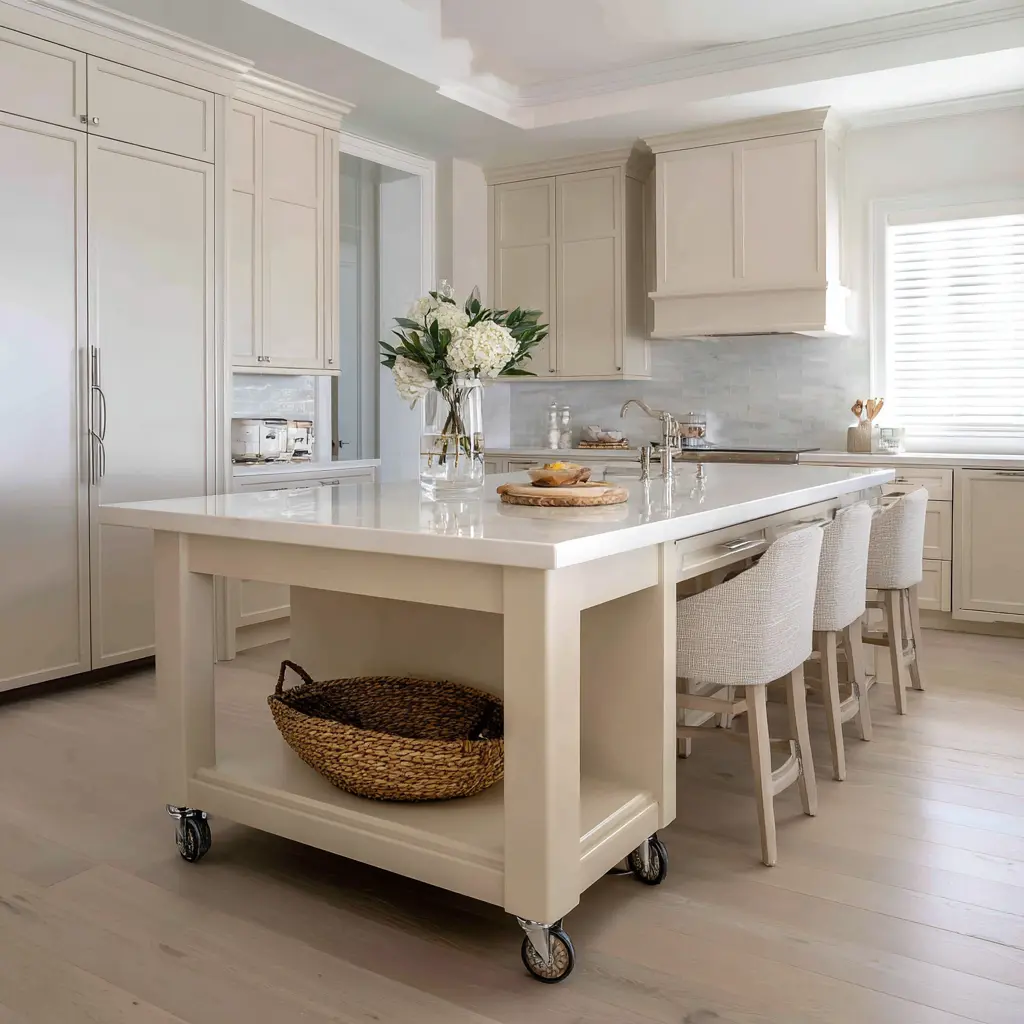
Why Warmth Is Essential in Movable Kitchen Island Design
Mobility on its own can make a center piece feel temporary. That is why warmth is so important.
Movable kitchen island design ideas pair mobility with materials and styling details that make the island feel settled inside the home.
The Details That Make a Movable Island Feel More Domestic
Warmth often appears through:
- visible wood grain
- woven baskets
- stools
- open shelving
- fruit
- flowers
- branches
- warm-toned flooring
These elements keep the island from feeling too mechanical or too detached from the rest of the kitchen. Even in very minimal kitchens, one warm layer often changes everything.
A pale wood base, a woven basket on a lower shelf, or a bowl of fruit can soften the middle of the room and make the island feel more lived in.
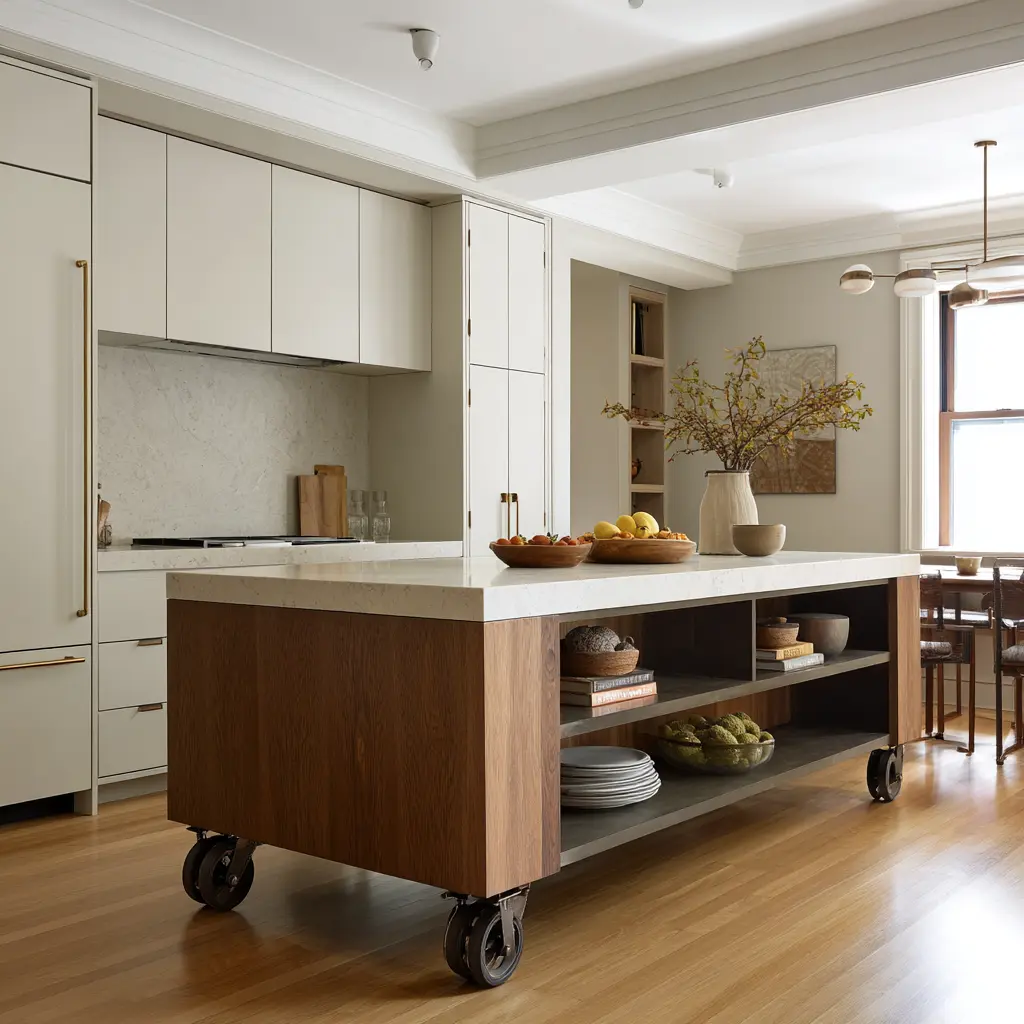
Organic Styling Does More Than Fill Space
Branches, bowls, flowers, and fruit are not just decorative extras. In this category, they do real balancing work.
They soften:
- hard geometry
- long straight lines
- broad flat planes
- minimal surfaces
- stronger sculptural forms
That is why these small elements matter so much in a restrained kitchen. They help keep the center calm and human instead of severe.
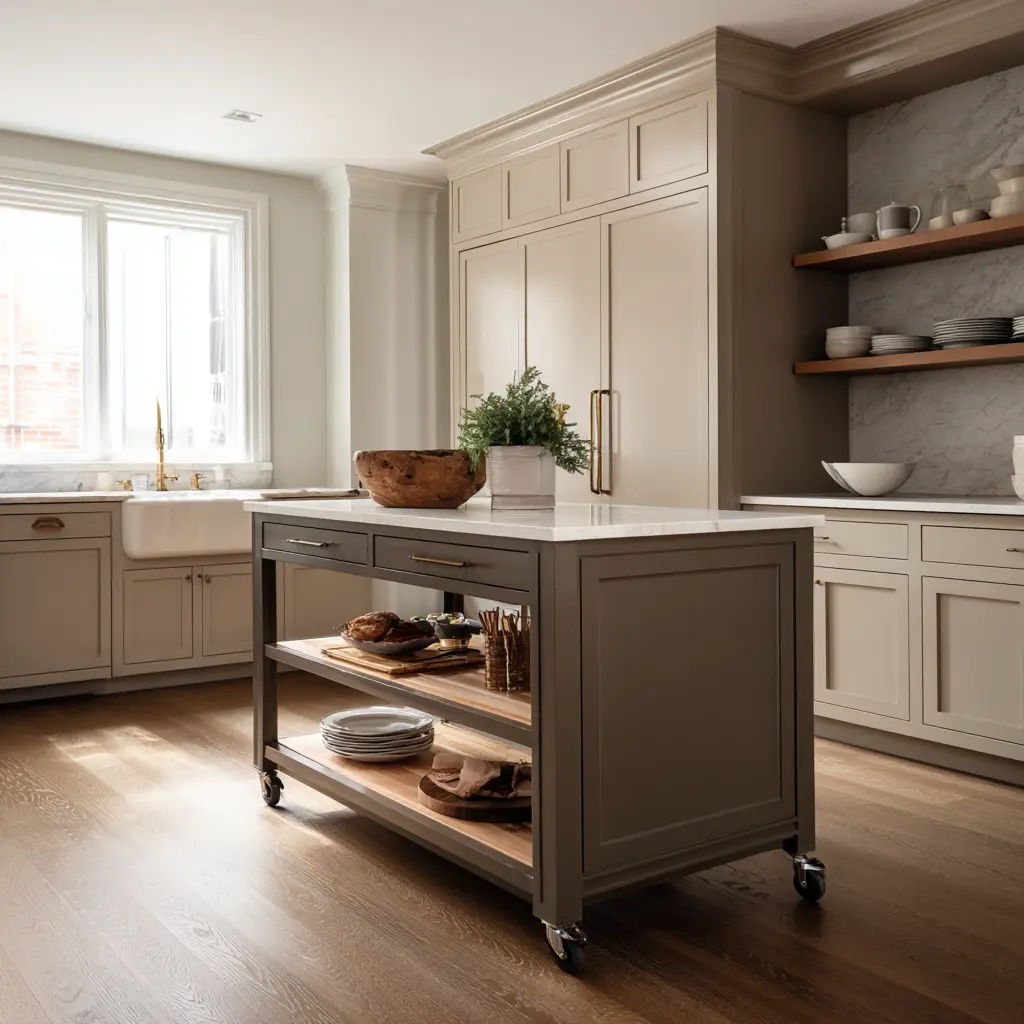
Why a Movable Island Should Have Its Own Identity
A common design mistake is treating the island as a smaller version of the perimeter cabinetry. That usually weakens the whole composition.
A movable island becomes more convincing when it feels like a freestanding object with its own logic.
What Gives a Movable Island a Distinct Identity
That distinctness can come from:
- table legs
- open framing
- a darker or warmer tone
- visible wheels
- mixed materials
- split-height construction
- drawers and shelves with more furniture-like detailing
The exact style can change. The island may lean modern, classic, minimal, worktable-inspired, or softly traditional.
What matters most is that it reads as its own piece rather than a copy of the wall cabinets. This gives the island more legitimacy in the room.
It feels placed with intent rather than squeezed into the center as an afterthought.
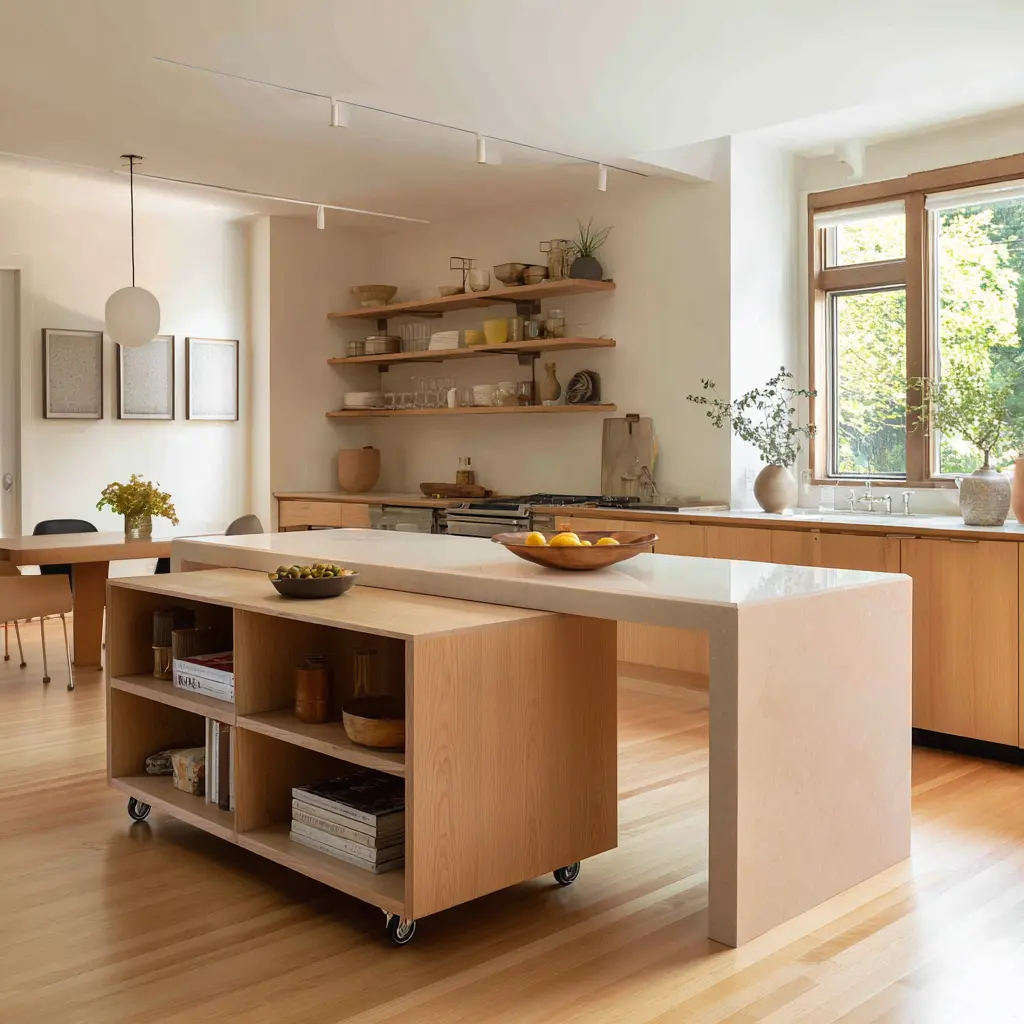
The Compensation of Movable Islands
The more visually heavy the island becomes, the more the design must add signs of lightness, softness, or flexibility. This is one of the design ideas for planning an island concept.
If the Island Base Is Closed and Dense
A heavier base usually needs balancing through:
- a pale tone
- a bright top
- clearly visible wheels
- an open niche or shelf
- daylight on the main face
- softened corners
These details stop the island from feeling too sealed or too blunt.
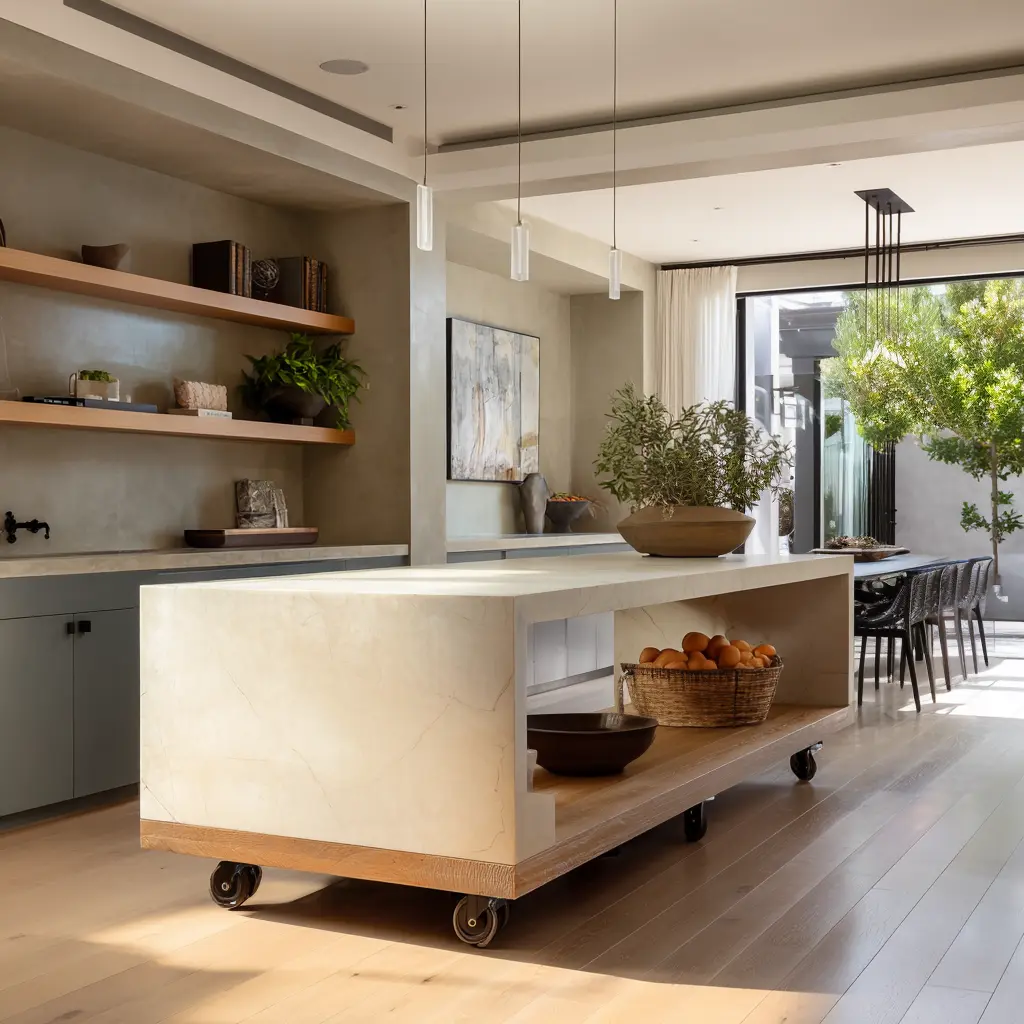
If the Wheels Are Very Obvious
A strong mobility cue works best when the rest of the design is refined. That often means:
- better material quality
- a thicker and cleaner top
- more careful detailing
- calmer perimeter cabinetry
- metal finishes that relate to other fixtures in the room
This helps the island feel intentional instead of overly utilitarian.
If the Island Is Long and Socially Scaled
Larger social islands feel better when they are kept visually disciplined. The ways to do that include:
- seating tucked neatly below the overhang
- low-profile styling
- a tight tonal range
- simpler cabinetry around the perimeter
This keeps the long island broad and inviting without making it overwhelming.
If the Island Is Very Minimal
A stripped-back island still needs depth. It usually gets it through:
- strong proportion
- warm timber
- meaningful empty space
- one or two soft organic accents
A minimal island can feel very refined, but only when its restraint feels deliberate.
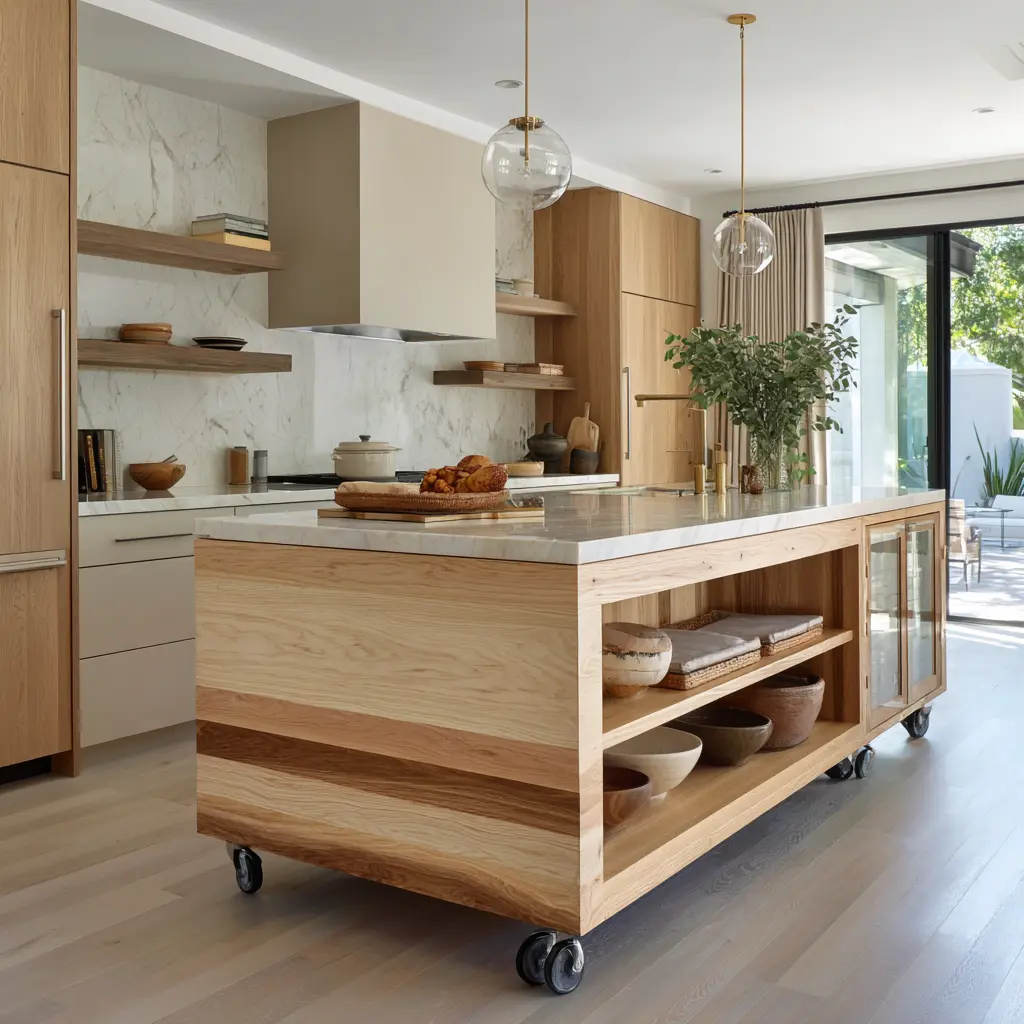
The Main Types of Movable Kitchen Islands
Movable kitchen islands tend to fall into a few clear design families. Knowing these can make it easier to choose the right direction for a specific kitchen.
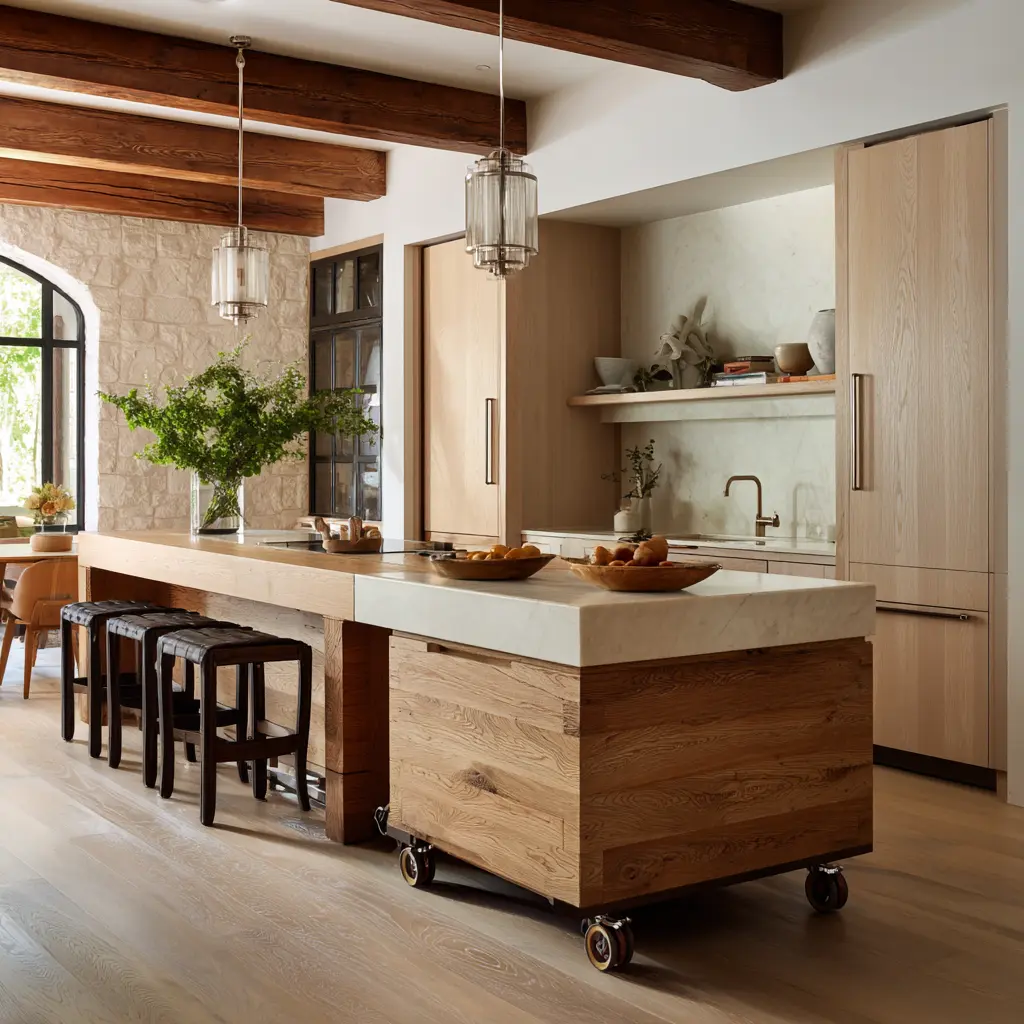
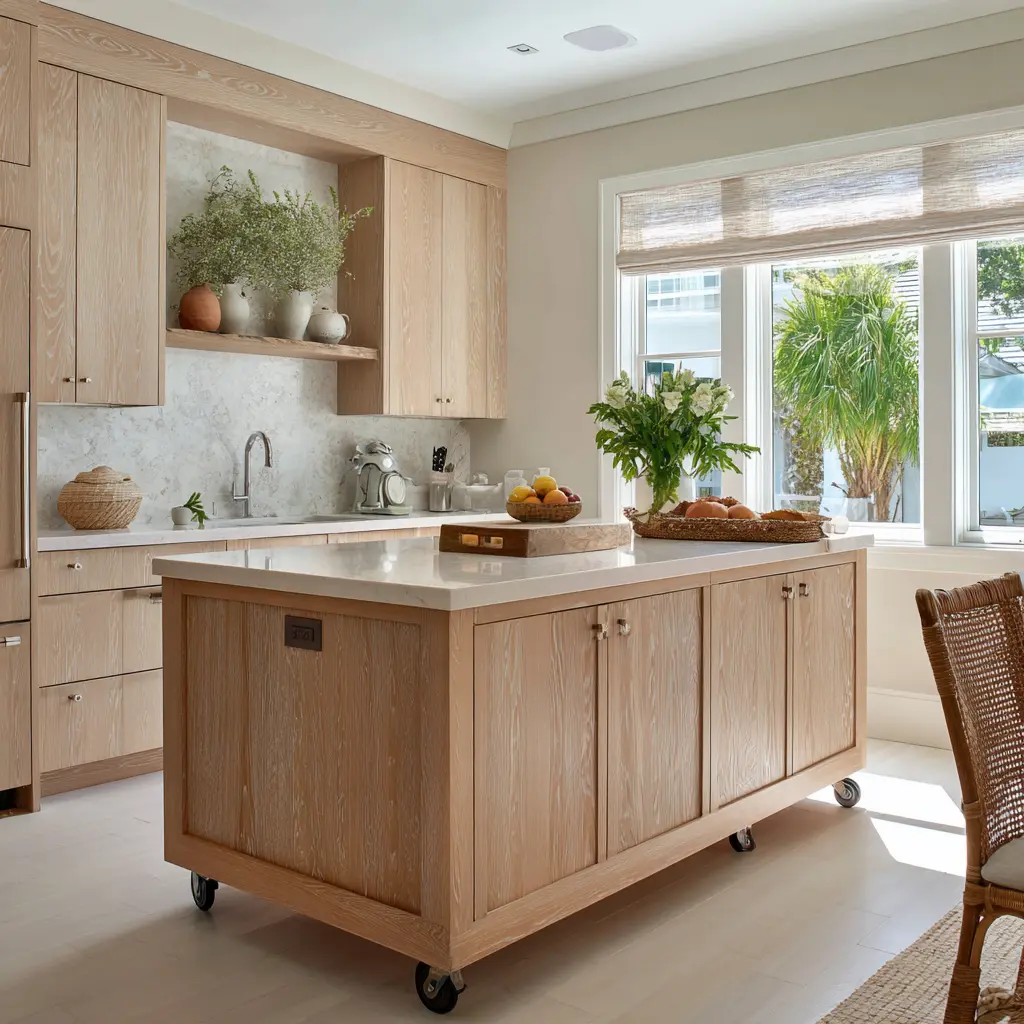
1) Cabinet-Style Movable Islands Made Visually Lighter
These are the more enclosed, storage-rich islands with stronger visual mass. They are useful for kitchens that need storage and a strong center piece.
To keep them from feeling too heavy, they usually rely on a bright top, pale finish, visible wheels, or one softened social edge such as a small overhang. This type suits those who want the usefulness of a substantial island but still want the room to feel flexible.
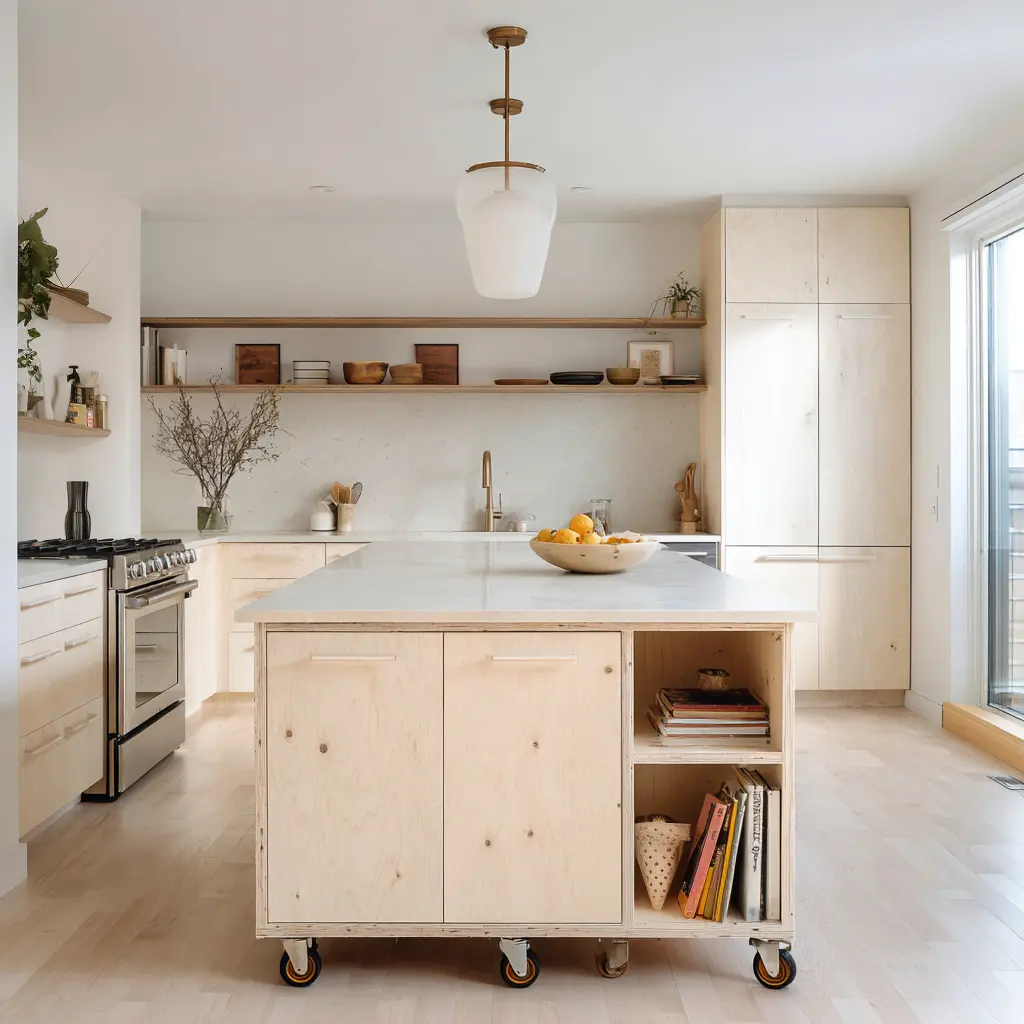
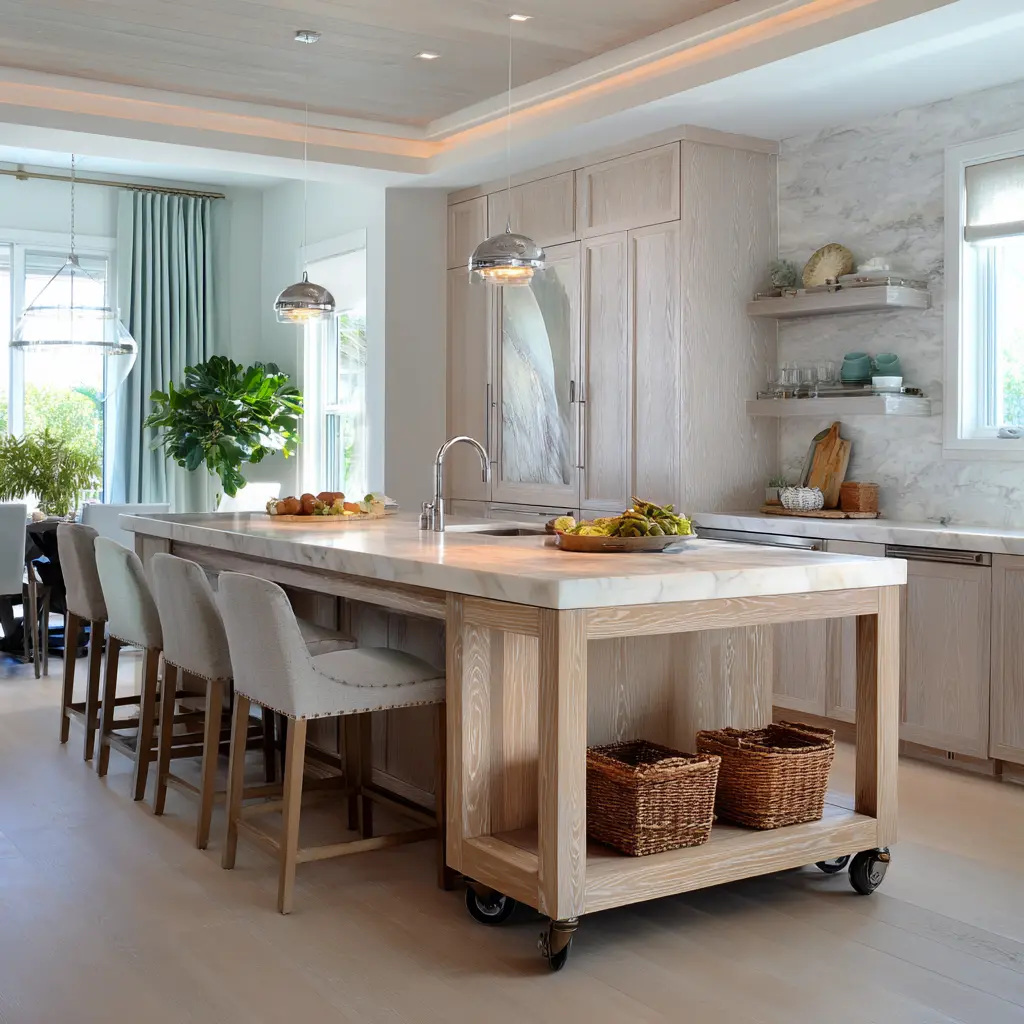
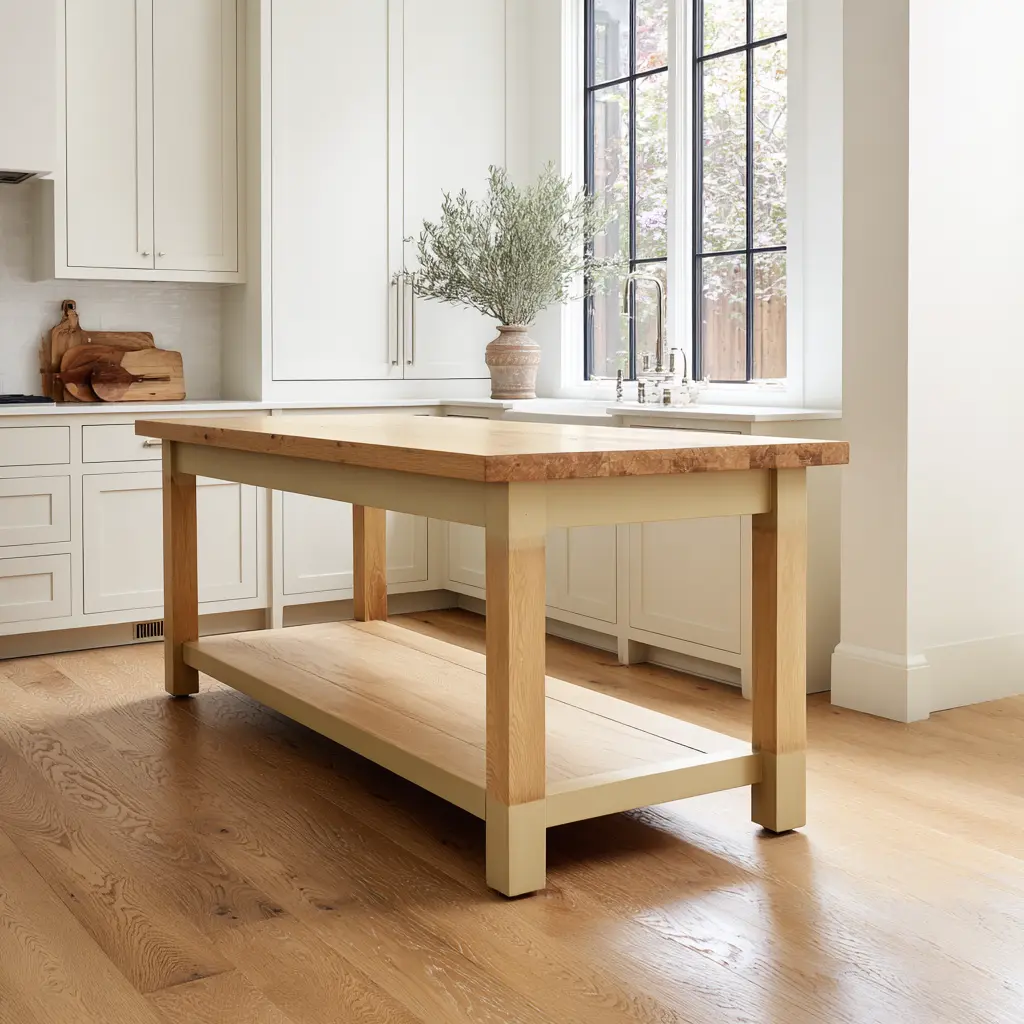
2) Open Worktable or Legged Frame Islands
These islands use legs, open lower shelves, and more visible floor beneath the main surface. They help the center of the kitchen feel lighter because the eye can still move through and under the piece.
That makes them useful in kitchens where the perimeter already carries a lot of cabinetry. This type often gives the room a more furnished and approachable tone.
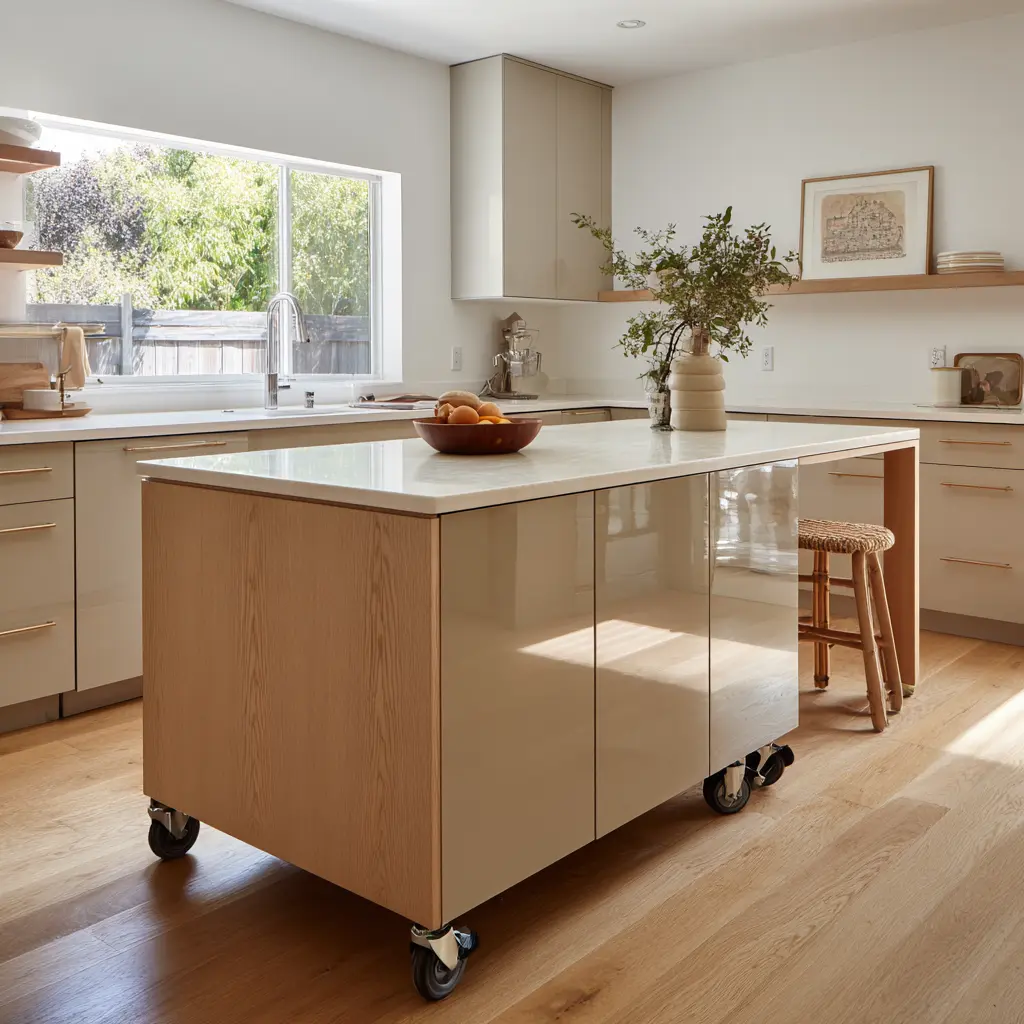
3) Furniture-Sideboard Hybrid Islands
These combine drawers, open shelves, and more polished furniture-like detailing. They are a strong choice for kitchens that want the center to feel mature, warm, and collected rather than purely task-driven.
They often soften the built-in feeling of the room and make the kitchen feel more connected to the rest of the home.
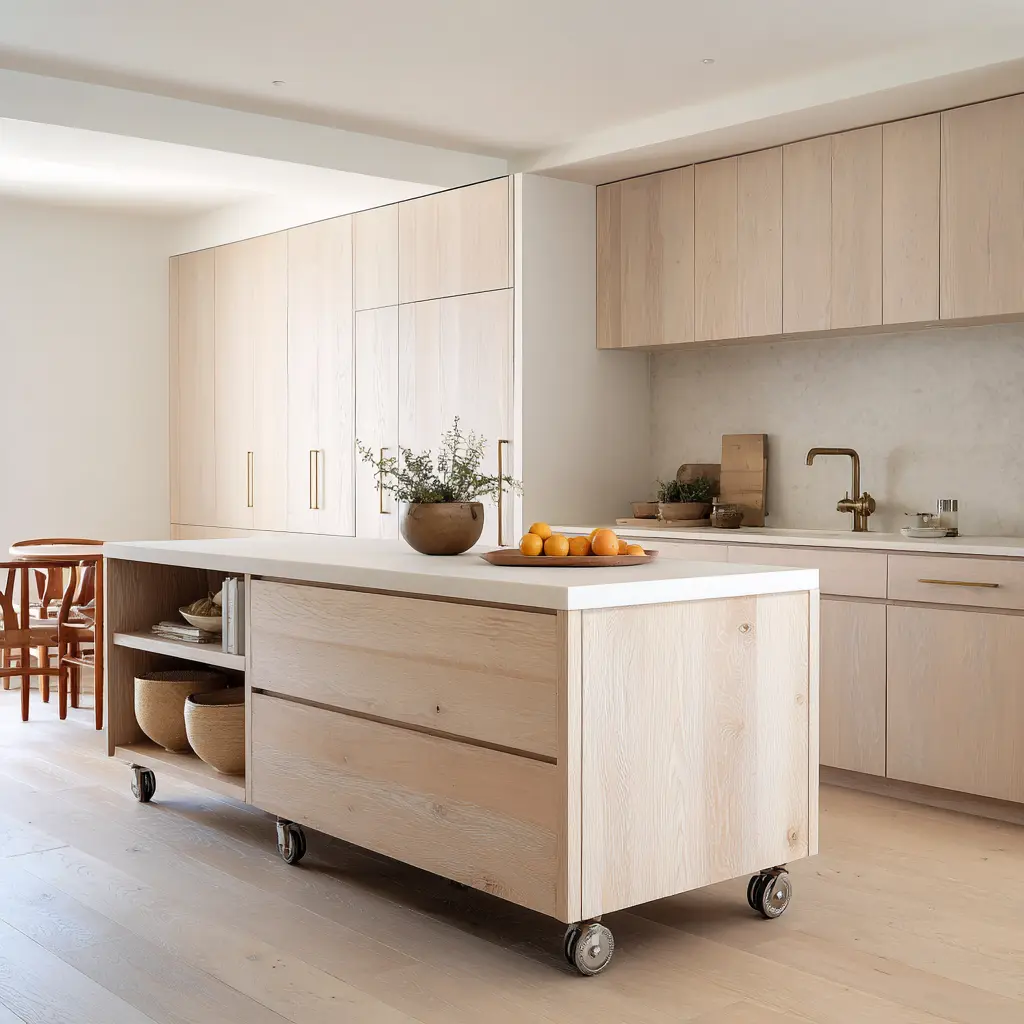
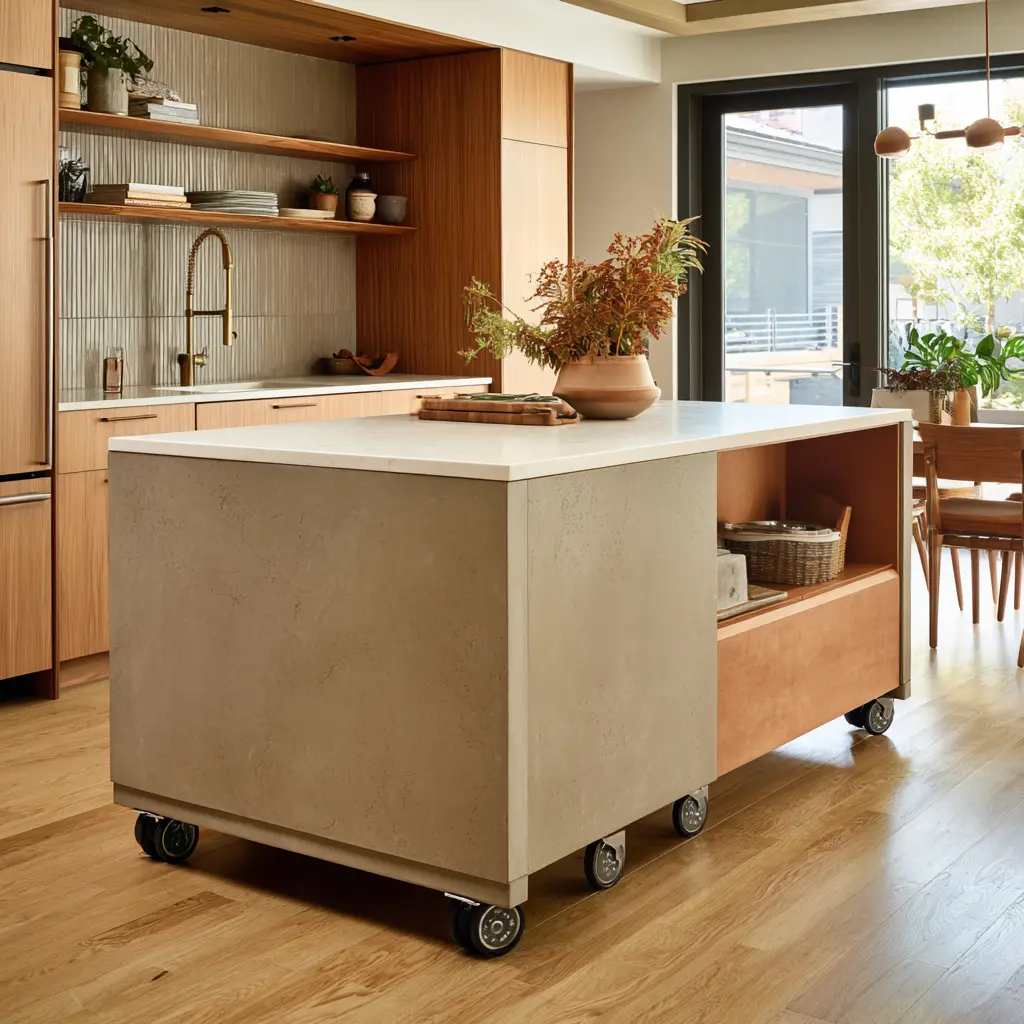
4) Sculptural Islands Softened by a Reveal
These are the stronger, more architectural pieces with solid faces and clearer visual authority. They work when one part of the form opens into a shelf, a wood-lined recess, or another softer detail that reduces the intensity of the mass.
This creates a strong center while still avoiding a fully rigid feel.
5) Split or Modular Hybrid Islands
These are among the most interesting current directions. A split or modular island uses one part that feels steady and more anchored, while another part carries the visual cue of movement more clearly.
This makes the whole composition feel richer and more flexible than a single uniform rolling block. For kitchens that want both presence and adaptability, this can be a very effective approach.
Why Open Storage Works So Well on a Movable Island
Open Storage Acts as a Pressure-Release Zone
A good open shelf or cubby does three important things:
- breaks up solid mass
- adds visual depth
- makes the island feel inhabited through visible household objects
This is why open storage works well on larger or more enclosed movable islands. It gives the eye somewhere to go.
It also lets bowls, baskets, books, and serving pieces soften the center of the room without creating too much clutter. In design terms, open shelving helps vent the heaviness of the island.
The Role of the Bright Top in Movable Kitchen Island Ideas
It often becomes the calmest and clearest surface in the whole composition.
What a Bright Top Does for the Island
A pale slab or bright top helps:
- clarify the silhouette
- reflect daylight
- lighten darker bases
- unify layered lower parts
- create a calm horizontal plane
That is why it is so often paired with darker wood, open shelving, or stronger furniture details below. The top steadies the island and keeps the full piece from feeling too busy.
Why Social Cues Make the Island Feel Better
Even when an island is not a full seating island, a small sign of shared use often improves the design. That may be:
- a pair of stools
- a tucked overhang
- a tray
- a serving board
- pastries or fruit on display
- a clear visual link toward dining
These details make the island feel less like a purely functional block and more like a shared household surface.
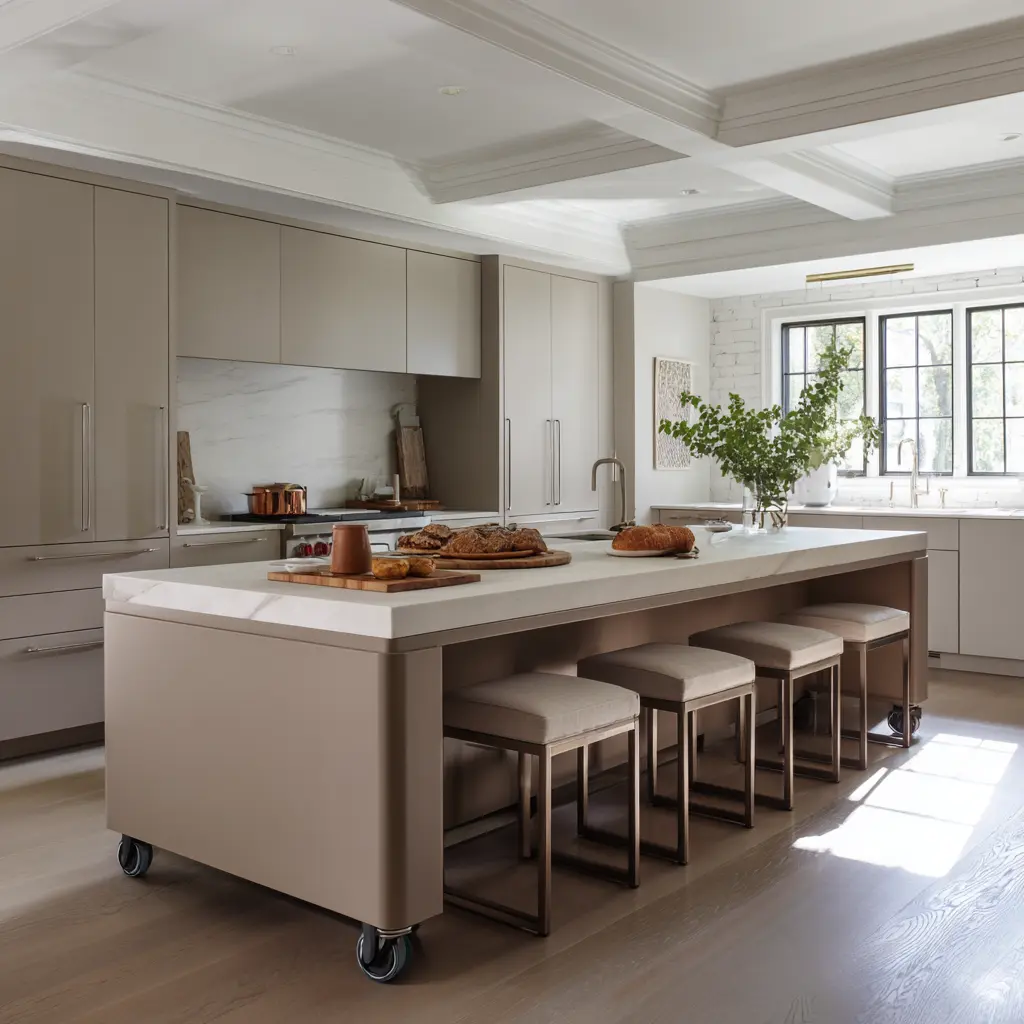
A Small Social Move Can Change the Whole Mood
A compact overhang with two stools can make a dense island feel more welcoming. A simple tray with pastries can shift the tone from work-only to daily-life use.
A clear connection to a nearby dining table can make the island feel like part of a larger living space rather than a sealed kitchen object. That is why social signaling raises the value of mobility.
It gives the flexible center a fuller role in the home.
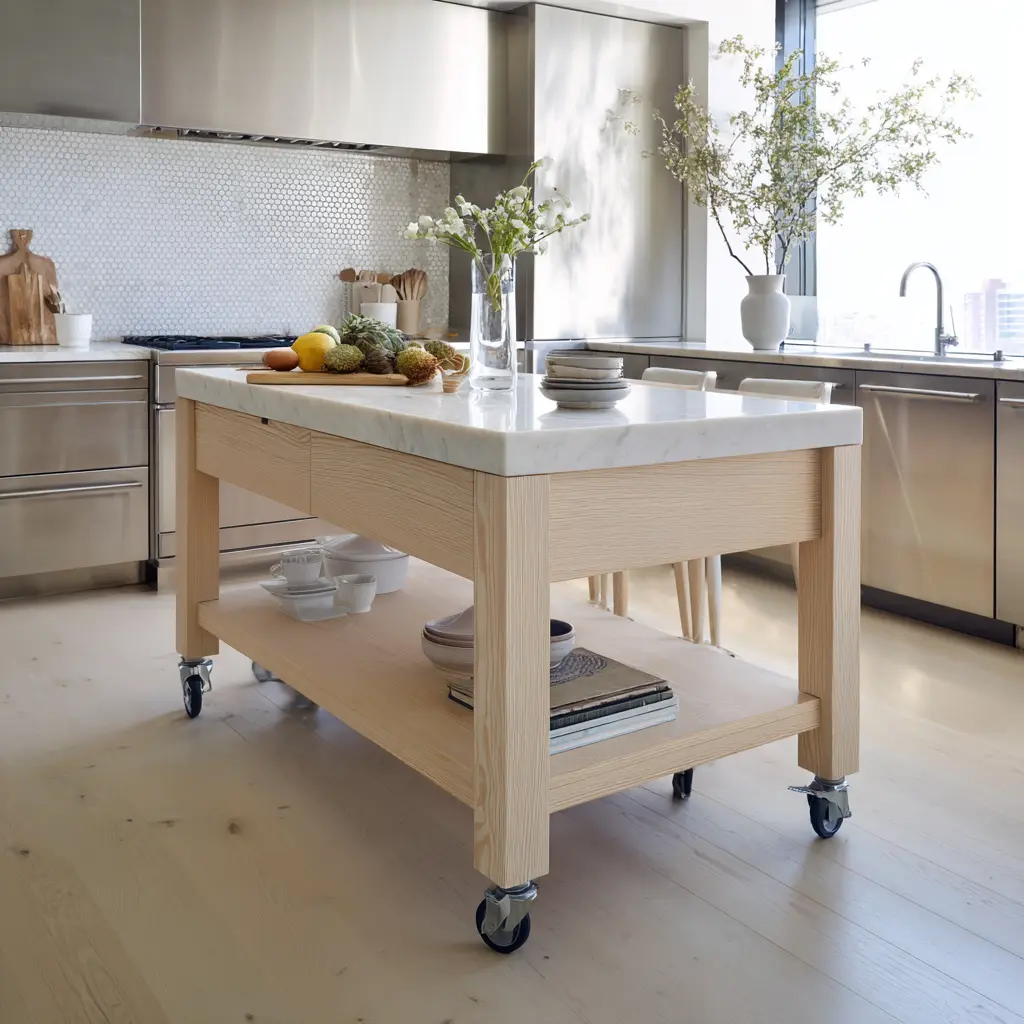
Design Principles for a Movable Kitchen Island
Pair Mobility With Warmth
Do not let the wheels or freestanding form stand alone. Add wood, woven texture, or another warm layer so the island feels settled.
Pair Size With Visual Relief
A substantial island can work very well, but it needs some release: an open shelf, legged base, pale finish, or another device that reduces density.
Give the Island Its Own Character
The island should relate to the room, but it should not look like a smaller copy of the perimeter cabinets. Let it feel like its own piece.
Use the Top as the Calmest Plane
A bright, clear top often helps organize the full composition. It can steady a darker or more layered base below.
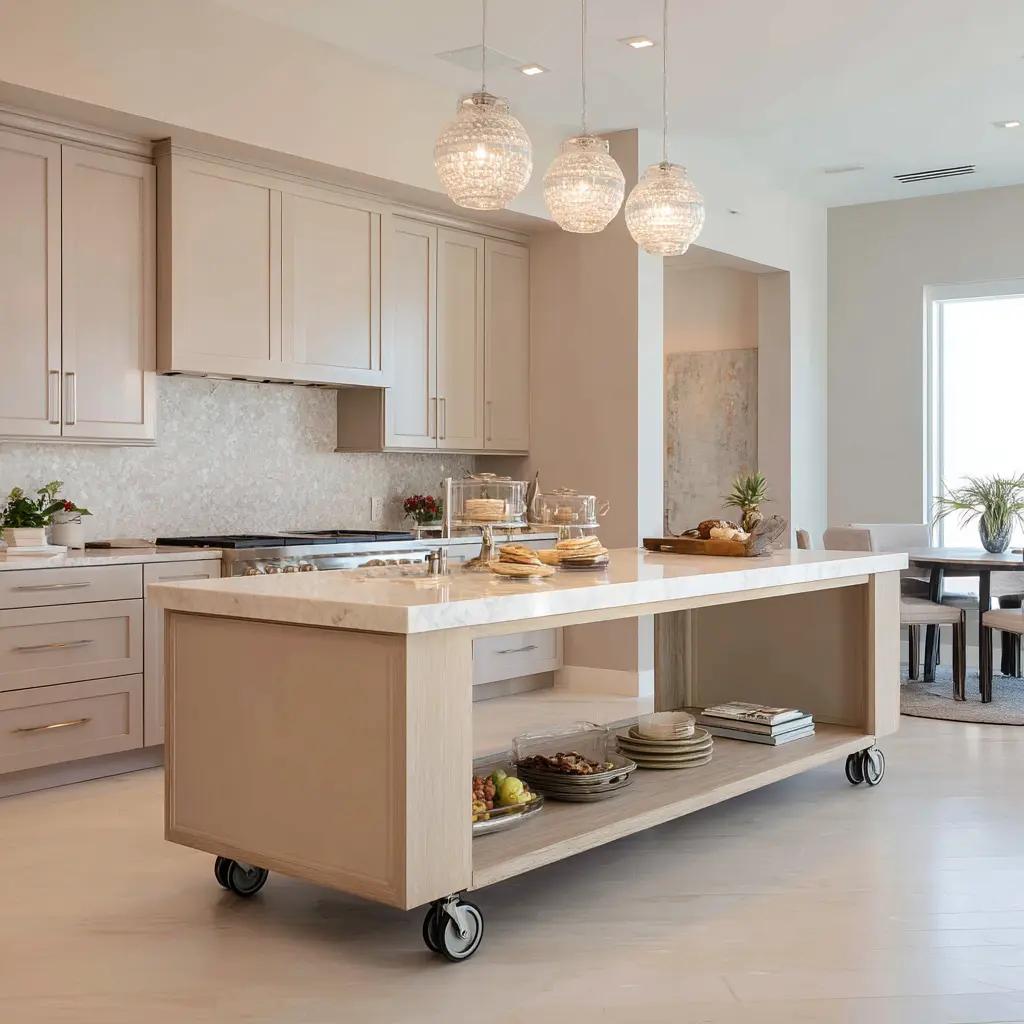
Keep Styling Low and Controlled
Low bowls, trays, fruit, and branches usually support the island better than tall clutter. This protects the horizontal strength of the main surface.
Let the Island Relate to the Wider Room
The strongest movable kitchen island ideas do not stop at kitchen function. They also suggest serving, sitting, hosting, or a visual link to dining and daily family use.
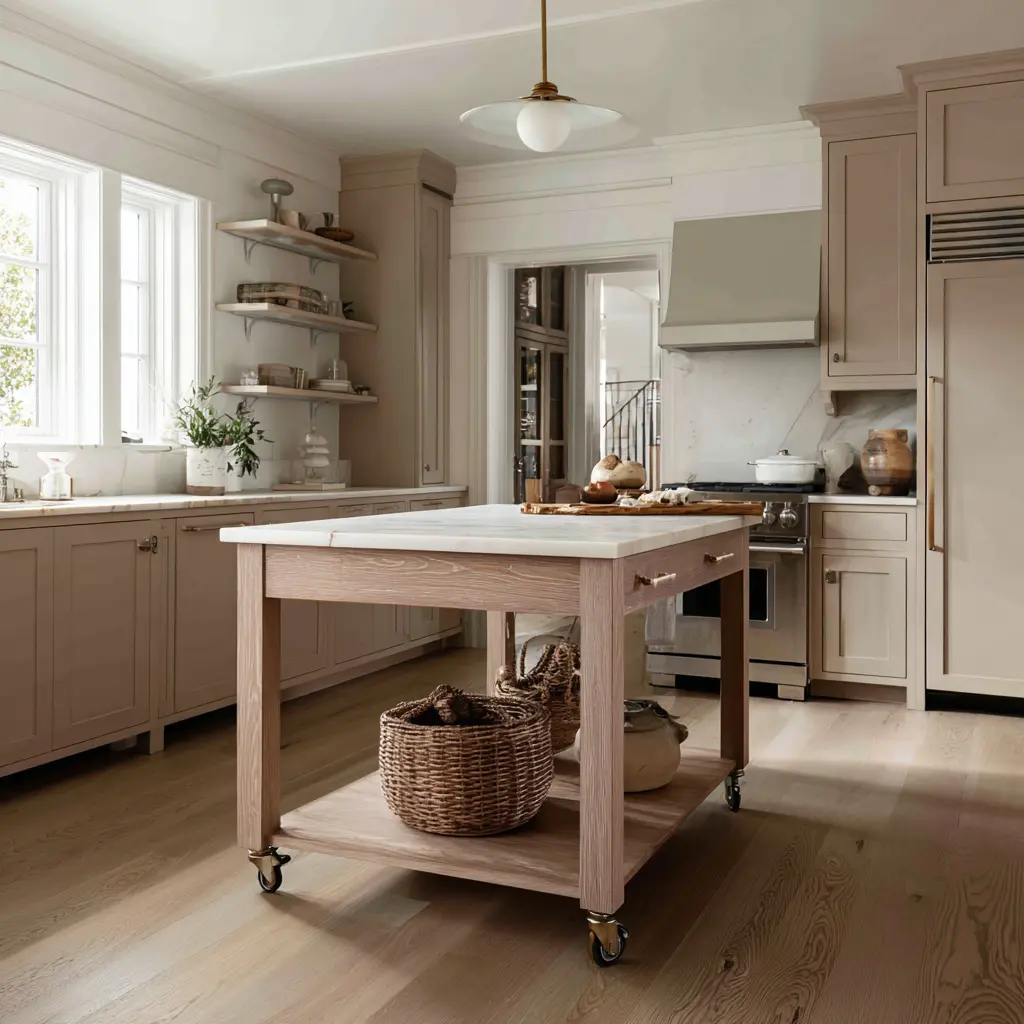
The Best Movable Kitchen Islands Create Controlled Central Freedom
At their best, movable kitchen island ideas do not feel flimsy, casual, or under-scaled. They feel substantial, but not too committed.
Useful, but not harsh. Social, but not crowded.
Grounded, but not fixed. Calm, yet still adaptable.
That is what makes them so useful in both classic and updated kitchens. They let the center of the room hold presence while still keeping the space more open in feeling.
The formula is simple: central mass + visual relief + warmth + freestanding identity + optional movement. That combination creates a kitchen center that feels steady enough to matter and flexible enough to live with.