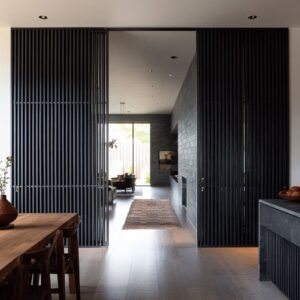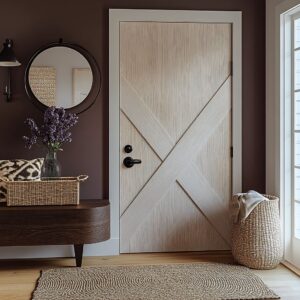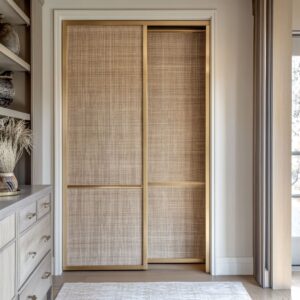
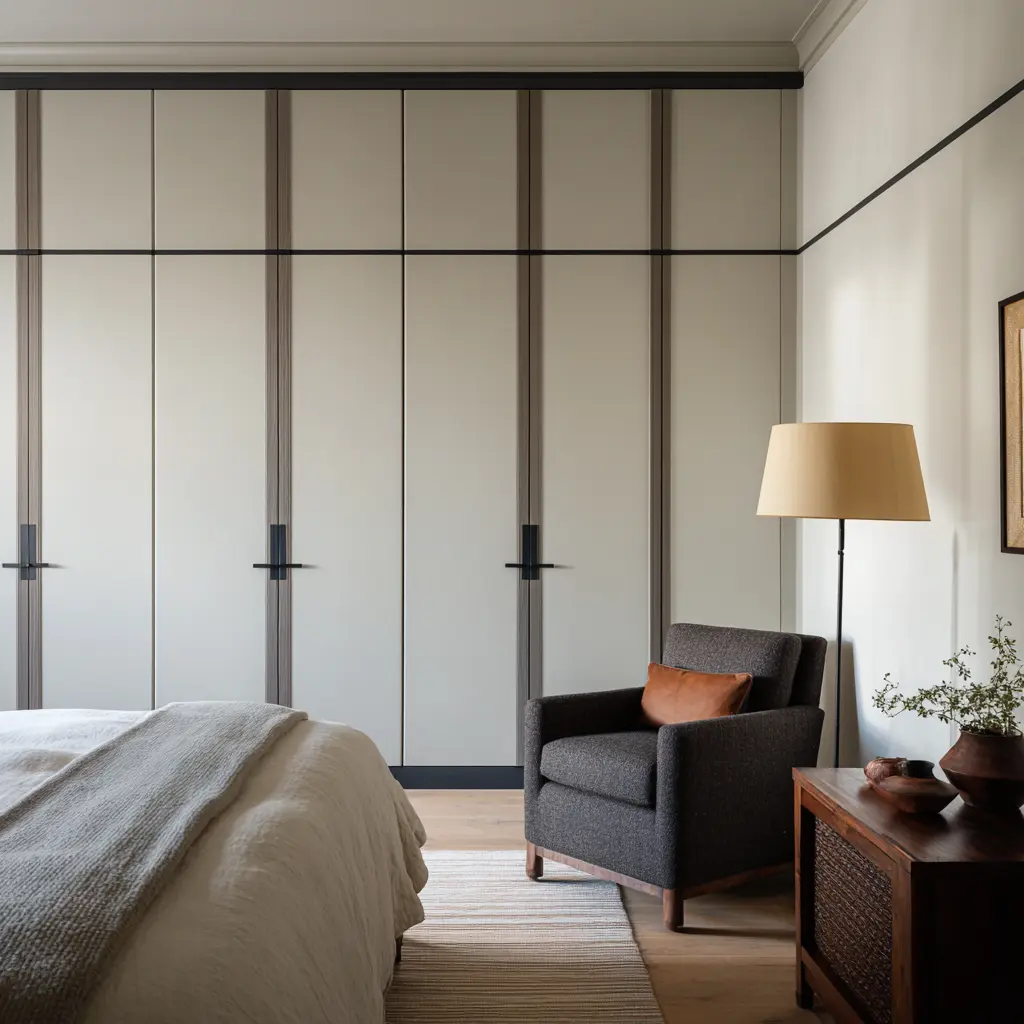
Often, closet doors were treated like background work. They had to be practical, they had to open, and ideally they were not supposed to get in the way.
That old view feels too small for what bedroom storage is doing now.
Closet doors can avoid sitting at the edge of the design story. They can be one of the main tools shaping wall hierarchy, visual weight, room rhythm, and even the emotional temperature of the space.
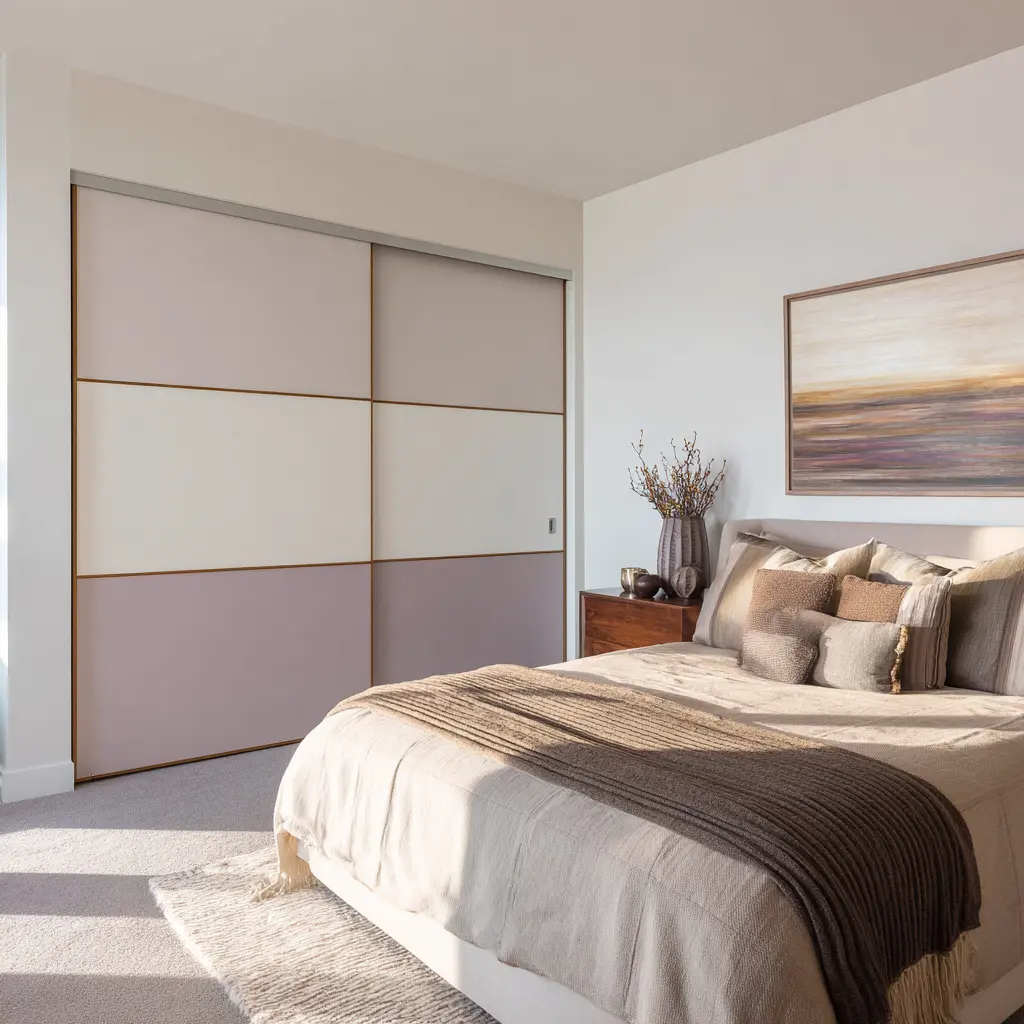
That shift matters because it changes how closet door ideas should be judged. The better question is not sliding or hinged.
It is not modern or traditional either. The question is this: what role is the closet wall playing in the room?
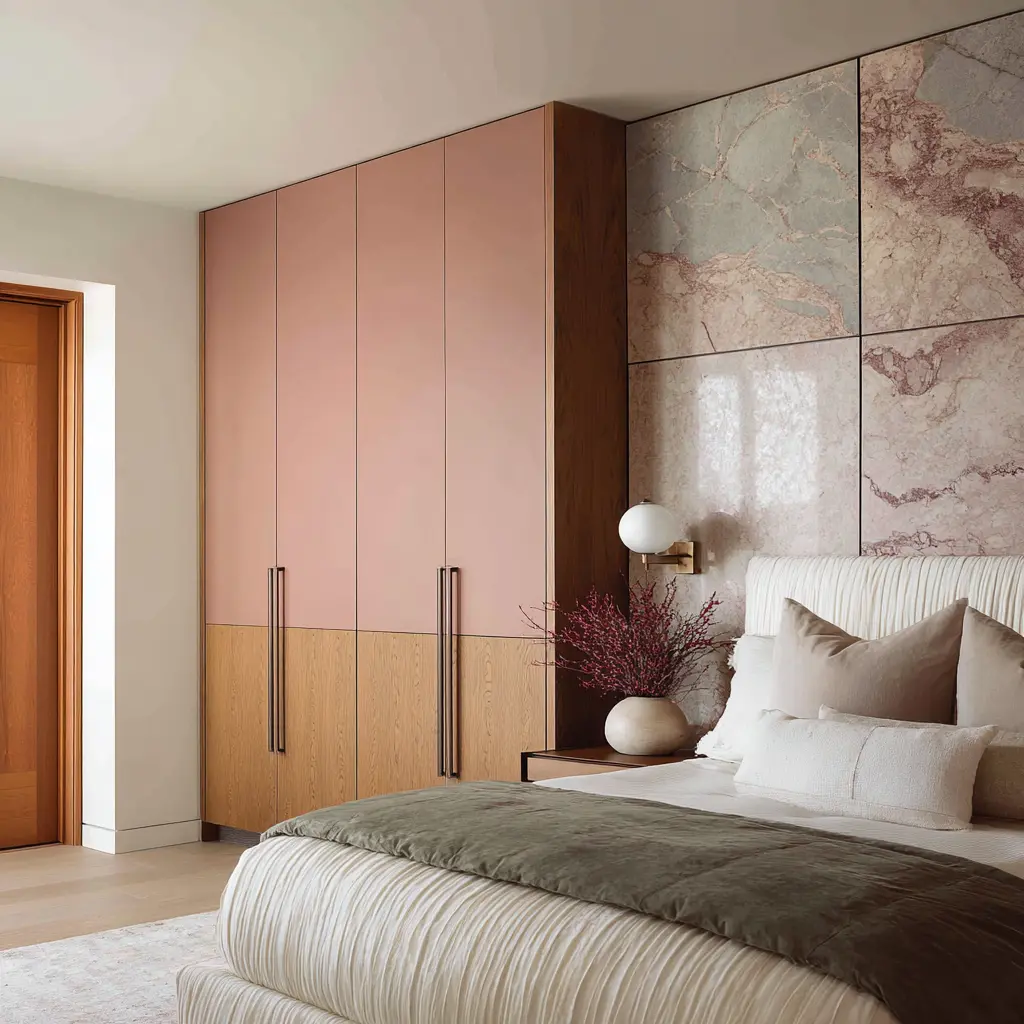
Is it acting like a soft architectural plane? A fitted built-in with furniture character?
A full feature wall? A layered material composition?
That change in viewpoint opens up much better design choices.
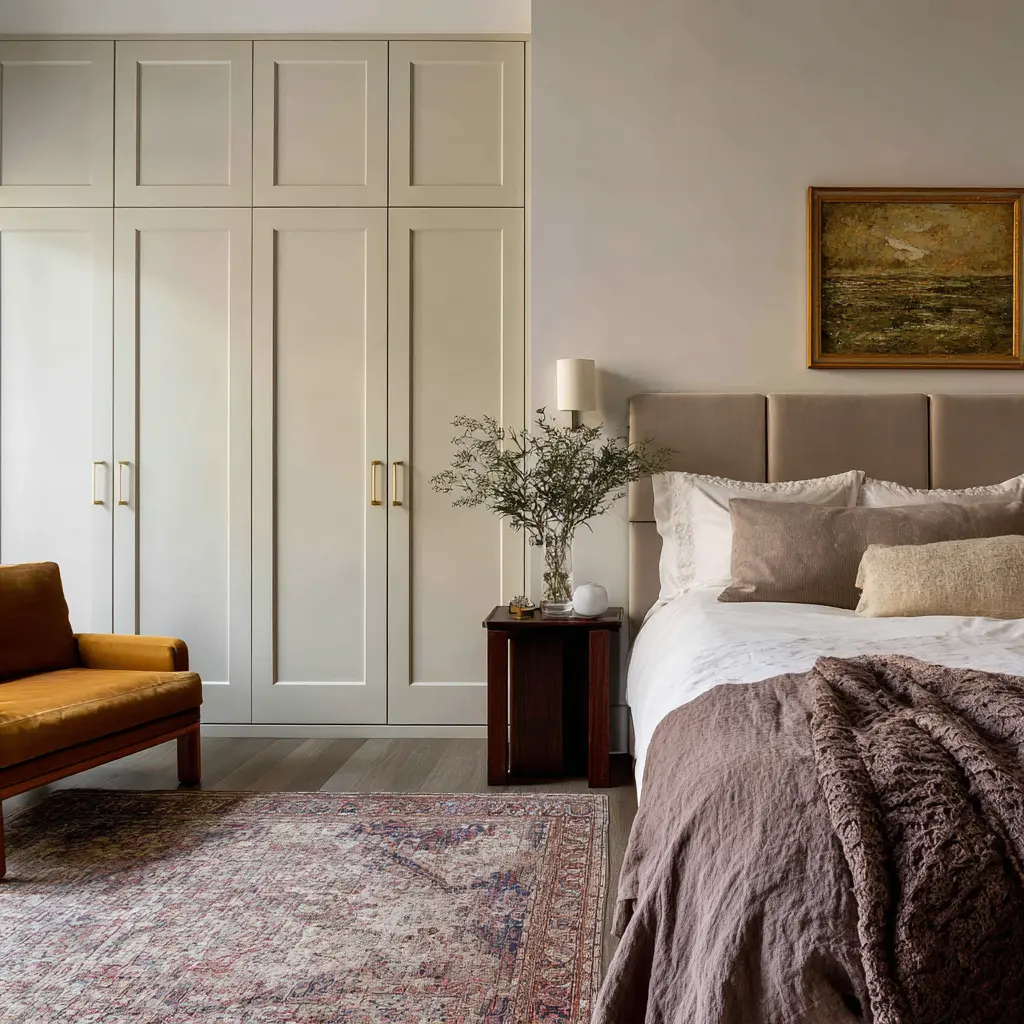
The design divide is not sliding versus hinged
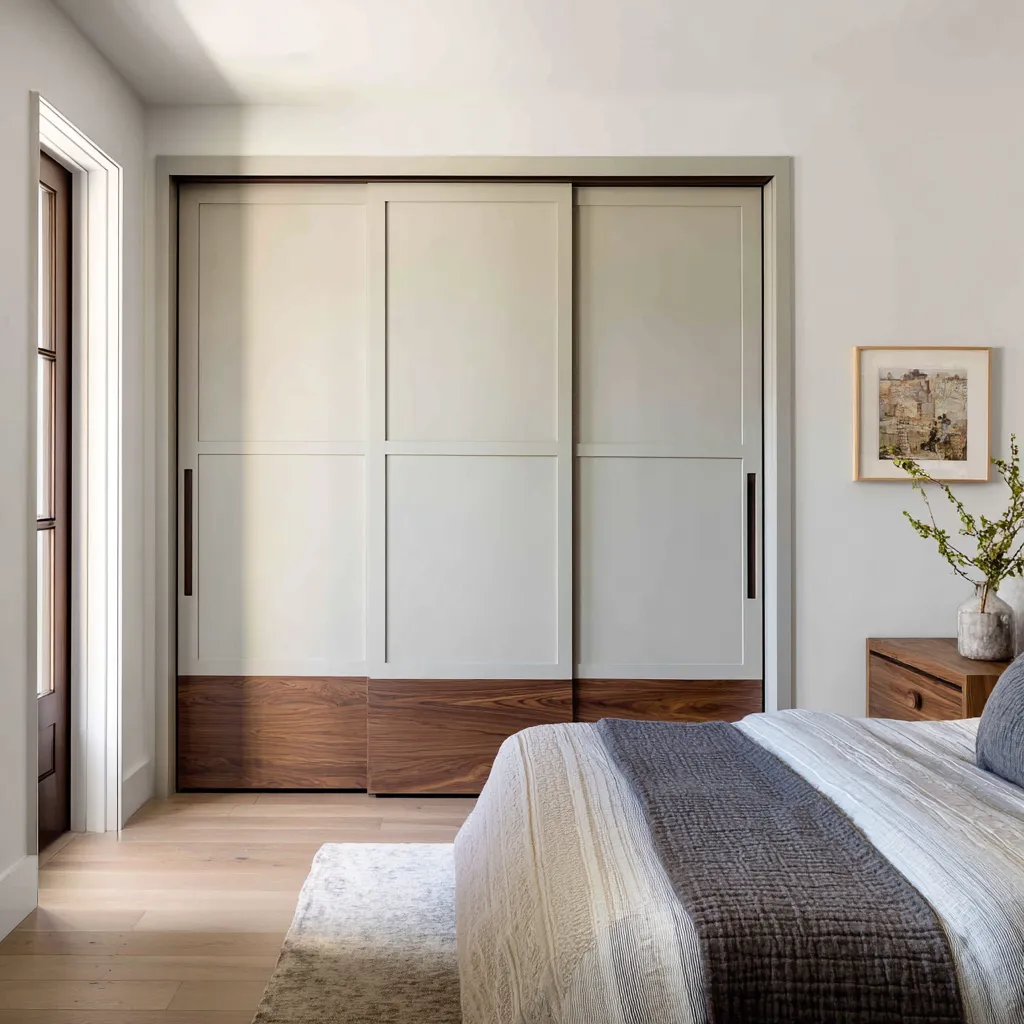
A sliding closet can be almost invisible, softly tonal, and wall-like. Another sliding closet can carry the full color mood of the room.
A third can become a decorative panel composition. A hinged wardrobe can feel classic and settled, or graphic and current, depending on how the surfaces are handled.
So the opening method does not tell you enough.
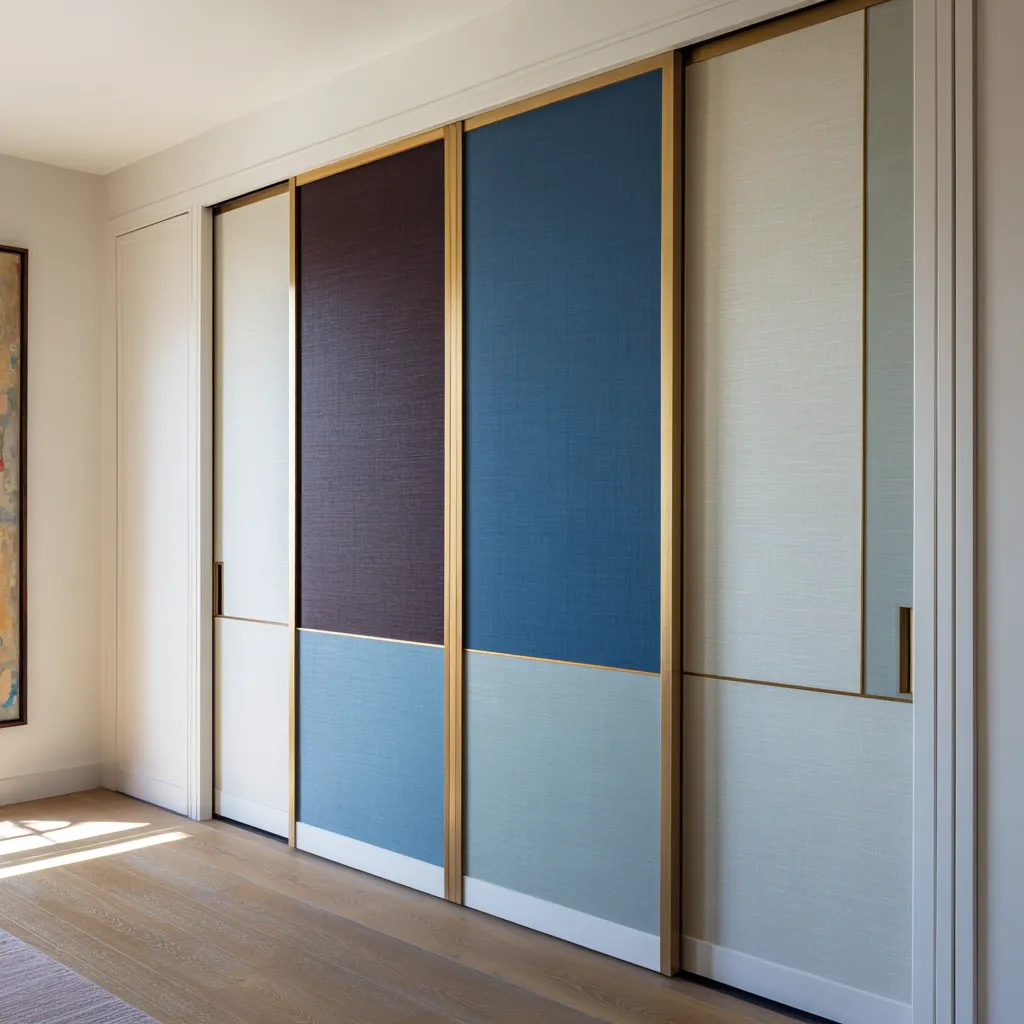
The deeper divide is surface logic. Surface logic mattered more than hardware logic.
The closet design succeeds or fails based on how it handles scale, weight, rhythm, and mood. A handle can sharpen that effect, but it is not the main thing shaping the room.
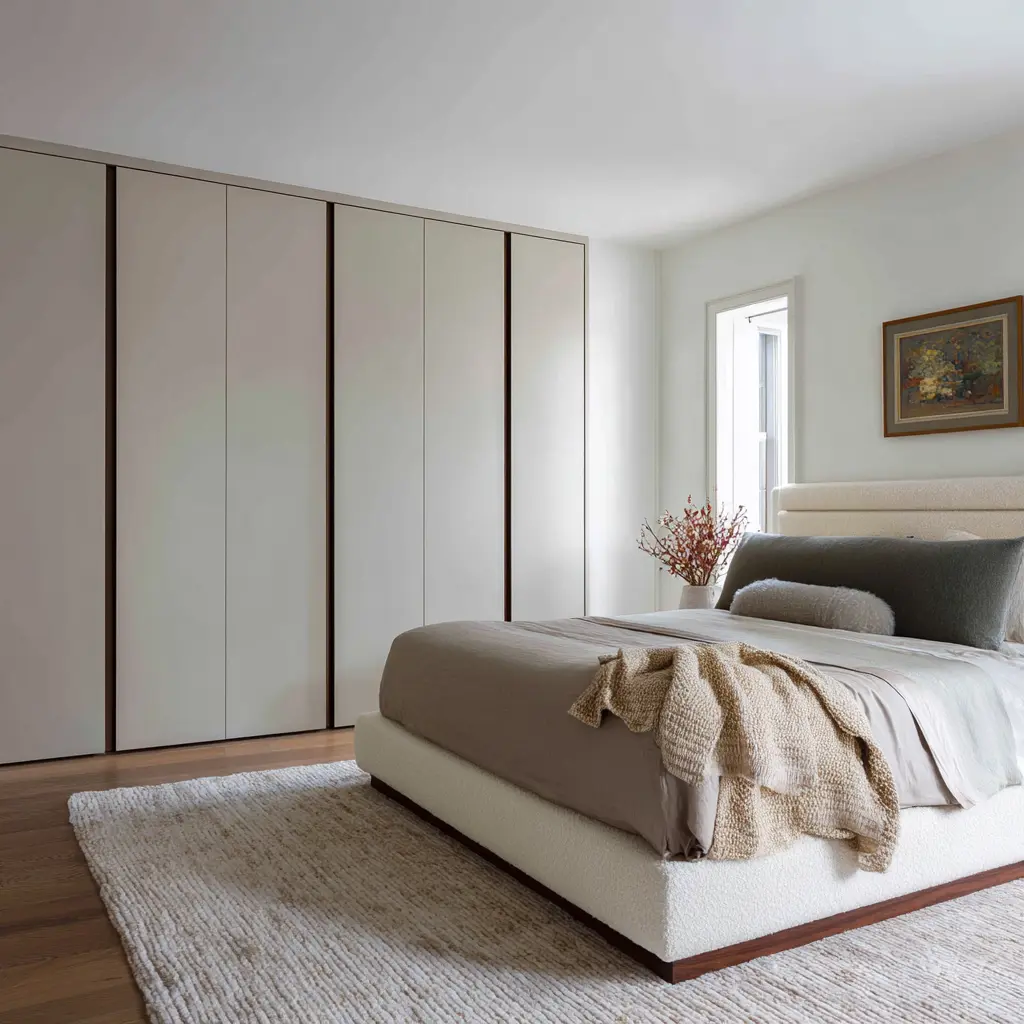
That is why broad flush doors with hairline reveals can feel more architectural than a heavily detailed wardrobe, and why a color-blocked sliding system can feel more composed than a standard paneled built-in. The mechanism is only one layer.
The wall behavior is the real issue.
The hidden rule: do not spend visual intensity everywhere
One of the closet door design ideas is what could be called a sensory budget. The closets should not pile every design move into one wall.
They can choose one or two sources of richness and let the rest step back.
If color becomes stronger, the form usually gets simpler. Door planes widen, panel detail drops, hardware gets smaller, and the geometry becomes easier to read.
If texture becomes richer, the color tends to stay more restrained. Mineral surfaces, woven inserts, mottled finishes, and softly translucent panels usually sit inside edited, broad compositions.
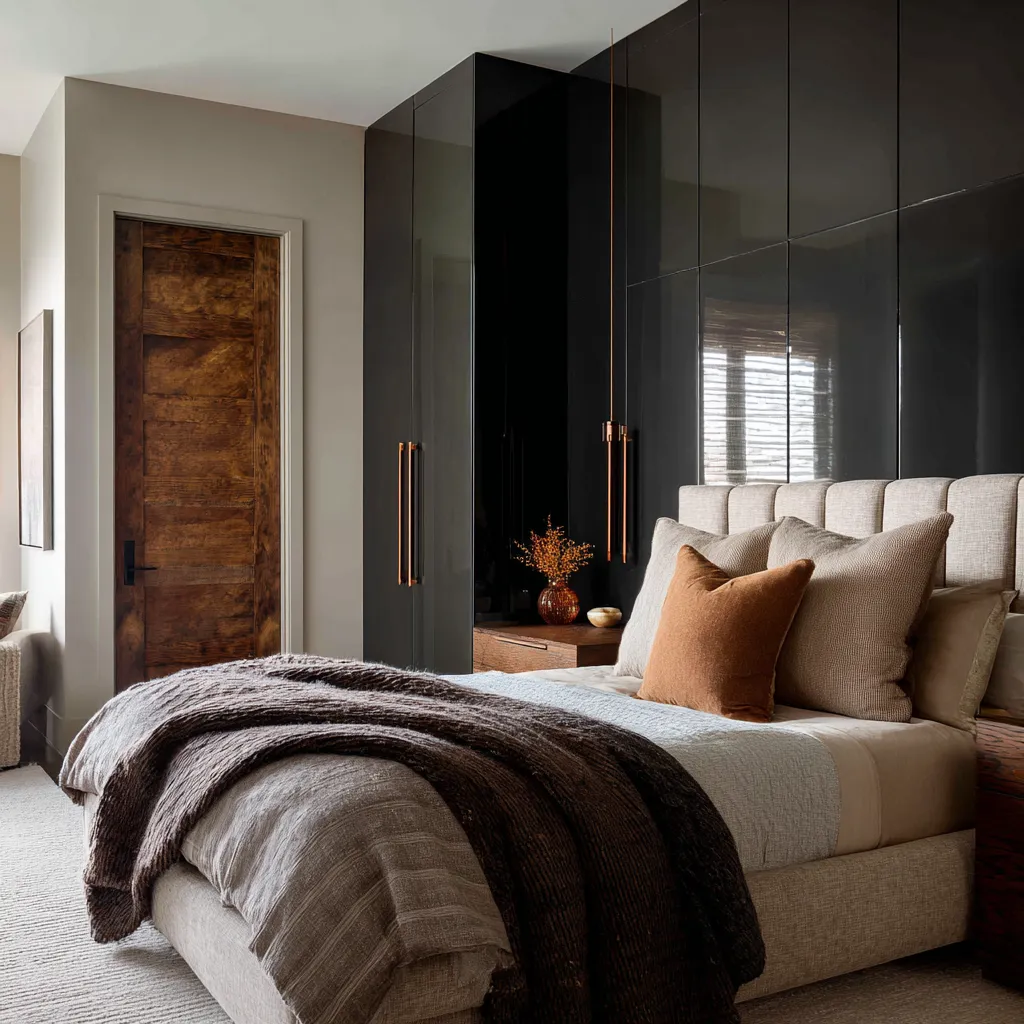
If gloss appears, the line count usually drops. Reflection takes over the job that trim or texture would otherwise do.
That pattern explains why the color-led closets can still feel controlled. The warm ochres, terracottas, olives, blushes, and mauves can be carried by broad zones and very limited hardware.
The room gets atmosphere from color, not from layered ornament. In the same way, the more textured closets avoid stacking strong hue, heavy trim, and loud contrast on top of that texture.
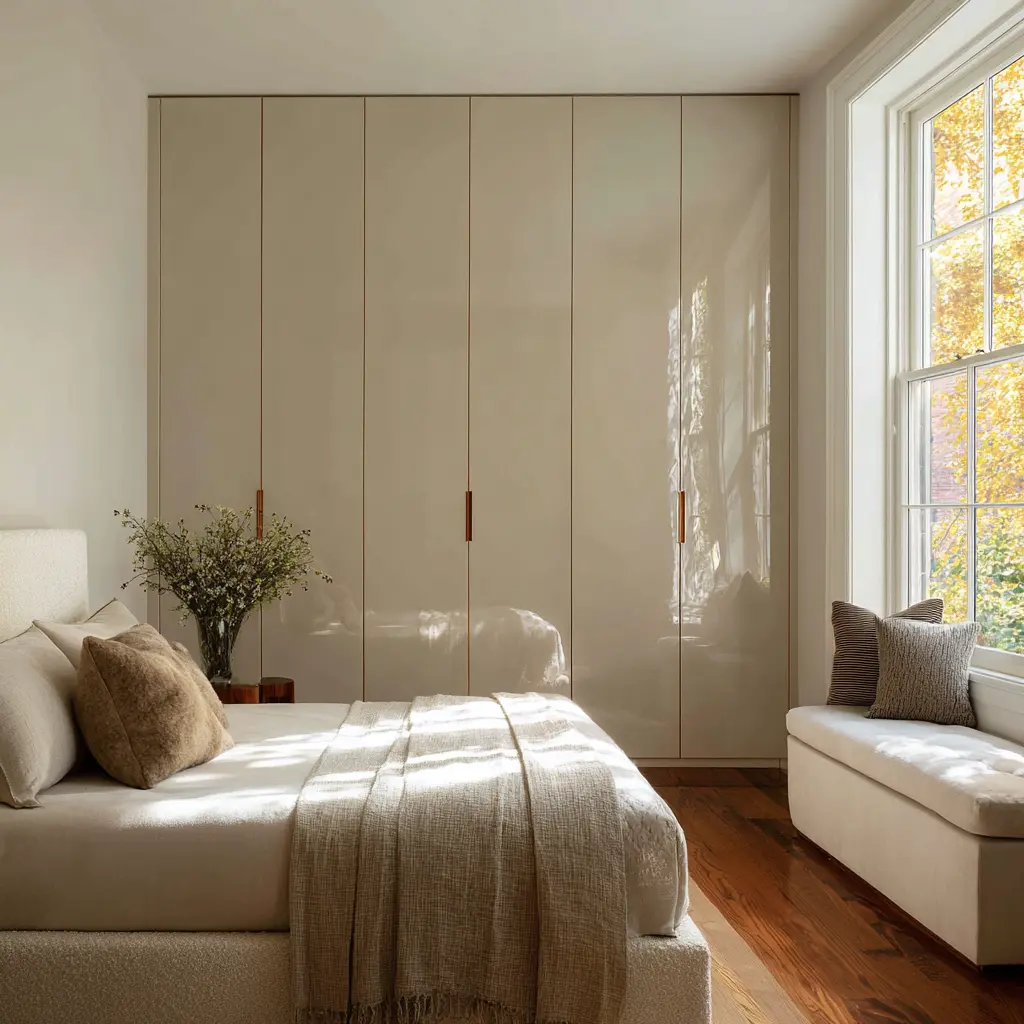
This is one of the lessons for choosing closet door ideas. A better result usually comes from one dominant move handled well than from five smaller moves competing for attention.
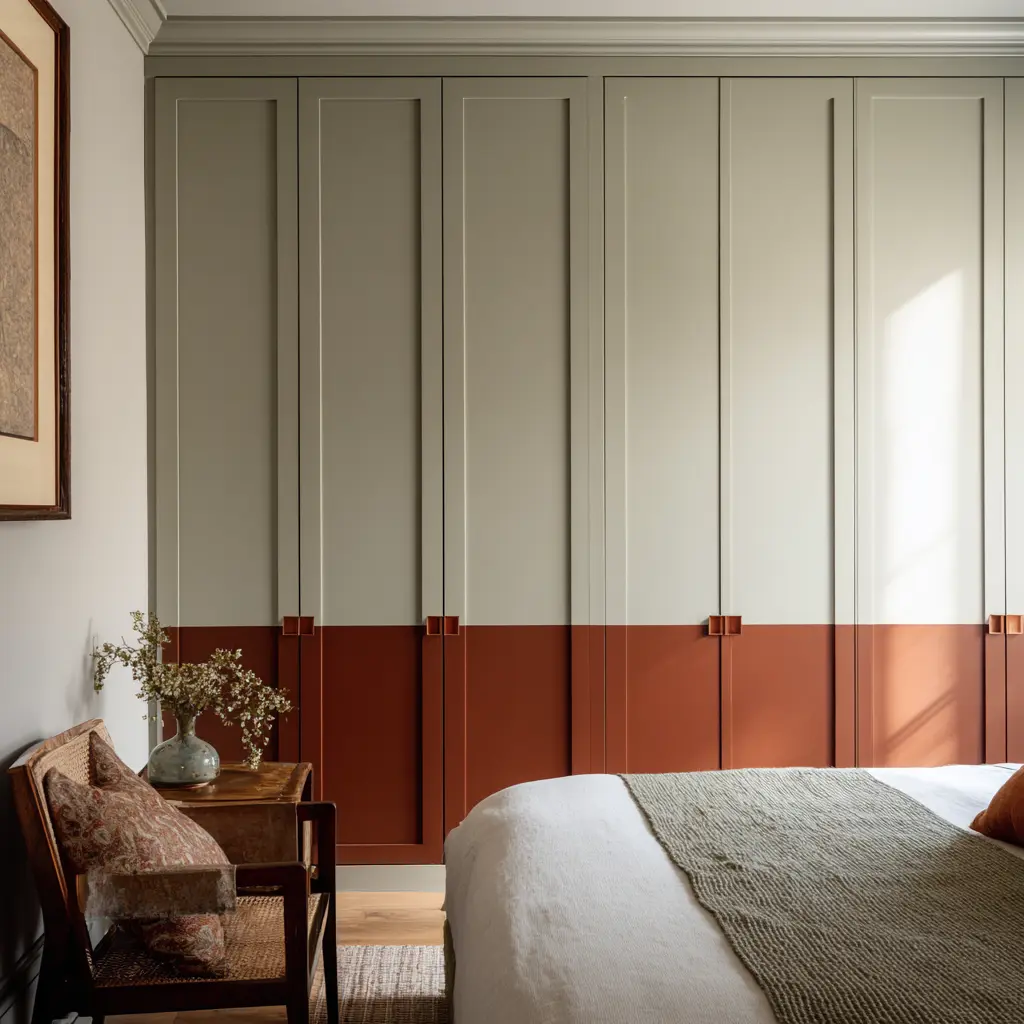
Why closets feel grounded
As closet walls become more expressive, they also become more vulnerable to feeling top-heavy. Bedrooms are especially sensitive to that problem.
A wardrobe can easily start to loom if all the visual force sits too high on the wall.
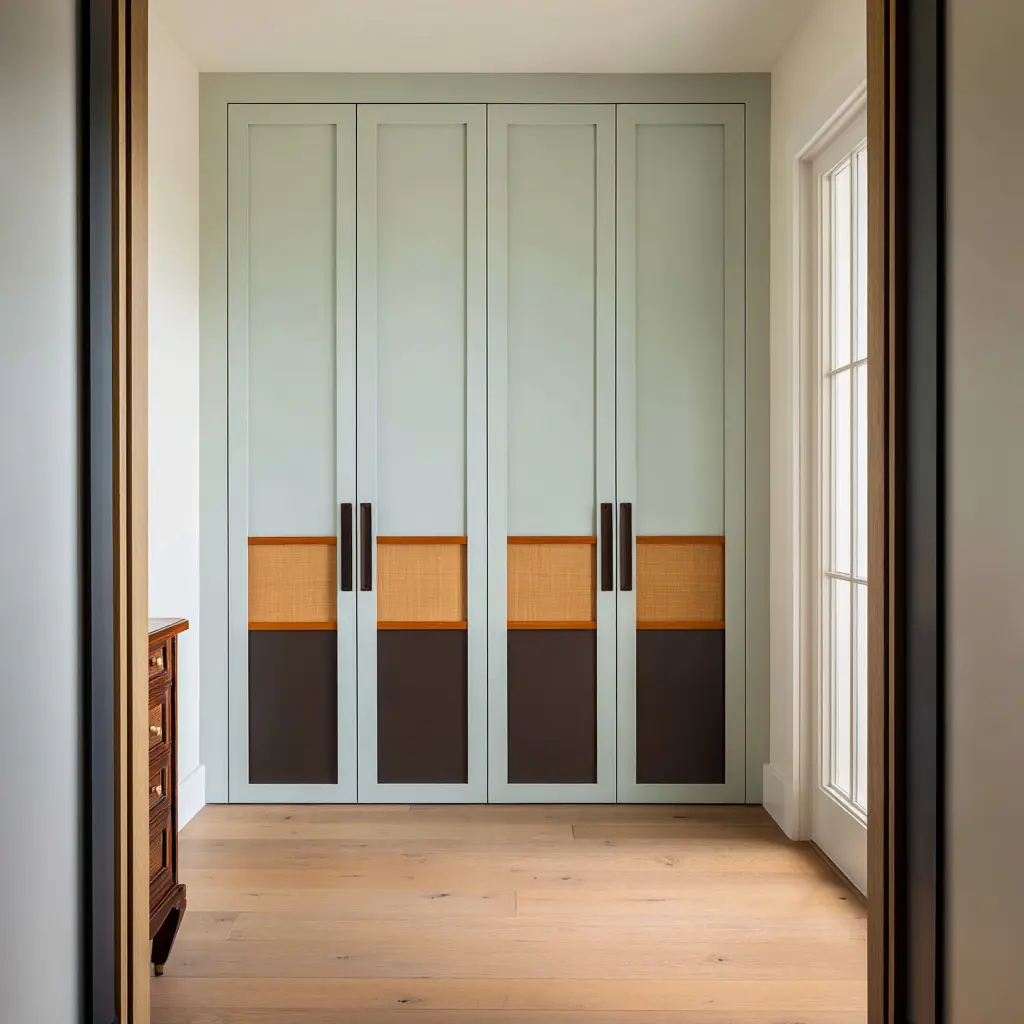
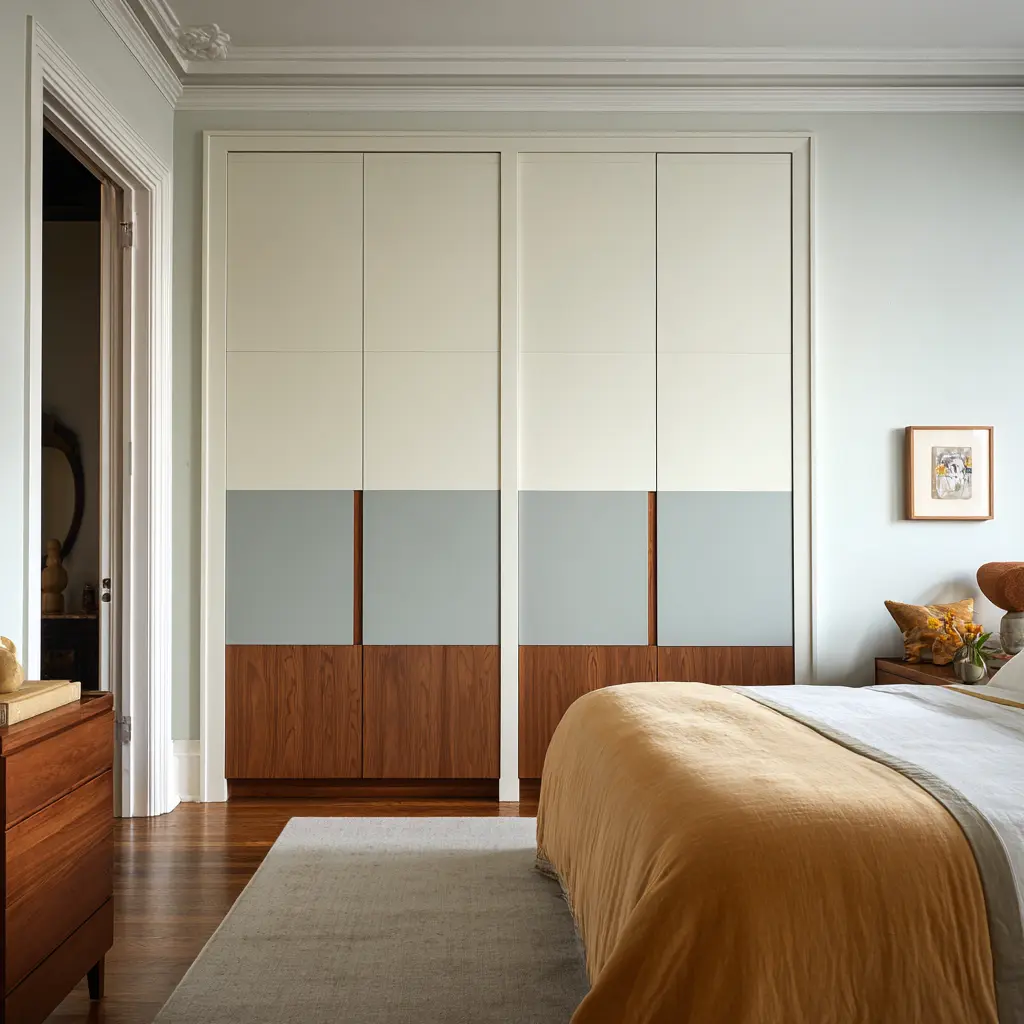
That is why lower grounding is the design tool. It can be walnut base bands, terracotta lower zones, olive lower sections, dark plinths, oak datum bands, and oxidized darker bases.
These are not random styling touches. They are weight-correction devices.
Once the closet stops acting like plain background and starts carrying color, material interest, or stronger identity, it often needs something lower down to steady the wall.
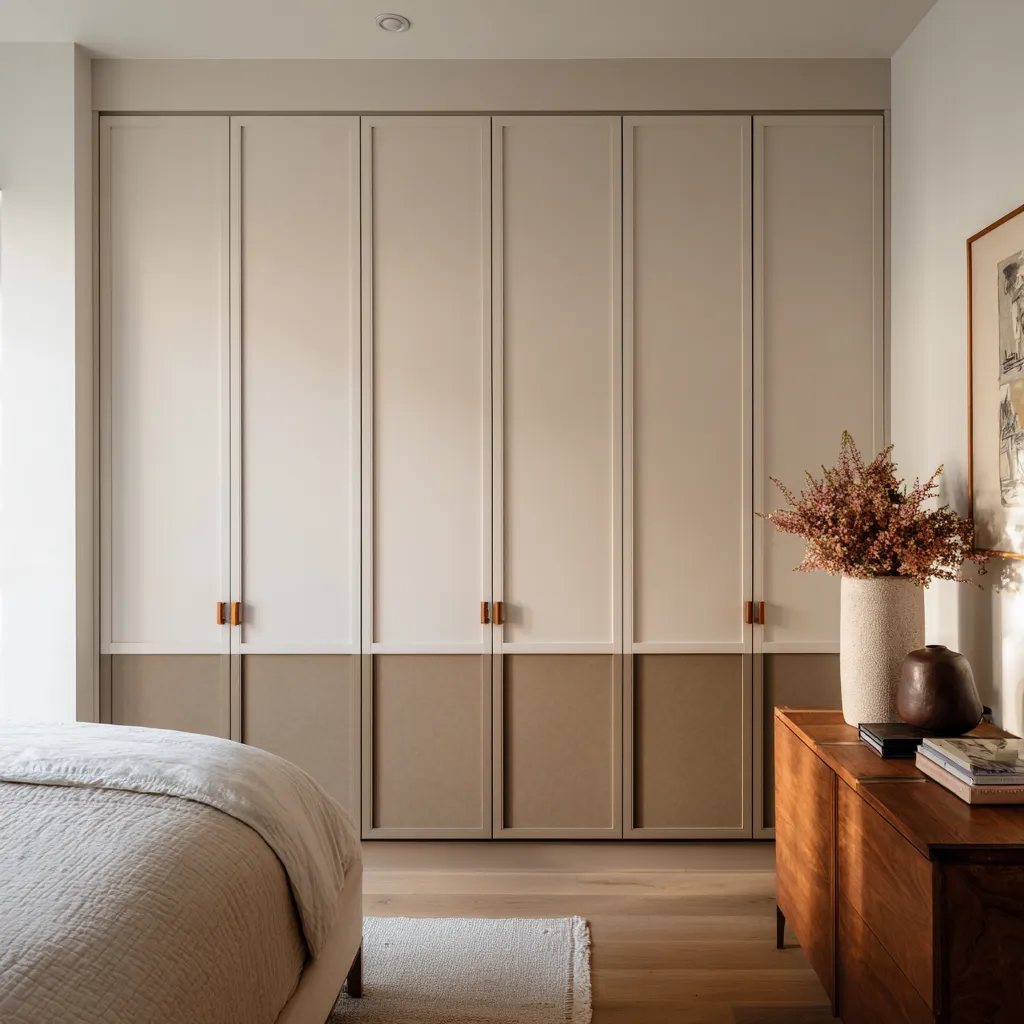
This is one of the least obvious design findings. Expressive bedroom closets work not only because they look good in isolation, but because they are gravitationally corrected.
They place enough visual ballast low on the wall to keep the whole composition feeling settled.
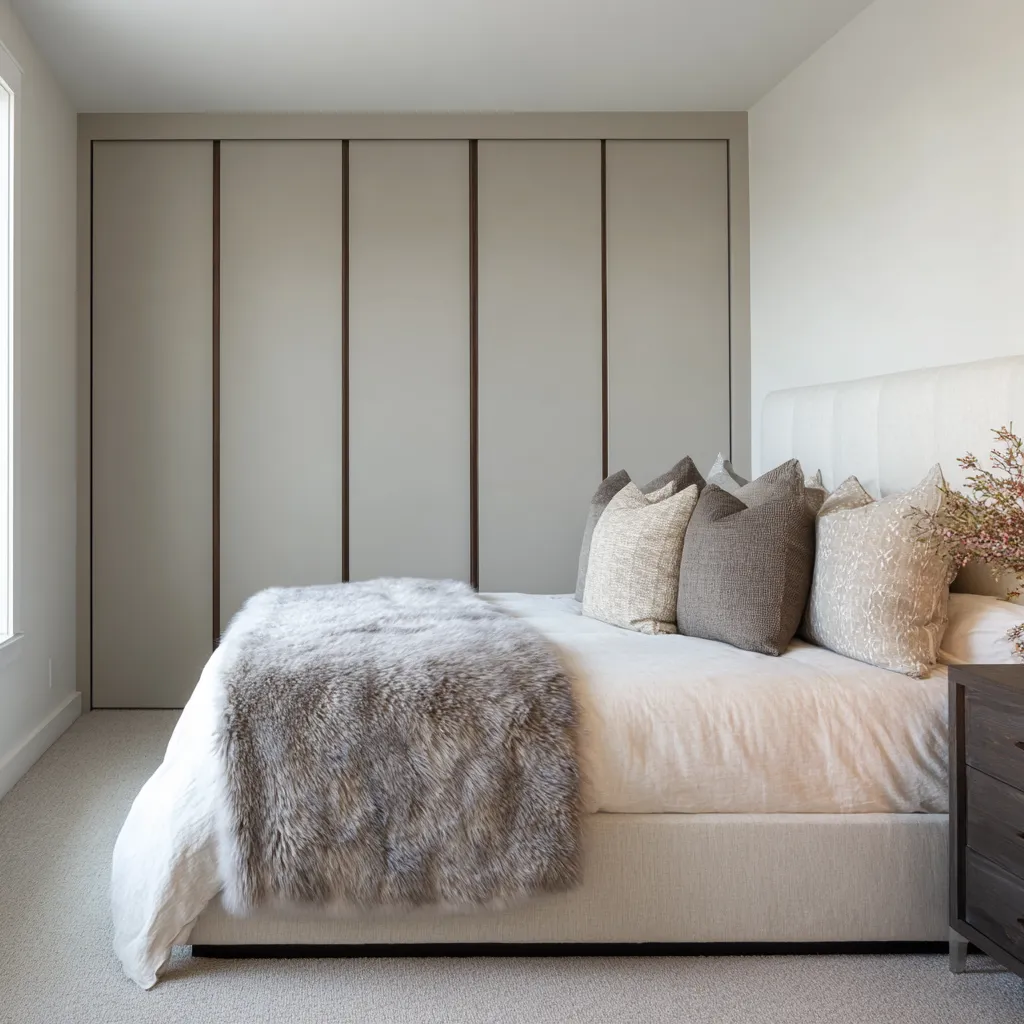
If you are working with a strong closet color or a layered mixed-material scheme, and something still feels slightly off, the problem may not be the color at all. It may be that the wall has too much lift and not enough weight near the floor.
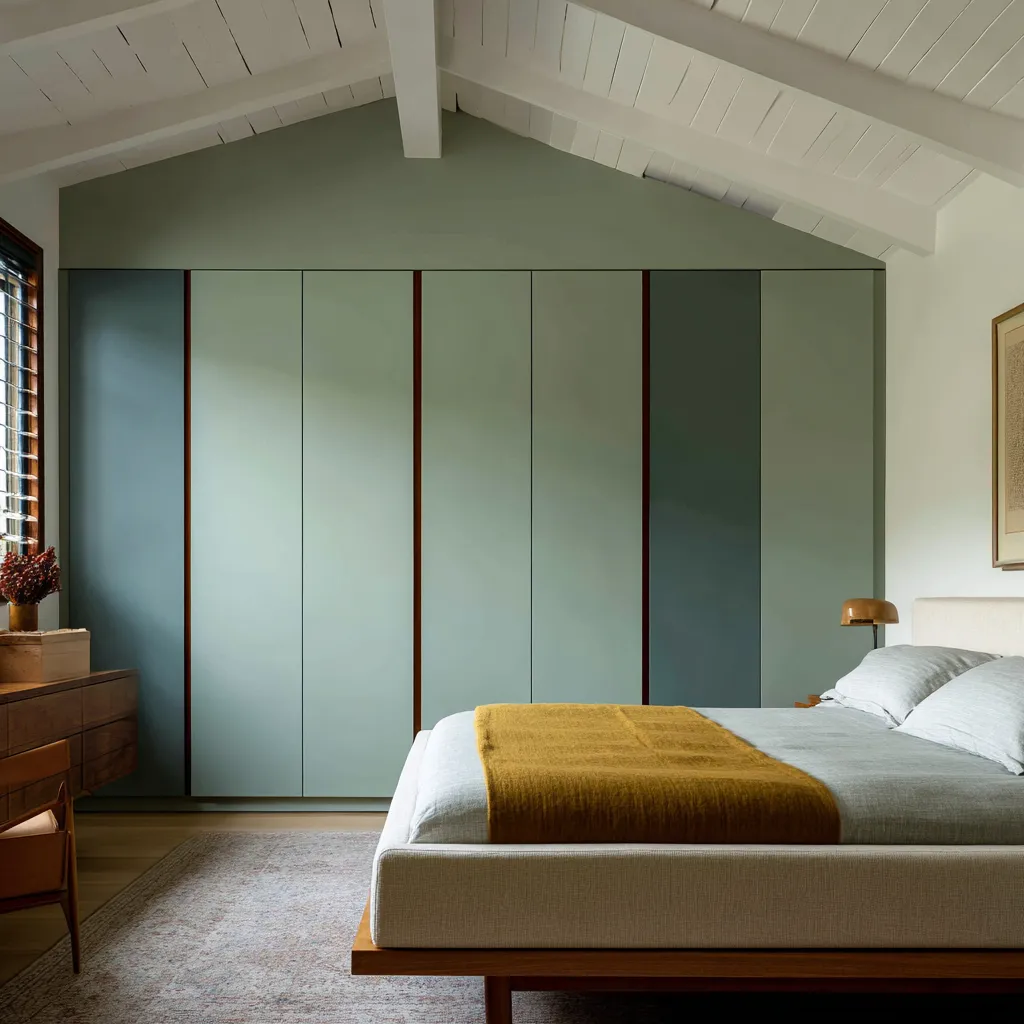
The horizontal datum is doing more work than many realize
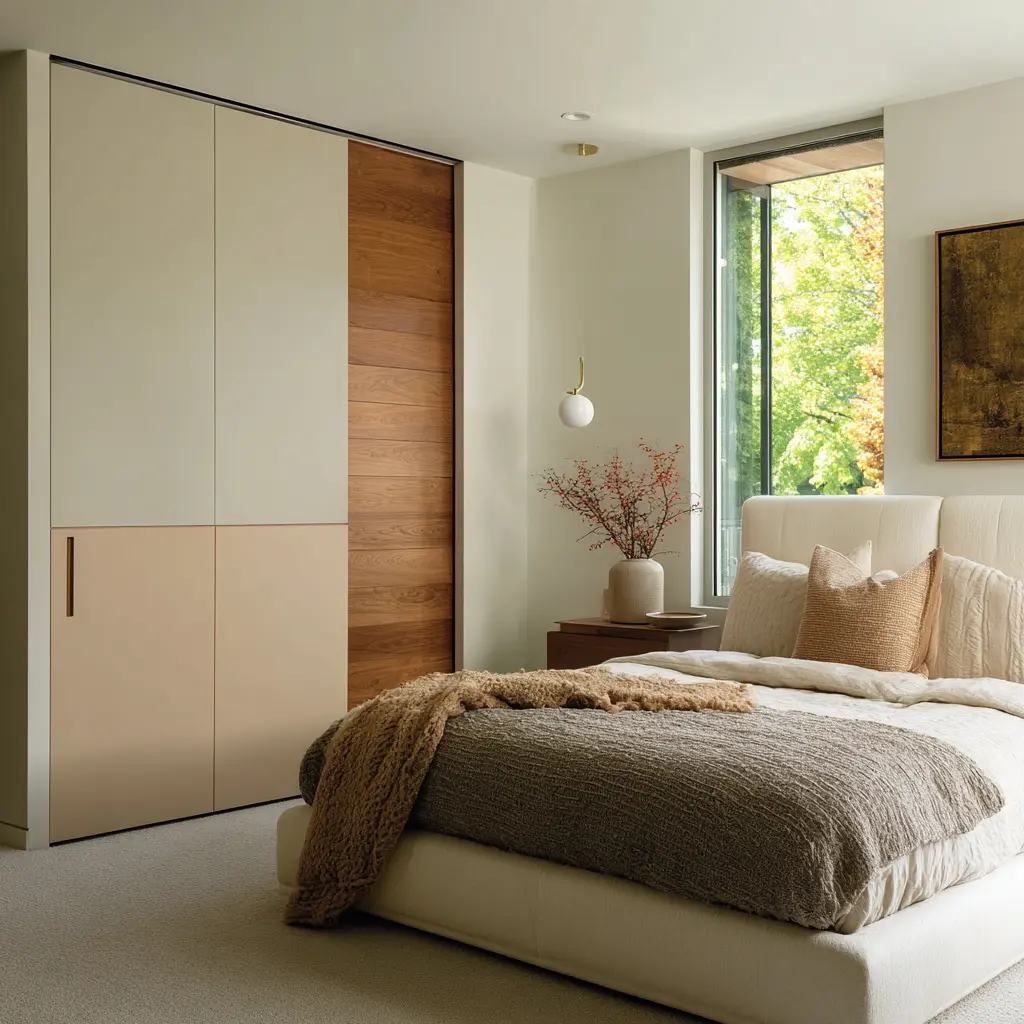
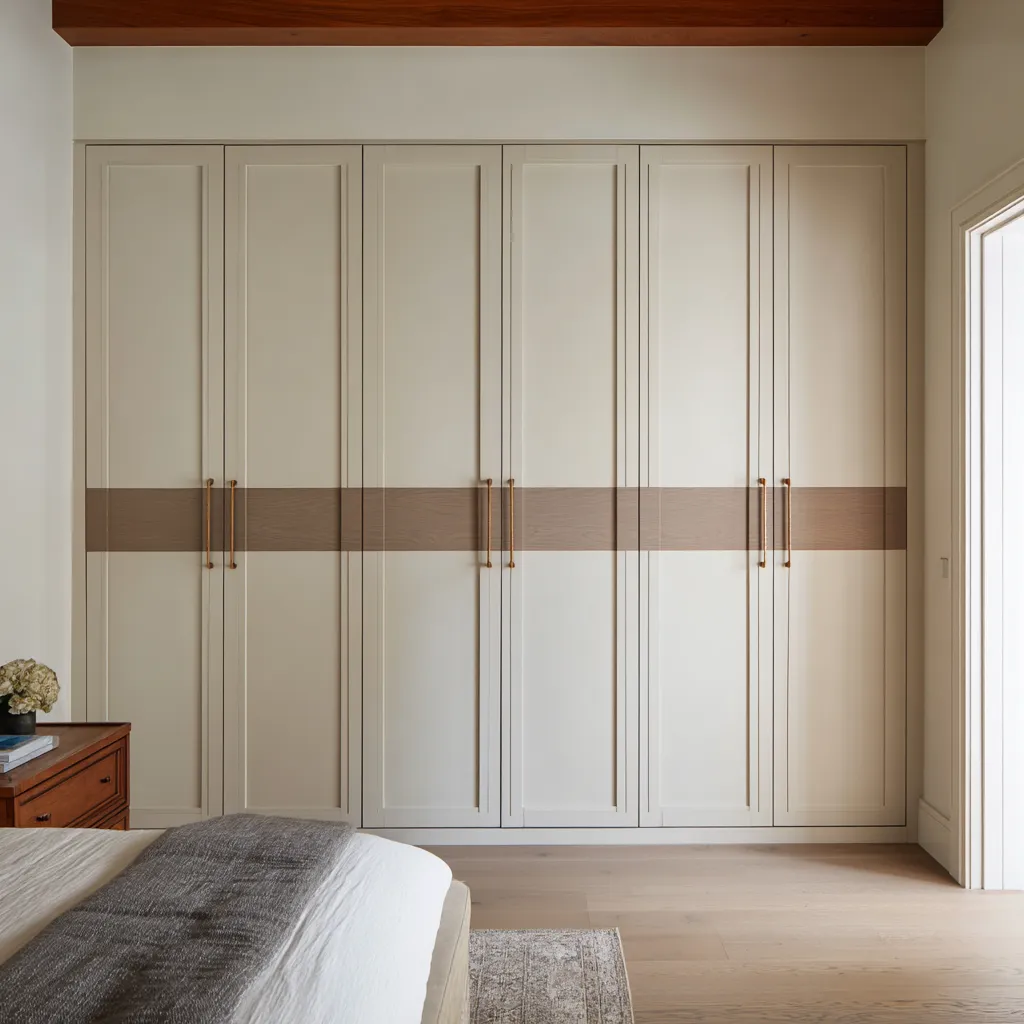
Many closet door design concepts use a horizontal band, a split, a top register, an upper cabinet row, a scored line, or a mid-height wood strip. This move is one of the useful hidden structures.
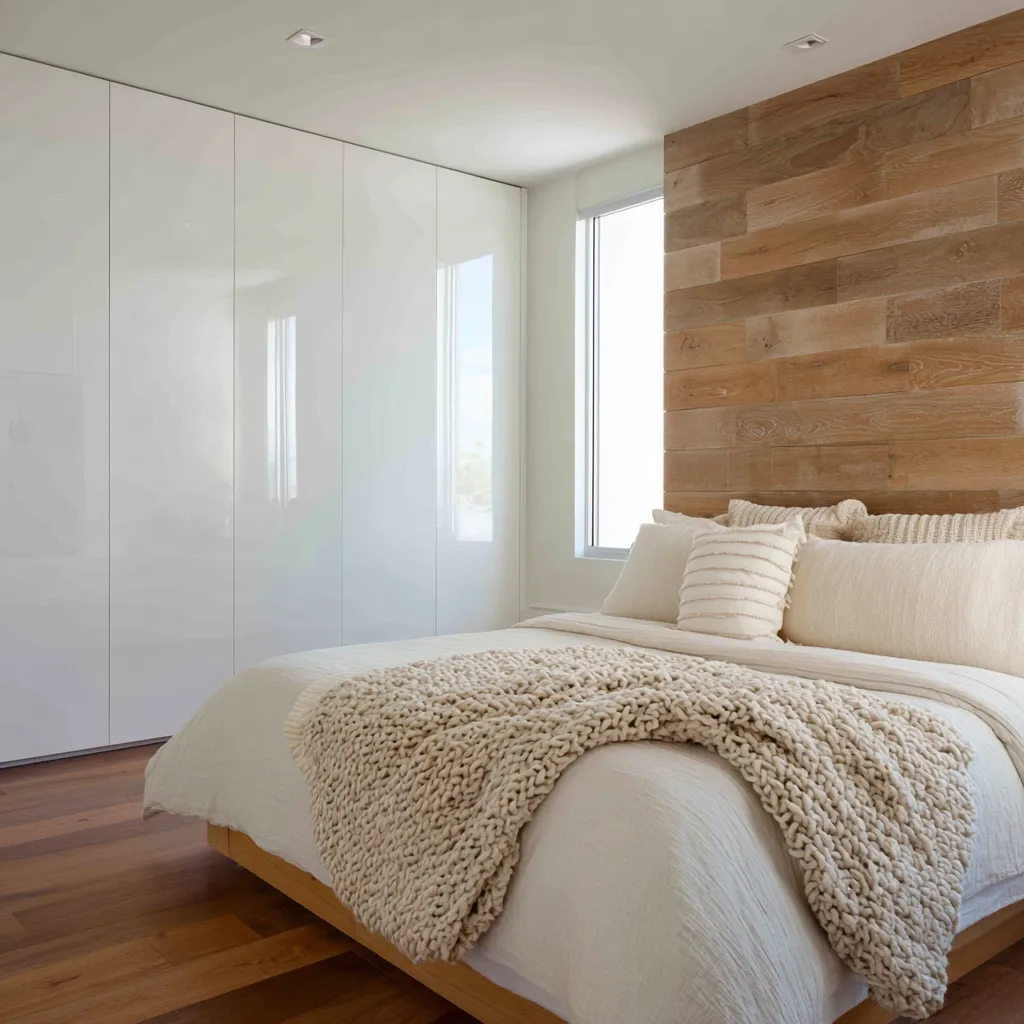
The datum line does several jobs at once. It slows the vertical push of a tall closet wall.
It gives the hand a natural use zone. It breaks down large door faces into more readable proportions.
And it turns the wardrobe from a row of operable panels into a more composed wall elevation. That is a major reason why closets feel built in rather than merely installed.
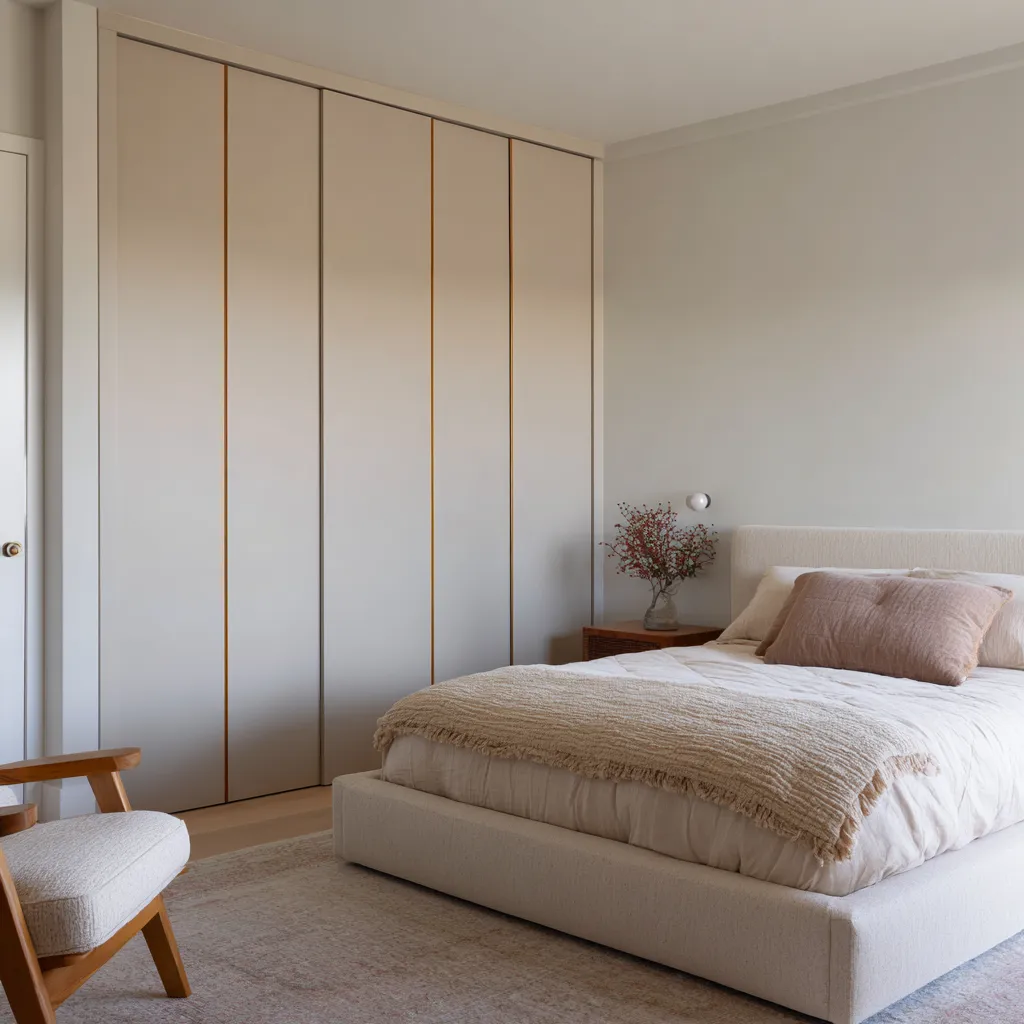
It is also why some simple wardrobes feel more sophisticated than far more detailed ones. A restrained wall with one well-placed horizontal line often has better proportion control than a highly paneled closet without any organizing datum.
So, if the closet wall feels too tall, too blank, or too upright, the answer may not be extra paneling. It may be one controlled horizontal move placed in the right zone.
Wood is not there for decoration only
Wood is not mainly a style signal. It is a regulator.
Sometimes it warms a pale or slightly cool room. Sometimes it lowers the visual center of gravity with a darker base or a mid-height band.
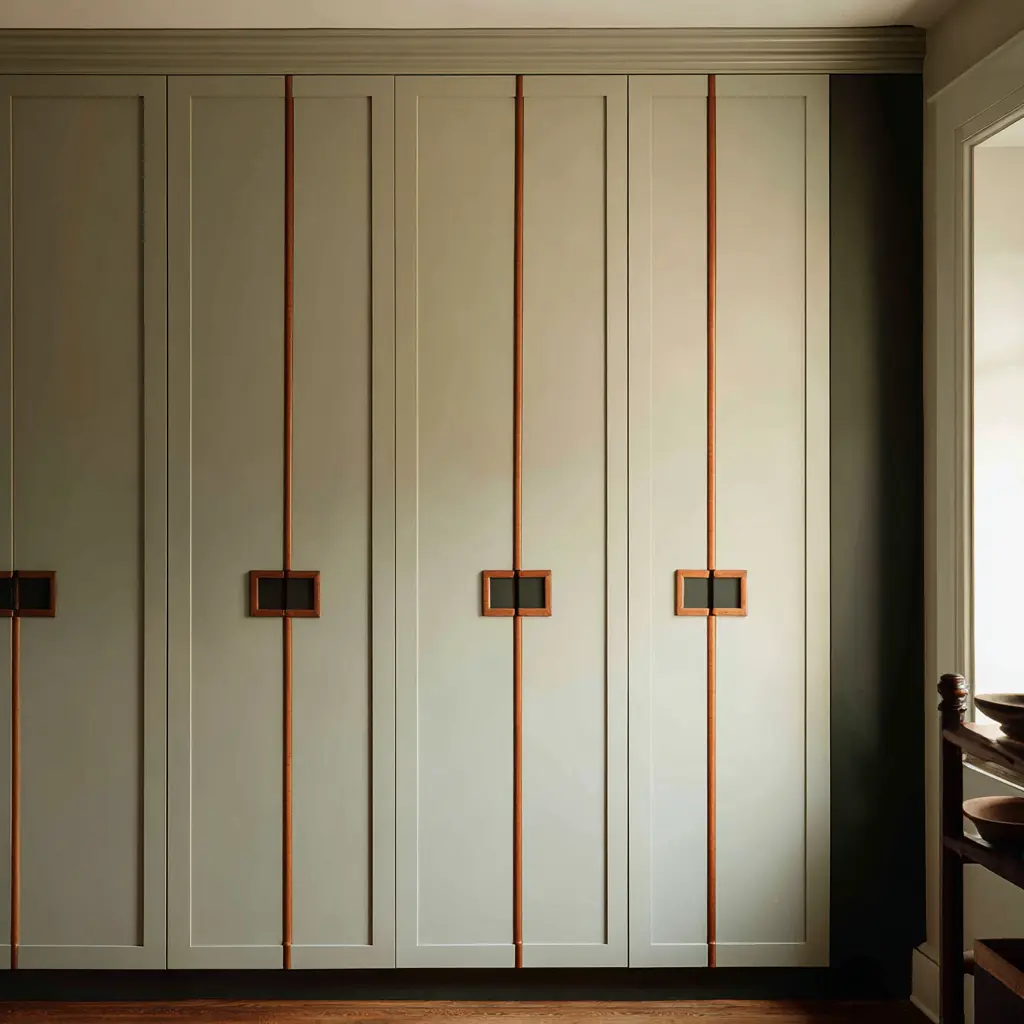
Sometimes it mediates between unlike materials, helping stone, paint, metal, or plaster-like surfaces meet without friction. Sometimes it outlines pale door fields and gives them rhythm without making them look harsh.
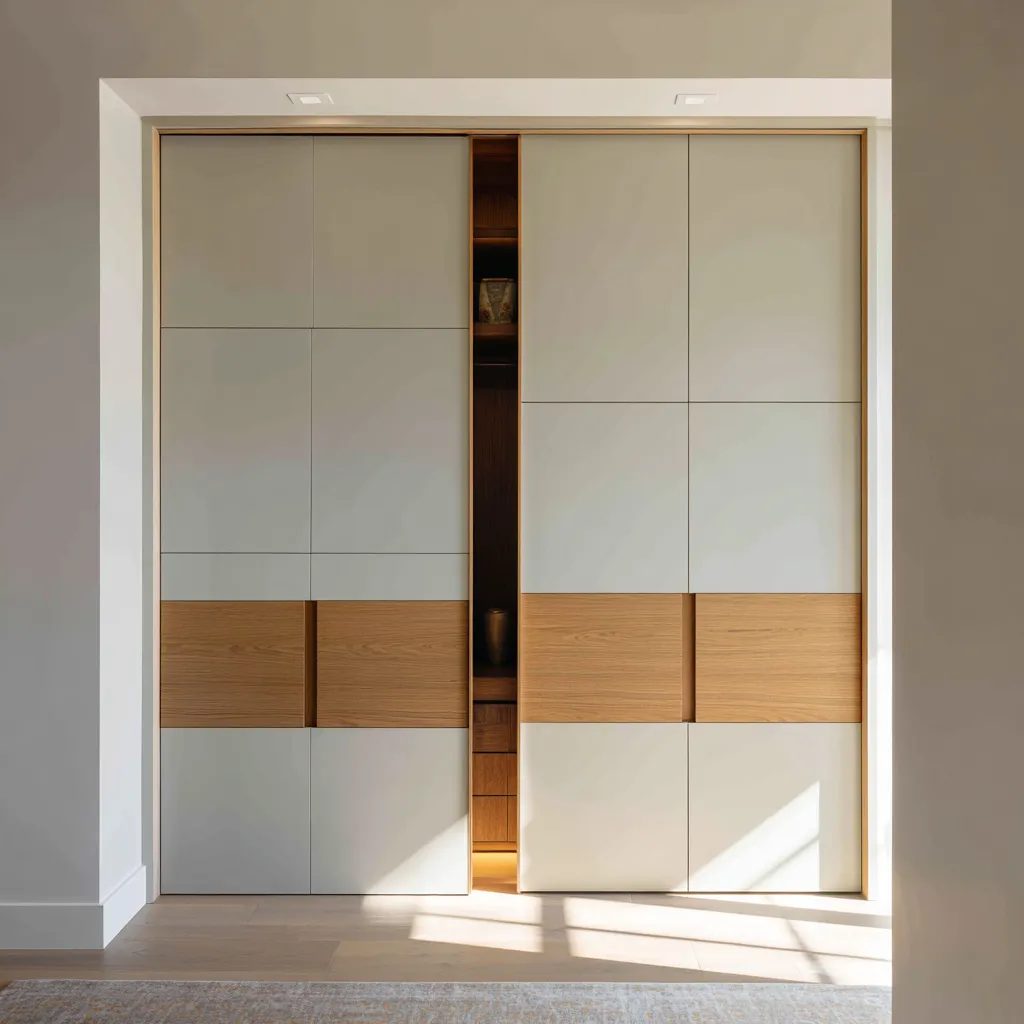
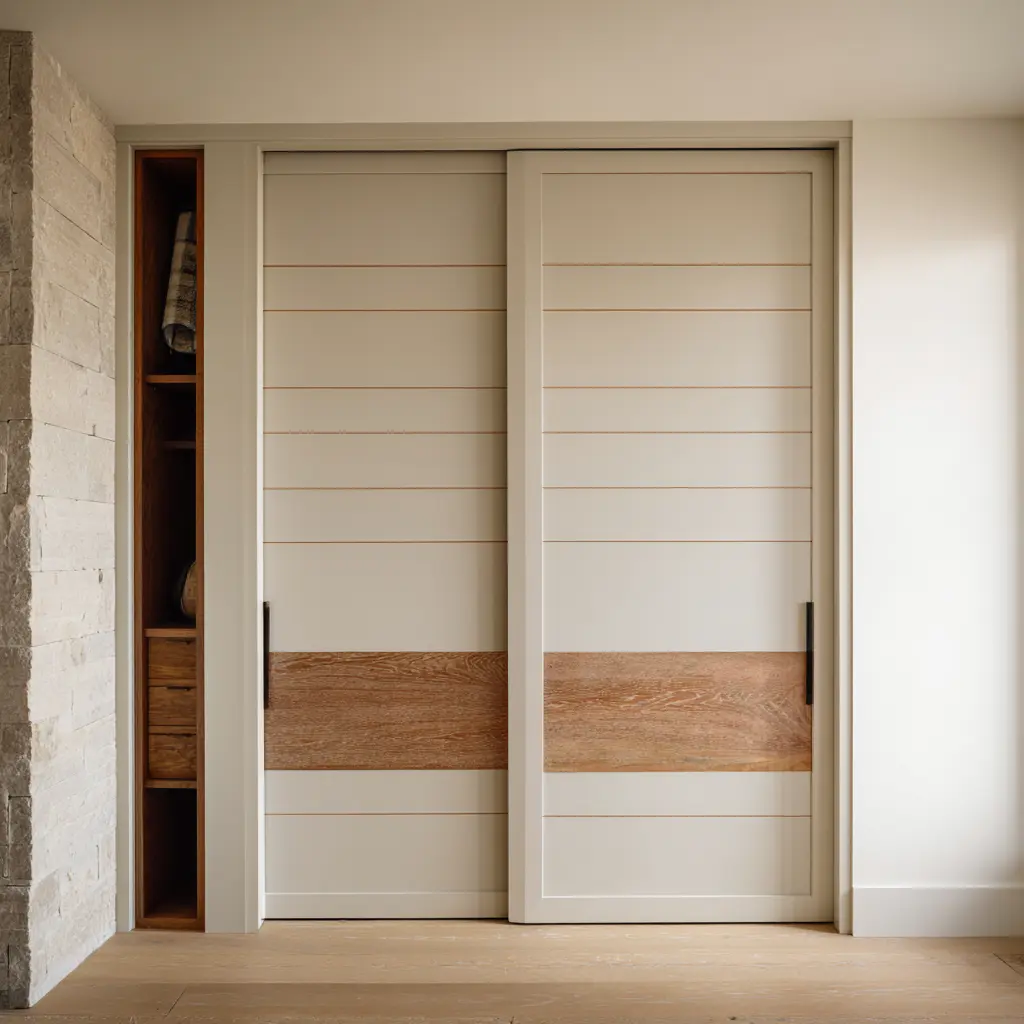
That is why wood can appear in so many different forms here: a narrow trim, a lower band, a side reveal, a continuous strip through the center, a base section, a framing member, or an exposed niche interior. Its strength lies in control.
Wood corrects temperature. It softens hard transitions.
It adds body to pale schemes. It introduces order without the severity that black linework can bring.
In other words, wood is doing emotional and compositional work, not only decorative work.
The closet is taking over the feature wall role
With a stylish closet door design, the bed wall is not the only major event anymore. The closet wall can carry the main color plane, the main material statement, the main rhythm field, or the strongest architectural anchor.
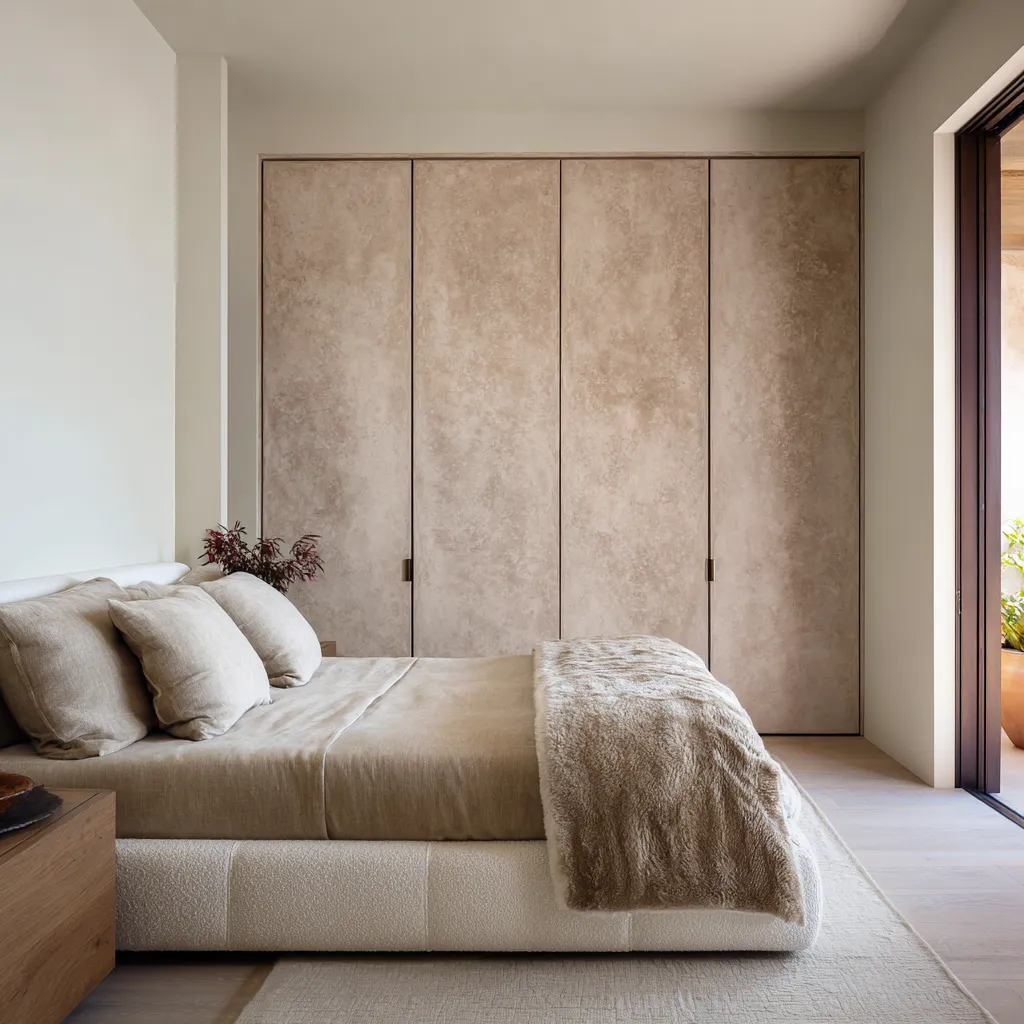
That changes the whole bedroom plan. If the storage wall already holds that amount of visual responsibility, the bed wall does not need heavy wallpaper, oversized artwork, or strong trim to prove itself.
The room can be simpler elsewhere because the closet is doing more.
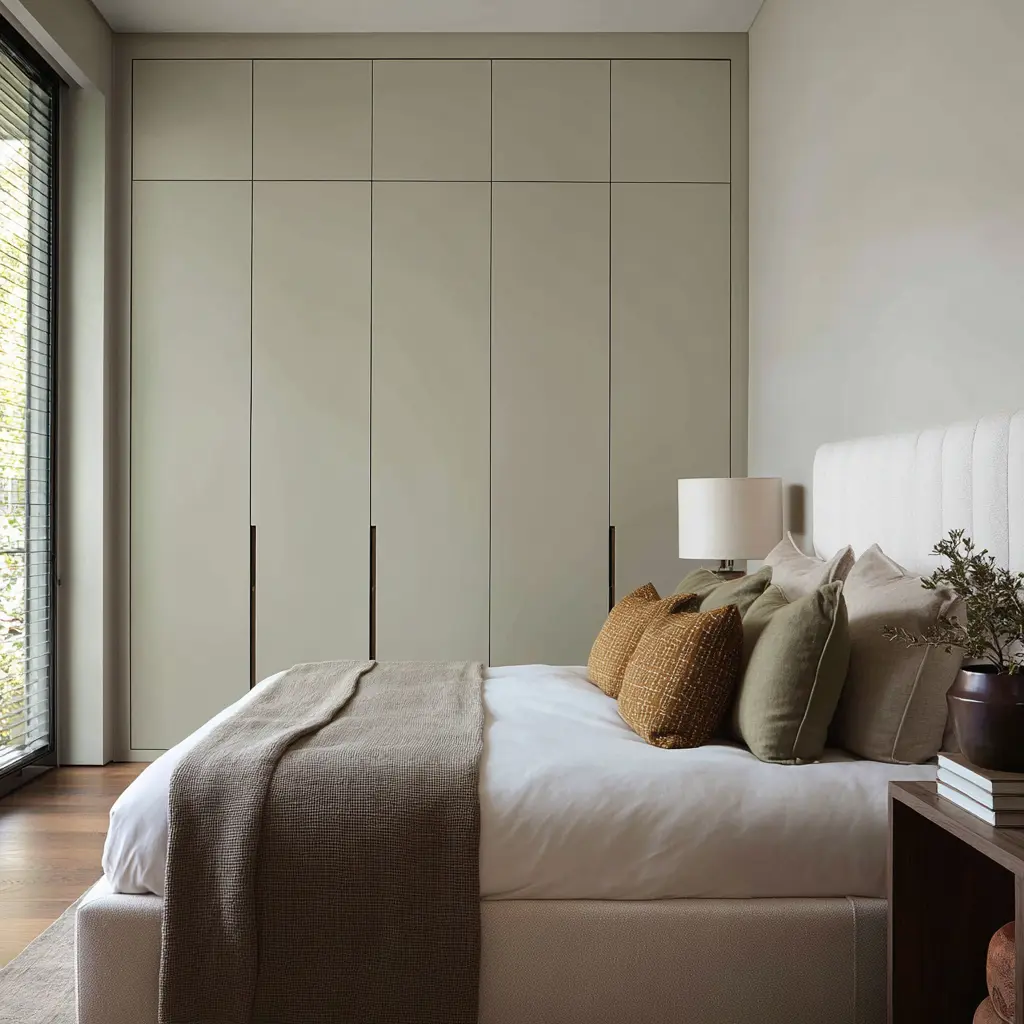
This is a very useful direction for modern bedroom designs, especially where the wardrobe takes up a large wall anyway. Instead of treating that wall as a design problem to hide, the better move may be to let it become part of the room’s identity.
That does not mean every closet should turn bold. It means the storage wall has become a valid place to carry tone, rhythm, and atmosphere.
Open display
An opening can add identity in a very edited way. The niche is narrow, dark, and controlled.
It gives a glimpse of depth, not a full reveal of clothing and stored objects. That suggests a useful design principle.
If you want some openness in a bedroom closet, to have a modern look, keep it measured. A slim niche, a deep shadowed slot, or one carefully framed reveal can add depth and interest.
A broad open section often shifts the wall away from composed architecture and toward visible storage clutter.
Gloss with discipline
To avoid feeling too luxurious feel, gloss can appear in two very specific ways.
First, it helps pale wardrobes catch daylight and avoid feeling dead or chalky. In that role, gloss acts almost like a light amplifier.
It gives broad, simple door faces a living surface without needing extra trim.
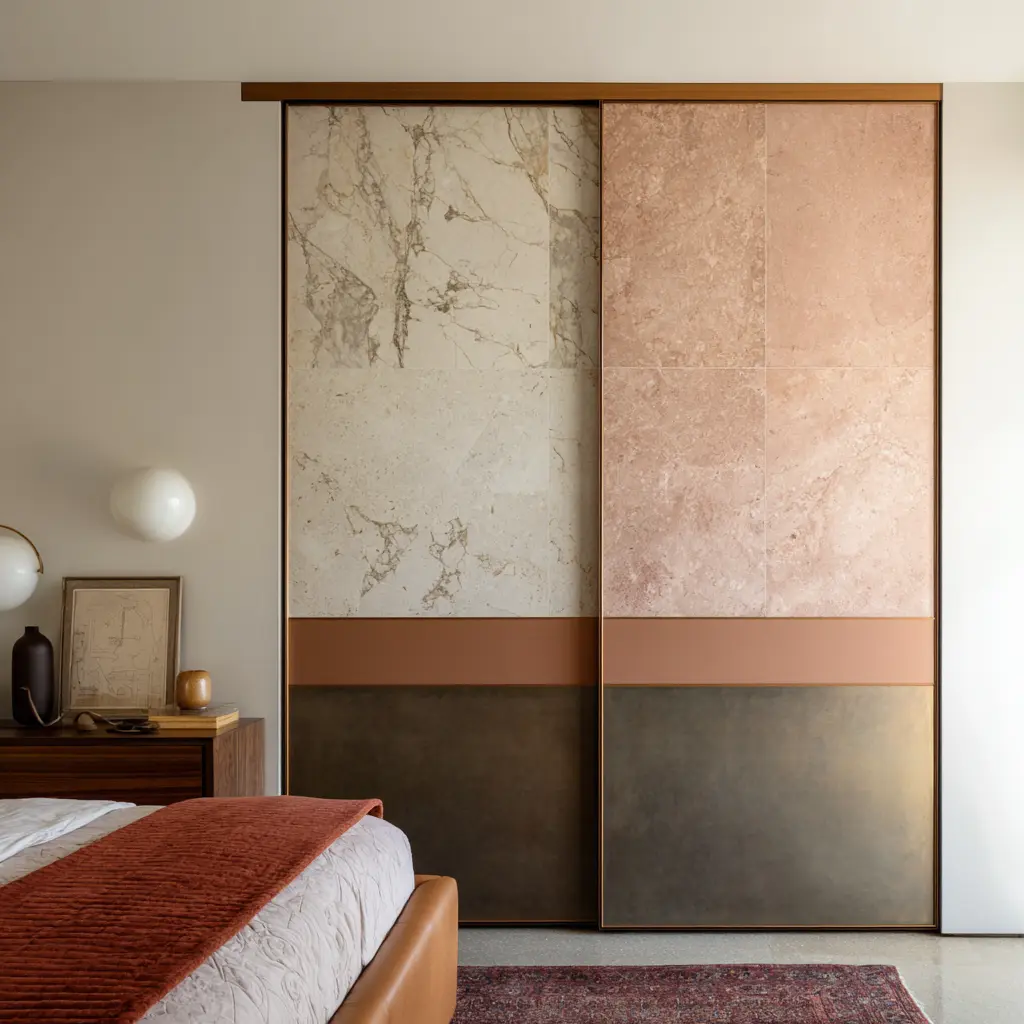
Second, it gives dark wardrobes depth. A deep black or charcoal wardrobe in matte could feel dense and sealed.
With gloss, the surface picks up reflections and becomes more layered.
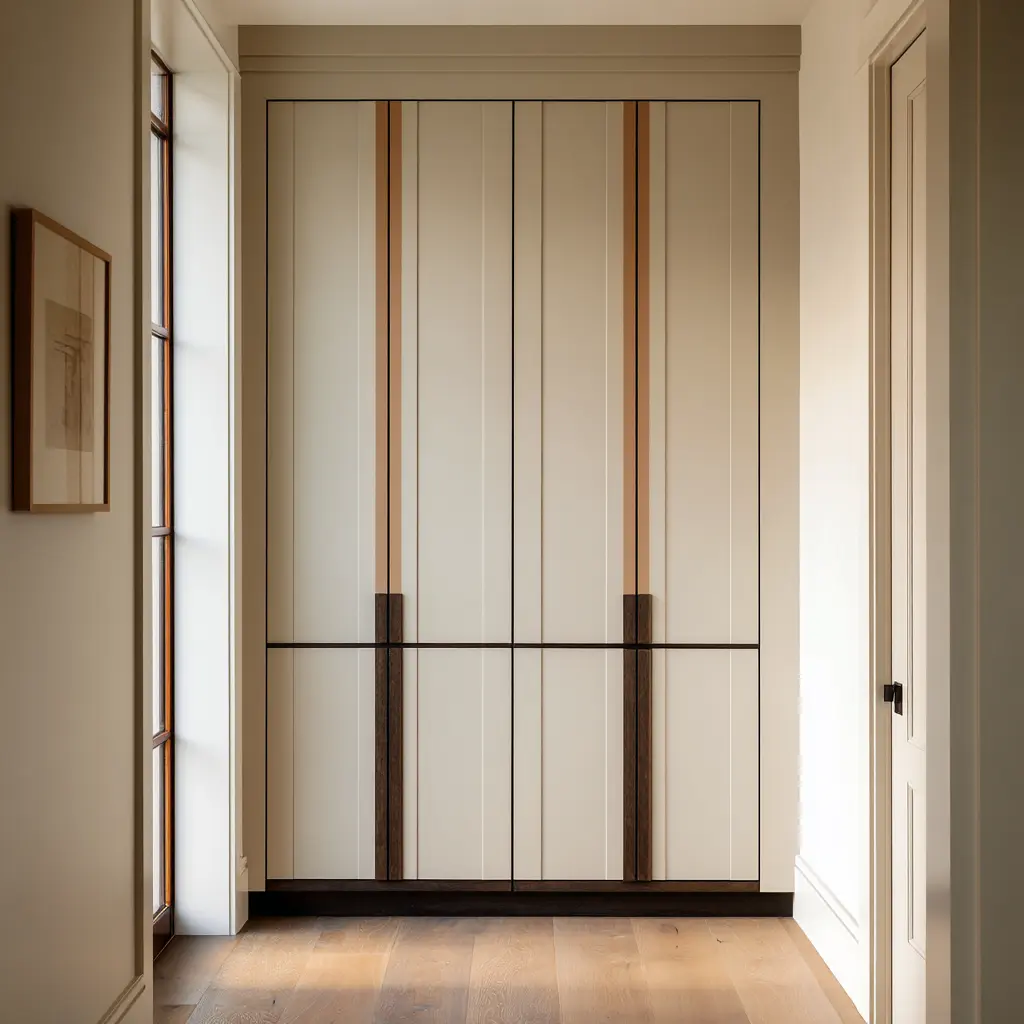
What is missing is just as interesting. Today, gloss does not appear much with heavy texture, woven panels, mineral skins, or highly layered mixed-material schemes.
It works quite when the overall composition is already reduced.
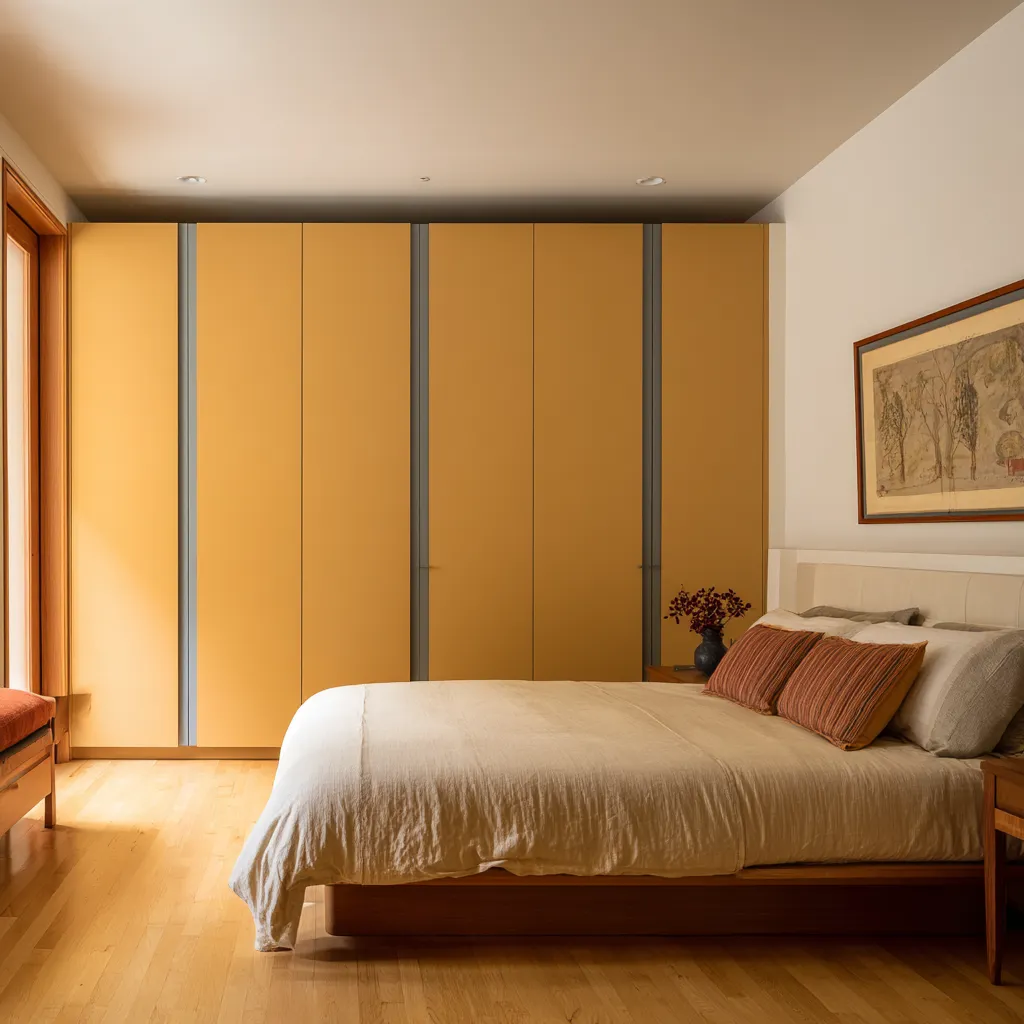
So if you are considering glossy closet doors, the idea is pairing them with simple geometry and few interruptions. Gloss wants room to perform.
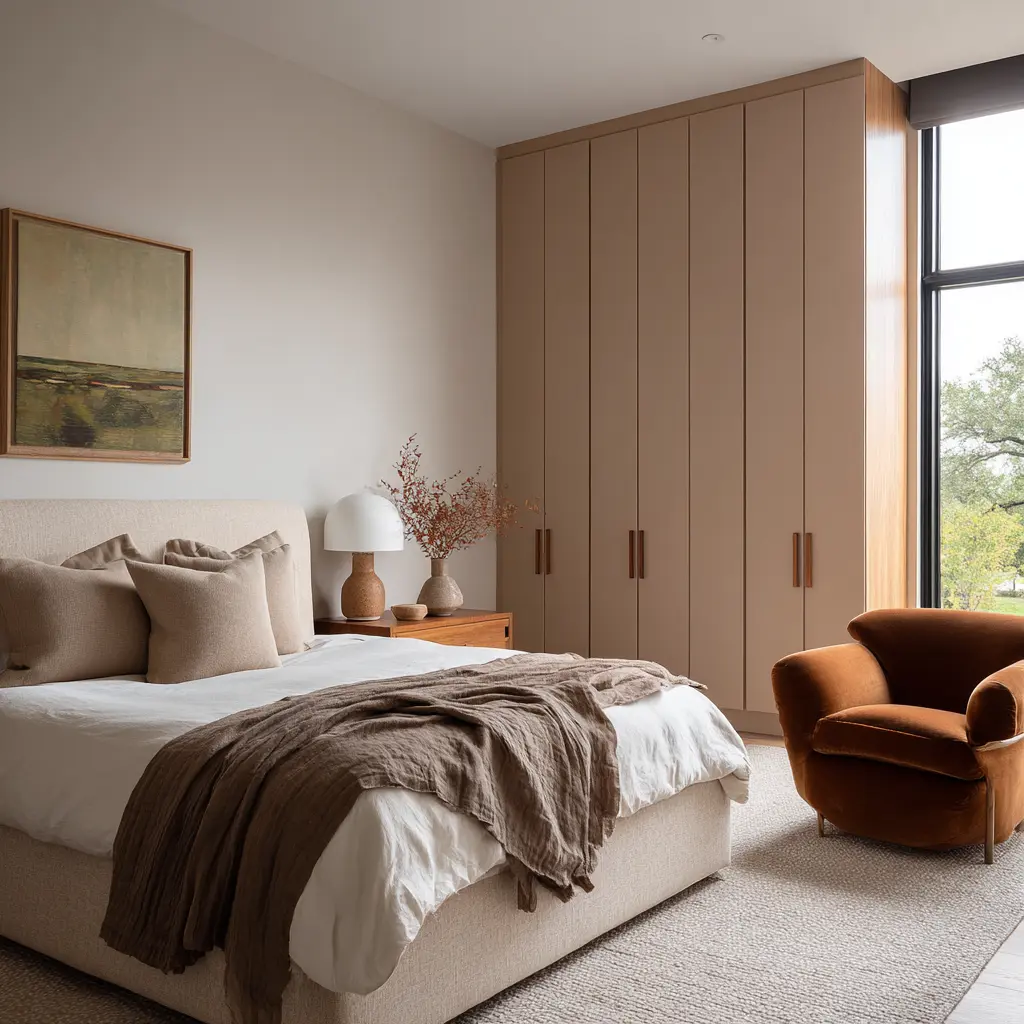
The five closet design families
The first is the quiet architectural plane. These closets use broad pale fields, very little hardware noise, and controlled linework.
They do not vanish, but they behave like part of the room shell.
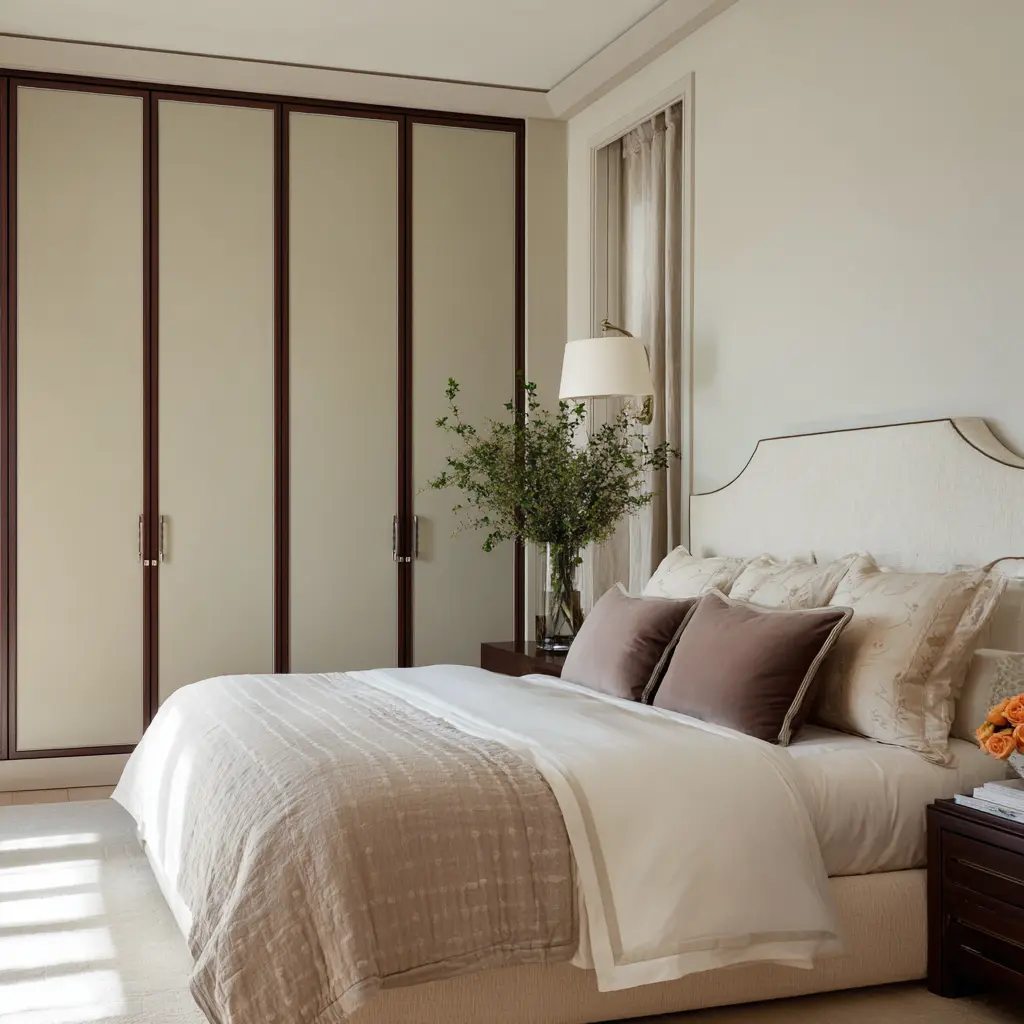
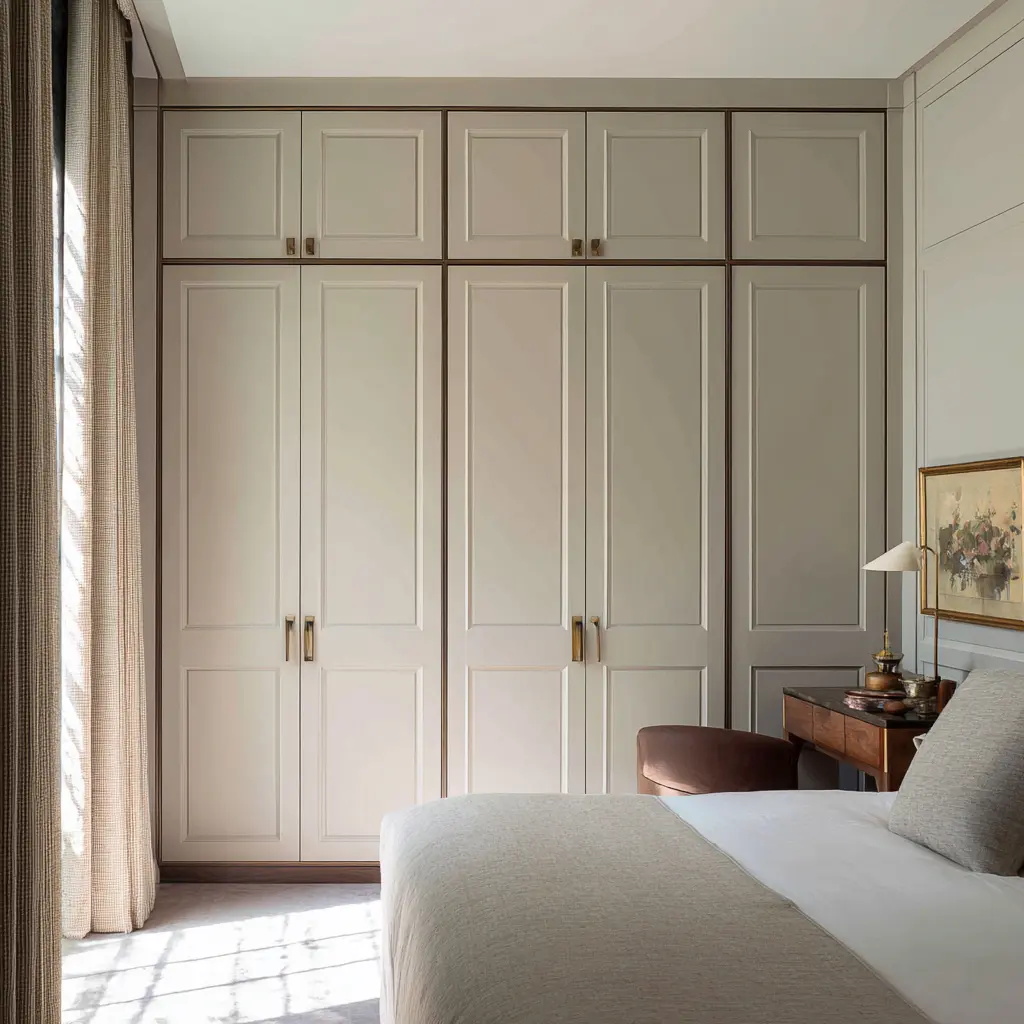
The second is the framed built-in. These have stronger joinery language, clearer outlines, panel order, or fitted-cabinet character.
They tend to feel settled, domestic, and highly integrated.
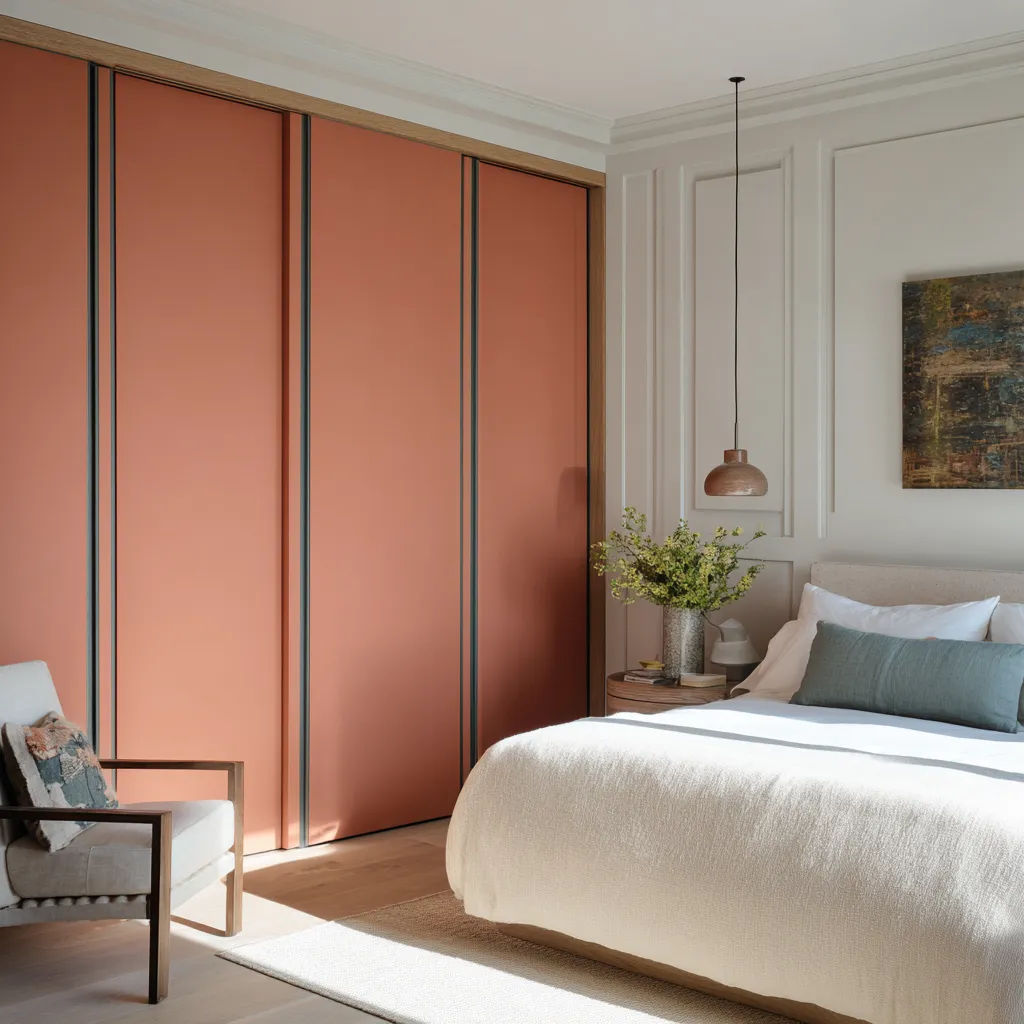
The third is the color-led wall plane. These use closet doors as the main carrier of room mood.
They rely on broad fields, thin reveals, and edited form so that color can lead without becoming too busy.
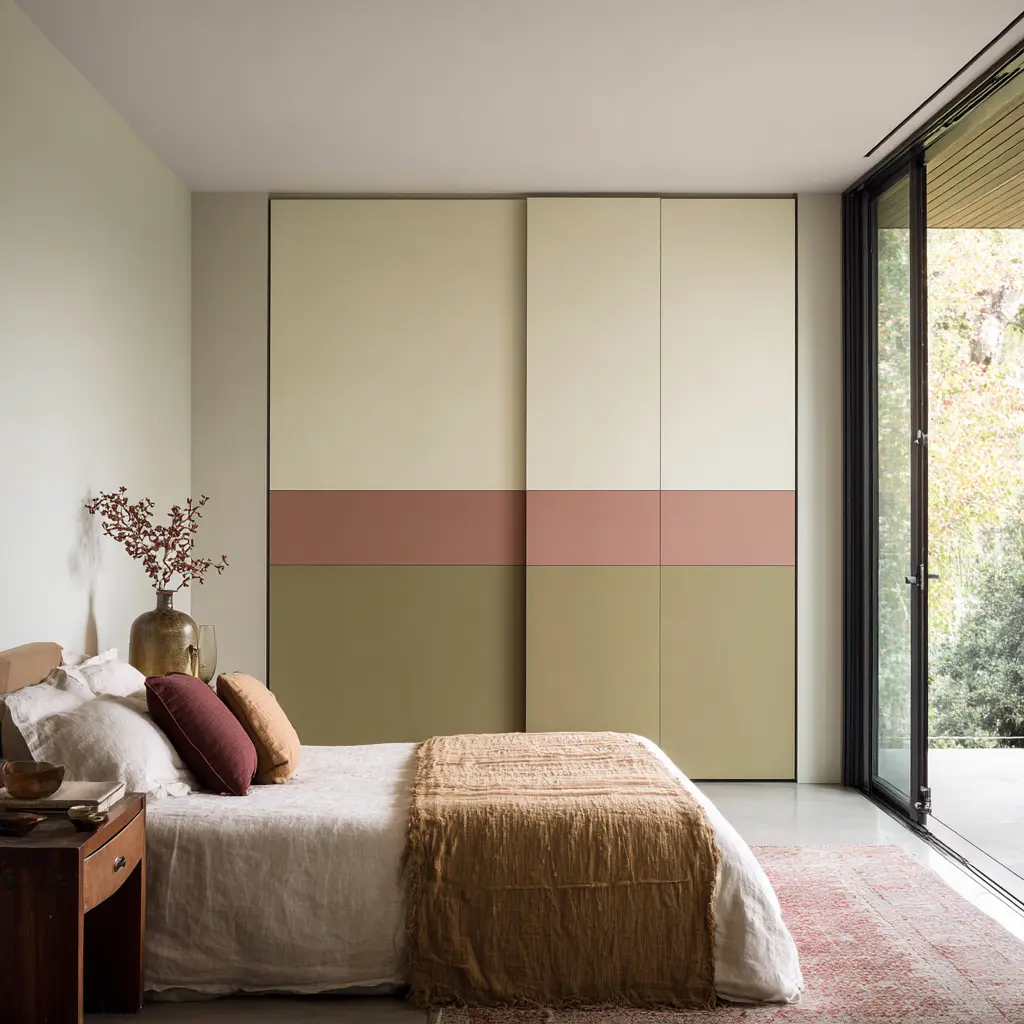
The fourth is the banded and grounded composition. These are more layered, often using horizontal zoning, wood or color bands, and stronger lower weight.
They read almost like sectioned wall elevations.
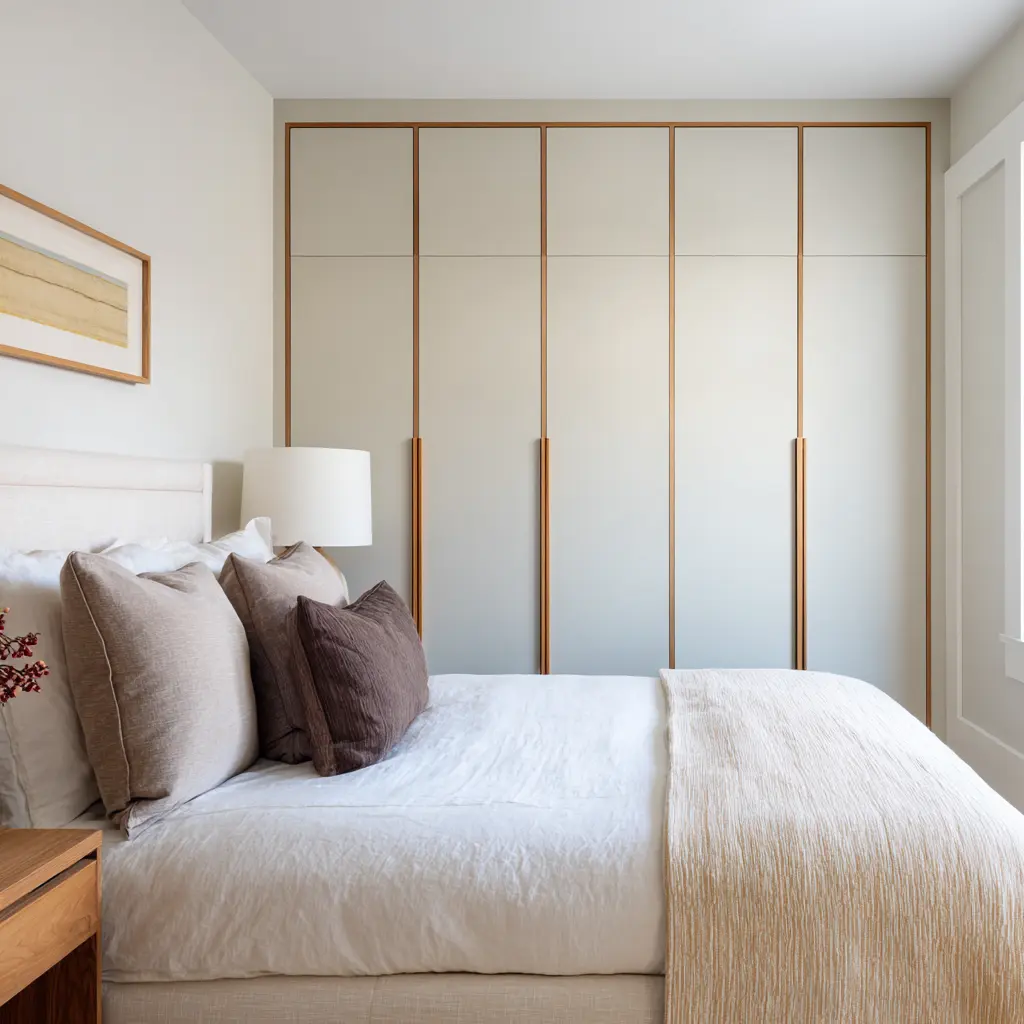
The fifth is the hybrid statement closet. These are the most personality-driven, often mixing classic structure with current surface editing, metal insets, stronger contrast, or richer material tension.
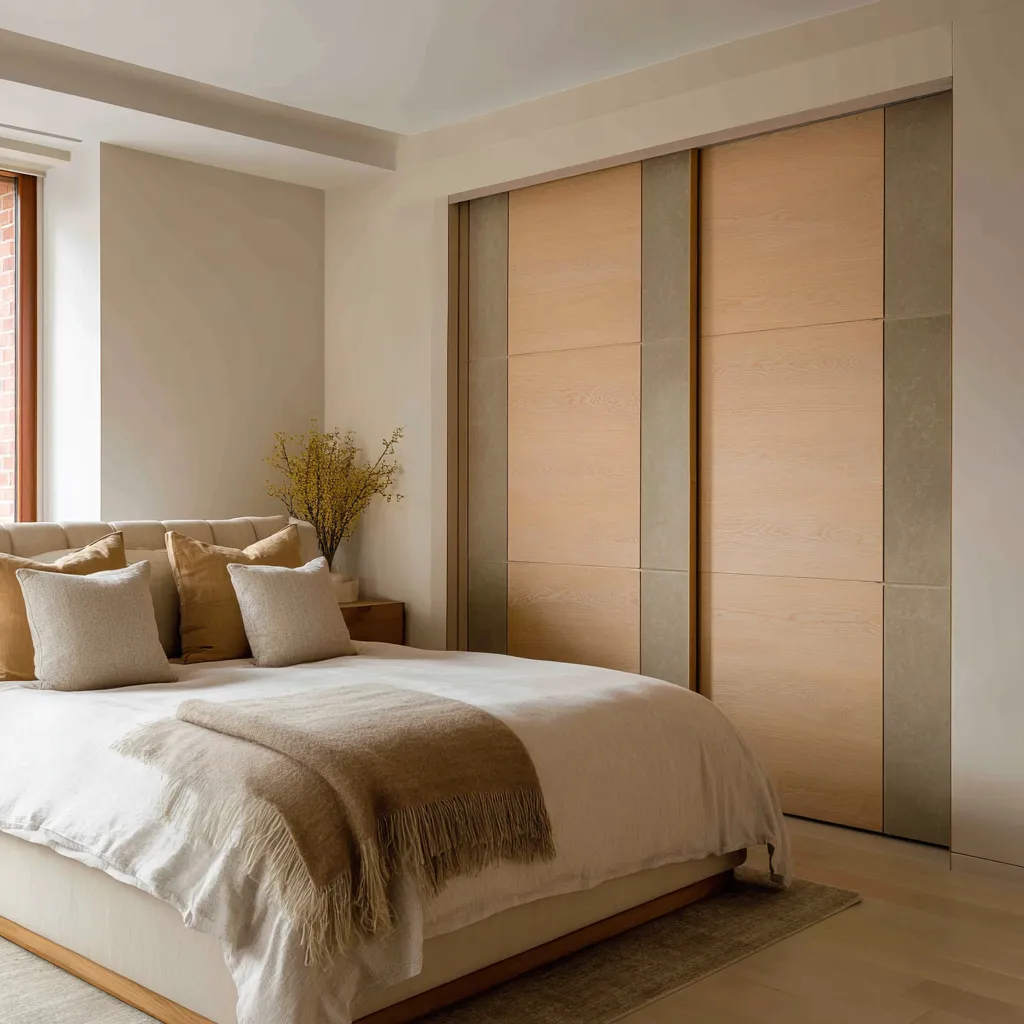
How to choose the right closet door idea for your bedroom
A soft modern room usually benefits from broad pale fields, minimal hardware, and one thin regulating device such as dark reveals or a warm metal hairline. This keeps the room airy while still giving the wall enough structure.
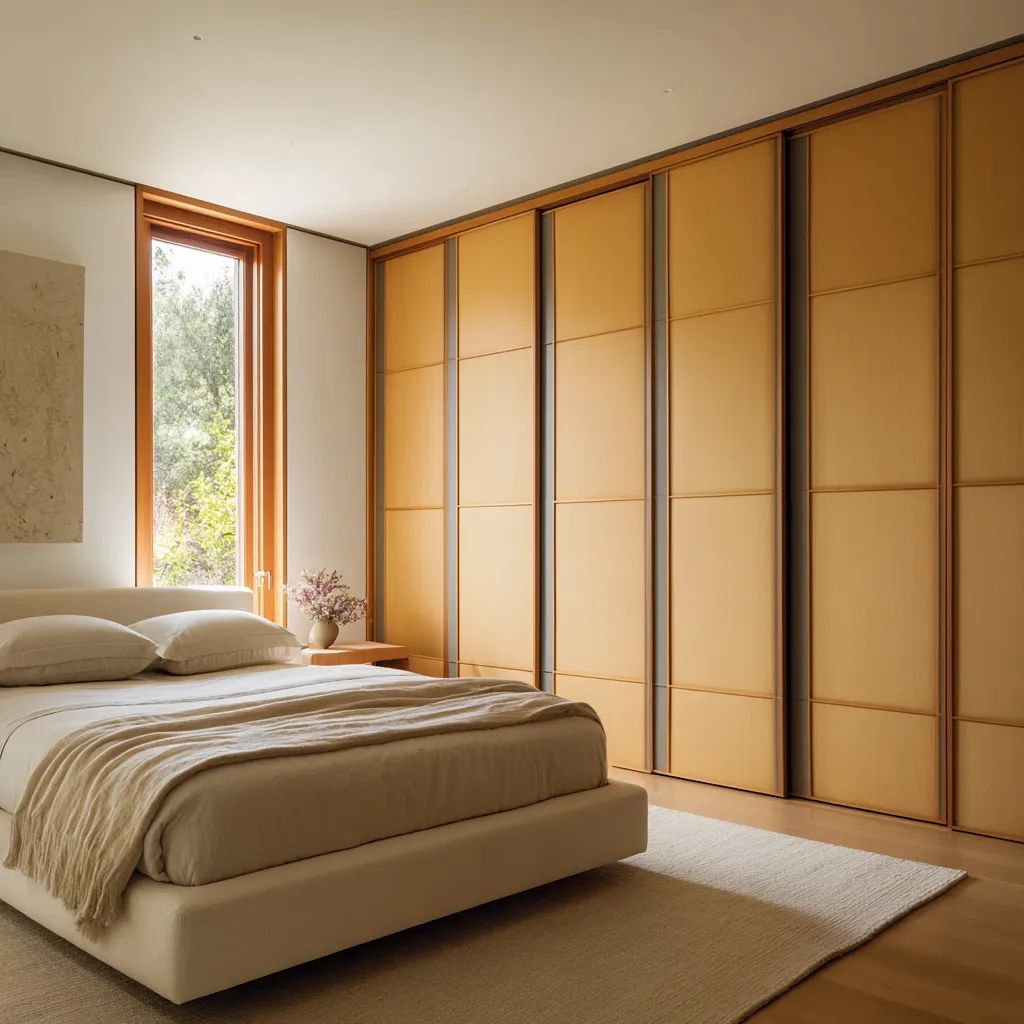
A warmer room with more body often works well with a grounded lower section, a wood band, or an earthy base zone. That weight helps the room feel settled.
If the closet needs to replace a feature wall, keep the form broad and edited. One strong color or one strong material family is enough.
The bed wall can then stay simpler. If the room is very minimal and you worry the closet may feel flat, a glossy or softly reflective finish can help.
One narrow datum line or one slim niche may be enough to add depth.
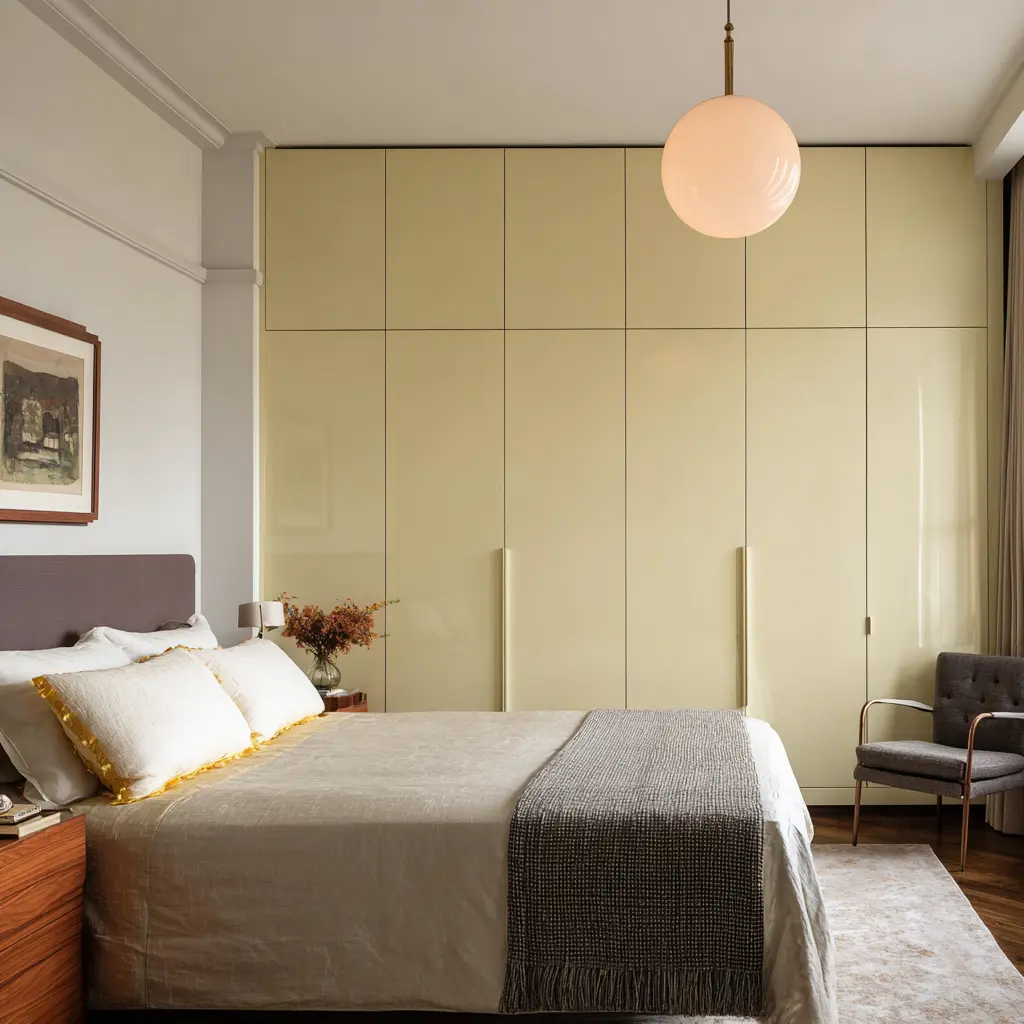
If the room leans classic and you want to update it, inset or framed doors still work well. The difference lies in adding one current interrupting move: a lower color zone, a wood strip, a dark outline, or a fine metal inlay.
That keeps the closet from feeling dated without stripping away its character.
The takeaway
The message is not about one trendy finish or one favorite panel style. It is about balance.
The closet walls that work tend to combine three forces at once.
- The first is restraint. Broad fields, limited noise, and easy-to-read surfaces keep the wall from tiring the eye.
- The second is gravity. Weight is placed low, or the wall is stabilized with a band, a base, or another kind of datum.
- The third is identity. The closet gets one clear source of character, whether that comes from color, wood, texture, gloss, or line.
That three-part balance explains a surprisingly large share of what makes closet door ideas successful.