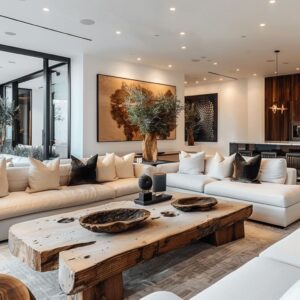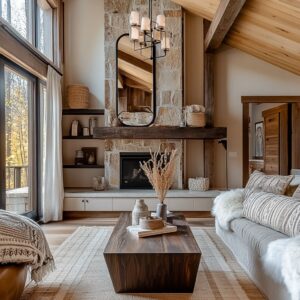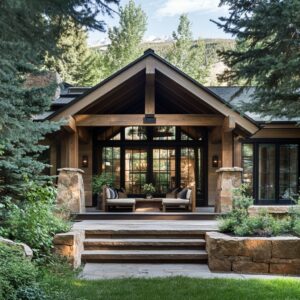
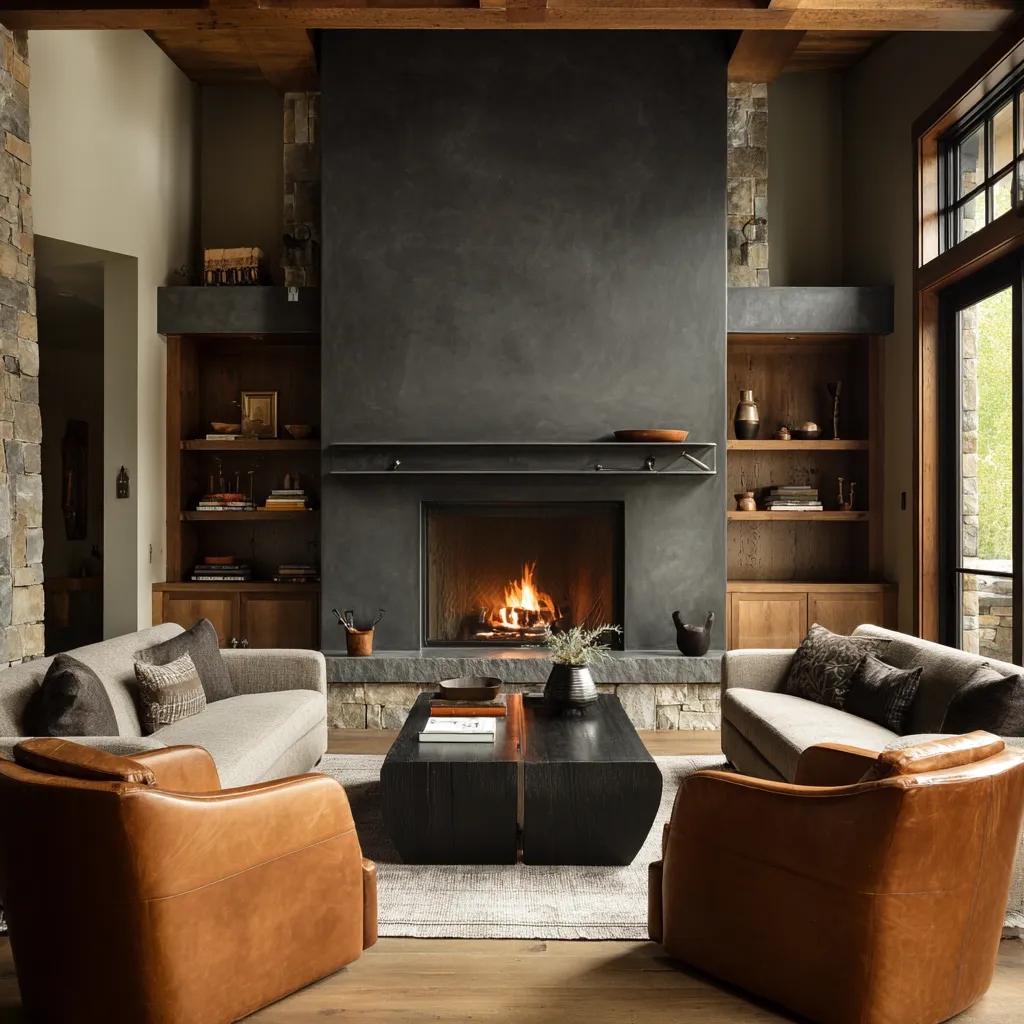
Mountain modern living room design has a very specific kind of appeal. It offers the weight of stone, the shelter of timber, the comfort of thick upholstery, and the presence of landscape, but it filters all of that through a cleaner and more controlled interior language.
The result can feel deeply rooted in place without slipping into cabin cliché, and highly current without feeling sterile. That balance is the whole challenge.
A lot of living rooms try to borrow mountain-house ingredients by adding a stone fireplace, a reclaimed beam, or a few rustic objects. That can create atmosphere for a moment, but it does not automatically create a coherent mountain modern interior.
The style becomes far richer when it is understood as a relationship between three things working together at the same time: natural mass, architectural control, and restorative comfort. If one of those pushes too far ahead of the others, the room starts to drift.
It becomes too lodge-like, too polished, or too generic.
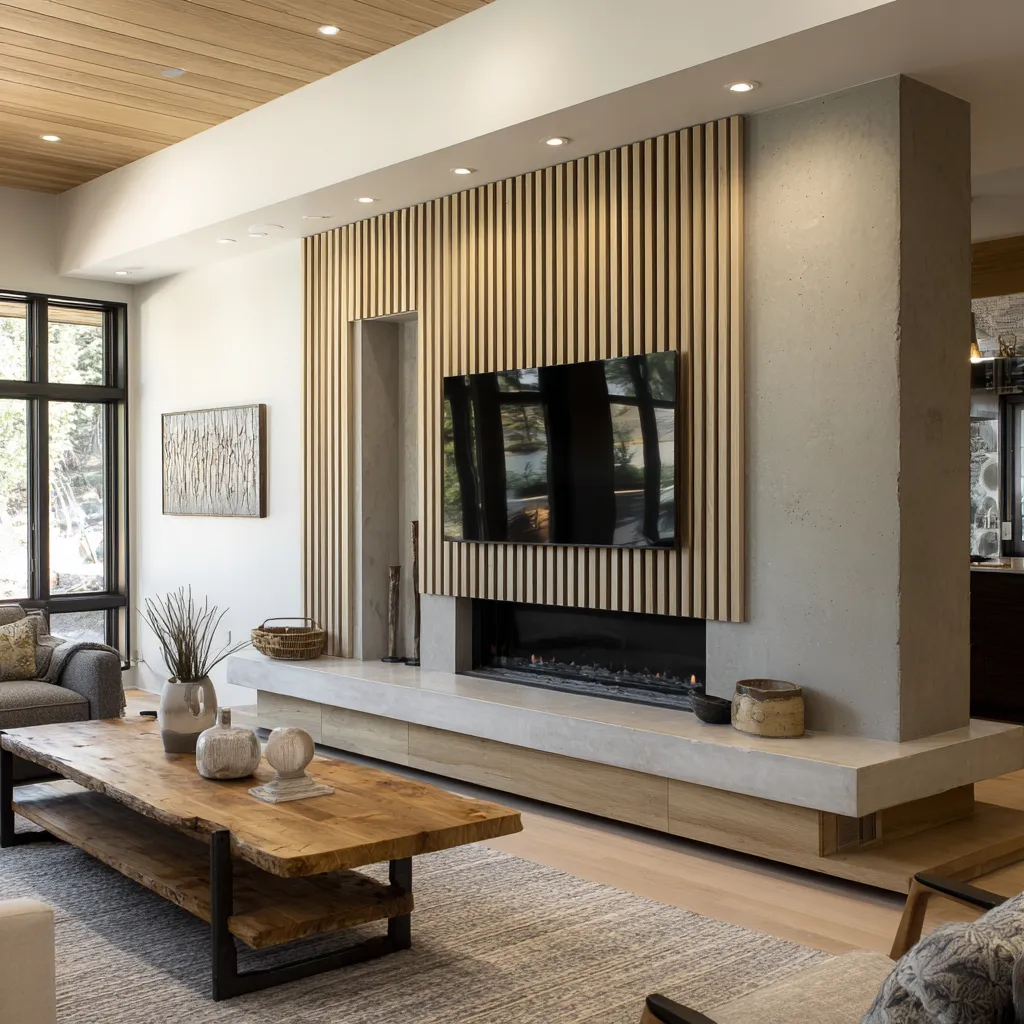
The mountain modern living room works beautifully when the mountain character is carried by several elements at once rather than by one dramatic feature alone. The stone may bring weight, the ceiling may bring structure, the glazing may bring place, the furniture may bring softness, and the built-ins may bring order.
That distribution is what gives the room depth. The room feels composed because no single element is trying to do all of the work.
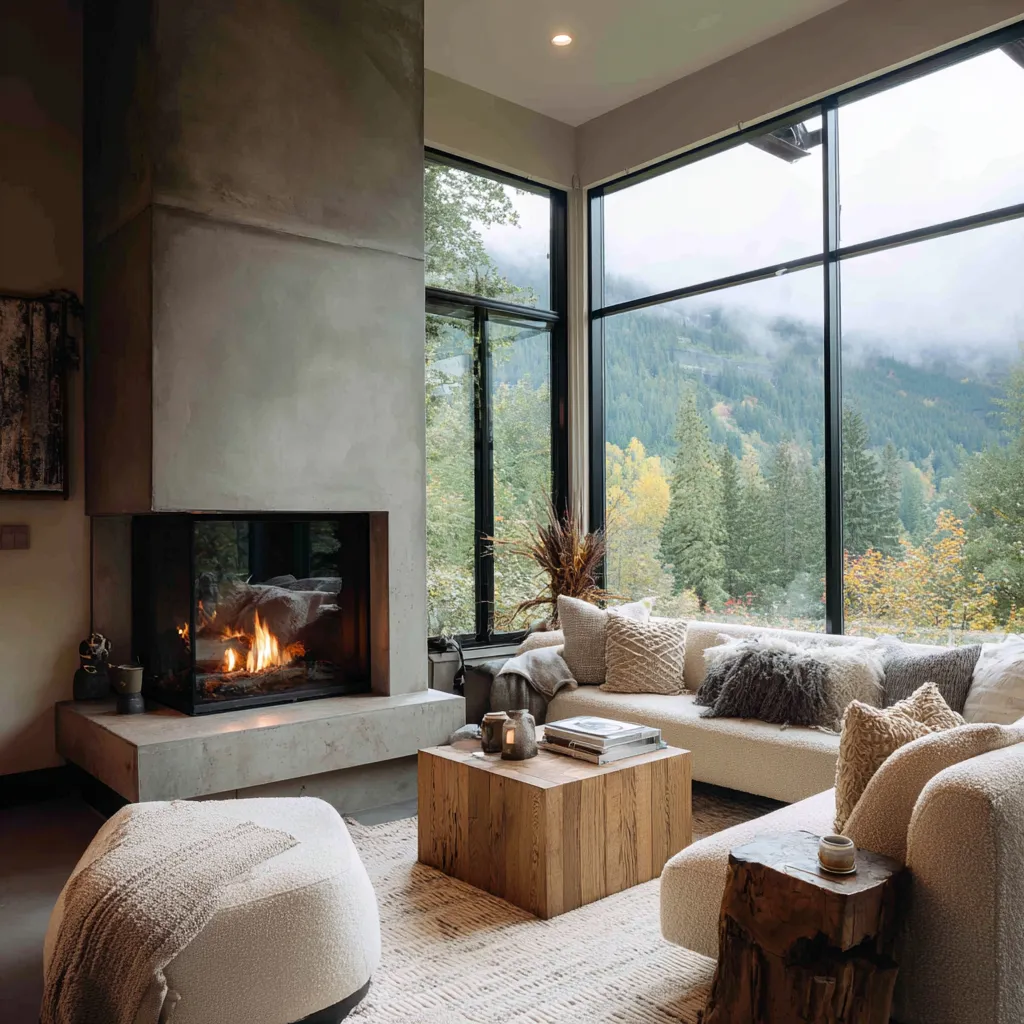
Mountain modern starts with mass, but not with heaviness
Mountain identity often begins with a sense of geological or structural presence. A living room usually needs some part of the architecture to feel substantial.
That might be a full-height stone chimney, a thick plastered hearth form, a concrete-like media wall, or a timber ceiling with real visual force. Without some element of mass, the room can lose the grounded quality that makes mountain living spaces feel tied to site and climate.
But mass and heaviness are not the same thing.
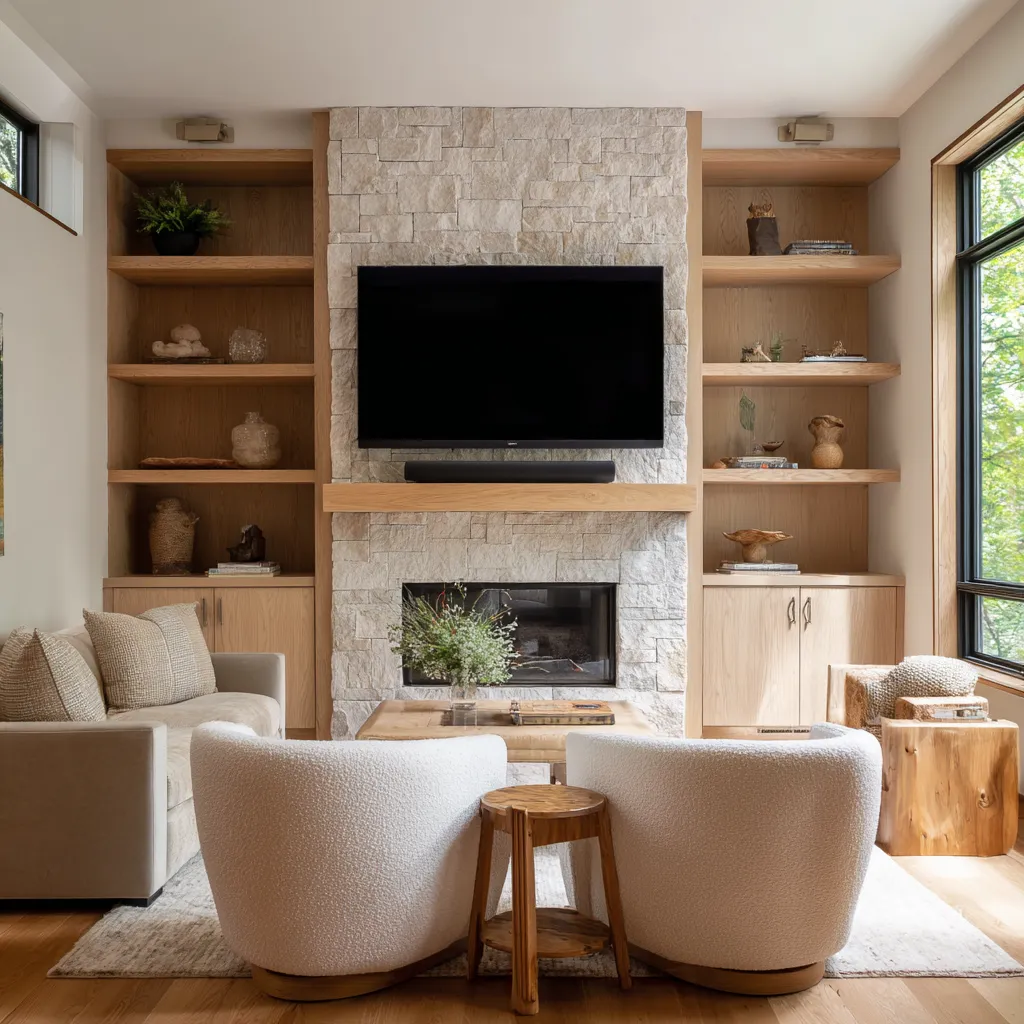
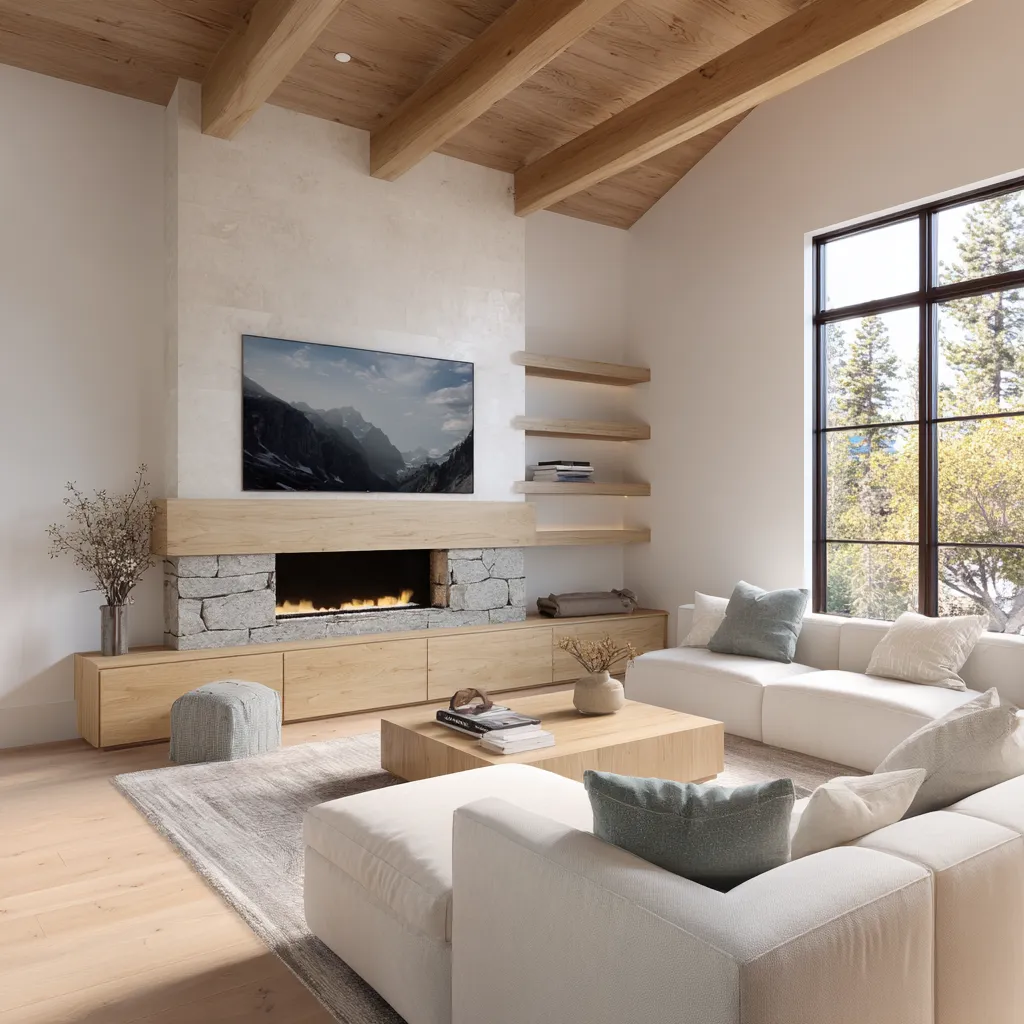
A fireplace wall can feel monumental without becoming oppressive if the material tone stays pale, if the stone is organized in broader courses, or if a rough vertical surface is cut by one or two strong horizontal lines. This is why long mantel shelves, floating hearth slabs, low cabinets, and broad fire openings matter so much in mountain modern interiors.
They calm tall volumes. They break down scale.
They turn a large vertical feature into something the eye can live with.
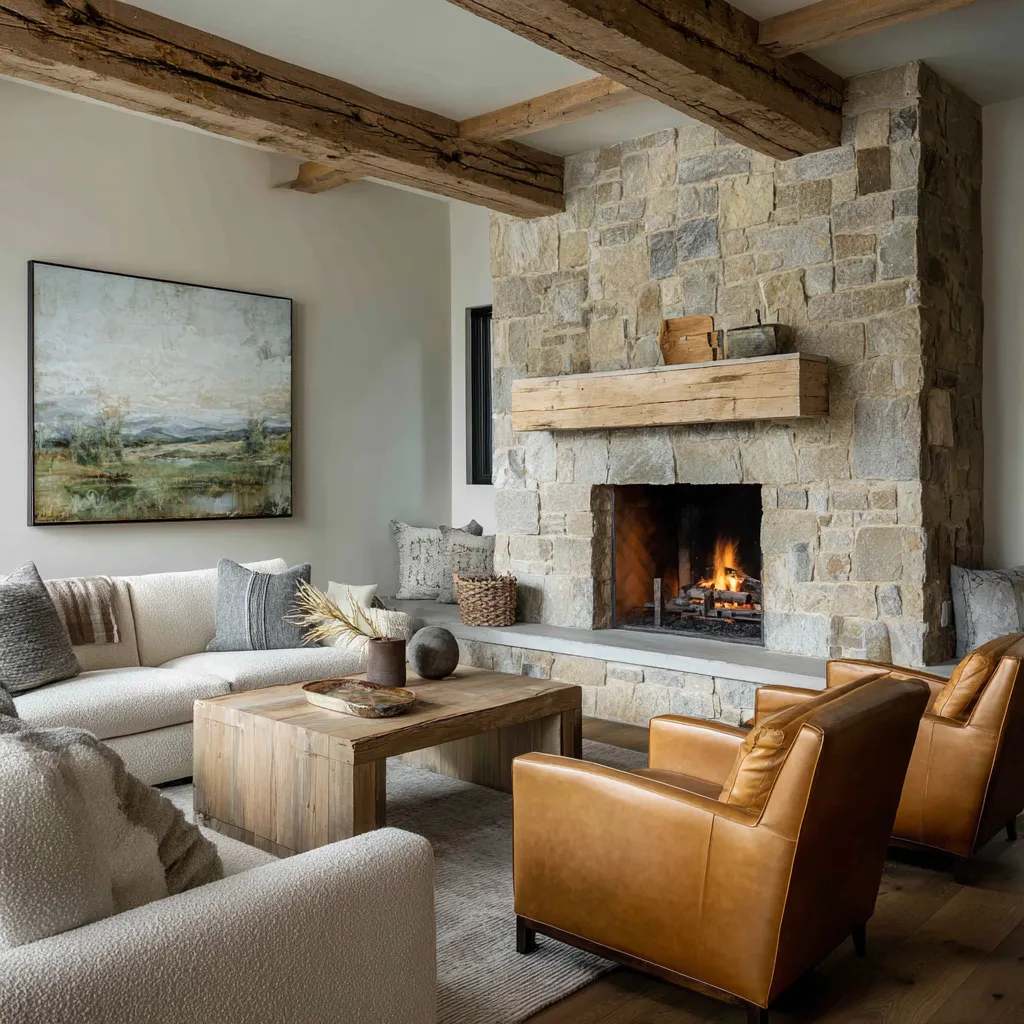
A pale stacked-stone chimney rising into a sloped ceiling feels very different from a dark rubble wall with heavy rustic trim, even if both are made of stone. One feels architectural and open.
The other feels denser and older. Neither is wrong, but they produce different emotional results.
The current mountain modern living room often leans toward edited mass rather than uncontrolled roughness. The stone is still there, but it has been flattened, widened, framed, or simplified.
That is one of the style’s useful principles: natural material becomes current when it is organized.
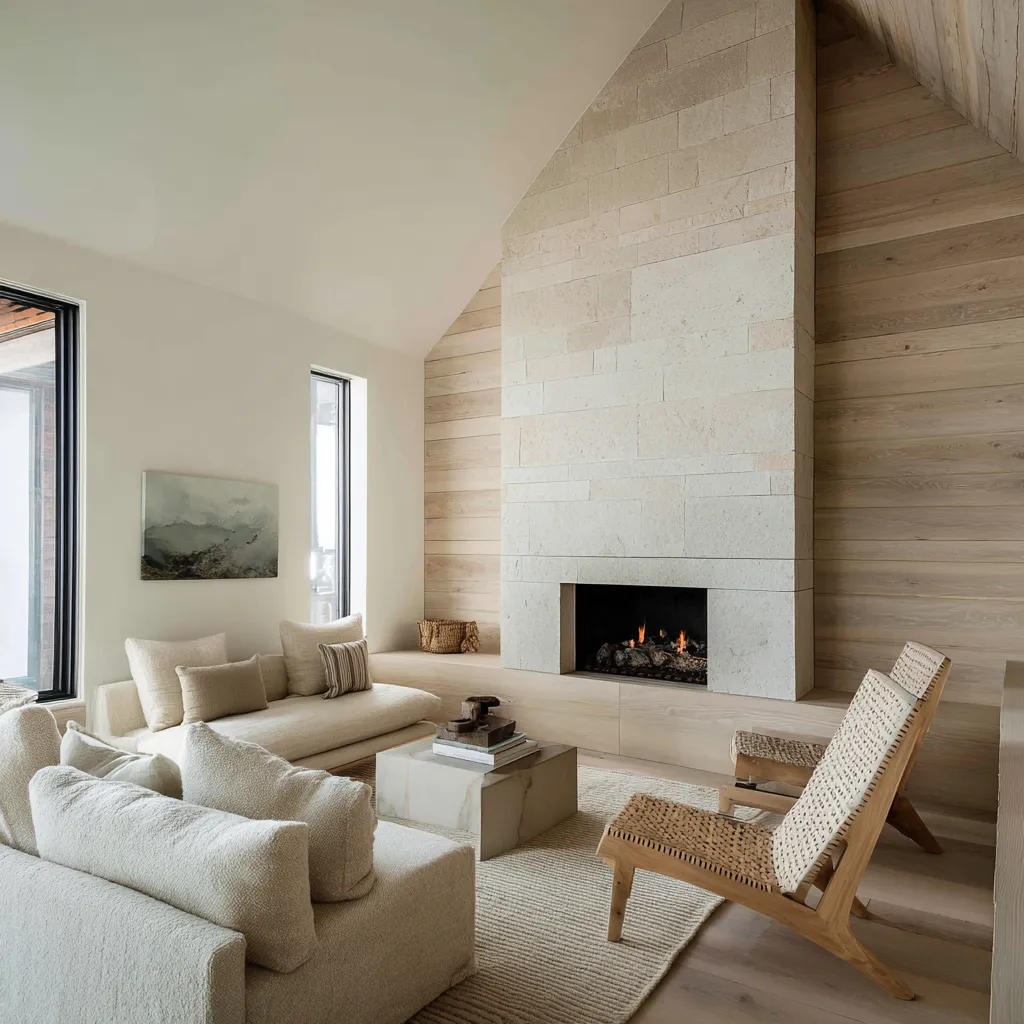
The fireplace is still the emotional core, even when it changes form
The fireplace remains central to mountain modern living room design, but it no longer has only one expression. In some design ideas it is still a true hearth, deep and frontal, with a visible surround, a beam mantel, and a sense of thickness.
In others it becomes a long linear fire line set into plaster, stone, or concrete, often aligned with a television above. In still more reduced spaces, the old monumental chimney is translated into a mineral wall, a low glowing slot, or a single dark opening held inside a larger architectural composition.
What matters is not whether the fireplace is traditional or linear. What matters is whether it still gives the room a believable center of gravity.
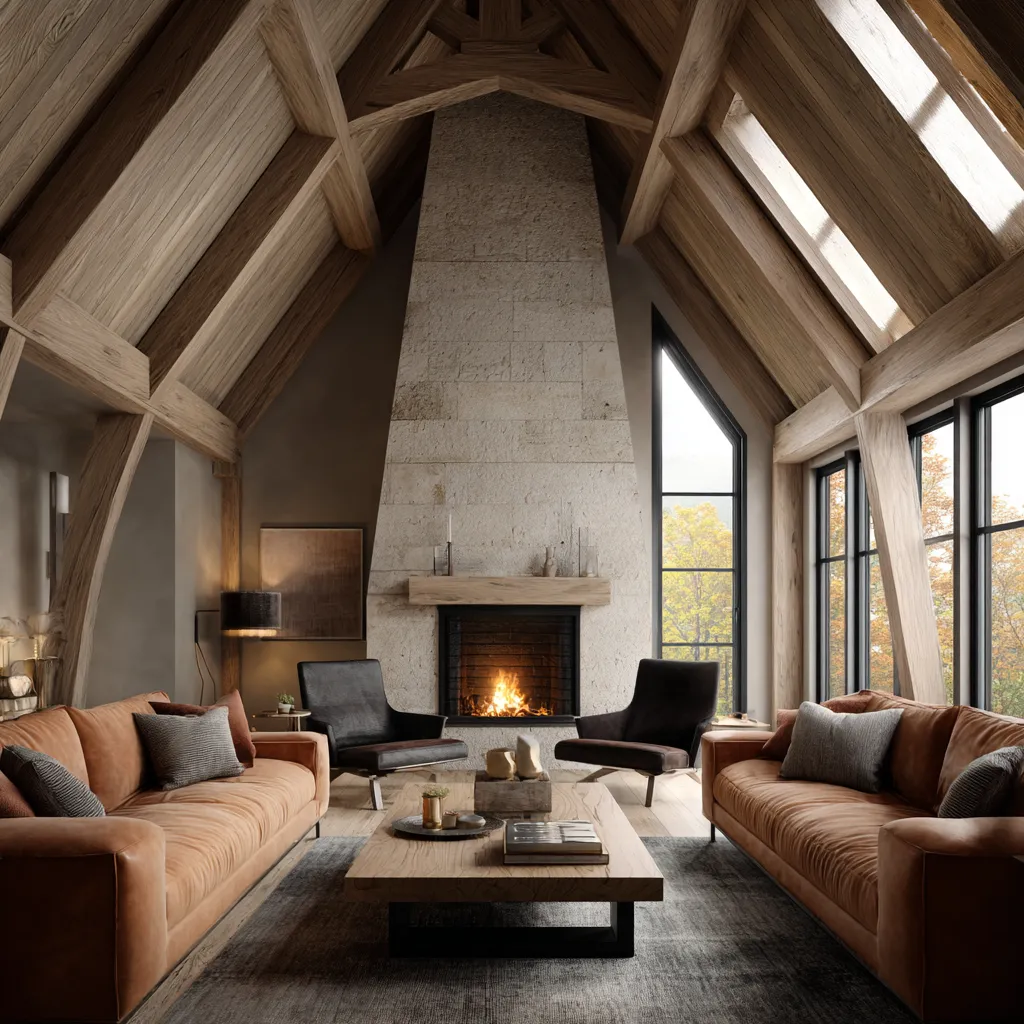
If the room uses a classic hearth composition, mountain character often comes easily. Stone, timber, depth, and fire already carry the right emotional language.
If the room moves toward a built-in media wall, the designer has to work harder to keep the mountain side of the style alive. The wall then needs enough mineral mass, enough wood, enough outlook, or enough site-specific material presence to stop it from becoming an ordinary contemporary television wall.
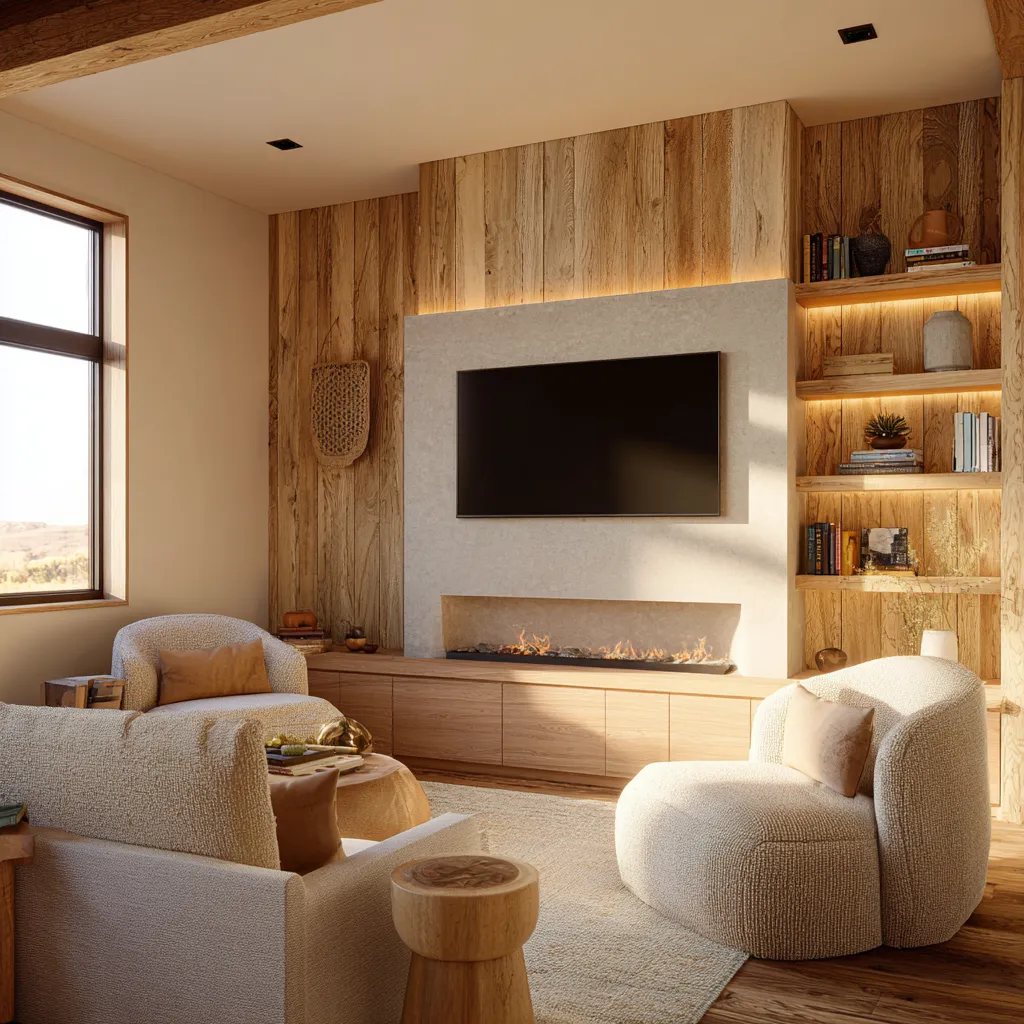
This is why the mountain modern media wall rarely feels like furniture alone. It usually behaves like architecture.
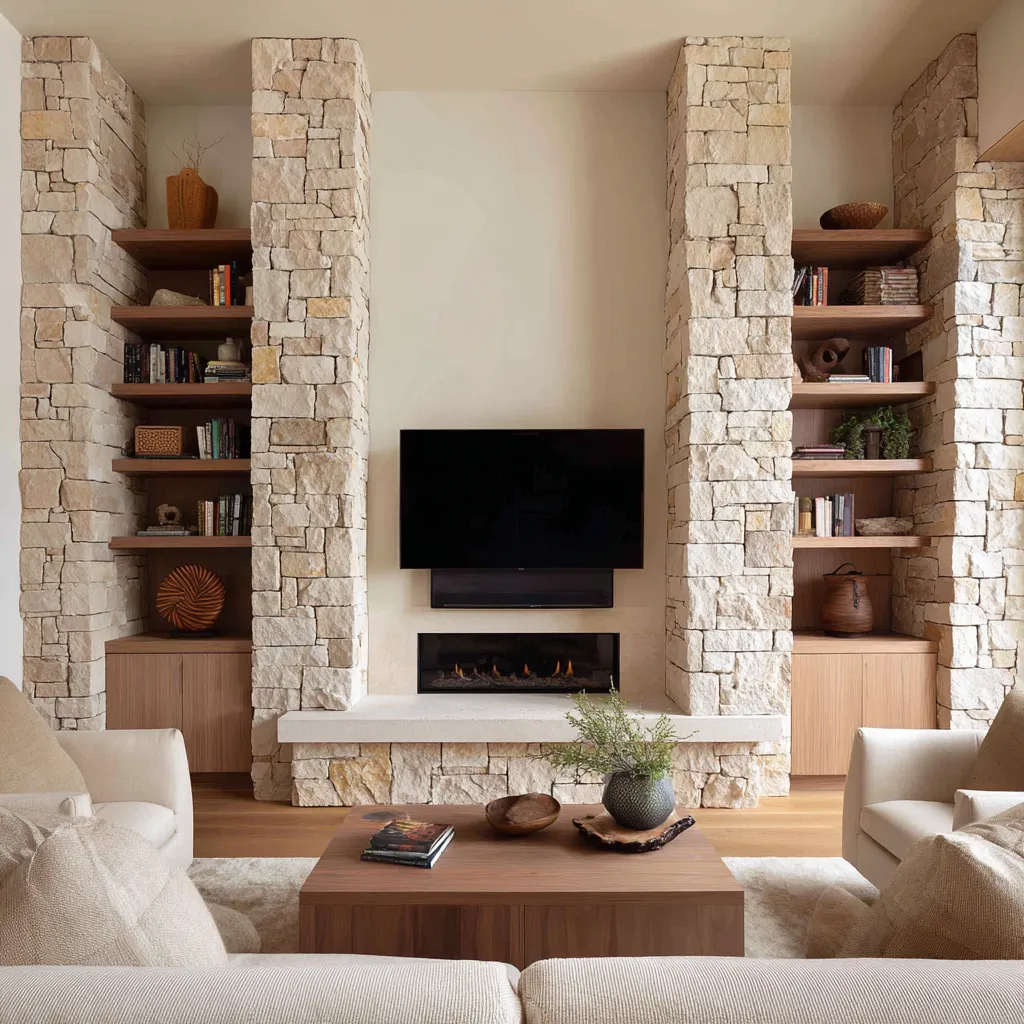
The stone or plaster field has weight. The shelving sits inside recesses.
The mantel or plinth establishes a clear horizontal datum. The cabinets below are broad and grounded.
The TV and fire opening become part of a larger wall logic instead of floating as separate black rectangles. In a well-handled design, the fireplace may share the wall with technology, but it does not surrender its role.
It still anchors the interior, gathers the seating, and gives the room its inner warmth.
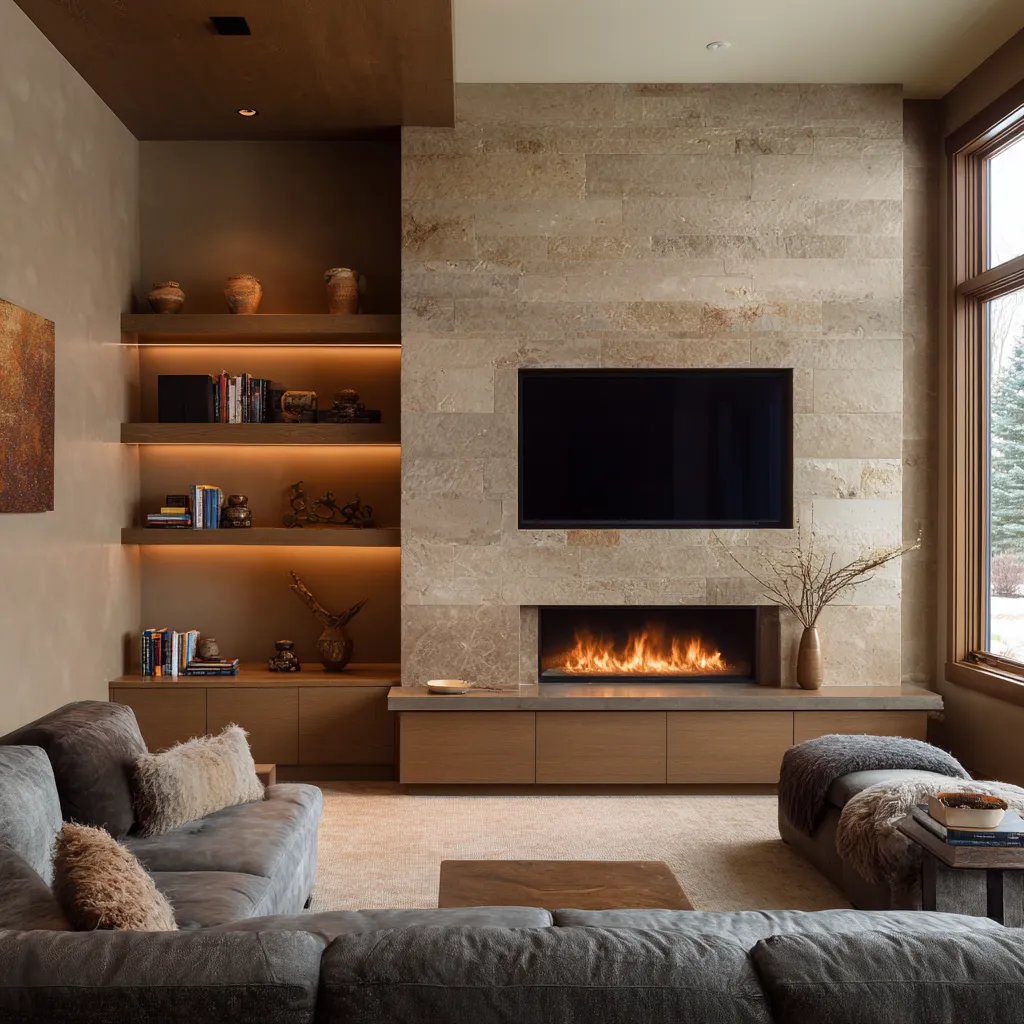
Long horizontal lines are one of the style’s hidden tools
Many mountain living rooms have tall ceilings, large glazing, or full-height feature walls. Without some counterbalance, those vertical conditions can make a room feel stiff or over-scaled.
One of the effective ways mountain modern interiors solve that problem is through long horizontal emphasis.
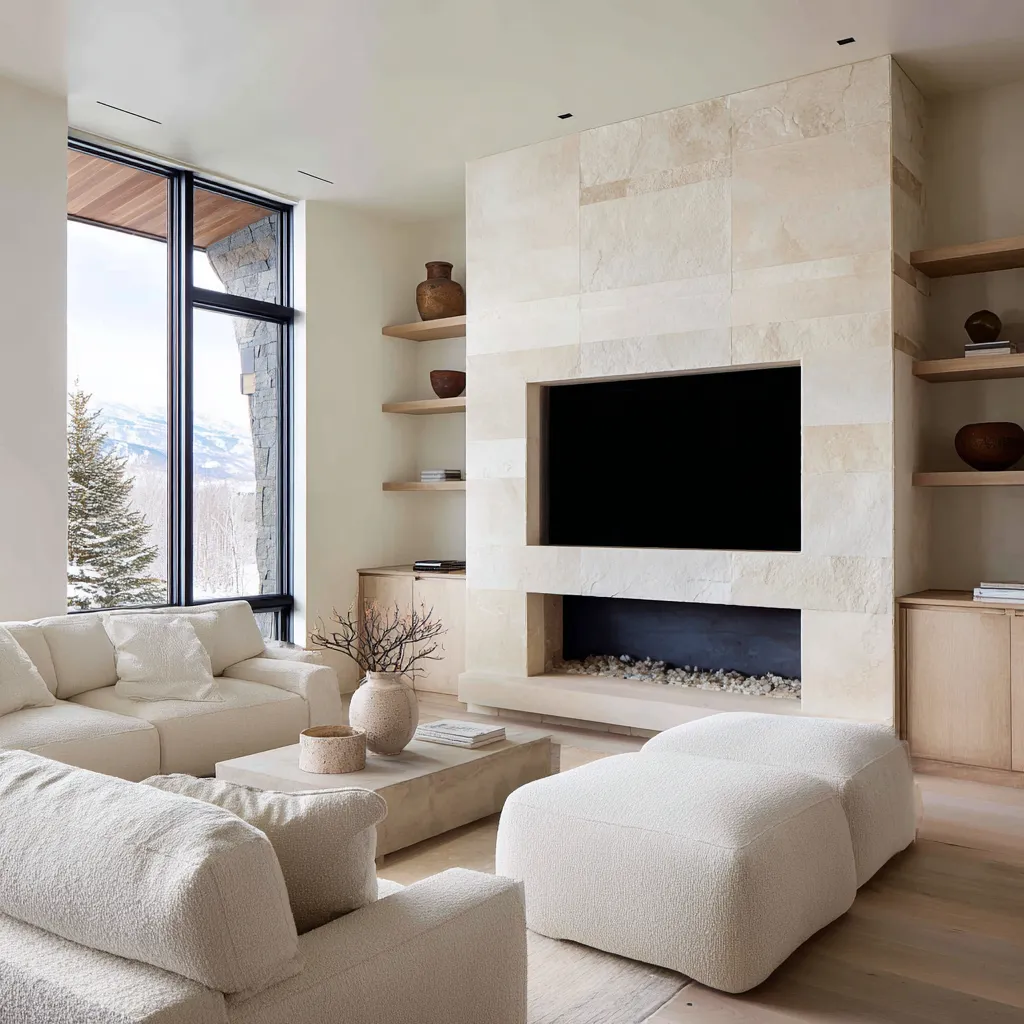
This can show up in a dozen forms: a wide fire slot, a floating hearth slab, a deep mantel beam, low built-in cabinets, a long window bench, a broad coffee table, a sectional that stretches near the floor, or a continuous wood band running through the focal wall. These moves do not simply shape the furniture layout.
They help tame the architecture.
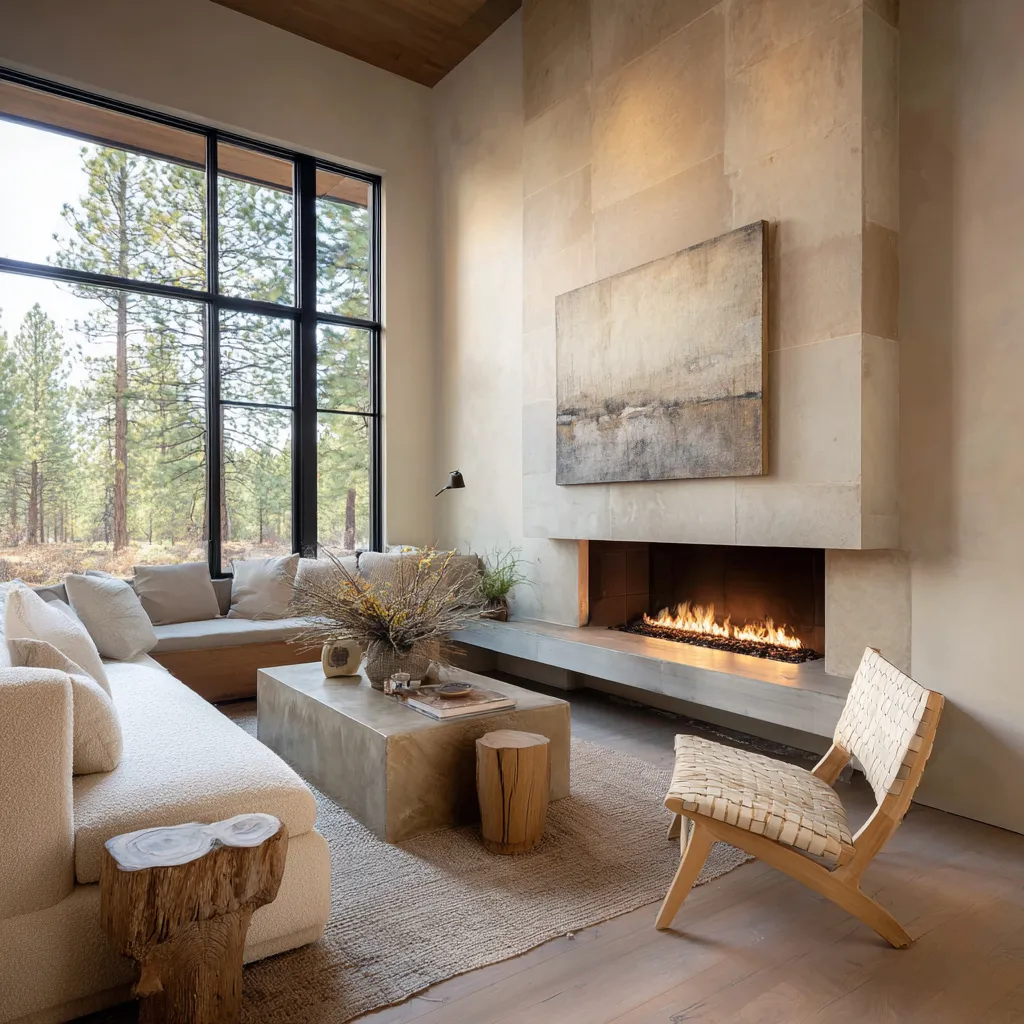
This is one reason low furniture is important in the style. A deep sofa with a low back, a broad ottoman, a blocky table, or a wrapped sectional keeps the human zone close to the floor and lets taller architectural forms rise above it with less tension.
The design then feels expansive without feeling cold. Height belongs to the shell.
Comfort belongs to the lower horizon. That low horizon also helps the view.
In mountain houses, the landscape is rarely meant to sit at a distance like framed wall art. It is meant to feel physically present.
Low furniture and strong horizontal bands help the eye travel outward toward trees, slope, sky, and snow.
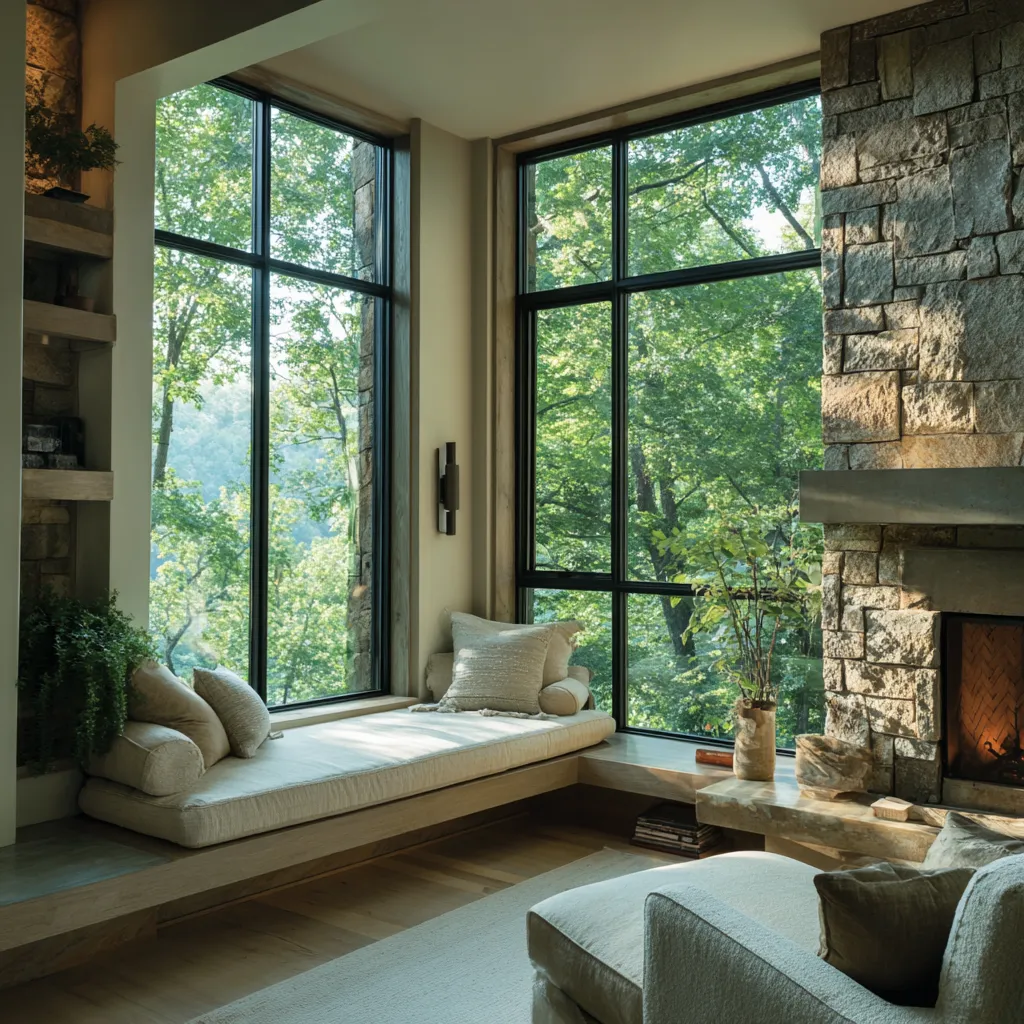
Views are not decoration in a mountain modern room
One of the common mistakes in mountain interiors is treating the landscape as a bonus rather than as part of the actual design structure. In a fully resolved mountain modern living room design, the view is one of the materials.
It shapes layout, seating placement, bench design, glazing rhythm, and even the amount of visual noise allowed inside the room.
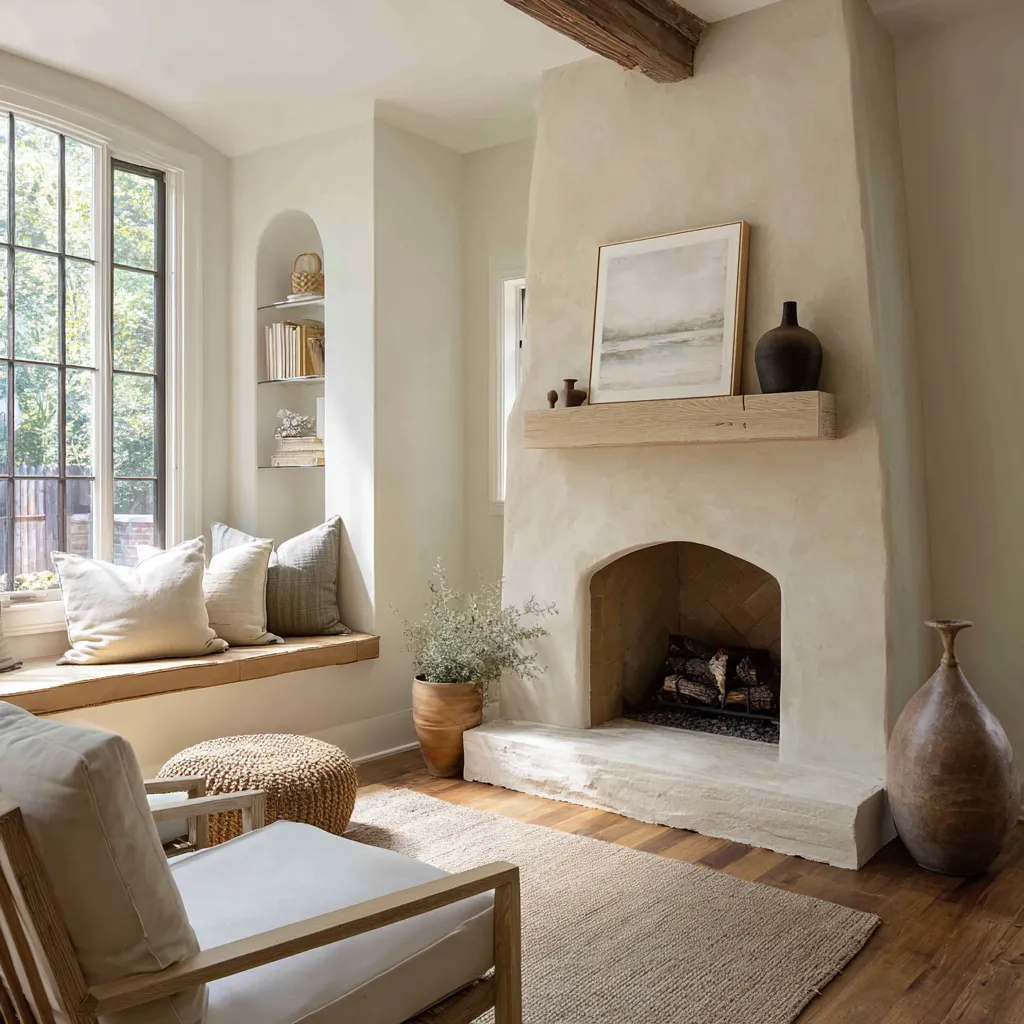
If a room has a strong outlook, the interior often becomes more disciplined. Patterns are reduced.
The palette stays close. Objects are edited.
Upholstery remains soft and low in contrast. This is not a loss.
It is a design choice that gives the design room to breathe with its setting.
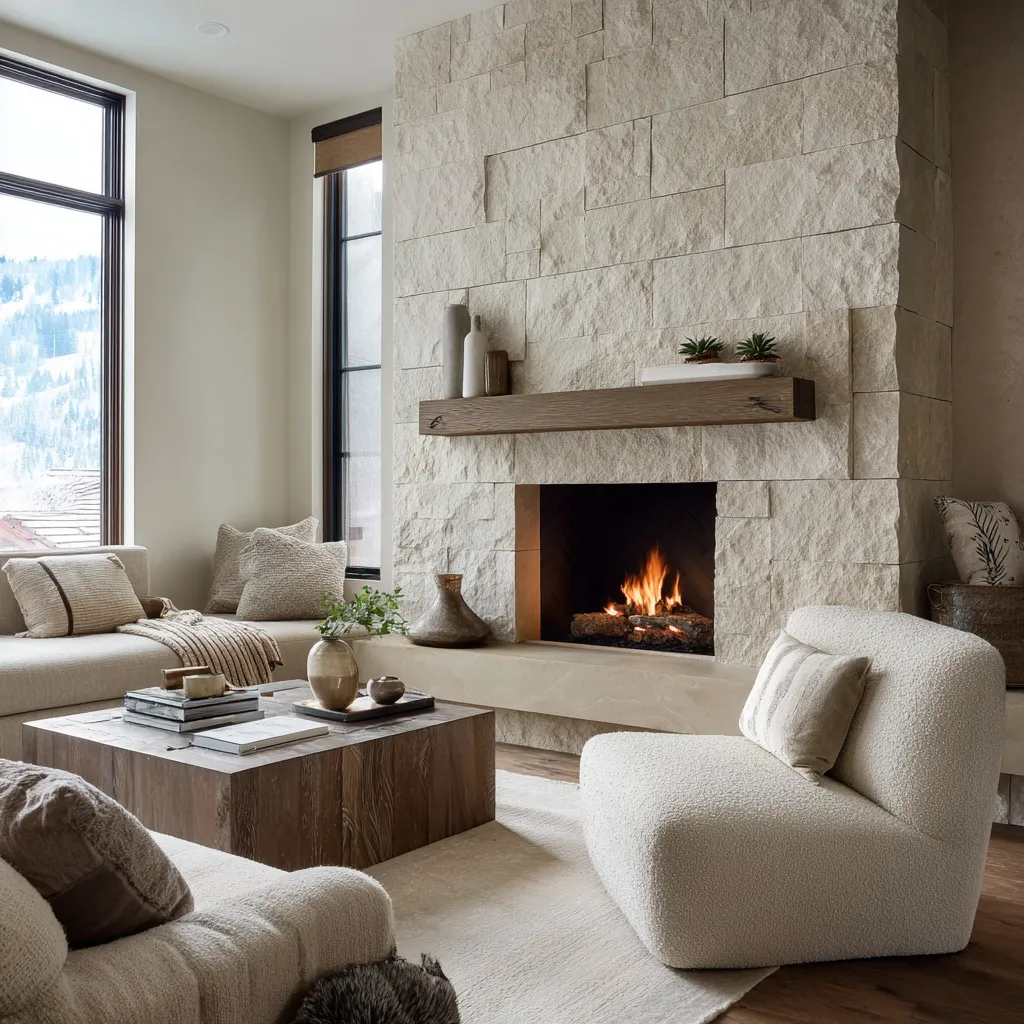
Large black-framed windows are especially powerful in this style because they do two jobs at once. They sharpen the view with graphic clarity, and they introduce dark linear structure into otherwise pale interiors.
Those black lines often echo the fire opening, shelf lights, picture lights, or metal firebox trim. The result is a room that feels visually held together even when the palette remains restrained.
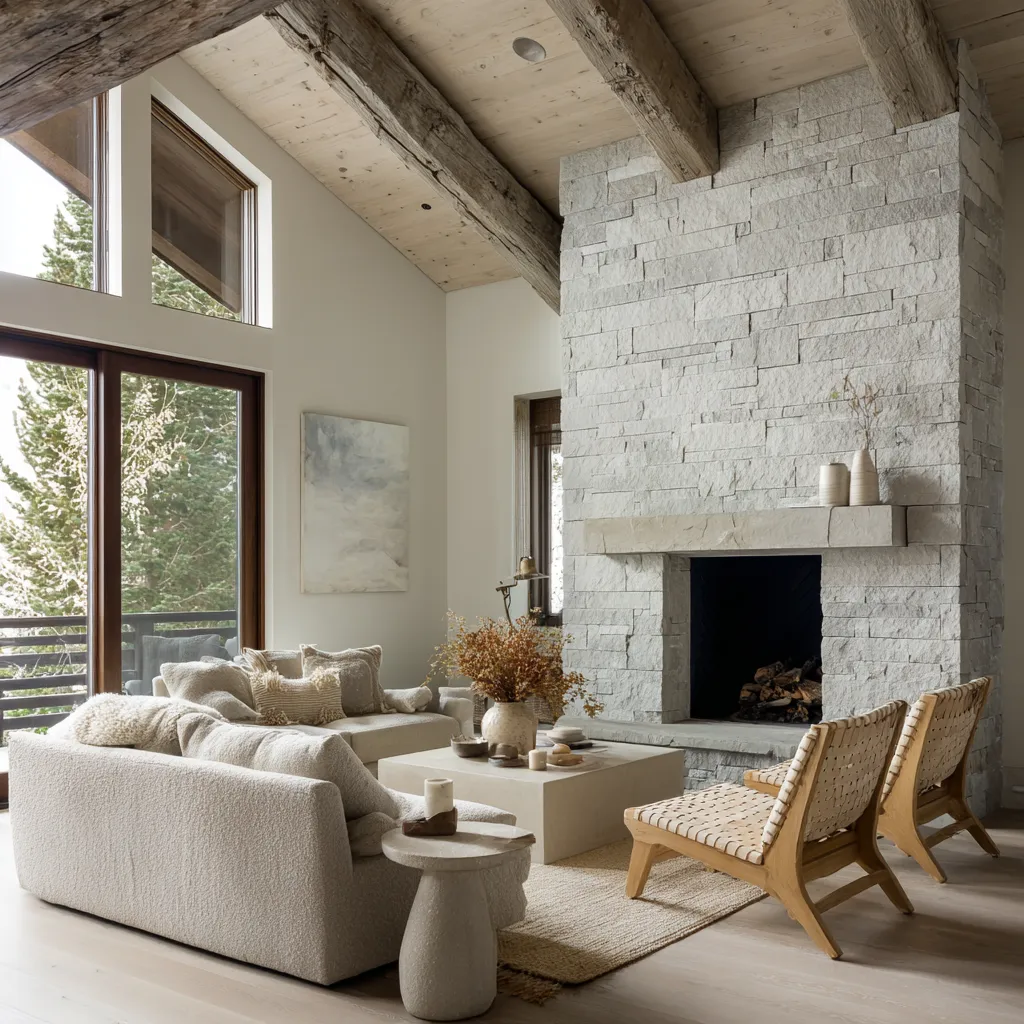
Corner glazing, tall narrow windows, and broad picture windows all produce different versions of mountain modern. A corner glass lounge often gives equal weight to weather and fire.
A tall narrow opening tends to make the room feel more architectural and vertical. A broad window wall places horizon and daylight at the center of the composition.
But in each case, the room works when the seating and built-ins acknowledge that view rather than turning fully inward.
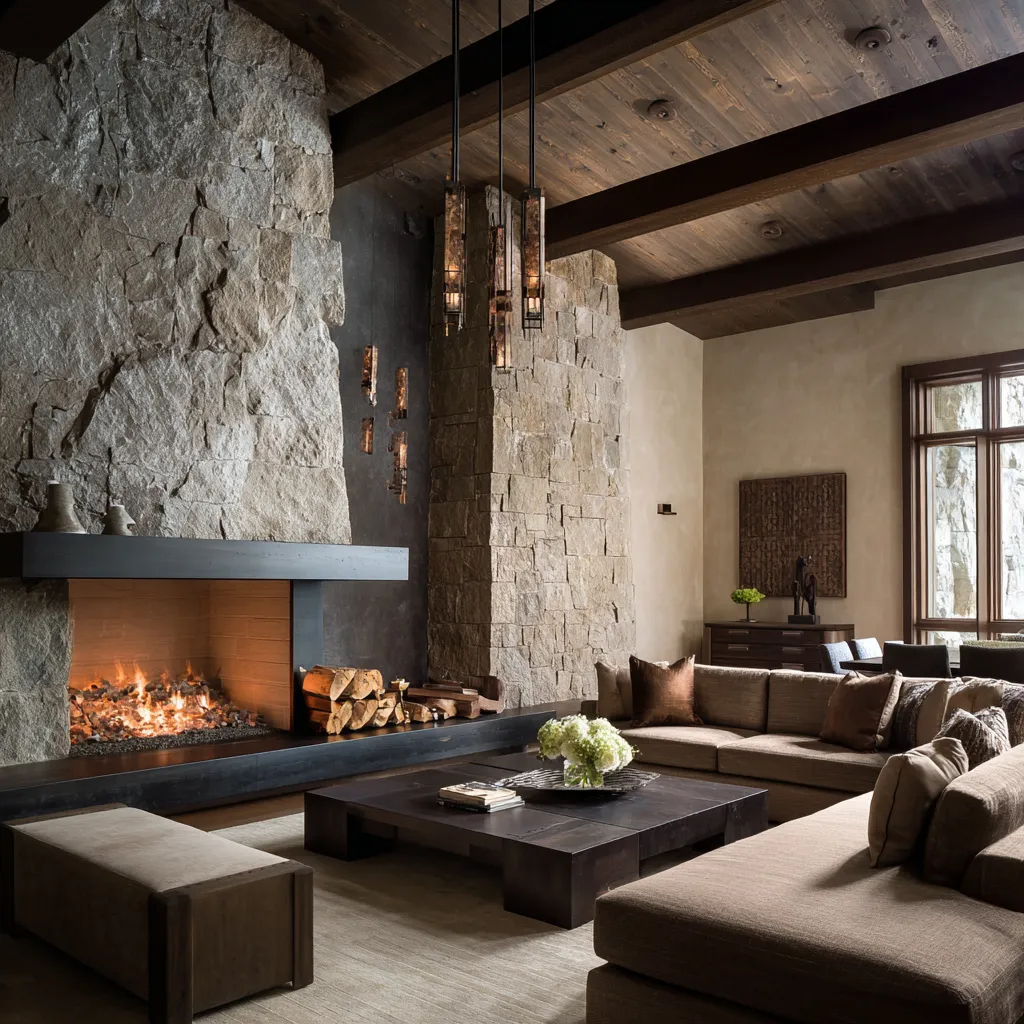
Built-in benches matter far more than many people realize
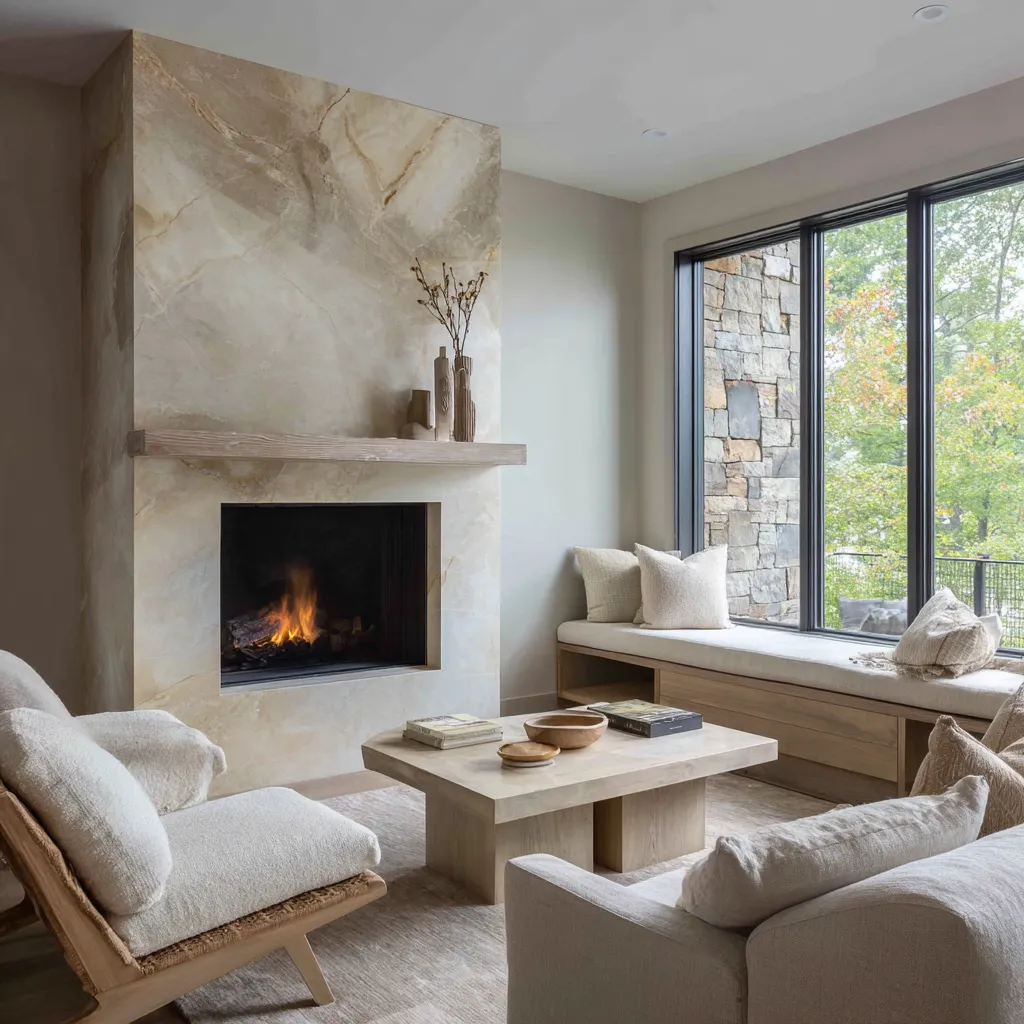
The built-in bench or window seat is practical, but its role goes well beyond practicality. A bench allows the perimeter of the room to become occupied without crowding the center.
It creates a place to sit at the edge of light. It turns a window into lived architecture rather than a hole in the wall.
It makes the transition between interior and landscape feel slower and richer. And because it often sits low and runs horizontally, it supports the same visual rhythm that helps calm tall shells and heavy materials.
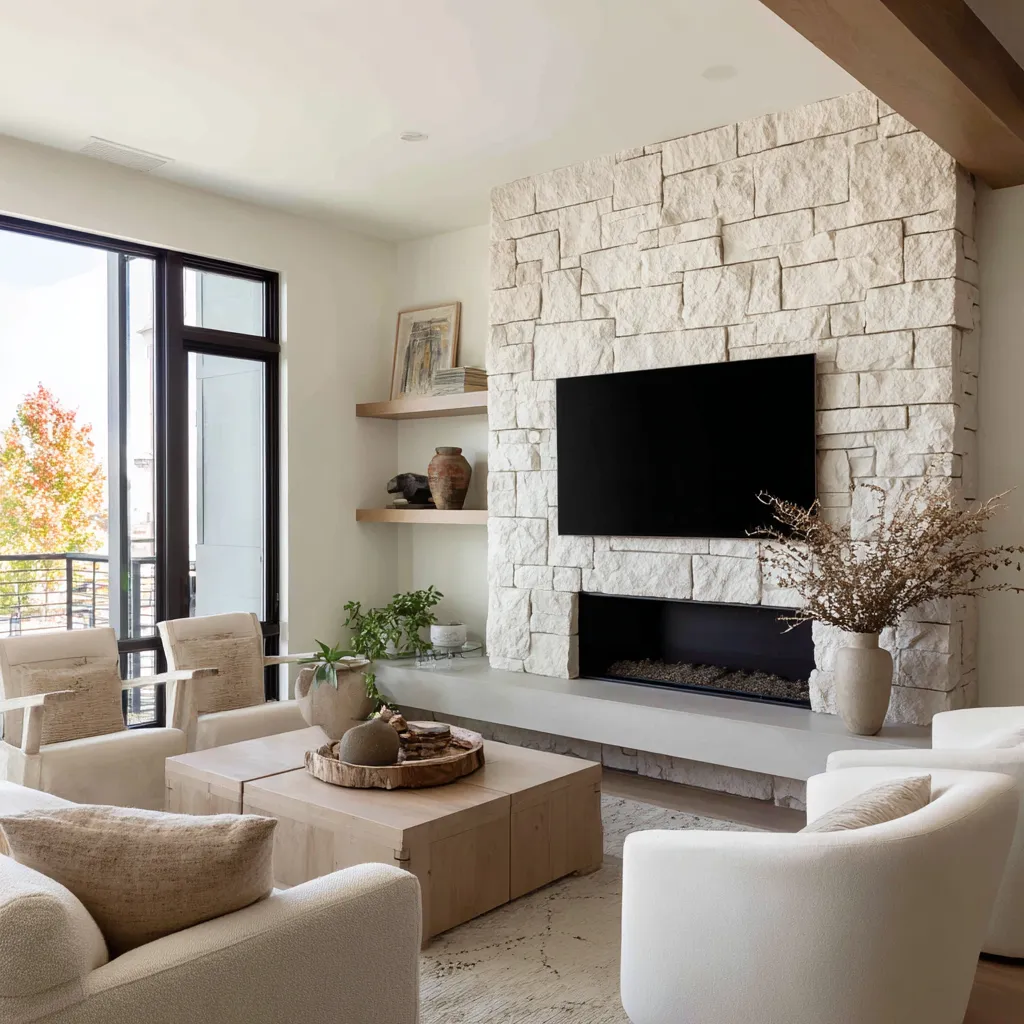
Benches are especially effective in view-led mountain rooms. They allow the interior design to acknowledge the outlook directly.
Instead of every seat facing a media wall, one part of the room can face weather, trees, or a distant ridge. That changes the emotional life of the space.
The room becomes a place for lingering, reading, warming up, or watching afternoon light move, not only a place for television.
A well-designed bench also helps with material continuity. It may connect the fireplace wall to the window wall, continue the wood tone of cabinetry, or bring upholstery and architecture closer together.
In smaller living rooms, this can be one of the ways to make the entire room feel integrated.
Warmth comes from material memory, not from beige alone
A mountain modern living room can be pale and still feel warm, but warmth does not come automatically from cream upholstery and soft neutrals. Real warmth is usually built from a thicker material story.
That story may include reclaimed-looking timber, darker ceiling beams, leather chairs, a visibly deep hearth, rougher stone texture, blackened steel around the fire opening, or wood with enough grain and tone to feel substantial. These elements carry memory.
They suggest age, weather, use, and shelter. Without them, a room may stay attractive but feel thinner than it should.
This is why some highly edited mountain modern interior ideas can end up cooler than intended. The surfaces are beautiful, the lines are clean, and the palette is controlled, yet the room lacks the layered material memory that gives mountain spaces their emotional depth.
Lighting can help, especially with shelf glow, concealed cabinet wash, and firelight, but lighting cannot replace substance. A room still needs some weight in the materials themselves.
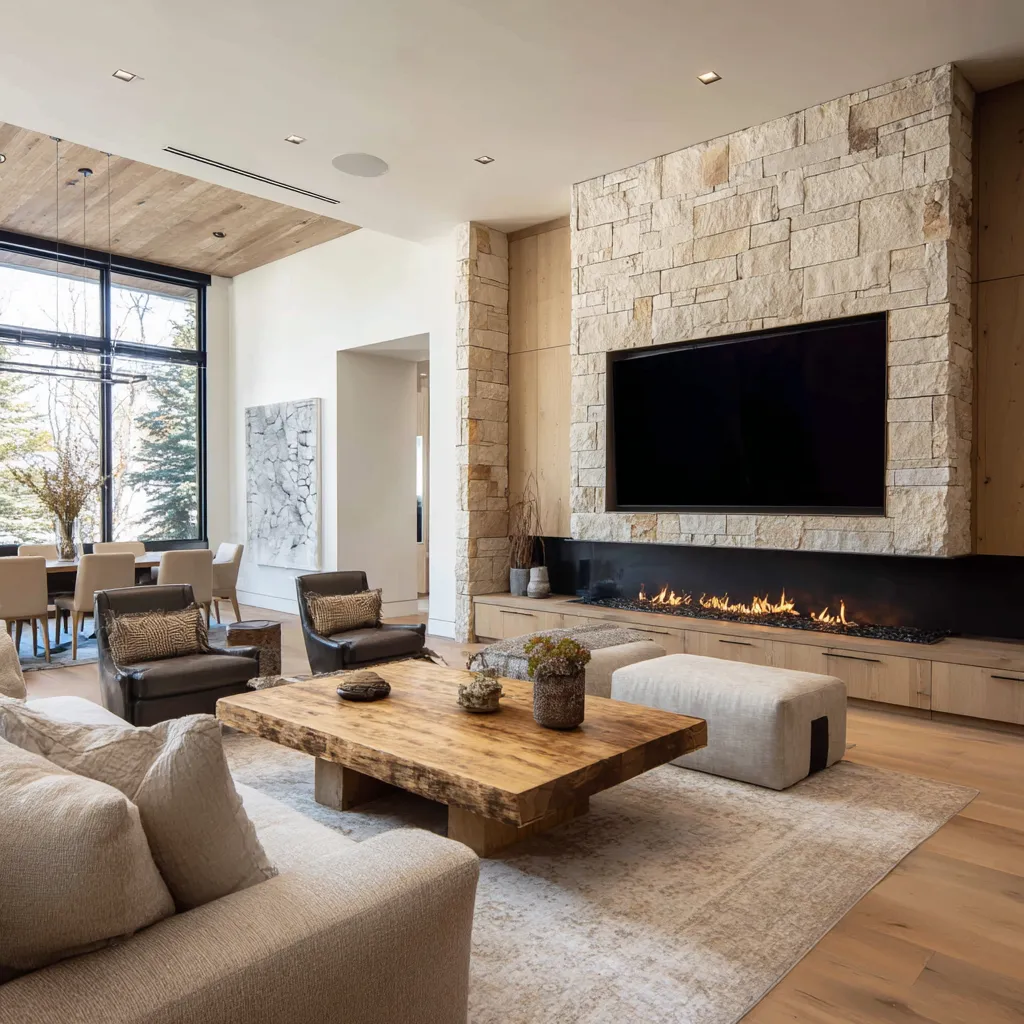
Warm mountain modern living room ideas usually accept a little more density. The timber may be darker.
The fireplace may have more depth. The upholstery may feel heavier.
The ceiling may play a stronger role. There may be a leather note, a live-edge wood block, or a rougher mantel beam to offset the cleaner lines elsewhere.
The goal is not to fill the room with rustic signals. It is to keep enough memory in the room that the warmth feels earned.
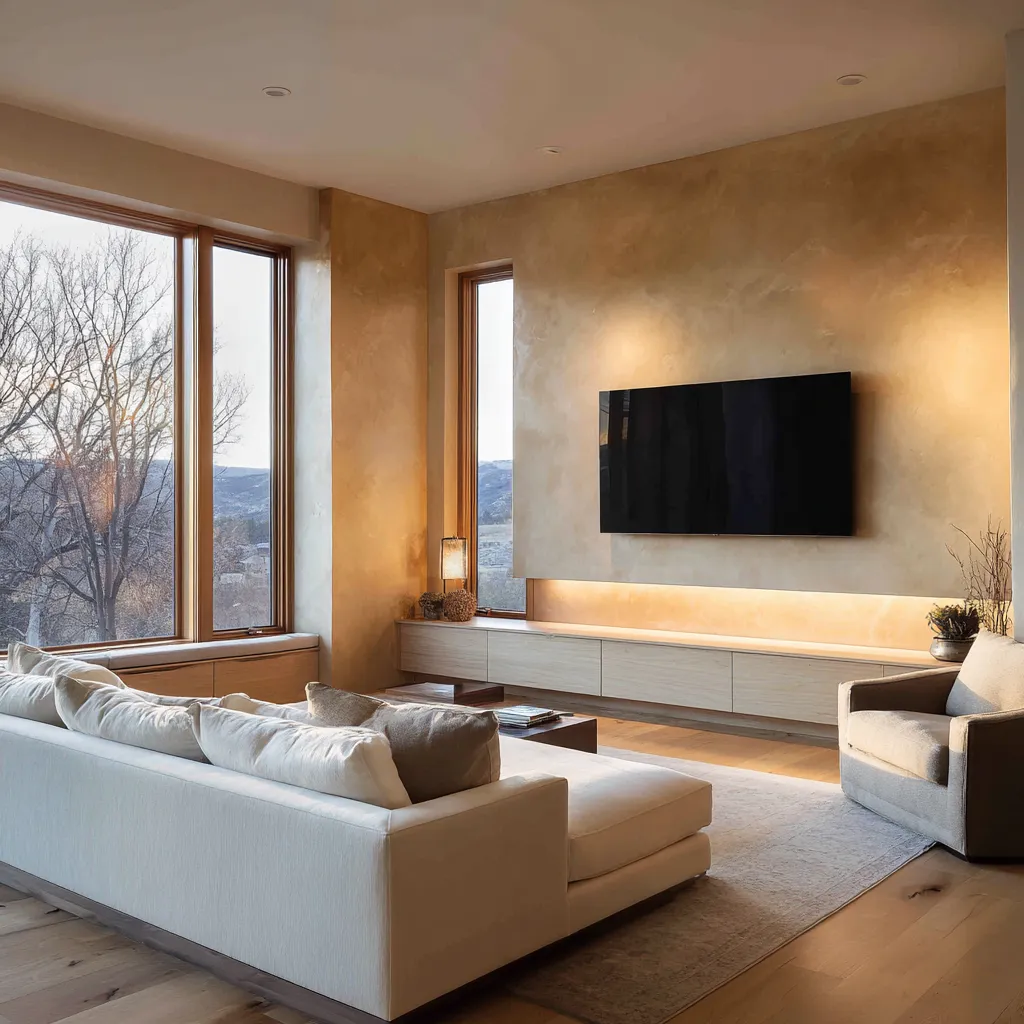
Wood should be used with intention
Timber is fundamental to mountain interiors, but the way it is used changes everything. There is a major difference between wood that structures a room and wood that merely decorates it.
In one design, timber may arrive as a dark beam ceiling, a reclaimed mantel, and a heavy coffee table, giving the interior a lodge-rich atmosphere. In another, it may appear as pale oak shelving, a window bench, slatted paneling, and long low cabinetry, producing a lighter domestic version of mountain modern.
In a more refined design, wood may be limited to one live-edge table or one stump stool, just enough to pull the interior back toward landscape after a very clean media wall or plaster chimney.
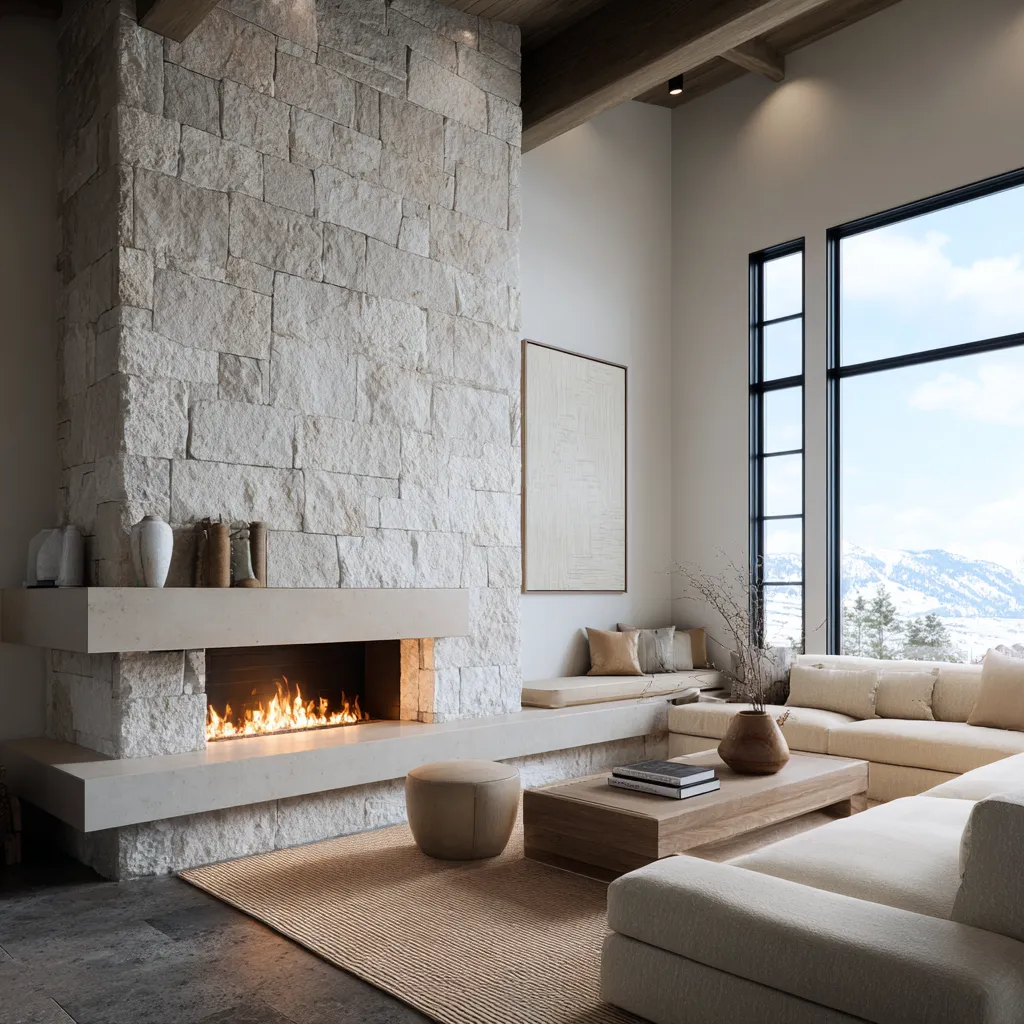
This is where restraint matters. Raw natural accents usually have greater power when used in concentrated doses.
A single stump side table in the right place can restore a room’s connection to forest and material irregularity. A large live-edge coffee table can keep a polished open-plan space from feeling over-finished.
Cane seating, woven chairs, and pottery can add hand-touched texture without filling the interior design with rustic staging. The design does not need every possible natural cue.
Often one or two are enough.
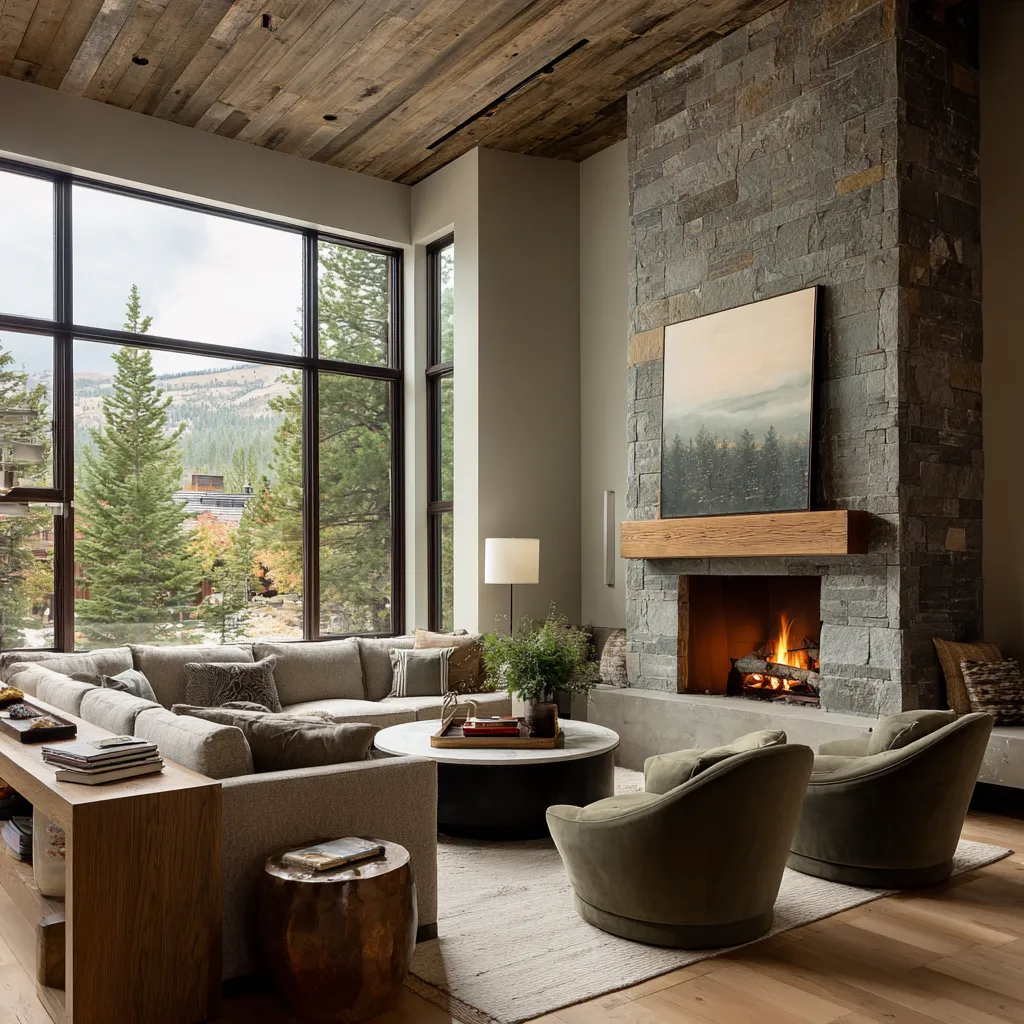
Several directions of mountain modern living room ideas
The style holds a few different interior families, and each one creates a different mood.
- One version centers on the hand-formed hearth. These living room designs often use fieldstone, sculpted plaster, sloped ceilings, or thick chimney forms. They feel rooted and intimate. The fireplace is the author of the room.
- Another version is the domestic integrated room, where shelving, cabinetry, media, and fire are all merged into one continuous wall. These spaces are highly useful for daily family life and smaller footprints. Their success depends on proportion, material continuity, and enough mineral weight to keep the composition from feeling too ordinary.
- A third version puts mineral calm and framed landscape first. These rooms may use slab-like stone, pale plaster, long lines, low furniture, black-framed glazing, and minimal styling. The rougher mountain cues are reduced, yet the room still feels tied to place because the outlook, material tone, and architectural weight remain strong.
- A fourth direction leans toward darker structural richness. Here the room may have trusses, darker stone, heavier beams, leather seating, and deeper shadows. These interiors feel denser and more enveloping. They often carry the greatest warmth, though they can sit a little farther from the sharpest edge of contemporary minimal editing.
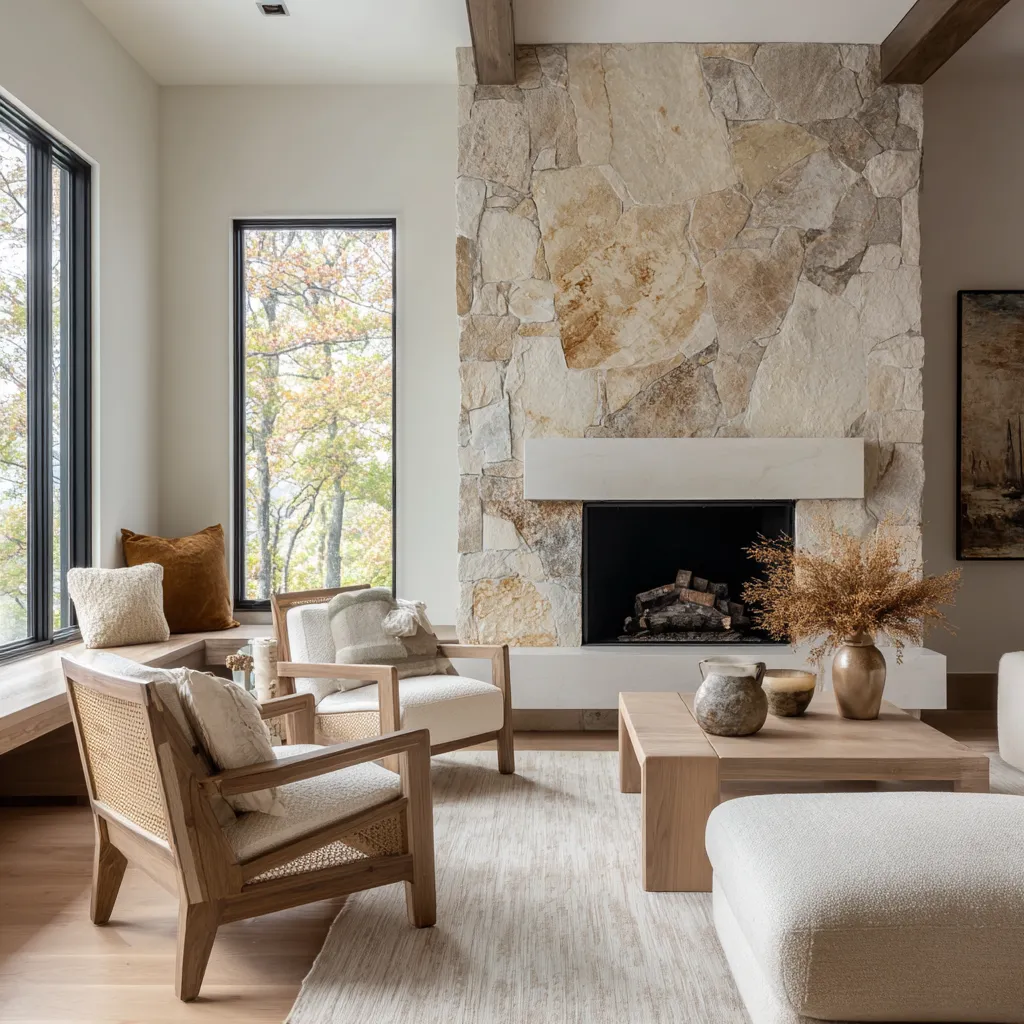
Not every mountain modern living room needs to chase the same formula. Some people want a brighter and more architectural room.
Others want a richer and more protective one. The key is knowing which elements must stay present so the room does not lose its mountain identity along the way.
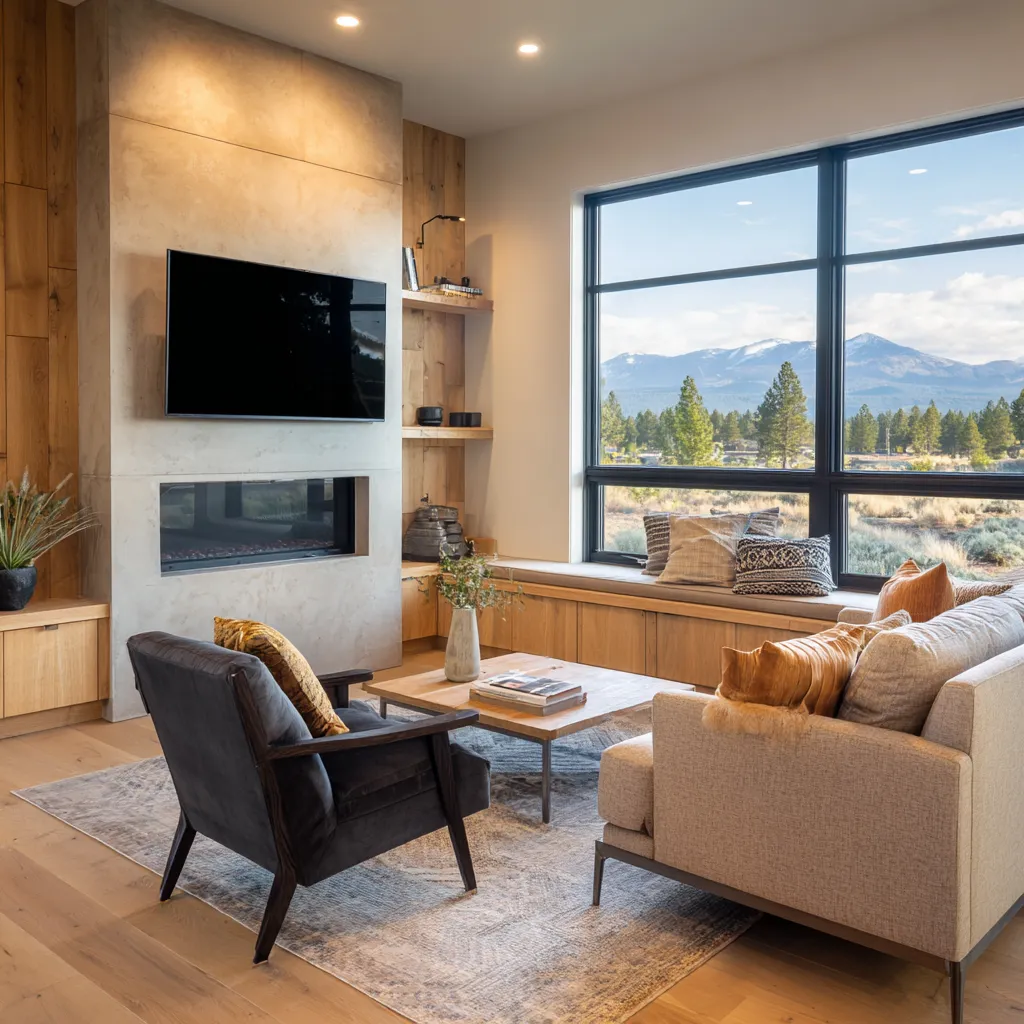
What keeps the style from falling apart
Mountain modern living room design usually loses coherence in one of three ways.
- The first is too much rustic memory without enough control. The stone is rough, the beams are heavy, the wood is dark, the objects are many, and the room slips backward into theme.
- The second is too much contemporary polishing without enough mass. The media wall is clean, the surfaces are pale, the lines are long, but the room could belong almost anywhere because it has lost its specific mountain weight.
- The third is trying to let one feature do everything. A single fireplace wall cannot carry site, warmth, architecture, softness, and daily function on its own. The room needs support from the glazing, the seating, the ceiling, the materials underfoot, and the built-in edges.
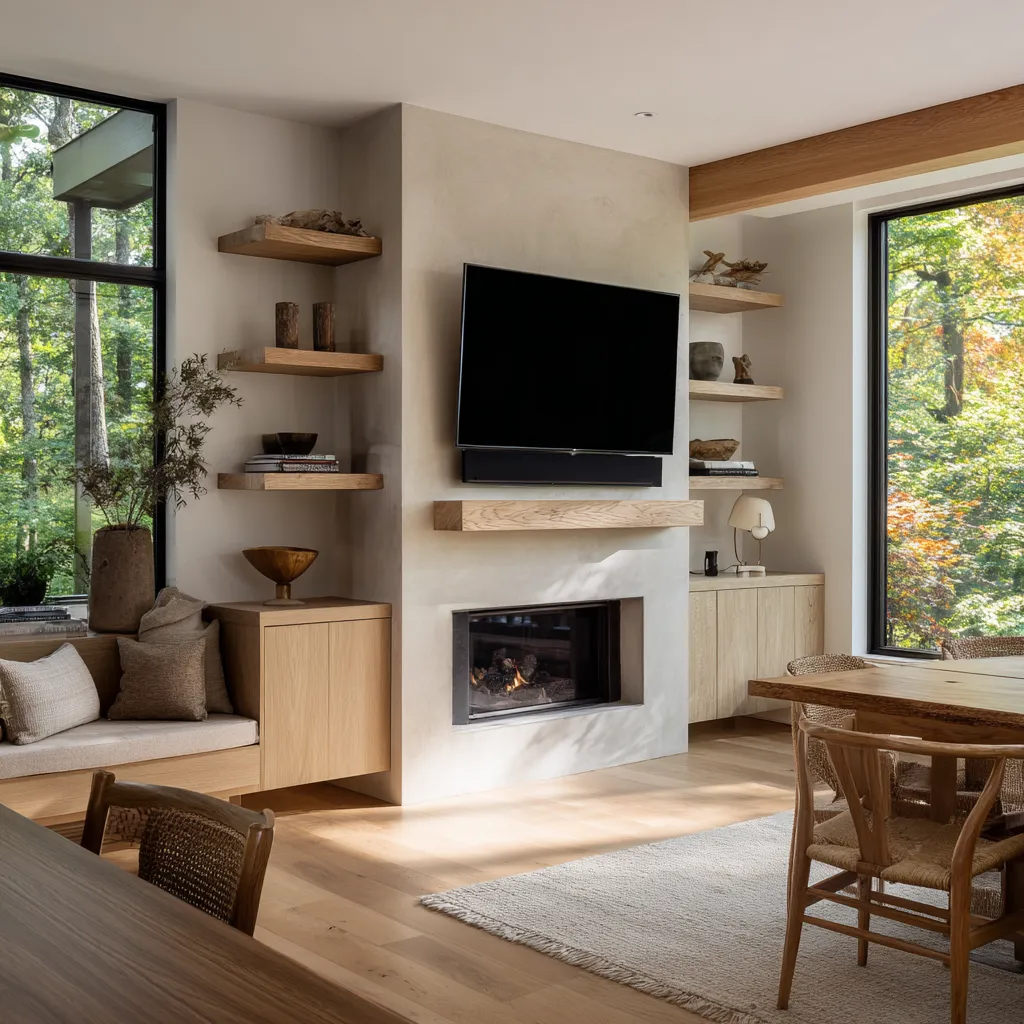
Mountain modern living room designs can avoid all three problems by distributing the work. Stone gives the room gravity.
Wood gives it shelter. Upholstery gives it softness.
Black metal gives it definition. Benches and shelves make the architecture useful.
The landscape gives it context. The fire gives it life.
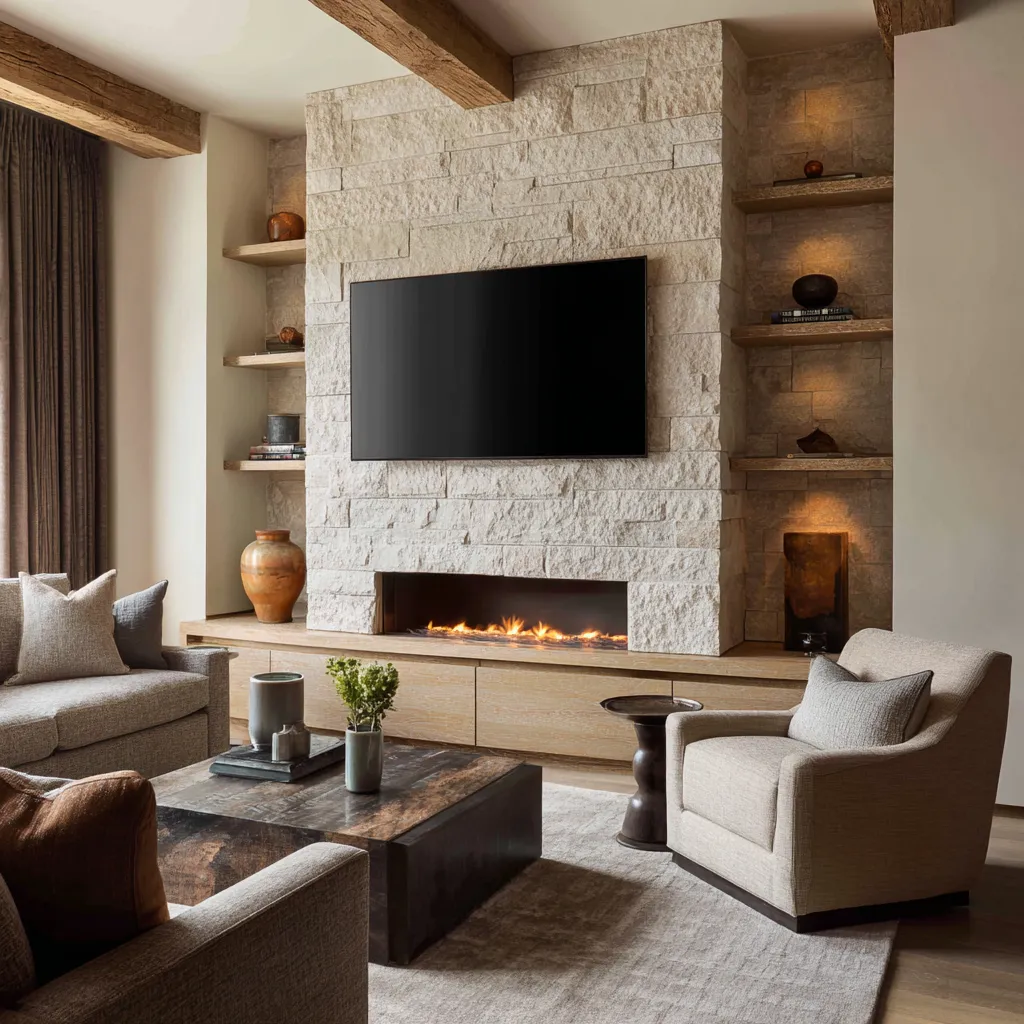
The beauty of mountain modern living room design
What makes mountain modern so compelling is not the surface combination of wood, stone, and cream upholstery. It is the way the style allows a room to feel both protective and open at once.
The room can hold winter, light, weather, timber, and quiet human comfort in the same space without looking overdone.
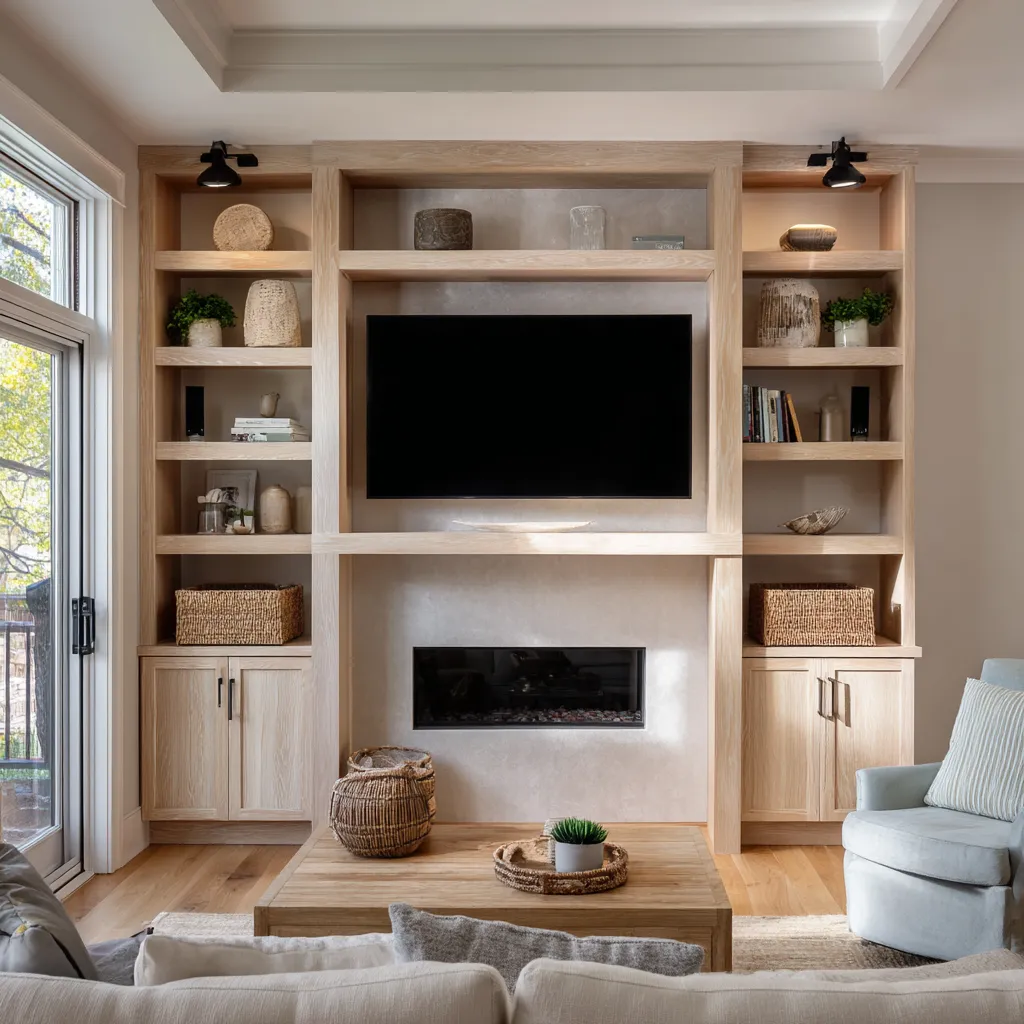
Its success depends on proportion and judgment. The stone should feel substantial but not oppressive.
The timber should feel rooted but not over-applied. The fire should anchor the room without turning the wall into clutter.
The furniture should be low and generous enough to soften the architecture. The objects should support the material story, not compete with it.
The view should feel like part of daily life, not a backdrop.
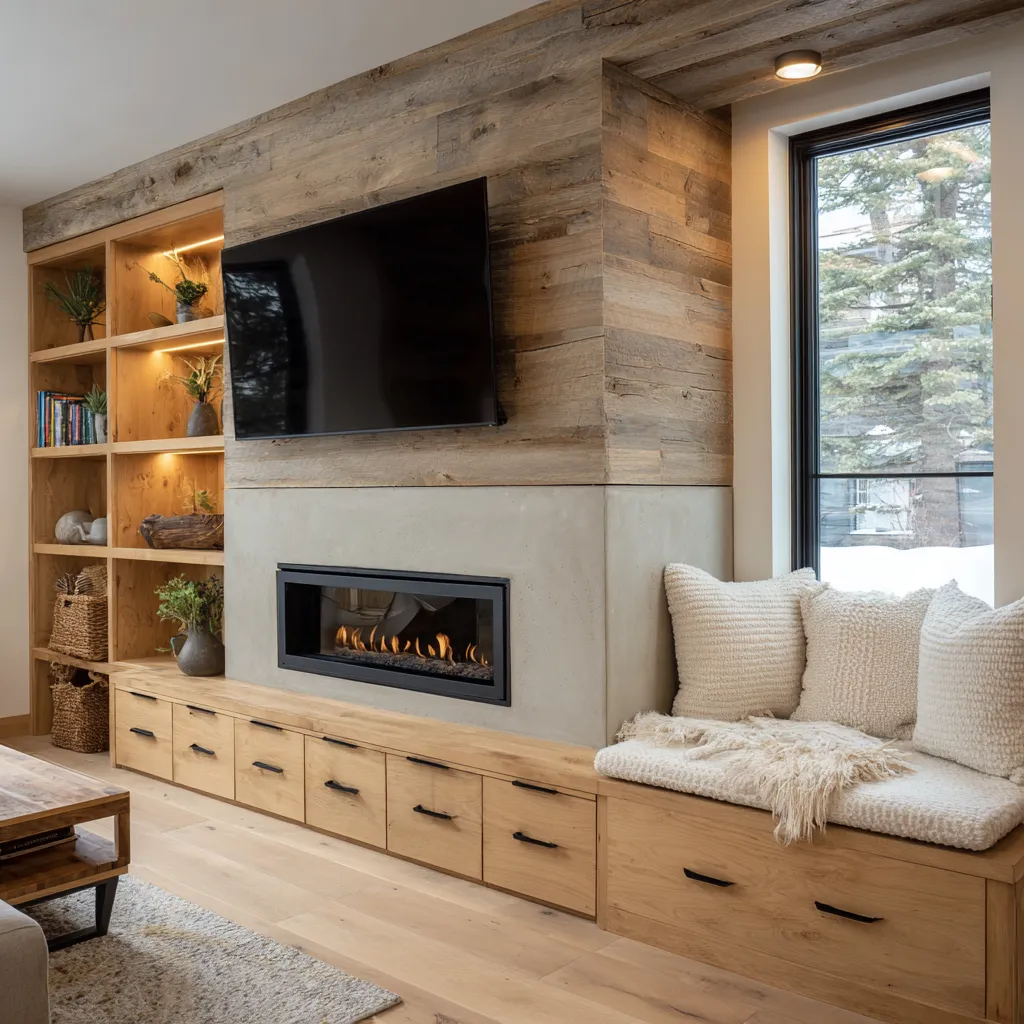
Mountain modern living room design creates a room that feels settled in the land yet fully suited to present-day life. It respects geology, climate, and structure, but it also respects how people actually live now: with media, open plans, storage needs, softer seating, and a desire for interiors that feel restorative rather than theatrical.
That is why the style continues to hold attention. It offers a rare balance.
It can be strong without becoming harsh, edited without becoming thin, and warm without becoming overly nostalgic.