Mountain modern bedroom design is often misunderstood. Many people imagine that the look depends on heavy beams, dark stone, antlers, thick reclaimed wood, and a dramatic fireplace wall.
Those elements can appear in the style, but they are not its foundation. A mountain modern bedroom usually becomes believable in a much subtler way.
It comes together through natural material, narrow tonal range, grounded proportion, and a strong sense that the room has been shaped around the body rather than filled with decorative signals.
A bedroom is not a living room, and it does not need to perform mountain identity in the same way. In a sleep space, too much visual force can become tiring.
Too much rustic memory can push the room away from present-day comfort. Too much storage can make it feel efficient but under-softened.
The most successful mountain modern bedrooms hold several aims at once: they feel tied to the landscape, deeply habitable, materially rich, and still edited enough to support rest.
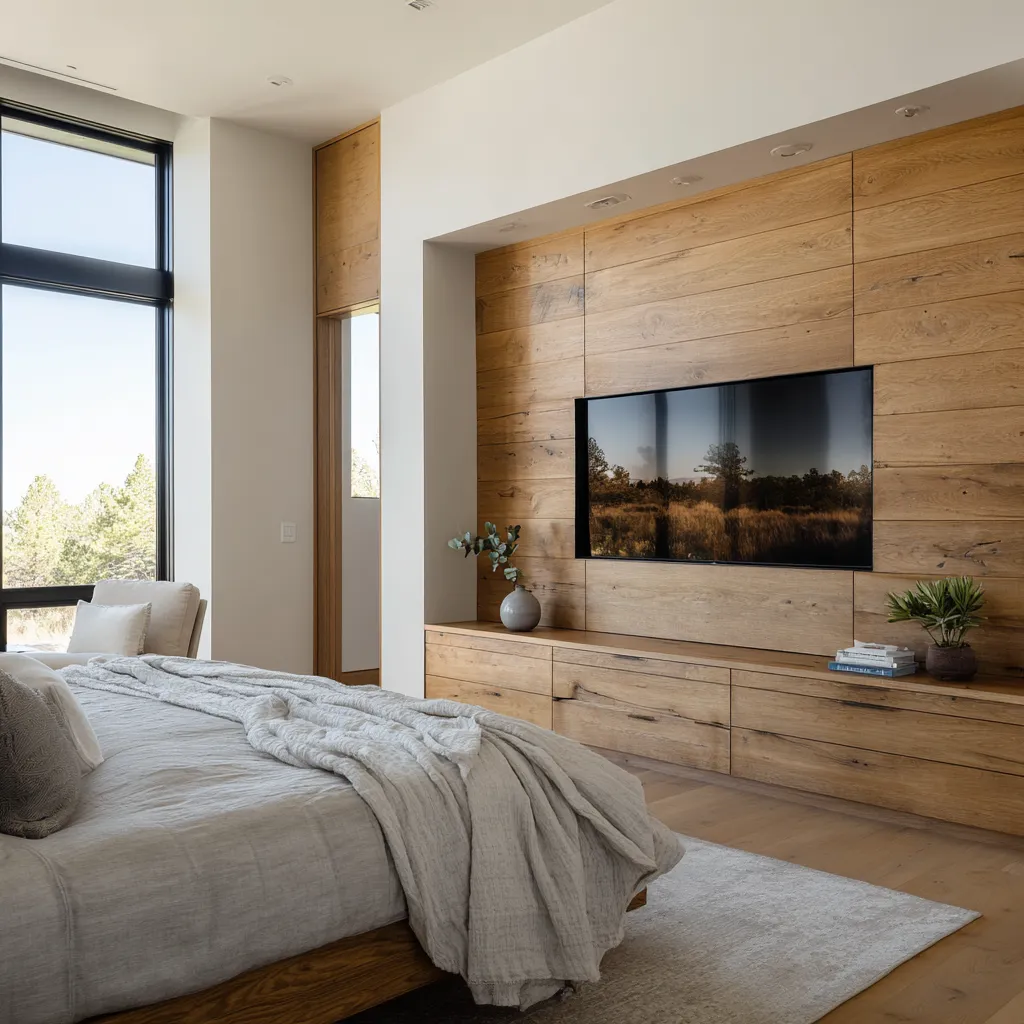
The style works well when the architecture feels fitted, the materials feel honest, and the bed sits low enough to anchor the room. The mountain side of the look comes from mineral presence, timber with some depth of character, and a sense of thickness or structural shelter.
The modern side comes from restraint, reduced ornament, careful light handling, and the refusal to let rustic signals take over the space.
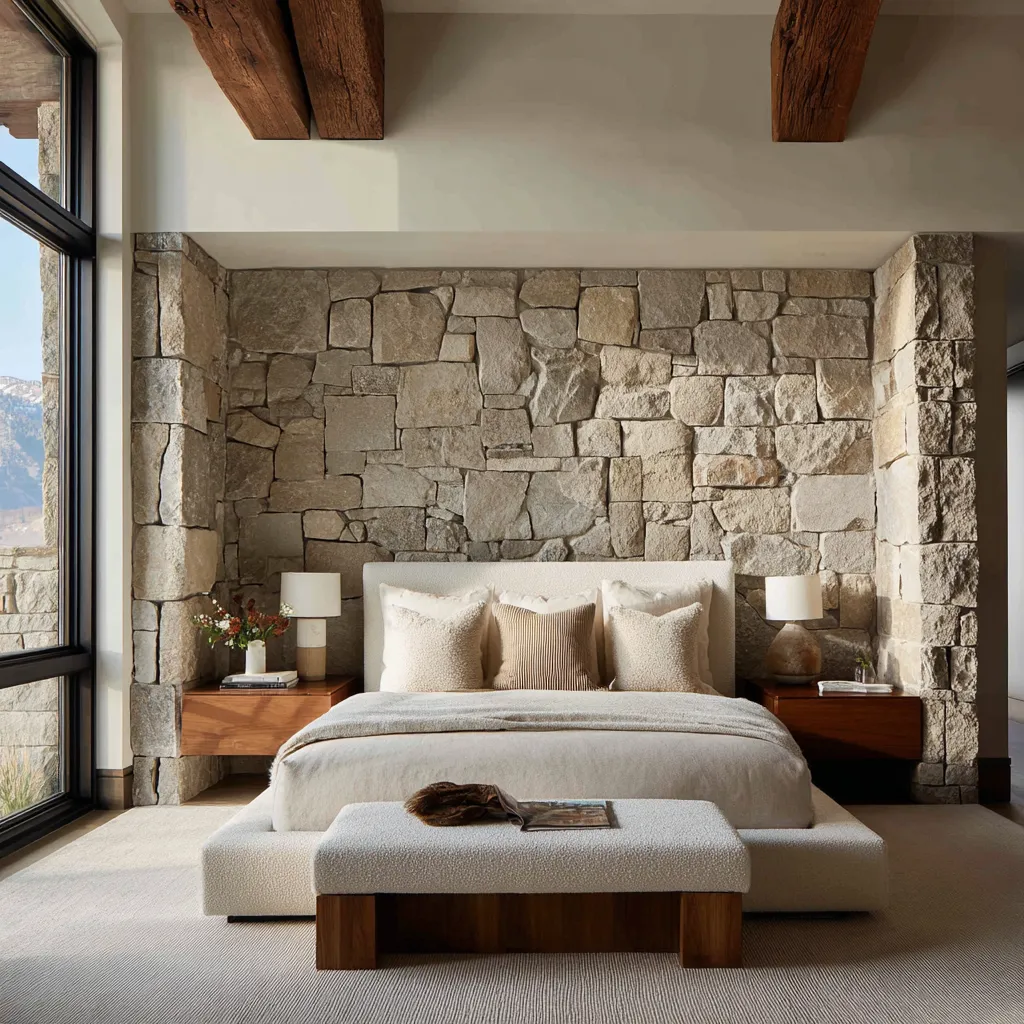
The foundation of the style
At its core, a mountain modern bedroom depends on a few recurring conditions.
- First, the palette stays compressed. Instead of relying on big color contrast, the room builds depth through close-value materials: cream plaster, pale stone, soft taupe linen, oat upholstery, light oak, smoked timber, muted clay, rust, sand, bark brown. This kind of palette creates visual continuity. It allows textures to become legible without breaking the room into fragments.
- Second, the materials remain tactile and natural. Stone, plaster, wood, linen, boucle-like upholstery, wool, leather, and woven pieces all contribute because they hold light differently. A mountain bedroom often feels rich through surface behavior rather than decoration. Grain, veining, softness, dryness, thickness, and shadow create the atmosphere.
- Third, the composition stays grounded. The bed is usually low, broad, and substantial in footprint. That low mass is one of the most important features in the whole style. It brings the visual center of gravity down toward the floor and gives the room a settled feeling. Even when the wall behind the bed is tall, monumental, or materially strong, the bed remains the bodily anchor.
- Fourth, the design is edited. Mountain modern bedroom designs benefit from fewer, larger gestures rather than many smaller ones. One stone wall, one timber surface, one built-in wardrobe system, one sculpted recess, one tall upholstered feature, one long oak ledge. The look becomes more persuasive when each move has enough scale to matter.
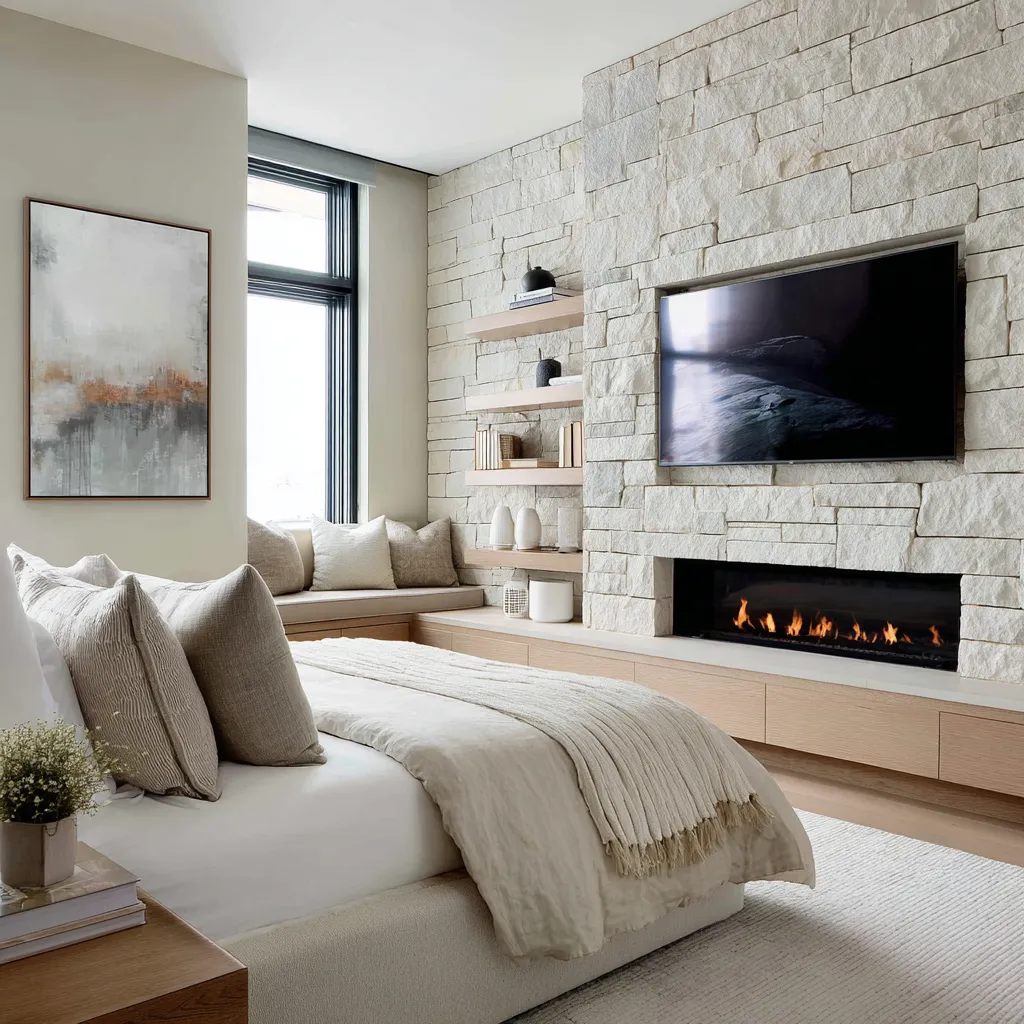
Mountain feeling comes more from geology than from timber alone
Wood is common in mountain interiors, but wood by itself does not automatically create mountain character. In fact, a bedroom can contain plenty of oak or walnut and still feel generic if the room lacks another kind of anchoring force.
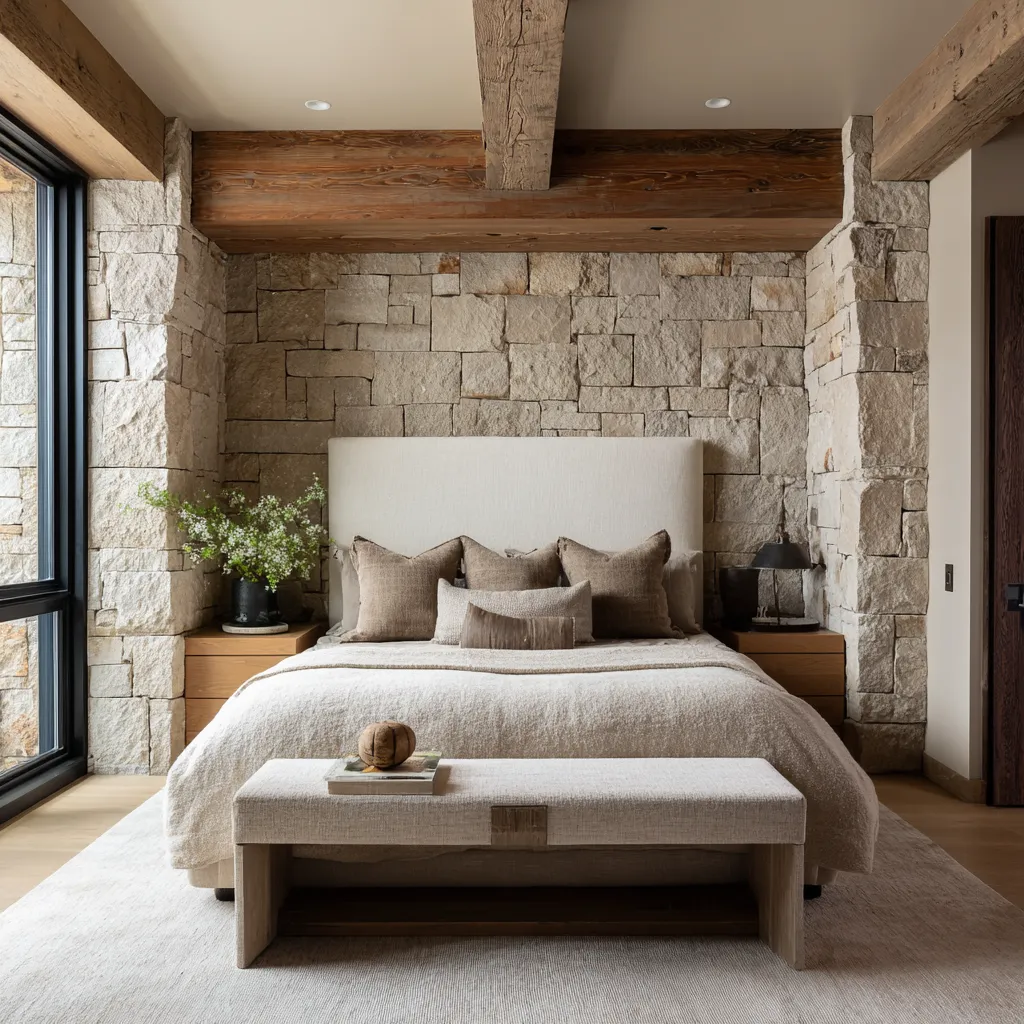
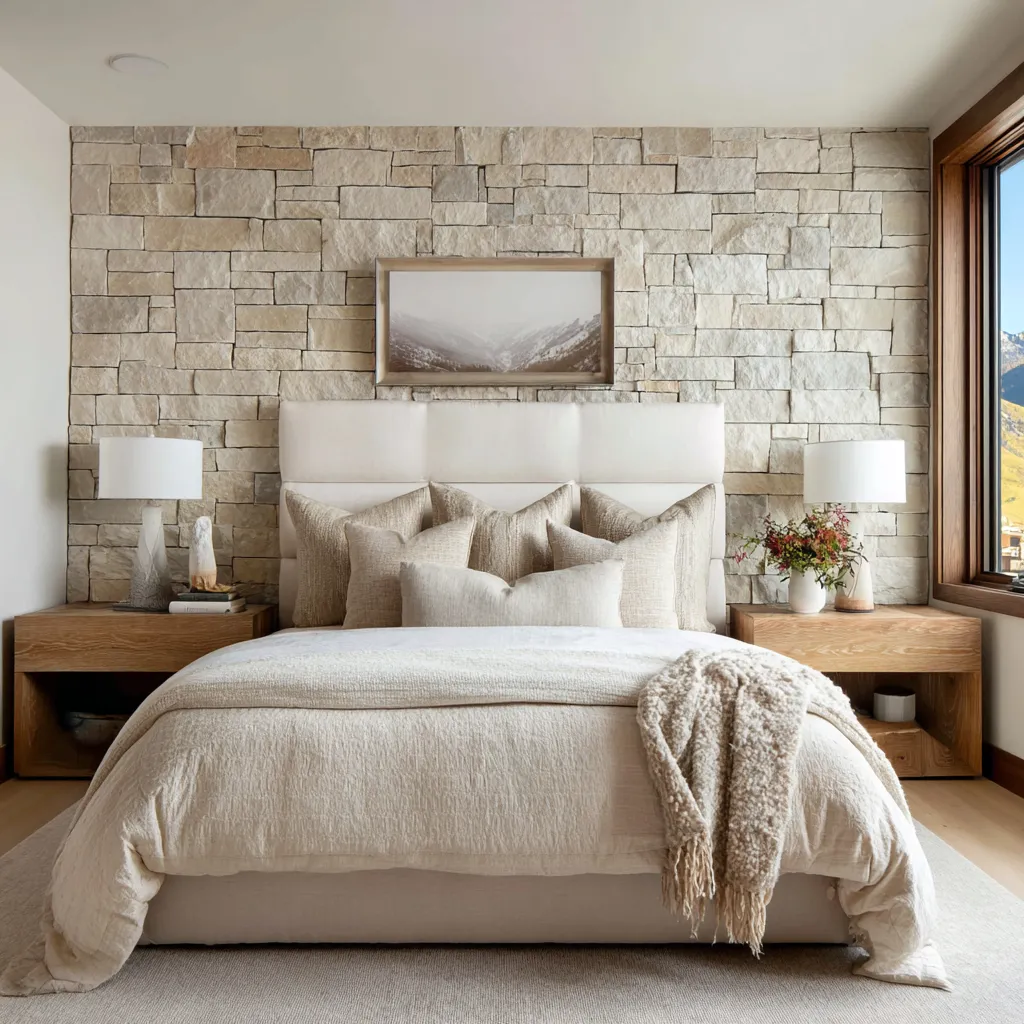
What often gives the design its mountain identity is mineral presence. That can take several forms: a pale stone fireplace wall, a dark stone bed recess, a plaster niche that suggests carved mass, a travertine-like slab surface, stone piers framing a vanity, limestone around a media wall, or masonry that gives the bed area visible thickness.
These elements connect the room to geology, permanence, and structural weight. They make the architecture feel rooted in land rather than simply decorated with natural finishes.
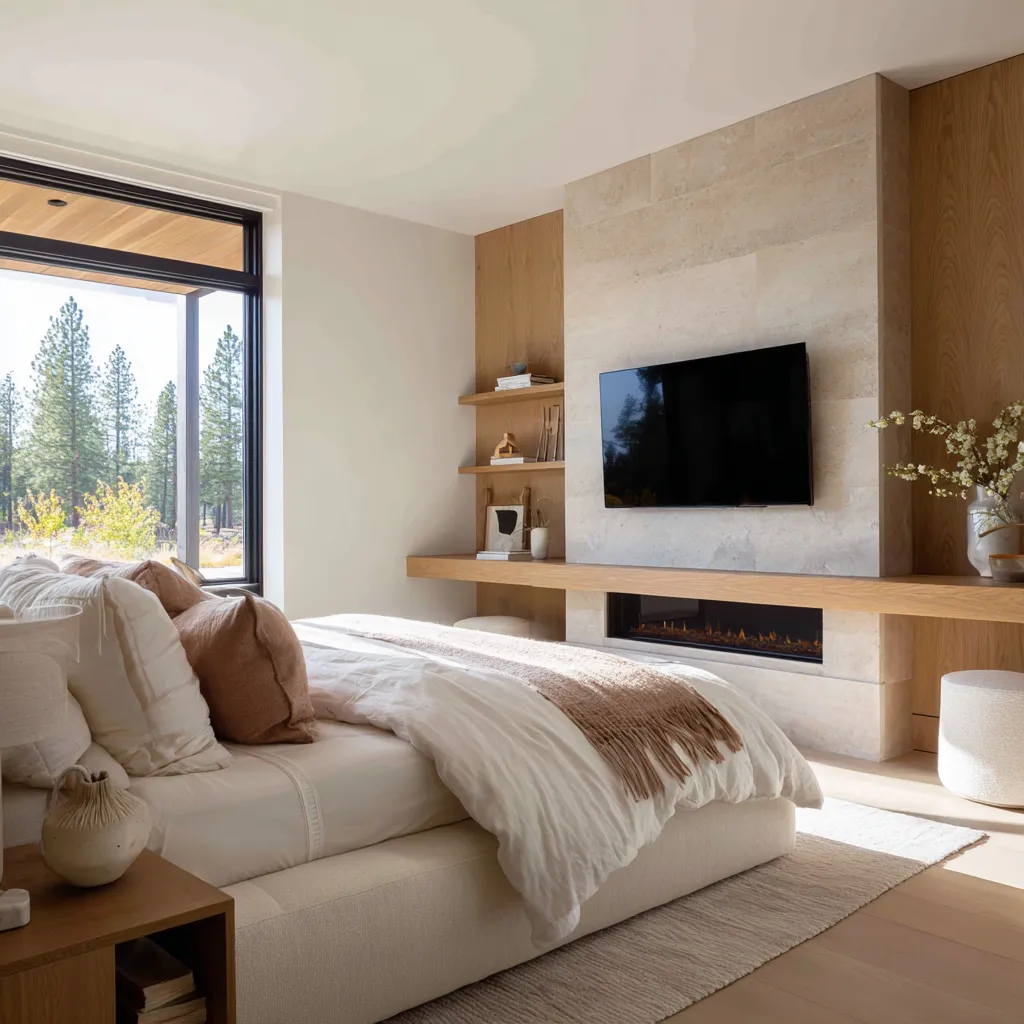
That is why many mountain master bedroom designs become more convincing when they include at least one mineral move. The stone does not need to dominate every surface.
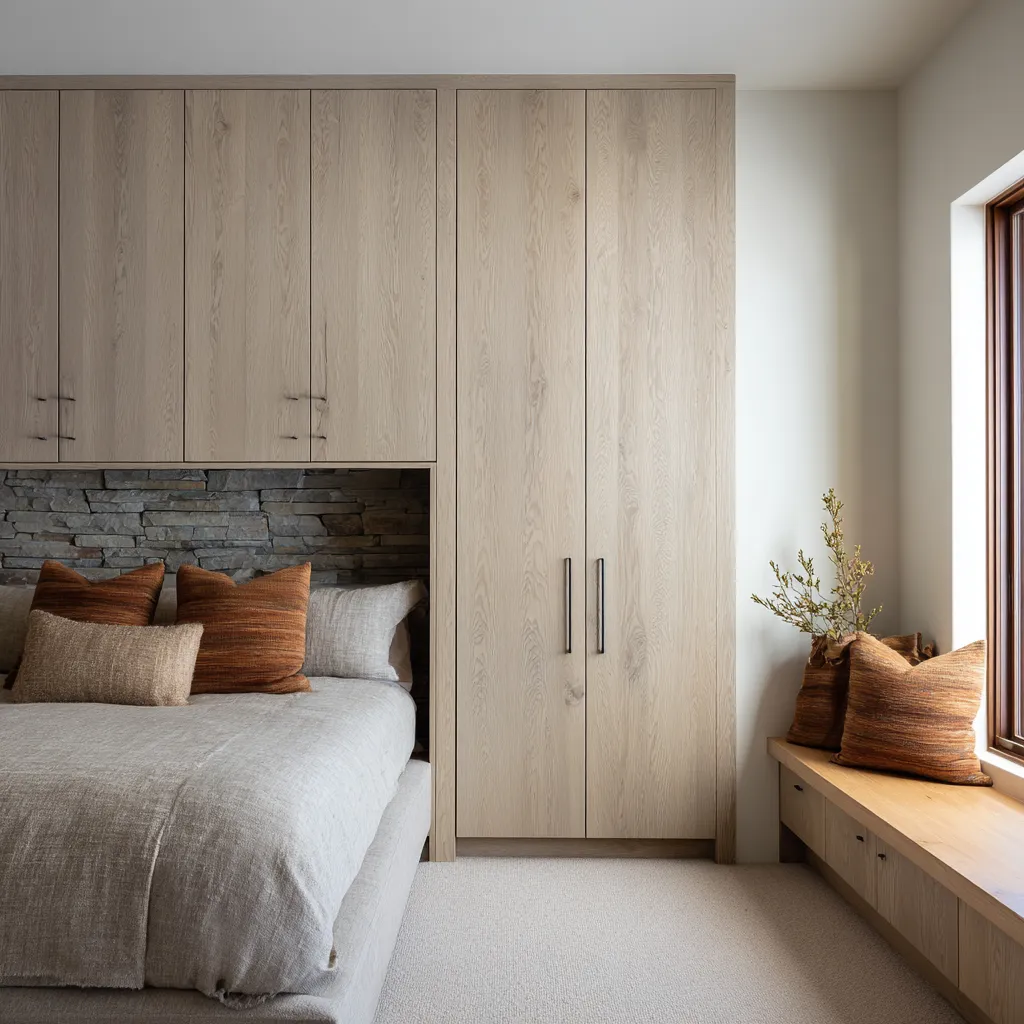
A single framed zone is often enough. A bed tucked into a stone alcove, a fireplace plane with integrated shelves, a vanity recess between rough piers, or a stacked-stone headboard zone inside pale cabinetry can carry the mountain note very effectively.
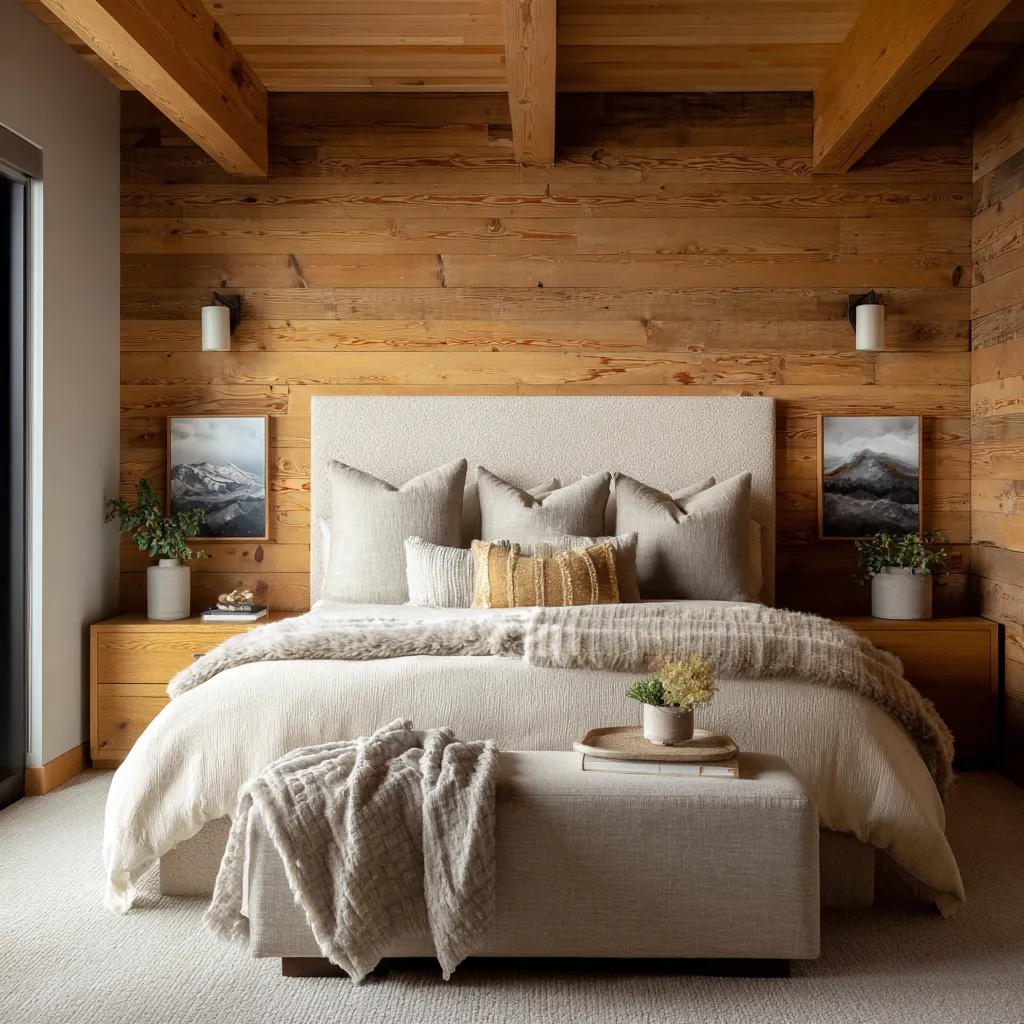
Timber becomes more specific and more regionally believable when it works with that mineral base. Weathered planks, smoked oak panels, dark wood slats, or warm oak built-ins can all support the room well, but they feel more mountain-linked when paired with either geology, some degree of aged material memory, or a low, settled composition that gives them weight.
So the lesson is clear: wood is helpful, but geology usually provides the deeper anchor.
Warmth is built through softness, not darkness
A very common mistake in mountain bedroom design is the assumption that warmth comes from darker colors, denser timber, and moodier contrast. Darkness can contribute, but it is not the main driver of warmth in a sleep space.
A bedroom feels sheltering when the body feels held. That comes from soft upholstery, thick textile layering, padded headboards, rounded corners, deep rugs, cushioned benches, and architectural moves that create some degree of enclosure near the bed.
A pale room can feel deeply warm if these bodily conditions are in place. A darker room can still feel slightly hard if its surfaces are too exposed or too thinly layered.
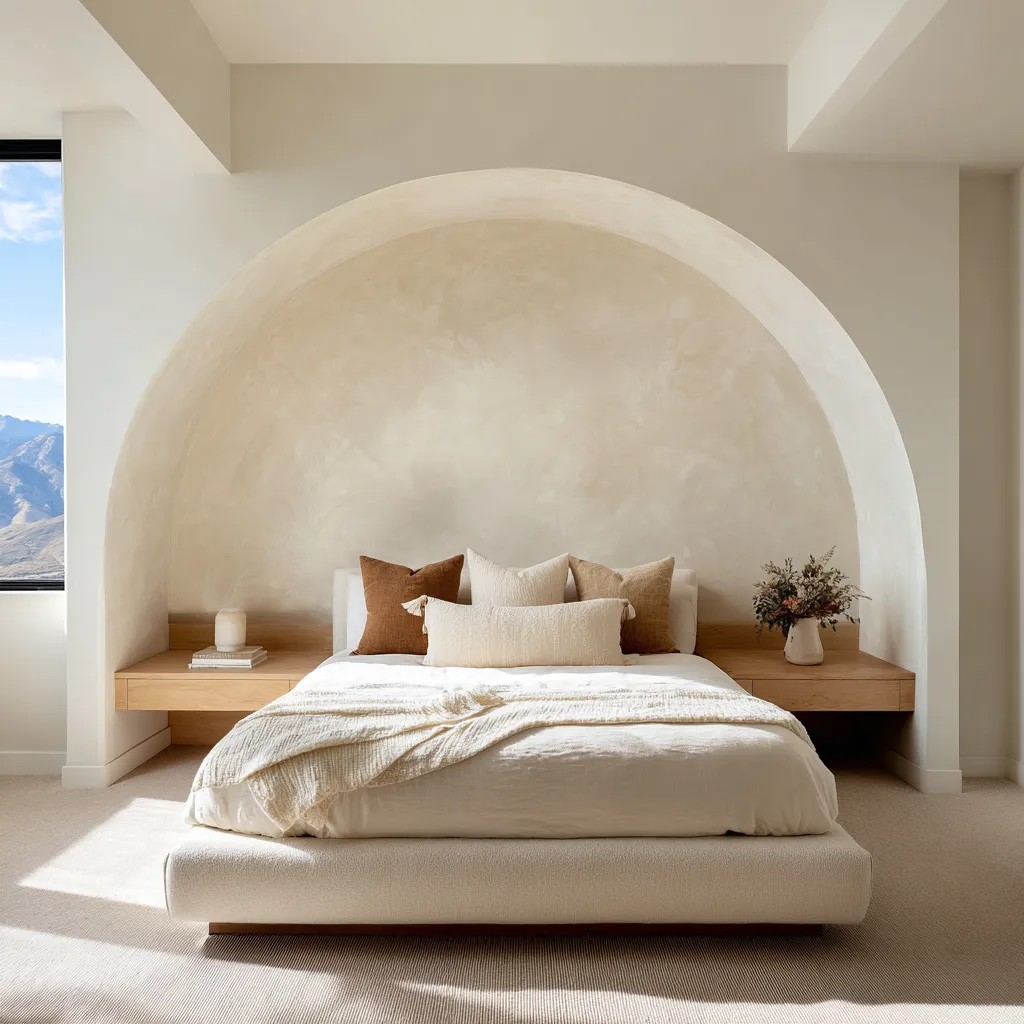
This is why some light mountain modern bedroom ideas still feel highly protective. A sculpted plaster recess behind the bed, a pale stone wall softened by an upholstered headboard, broad bedding in cream and oat tones, a low bed base, and a long horizontal ledge can produce a strong sense of retreat without relying on visual heaviness.
The body responds to softness first. Thickness matters.
Contact points matter. The interior design should feel lined where the sleeper meets it.
That means mountain warmth is often created by the meeting of hard shell and soft insertion: stone and linen, oak and boucle, plaster and upholstered padding, timber wall and pale headboard, masonry piers and thick bedding. A good mountain modern bedroom design rarely asks the architecture to do all the emotional work.
The architecture sets the frame. The bed and its surrounding tactile layers make the room habitable.
Why the low, broad bed matters so much
The low bed is one of the features of mountain modern bedroom ideas, and for good reason. It stabilizes the design.
A tall bed with ornate legs or a decorative silhouette tends to pull attention away from the architectural envelope. A lower bed does the opposite.
It allows the wall, the view, the stone mass, the headboard feature, or the timber surface to carry more of the atmosphere while the bed remains physically generous and visually grounded.
This proportion has several benefits at once.
- It gives the room a stronger horizontal datum.
- It makes monumental wall features feel more architectural.
- It supports a sense of rest rather than display.
- It helps the bedroom feel connected to landforms and shelter rather than to upright formality.
Low beds also work especially well in rooms with integrated ledges, floating nightstands, long benches, and wide rugs. All of these elements reinforce the room’s lateral spread.
That width is important in mountain interiors. It slows the composition down and reduces nervous visual movement.
Even in rooms with strong vertical features, such as tall slatted oak walls or full-height upholstered panels, the low bed is what keeps the room from becoming overly ceremonial. It brings the whole composition back to the body.
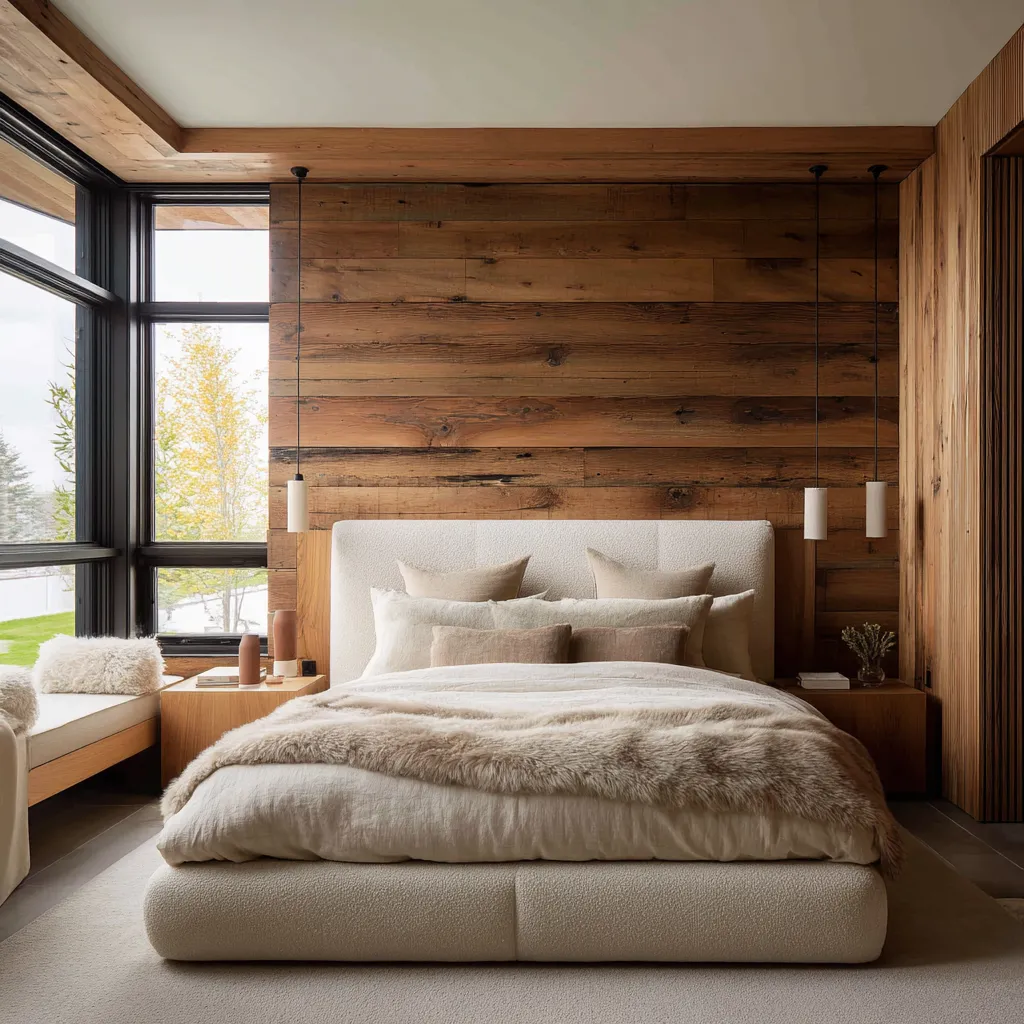
Two main directions: pale mineral designs and darker timber designs
Mountain modern bedroom design is not one fixed look. There are at least two major atmospheres that can both feel authentic, and understanding their difference helps avoid confused mixing.
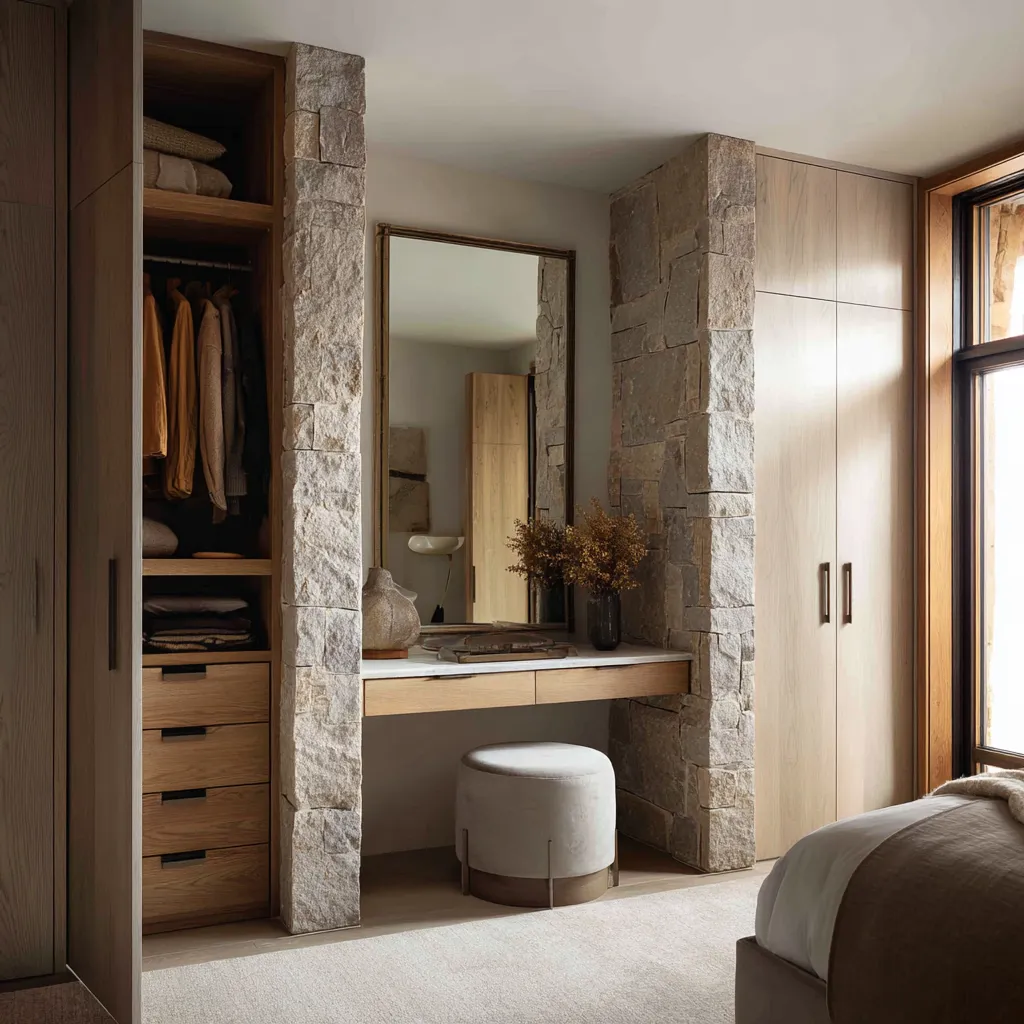
1. Pale mineral-edited bedrooms
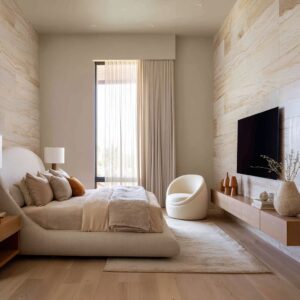
These designs are lighter, airier, and more reduced. They often use pale plaster, limestone-like stone, light oak, soft cream upholstery, and large windows.
Their power comes from shape, tonal compression, and enclosure rather than from visual drama. Sometimes the wall behind the bed is sculpted into a niche or arch-like recess.
Sometimes the main anchor is a pale stone slab wall with an integrated fire line or media opening. Sometimes the room relies on a full-width stone bed wall softened by thick bedding and restrained art.
These bedrooms feel highly current because they trim back overt rustic signals. Their mountain character comes through mineral mass, thick wall conditions, carefully framed views, and the sense that the room is a refuge shaped within the house.
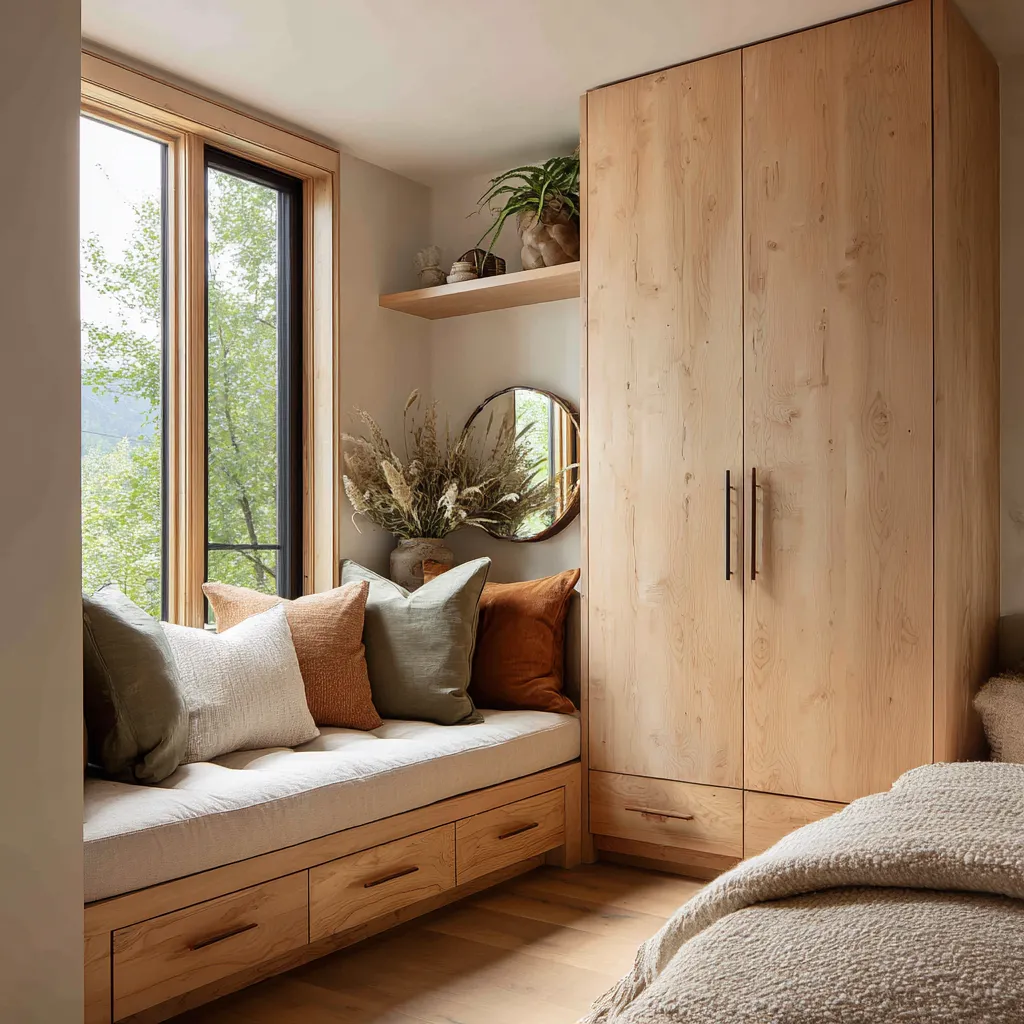
2. Timber-rich cocoon bedrooms
These designs are warmer, denser, and more materially saturated. They may use reclaimed-looking plank walls, darker oak panels, visible beams, smoked wood, leather, or weathered timber around a fireplace mass.
They tend to feel more enclosed and more tactile. The room may lean closer to cabin memory, but the modern version keeps the forms large, the palette narrow, and the detailing reduced.
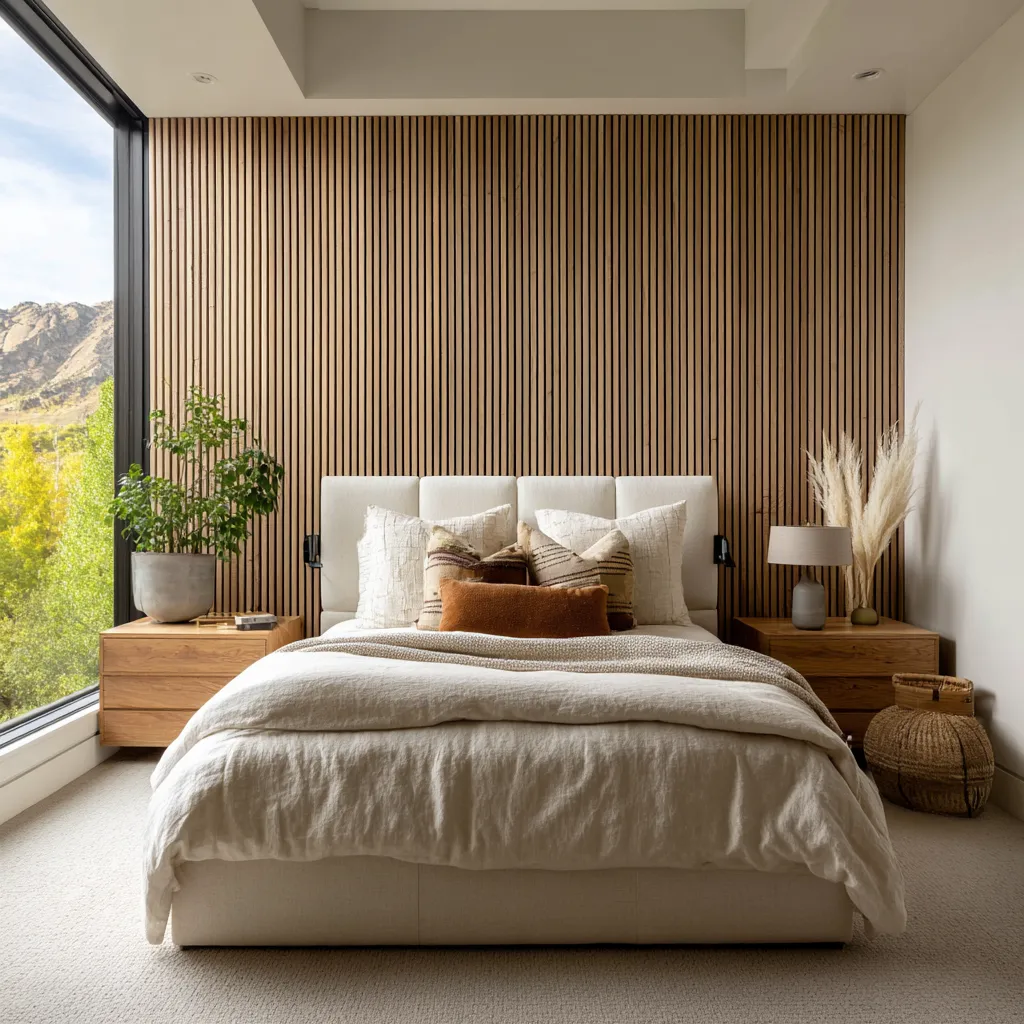
These bedrooms can be deeply atmospheric. They tend to feel intimate, especially at night.
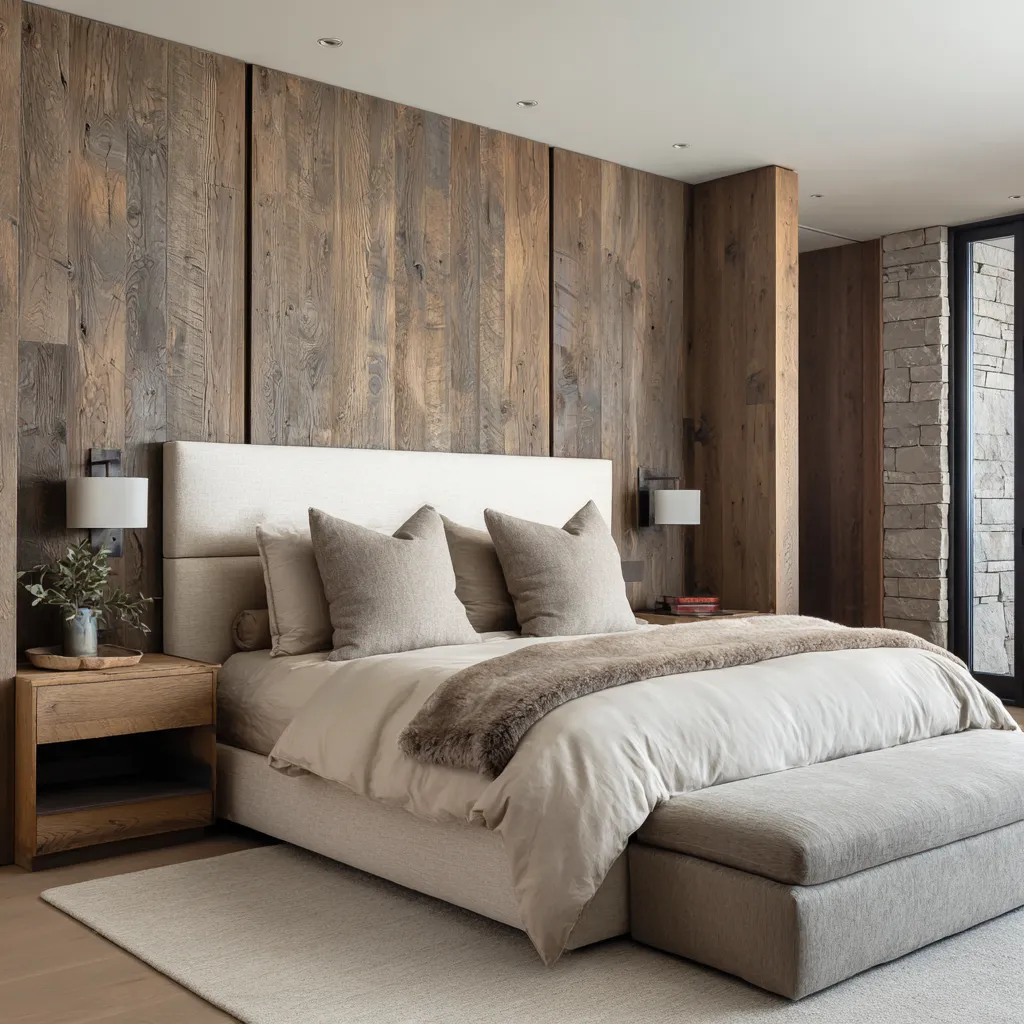
But they require more discipline, because too much rustic signal can quickly reduce present-day clarity. The room needs a soft counterweight: pale upholstered headboards, thick neutral bedding, fewer accessories, and some visual calm around the bed.
Neither direction is inherently superior. They simply answer different emotional needs.
One offers lightness with shelter. The other offers enclosure with warmth.
Rustic memory needs careful dosage
Natural material and rustic memory are not the same thing. Natural material means wood grain, stone texture, plaster movement, leather tactility, linen, wool, and other finishes that feel real and bodily.
Rustic memory refers to visible age signal, weathering, lodge associations, roughness, and direct references to older mountain-house language. Mountain modern design welcomes natural material very easily.
Rustic memory needs more control. A bedroom design can handle some weathered plank, rougher stone, or age-marked timber very well, especially if those elements are concentrated in one area such as a fireplace volume, a single bed wall, or a structural beam.
But when the room begins to stack too many rustic cues at once, the balance shifts. The room starts to lose its present-day sharpness.
It can become heavier, more themed, and less restful. This is why the style often works better with one rustic note rather than five.
One reclaimed timber fireplace wall can be enough. One dark plank backdrop behind a pale headboard can be enough.
One rough stone vanity frame can be enough. Once the rustic signal is edited into a specific architectural zone, the rest of the room can remain cleaner, softer, and more open.
That contrast is what keeps the bedroom current.
A mountain view helps, but it does not do the whole job
Bedrooms with mountain views, tree views, or terrace openings often feel more open and more atmospheric. They gain freshness and light.
The view can also help the interior design feel context-aware, especially when the interior materials echo the tones outside through bark brown, clay, sage, stone, and muted oat. But the view alone does not create mountain identity.
A large window can raise the sense of openness and airiness, yet the design still needs a material base to feel truly grounded. Without that, the view can start to do too much of the work, and the interior may feel like a generic contemporary bedroom placed near scenery.
That is why the resolved designs usually pair the view with some interior form of anchoring:
- a mineral bed wall
- a deep recess with bench seating
- a timber mass around a fireplace
- full-height slatted oak behind the bed
- a pale built-in media wall with real presence
- a sculpted plaster envelope
- a wardrobe-and-vanity composition framed by thicker materials
The view should lift the room, not replace its identity.
Built-ins change the class of the bedroom
One of the shifts in mountain modern bedrooms happens when the room stops being only a bed-centered composition and starts functioning as a small retreat system. This often happens through built-ins.
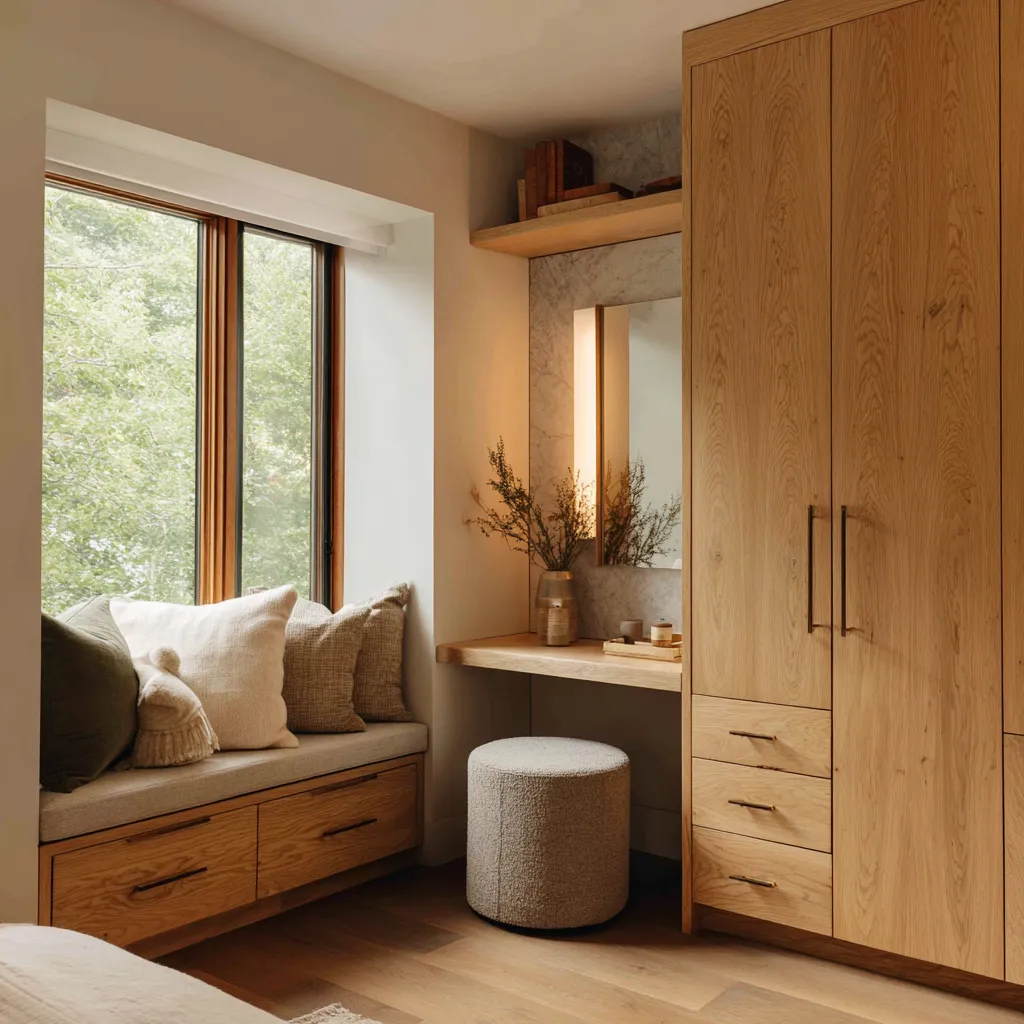
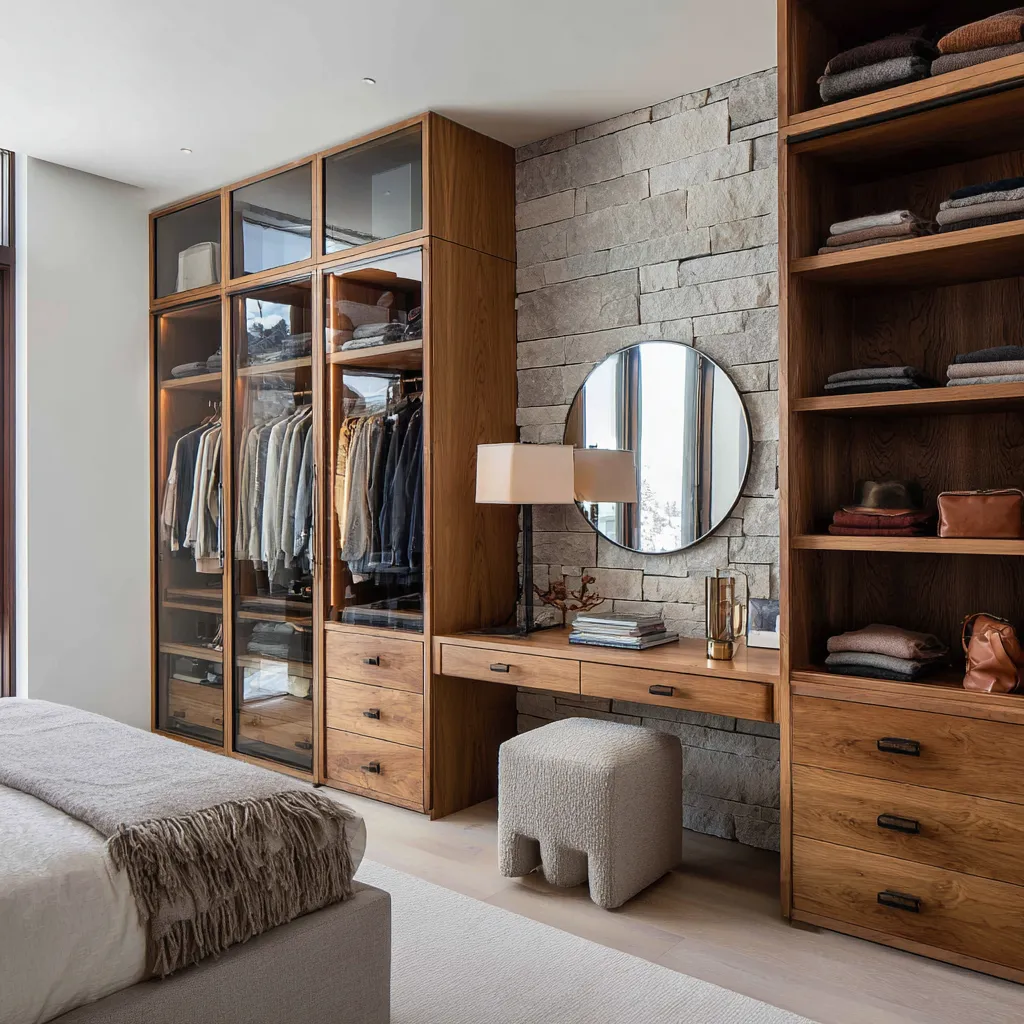
Wardrobes, window benches, vanity niches, open shelving towers, desk alcoves, media walls, integrated fireplaces, drawer bases, and storage passages do more than add convenience. They change the planning logic of the room.
Instead of a sleeping area with some furniture, the bedroom becomes a joined environment for sleeping, sitting, storing, dressing, reading, and sometimes working.
This approach is useful in mountain houses because bedrooms often benefit from a stronger sense of fitted architecture. Built-ins create that feeling.
They make the room appear carved from the house rather than loosely furnished afterward. A window seat deep inside a wall recess creates more than a place to sit.
It creates thickness, shelter, and a small second zone of habitation. A wardrobe wall with an integrated bench niche transforms storage into architecture.
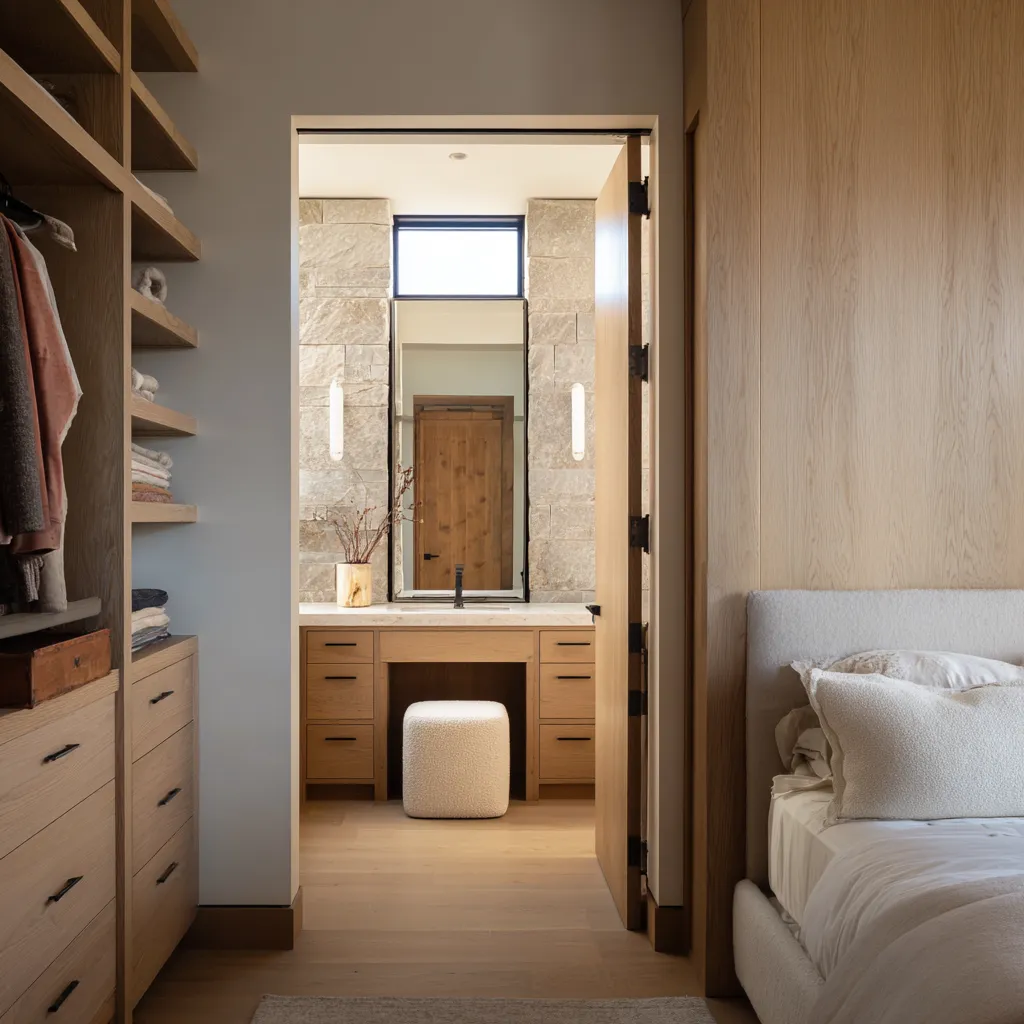
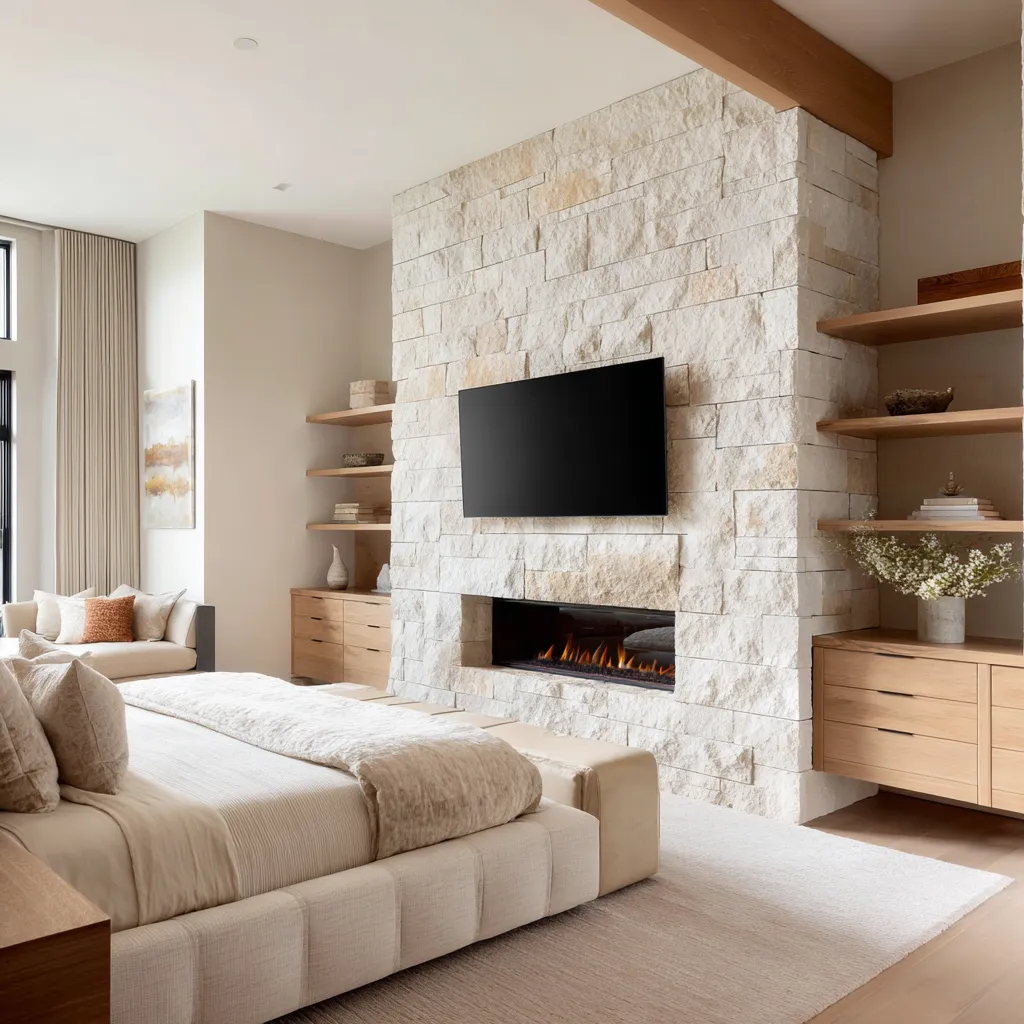
A fireplace/media wall with side shelves and a low ledge turns one focal feature into a full-use system. A dressing passage leading toward a stone-lined vanity creates spatial sequence inside the suite.
These moves are what make a mountain modern bedroom begin to feel like a retreat rather than a standard room.
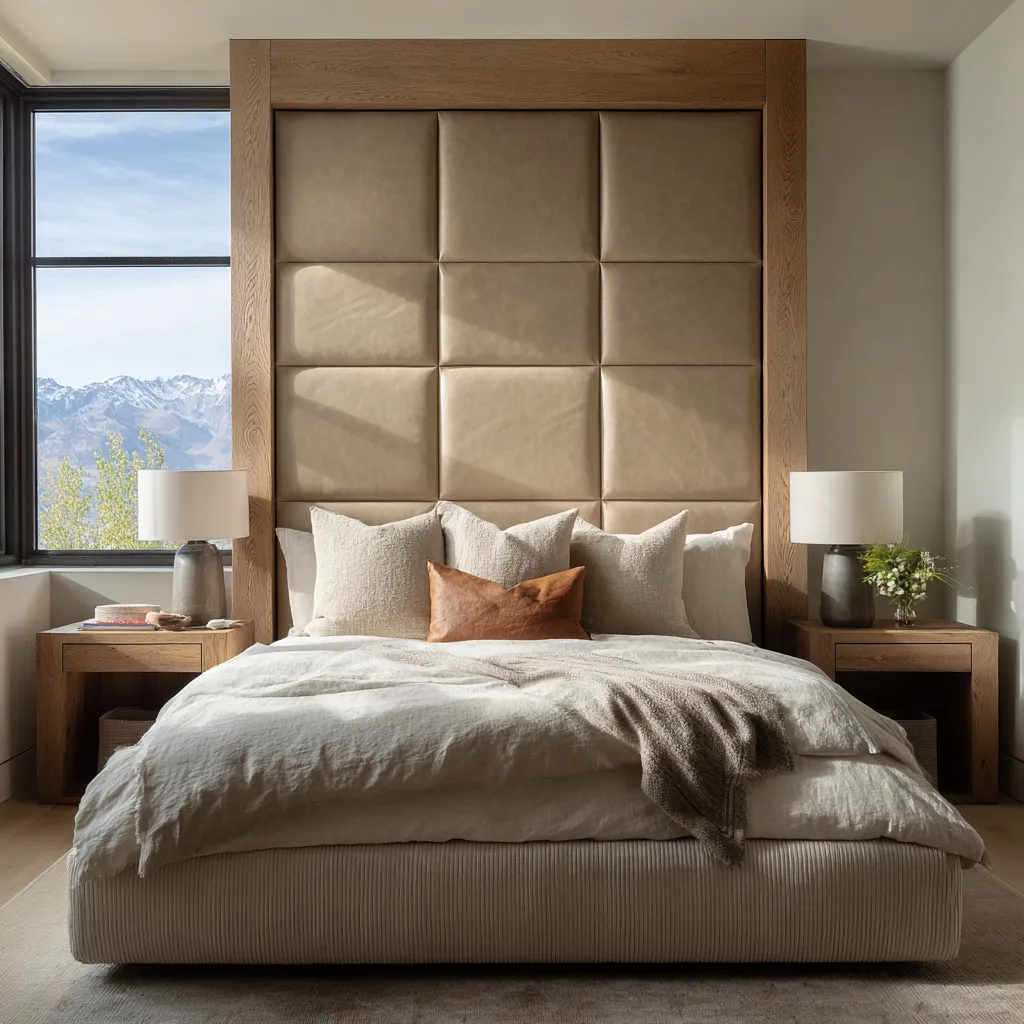
The risk of over-programming the bedroom
There is, however, a tension worth paying attention to. The more a bedroom design becomes organized around cabinetry, storage, bench niches, media units, and other useful structures, the easier it becomes to lose softness.
Joinery-led rooms often gain order, permanence, and suite richness. But they can also become a little too efficient if the bodily layer is not protected.
A room with strong wardrobes, open shelves, a desk, and a vanity still needs plushness around the sleeper. Otherwise the architecture wins too completely.
This is where compensation becomes important. A heavily programmed bedroom benefits from:
- thicker seat cushions in built-in niches
- softer upholstered headboards
- deeper bedding
- looser duvet finish
- rounded stools rather than only angular case goods
- softer rugs with more body
- tactile pillow layering in bench zones
- a more padded bench at the foot of the bed
The practical side of the room should not flatten the emotional side. In a mountain modern bedroom, function and softness support one another.
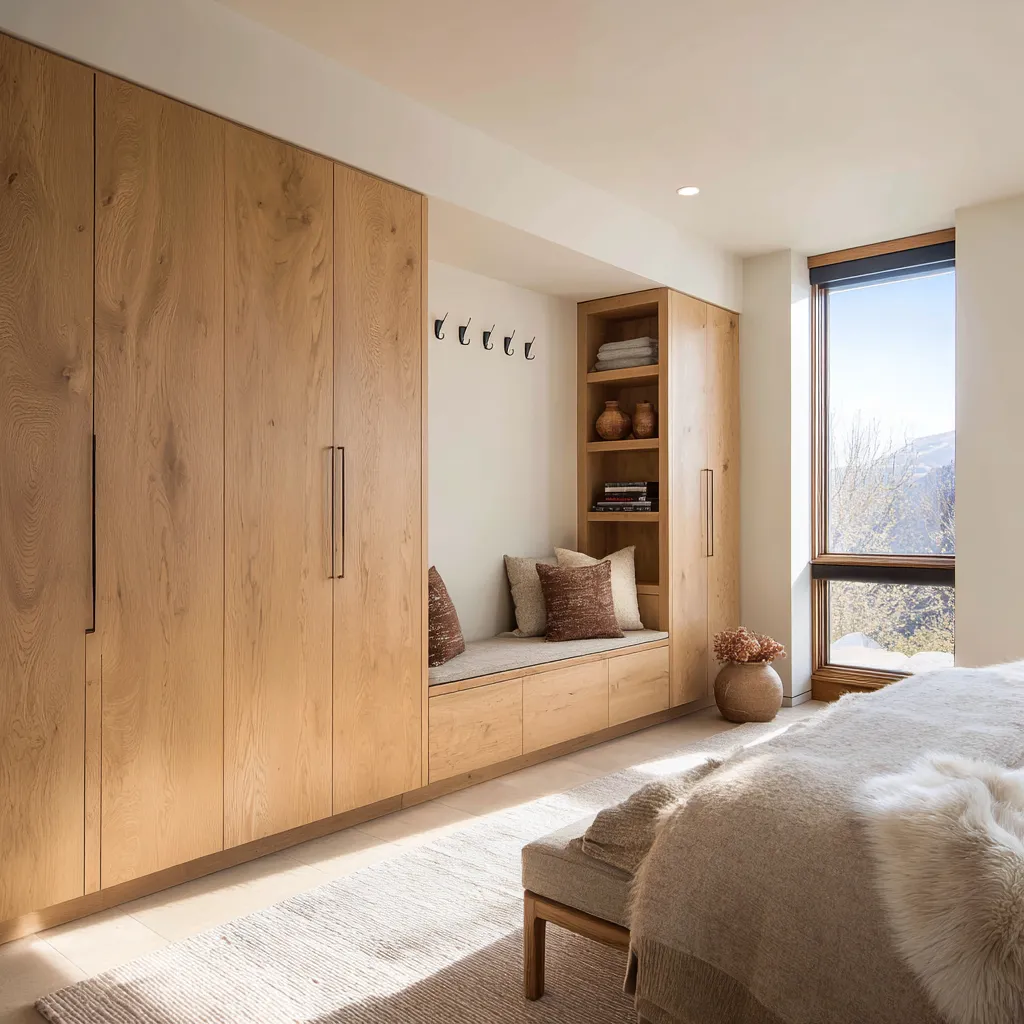
Fireplace walls work better as full systems
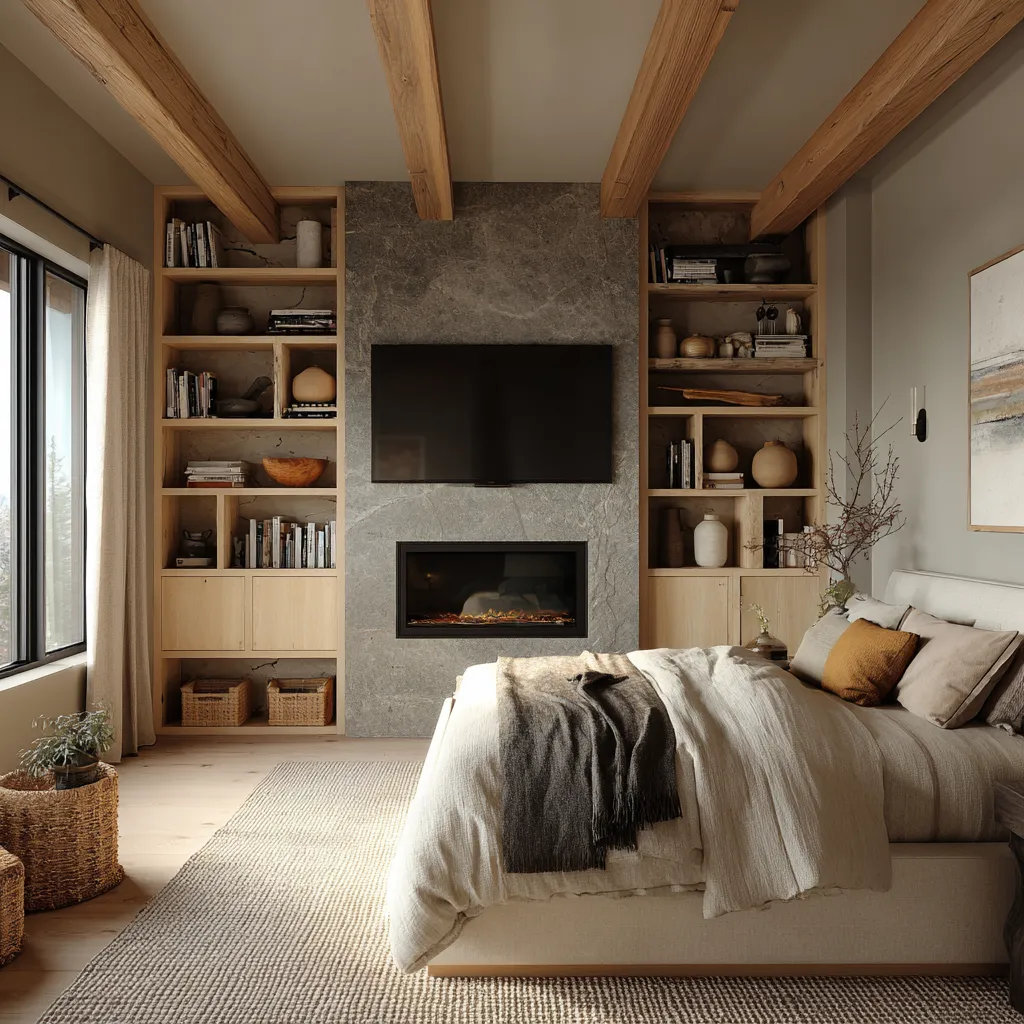
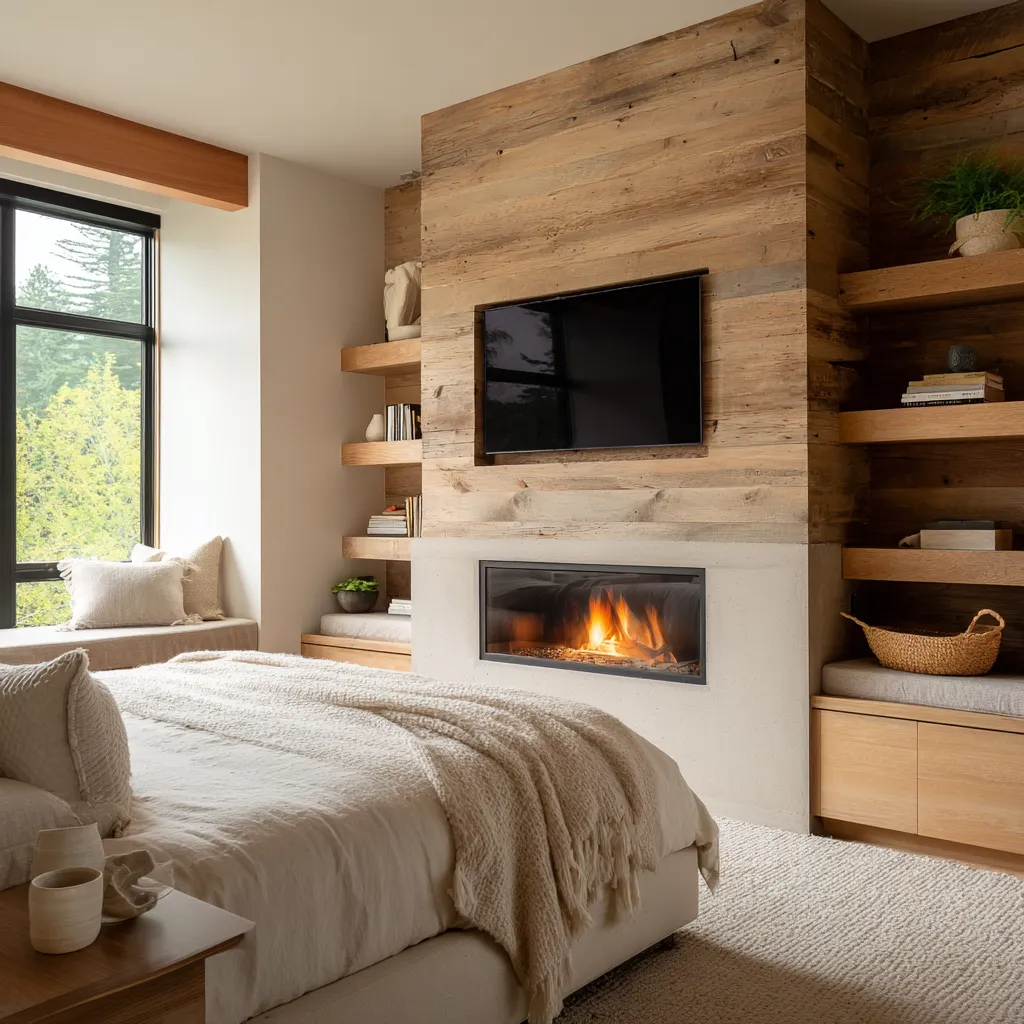
A fireplace can play a major role in a mountain bedroom, but it is most effective when it is not treated as an isolated statement block. The richer solution is usually a broader system that includes the fire, the media opening if needed, side shelving, a long wood ledge, lower cabinetry, a bench, or some combination of these elements.
This matters for both visual and practical reasons. Visually, a wider system prevents the fireplace wall from becoming too vertical and self-contained.
The side components spread the composition horizontally and help the bed remain the bodily center of the room rather than yielding everything to the fire. Practically, the additional built-in elements make the wall feel joined to daily life.
Books, pottery, baskets, small seating zones, and low storage give the wall domestic depth. The fire no longer feels like a symbolic mountain gesture.
It becomes part of how the suite functions. This is one reason pale stone media/fire walls often feel more current than older-style hearth-centered bedrooms.
The fireplace remains emotionally important, but it is absorbed into a larger architectural idea.
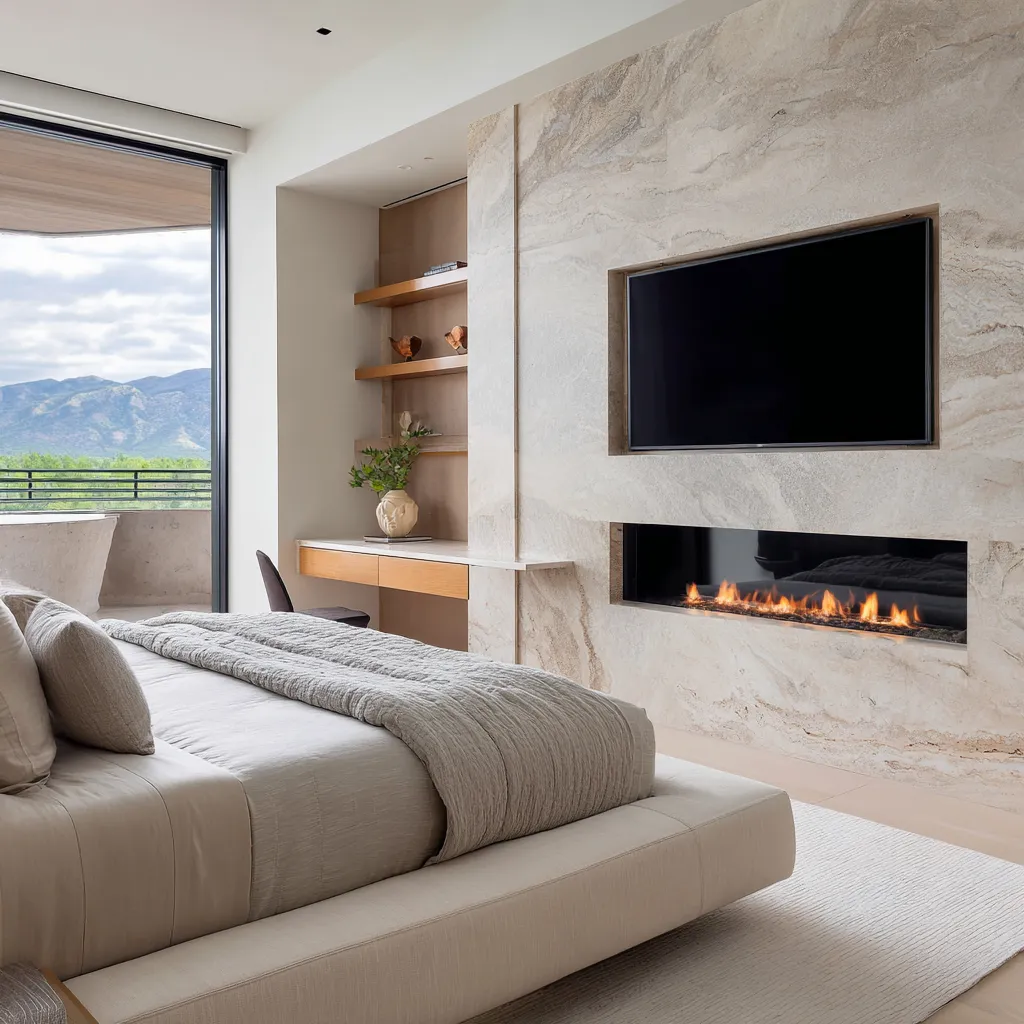
Monumental softness is another valid path
Not every mountain modern bedroom needs stone, visible beams, or weathered planks. Some of the more refined versions of the style build their whole character around monumental softness.
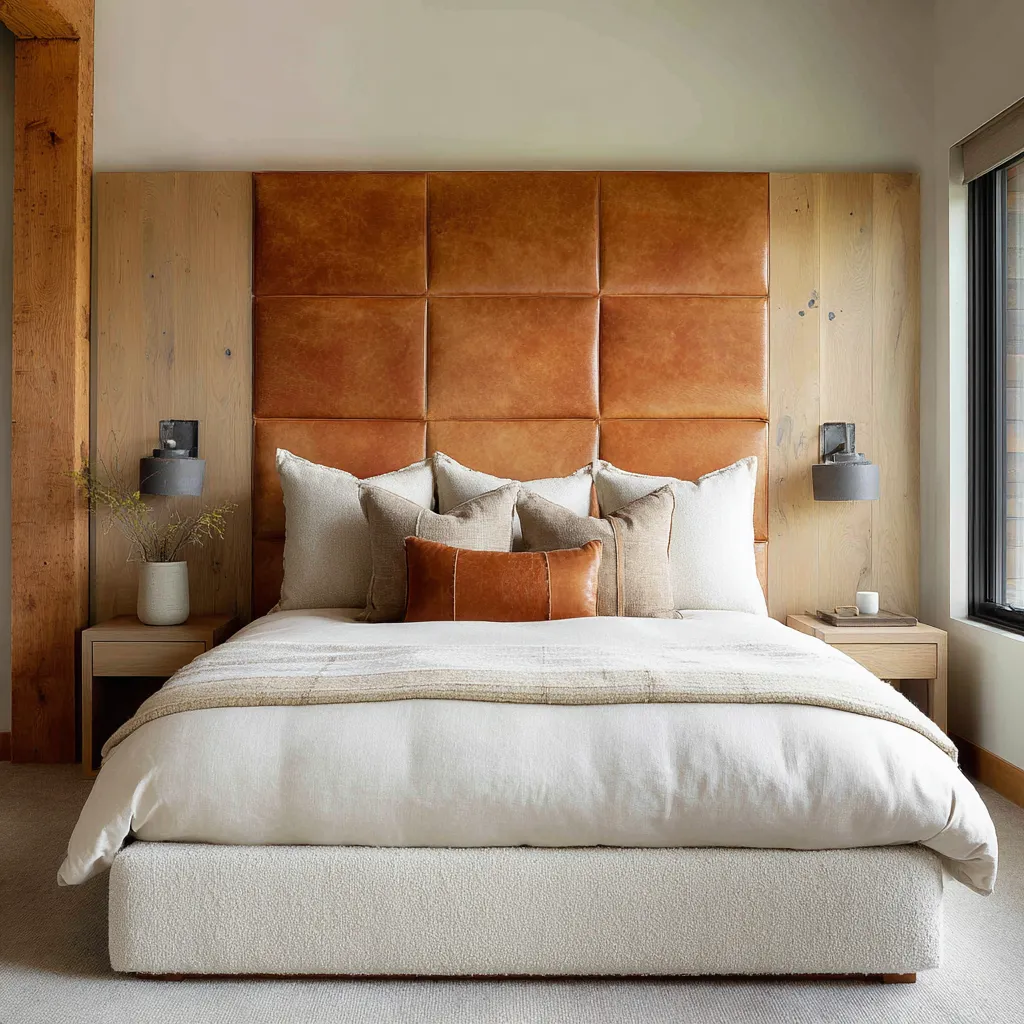
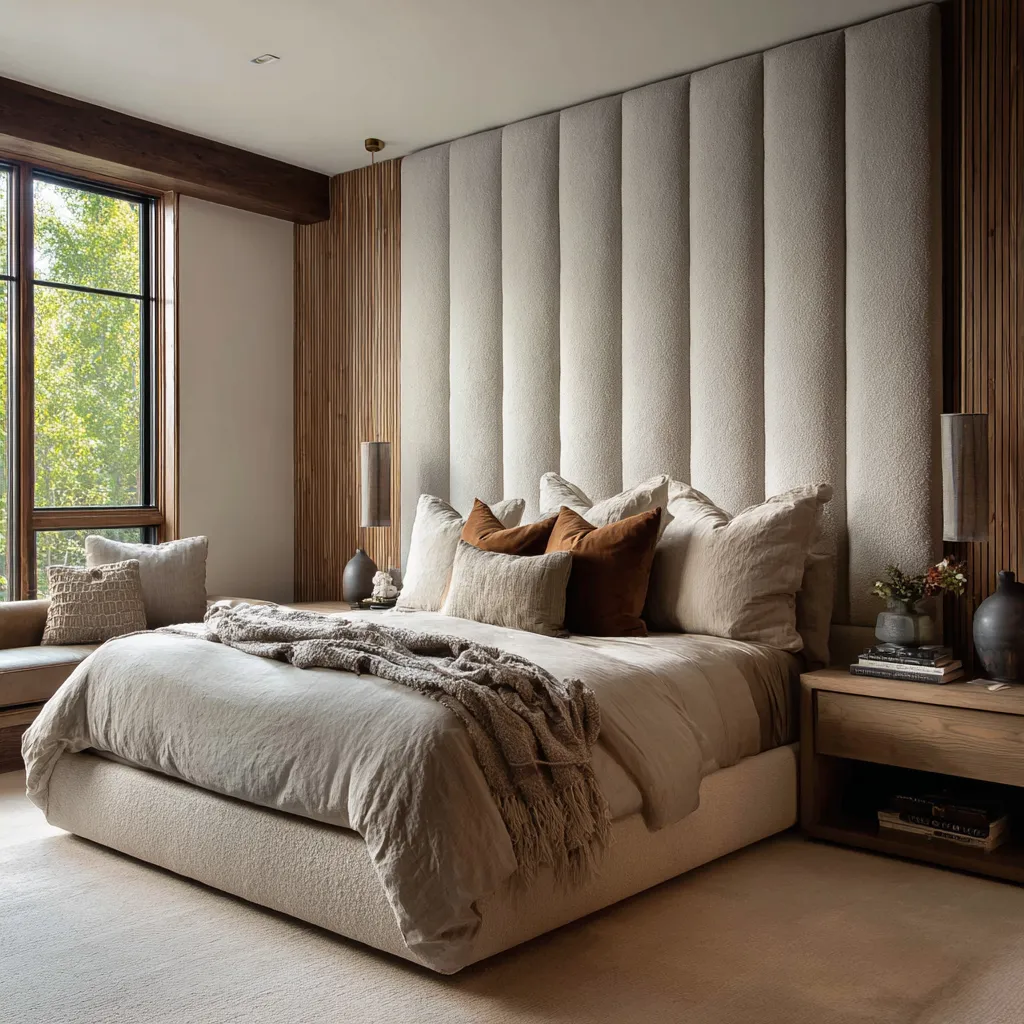
A full-height channel-upholstered wall, a tall padded panel grid framed in oak, or a large slatted oak wall behind a low segmented headboard can create a mountain mood in a different way. These interior designs rely on scale, enclosure, material tone, and bodily comfort.
Their mountain link comes through warm timber framing, narrow palette, strong grounding, and a sense of sheltered volume.
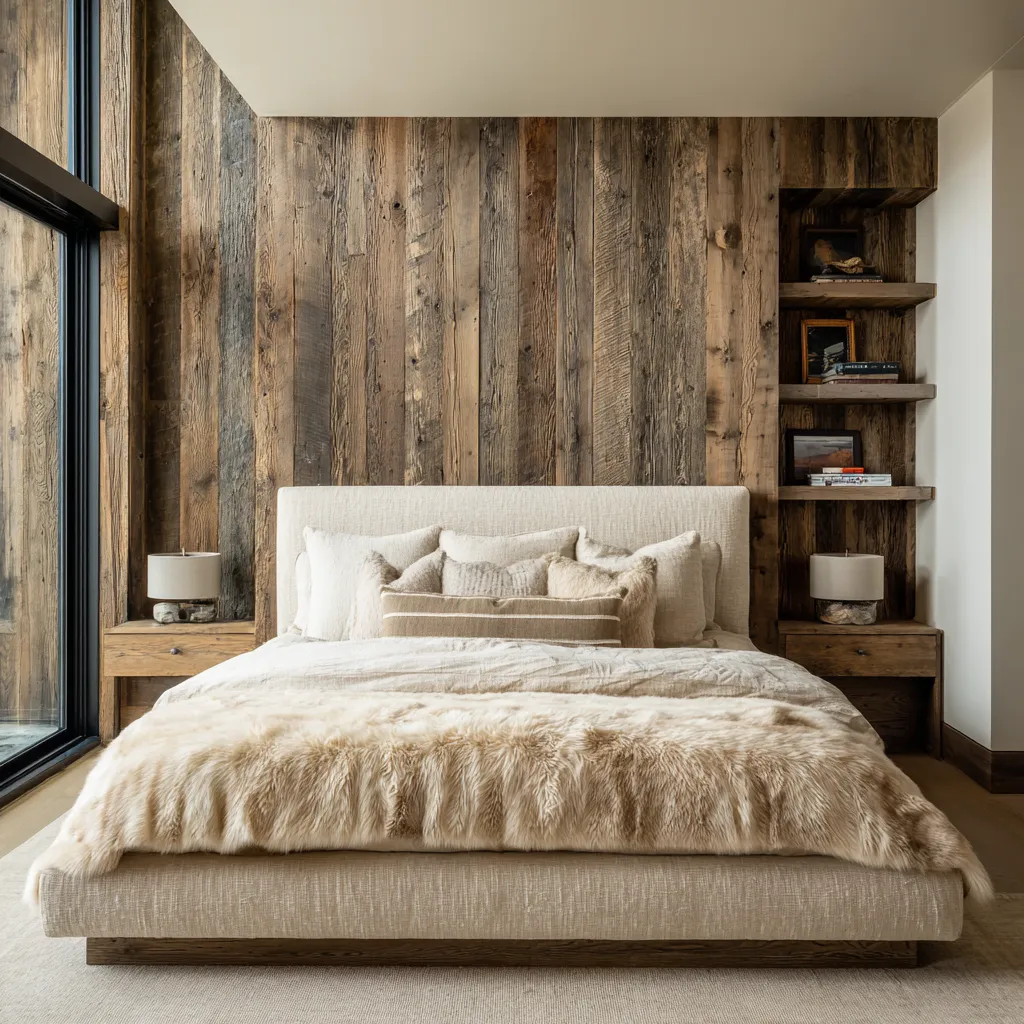
This approach works well for homeowners who want the atmosphere of a mountain house without much rustic signal. The room can still feel regionally appropriate if the materials stay natural, the colors remain earth-linked, and the architecture maintains some sense of fitted structure and thickness.
In these bedroom designs, the softness itself becomes the architecture. That is a very current way to interpret mountain living, particularly in homes where the view, light, and envelope already carry enough landscape context.
Smaller bedrooms can still feel fully mountain modern
A mountain bedroom does not need huge scale to work. In fact, smaller rooms often reveal the core logic of the style more clearly because they force the design to become more disciplined.
A compact room often benefits from:
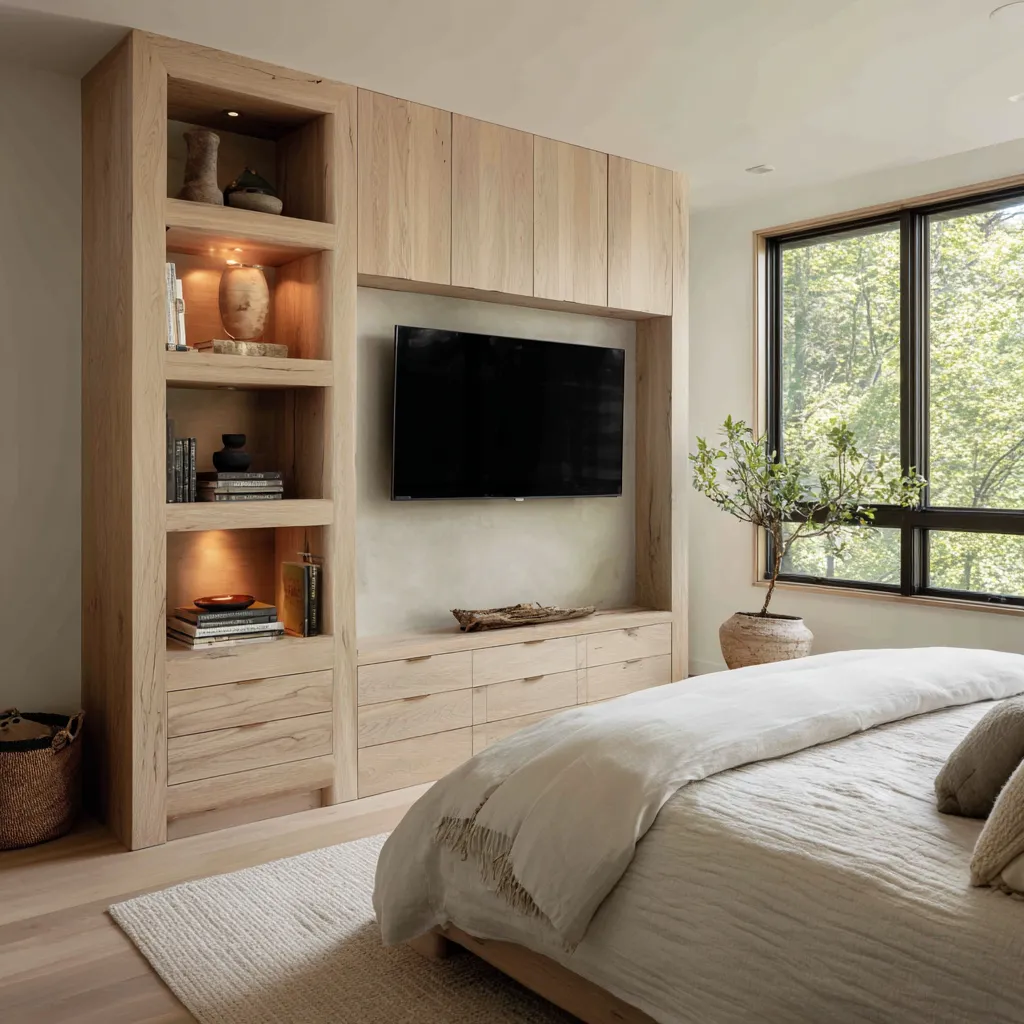
- pale oak built-ins rather than freestanding furniture
- one refined media wall instead of a heavy fireplace
- a low bed with broad horizontal lines
- a narrow palette of cream, wood, and muted earthy accents
- one bench or recessed seat rather than many loose chairs
- integrated lighting within shelving or niches
- strong black-framed glazing for crisp definition
- one material anchor rather than several competing features
Smaller mountain modern bedrooms tend to succeed when they avoid forcing extra rustic cues into the room. They do not need exposed trusses or heavy masonry everywhere.
Light oak, a softly textured inset, careful shelf lighting, and a close connection to the window can be enough. The style holds together through proportion, not size.
How to compose the material palette
A useful way to think about the palette is to organize it into roles.
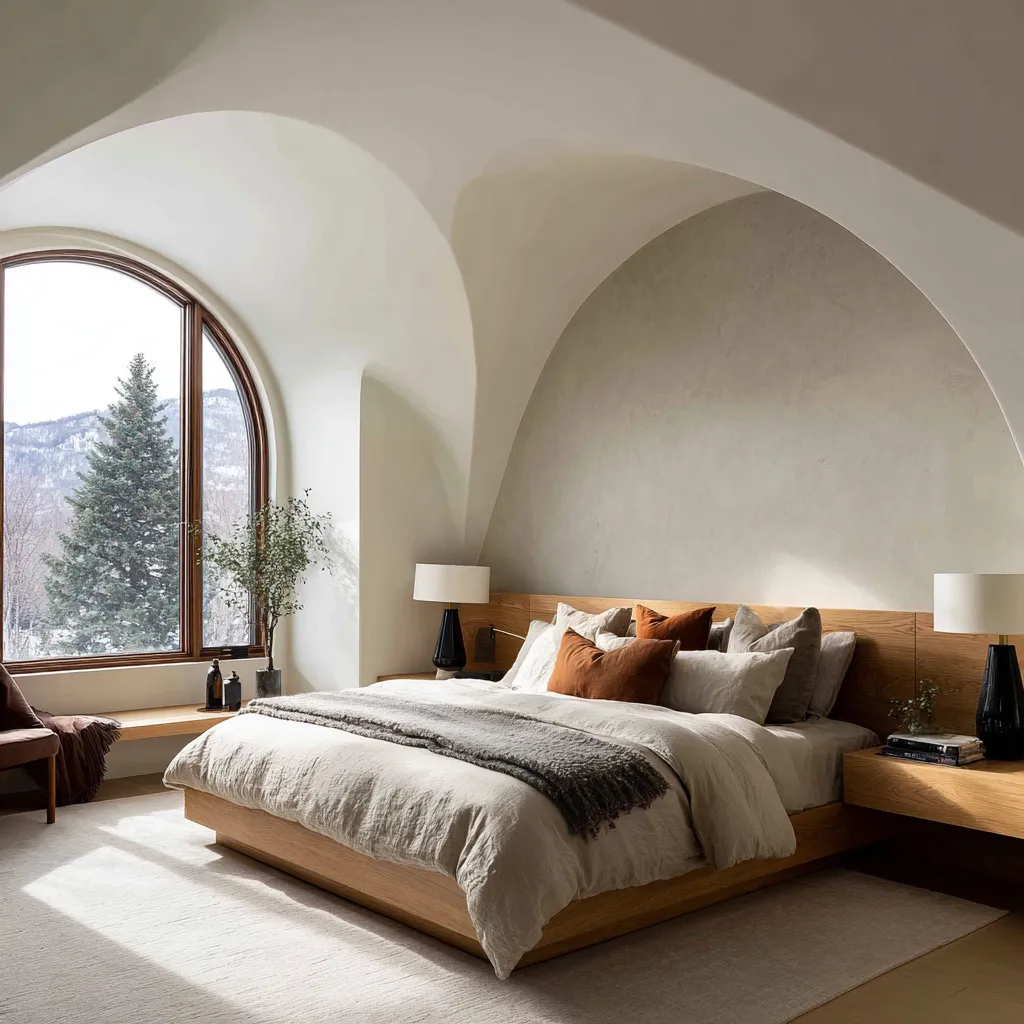
The shell
This is the architectural envelope: plaster, stone, timber wall, slatted oak, smoked wood paneling, or built-in cabinetry. It gives the room its structural identity.
The body layer
This includes the upholstered headboard, bed base, duvet, pillows, rug, bench cushion, and other contact surfaces. This layer carries warmth and bodily ease.
The punctuation
These are smaller notes that sharpen the interior design without breaking the palette: black metal lamps, bronze mirror frames, dark window mullions, rust pillows, leather lumbar cushions, ceramic lamps, or a single dried botanical arrangement.
The bridge to the site
This comes through the view, plant material, landscape art used with restraint, or colors that echo bark, dry grass, clay, rock, and foliage. The room becomes more refined when these roles stay distinct.
Problems usually begin when everything tries to do everything at once. If the stone is already rich, the bedding should simplify.
If the wall is dark and timber-heavy, the headboard should soften it. If the cabinetry becomes extensive, the seating niche needs more cushion and textile depth.
If the room is extremely pale, one concentrated warm note can keep it from becoming washed out.
Planning the room around bodily experience
A mountain modern bedroom design is successful when it is planned from the bed outward rather than from the walls inward. That means asking a sequence of bodily questions.
- Where does the sleeper feel held?
- Where does the eye rest first on waking?
- Where does morning light fall?
- Is there a second place to sit besides the bed?
- Does the room offer thickness, ledge, niche, or bench somewhere near the perimeter?
- Can storage disappear into the architecture rather than stand apart from it?
- Do the hard surfaces meet the body through enough upholstery and textile buffering?
These questions tend to produce better results than style questions alone. The reason is simple: mountain modern design, in a bedroom, is really about shelter.
Its material language matters because it shapes how shelter feels.
Common mistakes that weaken the look
Several mistakes can pull a mountain modern bedroom away from its intended balance.
- Using too much timber without mineral or spatial counterbalance can make the room feel generic or overly cabin-like.
- Using rustic cues on too many surfaces at once can reduce freshness and make the room feel older than intended.
- Relying on dark mood to create warmth can produce a room that looks atmospheric but feels less physically soft.
- Adding too many small objects can weaken the effect of larger architectural gestures.
- Treating the fireplace as a stand-alone statement instead of part of a full wall system can make the room feel less integrated.
- Using built-ins heavily without adding enough upholstered buffering can make the suite feel efficient but under-softened.
- Placing a high decorative bed against a strong wall can create competition instead of hierarchy.
The stronger the room’s main material move, the more the rest of the composition should simplify around it.
A more useful definition of mountain modern bedroom design
A mountain modern bedroom is not defined by lodge imagery. It is defined by how it organizes material, weight, softness, and enclosure.
The interior design usually feels mountain-linked when it holds some sense of geological or structural anchoring. That may come through stone, plaster mass, thickened openings, heavy timber, or a carefully placed memory of weathered material.
It feels modern when those elements are reduced, spatially integrated, and supported by strong editing. It feels warm when the bed is low, the textiles are generous, and the sleeper is buffered by soft surfaces.
It feels luxurious when daily rituals are absorbed into the room through fitted architecture: bench niches, wardrobes, vanities, desk alcoves, shelves, ledges, media walls, and fireplace systems that belong to the larger whole.
That combination explains why mountain modern bedrooms can look quite different from one another and still feel part of the same family. One interior design may be pale, sculpted, and nearly monastic.
Another may be timber-rich, darker, and deeply cocooning. Another may center on a wardrobe passage and stone vanity niche.
Another may rely on a tall upholstered wall framed in oak. Another may use a light media wall in place of a fireplace.
If each room keeps the same core discipline—natural material, compressed tone, grounded composition, soft bodily contact, and architecture that feels fitted—the identity remains intact.
Final thoughts
The most memorable mountain modern bedroom ideas do not try too hard to announce themselves. They let material carry meaning.
They let softness stay close to the body. They keep the palette narrow enough for texture and light to matter.
They understand that mountain atmosphere can come from shelter, thickness, and tactility just as much as from wood beams or dramatic stone. That is why the style feels so enduring in a bedroom.
It supports rest without becoming bland, and it supports identity without relying on costume. The room can be pale or dark, mineral or timber-led, compact or suite-like, but it remains coherent when it balances four things carefully: anchoring material, present-day restraint, bodily warmth, and integrated daily use.
A mountain modern bedroom is, in the end, a place where the landscape is translated into interior form without turning the room into a theme. It brings the weight of the site indoors, softens it for living, and gives it enough clarity to feel fully at home in the present.