Modern grandmillennial bedroom design works because it gives old and new different jobs. The older side of the style brings the things people still want from a bedroom even after trends change: softness, layered bedding, flower and garden memory, warmth, a sense of ritual, a place to sit near daylight, a room that feels inhabited rather than staged.
The current side brings discipline. It clears the shell, simplifies the furniture, sharpens the lighting, and keeps decoration from spreading everywhere at once.
That balance is what makes the style feel fresh instead of costume-like.
A lot of bedroom design ideas miss this balance. Some keep so much historical language that the design becomes heavy, crowded, or overly themed.
Others strip the space so far back that the room loses the tenderness that made grandmillennial style appealing in the first place. Modern grandmillennial style bedroom designs should sit in a narrower middle.
They keep floral and domestic memory, but they place that memory inside a firmer and more edited structure. That is the key idea to hold onto from the beginning: modern grandmillennial style works well when architecture stays broad, reduced, and controlled, while softness gathers in selected zones such as bedding, pillows, art, flowers, mantels, benches, and window niches.
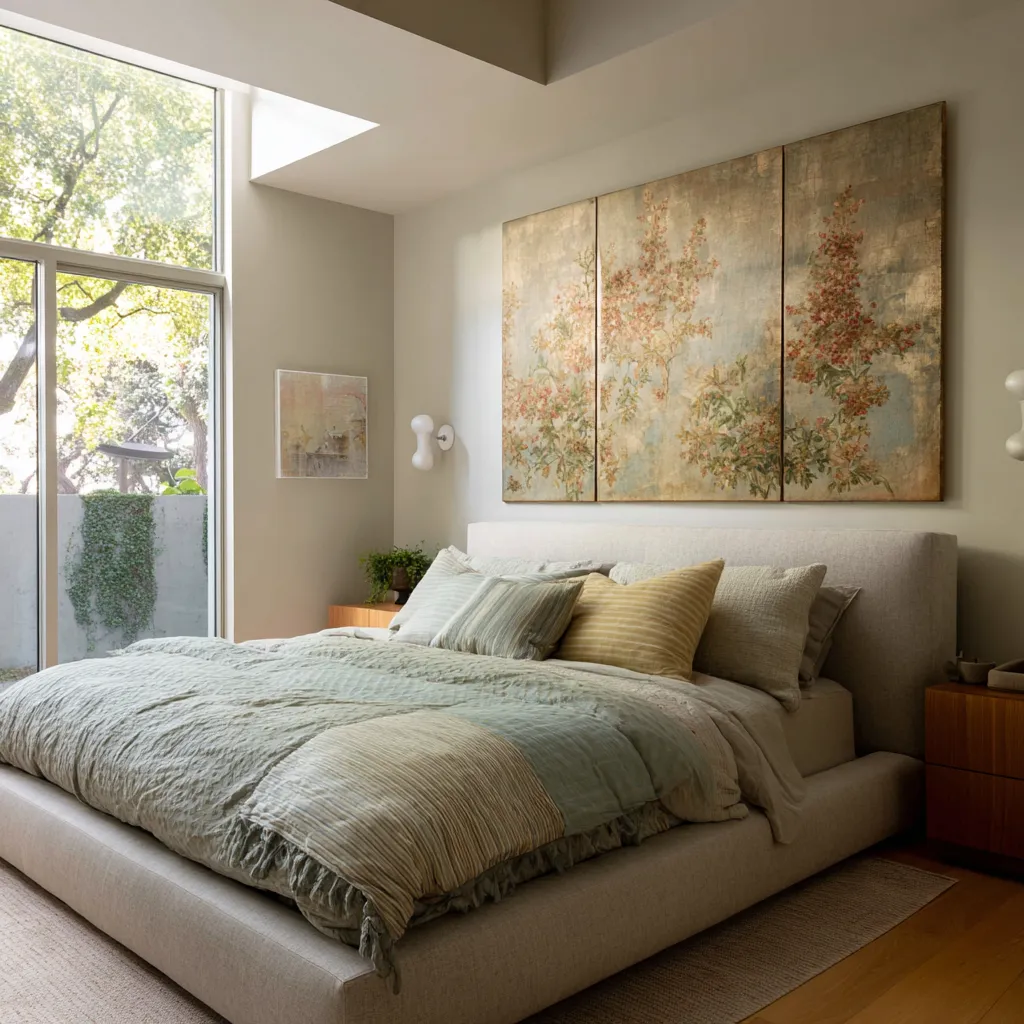
What gives a grandmillennial bedroom its identity
At its heart, the style still depends on inherited bedroom cues. Floral bedding matters.
Botanical art matters. Full drapery matters.
Layered pillows matter. A fireplace or a window bench can matter.
These elements create the sense that the bedroom belongs to domestic life rather than to a showroom. They suggest habit, reading, rest, flowers cut from the garden, an extra throw folded at the end of the bed, or a bench by the window that turns daylight into part of the room’s daily use.
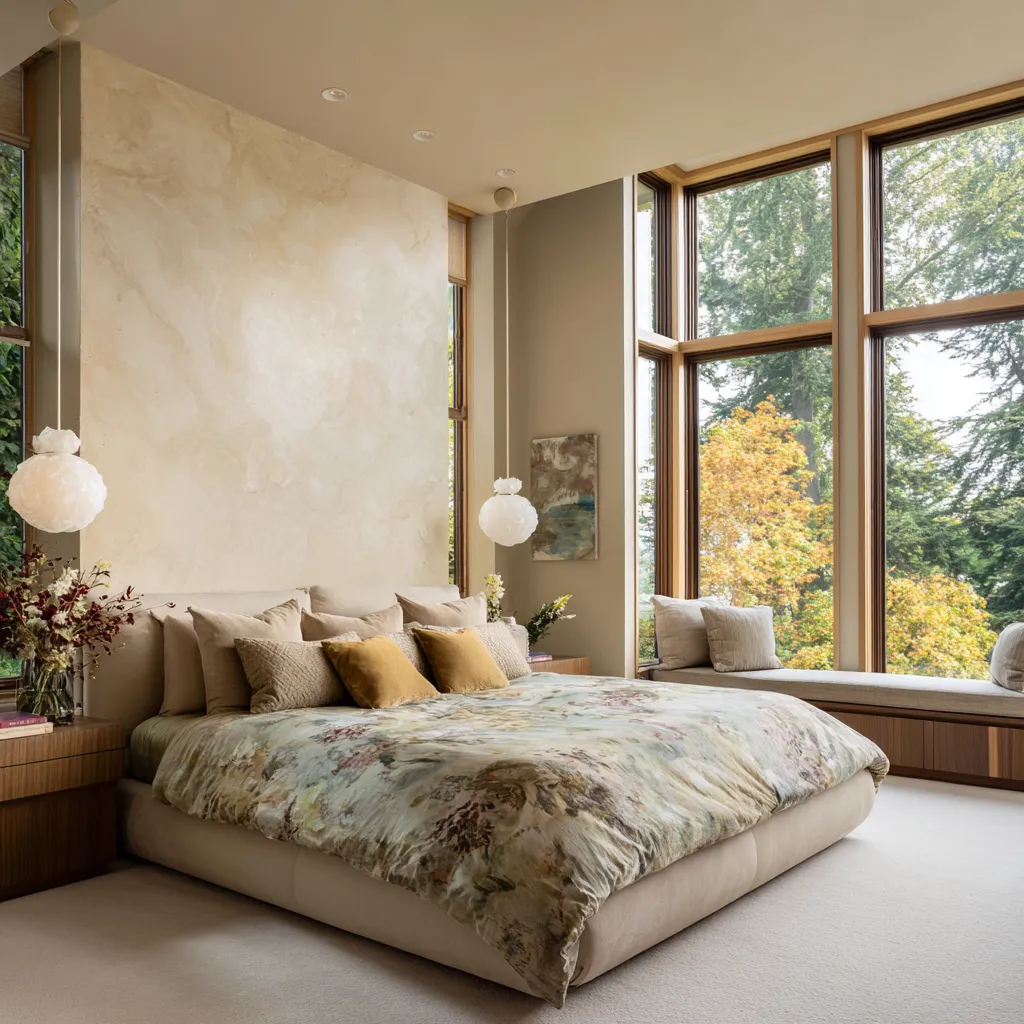
But a current grandmillennial bedroom ideas rarely spreads those cues into every surface. That is where many older traditional rooms and newer grandmillennial interpretations part ways.
In an older room, pattern may appear on wallpaper, curtains, bed, chair, rug, and lampshade at once. In a current room, the designer is far more selective.
The floral may live mainly on the duvet and shams. The botanical note may move into one painting and one vase of branches.
The drapery may stay full but plain. The bed frame may remain broad and upholstered with very little detail.
This editing makes a major difference. It lets memory remain visible without letting nostalgia take over the room.
So if you want the style to stay legible, do not remove every floral or historical reference. Instead, decide where those references should live.
Usually the bed is the primary carrier. Art, flowers, and one secondary feature can support it.
The rest of the room should hold back.
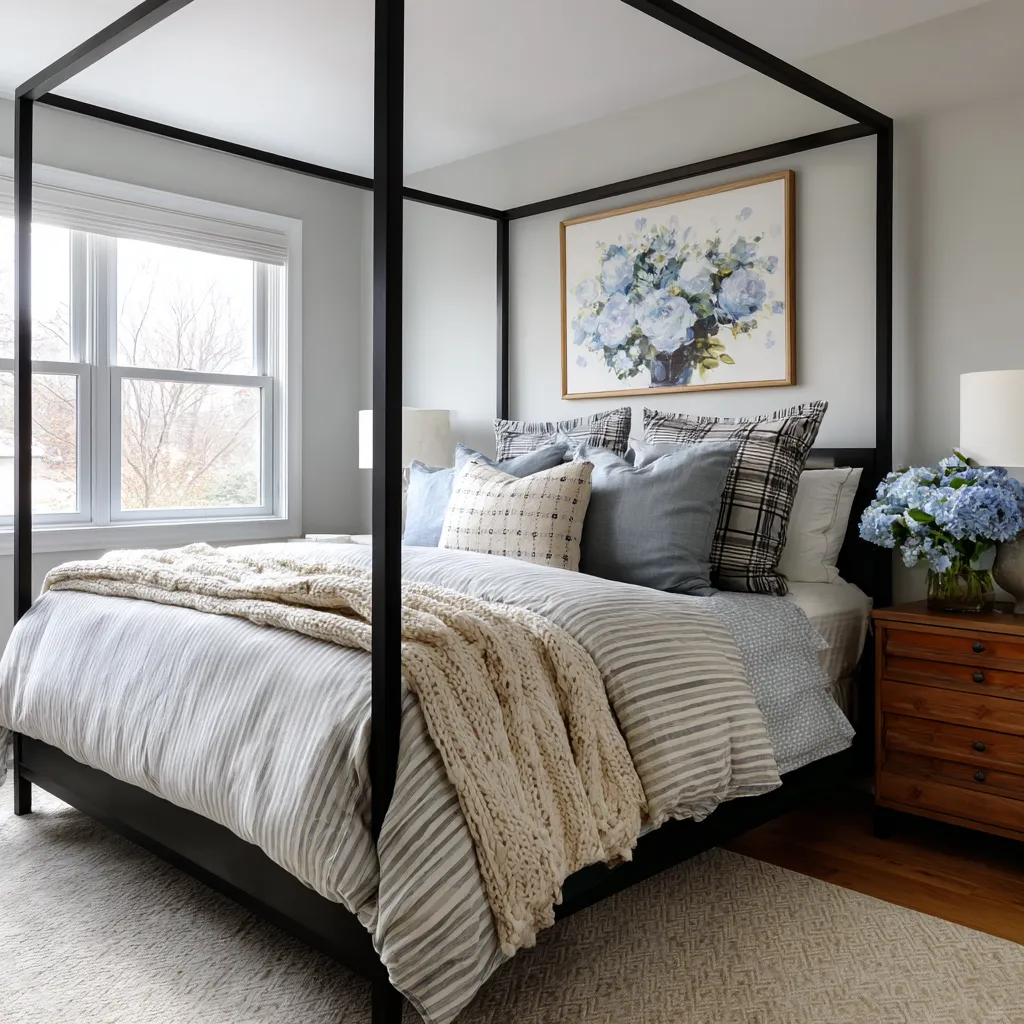
Why the shell matters even more than the flowers
Many people assume floral fabric is what makes a grandmillennial bedroom feel old-fashioned. Flowers do push the room toward tradition, but they are not the main problem.
The bigger issue is often the shell. Heavy paneling, pronounced trim, too much overtly historic molding, or a very literal old-house envelope can pull the room backward faster than a floral quilt will.
A bedroom can keep a surprising amount of floral memory and still feel current if the shell is simplified. On the other hand, even restrained bedding can feel dated if the walls, trim, and furniture all insist on the past at the same time.
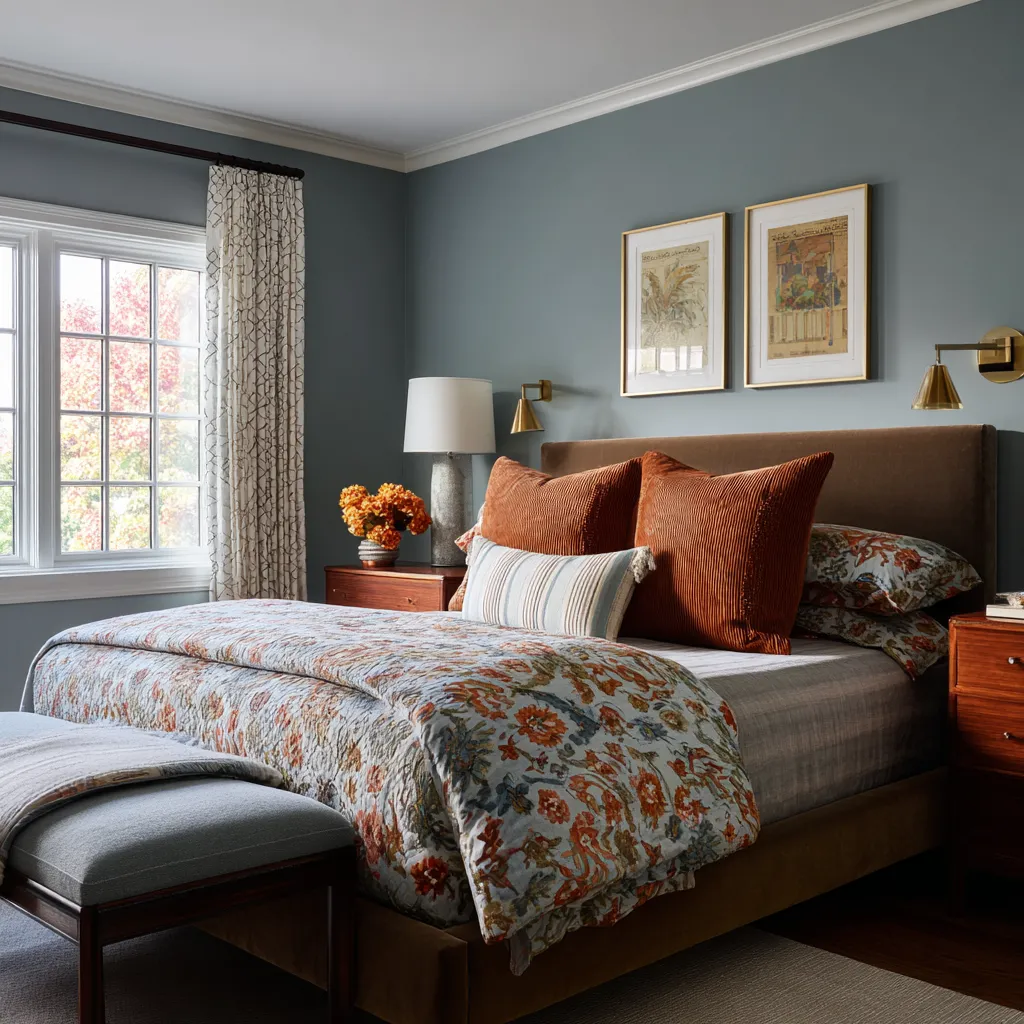
This is why modern grandmillennial bedroom designs use one of three shell strategies.
- The first is the pale simplified shell. Walls stay light and gently warm. Trim remains present but not overly assertive. The room feels settled, but the architecture does not shout.
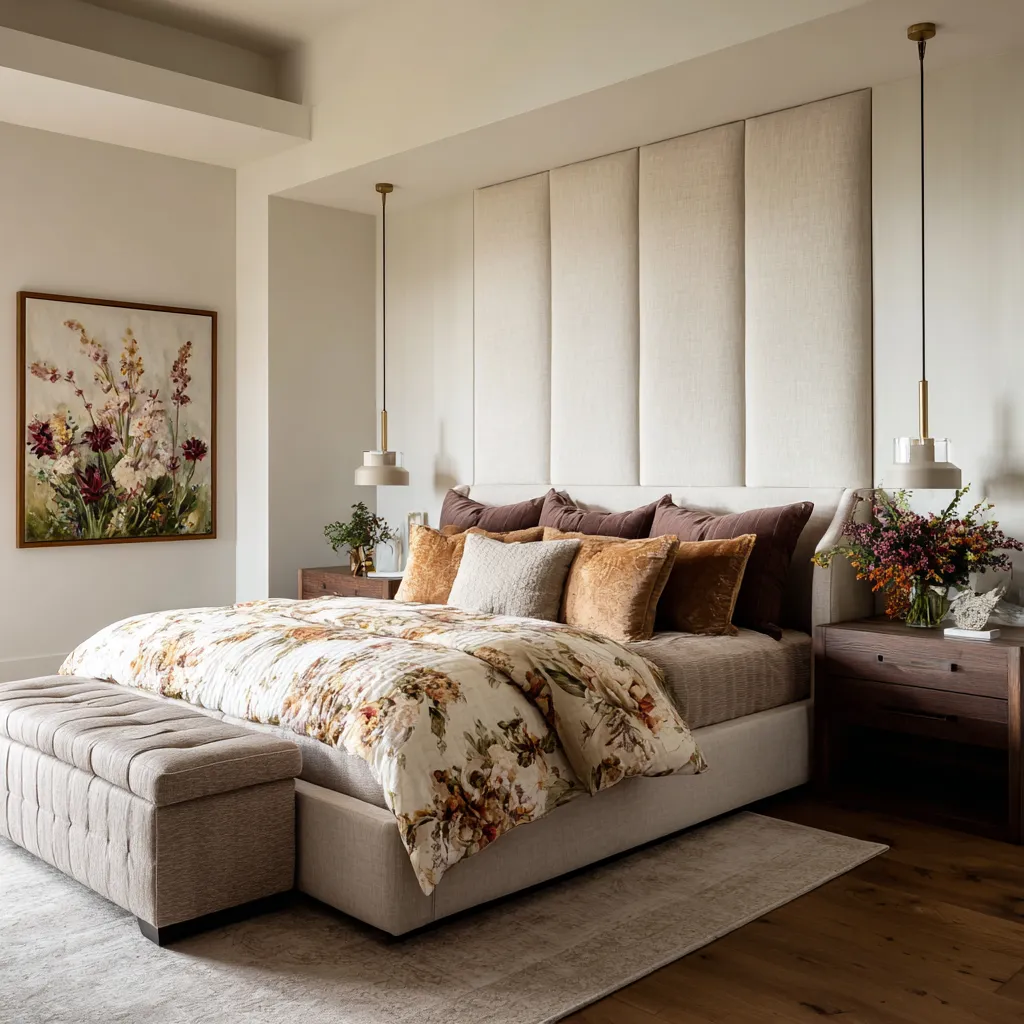
- The second is the architectural mass shell. Instead of relying on many historical details, the room uses one larger move: a plaster chimney wall, a stone feature wall, a full-height upholstered backdrop, or a disciplined paneled field. This gives the room refinement through scale rather than through decorative quantity.
- The third is the dark enveloping shell. Here the room uses depth of wall color to give floral and textile softness more maturity. The atmosphere becomes weightier, richer, and often warmer than people expect, provided the bed carries the right accent tones.
In all three cases, the lesson is similar. The shell should support the softness, not compete with it.
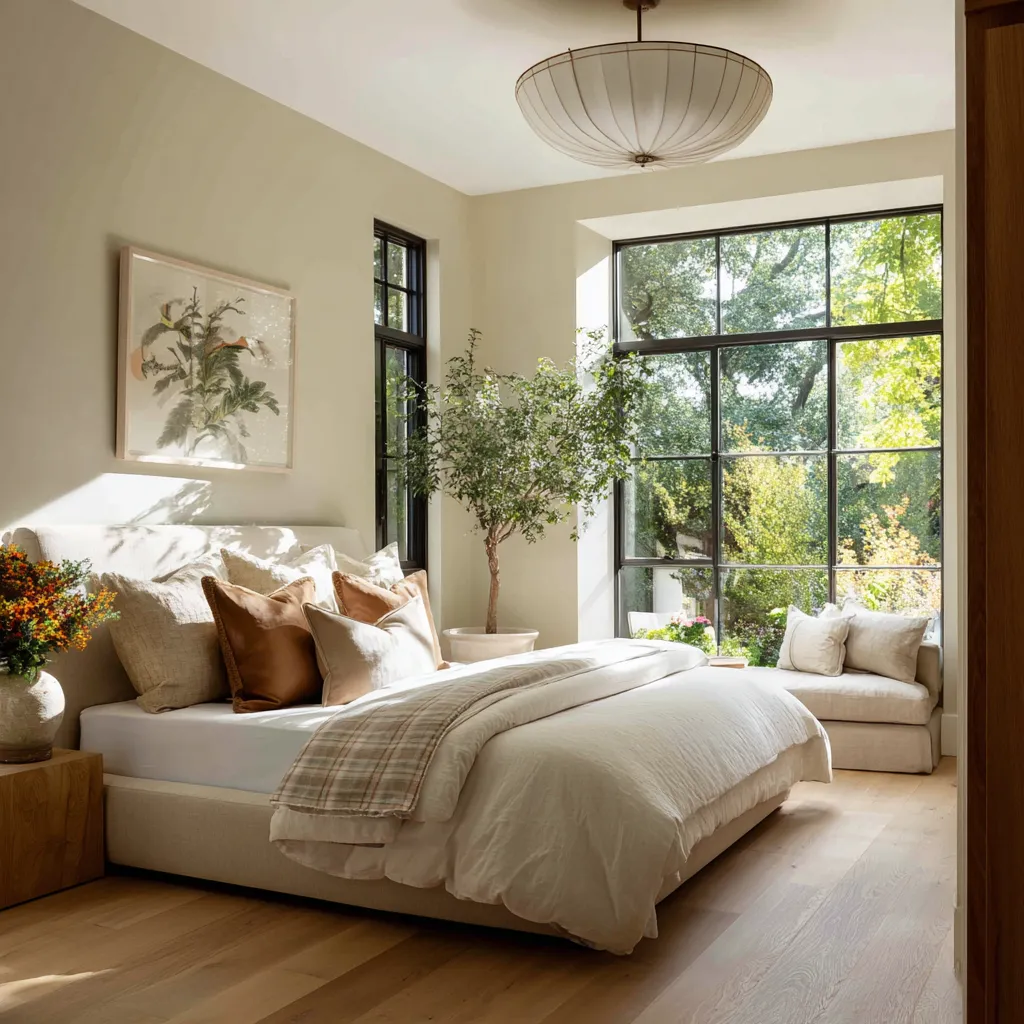
The bed is where the style usually lives
In modern grandmillennial bedroom design ideas, the bed does much of the emotional work. That is why bed form and bed layering matter so much.
The bed itself is usually current in shape. It is often broad, upholstered, low to medium in height, and fairly plain.
Tufting, nailheads, turned posts, or heavily carved edges are usually reduced or removed. This matters because the bed form creates the room’s baseline modernity.
Once that baseline is in place, floral quilts, striped shams, plaid throws, or botanical pillows can enter without making the whole room feel locked in the past.
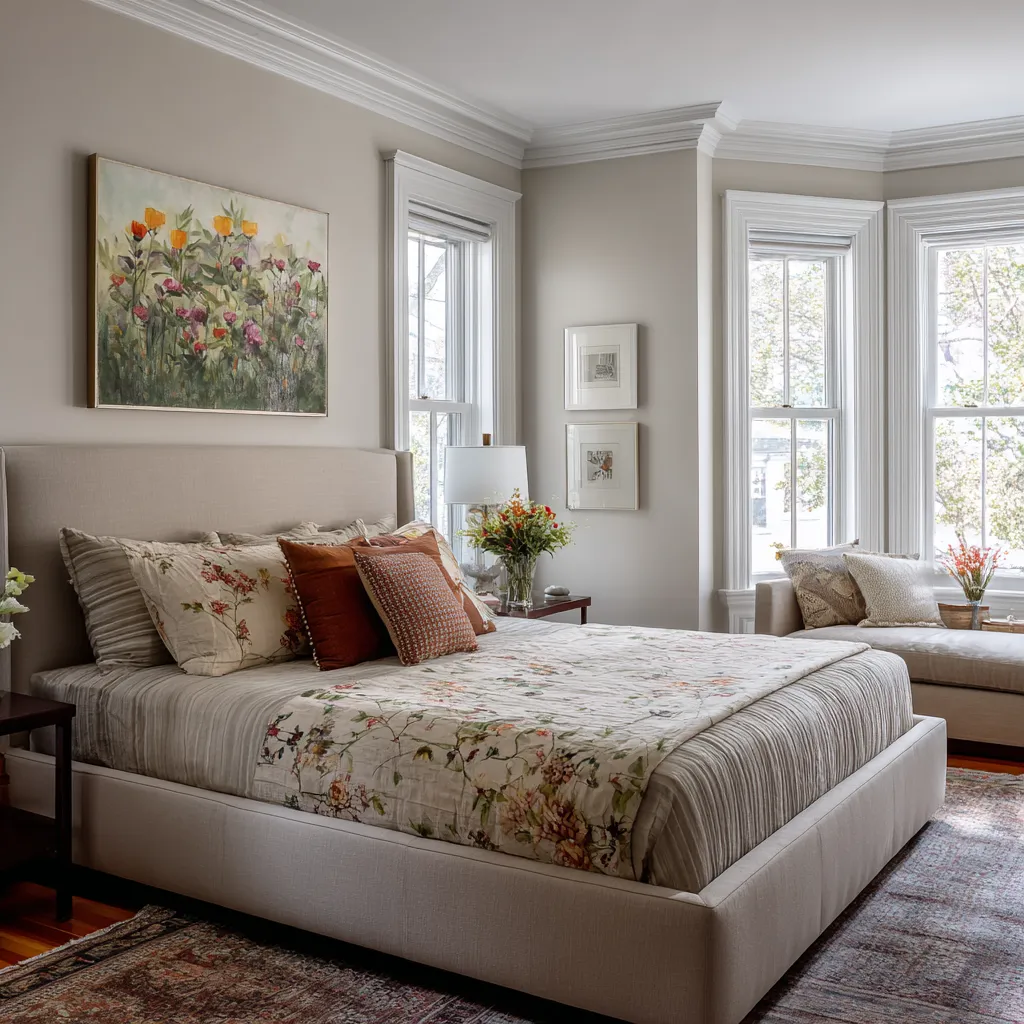
Then comes the layering. This is where grandmillennial character gathers.
The designs that feel persuasive usually do not depend on one floral field alone. They use a mix of softness and order.
A floral duvet may be paired with striped back pillows. A painterly quilt may sit in front of a plain upholstered headboard.
A plaid throw may fold over a pale coverlet. This mix is important because floral alone can become diffuse.
Stripe and plaid give the bed structure. They act as regulating devices.
They hold the floral in place and keep the composition from turning sugary or vague. This is one of the rules in the style: let floral provide memory and tenderness, then let stripe, plaid, or another small ordering pattern tighten the arrangement.
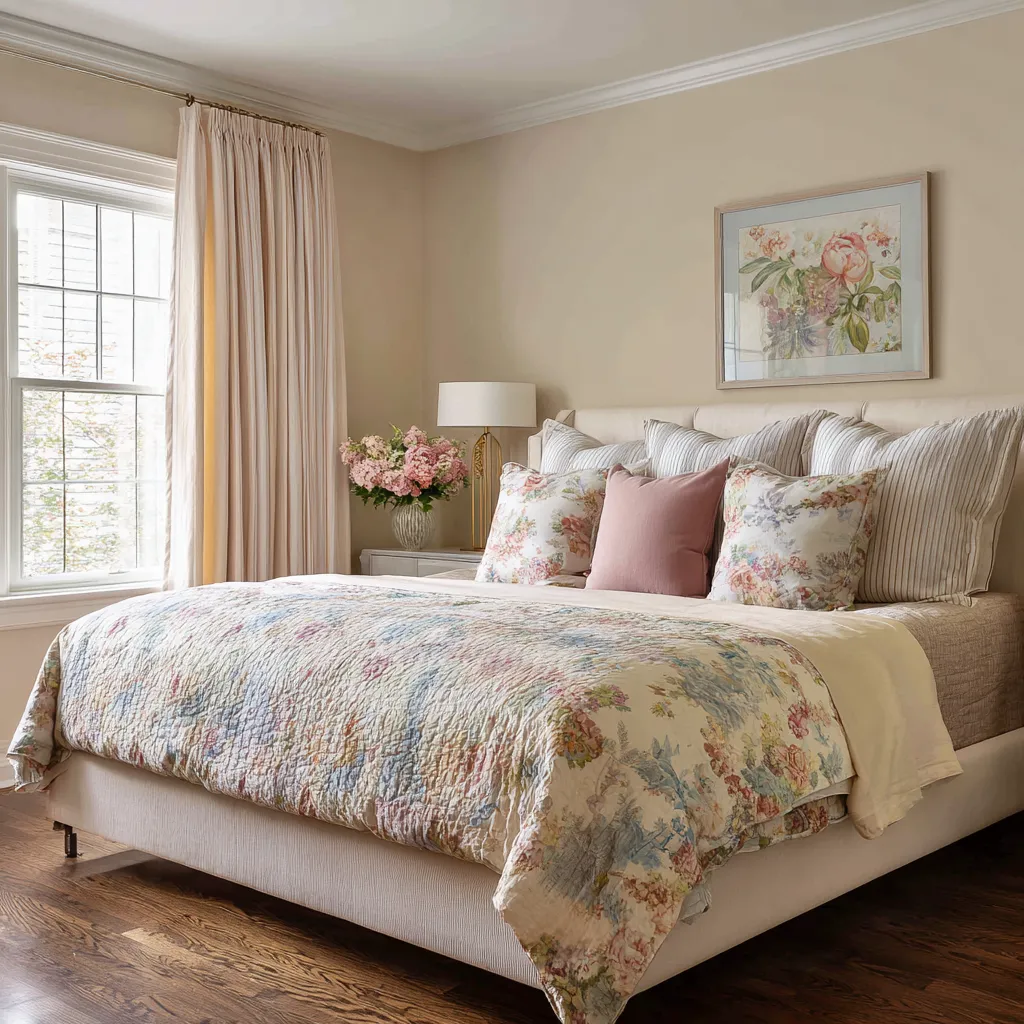
Floral works better when it is softened
One of the traits of a current grandmillennial bedroom is the way it handles floral pattern. The flowers are often present, but their treatment changes.
Instead of sharp, high-contrast bouquets on a bright white ground, interior designs can use florals that feel washed, faded, misted, or painterly. The colors lean toward dusty rose, muted sage, pale olive, faded blue, soft rust, camel, blush, cream, and weathered green.
The pattern may still be visible, but it does not hit the eye with the force of a crisp print. That difference matters because softened florals behave more like atmosphere than like decoration.
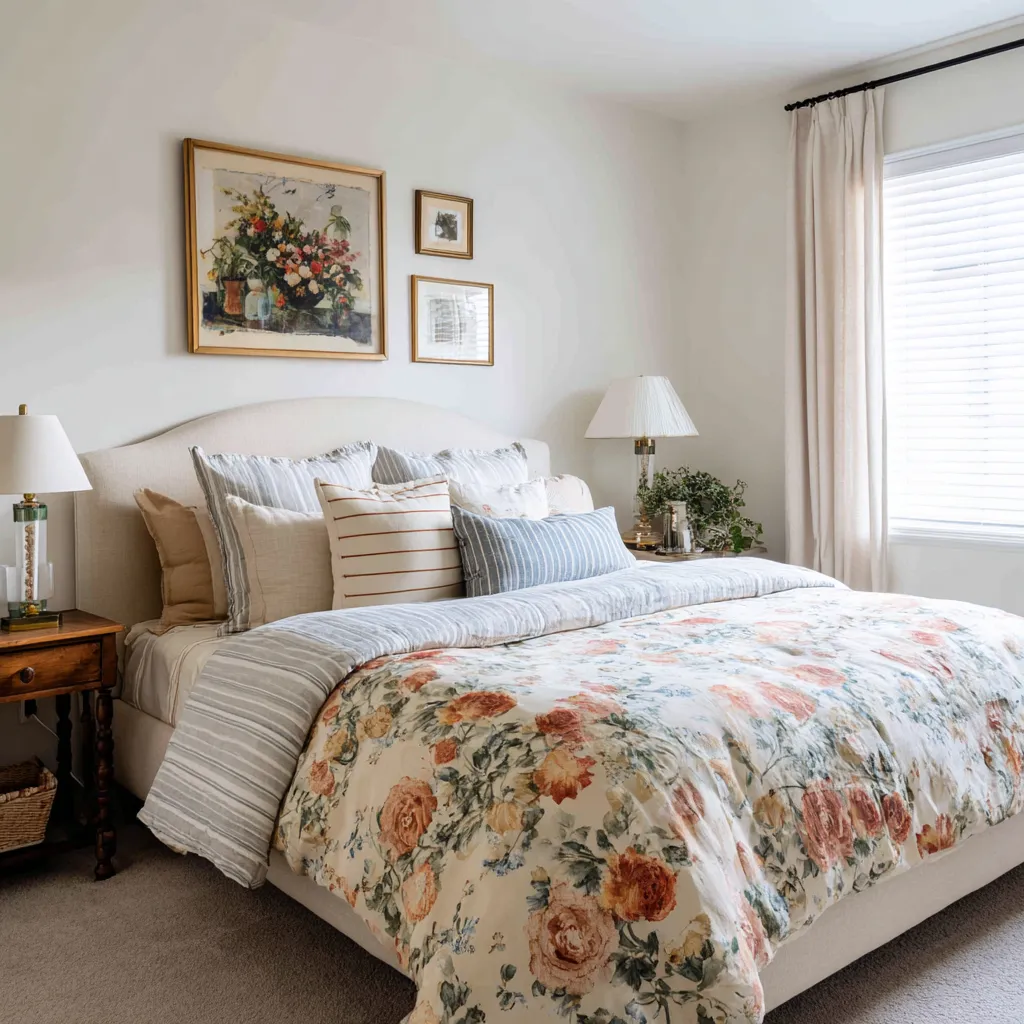
This is one reason floral bedding can survive in a current bedroom without looking too literal. The flower stays, but the edge softens.
The interior design keeps memory while losing stiffness. It also helps to limit where the floral appears.
The floral can be placed mainly on the duvet, shams, or one art piece, then keep curtains, upholstery, and larger case pieces quieter. This lets the eye understand the room quickly.
There is one main decorative field, then a series of calmer supporting surfaces.
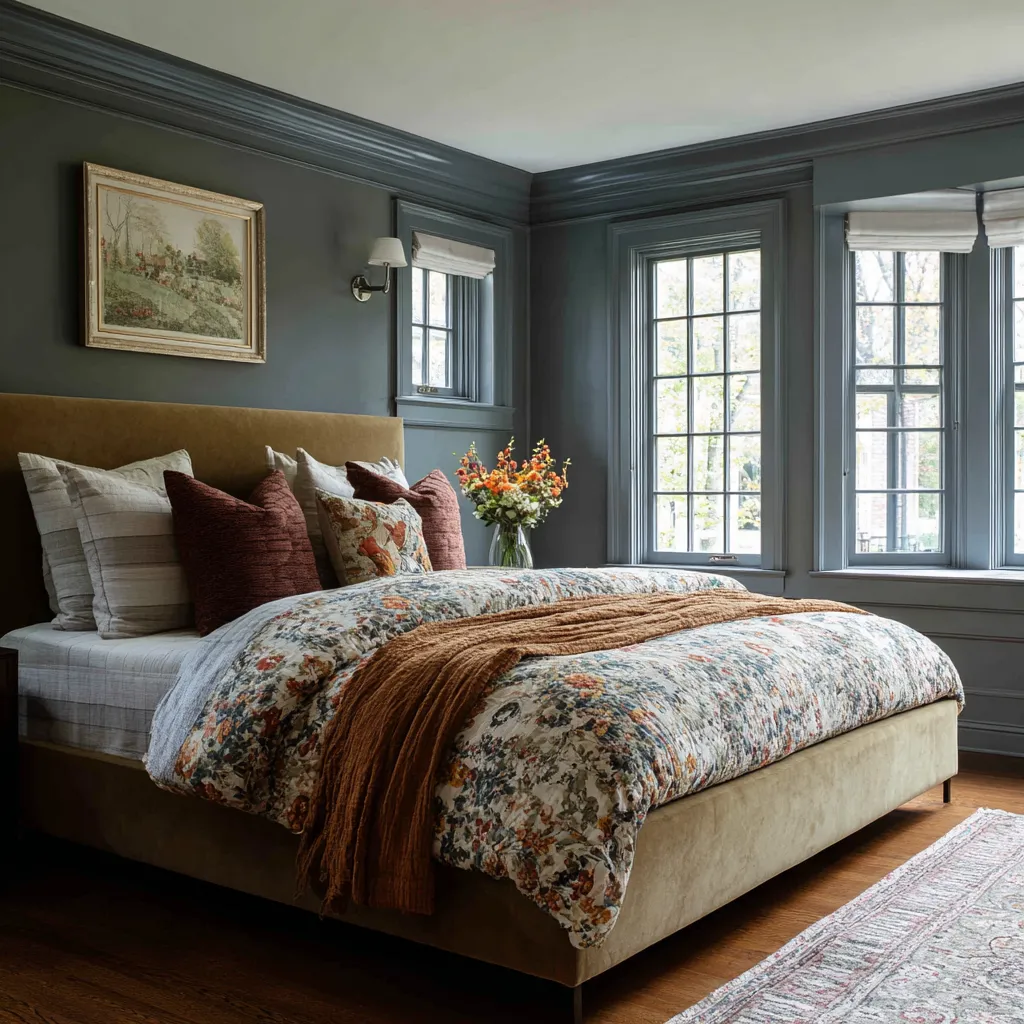
Warmth comes from concentrated heat
A interior design can be pale and still feel warm, but warmth in modern grandmillennial bedrooms usually depends on focus. It comes from concentrated warm notes placed inside a cooler, paler, or deeper setting.
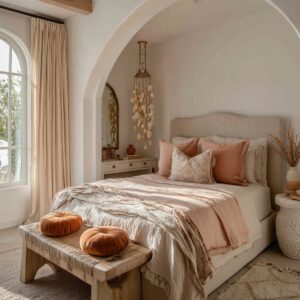
That warm note may be a rust velvet pillow, an amber front cushion, tobacco bedding, camel throw, ochre bench pillow, cognac bench, clay branch arrangement, or warm wood beside a cooler wall tone. These elements do a lot of emotional work.
They prevent pale rooms from drifting into thinness and stop dark rooms from becoming remote. This is especially important in moody versions of the style.
Dark walls do not automatically make a bedroom cold. In fact, they can increase warmth when the bed carries rust, amber, ochre, tobacco, or camel accents.
The deep shell gives those tones a richer stage. The result can feel far more welcoming than a pale room with no thermal center.
So if a room feels flat, the answer is often not more accessories. It may simply need one concentrated warm note placed where the eye lands first.
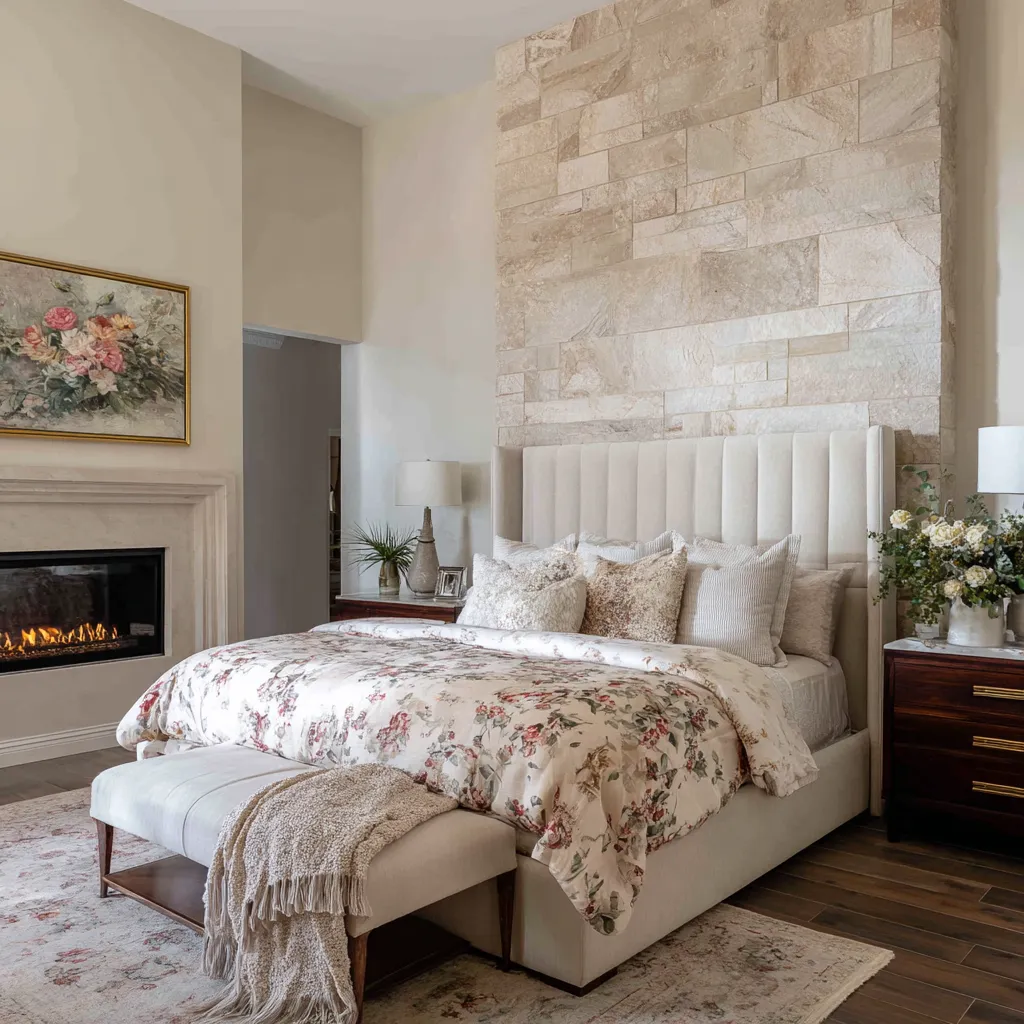
Large-scale structure modernizes the room better than decorative multiplication
Another major lesson from current grandmillennial bedrooms is that refinement usually comes from scale and structure, not from added objects. Tall chimney walls, full-height upholstered headboards, paneled bed walls, stone surfaces, broad plaster planes, disciplined symmetry, and long drapery drops do more to mature the room than extra accessories on every surface.
These larger moves give the bedroom a sense of composition and seriousness. Once they are in place, the softer layers can remain gentle.
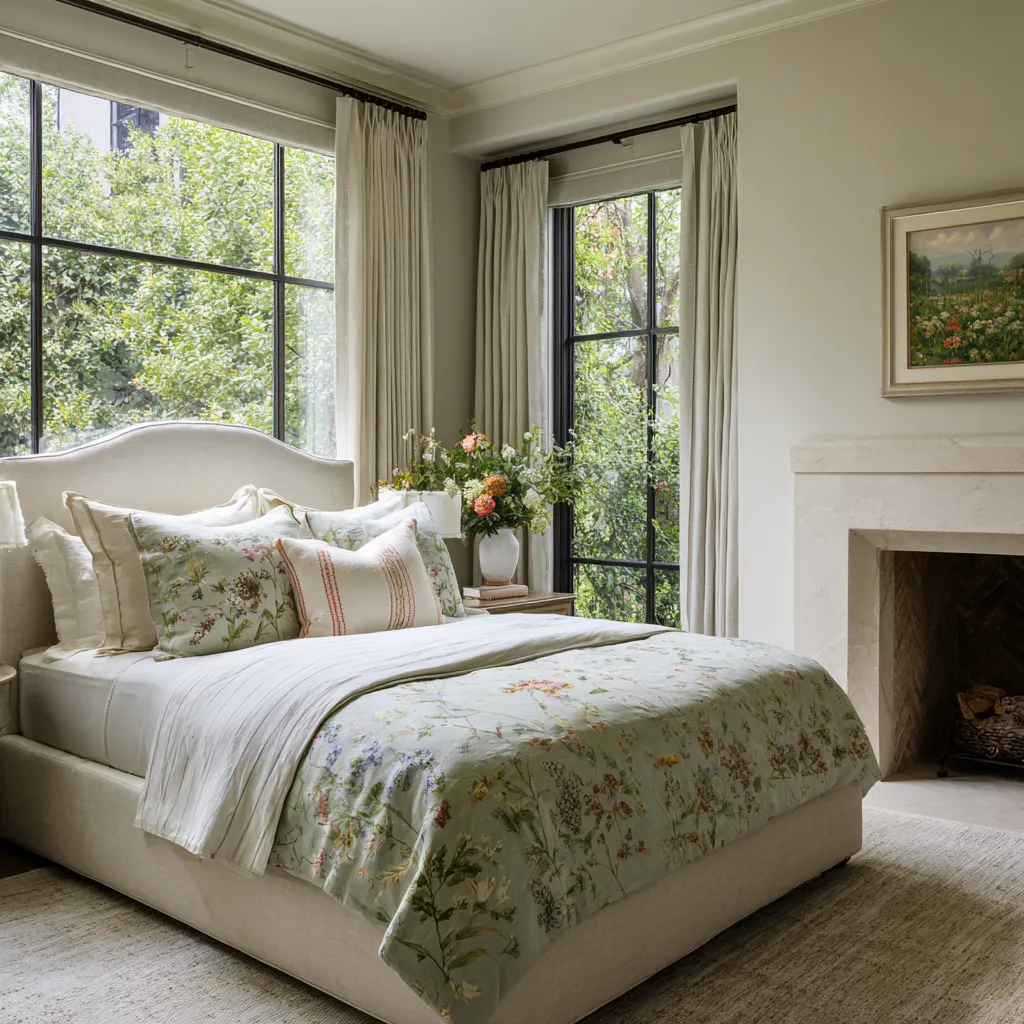
This is why a room with one monumental wall and a floral duvet can feels more current than a room with five smaller decorative gestures and weaker architecture. The large move clears the hierarchy.
It tells the eye what matters first. It also gives the traditional pieces a firmer setting.
The takeaway is straightforward here. Do not begin by adding more small things.
Begin by asking whether the room has one strong structural gesture. That could be a tall headboard wall, a fireplace treatment, a panel grid, a stone feature, or even a disciplined bed-and-art composition with long drapery that strengthens the room’s height.
Once the structure is clear, the decorative layers can stay fewer and still feel rich.
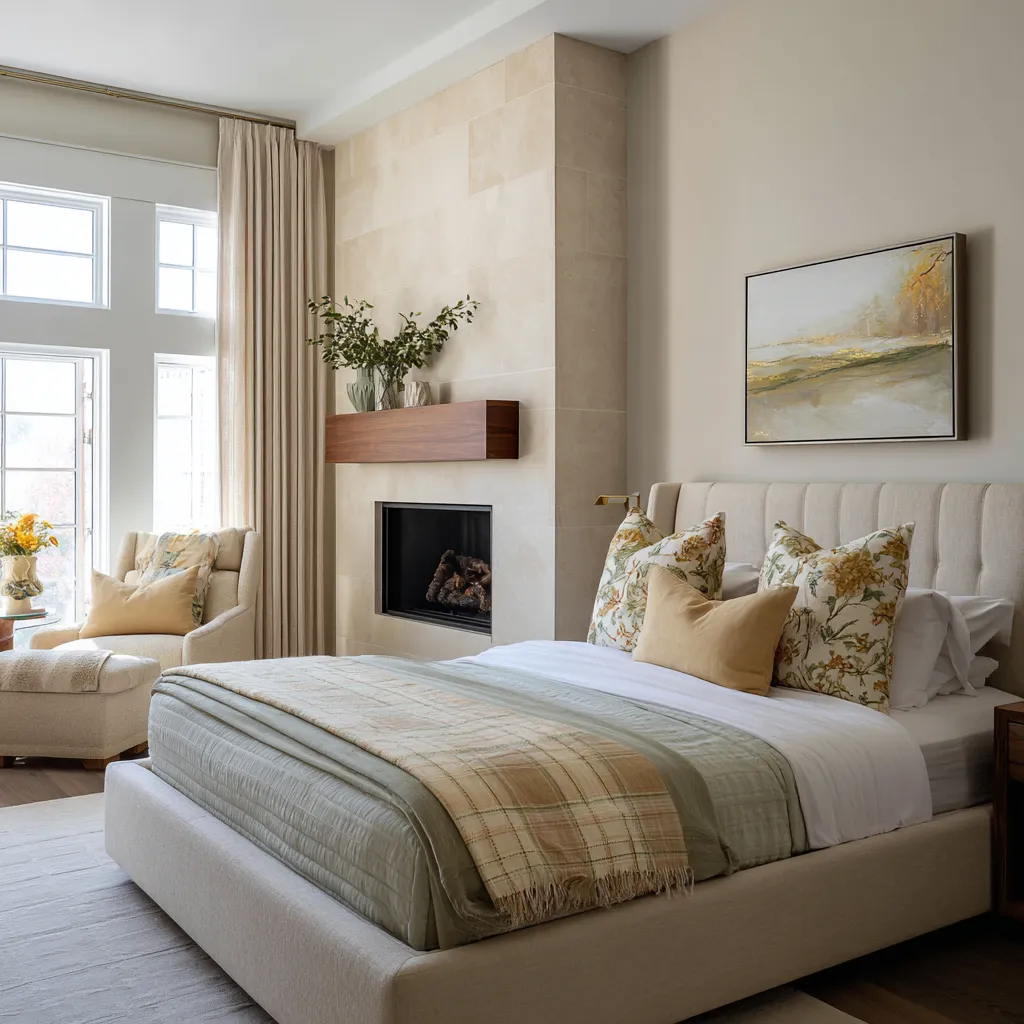
Dark grandmillennial bedrooms can feel grown and deeply comfortable
There is still a widespread assumption that grandmillennial style belongs mainly to pale, rosy, floral rooms. That version certainly exists, but darker interpretations can be especially compelling.
Deep blue-gray, olive-brown, or smoky taupe envelopes give floral bedding and botanical art a different emotional register. Flowers that might feel airy in a pale room can feel older, richer, and more painterly in a dark one.
The room shifts from sweetness toward depth. It becomes more sheltered and often more mature.
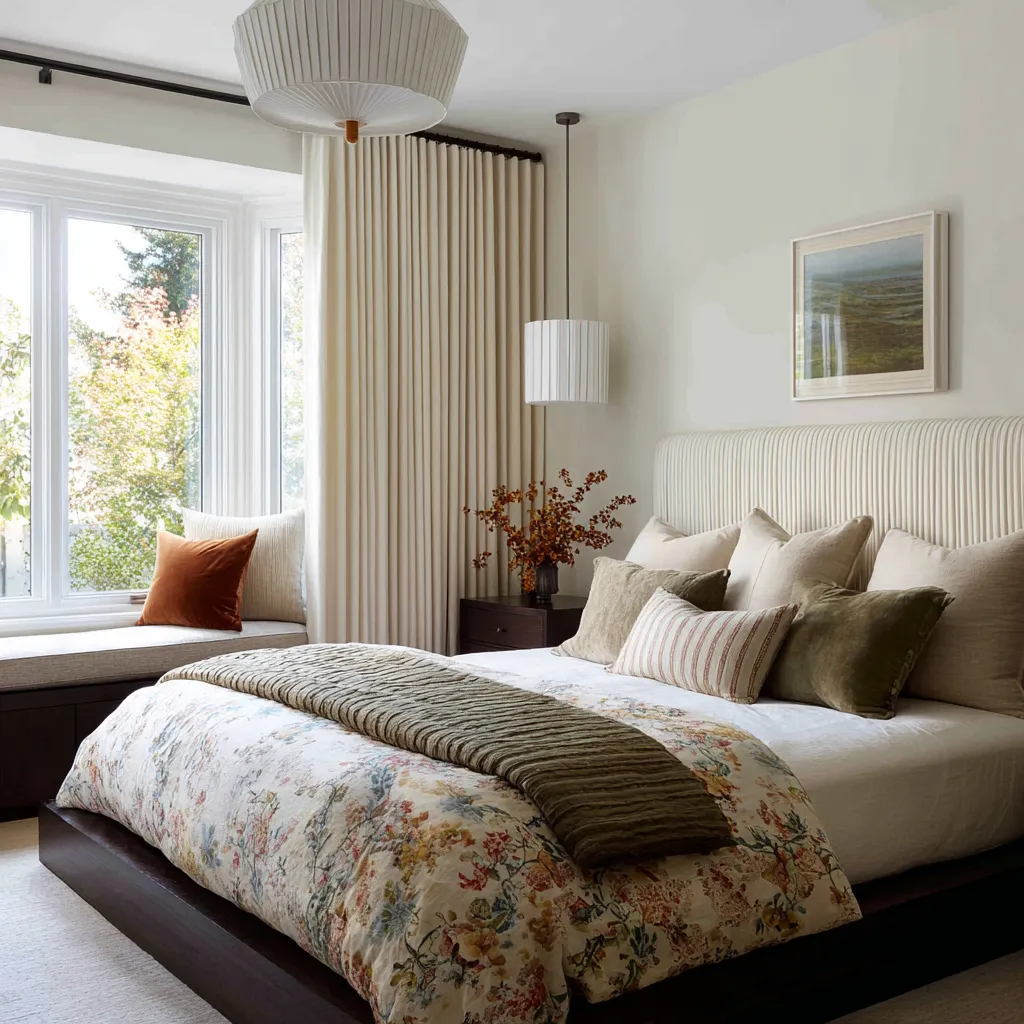
To make this work, the room needs contrast placed with care. A dark shell usually benefits from the following:
- a bed with warmth in the upholstery or accent pillows
- one or two concentrated hot notes such as rust, amber, or camel
- lighter bedding layers that prevent the room from becoming visually heavy
- some crisp edges at the window, fireplace, or art
- limited wall clutter so the depth of the envelope can remain intact
What matters here is not simply painting the room dark. The shell needs to support the bed, and the bed needs to answer the shell.
Without that exchange, the room can slip into generic moody design. With it, the room keeps grandmillennial softness while gaining gravity.
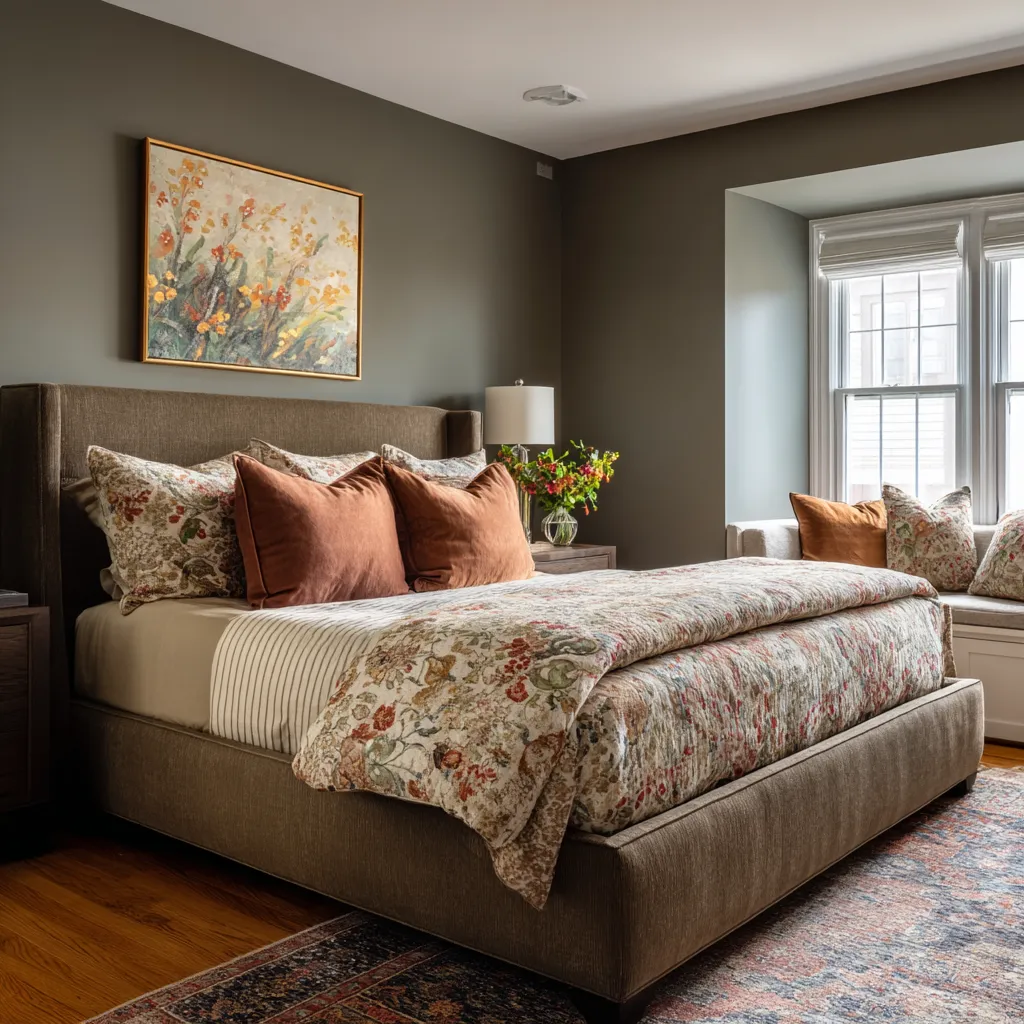
Pale versions of the style need identity carriers
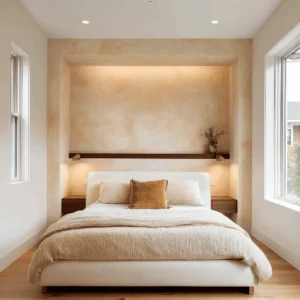
At the other end of the spectrum are the highly compressed pale interior designs: soft creams, taupes, oatmeals, pale stones, gentle woods, low contrast, and very reduced furniture. These bedrooms can be beautiful, but they are also the easiest places for the style to weaken.
When everything becomes too close in tone and too reduced in gesture, the room may drift into soft modern or relaxed transitional design. To keep a pale room connected to grandmillennial style, it usually needs at least one clear identity carrier.
That carrier might be:
- a floral duvet or floral shams
- an arched or winged upholstered headboard
- a collected art grouping with botanical or landscape memory
- a window seat that gives the room domestic ritual
- a fireplace with restrained mantel styling
- stripe or plaid used in a way that hints at older textile language
In other words, pale reduction works when it is not empty reduction. The room still needs memory somewhere.
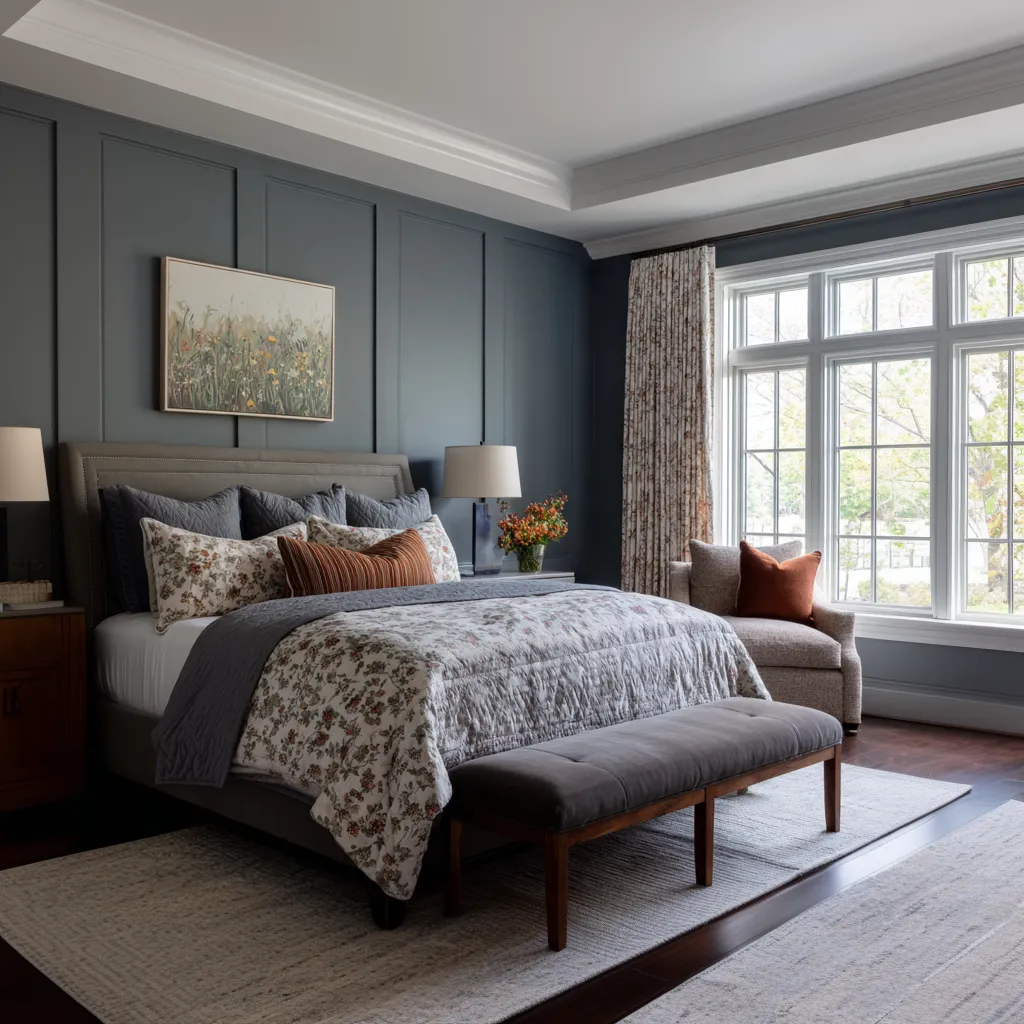
Stripe and plaid
Stripe and plaid deserve much more attention than they usually receive. They are often treated as secondary pattern families, but in a modern grandmillennial bedroom they can be central balancing tools.
Floral softens and loosens the room. Stripe gives line and discipline.
Plaid adds familiarity and woven order. These patterns help prevent the bed from becoming one soft blur.
They introduce rhythm, keep layered pillows from looking random, and make the room feel assembled rather than merely fluffy. A striped sham behind a floral duvet can change the whole composition.
A plaid throw in a bright room can add inherited textile language without requiring a floral bed. A narrow striped lumbar can center the bed and give the layered pillows a backbone.
This is particularly useful for those who like grandmillennial comfort but do not want a room covered in flowers. Stripe and plaid can carry much of the familiar domestic character while keeping the bedroom more structured and less romantic.
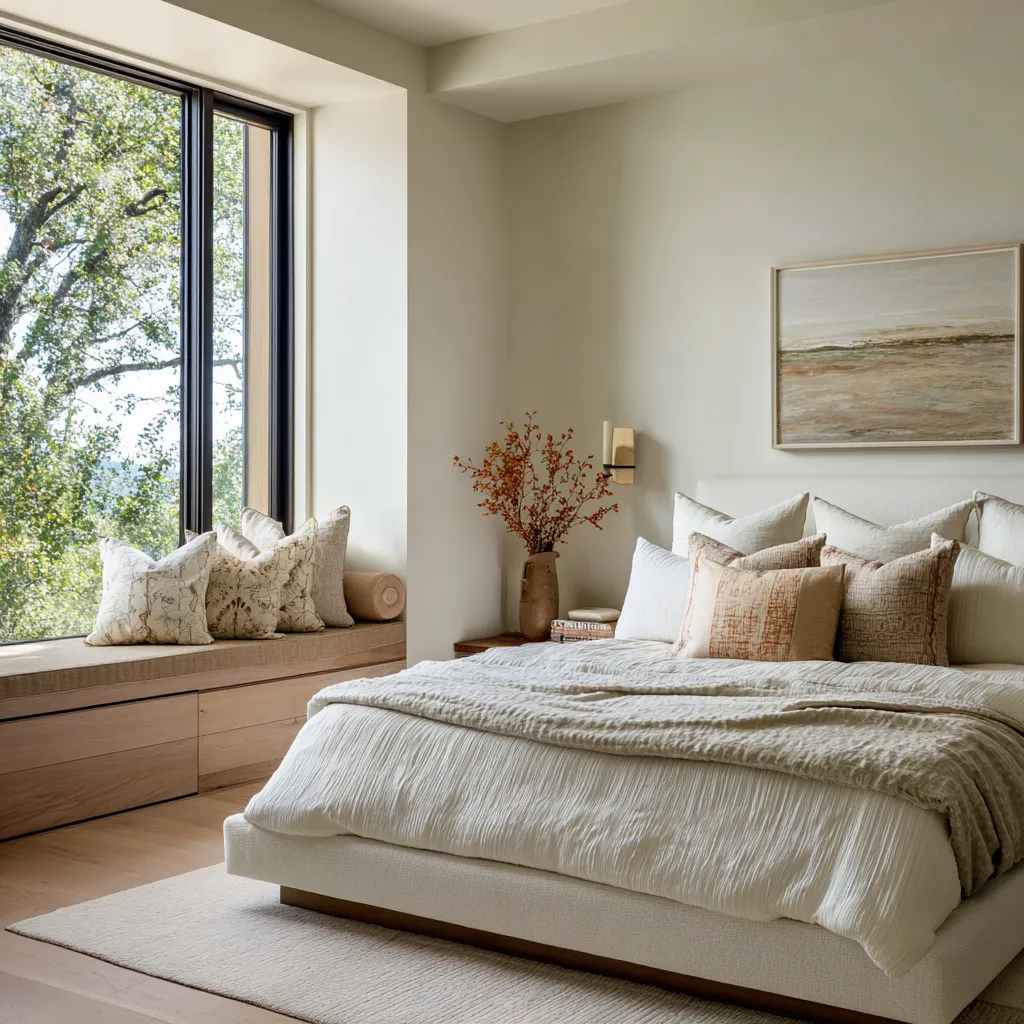
Fireplaces
A fireplace can be a wonderful feature in a grandmillennial bedroom, but it does not create the style on its own. It is easy to overestimate how much a hearth contributes.
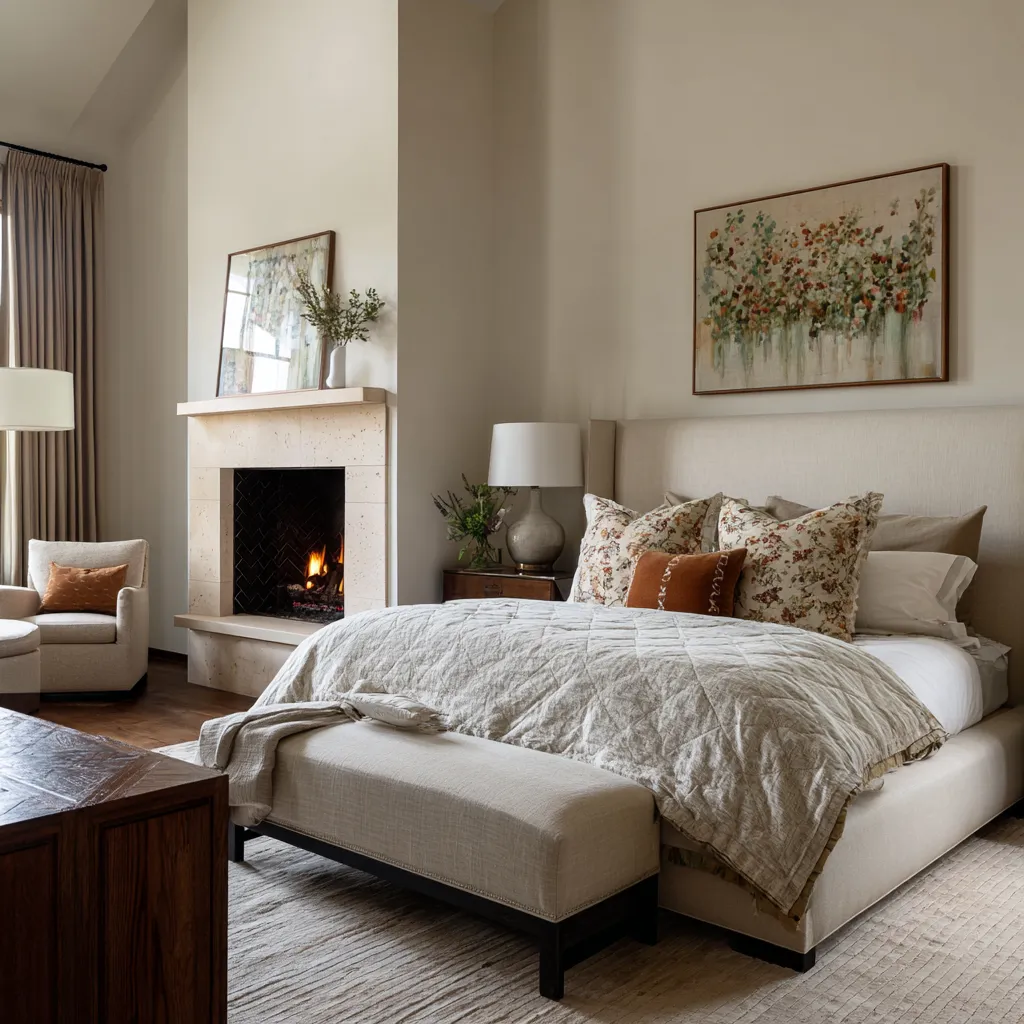
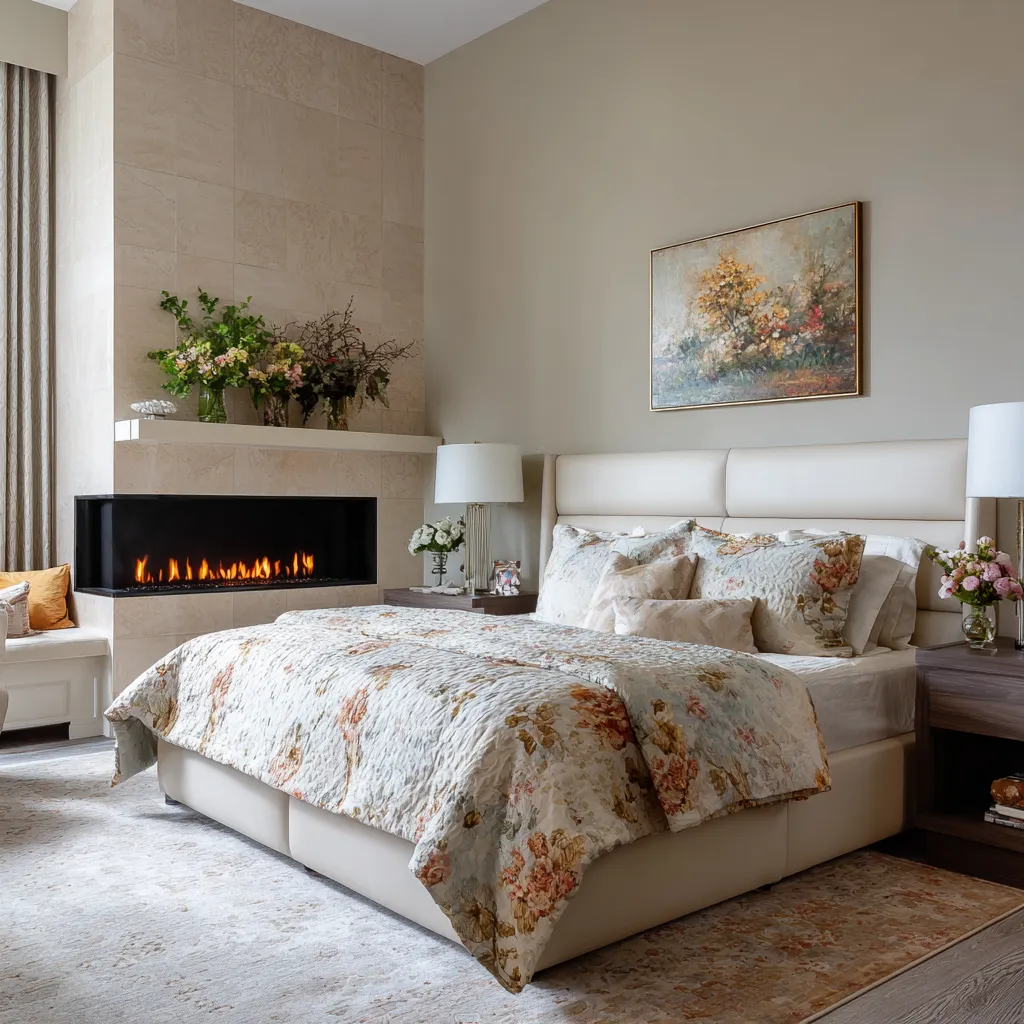
A fireplace becomes valuable when it supports one of the room’s existing directions. In a pale classic interior design, the fireplace can anchor softness and provide a natural place for restrained mantel styling.
In a more architectural room, a stone or plaster chimney wall can supply the scale that lets floral bedding remain delicate. In moodier designs, a darker firebox opening can give the composition one needed point of contrast.
What does not work as well is relying on the fireplace as the entire identity of the room. If the bed is under-layered, the art is weak, the shell is confused, or the palette lacks focus, the fireplace cannot repair those problems.
It helps a room that already has order. It does very little for a room that does not.
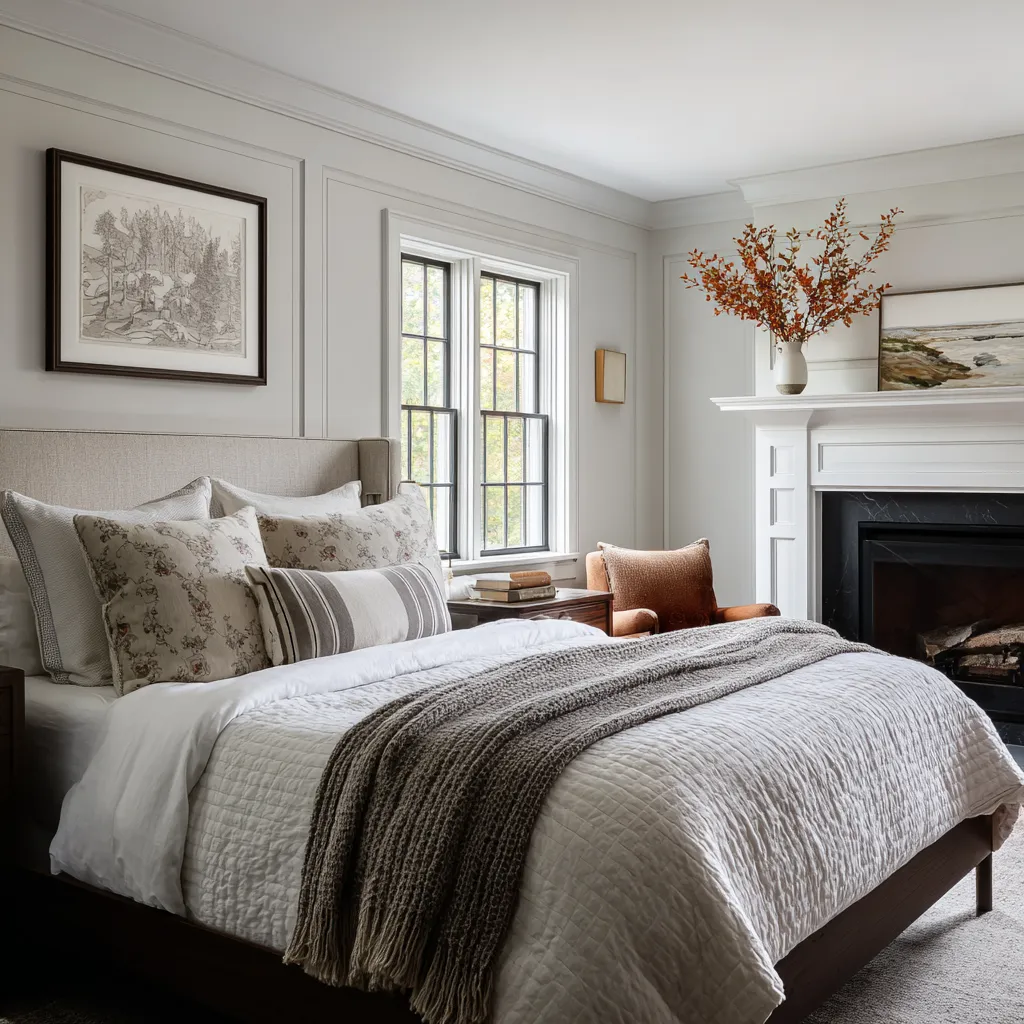
Window seats and niches deepen the room’s life
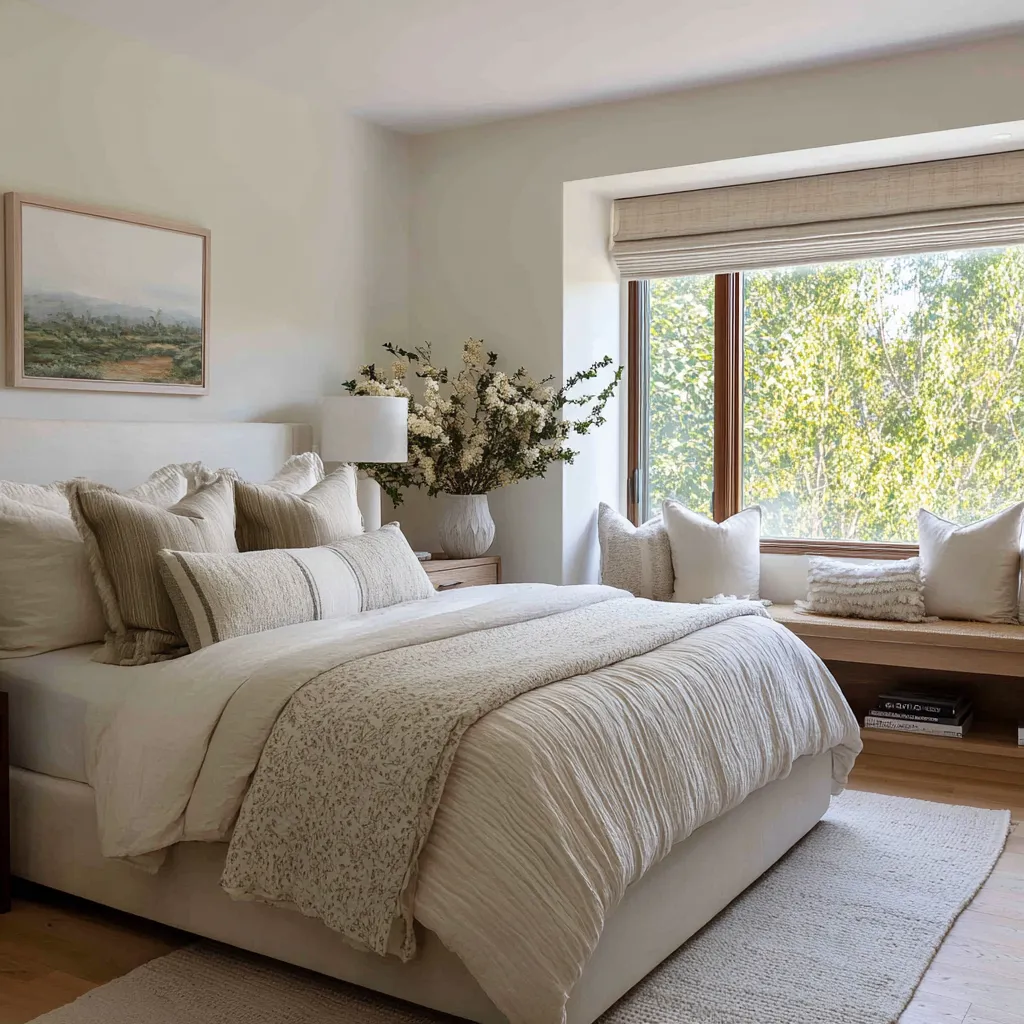
Window benches and niches matter for a different reason. They are less about style display and more about tempo.
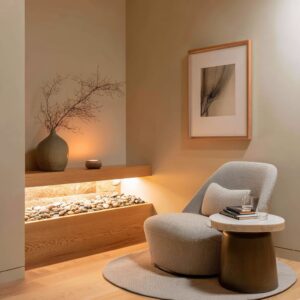
A bedroom with a bench beneath the window, a deep niche, or a small corner chair by daylight tends to feel more inhabited. It suggests reading, pausing, watching weather, setting down a book, placing flowers near the glass, or using the room for something other than sleep alone.
This kind of domestic tempo is central to why grandmillennial bedrooms appeal to so many people. They feel personal.
They imply life unfolding in small rituals. A window seat can keep a very reduced room from feeling empty.
Even if the room uses almost no overt pattern, a niche or bench can preserve a sense of softness and lived rhythm. It will not make the room instantly more floral or more historical, but it deepens the emotional life of the space.
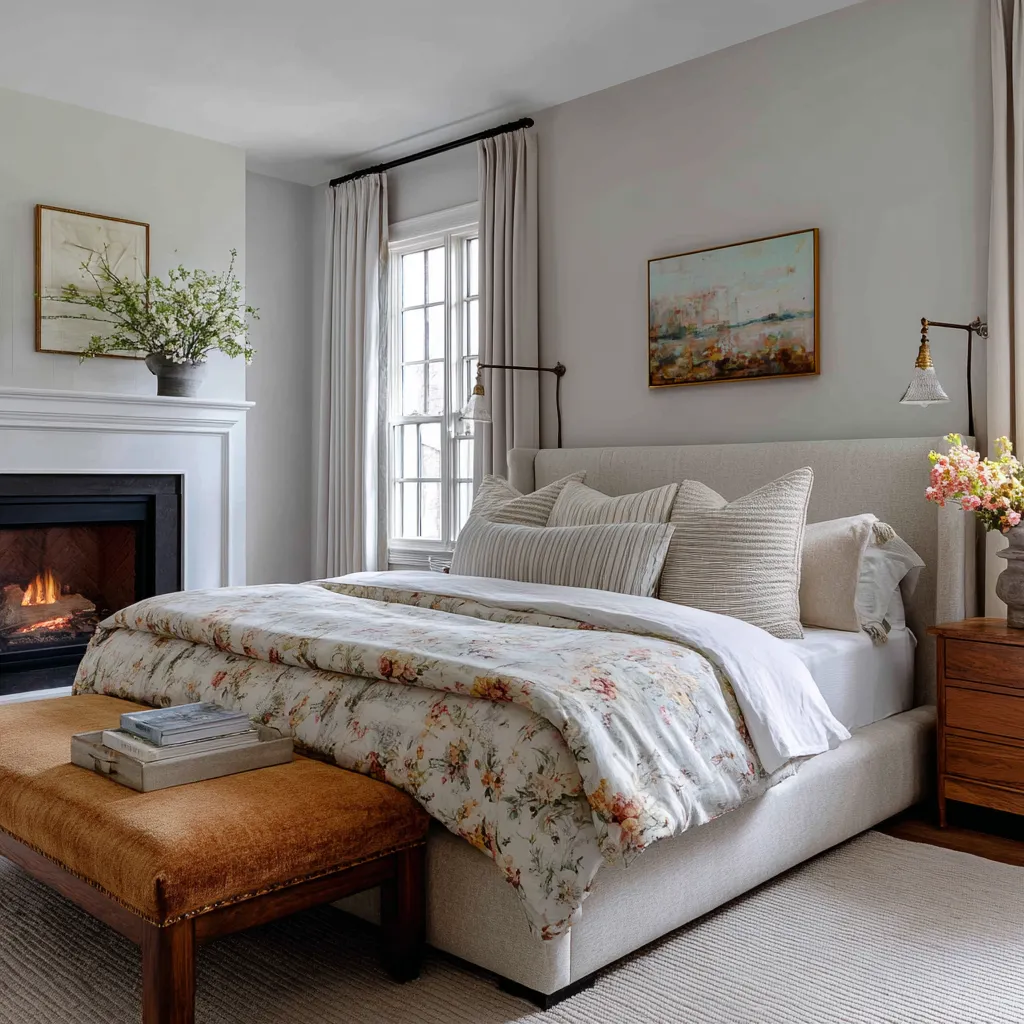
Lighting is one of the clearest ways to keep the room current
Lighting often determines whether the room feels updated or stuck. Traditional bedside lamps can still work, but current grandmillennial bedroom ideas often use cleaner lighting language: slim sconces, pendants, architectural swing arms, simplified pleated shades, or modest fixtures with clearer line.
This matters because lighting is one of the places where the interior design can modernize without losing intimacy. A floral duvet and botanical art can stay in place, but if the bedside lighting becomes more architectural, the room immediately feels less tied to an older decorative formula.
That does not mean every interior design needs metal statement fixtures. It means the lighting should add clarity.
It should help the room feel composed instead of overly padded. Pendants can free the nightstands and strengthen vertical rhythm.
Sconces can sharpen the bed wall. A simplified lamp can link warm wood furniture to a softer bed without adding fuss.
Lighting is also one of the easy parts of the room to refresh without a full renovation, which makes it especially valuable for readers trying to push an existing bedroom into a fresher direction.
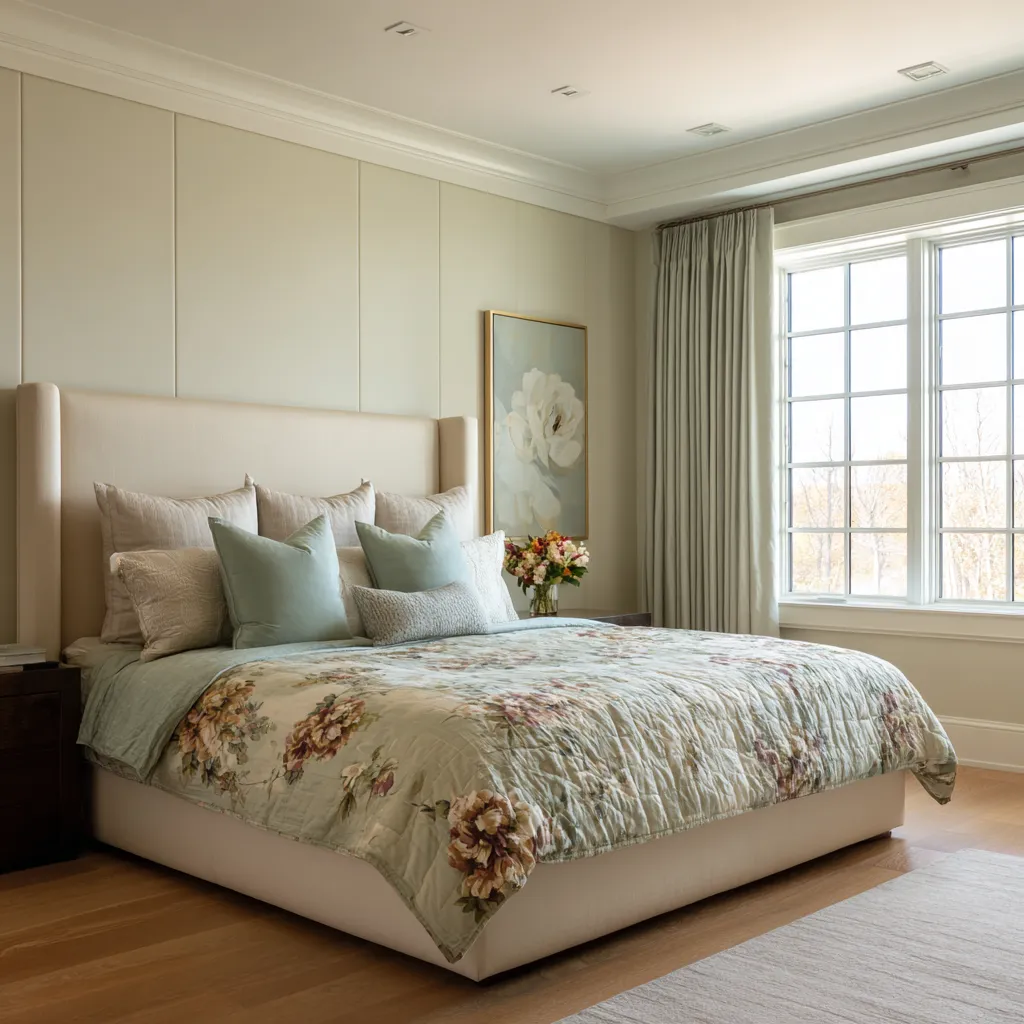
The style has several distinct directions, not one fixed formula
Modern grandmillennial bedroom design can move in several different directions while staying within the same family.
- One direction is the pale architectural classic. These interior designs use fireplaces, stone walls, paneled surfaces, or tall drapery, but keep the palette light and the floral content controlled.
- Another direction is the mood-rich heritage room. These bedroom designs lean into darker shells, warm accents, and a denser sense of pattern and history. They often feel more enveloping and more mature.
- A third direction is the bright open-frame room. These spaces may use black windows, clearer daylight, stripe or plaid in place of heavy florals, and a lighter, slightly west-coast mood.
- A fourth direction is the distilled tonal retreat. These are the most reduced ones. They rely on fullness of bedding, domestic ease, and one or two gentle memory cues rather than overt pattern spread.
- A fifth direction is the architectural luxury version. These bedrooms use monumental upholstered walls, sculptural pendants, plaster masses, or strong verticality to translate grandmillennial softness into a quieter and more expensive-looking language.
Seeing the style this way is useful because it frees the reader from one narrow stereotype. A modern grandmillennial bedroom does not have to look like a pastel floral cottage room.
It can be lighter, darker, sharper, or more reduced, as long as the room still preserves concentrated domestic memory inside a disciplined framework.
Common mistakes that weaken the room
- One of the frequent mistakes is keeping too much historical shell language while also adding strong floral bedding, layered art, busy curtains, and many small accessories. The room then becomes crowded because every part is trying to speak at once.
- Another mistake is the opposite one: removing so many cues that the room becomes a pale upholstered box with no clear identity. A plain bed, beige walls, one neutral rug, and no floral, art, niche, or ritual element may be pleasant, but it will not hold the grandmillennial feeling.
- A third mistake is spreading pattern too evenly. If the duvet, pillows, drapes, bench, and art all have equal decorative weight, the eye has nowhere to rest. The room needs hierarchy.
- A fourth mistake is building a dark room without a warm center. Deep walls with no rust, amber, camel, clay, cognac, or tobacco note can feel emotionally remote.
- A fifth mistake is relying on decorative quantity rather than large-scale order. More objects rarely fix a weak composition. A stronger wall treatment, better lighting, clearer bed layering, or more disciplined art placement usually does far more.
What makes the room feel complete
A modern grandmillennial bedroom usually feels complete for a very specific reason. The interior design has softness, but the softness is contained.
It has warmth, but the warmth is focused. It has memory, but memory lives in chosen places.
It has structure, but that structure does not crush comfort. The room should feel as though someone could actually inhabit it slowly.
That sense of inhabitation matters as much as the palette or the floral print. The design should support rest, routine, reading, flowers, winter light, summer daylight, folded throws, and a little irregularity of life.
But it should do so without visual sprawl. That is why the style remains so appealing.
It offers a bedroom that feels personal, settled, and emotionally generous, while still fitting current expectations for clarity and restraint.
Final thoughts
Modern grandmillennial style bedroom design works when it stops trying to make every element equally traditional or equally current. The bed can hold the floral memory.
The pillows can hold the warmth. The art can hold the garden reference.
The bench or niche can hold the room’s domestic ritual. The lighting can hold the present.
The wall can hold the structure.
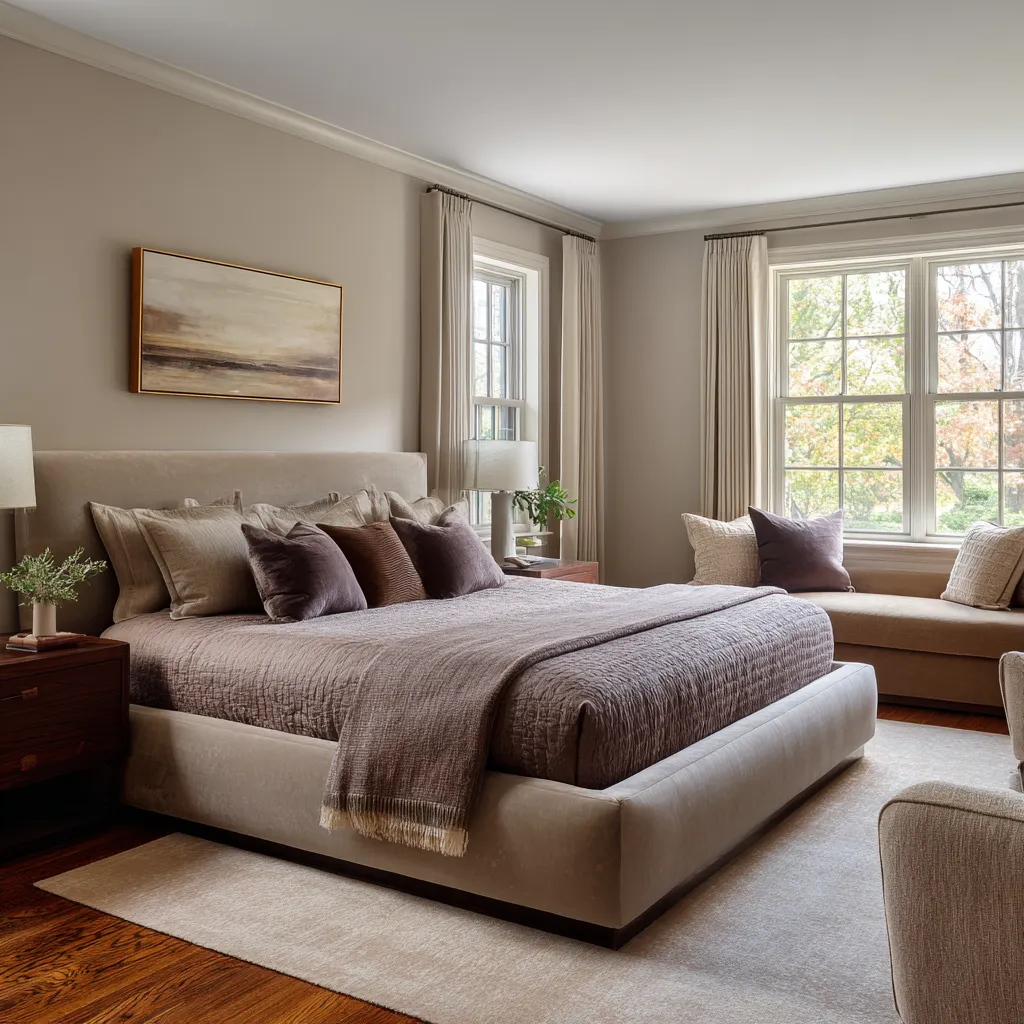
Once each part has a clear job, the room begins to feel coherent. That is the main strength of the style.
It keeps the tenderness people still want from a bedroom, but it organizes that tenderness inside broader, cleaner, and more disciplined forms. The result is a bedroom that feels warm without clutter, floral without fuss, and current without losing its sense of home.