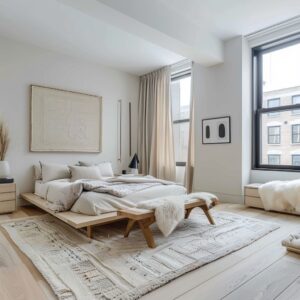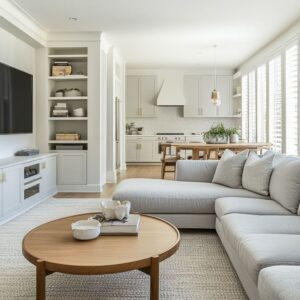

Nordic style is often reduced to a familiar set of surface signals: pale wood, white walls, soft textiles, simple furniture, and a vaguely minimal mood. That description is not wrong, but it is incomplete.
It explains what many Nordic-inspired rooms look like on first glance, yet it does not explain why some of them feel grounded, warm, and deeply livable while others feel flat, exposed, or generic.
The strength of Nordic interior design lies in how it organizes pressure inside a room. It lowers visual noise, softens hard architecture, regulates contrast, and gives the body a sense of shelter without making the space feel crowded.
Its success rarely depends on copying a Scandinavian house literally. In many homes, especially American ones, the shell may be suburban, formal, rustic, dark, open-plan, or highly glazed.
Nordic design can still hold its identity inside all of those conditions if the interior follows the right logic.
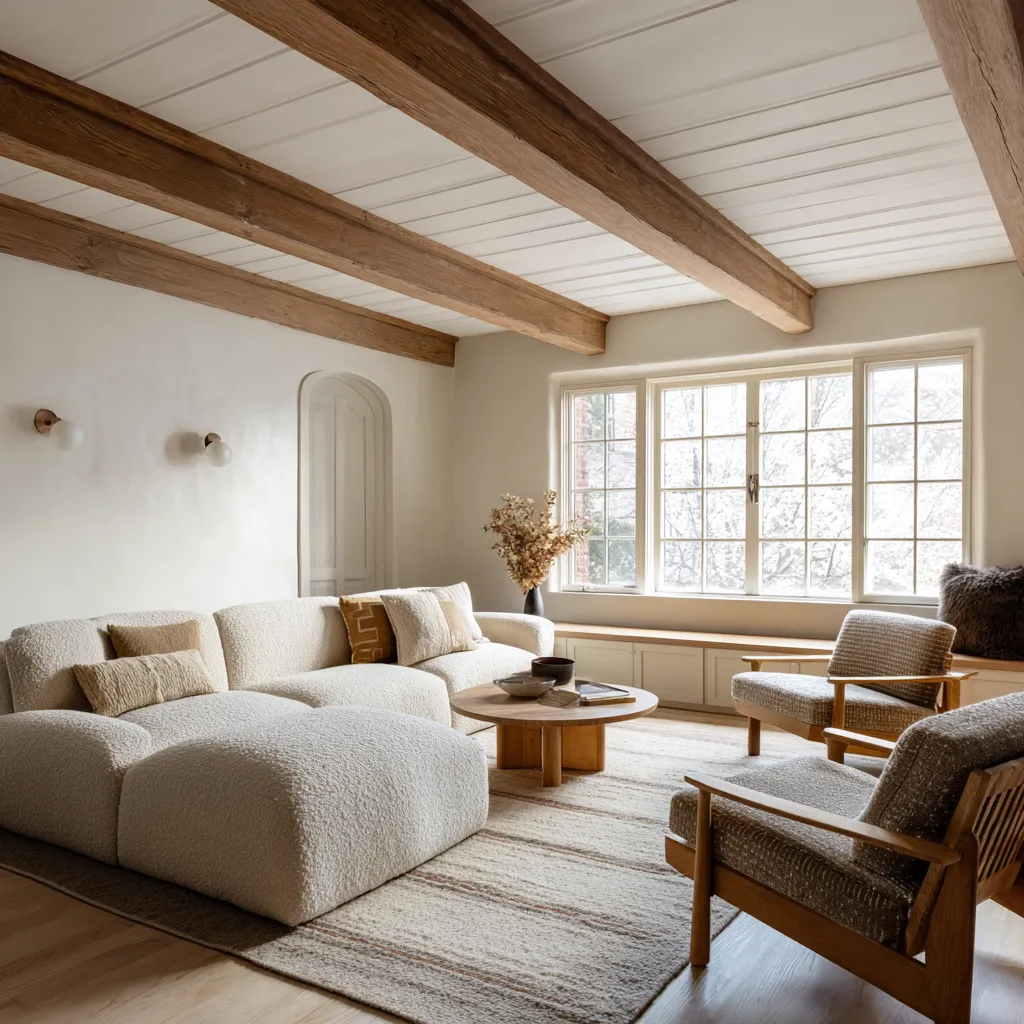
That logic begins with a small number of recurring moves. Furniture stays low and broad.
The palette stays compressed. Objects are edited rather than multiplied.
Texture carries much of the warmth. Contrast is concentrated in a few purposeful places instead of being scattered throughout the room.
Light is softened rather than dramatized. The perimeter of the room is often made useful through benches, deep sills, shelving, or built-in edges.
Once these moves are in place, the room can absorb many architectural personalities without losing its Nordic core. So a useful way to understand Nordic style is not as a fixed visual recipe.
It works better as a design discipline. It teaches a room how to breathe, how to feel warm without heavy decoration, how to become spacious without feeling empty, and how to stay relaxed even when the shell itself carries formality, age, or weight.

The foundation of Nordic design
The backbone of Nordic design is furnishing grammar rather than architecture. A room does not need exposed beams, whitewashed planks, a perfect Scandinavian envelope, or a famous designer chair to feel convincingly Nordic.
What it needs is a particular kind of order. The furniture typically sits low in relation to the room.
Sofas stretch horizontally instead of rising vertically. Chairs often remain open in silhouette, even when they are soft and padded.
Tables stay low and usually feel solid enough to anchor the center without becoming visually loud. Rugs are large enough to gather the seating into one zone instead of letting each piece float separately.
This low, broad arrangement reduces visual agitation and gives the room a bodily center of gravity.
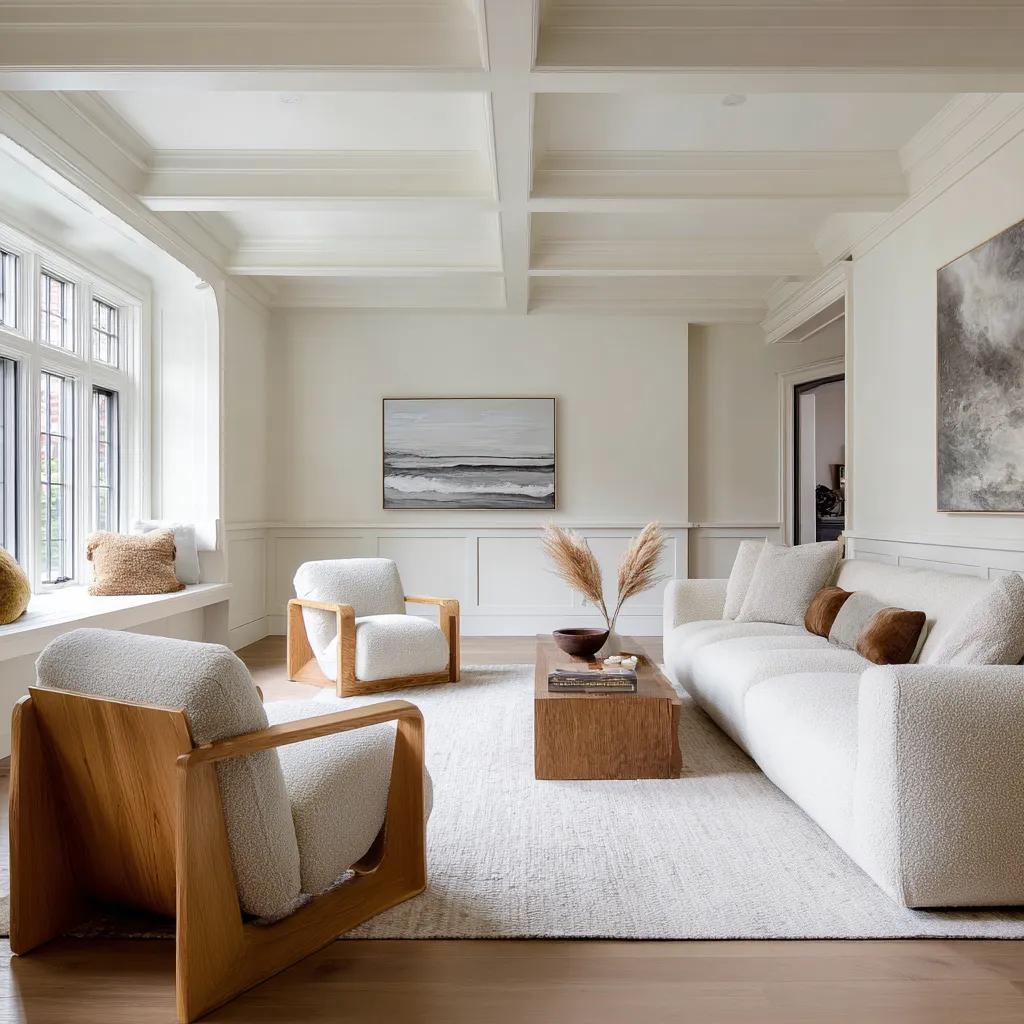
The palette is also usually narrow. That does not mean everything must be the same color.
It means the room operates inside a limited tonal family. Cream, warm white, pale beige, oatmeal, soft gray, muted taupe, pale oak, ash wood, or restrained brown often do most of the work.
In some rooms, soft green-gray, pale blue-gray, or rust-brown appears in small doses. The key is that color does not break the room into many competing events.
It deepens the room gradually.

Object count matters just as much. Nordic rooms do not depend on emptiness, but they do depend on edited visibility.
Books, ceramics, branches, bowls, art, and folded throws can all belong. What usually disappears is the clutter layer: too many little accessories, too many side tables, too many styling gestures, too many isolated accent objects.
The room feels full through surface, light, and material, not through quantity. Texture then becomes the emotional infrastructure.
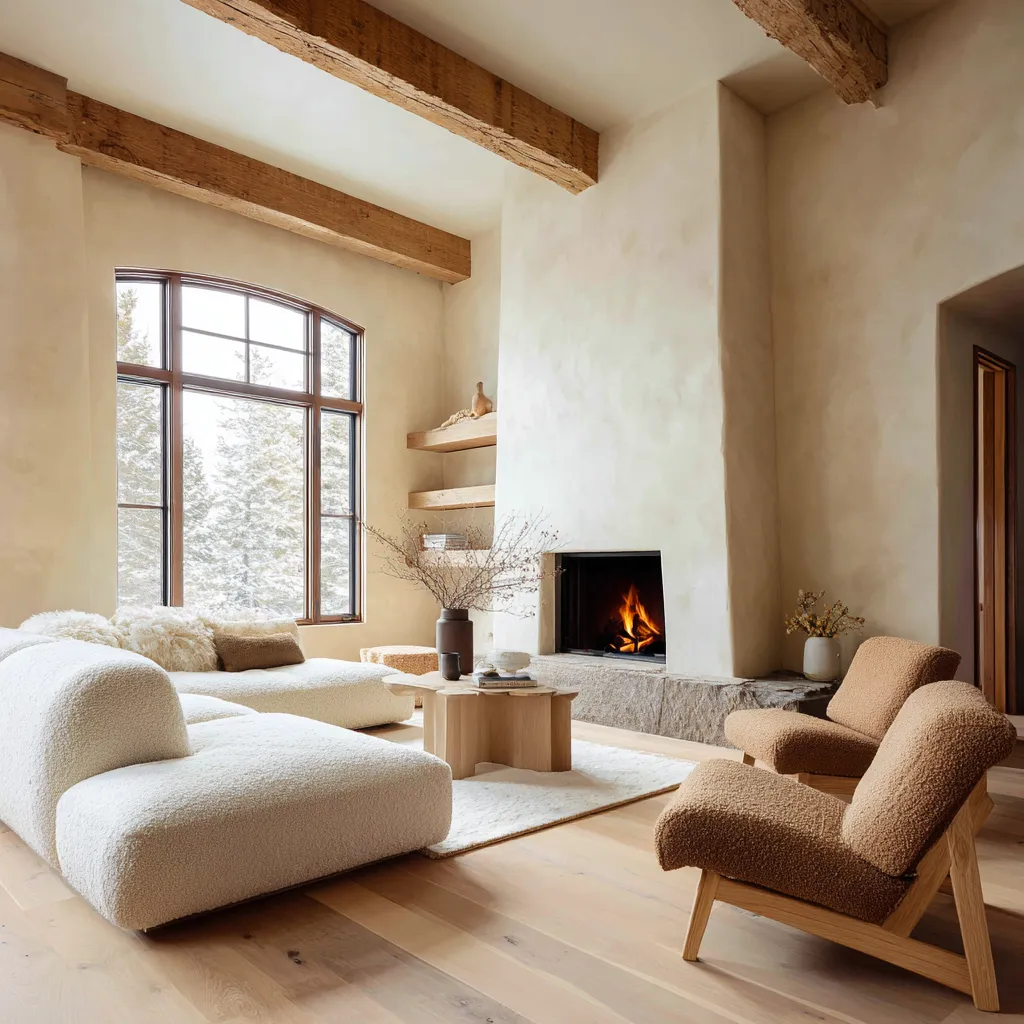
Bouclé, nubby upholstery, wool, sheepskin, washed linen, matte plaster, pale timber, woven rugs, dry ceramics, and slightly irregular natural finishes do much of the warming work. This is one of the lessons in Nordic design: comfort is often built through touch and thickness rather than bright color or decorative pattern.
Why Nordic rooms feel warm without strong color
Many people assume a room needs saturated color to feel warm. Nordic interiors often prove otherwise.
Their warmth usually comes from undertone, mass, and tactility. A cream sofa feels warm not because cream is inherently warm in every situation, but because thick upholstery, rounded edges, and close tonal relation to the walls reduce friction in the room.
A pale oak floor feels warm because it gives the eye and the body a gentle base. A large woven rug under a seating group softens the floor field and turns the center of the room into a zone of contact rather than a purely visual composition.
Wood arms on a chair, a matte side table, a bench at a window, a rough ceramic vase, or a low wood coffee table all contribute to this lower, slower kind of warmth.

In well-resolved Nordic interiors, warmth is usually built below eye level. It lives in seating, rugs, chair frames, tables, benches, and hearth zones.
That is why the rooms can stay pale without feeling chilly. Their comfort is embedded in the parts of the room the body actually uses.
This is also why many weak Nordic imitations fail. They borrow the pale palette but neglect the tactile depth.
The result is a room that looks light but feels thin. Without enough nubby fabric, wool, wood, plaster softness, or visual thickness in the furniture, a neutral room can become sterile very quickly.

Nordic design as a way of correcting the shell
One of the ways to understand Nordic interiors is to see them as a method for correcting the pressures already present in a room. A narrow room often needs perimeter discipline.
Nordic design answers by pushing storage and display to the wall plane, keeping the center open, and using one strong rug and a few low pieces rather than many scattered ones. This makes the room feel wider, easier to move through, and less visually pinched.

A formal room with crown molding, paneling, or a carved mantel does not necessarily need to be stripped down architecturally. It often needs quieter furnishing.
If the shell already carries rhythm and inherited detail, the furniture should not add another layer of fuss. Lower seating, fewer objects, softer fabrics, and a restrained palette can settle that kind of room beautifully.
The architecture keeps its dignity, but everyday life below it becomes softer and easier.
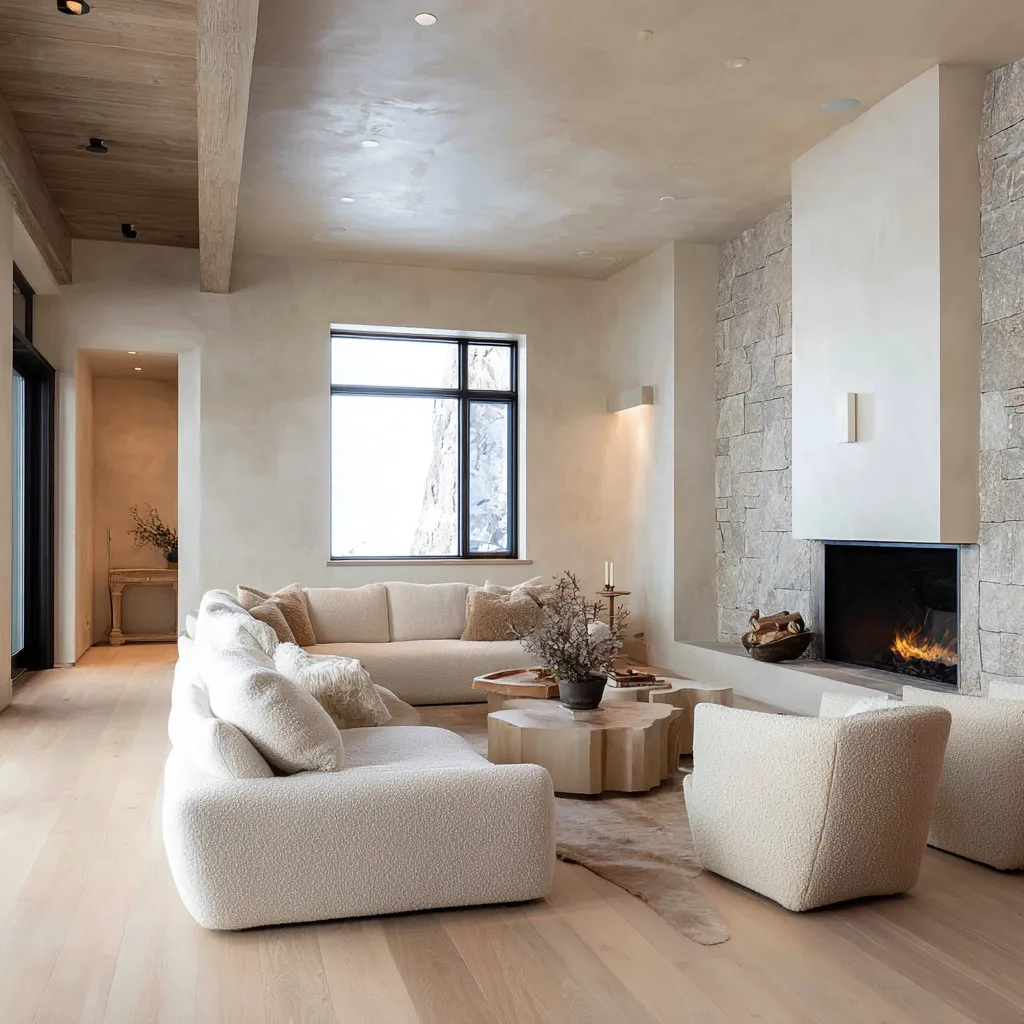
A rustic room with beams, rough plaster, or aged wood often benefits from the same kind of softening. Nordic design does not ask the room to deny its age.
It asks the room to let the rustic note stay in the shell while the seating becomes broader, lighter, and more tactile. That prevents the room from turning into a themed country interior.
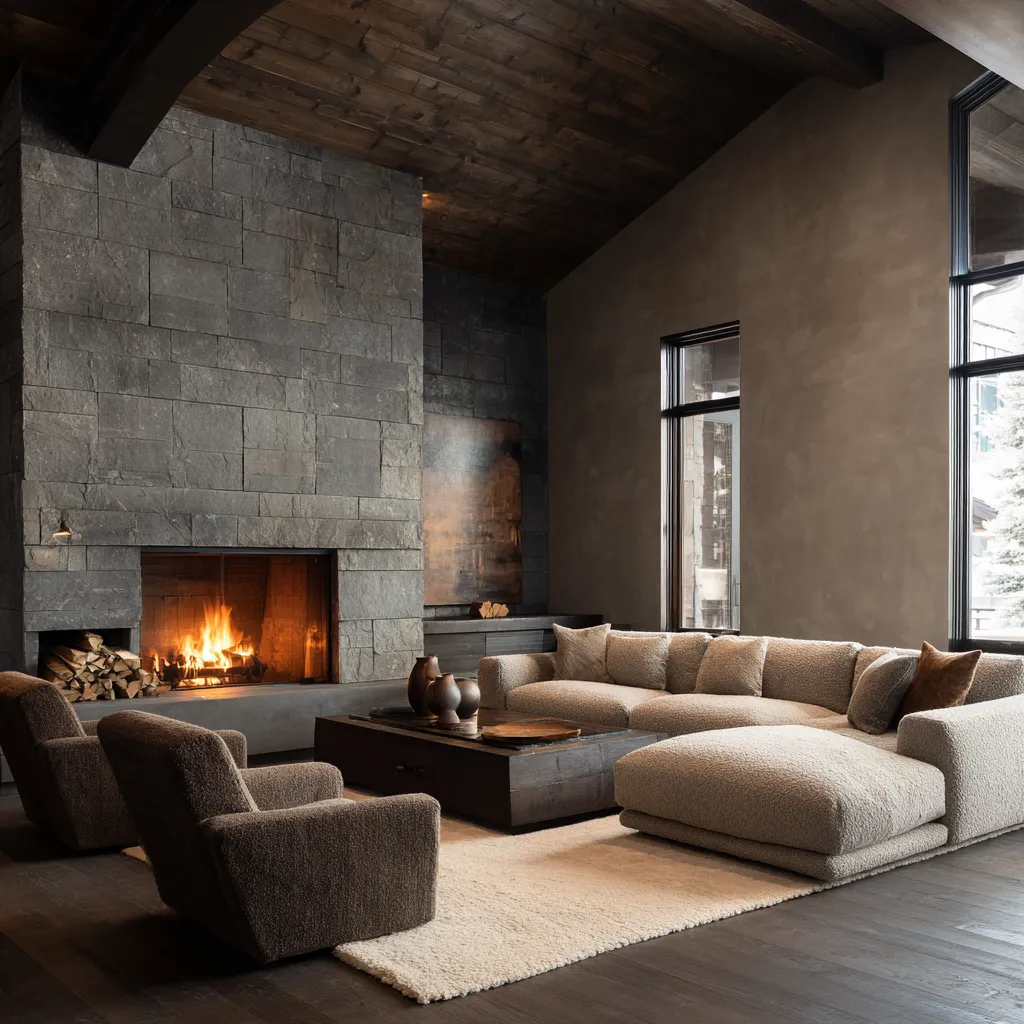
A dark room needs a different kind of correction. Here Nordic design often gathers pale upholstered seating and a lighter rug at the center, creating a refuge inside the darker envelope.
The walls, ceiling, or floor may remain deep in tone, but the seating island catches light and holds it. The room stays moody, yet the body still has a place to rest.
The darkness becomes enclosure rather than severity.

A large open-plan room often needs gathering. One of the main risks in oversized spaces is fragmentation: too many medium-size pieces, too many loose zones, too many decorative interruptions.
Nordic logic usually responds with one dominant seating mass, one strong rug, a few chairs, and clear anchor points. The room regains human scale through concentration rather than addition.
So Nordic style often succeeds because it diagnoses what the shell is doing and then answers it with restraint, tactility, and scale discipline.
Why window edges matter so much
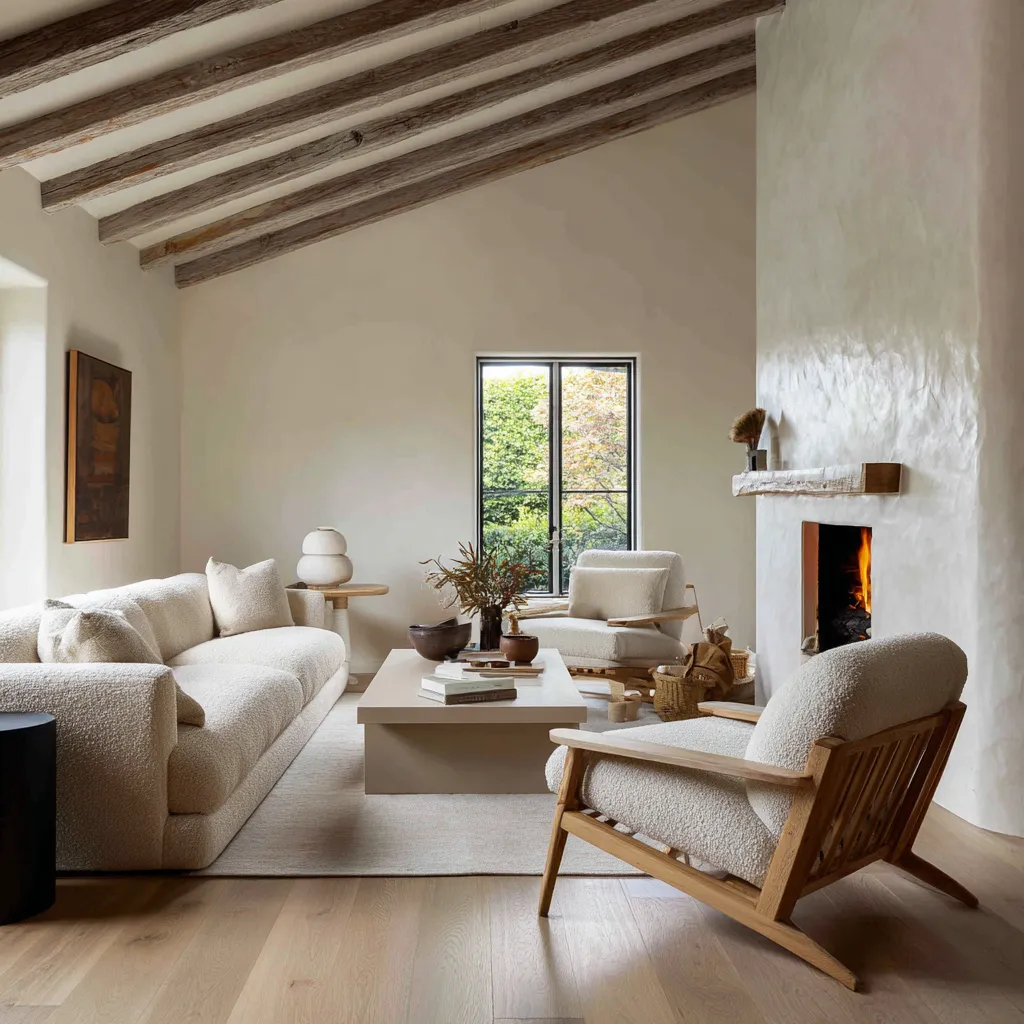
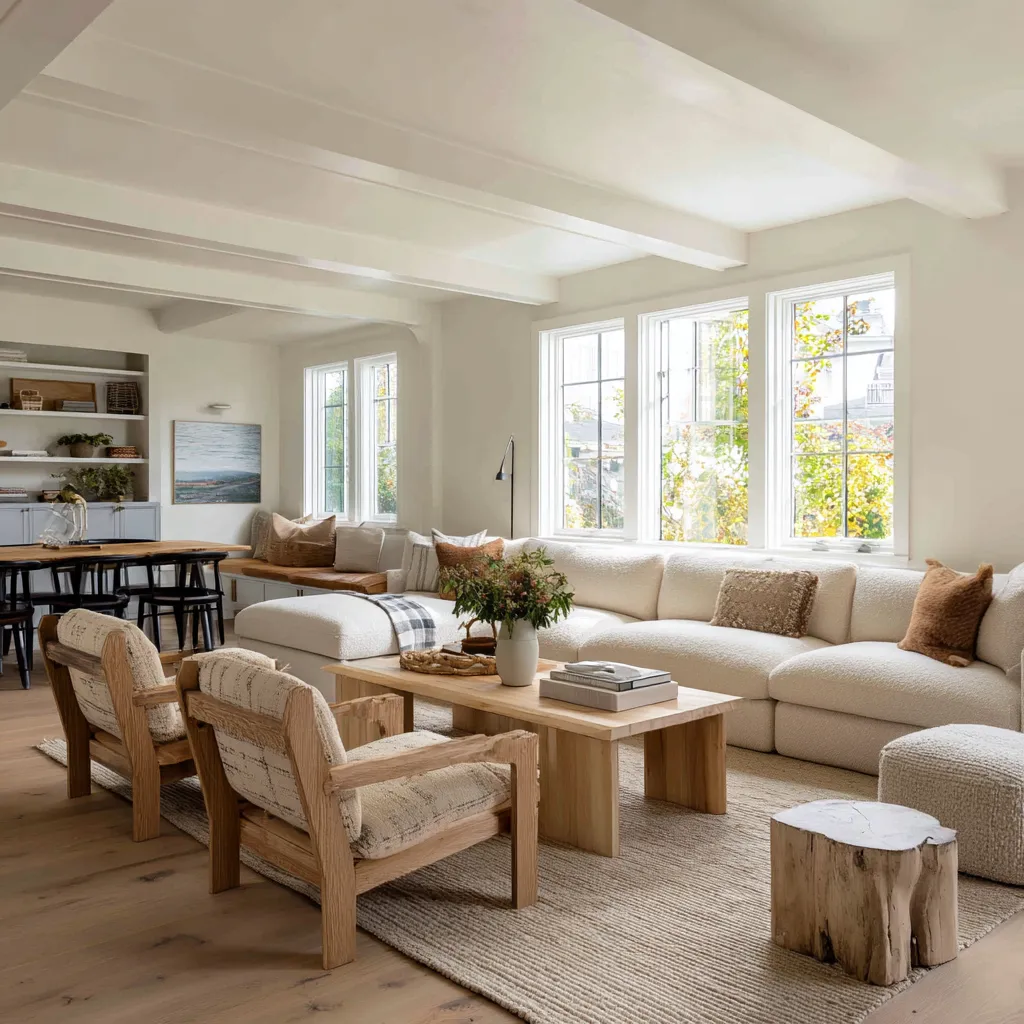
A recurring feature in many strong Nordic rooms is the useful perimeter. Window seats, deep sills, built-in benches, shelving at the wall plane, and thickened openings keep appearing because they are not decorative extras.
They change the way the room lives. A bench under a window makes light inhabitable.
The window stops being only a source of brightness and becomes a place to sit, read, pause, or gather. A deep sill gives the wall thickness and lowers the psychological distance between the body and the outside.
A built-in edge can also reduce the need for extra freestanding furniture, which helps the room stay open.
This matters especially in American houses. Many rooms have decent windows but treat them as visual openings only.
Nordic design often gets more value from them by turning the perimeter into a zone of use. The room gains not only atmosphere, but also function.
The edge becomes active, and the center can remain clearer. There is also a subtle emotional effect.
Daylight feels less abstract when people can sit near it. The room becomes less like a composition to be looked at and more like a place to inhabit slowly.
That change is central to the domestic appeal of Nordic interiors.

Fireplaces and window seats do different jobs
A fireplace and a window seat can both contribute to warmth, but they are not interchangeable. Each produces a different type of comfort.
The fireplace intensifies atmosphere. It creates a visual and emotional center, especially in rooms with stone, plaster, darker wood, or winter light.
It supports a sense of refuge, depth, and shelter. In rooms with heavy mineral surfaces, the fire often keeps the architecture from becoming inert.
It activates the wall and gives the room a thermal focus. The window seat, by contrast, tends to improve daily use.
It supports casual sitting, reading, overflow seating, family use, and connection to daylight. It strengthens the lived side of the room.
Where the fireplace often deepens mood, the window seat often improves everyday life. A Nordic room can have both, of course, but it helps to understand that they serve different purposes.
One intensifies atmosphere. The other thickens domestic use.

The role of wood: far richer than a simple accent
Wood is one of the important materials in Nordic interiors, yet it does not always serve the same role. In some rooms it acts as envelope warmth.
Ceilings, walls, window frames, floors, and built-ins may all belong to one wood family. In that kind of room, wood is not a decorative accent.
It is the atmospheric container. Once that happens, the room often needs fewer accessories because the shell itself already feels warm and complete.
In other rooms wood works as a human-scale bridge. A chair frame, table, shelf, bench top, or cabinet edge connects the body to the architecture.
This is common in rooms where the shell is pale and soft, but a few wood notes are needed to prevent the room from dissolving into one continuous cream field. The wood pieces tie people, furniture, and shell together.
In darker or more dramatic rooms, wood may act as a structural anchor. A coffee table, dark floor, chair base, ceiling beam, or bench can hold the room in place so that pale upholstery does not feel ungrounded.
This is especially useful when the room has major glazing, darker walls, or strong atmospheric contrast. So wood in Nordic design should not be treated as a single design trick.
Its meaning shifts with the room.

Large rooms: where Nordic identity is easiest to lose
One of the misconceptions about Nordic interiors is that they only depend on palette and furniture style. Scale proves that the issue is more complicated.
Larger rooms have a greater tendency to drift toward neighboring styles: luxury contemporary, mountain modern, coastal contemporary, Belgian softness, or polished organic modern. That drift often happens because the room’s volume dilutes the Nordic discipline.
In a large room, pale colors alone are not enough. The space needs a stronger center.
One dominant low seating mass often works better than several disconnected sofas and chairs. A larger rug is essential.
One or two meaningful anchors, such as a strong coffee table, a darker pair of chairs, a fireplace mass, or a built-in storage plane, help hold the composition together.

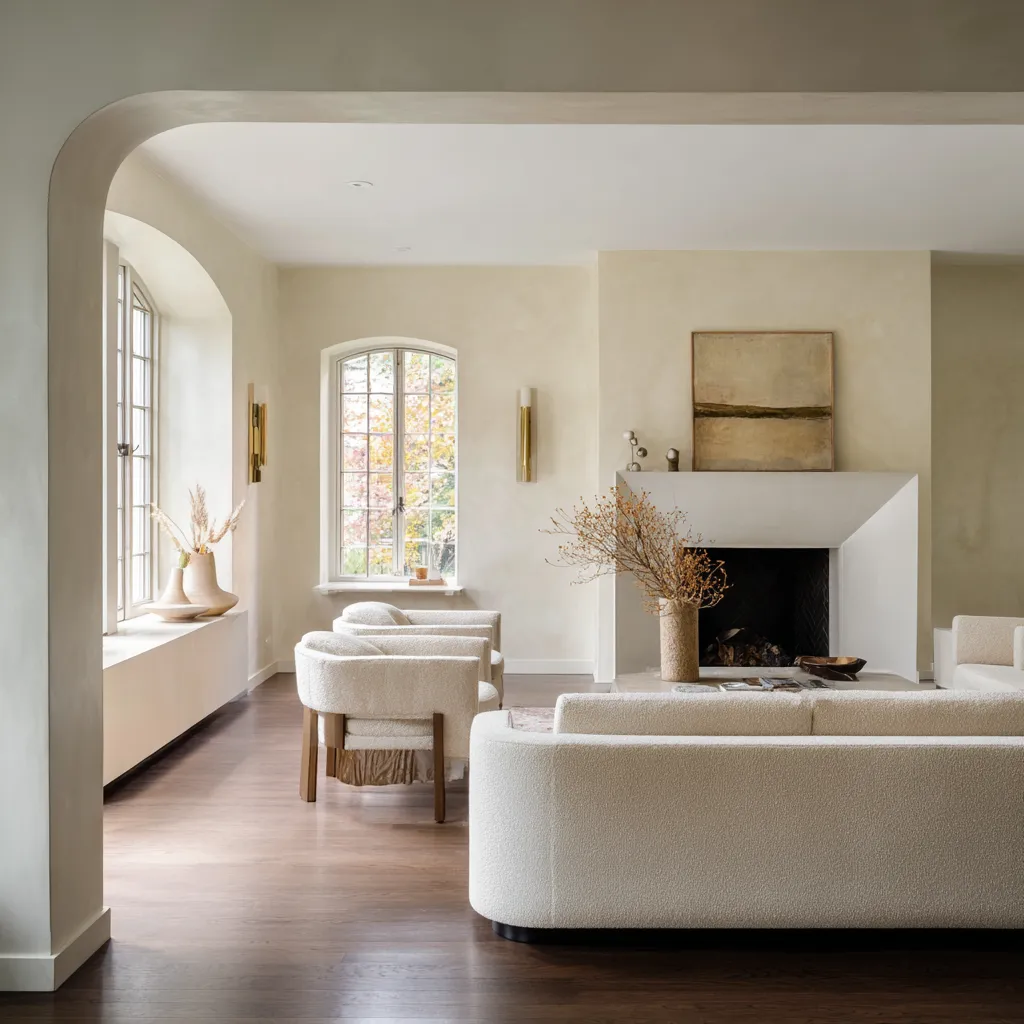
Curved furniture can also be useful in bigger shells. In large open rooms or bay-windowed spaces, curvature reduces stiffness and gives the gathering area a bodily focus.
It softens the room’s geometry and can make an expansive space feel less formal. The key is not to overdo it.
One curved sectional, a round table, or a pair of rounded chairs is often enough. What large rooms usually cannot tolerate is scattered contrast.
If dark and light notes are sprayed around without hierarchy, the room loses clarity. A strong Nordic interior tends to keep contrast concentrated in a few large moves rather than many small ones.

Dark Nordic interiors: how they stay inviting
Dark Nordic interiors are sometimes misunderstood because people associate the style so strongly with pale rooms. Yet darker versions can work very well.
What matters is how the darkness is used. The walls, ceiling, floor, or fireplace may be deep in tone, but the room usually keeps tactile pale upholstery and a lighter rug at the center.
This prevents the whole room from hardening. It gives the darkness something to hold around rather than making the darkness itself the only message.
In these rooms, lighting also matters. Nordic dark rooms do not usually try to defeat the darkness with excessive brightness.
They use a few warm points of light, such as a globe lamp, firelight, or gentle wall lighting, to shape the room after sunset. The darkness remains intact, but it becomes hospitable.
Plants can also help. In darker rooms, a few organic green notes near windows or built-ins create a bridge between the shadowy interior and the exterior view.
They soften the envelope without adding clutter. The success of dark Nordic rooms depends on discipline.
They can become too severe if surfaces are glossy, if contrast is scattered, or if the furniture is too angular and thin. But when the seating is soft, the palette is tight, and the anchors are well placed, dark Nordic rooms feel rich and protective.

Formal rooms do not need to be stripped to feel Nordic
Many people assume formal American architecture works against Nordic design. In practice, the relationship can be very good if the interior understands where the shell ends and the furnishing layer begins.
Crown molding, paneled walls, classical proportions, taller ceilings, or shaped openings do not automatically destroy Nordic clarity. The issue is whether the furnishing layer tries to compete with the shell.
If the room already has architectural rhythm, then patterned fabrics, ornate tables, too many lamps, too much accessory layering, or visually restless art often create conflict.
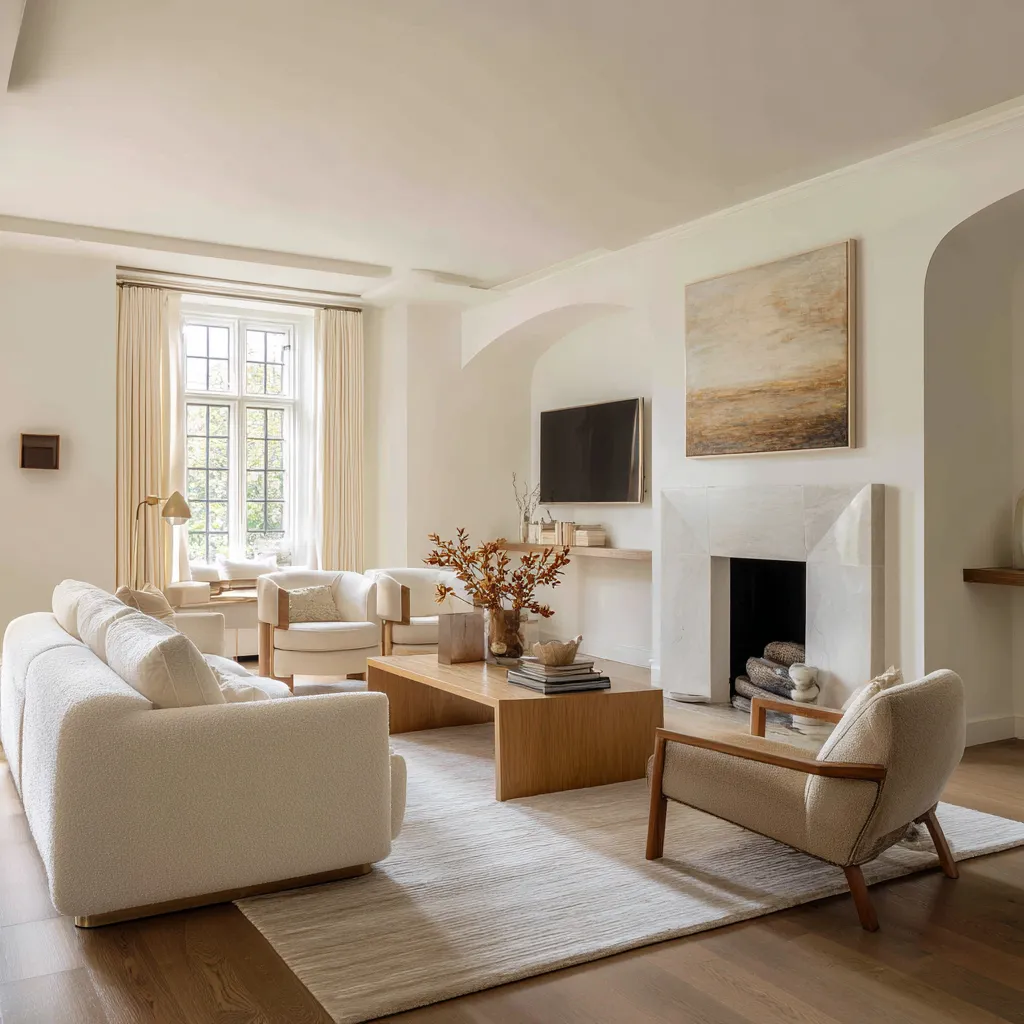
A better response is to let the shell keep its character while simplifying life beneath it. Lower sofas, rounded chairs, soft upholstery, restrained art, and fewer objects make the room feel modern and tactile without denying its inherited architecture.
The result can be especially rich because the room has both memory and softness. This is why Nordic design adapts surprisingly well to formal rooms.
It does not need perfect modern emptiness. It needs good regulation.
Rustic rooms: let the shell carry the age
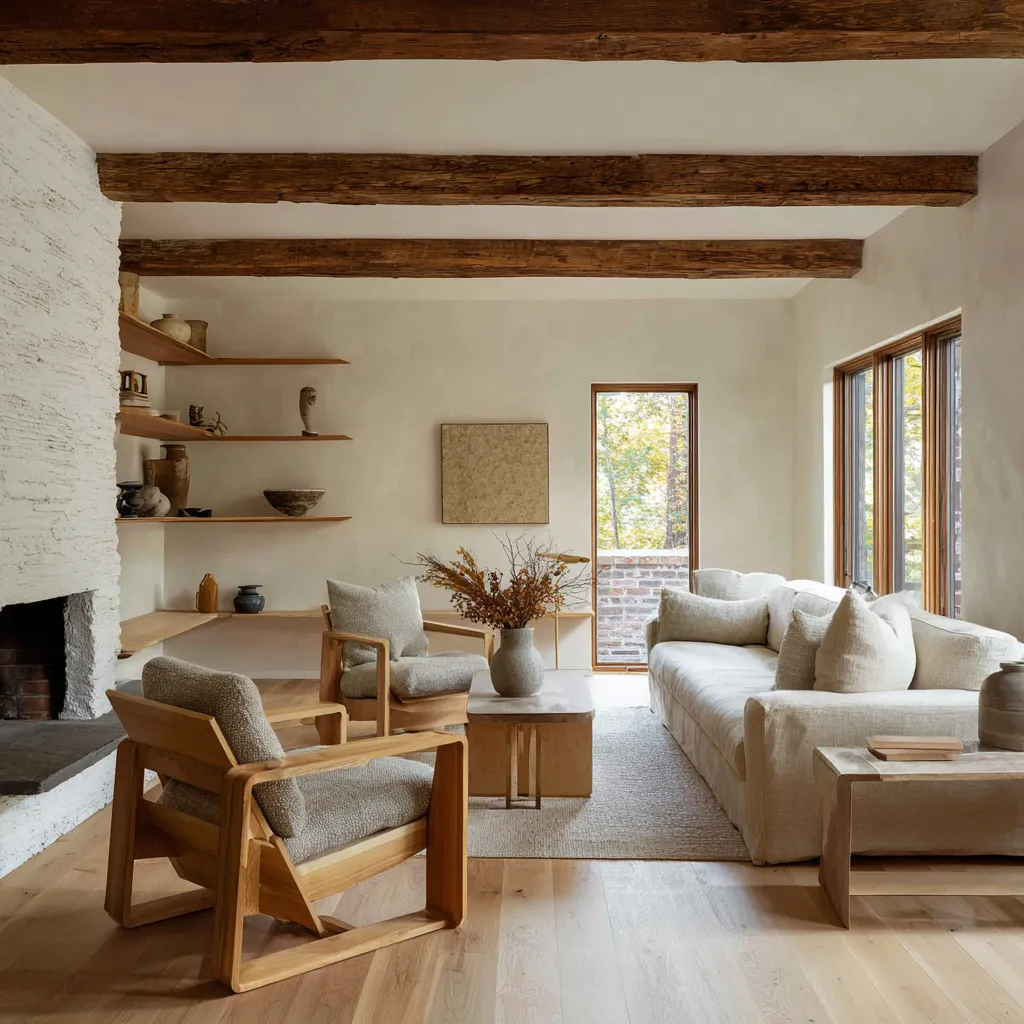
Rustic American rooms often suffer from overstatement. Once beams, aged wood, stone, arched openings, or rough plaster are already present, many interiors make the mistake of adding another layer of rustic symbolism: dark metal, distressed accessories, heavy leather, nostalgic objects, busy open shelving, or overt country styling.
That usually makes the room feel overworked. Nordic logic offers a better path.
Let the shell carry the age. Let the furniture carry the softness.
Keep the rug broad and simple. Keep the seating low and tactile.
Reduce the number of objects on shelves. Use ceramics, branches, and a few natural materials rather than an entire decorative language of rustic references.
This preserves the honesty of the architecture while keeping the room relaxed. The age remains visible, but daily life feels lighter.

The difference between spaciousness and emptiness
One of the useful distinctions in Nordic design is the difference between a room that feels spacious and one that feels empty. Spaciousness comes from restraint plus enough material weight.
Emptiness happens when material depth, anchors, or bodily cues are missing. A spacious Nordic room usually has:
- one strong seating group
- a rug that fully gathers the furniture
- a few material families repeated clearly
- a limited object layer
- enough wood, textile, or mineral weight to ground pale surfaces
- useful perimeter elements
- visible breathing room in the center and around the edges
An empty room often lacks one or several of these. The palette may still be pale, but the room has no center.
The rug may be too small. The furniture may be under-scaled.
The objects may be too few and too insignificant. The materials may be too smooth.
The room feels like a concept sketch rather than a place. Nordic design does not ask for emptiness.
It asks for selective reduction.
Common mistakes in Nordic-inspired interiors
Many rooms drift away from Nordic clarity through a few predictable errors.
- Mistaking pale color for completion. A neutral room without enough texture, anchor mass, or scale discipline will feel weak rather than refined.
- Undersized rugs. In pale interiors, fragmented floor zones become even more visible. A generous rug is not a detail. It is one of the main devices that turns separate pieces into a coherent room.
- Excessive accessory layering. Too many little objects, too many vases, too many styling books, too many decorative gestures flatten the room’s material power.
- Contrast without hierarchy. A Nordic room can contain dark windows, darker chairs, a hearth, or a dark table, but those notes must work together. Random high-contrast items create agitation very quickly.
- Fighting the shell rather than answering it. A formal room does not need faux-casual disorder to feel current. A rustic room does not need more rustic symbolism. A dark room does not need bright surfaces everywhere. A large room does not need more pieces. It needs better concentration.

Nordic style as a living design language
What makes Nordic style enduring is not that it produces one recognizable look. Its strength lies in the way it can move through different house types and climates while keeping a clear interior ethic.
It can inhabit a conventional suburban room, a formal room with moldings, a plaster-and-stone room with a hearth, a mountain-view house, a wood-lined contemporary shell, a dark urban room, or a bright warm-climate living space. In each case, the visual result may shift, but the underlying discipline remains steady.

That discipline can be summarized simply.
- Keep the furniture low and broad.
- Keep the palette close.
- Let texture do much of the warming work.
- Edit the object field.
- Use wood with purpose.
- Make the perimeter useful.
- Concentrate anchors instead of scattering contrast.
- Let the shell keep its character, but soften the life inside it.
That is why Nordic interiors continue to feel relevant. They do not rely on trend-driven gestures.
They solve enduring spatial problems: how to reduce stress in a room, how to make light feel livable, how to make pale interiors feel warm, how to keep a space open without making it cold, and how to build comfort without clutter. A good Nordic room does not announce itself loudly.
It settles the room. It lowers the pressure.
It gives structure to softness. And that is precisely why it lasts.