Dark Japandi is often misunderstood as a dark-painted version of minimalism. That reading misses the deeper structure.
The style works well in ordinary homes not because every surface turns brown, charcoal, or black, but because visual weight is placed with unusual discipline. Darkness is given a task.
Softness is kept where the body meets the room. Relief is broad, not scattered.
Furniture sits low enough to hold the room near the floor rather than letting it float.
That difference matters. Many design ideas based on dark paint and natural wood, yet still feel muddy, heavy, or vaguely contemporary rather than clearly dark Japandi.
The issue is usually not color itself. A design can be full of beautiful materials and still fail if the darkness has no assignment, if the middle of the room feels weak, if the ceiling presses downward, or if the lighter elements are sprinkled around like decoration instead of acting as true counterweight.
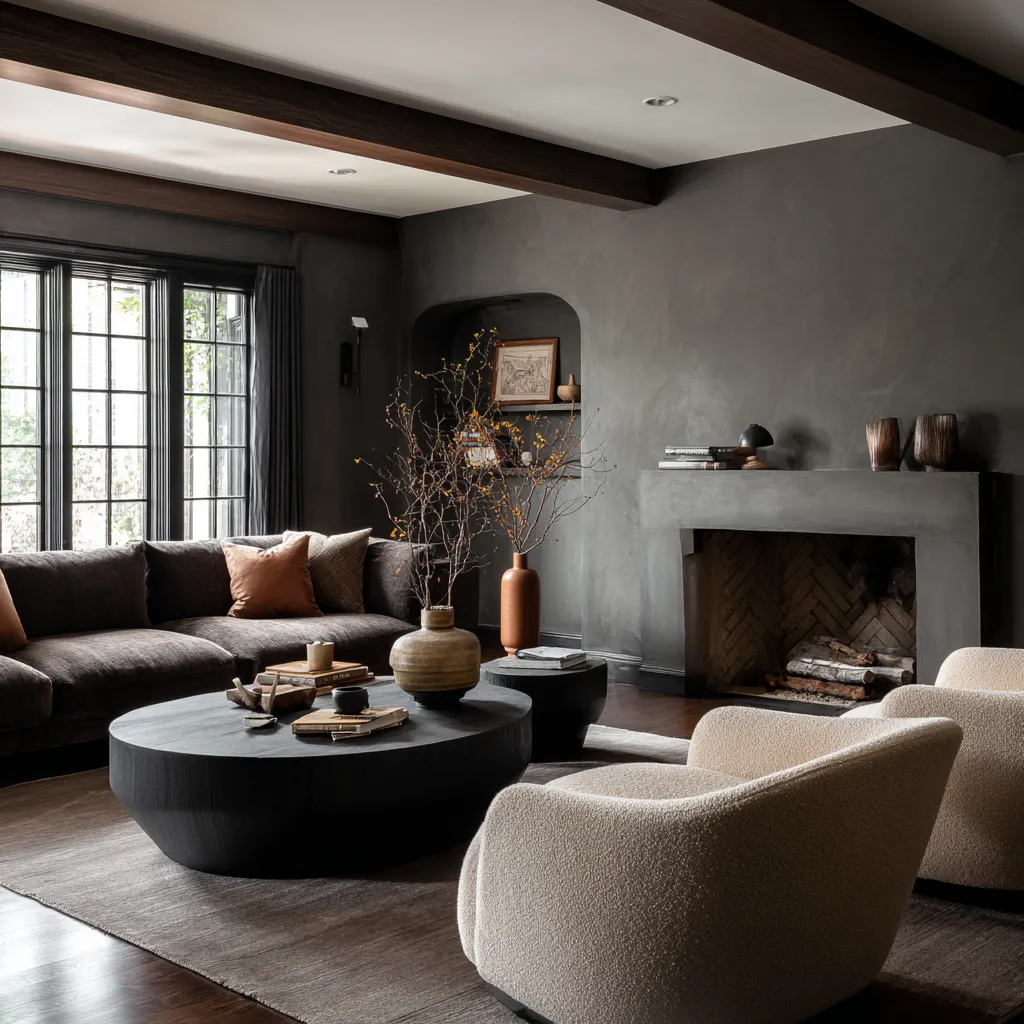
Dark Japandi is flexible. It can work for a formal front room with traditional trim, for an open family room off the kitchen, for a den near the entry, for a townhouse media room, for a condo with one major window wall, or for an upper-level bonus room with awkward ceiling angles.
The style does not require one fixed shell. It asks for a set of stable design decisions.
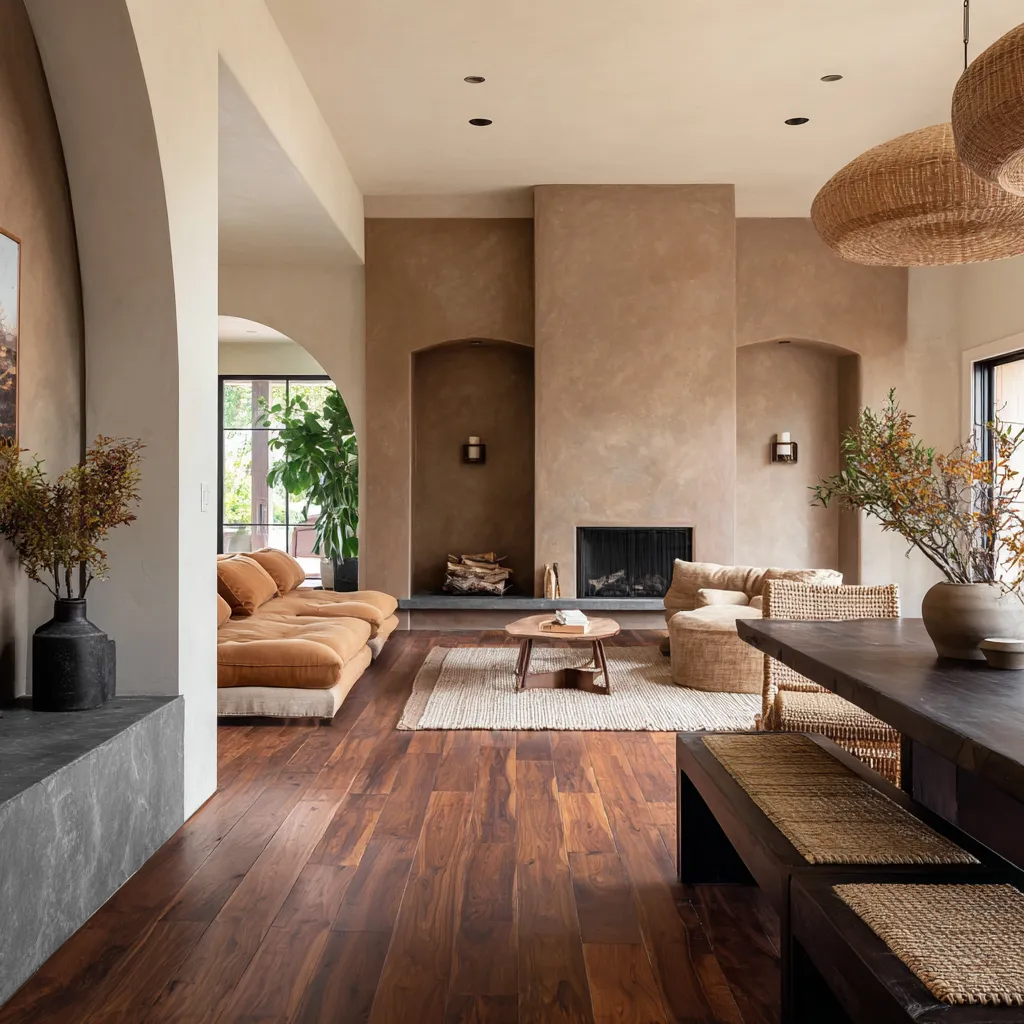
Dark Japandi works through assigned darkness
The deeper logic of the style begins here: darkness should not be spread thinly over everything. It should do one or two clear jobs.
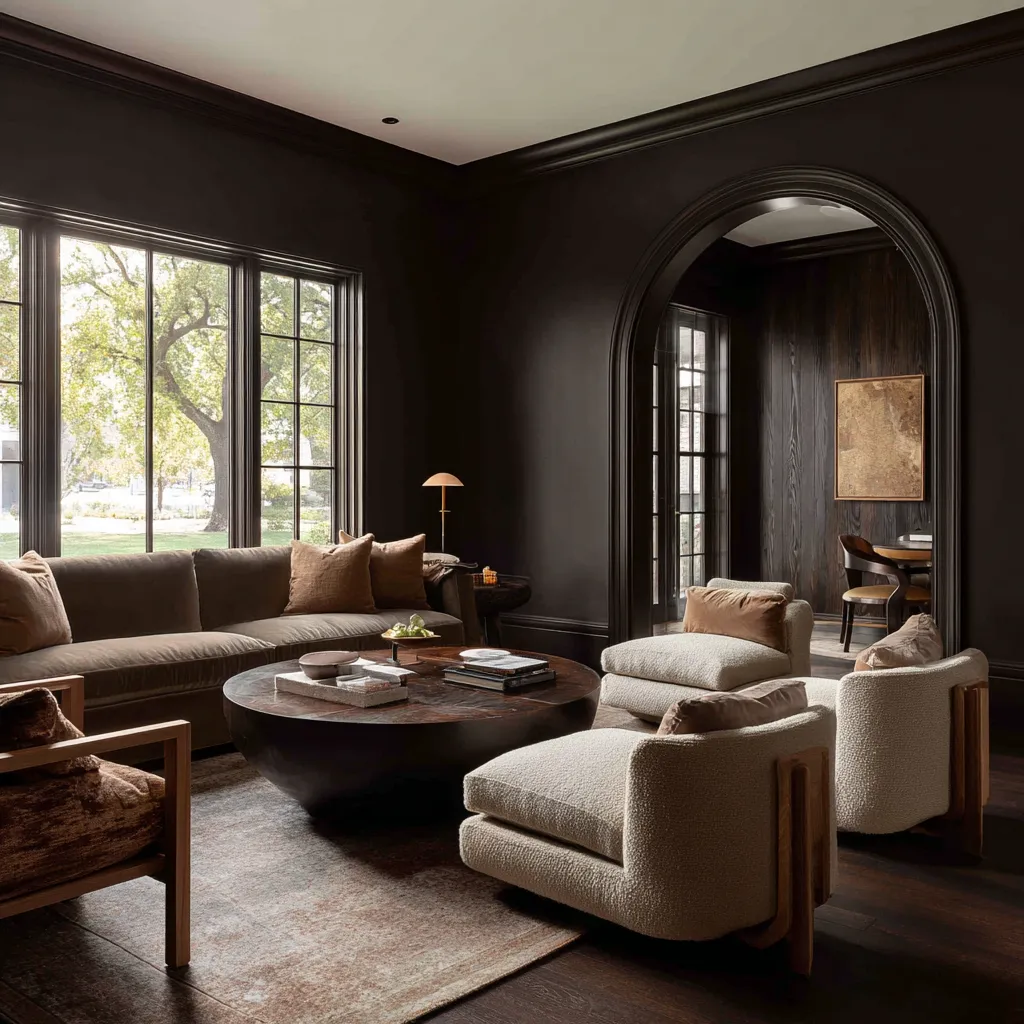
In some design ideas, darkness encloses the shell and turns the space inward. In others, it frames a portal between living and dining.
In others, it lives in a shelving wall, a media recess, a fireplace surround, a floor plane, a black credenza, or one large low table in the middle. These are not interchangeable gestures.
Each one changes how the room feels and how the eye organizes the space.
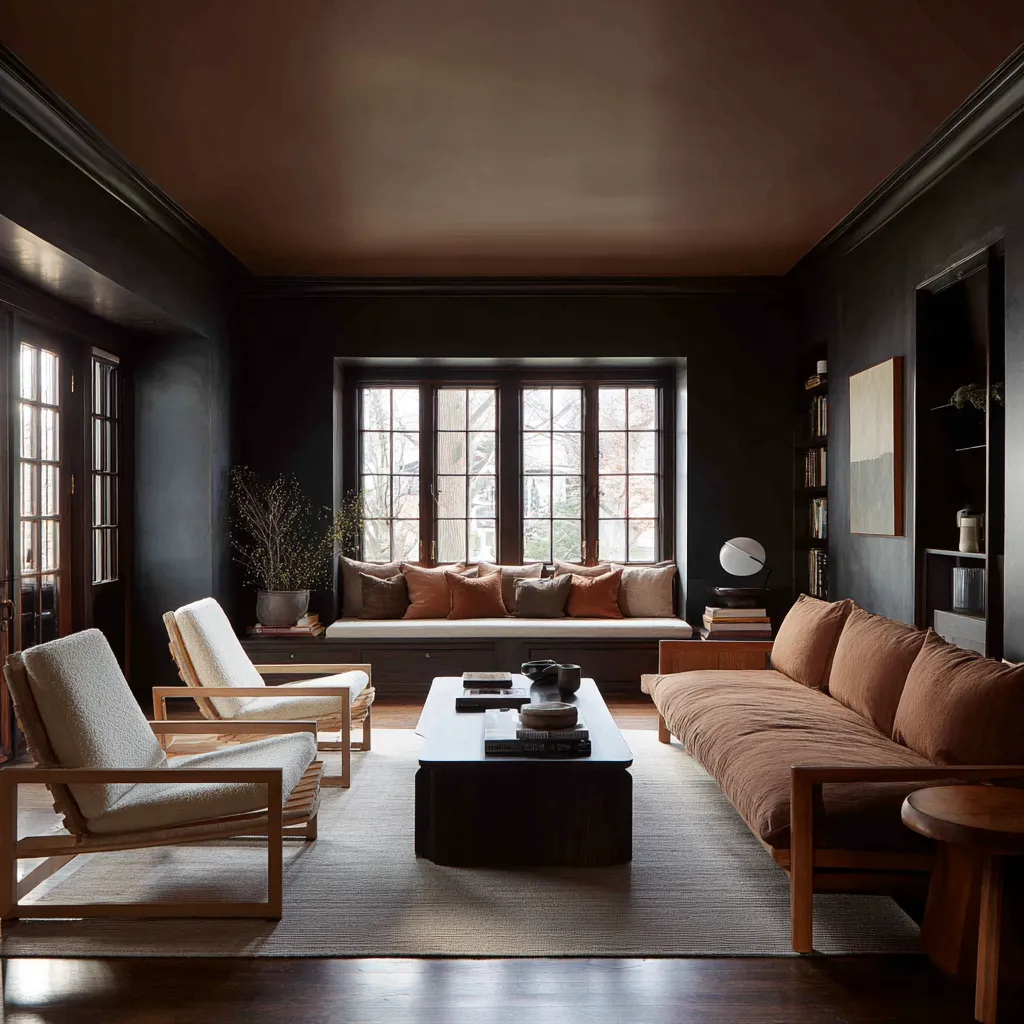
This is why some lighter interior designs still hold a convincing dark Japandi mood. They may not have very dark walls at all, yet they contain one deep reservoir of weight: a full-height built-in, a black media niche, a dark fireplace wall, a low black center table, a dark floor that ties several zones together, or a strong framed threshold that gives the room an edge of gravity.
The room still feels composed because the darkness has somewhere to live.
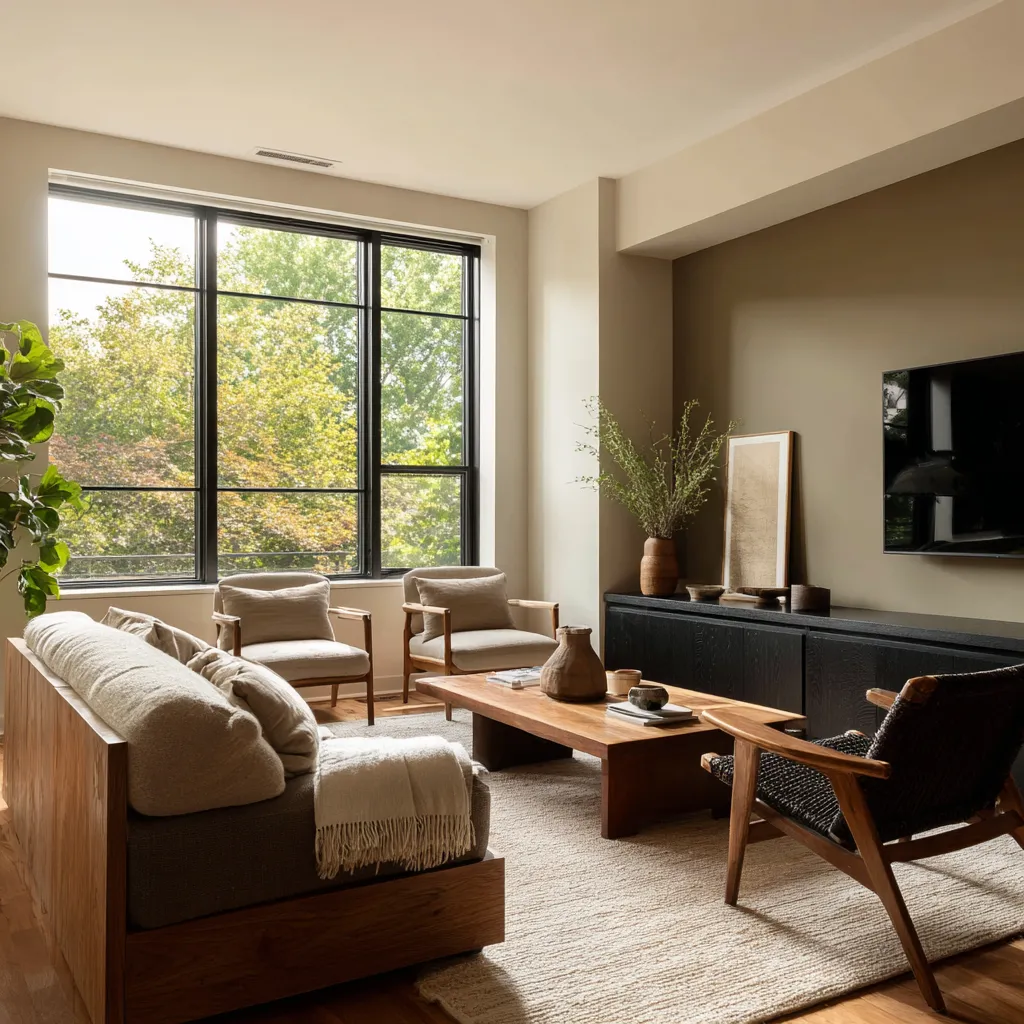
A design usually becomes weaker when darkness is applied as atmosphere first and structure second. Painting many surfaces dark without deciding what those surfaces are meant to do often leads to a room that feels flat rather than deep.
Dark Japandi is far more deliberate than that. It is a placement style before it is a color style.
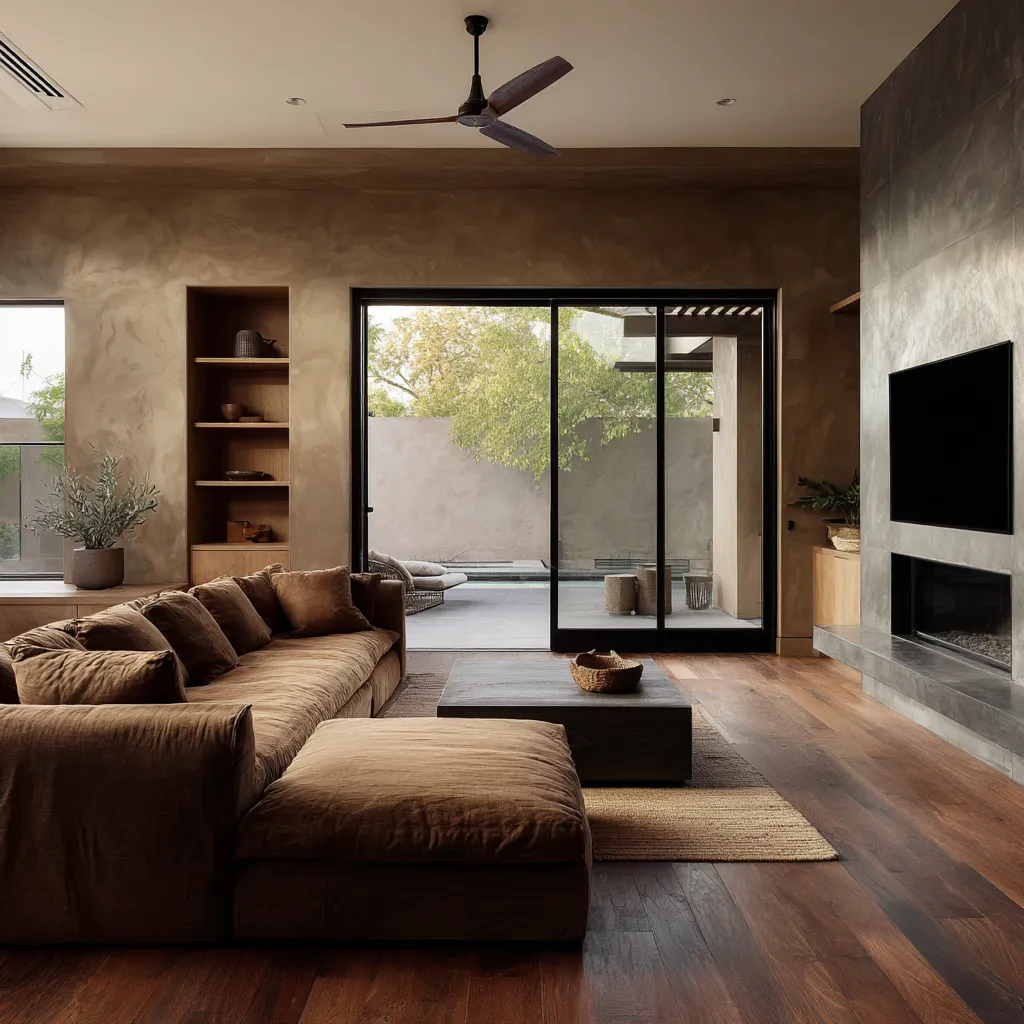
The middle of the room matters
A lot of design talk around Japandi stays at the perimeter. Walls, plaster, oak, linen, lighting, and architectural shell get most of the attention.
But one of the main ideas for ordinary houses is that the center of the room often decides whether the space feels rooted.
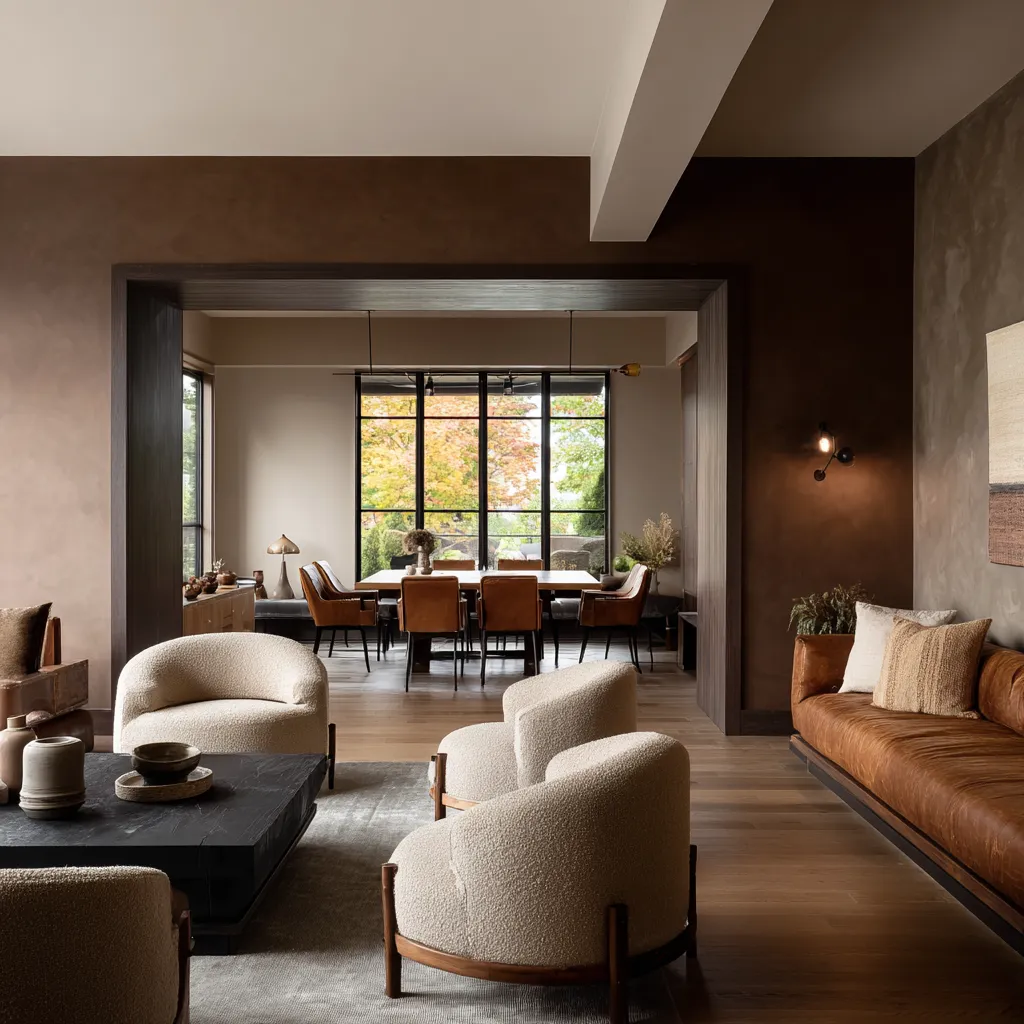
Many living rooms today use soft sectionals, pale rugs, soft-edged chairs, and compressed neutral palettes. All of that can be beautiful, but it can also weaken the middle.
Once the edges are softened and the palette becomes hushed, the room can lose its internal gravity. That is where the low dark table becomes so important.
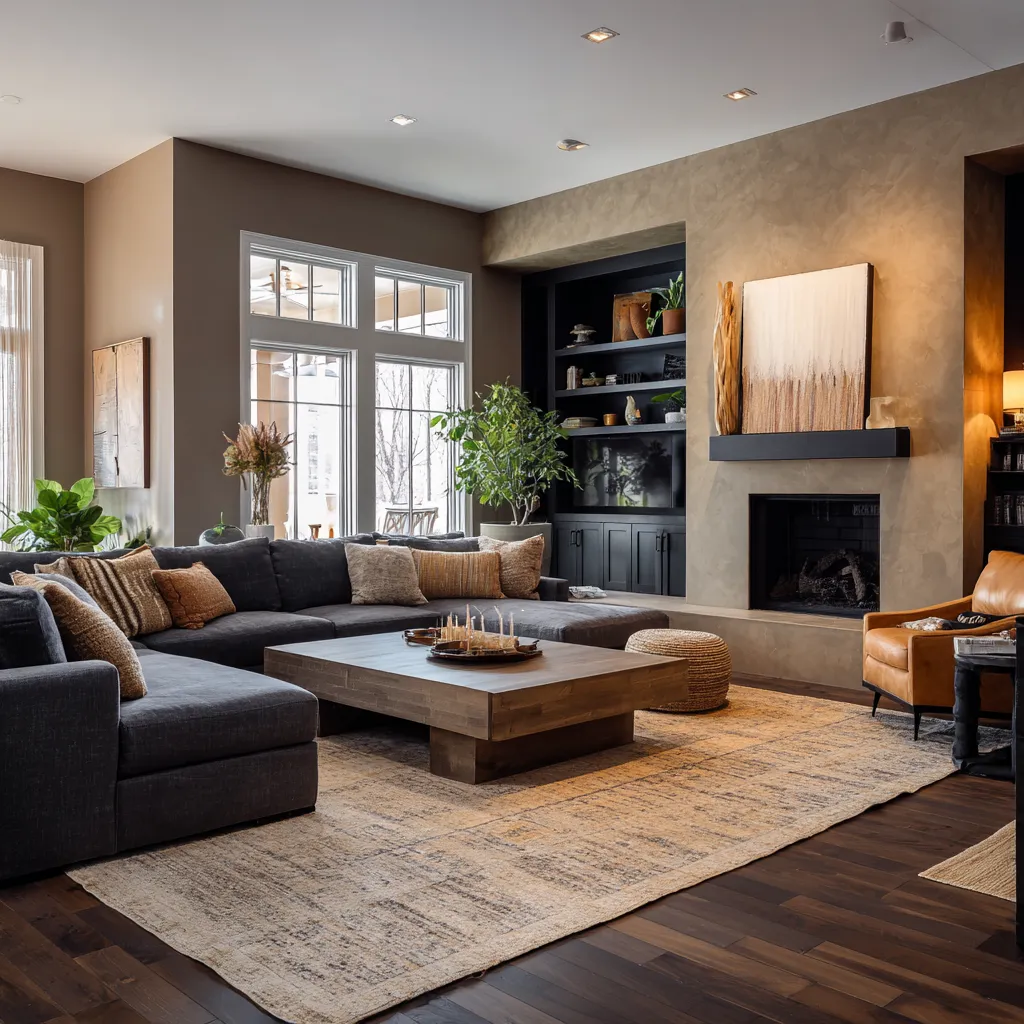
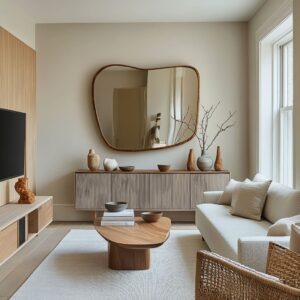
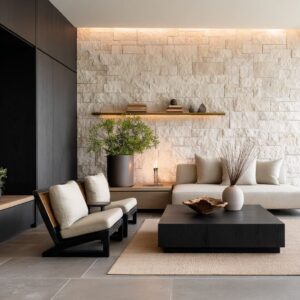
A black slab table, a deep wood cube, a dark round drum, or a broad monolithic coffee table often does far more than hold books and trays. It acts like a weighted plate that settles the whole seating arrangement.
It gives the room a center of gravity. It ties the furniture into one social field.
It prevents the composition from becoming a ring of soft pieces surrounding an empty middle. This is one of the less obvious but inspiring dark Japandi ideas for usual homes.
You do not always need another dark wall. Sometimes you need a stronger center.
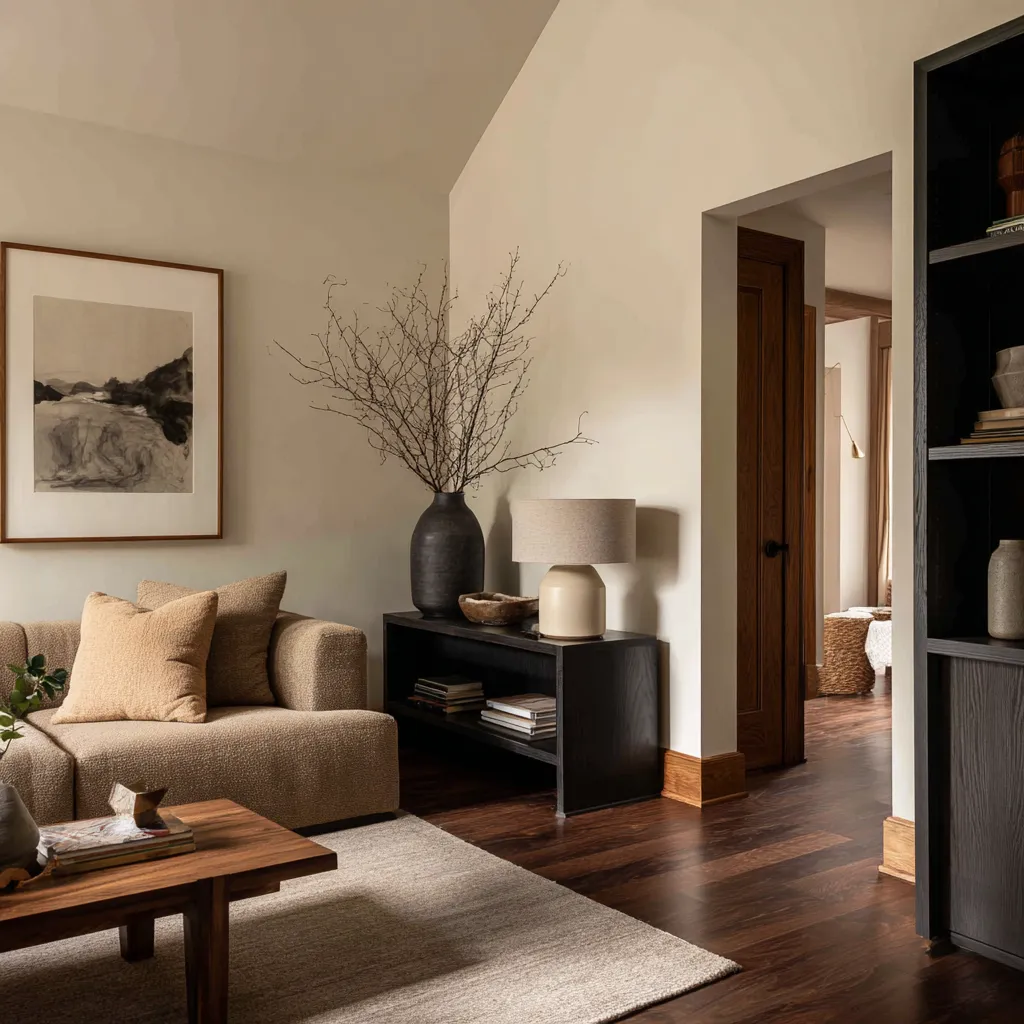
Groundedness and darkness
A design can look dark Japandi and still feel strangely loose. That happens when the shell is strong but the furnishings do not hold the floor.
It also happens when the room has good materials but no clear horizon line. Low massing matters here.
Dark Japandi usually keeps major furniture close to the ground. Sofas are long and low.
Chairs are often broad and grounded rather than leggy and airy. Window benches, built-ins, credenzas, media consoles, and fireplaces tend to stretch horizontally instead of breaking upward into many little moves.
This repeated emphasis near the floor gives the room its settled character.
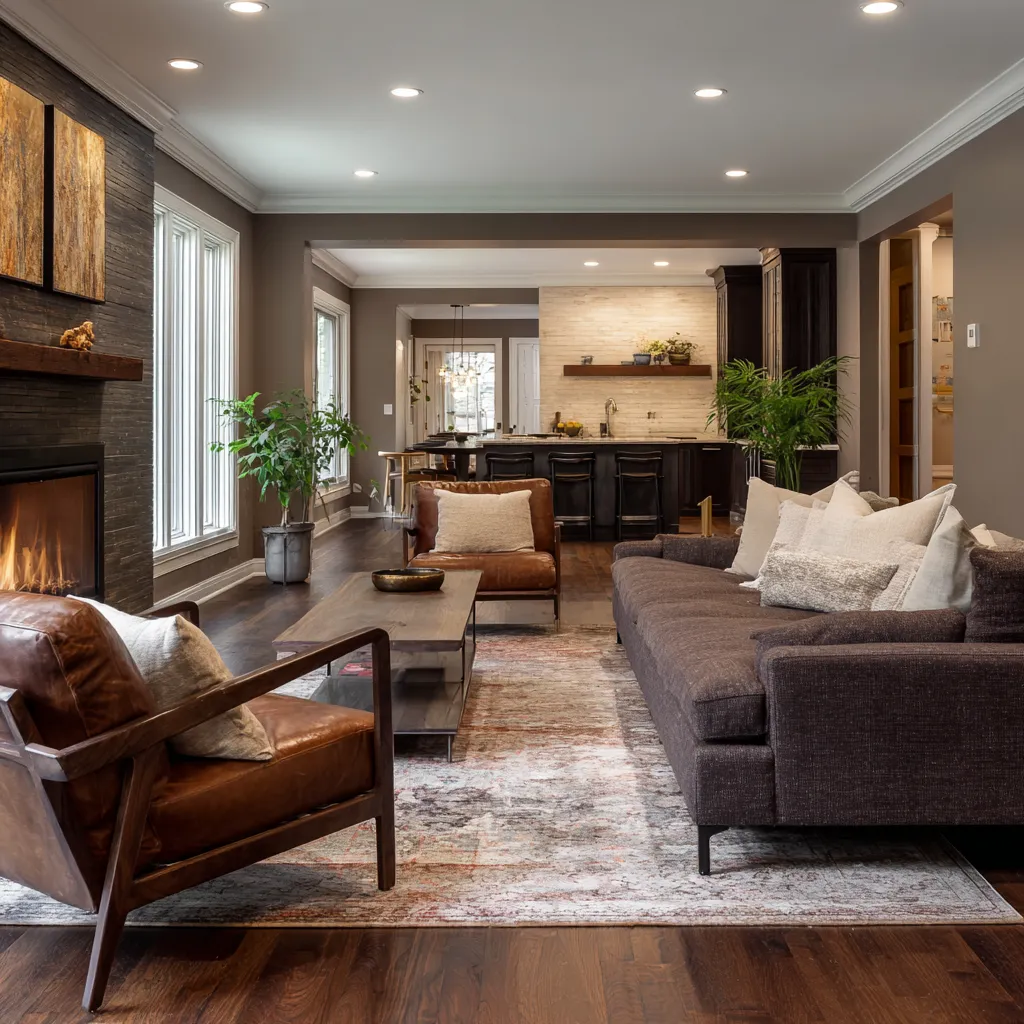
That is why tall shelving, strong beams, or a dramatic chimney can still work only when the lower half of the room answers them properly. If the upper shell becomes visually strong but the lower zone stays thin, the room starts to feel top-heavy.
If the lower zone has enough weight, the room feels anchored. This means low furniture is not only an aesthetic preference.
It is a structural tool.
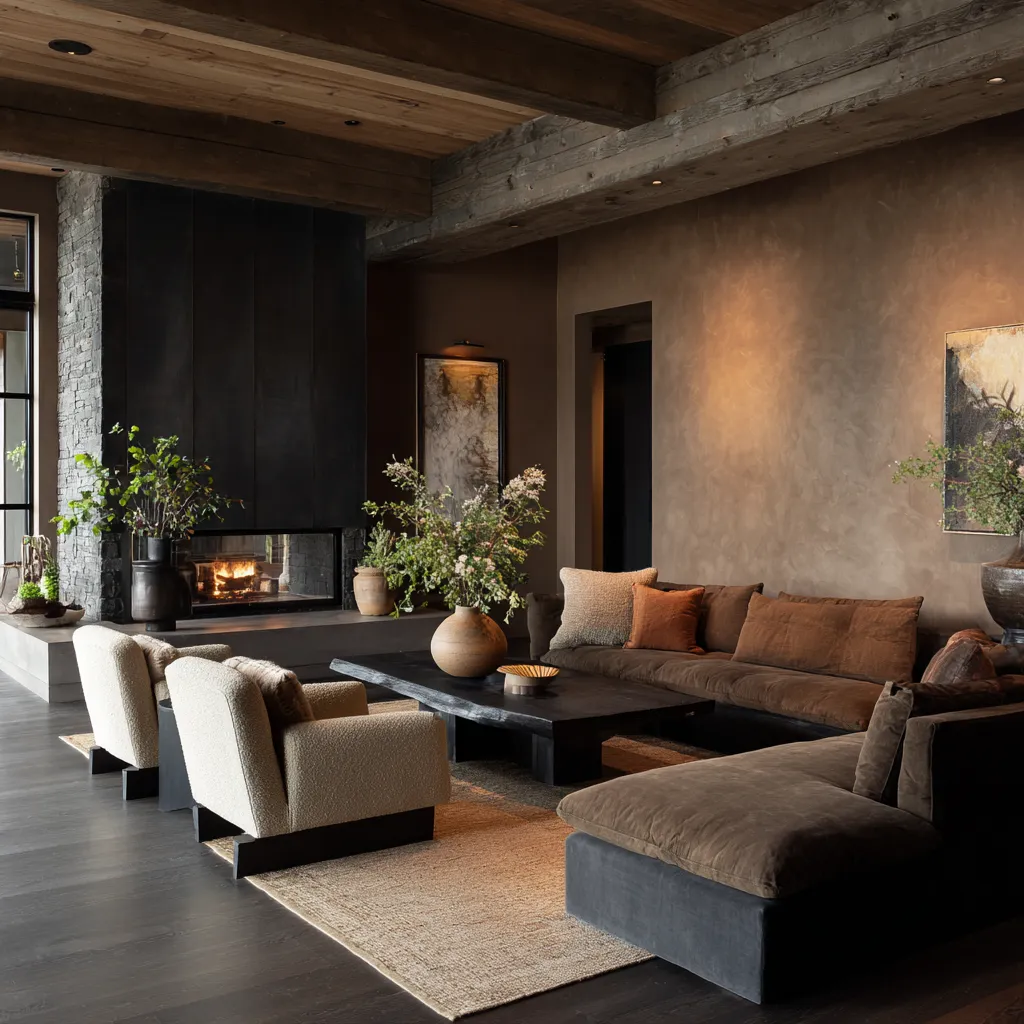
How a darker room keeps air
One of the main fears people have with dark Japandi is loss of breathability. That fear is reasonable.
A darker shell can absolutely make a room feel pressed in. But the rooms that do this well protect air through a few larger moves, not through random small pale accents.
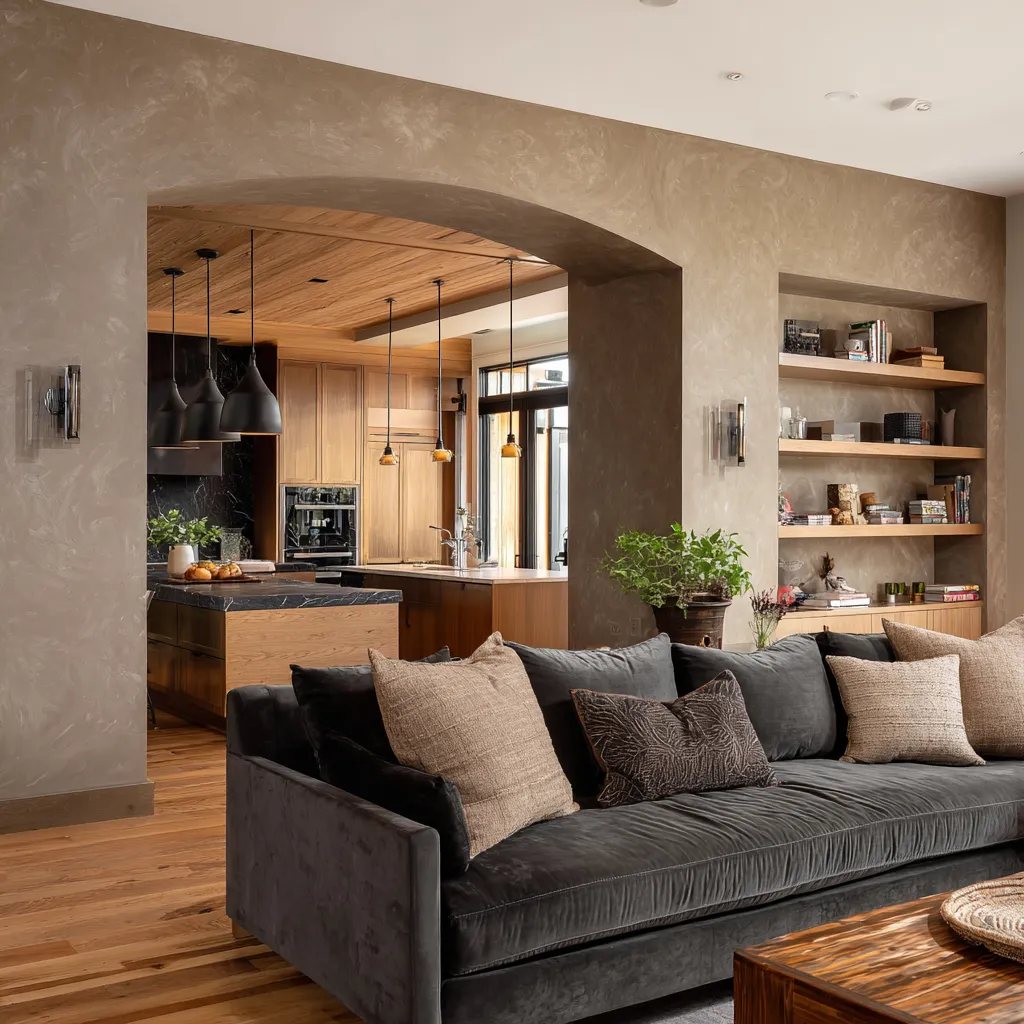
The first is overhead handling. A ceiling can stay pale while walls deepen.
It can become lighter between darker beams. It can use timber slats that warm the room without turning into a heavy dark lid.
Or, in a compact enclosed room, it can go darker too, but only if the layout is very controlled and the room has enough balance to support that decision. Ceiling strategy matters far more than people often assume.
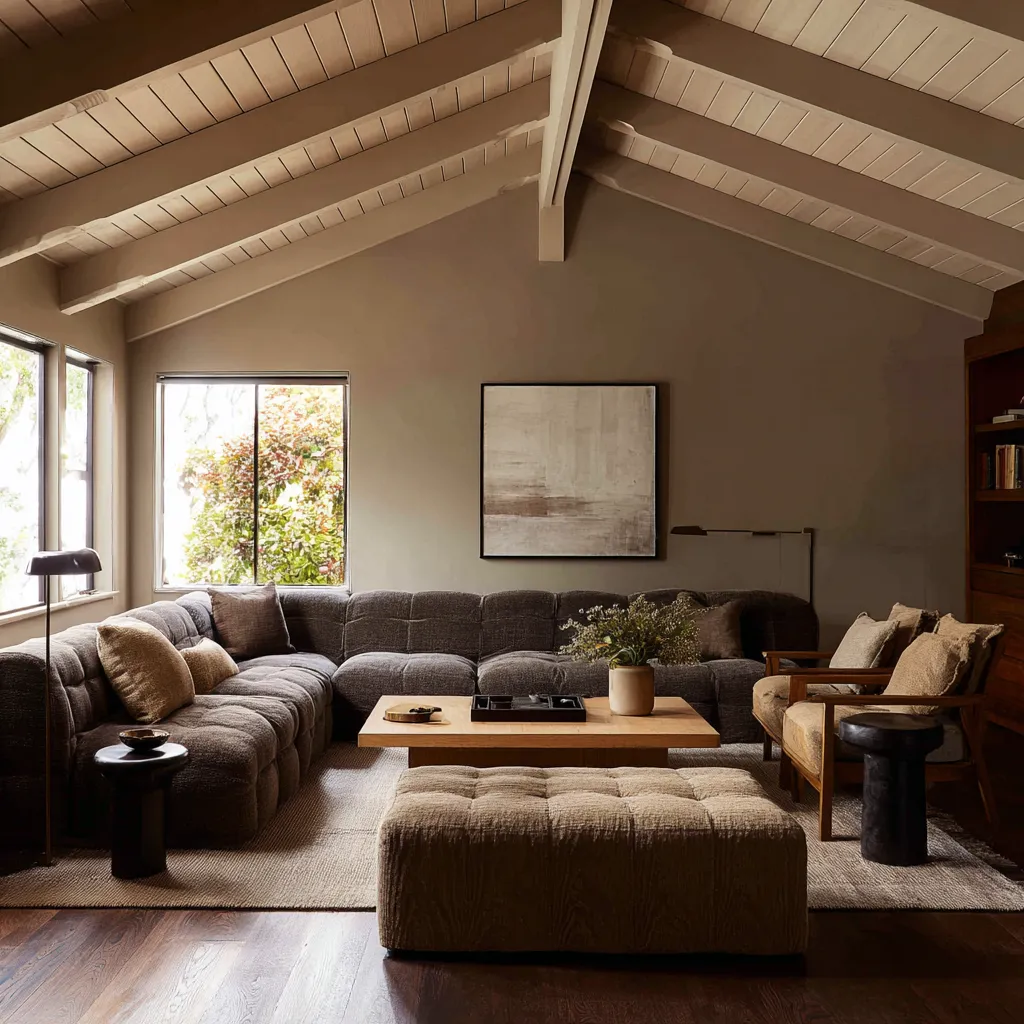
The second is side relief. Courtyard doors, broad windows, borrowed light from an adjacent dining room, a luminous bay recess, or even a strongly framed opening to a brighter space can keep a dark room breathable.
The opening does not merely add light. It becomes a pressure-release field.
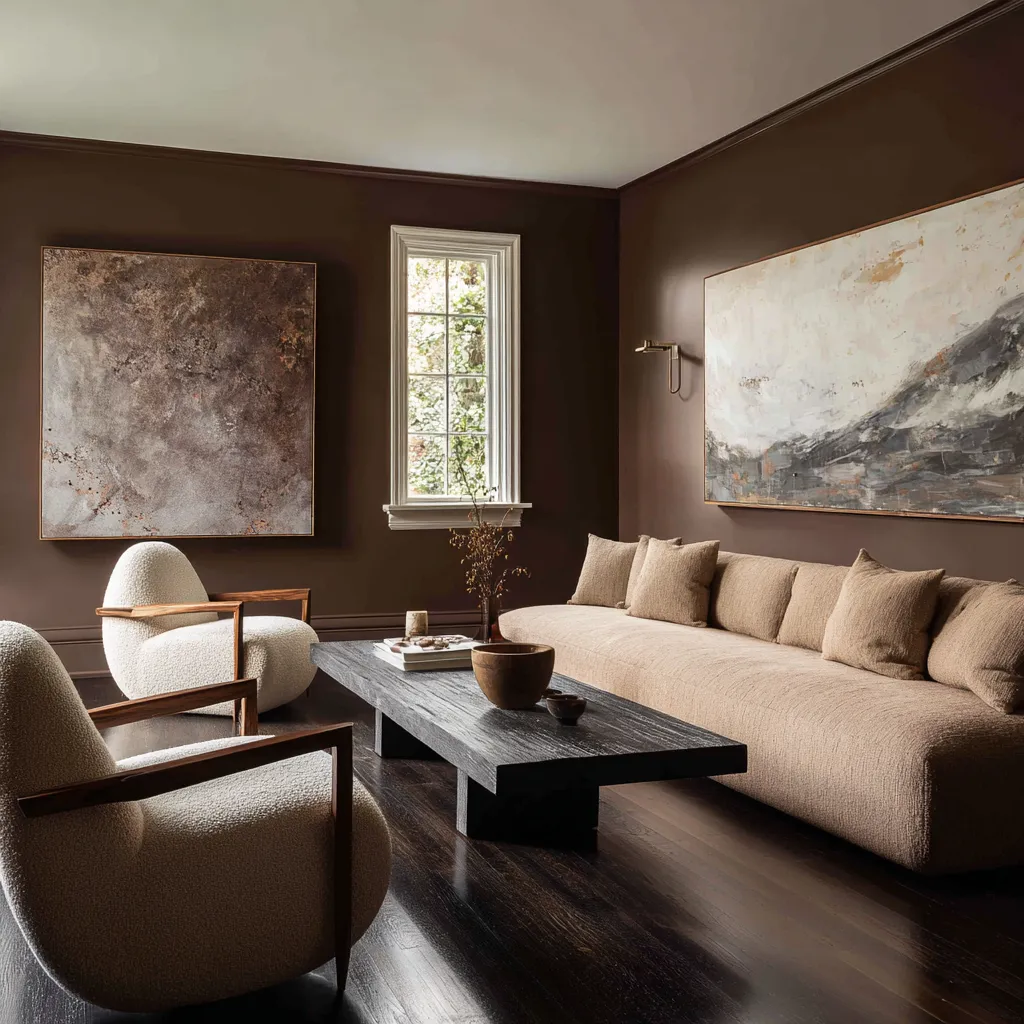
The third is pale body-contact relief. Chairs, rugs, bench cushions, and sofas often stay lighter than the shell.
This is not a compromise. It is one of the reasons the style remains habitable.
Darkness can hold the room. Lighter tactile surfaces make the room livable.
A dark room does not stay airy because of little white objects on shelves. It stays airy because it has one or more broad release moves.
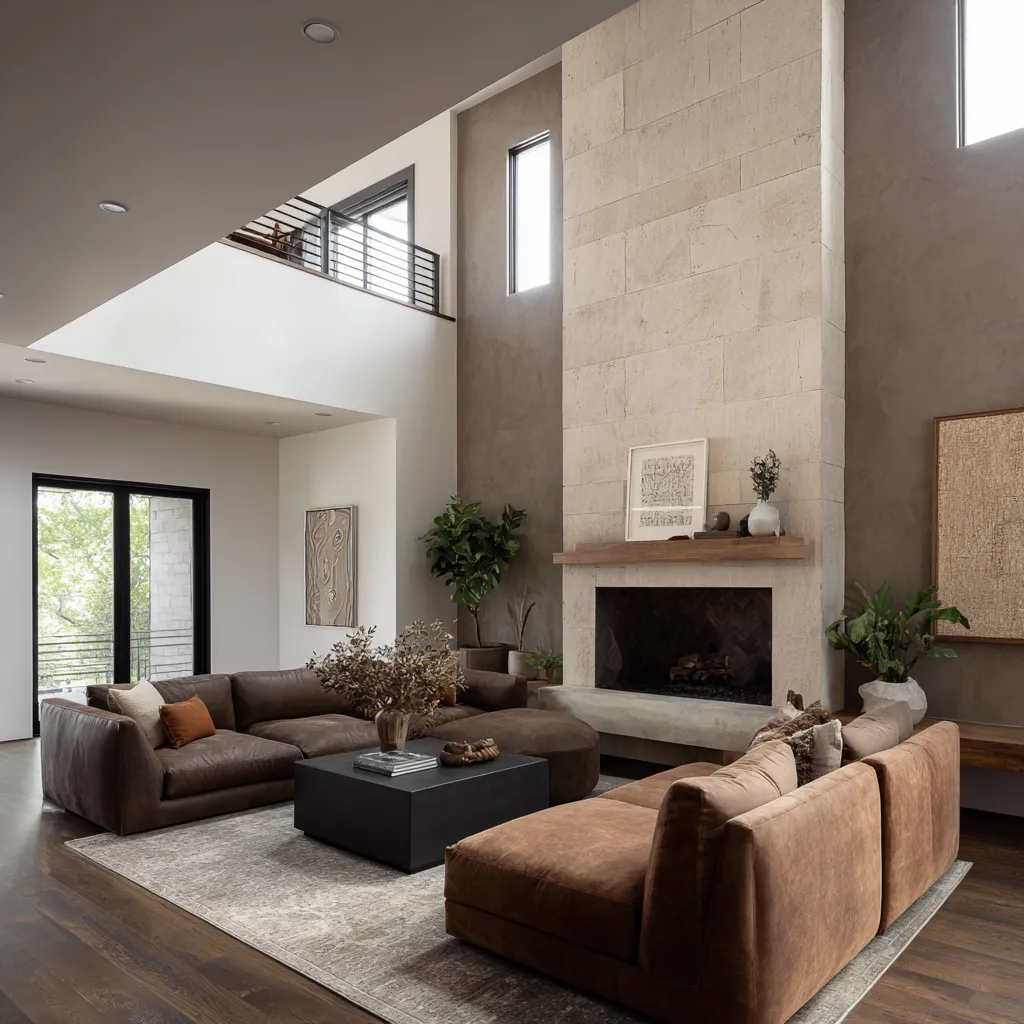
The body-touch zone should stay softer than the structural zone
This distinction is central to dark Japandi interior design and often separates it from harsher contemporary minimalism on one side and soft organic transitional interiors on the other. Built-ins, shelving, frames, fireplace walls, console lines, tables, and architectural thresholds tend to hold firmness.
They are the more structural layer. Sofas, chairs, rugs, benches, and pillows carry the tactile layer.
They hold softness where the body sits, leans, rests, or lands.
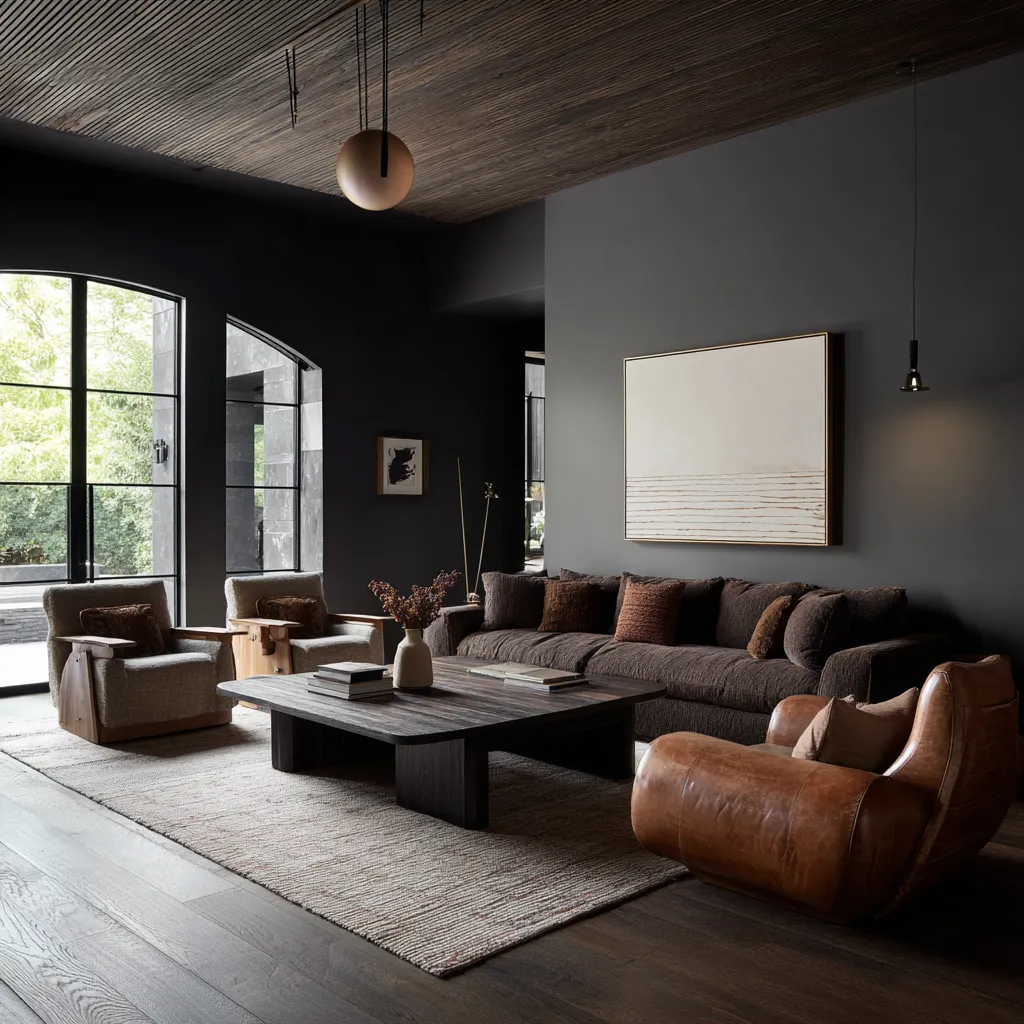
When those roles remain clear, the room feels balanced: shaped, but comfortable. When they blur, the room often drifts.
If everything becomes hard-edged and dark, the room can start to feel severe. If everything becomes soft, light, and wrapped in texture, the interior design starts moving away from Japandi toward a more generic cozy interior.
The point is not stark contrast. The point is division of labor.
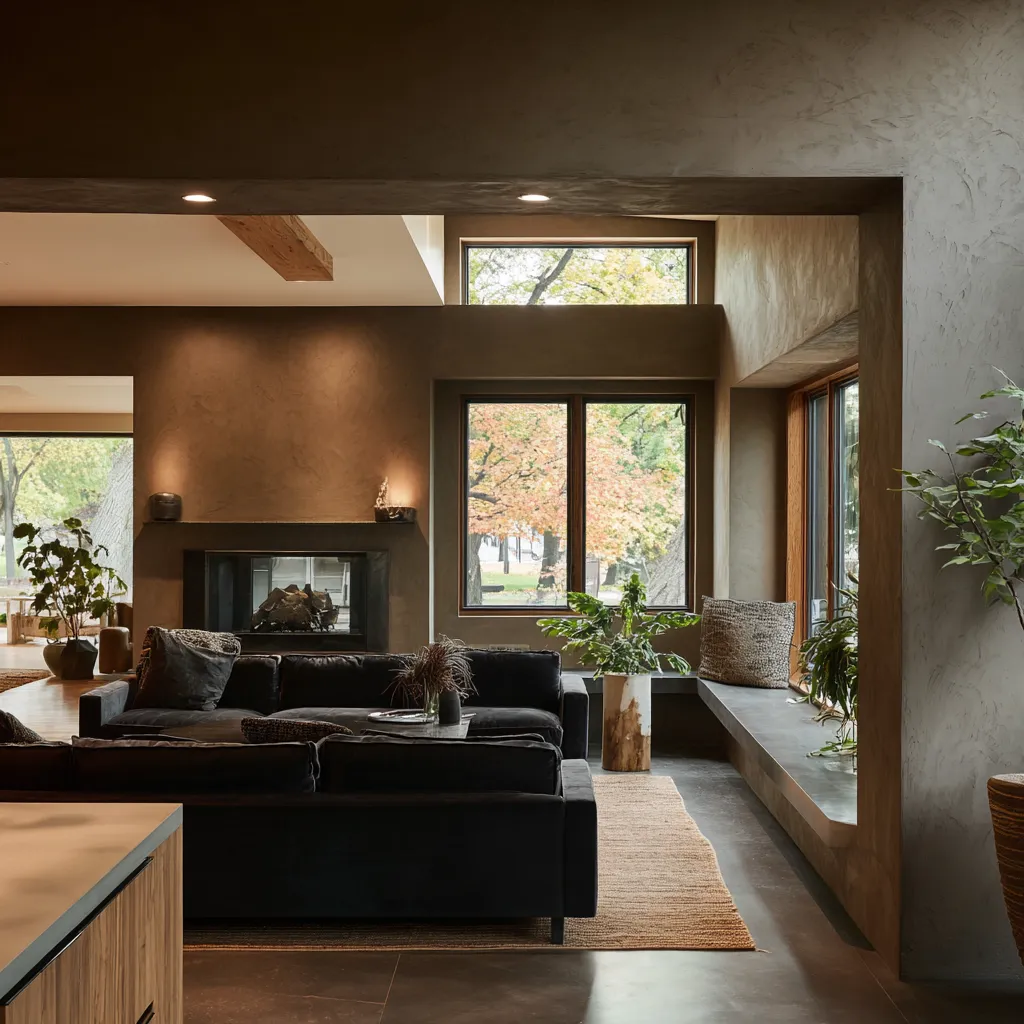
Dark Japandi for open-plan family rooms
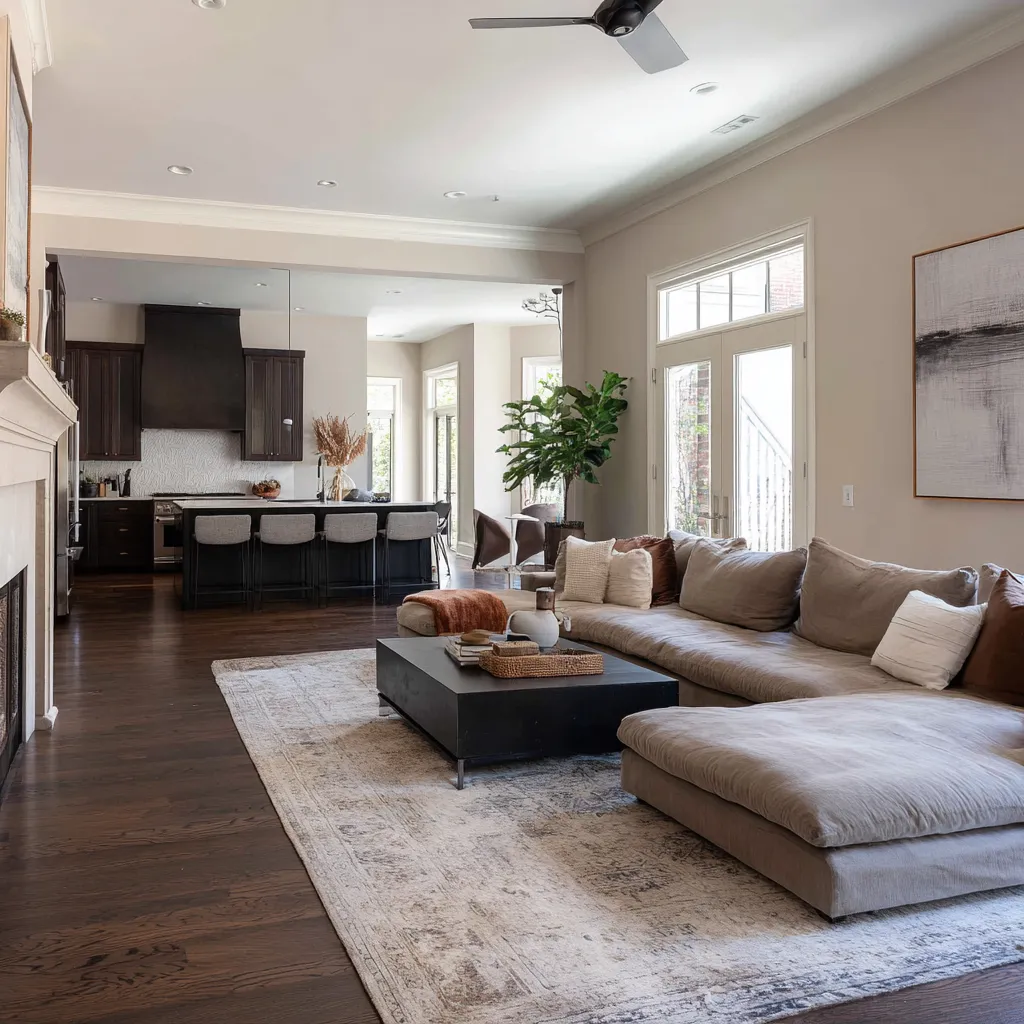
Open-plan layouts are common in usual houses, and they are also where dark Japandi can lose concentration fastest. Too much openness weakens the style if the living area has no boundary and no assigned depth.
The answer is usually not to darken every wall. It is to give the living zone one extra structuring device.
That could be a dark portal between living and dining, an oversized arch, a dark-framed sitting area, a fireplace wall, a black island that ties back to the living room, a long window bench, or a built-in edge that gives one side of the room more substance.
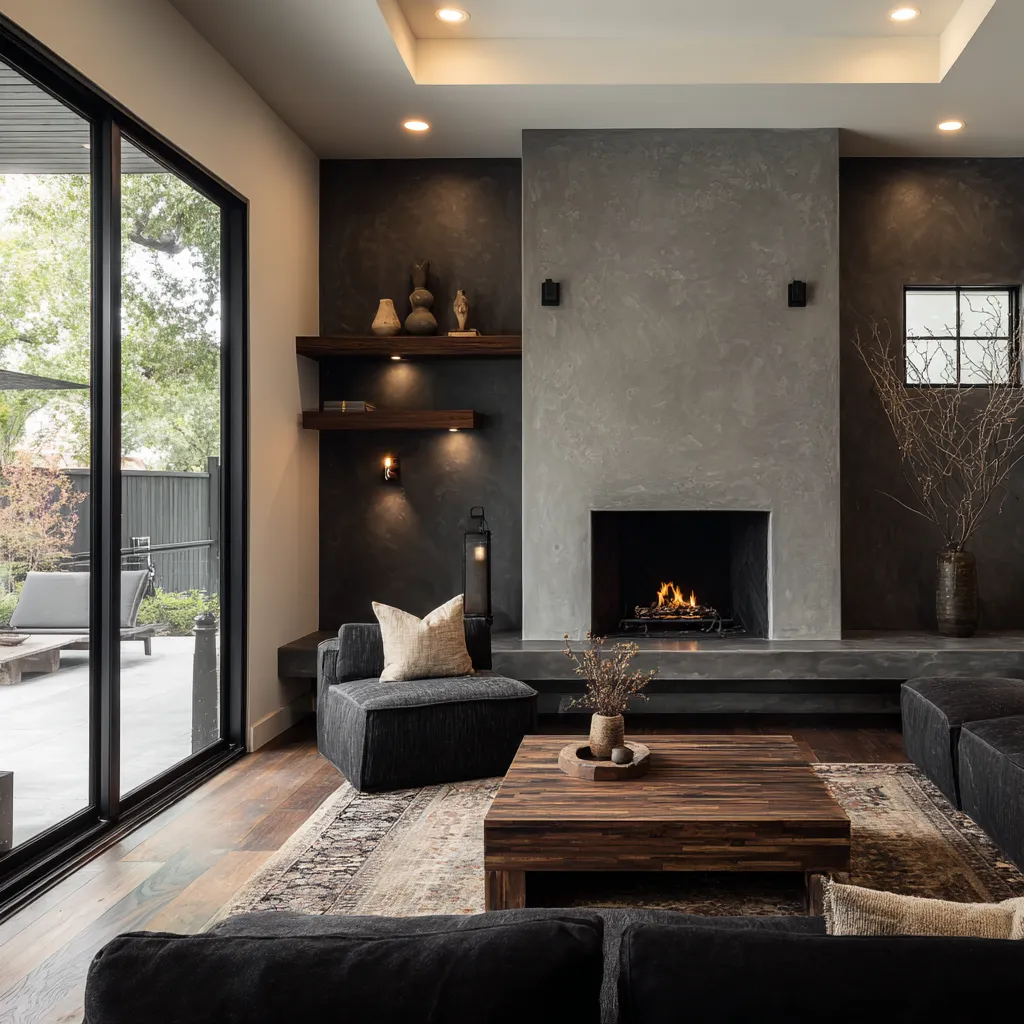
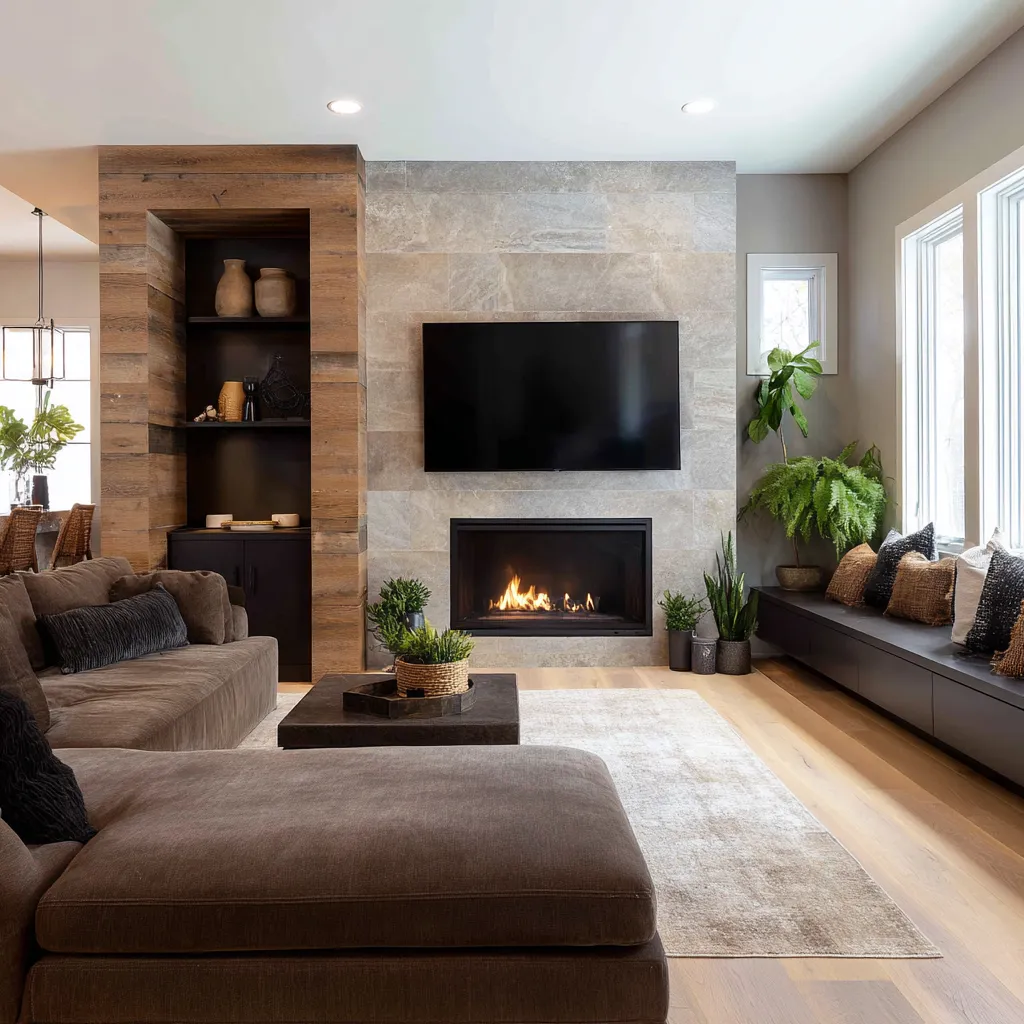
Open plans often benefit from dark Japandi when the darkness works as punctuation rather than blanket treatment. The living room may rely on a dark floor, a black center table, a media wall, a fireplace cladding, or a dark shelving mass, while the shell stays lighter and more open.
That keeps family life practical while still giving the room composure. The deeper idea is that open rooms need structure more than they need mood.
Once the structure is clear, mood follows more easily.
Dark Japandi for square family rooms
Square rooms can become static quickly. In those layouts, one large sectional often does more useful work than several smaller seats.
It can create the main social geometry, hold two sides of the center, and make the room feel gathered rather than scattered.
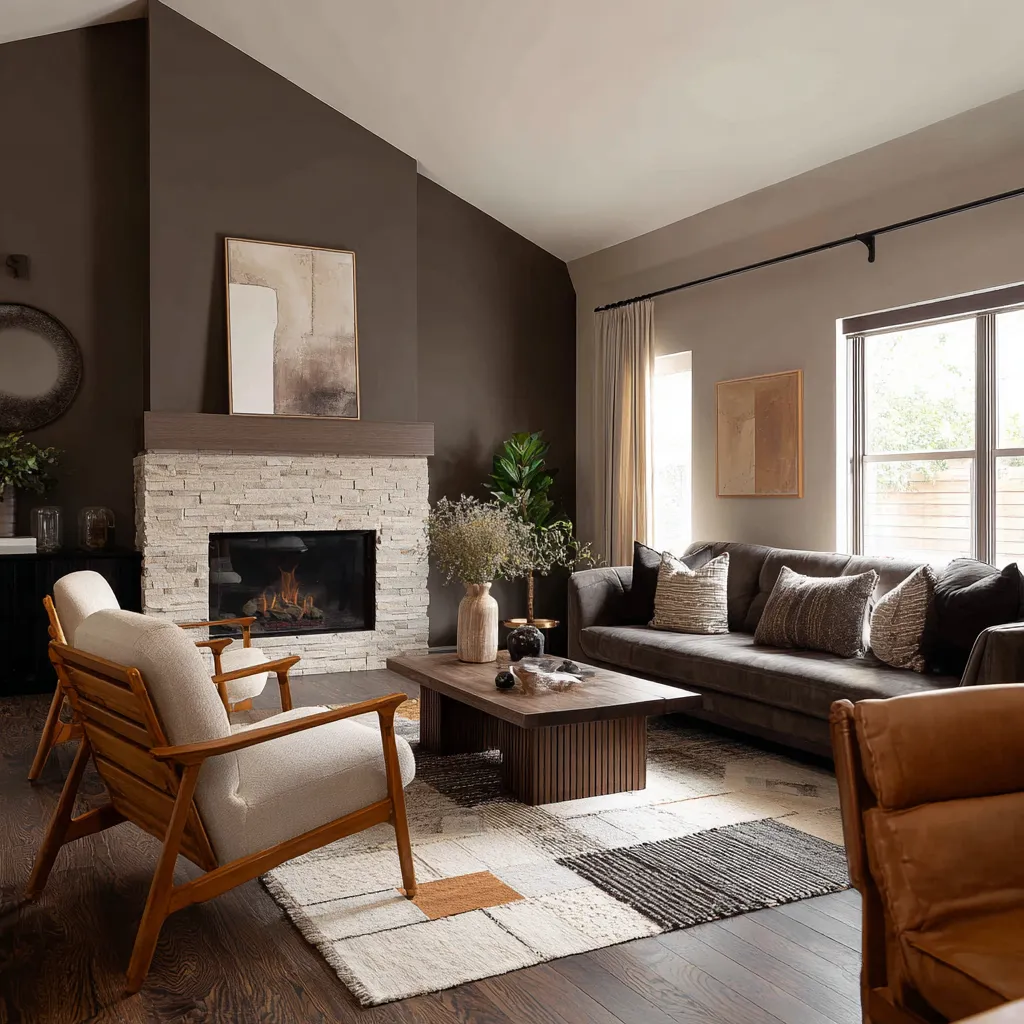
But the sectional alone is not enough. A square room also needs a quiet counterforce: a pale fireplace wall, a broad window field, or a built-in recess that gives the eye a resting plane between darker masses.
A large square or nearly square coffee table then stabilizes the middle and keeps the sectional from swallowing the room. This is one reason square dark Japandi room ideas use a mix of dark seating mass and lighter relief at either the wall or the window side.
The design feels settled because the heaviness is not equal on all four sides.
Dark Japandi for traditional rooms
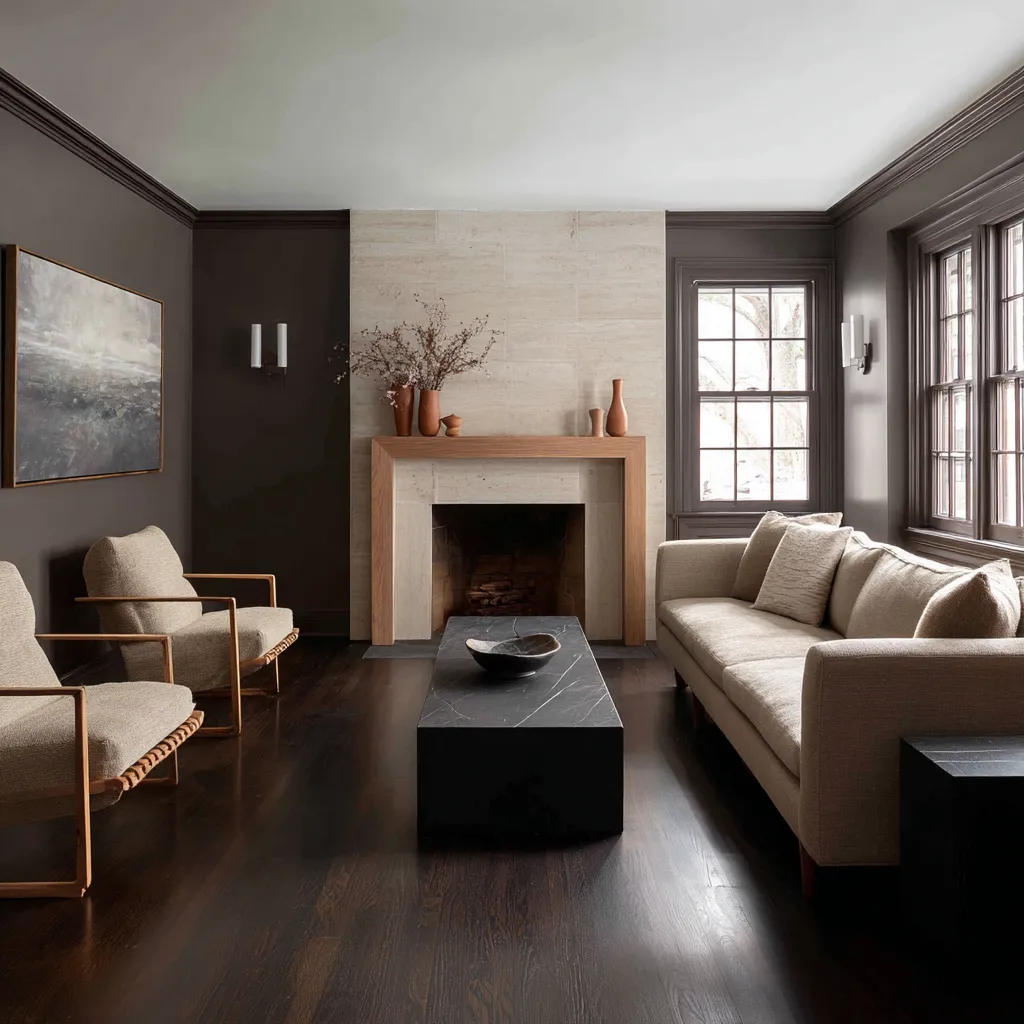
One of the useful things about this style is that it does not require a house to become aggressively modern. A bay window, a center-hall colonial plan, visible trim, formal openings, and inherited wall order can all remain in place.
The shift usually happens through hierarchy reduction. Walls and trim move closer in value so the shell feels calmer and less divided.
The fireplace becomes simpler. Upholstery becomes lower, broader, and lighter than the envelope.
The center gains one dark table that brings a modern horizontal line into the room.
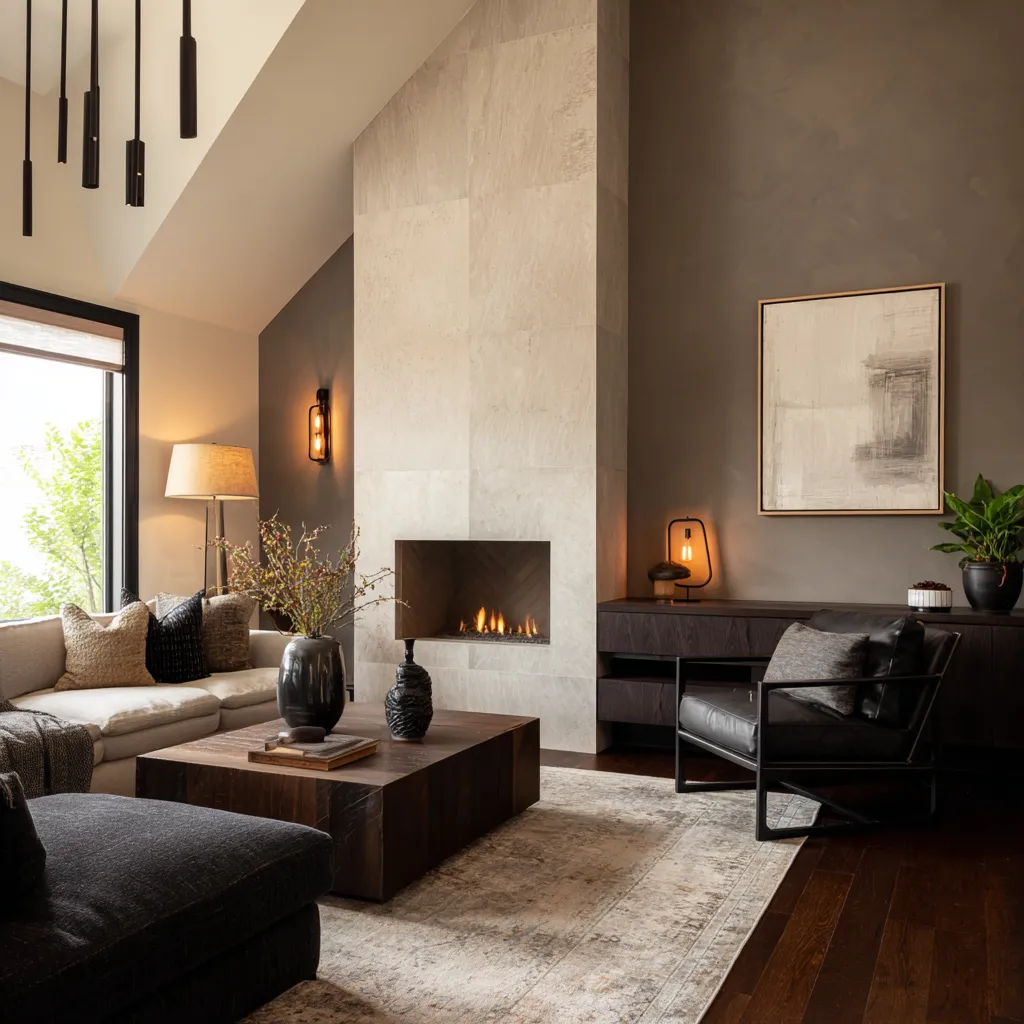
This approach is especially effective because traditional rooms already have clear geometry. The architecture can provide order.
The furnishings do not need to perform symmetry in a literal way. Two pale chairs can balance a sofa without mimicking it.
One dark slab table can modernize the center without fighting the shell. The room keeps its bones but changes its atmosphere completely.
Dark Japandi for condos and apartments
Smaller modern apartments often have one large window wall, and limited wall area. In those spaces, trying to create a full dark envelope can make the room feel tighter than it needs to be.
A more workable method is selective depth. Let the window remain the dominant bright event.
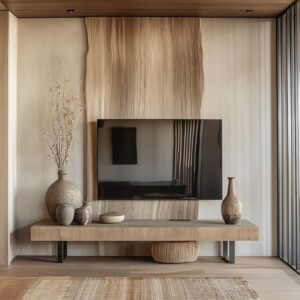
Recess the TV into a darker niche if possible. Run one long black credenza below it.
Keep the seating pale and low. Add one darker accent chair or one stronger dark table so the sitting group does not dissolve into the light.
This method can work because condos often need clarity more than atmosphere. One dark storage line and one darker media field can provide enough gravity without shrinking the room.
Dark Japandi for dens, libraries, and smaller enclosed rooms
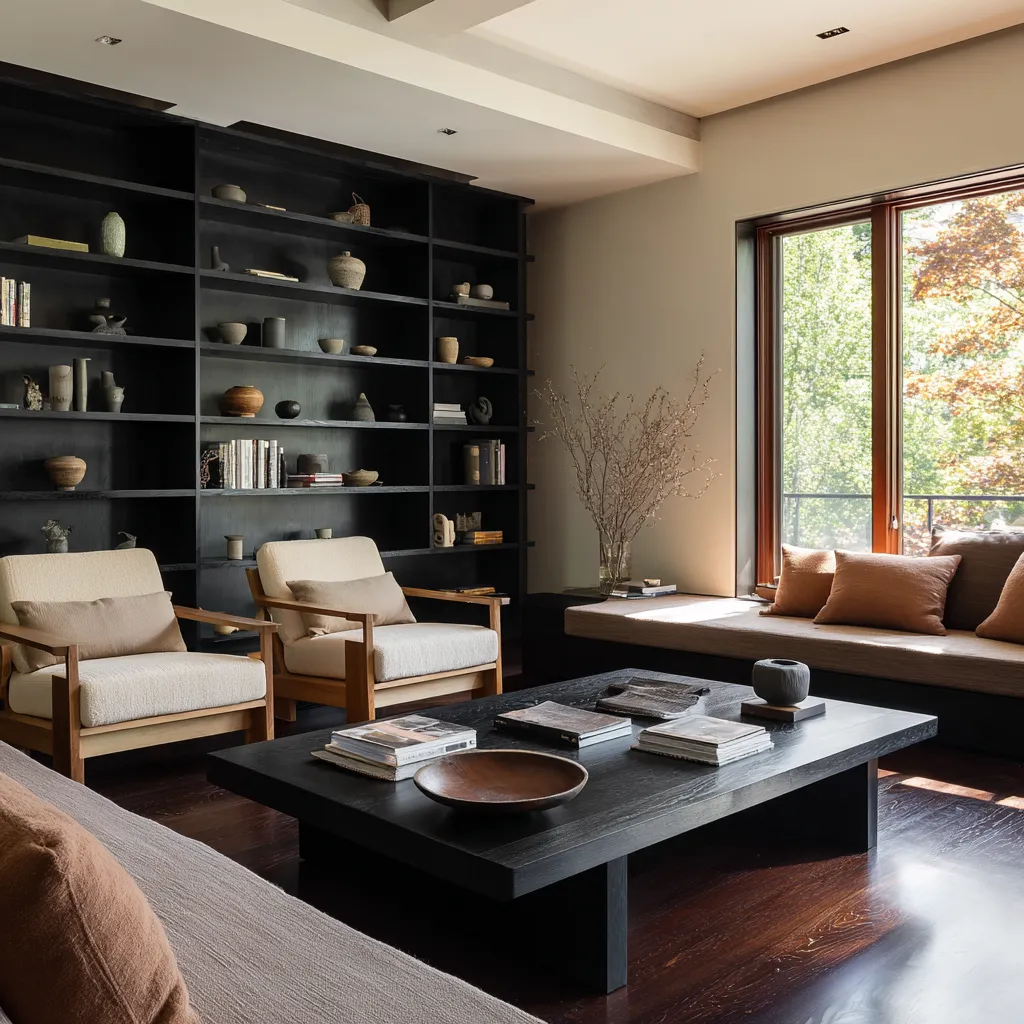
Smaller enclosed rooms often accept darkness better than open family rooms because enclosure is already part of their nature. A den, front sitting room, or library-like living room can carry a deeper envelope if the layout is disciplined and the object count stays low.
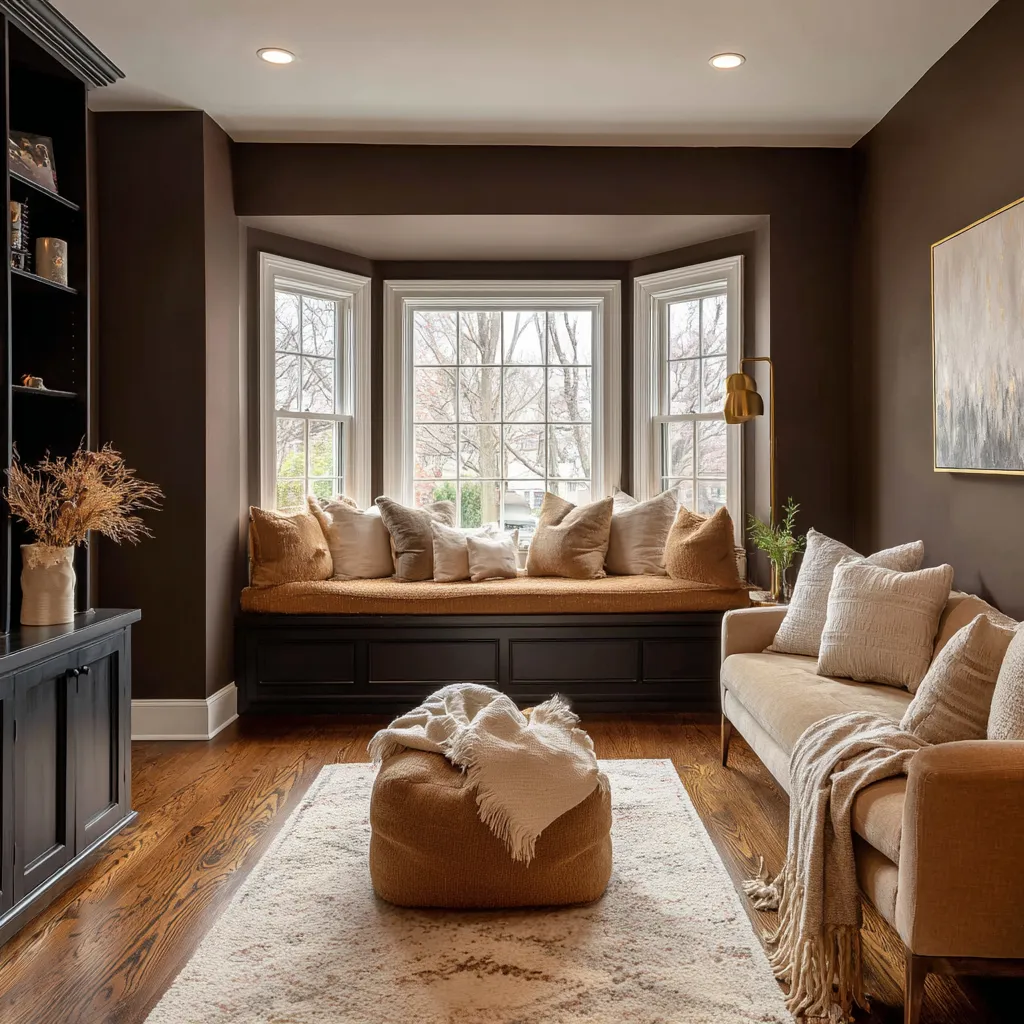
A window bench becomes especially useful in this type of room. It turns the brightest wall into an inhabited alcove and gives the room a second horizon line.
Full-height shelving can also work very well, but it has to remain edited. The shelving should feel like a dark wall with objects placed inside it, not like a crowded display.
That point is easy to miss. In a library-like dark Japandi room, negative space inside the shelving is as important as the books and ceramics.
The empty backing lets the wall keep its authority.
Dark Japandi for bonus rooms and awkward ceiling lines
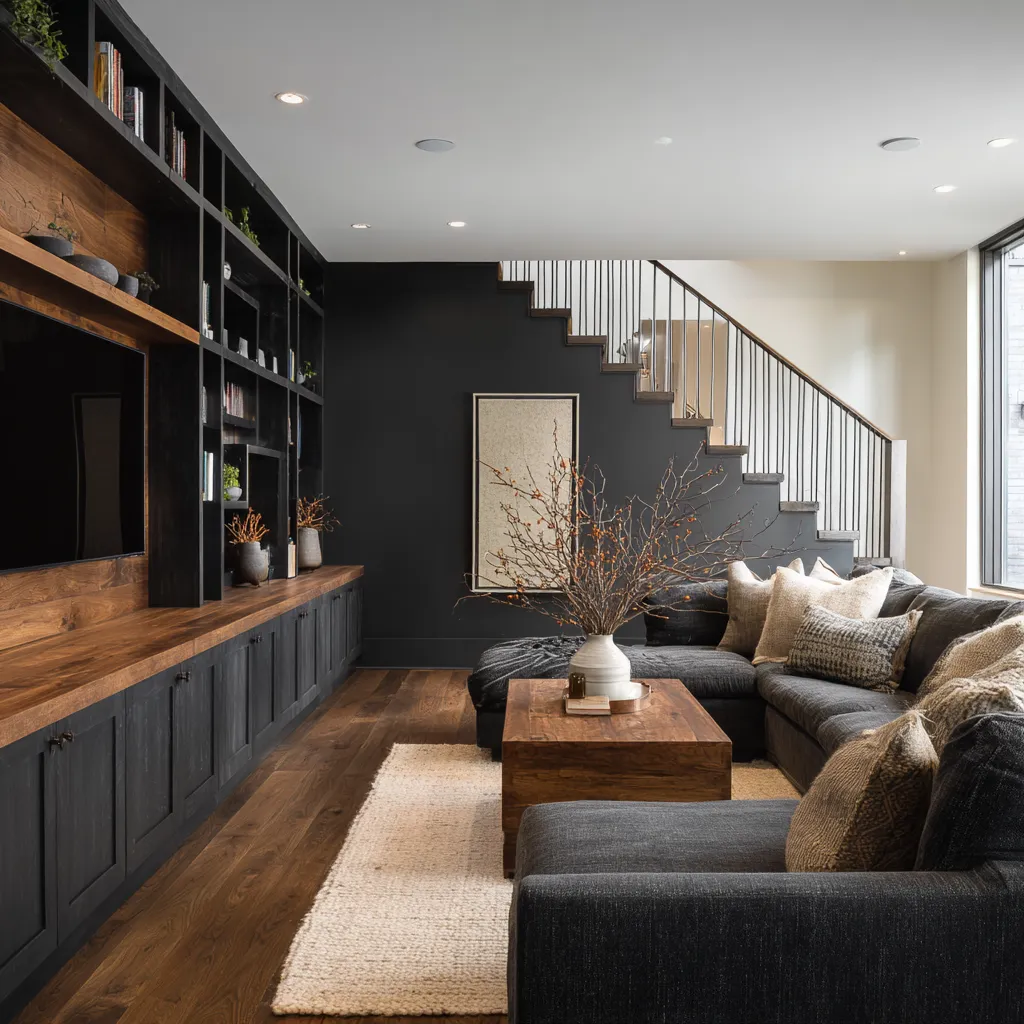
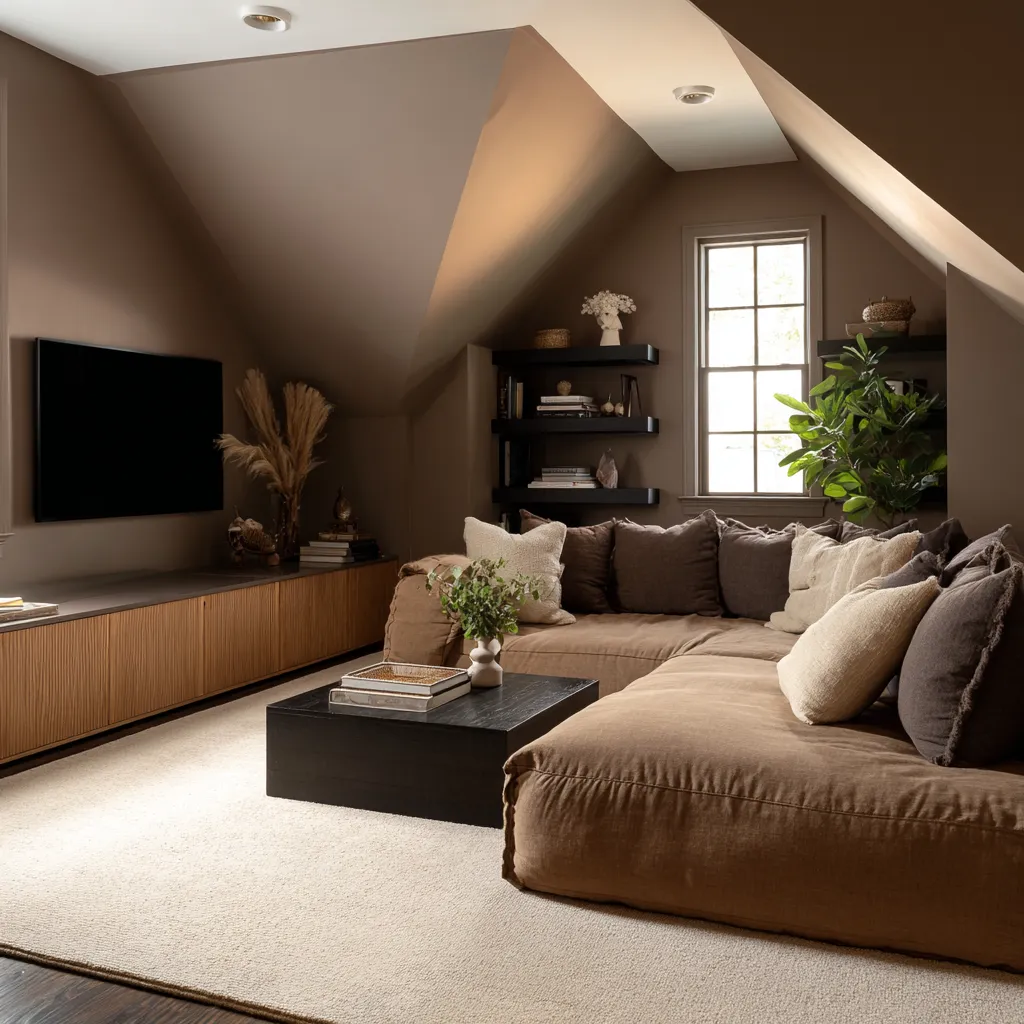
Rooms under sloped ceilings often become visually uncomfortable because every angle remains too visible. A darker unified wall-and-slope treatment can calm those shifts and turn the awkward shell into a more cohesive enclosure.
But one pale central ceiling plane or one lighter overhead field often needs to remain so the room does not feel pressed downward. Low sectionals, long media consoles, and strong horizontal furniture work particularly well here.
They keep the inhabited part of the room close to the floor and stop the eye from getting trapped in the upper geometry. In these layouts, a dark Japandi approach can actually solve awkwardness rather than exaggerate it.
Storage, media walls, and the idea of the dark reservoir
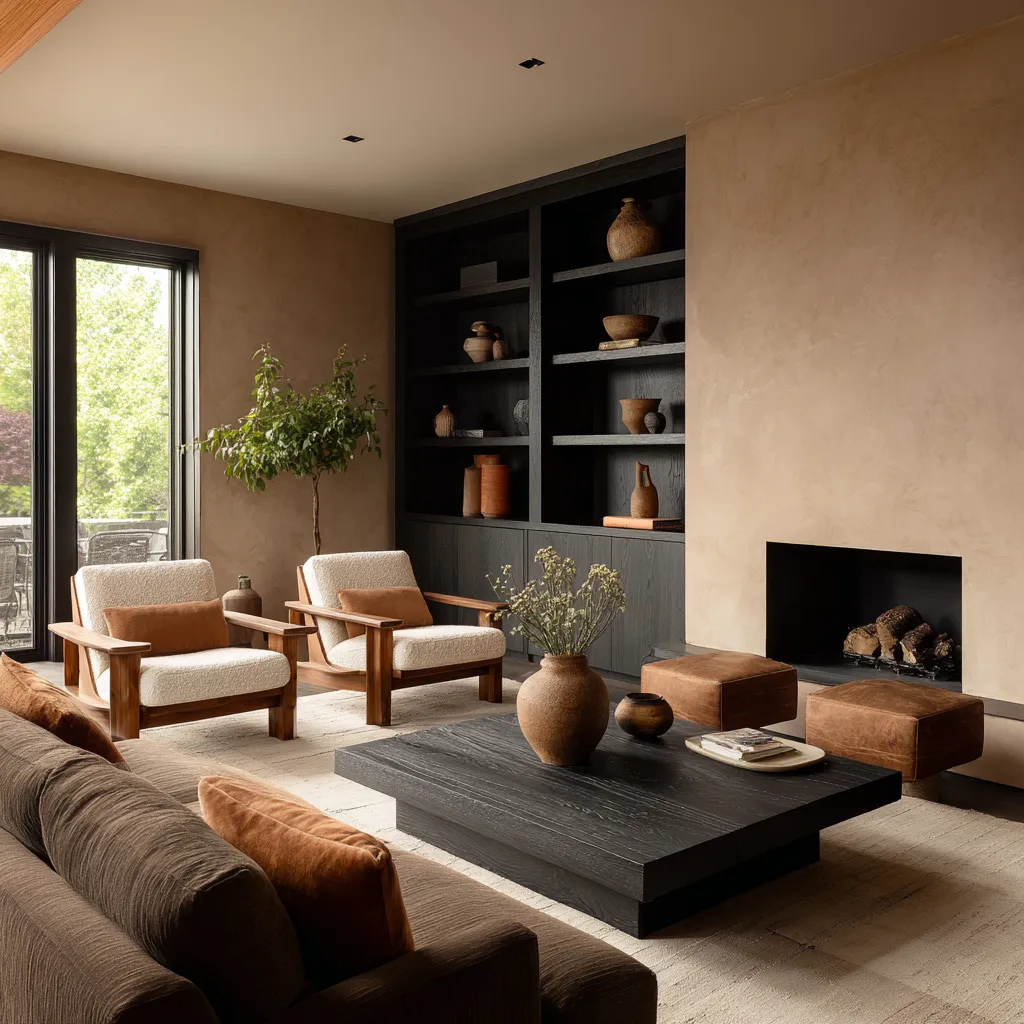
One of the dark Japandi ideas is the dark reservoir surface. If you cannot or do not want to darken the whole room, create one place where depth is concentrated and held.
That place could be a full-height shelving wall, a black built-in, a media recess, a black credenza line, or a darker storage wall in a townhouse plan. When it is broad enough, that one surface can carry much of the room’s gravity.
The rest of the shell can then stay lighter and easier to live with. This is especially valuable in family rooms and media rooms, because practical needs often threaten the style first.
Storage can become clutter. The television can dominate.
Shelves can turn noisy. Dark Japandi handles those risks by absorbing them into one calm architectural field.
Fireplaces in dark Japandi designs
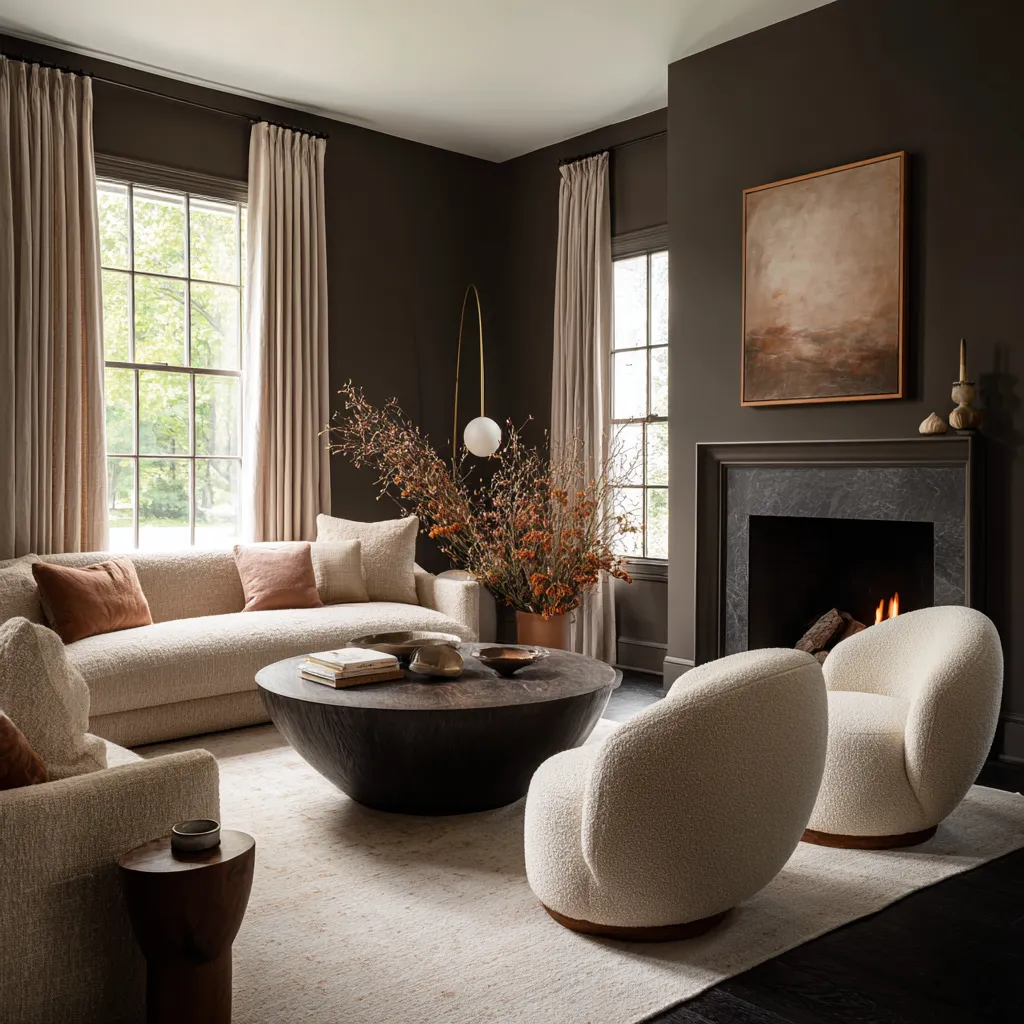
Fireplaces naturally offer a focal mass. But the style does not depend on them.
A design without a fireplace can still feel completely resolved if it has strong center gravity, clear darkness placement, good overhead handling, and one substantial depth-holding surface. When fireplaces are used, the ones that work well here are usually broad, quiet, and architecturally treated rather than decorated.
The wall around them may be dark plaster, pale stone, warm clay, or restrained tile, but the goal remains the same: give the room a focal anchor without turning the fireplace into a performance.
Where the style often starts to slip
Dark Japandi tends to drift in a few familiar directions.
- One is toward organic transitional softness. This happens when the shell gets lighter, the sofa gets fuller, the rug gets more active, and the room picks up too many casual accessories without any compensating depth.
- Another is toward rustic contemporary. This happens when beam weight, stacked stone, rough timber, and other lodge-like signals get too loud while the furnishings stop being disciplined enough to contain them.
- A third is toward polished moody luxury. This happens when gloss, dramatic black surfaces, shiny metals, or overly styled contrast begin to replace tactile restraint.
The way back is usually simple, though not always easy: reduce visual speech, keep the center stronger, pull the furniture lower, compress the palette, and make sure darkness is serving a role rather than floating as atmosphere.
What dark Japandi style offers
The style offers something many homes need but do not often get from trend-driven decorating: gravity without clutter, softness without sweetness, and structure without stiffness.
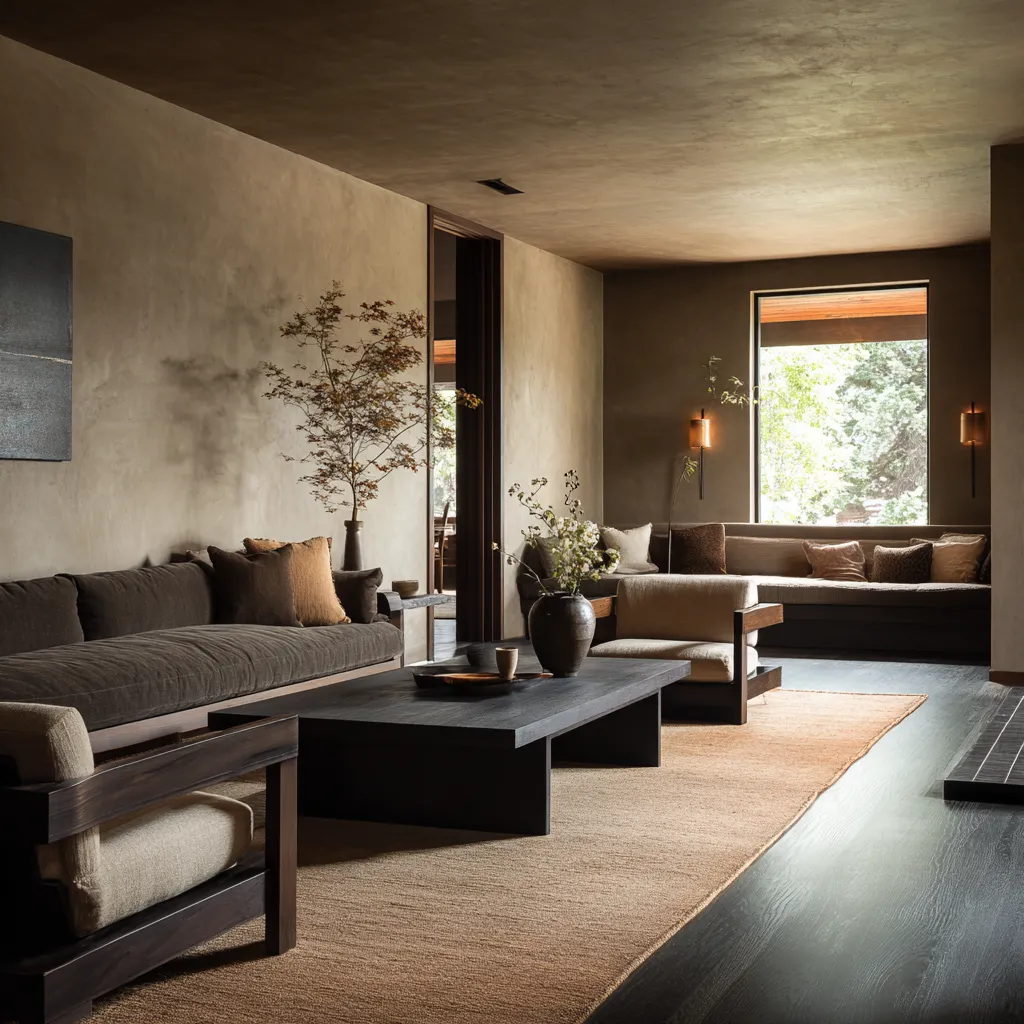
It can make an open family room design feel defined without adding walls. It can make a traditional front room feel calmer without erasing its history.
It can make a condo media wall feel intentional rather than awkward. It can make a bonus room feel sheltering rather than compromised.
It can turn storage, thresholds, benches, and dark tables into compositional tools rather than mere functional pieces. The idea is simple, though its application takes care: dark Japandi works well when darkness is assigned, softness is localized, relief is broad, and weight stays low and centered.
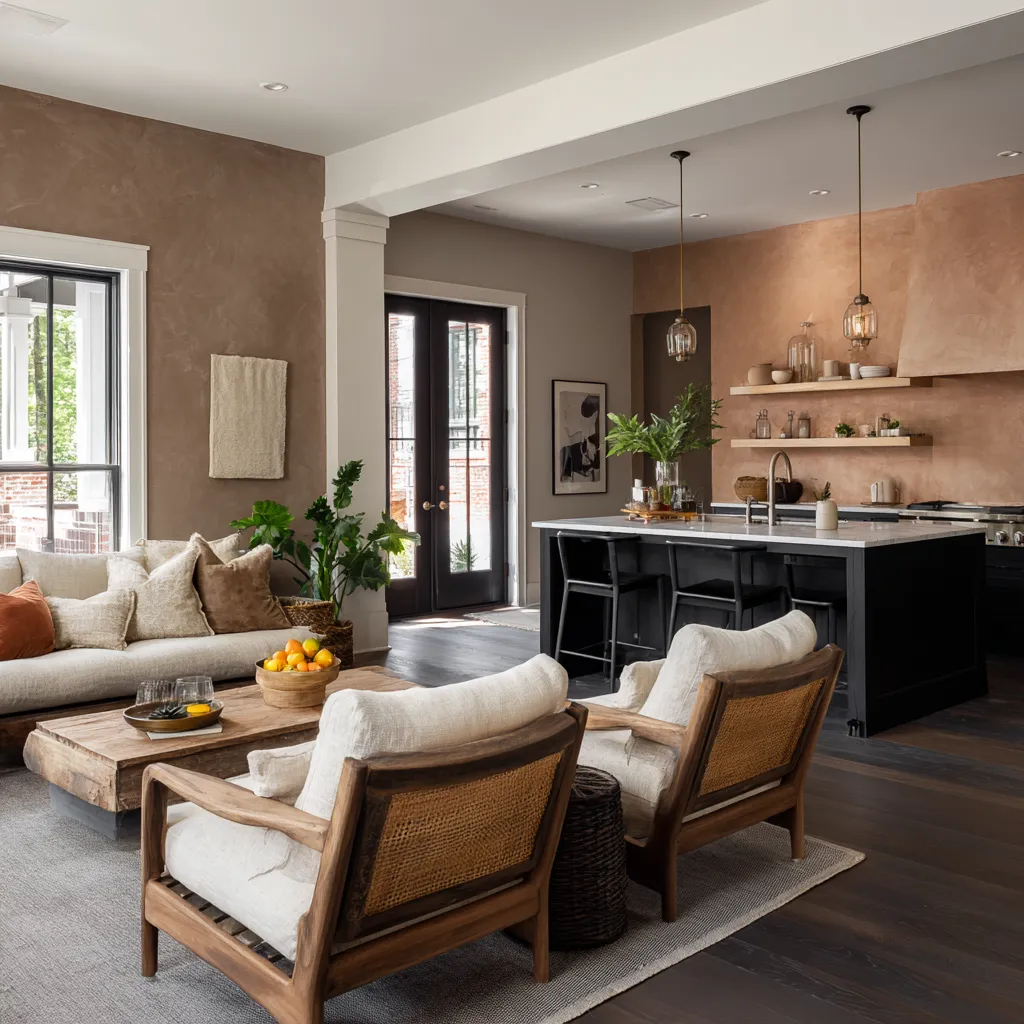
That is why the style can move through many home layouts without collapsing into one fixed formula. A room can be library-like, family-friendly, threshold-led, media-led, fireplace-led, more formal, more inward, or more open.
The shell can be darker or lighter. The room can be traditional or modern.
What matters is whether the room keeps its internal order.