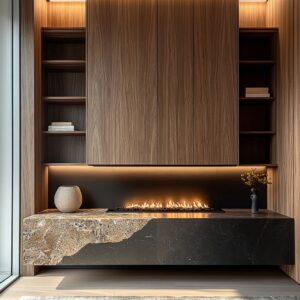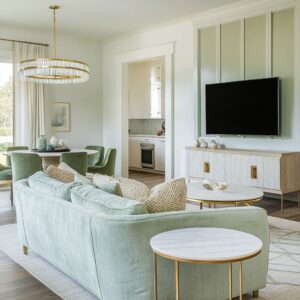
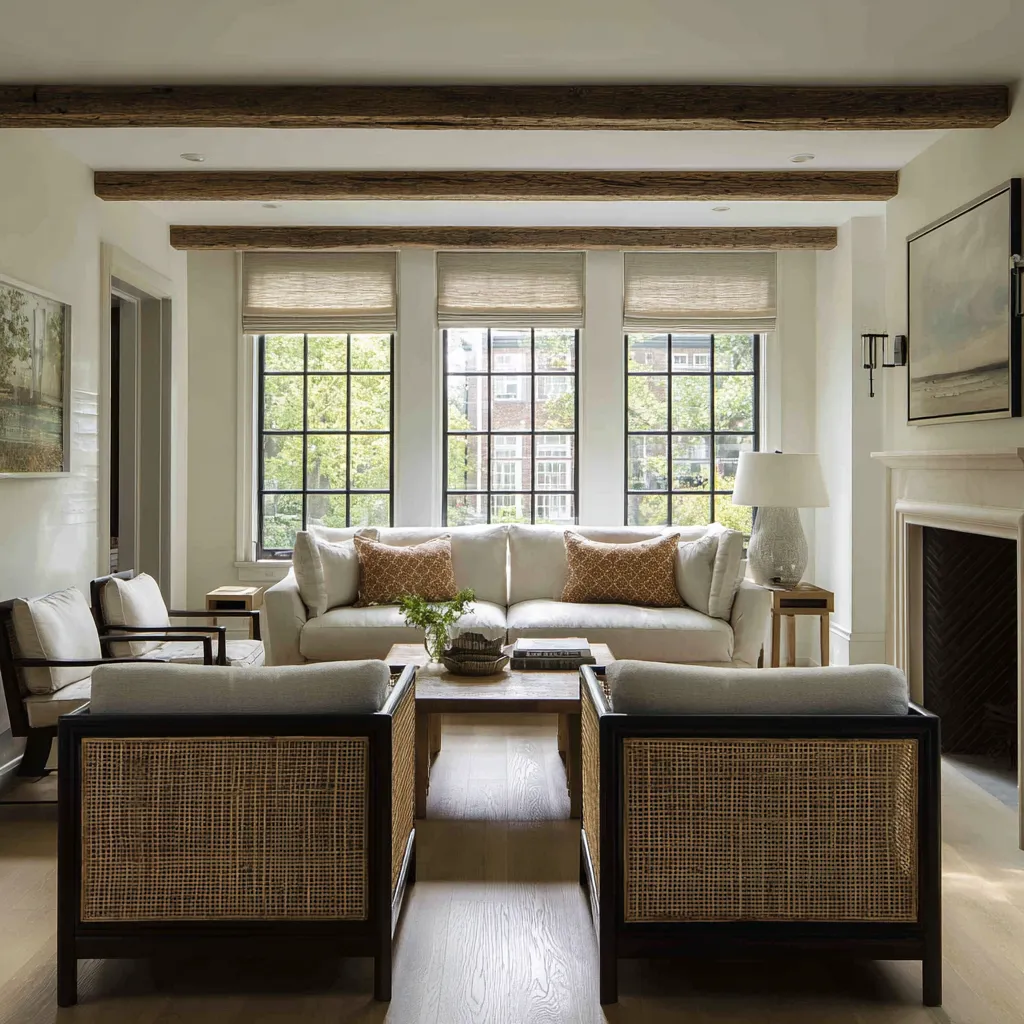
British colonial interior design is famous with using cane chairs, dark wood, trunks, leather, botanical prints, maybe a ceiling fan and a map on the wall. That version is easy to recognize, but it misses the deeper reason this style continues to work in modern homes.
The strength of British colonial decorating sits elsewhere. It lives in how a room balances air with weight, openness with shelter, and comfort with structure.
That balance is why the style adapts so well to present-day living rooms, family rooms, and open-plan houses. It can live inside a bright suburban shell, a more formal sitting room, a coastal house, or a warm-weather home with terrace doors and filtered light.
The style stays recognizable because its core is not a collection of props. Its core is a spatial and material logic.
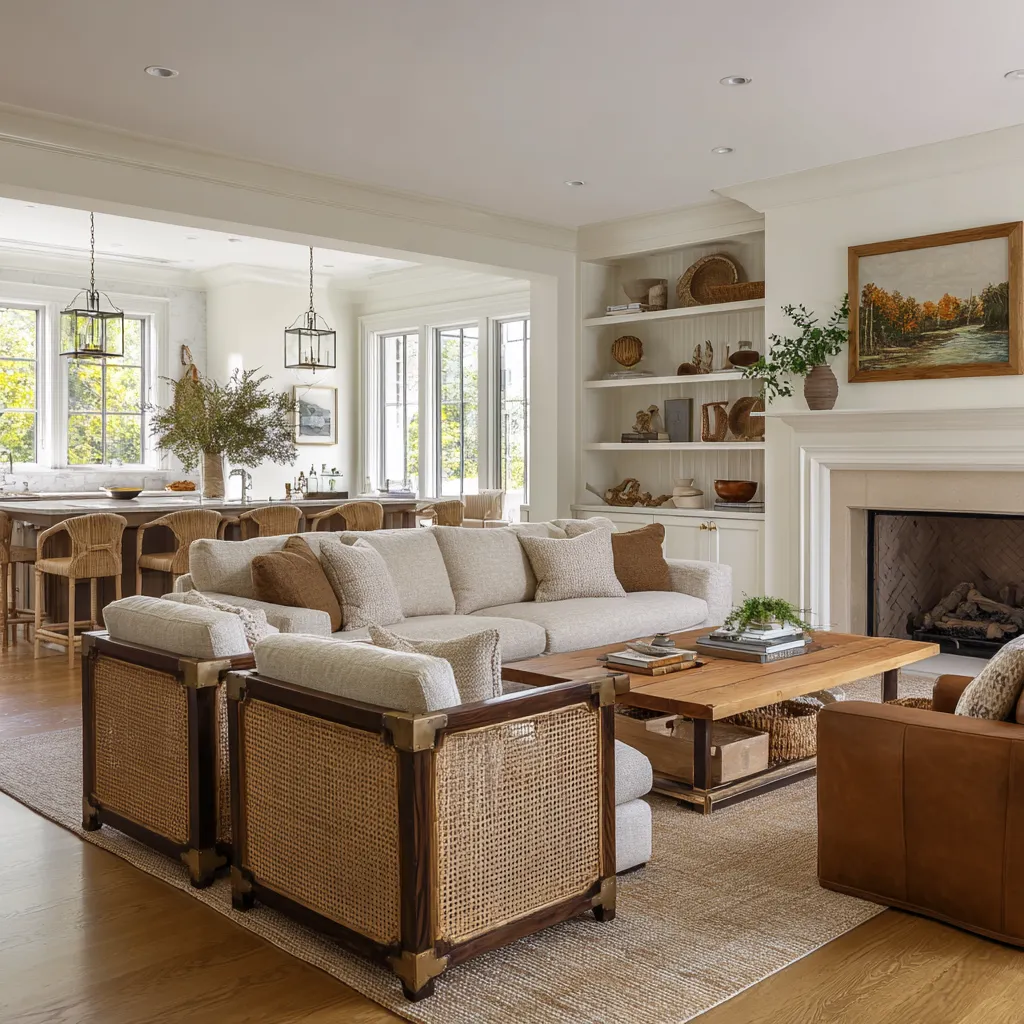
At its heart, British colonial design for current decorating depends on a pale envelope, breathable woven structure, a few grounded dark notes, one stable center, and a steady relationship to daylight. It also depends on restraint.
These rooms are rich in surface character, but they are usually edited. They feel layered because wood, cane, linen, stone, plaster, leather, and shadow each carry part of the mood.
The room does not need many colors or many objects. It needs the right pressures in the right places.
The foundation: firm frame and soft interior
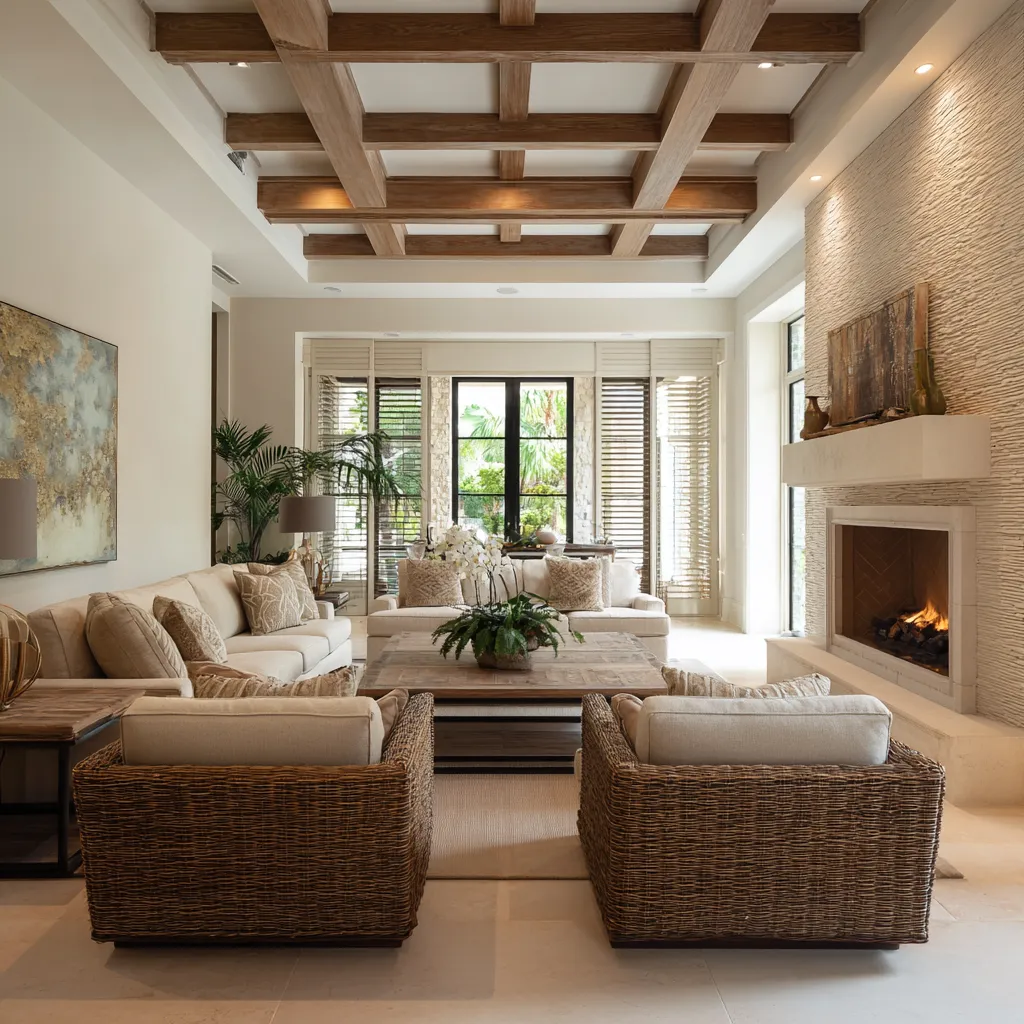
British colonial interiors works better when it is held inside something firmer. That is why so many successful rooms combine soft neutral upholstery with dark or warm wood frames, woven side panels, leather accents, black window lines, stone fireplaces, or low heavy tables.
The softness is real, but it is never allowed to spread without limit.
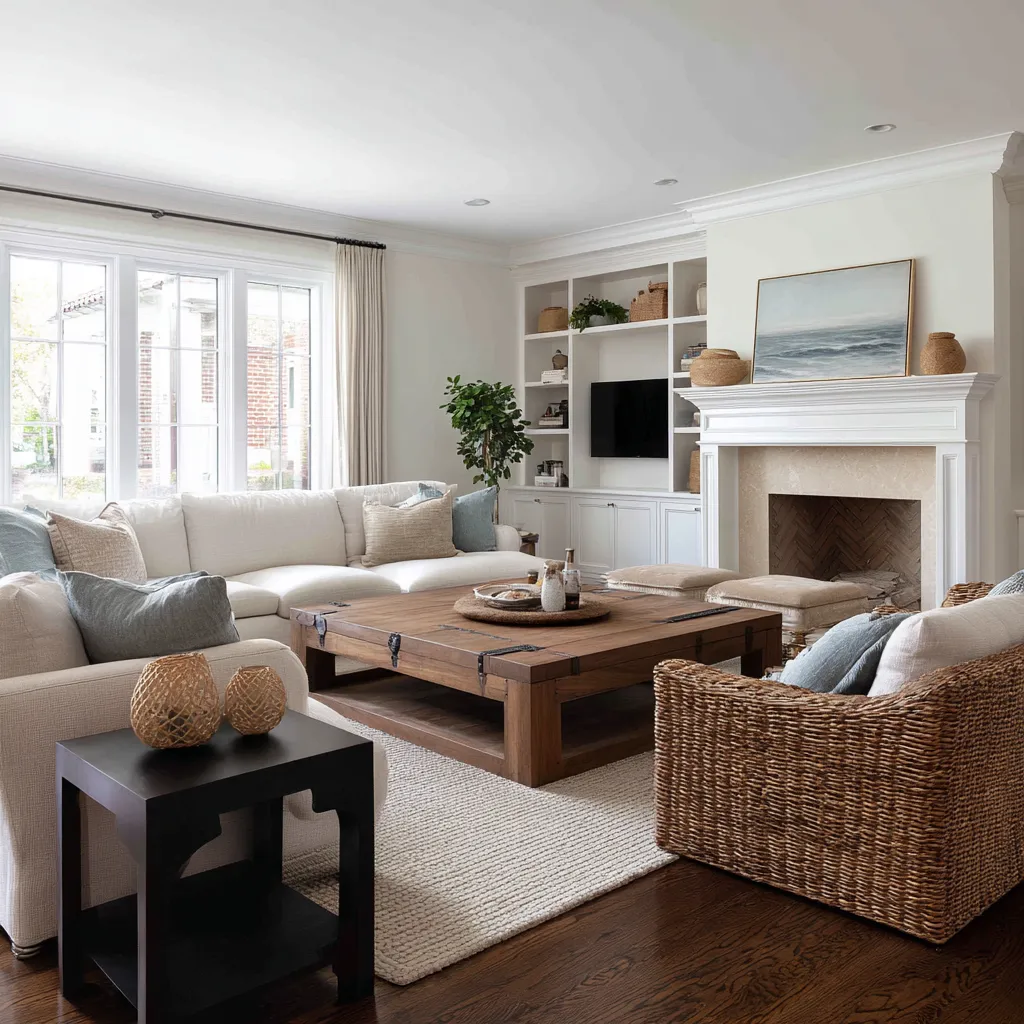
This is one of the main reasons the style feels settled rather than vague. A pale sofa by itself can drift toward generic comfort.
A deep sectional by itself can feel shapeless. But place that sofa beside cane-framed chairs, under timber beams, near a dark firebox, or around a broad wood table, and the whole room gains bones.
The room feels composed because the soft parts are checked by drier, harder, or heavier elements. That relationship between cushion and frame may be a useful British colonial style decorating idea.
Many present-day interiors lean too far in one direction. They either become soft and indistinct, or they become hard and self-conscious.
British colonial rooms often land in the middle. They are comfortable, but they still have a backbone.
Why the bright shell matters
People often assume colonial interiors must be dark because they include dark woods, leather, and heavier furniture forms. Modern versions often depend on lightness first.
Cream walls, pale plaster, soft stone, washed trim, generous openings, and bright ceilings create the atmosphere that lets the denser materials make sense. The bright shell does several things at once.
It gives the room air. It allows woven surfaces to register clearly.
It keeps dark furniture from becoming oppressive. It also makes the space adaptable to current family life, where openness and visual relief matter far more than historical accuracy.
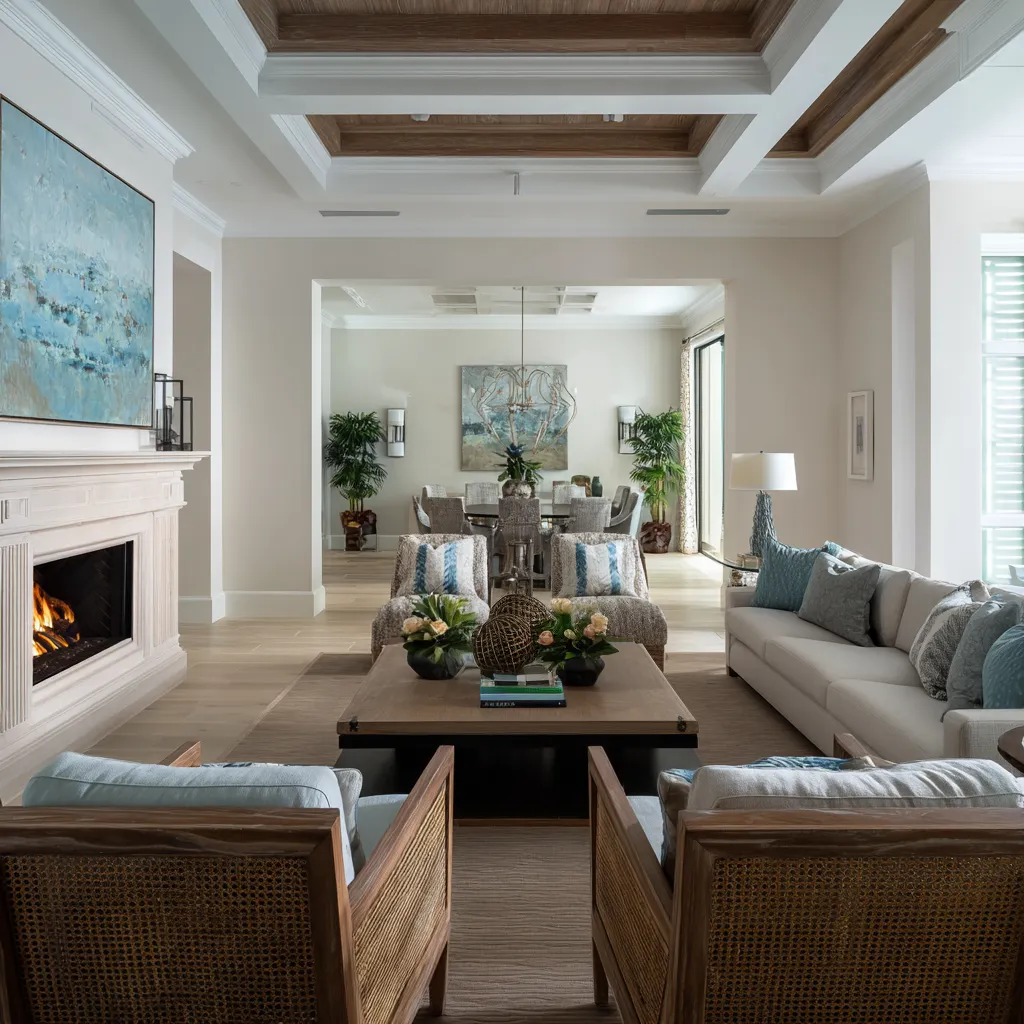
This does not mean every wall must be white. It means the room usually benefits from a luminous field around the furniture.
That field becomes the background against which the colonial elements gain clarity. Dark chairs feel stronger.
Cane feels more porous. A black-framed window feels sharper.
A fireplace with a dark herringbone interior feels deeper. Without a bright shell, many of those relationships lose force.
This is why British colonial style can work so well in current houses that already have bright architecture. The house does not need to imitate an old plantation or club interior.
It needs the right contrast pattern.
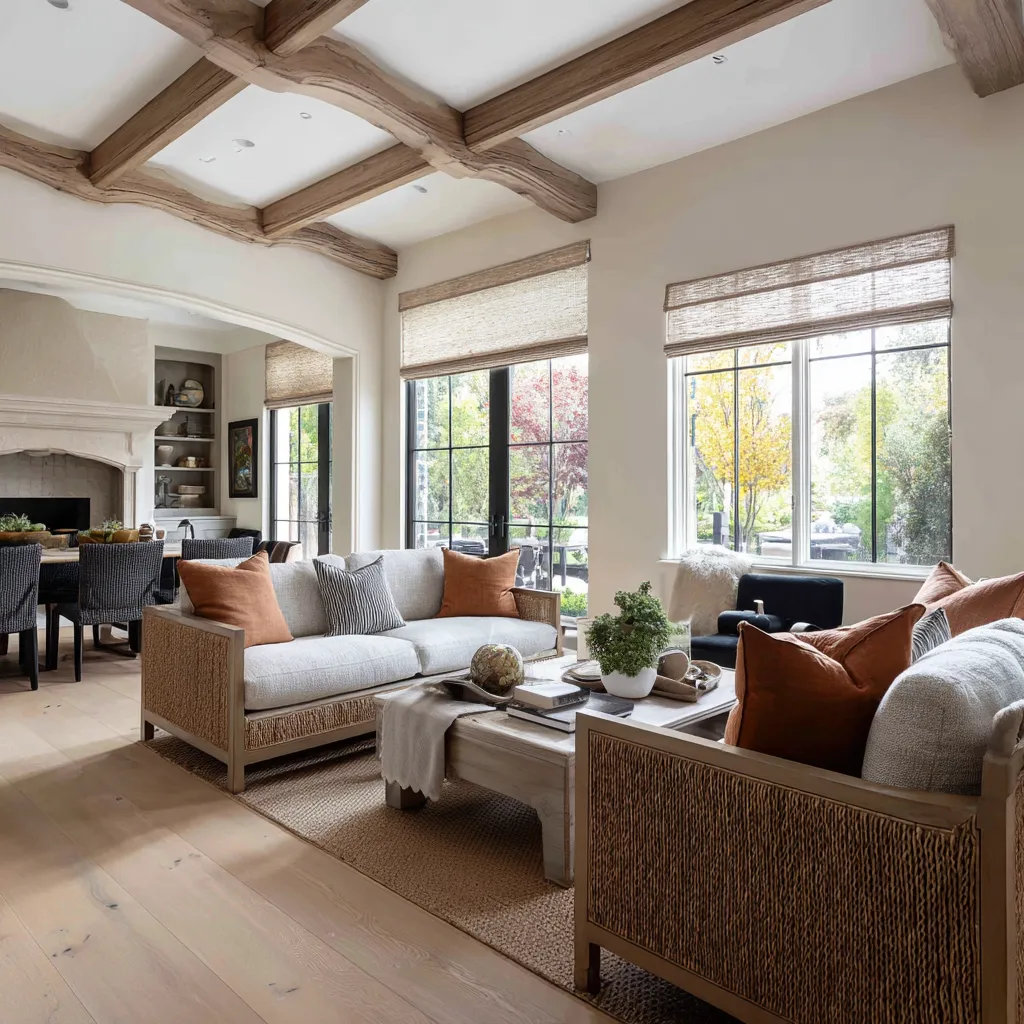
Woven surfaces are doing far more than decorating
Cane, wicker, rattan, rush, and other woven surfaces are often treated as decorative cues, almost like shorthand for a colonial mood. In a good room, they do much more than that.
They manage weight. They make substantial furniture feel breathable.
They introduce handwork without visual clutter. They also create a useful middle condition between heavy wood and soft upholstery.
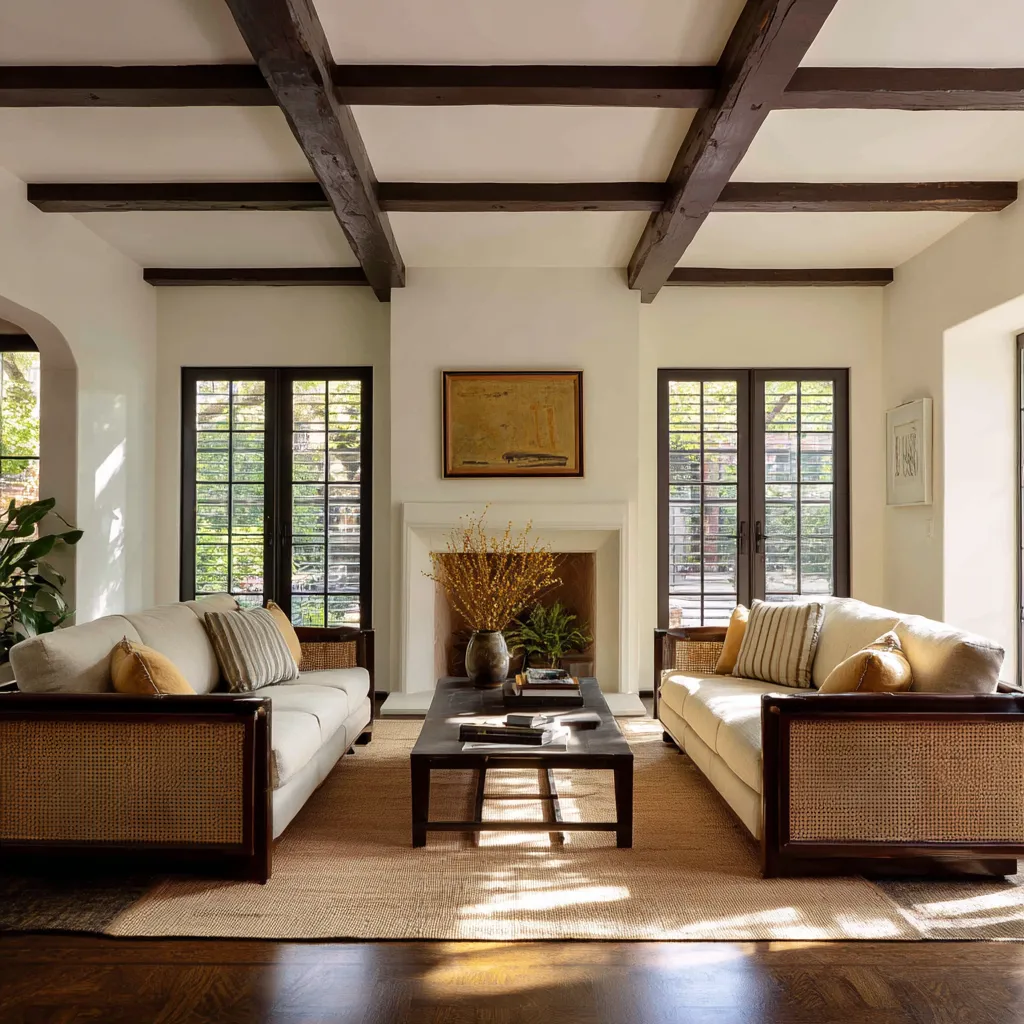
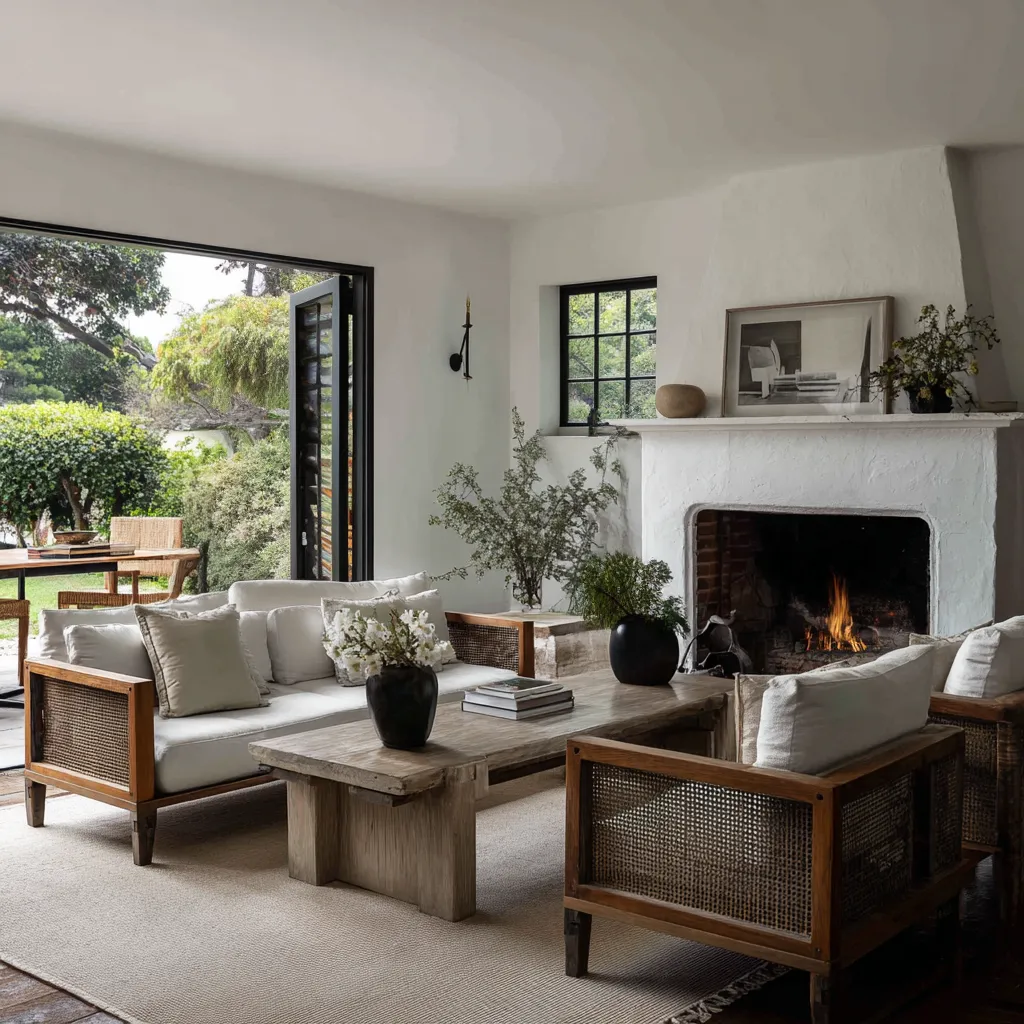
A cane-backed chair is a good example. The frame can be dark and substantial, yet the back still lets light pass through.
That keeps the room from becoming visually blocked. The same is true of woven sofa side panels, basket-like lounge chairs, rush stools, or cabinet inserts with woven fronts.
These surfaces hold structure and permeability in the same object.
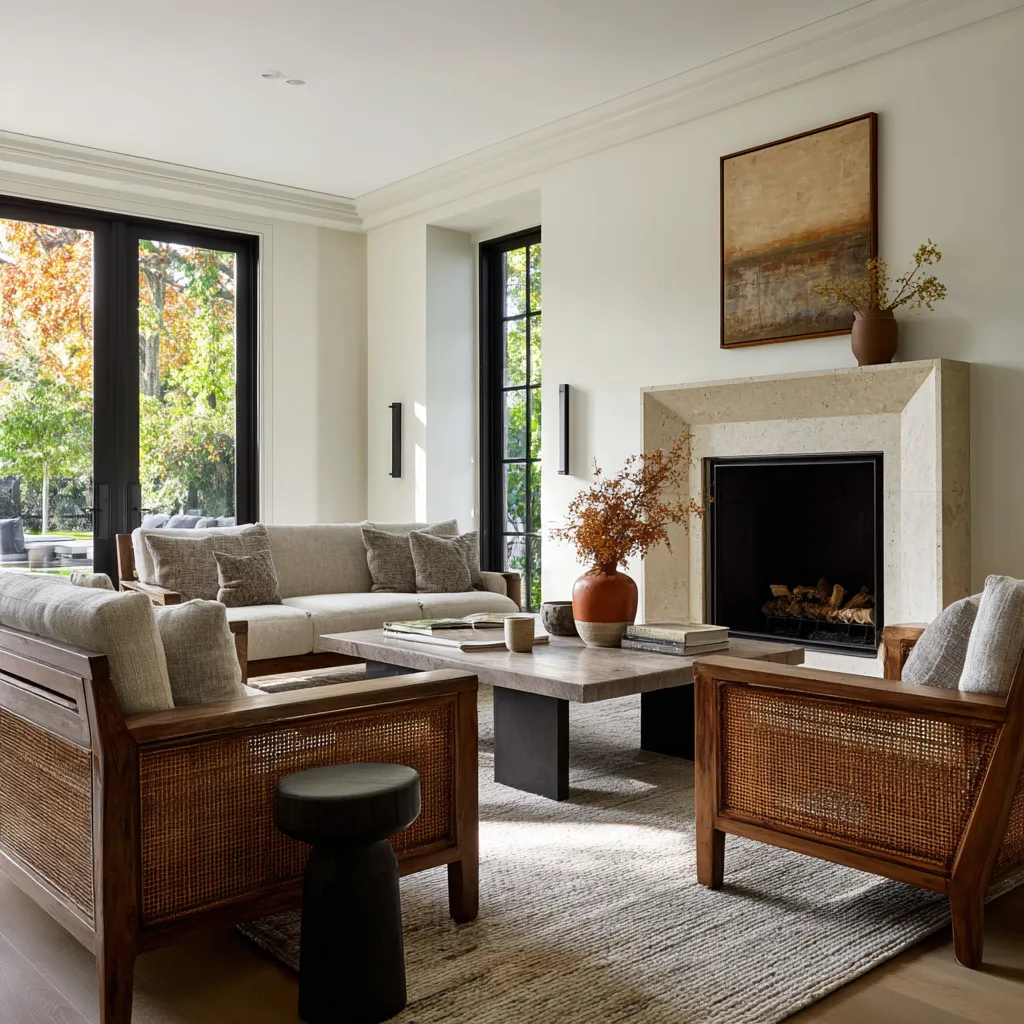
That is one reason British colonial interiors adapt so well to open-plan living. Woven furniture has enough presence to define a seating group, but it does not stop the room visually.
In a family room connected to a kitchen, dining area, or terrace, that quality matters. The furniture helps create zones without building walls.
This is also why cane or woven construction belongs in the major seating pieces, not only in small accessories. A tray or basket can support the atmosphere, but the style becomes much stronger when the main chairs or sofas carry the woven language themselves.
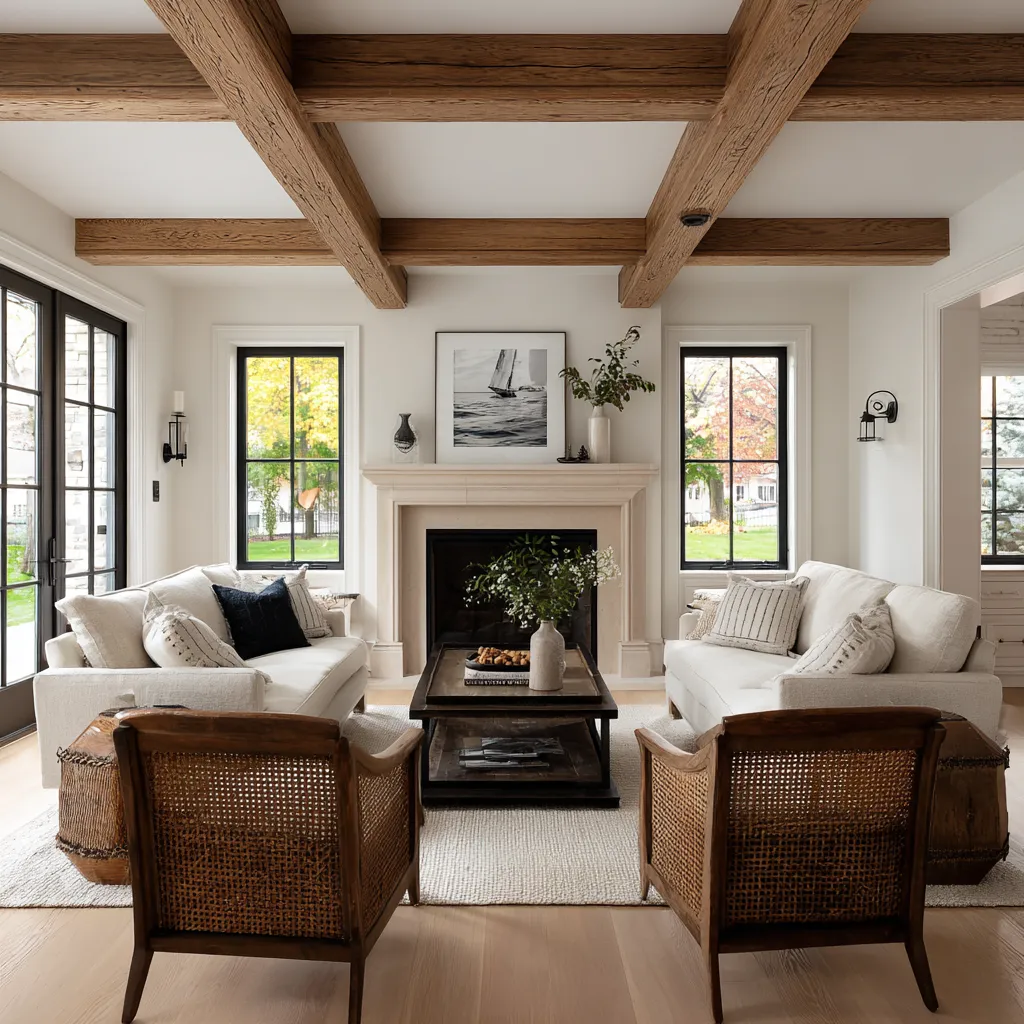
Dark anchors keep pale rooms from drifting
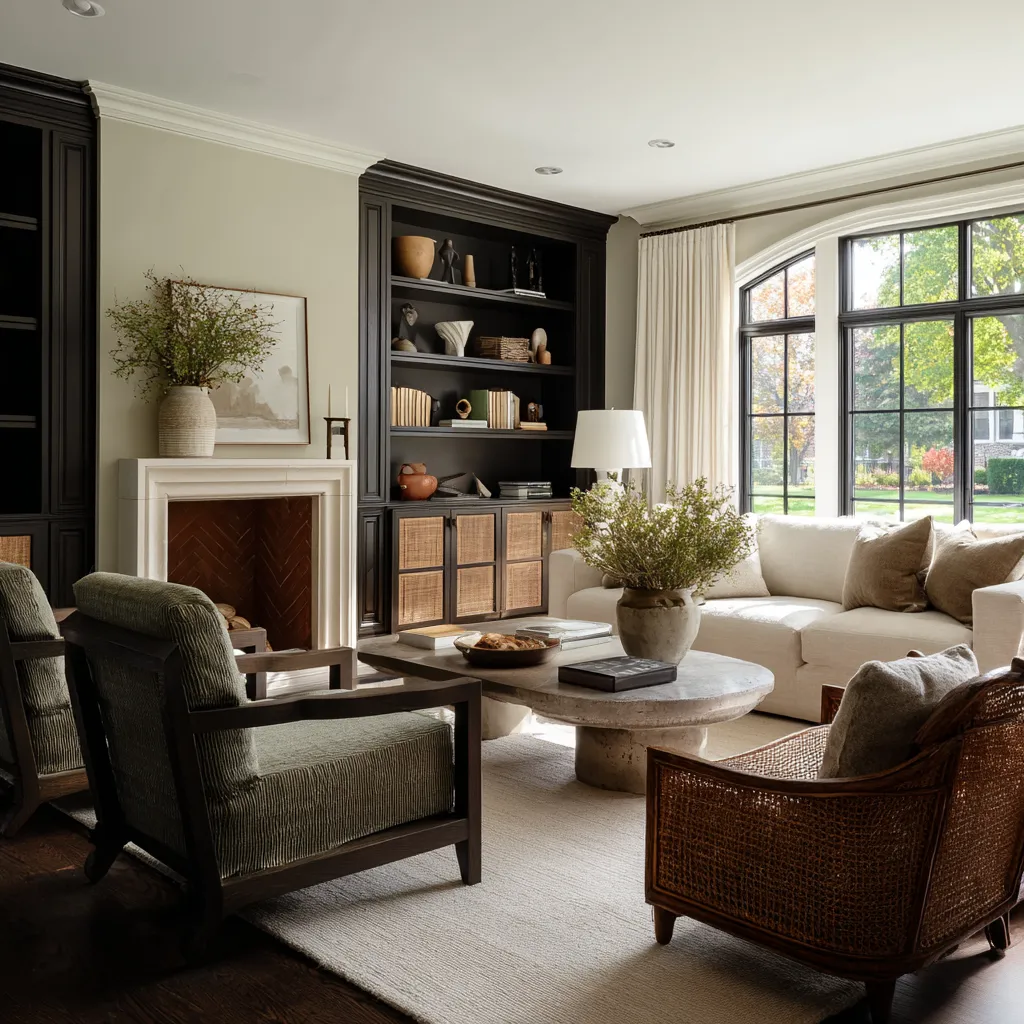
If the bright shell brings air, dark anchors bring settlement. British colonial rooms nearly always need a few concentrated notes of weight: a black cabinet, a dark coffee table, deep wood built-ins, black window frames, a leather chair, a dark mantel, a patterned firebox, or a shadowed shelving niche.
These elements do not need to dominate the whole room. They need to be placed carefully enough that the pale field around them gains definition.
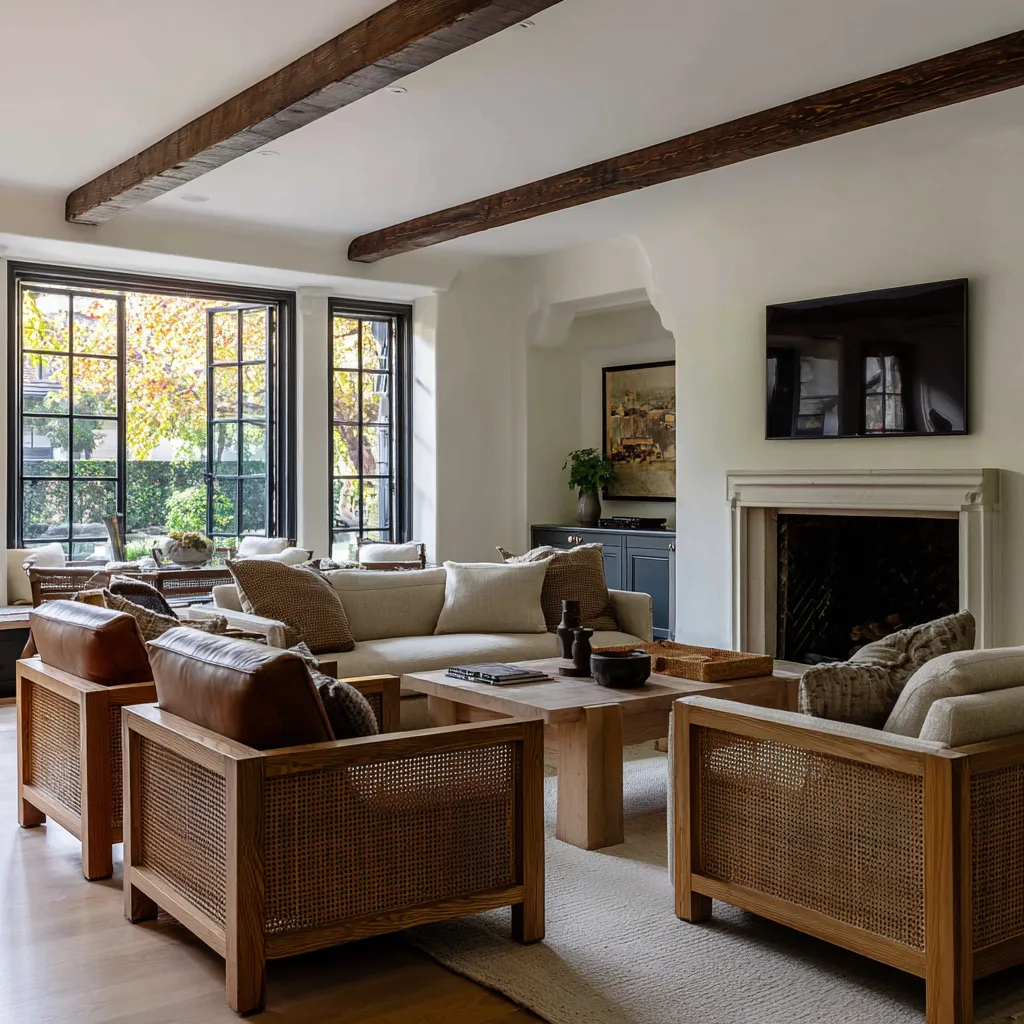
This is a subtle point, but it matters. A room can be bright and still feel grounded.
It does not need to become moody everywhere. Often one or two deep notes are enough.
A pale living room with woven chairs and a low dark table can feel far more stable than a fully beige room with no contrast at all. Stone and plaster can perform a similar role.
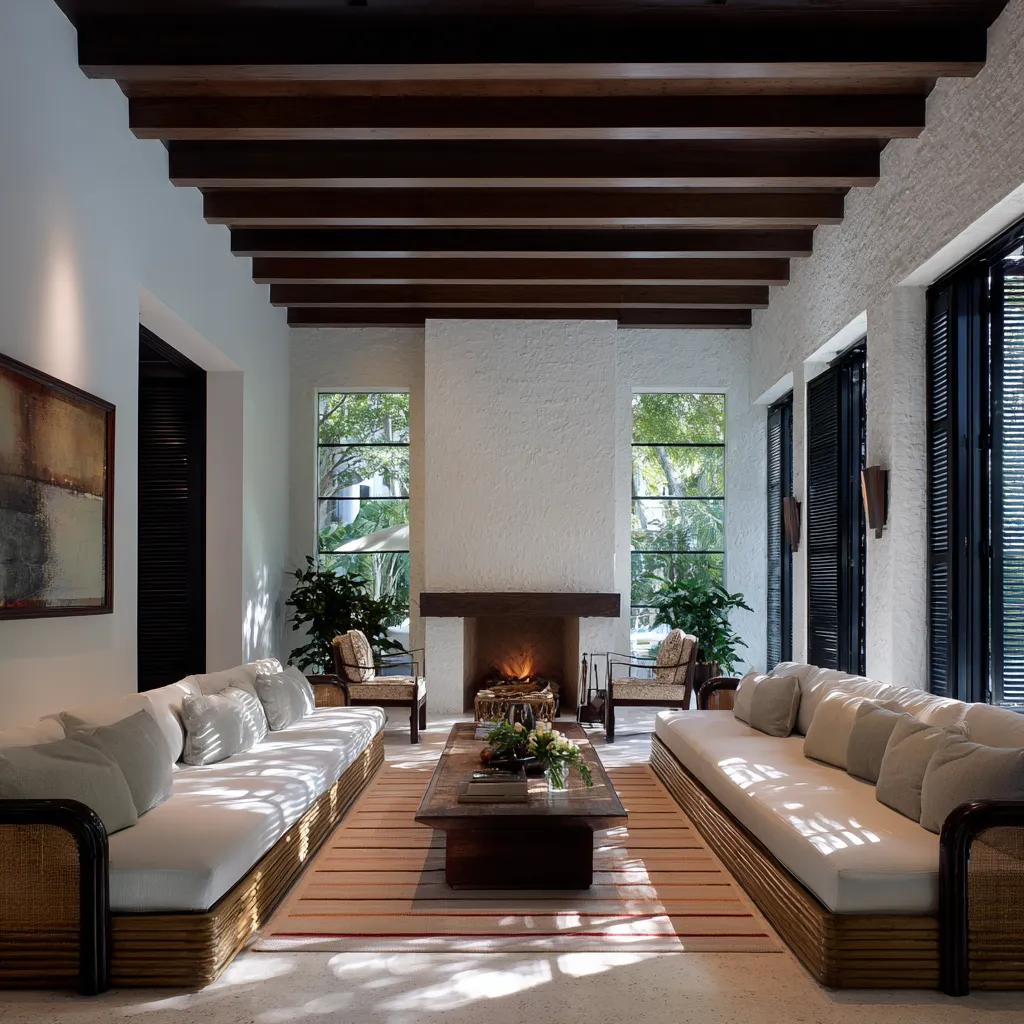
A thick limestone surround, a chalky plaster fireplace mass, or a pale mineral floor adds weight without relying on blackness. Weathered timber can do it too.
A scrubbed wood beam, a rougher table, or a sun-aged frame gives the room tactile ballast even when the palette stays fairly light.
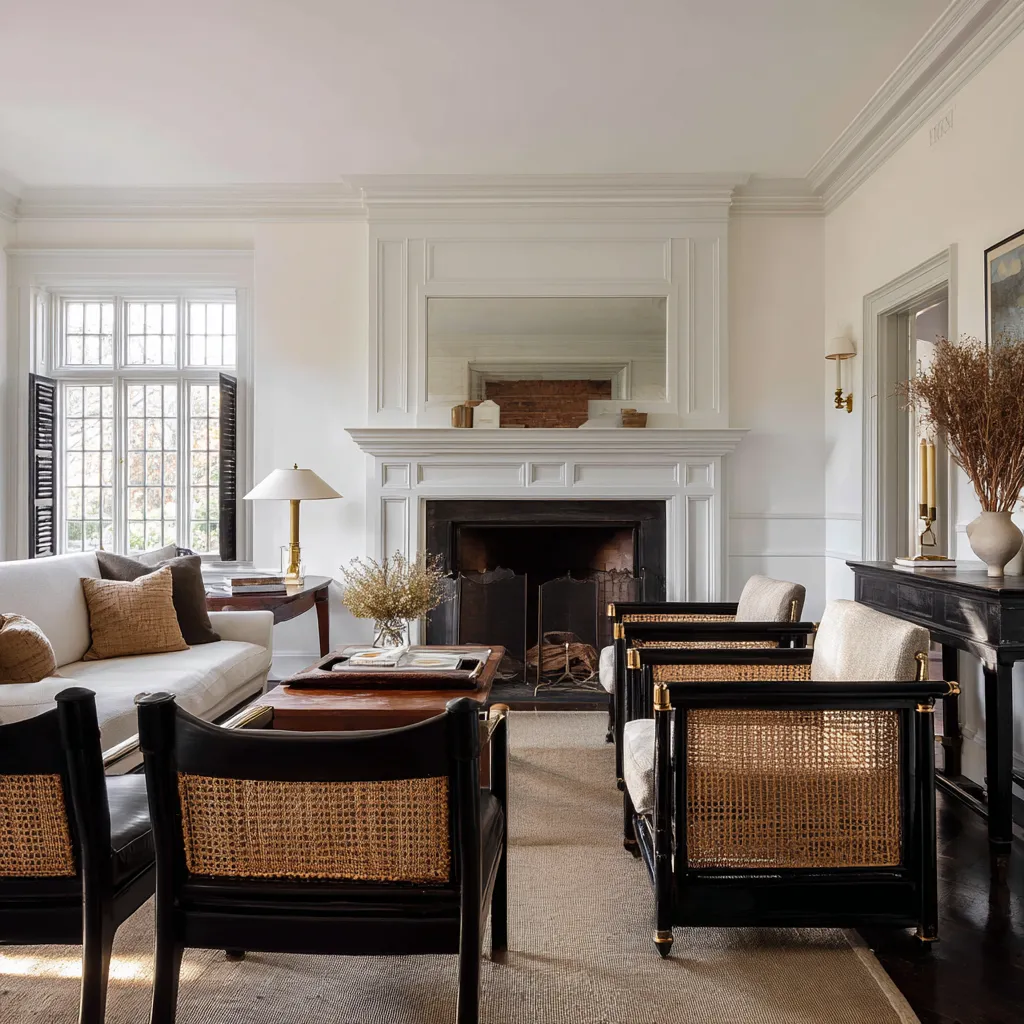
That is why British colonial rooms can arrive at the same grounded feeling through different routes. One room may use black millwork.
Another may use a pale stone floor and a hand-worked fireplace wall. A third may lean on rustic beams and a large timber table.
The result can still belong to the same family because the room is solving the same problem: how to keep brightness from feeling thin.
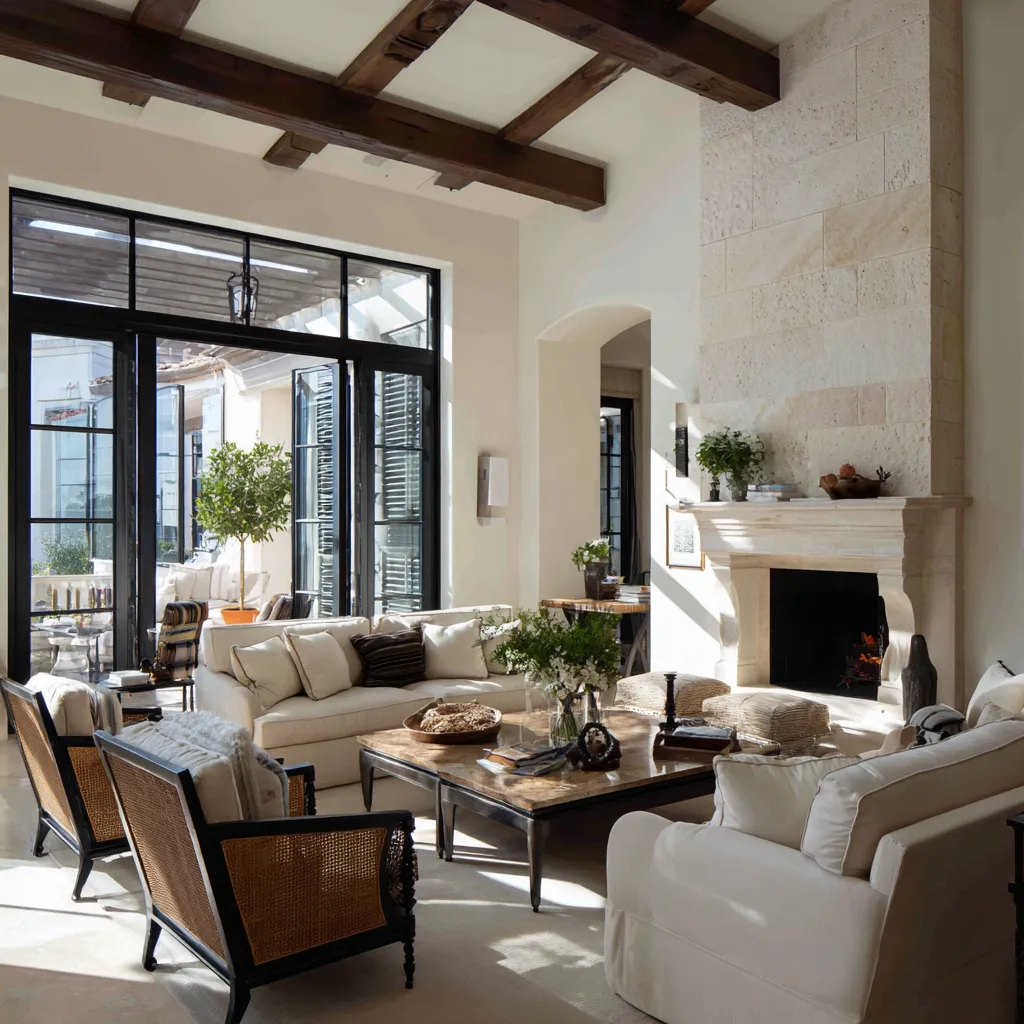
A room usually needs one main ballast system
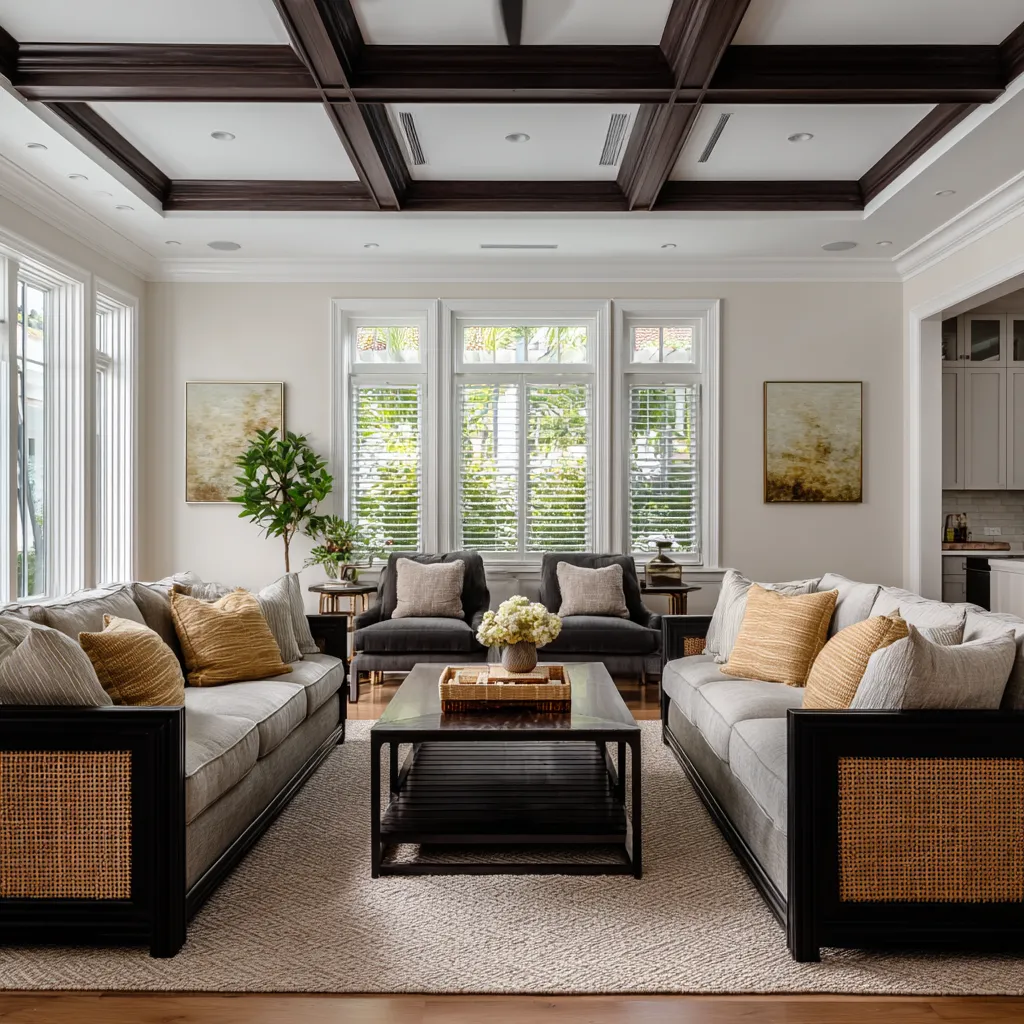
One of the less obvious design truths in this style is that rooms often stabilize themselves in one of two main ways. Some use overhead authority: beams, coffers, strong ceiling rhythm, exposed timber.
Others use lateral authority: black built-ins, library walls, deep cabinetry, dark shelving, strong side masses. Both approaches can work beautifully, but they often function as alternatives.
A room with a commanding black library wall may not need an equally forceful coffered ceiling. A room with strong timber overhead may not need heavy black cabinetry on every side.
If both are pushed too hard at once, the room can lose air. This is a very useful lesson for current decorating because it helps people avoid overbuilding the style.
Once the room has one clear anchoring system, the rest of the elements can support it rather than compete with it. The style becomes sharper because the room chooses its source of authority instead of scattering it everywhere.
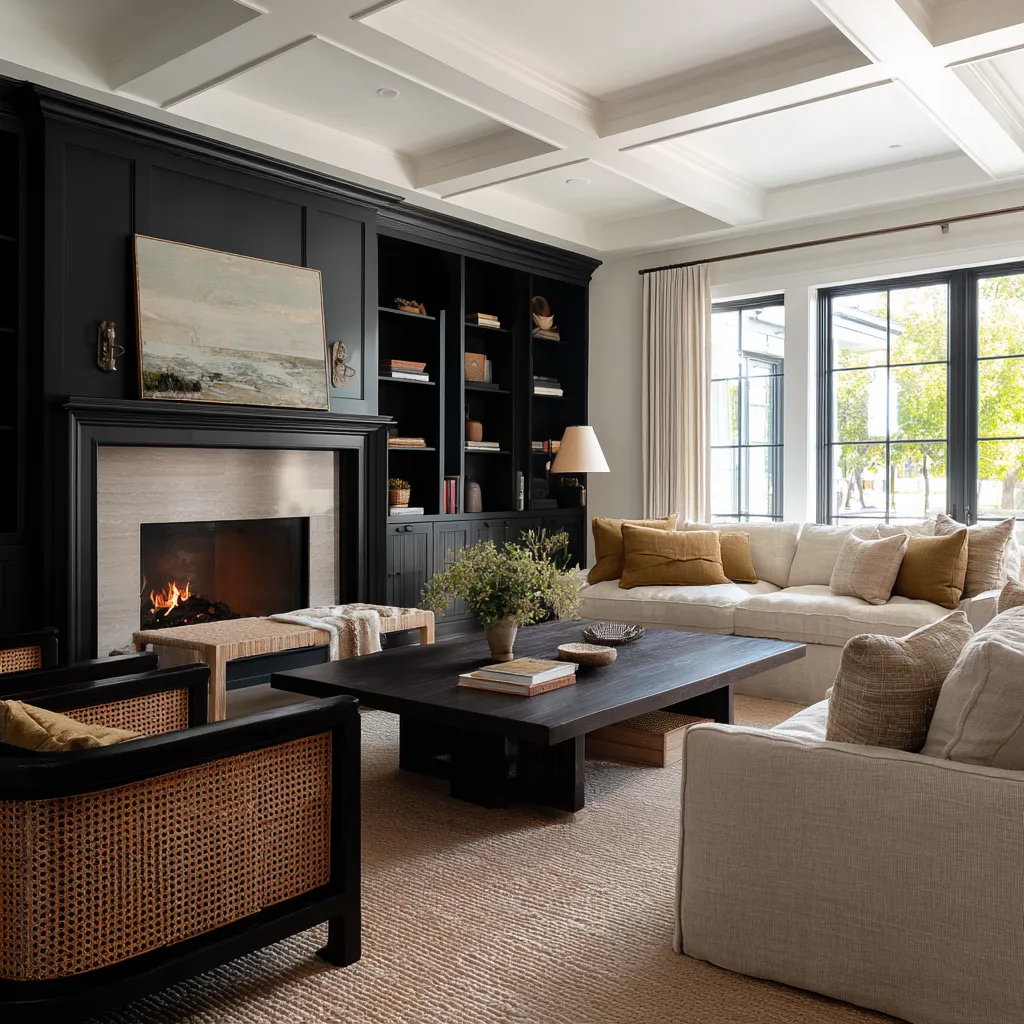
The climate feeling comes from openings and filtered light
Another misconception about British colonial decorating is that the climate mood comes from tropical motifs. In many current homes, that feeling is created in a much quieter way.
It comes from how a room handles light, air, openings, and material dryness. French doors, folding terrace doors, tall black-framed windows, garden views, deep shutters, woven roman shades, screened openings, stone floors, pale plaster, and weathered timber all help create this effect.
These are not small details. They shape the room’s behavior.
They tell you whether the room feels sealed, exposed, filtered, shaded, or connected to the landscape.
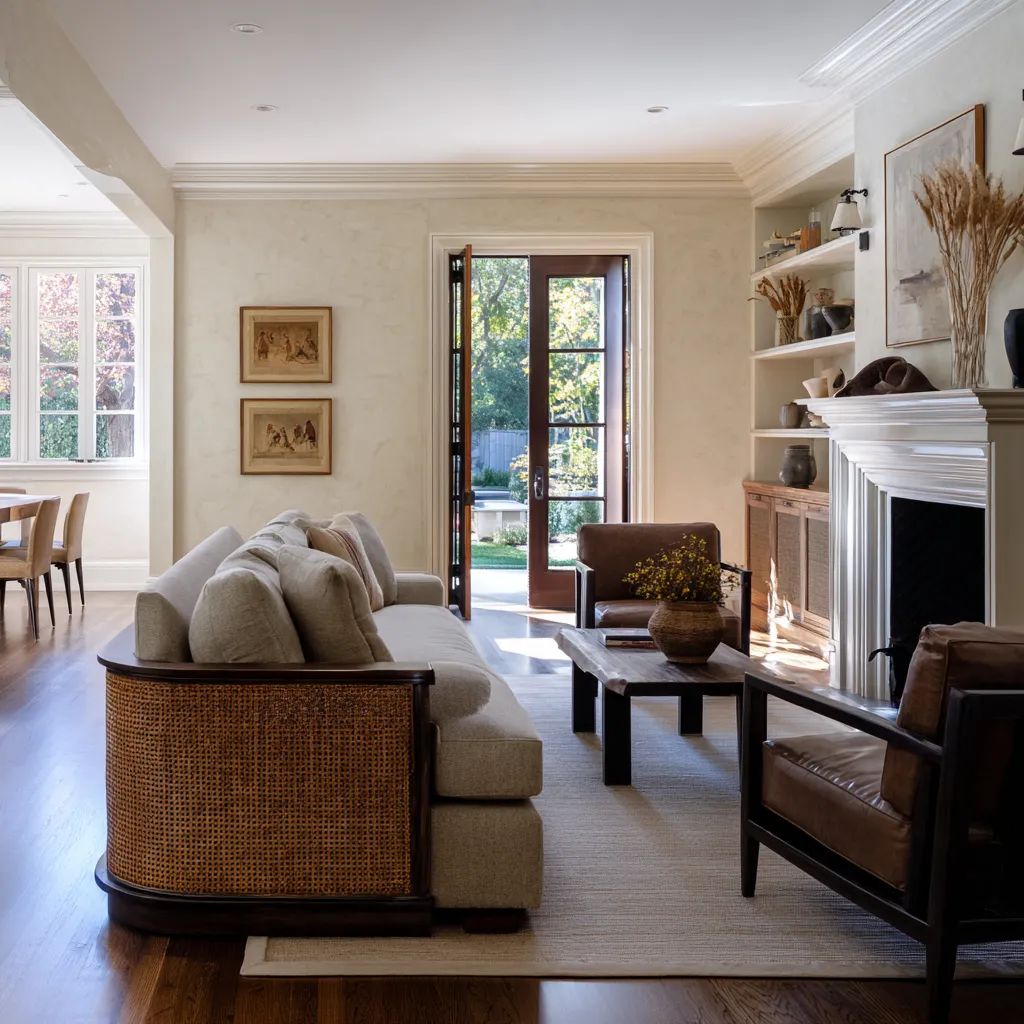
Filtered light is especially important. A room with shutters, woven shades, divided panes, or layered drapery does not simply control brightness.
It changes the character of the brightness. Sunlight becomes broken, softened, framed, or angled.
Cane glows. Plaster gains texture.
Dark beams cast rhythm overhead. The room feels more climate-aware because light is mediated rather than left flat.
This is why a British colonial room can feel breezy without becoming beachy. The atmosphere is coming from the handling of daylight and air, not from seashell decor or obvious tropical styling.
Formality and openness can live together
A lot of people can assume that if a room has a strong connection to the garden or terrace, it must become casual. British colonial interiors often prove the opposite.
Openings can actually strengthen formality when they are framed with order. Centered French doors, repeated window bays, symmetrical shutters, aligned terrace relationships, and long axial sightlines can make a room feel more composed, not less.
Openness does not automatically mean looseness. In the right room, it creates ceremony.
This is one of the reasons the style adapts so well to present-day homes. A family room can still feel structured.
A bright room can still feel intentional. A room with garden doors can still support a formal seating arrangement.
The language of the style allows these combinations because it is based on proportion and weight distribution, not on a single mood.
British colonial style has several current directions, not one
There is no single present-day British colonial room. The style has several clear branches, and each one emphasizes a different part of the same grammar.
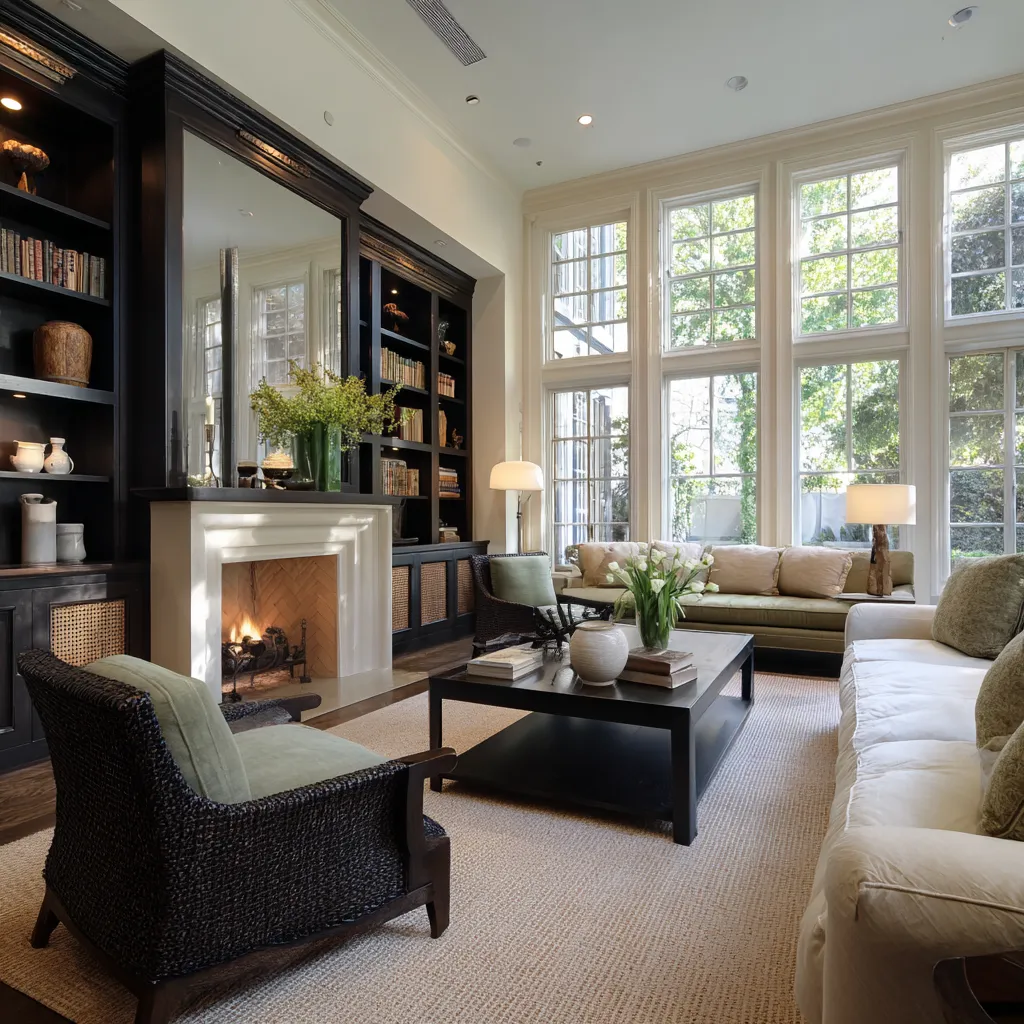
One branch is darker and more inward. These rooms often use black built-ins, deep cabinetry, dark coffee tables, and strong contrast.
They feel library-like, cultivated, and focused. Their great strength is grounding.
Their risk is heaviness if they do not have enough lightness and softness.
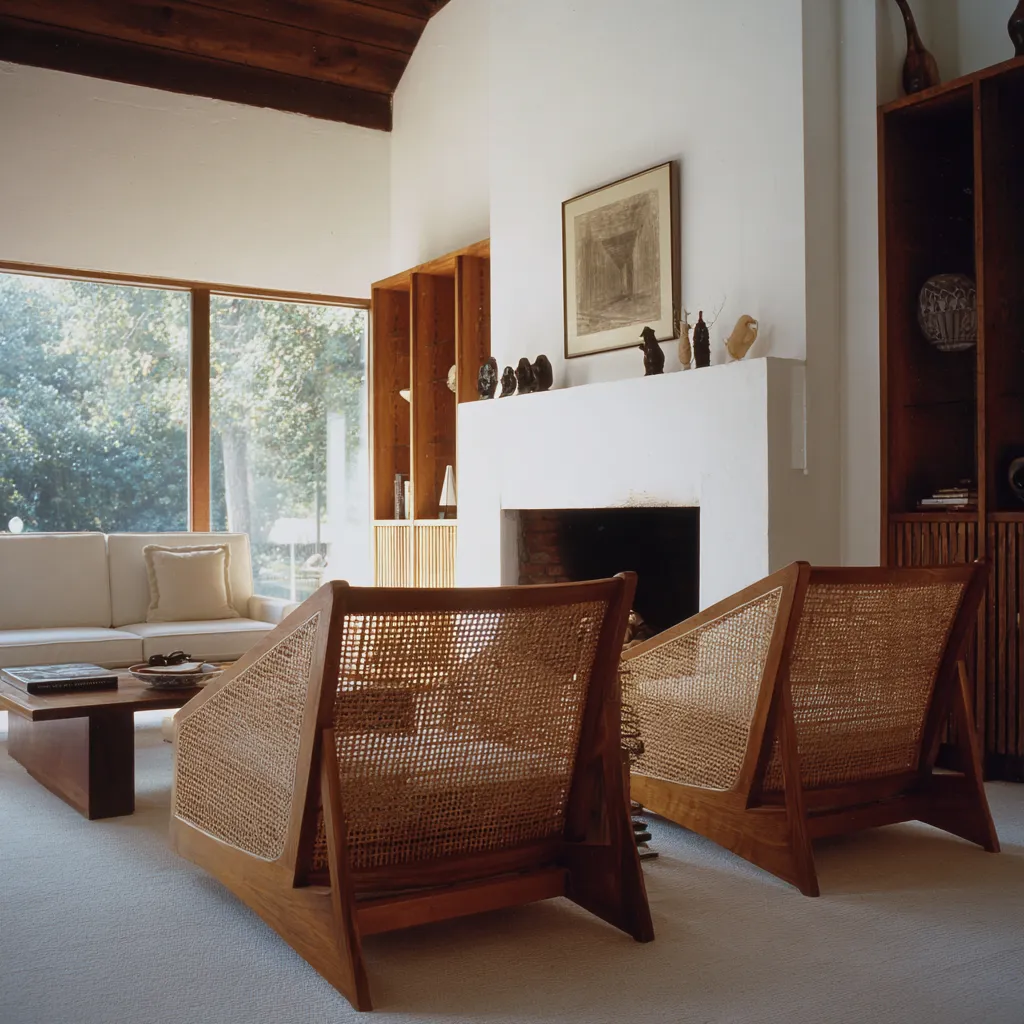
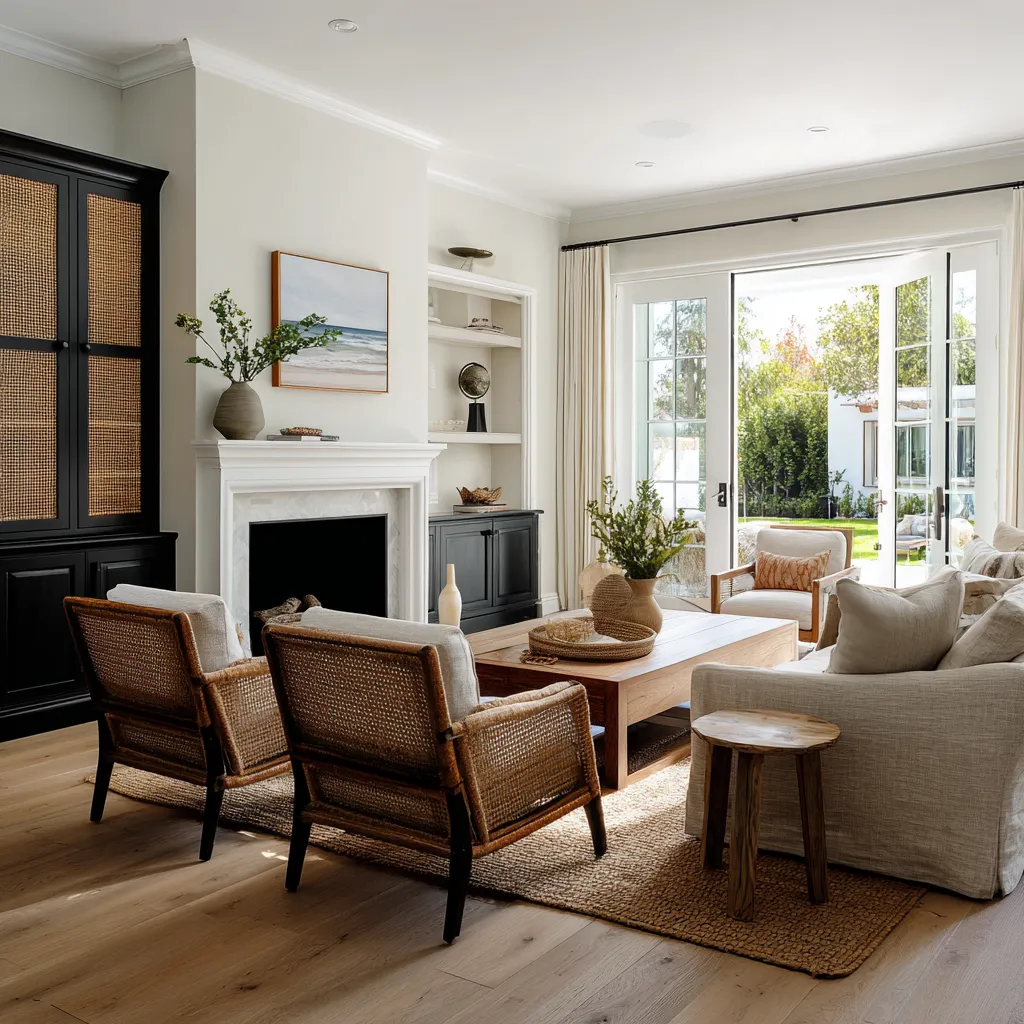
Another branch is brighter and more domestic. These rooms use pale shells, softer upholstery, garden-linked openings, lighter woven furniture, and gentler contrast.
They feel especially good for family use because they combine air with comfort. Their risk is vagueness if they do not include enough ballast.
A third branch is more formal and veranda-like. These rooms combine ordered planning, woven seating, shutters or shades, ceiling rhythm, framed openings, and a deliberate center.
They often feel balanced because they carry air, order, and depth together.
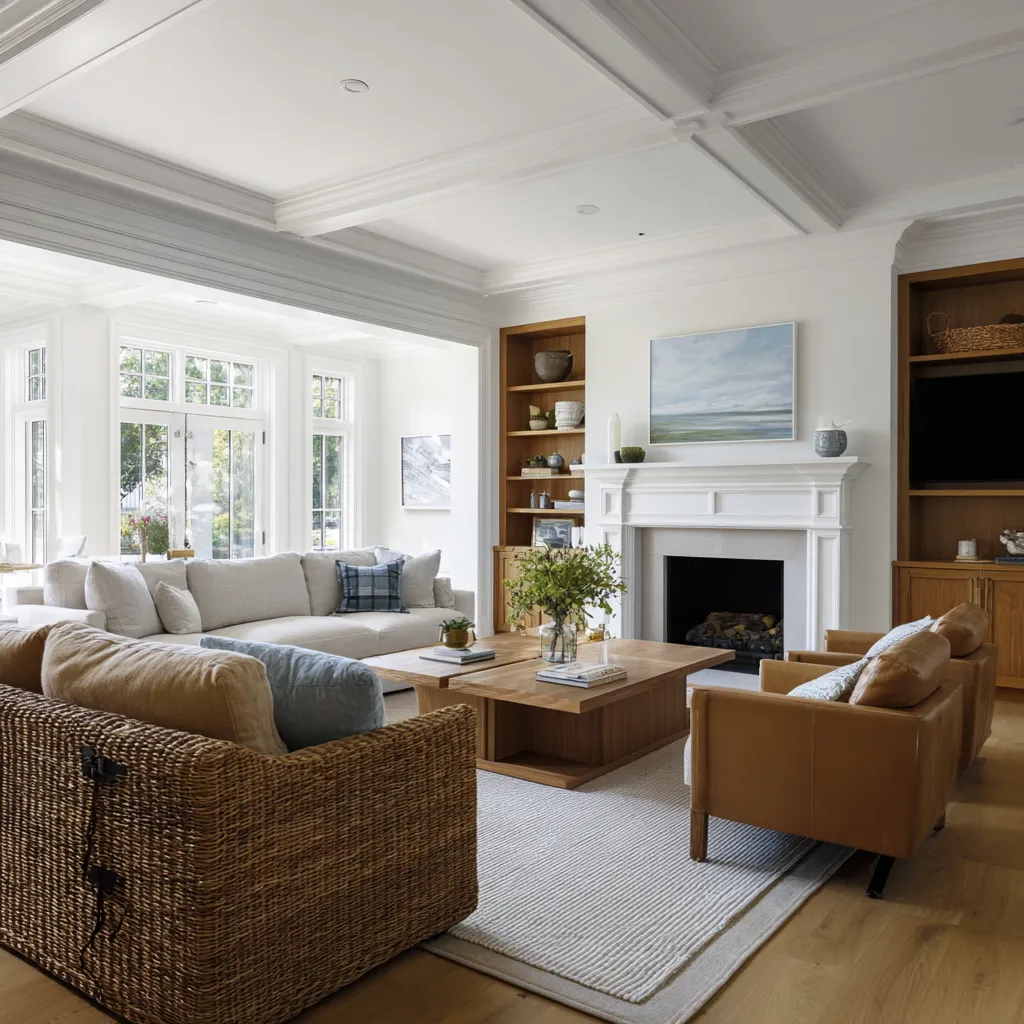
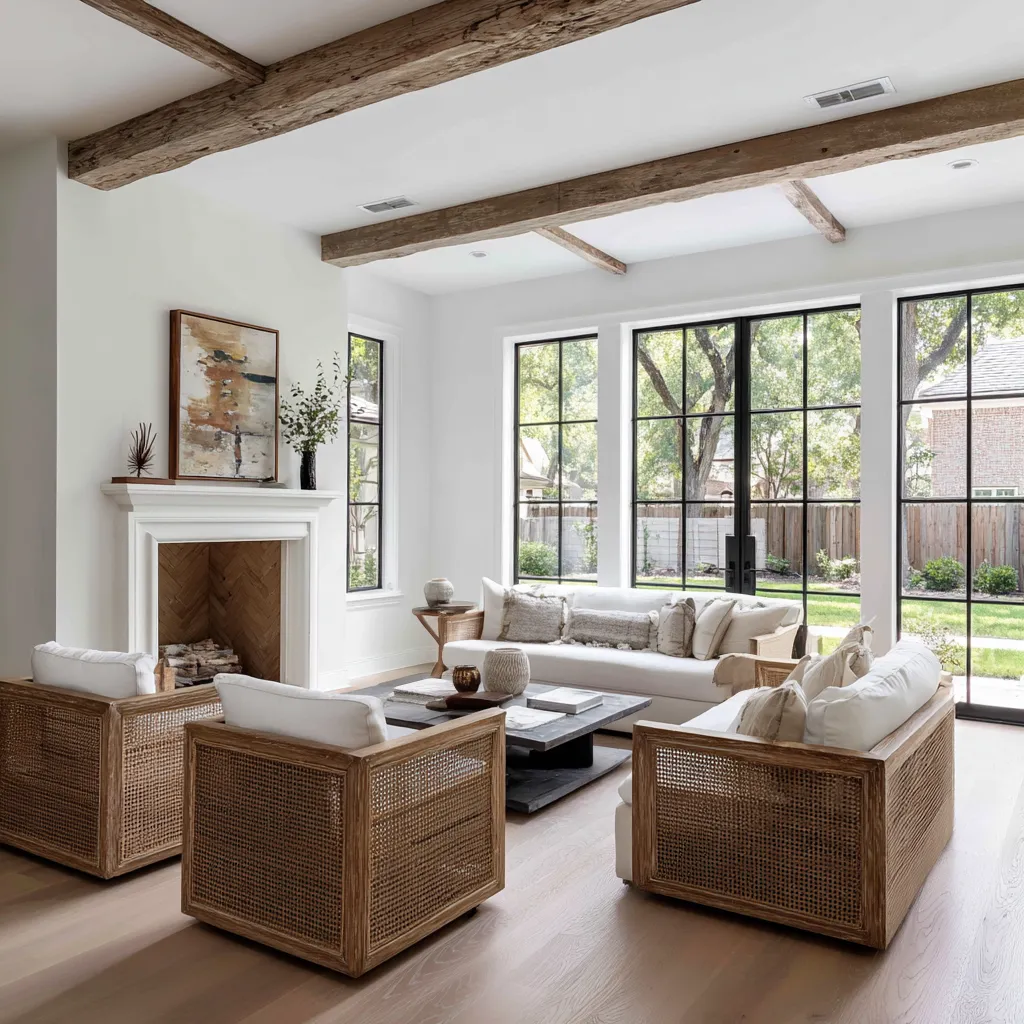
There are also side variations: cooler blue-toned rooms, more rustic plastered rooms, leather-deepened rooms with club influence, and lighter country-house interpretations with rougher beams and pale woven frames. What keeps them connected is not one exact palette.
It is the repeated exchange between brightness and shadow, softness and structure, porosity and mass.
Why the style feels rich without feeling crowded
One of the strengths of British colonial decorating is that it can feel full without relying on visual overload. The richness usually comes from tactile contrast rather than quantity.
A room may contain only a few pieces: a pale sofa, two cane chairs, a broad table, a fireplace, a rug, some pottery, a landscape painting, maybe a dark cabinet or built-in. Yet it still feels layered because each part brings a different kind of surface.
Linen absorbs light softly. Cane catches it.
Wood deepens it. Stone cools it.
Leather adds age. Black metal or black paint sharpens edges.
Basketry introduces irregularity. Plaster gives breadth.
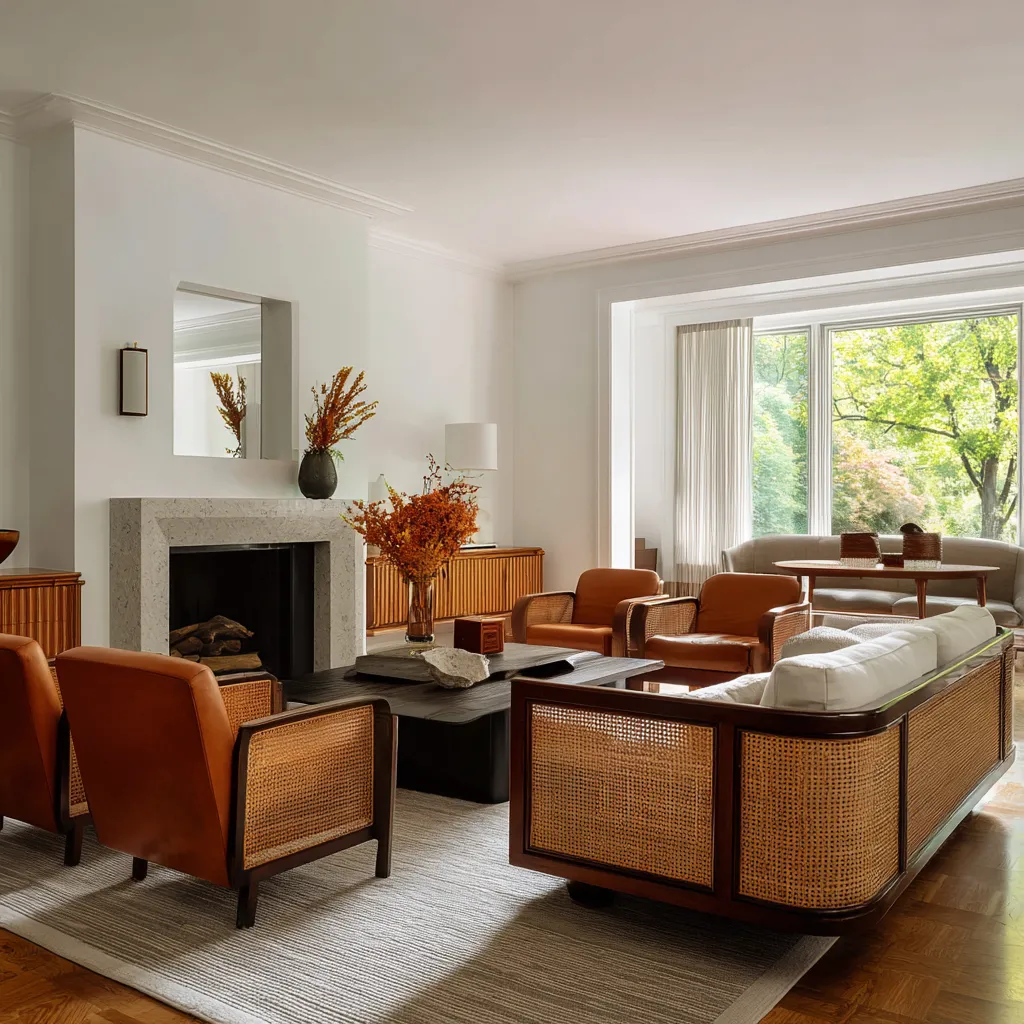
This is a very useful model for current decorating. Many people try to make a room feel complete by adding more accessories.
British colonial style often shows a different path. Keep the palette narrow.
Let the materials differ. Let the furniture hold history in its construction.
Then allow a little emptiness around the important pieces. That emptiness matters.
It gives the woven chair room to stand out. It allows the fireplace mass to breathe.
It lets the table act as a stable center rather than becoming just another surface buried under objects.
Leather is not mandatory
Leather has a legitimate place in British colonial interiors, but it should be understood correctly. It adds patina, density, and a slightly club-like note.
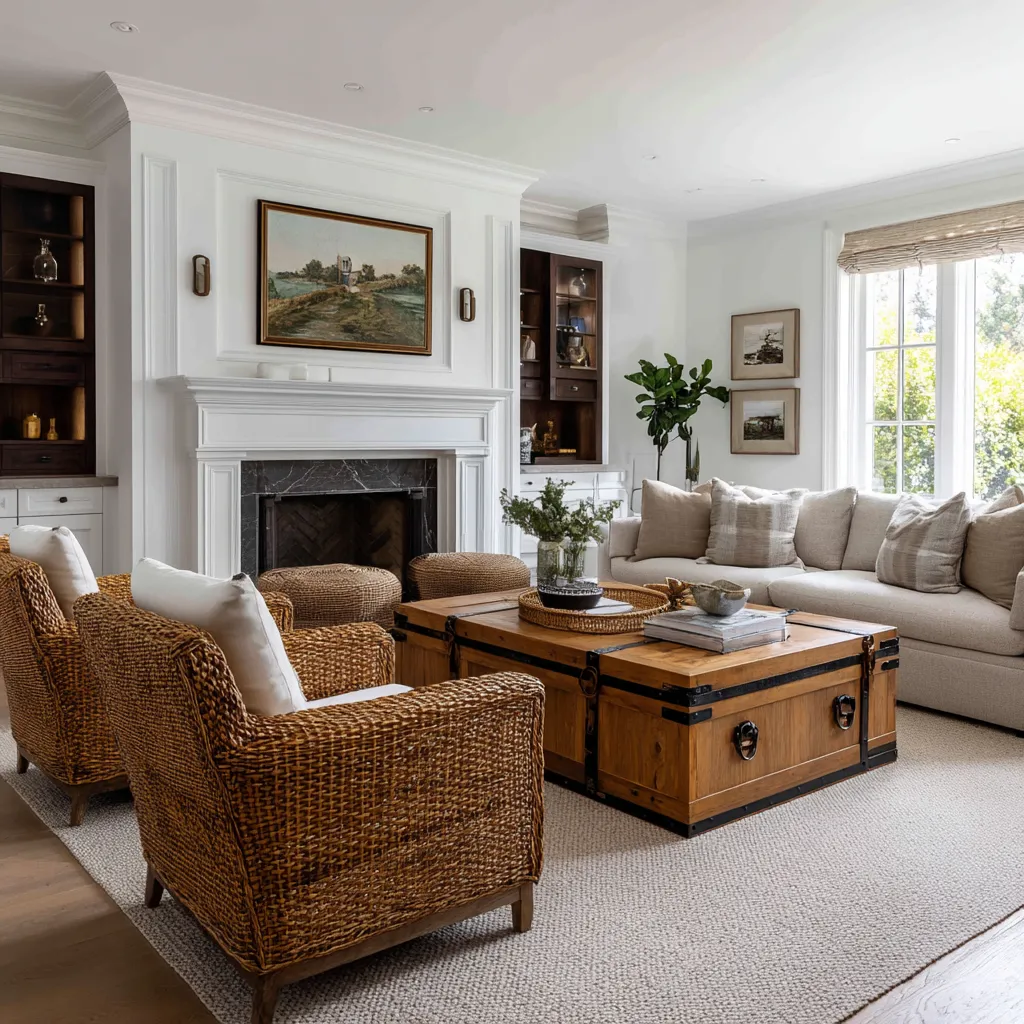
A caramel leather chair can bring a room maturity. A leather cushion can stop pale upholstery from feeling too sweet.
A leather-and-cane chair can bridge softness and structure with unusual skill.
But leather is not required for the style to feel stylish. In many current rooms, leather appears sparingly or not at all.
If used too heavily, it can pull the room away from the breezier, veranda-oriented side of British colonial decorating and toward a denser club atmosphere. That may be exactly what a room needs, but it should be a conscious decision.
The same is true of trunk references, campaign details, maps, and travel objects. They can help, but they are supporting notes.
One trunk-like coffee table may be enough. One brass-corner detail may be enough.
Too many literal references can flatten the room into costume.
The deeper reason British colonial design still works
British colonial interior design continues to feel relevant because it solves a problem many current homes still have: how to make a bright room feel both airy and settled. It does that by placing structure inside comfort and comfort inside structure.
The style understands that pale rooms need ballast. It understands that dark rooms need air.
It understands that woven surfaces can lighten a substantial piece of furniture. It understands that filtered daylight can give a room mood without forcing color.
It understands that formality does not have to exclude family life.
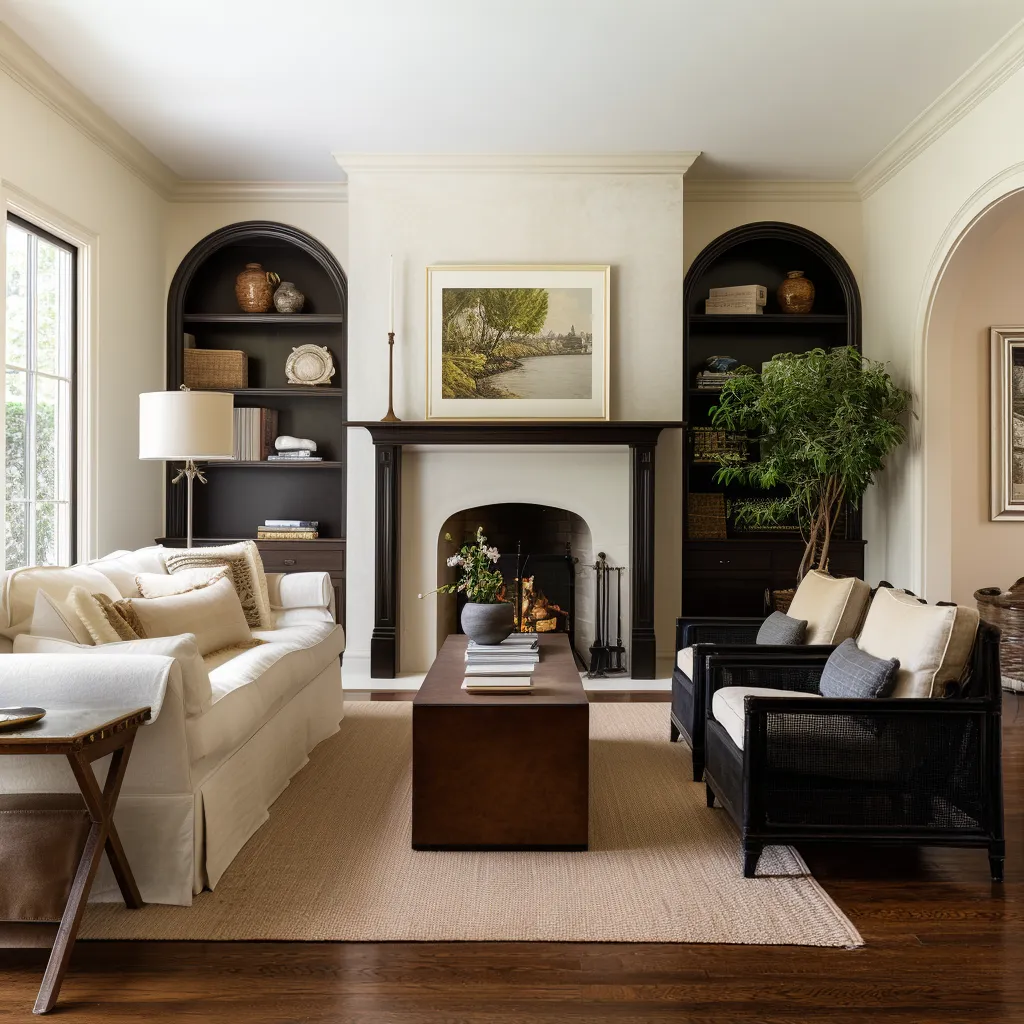
That is why the style still holds together in very different architectural shells. It can live in a room with black built-ins and a mirror over the mantel.
It can live in a coffered family room with terrace doors. It can live in a rustic plastered room with folding garden panels.
It can even absorb cooler blues or a more modern fireplace mass and still stay legible.
What survives from room to room is not a decorative script. It is a durable design logic: bright envelope, breathable structure, grounded center, edited materials, and a careful exchange between openness and depth.
That is what makes British colonial decorating feel current. Not nostalgia.
Not themed objects. A very specific kind of balance.