A lot of people still imagine English country style as a room full of florals, rolled arms, antique tables, framed landscapes, and layered fabric placed until the space feels richly settled. That version exists, but it misses the deeper structure of the look as it appears in refined living room designs.
The living room ideas that carry this mood begin somewhere else. They begin with the shell.
They begin with the fireplace wall, the thickness of the window opening, the height of the ceiling line, the way daylight enters, the way a dark element holds the middle of the room down, and the way the room remains tied to land beyond the glass. Furniture matters, art matters, fabric matters, but they come later.
They complete the atmosphere. They do not create its authority from scratch.
That shift changes the whole way the style should be understood. English country carries an old money style and is moving away from decoration-led identity and toward architecture-led identity.
The result is subtler, heavier in the right places, and far easier to update without draining it of lineage.
Established feeling before it feels styled
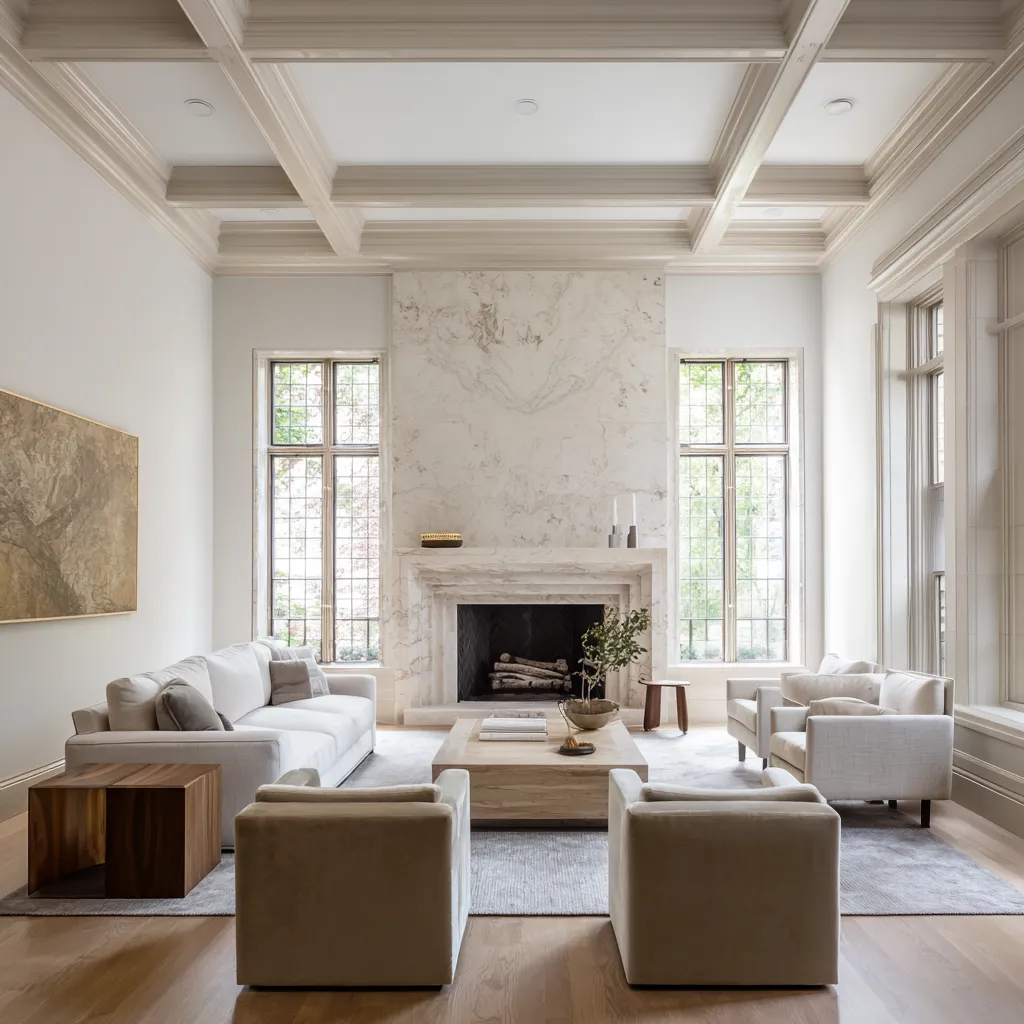
The first task of this style is to make the interior design seem rooted in the house rather than assembled inside it. That means the envelope must carry weight.
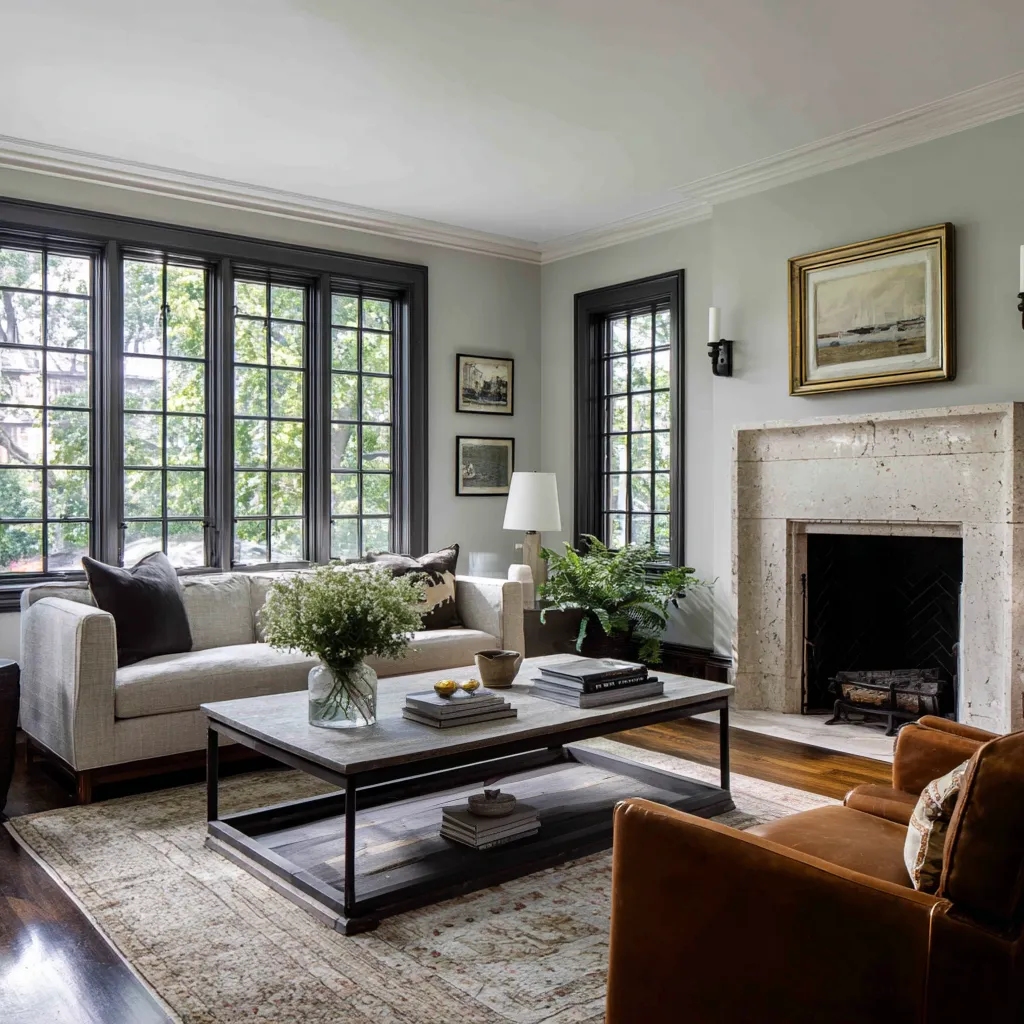
A fireplace cannot feel like a decorative insert dropped onto a flat wall. It has to feel tied to masonry, to depth, to a chimney breast with enough physical presence to organize the room socially as well as visually.
A ceiling cannot look forgotten. Even a lightly articulated top plane, a timber band, a coffer pattern, or a shaped molding line helps signal that the room was conceived as a volume rather than filled later.
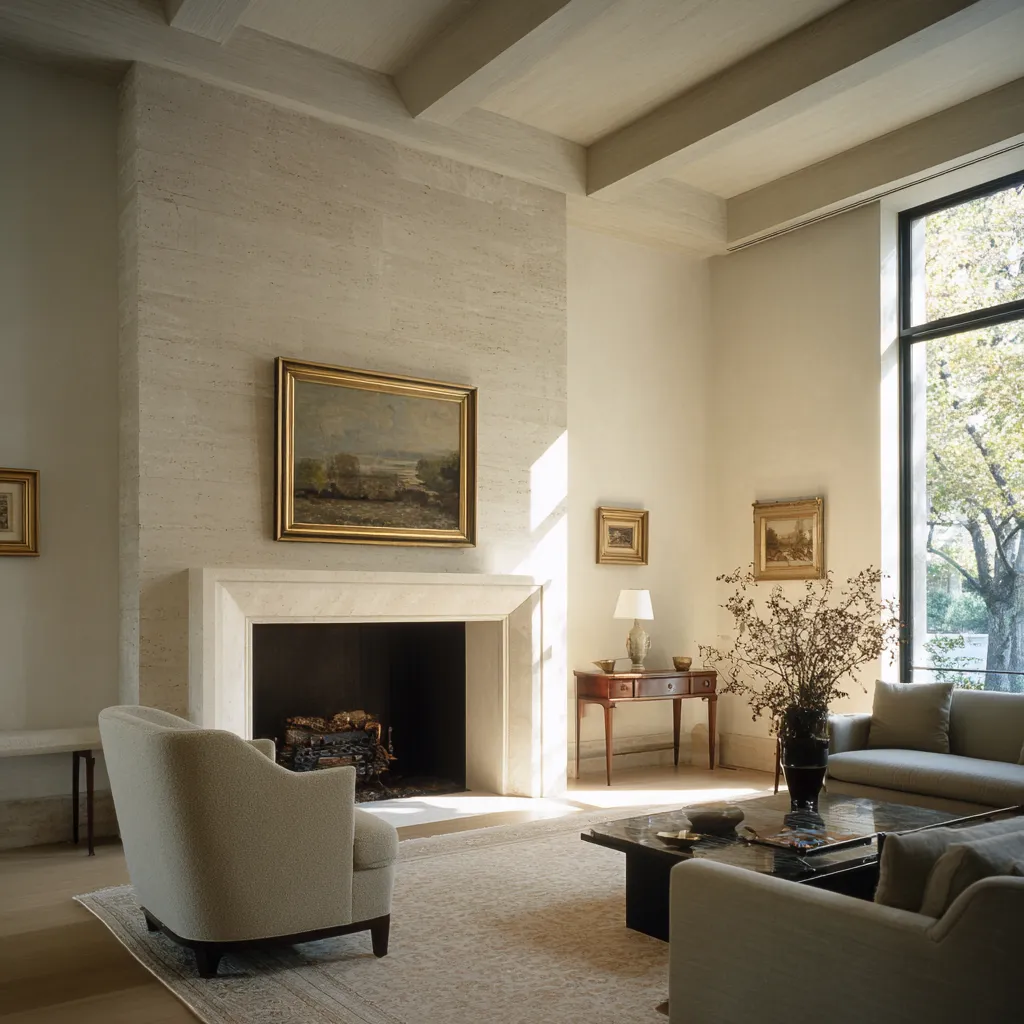
This is why the most persuasive rooms in this style often keep their objects to a relatively low count. They do not need a large number of decorative cues because the shell is already doing so much of the work.
The wall has hierarchy. The window has depth.
The fireplace has gravity. The floor has enough material richness to hold the pale upholstery above it.
Once these conditions are present, the room can remain spacious and still feel complete.
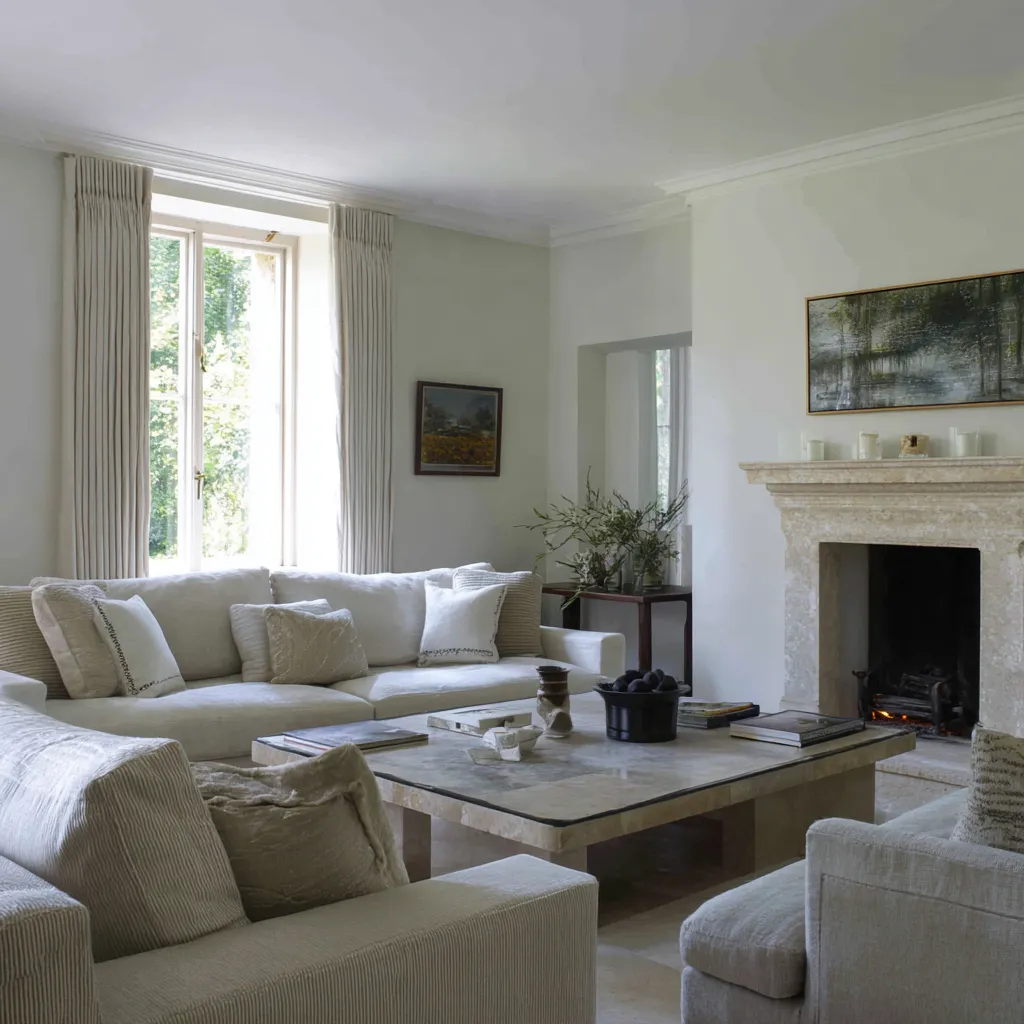
That sense of completion is one of the class markers in the look. A room of standing rarely tries to prove itself through constant visual insistence.
It lets stone, timber, plaster, daylight, and proportion carry a large share of the atmosphere.
Old money and English country
English country and old money are connected but not the same. They overlap, but they are not identical.
- The old-money side of the room comes from inward gravity. It comes from polish, reserve, shadow, material permanence, and the feeling that the architecture has been maintained rather than refreshed for effect. A room can have this quality even if it is fairly formal and interior-facing.
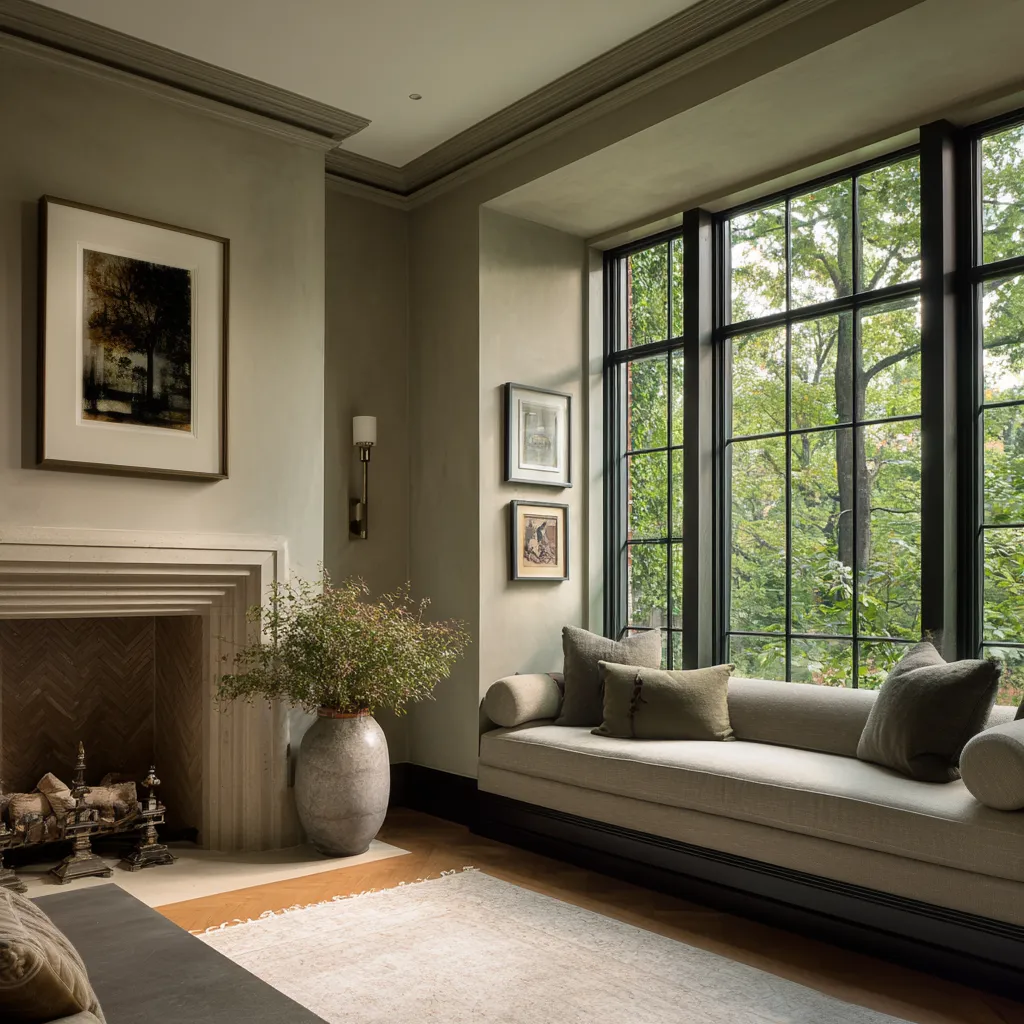
- The English country side comes from relation to the site. It comes from mullioned windows, deep reveals, garden views, open doors to lawns or terraces, window seats, and artwork that keeps the room in conversation with weather, fields, trees, or water. Without that link to land, the room may still feel affluent and deeply established, but it starts to drift away from English country and toward a broader polished classicism.
This difference matters because it explains why two close interior designs can both feel old money while carrying very different emotional temperatures. One may feel like a paneled reception room centered on a massive mantel and shaped ceiling.
Another may feel softer and more domestic because the garden is visually present and the seating turns toward daylight rather than ceremony. Both can belong to the same family, yet each one leans on a different side of the style’s identity.
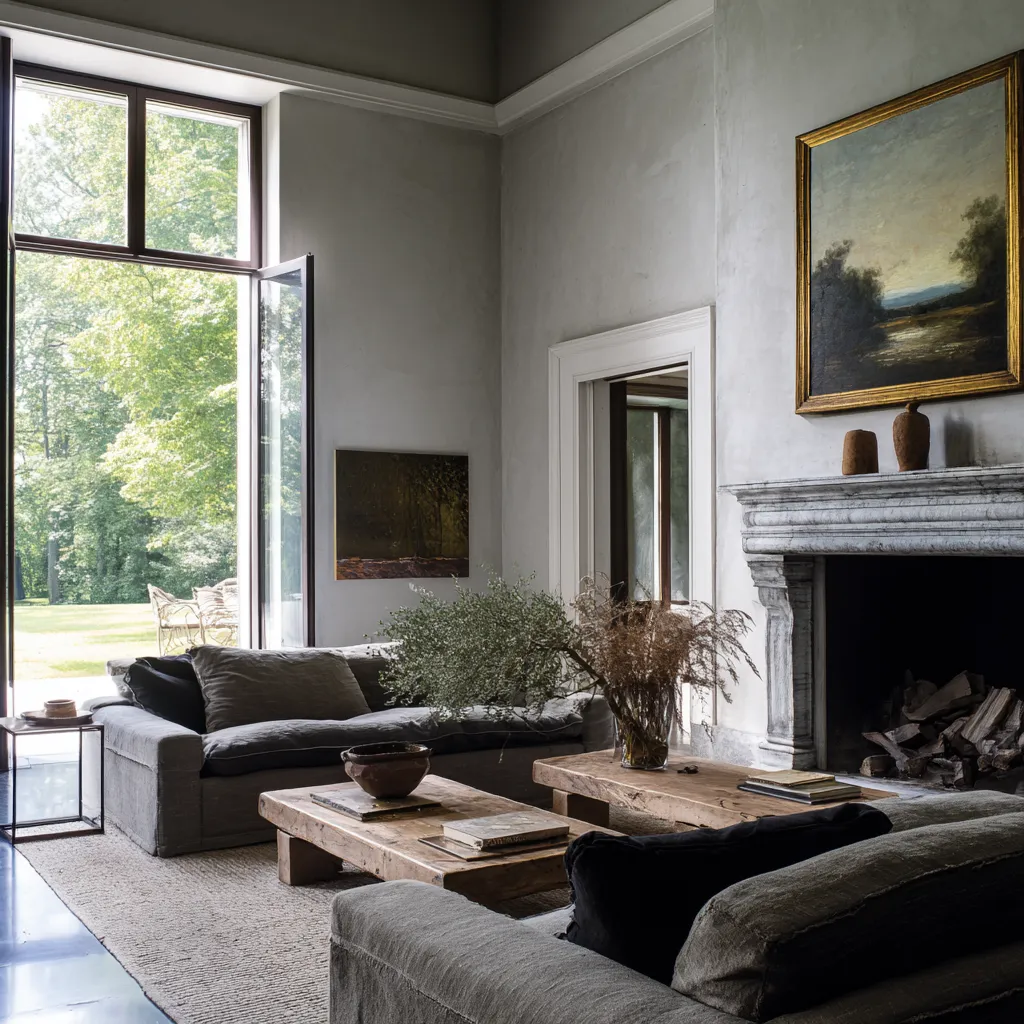
The fireplace is not a focal point
In many contemporary interiors, the focal point is treated like a design event: a media wall, a slab, a sculptural object, a dramatic light fixture, or a decorative composition meant to seize attention. English country old money uses the fireplace very differently.
Here, the fireplace is the social and symbolic center of the room. It does not need theatrical ornament if its mass is right.
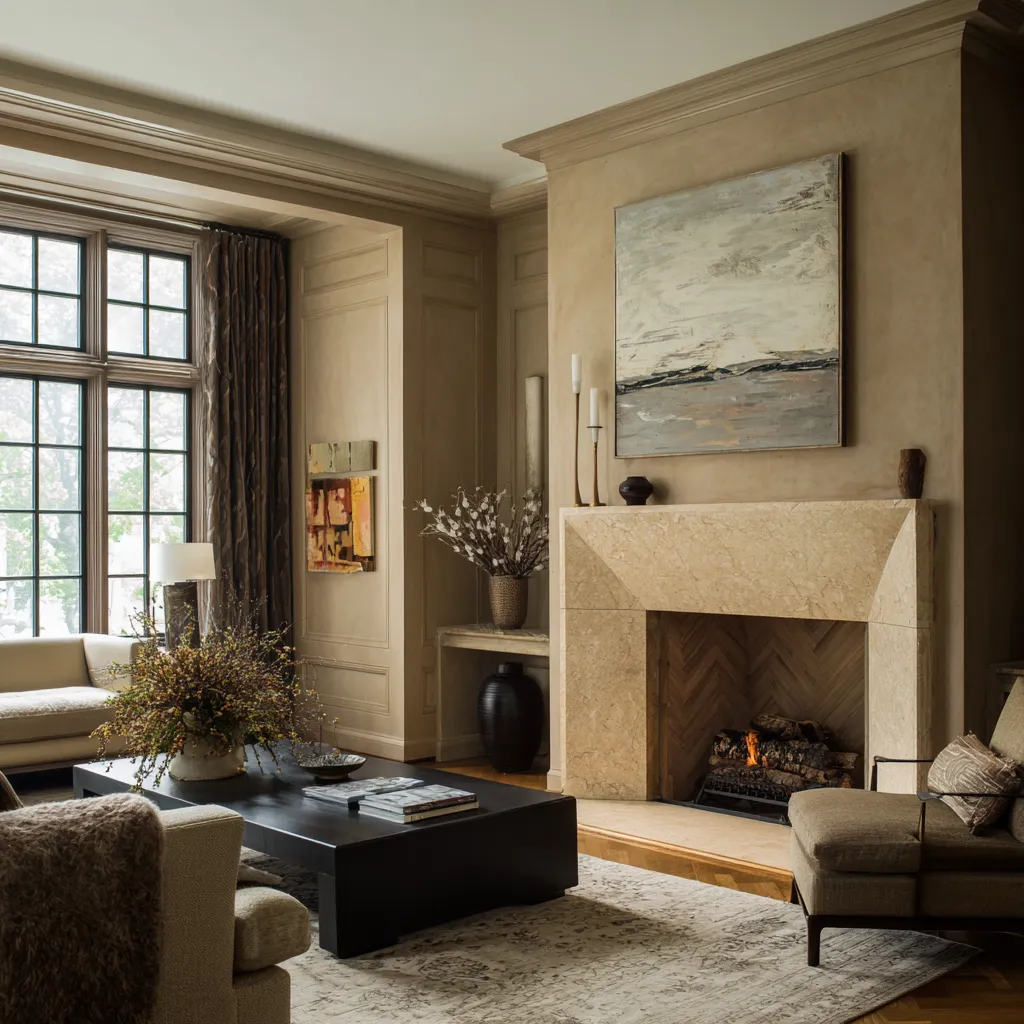
A broad stone surround, a hearth with enough projection, a dark firebox, or a chimney wall with acreage already tells the story. The room organizes itself around this element because the fireplace belongs to the architecture of domestic life.
It gives the living room a center that feels older than any one furnishing scheme.
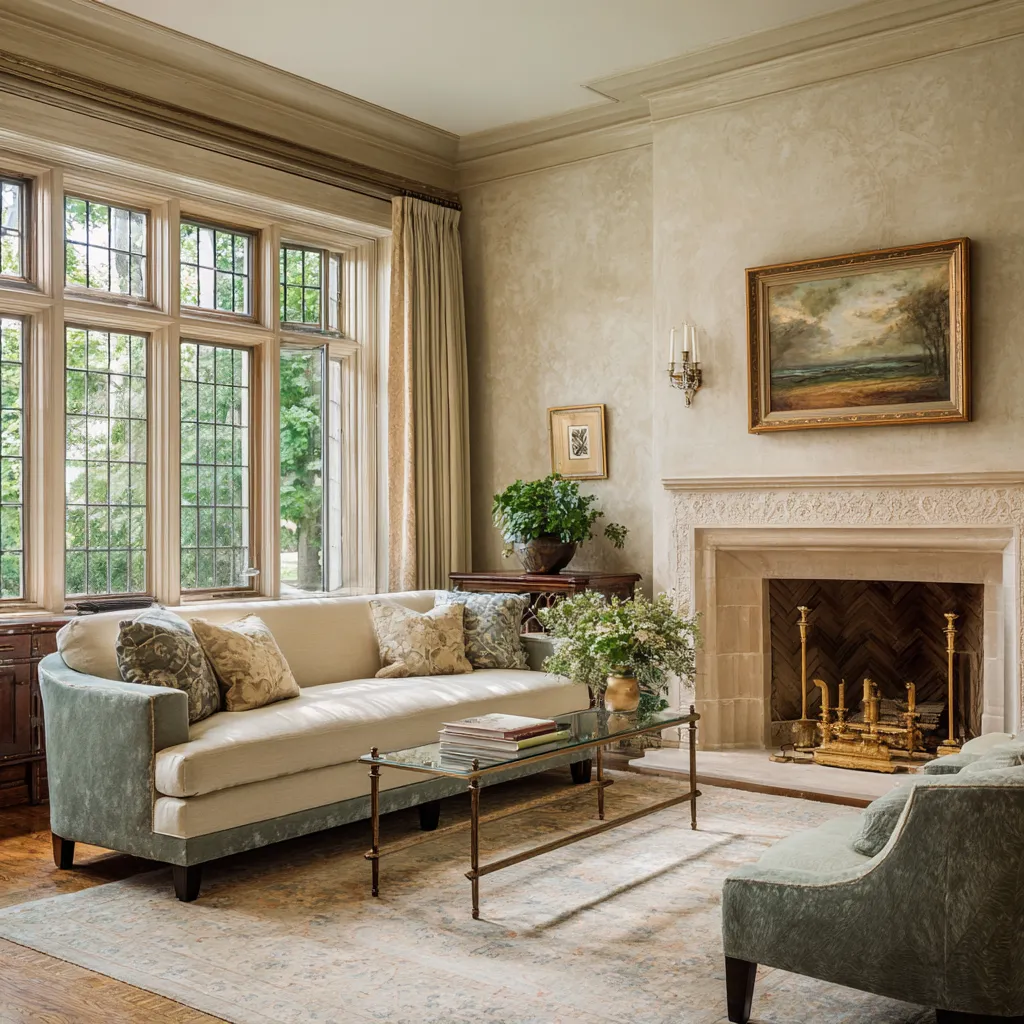
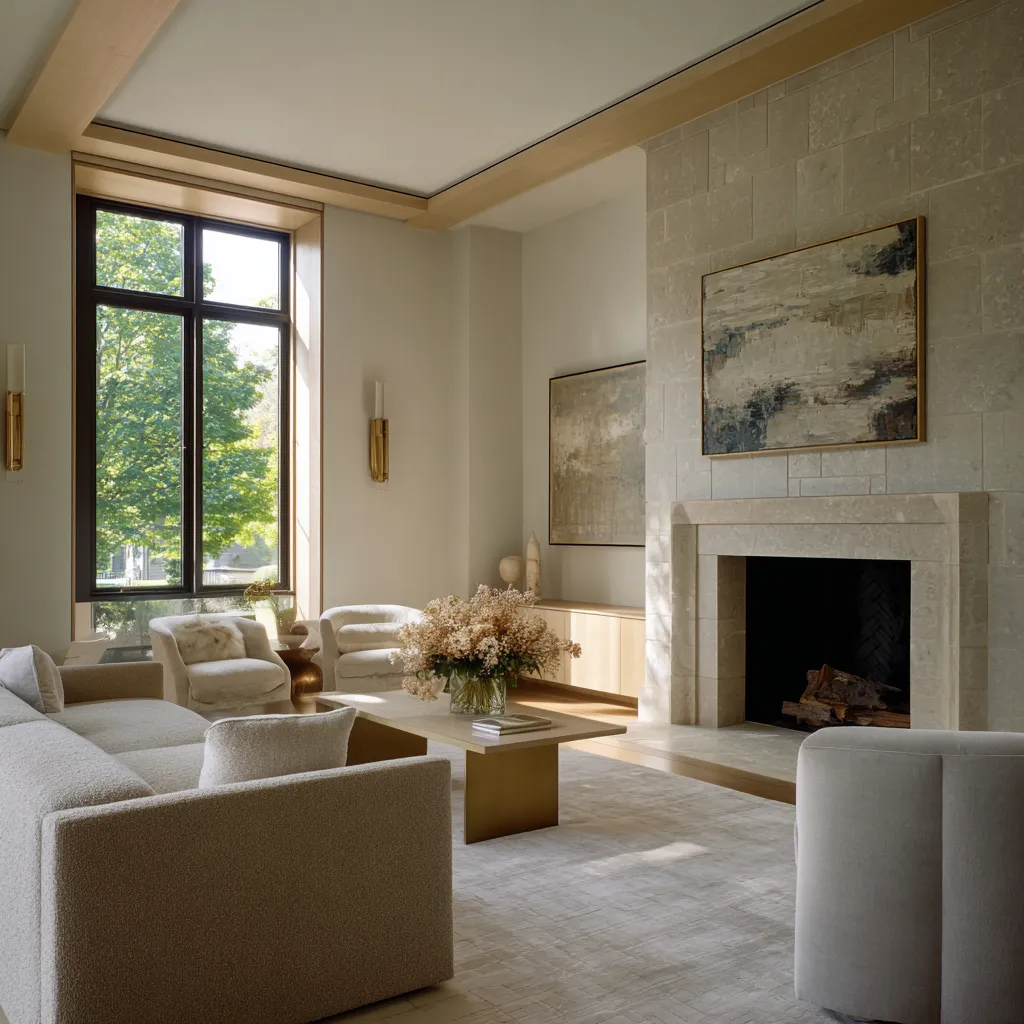
This is why a dark fire opening matters. In pale interior designs especially, the black or charred interior of the hearth provides more than contrast.
It introduces history, depth, and a note of use. It stops the stone from becoming too polished and the room from becoming too polished with it.
Even in updated rooms with cleaner upholstery and reduced object count, that dark hearth core helps preserve age depth.
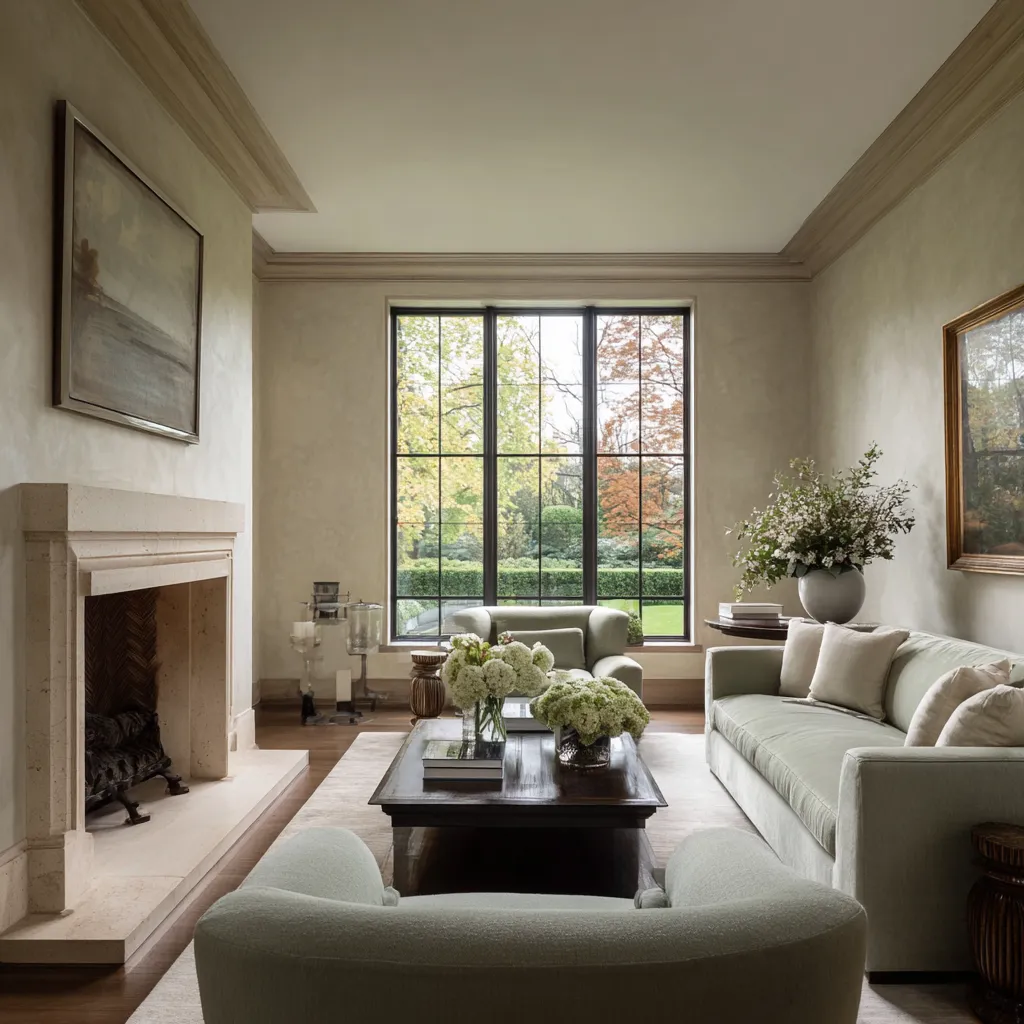
The same principle explains why over-decorating the mantel often weakens the style. A fireplace in this tradition does not need constant explanation through accessories.
It gains force by remaining structurally dominant. A single landscape, an old mirror, or a few modest objects can be enough.
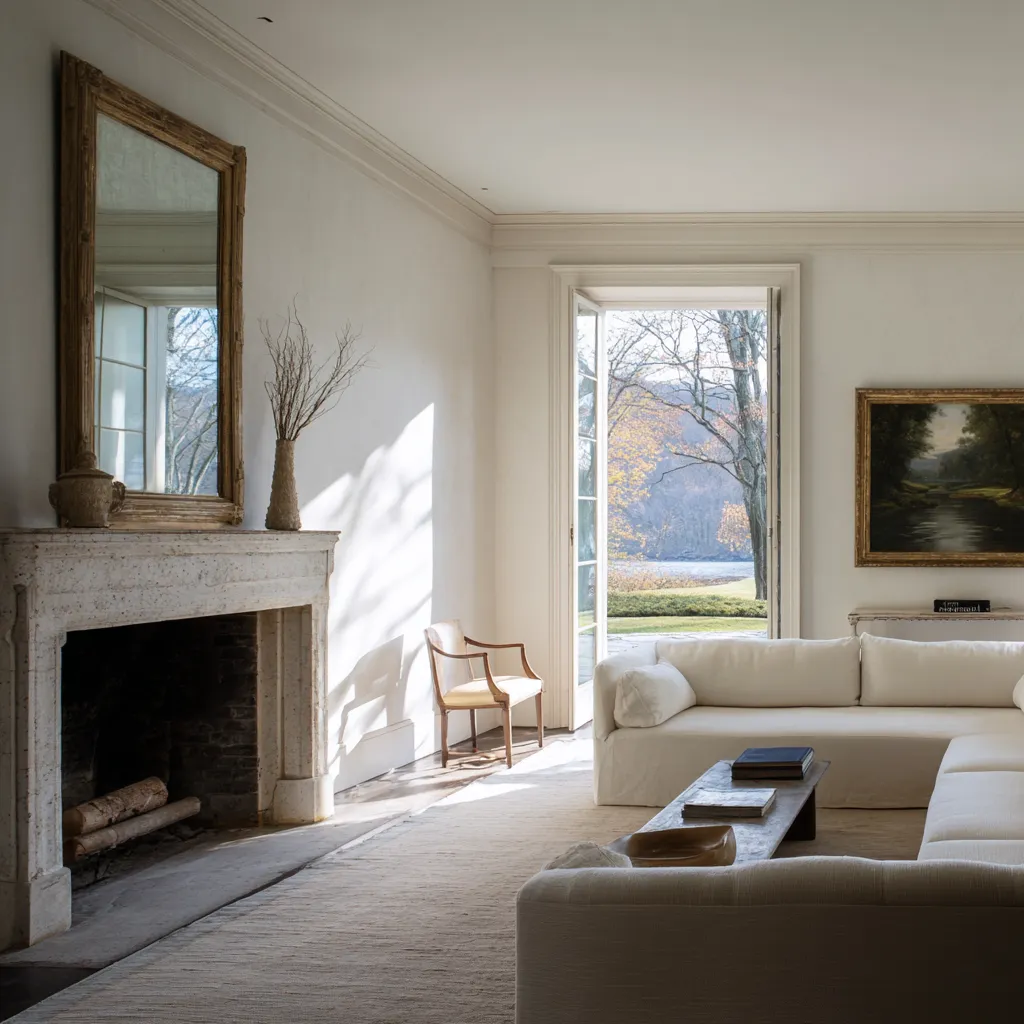
The window is where the room becomes English
If the fireplace gives the room its center, the window gives it its setting. That setting matters enormously.
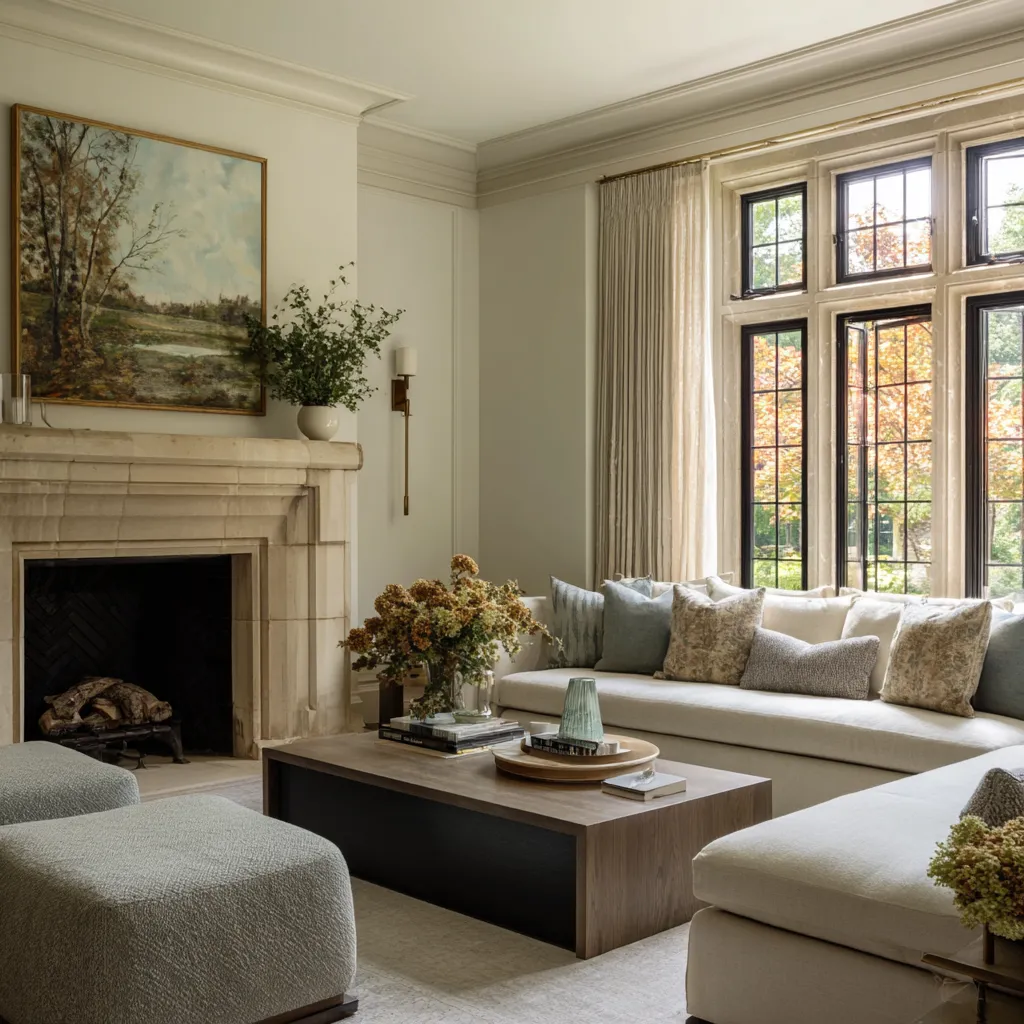
English country living room ideas are at their richest when the windows do more than admit light. They frame the grounds.
They reveal wall thickness. They create a place to sit inside the opening or near it.
They let the season participate in the room. Through them, the room borrows atmosphere from trees, lawn, sky, wet stone, changing foliage, and low winter light.
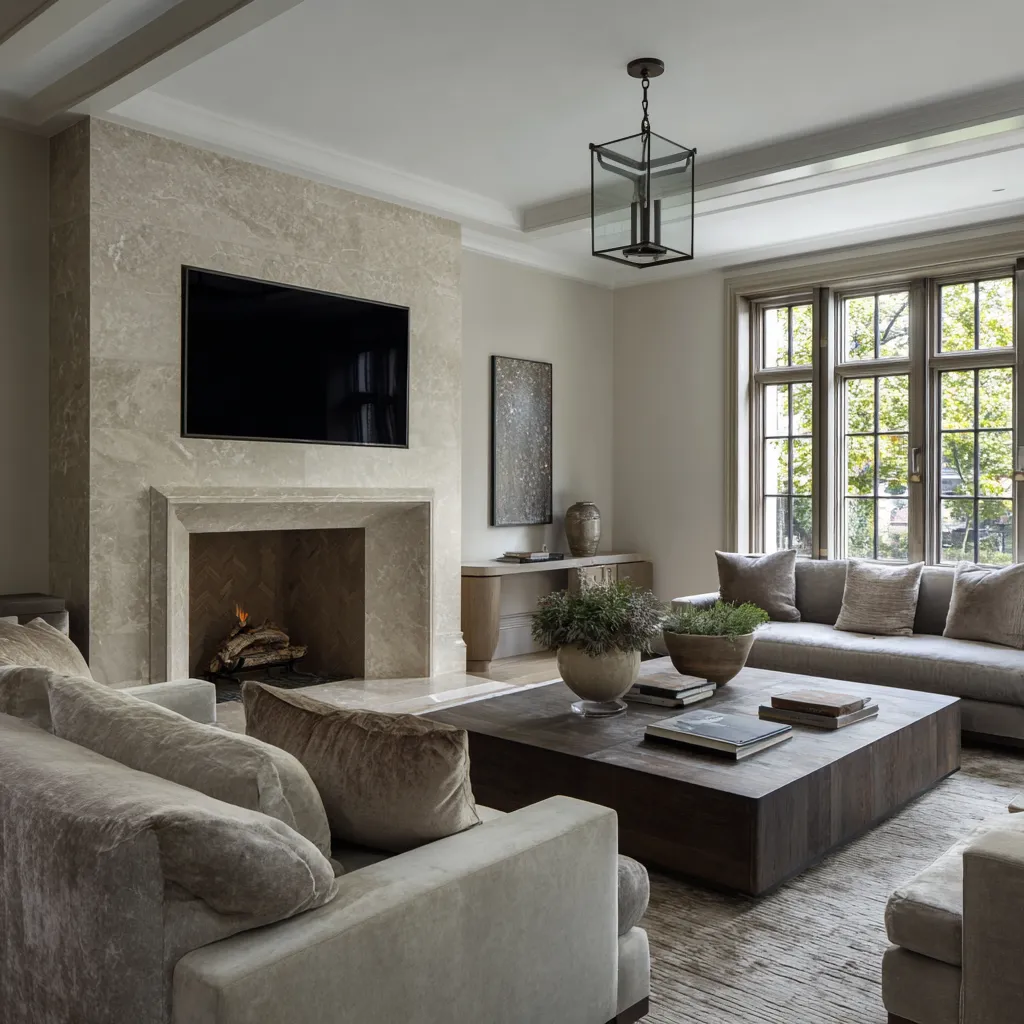
This is why generic broad glazing often weakens the style even when the materials are expensive. A large uninterrupted sheet of glass may brighten the room, but it removes the old-house grammar that makes the outdoors feel part of the house rather than a panoramic image beyond it.
Mullions, leaded divisions, shaped trim, and deep jambs discipline the relationship. They make the view belong to the architecture.
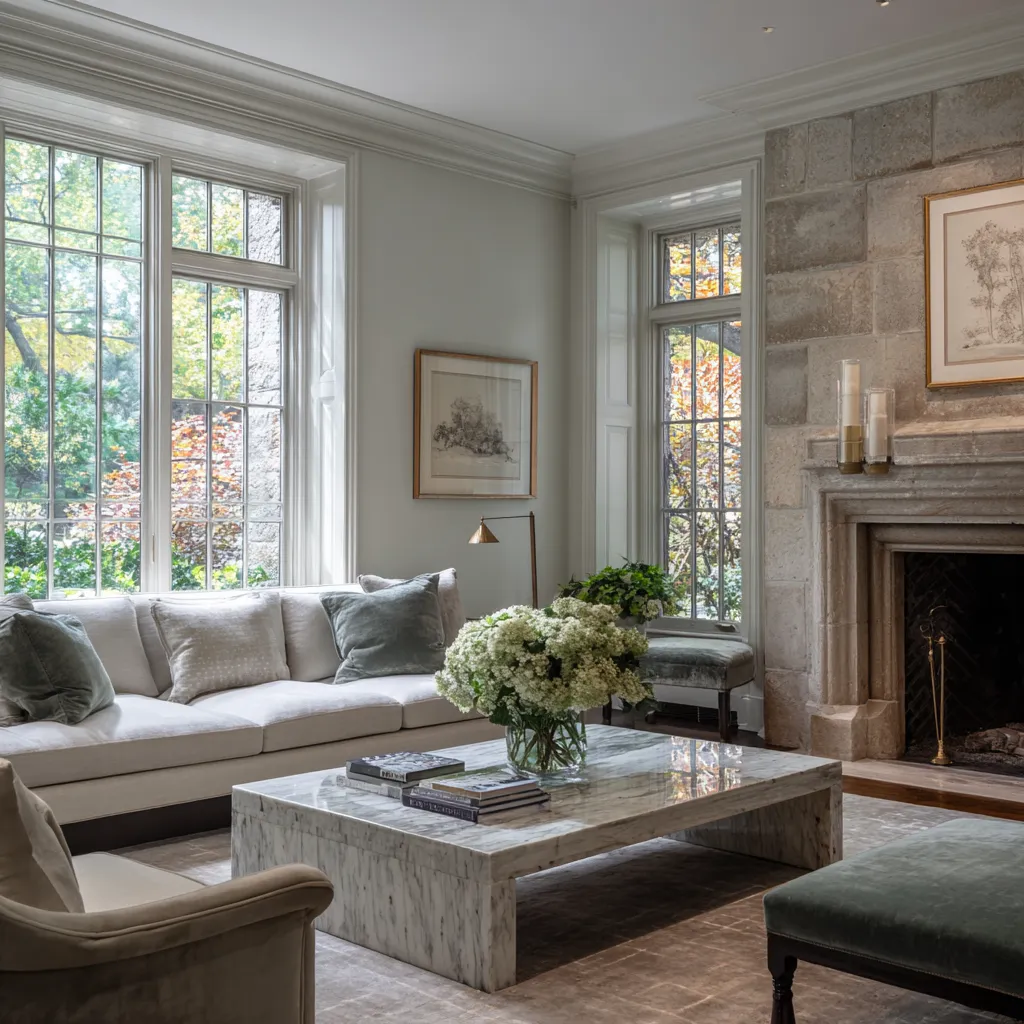
A window seat is especially powerful here. It shifts the room away from pure formality and into long occupation.
It suggests reading, pausing, looking out, sitting slightly apart from the main furniture group. That one move broadens the room’s social life.
It also deepens its English identity because the window stops being only an opening and becomes a place.
Pattern has moved to the edge of the style
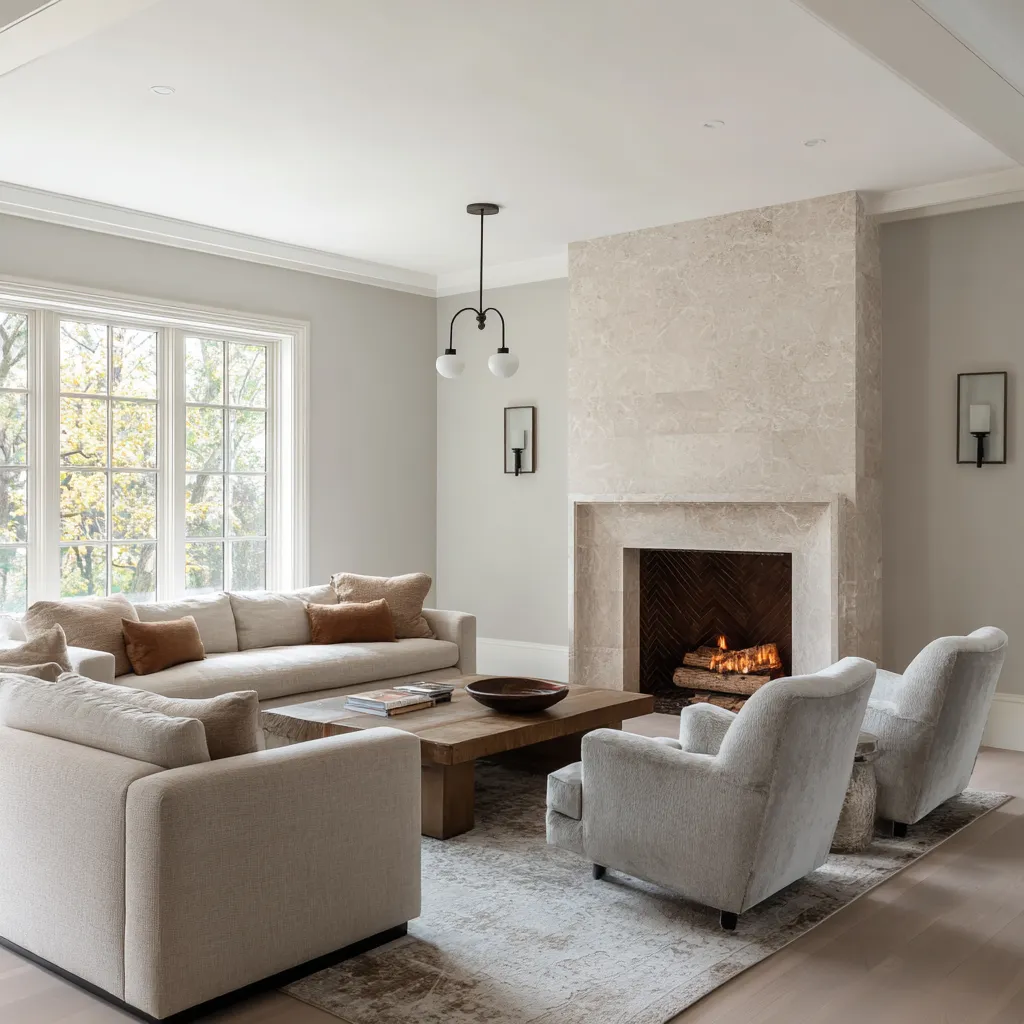
Many people still expect this look to announce itself through tartan, floral chintz, patterned drapery, ornate rugs, and visible textile layering. Yet many interior designs in this register use pattern sparingly, sometimes hardly at all.
That does not mean textiles have become irrelevant. It means their role has changed.
Fabric now softens the architecture rather than defining it. Upholstery still matters, and deeply.
The sofa should invite long use. The chair should feel thick enough to inhabit for hours.
The rug should warm the floor and quiet the center of the room. But these pieces work through texture, depth, tone, and softness far more often than through overt motif.
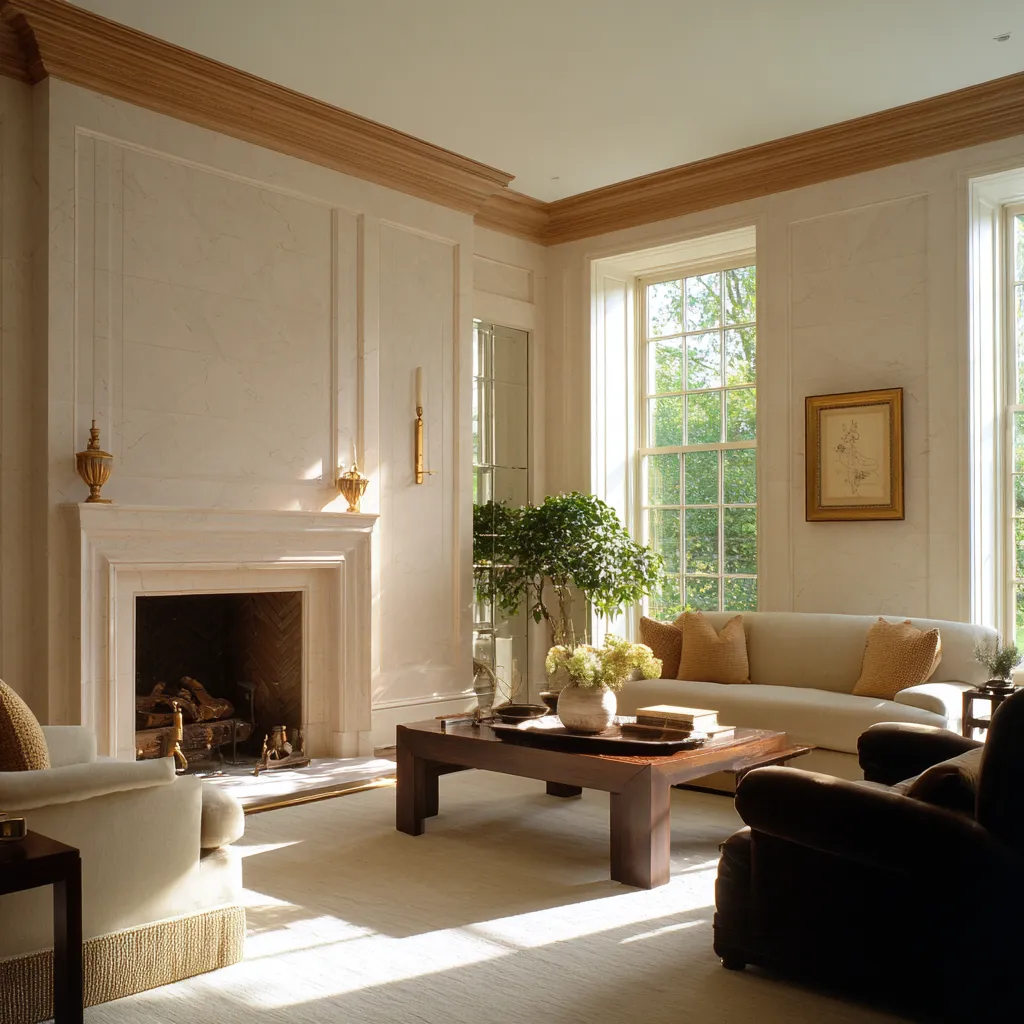
This is one reason the style feels fresher now than many of its older imitations. Once pattern stops carrying the full identity load, the room can breathe.
The eye starts to notice surface finish, tonal shifts in stone, the shadow under the table, the way an old frame sits against pale plaster, the density of leather against linen, the matte presence of dark timber against daylight. The room becomes more architectural and less costume-like.
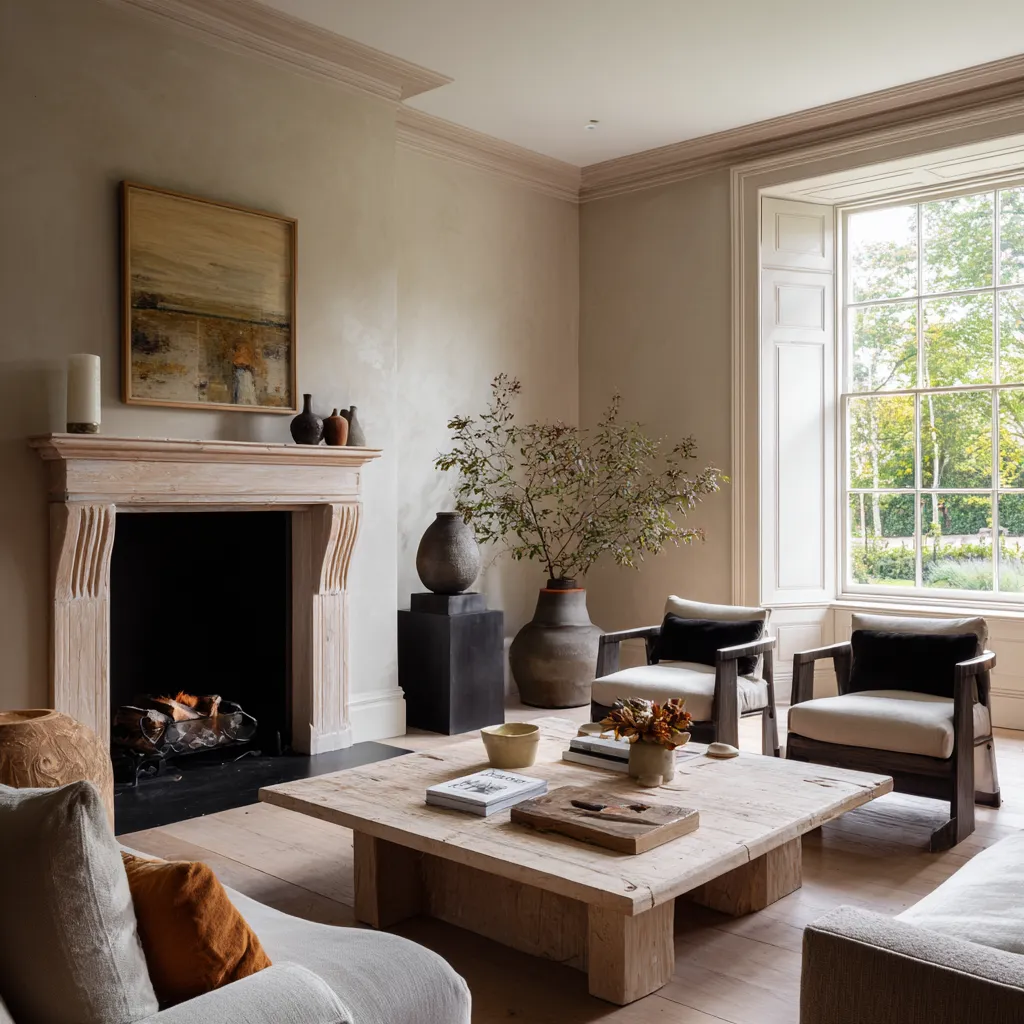
Darkness matters, even in pale rooms
Pale schemes still need weight. Cream walls, chalky upholstery, pale stone, and filtered daylight can produce a beautiful room, but without some tonal compression the whole space risks feeling expensive in a generic way rather than grounded in house memory.
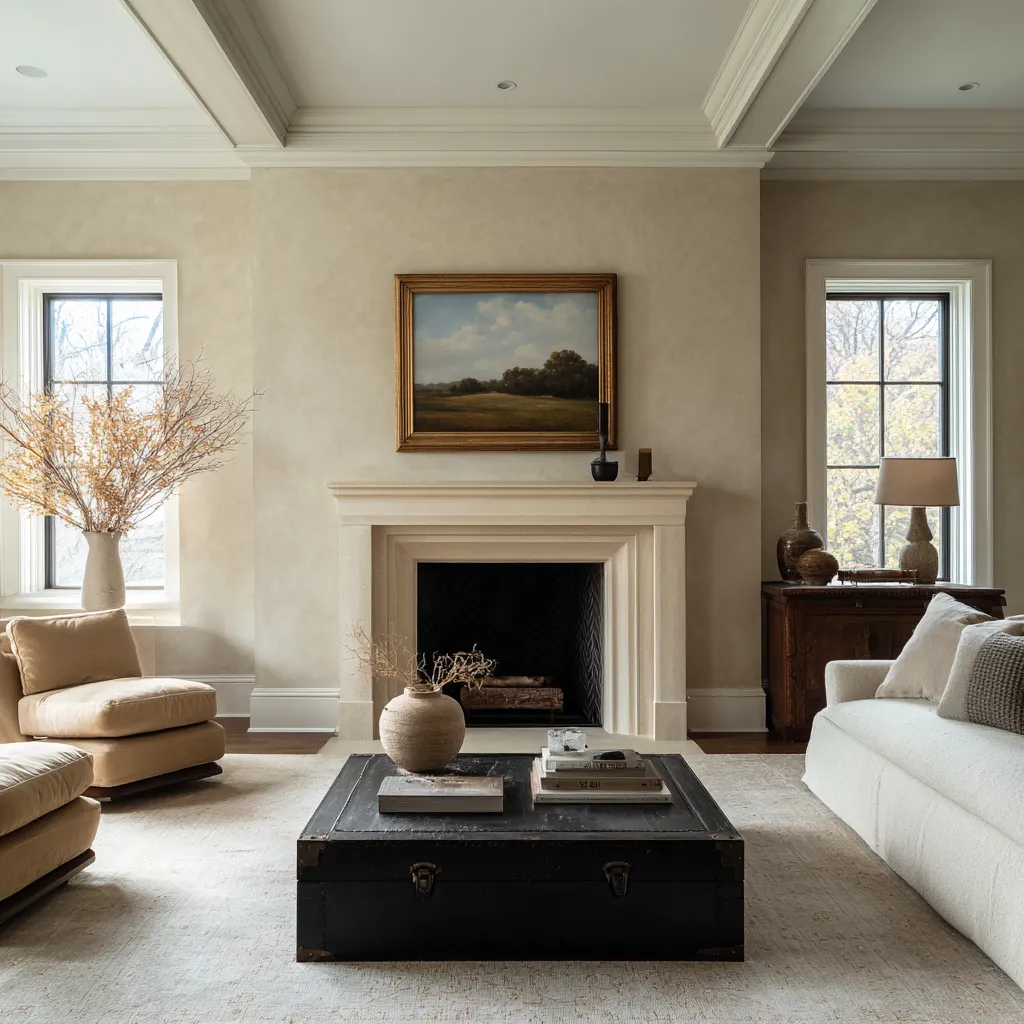
That is why selective darkness is important. A black firebox, a dark coffee table, a tobacco leather chair, a timber crown at the ceiling edge, black-painted windows, iron or bronze fittings, an aged mirror frame, a dark vase with branches—any of these can act as ballast.
They keep the room from floating upward into softness without history.
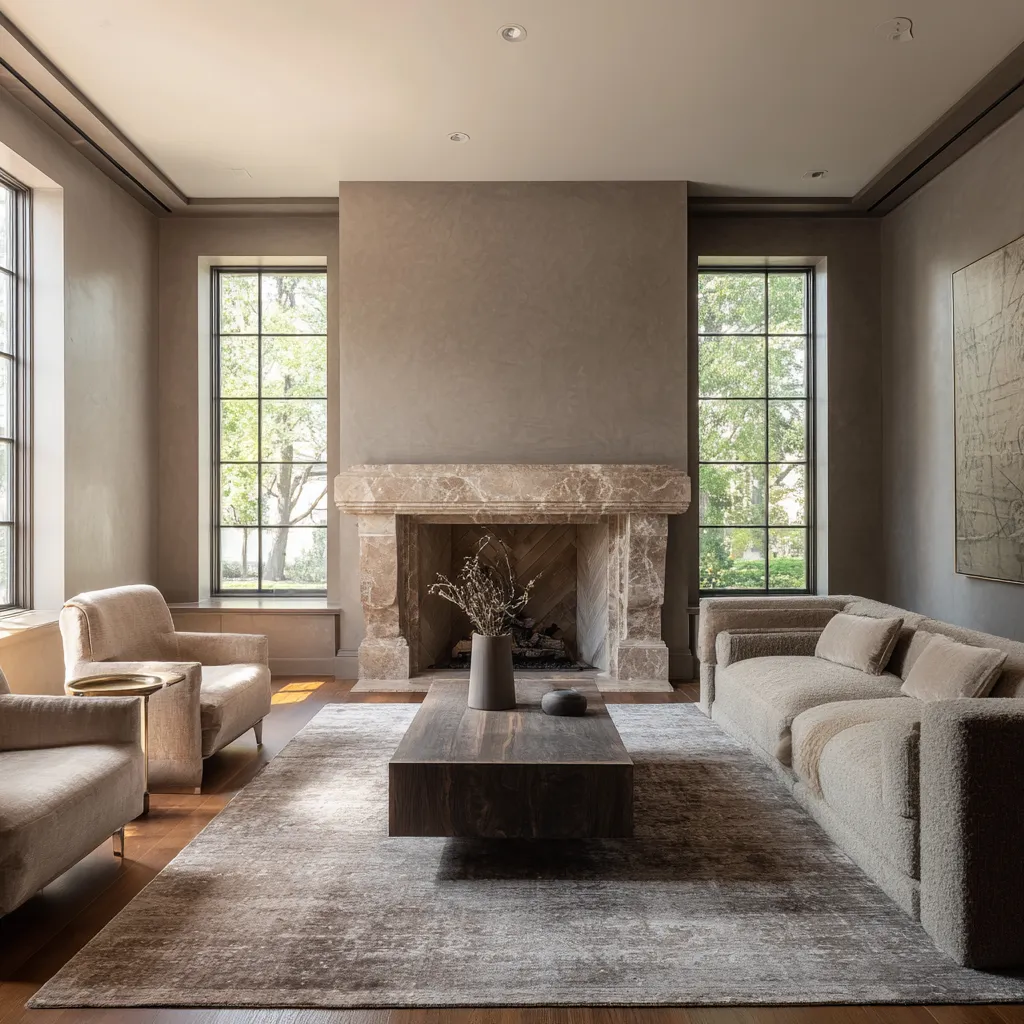
This darkness is rarely spread evenly through the room. A fully dark scheme can push the space toward club-room heaviness if it is not handled carefully.
What works far better is concentration. One dark center.
One darker lower register. One shadowed threshold.
One strong note that lets the lighter parts of the room feel earned instead of thin. That selective use of darkness is especially effective because it also sharpens daylight.
The brighter wall, pale sofa, or limestone surround looks richer when something more compressed sits nearby.
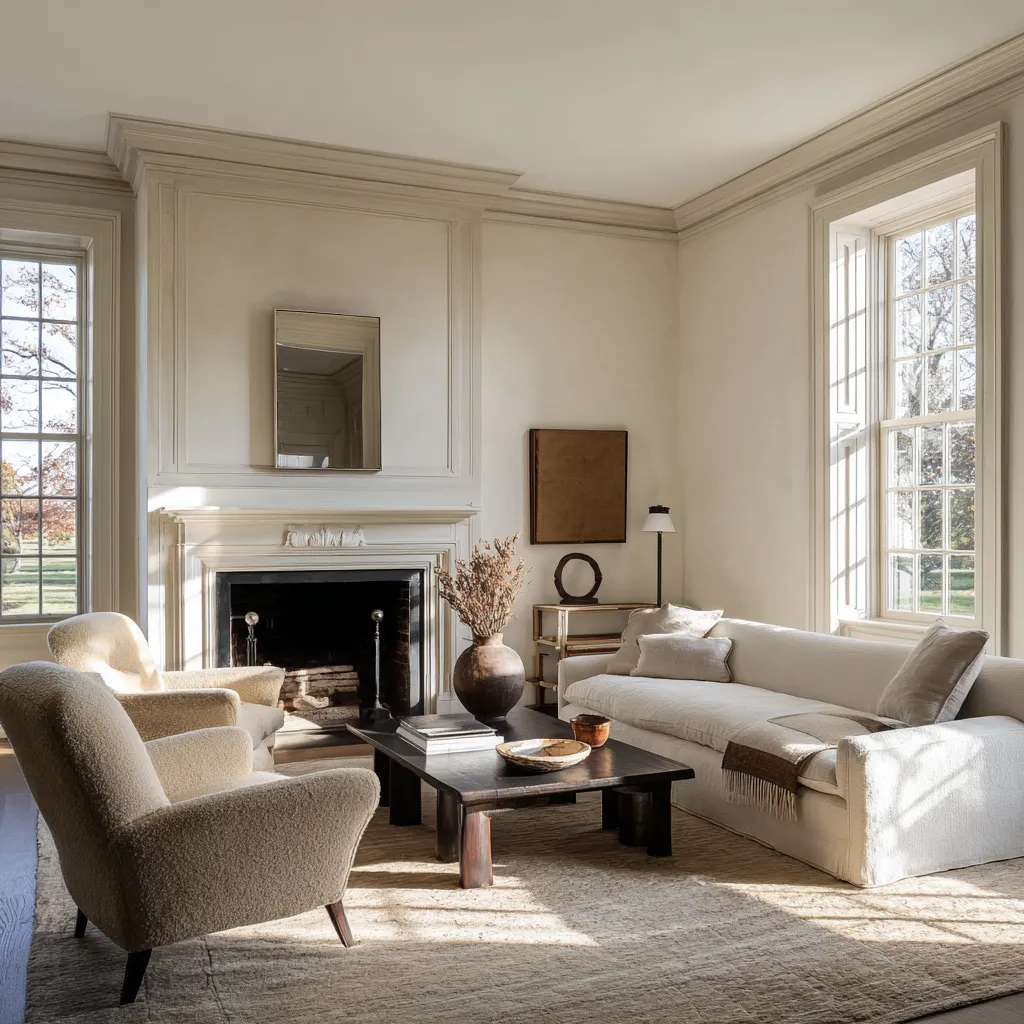
Comfort has to be convincing
A design of this kind can carry serious architecture, but it fails quickly if the seating feels decorative rather than inhabitable. That is one reason contemporary upholstery has entered the style so successfully.
Sofas today are often deeper, lower, and more forgiving than many literal reproductions of earlier English furniture. In the right room, that shift helps rather than harms.
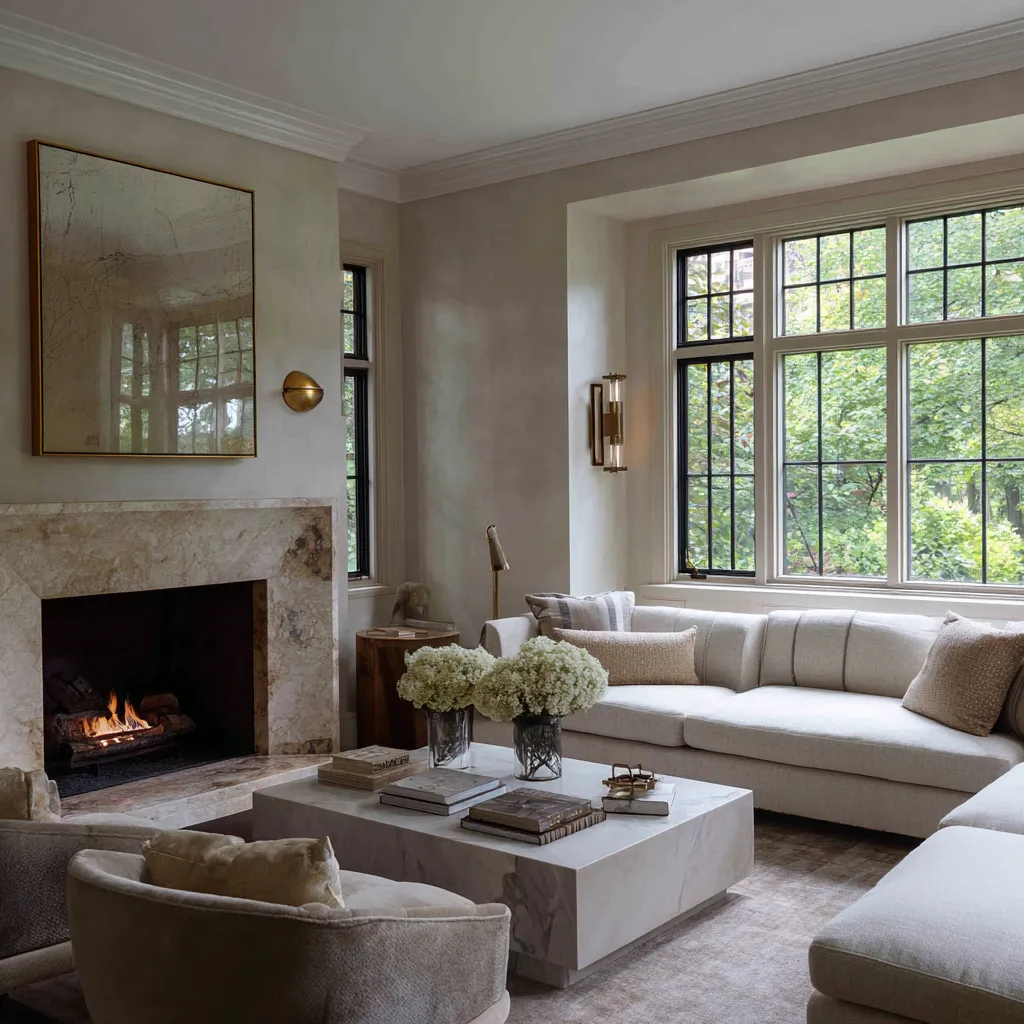
The key is that comfort should remain disciplined by the shell. A generous sectional, a broad sofa, or thickly cushioned chairs can belong very naturally in an English country old money living room if they are placed within a clear room order.
They still need to respect the hearth. They still need to gather around a proper center table.
They still need to leave the windows legible and the wall hierarchy intact.
This is the deeper rule behind the style’s modernization. The conflict has little to do with old furniture versus new furniture.
The issue is whether the room still feels house-rooted. A current sofa can sit beautifully in a room with a serious mantel, deep windows, and the right dark anchor.
The same sofa placed in a generic shell turns the whole idea into a vague neutral interior with English references floating on top.
Heritage cues work better in low numbers
An old mirror, a landscape painting, a small inherited cabinet, a leaded window, a time-softened brass sconce, a carved mantel, a faded rug, a stack of old books—these details still matter. They are part of the room’s memory system.
But they tend to work most effectively when the room does not pile them on all at once.
Too many heritage cues push the space toward period staging. Too few and the room loses historical texture.
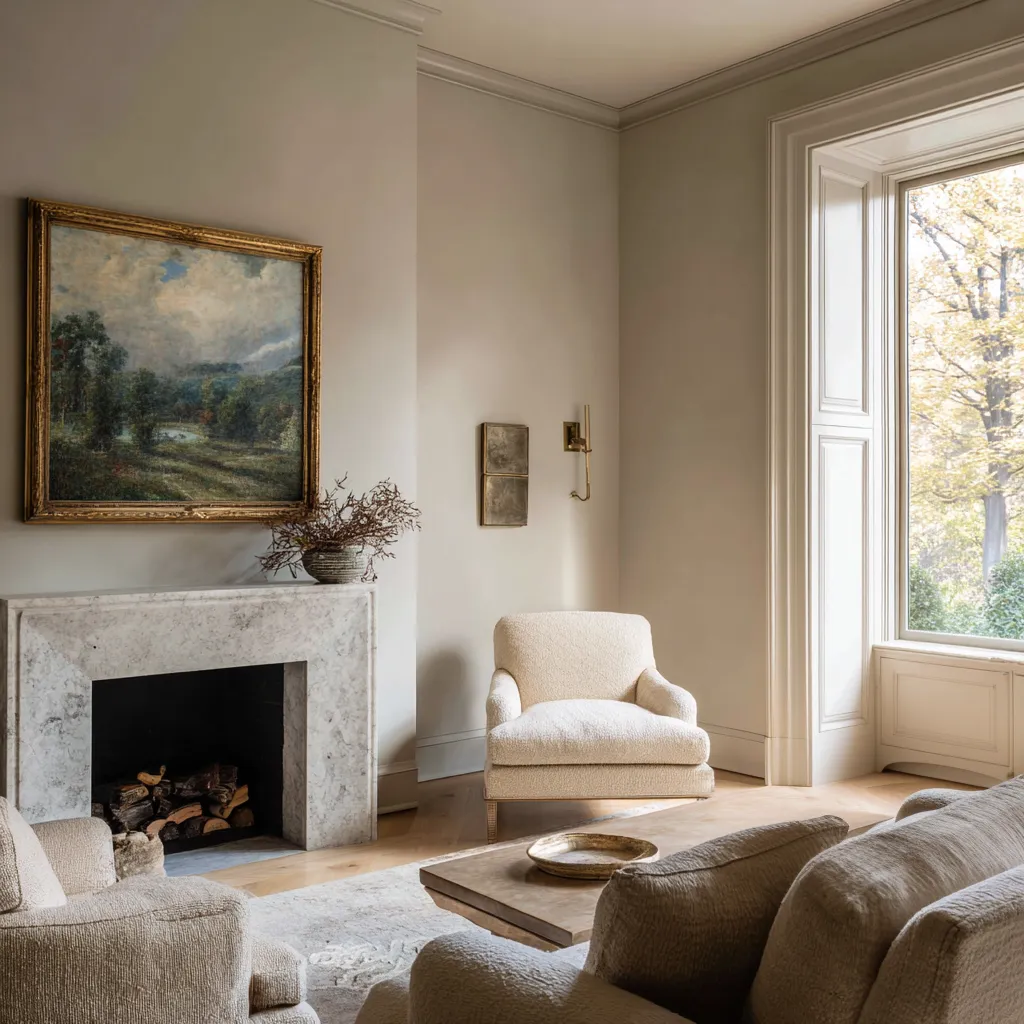
The sweet spot lies in restraint. One patinated frame over the mantel can do more than five smaller antique references scattered everywhere.
A single dark cabinet at the room’s edge can suggest continuity better than an entire suite of obvious period furniture. A landscape painting above a stone surround can tie the room to land more powerfully than a large decorative collection.
This sparseness makes the design feel as though it has been lived with and edited over time. Nothing strains to announce its oldness.
The objects appear compatible with the architecture rather than recruited to explain it.
There are several live branches of the style
Although people often talk about English country as though it were one fixed formula, the living room can take several forms without losing its identity.
- One branch is the garden-softened family room: lighter palette, visible grounds, softer seating, less rigid symmetry, perhaps a window seat or open door. This version often feels especially livable because it lets daylight and domestic comfort lead.
- Another branch is the ceremonial paneled room: stronger axial order, central fireplace, coffered ceiling, shaped wall fields, formal spacing. This version carries a larger sense of status and house discipline, though it can feel slightly less relaxed for daily use.
- A third branch is the edited current country-house room: clean-lined sofas, pared-back lighting, restrained art, few motifs, but enough fireplace mass, window depth, and heritage memory to keep the room from flattening into generic luxury. This is often where the most successful updating happens.
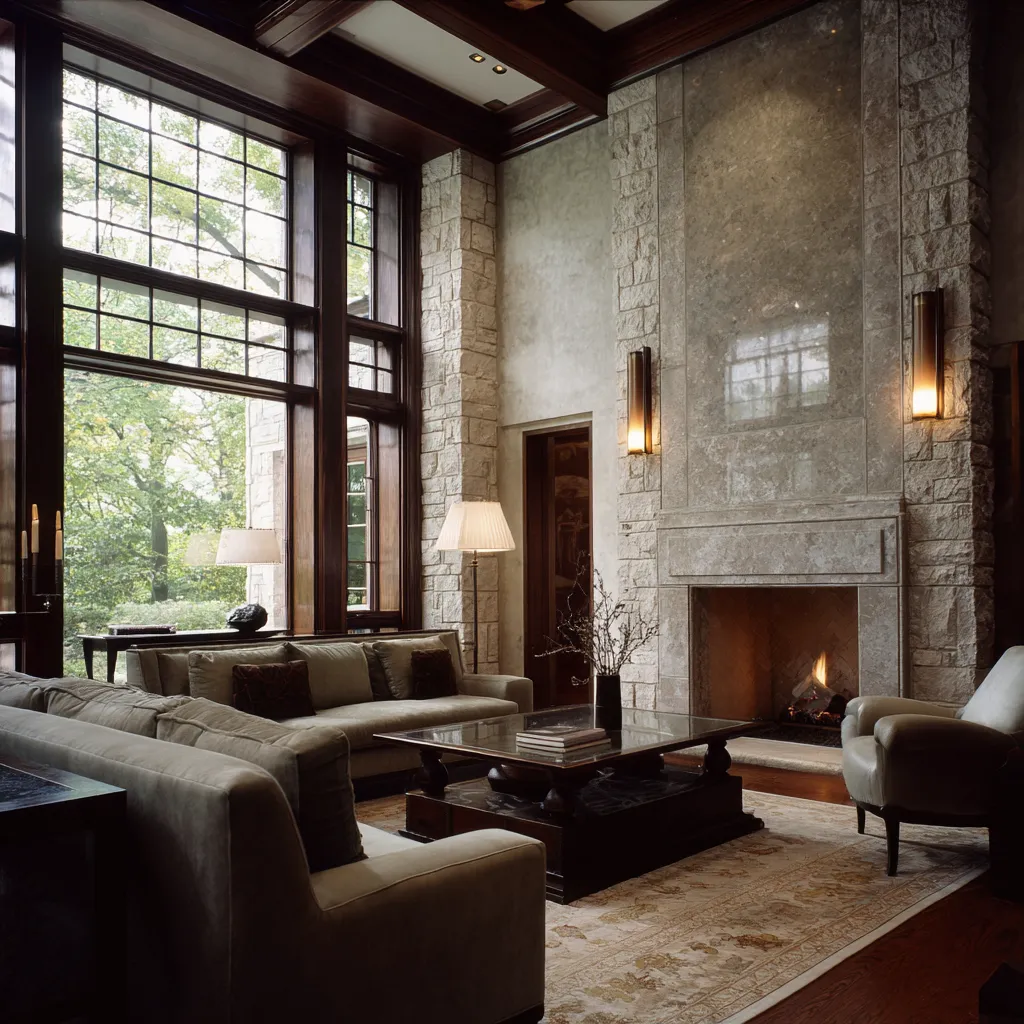
- Then there is the shadowed estate room: darker timber, more enclosure, deeper tonal range, heavier atmosphere, often a little more masculine in spirit, though not necessarily. These rooms retain a powerful sense of age and authority because they allow the architecture to keep some shadow.
What ties these branches together is not one palette or one furniture type. It is the shared logic underneath them: the room belongs to the house first, to the site second, and to decoration only after that.
How the style loses its footing
The living room usually starts to drift in one of two directions.
- The first is polished neutral luxury with a few English references. This happens when pale refinement remains, but the room loses too much heritage, dark anchoring, or site memory. The result can still be attractive, yet it feels detached from lineage.
- The second drift is generic contemporary softness. This happens when furniture and lighting are updated without enough fireplace presence, window grammar, or architectural hierarchy. The room may feel current and pleasant, but it no longer carries that settled house-born atmosphere.
In both cases, the problem is not modernity itself. The problem is modernity without architectural memory.
The lesson of the style
English country living room design carries its force through a quiet hierarchy of values.
- The house comes first.
- Then the hearth.
- Then the window and the grounds.
- Then the dark note that gives the room ballast.
- Then the upholstery that lets people remain there for hours.
- Then the sparse objects that suggest history without staging it.
That order explains why the style survives adaptation so well. It does not depend on freezing the room in a nostalgic script.
It depends on holding onto the underlying structure while allowing the movable layer to shift with present life.
So the living room succeeds not because it copies familiar country-house symbols, but because it lets permanence, land relation, reserve, and domestic use meet in the same space. That meeting is what gives the room its particular authority.
It feels inherited in spirit, even when many of its furnishings are new.