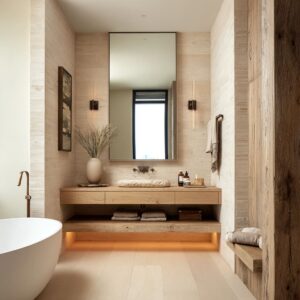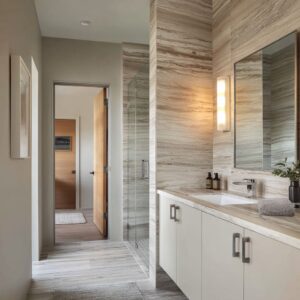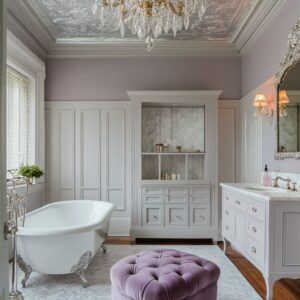
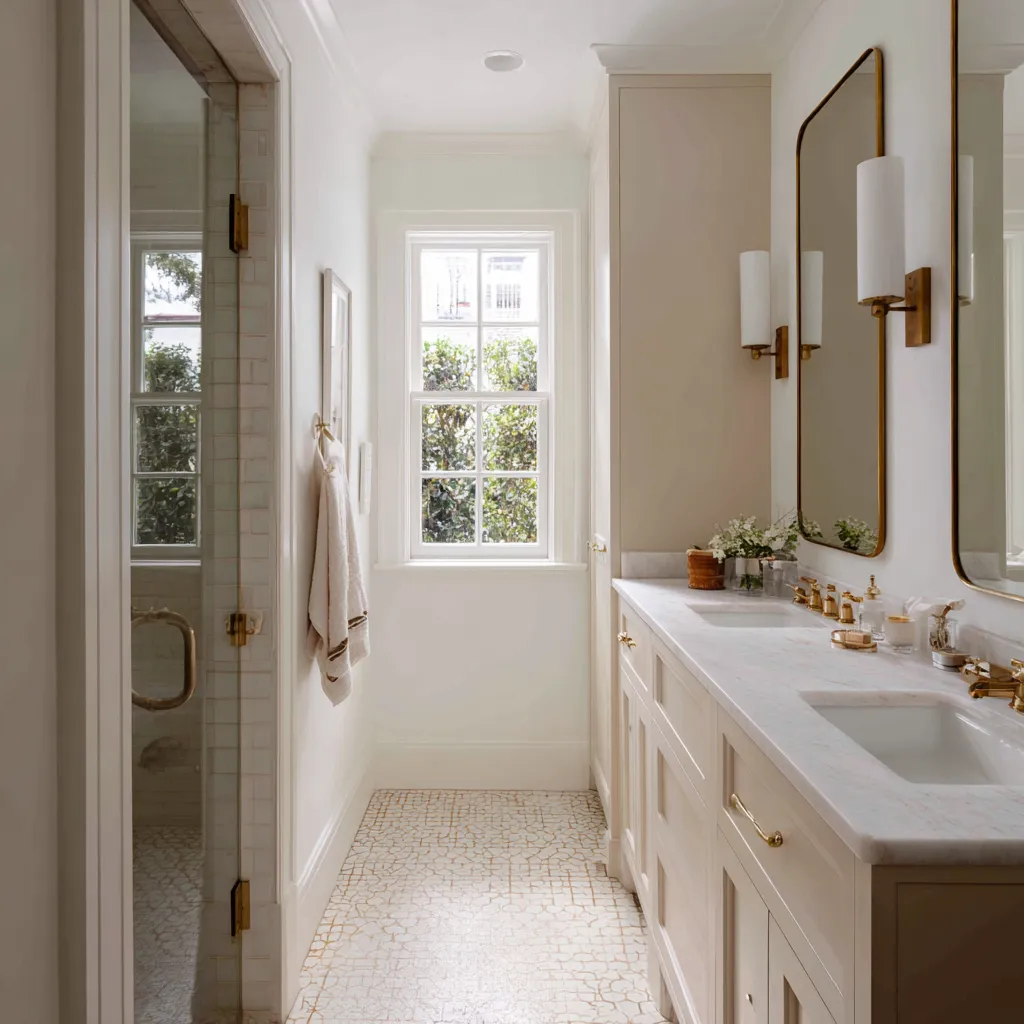
Colonial bathroom designs that feel current do not remove their traditional base. They keep it, but they edit where the eye lands first.
The change is not happening through the loss of Colonial structure. The change is happening through the control of surface, silhouette, contrast, and clutter.
Modern colonial style bathroom design still carries the order, framing, and settled character associated with Colonial interiors, but feels lighter, more composed, and more in step with current taste.
Keep the Colonial identity in the frame
The part of the room that most often carries the Colonial character is not the decorative layer. It is the architectural frame.
That identity lives in paneled vanity fronts, wainscot or lower wall framing, casing depth, and the balanced placement of windows and mirrors. Contemporary Colonial bathroom designs keeps its heritage low in the room and at the edges of the room.
It lets cabinetry, trim, and wall banding hold the historical language. Once that foundation is in place, the upper half can become much cleaner.
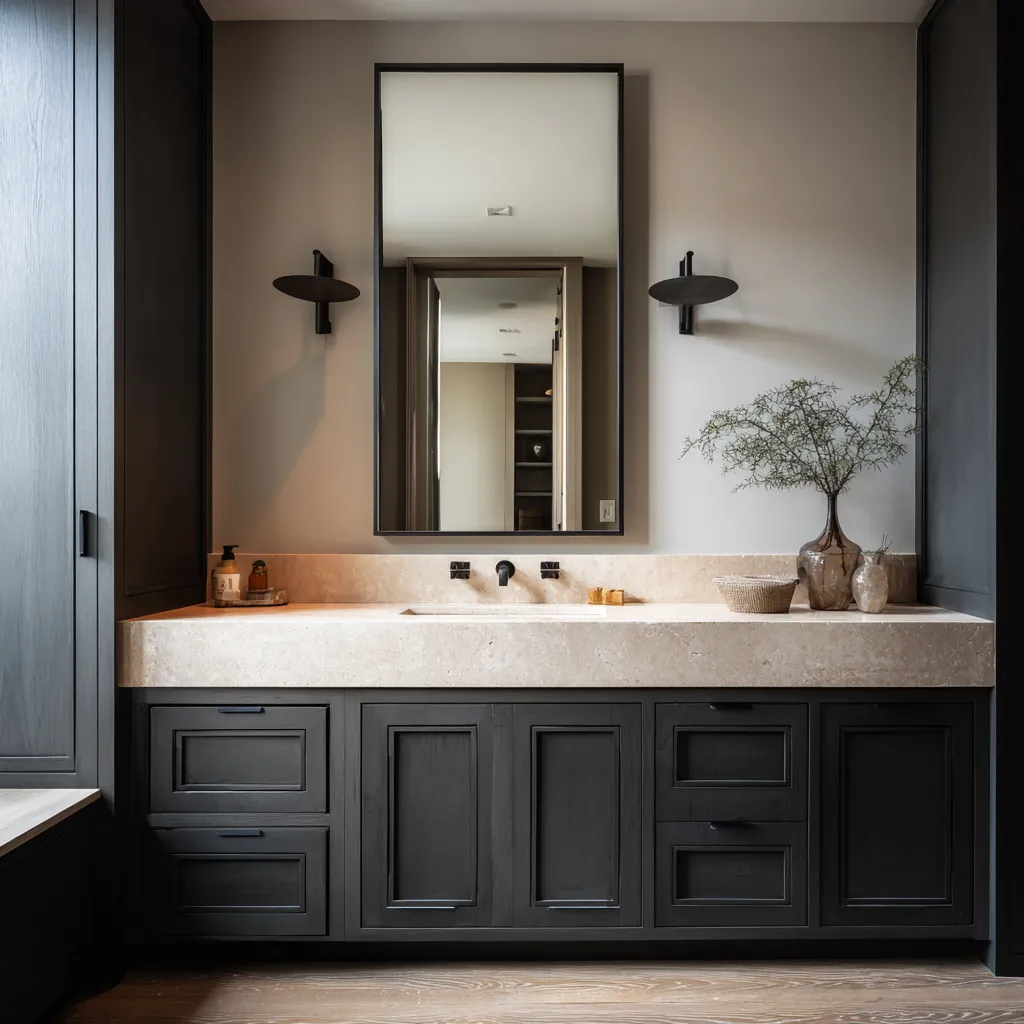
That is what makes such bathroom designs still feel rooted even when the mirror is plain, the faucet is reduced, and the counter is nearly bare. The room has already established its lineage through joinery and framing.
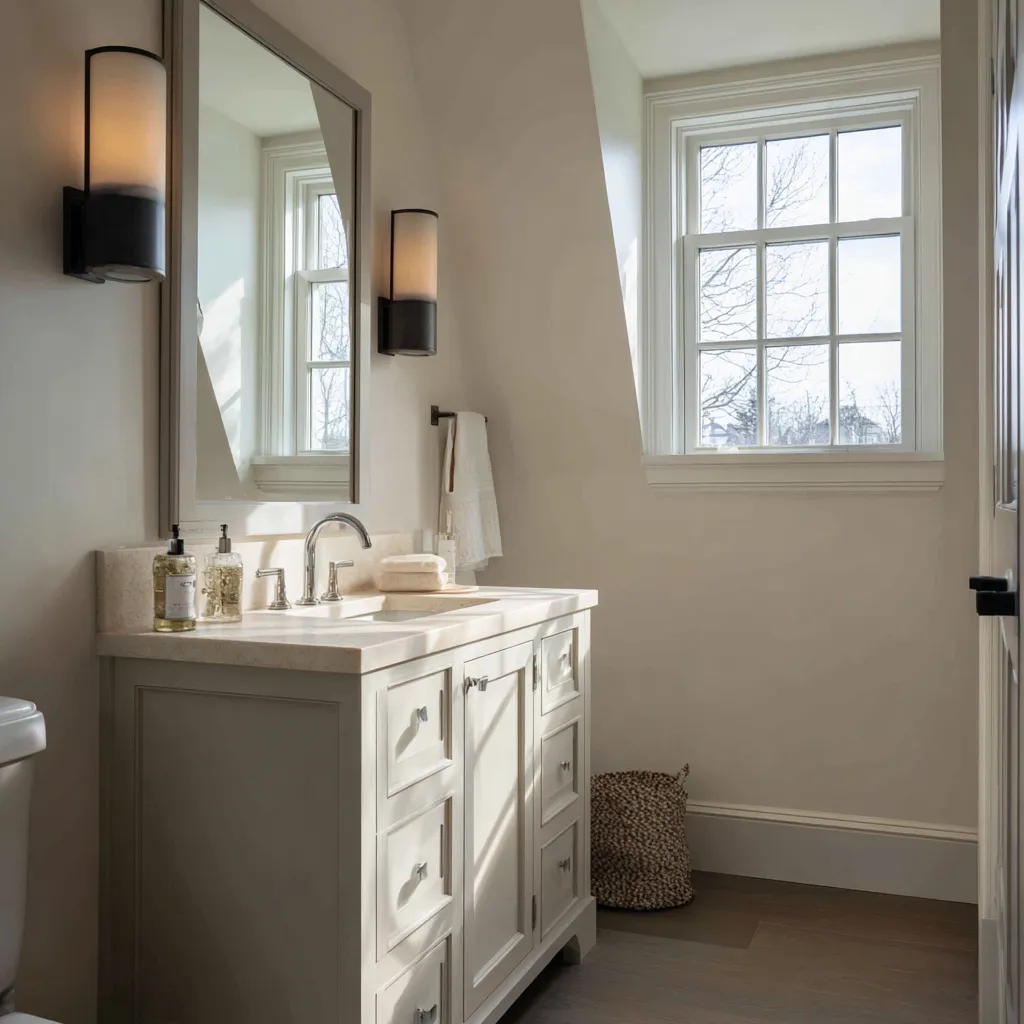
Simplify the eye-level zone
The clearest modernizing move is subtraction at eye level. The vanity panels stay.
The heavy styling does not. The walls often become broader and calmer.
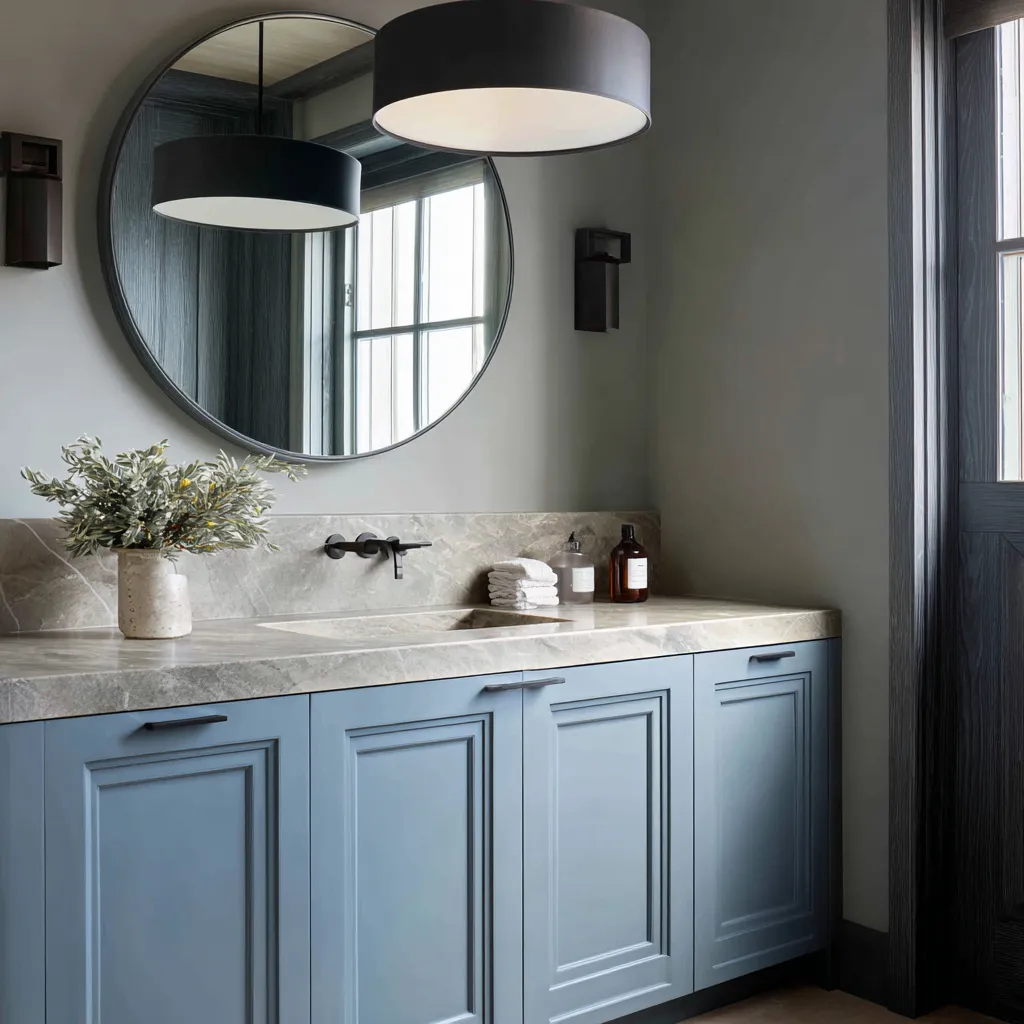
The mirror became larger and simpler. The fittings become fewer and cleaner.
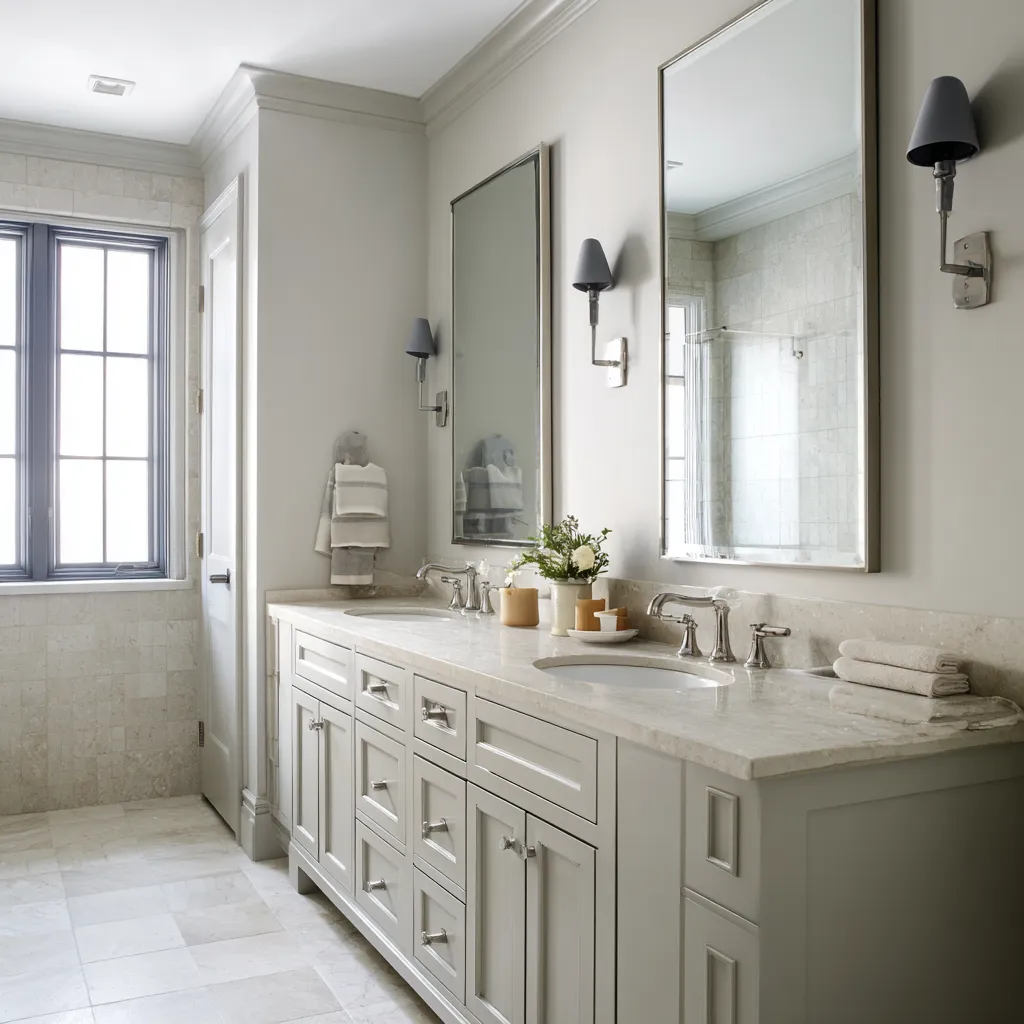
This is where many Colonial bathrooms either feel fresh or start to drift into visual heaviness. If every part of the room tries to speak at once—the paneling, the mirror, the sconces, the stone, the accessories—the style can become dense very quickly.
The bathrooms that felt current narrowed that conversation down.
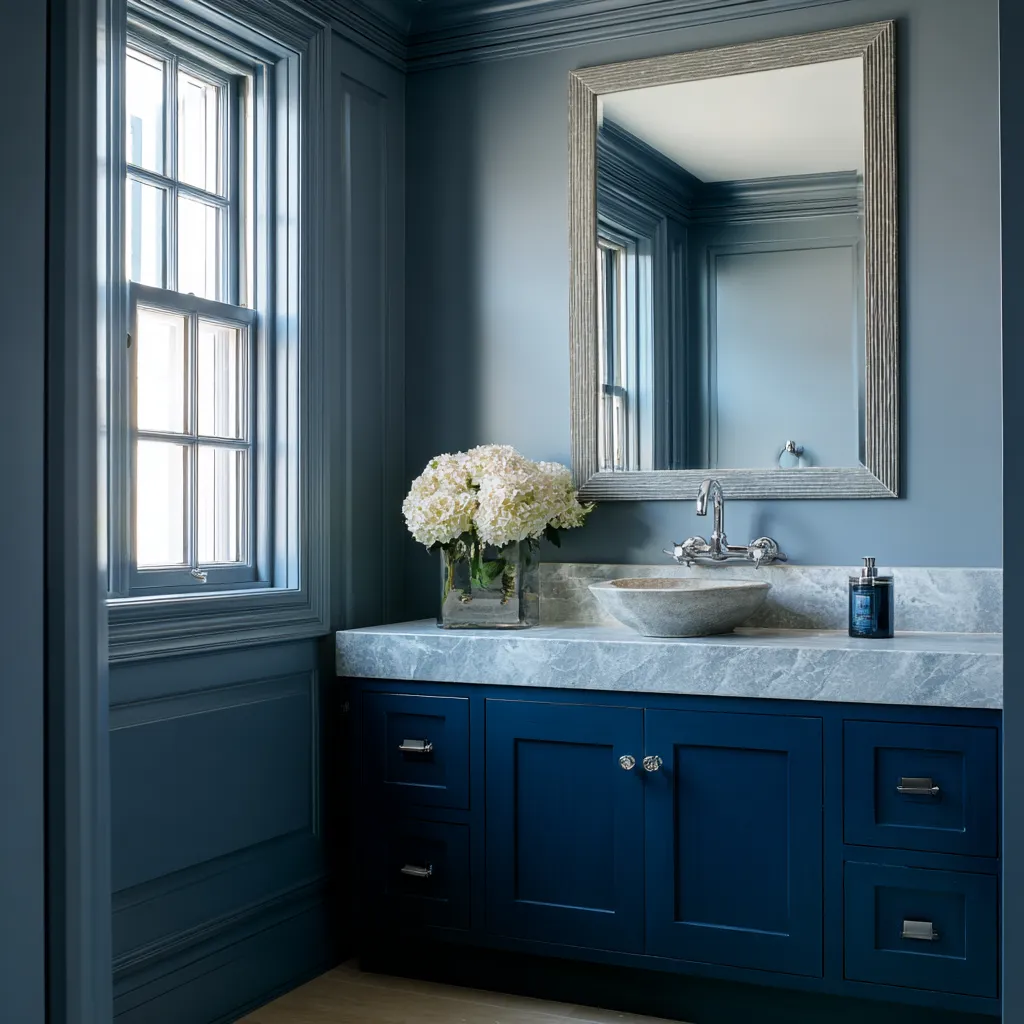
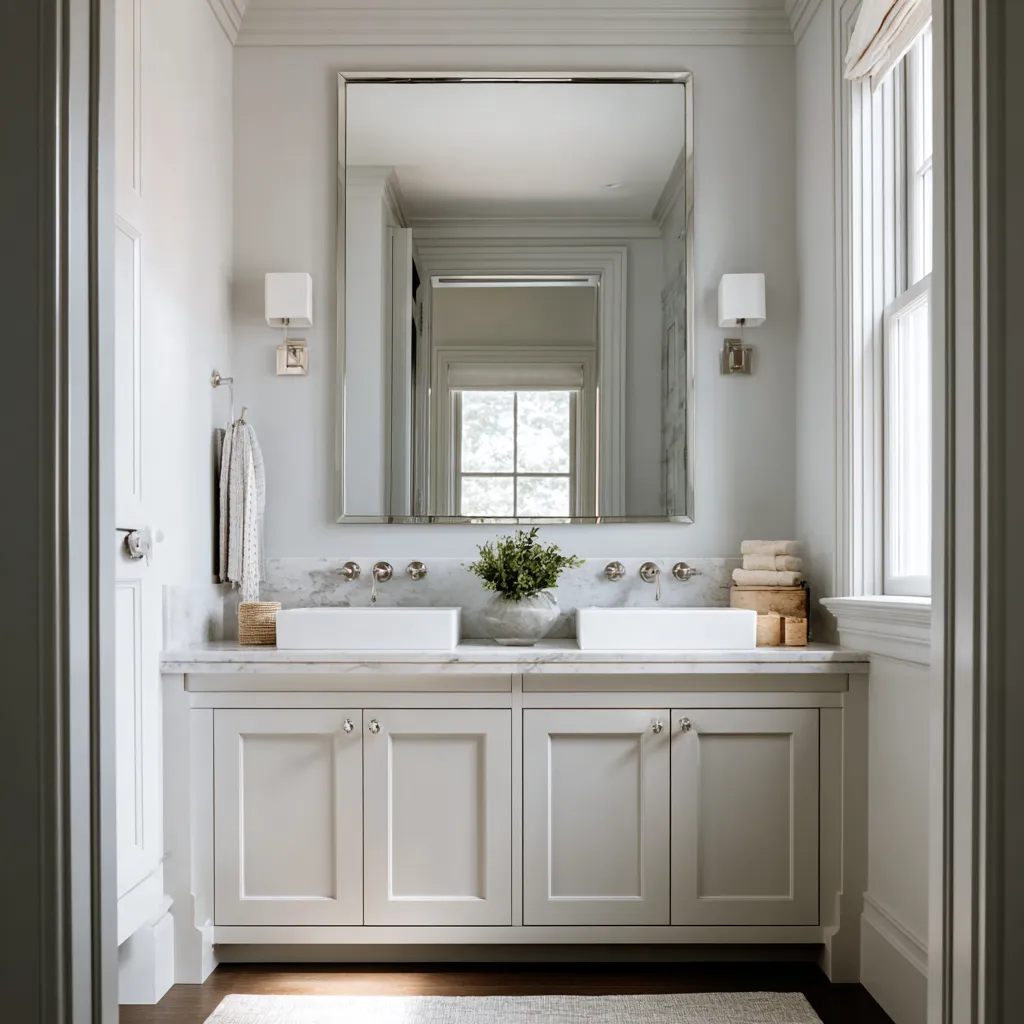
A broad stone field across the vanity top is one of the popular modern ideas. So it is a minimal counter.
Together, those two moves flatten visual noise and create a more settled sink wall. Instead of many small events, the room gives you one composed surface.
That is a major reason such bathrooms would feel polished. They let the eye move through the room without interruption.
Use stone as continuity
Modern appearances prefer a restrained approach to stone. Soft-veining stone is a more appropriate option than dramatic, high-contrast slabs.
Pale stone, by contrast, is one of the main tools used to create continuity and relief.
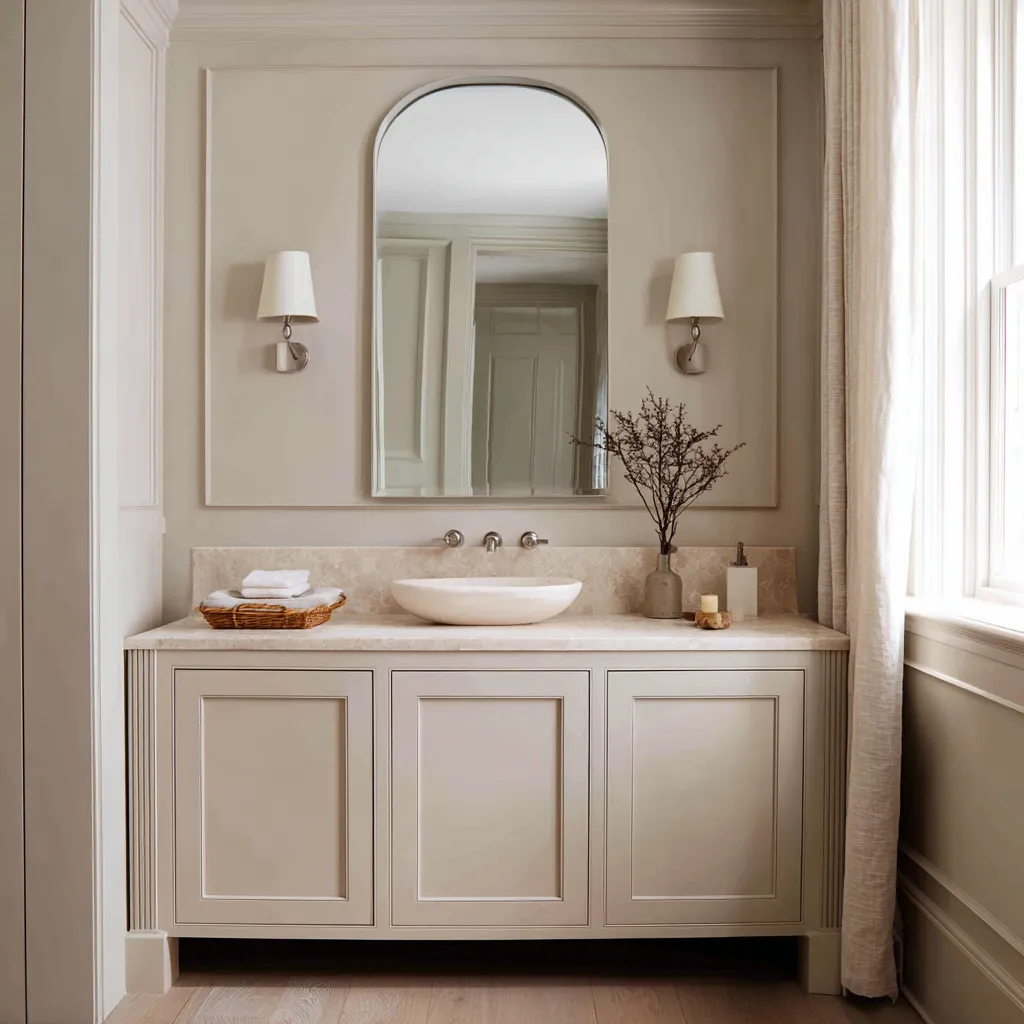
This gives Colonial bathrooms a very useful advantage. The stone can add substance and refinement without competing with paneling, trim, and daylight.
It acts as a horizontal pause in a room built from vertical casing lines, mirror edges, and wall divisions.
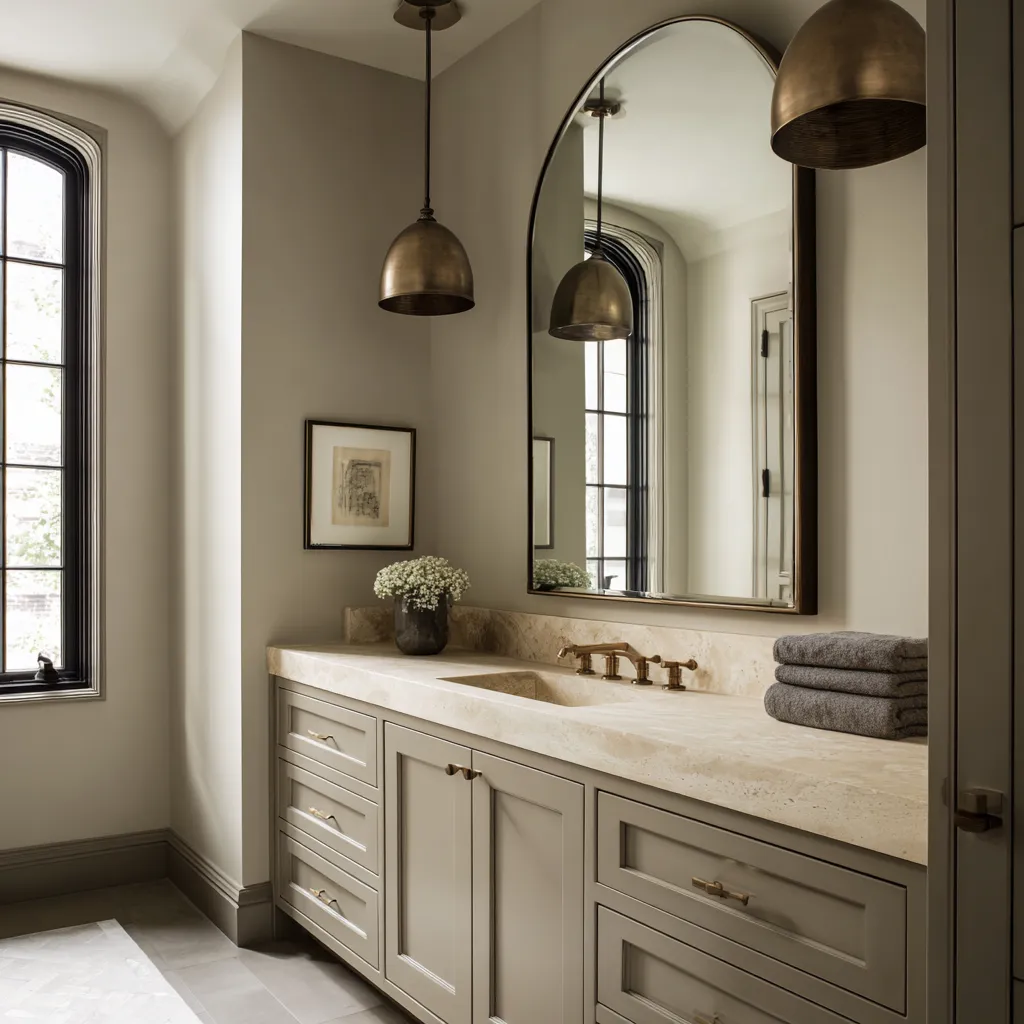
The stone usually does three jobs at once. It ties the sinks together.
It calms the vanity wall. It creates a visual break between the lower historical layer and the simpler upper layer.
That is a smarter use of stone than treating it as a headline material.
Modern design directions: pale restraint or dark enclosure
Modern Colonial bathrooms do not follow a single formula. They tend to move in two major directions.
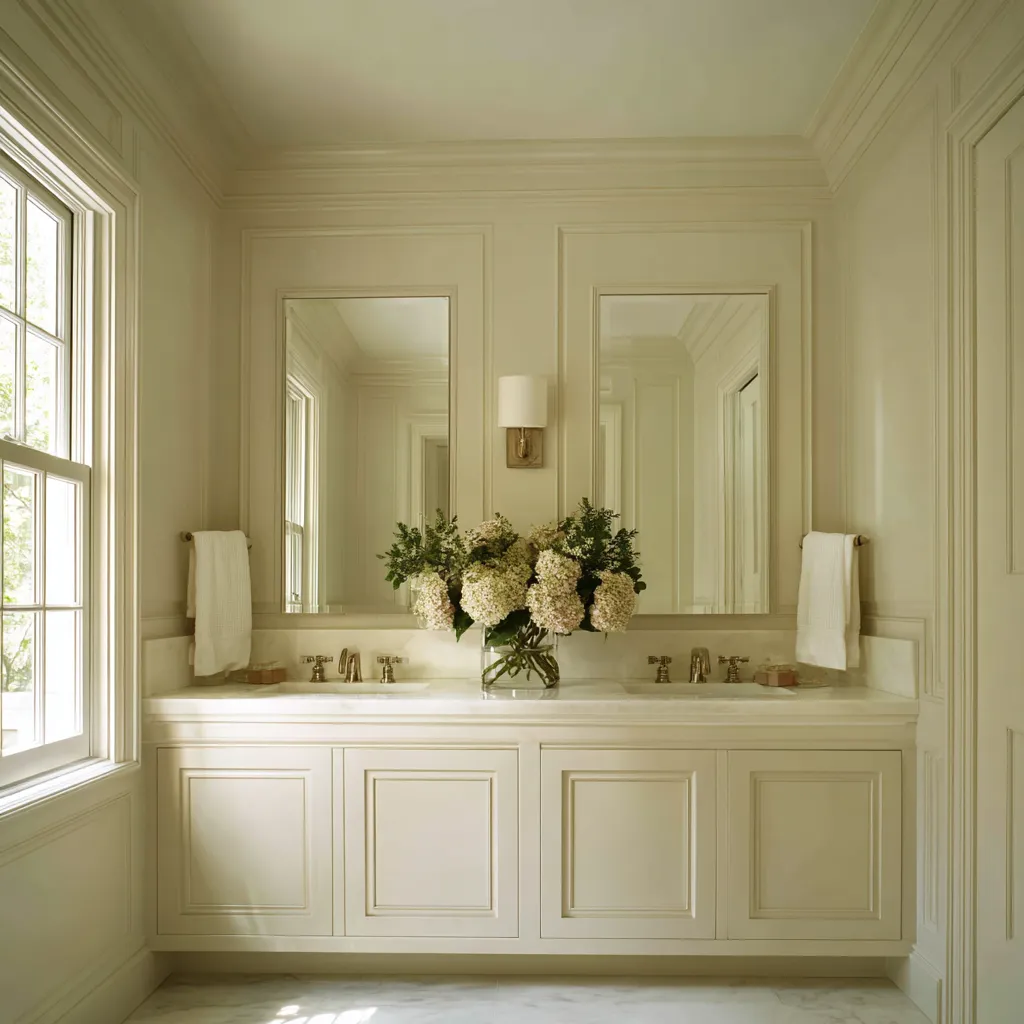
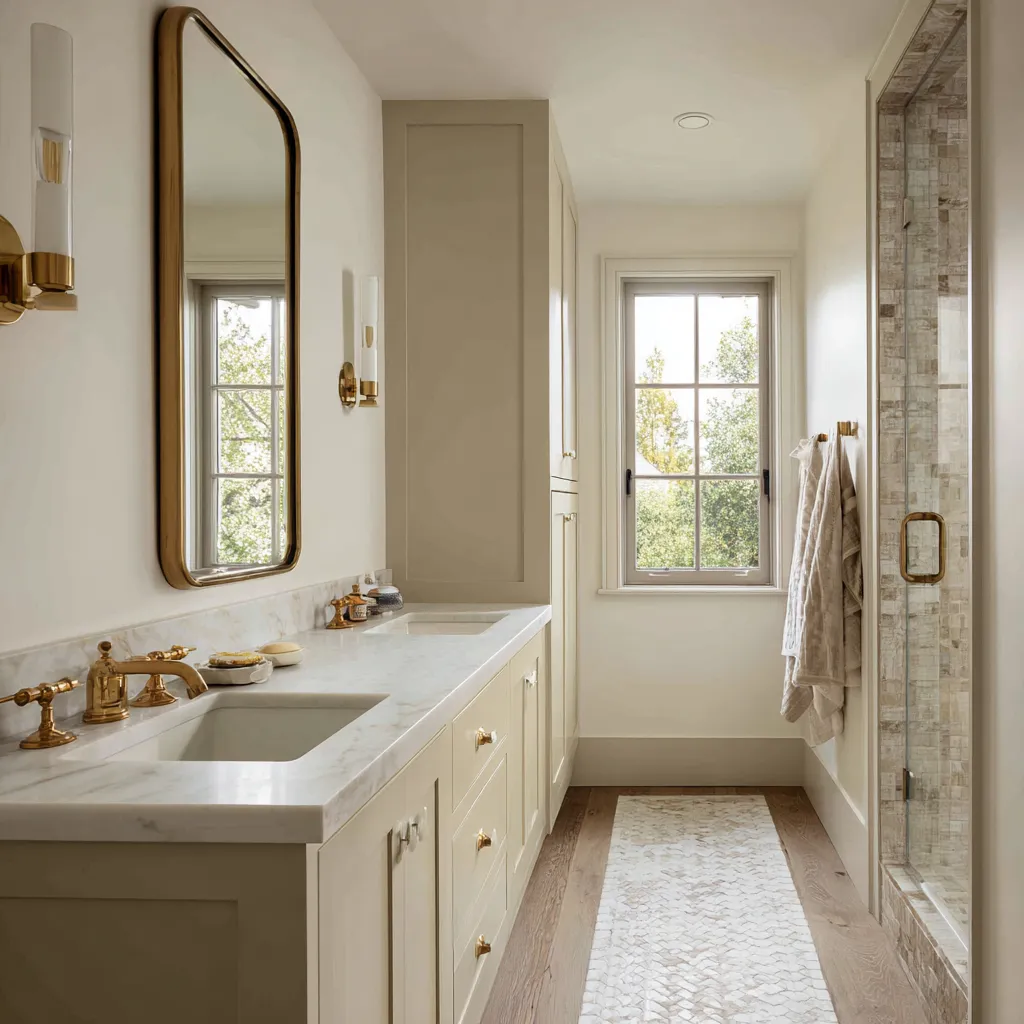
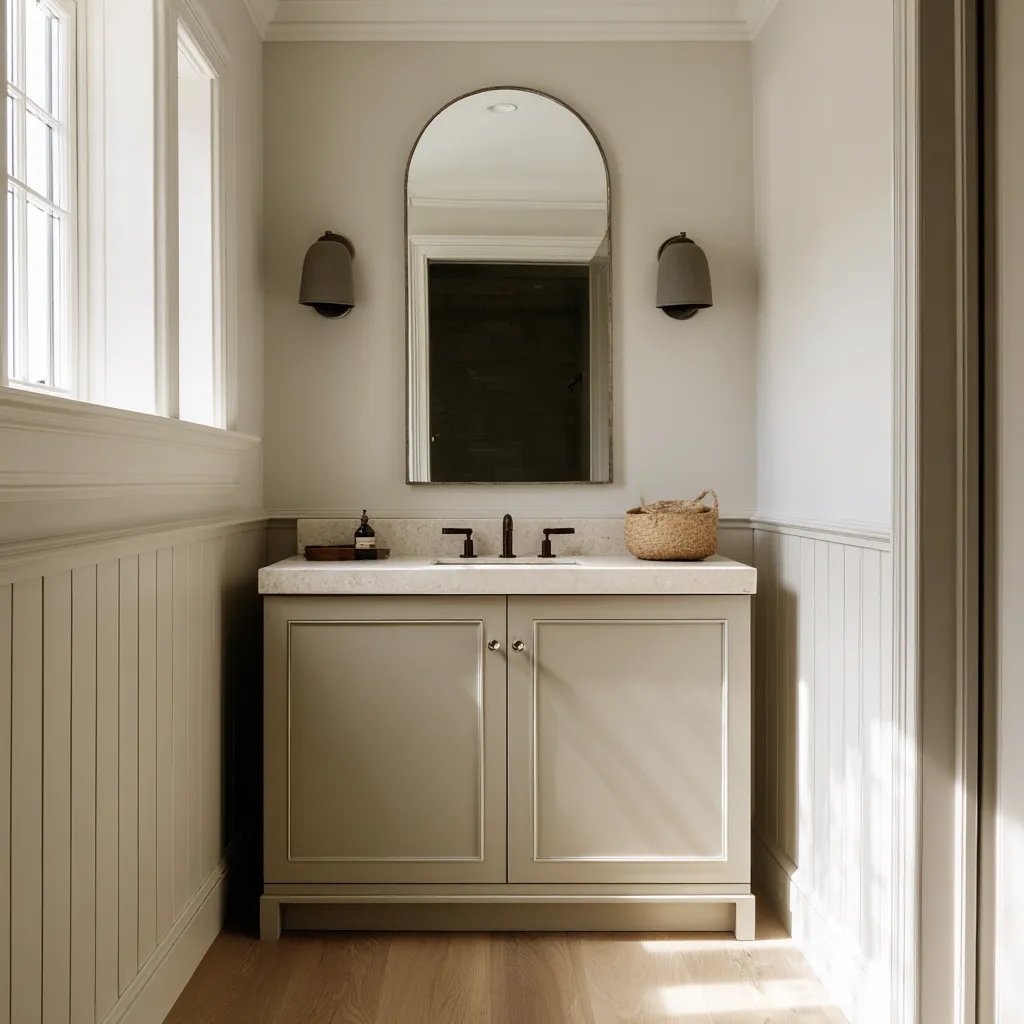
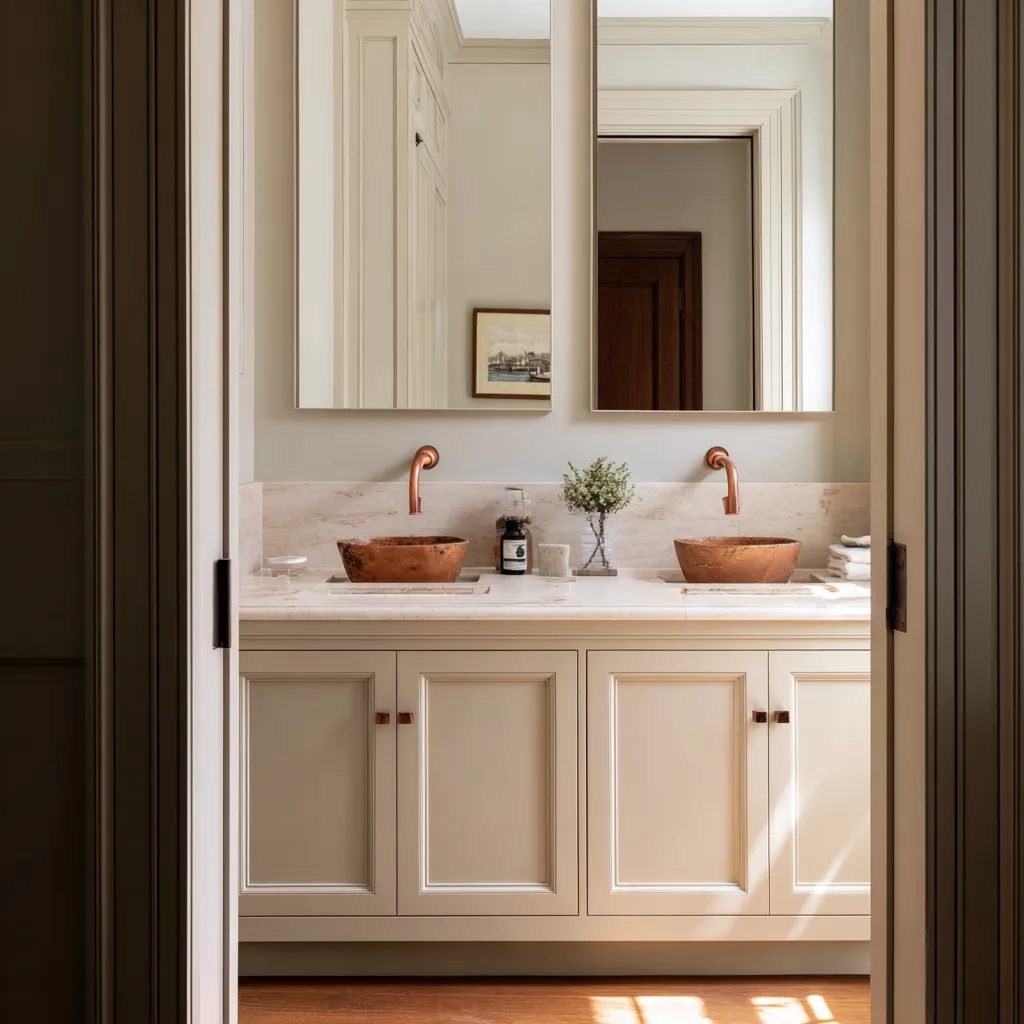
The first is a pale, low-contrast approach. This version uses creamy whites, warm grays, muted stone, simple rectangular mirrors, and very sparse staging.
It keeps the atmosphere soft and bright, while letting shadow lines in the trim and paneling create depth. This direction feels especially suited to bathrooms that want a timeless and airy mood.
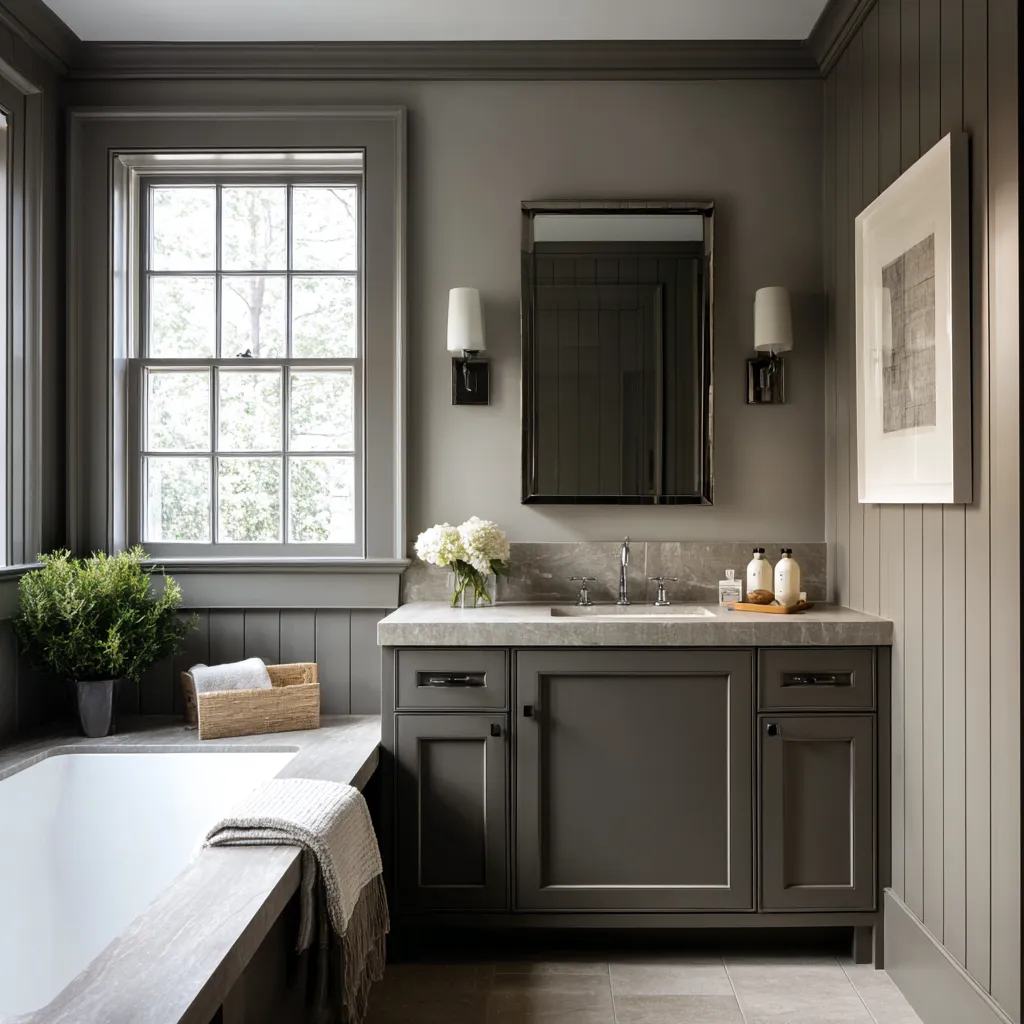
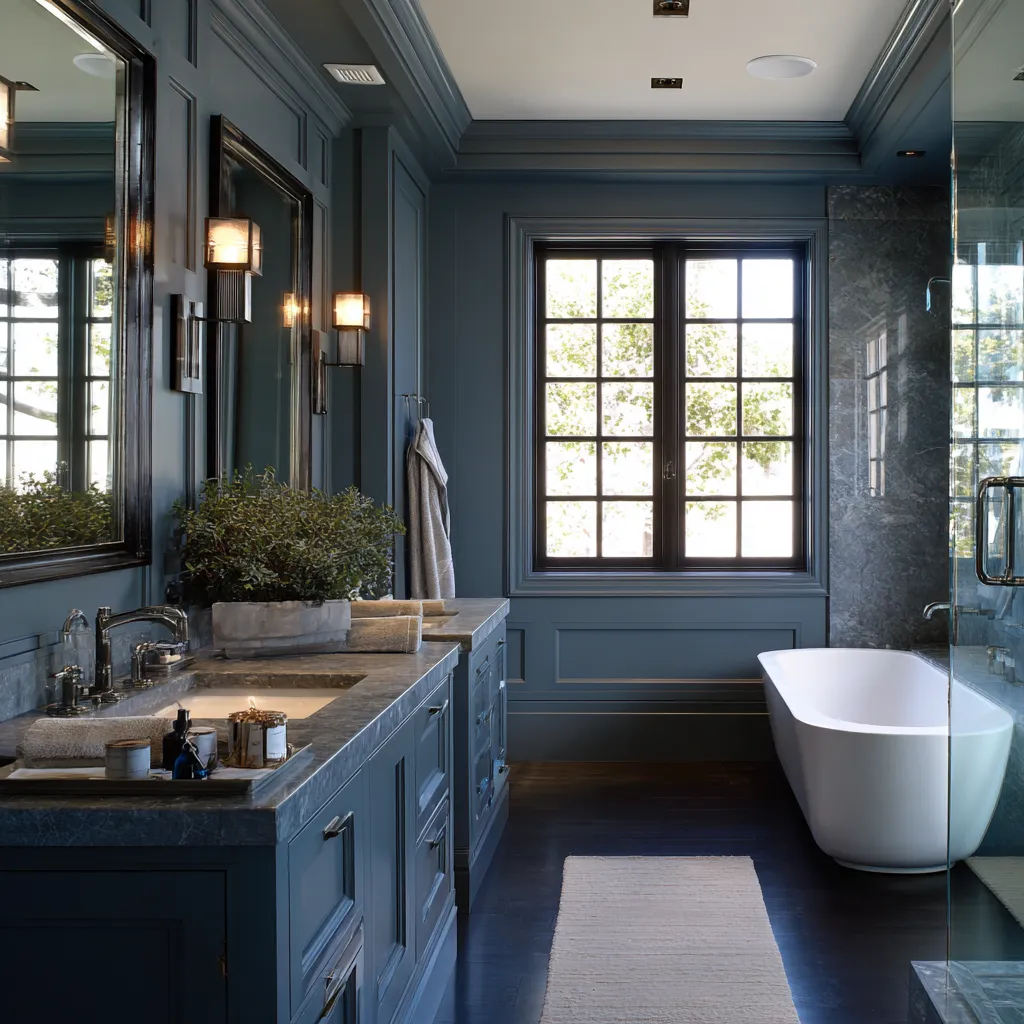
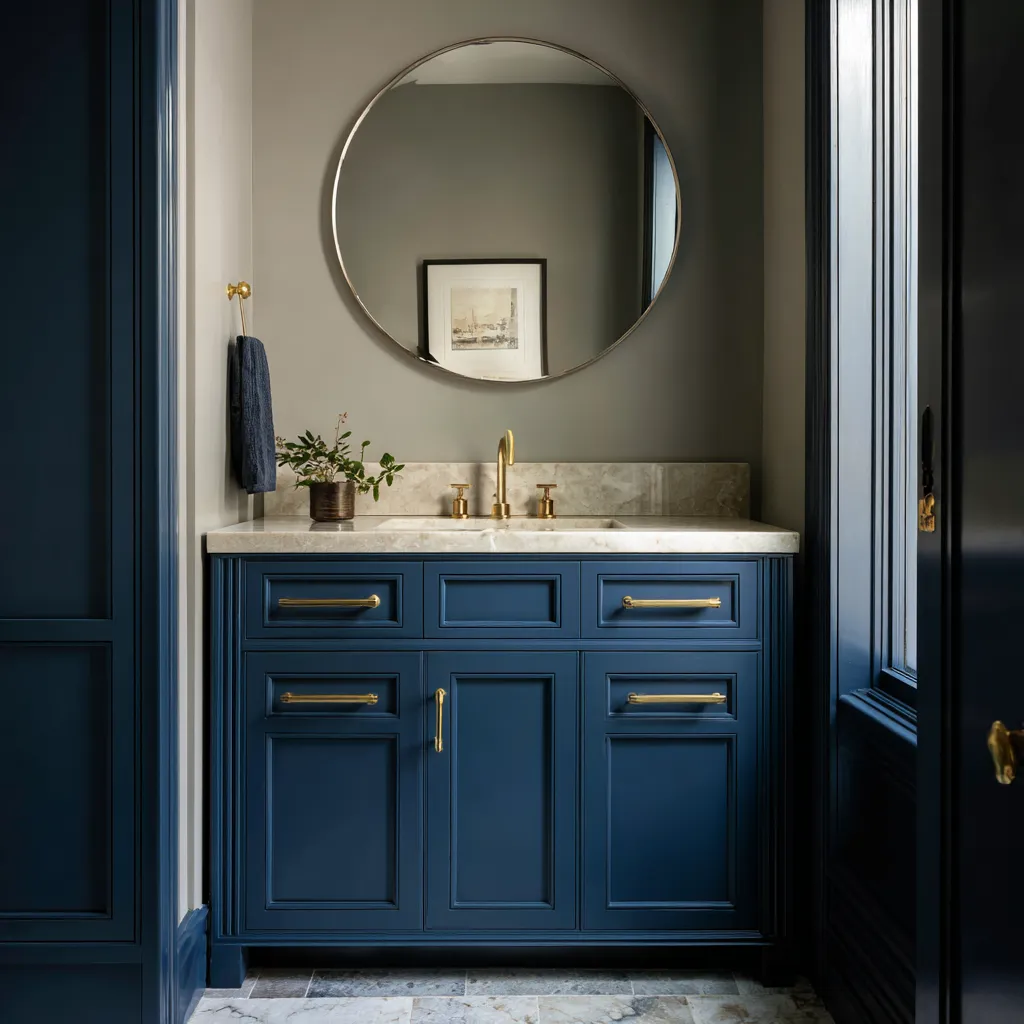
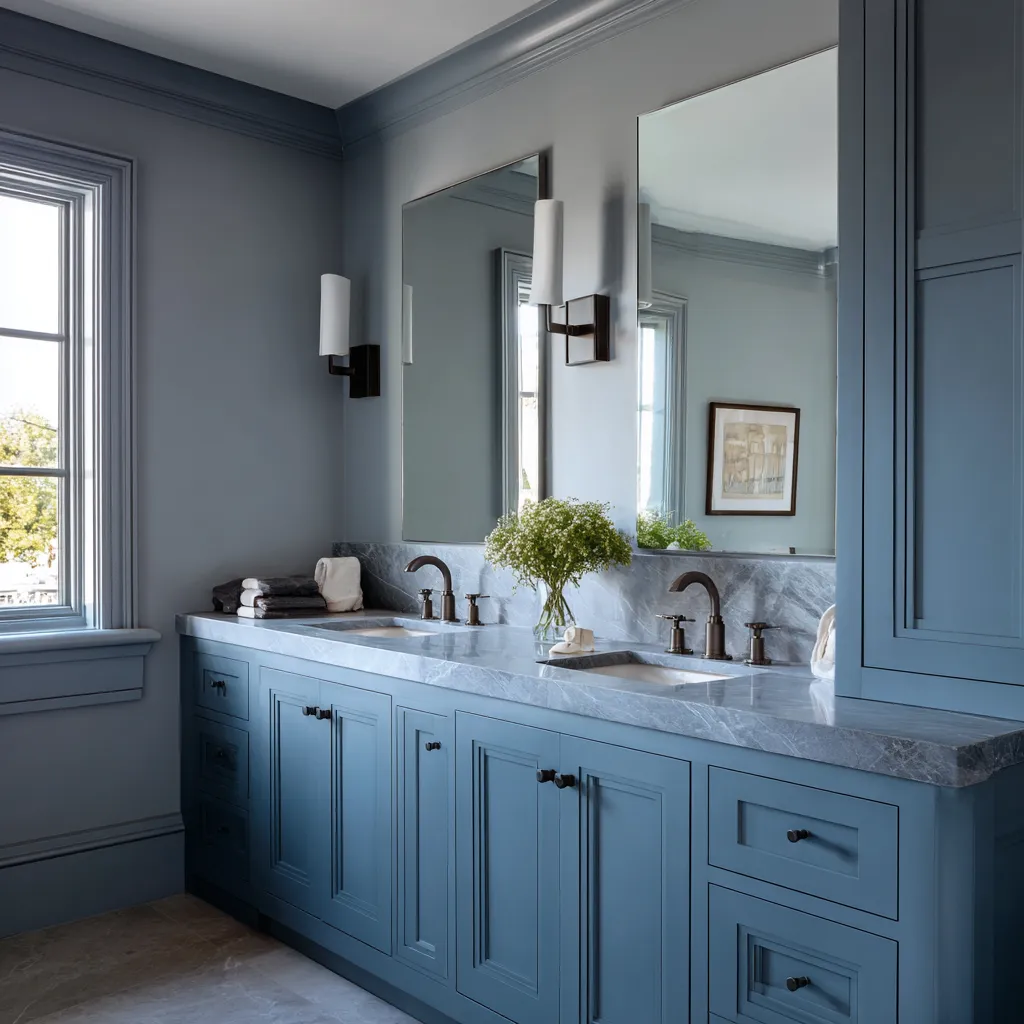
The second direction is darker and more enveloping. Here the design gains depth through blue-charcoal tones, darker trim, and sometimes a more immersive treatment where walls, cabinetry, and casing belong to one color family.
This version does not become Colonial by adding more ornament. It becomes Colonial by deepening the frame and reinforcing enclosure.
Dark Colonial bathrooms are not made substantial by heavy stone or busy decoration. They are made substantial by stronger casing, clearer trim hierarchy, and a more defined room shell.
So if the goal is a moodier bathroom, the answer is often not more decor. It is darker framing.
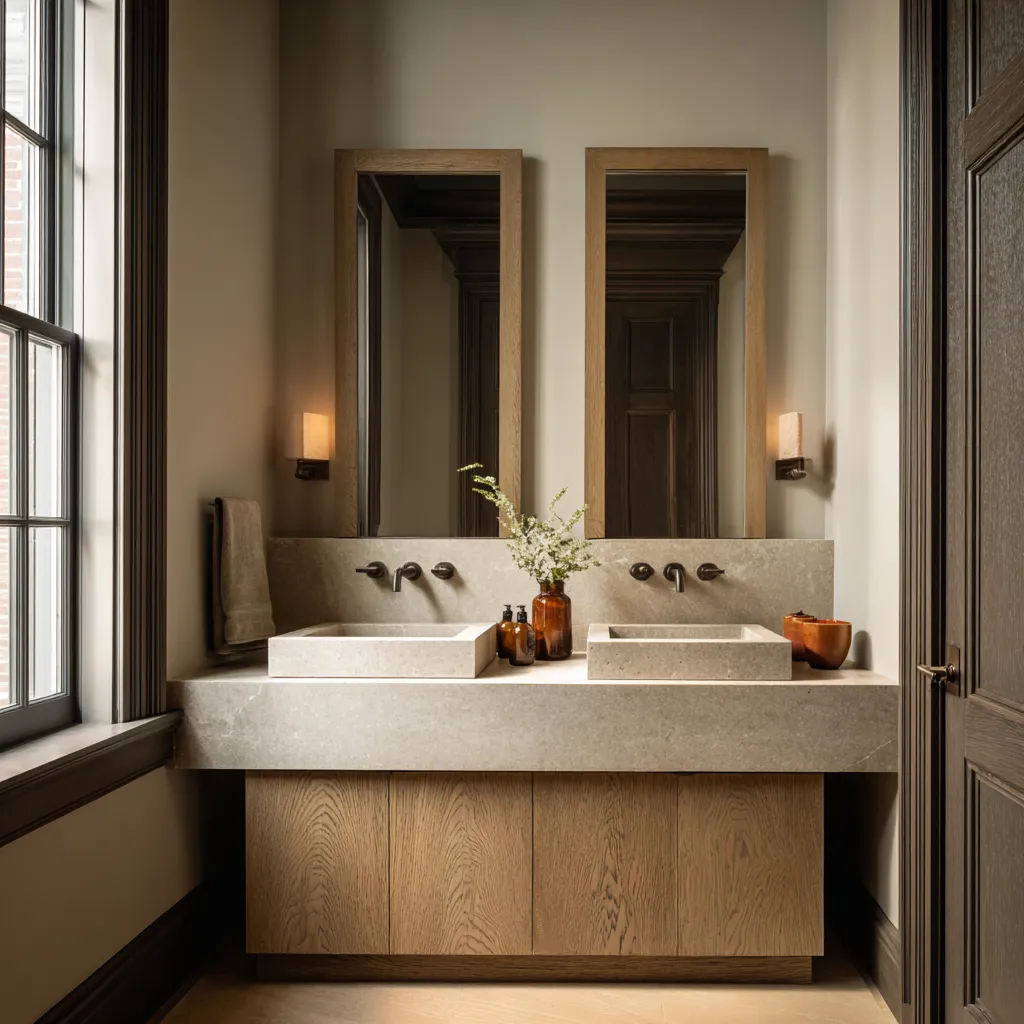
Mirror geometry does design work
Plain rectangular mirrors help the design feel disciplined and composed, especially when paired with paneled vanities and soft-veining stone. Their strength lies in how little they ask from the wall around them.
They leave room for the architecture to lead.
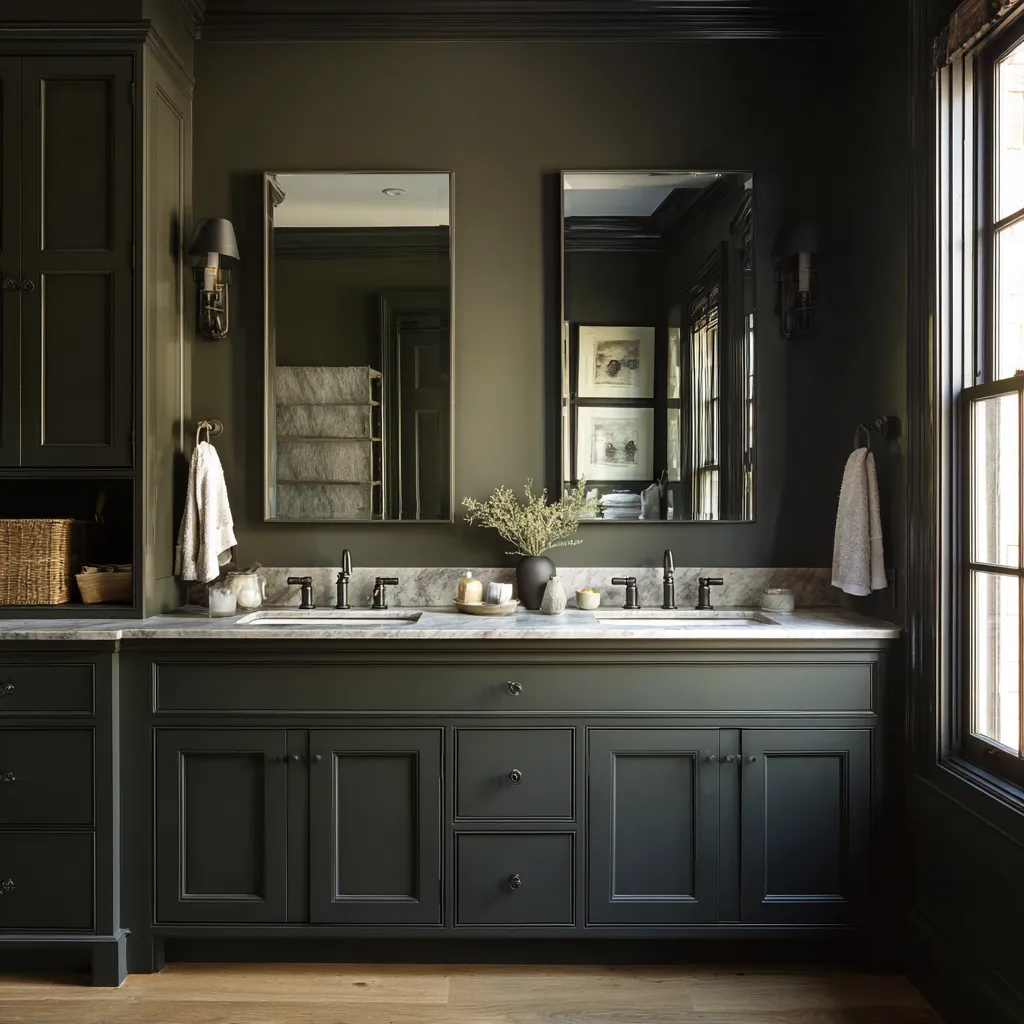
Softened-top and arched mirrors play a different role. They give a gentler, warmer, or more texture-led look.
The curve can replace some of the softness that older Colonial interiors might have expressed through heavier decoration. Instead of using ornate forms, the room introduced one softened silhouette and let that be enough.
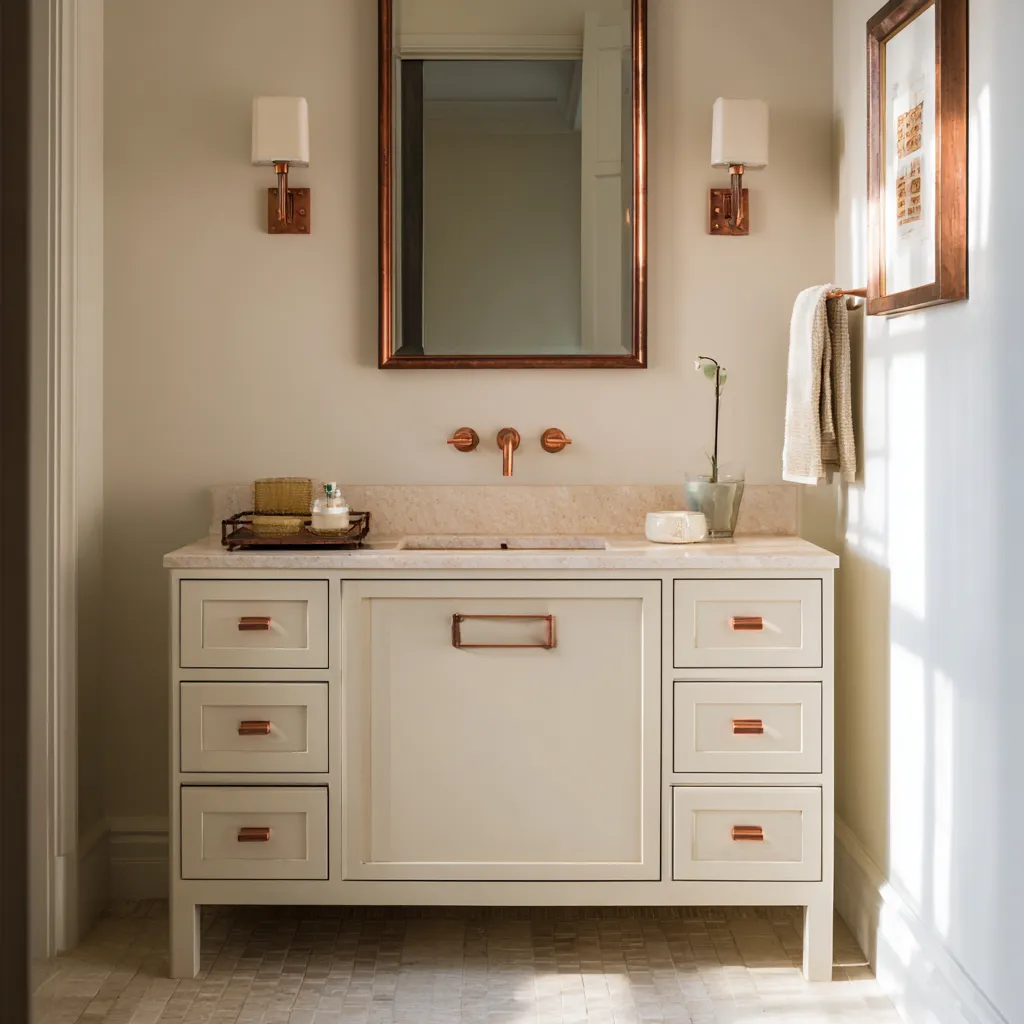
Regarding double vanities: once the room moves to two sinks, it usually works better with two mirrors than with one long reflective strip. That preserves sink-level symmetry and gives each station its own vertical emphasis.
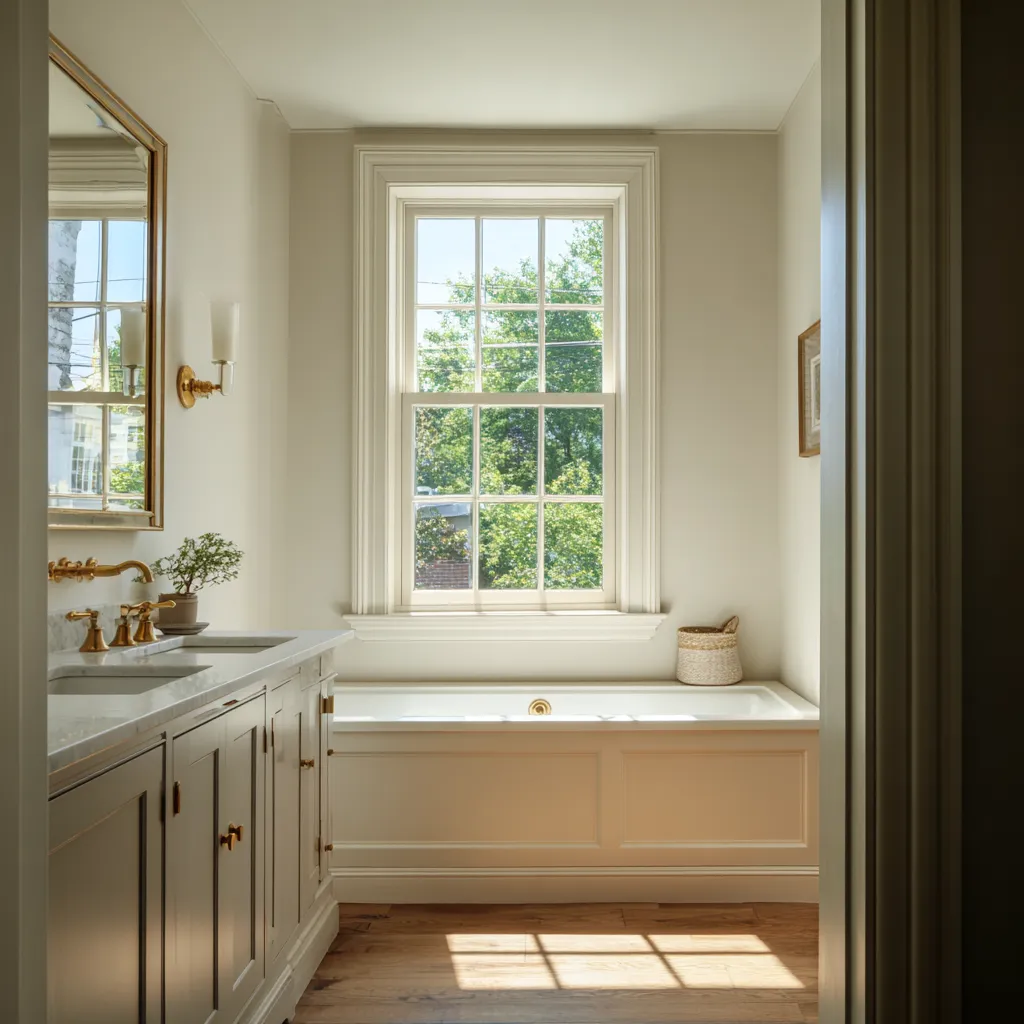
So mirror choice in a modern Colonial bathroom should not be treated as a last-minute accessory decision. It changes the whole wall language.
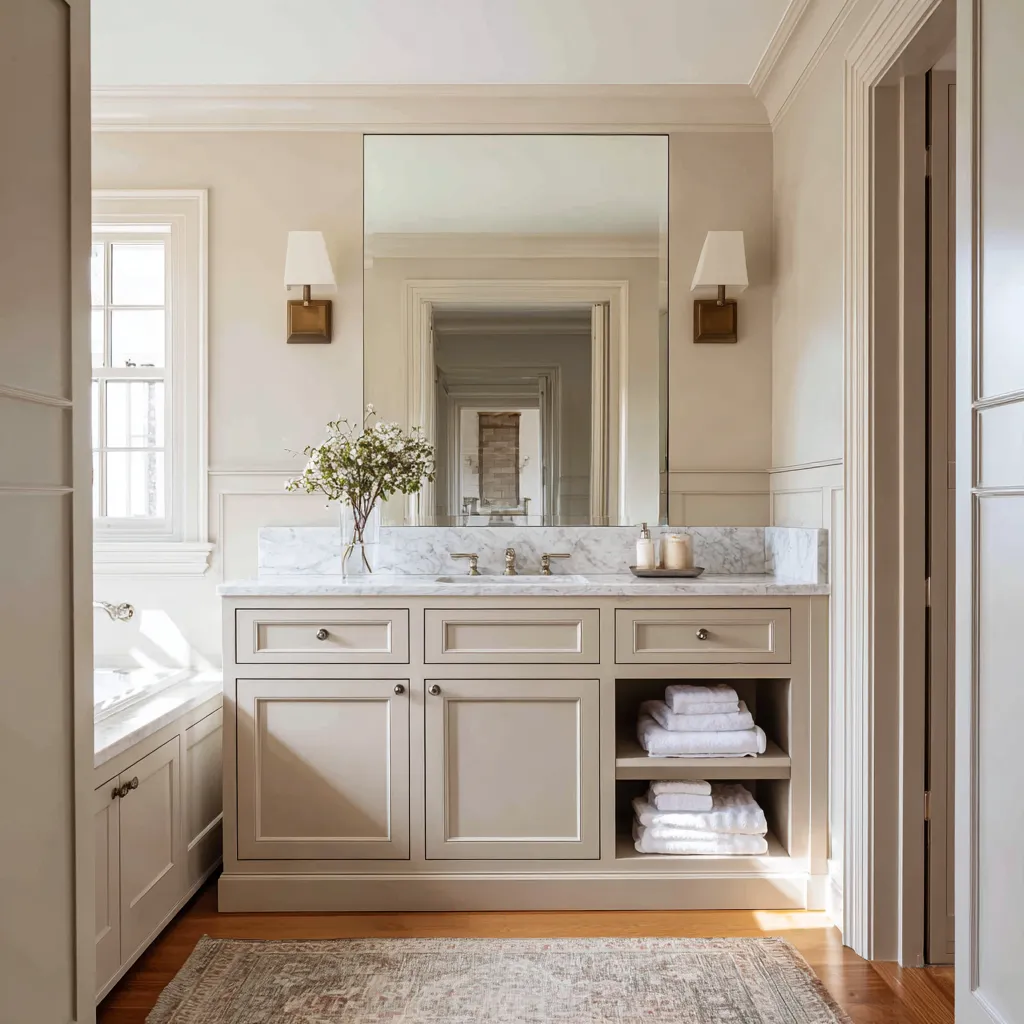
Pair vessel sinks with the right design support
Vessel sinks work with wall-mounted faucets. A vessel basin is not a stand-alone accent in modern Colonial bathrooms.
Once the sink rises above the counter, the room usually needs the faucet to move off the stone plane so the composition can stay orderly.
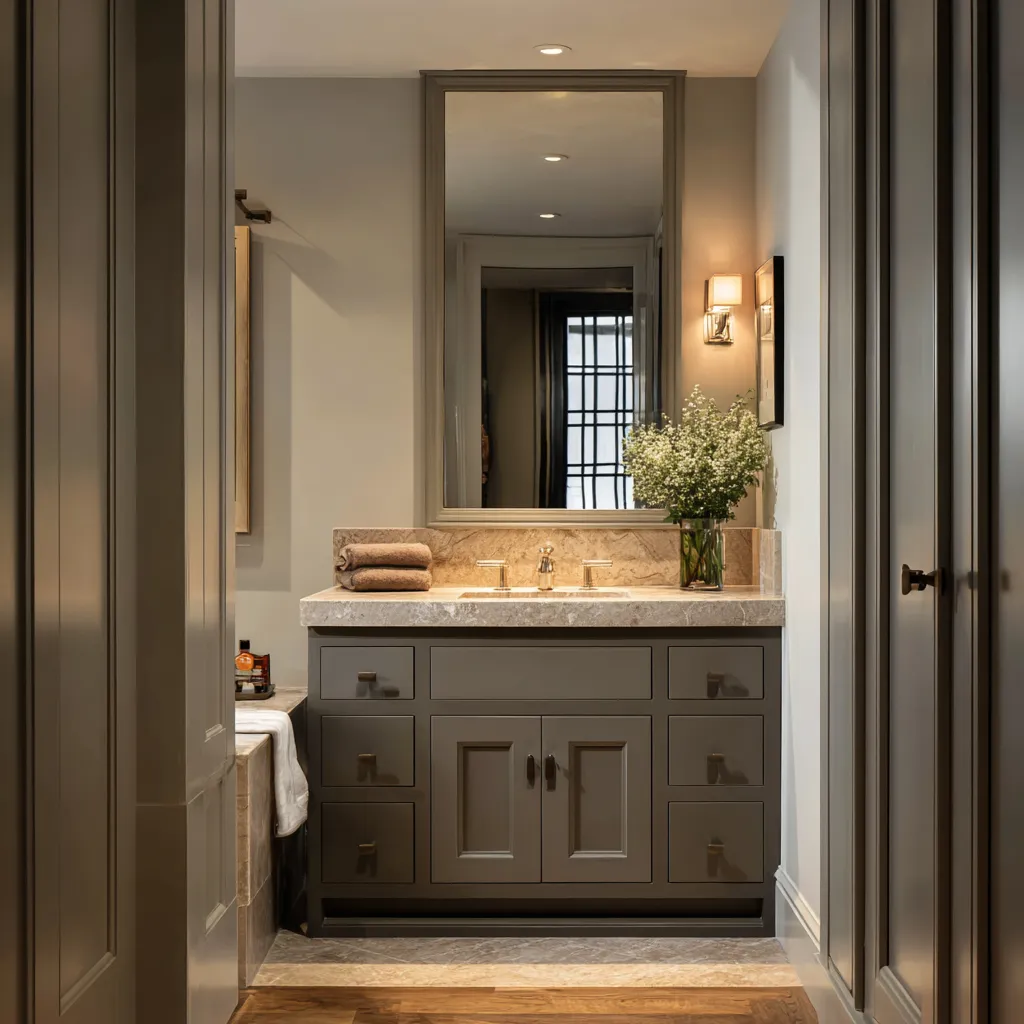
That combination gives the sink zone a more object-like quality. It turns the basin into a deliberate form rather than another cutout in the slab.
This approach work for bathroom designs that want a stronger material identity or a more shaped sink moment.
Integrated sinks, by contrast, belonged to the flatter and calmer style ideas. They support broad continuity and tend to work better in rooms where the goal is visual ease rather than sculptural emphasis.
In small bathrooms, spatial framing matters more than added detail
Compact bathrooms do not gain Colonial authority by layering on more trim, more accessories, or more decorative references.
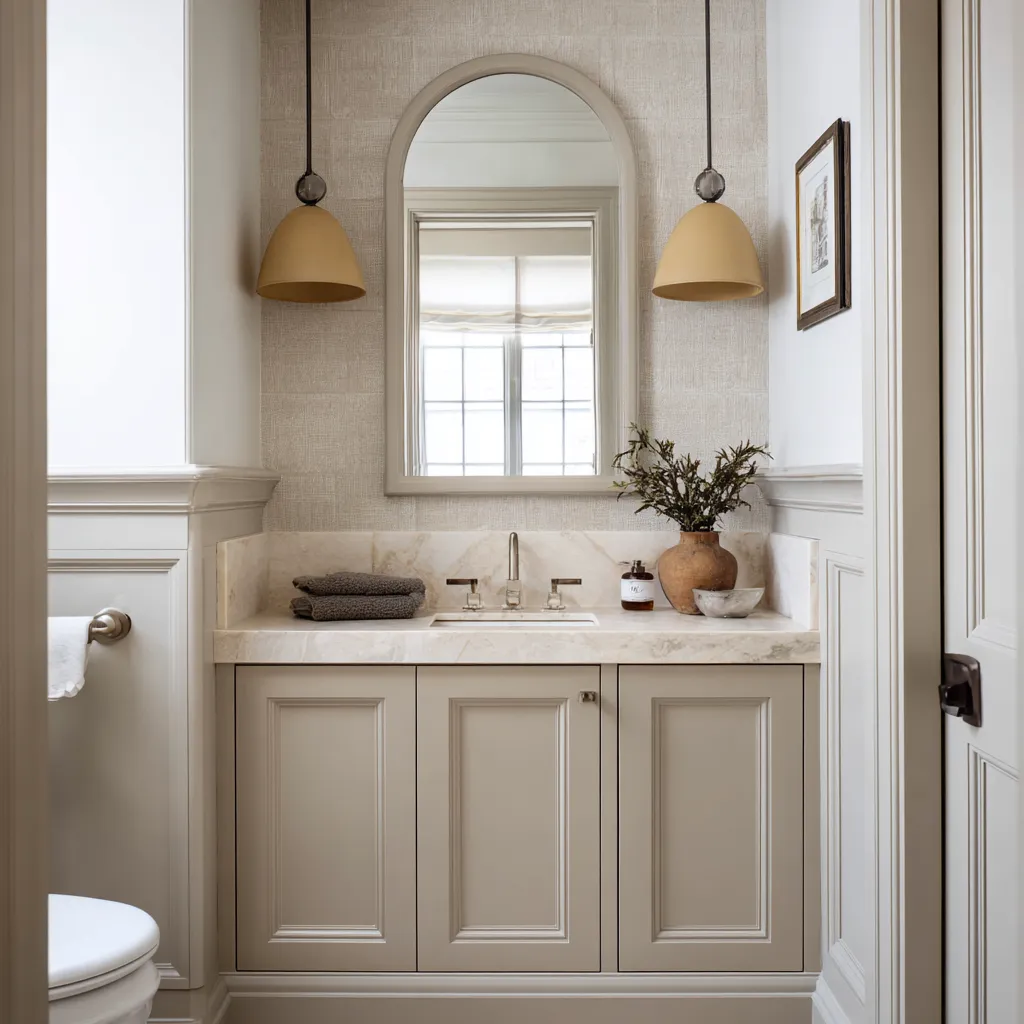
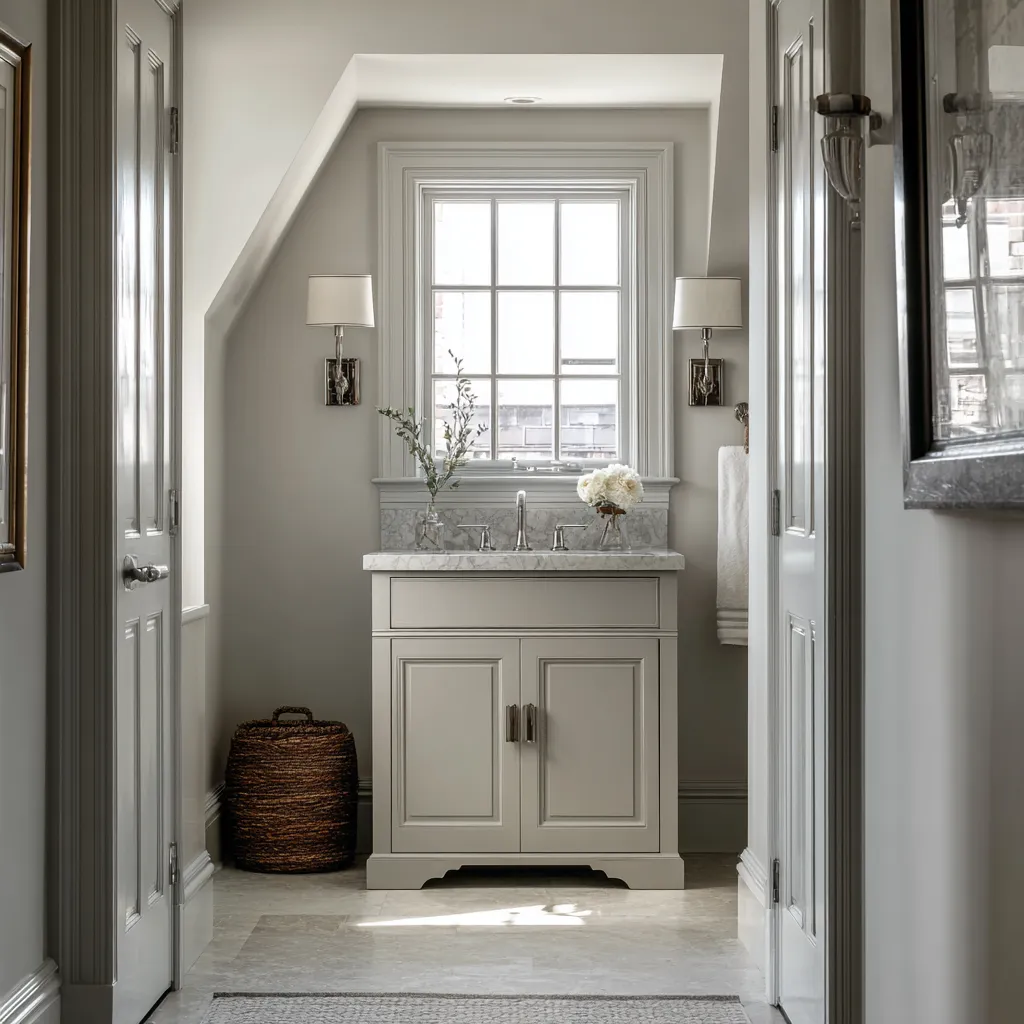
In fact, smaller rooms tended to have less visible Colonial backbone unless they used a stronger spatial idea such as a corridor sequence, an end-window anchor, a framed niche effect, or a centered sink wall.
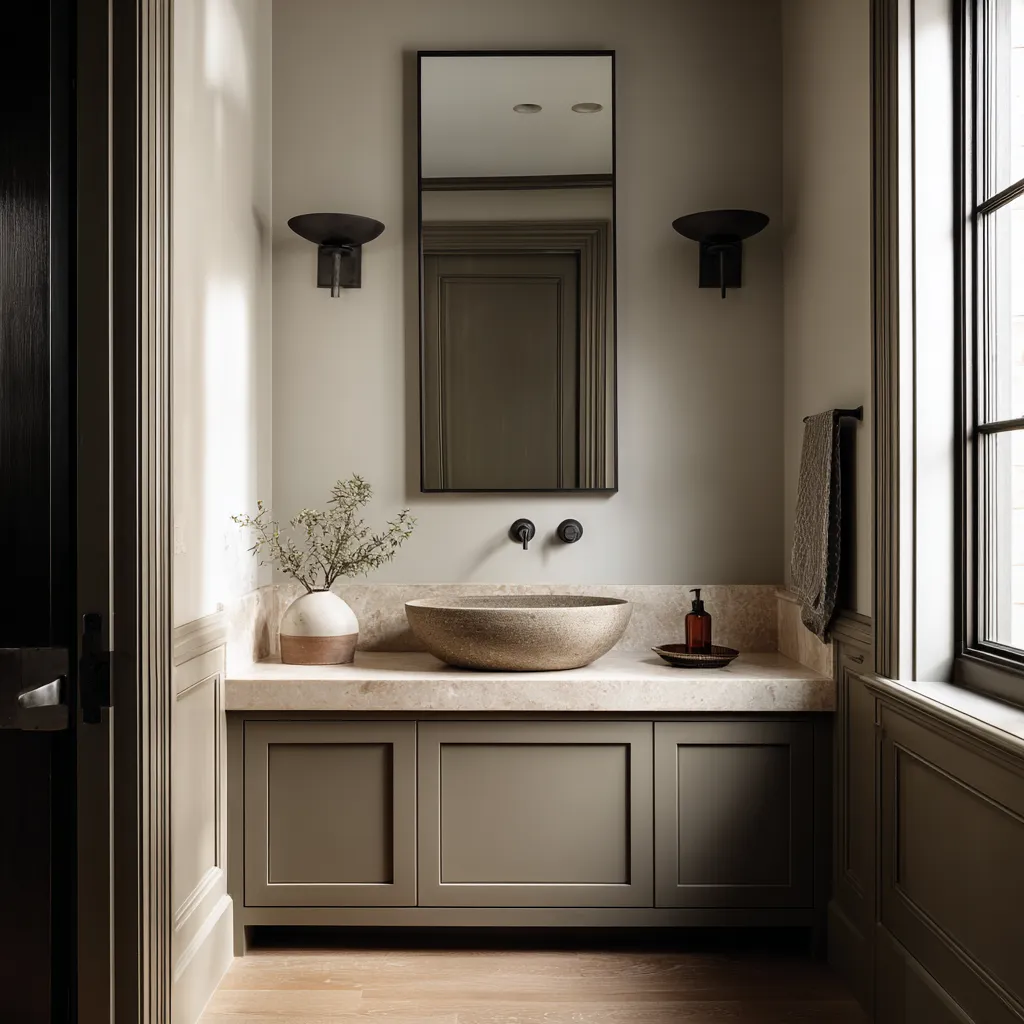
In narrow or compact bathrooms, dignity comes from structure, not accumulation. A clear end view, a centered vanity, a strong mirror, and controlled wall clutter do more for the room than extra detailing.
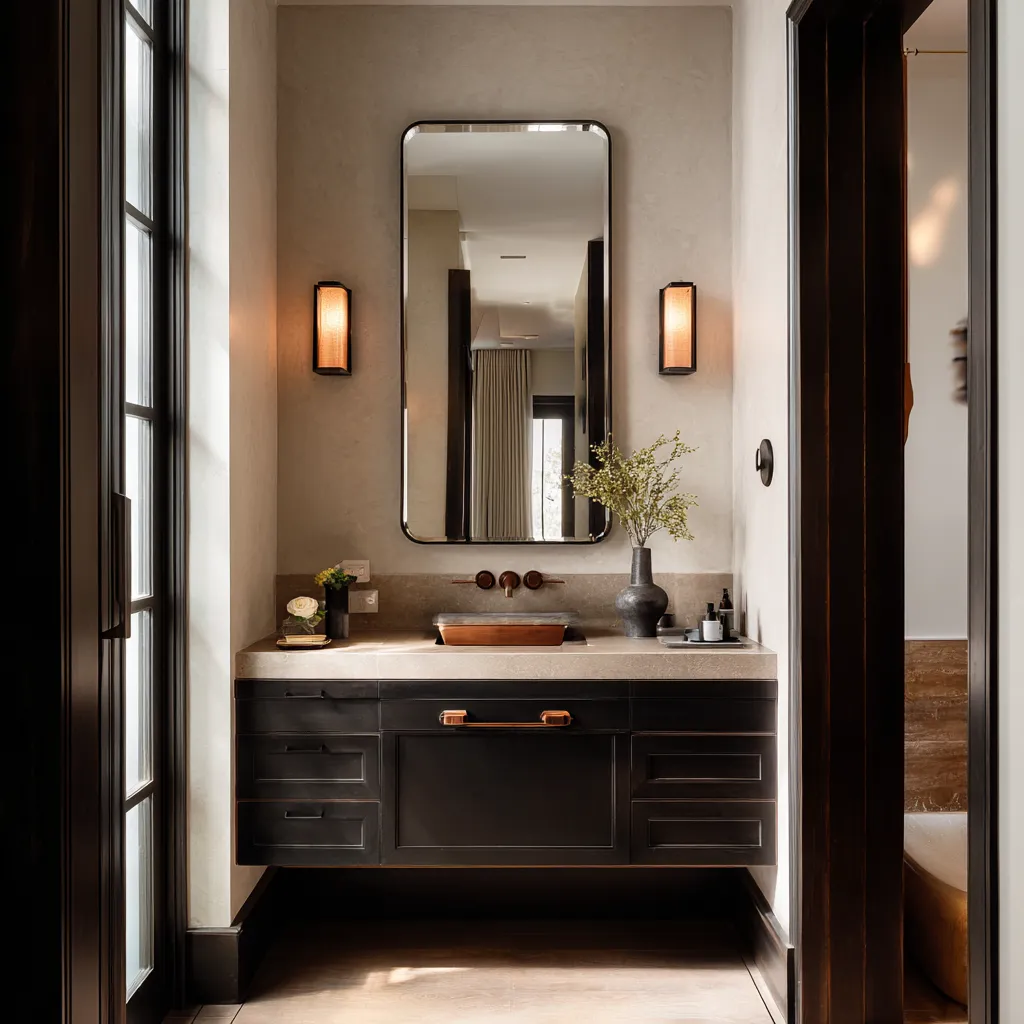
This is what makes small bathroom designs feel composed rather than cramped. They use the architecture of the room itself as the main organizing tool.
Bring in warmth through material temperature
Wood floors, warm metal finishes, woven baskets, branches or flowers, and muted stone bring warmth to the interior design. Designs become warmer by changing the tactile temperature of the few objects and materials already present.
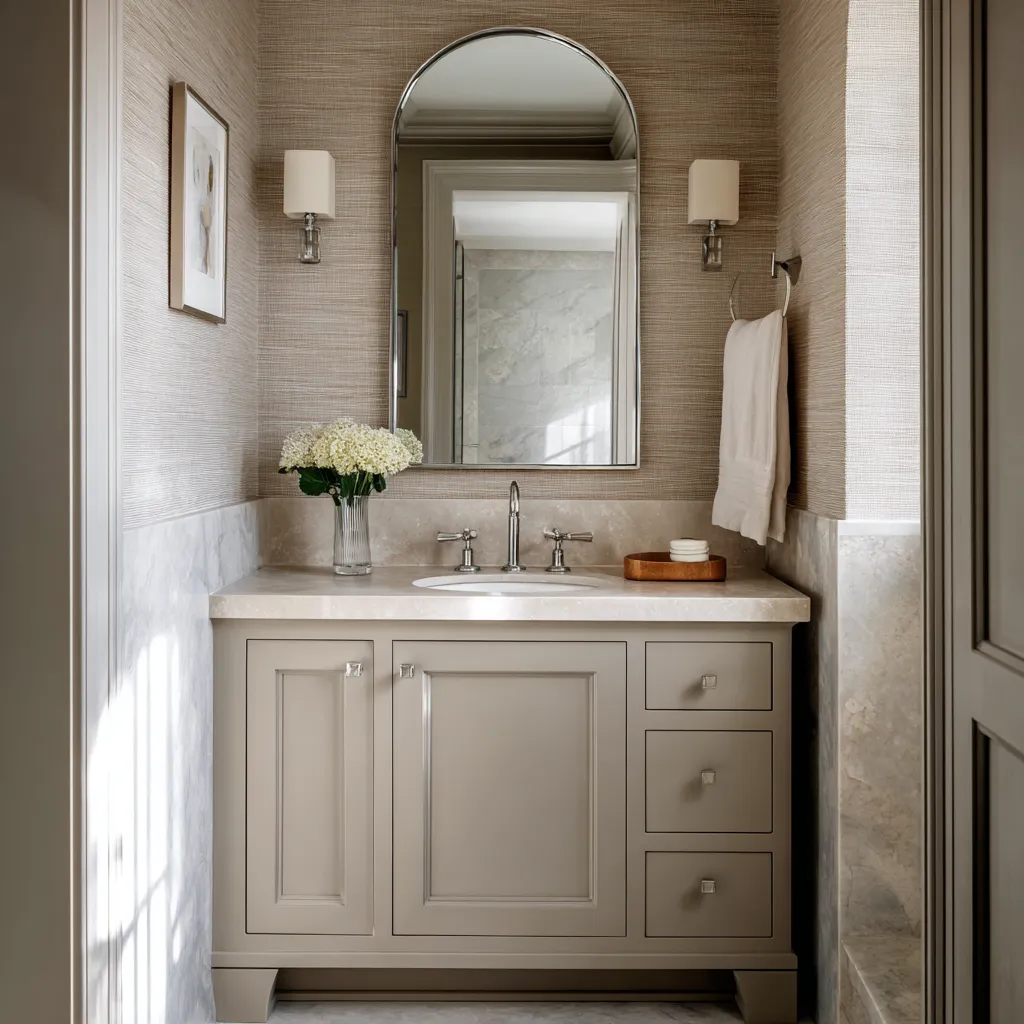
Warmth in a Colonial bathroom does not have to mean fullness. In fact, it is the opposite.
The rooms that feel settled and human usually stay restrained in quantity but thoughtful in material contrast.
A wood floor can soften a very pale room. A woven basket can take the edge off painted cabinetry and stone.
A brass or amber note can keep a sink wall from feeling too cool. A branch arrangement can loosen a symmetrical composition just enough.
These are modest changes, but they have a effect on how the room feels.
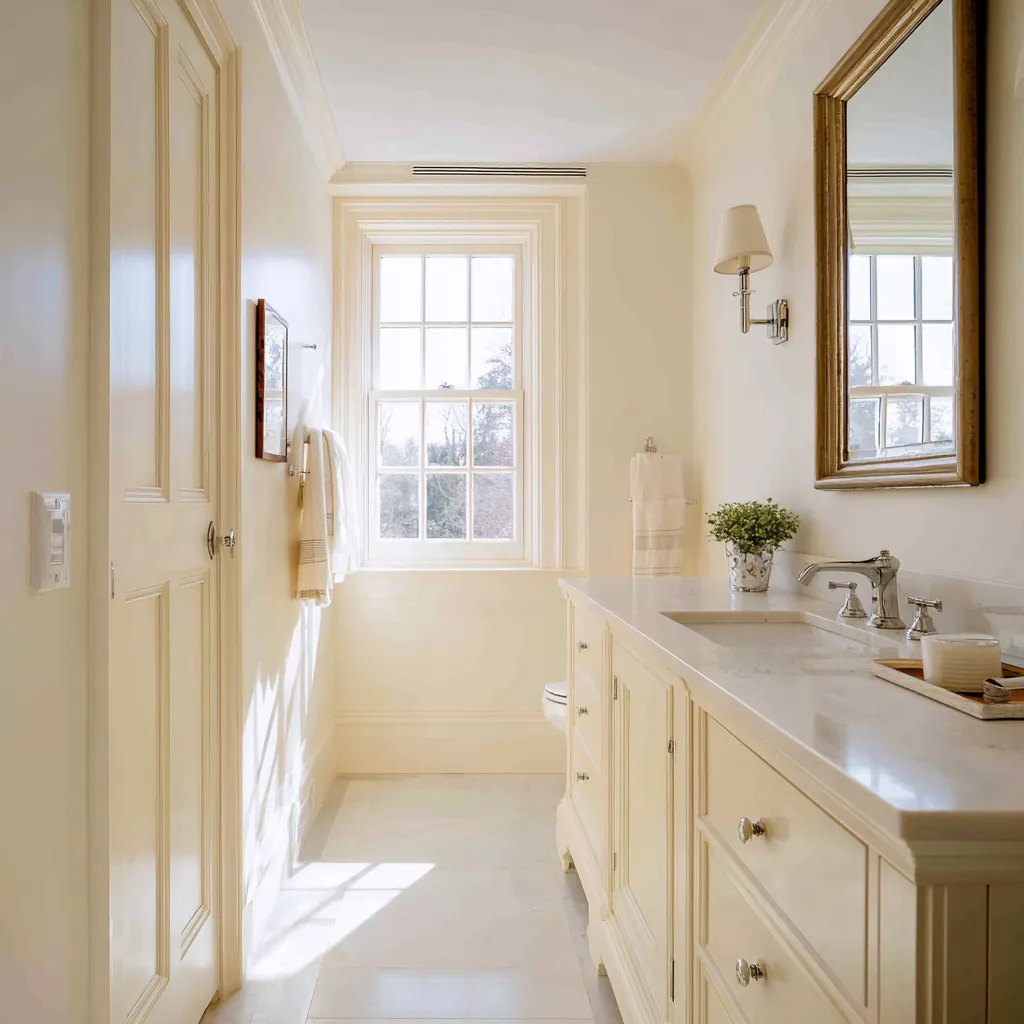
Reflection and daylight extend the architecture
Reflection, where it appears, makes a notable difference. Large simple mirrors that capture adjacent openings, deeper room views, or repeated trim lines give the bathrooms more architectural presence without adding clutter.
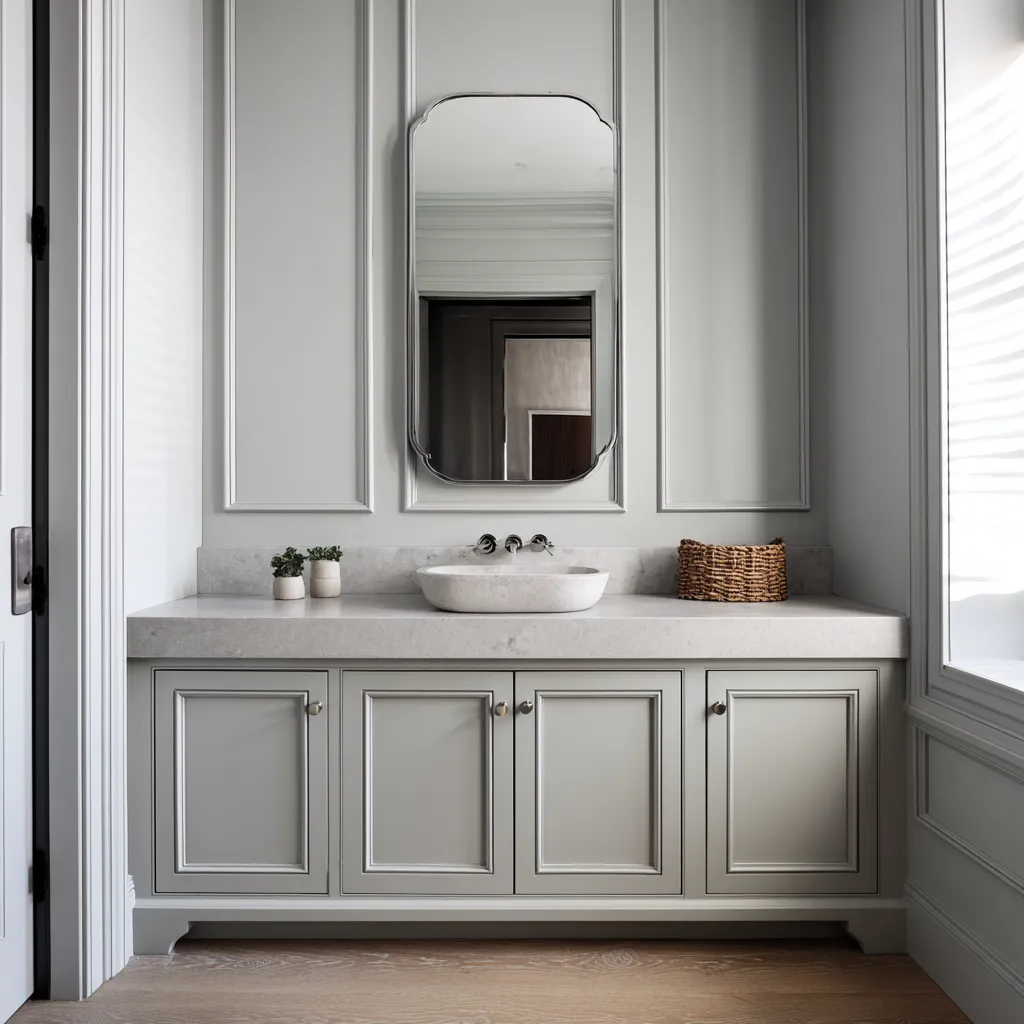
This is an especially useful strategy in Colonial interiors because the style already depends on framed openings and proportion. A well-placed mirror can repeat that order and visually lengthen the room at the same time.
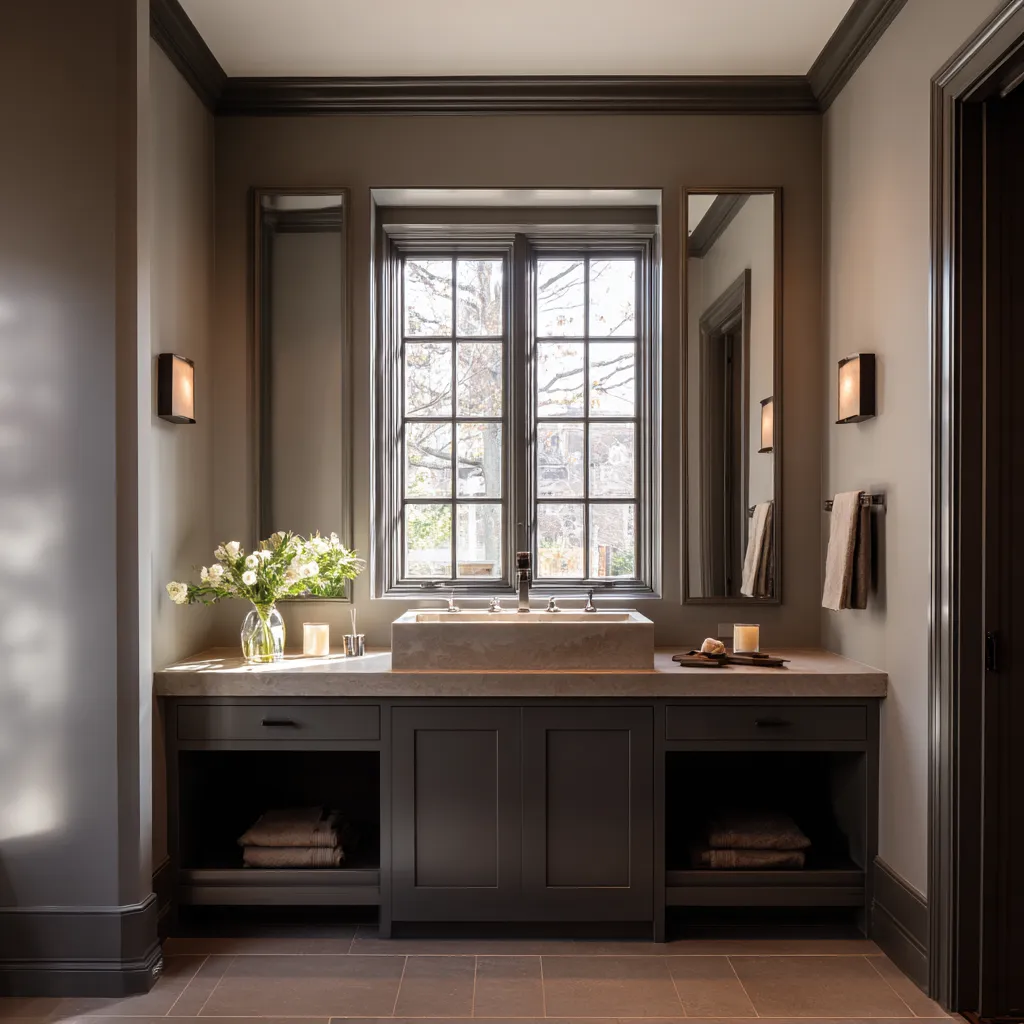
Daylight plays a similar role. Light often allows creating depth across trim, paneling, and stone rather than being treated as a neutral background condition.
Low-contrast rooms depend on this. If color contrast is reduced, light and shadow must take over some of the visual work.
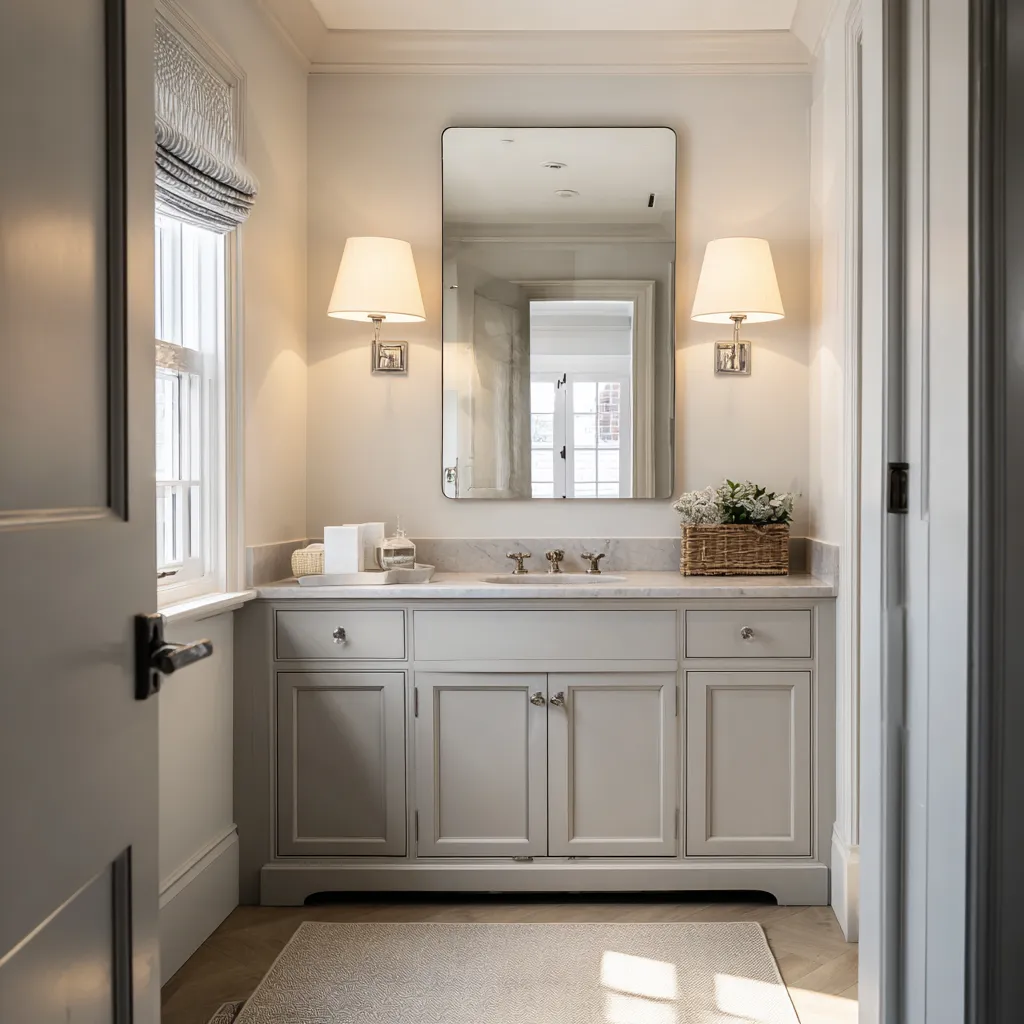
That is why side windows, end windows, and clear casing depth matter so much in this style. They make the architecture more visible.
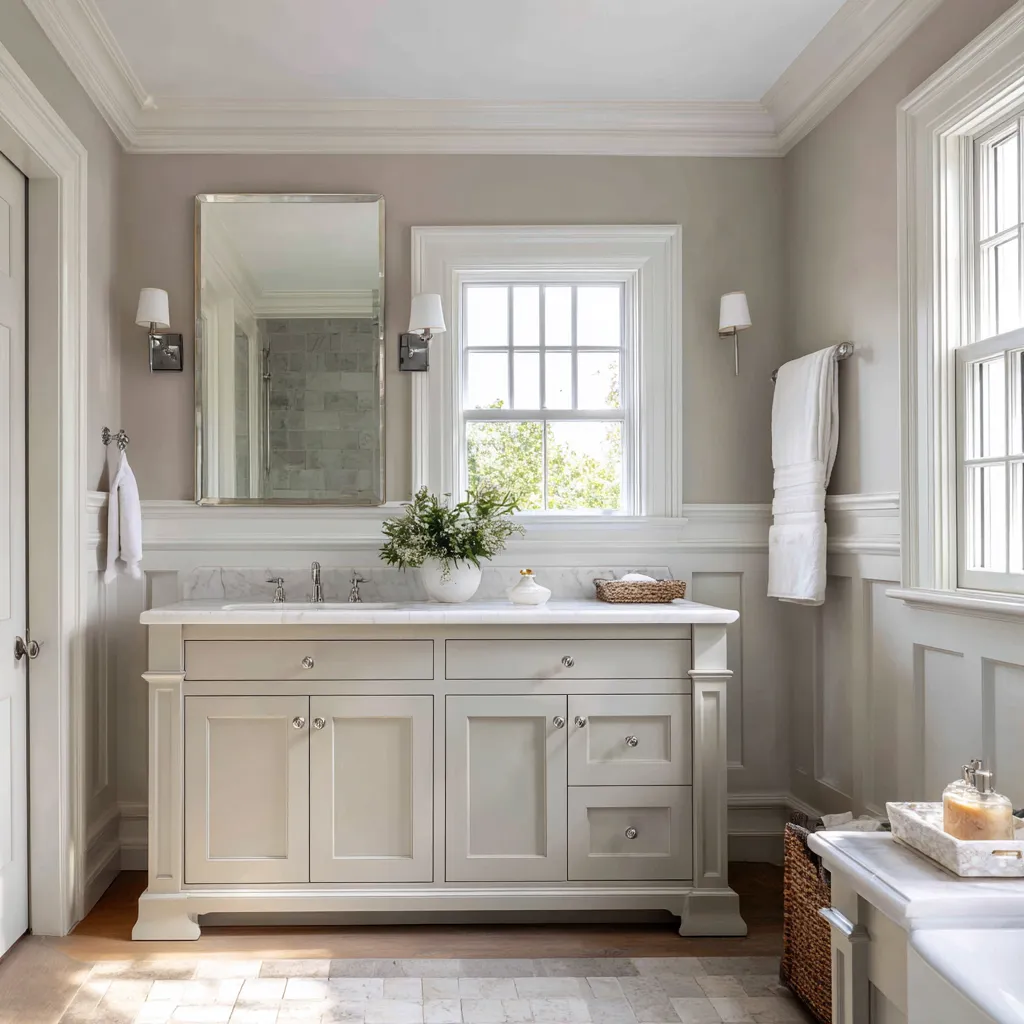
The balance: where the heritage signal should stay
There is a trade-off between historical legibility and modern reduction. The more the sink wall is simplified, the less explicit the Colonial language become—unless the design compensates through stronger spatial framing.
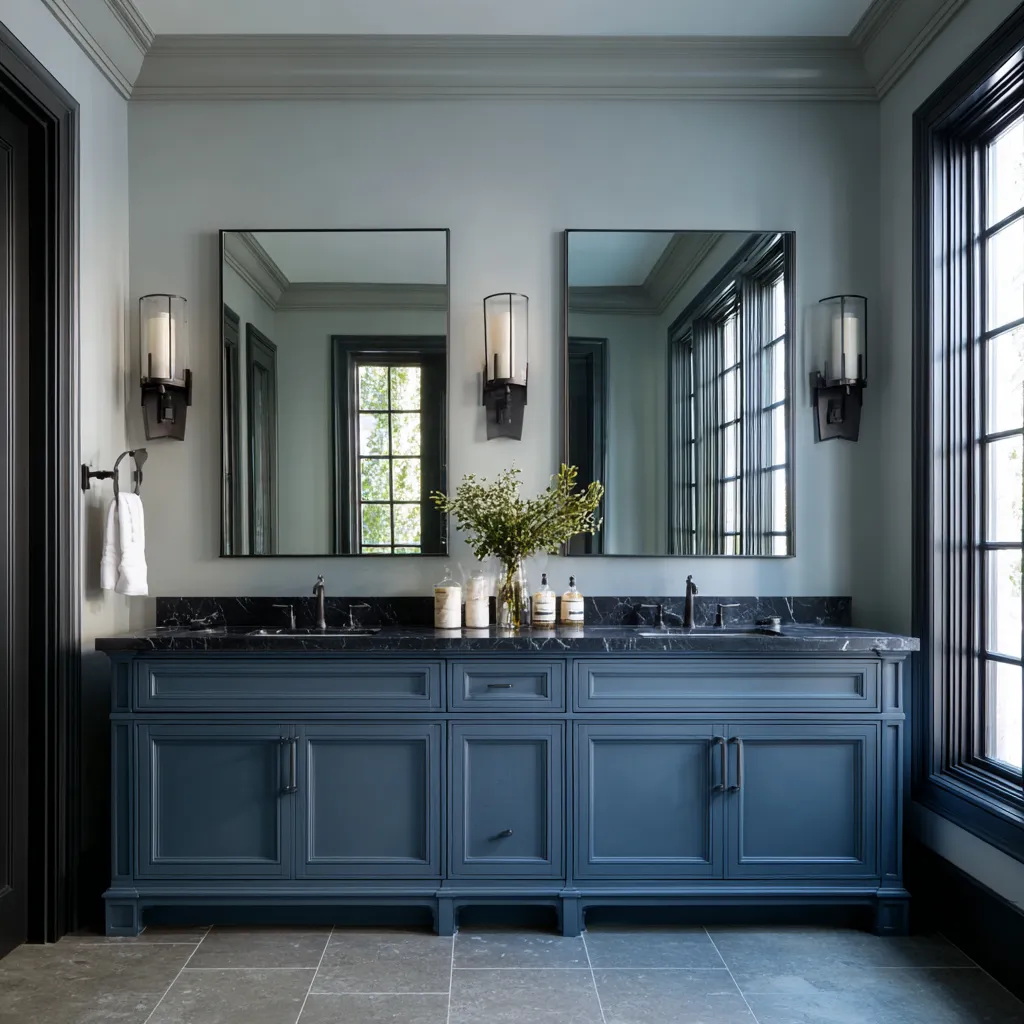
A contemporary Colonial bathroom design does not try to flatten every traditional signal. It chooses where that signal will remain visible.
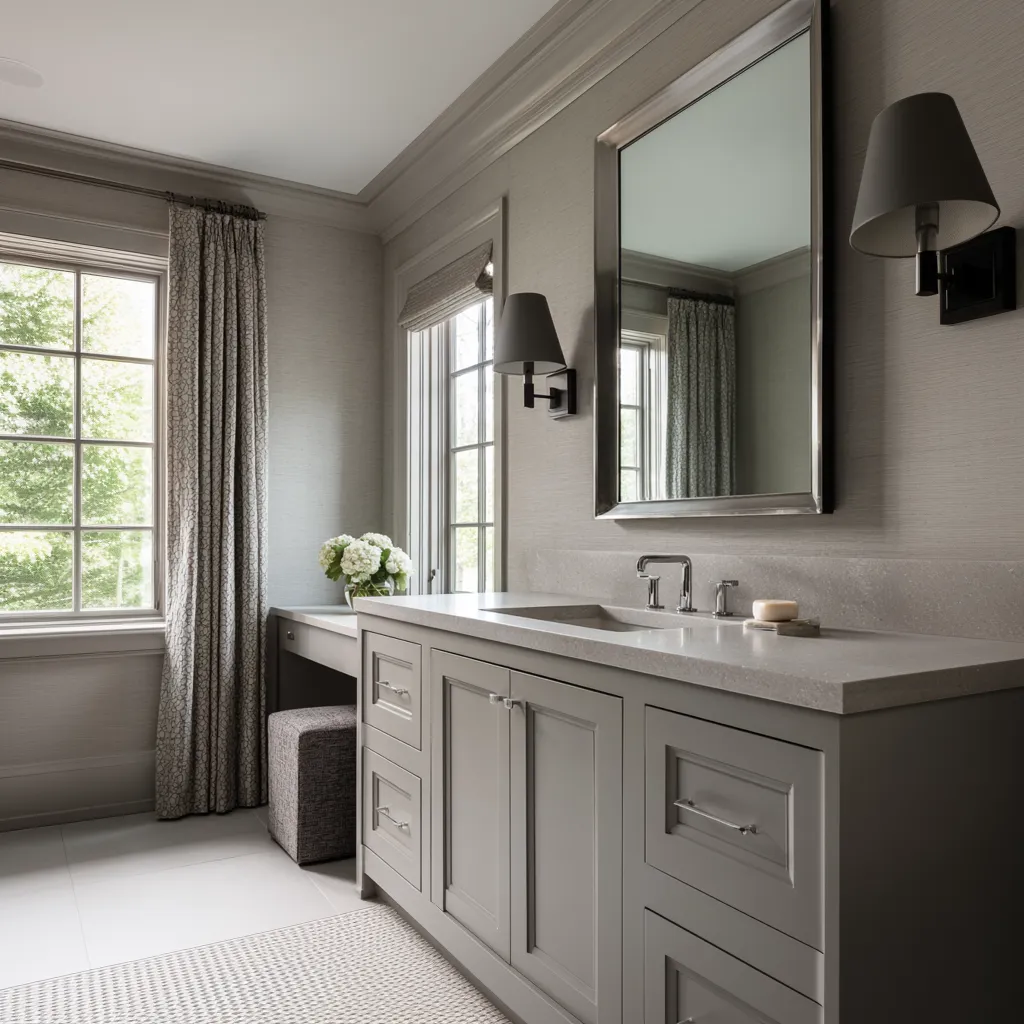
In some bathroom designs, the answer is the vanity front. In others, it is the trim and casing.
In others, it is the end-window axis or the niche framing around the sink wall. Once that one layer is doing enough work, the rest of the room can relax.
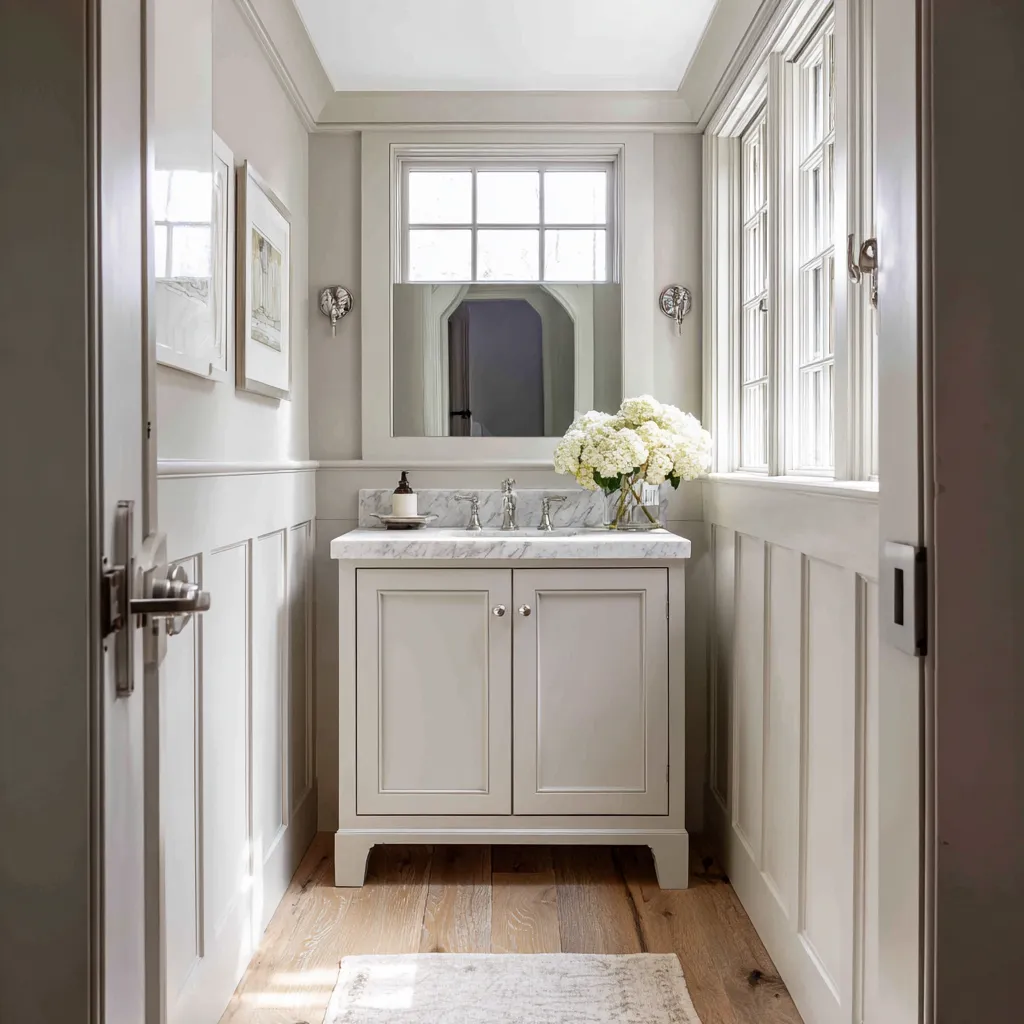
That is what separates a resolved bathroom from one that feels common. The room does not erase its history.
It edits around it.
Final thought
Contemporary Colonial bathroom designs are built on a simple but disciplined idea: keep the heritage in the frame, then clear the sightline.
That means paneled cabinetry can stay. Wainscot can stay.
Deep casing can stay. What changes is the level of interruption around them.
The stone becomes broader. The counter becomes quieter.
The mirror becomes simpler. The objects become fewer.
The room gains either pale tonal calm or darker architectural depth, but in both cases the structure remains legible.
The bathrooms that hold together best are the ones that understand this balance. They do not chase period imitation, and they do not strip the room until it loses character.
They keep enough of the Colonial shell to give the space weight and memory, then bring it forward through restraint, surface continuity, and sharper visual control.