Modern shabby chic bathroom design has changed in a very noticeable way. The older version of shabby chic often leaned on painted furniture, floral pattern, visible age, layered textiles, and a sense of collected domestic charm spread through nearly every part of the room.
The newer version keeps the tenderness, the warmth, and the household intimacy, but it places those qualities inside a much clearer and more disciplined setting.
That shift matters. It means a bathroom can feel romantic, gentle, and deeply personal without becoming overly decorative.
It can carry shabby chic memory through one arched mirror, one washed pink wall, one woven stool, one bouquet, one faded runner, or one furniture-like vanity, while the rest of the room stays open, ordered, and current. In many of the most successful modern shabby chic bathrooms, the shell is simple, the layout is highly organized, and the softness is selective.
The feeling comes from a few concentrated choices rather than from a long list of nostalgic details. Modern shabby chic bathroom ideas keep the human side of the style while trimming away the excess that can make an older interpretation feel crowded or dated.
What makes a bathroom modern shabby chic today
A current shabby chic bathroom design usually starts with a modern structure. The plan tends to be clean and easy to read.
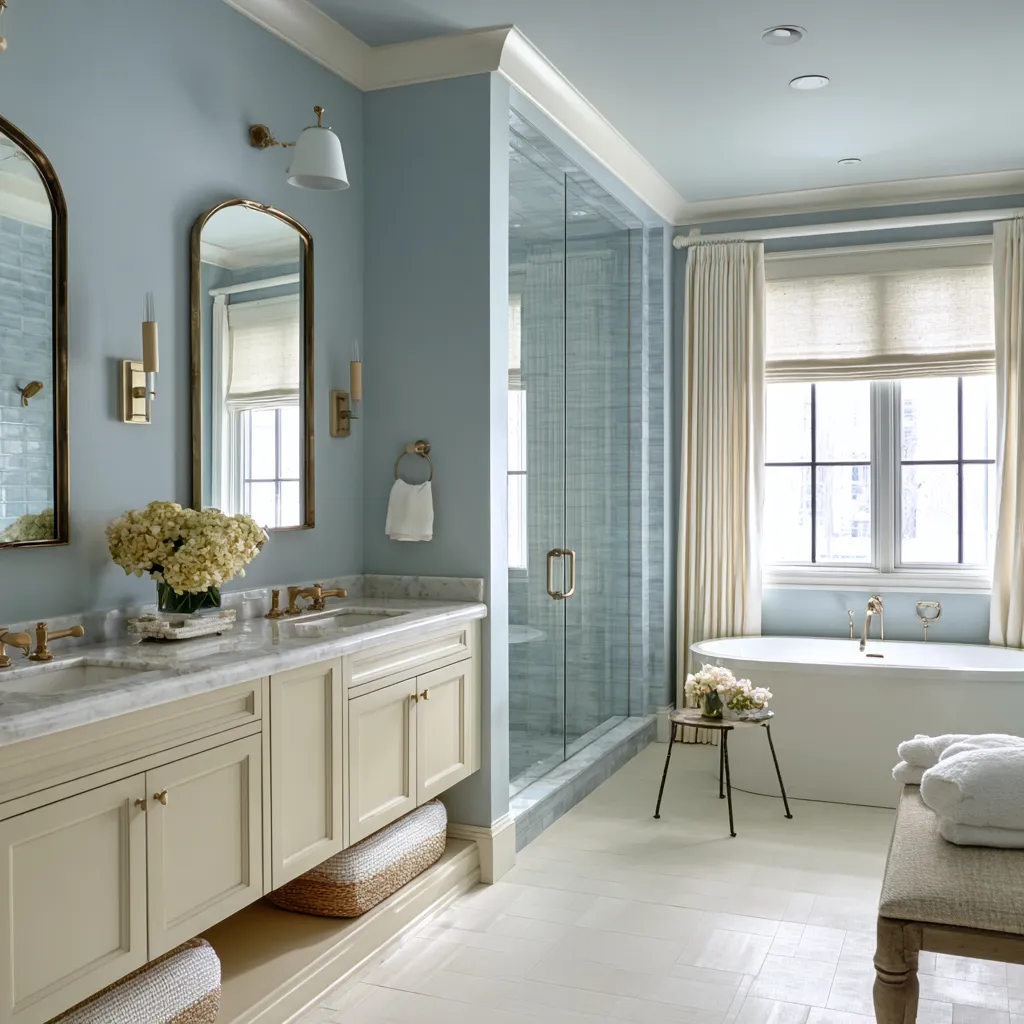
Vanities often run in one long line. Showers are framed in clear glass.
Tubs have smooth silhouettes. Counters stay open.
Decorative objects are used with restraint. The design feels intentional before it feels romantic.
Inside that modern frame, a smaller set of shabby chic signals is introduced. These signals tend to be high-impact and emotionally rich.
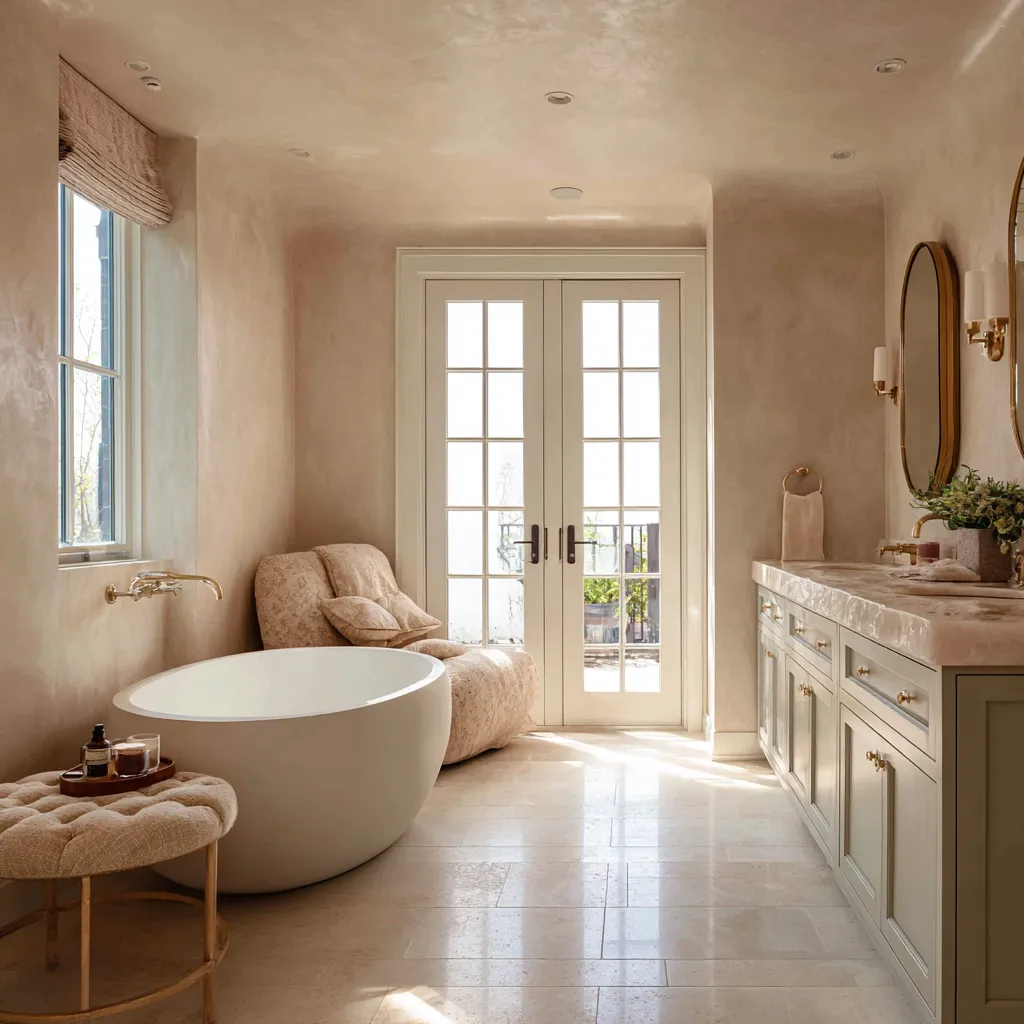
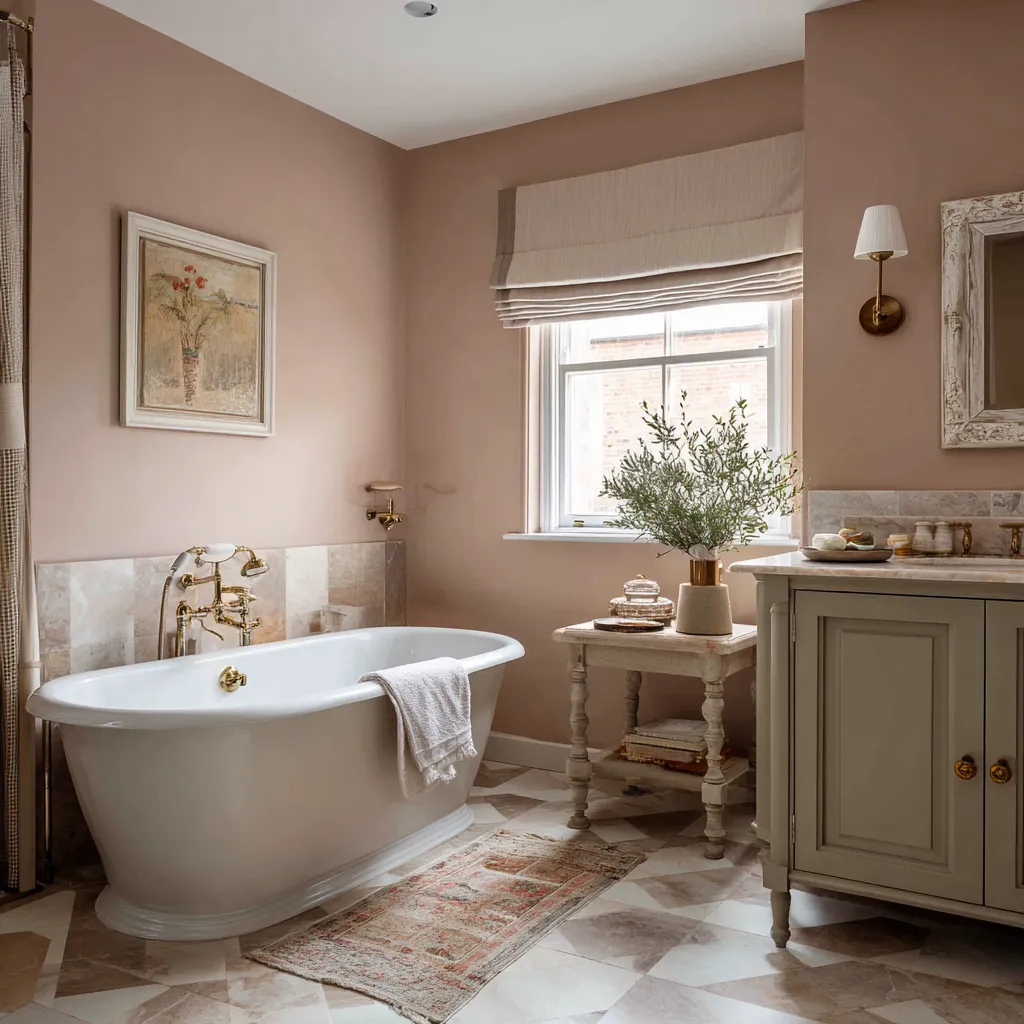
A soft pink plaster wall can do the work that several layers of older decorative styling once handled. A foxed mirror can carry a memory of age even if the vanity below it is plain.
A basket of towels can give the room domestic warmth without filling it with accessories. A floral wall panel can bring romance into the room even if the other walls stay simple.
So the style now depends less on abundance and more on concentration. The bathroom feels shabby chic because certain elements have been chosen very carefully and placed where they matter most.
The modern shell comes first
One of the clearest qualities of today’s modern shabby chic bathroom is planning discipline. The prettiest materials and softest details do not help much if the room feels visually scattered.
An elegant bathroom design in this style usually has a strong internal order. That order may take several forms.
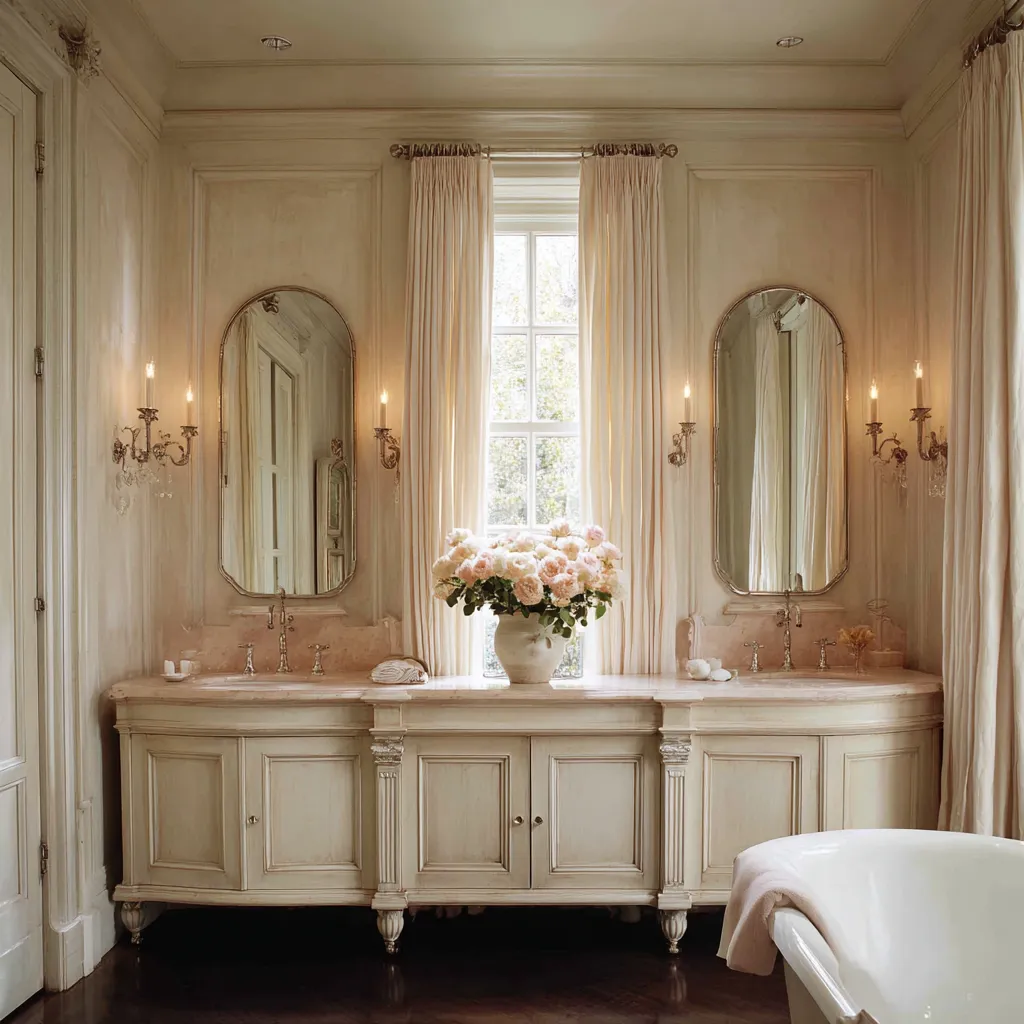
It might be a long gallery-like layout with the vanity on one side, shower on the other, and the tub placed at the end near a window. It might be a symmetrical double vanity wall with a centered window, paired mirrors, and a clear axis through the room.
It might be a compact powder room where the sink console, mirror, and sconces are centered with exactness so the room feels edited rather than stuffed.
This organized structure does important work. It gives the softer parts of the design a stable framework.
Without that framework, pink walls, flowers, arched mirrors, aged finishes, and textile softness can easily push the room toward clutter. With that framework, even very romantic elements feel composed.
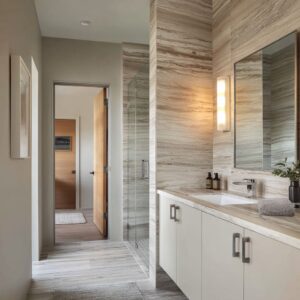
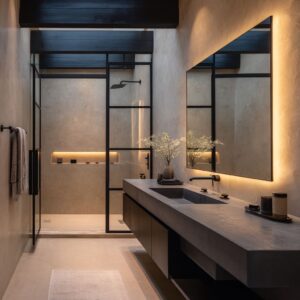
Frameless showers are especially useful here. They keep the room open and preserve long sightlines.
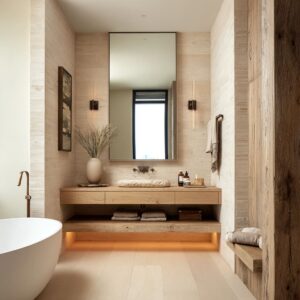
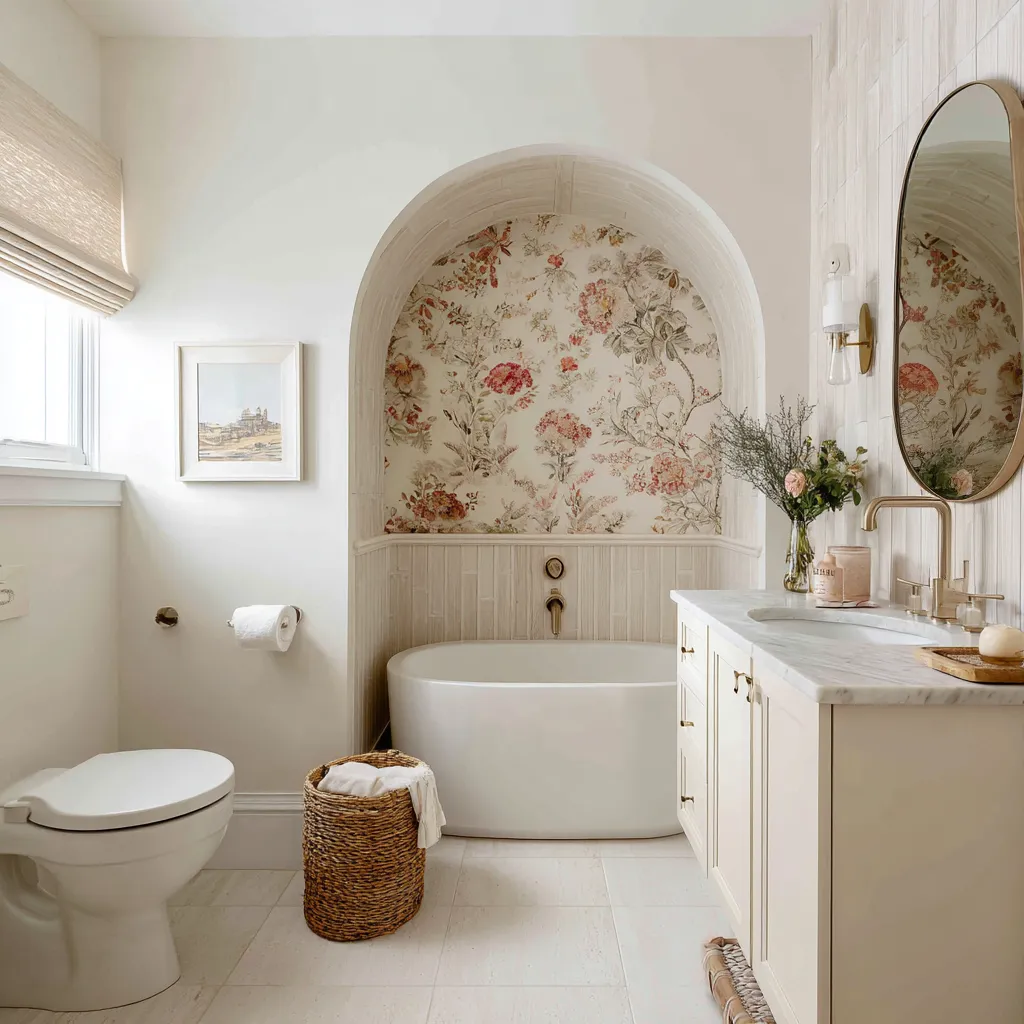
Broad stone or plaster surfaces help as well, since they allow the eye to rest. A sculptural tub with a plain silhouette can support the style beautifully because it keeps the bathing zone clean while the room’s warmth comes from other features.
Softness now comes from fewer, richer signals
Traditional shabby chic often spread its character through many features at once: painted casework, gathered fabric, floral motifs, decorative trim, visible age, and layered small objects. In the modern version, those signals are often reduced to one or two major carriers.
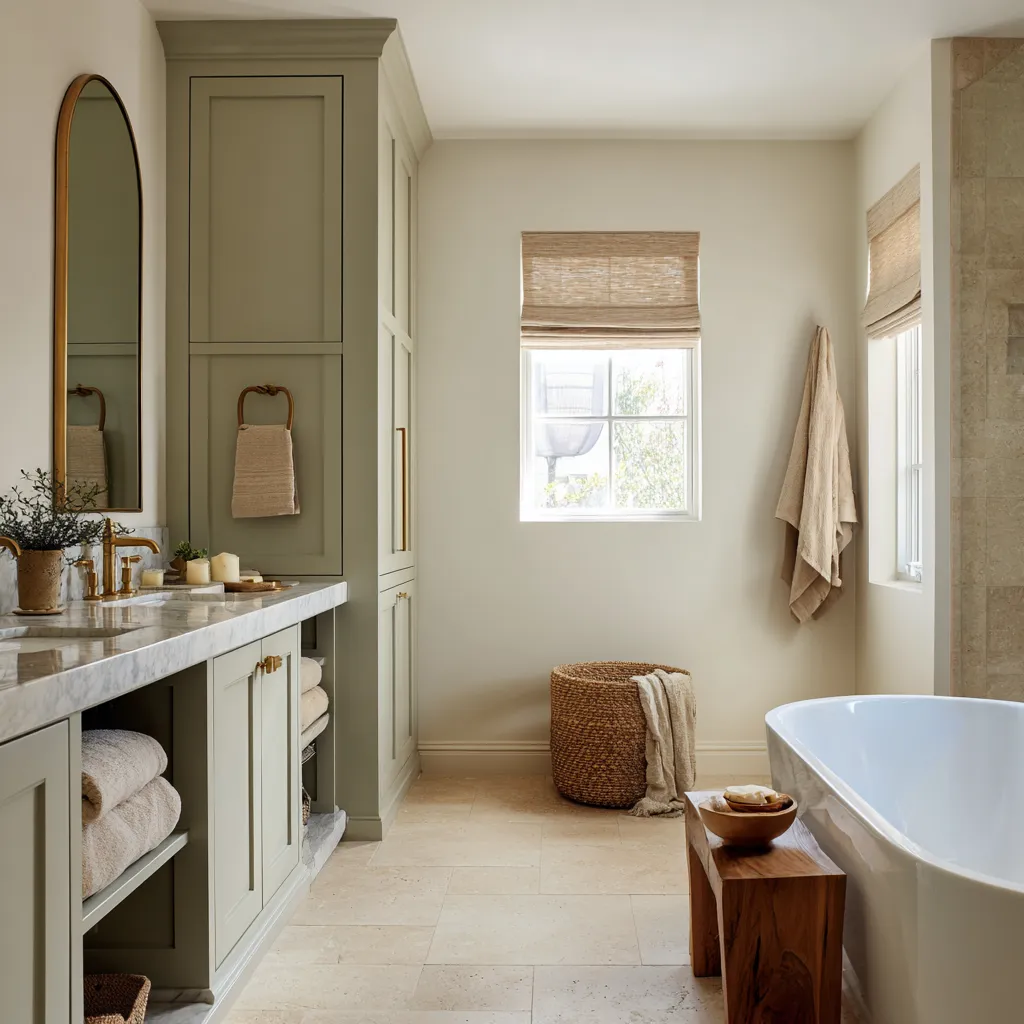
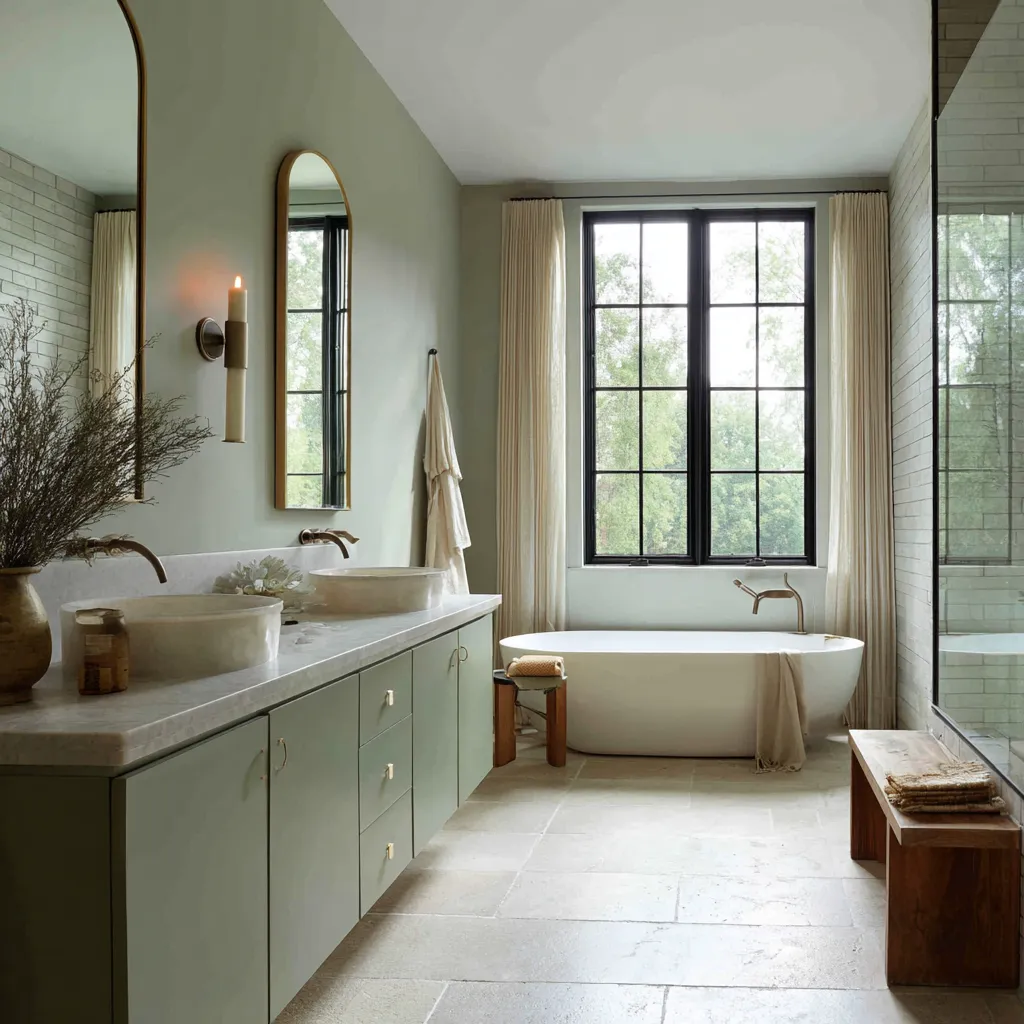
A bathroom design might rely on warm blush tonality and one bouquet of roses. Another might use a sage vanity, an arched mirror, and a Roman shade.
A third might let pale marble and plaster walls hold the entire mood, with almost no visible ornament at all. A fourth might include a floral mural or wallpaper panel, but then keep the rest of the room broad, pale, and nearly spare.
That concentration is what gives the style its freshness. The design still has tenderness, but the tenderness is focused.
It does not spill into every edge and surface.
Why surface now matters so much
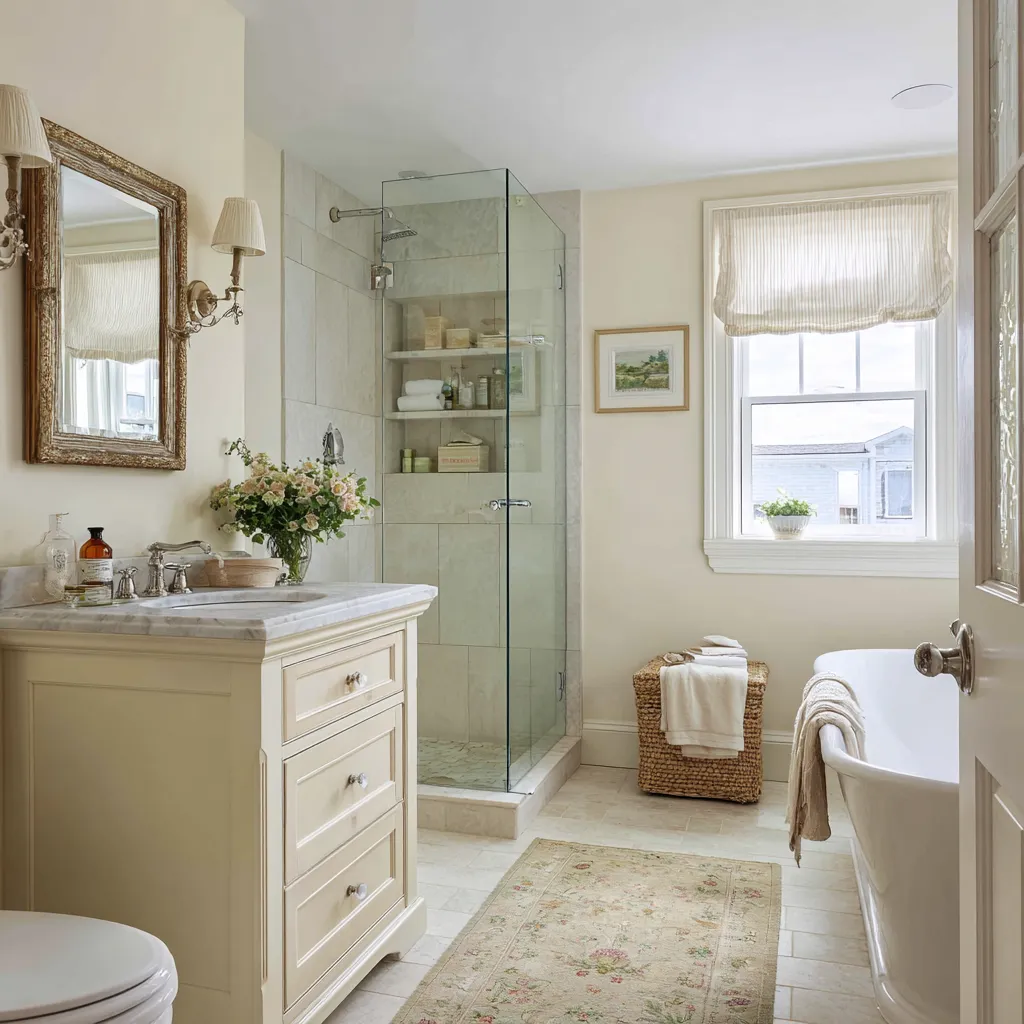
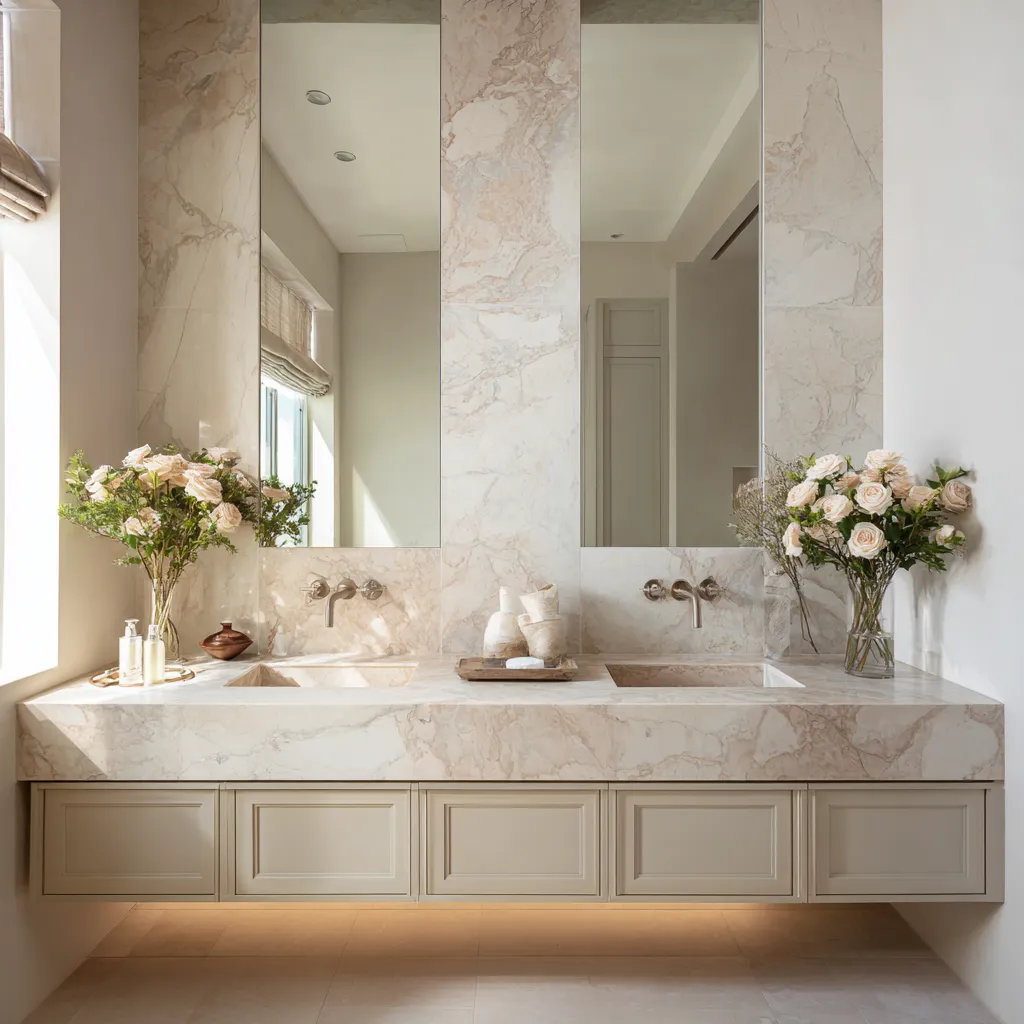
One of the changes in modern shabby chic bathroom ideas is the growing importance of surface. Stone, tile, plaster, limewash, and warm veining now carry a large share of the style’s softness.
This is a major shift from older shabby chic rooms, where distressed furniture, ruffled textiles, and decorative accessories often carried the emotional weight. In the current version, a blush-beige marble with cloudy movement can give a bathroom delicacy and warmth without adding a single extra object.
A softly mottled plaster wall can create atmosphere that once might have come from wallpaper, painted trim, and a more layered furnishing scheme. A vertical tile rhythm can bring hand-touched character into a room without resorting to visible ornament.
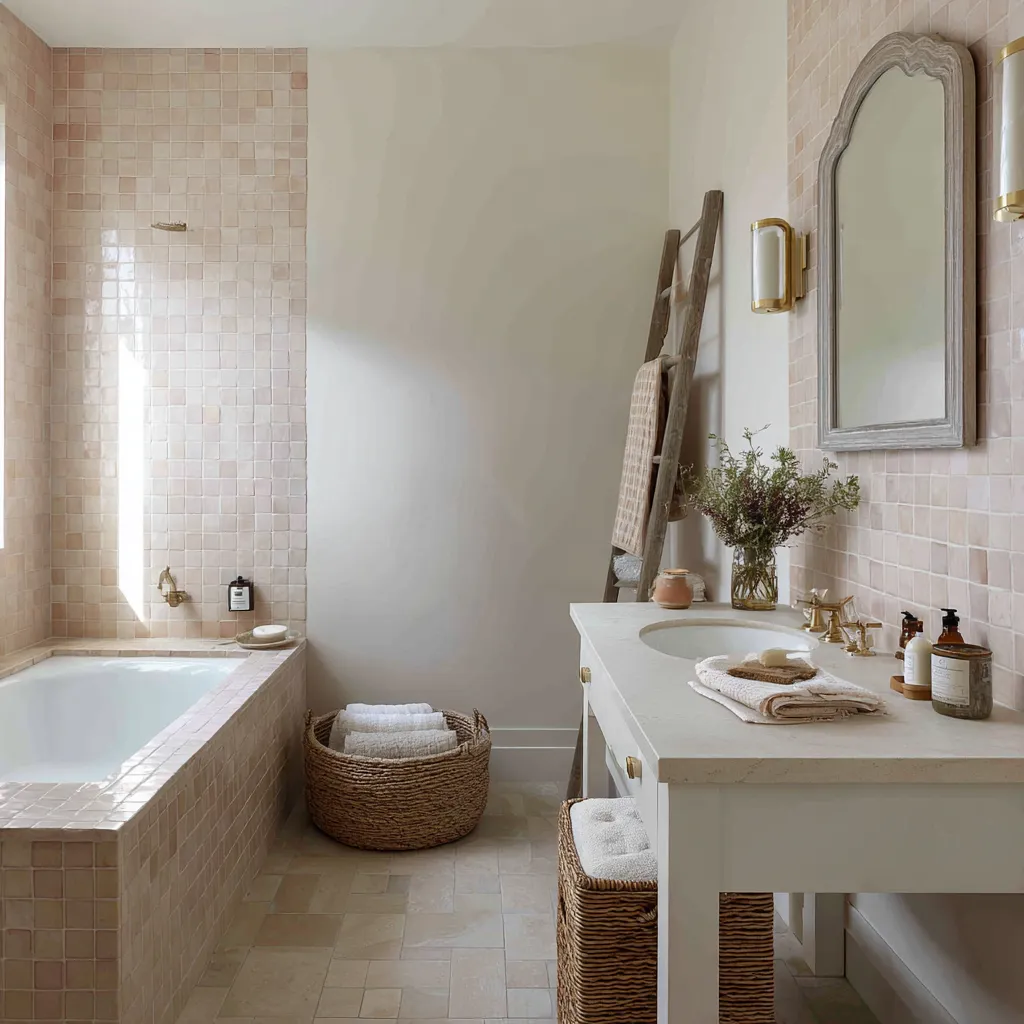
This makes modern shabby chic feel more architectural. The design does not need to announce its charm through decorative buildup.
The charm can live in the wall finish, the stone, or the gentle way light moves over a tile field. Bathroom designs that use surface in this way tend to feel more current because the decorative richness is built into the envelope rather than applied on top of it.
Warm color is doing a huge amount of work
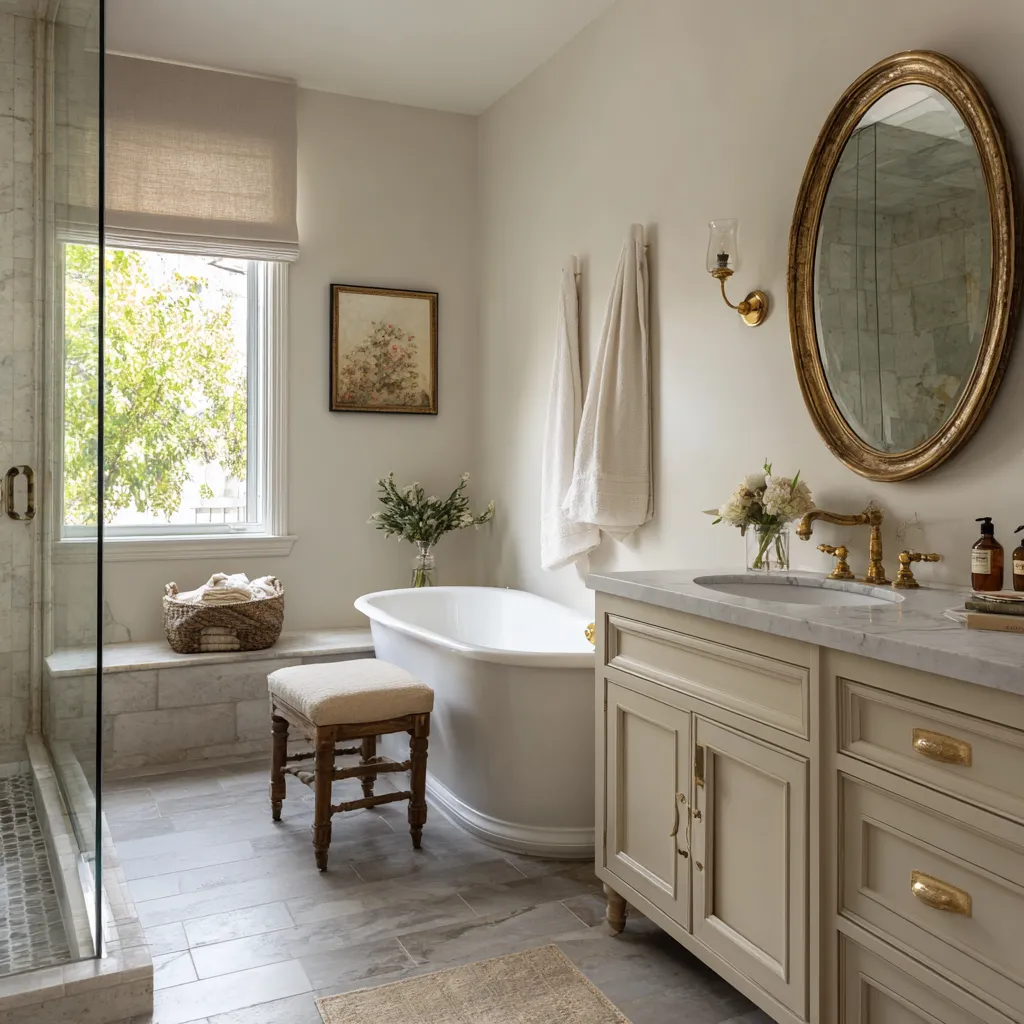
Color temperature has become one of the useful tools in modern shabby chic bathrooms. Warm beige, pale blush, dusty rose, cosmetic pink, and softened cream can create a romantic atmosphere very quickly, yet without adding visual clutter.
This is why current shabby chic bathroom designs feel tender even when the architecture is quite strict. A long vanity with simple fronts and a frameless shower can still feel deeply soft if the room is wrapped in a powdery pink-beige envelope, finished with pale brass, and paired with flowers or linen.
Warmth enters through the air of the room rather than through a large decorative layer.
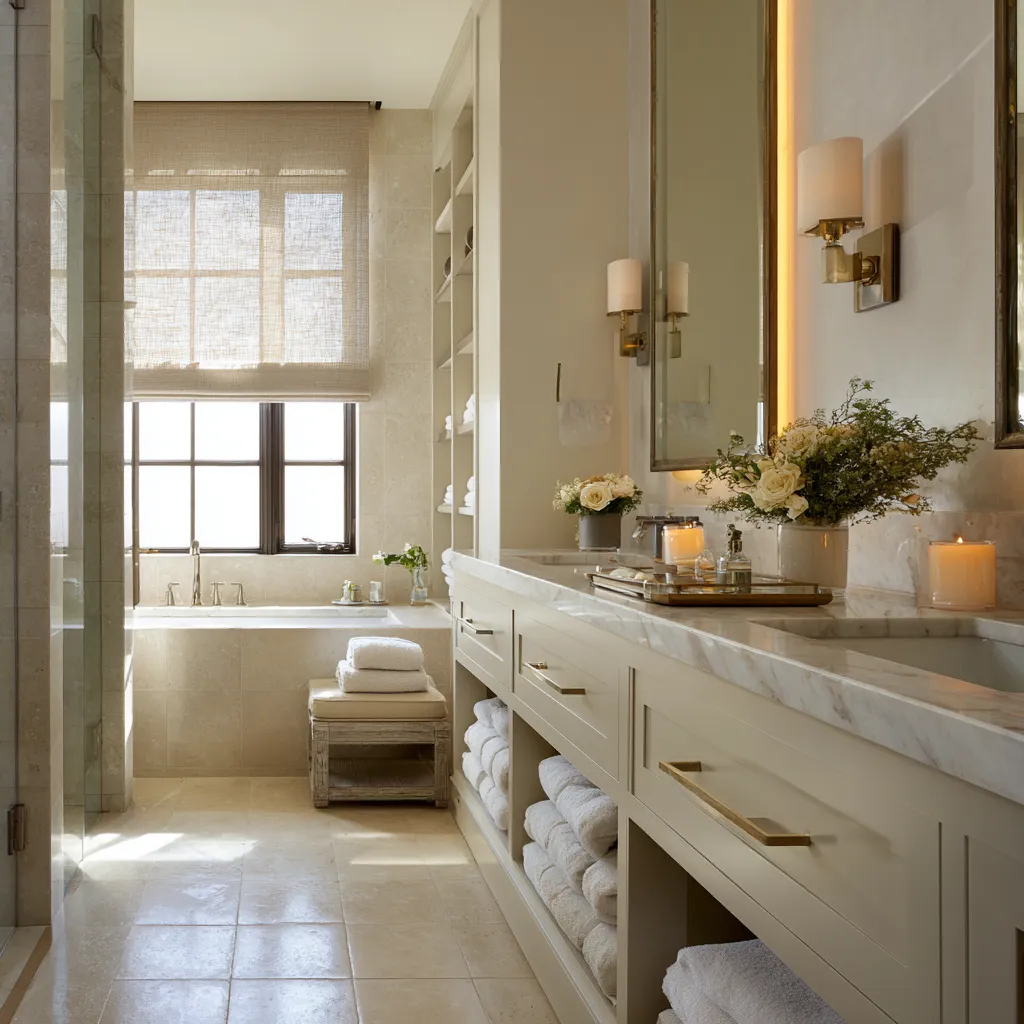
That warm blush family is especially powerful because it flatters almost every other material in the bathroom. White tubs look creamier.
Brass looks gentler. Stone feels less stark.
Drapery and towels gain depth. The room takes on a subtle dressing-room quality without needing ornate furniture or heavy styling.
The result is softness without fuss.
Cool shabby chic needs more support
Cooler versions of shabby chic can be beautiful, but they usually need a little more help than warm schemes do. Powder blue and muted sage can carry old-house memory very well, yet they rarely feel shabby chic on their own.
To hold the style securely, they often need support from shape and fabric.
This usually means one or more of the following: arched or oval mirrors, Roman shades, long curtains, visible folded towels, baskets, a bench, or some sort of domestic textile layer near the sink or tub. Without those supports, blue or sage can slip toward a cleaner transitional bathroom or a light country look.
With them, the bathroom design starts to feel softer, more intimate, and more clearly tied to shabby chic.
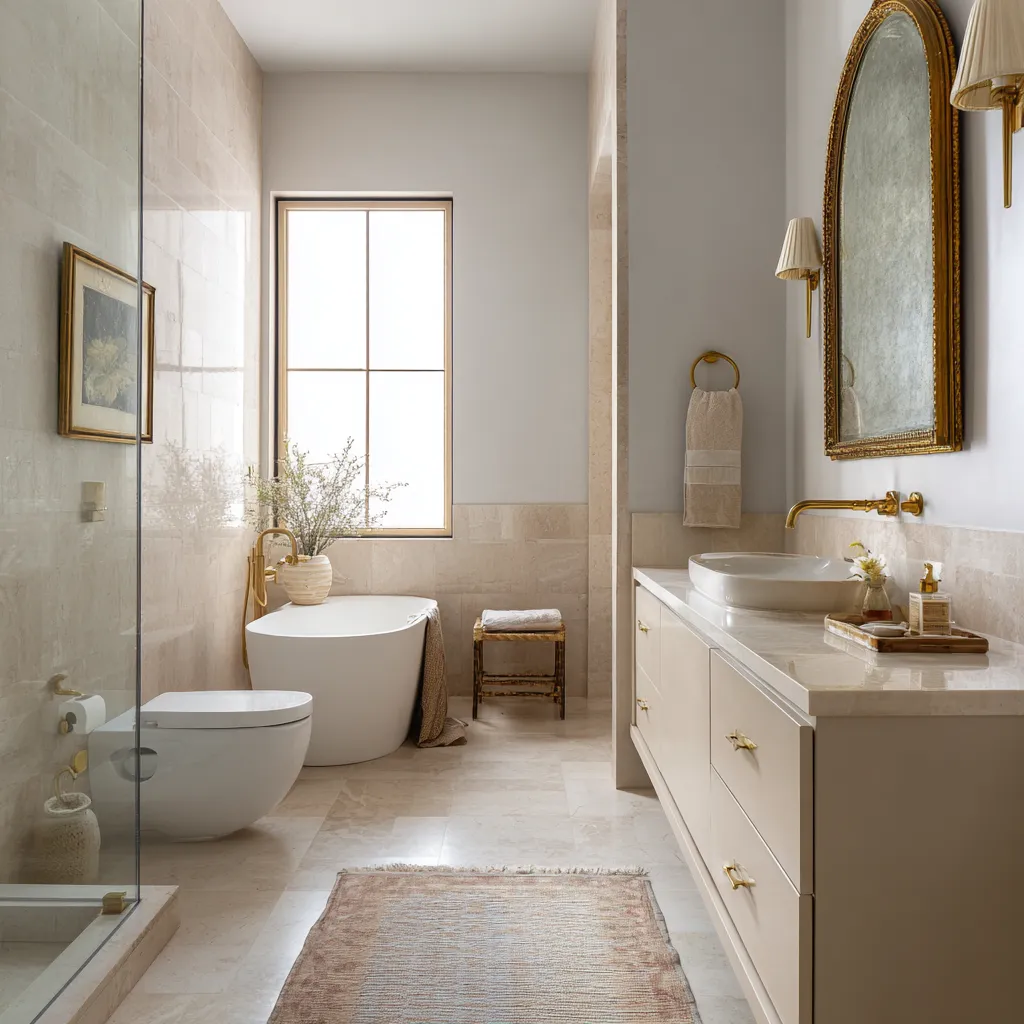
The cool version of the style often has a slightly more reserved mood. It tends to feel airy, powdery, and gently old-fashioned rather than rosy or enveloping.
That can be very attractive, especially in bathrooms that already have strong daylight or traditional millwork.
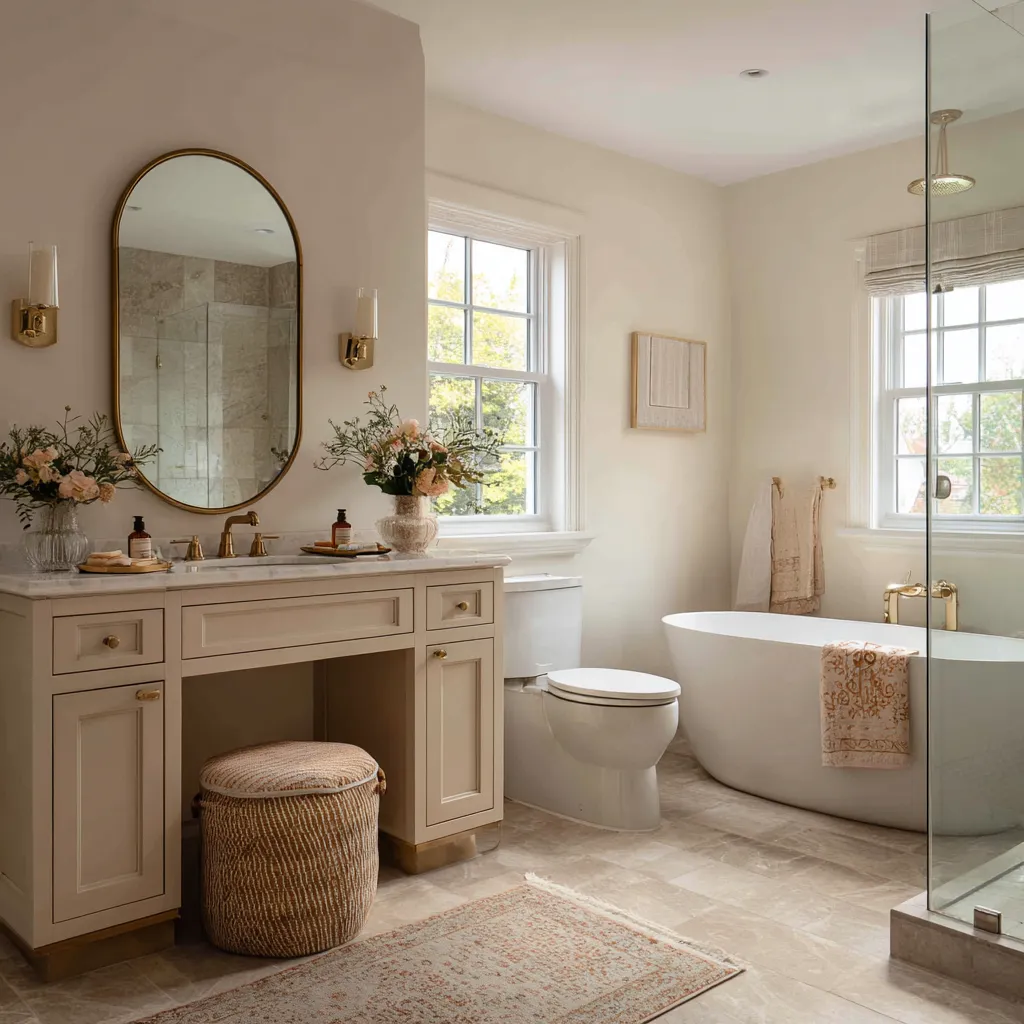
Curves are one of the most effective bridge elements
Arches, ovals, rounded mirrors, and softened silhouettes help modern shabby chic bathrooms immensely. They are one of the ways to keep warmth in a room that otherwise uses present-day fixtures and streamlined planning.
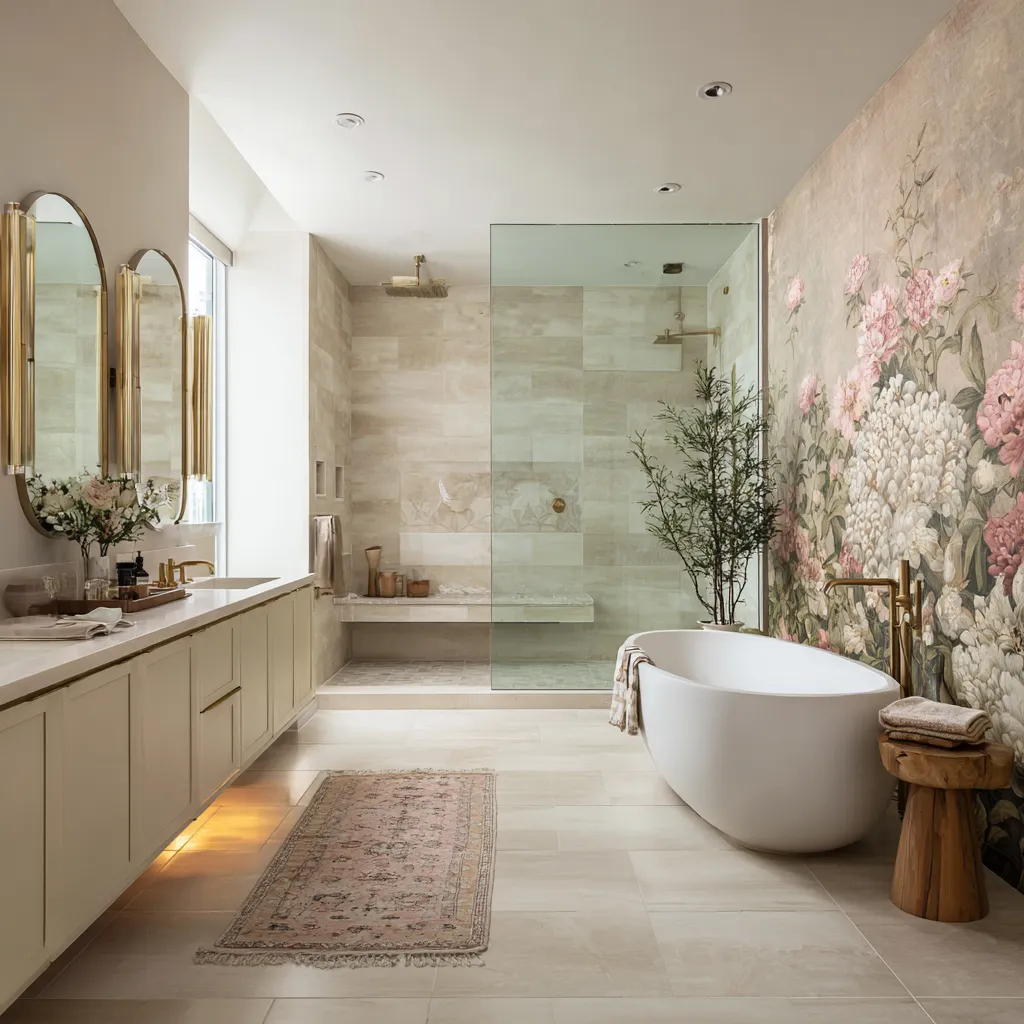
An arched mirror above a simple vanity can shift the mood of the whole sink wall. An oval mirror with a narrow brass frame can bring grace without making the room feel dated.
An arched alcove around a tub can create intimacy even if the tub itself is smooth and sculptural. A curved shower edge can soften the relationship between glass and wall finish.
Even rounded-corner mirrors can play this role in a more restrained way.
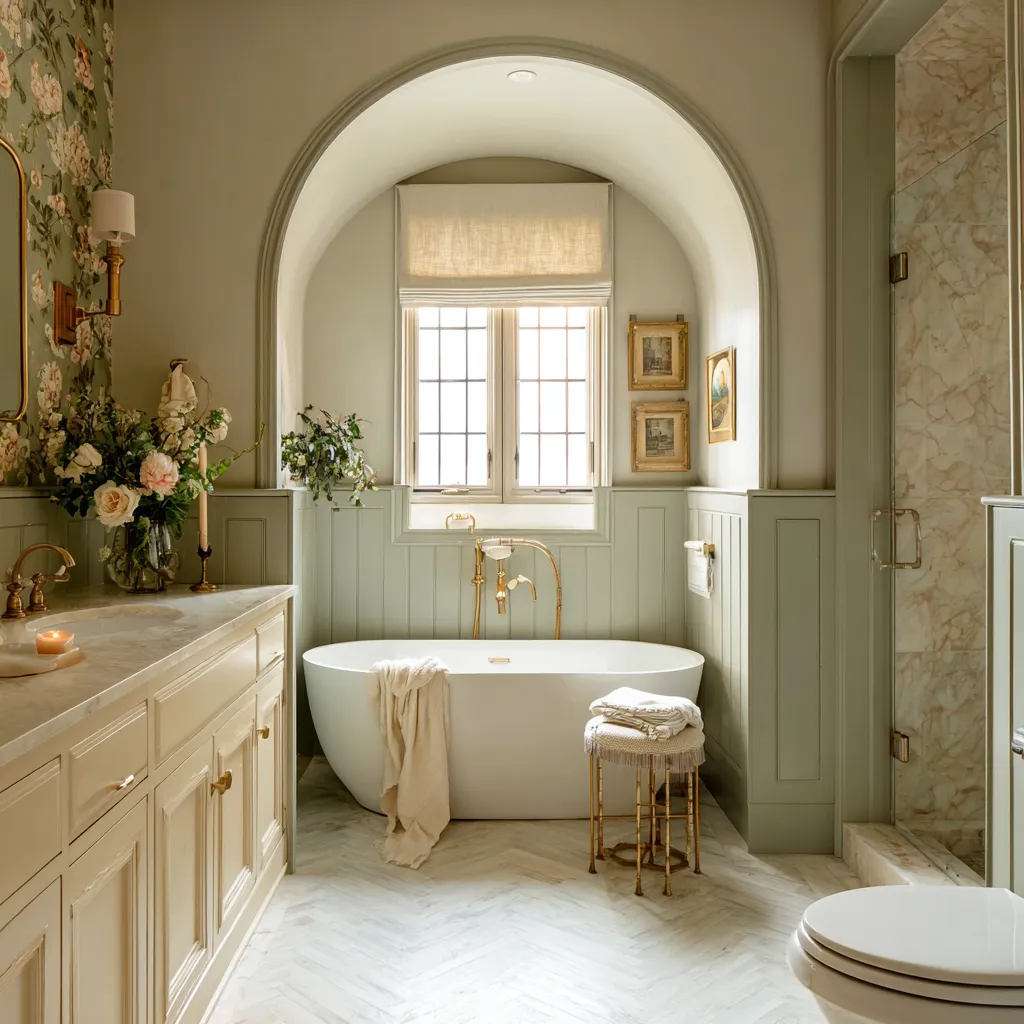
Curves matter because they soften the room without thickening it. They give a bathroom a gentler profile, but do so through line rather than through added decoration.
That makes them especially useful in modern shabby chic, where the goal is often to preserve softness while keeping the room edited.
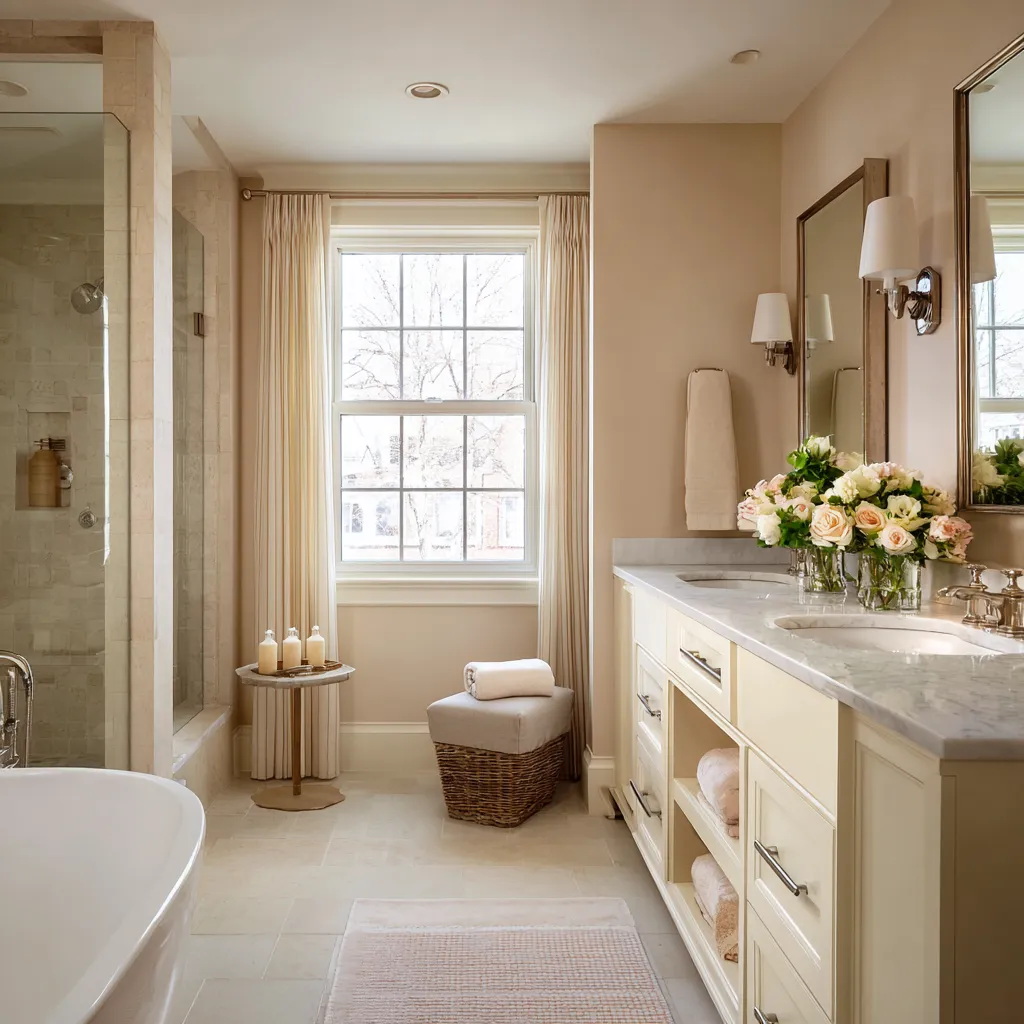
Floral pattern still works, but it has a new role
Floral pattern still belongs in shabby chic bathrooms, but its role has changed. Instead of being repeated through many layers, it is far more effective when it appears in one concentrated area.
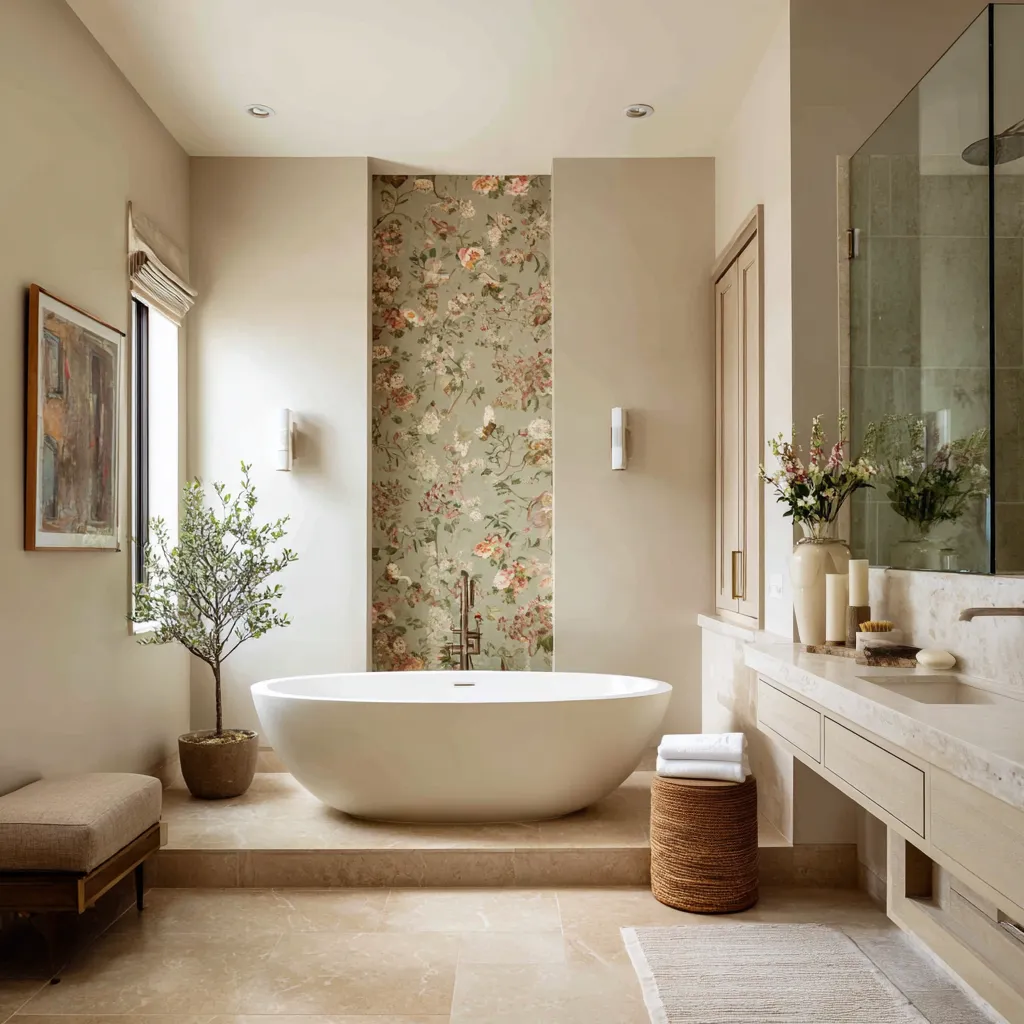
A floral wallpaper panel inside an arched tub recess can be stunning. A single mural wall behind a tub can make the whole bathroom feel lush while still allowing the vanity, floor, and shower to remain calm.
A faded runner can bring that same note in a much smaller way. What makes these choices feel current is that they are localized.
The pattern is treated as one emotional event rather than as a room-wide condition. This is one of the ways modern shabby chic separates itself from older decorative habits.
Floral intensity is acceptable. Floral diffusion is where the room begins to lose clarity.
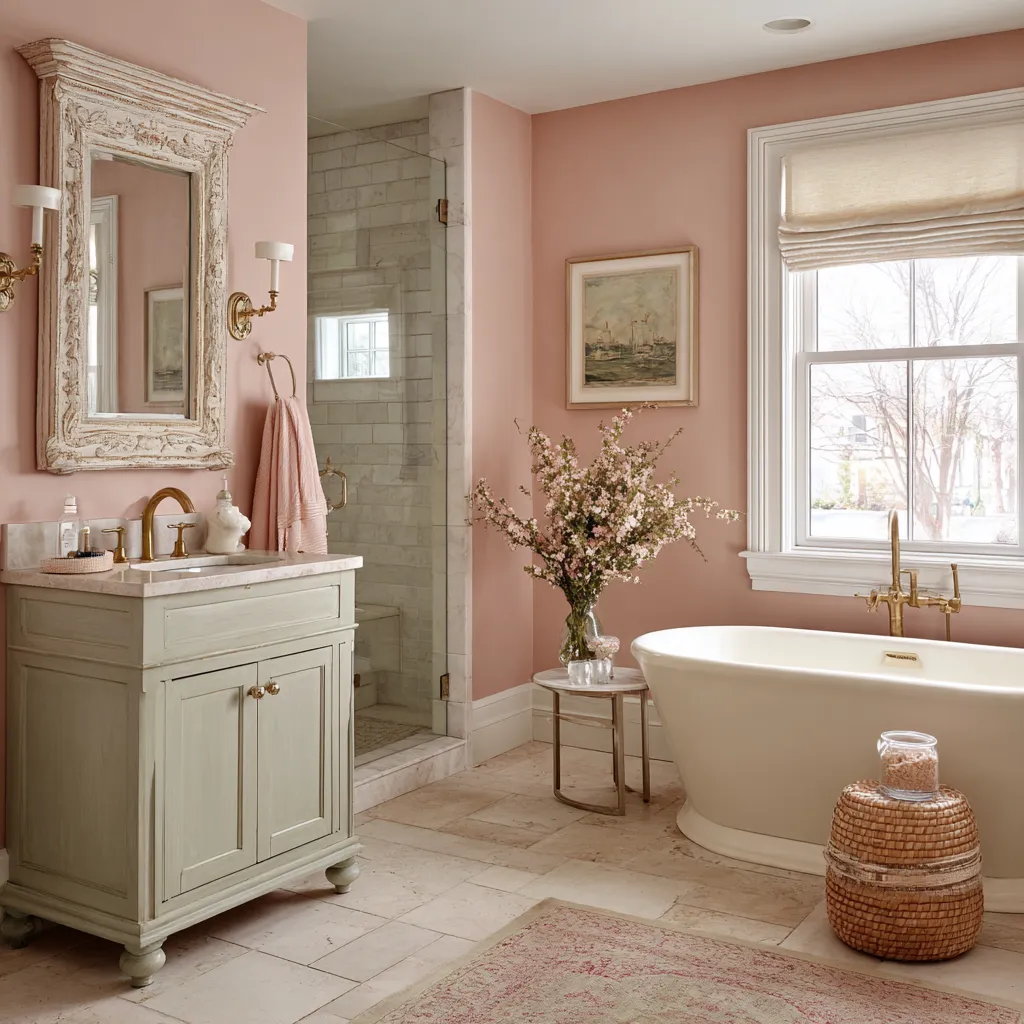
If the wallpaper or mural is the main shabby chic statement, then the other elements should pull back. Vanities can stay simple.
Showers can remain transparent. Floors can be pale and broad.
Accessories can be sparse. That contrast allows the floral surface to feel intentional rather than busy.
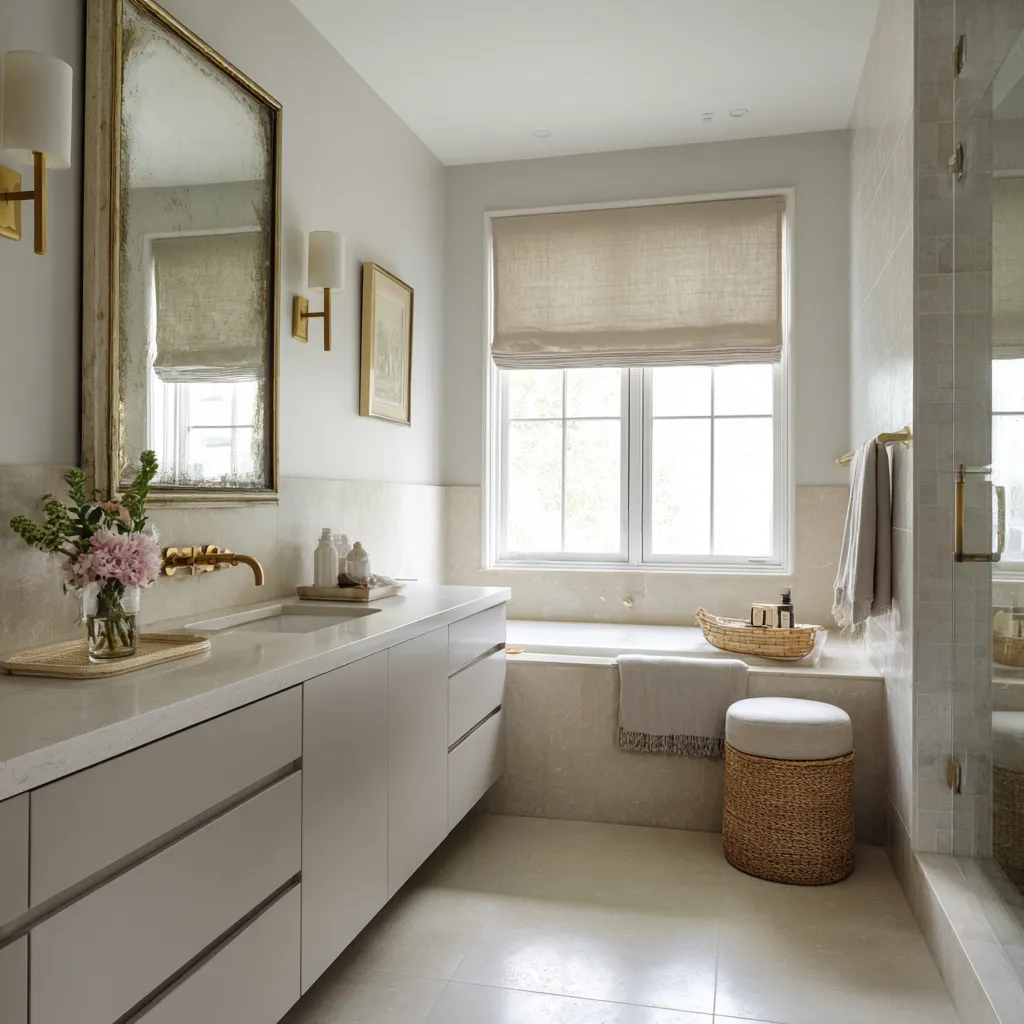
Furniture character still matters, but it has to be controlled
Shabby chic has always had a close relationship with furniture-like vanities and sink consoles. Painted bases, slim legs, open shelves, dressing-table details, ribbed fronts, and household storage all add intimacy.
They make a bathroom feel tied to the rest of the home rather than to a pure spa vocabulary. That said, furniture character is one of the ways to make a bathroom feel less modern if it becomes too heavy.
A vanity with too much period detailing, too much visible age, too many turned elements, or too much decorative trim can quickly shift the balance. The design may still be charming, but it will feel less current.
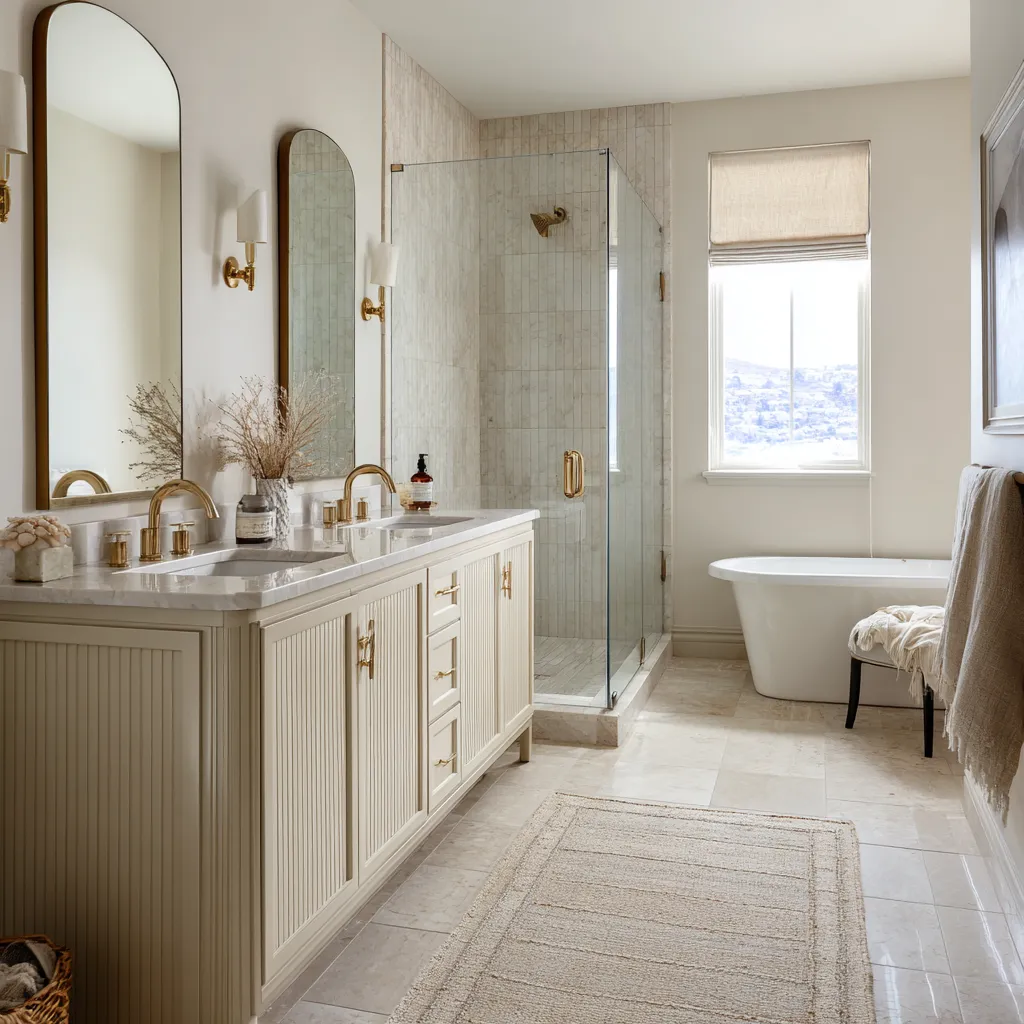
The vanities in modern shabby chic tend to sit between two extremes. They carry enough household memory to support the style, but they avoid full antique imitation.
A base may be paneled, but still long and clean in its overall mass. A sink may sit on top like a wash basin, but the counter remains broad and simple.
Open shelving may show towels or baskets, but the display stays neat and limited. A dressing-table knee space may be included, but the surrounding cabinetry remains ordered.
This controlled furniture character gives the room humanity without sacrificing clarity.
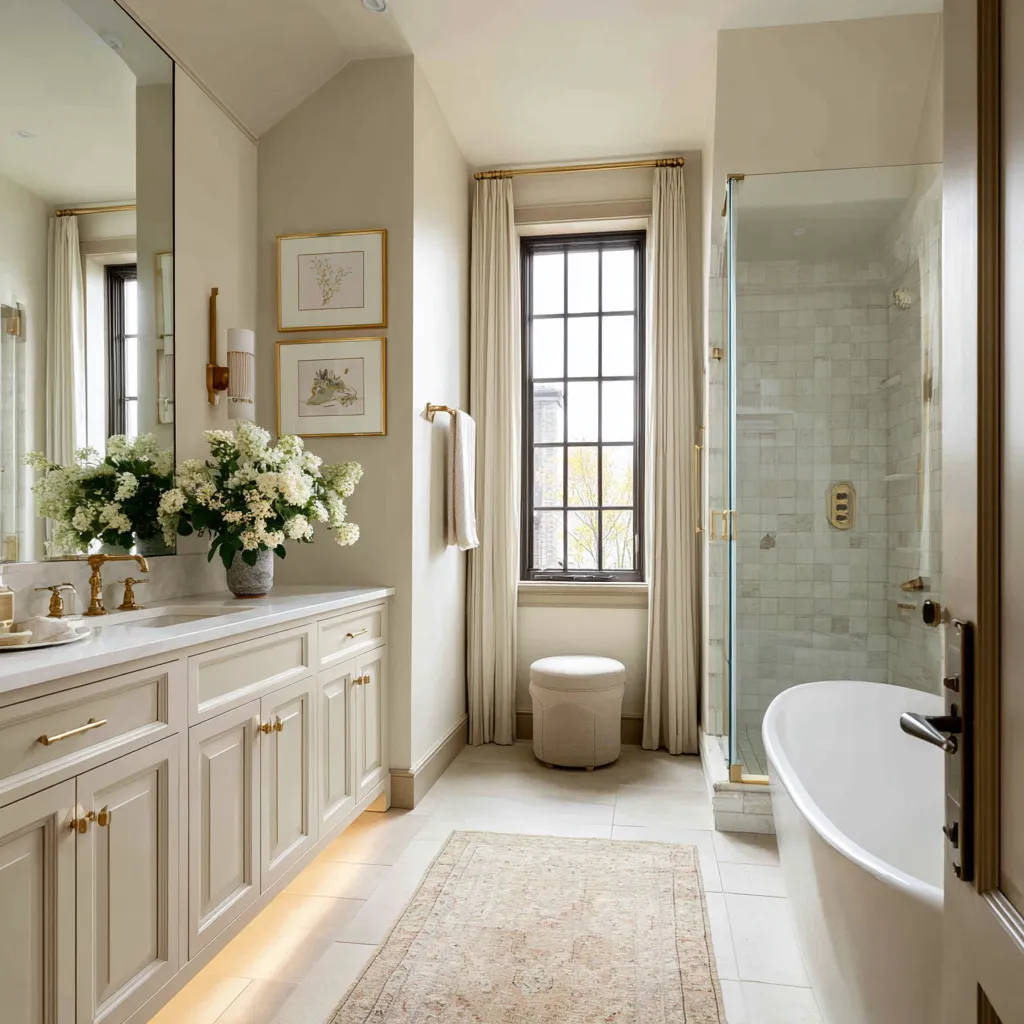
Towels, baskets, and small household cues
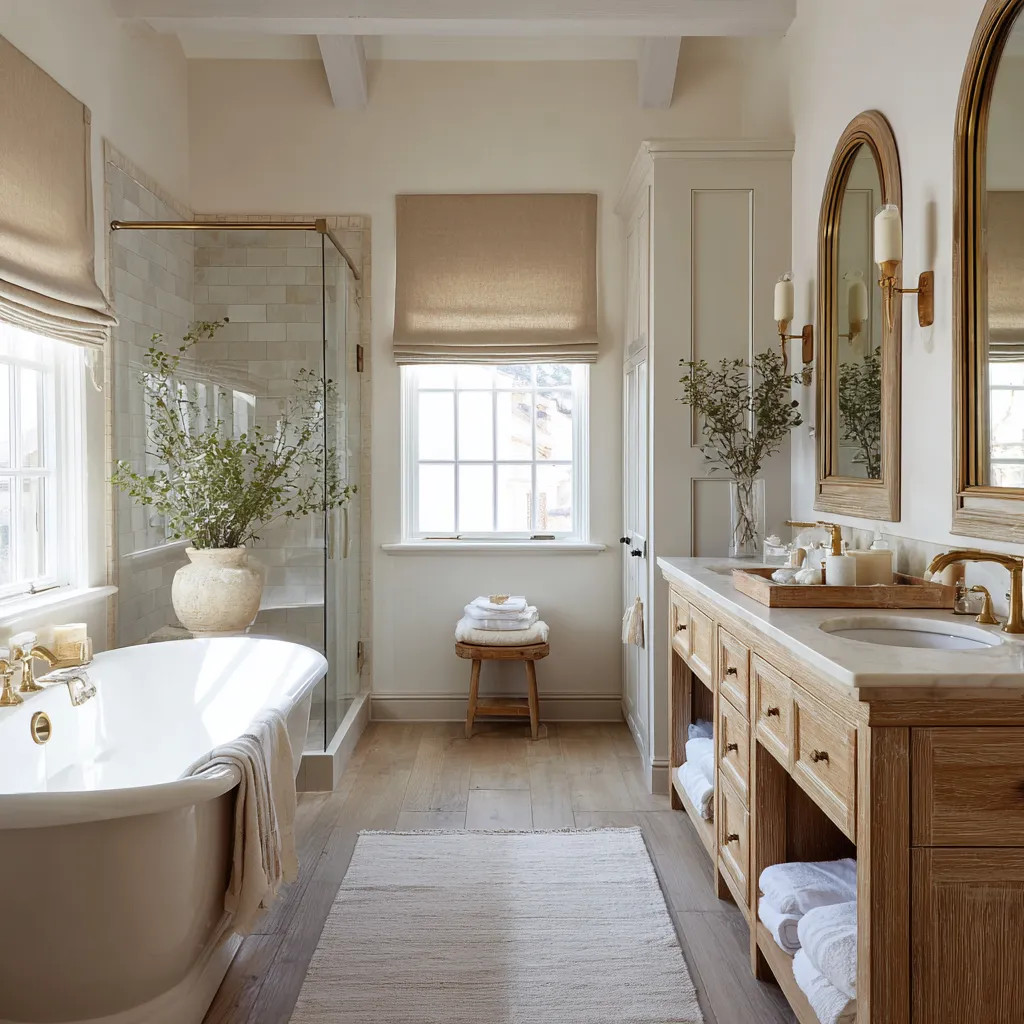
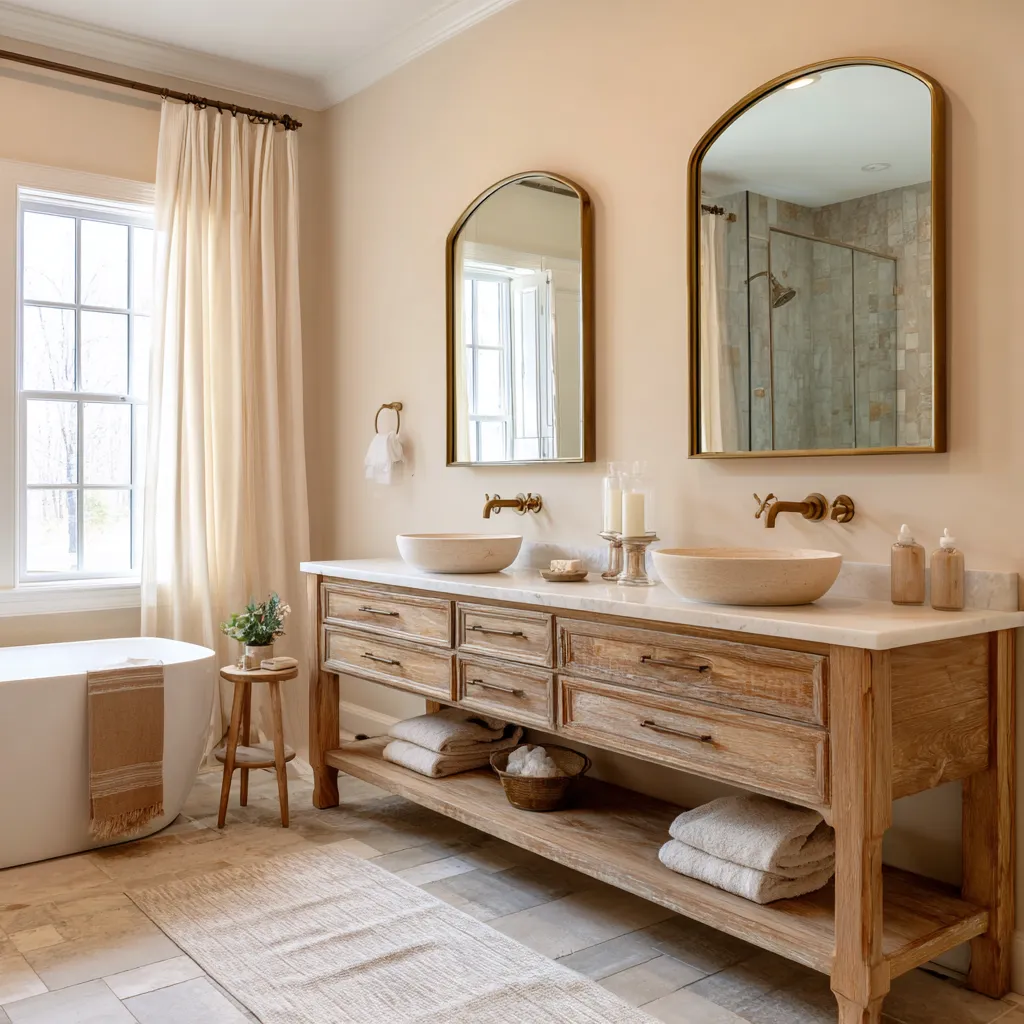
Some of the effective shabby chic signals are quite small. Open towel shelves, a woven stool, a linen Roman shade, a folded throw over the tub edge, a basket under the vanity, or a simple bench near the window can have a surprisingly strong effect on the mood of the room.
These touches matter because they introduce domestic softness in a low-key way. They make the bathroom feel inhabited.
They keep it connected to dressing rooms and bedrooms rather than to a more impersonal spa model. Yet they do so without filling the room with decorative clutter.
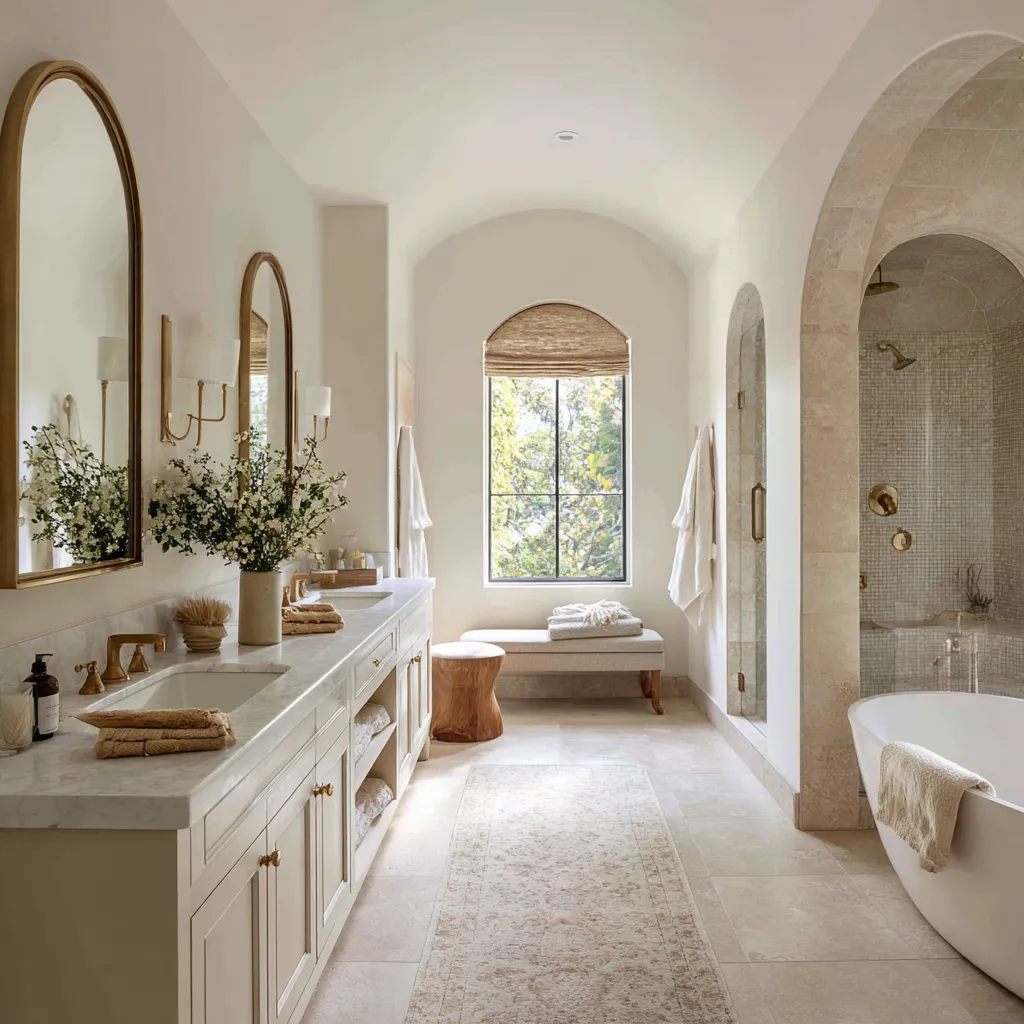
That balance is very useful. A modern shabby chic bathroom often needs one visible sign of daily life to keep the design from becoming too polished.
Towels and baskets are especially good at this because they bring softness, texture, and household familiarity without demanding too much space or visual attention. One basket and one set of visible folded towels are doing more emotional work than a long tray of decorative accessories ever could.
Mirrors often carry the memory of age
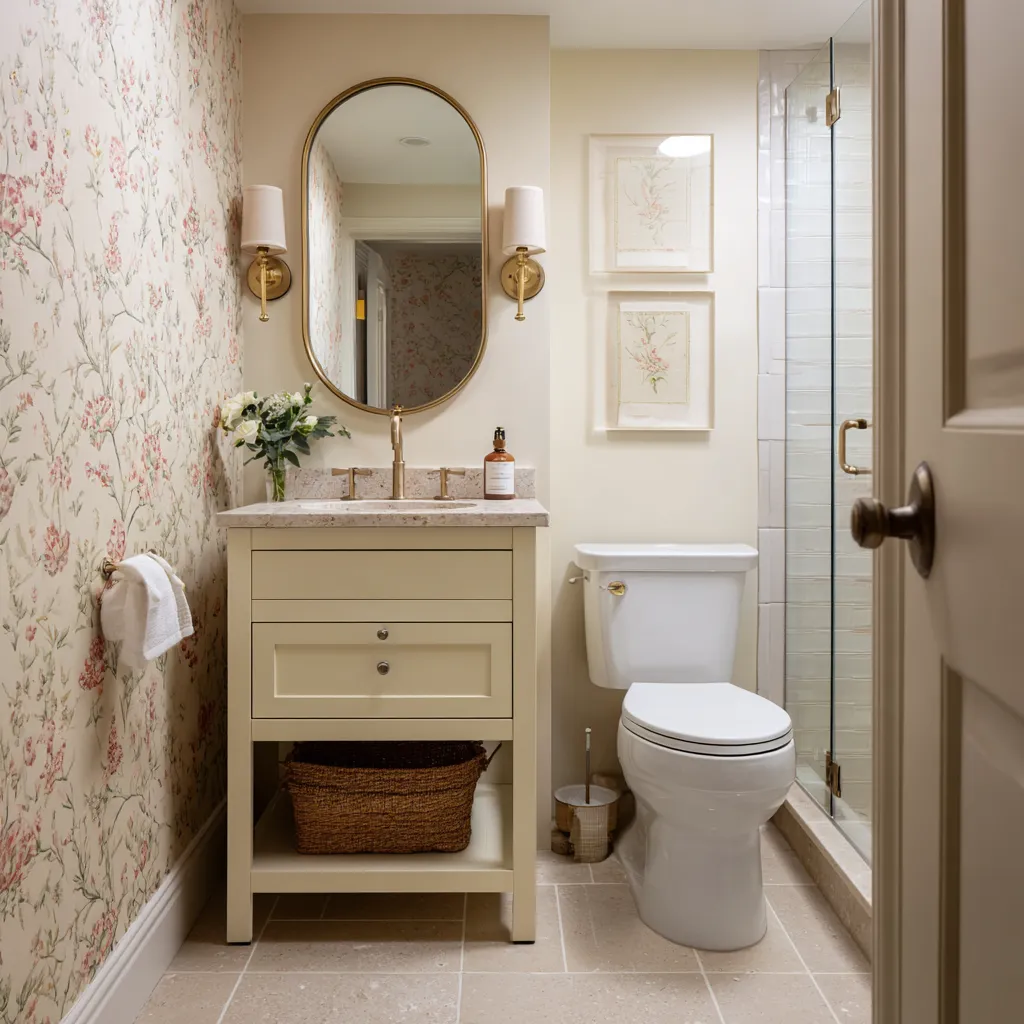
In current shabby chic bathroom designs, the mirror has become one of the efficient ways to bring in patina and old-house association. This is especially true in rooms where the vanity and fixtures are otherwise very pared back.
A foxed mirror, a softly aged brass frame, a shaped wood surround, or a gently distressed profile can insert historical memory into the room without requiring antique cabinetry, heavy ornament, or a large decorative spread. One mirror can do the work that a whole collection of vintage-inspired details once handled.
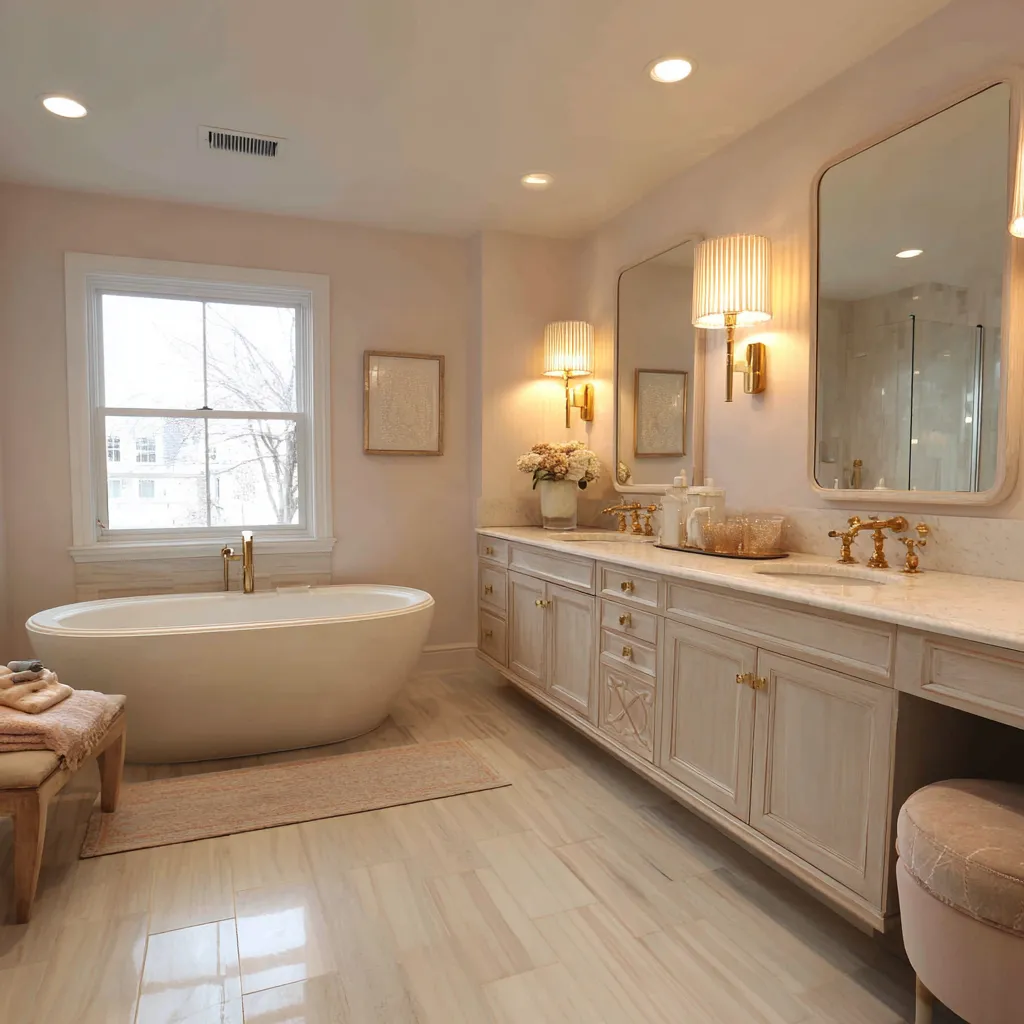
This is why aged mirrors often appear in modern shabby chic bathrooms. They carry emotional history with very little spatial cost.
In a room with broad walls, clean counters, and frameless shower glass, a single timeworn mirror can become the main bridge between past and present. The key is restraint around it.
If the mirror carries the aged note, the vanity below should usually remain quieter. If the mirror is ornate, the tub and shower should stay simple.
If the mirror is the room’s memory piece, the room does not need several more.
Modern shabby chic can take more than one formal route
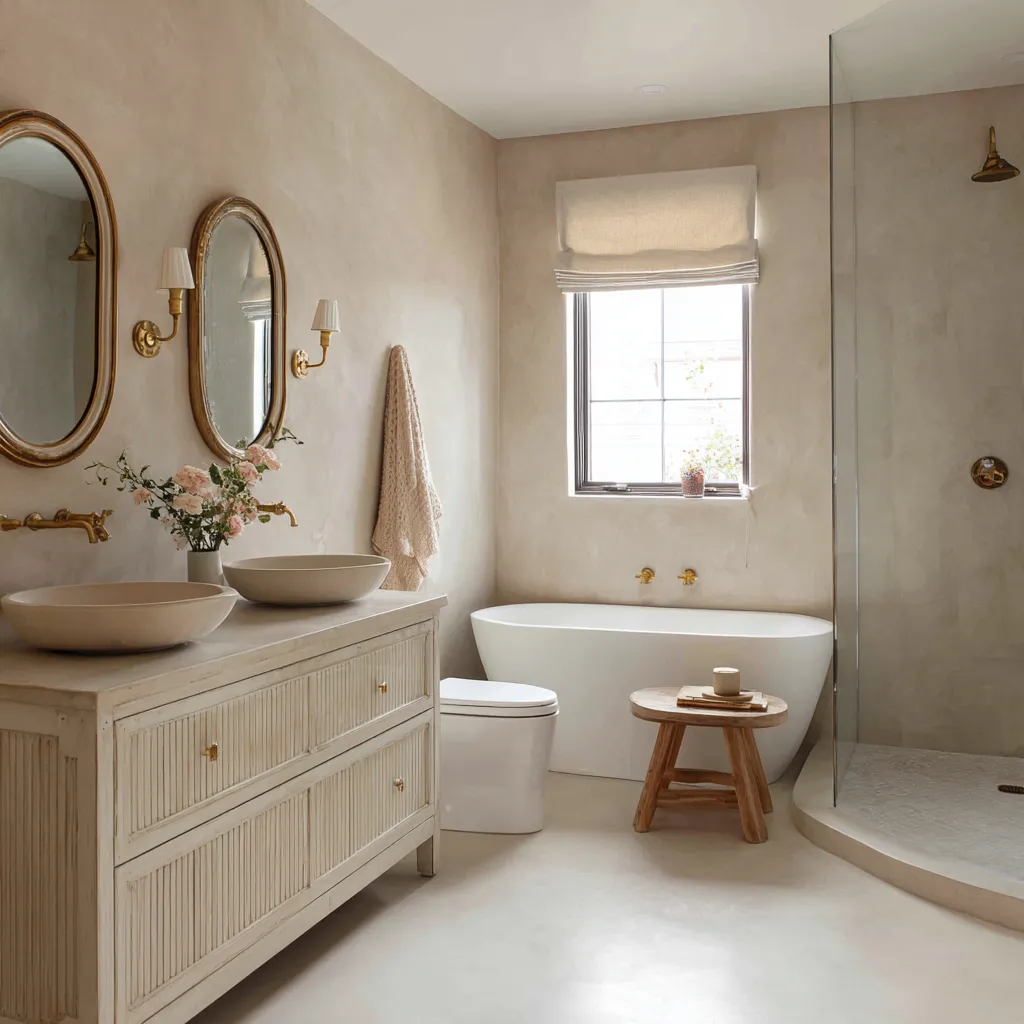
There is no single formula for a good modern shabby chic bathroom. The style can reach a similar feeling through several different design directions.
- One route is the floral-panel route. Here the bathroom uses a mural wall, alcove wallpaper, or a focused botanical surface as its emotional center. The rest of the room stays broad, pale, and open so the floral content feels contained and deliberate.
- Another route is the warm surface route. In this version, there may be almost no visible pattern at all. The room gets its softness from blush stone, powdery plaster, pale brass, and a few carefully placed domestic cues such as flowers, towels, or a stool.
- A third route is the edited furniture route. The bathroom keeps a stronger dressing-room character through a vanity with legs, open shelving, a small stool tucked under the counter, or a more traditional mirror-and-sconce composition. To keep the room current, the surfaces remain clear and the fixture language stays clean.
- A fourth route is the arch-and-linen route. This direction uses curved mirrors, arched openings, Roman shades, and visible towels or baskets to build the style, while the shell stays simplified and the pattern load stays low.
All of these can work. The important part is not choosing the same details each time.
The important part is deciding which softening family will carry the room, then keeping the rest of the space disciplined.
How to use romance without losing clarity
Romance is central to shabby chic, but in a bathroom it has to be handled with care. Romance can come from color, flowers, mirror shape, fabric, patina, or old-house references.
Problems begin when all of those are pushed too hard at once in a room that lacks a strong organizing frame. A better approach is to let romance gather around one or two main elements.
A pink wall color and a simple bouquet may be enough. An arched mirror and a Roman shade may be enough.
A floral mural and one faded runner may be enough. A powder room may support a slightly richer antique note because its small scale and centered composition can contain it, but a larger bathroom usually benefits from more restraint.
This is why attractive modern shabby chic bathroom designs can feel edited even when they are very soft. They are willing to stop.
They do not keep adding once the mood is already there.
The powder room offers a special opportunity
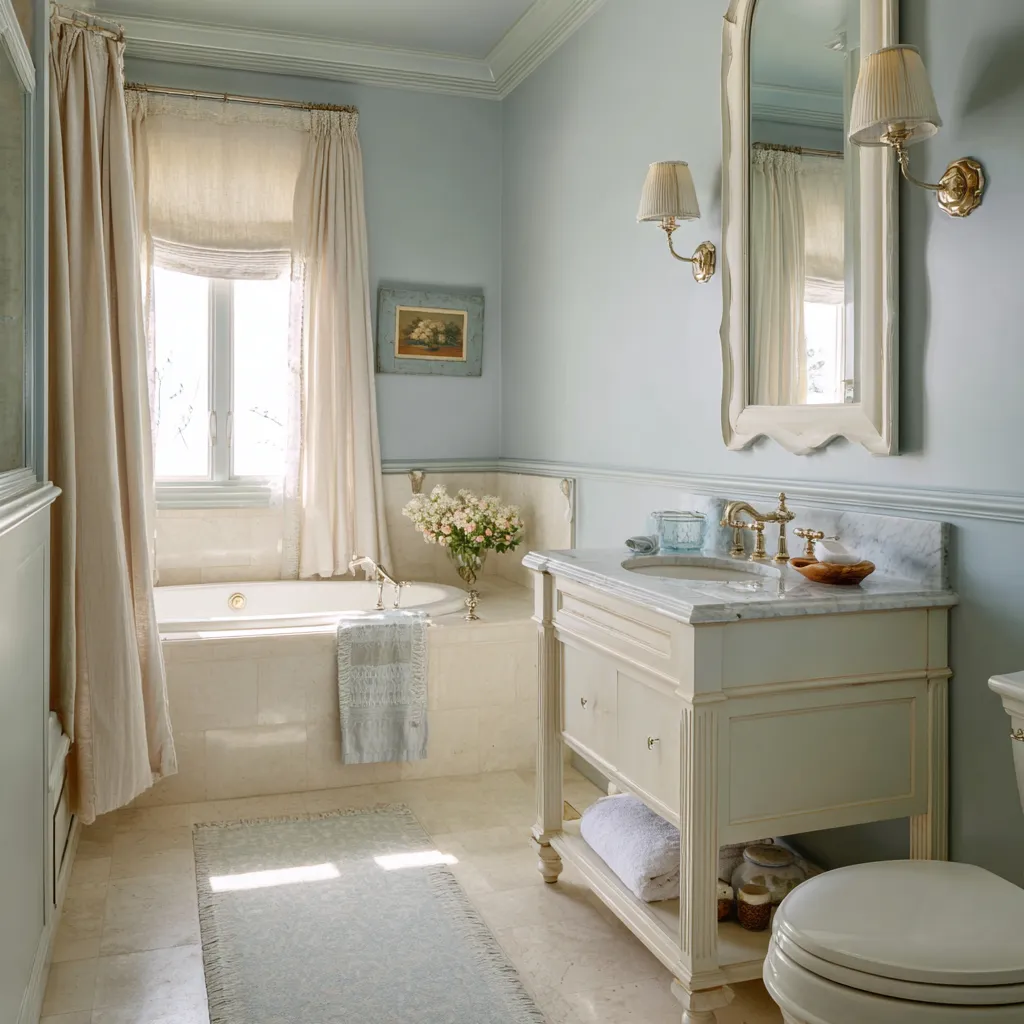
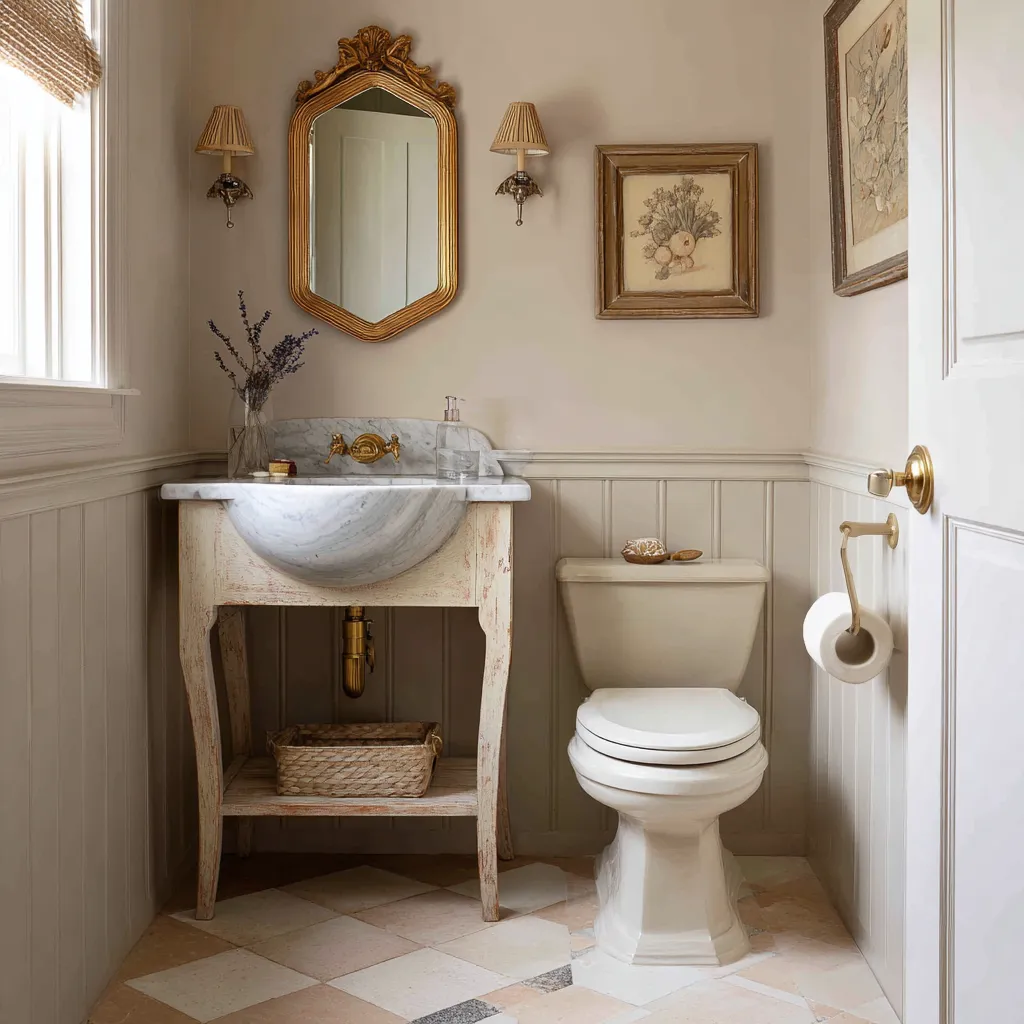
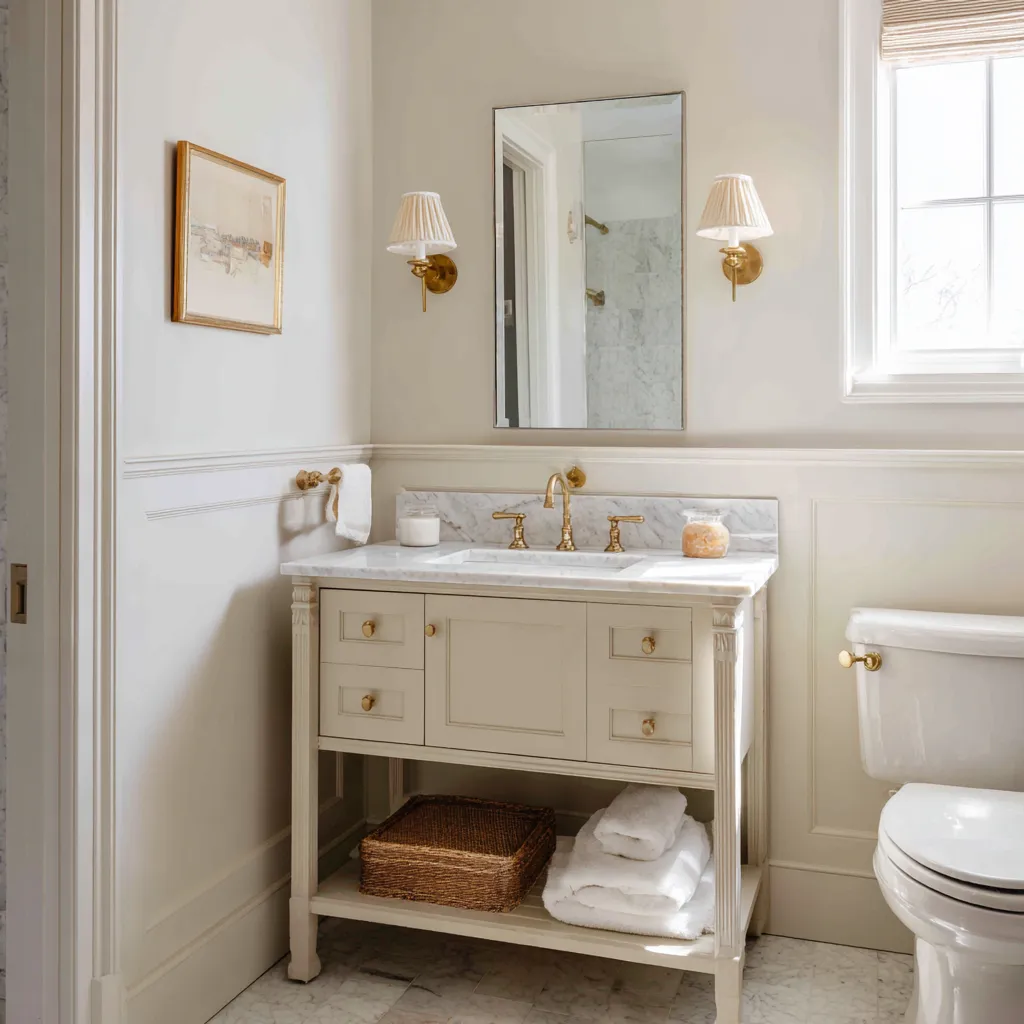
A small powder room can carry a denser shabby chic identity than a large primary bath because the compact footprint naturally forces concentration. One antique-like console, one carved or gilded mirror, one pair of shaded sconces, one paneled wainscot, and one strong sink bowl may be enough to create a memorable space.
In a room that small, symmetry becomes especially useful. If the console, mirror, and sconces are centered and the palette stays narrow, the design can hold a stronger old-house note without feeling messy.
This is one place where antique signal can still be relatively pronounced and remain successful, provided the composition is exact and the object count stays low. So a powder room and a small shabby chic style bathroom can be a place to push the style a little further.
It can take on a more intimate, old-fashioned charm while still keeping a present-day sharpness through editing and tight color control.
Common mistakes in modern shabby chic bathrooms
- One common mistake is using too many old-world signals at the same time. A shaped vanity, floral wallpaper on several walls, ornate mirrors, heavy drapery, visible distressing, multiple decorative objects, and patterned textiles can overload the room very quickly. The space may still be sweet, but it will lose the airy quality that makes the modern version attractive.
- Another mistake is using romantic color without enough structure. Pink, blush, or sage walls can be very effective, but they need the support of clean planning, controlled accessorizing, and enough open wall or floor area. Without that support, the room can drift into visual softness without definition.
- A third mistake is over-furnishing the vanity zone. Modern shabby chic works better when the counter remains readable. Flowers, a tray, a candle, or a few bottles can be enough. Once the countertop becomes crowded, the room starts to lose the clear frame that helps the style feel current.
- A fourth mistake is misunderstanding floral content. Floral pattern can still work beautifully, but it is most successful when confined to one strong location. If every zone competes for attention, the room becomes harder to read and less fresh.
A practical formula for creating the look
A workable way to build a modern shabby chic bathroom design is to start with a current shell:
- clear zoning
- frameless shower
- broad stone, tile, or plaster surfaces
- simple tub silhouette
- low accessory count
Then choose one main shabby chic carrier:
- a floral wall or wallpapered alcove
- a warm blush color field
- a furniture-like vanity
- an arched or oval mirror scheme
- visible towel and basket softness
Then add only one secondary layer:
- fresh flowers
- a Roman shade
- one aged mirror
- a bench or woven stool
- pale brass warmth
This approach gives the interior design enough softness to feel personal, but leaves enough empty space for the bathroom to breathe.
Why shabby chic style feels current
Modern shabby chic bathroom design feels current because it has learned how to preserve feeling while trimming visual noise. It keeps warmth, romance, softness, and household intimacy, but it places those qualities inside a more ordered and spacious composition.
It allows the room to feel emotional without becoming crowded. That is why a bathroom can still feel shabby chic even with wall-mounted faucets, floating vanities, vessel basins, large glass panels, and broad stone surfaces.
The style is no longer tied to direct antique imitation. It lives in tone, shape, flowers, fabric, domestic texture, and memory carried through a few concentrated details.
In other words, the bathroom does not need to look old to feel tender. It needs a modern frame, a disciplined hand, and a few carefully chosen signals of softness.
Final thoughts
Modern shabby chic bathroom designs are not built from decorative abundance. They are built from selection.
They know which elements carry emotion and which ones should stay quiet. They let the room’s plan stay clear.
They let the surfaces do a great deal of the visual work. They allow one mirror, one wall finish, one floral moment, one basket, one towel shelf, or one curve to speak clearly.
That is what gives the style its depth today. It still holds romance, but the romance is controlled.
It still keeps domestic warmth, but the warmth is placed with care. It still remembers shabby chic, yet it does so inside a bathroom that feels open, polished, and easy to live with.