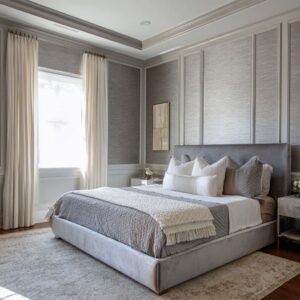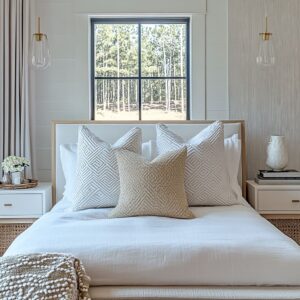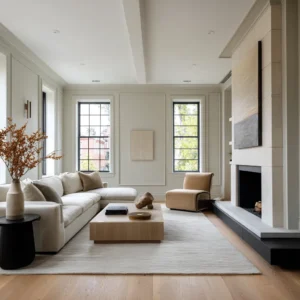
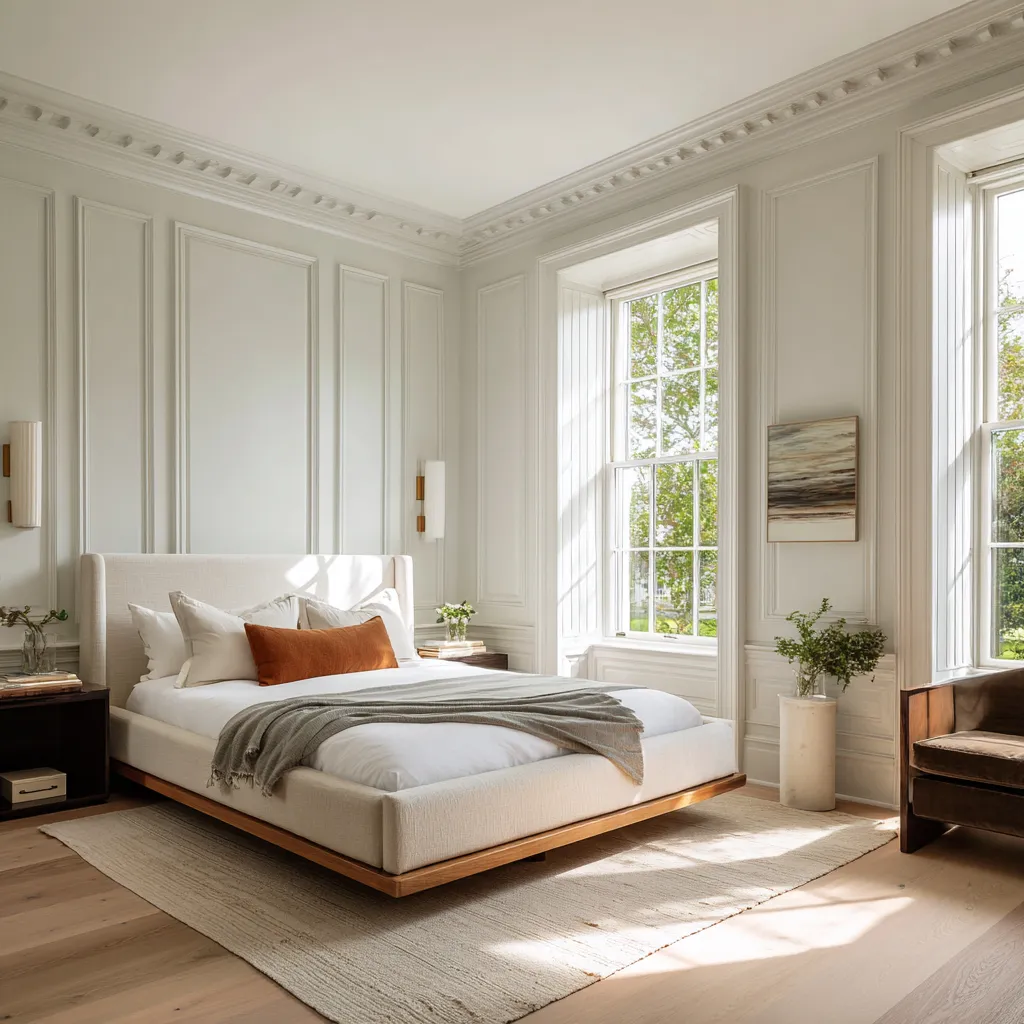
A refined Georgian bedroom works best when the design keeps its original order and the furnishing layer becomes lighter, softer, and more selective. That balance is what gives the space its special character.
The walls may still carry panel moldings, the cornice may still mark the ceiling with authority, the sash windows may still rise with their tall, upright proportion, and the fireplace may still hold the room with mass. But the bed becomes lower, the palette becomes tighter, the styling becomes leaner, and the comfort comes from texture, daylight, and placement rather than from visual excess.
That is the main idea behind a modern Georgian bedroom. The room should not try to out-perform its own architecture.
Georgian interiors already have built-in order. The wall panels, chimney breast, window proportions, and ceiling line are doing a great deal before any furniture arrives.
A bedroom like this becomes strongest when the design accepts that fact and works with it.
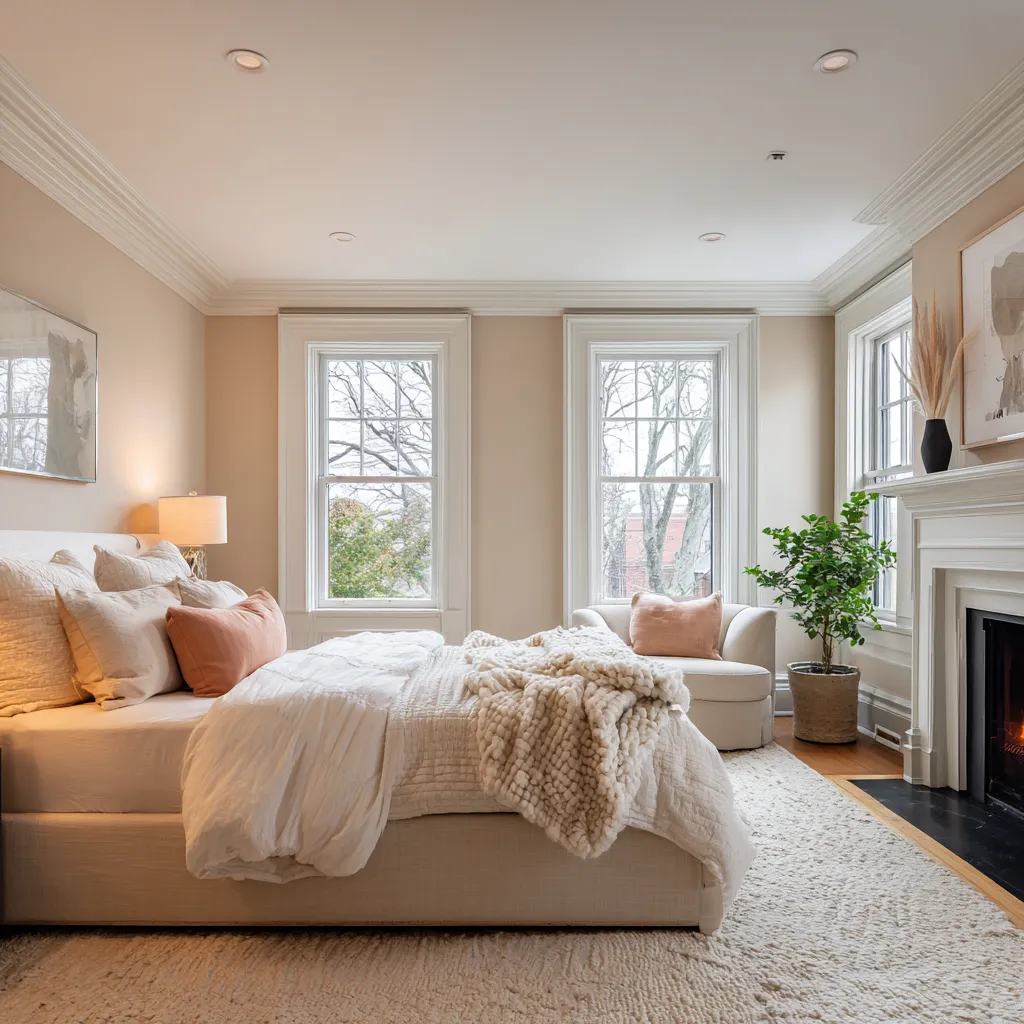
Let the Georgian shell stay in charge
The first mistake in many updated period bedrooms is making the furniture too dominant. A tall dramatic bed, heavy contrast, crowded art placement, or too many decorative gestures can push the architecture into the background.
Once that happens, the interior design starts to lose the thing that made it worth preserving in the first place.
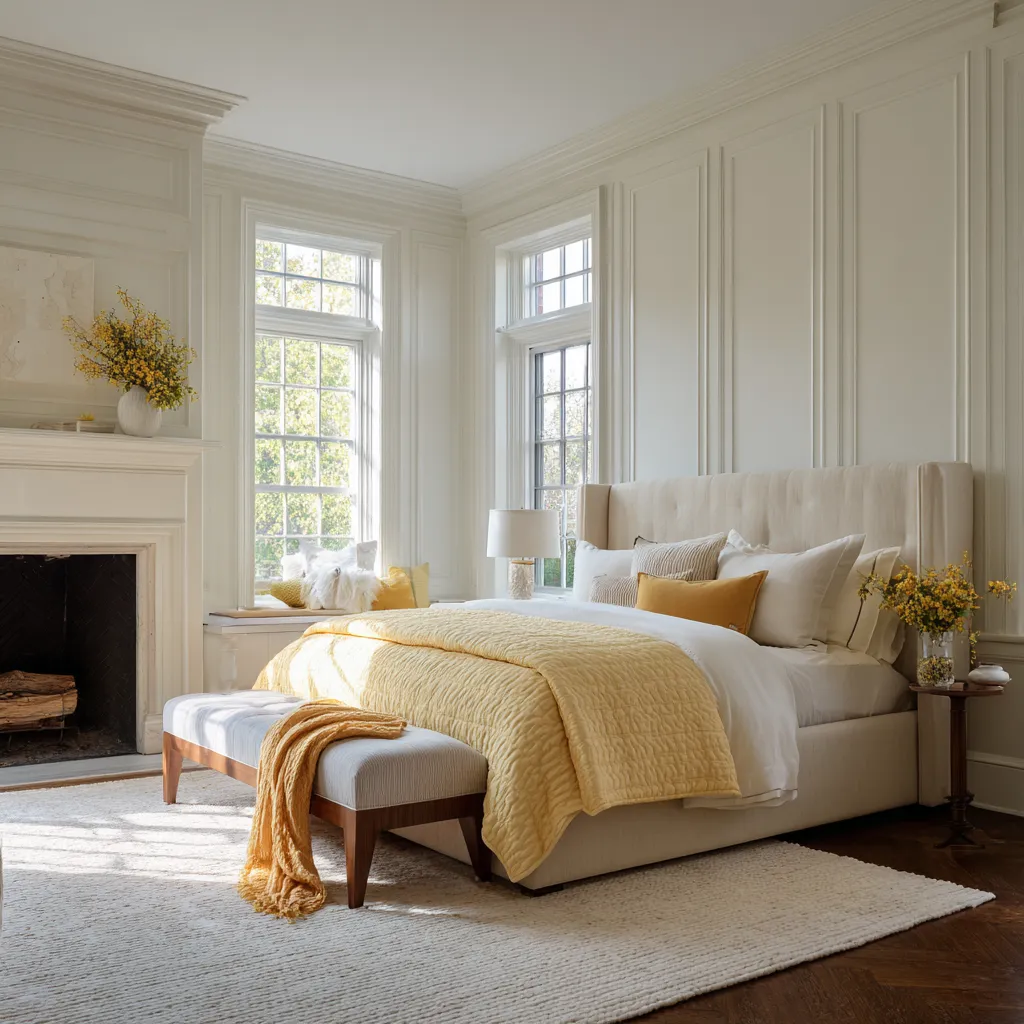
A better approach is to let the architecture stay legible. The panel spacing should still be visible.
The chimney breast should still feel like a major part of the composition. The windows should still look tall and generous.
The cornice should still mark the top of the room with confidence. In other words, the architecture should remain the main framework, while the furnishings supply softness, comfort, and present-day ease.
Georgian bedrooms can feel very settled even when they are visually simple. They are not depending on many decorative tricks.
They are depending on hierarchy. The shell comes first.
The furniture supports it. The styling stays measured.
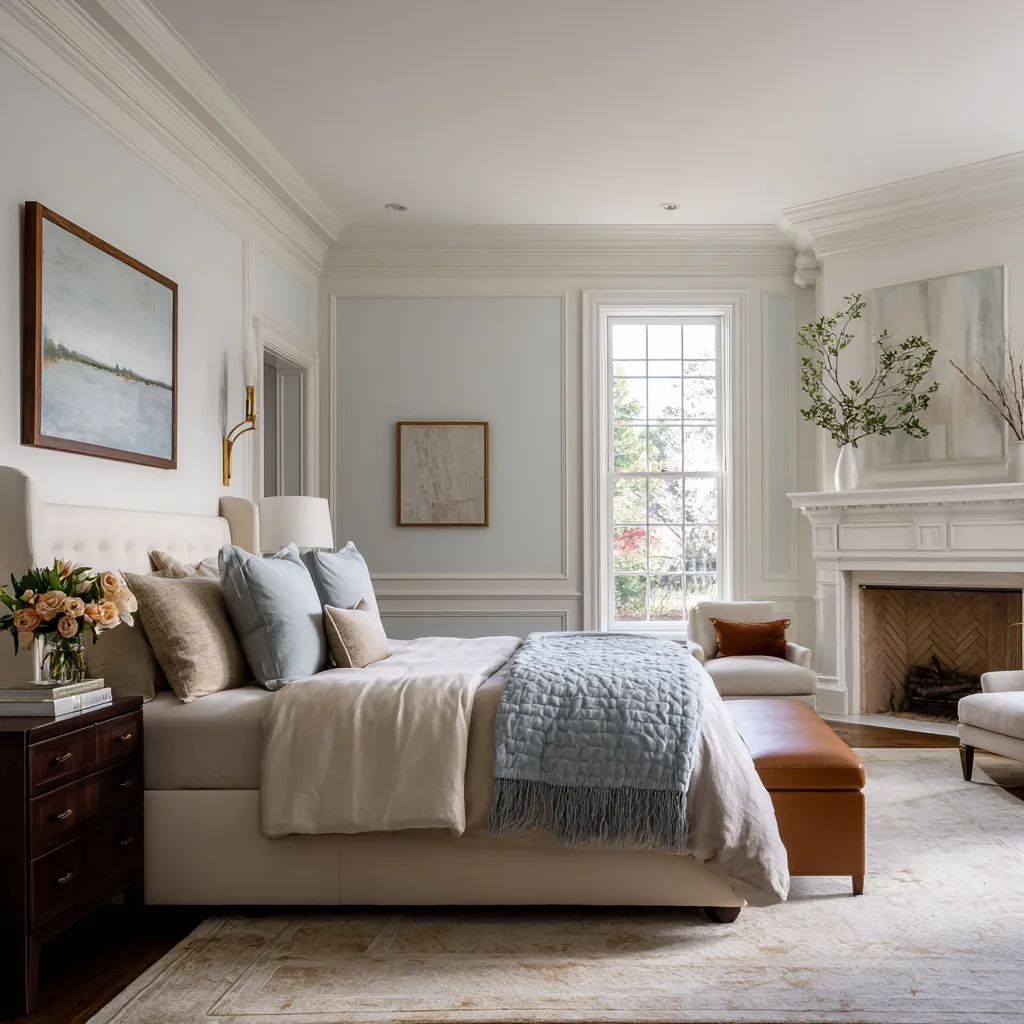
Why low beds work well in Georgian bedrooms
One of the modern moves in a refined Georgian bedroom is a low, broad bed. This is not only a style choice.
It is a proportion choice. Georgian designs often have wall height, and that height needs to remain visible.
A low bed protects the vertical dignity of the shell. It lets the paneling continue to breathe above the headboard, lets the windows keep their height, and helps the room feel taller rather than fuller.
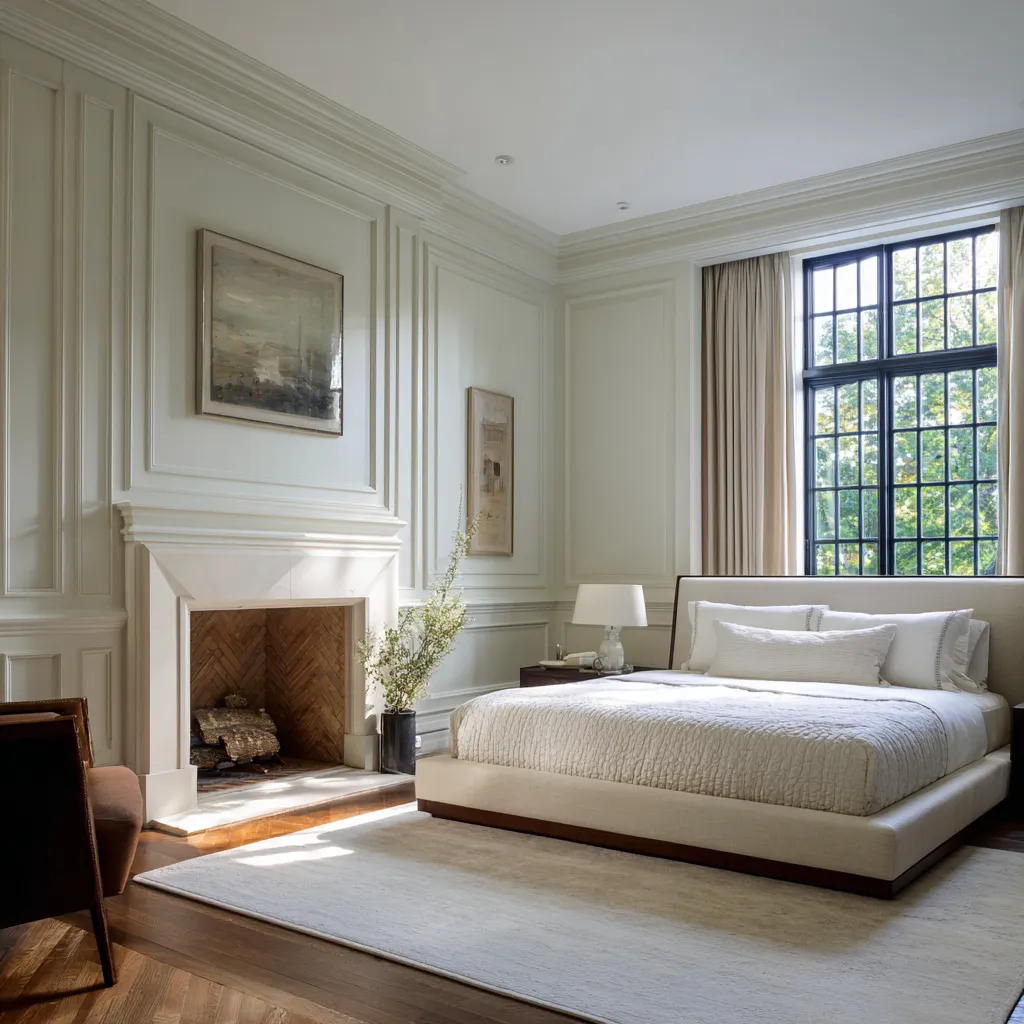
A very high bed can interrupt the architecture too harshly. A low upholstered bed, by contrast, keeps the horizon of the room lower.
That lower furnishing line allows the eye to keep traveling up the walls and toward the ceiling. It also makes the room feel calmer.
The architecture remains stately, but the sleeping zone becomes more relaxed. This is especially effective when the bed is broad and softly upholstered rather than visually busy.
A clean headboard, a wrapped base, and restrained bedding often do more for a Georgian bedroom than a heavily shaped or heavily ornamented bed ever could. The room already has line and relief in the wall treatment.
The bed does not need to repeat that in a louder way.
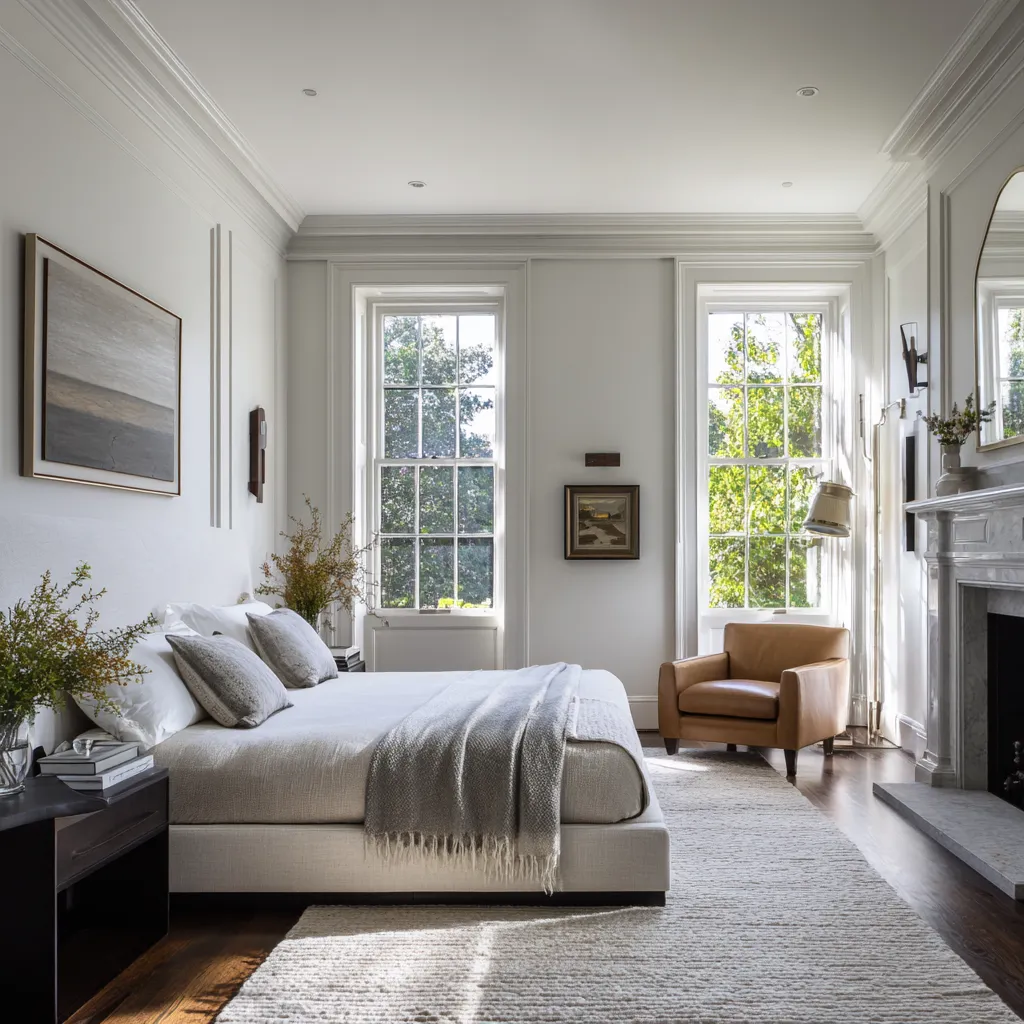
A close palette often works better than a colorful one
Georgian bedroom designs can stay within a narrow tonal family. Soft white, ivory, pale stone, oat, warm cream, mushroom, pale taupe, and gentle gray-blue often create a much stronger result than a room built around obvious color contrast.
That does not make the space dull. It simply shifts the source of richness away from bright color and into other things: shadow, molding depth, textile thickness, daylight, and proportion.
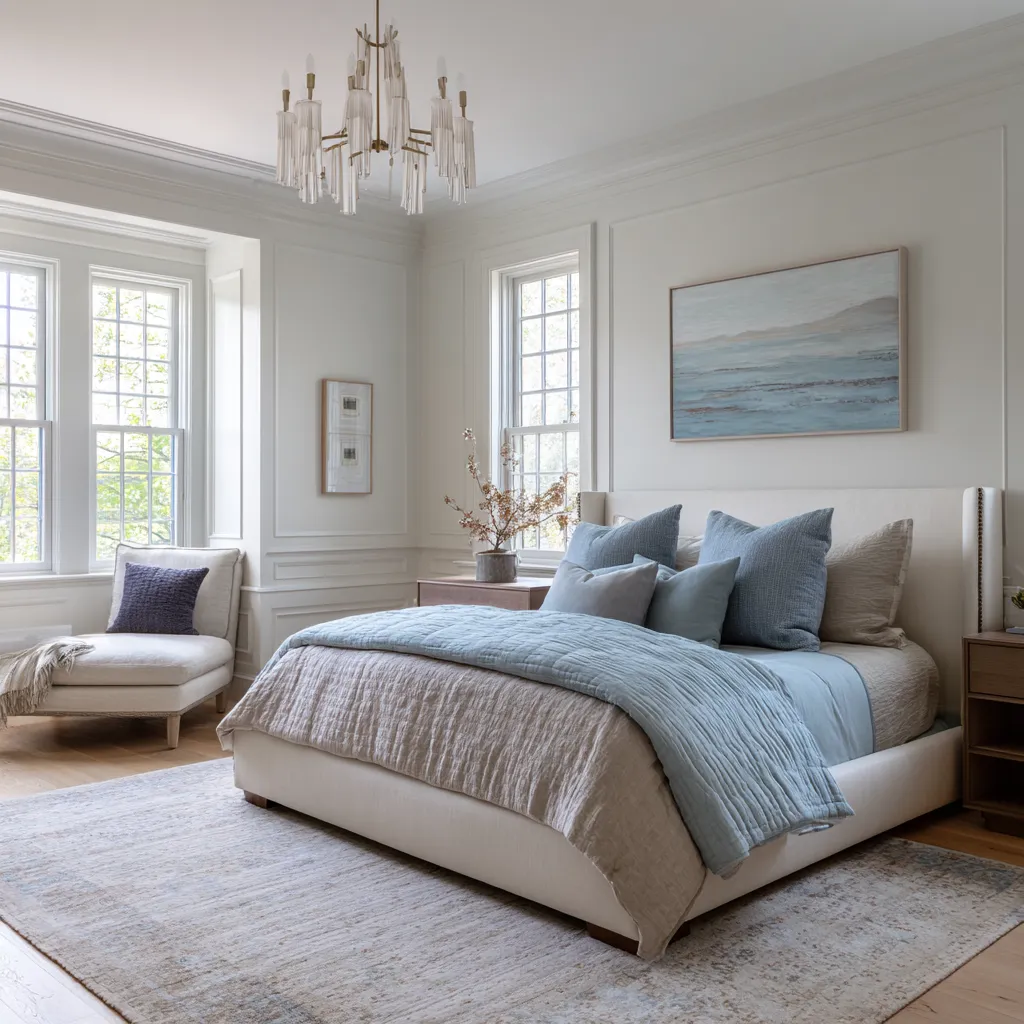
In a Georgian interior design, close tones allow the architecture to do the decorative work. The panel moldings remain visible through relief rather than through sharp paint contrast.
The drapery can sit close to the wall color, which keeps the windows feeling architectural rather than overly dressed. The bed can merge softly with the room instead of becoming a separate object with too much visual force.
This kind of palette also gives the bedroom a slower, more settled atmosphere. The room feels composed rather than styled for effect.
That is particularly useful in a bedroom, where comfort should come from the total mood of the space, not from one loud feature.
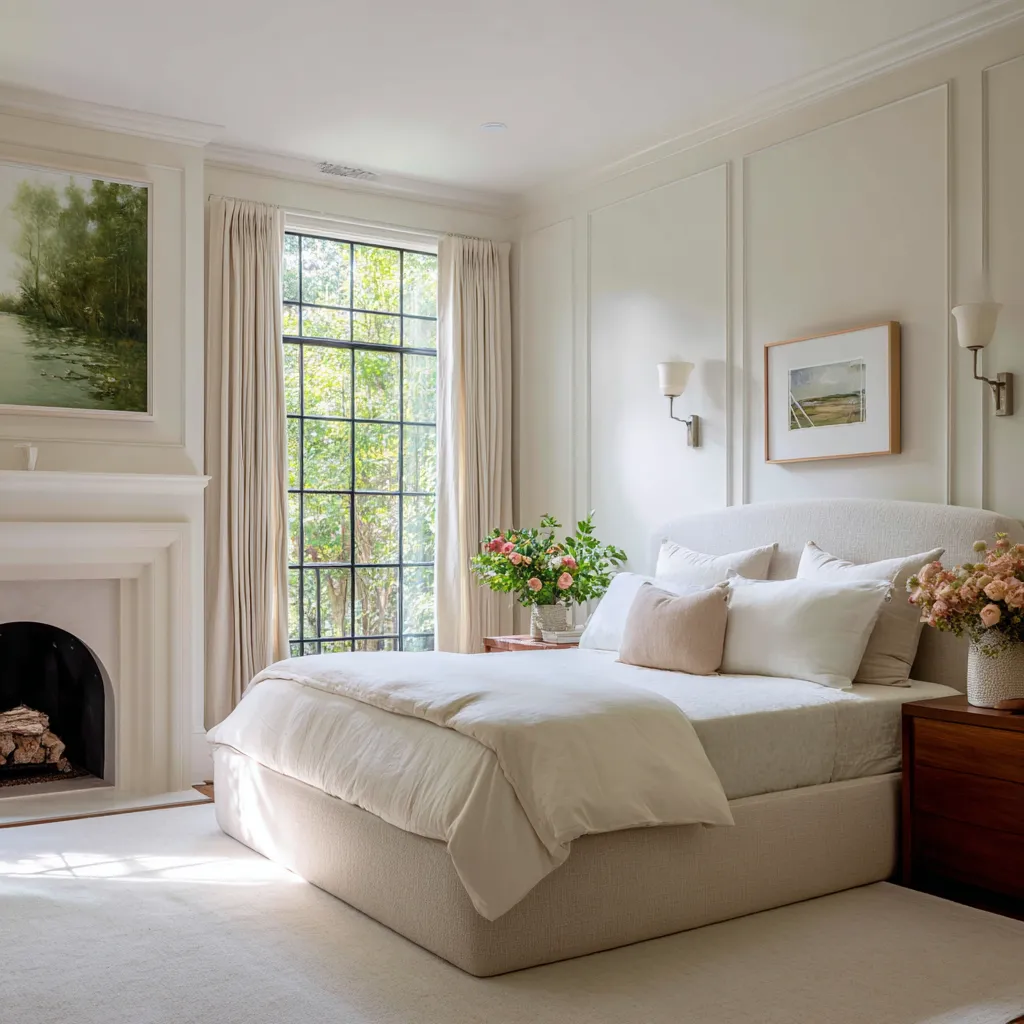
Texture should do the work that strong color is not doing
If the palette stays restrained, then texture becomes very important. This is one of the great strengths of a modern Georgian bedroom.
Instead of relying on saturated color, the room can build interest through tactile layering. A nubby throw at the foot of the bed, a quilted coverlet, a boucle chair, full drapery with deep folds, a rug with a chunky hand, or a softly woven bench can all create depth without disturbing the room’s restraint.
These pieces make the bedroom feel warmer and more human. They soften the formal shell without weakening it.
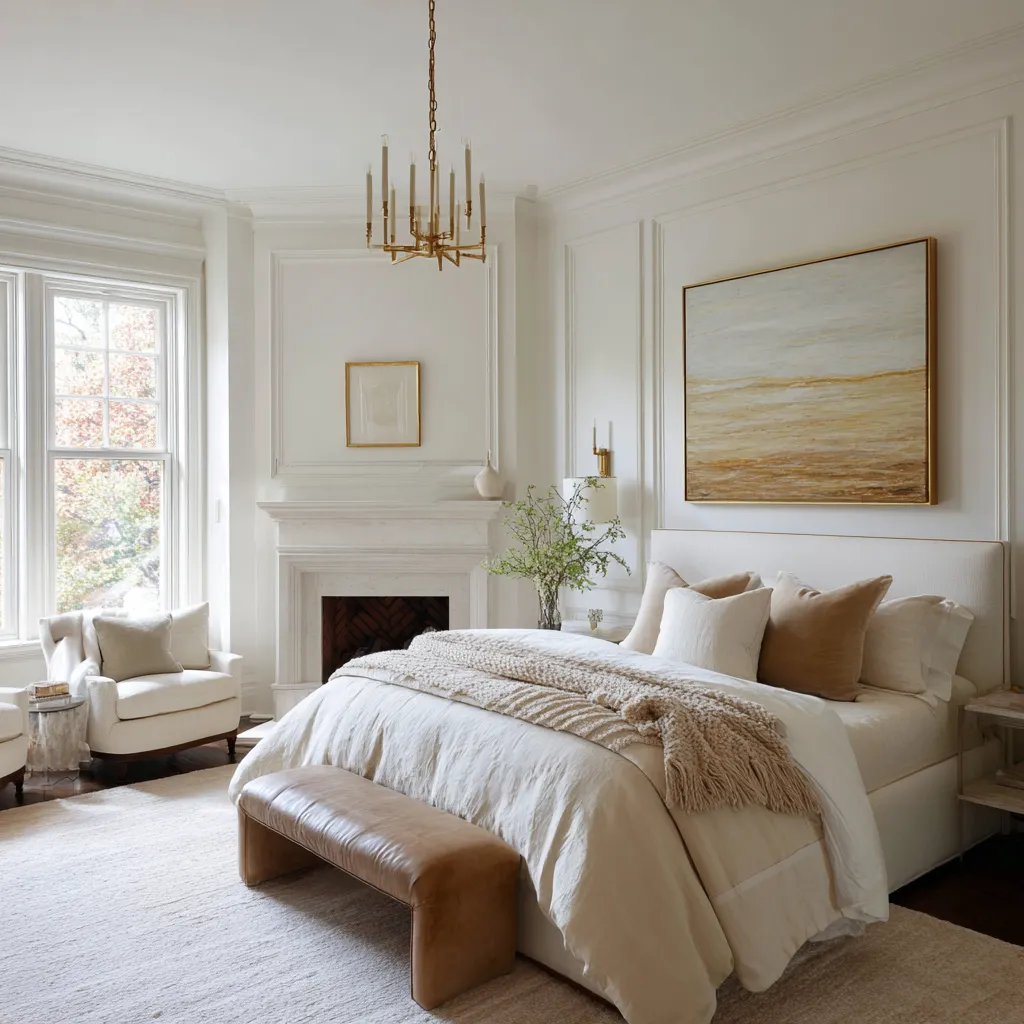
This is especially helpful in Georgian interiors because the architecture often has a crisp, upright discipline. Moldings, windows, and chimney lines bring order.
Textiles then bring body. The result feels balanced.
The room stays stately, but it does not become stiff. The key is to layer texture with care.
A few strong tactile notes usually work better than many competing ones. The aim is not abundance.
The aim is contrast between smooth painted surfaces and touchable materials close to the body.
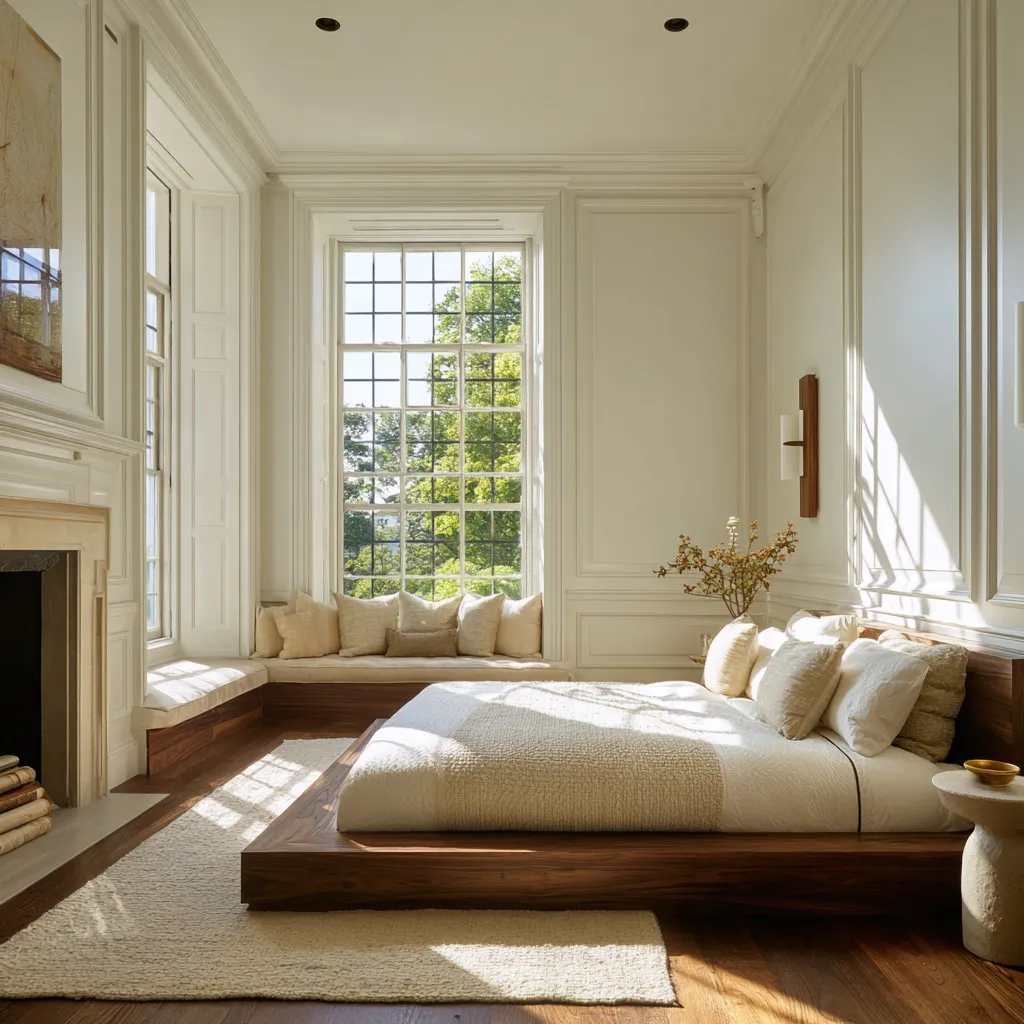
The fireplace is not only a historical feature
In a Georgian bedroom, the fireplace often does much more than carry period character. It gives the room structure.
It adds density to a pale interior. It helps organize the wall.
It creates a visual center. It also keeps the room from becoming too airy or too soft.
This is why even a pared-back fireplace can matter so much. A pale surround, a dark fire opening, and a chimney breast with enough mass can stabilize the whole composition.
The hearth gives the lower half of the room weight. That weight is especially important in bedrooms with pale rugs, pale upholstery, and a very edited palette.
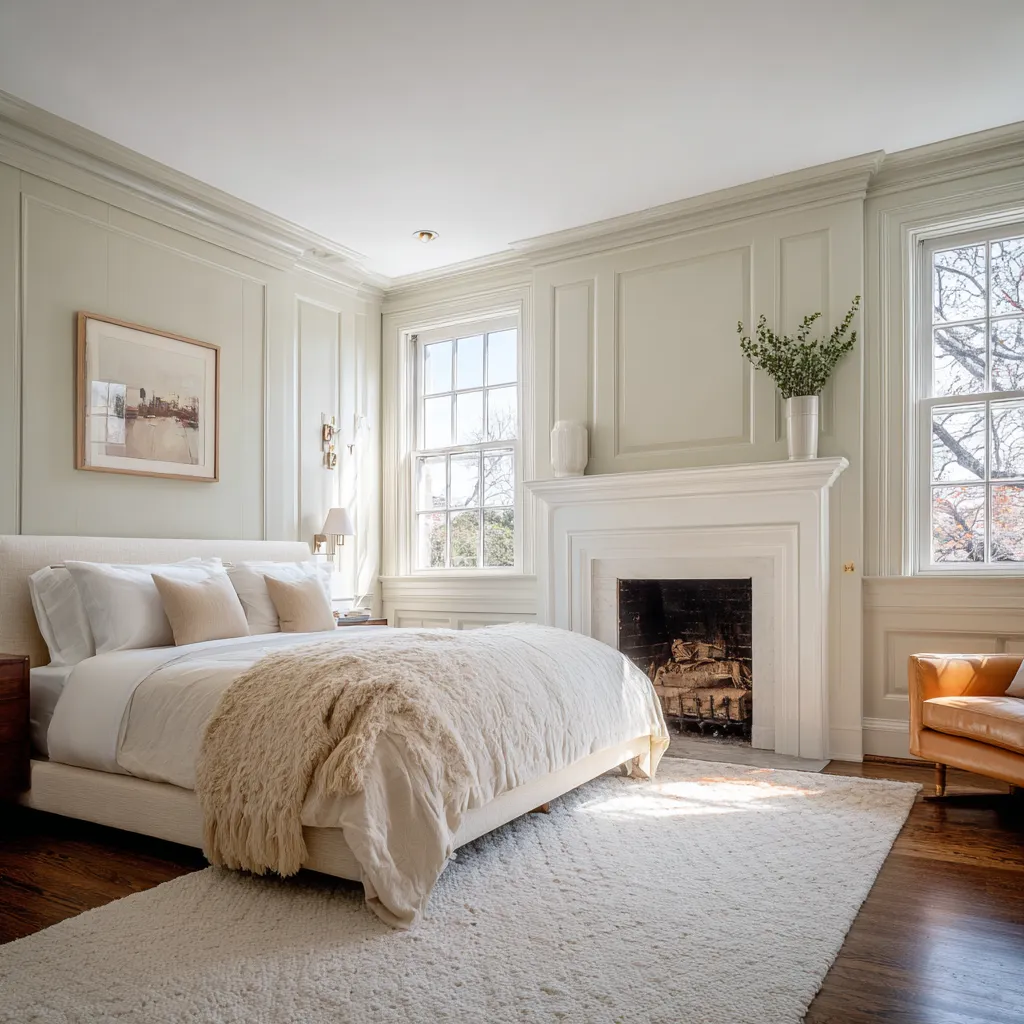
A dark firebox, herringbone lining, or deeper interior shadow can be surprisingly useful. In a room that stays close in tone, the fireplace opening becomes a needed pocket of contrast.
It gives the eye somewhere to settle. It prevents the room from floating.
The fireplace styling in this kind of room is often light and measured. A few books, one framed piece, a single vase, or a loose branch arrangement are often enough.
The surround should stay visible as architecture. It should not turn into a crowded display surface.
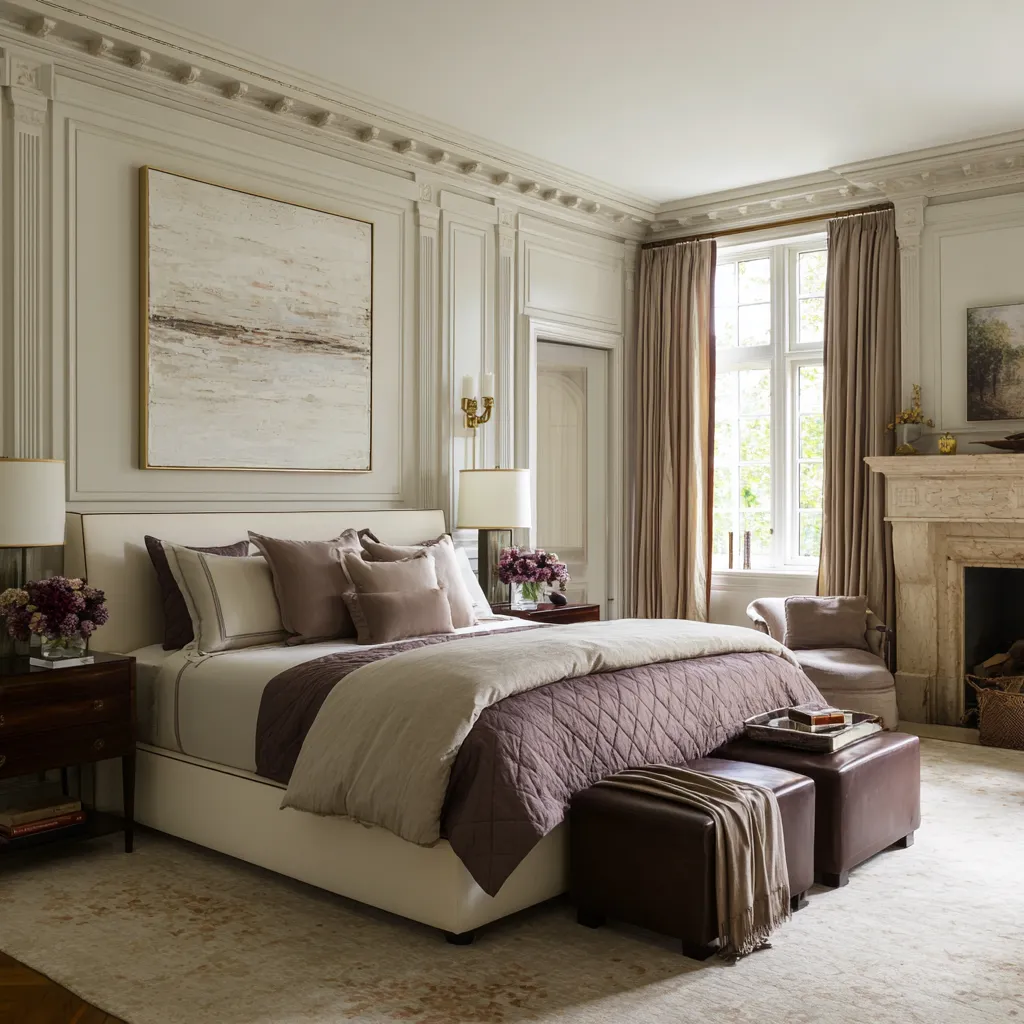
Dark anchors keep pale rooms from feeling thin
A tone-on-tone Georgian bedroom can be beautiful, but it still needs grounding. Without a few deeper notes, the room can begin to lose depth.
That is why small dark elements often matter so much in these spaces. A dark bedside table, a visible floor border around a pale rug, black window muntins, a leather bench, a warm wood base under the bed, a deeper chair near the hearth, or the darkness inside the fire opening can all play this role.
None of these pieces need to dominate. Their value comes from placement.
They add firmness where the room needs it most.
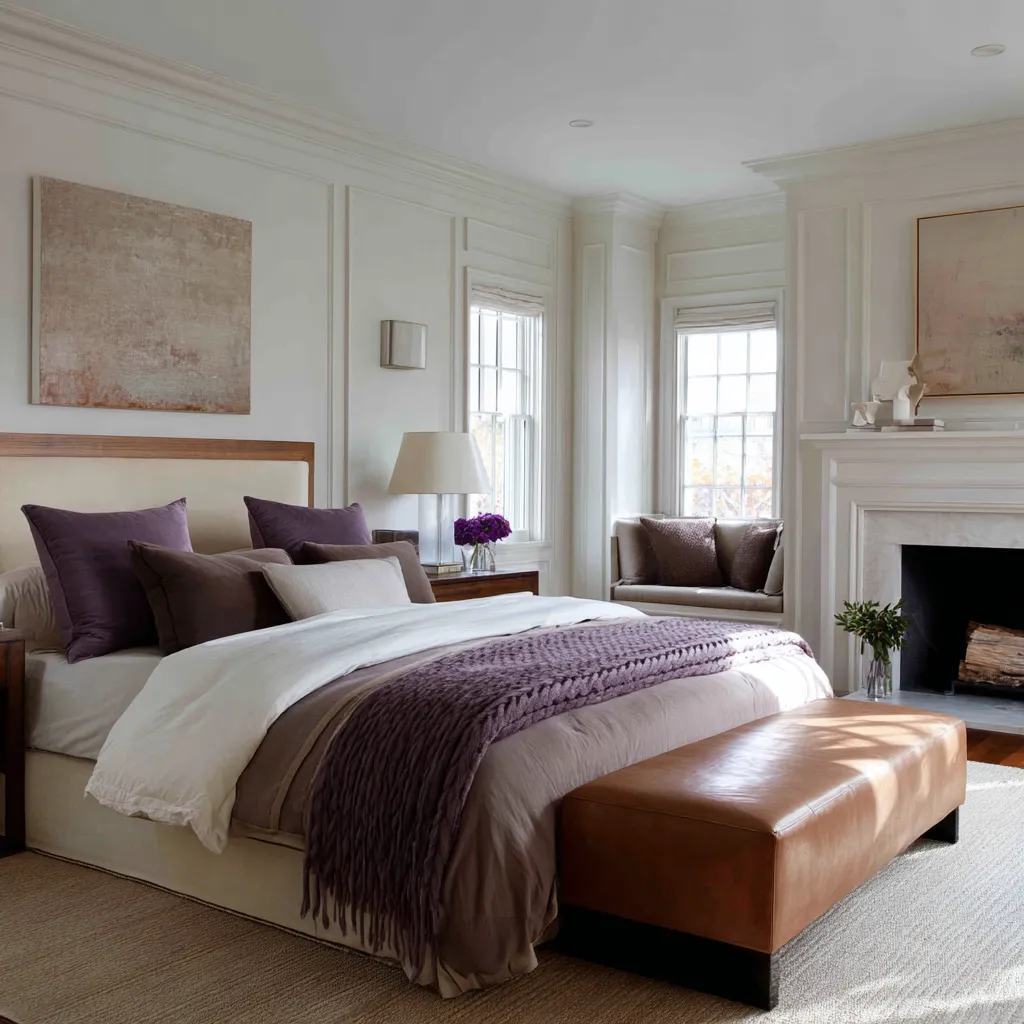
This kind of contrast works particularly well when it stays low in the room. It should support the composition rather than break it.
A dark line under a pale bed, a warm leather bench at the foot, or a narrow border of timber floor around a large rug can do more for balance than a large dark accent spread at random. In other words, pale Georgian rooms usually improve when they have a few grounded notes.
The room remains light, but it does not become weightless.
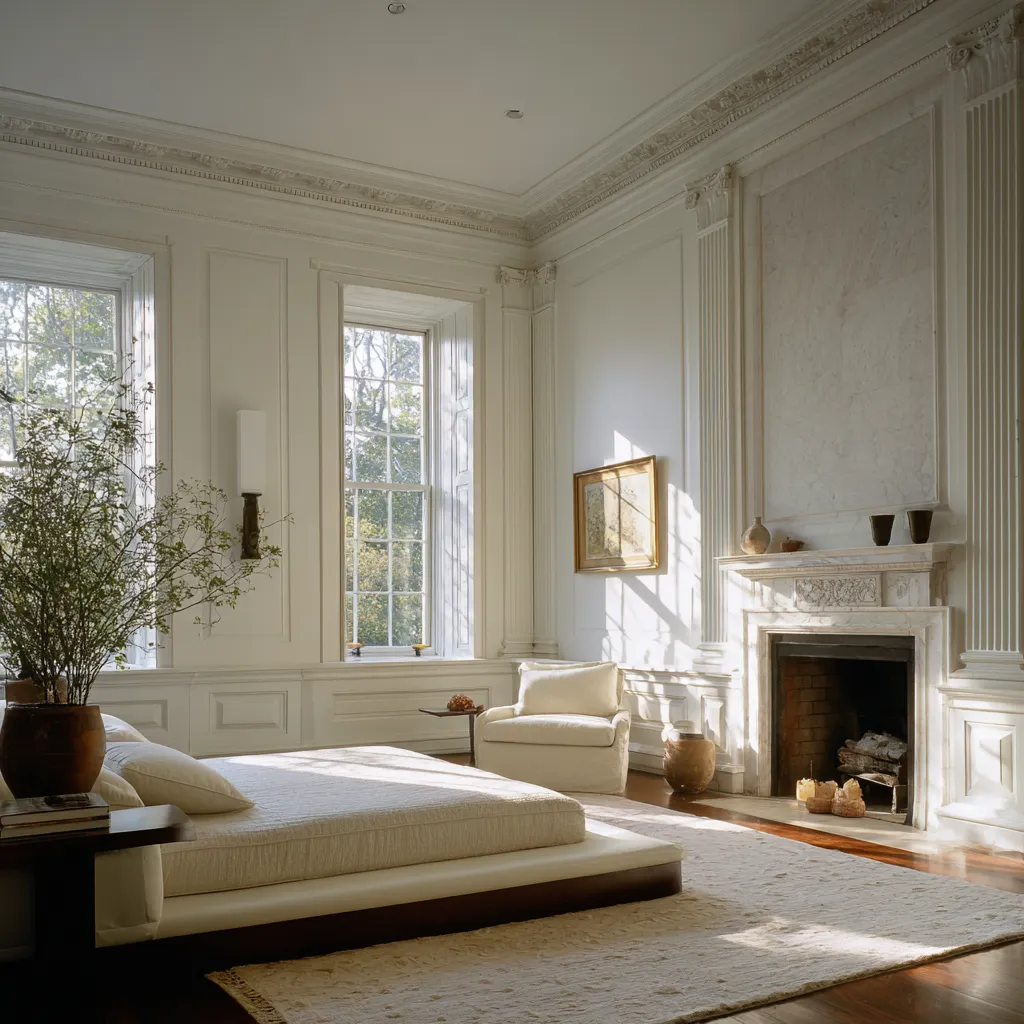
Modern Georgian bedrooms feel current through editing
What makes a Georgian bedroom feel present-day is often not a dramatic contemporary gesture. It is editing.
The room feels fresh when it is selective. That means fewer decorative objects, fewer competing materials, fewer unnecessary color shifts, and less furniture crowding.
The bed wall may carry one broad artwork instead of several smaller ones. The mantel may hold one airy arrangement instead of a dense composition.
The bedside lighting may be slim and understated rather than ornate. The drapery may sit close to the wall tone rather than trying to perform as a major design statement.
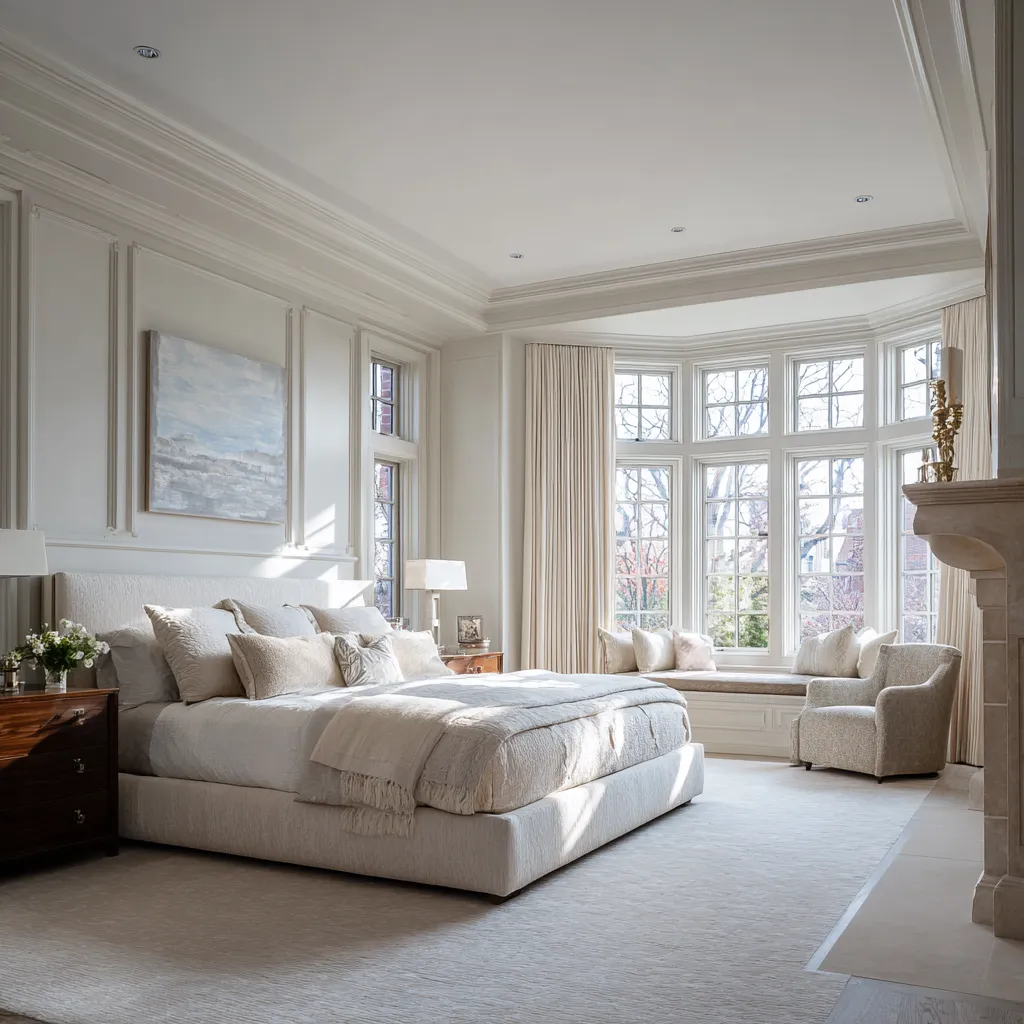
This does not mean the room should feel empty. It means the room should feel decided.
Every added piece should earn its place. That kind of reduction allows the Georgian shell to remain visible while still letting the bedroom feel current.
Modern Georgian interior design is often less about adding fashionable items and more about removing visual noise. Once the architecture is given enough space, the room starts to feel fresher on its own.
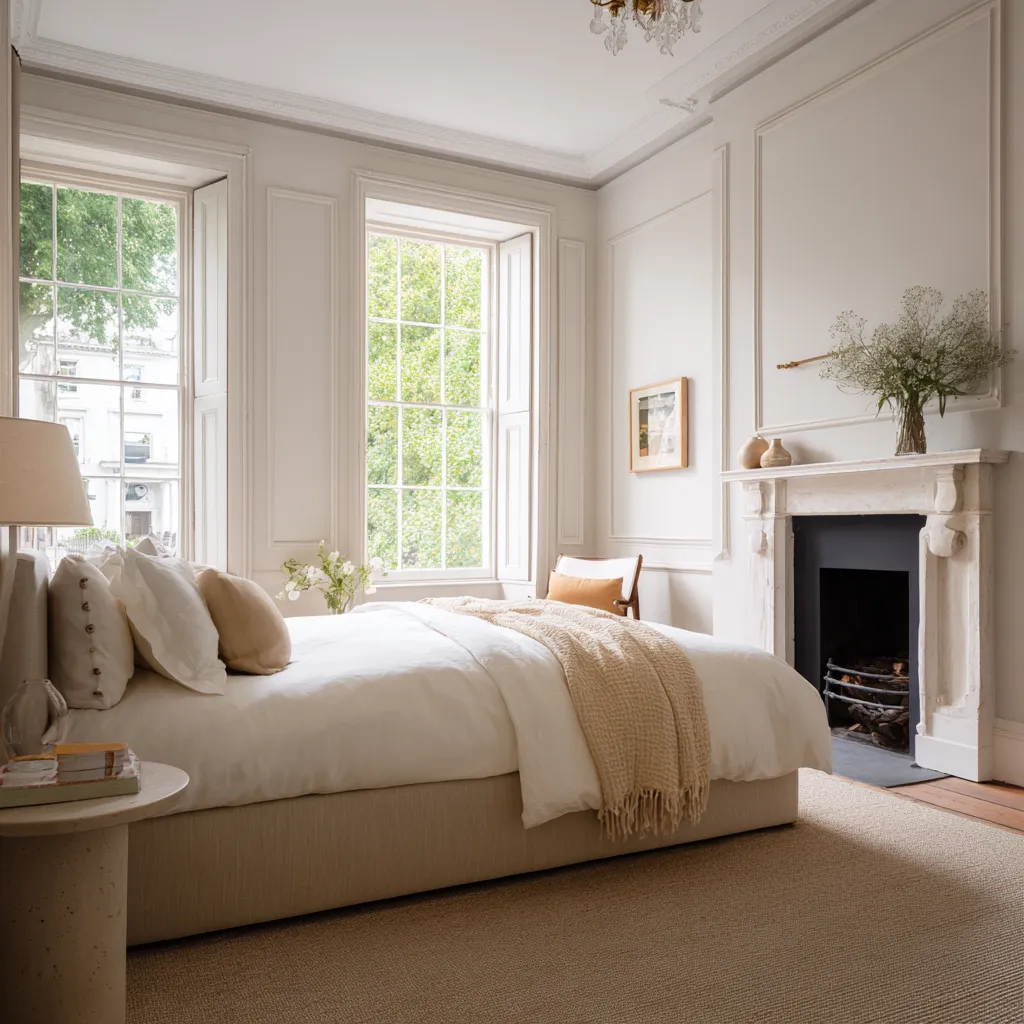
Large horizontal elements help calm tall walls
Georgian bedroom designs are often full of strong vertical lines. The windows are tall.
The panels run upward. The chimney breast rises with authority.
The drapery falls in long folds. All of this gives the room dignity, but it can also make the space feel too upright if there is no counterbalance.
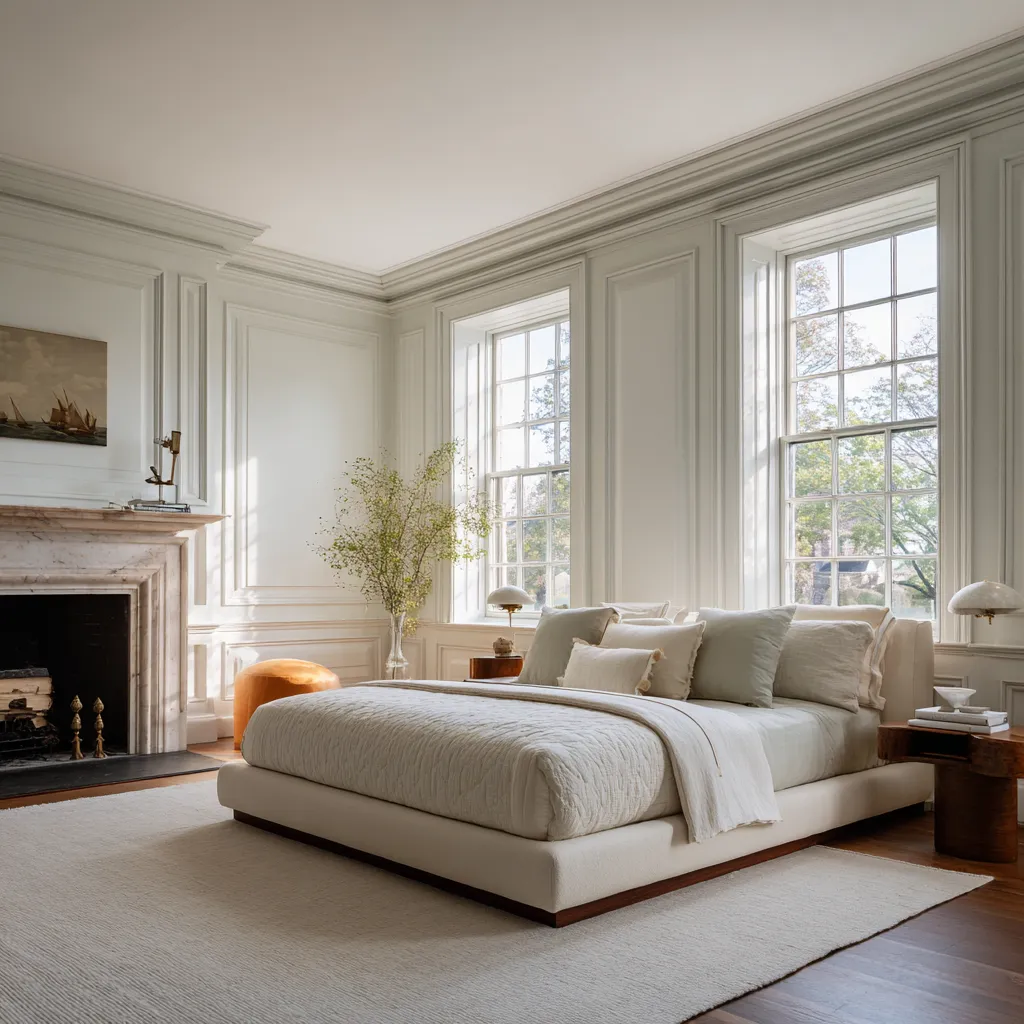
This is where horizontal elements become useful. A wide artwork above the bed can broaden the wall and soften the vertical pull.
A long bench at the foot of the bed can stretch the lower zone and make the room feel more grounded. A broad rug can gather the furniture into one field rather than letting each piece float separately.
A built-in window seat can pull the eye sideways and make a tall end wall feel more inhabitable. These horizontal gestures are not random decoration.
They are proportion tools. They help the bedroom feel more complete.
They make the room feel fit for living rather than only fit for display.
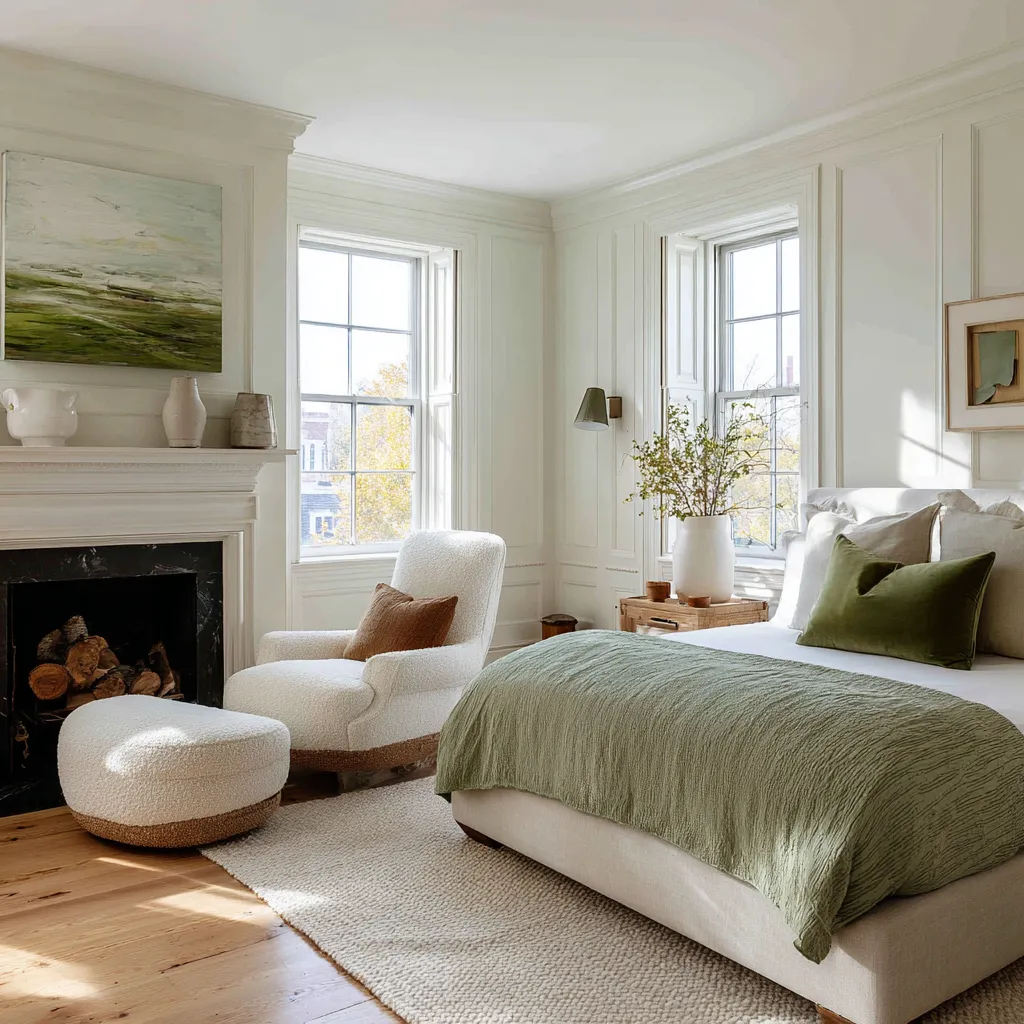
A window should become part of the life of the room
One of the most powerful moves in a Georgian bedroom is turning the window end into an active part of the room. A window seat, a bay bench, a pair of modest chairs in an alcove, or even a quiet perch beside a tall sash window can change the entire feeling of the space.
This is what turns a bedroom into something closer to a suite. The room gains a second zone.
It is no longer only a bed placed inside a formal shell. It becomes a place where you can sit with morning light, pause near the view, read, rest, or simply occupy the architecture in a more complete way.
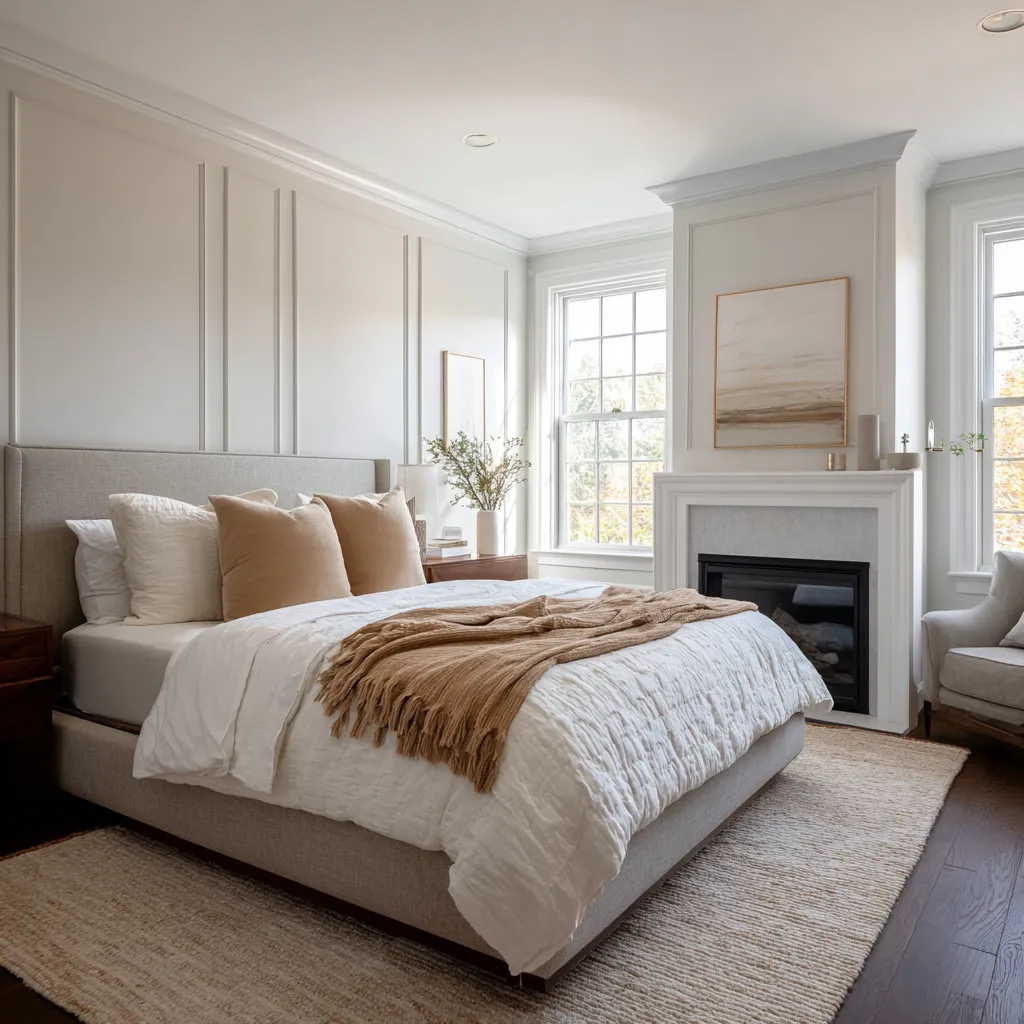
This kind of move is especially effective in Georgian rooms because the windows often already have great proportion. They deserve to be treated as destinations, not only as sources of light.
A built-in bench under a bay, a padded seat within a deep reveal, or a small armchair placed with care near the glazing can make the room feel far richer without adding clutter. And importantly, this kind of spatial move often does more for the bedroom than extra styling ever could.
It improves how the room lives.
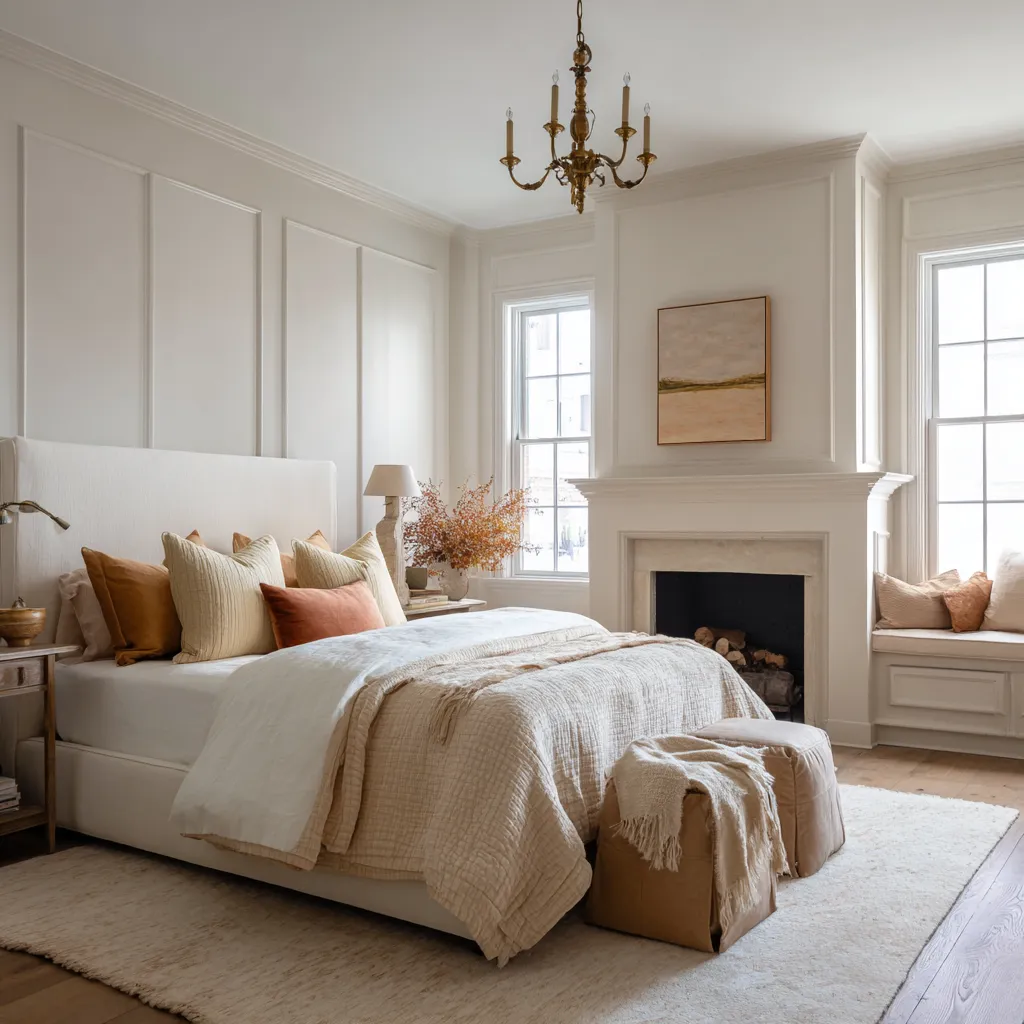
Warmth works when it stays local
Warm tones can work beautifully in Georgian designs, but they tend to look strongest when they appear in concentrated areas rather than washing over the whole room. Rust, camel, plum, terracotta, ochre, muted green, or dusty rose often feel best when they stay close to the bed, the bench, the chair, or the hearth side.
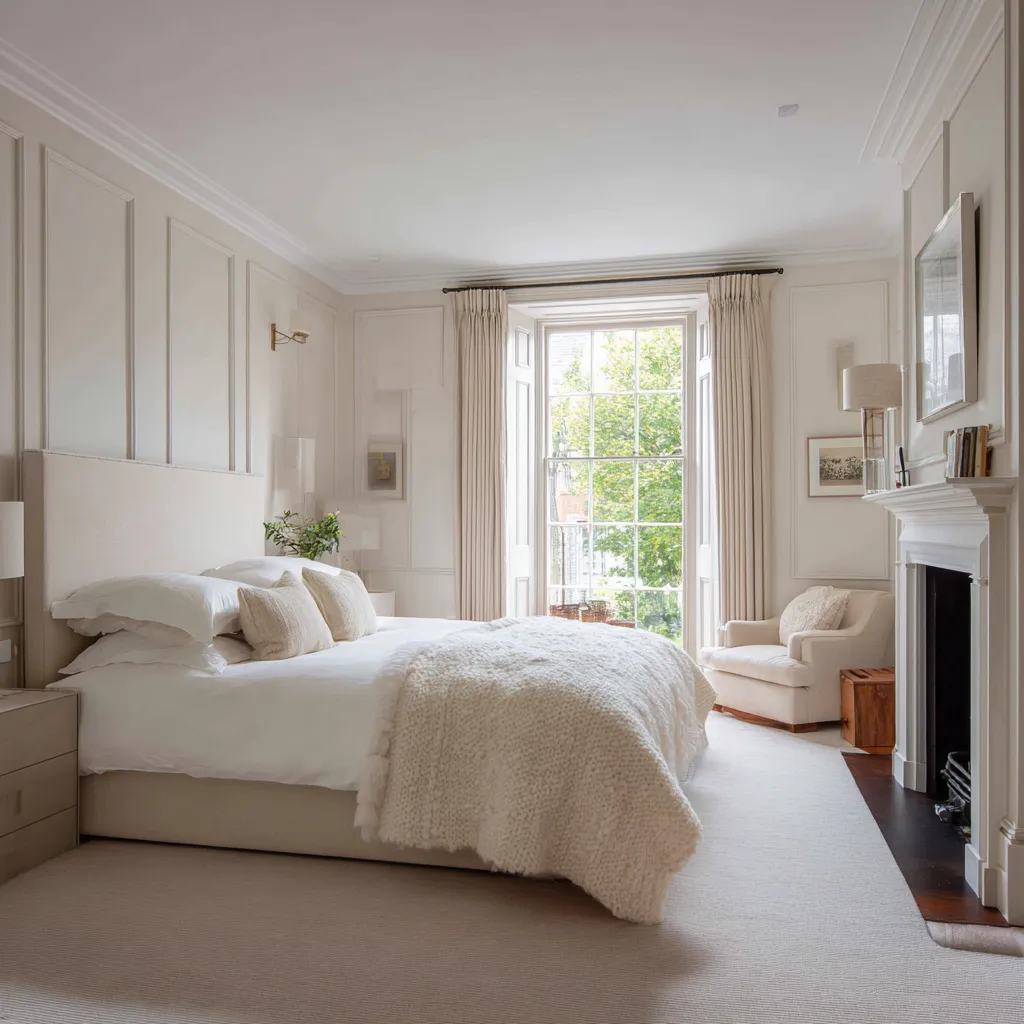
A rust lumbar pillow, a plum throw, a caramel bench, a mossy coverlet, a warm leather chair, or a cluster of soft clay-toned florals can all enrich the room while keeping the shell calm. These tones often do their best work below eye level.
They warm the room where the body meets it. Used this way, color feels purposeful.
It supports comfort and depth without disturbing the architecture. Used too broadly, it can start to blur the clean balance that makes these rooms feel current.
Georgian bedrooms can carry warmth in textiles, lower furniture pieces, and small repeated notes rather than in dominant upper-wall saturation.
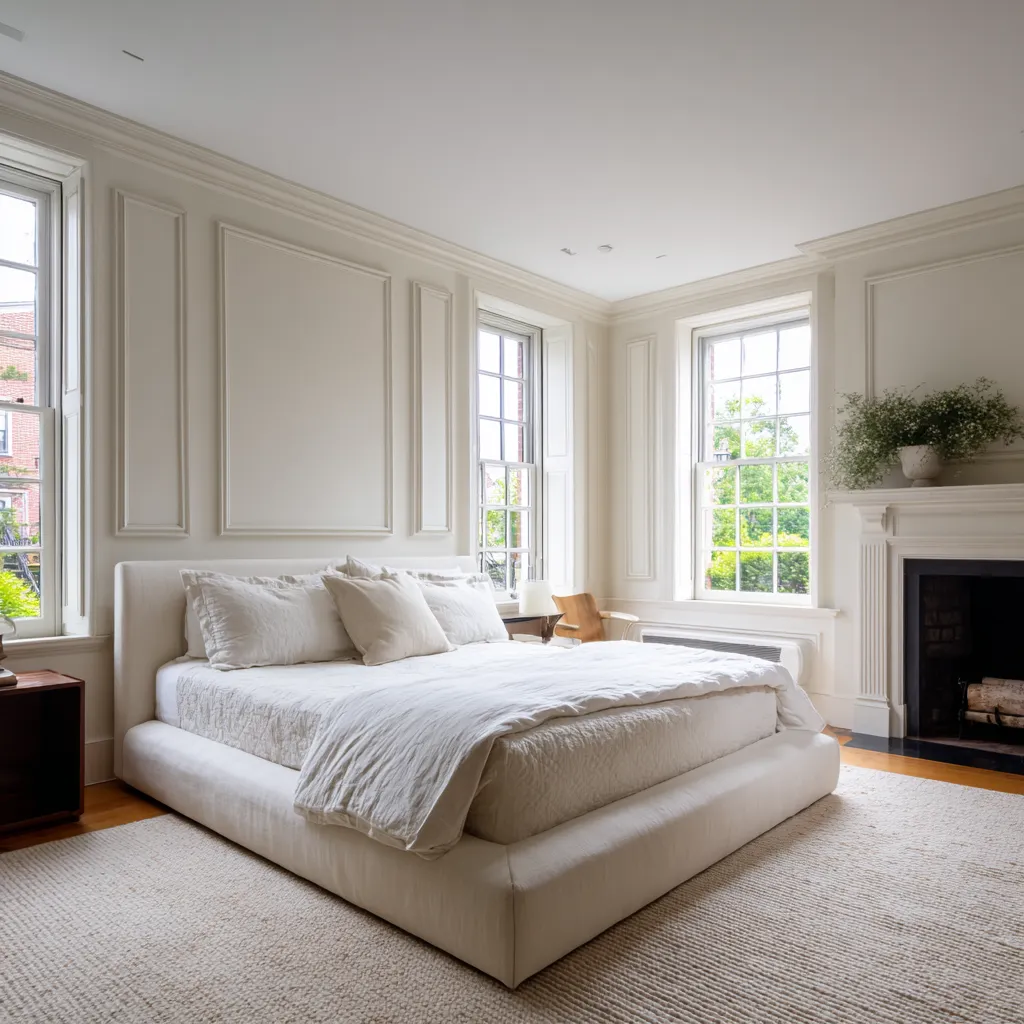
Curves help, but they need a firmer partner
Soft contour has a place in a Georgian bedroom design. A gently winged headboard, a rounded chaise, a boucle armchair, an arched inner fire opening, or a cylindrical side table can soften the room’s straight lines and make it feel more welcoming.
But softness alone is rarely enough. If too many pieces become rounded and pale without any firmer counterweight, the room can begin to lose structure.
This is why curves work best when they are paired with something more grounded: a dark hearth opening, a black muntin, a wood plinth, a leather bench, a darker side table, or a visible floor border. That tension is often what gives a Georgian bedroom its refined comfort.
The shell stays upright. The furnishings soften it.
A few dense notes keep the whole composition from becoming too airy.
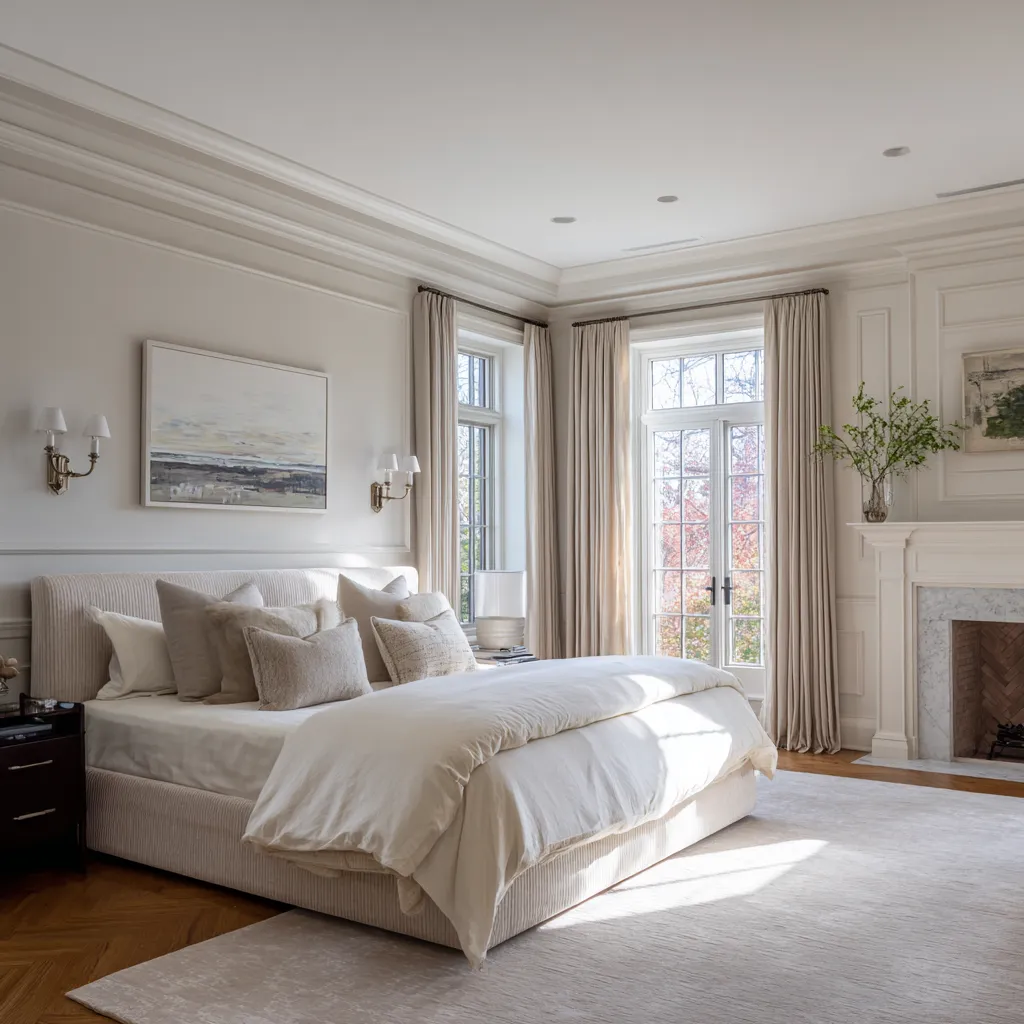
Slight asymmetry often improves the room
A Georgian shell may be highly ordered, but the furnishing plan does not always need to be rigidly symmetrical. In fact, a slight looseness often helps the room feel more lived in.
A bed may sit with a little more openness on one side. A chair may occupy the fireplace corner rather than mirroring another piece.
A window seat may hold one side of the room while the opposite side remains more open. A built-in shelf or cabinet may interrupt perfect mirroring but still feel right because the main architectural hierarchy survives.
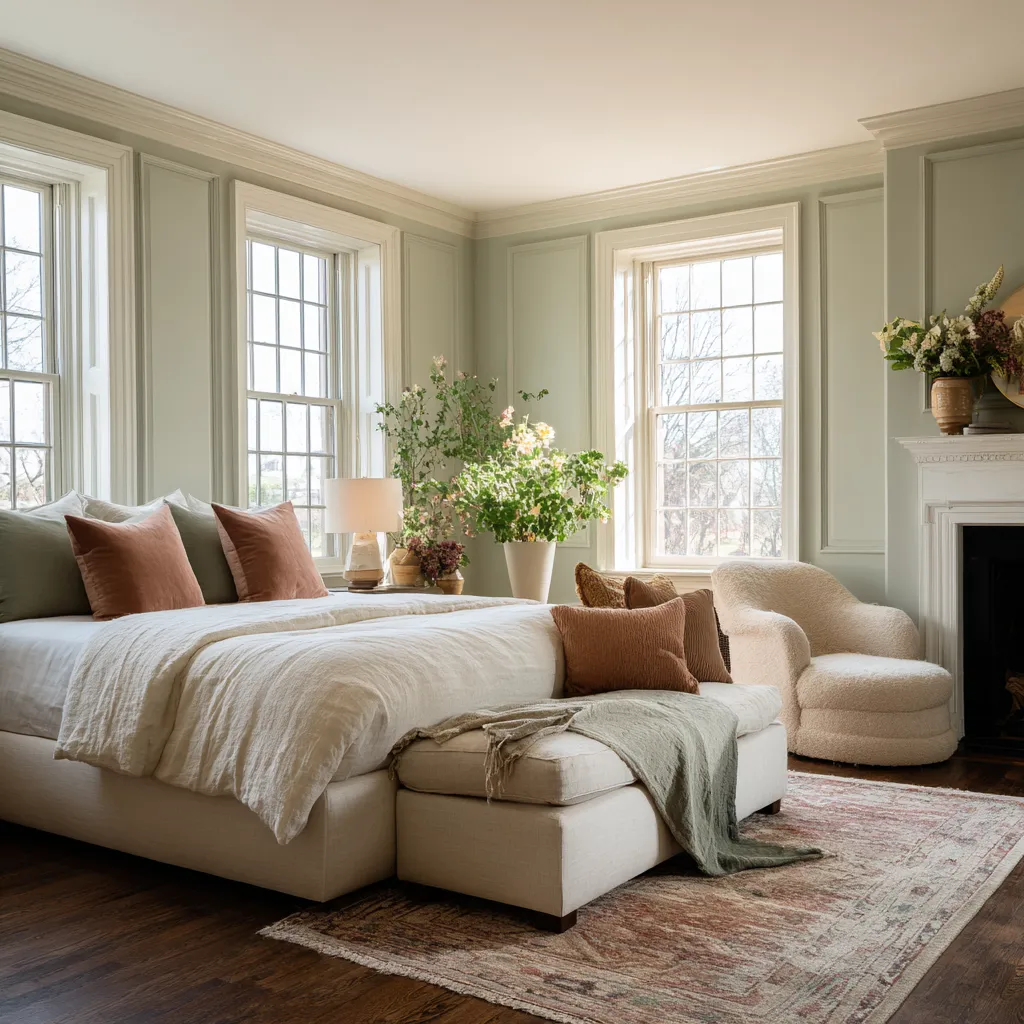
This is often where the modern update happens. The shell remains disciplined, but the occupation becomes more natural.
The room keeps its Georgian backbone, yet it feels suited to daily life rather than locked into a formal arrangement. The key is that asymmetry should happen inside a strong frame.
If the wall hierarchy, chimney mass, and window proportions remain clear, the furniture can loosen slightly without weakening the space.
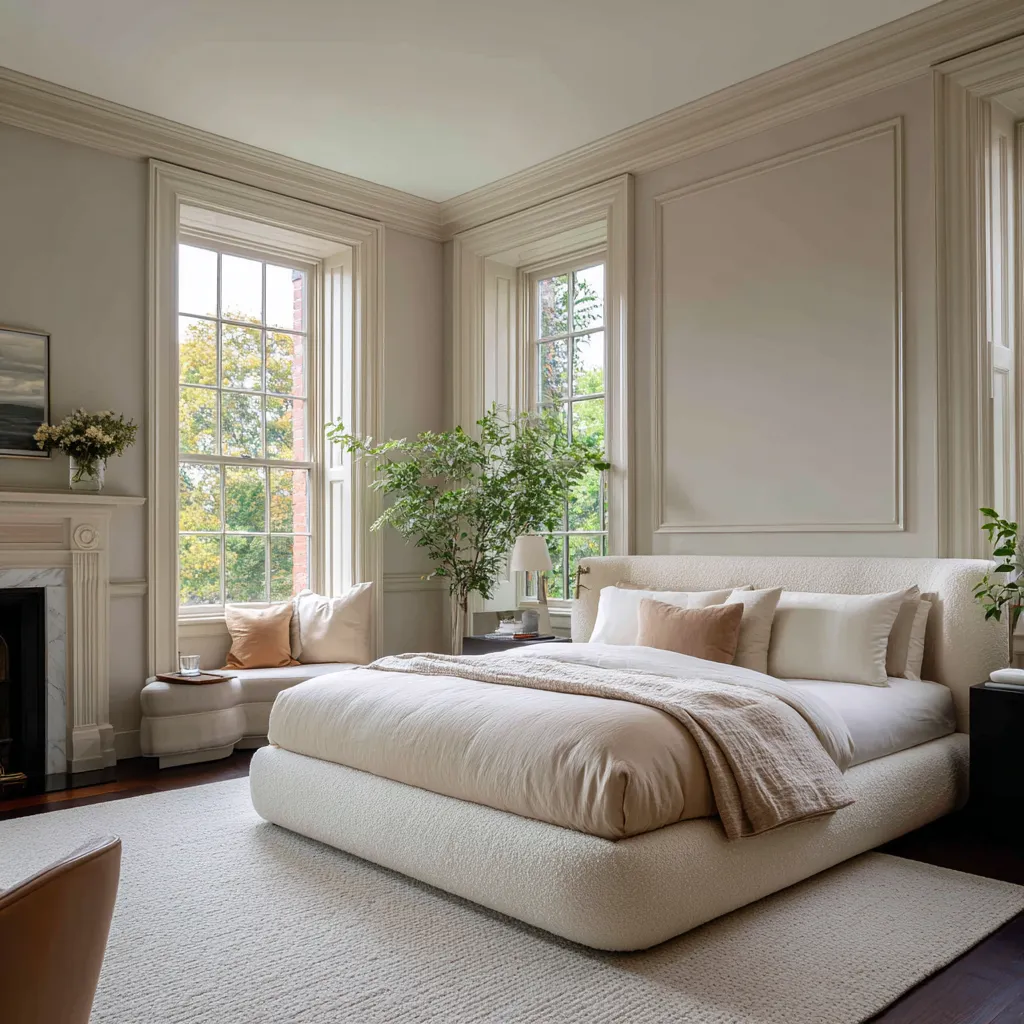
Built-ins can feel fully at home in a Georgian bedroom
A Georgian bedroom design does not have to reject present-day needs. Integrated shelving, a ribbed cabinet, a discreet wardrobe wall, or built-in storage around a chimney breast can all work beautifully when handled with discipline.
What matters is proportion. The trim hierarchy should still make sense.
The chimney breast should still feel like a main mass. The color palette should remain measured.
The built-ins should sit within the architecture rather than shouting over it. Handled this way, storage can actually improve the room.
It can make the space feel more complete and more usable while still keeping the Georgian character intact. The room stays rooted in its original order, but the furnishing layer becomes better suited to life.
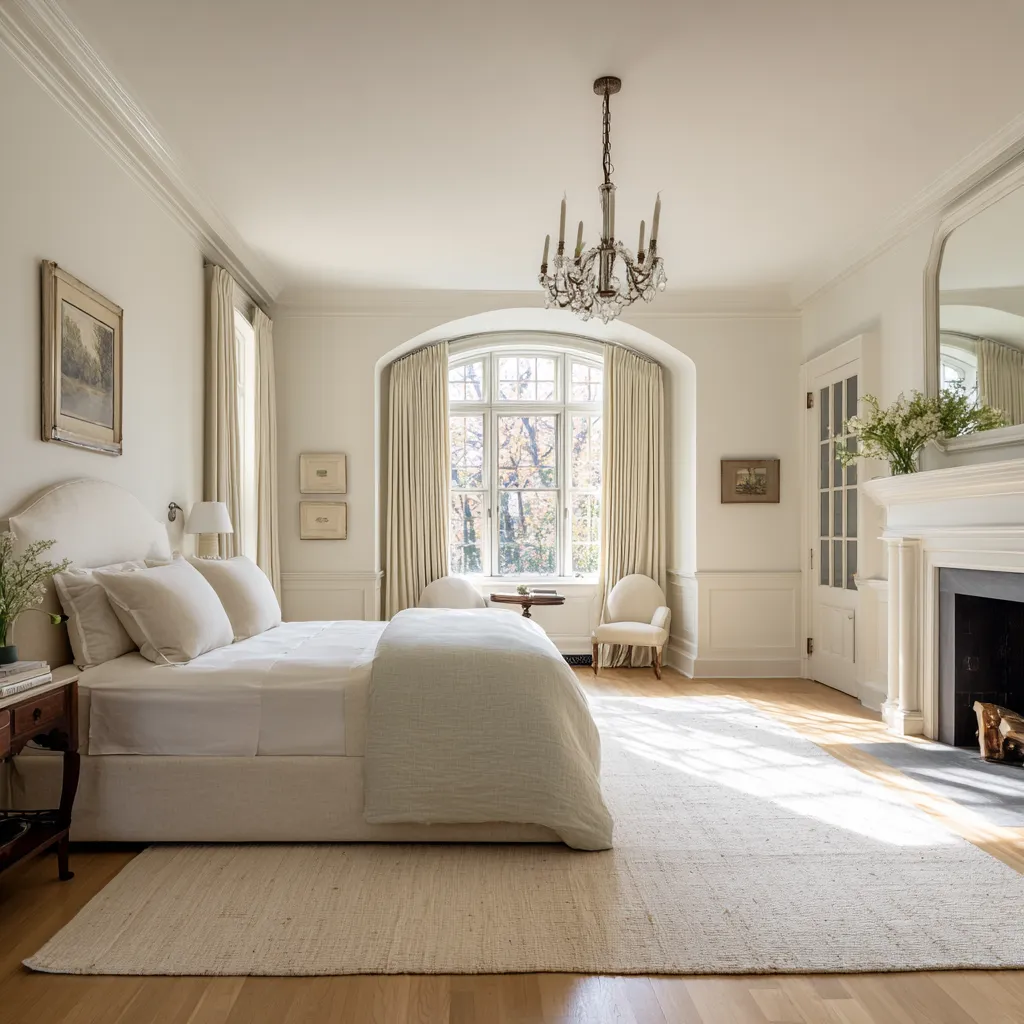
What to avoid
A Georgian interior design usually becomes weaker when too many things try to lead at once. The room rarely needs a dramatic bed, bold wall color, heavy drapery, dense art, statement lighting, and strong contrast all at the same time.
That kind of layering can crowd out the architecture.
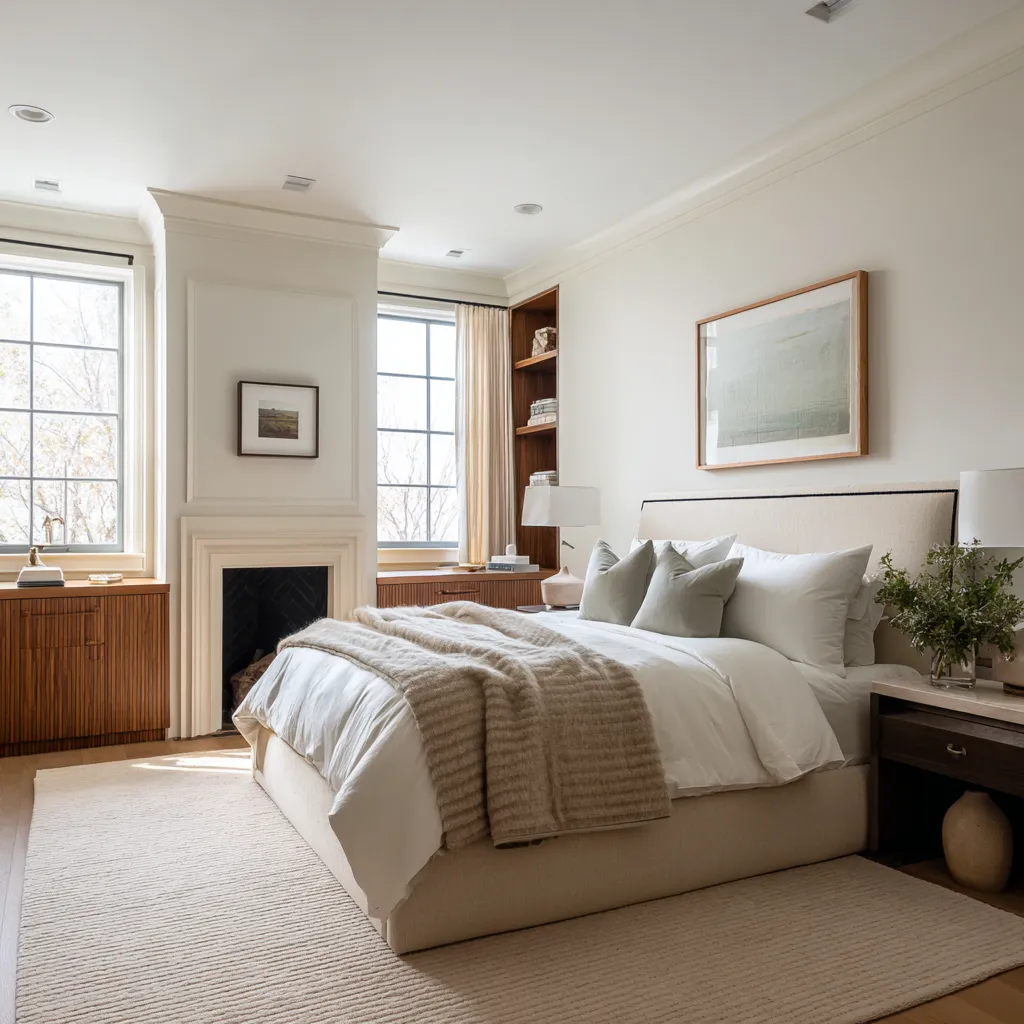
It also tends to suffer when warmth spreads too evenly. A room often feels fresher when warmth is gathered in a bench, chair, throw, pillow group, or hearth-side accent rather than coating every surface.
The same is true of ornament. Georgian bedrooms usually do not improve when new ornament is piled over existing ornament.
They improve when the original shell is given air and the new pieces are chosen with restraint. Another risk is letting a pale design become too uniform.
If everything is soft cream without a hearth shadow, dark floor edge, wood note, or firmer side piece, the room can start to lose depth. A refined pale scheme still needs structure.
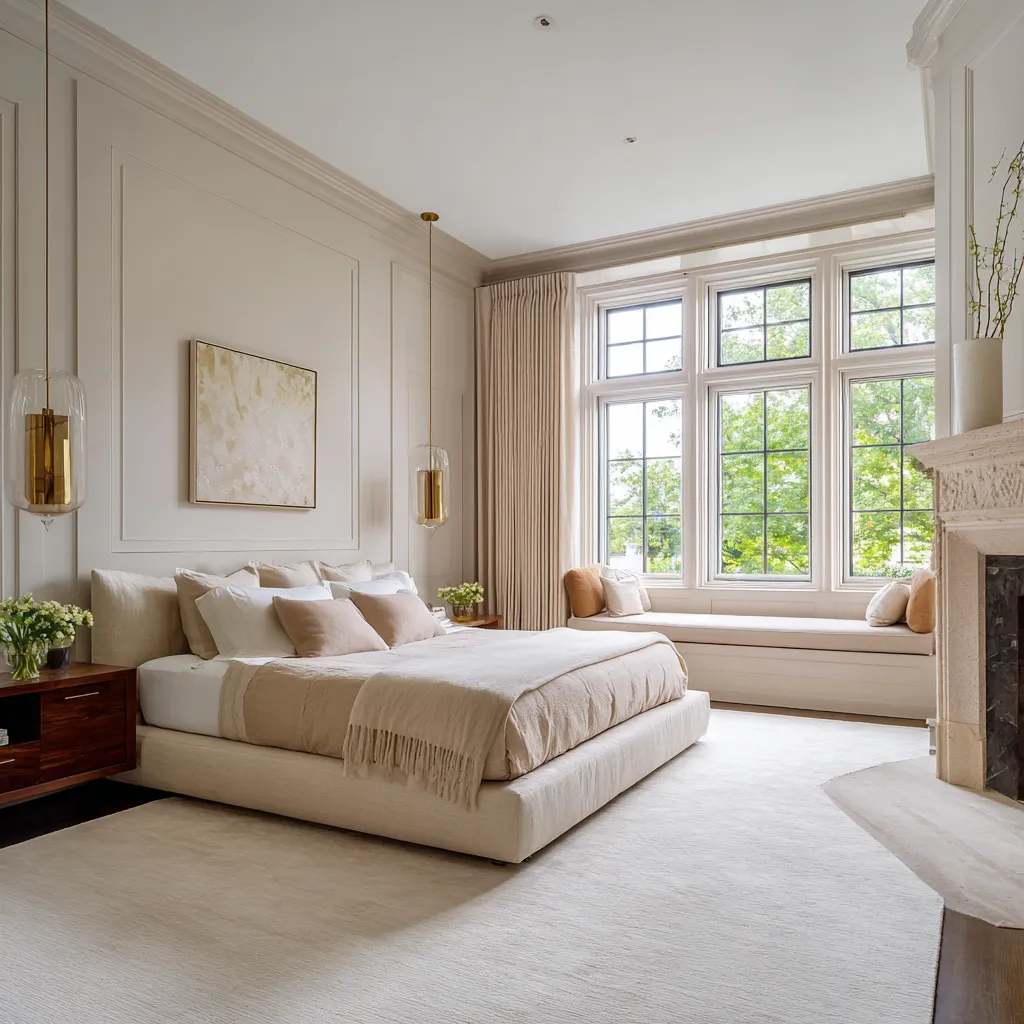
The most successful formula
Modern Georgian bedrooms often share the same order of priorities.
- First, the architecture remains legible.
- Second, the furnishing mass stays low.
- Third, a few darker or denser notes ground the composition.
- Fourth, the room gains a second place to live, often at the window end.
- Only after that do color and texture tune the atmosphere.
This order matters. If the design begins with trendy accents or too many decorative gestures, the room usually becomes less convincing.
If it begins with wall proportion, bed height, grounding, and spatial use, the room can absorb present-day pieces very easily while still keeping Georgian strength.
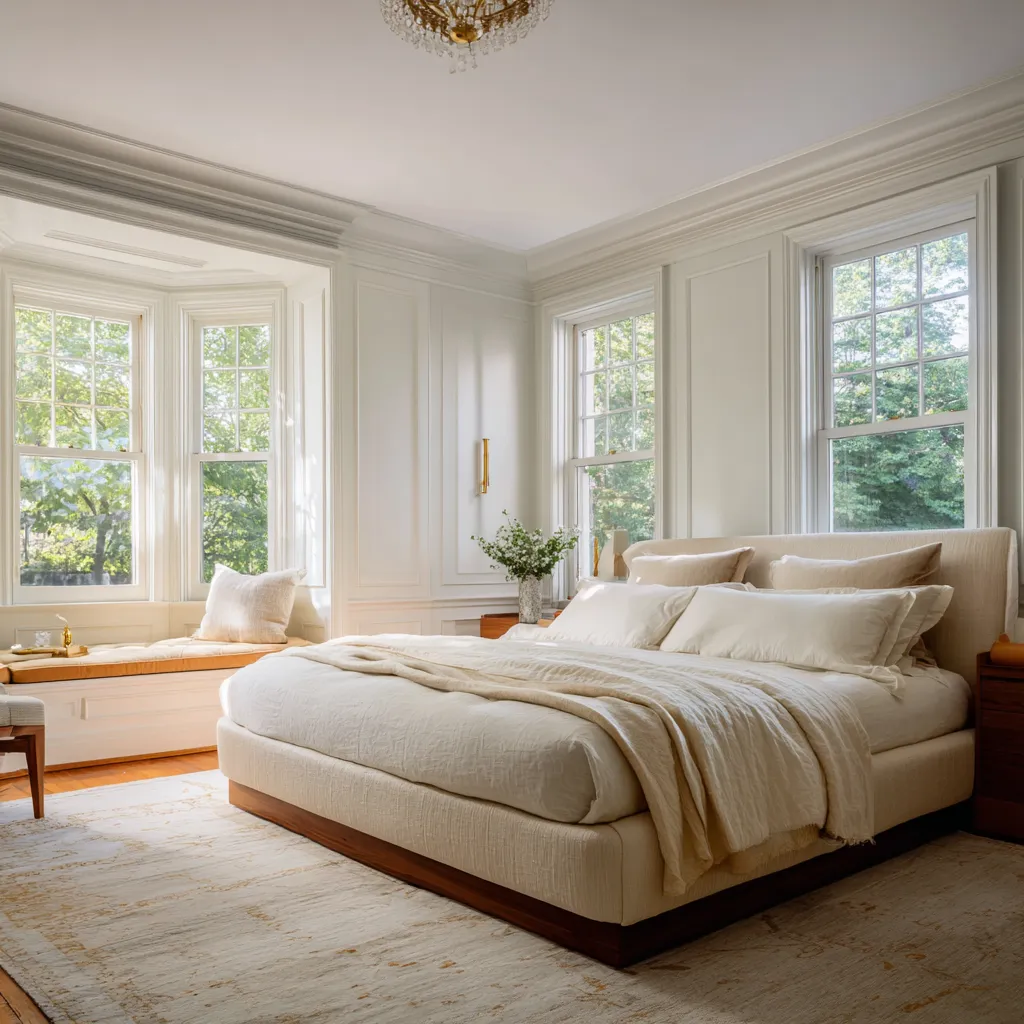
Final thoughts
A refined modern Georgian bedroom does not need to be loud to feel complete. In fact, its beauty often comes from the opposite.
The room keeps its wall order, its chimney mass, its tall windows, and its ceiling authority. Then it softens the experience through lower furniture, tactile textiles, measured warmth, edited styling, and one real place to sit besides the bed.
That is what gives the room depth and grace. The architecture remains clear.
The bedroom feels livable. The old shell does not turn into a museum interior, and the modern layer does not erase its history.
Instead, each part supports the other. The result is a bedroom that feels calm, grounded, and fully formed: formal enough to keep Georgian character intact, soft enough to feel good every day, and selective enough to feel present rather than overdone.