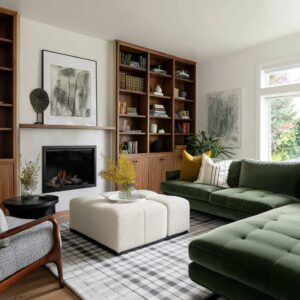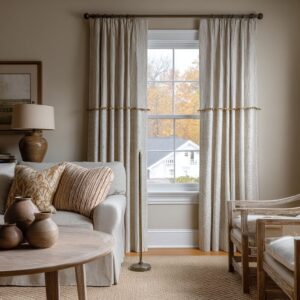
A contemporary coastal living room does not need to announce the coast in obvious ways. The more it tries to prove the theme with shells, stripes, little boats, bright blue accents, and repeated seaside references, the more quickly the room starts to lose depth.
The living rooms that stay fresh do something else. They bring the coast indoors as a condition of light, wear, shelter, rhythm, and material memory.
That shift changes almost everything.
It means the room stops borrowing from vacation imagery and starts borrowing from the shoreline itself: bleached timber, dry grasses, fog-softened air, dark mooring points, horizon lines, board rhythms, weathered surfaces, and the tension between openness and refuge. A room like that can feel coastal even if it contains almost no direct marine symbol at all.
It can feel tied to the edge of land and water because its materials, proportions, and edits carry that condition from within. This is where many current coastal living room ideas separate themselves from older versions of beach style.
They are not trying to recreate a postcard. They are trying to hold the atmosphere of a place where air moves, timber ages, surfaces fade, and the interior has to balance brightness with weight.
The coast is not a motif. It is an edge condition.
One of the ways to think about a coastal living room is to stop treating the coast as a set of objects and start treating it as a place where things meet. Sea meets sky.
Shelter meets exposure. Soft light meets rough wood.
Open view meets enclosed refuge. Dry grass meets wet sand.
Bleached boards meet dark metal. Indoor comfort meets outdoor weather.
Once that way of thinking enters the design, the room changes direction. Instead of asking what beach-themed item to add, the better question becomes: where is the edge in this room, and how is it being expressed?
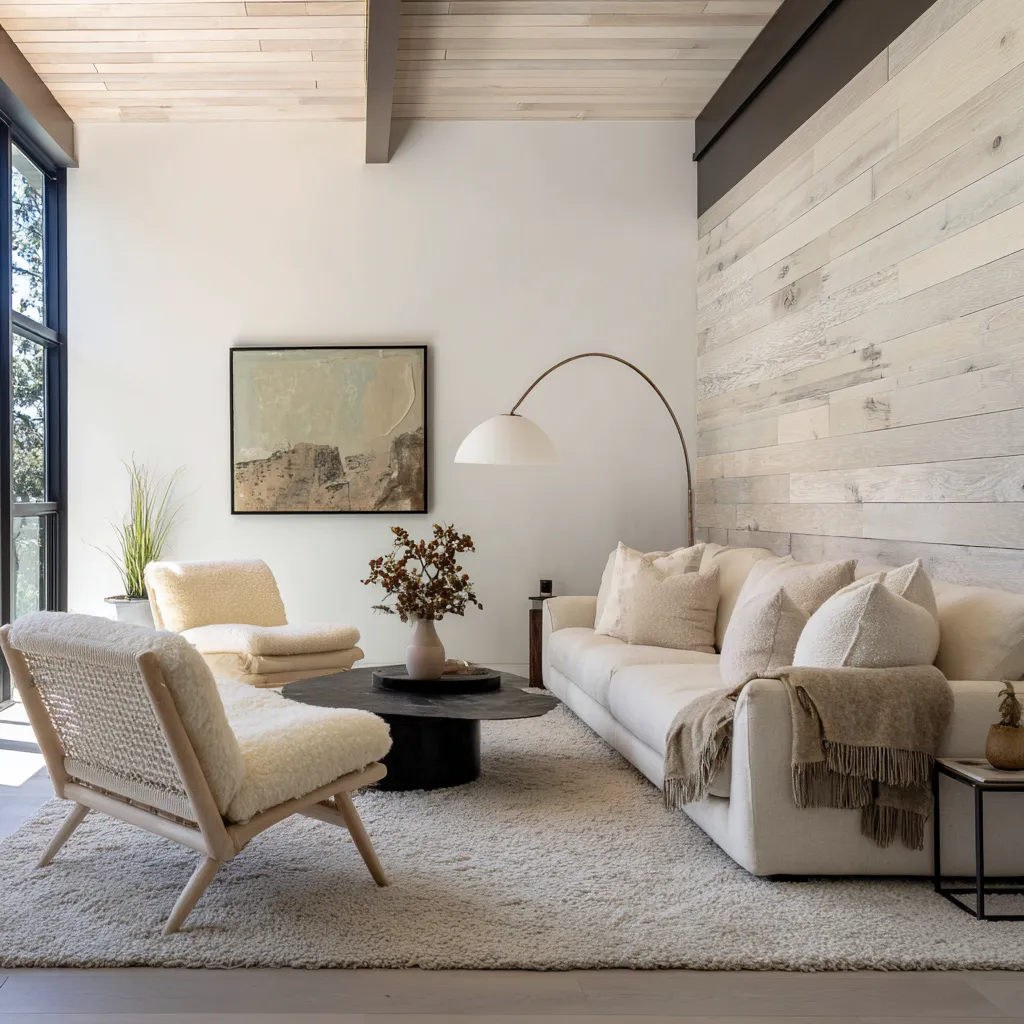
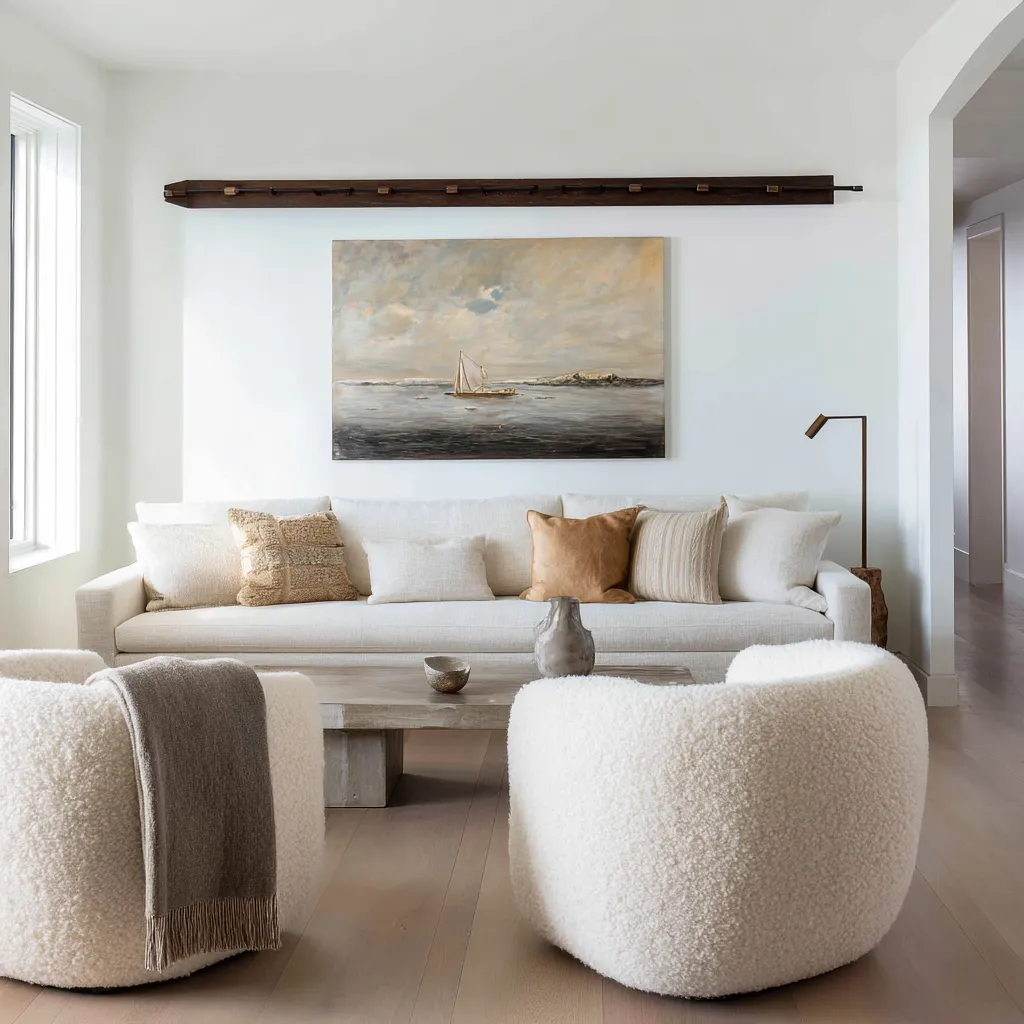
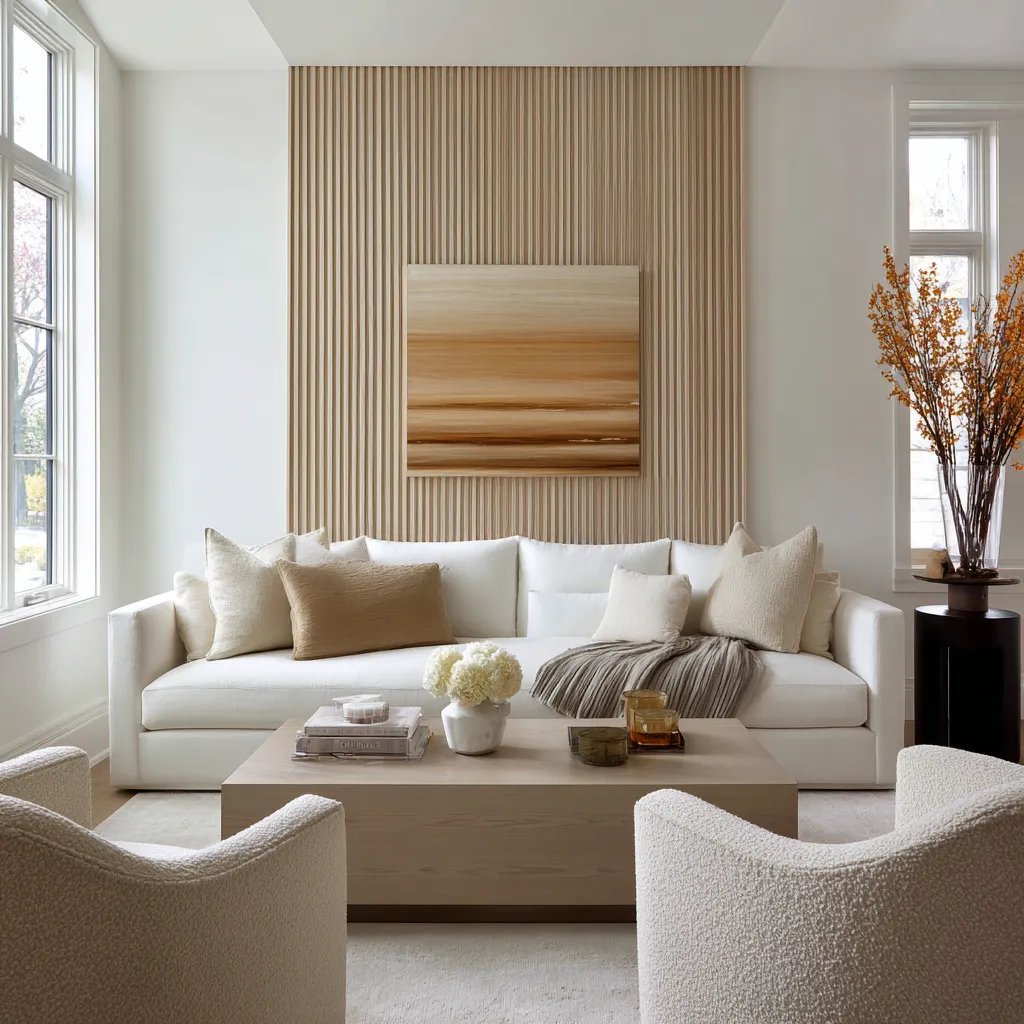
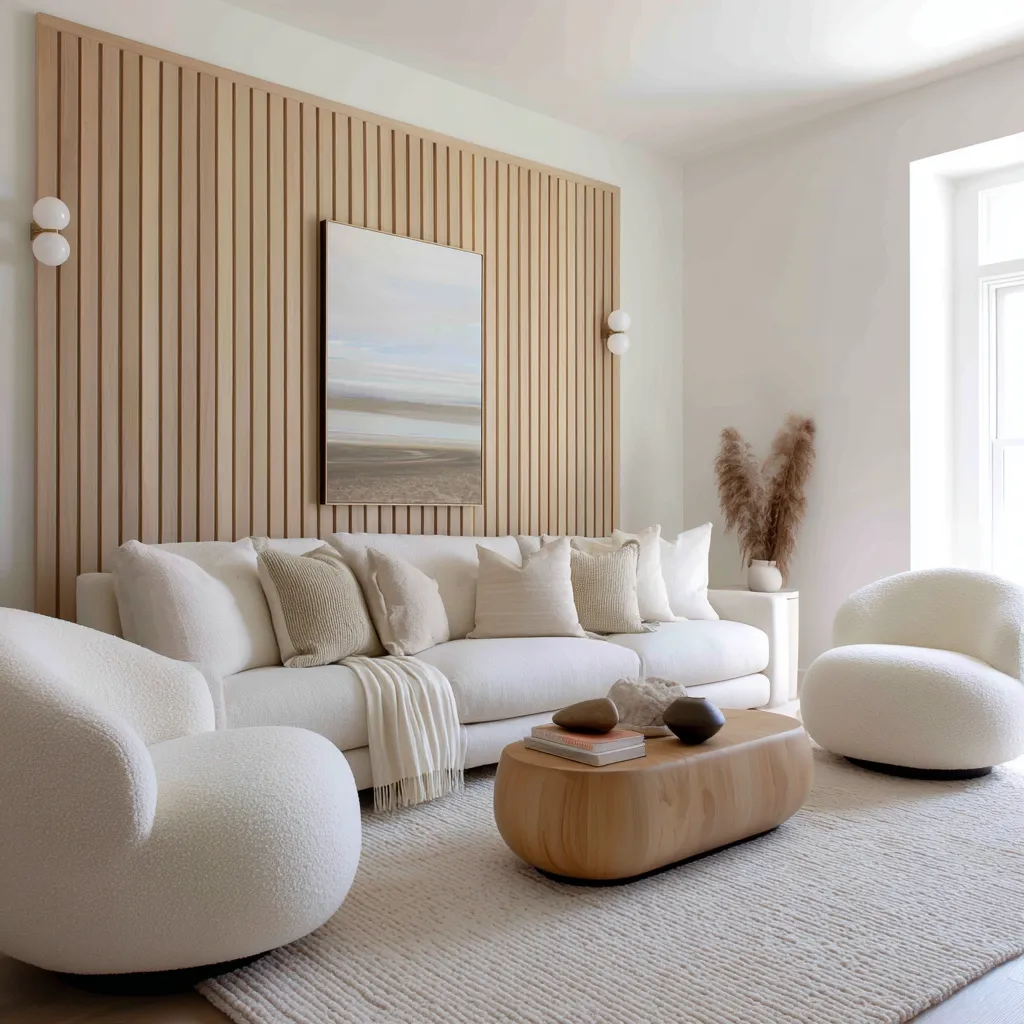
Sometimes that edge appears as a long low artwork with a hazy horizon. Sometimes it appears as a slatted wall field that recalls dune fencing or marsh reeds.
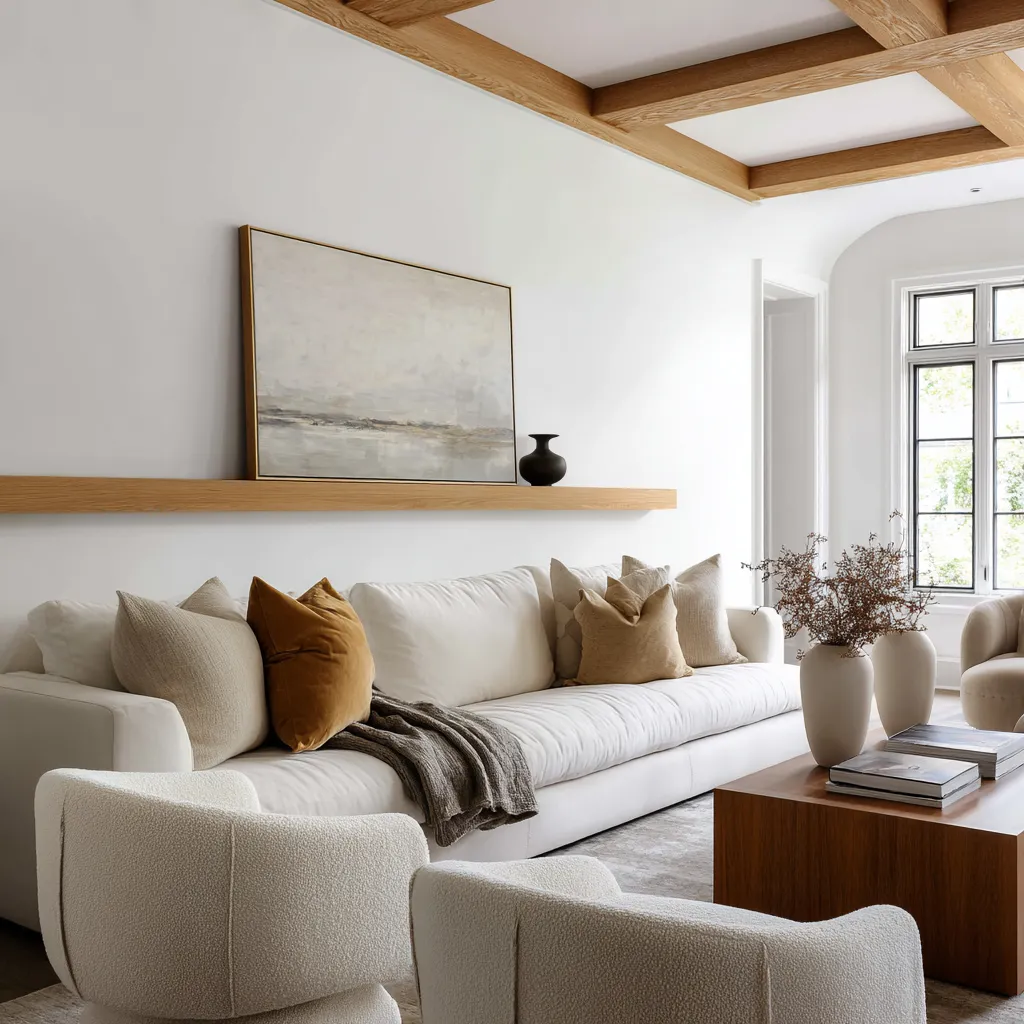
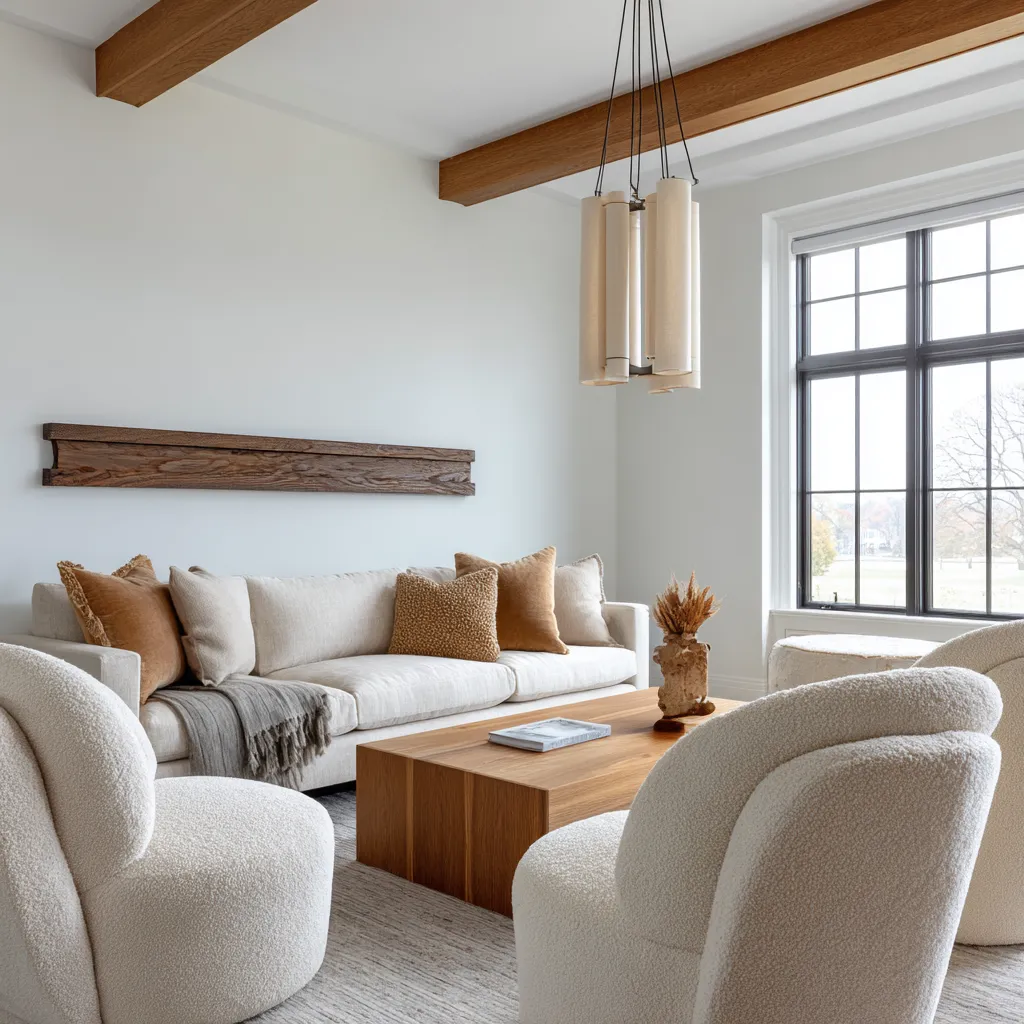
Sometimes it appears as a dark rail stretched across a pale wall, or a reclaimed timber table set in the middle of clouded upholstery. Sometimes it appears through nothing more than the contrast between a pale linen-like sofa and a beam overhead that looks touched by salt air and time.
That is why some coastal rooms feel far more rooted even with fewer references. They are not using the shore as decoration.
They are using the physical grammar of the shore.
A pale room is not automatically a coastal room
Many people begin with the right instinct and stop too early. They choose cream upholstery, oat-colored pillows, a washed rug, soft drapery, and chalky walls.
The result may be lovely, but it may still remain simply a refined neutral living room. Pale tactile layering helps.
It creates airiness. It reflects daylight well.
It softens the room. It gives the interior that salt-washed atmosphere associated with shore houses.
But softness alone does not create coastal identity. It creates climate, not character.
For a room to feel specifically coastal, those pale layers usually need a partner with more substance. That partner might be weathered wood with a sense of age.
It might be a long horizon artwork. It might be a slatted architectural panel.
It might be a dry botanical arrangement that looks more like marsh growth than floral styling. It might be a dark beam, rail, shelf, or coffee table that gives the pale room a point of hold.
This distinction matters. Cream boucle, soft linen, and sand-toned upholstery should be understood as the room’s atmosphere.
They are the background weather. They are not the entire story.
A good coastal room lets those surfaces breathe, then gives them one sharper note that ties them to place.
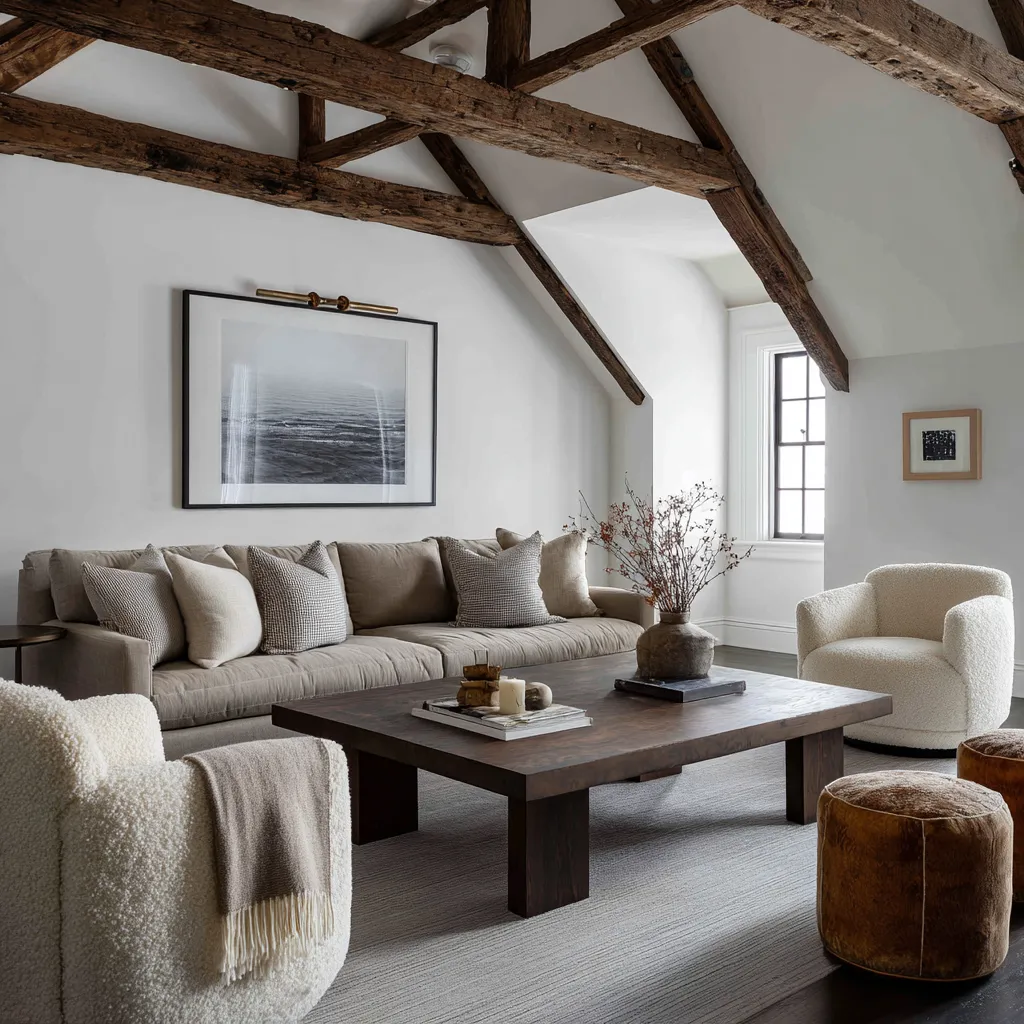
Timber carries the shoreline more deeply than color does
In modern coastal interior designs, wood often carries the shoreline more effectively than blue ever could. Not generic wood.
Not polished wood chosen only for warmth. The wood that matters most is the wood that seems touched by time: bleached, split, grained, weathered, darkened, strapped, reclaimed, or left with a sense of service and wear.
This kind of timber does several things at once. It suggests exposure to air and moisture.
It suggests repair and endurance. It suggests construction that has lived through seasons.
It suggests utility. It gives the room weight.
It introduces age without forcing an antique look. Most of all, it turns the room away from a decorative version of coastal style and toward a lived one.
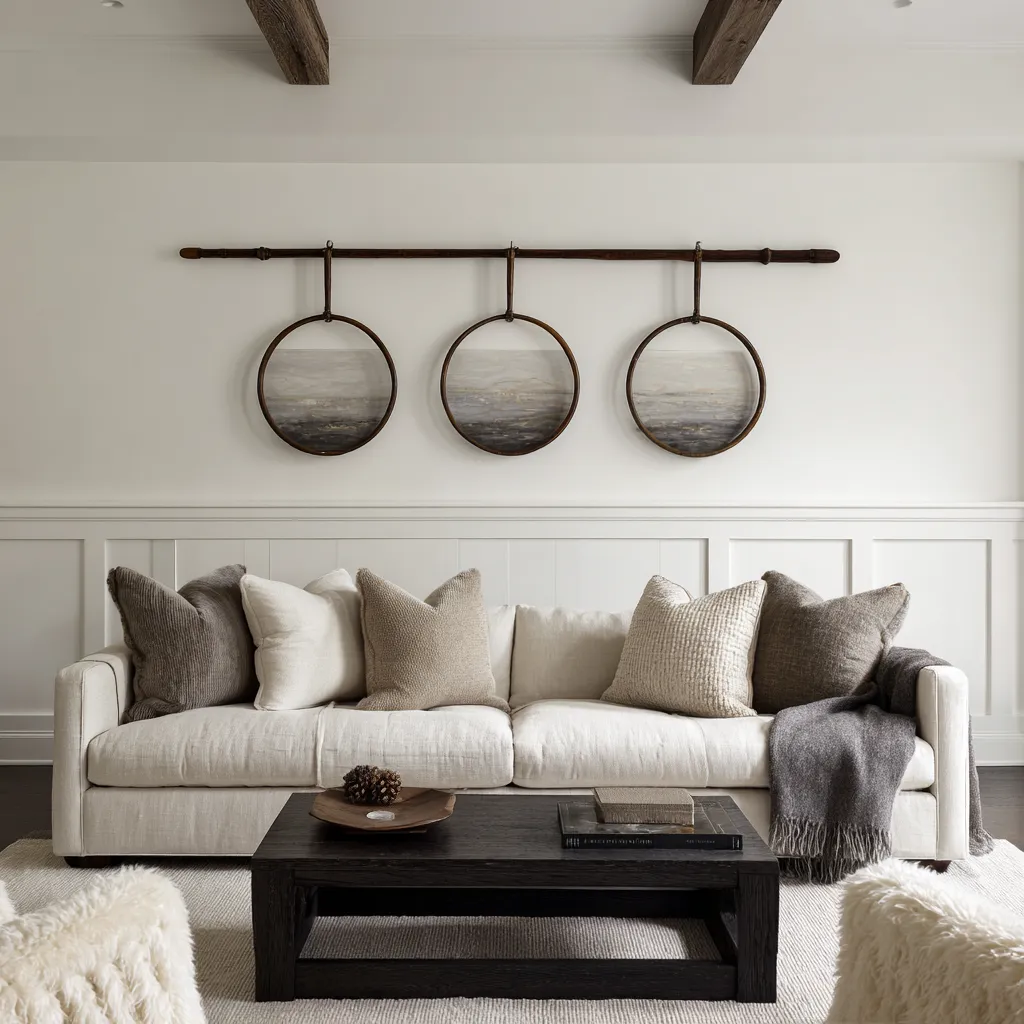
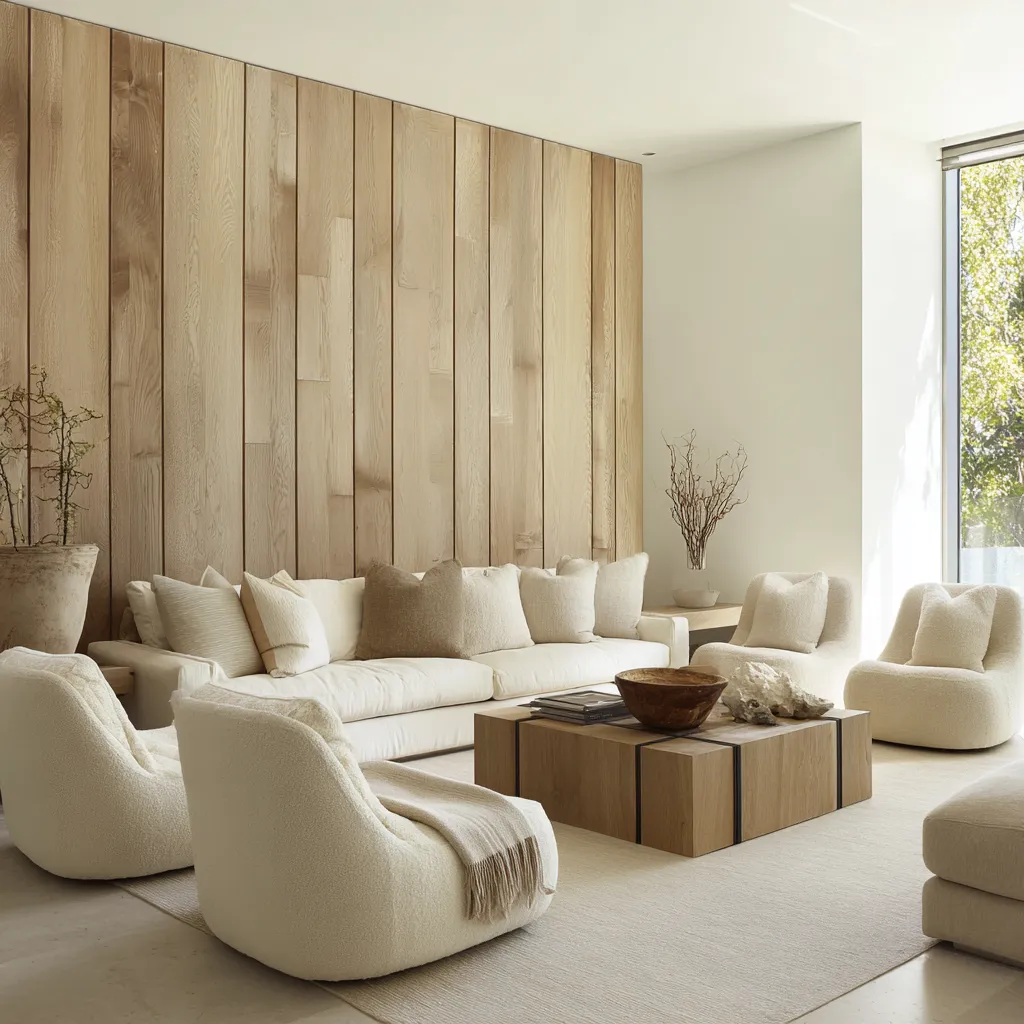
That is why so many compelling coastal living rooms rely on timber in decisive positions rather than scattering it casually. A long rail above the sofa can act like a horizon and a remnant of use at the same time.
A deep coffee table in heavy wood can make pale upholstery feel anchored rather than vague. A slatted wall in bleached planks can carry the shore through rhythm alone.
Exposed beams can shift the room away from soft prettiness and toward structure, shelter, and habitation. The coast is full of surfaces marked by time.
Rooms with depth borrow that condition. They do not need to imitate driftwood in a literal way.
They simply need wood that feels as though it has known light, salt, labor, and years.
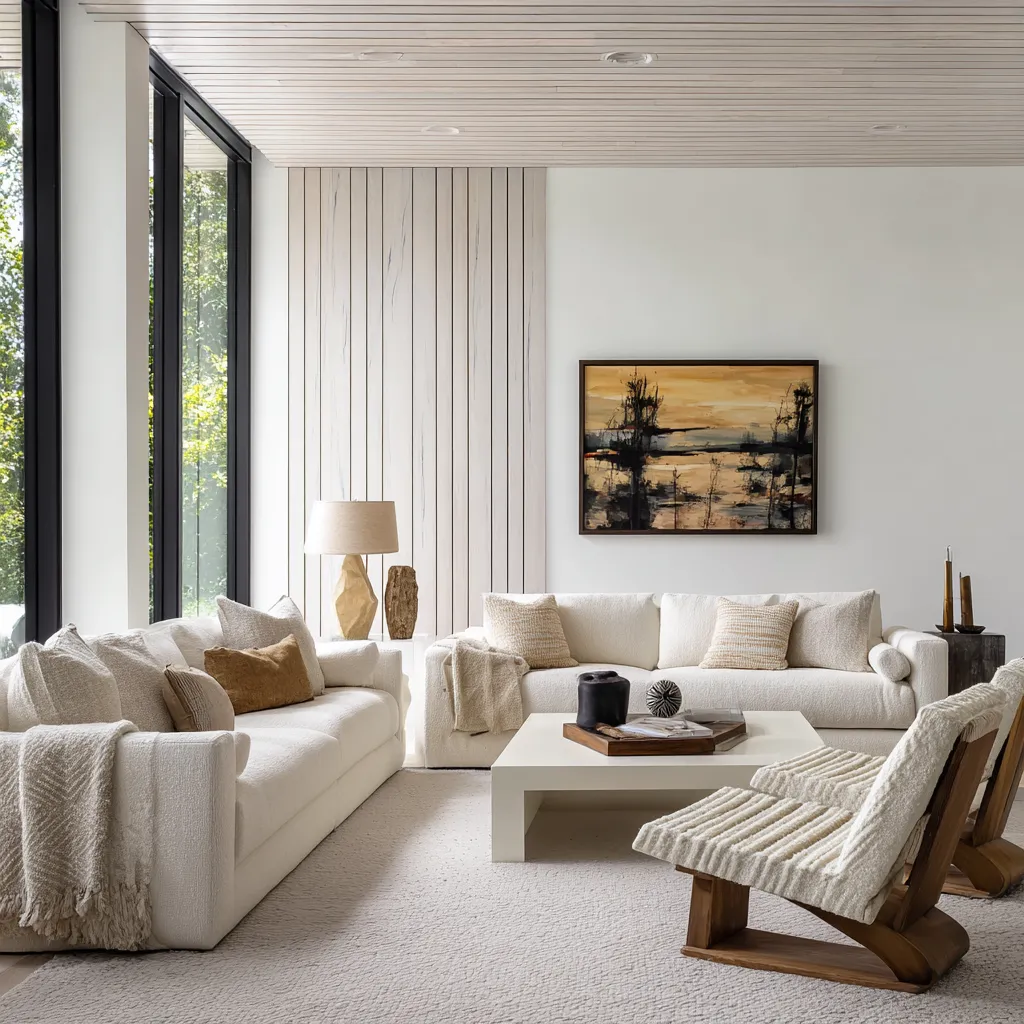
The horizon is useful, but it should not do all the work
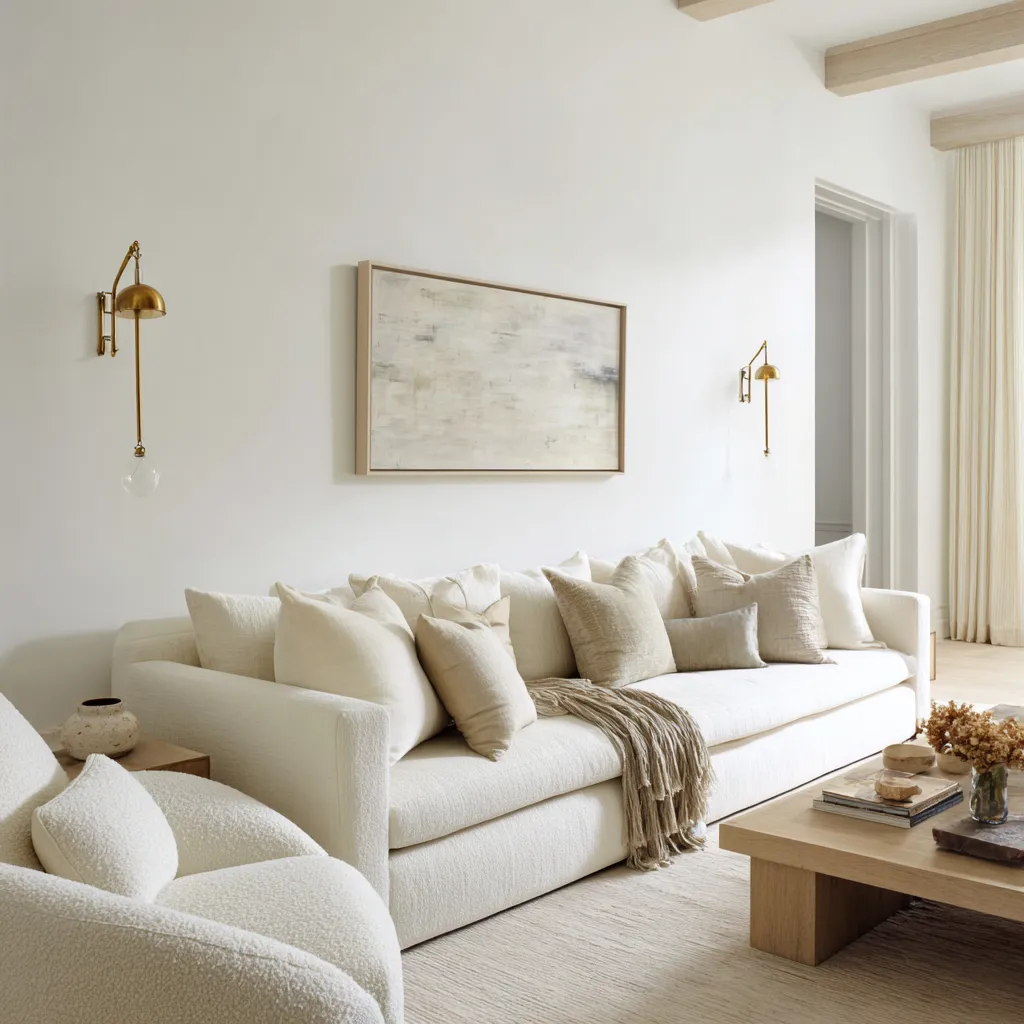
A horizon painting remains one of the ways to place a coastal note into a living room. A long banded artwork in washed taupe, gray, cream, brown, or fog-blue can bring in distance immediately.
It evokes sea meeting sky, tidal flats under haze, or a shoreline seen in low contrast. That gesture still works because it reduces the coast into its most basic visual condition: a line dividing expanses.
But horizon art has limits. Used alone, it often creates coast as view rather than coast as life.
The room may look calm and atmospheric, yet still feel thin in its identity. It knows what the shore looks like, but not what it feels like to inhabit.
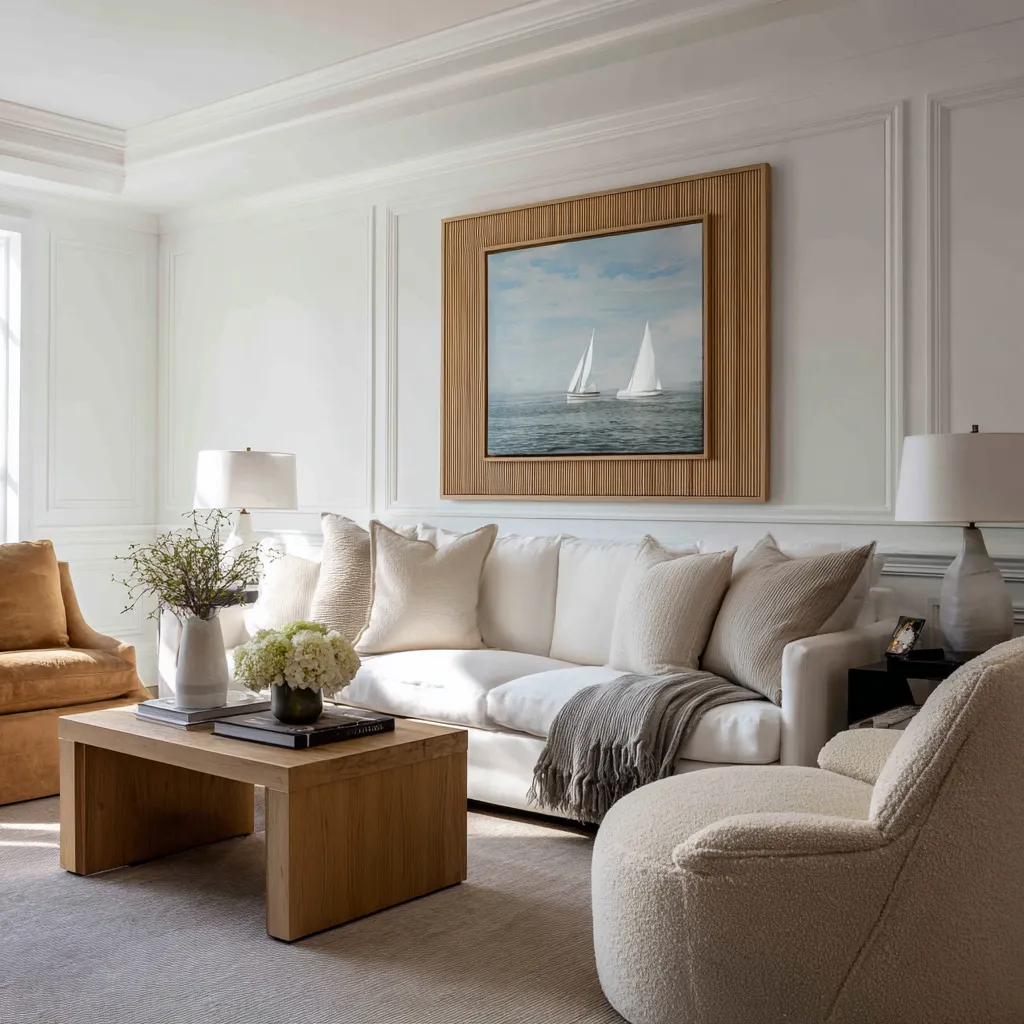
That is why horizon logic is usually successful when something else deepens it. A floating ledge beneath the art can echo the horizon in physical form.
A dark beam above can give the room weight. A slatted wall panel behind the sofa can add edge and vegetation logic.
A heavy table can bring in shelter and ballast. Dried stems nearby can shift the room from scenery to ecology.
The horizon should not be expected to carry the entire room. It works better as one part of a larger composition, especially when the other parts pull from timber, rhythm, and weather.
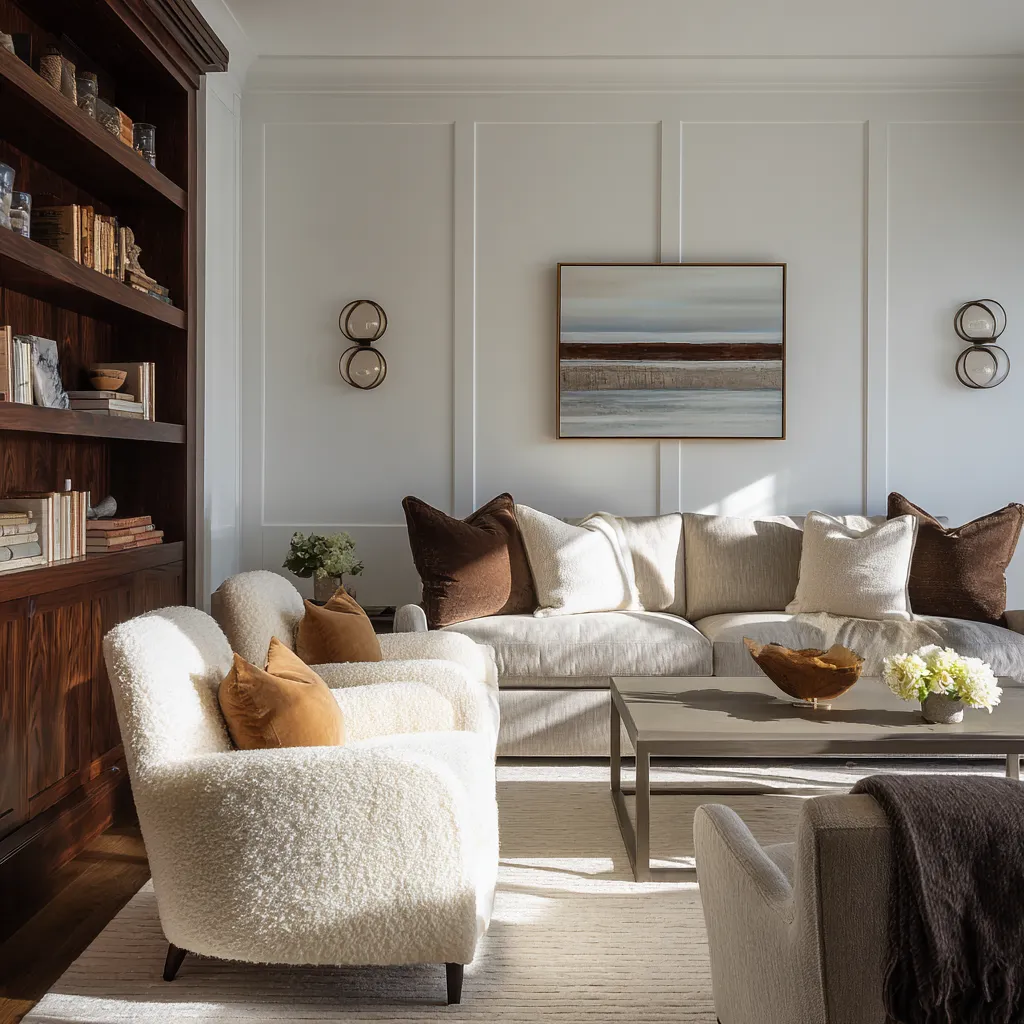
Vertical rhythm can say shoreline without naming it
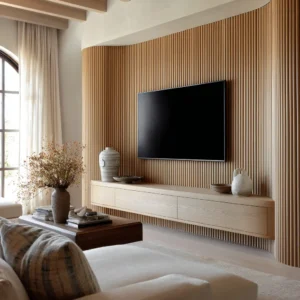
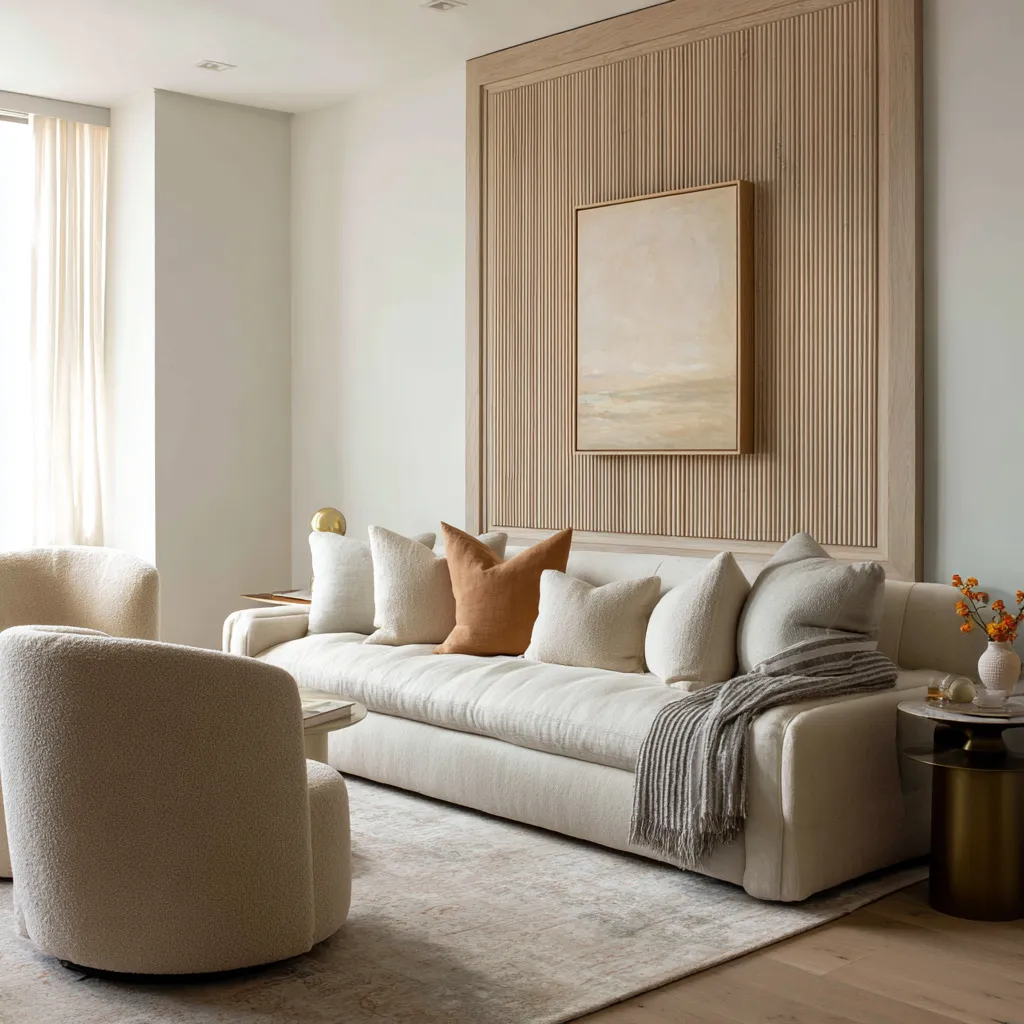
One of the fresh ideas in coastal living-room design is the use of slatted, ribbed, or reed-like rhythm. This is a far more architectural language than old motif-heavy beach styling, and it often gives the room a newer, more grounded tone.
Narrow vertical boards, ribbed wall panels, cane-like relief, fine repeat lines in art, fluted table bases, and even subtly channeled upholstery can all suggest shoreline conditions without turning into direct symbolism. These rhythms can call up dune fencing, marsh reeds, beach grass, boardwalk construction, light moving through stems, and wind-marked surfaces.
The eye registers the coast through repeated linear movement rather than through an object explaining the theme.
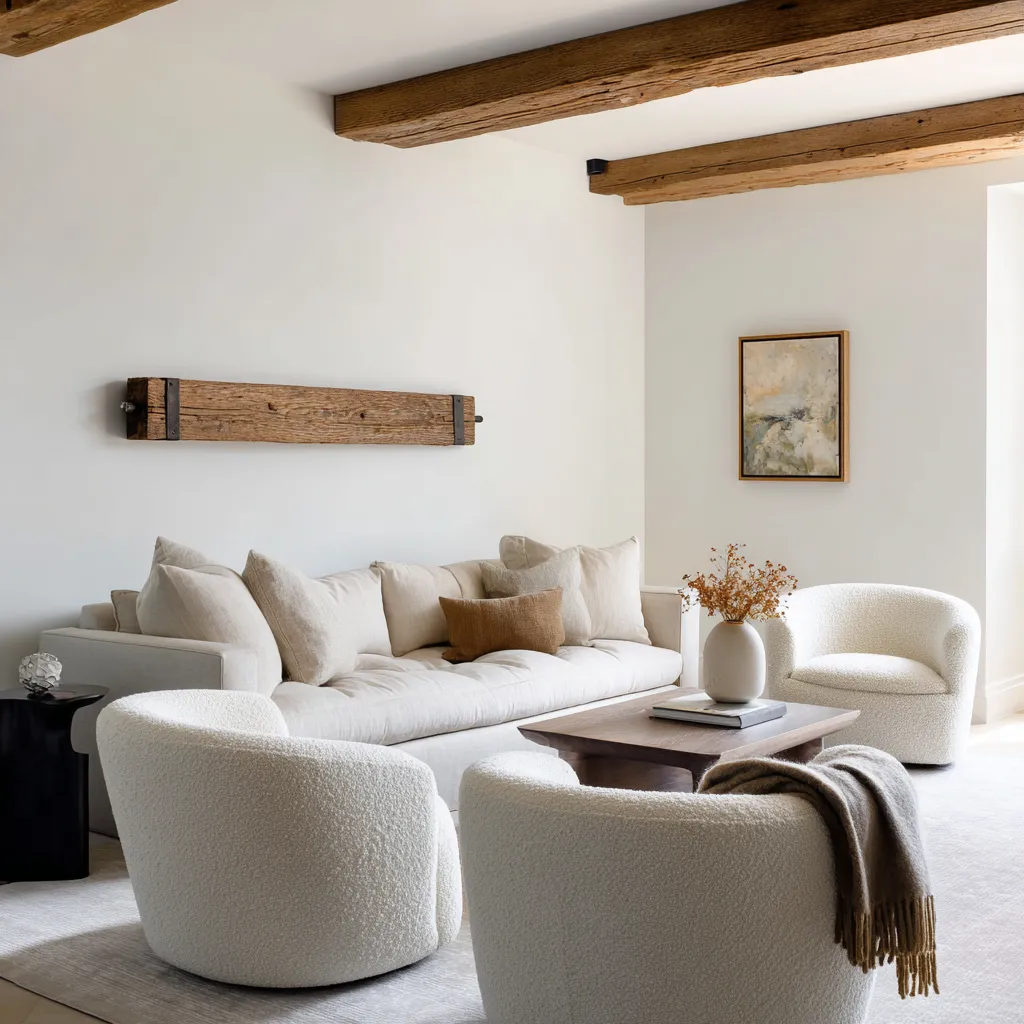
This approach works especially well because it shifts the room from coast as scenery to coast as edge. A horizon painting speaks about distance.
Slatted rhythm speaks about what happens at the boundary: grass lines, fencing, cladding, stems, filtering, screening, exposure. It gives the room a more tactile and architectural relation to place.
That is why a slatted feature wall behind a sofa can feel far more current than a collection of nautical prints. The wall becomes the carrier of coastal identity, and the furniture only needs to support it.
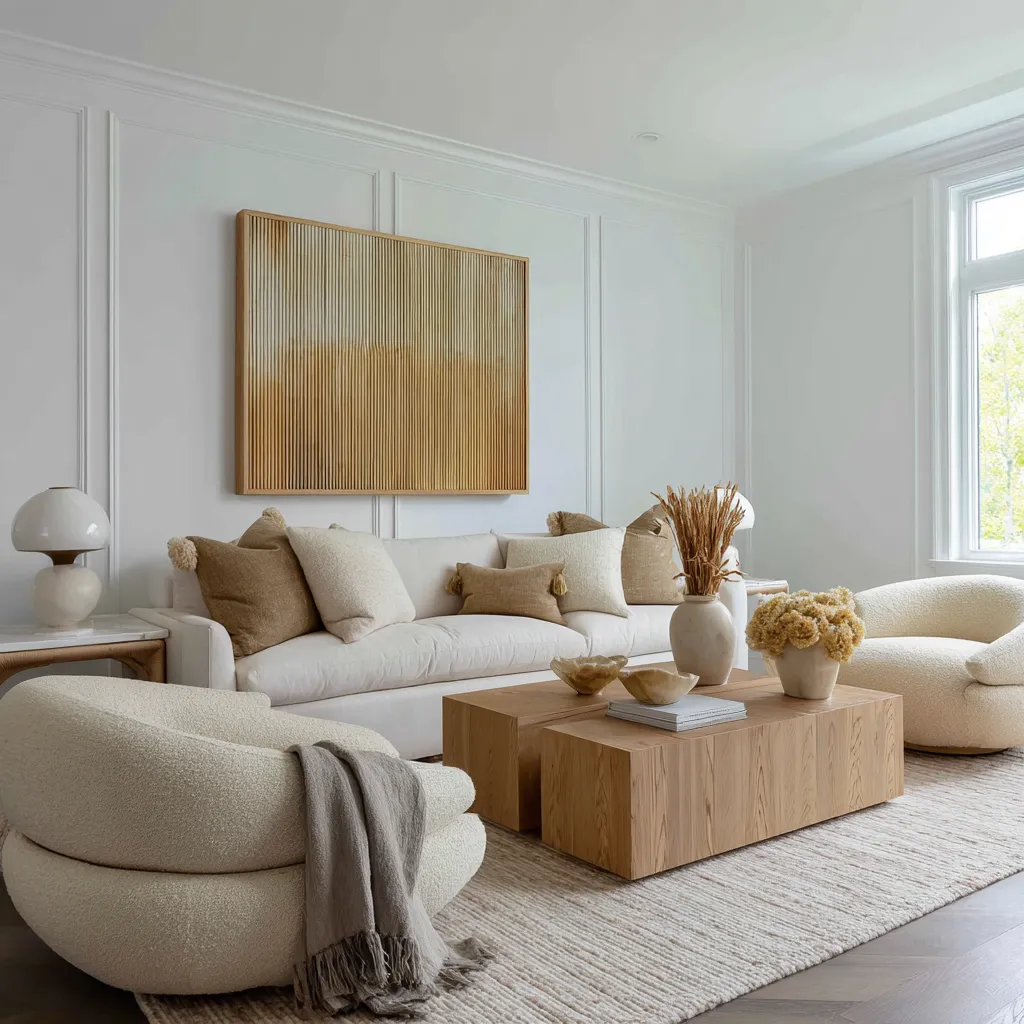
A ribbed artwork can suggest reeds and dry vegetation without showing a single landscape. A fluted coffee table base can quietly continue that pattern at the center of the room.
A paneled wall combined with a ribbed inset can create the same idea with even more control. This language is especially useful for anyone who wants a coastal room that feels composed and present-day rather than thematic.
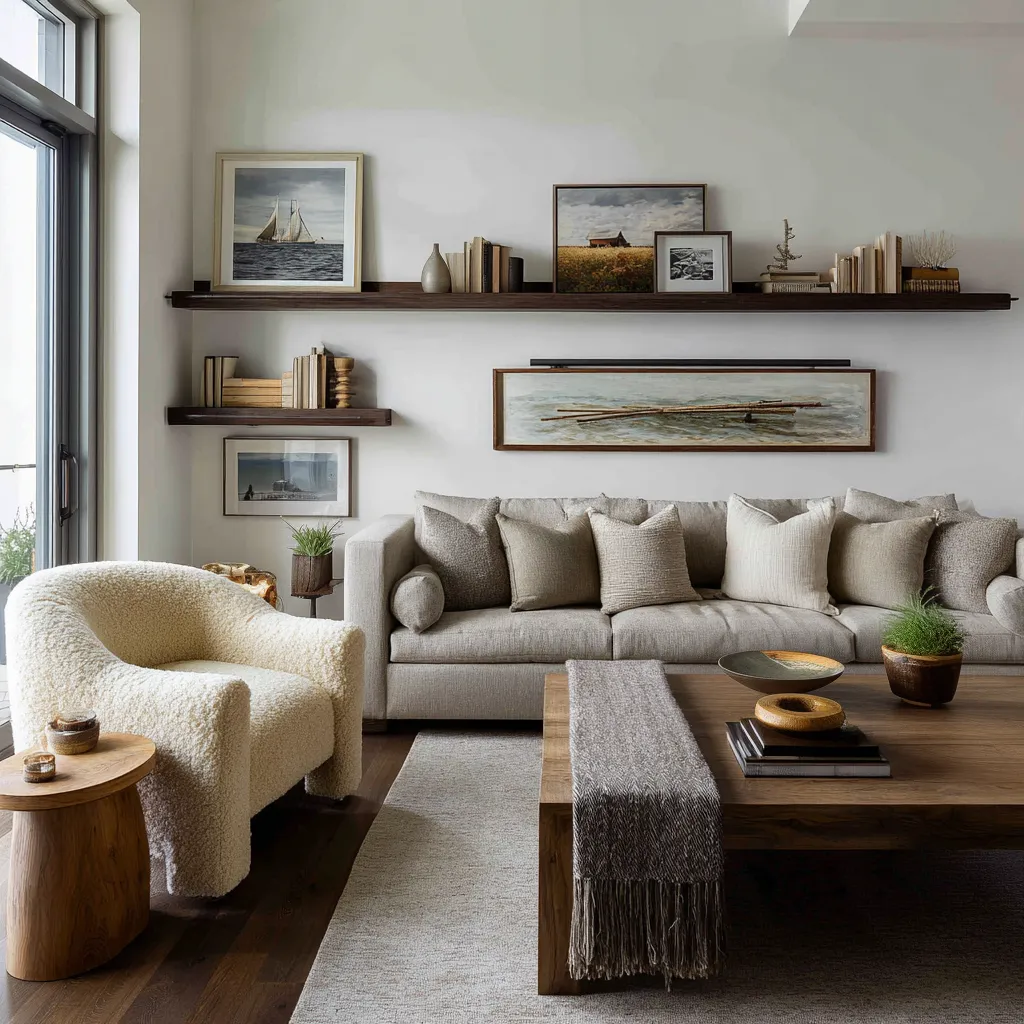
Editing matters more than how many coastal references you can fit in
The living rooms that hold together well tend to rely on compression, not accumulation. They compress the shoreline idea into one main move, occasionally two, and then allow space around those moves to give them authority.
That means a room may have one long rail, one horizon artwork, one slatted fireplace field, one reclaimed timber fragment, or one carefully isolated marine object. The rest of the room stays calm.
The wall around the gesture remains open. The sofa stays broad and simple.
The palette remains close in value. The accessories do not repeat the same message again and again.
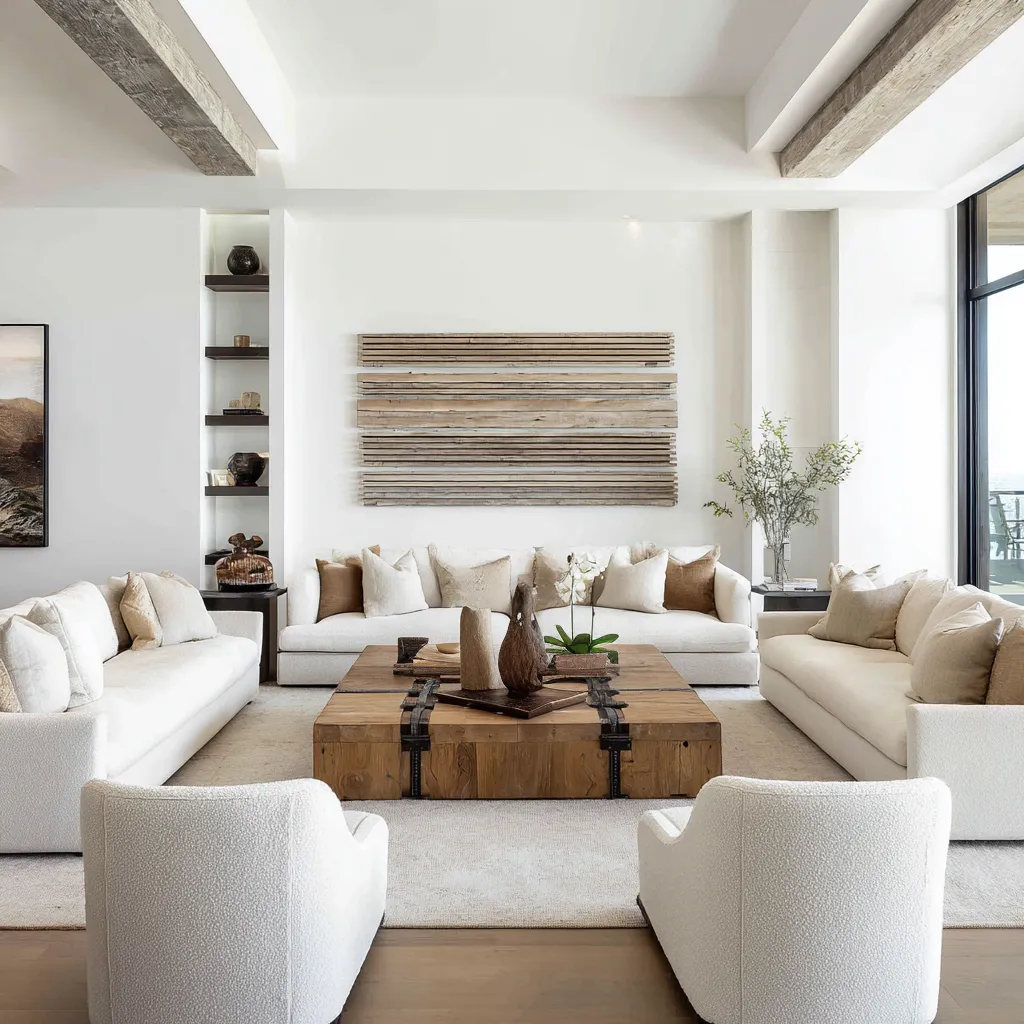
This is important because blank wall in a coastal room is not wasted space. It behaves like air.
It behaves like interior sky. It allows the coastal note to expand beyond its object and become atmosphere.
Many beach-themed rooms lose their tone not because any one item is wrong, but because nothing has been given room to carry meaning. When the wall includes striped art, shell forms, coral pieces, rope detail, little boats, and blue accents all at once, the eye stops feeling the shore and starts feeling the effort.
A contemporary coastal room gains more from one concentrated shoreline gesture held in open space than from ten reminders competing for attention.
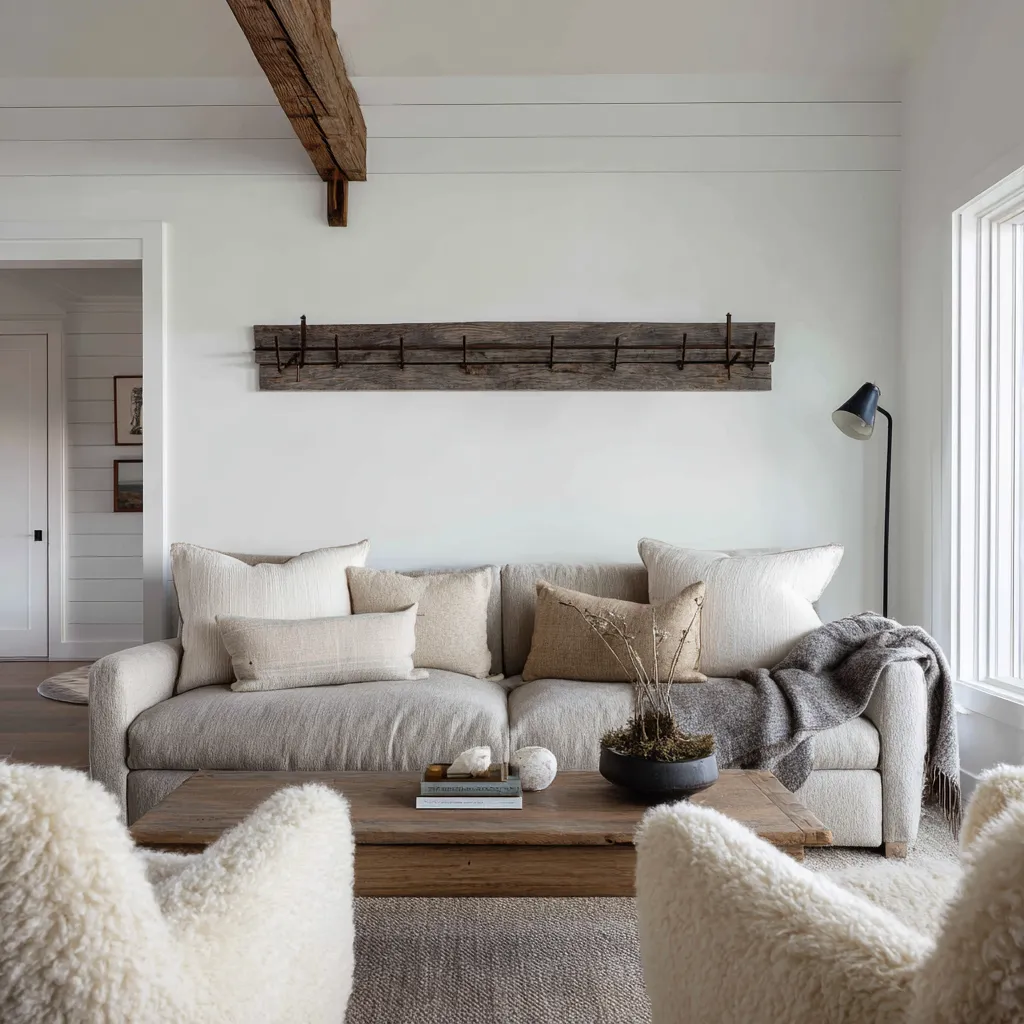
Shelter is as important as openness
One of the less-discussed truths about coastal interiors is that shoreline life is not only about brightness and view. It is also about protection.
Wind exists. Storms exist.
Cooler evenings exist. Salt exposure exists.
Glare exists. Houses near water often need rooms that feel both open and defended.
This is one reason exposed beams, heavier fireplaces, deep coffee tables, dark anchors, built-in seating, and more grounded upholstery matter so much in good coastal living rooms. They remind the room that comfort near water is not only airy; it is also protective.
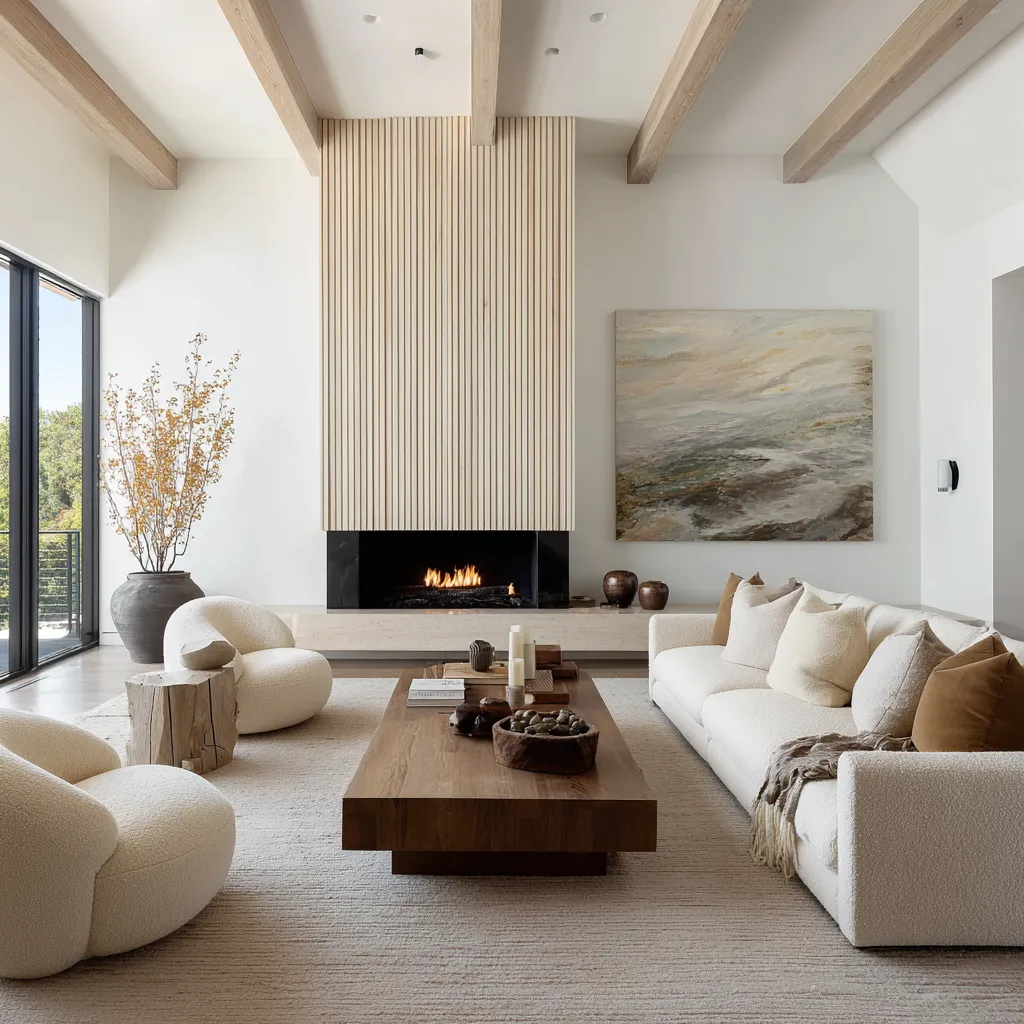
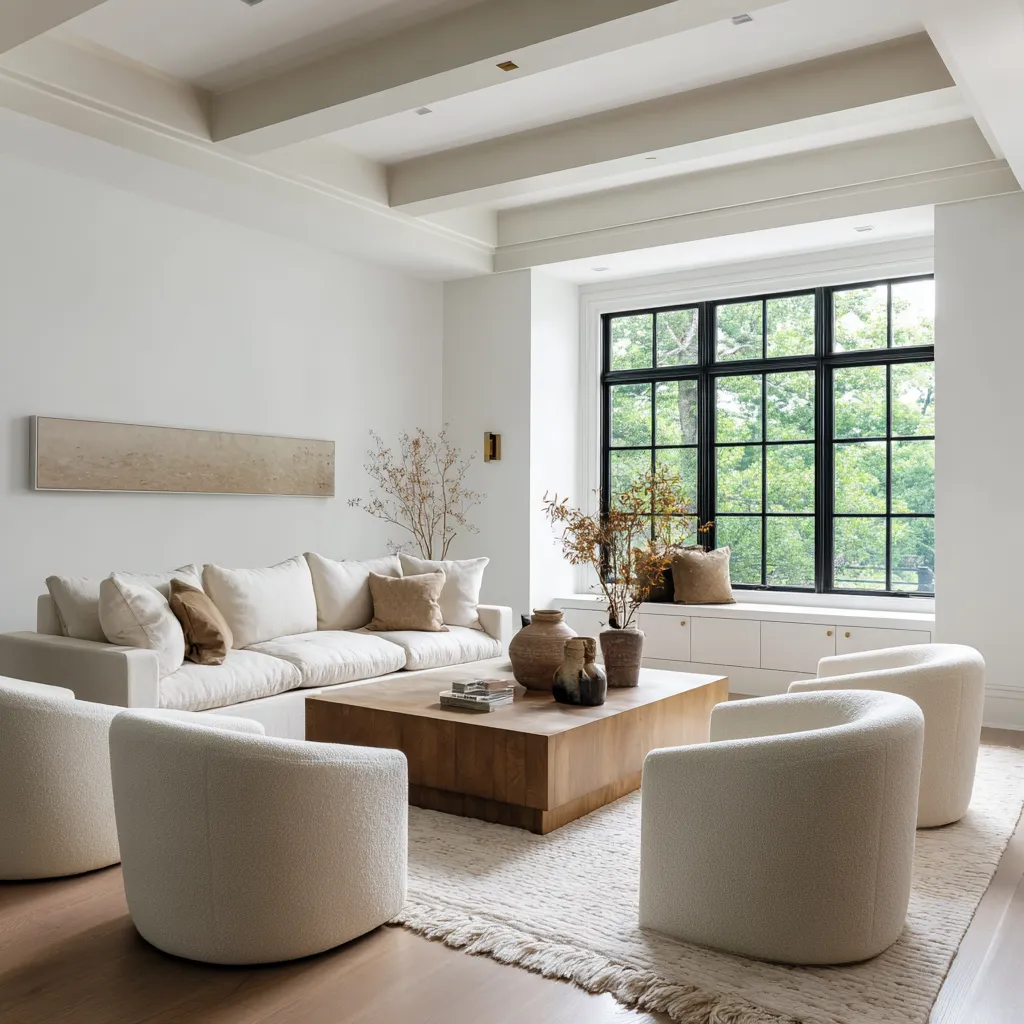
A room with broad pale sofas facing each other can feel coastal not only because of its color but because it creates a center of refuge. A large window may connect the room to weather and light, while a beam overhead and a dense table beneath bring gravity and enclosure.
A fireplace with a tall slatted surround can suggest grasses and cladding, but it also gives the room a hearth-like focus. A darker leather chair or tobacco-toned seating piece can keep the room from floating into weightlessness and introduce a feeling of lasting habitation.
This is where many shallow versions of beach style fall short. They borrow openness but forget shelter.
As a result, they can feel decorative rather than inhabitable. A more mature coastal room always contains some evidence that the interior knows weather exists.
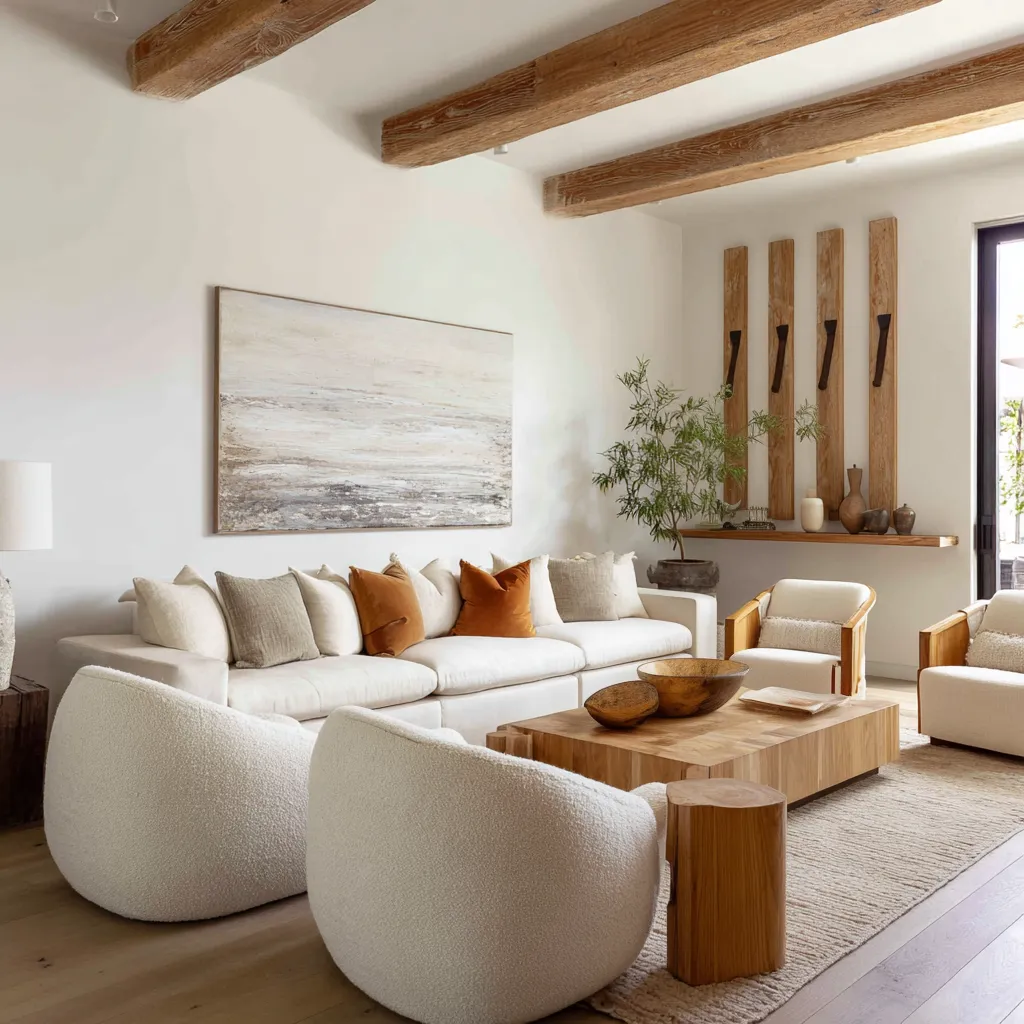
Direct marine objects can work, but only under strict control
There is a tendency to think that literal marine references should be removed completely from a current coastal interior. That is not always necessary.
A direct working-waterfront object can bring great depth when it appears in the right way. An old pole, mounted rail, peg rack, rope-like iron line, salvaged timber piece, or other marine-adjacent artifact can make a room feel far more specific and rooted.
It brings the world of mooring, maintenance, handling, docking, and labor into the space. It reminds the room that the shoreline is not only scenic.
It is also built, used, repaired, and worked.
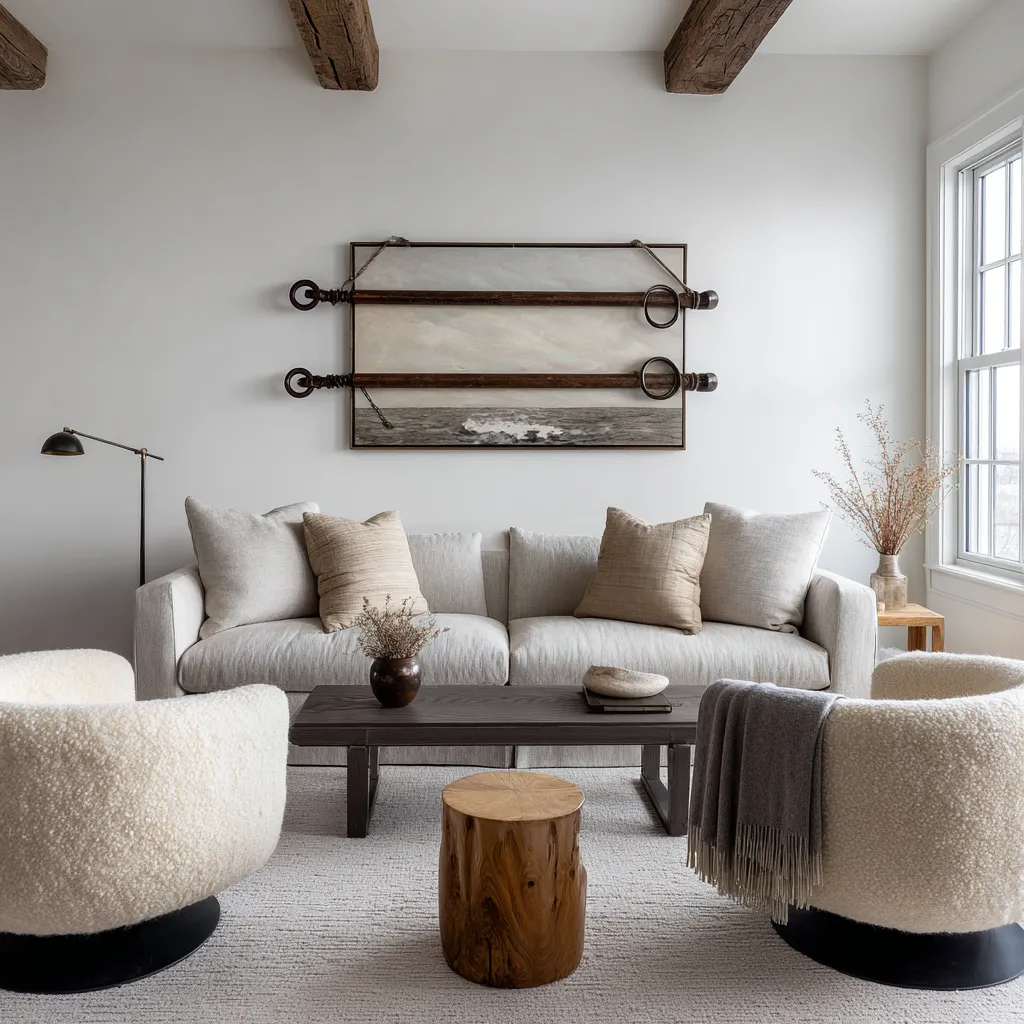
But this move is delicate. The object has to remain singular.
It has to be isolated. It needs a broad pale wall around it.
It needs furniture beneath it that stays simple and low. It should not lead to a chain reaction of repeated nautical elements elsewhere in the room.
A mounted marine artifact can deepen the room because it introduces truth, age, and use-history. The moment the room starts echoing it too many times, the effect changes.
What was once sharp and memorable becomes costume. So the question is not whether direct coastal objects are allowed.
The question is whether the room gives one such object enough dignity and enough restraint around it.
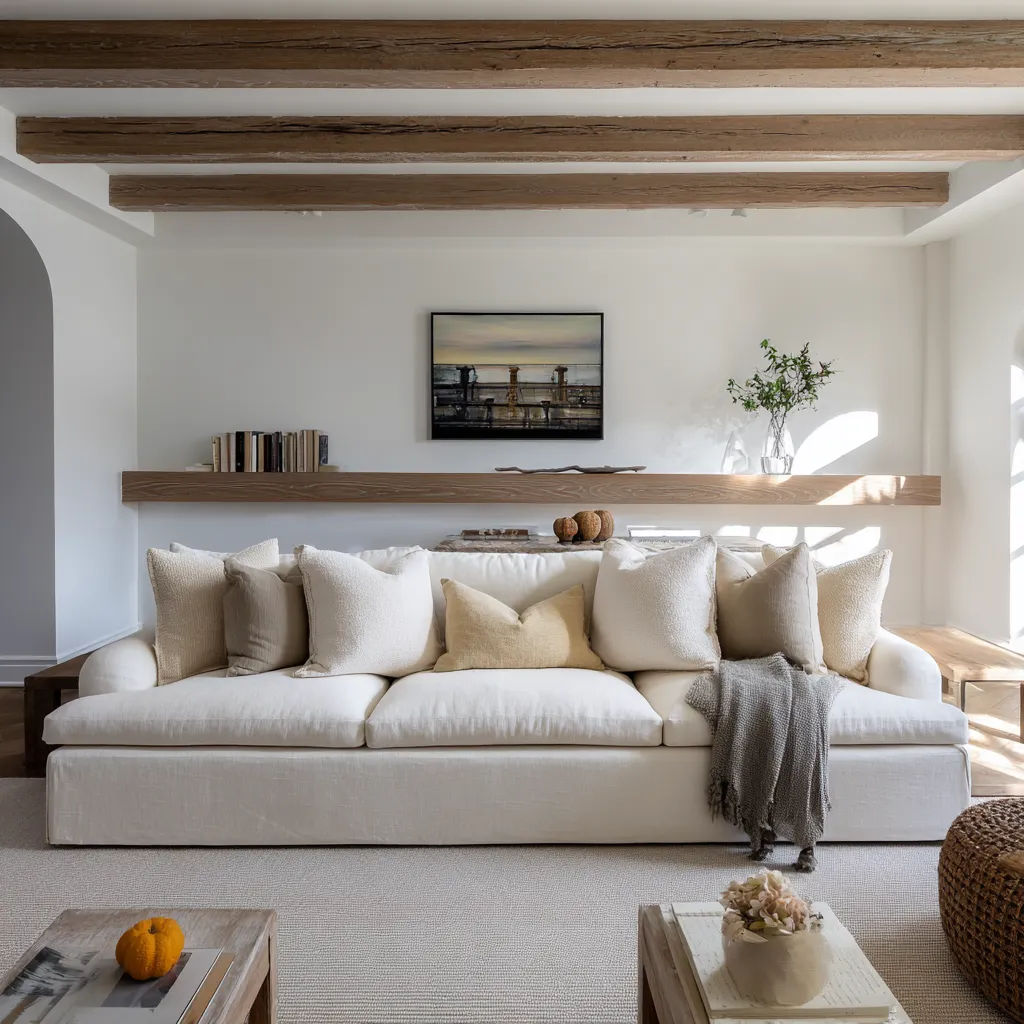
Dry ecology works better than lush beach styling
If you want a coastal living room to feel tied to shoreline life without turning soft and sugary, botanical choices matter more than many people expect. The arrangements that work well in this design language are rarely tropical, glossy, or abundant.
They are dry, brittle, airy, seasonally faded, and exposed-looking. Think of stems that resemble dune grasses, marsh growth, dried hydrangea-like forms, thin branches, pale seed heads, reed-like clusters, and arrangements with plenty of empty air between parts.
These forms feel aligned with wind, salt, and seasonal change. They also sit well beside pale wood, linen-like textiles, and weathered finishes.
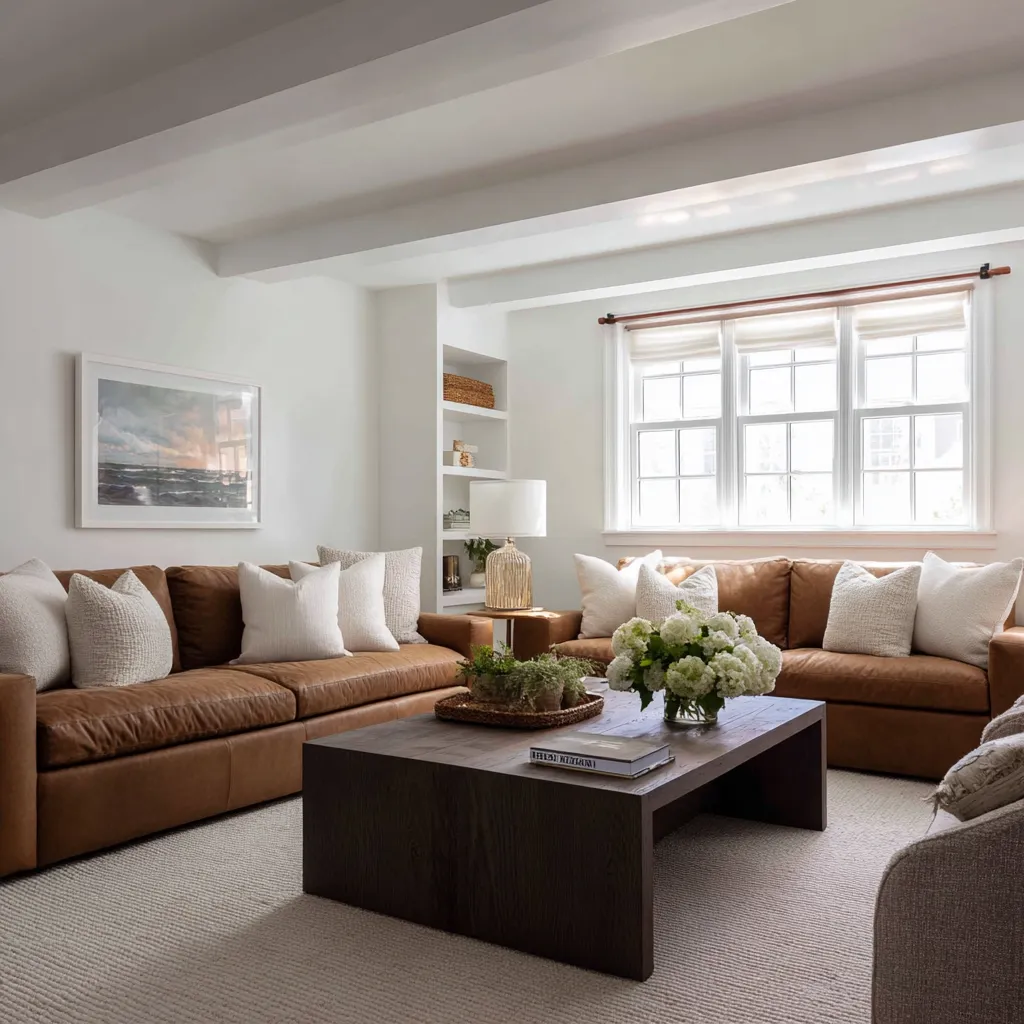
This matters because the shoreline in serious interiors is often represented through ecology rather than iconography. A vase of dry stems can bring in the coast more effectively than a bowl of shells.
A sparse branch arrangement can echo the shape of windswept growth near dunes or rocky edges. Feathery grasses can reinforce a slatted wall without repeating it too literally.
That kind of botanical restraint also supports the room’s editing. It contributes to atmosphere instead of becoming decorative noise.
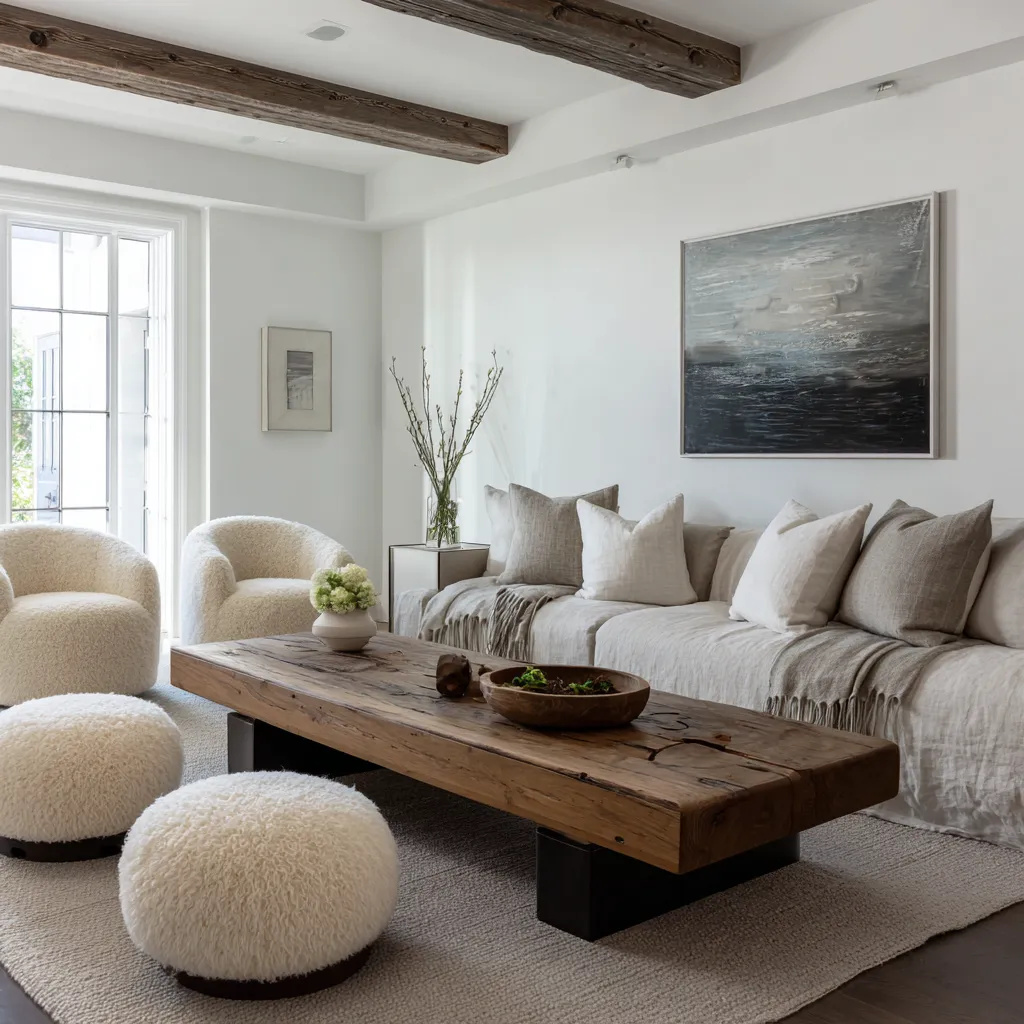
Warmth belongs in coastal design when it comes from the right source
A coastal living room does not have to remain in icy whites and watery blues. Warmth can be extremely effective, provided it feels shoreline-based rather than imported from another style vocabulary.
The right warm tones tend to come from dunes, dry grasses, oxidized metal, late sun on sand, driftwood with amber undertones, marsh browns, weathered cedar, sediment, clay-rich shoreline earth, or old rope darkened by use. These are very different from sugary coral accents or brightly cheerful resort colors.
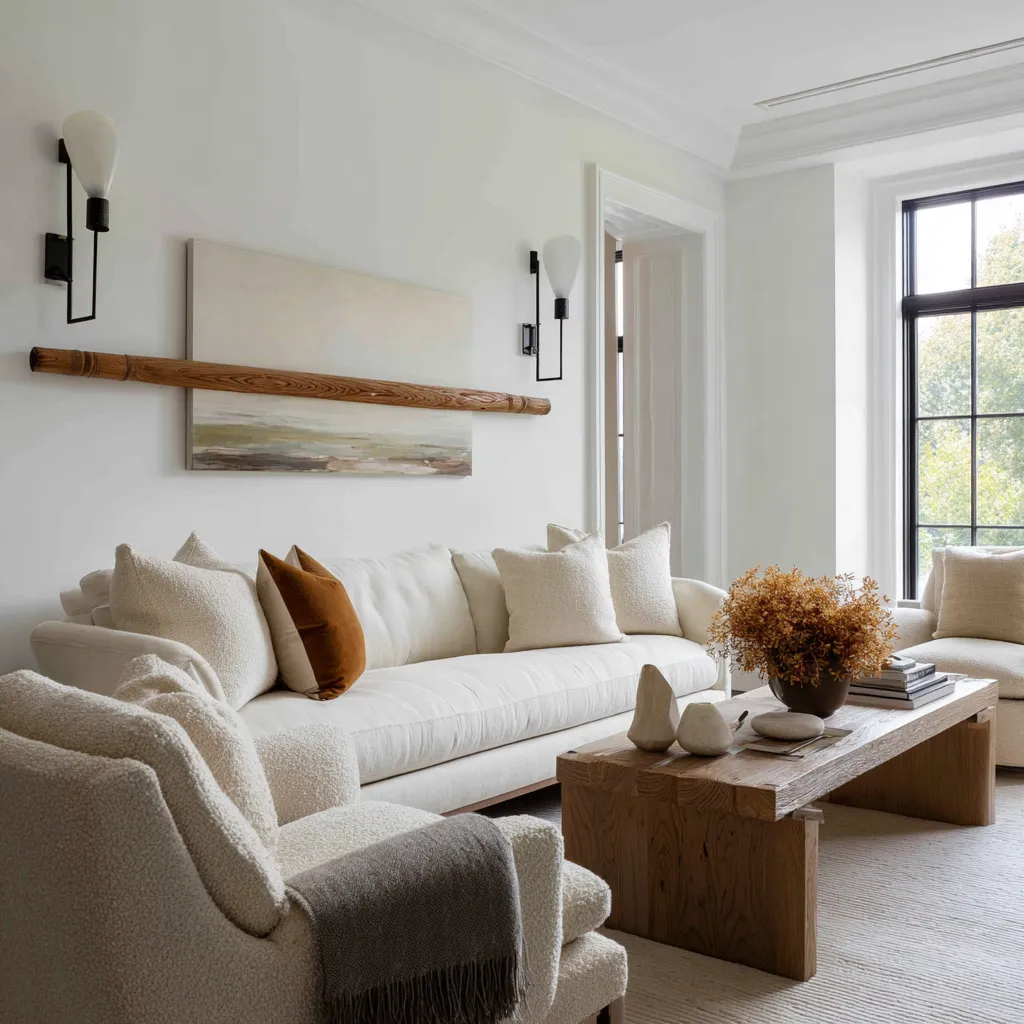
That is why rust-brown pillows, caramel leather chairs, amber glass objects, and warm wood masses can all work beautifully in a coastal room. They shift the room away from a chilled summer stereotype and toward a broader reading of the shoreline.
They suggest late afternoon, autumn grass, harbor wear, winter dunes, or sun touching timber. Warmth also helps pale rooms avoid feeling too vaporous.
It gives them body. It helps connect upholstery to wood.
It often adds the note of land to rooms that might otherwise lean too heavily toward sky and air. The key is source.
Warmth should feel as though it came from the shoreline itself, not from a random attempt to make the room cozier.
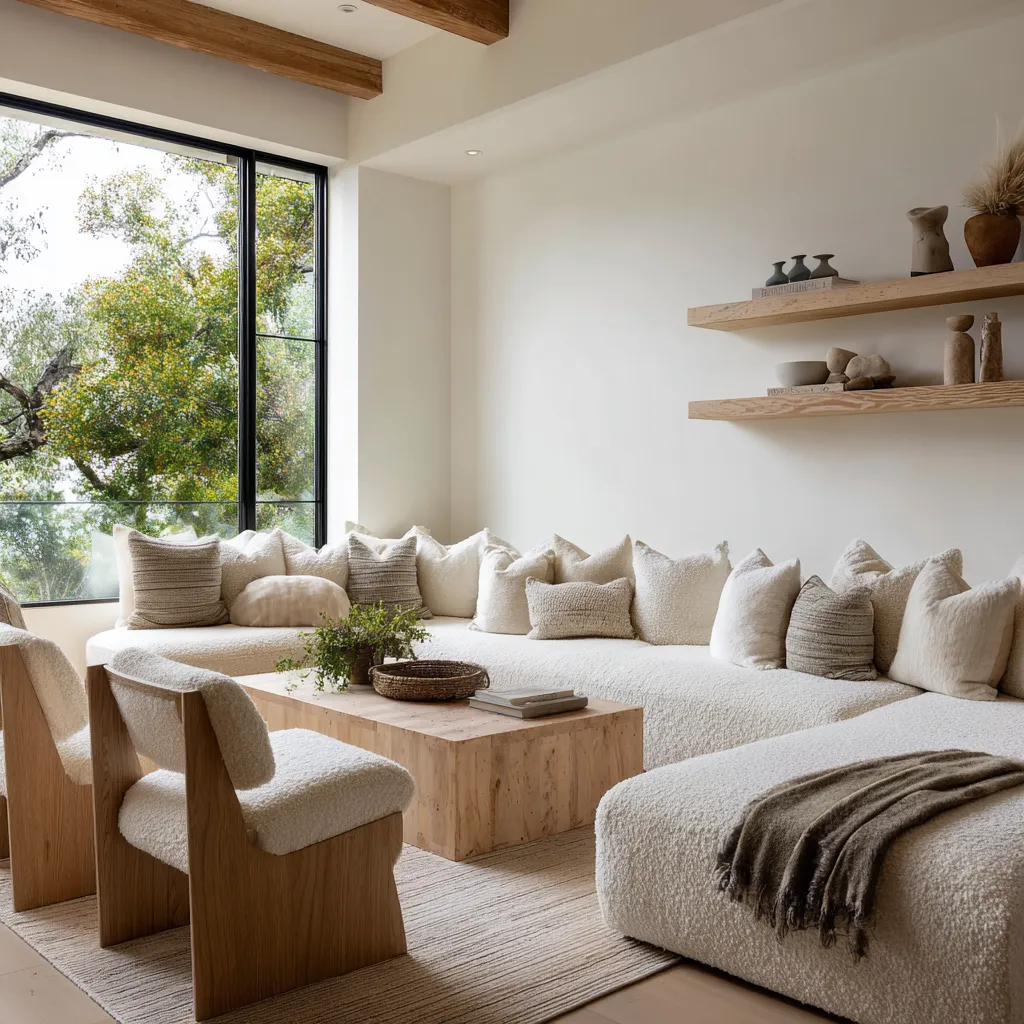
Dark ballast keeps pale coastal rooms from drifting away
A pale coastal room nearly always benefits from one darker anchoring note. Sometimes that note is a beam overhead.
Sometimes it is a low table in deep wood. Sometimes it is a black-framed window, a rail, a shelf, a set of dark floating ledges, a leather chair, or a hardware detail that gives the room a point of hold.
Without ballast, pale interiors can turn vague. They may still feel refined, but they lose their sense of mooring.
The coast is not only fog and washed textiles. It is also wet timber, harbor shadow, metal fittings, dark water, storm light, pilings, and weathered boards.
A room needs some small recognition of that depth.
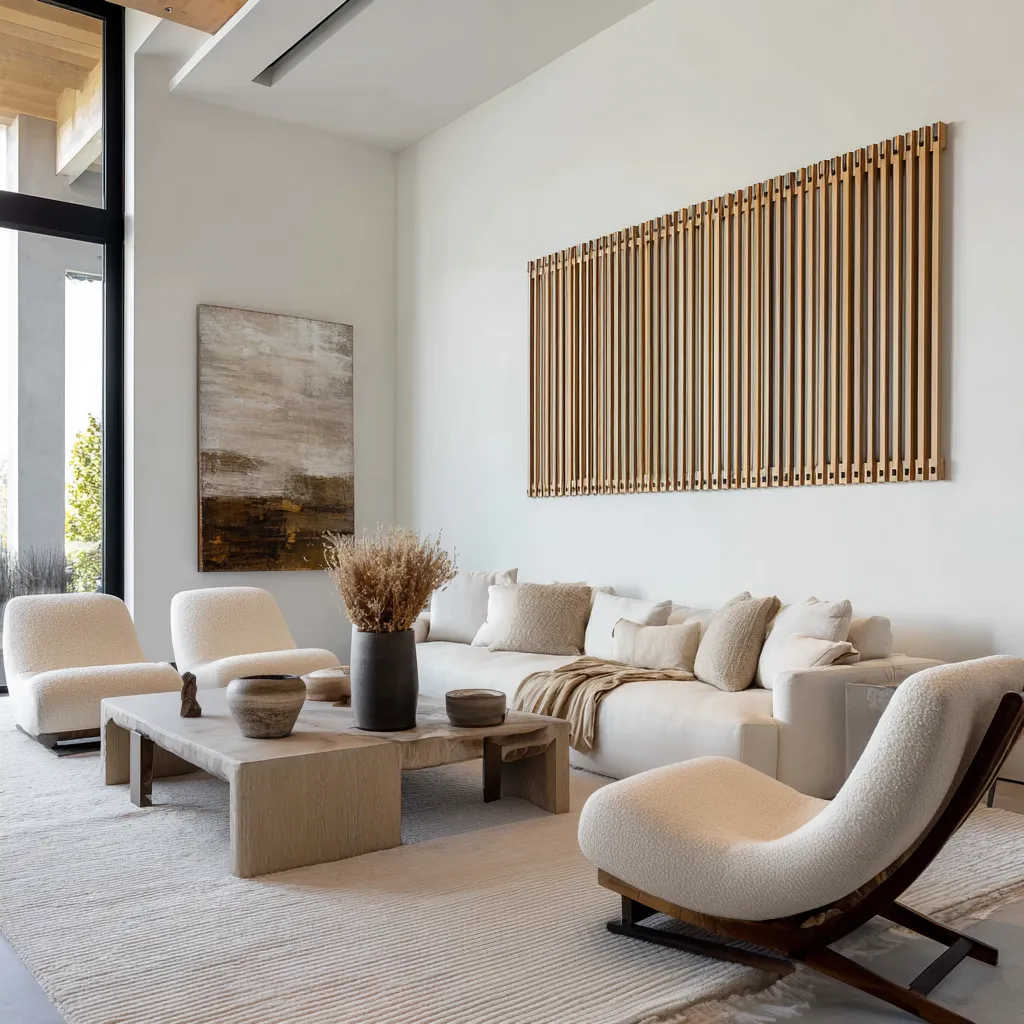
Dark ballast is especially useful because it clarifies the role of light. Once the room contains one or two denser notes, the softer surfaces around them appear brighter and more dimensional.
Pale upholstery looks more atmospheric next to dark wood. Bleached planks look more nuanced next to a black firebox.
A washed horizon painting feels more convincing when a deeper table below gives it a grounded counterpart. This is one of the quiet structural truths of coastal living-room design.
Softness becomes more believable when something sturdier holds it in place.
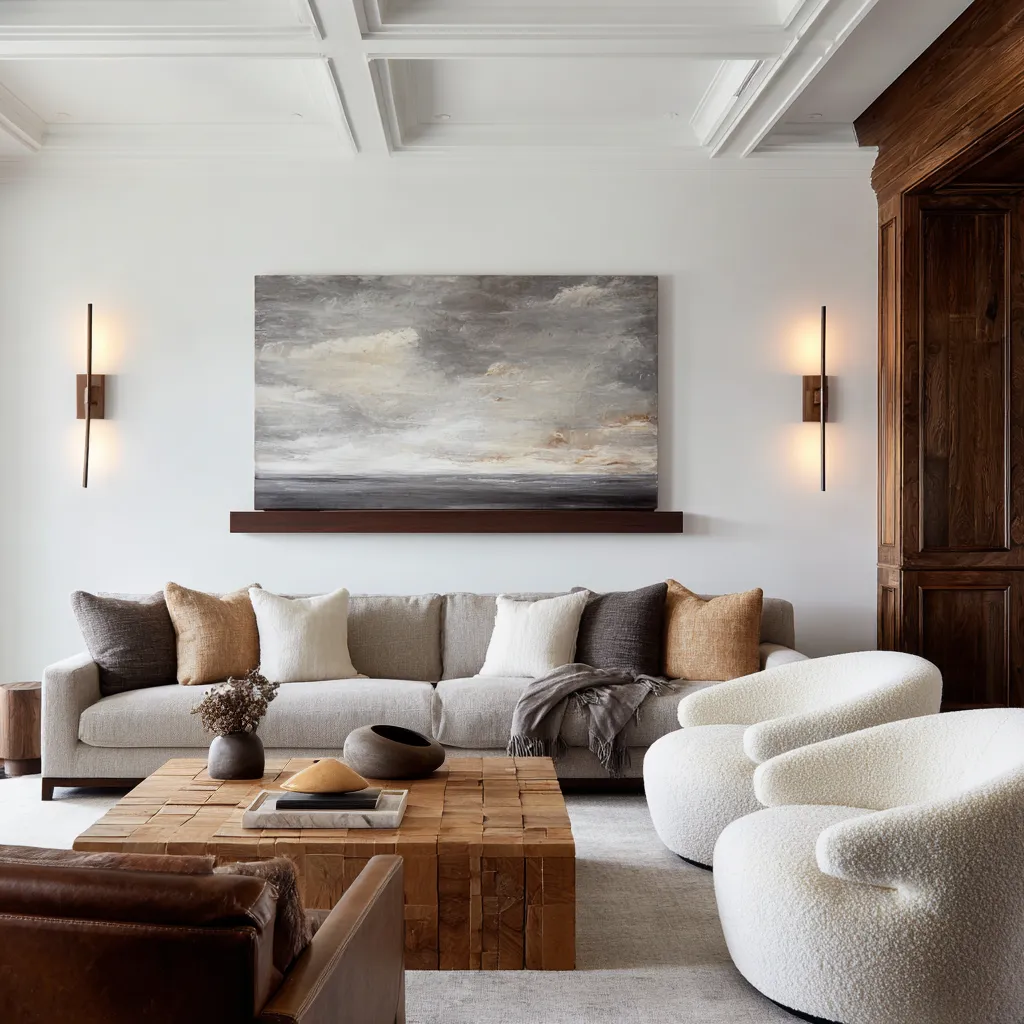
Architecture now carries more of the coastal idea than decor does
A noticeable shift in current coastal interiors is that the shoreline is increasingly expressed through construction and surfaces rather than through accessories. Instead of asking art and styling to do all the thematic work, the room itself begins to carry the coastal identity.
This can happen through ceiling boards, pale beams, slatted fireplace faces, vertically clad accent walls, floating shelves that act like horizon lines, deep window seats, plank fields behind the sofa, integrated rail details, and wood surfaces that feel sun-faded or wind-touched. When these elements are built into the room, the coastal note feels more settled.
It does not feel applied after the fact.
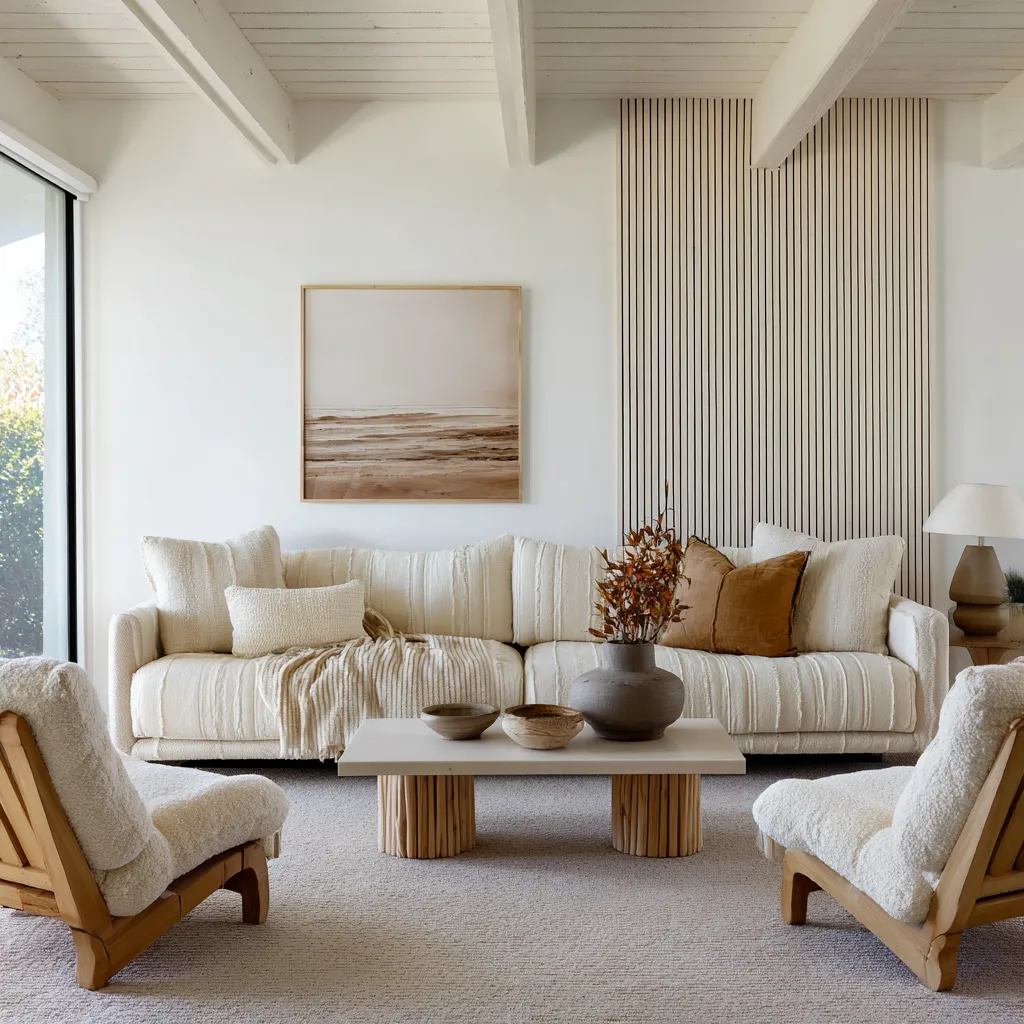
That shift has several advantages. It reduces clutter.
It lowers the risk of cliché. It gives the room more permanence.
It allows accessories to remain quiet because the architecture is already speaking. Most of all, it makes the room feel shaped by shoreline life rather than merely decorated in reference to it.
This is why a living room with a slatted fireplace wall, a pale beamed ceiling, and one atmospheric artwork can feel more deeply coastal than another room filled with explicitly seaside decor. The first room has absorbed the coast into its bones.
The second is still presenting it on the surface.
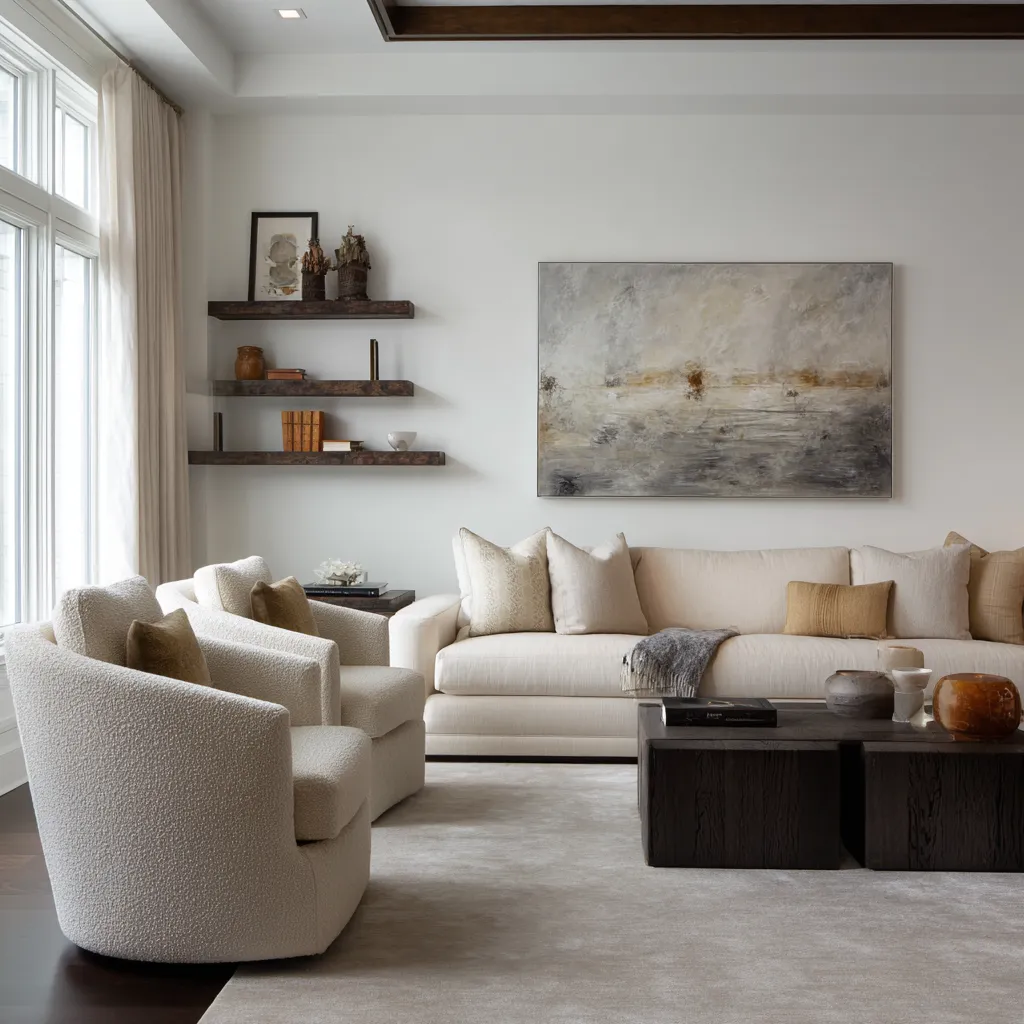
How to build a contemporary coastal living room with depth
A useful approach is to think in layers, but not decorative layers in the usual sense. Think of the room as needing three kinds of content.
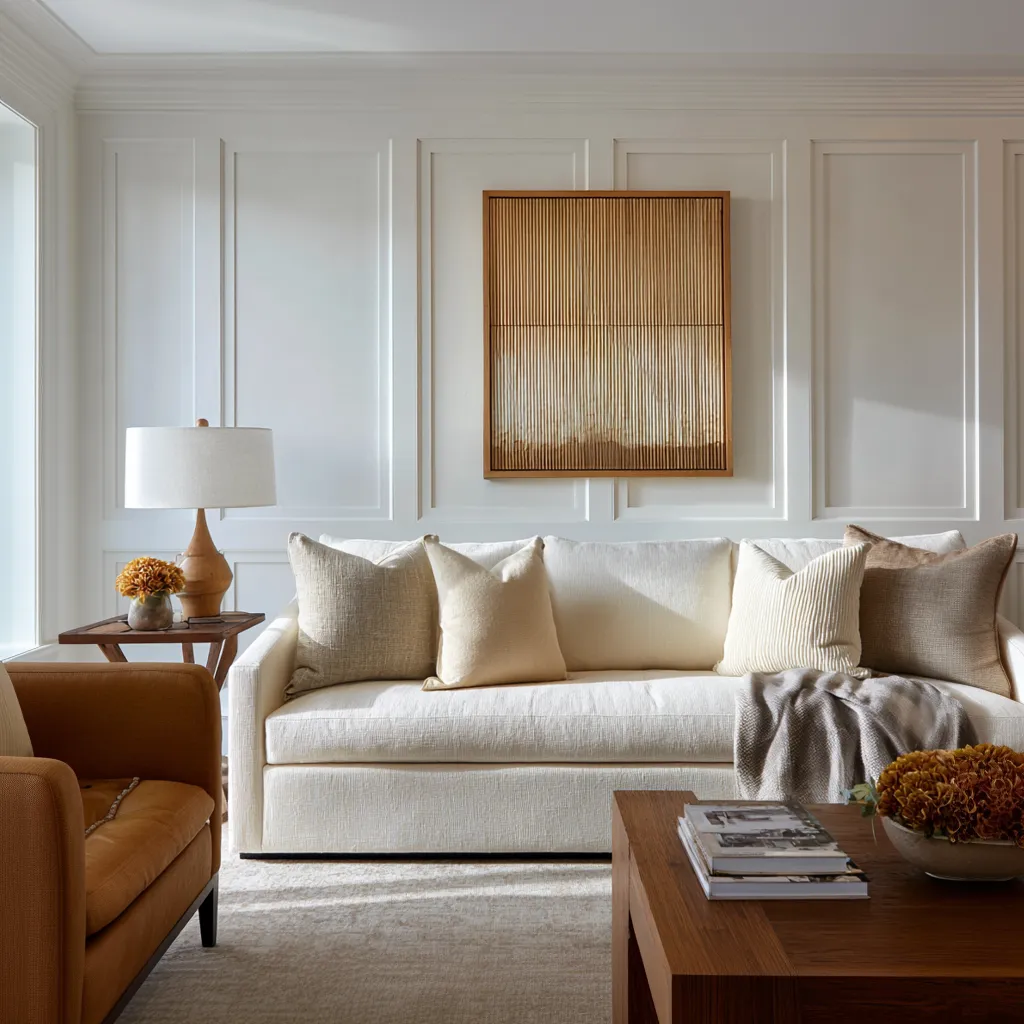
The first is atmosphere. This is where pale tactile layering belongs: washed linen-like upholstery, sand and shell tones, close-value pillows, diffused daylight, and softened surfaces.
This creates openness and climate.
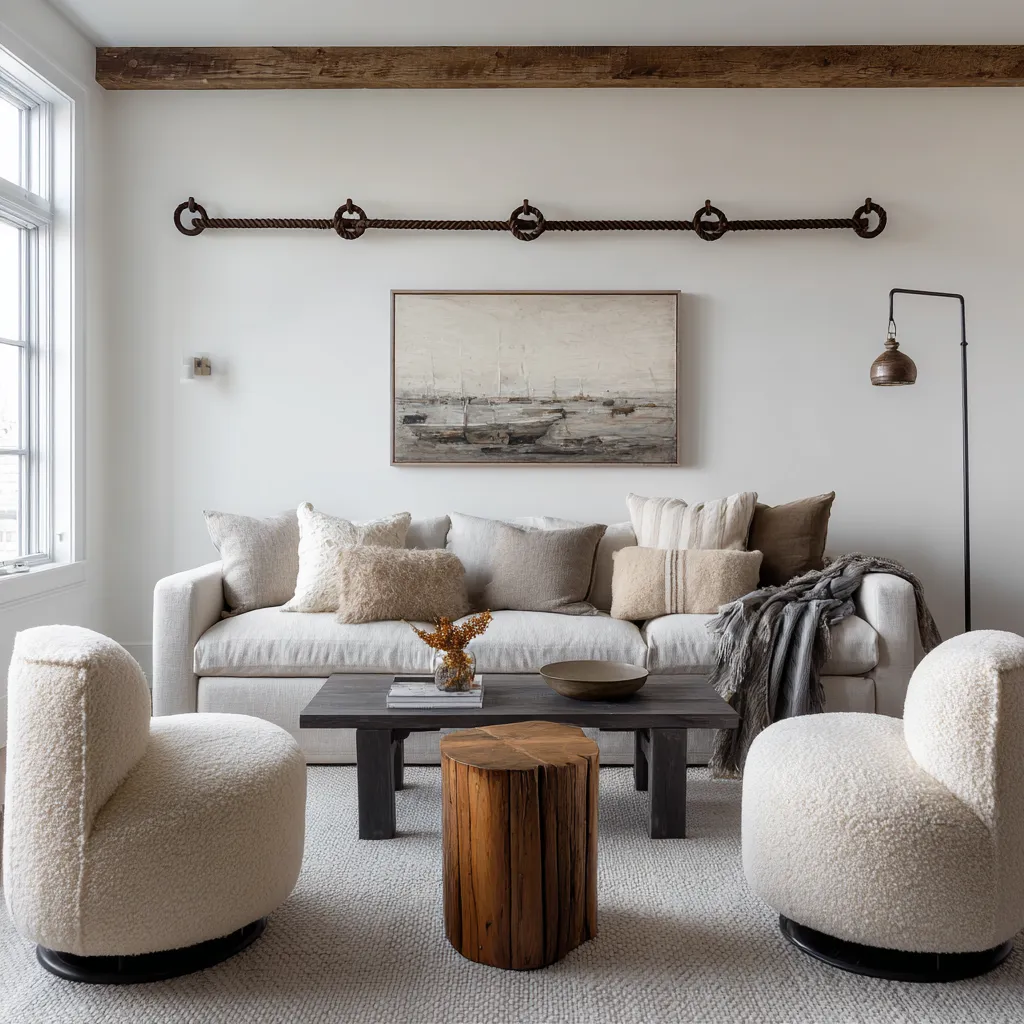
The second is infrastructure. This is where the room gains substance: reclaimed or aged timber, beams, dark tables, slatted fields, rails, fireplace cladding, black window framing, or one carefully placed working-waterfront element.
This creates use-history, shelter, and specificity. The third is restraint.
Restraint determines whether the first two layers remain sharp or collapse into overstatement. It decides how much wall stays open, how many accessories are allowed, how often a reference repeats, and whether the room feels collected or crowded.
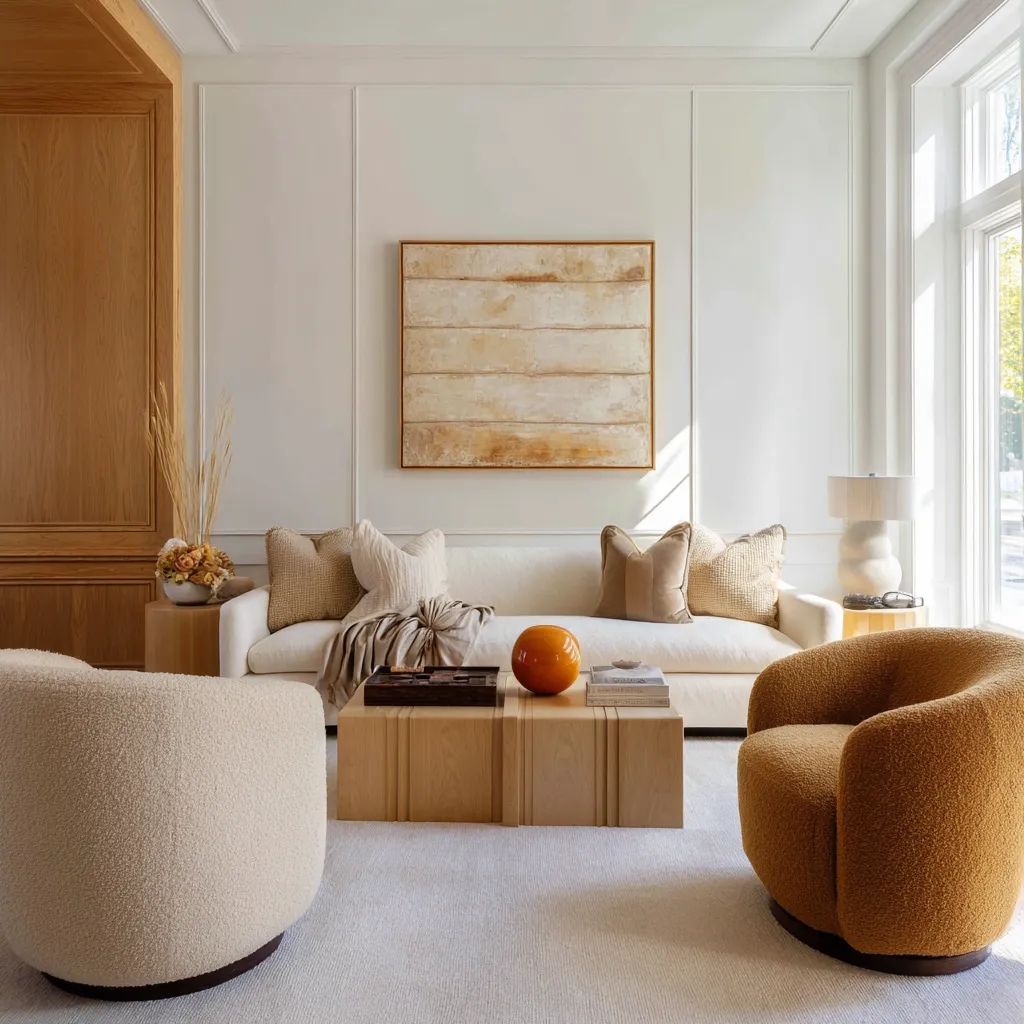
Once these three parts are in balance, the room becomes much easier to shape. The coast begins to appear in a way that feels natural.
Pale materials stop feeling generic because wood, rhythm, and ballast have given them a place. Darker elements stop feeling heavy because light and air soften them.
One marine-adjacent gesture can feel intelligent because the room has not surrounded it with supporting clichés. That balance is what gives the room a present-day coastal identity.
What to avoid if you want the room to stay current
The way to flatten a coastal living room is to over-explain it. Repeating the same reference in several forms weakens the room.
A sailboat painting paired with rope objects, striped pillows, coral sculptures, navy accents, shells, and driftwood signs leaves little for the eye to interpret. Everything becomes too literal.
It also helps to be careful with texture that has no directional link to the shoreline. Boucle, for example, can be useful, but it does not automatically make a room coastal.
It needs company: weathered wood, horizon logic, dry vegetation, black framing, or reed-like rhythm. Otherwise it remains simply a current upholstery texture.
The same is true of pale walls and abundant daylight. Both are helpful, but neither proves the room belongs to the shore.
They need a carrier with more memory and more edge.
Another common mistake is treating coastal style as permanently summery. Some of the richest rooms pull from winter shoreline tones, late-season marsh color, fog, overcast water, dried stems, and darker timber.
These rooms feel broader and more believable because they acknowledge that coastal life changes with season and weather.
The future of coastal living rooms looks less decorative and more structural
Interesting coastal living room ideas now appear to be moving away from coast as image and toward coast as construction. That does not mean art disappears.
It means art no longer has to carry the entire burden. The room itself begins to participate more fully through cladding, slats, beams, ledges, integrated rhythm, and material honesty.
That is a useful direction because it allows coastal design to grow up. It becomes less dependent on recognition and more dependent on atmosphere, proportion, and memory.
It can speak about the shoreline without performing it. It can suggest dunes through color, marsh through vertical rhythm, harbor wear through hardware, and open air through negative space.
In that kind of room, the coast remains present even when no one is naming it.
Final thoughts
The compelling contemporary beach coastal living room ideas do not ask the sea to appear in literal form at every turn. They ask something quieter and more substantial from the shoreline.
They borrow its long lines, its repeated reeds, its pale air, its dark anchors, its weathered timber, its dry plant life, its exposure, and its need for shelter.
That is why these rooms can feel so connected to place even when they are highly restrained. They understand that the coast is not only a visual theme.
It is a material condition. It is a set of edges, surfaces, and atmospheres shaped by time.
Designing with that in mind leads to a very different kind of coastal room. One that feels held together by structure rather than props.
One that uses blank wall as air, timber as memory, slats as edge, light as climate, and one strong gesture instead of many small reminders.
In the end, that is what gives contemporary coastal design its depth. It does not imitate shoreline life from the outside.
It lets the room feel as though shoreline life has already passed through it.