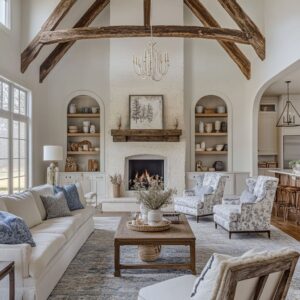
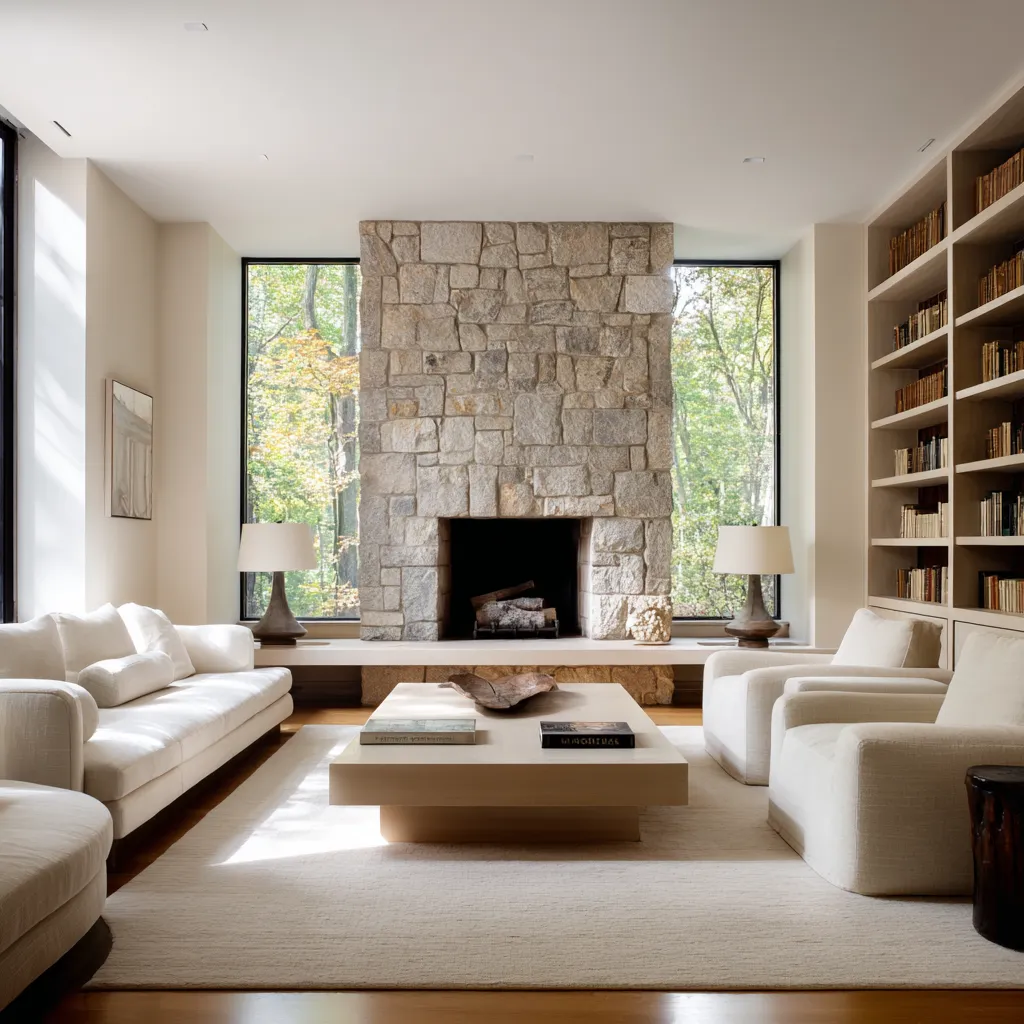
Cozy English country living rooms are remembered not simply because they look charming, but because they make comfort feel built into the room. The lasting appeal of this style does not come only from cushions, florals, antiques, warm lamps, or collected accessories, even though those elements may appear in it.
Its real strength is that the room often feels reassuring before the decorative layer is fully added.
English country living room designs can teach so much about coziness in interior design. They show that comfort is not only a matter of soft fabric or warm color.
It can come from a deep window recess that creates a place to sit, from a fireplace with enough mass to steady the room, from shelves and benches that make the edges of the space usable, and from the quiet balance between rougher materials and yielding surfaces. In other words, the room does not feel cozy because it has been filled up.
It feels cozy because it has been shaped to hold daily life well.
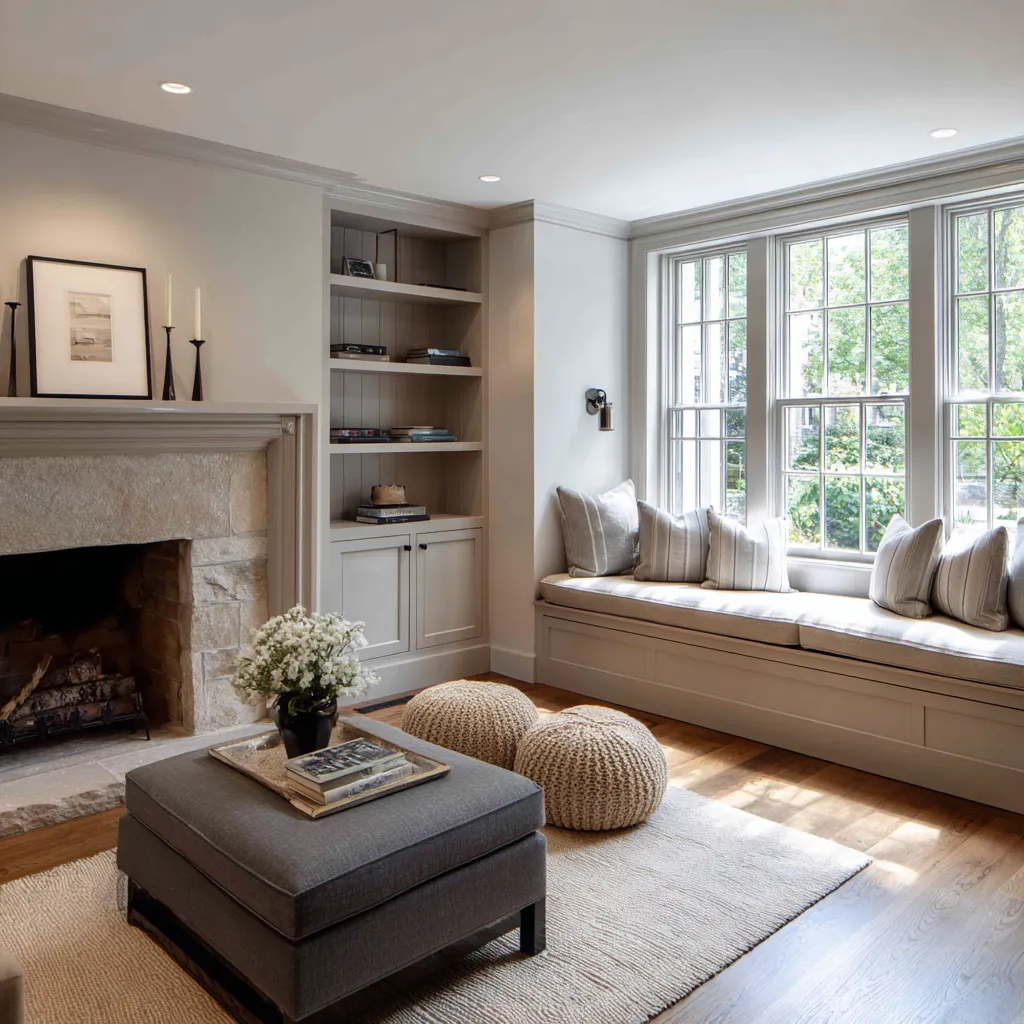
Seen that way, English country style becomes much more than a familiar decorative mood. It becomes a lesson in how interiors create emotional security.
It explains why a room with only a few objects can still feel rich, settled, and welcoming, while another room with far more styling may still feel thin. One is built around shelter, depth, and nearness.
The other is built around appearance.
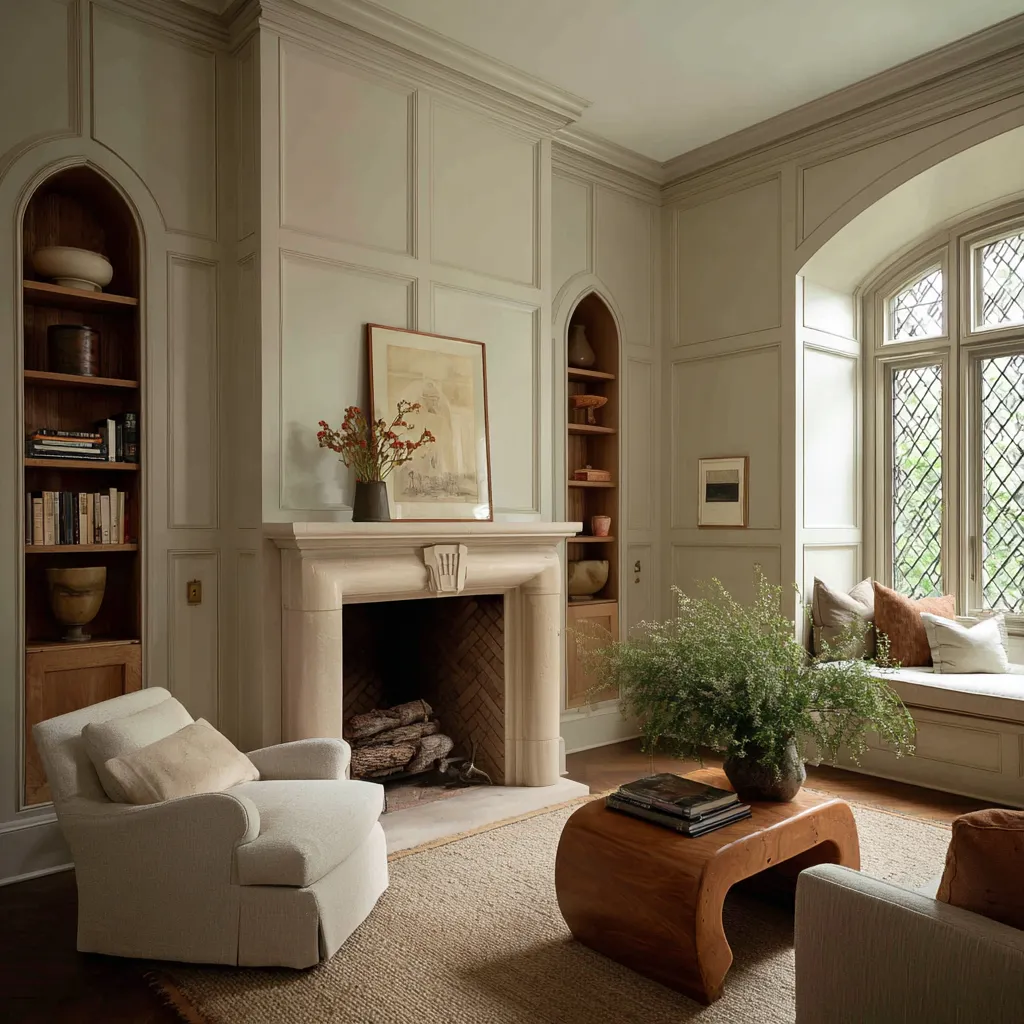
Coziness is a spatial condition
English country rooms often create comfort through what might be called nested refuge. A large room still contains smaller zones inside it.
A thick wall contains a seat. A fireplace wall contains a dark inner chamber.
A bookcase sits inside a recess. A window becomes a nook rather than a sheet of glass.
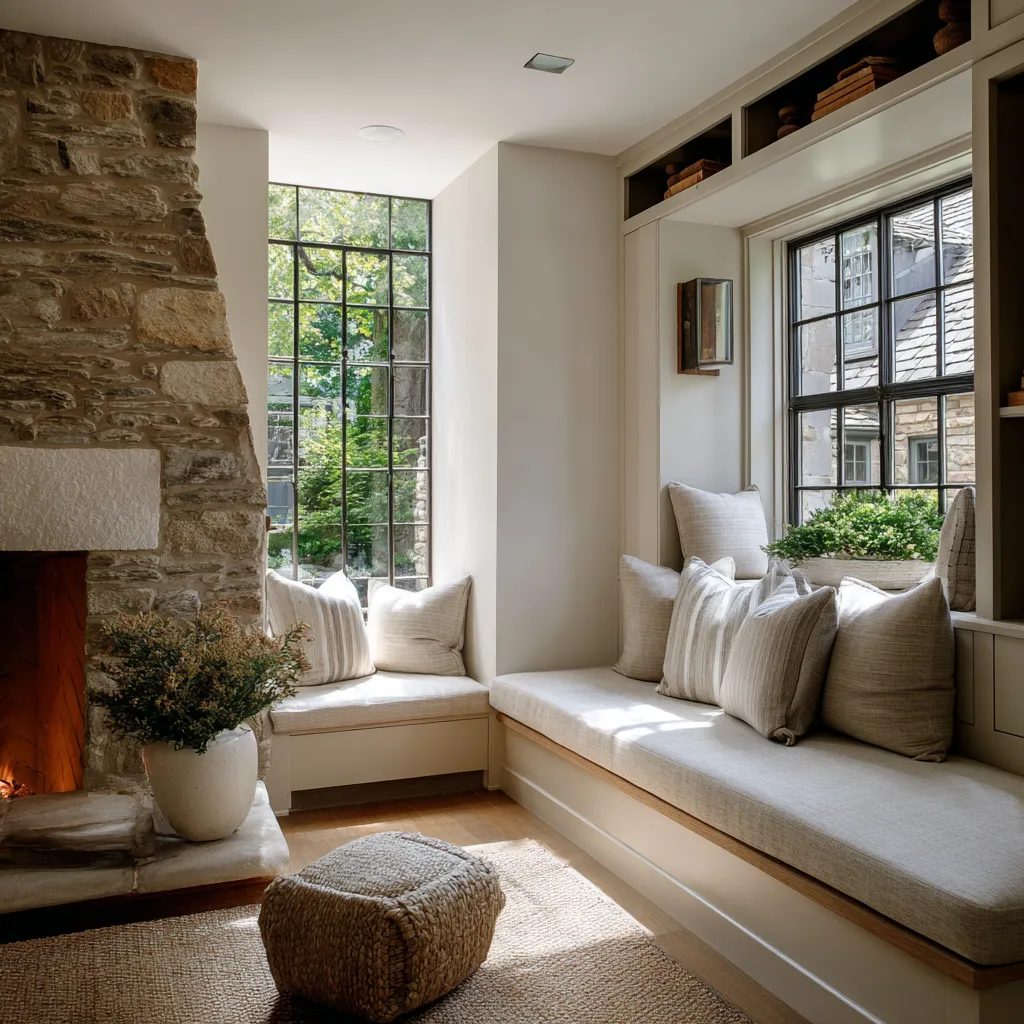
A bench runs along a bay so the edge of the room becomes usable rather than merely visible.
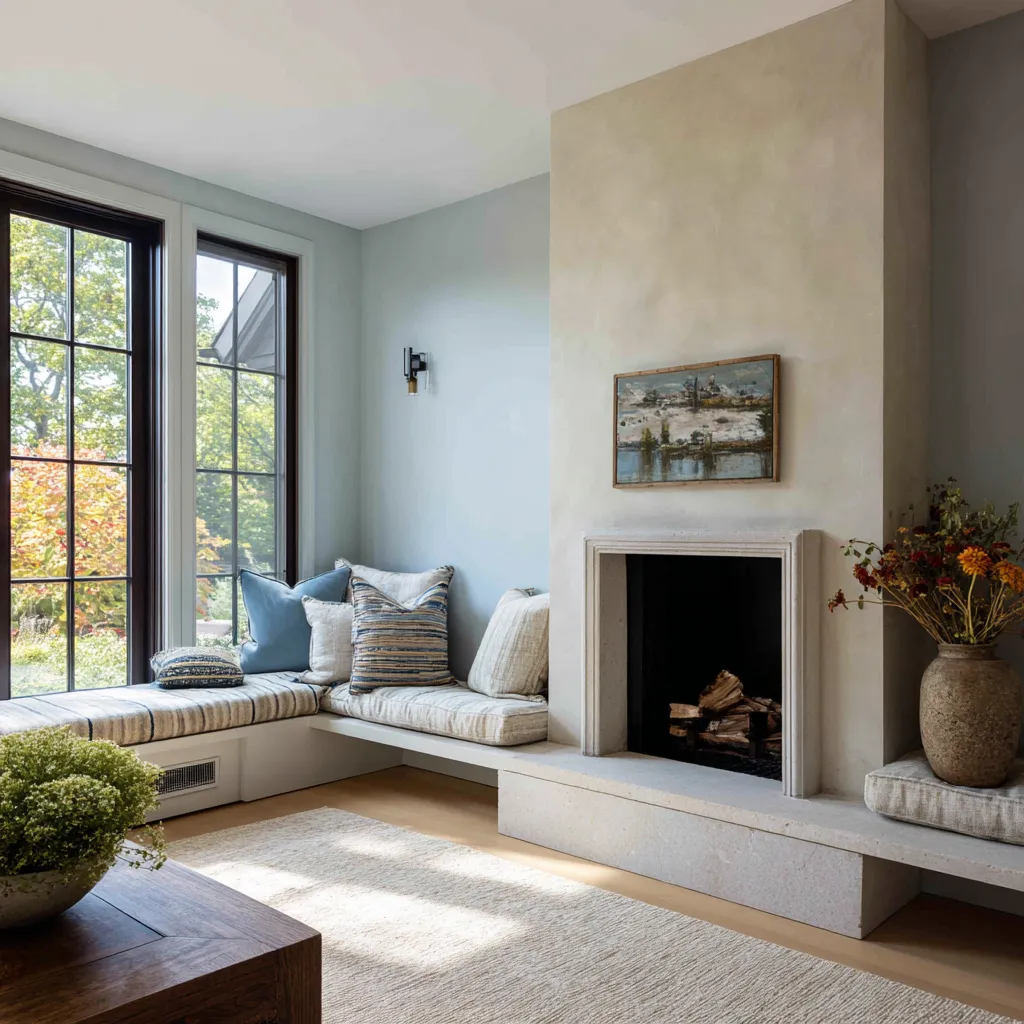
Such interior designs can feel emotionally rich even when the palette is restrained and the objects are few. The architecture is already giving scale, pause, and bodily invitation.
You do not merely look at the room. You can imagine where to sit, where to lean, where to place a cup, where to look out in the afternoon, where to read in winter, where to gather near the fire.
The arrangement suggests use with unusual clarity.
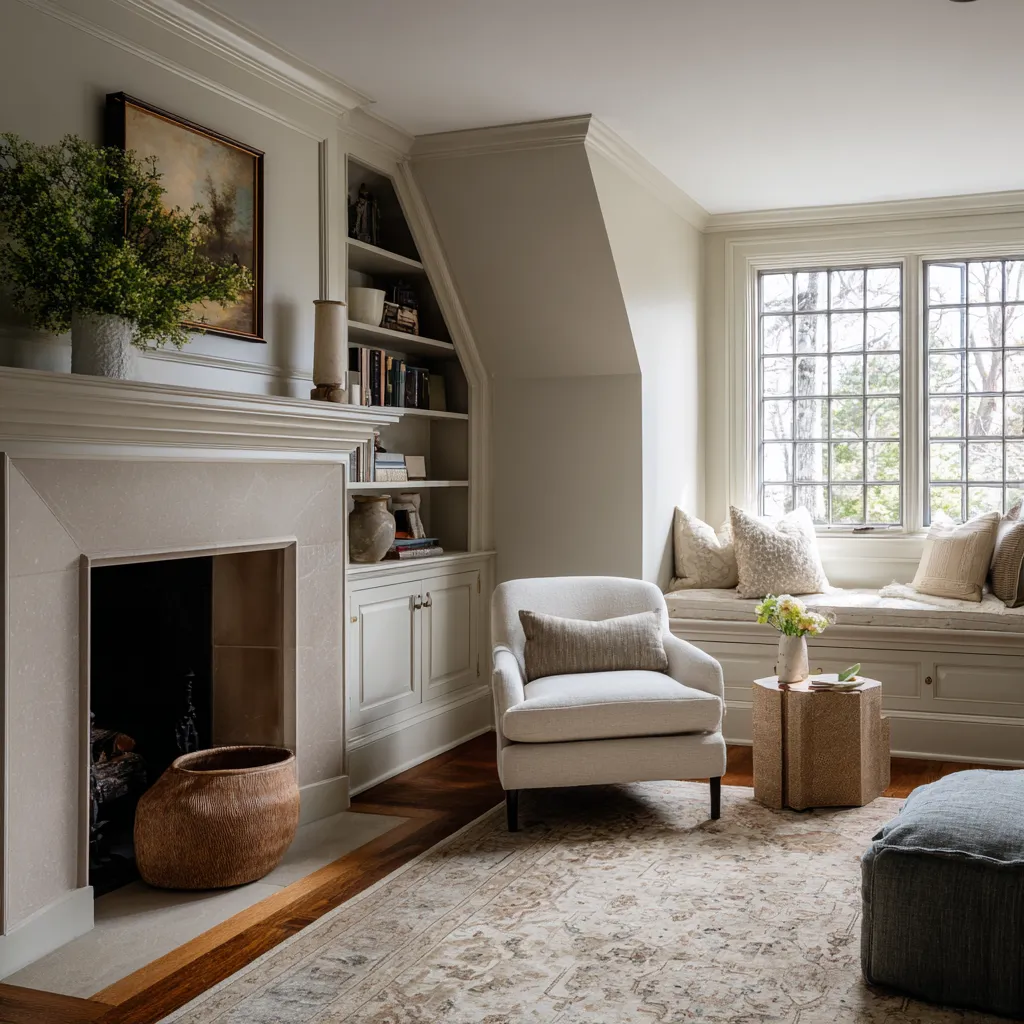
That is one of the ideas that English country style offers to interior design more broadly: a room becomes cozy when its boundaries begin to participate in living. The edges stop acting like background and begin acting like places.
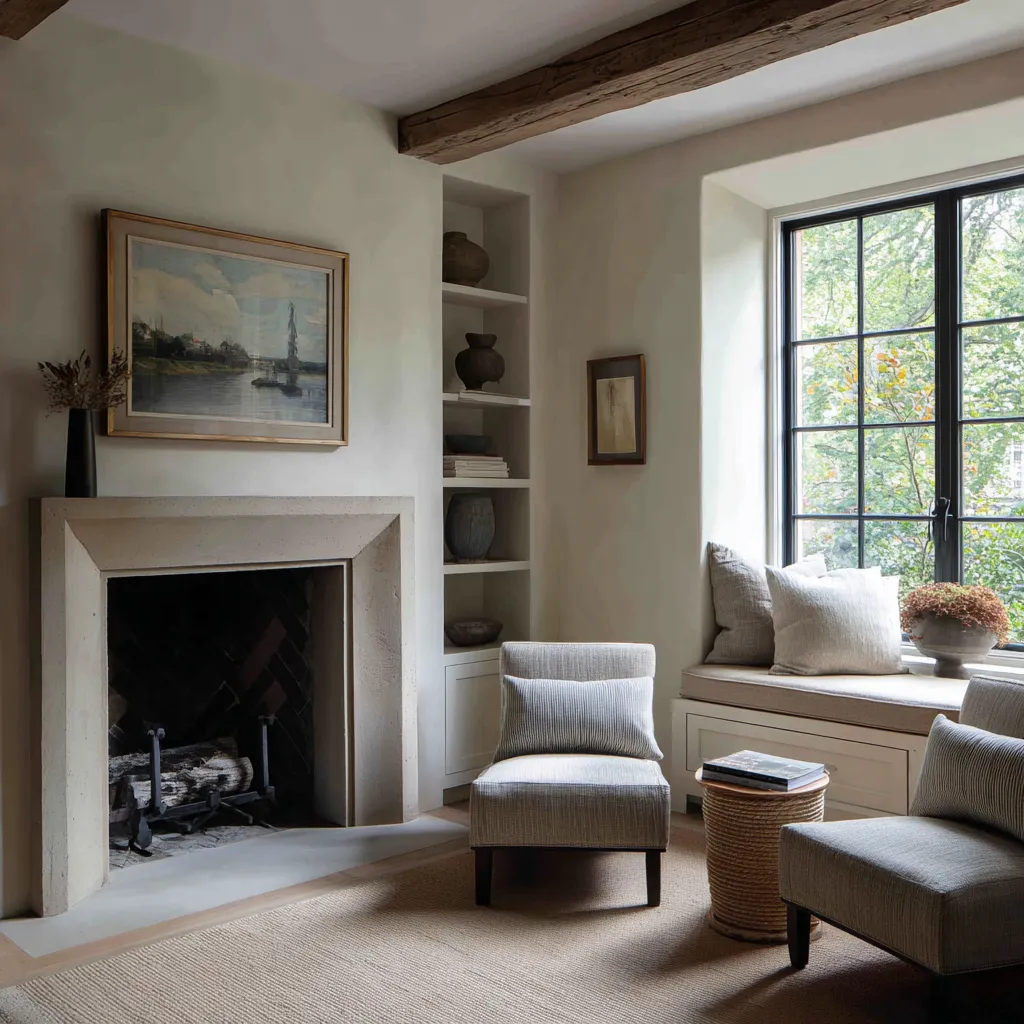
Why the perimeter matters more than the middle
Many living rooms are designed from the center outward. The main sofa, the large coffee table, the statement rug, the central pendant, the decorative focal point.
English country interiro designs often work in the opposite direction. Their emotional depth is built at the perimeter.
- The window seat matters more than the center table.
- The shelves beside the hearth matter more than the decorative tray.
- The alcove chair matters more than the styled ottoman.
- The ledge near the fire matters more than the art arrangement.
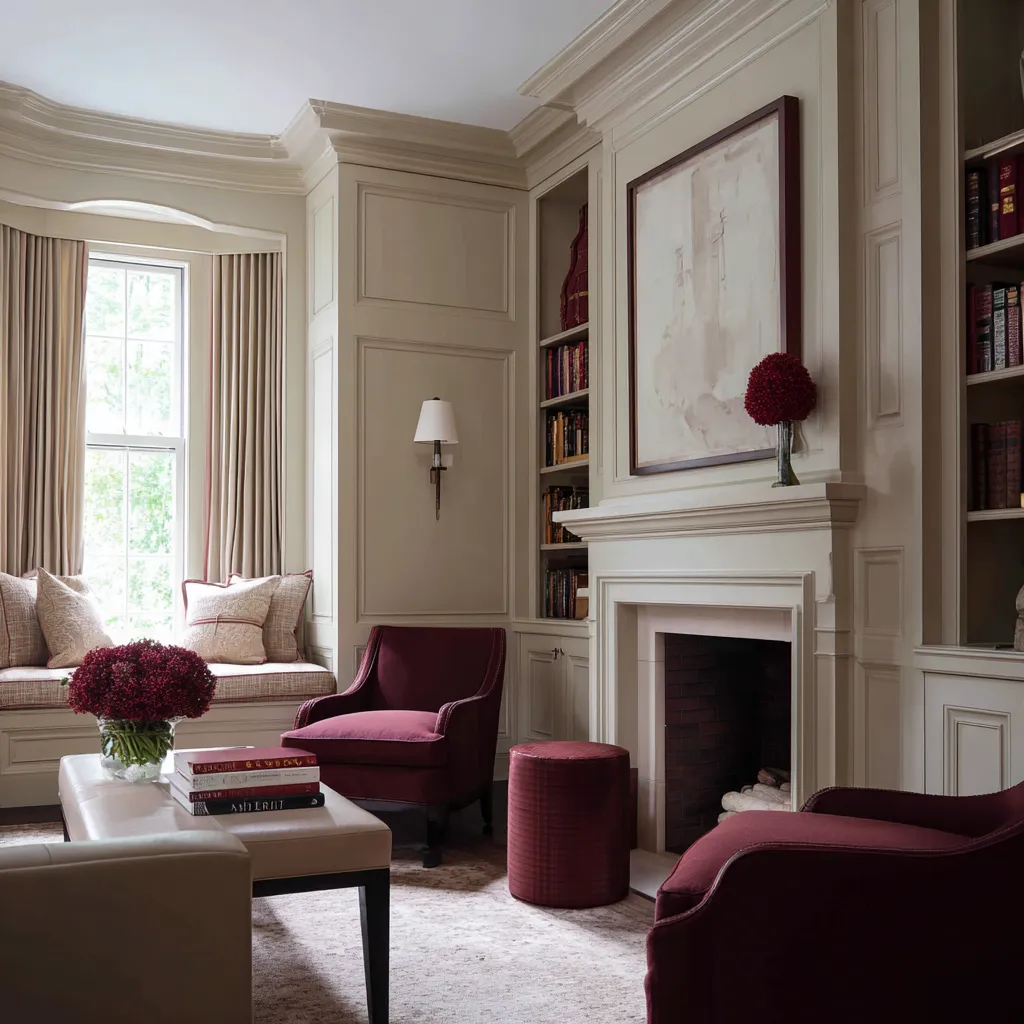
The center is often simpler. A rug, a table, a conversation grouping, perhaps one floral arrangement.
The richer forms of comfort happen at the sides, where the room gives you small territories of use. That is why English country living rooms often feel layered without looking crowded.
Their richness is not piled into the middle. It is distributed into the room’s pockets.
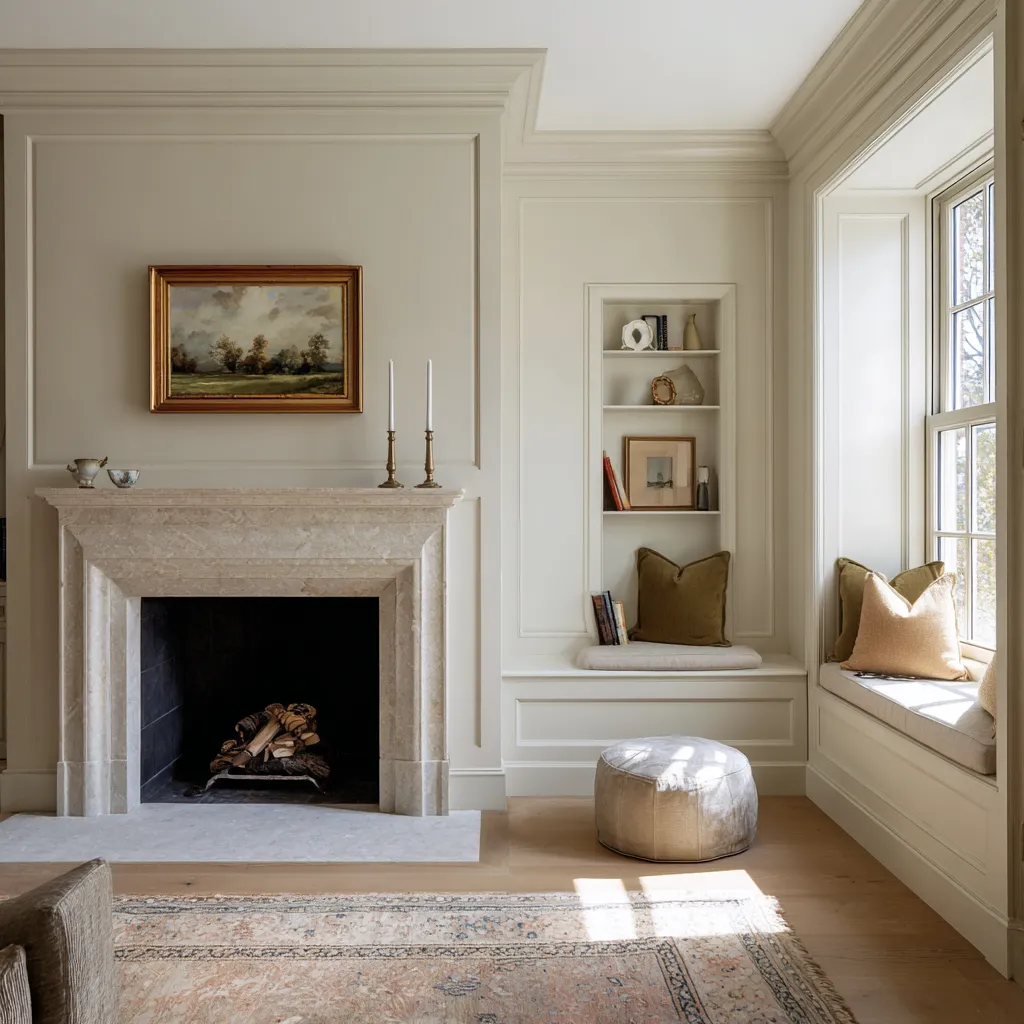
A built-in bench under a window does something a freestanding chair cannot. It uses the thickness of the house as comfort.
A shelf niche beside a chimney does something a loose bookcase cannot. It makes storage feel absorbed by the wall.
These gestures reduce visual noise, but they also increase emotional density. The room feels more settled because ordinary life appears to have been anticipated by the architecture.
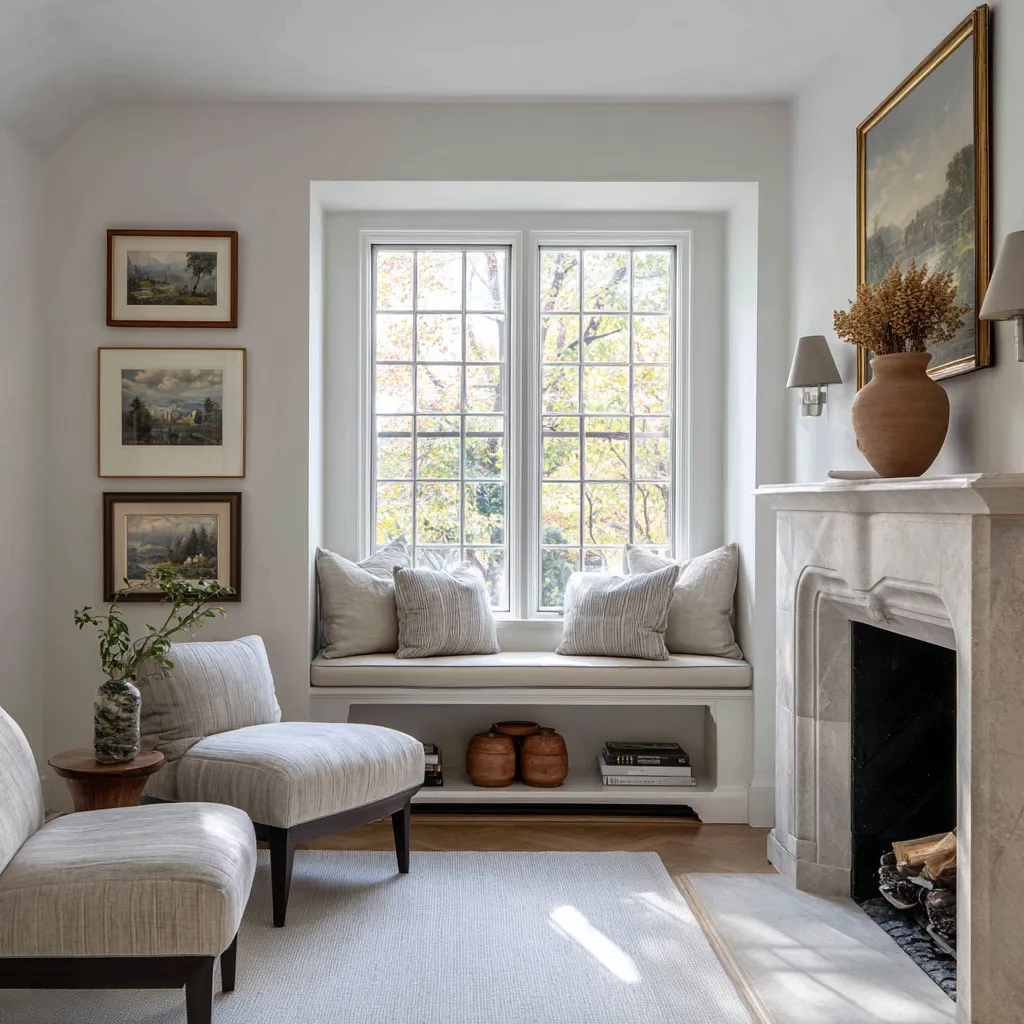
The hearth is not decoration. It is gravity.
English country living room designs depend on a hearth. That presence can take several forms.
It may be a rough stone chimney mass, a pale carved surround, a broad plastered opening, a deep black firebox, or a more reduced stone wall with a precise opening cut into it. The material and finish can vary.
The deeper requirement is weight. A cozy room usually needs one element that feels heavier than furniture and more permanent than styling.
The hearth provides that. It gives the room a center of gravity.
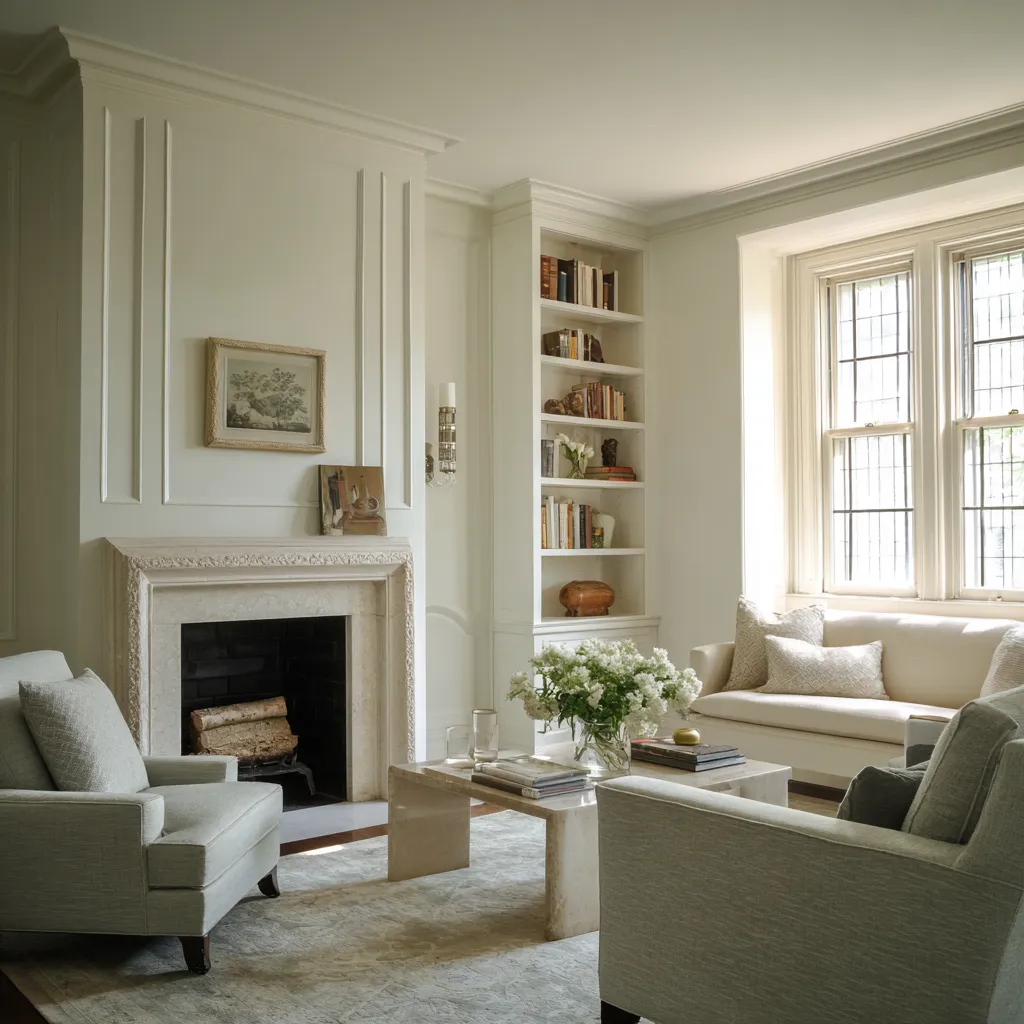
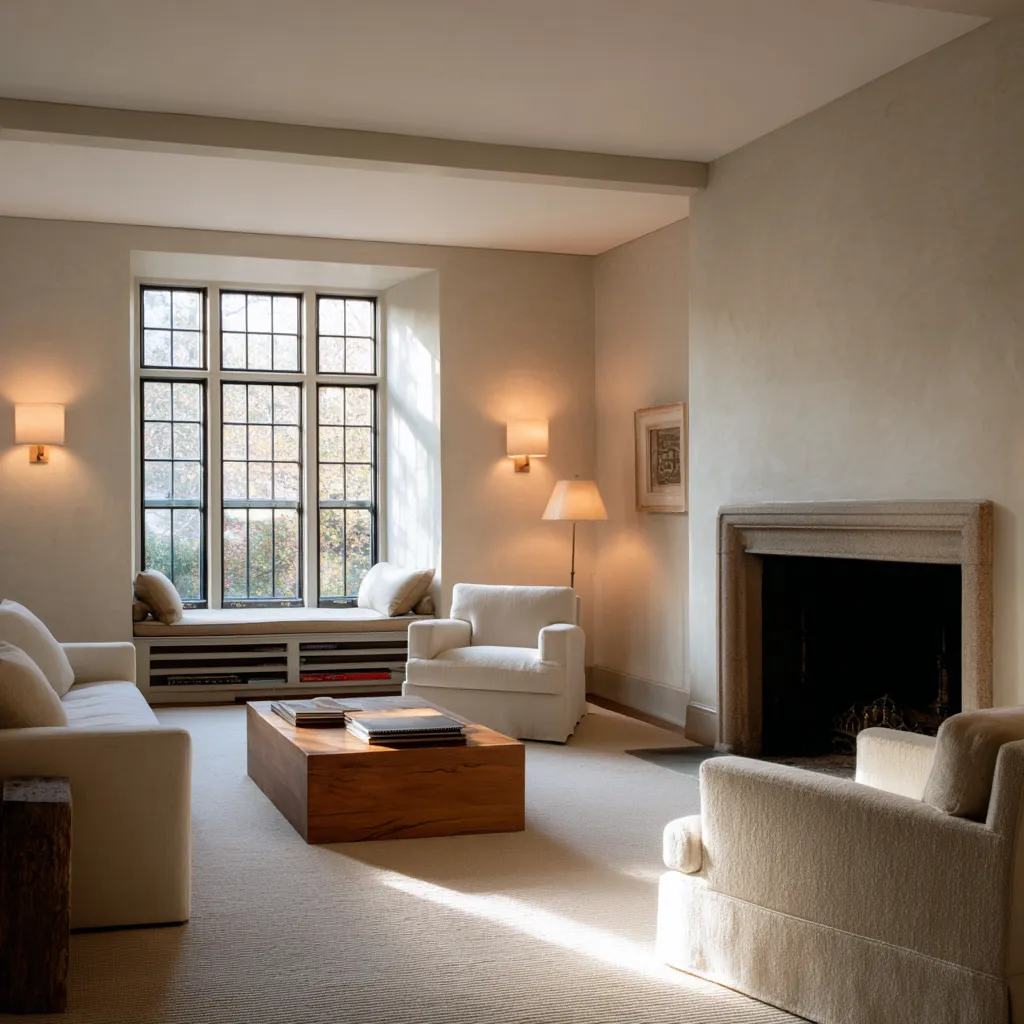
This is why pale country rooms still need darkness somewhere. A living room built entirely from cream, oat, soft gray, and filtered daylight can become pleasant yet emotionally thin unless it has one concentrated center of shadow.
The dark firebox, the charcoal lining, the recess inside the opening, or even a black-framed hearth edge gives the room depth. That depth keeps pale tones from drifting into vagueness.
It supplies anchor, focus, and a sense of inward pull.
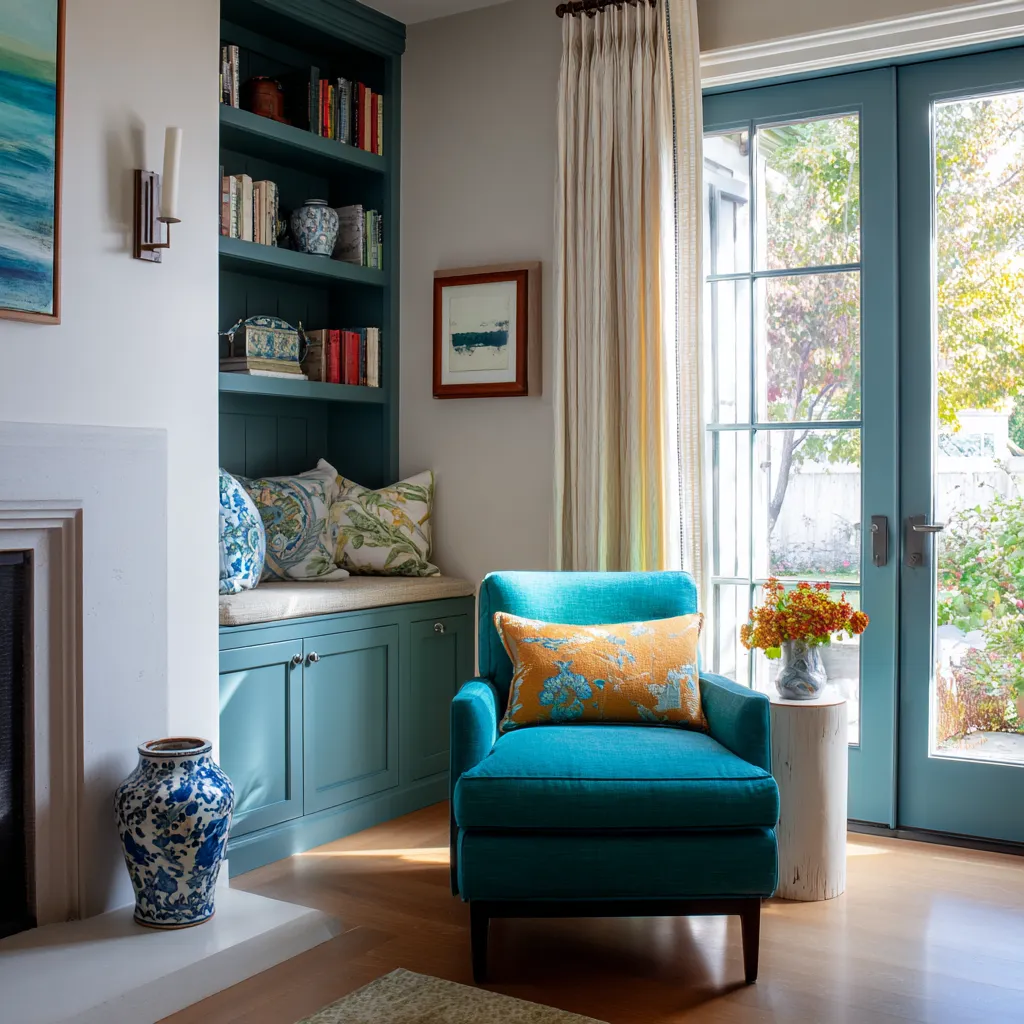
In English country interior ideas, the fireplace also does something more subtle. It makes the design feel older than the furniture.
That is important. Cozy feeling often improves when the room appears to have existed before the present arrangement and will remain convincing after it changes.
The hearth carries that sense of permanence.
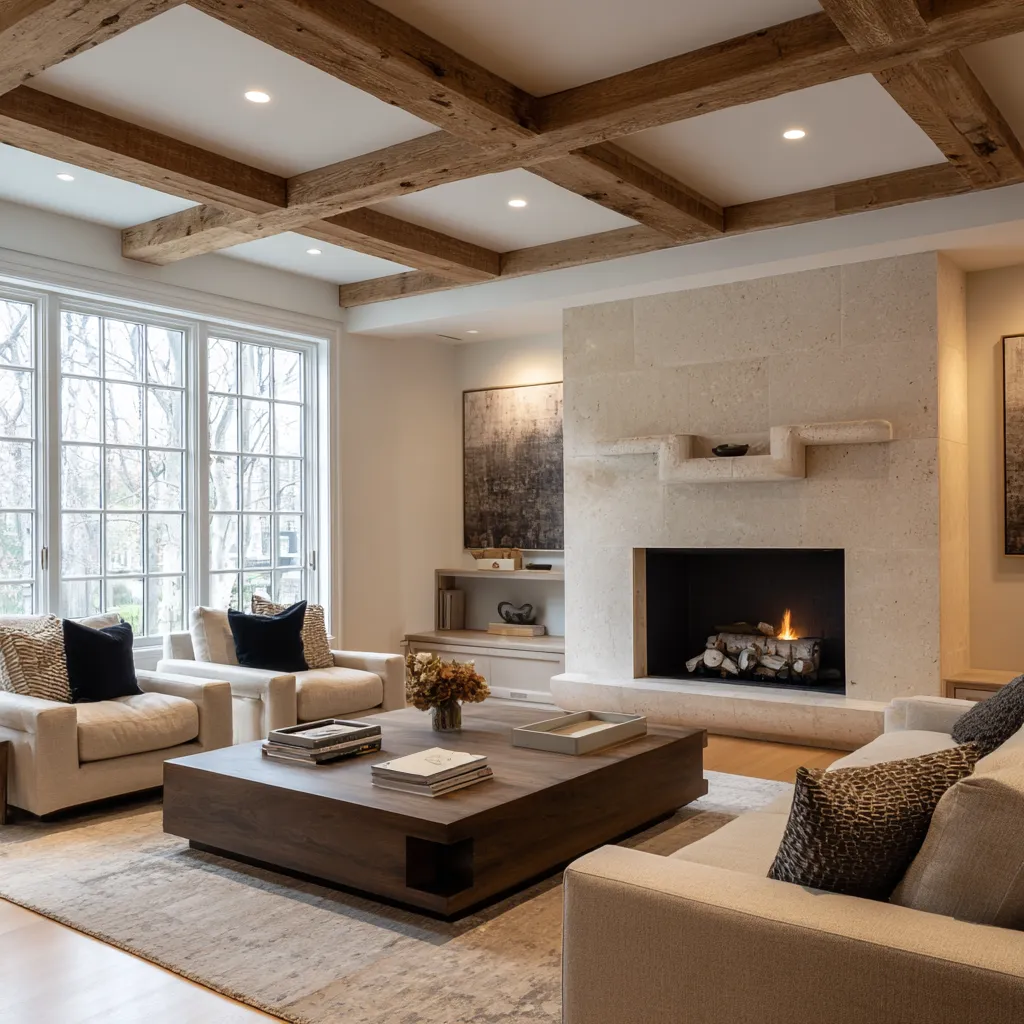
The value of stone, timber, and plaster
There is a common mistake in cozy design: treating rough material as if roughness alone produces warmth. English country rooms suggest something more precise.
Stone does not become emotionally effective because it is rugged. It becomes effective because it sits next to softness.
- A stone chimney beside a pale chair.
- A timber beam above a linen sofa.
- A plaster wall beside a deep bench cushion.
- A woven rug below a broad fireplace mass.
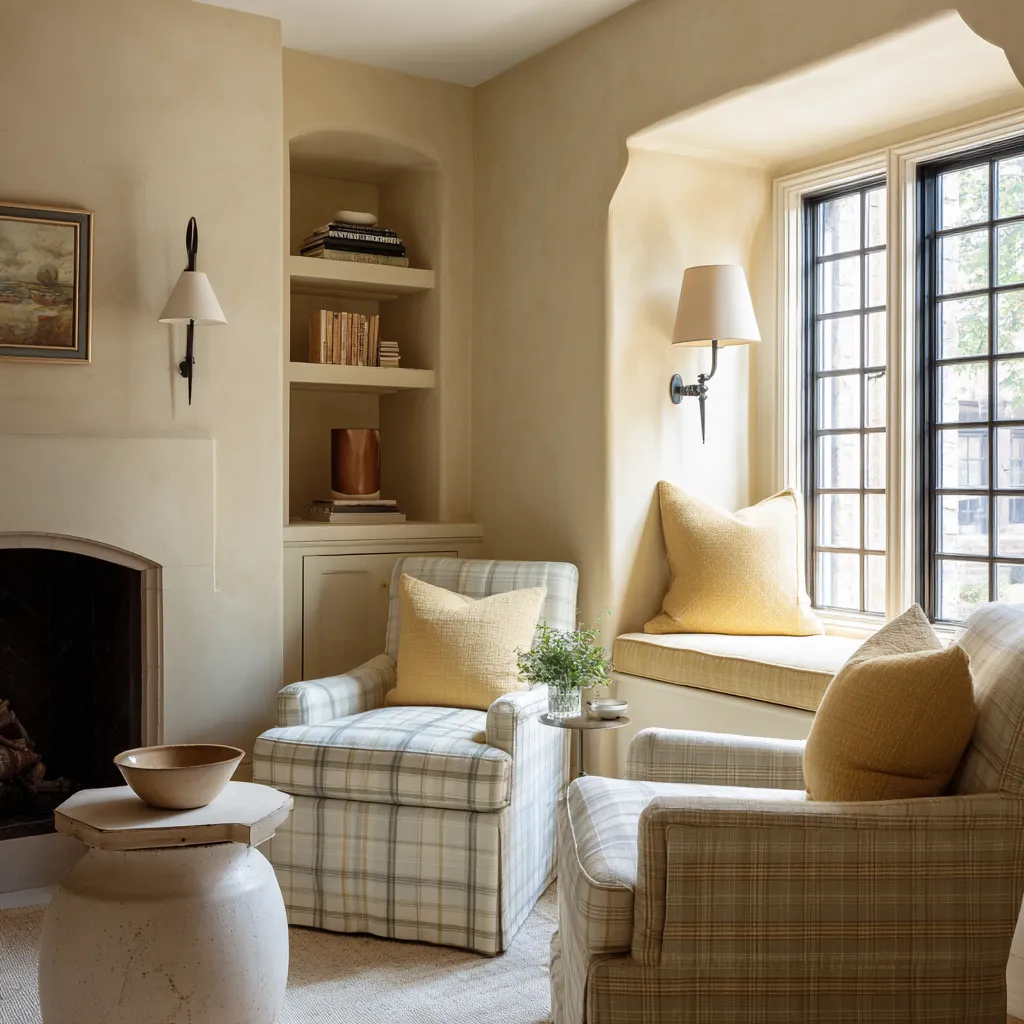
This contact between hard and yielding material is one of the dependable generators of comfort. Heavy matter gives the room substance.
Soft matter makes that substance livable. Without the soft neighbor, stone can feel severe.
Without the harder element, upholstery can feel adrift. Together, they create bodily credibility.
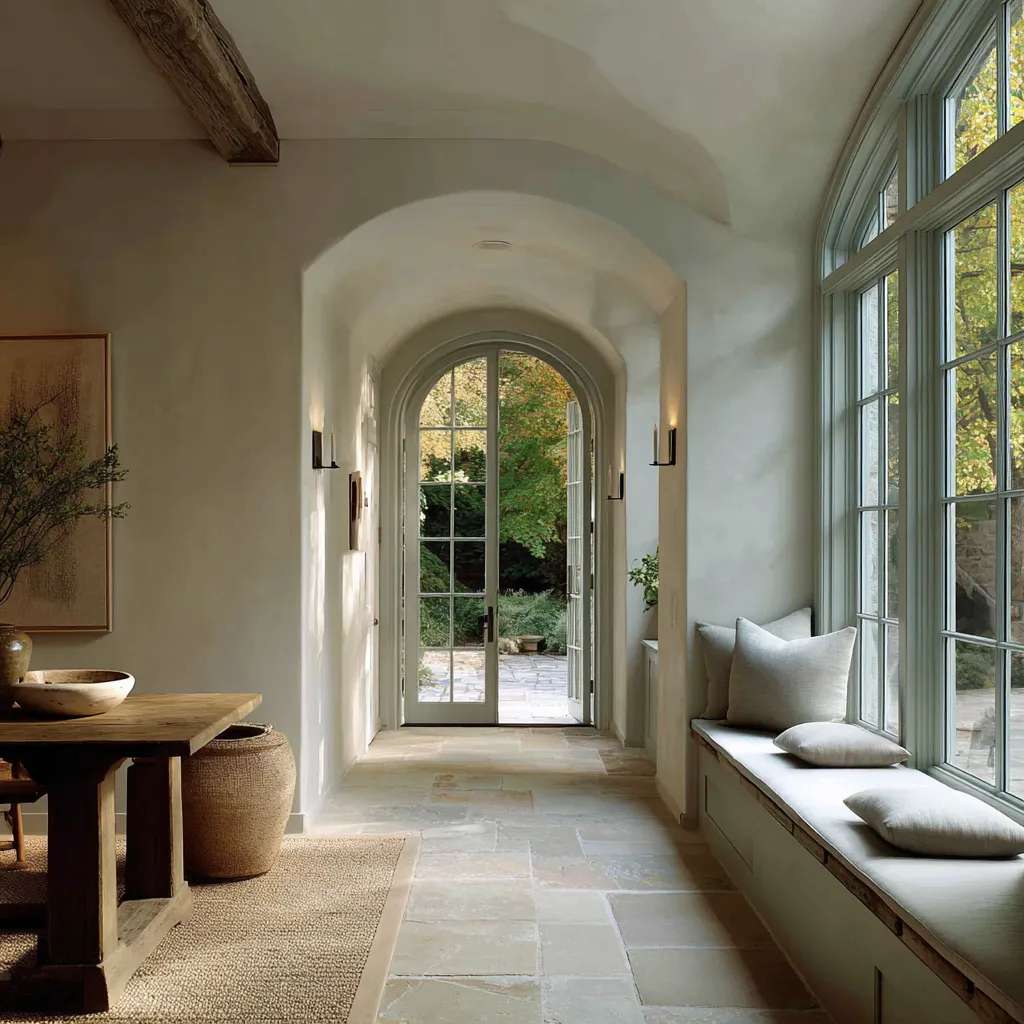
English country rooms are rarely all fabric, all drapery, all rounded upholstery, all visual hush. They need pressure from somewhere.
They need a weight-bearing wall, a hearth ledge, a timber table, a bench built into plaster, a basket on a stone floor, a shelf recessed into joinery. Coziness grows through contact, not through softness in isolation.
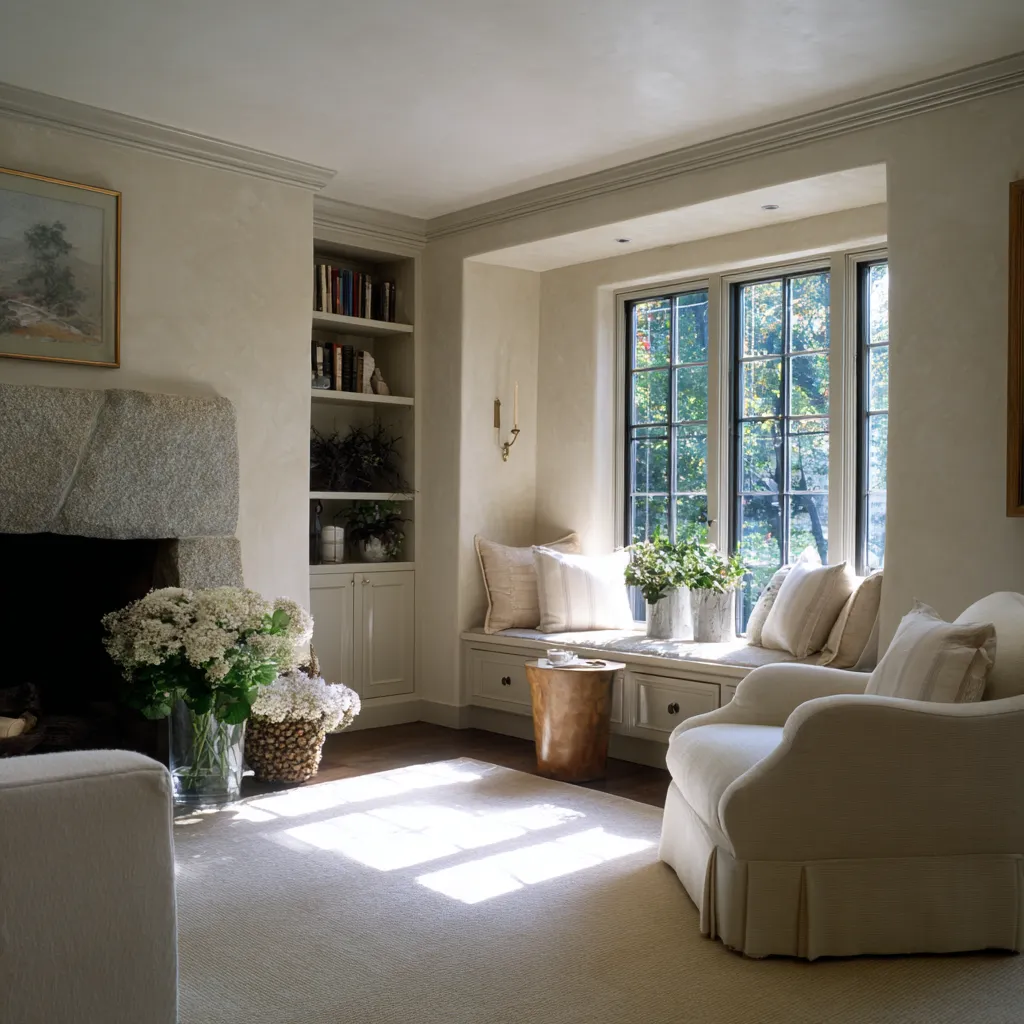
English country style has two architectural languages
One of the reasons this style remains rich is that it does not depend on one visual formula. It has at least two major structural languages.
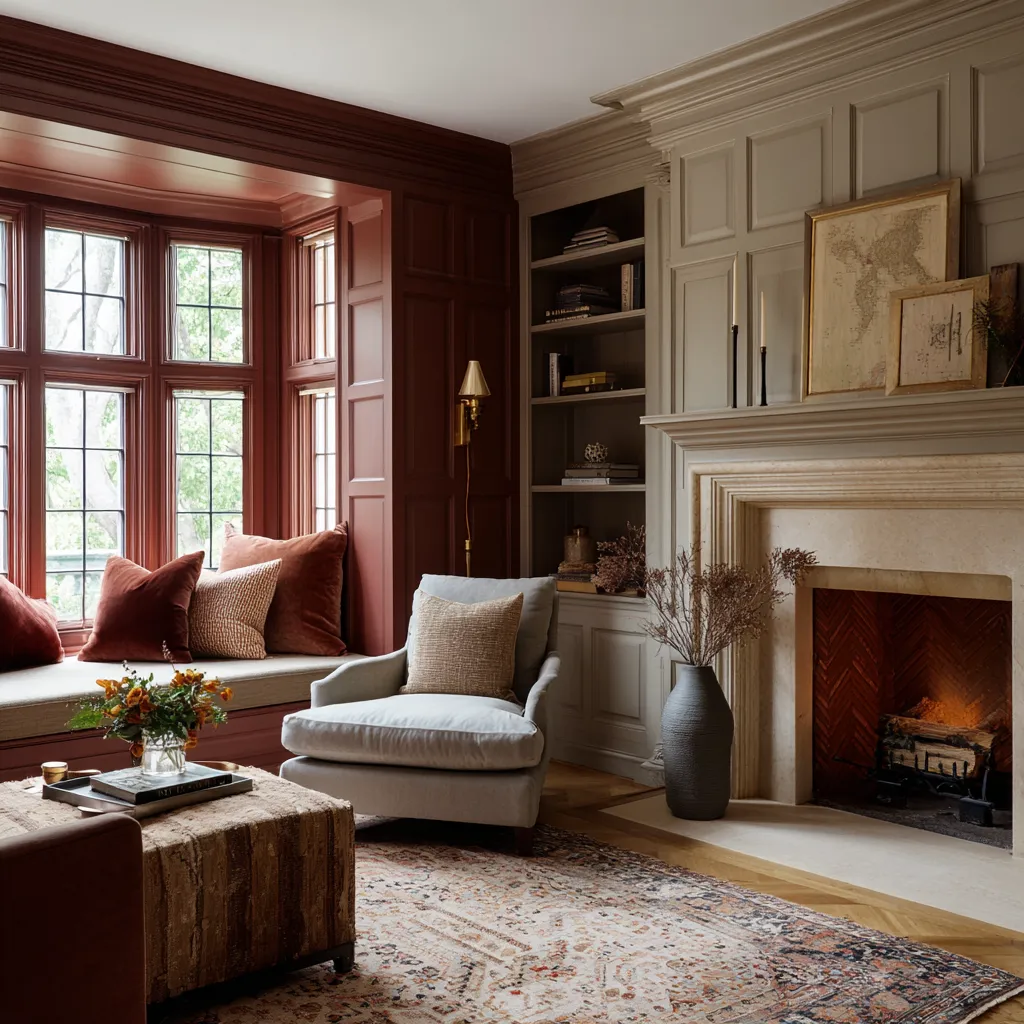
- The first is the joinery lineage. This branch uses paneling, mouldings, integrated bookcases, leaded windows, alcove shelving, and wall grammar with a more formal, inherited feel. These rooms often carry a clearer sense of pedigree. They can feel refined, literary, and established. Their comfort comes from order softened by upholstery, books, and carefully placed warmth.
- The second is the masonry lineage. This branch leans on stone chimney breasts, plaster thickness, exposed beams, rougher hearths, benching, and rooms where the shell feels almost carved or assembled from substantial matter. These interiors often feel more sheltering, more bodily, and less ceremonial. Their comfort comes from mass, depth, and the sense that the room has grown from the house itself.
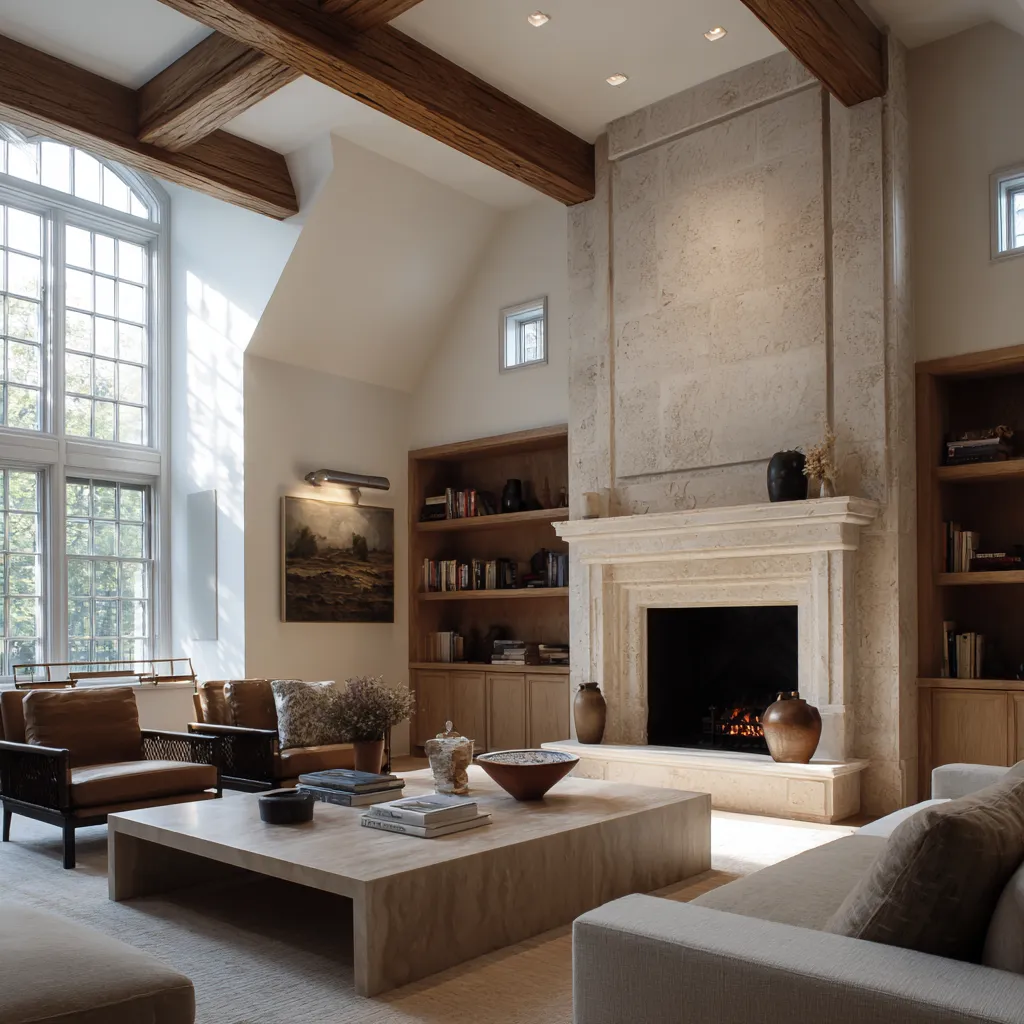
Both routes are valid. Both can feel unmistakably English country.
What matters is not copying every signal from either route, but understanding which one a room is closer to and building with consistency from there. A paneled room can easily become over-composed if the furnishings are too decorative.
A masonry-led room can become coarse if softness is underplayed. Each branch asks for a different balance.
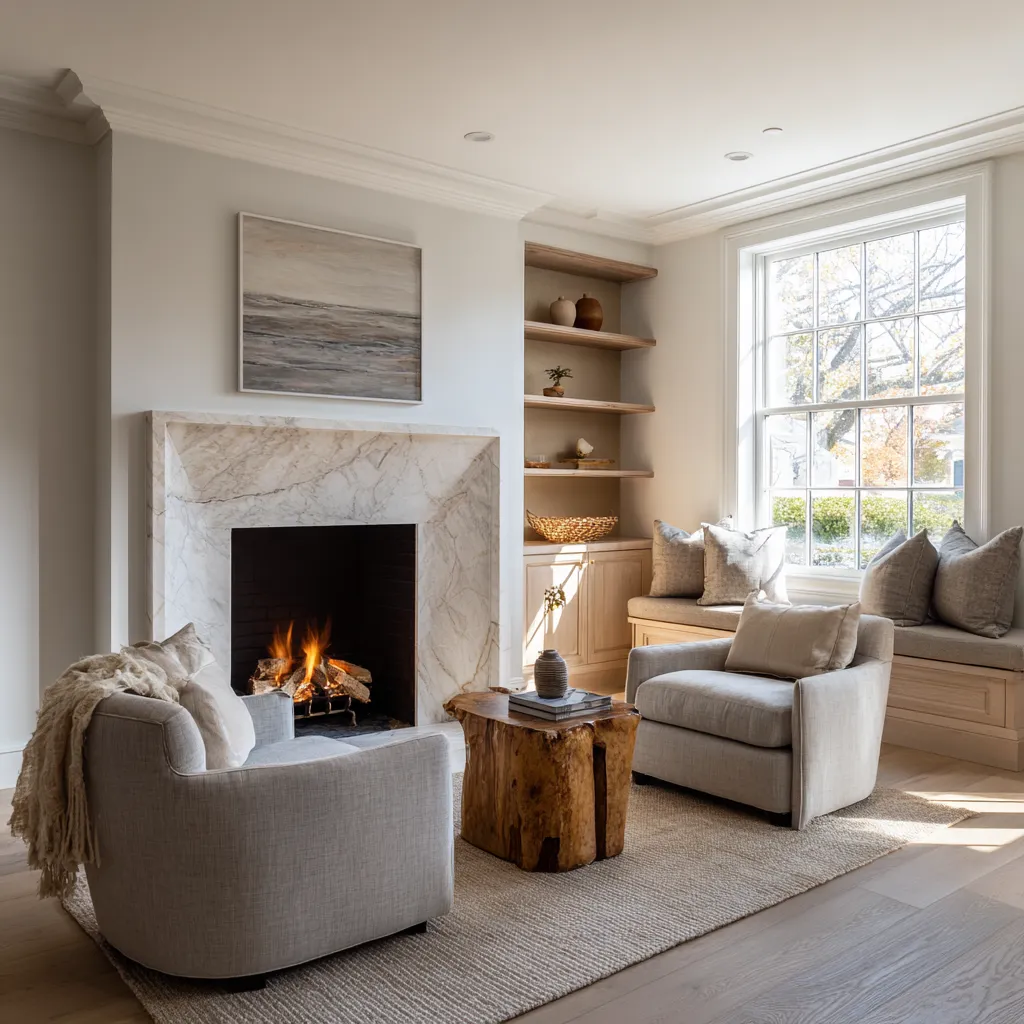
Why modern English country room designs feel lighter without losing identity
An interior design does not feel current merely because it is pale. It feels current because it has been edited.
This is an important distinction. Many living rooms use soft neutral palettes, but neutrality alone does not give freshness.
A present-day English country room usually gains clarity through simpler furniture silhouettes, fewer objects, broader surfaces, lower visual chatter, and a more selective approach to historical cues. The room keeps the architecture but trims the commentary around it.
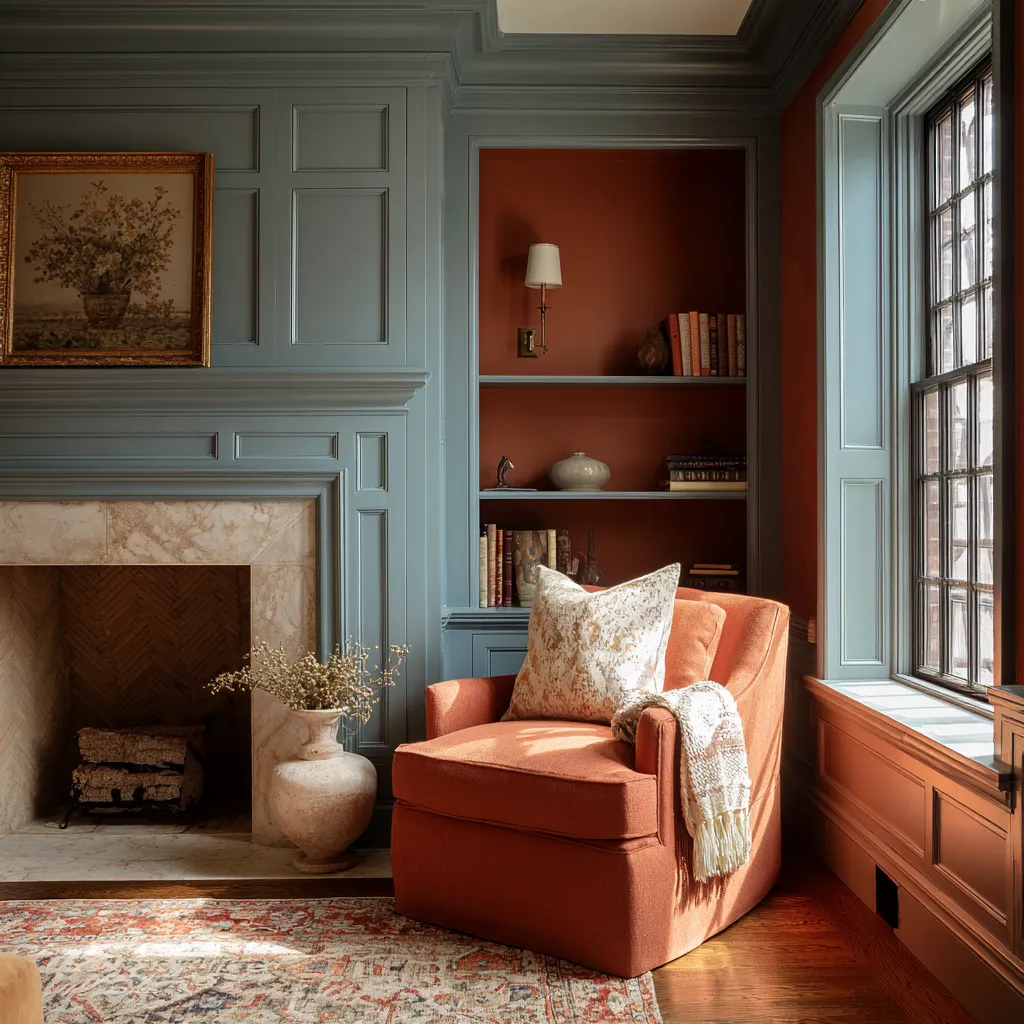
Modern English country interior design ideas use very little overt pattern. The style can survive without crowded florals, heavy trims, or antique-style abundance if the house-bones remain visible.
A deep reveal, a gridded window, an integrated bench, a hearth, books within the wall, and surfaces with tactile depth are enough to keep the English-country spirit alive.
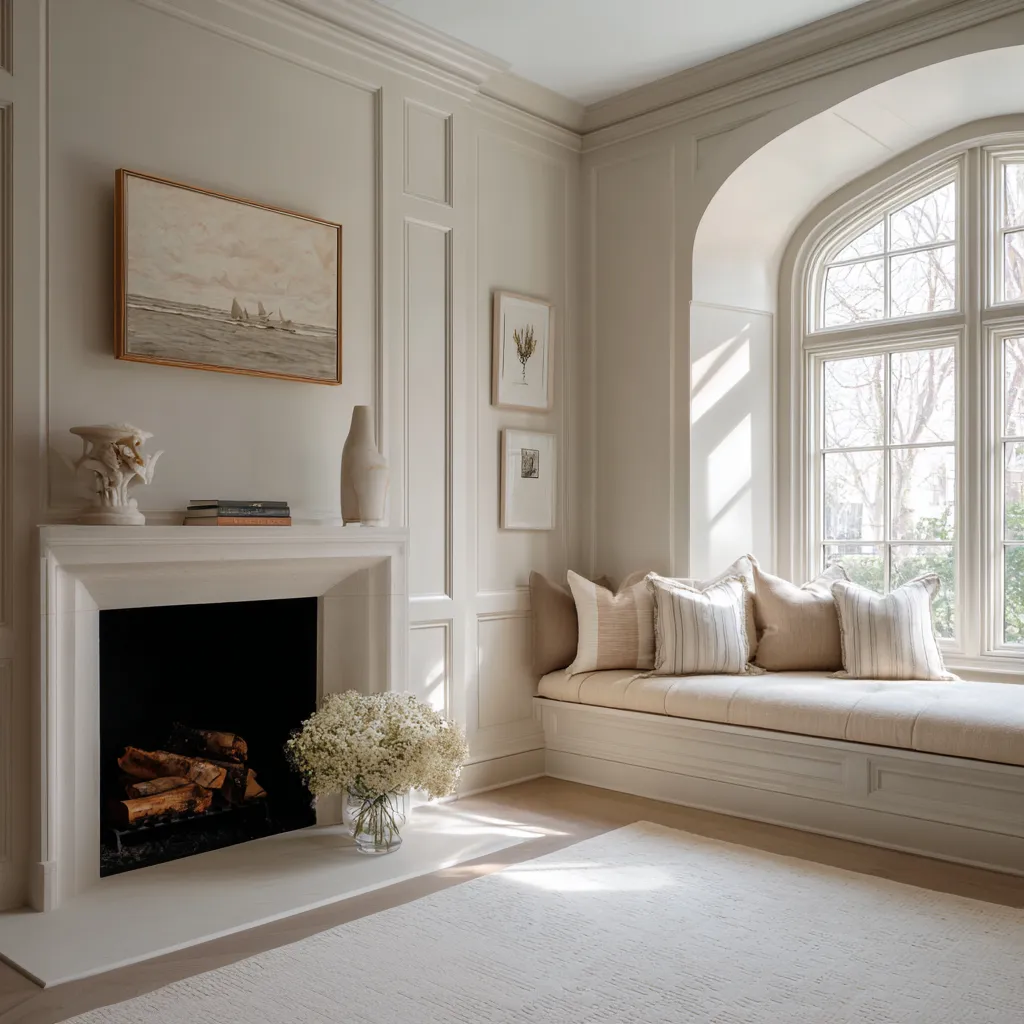
That reduction is particularly useful for contemporary living because it allows the room to breathe. It also allows the landscape beyond the windows to play a larger role.
Garden views, terrace doors, and taller glazing can help a room feel newer, but they only work properly when the room still offers refuge. Glass without depth weakens the country mood.
Glass paired with a bench, a thick wall, and a fire source can feel entirely right.
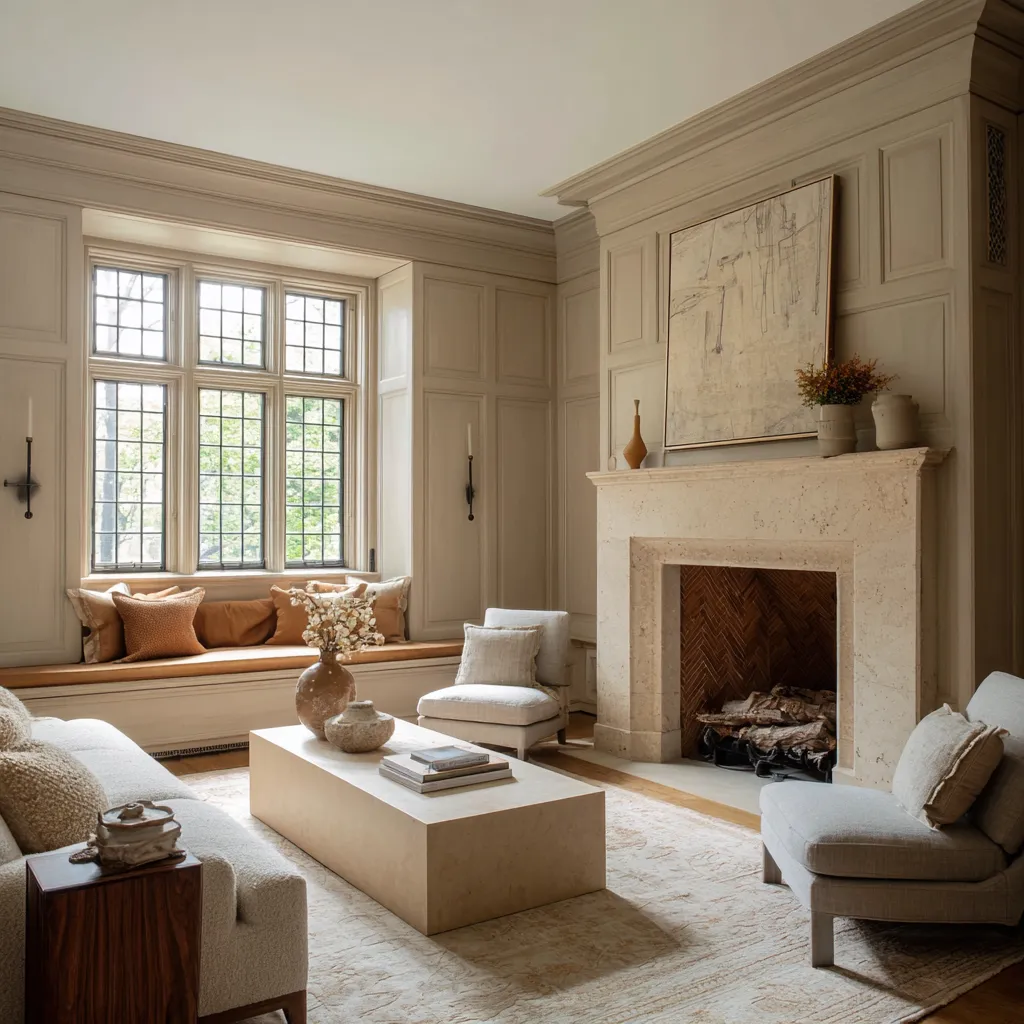
Warm color helps, but it is not the base layer
One of the ideas from English country interiors is that warm color is often overestimated. Rust, burgundy, ochre, olive, and warm wood can add a great deal.
They can make a more formal room feel more bodily. They can lower the emotional temperature of crisp paneling.
They can give a pale room a little seasonal density. But they do not create coziness on their own.
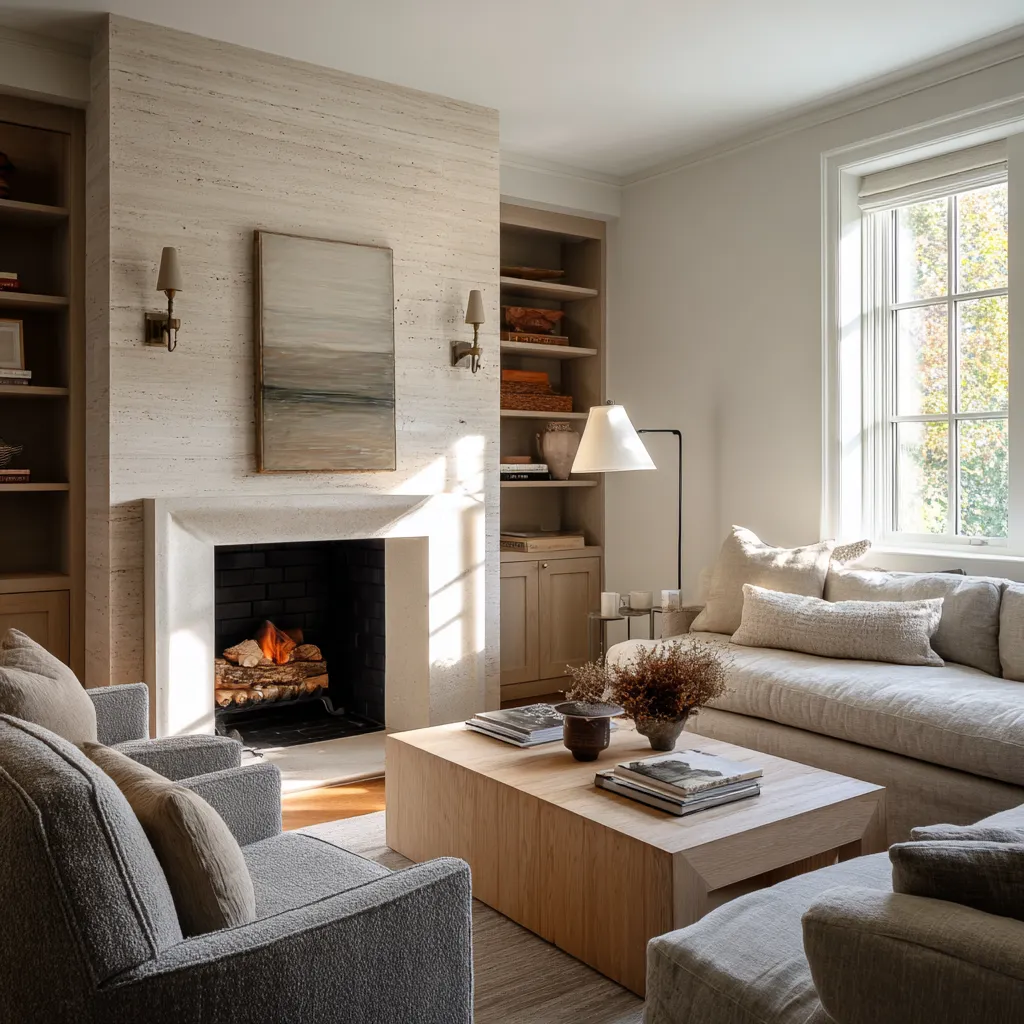
A room with no refuge structure will not become truly warm because a few cushions are terracotta. A room with no hearth weight will not become settled because the palette is beige.
A room with thin walls and loose planning will not become deeply inviting because the accessories lean autumnal.
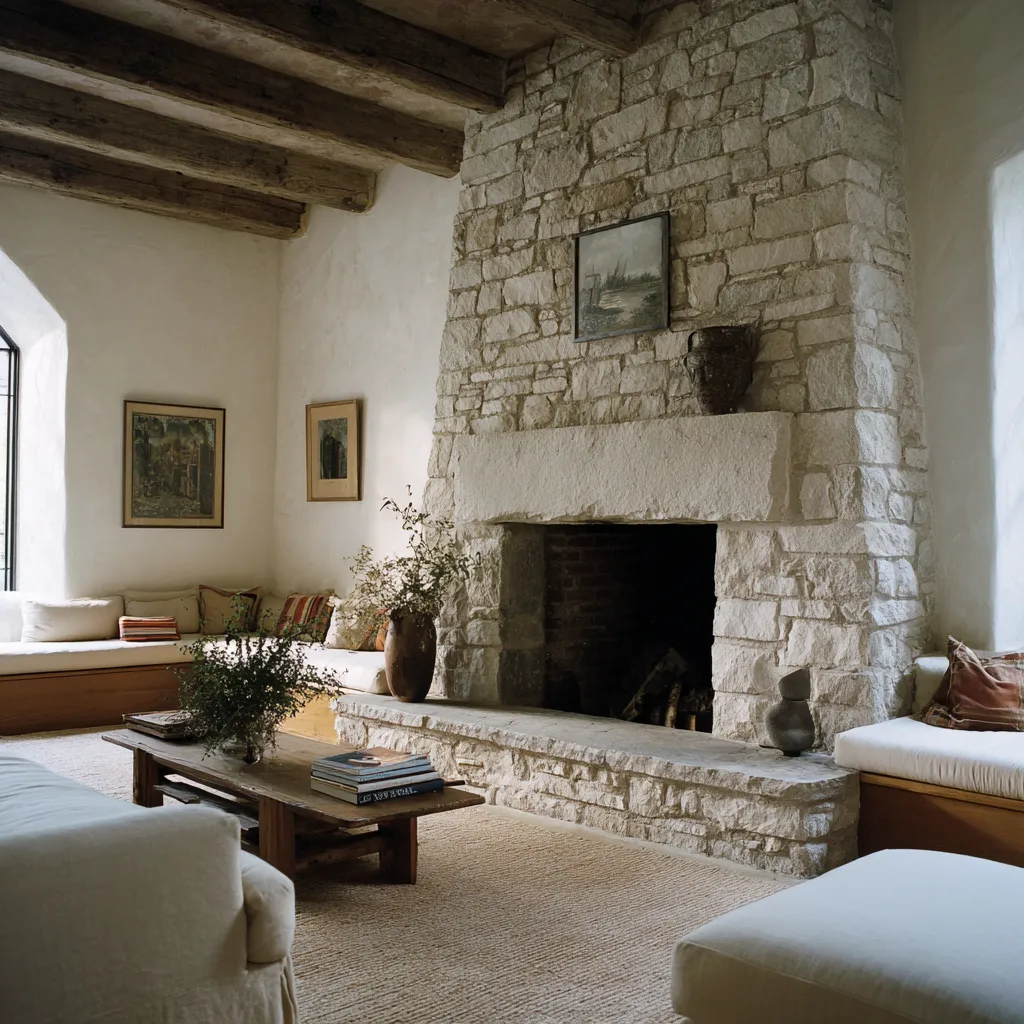
The more substantial form of warmth comes first from thermal gravity: fire, stone, plaster, beam, low table, thick reveal, built bench, dark inner chamber. Chromatic warmth comes second.
It helps complete the atmosphere, especially in rooms that risk feeling too composed or too airy, but it should not be asked to carry the entire emotional burden.
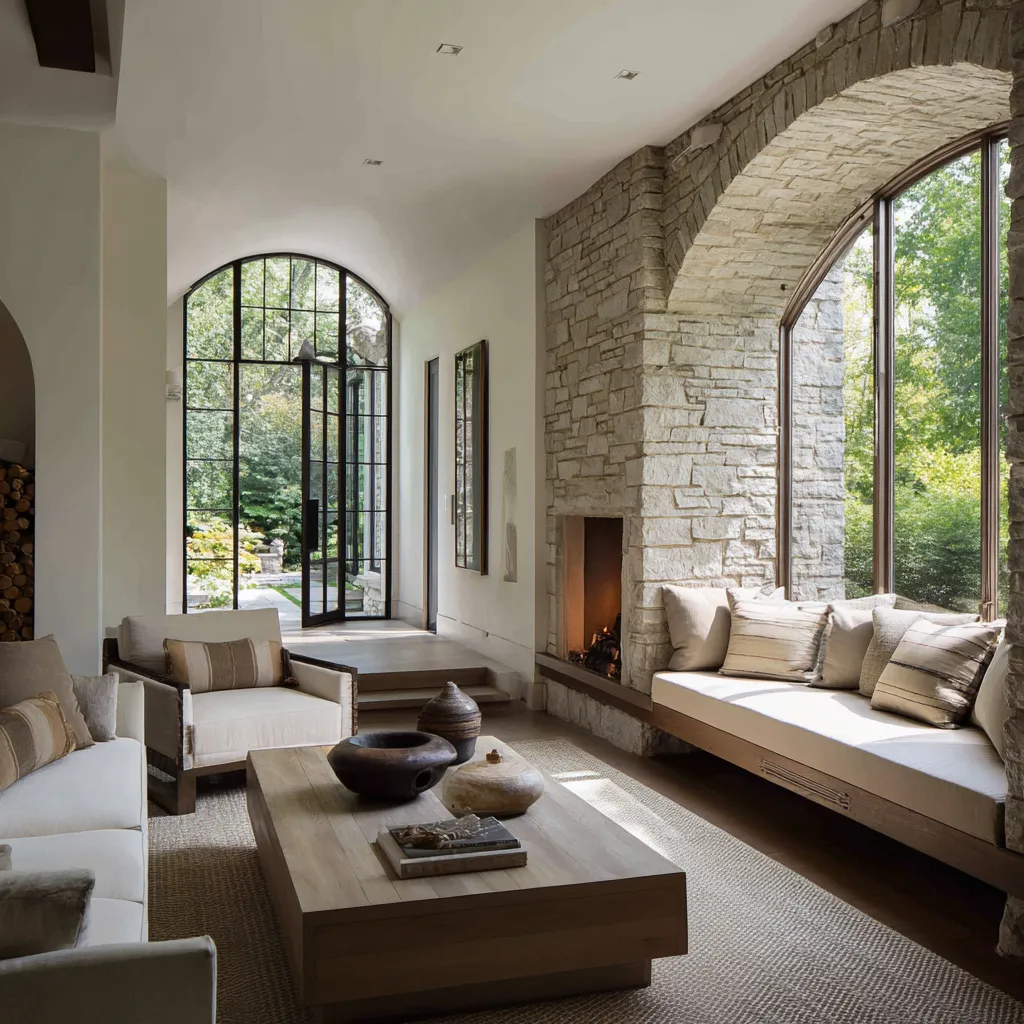
This is why pale English country living rooms can still feel rich. Their warmth comes from depth, material contact, and softened light rather than from obvious accent color.
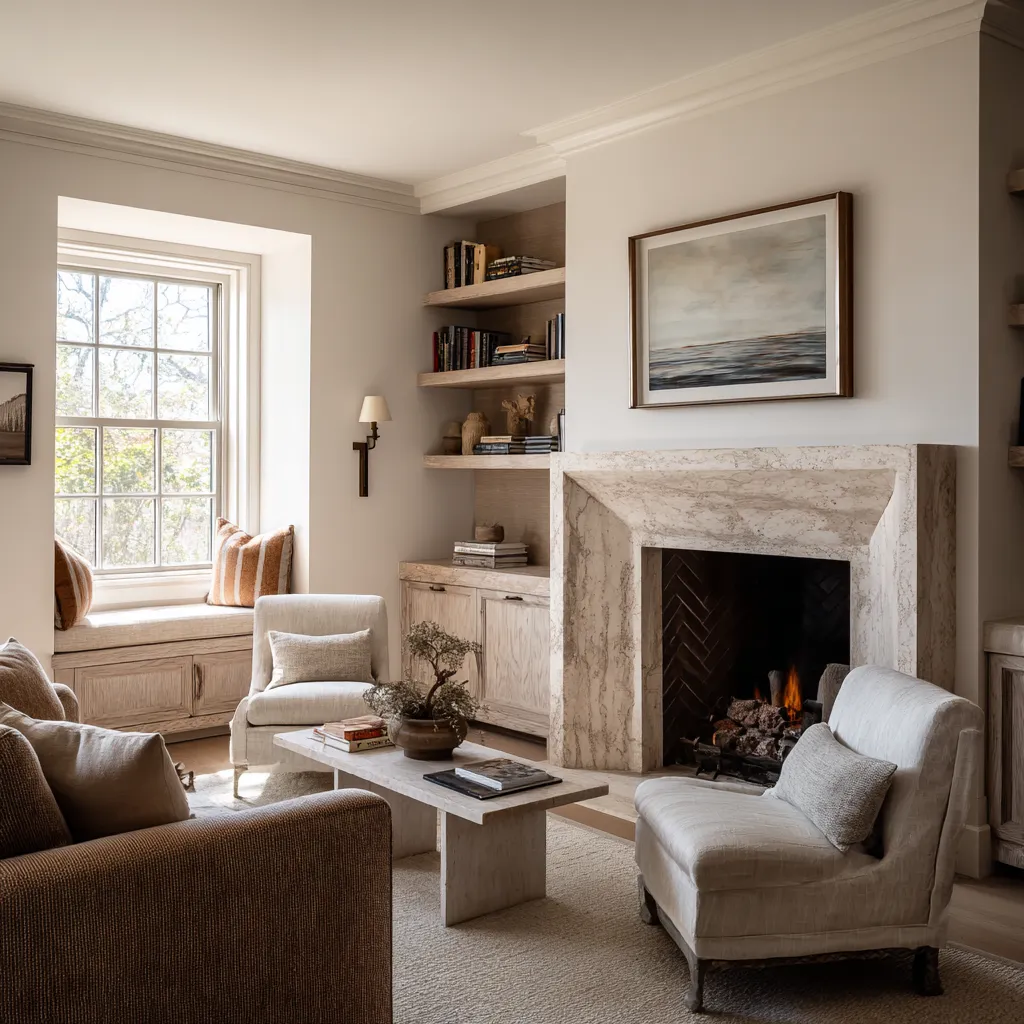
Pale rooms are difficult, but not impossible
A pale room can become beautiful yet flat very quickly. English country interiors avoid that problem through relief and shadow.
- A pale paneled wall needs moulding depth.
- A pale fireplace needs a dark opening.
- A pale window wall needs a reveal deep enough to cast shape.
- A pale upholstery scheme needs contrast from stone, timber, books, or a recess.
- A pale floor needs tactile variation from rug, basketry, or matte texture.
Without these counterweights, the design starts to dissolve into one note. Pale English country interior designs seldom rely on one smooth cream surface after another.
They use soft gradations, but they also preserve structure. The eye needs somewhere to stop.
The body needs somewhere to feel held.
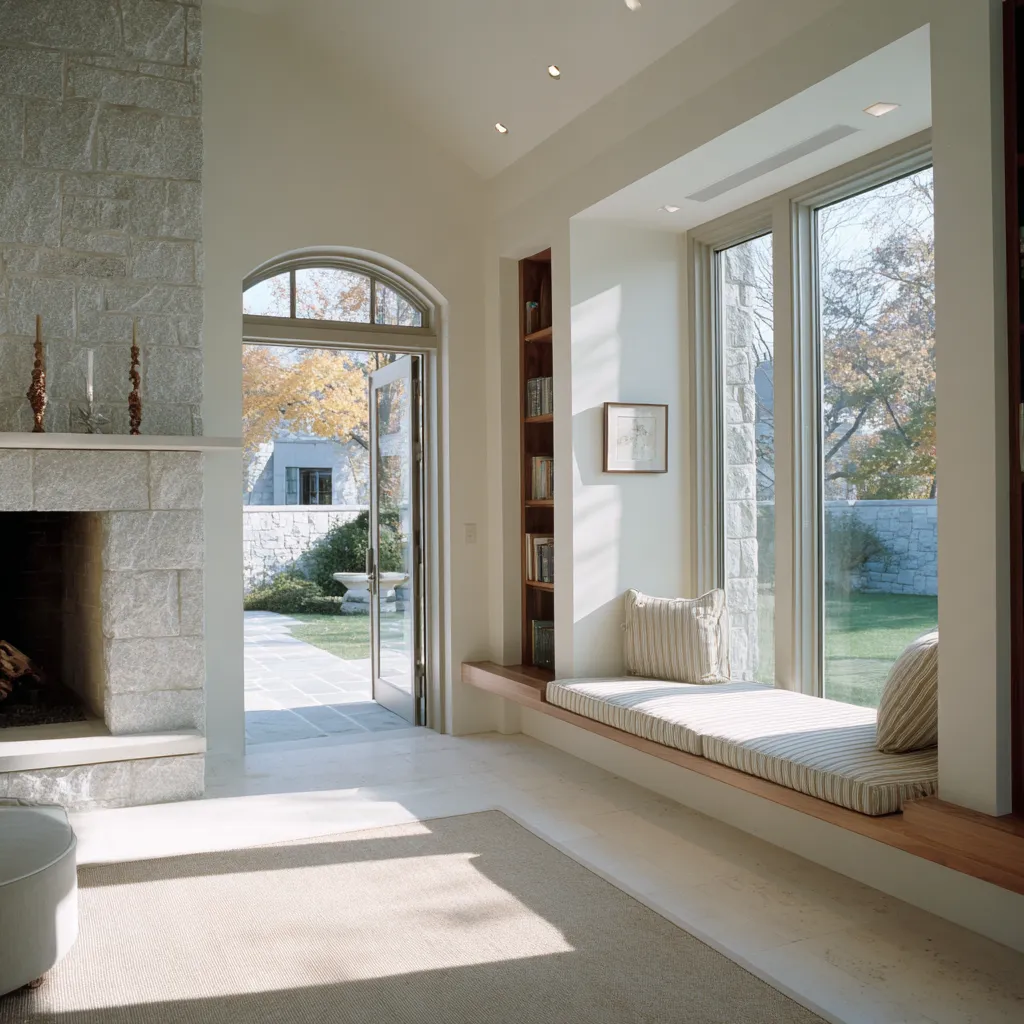
Memorable English country living room ideas use one small dark center even when the rest of the room remains light. That dark center may be the firebox, a shelf recess, a black metal window frame, a charcoal painting, or a deeper alcove.
Its scale can be modest. Its effect is large.
It stops the room from floating.
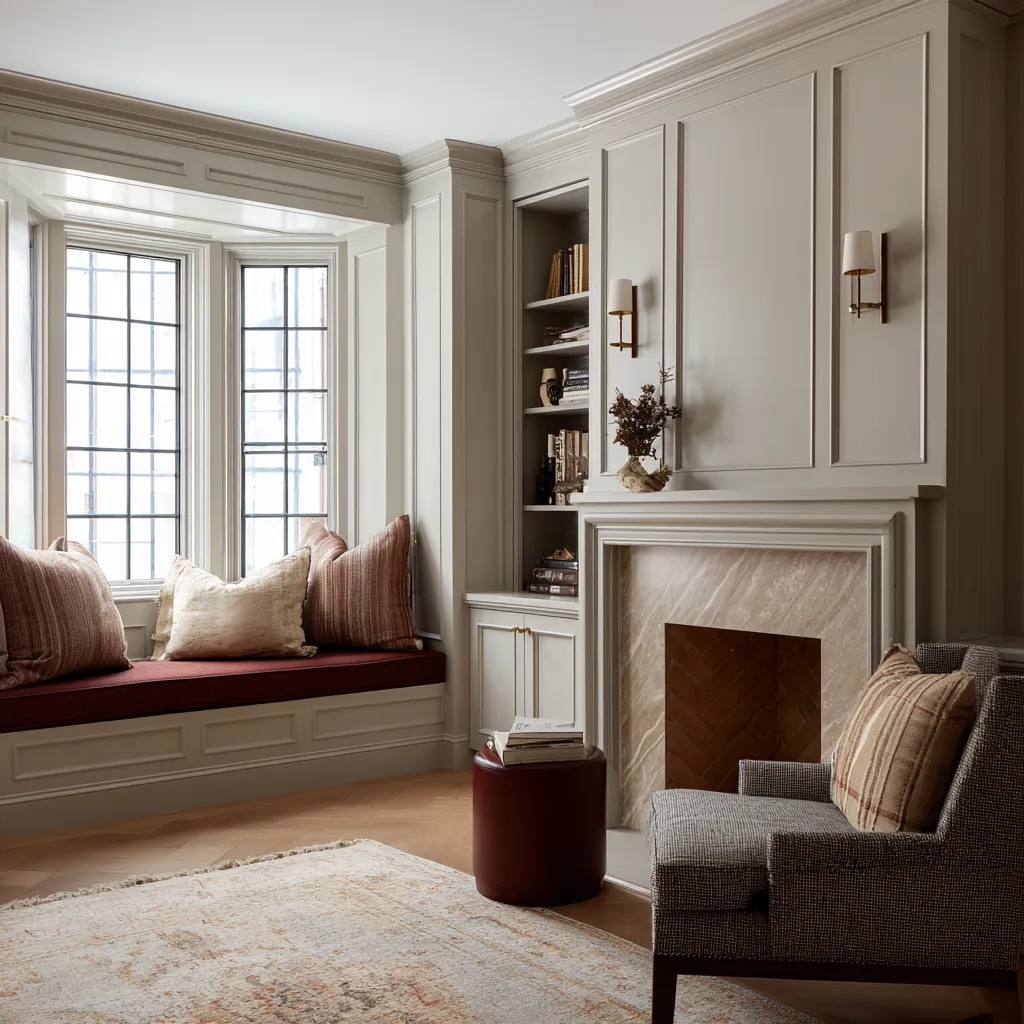
Books, benches, and built-ins carry emotional weight far beyond their size
Freestanding furniture often gets more attention in living room design than it deserves. English country rooms suggest another hierarchy.
Built-ins are often doing more emotional work than major furniture pieces.
- A bookcase integrated into the wall makes the room feel inhabited over time.
- Storage under a window seat makes the room feel planned for ordinary life.
- A narrow niche beside a fireplace makes the wall feel thicker and more useful.
- A shelf built into the reveal suggests repeated use rather than one-time styling.
These moves also reduce clutter. They keep daily-life objects close to architecture instead of scattering them around the floor plan.
That gives present-day rooms a cleaner profile without losing domestic substance. The room feels both more orderly and more rooted.
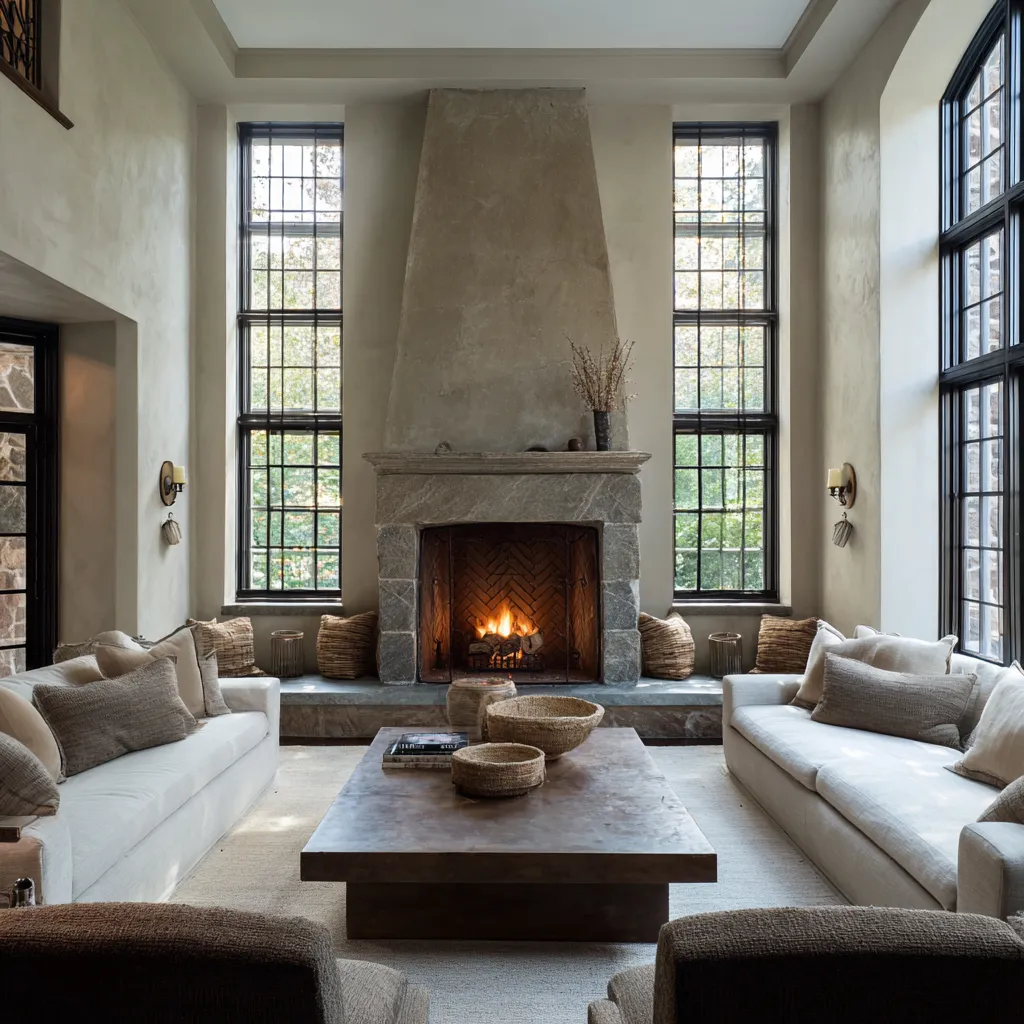
This may be one of the main comforts English country interiors offer: the sense that the house is helping. The room does not merely contain life.
It absorbs it.
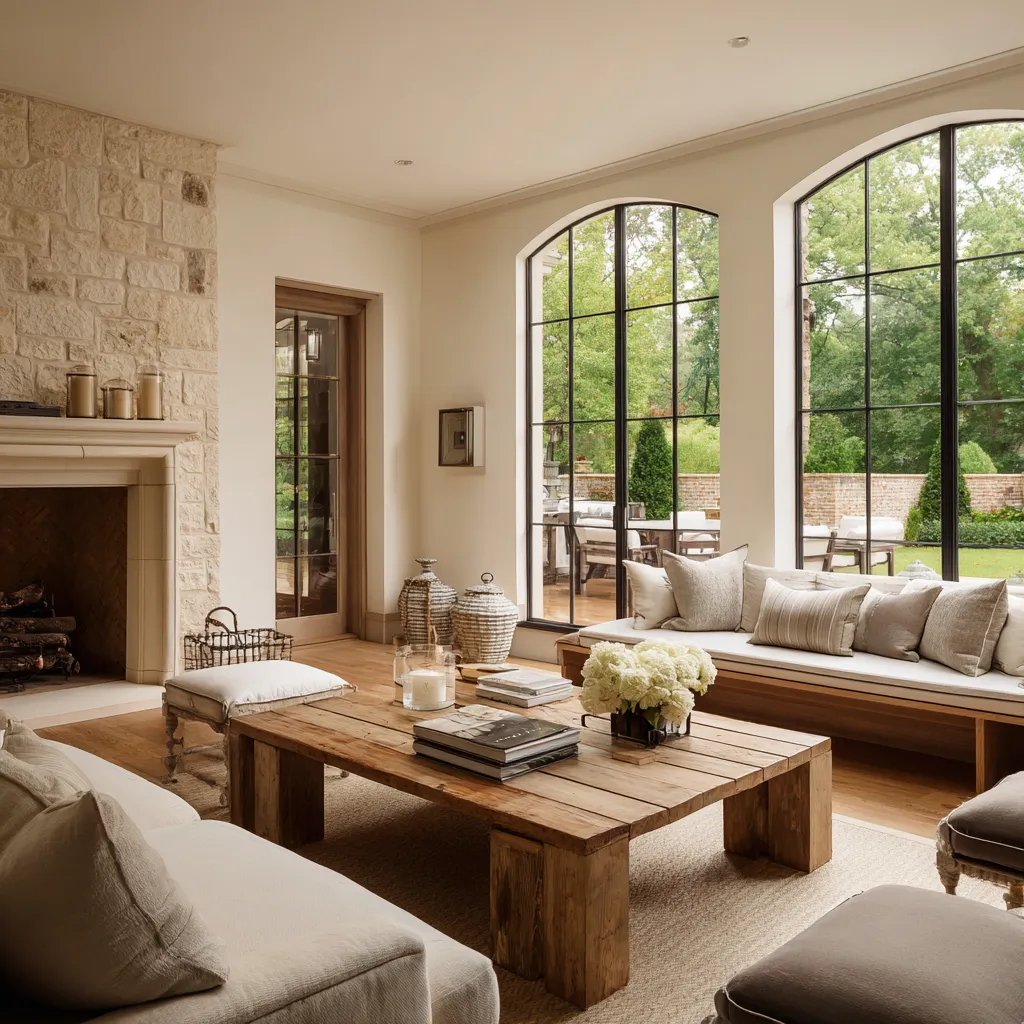
Coziness is multi-scalar
Some living room designs fail because they rely on one large gesture. A huge sofa.
An enormous statement chandelier. A monumental fireplace.
A dramatic window wall. English country interiors often feel deeper because they offer comfort at several scales at once.
- There is the whole-room scale: the hearth wall, the beam ceiling, the paneled shell, the bay.
- There is the seating-group scale: sofa, chairs, rug, table.
- There is the niche scale: bench seat, shelf corner, alcove chair, side ledge.
- There is the hand scale: books, vessel, lamp, branch, pillow, side table.
The room becomes persuasive because comfort exists in all of these registers. You feel it in the architecture.
You feel it in the furniture grouping. You feel it in the small places where daily life settles.
This layered scale is one reason English country living rooms can feel so complete even when their color palette remains restrained and their styling remains spare.
| Cozy idea | Why it matters |
|---|---|
| Architectural depth | It was the strongest cozy driver|| Thick reveals, niches, and sheltered edges make the room feel holding |
| Seating intimacy | Close furniture grouping makes a room feel inhabitable very quickly |
| Hard-soft adjacency | Stone, timber, plaster, and upholstery need each other|| That pairing is one of the clearest comfort signals |
| Hearth mass | The room needs a strong center of gravity |
| Built-in life | Benches, shelves, and alcoves make the house itself participate in comfort |
.
What interior designers can take from this style
Practical lesson is a reordering of priorities. Start with the structure of comfort:
- give the room a hearth anchor
- create believable depth at openings
- use at least one bench, niche seat, or built-in storage gesture
- keep seating close enough for true conversation
- place heavy materials beside yielding ones
Then support that structure:
- integrate books and ordinary objects into architecture
- preserve one dark center or shadowed recess
- use matte textures that take light softly
- add one or two warmer notes if the room feels too composed
Only after that should decoration become a major concern:
- pattern
- extra accessories
- explicit historical references
- softer stylistic quotations
Many interior designs fail because they reverse that order. They begin with fabrics and styling, then hope comfort will follow.
English country design suggests the opposite. Build the refuge first.
Dress it later.
The deeper ideas of English country coziness
The lasting appeal of cozy English country living rooms lies in one idea: comfort is not something sprinkled on top. It is built into the room’s behavior.
A good room of this kind does not simply look warm. It offers several ways to be in it.
It lets the fire hold the center. It lets the wall become a seat.
It lets the window become a place rather than a frame. It gives books a home inside the architecture.
It softens light rather than blasting it. It allows rough material and soft upholstery to remain in close contact.
It keeps the middle simple and lets the perimeter do more. It accepts that a room can be current without losing thickness, and rooted in tradition without becoming crowded by nostalgia.
That may be a valuable thing English country style teaches contemporary interior design. The coziest room is not the one with the most decoration.
It is the one where the architecture already knows how to hold a person.